Review

The Research Landscape of Spirulina platensis (2016–2025): A Bibliometric Analysis and Scoping Review of Therapeutic Trends and Biotechnological Applications

1
Faculty of Medicine and Pharmacy, University of Oradea, P-ta 1 Decembrie 10, 410087 Oradea, Romania
2
Doctoral School of Biomedical Sciences, University of Oradea, P-ta 1 Decembrie 10, 410087 Oradea, Romania
*
Author to whom correspondence should be addressed.
Appl. Sci. 2026, 16(9), 4203; https://doi.org/10.3390/app16094203
Submission received: 17 February 2026 / Revised: 8 April 2026 / Accepted: 22 April 2026 / Published: 24 April 2026

Abstract

Objectives: This study evaluates the research landscape of the cyanobacterium Spirulina (recently reclassified as Limnospira), a strategic resource in the nutraceutical, pharmaceutical, and functional food industries. The central objective is to transition from the traditional “superfood” narrative to a structured analysis of its modern therapeutic potential as reflected in current scientific literature. This study employs bibliometric analysis to highlight research trends and thematic directions in Spirulina-related studies, rather than to experimentally validate therapeutic effects. Methods: The investigation employed an exploratory bibliometric analysis of 996 peer-reviewed articles indexed in the Web of Science (2016–2025). Using VOSviewer software, we mapped keyword co-occurrence networks, international collaborations, and institutional clusters to identify dominant thematic directions and emerging research frontiers in biotechnology and medicine. Results: Bibliometric mapping illustrates research trends and thematic associations reported in the scientific literature centered on pathophysiological mechanisms, particularly oxidative stress, inflammation, and hepatoprotection. While often referred to as “microalgae”, Spirulina is biologically a photosynthetic prokaryote with a unique lipid profile characterized by high gamma-linolenic acid (GLA) content, although clinical evidence remains heterogeneous. The analysis highlights a robust regional research hub in the Middle East and North Africa, led by Egypt and Saudi Arabia, in contrast to fragmented inter-continental collaboration. Conclusions: The steady upward trend in publications confirms expanding academic interest in Spirulina as a functional ingredient. However, this study underscores a persistent gap between in vitro bioactivity and standardized clinical validation. These findings provide a roadmap for future biotechnological developments, emphasizing the need for more rigorous, multi-center clinical trials to bridge the “superfood” perception with evidence-based therapeutic applications.

1. Introduction

Spirulina, recognized as a superfood since ancient times, was harvested and consumed by the Aztecs from Lake Texcoco, Mexico, its growth being influenced by various factors, including nutrient concentration and pH. In therapeutic contexts, Spirulina is valued for its bioactive compounds, such as antioxidants and immuno-stimulants, which studies suggest may help in preventing and treating various health conditions [1].
Spirulina platensis is a photosynthetic planktonic cyanobacterium that forms large colonies in tropical and subtropical water bodies. It has an alkaline pH of 9.5 and substantial salt concentrations, including carbonate and bicarbonate. The US Food and Drug Administration (FDA) has classed Spirulina platensis as Generally Recognized as Safe (GRAS) since 2003, and it is considered a dietary health supplement. Adults are typically advised to ingest 3–10 g of Spirulina platensis daily, with a maximum daily intake of no more than 30 g [2].
Microalgae, particularly Spirulina platensis, have gained attention due to their easy cultivation and high biomass productivity, containing 55–70% protein and essential nutrients such as provitamin A, vitamins C and E, and unsaturated fatty acids. They are not only valued for their nutritional content but also for their bioactive compounds and potential as adsorbents [3].
Spirulina is a naturally occurring source of both macro and micronutrients that are of commercial and industrial interest. The high concentration in proteins (higher than in many animal-based foods) and the amount of polyunsaturated fatty acids (PUFAs), polysaccharides, vitamins, minerals, and other health-promoting components like polyphenols, carotenoids, and chlorophylls are particularly intriguing in the field of nutraceuticals [4].
Spirulina platensis, a cyanobacterium with a history of traditional use as a food source, has attracted significant scientific attention in recent decades due to its potential health-promoting properties. Exploring the various health effects of spirulina, including immunomodulation, antioxidant activity, anticarcinogenic potential, antiviral and antibacterial effects, as well as its positive influence on various conditions, this essay provides an academic analysis of the potential benefits spirulina offers to human health [5].
Spirulina is sometimes referred to as “microalgae” in applied biotechnology and food science literature due to its cultivation and industrial use, although its correct classification is within cyanobacteria.
The applications of spirulina extend beyond human consumption. It has been used as a dietary component in feed for fish, shrimp, and poultry. China has adopted microalgae consumption to supplement imported feed, particularly to enhance shrimp growth, immunity, and viability. Japan has also undertaken extensive research on the use of spirulina as an additive for aquaculture feed [6].
The species Spirulina platensis is notable for its substantial content of valuable nutrients, making it a potential candidate for inclusion in functional foods. These nutrients include essential proteins, amino acids, vitamins, beta-carotene, minerals, fatty acids, polysaccharides, glycolipids, and sulfolipids, among others. By incorporating Spirulina into one’s diet, individuals can access a wide range of essential nutrients that contribute to overall health and well-being. This nutritional profile is shared among all edible forms of Spirulina [7].
Overall, spirulina shows promising health benefits in different populations, particularly in terms of improving nutritional status, managing anemia, and positively impacting lipid profile and glucose metabolism in certain conditions. Experimental evidence suggests that consuming spirulina may help strengthen the body’s immune defenses, potentially protecting against infections and maintaining immune health. The antioxidant properties of spirulina have garnered considerable interest due to their potential to counteract oxidative stress, a factor involved in numerous chronic diseases.
Spirulina’s versatility extends to addressing various health conditions. Clinical trials and animal studies have demonstrated its potential positive effects against malnutrition, hyperlipidemia, diabetes, obesity, inflammatory allergic reactions, heavy metal and chemical toxicity, radiation damage, and anemia. These findings imply spirulina’s ability to contribute to disease prevention and management and overall health improvement.
The extensive volume of research conducted on spirulina highlights its potential as a functional food with wide-ranging health benefits. Collective evidence from in vitro experiments, animal studies, and human clinical trials indicates that the bioactive compounds in Spirulina show promise in terms of immunomodulation, antioxidant protection, cancer prevention, antimicrobial effects, and the management of various conditions. As exploration of spirulina’s potential continues, researchers are challenged to unravel the mechanisms underlying these effects and determine the optimal dosage and application for human health management.
Ultimately, the scientific community recognizes spirulina as a valuable resource that bridges traditional knowledge and modern research, shedding light on its potential to contribute to human health and well-being [8].
Our study aims are to highlight the versatility and current applications of spirulina, bridging the traditional knowledge as a superfood (nutrient-rich substances considered especially beneficial for health and well-being due to their high concentration of vitamins, minerals, and antioxidants), and the therapeutic potential, current applications in medicine, cosmetics products, emphasizing the advantages and outcomes based on their mechanism of action. Furthermore, it aims to identify recent scientific findings and address future trends, adaptability across various industries, to meet consumer demand. Through bibliometric analysis and publication trends, we aim to highlight its significance for future prospects.

2. Methodology

2.1. Bibliometric Study, Exploratory and Descriptive Research Design

This study was conducted as an exploratory and descriptive investigation, relying predominantly on quantitative analysis to assess the scientific output related to Spirulina and its biomedical and food-related applications. Bibliometric techniques were applied to identify patterns, trends, and relational structures within the scientific literature, enabling a comprehensive characterization of current advances in biotechnology, medicine, and the food industry. The bibliometric analysis serves as the primary framework, while the narrative sections provide a scoping overview of the identified thematic clusters. This approach highlights both research opportunities and emerging directions, while also underscoring the challenges faced by the field.
The results aim to provide an integrated overview of the current state of knowledge, including the identification of innovations, scientific trends, and contributions from prolific authors, institutions, countries, and high-impact journals.
Additionally, the analysis of international collaborations allows the assessment of scientific network dynamics and the ways in which Spirulina-related biotechnology is approached worldwide.

2.2. Relevance of the Selected Keywords

Search Strategy and Relevance of the Selected Keywords

The keywords used in this bibliometric analysis were carefully selected to accurately reflect the major research directions associated with Spirulina (Arthrospira), a microorganism extensively studied due to its nutritional value and biomedical potential. Two main categories of terms were included:
  • Taxonomic and general descriptors, facilitating the precise identification of articles directly related to the organism of interest: Spirulina platensis, Arthrospira.
Spirulina is taxonomically classified as a cyanobacterium (often referred to as microalgae in the applied literature), and the terms Spirulina and Arthrospira are frequently used interchangeably in scientific publications” [9].
2.
Functional and biological terms, capturing the principal bioactive properties frequently investigated in the recent literature: antioxidant, anti-inflammatory, anticancer, immunomodulatory, antiviral, antidiabetic, lipid-lowering, functional food, and cosmetics.
The literature search was conducted using the Web of Science (WOS) database (Clarivate, accessed 5 December 2025) and included the following citation indexes: Science Citation Index Expanded (SCI-EXPANDED), Emerging Sources Citation Index (ESCI), Conference Proceedings Citation Index-Science (CPCI-S), and Book Citation Index-Science (BKCI-S). The search was refined to include only journal articles published between 1 January 2016 and 1 December 2025.
Using Web of Science (WoS) as our primary source for a bibliometric article on Spirulina platensis is justified by its rigorous indexing standards, deep historical coverage, and high data integrity for citation mapping. Specifically, WoS offers the following advantages for our research topic: (1) high-quality curation and selectivity in terms of rigorous standards and relevance to biotechnology; (2) superior citation integrity for network mapping; (3) historical depth and longitudinal analysis; and (4) established academic precedence by standard methodology, as WoS is the oldest and most traditional database used for scientific publication
The central search equation used was: (TI = (“Spirulina platensis”) OR AB = (“Spirulina platensis”) OR TI = (“Arthrospira platensis”) OR AB = (“Arthrospira platensis”)) AND (TI = (antioxidant* OR immunomodulator* OR anti-inflammatory OR antiviral* OR antidiabet* OR anticancer* OR “lipid-lowering” OR “functional food” OR cosmetic*) OR AB = (antioxidant* OR immunomodulator* OR anti-inflammatory OR antiviral* OR antidiabet* OR anticancer* OR “lipid-lowering” OR “functional food” OR cosmetic*)).
To ensure the inclusion of only relevant studies, filters for TI (Title) and AB (Abstract) were applied, restricting the dataset to publications explicitly referring to the terms of interest. This approach ensures that articles directly address the selected concepts, reducing the likelihood of retrieving peripheral or irrelevant works.
The Topic filter was intentionally excluded due to the high incidence of false positives, primarily originating from the automatically generated Keywords Plus field in Web of Science. These keywords are derived from cited references rather than the article content itself, leading to results where terms such as antioxidant, anti-inflammatory, or anticancer appeared without any direct connection to Spirulina. The exclusive use of TI and AB filters thus eliminated articles in which the relevant terms appeared only in Keywords Plus or in unrelated contexts, ensuring high accuracy of the final dataset.
To achieve comprehensive coverage of the literature and include all morphological variants of the terms, the wildcard symbol (*) was used in the search queries.
All records retrieved from WOS were exported to Excel files for further visualization and interpretation.

2.3. Bibliometric Analysis of Keywords

The bibliometric analysis was performed using VOSviewer (version 1.6.20). To ensure the accuracy of term representation and prevent duplication, a customized thesaurus file was created and applied to unify lexical variants and remove semantic overlaps (Supplementary File S1). Within the analyzed period, 996 articles met the selection criteria based on the presence of the relevant keywords.
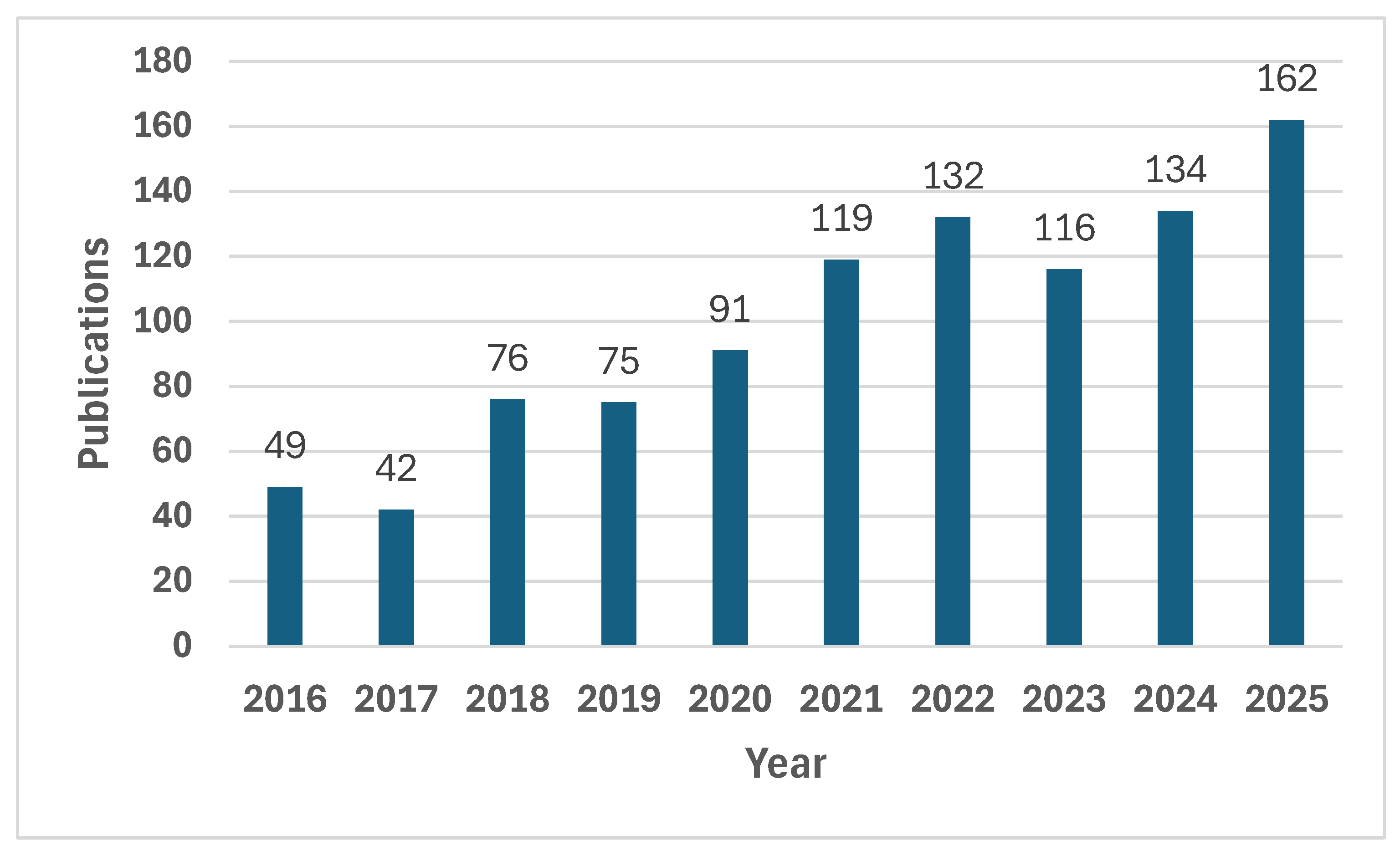
The temporal evolution of scientific production, illustrated in Figure 1, shows a consistent upward trend, with a noticeable peak in 2025 Figure 1. This trajectory indicates a growing scientific interest in Spirulina-related research, thereby justifying a deeper investigation into the connections between its consumption and therapeutic benefits in a wide array of pathologies.
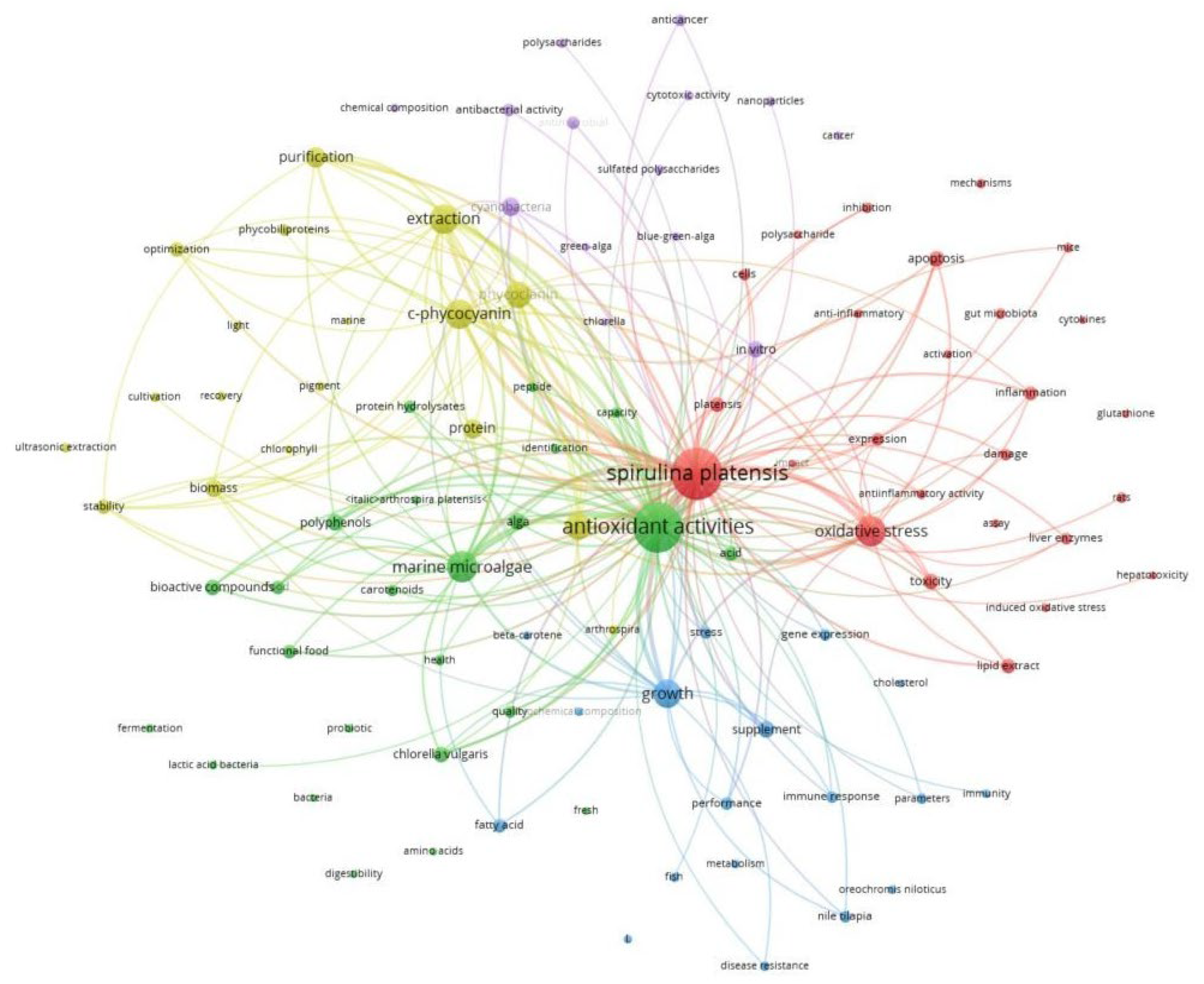
The co-occurrence network analysis of Spirulina enables the visualization of the diverse research themes, including bioextraction and purification, main bioactive compounds, and biotechnological applications in the food industry and the medical field (Figure 2).
The thickness of the lines between bubbles reflects the strength of co-occurrence relationships, indicating the frequency with which terms appear together within the scientific literature. For example, the strong association between “Spirulina” and “antioxidant activities” highlights a substantial number of studies investigating its health-related benefits. Visualizing the co-occurrence network provides an essential tool for understanding the conceptual structure of the field, enabling the identification of key terms associated with Spirulina platensis and its potential applications.
Revealing the presence of five major clusters, each representing a distinct thematic direction in the scientific literature. The red cluster, centered around Spirulina platensis, occupies a dominant position within the network and exhibits strong connections with most of the identified keywords, confirming its central role in the conceptual structure of the field.
The red cluster includes terms such as oxidative stress, inflammation, apoptosis, liver, and hepatotoxicity, suggesting a strong research focus on the investigation of oxidative stress modulation. This association highlights the scientific community’s growing interest in Spirulina’s potential role in the prevention or mitigation of oxidative stress-related and toxicological disorders.
The green cluster is centered on terms associated with bioactive compounds—antioxidant activities, polyphenols, carotenoids, beta-carotene, and marine microalgae. This cluster reflects one of the predominant research directions, focused on characterizing antioxidant molecules and evaluating their biological potential, with an emphasis on marine microalgae as natural sources of functional compounds.
The yellow cluster comprises terms such as extraction, purification, c-phycocyanin, protein, and biomass, indicating a focus on extraction techniques, processing methodologies, and the valorization of Spirulina biomass. This grouping emphasizes interest in isolating high-value compounds—particularly C-phycocyanin and proteins—and in optimizing technological processes related to their production.
The blue cluster contains terms such as growth, performance, immune response, Oreochromis niloticus, and lactic acid bacteria, pointing toward research related to the use of Spirulina in aquaculture, nutrition, and probiotics. The association of these concepts suggests interest in evaluating Spirulina as a dietary supplement capable of improving growth performance and enhancing immune responses in aquatic organisms.
The resulting visualization provides a comprehensive map of interconnected research domains, highlighting the emerging themes associated with microalgae, particularly Spirulina platensis. The network structure illustrates the growing scientific interest in the antioxidant and anti-inflammatory properties of this microorganism, as well as its potential applications as a functional ingredient in both food and medical contexts. Moreover, this visualization allows the identification of dominant research directions and the relationships among key concepts shaping the development of the field.

2.4. Bibliometric Analysis of Co-Authorship Network

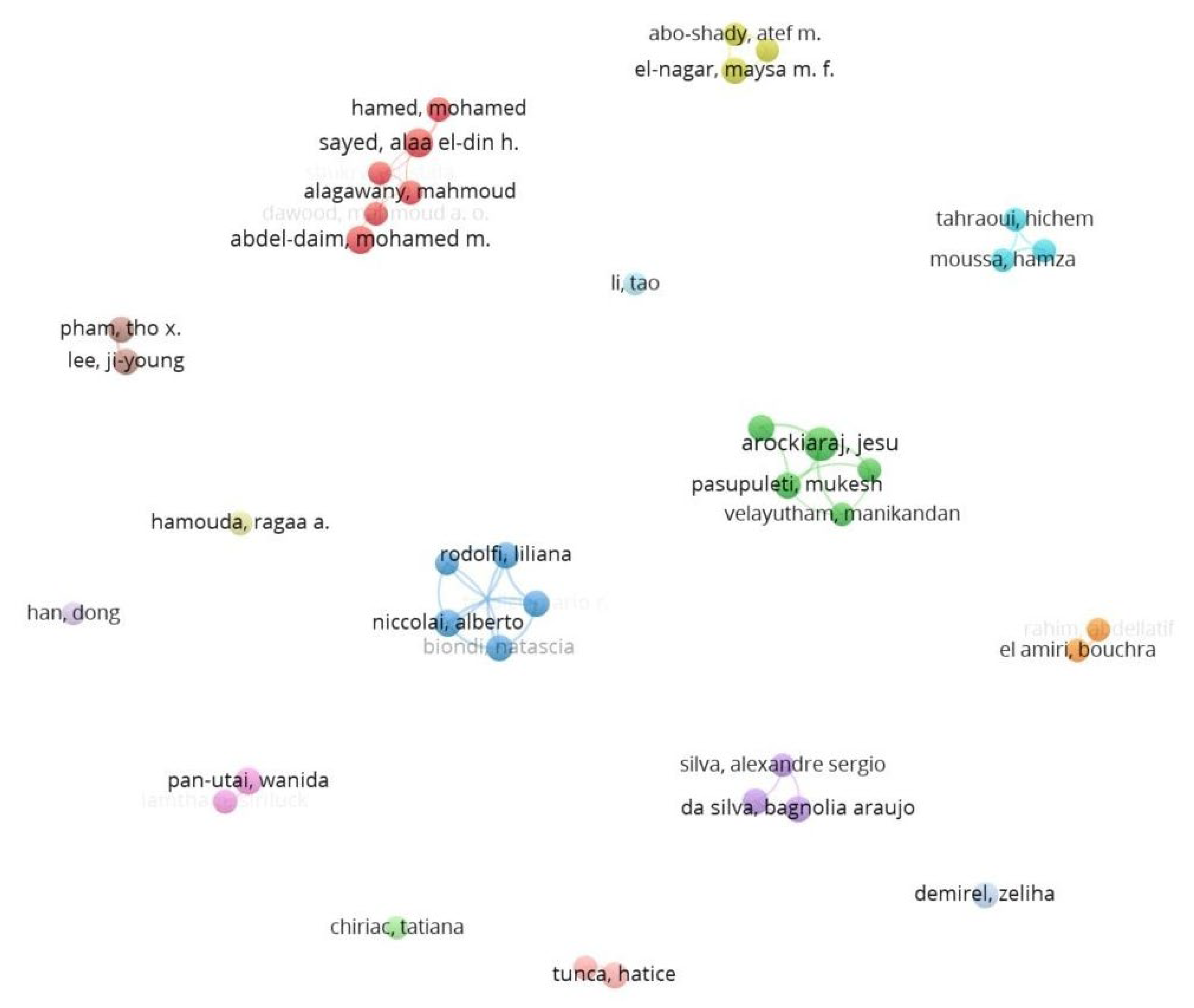
The bibliometric visualization presents a co-authorship network in which the bubbles represent authors, and the connecting lines reflect collaborative relationships resulting from co-publication. The colors highlight distinct clusters corresponding to specific research groups, typically organized around shared thematic areas.
The structure of the network shows that collaboration intensity is substantially higher within clusters, whereas the connections between clusters remain limited. This suggests the presence of relatively specialized scientific communities with weak inter-cluster integration at the international level Figure 3.
The green cluster includes authors such as Arockiaraj Jesu (SRM Faculty of Science and Humanities, Kattankulathur, Tamil Nadu, India), the most productive contributor within this group, along with Sarkar Purabi (Jain University, Bengaluru, Karnataka, India), Pasupuleti Mukesh (Jawaharlal Nehru University, New Delhi), and Velayutham Manikandan (Saveetha Institute of Medical & Technical Science, Chennai, Tamil Nadu, India). Together, they form a well-defined subgroup characterized by a small but consistent number of collaborative links (links = 4, Total Link Strength—TLS = 24).
In the purple cluster, Ferreira Paula Benvindo (Universidade Estadual Paulista, São Paulo, Brasil), the second most prolific author in the entire network, collaborates directly with Silva Alexandre Sergio (Universidade Federal da Paraiba, João Pessoa, Paraíba, Brasil) and da Silva Bagnolia Araujo (Universidade Federal da Paraiba, João Pessoa, Paraíba, Brasil). The intensity of these relationships is moderate (links = 2, TLS = 10), delineating a thematically coherent research group.
The red cluster, the largest and most densely connected of all, is centered around Abdel-Daim M.M. who has authored nine publications. This cluster also includes Mohamed H., Alagawany Mahmoud and Sayed Alaa El-Din H., forming a central subgroup with multiple interconnections, indicative of active collaboration and high scientific productivity.
The dark blue cluster represents predominantly a European research community, comprising authors such as Rodolfi Liliana, Tredici Mario R., Niccola Alberto, and Biondu Natascia. Their bubbles are similar in size and strongly interconnected (links = 4, TLS = 25), suggesting a stable and well-balanced collaborative network within this group.

2.5. Bibliometric Analysis of the Most Active Organizations in the Field

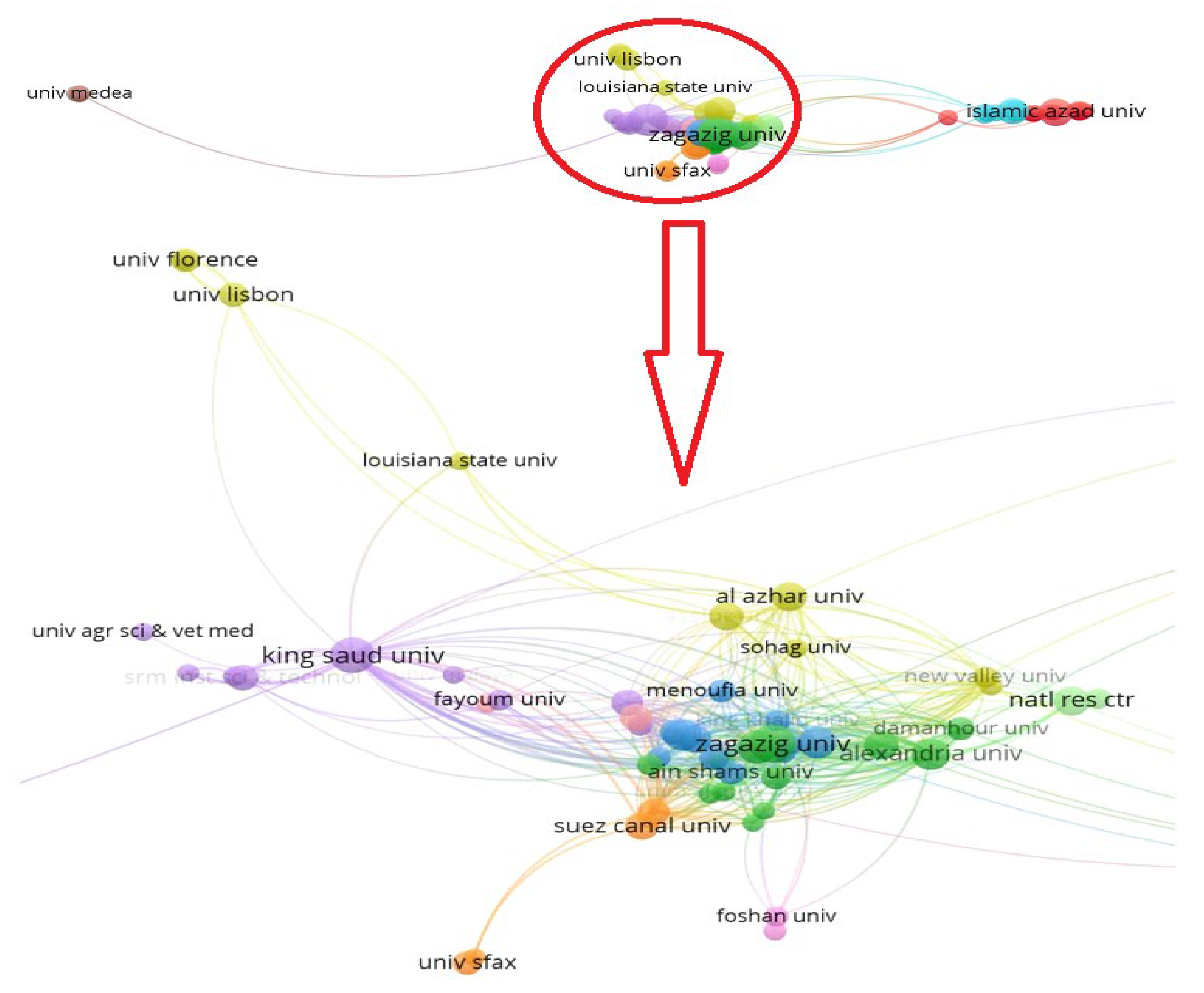
The authors contributing to this research field are affiliated with 1341 universities, although only 99 institutions have published at least five articles, indicating a relatively small core of institutions with sustained research productivity. The co-affiliation network reveals several institutional clusters, among which two stand out due to their size and density (Figure 4).
The red and yellow clusters comprise the largest and most consolidated collaboration structures. These clusters are dominated by Zagazig University (Links = 33, TLS = 102), King Saud University (Links = 38, TLS = 96), and Cairo University (Links = 27, TLS = 55). The network indicates the formation of a strong regional nucleus located in the Middle East and North Africa, characterized by frequent partnerships, intensive research activity, and highly interconnected institutional collaboration.
The purple cluster includes institutions such as Al Azhar University (Links = 22, TLS = 40) and Assiut University (Links = 20, TLS = 34). These appear as connected nodes positioned at the periphery of the major structures, yet they maintain collaborative links with universities in the red cluster. They identify global centers of excellence (e.g., the Middle East/North Africa hub identified in Figure 4) and highlight the fragmentation of international collaboration. This is valuable for researchers looking to identify potential partners or understand the geopolitical landscape of Spirulina biotechnology.

2.6. Bibliometric Analysis of Country Collaboration Network

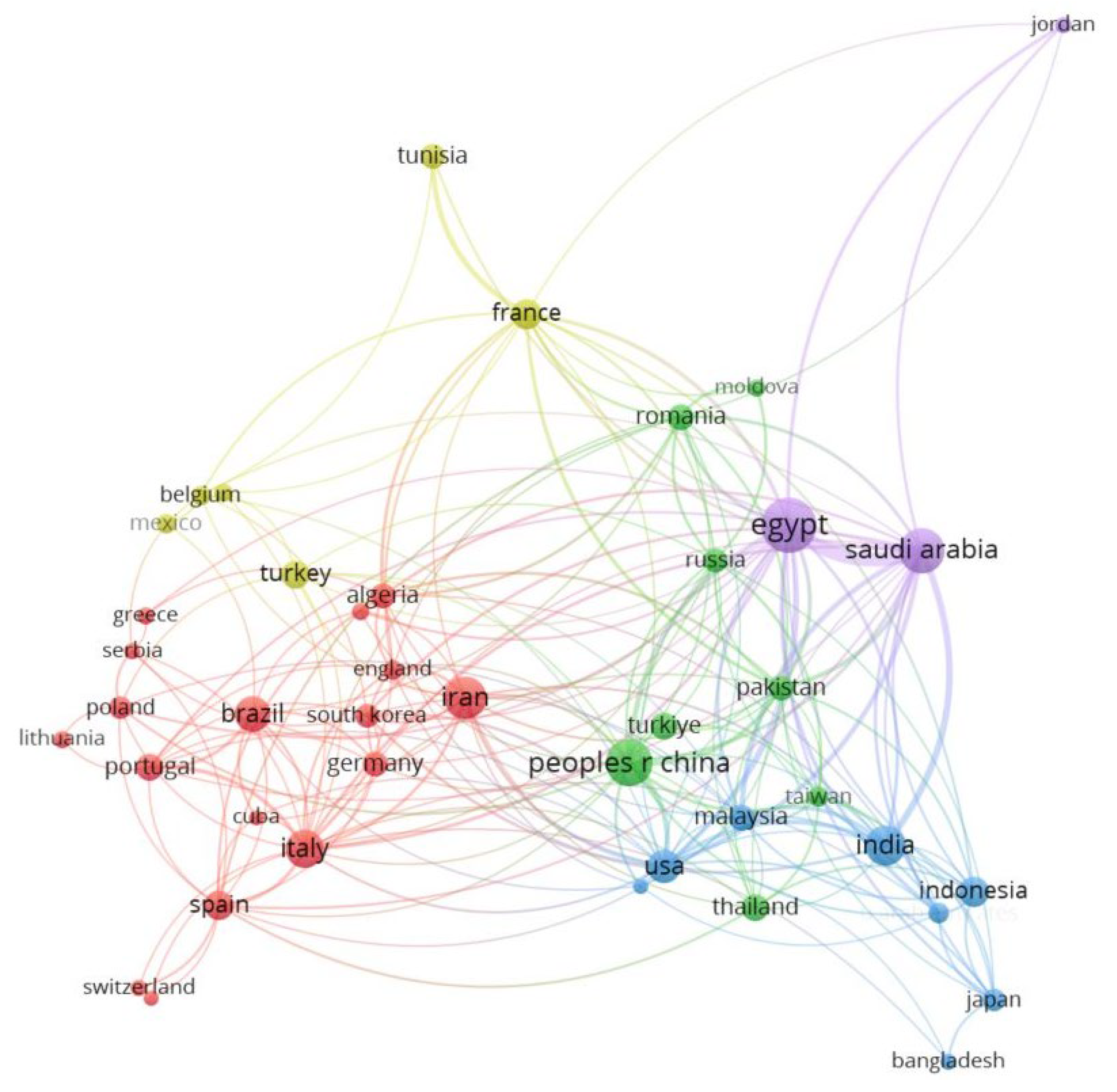
The authors contributing to this field are affiliated with 88 countries, of which 44 have published at least five articles on Spirulina and its bioactive properties. The structure of international collaborations (Figure 5) reveals four major clusters, each representing a distinct network of global scientific interactions. The overall configuration of the map suggests a highly globalized research landscape, organized around several regional centers of excellence.
The green cluster is dominated by the People’s Republic of China, which emerges as the central hub of the entire global collaboration network. China exhibits the highest volume of international partnerships and maintains strong connections with countries from the green, red, and yellow clusters alike. The presence of countries such as Romania, Russia, Australia, and the United States within this cluster indicates a consolidated axis of cooperation structured around China, which functions as the primary scientific hub in the field.
The purple cluster predominantly comprises countries from the Middle East and South Asia, led by Egypt, Saudi Arabia, and India. These nations form a dense network characterized by strong regional collaborations and extensive scientific ties with China. The rapid expansion of Spirulina-related research within this geographic area is evidenced by robust interconnections linking Egypt, India, and Southeast Asian countries, reflecting emerging interest in the biomedical, nutritional, and pharmaceutical applications of microalgae.
The red cluster, centered around Iran, Italy, and Brazil, represents a Euro-Mediterranean and Latin American research nucleus. Collaborations within this cluster are diverse, spanning both fundamental and applied research on Spirulina bioactivity. The strong interconnectivity between Mediterranean countries (Italy, Spain, and Algeria) and South American states suggests a bidirectional flow of expertise, with Iran playing a pivotal role in establishing and maintaining transregional scientific links.
The yellow cluster, coordinated by France, includes both European and North African countries (e.g., Tunisia), reflecting an active francophone research network. France functions as the central node of this cluster, facilitating scientific cooperation between Western Europe and North Africa. These patterns indicate the existence of a solid trans-Mediterranean research ecosystem oriented toward biotechnology, food chemistry, and the valorization of algal biomass.
Author, institutional and country networks were intended to provide a broader understanding of the structure of scientific collaboration and knowledge production in this research field. Taken together, the global network map demonstrates that research on Spirulina is strongly structured around several regional centers of excellence—namely China, Egypt, Iran, and France—which act as major points of interconnection between different international scientific communities. This distribution suggests both an intensification of global cooperation and a geographically differentiated specialization of research interests, with significant potential for future strengthening of transcontinental partnerships.

3. Chemical Composition of Spirulina Platensis

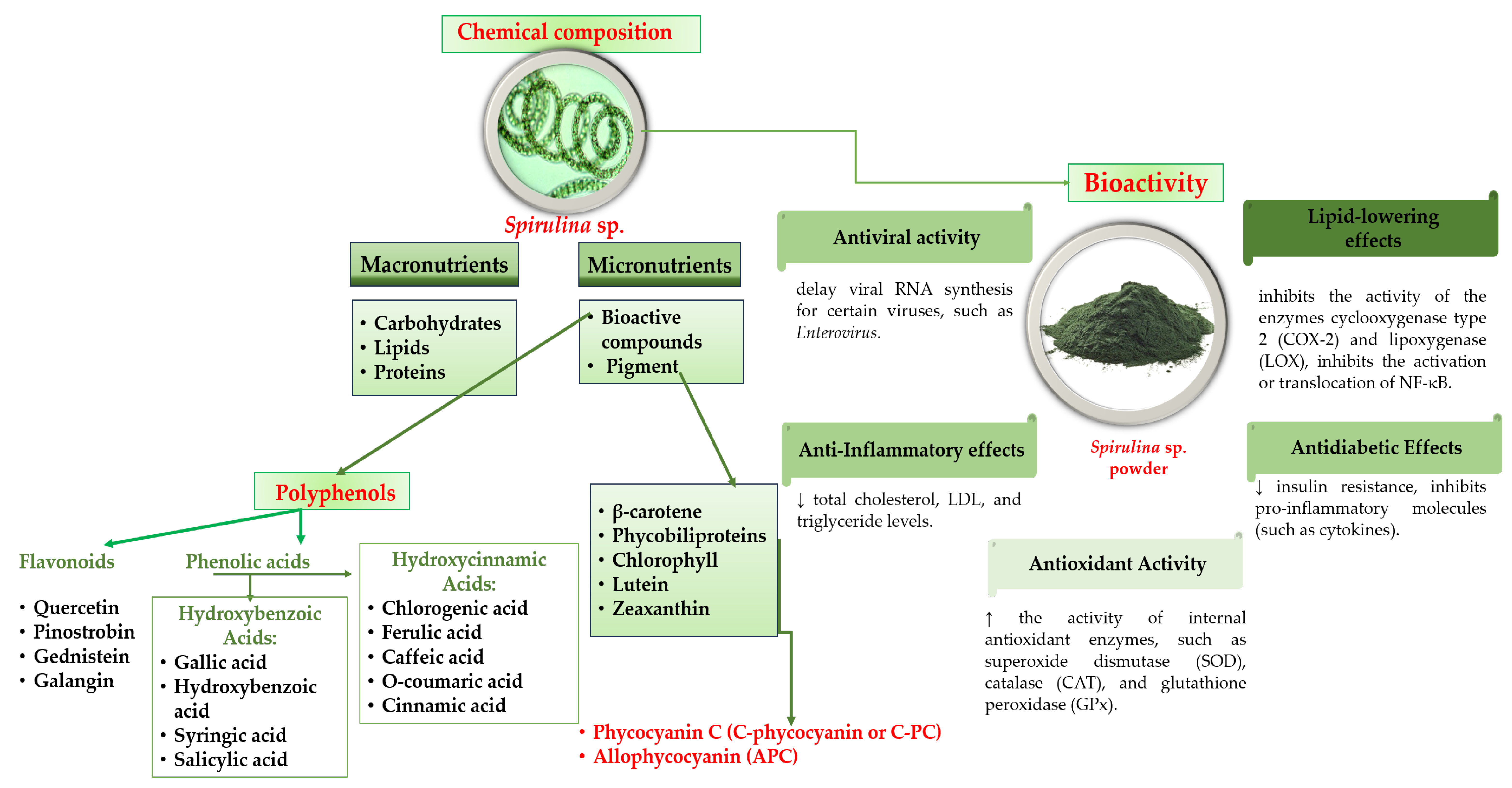
Spirulina sp. has attracted attention in recent years due to its complex composition being rich in macronutrients and micronutrients but also in phytochemical compounds known for their positive applications in various medical fields, in the cosmetic and pharmaceutical industries. The complex composition makes spirulina also considered a superfood, being increasingly used in the food industry to obtain consumer products known as superfoods [10].
The macronutrients present in Spirulina are carbohydrates, lipids, proteins, and vitamins. Spirulina has also attracted attention in the last decade due to its composition rich in micronutrients such as phytocompounds (secondary products) and pigments (especially chlorophyll, carotenoids and phycocyanin) [11,12,13].

3.1. Macronutrients

3.1.1. Proteins

Proteins represent the largest percentage of Spirulina’s chemical composition compared to total macronutrients (60–70%), and their properties are exceptional compared to other conventional protein sources due to distinct characteristics such as the lack of cellulose in the spirulina cell wall and the low amount of methionine, cystine and lysine, which makes their digestion much easier [12,14,15].
However, proteins from spirulina are complex proteins, with high functionality due to their rich content in essential amino acids such as valine (in the largest amount), lysine, methionine, leucine, threonine, phenylalanine, and tryptophan [14].
Spirulina is also an excellent source of non-essential amino acids such as aspartic acid, arginine, glycine, proline, cysteine, alanine, tyrosine, and serine [4,16].
Due to the complex composition in terms of essential and non-essential amino acid content, proteins extracted from algae such as Spirulina sp. are recommended by the US Food and Drug Administration (FDA) and the Food and Agriculture Organization (FAO) for the nutrition and protein needs of people with a high predisposition to allergies, the elderly (due to the inability to digest proteins from conventional sources) and even for the protein needs of infants and young children [14].

3.1.2. Lipids

The lipid content of Spirulina typically ranges from 5% to 10% of its dry biomass. While it contains various polyunsaturated fatty acids (PUFAs), it is uniquely recognized as a concentrated source of gamma-linolenic acid (GLA, C18:3 n-6), an omega-6 fatty acid that can account for 10% to 31% of its total fatty acid profile. GLA is a known precursor for anti-inflammatory prostaglandins and is relatively rare in the human diet. In contrast, long-chain omega-3 fatty acids such as eicosapentaenoic acid (EPA) and docosahexaenoic acid (DHA) are generally present only in trace or negligible concentrations in most commercial Spirulina strains. Consequently, while Spirulina provides essential precursors like alpha-linolenic acid (ALA), it is not considered a primary dietary source for preformed DHA or EPA [17,18,19].

3.1.3. Carbohydrates

Carbohydrates represent approximately 20–25% of the total macroelements and are represented largely by polysaccharides, the most representative of which is sulfonated heteropolysaccharides, which in turn is composed of D-mannose, D-rhamnose, D-galactose, D-glucose and glucuronic acid [4].
Spirulina polysaccharides are those that give it distinct biological activities with therapeutic potential, among which we can mention immunomodulatory, anti-aging, antioxidant, antiviral and anti-inflammatory properties [20,21,22]. Other representatives of the class are monosaccharides such as ribose, fructose, galactose, rhamnose, xylose and galacturonic acid.

3.1.4. Vitamins, Minerals, Fiber

The content of vitamins, minerals and fibers is considerable but is slightly influenced by the growth and development environment of the cyanobacteria.
The vitamin content is characterized by the existence of the B vitamin complex (vitamin, B3, B6 and B12), but also by the existence of vitamins A, D, E, and K. Due to the high vitamin content and the existence of the B vitamin complex, spirulina is an effective alternative to avoid vitamin B deficiencies characteristic of people with a vegetarian diet.
From the point of view of the mineral content, the existence of selenium in the form of selenite and seleno-methionine (specific forms of cyanobacteria, easily absorbable) is noteworthy. Potassium is the most representative mineral in terms of quantity (approximately 1300 mg/100 g spirulina powder), followed by sodium, phosphorus, calcium, magnesium, and iron [16,23,24].
The fibers present in spirulina represent 5–10% of the total dry composition and are represented by soluble fibers (especially pectin) and insoluble fibers. These favor digestion and are directly involved in the intestinal colonization process (having been demonstrated to support the growth and development of beneficial bacteria such as Lactobacillus casei, L. acidophilus and Bifidobacterium spp.) [25].

3.2. Other Bioactive Compounds

3.2.1. Phenolic Compounds

The representative bioactive compounds found in Spirulina sp. are represented by phenolic derivatives, namely phenolic acids and flavonoids.
From the category of polyphenols, the following compounds are mentioned in the specialized literature: pinostrobin, quercetin, galangin, lutein, genistein, phycocyanin, canthaxanthin, zeaxanthin, gallic acid, chlorogenic acid, salicylic acid, ferulic acid, caffeic acid, hydroxybenzoic acid, syringic acid, O-coumaric acid, cinnamic acid, eugenol, vanillin [26].
These polyphenolic compounds have been attributed to most of the biological properties of the consumption of extracts from Spirulina sp., such as antioxidant, anti-inflammatory, anticancer, and antidiabetic activity, etc.

3.2.2. Pigments

The category of bioactive compounds of the pigment and secondary metabolite type includes carotenoids, chlorophyll and phycobiliproteins (derivatives of existing proteins, considered a separate class with high biological functionality).
From the category of phycobiliproteins, allophycocyanin, C-phycocyanin, and R-phycocyanin are highlighted in the specialized literature. Cryptoxanthin, β-cryptoxanthin, β-carotene, zeaxanthin, chlorophyll a, oscillaxanthin, 3-hydroxyechinone, canthaxanthin, echinone, mixoxanthophyll, diatoxanthin and xanthophylls with an important role in the food industry are also highlighted, being used as natural colorants or as antioxidants during storage [10,16,26].
The biochemical composition of Spirulina sp. is evidenced in Figure 6.

4. Bioactivity of Spirulina Compounds

The bioactive properties of Spirulina platensis compounds are spread across a plethora of therapeutic activities, such as suppression of oxidative stress biomarkers and inflammatory cytokines, protection against UV exposure and Cd toxicity, and regulation of neurotransmission, as presented in Table 1. The high volume of antioxidant and anti-inflammatory research studies aligns with the red cluster identified in the above-mentioned co-occurrence network. Other effects include improvement of glycemia, HbA1c, insulin levels and the lipid profile (Table 2), as well as disturbance of viral/microbial cell membrane/wall and function and an inhibitory effect on cancer cell proliferation (Table 3 and Table 4). Another application of Spirulina in the nutrition field is based especially on the regulation of intestinal microbiota (Table 5), as previously pointed out by the blue cluster.

5. Current Limitations and Evidence Gaps

While the therapeutic potential of Spirulina platensis is supported by a vast body of literature, several critical limitations must be acknowledged to provide a balanced scientific perspective.

5.1. From In Vitro Models to Human Clinical Reality

A significant portion of the evidence cited in this review, particularly regarding antiviral and anticancer activities, is derived from in vitro studies or animal models. While these studies are essential for identifying molecular mechanisms, such as the inhibition of viral attachment or the induction of apoptosis via the PKC II-Nrf-2/HO-1 pathway [42], they do not directly translate to human clinical efficacy. Factors such as human bioavailability, metabolic degradation in the digestive tract, and the achievement of therapeutic concentrations in target tissues remain a significant “evidence gap.” For instance, in vitro inhibition of HIV-1 replication should not be misinterpreted as a definitive “anti-AIDS effect” in a clinical setting.

5.2. Limitations of Existing Clinical Trials

Current human clinical trials often suffer from methodological constraints. As noted in the bibliometric analysis, while interest is growing, many studies (e.g., the randomized trial on obesity, Zeinalian et al., 2017 [70]) utilize relatively small sample sizes (n = 64). Such pilot studies are prone to overstating effects and lack the statistical power of large-scale, multicenter Phase III trials. Furthermore, the lack of standardization in Spirulina dosage (ranging from 1 to 10 g daily) and the variety of preparation forms (powder, capsules, and extracts) make it difficult to establish definitive clinical protocols [70].

5.3. Safety, Toxicity, and Environmental Concerns

Despite its GRAS (Generally Recognized as Safe) status, Spirulina is not without risks. As a cyanobacterium, its quality is highly dependent on the growth environment. Studies have shown that Spirulina can bioaccumulate heavy metals such as lead (Pb) and cadmium (Cd) if grown in contaminated water [3,45]. This highlights the necessity for rigorous batch testing and standardized cultivation practices to prevent nephrotoxicity or hepatotoxicity in consumers. Additionally, while “excellent” nutritional claims are common, its modest lipid content (6–8%) means it should be viewed as a supplemental source of specific fatty acids, like linolenic acid, rather than a primary fat source in the diet.

6. Applications in Skin Health

It is widely considered that holistic skincare includes four major approaches: cleansing, moisturizing, specific treatment and photoprotection. However, this approach is a combination of different factors: lifestyle, diet, psychosocial and socio-economic status, type of skincare products used, and environment [71]. Actually, this is part of a healthy lifestyle.
The natural bioactive compounds present in spirulina (phycobiliproteins, vitamins, carotenoids, and phenolic compounds) not only serve as colorants, but also offer multi-potent properties: antioxidant, anti-inflammatory, immunomodulatory, antimicrobial, and anti-aging. Hence, due to its multifaceted benefits for skin health, spirulina is included nowadays in many cosmetic products.
As a natural ingredient with high protein content and an abundance of essential amino acids, it also has a unique feature—the blue pigment (phycocyanin), particularly effective in shielding skin cells from UV-induced apoptosis.
Several in vitro studies demonstrated high sun protective factors of 30 by attenuating its biological protective effects against UVB-irradiated human skin fibroblast cultures [40]. Moreover, the Arthrospira platensis extract also protects against UVB-induced DNA damage and regulates UVB-induced MMP1 expression.
Mapoung et al. [40] obtained S. platensis extract containing high amounts of phenolic compounds (23,465.71 ± 167.72 mg GAE/kg extract), and it was found to exert antioxidant activities upon UVB irradiation of fibroblast cells. The extract inhibited cytokine production and tyrosinase activity in UVB-irradiated skin fibroblasts [40,41].
Kim et al. [42] highlighted the molecular mechanism of phycocyanin protection against UVB-induced apoptosis in Human Primary Skin Cells. Pc treatments were associated with increased levels of nuclear factor erythroid-derived 2 (NF-E2)-like 2 (Nrf-2) nuclear translocation, and reduced p53 and Bax levels, as well as caspase-3 activation [42]. Their conclusions demonstrated that phycocyanin-induced expression of HO-1 is mediated by the PKC α/β II-Nrf-2/HO-1 pathway. However, although UVB-induced apoptotic cell death was suppressed by phycocyanin, the lipid signaling pathway involved in cell cycle arrest remained unclear.
Hence, based on these findings, different formulations containing UV filters and natural antioxidants were developed, claiming a synergistic effect of the simultaneous use of UV filters and algae active compounds, which are able to absorb sunlight, protect the skin and improve its appearance. For example, Souza et al. developed a sunscreen containing antioxidants extracted from Spirulina and dimethylmethoxy chromanol, showing that the formulation exhibits a behavior of SPF 30 in vivo, by significantly improving the skin pigmentation and the skin net elasticity after 84 days of treatment, compared to the sunscreen alone [43]. This study employed a nanotechnological approach, as dimethylmethoxy chromanol was loaded into solid lipid nanoparticles, creating a hydrophilic shell and a hydrophobic lipid core, which allowed the encapsulation of hydrophobic compounds.
In addition to the sunscreen formulations, the benefits of spirulina incorporation in topical skin-care formulations, such as a moisturizing, antiwrinkle, antiaging and antiacne agent, were reported, for both skin and hair application. A comprehensive review devoted to the recent cosmetic applications of spirulina, its ability to improve skin appearance, and a related cosmetic benchmark was reported by Ragusa et al. (2021) [72]. Moisturizing, antioxidant and brightening effects as a part of the anti-aging treatment are emphasized, considering that skin aging is a complex process that depends on both genetic predisposition and external factors, with water molecules playing a pivotal role in maintaining the skin’s structural properties.
Moreover, the antiacne effect and wound healing properties of spirulina were pointed out due to its flavonoids and triterpenoids, which act as astringent and antimicrobial agents [72]. Once again, the nanotechnological approach proved its efficacy by designing Spirulina–polycaprolactone nanofibers and Spirulina extract alginate saturated polycaprolactone nanofibers, which can accommodate large amounts of water. This combination effectively accelerated the tissue regeneration in a rat model (3.7% w/v of Spirulina extract) according to Choi et al. (2017) [44].
Nowadays, the technological advances in micro- and nanoencapsulation overcome the main limitations related to the chemical instability of spirulina compounds and low skin permeability.
The literature also presents evidence that the properties and behavior of the Spirulina extracts are strongly influenced by the extraction procedure and by the chosen solvent.
The extraction of phycocyanin from cyanobacteria is difficult because the cell wall consists of four layers: fiber, peptidoglycan, protein and oligosaccharide. According to the literature, different methods have been applied for the extraction of phycocyanin, such as bead grinding, ultrasonication, high-pressure homogenization, pulsed electric fields, microwave, repeated freeze–thaw method, and lysozyme treatment [73], while some factors are reported to affect the stability of phycocyanin, such as high temperature and strong light.
On the other hand, the specific solvent depends on the target compound. The combinations like acetone–methanol or n–hexane are frequently used for pigment extraction (chlorophyll and carotenoids), while water or aqueous buffers are used for phycobiliproteins, using ultrasound-assisted extraction or repeated freeze–thawing cycles. It was demonstrated that both time and solvent have a significant impact on the recovery of antioxidant compounds when conventional extraction is used [74].
Finally, it is important to notice that improving the general skin condition using natural products has a positive impact on well-being and self-confidence. Also, it is important to point out that skincare products rich in natural ingredients have to be appropriately chosen for the specific needs of different types of skin. However, holistic skincare is not just about choosing the right skincare products, but also about taking care of our entire body’s health.

7. Application in Food Industries

Due to its rich protein content (50–60% depending on culturing conditions), spirulina is widely used as a food supplement, addressing nutritional deficiencies. Recently, a large number of industrial products such as pasta, bread, snacks, yogurt, ice cream and beverages have been developed by incorporating spirulina based on the new biotechnological advancements [15].
Starting in 1967, the International Association of Applied Microbiology recognized Spirulina as a valuable source of food for the future, in the context of sustainability [75]. It was pointed out that the integrated, cyclic way of commercial production of microalgae includes cultivation, harvesting, and conversion into bioproducts.
According to the literature [75] the most frequently used species are from the genus Spirulina (Arthrospira), S. platensis and S. maxima, as their protein concentration is around 60%, along with a high content of iron, essential unsaturated fatty acids (such as γ-linoleic acid), and a variety of B vitamins and natural carotenes, being used in powder, liquid, tablet, capsule, and oil forms.
The concept of functional food is a relatively new term and refers to food that provides additional health benefits in addition to the well-known nutritive value of the food. It was first introduced in Japan in 1991 and called “foods for specified health uses” [12]. Later, the novel functional regulatory system established in 2015 in the USA, called “foods with function claims” highlighted the need for significant evidence from clinical studies, protocols and guidelines concerning different aspects such as target subjects for enrolment in the study, significant points, and parameters for symptoms relating to skin, eyes, mental stress, joints, muscles, memory, sleep, bones, fatigue, body temperature, etc.
A large number of studies demonstrated that spirulina has the potential to be used in the development of functional foods because of the numerous health-promoting benefits associated with its consumption [22,61]. The impact of S. platensis on anthropometric indices and appetite in obese individuals has been evaluated in randomized trials [70].
Bakery products such as bread, pasta, and snacks incorporating spirulina were developed for their potential nutritional, techno-functional, and sensory benefits. Recently, Hernández-López et al. 2023 [20] showed that spirulina-fortified bread with different proportions of protein could be a nutritional alternative to enrich gluten-free baked goods. Moreover, they pointed out that, as a rich source of protein, spirulina is more sustainable than conventional protein sources (such as animal and other vegetable sources) [20].
A “Crostini” recipe incorporating 2%, 6% and respectively 10% (w/w) of A. platensis was reported by Alberto Niccolai et al. [76], evaluating the nutritional and functional properties of this bakery product largely consumed in Italy and Europe. It was suggested that 6% and 10% biomass added to the control can be claimed to be a “source of protein”, and moreover, presented significantly higher antioxidant capacity and phenolics. Other important results reported in this study revealed a significantly lower value of in vitro dry matter and protein digestibility of the A. platensis “crostini” compared to the control.
Spirulina consumption as a healthy beverage was reported by Gopal and Sruthilakshmi [77], by combining both the Spirulina and green tea powder in three different formulations. It was demonstrated that the Spirulina/green tea ratio 1:1 (dried powders) showed greater antioxidant and protein content, based on the percentage of DPPH inhibition.
A unique fermented whey-based sports beverage containing 0.25%, 0.5%, and 0.75% (w/w) powdered spirulina was elaborated in order to sustain the textural quality of products by boosting sensory characteristics and improving rheological properties [78]. The researchers highlighted an accelerated fermentation upon addition of 0.5% Spirulina, while preserving sensory acceptability, improving the nutritional value and antioxidant capacity.
The stimulation of the fermentation process by Spirulina biomass was also observed by Barkallah et al. [79] while producing yogurt with stable acidity and color, concomitant with improved texture with better viscosity, reduced syneresis, and improved shelf life. Moreover, thanks to its high content in pigments (chlorophylls and carotenoids), Spirulina considerably improved the antioxidant activity of the newly formulated yogurt, as demonstrated by the DPPH assay.
It is well accepted that synthetic additives generally have better chemical properties and physical stability, being also less expensive than natural additives or pigments, but the demand for natural foods and nutraceuticals has increased considerably in recent years. C-phycocyanin is the most abundant photosynthetic pigment present in Spirulina phycobiliproteins, being recognized as a food colorant by the FDA (Food and Drug Administration). These regulations also present the specifications in terms of the maximum limit of use (maximum concentration) in different food products: ice cream, candies, powders for the preparation of drinks, soups, yogurts, etc. [80].
Another important aspect pointed out by Pradeep et al. is related to the rheological properties of C- phycocyanin alone and when added to different food matrices, being a crucial feature when it comes to characterizing the stability of the final product. In this respect, studies were conducted in order to improve the thermal stability at 60 °C, 70 °C, and 80 °C by micro- or nanoencapsulation, using different strategies, for example, the controlled extrusion technology by calcium alginate matrix [81].
Overall, the recent advancements in genetic engineering and biotechnology highlighted the various challenges, including nutritional degradation during processing and consumer acceptance, but also identified ways to reduce the environmental impact of Spirulina production. Preservation through encapsulation techniques by integrating bio-nanotechnology while exploring the harmonious synergy between food systems, economy, and industry will open innovative opportunities for the food industry.

8. Spirulina Administration: From Conventional Approach to Carrier-Type Formulas

Due to its remarkable nutritional profile and multiple implications in the medical, cosmetic and food sectors, Spirulina platensis is recommended for daily consumption, acting both as a nutraceutical agent and as a functional ingredient capable of enriching food matrices with bioactive and structural compounds essential to the human body.
Traditional methods of administration, which include the use of conventional pharmaceutical formulations (tablets, capsules, and powders), face major limitations [14,16,22]. These are associated with the disadvantage of the disintegration and destruction of active phytocompounds along the digestive tract. In addition, classic formulations present low tolerability in patients with gastric diseases, as well as low stability and validity during storage [82].
To overcome these obstacles and ensure optimal bioavailability and a desired pharmaceutical effect, recent research has focused on the development of advanced “carrier” systems. These innovations include complex formulations such as chitosan and mannitol-based microparticles, sodium alginate microparticles, nanofibers or nanoprecipitates using biodegradable polymers such as lactic acid, poly-b-hydroxybutyrate or lactic-co-glycolic acid [18].
The combination of biotechnology and nanomaterials has led to the development of innovative bioproducts with enhanced functional value of the microbial biomass. Thus, Spirulina platensis was enriched with various nanoparticles or nanomaterials (AgNPs, SeNPs, reduced graphene oxide, chitosan NPs, FeNPs, Ag/TiO2NPs, and Ag/ZnONPs), enhancing various properties, such as biomass accumulation, antioxidant status, nanoparticle uptake, growth performance, antimicrobial activity, humoral immune response, microbial populations, radioprotection, survival rate, phycofertilizer, and photosensitizer [23,56,83,84,85,86,87]. This strategy has boosted its nutritional and therapeutic value, obtaining promising results for the elaboration of new functional foods, nutraceuticals or medications based on S. platensis and nanoparticles.
Lately, the green synthesis of NPs has attracted huge attention due to its notorious advantages, including being eco-friendly, cost-effective and a simple approach with medical and biological applications. Therefore, aqueous extracts of Spirulina sp. were also employed as reducing agents for the biosynthesis of various nanoparticles or nanocomposites (AgNPs, CuONPs, GaFe2O4@Ag nanocomposite, carbon quantum dots, and TiO2@CTAB nanocomposite), showing improved synergic properties such as antibacterial efficacy, photocatalytic activity, cytotoxic effect, adsorbent, and fertilizer [88,89,90,91,92,93]. These novel and efficient nanostructures have presented huge potential for pharmacological, biomedical, agricultural and environmental applications.

9. Conclusions

Bibliometric analysis and review of the specialized literature confirm the vast potential of Spirulina in medicine and the food industry. To fully exploit this resource, global cooperation is essential to optimize extraction methods and production technologies. Priority directions include the development of advanced nutraceuticals and the use of bioactive compounds in biomedical solutions. Future research should focus on optimizing Spirulina cultivation technologies, improving the extraction and stabilization of bioactive compounds, and exploring innovative applications in functional foods, nutraceuticals and biomedical nanotechnology.

Supplementary Materials

The following supporting information can be downloaded at: https://www.mdpi.com/article/10.3390/app16094203/s1.

Author Contributions

Conceptualization, F.M., F.B., A.P., D.S.C. and A.A.; methodology, L.F., F.M. and D.S.C.; software, F.B. and D.S.C.; writing—original draft preparation, F.M., L.F., F.B., D.S.C., A.P. and A.A.; writing—review and editing, F.M., F.B., A.P., L.F., D.S.C. and A.A.; project administration, F.M. and A.P.; funding acquisition, D.S.C. All authors have read and agreed to the published version of the manuscript.

Funding

The APC was funded by the University of Oradea.

Institutional Review Board Statement

Not applicable.

Informed Consent Statement

Not applicable.

Data Availability Statement

Not applicable.

Conflicts of Interest

The authors declare no conflicts of interest.

References

  1. Fais, G.; Manca, A.; Bolognesi, F.; Borselli, M.; Concas, A.; Busutti, M.; Broggi, G.; Sanna, P.; Castillo-Aleman, Y.M.; Rivero-Jiménez, R.A.; et al. Wide Range Applications of Spirulina: From Earth to Space Missions. Mar. Drugs 2022, 20, 299. [Google Scholar] [CrossRef]
  2. Elfar, O.; Billa, N.; Lim, H.R.; Kit Wayne, C.; Munawaroh, H.; Deepanraj, B.; Show, P.-L. Advances in Delivery Methods of Arthrospira platensis (Spirulina) for Enhanced Therapeutic Outcomes. Bioengineered 2022, 13, 14681–14718. [Google Scholar] [CrossRef]
  3. Purev, O.; Park, C.; Kim, H.; Myung, E.; Choi, N.; Cho, K.; Purev, O.; Park, C.; Kim, H.; Myung, E.; et al. Spirulina platensis Immobilized Alginate Beads for Removal of Pb(II) from Aqueous Solutions. Int. J. Environ. Res. Public Health 2023, 20, 1106. [Google Scholar] [CrossRef]
  4. Bortolini, D.G.; Maciel, G.M.; de Andrade Arruda Fernandes, I.; Pedro, A.C.; Rubio, F.T.V.; Branco, I.G.; Haminiuk, C.W.I. Functional Properties of Bioactive Compounds from Spirulina Spp.: Current Status and Future Trends. Food Chem. Mol. Sci. 2022, 5, 100134. [Google Scholar] [CrossRef]
  5. Wu, Q.; Liu, L.; Miron, A.; Klímová, B.; Wan, D.; Kuča, K. The Antioxidant, Immunomodulatory, and Anti-Inflammatory Activities of Spirulina: An Overview. Arch. Toxicol. 2016, 90, 1817–1840. [Google Scholar] [CrossRef] [PubMed]
  6. Anvara, A.A.; Nowruzib, B. Bioactive Properties of Spirulina: A Review. Microb. Bioact. 2021, 4, 134–142. [Google Scholar] [CrossRef]
  7. Żymańczyk-Duda, E.; Samson, S.O.; Brzezińska-Rodak, M.; Klimek-Ochab, M. Versatile Applications of Cyanobacteria in Biotechnology. Microorganisms 2022, 10, 2318. [Google Scholar] [CrossRef] [PubMed]
  8. Jung, F.; Krüger-Genge, A.; Waldeck, P.; Kuepper, J. Spirulina platensis, a Super Food? J. Cell. Biotechnol. 2019, 5, 43–54. [Google Scholar] [CrossRef]
  9. D’Ascoli, M.; Langellotti, A.L.; Russo, G.L.; Sorrentino, A.; Di Pierro, P. Phycocyanin Extraction from Limnospira spp.: Sustainable Source of Natural Blue Color for the Food Industry. Curr. Res. Food Sci. 2025, 11, 101141. [Google Scholar] [CrossRef]
  10. da Silva, M.R.O.B.; da Silva, R.O.B.; do Nascimento, B.E.G.; Ramos, D.G.; Mendes, M.E.M.; de Fátima Ferreira da Silva, S.; Brandão Costa, R.M.P.; de Araújo Viana Marques, D. Therapeutic Applications of Arthrospira sp. in Human Health: An Overview. S. Afr. J. Bot. 2025, 184, 1359–1385. [Google Scholar] [CrossRef]
  11. Elwakil, B.H.; Eskandrani, A.; El-Kady, H.; Shahin, Y.H.; Awaad, A.K. Spirulina platensis as a Super Prebiotic to Enhance the Antibacterial Effect of Lactobacillus casei. S. Afr. J. Bot. 2024, 173, 417–429. [Google Scholar] [CrossRef]
  12. Iwatani, S.; Yamamoto, N. Functional Food Products in Japan: A Review. Food Sci. Hum. Wellness 2019, 8, 96–101. [Google Scholar] [CrossRef]
  13. Mohammadi, M.; Soltanzadeh, M.; Ebrahimi, A.R.; Hamishehkar, H. Spirulina platensis Protein Hydrolysates: Techno-Functional, Nutritional and Antioxidant Properties. Algal Res. 2022, 65, 102739. [Google Scholar] [CrossRef]
  14. Shah, M.A.R.; Zhu, F.; Cui, Y.; Hu, X.; Chen, H.; Kayani, S.-I.; Huo, S. Mechanistic Insights into the Nutritional and Therapeutic Potential of Spirulina (Arthrospira) spp.: Challenges and Opportunities. Trends Food Sci. Technol. 2024, 151, 104648. [Google Scholar] [CrossRef]
  15. Withana, T.N.; Ranasinghe, Y.S.; Rathnayake, A.I.; Bamunuarachchige, T.C.; de Zoysa, H.K.S. Applications of Spirulina in the Food Industry: Scientometric and Systematic Review. Food Humanit. 2025, 5, 100644. [Google Scholar] [CrossRef]
  16. Ziyaei, K.; Abdi, F.; Mokhtari, M.; Daneshmehr, M.A.; Ataie, Z. Phycocyanin as a Nature-Inspired Antidiabetic Agent: A Systematic Review. Phytomedicine 2023, 119, 154964. [Google Scholar] [CrossRef]
  17. Sajilata, M.G.; Singhal, R.; Kamat, M.Y. Fractionation of Lipids and Purification of γ-Linolenic Acid (GLA) from Spirulina platensis. Food Chem. 2008, 109, 580–586. [Google Scholar] [CrossRef]
  18. Spínola, M.P.; Mendes, A.R.; Prates, J.A.M. Chemical Composition, Bioactivities, and Applications of Spirulina (Limnospira platensis) in Food, Feed, and Medicine. Foods 2024, 13, 3656. [Google Scholar] [CrossRef]
  19. Vignaud, J.; Loiseau, C.; Côme, M.; Hérault, J.; Mayer, C.; Lépine, O.; Ulmann, L. Spirulina Liquid Extract Regulates Gene Expression Related to Glucose and Lipid Metabolisms of Soleus Muscle during Exercise Training in Young Male Wistar Rats Fed a High-Fat Diet. Nutr. Res. 2025, 143, 1–15. [Google Scholar] [CrossRef]
  20. Hernández-López, I.; Alamprese, C.; Cappa, C.; Prieto-Santiago, V.; Abadias, M.; Aguiló-Aguayo, I. Effect of Spirulina in Bread Formulated with Wheat Flours of Different Alveograph Strength. Foods 2023, 12, 3724. [Google Scholar] [CrossRef]
  21. Chang, M.; Liu, K.; Zhu, G.; Gul, P.; Khan, J. Structural Characterization and Hypoglycaemic Effects on Type 2 Diabetic Mice of Spirulina platensis Polysaccharides and Se-Modified Polysaccharides. Food Biosci. 2025, 64, 105826. [Google Scholar] [CrossRef]
  22. Shariat, A.; Abbasalizad Farhangi, M.; Zeinalian, R. Spirulina platensis Supplementation, Macrophage Inhibitory Cytokine-1 (MIC-1), Oxidative Stress Markers and Anthropometric Features in Obese Individuals: A Randomized Controlled Trial. J. Herb. Med. 2019, 17–18, 100264. [Google Scholar] [CrossRef]
  23. Abdel-Moneim, A.-M.E.; Shehata, A.M.; Selim, D.A.; El-Saadony, M.T.; Mesalam, N.M.; Saleh, A.A. Spirulina platensis and Biosynthesized Selenium Nanoparticles Improve Performance, Antioxidant Status, Humoral Immunity and Dietary and Ileal Microbial Populations of Heat-Stressed Broilers. J. Therm. Biol. 2022, 104, 103195. [Google Scholar] [CrossRef] [PubMed]
  24. Kawsar, I.; Haque, M.I.; Azim, M.M.N.; Shuvo, R.I.; Bhuiyan, M.E.J.; Mozumder, A.; Hashem, M.A.; Islam, M.K.; Bhuiyan, M.M.U.; Hossain, M.G.; et al. Protective Effects of Spirulina platensis on Cadmium-Induced Hematobiochemical and Histopathological Alterations in Broiler Chickens. Poult. Sci. 2025, 104, 105466. [Google Scholar] [CrossRef]
  25. Mohamed Abbas, H.; Abdel-Kader Farahat, E.S.; Mohamed Zaky, W.; Gaber Mohamed, A. Applicability of Using Edible Algae (Spirulina platensis) to Prepare High Protein Quality Labenah. J. Biol. Sci. 2019, 19, 143–147. [Google Scholar] [CrossRef]
  26. Sharma, R.; Rana, A. Algal Elixirs: Unraveling the Multifaceted Impact of SPirulina in Human Health. Food Biosci. 2024, 62, 105365. [Google Scholar] [CrossRef]
  27. Eker, O.; Sayıl, Ç.; Deniz, N.G.; Toprakçı, İ.; Kurtulbaş, E.; Şahin, S. Exploring the Bioactive Potential of Spirulina platensis: Volatile Components, Antioxidant, and Antimicrobial Properties. Algal Res. 2025, 92, 104382. [Google Scholar] [CrossRef]
  28. Li, B.; An, Y.; Nan, F.; Liu, X.; Feng, J.; Xie, S. Optimizing Ultrasonic Extraction of Polysaccharides from Spirulina platensis and Evaluating Their Antioxidant and Antibacterial Activities in Acidic Environments. Int. J. Biol. Macromol. 2025, 302, 140478. [Google Scholar] [CrossRef]
  29. Tavakoli, S.; Hong, H.; Wang, K.; Yang, Q.; Gahruie, H.H.; Zhuang, S.; Li, Y.; Liang, Y.; Tan, Y.; Luo, Y. Ultrasonic-Assisted Food-Grade Solvent Extraction of High-Value Added Compounds from Microalgae Spirulina platensis and Evaluation of Their Antioxidant and Antibacterial Properties. Algal Res. 2021, 60, 102493. [Google Scholar] [CrossRef]
  30. Jiang, P.; Meng, J.; Zhang, L.; Huang, L.; Wei, L.; Bai, Y.; Liu, X.; Li, S. Purification and Anti-Inflammatory Effect of Selenium-Containing Protein Fraction from Selenium-Enriched Spirulina platensis. Food Biosci. 2022, 45, 101469. [Google Scholar] [CrossRef]
  31. Bhadauria, M.; Rakshit, S.; Gupte, S.S.; Shukla, S.; Agrawal, O.P.; Shrivastava, S.; Nirala, S.K. Phytochemical Evaluation, Safety Profile and Hepato-Renal Protective Potential of Green Gold Spirulina Capsules Containing Spirulina platensis in Rats. Pharmacol. Res. Nat. Prod. 2025, 7, 100240. [Google Scholar] [CrossRef]
  32. Villaró, S.; Jiménez-Márquez, S.; Musari, E.; Bermejo, R.; Lafarga, T. Production of Enzymatic Hydrolysates with In Vitro Antioxidant, Antihypertensive, and Antidiabetic Properties from Proteins Derived from Arthrospira platensis. Food Res. Int. 2023, 163, 112270. [Google Scholar] [CrossRef] [PubMed]
  33. Anekthanakul, K.; Senachak, J.; Hongsthong, A.; Charoonratana, T.; Ruengjitchatchawalya, M. Natural ACE Inhibitory Peptides Discovery from Spirulina (Arthrospira platensis) Strain C1. Peptides 2019, 118, 170107. [Google Scholar] [CrossRef] [PubMed]
  34. Haroun, M.; Idris, A.; Omar, S. Analysis of Heavy Metals during Composting of the Tannery Sludge Using Physicochemical and Spectroscopic Techniques. J. Hazard. Mater. 2009, 165, 111–119. [Google Scholar] [CrossRef]
  35. Dhara, S.; Chenchula, S.R.; Chakraborty, K.; Valluru, L.; Surabhi, G. Sulfated Rhamnoglucan Heteropolysaccharide of Spirulina platensis Attenuates Methimazole-Induced Hypothyroidism in Rats. Algal Res. 2024, 78, 103409. [Google Scholar] [CrossRef]
  36. El-Nagar, M.M.F.; Elsisi, A.E. Protective Effect of Spirulina platensis against Testicular Toxicity Induced by Bromoxynil Octanoate Herbicide through Reducing Oxidative Stress, and Inflammation and Regulating PPAR-γ/FOXO1/NF-ΚB and Nrf-2/HO-1 Signaling Pathways. Food Chem. Toxicol. 2025, 204, 115616. [Google Scholar] [CrossRef]
  37. Santos Assunção, L.; Quênia Muniz Bezerra, P.; Stahl Hermes Poletto, V.; de Oliveira Rios, A.; Graça Ramos, I.; Duarte Ferreira Ribeiro, C.; Aparecida Souza Machado, B.; Izabel Druzian, J.; Alberto Vieira Costa, J.; Larroza Nunes, I. Combination of Carotenoids from Spirulina and PLA/PLGA or PHB: New Options to Obtain Bioactive Nanoparticles. Food Chem. 2021, 346, 128742. [Google Scholar] [CrossRef]
  38. Al-Qahtani, W.H.; Binobead, M.A. Anti-Inflammatory, Antioxidant and Antihepatotoxic Effects of Spirulina platensis against d-Galactosamine Induced Hepatotoxicity in Rats. Saudi J. Biol. Sci. 2019, 26, 647–652. [Google Scholar] [CrossRef]
  39. Chatterjee, S.; Guha, S. Potential of Algal Oil Production from Secondary Treated Sewage: A Study Using Chlorella Vulgaris and Synthetic Wastewater. Environ. Technol. 2023, 45, 5276–5290. [Google Scholar] [CrossRef]
  40. Mapoung, S.; Arjsri, P.; Thippraphan, P.; Semmarath, W.; Yodkeeree, S.; Chiewchanvit, S.; Piyamongkol, W.; Limtrakul, P. Photochemoprotective Effects of Spirulina platensis Extract against UVB Irradiated Human Skin Fibroblasts. S. Afr. J. Bot. 2020, 130, 198–207. [Google Scholar] [CrossRef]
  41. Lee, J.-J.; Kim, K.B.; Heo, J.; Cho, D.-H.; Kim, H.-S.; Han, S.H.; Ahn, K.J.; An, I.-S.; An, S.; Bae, S. Protective Effect of Arthrospira platensis Extracts against Ultraviolet B-Induced Cellular Senescence through Inhibition of DNA Damage and Matrix Metalloproteinase-1 Expression in Human Dermal Fibroblasts. J. Photochem. Photobiol. B Biol. 2017, 173, 196–203. [Google Scholar] [CrossRef]
  42. Kim, K.M.; Lee, J.Y.; Im, A.-R.; Chae, S. Phycocyanin Protects Against UVB-Induced Apoptosis Through the PKC α/ΒII-Nrf-2/HO-1 Dependent Pathway in Human Primary Skin Cells. Molecules 2018, 23, 478. [Google Scholar] [CrossRef] [PubMed]
  43. Souza, C.; Campos, P.M.B.G.M. Development and Photoprotective Effect of a Sunscreen Containing the Antioxidants Spirulina and Dimethylmethoxy Chromanol on Sun-Induced Skin Damage. Eur. J. Pharm. Sci. 2017, 104, 52–64. [Google Scholar] [CrossRef] [PubMed]
  44. Choi, J.I.; Kim, M.S.; Chung, G.Y.; Shin, H.S. Spirulina Extract-Impregnated Alginate-PCL Nanofiber Wound Dressing for Skin Regeneration. Biotechnol. Bioproc. E 2017, 22, 679–685. [Google Scholar] [CrossRef]
  45. Faruk, E.M.; Ibrahim, F.; El-wafaey, D.I.; El Sayed, Y.M.I.; Hablas, M.G.A.; Hassan, M.M.; Zaazaa, A.M.; Kamal, K.M. Spirulina platensis Shields the Submandibular Gland from Cadmium Toxicity by Bolstering Antioxidant Defenses and Maintaining Its Structural Integrity. Int. Immunopharmacol. 2024, 140, 112851. [Google Scholar] [CrossRef] [PubMed]
  46. Zhou, N.; Long, H.; Wang, C.; Zhu, Z.; Yu, L.; Yang, W.; Ren, X.; Liu, X. Characterization of Selenium-Containing Polysaccharide from Spirulina platensis and Its Protective Role against Cd-Induced Toxicity. Int. J. Biol. Macromol. 2020, 164, 2465–2476. [Google Scholar] [CrossRef]
  47. Lu, Y.; Peng, B.; Lin, Y.; Lin, Q.; Xia, X.; Zhong, S.; Luo, L.; Huang, R. Spirulina Polysaccharide Induces the Metabolic Shifts and Gut Microbiota Change of Lung Cancer in Mice. Curr. Res. Food Sci. 2022, 5, 1313–1319. [Google Scholar] [CrossRef]
  48. Grover, P.; Bhatnagar, A.; Kumari, N.; Narayan Bhatt, A.; Kumar Nishad, D.; Purkayastha, J. C-Phycocyanin-a Novel Protein from Spirulina platensisIn Vivo Toxicity, Antioxidant and Immunomodulatory Studies. Saudi J. Biol. Sci. 2021, 28, 1853–1859. [Google Scholar] [CrossRef]
  49. Cai, B.; Yi, X.; Han, Q.; Pan, J.; Chen, H.; Sun, H.; Wan, P. Structural Characterization of Oligosaccharide from Spirulina platensis and Its Effect on the Faecal Microbiota In Vitro. Food Sci. Hum. Wellness 2022, 11, 109–118. [Google Scholar] [CrossRef]
  50. Hossain, A.A.; Rahad, M.A.; Anwar, M.B.; Haque, M.A.; Al-Emran, M.; Shahjahan, M. Dietary Spirulina platensis Alleviates Sumithion-Induced Growth Suppression, Oxidative and Immune Stress in Nile Tilapia (Oreochromis niloticus). J. Agric. Food Res. 2025, 23, 102186. [Google Scholar] [CrossRef]
  51. Alrasheedi, A.A.; Basnawi, A.I.; Althaiban, M.A. Effects of Spirulina platensis Microalgae on Renal Function and Antioxidant Defence in Rats with Streptozotocin-Induced Diabetes. J. Funct. Foods 2024, 122, 106485. [Google Scholar] [CrossRef]
  52. Ahmed, R.A.; Jastaniah, S.D.; Alaidaroos, B.A.; Shafi, M.E.; El-Haroun, E.; Abd El-Aziz, Y.M.; Abd El Megeed, O.H.; AL-Qurashi, M.M.; Bahshwan, S.M.A.; Munir, M.B.; et al. Effects of Dietary Spirulina platensis Supplementation on Growth Performance, Whole Body Composition, Antioxidant Activity, Histological Alterations, and Resistance to Vibrio parahaemolyticus in Pacific White Shrimp, Litopenaeus vannamei. Aquac. Rep. 2025, 40, 102606. [Google Scholar] [CrossRef]
  53. Gargouri, M.; Magné, C.; El Feki, A. Hyperglycemia, Oxidative Stress, Liver Damage and Dysfunction in Alloxan-Induced Diabetic Rat Are Prevented by Spirulina Supplementation. Nutr. Res. 2016, 36, 1255–1268. [Google Scholar] [CrossRef] [PubMed]
  54. Hu, S.; Fan, X.; Qi, P.; Zhang, X. Identification of Anti-Diabetes Peptides from Spirulina platensis. J. Funct. Foods 2019, 56, 333–341. [Google Scholar] [CrossRef]
  55. Li, T.-T.; Tong, A.-J.; Liu, Y.-Y.; Huang, Z.-R.; Wan, X.-Z.; Pan, Y.-Y.; Jia, R.-B.; Liu, B.; Chen, X.-H.; Zhao, C. Polyunsaturated Fatty Acids from Microalgae Spirulina platensis Modulates Lipid Metabolism Disorders and Gut Microbiota in High-Fat Diet Rats. Food Chem. Toxicol. 2019, 131, 110558. [Google Scholar] [CrossRef]
  56. Abdel-Moneim, A.-M.E.; El-Saadony, M.T.; Shehata, A.M.; Saad, A.M.; Aldhumri, S.A.; Ouda, S.M.; Mesalam, N.M. Antioxidant and Antimicrobial Activities of Spirulina platensis Extracts and Biogenic Selenium Nanoparticles against Selected Pathogenic Bacteria and Fungi. Saudi J. Biol. Sci. 2022, 29, 1197–1209. [Google Scholar] [CrossRef]
  57. Alshuniaber, M.A.; Krishnamoorthy, R.; AlQhtani, W.H. Antimicrobial Activity of Polyphenolic Compounds from Spirulina against Food-Borne Bacterial Pathogens. Saudi J. Biol. Sci. 2021, 28, 459–464. [Google Scholar] [CrossRef]
  58. Masoudi-Sobhanzadeh, Y.; Pourseif, M.M.; Khalili-Sani, A.; Jafari, B.; Salemi, A.; Omidi, Y. Deciphering Anti-Biofilm Property of Arthrospira platensis-Origin Peptides against Staphylococcus aureus. Comput. Biol. Med. 2023, 160, 106975. [Google Scholar] [CrossRef]
  59. Rajasekar, P.; Palanisamy, S.; Anjali, R.; Vinosha, M.; Elakkiya, M.; Marudhupandi, T.; Tabarsa, M.; You, S.; Prabhu, N.M. Isolation and Structural Characterization of Sulfated Polysaccharide from Spirulina platensis and Its Bioactive Potential: In Vitro Antioxidant, Antibacterial Activity and Zebrafish Growth and Reproductive Performance. Int. J. Biol. Macromol. 2019, 141, 809–821. [Google Scholar] [CrossRef]
  60. Mader, J.; Gallo, A.; Schommartz, T.; Handke, W.; Nagel, C.-H.; Günther, P.; Brune, W.; Reich, K. Calcium Spirulan Derived from Spirulina platensis Inhibits Herpes Simplex Virus 1 Attachment to Human Keratinocytes and Protects against Herpes Labialis. J. Allergy Clin. Immunol. 2016, 137, 197–203.e3. [Google Scholar] [CrossRef]
  61. Munawaroh, H.S.H.; Gumilar, G.G.; Pratiwi, R.N.; Khoiriah, S.F.; Ningrum, A.; Martha, L.; Chew, K.W.; Show, P.-L. In Silico Antiviral Properties of Spirulina platensis Phycobiliprotein and Phycobilin as Natural Inhibitor for SARS-CoV-2. Algal Res. 2024, 79, 103468. [Google Scholar] [CrossRef]
  62. Ma, H.; Xiong, H.; Zhu, X.; Ji, C.; Xue, J.; Li, R.; Ge, B.; Cui, H. Polysaccharide from Spirulina platensis Ameliorates Diphenoxylate-Induced Constipation Symptoms in Mice. Int. J. Biol. Macromol. 2019, 133, 1090–1101. [Google Scholar] [CrossRef] [PubMed]
  63. Yu, W.; Wen, G.; Lin, H.; Yang, Y.; Huang, X.; Zhou, C.; Zhang, Z.; Duan, Y.; Huang, Z.; Li, T. Effects of Dietary Spirulina platensis on Growth Performance, Hematological and Serum Biochemical Parameters, Hepatic Antioxidant Status, Immune Responses and Disease Resistance of Coral Trout Plectropomus leopardus (Lacepede, 1802). Fish Shellfish Immunol. 2018, 74, 649–655. [Google Scholar] [CrossRef] [PubMed]
  64. Zhang, W.; Deng, Y.; Yang, Z.; Kong, Q.; Liu, P.; Liao, H.; Tang, H. Effects of Partial Replacement of Fishmeal with Spirulina platensis Powder and Addition of Spirulina platensis Polysaccharide on Growth, Nutrition, Antioxidant Capacity and Gut Microbiota of Micropterus salmoides. Aquaculture 2024, 586, 740802. [Google Scholar] [CrossRef]
  65. Sherif, E.M.; Abd El-Razek, I.M.; El-Sharawy, M.E.; Amer, A.A.; Zaineldin, A.I.; Gewaily, M.S.; Ashry, A.M.; Younis, N.A.; Ahmed, H.A.; Dawood, M.A.O. Growth Performance, Antioxidative Status, and Immune Response of Nile Tilapia (Oreochromis niloticus) Fed Dietary Fermented Spirulina platensis. Aquac. Rep. 2024, 39, 102324. [Google Scholar] [CrossRef]
  66. Nag, M.; Kumar, S.; Savaliya, B.D.; Varghese, T.; Paul, T.; Sneha, M.; Kumar, K.; Pal, P.; Shukla, S.P. Assessment of Integrated Biomarker Responses for Alleviating Triclosan, a Biocide Induced Toxicity in Labeo rohita through Spirulina (Arthrospira) platensis Supplementary Diet. Sci. Total Environ. 2025, 1002, 180585. [Google Scholar] [CrossRef]
  67. Khalil, S.R.; Reda, R.M.; Awad, A. Efficacy of Spirulina platensis Diet Supplements on Disease Resistance and Immune-Related Gene Expression in Cyprinus carpio L. Exposed to Herbicide Atrazine. Fish Shellfish Immunol. 2017, 67, 119–128. [Google Scholar] [CrossRef]
  68. Kumar, A.; Ramamoorthy, D.; Verma, D.K.; Kumar, A.; Kumar, N.; Kanak, K.R.; Marwein, B.M.; Mohan, K. Antioxidant and Phytonutrient Activities of Spirulina platensis. Energy Nexus 2022, 6, 100070. [Google Scholar] [CrossRef]
  69. Aboobacker, S.; Kitrytė-Syrpa, V.; Šipailienė, A.; Rutkaitė, R.; Syrpas, M. Fermentation-Induced Nutritional and In Vitro Antioxidant Capacity Changes in Arthrospira platensis (Spirulina). Food Biosci. 2025, 68, 106747. [Google Scholar] [CrossRef]
  70. Zeinalian, R.; Farhangi, M.A.; Shariat, A.; Saghafi-Asl, M. The Effects of Spirulina platensis on Anthropometric Indices, Appetite, Lipid Profile and Serum Vascular Endothelial Growth Factor (VEGF) in Obese Individuals: A Randomized Double Blinded Placebo Controlled Trial. BMC Complement. Altern. Med. 2017, 17, 225. [Google Scholar] [CrossRef]
  71. Diogo Gonçalves, S. Natural Ingredients in Skincare: A Scoping Review of Efficacy and Benefits. Biomed. Biopharm. Res. 2024, 20, 143–160. [Google Scholar] [CrossRef]
  72. Ragusa, I.; Nardone, G.; Zanatta, S.; Bertin, W.; Amadio, E. Spirulina for Skin Care: A Bright Blue Future. Cosmetics 2021, 8, 7. [Google Scholar] [CrossRef]
  73. Lin, J.; Pang, Y.; Huo, Y.; Jiang, J.; Zhou, B.; Shang, C. Extraction, Purification and Characterization of Spirulina Phycocyanin. Algal Res. 2025, 85, 103861. [Google Scholar] [CrossRef]
  74. Martí-Quijal, F.J.; Ramon-Mascarell, F.; Pallarés, N.; Ferrer, E.; Berrada, H.; Phimolsiripol, Y.; Barba, F.J.; Martí-Quijal, F.J.; Ramon-Mascarell, F.; Pallarés, N.; et al. Extraction of Antioxidant Compounds and Pigments from Spirulina (Arthrospira platensis) Assisted by Pulsed Electric Fields and the Binary Mixture of Organic Solvents and Water. Appl. Sci. 2021, 11, 7629. [Google Scholar] [CrossRef]
  75. Costa, J.A.V.; Freitas, B.C.B.; Rosa, G.M.; Moraes, L.; Morais, M.G.; Mitchell, B.G. Operational and Economic Aspects of Spirulina-Based Biorefinery. Bioresour. Technol. 2019, 292, 121946. [Google Scholar] [CrossRef]
  76. Niccolai, A.; Venturi, M.; Galli, V.; Pini, N.; Rodolfi, L.; Biondi, N.; D’Ottavio, M.; Batista, A.P.; Raymundo, A.; Granchi, L.; et al. Development of New Microalgae-Based Sourdough “Crostini”: Functional Effects of Arthrospira platensis (Spirulina) Addition. Sci. Rep. 2019, 9, 19433. [Google Scholar] [CrossRef]
  77. Gopal, R.K.; Govindaraj, S. A Study on the Brewing of “Prot-Tea” by Blending Spirulina (Arthrospira platensis) With Green Tea. Cureus 2024, 16, e54906. [Google Scholar] [CrossRef]
  78. Elkot, W.F.; Elmahdy, A.; El-Sawah, T.H.; Alghamdia, O.A.; Alhag, S.K.; Al-Shahari, E.A.; AL-Farga, A.; Ismail, H.A. Development and Characterization of a Novel Flavored Functional Fermented Whey-Based Sports Beverage Fortified with Spirulina platensis. Int. J. Biol. Macromol. 2024, 258, 128999. [Google Scholar] [CrossRef]
  79. Barkallah, M.; Dammak, M.; Louati, I.; Hentati, F.; Hadrich, B.; Mechichi, T.; Ayadi, M.A.; Fendri, I.; Attia, H.; Abdelkafi, S. Effect of Spirulina platensis Fortification on Physicochemical, Textural, Antioxidant and Sensory Properties of Yogurt during Fermentation and Storage. LWT 2017, 84, 323–330. [Google Scholar] [CrossRef]
  80. Bürck, M.; Fratelli, C.; Campos Assumpção de Amarante, M.; Braga, A. Unveiling the Potential of Spirulina Biomass—A Glimpse into the Future Circular Economy Using Green and Blue Ingredients. Biomass 2024, 4, 704–719. [Google Scholar] [CrossRef]
  81. Pradeep, H.N.; Nayak, C.A. Enhanced Stability of C-Phycocyanin Colorant by Extrusion Encapsulation. J. Food Sci. Technol. 2019, 56, 4526–4534. [Google Scholar] [CrossRef] [PubMed]
  82. Luminita, F.; Cavalu, D.; Miere, F.; Vicaş, S. Formulation, Characterization, and Advantages of Using Liposomes in Multiple Therapies. Pharmacophore 2020, 11, 1–12. [Google Scholar] [CrossRef]
  83. Zinicovscaia, I.; Yushin, N.; Chiriac, T.; Rudi, L.; Fadeikina, I.; Andreev, E.; Cepoi, L. Enrichment of Arthrospira platensis with Silver Nanoparticles: Effects on Nanoparticle Uptake and Biomass Accumulation. Algal Res. 2025, 91, 104253. [Google Scholar] [CrossRef]
  84. Atta, M.M.; Mohamed, M.A.; Mazhar, A.; Abdou, F.Y.; Taha, E.O.; Habieb, M.E. Gamma Radiation Assisted Green Synthesis of Spirulina-Reduced Graphene Oxide and Its Anti-Inflammatory Effect against Renal Injury Induced by Gamma Irradiation via IRE1α -TRAF2 Pathway. Biochim. Biophys. Acta (BBA) Gen. Subj. 2025, 1869, 130840. [Google Scholar] [CrossRef]
  85. Abdel-Warith, A.-W.A.; El-Bab, A.F.F.; Younis, E.-S.M.I.; Al-Asgah, N.A.; Allam, H.Y.; Abd-Elghany, M.F.; Shata, Y.H.M.; Shamlol, F.S. Using of Chitosan Nanoparticles (CsNPs), Spirulina as a Feed Additives under Intensive Culture System for Black Tiger Shrimp (Penaeus Monodon). J. King Saud Univ. Sci. 2020, 32, 3359–3363. [Google Scholar] [CrossRef]
  86. Mondal, A.; Dey, I.; Mukherjee, A.; Ismail, A.; Satpati, G.G.; Banerjee, S.; Paul, S.; Paul, S.; Pal, R. Spirulina Biomass Loaded with Iron Nanoparticles: A Novel Biofertilizer for the Growth and Enrichment of Iron Content in Rice Plants. Biocatal. Agric. Biotechnol. 2024, 61, 103387. [Google Scholar] [CrossRef]
  87. Ranjitha, S.; Aroulmoji, V.; Selvankumar, T.; Sudhakar, C.; Hariharan, V. Synthesis and Development of Novel Sensitizer from Spirulina Pigment with Silver Doped TiO2 Nano Particles for Bio-Sensitized Solar Cells. Biomass Bioenergy 2020, 141, 105733. [Google Scholar] [CrossRef]
  88. Bej, S.; Swain, S.; Bishoyi, A.K.; Sahoo, C.R.; Jali, B.R.; Khan, M.S.; Padhy, R.N. Biosynthesis, Characterization and Monitoring In Vitro Antibacterial Efficiencies of AgNPs with Filamentous Cyanobacteria Spirulina sp. And S. subsalsa against Pathogenic Bacteria. J. King Saud Univ. Sci. 2024, 36, 103336. [Google Scholar] [CrossRef]
  89. Alsamhary, K.; Al-Enazi, N.M.; Alhomaidi, E.; Alwakeel, S. Spirulina platensis Mediated Biosynthesis of Cuo Nps and Photocatalytic Degradation of Toxic Azo Dye Congo Red and Kinetic Studies. Environ. Res. 2022, 207, 112172. [Google Scholar] [CrossRef]
  90. Mehraban, F.; Esfahani, F.H.; Dorcheh, Z.M.; Esfahani, E.H.; Azadeh, M.; Salehzadeh, A. Evaluation of the Cytotoxic Effect of GaFe2O4@Ag Magnetic Nanocomposite Biosynthesized by Spirulina platensis on Breast Cancer Cell Line and Evaluation of BAX, Bcl-2, CASP9 and MMP1 Genes Expression. Inorg. Chem. Commun. 2023, 157, 111307. [Google Scholar] [CrossRef]
  91. Sayadi, M.H.; Salmani, N.; Heidari, A.; Rezaei, M.R. Bio-Synthesis of Palladium Nanoparticle Using Spirulina platensis Alga Extract and Its Application as Adsorbent. Surf. Interfaces 2018, 10, 136–143. [Google Scholar] [CrossRef]
  92. Ameen, F.; Abdullah, M.M.S.; Al-Homaidan, A.A.; Al-Lohedan, H.A.; Al-Ghanayem, A.A.; Almansob, A. Fabrication of Silver Nanoparticles Employing the Cyanobacterium Spirulina platensis and Its Bactericidal Effect against Opportunistic Nosocomial Pathogens of the Respiratory Tract. J. Mol. Struct. 2020, 1217, 128392. [Google Scholar] [CrossRef]
  93. Mittal, R.; Patar, S.; Sharma, A.; Bhateria, R.; Kumar Bhardwaj, A.; Kashyap, R.; Bhukal, S. Surface Modified Novel Synthesis of Spirulina Assisted Mesoporous TiO2@CTAB Nanocomposite Employed for Efficient Removal of Chromium (VI) in Wastewater. Appl. Surf. Sci. 2025, 679, 161309. [Google Scholar] [CrossRef]
Figure 1. Scientific publications from 2016 to 2025 related to the applications of Spirulina in healthcare, biotechnology and the food industry.
Applsci 16 04203 g001
Figure 2. Bubble map and co-occurrence network of Spirulina platensis.
Applsci 16 04203 g002
Figure 3. Bibliometric map of the author collaboration network.
Applsci 16 04203 g003
Figure 4. Bibliometric map of the institution’s collaboration network.
Applsci 16 04203 g004
Figure 5. Bibliometric map of the country collaboration network.
Applsci 16 04203 g005
Figure 6. The bioactivity and chemical composition of Spirulina platensis. ↓—means means decrease or diminution and ↑—means means the increase or improvement of some parameters.
Applsci 16 04203 g006
Table 1. Evaluation of antioxidant capacity and anti-inflammatory activity of Spirulina platensis.
Mechanism of ActionKey FindingsIn VitroIn VivoIn SilicoRef.
↑ of SOD and GSH-Px
↑ Oxidative markers (PPAR-γ, Nrf-2, HO-1)
↓ Inflammatory markers (NO, MDA, TNF-α, IL-6, IL-1B, IL-10, IFN-γ, PGE2, COX-2)
Oxidative gene expression upregulation
Inflammatory gene expression downregulation
Antioxidant and anti-inflammatory [27,28,29,30]
Controls of levels of transaminases, alkaline phosphatase, bilirubin, albumin, cholesterol, triglycerides, urea, and uric acid
↓ of lipid peroxidation
↑of glutathione level
Prevention of severe alterations in the liver and kidneys
↓ of alkaline phosphatase, TNF-α, IL-6 and IL-1β, TBARS
↑ of GR, GSH, GST, SOD, GPX, CAT and total protein
Hepatoprotective [31]
Inhibition of the enzymes’ activity ACE-I, renin, and DPP-IVAntihypertensive [32,33]
↑ RBC and WBC counts, Hb, PCV and MCHCAntianemia [34]
Recovery of hypothyroid biomarkers (thyroid-stimulating hormone, triiodothyronine and thyroxine)Anti-thyroid [35]
Reduction in paw edema and mechanical allodynia
↑ of IL-10 levels, ↓ of TNF-α and IL-1β levels
Centrally mediated antinociception
Antinociceptive [36,37]
Improvement of behavioral deficits
Regulation of neurotransmission, oligodendrocyte dysfunction and APO-E overexpression
Reduction in inflammatory cytokines
Neuroprotective [38]
A sun protection factor (SPF) of 40.23 (±0.01 at 5 mg/mL)
Antitumor effects against UVB irradiation in the skin
Inhibition of cytokine production and tyrosinase activity in UVB-irradiated skin fibroblasts
Suppression of UVB-induced ear swelling and skin erythema
Attenuation of UVB-induced inflammatory cytokines and Toll-like receptor 4
Molecular mechanism of phycocyanin protection against UVB-induced apoptosis in Human Primary Skin Cells is mediated by the PKC α/β II-Nrf-2/HO-1 pathway
Combination Spirulina—dimethylmethoxy chromanol exhibits better SPF effect and improved skin pigmentation and net elasticity compared to the sunscreen alone
Accelerated tissue regeneration using Spirulina- polycaprolactone nanofibers
Skin photoprotective [39,40,41,42,43,44]
Restoration of hematological and biochemical parameters
↓ of cadmium accumulation in tissue
Attenuation of Cd toxicity (mortality rates, body weight, weight of the submandibular gland)
↑ cell viability
↓ of ALT, AST and ALP
↓ of urea and creatinine
Cd-intoxication protective [24,45,46,47]
Legend: SOD—superoxide dismutase, GSH-Px—glutathione peroxidase, PPAR-γ—peroxisome proliferator-activated receptor gamma, Nrf-2—nuclear factor erythroid 2-related factor 2, HO-1—heme oxygenase-1, NO—nitric oxide, MDA—malondialdehyde, TNF-α—tumor necrosis factor-alpha, IL-6—interleukin-6, IL-1B—interleukin-1 beta, IL-10—interleukin-10, IFN-γ—interferon-gamma, PGE2—prostaglandin E2, COX-2—cyclooxygenase-2, TBARS—thiobarbituric acid reactive substances, GR—glutathione reductase, GSH—reduced glutathione, GST—glutathione S-transferase, GPX—glutathione peroxidase, CAT—catalase, ACE-I—angiotensin-converting enzyme inhibitor, DPP-IV—dipeptidyl peptidase-IV, RBC—red blood cell, WBC—white blood cell, Hb—hemoglobin, PCV—packed cell volume, MCHC—mean corpuscular hemoglobin concentration, APO-E—apolipoprotein E, PKC α/β II—protein kinase α/β II, ALT—alanine transaminase, AST—aspartate transaminase, ALP—alkaline phosphatase; ↑—increase; ↓—decrease; ✓—the presence of the type of methods performed.
Table 2. Assessment of hypoglycemic and hypolipidemic effects of Spirulina platensis.
Mechanism of ActionKey FindingsIn VitroIn VivoIn SilicoRef.
Inhibition of enzymes: α-amylase, α-glucosidase and dipeptidyl peptidase-4
↑ activity of glycogen content, hexokinase and pyruvate kinase
↓ of SOD, an increase in CAT and glutathione peroxidase activities
Inhibition of pancreatic inflammation key enzymes (5-lipoxygenase, hyaluronidase, myeloperoxidase, NADPH oxidase)
Regulation of carbohydrate metabolism key hepatic enzymes (hexokinase, pyruvate kinase, glucose-6-phosphate dehydrogenase, lactate dehydrogenase, glucose-6-phosphatase, fructose-1,6-bisphosphatase
↓ in glycosylated hemoglobin, glucose levels, and ↑ of insulin concentration
Antidiabetic
Anti-obesity
[19,22,48,49,50,51,52,53,54]
↓ of total triglyceride, total and LDL cholesterol
Inhibition of hepatic lipid accumulation and steatosis
Regulation of mRNA, protein and gene expression levels from lipid metabolism
Lipid-lowering [55]
Legend: NADPH—reduced nicotinamide adenine dinucleotide phosphate, LDL—low-density lipoprotein, mRNA—messenger ribonucleic acid; ↑—increase; ↓—decrease; ✓—the presence of the type of methods performed.
Table 3. Evaluation of antimicrobial and antiviral properties of Spirulina platensis.
Mechanism of ActionKey FindingsIn VitroIn VivoIn SilicoRef.
Enhancement of Lactobacillus casei microbiome growth rate
Damage to the cell wall and cell membrane permeability, and inhibition of protein and nucleic acid synthesis
Bacteriostatic, Bactericidal [23,56,57,58,59]
Inhibition of herpes simplex virus infection (blockage of attachment and penetration of viral cells)
Inhibition of Kaposi sarcoma-associated herpesvirus/human herpes
Disruption of virus entry into host cells
Inhibition of virus-induced cytopathic effects, replication of viral gene and expression of viral protein
Antiviral [60,61,62]
✓—the presence of the type of methods performed.
Table 4. Evaluation of cytotoxic profile of Spirulina platensis.
Mechanism of ActionKey FindingsIn VitroIn VivoIn SilicoRef.
Cytotoxic effect against breast cancer cells: IC50 values of 100 µg/mL and 630 µg/mL
Increased induction of caspase 3, caspase 9, and caspase 8
↓ of tumor volume and the weight of lung cancer
Change of 27 differential accumulated metabolites (by high-affinity IgE receptor signaling pathway and arachidonic acid metabolism)
Growth inhibition
Reduction in phosphorylation and expression of some proteins (Akt, Rb; cyclin D1, CDK4); increase in Bax to Bcl-2 ratio
Up-regulation of telomerase in HDF normal cells
Down-regulation of telomerase in MCF-7 cancer cells
Cytotoxic [19,48,51]
Legend: IC50 = half maximal inhibitory concentration; ↓—decrease; ✓—the presence of the type of methods performed.
Table 5. Utilization of Spirulina platensis as a functional food.
Mechanism of ActionKey FindingsIn VitroIn VivoIn SilicoRef.
Improved growth performance, the highest weight gain rate
↑ levels of: RBC, WBC, hemoglobin, lysozyme, respiratory burst activities (RBA), and immunoglobulin
↓ levels of cholesterol, triglyceride, MDA, SOD, CAT, GPX
Growth performance [63,64,65,66]
Defecation improvement
↑ of AchE activity
↓ of NO level
Reduction in intestinal inflammatory cell infiltration
Composition modulation of intestinal microbiota
Constipation
amelioration
[62]
↑ of probiotic strains L. paracasei and B. animalis
↑ of short-chain fatty acids levels (butyric, valeric acids)
↑ of the beneficial species from microbial community (Bacteroides, Escherichia-Shigella, Megamonas, Megasphaera, Blautia, Bifidobacterium and Lactobacillus);
Prebiotic, regulation of intestinal
microbiota
[49]
Partial modulation of innate and adaptive immune responses
↓ of NF-kB production in the liver, kidney, and heart
Modulation of gut microbiota (↑ of Lactobacillus, Allobaculum, Alloprevotella, Olsenella; ↓ of Bacteroides, Acinetobacter)
Immunomodulatory [48,67]
Significant rise in tyramine
↑ ratio of free essential to non-essential amino acids
↓ levels of B2 and B3 vitamins, ↑ levels of vitamins B1 and B6
↑ levels of catalase, SOD, GPx, GSH; total phenol, flavonoid, and tannin
↑ levels of protein and carbohydrate content
↑ nutritional value (quality index, amino acid score, and biological value)
Effect on anthropometric indices, appetite, lipid profile and serum growth factor (VEGF) in obese individuals
Nutritional alternative to enrich gluten-free baked goods
Nutritional
functional food
[20,68,69,70]
Legend: AchE—acetylcholinesterase; NF-kB—nuclear factor-kappa B; VEGF—vascular endothelial growth factor; ↑—increase; ↓—decrease; ✓—the presence of the type of methods performed.
Disclaimer/Publisher’s Note: The statements, opinions and data contained in all publications are solely those of the individual author(s) and contributor(s) and not of MDPI and/or the editor(s). MDPI and/or the editor(s) disclaim responsibility for any injury to people or property resulting from any ideas, methods, instructions or products referred to in the content.