1. Introduction
Almost every textbook on tribology begins with a statement about the importance of surface roughness for tribological properties [
1,
2,
3,
4]. Great efforts have been made to investigate the influence of roughness on tribological properties experimentally [
5,
6,
7,
8,
9,
10,
11], analytically [
12] and numerically [
13,
14,
15,
16]. The use of the so-called randomly rough surfaces, which are uniquely characterized by their power spectral density (PSD) [
12], is widespread in the contact mechanics community. One can say that the development of contact mechanics over the last three decades has been driven by the solution of contact mechanics problems for rough surfaces, and enormous efforts—with heated debates—have been made to determine the contact mechanics properties of, mostly, randomly rough surfaces. A summary of this effort can be found in the contact mechanics challenge [
17]. The importance of surface roughness implies that there should be reliable experimental procedures for its characterization.
Beyond classical tribological applications, reliable characterization of surface topography is also essential for understanding structure–chemistry–function relationships in engineered functional surfaces. For example, superhydrophobic and superlyophobic interfaces rely on a synergistic interplay between micro/nanotopography and surface chemistry [
18]. Measurement artifacts in topographic data can therefore lead to incorrect conclusions regarding how chemical modifications influence wetting, adhesion, or interfacial transport properties. Consequently, artifact-free topographic characterization is not only critical for tribology but also for modern surface engineering and interface science.
However, the recent surface topography challenge [
19] has revealed a fundamental issue that calls into question the validity of previous efforts. Measurements of identical reference surfaces conducted by different laboratories and with different methods have produced results that diverged from the consensus curve by many orders of magnitude in both directions. Even measurements obtained by the same physical method differed by orders of magnitude in some cases. Further, measurements obtained with line-scanning and contact methods (profilometers and atomic force microscopes (AFM)) were found to be somewhat more reliable than optical methods producing full 2D topographies, which may seem counter-intuitive at first glance. The surface topography challenge has raised some uncomfortable questions in the tribological community: Many scientific feuds have been fought over the validity of different theories of rough contacts, but does that really matter if we cannot obtain even remotely reliable and consistent roughness parameters? Also, how can such astounding errors happen in respectable labs using equipment from reputable manufacturers? And more pragmatically, what potential issues should one watch out for when measuring and processing surface roughness?
Uncorrected topographic artifacts may fundamentally distort the inferred relationships between surface structure, chemical functionalization, and resulting interfacial performance, thereby compromising both experimental interpretation and theoretical modeling.
In this paper we try to address these questions on multiple levels, starting with a general discussion of the concept of self-affine surface roughness and its characterization via PSD, followed by some straightforward processing mistakes that can radically change the power spectrum while maintaining the appearance of legitimate roughness. Then we showcase measurement artifacts produced by the laser scanning microscope in our lab and develop a numerical procedure to remove these artifacts as well as the macroscopic shape of the surface. Although the procedure works reliably in our testing, removing the more obvious artifacts ultimately only exposes more artifacts at other scales, leading us to conclude that laser scanning microscopy may produce useful scans in some cases, and completely useless noise in others, with the difference not always being obvious upon casual inspection.
2. Roughness, Fractals and Power Spectral Density
Reproducible and comparable characterization of surface roughness is essential both in practical engineering and tribological theory, but many common measures have serious shortcomings. In engineering practice, standardized scalar measures are often preferred due to their simplicity and apparent reproducibility: Ra (arithmetic average roughness), Rz (average maximum height), Rq (RMS roughness), Rdq (RMS slope), etc. [
20]. While these metrics may be simple and described in ISO and ASME standards, they necessarily omit a lot of real complexity inherent in rough surfaces and also, as shown in the surface measurement challenge, are often dependent on the scale and resolution of the measurement apparatus.
In tribological research, the most widely accepted roughness measure is the Power Spectral Density (PSD) (definition see Equation (1)), which gives the contribution of different scales to the roughness profile and commonly shows power-law behavior. However, even this much more rich description is reliant on a number of assumptions that are commonly violated to some degree in practice:
- (1)
Isotropic. Spectral analysis can be applied to any type of surface, but presenting the results as a ring-averaged 1D curve obviously requires that the surface is isotropic. Needless to say, many if not most tribological surfaces have some degree of anisotropy due to a principal processing or wear direction. Nonetheless, the averaged PSD is usually used, in a compromise with practicality. While not always problematic, this is an important limitation to keep in mind.
- (2)
Random. The complete Fourier spectrum of a surface has amplitude and phase. In general, the phase is just as essential for the shape of the surface as the amplitude but is often neglected in tribological applications on the assumption that it is random. This is often a safe assumption for “true roughness” but certainly does not apply to structured surfaces. Thus, the very idea of the PSD as a measure of roughness is closely tied to the assumption that the surface topography is randomly self-affine, which makes it a possibly misleading tool when dealing with real engineering surfaces that often exhibit some degree of structure, and even more so in the case of deliberately structured surfaces.
- (3)
Fractal. It is empirically observed that many natural structures have stochastic self-similarity. This behavior was first discovered by Hurst while analyzing long hydrological records of the Nile River in connection with reservoir design [
21]. He found that the time series is apparently random, but not entirely so, exhibiting correlations across multiple timescales. The strength of these correlations decreases with the observation period according to a power law with exponent H, now known as the Hurst exponent. This type of time series is also known as fractional Brownian motion or colored noise. In the study of fractals, the same behavior has been tied to randomly self-similar structures (random fractals), where the Hurst exponent is related to the fractal dimension as D = 2 − H or D = 3 − H. Such fractals are observed in shorelines, mountain topography, and, indeed, surface roughness.
Thus, while fractal nature and power-law behavior are not strictly required for applicability of PSD, it is still partially implied, since otherwise random phases become somewhat difficult to justify. This should be kept in mind in case an obtained PSD deviates greatly from a power law. (Although it should be noted that most engineering surfaces exhibit a long-wave roll-off, i.e., a flat part of the spectrum corresponding to white noise and reflective of the fact that the surface is nominally flat, rather than “mountain-like”).
As already mentioned, these three assumptions (especially the first two) are routinely violated in practice, with difficult to quantify consequences. Some authors, notably Borodich [
22], argued that PSDs are in fact misleading or borderline useless for characterizing surface roughness for tribological purposes. We would not go this far ourselves, but it is still good to keep in mind the assumptions and limits of this metric.
Finally, we note that the surfaces of the surface topography challenge were indeed isotropic and unstructured at most scales, so characterization via PSD should be fully applicable, if it could only be done reliably.
In summary, the discussed limitations of PSD characterization arise from two fundamentally different sources. On the one hand, conceptual assumptions such as isotropy, randomness, and self-affinity define the range of applicability of the PSD and cannot be corrected algorithmically. On the other hand, practical issues related to measurement and numerical processing—such as macroscopic surface shape, boundary conditions, and outliers—can introduce significant distortions into the computed spectrum. In the following sections, we focus on these latter effects and present a correction procedure aimed at mitigating measurement-induced artifacts and recovering the intrinsic roughness spectrum.
3. Computing Surface PSDs
The two-dimensional power spectrum { XE "Power spectrum:- of a surface" } of a surface is defined as
where
is the two-dimensional radius vector,
, is surface profile-defined over the rectangular area
with the discretization step sizes
and with a mean of zero so that
; here,
denotes the average over the statistical ensemble.
is the wave vector. We assume that the surface topography is randomly rough and statistically homogeneous and isotropic. Under these conditions, the power spectrum is only dependent on the magnitude
of the wave vector
. We can also consider linear cuts of the surface, which are “rough lines” and define the one-dimensional spectral density
according to
The relation of the one-dimensional and the two-dimensional power spectra is given by equation
(see Chapter 20 of [
23]).
In practice, the PSD of a given surface profile is computed using the Discrete Fourier Transform (DFT) followed by averaging over rings of constant wave number. It is at this point that simple, but very serious errors can creep in. In particular, one has to be mindful of
- (1)
Surface curvature and boundary conditions;
- (2)
Outliers.
Both issues follow directly from the basics of Fourier theory, but are also very easy to overlook if one is not specifically aware of them, which is why we take the liberty of discussing them here.
1. Curvature. If the macroscopic shape of the surface is not carefully removed, this can contaminate the roughness spectrum very strongly. One might naively expect that a parabolic or otherwise fairly smooth macroscopic shape only has low-frequency Fourier components and will thus only corrupt the low-frequency part of the spectrum (probably within the constant region) and is therefore of no great consequence to the high-frequency part, which is more relevant to friction.
This is unfortunately not the case. While the spectrum of a smooth function such as a parabola converges rapidly, with the decay rate determined by the number of continuous derivatives of the function [
24,
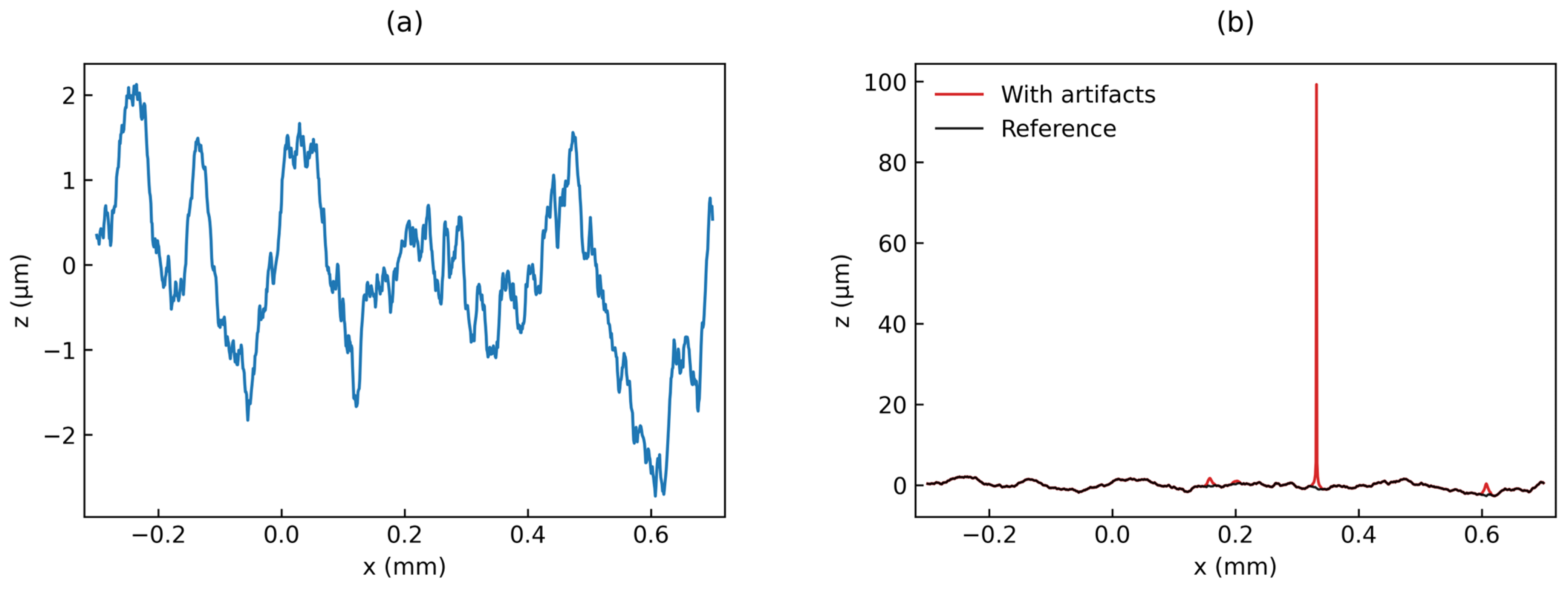
25], this property only applies to the Fourier transform of the unbounded function. In practical Fourier analysis, we are working with the DFT, which computes a truncated Fourier Series with the assumption of periodicity. While any function (or rather data array) is automatically periodically extended by the DFT procedure, this periodic extension is precisely the problem, because a truncated and periodically extended parabola does not form a smooth surface (
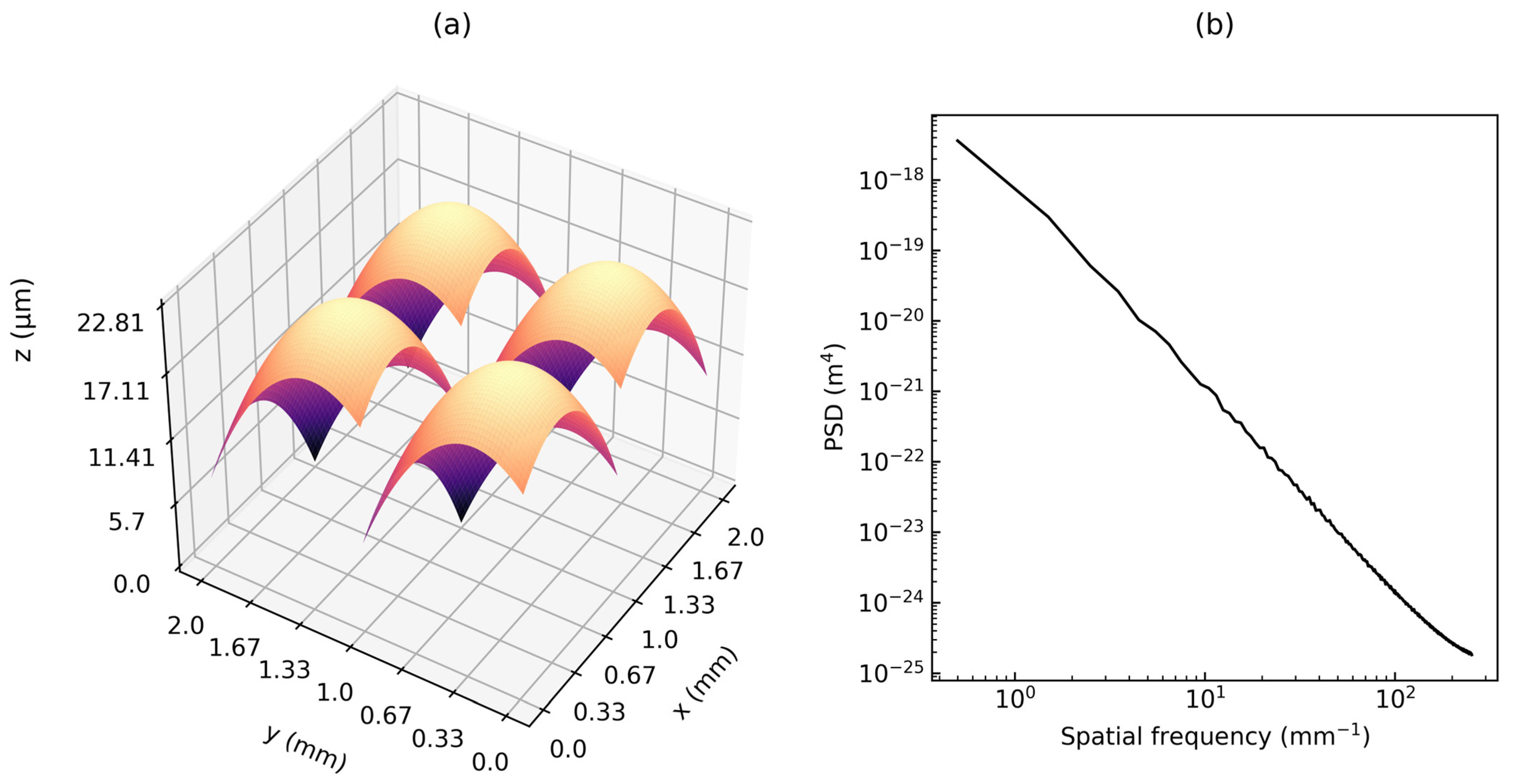
Figure 1a). In fact, it has no continuous derivatives and, except in special cases, is not even continuous itself. Its spectrum is therefore roughly consistent with that of a sawtooth function, which converges slowly, with the amplitude given by a power law (
Figure 1b). When we discard the phases, this contribution can be easily mistaken for self-affine roughness PSD, as demonstrated earlier, for example in [
24].
Thus, to compute representative roughness PSD we must first remove the macroscopic shape and make the boundary conditions as smooth and “differentiable” as possible, which may be non-trivial for a rough surface.
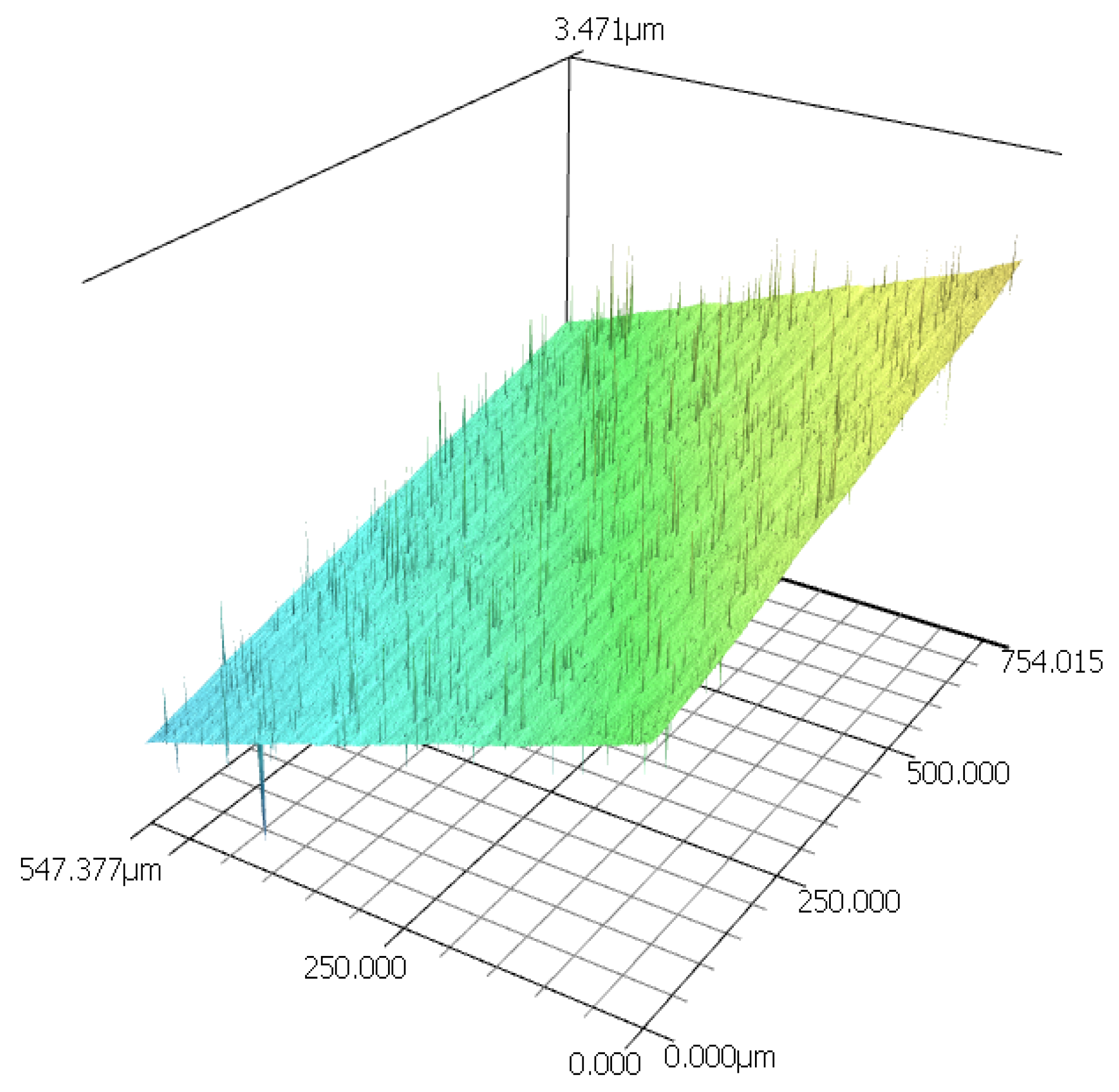
2. Outliers. Another likely reason for corrupted PSDs are artifacts appearing in many measurements using optical interference methods, illustrated in
Figure 2. Due to reasons which are physically still not completely clarified but likely related to specular reflections from select unfortunately oriented spots on the surface, interference microscopes produce artifacts in the form of numerous strong spikes. In surfaces measured with our Keyence VK-X laser scanning microscope, we observe outliers with amplitudes over two orders of magnitude larger than normal roughness, which results in a large contribution to the power spectrum despite the small lateral extent of the peaks.
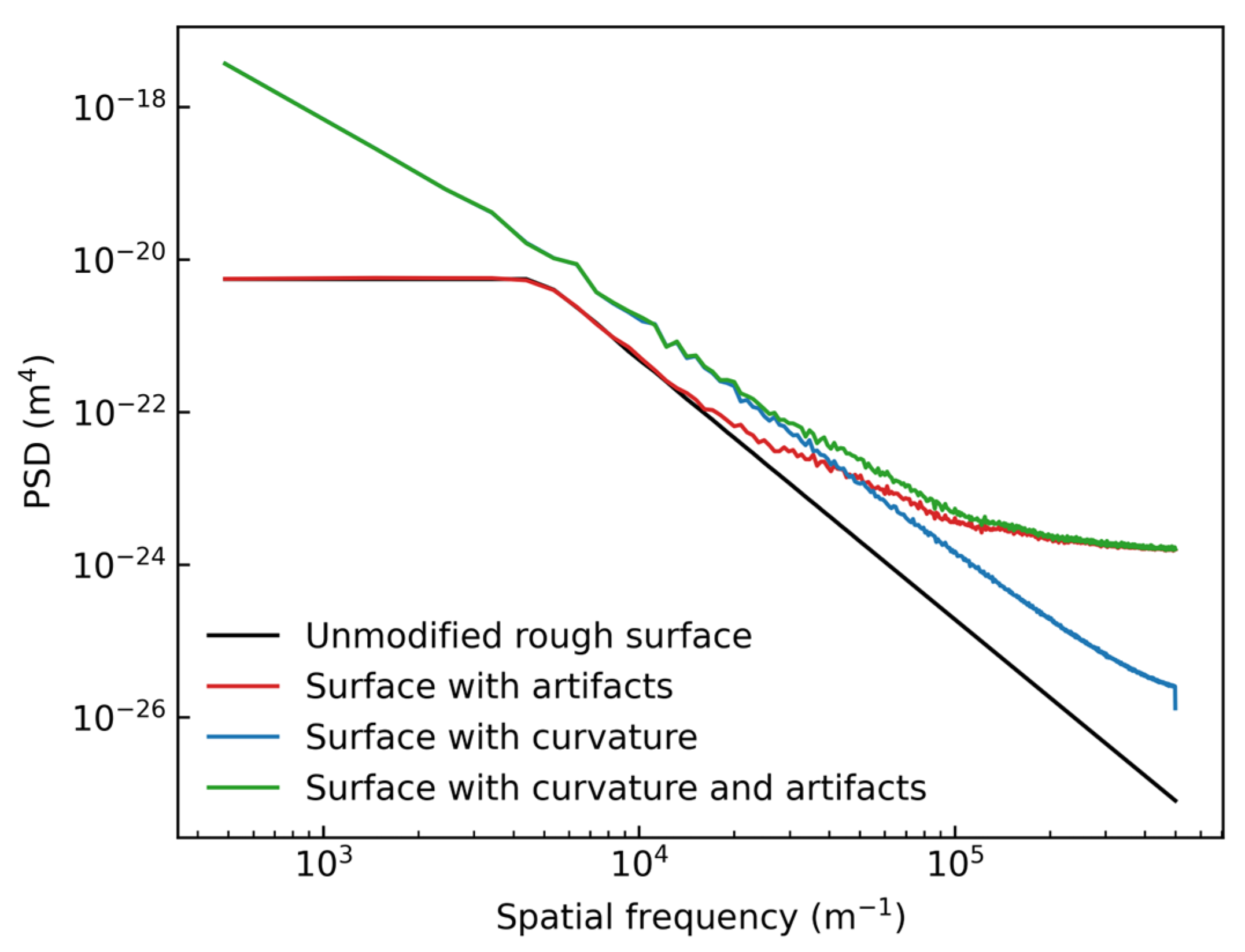
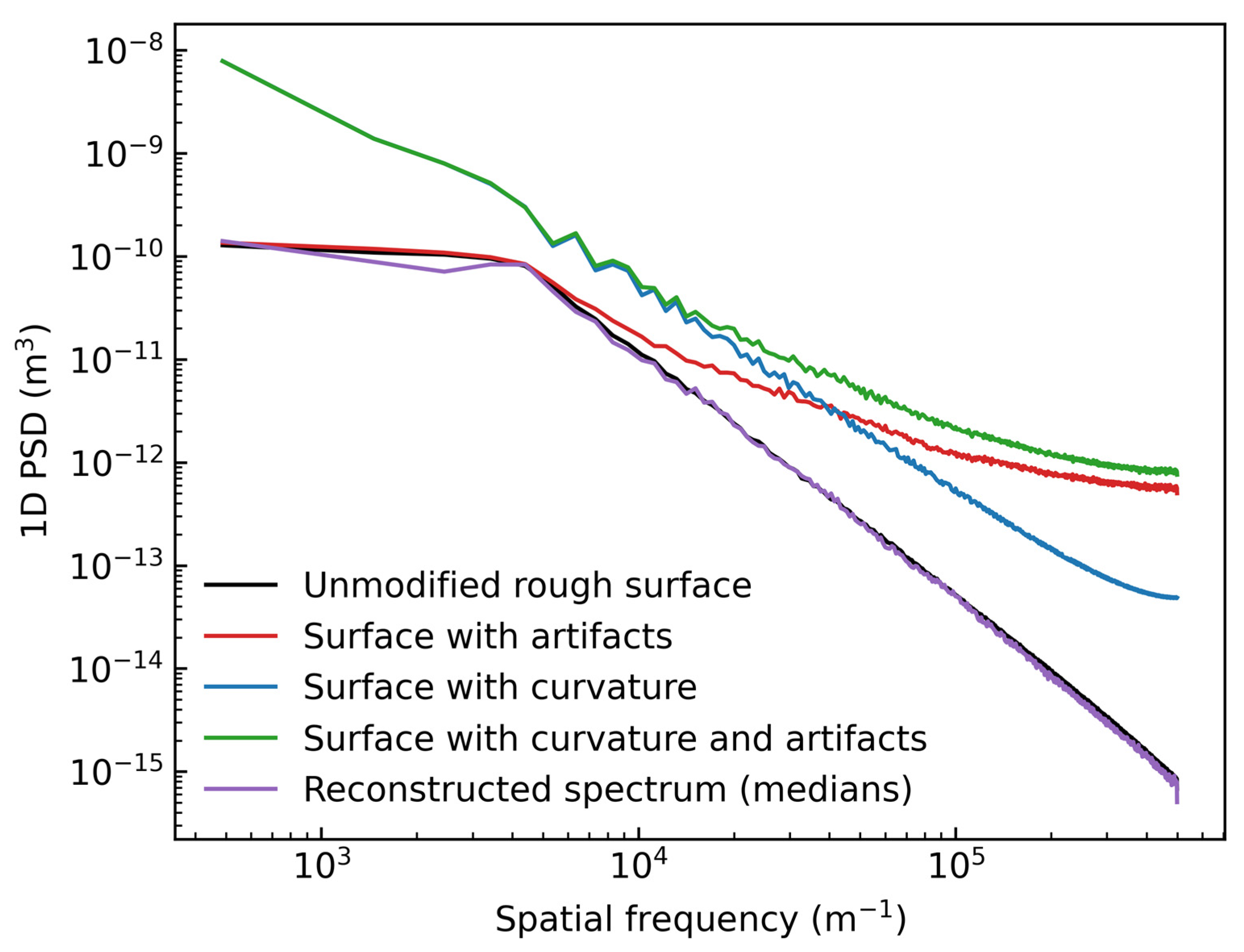
Outliers of this kind can be modeled as delta functions. They produce a flat spectrum, but of course with correlated phases. If they end up in the measured roughness spectrum (with phases discarded), they produce a contribution that will be mistaken for white noise, and will drown out the high-frequency components of the roughness. The extent to which the two discussed geometric contributions can mask microscopic roughness is illustrated in
Figure 3. Both curvature and any outliers need to be carefully removed before computing the actual roughness PSD. Unfortunately, giving a fully general procedure for this is not possible, as some artifacts may be difficult to distinguish from the surrounding roughness, but a procedure that effectively removes artifacts in our measured data sets is presented further down.
4. Identification and Removal of Surface Artifacts
In the following, we propose and test a method for solving the two issues identified in the Introduction. The proposed correction procedure is algorithmic rather than analytical and does not introduce new theoretical expressions. It combines established signal-processing techniques within a robust framework, and its validity is demonstrated through controlled numerical experiments and reconstruction accuracy on synthetic and experimental data.
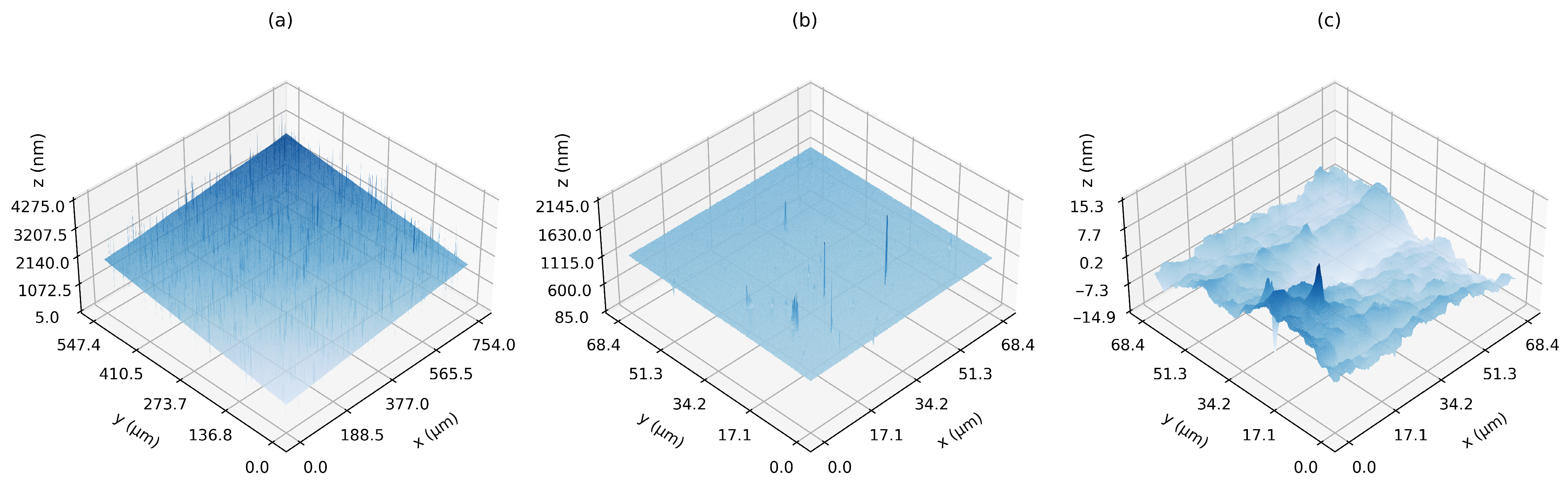
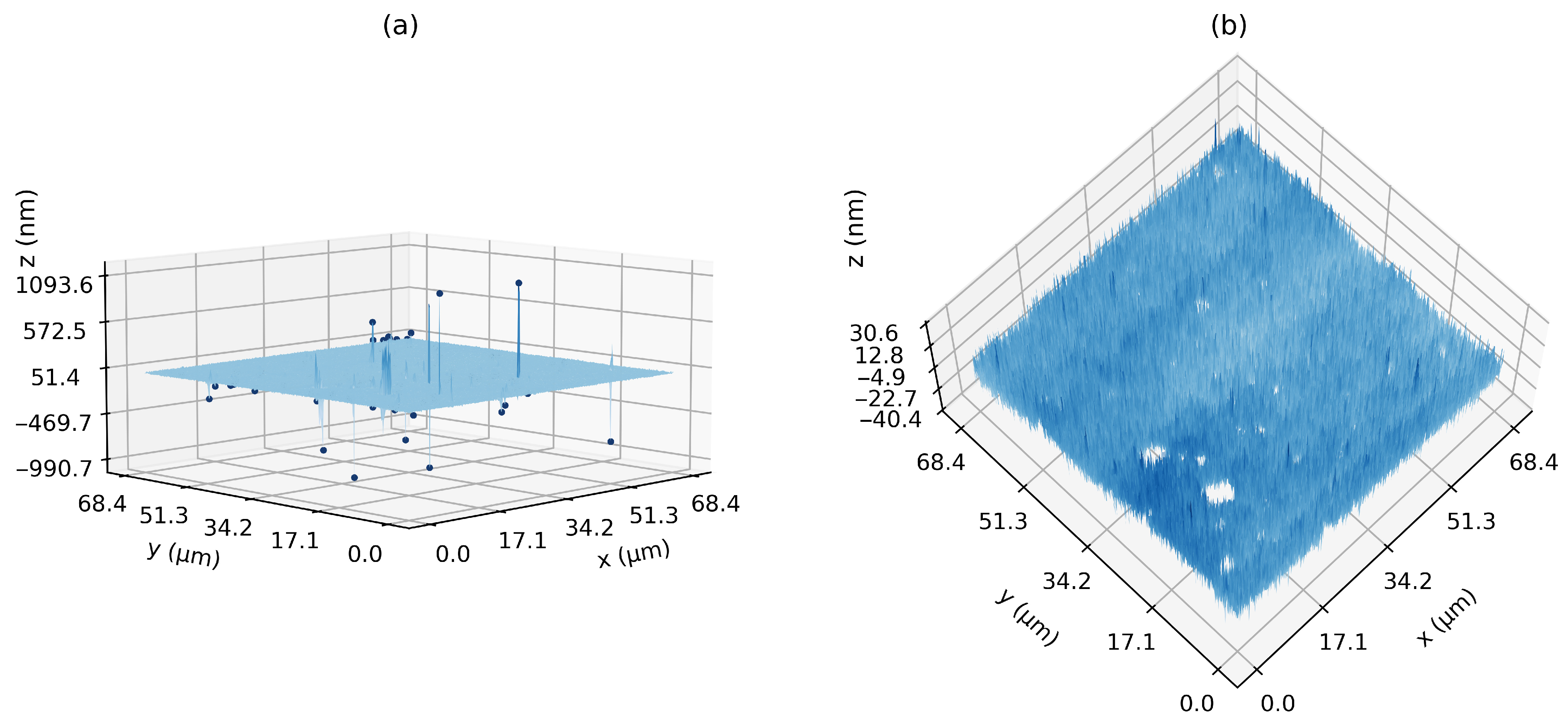
Figure 4a shows a simple, nominally flat surface scanned with 3D laser scanning microscope Keyence VK-X150 (Keyence, Mechelen, Belgium). Immediately apparent is the high density of very sharp outliers (which are not present in the original surface). A close-up (
Figure 4b) of a section of the surface shows that the peaks are sharp, but not single-pixel, have irregular shape and sometimes cluster together densely. Note also a slight inclination of the surface.
As argued earlier, both types of artifacts have a continuous spectrum that blends with the expected true roughness spectrum. For this reason, linear filtering methods are unlikely to bear results. Instead, we try to detect the artifacts in 2D space directly, using a nonlinear filtering method.
1. Preprocessing. The numerical procedures described in this paper are all implemented in the Julia programming language. When working with scanned data, the original scans are first saved in the manufacturer’s proprietary VK4 format. From these files we extract the surface profiles using “vk4 driver” [
26], a Python script that can produce a matrix of height values in the common CSV format. Finally, this data is loaded into our Julia program for all further processing.
2. Detecting Outliers. Our detection procedure is built around the median filter. The median filter is a very simple and robust nonlinear operation that works as follows:
To determine the filtered value at a particular location , we take a window (usually square) with a half-width , around the location and determine the median value of the data in that window.
The median is the central value, such that half of the values in the window are less than or equal to it and half are greater or equal.
The data value at is then replaced with this median.
In image and data filtering, the median filter is known for robust outlier and noise removal, while preserving edges, steps and other structures. This is because outliers cluster to either end of the distribution and are very unlikely to be included in the median. Edges, on the other hand, produce a roughly bimodal distribution (upper and lower subsurfaces) with either one or the other predominating as the window slides over the feature. These properties make the median filter suitable for our purposes.
Figure 4c shows the result of applying the filter to the surface segment in
Figure 4b. Note that the vertical scale has contracted by two orders of magnitude due to the exclusion of outliers and underlying structure becomes visible.
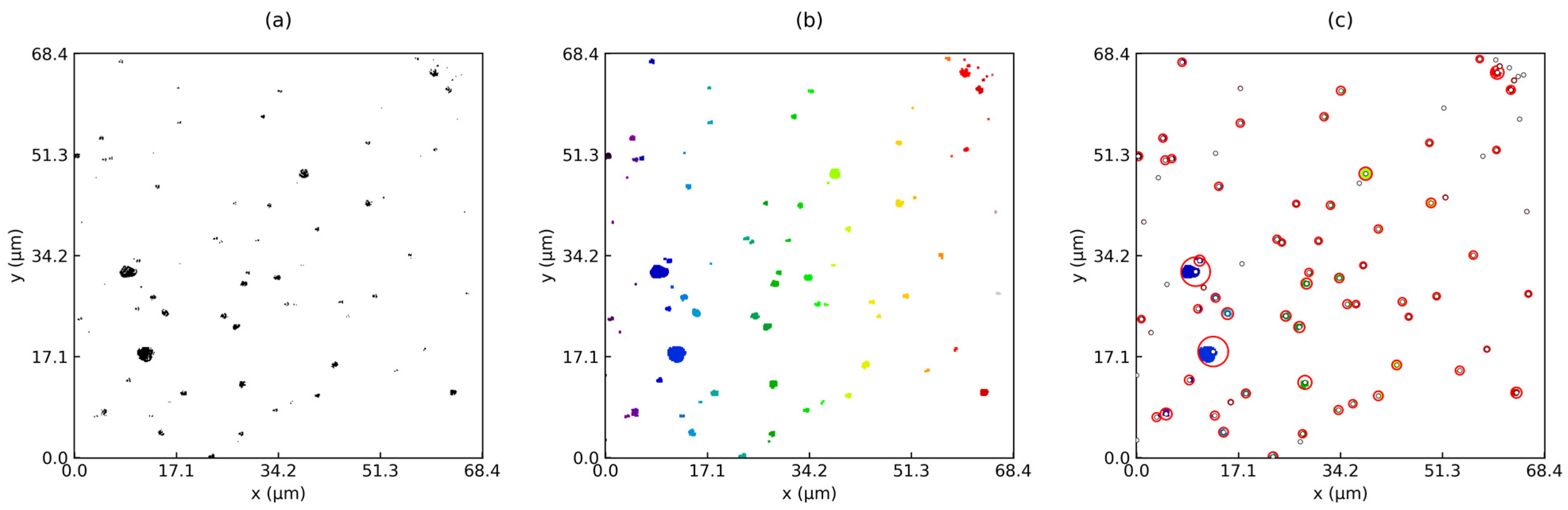
However, since we want to preserve as much roughness signal as possible and only exclude suspected artifacts, we do not use the median-filtered directly. Instead, we take the difference between the original and the filtered surfaces and apply thresholding with an empirically determined cutoff value, which results in a binary map of likely outliers (
Figure 5a). This is followed by a binary dilatation step (1 pixel) to clean up the data, and connected component analysis (
Figure 5b).
The outliers have irregular footprints, and to actually exclude them from the data we adopt the following conservative procedure to exclude the peak itself and the contaminated region surrounding it: (1) Within the connected region, we identify the physical maximum deviation from the mean and take that as the center. (2) We then determine the maximum radius from that center to the edge of the region (
Figure 5c). (3) When actually removing peaks, we scale the determined radius by a small factor to provide extra margin.
Returning to the scanned topography,
Figure 6a shows the labeled outliers detected with this procedure and
Figure 6b shows the topography of the surface with the outliers simply cut out. This exposes the fine structure of the surface similarly to
Figure 7, but with the original roughness data remaining intact over most of the surface.
3. Removing artifacts. Removing the artifacts by cutting holes into the surface is acceptable for visualization, but if the goal is to calculate the PSD, this is very problematic. Simply excluding the removed patches from calculation of the DFT is equivalent to zeroing them out, which is equivalent to a step function unless the surface accidentally crosses zero at that exact point. As noted earlier, this gives a broad-band contribution to the power spectrum and is to be avoided.
To calculate the PSD, the holes need to be filled in a statistically meaningful way, while smoothly integrating with the boundary of the cutout. Similarly, the macroscopic shape of the surface needs to be subtracted in a way that creates smooth periodicity at the boundaries. In preliminary exploration, we have considered methods such as inpainting [
27,
28,
29] for filling holes and high-degree polynomial fitting (16 × 16 coefficients), but due to the high resolution of the surfaces and high density of artifacts these methods were found to be prohibitively slow for practical work.
Instead, we propose a solution that is both simple and efficient and performs well in our testing. The main idea is simply to sidestep the issue of complex 2D boundary conditions and work with line sections (i.e., 1D spectra). This is possible because, under assumptions of isotropy and shift invariance (i.e., the assumptions that make PSD characterization meaningful in the first place), the 2D spectrum and the line spectrum of a surface are mutually convertible with the relations given in
Section 2. This is also what allows us to compare measurements obtained with line-scanning methods (profilometry, AFM) and surface-scanning optical methods.
To compute the surface PSD we can either (a) obtain a 2D topography and perform the 2D DFT, followed by averaging over concentric rings, or (b) take many 1D slices to obtain a representative sample, perform 1D DFTs and average or otherwise combine the individual spectra into a consensus curve. While the 2D method may seem obviously superior on account of using all available data and reducing statistical variance, we argue that it is also much more sensitive to contamination. In particular,
- (1)
1D methods have been empirically found to be generally more reliable in the surface topography challenge.
- (2)
In our testing, working with 1D spectrum statistics was more robust against outliers and curvature, and makes dealing with boundary conditions, detrending and patch-filling very straight-forward.
- (3)
If instead of averaging we take a point-wise median of the samples, it produces somewhat noisy, but robust PSD estimates.
- (4)
We generally advocate visualizing surface PSDs in 1D, because deviations from power-law scaling are much more apparent to the eye.
4. Surface reconstruction. The complete numerical procedure is as follows:
- (1)
Detect and remove (cut out) the outliers/artifacts, as described previously.
- (2)
Cut the (M × N) surface into M horizontal lines and N vertical lines. (Note: a random sample of inclined cuts might improve the robustness of the method, but was left out of this study for simplicity.)
- (3)
For each line section individually:
Remove the macroscopic shape: Linear detrending may already be sufficient for nominally flat surfaces. A least-squares fit to a polynomial of low degree should be employed otherwise.
Patch holes left from artifact removal. Ideally, this should mimic the statistical properties of the surrounding roughness and blend seamlessly with the long-range correlations on either side of the cut-out. In practice, this is difficult to realize in a general way without making undue assumptions about the spectrum of the surface, which is to be determined in the first place. However, in our testing, we found that any somewhat reasonable method gives adequate results when combined with a robust consensus curve procedure. We tested (a) linear interpolation, (b) filling with a randomly selected segment detrended to match boundary conditions and (c) shifting and skewing the data to close the gap, followed by periodic extension. All three methods performed similarly, which is why we ultimately settled on simple linear interpolation.
Compute the power spectral density via the DFT, for each treated slice.
- (4)
Compute the consensus curve by taking the median of all individual spectra point-wise (i.e., at any given frequency independently). Simple averaging was found to be too susceptible to artifacts, with one strong outlier being able to skew the entire distribution.
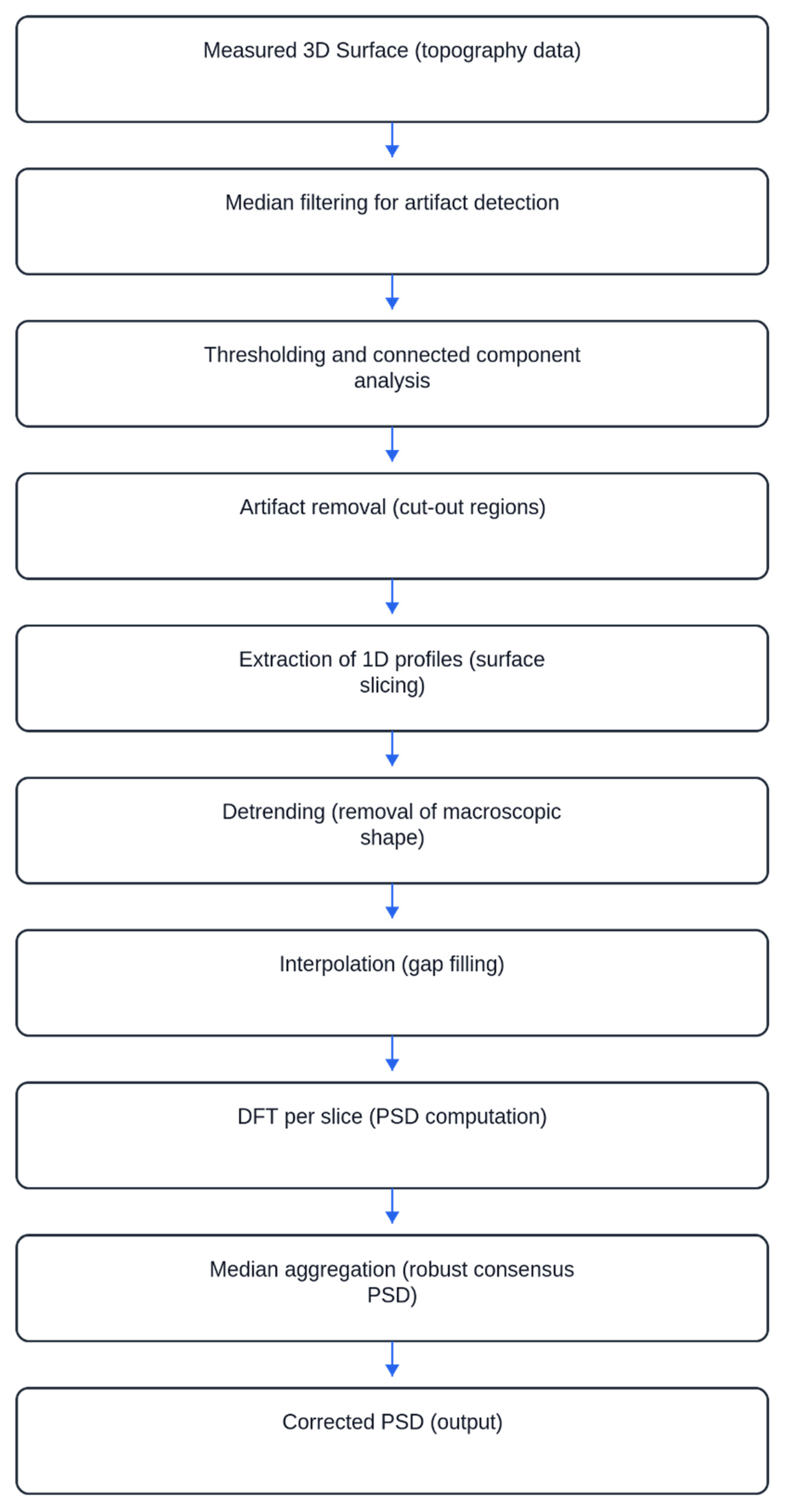
Figure 8 shows a flowchart of the whole procedure.
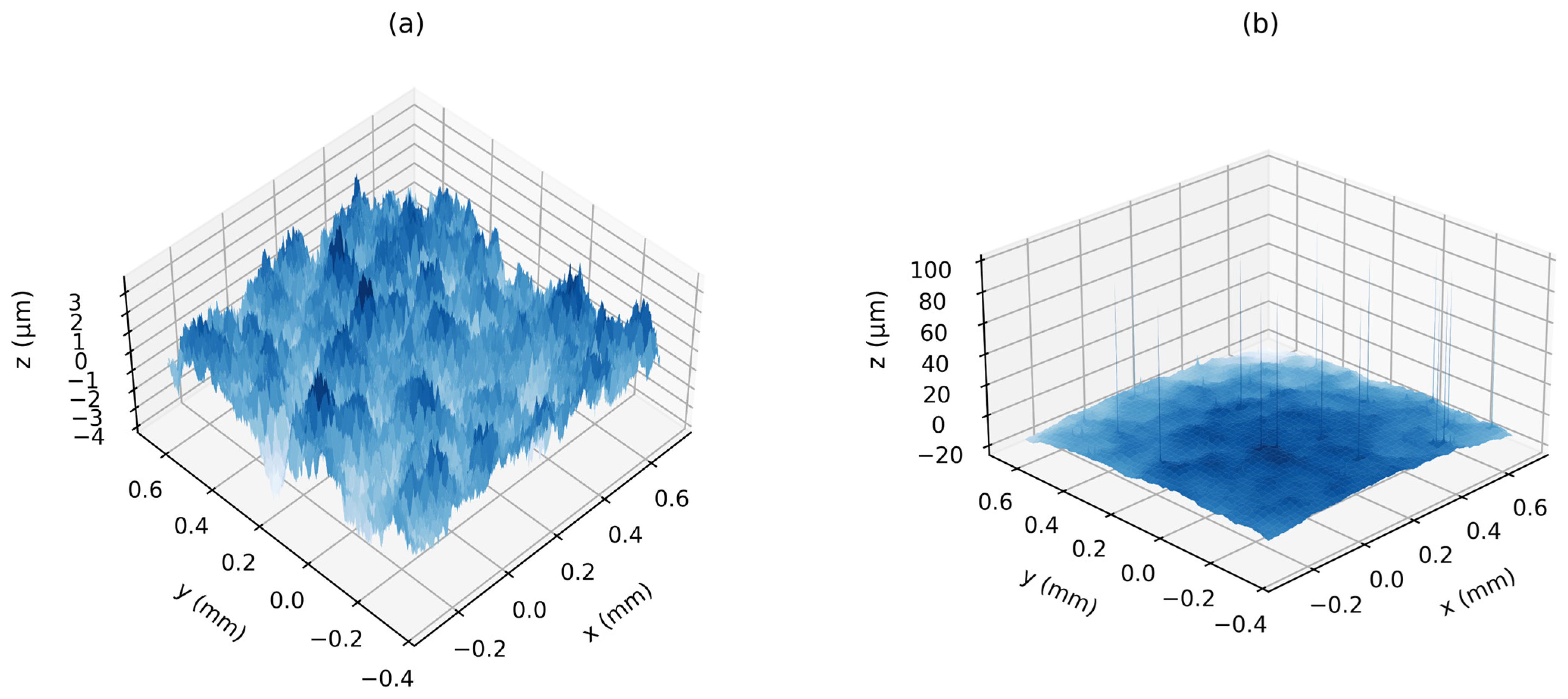
5. Testing. The above procedure was tested on synthetic data. The roughness was self-affine with a long-wave roll-off and H = 0.7 (
Figure 7a). This was overlaid with parabolic surface curvature and 200 randomly placed tall and narrow spikes simulating the observed outliers from our surface scans (
Figure 7b). The radii are equal to 1% of the observed surface side length and heights one hundred times the RMS roughness (before adding macroscopic shape). Representative 1D-sections with and without outliers are shown in
Figure 9a,b.
After applying the detection and cleaning procedure described here, reconstructed spectra in close agreement with the original roughness were obtained (
Figure 10), for surfaces whose naively calculated PSD eclipses the intrinsic roughness by up to three orders of magnitude.
5. Application to Real Surfaces
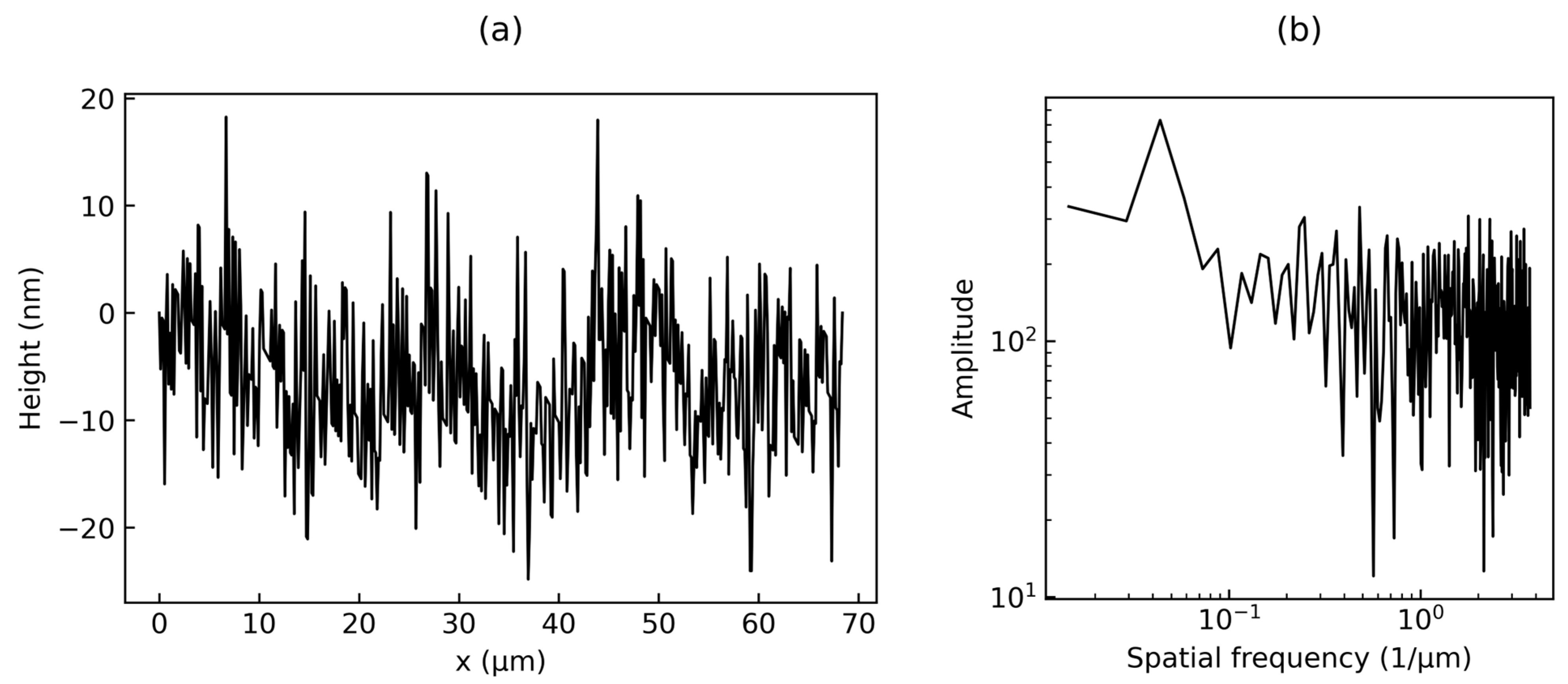
The described procedure was applied to real surfaces measured with 3D laser scanning microscope Keyence VK-X150. While the procedure itself worked as intended, it only exposed additional problems at a lower level. After removing outliers and macroscopic shape, the remaining “roughness” had a typical shape as shown in
Figure 11a.
As is apparent from the figures this “roughness” bears little resemblance to the expected fractal shape as in
Figure 9a. It is in fact not even consistent with Brownian noise (H = 0.5), but represents Gaussian white noise (H = −0.5), which is confirmed by the flat trend of its power spectrum (
Figure 11b). Since natural surface roughness is generally expected to fall in the range H = 0.5–0.8, it can be safely assumed that the obtained measurements are simply noise at small length scales.
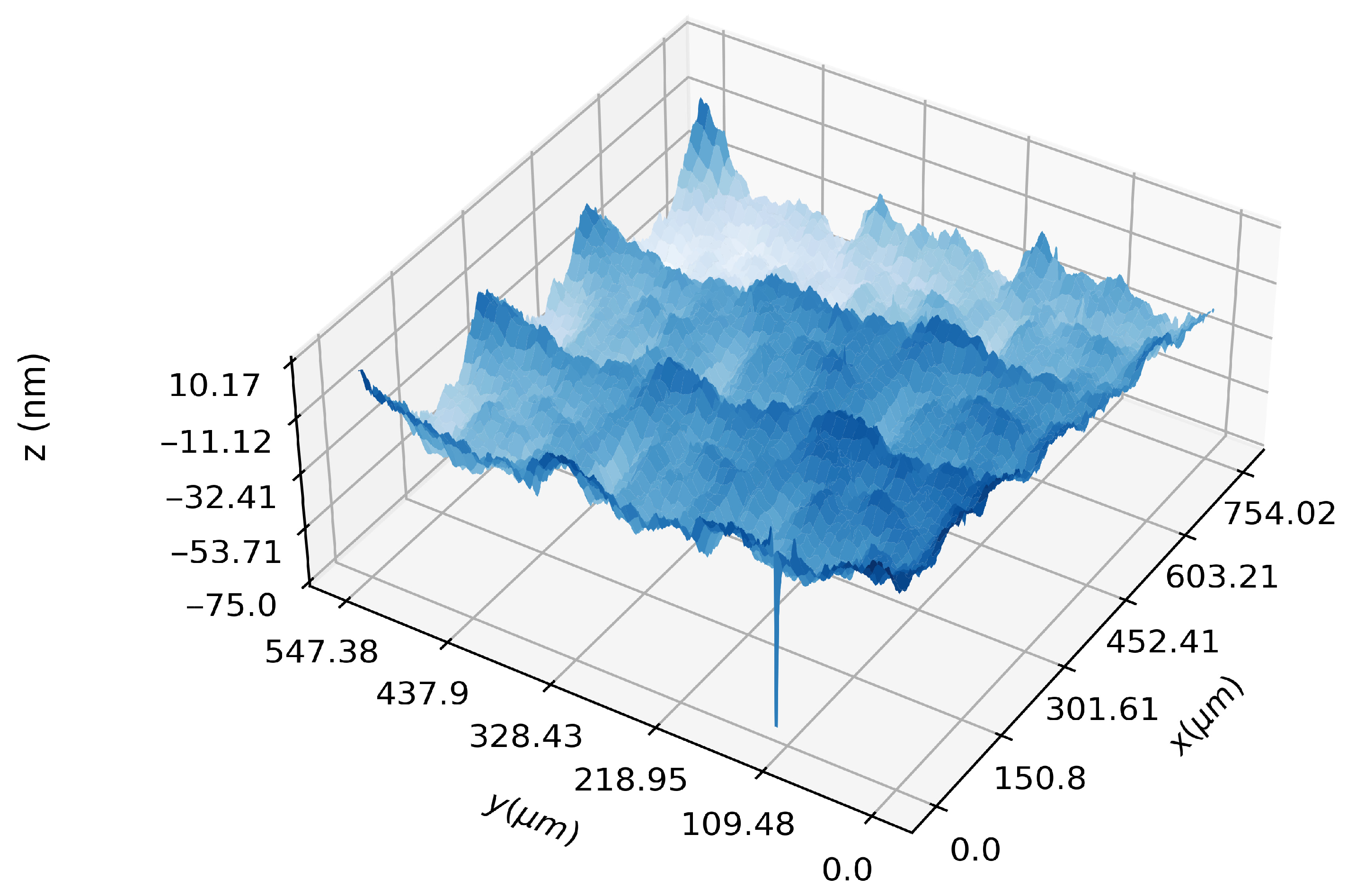
Furthermore, for the sake of comparison, we produced a median-filtered surface with a large window (r = 20) on the entire scanned surface (not just small sections we previously chose for visualization). This removes both fine roughness and outliers (except for one particularly dense cluster) and exposes medium-level structure (
Figure 12). As can be seen, there is an obvious cell structure that is not present in the physical surface and indicative of a region stitching artifact.
6. Conclusions
In this work, we have demonstrated that measurement artifacts can distort the power spectral density (PSD) of engineering surfaces by several orders of magnitude, potentially leading to fundamentally incorrect conclusions regarding surface roughness and its tribological implications. In particular, macroscopic surface shape and localized outliers were shown to produce spectral contributions that can mask the intrinsic roughness across a wide range of spatial frequencies.
To address these issues, we proposed a robust, algorithmic correction procedure combining nonlinear median filtering, artifact removal, and PSD reconstruction based on one-dimensional surface sections with median aggregation. Tests on synthetic surfaces with known roughness spectra demonstrated that the method is capable of reliably recovering the intrinsic spectrum even when the measured data are dominated by strong artifacts. This highlights the effectiveness and robustness of the proposed approach in controlled conditions.
Application to experimentally measured surfaces revealed that, even after removal of dominant artifacts, additional distortions such as stitching errors and white-noise-like contributions may persist, indicating severe limitations in certain optical measurement techniques. These findings suggest that, beyond data processing, careful consideration must be given to the measurement method itself, as some data sets may not contain recoverable roughness information.
Overall, the present study provides a consistent explanation for the large discrepancies observed in the surface topography challenge and demonstrates that appropriate preprocessing is essential for obtaining meaningful roughness spectra. The proposed method offers a practical and effective tool for improving the reliability of PSD-based surface characterization.
Future work should include dedicated experimental campaigns aimed at validating the present methodology under controlled measurement conditions. Particularly useful would be cross-platform studies on identical reference surfaces using optical and contact-based techniques, repeated measurements with systematically varied acquisition and stitching parameters, and benchmark tests on surfaces with controlled curvature or artificial defects. In addition, the method should be examined for chemically modified and functional surfaces, such as coated, plasma-treated, and superhydrophobic interfaces, where heterogeneous reflectivity and multiscale structuring may affect artifact generation and detection. These studies would clarify the practical limits of the method and support the development of more reliable guidelines for PSD-based topography characterization.