Evolution of Dynamic Elastic Parameters and Dry-Out-Induced Weakening Mechanisms in Reservoir and Caprock During Underground Gas Storage: Joint Ultrasonic and NMR Monitoring


Abstract
1. Introduction
- (1)
- Divergence in Saturation Paths (Drainage vs. Imbibition): Most existing laboratory studies focus on water injection or moisture uptake from dry to wet conditions. In contrast, gas injection in underground gas storage is a typical gas-displacing-water drying process. Because of capillary hysteresis within the pore structure, fluid distributions along the drying path can differ substantially from those along the imbibition path, leading to markedly different acoustic responses [12,13,14]. At present, the dynamic elastic response of rocks under a sustained drying path has not been systematically characterized [12,13].
- (2)
- Mismatch Between Macroscopic Responses and Microscopic Mechanisms: Many studies have established empirical relationships between saturation and wave velocity, but water saturation is commonly obtained only as a bulk average by gravimetric methods, which cannot resolve fluid occurrence and migration pathways within the microscopic pore network [10,15,16,17]. Due to the complex pore–vug-fracture system in carbonates, it remains unclear whether fluids are preferentially drained from larger pores or retained in microfractures under capillary confinement during drying, and how the competition between these processes evolves [10,11,15]. As a result, a single macroscopic averaged measurement is often insufficient to explain how heterogeneous fluid distributions regulate the evolution of macroscopic moduli across scales, including weakening or hardening responses [10,15,18].
- (3)
- Oversight of Fluid-Support Weakening Mechanisms: Existing engineering studies on gas-injection-induced drying mainly focus on salt precipitation caused by formation water evaporation and its pore-blocking effects [7]. By comparison, the reduction in rock dynamic mechanical parameters during drying due to the loss of pore fluid support, namely the dry-out-induced weakening effect addressed in this study, is often neglected [18,19]. This effect is crucial for interpreting four-dimensional seismic monitoring and for evaluating caprock sealing performance [5].
2. Materials and Methods
2.1. Experimental Samples
2.2. Experimental Apparatus
2.3. Ultrasonic and NMR Principles
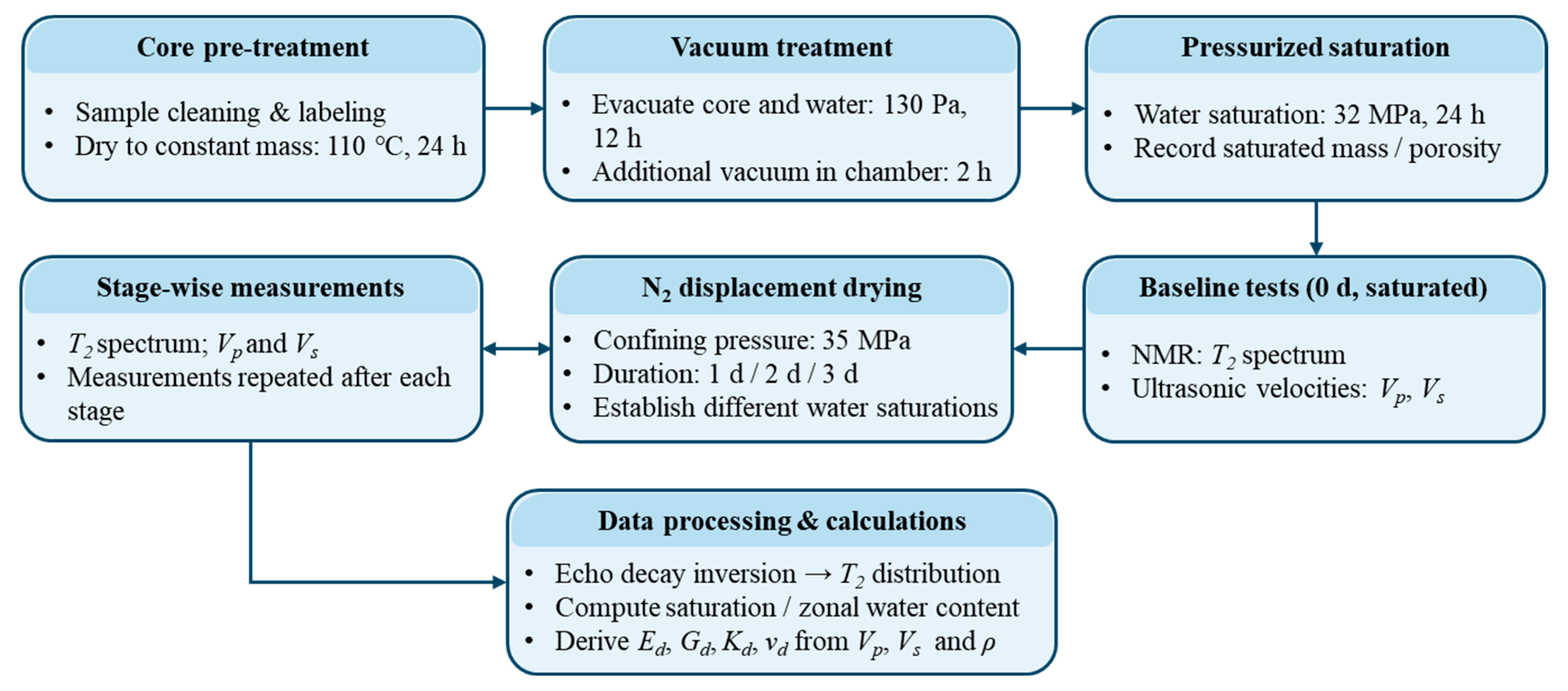
2.4. Experimental Procedure
3. Results
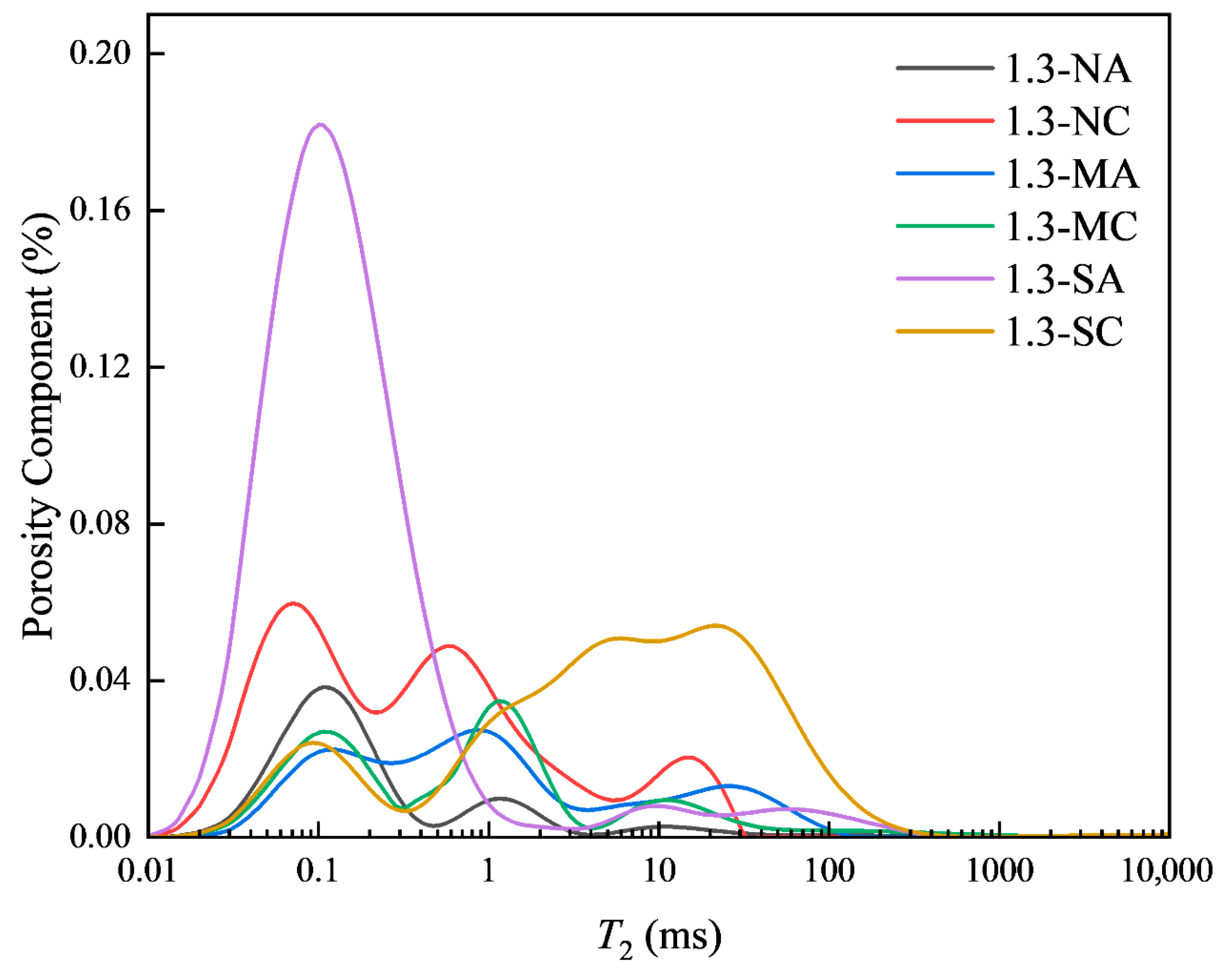
3.1. T2-Based Pore Structure Characteristics at the Saturated State
3.2. Stage-Wise Evolution of Water State and T2-Based Pore Structure During Dry-Out
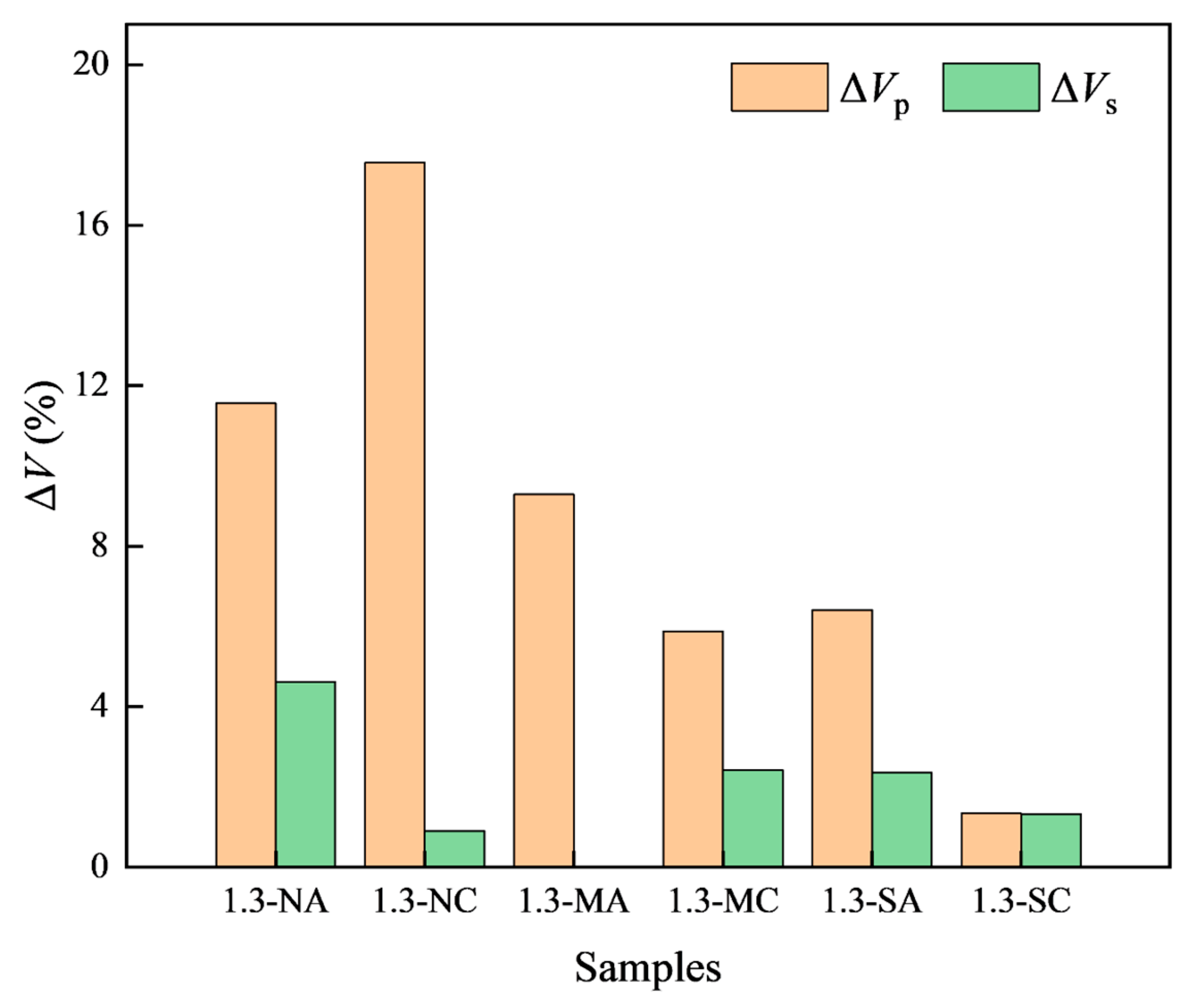
3.3. Wave Velocity Response: Evolution of Vp and Vs with Dry-Out Degree
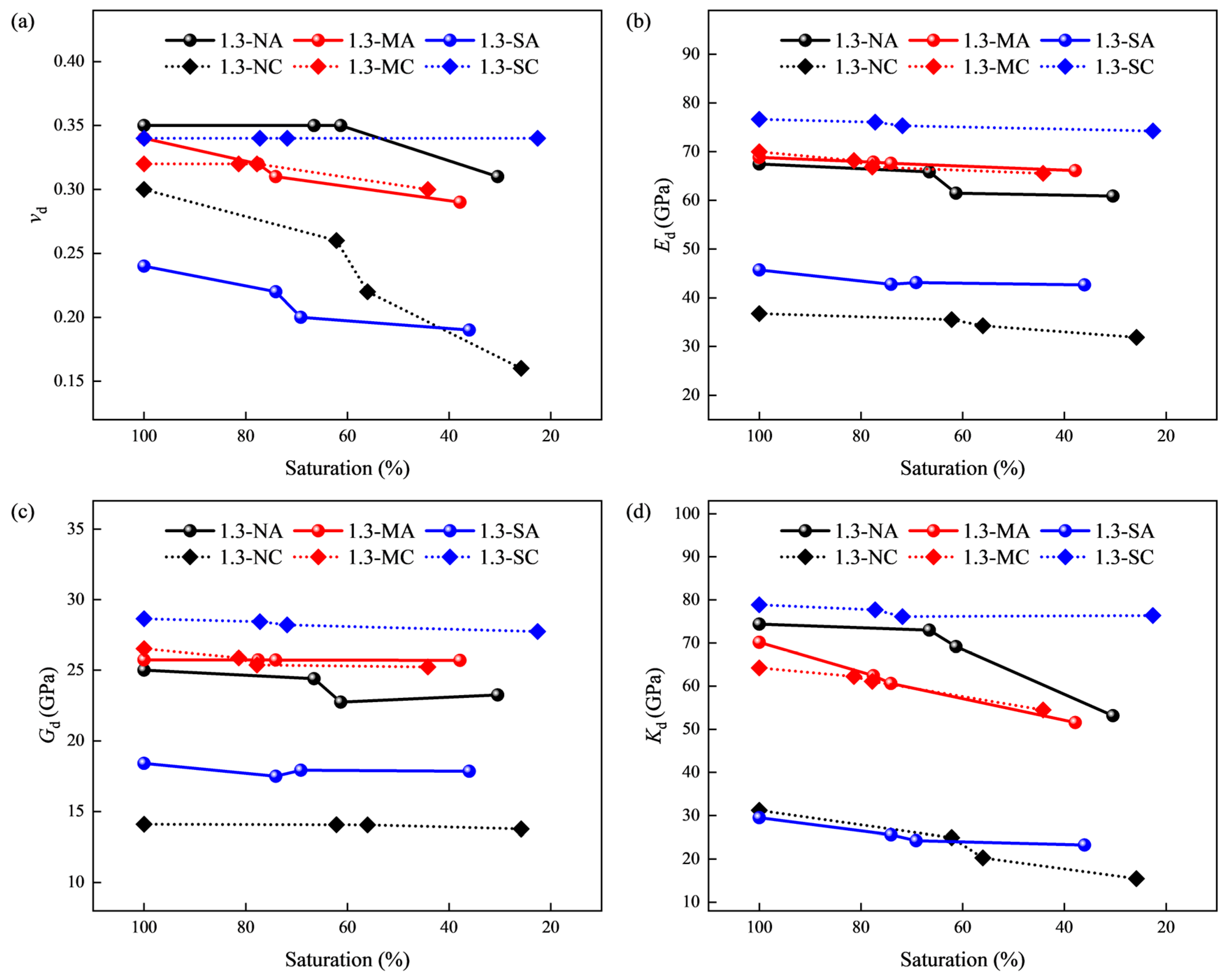
3.4. Evolution of Dynamic Mechanical Parameters with Dry-Out Degree
4. Discussion
4.1. Quantitative Control of Water Saturation on Dynamic Elastic Parameters
4.2. Mechanisms by Which Mineral Composition and Pore Structure Regulate Dry-Out Responses
4.3. Microscopic Physical Model for Dry-Out-Induced Weakening
4.4. Engineering Implications for UGS Operations
4.5. Limitations and Future Perspectives
5. Conclusions
- (1)
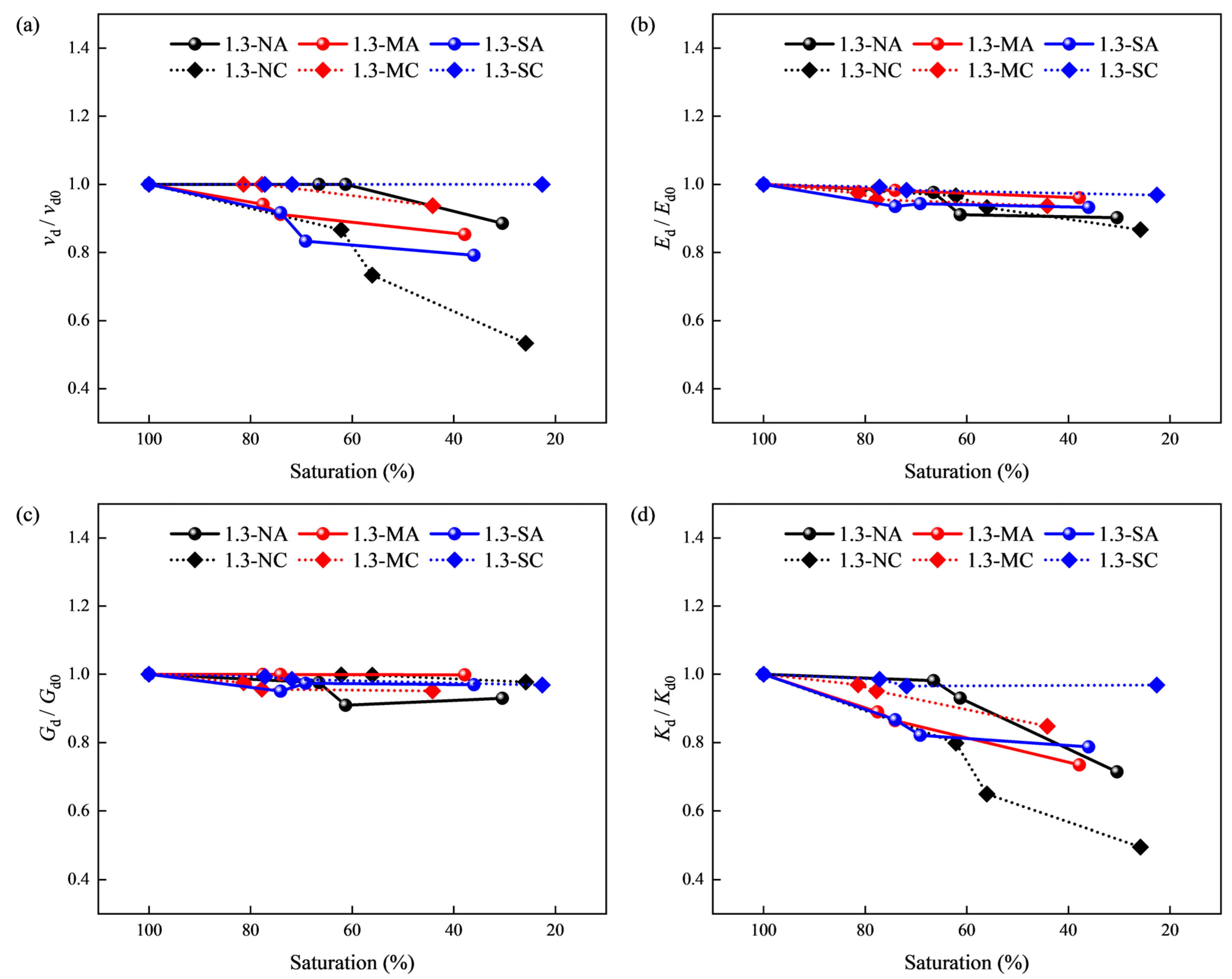
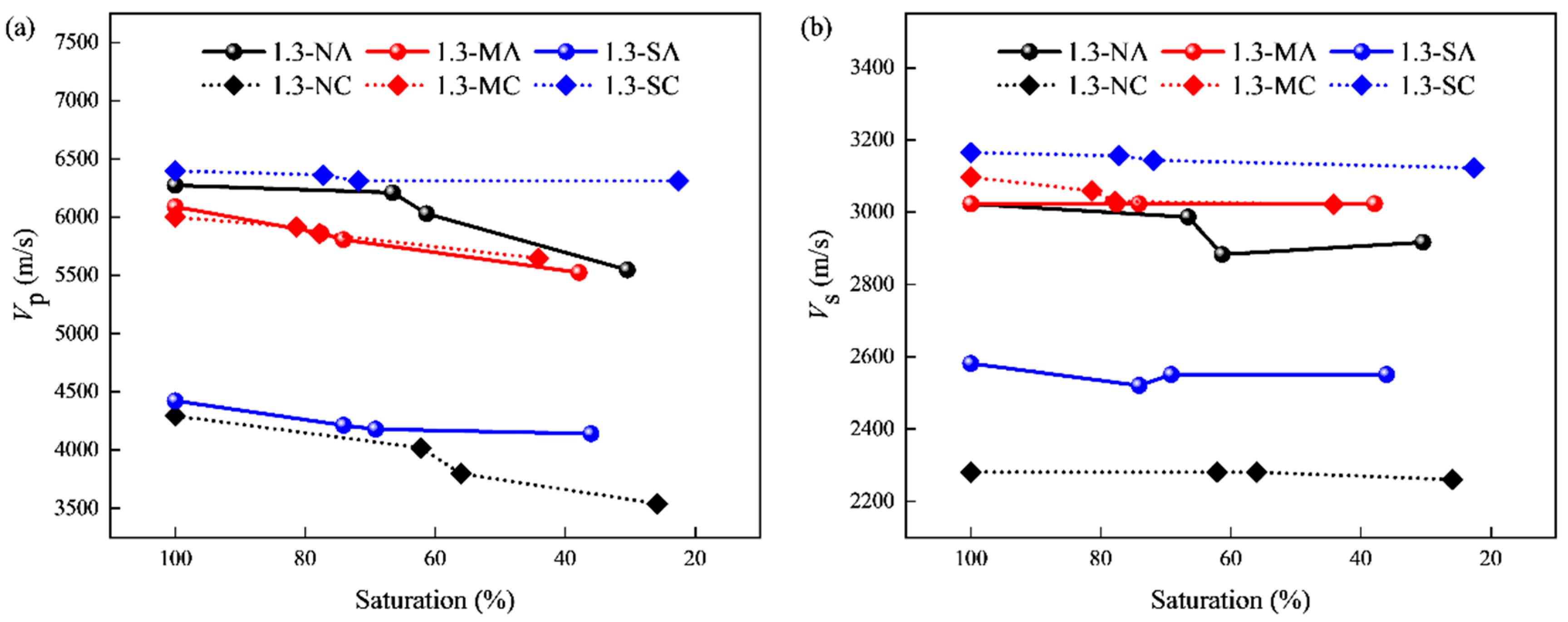
- Dry-out exerts a clearly differentiated control on dynamic elastic parameters. As water saturation (Sw) decreases, the dynamic bulk modulus (Kd) and P-wave velocity (Vp) decline to varying degrees across specimens, with reductions ranging from 3.0% to 50.48% and from 1.34% to 17.56%, respectively. In contrast, the dynamic shear modulus (Gd) and S-wave velocity (Vs) remain relatively stable throughout the process. These results indicate that Vp and Kd are highly sensitive indicators for characterizing the degree of dry-out and fluid substitution effects in underground gas storage.
- (2)
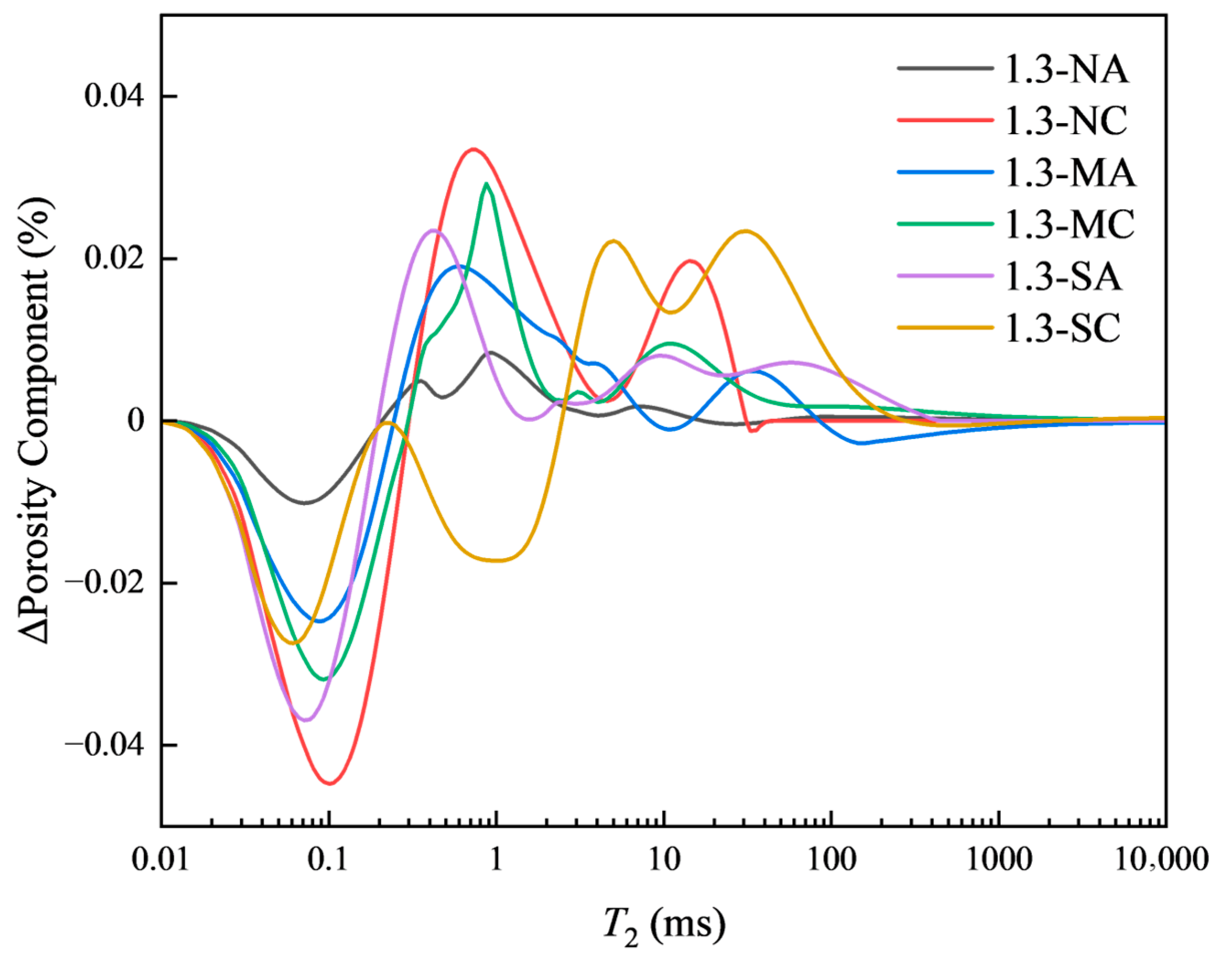
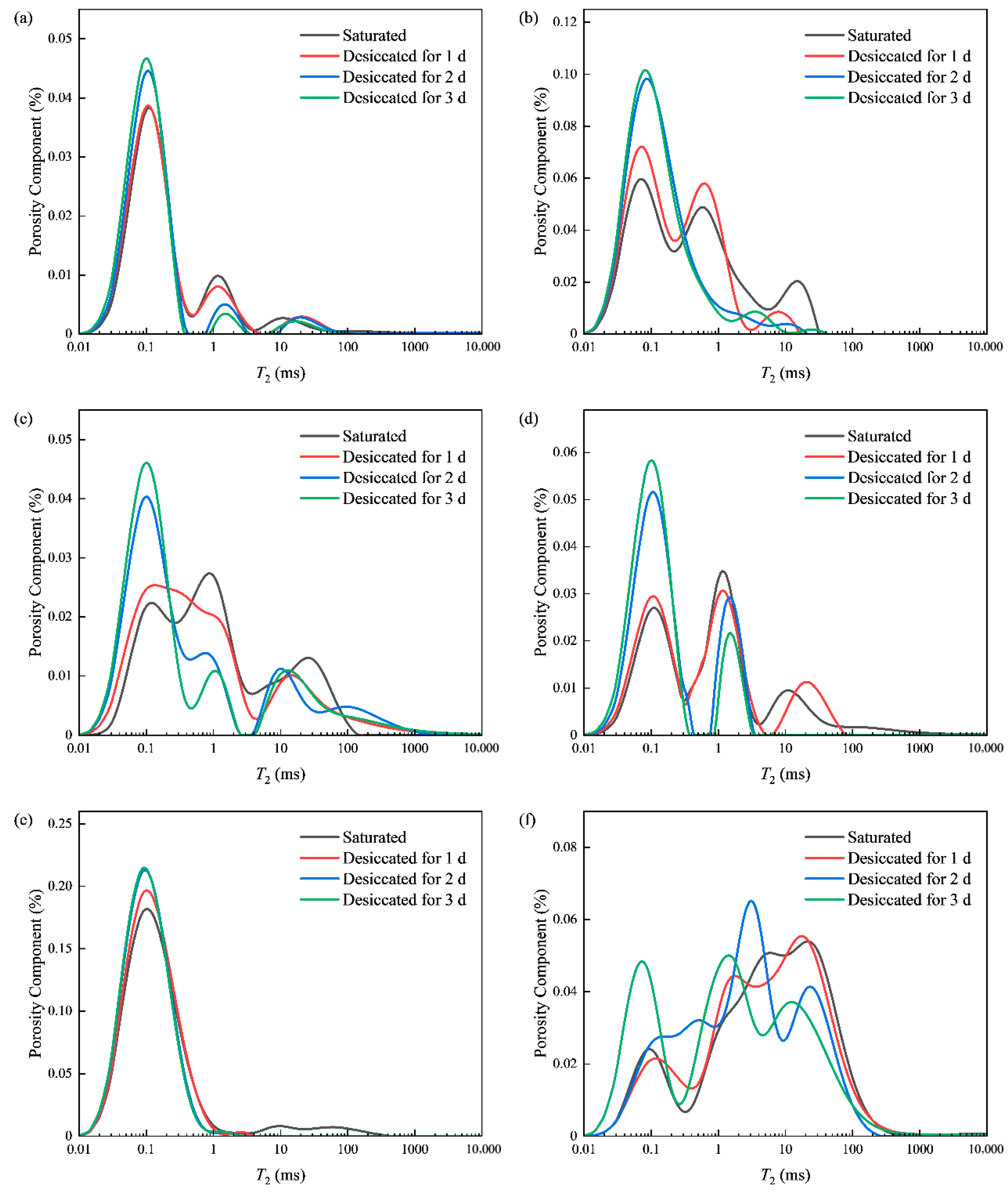
- The contrast in dry-out sensitivity among specimens, particularly the divergent behaviors of the 100% dolomite specimens (1.3-NC and 1.3-SC), provides a basis for the hypothesis that the dry-out response is controlled by a combination of petrophysical properties. Within this framework, the heterogeneity of the initial pore structure acts as an important factor whose influence is strongly shaped by mineralogy and bulk frame properties. It is hypothesized that multimodal pore size distributions and well-developed macropores (long-T2 components) drive stronger dry-out responses, whereas a more uniform pore size distribution or a strongly cemented rigid skeleton leads to pronounced weak sensitivity. In addition, high clay mineral content mitigates modulus degradation by retaining water under stronger capillary confinement.
- (3)
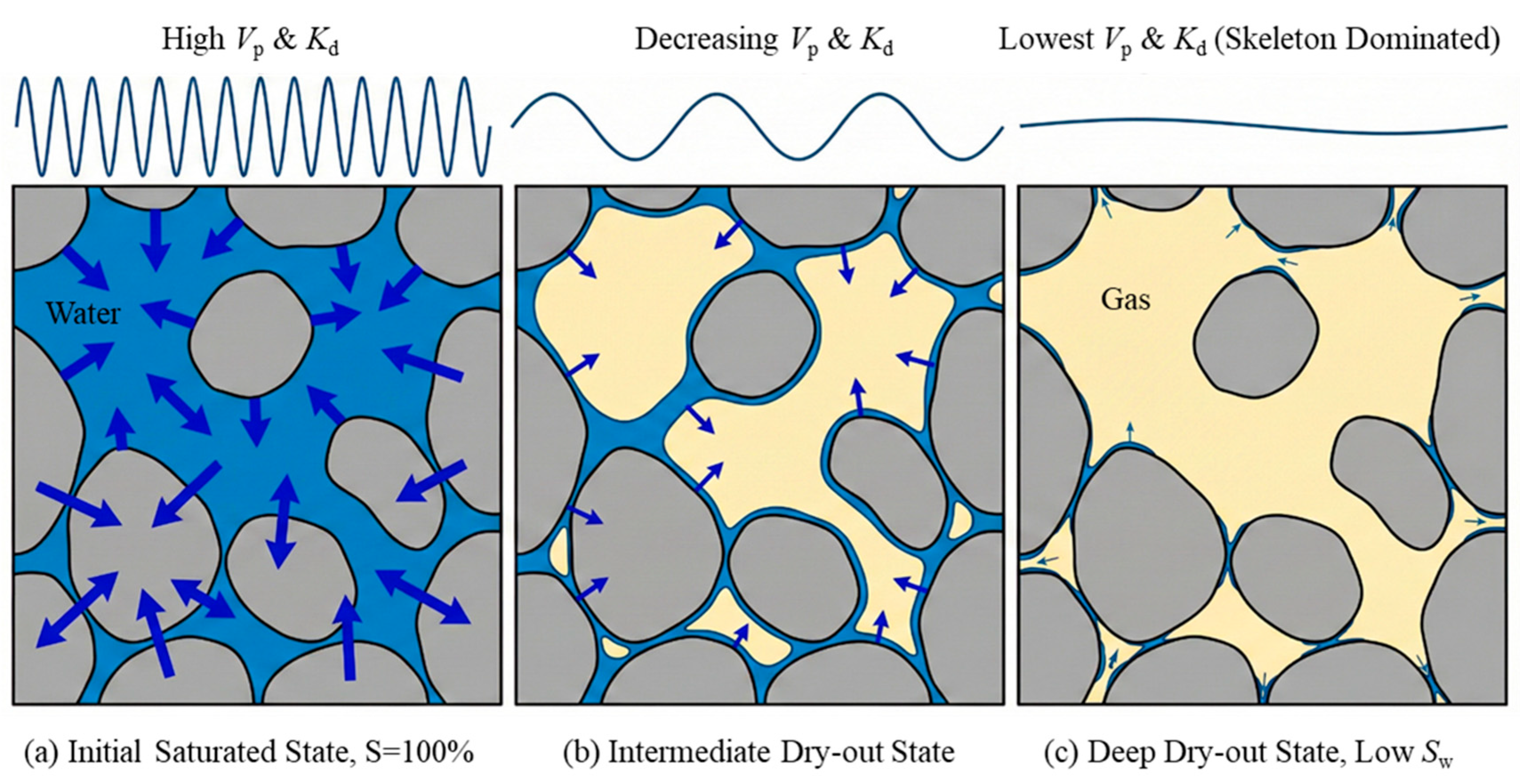
- A microscopic conceptual model of pore support and skeleton constraint is proposed for dry-out-induced weakening. While qualitatively consistent with the macroscopic predictions of the classical Gassmann fluid substitution theory, this model extends the existing framework by providing a pore-scale visualization of the process. The essence of dry-out weakening is the progressive loss of fluid volumetric support to the rock skeleton as free water is preferentially displaced from meso- and macropores. The transition from fluid-supported to skeleton-dominated states dictates the progressive degradation of the macroscopic dynamic moduli.
- (4)
- The observed laboratory-scale elastic evolution provides preliminary insights into the physical state of the dry-out zone. Future work incorporating field-scale analysis and rigorous scaling arguments is necessary to bridge these laboratory findings to practical field applications, such as dry-out front monitoring, wellbore integrity assessment, and the evaluation of in situ stress redistribution during long-term UGS operations.
Author Contributions
Funding
Institutional Review Board Statement
Informed Consent Statement
Data Availability Statement
Acknowledgments
Conflicts of Interest
References
- Al-Shafi, M.; Massarweh, O.; Abushaikha, A.S.; Bicer, Y. A Review on Underground Gas Storage Systems: Natural Gas, Hydrogen and Carbon Sequestration. Energy Rep. 2023, 9, 6251–6266. [Google Scholar] [CrossRef]
- Zhang, J.; Tan, Y.; Zhang, T.; Yu, K.; Wang, X.; Zhao, Q. Natural Gas Market and Underground Gas Storage Development in China. J. Energy Storage 2020, 29, 101338. [Google Scholar] [CrossRef]
- Zhai, Z.; Gan, Q.; Wang, Y.; Huang, S.; Zhao, Y.; Li, L.; Xu, M.; Wang, J.; Jia, S. Thermo-Mechanical Controls on Permeability in Deep Fractured-Porous Carbonates during Underground Gas Storage. Energies 2026, 19, 553. [Google Scholar] [CrossRef]
- Zhang, Y.; Oldenburg, C.M.; Zhou, Q.; Pan, L.; Freifeld, B.M.; Jeanne, P.; Rodríguez Tribaldos, V.; Vasco, D.W. Advanced Monitoring and Simulation for Underground Gas Storage Risk Management. J. Pet. Sci. Eng. 2022, 208, 109763. [Google Scholar] [CrossRef]
- Priolo, E.; Zinno, I.; Guidarelli, M.; Romanelli, M.; Lanari, R.; Sandron, D.; Garbin, M.; Peruzza, L.; Romano, M.A.; Zuliani, D.; et al. The Birth of an Underground Gas Storage in a Depleted Gas Reservoir—Results from Integrated Seismic and Ground Deformation Monitoring. Earth Space Sci. 2024, 11, e2023EA003275. [Google Scholar] [CrossRef]
- Ajibona, A.; Pandey, R. Strain-Based Assessment of Shale Caprock during Cyclic Underground Hydrogen Storage. Energy Fuels 2025, 39, 11053–11066. [Google Scholar] [CrossRef]
- Tang, Y.; Wang, N.; He, Y.; Wang, Y.; Shan, Y.; Zhang, H.; Sun, Y. Impact of Salt Deposition Induced by Water Evaporation on Petrophysical Properties and Pore Structure in Underground Gas Storage through Dynamic and Static Experiments. J. Hydrol. 2023, 617, 129033. [Google Scholar] [CrossRef]
- Biot, M.A. Theory of Propagation of Elastic Waves in a Fluid-Saturated Porous Solid. I. Low-Frequency Range. J. Acoust. Soc. Am. 1956, 28, 168–178. [Google Scholar] [CrossRef]
- Han, D.; Batzle, M.L. Gassmann’s Equation and Fluid-saturation Effects on Seismic Velocities. Geophysics 2004, 69, 398–405. [Google Scholar] [CrossRef]
- Ba, J.; Ma, R.; Carcione, J.M.; Shi, Y.; Zhang, L. Effects of Pore Geometry and Saturation on the Behavior of Multiscale Waves in Tight Sandstone Layers. J. Geophys. Res. Solid Earth 2023, 128, e2023JB027542. [Google Scholar] [CrossRef]
- Borgomano, J.V.M.; Pimienta, L.X.; Fortin, J.; Guéguen, Y. Seismic Dispersion and Attenuation in Fluid-Saturated Carbonate Rocks: Effect of Microstructure and Pressure. J. Geophys. Res. Solid Earth 2019, 124, 12498–12522. [Google Scholar] [CrossRef]
- El-Husseiny, A.; Vega, S.; Nizamuddin, S. The Effect of Pore Structure Complexity and Saturation History on the Variations of Acoustic Velocity as Function of Brine and Oil Saturation in Carbonates. J. Pet. Sci. Eng. 2019, 179, 180–191. [Google Scholar] [CrossRef]
- Mews, K.S.; Lozovyi, S. Seismic and Ultrasonic Frequency Measurements on Partially Saturated Rocks under X-Ray. Geophys. J. Int. 2025, 240, 1705–1731. [Google Scholar] [CrossRef]
- Ge, J.; Zhang, X.; Liu, J.; Almutairi, A.; Le-Hussain, F. Influence of Capillary Pressure Boundary Conditions and Hysteresis on CO2-Water Relative Permeability. Fuel 2022, 321, 124132. [Google Scholar] [CrossRef]
- Wang, H.; Alvarado, V.; McLaughlin, J.F.; Bagdonas, D.A.; Kaszuba, J.P.; Campbell, E.; Grana, D. Low-Field Nuclear Magnetic Resonance Characterization of Carbonate and Sandstone Reservoirs from Rock Spring Uplift of Wyoming. J. Geophys. Res. Solid Earth 2018, 123, 7444–7460. [Google Scholar] [CrossRef]
- Zhang, J.; Chu, X.; Wei, C.; Zhang, P.; Zou, M.; Wang, B.; Quan, F.; Ju, W. Review on the Application of Low-Field Nuclear Magnetic Resonance Technology in Coalbed Methane Production Simulation. ACS Omega 2022, 7, 26298–26307. [Google Scholar] [CrossRef]
- Mondal, I.; Singh, K.H. Fluid Substitution in NMR T2 Distribution and Resistivity Independent Saturation Computation Using Synthetic Capillary Pressure Data. Pet. Res. 2023, 8, 77–86. [Google Scholar] [CrossRef]
- Rabat, Á.; Tomás, R.; Cano, M. Advances in the Understanding of the Role of Degree of Saturation and Water Distribution in Mechanical Behaviour of Calcarenites Using Magnetic Resonance Imaging Technique. Constr. Build. Mater. 2021, 303, 124420. [Google Scholar] [CrossRef]
- Zheng, C.; Yao, Q.; Li, X.; Hudson-Edwards, K.A.; Shang, X.; Shan, C.; Hao, Y. Evolution Law of Ultrasonic Characteristics and Its Relationship with Coal-Measure Sandstone Mechanical Properties during Saturation and Desaturation. J. Build. Eng. 2023, 75, 106909. [Google Scholar] [CrossRef]
- Guo, J.-C.; Zhou, H.-Y.; Zeng, J.; Wang, K.-J.; Lai, J.; Liu, Y.-X. Advances in Low-Field Nuclear Magnetic Resonance (NMR) Technologies Applied for Characterization of Pore Space inside Rocks: A Critical Review. Pet. Sci. 2020, 17, 1281–1297. [Google Scholar] [CrossRef]
- Lyu, C.; Ning, Z.; Wang, Q.; Chen, M. Application of NMR T2 to Pore Size Distribution and Movable Fluid Distribution in Tight Sandstones. Energy Fuels 2018, 32, 1395–1405. [Google Scholar] [CrossRef]
- Denys, G.; Tiziana, V.; Yael, E. Time-Lapse Acoustic, Transport, and NMR Measurements to Characterize Microstructural Changes of Carbonate Rocks during Injection of CO2-Rich Water. Geophysics 2012, 77, WA169–WA179. [Google Scholar] [CrossRef]
- DZ/T 0276.24-2015; Rock Physical and Mechanical Property Test Specification, Part 24: Rock Acoustic Wave Velocity Testing. Hubei Geological Laboratory: Wuhan, China, 2015.
- SY/T 6351-2012; Laboratory Measurement Specification for Rock Sample Acoustic Wave Properties. Technical Center of China Petroleum Logging Co., Ltd.: Xi’an, China, 2013.
- Dong, X.; Shen, L.W.; Liu, X.; Zhang, P.; Sun, Y.; Yan, W.; Jiang, L.; Wang, F.; Sun, J. NMR Characterization of a Tight Sand’s Pore Structures and Fluid Mobility: An Experimental Investigation for CO2 EOR Potential. Mar. Pet. Geol. 2020, 118, 104460. [Google Scholar] [CrossRef]
- Liu, X.; Dong, X.; Golsanami, N.; Liu, B.; Shen, L.W.; Shi, Y.; Guo, Z.; Cui, L.; Sun, Y.; Du, Y.; et al. NMR Characterization of Fluid Mobility in Tight Sand: Analysis on the Pore Capillaries with the Nine-Grid Model. J. Nat. Gas Sci. Eng. 2021, 94, 104069. [Google Scholar] [CrossRef]
- Dong, X.; Shen, L.W.; Golsanami, N.; Liu, X.; Sun, Y.; Wang, F.; Shi, Y.; Sun, J. How N2 Injection Improves the Hydrocarbon Recovery of CO2 HnP: An NMR Study on the Fluid Displacement Mechanisms. Fuel 2020, 278, 118286. [Google Scholar] [CrossRef]
- Sutiyoso, H.S.; Sahoo, S.K.; North, L.J.; Minshull, T.A.; Falcon-Suarez, I.H.; Best, A.I. Laboratory Measurements of Water Saturation Effects on the Acoustic Velocity and Attenuation of Sand Packs in the 1–20 kHz Frequency Range. Geophys. Prospect. 2024, 72, 3316–3337. [Google Scholar] [CrossRef]
- He, W.; Chen, Z.; Shi, H.; Liu, C.; Li, S. Prediction of Acoustic Wave Velocities by Incorporating Effects of Water Saturation and Effective Pressure. Eng. Geol. 2021, 280, 105890. [Google Scholar] [CrossRef]
- Zhang, L.; Ba, J.; Carcione, J.M.; Wu, C. Seismic Wave Propagation in Partially Saturated Rocks with a Fractal Distribution of Fluid-Patch Size. J. Geophys. Res. Solid Earth 2022, 127, e2021JB023809. [Google Scholar] [CrossRef]
- Yang, H.; Duan, H.-F.; Zhu, J.; Zhao, Q. Water Effects on Elastic S-Wave Propagation and Attenuation across Single Clay-Rich Rock Fractures: Insights from Ultrasonic Measurements. Rock Mech. Rock Eng. 2024, 57, 2645–2659. [Google Scholar] [CrossRef]
- Lucas, P.; Jérôme, F.; Yves, G. Effect of Fluids and Frequencies on Poisson’s Ratio of Sandstone Samples. Geophysics 2016, 81, D183–D195. [Google Scholar] [CrossRef]
- Elsayed, M.; Glatz, G.; El-Husseiny, A.; Alqubalee, A.; Adebayo, A.; Al-Garadi, K.; Mahmoud, M. The Effect of Clay Content on the Spin–Spin NMR Relaxation Time Measured in Porous Media. ACS Omega 2020, 5, 6545–6555. [Google Scholar] [CrossRef]
- Parchekhari, S.; Nakhaee, A.; Kadkhodaie, A.; Khalili, M. Predicting the Impact of Hydrocarbon Saturation on T2 Distribution Curve of NMR Logs—A Case Study. J. Pet. Sci. Eng. 2021, 204, 108650. [Google Scholar] [CrossRef]
- Mondal, I.; Singh, K.H. Petrophysical Insights into Pore Structure in Complex Carbonate Reservoirs Using NMR Data. Pet. Res. 2024, 9, 439–450. [Google Scholar] [CrossRef]
- Sharifi, J.; Amiri, M.; Fakhar, M.; Hafezi Moghaddas, N. An Experimental Study on Variation of Pore Pressure and Wave Velocity in Carbonate Rocks: Impact of Depositional Facies and Diagenesis. Geomech. Geophys. Geo-Energy Geo-Resour. 2026, 12, 8–38. [Google Scholar] [CrossRef]
- Di Martino, M.D.P.; De Siena, L.; Tisato, N. Pore Space Topology Controls Ultrasonic Waveforms in Dry Volcanic Rocks. Geophys. Res. Lett. 2022, 49, e2022GL100310. [Google Scholar] [CrossRef]
- Tamáskovics, A.; Kummer, N.-A.; Amro, M.; Alkan, H. Experimental Investigation on the Stability of Gas Hydrates under Near-Wellbore Conditions during CO2 Injection for Geologic Carbon Storage. Gas Sci. Eng. 2023, 118, 205101. [Google Scholar] [CrossRef]
- Gassmann, F. Über Die Elastizität Poröser Medien. Vierteljahresschr. Naturforsch. Ges. Zürich 1951, 96, 1–23. [Google Scholar]
- Smith, T.M.; Sondergeld, C.H.; Rai, C.S. Gassmann Fluid Substitutions: A Tutorial. Geophysics 2003, 68, 430–440. [Google Scholar] [CrossRef]
- He, Y.; Wang, N.; Tang, Y.; Tang, L.; He, Z.; Rui, Z. Formation-Water Evaporation and Salt Precipitation Mechanism in Porous Media under Movable Water Conditions in Underground Gas Storage. Energy 2024, 286, 129532. [Google Scholar] [CrossRef]
- Zhang, H.; Sun, Z.; Zhang, N.; Zhao, B. Brine Drying and Salt Precipitation in Porous Media: A Microfluidics Study. Water Resour. Res. 2024, 60, e2023WR035670. [Google Scholar] [CrossRef]
- Li, D.; Wei, J.; Di, B.; Ding, P.; Huang, S.; Shuai, D. Experimental Study and Theoretical Interpretation of Saturation Effect on Ultrasonic Velocity in Tight Sandstones under Different Pressure Conditions. Geophys. J. Int. 2018, 212, 2226–2237. [Google Scholar] [CrossRef]
- Zhang, L.; Gao, L.; Ba, J.; Carcione, J.M.; Min, J.-Y. Joint Inversion of Crack Properties of Tight Carbonates from Electrical Conductivity and Ultrasonic Velocity. Pet. Sci. 2024, 21, 4010–4024. [Google Scholar] [CrossRef]
- Long, T.; Qin, X.; Wei, Q.; Zhao, L.; Wang, Y.; Chen, F.; Myers, M.T.; Zheng, Y.; Han, D.-H. Quantifying the Influence of Clay-Bound Water on Wave Dispersion and Attenuation Signatures of Shale: An Experimental Study. Geophysics 2024, 89, MR77–MR90. [Google Scholar] [CrossRef]





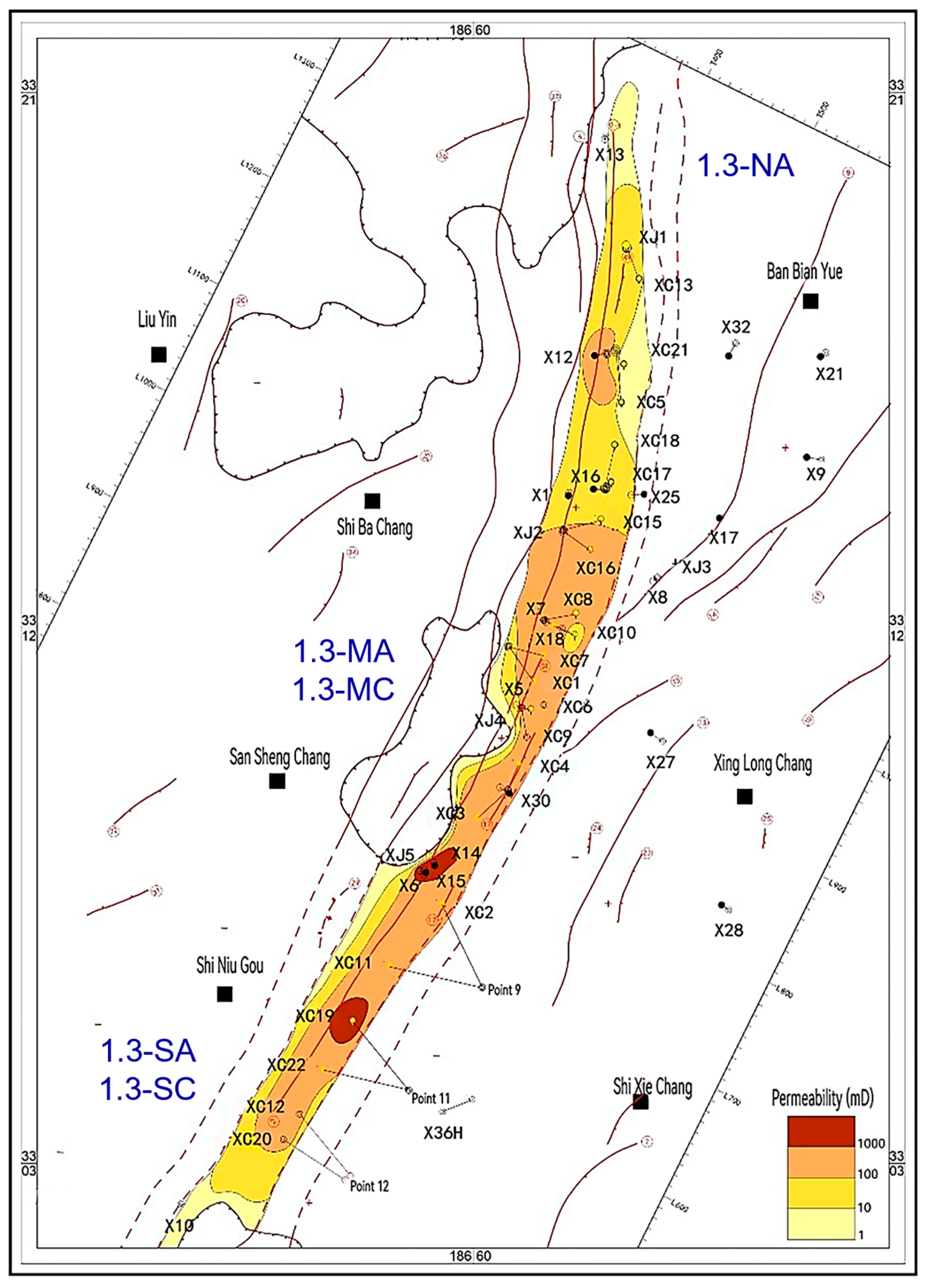
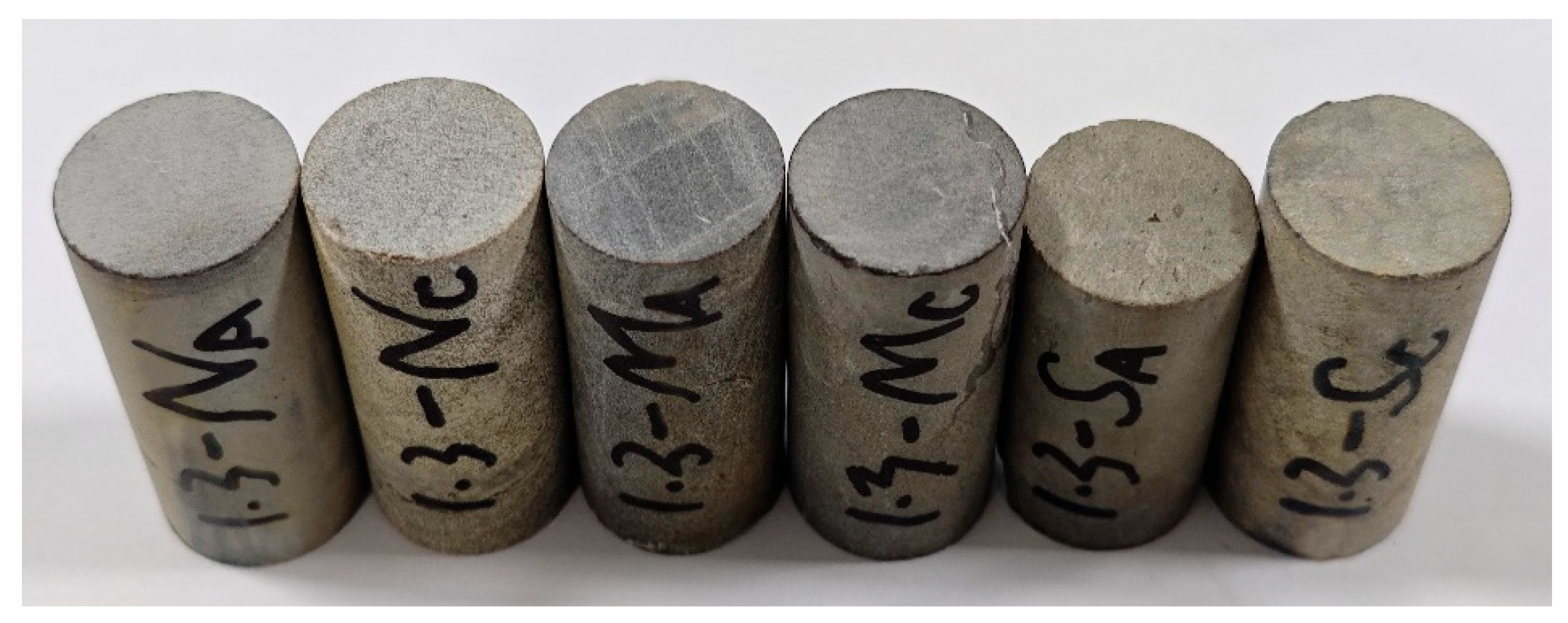
| Sample ID | Sector | Interval | Depth (m) | Length (cm) | Diameter (mm) | Mass (g) | Density (g/cm3) |
|---|---|---|---|---|---|---|---|
| 1.3-NA | North | Caprock (Qiyi Member) | 2937.27–2937.45 | 4.994 | 25.10 | 67.465 | 2.73 |
| 1.3-NC | North | Reservoir (Huanglong Fm.) | 2853.87–2854.07 | 5.000 | 25.10 | 66.773 | 2.70 |
| 1.3-MA | Middle | Caprock (Liangshan Fm.) | 2349.62–2349.77 | 4.995 | 25.10 | 69.442 | 2.81 |
| 1.3-MC | Middle | Reservoir (Carboniferous) | 2351.64–2351.79 | 4.993 | 25.10 | 68.188 | 2.76 |
| 1.3-SA | South | Caprock (Liangshan Fm.) | 2538.62–2538.78 | 4.265 | 25.35 | 59.192 | 2.75 |
| 1.3-SC | South | Reservoir (Carboniferous) | 2541.71–2541.90 | 4.722 | 25.35 | 67.706 | 2.84 |
| Sample ID | Quartz | Dolomite | Calcite | Chlorite | Clay Minerals |
|---|---|---|---|---|---|
| 1.3-NA | - | - | 100 | - | - |
| 1.3-NC | - | 100 | - | - | - |
| 1.3-MA | 98.7 | - | - | - | 1.3 |
| 1.3-MC | 21.4 | 65 | 13.6 | - | - |
| 1.3-SA | - | - | - | 4.7 | 95.3 |
| 1.3-SC | - | 100 | - | - | - |
| Parameter | Value |
|---|---|
| Frequency (MHz) | 12 |
| Number of scans | 16 |
| Echo spacing (μs) | 70 |
| Waiting time (ms) | 5 |
| Number of echoes | 8000 |
| Smoothing factor | 0.1 |
| Sample ID | Porosity (%) | Water Saturation (%) | ||
|---|---|---|---|---|
| Dry-Out for 1 d | Dry-Out for 2 d | Dry-Out for 3 d | ||
| 1.3-NA | 0.56 | 66.55 | 61.31 | 30.44 |
| 1.3-NC | 1.59 | 62.16 | 56.05 | 25.84 |
| 1.3-MA | 0.84 | 77.56 | 74.12 | 37.86 |
| 1.3-MC | 0.77 | 81.39 | 77.78 | 44.17 |
| 1.3-SA | 2.95 | 74.09 | 69.16 | 36.03 |
| 1.3-SC | 1.89 | 77.21 | 71.85 | 22.59 |
| Sample ID | Sw (%) | ρ (g/cm3) | Vp (m/s) | Vs (m/s) | νd | Ed (GPa) | Gd (GPa) | Kd (GPa) |
|---|---|---|---|---|---|---|---|---|
| 1.3-NA | 100 | 2.737 | 6273.87 | 3023.00 | 0.35 | 67.47 | 25.01 | 74.38 |
| 1.3-NA | 66.55 | 2.735 | 6211.44 | 2986.84 | 0.35 | 65.86 | 24.40 | 72.99 |
| 1.3-NA | 61.31 | 2.735 | 6031.40 | 2883.37 | 0.35 | 61.47 | 22.74 | 69.17 |
| 1.3-NA | 30.44 | 2.733 | 5548.89 | 2917.06 | 0.31 | 60.88 | 23.25 | 53.14 |
| 1.3-NC | 100 | 2.709 | 4295.53 | 2281.02 | 0.30 | 36.76 | 14.10 | 31.20 |
| 1.3-NC | 62.16 | 2.703 | 4019.29 | 2281.02 | 0.26 | 35.52 | 14.07 | 24.92 |
| 1.3-NC | 56.05 | 2.702 | 3799.39 | 2281.02 | 0.22 | 34.26 | 14.06 | 20.26 |
| 1.3-NC | 25.84 | 2.698 | 3541.08 | 2260.40 | 0.16 | 31.87 | 13.78 | 15.45 |
| 1.3-MA | 100 | 2.816 | 6091.46 | 3023.61 | 0.34 | 68.82 | 25.74 | 70.16 |
| 1.3-MA | 77.56 | 2.814 | 5862.68 | 3023.61 | 0.32 | 67.86 | 25.73 | 62.42 |
| 1.3-MA | 74.12 | 2.814 | 5808.14 | 3023.61 | 0.31 | 67.61 | 25.72 | 60.62 |
| 1.3-MA | 37.86 | 2.811 | 5525.44 | 3023.61 | 0.29 | 66.11 | 25.70 | 51.55 |
| 1.3-MC | 100 | 2.766 | 6001.20 | 3097.39 | 0.32 | 69.97 | 26.53 | 64.23 |
| 1.3-MC | 81.39 | 2.764 | 5915.88 | 3059.44 | 0.32 | 68.18 | 25.87 | 62.24 |
| 1.3-MC | 77.78 | 2.764 | 5860.33 | 3029.73 | 0.32 | 66.86 | 25.37 | 61.10 |
| 1.3-MC | 44.17 | 2.761 | 5648.19 | 3022.40 | 0.30 | 65.55 | 25.23 | 54.46 |
| 1.3-SA | 100 | 2.763 | 4424.27 | 2581.72 | 0.24 | 45.73 | 18.41 | 29.52 |
| 1.3-SA | 74.09 | 2.755 | 4214.43 | 2520.69 | 0.22 | 42.76 | 17.50 | 25.59 |
| 1.3-SA | 69.16 | 2.754 | 4181.37 | 2550.84 | 0.20 | 43.13 | 17.92 | 24.25 |
| 1.3-SA | 36.03 | 2.744 | 4140.78 | 2550.84 | 0.19 | 42.64 | 17.85 | 23.24 |
| 1.3-SC | 100 | 2.859 | 6398.37 | 3164.88 | 0.34 | 76.64 | 28.64 | 78.87 |
| 1.3-SC | 77.21 | 2.855 | 6363.88 | 3156.42 | 0.34 | 76.05 | 28.44 | 77.70 |
| 1.3-SC | 71.85 | 2.854 | 6312.83 | 3143.81 | 0.34 | 75.32 | 28.21 | 76.13 |
| 1.3-SC | 22.59 | 2.845 | 6312.83 | 3123.02 | 0.34 | 74.24 | 27.74 | 76.37 |
| Sample ID | Major Minerals | Effective Porosity (%) | Initial T2 Distribution Characteristics | Maximum Vp Change (%) |
|---|---|---|---|---|
| 1.3-NA | 100% calcite | 0.56 | Unimodal peak, 0.1 ms | 11.56 |
| 1.3-NC | 100% dolomite | 1.59 | Multimodal peaks, 0.1 ms, 10 ms and 20 ms | 17.56 |
| 1.3-MA | 98.7% quartz and 1.3% clay minerals | 0.84 | Multimodal peaks, 0.1 ms, 10 ms and 30 ms | 9.29 |
| 1.3-MC | 65% dolomite, 21.4% quartz and 13.6% calcite | 0.77 | Multimodal peaks, 0.1 ms, 1 ms and 10 ms | 5.88 |
| 1.3-SA | 95.3% clay minerals and 4.7% chlorite | 2.95 | Unimodal peak, 0.1 ms | 6.41 |
| 1.3-SC | 100% dolomite | 1.89 | Multipeaked distribution, 0.1 ms and 1–100 ms | 1.34 |
Disclaimer/Publisher’s Note: The statements, opinions and data contained in all publications are solely those of the individual author(s) and contributor(s) and not of MDPI and/or the editor(s). MDPI and/or the editor(s) disclaim responsibility for any injury to people or property resulting from any ideas, methods, instructions or products referred to in the content. |
© 2026 by the authors. Licensee MDPI, Basel, Switzerland. This article is an open access article distributed under the terms and conditions of the Creative Commons Attribution (CC BY) license.
Share and Cite
Wang, Y.; Zhai, Z.; Gan, Q.; Huang, S.; Li, L.; Zeng, J.; Wen, T.; Jia, S. Evolution of Dynamic Elastic Parameters and Dry-Out-Induced Weakening Mechanisms in Reservoir and Caprock During Underground Gas Storage: Joint Ultrasonic and NMR Monitoring. Appl. Sci. 2026, 16, 4053. https://doi.org/10.3390/app16084053
Wang Y, Zhai Z, Gan Q, Huang S, Li L, Zeng J, Wen T, Jia S. Evolution of Dynamic Elastic Parameters and Dry-Out-Induced Weakening Mechanisms in Reservoir and Caprock During Underground Gas Storage: Joint Ultrasonic and NMR Monitoring. Applied Sciences. 2026; 16(8):4053. https://doi.org/10.3390/app16084053
Chicago/Turabian StyleWang, Yan, Zhen Zhai, Quan Gan, Saipeng Huang, Limin Li, Juan Zeng, Tingjun Wen, and Sida Jia. 2026. "Evolution of Dynamic Elastic Parameters and Dry-Out-Induced Weakening Mechanisms in Reservoir and Caprock During Underground Gas Storage: Joint Ultrasonic and NMR Monitoring" Applied Sciences 16, no. 8: 4053. https://doi.org/10.3390/app16084053
APA StyleWang, Y., Zhai, Z., Gan, Q., Huang, S., Li, L., Zeng, J., Wen, T., & Jia, S. (2026). Evolution of Dynamic Elastic Parameters and Dry-Out-Induced Weakening Mechanisms in Reservoir and Caprock During Underground Gas Storage: Joint Ultrasonic and NMR Monitoring. Applied Sciences, 16(8), 4053. https://doi.org/10.3390/app16084053