Experimental and Numerical Simulation Studies on the Interface Characteristics Model of Loess and Bamboo Geogrid

Abstract
1. Introduction
2. Materials and Methods
2.1. Materials
2.2. Test Plan
2.2.1. Static Loading Pull-Out Test Plan
- (a)
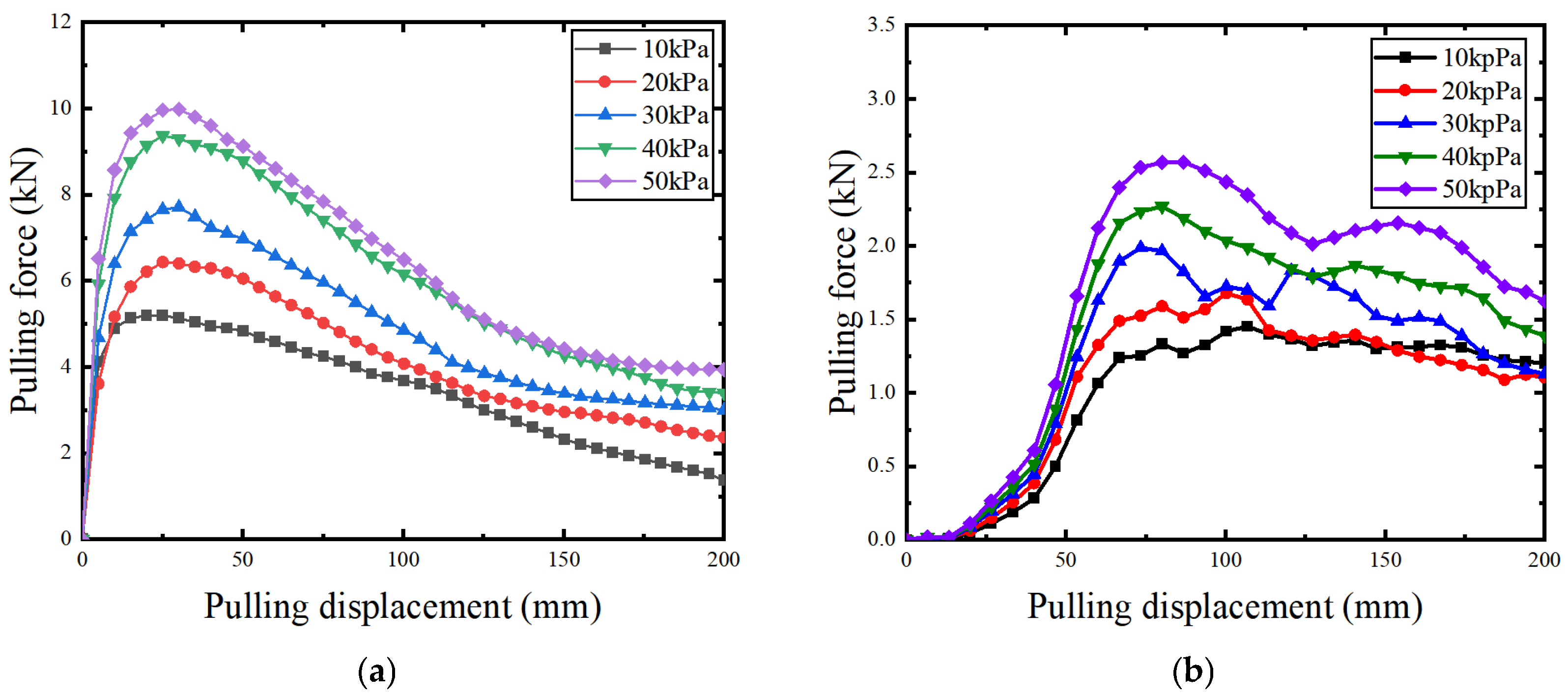
- Vertical load test: In actual engineering, the loads received by the loess high-fill roadbed surface are generally not high. Considering the strength issue of the bamboo geogrid, this test used loads within the range of 50 kPa. Under the conditions of a pull-out rate of 10 mm/min, 3 transverse ribs, and a burial depth of 250 mm, this test applied five levels of vertical stress ranging from 10 to 50 kPa to establish the relationship between interface shear stress and normal stress and solve the interface strength parameters.
- (b)
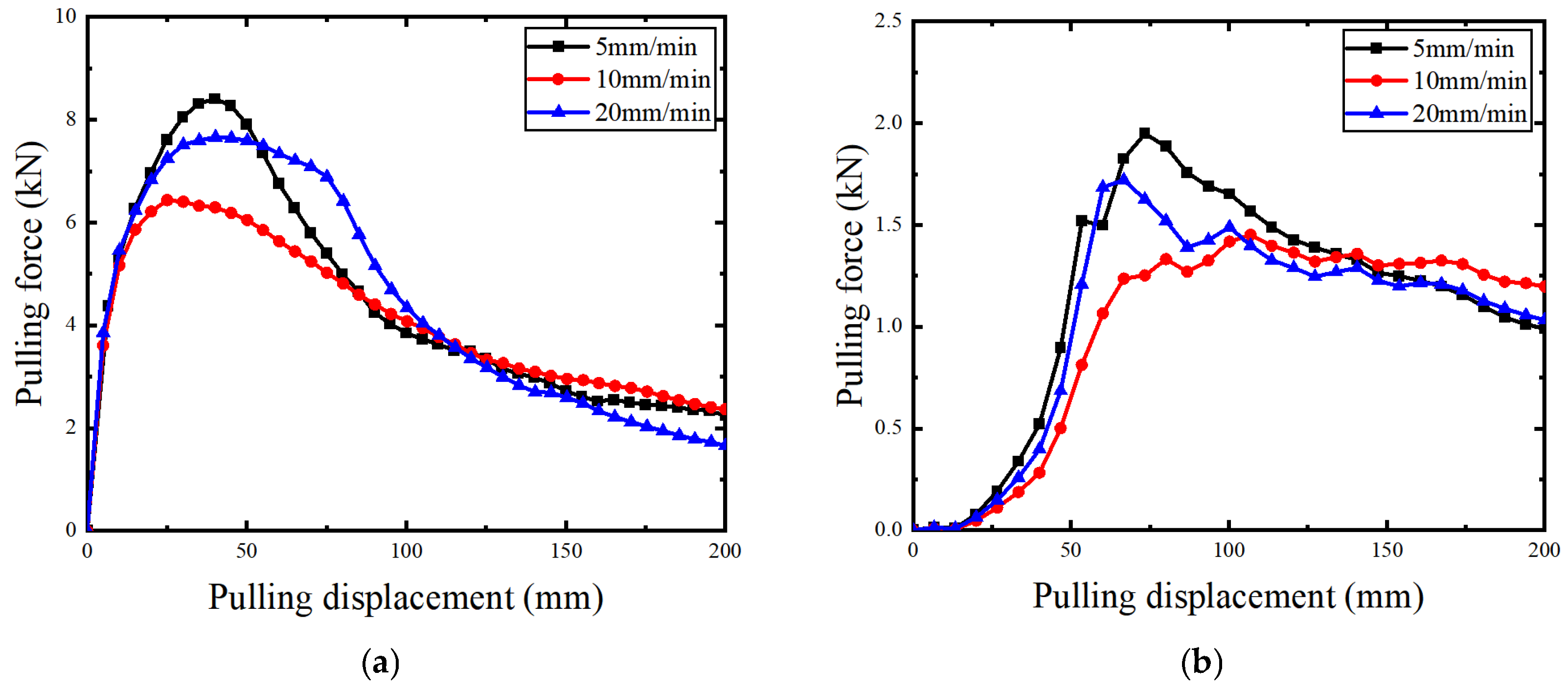
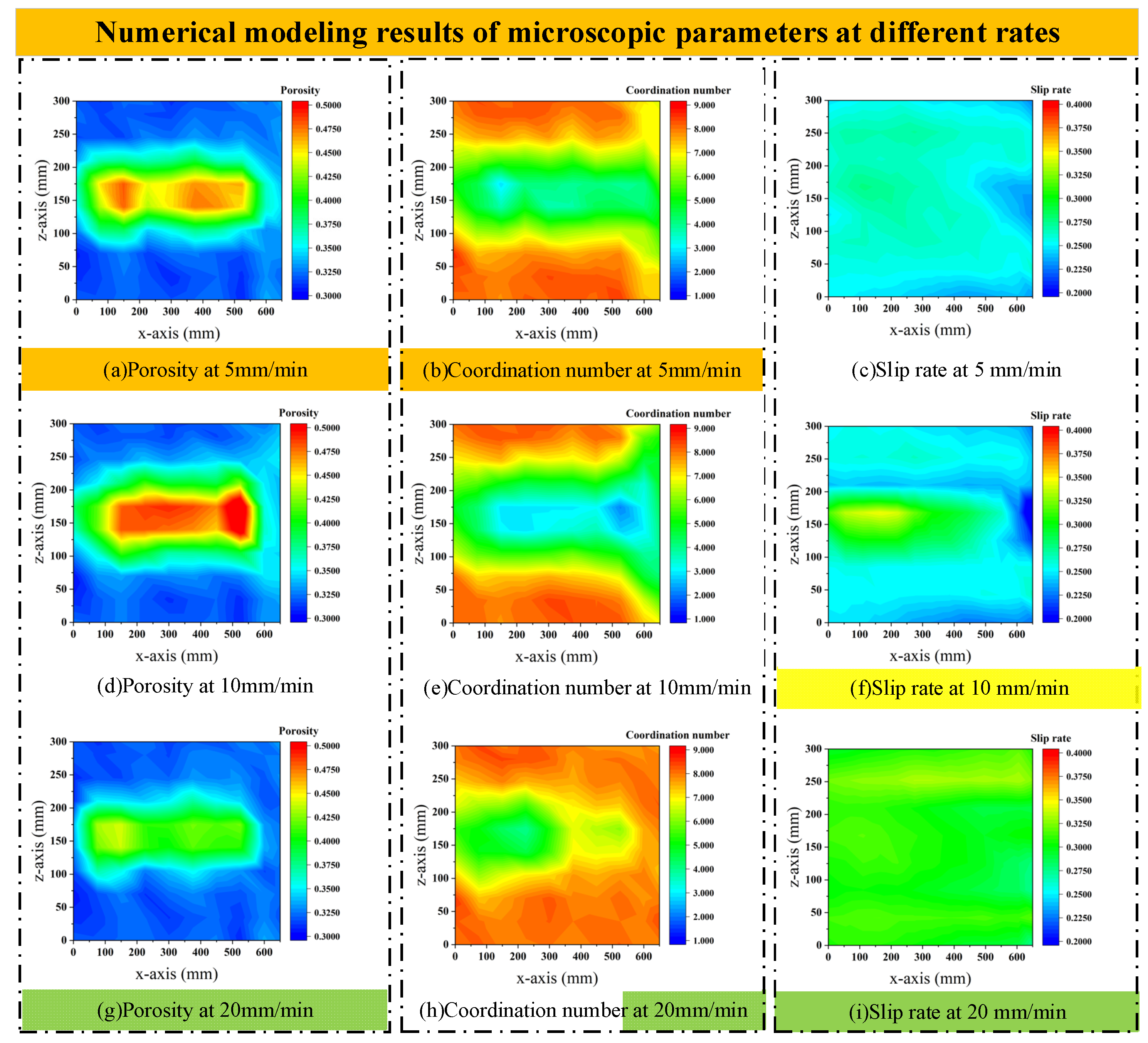
- Pull-out rate test: This test used the pre-test method to measure the curve change pattern of the bamboo geogrid within the range of 5–20 mm/min. The rate value was selected as it was relatively suitable. Then, the influence of the rate on the pull-out of the bamboo geogrid was analyzed. Therefore, under the conditions of a vertical load of 20 kPa, 2 cross ribs, and a burial depth of 250 mm, this test set three pull-out rates of 5, 10, and 20 mm/min to evaluate the rate effect during the loading process.
- (c)
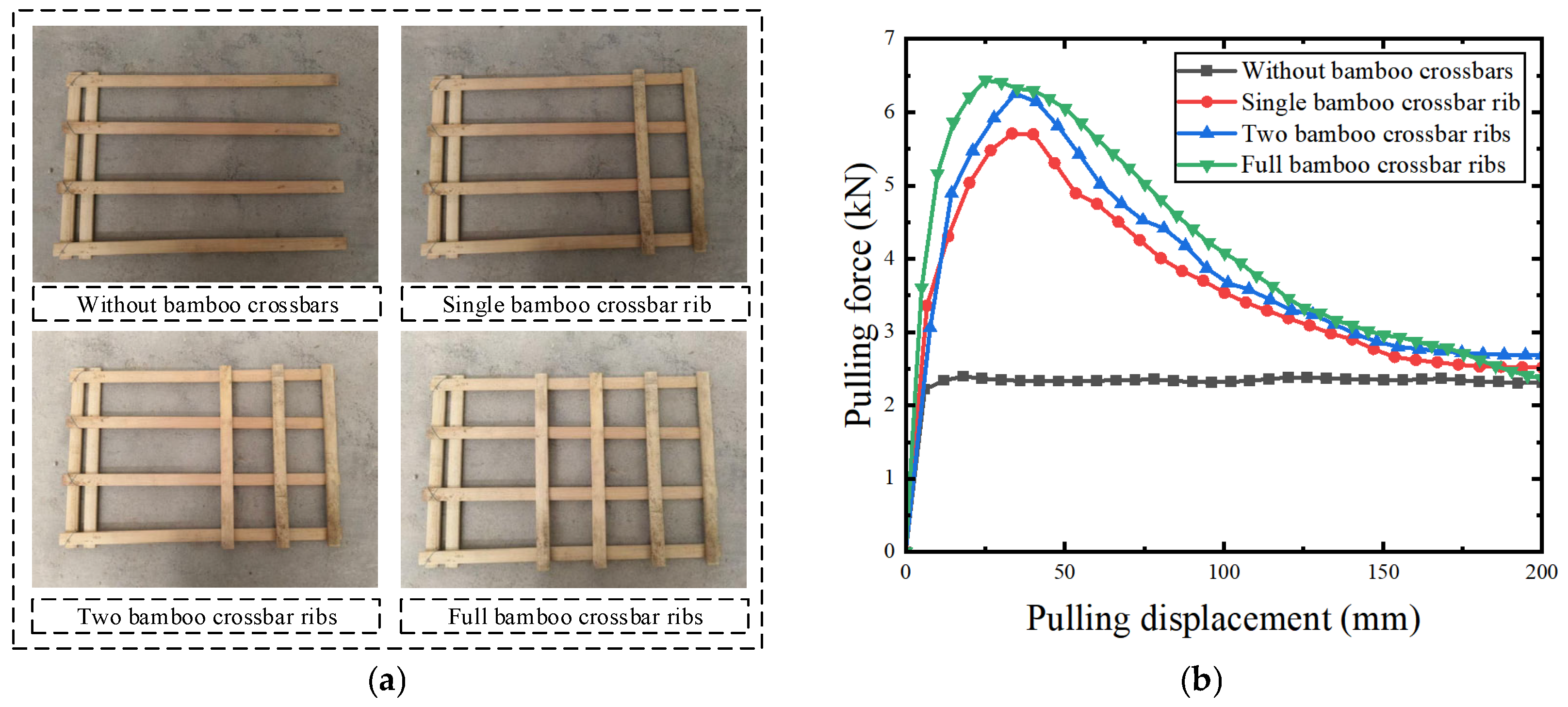
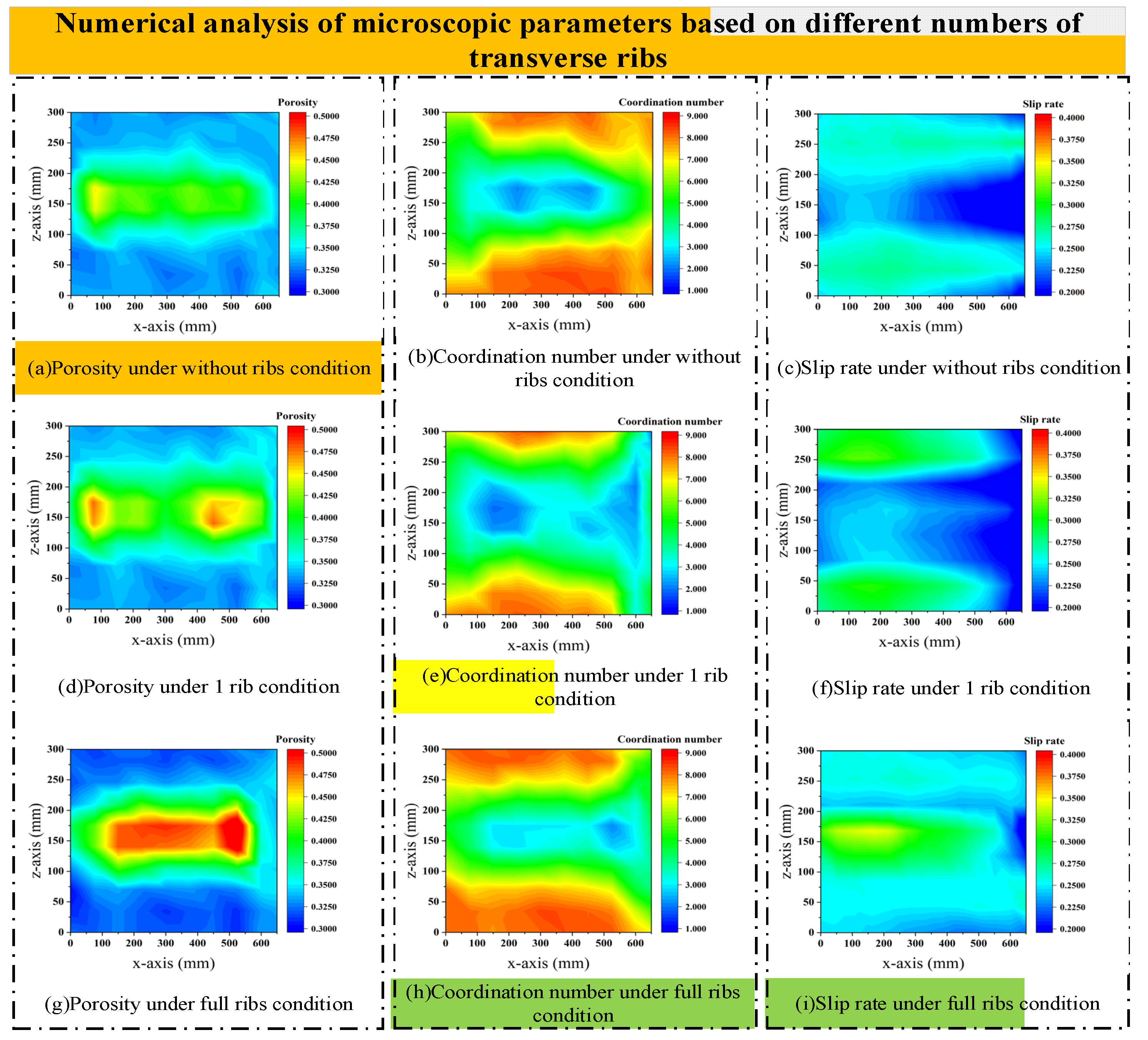
- Cross rib number test: Keeping the previous baseline conditions unchanged, four grids with cross rib numbers of 0, 1, 2, and 3 were used to reveal the passive impedance and locking mechanism of the cross ribs.
- (d)
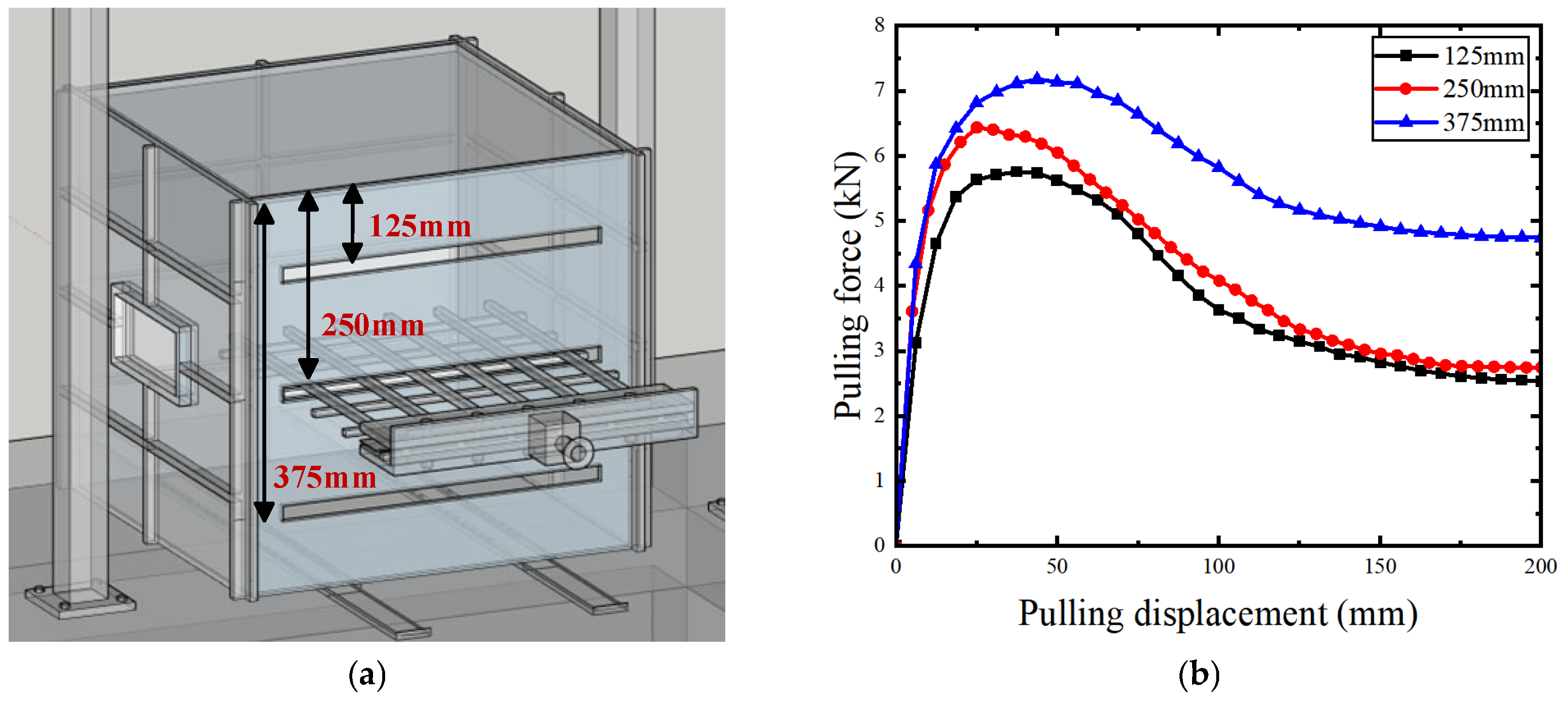
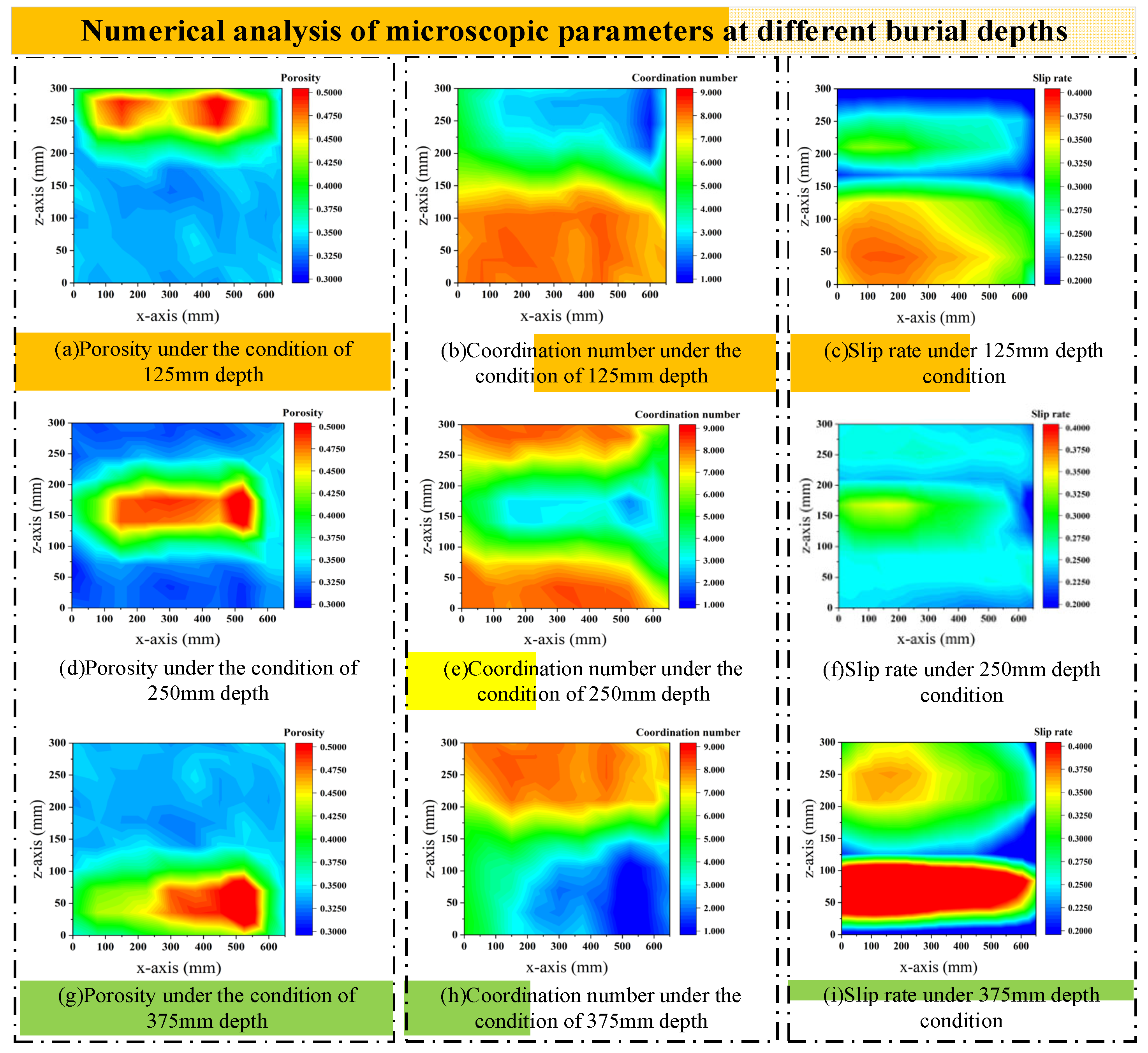
- Burial depth test: Keeping other conditions unchanged, the burial depth of the grid was adjusted to 125, 250, and 375 mm to analyze the distribution law of interface forces at different burial depths.
- (e)
- Grid material test: Keeping the number of cross ribs of the geogrid and bamboo geogrid intact, separate tests were conducted on vertical load and pull-out rate. The vertical load test was carried out under vertical stress of 10, 20, 30, 40, and 50 kPa, and the pull-out rate test was conducted at a rate of 5, 10, and 20 mm/min to obtain the force laws of the geogrid and bamboo geogrid in the soil.
2.2.2. Pull-Out Test Procedure
2.3. Interface Strength Analysis Method
3. Test Results and Analysis
3.1. Analysis of the Influence of Vertical Load and Pulling Rate in the Pull-Out Test
3.1.1. Analysis of the Vertical Load Effect of Bamboo Geogrid Versus Conventional Geogrid
3.1.2. Analysis of the Pull-Out Rate Effect on Bamboo Geogrid Versus Conventional Geogrid
3.1.3. Comparison of Interface Performance Between Bamboo Geogrid and Geogrid
3.2. Analysis of the Influence of the Number of Transverse Ribs in the Pull-Out Test
3.3. Analysis of the Influence of Embedding Depth in the Pull-Out Test
4. Numerical Simulation Analysis of DEM Pull-Out Tests
4.1. Model Establishment and Verification
4.1.1. Model Establishment for Pull-Out Test
- (a)
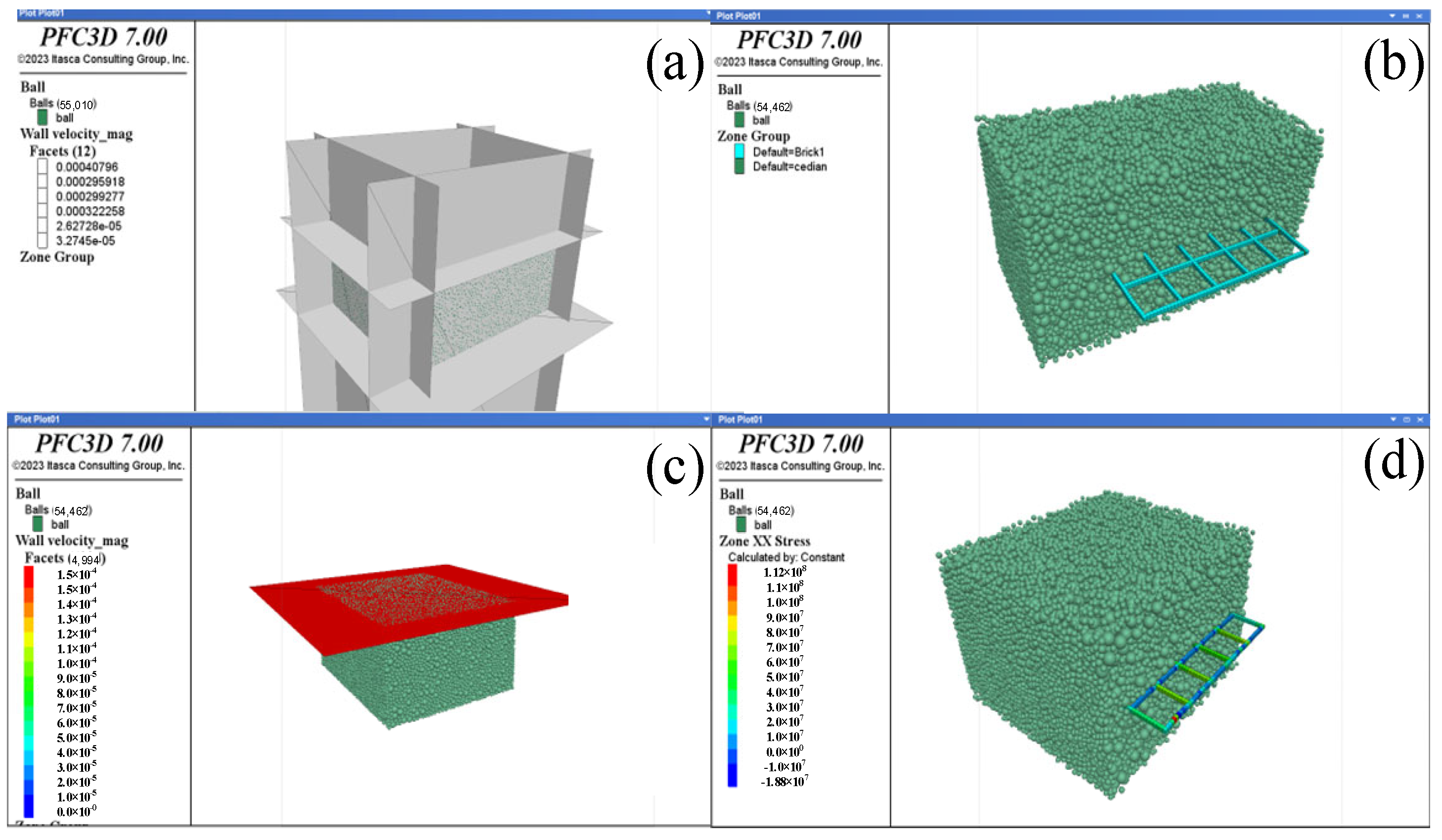
- A rectangular model boundary is constructed using the wall element, and a layered compaction sampling method is employed to generate a granular assembly of loess with heterogeneous characteristics.
- (b)
- After the initial ground stress of the soil is balanced, the grid elements are embedded at the predetermined depth to construct a reinforcement–soil coupling model. During the boundary condition-setting stage, the particles at the ends of the grid are logically grouped and a constant horizontal velocity vector is assigned to simulate the displacement-controlled pull-out loading in the actual test.
- (c)
- After the model is established, a vertical load is applied until the system’s kinetic energy reaches the stable threshold.
- (d)
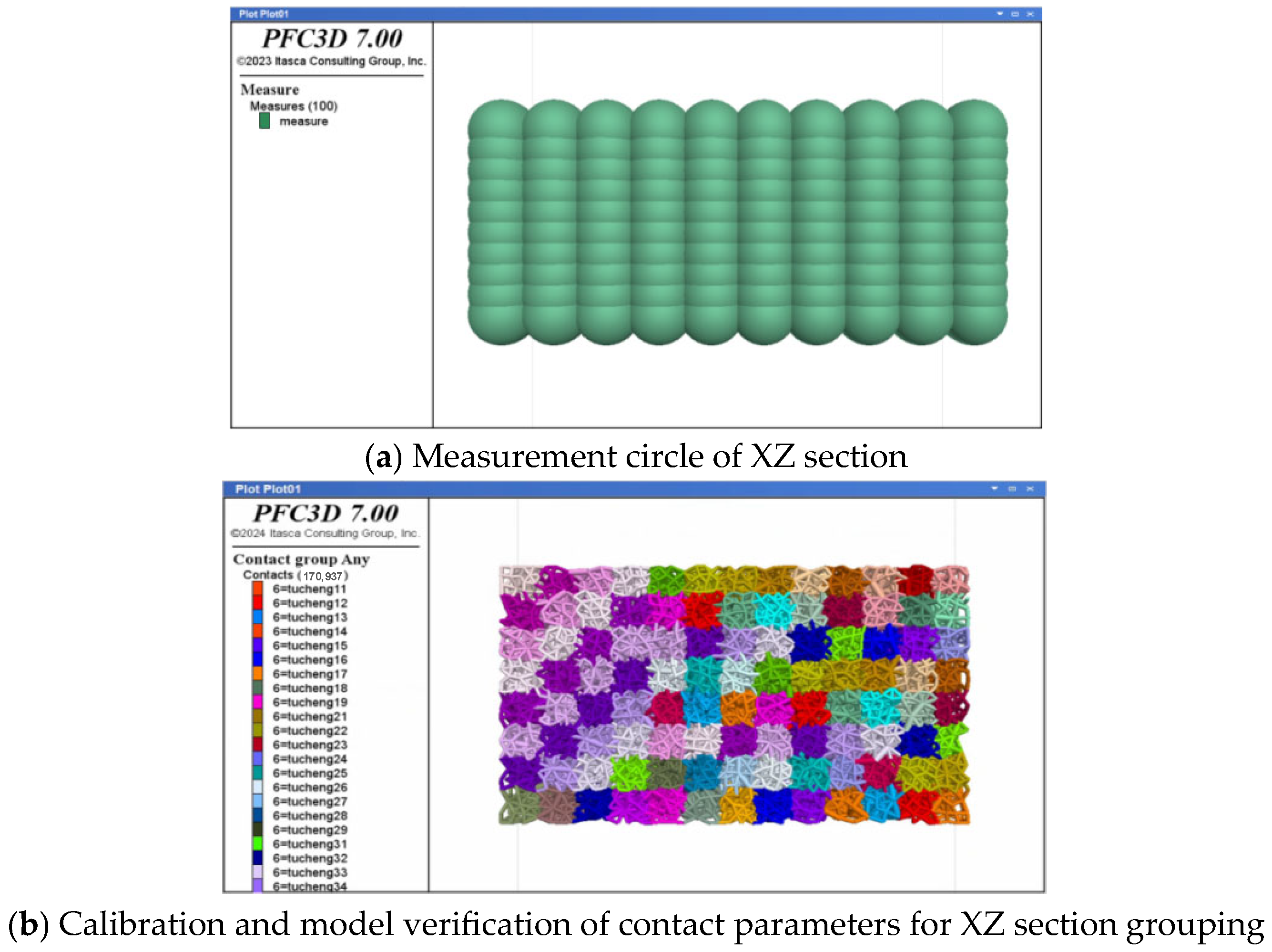
- Then, the horizontal velocity of the grid is activated, and the built-in historical monitoring pointer (History) is activated simultaneously to capture the evolution laws of the pull-out force and displacement in real time. The relevant process for establishing the model is shown in Figure 8.
4.1.2. Model Verification for Pull-Out Test
4.1.3. DEM Post-Processing Method
4.2. Numerical Microscopic Analysis of Pull-Out Test Using DEM Numerical Simulation
4.2.1. Displacement and Force Chain Changes
4.2.2. Analysis of Model-Derived Microscopic Parameters of Interfaces with Different Rates
4.2.3. Analysis of Model-Derived Particle-Scale Parameters at Different Numbers of Transverse Ribs
4.2.4. Analysis of Model-Derived Particle-Scale Parameters at Different Embedment Depths
5. Conclusions
- (1)
- The pull-out tests and coupled DEM–continuum simulations demonstrate that bamboo geogrids significantly outperform conventional plastic geogrids at the loess interface. Under identical conditions, bamboo geogrids consistently achieve peak pull-out forces approximately four times higher, accompanied by markedly greater initial stiffness and distinct strain-hardening followed by softening. This enhanced performance stems from the material’s high rigidity, which facilitates rapid mobilization of interfacial friction and passive bearing at transverse rib nodes, thereby providing superior anchorage and early deformation control in loess fills.
- (2)
- Macroscopic pull-out resistance increases systematically with normal stress, transverse rib number, and embedment depth, exhibiting characteristic post-peak softening attributable to shear-band formation and localized soil damage. Transverse ribs transform the interaction from predominantly frictional to a composite mechanism incorporating adhesion and continuous passive end-bearing, resulting in substantial gains in apparent interface shear strength and friction coefficient. Embedment depth exerts a nonlinear strengthening effect through increased confinement, although gains diminish at greater depths due to suppressed dilation. The pull-out rate exerts a non-monotonic influence: peak resistance is highest at the extremes (5 mm/min and 20 mm/min) and lowest at the intermediate rate (10 mm/min). This pattern reflects rate-dependent, particle dynamics-efficient rearrangement and stable force chain formation at low rates versus intense disturbance, lagged reorganization, and widespread mobilization at high rates.
- (3)
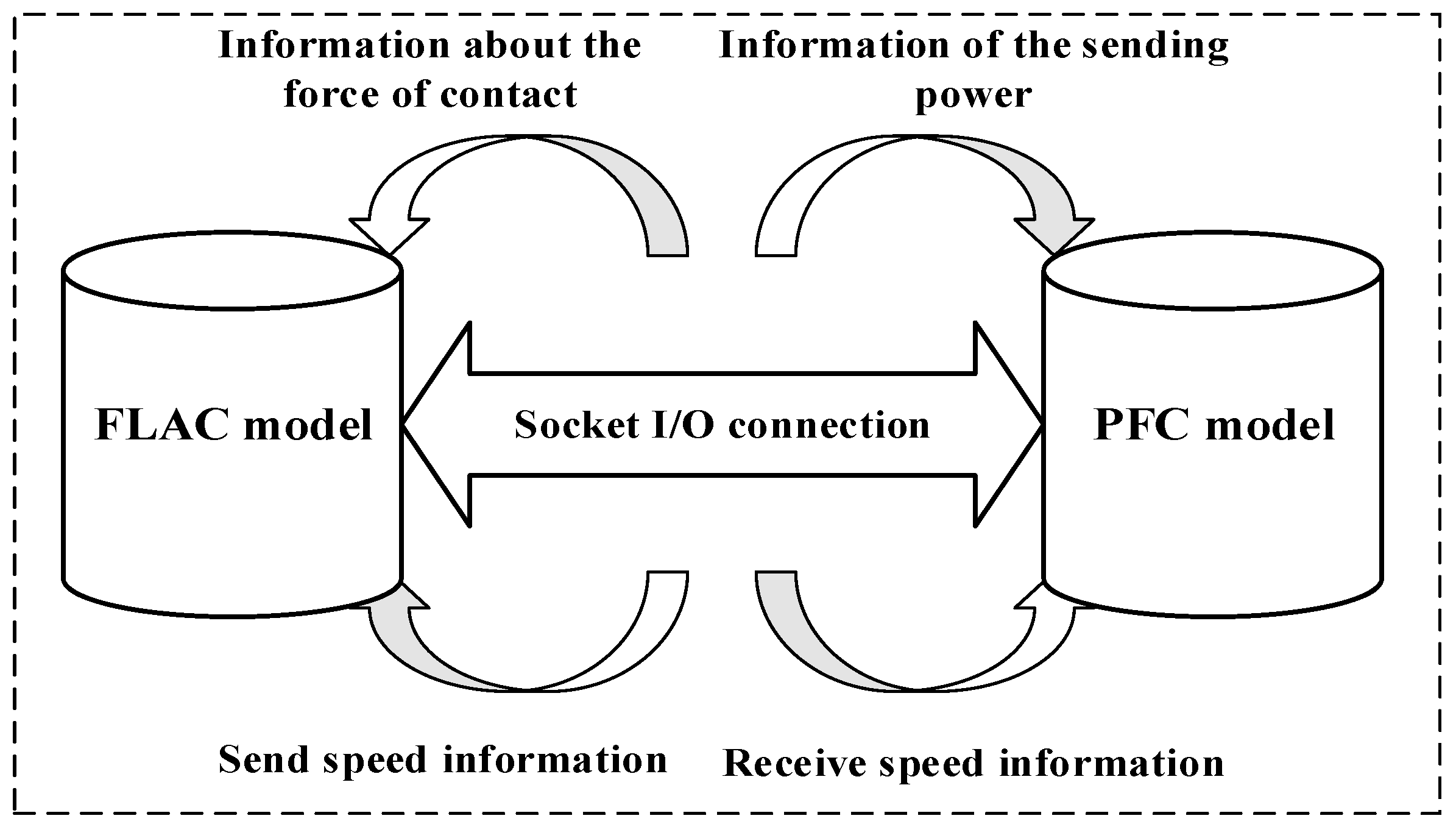
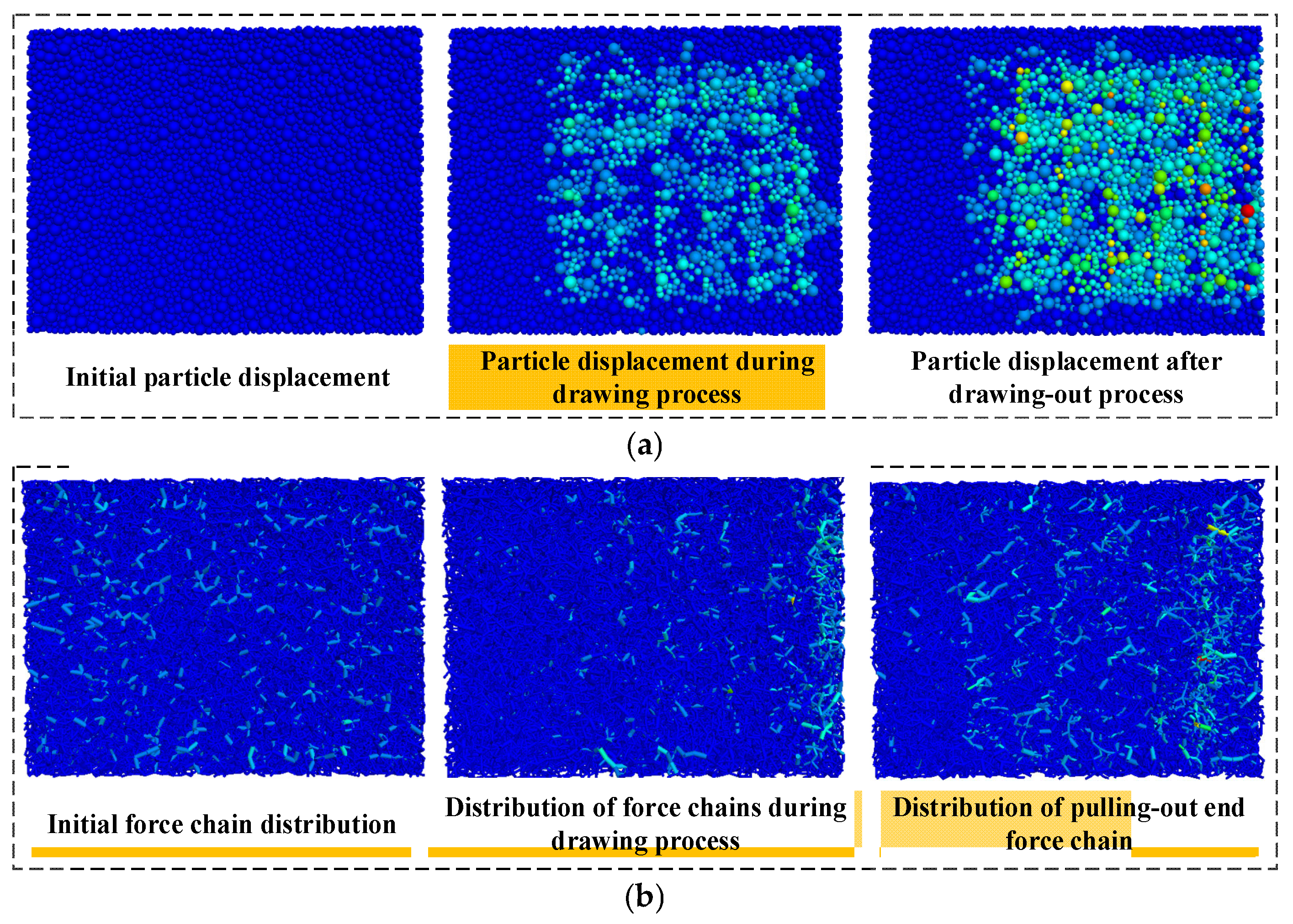
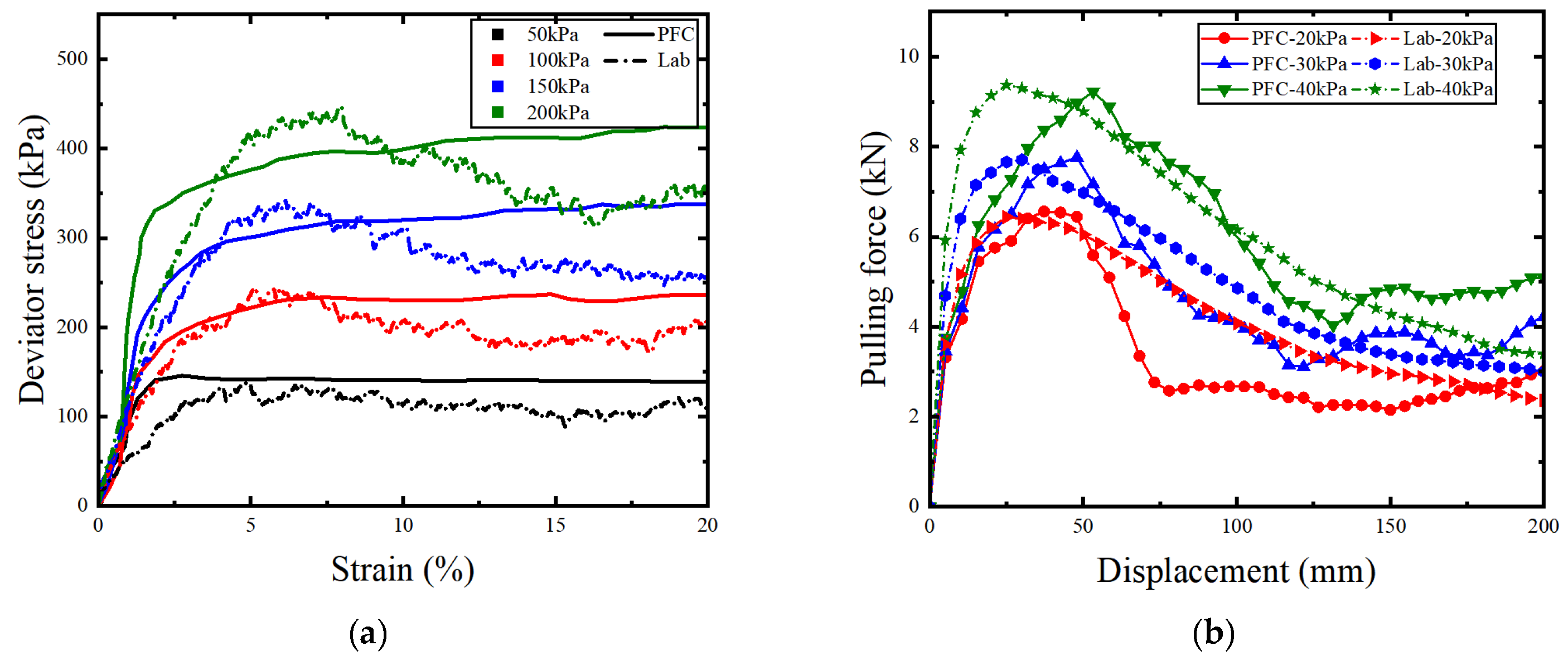
- Numerical results from the DEM–FDM simulations reveal that pull-out induces localized dilation (increased porosity), contact network disruption (decreased coordination number), and stratified slip along the reinforcement, with strong force chains concentrating ahead of transverse ribs. Systematic variations in the rate, rib configuration, and depth alter these model-derived evolutions. These numerical findings directly support the observed macroscopic strength enhancement and softening behavior obtained from the laboratory pull-out tests.
- (4)
- Limitations and future perspectives: This study provides valuable insights into the static interface behavior of bamboo geogrids in loess; however, several limitations should be acknowledged. The experiments were conducted under monotonic static loading only, without considering cyclic traffic loads or long-term environmental exposure (UV radiation, moisture fluctuations, acidity). The DEM–FDM, while well-calibrated, is a simplified 3D representation that does not fully capture particle shape variability or biodegradation effects. Consequently, the present work should be regarded as a preliminary mechanical investigation. Future research will focus on cyclic pull-out and direct shear tests under simulated traffic loading, accelerated environmental aging tests to quantify fatigue life, and full-scale field trials combined with multi-physics numerical modeling that integrates mechanical, hydraulic, and chemical degradation processes. Such a complex approach is essential for the safe, long-term application of bamboo geogrids in real engineering projects.
Author Contributions
Funding
Data Availability Statement
Acknowledgments
Conflicts of Interest
References
- Song, H.; Wang, X.G.; Teng, H.Q.; Ye, X.G.; Liu, K.; Shi, W.; Yang, J.S. Study on Creep Characteristics and Long–term Strength of Loess-Laterite Composite Slope Soil under Excavation Condition. Earth Sci. 2026, 51, 398–406. [Google Scholar] [CrossRef]
- Ma, S.S. Practical Application of Lime Soil Compaction Pile Technology in a Highway Construction. Constr. Mach. Technol. Manag. 2026, 39, 132–134. [Google Scholar] [CrossRef]
- Editorial Department of China Journal of Highway and Transport. Review of Research on Subgrade Engineering in China·2025. China J. Highw. Transp. 2025, 38, 1–153. [Google Scholar] [CrossRef]
- Mu, Q.Y.; Dai, B.L.; Zhou, C.; Peng, J.B. Macro-micro Mechanism, Theoretical Model and Evaluation Technology of Loess Collapsibility. Hydrogeol. Eng. Geol. 2026, 53, 1–20. [Google Scholar] [CrossRef]
- Li, Z.; Weng, X.; Guo, S.; Yan, M.; Wang, C. Influence of Collapsible Shape of Loess Foundation on High-speed Railway Subgrade under Train Vibration Loading. Transp. Geotech. 2024, 50, 101414. [Google Scholar] [CrossRef]
- Li, S.; Lei, R.B.; Bian, X.X.; Wang, Z.L.; Zhang, G.F.; Xu, H.N. A Biohybrid Mineralization Strategy Based on Calcium Lignosulfate–Reinforced Enzyme-Induced Carbonate Precipitation for Improving Loess Roadbed Permeability Resistance. Sustain. Mater. Technol. 2025, 46, e01764. [Google Scholar] [CrossRef]
- Chen, R.; Cai, G.; Dong, X.; Mi, D.; Puppala, A.J.; Duan, W. Mechanical Properties and Micro-mechanism of Loess Roadbed Filling Using By-product Red Mud as a Partial Alternative. Constr. Build. Mater. 2019, 216, 188–201. [Google Scholar] [CrossRef]
- Lei, L.L.; Wang, Z.H.; Guo, X.; Zhang, Z.C.; Li, J. Study on Deformation Characteristics of Subgrade Loess under Pressurized Freeze-thaw Cycle. Results Eng. 2026, 29, 109141. [Google Scholar] [CrossRef]
- Shoukat, T.; Yoo, P.J.; Kim, J.H.; Kim, Y. Comparative Study on Fiber Reinforcement and Geogrid for Enhancing the Long-term Performance of Asphalt Pavements against Rutting Failure. Constr. Build. Mater. 2025, 499, 144083. [Google Scholar] [CrossRef]
- Bergado, D.T.; Bukkanasuta, A.; Balasubramaniam, A.S. Laboratory Pull-out Tests Using Bamboo and Polymer Geogrids Including a Case Study. Geotext. Geomembr. 1987, 5, 153–189. [Google Scholar] [CrossRef]
- Han, H.X.; Xiao, C.Z.; Yin, J.G.; Cao, Y.H. Investigation on the Effect of Interface Temperature on Soil-reinforcement Interaction Mechanism by Pullout Test. Geotext. Geomembr. 2025, 53, 1242–1256. [Google Scholar] [CrossRef]
- Wu, H.; Shao, S.; Shao, S.J.; Wang, Z.C.; Yan, G.Y. Cyclic Loading Deformation Response and Microstructure Evolution of Undisturbed Loess Subjected to Pre-humidification Process. Eng. Geol. 2024, 337, 107573. [Google Scholar] [CrossRef]
- Zhang, R.; Zhou, Y.; Guo, Y.; Zheng, J.; Deng, Y.; Lan, T. Influence of Geogrid Reinforcement on the Cracking Characteristics of Expansive Soils: A Laboratory Study. Geotext. Geomembr. 2025, 53, 545–558. [Google Scholar] [CrossRef]
- Oliveira, G.M.; Falorca, I.M.C.F.G. Evaluation of Two-layered Soils Reinforced with 3D Printed Geogrid Models under Axisymmetric Loading Conditions. Geotext. Geomembr. 2025, 53, 798–810. [Google Scholar] [CrossRef]
- Jia, Y.F.; Guo, Y.K.; Morsy, A.M.; Zornberg, J.G.; Zhang, J.; Xie, M.X.; Zheng, Y.W. Experimental Evaluation on Bearing Performance of Tire Cell-geogrid Reinforced Subgrades. Transp. Geotech. 2026, 59, 101944. [Google Scholar] [CrossRef]
- Chen, J.F.; Liu, Z.N.; Gu, Z.A.; Zhu, Y.; Gao, J.L. Large-scale Direct Shear Test of the Interface between Coral Sand and Geogrid. Appl. Ocean Res. 2024, 153, 104219. [Google Scholar] [CrossRef]
- Chen, C.; McDowell, G.R.; Thom, N.H. Investigating Geogrid-reinforced Ballast: Experimental Pull-out Tests and Discrete Element Modelling. Soils Found. 2014, 54, 1–11. [Google Scholar] [CrossRef]
- Abdi, M.R.; Zandieh, A.R. Experimental and Numerical Analysis of Large Scale Pull out Tests Conducted on Clays Reinforced with Geogrids Encapsulated with Coarse Material. Geotext. Geomembr. 2014, 42, 494–504. [Google Scholar] [CrossRef]
- Casale, M.; Dino, G.A.; Oggeri, C. Pullout Testing of Recycled Construction and Demolition Waste Aggregates in Full-scale Geogrid-reinforced Embankments. Transp. Geotech. 2025, 54, 101638. [Google Scholar] [CrossRef]
- Ma, X.N.; Bai, F. The Role of Geogrid Aperture Shape and Size in Strengthening Aeolian Sands: Insights from a Coupled DEM-FDM Approach. Comput. Geotech. 2025, 180, 107067. [Google Scholar] [CrossRef]
- Zhang, L.L.; Yang, B.; Wang, J.Q.; Zhang, H.Y.; Wang, Z.Q.; Liu, L.L. Research Progress on Geogrid Pull-out Test and Soil-reinforcement Interface Characteristics. J. Cent. South Univ. (Sci. Technol.) 2025, 56, 5251–5263. [Google Scholar]
- Ma, X.N.; Bai, F.; Wang, L. Influence of Geogrid Transverse Rib Shape on Interface Shear Strength of Reinforced Aeolian Sand. J. Harbin Inst. Technol. 2025, 57, 160–170. [Google Scholar]
- Chen, C.; Duan, Y.D.; Rui, R.; Wang, L. Study on Single and Double Layer Geogrid Reinforced Ballast Based on Pull-out Test and Discrete Element Simulation. Rock Soil Mech. 2021, 42, 954–962+975. [Google Scholar] [CrossRef]
- Luo, T.; Chen, P.; Qiu, H.F.; Fu, S.J.; Sun, C.W. Research Progress on Interaction between Geogrid and Filler. Eng. J. Wuhan Univ. 2020, 53, 111–115. [Google Scholar]
- Xiao, Y.J.; Wang, Y.Q.; Shen, Z.H.; Wang, M.; Kanwal, G.; Ge, Y.; Wang, W.; Yu, Z. Hybrid DEM-FDM modeling of heavy-haul railway transition zone slope effects on ballast particle movement and dynamic track responses. Transp. Geotech. 2026, 59, 101948. [Google Scholar] [CrossRef]
- Chen, G.Z.; Du, Z.B.; Ding, M.X.; Zhang, J.W. Experimental Study on Interface Shear Characteristics of Bamboo Grid Reinforced Loess. Chin. J. Undergr. Space Eng. 2024, 20, 1885–1893. [Google Scholar] [CrossRef]
- Chen, G.Z.; Du, Z.B.; Tian, H.D.; Zhang, J.W. Numerical Simulation Study on Bamboo Grid Reinforced High Steep Gully Loess Fill Subgrade. Highway 2024, 69, 1–8. [Google Scholar]
- Abdi, M.R.; Zandieh, A.R.; Mirzaeifar, H.; Arjomand, M.A. Influence of Geogrid Type and Coarse Grain Size on Pull out Behaviour of Clays Reinforced with Geogrids Embedded in Thin Granular Layers. Eur. J. Environ. Civ. Eng. 2019, 25, 2161–2180. [Google Scholar] [CrossRef]
- Ren, F.; Huang, Q.; Liu, Q.; Wang, G. Numerical Study on the Pull-out Behaviour of Planar Reinforcements with Consideration of Residual Interfacial Shear Strength. Transp. Geotech. 2022, 35, 100766. [Google Scholar] [CrossRef]
- Wu, G.; Tan, Y.; Zeng, J.; Zheng, J.; Zhang, R.; Liu, Y.; Yue, S. Laboratory Tests of an Eccentrically Loaded Strip Footing Above Single Underlying Void. J. Build. Eng. 2025, 111, 113211. [Google Scholar] [CrossRef]
- Li, M.D.; Li, Y.; Li, J.F. Investigation of Rock-breaking Mechanism by Disc Cutter and Particle Size Characteristics of Rock Fragments Based on PFC-FLAC Coupled Simulation. Tunn. Undergr. Space Technol. 2025, 165, 106862. [Google Scholar] [CrossRef]
- Tizpa, P.; Chenari, R.J.; Payan, M. PFC/FLAC 3D Coupled Numerical Modeling of Shallow Foundations Seated on Reinforced Granular Fill Overlying Clay with Square Void. Comput. Geotech. 2023, 161, 105574. [Google Scholar] [CrossRef]
- Yu, H.J.; Tao, Z.G.; Wu, Y.H.; Yu, C.; Huo, S.; Wei, H.; Weng, H. Study on the influence of contact zone dip angle between soft and hard rocks on tunnel surrounding rock failure mechanism. Eng. Fail. Anal. 2026, 186, 110501. [Google Scholar] [CrossRef]
- Chen, K.; Liao, L.J.; Zhu, R.; Zhou, Z.M.; Zhang, H. Macro-meso Parameter Calibration and Sensitivity Analysis of Coal-bearing Soil Discrete Element Model. J. Nanchang Inst. Technol. 2023, 42, 39–44. [Google Scholar]
- Xiong, Z.P. Continuous-Discrete Coupled Numerical Analysis of Axial Bearing Deformation Characteristics of Screw Steel Piles Considering Screw-In Process. Ph.D. Thesis, Southwest Jiaotong University, Chengdu, China, 2022. [Google Scholar]
- Tong, L.; Fu, L.; Wu, B.; Xu, C.; Lim, C.W.; Ding, H. Particle Shape Effect on Creep and Fluidity of Granular Packing. J. Eng. Mech. 2025, 151, 11. [Google Scholar] [CrossRef]
- Li, J.; Miao, C.X. Discrete Element Study on Meso-characteristics of Biaxial Geogrid Reinforced Ballast Interface. Constr. Mater. Technol. Appl. 2025, 2, 5–9. [Google Scholar] [CrossRef]
- Tong, L.; Fu, L.; Wu, B.; Xu, C.; Lim, C.W. Packing fraction effect on dynamic creep deformation of granular materials. Acta Geotech. 2025, 20, 2135–2144. [Google Scholar] [CrossRef]





| Material Dimensions/mm | Compressive Strength/MPa | Tensile Strength/MPa | Shear Strength/MPa | Bending Strength/MPa | |
|---|---|---|---|---|---|
| Width | Thickness | 69.49 | 12.62 | 189.07 | 152.80 |
| 4 | 8 | ||||
| Mesh Size/mm | The Dimensions of the Transverse Ribs/mm | Ultimate Tensile Strength/MPa | ||
|---|---|---|---|---|
| Horizontal | Vertical | Horizontal | Vertical | |
| 30 × 30 | 30 | 30 | 20 | 20 |
| Research Variables and Levels | Fixed Parameters | Experimental Group |
|---|---|---|
| (a) Vertical load test | Pull-out rate: 10 mm/min Number of transverse ribs: 3 Burial depth: 250 mm | 10 kPa |
| 20 kPa | ||
| 30 kPa | ||
| 40 kPa | ||
| 50 kPa | ||
| (b) Pulling rate test | Vertical stress: 20 kPa Number of transverse ribs: 3 Burying depth: 250 mm | 5 mm/min |
| 20 mm/min | ||
| (c) Number of transverse ribs test | Vertical stress: 20 kPa Pulling speed: 10 mm/min Burying depth: 250 mm | 0 rib |
| 1 rib | ||
| 2 ribs | ||
| (d) Burial depth test | Vertical stress: 20 kPa Pulling speed: 10 mm/min Number of transverse ribs: 3 | 125 mm |
| 375 mm | ||
| (e) Grid material test | Number of transverse ribs: 3 Burying depth: 250 mm Vertical stress: 10–50 kPa Pulling rate: 5–20 mm/min | Geogrid |
| Bamboo grid |
| Material Type | Normal Load (kPa) | Effective Normal Stress (kPa) | Section Shear Strength (kPa) | Frictional Coefficient f* |
|---|---|---|---|---|
| Bamboo geogrid | 10 | 15.26 | 13 | 0.85 |
| 20 | 25.26 | 16 | 0.63 | |
| 30 | 35.26 | 19.25 | 0.54 | |
| 40 | 45.26 | 23.5 | 0.52 | |
| 50 | 55.26 | 25 | 0.45 | |
| Geogrid | 10 | 15.26 | 3.63 | 0.24 |
| 20 | 25.26 | 4.13 | 0.16 | |
| 30 | 35.26 | 5 | 0.14 | |
| 40 | 45.26 | 5.75 | 0.12 | |
| 50 | 55.26 | 6.5 | 0.12 |
| Material Type | Pulling Rate v (mm/min) | Effective Normal Stress (kPa) | Section Shear Strength (kPa) | Frictional Coefficient f* |
|---|---|---|---|---|
| Bamboo geogrid | 5 | 25.26 | 21.02 | 0.83 |
| 10 | 25.26 | 16.09 | 0.64 | |
| 20 | 25.26 | 19.15 | 0.76 | |
| Geogrid | 5 | 25.26 | 4.87 | 0.19 |
| 10 | 25.26 | 3.63 | 0.14 | |
| 20 | 25.26 | 4.3 | 0.17 |
| Number of Ribs | Effective Normal Stress (kPa) | Section Shear Strength (kPa) | Frictional Coefficient f* |
|---|---|---|---|
| 0 | 25.26 | 5.99 | 0.24 |
| 1 | 25.26 | 14.52 | 0.57 |
| 2 | 25.26 | 15.64 | 0.62 |
| 3 | 25.26 | 16.09 | 0.64 |
| Buried Depth | Effective Normal Stress (kPa) | Section Shear Strength (kPa) | Frictional Coefficient f* |
|---|---|---|---|
| 125 mm | 23.02 | 14.38 | 0.62 |
| 250 mm | 25.26 | 16.00 | 0.63 |
| 375 mm | 27.50 | 17.95 | 0.65 |
| Parameter Types | Calibration Results | Parameter Types | Calibration Results |
|---|---|---|---|
| dp_nratio | 0.5 | pb_ten | 2 × 10⁴ |
| porosity | 0.3 | pb_coh | 2 × 10⁵ |
| emod | 5 × 10⁷ | pb_fa | 20 |
| kratio | 0.5 | fric | 0.8 |
Disclaimer/Publisher’s Note: The statements, opinions and data contained in all publications are solely those of the individual author(s) and contributor(s) and not of MDPI and/or the editor(s). MDPI and/or the editor(s) disclaim responsibility for any injury to people or property resulting from any ideas, methods, instructions or products referred to in the content. |
© 2026 by the authors. Licensee MDPI, Basel, Switzerland. This article is an open access article distributed under the terms and conditions of the Creative Commons Attribution (CC BY) license.
Share and Cite
Liang, X.; Chen, G.; Cao, M.; Du, Z. Experimental and Numerical Simulation Studies on the Interface Characteristics Model of Loess and Bamboo Geogrid. Appl. Sci. 2026, 16, 4055. https://doi.org/10.3390/app16084055
Liang X, Chen G, Cao M, Du Z. Experimental and Numerical Simulation Studies on the Interface Characteristics Model of Loess and Bamboo Geogrid. Applied Sciences. 2026; 16(8):4055. https://doi.org/10.3390/app16084055
Chicago/Turabian StyleLiang, Xiaodong, Guozhou Chen, Mingming Cao, and Zibo Du. 2026. "Experimental and Numerical Simulation Studies on the Interface Characteristics Model of Loess and Bamboo Geogrid" Applied Sciences 16, no. 8: 4055. https://doi.org/10.3390/app16084055
APA StyleLiang, X., Chen, G., Cao, M., & Du, Z. (2026). Experimental and Numerical Simulation Studies on the Interface Characteristics Model of Loess and Bamboo Geogrid. Applied Sciences, 16(8), 4055. https://doi.org/10.3390/app16084055