Article

Evolution of Dynamic Elastic Parameters and Dry-Out-Induced Weakening Mechanisms in Reservoir and Caprock During Underground Gas Storage: Joint Ultrasonic and NMR Monitoring

1
Chongqing Xiangguosi Underground Gas Storage Company Limited, Chongqing 401120, China
2
State Key Laboratory of Coal Mine Disaster Dynamics and Control, Chongqing University, Chongqing 400044, China
3
School of Resources and Safety Engineering, Chongqing University, Chongqing 400044, China
*
Authors to whom correspondence should be addressed.
Appl. Sci. 2026, 16(8), 4053; https://doi.org/10.3390/app16084053
Submission received: 24 February 2026 / Revised: 14 April 2026 / Accepted: 19 April 2026 / Published: 21 April 2026

Abstract

Understanding dry-out-induced weakening of reservoir and caprock rocks driven by gas displacement is critical for ensuring the operational safety and efficiency of underground gas storage (UGS). Using core samples from the Xiangguosi UGS collected from different regions and stratigraphic intervals, we quantify the evolution of dynamic elastic parameters during simulated downhole dry-out with a joint ultrasonic and nuclear magnetic resonance (NMR) monitoring system. The results show that as water saturation (Sw) decreases, the dynamic bulk modulus (Kd) and P-wave velocity (Vp) decline by varying degrees across specimens, with reductions ranging from 3.0% to 50.48% and from 1.34% to 17.56%, respectively, whereas the dynamic shear modulus (Gd) and S-wave velocity (Vs) show only minor variations throughout the process. These findings demonstrate that the sensitivity of dynamic parameters to dry-out is strongly specimen-dependent. Further analysis indicates that the dry-out response is highly variable and depends on a combination of petrophysical properties. Among these, the heterogeneity of the initial pore structure acts as an important factor, with its influence shaped by mineralogy and bulk frame rigidity. Cores with multimodal pore size distributions and well-developed macropores (long T2 components) respond more strongly to dry-out, whereas higher clay mineral contents tend to mitigate modulus degradation by retaining water under stronger capillary confinement. Based on these observations, we propose a conceptual model of pore support and skeleton constraint. The model suggests that dry-out weakening arises from a progressive loss of pore fluid volumetric support to the rock skeleton as free water is preferentially displaced from meso- and macropores. These findings provide key experimental evidence and mechanistic insights for using geophysical methods to monitor dry-out zone expansion and to assess long-term formation stability in UGS.

1. Introduction

To cope with seasonal fluctuations in natural gas consumption and to safeguard national energy security, the construction of underground gas storage has become a key priority in the development of global energy infrastructure [1,2]. In Southwest China, the Xiangguosi underground gas storage site serves as a regional hub for peak shaving and supply assurance, and its operational safety and injection withdrawal efficiency directly affect the stable operation of the gas pipeline network [3].
However, the operating conditions of underground gas storage are distinct. Unlike conventional gas reservoirs developed under a one-way depletion scheme, underground gas storage experiences high frequency alternating cycles with intensive injection and withdrawal [4,5,6]. During these cycles, injected dry gas contacts formation fluids in the near-wellbore zone and triggers pronounced evaporation and drying effects [7]. Such strong physicochemical interactions not only cause large fluctuations in near-wellbore water saturation (Sw), but may also disturb the original rock fluid equilibrium and drive changes in the physical and mechanical properties of the reservoir [5,6].
Understanding how pore fluids affect rock physical properties is fundamental to evaluating storage integrity and wellbore stability. The classical Biot theory and the Gassmann equation provide a solid theoretical framework for fluid substitution, indicating that elastic wave velocities and dynamic moduli depend not only on the properties of the rock frame but also on the type and saturation state of pore fluids [8,9].
Over the past decades, ultrasonic techniques have been widely used to investigate the effects of water saturation on wave velocities in sandstones and carbonates. A general-consensus is that, with increasing water saturation, P-wave velocity (Vp) typically increases due to the contribution of the pore fluid bulk modulus, whereas S-wave velocity (Vs) slightly decreases because of the increase in bulk density [10,11]. Nevertheless, research that targets the specific operating conditions of underground gas storage still faces several challenges and knowledge gaps.
(1)
Divergence in Saturation Paths (Drainage vs. Imbibition): Most existing laboratory studies focus on water injection or moisture uptake from dry to wet conditions. In contrast, gas injection in underground gas storage is a typical gas-displacing-water drying process. Because of capillary hysteresis within the pore structure, fluid distributions along the drying path can differ substantially from those along the imbibition path, leading to markedly different acoustic responses [12,13,14]. At present, the dynamic elastic response of rocks under a sustained drying path has not been systematically characterized [12,13].
(2)
Mismatch Between Macroscopic Responses and Microscopic Mechanisms: Many studies have established empirical relationships between saturation and wave velocity, but water saturation is commonly obtained only as a bulk average by gravimetric methods, which cannot resolve fluid occurrence and migration pathways within the microscopic pore network [10,15,16,17]. Due to the complex pore–vug-fracture system in carbonates, it remains unclear whether fluids are preferentially drained from larger pores or retained in microfractures under capillary confinement during drying, and how the competition between these processes evolves [10,11,15]. As a result, a single macroscopic averaged measurement is often insufficient to explain how heterogeneous fluid distributions regulate the evolution of macroscopic moduli across scales, including weakening or hardening responses [10,15,18].
(3)
Oversight of Fluid-Support Weakening Mechanisms: Existing engineering studies on gas-injection-induced drying mainly focus on salt precipitation caused by formation water evaporation and its pore-blocking effects [7]. By comparison, the reduction in rock dynamic mechanical parameters during drying due to the loss of pore fluid support, namely the dry-out-induced weakening effect addressed in this study, is often neglected [18,19]. This effect is crucial for interpreting four-dimensional seismic monitoring and for evaluating caprock sealing performance [5].
To overcome these limitations, it is necessary to introduce techniques that enable microscale visualization or quantitative characterization. Low-field nuclear magnetic resonance (NMR), which is sensitive to hydrogen nuclei, can nondestructively and rapidly characterize pore fluid distributions across pore size scales using transverse relaxation time (T2) spectra [20,21]. By integrating NMR with ultrasonic rock physics measurements, an online joint acoustic and NMR monitoring system can be established to synchronously acquire macroscopic elastic responses and microscopic fluid distribution information under simulated downhole confining pressure and displacement conditions. This approach provides direct and visual physical evidence for revealing dry-out mechanisms [22].
Motivated by these considerations, this study takes the Xiangguosi underground gas storage site as the engineering background. Core samples were selected from different stratigraphic intervals (reservoir and caprock) and different regions (north, middle, and south), and gas displacement dry-out experiments were conducted under simulated downhole conditions. This study represents a complementary investigation within a broader research program evaluating the integrity of the Xiangguosi UGS site. While our previous work (Zhai et al. [3]) focused primarily on the thermo-mechanical controls on reservoir permeability under operating conditions, the present study specifically targets the dry-out-induced weakening mechanisms and the evolution of dynamic elastic parameters during gas displacement, utilizing joint ultrasonic and NMR monitoring. Unlike previous studies that predominantly rely on “black-box” ultrasonic measurements to establish empirical velocity–saturation relationships [8,10], this work provides a synchronized, multiscale perspective by integrating ultrasonic rock physics with low-field NMR monitoring. The primary contribution of this study lies in the real-time visualization of fluid redistribution across different pore–vug-fracture scales during the dry-out process. This allows for a direct mechanistic link between microscopic pore-scale drainage and macroscopic elastic degradation, a gap that has remained largely unaddressed in conventional rock physics investigations of underground gas storage.
This work aims to address the following objectives: (1) quantitatively characterize the evolution of P- and S-wave velocities and dynamic elastic parameters (Ed, Kd, Gd, νd) of reservoir and caprock rocks across different dry-out degrees (water saturation); (2) use NMR T2 spectra to reveal pore fluid migration among pores of different scales during dry-out and to clarify how pore structure heterogeneity controls dry-out sensitivity; and (3) elucidate the microscale physical mechanism of rock weakening caused by the loss of pore fluid support and propose a qualitative conceptual model linking macroscopic elastic responses to microscopic fluid distributions. These outcomes will advance the understanding of fluid substitution in complex carbonates and provide key experimental evidence and theoretical support for using geophysical methods to monitor dry-out zone expansion and to ensure long-term safe operation of underground gas storage.

2. Materials and Methods

2.1. Experimental Samples

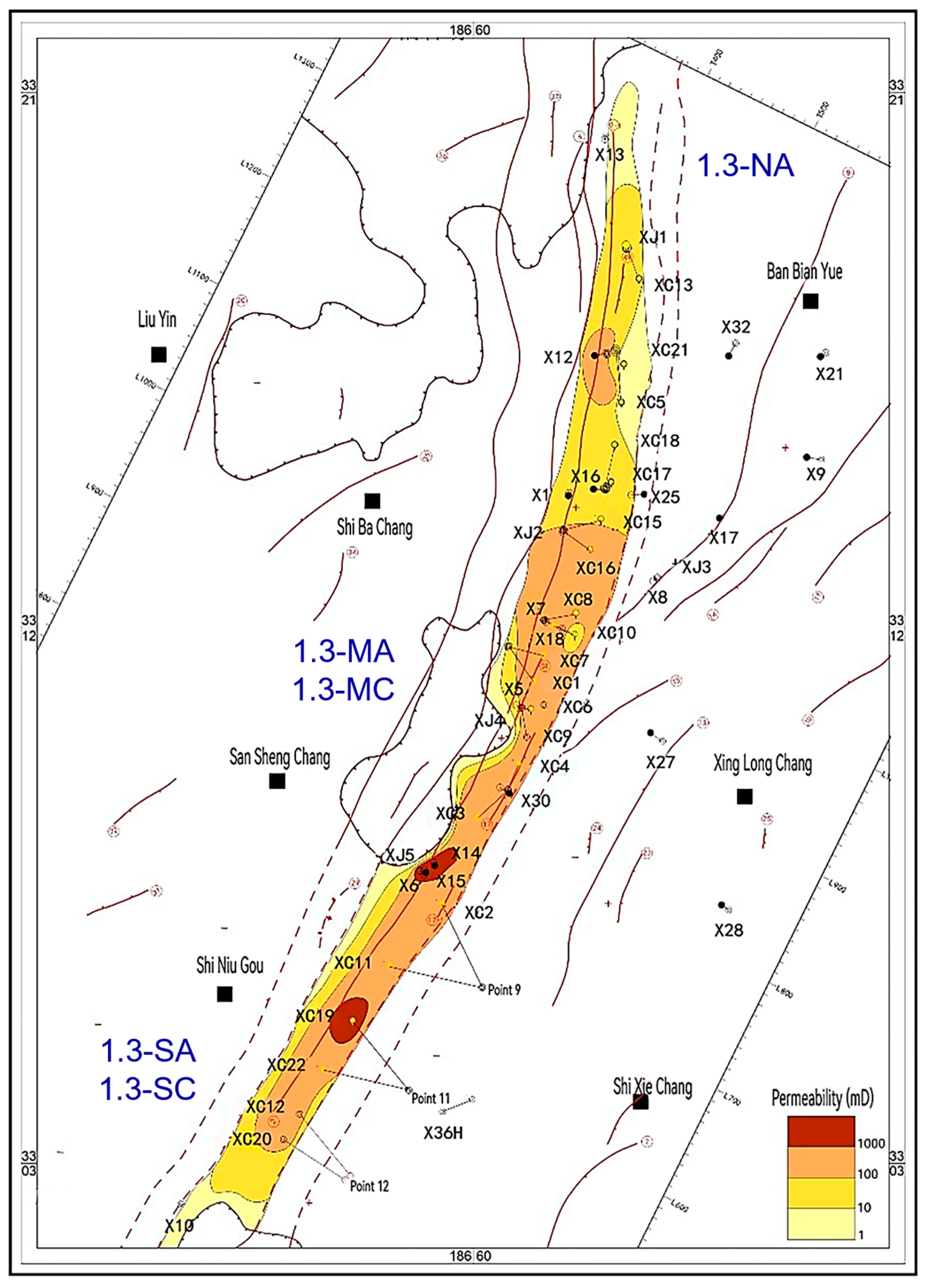
This study is based on the Xiangguosi underground gas storage site. Core samples were collected from different sectors and stratigraphic intervals of the storage site to investigate the evolution of dynamic elastic parameters during gas displacement-induced dry-out. Figure 1 shows the plan view of the Xiangguosi underground gas storage site, including the permeability zonation and sampling locations. To ensure both spatial representativeness and stratigraphic coverage, samples were taken from the northern, middle, and southern sectors and from typical intervals of the caprock and reservoir (Table 1), enabling a comparative evaluation of sector and stratigraphic controls on dry-out responses. It should be noted that the core specimens utilized in this study are distinct samples, prepared from the same batch of cores and adjacent intervals as those tested in our previous study (Zhai et al. [3]). Utilizing these distinct twin cores ensures the physical independence of the dynamic elastic dataset presented here, while maintaining strict geological consistency with our previous findings.
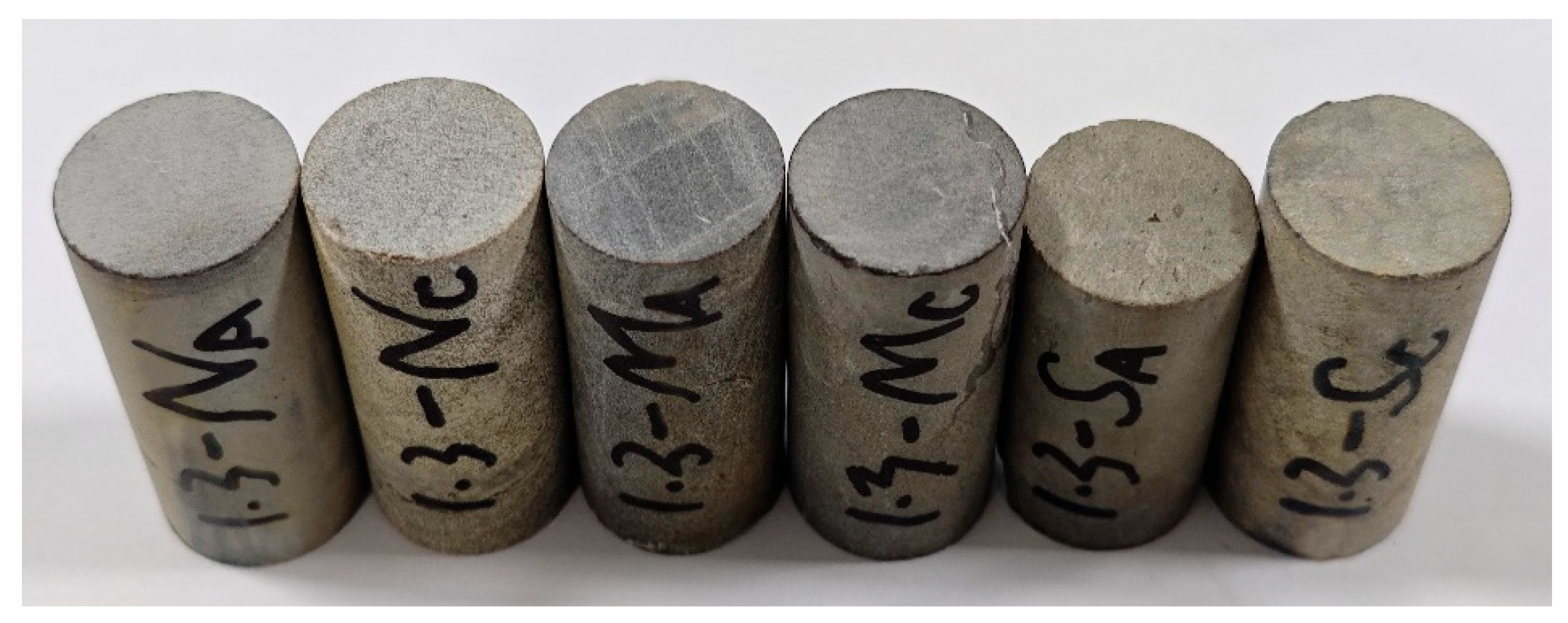
Six cylindrical specimens were prepared (Figure 2). The specimen diameter ranged from 25.10 to 25.35 mm and the length ranged from 4.265 to 5.000 cm, meeting the geometric requirements for subsequent pressurized water saturation, gas displacement, and ultrasonic measurements. The initial mass of the specimens was 59.192 to 69.442 g, and the bulk density ranged from 2.70 to 2.84 g/cm3 (Table 1). It should be noted that specimen 1.3-SA was prepared with a shorter length of 4.265 cm due to the presence of natural fractures in the original core plug, which limited the recovery of a standard 5 cm specimen. This length variation does not affect the calculation of wave velocities, as the travel time was measured specifically for this path length.
To characterize mineralogical differences among samples and evaluate their potential influence on dry-out sensitivity, powder X ray diffraction (XRD) was conducted using a D8 ADVANCE diffractometer (Bruker, Karlsruhe, Germany). The results are summarized in Table 2. The caprock sample 1.3-NA is dominated by calcite (100%). The reservoir samples 1.3-NC and 1.3-SC are dominated by dolomite (both 100%). The central caprock sample 1.3-MA is mainly quartz (98.7%) with a small fraction of clay minerals (1.3%). The central reservoir sample 1.3-MC consists of dolomite (65%), quartz (21.4%), and calcite (13.6%). The southern caprock sample 1.3-SA contains a high proportion of clay minerals (95.3%) with minor chlorite (4.7%). These mineralogical contrasts suggest differences in pore structure and pore surface properties, which may affect the occurrence and migration of pore water and be reflected in the evolution of wave velocities (Vp and Vs) and derived dynamic elastic parameters (such as νd, Ed, Gd, and Kd).

2.2. Experimental Apparatus

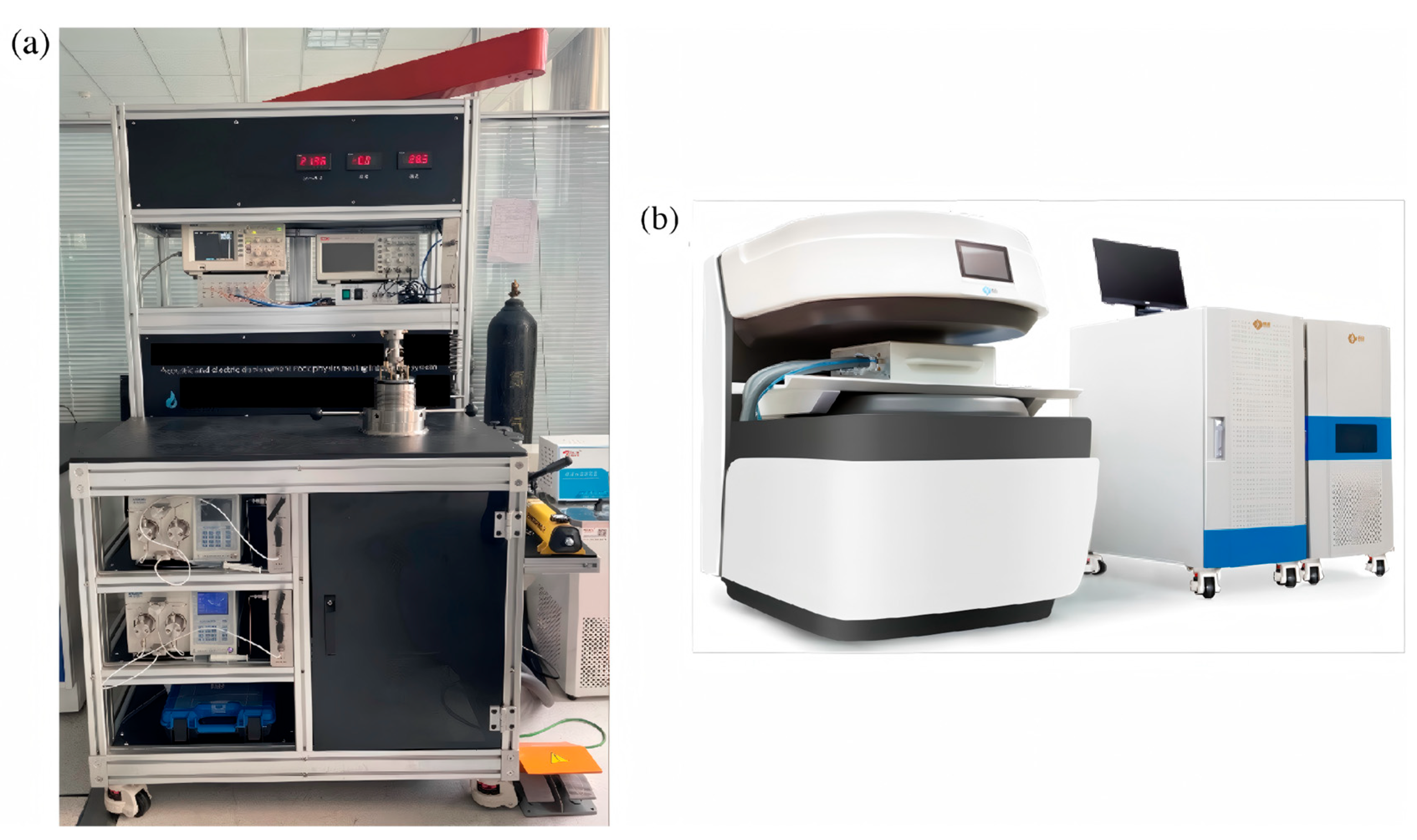
The experimental setup mainly consisted of two components: (1) an integrated electro-acoustic gas displacement rock physics system, which was used to measure P- and S-wave velocities under gas displacement-induced dry-out and to control the displacement process; and (2) a low-field nuclear magnetic resonance (NMR) instrument, which was used to characterize pore fluid occurrence and to obtain T2 spectra. The main equipment is shown in Figure 3.
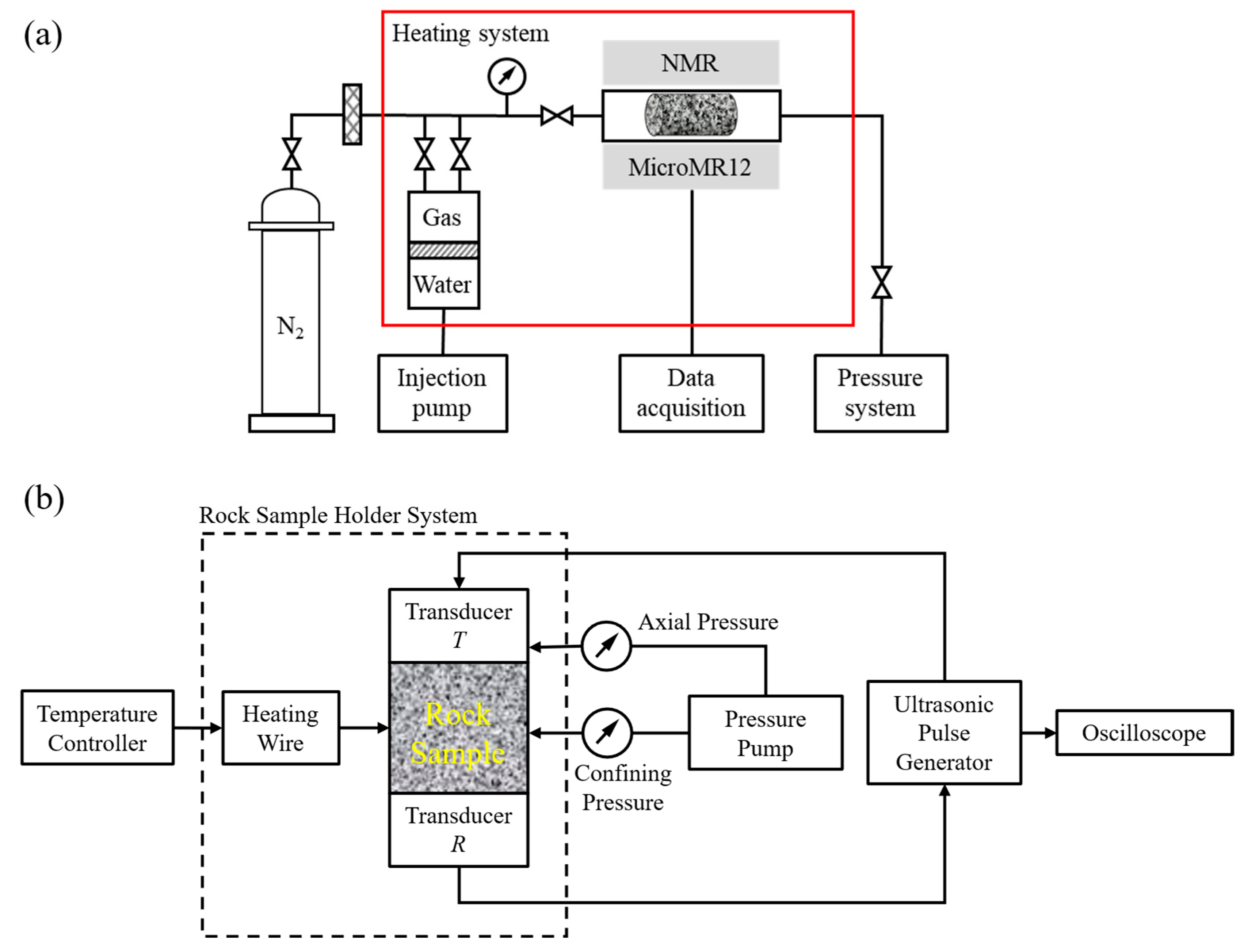
As shown in Figure 3a and Figure 4a, the integrated electro-acoustic gas displacement rock physics system enables gas injection and displacement control while performing ultrasonic pulse transmission measurements in real time. The system mainly comprises a gas displacement control module, a confining pressure loading and sealing clamping module, and an ultrasonic measurement module. Under a prescribed confining pressure, the system allows gas injection and displacement operations on the specimen and measures P-wave velocity (Vp) and S-wave velocity (Vs). To ensure comparability among different dry-out stages, stable boundary conditions were maintained throughout the tests through confining pressure loading and end face sealing. In addition, a consistent coupling procedure was used between the specimen end faces and the transducers. The clamping and measurement workflow was kept identical at all stages to minimize the influence of coupling variability on wave arrival picking.
As shown in Figure 3b, NMR measurements were conducted using a NIUMAG large-bore NMR instrument (MacroMR12 150H I, Niumag Corporation, Suzhou, China). This instrument was used to acquire transverse relaxation time (T2) spectra of specimens at different dry-out stages, thereby characterizing pore fluid content and its distribution across pore size scales. In conjunction with ultrasonic measurements, the NMR results allow identification of changes in different occurrence states, such as free water and bound water, and provide the basis for subsequent analysis of pore water drainage behavior during dry-out and its influence on the evolution of dynamic elastic parameters. To ensure stage-to-stage comparability, all NMR measurements were performed under the same testing conditions and instrument settings.

2.3. Ultrasonic and NMR Principles

Using the ultrasonic pulse transmission method (Figure 4b), the P- or S-wave velocity of a specimen can be calculated by measuring the travel time of the corresponding wave propagating along the specimen length. Based on the measured bulk density and wave velocities, dynamic elastic parameters of the specimen can be derived [23,24]:
V = L T t 0 × 10 4
ν d = V p 2 2 V s 2 2 V p 2 V s 2
E d = ρ V s 2 3 V p 2 4 V s 2 V p 2 V s 2 × 10 6
G d = ρ V s 2 × 10 6
K d = ρ 3 V p 2 4 V s 2 3 × 10 6
where V is the P- or S-wave velocity (m/s), L is the specimen length (cm), T is the P- or S-wave travel time, defined as the recorded first arrival time of the P or S wave (μs), and t0 is the system zero-time delay for P- or S-wave measurements (μs), which was calibrated prior to testing using the direct coupling method. ρ is the bulk density of the specimen (g/cm3), Vp is the P-wave velocity (m/s), Vs is the S-wave velocity (m/s), νd is the dynamic Poisson’s ratio, Ed is the dynamic Young’s modulus (GPa), Gd is the dynamic shear modulus (GPa), and Kd is the dynamic bulk modulus (GPa). It should be noted that in the calculation of dynamic elastic parameters (Equations (2)–(5)), the bulk density ρ was not held constant. Instead, it was dynamically recalculated at each dry-out stage using the real-time residual mass of the specimen to account for the continuous removal of pore water.
Low-field nuclear magnetic resonance (NMR) measurements, owing to their practicality and nondestructive nature, have been widely used to characterize pore systems, fluid types, and pore sizes at the microscale and across the full pore space [25,26]. In an NMR test, a uniform magnetic field is first applied so that magnetic dipoles in the specimen tend to align. The net magnetization M0 increases with time and gradually approaches an upper limit, at which all dipoles are fully aligned. The recovery of M0(t) can be described by the characteristic longitudinal relaxation time T1. For different pores, T1 is proportional to pore volume and inversely proportional to pore surface area. When M0 approaches its upper limit, a sequence of radio frequency pulses is applied to rotate the magnetic dipoles. After a short relaxation period, the dipoles return to alignment and generate an echo signal. In theory, each dipole contributes to the signal, and the fluid mass can therefore be estimated from the number of received echoes. The echo amplitude also follows an exponential decay with time and is characterized by the transverse relaxation time T2, which can be expressed as [27]:
1 T 2 = 1 T 2 B + ρ 2 S V p
where T2B is the bulk fluid relaxation time. Note that the complete theoretical expression for transverse relaxation includes a diffusion term, D γ G t E 2 / 12 , where D is the bulk self-diffusion coefficient of the fluid. However, for low-field NMR instruments operating at 12 MHz with a very short echo spacing (tE = 70 μs), this diffusion-induced relaxation is widely considered negligible compared to surface relaxation in standard porous rocks. Therefore, the diffusion term was omitted in our practical analysis. In practice, T2 is mainly controlled by the so-called surface relaxation term ρ 2 S / V p , which arises from partial absorption of electromagnetic energy at pore surfaces. If T2B is constant and the pores are spherical, T2 is proportional to pore radius. Although both T1 and T2 are pore size-dependent, T2 is more commonly used in industrial practice for engineering and economic considerations. Transverse relaxation T2 is closely related to the number of echo signals returned by pore fluids, which equals the number of hydrogen nuclei. Therefore, a T2 distribution with amplitudes proportional to the echo number can reveal both pore size distribution and fluid content distribution.

2.4. Experimental Procedure

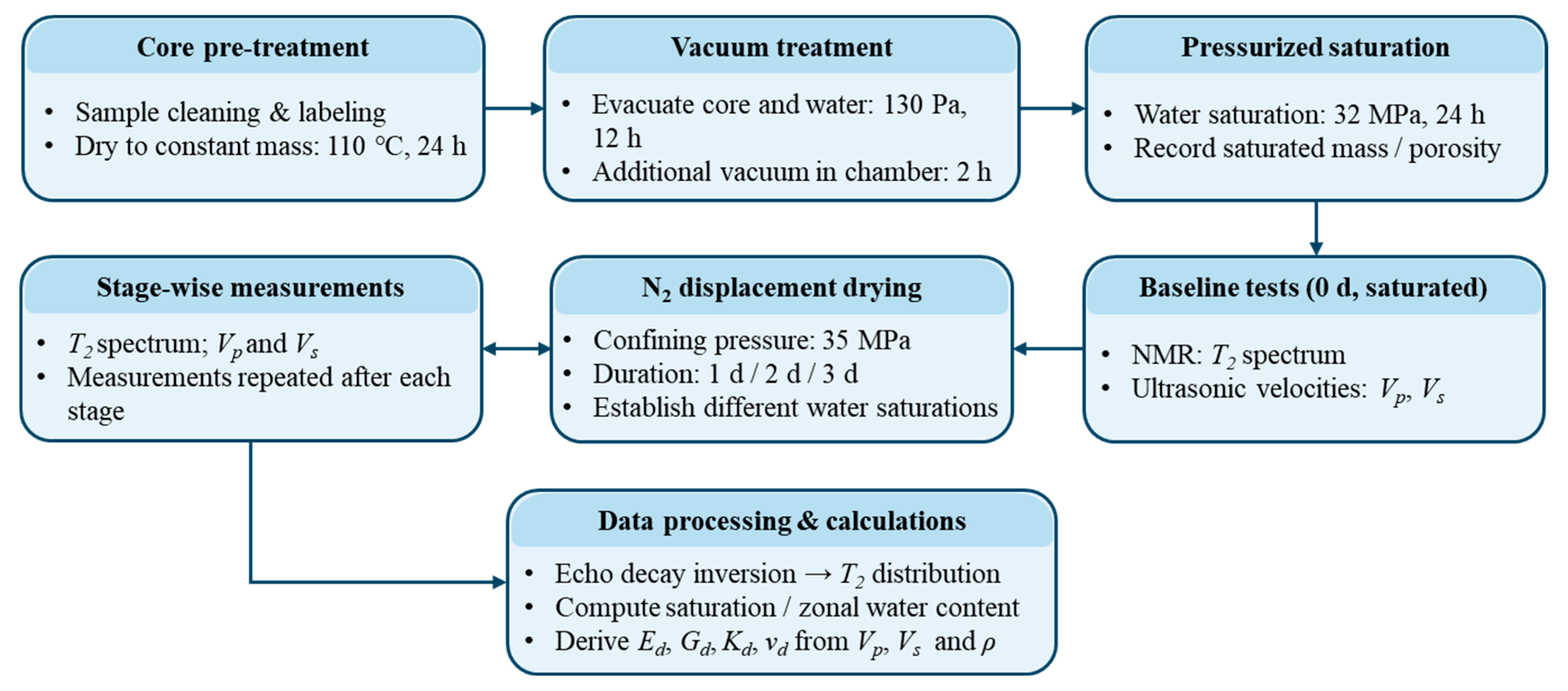
The experimental workflow is illustrated in Figure 5. First, core specimens were pretreated by drying in a constant temperature oven at 110 °C for 24 h. Drying completion was confirmed by repeated weighing, defined as a mass difference of less than 0.01 g over three consecutive measurements. The dry mass was recorded. Specimen length and diameter were then measured to calculate volume and other basic parameters.
Water saturation treatment was subsequently conducted to obtain the initial fully saturated state. The dried specimens and water were placed under vacuum for 12 h (vacuum level about 130 Pa). Water was then introduced into the saturation vessel and vacuuming was continued for another 2 h. After that, pressurized saturation was performed at 32 MPa for 24 h to achieve full saturation. Upon completion, the saturated mass was measured and parameters such as porosity were calculated. Baseline tests were then performed at the saturated state (0 d): NMR measurements were conducted to obtain T2 spectra (test parameters are listed in Table 3), and P- and S-wave velocities (Vp and Vs) were measured simultaneously.
Based on the baseline tests, gas displacement was applied to simulate the dry-out process. A confining pressure of 35 MPa was applied, and N2 at a constant injection pressure of approximately 2 MPa was used to displace pore water. The experiments were conducted at ambient laboratory temperature (approximately 25 °C). This specific confining pressure was chosen to represent the typical in situ effective stress of the Xiangguosi UGS at target depths of 2300 to 2900 m (considering the in situ stress and maximum operating pore pressure), while strictly remaining within the safe operating limit (40 MPa) of the experimental apparatus. Under constant pressure conditions, different water saturations were established by controlling the displacement duration (1 d, 2 d, and 3 d), representing different degrees of dry-out. The specific displacement durations (1, 2, and 3 days) were determined based on preliminary experiments to ensure that the progressive stages of water saturation reduction were effectively captured, eventually reaching the residual water saturation state. After each displacement stage, ultrasonic measurements were performed to obtain Vp and Vs and to derive dynamic elastic parameters. NMR measurements were also conducted to track changes in T2 spectra at each dry-out stage. These stage-wise measurements were used to reveal the evolution of pore water distribution during dry-out and its influence on the dynamic mechanical response of the rocks.

3. Results

3.1. T2-Based Pore Structure Characteristics at the Saturated State

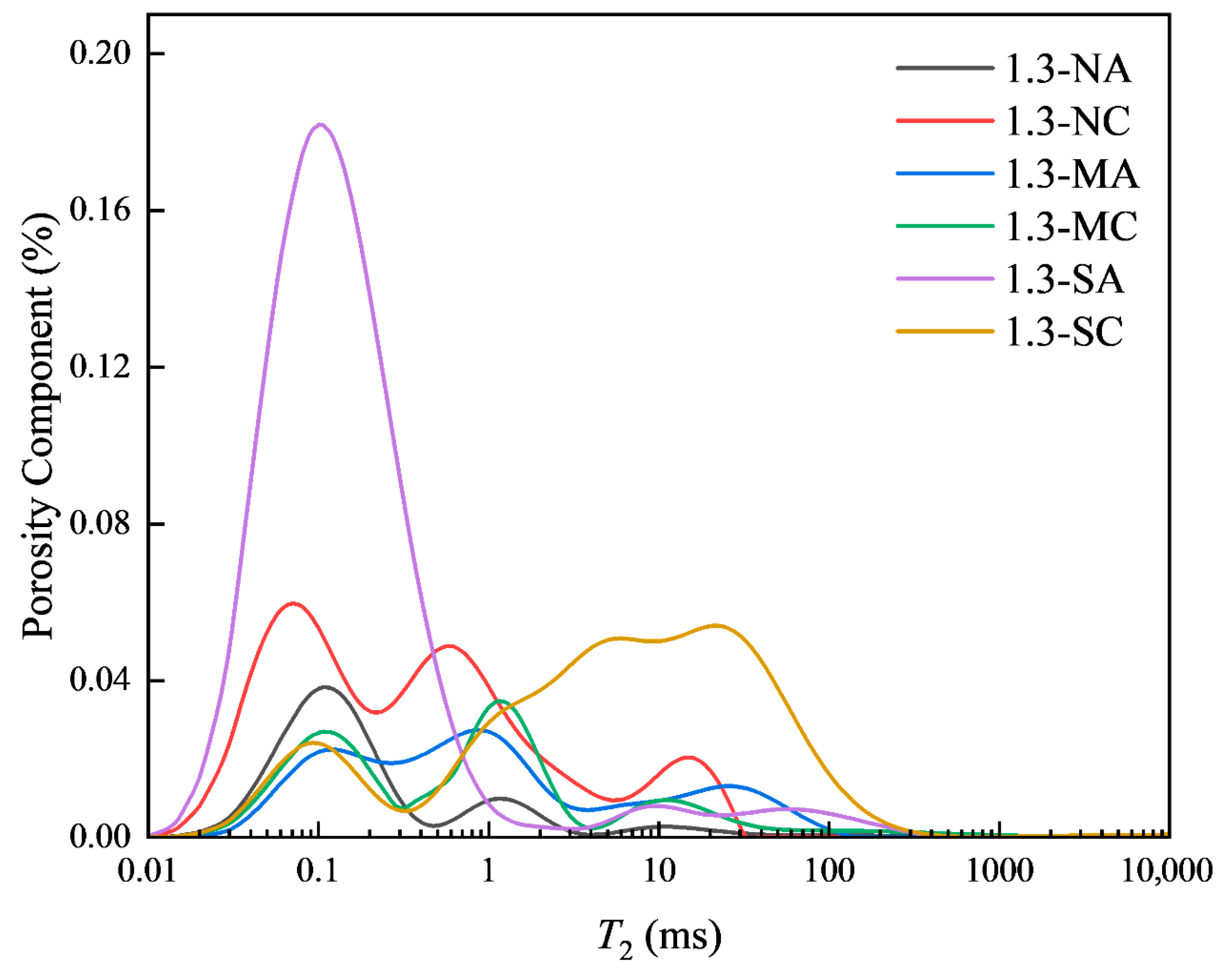
As shown in Figure 6, the T2 distributions of the six specimens at the saturated baseline state (0 d) differ markedly, indicating pronounced heterogeneity in the initial pore structure and pore size spectrum. Overall, all specimens exhibit a main peak in the short T2 range (about 0.03–0.3 ms). However, the development of intermediate-to-long T2 components (about 0.3–100 ms and beyond) varies substantially among specimens, reflecting differences in pore size spectrum width and the contribution from long relaxation pores.
Specimen 1.3-SA is characterized by a dominant single peak at short T2, centered at about 0.1 ms. Its signal decays rapidly toward the long T2 end, suggesting a more concentrated pore component and a limited contribution from long relaxation pores. In contrast, specimen 1.3-SC, in addition to the short T2 component, shows a continuous and broad contribution in the 1–100 ms range, accompanied by a pronounced long T2 tail. This indicates a wider pore size spectrum and more developed long T2 components. The remaining specimens (1.3-NA, 1.3-NC, 1.3-MA, and 1.3-MC) generally exhibit a mixed pattern of a dominant short T2 peak with weak secondary peaks or shoulders. Their intermediate-to-long T2 components fall between the two end member behaviors described above. Among them, 1.3-NC shows a more pronounced multimodal pattern, implying a more complex pore size distribution.
Overall, Figure 6 provides a reference of the initial pore structure prior to dry-out for the different specimens and forms the basis for subsequent comparisons of water evolution and ultrasonic elastic responses during stage-wise dry-out.

3.2. Stage-Wise Evolution of Water State and T2-Based Pore Structure During Dry-Out

Table 4 summarizes the water saturation of the six specimens at the saturated baseline state (0 d, Sw = 100%) and after dry-out for 1–3 days. Overall, dry-out led to a continuous decrease in Sw for all specimens. After 1 day of dry-out, Sw decreased to 62.16–81.39%. After 2 days, Sw further decreased to 56.05–77.78%, and after 3 days it decreased to 22.59–44.17%. Substantial differences in residual water saturation were observed among specimens. At 3 days, 1.3-SC (22.59%) and 1.3-NC (25.84%) showed the lowest Sw, whereas 1.3-MC (44.17%) remained the highest. These results indicate pronounced variability in water loss and water retention capacity among specimens under the same displacement-induced dry-out conditions.
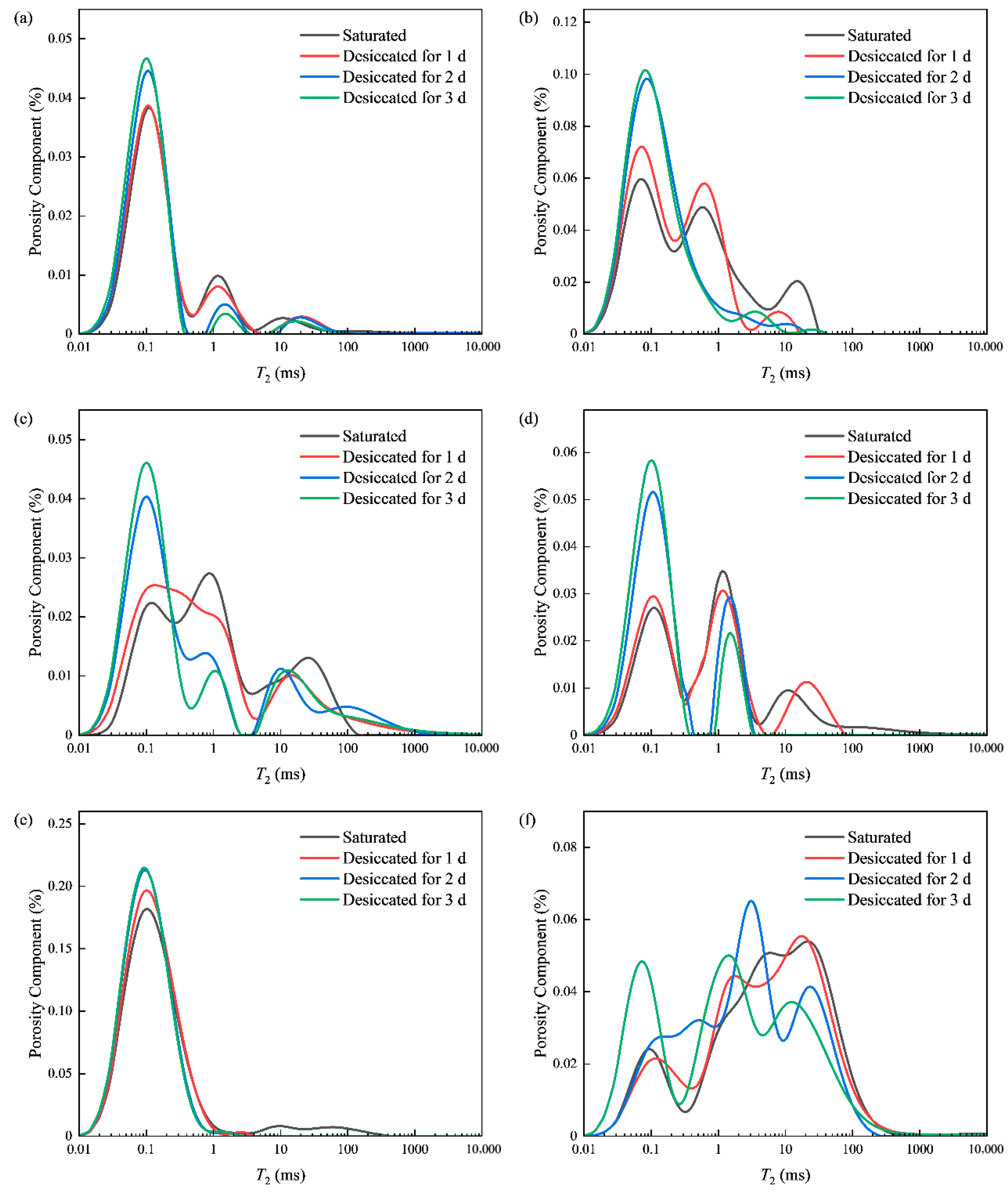
Figure 7 further shows the responses of the T2 distributions at different dry-out durations. In general, as dry-out progressed, the overall amplitude of the T2 spectra decreased and the spectrum width narrowed. The relative contribution of intermediate-to-long T2 components (about >1 ms) generally decreased, whereas the relative proportion of the short T2 main peak (about 0.03–0.3 ms) increased. As a result, the spectra progressively shifted toward the short T2 range. This consistent trend across multiple specimens suggests a stage-wise redistribution of pore fluids among relaxation scales during dry-out.
Despite the common trend, differences in spectral evolution were also evident among specimens. For 1.3-NA and 1.3-NC (Figure 7a,b), intermediate-to-long T2 components decreased markedly after dry-out. In particular, the long T2 end (about >10 ms) weakened substantially at 2–3 days, indicating that long relaxation pore components were more sensitive to dry-out. For 1.3-MA and 1.3-MC (Figure 7c,d), the saturated spectra show more pronounced multimodal patterns. With dry-out, intermediate-to-long T2 components gradually decreased and the spectra evolved from a coexistence of short T2 and intermediate or long T2 components toward short T2 dominance. Notably, 1.3-MC still retained a certain intermediate T2 contribution at 3 days, consistent with its relatively high residual saturation (Table 4). Specimen 1.3-SA (Figure 7e) is dominated by a single short T2 peak, and its spectral shape changed only slightly across stages, mainly showing an overall amplitude decrease with dry-out. In contrast, 1.3-SC (Figure 7f) exhibits a broad T2 distribution at the saturated state, followed by a more pronounced spectrum narrowing after dry-out. This behavior corresponds to the lowest residual saturation at 3 days (Table 4), indicating a larger overall water loss.
In summary, Table 4 and Figure 7 demonstrate that, under the same confining pressure and displacement conditions, the magnitude of water saturation decline varies substantially among specimens. Meanwhile, the T2 spectra consistently show a stage-wise evolution characterized by preferential reduction in intermediate-to-long T2 components and relative preservation of short T2 components. These results provide a direct basis for subsequent analyses of wave velocities and dynamic elastic parameters in response to changes in water state.

3.3. Wave Velocity Response: Evolution of Vp and Vs with Dry-Out Degree

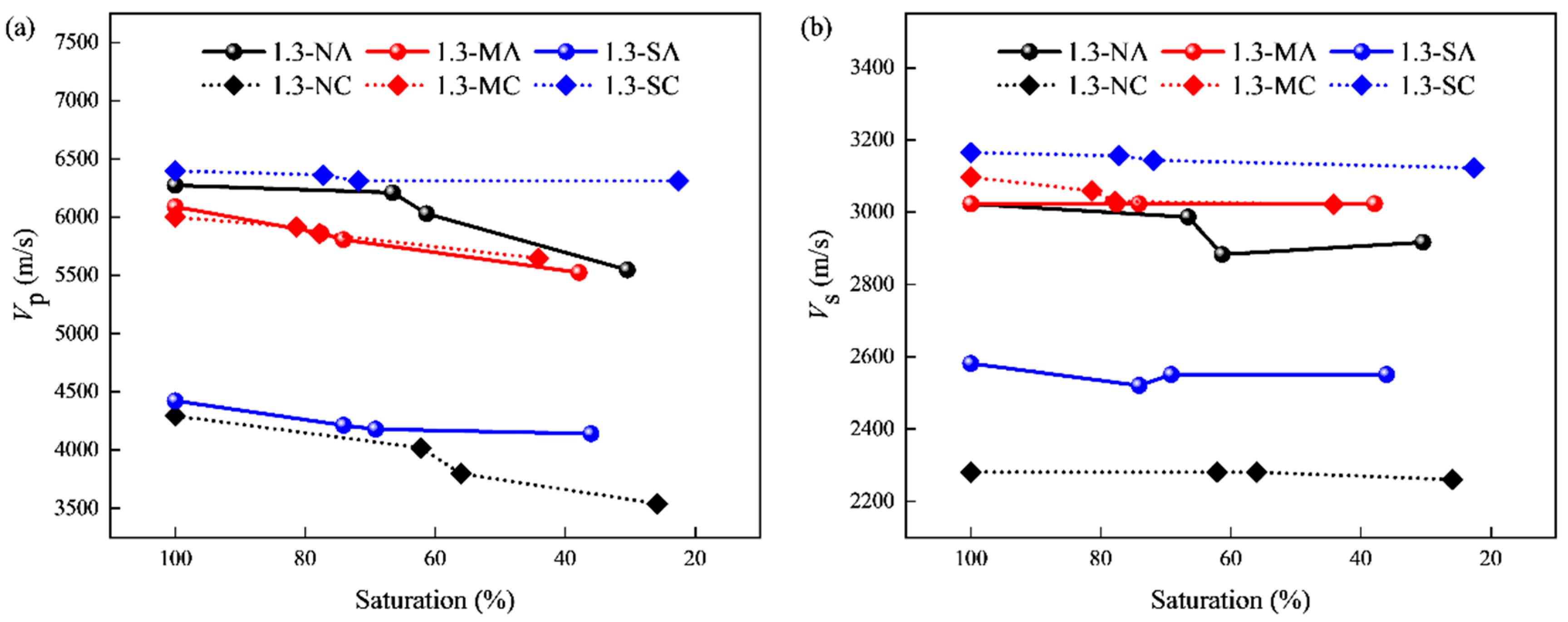
Table 5 and Figure 8 present the P- and S-wave velocity responses of the six core specimens at different dry-out stages, where dry-out degree is represented by water saturation (Sw). At the saturated baseline state (Sw = 100%), Vp ranges from 4295.53 to 6398.37 m/s and Vs ranges from 2281.02 to 3164.88 m/s, indicating pronounced differences in initial elastic conditions and structural characteristics among the specimens (Table 5). As dry-out progresses and Sw decreases, Vp shows an overall decreasing trend with decreasing Sw, whereas changes in Vs are comparatively limited (Figure 8b). For specimens 1.3-NC and 1.3-MA, the recorded Vs values remained constant to the fourth decimal place across several dry-out stages. This constant output reflects the digitization resolution limit of the ultrasonic measurement system at these specific saturation levels, with an estimated measurement uncertainty for Vs of ±2 m/s. Therefore, while the derived dynamic shear modulus Gd appears highly stable, these values should be interpreted as stable upper-bound estimates within the sensitivity threshold of the current experimental setup.
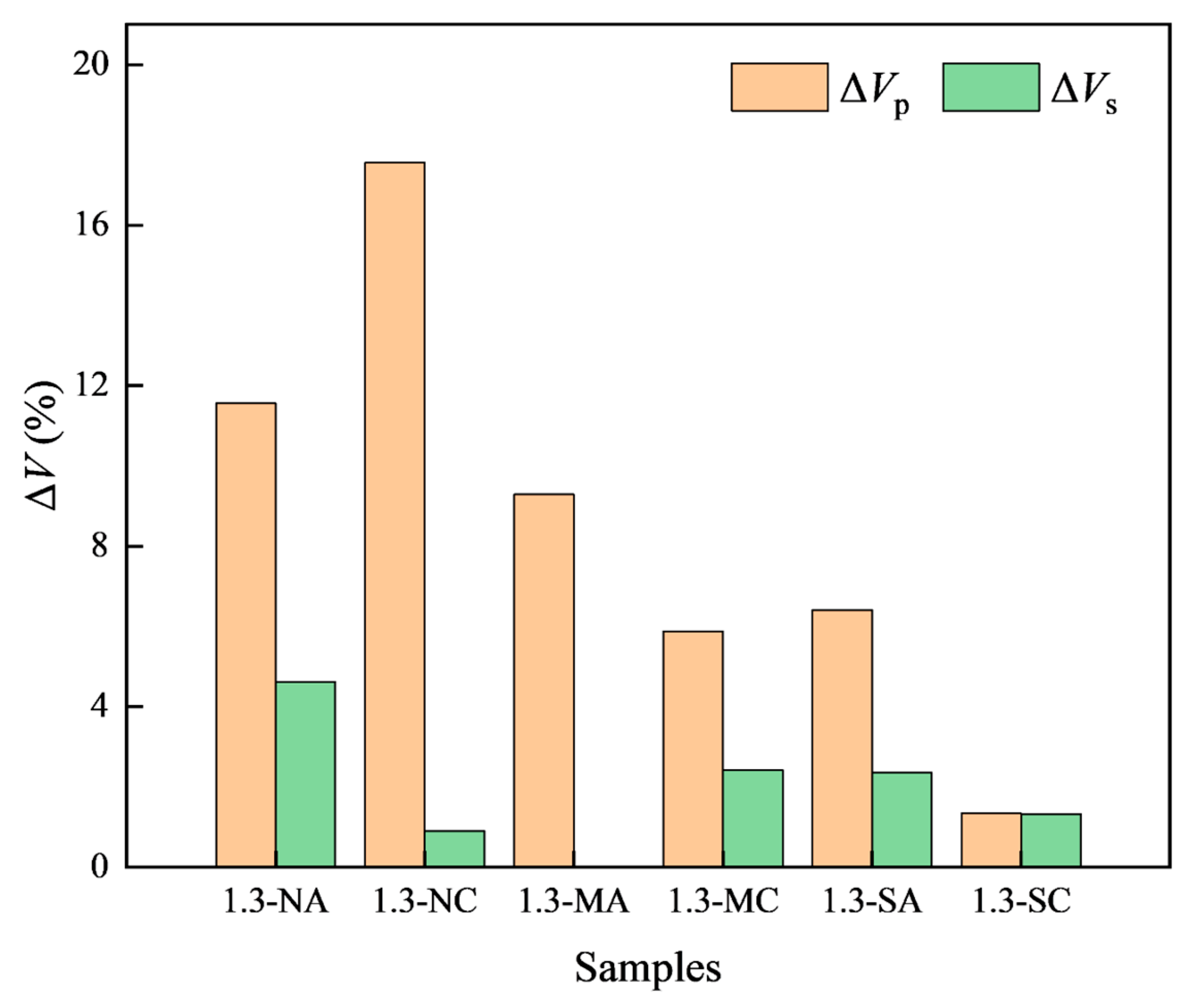
Quantitatively, at the late dry-out stage (lowest Sw), the relative reduction in Vp (1.34–17.56%) is substantially larger than that of VS (0–3.50%). The sensitivity of wave velocities to dry-out exhibits strong specimen dependency. Specimen 1.3-NC represents the most sensitive case, where Vp experiences a sharp decrease of 17.56% alongside a negligible Vs reduction (~0.90%). Conversely, specimen 1.3-SC demonstrates remarkable stability, with both Vp and Vs decreasing by less than 1.5%. The remaining specimens (1.3-NA, 1.3-MA, 1.3-MC, and 1.3-SA) display moderate Vp reductions ranging from 5.88% to 11.56% with essentially stable Vs, as comprehensively detailed in Table 5 and Figure 8.
Overall, Figure 8 indicates that within the dry-out range investigated in this study, the response of Vp to Sw is significantly stronger than that of Vs, and the response magnitude differs substantially among specimens. These results provide direct wave velocity evidence for subsequent analyses of the evolution of dynamic elastic parameters with dry-out degree.

3.4. Evolution of Dynamic Mechanical Parameters with Dry-Out Degree

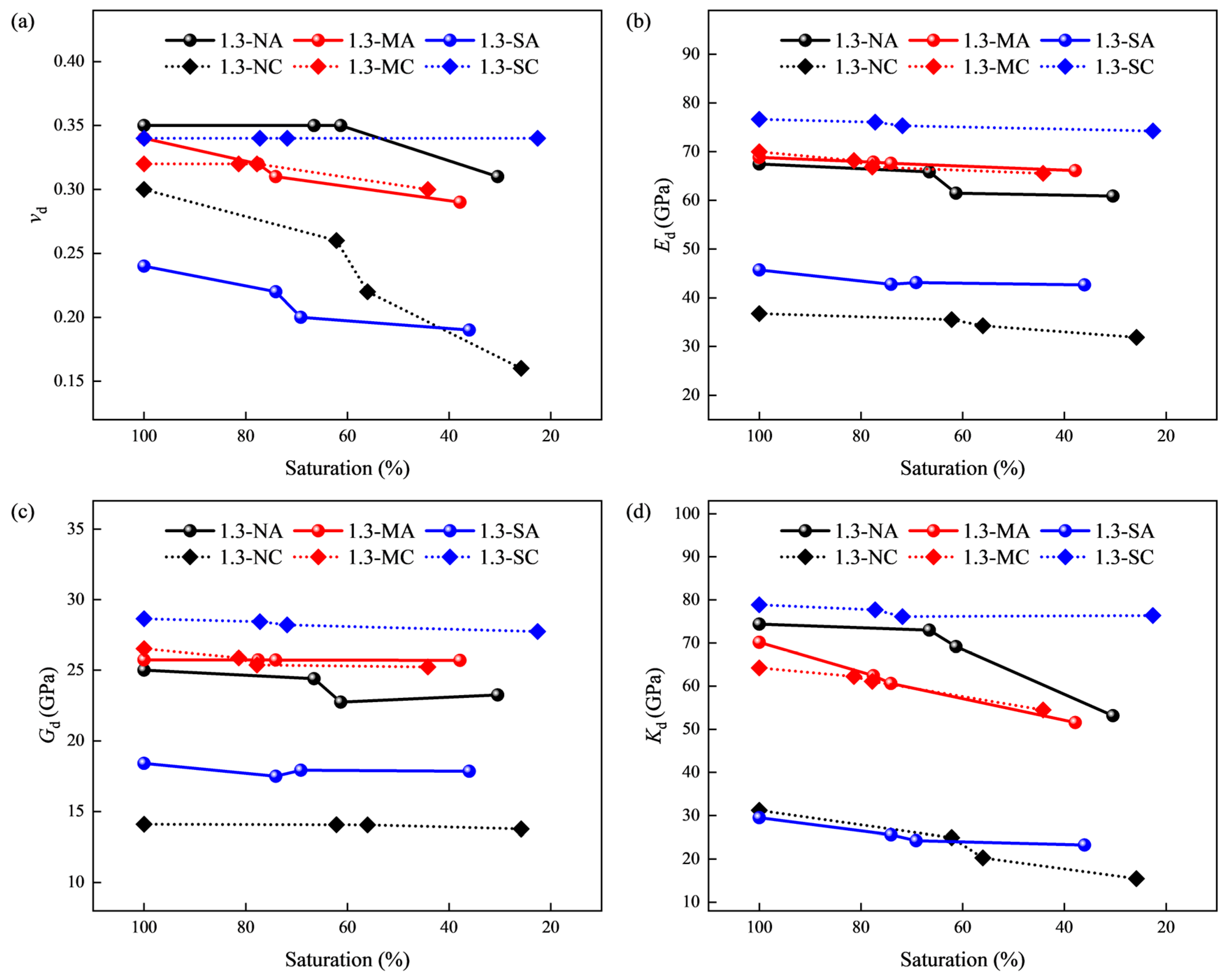
Figure 9 shows the relationships between water saturation (Sw) and the dynamic Poisson’s ratio (νd), dynamic Young’s modulus (Ed), dynamic shear modulus (Gd), and dynamic bulk modulus (Kd) of the six core specimens (numerical values are listed in Table 5). Overall, all parameters decrease to varying extents as Sw decreases, but their sensitivities differ markedly. The variations in νd and Kd are more pronounced, whereas Gd is the least sensitive (Figure 9).
Further derivation of dynamic mechanical parameters reveals distinct sensitivities to water saturation. As shown in Figure 9 and Table 5, the dynamic bulk modulus (Kd) and Poisson’s ratio (νd) exhibit the most pronounced degradation during dry-out, followed by a moderate decrease in the dynamic Young’s modulus (Ed). In strict contrast, the dynamic shear modulus (Gd) remains largely stable across all specimens with only minor fluctuations, indicating that the shear stiffness of the rock skeleton is insensitive to fluid substitution within the investigated dry-out range.
Consistent with the wave velocity responses, the magnitude of modulus reduction is highly specimen-dependent. Specimen 1.3-NC experiences the most drastic deterioration, with its Kd plummeting by approximately 50% (from 31.20 to 15.45 GPa) and νd dropping from 0.30 to 0.16. At the other end of the spectrum, specimen 1.3-SC remains nearly unaffected, showing only a slight 3% decrease in Kd and a constant νd of 0.34 throughout the entire dry-out process. Other specimens (such as 1.3-NA and 1.3-MA) follow intermediate trends with Kd reductions around 20–30% (Figure 9d). These results confirm that decreasing water saturation predominantly weakens the volumetric fluid support rather than the skeleton shear stiffness, providing a quantitative basis for the subsequent mechanistic discussion.

4. Discussion

4.1. Quantitative Control of Water Saturation on Dynamic Elastic Parameters

The experimental observations demonstrate that dry-out exerts a pronounced yet non-uniform control on dynamic elastic parameters, characterized by a higher sensitivity of Vp relative to Vs (Figure 10). This differential response is consistent with established velocity–saturation relationships [28,29]. Mechanistically, Vp is jointly governed by the bulk and shear moduli of the rock, whereas Vs is primarily controlled by the shear modulus. Consequently, changes triggered by pore fluid withdrawal or substitution during dry-out strongly affect volumetric-related responses, such as volumetric pore pressure support, wave-induced local fluid flow, and overall compressibility, rendering them highly sensitive to decreasing saturation [13,30]. To place our findings in a broader context, the observed Vp reductions in this study (up to 17.56%) align quantitatively with existing ultrasonic investigations of gas-displacing-water processes in carbonate rocks, which typically report Vp decreases in the range of 10–20% upon gas injection due to the transition to patchy saturation [12,28]. However, the response of Vs reported in the literature exhibits greater complexity. While our results demonstrate a highly stable Vs (with reductions generally less than 3.5%), other studies have noted that Vs can decrease more noticeably due to the chemical softening of clay minerals upon water interaction [31], or conversely, increase slightly due to the reduction in bulk density during drying [29]. The exceptional stability of Vs observed in our rigid, dolomite-dominated specimens (e.g., 1.3-SC and 1.3-NC) provides robust comparative evidence that, in the absence of significant clay-softening effects, the shear framework of such carbonates remains nearly perfectly intact. This comparison further solidifies that Vp is a distinctly more reliable indicator of gas saturation changes in UGS than Vs.
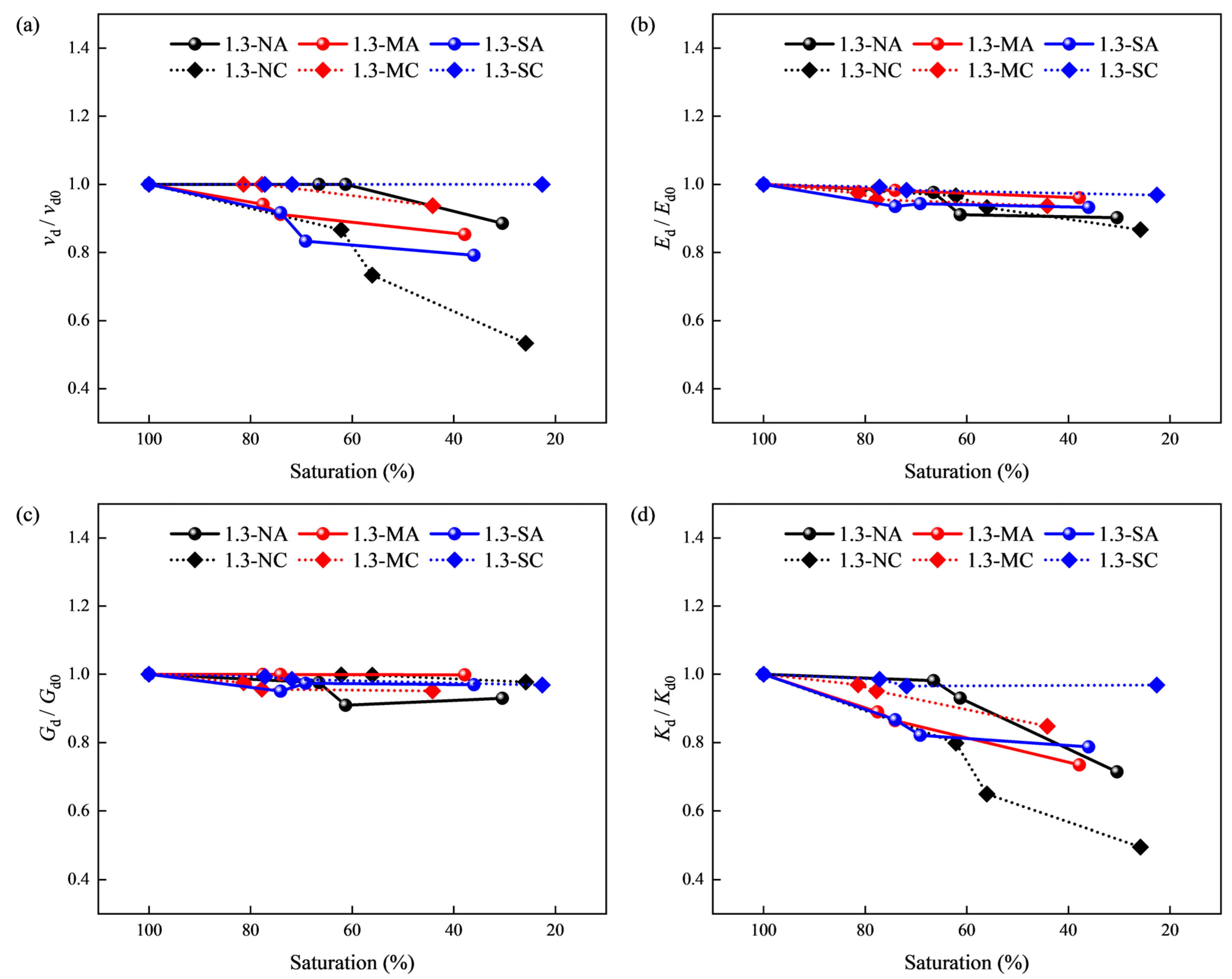
This mechanism is further corroborated by the evolution of normalized elastic parameters (Figure 11), which follow an overall sensitivity order of Kdνd > Ed > Gd. The pronounced reduction in Kd occurs because pore water, an incompressible fluid, provides substantial volumetric support against deformation; its drainage alters pore-scale fluid distribution and connectivity, inducing significant velocity dispersion and attenuation contrasts that manifest as a marked reduction in equivalent dynamic properties [13,30]. In sharp contrast, the stability of Gd indicates that fluid substitution has limited influence on the shear stiffness of the rock skeleton, which remains primarily controlled by the mineral framework and cementation structure, similar to the weak or non-monotonic S-wave responses observed in clay-filled fractures [31].
In addition, the continuous decrease in the dynamic Poisson’s ratio (νd) (Figure 11a) fundamentally reflects the transition from a liquid-saturated to a partially dried medium. The dynamic Poisson’s ratio is a sensitive indicator of the Vp/Vs ratio and reflects the relative contributions of bulk versus shear stiffness. As shown in Table 5, the significant decline in νd (e.g., from 0.30 to 0.16 in specimen 1.3-NC) fundamentally reflects the loss of fluid-related volumetric support. Mechanistically, as incompressible water is replaced by highly compressible nitrogen, the rock’s resistance to volumetric deformation (bulk modulus) drops drastically, while its shear resistance (governed by the mineral framework) remains stable, leading to the observed disproportionate reduction in νd [13,32]. Nevertheless, the magnitude of these parameter changes exhibits pronounced specimen dependency (e.g., the remarkable stability of rigid specimens like 1.3-SC even at deep dry-out stages). This contrast suggests that initial pore structure and mineral composition play key roles in regulating dry-out sensitivity. Consistent with pore-scale fluid patchiness and connectivity, microstructural differences among specimens can further amplify the differentiation of macroscopic dynamic parameters within the same saturation interval [13,30].

4.2. Mechanisms by Which Mineral Composition and Pore Structure Regulate Dry-Out Responses

The results of this study indicate that the evolution of the dynamic elastic parameters of reservoir and caprock rocks during dry-out is not controlled solely by the decrease in water saturation. It is also strongly regulated by mineral composition and pore structure characteristics. By integrating the basic properties and dry-out responses of the specimens (Table 6), it can be inferred that mineral composition provides a background control by modifying the physicochemical properties of pore surfaces and the capacity for fluid retention. Clay-related surface effects, including surface relaxation and changes in the proportions of adsorbed or bound water, can markedly influence the NMR T2 distribution and its response to changes in water state [33,34]. Specimen 1.3-SA, for example, contains as much as 95.3% clay minerals. During dry-out, the strong surface adsorption and capillary confinement associated with clay minerals cause water loss to occur mainly in the short T2 range. As a result, its water saturation remains relatively high (36.03%) after 3 days of dry-out. This strong confinement and adsorption effect can effectively buffer the impact of fluid displacement on the skeleton elastic response, leading to a maximum Vp reduction of only 6.41% and thus a moderate sensitivity [33,35]. Specifically, the minor mineral phase (4.7%) in specimen 1.3-SA is identified as chlorite, a common clay mineral in sedimentary caprocks like the Liangshan Formation. Chlorite is characterized by a notably high specific surface area, which significantly enhances surface-dominated T2 relaxation mechanisms. This high surface relaxivity dictates the dominant short T2 peak observed in the NMR spectrum of this specimen, reflecting the strong capillary confinement of pore fluids within the clay-rich matrix. In contrast, carbonate specimens dominated by dolomite or calcite (such as 1.3-NA, 1.3-NC, and 1.3-SC) show clear divergence in dry-out sensitivity. This observation suggests that mineral composition alone does not uniquely determine the degree of dry-out weakening. Alongside mineralogy, an important factor regulating this sensitivity is the geometric distribution and connectivity of pore sizes, namely the pore structure. It should be noted that the pronounced divergence observed between specific specimens, such as the contrasting behaviors of 1.3-NC and 1.3-SC despite both being 100% dolomite, predominantly reflects variability at the individual specimen level rather than a universal geological rule. Pore structure governs the migration pathway and scale partitioning of fluids from free water in larger pores to bound water in smaller pores during dry-out, thereby modulating both the magnitude and the rate of elastic response changes [34,36].
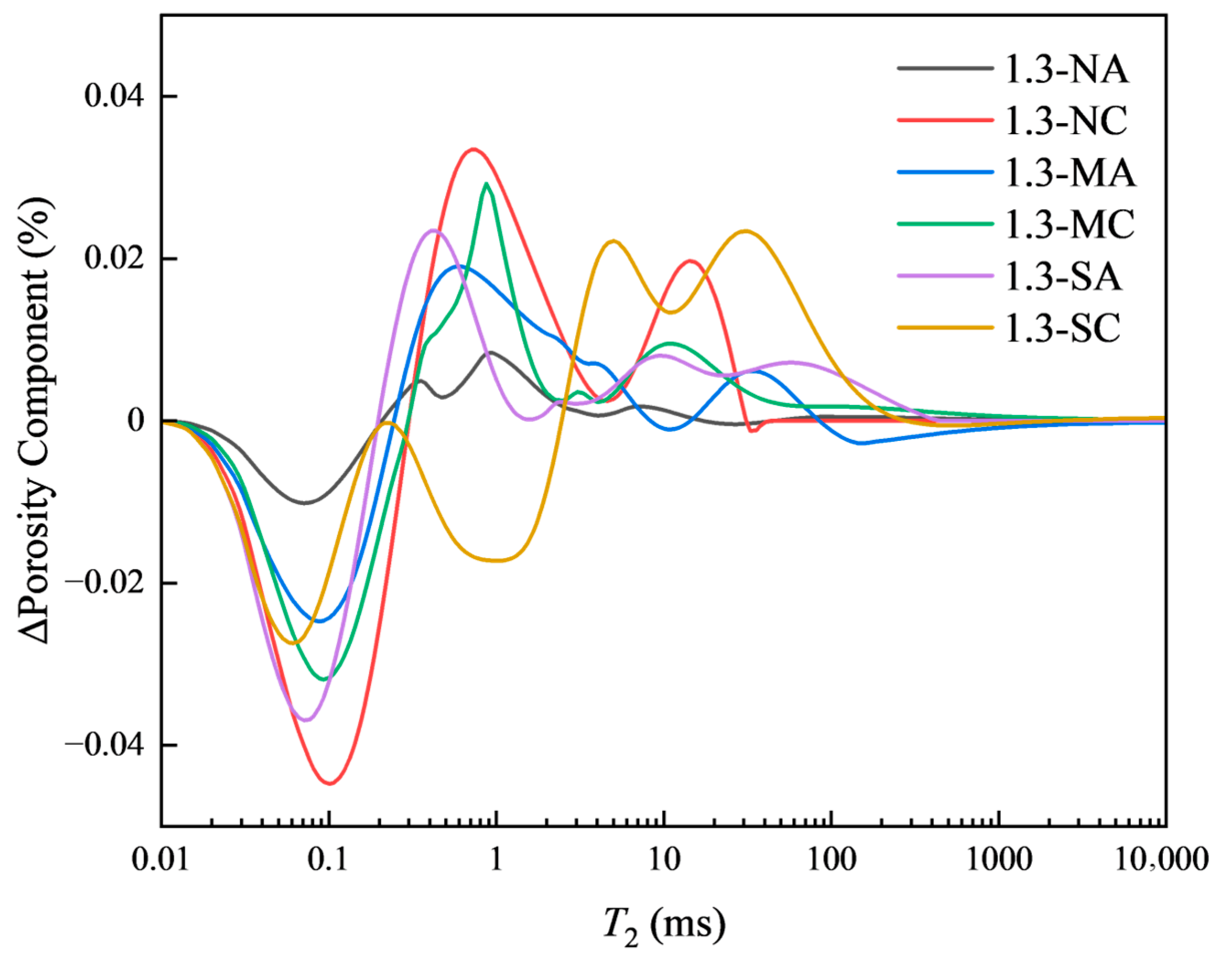
The differential T2 spectra (Figure 12) are derived by subtracting the cumulative porosity component at the 3-day dry-out stage from that at the saturated baseline state. This analytical approach is employed as an interpretative tool to isolate and visualize the specific pore-size intervals where fluid migration is most active during gas displacement. Further insights can be obtained from the differential T2 spectra in Figure 12, which highlight that fluid redistribution across pore size scales is the key mechanism underlying sensitivity differences. The exceptionally high sensitivity of specimen 1.3-NC (Vp reduction of 17.56%) is closely associated with its pronounced multimodal pore structure. As shown in Figure 12, strong positive differential peaks occur in the 1–10 ms and 10–100 ms ranges, quantitatively indicating substantial loss of free water in medium to large pores. Because fluids in larger pores contribute more strongly to dynamic bulk modulus and wave velocities through volumetric support and fluid-related effects, rapid drainage or substitution of this water can more readily trigger pronounced reductions in Vp and dynamic moduli [34,36]. In comparison, although specimen 1.3-SC also contains a certain proportion of intermediate-to-long T2 components and exhibits substantial overall water loss, its Vp change is only 1.34%. This apparent contradiction is primarily attributed to its exceptionally rigid dolomite framework (100% dolomite). Mechanistically, the pore water removed during dry-out likely occupies isolated macropores or vugs. While the drainage of these macropores contributes significantly to the NMR T2 signal reduction, it offers negligible support to the overall bulk stiffness of the rock skeleton. Consequently, for such stiff mineral frameworks, the macroscopic dynamic parameters remain “skeleton-dominated” and are relatively insensitive to fluid substitution in larger pores [36,37]. Overall, specimens with heterogeneous multimodal pore structures, more developed large pores, and stronger connectivity are more susceptible to dry-out-induced weakening. This coupled relationship among pore structure, fluid migration, and elastic response provides a mechanistic basis for using seismic velocities and dynamic elastic parameters to monitor the operational state of underground gas storage [36,38].

4.3. Microscopic Physical Model for Dry-Out-Induced Weakening

Before establishing the conceptual model, it is essential to acknowledge the theoretical basis underlying the observed elastic responses. The observed dynamic behaviors, characterized by significant reductions in Vp and Kd alongside stable Vs and Gd, are qualitatively consistent with the classical Gassmann fluid substitution theory [39,40]. According to the Gassmann framework, pore fluids primarily affect the bulk modulus of the saturated rock, whereas the shear modulus remains independent of the fluid type and is identical to that of the dry rock frame. While quantitative forward modeling using Gassmann’s equation provides theoretical benchmarks, its direct application to the current ultrasonic dataset is limited by several physical complexities. Specifically, the accurate determination of the dry-frame bulk modulus (Kdry) requires complete dehydration, which was avoided in this study to prevent irreversible microstructural alteration of the clay minerals. Additionally, the intrinsic frequency-dependent dispersion effects at ultrasonic frequencies (MHz) may deviate from the low-frequency theoretical limit of Gassmann’s equation. Furthermore, the non-linear evolution of the effective fluid bulk modulus in a multi-phase gas–water mixture introduces substantial analytical uncertainty during the displacement process. Nevertheless, the macroscopic trends unequivocally validate the fundamental mechanism that dry-out predominantly disrupts the volumetric fluid support, establishing a solid theoretical foundation for the subsequent microscopic model. This approach represents a significant departure from simplified effective medium theories. While classical models often assume uniform fluid distribution, our combined dataset reveals that the “weakening” of dynamic moduli is fundamentally controlled by the heterogeneous drainage order. By identifying the critical transition from fluid-supported to skeleton-dominated states at the pore scale, this work provides a more physically rigorous foundation for interpreting seismic velocity anomalies in complex carbonate reservoirs.
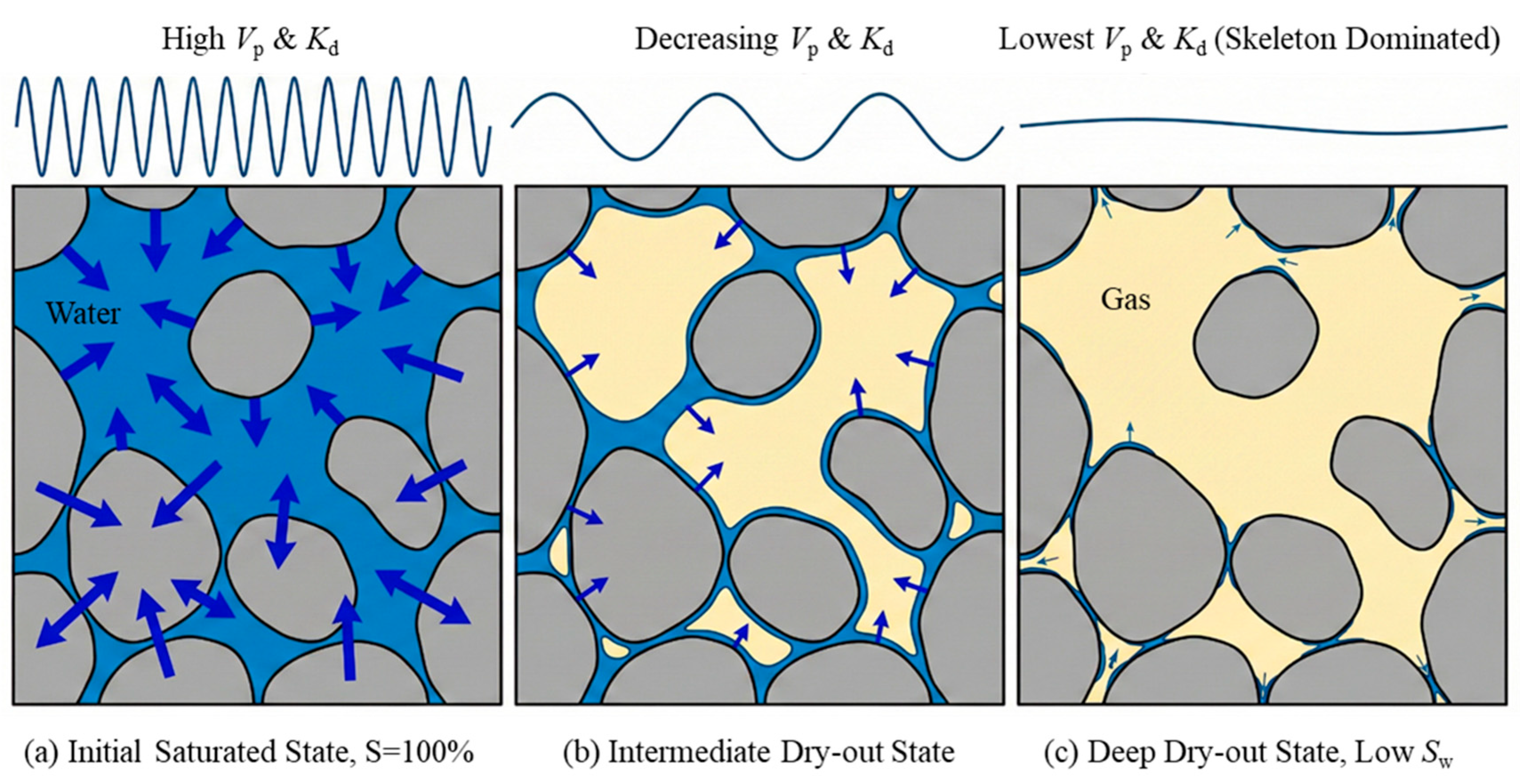
Building on the above analyses of the evolution of dynamic elastic parameters and the regulating roles of mineral composition and pore structure, we propose a microscopic physical model for dry-out-induced weakening of reservoir and caprock rocks in underground gas storage (Figure 13). From the perspectives of pore fluid distribution and stress transmission pathways, this model illustrates the internal logic linking dry-out processes to changes in macroscopic elastic responses such as Vp and Kd. Injection of dry gas promotes near-wellbore water migration and evaporation and may be accompanied by salt precipitation, which alters pore-scale fluid continuity and the effective contribution of pore fluids to load bearing. This provides a key physical background for the development of a dry-out zone during UGS operation [41,42].
As shown in Figure 13, dry-out-induced weakening proceeds in stages from larger pores toward micropores.
Initial saturated state (Sw = 100%): As illustrated in Figure 13a, pores are fully filled with formation water. Because the water phase has a relatively high bulk modulus and good connectivity, pore fluids provide strong volumetric support and load sharing to the rock skeleton, resulting in high Vp and high dynamic bulk modulus Kd. This type of strong sensitivity of elastic properties to saturation can be interpreted using velocity–saturation relationships for partially saturated rocks and theories of patchy saturation and local fluid flow [43].
Intermediate dry-out state: With continued N2 (or dry gas) displacement (Figure 13b), gas preferentially invades larger pores and flow pathways. Free water in macropores is drained, and the continuity of the pore fluid phase is disrupted. Consequently, the effective bulk modulus of the pore fluid decreases rapidly, leading to pronounced reductions in Vp and Kd. This stage corresponds to the primary interval in which the fluid support contribution drops sharply, and it is highly sensitive to the pore-scale pattern of fluid distribution [43]. In carbonates, the presence of fractures and microfractures can further amplify velocity contrasts and elastic response changes associated with the transition from brine-saturated to gas-saturated conditions [44].
Deep dry-out state (low Sw): As shown in Figure 13c, most pores are occupied by gas, and only thin film bound water remains at grain contacts or on clay mineral surfaces. At this stage, fluid support to the skeleton is nearly eliminated, and macroscopic dynamic moduli are primarily controlled by the mineral framework and cementation structure, so the parameter evolution becomes more gradual. If a specimen contains clay minerals or appreciable clay bound water, its influence on wave propagation, energy dissipation, and equivalent moduli can become more pronounced at low water contents, thereby modifying details of the late-stage elastic response [45].
This model also helps explain the specimen-to-specimen differences in dry-out sensitivity. For specimens with heterogeneous multimodal pore structures and more connected macropore pathways, the concentrated loss of fluid support during the early stage of dry-out is more pronounced, which may produce a more step-like decrease in moduli. While the theoretical drainage of macropores suggests a sharp reduction in dynamic moduli, the observed data in Table 5 exhibit a more progressive decrease. This is attributed to the inherent pore-size heterogeneity and multimodal distribution of the reservoir carbonates. The continuous and overlapping drainage of pore water across different scales (from macropores to mesopores) smooths the macroscopic elastic response, resulting in the progressive trend captured in our laboratory measurements. In contrast, for specimens with high clay content, water is retained in micropores and on mineral surfaces by strong capillary confinement, so fluid substitution is slower and less complete, resulting in weaker dry-out sensitivity at the macroscopic scale [42,45].

4.4. Engineering Implications for UGS Operations

Building upon the proposed microscale physical model, the main findings of this study offer direct engineering applicability for the safe operation of underground gas storage (UGS). The experimental results demonstrate that the transition from a fluid-supported to a skeleton-constrained state during gas injection induces significant reductions in Vp, dynamic bulk modulus (Kd), and Poisson’s ratio (νd), while Vs remains exceptionally stable. From an engineering perspective, this distinct decoupled acoustic behavior makes the Vp/Vs ratio and dynamic Poisson’s ratio key petrophysical indicators. While the absolute magnitude of these acoustic reductions will be attenuated at field seismic frequencies due to dispersion effects, they provide a fundamental mechanistic basis for interpreting four-dimensional (4D) seismic anomalies associated with dry-out zone expansion. Field operators can utilize these parameters to dynamically track the expansion of the dry-out front, map gas migration pathways, and quantify effective storage volumes.
Furthermore, the varying degrees of dry-out sensitivity observed across different lithologies (e.g., highly sensitive multimodal carbonates versus stable rigid dolomites) underscore the necessity of incorporating fluid-dependent dynamic mechanical degradation into large-scale geomechanical models. Accurately assessing these localized, heterogeneous modulus reductions is critical for evaluating wellbore stability and ensuring the long-term sealing integrity of the caprock during high-frequency, intensive injection and withdrawal cycles.

4.5. Limitations and Future Perspectives

It is important to acknowledge the limitations of the current study, particularly regarding the sample size and the generalizability of the findings. Although only six core specimens were utilized, they were strategically selected to ensure representativeness across the Xiangguosi UGS site, covering spatial variations (northern, central, and southern sectors) and primary stratigraphic intervals (reservoir and caprock). More importantly, these specimens encompass a broad spectrum of mineralogies, ranging from 100% rigid dolomite to 95.3% clay-rich rocks, which effectively capture the bounding petrophysical behaviors (from extreme sensitivity to remarkable stability) during dry-out.
However, because the joint ultrasonic-NMR measurements under simulated downhole confining pressure and prolonged multi-stage gas displacement are highly time-consuming and technically demanding, the relatively small sample size limits the statistical derivation of universal empirical relationships. Consequently, the generalizations presented in this study, specifically the conceptual model of pore support and skeleton constraint, serve primarily to elucidate the underlying microscale physical mechanisms rather than to provide generalized quantitative formulas for all carbonate reservoirs. Future studies should aim to expand the sample database to include a wider variety of carbonate microstructures, enabling a more robust statistical upscaling of these laboratory-derived mechanisms to field-scale UGS operations.
Furthermore, the differential sensitivity observed, including the contrasting acoustic responses of the two dolomite specimens, highlights pronounced variability at the specimen level. Without multiple replicates for each lithotype, these macroscopic parameter changes cannot be directly linked to a consistent geological factor. Therefore, it must be clearly specified that the quantitative findings and specific sensitivities presented herein are specific to the individual tested specimens and cannot be directly generalized to the entire formation.
Secondly, a critical limitation of this study is the discrepancy between the ambient experimental temperature (approximately 25 °C) and the actual in situ formation temperature of the Xiangguosi UGS (approximately 85–105 °C). While the integrated apparatus is equipped with a heating module, coupling 80–100 °C temperatures with a 35 MPa confining pressure exceeds the safe operating limits for the NMR high-pressure sealing system. Furthermore, elevated temperatures would induce uncontrolled water evaporation, severely confounding the NMR T2 signals used to track gas-displacement drainage. We acknowledge that elevated in situ temperatures will thermodynamically lower the bulk moduli of pore water, adjust the clay hydration state, and reduce capillary entry pressures. However, because the pore gas pressure during displacement is significantly lower than the confining stress, the massive compressibility contrast between the liquid water and the injected gas remains dominant, regardless of thermal variations. Consequently, while the absolute magnitude of modulus degradation in the field may differ from our laboratory observations, the fundamental mechanism identified herein, namely the progressive loss of volumetric fluid support, remains conceptually robust.
Thirdly, a significant scale gap exists between our laboratory ultrasonic frequencies (approximately 1 MHz) and field 4D seismic surveys (10–100 Hz). In partially saturated carbonates, mechanisms such as wave-induced fluid flow (WIFF) and squirt flow introduce notable velocity dispersion across these frequency bands. Because high-frequency ultrasonic waves do not allow sufficient time for pore fluid pressures to equilibrate, the measurements represent an unrelaxed state, which typically amplifies the magnitude of modulus degradation compared to the relaxed state at low seismic frequencies. Therefore, the extreme reductions observed, including the 50% drop in Kd for specific specimens, inherently contain high-frequency dispersion effects and will be moderated at the field scale. A rigorous quantitative correction for this dispersion requires specialized broadband forced-oscillation testing, which falls outside the scope of the current apparatus. Consequently, the acoustic trends reported herein rigorously validate the physical transition of fluid support at the pore scale, but they must be scaled for frequency before being applied as quantitative calibration values for low-frequency seismic interpretation.
Fourthly, utilizing nitrogen (N2) as a safe, non-explosive, and NMR-invisible analog for natural gas introduces minor thermodynamic deviations. Although methane (CH4) possesses a higher solubility and a slightly different bulk modulus compared to N2, the bulk moduli of both gases remain orders of magnitude lower than that of liquid water. Consequently, utilizing N2 successfully isolates the mechanical drainage process from confounding NMR hydrogen-signal interference and phase-change interactions, ensuring that the fundamental petrophysical baseline for the dry-out weakening mechanism remains unaffected.

5. Conclusions

Using reservoir and caprock core samples from the Xiangguosi underground gas storage site, this study quantitatively investigated the evolution of rock dynamic elastic parameters during gas displacement-induced dry-out through joint ultrasonic and nuclear magnetic resonance (NMR) monitoring. The microscopic weakening mechanisms were further interpreted. The main conclusions are as follows:
(1)
Dry-out exerts a clearly differentiated control on dynamic elastic parameters. As water saturation (Sw) decreases, the dynamic bulk modulus (Kd) and P-wave velocity (Vp) decline to varying degrees across specimens, with reductions ranging from 3.0% to 50.48% and from 1.34% to 17.56%, respectively. In contrast, the dynamic shear modulus (Gd) and S-wave velocity (Vs) remain relatively stable throughout the process. These results indicate that Vp and Kd are highly sensitive indicators for characterizing the degree of dry-out and fluid substitution effects in underground gas storage.
(2)
The contrast in dry-out sensitivity among specimens, particularly the divergent behaviors of the 100% dolomite specimens (1.3-NC and 1.3-SC), provides a basis for the hypothesis that the dry-out response is controlled by a combination of petrophysical properties. Within this framework, the heterogeneity of the initial pore structure acts as an important factor whose influence is strongly shaped by mineralogy and bulk frame properties. It is hypothesized that multimodal pore size distributions and well-developed macropores (long-T2 components) drive stronger dry-out responses, whereas a more uniform pore size distribution or a strongly cemented rigid skeleton leads to pronounced weak sensitivity. In addition, high clay mineral content mitigates modulus degradation by retaining water under stronger capillary confinement.
(3)
A microscopic conceptual model of pore support and skeleton constraint is proposed for dry-out-induced weakening. While qualitatively consistent with the macroscopic predictions of the classical Gassmann fluid substitution theory, this model extends the existing framework by providing a pore-scale visualization of the process. The essence of dry-out weakening is the progressive loss of fluid volumetric support to the rock skeleton as free water is preferentially displaced from meso- and macropores. The transition from fluid-supported to skeleton-dominated states dictates the progressive degradation of the macroscopic dynamic moduli.
(4)
The observed laboratory-scale elastic evolution provides preliminary insights into the physical state of the dry-out zone. Future work incorporating field-scale analysis and rigorous scaling arguments is necessary to bridge these laboratory findings to practical field applications, such as dry-out front monitoring, wellbore integrity assessment, and the evaluation of in situ stress redistribution during long-term UGS operations.

Author Contributions

Y.W.: Conceptualization, Methodology, Validation, Formal analysis, Writing—review and editing. Z.Z.: Conceptualization, Methodology, Formal analysis, Investigation, Data curation, Writing—original draft–review and editing. Q.G.: Conceptualization, Methodology, Validation, Resources, Formal analysis, Investigation, Data curation, Writing—review and editing, Funding acquisition. S.H.: Conceptualization, Methodology, Investigation, Data curation, Writing—review and editing. L.L.: Conceptualization, Methodology, Validation, Formal analysis, Writing—review and editing. J.Z.: Conceptualization, Methodology, Validation, Formal analysis, Writing—review and editing. T.W.: Conceptualization, Methodology, Validation, Formal analysis, Writing—review and editing. S.J.: Conceptualization, Methodology, Validation, Resources, Formal analysis, Investigation, Data curation, Writing—review and editing, Funding acquisition. All authors have read and agreed to the published version of the manuscript.

Funding

National Natural Science Foundation of China (Project Nos. U23B20160, 52174165, and 42402248), CO2 Enhanced Shale Gas Recovery and Sequestration by Numerical Thermal-Hydro-Mechanical-Chemical modelling (Grant No. 2023DQ02-0206) funded by PetroChina Research Institute of Petroleum Exploration & Development, and Chongqing Natural Science Foundation (Project No. CSTB2025NSCQ-GPX0718).

Institutional Review Board Statement

Not applicable.

Informed Consent Statement

Not applicable.

Data Availability Statement

The data presented in this paper will be made available on request.

Acknowledgments

We would like to thank the anonymous reviewers for their constructive comments and suggestions.

Conflicts of Interest

Authors Y.W., L.L., J.Z. and T.W. were employed by the company Chongqing Xiangguosi Underground Gas Storage Company Limited. The remaining authors declare that the research was conducted in the absence of any commercial or financial relationships that could be construed as a potential conflict of interest.

References

  1. Al-Shafi, M.; Massarweh, O.; Abushaikha, A.S.; Bicer, Y. A Review on Underground Gas Storage Systems: Natural Gas, Hydrogen and Carbon Sequestration. Energy Rep. 2023, 9, 6251–6266. [Google Scholar] [CrossRef]
  2. Zhang, J.; Tan, Y.; Zhang, T.; Yu, K.; Wang, X.; Zhao, Q. Natural Gas Market and Underground Gas Storage Development in China. J. Energy Storage 2020, 29, 101338. [Google Scholar] [CrossRef]
  3. Zhai, Z.; Gan, Q.; Wang, Y.; Huang, S.; Zhao, Y.; Li, L.; Xu, M.; Wang, J.; Jia, S. Thermo-Mechanical Controls on Permeability in Deep Fractured-Porous Carbonates during Underground Gas Storage. Energies 2026, 19, 553. [Google Scholar] [CrossRef]
  4. Zhang, Y.; Oldenburg, C.M.; Zhou, Q.; Pan, L.; Freifeld, B.M.; Jeanne, P.; Rodríguez Tribaldos, V.; Vasco, D.W. Advanced Monitoring and Simulation for Underground Gas Storage Risk Management. J. Pet. Sci. Eng. 2022, 208, 109763. [Google Scholar] [CrossRef]
  5. Priolo, E.; Zinno, I.; Guidarelli, M.; Romanelli, M.; Lanari, R.; Sandron, D.; Garbin, M.; Peruzza, L.; Romano, M.A.; Zuliani, D.; et al. The Birth of an Underground Gas Storage in a Depleted Gas Reservoir—Results from Integrated Seismic and Ground Deformation Monitoring. Earth Space Sci. 2024, 11, e2023EA003275. [Google Scholar] [CrossRef]
  6. Ajibona, A.; Pandey, R. Strain-Based Assessment of Shale Caprock during Cyclic Underground Hydrogen Storage. Energy Fuels 2025, 39, 11053–11066. [Google Scholar] [CrossRef]
  7. Tang, Y.; Wang, N.; He, Y.; Wang, Y.; Shan, Y.; Zhang, H.; Sun, Y. Impact of Salt Deposition Induced by Water Evaporation on Petrophysical Properties and Pore Structure in Underground Gas Storage through Dynamic and Static Experiments. J. Hydrol. 2023, 617, 129033. [Google Scholar] [CrossRef]
  8. Biot, M.A. Theory of Propagation of Elastic Waves in a Fluid-Saturated Porous Solid. I. Low-Frequency Range. J. Acoust. Soc. Am. 1956, 28, 168–178. [Google Scholar] [CrossRef]
  9. Han, D.; Batzle, M.L. Gassmann’s Equation and Fluid-saturation Effects on Seismic Velocities. Geophysics 2004, 69, 398–405. [Google Scholar] [CrossRef]
  10. Ba, J.; Ma, R.; Carcione, J.M.; Shi, Y.; Zhang, L. Effects of Pore Geometry and Saturation on the Behavior of Multiscale Waves in Tight Sandstone Layers. J. Geophys. Res. Solid Earth 2023, 128, e2023JB027542. [Google Scholar] [CrossRef]
  11. Borgomano, J.V.M.; Pimienta, L.X.; Fortin, J.; Guéguen, Y. Seismic Dispersion and Attenuation in Fluid-Saturated Carbonate Rocks: Effect of Microstructure and Pressure. J. Geophys. Res. Solid Earth 2019, 124, 12498–12522. [Google Scholar] [CrossRef]
  12. El-Husseiny, A.; Vega, S.; Nizamuddin, S. The Effect of Pore Structure Complexity and Saturation History on the Variations of Acoustic Velocity as Function of Brine and Oil Saturation in Carbonates. J. Pet. Sci. Eng. 2019, 179, 180–191. [Google Scholar] [CrossRef]
  13. Mews, K.S.; Lozovyi, S. Seismic and Ultrasonic Frequency Measurements on Partially Saturated Rocks under X-Ray. Geophys. J. Int. 2025, 240, 1705–1731. [Google Scholar] [CrossRef]
  14. Ge, J.; Zhang, X.; Liu, J.; Almutairi, A.; Le-Hussain, F. Influence of Capillary Pressure Boundary Conditions and Hysteresis on CO2-Water Relative Permeability. Fuel 2022, 321, 124132. [Google Scholar] [CrossRef]
  15. Wang, H.; Alvarado, V.; McLaughlin, J.F.; Bagdonas, D.A.; Kaszuba, J.P.; Campbell, E.; Grana, D. Low-Field Nuclear Magnetic Resonance Characterization of Carbonate and Sandstone Reservoirs from Rock Spring Uplift of Wyoming. J. Geophys. Res. Solid Earth 2018, 123, 7444–7460. [Google Scholar] [CrossRef]
  16. Zhang, J.; Chu, X.; Wei, C.; Zhang, P.; Zou, M.; Wang, B.; Quan, F.; Ju, W. Review on the Application of Low-Field Nuclear Magnetic Resonance Technology in Coalbed Methane Production Simulation. ACS Omega 2022, 7, 26298–26307. [Google Scholar] [CrossRef]
  17. Mondal, I.; Singh, K.H. Fluid Substitution in NMR T2 Distribution and Resistivity Independent Saturation Computation Using Synthetic Capillary Pressure Data. Pet. Res. 2023, 8, 77–86. [Google Scholar] [CrossRef]
  18. Rabat, Á.; Tomás, R.; Cano, M. Advances in the Understanding of the Role of Degree of Saturation and Water Distribution in Mechanical Behaviour of Calcarenites Using Magnetic Resonance Imaging Technique. Constr. Build. Mater. 2021, 303, 124420. [Google Scholar] [CrossRef]
  19. Zheng, C.; Yao, Q.; Li, X.; Hudson-Edwards, K.A.; Shang, X.; Shan, C.; Hao, Y. Evolution Law of Ultrasonic Characteristics and Its Relationship with Coal-Measure Sandstone Mechanical Properties during Saturation and Desaturation. J. Build. Eng. 2023, 75, 106909. [Google Scholar] [CrossRef]
  20. Guo, J.-C.; Zhou, H.-Y.; Zeng, J.; Wang, K.-J.; Lai, J.; Liu, Y.-X. Advances in Low-Field Nuclear Magnetic Resonance (NMR) Technologies Applied for Characterization of Pore Space inside Rocks: A Critical Review. Pet. Sci. 2020, 17, 1281–1297. [Google Scholar] [CrossRef]
  21. Lyu, C.; Ning, Z.; Wang, Q.; Chen, M. Application of NMR T2 to Pore Size Distribution and Movable Fluid Distribution in Tight Sandstones. Energy Fuels 2018, 32, 1395–1405. [Google Scholar] [CrossRef]
  22. Denys, G.; Tiziana, V.; Yael, E. Time-Lapse Acoustic, Transport, and NMR Measurements to Characterize Microstructural Changes of Carbonate Rocks during Injection of CO2-Rich Water. Geophysics 2012, 77, WA169–WA179. [Google Scholar] [CrossRef]
  23. DZ/T 0276.24-2015; Rock Physical and Mechanical Property Test Specification, Part 24: Rock Acoustic Wave Velocity Testing. Hubei Geological Laboratory: Wuhan, China, 2015.
  24. SY/T 6351-2012; Laboratory Measurement Specification for Rock Sample Acoustic Wave Properties. Technical Center of China Petroleum Logging Co., Ltd.: Xi’an, China, 2013.
  25. Dong, X.; Shen, L.W.; Liu, X.; Zhang, P.; Sun, Y.; Yan, W.; Jiang, L.; Wang, F.; Sun, J. NMR Characterization of a Tight Sand’s Pore Structures and Fluid Mobility: An Experimental Investigation for CO2 EOR Potential. Mar. Pet. Geol. 2020, 118, 104460. [Google Scholar] [CrossRef]
  26. Liu, X.; Dong, X.; Golsanami, N.; Liu, B.; Shen, L.W.; Shi, Y.; Guo, Z.; Cui, L.; Sun, Y.; Du, Y.; et al. NMR Characterization of Fluid Mobility in Tight Sand: Analysis on the Pore Capillaries with the Nine-Grid Model. J. Nat. Gas Sci. Eng. 2021, 94, 104069. [Google Scholar] [CrossRef]
  27. Dong, X.; Shen, L.W.; Golsanami, N.; Liu, X.; Sun, Y.; Wang, F.; Shi, Y.; Sun, J. How N2 Injection Improves the Hydrocarbon Recovery of CO2 HnP: An NMR Study on the Fluid Displacement Mechanisms. Fuel 2020, 278, 118286. [Google Scholar] [CrossRef]
  28. Sutiyoso, H.S.; Sahoo, S.K.; North, L.J.; Minshull, T.A.; Falcon-Suarez, I.H.; Best, A.I. Laboratory Measurements of Water Saturation Effects on the Acoustic Velocity and Attenuation of Sand Packs in the 1–20 kHz Frequency Range. Geophys. Prospect. 2024, 72, 3316–3337. [Google Scholar] [CrossRef]
  29. He, W.; Chen, Z.; Shi, H.; Liu, C.; Li, S. Prediction of Acoustic Wave Velocities by Incorporating Effects of Water Saturation and Effective Pressure. Eng. Geol. 2021, 280, 105890. [Google Scholar] [CrossRef]
  30. Zhang, L.; Ba, J.; Carcione, J.M.; Wu, C. Seismic Wave Propagation in Partially Saturated Rocks with a Fractal Distribution of Fluid-Patch Size. J. Geophys. Res. Solid Earth 2022, 127, e2021JB023809. [Google Scholar] [CrossRef]
  31. Yang, H.; Duan, H.-F.; Zhu, J.; Zhao, Q. Water Effects on Elastic S-Wave Propagation and Attenuation across Single Clay-Rich Rock Fractures: Insights from Ultrasonic Measurements. Rock Mech. Rock Eng. 2024, 57, 2645–2659. [Google Scholar] [CrossRef]
  32. Lucas, P.; Jérôme, F.; Yves, G. Effect of Fluids and Frequencies on Poisson’s Ratio of Sandstone Samples. Geophysics 2016, 81, D183–D195. [Google Scholar] [CrossRef]
  33. Elsayed, M.; Glatz, G.; El-Husseiny, A.; Alqubalee, A.; Adebayo, A.; Al-Garadi, K.; Mahmoud, M. The Effect of Clay Content on the Spin–Spin NMR Relaxation Time Measured in Porous Media. ACS Omega 2020, 5, 6545–6555. [Google Scholar] [CrossRef]
  34. Parchekhari, S.; Nakhaee, A.; Kadkhodaie, A.; Khalili, M. Predicting the Impact of Hydrocarbon Saturation on T2 Distribution Curve of NMR Logs—A Case Study. J. Pet. Sci. Eng. 2021, 204, 108650. [Google Scholar] [CrossRef]
  35. Mondal, I.; Singh, K.H. Petrophysical Insights into Pore Structure in Complex Carbonate Reservoirs Using NMR Data. Pet. Res. 2024, 9, 439–450. [Google Scholar] [CrossRef]
  36. Sharifi, J.; Amiri, M.; Fakhar, M.; Hafezi Moghaddas, N. An Experimental Study on Variation of Pore Pressure and Wave Velocity in Carbonate Rocks: Impact of Depositional Facies and Diagenesis. Geomech. Geophys. Geo-Energy Geo-Resour. 2026, 12, 8–38. [Google Scholar] [CrossRef]
  37. Di Martino, M.D.P.; De Siena, L.; Tisato, N. Pore Space Topology Controls Ultrasonic Waveforms in Dry Volcanic Rocks. Geophys. Res. Lett. 2022, 49, e2022GL100310. [Google Scholar] [CrossRef]
  38. Tamáskovics, A.; Kummer, N.-A.; Amro, M.; Alkan, H. Experimental Investigation on the Stability of Gas Hydrates under Near-Wellbore Conditions during CO2 Injection for Geologic Carbon Storage. Gas Sci. Eng. 2023, 118, 205101. [Google Scholar] [CrossRef]
  39. Gassmann, F. Über Die Elastizität Poröser Medien. Vierteljahresschr. Naturforsch. Ges. Zürich 1951, 96, 1–23. [Google Scholar]
  40. Smith, T.M.; Sondergeld, C.H.; Rai, C.S. Gassmann Fluid Substitutions: A Tutorial. Geophysics 2003, 68, 430–440. [Google Scholar] [CrossRef]
  41. He, Y.; Wang, N.; Tang, Y.; Tang, L.; He, Z.; Rui, Z. Formation-Water Evaporation and Salt Precipitation Mechanism in Porous Media under Movable Water Conditions in Underground Gas Storage. Energy 2024, 286, 129532. [Google Scholar] [CrossRef]
  42. Zhang, H.; Sun, Z.; Zhang, N.; Zhao, B. Brine Drying and Salt Precipitation in Porous Media: A Microfluidics Study. Water Resour. Res. 2024, 60, e2023WR035670. [Google Scholar] [CrossRef]
  43. Li, D.; Wei, J.; Di, B.; Ding, P.; Huang, S.; Shuai, D. Experimental Study and Theoretical Interpretation of Saturation Effect on Ultrasonic Velocity in Tight Sandstones under Different Pressure Conditions. Geophys. J. Int. 2018, 212, 2226–2237. [Google Scholar] [CrossRef]
  44. Zhang, L.; Gao, L.; Ba, J.; Carcione, J.M.; Min, J.-Y. Joint Inversion of Crack Properties of Tight Carbonates from Electrical Conductivity and Ultrasonic Velocity. Pet. Sci. 2024, 21, 4010–4024. [Google Scholar] [CrossRef]
  45. Long, T.; Qin, X.; Wei, Q.; Zhao, L.; Wang, Y.; Chen, F.; Myers, M.T.; Zheng, Y.; Han, D.-H. Quantifying the Influence of Clay-Bound Water on Wave Dispersion and Attenuation Signatures of Shale: An Experimental Study. Geophysics 2024, 89, MR77–MR90. [Google Scholar] [CrossRef]
Figure 1. Plan view of the Xiangguosi underground gas storage site, showing permeability zonation and sampling locations (Modified from Zhai et al. [3]).
Applsci 16 04053 g001
Figure 2. Photographs of core specimens before testing (six cylindrical specimens).
Applsci 16 04053 g002
Figure 3. Experimental apparatus. (a) Integrated electro-acoustic gas displacement rock physics system. (b) NIUMAG large-bore NMR instrument (MacroMR12 150H I).
Applsci 16 04053 g003
Figure 4. Schematic illustration of the experimental principles. (a) Principle of the integrated electro-acoustic gas displacement rock physics system. (b) Principle of the ultrasonic wave measurement setup for rock specimens.
Applsci 16 04053 g004
Figure 5. Schematic of the experimental workflow.
Applsci 16 04053 g005
Figure 6. T2-based pore structure distributions of the six specimens at the saturated state (0 d).
Applsci 16 04053 g006
Figure 7. T2-based pore structure distributions of the six specimens after different dry-out durations. (a) 1.3-NA; (b) 1.3-NC; (c) 1.3-MA; (d) 1.3-MC; (e) 1.3-SA; (f) 1.3-SC.
Applsci 16 04053 g007
Figure 8. Evolution of Vp and Vs of the six core specimens with dry-out degree. (a) Saturation versus Vp. (b) Saturation versus Vs.
Applsci 16 04053 g008
Figure 9. Evolution of dynamic mechanical parameters of the six core specimens with dry-out degree. (a) Saturation versus νd. (b) Saturation versus Ed. (c) Saturation versus Gd. (d) Saturation versus Kd.
Applsci 16 04053 g009
Figure 10. Comparison of total sensitivity of P- and S-wave velocities for the six core specimens during dry-out. ΔVp and ΔVs denote the percentage changes in P- and S-wave velocities from the saturated state to the final dry-out stage.
Applsci 16 04053 g010
Figure 11. Evolution of normalized dynamic mechanical parameters as a function of water saturation Sw: (a) dynamic Poisson’s ratio νd/νd0; (b) dynamic Young’s modulus Ed/Ed0; (c) dynamic shear modulus Gd/Gd0; (d) dynamic bulk modulus Kd/Kd0. All parameters are normalized by dividing the measured value at each stage by the baseline value at the initial saturated state (Sw = 100%).
Applsci 16 04053 g011
Figure 12. Differential T2 spectra between the saturated state and the 3-day dry-out stage for the six core specimens. The differential value Δ is calculated by subtracting the porosity component at the 3-day dry-out stage from that at the saturated state. Positive peaks indicate significant loss of pore fluid content within the corresponding pore size intervals.
Applsci 16 04053 g012
Figure 13. Conceptual model of the microscopic physical mechanism of dry-out-induced weakening in reservoir and caprock rocks during gas displacement. (a) Initial saturated state (Sw = 100%) with maximum fluid support. (b) Intermediate dry-out state, where water loss from macropores causes a sharp decrease in modulus. (c) Deep dry-out state at low Sw, where the response is dominated by the rock skeleton. In these diagrams, the gray regions represent the rock skeleton, the blue and yellow areas indicate pore water and injected gas, respectively. The blue arrows denote the fluid support force exerted by the pore water on the rock matrix.
Applsci 16 04053 g013
Table 1. Basic information and physical properties of the specimens.
Sample IDSectorIntervalDepth (m)Length (cm)Diameter (mm)Mass (g)Density (g/cm3)
1.3-NANorthCaprock (Qiyi Member)2937.27–2937.454.99425.1067.4652.73
1.3-NCNorthReservoir (Huanglong Fm.)2853.87–2854.075.00025.1066.7732.70
1.3-MAMiddleCaprock (Liangshan Fm.)2349.62–2349.774.99525.1069.4422.81
1.3-MCMiddleReservoir (Carboniferous)2351.64–2351.794.99325.1068.1882.76
1.3-SASouthCaprock (Liangshan Fm.)2538.62–2538.784.26525.3559.1922.75
1.3-SCSouthReservoir (Carboniferous)2541.71–2541.904.72225.3567.7062.84
Table 2. Mineral composition of powdered samples from XRD (mass fraction, %).
Sample IDQuartzDolomiteCalciteChloriteClay Minerals
1.3-NA--100--
1.3-NC-100---
1.3-MA98.7---1.3
1.3-MC21.46513.6--
1.3-SA---4.795.3
1.3-SC-100---
Note: “-” indicates not detected or below the detection limit.
Table 3. NMR measurement parameters.
ParameterValue
Frequency (MHz)12
Number of scans16
Echo spacing (μs)70
Waiting time (ms)5
Number of echoes8000
Smoothing factor0.1
Table 4. NMR results.
Sample IDPorosity (%)Water Saturation (%)
Dry-Out for 1 dDry-Out for 2 dDry-Out for 3 d
1.3-NA0.5666.5561.3130.44
1.3-NC1.5962.1656.0525.84
1.3-MA0.8477.5674.1237.86
1.3-MC0.7781.3977.7844.17
1.3-SA2.9574.0969.1636.03
1.3-SC1.8977.2171.8522.59
Note: Initial water saturation was 100%.
Table 5. Ultrasonic measurement results.
Sample IDSw (%)ρ (g/cm3)Vp (m/s)Vs (m/s)νdEd (GPa)Gd (GPa)Kd (GPa)
1.3-NA1002.7376273.873023.000.3567.4725.0174.38
1.3-NA66.552.7356211.442986.840.3565.8624.4072.99
1.3-NA61.312.7356031.402883.370.3561.4722.7469.17
1.3-NA30.442.7335548.892917.060.3160.8823.2553.14
1.3-NC1002.7094295.532281.020.3036.7614.1031.20
1.3-NC62.162.7034019.292281.020.2635.5214.0724.92
1.3-NC56.052.7023799.392281.020.2234.2614.0620.26
1.3-NC25.842.6983541.082260.400.1631.8713.7815.45
1.3-MA1002.8166091.463023.610.3468.8225.7470.16
1.3-MA77.562.8145862.683023.610.3267.8625.7362.42
1.3-MA74.122.8145808.143023.610.3167.6125.7260.62
1.3-MA37.862.8115525.443023.610.2966.1125.7051.55
1.3-MC1002.7666001.203097.390.3269.9726.5364.23
1.3-MC81.392.7645915.883059.440.3268.1825.8762.24
1.3-MC77.782.7645860.333029.730.3266.8625.3761.10
1.3-MC44.172.7615648.193022.400.3065.5525.2354.46
1.3-SA1002.7634424.272581.720.2445.7318.4129.52
1.3-SA74.092.7554214.432520.690.2242.7617.5025.59
1.3-SA69.162.7544181.372550.840.2043.1317.9224.25
1.3-SA36.032.7444140.782550.840.1942.6417.8523.24
1.3-SC1002.8596398.373164.880.3476.6428.6478.87
1.3-SC77.212.8556363.883156.420.3476.0528.4477.70
1.3-SC71.852.8546312.833143.810.3475.3228.2176.13
1.3-SC22.592.8456312.833123.020.3474.2427.7476.37
Table 6. Summary of basic physical properties, initial T2 distribution characteristics, and maximum Vp variations in the experimental core samples.
Sample IDMajor MineralsEffective Porosity (%)Initial T2 Distribution CharacteristicsMaximum Vp Change (%)
1.3-NA100% calcite0.56Unimodal peak, 0.1 ms11.56
1.3-NC100% dolomite1.59Multimodal peaks, 0.1 ms, 10 ms and 20 ms17.56
1.3-MA98.7% quartz and 1.3% clay minerals0.84Multimodal peaks, 0.1 ms, 10 ms and 30 ms9.29
1.3-MC65% dolomite, 21.4% quartz and 13.6% calcite0.77Multimodal peaks, 0.1 ms, 1 ms and 10 ms5.88
1.3-SA95.3% clay minerals and 4.7% chlorite2.95Unimodal peak, 0.1 ms6.41
1.3-SC100% dolomite1.89Multipeaked distribution, 0.1 ms and 1–100 ms1.34
Disclaimer/Publisher’s Note: The statements, opinions and data contained in all publications are solely those of the individual author(s) and contributor(s) and not of MDPI and/or the editor(s). MDPI and/or the editor(s) disclaim responsibility for any injury to people or property resulting from any ideas, methods, instructions or products referred to in the content.