Article

Continuous VFA Production from Lignocellulosic Biomass via an Artificial Rumen Reactor and Membrane Filtration


1
EnTranCe, Centre of Expertise Energy, Institute for Life Science & Technology, Hanze University of Applied Sciences, 9747 AA Groningen, The Netherlands
2
Engineering and Technology Institute Groningen (ENTEG), Products and Processes for Biotechnology, Faculty of Science and Engineering, University of Groningen, 9747 AG Groningen, The Netherlands
3
Research Centre for Biobased Economy (RCBBE), Hanze University of Applied Sciences, 9747 AS Groningen, The Netherlands
*
Author to whom correspondence should be addressed.
Appl. Sci. 2026, 16(8), 4034; https://doi.org/10.3390/app16084034
Submission received: 20 February 2026 / Revised: 14 April 2026 / Accepted: 16 April 2026 / Published: 21 April 2026

Featured Application

The Artificial Rumen Reactor (ARR) provides a continuous and stable platform for the anaerobic conversion of lignocellulosic biomass into volatile fatty acids (VFAs). These VFAs can be precursors for biofuels, bioplastics (e.g., polyhydroxyalkanoates), and other biochemicals. The reactor’s design—featuring decoupled solid and liquid retention times and a ceramic membrane used for VFA extraction—offers a scalable solution for decentralised biorefinery concepts that valorise abundantly available, low-value biomass streams. Its robustness and reproducibility make it a promising technology for integration into circular bioeconomy systems.

Abstract

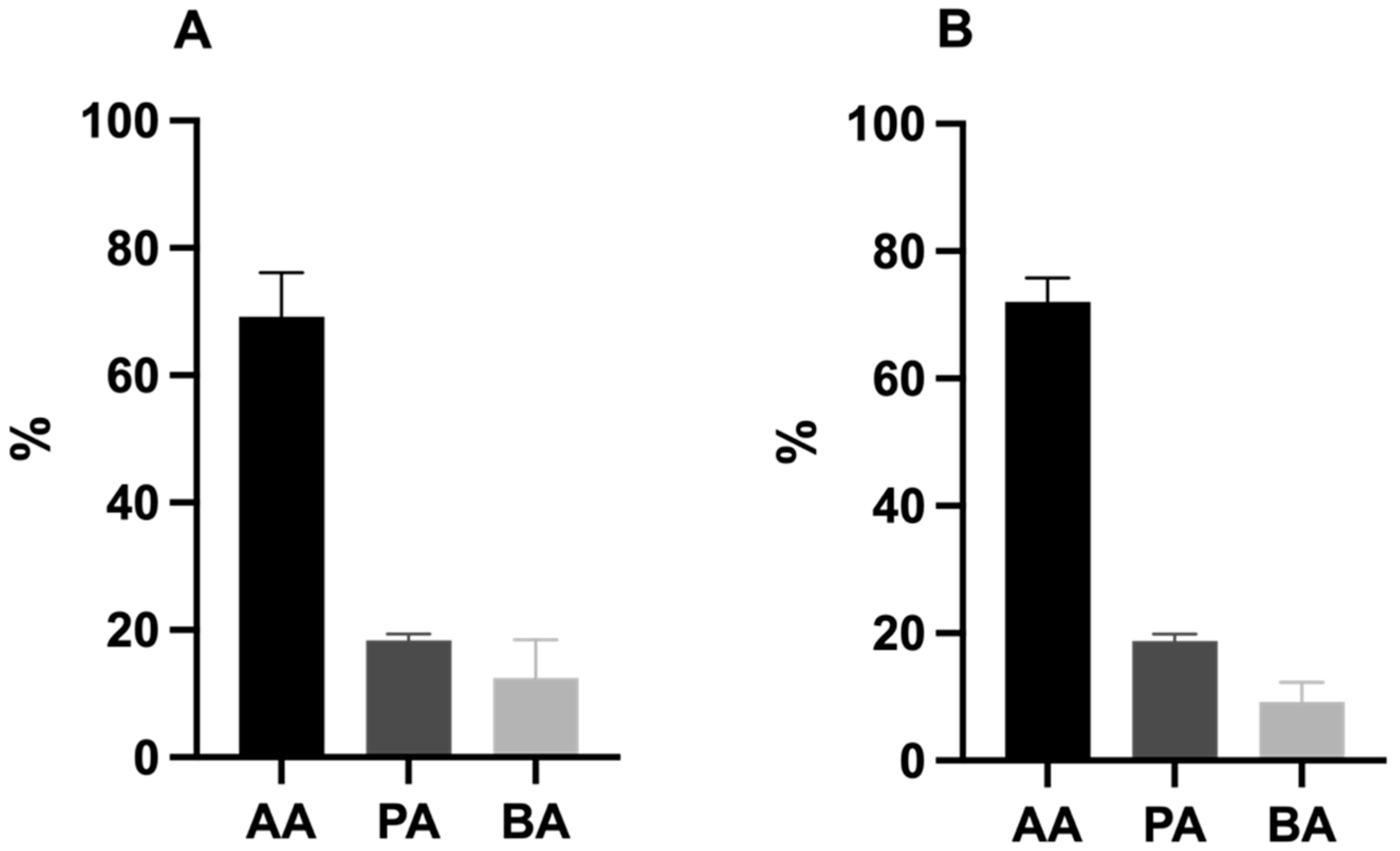
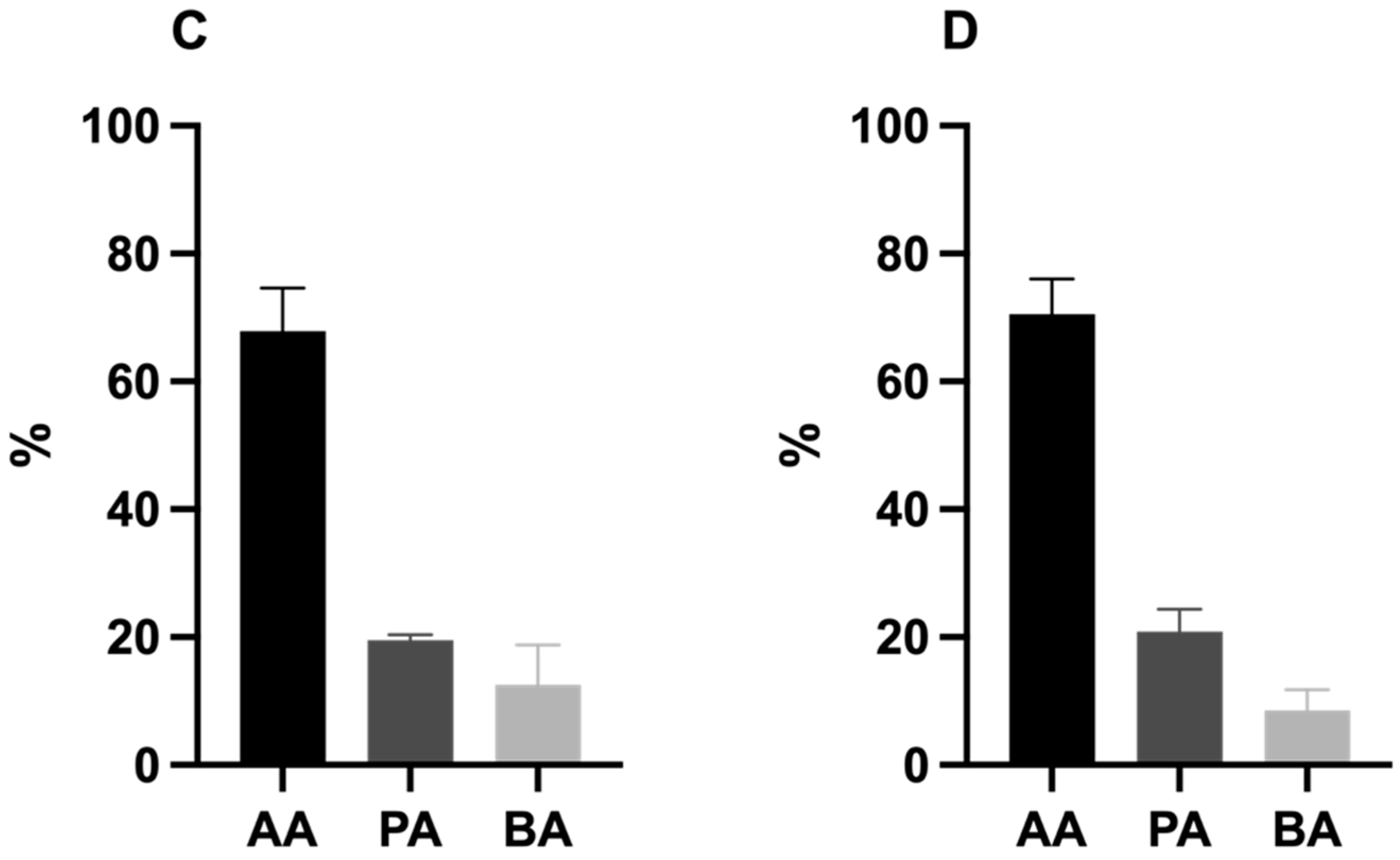
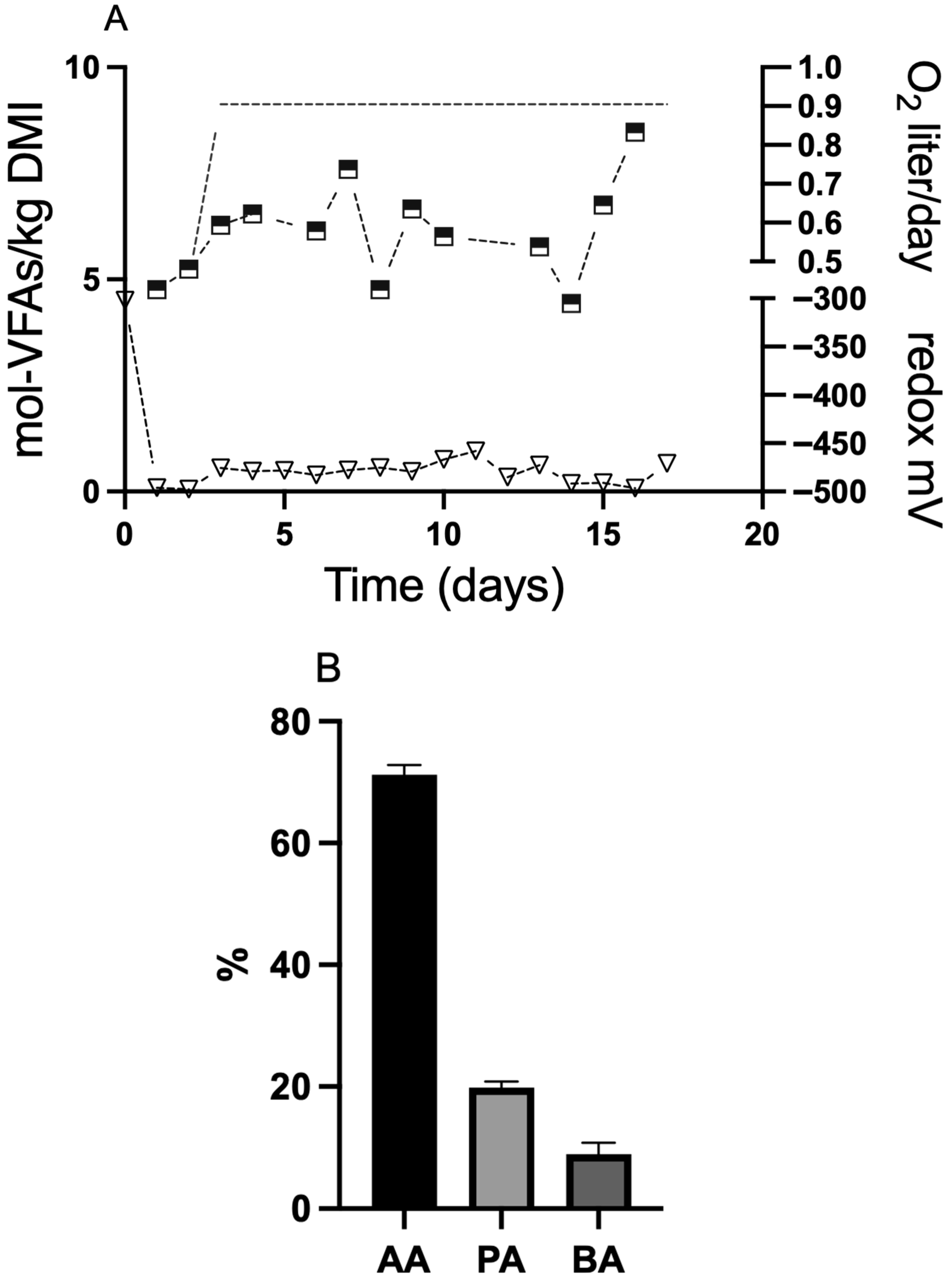
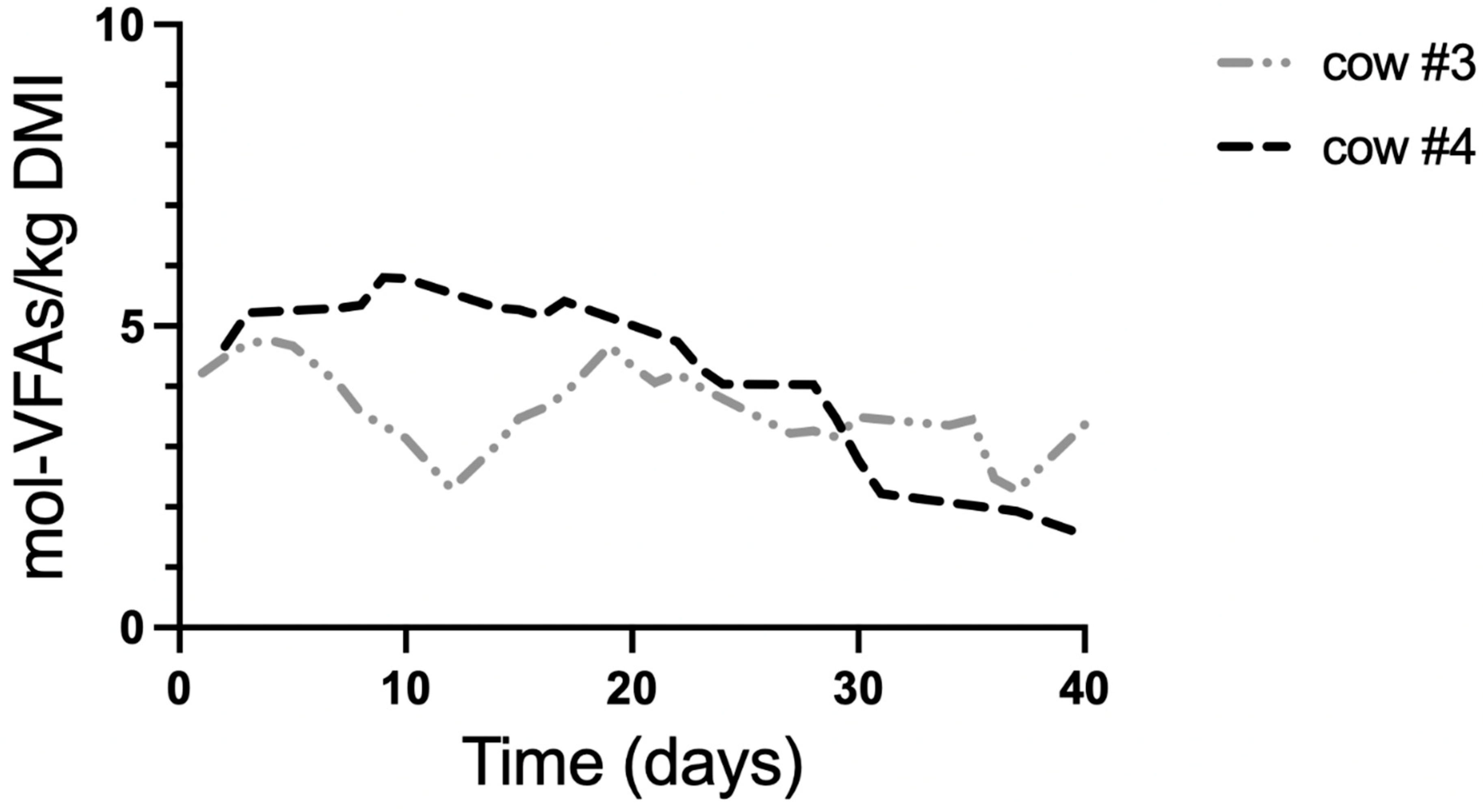
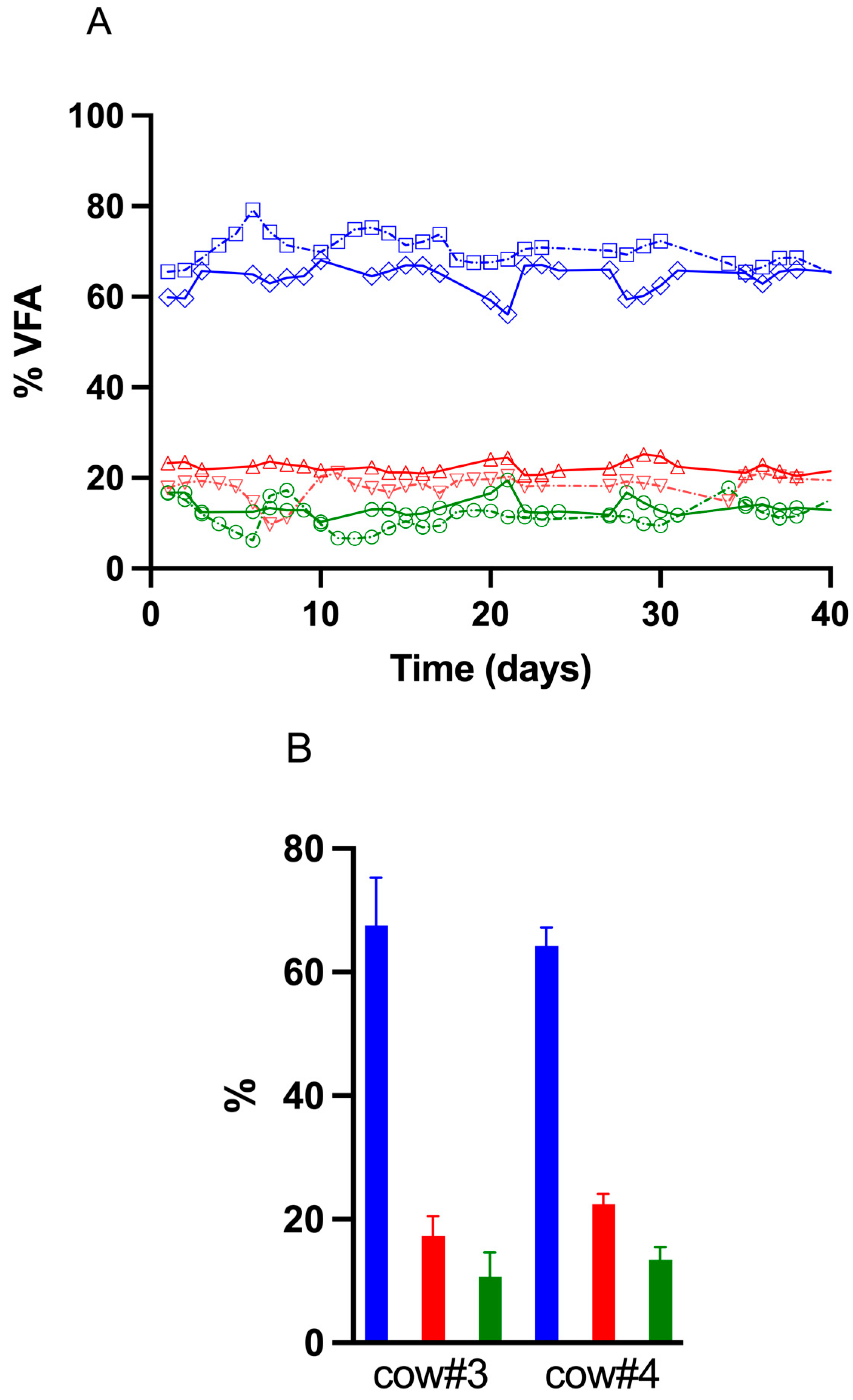
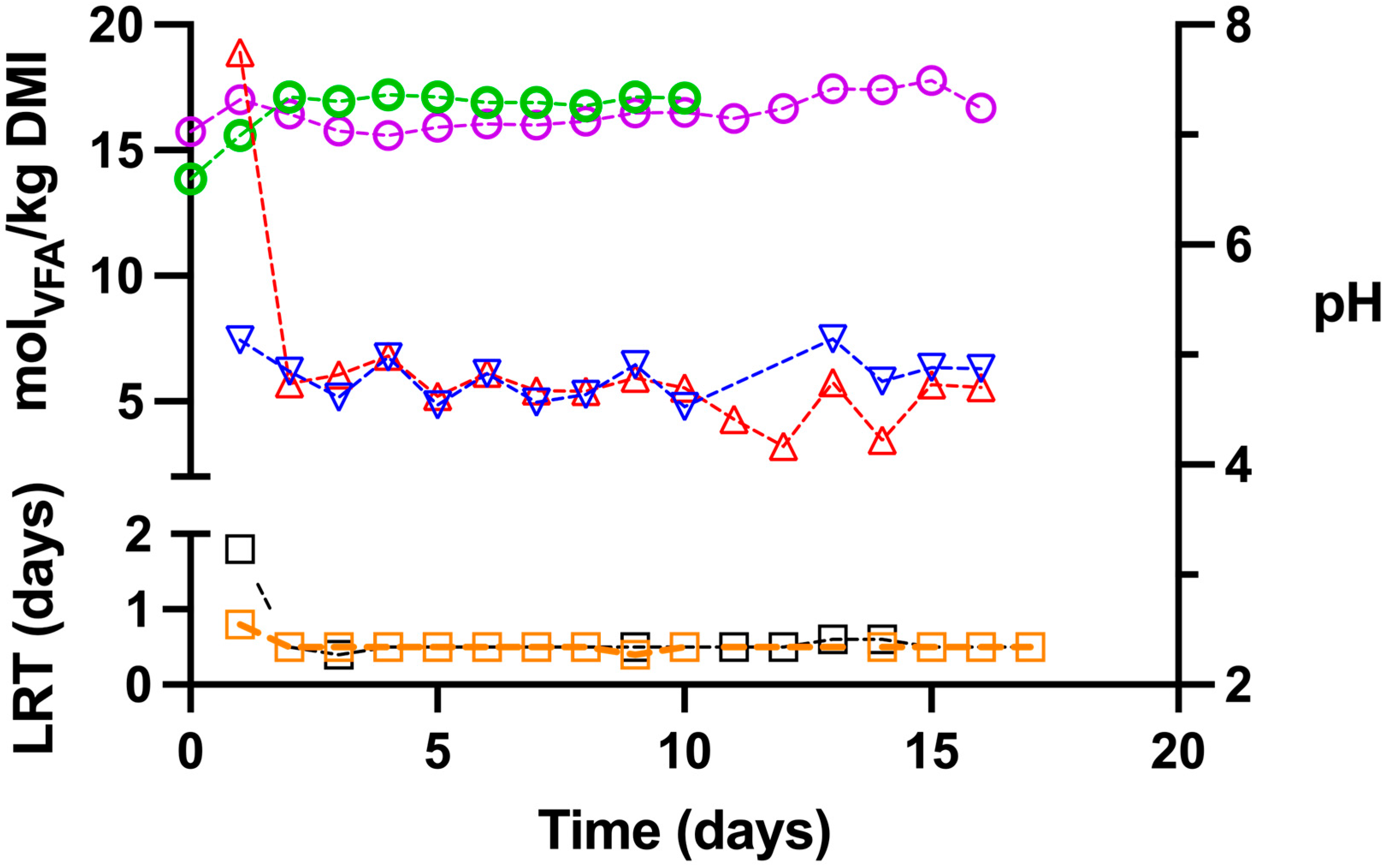
Lignocellulose represents an abundant repository of renewable carbon. Derived from various plant sources, it holds tremendous potential as a renewable and sustainable feedstock for the production of valuable chemicals and fuels. However, its solid fermentable compounds, cellulose and hemicellulose, are embedded within complex lignin structures and are therefore poorly accessible to microbial conversion. This paper describes an artificial rumen reactor (ARR) that uses anaerobic microbes from the cattle rumen to increase the release of fermentable carbon from recalcitrant biomass. We outline the development of an ARR for the efficient conversion of lignocellulosic grass into volatile fatty acids (VFAs), which are valuable precursors for the production of a range of bioproducts, including biofuels, biomaterials, and biochemicals. The ARR, a 4-L bioreactor equipped with a ceramic filtration unit, has been optimised and was operated for extended periods of continuous VFA production. Across distinct short- and long-term observation periods, and independent of the cow from which the rumen microbes originated, the bioreactor demonstrated the ability to sustain VFA production, indicating robustness and stability. At an input of 60–80 g dry grass d−1, the system produced approximately 6 mol VFA per kg of dry matter input (DMI). The decoupling of the Solid Retention Time (SRT; 10 days) and the Liquid Retention Time (LRT; 0.5 days) prevented inhibition of the VFA production. The VFA profile was dominated by acetic and propionic acids, comprising 68% and 19%, respectively, with butyric acid and minor VFAs accounting for the remainder. The application of low oxygen levels (<10%) in the reactor via limited aeration did not affect the VFA yield or its profile.
Keywords: artificial rumen reactor; volatile fatty acids; lignocellulosic biomass; anaerobic fermentation; membrane ultrafiltration; solid and liquid retention time; rumen microbiome; grass valorisation; circular bioeconomy artificial rumen reactor; volatile fatty acids; lignocellulosic biomass; anaerobic fermentation; membrane ultrafiltration; solid and liquid retention time; rumen microbiome; grass valorisation; circular bioeconomy