1. Introduction
The measurement of economic development has traditionally relied on aggregate macroeconomic indicators, most notably Gross Domestic Product (GDP). Despite its widespread use, GDP has long been recognized as an incomplete representation of development, capturing economic output while abstracting from social welfare, environmental sustainability, and institutional conditions. From its earliest formulation, GDP was understood as an approximate measure that aggregates heterogeneous economic activities rather than providing a comprehensive diagnostic of economic reality [
1]. Subsequent research has reinforced this critique, showing that GDP offers only a partial account of national development trajectories, particularly in cross-country comparisons [
2,
3,
4]. More fundamentally, GDP reflects ex post economic outcomes and therefore provides limited insight into the structural conditions that enable countries to sustain development over time.
In response to these limitations, the literature has increasingly incorporated complementary indicators addressing specific dimensions of development, including governance quality, environmental performance, and social outcomes. While this expansion has enriched empirical analysis, it has also produced a fragmented landscape of development metrics in which different dimensions are measured separately rather than as an integrated system. As a result, development is often assessed through parallel indicators rather than as a systemic process emerging from the interaction of infrastructure, institutions, and sustainability policies. The central challenge is therefore not merely to expand the set of indicators but to develop analytical frameworks capable of synthesizing multiple dimensions of development into coherent structures, while remaining transparent about the inherent subjectivity of macroeconomic measurement [
5].
Within this broader debate, logistics capability has emerged as a critical structural component of economic development. Efficient logistics systems reduce transaction costs, facilitate trade integration, and enhance participation in global value chains. The Logistics Performance Index (LPI) has become a widely used benchmark for capturing these capabilities through expert-based assessments of logistics efficiency [
6]. However, logistics performance does not operate independently. Its developmental impact depends strongly on the institutional environment in which it is embedded—particularly governance quality, regulatory reliability, and policy coordination—while sustainability considerations have become increasingly central to contemporary development strategies. These dimensions—logistics capability, institutional governance, and sustainability performance—form an interdependent system whose alignment shapes long-term development capacity [
7,
8].
Despite extensive empirical research on these dimensions, there is currently no widely accepted composite indicator that explicitly integrates logistics capability, governance quality, and sustainability performance within a unified analytical framework. Existing multidimensional indicators typically focus either on economic competitiveness or on sustainability outcomes, while logistics-focused metrics primarily evaluate operational efficiency without incorporating institutional and environmental dimensions. Consequently, the literature lacks an integrative framework capable of capturing the structural coherence of development systems across countries.
To address this gap, this study introduces the LESG Index (Logistics–Environmental, Social and Governance Index) as a composite analytical framework designed to measure the structural coherence of national development systems. Rather than treating logistics, governance, and sustainability as independent indicators, the LESG framework interprets their alignment as a structural condition that shapes the capacity of countries to sustain development trajectories. Building on recent work that reconceptualizes development as a multidimensional and systemic process shaped by logistics performance and ESG conditions [
9], the present study advances this perspective by introducing the LESG Index as a composite measure of national systemic readiness for sustainable development.
From an applied systems perspective, the challenge addressed in this study is not only conceptual but also analytical: to construct a transparent and reproducible composite framework capable of integrating heterogeneous national-level indicators into a coherent structure that can support comparative evaluation and policy-relevant interpretation. In this context, the LESG index is developed as an analytical tool that operationalizes the structural configuration of logistics capability, governance quality, and sustainability performance within a unified measurement framework.
The study addresses the following research question:
How can the structural coherence of national development systems be operationalized through a reproducible composite analytical framework that integrates logistics capability, governance quality, and sustainability performance?
To answer the research question, the study constructs the LESG index using cross-country data for 123 countries and applies Principal Component Analysis (PCA) to derive a composite indicator capturing the multivariate structure of the selected dimensions. The empirical analysis further employs cluster analysis to identify distinct structural development regimes across countries, revealing heterogeneous configurations of logistics capability, governance quality, and sustainability alignment that remain obscured in conventional income-based comparisons.
The study makes three main contributions. First, it offers a conceptual contribution by framing development capacity as a systemic property emerging from the structural coherence of infrastructure, institutions, and sustainability conditions rather than from isolated achievements in individual domains. Second, it provides a methodological contribution through the transparent construction of a composite indicator based on multivariate statistical analysis and variance-based weighting, following established guidelines for composite indicator design [
10]. Third, it delivers an empirical contribution by applying the LESG framework to a global dataset and identifying distinct structural development regimes that extend beyond conventional income classifications.
In addition, the study contributes to the applied systems literature by providing a transparent and reproducible composite indicator framework that can be used as a diagnostic and benchmarking tool in policy analysis and supply chain-related decision contexts.
Beyond its macro-development perspective, the LESG framework can also be interpreted as capturing structural conditions relevant to the digital transformation of supply chains. Contemporary digital supply chains increasingly rely on technologies such as cloud computing, AI-enabled analytics, and IoT-based traceability to enhance resilience, transparency, and sustainability, yet their effectiveness depends on broader structural preconditions, including logistics capability, governance reliability, and sustainability alignment. Empirical evidence further shows that digital transformation improves supply chain performance primarily through strengthened organizational capabilities such as information exchange, coordination, and operational integration [
11]. In this context, the LESG index reflects the macro-structural environment within which digitally enabled supply chain systems may emerge and operate effectively. As such, it may also serve as a diagnostic benchmarking tool for supply chain managers and policy analysts assessing cross-country environments for logistics expansion or digital supply chain investments, highlighting contexts where strong structural coherence supports stable long-term operations and those where weaker alignment may require additional institutional coordination and risk management.
In practical terms, the LESG framework enables policymakers and supply chain practitioners to benchmark national environments based on structural coherence rather than isolated performance indicators, supporting more informed investment and policy decisions. This perspective positions the LESG framework as a structural diagnostic layer complementing existing development metrics.
The remainder of the article is structured as follows.
Section 2 develops the conceptual framework.
Section 3 presents the methodological framework, including data sources, indicator selection, normalization procedures, and the analytical steps used to construct the LESG index.
Section 4 reports the empirical results, including regression-based validation of the index and the identification of structural coherence patterns across countries.
Section 5 discusses the findings in relation to the literature on development, logistics performance, and sustainability, highlighting their analytical and policy implications. Finally,
Section 6 summarizes the study’s main contributions and outlines directions for future research, while detailed statistical results and supplementary empirical analyses are provided in
Appendix A,
Appendix B,
Appendix C,
Appendix D,
Appendix E and
Appendix F to ensure transparency and replicability.
2. Conceptual Framework
The conceptual framework of the study is structured around three complementary analytical components that provide the theoretical foundation of the LESG index.
Section 2.1 examines the role of composite indicators in development measurement and discusses the inherent subjectivity involved in aggregating heterogeneous economic, institutional, and environmental dimensions, highlighting the limitations of relying on single indicators such as GDP when analyzing complex development processes. Building on this foundation,
Section 2.2 conceptualizes composite indicators as structured aggregation mechanisms capable of synthesizing multiple development dimensions into coherent representations of systemic conditions.
Section 2.3 extends this perspective by introducing the concept of structural coherence, emphasizing the interdependence of logistics capability, governance quality, and sustainability performance as core structural conditions shaping development systems and linking these conditions to the broader context of digital supply chain transformation. Within this framework, the LESG index operationalizes structural coherence by integrating these dimensions into a composite indicator for cross-country diagnostic analysis, providing the theoretical basis for the empirical analysis presented in this study.
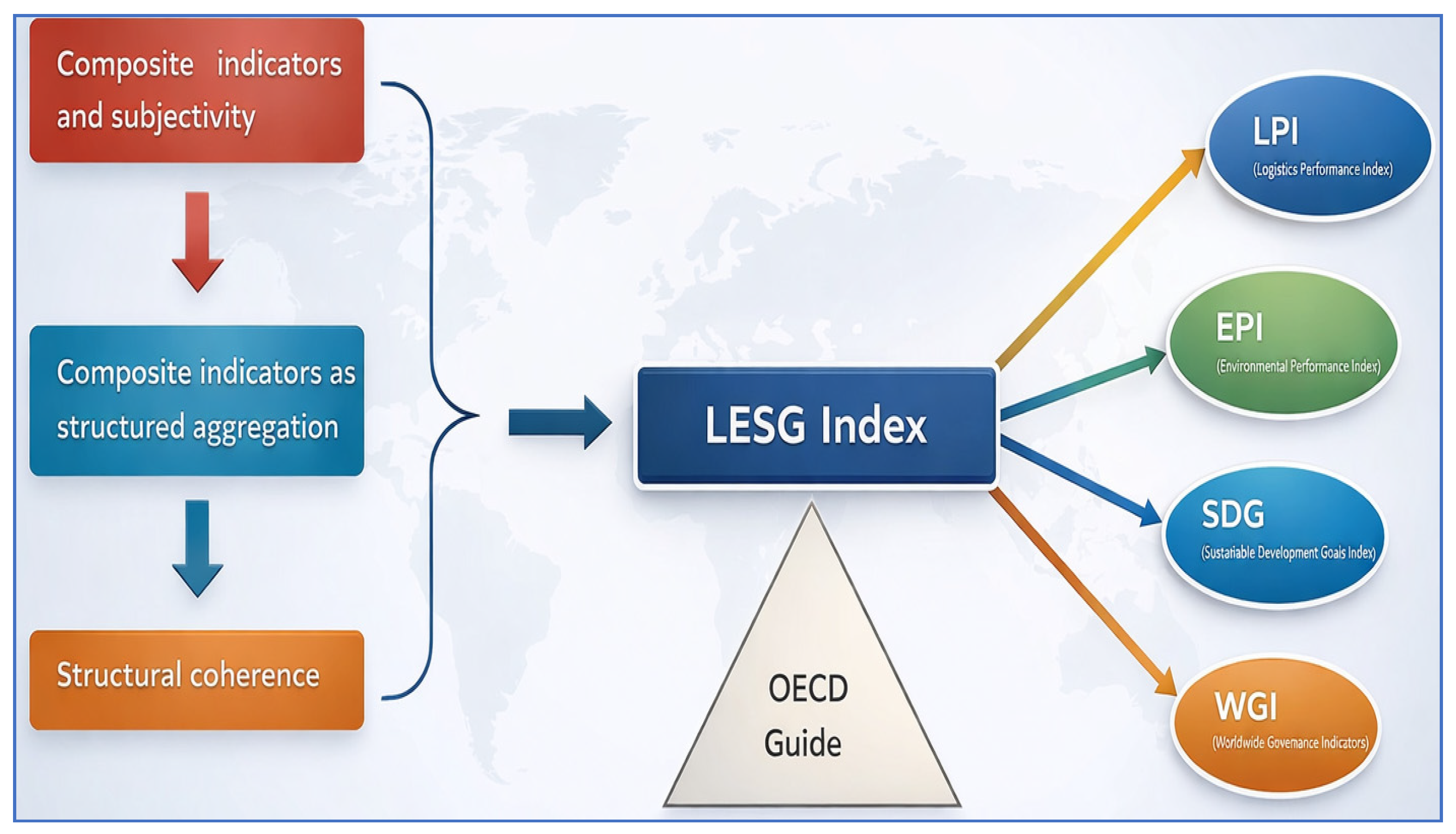
To clarify the conceptual structure of the framework,
Figure 1 presents the analytical architecture of the LESG index, illustrating how the theoretical foundations of composite indicators lead to the concept of structural coherence and how this concept is operationalized through the integration of logistics capability, governance quality, and sustainability performance.
Figure 1 provides a structured representation of the LESG architecture, illustrating the analytical integration of logistics capability, governance quality, and sustainability performance within a unified framework. The diagram highlights the role of these dimensions as interdependent structural components and clarifies how their alignment is operationalized through the composite index.
2.1. Composite Indicators and Subjectivity
The measurement of economic development has historically relied on aggregate macroeconomic indicators, with Gross Domestic Product (GDP) occupying a dominant position. From its earliest formulation, however, GDP was acknowledged as an imperfect approximation rather than a comprehensive representation of economic and social well-being. Kuznets [
1] explicitly emphasized that national income statistics combine precise measurement with estimation and judgment, cautioning against their interpretation as direct indicators of welfare. Subsequent literature has reinforced this critique by highlighting the conceptual and empirical limitations of GDP, including its insensitivity to distributional outcomes, social welfare, and environmental externalities [
2] as well as the normative assumptions embedded even in ostensibly objective welfare measures [
5]. These challenges are amplified in international comparisons, where purchasing power parity adjustments, imputation procedures, and data gaps introduce additional layers of subjectivity, particularly in non-market sectors and developing economies [
12,
13]. Importantly, this body of work does not negate the analytical value of GDP but instead delineates its epistemic boundaries and underscores the need for complementary indicators capable of capturing structural and qualitative dimensions of development [
14].
Parallel concerns arise in the measurement of logistics performance, a dimension widely recognized as critical for economic growth, trade competitiveness, and participation in global value chains [
7,
15,
16]. Empirical studies consistently indicate that improvements in logistics efficiency reduce trade costs, enhance export performance, and support economic specialization [
8,
17,
18]. At the same time, logistics performance is inherently multidimensional, encompassing infrastructure quality, institutional effectiveness, service reliability, and regulatory coordination. The Logistics Performance Index (LPI) has therefore emerged as a widely used benchmark, yet its reliance on expert assessments introduces perceptual subjectivity into cross-country comparisons. Stepanova [
19] highlights that expert judgments may vary systematically across countries and development levels. Nevertheless, perception-based measures remain analytically valuable, as logistics performance cannot be fully captured through physical or administrative data alone; public investment choices, regulatory frameworks, and institutional coordination play a decisive role in shaping logistics outcomes [
20,
21].
Taken together, the limitations of GDP and logistics indicators point to a broader methodological insight: subjectivity is an inherent and unavoidable feature of development measurement. Economic and infrastructural indicators necessarily involve aggregation across heterogeneous activities, sectors, and institutional arrangements, embedding methodological conventions and normative priorities in the measurement process. This insight is reinforced by studies linking logistics performance to economic growth through complex and context-dependent mediating channels, such as foreign direct investment and trade facilitation [
22,
23,
24]. Treating any single indicator as an objective benchmark therefore risks obscuring systemic interactions and overstating measurement precision. Rather than attempting to eliminate subjectivity, the literature increasingly emphasizes the importance of structuring it transparently, as subjectivity becomes problematic only when it remains implicit, unacknowledged, or methodologically inconsistent [
5].
The selection of logistics capability, governance quality, and sustainability performance as the core dimensions of the LESG framework reflects their complementary and interdependent structural roles within national development systems. Logistics capability represents the infrastructural capacity that enables economic coordination, trade integration, and participation in global value chains, a function closely associated with structural transformation processes [
25]. Governance quality captures the institutional environment that determines regulatory reliability, policy effectiveness, and coordination efficiency, which are fundamental for enabling complex economic interactions and sustaining development trajectories [
26]. Sustainability performance reflects the environmental and social constraints within which economic systems operate, shaping long-term development viability beyond short-term output measures [
27].
Importantly, these dimensions are not selected as independent pillars but as structurally interconnected components of a broader development system. The development literature increasingly emphasizes that infrastructure, institutions, and sustainability conditions co-evolve and mutually reinforce each other, rather than operating in isolation. Efficient logistics systems require stable and predictable institutional environments to function effectively, while institutional quality itself is partly reflected in the ability to design and implement infrastructure and sustainability policies [
28]. At the same time, sustainability outcomes are conditioned by both infrastructural capacity and governance effectiveness, as environmental regulation, social inclusion, and long-term resource management depend on coordinated institutional and operational systems [
29].
This systemic interdependence is consistent with theoretical perspectives that conceptualize development as a configuration of interacting structural components, where the alignment among infrastructure, institutions, and sustainability conditions determines overall system performance [
30]. The LESG framework therefore integrates these dimensions not as a simple aggregation of indicators, but as a representation of their joint structural coherence within national development systems.
This perspective suggests that assessing development capacity requires analytical tools capable of integrating these interdependent dimensions into a coherent representation of systemic conditions. Composite indicators provide such a framework by enabling the structured aggregation of multiple development dimensions within a unified analytical construct.
2.2. Composite Indicators as Structured Aggregation
Composite indicators provide a methodological response to the challenge of measuring complex development processes under conditions of inevitable subjectivity. By aggregating multiple dimensions within a single analytical framework, composite indices allow researchers to synthesize information while maintaining transparency regarding underlying assumptions.
In the context of logistics and development, composite approaches have been shown to outperform single-indicator analyses in capturing systemic effects. High-quality logistics services facilitate trade by reducing time and uncertainty, but their impact depends on institutional quality and complementary public investment [
31]. Composite indicators are particularly well suited to capturing such interactions, as they allow multiple dimensions to be evaluated jointly rather than sequentially.
Crucially, the value of composite indicators lies not in claims of objectivity but in their capacity to impose analytical structure on multidimensional phenomena. When constructed transparently, they function as diagnostic tools that reveal patterns of coherence and imbalance across development dimensions.
A central conceptual distinction in this study is between economic outcomes and systemic capacity. Indicators such as income levels or export volumes primarily reflect past performance, whereas systemic capacity refers to the structural capacity of an economy to sustain development over time. This capacity depends on the alignment of logistics infrastructure, institutional quality, and trade facilitation mechanisms. Empirical research shows that disruptions in logistics systems can generate economy-wide effects even in advanced economies [
32], while sustained improvements in logistics performance contribute to long-term competitiveness only when embedded within supportive institutional and policy environments [
14,
31]. These findings support a systemic interpretation of development, in which systemic capacity emerges from the coherence of multiple structural components rather than from isolated improvements in individual domains.
Within this framework, the LESG index is positioned as a composite measure designed to capture national structural coherence for sustainable development. By integrating logistics performance with governance quality and sustainability-related dimensions, the index reflects the literature’s recognition that development is inherently multidimensional and interdependent. The LESG index is not intended to replace established indicators such as GDP or logistics-specific metrics, nor to establish causal relationships between its components and economic outcomes. Instead, it provides a structured analytical lens through which the coherence of development-relevant dimensions can be assessed and compared across countries. In doing so, it responds directly to long-standing concerns regarding the subjectivity and fragmentation of development measurement by offering a transparent and integrative composite framework.
It is important to clarify that the LESG framework does not replicate the traditional Environmental, Social, and Governance (ESG) structure commonly used in corporate sustainability assessments. Instead, the framework integrates logistics capability as a distinct structural dimension alongside institutional governance quality and sustainability-related outcomes. In this context, governance refers to the effectiveness and reliability of national institutions shaping economic and sustainability policies, while environmental and social dimensions are represented through the Environmental Performance Index (EPI) and the SDG Index. The LESG framework therefore captures the structural coherence among logistics capability, institutional quality, and sustainability alignment rather than reproducing the ESG taxonomy.
Within this perspective, the distinction between economic outcomes and structural coherence becomes operational when composite indicators are interpreted as diagnostic representations of underlying structural conditions rather than as direct measures of performance. In the context of the LESG framework, a high level of structural coherence indicates that logistics capability, governance quality, and sustainability performance evolve in a mutually reinforcing configuration, creating stable institutional and infrastructural conditions that support long-term development processes. Conversely, a low level of coherence reflects structural misalignment among these dimensions, where weaknesses in infrastructure, governance, or sustainability may constrain development capacity even when individual indicators appear strong in isolation. Interpreted in this way, the LESG index provides a diagnostic tool for identifying whether national development systems exhibit balanced structural conditions or fragmented configurations that may limit their long-term stability. This interpretation also strengthens the theoretical grounding of the coherence concept by framing development as the outcome of interacting systemic components rather than as the sum of independent economic indicators.
In this study, structural coherence is operationally defined as the degree to which logistics capability, governance quality, and sustainability performance are aligned and evolve in a mutually reinforcing configuration within national development systems. This definition emphasizes the joint structural interaction among dimensions rather than their isolated performance levels.
2.3. Structural Coherence and Digital Supply Chain Transformation
Beyond their statistical construction, composite indicators increasingly function as analytical tools for representing structural relationships within complex socio-economic systems. Rather than measuring isolated outcomes, composite indicators can reveal the degree of coherence among interdependent dimensions that jointly shape system performance. The methodological literature on composite indicators emphasizes that such indices should be interpreted as structured aggregations that capture multidimensional system properties rather than direct causal relationships between individual variables.
In contemporary economic systems, logistics capability, institutional governance, and sustainability performance represent interdependent structural dimensions. These dimensions are analytically distinct but structurally interconnected: logistics systems depend on institutional governance and regulatory quality, while sustainability outcomes increasingly rely on both infrastructural capacity and effective public institutions. When these dimensions evolve coherently, they create stable structural conditions that enable economic systems to operate efficiently and adapt to external shocks.
This structural perspective is particularly relevant in the context of the ongoing digital transformation of global supply chains. Under the Industry 4.0 and Industry 5.0 paradigms, advanced technologies—including artificial intelligence (AI), Internet-of-Things (IoT) infrastructures, blockchain-based traceability systems, and cloud-enabled analytics—are increasingly deployed to enhance resilience, sustainability, and operational transparency. Systematic reviews indicate that AI-enabled decision systems and digital integration mechanisms can improve supply chain visibility, coordination, and sustainability performance [
33,
34]. Empirical evidence also suggests that digital supply chain adoption is associated with improvements in resilience capabilities and adaptive capacity in disruption-prone environments [
35,
36].
However, the literature consistently emphasizes that technological deployment alone does not guarantee systemic transformation. The effectiveness of digital supply chain initiatives depends strongly on broader structural conditions, including logistics infrastructure, institutional reliability, regulatory coherence, and interoperability across economic actors [
37,
38,
39,
40]. Digital technologies therefore operate within a wider socio-technical ecosystem where infrastructural capacity and governance coordination determine whether technological capabilities can translate into sustainable performance improvements. In sustainability-oriented supply chains, IoT-enabled monitoring systems and data-driven analytics require stable infrastructure and coordinated governance mechanisms to produce measurable gains [
41]. Recent conceptual work further highlights that digital technologies operate as enabling mechanisms within broader transformative supply chain architectures [
42].
Within this perspective, the LESG framework contributes to the literature by capturing the structural coherence of national development systems. Unlike widely used multidimensional development indices—such as the Human Development Index (HDI), the Global Competitiveness Index (GCI), or Notre Dame Global Adaptation Initiative Index (ND-GAIN)—which typically focus on human welfare, competitiveness, or climate vulnerability separately, the LESG index explicitly integrates logistics capability, governance quality, and sustainability performance within a unified analytical structure. By combining these dimensions, the framework captures the systemic alignment of infrastructural, institutional, and sustainability conditions that shape the functioning of contemporary economic and supply chain systems.
Importantly, the LESG framework does not directly measure the adoption of digital technologies within supply chains. Rather, it captures the macro-structural environment within which digital supply chain innovations may emerge and operate effectively. In this sense, the index can be interpreted as an analytical layer representing the structural conditions that enable the deployment of digitally enabled supply chain systems. Future research may therefore explore how variations in national structural coherence influence the diffusion and effectiveness of AI-enabled, IoT-integrated, and data-driven supply chain architectures across different economic contexts.
The conceptual framework developed in this section provides the theoretical basis for the empirical construction of the LESG index. By interpreting logistics capability, governance quality, and sustainability performance as interdependent structural dimensions of national development systems, the framework establishes the analytical logic guiding the selection and integration of the indicators used in the study.
To further clarify the analytical structure of the LESG framework, the interaction among its three core dimensions can be interpreted as a system of mutually reinforcing mechanisms. Logistics capability provides the infrastructural and operational capacity enabling efficient flows of goods and information. Governance quality shapes the institutional environment that determines the reliability, coordination, and effectiveness of these logistics systems. Sustainability performance reflects the alignment of economic activity with environmental and social constraints, influencing both regulatory priorities and long-term system stability. These dimensions are structurally interdependent. Improvements in governance quality enhance logistics performance by reducing uncertainty and transaction costs, while advanced logistics systems support sustainability objectives through traceability, monitoring, and operational efficiency. Conversely, misalignment among these dimensions may generate structural inconsistencies that constrain development capacity. Within this framework, structural coherence is interpreted as the degree of alignment among these interdependent components rather than as an outcome of any single dimension.
The following section operationalizes this conceptual structure by describing the data sources, variable selection, and multivariate statistical methods used to construct the composite index and evaluate its empirical properties across countries. This conceptual structure directly guides the empirical operationalization of the LESG index presented in
Section 3.
3. Empirical Operationalization and Construction of the LESG Index
This section operationalizes the conceptual framework presented in
Section 2 by describing the data sources, indicator selection, and statistical procedures used to construct the LESG index.
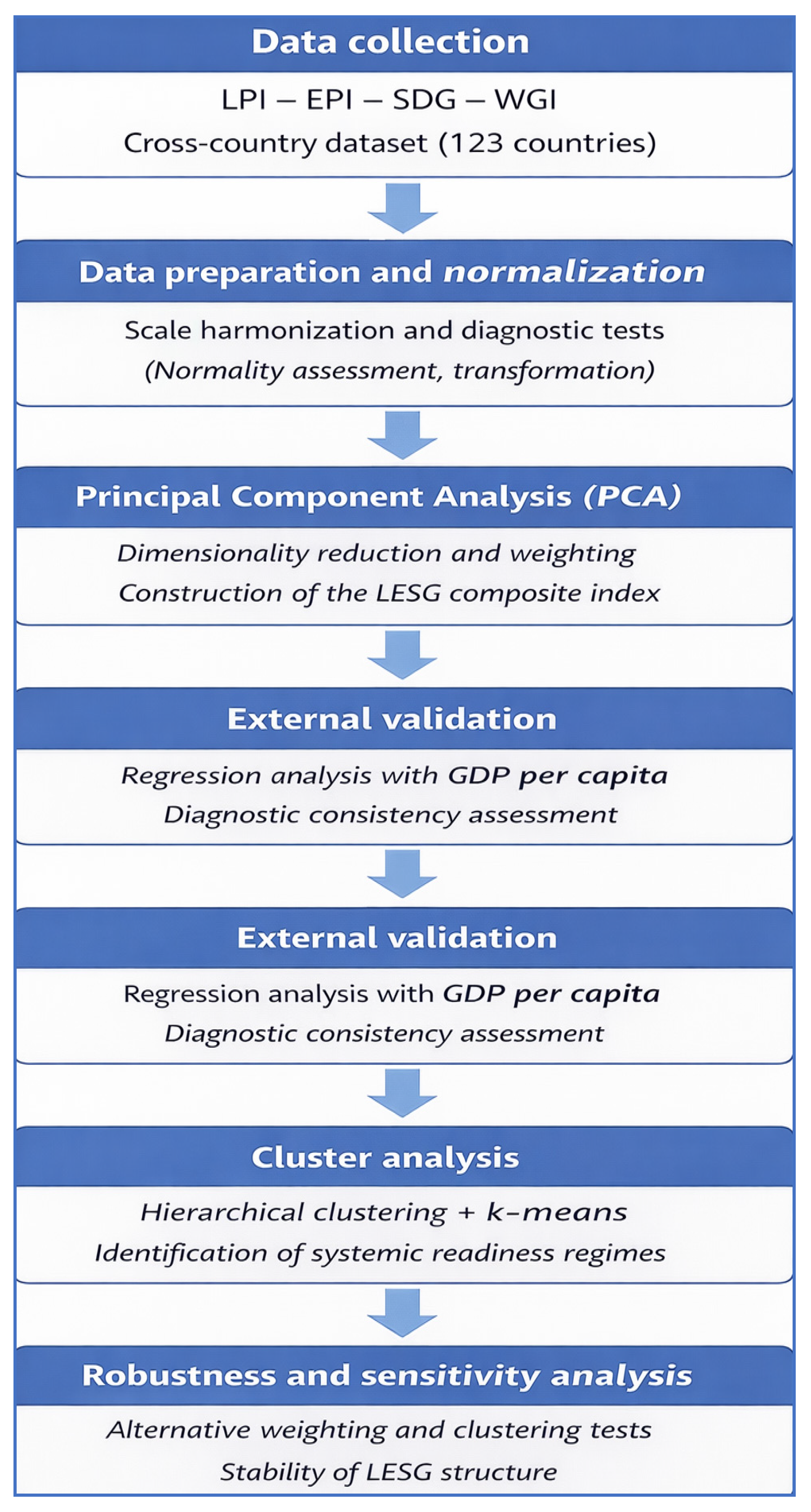
To provide a clear overview of the analytical design,
Figure 2 summarizes the methodological workflow followed in this study. The research process begins with the selection of internationally recognized datasets representing logistics performance, governance quality, and sustainability outcomes. The data are subsequently harmonized and normalized to ensure comparability across indicators. Principal Component Analysis (PCA) is then applied to construct the LESG composite index using a variance-based weighting scheme. The empirical relevance of the index is assessed through regression-based validation against GDP per capita, followed by cluster analysis to identify distinct systemic development readiness regimes across countries. Finally, robustness and sensitivity analyses are conducted to evaluate the stability of the index structure and the consistency of the resulting classifications.
3.1. Data Sources and Indicator Selection
Four composite indices were selected to represent the core dimensions of the LESG framework. National logistics capability is proxied by the Logistics Performance Index (LPI) developed by the World Bank, which captures countries’ integration into global value chains through expert-based assessments of customs efficiency, infrastructure quality, logistics services, shipment arrangements, tracking and tracing, and timeliness. LPI scores range from 1 (low performance) to 5 (high performance) and have been widely used in empirical studies on trade facilitation and logistics efficiency, forming the logistics pillar of the LESG index [
43].
Environmental sustainability is represented by the Environmental Performance Index (EPI), jointly developed by Yale and Columbia Universities. The EPI aggregates indicators related to environmental health, ecosystem vitality, and climate change mitigation into a normalized scale ranging from 0 to 100, capturing the environmental alignment of national development pathways [
44].
The social and long-term development dimension is captured by the Sustainable Development Goals (SDG) Index, which aggregates indicators across economic, social, environmental, and institutional domains to assess countries’ progress toward the 2030 Agenda, producing composite scores between 0 and 100 [
45].
Institutional quality is measured using the Worldwide Governance Indicators (WGI) produced by the World Bank, covering six governance dimensions: Voice and Accountability, Political Stability, Government Effectiveness, Regulatory Quality, Rule of Law, and Control of Corruption [
46]. To reduce dimensional complexity and multicollinearity, a composite governance measure was constructed as the arithmetic mean of the six indicators, following established practice. This composite measure constitutes the governance pillar of the LESG index. Throughout the analysis, institutional quality and governance are treated as analytically equivalent concepts, reflecting the effectiveness and reliability of formal institutions shaping economic and sustainability outcomes. In the context of the LESG framework, governance quality represents the institutional environment supporting logistics performance and sustainability policies rather than the governance component of ESG reporting frameworks.
The selection of the four indicators used in the LESG framework is conceptually grounded in the structural dimensions identified in the conceptual framework. The Logistics Performance Index (LPI) captures infrastructural and operational logistics capability, the Worldwide Governance Indicators (WGI) represent institutional quality and regulatory effectiveness, the Environmental Performance Index (EPI) reflects environmental sustainability performance, and the SDG Index captures broader social and sustainable development outcomes. Together, these indicators represent complementary structural dimensions—logistics infrastructure, institutional governance, and sustainability conditions—that shape the systemic environment of national development systems.
The selection of these four indicators is guided by the objective of capturing the core structural dimensions of national development systems while maintaining analytical parsimony. Together, LPI, WGI, EPI, and the SDG Index provide sufficient coverage of infrastructure, institutional quality, and sustainability conditions, which are conceptualized as the primary components of structural coherence in this study. Although partial overlap exists between EPI and the SDG Index, their analytical scope differs: the EPI focuses on environmental performance and ecological outcomes, while the SDG Index captures broader socio-economic and development dimensions. Their combined use therefore enhances coverage rather than introducing redundancy. The framework intentionally excludes digital or technological indicators, as these are interpreted as outcome or capability layers that depend on underlying structural conditions. The LESG index focuses on macro-structural determinants rather than downstream technological manifestations, ensuring cross-country comparability and conceptual consistency.
The empirical analysis is conducted on a balanced cross-sectional sample of 123 countries, selected based on the availability of complete and consistent data across all four indices. Although reference years differ slightly due to publication cycles, the most recent available observations were used in all cases. The final sample therefore reflects the set of countries for which data were simultaneously available across all four indicators. This approach is consistent with prior cross-country research and does not compromise comparability, as the selected indicators capture relatively stable structural characteristics rather than short-term fluctuations. Detailed information on variables, sources and descriptive statistics is provided in
Appendix A.
The resulting dataset includes countries from all major geographic regions and development levels, ensuring broad cross-country coverage. Although the sample is determined by data availability, the selected indices are among the most widely reported global datasets, which helps mitigate potential sample selection bias and supports the global comparability of the analysis.
Although the reference years of the underlying datasets differ due to their publication cycles, the selected indicators capture structural characteristics—such as logistics capability, institutional quality, and sustainability performance—that typically evolve gradually over time. For this reason, the use of the most recent available observations is consistent with established practice in cross-country comparative studies. Rather than reflecting short-term fluctuations, these indicators are interpreted as proxies of medium- to long-term structural conditions. While temporal alignment of all indicators would be desirable, it is constrained by data availability in internationally compiled datasets. This limitation is acknowledged but does not compromise the analytical objective of capturing structural coherence across countries.
3.2. Data Preparation, Normalization, and Suitability for Multivariate Analysis
Because the selected indicators are reported on different numerical scales, a harmonization process was applied prior to multivariate analysis and aggregation. Indicators originally reported on a 0–100 scale (Environmental Performance Index and SDG Index) were retained without transformation, while Logistics Performance Index scores (1–5 scale) and Worldwide Governance Indicators (−2.5 to +2.5 scale) were linearly rescaled to a common 0–100 range. This procedure preserves the relative ranking of countries within each indicator while ensuring comparability across dimensions.
GDP per capita, used subsequently for external validation, exhibits a highly skewed distribution and was therefore log-transformed prior to normalization. Distributional diagnostics, including Shapiro–Wilk tests and visual inspections, indicate that deviations from normality persist for several variables even after transformation. These diagnostics motivate the complementary use of parametric and non-parametric techniques in subsequent analyses and are reported in detail in
Appendix A. Importantly, the normalization procedure does not impose distributional assumptions but facilitates consistent multivariate analysis across heterogeneous indicators.
Before proceeding to index construction, the suitability of the normalized dataset for multivariate analysis was formally assessed using standard diagnostic tests. The Kaiser–Meyer–Olkin (KMO) measure of sampling adequacy and Bartlett’s test of sphericity were employed to evaluate whether the correlation structure among variables justified the application of factor-based techniques. The results of both diagnostics confirm that the dataset exhibits sufficient intercorrelation and dimensional coherence to support dimensional reduction and component extraction. These findings provide the methodological justification for employing Principal Component Analysis (PCA) as the core technique for constructing the LESG index. Detailed diagnostic statistics are reported in
Appendix B.
Linear rescaling was preferred over standardization techniques such as z-scores in order to preserve the intuitive interpretation of indicator distances while avoiding distortions arising from extreme values.
To assess the robustness of the composite index, additional sensitivity checks and alternative specifications are reported in
Appendix E and
Appendix F, where the stability of the results is evaluated under different methodological assumptions.
The normalization approach adopted in this study prioritizes interpretability and comparability across heterogeneous indicators. Linear rescaling was selected as it preserves relative distances and rankings among countries without imposing distributional assumptions. While alternative normalization methods such as z-score standardization could be employed, they introduce sensitivity to distributional characteristics and extreme values, which may distort cross-country comparisons in the presence of skewed indicators. Sensitivity to extreme values was assessed through inspection of indicator distributions and comparative rank stability, indicating that the normalization procedure does not materially affect the relative positioning of countries.
Potential cross-country measurement bias is acknowledged, particularly for perception-based indicators such as LPI and governance measures. However, these indicators are widely used in cross-country empirical research, and their inclusion is consistent with the objective of capturing structural conditions rather than precise measurement levels.
3.3. Principal Component Analysis and Index Construction
Principal Component Analysis (PCA) is employed as the core technique for dimensionality reduction and composite index construction. PCA is appropriate in this context because the selected indicators are correlated and jointly reflect latent structural dimensions underlying development structural coherence. The suitability of the dataset for factor-based analysis is assessed using the Kaiser–Meyer–Olkin (KMO) measure of sampling adequacy and Bartlett’s test of sphericity, which confirm the appropriateness of applying PCA.
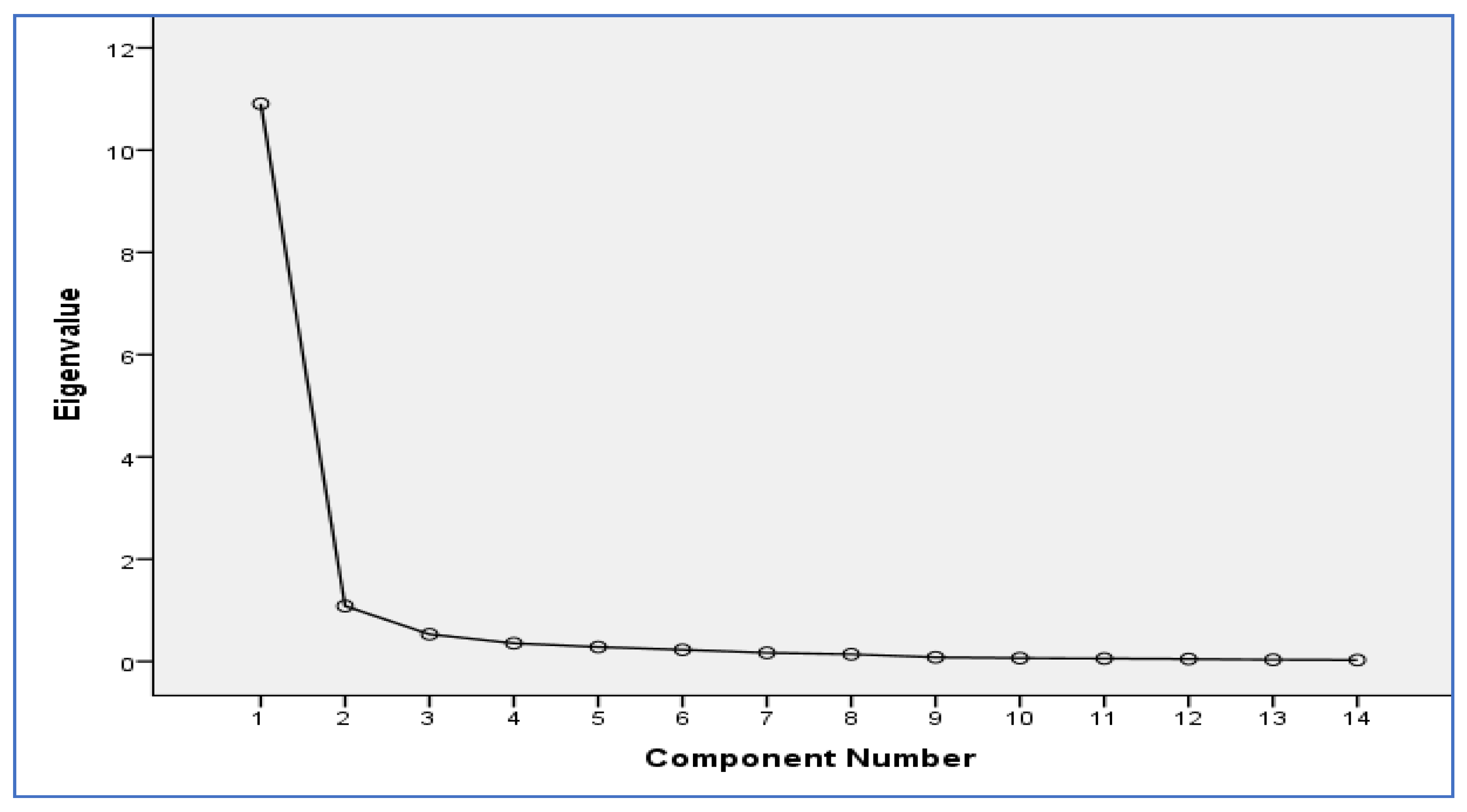
Component extraction follows the Kaiser criterion (eigenvalues greater than one) and is supported by inspection of the scree plot. An orthogonal Varimax rotation is applied to enhance interpretability while preserving statistical independence among components. PCA is used exclusively as a data-reduction and weighting mechanism, without imposing a priori assumptions regarding the relative importance of individual dimensions.
Weights for the LESG index are derived from the proportion of variance explained by the retained principal components, following a variance-based weighting approach consistent with established guidelines on composite indicator construction. The final LESG score is computed as a weighted linear combination of the extracted components, with higher values indicating greater systemic readiness for sustainable development. Detailed PCA diagnostics, including factor loadings, communalities, eigenvalues, and explained variance, are reported in
Appendix B. This variance-based weighting scheme does not imply normative importance but reflects the empirical contribution of each component to the underlying variance structure of the data.
To ensure that the PCA results are not influenced by the unequal number of sub-indicators across dimensions, an additional robustness test was conducted using only the four aggregate indicators representing the conceptual pillars of the LESG framework (LPI, EPI, SDG Index, and WGI). The results, reported in
Appendix F, support the stability of the latent structure and the consistency of the resulting country rankings. Sensitivity checks were also performed by comparing the PCA-based weighting scheme with an equal-weight specification. The resulting country rankings show very high rank correlation, indicating that the structure of the LESG index is not driven by arbitrary weighting assumptions (
Appendix E).
In this study, PCA is used as a variance-based weighting approach that reduces dimensionality while capturing the empirical correlation structure among the selected indicators. The extracted components are interpreted as statistical constructs that summarize the multivariate structure of the data rather than as causal representations of the underlying development dimensions. Consequently, PCA is employed as a data-driven aggregation method that complements the conceptual framework without imposing theoretical assumptions regarding the independence or causal hierarchy of the dimensions. PCA is therefore interpreted as a dimensionality-reduction and weighting technique rather than as a model of causal relationships among the development dimensions.
The orthogonality of PCA components is a statistical property used for analytical clarity and does not imply conceptual independence among the underlying dimensions, which are explicitly treated as structurally interdependent in the LESG framework.
The use of PCA as a weighting mechanism is not intended to imply causal structure but to capture the empirical covariance among the selected indicators in a transparent and data-driven manner. Compared to equal weighting or arbitrary weighting schemes, PCA reduces subjectivity by deriving weights from the observed variance structure of the data. While alternative methods such as factor analysis or multi-criteria decision approaches could be employed, PCA is preferred due to its transparency, reproducibility, and widespread use in composite indicator construction.
The application of Varimax rotation is adopted to enhance interpretability of the extracted components. Although the underlying dimensions are conceptually interdependent, orthogonal rotation is used as a statistical simplification to obtain clearer component structures without affecting the conceptual interpretation of the LESG framework.
3.4. Empirical Validation Through Regression Analysis
To assess the empirical relevance of the LESG index, external validation is conducted using GDP per capita as a benchmark outcome indicator. This validation is explicitly diagnostic rather than causal. Ordinary Least Squares (OLS) regression is employed within a parsimonious cross-sectional framework, with normalized GDP per capita specified as the dependent variable and the LESG index as the explanatory variable.
Standard diagnostic checks, including multicollinearity assessment, residual analysis, and influence diagnostics, are conducted to ensure statistical adequacy and robustness. Regression estimates are interpreted as indicative of coherence between systemic readiness and observed economic performance rather than as evidence of causal effects. Full regression outputs and diagnostic statistics are reported in
Appendix C.
Potential concerns related to endogeneity and reverse causality are acknowledged; however, given the diagnostic purpose of the analysis, the regression is not interpreted causally but as an external consistency check.
The purpose of the regression analysis is not to establish causal relationships, but to assess whether the LESG index exhibits empirical coherence with widely used development benchmarks such as GDP per capita. In this sense, the validation serves as a diagnostic consistency check rather than as a predictive model. The added value of the LESG index lies not in outperforming existing indicators in predictive terms, but in providing an integrated representation of structural conditions that are not captured by single-dimension metrics. While GDP reflects realized economic outcomes, the LESG index captures the underlying structural configuration that supports or constrains these outcomes. Future research may extend validation using alternative outcome variables such as trade performance, resilience indicators, or sustainability outcomes. However, within the scope of this study, GDP is used as a benchmark due to its widespread use and interpretability.
3.5. Cluster Analysis and Regime Identification
To explore structural heterogeneity beyond bivariate association, cluster analysis is employed to identify groups of countries with similar systemic readiness profiles. A two-stage clustering approach is adopted to balance exploratory insight with statistical robustness. In the first stage, hierarchical clustering is used to examine the underlying structure of the data and to inform the selection of an appropriate number of clusters based on dendrogram inspection and the agglomeration schedule.
In the second stage, k-means clustering is applied to refine cluster membership and improve within-cluster homogeneity. Clustering is performed on standardized LESG index values to ensure comparability across observations and to avoid scale-driven distortions. This combined approach allows for consistent classification while preserving interpretability and stability of the resulting cluster solutions.
Cluster centroids reported in
Table A16 (
Appendix D) correspond to the final cluster centers produced by the k-means algorithm applied to standardized LESG scores. These centroids represent the mean position of each cluster in the multivariate space and serve as reference points for cluster interpretation. Cluster membership is assigned based on minimum Euclidean distance to these centroids rather than on predefined threshold values.
The cluster analysis is designed as a diagnostic tool to identify distinct systemic development regimes reflecting different configurations of logistics capability, institutional quality, and sustainability performance, rather than as a ranking mechanism. Detailed clustering diagnostics, validation tests, and robustness checks are reported in
Appendix D. While clustering is applied to the composite LESG index for interpretability, robustness checks using alternative specifications confirm that the identified regimes reflect underlying multivariate structures rather than arbitrary segmentation of a univariate distribution.
3.6. Transparency, Robustness Analysis and Limitations
The cross-sectional design adopted in this study is a deliberate methodological choice rather than a constraint. Since the LESG index is intended to capture structural coherence rather than dynamic adjustment processes, temporal variation is not required for its conceptual validity. Longitudinal extensions are therefore viewed as complementary rather than necessary for the present diagnostic purpose. Following the recommendations of the OECD Handbook on Composite Indicators [
10], supplementary robustness checks are reported in the
Appendices. These include alternative weighting specifications and additional empirical checks examining the stability of the LESG index across different methodological assumptions.
To preserve analytical clarity in the main text while ensuring transparency and replicability, detailed statistical outputs, robustness checks, and supplementary analyses are reported in the
Appendices.
Appendix A provides extended descriptive statistics and normality diagnostics;
Appendix B reports PCA diagnostics and component structures;
Appendix C presents regression results and residual diagnostics;
Appendix D includes clustering diagnostics and validation tests; and
Appendix E reports methodological sensitivity analyses, including alternative normalization and weighting schemes. To further strengthen methodological transparency and address potential concerns regarding the robustness of the empirical results,
Appendix F presents additional analyses with three objectives: first, to report detailed PCA diagnostics verifying the statistical validity and stability of the extracted component; second, to assess external consistency through correlation and regression analyses with key macroeconomic indicators, including GDP per capita, human capital, and consumption expenditure; and third, to examine whether countries form distinct structural regimes by applying clustering techniques and testing the stability of classifications under alternative weighting schemes. Together, these supplementary analyses confirm that the structure of the LESG index and the resulting regime classifications remain broadly stable across alternative methodological assumptions.
The empirical strategy adopted in this study is subject to several limitations that should be acknowledged. First, the cross-sectional design precludes the analysis of dynamic relationships, temporal adjustment processes, or causal effects. Second, GDP per capita, even when normalized and log-transformed, remains an imperfect benchmark for development outcomes, as it does not capture distributional aspects, social welfare, or environmental externalities. Third, several components of the LESG framework—most notably logistics performance and governance quality—are partially based on perception-based indicators, which may introduce measurement noise and cross-country comparability biases. Fourth, the construction of a composite index necessarily involves methodological choices regarding normalization, aggregation, and weighting, which, despite being structured and transparent, remain subject to alternative specifications. Finally, differences in data collection cycles across the underlying indices may introduce minor temporal inconsistencies, although these indicators are intended to capture relatively stable structural characteristics rather than short-term fluctuations.
These limitations do not undermine the analytical value of the LESG index but instead clarify its intended scope and interpretation. The LESG framework is not designed to replace outcome-based development indicators or to establish causal relationships; rather, it serves as a complementary diagnostic tool that captures the structural readiness underlying sustainable development trajectories.
4. Results
The results should be interpreted as indicative of structural patterns and empirical associations rather than as definitive evidence of causal relationships or predictive superiority.
4.1. Principal Component Analysis
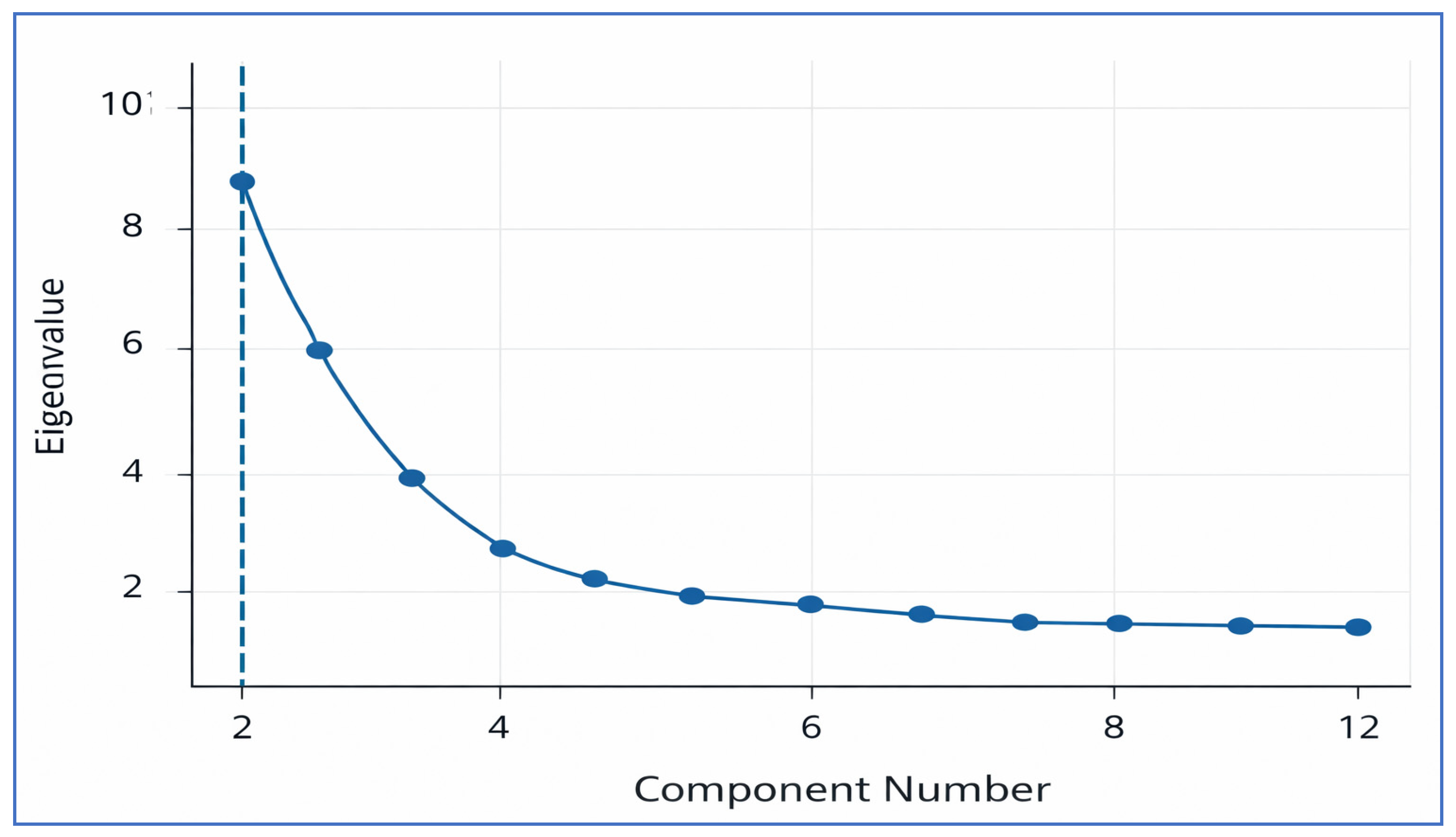
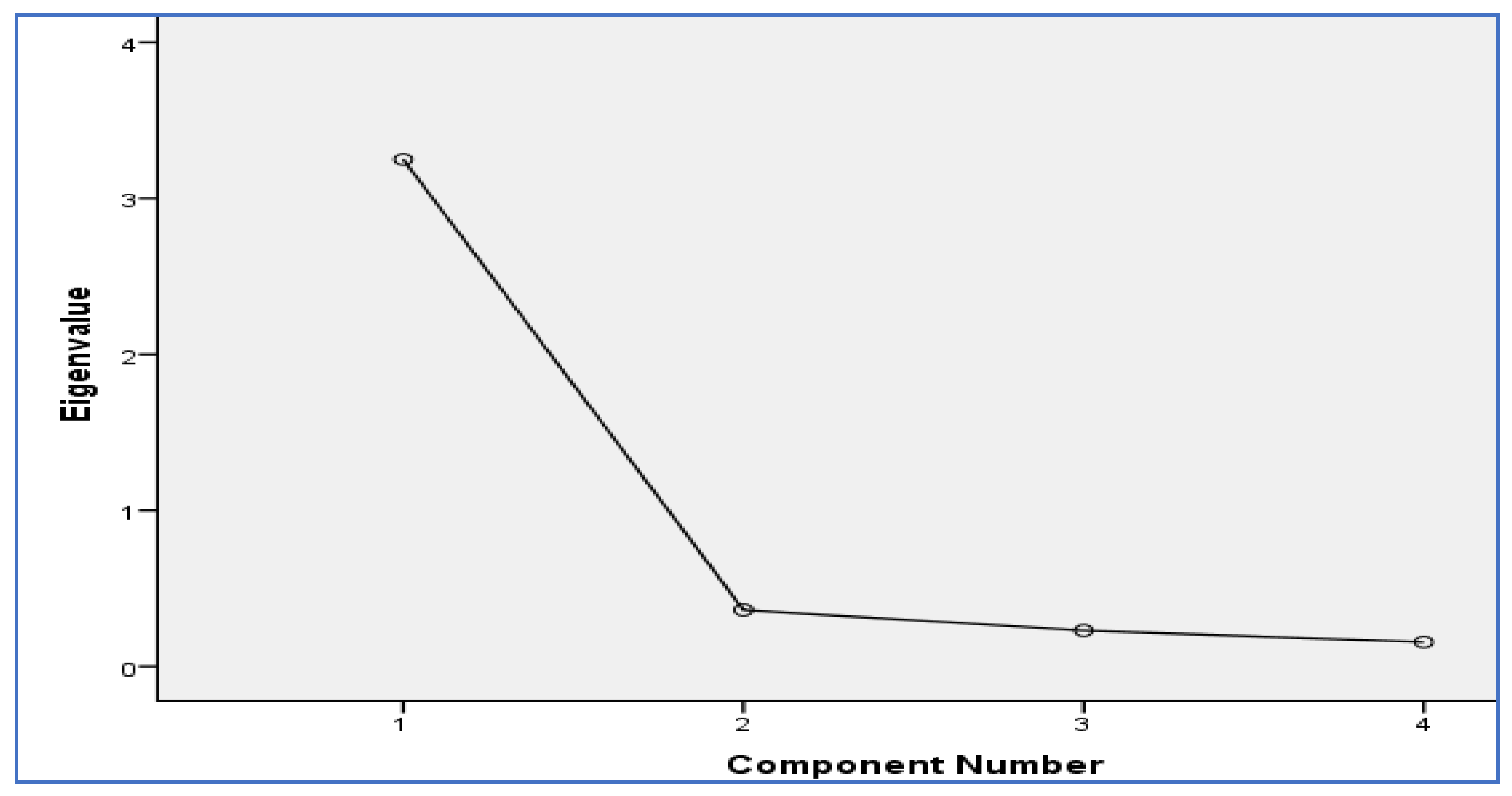
The PCA results indicate the presence of two dominant components that together explain 85.64% of the total variance in the dataset (see
Appendix B,
Table A7 and
Table A8). The first component loads primarily on logistics-related indicators, reflecting national logistics capability and operational efficiency, while the second component loads predominantly on governance, environmental, and social indicators, capturing the institutional and sustainability dimension of development readiness. The alternative single-factor solution reported in the robustness analysis reflects the strong overall correlation among the development indicators. The two-component solution is retained for interpretability purposes, while the robustness test confirms the presence of a common underlying development structure.
This component structure is conceptually coherent and aligns with the systemic framework developed in
Section 2. Rather than treating logistics, governance, and sustainability as independent pillars, the PCA reveals their organization into broader latent dimensions that jointly characterize national development readiness. The scree plot further confirms the concentration of variance in the first two components, supporting the retained component structure (
Figure 3).
Following component extraction, weights were assigned to each component based on the proportion of total variance explained, adopting a variance-based weighting scheme that reflects their relative contribution to the overall information content of the dataset. The final LESG index was constructed as a weighted linear combination of the extracted components, ensuring that both the logistics capability dimension and the institutional–sustainability dimension are represented in proportion to their empirical significance. Full PCA diagnostics, including eigenvalues, variance explained, and factor loadings, are reported in
Appendix B. For transparency and replicability, normalized country-level LESG scores are reported in
Table A9.
While the baseline PCA identifies two dominant components for index construction, robustness checks (
Appendix E.2) indicate that these dimensions collapse into a single latent factor, reinforcing the interpretation of LESG as a unified readiness construct. Although robustness tests indicate the presence of a dominant latent structure, the two-component solution is retained in the baseline specification to preserve interpretability and to reflect the conceptually distinct but empirically related logistics and institutional–sustainability dimensions of systemic readiness.
Although the first principal component captures a substantial proportion of the total variance, the retention of a second component is analytically justified. The second component captures residual variation that reflects meaningful structural differentiation among countries, particularly in the relative configuration of logistics capability, governance quality, and sustainability performance. Retaining two components therefore allows the LESG framework to preserve multidimensional structure and avoid collapsing distinct structural patterns into a single aggregate dimension. This is consistent with the objective of capturing structural coherence as a configuration rather than as a unidimensional ranking.
4.2. Regression Analysis
The LESG index is conceptualized as a measure of structural coherence for sustainable development rather than as an outcome indicator or a growth model. Nevertheless, external validation is necessary to assess whether the structural conditions captured by the index are meaningfully aligned with observable development outcomes. In this context, validation is explicitly diagnostic rather than causal and aims to examine the degree of association between structural coherence and commonly used indicators of economic performance.
Regression analysis confirms this pattern. The Pearson correlation coefficient between LESG and GDP per capita is R = 0.886, indicating a strong linear association. The corresponding coefficient of determination (R
2 = 0.785) suggests that approximately 78.5% of the cross-country variation in normalized GDP per capita is statistically associated with differences in systemic readiness as captured by the LESG index. The strong correlation with GDP per capita indicates that the LESG index aligns with broader development patterns observed in cross-country data. The estimated regression coefficient on LESG is positive and statistically significant at conventional confidence levels, and the overall model F-statistic strongly rejects the null hypothesis of no association. The regression diagnostics further support the statistical adequacy of the validation exercise. The Durbin–Watson statistic (DW = 2.043) is close to the benchmark value of 2, indicating no evidence of first-order autocorrelation in the residuals, which is consistent with the cross-sectional nature of the data (see
Appendix C,
Table A10).
While the strong correlation between the LESG index and GDP per capita reflects the well-documented association between development outcomes and institutional or infrastructural capacity, the LESG framework captures the structural configuration of development conditions rather than income levels themselves. Countries with similar income levels may exhibit substantially different LESG scores due to differences in logistics capability, governance quality, or sustainability performance, highlighting the added analytical value of the composite framework.
The overall model is highly statistically significant. The ANOVA F-statistic (F = 440.830,
p < 0.001) strongly rejects the null hypothesis that the model explains no variation in the dependent variable, confirming the presence of a systematic linear association between the LESG index and normalized GDP per capita (see
Appendix C,
Table A11).
Consistent with these results, the standardized regression coefficient for the LESG index is large and positive (β = 0.886,
p < 0.001), indicating that higher levels of systemic readiness are strongly associated with higher income levels in standardized terms (see
Appendix C,
Table A12). This coefficient mirrors the Pearson correlation coefficient, as expected in a single-regressor framework, and reinforces the interpretation of the regression as a diagnostic validation rather than a causal model.
Moreover in
Appendix F,
Table A37 reports the results of the regression model examining the relationship between consumption capacity, measured as the logarithm of household and NPISH final consumption expenditure per capita (CONS_LOG), and the LESG index alongside control variables for human capital (HCI) and income level (GDP_LOG). The results indicate a positive association between the LESG index and consumption capacity (b = 0.402,
p = 0.075), suggesting that countries with higher levels of systemic structural coherence tend to exhibit stronger consumption environments. GDP per capita (GDP_LOG) also shows a positive relationship with consumption capacity (b = 0.089,
p = 0.074), while the Human Capital Index (HCI) does not appear statistically significant in this specification (
p = 0.223). The overall regression model is statistically significant (F = 5.090,
p = 0.002), although the explanatory power remains modest (R
2 = 0.123), indicating that the variables included capture part of the variation in cross-country consumption capacity. The Durbin–Watson statistic (1.720) suggests no evidence of problematic autocorrelation in the residuals.
Standard diagnostic checks support the adequacy of the regression specification. Variance Inflation Factor (VIF) values equal to unity confirm the absence of multicollinearity, while residual diagnostics do not indicate systematic deviations from normality or the presence of influential outliers. Full regression results and diagnostic statistics are reported in
Appendix C.
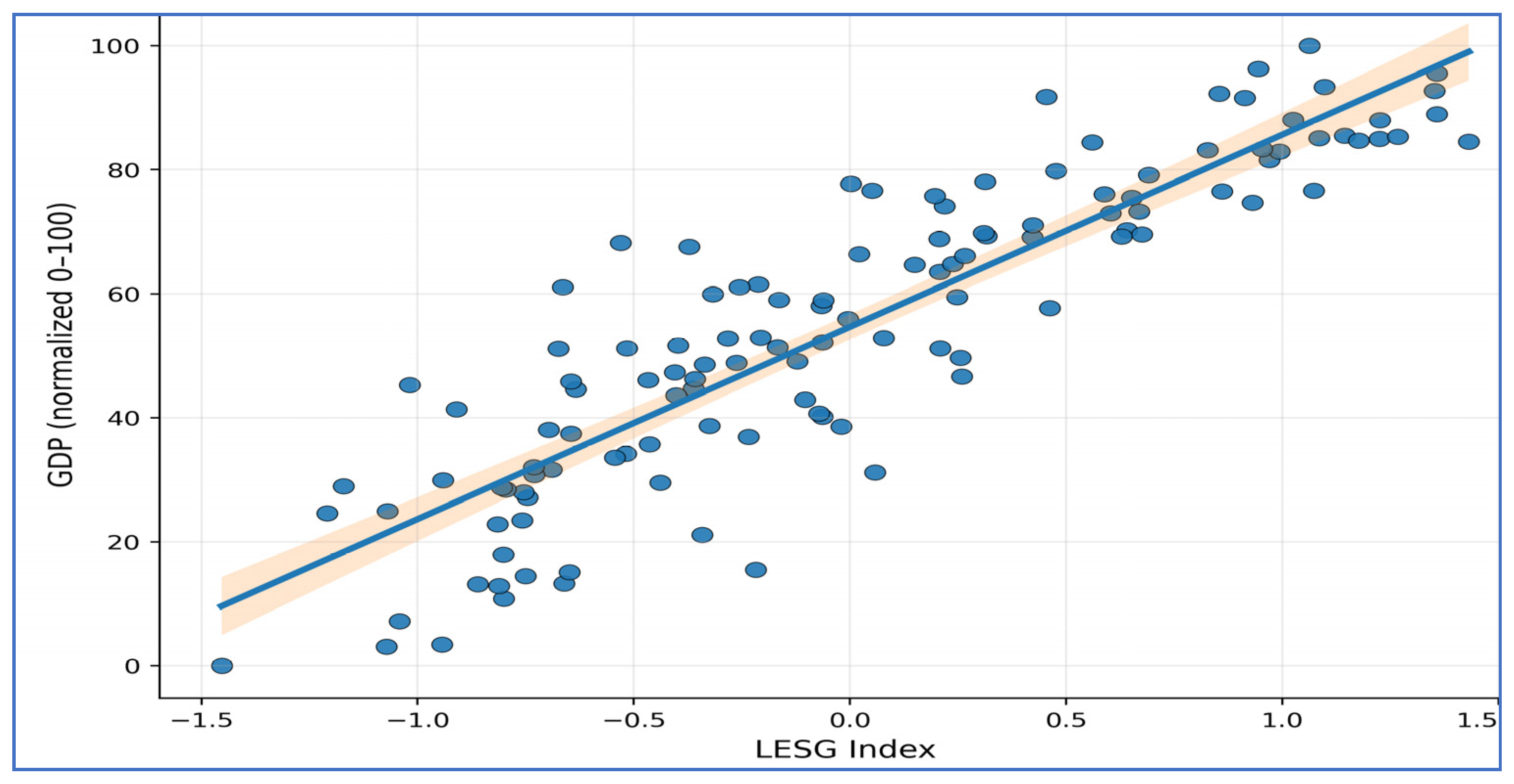
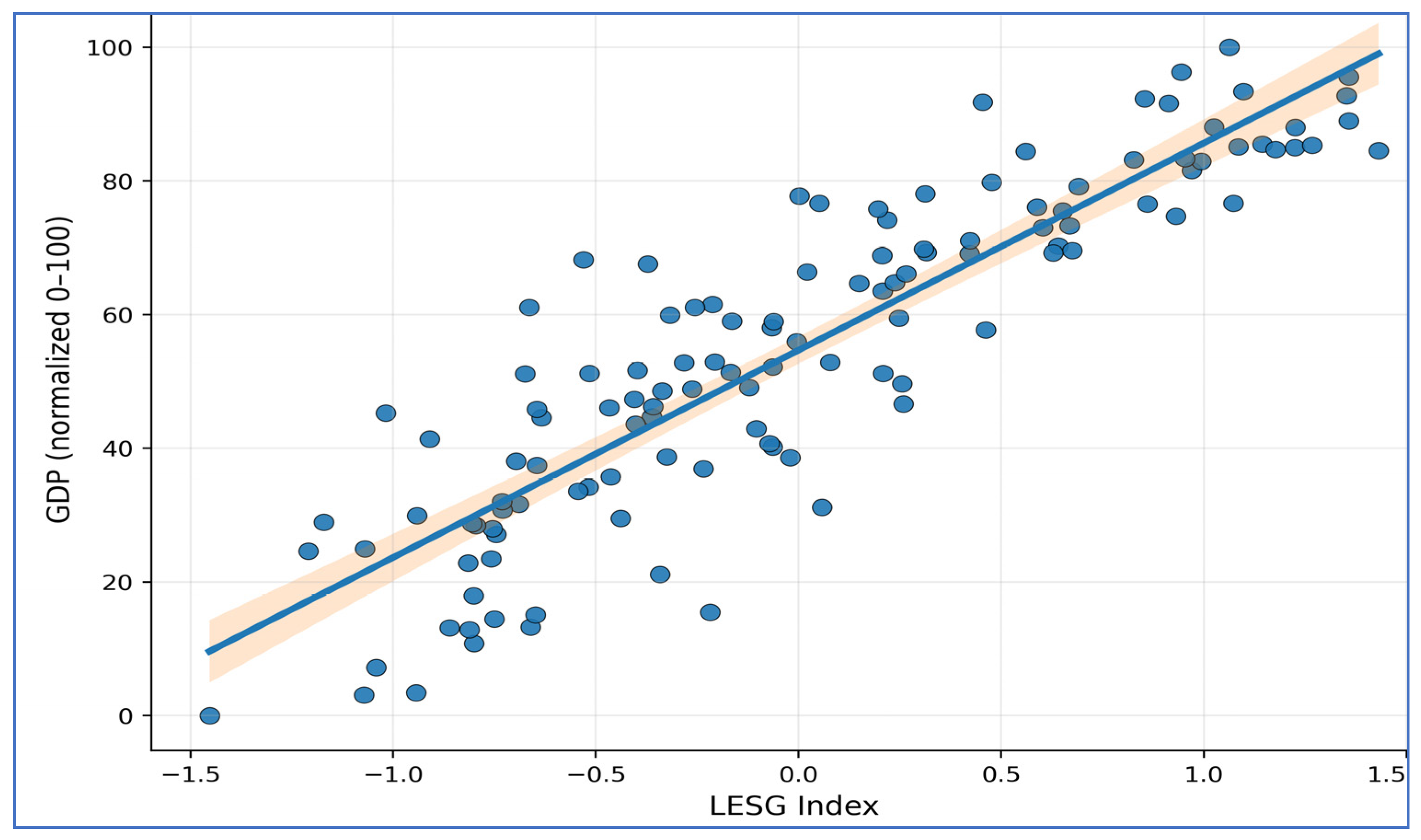
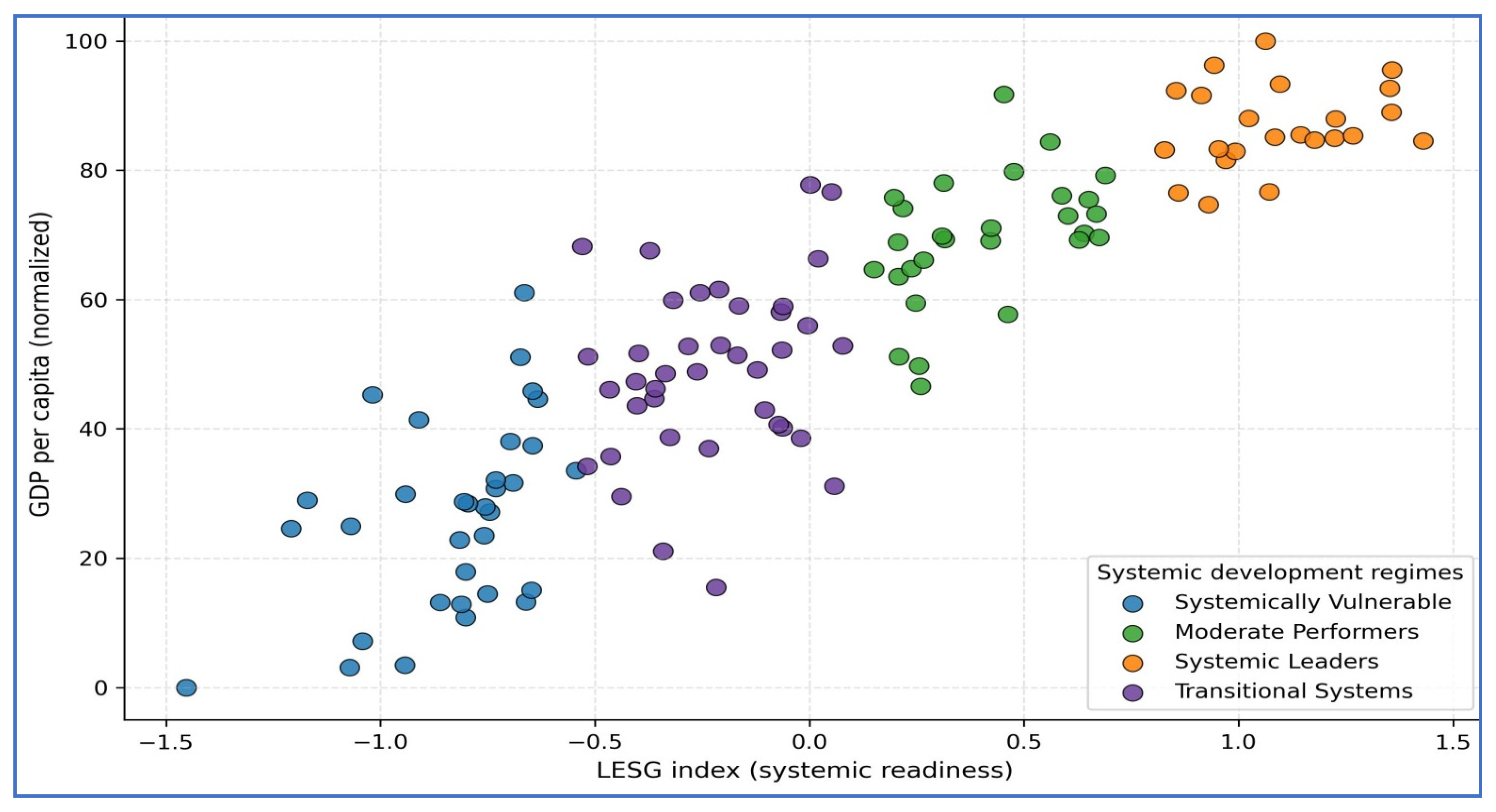
Figure 4 visualizes the relationship between the LESG index (
x-axis) and normalized GDP per capita (
y-axis) for the 123-country sample. The scatter plot reveals a clear positive association: countries with higher systemic readiness, as captured by the integrated logistics–governance–sustainability framework, tend to exhibit higher normalized income levels. This visual evidence is presented strictly as diagnostic validation rather than as proof of causal effects.
Importantly, the strong association observed between LESG and GDP per capita should not be interpreted as evidence of causality. The components captured by the index—logistics performance, governance quality, and sustainability outcomes—are jointly shaped by long-term economic development, institutional persistence, and historical path dependence. Accordingly, the results are interpreted only as evidence of the index’s empirical relevance in differentiating countries with structurally favorable and unfavorable development conditions. This association does not imply that the LESG index reproduces income rankings, as GDP is neither included in its construction nor influences component extraction or weighting; rather, it reflects the long-run structural co-evolution between income levels and systemic development conditions. Furthermore, the regime-based cluster analysis shows that countries with similar income levels may occupy different systemic configurations, indicating that the LESG framework captures structural coherence rather than income performance alone.
The regression analysis with GDP per capita should be interpreted as a diagnostic consistency check rather than a formal validation of the construct. Given that several of the underlying indicators are known to correlate with income levels, the regression primarily illustrates the empirical alignment between systemic structural coherence and broad development outcomes. Additional robustness and supplementary empirical analyses are therefore reported in the
Appendices to examine the stability of the index structure and its relationship with other development-related indicators.
4.3. Cluster Analysis
The objective of the cluster analysis is not to refine country rankings or to impose threshold-based classifications, but to identify qualitatively distinct systemic configurations. Accordingly, the resulting regimes should be interpreted as diagnostic archetypes rather than as linear development stages or normative benchmarks. The clustering analysis is intended to identify systemic configurations of development dimensions rather than relationships between individual indicators.
While the empirical validation in
Section 4.2 indicates a strong association between the LESG index and economic outcomes, bivariate relationships alone do not capture the structural heterogeneity of national development pathways. Countries with similar income levels may differ substantially in logistics capacity, institutional quality, and sustainability performance, while countries with comparable systemic readiness profiles may exhibit divergent income outcomes due to historical, geopolitical, or policy-specific factors.
To address this heterogeneity, cluster analysis is employed as a complementary diagnostic tool. The objective is not to rank countries, but to identify systemic development regimes—groups of countries that share similar structural configurations across the LESG dimensions. This regime-based classification enhances the analytical value of the LESG framework by revealing patterns that remain obscured in regression-based or income-centered analyses.
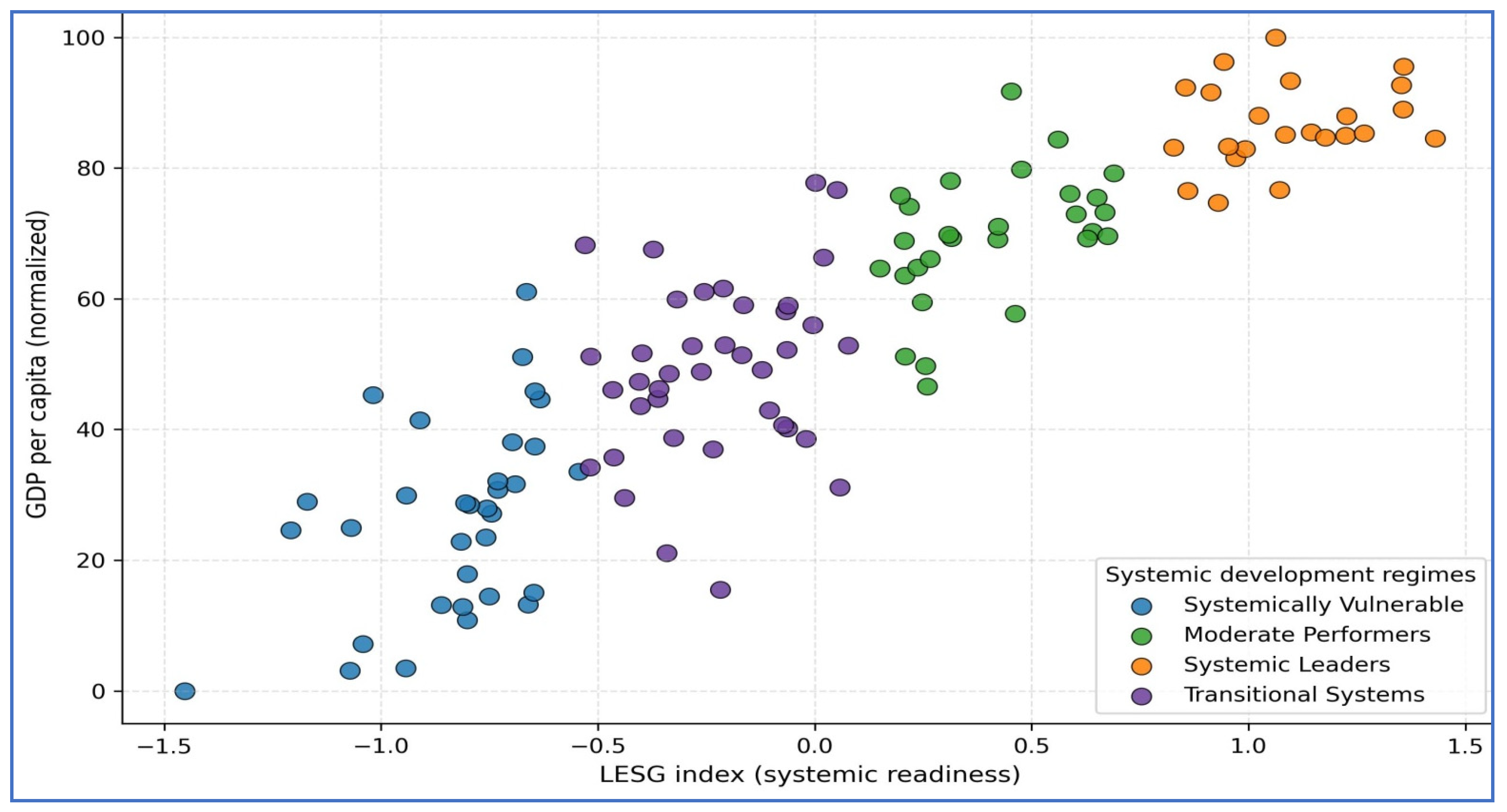
The clustering procedure identifies four distinct systemic development regimes, characterized by different configurations of logistics capability, governance quality, and sustainability performance (see
Appendix D). Cluster labels were assigned ex post based on the relative position of cluster centroids along the LESG index. Since k-means cluster numbering is arbitrary, clusters were ordered from lowest to highest systemic readiness and subsequently interpreted as distinct systemic development regimes. This interpretation is grounded in the comparative magnitude of cluster centroids and aligned with the conceptual framework distinguishing vulnerable, transitional, moderate, and leading systemic configurations.
Four distinct regimes emerge. Cluster 1, exhibiting the lowest (negative) centroid, was interpreted as systemically vulnerable economies, while Cluster 4, characterized by less negative values, was classified as transitional systems. Cluster 2 reflects moderate performers with positive but intermediate systemic readiness, whereas Cluster 3, exhibiting the highest positive centroid, was identified as systemic leaders. Cluster labels are descriptive and heuristic, intended to facilitate interpretation of structural configurations rather than to convey normative judgments. The cluster labels are descriptive terms used to facilitate interpretation and do not represent formal thresholds or normative classifications. The country composition of each cluster is reported in
Appendix D (
Table A19,
Table A20,
Table A21 and
Table A22), which detail the countries included in each systemic development readiness regime. Cluster numbering follows the k-means output and is not ordinal; interpretive labels are assigned ex post based on centroid magnitude.
Systemically Vulnerable Economies are characterized by persistently low LESG scores across all dimensions. Weak logistics infrastructure, limited institutional capacity, and underdeveloped sustainability frameworks jointly constrain development readiness, leaving these economies highly exposed to external shocks and structural volatility (
Table A19).
Transitional Systems exhibit intermediate LESG scores, typically reflecting improvements in one or two dimensions—such as logistics infrastructure or governance reforms—while lagging in others. These economies display signs of structural transition but lack the coherence required for sustained development readiness (
Table A20).
Moderate Performers achieve relatively balanced performance across LESG dimensions without excelling in any single area. Logistics and institutional capacity support stable economic activity, yet sustainability integration remains uneven, constraining further upgrading toward more resilient and higher value-added development trajectories (
Table A21).
Systemic Leaders record consistently high LESG scores across all dimensions. Strong logistics systems, high-quality institutions, and advanced sustainability frameworks reinforce one another, generating robust and resilient conditions for long-term development. While income levels in this group are generally high, their defining characteristic is structural coherence rather than income per se (
Table A22).
Figure 3 depicts the classification of countries into systemic development regimes by plotting the LESG index against normalized GDP per capita and differentiating observations according to k-means cluster membership. The figure illustrates that countries with similar income levels may exhibit markedly different levels of systemic readiness for sustainable development. Overall,
Figure 5 underscores that development readiness is not reducible to income alone. The distribution of countries across regimes suggests the added diagnostic value of the LESG framework in identifying structural heterogeneity that remains obscured in income-based classifications. Cluster boundaries reflect relative positioning within the overall distribution of systemic readiness rather than absolute score thresholds, implying that countries with relatively high LESG values may still belong to intermediate regimes when structural coherence remains incomplete.
Figure 6 provides a diagnostic mapping of countries across systemic development readiness regimes, rather than depicting linear trajectories or automatic transition paths. The figure illustrates that movement toward higher systemic readiness is neither automatic nor incremental, but requires coordinated improvements across logistics capability, governance quality, and sustainability performance. Isolated advances in individual dimensions—such as infrastructure investment without corresponding institutional strengthening—are therefore unlikely to generate durable shifts in systemic readiness. These labels are interpretive heuristics and do not imply welfare judgments.
The identified clusters confirm that development readiness is not a linear continuum but a set of qualitatively distinct systemic regimes. Countries with comparable GDP per capita levels are distributed across different clusters, highlighting the limitations of income-based classifications and single-indicator approaches. The regimes should therefore be interpreted as diagnostic archetypes rather than deterministic development stages. These regimes do not represent linear stages of development nor imply automatic progression; rather, they reflect distinct structural configurations that may persist over time depending on institutional and policy dynamics. Overall, the clustering results reinforce the central argument of this study: development readiness emerges as a systemic property that cannot be adequately captured through income levels or linear rankings. By identifying coherent development regimes, the LESG framework provides a structured diagnostic lens for comparative analysis.
It should be noted that the clustering procedure is applied to the composite LESG index as a diagnostic device for identifying structural configurations rather than as a claim of discrete underlying data-generating processes. In this context, the resulting regimes should be interpreted as heuristic groupings that summarize similarities in systemic structural coherence across countries, providing an analytical lens for interpreting cross-country heterogeneity rather than definitive categorical classifications.
4.4. Robustness
To assess the robustness of the LESG index with respect to key methodological choices, a series of sensitivity analyses was conducted and are reported in
Appendix E. First, alternative aggregation schemes were examined by comparing the baseline PCA-based LESG index with an equal-weight formulation. The results indicate an exceptionally high degree of concordance between the two specifications. Rank-based correlations remain very strong and statistically significant (Spearman’s ρ = 0.979; Kendall’s τ_b = 0.885), suggesting that country rankings are largely invariant to the choice of weighting methodology (
Appendix E.1,
Table A23 and
Table A24). This finding supports that the LESG index captures a stable underlying structure rather than being driven by variance-based weights.
Robustness was further assessed with respect to the internal factor structure of the index. Alternative PCA specifications consistently reveal a single dominant component explaining more than 80% of total variance, with all four constituent dimensions—logistics performance, governance quality, and sustainability outcomes—exhibiting uniformly high loadings (
Appendix E.2,
Table A25,
Table A26 and
Table A27,
Figure A6). Together, these results indicate that the LESG framework reflects a coherent and internally consistent latent construct, robust to reasonable variations in aggregation and extraction procedures.
The high similarity between PCA-based and equal-weight specifications suggests that the underlying structure of the LESG index is relatively robust to alternative weighting schemes. Rather than diminishing the relevance of PCA, this finding indicates that the selected indicators exhibit a consistent covariance structure. In this context, PCA should be interpreted not as a mechanism for substantially altering results, but as a data-driven approach that validates and formalizes the weighting structure implied by the data. The convergence between methods strengthens confidence in the stability of the index, while also highlighting that the primary contribution of the LESG framework lies in the integration of dimensions rather than in the specific weighting scheme.
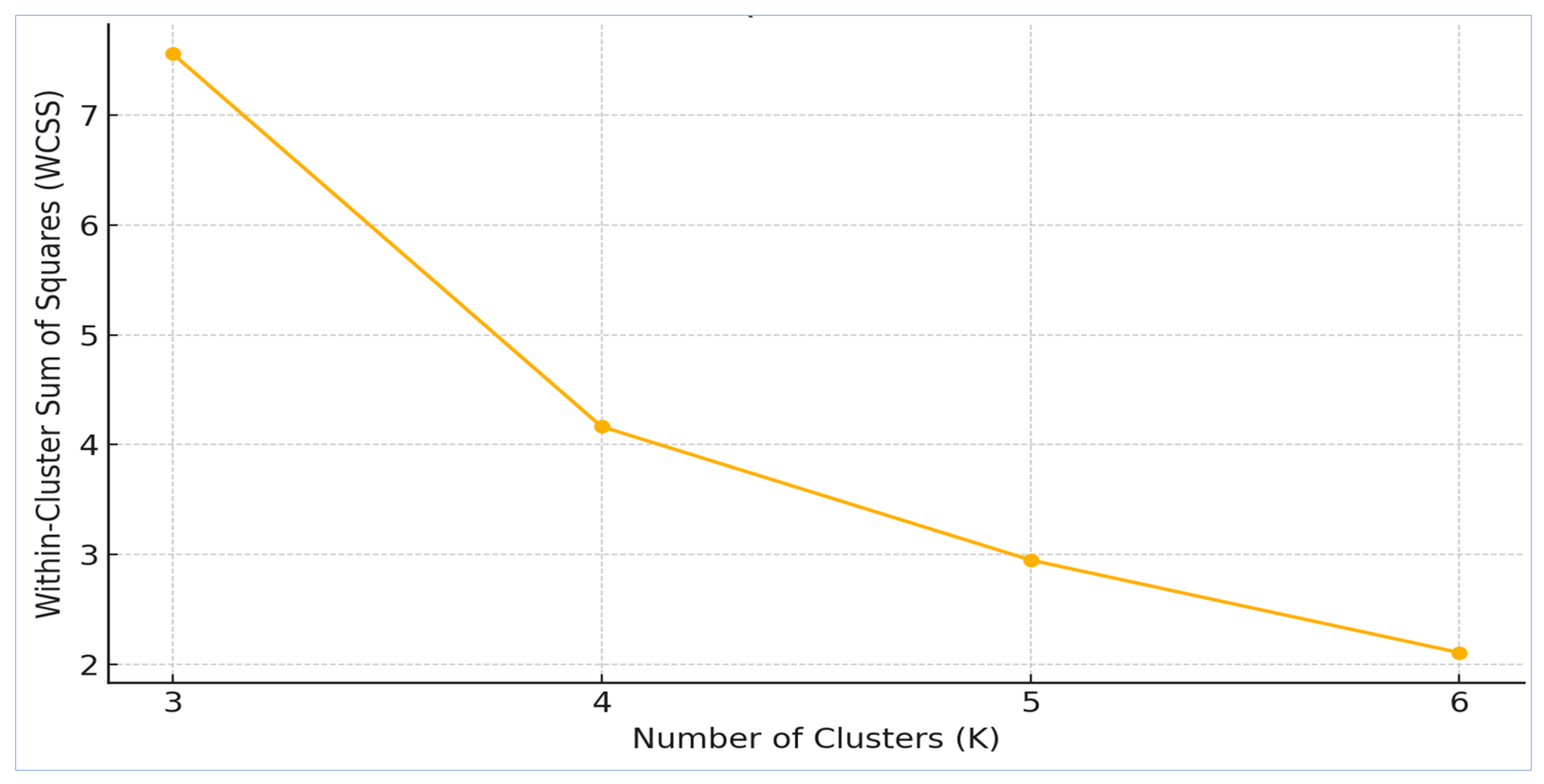
In addition to index construction, the robustness of the regime-based classification was explicitly evaluated. Alternative clustering specifications were employed to assess the stability of the identified systemic development regimes. When the number of clusters was reduced to three, the resulting centroids retained a clear and monotonic ordering along the LESG dimension, distinguishing low-, intermediate-, and high-readiness systems (
Appendix E.3,
Table A28). Increasing the number of clusters to five produced a finer partition of lower and intermediate regimes without altering the overall hierarchical structure of systemic readiness (
Appendix E.3,
Table A29).
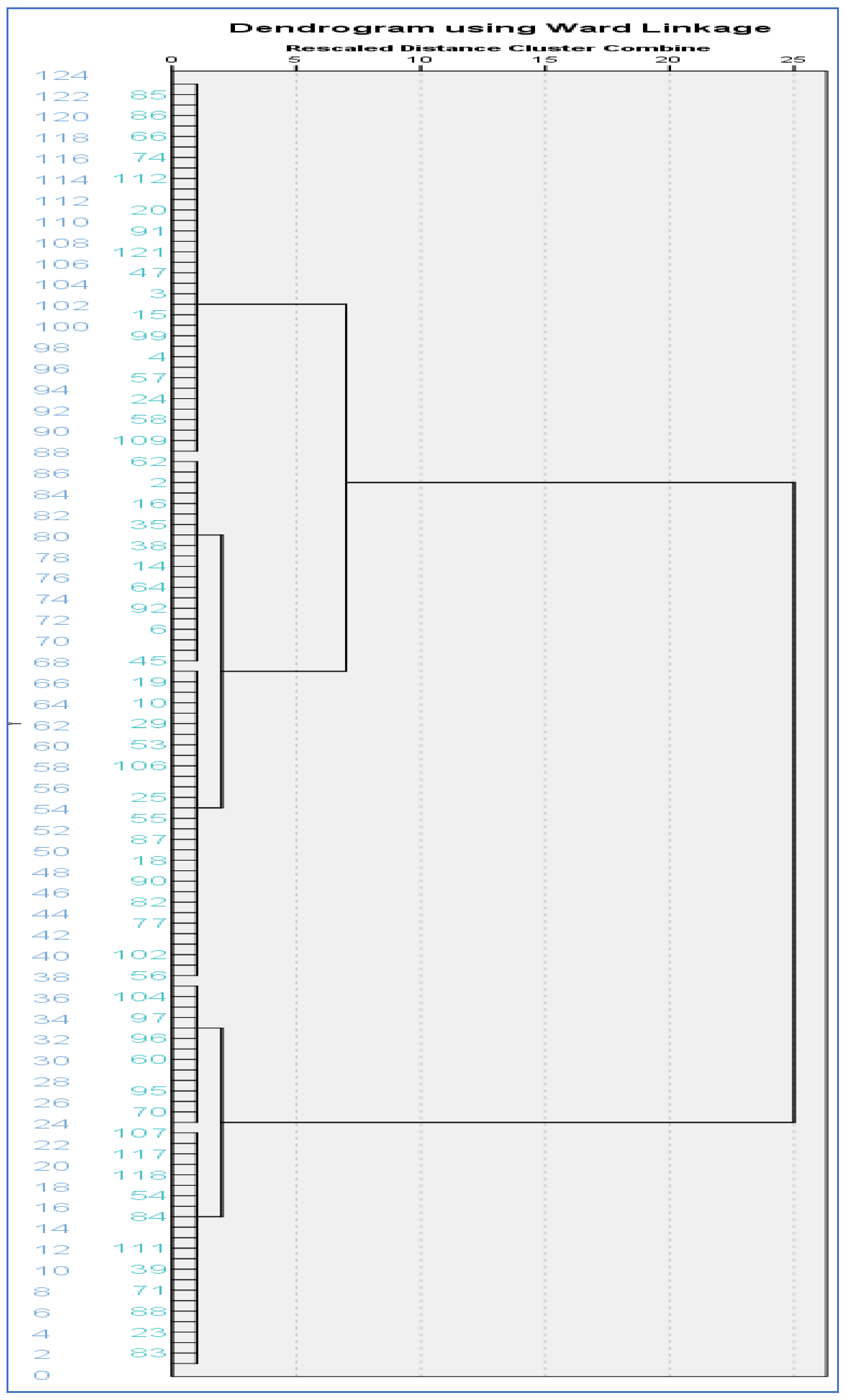
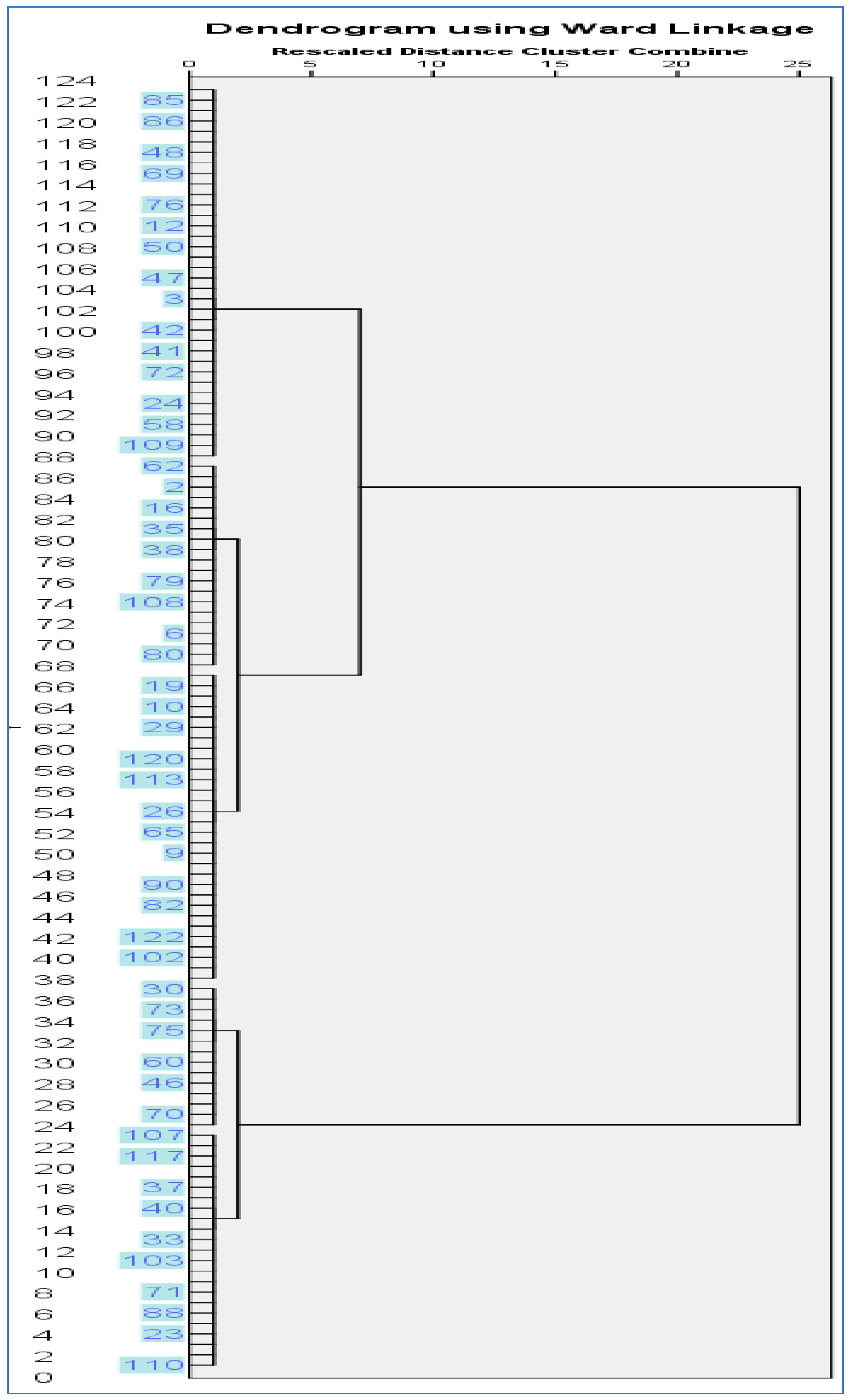
Hierarchical clustering using Ward’s linkage provides complementary evidence for the stability of the regime structure. The dendrogram reveals pronounced jumps in fusion distance between three and four clusters, indicating that a four-cluster solution best captures the latent grouping of countries along the LESG dimension (
Appendix E.3,
Figure A7). On this basis, the four-regime classification adopted in the main analysis is retained as the preferred specification, as it balances structural differentiation, interpretability, and policy relevance.
To further assess the robustness of the LESG framework, additional empirical tests were conducted and are reported in
Appendix F. These analyses examine the stability of the index construction and the underlying latent structure using alternative PCA specifications based on the four aggregate indicators (LPI, EPI, WGI, and SDG). The results confirm the adequacy of the data for factor analysis (KMO = 0.826; Bartlett’s test
p < 0.001) and indicate a strong unidimensional structure, with the first principal component explaining over 81% of the total variance. The component loadings are consistently high across all indicators, suggesting that the four dimensions capture a coherent systemic structure. Detailed statistical outputs are presented in
Table A30,
Table A31,
Table A32 and
Table A33 in
Appendix F.1.
Additional robustness tests were conducted to examine the external consistency of the LESG framework. The correlation analysis reveals a near-perfect association between the PCA-based and equally weighted versions of the index (ρ = 0.998), indicating that the composite structure is stable across weighting specifications. Regression results further show a strong association between the LESG index and GDP per capita (R
2 ≈ 0.81), while the index remains statistically significant when controlling for human capital. These findings support the structural interpretation of the LESG framework and confirm the robustness of the empirical results (see
Appendix F.2,
Table A34,
Table A35,
Table A36 and
Table A37).
Finally, robustness checks were conducted using hierarchical and K-means clustering techniques to examine whether countries form distinct structural regimes according to the LESG index. The analysis identifies three clearly differentiated clusters representing low, intermediate, and high levels of systemic development configuration. The clustering results are statistically strong (F = 489.6,
p < 0.001) and remain highly stable when an alternative equally weighted index is used. Detailed clustering results and stability tests are reported in
Appendix F.3.
5. Discussion
This section interprets the LESG findings within the broader literature on logistics performance, sustainability, and development systems, focusing on three interrelated dimensions: logistics capability, sustainability alignment, and the analytical value of regime-based classification, while also considering their implications for firm strategies and consumer behavior.
From a logistics-performance perspective, the LESG results align closely with the established literature on the Logistics Performance Index (LPI), which consistently links logistics capability with economic outcomes, trade intensity, and international competitiveness. In this respect, the empirical validation of the LESG framework—reflected in its strong association with GDP per capita—is consistent with studies that treat LPI-related indicators as key correlates of macroeconomic performance and global integration [
47,
48]. Recent research further emphasizes that logistics performance should not be understood solely as transport efficiency, but as a broader systemic capability shaped by institutional quality, coordination mechanisms, and service reliability—factors that help explain persistent competitiveness gaps across countries [
49,
50]. Within this context, the LESG findings reinforce the central insight of the logistics literature: logistics capability constitutes a critical structural condition influencing development-relevant outcomes.
However, LESG adds a critical nuance: the PCA structure indicates that readiness is not reducible to logistics alone, but reflects a two-dimensional structure (logistics capability + institutional–sustainability coherence). This resonates with contemporary papers that already hint at the embeddedness of logistics in broader governance and institutional conditions [
51], but LESG makes that embeddedness explicit and measurable through a single readiness index.
Recent LPI studies are outcome-driven: they use logistics variables to explain trade, competitiveness, or macro performance [
52]. LESG deliberately shifts the perspective from “what explains GDP/trade” to what constitutes structural readiness. This distinction matters because countries may exhibit similar income outcomes but differ sharply in institutional quality and sustainability alignment—differences that are often masked in LPI-only frameworks. The cluster regimes identified by LESG therefore complement the mainstream literature: instead of re-estimating marginal effects of LPI on outcomes, LESG distinguishes qualitatively different systemic configurations (vulnerable/transitional/moderate/leaders). A comparable shift appears in newer work that focuses on methodological reinterpretations of LPI rankings [
53] and alternative, model-based assessments of LPI performance [
54], but LESG differs by integrating governance and sustainability directly into the readiness construct rather than re-ranking logistics performance alone.
Beyond logistics performance, the LESG framework offers a clearer interpretation of the logistics–sustainability nexus. Recent evidence increasingly links logistics performance to environmental and sustainability outcomes—yet the direction of the relationship is not uniform across studies. Some findings indicate that better logistics performance may increase emissions (e.g., via scale effects and intensified transport activity), especially in emerging contexts [
55]. Other studies frame the relationship as a sustainability “trilemma,” where logistics performance interacts with innovation and environmental quality in complex, non-linear ways [
56]. At the same time, a parallel strand develops green logistics composite constructs to benchmark sustainability-sensitive logistics performance-e.g., GLPI-type approaches combining logistics and environmental dimensions [
57]. Results also suggest that the logistics–sustainability linkage can vary significantly by development level and region [
58].
Within this landscape, LESG offers a clarifying contribution: rather than asking whether logistics is “good” or “bad” for the environment, LESG operationalizes readiness as coherence among logistics capability, governance capacity, and sustainability performance. This framing helps interpret why empirical studies often disagree on the sign or strength of logistics–environment effects: the effect depends on whether sustainability and institutions co-evolve with logistics capability, or whether logistics expands in a weak-governance/low-sustainability setting. This interpretation aligns with work that connects logistics performance to broader sustainable-development commitments and mechanisms (e.g., via openness, institutional channels, or policy conditions) [
59].
Recent empirical and review-based evidence shows that digital transformation strengthens supply chain resilience and sustainability by enabling real-time data integration, adaptive coordination, and greater transparency across operational networks. Firm-level analyses indicate that digitally enabled supply chains respond more effectively to disruptions and volatility, achieving faster recovery and greater performance stability [
60], while comprehensive reviews highlight that digital transformation facilitates the integration of sustainability objectives into core supply chain decision processes, aligning operational efficiency with environmental and social goals [
61]. Together, these findings suggest that digital technologies function as key enablers of resilient and sustainable supply chains, although their effectiveness remains conditioned by broader systemic and institutional environments captured by the LESG framework. Complementary empirical evidence also emphasizes the importance of structural conditions in shaping economic transformation processes. For instance, Ye et al. [
62] show that improvements in digital infrastructure and institutional support significantly enhance agricultural economic efficiency, whereas urbanization alone does not guarantee productivity gains. These findings reinforce the interpretation of systemic readiness as a structural condition influencing the effectiveness of technological and organizational transformations within economic systems.
A second core contribution of the LESG framework is methodological. The index adopts a composite-indicator approach that emphasizes transparency, data structure, and interpretability, positioning it within the broader literature examining the sensitivity of composite indicators to normalization thresholds and methodological design choices [
63]. To address these concerns, LESG relies on a PCA-based structure that reduces arbitrary weighting and reports detailed diagnostics and technical outputs in the
Appendices, allowing the main text to focus on interpretation. At the same time, emerging data-driven approaches to understanding and improving LPI—such as machine learning applications—suggest that the LPI space contains latent patterns not captured by simple descriptive comparisons [
64]. LESG complements this methodological direction by reframing logistics performance as one component of a broader structural system rather than as a standalone predictor, linking logistics capability with governance and sustainability conditions and examining how this configuration relates to development outcomes and regime classifications.
The analytical value of the LESG framework becomes most evident when results are interpreted through regime-based clustering. By converting a continuous index into systemic regimes with distinct policy implications, LESG extends the mainstream LPI literature beyond simple “high vs. low” performance comparisons. Unlike income-based classifications, the LESG regimes are defined by structural coherence among logistics capability, institutional governance, and sustainability performance, allowing countries with similar income or trade integration to display markedly different systemic conditions. This perspective helps interpret the heterogeneity observed in trade- and competitiveness-oriented LPI studies [
49,
52,
64], showing that economies may be highly integrated yet structurally fragile, or moderately integrated but institutionally and sustainability-aligned.
More broadly, composite indicators are widely used to synthesize multidimensional phenomena into policy-relevant narratives, although their methodological limitations and advocacy-driven applications remain subject to debate [
65].
Within this context, the identified regimes are consistent with recent empirical findings emphasizing the systemic and non-linear interaction between logistics performance, institutional quality, and sustainability outcomes. For example, Khan et al. [
66] show that improvements in logistics and supply chain performance do not automatically translate into environmental or social progress without coordinated institutional frameworks, while Shamout [
67] finds that logistics performance may simultaneously support economic activity and intensify environmental pressures depending on policy coherence and institutional capacity. These findings support the LESG interpretation that development outcomes depend on the structural alignment of logistics, governance, and sustainability conditions, shifting the analytical focus from isolated performance indicators to systemic readiness regimes that offer clearer guidance for policy interpretation in heterogeneous development contexts.
Extending this perspective, corporate sustainability behavior is increasingly shaped by broader institutional environments rather than firm-level characteristics alone, as firms’ engagement with ESG issues is linked to processes of sensemaking and the search for meaningfulness within organizational contexts [
68]. Empirical evidence further suggests that the relationship between ESG performance and firm value depends on the extent and quality of disclosure, underscoring the role of transparency in shaping market outcomes [
69], while significant divergence in ESG ratings across providers introduces measurement uncertainty that complicates the interpretation and comparability of corporate sustainability performance [
70].
Corporate sustainability behavior is increasingly understood as embedded within broader national systems rather than driven solely by firm-specific characteristics. In this context, the LESG framework can be interpreted as a macro-level structure that shapes the strategic conditions under which corporate ESG initiatives are formulated, implemented, and communicated. Recent research highlights that firms’ engagement with ESG issues is strongly influenced by institutional quality, regulatory enforcement, and information transparency at the country level, which jointly determine the credibility and expected returns of sustainability-oriented strategies [
71,
72].
These patterns can be further interpreted in relation to the broader institutional and economic environments within which sustainability-related processes are embedded. Prior research highlights that coherent governance frameworks, regulatory credibility, and reliable infrastructural systems contribute to more stable and predictable economic environments, while weaker institutional settings tend to be associated with fragmentation, lower transparency, and reduced coordination capacity [
63]. Similarly, the literature emphasizes that sustainability-related outcomes are context-dependent, shaped by the credibility of institutional arrangements, the reliability of information environments, and the consistency of policy implementation [
71,
73,
74,
75].
In this context, the LESG index can be interpreted as capturing structural conditions associated with variations in sustainability alignment across countries. Supplementary empirical evidence from
Appendix F further supports this interpretation, as the positive association between the LESG index and consumption capacity (CONS_LOG) suggests that higher levels of structural coherence tend to be observed in more developed and coordinated economic environments. Although the statistical significance remains moderate, the results are consistent with the interpretation that the LESG framework reflects broader structural patterns rather than isolated performance outcomes. Finally, the additional robustness analyses confirm the stability of the LESG framework across alternative specifications. The close correspondence between the PCA-weighted and equally weighted indices, as well as the stability of clustering results, indicates that the identified structural patterns are not driven by specific methodological choices but reflect persistent cross-country differences. Overall, these findings reinforce the interpretation of the LESG index as a robust and integrative diagnostic tool for analyzing structural coherence in national development systems.
The LESG framework also provides practical implications for both supply chain managers and policy analysts operating in increasingly complex global logistics environments. Although the index is not designed as a predictive tool, it offers a structured diagnostic perspective for evaluating the broader structural conditions within which supply chain systems develop and operate. For supply chain managers, the LESG index may function as a benchmarking instrument when assessing the institutional and infrastructural environment of potential logistics locations. Countries characterized by high structural coherence—where logistics capability, governance quality, and sustainability performance evolve in a mutually reinforcing configuration—are likely to provide more stable conditions for long-term supply chain investments, digital logistics platforms, and data-driven supply chain integration.
Conversely, environments where these dimensions are weakly aligned may require additional risk management strategies, institutional coordination, or operational redundancy in supply chain design. From a policy perspective, the LESG framework can support diagnostic analysis by helping identify structural imbalances across development dimensions. Policymakers may use the index to detect whether weaknesses in logistics infrastructure, institutional effectiveness, or sustainability alignment constrain broader development capacity, thereby informing policy prioritization and targeted investment strategies. By revealing systemic configurations rather than isolated performance indicators, the LESG index offers a practical analytical lens for understanding how infrastructural, institutional, and sustainability conditions jointly shape the operational environment of contemporary supply chain systems.
Taken together, the findings suggest that national development capacity is better understood as a systemic property emerging from the alignment of logistics capability, institutional governance, and sustainability performance rather than from isolated improvements in individual indicators. By integrating these dimensions within a single analytical framework, the LESG index reveals structural configurations of development that remain obscured in traditional income-based or logistics-only assessments. The regime-based interpretation further highlights that countries with comparable economic outcomes may exhibit markedly different systemic conditions, implying distinct trajectories and policy priorities. Interpreted in this way, the LESG framework provides a diagnostic perspective that complements outcome-oriented development metrics while offering a structured lens for examining how infrastructural, institutional, and sustainability conditions jointly shape the operational environment of contemporary economic and supply chain systems.
From a methodological perspective, the findings support the internal consistency and stability of the LESG framework. The PCA results indicate a coherent variance structure among the selected indicators, while the comparison with equal-weight specifications suggests that the index is robust to alternative weighting assumptions. The normalization approach and sensitivity considerations further support the interpretability and comparability of the index across countries. These results reinforce the use of the LESG framework as a diagnostic tool for analyzing structural coherence rather than as a predictive or causal model.
6. Conclusions
The empirical analysis provides a structured assessment of how logistics capability, governance quality, and sustainability performance interact as components of national development systems. Using cross-country data for 123 countries, the results indicate that these dimensions exhibit a coherent multivariate structure, while the identification of two principal components captures both the dominant shared variance and meaningful residual differentiation across countries. The cluster analysis further reveals four distinct systemic readiness regimes—systemically vulnerable economies, transitional systems, moderate performers, and systemic leaders—highlighting that countries with similar income levels may differ substantially in their structural configurations.
In relation to the research question, the findings suggest that structural coherence can be operationalized through a composite analytical framework that integrates logistics capability, governance quality, and sustainability performance into a unified representation of systemic conditions. The LESG index captures this coherence by reflecting the degree of alignment among these dimensions, providing a diagnostic lens through which national development systems can be comparatively assessed. The empirical results further suggest that development readiness cannot be adequately understood through income-based indicators alone, as structurally distinct configurations may exist within similar income groups.
From a policy perspective, the results indicate that development strategies should prioritize coordinated progress across infrastructure, institutional governance, and sustainability performance rather than isolated interventions. The regime-based classification provides a structured basis for policy interpretation. Economies in vulnerable regimes may require foundational improvements in logistics and institutional capacity, while transitional systems may benefit from strengthening governance mechanisms that enhance coordination across development dimensions. Moderate performers face the challenge of integrating sustainability more effectively into productive systems, whereas systemic leaders may need to focus on maintaining institutional stability and adaptive capacity in increasingly complex global environments. In this context, the LESG framework functions as a diagnostic and benchmarking tool that supports the identification of structural imbalances and the prioritization of policy interventions.
At the same time, the findings should be interpreted within the scope and limitations of the study. The analysis is based on cross-sectional data and relies on composite indicators, which capture structural patterns but do not establish causal relationships. In addition, the framework does not directly incorporate dynamic or technological dimensions of development. Future research may extend the LESG approach by incorporating longitudinal data, exploring alternative validation outcomes beyond GDP, and examining how structural coherence influences the evolution of development processes over time. Further work may also investigate how macro-level structural conditions relate to sectoral transformations, including the diffusion of digital and sustainability-oriented systems.
Additionally, future research may further extend the robustness of the LESG framework by exploring advanced validation approaches, including Monte Carlo simulation, expanded sensitivity analysis across alternative weighting and normalization spaces, and the application of alternative multivariate clustering techniques. While these extensions fall beyond the scope of the present study, they provide promising directions for strengthening the empirical validation of composite indicator frameworks.
Overall, the LESG framework suggests that development capacity is associated with the structural alignment of infrastructure, institutions, and sustainability conditions, and that this alignment can be systematically represented within a composite analytical framework.




 ,
,