1. Introduction
Additive manufacturing (AM), often referred to as 3D printing (3DP), builds objects layer by layer instead of cutting or shaping them from larger pieces, which distinguishes it clearly from traditional manufacturing methods [
1]. This layer-wise, digitally controlled process allows complex geometries to be produced with high material efficiency, reducing off-cuts and enabling the consolidation of multiple components into single parts [
2]. However, printable mortars require higher contents of binders and chemical admixtures, which can increase embodied energy and carbon footprint compared with conventional mixes [
3].
The sustainability of AM is highly context-dependent, with quantitative assessments revealing both significant benefits and notable trade-offs. Jung et al. [
4] show that while AM can reduce material use in final parts, its energy consumption per unit is often higher than conventional processes. Multiple Life Cycle Assessments (LCAs) studies demonstrate that AM, particularly in the construction sector, can generate higher greenhouse gas emissions and energy use during process and material optimisation than conventional construction methods. Assunção et al. [
5] found that digitally fabricated earth-based materials had nearly double the environmental impact of conventional earth construction, with 3D-printed earth emitting 65–120 kg CO
2-eq/m
3 versus 20–40 kgCO
2-eq/m
3 for traditional techniques. The increased impact was attributed to the energy-intensive printing process and higher material requirements. Han et al. and Mohan et al. [
6,
7] reported that construction 3D printing (C3DP) generally results in higher environmental impacts than traditional cast-in-situ concrete, mainly due to the additional cement required for printability, which increases both emissions and resource use. For wind turbine tower applications, Jones and Li found that high-strength printable concrete produces 16% higher life cycle CO
2 emissions and 64% higher energy consumption than conventional steel towers, with material production dominating the environmental impact [
8]. Across diverse contexts, these studies consistently show that C3DP can result in higher emissions and energy use than conventional methods, where the main contributors are increased cement content, electricity use, and the environmental burden of material processing.
The integration of reinforcement materials fundamentally alters the environmental profile of AM systems through pathways: increased embodied energy and carbon footprint of composite materials, modified process parameters affecting energy consumption, altered recyclability and end-of-life scenarios, and potential durability improvements that extend component service life [
9]. The reinforcement systems currently adopted in construction applications have emerged as a promising solution to address the mechanical and structural limitations of single-reinforcement strategies. These systems typically combine different types of reinforcements either within the printing process or through post-processing, such as steel bars, steel cables, synthetic and natural fibres, and advanced nanomaterials [
10]. Approaches include the integration of continuous steel cables with short polymer fibres, the use of hybrid fibre systems (combinations of steel, polyethylene, and cellulose fibres), and the co-extrusion of multiple fibre types like carbon and basalt or carbon and glass to balance tensile and impact properties [
11,
12]. Capêto et al. [
13] demonstrate that the potential of incorporating waste materials into cementitious composites can reduce carbon footprints and enhance sustainability in the construction industry. Additionally, innovative methods such as in-situ mesh fabrication, embedding rebar during printing, and dual-reinforcement with steel fibres and vertical threaded elements have been developed to improve load-bearing capacity and interlayer bonding.
Table 1 shows the keywords used for the purpose of this study. The search was confined to publications between 2015 and 2025, encompassing peer-reviewed articles and reviews from open-access journals within specific disciplinary boundaries: Engineering Civil, Construction Building Technology, Materials Science Multidisciplinary, Chemistry Physical, Metallurgy Metallurgical Engineering, Architecture, Engineering Geological, and Soil Science.
The validation process began with an automated screening phase where duplicate entries were removed using reference management software. Subsequently, a two-tiered manual screening was implemented: (i) title and abstract screening, where two independent reviewers assessed each article’s relevance to additive manufacturing applications in sustainable construction and civil engineering contexts, with disagreements resolved through discussion or third-party arbitration; and (ii) full-text screening, where articles passing the first stage underwent comprehensive evaluation against predefined inclusion criteria including empirical evidence of sustainability assessment, relevance to construction materials or processes, and methodological rigor. Quality appraisal was conducted using adapted assessment tools appropriate for the study design (e.g., mixed-methods appraisal tool for empirical studies, narrative assessment for reviews), ensuring that only high-quality, relevant studies contributed to the final synthesis. This systematic approach reduced the initial 1233 articles to a final corpus of included studies, maintaining transparency and reproducibility throughout the selection process while minimising selection bias.
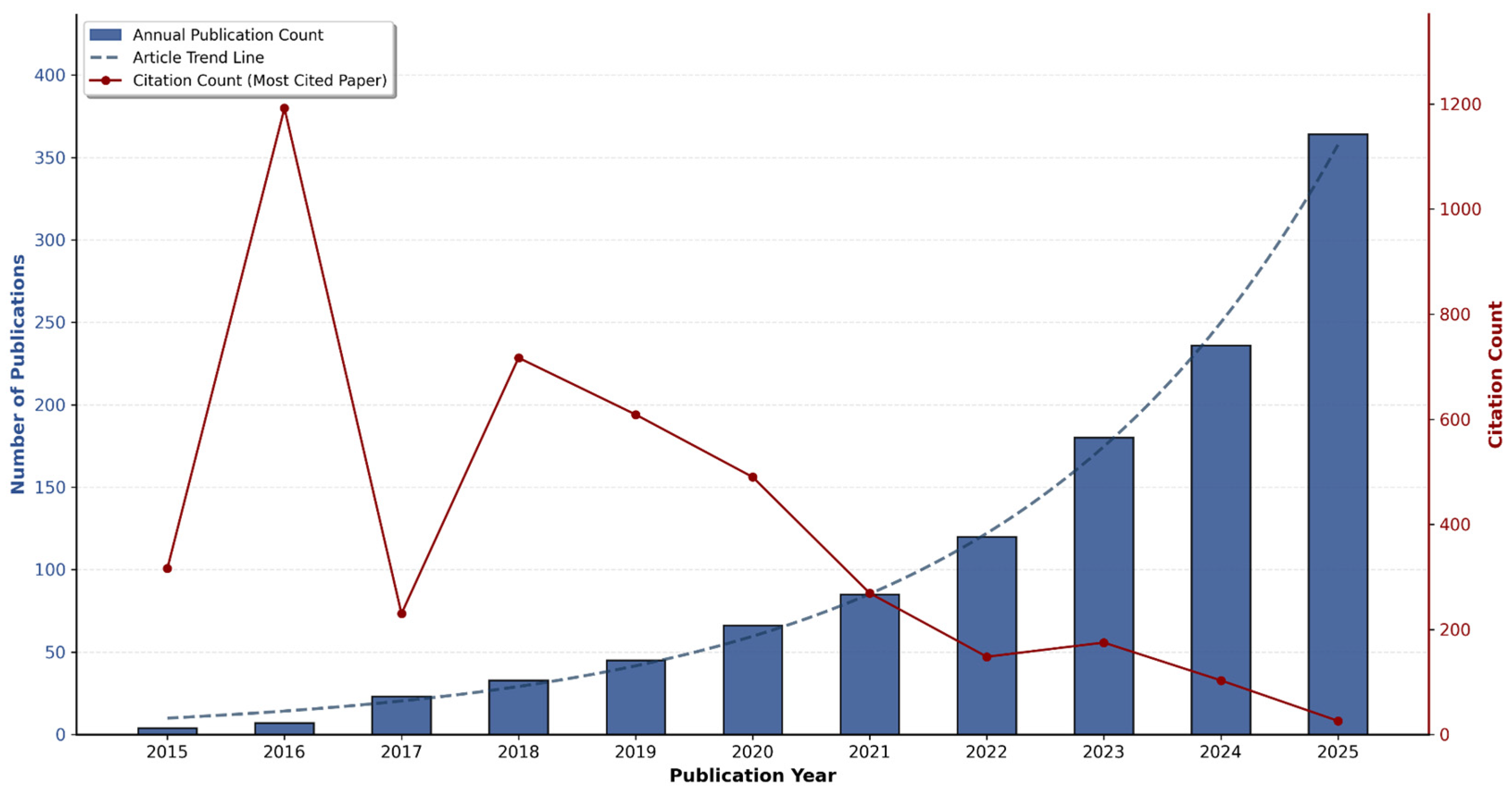
Figure 1 shows the evolution by number of publications in the last ten years, as well as the most cited articles in each year included in this study [
14,
15,
16,
17,
18,
19,
20,
21,
22,
23,
24].
Research examining the environmental dimensions of AM has expanded substantially, with publications increasing from 4 articles in 2015 to 364 in 2025 (
Figure 1), reflecting growing recognition of AM’s potential to address material waste, energy efficiency, and design optimisation challenges. However, analysis of highly cited works reveals a predominant focus on process optimisation and synthetic material development, with limited attention to material sourcing strategies that challenge conventional AM feedstocks. Earth-based materials require minimal processing, leverage local resources, and maintain compatibility with circular economy principles, yet their application in digital fabrication remains in infancy across civil engineering, materials science, and architectural research.
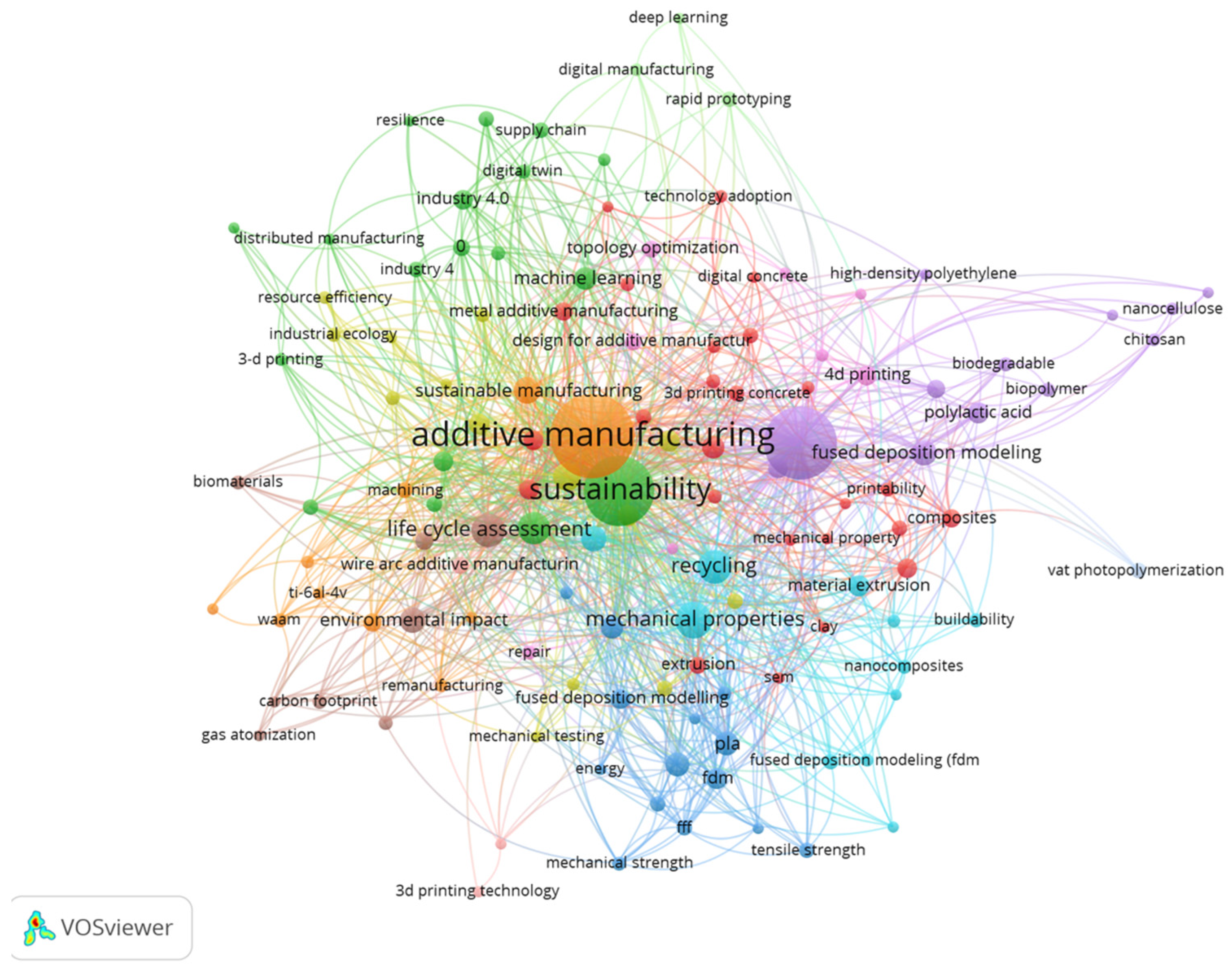
To understand the direction that this type of research is currently following and the evolution of trends in recent years, an analysis of keyword co-occurrence was carried out with the help of the VOSviewer software (version 1.6.20), based on the search carried out in WOS for the decade between 2015–2025. This software tool constructs and visualises bibliometric networks based on co-occurrence relations, enabling the identification of research hotspots, emerging trends, and the structural relationships between key concepts. The resulting network (
Figure 2) groups author and index keywords into thematic clusters, with a minimum occurrence threshold of five to retain only recurrent terms and reduce visual noise. Six main clusters emerge around the dominant themes “additive manufacturing” and “sustainability”, spanning digital manufacturing and Industry 4.0, life cycle assessment and environmental impacts, material and computational design, bio-based materials, mechanical performance, and waste valorisation. These clusters reveal that bio-based materials are a rapidly growing frontier, while mechanical properties and life cycle assessment constitute current research hotspots, underscoring ongoing uncertainty about performance and contested sustainability claims.
This thematic landscape directly informs the core research questions addressed herein: How does fibre reinforcement contribute to the mechanical and durability performance of 3D-printed earth-based materials? Can earth-based 3DP achieve favourable environmental outcomes when stabilisers and energy-intensive processing are factored into life cycle assessments? And what standardised protocols and multi-objective optimisation frameworks are needed to validate earth-based 3DP as a structurally viable and genuinely sustainable construction alternative? Addressing these questions provides a consolidated evidence base and clarifies research gaps, offering guidance for standardised testing, mix and process optimisation, and robust life cycle assessment of earth-based 3DP systems in future studies and practice.
The literature search strategy was designed to comprehensively but specifically capture this body of work. Web of Science was queried using the Boolean string (“Soil” OR “Earth materials”) AND “3D Printing”, chosen to encompass geotechnical, civil engineering, architectural, and materials science perspectives on earth-based construction, while excluding tangential work on ceramics or extraterrestrial applications. The terms “Soil” and “Earth materials” were used to reflect the dominant terminology for clayey, rammed, compressed, and stabilised earth composites in both engineering and architectural domains, and “3D Printing” was retained, given its prevalence in construction-oriented literature and practice, despite overlap with “additive manufacturing”. This article provides the first integrated synthesis of material performance, processing constraints, and environmental trade-offs in earth-based 3D printing, and outlines specific research priorities and standardisation needs to guide future experimental studies and practical deployment.
2. Methodology
This section outlines the methodology used in this research. To do this, the search criteria, the keyword combinations used, the method of selection and exclusion of articles and how the information obtained was collected are described. The methodology has been presented according to PRISMA standards, which guarantees the traceability, transparency and reproducibility of the process used [
25].
2.1. Research Questions and Objectives
A rigorous understanding of earth-based 3DP for construction requires an integrated examination of material composition, process parameters, structural performance, and environmental burdens within a life cycle assessment. This interplay is central to evaluating whether digitally fabricated soil and earth materials can deliver credible alternatives to conventional and cement-based systems while aligning with circular economy and resource-efficiency goals. Within the existing body of work, these issues have been investigated through experimental studies on printability and mechanical behaviour, comparative assessments against traditional earth and concrete construction, and quantitative evaluations of energy use and greenhouse gas emissions across the life cycle.
The objective of this review is to identify, critically appraise, and synthesise the most relevant literature on earth-based 3DP for construction, focusing on studies that report material formulations, processing conditions, structural and durability performance, and environmental assessments. To ensure consistency and transparency, the review is confined to open-access, peer-reviewed journal articles and reviews published between 2015 and 2025 in English, within the disciplinary domains of civil engineering, construction and building technology, materials science, architecture, geotechnical engineering, and soil science. Emphasis is placed on contributions that provide quantitative mechanical characterisation, document process–structure–property relationships, and conduct life cycle or environmental performance analyses comparing earth-based systems with conventional and cementitious 3DP technologies.
2.2. Search Strategy, Inclusion Criteria, Exclusion and Selection
Between June and December 2025, a structured literature search was conducted in the WOS database to identify peer-reviewed studies on 3DP in the context of sustainability and earth-based construction. Google Scholar was consulted at an early scoping stage but was ultimately not retained as a primary source due to its limited options for precise filtering by subject category, document type, and indexing quality, which are essential for a reproducible review in engineering and materials science. The search strategy was developed iteratively using Boolean operators, truncation, and field restrictions, starting from a broad sustainability-oriented AM query and progressively narrowing towards soil- and earth-based 3DP with reinforcement, following standard guidance.
2.3. Database Selection and Time Frame
The core search was implemented in WOS Core Collection, as this database provides robust coverage of high-impact journals in civil engineering, construction and building technology, materials science, architecture, and geotechnical disciplines, and supports transparent export of bibliographic metadata for further bibliometric and co-occurrence analyses. The time window was restricted to 2015–2025 to capture the period in which large-scale 3DP for construction and sustainability assessments of AM became prominent in the literature. Only journal articles and reviews were considered, and results were further limited to open-access publications to ensure full-text accessibility for detailed methodological assessment and reproducibility of the review.
2.4. Initial Broad Search on 3DP and Sustainability
The first search block was designed to map the general research landscape on 3DP in relation to sustainability, without restricting material type.
Table 2 summarises all the keywords and their findings used for this review. This step aligns with recommendations that initial searches in reviews should be intentionally broad to avoid omitting relevant subfields and application domains.
2.5. Rationale for Progressive Narrowing to Earth-Based 3D Printing
Although the initial query (S1) captured a wide spectrum of applications, the focus of this review is specifically on earth-based materials for construction. A progressive narrowing strategy was therefore adopted, in line with established review practice, by introducing material-specific and application-specific terms in subsequent searches. Given that many relevant contributions use overlapping but not fully standardised terminology for natural soils, earthen composites, and stabilised earth-based materials, the second search block combined truncated terms related to soils and earth materials with “3D printing” and reinforcement-related terminology (Fibre *), while retaining the same disciplinary and temporal filters as S1. The resulting query in WOS was: (Soil * AND “Earth material *” AND Fibre * AND “3D printing”).
This targeted search (S2) yielded 27 records between 2015 and 2025 within the specified engineering and materials science subject categories, all open-access journal articles or reviews. These records predominantly concerned digitally fabricated earth composites incorporating natural or synthetic fibres, often in the context of extrusion-based 3D printing systems for building components. This stepwise narrowing, from a generic AM–sustainability corpus to a highly specific set of soil- and earth-material 3DP studies with fibre reinforcement, ensured that the final dataset was both comprehensive within the niche and methodologically aligned with best practices for reviews in engineering and construction.
3. Results
3.1. Evolution of Fibre Reinforcement in Earth-Based 3D Printing
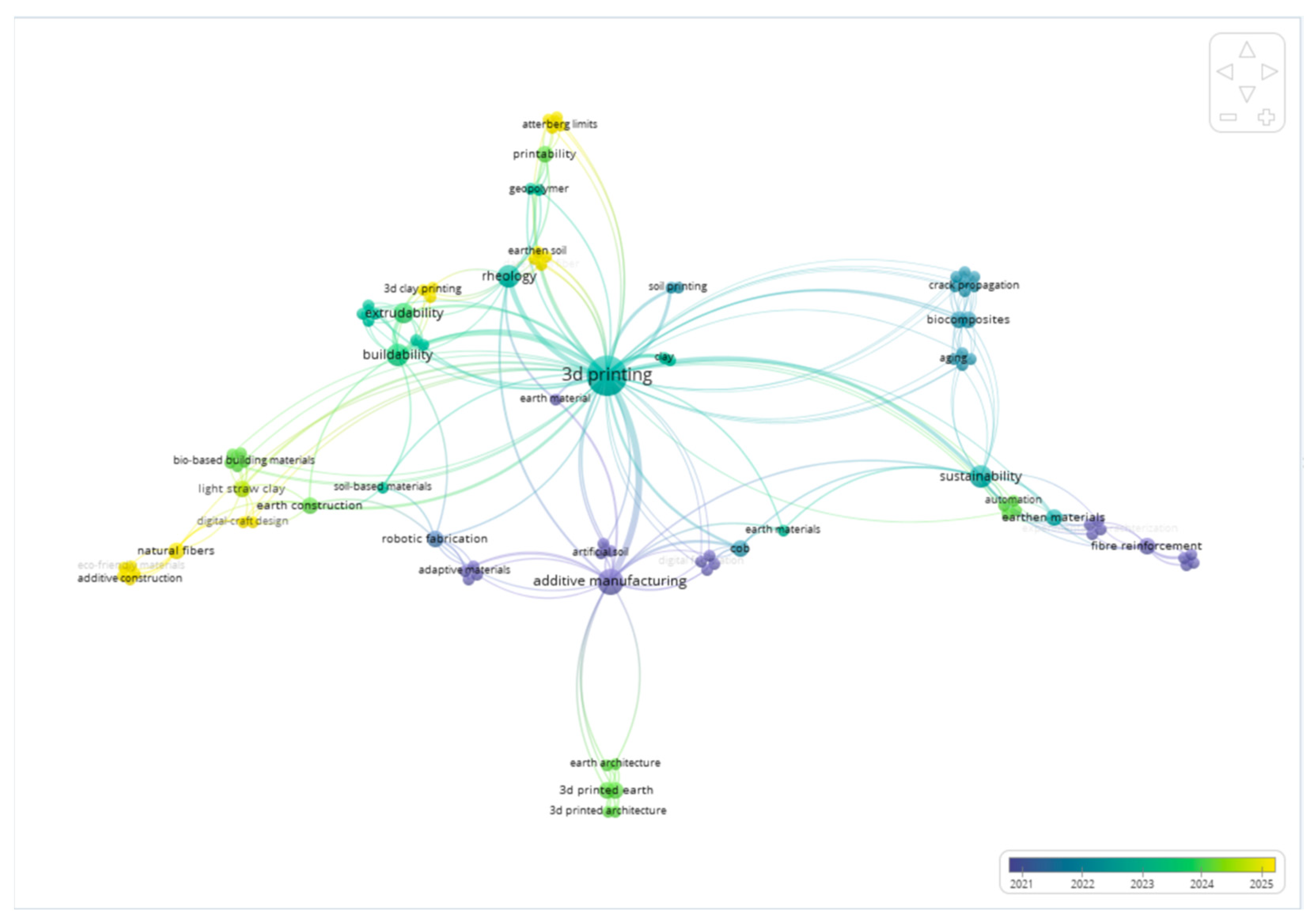
To establish the importance of applying fibres in 3D-printed earth-based materials, a bibliometric study was conducted using the mean publication year and the co-occurrence of keywords in the selected articles. The network produced by VOSviewer is shown in
Figure 3, where colours indicate the evolution of studies, ranging from blue and purple (earliest studies) to yellow (latest studies).
The analysis reveals a temporal evolution in research priorities within 3D-printed earth construction. The darker tones represent foundational inquiries into AM technologies and earth-based printing processes, establishing the technological framework without specifying reinforcement strategies. The intermediate colour zones indicate a transition toward material characterisation, focusing on rheological properties, extrudability, and constructability, parameters essential for successful printing rather than post-printing performance.
The keywords associated with natural fibre reinforcement appear exclusively in the lightest regions (green and yellow), indicating their recent emergence in the field. This peripheral positioning suggests that fibre reinforcement developed as a responsive solution to address mechanical and durability limitations identified in unreinforced earth systems, rather than as a primary research focus. Notably, the prevalence of “bio-” prefixed terms and sustainability-related keywords in these recent zones reflects a growing emphasis on environmentally responsible alternatives to conventional cement-based or resin-based printing materials, aligning earth-based 3DP with traditional, low-cement construction approaches while addressing the structural deficiencies through natural fibre integration.
3.1.1. Temporal Evolution of Research and Progressive Emergence of Fibre Reinforcement
Early research on 3D-printed earth materials focused primarily on whether the printing process was feasible and whether the material remained stable during printing. Perrot et al. [
26] suggested the need for control over attributes such as rheology to ensure the stability of the printing process. However, the literature mobilises construction research with adjacent fields, with authors such as Arrieta-Escobar et al. [
27] linking 3DP to an innovative frontier for the field of soil science, and with others like Mitterberger and Derme [
28] specifically mobilising the notion of the “digital soil” through the application of granular biomaterials and the application of material and process system designs through the application of robotics methodologies.
More recent research has shifted toward practical construction applications. For example, Gomaa et al. [
29] investigated 3DP with cob, demonstrating a transition from proving the concept works to developing material-machine systems suitable for real buildings. During this phase, fibre reinforcement remained a secondary consideration. Koudela et al. [
30] explored adding fibres directly to sand-based mixtures, treating reinforcement as an enhancement rather than a core focus, while the main research emphasis continued to be on printability and material performance.
Since 2022, research has become more engineering-focused. The question is no longer “can we print this material?” but rather “what properties does it develop and how does it behave?”. Ferretti et al. [
31] studied whether adding rice husks could improve the long-term strength of printed earth materials, while a follow-up study [
32] tested printing at wall-scale to achieve better structural performance.
Understanding the material’s internal structure has also become increasingly important. Ferrari et al. [
33] examined the microstructure of printed soil and found that final performance depends not only on the mixture recipe but also on the internal structure formed during printing. Meanwhile, Barnes et al. [
34] broadened the research scope by exploring ecologically active soil structures, aiming for printed earth materials that offer multiple benefits beyond just structural strength.
In 2023, research focused on developing reliable methods for turning soil into printable materials. Asaf et al. [
35] proposed a systematic approach for converting soil into 3D-printed structures, while Daher et al. [
36] examined how to design mixtures using excavated soil, introducing concepts of circular economy and material availability. Sustainable earth mixtures for 3DP became a recurring theme, with growing emphasis on balancing performance and environmental impact.
Researchers also began exploring how structure size and geometry affect material behaviour. Guelec et al. [
37] studied how scale influences the properties of 3D-printed geosynthetics. Work on reinforcement strategies also emerged: Jauk et al. [
38] investigated using filament-reinforced clay for printing, marking an important shift toward treating fibres as a design parameter rather than an afterthought. Ji et al. [
39] developed design guidelines for earth-based printing materials. From 2024 onward, research has taken a more holistic approach, simultaneously considering performance, printability, sustainability, and practical feasibility. Curth et al. [
40] used Life Cycle Assessment (LCA) to evaluate the environmental benefits of local soil processing and circular economy approaches. At the application level, Giacomobono et al. [
41] designed settlement-scale projects that integrate architectural and logistical systems. Soda et al. [
42] studied the properties of excavated soils both before and after printing, reinforcing the importance of material control within circular economy frameworks.
Fibre reinforcement emerged as a distinct research area during this period. Carcassi et al. [
43] investigated high fibre content mixtures and their effects on printability, performance, and environmental impact. Zavaleta et al. [
44] developed innovative composites combining biopolymers (chitosan) and natural fibres (Agave) to improve strength and water resistance, representing a turning point in integrating natural fibres into material design.
By 2025, the field will show increasing maturity, diversification, and scalability. Akhrif et al. [
45] conducted numerical simulations to predict extrudability and buildability, advancing modelling and optimisation capabilities. Ji et al. [
46,
47] continued studying soil characterisation, particularly rheological and mechanical properties. Hybrid approaches also emerged: Sangiorgio et al. [
48] explored using 3D-printed formworks for raw earth blocks, while Yousaf and Al Rashid [
49] investigated AM for vernacular architecture using local soil and bio-waste. Finally, Carcassi et al. [
50] continued developing lightweight fibre-reinforced earth systems, furthering fibre reinforcement design.
3.1.2. Emergence and Role of Fibre Reinforcement in Earth-Based 3D Printing
Table 3 shows the most used natural fibres in earthen 3DP for construction applications. Silva et al. [
51] investigated the use of sisal fibres as a natural reinforcement to mitigate shrinkage-induced cracking in earthen-based materials designed for extrusion-based 3DP. Sisal fibres derived from
Agave sisalana, composed primarily of cellulose (65–78%), hemicellulose (10–15%), and lignin (7–13%), were characterised by a tensile strength of approximately 508 MPa and an elastic modulus of 25 GPa, placing them within the performance range of commonly used natural fibres. Due to their high hydrophilicity, with water absorption reaching 125 ± 5%, the fibres exhibited strong affinity with water-based earthen matrices. Experimental results indicated that the incorporation of 1 wt.% sisal fibres relative to soil mass, combined with starch gel contents up to 5 wt.%, significantly improved workability while effectively limiting shrinkage cracking during hardening. The resulting fibre-reinforced earthen composites demonstrated suitable fresh-state rheology and hardened-state mechanical integrity, confirming their compatibility with 3DP requirements. Fahfouhi et al. [
52] examined the rheological behaviour of fibre-reinforced earthen mortars for extrusion-based 3DP, with particular emphasis on yield stress as a governing parameter for layer-by-layer stability. Crude earth sourced from Guérande (Pays de la Loire, France) was investigated under varying water contents and fibre additions, primarily flax and straw fibres. Rheological testing demonstrated that increasing water content led to an exponential decrease in yield stress, while increasing fibre content resulted in higher yield stress due to the hydrophilic nature of the fibres and their water absorption capacity. Straw-fibre-reinforced composites exhibited inadequate printability, whereas flax fibres improved rheological performance and printing quality within a limited dosage range. Fibre contents exceeding approximately 0.8 wt.% of dry soil were found to reduce workability and printing performance due to loss of homogeneity. Overall, the study highlights the critical balance between moisture content and fibre dosage in optimising the rheological properties of earth-based composites for AM. Carcassi et al. [
50] explored the development of fibre-rich, earth-based mixtures for extrusion-based 3DP, addressing the limited use of reinforcement in digitally fabricated earthen materials. Focusing on raw, untreated soils combined with maximised wheat straw fibre content, the authors proposed a printable “light straw clay” formulation aimed at lightweight architectural applications. Printability was first assessed through extrudability and buildability tests to define a viable mixture range. Subsequently, geometric and digital design strategies inspired by fibre weaving were employed to generate perforated, material-efficient tessellations for thin earthen panels. Structural bending tests were conducted to determine the minimum number of printed layers required to ensure adequate mechanical performance. The study concluded with the fabrication and assembly of 3D-printed modular tiles into a lightweight installation, demonstrating the feasibility of high-fibre, low-carbon earth composites for thin, tensile-capable, and architecturally expressive additive manufacturing applications.
Within the course of evolution described in the previous section, a specific subset of research systematically treats fibre reinforcement as a design parameter with the purpose of improving rheological and mechanical properties of earthen materials for 3DP. In contrast to previous research, which treated fibrous materials as implicit or adopted from earthen architecture practices, this subset of research explores the effects of fibre reinforcement on 3DP properties. One of the earliest uses of fibres is seen in the work of Koudela et al. [
30], in which fibres are employed to promote shear strength and the cohesion of sandy soils. While the paper does not specifically focus on 3D-printed materials, it bears some relation to advancements in fibre reinforcement aimed at making its applications possible in 3DP materials.
Fibre reinforcement gains more attention in research focused on its study regarding the effect of such reinforcement on the mechanical and structural properties of printed parts. Jauk et al. [
38] present a filament-reinforced clay printing system in which layer-by-layer printing is combined with reinforcement logic. This method can thus be regarded as an intermediate one that lies between structural reinforcement and fibre reinforcement. Since the year 2024, a few studies have focused on the use of natural vegetal fibres as a key aspect of material design. The work by Carcassi et al. [
43] focuses on investigating the role of fibre content in printable earth-based materials. In this case, the roles of the fibres include not only providing reinforcement but also acting as factors that determine workability and printability.
On the other hand, Zavaleta et al. [
44] complementarily analyse earth-matrix biopolymers and bio-derived fibre-reinforced samples, and the effects of earth-matrix biopolymers and bio-derived fibre-reinforcements on mechanical strength and water durability. This research work aims to overcome one of the drawbacks of printed earth: moisture. In the follow-up literature, fibre reinforcement is directly related to construction scenarios and respective sustainability criteria. Yousaf and Al Rashid [
49] promote the use of fibres sourced from vegetal wastes and native soils for 3D-printed vernacular architecture, noting the importance of fibres for improving mechanical performance and sustainability. Along similar lines, Zavaleta et al. [
55] move toward housing-scale demonstrators using rice husk fibres as reinforcement in stabilised earth matrices, reiterating the importance of fibre reinforcement for a ‘circular economy’ and construction viability. Finally, Carcassi et al. [
50] explored the use of fibres in light earthen construction techniques like light straw clay in terms of the influence of fibre use on the material’s ductility and compatibility with digital design techniques. Overall, the above-mentioned studies make it apparent that the use of fibres in earthen construction has matured from being an experimental technique into an established design technique within the earthen material sector that is specifically suited for use in 3DP.
3.1.3. Analytical Discussion: Quantitative Performance Trends, Cross-Study Comparability and Design Implications for Fibre-Reinforced 3D-Printed Earthen Materials
Research studies which integrate fibres in an explicit manner show that the concept of fibre addition in earth-based 3DP should not be generalised as an effective method of strength improvement. This method rather serves as a parameter in the material-process-objective system. In other words, from a quantitative perspective, the results of studies already conducted show similar patterns. However, it is difficult to compare studies.
From the numerical data presented in
Table 4, it is observable that the role of fibre reinforcement in 3D-printed earthen materials is not interpretable in a generalised manner, especially depending on the type of material being used, the functional purpose of the produced material, and the process involved. Contrary to the systematic increase in the strength values, the fibres’ role is more aligned to the performance enhancement tool.
However, in systems designed for moderate structural performance, such as Yousaf and Al Rashid’s study [
49] in 2025, vegetal fibres increase the compressive strength of mould-cast samples from around 5 MPa to values around 7–8 MPa. Nevertheless, when testing the same mixes in 3D-printed specimens, values are consistently lower. This difference underscores that 3DP introduces additional factors, such as anisotropy and layer boundaries, which can hinder achieving comparable performance expectations for such components, regardless of differences in composition.
In the case of less initial strength in the matrix, the presence of fibre reinforcement has different effects. Zavaleta et al. [
44] state that there has been considerable improvement in compressive strength using fibres in conjunction with bio-based stabilisation methods, with improvements from less than 0.5 MPa to about 2 MPa. In such cases, the improvement in strength cannot be attributed solely to the addition of fibres or to the stabilisation process, but rather to the joint process of stabilisation and reinforcement of the materials. However, the major contribution of reinforcement in these materials is in the post-peak phase, particularly in crack regulation.
In lightweight systems, for instance, in light straw clay as explored by Carcassi et al. [
50], the compression strength is well below 1 MPa. Such a result ought not to be seen as indicative of weaknesses stemming from fibre reinforcement but rather because of the system’s main aim, which is to first reduce weight, improve heat transfer properties, and make construction easier. In this respect, their major contribution is to improve cohesion.
However, aside from the issue of compressive strength, several research papers have pointed to the most important, robust capability that the presence of fibres can provide, that is, the internal cohesion and damage resistance of the material. The data from the shear and cohesion tests performed by Koudela et al. [
30] in 2021 will illustrate the role that fibres play in the material as a network that provides overall material cohesion against the distribution of material strain. The complementary role that reinforcement may play in the process will be further discussed in the following section, namely, the integration of reinforcement into the 3DP process, as shown in the process proposed by Jauk et al. [
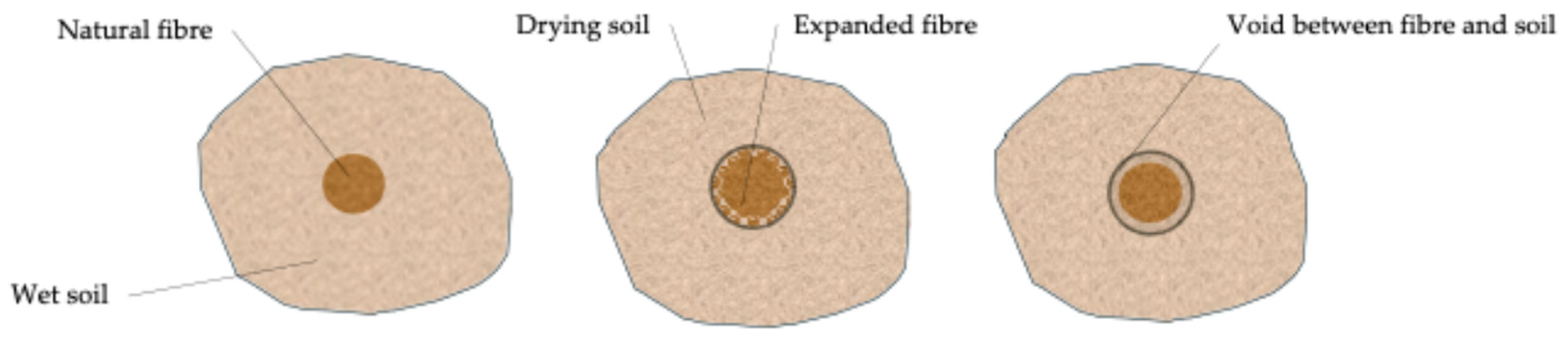
38] in 2023. The mechanical effectiveness of fibre reinforcement is fundamentally governed by fibre–matrix interface mechanics, which critically influences both immediate load-bearing capacity and long-term durability. Vicenzinni et al. [
56] studied the fibre–matrix interaction, investigating the pull-out test of natural fibres in construction techniques, revealing that interfacial bond strength is sensitive to fibre surface characteristics, soil dry density, water content, and reversible dimensional changes in both phases. Fibre pull-out resistance increases with higher dry density and lower water content, and is further enhanced by stabilisers such as cement. While natural fibres, particularly jute, exhibit superior adhesion relative to synthetic alternatives, their hydrophilic nature creates a persistent challenge: moisture-dependent fibre shrinkage during drying produces peripheral voids that weaken interfacial bonds. The progressive stages of this fibre–soil interaction mechanism during moisture loss are illustrated in
Figure 4, which shows the natural fibre embedded in wet soil, expansion during the drying phase, and final void formation between the fibre and contracted soil matrix. These findings underscore that fibre performance in earth-based 3DP systems depends critically on treatment selection and stabilisation strategy to maintain interfacial integrity across the material’s service life.
The results of these studies emphasise that the design of fibre-reinforced earthen materials should rather be conceptualised as a multi-objective optimisation problem, in which maximum strength is only one of the factors. Parameters related to fibre type and compatibility with the printing system should rather be investigated together with printing stability, anisotropy due to printing mechanics, and sustainability factors. The multifaceted interpretation of these results implies that systematic comparative analysis of the material’s performance in actual printed structures is necessary for the effective transfer of the technology to construction.
3.2. The Mechanical Properties of the Developed Earthen Mixtures
From the reviewed works, it is evident that the introduction of soil and fibre reinforcement into printable matrices leads to a consistent, albeit composition-dependent, reshaping of mechanical performance. The following results are presented to illustrate comparative trends between different material systems rather than to describe individual works.
In stabilised systems, the introduction of hydraulic and alkali-activated binders allows for significantly increased compressive strength. Soda et al. [
42] demonstrated compressive strength between 14 and 25 MPa by replacing sand with excavated clay-rich soil. Daher et al. [
36] demonstrated compressive strength between 16 and 34 MPa for low-cement soil-based mortars. It is evident that soil-based printable materials possess considerable potential for structural-level performance when stabilisation is used. However, in these cases, reinforcement is still matrix dependent.
In cases where fibre reinforcement is explicitly used, however, mechanical performance is more significantly influenced by fibre-related properties than by compressive strength. Faleschini et al. [
53] demonstrated compressive strength of up to 11 MPa and improved flexural performance for lime–fibre–earth systems. Bhusal et al. [
57] demonstrated fibre reinforcement of straw fibres to improve buildability and reduce shrinkage without significantly impacting compressive strength. Zavaleta et al. [
58] demonstrated fibre–biopolymer combinations to improve erosion- and durability-related properties.
High-fibre content systems are another example of this. According to Carcassi et al. [
43], compressive strength can increase by up to about 125% compared to plain earth, accompanied by reductions in density and thermal conductivity. Nevertheless, reductions in strength of 11–58% have also been reported for cement-based printable systems containing soil that replace traditional aggregates [
59]. This is another indication of a trade-off between strength and printability. It is also worth noting that it is difficult to compare studies, especially due to differences in geometry, testing, and printing. Furthermore, differences among printed, mould-cast, and structural specimens are sources of uncertainty, particularly due to anisotropy and interlayer bonding. Overall, it is clear from all these studies that fibre- and soil-modified printable systems exhibit a wide range of mechanical properties, from about 1–11 MPa for earth-fibre systems, and even more than 25 MPa for stabilised systems (
Table 5). Fibres do not seem to increase strength but are responsible for crack control, cohesion, and robustness, whereas stabilisation is again the main parameter controlling compressive strength.
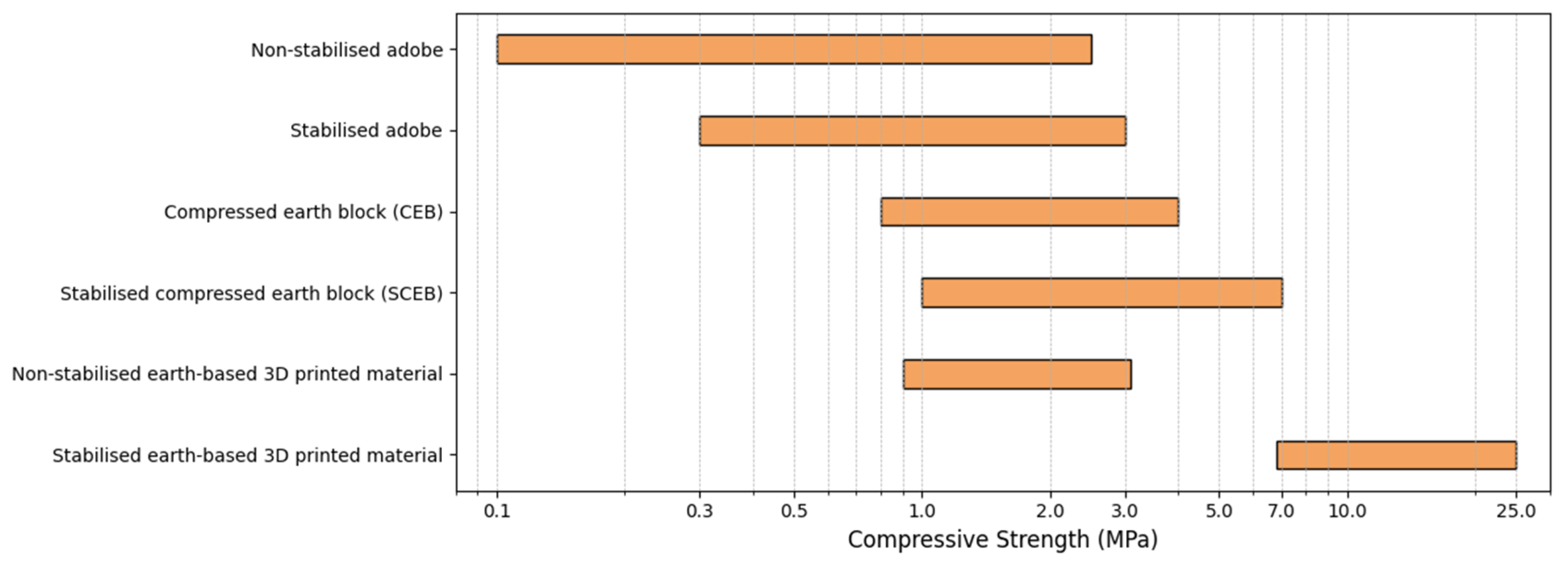
From the table above, non-stabilised printable earth-based materials exhibit low compressive strengths (0.9–3.1 MPa), adequate for non-structural use but insufficient for loadbearing applications, while stabilised variants show markedly superior performance (6.8–25 MPa) through lime, OPC-GGBS, or alkali-activated slag binders. The mechanical performance comparisons across studies must account for specimen geometry and testing protocol differences. Only 5/12 studies followed standardised procedures; the remaining studies used varied formats without complete geometric details. These variations preclude direct quantitative comparison.
This strength increase confirms stabilisation as essential for structural scalability, though variability in specimen scale and testing geometry highlights the need for standardised protocols.
Figure 5 shows the spectrum of compressive strength of developed earth-based compositions using 3DP technology compared to conventional earth-based materials. An important point worth discussing, which is beyond compressive strength, is that the dry density represents an important complementary parameter. As density strongly governs both strength development and thermal conductivity, variations in material compactness may partially explain the observed strength ranges while simultaneously affecting thermal resistance. In this context, lower-density composites may offer functional advantages by improving insulation performance, which is a key factor for reducing energy consumption during the building use phase and enhancing environmental performance.
Despite the mechanical performance data presented above, the durability characterisation of fibre-reinforced 3D-printed earth-based materials remains critically underdeveloped. Among the 27 reviewed studies, only a limited subset reports systematic testing beyond basic water absorption, with wetting-drying cycles, freeze-thaw resistance, and long-term fibre degradation almost entirely absent. Natural fibres introduce additional vulnerabilities through biological degradation and moisture-induced interface weakening, while printed layer interfaces may accelerate capillary ingress compared to monolithic earth. UV exposure and dimensional stability under sustained loading are assessed entirely. This combined absence of standardised durability protocols and realistic ageing data constitutes a fundamental barrier to structural applications, underscoring the urgent need for accelerated environmental testing regimes simulating multi-year service conditions.
3.3. The Environmental Impact of the Developed Compositions with Their Conventional Alternatives
The review reveals that, while 3D-printable earth-based materials leverage low-carbon feedstocks, their environmental performance is often compromised by higher embodied impacts relative to conventional earth construction, primarily due to binder addition and process energy demands. Assunção et al. [
5] report that digitally fabricated earth materials exhibit cradle-to-gate greenhouse gas emissions ranging from 65 to 120 kg CO
2-eq/m
3—nearly double those of conventional techniques (20–40 kg CO
2-eq/m
3)—attributed to stabilisers (e.g., 3–5% hydraulic lime or cement), material conditioning, and electricity-intensive deposition processes. Stabilisation with cementitious binders or geopolymers further elevates impacts: Soda et al. [
42] demonstrate that OPC-GGBS-stabilised excavated soil mixes incur higher GWP than lime-based alternatives, mirroring trends in the work of Faleschini et al. [
53], where lime-fibre-earth formulations achieve ~0.05 kg CO
2-eq/kg but still exceed unstabilised cob or rammed earth when scaled to structural volumes. Compared with conventional cementitious materials, earth-based printable mixes show lower mix-level GWP, yet robotic processes amplify process emissions, requiring 50–70% material savings via optimisation to match prefabricated rammed earth (36–47 kg CO
2-eq/m
3).
Sahana et al. [
65] corroborate this for OPC-GGBS-stabilised excavated soil mixes, reporting elevated GWP relative to low-binder alternatives, while Faleschini et al. [
53] show lime-fibre-earth formulations achieving ~0.05 kg CO
2-eq/kg, competitive with improved rammed earth but still penalised by printability demands. Against cementitious benchmarks, Curth [
40] finds 3D-printed earth structures emit ~1/5th the embodied carbon of conventional concrete and ~1/50th that of industry-standard 3D-printable mortars, enabled by minimal processing and optimisation; Sahana et al. [
65] similarly report that 25–50% excavated soil substitution in printable mortars reduces impacts versus cement-only mixes. Component-scale comparisons indicate earth-based printing can outperform cast concrete for complex geometries in terms of environmental impacts via formwork elimination and waste reduction, though Assunção et al. [
5] stress that 50–70% material savings are needed to match. The comparative analysis of GWP presented in
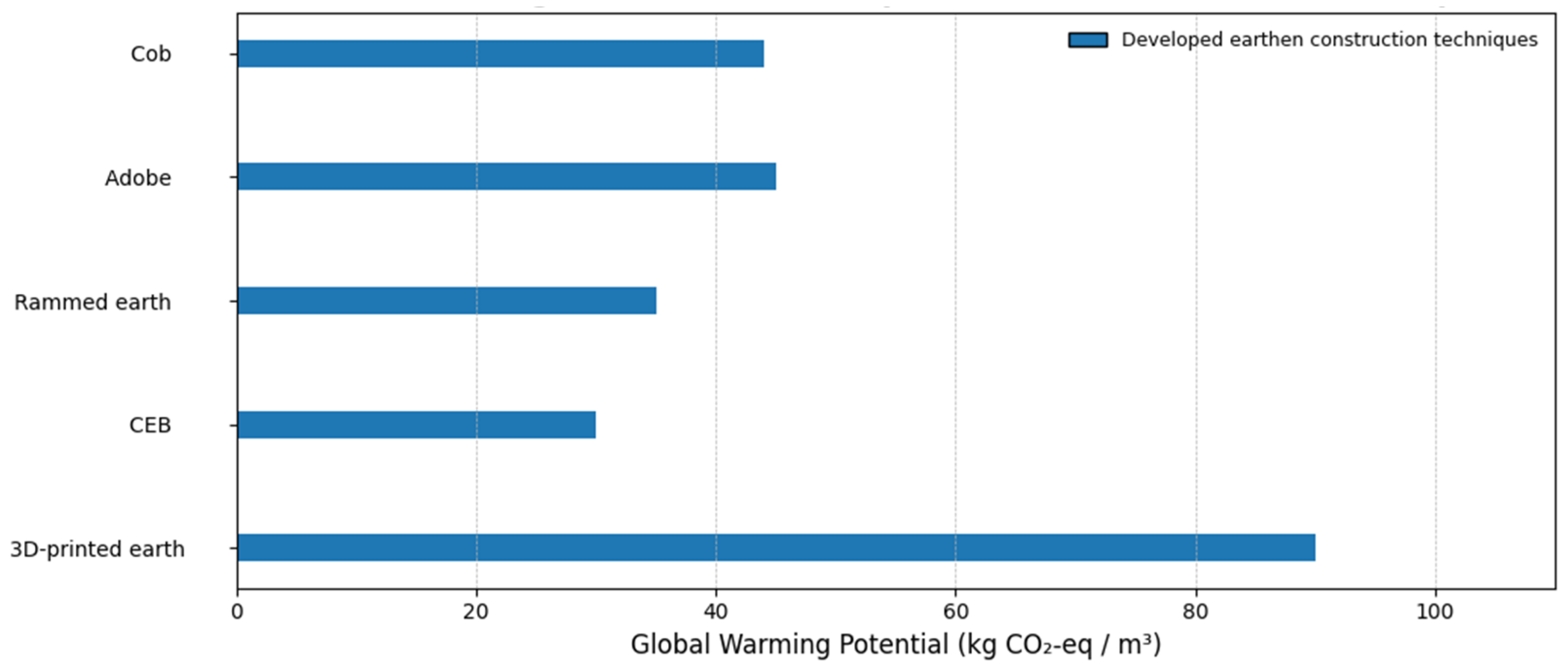
Figure 6 across different earthen construction techniques shows significant variations in environmental performance, with developed techniques demonstrating carbon intensities ranging from approximately 30 to 90 kgCO
2-eq/m
3 [
5,
66,
67,
68], where environmental assessments vary in system boundaries and methodology. Although all the studies employ cradle-to-gate LCAs, differences arise in electricity grid assumptions and allocation methods, which may contribute to GWP range dispersion.
Notably, according to Assunção et al. [
5], 3D-printed earth exhibits the highest GWP at around 90 kgCO
2-eq/m
3 depending on the deposition process, substantially exceeding that of traditional techniques such as cob (44 kgCO
2-eq/m
3), adobe (45 kgCO
2-eq/m
3), rammed earth (36 kgCO
2-eq/m
3), and compressed earth blocks (31 kgCO
2-eq/m
3). This elevated carbon footprint of 3D-printed earthen construction can be attributed to the energy-intensive nature of automated manufacturing processes, which contrasts with the predominantly manual labour employed in conventional earthen building methods.
Furthermore, the environmental credentials of earth-based materials are severely compromised when traditional cementitious stabilisers like cement and lime are employed, as evidenced by increased GWP values reaching 56.11 kgCO
2-eq/m
2. This raises important questions about the viability of 3DP with earth as a sustainable construction alternative, suggesting that the technology’s promise must be carefully weighed against its embodied energy demands. For review purposes, these findings highlight the necessity of investigating alternative stabilisation methods and optimising material usage through computational design strategies to ensure that innovations in earth-based 3DP genuinely advance, rather than undermine, the inherent sustainability advantages of earth-based construction materials. There should be an emphasis on several key limitations that temper the environmental promise of printable earth-based materials and a call for cautious interpretation of comparative claims. The incorporation of cement or chemical stabilisers leads to high embodied energy and carbon footprint, leading to greater environmental impact than unstabilised earth or biopolymer-stabilised materials [
69].
It should be noted that the comparative assessment presented herein focuses specifically on the construction phase of earthen building systems, encompassing material preparation, on-site processing, and execution-related energy inputs. This scope captures the distinct differences between predominantly manual construction techniques (e.g., cob, adobe, and rammed earth) and automated or semi-automated processes associated with 3D-printed earth. By isolating the construction stage, the comparison aims to elucidate how varying degrees of mechanisation, equipment use, and process control influence embodied greenhouse gas emissions, rather than conflating these effects with broader life-cycle stages such as use, maintenance, or end-of-life. Consequently, the reported GWP values should be interpreted as indicative of construction-related environmental performance under the respective system boundaries considered, rather than as holistic life-cycle impacts.
4. Discussion
Methodologically, from the literature, there exists a clear need for normalised experimental protocols to investigate fibre-reinforced earth-based materials. The differing soil types, fibre forms and levels, extrusion equipment, curing conditions, and specimen types have a substantial impact on obtaining consistent data, as highlighted by the variation between mould cast and printed specimens in different studies. It would be more informative to experiment with additional methodologies to investigate printed forms that are more characteristic of building-scale structural components, as explored to a degree by Ferretti et al. [
32], with greater emphasis on mould-cast specimens.
A second key aspect concerns the structural relevance of the available data in the context of earthen printed elements. Most published works still concentrate on material properties at the specimen level, whereas only a small subset addresses structural response in terms of load-carrying capacity, long-term behaviour, or optimisation under architectural and construction constraints. Emerging contributions, such as settlement-scale models [
41] and prototype dwellings [
44], indicate that structural performance cannot be decoupled from geometric configuration, printing orientation, and construction methodology. This review consolidates that evidence and highlights that fibre reinforcement should be evaluated not only to increase strength, but also as a mechanism for controlling crack initiation and propagation, limiting deformation, and providing damage tolerance in realistic structural configurations. From a laboratory perspective, future research must therefore prioritise testing of larger-scale walls, lintels, and connection details under relevant mechanical and environmental loading, to support the development of performance-based design guidelines and standards for earth-based 3DP.
Durability emerges as a major hindrance to the successful implementation of these materials in real-world conditions. Across the surveyed literature, the addition of fibres without any stabilisation strategy does not adequately address the intrinsic water sensitivity of earth, and may in some cases even exacerbate shrinkage, biological degradation, or moisture transport. By contrast, the combined use of stabilisation and fibres shows clear promise for improved performance [
44], where enhanced resistance to wetting–drying cycles and erosion is reported. The synthesis presented here, therefore, suggests reframing durability as a composite design problem: reinforcement materials should primarily provide strength, crack control, and deformation capacity, while stabilisers must ensure resistance to water ingress and long-term integrity. This distinction clarifies why some fibre-only approaches have underperformed and points to multi-component composite formulations as the most promising pathway for robust, durable earth-based 3DP systems.
By comparison, economic viability and construction speed are underrepresented in current analyses, despite being crucial drivers in the construction industry. Although some studies might be seen to address the issue of sustainability by relying either on locally available soil or waste fibres [
36], there is little representation of economic assessments in terms of construction expenses, construction duration, or construction rates. The potential of earth-based 3DP to decrease formwork requirements, construction waste, and construction manpower has been obvious; however, this potential can be proven by a multidimensional analysis that combines mechanics with economy.
In the context of the above framework, the application of fibres originating from invasive plant species is a promising avenue of research. Invasive plant species cause significant environmental and economic burdens regarding their management and disposal. In fact, the use of such biomass as a reinforcement material would simultaneously address the management of biomass waste and reduce raw material costs. This approach has not been examined in the context of the above-mentioned framework in the surveyed literature but fits well within the studies regarding the exploitation of local and bio-based materials [
43,
49]. Similarly, the application of metal micro-reinforcements, such as steel micro-fibres from recycling sources, may provide significant improvement towards better performance in the post-cracking region for more reliable structural performance. However, it is primarily in regions of high humidity that the susceptibility of these solutions towards corrosion becomes an immediate concern for earthy matrices. It can be universally agreed that applying these techniques together is not only an understudied area but also an applicable concept in earth-based 3DP methods. However, what the literature proposes regarding the potential of fibre-reinforced earth materials is that the future of this field is based on integrated, multi-criteria design methods. This is a step forward from the current focus on optimising materials in a lab setting toward a real-world construction setting, where several criteria must be considered at one time, such as the strength of the final product, sustainability, cost of the manufacturing process, and other related factors. Instead, fibre reinforcement as a standalone improvement technique needs to be considered as a part of an overall development strategy of a whole system of materials based on this goal. This review has several limitations that should be acknowledged. It is restricted to peer-reviewed studies indexed in major databases and published in English, which may exclude regional or practice-based knowledge on earthen 3DP. In addition, strong heterogeneity in mixtures, test methods, and reporting practices among the included studies precluded quantitative meta-analysis, so the synthesis is primarily qualitative and comparative. Finally, most available data concern short-term mechanical behaviour, with limited information on long-term durability and in-service performance, which constrains the conclusions that can be drawn about life-cycle behaviour.
Taken together, the findings of this work clarify the current technical, methodological, and economic bottlenecks that prevent fibre-reinforced earth-based 3DP from being treated as a mature structural material system. By organising disparate experimental campaigns into coherent themes and linking them to emerging sustainability and design requirements, the review provides a structured reference for researchers and practitioners seeking to develop standardised test methods, robust composite formulations, and context-appropriate structural applications. In this way, the discussion moves beyond a restatement of results and establishes the broader significance, constraints, and future directions necessary for the evolution of earth-based 3D-printed construction from laboratory prototypes toward codified, real-world practice.
5. Conclusions
This review demonstrates that earth-based 3DP has progressed from early feasibility studies centred on printability and rheology toward more integrated investigations of mixture design, fibre reinforcement, mechanical performance, and environmental impact. Current printable earth-based materials occupy an intermediate position between traditional earthen construction and cement-based materials, with compressive strengths typically ranging from 1–3 MPa for non-stabilised mixes and increasing to approximately 6–25 MPa when hydraulic or alkali-activated stabilisers are employed. Despite these advances, performance remains constrained by process-induced anisotropy, limited durability data, and a lack of standardised testing approaches.
Fibre reinforcement in earth-based 3DP does not reliably increase compressive strength. Instead, it mainly improves crack control, ductility, cohesion, and printability, with strength gains depending on the matrix, stabilisers, and printing process. Environmentally, 3D-printed earth uses low-impact materials but often has higher embodied impacts than conventional earthen techniques due to printing energy and cementitious binders. Without material savings or process optimisation, sustainability benefits are limited and must be assessed at the system level, not just material composition.
Across the literature, three main limitations emerge: heterogeneous experimental methods that hinder comparability, predominant focus on material-scale rather than structural-scale or long-term performance, and insufficient integrated techno-economic and environmental assessments for real construction scenarios. Addressing these requires standardised testing protocols for printed elements, multi-scale studies linking material formulation to structural response, and coupled life cycle/cost analyses. Future work should prioritise co-designing stabilisation and fibre systems for simultaneous strength, crack control, and water resistance, using local soils and natural or recycled fibres within multi-objective frameworks balancing mechanical reliability, durability, constructability, and environmental performance. Furthermore, it would be worthwhile to include additional databases that highlight the potential of countries with strong technological and scientific capabilities, such as China, thereby improving the scope of this work and incorporating recent, cutting-edge research being conducted in the Asian continent.




 ,
,