1. Introduction
Facebow transfer is a conventional prosthodontic procedure used to reproduce the three-dimensional relationship of the maxilla to the mandible and cranial reference structures on an articulator. This procedure has long been regarded as an important step in occlusal analysis and prosthodontic treatment because it enables extraoral simulation of mandibular function and supports the fabrication of restorations under controlled conditions [
1,
2,
3,
4,
5]. By helping to reproduce centric relation and maxillomandibular orientation, facebow transfer contributes to full-mouth rehabilitation, fixed prosthodontic treatment, and functional treatment planning in patients with complex occlusal conditions or temporomandibular disorders [
6,
7].
Within this clinical context, sagittal condylar inclination (SCI) and Bennett angle (BA) are key parameters for articulator programming and occlusal simulation [
8,
9]. SCI represents the inclination of the condylar path relative to the horizontal reference plane in the sagittal direction, whereas BA describes the angular relationship between the non-working condylar path and the sagittal plane during lateral mandibular movement [
10,
11]. These variables influence the simulation of eccentric mandibular movement and, consequently, the occlusal morphology, functional adjustment, and clinical predictability of prosthetic restorations. However, in conventional workflows, their determination may be affected by anatomical variation, soft-tissue-based landmark identification, operator-dependent manipulation, and transfer errors during articulator mounting [
1,
4,
12,
13,
14]. As a result, the programmed settings may not always reproduce physiologic mandibular dynamics with sufficient consistency.
The continuing expansion of digital dentistry has accelerated the transition from analog procedures toward digitally integrated workflows involving three-dimensional imaging, motion capture, and computer-aided design/manufacturing (CAD/CAM) technologies [
15,
16,
17]. In this environment, digital jaw motion tracking systems have emerged as an alternative approach to conventional facebow transfer by recording mandibular motion in real time and providing quantitative motion parameters within a virtual articulator [
18,
19]. These systems can generate objective values for SCI, BA, and related mandibular movement variables while reducing manual transfer steps and enabling direct integration into digital prosthodontic workflows [
15]. Such capabilities may improve the reproducibility of articulator programming, facilitate individualized treatment planning, and enhance the predictability of occlusal rehabilitation, particularly in patients requiring complex prosthodontic reconstruction or extensive eccentric occlusal adjustment [
15,
16,
17,
18,
19].
Despite these potential advantages, conventional mechanical facebows remain widely used in daily practice because of their affordability, simplicity, and longstanding clinical familiarity [
1,
2,
3,
4,
5]. Nevertheless, their inherent dependence on operator technique and indirect landmark transfer continues to limit their precision in reproducing dynamic mandibular movement [
1,
4,
12,
13,
14]. By contrast, dynamic jaw motion tracking systems use optical sensors and dedicated software to record mandibular motion directly and automate the calculation of motion-related parameters in a virtual environment, which may improve measurement consistency [
15]. However, their clinical adoption is still evolving, and direct evidence comparing their repeated measurement behavior with that of conventional methods remains limited. In particular, few studies have compared these systems using repeated records obtained under controlled conditions within the same subject, where inter-individual anatomical variation is minimized and the repeatability of each method can be more clearly examined.
Cone-beam computed tomography (CBCT) has also been used in prosthodontics to visualize craniofacial structures in three dimensions and to estimate condylar guidance-related parameters using anatomically referenced images [
20,
21,
22,
23]. Unlike dynamic jaw tracking systems, CBCT does not directly record mandibular motion. However, when combined with interocclusal records and digital registration, it can provide a static three-dimensional reference framework for the estimation of SCI and, more indirectly, BA within a digitally aligned craniofacial model [
20,
22,
23,
24]. For this reason, a CBCT-based approach may serve as an anatomically grounded comparative method in studies assessing digitally derived condylar parameters, although its application to dynamic variables remains methodologically limited. Clear distinction between motion-tracking measurements and CBCT-based positional estimation is therefore necessary when interpreting agreement or discrepancy among methods.
Accordingly, the purpose of this single-participant pilot feasibility study was to compare SCI and BA measurements obtained using a dynamic jaw motion tracking system, a conventional facebow transfer method, and a CBCT-based registration approach. By examining repeated datasets acquired with each method in the same participant, this study sought to explore inter-method differences while minimizing between-subject variability and to provide preliminary evidence regarding the repeatability and comparative behavior of these workflows. The null hypothesis was that SCI and BA measurements would not differ significantly among the digital jaw motion tracking system, conventional facebow transfer method, and CBCT-based approach.
2. Materials and Methods
2.1. Study Design and Participant
This study was designed as a single-participant repeated-measurement pilot feasibility study. Ethical approval was obtained from the Institutional Review Board of Kyungpook National University Dental Hospital (Approval No.: KNUDH-2023-12-01-02). One healthy adult participant aged 35 years, with no systemic disease or temporomandibular disorder, was enrolled after receiving a full explanation of the study procedures and providing written informed consent.
2.2. Study Workflow and Dataset Definition
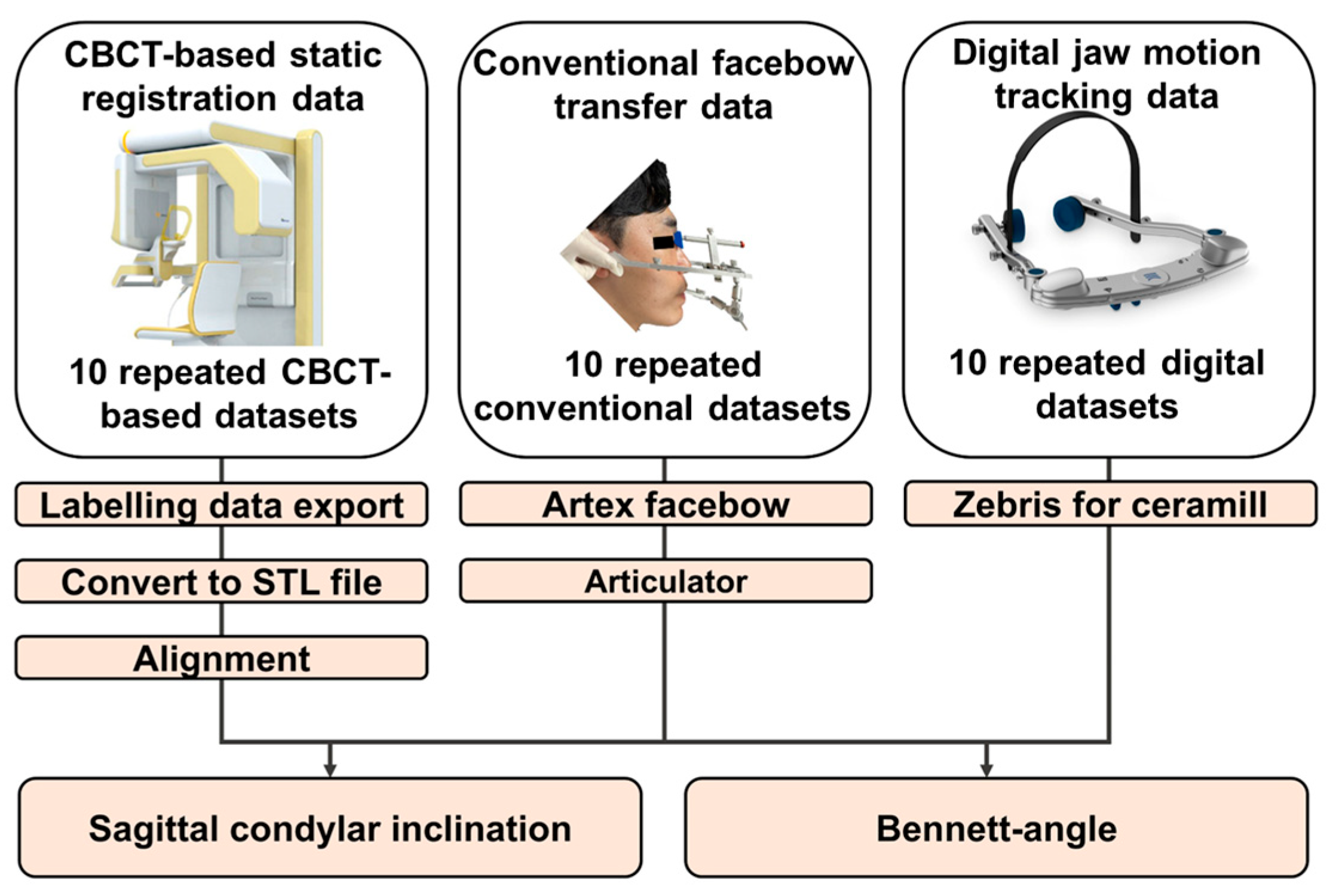
SCI and BA were evaluated using three methods: (1) a conventional facebow transfer method, (2) a digital jaw motion tracking method, and (3) a CBCT-based static registration method. For each method, 10 repeated datasets were generated from the same participant, resulting in 30 datasets in total. Accordingly, the unit of comparison in this study was the repeated dataset obtained for each method, rather than the number of participants. For the conventional and digital methods, 10 independent recordings were obtained on separate occasions. For the CBCT-based method, one CBCT scan acquired in centric relation was combined with 10 repeated sets of protrusive and bilateral lateral interocclusal records to generate 10 independent CBCT-based datasets. The overall workflow is illustrated in
Figure 1.
2.3. Conventional Facebow Transfer Method
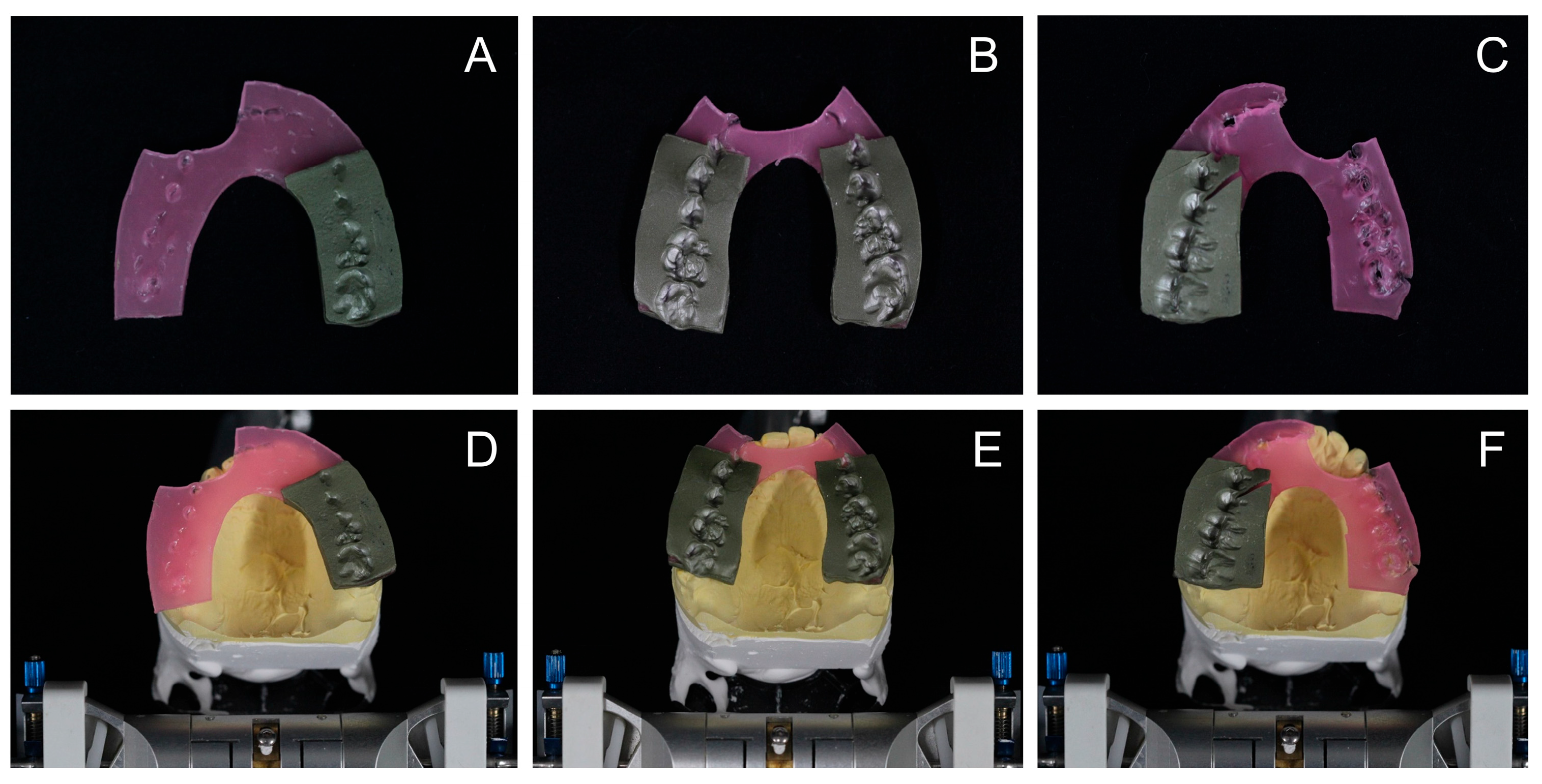
Maxillary and mandibular impressions were obtained using metal stock trays and vinyl polysiloxane impression material (BITE-Blu; B&E Korea Co., Ltd., Hwaseong, Gyeonggi-do, Republic of Korea). Ten dental casts were fabricated using hard plaster (Hi-Kosteon; Maruishi Gypsum Co., Ltd., Osaka, Japan). Conventional facebow transfer was performed using a mechanical facebow (Artex facebow; Amann Girrbach AG, Koblach, Austria; manufactured in 2020). The maxillary cast was transferred to a semi-adjustable articulator, and the mandibular cast was mounted accordingly. Check-bite records were obtained in protrusive, left lateral, and right lateral positions using modeling wax (SELECTION-E Dental pink modelling wax; Associated Dental Products Ltd., Wiltshire, UK) and softened aluminum wax (Alu wax; Aluwax Dental Products Co. Inc., Allendale, NJ, USA). Before each registration, the participant was instructed to maintain a stable intercuspal position in an upright posture for 10 min. The articulator was subsequently programmed using the SCI and BA values derived from the repeated check-bite records. The workflow is illustrated in
Figure 2.
2.4. Digital Jaw Motion Tracking Method
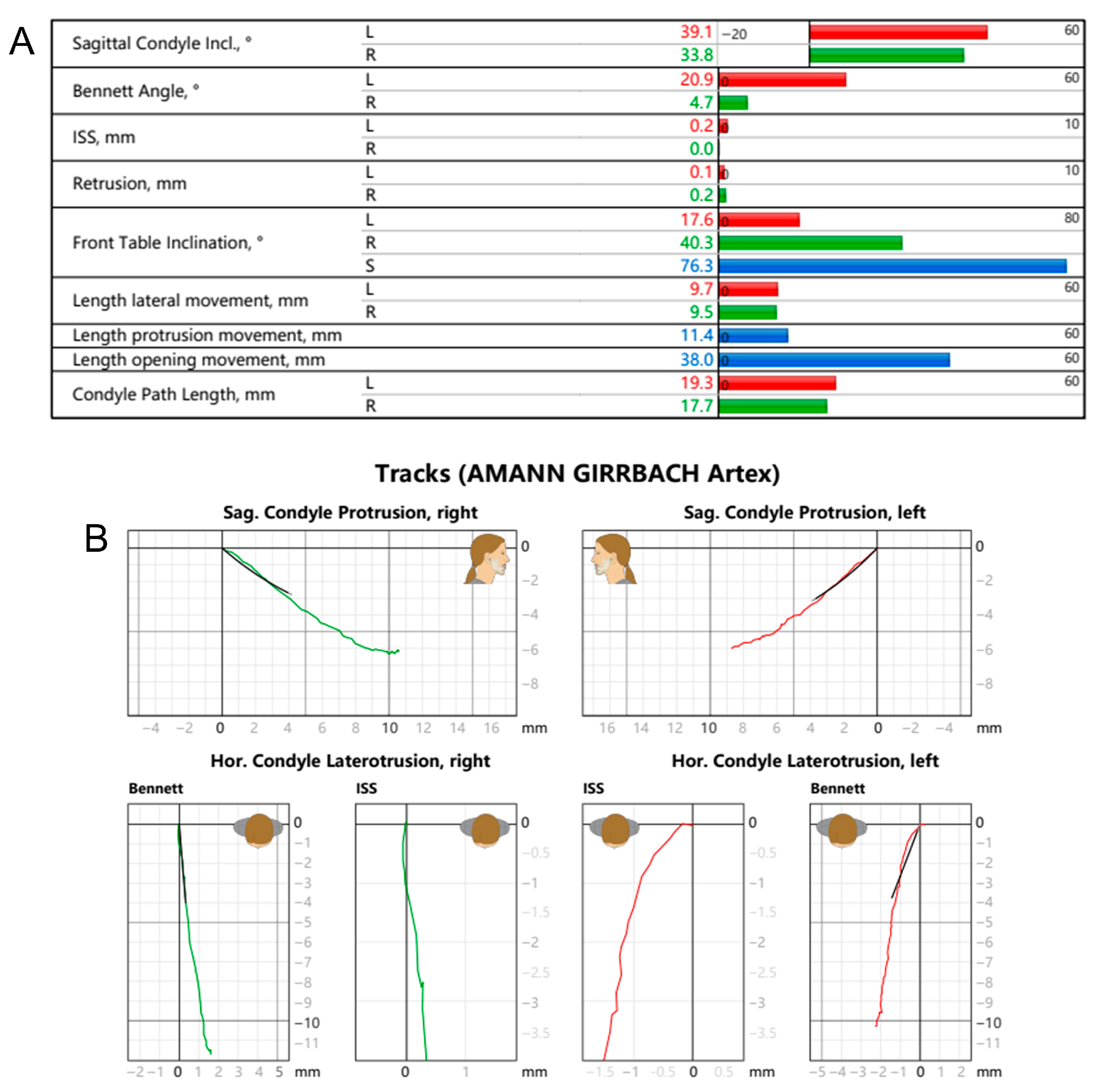
The digital method used a dynamic mandibular motion tracking system (Zebris for Ceramill; Amann Girrbach AG, Koblach, Austria; manufactured in 2019), which consisted of an optical facebow, bite fork, mandibular attachment, sensor, and T-pointer. The system used LED-based optical tracking to record real-time mandibular movement. Ten digital records were obtained on separate occasions. During each acquisition, the T-pointer was positioned near the external auditory meatus and aligned anteriorly toward the maxillary incisors. After participant instruction and muscle relaxation, protrusion, lateral excursion, and mouth opening were recorded according to the manufacturer-recommended workflow. The motion data were processed using CAD software (Ceramill Mind, version 3.1; Amann Girrbach AG, Koblach, Austria), and SCI and BA values were displayed in a virtual articulator environment (
Figure 3).
2.5. CBCT-Based Static Registration Method
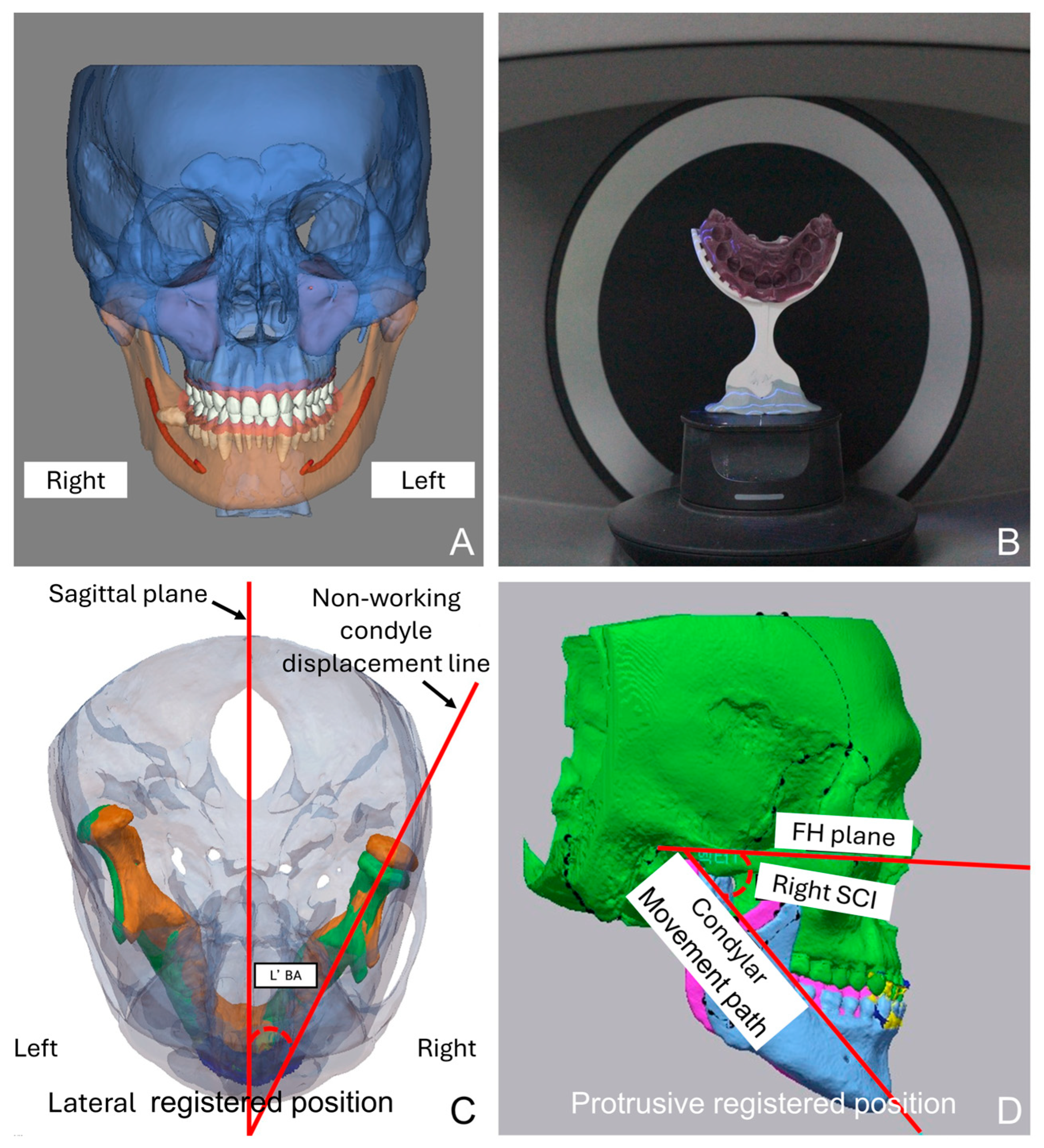
For the CBCT-based static registration method, one CBCT scan was acquired in centric relation using a CBCT scanner (HDX WILL; HDX, Seoul, Republic of Korea; manufactured in 2010). The CBCT data were exported in Digital Imaging and Communications in Medicine (DICOM) format and converted into Standard Tessellation Language (STL) format using Relu
® Creator (version 1.2; Relu BV, Leuven, Belgium) (
Figure 4). Repeated protrusive and bilateral lateral interocclusal records were obtained using disposable bite trays and vinyl polysiloxane material. These records were scanned into STL format using a laboratory scanner (E1; 3Shape A/S, Copenhagen, Denmark; manufactured in 2017) and refined using Meshmixer (version 1.21; Autodesk, Inc., San Rafael, CA, USA) (
Figure 4). The CBCT-derived skull STL model and the STL interocclusal record files were imported into inspection software (Geomagic Control X, version 2017.1.0.; 3D Systems Corporation, Rock Hill, SC, USA) (
Figure 4). A coronal reference line passing across bilateral orbital and zygomatic structures was created to support spatial alignment. The Frankfort horizontal plane was used as the reference plane for SCI measurement. For SCI estimation, the protrusive interocclusal record was aligned to the maxillary arch, after which the mandible was treated as a movable object and repositioned relative to the maxilla to reproduce the registered protrusive relationship. For BA estimation, the lateral interocclusal record was aligned to the maxillary arch in the same manner. The position of the non-working condyle in the laterally registered mandibular position was then compared with its position in centric relation, and the resulting displacement line was measured relative to the sagittal plane. Thus, BA in the CBCT-based protocol was estimated from a static registration-based positional change rather than from direct motion tracking. To improve alignment stability, the optimal-fit algorithm was executed with 50 iterations per dataset.
2.6. Outcome Variables
The primary outcome variables were left and right SCI and left and right BA, expressed in degrees. For all three methods, the final recorded values were exported and tabulated as repeated datasets for subsequent descriptive, comparative, and agreement analyses.
2.7. Operator Allocation and Standardization
All recordings were obtained using a standardized workflow to minimize procedural variation. The participant received the same pre-recording instructions at each session, including maintenance of a stable intercuspal position, upright posture, and muscle relaxation before registration or motion recording. All clinical procedures, digital registrations, and repeated measurements were performed by a single calibrated operator to minimize inter-operator variability.
2.8. Statistical Analysis
All statistical analyses were performed using SPSS software (version 27.0; IBM Corp., Armonk, NY, USA). For each variable and method, the mean, standard deviation (SD), coefficient of variation (CV), and 95% confidence interval (CI) were calculated. The CV was calculated as SD divided by the mean and expressed as a percentage. Normality was assessed using the Kolmogorov–Smirnov test. Intergroup differences among the three methods were analyzed using one-way analysis of variance (ANOVA), followed by Tukey post hoc tests when appropriate. Effect size was expressed as eta squared (η2), and the level of statistical significance was set at α = 0.05. Repeatability was evaluated using both SD and CV. Homogeneity of variances among methods was assessed using Levene’s test centered at the median. Agreement between methods was assessed using Bland–Altman analysis, in which mean differences and 95% limits of agreement were calculated for each pairwise comparison. A nonparametric Kruskal–Wallis test was additionally used as a sensitivity analysis, and it showed the same significance pattern as the ANOVA.
3. Results
The comparative results for sagittal condylar inclination (SCI) and Bennett angle (BA) obtained using the three methods are summarized in
Table 1. Significant intermethod differences were observed for left SCI (
p = 0.036), left BA (
p = 0.049), and right BA (
p < 0.001), whereas right SCI was not significantly different among the methods (
p = 0.197) (
Table 1).
For left SCI, the conventional facebow showed the highest mean value (41.33 ± 5.92°), the CBCT-based method showed the lowest mean value (30.72 ± 14.23°), and the digital facebow yielded an intermediate value (33.26 ± 2.66°) (
Table 1). Tukey post hoc analysis showed that the conventional facebow value was significantly higher than that of the CBCT-based method, whereas the digital facebow did not differ significantly from either method (
Table 1). The effect size for left SCI was η
2 = 0.218.
For right SCI, the mean values were 28.70 ± 14.18° for the CBCT-based method, 36.13 ± 6.86° for the conventional facebow, and 34.00 ± 2.52° for the digital facebow (
Table 1). No significant intermethod difference was observed, and the effect size was η
2 = 0.113.
For left BA, the CBCT-based method showed the highest mean value (21.19 ± 10.96°), followed by the digital facebow (16.23 ± 2.60°) and the conventional facebow (11.34 ± 9.44°) (
Table 1). Tukey post hoc analysis indicated a significant difference between the CBCT-based method and the conventional facebow, whereas the digital facebow did not differ significantly from either method (
Table 1). The effect size for left BA was η
2 = 0.200.
For right BA, the digital facebow showed a markedly lower mean value (2.27 ± 1.61°) than both the CBCT-based method (13.79 ± 7.67°) and the conventional facebow (11.89 ± 6.11°) (
Table 1). Tukey post hoc analysis demonstrated that the digital facebow differed significantly from both the CBCT-based method and the conventional facebow, whereas no significant difference was observed between the CBCT-based method and the conventional facebow (
Table 1). The effect size for right BA was η
2 = 0.462.
In addition to mean comparisons, repeatability and agreement were evaluated using SD, CV, Levene’s test, and Bland–Altman analysis. As shown in
Table 1, the digital facebow showed the lowest SD across all four variables, indicating the most stable repeated measurements in absolute terms. Its CVs were also lower than those of the other methods for left SCI, right SCI, and left BA (
Table 1). For right BA, however, the digital facebow showed the highest CV because the very small mean value amplified the relative dispersion despite the low SD (
Table 1).
Levene’s test centered at the median showed significant variance differences among methods for all variables (left SCI,
p = 0.009; right SCI,
p < 0.001; left BA,
p = 0.021; right BA,
p = 0.023). Bland–Altman analysis further showed that, compared with the conventional facebow, the digital facebow demonstrated narrower 95% limits of agreement for left SCI, left BA, and right BA, whereas the conventional facebow showed narrower limits for right SCI (
Table 2). Detailed pairwise mean differences and 95% limits of agreement are presented in
Table 2.
For left SCI, the mean difference was +8.07° between the conventional and digital methods, +10.60° between the conventional and CBCT-based methods, and +2.54° between the digital and CBCT-based methods (
Table 2). For right SCI, the corresponding mean differences were +2.13°, +7.43°, and +5.30°, respectively (
Table 2). For left BA, the mean differences were −4.89° for conventional versus digital, −9.85° for conventional versus CBCT-based, and −4.96° for digital versus CBCT-based (
Table 2). For right BA, the mean differences were +9.62°, −1.91°, and −11.52°, respectively (
Table 2). Overall, the digital facebow demonstrated favorable repeatability, whereas agreement patterns varied according to the parameter evaluated.
A nonparametric sensitivity analysis using the Kruskal–Wallis test yielded the same significance pattern as the one-way ANOVA, confirming significant differences for left SCI (p = 0.024), left BA (p = 0.034), and right BA (p < 0.001), but not for right SCI (p = 0.348).
4. Discussion
This single-participant pilot feasibility study compared SCI and BA obtained using a digital jaw motion tracking system, a conventional facebow transfer method, and a CBCT-based static registration method. Significant intermethod differences were observed for left SCI, left BA, and right BA, whereas right SCI did not differ significantly among methods. These findings indicate that the three workflows are not fully interchangeable for all condylar parameters and that the selected recording method can influence the resulting articulator-related values.
The digital facebow showed the lowest standard deviation across all four variables, indicating the most stable repeated measurements in absolute terms within the present experimental setting. This finding is consistent with previous studies suggesting that digital jaw tracking and virtual articulator workflows can reduce manual transfer errors and improve reproducibility when compared with conventional analog procedures [
15,
16,
17,
18,
19,
21,
25]. The favorable repeatability observed in the digital workflow is likely attributable to the direct capture of mandibular movement, the reduction in intermediate transfer steps, and the automated calculation of condylar parameters within a single digital environment [
15,
16,
17,
18,
19]. In the present study, the digital facebow also showed lower coefficients of variation than the other methods for left SCI, right SCI, and left BA, further supporting its stable repeated performance for most variables.
However, interpretation of repeatability requires distinction between absolute and relative measures. Although the digital facebow showed the lowest SD for right BA, its coefficient of variation was not the lowest. This apparent discrepancy is explained by the very small mean right BA value in the digital group, which inflated the relative dispersion despite the low absolute spread of repeated measurements. Accordingly, in the present context, SD appears to be a more robust descriptor of repeatability than CV for variables with very small mean values. This distinction is important because overreliance on CV alone may lead to overinterpretation of variability in parameters whose means are close to zero.
The conventional facebow method remains clinically relevant because of its affordability, familiarity, and routine applicability in prosthodontic practice [
1,
2,
3,
4,
5]. Nonetheless, the broader spread of repeated measurements observed in the conventional group suggests greater vulnerability to transfer-related inconsistency. This finding is biologically and procedurally plausible because conventional facebow transfer depends on external landmark approximation, manual articulation steps, and interocclusal record handling, all of which are subject to operator influence and anatomical variability [
1,
4,
13,
14]. Although the conventional method yielded mean values comparable to the CBCT-based method for some variables, its larger standard deviations indicate that comparable averages do not necessarily imply comparable repeatability.
The CBCT-based method in this study should be interpreted as a static registration-based comparative approach rather than as a dynamic motion-recording technique. CBCT provides a three-dimensional anatomical representation of the craniofacial structures and can serve as a useful reference framework for articulator-related measurements [
20,
22,
23]. In the present workflow, however, BA was not derived from direct motion tracking but from the positional change in the non-working condyle between centric relation and the laterally registered mandibular position after digital alignment. Similarly, SCI was estimated after protrusive registration relative to the Frankfort horizontal plane. This distinction is important because the CBCT-based protocol integrates multiple potential error sources, including interocclusal record acquisition, STL conversion, image registration, and software-based alignment, rather than measuring movement directly.
The relatively large variability observed in the CBCT-based datasets may therefore reflect the cumulative effect of these procedural steps. In particular, the reproducibility of interocclusal records remains a recognized source of error in prosthodontic workflows [
26,
27,
28]. Because the present CBCT-based method relied on repeated protrusive and lateral interocclusal records combined with a single centric CBCT model, any positional inconsistency in the occlusal registration stage could propagate into the estimated SCI and BA values. From this perspective, the present findings do not suggest that CBCT itself is unreliable; rather, they indicate that a CBCT-based static registration workflow may exhibit variability when combined with impression- and record-based procedures. This interpretation is also consistent with prior reports showing that digital impression workflows can improve the adaptation and consistency of prosthodontic procedures compared with conventional approaches [
29,
30]. Accordingly, future studies should evaluate whether replacing conventional interocclusal registration with fully digital intraoral scan-based registration could improve the repeatability of CBCT-based comparative workflows.
From a clinical standpoint, the digital jaw motion tracking system appears promising because it integrates mandibular motion capture, parameter calculation, and virtual articulator programming within a unified digital platform [
15,
16,
17,
18]. Such integration may improve efficiency and objectivity in prosthodontic workflows that require individualized articulator settings or detailed assessment of eccentric movement. In particular, patient-specific digital acquisition of SCI and BA may be advantageous in complex occlusal rehabilitation, full-mouth reconstruction, or treatment planning workflows that rely on virtual patient integration [
15,
16,
17,
18]. Nevertheless, the present study should not be interpreted as demonstrating universal superiority of the digital approach for all clinical situations. Rather, the results support its favorable repeatability and its feasibility as a digitally integrated method in a controlled pilot setting.
Several limitations should be acknowledged. First, this study included only one participant, which restricts generalizability and precludes population-level inference. The present findings should therefore be interpreted as preliminary, within-participant feasibility data rather than definitive comparative evidence. Second, the CBCT-based protocol required a field of view that included the condyles and cranial reference structures, which limits its routine clinical applicability because of radiation exposure considerations [
24]. Third, the CBCT-based workflow depended on digital segmentation and alignment steps using commercially available software. Although such software may be suitable for clinical use, the reproducibility of these operations in an academic measurement context still warrants further validation. Fourth, the performance of digital jaw tracking systems may vary according to device architecture, tracking principle, and software algorithm, and the present results should not be generalized indiscriminately to all digital facebow systems.
Future studies should therefore adopt larger and more diverse samples, include multiple digital systems, and examine repeated measurements across different occlusal conditions and anatomical patterns. In addition, multicenter studies incorporating direct digital interocclusal records and fully integrated virtual patient workflows may further clarify the role of digital jaw motion tracking in prosthodontic treatment planning. Despite its limitations, the present pilot study provides clinically relevant preliminary evidence that digital jaw motion tracking can yield stable repeated measurements and may serve as a practical tool for digitally integrated articulator programming.