Article

Enhancing Community Resilience Through the Uptake of Innovative Solutions: The C2IMPRESS Approach


by
Athanasios Papadopoulos
1,
Maria Ismini Galanopoulou
1,
Evangelia Bakogianni
2,
Dimitrios Tzempelikos
2,
Margalida Ribas-Muntaner
3,
Alexandre Moragues
3,
Joan Estrany
3,
Josué Díaz Jiménez
4,
Antoni Bernat Girard
4,
Ertuğrul Tombul
5,
Mehmet Çiçekçi
5,
Nurhan Temiz
5,
Ana Catarina Zózimo
6,
João L. Craveiro
6,
Manuel M. Oliveira
6,
Maria Manuel Cruz
7 and
Athanasios Sfetsos
1,*
1
Environmental Research Laboratory, National Centre for Scientific Research Demokritos, Neapoleos 27 & Patriarchou Grigoriou E, Ag. Paraskevi, 153 41 Athens, Greece
2
Municipality of Egaleo, Egaleo, 122 43 Attica, Greece
3
Natural Hazards and Emergencies Observatory of the Balearic Islands, University of the Balearic Islands, 07122 Palma, Balearic Islands, Spain
4
Government of the Balearic Islands, 07012 Palma, Balearic Islands, Spain
5
Ordu Metropolitan Municipality, 52100 Ordu, Turkey
6
LNEC—National Laboratory for Civil Engineering, 1700-066 Lisbon, Portugal
7
Administration of the Port of Aveiro, 3830-565 Gafanha da Nazaré, Portugal
*
Author to whom correspondence should be addressed.
Appl. Sci. 2026, 16(7), 3545; https://doi.org/10.3390/app16073545
Submission received: 30 January 2026 / Revised: 30 March 2026 / Accepted: 2 April 2026 / Published: 4 April 2026
(This article belongs to the Special Issue Resilient Cities in the Context of Climate Change)

Abstract

This study bridges the existing gaps in quantifying risk and enhancing community defences by applying a cohesive five-pillar risk and resilience framework developed within the C2IMPRESS project. We assessed the anticipated impacts of various C2IMPRESS tools on community resilience across four European case study areas (CSAs): Egaleo (Greece), Mallorca (Spain), Ordu (Turkey), and the Centro Region (Portugal). Methodologically, a targeted survey asked CSA representatives to estimate the expected changes across 42 resilience indicators—encompassing social, institutional, economic, infrastructural, and environmental dimensions—following tool implementation. A public–private-civil partnership (PPCP) framework was also assessed across all sites to enable a comparative analysis. The results indicate that individual vulnerability and emergency preparedness are the most responsive dimensions, exhibiting significant projected improvements alongside institutional capacities and community trust. Conversely, the community economy emerged as the least flexible dimension, exhibiting minimal anticipated change. In conclusion, the C2IMPRESS framework effectively bridges disaster risk reduction and climate adaptation by integrating local knowledge into actionable interventions. However, while social and institutional resilience can be actively enhanced, improving economic resilience requires long-term structural adjustments beyond the scope of these localised tools.

1. Introduction

1.1. Theoretical and Empirical Background

The world is currently experiencing increasingly frequent and severe large-scale disasters, resulting in significant human and economic losses across various hazard types. According to the EM-DAT database [1], the total number of fatalities in 2022 exceeded 30,000, with over 185 million individuals affected and financial losses surpassing 220 billion euros. In 2023, large-scale events in and around Europe—such as the earthquake in Turkey, droughts in the Iberian Peninsula, floods in Italy, Greece, and Libya caused by Medicane Daniel, and catastrophic wildfires in Greece—resulted in impacts on the order of tens of thousands of lives and billions of euros. The hydro-meteorological extremes continue to set new records [2], presenting significant challenges to existing frameworks for risk and resilience.
Disaster risk reduction (DRR) and community resilience have been increasingly recognised as interdependent processes [3]. The United Nations International Strategy for Disaster Reduction [4] defines resilience as the capacity of a community to withstand, absorb, adapt to, and recover from hazards while preserving and restoring its essential functions in a timely and efficient manner. This capacity can be enhanced by reducing exposure to hazards, lowering vulnerability, and, consequently, mitigating risk.
The significance of involving a diverse range of stakeholders, particularly local communities, in disaster risk management (DRM) processes is widely acknowledged [5]. Integrating multiple perspectives, facilitating shared learning, and leveraging local knowledge and concerns are critical, especially in the context of complex and uncertain risks [6]. There is also an increasing call for greater equity in the distribution of benefits derived from the DRM programmes. This can be achieved by actively engaging vulnerable populations, ensuring their needs are prioritised in planning and response efforts [7].
A decline in public trust in scientific, governmental, and institutional entities has further fuelled the demands for greater transparency and inclusivity in the DRM initiatives [6]. Furthermore, community participation is essential for fostering a sense of ownership, which is vital for the long-term sustainability of the DRM efforts [8]. Empirical studies consistently demonstrate that involving communities in the planning and implementation of the DRM activities enhances their efficacy. For example, such participation has been shown to improve the effectiveness of early warning systems (EWS) [9] and strengthen emergency preparedness through collaborative efforts between governmental institutions and local populations [10].

1.2. Purpose of the Study and Selection of CSAs

The present research investigates the anticipated impacts of a suite of tools—developed within the scope of the C2IMPRESS project—on each CSA’s resilience levels following their implementation. Building community-based resilience necessitates a comprehensive evaluation that considers both the spectrum of risks to which the communities are exposed and the multiple dimensions of their operational capacities, including emergency preparedness planning [11]. Given that risk exposure and resilience capacities are highly context-dependent, the United Nations [12] advocates adopting an area-based approach, particularly emphasising the regions that are characterised by high levels of vulnerability and exposure.
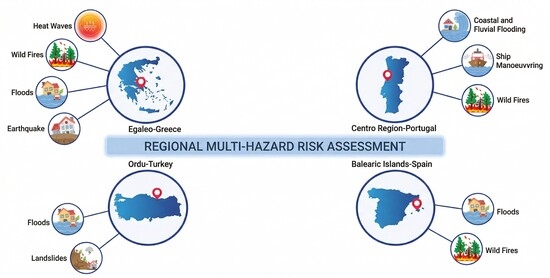
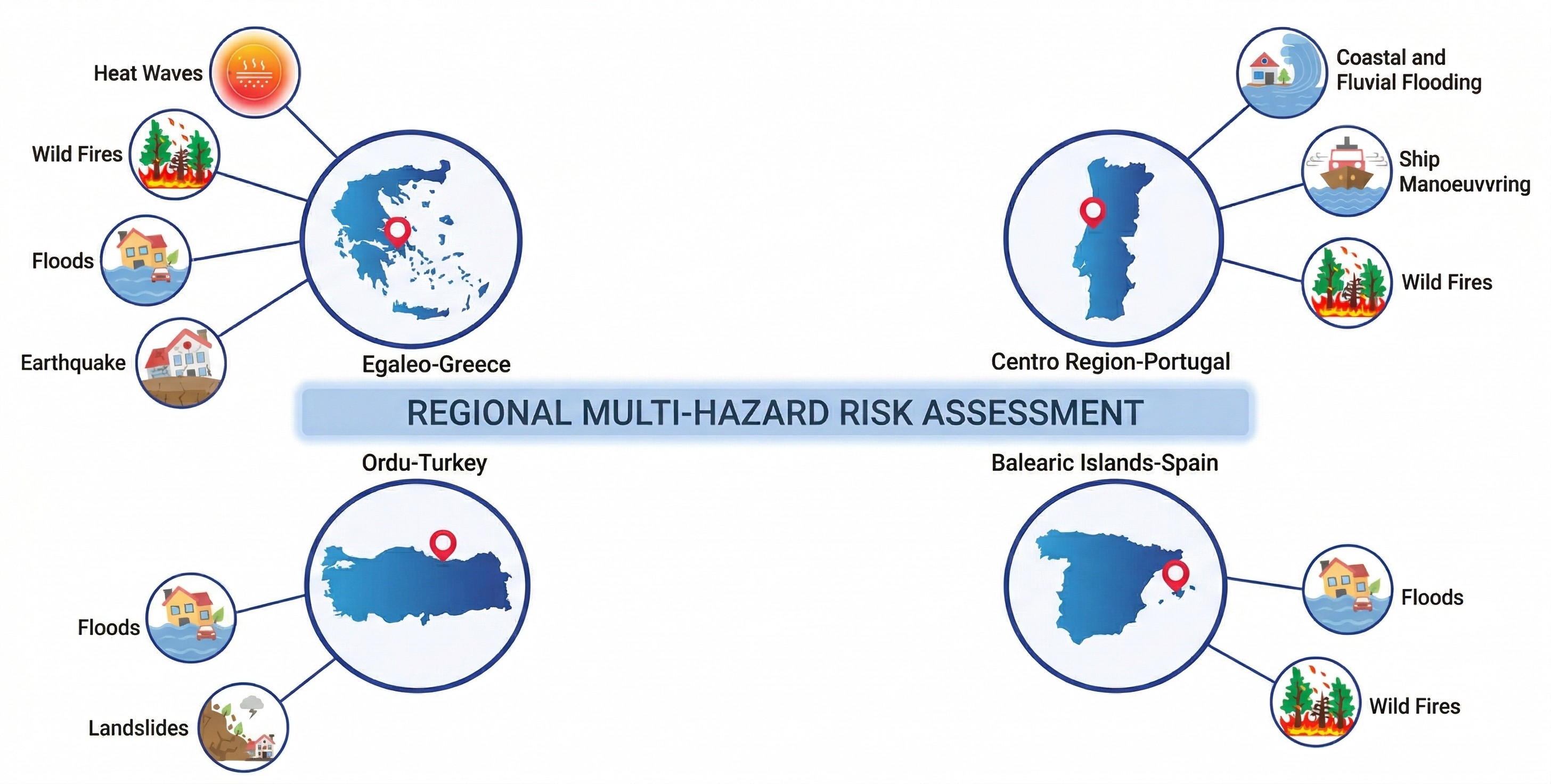
Within this framework, the C2IMPRESS project engages with four distinct CSAs, each representing a unique socio-ecological and governance context: the Municipality of Egaleo in Greece (EGL); the Balearic Islands in Spain (BAL), with a specific focus on Mallorca; the city of Ordu in Turkey (ORDU); and the Centro Region in Portugal (CENTRO). The distinct characteristics, vulnerabilities, and capacities of each CSA are detailed in the Section 3, providing the empirical basis for assessing how C2IMPRESS interventions influence community resilience across diverse settings.
Despite the growing consensus on the importance of multi-stakeholder disaster risk management (DRM), a significant theoretical and methodological gap remains in the current literature. While the established analytical frameworks frequently measure the static baseline resilience (e.g., historical demographic vulnerability) or conduct post-disaster evaluations, there is a scarcity of empirical research that is focused on the ex-ante (anticipated) quantification of how specific localised interventions alter community resilience before a disaster strikes.
Therefore, this study aims to move beyond the mere application of established analytical tools to provide a comparative empirical evaluation of resilience malleability. The central research question driving this work is as follows: How do distinct localised socio-technological interventions (such as early warning systems and polycentric governance frameworks) differentially impact the specific dimensions of community resilience (social, institutional, economic, infrastructural, and environmental) across diverse geographic contexts?
By answering this question, this work advances the current understanding of resilience dynamics. It tests the theoretical premise that resilience is not a monolithic trait but a multi-dimensional construct where certain capacities (e.g., socio-institutional preparedness) are highly malleable and responsive to short-term technological and participatory interventions, while others (e.g., economic resilience) remain rigidly tied to long-term structural factors. The C2IMPRESS project serves as the empirical vehicle to test this framework across four diverse European case study areas (CSAs).

2. Materials and Methods

To systematically address the central research question—how distinct localised interventions impact the specific dimensions of community resilience—this study employs a sequential, three-step analytical framework. Rather than operating as independent techniques, these methods form a cohesive pipeline moving from theoretical design to baseline quantification, and ultimately to predictive impact assessment.
Step 1: The Theoretical Grounding (Section 2.1): First, we established the structural foundation using the C2IMPRESS risk and resilience assessment framework (RRAF). This framework defines the parameters of community resilience through five key pillars, moving beyond hazard-centric models to prioritise knowledge co-production and multi-hazard dynamics.
Step 2: The Static Baseline Assessment (Section 2.2): Building directly upon the RRAF, we quantified the current state of resilience in each case study area (CSA). By evaluating 42 specific indicators across a normalised scale, this step provided a necessary static snapshot of each municipality’s existing vulnerabilities and capacities before any interventions were introduced.
Step 3: The Dynamic Impact Evaluation (Section 2.3): Finally, utilising the established baseline as a reference point, we conducted a targeted expert survey. This phase evaluated the anticipated dynamic changes to the 42 specific indicators following the simulated implementation of localised C2IMPRESS tools (e.g., early warning systems and decision support platforms).

2.1. C2IMPRESS Risk and Resilience Assessment Framework

C2IMPRESS is an EU-funded initiative focused on improving public awareness and understanding of multi-hazard risks, particularly those arising from the simultaneous occurrence of climate extremes, such as droughts and heatwaves. Moving beyond traditional hazard-centric models, the project introduces an innovative, place-based and people-centric approach to multi-hazard risk and resilience assessments. The project also seeks to equip citizens and communities with the tools and technologies they need to make informed climate decisions and take proactive climate action.
A central aim of the C2IMPRESS risk and resilience assessment framework (RRAF) is to integrate scientific knowledge regarding the causes, characteristics, and impacts of hazards. This integration is operationalised through a multi-hazard assessment that incorporates consideration of compound hazards and consequence-based modelling. The C2IMPRESS risk assessment (RA) underscores a comprehensive, multi-dimensional evaluation of community systems and services in terms of exposure and vulnerability, which is consistently applied across different risk contexts [13,14].
Within the context of C2IMPRESS, a cohesive risk and resilience framework has been developed, which is structured around five key pillars:
(i) Implementing an all-hazards approach: This integrative methodology enables a comprehensive risk analysis by considering the interactions between different hazard types, as well as their cascading effects and cumulative impacts [15].
(ii) Strengthening a multidisciplinary approach linking climate change adaptation and disaster risk reduction: Advancing a multidisciplinary approach that explicitly bridges CCA and DRR is imperative for formulating more coherent, efficient, and sustainable strategies [16].
(iii) Supporting holistic disaster risk management: All phases of the disaster management cycle—prevention, preparedness, response, and recovery—are systematically addressed to embed resilience thinking into disaster risk governance and adaptation practices [17,18].
(iv) Catalysing knowledge sharing: The RA framework must inherently promote both the scalability and transferability of risk-related knowledge and associated mitigation strategies across diverse geographic, socio-economic, and institutional contexts [19,20,21].
(v) Building on knowledge co-production: The risk assessment process prioritises researcher–community collaboration to co-produce risk and resilience knowledge [22,23], which is operationalised through the C2IMPRESS PPCP approach. The risk and resilience assessment framework (RRAF) uses community engagement to evaluate the exposure, conceptualising resilience as the collective capacity for coordinated hazard mitigation [24,25,26].
Recognising resilience as a dynamic, relative process, this community-driven framework introduces innovative interventions (Table 1) to strengthen disaster preparedness and adaptive capacities. It integrates with broader policies like climate change adaptation to guide strategic investments, emphasising the sustained functionality of the essential services for post-disaster recovery [17,27]. Finally, continuous engagement with CSA representatives ensures the RRAF remains contextually relevant and actionable.

2.2. Resilience Assessment

During an earlier stage of the project, we conducted a comprehensive resilience assessment to estimate each municipality’s resilience level [28]. This assessment employed the risk and resilience assessment framework (RRAF), developed as part of the project, comprising 42 indicators encompassing social, institutional, economic, infrastructural, and environmental capacities. The indicators were rigorously examined and validated by the project consortium, whose feedback informed subsequent refinements of the framework.
To contextualise these indicators within real-world urban processes, they are designed to capture both the physical and socio-economic realities of a municipality:
Social and Demographic Indicators: The metrics, such as age distribution and disability rates, do not merely reflect census data; they represent tangible logistical challenges during evacuations, indicating the proportion of a population requiring specialised mobility assistance or medical care during an event.
Institutional Capacities: The indicators measuring the ‘trust in authorities’ and ‘polycentric governance’ translate directly into emergency compliance. A high institutional resilience means that when an early warning is issued, citizens are more likely to trust the source and execute protective actions efficiently.
Economic Resilience: The variables like median household income and disaster risk financing (insurance coverage) dictate a community’s autonomous recovery speed. They reflect the financial elasticity of households to rebuild properties or endure temporary unemployment following an infrastructure collapse.
Infrastructural Robustness: The scores regarding building codes, water access, and protective infrastructure measure the physical threshold of a city’s built environment, such as how well sewage systems can prevent secondary urban flooding or whether critical roads remain passable for emergency vehicles.
Environmental Indicators: These capture the spatial overlap between human development and natural hazard zones, such as the percentage of urbanised land encroaching upon historic floodplains or wildfire-prone forested edges.
To quantify these capacities, the assessment utilises a normalised scoring scale from 0 to 10. On this continuum, a score of 0 denotes minimum resilience (severe vulnerability and absent protective capacities), while a score of 10 denotes maximum resilience (highly robust, optimal community capacities). This standardisation allows for a clear comparative analysis across different resilience dimensions.
The data for the evaluation of resilience levels in each CSA were collected from multiple sources, including open-access online platforms such as Eurostat [29] and Our World in Data [30], as well as national statistics platforms [31,32,33,34] or directly from municipal records. The complementary information was obtained through structured questionnaires completed by representatives of each CSA participating in the consortium. The triangulation of these data sources facilitated both quantifying resilience levels and the development of an interpretative report, thereby providing a comprehensive overview of each municipality’s resilience capacities.
This methodological approach enables the municipalities to recognise and critically assess both their strengths and vulnerabilities. It supports evidence-based decision-making and empowers local authorities to strengthen existing capacities, address systemic weaknesses, and better prepare for, anticipate, and respond to natural hazards.

2.3. Assessment of Anticipated Impact of the C2IMPRESS Tools on Resilience Indicators

The initial resilience assessment provided a static snapshot of each municipality’s resilience levels at the time of evaluation. However, to capture the potential dynamics of the resilience enhancement, it is essential to examine how these levels might evolve following the implementation of the project’s proposed tools and solutions. To this end, we designed a targeted survey asking each CSA team to select two or three tools deemed most relevant to their specific context and to report the anticipated degree of change across the 42 previously assessed indicators.
Among the selected tools, the public–private-civil partnership (PPCP) based polycentric risk governance framework was common to all the CSAs, thereby enabling a comparative analysis of the expected impacts on resilience levels. For each indicator, the CSA representatives were asked to assess the anticipated effect of the selected tool by choosing from five predefined categories of impact: (a) very negative impact, (b) negative impact, (c) no impact, (d) positive impact, and (e) very positive impact.
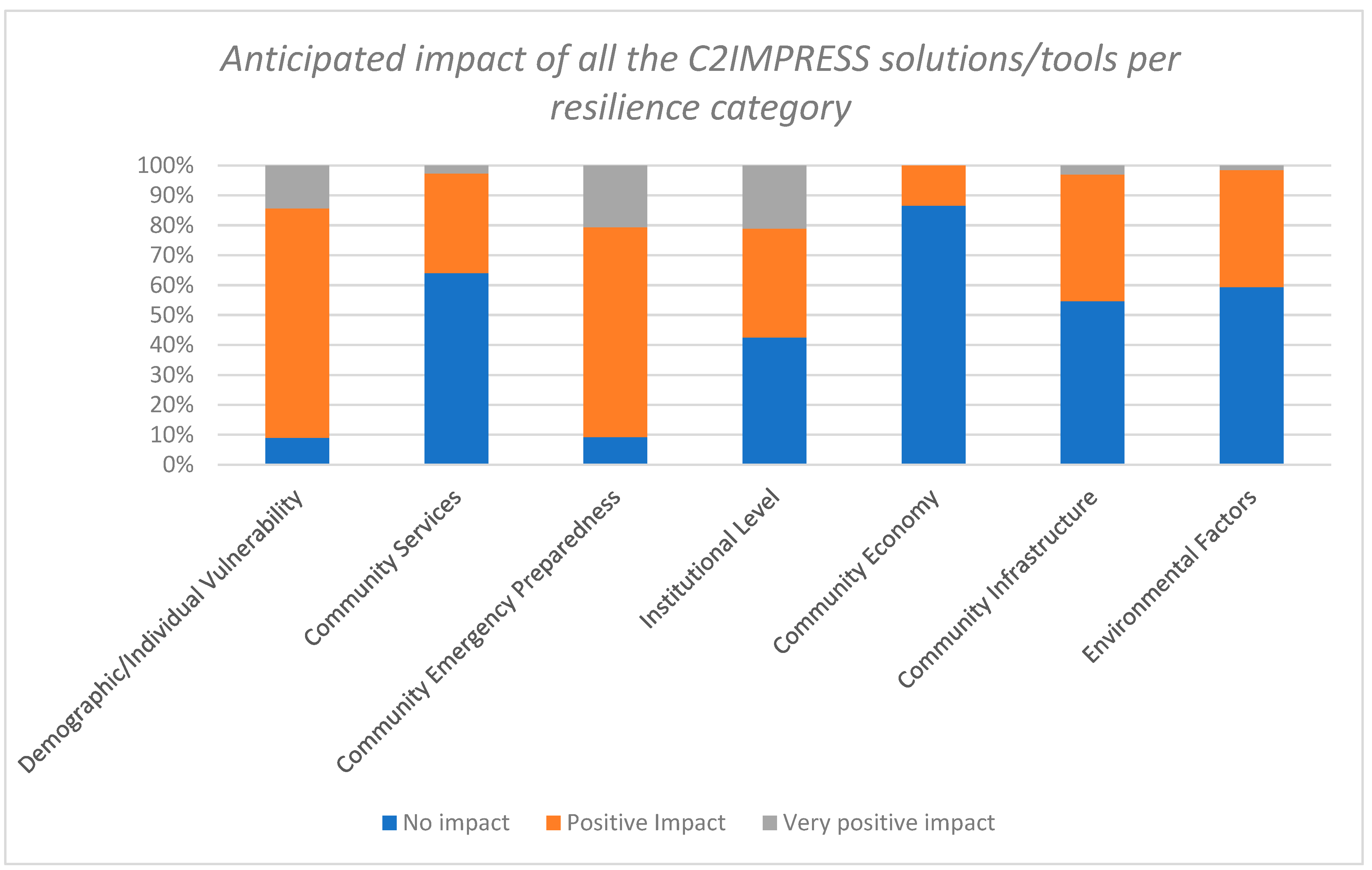
To translate the survey responses into the quantitative data presented in the subsequent graphs), we aggregated and normalised the results as percentages. Specifically, the y-axis represents the proportion (%) of indicators within a given resilience category (e.g., community emergency preparedness) for which a specific tool is expected to have a particular impact (i.e., positive, very positive, or no impact). Consequently, these visualisations illustrate the distribution of the anticipated impacts, providing a clear, standardised overview of how each tool affects the various resilience categories across the community.
The survey was developed using Google Forms (Google LLC, Mountain View, CA, USA; https://forms.google.com) and distributed to the participating CSA teams on 5 September 2024. The completed responses were received from all the CSAs by 24 September 2024, ensuring full coverage across the case study sites. A summary of each tool under consideration is presented in Table 1.

3. Results

In this section, we assess the expected impacts of the selected C2IMPRESS tools on each CSA’s resilience capacity. The analysis is organised into three complementary components. First, we evaluate the anticipated changes across the 42 resilience indicators for each tool within its respective CSA, highlighting context-specific variations and projected improvements. Second, we compare the expected changes in resilience indicators linked to the public–private-civil partnership (PPCP) approach, which was applied across all CSAs, enabling a cross-site comparison. Finally, we present an aggregated overview of the overall expected changes across the five resilience dimensions—social, institutional, economic, infrastructural, and environmental—by combining the data from all the selected tools. This structured approach allows for a nuanced understanding of both localised and overarching effects of the interventions, offering insights into potential ways to strengthen community resilience.

3.1. Anticipated Change per CSA

3.1.1. Municipality of Egaleo

Egaleo is a residential municipality in western Athens, Greece, with a population of 69,946 [32] and a total area of 6.421 km2. About a quarter of the municipality is occupied by the Eleonas industrial area, which also includes a substantial green space, the Baroutadiko grove, which spans 134 acres. The Kifissos River partially traverses the city. Egaleo functions as a significant commercial and employment hub and serves as an important node within the metropolitan transportation network.
The municipality is exposed to multiple natural hazards, particularly earthquakes, heatwaves, and floods. A notable event in its recent history was the 1999 earthquake, with a magnitude of 5.9 (Richter scale), which affected the entire Attica region and resulted in substantial infrastructure damage and human casualties. In response to heatwaves, Egaleo has implemented a dedicated action plan in coordination with the Civil Protection Services, including the provision of air-conditioned public spaces, the “Aid at Home” programme to transport vulnerable people to these facilities, and the strategic positioning of municipal health clinics to manage heat-related medical cases.
Egaleo has also adopted an Action Plan for Energy and Climate, aimed at both mitigating the impacts of climate change and facilitating the municipality’s gradual adaptation. The key objectives of this strategy include reducing pollutant emissions and actively preserving the local environment by 2030. The primary components of the implemented strategy encompass: (a) enhancing the urban environment, (b) public awareness campaigns targeting energy consumption reduction and environmental protection, and (c) measures to adapt to projected climate change impacts [28].
Egaleo Resilience Assessment
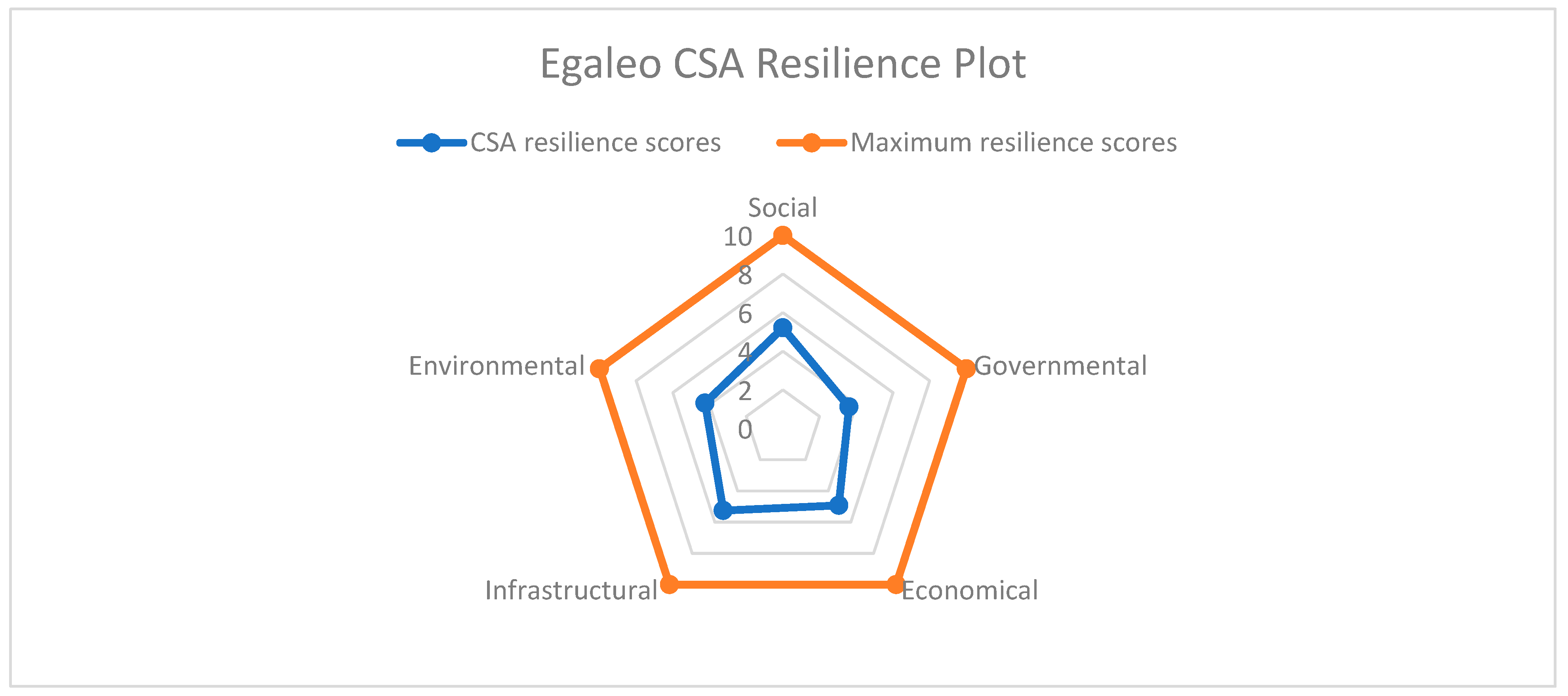
As shown in Figure 1, Egaleo scored moderately (5.21/10) in the social dimension, reflecting strengths in indicators of community well-being, such as educational attainment, internet access, and life expectancy. However, 19% of the residents are aged 65 or older, which is a group with reduced mobility and potentially limited awareness of emergency procedures, requiring additional attention from the local authorities. The existing event management plans, including post-event recovery strategies, do not comprehensively address all hazards, nor are they fully coordinated among the relevant stakeholders [28]. The governmental capacities were rated as substandard due to insufficient coordination, policy and service review, which limit the efficiency and effectiveness. Economically, the municipality scored 4.93, reflecting a low household income, a 12.23% unemployment rate, and a moderate income inequality (6.4/10). Infrastructurally, Egaleo benefits from a robust water supply and sewage networks. Nevertheless, the building codes and protective infrastructure are inconsistently enforced, and key areas remain exposed, resulting in a moderate score of 5.26.
Egaleo is also highly exposed to natural hazards, including earthquakes, severe heatwaves (31% of summer days in 2023 were ≥35 °C), and flooding, particularly near the Kifissos Highway, which crosses a river prone to overflow after heavy rainfall [28].
Anticipated Change by Tool
  • Agent-based Model for Hazard Simulation
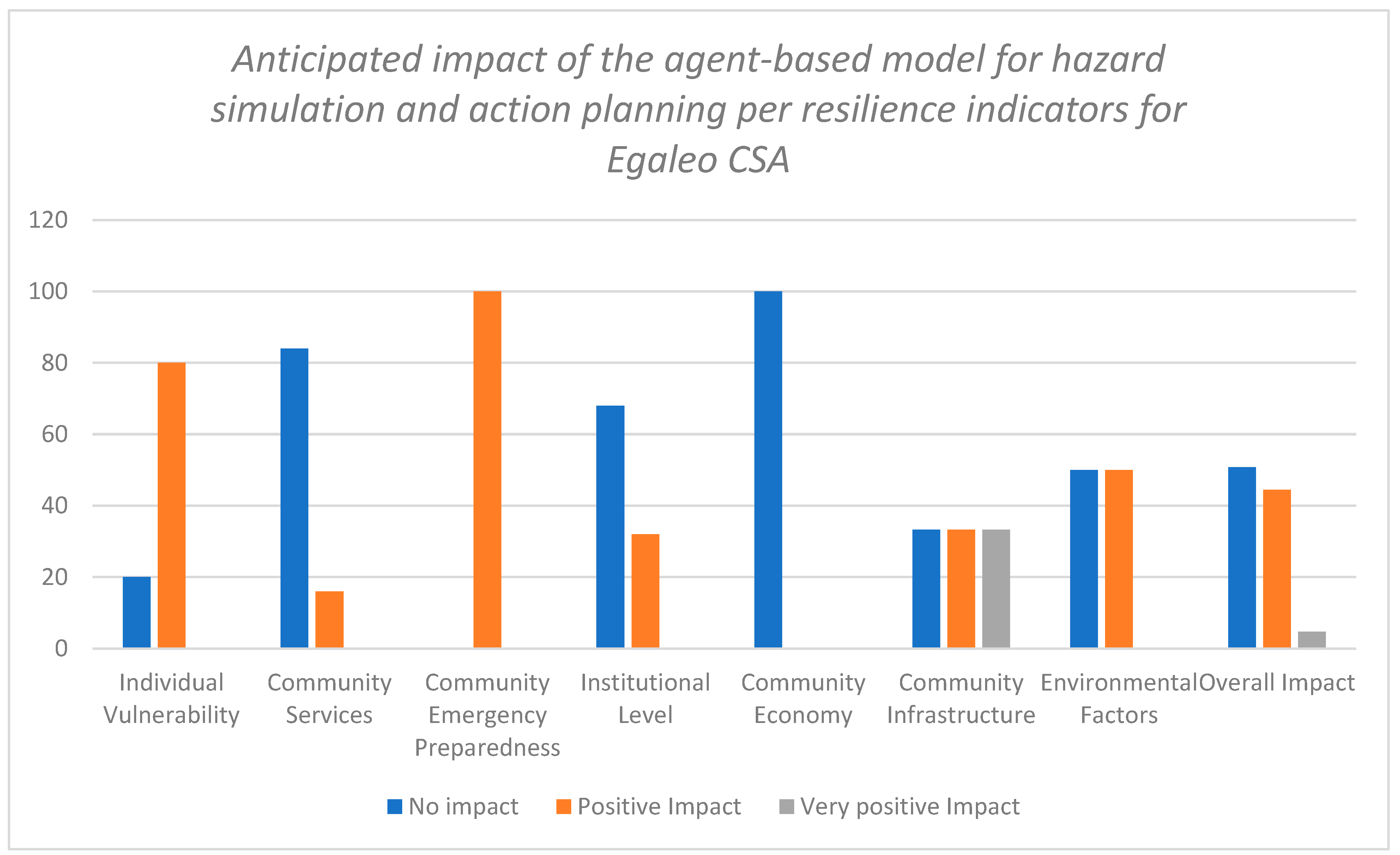
The first solution selected by Egaleo was a decision support tool that integrates a human behaviour and agent-based model for hazard simulation and action planning. This tool aims to create a routable road network for city-wide simulations and to simulate the expected behaviour of synthetic populations that reflect the characteristics of residents, considering cognitive biases, social bonds, and relevant environmental factors. An overview of the model’s expected impact on the municipality is illustrated in Figure 2.
The agent-based model for hazard simulation enables the municipality to collect and analyse data on various demographic factors, including age, place of residence, educational level, and prior training on natural disasters. Consequently, the model is expected to have a positive impact on the demographic domain, as it provides local authorities with critical information regarding the vulnerability of different citizen groups at both individual and community levels. This data can inform and refine emergency plans, training programmes, and evacuation policies. Among the social indicators, only educational attainment is expected to improve, while the others are expected to remain stable.
The most pronounced impact is projected in the community emergency preparedness domain. The model evaluates current emergency planning capacities by simulating evacuation routes and predicting the most likely destinations chosen by citizens. This allows authorities to identify the evacuation points at risk of exceeding capacity, as well as the locations that are frequently used by evacuees that have not yet been designated as official evacuation points. Such insights enable the municipality to optimise the placement and scale of the post-disaster meeting points and to adjust the content or frequency of the citizen emergency preparedness training as needed.
In the governmental and institutional dimension, an increase in the citizens’ trust in authorities is anticipated due to the design and implementation of novel, efficient emergency policies. Higher levels of trust are critical, as they increase the likelihood of compliance with official guidance during emergencies, which can be decisive in hazard response [35]. Furthermore, the efficiency and effectiveness of municipal services are expected to improve, as the model provides authorities with tools to continuously assess, evaluate, and adapt emergency policies and services. Other institutional indicators—such as financial planning and budgeting for resilience, corruption, community participation in decision-making, and the incorporation of the lessons learned—are not expected to change, likely because these require more fundamental systemic reforms.
The community’s economic and infrastructure indicators are generally not expected to be affected by the model, except for the protective infrastructure. Positive changes are anticipated in this area through the identification and adjustment of potential evacuation points. Finally, as the model has already been applied to simulate an earthquake scenario, it is expected to reduce the municipality’s exposure to this hazard. The tool is also adaptable and can be extended to simulate additional hazards, such as flooding.
2.
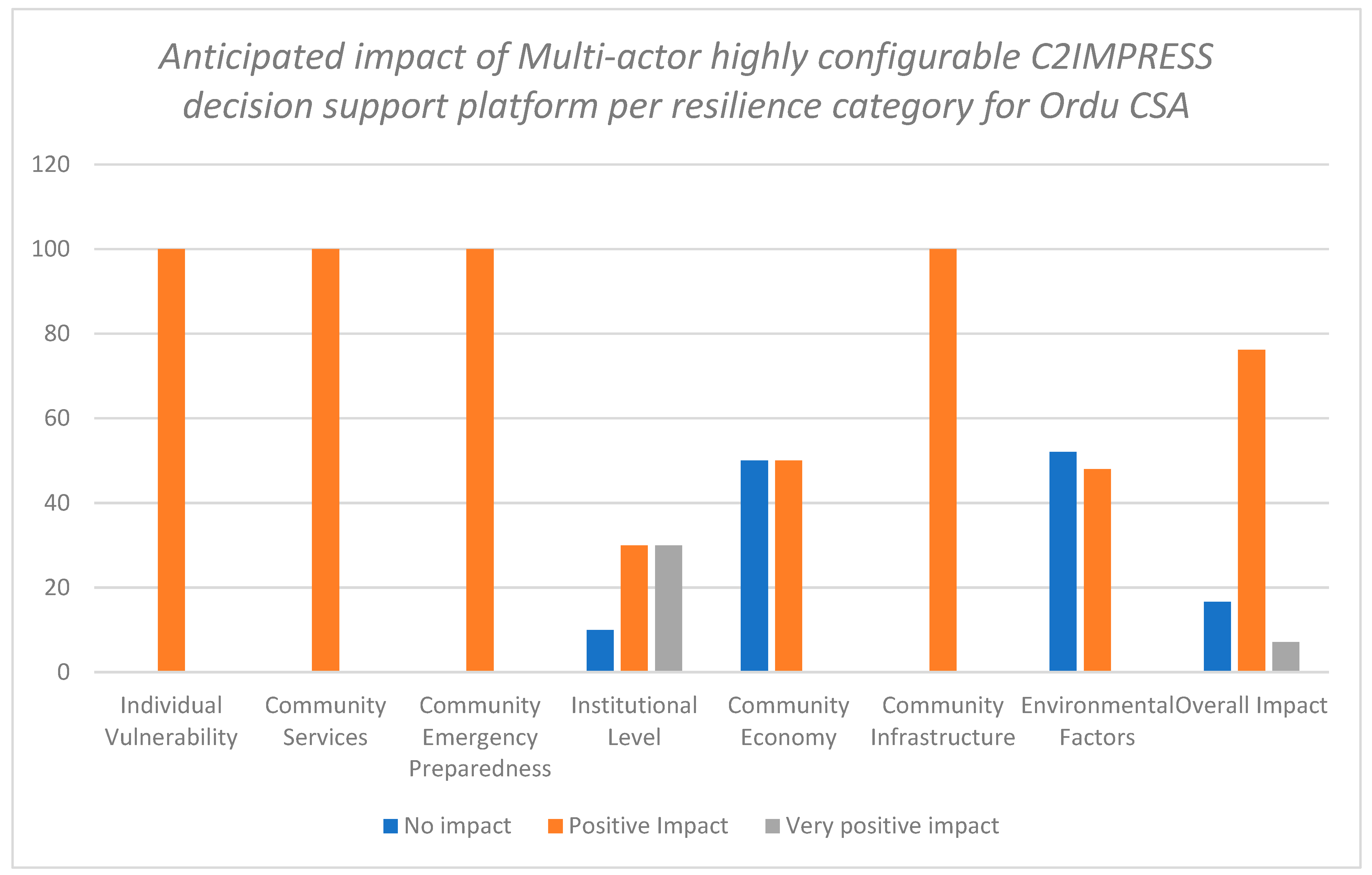
Multi-actor Highly Configurable C2IMPRESS Decision Support Platform
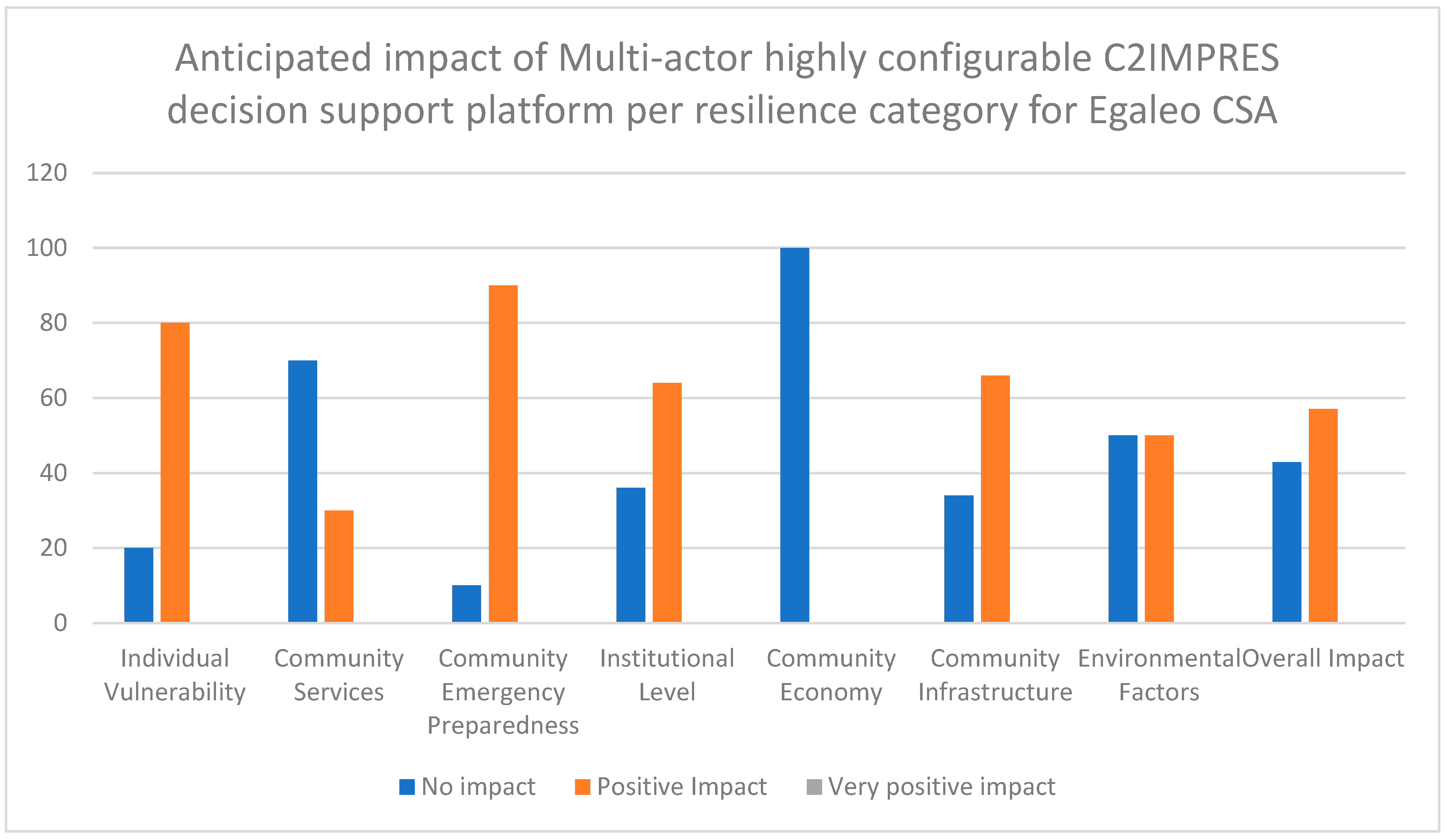
The second tool, the multi-actor, highly configurable C2IMPRESS decision support platform, integrates the data from multiple stakeholders to inform decision-making before, during, and after disasters. It incorporates various microservices, including simulation outputs, AI models, big data analytics, knowledge graphs, sensing and monitoring technologies, and citizen participation. An overview of the platform’s expected impact on the municipality is shown in Figure 3.
The platform is expected to reduce individual vulnerability by providing authorities with detailed information on the citizens’ exposure levels. It also functions as an alternative communication channel, continuously updating residents on natural hazards, their likelihood, and the anticipated impacts. This is anticipated to enhance the overall community emergency preparedness and hazard assessment capacities, although the citizens’ emergency training remains reliant on practical exercises.
By leveraging historical hazard data and performing big data analytics, the platform is expected to strengthen authorities’ learning capacity, efficiency, and effectiveness, thereby increasing the citizens’ trust in governance. No impact is expected on financial planning, budgeting, or corruption, as these require systemic interventions, nor on the community’s economic capacities.
The platform is expected to improve infrastructure management by facilitating post-disaster damage reporting, rapid impact quantification, and resource allocation. The citizens can also report concerns about buildings or public spaces via the platform and engage in discussions through its forum. Overall, the tool is expected to reduce Egaleo’s vulnerability to earthquakes, heatwaves, and floods by integrating multisource scientific data with citizen contributions, enabling better hazard anticipation and more effective response measures.

3.1.2. Mallorca, Balearic Islands

Mallorca, the largest of the Balearic Islands, is located in the Mediterranean Sea, Spain, and has a population of 914,564 inhabitants [33]. The island is particularly prone to flash floods and wildfires. The most severe recorded flood occurred in 1403 in Palma, the island’s capital, resulting in approximately 5000 fatalities. Human settlement patterns on the island have historically been influenced by fluvial systems, resulting in the urban areas being highly exposed to flash flooding [28].
Ongoing urban and tourism development has accelerated urbanisation, including in flood- and fire-prone regions, thereby increasing human exposure to a range of natural hazards such as earthquakes, meteorological, chemical, and radiological risks, as well as marine pollution.
Despite these challenges, the Emergency Management Service of the Balearic Islands, in close collaboration with the Observatory of Natural Hazards and Emergencies of the Balearic Islands (RiscBal), enables continuous monitoring and rapid responses across the island. The recent implementation of flood early warning systems (EWSs) has improved the observation, documentation, and analysis of the hazard data, supporting the preparedness for imminent disasters. Additionally, the ES-Alert system provides authorities with a direct communication channel to residents via smartphones, ensuring the timely dissemination of emergency information.
Balearic Islands Resilience Assessment
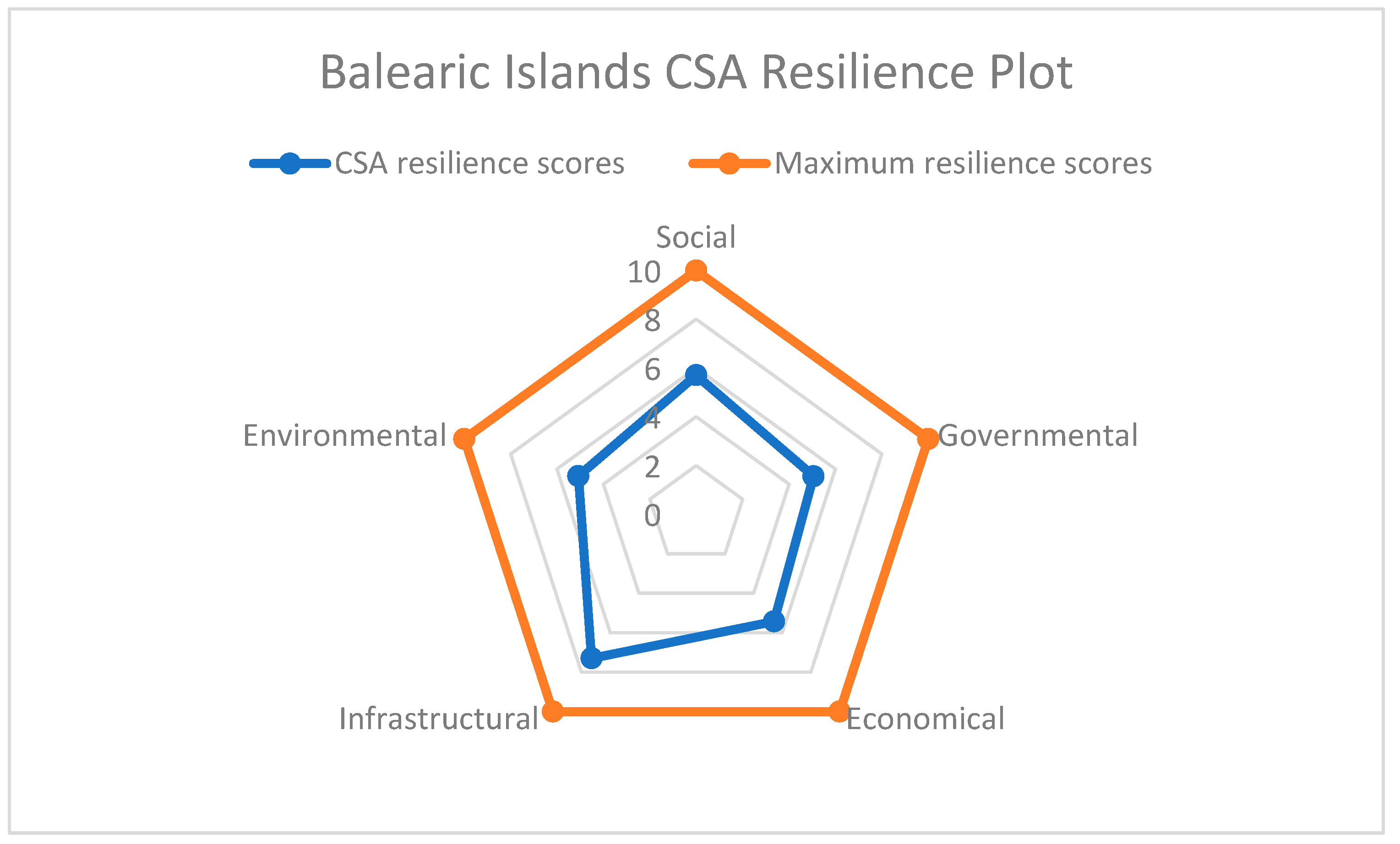
Overall, the Balearic Islands exhibit a medium resilience score of 5.71/10, as shown in Figure 4. In the social dimension, the score remains 5.71, reflecting strengths such as a high life expectancy (of 83 years) and strong community trust, with 81.1% of residents reporting trust in their neighbours [36], which is linked to a greater social cohesion and civic participation. However, limited medical resources (3.03 hospital beds and 3.43 doctors per 1000 people, Government of the Balearic Islands, 2022), combined with a high proportion of disabled residents (19%, score 7.3/10), hinder the overall quality of life and the social resilience.
The Government of the Balearic Islands has established emergency management plans covering disaster preparedness and response; however, the administrative limitations and budgetary constraints hinder the regular updates these plans require. Some economically disadvantaged municipalities lack tailored emergency plans, although the community maintains a proportional stock of emergency food and relief supplies that are sufficient for severe scenarios.
Environmentally, a significant portion of Mallorca is protected under the Natura 2000 network, supporting biodiversity and ecosystem resilience [37]. Flooding represents the island’s greatest environmental threat, while heatwaves affected approximately 42% of summer days in 2023. Forested land covers 44.3% of the island, contributing to moderate wildfire exposure (score 5.6/10), whereas the earthquake risk is comparatively low (score 9/10).
Anticipated Change by Tool
  • Forecasting and EWS for Flood Hazards
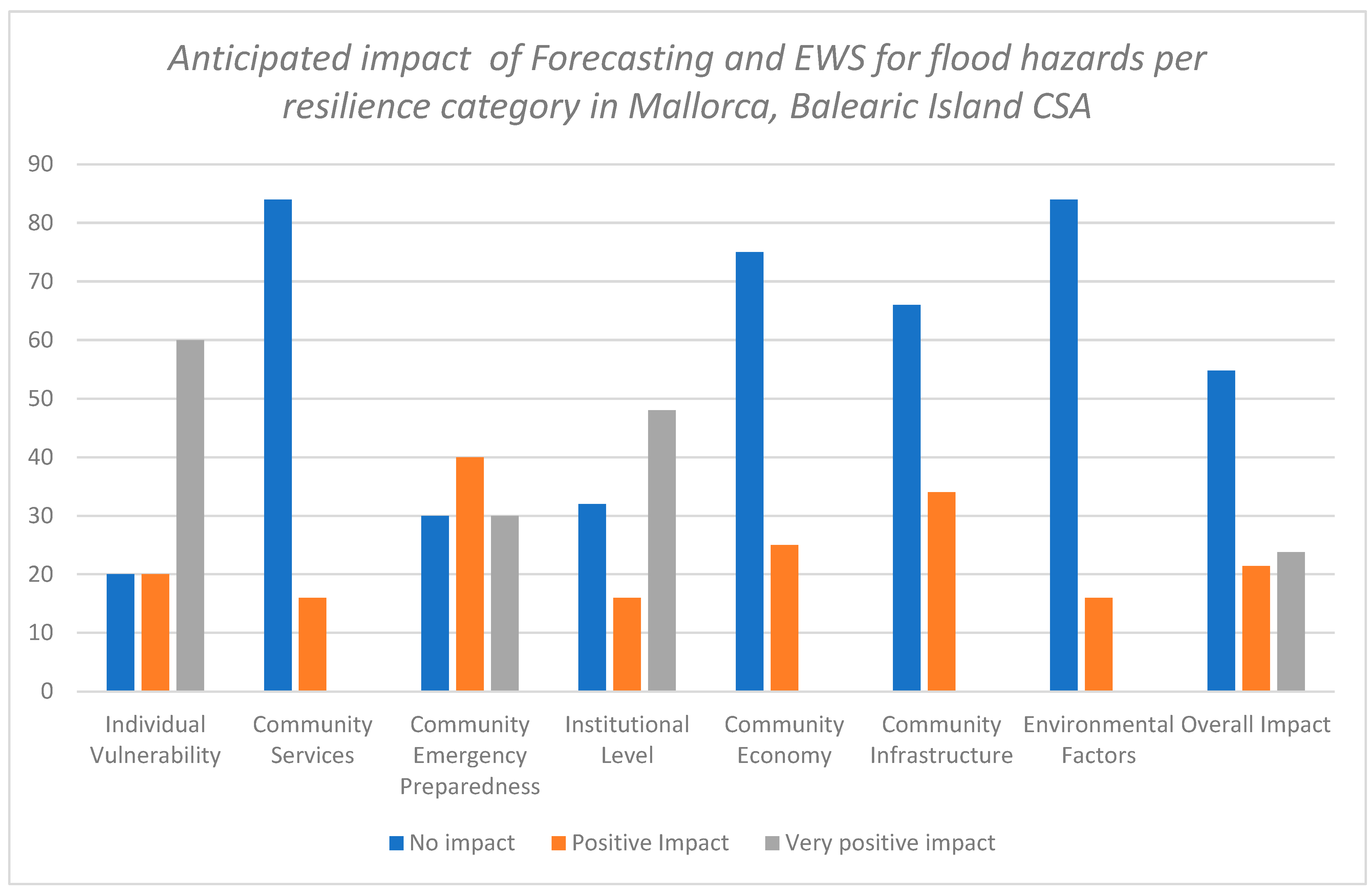
For this survey, the representatives of the Balearic Islands within the C2IMPRESS consortium identified the forecasting and early warning system (EWS) for flood hazards as the most relevant and impactful tool for their CSA, alongside the PPCP tool, which is discussed in a separate section. This tool, developed and implemented within the project’s scope, involves the strategic placement and operationalisation of EWSs across the island, enabling timely flood prevention measures and alerts. An overview of the tool’s anticipated impact across the resilience dimensions is shown in Figure 5.
At the social and demographic level, the forecasting and EWS tool is expected to significantly reduce the exposure of the island’s most vulnerable populations, including children, the elderly, and people with disabilities, by enabling proactive measures in response to imminent floods [38]. The average life expectancy is anticipated to improve slightly, while indicators such as community participation and place attachment are expected to remain stable. The operationalisation of the EWSs will enhance the communication networks, providing alternative channels that complement or replace the existing systems (e.g., ES-Alert) during emergencies. Other community services, including internet access, schools, and hospital capacity, are not expected to be affected.
The tool is expected to positively influence the community’s emergency preparedness, particularly in hazard assessment, planning, and citizen training. The emergency services, such as fire and police stations, will benefit from more accurate and timely information, improving task allocation, decision-making, and response effectiveness. The citizens’ knowledge of emergency meeting points and preparedness practices is also expected to increase, encouraging safer behaviours during disasters [35].
These improvements will enhance the overall efficiency and learning capacity of the community and local authorities, enabling the continuous evaluation of past experiences and the implementation of new practices to better manage natural hazards [39]. Consequently, the trust in local authorities is expected to rise significantly, whereas corruption is projected to decrease moderately.
In the economic and financial domain, the accessibility and robustness of disaster risk financing (insurance) are expected to improve. Infrastructural capacities will see a modest positive effect, limited to existing protective infrastructure, which reduces the vulnerability of both human and critical assets. Finally, in the environmental domain, the tool’s impact is targeted specifically at floods, providing a moderate improvement in resilience without directly reducing the exposure.

3.1.3. Municipality of Ordu, Turkey

Ordu is a coastal city and province in northern Turkey, situated in the western part of the Eastern Black Sea Region, which experiences the highest average annual precipitation in the country. The presence of 36 rivers and streams, combined with the extensive urbanisation of the forested areas, makes the city highly susceptible to floods, which can trigger severe landslides. The frequent flooding disrupts streets, workplaces, and homes, compromises mobility, and can cause the collapse of bridges, affecting the critical transport infrastructure and human lives.
In response, Ordu’s authorities have implemented the Disaster Response Plan (TAMP-Ordu), which coordinates the stakeholders from the public, private, and civil sectors to ensure a clearer delegation of responsibilities during and after natural disasters. The plan addresses multiple hazards, including floods, landslides, earthquakes, avalanches, forest fires, industrial accidents, and mass population movements.
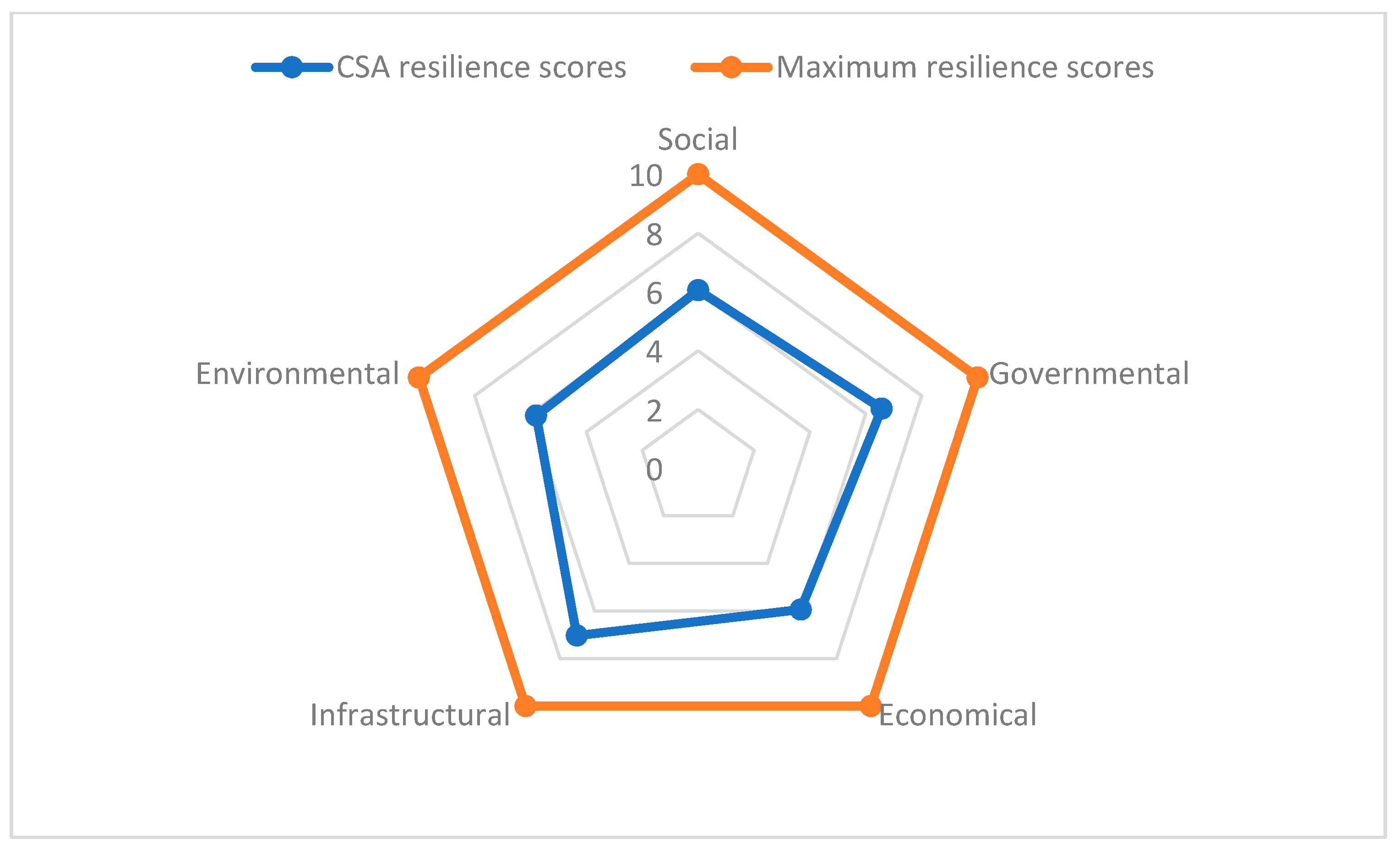
Ordu Resilience Assessment
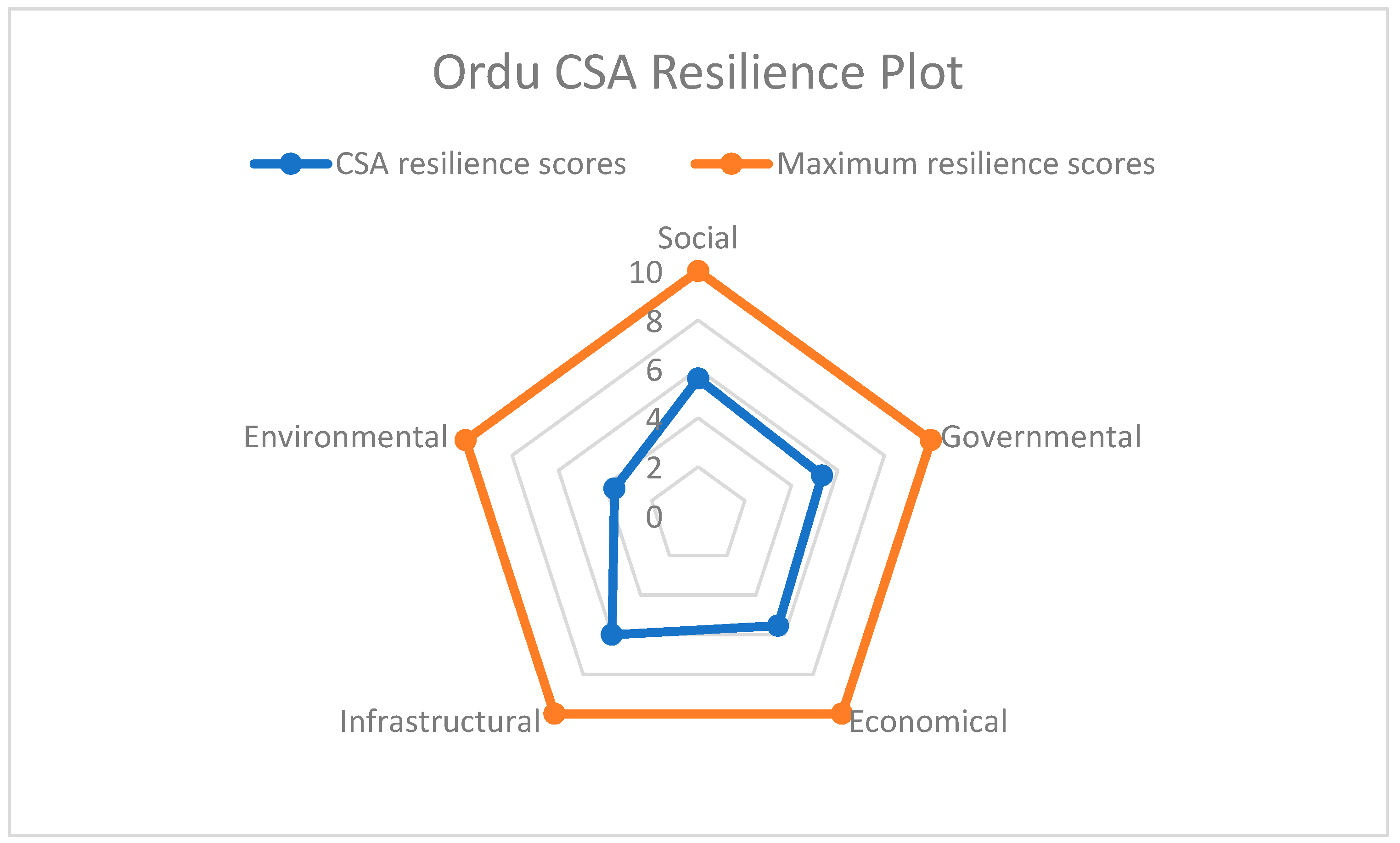
Demographically, Ordu has the highest proportion of underage residents among the CSAs (26.5%), which, while beneficial for long-term community renewal, increases vulnerability due to limited emergency experience and knowledge [38]. Conversely, the relatively low proportions of elderly and disabled residents support a higher social resilience. The life expectancy in Ordu is the lowest among the CSAs (77.5 years), as the health system remains underdeveloped, with 3.01 hospital beds per 1000 population (2.1/10), 2.16 doctors per 5000 residents (2.5/10), and an annual per capita health expenditure of $443.08. The educational attainment is moderate (64%), but public-school capacity is high (0.74 schools per 1000 inhabitants), supporting rapid post-disaster recovery and additional shelter provision [40]. An overview of the municipality’s resilience assessment is presented in Figure 6.
The existing event management plans, hazard assessment policies, and emergency preparedness training contain gaps and require frequent updating. The early warning systems (EWSs) cover approximately 75% of the population, leaving a portion of residents unprotected. The community maintains strategies to learn from past events and has sufficient emergency supplies and shelter, though a comprehensive resilience plan remains absent, leaving a significant preparedness gap.
Institutionally, Ordu conducts partial planning and service reviews, but the impact assessments are not systematically executed, which limits the municipal efficiency and effectiveness. On the national level, a high perceived corruption (3/10) erodes trust in the authorities and decreases compliance with emergency directives.
Economically, the low median household income ($10,622/year) and the high income inequality (0.413, where 0 = complete equality and 1 = complete inequality) restrict the citizens’ ability to respond to disasters. The low unemployment (8.5%) offers some positive impact, resulting in a moderate economic resilience score of 5.94/10.
Regarding the infrastructure, building codes are in place, but they are enforced inconsistently. Some protective measures exist, though critical assets still face exposure. The water supply and sewage systems are resilient, aiding a quicker recovery after disasters. Environmentally, 26.9% of Ordu is covered in forests, which raises wildfire risks, while high rainfall and numerous rivers increase flood and landslide vulnerabilities. The earthquake exposure is also notable (score 2/10), though heat-related hazards are less urgent.
Anticipated Change by Tool
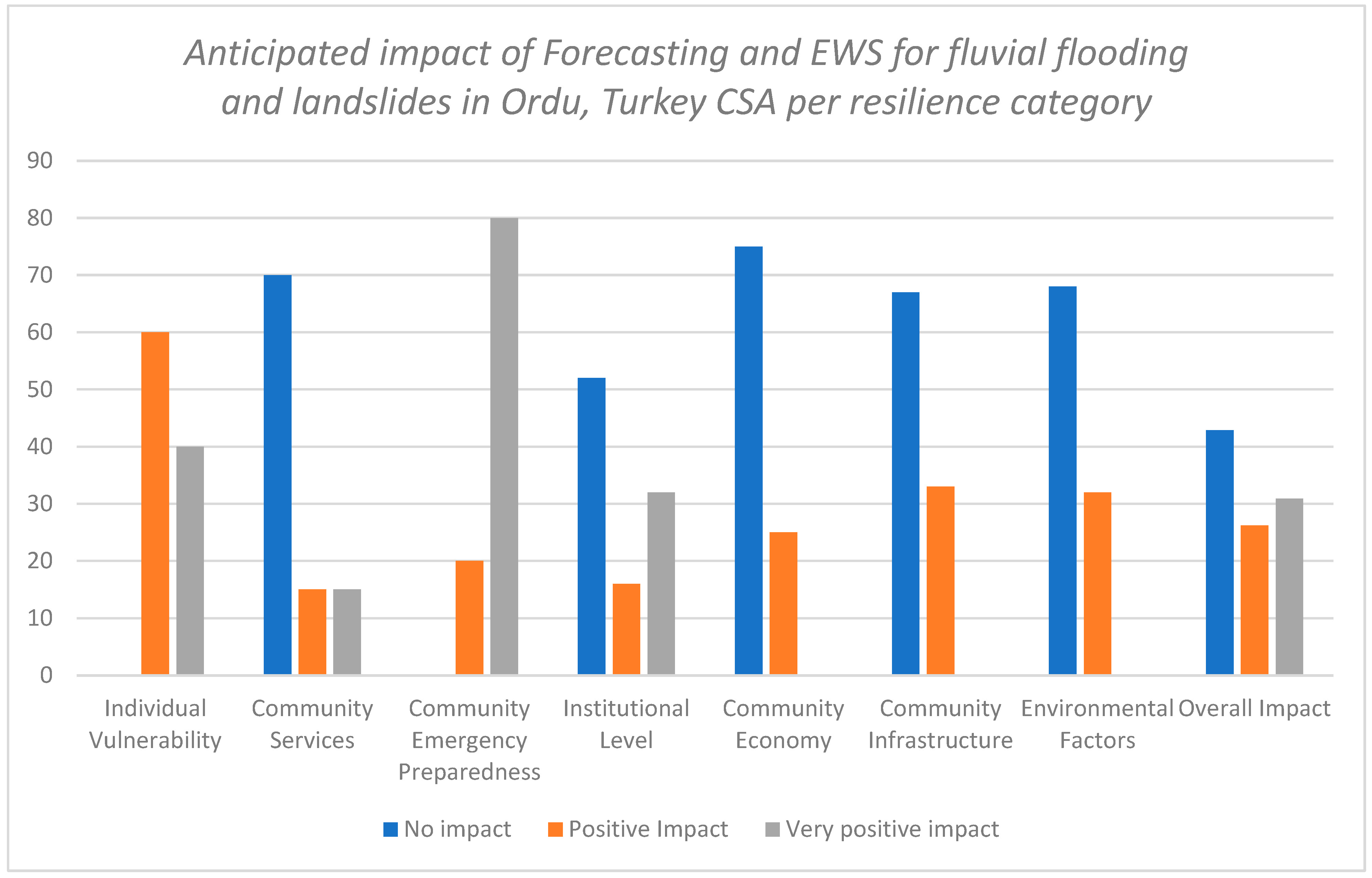
  • Forecasting and EWS for Fluvial Flooding and Landslides
The EWS utilises live field data from three monitoring systems to perform predictive modelling. The inputs are automatically assessed against the thresholds derived from historical flood records and SDM-simulated hazard escalation patterns. The tool is expected to benefit all vulnerable groups, particularly the elderly and disabled, and to moderately improve the average life expectancy. While citizen participation in decision-making is unlikely to change, place attachment is expected to increase, fostering stronger community engagement. The communication networks will be enhanced through alternative channels, enabling the timely dissemination of hazard information, and health insurance coverage is expected to improve moderately. An overview of the EWS’s anticipated impact in Ordu can be seen in Figure 7.
The most notable positive impact is expected in emergency preparedness. Besides the moderate improvements in post-event recovery planning and the citizens’ emergency experience, indicators such as emergency meeting points and hazard assessment are likely to improve significantly. This emphasises the vital role of updated EWSs in high-risk areas, aiding threat detection, hazard assessment, and the timely issuance of alerts to citizens.
Institutionally, the tool is expected to strengthen the authorities’ capacity to learn from past successes and failures, enhancing the efficacy, efficiency, and adaptability of their emergency policies [35]. These improvements are likely to increase the citizens’ trust in the local authorities, although the corruption levels and the financial plan and budget for resilience are not expected to change.
Economically, moderate improvements are expected in disaster risk financing, reflecting better access to insurance for natural hazard-related damages, while other financial indicators remain unaffected. In terms of infrastructure, only the protective infrastructure is projected to improve moderately, supporting the safeguarding of critical assets. Finally, the tool is expected to reduce the community’s exposure to floods and the subsequent landslides and avalanches they may trigger.
2.
Multi-actor Highly Configurable C2IMPRESS Decision Support Platform
The multi-actor decision support platform integrates all C2IMPRESS micro-services and databases, including a decision support tool (DST) to assist authorities with policy management. The platform provides spatio-temporal visualisation and intelligence by combining the C2IMPRESS and legacy data, delivering localised hazard and disaster information to support multi-level, multidisciplinary decision-making. Accessible to both the residents and the municipal authorities, the platform enhances active citizen participation in disaster management policies. An overview of the platform’s anticipated impact in Ordu is depicted in Figure 8.
Demographically, the tool is expected to reduce community vulnerability, increase the average life expectancy, and foster a sense of place attachment. The community services, including healthcare capacity, educational attainment, and internet access, are anticipated to benefit positively. In emergency preparedness, all the indicators are projected to improve, including hazard assessment, citizen training, and post-event recovery planning, reflecting the platform’s comprehensive coverage from hazard forecasting to policy support.
Institutionally, the platform is expected to improve the resilience planning and budgeting, the authorities’ efficiency and efficacy, and the citizens’ trust. The municipality’s capacity to learn from past experiences is also projected to improve, while the corruption levels are expected to remain unchanged. The community participation in decision-making is anticipated to increase due to the enhanced opportunities for citizen engagement.
Economically, the platform is expected to moderately improve the disaster risk financing and reduce municipal unemployment. All the infrastructure capacities are projected to benefit. Environmentally, the tool is expected to reduce exposure to the municipality’s primary hazards, floods and landslides, while having a limited impact on less prominent risks.

3.1.4. Centro Region, Portugal

The Centro Region CSA comprises five subregions: (i) Figueira da Foz harbour, the adjacent coastal areas, and downstream areas of the Mondego River alluvia; (ii) Aveiro harbour and the adjacent coastal areas; (iii) the Mondego River basin; (iv) the “Leirosa-Monte Real” groundwater body; and (v) the “Maciço Antigo Indiferenciado da Bacia do Mondego” groundwater body. The key hazards across these areas include coastal and fluvial flooding, wave overtopping, forest fires, and seawater intrusion. In December 2019, three consecutive cyclones caused extreme precipitation and runoff, particularly affecting the northwest, centre west, northeast, and centre east regions, resulting in a catastrophic flood in the Mondego alluvial reach [41].
Currently, river basin management plans, flood risk management plans, and community emergency plans are in place, alongside studies on regional exposure levels [42]. Within the C2IMPRESS project, the objectives for each subregion include: (i) modelling coastal and fluvial flooding, wave overtopping, and extending the EWS to encompass ship safety; (ii) modelling coastal flooding and wave overtopping, and extending the EWS; (iii) simulating river discharge for specific precipitation events, considering burned areas and fire severity, and developing a platform to predict the impacts and adaptive strategies; (iv) assessing forest fire impacts on the groundwater supply and the seawater intrusion vulnerability under climate change; and (v) evaluating forest fire effects on the groundwater conditions.
Centro Region Resilience Assessment
The Centro Region has an overall resilience score of 6.7/10 (Figure 9). Over a quarter of the population is elderly, and 48% have some form of disability, leading to high individual vulnerability. The healthcare sector shows moderate resilience, with 3.5 hospital beds per 1000 inhabitants and an average expenditure of €2457 per person. The educational attainment is high, with 90% completing upper secondary education; however, a low public-school capacity (2.7 schools per 5000 people) hampers the post-disaster recovery of educational services [40]. Only 44% of the residents have internet access, emphasising the need to enhance the communication networks and establish alternative channels for emergencies.
The emergency management plans cover mitigation, preparedness, and response, and over 75% of the population can be reached by the EWSs. The emergency supplies meet but do not exceed the estimated needs. Although the authorities possess a good understanding of the major hazards, post-event recovery planning is neither comprehensive nor fully integrated, and some of the community sectors lack sufficient training and engagement. Nonetheless, an established municipal climate change adaptation strategy, updated through 2030, addresses the projections, scenarios, and potential impacts to strengthen the regional resilience.
Institutionally, the local authorities have mechanisms to learn from past experiences, but integrating the lessons that have been learned into the policy redesign remains a challenge. The efficiency and efficacy are generally high, with reviews conducted on major services and functions. The perceived corruption of national authorities is 62/100, and 47.7% of the residents trust the national government.
Economically, the median household income is approximately $24,877, with an income inequality index of 0.327. The unemployment rate is low (4–7%), supporting community preparedness and recovery. About 36.9% of properties hold insurance against high-risk hazards.
The infrastructure exhibits the highest resilience scores: building regulations, zoning laws, and standards are effectively implemented and enforced, and the protective infrastructure generally adheres to the best practices, although some critical assets remain vulnerable. The access to clean water is high (95.2% in Figueira da Foz), and the sewage connections range from 48.3% to 75.4%.
The region contains several Natura 2000 protected areas that preserve biodiversity and mitigate the impacts of climate change. Heat exposure is significant, with 28 days exceeding 35 °C in the summer of 2023. Earthquake exposure is low, forest fire exposure is moderate, and riverine, coastal, and urban floods remain the most prominent hazards.
Anticipated Change by Tool
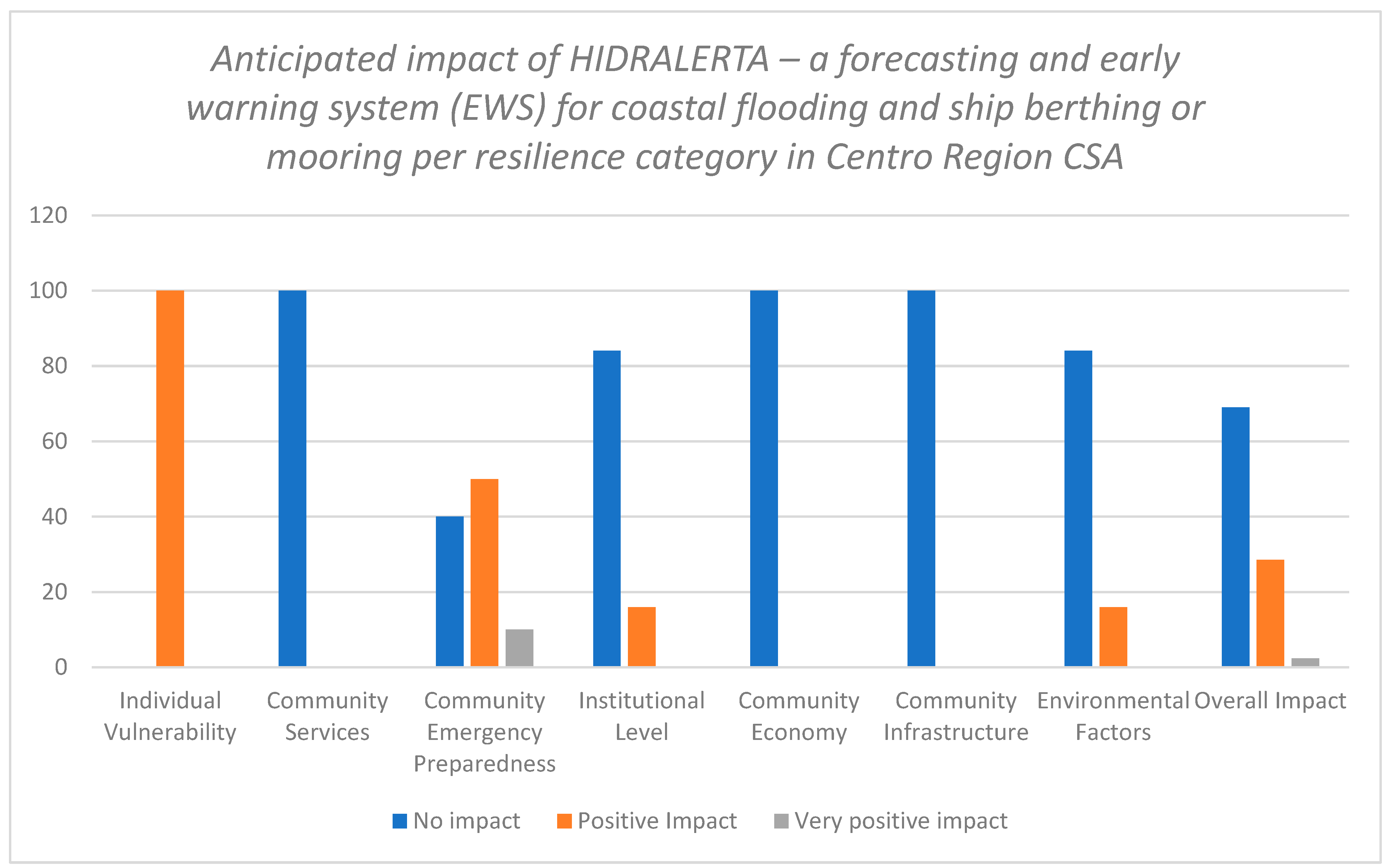
  • HIDRALERTA System
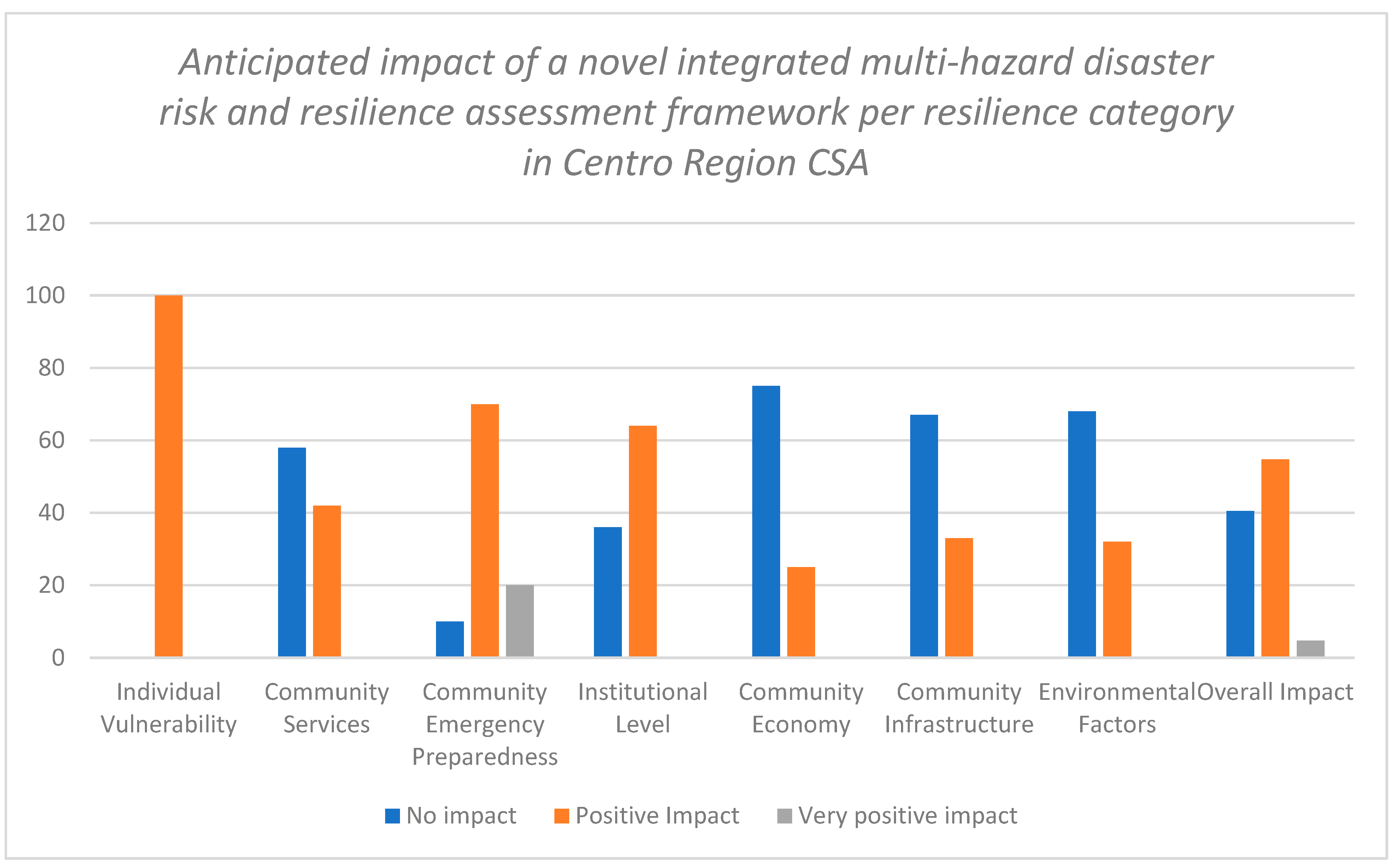
The Centro Region has selected the following tools: (a) the HIDRALERTA system, (b) the novel integrated multi-hazard disaster risk and resilience assessment framework, and (c) the PPCP approach. HIDRALERTA, a forecasting and early warning system designed to address coastal flooding and ship berthing or mooring, is particularly relevant given that coastal flooding is one of the region’s primary hazards and that Porto de Aveiro serves as a critical transportation hub. HIDRALERTA involves deploying real-time forecasting and early warning systems in Figueira da Foz, Aveiro harbour, and neighbouring coastal areas, addressing wave overtopping, induced flooding, and ship manoeuvring and berthing/mooring. An overview of HIDRALERTA’s anticipated impact on the Centro Region is demonstrated in Figure 10.
Significant improvements are anticipated in emergency preparedness, particularly in the comprehensive event management plans that incorporate disaster readiness and response. Smaller positive effects are expected in emergency training and preparedness; the provision of food, shelter, and essential relief items; hazard assessment; and the overall resilience plan. The emergency meeting stations, emergency experiences, and post-event recovery planning are unlikely to be affected.
Although the institutional capacities remain largely unchanged, the tool is expected to boost the citizens’ trust in the local authorities, probably due to the implementation of a visible, effective technological solution that directly addresses the hazards affecting the residents and their critical assets. Finally, the community’s exposure to natural disasters is anticipated to decrease moderately, primarily concerning flooding.
2.
Novel Integrated Multi-Hazard Disaster Risk and Resilience Assessment Framework
The Centro Region CSA selected the RRAF as its second-most-impactful solution. The tool conducts comprehensive vulnerability and risk analyses while documenting resilience capacities to mitigate disaster impacts. By integrating data from multiple online sources and community databases, the RRAF enables authorities to identify prominent risks and enhance core resilient attributes.
Similar to HIDRALERTA, the RRAF (Figure 11) is expected to reduce individual vulnerability, positively influencing the average life expectancy and place attachment. It is also anticipated to enhance certain community services, including hospital beds, medical professional capacities, and communication networks, while educational capacities, internet access, and health insurance are anticipated to remain unchanged.
The most substantial impact is expected in emergency preparedness. The tool enables the authorities to identify vulnerable areas, detect gaps in emergency planning, and strengthen resilient assets, thereby improving all emergency indicators, particularly in event management and resilience planning. Only emergency experience is expected to remain unchanged.
The institutional capacities are anticipated to improve, including the authorities’ ability to learn from past lessons, efficiency, efficacy, and financial planning, with the citizens’ trust in the authorities also rising. The community’s participation in decision-making and contribution to corruption levels is expected to remain stable. In the economic domain, only disaster risk financing is expected to improve. In regards to infrastructure, the existing protective infrastructure is positively affected, while building codes, water access, and sewage systems remain unchanged. Finally, the exposure to flooding and forest fires is expected to decrease.

3.1.5. Anticipated Change Based on the PPCP Tool (All CSAs)

The PPCP tool is designed to conduct a comprehensive assessment of the polycentric governance structures within each CSA, evaluating the critical stakeholders involved in risk management across the public (e.g., municipal authorities), private (e.g., local businesses), and civil (e.g., citizen associations, NGOs) sectors. The implementation involves local workshops that bring together representatives from all the relevant domains, enabling stakeholders to collectively reflect on the challenges, propose solutions, and optimise disaster management strategies. Through this process, the PPCP tool facilitates the identification of points of conflict or collaboration that may hinder or enhance active citizen participation, in alignment with the United Nations’ emphasis on multi-stakeholder approaches to community resilience, which foster equitable resource allocation and support disaster risk financing [12].
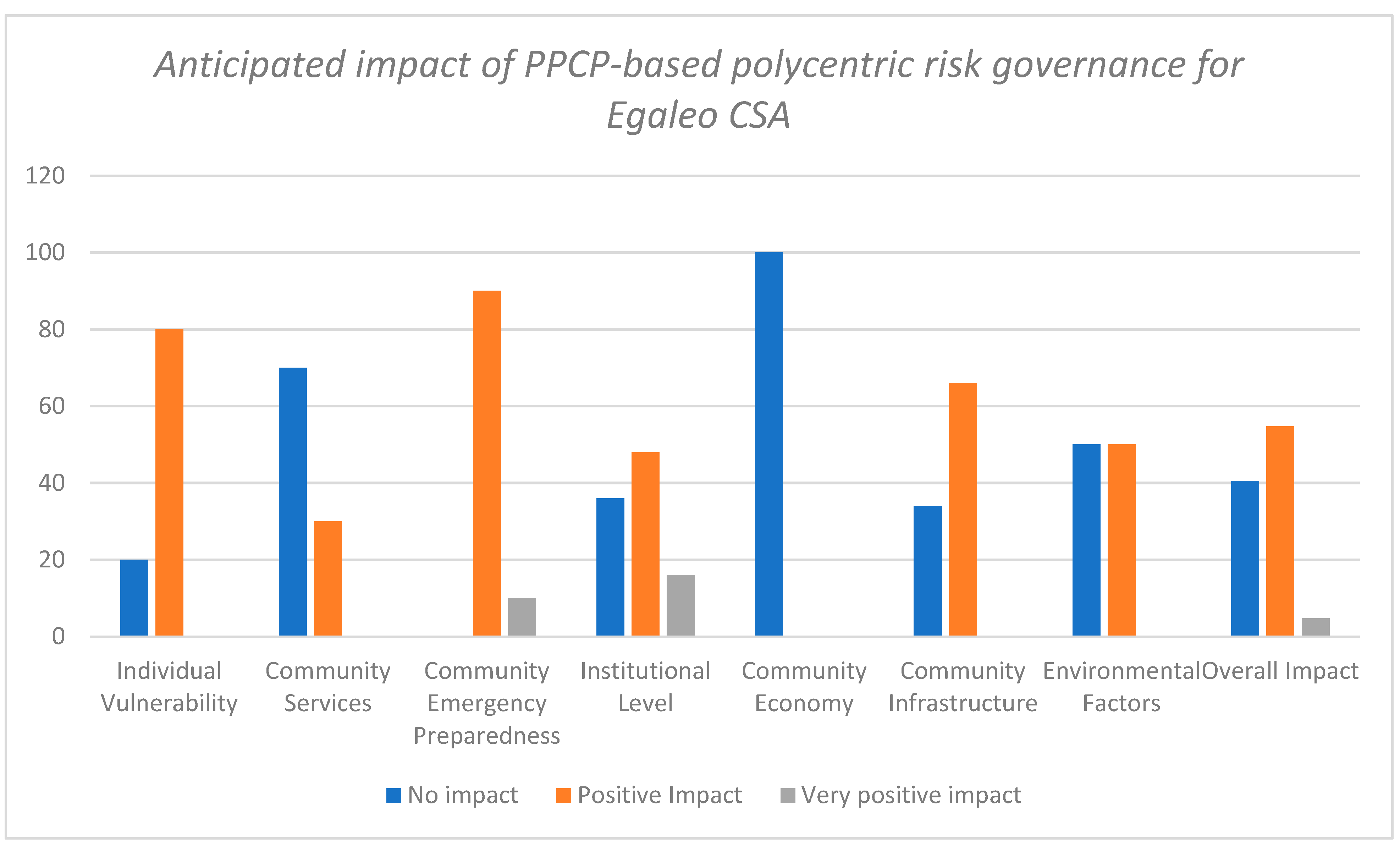
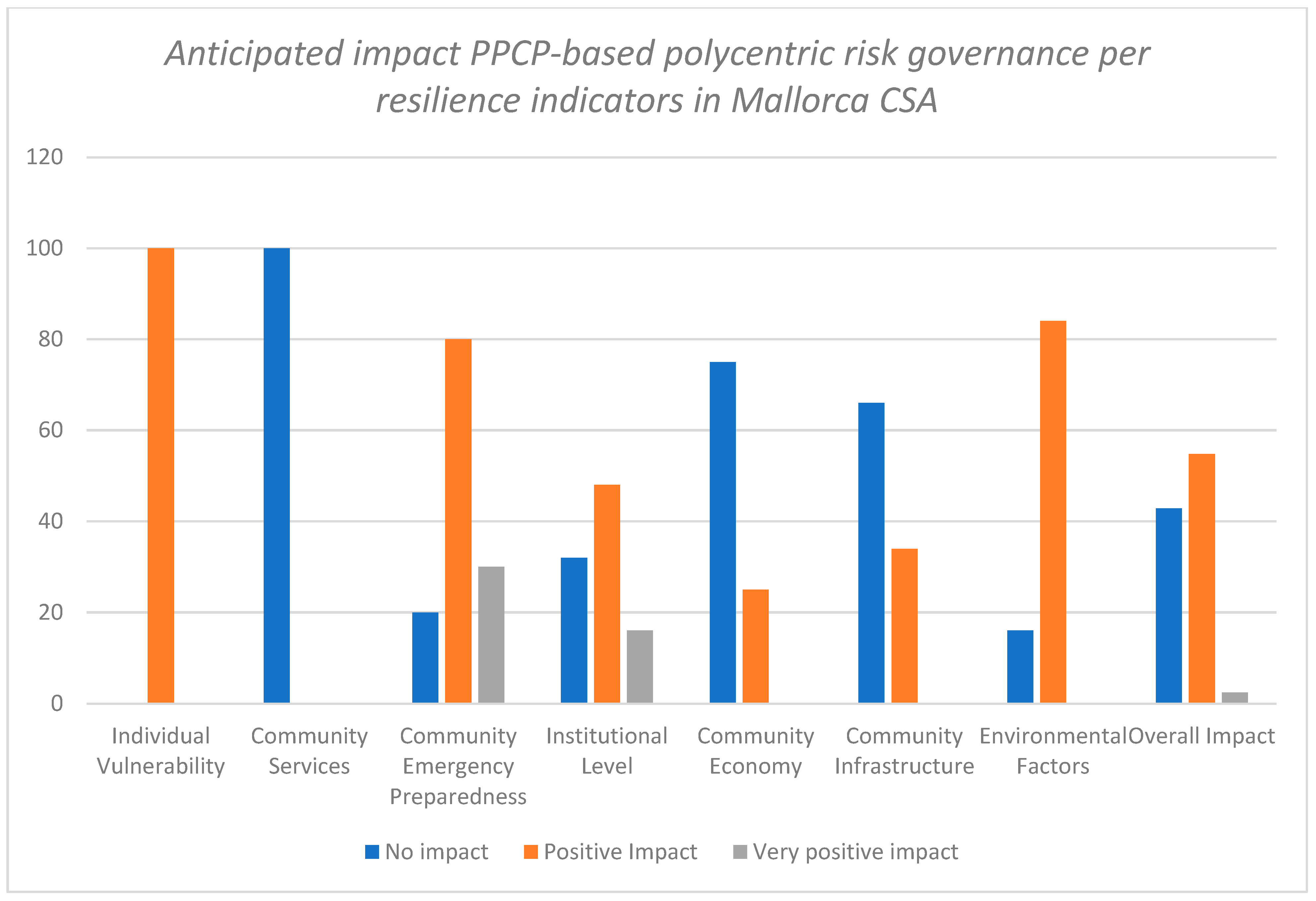
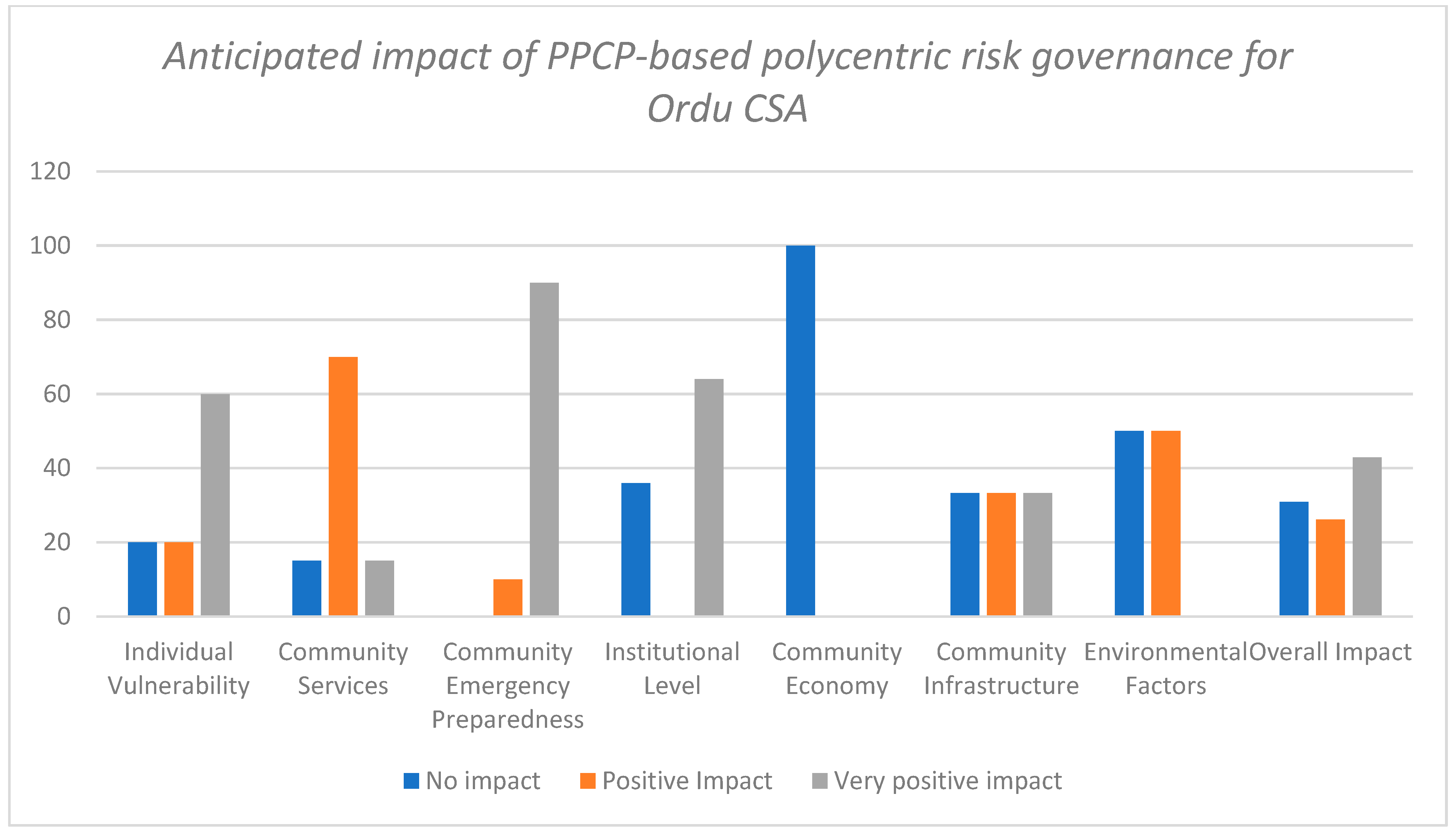
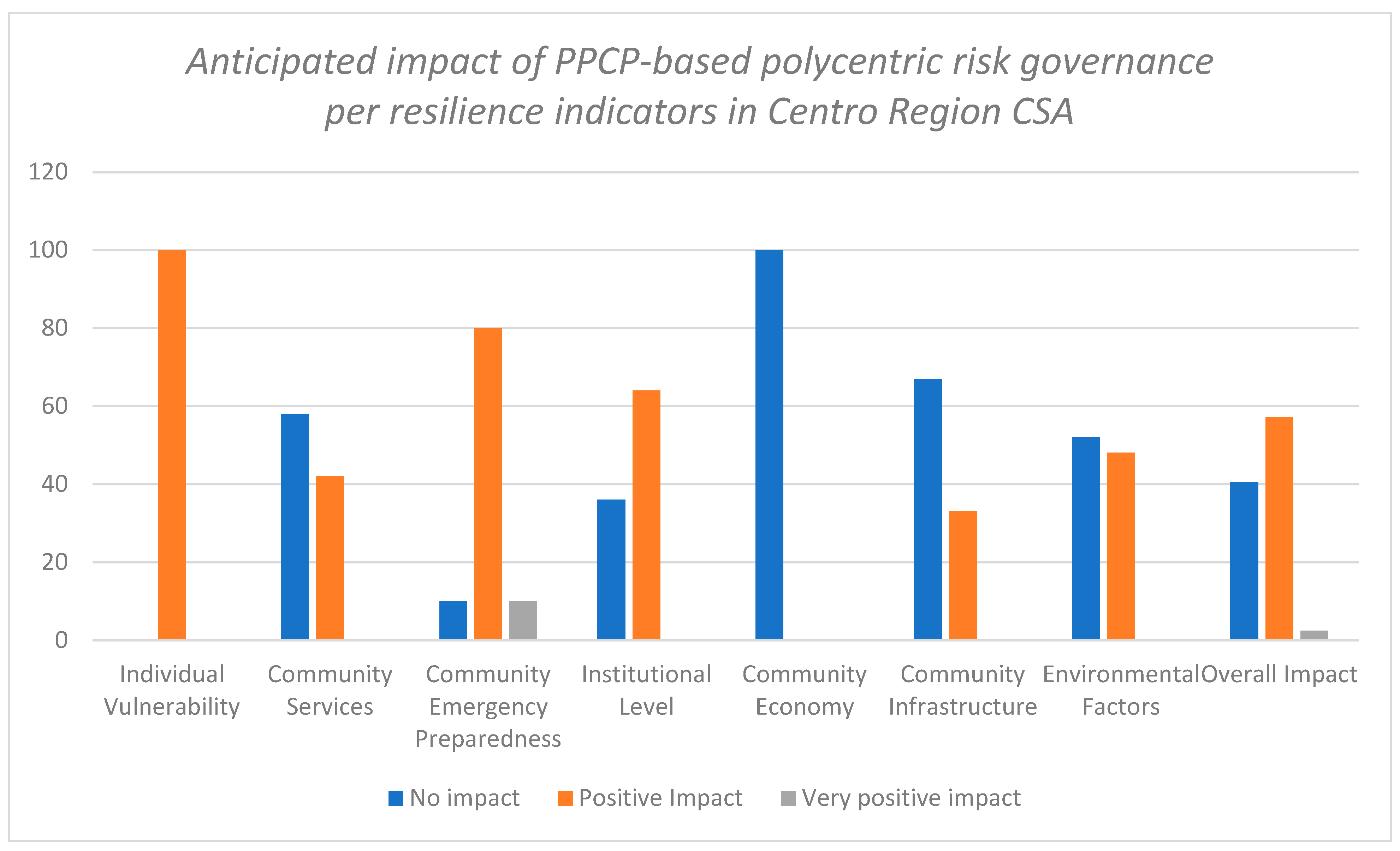
Figure 12, Figure 13, Figure 14 and Figure 15 illustrate the expected impact of the PPCP approach across the four CSAs. The tool is expected to significantly reduce individual vulnerability, especially among high-risk groups, and to enhance emergency preparedness. While average life expectancy may stay the same in Ordu and Egaleo, vulnerable groups—such as the elderly, homeless populations, and refugees—are likely to benefit from the targeted resource allocation guided by stakeholder collaboration. Most emergency preparedness indicators are projected to improve, including event management, hazard assessment, and resilience planning, although the EWS services in Mallorca and the emergency experience in some regions might remain unchanged.
As shown in Figure 15, HIDRALERTA is expected to positively influence all the demographic indicators by reducing individual exposure among elders, children, and persons with disabilities, while moderately enhancing the average life expectancy and the residents’ attachment to their neighbourhoods, which may encourage community engagement. The tool is not anticipated to alter broader community services, including health and education, nor economic capacities or building regulations, reflecting the rigidity of these sectors in the region.
Institutionally, the PPCP tool is expected to enhance the trust in authorities, foster greater citizen engagement in decision-making, and improve the CSA’s capacity to capture and learn from past experiences, thereby strengthening the overall efficiency and effectiveness. Financial planning, budgets for resilience, and corruption levels largely remain unchanged, except for a moderate improvement in the perceived corruption in Mallorca.
The tool’s impact on community services varies across the CSAs, reflecting existing disparities. For example, Ordu expects improvements in communication networks, access to water and sewage services, while Egaleo and the Centro Region foresee more modest gains, mainly in communication and medical capacities. The PPCP tool is also likely to strengthen the current protective infrastructure and, in some cases, enhance the enforcement of building codes and standards. Lastly, the collaborative and inclusive character of the workshops is expected to moderately decrease the overall exposure to major hazards, such as earthquakes, floods, and landslides, by enabling better planning and reducing vulnerabilities across all community sectors.

3.2. Comparative Analysis of the Overall Change per Resilience Dimension

In addition to assessing changes in the resilience capacities of the individual CSAs, we conducted a comparative analysis to evaluate the overall changes across the resilience dimensions by integrating the data from all the study areas. This analysis aimed to identify which community sectors are more malleable and thus responsive to intervention and which are more resistant, remaining largely unchanged.
As shown in Figure 16, the community economy emerges as the least flexible dimension, exhibiting minimal change across the CSAs. This rigidity can be attributed to the nature of its indicators—such as unemployment and income inequality—which typically require long-term structural adjustments and are closely linked to regional and national economic dynamics beyond the influence of the C2IMPRESS tools. Consequently, these findings underscore the importance of mobilising additional resources to strengthen economic capacities, which are essential for enhancing communities’ resistance to natural hazards. Similarly, most community services are expected to experience limited change, particularly in health and education, which necessitate substantial organisational and financial transformations to improve their resilience capacities.
Conversely, certain dimensions demonstrate higher flexibility and potential for positive impact. These include individual vulnerability and demographics, as well as emergency preparedness. Citizens represent the fundamental building blocks of a community: while they require significant support and resources, they also constitute invaluable assets that can enhance resilience. The C2IMPRESS tools prioritise the identification and mapping of vulnerable populations, their needs and strengths, fostering more equitable access to resources and promoting inclusive disaster risk management. For instance, although elderly populations are inherently more vulnerable due to reduced mobility and dependence on others, their knowledge of prior emergencies and the lessons they learned from them can inform effective policy and decision-making [38].
Emergency preparedness is also highly amenable to improvement, as it directly influences community resilience. Similarly, the institutional domain is expected to experience substantial gains, particularly in municipal efficiency, effectiveness, and organisational learning capacity, which is facilitated by tools such as decision support platforms, forecasting systems, agent-based models, the PPCP, and the RRAF. These improvements are anticipated to increase the trust in the authorities, as governance becomes more transparent and inclusive of citizen input. However, certain indices—such as financial budgets for disaster planning and national-level corruption—are expected to remain largely stable, reflecting the broader resource and systemic constraints.
Finally, the infrastructural domain is expected to benefit from significant improvements, primarily through the assessment and optimisation of protective infrastructure. Tools such as the RRAF, PPCP, and agent-based models enable communities to identify critical assets that remain unprotected and to enhance the robustness of disaster mitigation structures. Consequently, the exposure levels to the most relevant hazards are anticipated to decrease; for example, in Egaleo, the agent-based model is projected to reduce exposure to earthquakes, floods, and heatwaves, while the exposure to less significant hazards, such as landslides and forest fires, is expected to remain unchanged.

3.3. Synthesis of Cross-Case Variations and Underlying Driving Factors

While the anticipated impacts of the C2IMPRESS tools varied according to the specific hazards and socio-economic contexts of each CSA, an integrative comparison reveals distinct cross-case similarities and divergences.
Key Similarities: Regardless of the geographic location or baseline resilience, technological and participatory interventions (such as the EWS and PPCP tools) uniformly drove the most significant anticipated improvements in the “emergency preparedness” and “institutional” domains. The primary underlying driving factor for this uniform trend is the direct capacity of these tools to enhance multi-directional risk communication, situational awareness, and the trust between citizens and authorities. Conversely, the community economy remained universally rigid across all four CSAs, driven by macroscopic, structural economic factors (e.g., the national unemployment rates) that are highly resistant to localised, short-term disaster-management interventions.
Key Differences and Baseline Drivers: The magnitude and spread of the anticipated impacts were heavily driven by the baseline capacities of each study unit. In highly developed infrastructural contexts like the Centro Region (baseline resilience score of 6.7/10), the tools primarily acted to refine existing, robust emergency protocols without drastically altering the already stable physical infrastructure. In contrast, in the CSAs exhibiting moderate baseline capacities and documented gaps in structural assessment—such as Egaleo (score 5.21/10) and Ordu —the introduction of overarching decision support platforms and agent-based models generated a much wider spread of anticipated improvements. In these environments, the tools filled more foundational gaps, driving significant projected enhancements across protective infrastructure mapping, financial resilience planning, and multi-hazard exposure reduction.
Finally, the scope of the intervention also drove outcome variations. Highly localised, hazard-specific tools, like the EWS in Mallorca (flash floods) and HIDRALERTA in the Centro Region (coastal/ship safety), yielded concentrated improvements in targeted exposure metrics. Meanwhile, the comprehensive governance frameworks applied in Egaleo and Ordu dispersed their impacts more broadly across the social cohesion and institutional learning indicators.

4. Discussion

4.1. Interpretation of Findings and Underlying Mechanisms

Following the baseline assessment of each CSA, this study examines the anticipated impacts of the C2IMPRESS tools. The comparative analysis underscores a clear dichotomy in resilience building: the high malleability of socio-institutional capacities versus the structural rigidity of the community economy. Moving beyond a descriptive observation of these trends, it is critical to explore the underlying mechanisms driving these outcomes and situate them within the broader urban development processes.
First, the data consistently points to significant improvements in institutional capacities and community trust following the introduction of decision support platforms and the PPCP framework. The mechanism driving this improvement lies in the shift from traditional, top-down urban risk management to polycentric risk governance. Historically, urban development has often siloed disaster management within isolated governmental departments, leading to information bottlenecks and public distrust. Tools like the PPCP break down these silos by democratising the risk data and enforcing active knowledge co-production. By incorporating citizens into the hazard mapping process, the “black box” of municipal emergency planning is opened. Consequently, the observed increase in public trust is not merely a byproduct of better technology, but a structural outcome of increased transparency and civic inclusion—factors that the broader urban resilience literature consistently identifies as the prerequisites for high compliance during emergency responses.
Second, the pronounced responsiveness of “individual vulnerability” and “emergency preparedness” across all the CSAs highlights the effectiveness of cognitive and informational interventions. Tools such as agent-based models and localised early warning systems (EWS) do not physically alter the urban landscape; rather, they alter human behaviour within it. By providing precise, actionable, and localised warnings, these tools optimise the existing protective capacities, drastically reducing the immediate exposure without requiring long-term infrastructure overhauls.
The findings of this study also highlight the distinct advantages of the C2IMPRESS risk and resilience assessment framework (RRAF) when contextualised against existing social resilience assessment methods. The traditional vulnerability and resilience indices, such as those building upon Cutter’s foundational work [24] on social vulnerability, often rely heavily on static, top-down demographic data. While the advanced system dynamics models like COPEWELL [38] effectively predict community functioning post-disaster and tools like the RAF support city-level action planning [39], the RRAF differentiates itself through its emphasis on active knowledge co-production. By embedding the public–private-civil partnership (PPCP) approach into the assessment process, the RRAF moves beyond theoretical evaluation to systematically integrate local knowledge, community perspectives, and lived experiences. Furthermore, unlike frameworks that historically silo disaster risk reduction (DRR) and climate change adaptation (CCA) into fragmented strategies, the RRAF explicitly bridges these domains. It achieves this by directly linking the resilience assessment to the implementation of localised, actionable interventions—such as agent-based models and early warning systems—thereby addressing the perceived vulnerabilities and strengthening the adaptive functions.
Conversely, the community economy emerged as universally rigid across all four CSAs. The mechanism behind this resistance is rooted in urban political economy. The economic indicators—such as local unemployment rates, income inequality, and disaster risk financing—are deeply entrenched in macroeconomic structures and historical urban development trajectories. While localised, techno-centric disaster risk reduction (DRR) tools excel at enhancing situational awareness and operational efficiency, they do not inherently redistribute wealth, alter labour markets, or resolve systemic urban inequalities. This finding echoes the critical urban geography literature, which cautions that while “smart city” technologies and EWS can optimise disaster responses, they cannot act as substitutes for the foundational economic development policies required to address the root causes of socio-economic vulnerability.

4.2. Comparative Analysis with National and International Resilience Research

Our findings regarding the anticipated efficacy of the C2IMPRESS tools align with and expand upon the recent global trends in disaster risk reduction (DRR). Globally, the transition from single-hazard models to systemic, multi-hazard risk frameworks is heavily emphasised by the UNDRR and the Sendai Framework [14]. The recent international analyses, such as the 2024 Global Status of Multi-Hazard Early Warning Systems [43], highlight that while the technological coverage of the EWS is expanding, “last-mile” dissemination—ensuring warnings translate into timely, protective community action—remains a critical global bottleneck. The C2IMPRESS risk and resilience assessment framework (RRAF) directly addresses this gap by pairing the technological EWS implementations with the public–private-civil partnership (PPCP) approach. By embedding local knowledge into the risk assessment pipeline, our findings demonstrate that emergency preparedness and individual vulnerability are highly malleable and responsive to these integrated interventions.
Within the European context, the anticipated results from the four case study areas (CSAs) resonate with the parallel Horizon Europe initiatives (such as the CORE [44], ENGAGE [45], and MEDiate [46] projects) that stress an “all-of-society” approach to climate adaptation. European research consistently shows that top-down risk management is insufficient without civic engagement. Our comparative analysis validates this, showing that institutional capacities and community trust are significantly improved when residents are actively involved via decision support platforms and interactive tools.
At the national level, the context-specific impacts anticipated in each CSA mirror the distinct vulnerabilities and recent disaster experiences of their respective countries:
Greece and Spain: In the Mediterranean region, recent catastrophic events—such as the devastating 2024 DANA floods in Valencia, Spain [47], alongside the severe wildfires and floods caused by Medicane Daniel in Greece [48]—have exposed critical gaps in civic preparedness and the dangers of high-density urbanisation in risk-prone areas. For the Balearic Islands and Egaleo, the introduction of flood-specific EWS and agent-based models for hazard simulation directly responds to these national priorities. The anticipated improvements in alternative communication networks and the trust in the local authorities reflect the broader Spanish and Greek research advocating for proactive, localised risk communication over purely reactive state measures.
Turkey: In Ordu, the integration of predictive EWS for fluvial flooding and landslides aligns closely with the national trajectory following the 2023 earthquakes. The current Turkish disaster management research increasingly advocates for decentralised, polycentric risk governance to supplement the rigid national frameworks like the Disaster Response Plan (TAMP). The robust improvements in hazard assessment and resilience planning that were anticipated in Ordu highlight the immense value of localising the predictive data to overcome regional risk perception–action gaps.
Portugal: In the Centro Region, the focus on coastal flooding and the HIDRALERTA system corresponds seamlessly with Portugal’s national strategic focus on safeguarding critical maritime and riverine infrastructure. The studies in Portugal frequently utilise frameworks like the RAF to support city-level action planning [39]; however, the C2IMPRESS approach advances this national paradigm by dynamically linking early warning technologies with active social vulnerability mapping, proving that community resilience is best achieved when infrastructural innovation is paired with social inclusivity.

4.3. Research Limitations/Future Guidelines

A key limitation of this study is its reliance on the CSAs’ expectations regarding the C2IMPRESS tools’ potential impacts on their resilience capacities. While several project solutions, such as the PPCP and the RRAF, are already under implementation, their operationalisation remains in progress. Therefore, to gain a comprehensive understanding of which resilience indicators have been effectively modified and the extent of these changes, a secondary resilience assessment will be necessary. This assessment should be conducted once all the tools have been fully implemented, allowing for a comparison between the baseline measurements and the current resilience capacities to evaluate the actual changes.
Another consideration is the relatively short-term nature of the C2IMPRESS project, which spans three years. As highlighted by UNDP [11], community-based risk management often involves non-recurring initiatives and isolated pilot projects, which are insufficient to achieve a sustained resilience enhancement. UNDP [11] further emphasises that resilience-building should adopt a holistic approach, with policymakers ensuring continuity through knowledge sharing and the systematic incorporation of the lessons learned from past experiences. Accordingly, the C2IMPRESS consortium should prioritise strategies to ensure the sustainability and reproducibility of the project’s tools beyond its limited timeframe. Only through such measures can the project achieve a meaningful, long-term impact with verifiable outcomes.
An additional methodological limitation stems from the reliance on heterogeneous data sources across the four national contexts. While international databases, such as Eurostat and Our World in Data, were utilised to establish a baseline of comparability, capturing highly localised resilience indicators required drawing from disparate national statistical platforms and municipal records. Consequently, inherent variations exist in the original data collection methodologies, temporal alignment (e.g., differing national census years), and the specific definitions of municipal metrics across Greece, Spain, Turkey, and Portugal. To mitigate these discrepancies, the RRAF complemented this statistical data with standardised, structured questionnaires that were administered uniformly to all the CSA representatives. Nevertheless, achieving absolute methodological uniformity across diverse national datasets remains an inherent challenge in multi-national comparative resilience studies.

5. Conclusions

This study sought to bridge the existing gaps in quantifying disaster risk and resilience by evaluating the anticipated impacts of the C2IMPRESS framework and its associated tools. Rather than relying on generalised assumptions regarding disaster risk reduction, our study focused on measuring the expected changes across 42 specific resilience indicators following the implementation of localised interventions in four distinct European case study areas (CSAs): Egaleo, Mallorca, Ordu, and the Centro Region.
Based on the comparative analysis of these implementations—including early warning systems, agent-based models, and the Public–Private-Civil Partnership (PPCP) approach—several specific conclusions can be drawn:
First, the findings demonstrate that individual vulnerability and community emergency preparedness are the dimensions most highly responsive to these targeted interventions. Across all four CSAs, equipping the local authorities with tools like the risk and resilience assessment framework (RRAF) and decision support platforms is anticipated to significantly improve institutional capacities, operational efficiency, and, crucially, public trust in local governance.
Second, while socio-institutional and infrastructural resilience can be actively enhanced through the short-term deployment of these technological and participatory tools, the community economy emerged as highly rigid. Indicators such as local unemployment and income inequality exhibited minimal anticipated change across all the study sites.
Ultimately, while the C2IMPRESS framework successfully integrates local knowledge to provide actionable, localised improvements in socio-institutional disaster preparedness, it cannot act as a panacea for all vulnerability dimensions. Achieving comprehensive community resilience requires pairing localised, technological risk management tools with broader, long-term structural and economic policies that fall outside the immediate scope of the standard DRR interventions.

Author Contributions

Conceptualisation, A.P., M.I.G. and A.S.; data curation, M.I.G., E.B., D.T., M.R.-M., A.M., J.E., J.D.J., A.B.G., E.T., M.Ç., N.T., A.C.Z., J.L.C., M.M.O., M.M.C. and A.S.; methodology, A.P., M.I.G., E.B., D.T., M.R.-M., A.M., J.E., J.D.J., E.T., M.Ç., N.T., A.C.Z., J.L.C., M.M.O., M.M.C. and A.S.; validation, A.P., E.B., D.T., M.R.-M., A.M., J.E., J.D.J., A.B.G., E.T., M.Ç., N.T., A.C.Z., J.L.C., M.M.O., M.M.C. and A.S.; writing—original draft, A.P., M.I.G. and A.S.; writing—review and editing, A.P. and A.S. All authors have read and agreed to the published version of the manuscript.

Funding

This work received partial funding from the Horizon Europe Framework Programme (HORIZON) Research and Innovation Actions under grant agreement No 101074004 (C2IPMRESS: Co-creative Improved Understanding and Awareness of Multi-Hazard Risk for Disaster Resilient Society).

Institutional Review Board Statement

Not applicable.

Informed Consent Statement

Informed consent was obtained from all subjects involved in the study.

Data Availability Statement

The data presented in this study are available on request from the corresponding author.

Acknowledgments

We sincerely thank all the municipality representatives of Egaleo, Mallorca, Ordu, and the Centro Region, who were part of the C2IMPRESS consortium. We would like to give special thanks to Manuel Oliveira and Ana Catarina Zózimo from the Laboratório Nacional de Engenharia Civil—National Laboratory for Civil Engineering (LNEC) in Lisbon for inspecting the final version of this manuscript and providing us with valuable feedback.

Conflicts of Interest

The authors declare no potential conflicts of interest with respect to the research, authorship, and/or publication of this article.

References

  1. EM-DAT—The International Disaster Database. Available online: https://www.emdat.be/ (accessed on 7 January 2026).
  2. World Meteorological Organisation. Available online: https://wmo.int (accessed on 7 January 2026).
  3. Haque, A.; Shampa, S.; Akter, M.; Hussain, M.M.; Rahman, M.R.; Salehin, M.; Rahman, M. An integrated risk-based early warning system to increase community resilience against disaster. Prog. Disaster Sci. 2024, 21, 100310. [Google Scholar] [CrossRef]
  4. United Nations International Strategy for Disaster Reduction (UNISDR). Developing early warning systems: A checklist. In Proceedings of the Third International Conference on Early Warning (EWC III), Bonn, Germany, 27–29 March 2006; Available online: https://www.unisdr.org/2006/ppew/info-resources/ewc3/checklist/English.pdf (accessed on 7 January 2026).
  5. Vallance, S. Disaster recovery as participation: Lessons from the shaky isles. Nat. Hazards 2014, 75, 1287–1301. [Google Scholar] [CrossRef]
  6. Van der Vegt, R.G. A literature review on the relationship between risk governance and public engagement in relation to complex environmental issues. J. Risk Res. 2017, 21, 1–18. [Google Scholar] [CrossRef]
  7. Agrawal, A.; Gupta, K. Decentralization and participation: The governance of common pool resources in Nepal’s Terai. World Dev. 2005, 33, 1101–1114. [Google Scholar] [CrossRef]
  8. Carabine, E.; Wilkinson, E. How can local governance systems strengthen community resilience? A social-ecological systems approach. Politics Gov. 2016, 4, 62–73. [Google Scholar] [CrossRef]
  9. Sufri, S.; Dwirahmadi, F.; Phung, D.; Rutherford, S. A systematic review of community engagement (CE) in disaster early warning systems (EWSs). Prog. Disaster Sci. 2020, 5, 100058. [Google Scholar] [CrossRef]
  10. Ramsbottom, A.; O’Brien, E.; Ciotti, L.; Takacs, J. Enablers and barriers to community engagement in public health emergency preparedness: A literature review. J. Community Health 2018, 43, 412–420. [Google Scholar] [CrossRef] [PubMed]
  11. United Nations Development Programme (UNDP). Community-Based Resilience-Building: A UNDP Guidance Note, United Nation Development Programme. 1 May 2025; United Nations Development Programme (UNDP): New York, NY, USA, 2025; Available online: https://www.undp.org/publications/community-based-resilience-building-undp-guidance-note (accessed on 8 January 2026).
  12. United Nations. United Nations Common Guidance on Helping Build Resilient Societies. September 2021. Available online: https://unsdg.un.org/resources/un-common-guidance-helping-build-resilient-societies (accessed on 7 January 2026).
  13. World Bank. Introduction to the National Risk Assessment Tool (English); National Risk Assessment (NRA); World Bank Group: Washington, DC, USA, 2015; Available online: http://documents.worldbank.org/curated/en/099539106292288480 (accessed on 7 January 2026).
  14. United Nations—Headquarters United Nations Office for Disaster Risk Reduction (UNDRR). Sendai Framework for Disaster Risk Reduction 2015–2030; Headquarters United Nations Office for Disaster Risk Reduction: Geneva, Switzerland, 2015. [Google Scholar]
  15. Ge, Y.; Kapucu, N.; Zobel, C.W.; Hasan, S.; Hall, J.L.; Wang, H.; Wang, L.; Martín, Y.; Cechowski, M. Building community resilience through cross-sector partnerships and interdisciplinary research. Public Adm. Rev. 2023, 83, 1415–1422. [Google Scholar] [CrossRef]
  16. Begum, R.A.; Sarkar, S.K.; Jaafar, A.H.; Pereira, J.J. Toward conceptual frameworks for linking disaster risk reduction and climate change adaptation. Int. J. Disaster Risk Reduct. 2014, 10, 362–373. [Google Scholar] [CrossRef]
  17. Cutter, S.L.; Ahearn, J.A.; Amadei, B.; Crawford, P.; Eide, E.A.; Galloway, G.E.; Goodchild, M.F.; Kunreuther, H.C.; Li-Vollmer, M.; Schoch-Spana, M.; et al. Disaster Resilience: A National Imperative. Environ. Sci. Policy Sustain. Dev. 2013, 55, 25–29. [Google Scholar] [CrossRef]
  18. Whittaker, S.; Khalfan, M.M.A.; UlHaq, I. Developing community disaster resilience through preparedness. Int. J. Crit. Infrastruct. 2020, 16, 53–76. [Google Scholar] [CrossRef]
  19. Folke, C.; Carpenter, S.R.; Walker, B.; Scheffer, M.; Chapin, T.; Rockström, J. Resilience Thinking: Integrating Resilience, Adaptability and Transformability. Ecol. Soc. 2010, 15, 9. [Google Scholar] [CrossRef]
  20. Stringer, E.T. Action Research: A Handbook for Practitioners, 4th ed.; Sage Publications: Thousand Oaks, CA, USA, 2014. [Google Scholar]
  21. Smit, B.; Wandel, J. Adaptation, Adaptive Capacity, and Vulnerability. Glob. Environ. Change 2006, 16, 282–292. [Google Scholar] [CrossRef]
  22. Pelling, M.; High, C. Understanding Adaptation: What Can Social Capital Offer Assessments of Adaptive Capacity? Glob. Environ. Change 2005, 15, 308–319. [Google Scholar] [CrossRef]
  23. Thomalla, F.; Downing, T.E.; Spanger-Siegfried, E.; Han, G.; Rockström, J. Reducing Hazard Vulnerability: Towards a Common Approach Between Disaster Risk Reduction and Climate Adaptation. Disasters 2006, 30, 39–48. [Google Scholar] [CrossRef]
  24. Cutter, S.L.; Boruff, B.J.; Shirley, W.L. Social Vulnerability to Environmental Hazards. Soc. Sci. Q. 2003, 84, 242–261. [Google Scholar] [CrossRef]
  25. Walker, B.; Holling, C.S.; Carpenter, S.R.; Kinzig, A. Resilience, Adaptability, and Transformability in Social–Ecological Systems. Ecol. Soc. 2004, 9, 5. [Google Scholar] [CrossRef]
  26. Engle, N.L. Adaptive Capacity and its Assessment. Glob. Environ. Change 2011, 21, 647–656. [Google Scholar] [CrossRef]
  27. Godschalk, D.R. Urban Hazard Mitigation: Creating Resilient Cities. Nat. Hazards Rev. 2003, 4, 136–143. [Google Scholar] [CrossRef]
  28. Galanopoulou, M.I.; Sfetsos, A.; Jiménez, J.D.; Estrany, J.; Pascual, A.M.; Craveiro, J.L.; Oliveira, M.; Zózimo, A.; Bakogianni, E.; Pavlidi, E. Community Resilience Assessment: Implementation of a Novel Resilience Framework in Four Different European Case Study Areas. İstanbul Üniversitesi Sosyol. Derg. 2024, 44, 17–60. [Google Scholar] [CrossRef]
  29. Eurostat Database. Available online: https://ec.europa.eu/eurostat/data/database (accessed on 8 January 2026).
  30. Our World in Data. Available online: https://ourworldindata.org/ (accessed on 8 January 2026).
  31. Statistics Portugal. Available online: https://www.ine.pt (accessed on 8 January 2026).
  32. Hellenic Statistical Authority. 2021 Population-Housing Census. 17 May 2023. Available online: https://elstat-outsourcers.statistics.gr/census_results_2022_en.pdf (accessed on 8 January 2026).
  33. Govern de les Illes Balears. Informe Sobre Centres Sanitaris i Atenció Especialitzada, 2022; Govern de les Illes Balears: Palma, Spain, 2023. Available online: https://siae.caib.es/ (accessed on 8 January 2026).
  34. Turkish Statistical Institute. Available online: https://www.tuik.gov.tr/Home/Index (accessed on 8 January 2026).
  35. Delprato, U.; Cullen, J.; Spielhofer, T.; Del Bianco, D.; Akerkar, R.; Miteva, N.; Gospodinova, Z. RESILOC Project (Resilient Europe and Societies by Innovating Local Communities) D3.1 RESILOC; Resilience Indicators Western Norway Research Institute: Sogndal, Norway, 2022. [Google Scholar]
  36. Our World in Data. Share of People Who Trust Others in Their Neighborhood, 2020. May 2025. Available online: https://ourworldindata.org/grapher/share-people-trust-neighborhood (accessed on 9 January 2026).
  37. European Commission Directorate-General for Environment. Guidelines on Climate Change and Natura 2000: Dealing with the Impact of Climate Change, on the Management of the Natura 2000 Network of Areas of High Biodiversity Value; Technical Report-2013-068; Publications Office: Luxembourg, 2013. [Google Scholar]
  38. Links, J.M.; Schwartz, B.S.; Lin, S.; Kanarek, N.; Mitrani-Reiser, J.; Sell, T.K.; Watson, C.R.; Ward, D.; Slemp, C.; Burhans, R.; et al. COPEWELL: A conceptual framework and system dynamics model for predicting community functioning and resilience after disasters. Disaster Med. Public Health Prep. 2018, 12, 127–137. [Google Scholar] [CrossRef] [PubMed]
  39. Cardoso, M.A.; Brito, R.S.; Pereira, C.; Gonzalez, A.; Stevens, J.; Telhado, M.J. RAF resilience assessment framework—A tool to support cities’ action planning. Sustainability 2020, 12, 2349. [Google Scholar] [CrossRef]
  40. Edgemon, L.; Freeman, C.; Burdi, C.; Hutchison, J.K.; Marsh, K. Community Resilience Indicator Analysis: Commonly Used Indicators from Peer-Reviewed Research (Updated for Research Published 2003–2021); Argonne National Laboratory: Lemont, IL, USA, 2023. [Google Scholar] [CrossRef]
  41. Stojanovic, M.; Gonçalves, A.; Sorí, R.; Vázquez, M.; Ramos, A.M.; Nieto, R.; Gimeno, L.; Liberato, M.L.R. Consecutive extratropical cyclones Daniel, Elsa and Fabien, and their impact on the hydrological cycle of mainland Portugal. Water 2021, 13, 1476. [Google Scholar] [CrossRef]
  42. Lopes, C.D.L.B. Flood Risk Assessment in Ria de Aveiro Under Present and Future Scenarios. Doctoral Dissertation, Universidade de Aveiro, Aveiro, Portugal, 2016. [Google Scholar]
  43. United Nations Office for Disaster Risk Reduction (UNDRR). Global Status of Multi-Hazard Early Warning Systems 2024; UNDRR: Geneva, Switzerland, 2024; Available online: www.undrr.org/reports/global-status-MHEWS-2024 (accessed on 23 March 2026).
  44. CORE Project: Science and Human Factor for Resilient Society. Horizon 2020 Grant Agreement No. 101021746. Available online: https://www.euproject-core.eu (accessed on 19 March 2026).
  45. ENGAGE Project. Horizon 2020 Grant Agreement No 882850. Available online: https://www.project-engage.eu/ (accessed on 19 March 2026).
  46. MEDiate Project. Multi-Hazard and Risk Informed System for Enhanced Local and Regional Disaster Risk Management, Horizon Europe Grant Agreement No. 101074075. Available online: https://mediate-project.eu/ (accessed on 23 March 2026).
  47. Martin-Moreno, J.M.; Garcia-Lopez, E.; Guerrero-Fernandez, M.; Alfonso-Sanchez, J.L.; Barach, P. Devastating “DANA” Floods in Valencia: Insights on Resilience, Challenges, and Strategies Addressing Future Disasters. Public Health Rev. 2025, 46, 1608297. [Google Scholar] [CrossRef] [PubMed]
  48. Flaounas, E.; Dafis, S.; Davolio, S.; Faranda, D.; Ferrarin, C.; Hartmuth, K.; Hochman, A.; Koutroulis, A.; Khodayar, S.; Miglietta, M.M.; et al. Dynamics, predictability, impacts and climate change considerations of the catastrophic Mediterranean Storm Daniel (2023). Weather Clim. Dynam. 2025, 6, 1515–1538. [Google Scholar] [CrossRef]
Figure 1. The resilience assessment for the Egaleo CSA.
Applsci 16 03545 g001
Figure 2. The anticipated impact of the agent-based model for hazard simulation and action planning per resilience indicators for the Egaleo CSA.
Applsci 16 03545 g002
Figure 3. The anticipated impact of the multi-actor, highly configurable C2IMPRESS decision support platform per resilience category for the Egaleo CSA.
Applsci 16 03545 g003
Figure 4. The resilience assessment for the Balearic Islands CSA.
Applsci 16 03545 g004
Figure 5. The anticipated impact of forecasting and EWS for flood hazards per resilience category in the Mallorca, Balearic Islands, CSA.
Applsci 16 03545 g005
Figure 6. The resilience assessment for the Ordu CSA.
Applsci 16 03545 g006
Figure 7. The anticipated impact of forecasting and EWS for fluvial flooding and landslides in the Ordu, Turkey, CSA per resilience category.
Applsci 16 03545 g007
Figure 8. The anticipated impact of the multi-actor, highly configurable C2IMPRESS decision support platform per resilience category for the Ordu CSA.
Applsci 16 03545 g008
Figure 9. The resilience assessment for the Centro Region, Portugal, CSA.
Applsci 16 03545 g009
Figure 10. The anticipated impact of HIDRALERTA, which is a forecasting and EWS for coastal flooding and ship berthing or mooring per resilience category in the Centro Region CSA.
Applsci 16 03545 g010
Figure 11. The anticipated impact of a novel integrated multi-hazard disaster risk and resilience assessment framework per resilience indicators in the Centro Region CSA.
Applsci 16 03545 g011
Figure 12. The anticipated impact of PPCP-based polycentric risk governance for the Egaleo CSA.
Applsci 16 03545 g012
Figure 13. The anticipated impact of PPCP-based polycentric risk governance per resilience indicators in the Mallorca, Balearic Islands, CSA.
Applsci 16 03545 g013
Figure 14. The anticipated impact of PPCP-based polycentric risk governance for the Ordu CSA.
Applsci 16 03545 g014
Figure 15. The anticipated impact of PPCP-based polycentric risk governance per resilience indicators in the Centro Region CSA.
Applsci 16 03545 g015
Figure 16. The aggregated anticipated impact of all the C2IMPRESS Solutions/tools per resilience category.
Applsci 16 03545 g016
Table 1. The proposed C2IMPRESS solutions and CSA applicability.
IDTitleDescription of Solutions—ToolsORDUEGLCENTROBAL
1System-of-systems for the multi-hazard risk intelligent network (SoS4MHRIN)The SoS4MHRIN combines system-of-system dynamics with information, physical, and artificial intelligence to provide natural hazard simulations that are relevant to each CSA.YesNoYesNo
2HIDRALERTA—a forecasting and EWS for coastal flooding and ship berthing or mooringImplementation of an early warning system in Figueira da Foz and Aveiro (Portugal) ports and adjacent coastal areas, focusing on wave overtopping, ship manoeuvring, and ship mooring and berthing.NoNoYesNo
3Forecasting and EWS for fluvial flooding and landslides in the Ordu, TurkeyThe localised EWS links predictive modelling with live field data. Three monitoring stations were installed at key upstream, midstream, and downstream points feeding the stream water-level and flow data to the Aquadata platform, where the input is automatically processed and assessed against thresholds defined through a combination of historical flood records and SDM-simulated hazard escalation patterns.YesNoNoNo
4Forecasting and EWS for flood hazards in Mallorca, Balearic IslandsSynoptic forecasts and indicators of potential convective activity and flood triggers inform the scenario chains tool. Forecasting layers supported the calibration of multi-hazard scenarios and informed early-warning strategies tailored to the Balearic context. In parallel, an integrated ABM–HBM approach was employed to simulate evacuations under flash-flood and wildfire scenarios.NoNoNoYes
5Forecasting and EWS for Wildfire Hazards in the Balearic IslandsThis tool entails an EWS covering the entirety of the Balearic Islands, to be used for prevention, alerting, and estimating the firefighting operation. It is also expected to be particularly valuable for coordinating the different institutions involved in the wildfire extinction and prevention within the framework of the Balearic Wildfire Special Plan.NoNoNoYes
6Multi-actor, highly configurable C2IMPRESS decision support platformThe multi-actor decision support platform comprises several micro services and databases that provide information on hazards and disasters at the local level and support decision-making across different levels and disciplines. The residents and municipal authorities can use it.YesYesNoYes
7HorizonActionEye—A decision support tool for response planning during a crisisTransforms analytical outputs into real-time, actionable guidance and generates infrastructure protection strategies and adaptive response plans using dynamic decision tree algorithms that incorporate time, resource constraints, and evolving hazard conditionsYesYesNoN/A
8Ontology-based knowledge graph (KG) software for multi-hazard risk managementThe main goal of this tool is to propose a general-purpose methodology for designing and creating the KG to address interoperability and uncertainty regarding natural disasters at different levels, including data uncertainty via probabilistic reasoning. The data from various sources will be gathered to assess the exposure and vulnerability, and to develop a multi-hazard management ontology to address these uncertainties. This approach will include simulation tools to enhance the KG with knowledge of the real-time impact of a hazard and the potential damage from multi-hazards, and to support prediction.YesN/ANoYes
9Big data-powered decision support tool for agile policy makingThis policy decision support tool will be established on a cloud-based platform, followed by the development of the business process models (BPM) engine. The tool aims to bridge the big data technology of the C2IMPRESS platform components with the policy-making strategies of the municipal authorities for disaster and risk management. YesYesNoYes
10A novel integrated multi-hazard disaster risk and resilience assessment frameworkThe RRAF includes risk and resilience component identification and data collection for the characterisation of local multiple hazards. It also entails a thorough assessment regarding the vulnerability, disaster impact and resilience levels of people and places for each CSA.YesYesYesYes
11PPCP-based polycentric risk governanceThe PPCP-based tool investigates the polycentricity of risk governance in each CSA by identifying its stakeholders and assessing their involvement in municipal planning and decision-making policies. It is meant to map each municipal actor’s interests, contributions, needs, and resources, and to understand the points of divergence and convergence among them, in order to enable more inclusive and efficient active citizen participation in the policy-making process against natural hazards.YesYesYesYes
12An interactive spatial multicriteria decision analysis (SMCDA) tool for vulnerability, hazard, exposure and risk quantification and prioritisationA spatial multicriteria decision analysis (SMCDA) tool will be developed to facilitate decision-making, allowing actors such as stakeholders and municipal authorities to assess, prioritise and rank risks and their impacts, and select the most suitable approach.YesYesNoYes
13A tool for social media analytics to address multi-hazard risk managementThis tool focuses on the collection of multi-dimensional data from several online and social media platforms (e.g., Twitter (or X)) to analyse social behaviour and citizens’ reactions before, during and after hazards. To achieve this, it adopts a multidisciplinary approach using insights from the social sciences, behavioural analysis, text mining, geosocial analysis, visualisation, and predictive models. The social media data will be filtered geospatially in real-time, and its content will be summarised using clustering and semantic analysis.YesYesNoYes
14A decision support tool with integrated human behaviour and agent-based model for hazard simulation and action planningThe agent-based model uses informed algorithms to map a routable road network for city-scale simulations and to model the anticipated behaviour of synthetic populations during disasters. To do so, it considers cognitive biases, social attachment, and contextual environmental factors (e.g., spatial–geographical factors) and triggers for the actions of each area’s residents to simulate their expected real-life actions.YesYesNoYes
Disclaimer/Publisher’s Note: The statements, opinions and data contained in all publications are solely those of the individual author(s) and contributor(s) and not of MDPI and/or the editor(s). MDPI and/or the editor(s) disclaim responsibility for any injury to people or property resulting from any ideas, methods, instructions or products referred to in the content.