Article

Sustainable Paving Blocks Using Alkali-Activated Furnace Slag and Recycled Aggregates

1
Department of Sustainable Construction, Centro Tecnológico de la Construcción, 30500 Molina de Segura, Spain
2
Department of Civil Engineering, University of Alicante, 03080 Alicante, Spain
*
Author to whom correspondence should be addressed.
Appl. Sci. 2026, 16(7), 3344; https://doi.org/10.3390/app16073344
Submission received: 6 March 2026 / Revised: 25 March 2026 / Accepted: 27 March 2026 / Published: 30 March 2026

Abstract

This research explores the use of industrial waste as an alternative to natural raw materials, promoting a circular economy in the construction sector. It specifically investigates the manufacturing of paving blocks using blast furnace slag and recycled aggregates. Paving blocks were produced without altering typical industry conditions, entirely replacing cement with alkaline-activated blast furnace slag. The study replaced natural aggregate in three proportions (20%, 50%, and 100%) with three types of recycled aggregates: concrete recycled aggregate (CA), masonry recycled aggregate (MA), and recycled mixed aggregate (RMA), in both coarse and fine fractions. The experimental procedure analysed the impact of recycled aggregates in an alkaline-activated slag matrix through three phases: characterising physical properties (mechanical properties, water absorption, density, abrasion resistance, and slip resistance), evaluating leaching behaviour, and conducting a life cycle analysis. The results of physical characterisation were statistically analysed using principal component analysis (PCA). The results obtained show the feasibility of manufacturing paving blocks with blast furnace slag by completely replacing the natural aggregate with the coarse fraction of the three recycled aggregates used and replacing up to 20% in the case of using the fine fraction. The properties of the paving blocks manufactured with slag depend mainly on the degree of substitution of natural aggregate with the recycled aggregate. All paving blocks can be considered environmentally safe from leaching according to the Dutch Soil Quality Decree. Paving blocks made from alkali-activated ground granulated blast furnace slag and recycled aggregates generate a lower carbon footprint compared to concrete paving blocks.

1. Introduction

One of the main changes in the construction industry in the coming decades will be reducing the use of raw materials by reusing the waste it generates and minimising carbon dioxide emissions. In 2009, the International Energy Agency (IEA) and the World Business Council for Sustainable Development (WBCSD) proposed solutions to enhance environmental sustainability, including using alternative fuels, increasing energy efficiency, partially replacing clinker with alternative materials, and utilising alkaline-activated materials [1]. Various studies have investigated the possible replacement of clinker, achieving reductions of 25–30% in carbon dioxide emissions [2].
From an environmental perspective, using alkaline-activated materials can create cementitious matrices that are as effective or even more effective than traditional cements. This results in savings in natural resources and energy. Researchers [3,4,5] have extensively studied the use of pozzolanic materials like blast furnace slag. This material enables the production of alkaline-activated concretes with significant mechanical strength, low workability, and short setting times [6]. These properties make blast furnace slag appealing for dry-consistency concrete applications, such as precast concrete.
Recycled aggregates are derived from processing construction and demolition wastes (C&DWs) and can be classified as asphalt, ceramic, concrete, or recycled mixed aggregates (RMAs) [7]. RMA includes materials like plaster, glass, and plastic. Using recycled aggregates often results in reduced strengths, increased porosity, and higher water absorption in concrete and precast concrete elements [8,9,10]. However, some products still meet standards, such as kerbstones, paving blocks, and floor blocks [8,10,11,12]. The vibro-compaction technique allows for effective use of recycled aggregates without increasing cement use, supporting the circular economy [11]. Non-structural applications of C&DW recycled aggregates are viable on a large scale.
Beyond technical requirements, it is essential to meet environmental standards for recycled concrete and precast components. Incorporating recycled aggregates can increase pollutant elements in products [13,14,15], posing environmental risks from prolonged exposure. Sulphur compounds in C&DW can pollute surface and groundwater [15], posing health risks. Gypsum, a sulphate-containing product, is common in C&DW, making leaching behaviour analysis crucial [13]. Paving blocks, with high surface area-to-volume ratios, are more prone to leaching. Studies on the leaching behaviour of concrete with recycled C&DW aggregates are limited, with no publications on non-structural prefabricated industrial products [14,15,16].
This study evaluates the potential of using fine and coarse fractions of recycled aggregates from C&DW to produce vibro-compressed prefabricated elements (paving blocks) using alkaline-activated blast furnace slag. It is important to note that the paving blocks were manufactured on an industrial scale using the same process as those made with Portland cement and natural aggregates. To assess how recycled aggregates affect these items, different substitution percentages were tested for compressive strength, water absorption, density, abrasion, slipping resistance, leaching behaviour, and life cycle. The principal component analysis method (PCA) was used to thoroughly evaluate the effects on the final physical properties of the paving blocks. The results guarantee that property changes are not significant and still meet the standards required for these elements, both for mechanical and physical properties, as well as environmental properties.

2. Materials and Methods

2.1. Materials

Two different binders were used in this research work: ordinary Portland cement (OPC) and alkali-activated ground granulated blast furnace slag (AAS). The ordinary Portland cement used had a high content of Portland clinker (96%), and it was commercial CEM I 42.5 R-SR 5 according to the standard UNE-EN 197-1 [17]. The ground granulated blast furnace slag came from Adana (Turkey).
The chemical compositions of the Portland cement and the slag obtained by X-ray fluorescence are presented in Table 1. Based on its chemical composition, the slag is basic since its basicity index is greater than 1 (CaO/SiO2 = 1.43). Its hydraulic capacity is adequate, as shown by its hydraulicity index (CaO + MgO + Al2O3)/SiO2 = 1.93 [18].
The crystalline phases and amorphous materials were quantified using a Bruker diffractometer (Bruker Española S.A., (Rivas-Vaciamadrid, Spain)) and the Rietveld method [19], revealing that the slag had a vitreous content of 93.1 ± 0.3%. The determination of reactive silica according to standard UNE 80225-2012 [20] was 39.42%, and the insoluble residue content was 1.15% according to standard UNE 196-2-2014 [21]. Both materials were characterised for their fineness using Blaine’s air permeability method [22] and density [23]. The Blaine fineness values were 3580 cm2/g for OPC and 4514 cm2/g for AAS, with densities of 3.1 g/cm3 and 2.8 g/cm3, respectively.
For the manufacture of concrete, both natural aggregates and different recycled aggregates were used. Natural limestone from a quarry located in Lorca (Murcia, Spain) was used as natural aggregate. The recycled aggregates came from a construction and demolition waste treatment plant, “Áridos y Prefabricados Barinas SL.”, in Abanilla (Murcia, Spain). Three recycled aggregates were used: concrete recycled aggregate (CA), masonry recycled aggregate (MA) and a recycled mixed aggregate (RMA). These aggregates were utilised in fine S (0–4 mm) and coarse C (4–12 mm) fractions for making alkaline-activated paving blocks. The composition of these recycled aggregates was determined according to UNE-EN 933-11 [24] and is shown in Table 2. The composition of recycled aggregates is inherently dependent on the characteristics of the demolition source from which they originate. Since commercially supplied recycled aggregates typically come from heterogeneous construction and demolition waste streams, detailed mineralogical or phase information is not usually provided by the supplier.
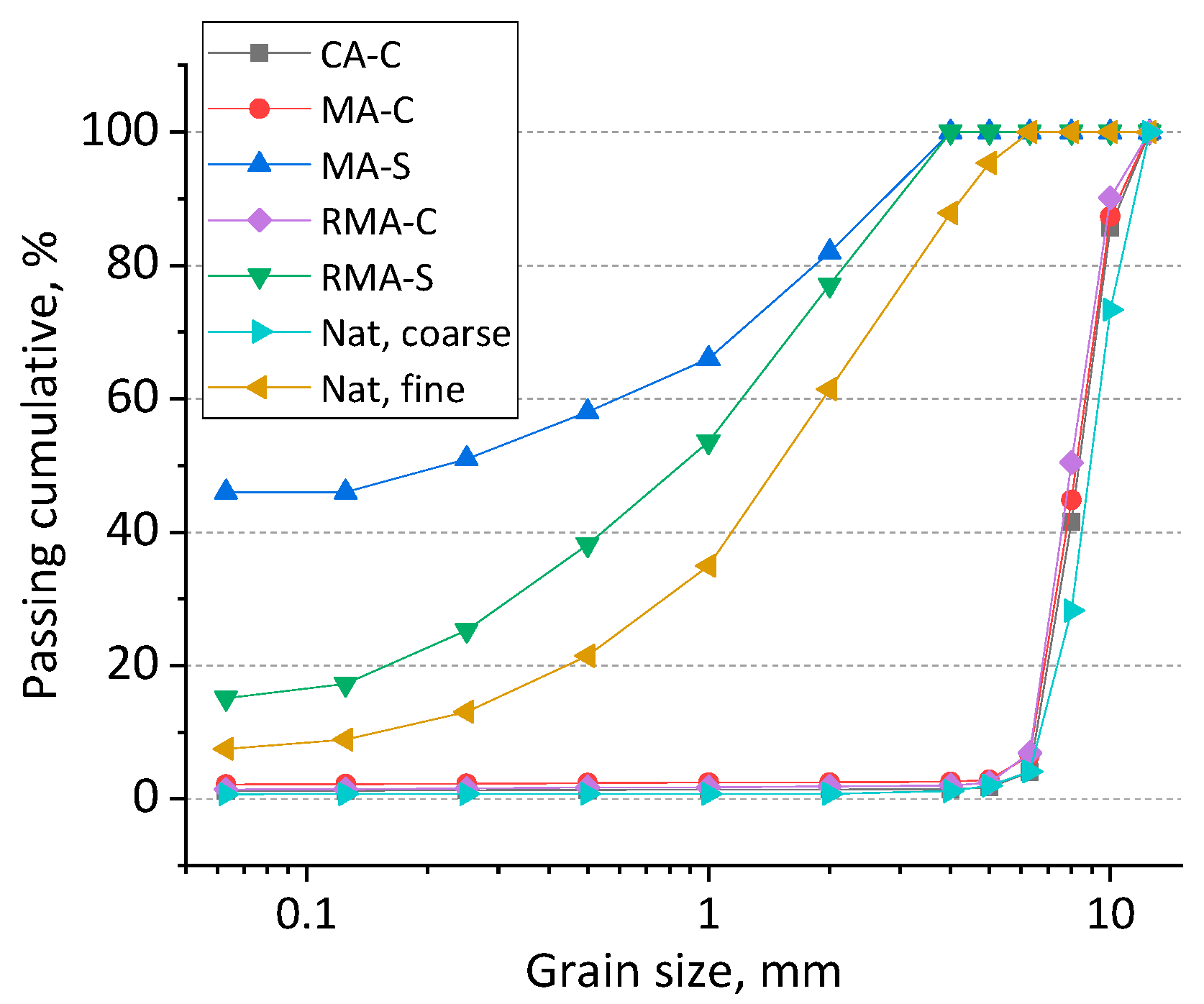
The particle size distributions of all the aggregates, obtained according to the UNE-EN 933-2 standard [25], are shown in Figure 1.
As can be seen in Figure 1, the coarse fractions of the natural aggregate and the recycled aggregates are very similar. On the other hand, in the fine fraction, some differences are observed among the aggregates. The amount of smaller particle sizes is greater in recycled aggregates than in natural aggregate, especially in the case of MA.
The main mechanical and physical properties of the coarse (C) and fine (S) fractions of the aggregates used are shown in Table 3. The particle density and water absorption capacities were determined according to UNE-EN 1097-6 [26]. The resistance to fragmentation and the fine content were determined according to UNE-EN-1097-2 [27] and UNE-EN-933-2 [25], respectively.
Additionally, sodium hydroxide (NaOH, technical-grade; Panreac Química S.L.U., (Castellar del Vallès, Spain)) was used as an alkaline solution to activate the ground granulated blast furnace slag. The activator solution was prepared with a NaOH concentration of 5% Na2O. The solution/slag ratio was 0.5. This dosage comes from previous studies carried out with alkaline-activated slag [28].

2.2. Experimental Procedure

2.2.1. Mixture Proportions and Manufacturing of Paving Blocks

In this research, paving blocks were manufactured in an industry company specialized in these materials, optimising the dosage to avoid changes to the usual manufacturing conditions. An OPC concrete mixture using natural aggregates (OPC control) served as a reference to evaluate alkali-activated ground granulated blast furnace slag (AAS) performance. A series of AASs with varying recycled aggregate contents was produced, including a reference dosage with only natural aggregates (AAS control). In the AAS series with recycled aggregates, natural aggregates were replaced with recycled aggregates of different types and fractions to find the maximum volume fraction usable without significant property loss. The recycled aggregate percentages used were 20, 50, and 100% of the volume of natural aggregates. Table 4 shows all the mixtures manufactured and the nomenclature used in each case. Mixtures were denoted by three parts separated by hyphens: the type of recycled aggregate (recycled concrete aggregate CA, recycled masonry aggregate MA, and recycled mixed aggregate RMA), the fraction of recycled aggregate used (fine S or coarse C), and the percentage of recycled aggregate (20, 50, and 100%).
Figure 1 shows the granulometric distribution of the fine fraction of the aggregates used, highlighting differences that suggest aggregate mixtures with the fine fraction will vary. The MA-S-100 mixture has a higher percentage of fines compared to the RMA-S-100 mixture.
The water–cement ratio for the control mixture made with Portland cement (OPC control) was 0.47. The proportion of the AAS control specimen was optimised to achieve workability similar to the OPC (Abrams cone of 0.1 cm [29]). The consistency of each alkaline-activated batch was controlled similarly, and all samples displayed a dry consistency. Since the industry does not saturate aggregates with water before use [30], the total water for each type of recycled aggregate was adjusted based on its water absorption data, ensuring sufficient water for material hydration. This kept the proportions of AAS, NaOH, and effective water constant when varying the recycled aggregate content.
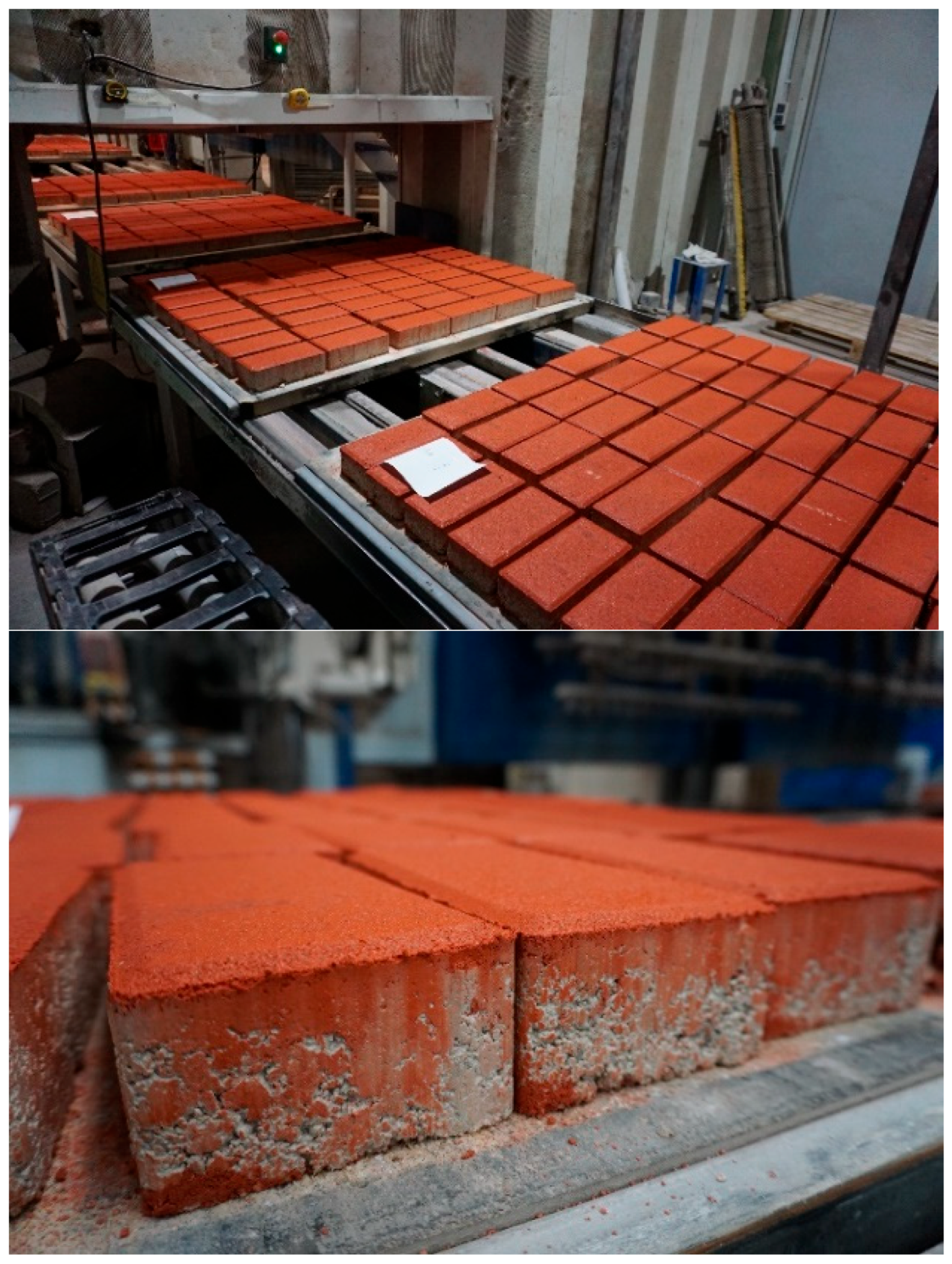
These mixtures were used to create the base layer of paving blocks in a precast concrete factory. The paving blocks measured 20 × 10 × 6 cm3, cast in two layers: a 5.5 cm base layer (made with the proposed mixtures) and a 0.5 cm top layer (made with conventional concrete). To produce these blocks, concrete was subjected to simultaneous vibration and pressure inside metallic moulds [10]. The manufactured blocks can be seen in Figure 2. The manufactured paving blocks were then moved to a curing area within the industrial facilities until testing.

2.2.2. Testing Programme

Table 5 summarises the mechanical and physical properties tested on the industrially manufactured paving blocks, along with the curing duration in the humid chamber. The standards used and the number of paving blocks tested, as required by the standards, are detailed to ensure a representative final result. In all properties, industrially produced paving blocks (double layer) were used. Abrasion and slippage resistance tests were performed only on the underside of the paving blocks, as the recycled aggregates under study were used exclusively in the base layer. The upper layer was kept identical in all mixtures, and the experimental variables affected only the lower layer. Testing the modified layer allowed the influence of the recycled materials on the measured properties to be isolated.
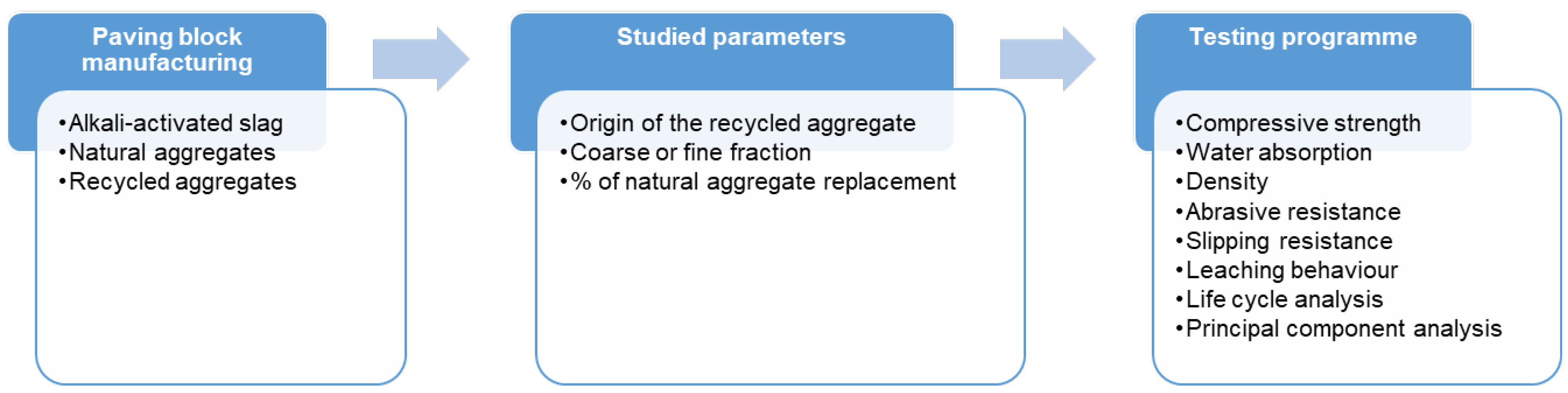
A summary diagram of the experimental procedure is shown in Figure 3.

2.2.3. Mercury Intrusion Porosimetry

The mercury intrusion porosimetry technique was used to determine the pore size distribution of paving block samples. A POREMASTER-60 GT QUANTACHROME INSTRUMENTS mercury porosimeter (Anton Paar Spain S.L.U., (Madrid, Spain)) was used. Both the total connected porosity and the pore size distribution in the diameter range of 3.6 nm to 1100 μm were obtained. The pressure range of the equipment was 20 to 60,000 psi.

2.2.4. Statistical Analysis

Principal component analysis (PCA) was applied to the mechanical properties, water absorption, density, and abrasion resistance results of the paving blocks. This analysis aimed to observe the influence of aggregate properties and the use of coarse or fine aggregate fractions on the paving blocks’ properties. PCA is a statistical technique that simplifies complex data sets by identifying the most significant characteristics and creating new variables (principal components) that capture most of the variability in the original data. By reducing data dimensionality, PCA helps visualise and interpret results, identifying patterns and relationships between the original variables more simply. All calculations and graphical representations were performed using RStudio 2023.06.0 and various R libraries. A more detailed description of the technique is provided in [33].

2.2.5. Ionic Leaching

The leaching behaviour of recycled aggregates and paving blocks with different recycled aggregate replacements was studied following the UNE-EN 12457-4 [34] and UNE-EN 15863 [35] standards, respectively. For recycled aggregates, tests used a liquid–solid ratio of 10. Paving blocks were fully immersed in closed plastic containers with distilled water, maintaining a 2 cm free space between the blocks and container surfaces. The lixiviant was introduced and renewed at 8 fixed intervals per the standard, with the pH and conductivity of the eluate measured at each renewal. Components specified by the European Landfill Directive [36] were quantified using plasma chromatography and mass spectrometry techniques.

2.2.6. Life Cycle Assessment

A life cycle analysis assessed the environmental impact of paving blocks made from alkali-activated slag (AAS) compared to those made from Portland cement, following the ISO 14040 standard [37]. The functional unit was the production of 1 m3 of paving blocks. Raw materials used included OPC CEM I 42.5 R-SR, granulated blast furnace slag, sodium hydroxide, natural limestone sand and gravel, various recycled aggregates (CA-C, MA-C, and RMA-C), and water. Inventory data was sourced from the Ecoinvent v3.10.0 database, covering the cradle-to-gate within-scope resource extraction, raw material production, transport to the factory, and manufacturing stages. Energy consumption during mixing was also considered. Construction, use, maintenance, demolition, and recycling phases were excluded, as the focus was solely on the material production’s environmental properties. The impact assessment, based on the International Reference Life Cycle Data System (ILCD), includes 16 categories [38], with this research focusing on climate change, expressed in kg of CO2 equivalent.

3. Results and Discussion

3.1. Mechanical Properties

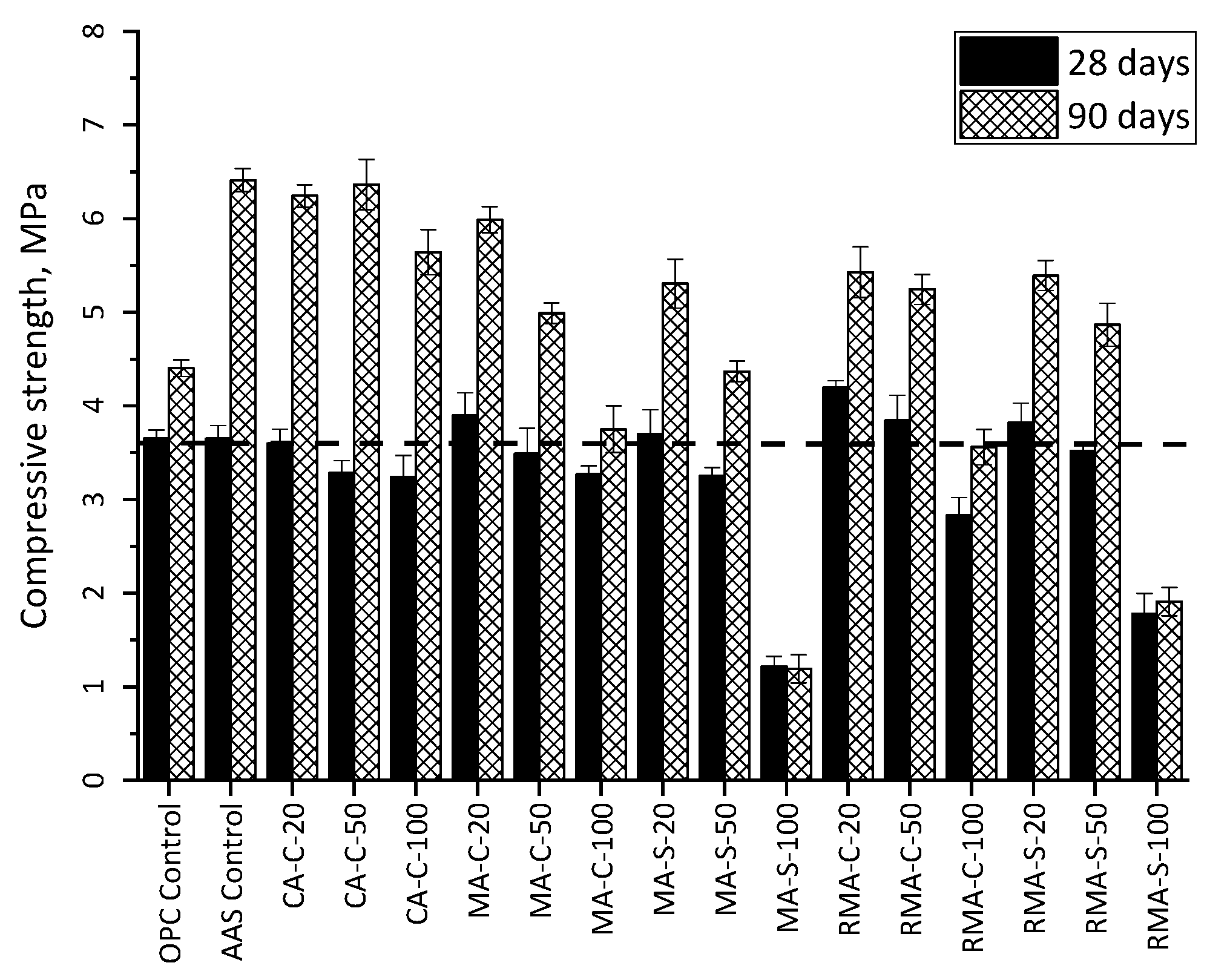
Figure 4 shows the results obtained and the standard deviations of the compressive strength of the paving blocks with different mixtures of natural and recycled aggregate at two curing ages, 28 and 90 days. A dashed line at 3.6 MPa has been included in the graph to indicate the minimum admissible value according to the UNE-EN 1338 standard, annex F [39].
All paving blocks show a significant increase in strength after 90 days compared to 28 days, except for those paving blocks where all the natural aggregate was replaced by fine recycled aggregate (MA-S-100 and RMA-S-100). The control paving blocks made with alkaline-activated slag (AAS) have a similar strength to those made with ordinary Portland cement (OPC) at 28 days, but at 90 days, the strength of AAS blocks increases by about 45% compared to OPC. This makes slag an effective base material for paving blocks, easily meeting regulatory requirements [39]. The strength gain in slag-based blocks over time is much higher than in those made with Portland cement due to different reaction mechanisms [40]. Alkaline activation of slag results in different reaction mechanisms and products compared to cement hydration. During slag activation, reactions like slag solubility, hydrate formation, and polycondensation occur, which require a longer reaction time and result in higher strength gains at 90 days compared to cement [41,42,43,44,45]. Various studies, such as those by Singh et al. [46], Ganjian et al. [47], and Pratiwi et al. [48], explore the use of alkaline-activated waste materials for producing environmentally friendly construction materials like paving blocks, demonstrating excellent results.
Regardless of the type of recycled aggregate used and the age of curing, the compressive strength of paving blocks decreases as the percentage of recycled aggregate increases due to its lower strength compared to natural aggregate [10,40]. At 28 days of curing, mixtures with 20% substitution meet the required standard (3.6 MPa), while at 90 days, all mixtures surpass this value, except for the complete replacement of natural aggregate with the fine fraction of MA and RMA. This result is promising for mechanical properties. Various studies, such as that by Hossiney et al. [49], have explored using recycled materials in concrete paver blocks, finding that up to 50% recycled aggregates can be used for pedestrian and non-motorised facilities. Another study achieved the required compressive strength by combining blast furnace slag and soil with thermal curing, although it did not use recycled aggregates [50].
When the coarse fraction of recycled aggregates is used, the loss of strength depends on the type of aggregate. At 28 days, the lowest strength losses occur with the CA, with a 10% decrease for the 50 and 100% replacements with respect to the strength of the paving block with 20% replacement (CA-C-20). With the MA, the strength presented with the 20% replacement drops to 16% with the complete 100% replacement (MA-C-100). Finally, the decrease reaches a value of 32% when using RMA. At 90 days, the strength losses are similar to those presented at 28 days of curing with CA and RMA. In contrast, with MA, there is a 37% decrease, more than double that presented at 28 days. In other studies [51,52,53], a significant difference has also been observed in the behaviour of the concretes manufactured depending on the composition of the recycled aggregates used. Poon et al. [51] and Yang et al. [53] observed that ceramic recycled aggregates produce concretes with lower strengths compared to mixed and concrete recycled aggregates, even though in those works, the binder used was ordinary cement and here the material used was AAS. The lower strength decrease observed with the use of CA could be due to the composition of this recycled aggregate. CA usually contains calcium from Portland clinker residues, hydrated phases, calcite and dolomite that can dissolve under alkaline conditions, favouring the polymerisation reactions of slag activation and counteracting the decrease in compressive strength normally associated with the fragility of recycled aggregates compared to natural aggregates [54,55,56]. Obviously, as the substitution percentage increases, this positive effect is outweighed by the negative effect of the fragility of the recycled aggregate.
The use of the fine fraction in MA and RMA has a similar behaviour to that presented with the coarse fraction in the 20% and 50% substitutions. When the substitution is 100%, the aggregate’s behaviour worsens drastically. In this case, the strength losses are similar at 28 and 90 days. The behaviour of both recycled aggregates with the fine fraction is similar. This worsening observed with high substitutions of the natural aggregate could be due to the high percentage of fines that the MA and RMA have, as can be seen in Figure 1. The MA-S and RMA-S present high percentages of passage through the 0.063 mm sieve of 66% and 54%, compared to the fine fraction of the natural aggregate, which presents a value of 35%. Therefore, these particle size distributions are not suitable for use in concrete elements when used with high percentages of substitution, since they generate pieces with high porosity. These results are similar to those observed in other works [12,53,57,58], where it is shown that up to replacements between 50% and 60%, there is no significant influence of the use of recycled aggregate in concrete on compressive strength.
PCA was employed to understand the impact of replacing natural aggregate with recycled aggregate on the compressive strength of paving blocks. This analysis differentiates between the replacement of the coarse and fine fractions of the aggregates.

3.1.1. PCA Applied to Paving Blocks with the Replacement of the Coarse Fraction of the Recycled Aggregate

To apply PCA, the variables considered in the method must be established. Only samples with AAS as a binder were studied, as using OPC would add another variable. Six variables were considered: mechanical strength, substitution percentage, and aggregate properties (density, resistance to fragmentation, water absorption, and content of floating particles). Results from 28 and 90 days of curing were analysed. PCA aims to reduce these variables into principal components that explain the same results as the original variables. These components are linear combinations of the original variables, represented by eigenvectors and eigenvalues of the variance–covariance matrix. As explained in a previous work [40], a value of 70% of the total variance is sufficient to obtain representative predictions.
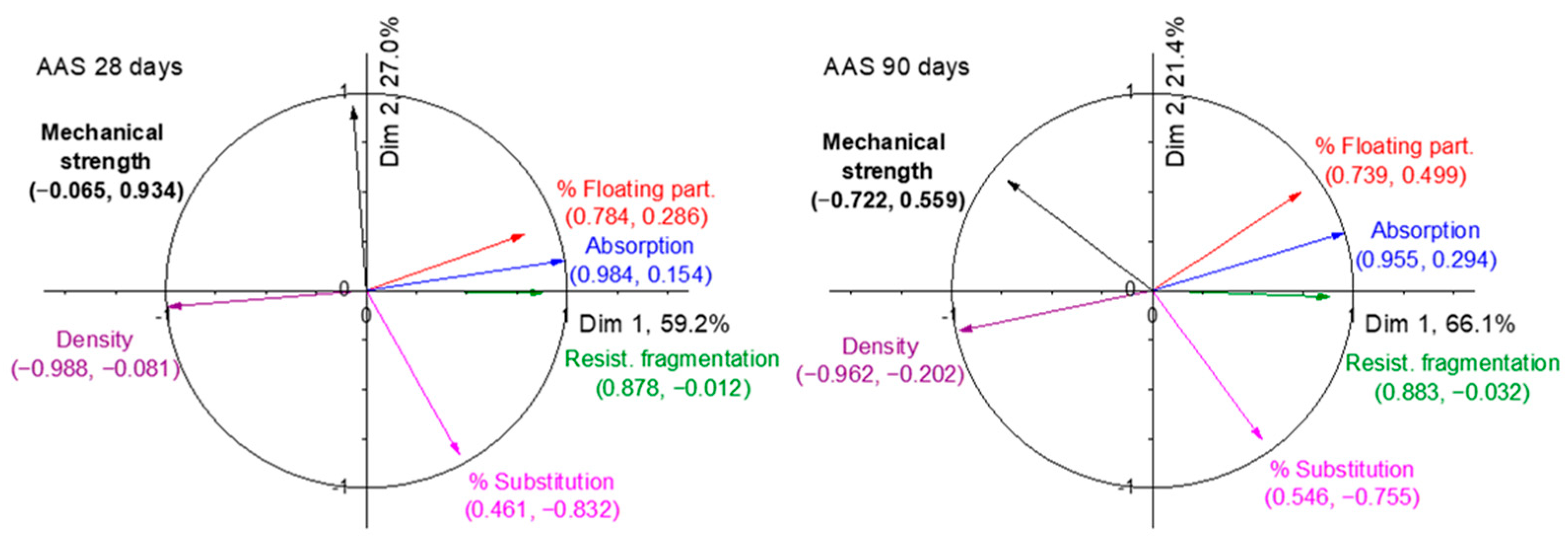
The correlation circles for the mechanical strength of alkaline-activated paving blocks made from the coarse fraction of recycled aggregate are shown in Figure 5 for 28 and 90 days of curing. The first dimension explains nearly 60% of the experimentally obtained data at 28 days. When considering the first two dimensions together, they account for 86% of the data.
In Figure 5, each variable is depicted as a vector, with the direction and length indicating the relationship between variables. The angle between vectors shows their correlation: a small angle indicates a positive correlation, a 90° angle means no correlation, and a 180° angle indicates a negative correlation. The first dimension consists mainly of variables close to the X-axis, primarily the properties of the aggregates, especially density and water absorption (long vectors). The second dimension comprises variables near the Y-axis, mainly the compressive strength and substitution percentage.
At 28 days, the density shows an opposite trend to other aggregate properties, where an increase in properties leads to lower density. Mechanical strength is primarily influenced by the percentage of recycled aggregate substitution, with increased substitution leading to decreased strength, regardless of aggregate type. At 90 days, density and water absorption remain the key parameters in dimension 1, but mechanical strength also aligns closer to the X-axis and is influenced by both substitution percentage and aggregate properties. Previous studies with Portland cement-based blocks showed that mechanical strength depended mainly on recycled aggregate properties at both 28 and 90 days [40]. For alkaline-activated paving blocks, the percentage of aggregate replacement has the greatest influence on strength loss, with aggregate properties affecting strength only at 90 days.

3.1.2. PCA Applied to Paving Blocks with the Replacement of the Fine Fraction of the Recycled Aggregate

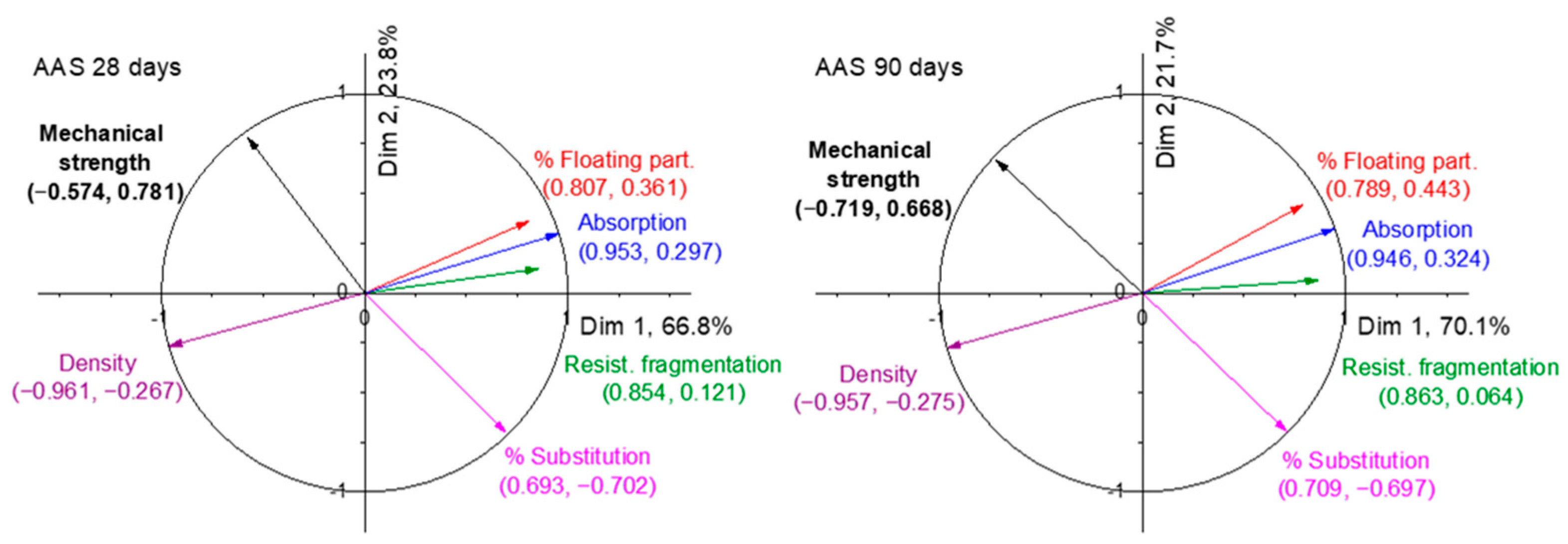
Figure 6 shows the correlation circles for samples with recycled fine aggregate at 28 and 90 days.
At both 28 and 90 days, dimensions 1 and 2 are able to explain more than 90% of the data set represented (90.6 and 91.8%, respectively). In both cases, there are practically no notable differences. It is observed that the compressive strengths of alkaline-activated paving blocks depend mainly on the degree of substitution of the fine recycled aggregate, while the properties of the latter have a lesser influence. If compared with paving blocks made with concrete [40], a more similar behaviour is observed both when using cement and activated slag.
Based on the results obtained, when using alkaline-activated slag in the paving block matrix, the mechanical properties primarily depend on the amount of recycled aggregate introduced. In contrast, for concrete, the compressive strength mainly depends on the properties of the recycled aggregate used. The difference in behaviour of recycled aggregates depending on the matrix used is notable. In paving blocks made with slag, where the properties of the aggregate do not have a great influence, the standards [59,60] that limit the quantity of recycled aggregates used would be more valid, although as seen in this case, the natural aggregate could be completely replaced by recycled aggregate in most of the aggregates studied.

3.2. Water Absorption

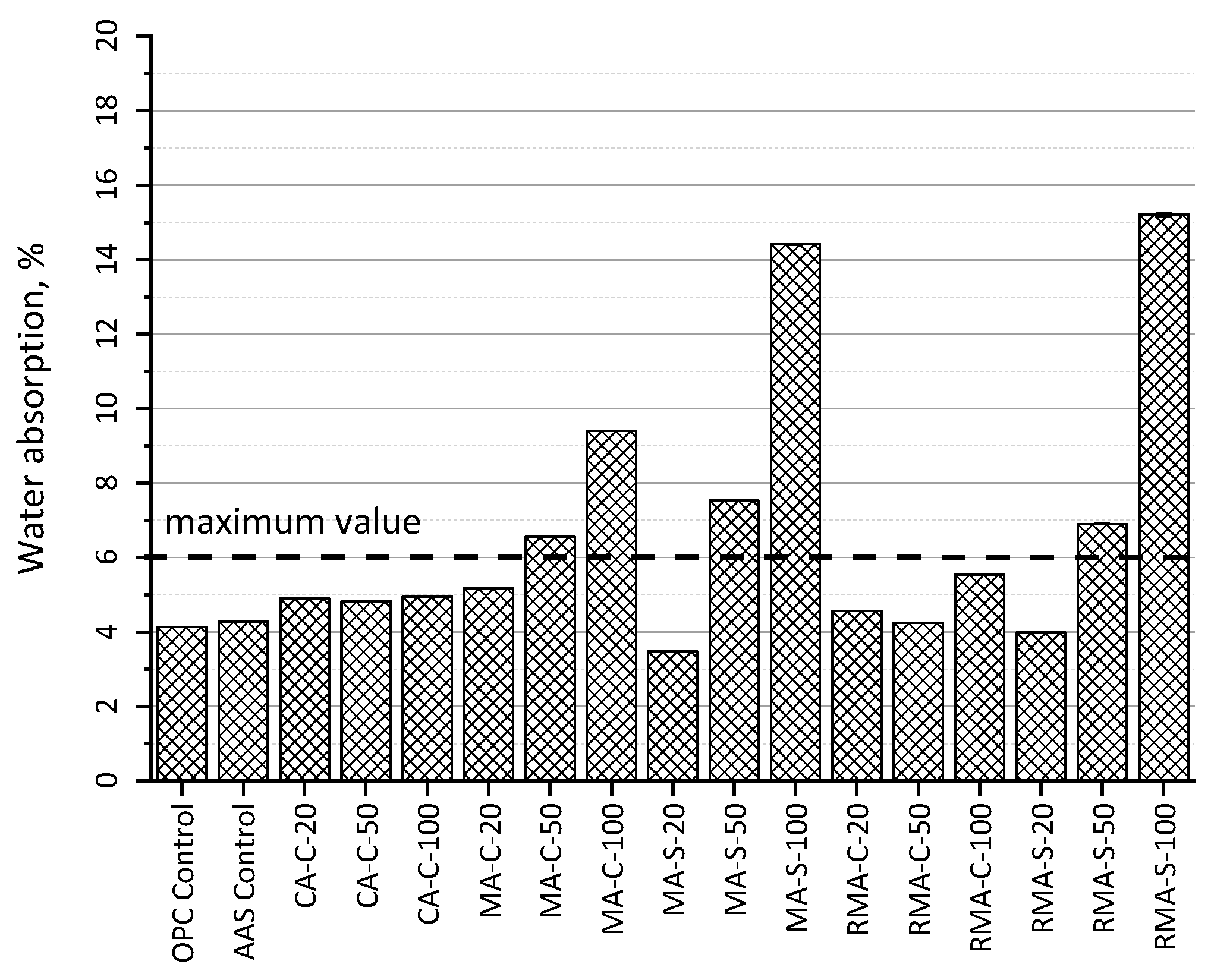
Figure 7 shows the results of percentage of water absorption by each paving block after being cured for 90 days and their standard deviations. The UNE-EN 1338 standard [39] establishes a maximum value of 6% water absorption for paving blocks made with Portland cement or alkaline-activated slag, both classified as B or class 2. This maximum value has also been included in Figure 7.
The water absorption by the control samples made with OPC and slag (AAS) is similar. In general, an increase in water absorption by the precast element is observed as the percentage of replacement of natural aggregate with recycled aggregate increases. The amount of water absorbed clearly depends on the type of recycled aggregate used and the fraction used.
Using the coarse fraction of aggregate reduces water absorption in paving blocks compared to the fine fraction. When 20% CA and RMA is added, the water absorption slightly increases compared to the slag control sample (AAS) but remains constant as more aggregate is added, staying below the 6% limit. In contrast, the MA increases water absorption in proportion to the percentage of recycled aggregate added, with increases of 21%, 53%, and 120% for 20%, 50%, and 100% addition, respectively. This suggests that for MA, the substitution percentage is crucial. For CA and RMA, the lower water absorption is due to their properties, shown in Table 3, with CA and RMA having lower absorption and higher density compared to MA.
The use of the fine fraction of ceramic and mixed aggregates greatly increases the water absorption of the block. However, up to 20% substitution, it can be observed in Figure 7 that they present a lower water absorption compared to blocks with the coarse fraction of MA and RMA. The results are better than those obtained with the reference sample AAS. From 20% substitution of the fine fraction, the behaviour worsens significantly compared to the use of the recycled coarse fraction, showing similar values with both recycled aggregates, MA and RMA. According to the results obtained, when using the fine fraction of the aggregate, the substitution percentage has a greater influence than the properties of the aggregate. As observed for the compressive strength, the granulometry of the fine aggregates used has a greater influence as the substitution percentage of the natural aggregate increases. The same conclusion was obtained in another study, where paving blocks and vaults were manufactured with substitution percentages of up to 30% [12]. Both studies show that the use of percentages around 20–30% of the fine fraction of recycled aggregate should not be rejected and discarded as a construction material, even though some authors obtain different results from this article [9,61].
In this way, the use of alkaline-activated slag (AAS control) as a substitute for conventional Portland cement (OPC control) does not lead to an increase in the water absorption of the manufactured paving blocks. This demonstrates the good performance provided by this type of alternative cement for the manufacture of these prefabricated elements. All paving blocks manufactured with the coarse fraction of CA and RMA, and with substitutions of up to 20% of the fine fraction of MA and RMA, show water absorption values below 6%. Water absorption in paving blocks is important since this property is related to their climatic resistance. According to the UNE-EN 1338 standard [39], both paving blocks manufactured with Portland cement as well as with alkaline-activated slag are classified as class 2 (water absorption <6%). On the other hand, all concretes manufactured with coarse and fine recycled aggregates with up to 20% substitution of natural aggregate are also classified as class 2 (<6%) in all cases. The rest are marked as class 1, except the mixtures made with coarse CA and RMA, which are classified as class 2, including 100% substitutions. The results obtained in this work coincide with the values reflected in the regulations, although the standard does not apply any requirements to these elements in Spain. In another study [8], similar results were observed: when the substitution percentage of RMA was above 50%, values of water absorption were higher than the established values of the EN 1340 standard for kerbstones (tagged as number 2) [62].
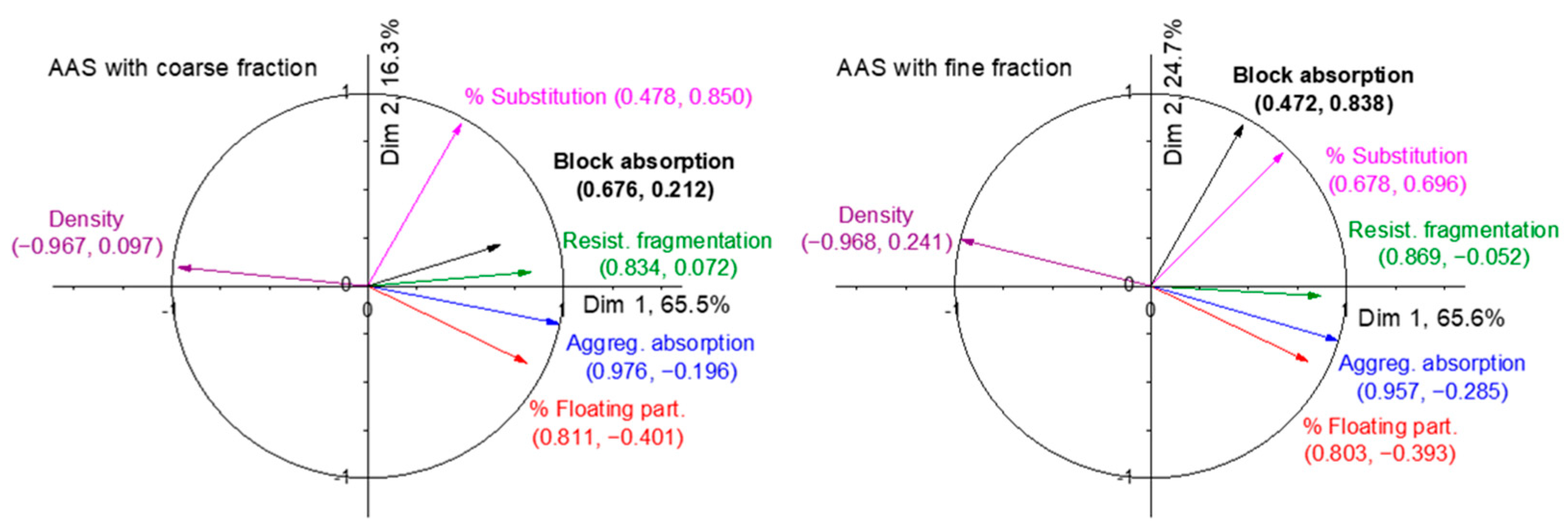
The principal component analysis is then applied to the results obtained in order to see the influence of the different variables. Figure 8 shows the PCA correlation circles to analyse the experimental results obtained for the water absorption of the alkaline-activated blocks, both when the coarse fraction and the fine fraction are used, at 90 days.
At first glance, it can be observed that the behaviour is different depending on whether the coarse or fine fraction of recycled aggregate is used. When using the coarse fraction, the water absorption by the paving block is mainly influenced by the water absorption and density of the aggregate used. The water absorption shown by the block is lower when the water absorption of the aggregate is lower and its density is higher. The substitution percentage is the main variable in dimension 2. The absorption of the block is also influenced by the quantity of the coarse fraction aggregate used, but to a lesser extent than the properties of the aggregate. With the fine fraction, the water absorption of the block depends mainly on the percentage of substitution of the aggregate: its value increases as the quantity of recycled aggregate included increases. On the contrary, the properties of the aggregate hardly interfere. If the results obtained from the paving blocks made of concrete are compared, the behaviour is similar for concrete and slag paving blocks [40].

3.3. Density, Abrasive Resistance and Slipping Resistance

The results obtained after carrying out the characterisation tests of the density, abrasive resistance and slip resistance of the manufactured paving blocks are summarised in Table 6.
As can be seen in Table 6, the density of the precast element is directly related to the density of the recycled aggregate [12,63]. According to Table 3, CA presents the highest density (2.39 g/cm3), so the density of the block remains practically constant with the degree of substitution and is similar to that presented by the AAS control paver. The next density value corresponds to the RMA (2.32 g/cm3; see Table 3). The density values of the blocks are very similar to those observed with CA, varying only with 100% substitution of the natural aggregate by the fine fraction. The use of MA provides blocks with relatively lower densities, especially when using the fine fraction. Poon et al. [64] also obtained the same trend when using the fine fraction of RMA. Therefore, the high replacement of the natural aggregate by the fine fraction of a recycled aggregate can generate concrete elements with high porosity.
Regarding the abrasion resistance, the results shown in Table 6 are low since the tests were done on the bottom layer of the paving block (5.5 cm thickness), as that is the one that includes the recycled aggregate. The abrasion resistance of all the paving blocks manufactured in this study with recycled aggregates was similar to that obtained when natural aggregates were used, except when using the coarse fraction of the RMA. Other researchers [65] found that the abrasive resistance was only modified when the percentage of recycled aggregate was higher than 40%. In another study, they observed that the use of the coarse fraction of MA and RMA caused a decrease in the abrasive resistance between 7.5 and 10 mm, independent of the type of aggregate and the percentage used [12].
Finally, the slip resistance of paving blocks made from recycled aggregates remains virtually unchanged, regardless of the type of aggregate, the fraction used and the quantity used. This confirms that the use of recycled aggregates does not influence this property. These results coincide with those presented in other articles [10,52].

3.3.1. PCA Applied to Block Density Data

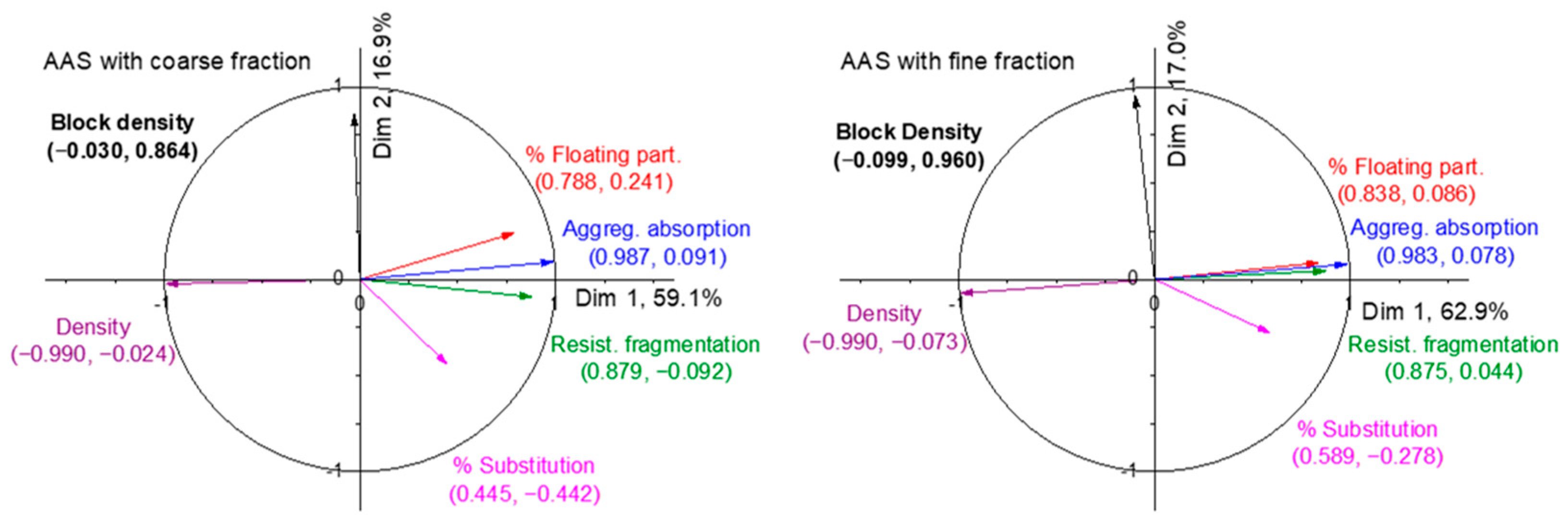
Figure 9 shows the correlation circles obtained by PCA to analyse the experimental results obtained for the measurement of the density of the different paving blocks using the coarse and fine fractions.
Figure 9 shows that dimension 1 is mainly formed by the properties of the aggregate. The percentage of substitution also has a certain degree of influence on dimension 1, being identical to that shown in dimension 2. Dimension 2 is clearly formed by the density of the block. This behaviour is common in both fractions, with the percentage of substitution having a slightly greater influence on the density of the block when the coarse fraction is used. In paving blocks made with cement, it is observed that the density of the block depends more strongly on the percentage of aggregate substitution [40].

3.3.2. PCA Applied to Block Abrasion Resistance Data

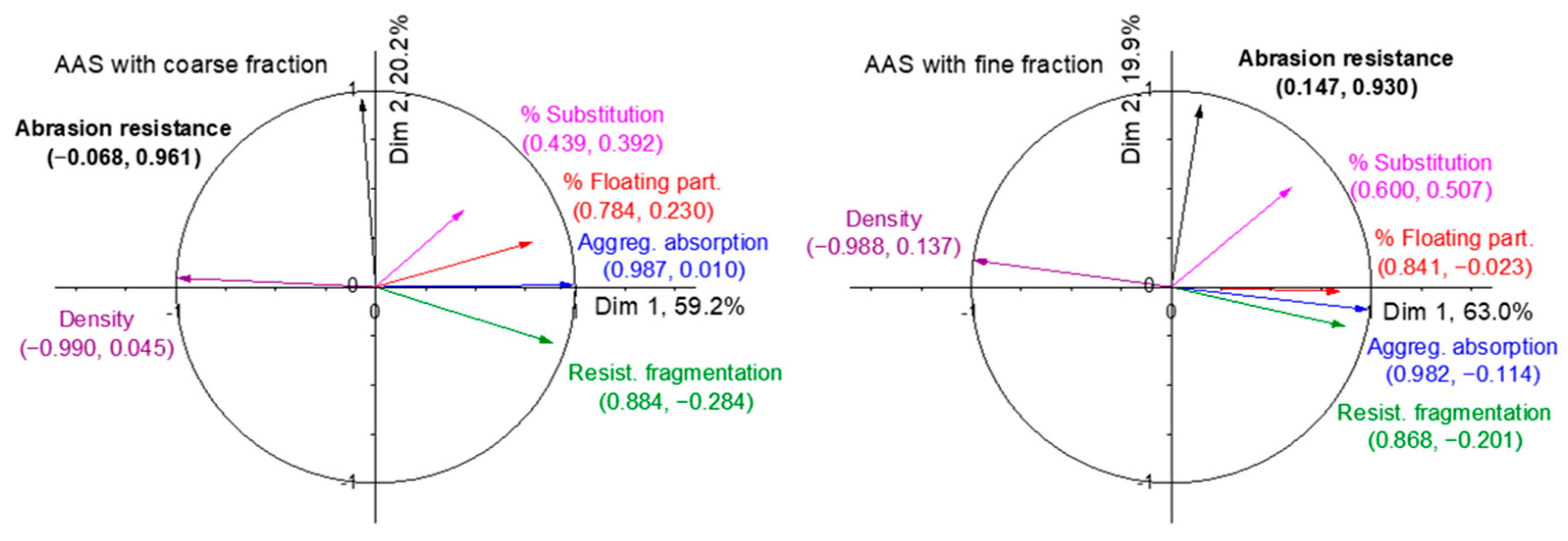
Figure 10 shows the correlation circles obtained by PCA to analyse the experimental results obtained for the measurement of the abrasion resistance of the different paving blocks using the coarse and fine fractions.
Representative values are obtained for both the coarse and fine fractions. For the coarse fraction, dimension 1 is mainly influenced by recycled aggregate properties, with the substitution percentage playing a lesser role. Dimension 2 is mainly influenced by abrasion resistance and less by the substitution percentage. The fine fraction behaves similarly to the coarse fraction, indicating that abrasion resistance does not depend on the aggregate properties or fraction used but is slightly influenced by the degree of substitution of the recycled aggregate. In paving blocks made with activated slag, the behaviour differs from those made with Portland cement, where abrasion resistance mainly depends on the properties of the aggregate [40].

3.4. Mercury Intrusion Porosimetry of Some Representative Samples

The correlation circles suggest that density is almost perpendicular to the paving blocks’ properties (such as mechanical strength and density), which contradicts the statistical analysis. The analysis indicated that density had the most significant impact on water absorption. The density of blocks and aggregates appears with a similar weight in dimension 1, but the paving blocks’ density has a lower relevance in dimension 2, possibly due to reactions between alkalis and ceramic waste. To understand this result, mercury intrusion porosimetry (MIP) was performed on both aggregates and concrete produced with substitution after 28 days. Only the recycled aggregates with the lowest (CA) and highest porosity (MA) were used for the MIP test. Results of the total porosity and mercury retained after the MIP test are shown in Table 7.
The total porosity aligns with the water absorption results of the recycled aggregates from Table 3. MA shows a much higher porosity compared to CA, more than the difference seen in the water absorption results. This suggests that some pores in MA were not reached by water. This is confirmed by Dang et al. [66], where microscopy revealed many “non-accessible” pores in brick pieces, penetrable by MIP due to the brittle nature of bricks and the presence of microcracks. The percentage of retained mercury, more than 15% higher in MA, supports this hypothesis. Retained mercury indicates high tortuosity in the pore network, showing pores accessed by narrow holes. For alkali-activated concrete, using concrete as a recycled aggregate decreases porosity, indicating binder penetration or occlusion in pores. Using masonry samples slightly increases porosity. Retained mercury significantly increases in recycled concrete used as an aggregate, indicating higher pore network tortuosity, but changes little in masonry recycled aggregate. This suggests strong interaction between alkali-activated material and recycled concrete and almost no interaction with recycled masonry. The binder–aggregate interaction significantly changes, indicating that aggregate density is less crucial to the final product’s density. Instead, the differing behaviour of the mix (binder/aggregate) and the volume of material with different behaviours, which changes with the percentage of aggregate, is the most important factor, as revealed by PCA.

3.5. Leaching Test

3.5.1. Recycled Aggregate

The Landfill Directive classifies waste into three groups based on their polluting potential—inert, non-hazardous, and hazardous [36]—and specifies limit values for waste disposal in landfills. A previous study examined the leaching behaviour of recycled and natural aggregates, with detailed values available in [40]. In summary, the obtained values for metallic elements in recycled aggregates were all lower than the European standard’s requirements for inert waste classification. Similar results were found by other researchers [14].
The sulphate content exceeds the established limit in all samples except for the recycled concrete aggregate sample CA-C. The MA and RMA-C have values up to five times higher than that required for inert classification, while RMA-S exceeds the limit by more than eight times. Gypsum is the main source of sulphate in recycled aggregates. According to Barbudo et al. [13], sulphates also come from natural aggregates, adhered mortar, and ceramic particles in recycled aggregates. Their study found the lowest sulphate content in concrete aggregates, similarly to this investigation. The chloride content only exceeds the European Union limit for aggregate RMA-S, which is double the stipulated value. Based on these values, recycled aggregate CA-C is classified as inert, while MA-C, MA-S, RMA-C, and RMA-S are classified as non-hazardous.

3.5.2. Paving Blocks

pH significantly influences the leachability of chemical species [16]. Initially, the pH of the paving blocks made in this study will have been alkaline but will have decreased to 7–8 over time due to carbonation processes [67]. Tests were carried out with a pH of 7.
Table 8 shows concentrations of metals, chlorides, sulphates, and fluoride in leachates from paving blocks made with recycled aggregates. All values are below the limits set by the Netherland Soil Quality Decree (NSQD) [68], indicating that these paving blocks are safe for the environment and not classified as dangerous. Similar results were found by Galvín et al. [16] and Leiva et al. [14], showing very low leaching values. The study supports the idea that using recycled aggregates in non-structural precast concrete decreases leaching due to diffusion mechanisms [9,10,12]. This shows that companies can incorporate recycled aggregates into paving blocks, reducing natural aggregate consumption without environmental risk and adding value by giving waste a second life.
The leaching test results show a change when comparing recycled aggregates alone and when comparing them in paving blocks. While the sulphate content of MA and RMA exceeds regulatory limits for inert classification, incorporating these aggregates into paving blocks reduces their leaching value, making them compliant with Dutch Soil Quality Decree (NSQD) limits [68]. This demonstrates the concrete’s ability to contain sulphates from recycled aggregates, preventing environmental issues from leaching. The highest sulphate leachate values were found in paving blocks using MA-S, MA-C, and RMA-S, indicating a lower capacity to retain sulphates. This is likely due to the greater porosity of these concretes, as shown by higher water absorption rates (14.4% with MA-S, 9.4% with MA-C, and 15.2% with RMA-S) in Figure 7. Greater porosity favours leaching.
Comparing the leaching behaviour of paving blocks made with cement (OPC control) and those made with alkaline-activated slag (AAS control), OPC shows higher Cr and chloride content, while AAS has higher sulphate and fluoride content. The higher Cr content in OPC is typical due to the composition of Portland cement, which contains chromium from raw materials as an impurity [69].

3.6. Life Cycle Analysis

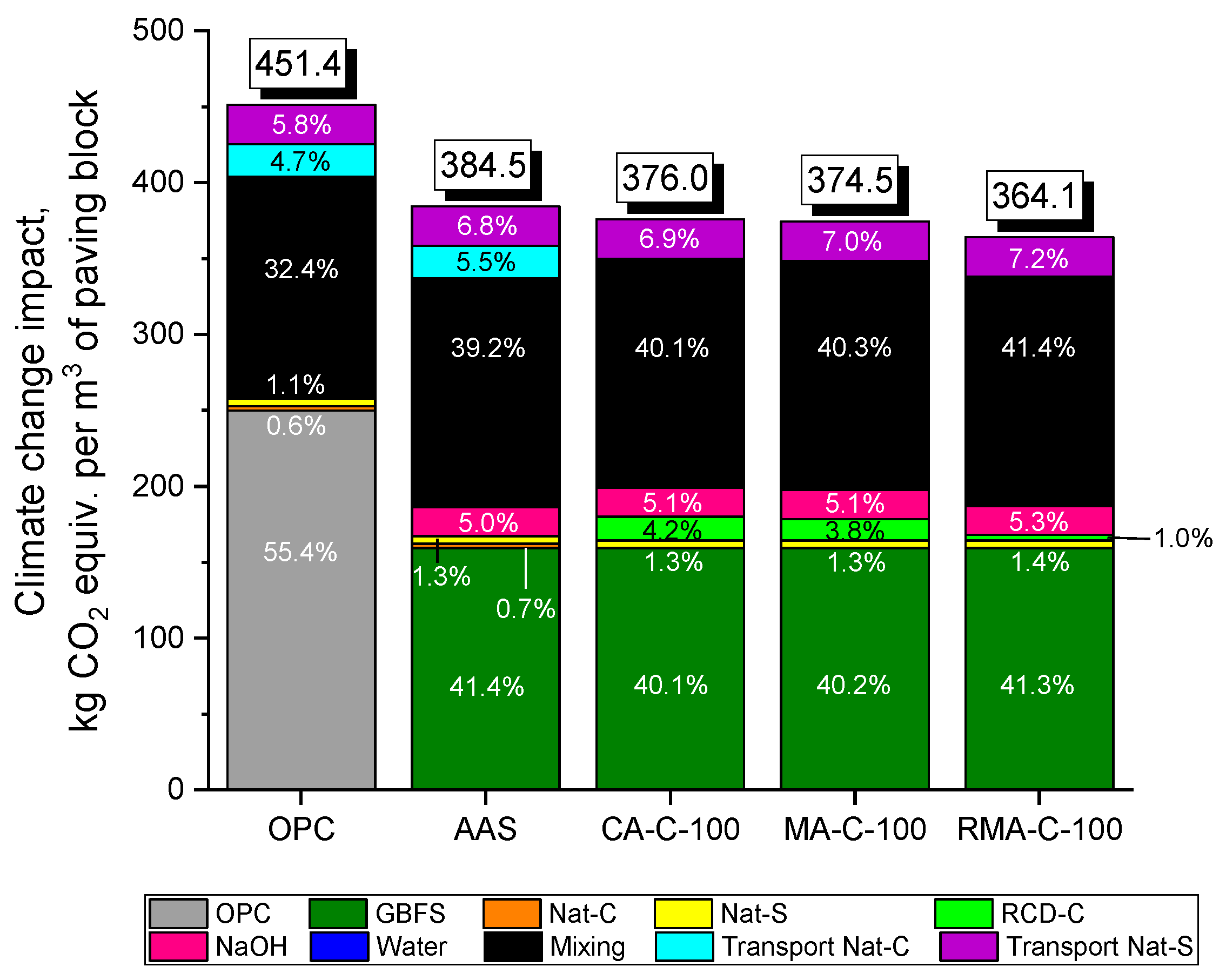
The aim of this study was to compare the environmental impact of manufacturing paving blocks using AAS with recycled aggregates versus the conventional method using concrete with sand and natural limestone gravel. The dosages studied were: OPC control, AAS control, CA-C-100, MA-C-100, and RMA-C-100. Only dosages where the coarse fraction of natural aggregate had been completely replaced by recycled aggregate were included. Figure 11 shows the climate change impact results for each dosage, expressed in kg of CO2 equivalent per m3 of paving block. The figure also indicates the percentage contribution of each material and process, as well as the total value generated.
Of all the dosages analysed, the OPC control has the highest environmental impact at 451.4 kg CO2 equivalent. Replacing Portland cement with AAS reduces CO2 emissions by 14.8%. Further replacement of natural aggregate with recycled aggregates reduces the carbon footprint to a lesser extent: by 2.2%, 2.6%, and 5.3% with CA-C, MA-C, and RMA-C, respectively. In concrete paving blocks, the production of OPC and concrete mixing have the greatest environmental impact, accounting for 55.4% and 32.4% of the total CO2 equivalent. In AAS paving blocks, slag extraction and mixing each contribute similarly, around 40%. A greater reduction in carbon footprint is achieved using AAS rather than replacing natural aggregate with recycled aggregate, possibly due to emissions from treating and processing C&DW. The highest reduction is seen with RMA, which only requires crushing. The use of slag results in about a 15% reduction compared to using concrete.
Other studies also show environmental improvements by replacing cement with blast furnace slag [70,71]. The effect of using recycled aggregates on the carbon footprint varies. Hossain et al. [72] observed a 20% reduction with recycled aggregates and glass waste in cement-based paving blocks. Azam et al. [73] reported a significant environmental impact reduction with recycled concrete aggregates and clay masonry in pavement construction. Pesta et al. [74] found a 50% reduction with coarse recycled concrete aggregate but no significant change with recycled masonry aggregate. Zhao et al. [75] did not find significant differences with recycled concrete aggregates in concrete block production. A review by Hasheminezhad et al. [76] concluded that while CA offers benefits in waste reduction and resource conservation, a comprehensive understanding of its environmental impact and sustainability compared to natural aggregate is still needed.

4. Conclusions

The use of alkali-activated blast furnace slag allows for the production of paving blocks with physical properties comparable to or superior to those manufactured with conventional Portland cement, offering a viable route for reducing the environmental impact of production. Importantly, the paving blocks were produced at an industrial scale using the standard vibro-compression process, without requiring any modification to the usual manufacturing procedure, which confirms the practical feasibility of implementing this binder in existing production lines.
From the point of view of mechanical properties and with curing times of 90 days, the use of slag allows for the complete replacement of natural aggregate with recycled aggregates when the coarse fraction is used and up to 50% replacement when the fine fraction is used. This involves replacing significant quantities of natural aggregates with recycled ones without compromising mechanical performance.
The compressive strength of paving blocks made from alkaline-activated slag depends mainly on the percentage of replacement of recycled aggregate and not on the properties of the aggregate. This could mean that producers could incorporate recycled aggregates from different sources without the need for extensive pre-selection or characterisation, provided that the substitution ratios are properly controlled, which would simplify industrial implementation and reduce production costs.
Slag paving blocks have a similar behaviour to that observed with Portland cement in terms of water absorption. With substitutions of up to 100% of the coarse fraction of CA and RMA, as well as up to 20% substitutions with the fine fraction of MA and RMA, water absorption values of less than 6% are obtained.
The water absorption experienced by the block depends on the fraction of recycled aggregate used. With the coarse fraction, this absorption depends on the properties of the aggregate (density and water absorption), while with the fine fraction, it depends mainly on the percentage of substitution of the natural aggregate.
The physical properties of the blocks indicate that block density is slightly influenced by the degree of aggregate substitution and the density of the recycled aggregate. The values are similar to control samples, except with full substitution by fine aggregate. Abrasion resistance is slightly affected by the percentage of substitution, with lower values observed only when using RMA-C. Sliding resistance remains practically constant and is not influenced by the type, quantity, or fraction of recycled aggregate used.
The leaching study carried out shows that the industry can perfectly incorporate recycled aggregates in the manufacture of paving blocks, reducing the consumption of natural aggregates and without running any environmental risk, according to the Netherland Soil Quality Decree. Consequently, the combination of recycled aggregates and activated slags not only ensures environmental safety under international standards but also positions the product as a technically and economically viable solution for circular construction.
Replacing Portland cement with slag reduces the environmental impact by around 15%, representing another advantage in the use of AAS. This implies that the industry could drastically reduce its carbon footprint by reusing steel by-products as substitutes for cement, turning an industrial waste into a high-value construction resource.

Author Contributions

M.H. and C.R. performed the experiments; M.S. did the LCA; M.H. and C.R. wrote the paper; I.S. and R.N. analysed and contributed to the results. The experimental design was carried out in a collaborative way among all authors. All authors have read and agreed to the published version of the manuscript.

Funding

The RECONSTRUCT consortium is co-funded by the European Commission, grant 101082265.

Institutional Review Board Statement

Not applicable.

Informed Consent Statement

Not applicable.

Data Availability Statement

The results of this research and the scientific publications derived from the project will be made publicly available in the RECONSTRUCT project resources hub: https://reconstruct-project.eu/resources/ (accessed on 4 March 2026).

Acknowledgments

The authors of this study would like to thank the European Commission for financing the RECONSTRUCT project.

Conflicts of Interest

The authors declare no conflicts of interest.

Abbreviations

The following abbreviations are used in this manuscript:
CAConcrete recycled aggregate
MAMasonry recycled aggregate
RMARecycled mixed aggregate
PCAPrincipal component analysis
LCALife cycle assessment
IEAInternational Energy Agency
WBCSDWorld Business Council for Sustainable Development
C&DWConstruction and demolition waste
OPCOrdinary Portland cement
CO2Carbon dioxide
CCoarse
SFine
NaOHSodium hydroxide
AASAlkali-activated blast furnace slag
MIPMercury intrusion porosimetry
NSQDNetherland Soil Quality Decree

References

  1. WBCSD, Cement Technology Roadmap: Carbon Emissions Reductions up to 2050. 2021. Available online: https://www.oecd-ilibrary.org/energy/cement-technology-roadmap-carbon-emissions-reductions-up-to-2050_9789264088061-en (accessed on 24 March 2026).
  2. Van Deventer, J.S.J.; Provis, J.L.; Duxson, P.; Brice, D.G. Chemical Research and Climate Change as Drivers in the Commercial Adoption of Alkali Activated Materials. Waste Biomass Valorization 2010, 1, 145–155. [Google Scholar] [CrossRef]
  3. Nazari, A.; Bagheri, A.; Riahi, S. Properties of geopolymer with seeded fly ash and rice husk bark ash. Mater. Sci. Eng. A 2011, 528, 7395–7401. [Google Scholar] [CrossRef]
  4. Patel, Y.J.; Shah, N. Enhancement of the properties of Ground Granulated Blast Furnace Slag based Self Compacting Geopolymer Concrete by incorporating Rice Husk Ash. Constr. Build. Mater. 2018, 171, 654–662. [Google Scholar] [CrossRef]
  5. Seifi, S.; Sebaibi, N.; Levacher, D.; Boutouil, M. Mechanical performance of a dry mortar without cement, based on paper fly ash and blast furnace slag. J. Build. Eng. 2019, 22, 113–121. [Google Scholar] [CrossRef]
  6. Marjanović, N.; Komljenović, M.; Baščarević, Z.; Nikolić, V.; Petrović, R. Physical–mechanical and microstructural properties of alkali-activated fly ash–blast furnace slag blends. Ceram. Int. 2015, 41, 1421–1435. [Google Scholar] [CrossRef]
  7. UNE-EN 12620:2003+A1:2009; Aggregates for Concrete. AENOR: Madrid, Spain, 2009.
  8. Gayarre, F.L.; López-Colina, C.; Serrano, M.A.; López-Martínez, A. Manufacture of concrete kerbs and floor blocks with recycled aggregate from C&DW. Constr. Build. Mater. 2013, 40, 1193–1199. [Google Scholar] [CrossRef]
  9. Lovato, P.S.; Possan, E.; Molin, D.C.C.D.; Masuero, Â.B.; Ribeiro, J.L.D. Modeling of mechanical properties and durability of recycled aggregate concretes. Constr. Build. Mater. 2012, 26, 437–447. [Google Scholar] [CrossRef]
  10. Rodríguez, C.; Parra, C.; Casado, G.; Miñano, I.; Albaladejo, F.; Benito, F. Sánchez The incorporation of construction and demolition wastes as recycled mixed aggregates in non-structural concrete precast pieces. J. Clean. Prod. 2016, 127, 152–161. [Google Scholar] [CrossRef]
  11. Martín-Morales, M.; Cuenca-Moyano, G.M.; Valverde-Espinosa, I.; Valverde-Palacios, I. Effect of recycled aggregate on physical-mechanical properties and durability of vibro-compacted dry-mixed concrete hollow blocks. Constr. Build. Mater. 2017, 145, 303–310. [Google Scholar] [CrossRef]
  12. Rodríguez, C.; Miñano, I.; Aguilar, M.Á.; Ortega, J.M.; Parra, C.; Sánchez, I. Properties of concrete paving blocks and hollow tiles with recycled aggregate from construction and demolition wastes. Materials 2017, 10, 1374. [Google Scholar] [CrossRef]
  13. Barbudo, A.; Galvín, A.P.; Agrela, F.; Ayuso, J.; Jiménez, J.R. Correlation analysis between sulphate content and leaching of sulphates in recycled aggregates from construction and demolition wastes. Waste Manag. 2012, 32, 1229–1235. [Google Scholar] [CrossRef]
  14. Leiva, C.; Solís-Guzmán, J.; Marrero, M.; Arenas, C.G.; Arenas, C.G. Recycled blocks with improved sound and fire insulation containing construction and demolition waste. Waste Manag. 2013, 33, 663–671. [Google Scholar] [CrossRef]
  15. Sani, D.; Moriconi, G.; Fava, G.; Corinaldesi, V. Leaching and mechanical behaviour of concrete manufactured with recycled aggregates. Waste Manag. 2005, 25, 177–182. [Google Scholar] [CrossRef]
  16. Galvín, A.P.; Agrela, F.; Ayuso, J.; Beltrán, M.G.; Barbudo, A. Leaching assessment of concrete made of recycled coarse aggregate: Physical and environmental characterisation of aggregates and hardened concrete. Waste Manag. 2014, 34, 1693–1704. [Google Scholar] [CrossRef] [PubMed]
  17. UNE-EN 197-1:2011; Part 1: Composition, Specifications and Conformity Criteria for Common Cements. AENOR: Madrid, Spain, 2011.
  18. Puertas, F. Escorias de alto horno: Composición y comportamiento hidráulico. Mater. Construcción 1993, 43, 37–48. [Google Scholar] [CrossRef]
  19. De La Torre, A.G.; Bruque, S.; Aranda, M.A.G. Rietveld quantitative amorphous content analysis. J. Appl. Crystallogr. 2001, 34, 196–202. [Google Scholar] [CrossRef]
  20. UNE 80225:2012; Methods of Testing Cement. Chemical Analysis. Determination of Reactive SiO2 Content in Cements, Puzzolanas and Fly Ash. AENOR: Madrid, Spain, 2012.
  21. UNE-EN 196-2:2014; Method of Testing Cement. Part 2: Chemical Analysis of Cement. AENOR: Madrid, Spain, 2014.
  22. UNE-EN 196-6:2010; Methods of Testing Cement. Part 6: Determination of Fineness. AENOR: Madrid, Spain, 2010.
  23. UNE 80103:2013; Test Methods of Cements. Physical Analysis. Actual Density Determination. AENOR: Madrid, Spain, 2013.
  24. UNE-EN 933-11:2009/AC:2010; Tests for Geometrical Properties of Aggregates—Part 11: Classification Test for the Constituents of Coarse Recycled Aggregate. AENOR: Madrid, Spain, 2010.
  25. UNE-EN 933-2:2022; Tests for Geometrical Properties of Aggregates—Part 2: Determination of Particle Size Distribution—Test Sieves, Nominal Size of Apertures. AENOR: Madrid, Spain, 2022.
  26. UNE-EN 1097-6:2014; Tests for Mechanical and Physical Properties of Aggregates. Part 6: Determination of Particle Density and Water Absorption. AENOR: Madrid, Spain, 2014.
  27. UNE-EN 1097-2:2021; Tests for Mechanical and Physical Properties of Aggregates—Part 2: Methods for the Determination of Resistance to Fragmentation. AENOR: Madrid, Spain, 2021.
  28. Navarro, R.; Zornoza, E.; Garcés, P.; Sánchez, I.; Alcocel, E.G. Optimization of the alkali activation conditions of ground granulated SiMn slag. Constr. Build. Mater. 2017, 150, 781–791. [Google Scholar] [CrossRef]
  29. UNE-EN 12350-2:2020; Testing Fresh Concrete—Part 2: Slump Test. AENOR: Madrid, Spain, 2020.
  30. Li, Z.; Liu, J.; Xiao, J.; Zhong, P. Internal curing effect of saturated recycled fine aggregates in early-age mortar. Cem. Concr. Compos. 2020, 108, 103444. [Google Scholar] [CrossRef]
  31. UNE-EN 1338:2004/AC:2006; Concrete Paving Blocks—Requirements and Test Methods. AENOR: Madrid, Spain, 2006.
  32. UNE-EN 12390-7:2020/AC:2021; Testing Hardened Concrete—Part 7: Density of Hardened Concrete. AENOR: Madrid, Spain, 2021.
  33. Jolliffe, I. Principal Component Analysis. In Wiley StatsRef: Statistics Reference Online; John Wiley & Sons, Ltd.: Hoboken, NJ, USA, 2014. [Google Scholar] [CrossRef]
  34. UNE-EN 12457-4:2003; Characterization of Waste. Leaching. Compliance Test for Leaching of Granular Waste Materials and Sludges. Part 4: One Stage Batch Test at a Liquid to Solid Ratio of 10 L/kg for Materials with Particle Size Below 10 mm (Without or with Size Reduction). AENOR: Madrid, Spain, 2003.
  35. UNE-EN 15863:2015; Characterization of Waste—Leaching Behaviour Test for Basic Characterization—Dynamic Monolithic Leaching Test with Periodic Leachant Renewal, Under Fixed Conditions. AENOR: Madrid, Spain, 2015.
  36. 2003/33/EC; Council Decision of 19 December 2002 Establishing Criteria and Procedures for the Acceptance of Waste at Landfills Pursuant to Article 16 of and Annex II to Directive 1999/31/EC. European Union: Maastricht, The Netherlands, 2003.
  37. UNE-EN ISO 14040; Environmental Management. Life Cycle Assessment. Principles and Framework. AENOR: Madrid, Spain, 2006.
  38. JRC Publications Repository. International Reference Life Cycle Data System (ILCD) Handbook—General Guide for Life Cycle Assessment: Provisions and Action Steps; Publications Office of the European Union: Luxembourg, 2010; Available online: https://publications.jrc.ec.europa.eu/repository/handle/JRC58190 (accessed on 24 March 2026).
  39. UNE-EN 1338:2004; Concrete Paving Blocks—Requirements and Test Methods. AENOR: Madrid, Spain, 2004.
  40. Hernández, M.; Sánchez, I.; Navarro, R.; Sánchez, M.; Rodríguez, C. Influence of the properties of different types of recycled aggregate on the service properties and leaching of paving blocks manufactured at industrial scale. Materials 2024, 17, 2898. [Google Scholar] [CrossRef]
  41. Fernández-Jiménez, A.; Puertas, F. Effect of activator mix on the hydration and strength behaviour of alkali-activated slag cements. Adv. Cem. Res. 2003, 15, 129–136. [Google Scholar] [CrossRef]
  42. Haha, M.B.; Le Saout, G.; Winnefeld, F.; Lothenbach, B. Influence of activator type on hydration kinetics, hydrate assemblage and microstructural development of alkali activated blast-furnace slags. Cem. Concr. Res. 2011, 41, 301–310. [Google Scholar] [CrossRef]
  43. Pacheco-Torgal, F.; Castro-Gomes, J.; Jalali, S. Alkali-activated binders: A review: Part 1. Historical background, terminology, reaction mechanisms and hydration products. Constr. Build. Mater. 2008, 22, 1305–1314. [Google Scholar] [CrossRef]
  44. Pacheco-Torgal, F.; Castro-Gomes, J.; Jalali, S. Alkali-activated binders: A review. Part 2. About materials and binders manufacture. Constr. Build. Mater. 2008, 22, 1315–1322. [Google Scholar] [CrossRef]
  45. Provis, J.L. Alkali-activated materials. Cem. Concr. Res. 2018, 114, 40–48. [Google Scholar] [CrossRef]
  46. Singh, J.; Singh, S.P. Geopolymerization of solid waste of non-ferrous metallurgy—A review. J. Environ. Manag. 2019, 251, 109571. [Google Scholar] [CrossRef]
  47. Ganjian, E.; Jalull, G.; Sadeghi-Pouya, H. Using waste materials and by-products to produce concrete paving blocks. Constr. Build. Mater. 2015, 77, 270–275. [Google Scholar] [CrossRef]
  48. Pratiwi, Y.E.; Naharudin, N.; Ilham, I.; Wibowo, D. Eligibility of Nickel Slag Waste Combined with Stone Ash for Manufacturing Paving Block. J. Rehabil. Civ. Eng. 2022, 10, 33–44. [Google Scholar] [CrossRef]
  49. Hossiney, N.; Sepuri, H.K.; Mohan, M.K.; HR, A.; Govindaraju, S.; Chyne, J. Alkali-activated concrete paver blocks made with recycled asphalt pavement (RAP) aggregates. Case Stud. Constr. Mater. 2020, 12, e00322. [Google Scholar] [CrossRef]
  50. da Costa Gonçalves, L.F.; Balestra, C.E.T.; Gil, M.A.R. Evaluation of mechanical, physical and chemical properties of ecological modular soil-alkali activated bricks without Portland cement. Environ. Dev. 2023, 48, 100932. [Google Scholar] [CrossRef]
  51. Poon, C.S.; Chan, D. Paving blocks made with recycled concrete aggregate and crushed clay brick. Constr. Build. Mater. 2006, 20, 569–577. [Google Scholar] [CrossRef]
  52. Poon, C.S.; Lam, C.S. The effect of aggregate-to-cement ratio and types of aggregates on the properties of pre-cast concrete blocks. Cem. Concr. Compos. 2008, 30, 283–289. [Google Scholar] [CrossRef]
  53. Yang, J.; Du, Q.; Bao, Y. Concrete with recycled concrete aggregate and crushed clay bricks. Constr. Build. Mater. 2011, 25, 1935–1945. [Google Scholar] [CrossRef]
  54. Rakhimova, N.; Shi, C. Upcycling of concrete wastes as precursors in alkali-activated materials: A review. Constr. Build. Mater. 2024, 436, 136978. [Google Scholar] [CrossRef]
  55. Li, L.; Lu, J.; Shen, P.; Sun, K.; Pua, L.E.L.; Xiao, J.; Poon, C.S. Roles of recycled fine aggregate and carbonated recycled fine aggregate in alkali-activated slag and glass powder mortar. Constr. Build. Mater. 2023, 364, 129876. [Google Scholar] [CrossRef]
  56. Kravchenko, E.; Lazorenko, G.; Jiang, X.; Leng, Z. Alkali-activated materials made of construction and demolition waste as precursors: A review. Sustain. Mater. Technol. 2024, 39, e00829. [Google Scholar] [CrossRef]
  57. Soutsos, M.N.; Tang, K.; Millard, S.G. The use of recycled demolition aggregate in precast concrete products—Phase III: Concrete pavement flags. Constr. Build. Mater. 2012, 36, 674–680. [Google Scholar] [CrossRef]
  58. Soutsos, M.N.; Tang, K.; Millard, S.G. Use of recycled demolition aggregate in precast products, phase II: Concrete paving blocks. Constr. Build. Mater. 2011, 25, 3131–3143. [Google Scholar] [CrossRef]
  59. UNE-EN 1992-1-1; Eurocode 2—Design of Concrete Structures—Part 1-1: General Rules and Rules for Buildings, Bridges and Civil Engineering Structures. AENOR: Madrid, Spain, 2020.
  60. Spanish Ministry of Transport Mobility and Urban Agenda, Structural Code, 2021 (Royal Decree 470/2021, June 29). Available online: https://www.boe.es/eli/es/rd/2021/06/29/470 (accessed on 24 March 2026).
  61. Sousa, J.G.G.; Bauer, E.; Sposto, R.M. Recycled construction debris as an aggregates. Production of concrete blocks. Mater. Constr. 2003, 53, 59–70. [Google Scholar] [CrossRef]
  62. CEN, EN 1340; Concrete Kerbs Units. Requirements and Test Methods. European Standard. iTeh, Inc.: Newark, DE, USA, 2003.
  63. Jankovic, K.; Nikolic, D.; Bojovic, D. Concrete paving blocks and flags made with crushed brick as aggregate. Constr. Build. Mater. 2012, 28, 659–663. [Google Scholar] [CrossRef]
  64. Poon, C.S.; Kou, S.C.; Wan, H.W.; Etxeberria, M. Properties of concrete blocks prepared with low grade recycled aggregates. Waste Manag. 2009, 29, 2369–2377. [Google Scholar] [CrossRef]
  65. Mas, B.; Cladera, A.; Del Olmo, T.; Pitarch, F. Influence of the amount of mixed recycled aggregates on the properties of concrete for non-structural use. Constr. Build. Mater. 2012, 27, 612–622. [Google Scholar] [CrossRef]
  66. Dang, J.; Xiao, J.; Duan, Z. Effect of pore structure and morphological characteristics of recycled fine aggregates from clay bricks on mechanical properties of concrete. Constr. Build. Mater. 2022, 358, 129455. [Google Scholar] [CrossRef]
  67. Navarro, R.; Alcocel, E.G.; Sánchez, I.; Garcés, P.; Zornoza, E. Corrosion resistance of steel reinforcements embedded in alkali activated ground granulated SiMn slag mortars. Constr. Build. Mater. 2020, 230, 116917. [Google Scholar] [CrossRef]
  68. Ministry of Infrastructure and Water Management, Soil Quality Decree; Government of the Netherlands: The Hague, The Netherlands, 2007.
  69. Gaspar-Tebar, D.; Triviño-Vázquez, F.; Álvarez-Puente, V. Determinación del contenido de compuestos de cromo en el cemento portland por espectrofotometría de absorción atómica. Primera parte. Mater. Construcción. 2013, 26, 27–41. [Google Scholar] [CrossRef][Green Version]
  70. Ali, B.; El Ouni, M.H.; Kurda, R. Life cycle assessment (LCA) of precast concrete blocks utilizing ground granulated blast furnace slag. Environ. Sci. Pollut. Res. 2022, 29, 83580–83595. [Google Scholar] [CrossRef]
  71. Yeo, J.S.; Koting, S.; Onn, C.C.; Radwan, M.K.H.; Cheah, C.B.; Mo, K.H. Optimisation and environmental impact analysis of green dry mix mortar paving block incorporating high volume recycled waste glass and ground granulated blast furnace slag. Environ. Sci. Pollut. Res. 2023, 30, 58493–58515. [Google Scholar] [CrossRef]
  72. Hossain, M.U.; Poon, C.S.; Lo, I.M.C.; Cheng, J.C.P. Evaluation of environmental friendliness of concrete paving eco-blocks using LCA approach. Int. J. Life Cycle Assess. 2016, 21, 70–84. [Google Scholar] [CrossRef]
  73. Azam, A.; Gabr, A.; Ezzat, H.; Arab, M.; Alshammari, T.O.; Alotaib, E.; Zeiada, W. Life cycle assessment and pavement performance of recycled aggregates in road construction. Case Stud. Constr. Mater. 2024, 20, e03062. [Google Scholar] [CrossRef]
  74. Pesta, J.; Pavlu, T.; Fortová, K.; Kocí, V. Sustainable Masonry Made from Recycled Aggregates: LCA Case Study. Sustainability 2020, 12, 1581. [Google Scholar] [CrossRef]
  75. Zhao, Z.F.; Courard, L.; Groslambert, S.; Jehin, T.; Léonard, A.; Xiao, J.Z. Use of recycled concrete aggregates from precast block for the production of new building blocks: An industrial scale study. Resour. Conserv. Recycl. 2020, 157, 104786. [Google Scholar] [CrossRef]
  76. Hasheminezhad, A.; King, D.; Ceylan, H.; Kim, S. Comparative life cycle assessment of natural and recycled aggregate concrete: A review. Sci. Total Environ. 2024, 950, 175310. [Google Scholar] [CrossRef] [PubMed]
Figure 1. Granulometric distribution of the natural and recycled aggregates used.
Applsci 16 03344 g001
Figure 2. Manufacture of industrial paving blocks.
Applsci 16 03344 g002
Figure 3. Diagram of experimental planning.
Applsci 16 03344 g003
Figure 4. Compressive strength of the paving blocks at 28 and 90 days.
Applsci 16 03344 g004
Figure 5. Correlation circles for the AAS sample with replacement of coarse aggregate at 28 and 90 days.
Applsci 16 03344 g005
Figure 6. Correlation circles for the AAS sample with the replacement of fine aggregate at 28 and 90 days.
Applsci 16 03344 g006
Figure 7. Results of water absorption of paving blocks as a function of the aggregate type.
Applsci 16 03344 g007
Figure 8. Correlation circles for the results of water absorption of samples manufactured using coarse and fine recycled aggregate at 90 days.
Applsci 16 03344 g008
Figure 9. Correlation circles for the density results of paving blocks made with coarse and fine recycled aggregate at 90 days.
Applsci 16 03344 g009
Figure 10. Correlation circles for the abrasive resistance results of paving blocks made with coarse and fine recycled aggregate at 90 days.
Applsci 16 03344 g010
Figure 11. Climate change impact of paving blocks.
Applsci 16 03344 g011
Table 1. Chemical composition of the materials (wt%).
OxidesCement Type IBlast Furnace Slag
CaO66.1046.19
SiO217.6432.36
Al2O34.099.93
Fe2O33.160.44
MgO2.416.41
SO34.011.89
Na2O0.350.28
K2O1.220.58
TiO20.340.70
MnO0.090.19
LOI0.870.67
Table 2. Composition of the recycled aggregates.
MixtureCAMARMA
Concrete78.0%-22.0%
Masonry-100.0%17.2%
Unbound aggregate19.0%-52.7%
Floating particles3.0%-6.6%
Asphalt--1.0%
Other--0.5%
Table 3. Mechanical and physical properties of the natural and recycled aggregates.
PropertiesConcrete Aggregate (CA-C)Masonry Aggregate (MA-S)Masonry Aggregate (MA-C)Recycled Mixed Aggregate (RMA-S)Recycled Mixed Aggregate (RMA-C)Natural Aggregate 0–4 mmNatural Aggregate 4–12 mm
Water absorption (%)4.89.89.76.36.01.41.1
Dry surface density (g/cm3)2.392.152.152.322.322.672.70
Resistance to fragmentation28303030302424
Fine value (<0.063 mm) (%)146215171
Table 4. Dosages used for the manufacture of paving blocks.
MixtureCement (kg/m3)Slag (kg/m3)NaOH (kg/m3)Effective Water (L/m3)Natural Aggregate S (kg/m3)Natural Aggregate C (kg/m3)Recycled Aggregate S (kg/m3)Recycled Aggregate C (kg/m3)
OPC control280--1321155945--
AAS control-32020.61461118914--
CA-C-20-32020.61461118731-162
CA-C-50-32020.61461118457-405
CA-C-100-32020.61461118--809
MA-S-20-32020.6146894914180-
MA-S-50-32020.6146559914450-
MA-S-100-32020.6146-914900-
MA-C-20-32020.61461118731-146
MA-C-50-32020.61461118457-364
MA-C-100-32020.61461118--728
RMA-S-20-32020.6146894914194-
RMA-S-50-32020.6146559914486-
RMA-S-100-32020.6146-914971-
RMA-C-20-32020.61461118731-157
RMA-C-50-32020.61461118457-393
RMA-C-100-32020.61461118--785
Table 5. Mechanical and physical properties tested on the specimens.
TestProcedureAge (Days)Number of Specimens
Water absorptionUNE-EN 1338 Annex E [31]906
Dry surface densityUNE-EN 12390-7 [32]908
Mechanical strengthUNE-EN 1338 Annex F [31]28 and 908
Abrasion resistanceUNE-EN 1338 Annex G [31]907
Slippage resistanceUNE-EN 1338 Annex I [31]907
Table 6. Results of density, abrasive resistance and slipping resistance for the paving blocks investigated at 90 days of curing.
MixtureDensity (g/cm3)Abrasive Wear (mm)Slipping Resistance
OPC control2.3016.986
AAS control2.3017.485
CA-C-202.2716.786
CA-C-502.2415.985
CA-C-1002.2618.585
MA-C-202.2716.086
MA-C-502.2017.187
MA-C-1002.1016.584
MA-S-202.2916.887
MA-S-502.1517.586
MA-S-1001.8917.985
RMA-C-202.2913.887
RMA-C-502.2514.685
RMA-C-1002.2115.386
RMA-S-202.2814.684
RMA-S-502.2516.787
RMA-S-1002.0117.286
Table 7. Results of total porosity and mercury retained as a function of recycled aggregate type.
MixtureAggregate TypeTotal Porosity (%)Hg Retained (%)
AggregateCA7.2049.31
AggregateMA26.8766.26
Concrete CA-C-100CA5.8060.59
Concrete MA-C-100MA28.9167.05
Table 8. Concentrations of metals, chloride, sulphate and fluoride in the leachate and the limits of the Netherland Soil Quality Decree applied to the paving blocks.
DSQ Limits
(mg/m2)
OPC
Control
AAS
Control
Concrete AggregatesMasonry AggregatesRecycled Mixed Aggregates
CA-C-20CA-C-100MA-S-20MA-S-100MA-C-20MA-C-100RMA-S-20RMA-S-100RMA-C-20RMA-C-100
Cr1200.6500.2170.1080.2170.1080.5420.2170.5420.1080.3250.1080.217
Ni810.0000.0000.0000.0000.1080.0000.0000.0000.0000.0000.0000.108
Cu980.0000.0000.0000.0000.0000.0000.0000.0000.0000.2170.0000.108
Zn8000.0000.0000.0000.0000.0000.0000.0000.0000.0000.0000.0000.000
As2600.1080.2170.4332.8170.4331.1920.5422.2750.4331.1920.3251.192
Se4.80.0000.0000.1080.2170.0000.1080.1080.0000.1080.2170.1080.433
Mo1440.7580.0000.0001.7330.0000.1080.0000.0000.0001.5170.0001.083
Cd3.80.0000.0000.0000.0000.0000.0000.0000.0000.0000.0000.0000.000
Sb8.70.0000.0000.1080.5420.0000.3250.0000.1080.0000.3250.0000.217
Ba15000.7580.5420.6500.5420.97523.2920.7582.1671.0830.8670.2170.650
Chloride110,000349.9274.53513.391242.69129.132031.47279.282107.844753.782794.035755.531680.36
Sulphate165,00088.831693.36100.32150.4813,643.7277,023.9211,511.0763,180.0010,901.6947,506.124349.0422,685.11
Fluoride250014.73133.03137.48203.88135.09195.98136.28220.78460.85318.39142.24171.17
Disclaimer/Publisher’s Note: The statements, opinions and data contained in all publications are solely those of the individual author(s) and contributor(s) and not of MDPI and/or the editor(s). MDPI and/or the editor(s) disclaim responsibility for any injury to people or property resulting from any ideas, methods, instructions or products referred to in the content.