3.1. Physical and Fresh-State Behavior of Tailing-Modified Systems
The preliminary physical characterization of the tailing-modified systems provided essential information for interpreting the subsequent mechanical response of structural concrete incorporating gold-mine tailings [
16,
20]. In particular, the evaluation of the cement–sludge system and the particle-size distribution of the tailing-derived fine aggregate made it possible to identify the principal mechanisms through which both residues affected fresh-state behavior, particle packing, and the overall efficiency of the cementitious matrix. Rather than acting as inert substitutions, the two tailing fractions modified the internal balance of the system through changes in density, water demand, setting behavior, and granular distribution, all of which are directly relevant to the compressive-strength trends discussed later [
16,
20]. As shown in
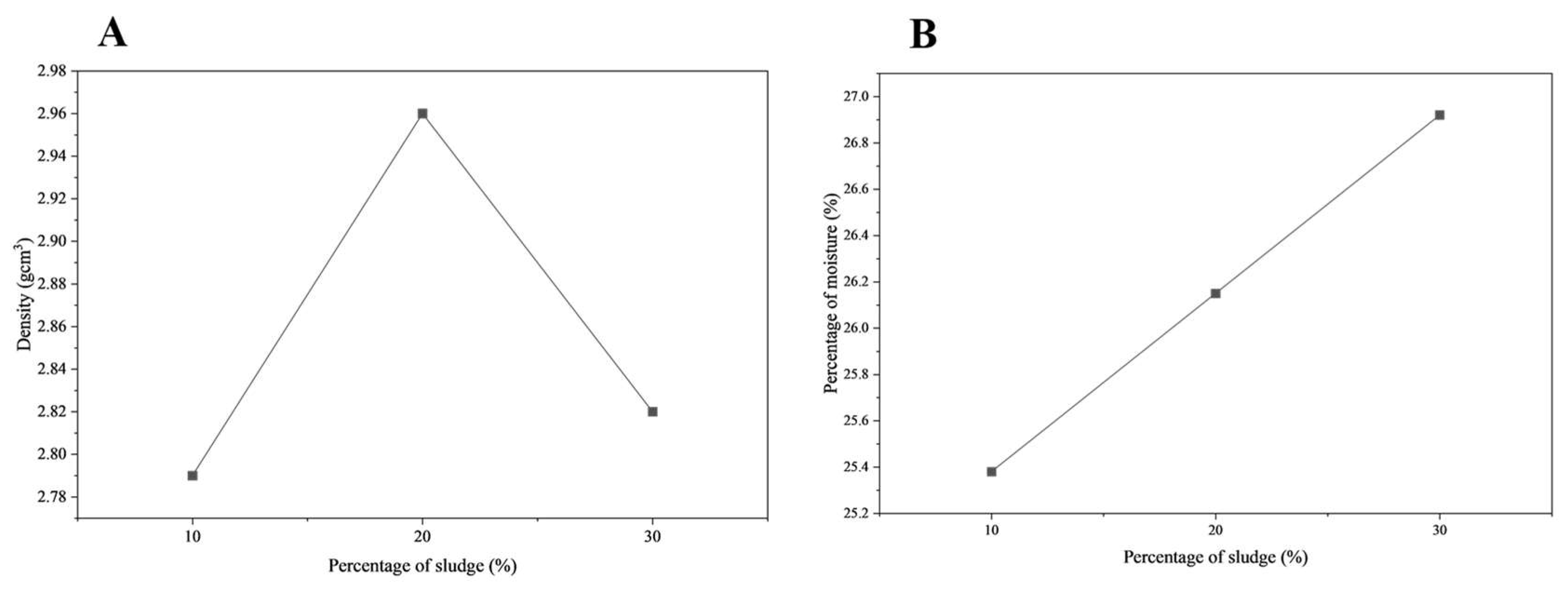
Figure 3, the partial replacement of cement by fine tailing sludge produced a differentiated effect on density and normal consistency within the cementitious system. Density increased progressively with sludge incorporation up to 20%, reaching a maximum value of 2.96 g cm
−3.
This trend suggests that, at moderate replacement levels, the very fine particles of the sludge promoted a denser solid arrangement within the binder system, most likely by occupying interstitial spaces between cement grains and improving particle accommodation. Such behavior is consistent with the well-known filler effect of finely divided mineral additions, which may enhance packing efficiency even when no direct cementitious reactivity is demonstrated [
20,
21]. However, the observed improvement was not indefinite, indicating that the contribution of the sludge was not governed exclusively by densification. Beyond a certain replacement level, the increasing amount of fine residue likely altered the balance between solid packing and water availability, thereby limiting the beneficial effect initially observed. The behavior of normal consistency further supports this interpretation. As sludge content increased, the amount of water required to achieve standard paste consistency also increased, reflecting the higher specific surface area introduced by the fine residue [
21]. This response indicates that the tailing sludge did not merely occupy voids, but also increased the water demand of the cementitious system. In practical terms, this is a critical observation because the water-to-cement ratio was kept constant for all concrete mixtures; therefore, any increase in water demand induced by the sludge could directly reduce fresh-state efficiency and, ultimately, affect compressive strength development. The simultaneous increase in density and consistency requirement indicates that the sludge acted through two opposing mechanisms: on the one hand, it contributed to a more compact solid matrix through microfilling; on the other hand, it increased the surface area that had to be wetted, which may impair particle dispersion and effective hydration when replacement levels become excessive. This dual effect is central to understanding the nonlinear response observed later in the statistical analysis. The setting-time results shown in
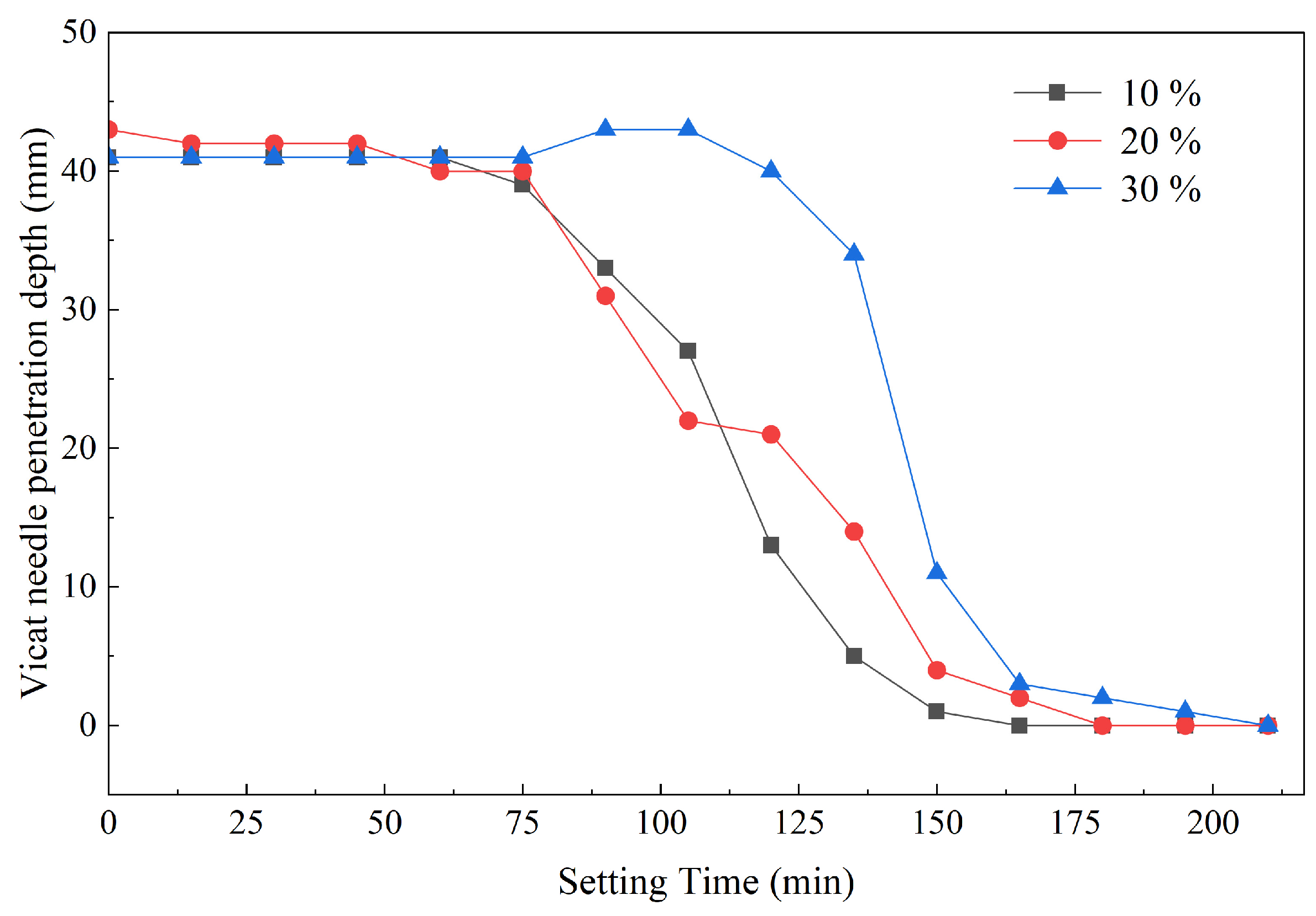
Figure 4 also revealed a systematic effect of the fine tailing sludge on binder behavior. Both initial and final setting times increased with sludge incorporation, indicating a progressive retardation of the setting process as cement replacement by mass increased.
This behavior is technically coherent with the partial replacement of cement by a residue that, although physically fine, does not necessarily contribute to early hydration to the same extent as Portland cement. In this context, the delay in setting can be interpreted as the result of a dilution effect combined with the greater water demand imposed by the sludge fraction. Because part of the cement was replaced by a non-clinker material, the concentration of hydraulically active phases in the paste decreased, which likely slowed the formation of the solid skeleton responsible for early stiffening. At the same time, the increase in fineness may have further modified the kinetics of the fresh system by affecting water distribution and particle interaction. These results are relevant because they confirm that the sludge affected not only packing but also the early temporal evolution of the binder phase.
From the standpoint of concrete proportioning, the observed behavior of the cement–sludge system suggests that the fine tailing sludge may provide a beneficial physical contribution only within a limited replacement range. At moderate dosages, the denser particle arrangement may favor matrix refinement and improved accommodation of solids. However, once the replacement level becomes too high, the increase in water demand and the slower setting kinetics may offset the packing-related benefit. This balance is particularly important in structural concrete, where fresh-state performance and hardened-state strength are strongly interconnected. In other words, the sludge cannot be interpreted simply as a beneficial fine addition; its effect depends on the point at which the positive contribution of microfilling is overtaken by the adverse consequences of excessive fineness and cement dilution. The grading behavior of the fine aggregate mixtures reinforced this interpretation from the perspective of the granular skeleton. As shown in
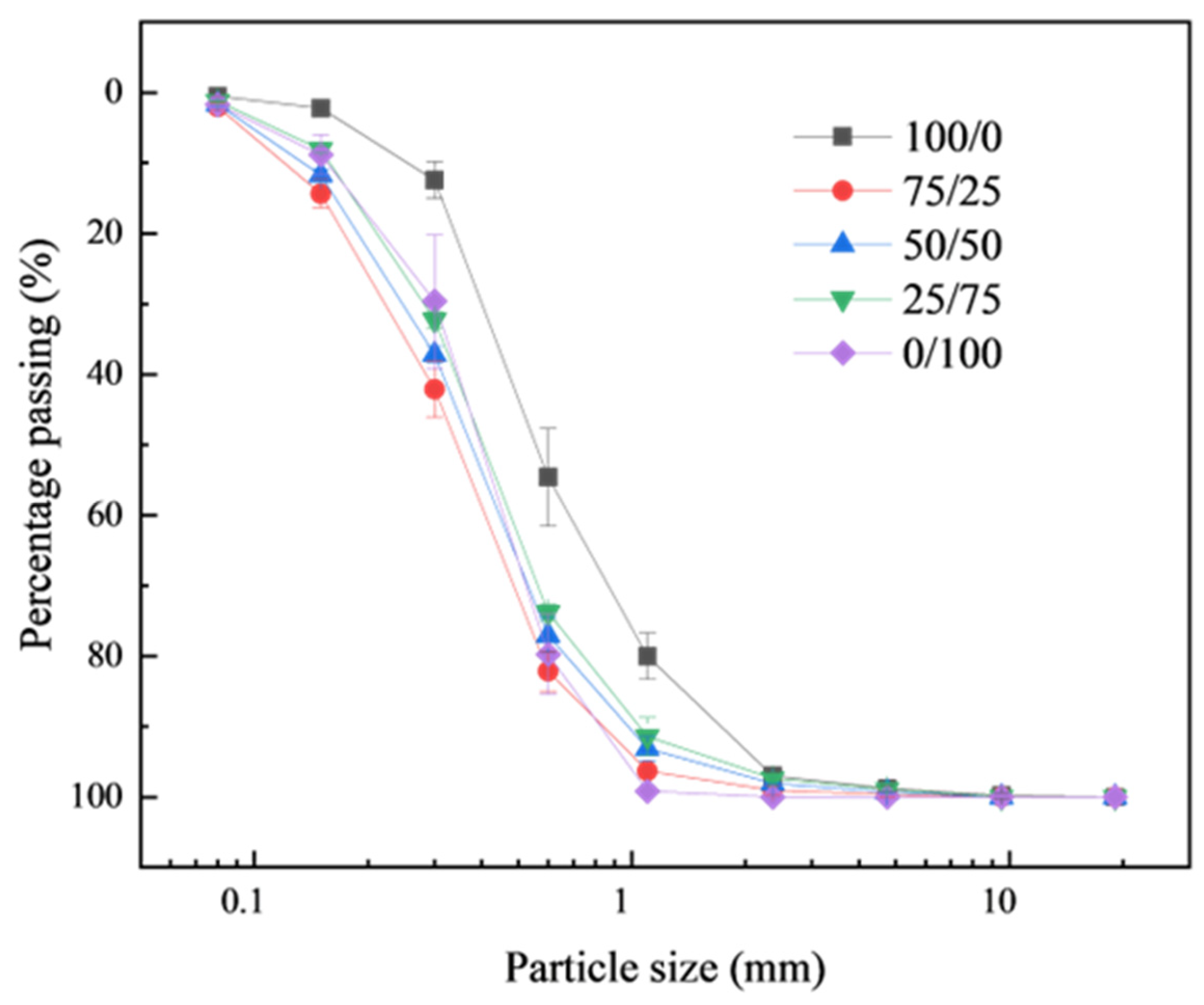
Figure 5, the particle-size distribution curves of the natural sand and the tailing-derived fine aggregate combinations followed a continuous descending trend but progressively shifted toward finer distributions as the proportion of tailing-derived material increased.
The 100/0 mixture, composed entirely of conventional sand, exhibited the coarsest grading profile, whereas the 0/100 mixture, composed entirely of the tailing-derived material, showed the finest distribution, with 79.73% passing the 0.6 mm sieve. The intermediate combinations followed a gradual transition between these extremes, confirming that the replacement of natural sand with tailing-derived aggregate systematically modified the granular composition of the fine fraction toward finer particle assemblages. The fineness modulus varied from 2.01 to 1.57, indicating continuous gradations that remained technically admissible for cementitious mixtures, although clearly shifted toward greater fineness at higher replacement ratios [
22].
This change in grading is highly relevant for the behavior of structural concrete because it directly affects both particle packing and workability. A somewhat finer granular skeleton may improve the redistribution of solids and reduce internal voids when used in controlled proportions. In this sense, the tailing-derived aggregate may contribute positively by refining the arrangement of the fine fraction and enhancing the contact between particles. Nevertheless, this same refinement also increases the total surface area of the aggregate system and therefore the amount of water required to coat the particles and maintain adequate mobility in the fresh state. Under the experimental conditions of this study, where the water-to-cement ratio was kept constant, this effect becomes particularly important. Any increase in surface area associated with finer aggregate replacement could reduce the amount of free water available for lubrication and hydration, thereby decreasing mixture efficiency and eventually limiting strength development. The grading shift observed in
Figure 5 is therefore fully consistent with the trends identified in consistency and setting time. Although workability-related parameters were not included as independent response variables in the RSM model, the observed consistency of the mixes was consistent with the interpretation that higher tailing incorporation increased the water demand of the system. This behavior is consistent with the finer grading of the tailing-derived aggregate and the higher normal consistency required by the cement–sludge system, suggesting a reduction in effective water availability and fresh-state efficiency at higher replacement levels.
The combined interpretation of
Figure 3,
Figure 4 and
Figure 5 indicates that both tailing fractions acted through distinct but convergent physical mechanisms. The fine sludge, used as partial cement replacement, influenced the cementitious matrix by modifying density, water demand, and setting kinetics. The coarser tailing-derived aggregate, in turn, affected the granular structure by shifting the fine aggregate system toward finer distributions. Although these two effects originated from different fractions, both increased the fineness of the overall concrete system. Consequently, the performance of the mixtures depended on the balance between improved particle accommodation at moderate incorporation levels and the adverse effects derived from excessive specific surface area at higher levels. This balance provides a physically coherent basis for the nonlinear and interaction effects later identified by the response surface model.
Additional physical properties of the conventional aggregates further support this interpretation by confirming that the reference materials provided an adequate and stable baseline for concrete production. The natural fine aggregate exhibited a bulk density of 1.18 g/cm
3 and a void content of 56.42%, whereas the coarse aggregate showed a bulk density of 1.46 g/cm
3 with 5.60% voids. Absorption values of 1.21% for the fine aggregate and 1.88% for the coarse aggregate were also recorded, together with densities of 2.72 g/cm
3 and 1.58 g/cm
3, respectively. These values indicate that the conventional constituents were technically suitable for structural concrete production and that the variations observed in fresh-state behavior were not attributable to deficiencies in the reference aggregates. Instead, the changes should be interpreted as a direct consequence of the intrinsic characteristics of the tailing fractions and their interaction with the conventional constituents. The preliminary physical results demonstrate that the incorporation of gold-mine tailings modified the concrete system through a coupled fineness-driven response rather than through isolated substitution effects. Moderate incorporation levels favored denser particle accommodation and potentially more efficient packing, while excessive replacement levels increased water demand, delayed setting, and reduced fresh-state efficiency. This interpretation is especially important because it anticipates the later strength response not as a monotonic function of either factor, but as the outcome of a balance between beneficial packing-related effects and the detrimental consequences of excessive fineness under constant water-to-cement conditions [
23]. In this sense, the physical and fresh-state characterization does not merely describe the materials; it establishes the mechanistic framework required to understand why the compressive-strength response of tailing-modified structural concrete followed a nonlinear and interaction-controlled pattern.
3.2. Chemical, Mineralogical, and Morphological Characteristics of the Tailings
The chemical, mineralogical, and morphological characterization of the evaluated tailings provides the material basis for interpreting their subsequent behavior in structural concrete. Although both fractions were obtained from the same mining operation, they exhibited distinct textural and compositional features that support differentiated functional roles within the concrete system. In particular, the fine flotation tailing sludge (sample F) displayed characteristics consistent with a highly dispersed fine fraction capable of strongly affecting the cementitious matrix, whereas the coarser tailing-derived material (sample G) exhibited a more stable morphology compatible with its use as an alternative fine aggregate [
10]. These differences are especially relevant because the performance of the evaluated mixtures depended not only on the presence of mine tailings, but on the coupled interaction between two fractions acting through different physical scales and mechanisms [
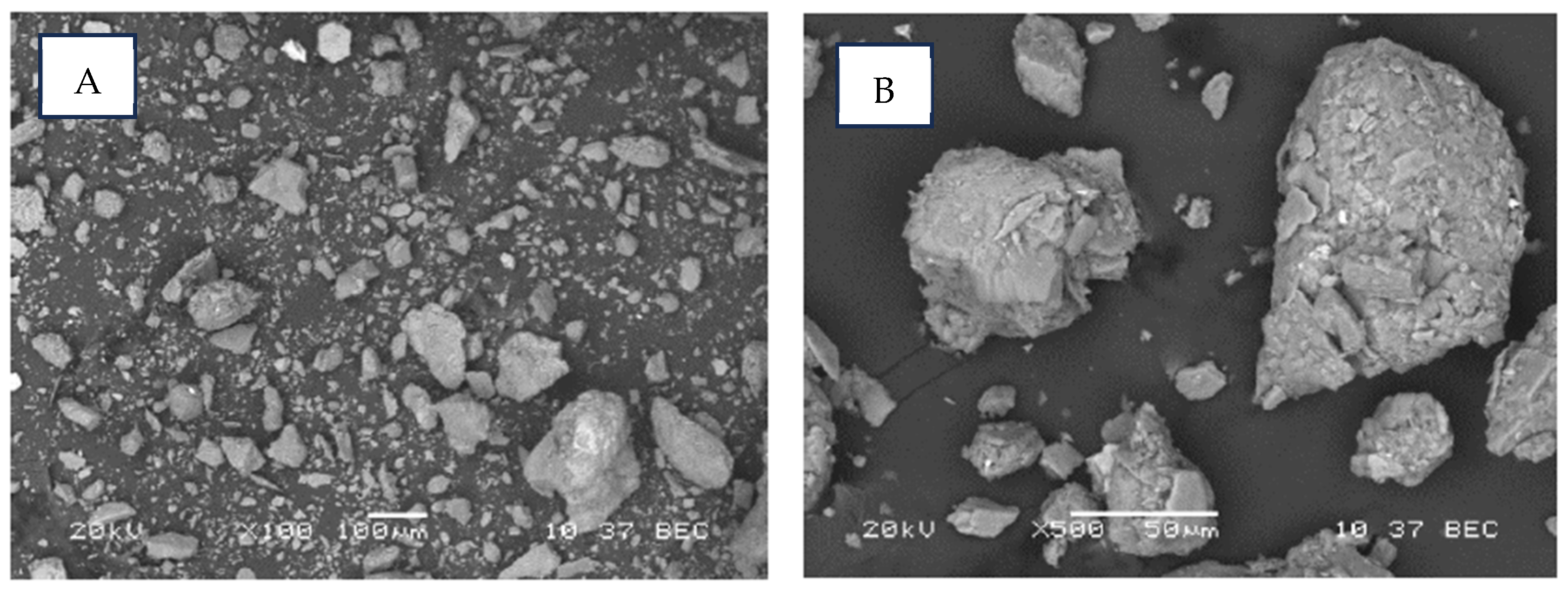
24]. The SEM observations revealed clear morphological differences between both residues, as illustrated in
Figure 6. Sample F showed a highly heterogeneous microstructure composed of very fine particles with angular edges, fractured surfaces, and abundant porous domains.
This morphology is consistent with the intensive grinding and flotation processes associated with ore beneficiation, which typically generate fragmented particles with irregular geometry and elevated specific surface area. From the standpoint of cement-based materials, such characteristics are important because they may favor interstitial filling and local matrix densification at controlled replacement levels. At the same time, however, the same features may increase water demand and reduce fresh-state efficiency when the proportion of ultrafine material becomes excessive. Therefore, the morphology of sample F supports the interpretation that this residue acts primarily through physical modification of the binder system rather than through the direct behavior expected from a conventional aggregate.
By contrast, sample G exhibited a more compact and comparatively uniform morphology, with angular but less rugged surfaces and a lower apparent degree of microstructural disruption. Although still irregular in shape, its particles appeared less porous and less dispersed than those of sample F, suggesting a more stable granular behavior. This distinction is important because it indicates that sample G is less likely to affect the cementitious matrix through high fineness or excessive surface-area effects and is more likely to contribute through modification of the granular skeleton. In practical terms, this supports its interpretation as a tailing-derived fine aggregate rather than as a highly reactive or strongly interactive powder. Consequently, the SEM observations confirm that the two evaluated tailing fractions should not be considered equivalent replacement materials, even if they originate from the same mining residue stream.
Figure 6 clearly illustrates these morphological contrasts and highlights the more porous and disrupted structure of sample F relative to sample G.
The mineralogical characterization further reinforced this distinction. The XRD analysis showed that quartz was the dominant crystalline phase in both materials, with SiO
2 contents of 58.03% for sample F and 54.98% for sample G. Additional phases identified in both fractions included calcium carbonate, feldspars such as microcline, and clay-associated minerals, including kaolinite, biotite, and sericite [
17]. This mineral assemblage is characteristic of silicoaluminous mining residues and is relevant for two complementary reasons [
17]. First, the predominance of quartz indicates that a substantial fraction of the solids behaves as a stable mineral framework with limited intrinsic reactivity under ordinary cement hydration conditions. Second, the coexistence of feldspathic and clay-bearing phases suggests the presence of less ordered mineral domains that may influence the concrete system through filler-related effects and possible physicochemical interaction, particularly when present in very fine form. A particularly relevant result was the Rietveld-based estimation of the amorphous fraction using fluorite as an internal standard, which indicated an amorphous fraction of approximately 70%. This finding is important because amorphous silicoaluminous phases are generally more susceptible than highly crystalline phases to participate in physicochemical interactions within cementitious environments [
25]. Nevertheless, within the scope of the present study, this result should be interpreted with caution. The presence of a substantial amorphous fraction is an indicator of potential activity, but it does not by itself demonstrate pozzolanic behavior or the formation of specific secondary hydration products. Since the present work did not include direct characterization of hydrated phases, such as thermogravimetric analysis, selective dissolution, or hydration-product-specific diffraction analysis after curing, the amorphous content should be discussed as a feature that may contribute to matrix behavior, but not as conclusive evidence of cementitious or pozzolanic reactivity. This distinction is important to preserve a rigorous interpretation of the material characterization and to avoid attributing mechanistic effects that were not directly verified experimentally [
26].
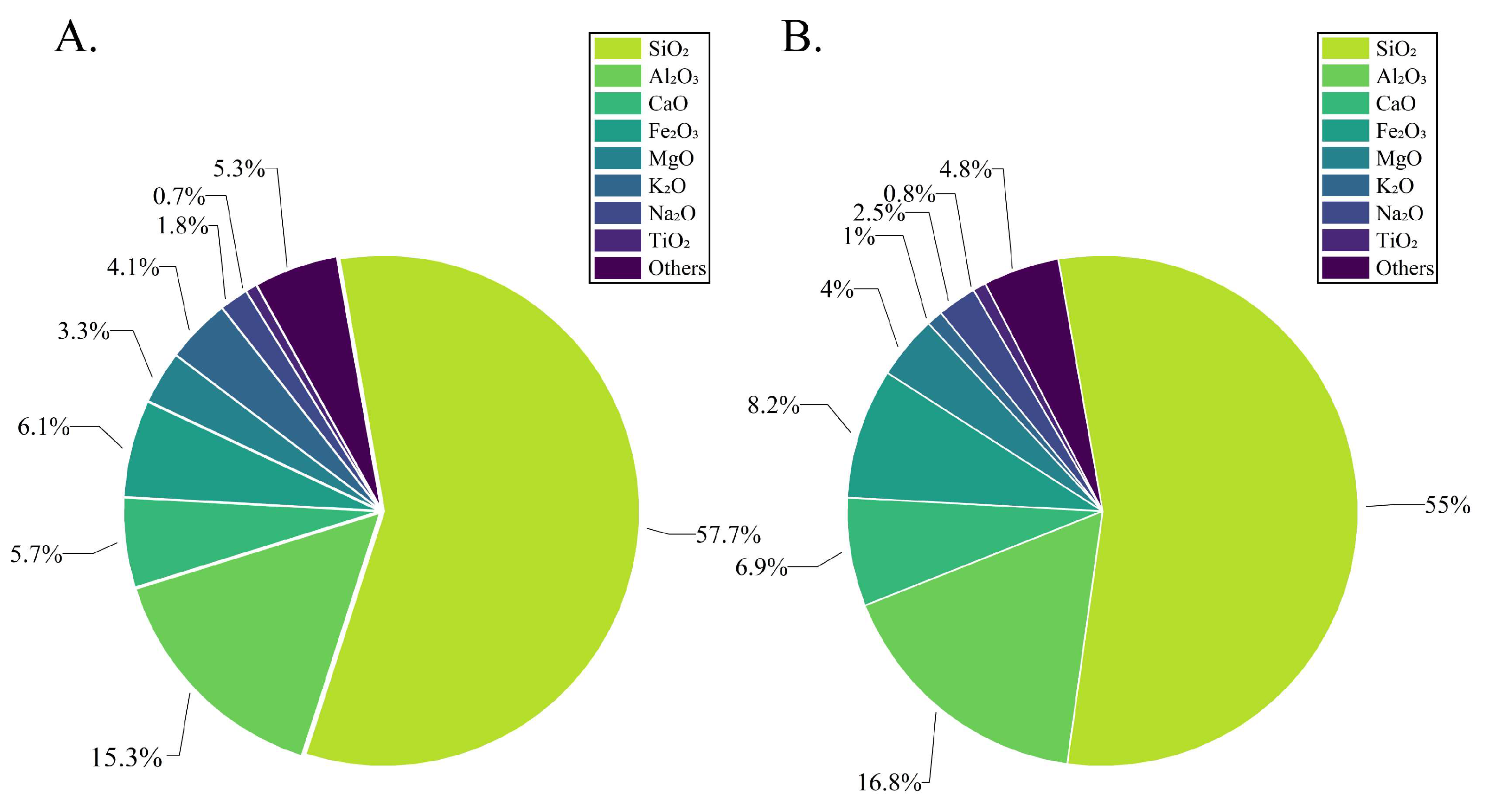
The XRF analysis, summarized in
Figure 7, further corroborated the silicoaluminous nature of both evaluated residues. In addition to the high silica content, the samples contained relevant proportions of Al
2O
3 (15.33–16.78%), CaO (5.68–6.86%), and Fe
2O
3 (6.10–8.24%), together with lower amounts of K, Na, Mg, and Ti oxides.
This compositional profile is consistent with the XRD results and confirms that both fractions belong to a chemically compatible mineral family for potential incorporation into cement-based materials [
13,
27]. The combined presence of silica, alumina, and calcium-bearing phases suggests that these tailings may influence concrete performance through more than one mechanism. On the one hand, the mineral fines can contribute physically by filling voids, modifying particle distribution, and improving local packing under controlled proportions. On the other hand, the amorphous silicoaluminous fraction may provide limited physicochemical interaction under hydration conditions. However, as noted above, the present evidence supports the discussion of compatibility and potential contribution, but not the direct confirmation of secondary hydrate formation.
An additional point of interest is that, despite the morphological differences revealed by SEM, the XRF results indicate that both samples remain broadly similar in elemental composition. This suggests that their different roles in concrete are governed less by major chemical dissimilarity than by differences in particle size, morphology, and physical dispersion state. In other words, the main distinction between both tailing fractions is not that one is chemically suitable and the other is not, but that each one interacts with the concrete system through a different structural scale. Sample F, because of its finer size, porous morphology, and elevated amorphous content, is better interpreted as a finely divided mineral fraction capable of modifying the cementitious matrix through microfilling and fineness-related effects. Sample G, in contrast, behaves more consistently as an alternative fine aggregate whose main contribution lies in reshaping the granular skeleton and altering the grading of the mixture.
Taken together, the SEM, XRD, and XRF results indicate that both tailing fractions are technically suitable for valorization in cement-based materials, although their roles within the concrete system are not equivalent. The fine tailing sludge should be understood primarily as a highly dispersed mineral fraction whose influence depends on the balance between microfilling, cement dilution, and the adverse consequences of excessive fineness [
11]. The coarser tailing-derived material, in contrast, should be interpreted mainly as a fine aggregate substitute whose effect is governed by changes in particle-size distribution and granular arrangement. This distinction is essential for interpreting the subsequent compressive-strength response because it supports the view that the performance of the evaluated concretes was controlled not by the isolated action of each residue, but by the interaction between a matrix-modifying fine fraction and a granular tailing fraction acting simultaneously within the same mixture. Under this framework, the material characterization does not merely confirm the feasibility of incorporating mine tailings into concrete; it also explains why the resulting mechanical behavior followed a nonlinear pattern controlled by coordinated dosage rather than by independent replacement effects.
3.3. Response Surface Modeling of Compressive Strength
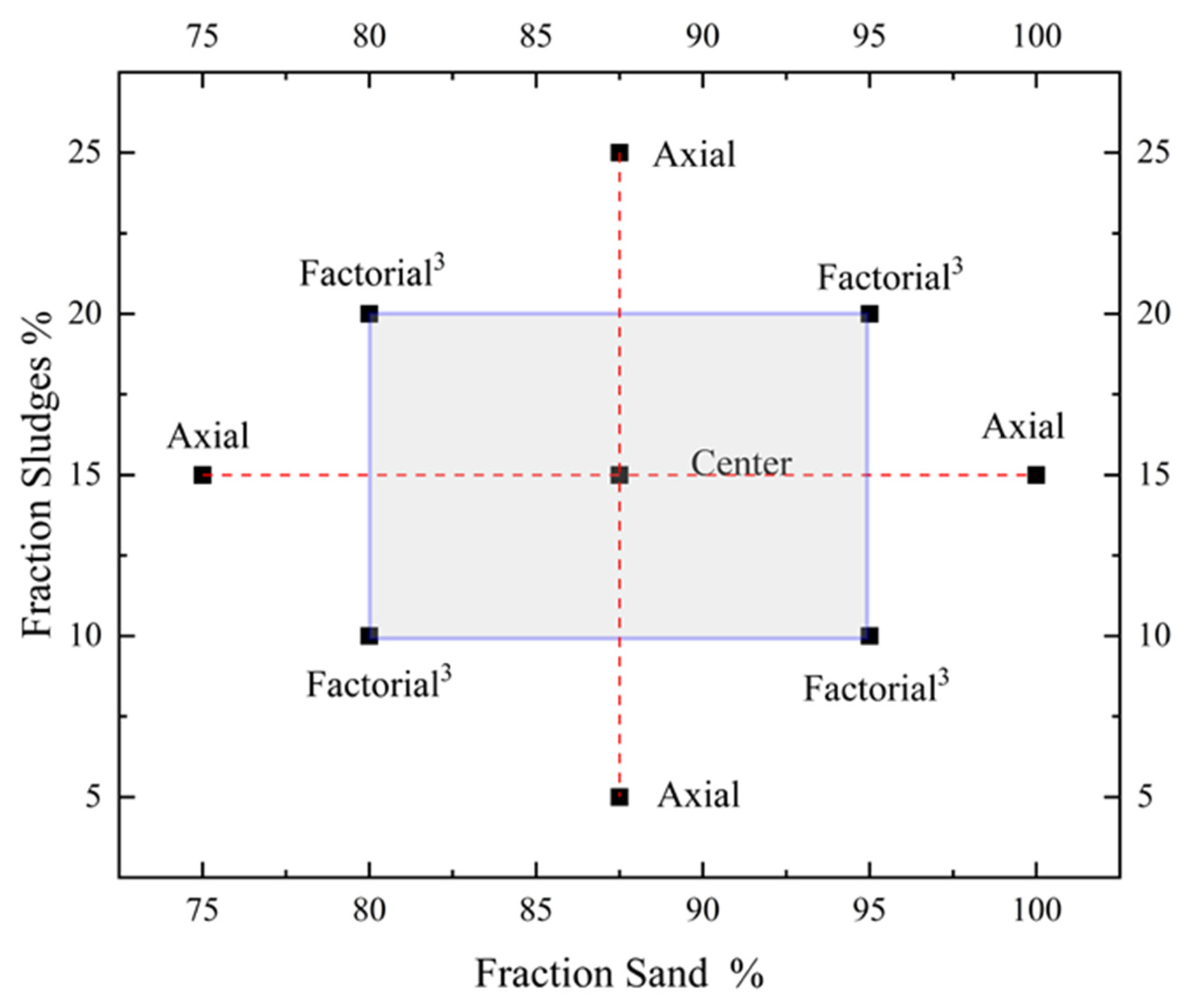
The mechanical performance of structural concrete incorporating gold-mine tailings was evaluated through a Central Composite Design (CCD), which enabled the simultaneous assessment of the effects of tailing-derived fine aggregate replacement, factor A, and cement replacement by fine tailing sludge, factor B, on 28-day compressive strength [
10,
13]. As described in
Section 2, the experimental domain comprised 17 runs distributed according to the CCD, allowing the estimation of linear, interaction, and quadratic effects within the selected factor ranges. Based on the experimental results, the regression model was refitted by removing the non-significant higher-order terms A
2B and AB
2 to reduce model complexity and avoid overfitting. The simplified second-order polynomial model used to describe the compressive-strength response is expressed in Equation (1). In Equation (1), the variables Sand and Sludge correspond to the actual replacement percentages used in the experimental design, not to coded or normalized variables. Sand represents the percentage of natural sand replaced by tailing-derived fine aggregate, while Sludge represents the percentage of cement replaced by fine tailing sludge.
The statistical significance of the fitted model and its individual terms is summarized in
Table 2.
The ANOVA results show that the interaction between sand replacement and cement replacement by sludge, AB, had a highly significant effect on compressive strength, with p < 0.0001. This indicates that the mechanical response of the concrete system cannot be explained by the isolated influence of each variable alone. Instead, the results suggest that compressive strength depended on the combined effect of the tailing-derived fine aggregate and the fine sludge fraction replacing cement.
The linear term associated with sand replacement, A, was statistically significant, with p < 0.0001, indicating that variation in the tailing-derived fine aggregate content had a direct influence on compressive strength within the evaluated domain. In contrast, the linear term associated with sludge replacement, B, was not statistically significant at the 95% confidence level, with p = 0.0797. However, the quadratic term B2 was significant, with p = 0.0012, showing that the effect of cement replacement by sludge was mainly nonlinear. The quadratic term A2 was not statistically significant, with p = 0.2184, suggesting that the curvature associated with sand replacement was less relevant than its linear effect and its interaction with sludge content.
Based on the refitted model, the final interpretation was focused on the significant linear contribution of A, the highly significant AB interaction, and the nonlinear contribution of B
2. The non-significant higher-order terms were removed from the final model to improve parsimony and reduce the risk of overfitting. The model-fit indicators were also included to assess model adequacy. The simplified model showed an R
2 of 0.9405 and an adjusted R
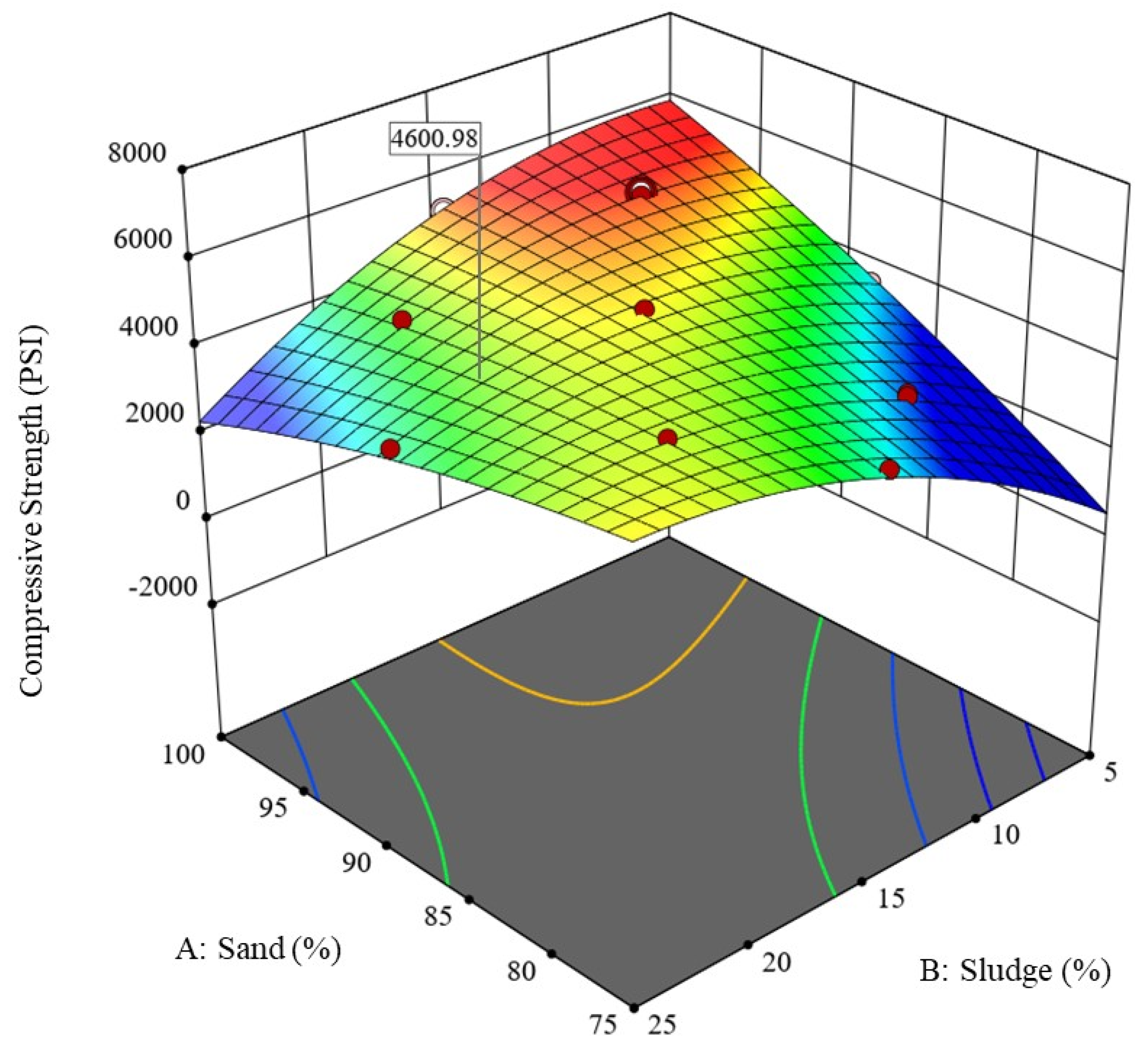
2 of 0.9135, indicating a strong agreement between the experimental and predicted compressive-strength values within the evaluated experimental domain. In addition, the comparison between experimental and predicted compressive-strength values showed an adequate agreement within the evaluated domain, supporting the reliability of the simplified model. No systematic deviations were observed in the residual trend, indicating that the model adequately represented the experimental response for the purpose of mechanical optimization. The fitted response surface, shown in
Figure 8, illustrates the combined influence of both replacement variables on compressive strength. A region of favorable mechanical performance was identified at sludge replacement levels below approximately 20% and tailing-derived fine aggregate replacement levels below approximately 90%. This region was selected considering not only the predicted compressive-strength response, but also the criterion of maximizing the incorporation of both tailing fractions, particularly the highest feasible sludge content and tailing-derived fine aggregate replacement, while maintaining a favorable mechanical performance. Therefore, the selected region should be interpreted as a compromise solution between mechanical performance and maximum tailings valorization, rather than as a single numerical point of maximum predicted strength. This upper replacement level for the tailing-derived fine aggregate should be interpreted as a preliminary mechanical threshold obtained from the RSM model based on 28-day compressive strength, rather than as a definitive recommendation for concrete production or field-scale implementation.
Within this region, the mixtures reached the highest compressive-strength values, suggesting that the combined incorporation of both tailing fractions can be mechanically feasible when the dosage is controlled. Outside this range, the response progressively declined, indicating that excessive replacement levels may reduce mixture efficiency. This behavior is consistent with the physical characterization discussed in
Section 3.1, where increasing tailing incorporation was associated with finer grading, greater water demand, and changes in the cement–sludge system.
A similar interpretation applies to the replacement of natural sand by the tailing-derived aggregate. As shown in
Section 3.1, increasing the proportion of sample G progressively shifted the grading of the fine aggregate system toward a finer distribution. Under the nominally constant water-to-cement ratio adopted in this study, this effect becomes especially important because the fresh-state penalty associated with finer grading may reduce the effective water availability and cannot be compensated by additional mixing water. Consequently, the influence of the tailing-derived aggregate was not solely controlled by its replacement percentage, but also by its interaction with the sludge content [
28].
The significance of the AB interaction term confirms that the acceptable dosage of one fraction depends on the level of the other. From a physical perspective, this interaction may be related to the simultaneous modification of the granular skeleton and the cementitious matrix. The tailing-derived fine aggregate progressively shifted the fine aggregate system toward a finer grading, which may improve particle packing at controlled replacement levels but also increases the surface area that must be wetted. At the same time, the fine tailing sludge partially replaced cement and introduced a highly dispersed fine fraction, increasing water demand and reducing the amount of hydraulically active binder. Therefore, under the nominally constant water–cement ratio, the effective water availability and binder efficiency may decrease when both replacement levels increase simultaneously. This provides a physical basis for interpreting why the AB interaction was statistically significant and why the compressive-strength response depended on the coordinated balance between aggregate grading, possible packing improvement, cement dilution, and water-demand effects.
Overall, the response surface analysis indicates that the use of gold-mine tailings in structural concrete is mechanically feasible within a bounded incorporation region. The simplified model did not support a purely linear interpretation of the system; instead, compressive strength was governed by the interaction between both replacement mechanisms and the nonlinear effect of sludge incorporation. This interpretation provides a preliminary mechanical basis for defining dosage limits for the valorization of gold-mine tailings in structural concrete.
3.4. Integrated Discussion of Tailings Performance in Structural Concrete
The combined interpretation of the physical, morphological, mineralogical, chemical, and statistical results provides a coherent explanation for the behavior of structural concrete incorporating gold-mine tailings. Rather than acting as equivalent replacement materials, the two evaluated tailing fractions fulfilled differentiated functions within the mixture. The fine tailing sludge primarily influenced the cementitious matrix through its high fineness, porous morphology, and elevated amorphous content, whereas the coarser tailing-derived fraction mainly modified the granular skeleton by altering fine-aggregate grading and particle arrangement. Consequently, the compressive-strength response depended on the balance established between matrix modification and granular stability rather than on the isolated effect of either residue. The SEM observations showed that sample F was composed of highly irregular, porous, and very fine particles, while the XRD and XRF analyses confirmed the predominance of silicoaluminous phases together with a substantial amorphous fraction. These features support the interpretation of sample F as a finely divided mineral fraction capable of enhancing interstitial filling and local matrix refinement at moderate levels of cement replacement [
29]. However, the same characteristics also explain the strength reductions observed beyond the favorable region identified by the response surface. Once the amount of ultrafine material exceeds the capacity of the system to maintain adequate coating, dispersion, and hydration efficiency under a constant water-to-cement ratio, the beneficial filler-related effect is progressively offset by increased specific surface area, higher water demand, and cement dilution. The role of the sludge fraction is therefore intrinsically dual: favorable within a controlled replacement range, but detrimental when used excessively.
The contribution of the tailing-derived fine aggregate followed a complementary but distinct mechanism. Because this material behaved more consistently as an alternative fine aggregate, its principal effect lay in the reconfiguration of the granular skeleton [
15]. At moderate replacement levels, its incorporation may improve particle accommodation and contribute to a more continuous solid framework. However, as the replacement level increased, the overall grading of the fine aggregate system shifted toward a finer condition, reducing the robustness of the granular structure and increasing the susceptibility of the mixture to workability-related penalties and inefficient water distribution. The reduction in compressive strength near the edges of the experimental domain is therefore better understood as the result of an imbalance between matrix refinement and aggregate efficiency than as the consequence of any single unfavorable variable acting alone.
From a mechanistic perspective, the favorable region defined by the response surface corresponds to a compositional window in which three conditions coexist: improved interstitial filling promoted by the fine sludge, acceptable fresh-state behavior despite the increase in fineness, and sufficient granular stability provided by the tailing-derived aggregate fraction. Within this window, the mixture benefits from enhanced particle distribution without incurring the excessive penalties associated with over-fineness and excessive cement replacement. This explains why the statistical interaction identified in the response surface model is not merely a mathematical result, but a direct expression of the physical interdependence between both residue fractions. In other words, the significance of the interaction term reflects the fact that the performance of the system emerges from coordinated dosage rather than from the independent maximization of each by-product.
This integrated interpretation also clarifies the practical relevance of the optimization strategy adopted in the study. The results indicate that the technical feasibility of incorporating gold-mine tailings into structural concrete depends on defining a controlled compositional range in which the positive effects of filler-assisted densification and granular restructuring remain dominant over the negative effects of excessive fineness, higher water demand, and cement dilution. This is a more meaningful approach than defining admissible replacement levels on the basis of a single residue or a one-variable analysis, since it reflects the actual multicomponent nature of the system [
2]. Accordingly, the main contribution of the present work lies not only in showing that mine tailings can be incorporated into concrete, but in demonstrating that their successful use requires coordinated proportioning between fractions with different functional roles and different effects on mixture efficiency.
From a broader engineering perspective, these findings are also relevant in terms of resource efficiency and waste valorization. The proposed approach supports the performance-based reuse of mining residues in cement-based materials, reducing the demand for natural fine aggregates and promoting more efficient use of by-products from mineral processing [
30]. At the same time, the results show that valorization should not be interpreted as unrestricted substitution, since the mechanical response remains strongly dependent on dosage balance and system compatibility [
8]. In this sense, the study advances the discussion from simple waste incorporation toward optimization-based material valorization, in which the feasibility of reuse is demonstrated through measurable engineering performance rather than assumed on the basis of compositional similarity alone. The favorable response observed at moderate replacement levels results from the temporary predominance of improved particle accommodation and matrix continuity, whereas the decline in strength at high incorporation levels reflects the combined penalties of excessive fineness, increased water demand, and reduction of effective cementitious efficiency. Therefore, the incorporation of gold-mine tailings into structural concrete should be approached as a coordinated design problem, in which mixture performance depends on the controlled balance between physical refinement and material substitution.




 ,
,