Article

Food Safety Management System Compliance of Food Retail Shops: A Comparative Study Between Mazovia and Kerala


by
Surya Sasikumar Nair
1,
Aparna Porumpathuparamban Murali
1,
Wojciech Kolanowski
2,
Shoukui He
3 and
Joanna Trafiałek
1,*
1
Department of Food Gastronomy and Food Hygiene, Institute of Human Nutrition Sciences, Warsaw University of Life Sciences, Nowoursynowska Str. 159, 02-776 Warsaw, Poland
2
Healthcare Institute, State University of Applied Sciences in Przemyśl, 37-700 Przemyśl, Poland
3
School of Agriculture and Biology, Shanghai Jiao Tong University, Shanghai 200240, China
*
Author to whom correspondence should be addressed.
Appl. Sci. 2026, 16(7), 3130; https://doi.org/10.3390/app16073130
Submission received: 27 February 2026 / Revised: 17 March 2026 / Accepted: 23 March 2026 / Published: 24 March 2026
(This article belongs to the Special Issue New Insights into Food Quality and Safety)

Abstract

This study investigates and compares Food Safety Management System (FSMS) compliance in retail shops across Mazovia (Poland) and Kerala (India). A structured visual inspection checklist with 51 indicators across seven FSMS sections was used in 500 shops per country: design and layout, general food safety, food handling and storing practices, display, personnel hygiene practices, sanitation and cleanliness, and pest control. Each section was scored using a four-point ordinal scale. Compliance scores were analyzed using the Mann-Whitney U test, Kruskal–Wallis test, Principal Component Analysis (PCA), and Cluster analysis to identify influencing factors and compliance patterns. The results demonstrate significant differences between the two countries, with Polish retail shops showing notably higher compliance (p < 0.001). No significant difference was observed in the design and layout section (p = 0.103). None of the assessed shop categories in either country achieved full compliance with all food safety requirements. Retail format, location, and number of employees were significantly associated with compliance levels. This is the first comparative study to examine FSMS compliance in retail shops in Mazovia, Poland, and Kerala, India, using a standardized visual inspection method. The findings contribute to a better understanding of FSMS performance in retail environments under different economic and regulatory conditions. Identifying how variations in retail format, staffing, and operational practices influence FSMS compliance can support the development of context-specific strategies to improve food safety performance.

1. Introduction

Despite advancements in food safety measures, foodborne illness outbreaks and recalls continue to be reported, many of which are associated with the retail level [1], which has prompted regulatory reforms and stringent enforcement worldwide [2]. To ensure consumer safety, food business operators are required to implement an integrated Food Safety Management System (FSMS) that includes Good Hygiene Practices (GHP), Good Manufacturing Practices (GMP), Traceability provisions as Prerequisite Programmes (PRPs), and HACCP principles-based procedures. FSMS aims to proactively control foodborne illness risk factors through industry-specific procedures integrated into business operations [3].
However, the implementation of FSMS in retail environments differs considerably from its application in food manufacturing or processing sectors. Retail establishments operate at the final stage of the food supply chain and involve direct interaction with consumers, multiple food handling activities, and diverse storage and display conditions. Unlike manufacturing facilities that operate under standardized production processes, food retail outlets manage a wide variety of products, including fresh, frozen, and ready-to-eat foods, often handled under different temperature and hygiene requirements [4]. Retail operations also involve frequent product turnover and multiple potential contamination points during storage, display, and consumer interaction. Inadequate handling, poor stock management, or storage can lead to food losses and waste, even when products are still safe for consumption [5]. These characteristics make the implementation and monitoring of FSMS in retail environments particularly challenging and highlight the need for food safety practices tailored specifically to retail operations. Nevertheless, implementing FSMS requires significant technical knowledge, managerial commitment, and financial resources, which can be challenging for small food enterprises, including many retail businesses [6]. According to Regulation (EC) No 178/2002, retail is defined as ‘the handling and/or processing of food and its storage at the point of sale or delivery to the final consumer, and includes distribution terminals, catering operations, factory canteens, institutional catering, restaurants and other similar food service operations, shops, supermarket distribution centers and wholesale outlets’ [7].
Grocery retailers play a crucial role in connecting all stages of the food supply chain, sourcing directly from farms and manufacturers, to supply food to consumers through their stores [8]. Retail practices have a considerable impact on food safety, as mishandling or poor storage at the final stage can compromise the integrity of the entire supply chain. Therefore, flexibility in regulations as well as scientific input to apply a risk-based FSMS is very much needed for the unique operational settings of the retail sector. A retail business’s FSMS should focus on identifying hazards and implementing specific activities to manage risk factors that contribute to foodborne illness [6]. Moreover, retailers play a crucial role in encouraging producers to shift from input-driven agricultural decision-making, issuing production mandates that can lead to significant changes in farming practices [9]. Although elements of FSMS may vary between food service and retail sectors, core elements such as training, monitoring, and systematic implementation are all consistent [3]. International systems such as Food Safety System Certification (FSSC) 22000, the International Featured Standard (IFS), the British Retail Consortium Global Standard (BRCGS), and the International Organization for Standardization (ISO) 22000 provide tools to achieve standardized food safety practices across diverse retail operations [2,10].
Inadequate compliance with FSMS requirements in retail establishments remains a persistent public health concern, with reports highlighting issues such as inadequate personal hygiene, contaminated surfaces and equipment, and improper time and temperature control as the most common causes of food safety failures [3]. Although the European Union has established harmonized hygiene regulations, such as Regulation (EC) No. 852/2004 and Regulation (EC) No. 178/2002 [7,11] to promote a unified food safety framework, numerous obstacles impede the successful implementation of FSMS (PRP and HACCP) in the retail sector. These include inconsistencies and insufficient awareness of safety protocols, inadequate training, irregular inspections/audits, lack of resources among small and micro retailers, and inflexibility [6]. The European Union One Health Zoonoses Report (2023) highlighted the retail sector as a frequent source of contamination for foodborne pathogens such as Salmonella and Listeria [12]. More importantly, a strong internal food safety culture in the retail sector will be key to the successful implementation of FSMS [13]. A food company’s culture can be defined as the perceptions and behaviours of its employees regarding food safety, as well as the actions they consistently engage in and demonstrate [14].
Ensuring food safety across the retail sector requires compliance with comprehensive hygiene and operational standards. These include the proper design, construction, and maintenance of premises to allow effective cleaning, prevent contamination, and limit pest entry. Surfaces that come into contact with food must be easy to clean and made of non-toxic, non-absorbent materials. Regular maintenance of the premises and facilities is essential to prevent deterioration that could compromise food safety. Equipment and utensils used in food storage, preparation, and display must be appropriate for their intended purpose, kept in good condition, and cleaned and sanitized frequently. Retailers must implement proper waste management systems, ensuring that waste is collected, stored, and disposed of hygienically to avoid contamination risks. Pest control measures must be actively maintained, including structural barriers and regular inspections, to prevent pest infestations. Temperature control must be rigorously applied during storage and display to ensure that perishable foods are maintained within safe temperature ranges. Moreover, food handlers must maintain high standards of personal hygiene, including proper hand washing, use of protective clothing, and regular health monitoring, to prevent foodborne illnesses. Together, these requirements establish a foundation for food retailers to manage food safety risks effectively and align with the implementation of FSMS [15].
Food safety priorities and enforcement mechanisms differ between developed and developing countries. Developed countries benefit from more stable economic and social environments, responsible procurement and consumer habits, and strict legislation for food safety, ensuring safe food access and availability [16]. Poland operates within the European Union (EU) food safety regulatory framework, where food safety enforcement is coordinated through EU legislation and implemented by national inspection bodies. Retail food establishments are subject to official inspections conducted by competent authorities to verify compliance with food safety legislation, and enforcement measures may be applied in cases of non-compliance [17]. Poland’s retail sector is well-networked, highly structured, and increasingly aligned with the European food retail model. Specialized shops that provide basic food needs, such as housing estate stores, gas stations, and minimarkets, dominate the number of small food retail businesses in urban areas. In addition to private firms and cooperative retail chains, small and medium-sized enterprises with national or foreign capital are often organized into franchising networks, with the franchisor controlling their operations. A franchise network organization is a group of separate businesses that form a contractual network without any financial connections [18].
Food safety regulation in India is supervised by the Food Safety and Standards Authority of India (FSSAI), which oversees licensing, inspections, and enforcement activities across the country. Although FSSAI has strengthened regulatory frameworks and introduced training initiatives such as the Food Safety Training and Certification (FoSTaC) program, differences in inspection frequency, enforcement capacity, and regulatory implementation efficiency may occur due to regional administrative variations and the large number of small-scale and informal retail establishments. These institutional differences may influence the effectiveness of food safety management practices in retail environments. India’s food retail sector is diverse, where traditional unorganized grocery stores and government-supported food distribution outlets supplying essential commodities remain dominant, while organized retail and e-commerce platforms, such as convenience stores, supermarkets, and hypermarkets, are growing [19].
The Food Safety and Standards Authority of India (FSSAI) registration is mandatory for all food businesses in India, including manufacturers, distributors, and retailers, to ensure the safety and quality of food products, with non-compliance resulting in penalties and fines [20]. According to the Food Safety and Standards Act of 2006, the FSSAI has established fundamental food safety and hygiene standards that are applicable to both organized and unorganized food retailers, with specific requirements concerning the size and complexity of operations [21]. To strengthen food safety and promote transparency at the retail level, FSSAI established Food Safety Display Boards (FSDBs), which are colour-coded informative boards that convey hygiene and food safety practices required at food business premises. In addition to the legal requirement for displaying the FSSAI license or registration number, these boards are being implemented gradually across several food company categories to increase consumer awareness and regulatory visibility [22,23].
There is limited research on FSMS practices and compliance levels in food retail shops in Poland, and such studies are even rarer in the Indian context. Given these considerations of the central role of retailers and the complexity of food safety governance, this study aimed to evaluate the degree of compliance with food safety management systems practices in retail shops in Mazovia, Poland, and Kerala, India, through direct visual inspections. By comparing two distinct regulatory and operational environments, the study seeks to identify key challenges and opportunities for strengthening food safety performance in the retail sectors in both nations. This study hypothesizes that FSMS compliance scores significantly differ between Polish and Indian food retail shops, and that compliance is influenced by shop-specific factors assessed in this study.

2. Materials and Methods

2.1. Food Retail Shops

The study was conducted from March 2024 to February 2025, covering a total of 1000 food retail shops- 500 each in Mazovia (Poland) and Kerala (India). These regions were selected due to their differing regulatory environments and levels of food safety modernization, making them ideal for comparative evaluation of food safety management practices [18,24]. Both regions are known for their dense retail shop networks and significance in national food supply chains.
A stratified purposive sampling approach was used to ensure representation of different retail environments. The retail shops were selected across three location categories: large cities, small towns, and rural areas in both Mazovia and Kerala. Within these locations, shops were further categorized according to retail format, including hypermarket, supermarkets, convenience shops, and local shops. During field visits, retail shops were selected within these categories to ensure coverage of different shop sizes, operational structures, and retail practices across the study regions.
Data were collected from retail shops located in large cities (e.g., Warsaw, Trivandrum), small towns, and rural areas across Mazovia and Kerala. The retail shops evaluated in this study include hypermarkets, supermarkets, convenience stores, and local shops [25,26]. Hypermarkets are large-format stores with sales areas exceeding 2500 m2, offering both food and non-food products. Supermarkets are medium-sized shops with sales areas between 400 m2 and 2500 m2, focusing primarily on food products. Convenience shops are smaller shops with sales areas between 300 m2 and 900 m2, offering a limited range of goods at higher prices and being located near transport hubs or gas stations. Local shops include small independent grocers or specialty food shops with limited sales spaces and mainly focus on packaged groceries and specific food categories [27,28].

2.2. FSMS Compliance Assessment and Scoring System in Retail Shops

Food Safety Management System compliance evaluation in retail shops was evaluated using a structured visual inspection tool. The tool is formatted as a 51-indicator checklist, based on the unified mandatory food safety requirements in both countries [12,29]. Indicators were grouped into seven key sections: design and layout, general food safety, food handling and storing practices, display, personnel hygiene practices, sanitation and cleanliness, and pest control (Table 1).
Each food safety practice was scored on a 4-point ordinal rating scale [10]. Numerical scores were assigned to each indicator, where higher scores indicated better compliance. The scale was defined as follows:
  • 1—Non-compliance, where the requirement was not implemented;
  • 2—Low compliance, where the requirement was partially implemented but major deficiencies were observed;
  • 3—Moderate compliance, where most requirements were implemented with minor deficiencies; and
  • 4—Full compliance, where the requirement was fully implemented according to food safety guidelines.
For example, when assessing refrigerated food storage, a score of 1 was assigned when foods were stored without temperature control or outside safe refrigeration conditions; a score of 2 was assigned when refrigeration equipment was present but major deficiencies were observed, such as missing temperature monitoring records or overloaded storage; a score of 3 was assigned when refrigeration was generally maintained but minor issues, such as incomplete labeling or irregular monitoring records, were noted; and a score of 4 was assigned when proper temperature control and appropriate storage conditions were fully maintained.
All indicators were assigned equal weight, and the overall compliance scores for each retail shop were calculated as the average of all indicator scores. The final score reflected both the general level of compliance and variation across individual FSMS categories. In addition, the checklist considers the contextual information about retail shops, such as country, location, retail format, and number of employees.
To verify the clarity, applicability, and consistency of the inspection checklist, a pilot assessment was conducted in 10 retail shops in each study region prior to the main investigation. The pilot inspections were carried out using the same structured checklist and scoring procedure intended for the full-scale assessment. The purpose of the pilot study was to evaluate the operability of the indicators during on-site inspections and to ensure consistent interpretation of the scoring criteria. Based on the pilot observations, minor adjustments were made to improve the wording and ordering of several checklist items and to clarify certain scoring descriptions. These modifications enhanced the clarity and usability of the inspection tool before conducting the main field investigation. This methodology aligns with validated visual inspection procedures used for food safety evaluations [15,30].
Data was collected through unannounced on-site observations during normal operational hours to ensure an authentic evaluation of FSMS performance. The assessment was carried out by the first author of this study, who has extensive experience in the food industry, having served as Quality Assurance in Charge/Food Safety Team Leader, and Preventive Control Qualified Individual (PCQI), and has strengthened her expertise in food safety management through continuous professional development and assessments based on ISO 19011 (2011) [31].

2.3. Statistical Analysis

The reliability and internal consistency of the indicators were tested by Cronbach’s alpha [32]. Descriptive statistics, such as mean and standard deviation (SD), were calculated to interpret the results. The Mann-Whitney U test was applied to determine whether there were statistically significant differences in FSMS compliance scores between the two independent groups- Polish and Indian retail shops- as the distribution of scores in all sections deviated from normality, according to the Shapiro-Wilk test (p < 0.05) [33,34]. The Kruskal–Wallis test was used to evaluate differences in FSMS compliance scores (dependent variable) across categorical grouping variables (independent variables): country, shop location, food sector, and number of employees. When significant differences were detected, post hoc pairwise comparisons were conducted using Dunn’s multiple comparisons test with Bonferroni correction. Principal Component Analysis (PCA) was used to evaluate the relationship between retail formats and FSMS compliance levels in Mazovia and Kerala. Multivariate cluster analysis was performed to group food retail shops in each country based on compliance level, using Ward’s method and Euclidean distance [10]. The results could be considered significant when p < 0.05. All the statistical analyses were performed using Statistica software version 13.3 (TIBCO Software Inc., Palo Alto, CA, USA).

3. Results

The internal consistency of the inspection checklist was assessed using Cronbach’s alpha, which indicated excellent reliability of the tool, yielding a coefficient of α = 0.97.

3.1. Compliance Scoring in Retail Shops

The Kruskal–Wallis test indicated that the average total compliance scores of retail shops were significantly influenced by four key factors: country (p < 0.001), location (p < 0.001), food sector (p < 0.001), and number of employees (p < 0.001). Post hoc multiple comparisons revealed that retail shops in Mazovia (R = 559.67, i.e., Mean rank) had significantly higher compliance than those in Kerala (R = 441.33) (p < 0.001). The post hoc Dunn’s multiple comparisons within each country confirmed significant differences across the four key factors (p < 0.001). The analysis data can be found in the Supplementary Materials.
As shown in Table 2, higher compliance scores were observed in hypermarkets and shops located in big towns in both countries. The lowest scores were consistently found among local shops, rural areas, and shops with only one staff member. These findings suggest that better compliance is associated with larger, urban-based retail shops with more employees, whereas smaller, less resourced shops in rural areas demonstrated consistently lower food safety management scores. The pattern was similar in both countries, though Polish shops showed less variation and generally higher compliance across all factors.
Table 3 shows the mean scores of FSMS compliance per section for food retail shops in Mazovia and Kerala. The Mann–Whitney U test revealed significant differences (p < 0.05) across six of the seven evaluated FSMS sections: 2, 3, 4, 5, 6, and 7. In these areas, Polish retail shops exhibited higher mean compliance scores than Indian shops. No significant difference was observed in the Design & Layout section (p = 0.103). The highest differences were observed in Sections 4, 5, and 7, which are related to the requirements for display, personal hygiene practices, and pest control.

3.2. Principal Component Analysis Using Full Compliance Benchmark

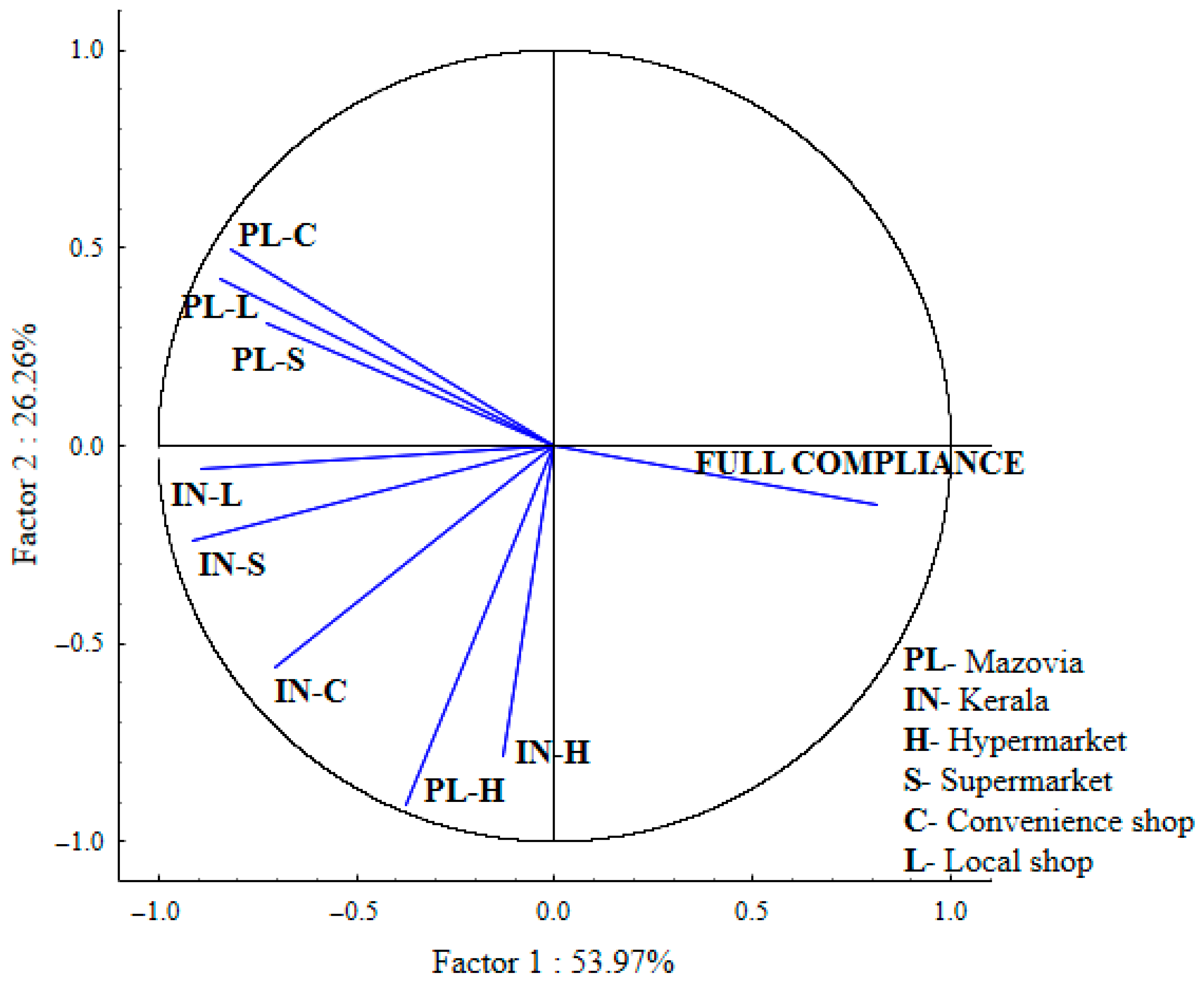
The biplot (Figure 1), obtained from Principal Component Analysis (PCA), displays the projection of average compliance scores of eight retail formats (four from Mazovia and four from Kerala), along with a benchmark for full compliance. The first two principal components explain 80.23% of total variance (PC1 = 53.97% and PC2 = 26.26%), making the plot to assess the variability in FSMS compliance.
The PCA biplot indicates associations among retail shop categories based on their FSMS compliance patterns. The full compliance vector was located furthest along PC1, serving as the ideal benchmark. Among all retail shops, Polish (PL-H) and Indian (IN-H) hypermarkets aligned most closely with this benchmark, indicating strong adherence to food safety practices. In contrast, supermarkets, convenience shops, and local shops from both countries were located farther away. Moreover, Indian shops, especially IN-S (supermarkets), IN-C (convenience shops), and IN-L (local shops), were positioned further from the full compliance vector than their Polish counterparts, reflecting a lower overall adherence to food safety practices.
This distribution highlights that hypermarkets in both countries demonstrate the strongest food safety compliance, while supermarkets, convenience shops, and local shops, particularly those in Kerala, show notably lower levels of compliance compared to similar types in Mazovia.

3.3. Comparative Cluster Analysis of FSMS Implementation in Mazovia and Kerala

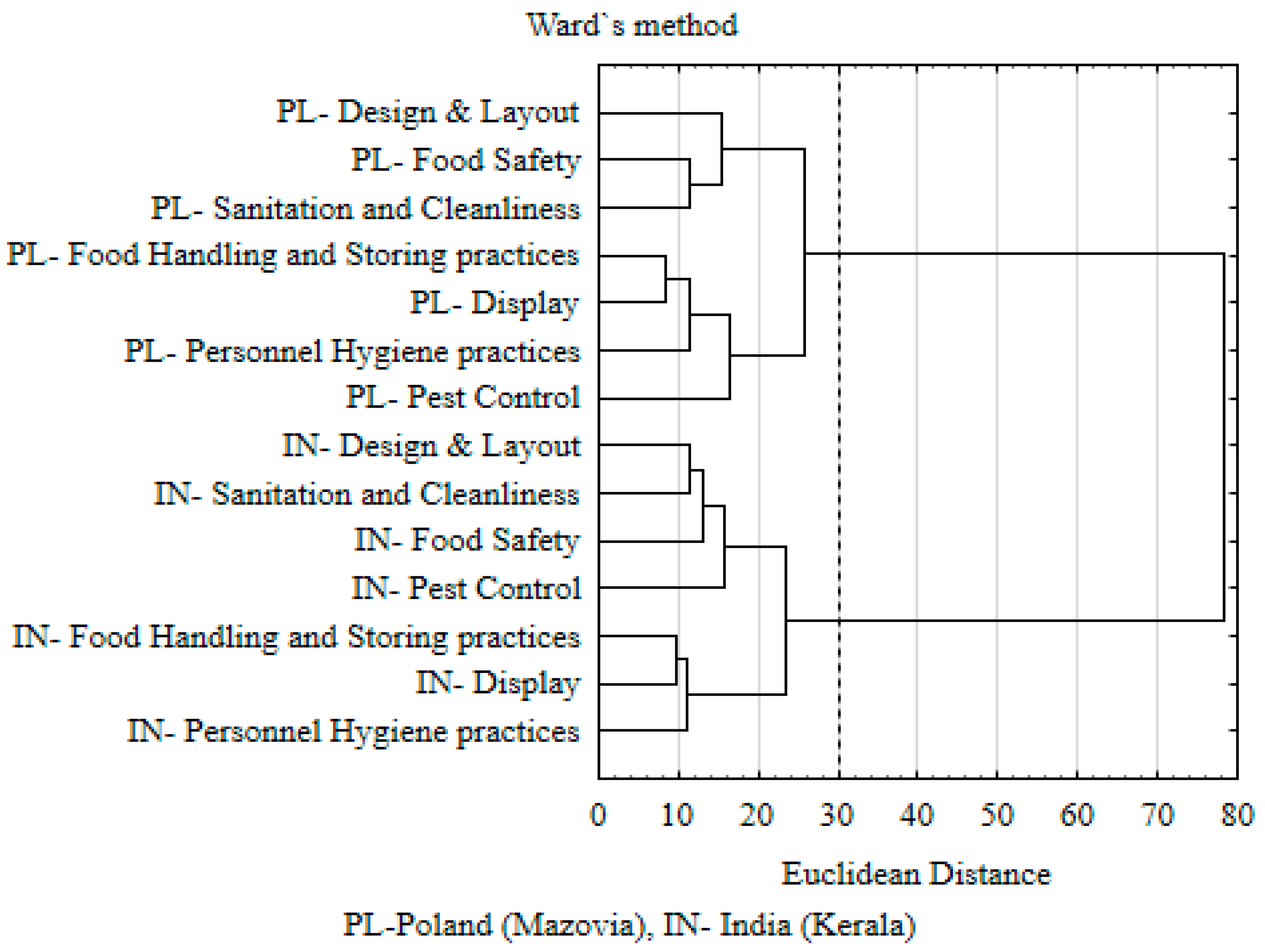
Cluster analysis resulted in two clusters (Figure 2). Cluster 1 consisted of all the FSMS sections: design and layout, general food safety, sanitation and cleanliness, food handling and storing practices, display, personnel hygiene practices, and pest control. The close grouping of these sections indicates a high level of internal consistency and uniformly strong FSMS implementation across Polish retail shops. Cluster 2 included all corresponding FSMS sections from India: design and layout, sanitation and cleanliness, general food safety, pest control, food handling and storing practices, display, and personnel hygiene practices.
The inclusion of these variables for Indian retail shops in a separate cluster highlights a distinct FSMS performance profile, characterized by greater variability and generally lower compliance scores compared to the Polish retail shops. The formation of two clear clusters for each country suggests a marked divergence in FSMS implementation across national contexts.

3.4. Observations from the Retail Environment

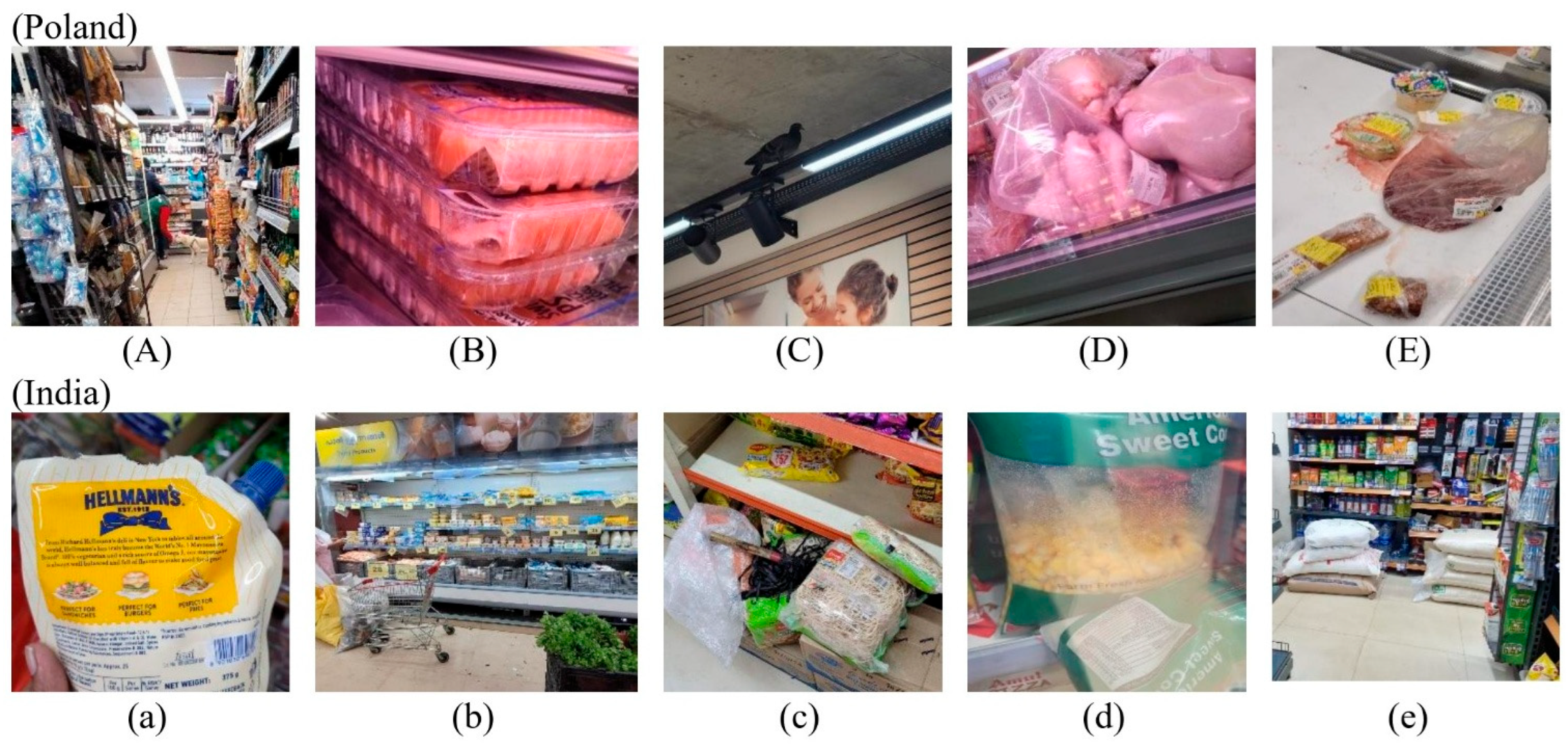
Various conditions of compliance and non-compliance were observed using the inspection tool. The audit tool, although limited to a few retail shops, has demonstrated the ability to identify various unsafe food handling conditions in the retail environment. Figure 3 illustrates selected examples of FSMS non-compliance observed during the inspection in both regions. It was noted that retail shops operating under the same franchise exhibited similar FSMS compliance patterns; however, variations were observed across different franchise chains.
Infrastructural setups in hypermarkets were generally consistent across both countries. In contrast, some local shops and supermarkets in Mazovia and Kerala lacked adequate working space and storage capacity. Certain small Indian shops, such as supermarkets, also operate under the label of ‘hypermarkets’ despite lacking the infrastructure or layout typically expected with this format. Regarding the food safety behavior patterns, Polish retail shops, excluding some local shops, frequently displayed visual food safety materials such as hygiene signs and posters, supporting daily compliance. However, such materials were rarely observed in Indian shops. Personal hygiene compliance also reflected this disparity. In Mazovia, hygiene compliance among staff in high-risk sections was generally adequate, though less consistent in local shops. Managerial supervision was generally observed, though not consistently across all shops. In Kerala, while uniforms were commonly worn, hygiene practices such as handwashing, use of head coverings, and jewelry policies varied.
The food handling and storage practices section also revealed mixed outcomes. Equipment suitable for food contact was present in all formats, except in some local shops in both countries. Although refrigeration temperatures were generally within acceptable limits, temperature log sheets were visible only in a few Polish hypermarkets and some supermarkets and were largely absent in Indian retail shops. Refrigeration-related issues such as non-defrosted units, rust, residue, and overcrowding were noted in both countries, though more frequently in Polish supermarkets and Indian local shops. Rare incidents of bulging food packets, leaking fruits and vegetables, and open packets in display were observed in both countries.
In terms of product display, Polish hypermarkets maintained strong compliance. However, some Polish discount supermarkets and rural area shops exhibited cleanliness issues and a rare occurrence of expired and moldy products. In Kerala, dusty shelves, outdated displays, poor organization, and minor storage issues, such as food sacks temporarily placed on the floor, especially in certain convenience shops and local shops, are more frequently observed. In addition, a unique operational practice was observed in several Indian retail shops with more than 10 employees. Despite well-organized, self-service layouts, staff were routinely instructed to assist customers by handing packed products directly from shelves. While this management-driven approach aimed to enhance customer service, it diverges from standard self-service expectations and may affect customer autonomy.
Pest control non-compliance also varied by country. Although pest control devices such as traps were present in most Polish shops, insect activity was still observed during the summer. In Kerala, signs of insect activity and rodent-damaged products were observed in certain local shops and supermarkets. Even where self-closing doors were installed, they were left open throughout operating hours, reducing effectiveness, which is observed in most Indian supermarkets in small towns and certain Polish convenience shops. In other local shops in India, rolling shutters were used as main entrances and remained fully open during the day, offering no physical barrier to pest entry. Despite this, in Mazovia, most convenience shops allowed the presence of domestic animals such as dogs and cats to enter the premises despite displaying “No animal entry” signage, with no staff intervention, contradicting international food safety guidelines that necessitate the exclusion of pests and pets in food-handling areas [35].

4. Discussion

Retailers engage in food safety regulations primarily to mitigate liability claims, ensure high food quality, standardize products, prevent incidents, and enhance customer trust. Inadequate implementation of Food Safety Management Systems (FSMSs) is a key predictor of non-compliance in retail food environments, with establishments that maintain well-developed FSMS showing significantly fewer non-compliances with food safety practices [36]. This study assessed compliance with FSMS practices across retail shops in Mazovia (Poland) and Kerala (India), revealing several areas, including operational and structural factors, that influence compliance levels. The analysis showed that country, location, food sector, and the number of employees significantly influenced the level of compliance observed in retail establishments.
The superior FSMS performance observed in hypermarkets may be attributed to structural advantages such as improved infrastructure, systematic operational procedures, and greater staff-to-task allocation. Similar observations have been reported in other studies conducted in other developed regions. For example, in Belgium, small establishments were found to have lower uptake of certified FSMS and a higher rate of non-compliance during inspections, suggesting that poor FSMS performance is not solely resource-driven but also reflects systemic gaps in oversight [37]. Similarly, small and medium-sized enterprises (SMEs) often face challenges in implementing effective FSMS due to a lack of motivation, such as inspection and auditing, limited resources, and financial constraints [6,10]. These challenges were also evident among small-sized retail shops in both Mazovia and Kerala. Dzwolak (2014) reported that certain small food enterprises in Poland adopted HACCP elements mainly for audit purposes, with limited integration into routine operations due to misconceptions regarding system complexity and resource limitations [38].
Observational studies have demonstrated that improper retail food handling practices, including inadequate hand hygiene and direct contact with ready-to-eat foods, increase the risk of cross-contamination [4]. A nationwide investigation conducted by the U.S. Food and Drug Administration (FDA) also identified persistent violations in retail food establishments, particularly improper cold holding, poor hand hygiene, and inadequate sanitation of food-contact surfaces, despite existing regulations and training initiatives [3]. Similarly, a hygiene survey conducted in Slovakian food stores during the COVID-19 pandemic found that although general hygiene practices were adequate, implementation varied considerably due to operational limitations and inconsistent staff practices [39].
Inadequate documentation practices hinder the verification of whether food safety practices are consistently implemented, underscoring the need to assign responsible personnel to oversee FSMS activities [40]. Differences in hygiene culture and managerial practices may also influence compliance levels across regions. In the present study, Polish retail stores more frequently displayed hygiene-related signage and food safety information, whereas such visual reminders were less common in Indian retail establishments. This distinction supports the findings of Wu et al. (2020), who highlighted that visual hygiene communication, regular staff training, and managerial supervision play a critical role in strengthening food safety culture [41].
The results also revealed notable differences between the two regions in the FSMS dimensions related to product display, personnel hygiene, and pest control. These differences may reflect variations in retail sector organization and operational management structures. Retail operations in Poland often function within organized retail chains and franchise networks that apply standardized operational procedures and internal monitoring systems. Such structures can facilitate consistent implementation of hygiene and product display practices. In contrast, the food retail sector in India includes a substantial number of small and independently operated shops where operational procedures and staff training may vary considerably. Previous studies have reported that workforce training, managerial commitment, and supervision play a critical role in maintaining hygienic behaviour among food handlers in retail environments [42,43]. In addition, infrastructure-related factors such as shop layout, building maintenance, and pest exclusion measures may influence pest control effectiveness in small retail establishments, particularly where preventive maintenance practices are inconsistently applied [6].
No significant difference was observed between Mazovia and Kerala in the design and layout dimension. The mean scores for both regions were close to 3 on the four-point compliance scale, indicating moderate compliance with structural requirements in retail food establishments. This similarity may reflect the presence of minimum regulatory standards governing food premises in both systems, including the European Union hygiene regulations applied in Poland and infrastructure requirements implemented under the Food Safety and Standards Authority of India (FSSAI). These regulatory frameworks require retail food premises to maintain adequate lighting, ventilation, and sufficient working space to support hygienic operations [14,21]. Consequently, even smaller retail establishments are required to meet baseline facility requirements, which may explain the comparable compliance levels observed in this dimension. However, the results also suggest that optimal structural conditions have not yet been fully achieved across all retail shops. Another factor that may influence compliance patterns relates to the variability of retail formats in emerging markets. In some cases, retail outlets categorized as hypermarkets may operate with more limited floor space, staffing levels, or operational infrastructure than those typically observed in large organized retail chains. Such variation in retail format characteristics may affect the consistency of operational procedures and the implementation of standardized food safety practices.
Beyond regulatory and resource-related factors, broader socio-organizational characteristics may also influence FSMS compliance. Retail food businesses in Poland operate within a structured European retail environment where franchise networks and organized retail chains play a major role in food distribution. These organizational structures often implement standardized procedures, centralized management systems, and routine internal monitoring that support consistent food safety practices. In contrast, the Indian retail sector includes a significant proportion of independently operated and informal retail establishments alongside modern retail chains. Studies examining retail modernization in developing markets have reported that the coexistence of organized and traditional retail formats can lead to considerable variation in operational management and staff training across establishments [44,45]. In addition, behavioural factors associated with food safety culture and consumer expectations may influence how consistently hygiene practices are implemented within retail environments [46].
Temperature control remains another critical challenge in retail food safety management. Studies have reported that retail food products often deviate from recommended temperature limits due to equipment conditions, product positioning, and handling practices once products leave the manufacturer’s control. A study evaluating FSMS implementation in retail chain stores in Greece reported high compliance in temperature documentation and sanitation practices [10]. In the present study, although refrigeration facilities were generally available in both regions, temperature monitoring practices were less consistent, particularly in Indian retail shops, where only a limited number of hypermarkets and supermarkets maintained visible temperature logbooks. Additional issues such as non-defrosted refrigeration units, corrosion, residue accumulation, and overcrowded storage conditions were observed in both regions. Similar shortcomings have been reported in previous studies examining retail food safety compliance [40,47,48].
Pest control compliance also presented notable challenges. Common violations included open shutters, lack of structural barriers, and animal tolerance within retail premises. International food safety guidelines recommend strict exclusion of animals (cats and dogs) and pests (rodents or insects) from premises and emphasize the importance of maintaining clean facilities to prevent contamination [15,27]. Robertson et al. (2014) further reported that although retail food handlers often possess basic food safety knowledge, this knowledge does not always translate into consistent hygienic behaviour during daily operations [49]. The authors emphasized the importance of more engaging training approaches to improve behavioural practices among food handlers.
The findings of this study confirm that FSMS implementation remains particularly challenging for small retail establishments such as local shops and supermarkets. These challenges are not limited to developing countries, as similar difficulties have been reported in developed retail environments. Addressing these issues requires a multifaceted approach that includes improved training programs, consistent regulatory inspections, and practical operational guidelines tailored to the constraints faced by small retail shops [50,51]. Simplified documentation procedures, low-cost sanitation tools, and targeted training programs may help small-format retailers improve compliance without imposing unrealistic operational burdens [6].
This study has certain limitations. First, the data were collected from only two regions, Mazovia and Kerala, which may limit the generalizability of the findings to other areas within these countries or to other international contexts. Second, the study design did not allow evaluation of changes in FSMS compliance over time. Third, the assessment relied on visual inspections conducted by a single auditor, which may introduce observer bias. Finally, the study did not evaluate FSMS compliance at the franchise network level. These limitations provide important directions for future research aimed at improving FSMS implementation in retail food environments.

5. Conclusions

This study assessed Food Safety Management System (FSMS) compliance in food retail shops across two countries representing distinct regulatory frameworks and stages of food system modernization. None of the assessed retail shop categories in Mazovia (Poland) and Kerala (India) reached full compliance with all evaluated food safety requirements. The findings provide insights into the overall level of FSMS compliance and identify key areas of non-compliance that require attention to ensure food safety at the final stage of the supply chain. The study revealed significant differences in compliance levels between the two regions, with FSMS performance associated with shop-specific factors such as location, retail format, and number of employees. These factors provide a basis for developing more targeted strategies to improve food safety practices within the retail sector. Overall, the results support the study hypothesis that FSMS compliance differs between retail shops in Poland and India and is influenced by shop-specific characteristics; however, no significant difference was observed in the design and layout dimension. The results also highlight the need for differentiated strategies to improve FSMS compliance across retail formats. Large retail outlets may benefit from strengthened internal monitoring systems and staff training, whereas smaller retail shops may require simplified FSMS guidelines and targeted hygiene training. Such tailored approaches may help improve food safety practices across diverse retail environments. The inspection checklist developed and applied in this research may serve not only as a regulatory assessment tool but also as a practical self-assessment tool for retailers. It may support awareness-building, identification of compliance gaps, and implementation of corrective actions, thereby contributing to the continuous improvement of food safety management practices in retail environments.

Supplementary Materials

The following supporting information can be downloaded at: https://www.mdpi.com/article/10.3390/app16073130/s1, Table S1: Statistical analysis of the effect of FSMS compliance scores on its country (Kruskal-Wallis test, Dunn’s multiple comparisons test); Table S2: Statistical analysis of the effect of FSMS compliance scores on its kind of place in each country (Kruskal-Wallis test, Dunn’s multiple comparisons test); Table S3: Statistical analysis of the effect of FSMS compliance scores on its food sector in each country (Kruskal-Wallis test, Dunn’s multiple comparisons test); Table S4: Statistical analysis of the effect of FSMS compliance scores on the number of employees in each country (Kruskal-Wallis test, Dunn’s multiple comparisons test).

Author Contributions

Conceptualization, S.S.N.; Methodology, S.S.N.; Software, S.S.N.; Validation, J.T.; Formal Analysis, S.S.N.; Investigation, S.S.N. and A.P.M.; Data Curation, S.S.N.; Writing—Original Draft Preparation, S.S.N.; Writing—Review and Editing, S.S.N., J.T. and W.K.; Visualization, S.H.; Supervision, J.T. All authors have read and agreed to the published version of the manuscript.

Funding

This research received no external funding.

Institutional Review Board Statement

Not applicable.

Informed Consent Statement

Not applicable.

Data Availability Statement

The original contributions presented in this study are included in the article. Further inquiries can be directed to the corresponding authors.

Conflicts of Interest

The authors declare no conflicts of interest.

Abbreviations

The following abbreviations are used in this manuscript:
FSMSFood Safety Management System
SMEsSmall and Medium-Sized enterprises
FDAFood and Drug Administration
PCAPrincipal Component Analysis
PCQIPreventive Control Qualified Individual

References

  1. Moritz, E.D. Foodborne Illness Outbreaks at Retail Food Establishments—National Environmental Assessment Reporting System, 25 State and Local Health Departments, 2017–2019. MMWR Surveill. Summ. 2023, 72, 1–11. [Google Scholar] [CrossRef]
  2. Havinga, T. Food Retailers as Drivers for Food Safety Standards. SSRN Electron. J. 2013, 18, 1–17. [Google Scholar] [CrossRef]
  3. Food and Drug Administration. FDA Report on the Occurrence of Foodborne Illness Risk Factors in Fast-Food and Full-Service Restaurants 2017–2018; Food and Drug Administration (FDA): Silver Spring, MD, USA; U.S. Department of Health and Human Services: Washinagton, DC, USA, 2023.
  4. Gibson, K.E.; Koo, O.K.; O’Bryan, C.A.; Neal, J.A.; Ricke, S.C.; Crandall, P.G. Observation and Relative Quantification of Cross-Contamination within a Mock Retail Delicatessen Environment. Food Control 2013, 31, 116–124. [Google Scholar] [CrossRef]
  5. Teller, C.; Holweg, C.; Reiner, G.; Kotzab, H. Retail Store Operations and Food Waste. J. Clean. Prod. 2018, 185, 981–997. [Google Scholar] [CrossRef]
  6. EFSA Panel on Biological Hazards; Koutsoumanis, K.; Allende, A.; Alvarez-Ordóñez, A.; Bover-Cid, S.; Chemaly, M.; Davies, R.; Herman, L.; Hilbert, F.; Lindqvist, R.; et al. Hazard Analysis Approaches for Certain Small Retail Establishments and Food Donations: Second Scientific Opinion. EFSA J. 2018, 16, e05432. [Google Scholar] [CrossRef] [PubMed]
  7. European Communities. European Commission Regulation (EC) No 178/2002 of the European Parliament and of the Council of 28 January 2002 Laying Down the General Principles and Requirements of Food Law, Establishing the European Food Safety Authority and Laying down Procedures in Matters of Food Safety; Official Journal of the European Communities: Luxembourg, 2002. [Google Scholar]
  8. ReFED Solutions for Food Waste in Grocery Stores for Retailers. Available online: https://refed.org/stakeholders/retailers/ (accessed on 28 April 2025).
  9. Macfadyen, S.; Tylianakis, J.; Letourneau, D.; Benton, T.; Tittonell, P.A.; Perring, M.; Gómez-Creutzberg, C.; Báldi, A.; Holland, J.; Broadhurst, L.; et al. The Role of Food Retailers in Improving Resilience in Global Food Supply. Glob. Food Secur. 2016, 7, 1–8. [Google Scholar] [CrossRef]
  10. Psomatakis, M.; Papadimitriou, K.; Souliotis, A.; Drosinos, E.H.; Papadopoulos, G. Food Safety and Management System Audits in Food Retail Chain Stores in Greece. Foods 2024, 13, 457. [Google Scholar] [CrossRef]
  11. Official Journal of the European Communities. European Commission Regulation (EC) No 852/2004 of the European Parliament and of the Council of 29 April 2004 on the Hygiene of Foodstuffs; Official Journal of the European Communities: Luxembourg, 2004. [Google Scholar]
  12. European Food Safety Authority (EFSA); European Centre for Disease Prevention and Control (ECDC). The European Union One Health 2022 Zoonoses Report. EFSA J. 2023, 21, e8442. [Google Scholar] [CrossRef]
  13. Wallace, C.A.; Holyoak, L.; Powell, S.C.; Dykes, F.C. HACCP—The Difficulty with Hazard Analysis. Food Control 2014, 35, 233–240. [Google Scholar] [CrossRef]
  14. Schirone, M.; Visciano, P.; Di Serafino, G.; Tofalo, R.; Ciccarelli, A.; Suzzi, G. Assessment of Knowledge and Applications of Hygiene Practices in the Food Service Sector. J. Food Saf. 2018, 38, e12457. [Google Scholar] [CrossRef]
  15. Sareen, S. (Ed.) Guidance on Hygiene and Safety in the Food Retail Sector; FAO: Rome, Italy; WHO: Geneva, Switzerland, 2014. [Google Scholar]
  16. Rincon-Ballesteros, L.; Lannelongue, G.; González-Benito, J. Cross-Continental Insights: Comparing Food Safety Management Systems in Europe and Latin America. Food Control 2024, 164, 110552. [Google Scholar] [CrossRef]
  17. Official Journal of the European Communities. European Parliament and Council Regulation (EU) 2017/625 on Official Controls and Other Official Activities Performed to Ensure the Application of Food and Feed Law; Official Journal of the European Communities: Luxembourg, 2017. [Google Scholar]
  18. Skawińska, E.; Zalewski, R.I. Activities of Food Retail Companies in Poland during the COVID-19 Pandemic in the Context of Food Security. Sustainability 2021, 13, 7323. [Google Scholar] [CrossRef]
  19. Minhas, A. Topic: Food Retail in India-Statistics & Facts. Available online: https://www.statista.com/topics/5615/food-retail-in-india/ (accessed on 18 June 2025).
  20. Khurmi, Y. Fssai for Food Retail Business in India; E-Startup India: Noida, India, 2023. [Google Scholar]
  21. FSSAI. Training Manual Food Safety Supervisor Advance (Level 2): Retail & Distribution. Available online: https://fostac.fssai.gov.in/doc/training%20manual%20of%20retail%20and%20distribution.pdf (accessed on 17 March 2026).
  22. FSSAI. Food Safety Display Boards (FSDBs). Available online: https://fssai.gov.in/search.php?cx=009166207481149357514%3Anohrtd59j_a&cof=FORID%3A10&ie=UTF-8&q=fsdb (accessed on 19 June 2025).
  23. The Times of India. Now, ‘Food Safety Display Boards’ Mandatory for Outlets. 2019. Available online: https://timesofindia.indiatimes.com/city/jaipur/now-food-safety-display-boards-mandatory-for-outlets/articleshow/68678835.cms (accessed on 19 June 2025).
  24. Food Safety and Standards Authority of India (FSSAI). State Food Safety Index 2022–2023: Creating Competitive Environment for Safe Food Across States/UTs; Ministry of Health and Family Welfare, Government of India: New Delhi, India, 2023.
  25. Hino, H. Shopping at Different Food Retail Formats: Understanding Cross-Shopping Behavior through Retail Format Selective Use Patterns. Eur. J. Mark. 2014, 48, 674–698. [Google Scholar] [CrossRef]
  26. Liese, A.D.; Weis, K.E.; Pluto, D.; Smith, E.; Lawson, A. Food Store Types, Availability, and Cost of Foods in a Rural Environment. J. Am. Diet. Assoc. 2007, 107, 1916–1923. [Google Scholar] [CrossRef]
  27. Food and Agriculture Organization of the United Nations. Food Retail Agribusiness Handbook; FAO Investment Centre Division: Rome, Italy, 2009. [Google Scholar]
  28. Pandey, S.; Thakur, P. India: Retail Foods Annual. Available online: https://www.fas.usda.gov/data/india-retail-foods-annual (accessed on 22 June 2025).
  29. Food Safety and Standards Authority of India (FSSAI). Food Safety Training Manual: Storage, Distribution and Transportation; FSSAI: New Delhi, India, 2017.
  30. Borrusso, P.; Quinlan, J.J. Development and Piloting of a Food Safety Audit Tool for the Domestic Environment. Foods 2013, 2, 572–584. [Google Scholar] [CrossRef]
  31. ISO 19011; Guidelines for Auditing Management Systems. ISO: Geneva, Switzerland, 2011.
  32. Nyarugwe, S.P.; Jespersen, L. Assessing Reliability and Validity of Food Safety Culture Assessment Tools. Heliyon 2024, 10, e32226. [Google Scholar] [CrossRef]
  33. de Andrade, M.L.; Stedefeldt, E.; Zanin, L.M.; da Cunha, D.T. Food Safety Culture in Food Services with Different Degrees of Risk for Foodborne Diseases in Brazil. Food Control 2020, 112, 107152. [Google Scholar] [CrossRef]
  34. Hirimuthugoda, L.K.; De Silva, P.; Abeykoon, P. Effects of Health Educational and Participatory Consumer Group Interventions in Improving Food Handling Practices in Regional Director of Health Services Area Kalutara, Sri Lanka: Non-Randomized Controlled Community Trial. BMC Public Health 2024, 24, 972. [Google Scholar] [CrossRef]
  35. Codex Alimentarius Commission. Guidelines for Food Hygiene Control Measures in Traditional Markets for Food. Available online: https://www.fao.org/fao-who-codexalimentarius/sh-proxy/pl/?lnk=1&url=https%253A%252F%252Fworkspace.fao.org%252Fsites%252Fcodex%252FStandards%252FCXG%2B103-2024%252FCXG_103e.pdf (accessed on 2 December 2025).
  36. U.S. FDA. Retail Food Risk Factor Study. Available online: https://www.fda.gov/food/retail-food-protection/retail-food-risk-factor-study (accessed on 28 April 2025).
  37. Jacxsens, L.; Kirezieva, K.; Luning, P.A.; Ingelrham, J.; Diricks, H.; Uyttendaele, M. Measuring Microbial Food Safety Output and Comparing Self-Checking Systems of Food Business Operators in Belgium. Food Control 2015, 49, 59–69. [Google Scholar] [CrossRef]
  38. Dzwolak, W. HACCP in Small Food Businesses—The Polish Experience. Food Control 2014, 36, 132–137. [Google Scholar] [CrossRef]
  39. Zajác, P.; Čurlej, J.; Benešová, L.; Čapla, J. Hygiene Measures In Supermarkets, Retail Food Stores, And Grocery Shops During The Covid-19 Pandemic In Slovakia. Potravinarstvo 2021, 15, 396–422. [Google Scholar] [CrossRef]
  40. Brown, L.G.; Ripley, D.; Blade, H.; Reimann, D.; Everstine, K.; Nicholas, D.; Egan, J.; Koktavy, N.; Quilliam, D.N. Restaurant Food Cooling Practices†. J. Food Prot. 2012, 75, 2172–2178. [Google Scholar] [CrossRef]
  41. Wu, S.T.; Burnett, J.; Wang, J.; Hammons, S.R.; Veenhuizen, D.R.; Oliver, H.F. Infrastructure, Sanitation, and Management Practices Impact Listeria Monocytogenes Prevalence in Retail Grocery Produce Environments. Food Control 2020, 109, 106911. [Google Scholar] [CrossRef]
  42. Neal, J.A.; Binkley, M.; Henroid, D. Assessing Factors Contributing to Food Safety Culture in Retail Food Establishments. Food Prot. Trends 2012, 32, 468–476. [Google Scholar]
  43. Soon-Sinclair, J.M.; Baines, R.N.; Seaman, P. Meta-Analysis of Food Safety Training on Hand Hygiene Knowledge and Attitudes among Food Handlers. J. Food Prot. 2012, 75, 793–804. [Google Scholar] [CrossRef]
  44. Reardon, T.; Timmer, C.; Barrett, C.; Berdegué, J. The Rise of Supermarkets in Africa, Asia, and Latin America. Am. J. Agric. Econ. 2003, 85, 1140–1146. [Google Scholar] [CrossRef]
  45. Gurav, Y. FDI in Indian Retail Sector and Its Effect on Stakeholders. Int. J. Manag. Soc. Sci. 2015, 3, 265–269. [Google Scholar]
  46. Liggans, G.; Kim, S. How Food Safety Culture Is Operationalized for Retail Food Settings: A Systematic Literature Review. Sage Open 2024, 14, 1–12. [Google Scholar] [CrossRef]
  47. Choi, J.; Norwood, H.; Seo, S.; Sirsat, S.A.; Neal, J. Evaluation of Food Safety Related Behaviors of Retail and Food Service Employees While Handling Fresh and Fresh-Cut Leafy Greens. Food Control 2016, 67, 199–208. [Google Scholar] [CrossRef]
  48. Lundén, J.; Vanhanen, V.; Kotilainen, K.; Hemminki, K. Retail Food Stores’ Internet-Based Own-Check Databank Records and Health Officers’ on-Site Inspection Results for Cleanliness and Food Holding Temperatures Reveal Inconsistencies. Food Control 2014, 35, 79–84. [Google Scholar] [CrossRef]
  49. Robertson, L.; Boyer, R.; Chapman, B.; Eifert, J.; Villalba, A.; Franz, N. Educational Needs Assessment and Practices of Grocery Store Food Handlers through Survey and Observational Data Collection. Food Control 2014, 44, 284. [Google Scholar] [CrossRef]
  50. Pai, A.S.; Jaiswal, S.; Jaiswal, A.K. A Comprehensive Review of Food Safety Culture in the Food Industry: Leadership, Organizational Commitment, and Multicultural Dynamics. Foods 2024, 13, 4078. [Google Scholar] [CrossRef] [PubMed]
  51. Charalambous, M.; Fryer, P.; Panayides, S.; Smith, M. Implementation of Food Safety Management Systems in Small Food Businesses in Cyprus. Food Control 2015, 57, 70–75. [Google Scholar] [CrossRef]
Figure 1. Principal component analysis (PCA) biplot showing the relationship between retail shop types and FSMS compliance levels in Mazovia (Poland) and Kerala (India). Retail shop categories are represented as vectors indicating their relationship with FSMS compliance. The direction of the “Full Compliance” vector represents higher compliance levels, and shop categories positioned closer to this direction show better compliance.
Applsci 16 03130 g001
Figure 2. Dendrogram showing clusters extracted from Mazovia (Poland) and Kerala (India) retail shops based on section-wise FSMS compliance performance.
Applsci 16 03130 g002
Figure 3. Examples of non-compliance observed during unannounced inspections of retail shops in Mazovia (Poland) and Kerala (India). (Mazovia): (A) presence of animals inside a retail shop, (B) open chicken packaging, (C) presence of a bird inside the shop, (D) visibly bulged chicken packaging, (E) product spillage. (Kerala): (a) rodent-damaged packaging (mayonnaise), (b) improper use of refrigeration units, (c) improper storage of a cleaning mop, (d) visibly bulged sweetcorn packet, and (e) improper stacking of packaging bags.
Applsci 16 03130 g003
Table 1. List of indicators in the checklist.
Please Mark Ratings 1–4 *
1.Design & layout
1.1.Shop layout and design support safe food handling.
1.2.Shop located away from an environmentally polluted area.
1.3.Shop adequately lit and ventilated.
1.4.Shop provides sufficient workspace and storage to allow hygienic operations.
1.5.Shop surfaces (walls, floors, and other areas) designed for easy cleaning.
2.Food Safety
2.1.Employees’ actions do not create food safety risks.
2.2.Shop addresses any identified food safety violations promptly.
2.3.Food safety information is displayed (manuals, posters, signs, and/or icons)
2.4.Employees remain within assigned work areas to avoid cross-contamination.
3.Food Handling and Storing Practices
3.1.Food preparation conducted in a clean and sanitary manner.
3.2.Food and equipment stored off the floor or on clean and movable platforms.
3.3.Products segregated as needed to prevent cross-contamination (physical, microbiological, allergenic).
3.4.No unaddressed food safety hazards observed during inspection.
3.5.Hygienic utensils (tongs or scoops) used for food handling.
3.6.No bulging or leaking canned products observed.
3.7.No bulging or leaking plastic packaged foods observed.
3.8.No damaged or leaking fruits and vegetables observed.
3.9.Refrigerated foods are properly wrapped, labeled, and dated.
3.10.Products stored under proper conditions. (e.g., Canned, jarred, shelf-stable products, bakery items, and dry products- clean & dry storage, refrigerated ≤ 5 °C, frozen ≤ −18 °C, hot foods ≥ 60 °C, open markets protected from sunlight/contamination).
3.11.Sensitive products (e.g., seafood, raw meats) physically separated from direct consumer contact.
4.Display
4.1.Displayed products labeled and signposted correctly.
4.2.No mold observed on displayed products.
4.3.No off-colors observed on displayed products.
4.4.No off-odours smelled in displayed products.
4.5.No damage, breakdown, or spillage observed in displayed products.
4.6.No pest evidence observed on displayed products.
4.7.No expired products found among displayed products.
4.8.Foods displayed are protected from consumer contamination (e.g., covers, food guards).
5.Personnel Hygiene Practices
5.1.Employees wear protective clothing (gloves, aprons, closed footwear).
5.2.Employees wear appropriate head coverings (hats, hairnets) when preparing food.
5.3.Employees do not smoke or use tobacco in food areas.
5.4.Employees do not eat or drink in food preparation/handling areas.
5.5.Employees do not spit in the workplace.
5.6.Employees follow jewelry policy (no rings, watches, loose accessories).
5.7.Employees with visible wounds, infections or sores do not handle food.
5.8.Employees avoid touching their face, nose, or hair while handling food.
5.9.Employees demonstrate hygienic behaviour when handling food and interacting with customers.
6.Sanitation and Cleanliness
6.1.Equipment in direct food contact is suitable for safe handling and maintained in good condition.
6.2.Surfaces, equipment, and utensils are clean and free from debris.
6.3.Floors, walls, and ceilings are properly maintained and cleaned.
6.4.Shop overall appearance is clean and well-kept.
6.5.Cleaning equipment (mops, brooms, etc.) stored neatly and hygienically.
6.6.Exterior areas clean and well drained; back areas free from debris.
6.7.Regular cleaning and sanitizing practices observed during inspection.
6.8.Shop staff monitor and act on any observed product mishandling by customers.
6.9.Shelves, refrigeration, and freezer units are clean and free of corrosion.
7.Pest Control
7.1.External openings (doors, windows, vents) screened or otherwise protected against pest entry.
7.2.No evidence of active pest infestation (rodents, insects, mold) observed.
7.3.No live animals or birds observed in food preparation or storage areas.
7.4.External doors and screens are self-closing and in good working condition.
7.5.Pest control devices present and properly maintained.
* Rating scale: 1—non-compliant, 2—partially compliant, 3—mostly compliant, and 4—fully compliant.
Table 2. Current compliance scores in retail shops by location, retail format, and number of employees.
Compliance Rating
(Mazovia)
Compliance Rating
(Kerala)
NMean ± SDNMean ± SD
LocationBig town2573.49 ± 0.48 a1753.59 ± 0.38 a
Small town1813.41 ± 0.48 a1653.00 ± 0.58 b
Rural area623.00 ± 0.60 b1602.88 ± 0.48 b
Retail formatHypermarket333.70 ± 0.40 a1063.67 ± 0.48 a
Supermarket2063.51 ± 0.41 b2213.18 ± 0.48 b
Convenience shop1383.66 ± 0.29 a843.16 ± 0.48 b
Local shop1232.84 ± 0.50 c892.54 ± 0.35 c
Number of employees observed>10413.44 ± 0.53 ab813.75 ± 0.32 a
5–10903.56 ± 0.43 a523.42 ± 0.49 b
4–5723.58 ± 0.32 a1213.21 ± 0.54 b
2–31133.36 ± 0.55 b1793.02 ± 0.48 c
11843.26 ± 0.56 ab672.59 ± 0.41 d
Different superscript letters within each column indicate statistically significant differences between groups (p < 0.05) based on post hoc Dunn’s multiple comparisons test. Values sharing the same letter are not statistically significant.
Table 3. Mean scores of food retail shops across Mazovia and Kerala.
Section NumberSectionsMazoviaKerala
Mean Score of FSMS ComplianceMean Score of FSMS Compliancep *
Section 1Design & Layout3.1463.1080.103
Section 2Food Safety3.1573.0100.000
Section 3Food Handling and Storing Practices3.5373.3180.000
Section 4Display3.6153.3740.000
Section 5Personnel Hygiene Practices3.4843.1740.000
Section 6Sanitation and Cleanliness3.2273.0960.019
Section 7Pest Control3.3462.8150.000
* Mann–Whitney U test.
Disclaimer/Publisher’s Note: The statements, opinions and data contained in all publications are solely those of the individual author(s) and contributor(s) and not of MDPI and/or the editor(s). MDPI and/or the editor(s) disclaim responsibility for any injury to people or property resulting from any ideas, methods, instructions or products referred to in the content.