1. Introduction
The generation of high-quality random numbers plays a crucial role in a wide range of computational and scientific applications, including simulations, digital signal processing, statistical analysis, genetic algorithms, machine learning, financial modelling, cryptography, and high-energy physics [
1,
2,
3,
4,
5]. Beyond these traditional uses, hardware-based random number generators can also be employed to emulate detector signals with nanosecond-scale pulses, supporting the evaluation of particle-detector readout systems [
6].
Random numbers can be produced either by True Random Number Generators (TRNGs), which yield fully unpredictable sequences, or by Pseudo-Random Number Generators (PRNGs), which are deterministic but designed to mimic randomness based on an initial seed [
7]. Due to their efficiency and suitability for parallel architectures, PRNGs are widely adopted in FPGA implementations, with Linear Feedback Shift Registers (LFSRs) standing out for their simplicity, speed, and low hardware cost [
8,
9]. Several techniques, such as the use of primitive polynomials, polynomial modulators, and alternative entropy sources, have been explored to enhance the statistical properties of LFSR-based generators [
10,
11,
12,
13].
An uncorrelated PRNG was presented in [
14]. The technique uses parallel LFSR circuits to generate uniformly distributed random numbers with no correlation between them. It is a lightweight design implemented in FPGA technology, requiring few hardware resources while supporting high clock frequencies.
However, many practical applications require random numbers following non-uniform probability distributions, particularly the Gaussian distribution, which is essential in Monte Carlo simulations, noise modeling, and numerous stochastic processes. Multiple hardware-oriented approaches have been proposed to generate non-uniform random variables, including transformation-based methods (e.g., Box–Muller), rejection-based techniques (e.g., Ziggurat), and inversion-based implementations using the inverse cumulative distribution function (ICDF) [
15,
16]. Although effective, these approaches often face a trade-off between accuracy, computational complexity, and FPGA resource consumption. Recent works have addressed these challenges by employing floating-point arithmetic, hierarchical segmentation, or optimized polynomial approximations to reduce hardware overhead while maintaining statistical fidelity [
17,
18,
19]. Additionally, statistical validation frameworks such as the Dieharder test suite have been employed to ensure the reliability of hardware-generated sequences [
20].
In high-energy particle experiments, Monte Carlo simulation plays a fundamental role at multiple stages of detector design and data processing. Tasks such as selecting the electronics for read-out channels, evaluating system performance, and developing new energy-reconstruction techniques all benefit from realistic simulations of physical processes. Since particle colliders operate at extremely high collision rates (40 MHz in the case of the Large Hadron Collider) the associated detector systems must satisfy stringent timing constraints [
21,
22,
23,
24,
25,
26]. A real-time simulator capable of reproducing the energy deposition of particle interactions can therefore be highly valuable, enabling the study of new filtering strategies, improvements in energy-reconstruction algorithms, and the exploration of other related processes.
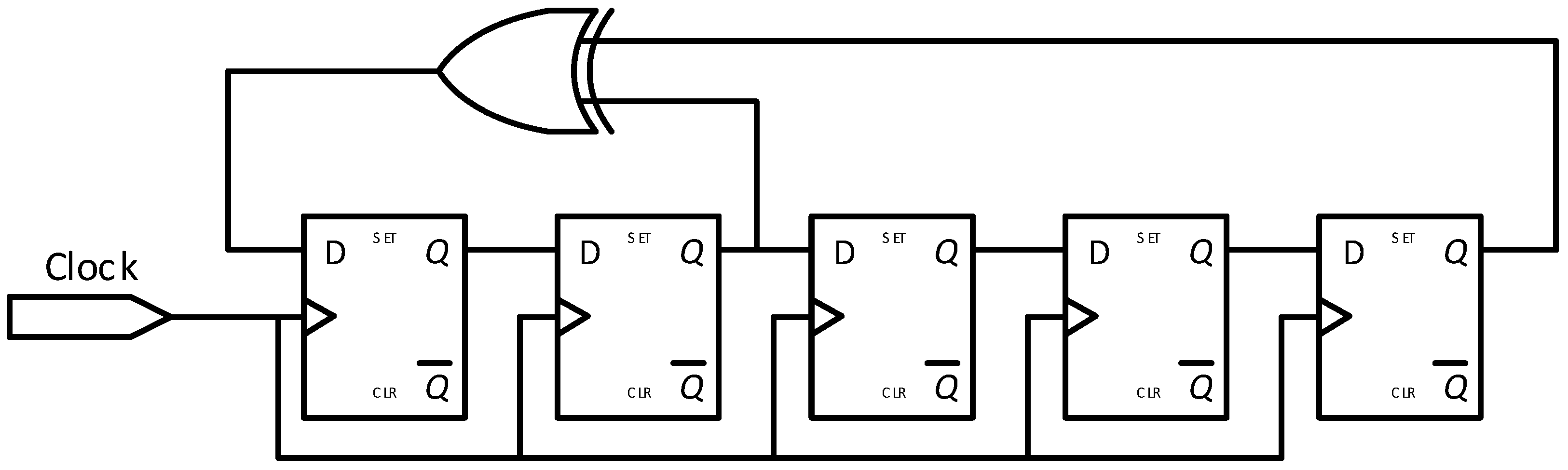
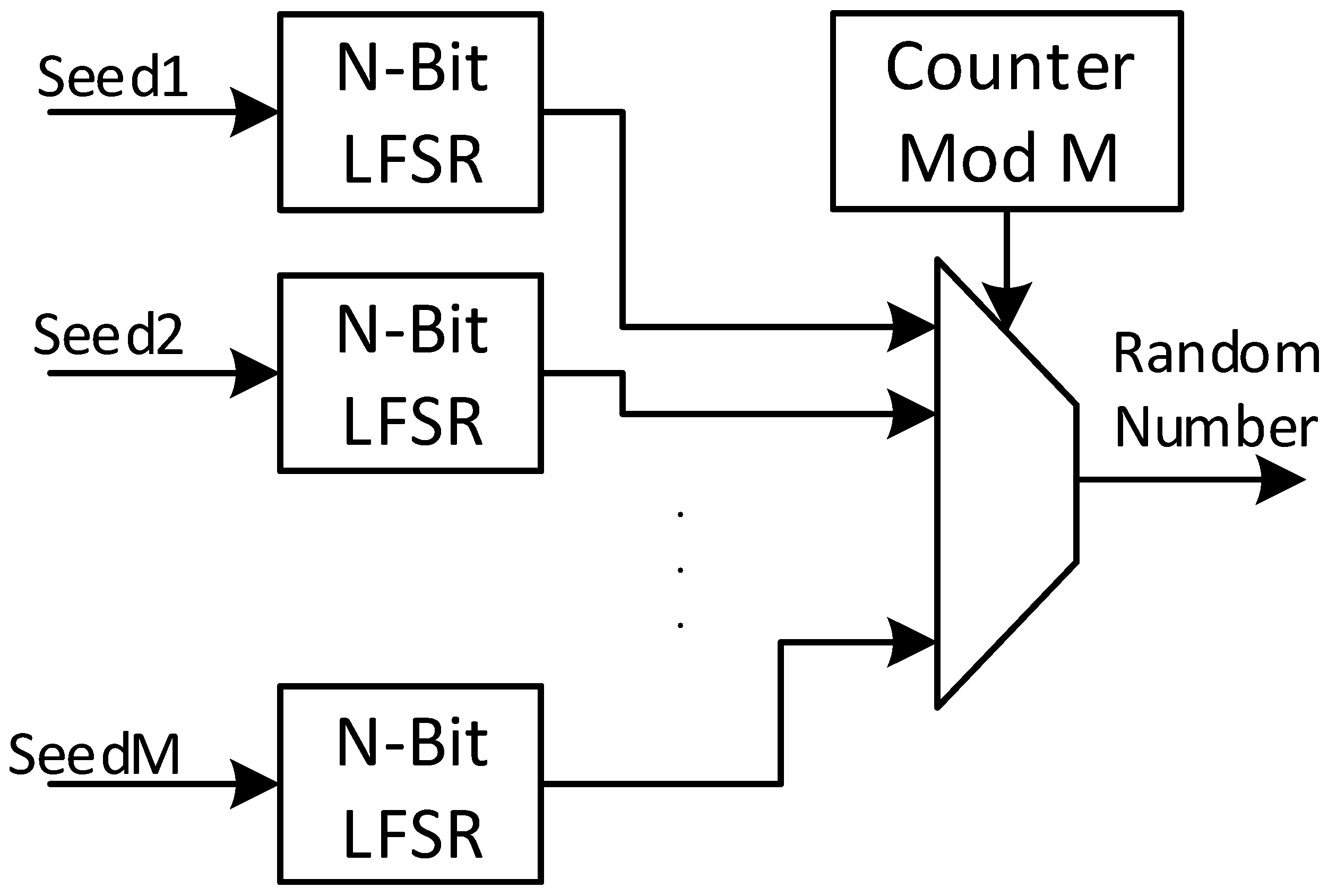
In this context, a challenge arises: generating values that accurately follow a target distribution while respecting strict memory constraints and running at FPGA. Addressing these issue, this work combines efficient uniform PRNG generation with a memory-optimized ICDF-based (Inverse Cumulative Distribution Function) mapping technique. First, a decorrelated uniform PRNG is implemented using seven parallel LFSRs and a selector that cyclically shifts their outputs, producing sequences with reduced correlation by relying solely on XOR logic and a multiplexer structure [
14]. Second, a non-uniform RNG architecture is proposed in which multiple memory blocks store different regions of the cumulative distribution function (CDF). This segmentation preserves resolution in critical regions of the distribution without requiring excessively large look-up tables (LUTs). The proposed approach was evaluated in a particle physics environment using Monte Carlo simulations.
Table 1 presents a qualitative comparison between representative state-of-the-art techniques and the proposed method. In contrast to transformation- and rejection-based approaches, which often involve complex control logic and iterative processing steps, the method proposed in this work is designed around a simplified architecture based on deterministic memory access and lightweight combinational logic. This architectural choice targets reduced implementation complexity on FPGA platforms and avoids reliance on dedicated DSP resources, which are commonly constrained in high-throughput systems. Furthermore, by partitioning the ICDF into multiple memory regions, the proposed approach seeks to balance memory requirements with distribution resolution, addressing limitations typically associated with single large LUT implementations.
The remainder of this paper is organized as follows.
Section 2 presents the theoretical background of Linear Feedback Shift Registers (LFSRs), while
Section 3 discusses Monte Carlo-based distribution generation, with emphasis on the challenges imposed by limited LUT resources.
Section 4 describes the proposed FPGA architecture, detailing both the decorrelated pseudo-random number generator and the multi-memory inverse CDF mapping scheme.
Section 5 introduces particle colliders as the reference application used throughout this work.
Section 6 presents two implementation examples of the proposed approach, and finally,
Section 7 summarizes the conclusions and outlines future research directions.
3. Monte Carlo Simulation
The study of physical processes often relies on statistical analysis. Researchers typically collect real-world data and investigate its underlying behavior. In this context, the statistical properties of a process are crucial for predicting environmental conditions and, when necessary, for developing tools that mitigate undesirable effects that could degrade system performance.
A widely adopted approach for characterizing such processes is the Probability Density Function (PDF). The PDF describes how probability is distributed over the possible values of a random variable. The PDF assigns a probability density to each value of the random variable, thereby providing a complete statistical description of its behavior.
Monte Carlo simulation is a technique that relies on randomness to generate samples that mimic the statistical behavior of a target variable, and several approaches can be used to accomplish this. One particularly convenient and easily implementable method is based on the inverse of the CDF [
28]. In this approach, a uniformly distributed random variable is used as the input for the simulation process. Equation (
2) defines such a random variable following a uniform distribution.
Let
X be the random variable to be simulated and let
denote its CDF. Once the distribution of
X is defined, the next step is to compute the ICDF and use the uniformly distributed variable
U as its input. By generating a sequence of values for
U and applying the ICDF, one obtains samples of a random variable that follow the same distribution as
X, as expressed in Equation (
3).
3.1. ICDF Reference Table
Knowing the analytical form of a PDF or CDF often enables direct computation of the corresponding ICDF. In such cases, the resulting function is continuous, allowing a uniformly distributed random number to be directly mapped to the desired output value. However, in many practical scenarios, the target random variable does not fit well to a single known distribution, thus requiring alternative methods.
Given a real dataset of the target variable, one may construct its histogram, which (depending on the number of bins and the normalization) approximates the underlying PDF. A histogram estimates the PDF by partitioning the data range into discrete intervals and counting the number of samples that fall within each bin. Let denote the number of samples in the i-th bin and N the total number of samples. The normalized histogram, obtained by dividing each by N, provides an empirical approximation of the probability mass associated with each bin.
The empirical CDF is then obtained by accumulating these normalized frequencies [
29]. Specifically, for a given bin
k, the value of the empirical CDF is computed as shown in Equation (
4), where
represents the upper boundary of the
k-th bin. This cumulative sum corresponds to the proportion of observations that do not exceed
. Repeating this accumulation for all bins yields the complete empirical CDF.
The ICDF for such cases can be derived by discretizing the empirical CDF. The
y-axis is divided into equally spaced points, and the corresponding
x-axis values are stored. A practical implementation of the ICDF consists of assigning integer labels to these points, from zero to the total number of points minus one, and associating each label with its respective stored
x-value [
30]. This structure can be interpreted as a reference table, or, from a hardware perspective, a memory block containing the desired output values.
Although this technique is particularly useful for distributions that lack a closed-form expression, known distributions may also be used to generate such reference tables when hardware implementation is desired.
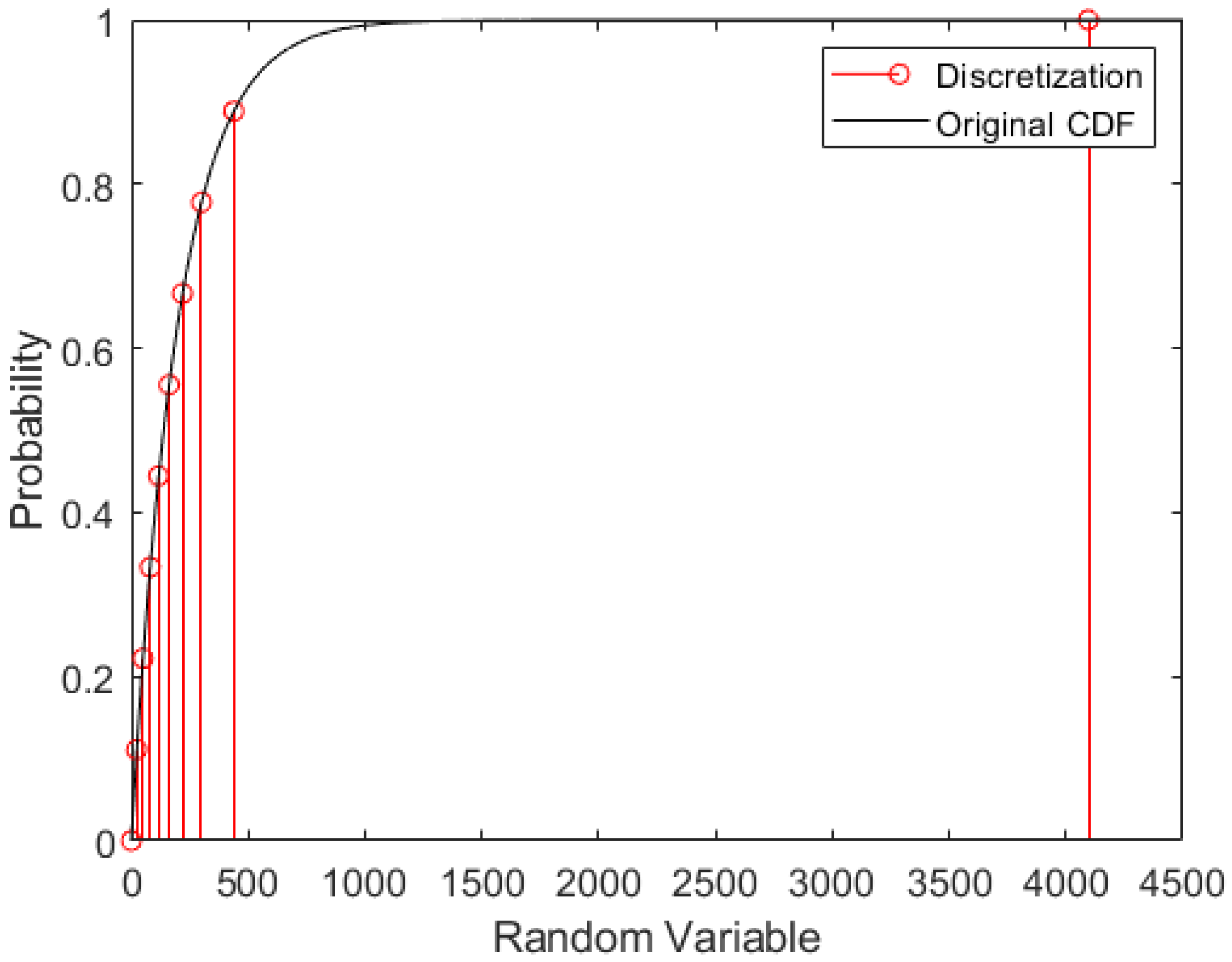
Figure 4 presents an example of an exponential CDF with the selected discretization points. In this illustration, the
y-axis is divided into ten equally spaced intervals.
Monte Carlo simulation using the ICDF can be adapted with a small modification to the uniformly distributed input variable. Instead of producing a random number between zero and one, the generator outputs an integer between zero and the number of discretization points minus one. This integer directly indexes the reference table—i.e., the corresponding memory position—to retrieve the desired random sample.
3.2. Approximation Problem
The described technique introduces an approximation due to the discretization of the CDF. If the CDF contains one or more extended flat regions, these intervals will not be accurately represented. As illustrated in
Figure 4, any random value between 480 and 4096 will never occur, which may be unsuitable depending on the target application.
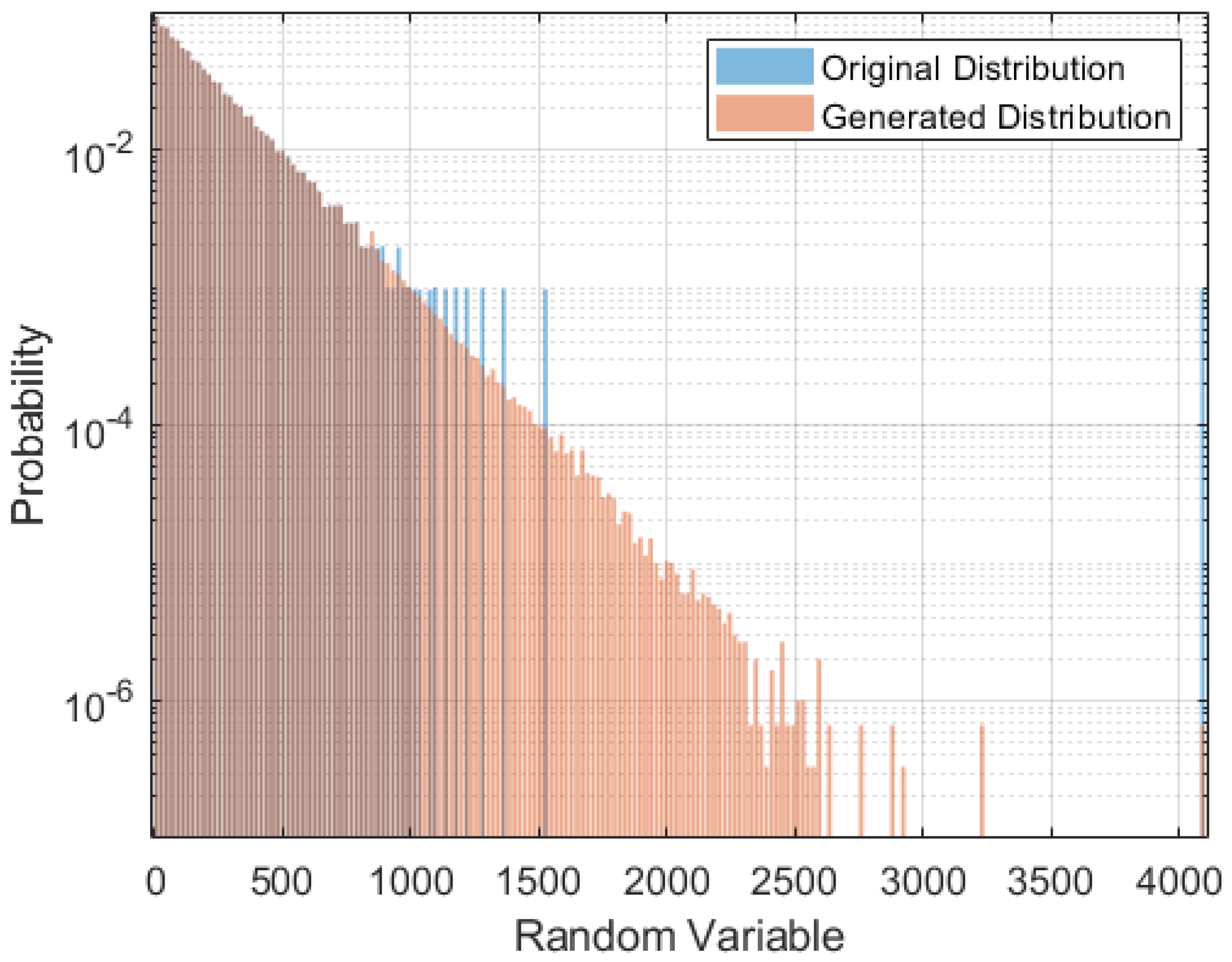
Figure 5 shows a histogram of a generated exponential random variable, plotted with a logarithmic scale on the
y-axis, where this issue becomes more evident, even if a 1024 table positions were used.
One straightforward way to mitigate this problem is to increase the number of sampled points in the discretized CDF, thereby improving the resolution along the x-axis. However, depending on the distribution, the number of required points can become very large. In simulation environments where hardware resources are abundant, this is not a limiting factor. In contrast, for embedded systems implemented on resource-constrained hardware such as FPGAs, memory usage becomes a critical concern. In some cases, achieving sufficient resolution may require on the order of 10 MB of memory—an amount typically unavailable in many FPGA devices.
Increasing the number of samples to capture flat regions necessarily causes oversampling in the remaining portions of the CDF, where such fine resolution is unnecessary. This oversampling leads directly to excessive memory usage. To improve efficiency, the objective is to allocate additional memory only to represent the flat regions of the distribution, while avoiding redundancy in the well-behaved segments. This optimization strategy is discussed in the next section.
4. Multi-Memory Approach
Analyzing
Figure 5, it becomes clear that the gap observed in the histogram must be filled to properly match the original distribution. The most effective strategy is to increase the resolution only within the flat region of the CDF, thereby conserving memory resources. For instance, in the sampled CDF of
Figure 4, if the generated uniformly distributed random value lies between 0.8912 and 1, then the corresponding output random variable may assume a wide range of values along the
x-axis. In such a case, an algorithm must determine whether the sampled point falls within this interval, and, if so, consult an additional reference table (stored in a different memory segment) to refine the output value.
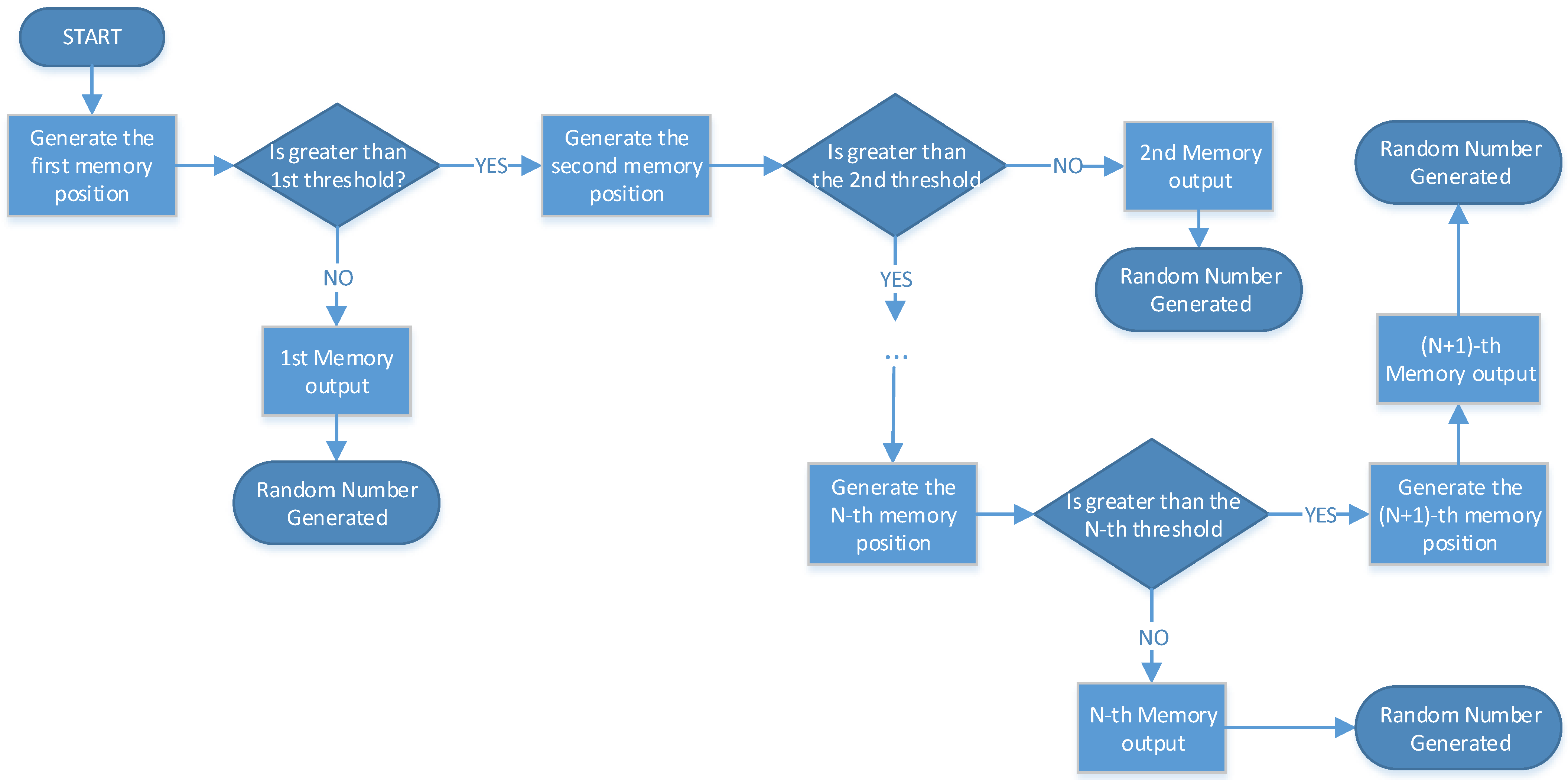
In some situations, the flat region of the CDF may contain additional subregions that are also flat but were not visible at the original scale. In these cases, more than one additional memory layer may be required to accurately represent the random variable. The algorithm must therefore include an additional decision step to check whether the refined memory index still lies within a secondary flat region, and, if necessary, perform another lookup in a deeper memory layer.
Figure 6 presents a flowchart summarizing the decision-making process performed by the algorithm.
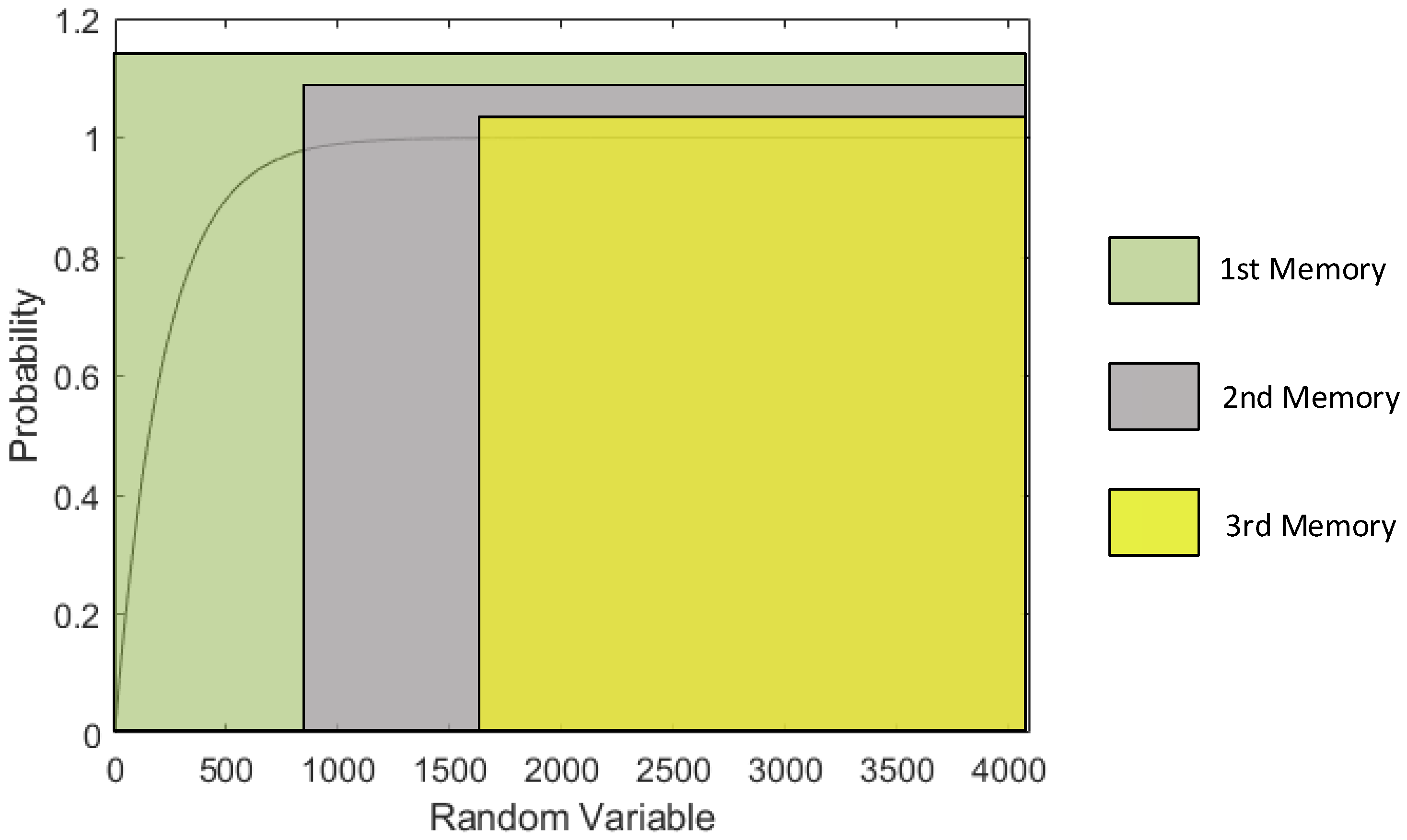
To further clarify the procedure, consider again the example of the exponential distribution. As discussed previously, the flat region of the CDF is poorly sampled. Suppose the inverse CDF is stored in a memory with 1024 positions. In this configuration, the region between 854 and 1023 may be improved by allocating a second memory, also with 1024 positions, dedicated exclusively to this segment. If the histogram of the generated values is plotted again, another region may still appear undersampled. In that case, a third memory can be added, covering the interval between 1709 and 1024 of the second memory. Sampling this final portion of the CDF with 1024 points significantly improves the histogram quality compared to the single-memory implementation.
Figure 7 illustrates the coverage range of each memory layer.
In this example, a total of 3072 memory positions are used across the three layers. Without memory optimization, achieving equivalent accuracy would require sampling the CDF with approximately 770,000 points, which would exceed the memory capacity of many FPGA devices. It is important to note that the three memory blocks do not necessarily need to have the same size; each can be dimensioned according to the resolution required for the specific region it covers.
4.1. Defining the Range for Each Memory
The performance of the proposed algorithm depends strongly on how the boundaries of each memory layer are determined. Although this selection can be performed manually by inspecting the generated histograms and adjusting the ranges accordingly, such an approach becomes impractical when multiple random variables must be generated or when several memory layers are required.
The core difficulty in choosing these ranges lies in evaluating the distance between consecutive
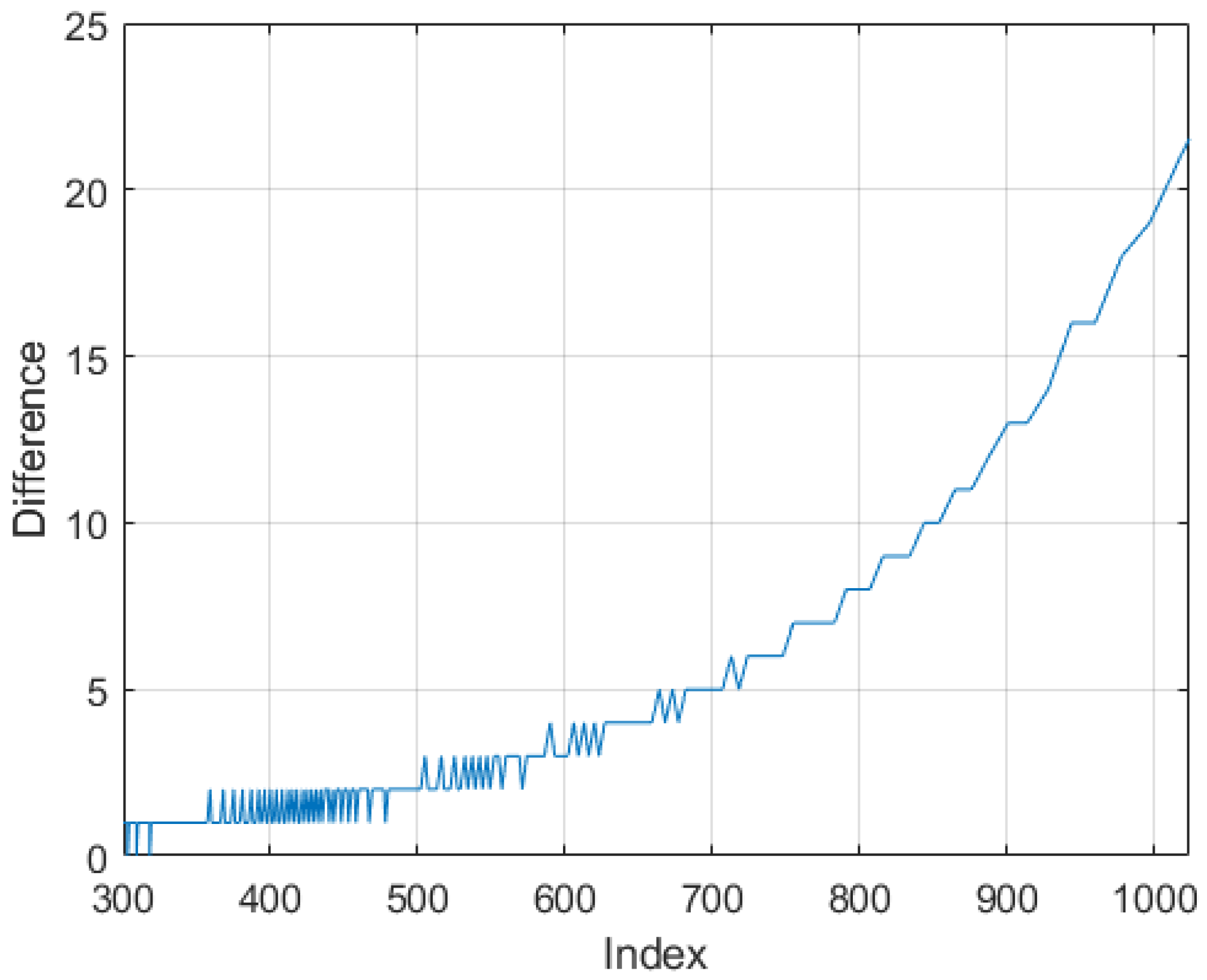
x-axis values of the discretized CDF. Large differences between adjacent values indicate the presence of a flat region within that interval.
Figure 8 presents the plot of the differences between consecutive values stored in the first reference table of the previous example. A noticeable knee appears between 700 and 1000, after which the differences tend to grow, highlighting the beginning of the flat region.
To automate the selection of these ranges, an acceptable threshold can be defined for the relative increase between consecutive samples (e.g., 10). Whenever the computed increase exceeds this predefined threshold, the algorithm assigns the corresponding index to a new memory layer, and the associated memory position is stored as the boundary of the range. A more objective criterion can be obtained by computing the relative difference with respect to the maximum stored difference. In practice, relative difference thresholds of 1% or 2% were found to provide good results.
4.2. FPGA Implementation
The flowchart presented earlier describes the sequence of operations required by the algorithm. While this representation is suitable for software implementations, it is not practical for FPGA-based architectures. In FPGA technology, circuits operate in parallel and typically under synchronous clock control, which requires a fundamentally different approach. In particular, the circuit cannot wait for the output of the first memory to decide whether it should access the next memory layer.
To guarantee a fixed-latency random number generation, all memory addresses for every memory layer must be produced simultaneously. Given these input positions, all memories will compute their corresponding candidate output values in parallel. However, the final selected output must respect the priority rules imposed by the predefined boundaries that determine when each memory layer should be activated.
In the FPGA implementation, the decision chain begins from the last two memories to preserve this priority. First, the position associated with the second-to-last memory is evaluated: if it falls within the specified flat region, the temporary output is taken from the final memory; otherwise, the value from the second-to-last memory is selected. Next, the same process is applied to the third-to-last memory, where the algorithm chooses between the temporary output from the previous step and the value obtained from the current memory layer, depending on the established range. This decision chain continues until the first memory is reached.
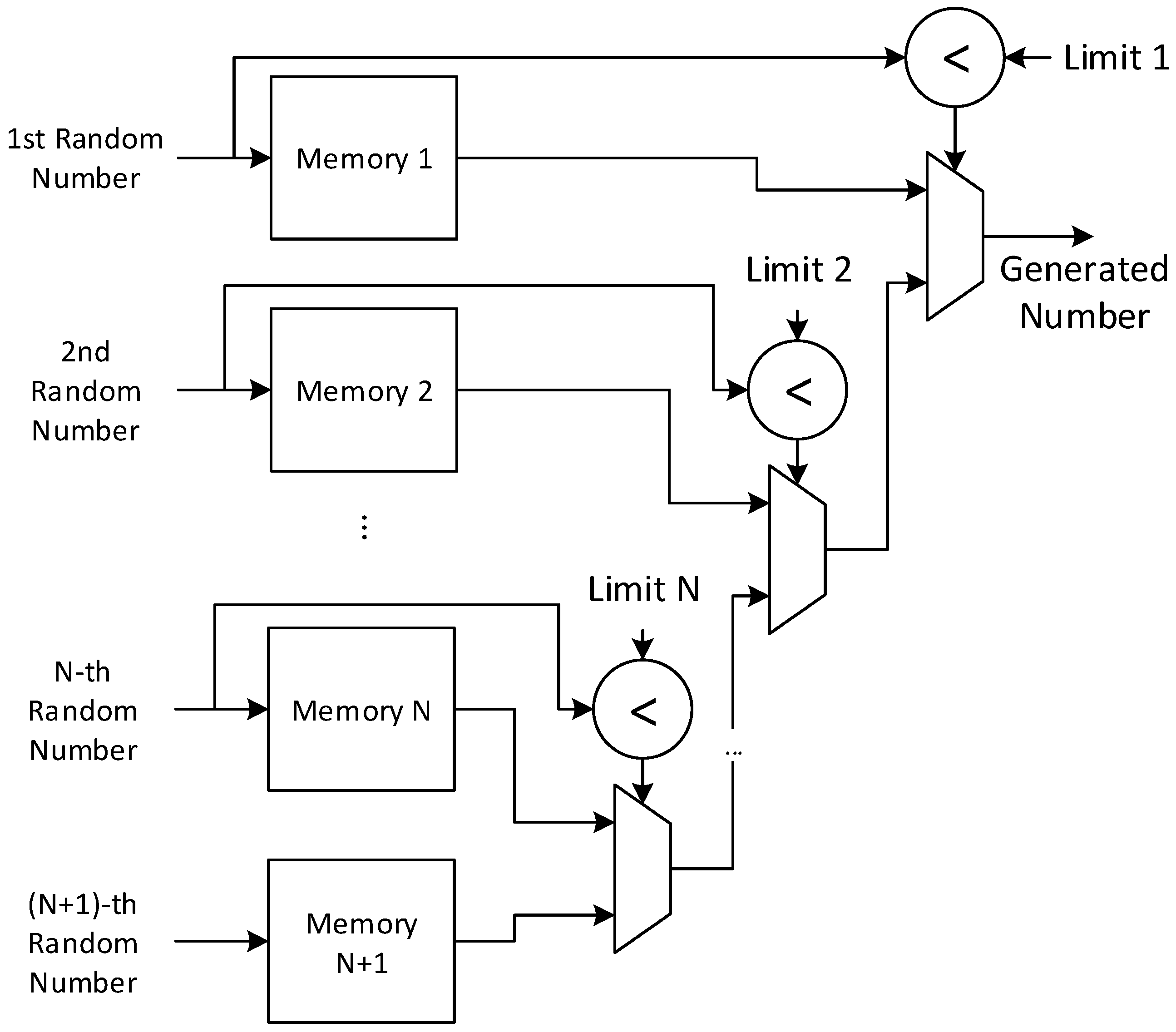
In summary, the architecture consists of a cascade of multiplexers whose selection signals are defined by the range limits of each memory layer. The complete circuit can be visualized in
Figure 9, which presents the block diagram of the described implementation. This approach results in a simple and efficient circuit, requiring no DSP blocks or complex structures.
5. Case Study
This section introduces a high-energy physics scenario in which the proposed method is evaluated. Since the goal is to generate random numbers following a desired distribution for real-world applications, this domain provides a suitable test environment for analyzing the performance of the proposed implementations.
In particle physics, scientists investigate the fundamental constituents of matter, aiming to understand the formation of the universe, its evolution, and the interactions between elementary particles. High-energy physics experiments provide the means to test and validate theoretical predictions, such as those described by the Standard Model.
To achieve this, particle colliders are widely employed. These machines accelerate particles to velocities close to the speed of light and force them to collide at predefined interaction points. The energy released in these collisions produces a variety of secondary particles, which propagate outward from the interaction region. Detectors are strategically positioned around this point to measure the energy deposits and reconstruct the resulting particles and their trajectories [
31].
Each detector subsystem uses dedicated electronics tailored to the type of particle being measured, its expected energy, and the distance from the collision point. Calorimeters, for instance, detect particles through different interaction mechanisms, and in some technologies, this process involves the production of scintillation light whose intensity is proportional to the deposited energy [
32]. Modern calorimeters frequently rely on Silicon Photomultipliers (SiPMs) to convert this light into electrical pulses suitable for processing [
6].
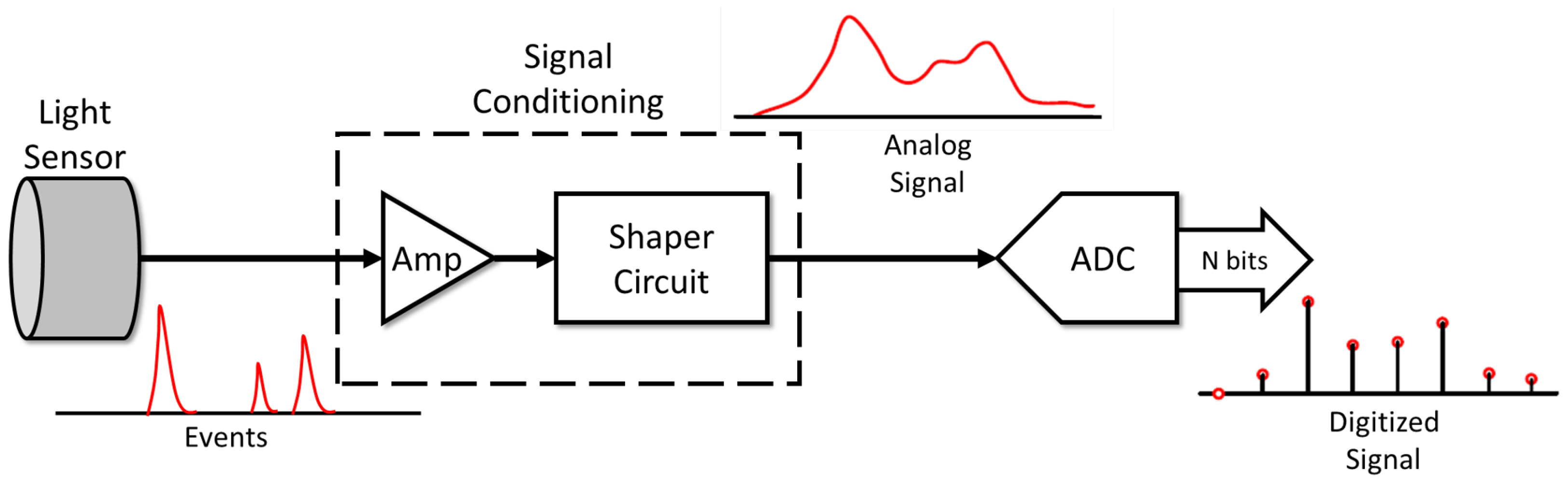
The generated signal is extremely short in duration and is commonly modeled as an impulse whose amplitude reflects the particle’s deposited energy. A shaping stage is typically applied to extend the signal in time, improving the resolution and enabling accurate sampling using an analog-to-digital converter. Once digitized, reconstruction algorithms can be applied to identify events of interest.
Figure 10 provides an illustration of this process.
Target Distributions for Evaluation
The energy deposited by particle interactions is the fundamental information that detectors aim to measure. This deposited energy can be simulated using Monte Carlo techniques based on theoretical models. During the design and commissioning of particle accelerators, such simulations were essential for ensuring proper system operation.
Real data collected by detectors can also be employed to generate more realistic simulation scenarios. The observed samples may be fitted to a known probability distribution, or alternatively, the empirical histogram itself can be used as the basis for constructing a simulation model.
In this context, several studies [
21,
22,
23,
24,
25,
26] have investigated the statistical characteristics of particle detector responses. The geometric arrangement of detector cells significantly influences the resulting energy distribution profiles observed in the measurements. Since particle detectors typically consist of a very large number of cells, mapping the distribution of energy deposition for each cell provides valuable information for the development of new particle identification techniques.
According to various analyses [
21,
22,
23,
24,
25,
26], calorimeters such as the Tile Calorimeter (TileCal) exhibit energy distributions that approximate an exponential form. The parameters of the distribution—such as the mean and standard deviation—vary depending on the experimental conditions (e.g., luminosity) and the spatial location of the cell within the detector.
Once the energy distribution profile of a given cell has been characterized, a simulator can be used to generate signals that follow the same statistical behavior. A real-time simulator operating at the collision frequency can support the development of advanced energy reconstruction algorithms and trigger systems, which are essential components of high-energy physics experiments.
The next section presents two approaches for generating random numbers suitable for modeling the desired energy distributions in FPGA hardware. Implementations based on exponential distributions are described, together with analyses of maximum operating frequency, statistical properties of the generated sequences, and FPGA resource utilization.
6. Results
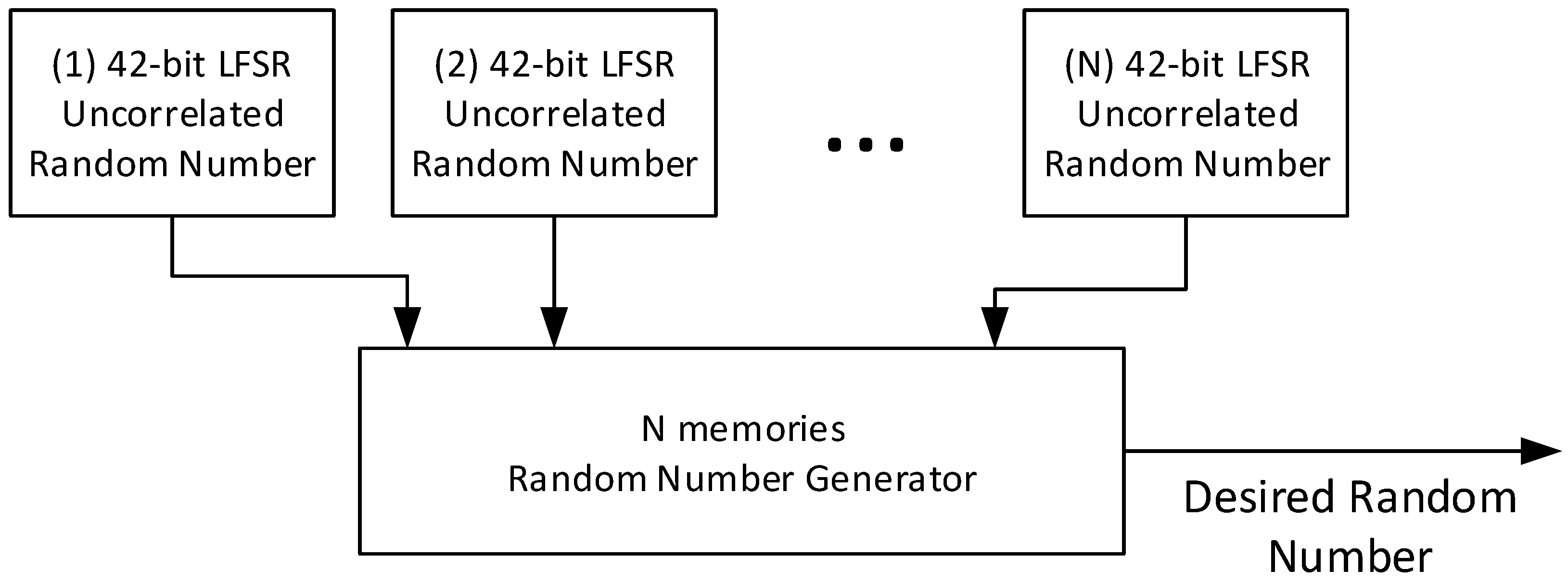
The two proposed implementations (the uncorrelated LFSR-based RNG and the multi-memory RNG) were previously developed and evaluated and can be combined into a single architecture. The uncorrelated pseudo-random number generator supplies the memory addresses that drive the sampling process in the LUT-based generator. All implementations target FPGA devices, and the DE10-Nano-SoC board was selected as the evaluation platform for benchmarking [
33].
Figure 11 shows a schematic representation of the complete FPGA architecture used for random number generation.
The evaluation uses representative probability distributions, since the number of memories, their depth, and bit width vary according to the specific distribution targeted by each application. Histograms are provided as a qualitative visualization of the generated samples, while quantitative statistical metrics are reported to assess distributional accuracy and randomness properties. While FPGA resource usage is reported to assess feasibility and scalability.
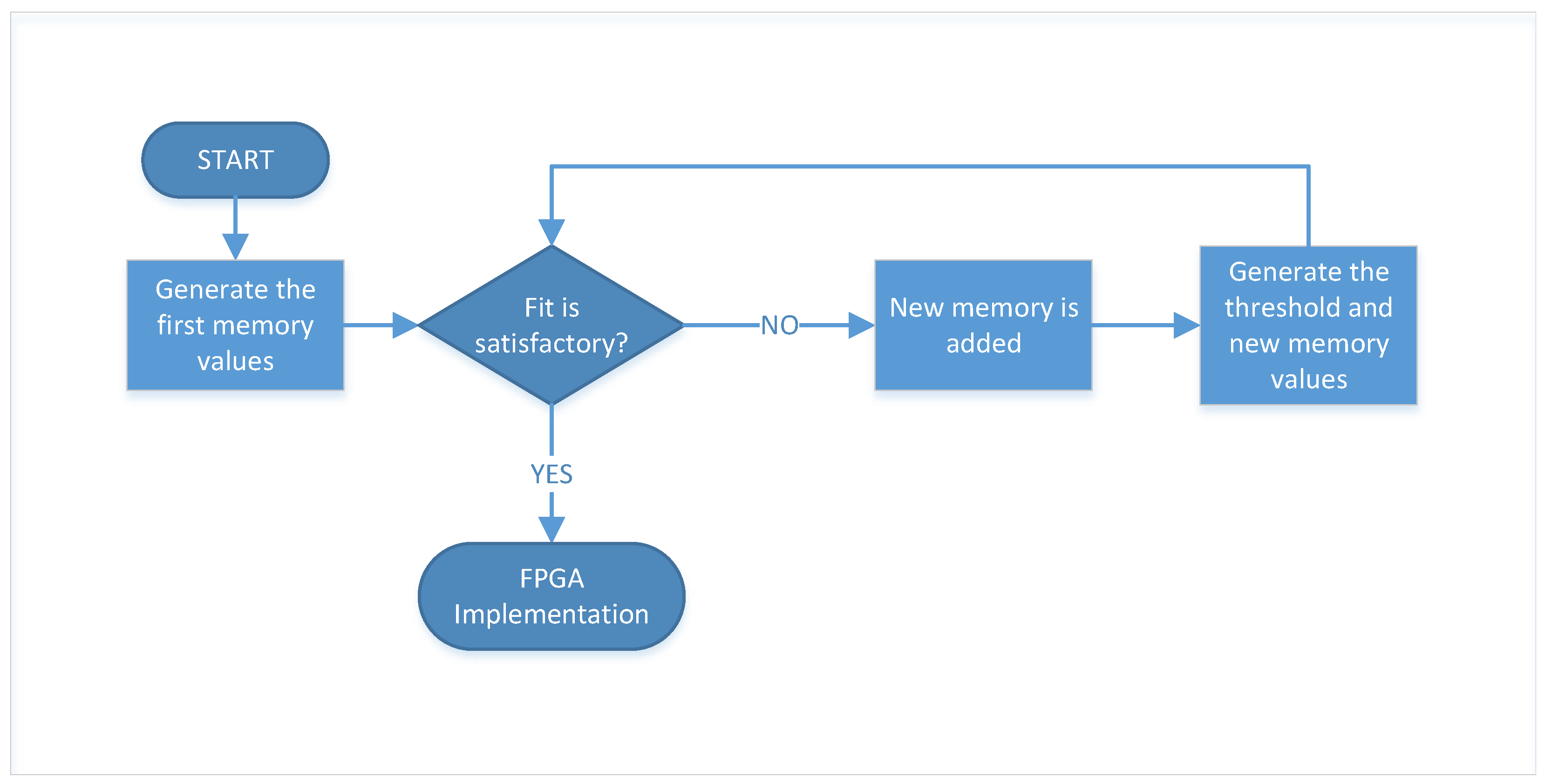
To apply the proposed method, the target CDF is first generated and the number of memory locations is defined. The memory is populated by sampling the ICDF, while uniformly distributed random numbers are used to generate the output sequence. The resulting histogram is then compared with the target distribution. If the fit is not satisfactory, an additional memory is introduced.
A threshold based on the relative difference is defined, and the new memory is filled using the subdivided region of the distribution. By employing two independent uniformly distributed random numbers together with the threshold, the two memories generate a new histogram, which is again compared with the target distribution. If the fit remains inadequate, another memory is incorporated and the process is repeated. This iterative procedure continues until the accuracy requirements defined by the expert are met.
Figure 12 presents the workflow to implement the proposed method.
Once the number of memories and their corresponding entries are defined, the architecture can be implemented on FPGA by instantiating a number of uncorrelated LFSRs equal to the number of memories and storing the corresponding ICDF values. At this point, the hardware is ready to generate the desired random sequences.
6.1. Uniform PRNG Validation for Memory Addressing
The proposed multi-memory random number generation architecture relies on uniformly distributed pseudo-random numbers to address the LUT that implement the ICDF. As a result, the statistical quality of the uniform PRNG directly impacts all non-uniform distributions generated by the system, independently of the target PDF.
For this reason, a dedicated statistical validation of the uniform PRNG is first presented, prior to the analysis of the non-uniform random number generators. The validation focuses on three fundamental properties required for hardware-oriented PRNGs: uniformity, independence, and absence of structural or periodic patterns.
Since all address streams are generated by the same uncorrelated LFSR-based architecture, statistical tests were applied to a representative output stream. Independence between parallel streams, which are used simultaneously to address different memories, was evaluated separately through cross-correlation analysis.
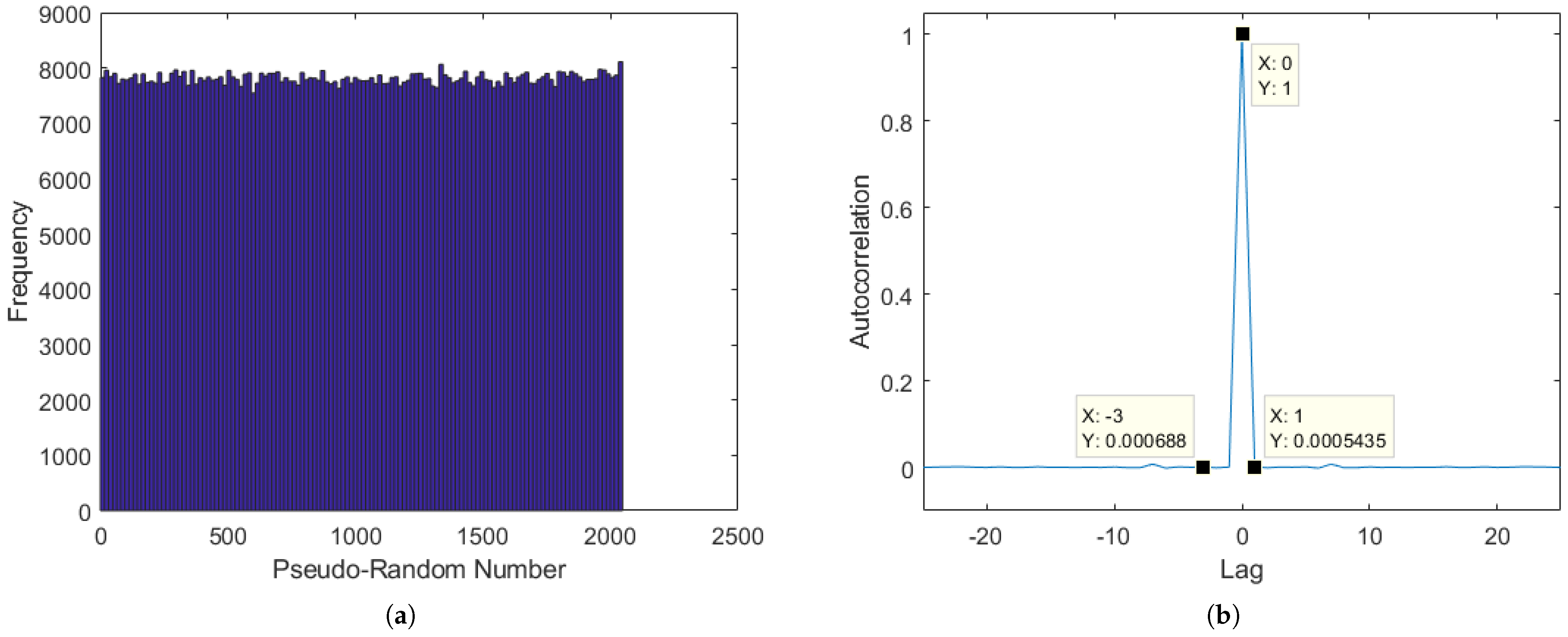
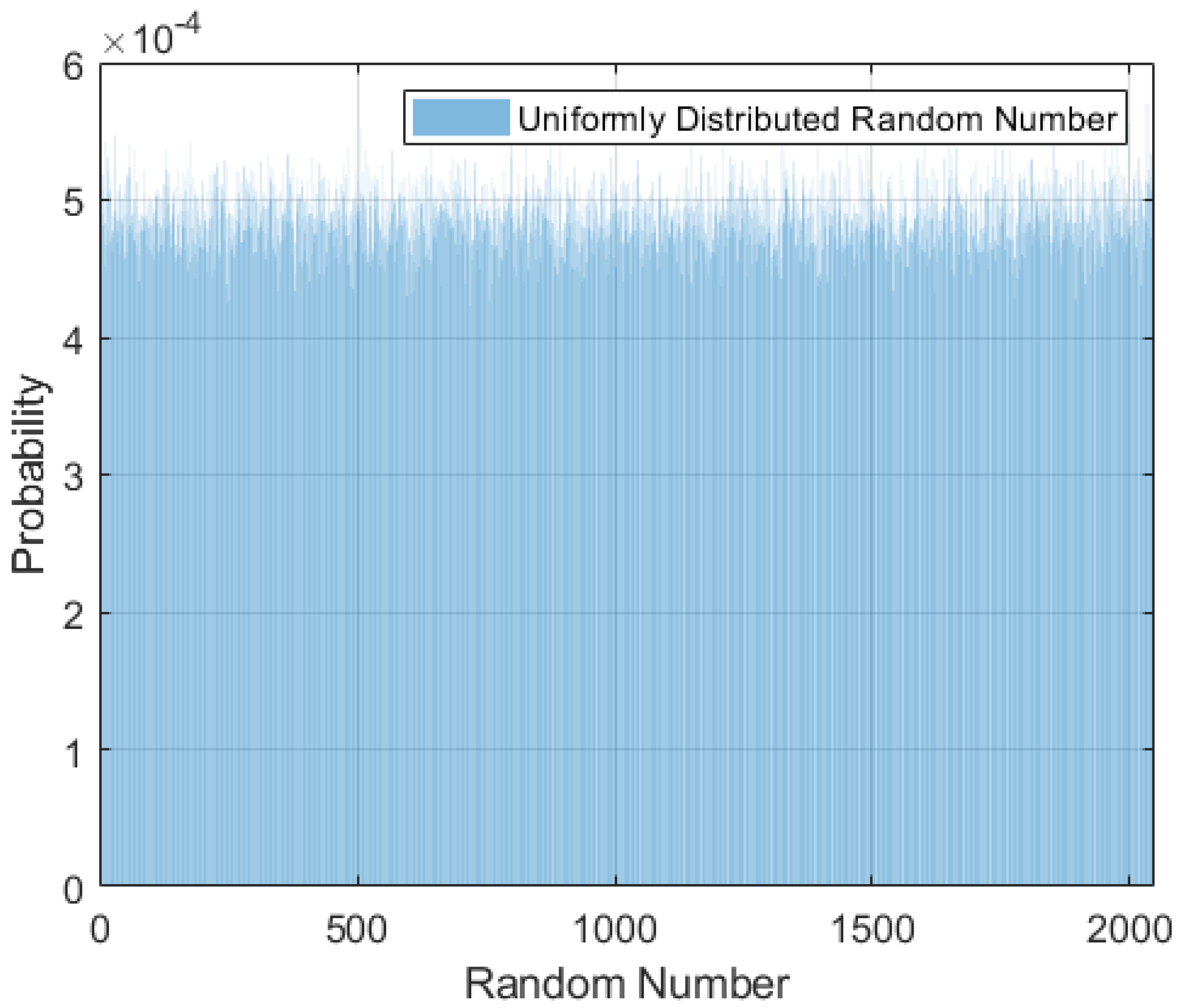
Figure 13 shows the histogram of the generated uniform memory address values, confirming the expected uniform coverage of the available address space.
Uniformity of the generated address values was evaluated using the Kolmogorov–Smirnov (KS) test, which compares the empirical cumulative distribution function with the theoretical uniform distribution over the interval . For the 11-bit address space adopted in the FPGA implementation, the KS statistic indicates good agreement with the expected uniform behavior, with no statistically significant deviation observed.
Independence between consecutive samples was assessed using a runs test, adopting the statistical formulation described in the NIST SP 800–22 recommendations. The measured runs statistics are consistent with those expected from an independent random sequence, and the normalized autocorrelation (AC) coefficients remain close to zero for all evaluated lags, indicating the absence of linear temporal dependence.
Spectral randomness tests based on bit-level frequency-domain analysis were not considered, as the PRNG outputs correspond to fixed-width memory addresses rather than balanced binary sequences. In this context, autocorrelation and cross-correlation metrics provide a more direct and interpretable assessment of independence for the intended hardware application.
The results of the statistical validation of the uniform PRNG are summarized in
Table 2. All uniform address streams are generated by the same PRNG and therefore exhibit identical statistical properties prior to any thresholding or conditional selection.
The uniform PRNG operates with an 11-bit address space, matching the LUT depth used in the FPGA implementation. When evaluated prior to any thresholding or conditional selection, the generated address stream exhibits good uniformity and independence, as confirmed by the Kolmogorov–Smirnov and runs tests, as well as low autocorrelation values.
The Kolmogorov–Smirnov statistic indicates good agreement with the theoretical uniform distribution, with no statistically significant deviation observed. The runs test yields p-values consistent with those expected from an independent sequence, indicating the absence of temporal clustering or systematic transitions. In addition, the normalized autocorrelation coefficients remain close to zero for all evaluated lags, further confirming the lack of linear dependence between consecutive samples.
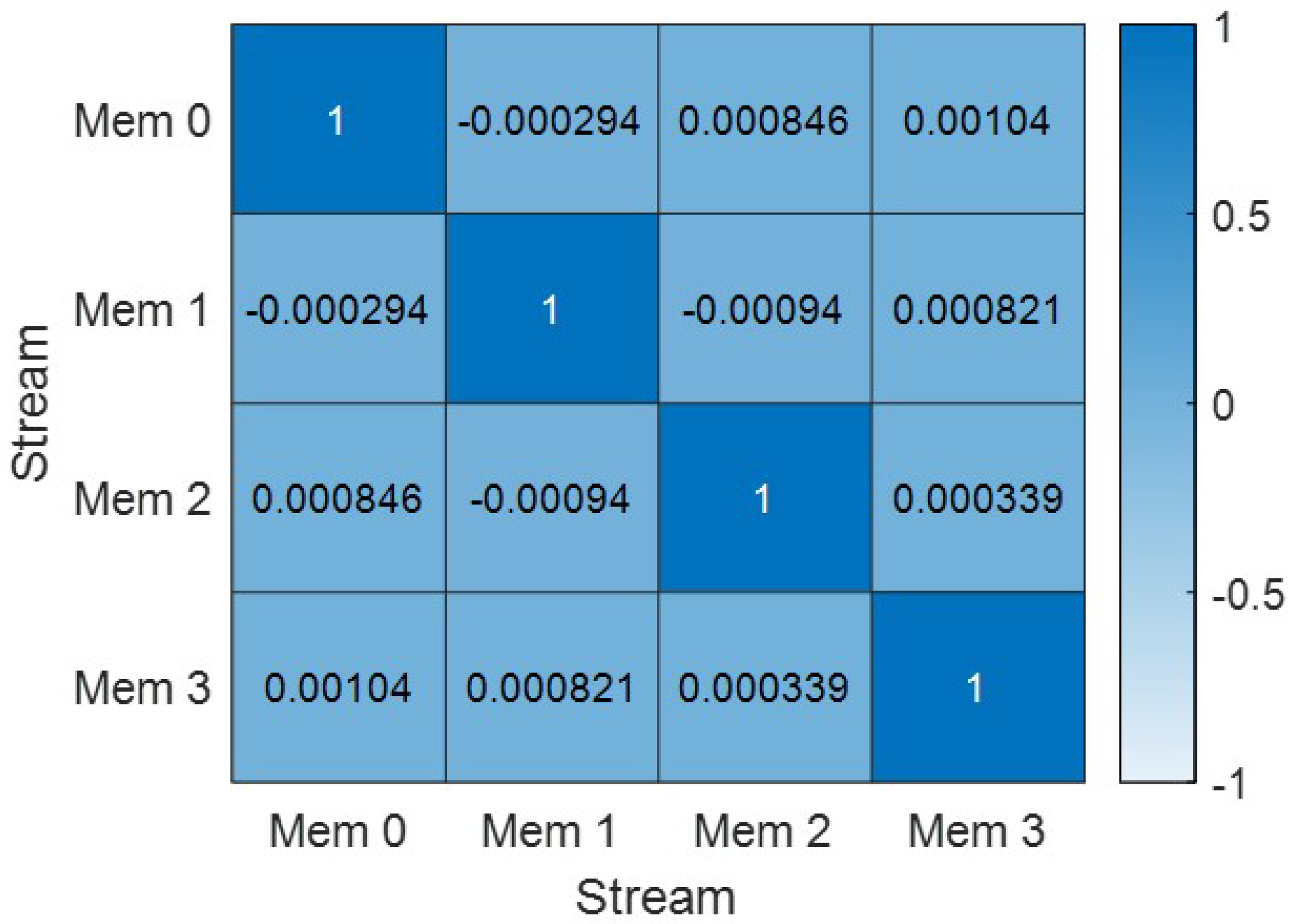
When multiple LUTs are used, several uniform streams are generated in parallel to address different memory segments. In the proposed architecture, the maximum level of parallelism is four address streams (corresponding to the Gaussian configuration), therefore assessing the mutual dependence among four simultaneous streams is sufficient to cover the worst-case operating condition.
To ensure that this parallel usage does not introduce systematic correlation, pairwise cross-correlation coefficients were computed between all address streams used simultaneously, forming a
correlation matrix, as shown in
Figure 14. Low off-diagonal correlation values confirm that the streams are effectively uncorrelated and can be safely employed together in the multi-memory architecture without degrading the statistical quality of the generated non-uniform random variables.
The maximum off-diagonal coefficient was , confirming that the streams are effectively uncorrelated and can be safely employed together in the multi-memory architecture without degrading the statistical quality of the generated non-uniform random variables.
6.2. Exponential Distribution
Simulations in nuclear and high-energy physics commonly use exponential distributions to model deposited energy or particle yields. A typical parameterization found in recent works [
21,
22] models particle energies using an exponential distribution with scale parameter equal to
. The probability density function used as reference is shown in (
5):
In this evaluation, LUTs containing 2048 entries were adopted. The uniform pseudo-random generator provides 11-bit addresses, ensuring uniform coverage of all memory positions. To define the boundaries between consecutive LUTs, the differences between sequential memory entries were examined.
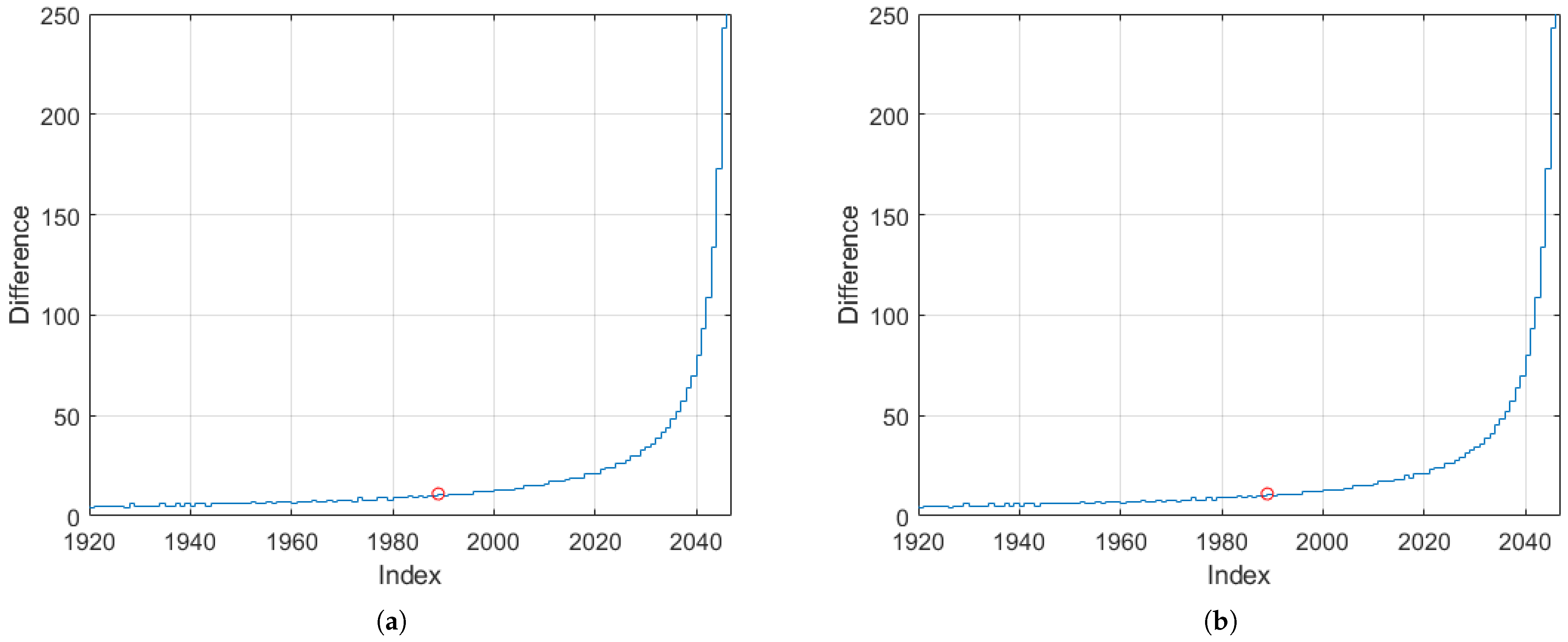
Figure 15a,b show the difference patterns for two memories. In both cases, the transition threshold corresponds to the point where the relative difference equals
, occurring at address 1989. Although the same value appeared in both memories in this example, this is not a requirement and typically varies from memory to memory.
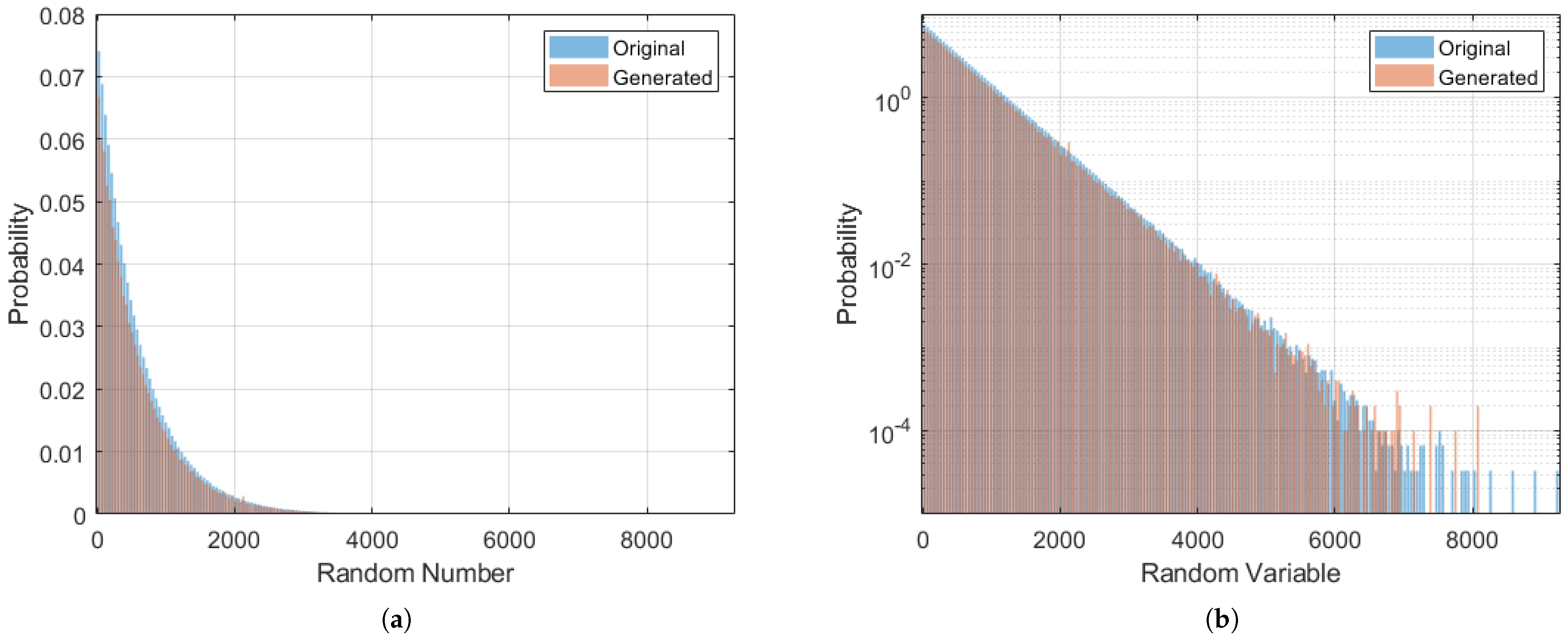
The final exponential-distributed samples are shown in
Figure 16a. A logarithmic scale (
Figure 16b) highlights the tail behavior, demonstrating that the generated distribution remains consistent with the analytical reference even in low-probability regions.
A quantitative assessment of the generated exponential random variables is presented in
Table 3 and
Table 4. Both the proposed multi-memory implementation and a reference single-LUT approach were evaluated using one million samples. No negative samples were observed, confirming the correct support of the exponential distribution with
.
Table 3 summarizes cumulative-distribution-based accuracy metrics. The maximum KS deviation
is reported as a compact measure of global agreement, while the mean squared error (MSE) and the maximum absolute deviation of the empirical CDF quantify local discrepancies. To explicitly assess the low-probability region, the relative error of the empirical tail probability at the
quantile is also reported.
The results indicate that both implementations achieve very similar levels of statistical accuracy. Although the single-LUT exhibits slightly smaller CDF deviations due to its finer discretization, the differences remain small and within the same order of magnitude. In particular, the relative tail error remains below for both methods, demonstrating that the proposed segmentation strategy preserves accuracy even in low-probability regions relevant to detector simulations.
The statistical moments of the generated distributions are reported in
Table 4. The estimated mean
and variance
closely match the analytical values, while the skewness
and excess kurtosis
remain near their theoretical expectations.
These results confirm that the proposed multi-memory architecture reproduces the overall shape of the exponential distribution with high fidelity.
Special attention was given to the tail region, which is critical in detector simulations. At the quantile, the empirical tail probabilities closely match the theoretical values, with relative errors below for both implementations. This demonstrates that the proposed segmentation strategy preserves accuracy even in low-probability regions.
The estimated statistical moments are also consistent with the analytical reference. The mean and variance match the theoretical values within negligible relative error, while the skewness and excess kurtosis remain close to the expected values for an exponential distribution.
The FPGA resource utilization of the exponential RNG implementations is summarized in
Table 5, including adaptive logic module (ALM) usage, register count, on-chip memory consumption, and maximum operating frequency.
The proposed multi-memory architecture requires only a small fraction of the available logic resources and does not rely on DSP blocks, which confirms that the generation of non-uniform random variables can be achieved using simple combinational logic and registers. The moderate logic footprint reflects the fixed-latency and fully parallel addressing strategy adopted in the design.
A key aspect of the proposed approach is its efficient use of on-chip memory. By distributing the ICDF representation across multiple smaller LUTs, the required memory footprint is drastically reduced while preserving statistical accuracy, as demonstrated. This characteristic is particularly relevant for FPGA-based detector simulations, where memory resources often represent a limiting factor.
For reference, a large single-LUT implementation storing the complete ICDF was also evaluated under identical conditions. As expected, this approach achieves comparable statistical performance but at the cost of a substantially larger memory allocation. While the logic utilization remains of the same order, the single-LUT design consumes a dominant fraction of the available on-chip memory and exhibits a lower maximum operating frequency due to increased memory access and routing complexity.
Taken together, the results demonstrate that the proposed multi-memory architecture achieves statistical accuracy comparable to that of a much larger single-LUT implementation, while requiring nearly two orders of magnitude less on-chip memory. The improvement offered by the proposed method therefore lies not in surpassing the absolute accuracy of a large LUT, but in reproducing its statistical behavior with a dramatically reduced hardware cost, making it particularly attractive for large-scale FPGA-based detector simulations.
6.3. White Gaussian Noise Implementation
Gaussian noise is widely used in detector simulations, especially for modeling electronic noise and fluctuations in energy deposition. Following the example in [
21], a zero-mean Gaussian distribution with a standard deviation of
was targeted. The corresponding PDF is given by
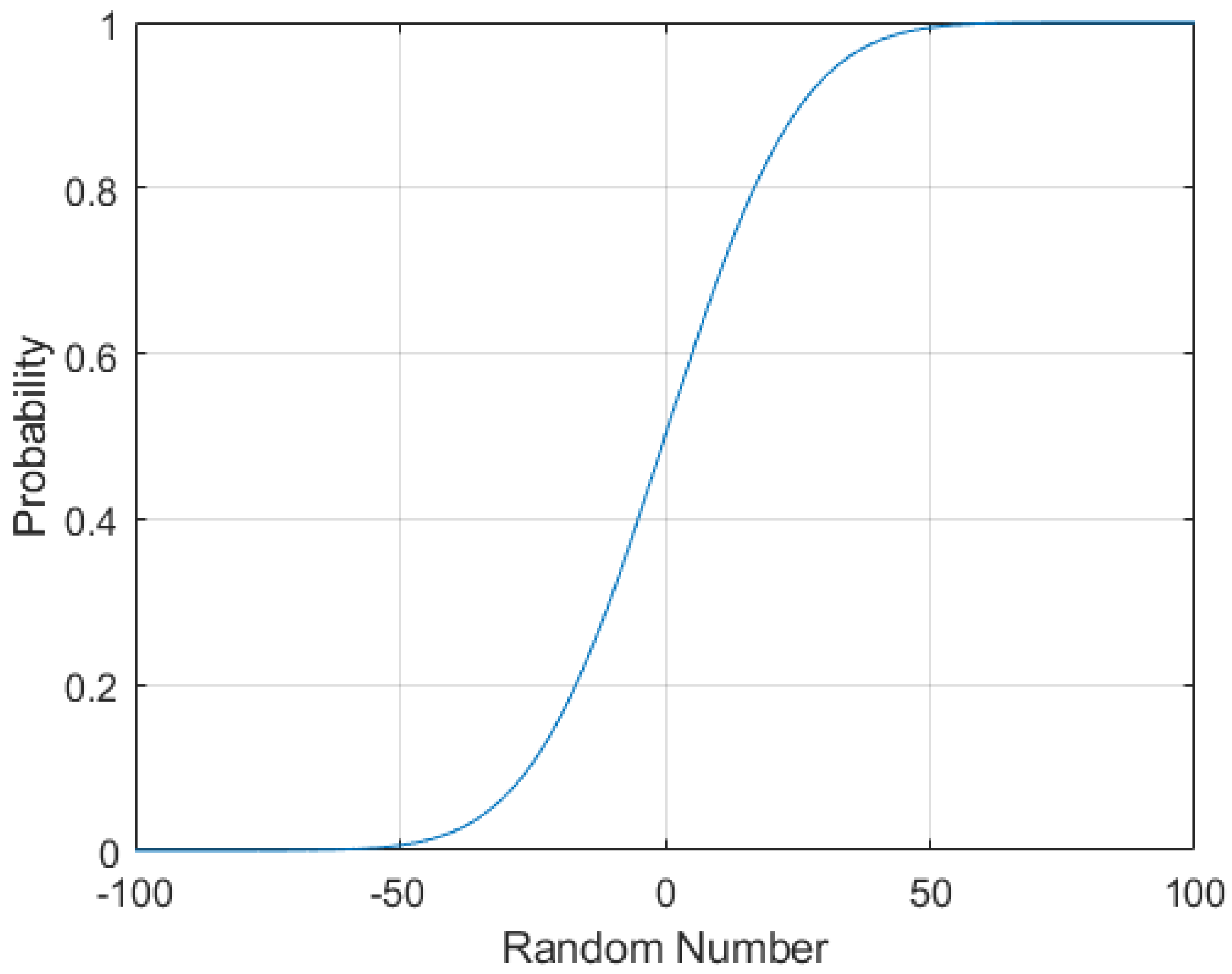
Figure 17 shows the cumulative distribution function, where the asymptotically flat tails imply that covering the entire range uniformly would require large memories. Because the Gaussian distribution is symmetric, only its positive half was stored in LUTs. A separate 1-bit random generator selects the sign: a value of one assigns a negative sign, while zero corresponds to a positive output.
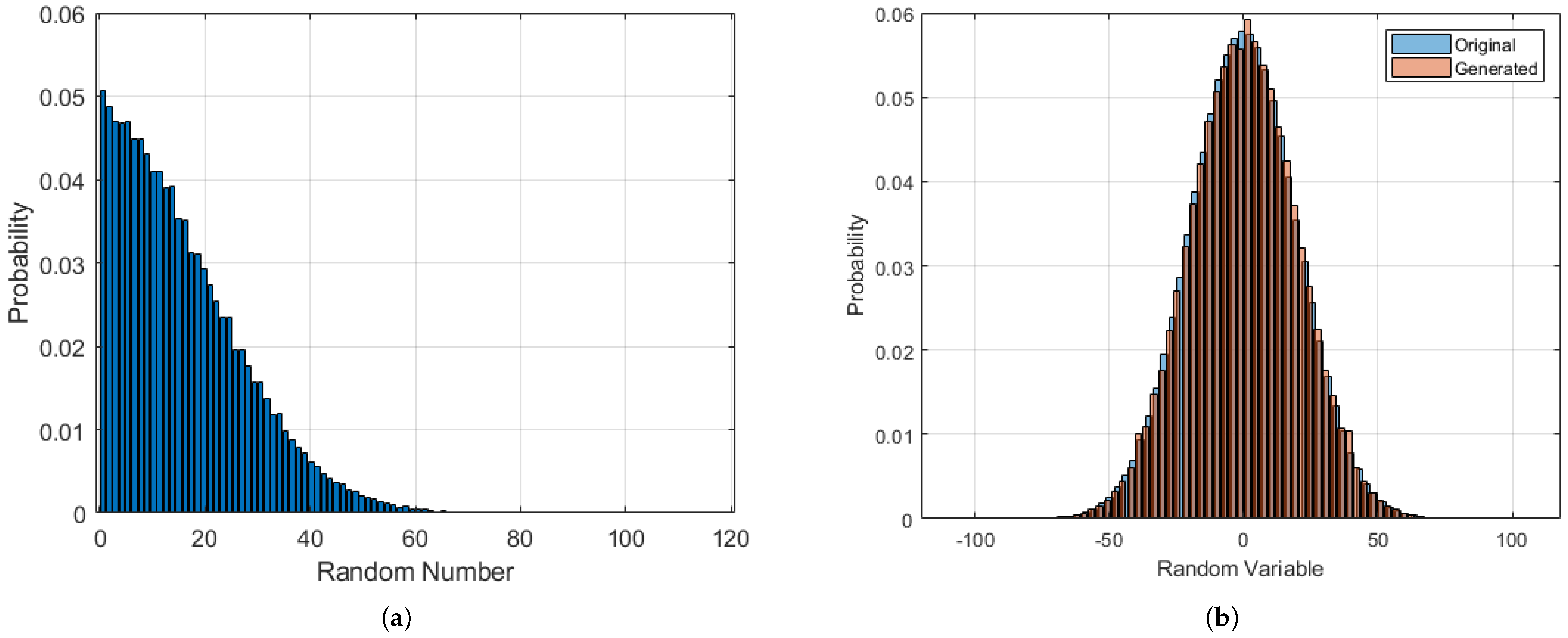
The positive region was partitioned into four memories of 512 entries each (16-bit values). The threshold values used to define the partitions were based on a relative difference of 1% for the first three memories and 2% for the last memory.
Figure 18a shows the histogram of the positive samples. After applying the sign generator, the complete Gaussian distribution is obtained (
Figure 18b). Because the FPGA operates in fixed-point arithmetic, a scaling factor of 512 was applied to the numeric values to avoid floating-point representation.
The statistical validation of the generated Gaussian random variables focuses on both cumulative distribution accuracy and distribution shape. In addition to global goodness-of-fit metrics, special attention is given to symmetry and tail behavior, which are critical for noise modeling in detector simulations.
Table 6 summarizes cumulative-distribution-based metrics for the Gaussian RNG outputs. The Kolmogorov–Smirnov statistic and the maximum CDF deviation indicate good agreement with the target distribution for both implementations. The proposed multi-memory architecture exhibits slightly smaller CDF deviations in this configuration.
To explicitly evaluate rare-event accuracy, the empirical probability beyond was compared with the theoretical Gaussian tail probability. Both implementations reproduce the tail behavior within a relative error below , with the multi-memory approach yielding a smaller deviation in this region.
The KS statistic indicates good agreement with the target Gaussian distribution for both methods. The observed maximum deviations of the empirical CDF remain below , with the multi-memory implementation exhibiting slightly smaller deviations in this configuration. These differences are primarily associated with discretization and fixed-point effects in the tails, rather than systematic bias.
In addition to cumulative-distribution-based metrics, the shape and symmetry of the generated Gaussian noise were evaluated through their statistical moments.
Table 7 reports the estimated mean
, variance
, skewness
, and excess kurtosis
, allowing direct comparison with the theoretical Gaussian distribution.
Both implementations closely reproduce the theoretical Gaussian tail probability, with relative errors below . The multi-memory architecture yields a slightly smaller relative tail error, indicating that the segmentation strategy preserves accuracy even in low-probability regions.
The statistical moments reported in
Table 7 confirm the quality of the generated Gaussian noise. The estimated mean remains close to zero and the variance matches the target value, while the skewness and excess kurtosis remain near zero, indicating good symmetry and consistency with the Gaussian distribution shape. These results confirm that the sign-bit reconstruction does not introduce measurable bias, including in the vicinity of zero crossings.
The quantization factor depends on the accuracy required to approximate the original distribution. The proposed method stores only the generated ICDF values, and increasing or decreasing the quantization factor affects solely the bit width of each memory entry. Furthermore, if floating-point representation is required, it can be adopted at the cost of using 32-bit memory words.
The FPGA resource utilization for the Gaussian RNG implementations is summarized in
Table 8. The proposed multi-memory architecture requires a modest increase in logic utilization due to the additional control logic and sign handling, but achieves a substantial reduction in on-chip memory usage. This reduction is enabled by exploiting the symmetry of the Gaussian distribution and by concentrating resolution where it is most needed.
The reference single-LUT implementation achieves comparable statistical accuracy with a smaller logic footprint, but at the cost of a significantly larger memory allocation. Moreover, its higher maximum operating frequency does not offset the increased memory usage in scenarios where multiple parallel channels must be instantiated.
Overall, the results confirm that the proposed multi-memory architecture provides an efficient and scalable solution for Gaussian noise generation in FPGA-based detector simulations, offering a favorable trade-off between statistical accuracy, memory usage, and architectural complexity.
6.4. High Energy Physics Application
Two examples of random number distributions commonly encountered in high-energy physics studies were presented. These studies often rely on software-based simulations, where testing algorithms in real time is generally not feasible. Therefore, implementing a real-time simulator in hardware, such as an FPGA, can significantly assist researchers in evaluating and validating signal processing techniques.
Considering the LHC, specifically the Tile Calorimeter of the ATLAS experiment, the number of readout channels reaches approximately 10,000, with calorimeter towers comprising more than 100 channels each. In this context, a real-time simulator for a single tower must include both exponential and Gaussian random number generators for every channel. Consequently, resource utilization becomes a critical factor to ensure that all channels can be accommodated within a single FPGA device.
This multi-channel requirement is not exclusive to TileCal but is also present in other high-energy physics experiments, which can similarly benefit from the proposed implementation.
Considering one exponential distribution and one noise distribution per channel, the total block memory usage is 114,688 bits. On the DE10-Nano-SoC board, this memory requirement allows the implementation of up to 49 channels when considering block memory constraints. In terms of ALMs, the design supports up to 47 channels, with a total usage of 885 ALMs. As memory usage increases, the maximum number of implementable channels decreases accordingly.
Another important performance metric is the maximum operating frequency. The proposed simulator achieves a maximum frequency of 143 MHz, which is higher than the operating frequencies typically required in high-energy collider experiments (e.g., 40 MHz). Therefore, the proposed technique is well suited for real-time simulators intended to generate signals that emulate detector readout channels.
7. Conclusions
This work presented a new approach for synthesizing random variables with arbitrary probability distributions using a purely LUT-based strategy suitable for FPGA implementation. By partitioning the cumulative distribution function into multiple memory blocks, the method improves the representation of poorly sampled regions without increasing circuit complexity. The technique depends solely on a uniformly distributed random number generator, previously demonstrated in earlier studies [
14], making it a lightweight and modular solution.
The two case studies—exponential and Gaussian distributions—demonstrated that the architecture requires only about 3% of the available ALMs on the DE10-Nano-SoC device, uses no DSP blocks, and achieves high operating frequencies. These characteristics make the method well suited for real-time hardware-based simulators intended to support research in high-energy physics and related fields.
The proposed multi-memory architecture reproduces the statistical behavior of large single-LUT implementations with substantially reduced memory requirements and fixed latency, making it well suited for FPGA-based detector simulations. Future work may include the application of formal randomness test suites, such as DIEHARDER or NIST SP 800-22, to further characterize the generated sequences under alternative validation frameworks.
Despite its advantages, the method also presents certain limitations. The implementation is highly distribution-specific: even small modifications to the target distribution parameters (e.g., mean or standard deviation) may require recalculating memory boundaries or increasing the number of LUTs. Furthermore, generating optimized memory contents typically requires offline processing by domain experts, as the complete workflow cannot be reduced to a simple change of parameters in an analytical expression. While some steps can be automated through dedicated software tools, they must still be validated prior to hardware deployment.
Several avenues for future work remain open. Extending the proposed method to model additional probability distributions would broaden its applicability. Integrating the generator into a real-time simulation platform would enable the benchmarking of online signal-processing algorithms under realistic conditions. Developing an automated procedure to determine the required number of memory layers is also essential to eliminate the need for expert-driven fine tuning.
Another relevant improvement involves storing floating-point values directly in LUTs, thereby avoiding fixed-point quantization constraints and further enhancing accuracy and flexibility. Additionally, a comprehensive evaluation of fan-out, latency, and power consumption constitutes an important direction for future investigation.




 ,
,