


Featured Application
This work introduces a modified time-reversal (MTR) wavemaking method based on dynamic transfer functions, allowing accurate laboratory reproduction of high-order Peregrine rogue waves. It can generate controlled, highly nonlinear extreme waves for testing physical models and assessing extreme loads on offshore and coastal structures.
Abstract
Rogue waves are sudden, extreme events that pose a threat to offshore structures’ safety. Accurately replicating nonlinear rogue waves in laboratory settings is challenging but crucial for evaluating extreme loads. Recently, the time-reversal (TR) method based on the time-reversal feature of nonlinear water wave equations, such as the cubic Schrödinger equation, has shown breakthroughs in experimental rogue wave generation. However, when generating rogue waves of large steepness and strong nonlinearity (especially high-order rogue waves), this method encounters issues such as significantly insufficient wave height and weakened nonlinear characteristics. In this article, a modified time-reversal (MTR) method is proposed based on the dynamic transfer function between the rogue wave surface history and the motion of the wave-generator paddle. MTR adopts a two-round (just like TR) but seven-step procedure for high-order rogue wave generation. Using MTR, high-order rogue waves with respect to 1st–5th-order Peregrine breathers are successfully generated in a physical wave flume. Analysis of shape indices and the energy spectrum shows that MTR greatly improves the quality of high-order rogue wave generation over the TR method. It does this by increasing the focused wave height, improving wave profile accuracy, and better preserving the highly nonlinear features of rogue waves. Using the proposed MTR method, a fifth-order rogue wave was generated with a maximum steepness of 0.03. This exceeds previous studies, where the maximum wave steepness was typically around 0.01. Consequently, this work nearly triples the wave steepness compared to earlier results, yielding the steepest fifth-order rogue wave observed in water wave research.
1. Introduction
Rogue waves, also called freak or giant waves, are rare but extreme phenomena marked by exceptionally high waves and significant destructive power [1]. Since the first recorded observation of the Draupner platform in the North Sea in 1995, many studies have shown that these events are common in the ocean and pose serious risks to large ships, offshore platforms, and wind energy installations [2,3]. Due to their strong nonlinearity [4], it is essential to accurately reproduce rogue waves in laboratory settings to better understand how they cause damage and to evaluate the extreme forces on marine structures.
In laboratory settings, early investigations of freak wave generation mainly use the linear superposition technique. This method, based on linear theories, creates freak waves by combining linear wave trains with different frequencies, phases, or amplitudes [5,6,7]. Klein and Clauss successfully applied this method to reproduce the famous “New Year Wave” in a wave basin, demonstrating its effectiveness in generating moderate-to-steep freak waves [8]. However, the approach has inherent limitations because relying solely on linear theory makes it challenging to precisely match target wave surface profiles. Therefore, correction techniques such as wave celerity adjustment, phase iteration, and a combined amplitude–phase iteration are often used to improve the match between measured and desired waveforms [9,10,11,12,13]. Nonetheless, within linear or weakly nonlinear frameworks, these methods still fall short when trying to generate highly nonlinear freak waves with large steepness. This is because the formation and stability of such waves depend heavily on nonlinear dynamic processes, which often require nonlinear mechanisms. Yet, linear models largely ignore important nonlinear effects involved in the spatiotemporal evolution of wave fields [14,15,16].
In recent years, the time-reversal (TR) technique has been employed to generate freak waves in laboratory experiments. It allows precise creation of targeted waves at any point within a wave flume, regardless of how waves typically form [17]. This approach exploits the time-reversibility of primary wave equations within a non-dissipative setting. By reversing a recorded target signal and feeding it into a wavemaker, the waves naturally travel backwards to focus at a specific time and point. While linear wave theory relates rogue wave formation to the linear superposition of random wave components, explaining some aspects [3], it does not entirely account for their complex behavior. Nonlinear theories are now widely regarded as more effective at describing these key features [18,19]. In this context, Chabchoub first utilized the TR method to experimentally observe Peregrine breather-type freak waves in a wave flume [20]. Building on this foundation, Chabchoub subsequently enhanced the technique to generate higher-order breather waves [21], while Ducrozet and Ma broadened the method to include the reconstruction of ocean-measured waves [17,22]. Ducrozet and Ma compared nonlinear Schrödinger theory with wave-flume experiments, identifying systematic discrepancies in envelope modulation and peak amplification for steep wave trains over long distances. Furthermore, Ducrozet combined higher-order spectral (HOS) models with the TR method to study the generation and focusing of extreme waves in complex sea states [23,24]. Additionally, Zhang introduced a low-error wave-generation method to produce Peregrine breather waves with different heights and wavelengths, analyzing the wave energy distribution and focusing duration using wavelet analysis [25]. Section 2 will outline the theoretical background and detailed implementation procedures of the TR method.
However, existing TR-based wave-generation methods still face significant challenges when applied to high-order rogue waves, large wave heights, and long-distance propagation [17,23,26]. In long flumes and under conditions of high-order rogue waves, boundary friction, viscous effects, and near-breaking behavior often lead to a systematic underestimation of wave height in the reconstruction. This weakens the self-focusing process and can even lead to premature breaking [27,28]. More critically, the maximum focused wave height in TR experiments is limited by wavemaker stroke constraints and breaking thresholds, which restrict the achievable extreme amplitude and present a major barrier for experiments involving higher-order or larger-amplitude rogue waves [5,29].
To address these issues, this study proposes an MTR wave-generation method based on a dynamic transfer function within the TR framework and conducts systematic experiments and along-flume evolution analyses of 1st–5th-order Peregrine-type rogue waves. In the same wave flume, both the TR and MTR methods are used to generate 1st–5th-order rogue waves; their performance is assessed through a comprehensive comparison of time-domain profiles, nondimensional nonlinear indices, spectral characteristics at the focusing location, and along-flume spectral evolution, with an emphasis on generation accuracy and the ability to reproduce the nonlinear frequency structure of higher-order rogue waves. The remainder of this paper is organized as follows: Section 2 introduces the theoretical framework for rogue waves, the TR method, and the MTR method; Section 3 describes the experimental setup and test conditions; Section 4 compares the generation performance of the two methods and discusses the advantages of the proposed approach; and Section 5 summarizes the main conclusions.
2. High-Order Rogue Wave Theory and Wave-Generation Methods
2.1. High-Order Rogue Wave Theory
Within the narrow-banded, weakly nonlinear approximation, a deep-water gravity wave train characterized by a carrier wavenumber and angular frequency can be described using a complex envelope , which obeys the nonlinear Schrödinger equation [29]:
In Equation (1), and denote the spatial and temporal coordinates, respectively; the dispersion relation is , and the group velocity is . The free-surface elevation can be reconstructed from the complex envelope .
Based on the narrow-banded assumption, the surface elevation to the first-order accuracy is given by the following [29]:
Equation (2) represents the first-order approximation of the free surface, describing the linear carrier wave modulated by the complex envelope. To facilitate the presentation of exact breather solutions, Equation (1) is reformulated into the standard NLS form.
with the dimensionless variables and envelope transformation given by
The standard NLS admits rational breather solutions. The -th-order solution can be expressed as
where is the background amplitude, and , , and are real polynomials in [30].
To provide a concrete example of these rational solutions in the physical domain, the classical first-order () Peregrine breather can be considered. By transforming the dimensionless solution back to the physical space and time variables, the exact complex envelope is explicitly given by Onorato et al. [31] as follows:
where and represent the dispersion and nonlinearity coefficients in deep-water gravity waves.
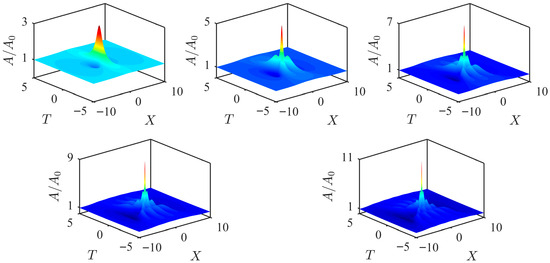
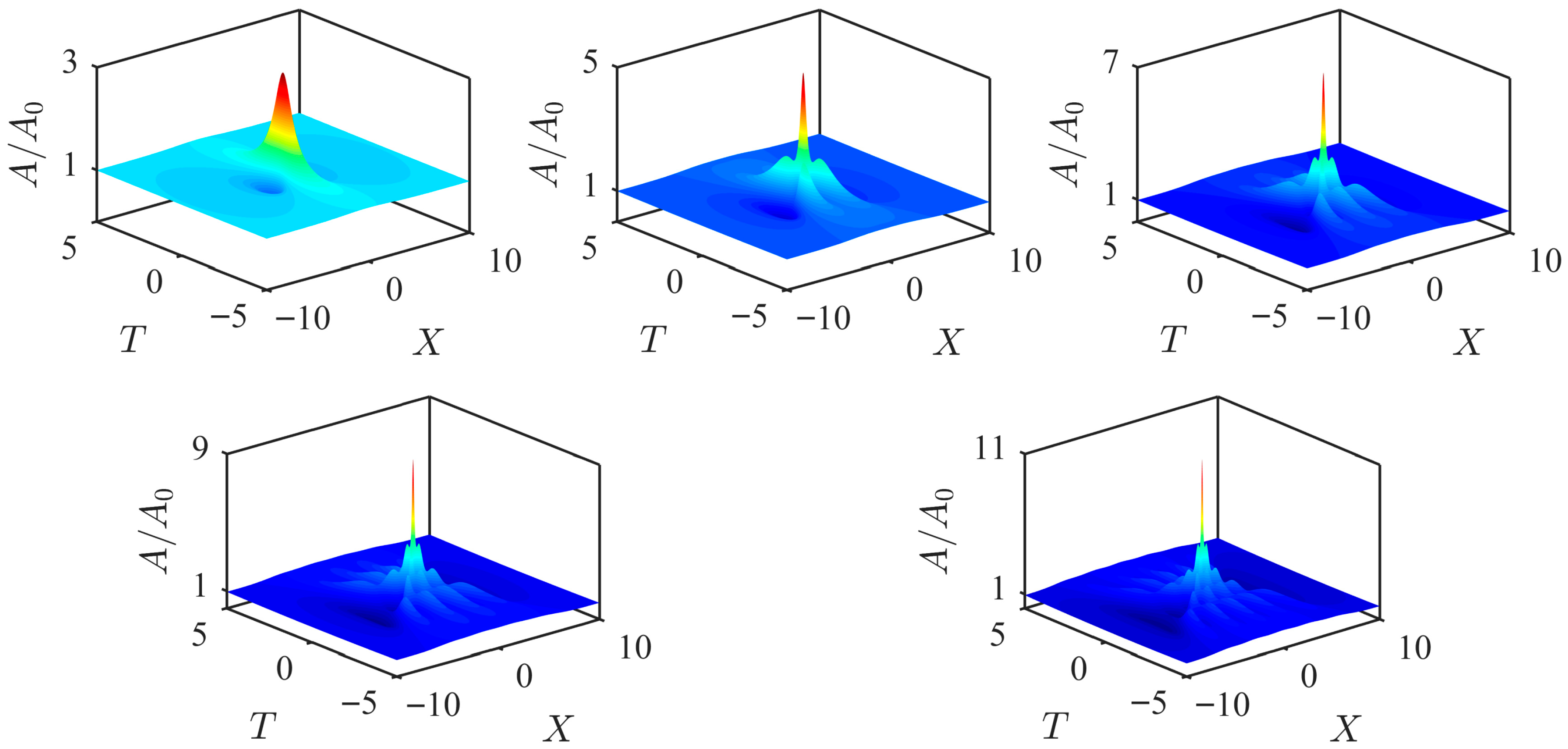
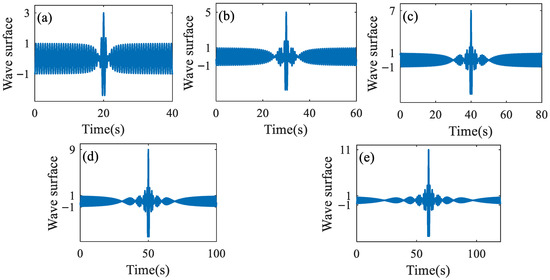
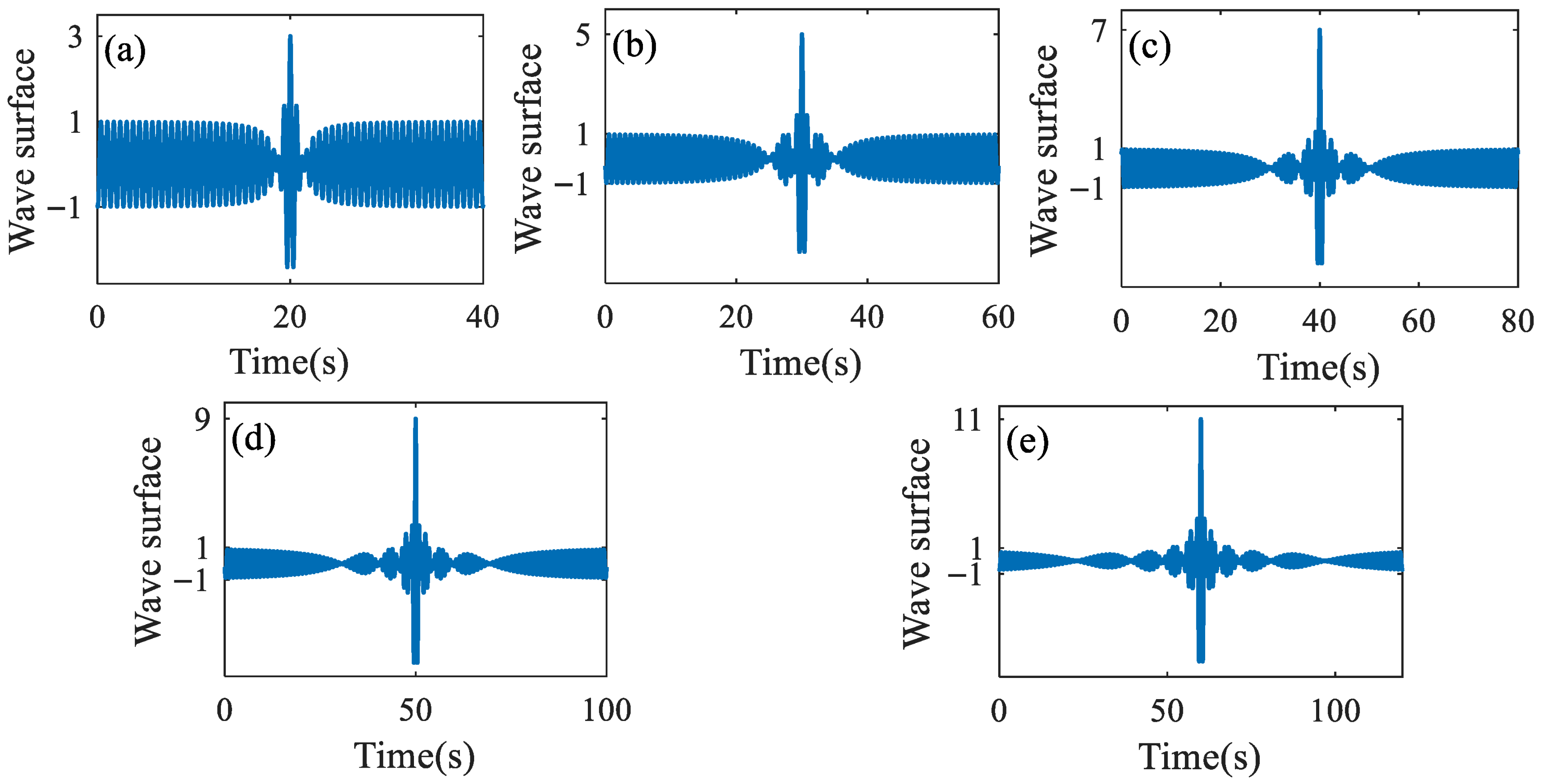
Because Equation (5) generates a hierarchy of rogue wave solutions whose crest height increases rapidly with the order , the resulting extreme events can reach very large amplitudes; in particular, the maximum amplitude can be times the carrier amplitude . These higher-peaking rational breather solutions are therefore commonly referred to as high-order rogue waves [32,33]. Figure 1 shows the modulus of the complex envelope , depicting the spatiotemporal amplitude profile for the first- to fifth-order Peregrine breather solutions, and Figure 2 shows the associated free-surface elevations for the 1st–5th-order Peregrine-type rogue waves.
Figure 1.
The modulus of the complex envelope of the 1st–5th-order Peregrine breather solutions.
Figure 2.
Theoretical water surface elevations for the 1st–5th-order Peregrine-type rogue waves, with and (a) , (b) , (c) , (d) , (e) .
2.2. Time-Reversal (TR) Wave-Generation Method
For wave equations that are linear or only weakly nonlinear, neglecting dissipation makes their dynamics reversible within the temporal and spatial space [5,29]: if is the solution of Equation (2), then is also true. This property enables the use of “time reversal” in laboratory flumes to reverse wave propagation and refocus wave fields [34].
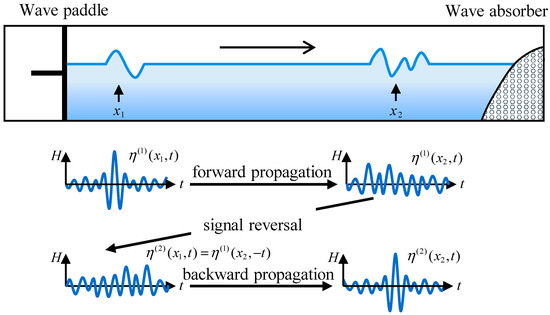
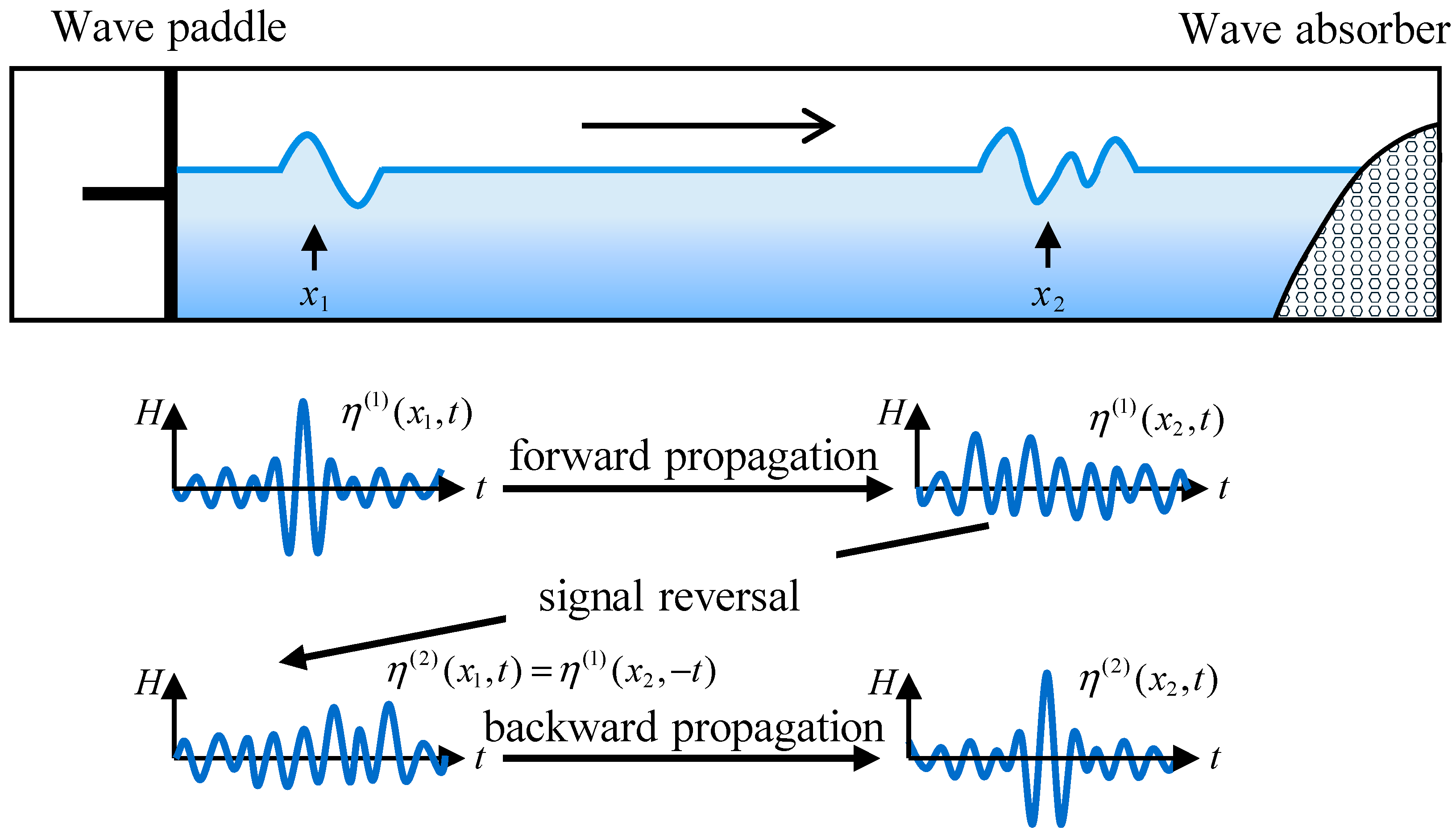
Time-reversal (TR) wave generation generally involves two experimental runs (see Figure 3) [5,17,35,36]. During the forward run, a wave train is created near the wavemaker at , where is the target waveform, which is defined by Equation (2) in the present work. The wave then travels along the flume, and the free-surface time series is recorded at the distant end . In the backward run, a wave train is generated at . According to the time-reversal principle, this wave field refocuses at , ideally reconstructing the target waveform as [22].
Figure 3.
Schematic of the time-reversal method principle. The arrow indicates the direction of wave propagation, and the small circles represent the porous structure of the wave absorber.
During experimental wave generation, a specific mathematical relationship exists between the wavemaker paddle stroke and the target surface elevation to generate the desired waves in the flume. In the traditional time-reversal (TR) method, under the condition of small wave steepness, this relationship is considered linear and can be expressed by the following equation:
where denotes the transfer function of the wavemaker, which is defined as follows [37]:
where denotes the water depth.
The core innovation of the TR method is in reframing the goal of generating a specific wave train at the distant point as an equivalent task performed near the wave source at . This shift greatly simplifies wave generation and achieves good results under conditions of small wave steepness (weakly nonlinear). For example, Chabchoub generated rogue waves of first through fifth order with relatively low wave heights, with the fifth-order amplitude reaching 8.4 times that of the carrier wave [26]. Liao created a first-order rogue wave with a carrier wave steepness of 0.09, whose amplitude was 3.5 times the carrier wave’s amplitude [38]. Fedele produced first-order rogue waves with maximum steepness values ranging from 0.067 to 0.08 [39]. In addition, Ducrozet and Ma extended this method to reconstruct ocean waves measured in the field, successfully replicating an ocean rogue wave event and five sets of in situ wave data [17,22]. These advancements significantly improve the practical applicability of the technique.
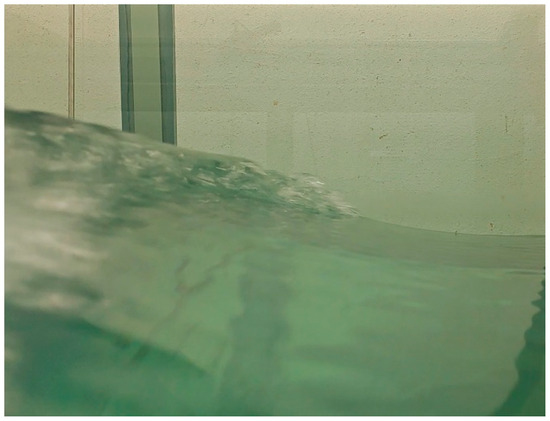
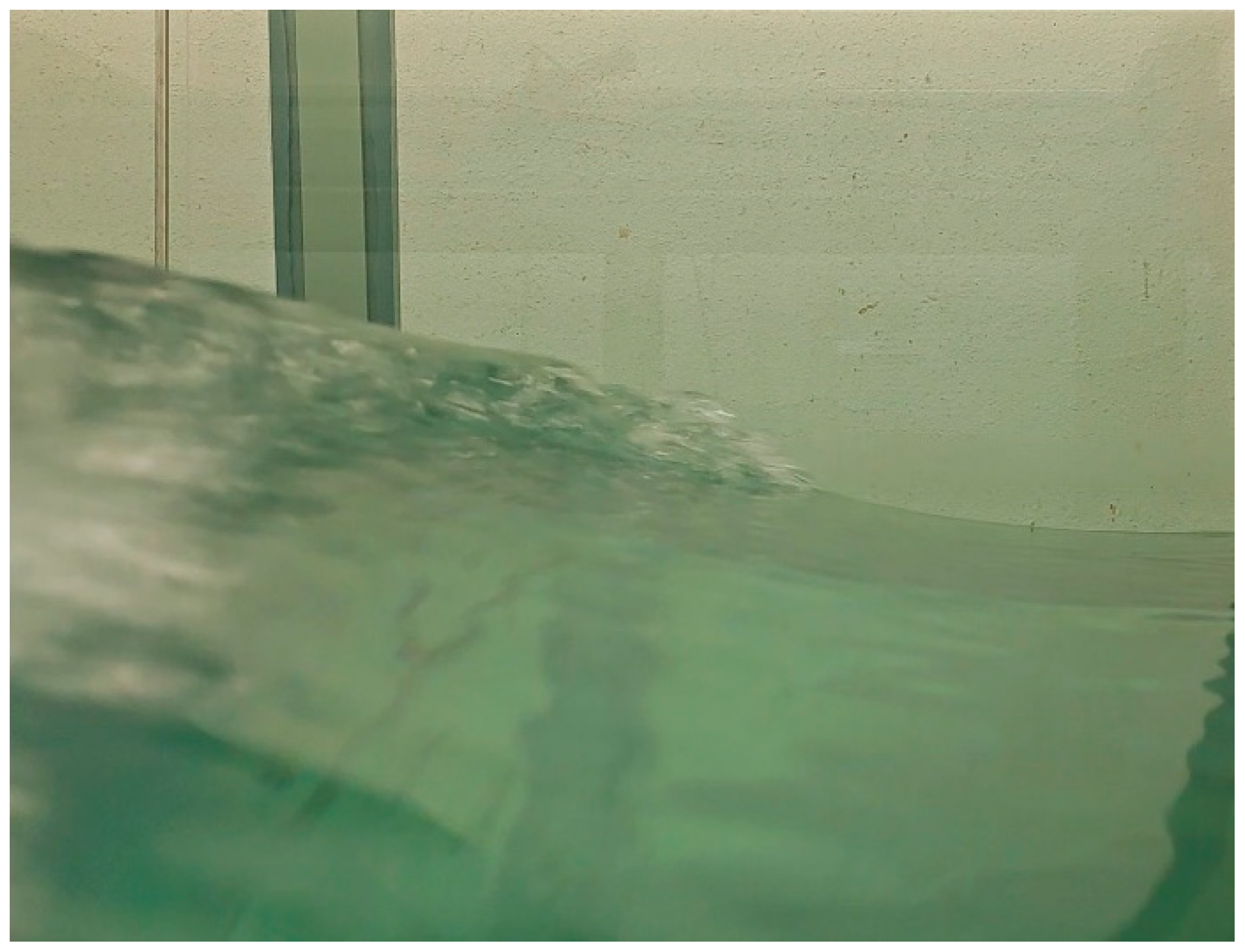
When creating higher-order large-amplitude rogue waves, the traditional TR method exhibits notable limitations. During the forward run, generating a large-amplitude rogue wave at requires a relatively large paddle stroke , which often causes premature breaking and severe waveform distortion (see Figure 4). This results in a significant discrepancy between the actual free-surface elevation at and the expected . Since the forward run fails to produce the targeted rogue wave, in the backward run, the resulting wave field also differs considerably from the intended pattern. As a matter of fact, under such conditions, the wave-generation process becomes highly nonlinear, invalidating the time-reversal invariance that supports TR within the framework of weak nonlinearity. As a result, even if a steep rogue wave could be generated in the forward run, it would not be accurately reproduced at in the backward run.
Figure 4.
Wave breaking near the wavemaker during the forward run.
2.3. Modified Time-Reversal (MTR) Method
To address the limitations of the conventional TR method—especially its difficulty in accurately reconstructing high-steepness rogue waves due to the failure of time-reversal invariance under intense nonlinear conditions—this paper proposes a modified TR (MTR) approach. Its main innovation is a dynamic transfer function that replaces the static linear link between the paddle stroke displacement and the near-field free-surface elevation with an adaptive one that changes according to the amplitude of the surface elevation. This adaptive regulation allows real-time adjustment of the paddle stroke during the wave train, effectively countering nonlinear efficiency losses and preventing early wave breaking. Consequently, even in strongly nonlinear conditions, the wave-generation process can maintain the essential time-reversal symmetry, significantly improving the accuracy of rogue wave reconstruction.
To improve understanding of the modified time-reversal method, this section first explains two key concepts—characteristic fluctuation values and signal segmentation—before detailing its specific steps.
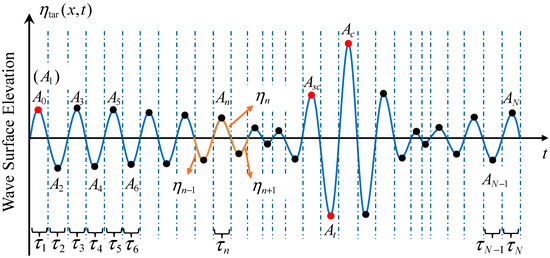
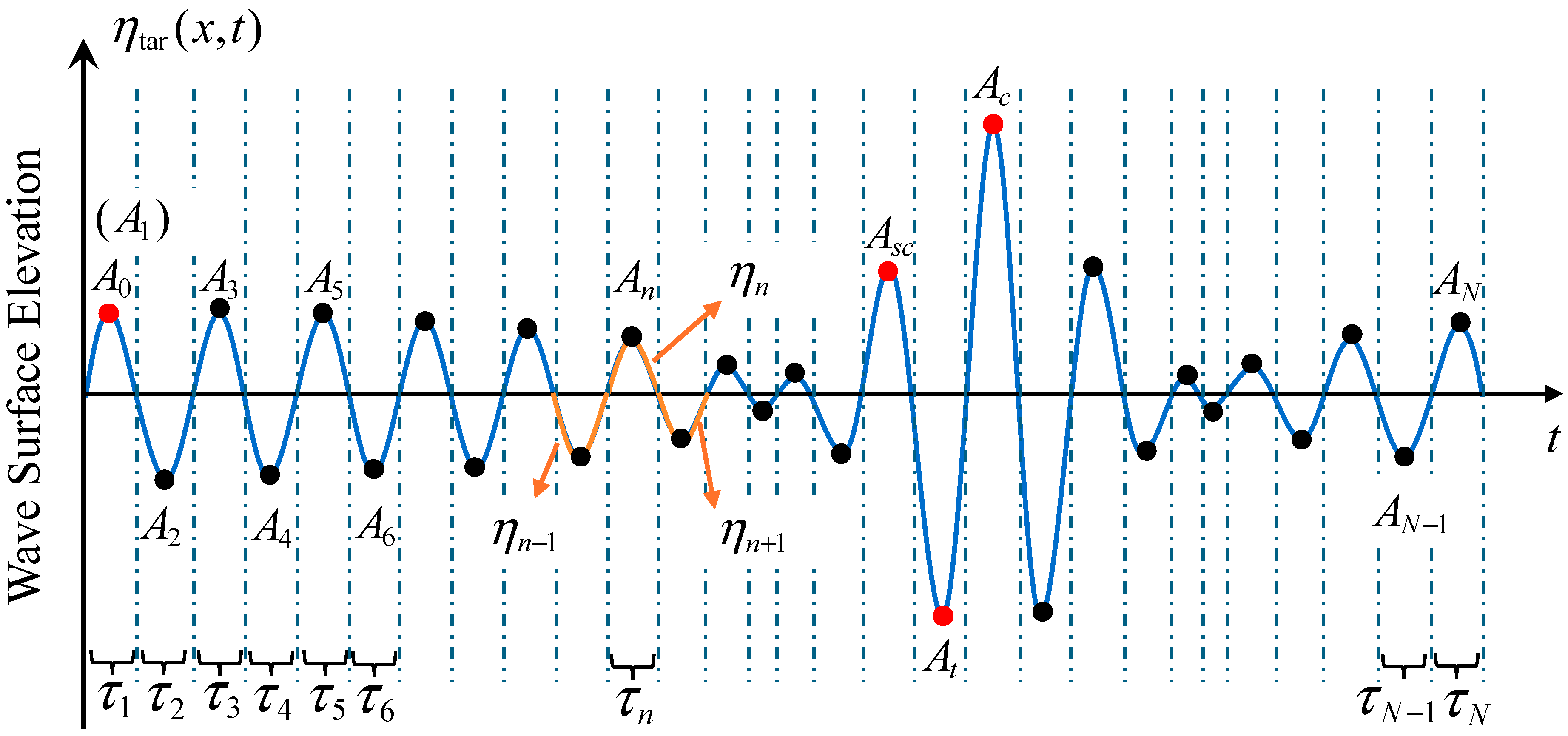
Figure 5 illustrates a schematic diagram that defines the characteristic fluctuation values and wave segmentation of the target wave signal. As shown, the rogue wave based on the Peregrine breather (PB) solution features a prominent large wave at the center, flanked by nearly regular carrier waves. The overall evolution of this wave profile can be quantitatively described by characteristic fluctuation values marked by four red dots in the figure: carrier amplitude , second-largest crest amplitude , deepest trough amplitude , and maximum crest amplitude . Additionally, signal segmentation aims to discretize the continuous surface elevation along the time axis, dividing it into independent time intervals. For example, the -th segment corresponds to the time interval , with the surface elevation segment within this interval denoted as (represented by the orange curve in the figure). For each segment , the extreme value of the crest or trough (shown as black dots) is extracted and defined as the characteristic amplitude for that segment.
Figure 5.
Schematic diagram of characteristic fluctuation value definition and signal segmentation for the target wave. The red dots mark the four characteristic fluctuation values, the black dots denote the extreme points for each segment, the dashed lines show the zero-crossing segments, and the orange curve indicates the surface elevation within a specific time interval.
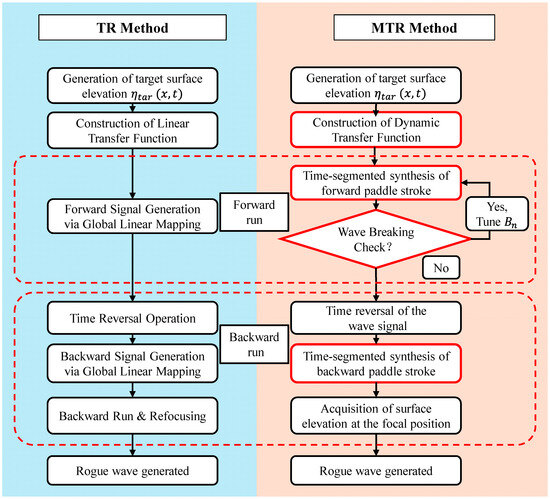
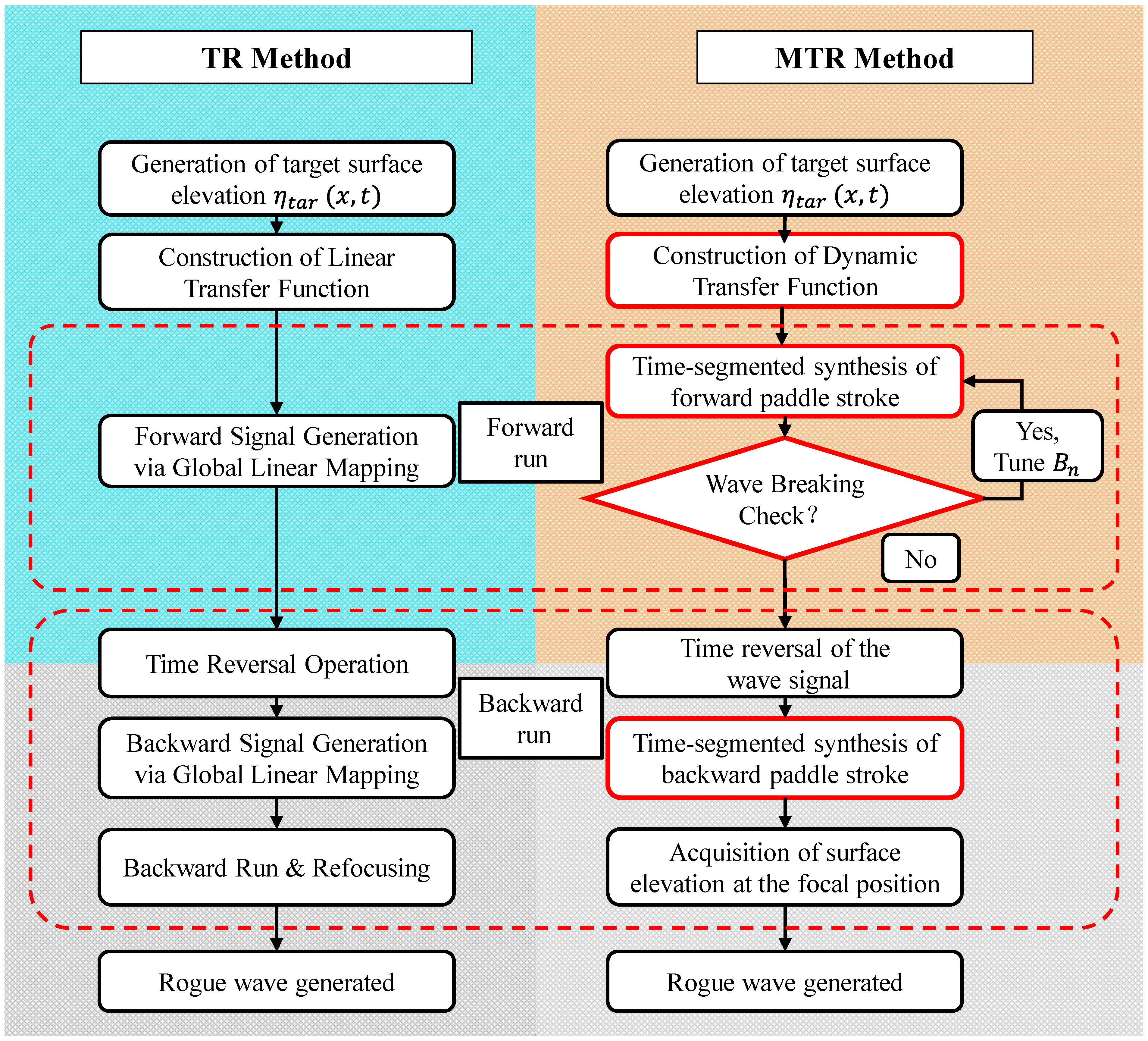
Figure 6 shows the experimental workflow for both the traditional TR method and the dynamic transfer function-based MTR approach. The left panel (light blue) illustrates the conventional TR workflow (as previously described), while the right panel (light red) displays the MTR workflow. The MTR process includes seven steps spanning both forward and backward wave-generation rounds, with the red bold frames highlighting the key innovative steps introduced in this study. The detailed implementation steps of the MTR method are outlined below.
Figure 6.
Experimental workflows for the traditional TR method (left) and the proposed MTR method (right). The light blue and light red regions illustrate the workflows of the traditional TR method and the proposed MTR method, respectively. Dashed line boxes show the forward and backward runs, while the red solid boxes emphasize the key innovative steps introduced in this study.
- Step 1: Construction of Target Rogue Wave
Using the analytical solution of the Peregrine breather (Equation (2)), the physical parameters of the target wave, like wave steepness , are specified to build the theoretical free-surface elevation of the target rogue wave train .
- Step 2: Construction of Dynamic Transfer Function
First, based on the definition of the characteristic fluctuation values shown in Figure 5, four key fluctuation values are identified from the target rogue wave signal : the carrier amplitude , the second-largest crest , the deepest trough , and the maximum crest . Next, these four fluctuation values are used as wave amplitude parameters, with the carrier period set as the wave-generation period, to conduct four sets of regular wave experiments in the wave flume. Once the waves are successfully generated, the paddle stroke amplitudes are recorded. Finally, each fluctuation value is divided by its corresponding paddle stroke amplitude to derive four transfer coefficients. These four data points form the dynamic transfer function for this specific rogue wave.
- Step 3: Time-segmented synthesis of forward paddle stroke
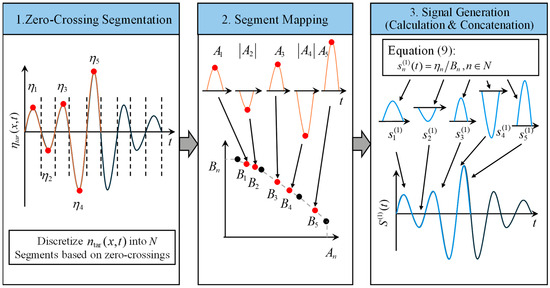
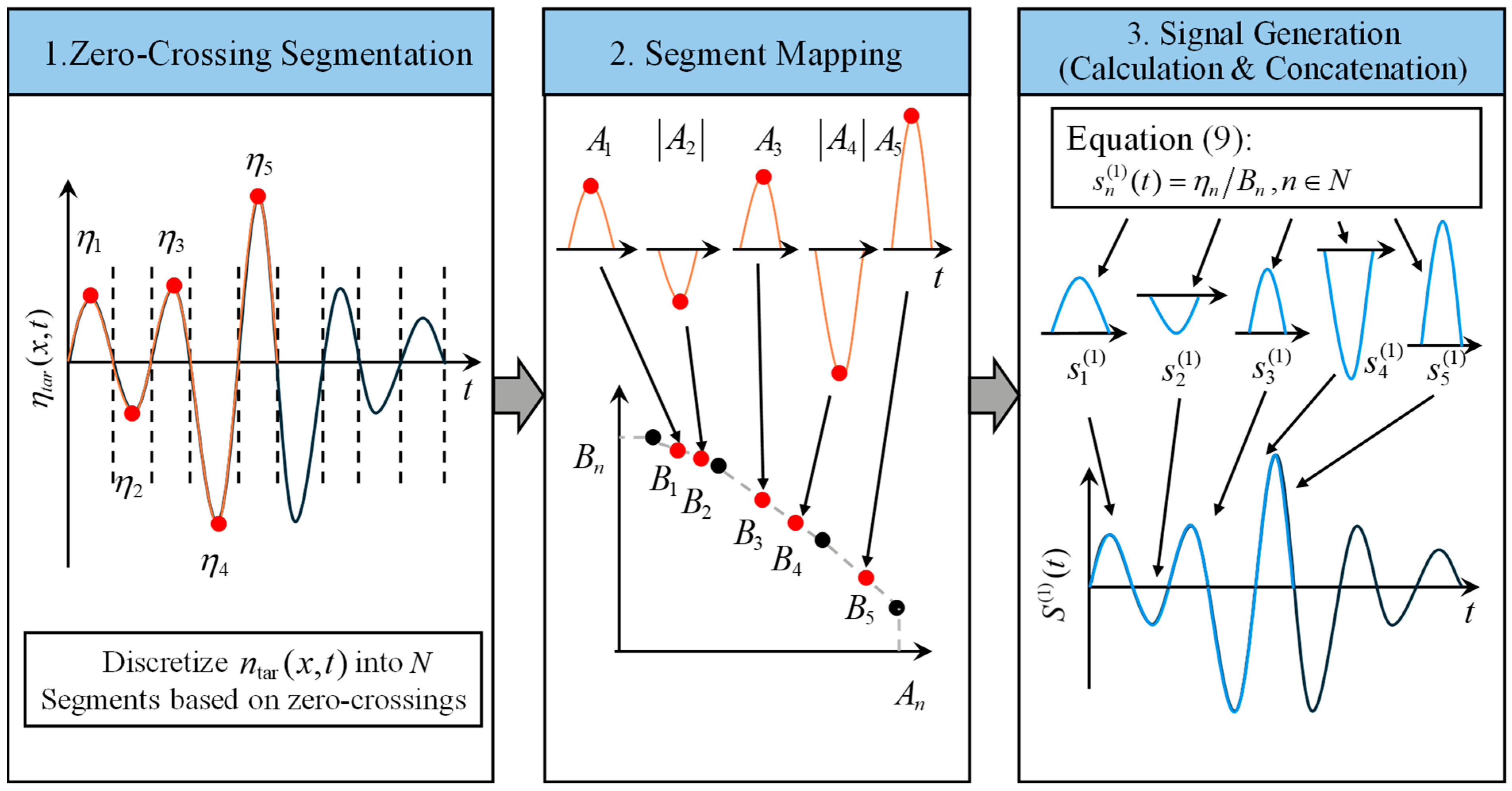
Figure 7 shows that after dividing the target wave signal into time segments, the characteristic amplitude of each local surface elevation is extracted. Then, using as a reference, the dynamic transfer coefficient for each segment is found by interpolating the dynamic transfer function from Step 2. With this transfer coefficient, the paddle stroke segment within each time interval can be calculated using the following equation. Finally, all paddle stroke segments are smoothly concatenated in chronological order to form the paddle stroke for the forward wave-generation phase.
Figure 7.
Schematic diagram of the forward wave-generation signal synthesis. The dashed vertical lines mark the zero-crossing segmentation boundaries. Red dots show the characteristic amplitudes from each segment, while the colored curves represent the individual surface elevation segments and the resulting paddle stroke segments.
- Step 4: Forward Run and Breaking Check
The paddle stroke generated in Step 3 is imported into the wavemaker control system to conduct the forward wave-generation experiment. During this process, the flow field conditions in the near-field of the wave paddle (at ) are visually observed. If wave crest curling or significant air entrainment is detected in this region, it is determined that wave breaking has occurred. This indicates an excessive paddle stroke of the wavemaker. In such cases, the dynamic transfer function must be appropriately modified, and the procedure loops back to Step 3 to regenerate the drive signal. Conversely, if the wave surface remains smooth without the aforementioned breaking characteristics, the experiment is considered valid. A wave gauge is then used to record the time history of the surface elevation, denoted as , at the target focal position .
- Step 5: Time-Reversal Operation
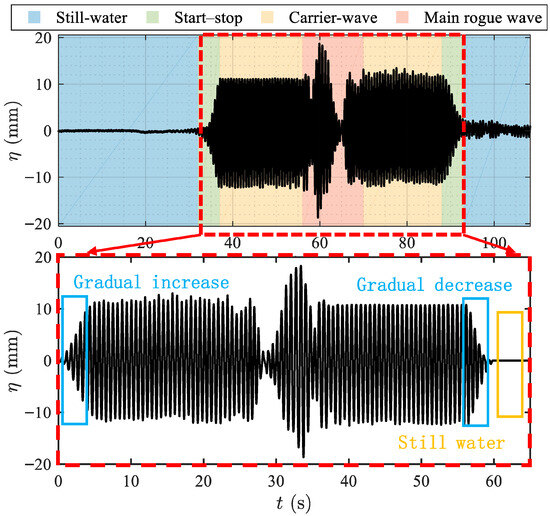
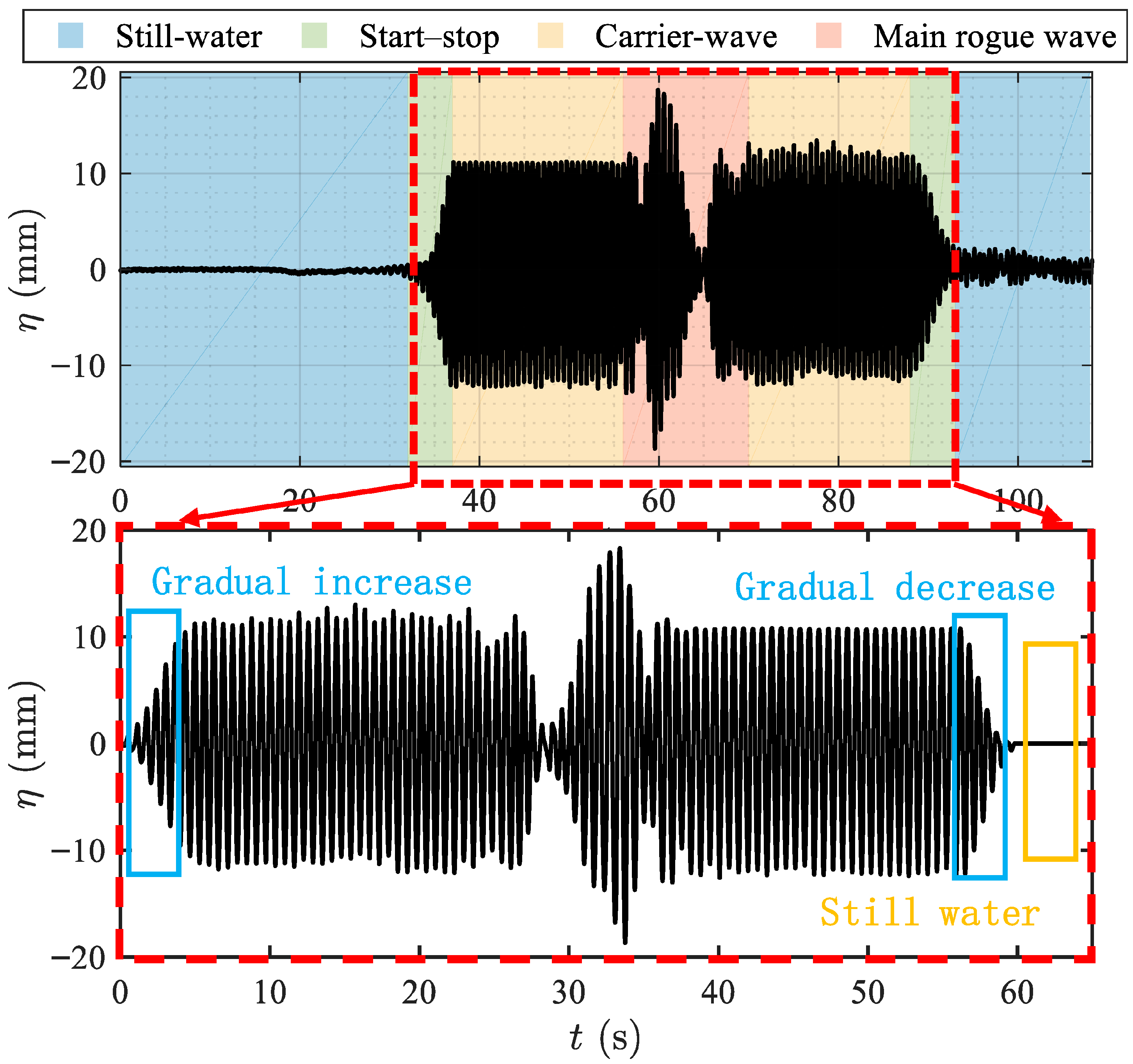
As depicted in Figure 8, the measured free-surface history, , includes a still-water segment, a ramp-up/down portion, a carrier wave segment, and the main rogue wave segment. To enhance inversion efficiency, the initial still-water segment is omitted, and time reversal is only applied to the ramp, carrier, and main rogue wave segments. Afterwards, following Xu [40], a tapered smoothing process is applied to both ends of the reversed signal, and a still-water segment is appended to the end, yielding the time-reversed signal .
Figure 8.
Schematic of the time-reversal signal processing procedure.
- Step 6: Time-segmented synthesis of backward paddle stroke
The segmentation process from Step 3 is applied again, this time to the time-reversed signal . Using the dynamic transfer function created in Step 2, the transfer coefficient for each segment of is identified. These coefficients are then used to compute and produce the paddle stroke for generating the backward wave phase.
- Step 7: Backward Run and Refocusing
The backward paddle motion time series is used in the control system for the backward wave-generation experiment. During this experiment, the generated waves focus at the specified position , recreating the target rogue wave. The free-surface history at the focus point is recorded with a wave gauge and compared with the target waveform to assess the MTR method’s effectiveness.
3. Experimental Setup and Conditions
3.1. Experimental Setup
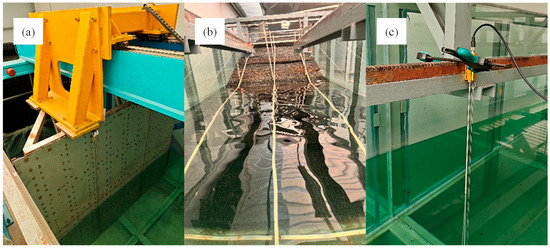
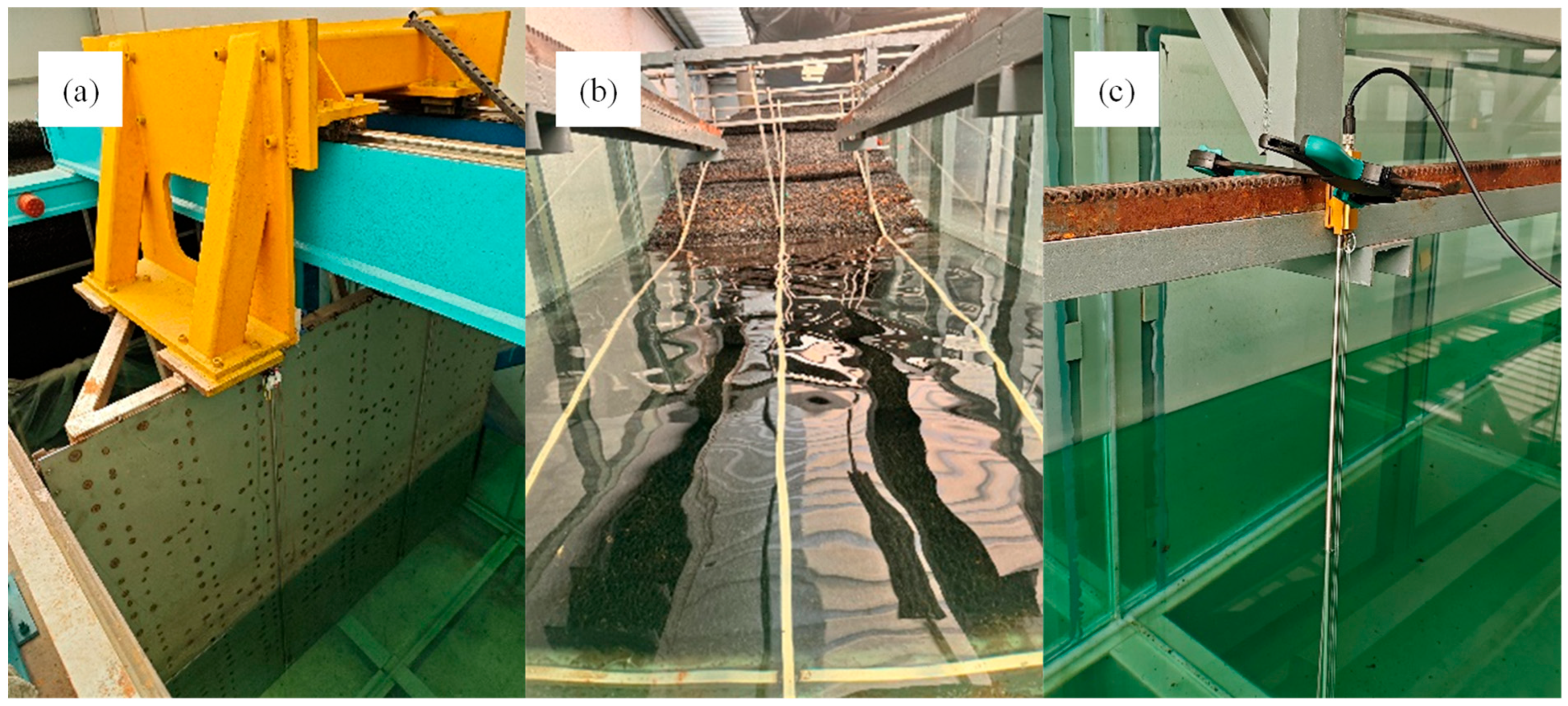
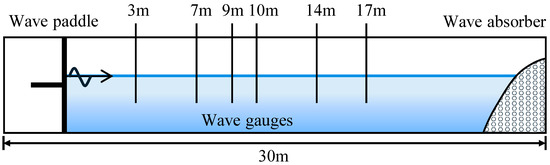
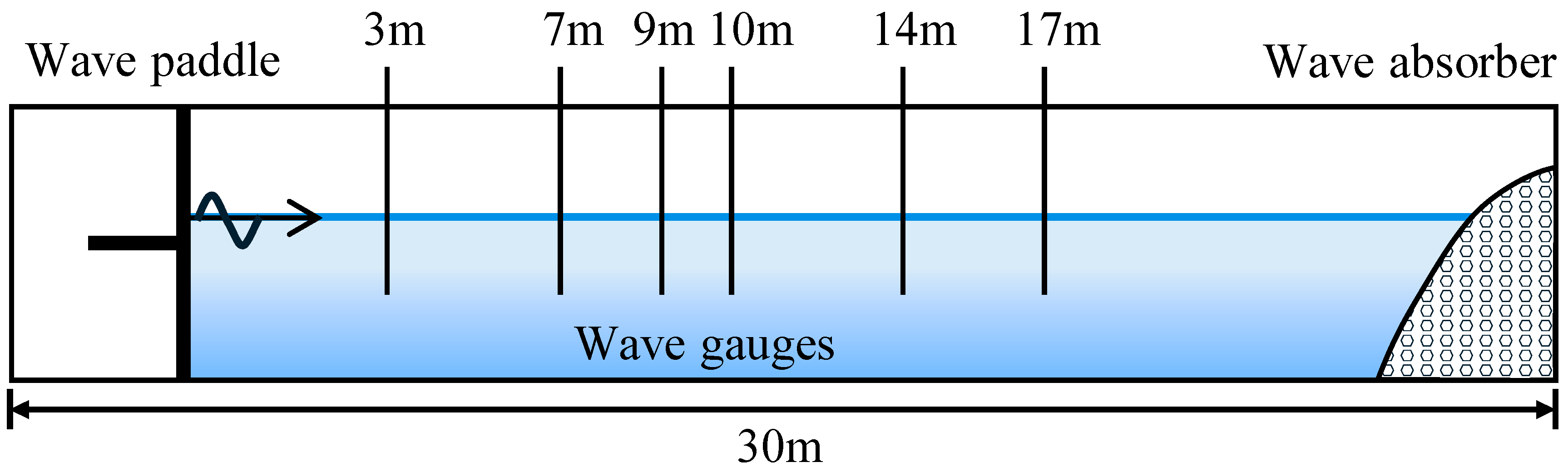
The experiments are conducted in the wave-flume laboratory at Jimei University. The flume measures 30 m in length, 1.55 m in width, and 1.2 m in depth, with a fixed still-water depth of 0.7 m for all tests. A motor-driven paddle-type wavemaker is installed at one end to generate waves, while a beach at the opposite end minimizes wave reflections. The experimental setup is shown in Figure 9, with the layout in Figure 10. Six capacitive wave gauges are positioned along the wave propagation path to measure the free-surface elevation. In all experiments, the rogue wave’s target focus point is 10 m from the wavemaker. The gauges have an accuracy of ±0.1 mm, and the sampling frequency is 100 Hz.
Figure 9.
Wave-flume facilities: (a) wavemaker; (b) wave-absorbing beach; (c) wave gauge.
Figure 10.
Schematic of experimental layout and wave gauge positions. The arrow indicates the wave propagation direction, and the small circles represent the porous wave absorber.
3.2. Case Design
Based on the Peregrine breather theory introduced in Section 2, a total of 26 test cases were designed and generated, as summarized in Table 1, comprising 11 cases using the MTR method and 15 using the TR method.
Table 1.
Rogue wave data.
4. Results and Discussion
4.1. Comparison of Wavemaker Paddle Strokes
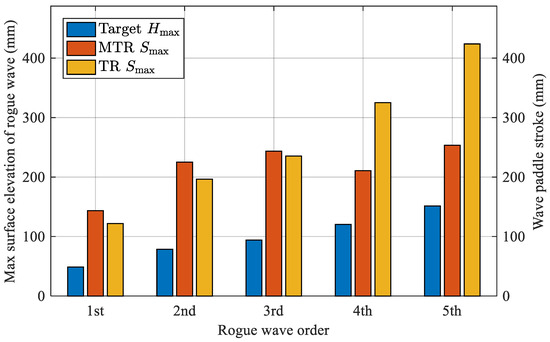
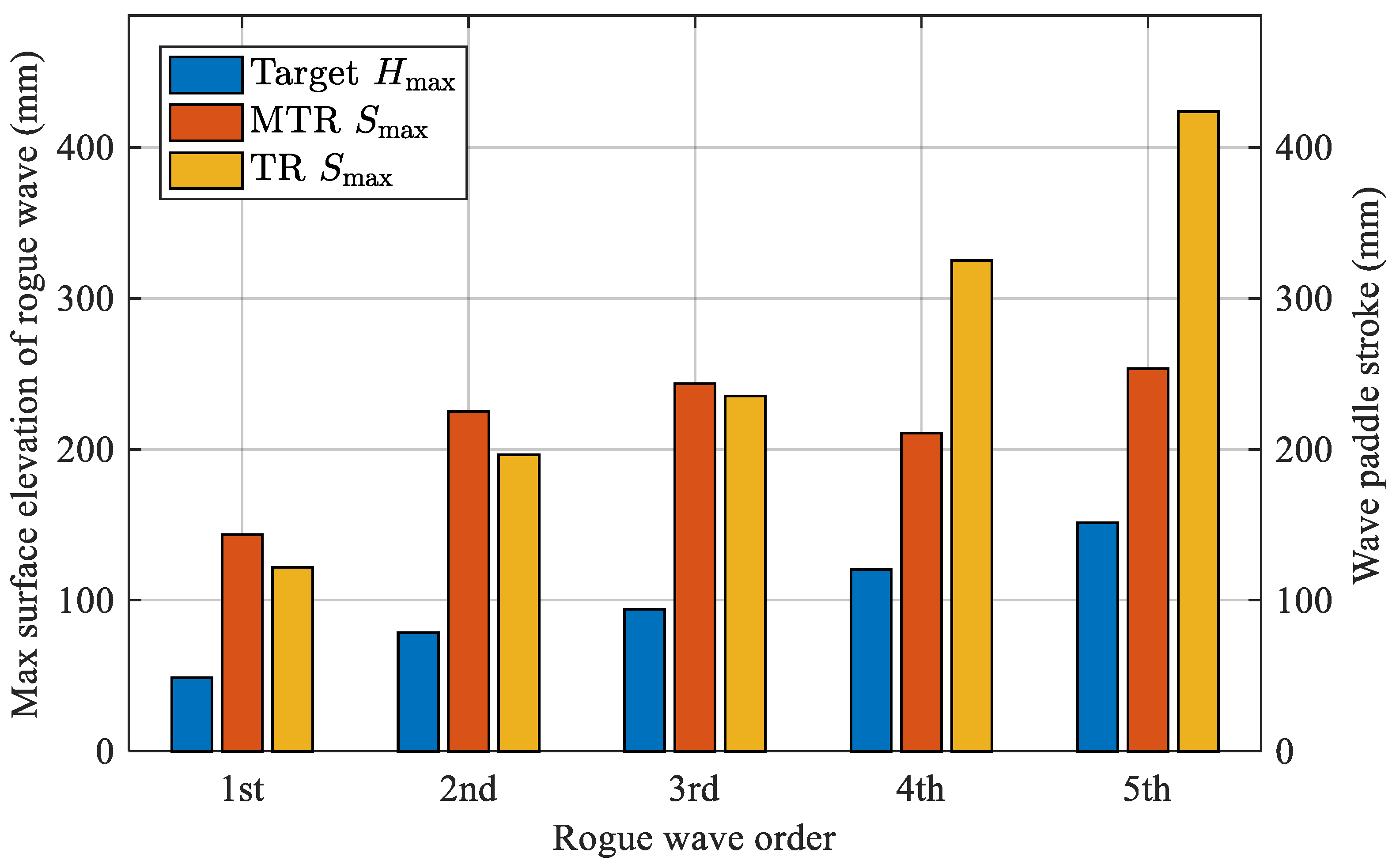
Figure 11 compares the target wave heights of freak waves at different orders, as well as the maximum paddle displacements required by the TR and MTR methods during the forward wave-generation stage. The results show that under low-order conditions, the maximum paddle displacements for the two methods are comparable; however, under high-order conditions, the MTR method can significantly reduce the required maximum paddle displacement while generating the same target wave, thereby helping to avoid wave breaking caused by excessive stroke.
Figure 11.
Comparison of target maximum wave heights and maximum paddle displacements for freak waves of different orders.
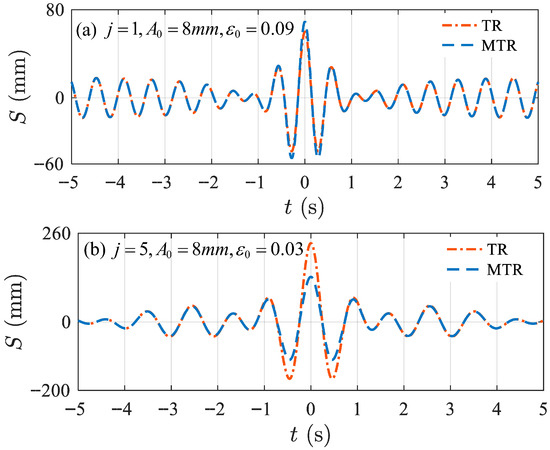
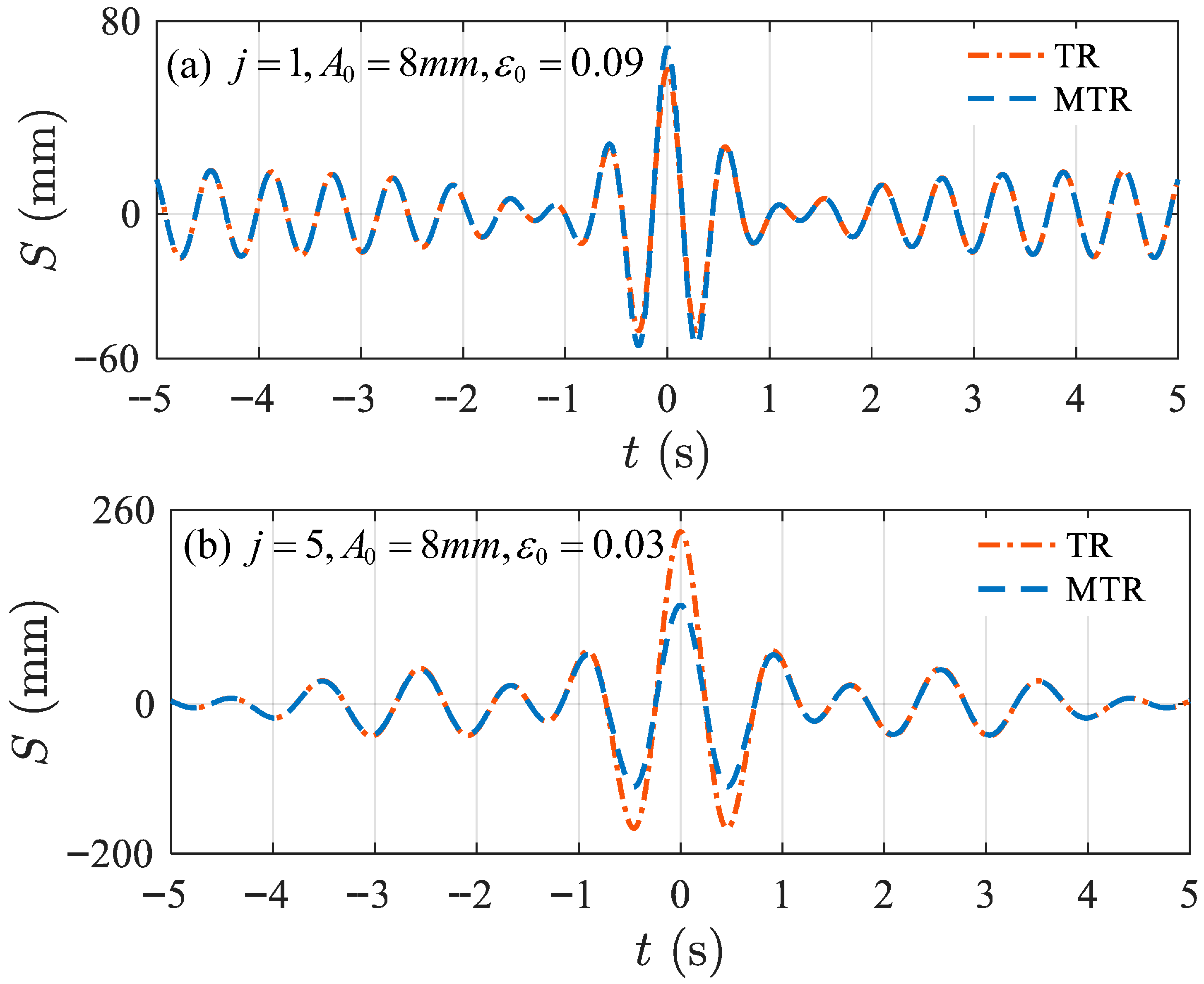
Figure 12 further compares the paddle displacement time series during the forward run between the two methods under first- and fifth-order freak wave conditions. Under first-order conditions, the temporal variations in paddle displacement for both methods are essentially consistent. In contrast, under fifth-order conditions, the discrepancy between the two becomes significantly more pronounced during the time interval corresponding to the freak wave: the TR method exhibits a sharp “large-stroke” peak in this wave packet, whereas the MTR method shows smoother displacement variation with a substantially reduced peak. Overall, the differences between the MTR and TR methods are primarily manifested in the high-order freak wave packets; under high-order conditions, the MTR method can effectively suppress the rapid increase in paddle displacement while achieving higher target wave heights.
Figure 12.
Comparison of forward-stage paddle displacement time series between TR and MTR methods: (a) 1st-order freak wave, (b) 5th-order freak wave.
4.2. Time-Domain Evolution Along the Flume
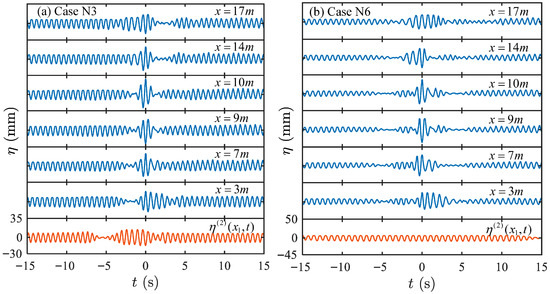
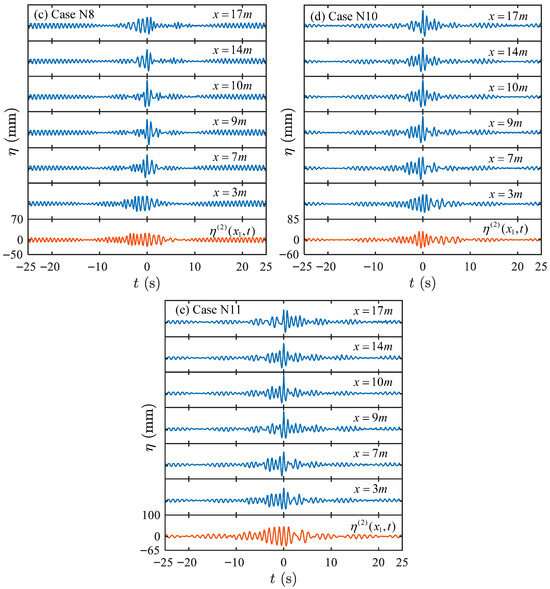
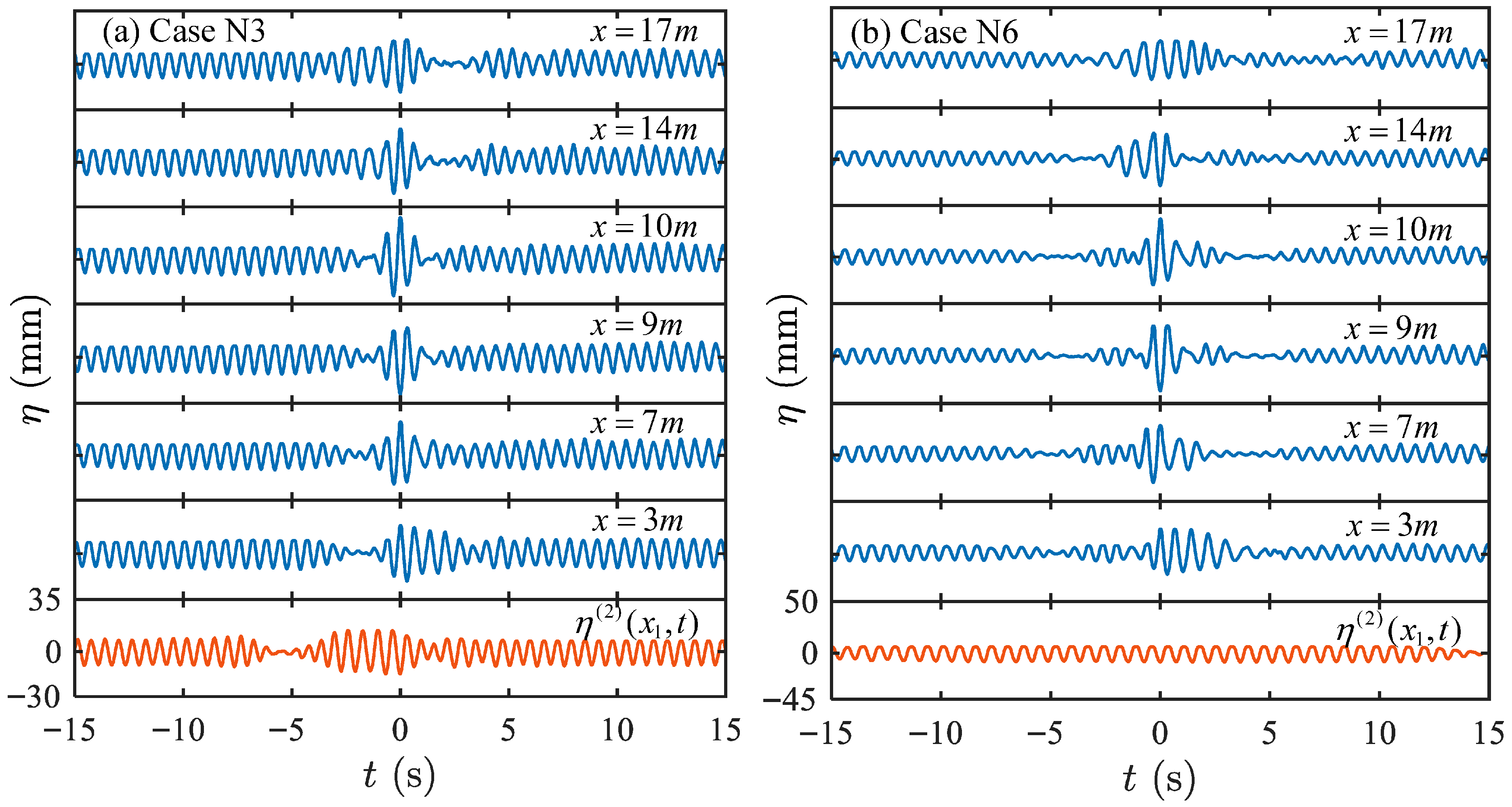
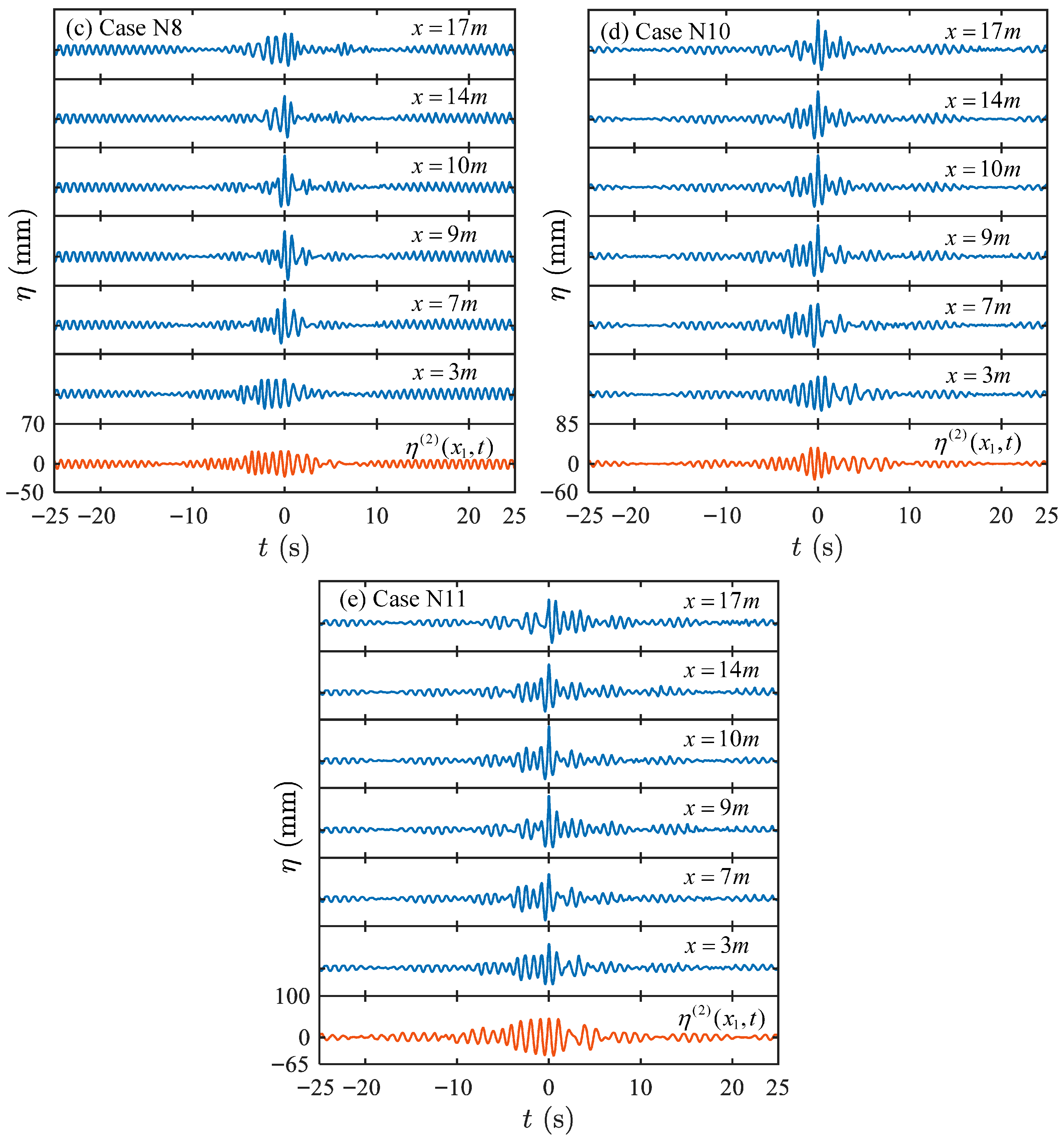
As shown in Figure 13, the free-surface time series at various measurement points along the wave-propagation direction for the 1st–5th-order rogue waves generated by the MTR method are presented. In addition to the six measurement points, the wave sequence obtained by time-reversing the forward-run signal, i.e., , is also included (orange curve). Overall, all test cases exhibit similar evolution patterns: the wave train near the wavemaker is close to the carrier wave, with only weak envelope fluctuations; as the wave propagates downstream, the envelope gradually rises and contracts, and energy begins to concentrate on a few wave peaks; at the focusing location, a distinct localized wave packet forms with significantly amplified amplitude; and as the wave continues to propagate, the packet spreads and the peak value decreases, representing the typical “focusing–re-expansion” process. This behavior is consistent with the self-focusing phenomenon reported by Chabchoub, Shemer, and Alperovich in their experiments on Peregrine breathers and Benjamin–Feir modulational instability, indicating that the present experiment successfully reproduced the typical time-domain behavior of breather-type rogue waves [3,41,42].
Figure 13.
Time-domain evolution of rogue waves of different orders along the flume (for clarity we illustrate the focusing process achieved by defining as the time of the maximum crest at the focusing point , with the time series at other locations shifted accordingly).
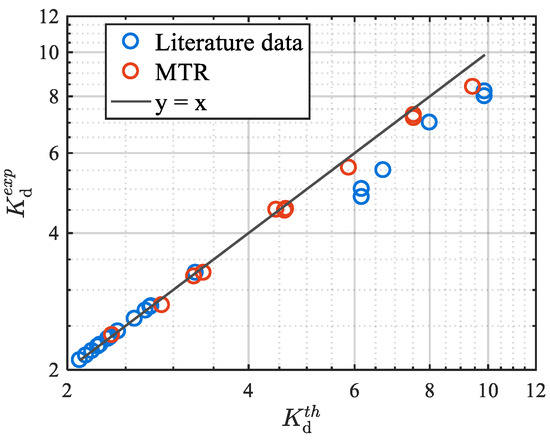
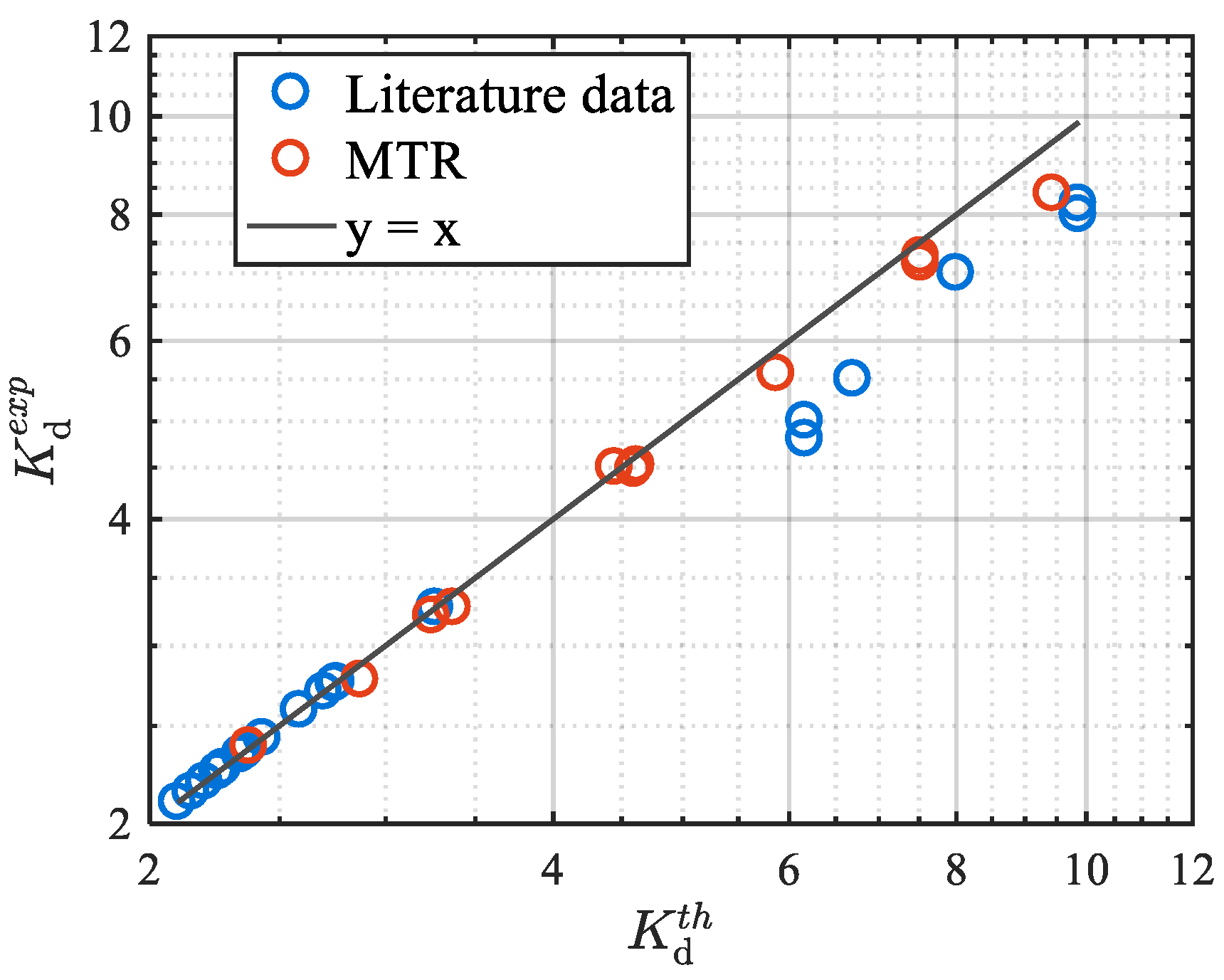
To compare the rogue wave-generation performance of the MTR method with results reported in the literature [22,26,28,43,44,45,46,47,48,49,50,51], we define the parameter (the ratio of the rogue wave height to the carrier wave height) to quantify the prominence of a rogue wave relative to the background condition. In Figure 14, the abscissa is the target (denoted ) and the ordinate is the experimentally generated (denoted ). The line represents the ideal case where the generated value exactly matches the target, and the distance of each data point from this line provides a direct indication of generation accuracy. As can be seen, most published data are clustered in a relatively small range. In contrast, the MTR method not only covers a wider range, but also remains closer to the target values (i.e., closer to the line). With increasing (and thus increasing generation difficulty), the literature data progressively deviate from the ideal line, while the MTR results stay much closer to it. This clearly demonstrates that, under strongly nonlinear conditions, the MTR method can produce larger extreme wave heights while maintaining superior generation accuracy.
Figure 14.
Distribution of rogue wave cases reported in the literature.
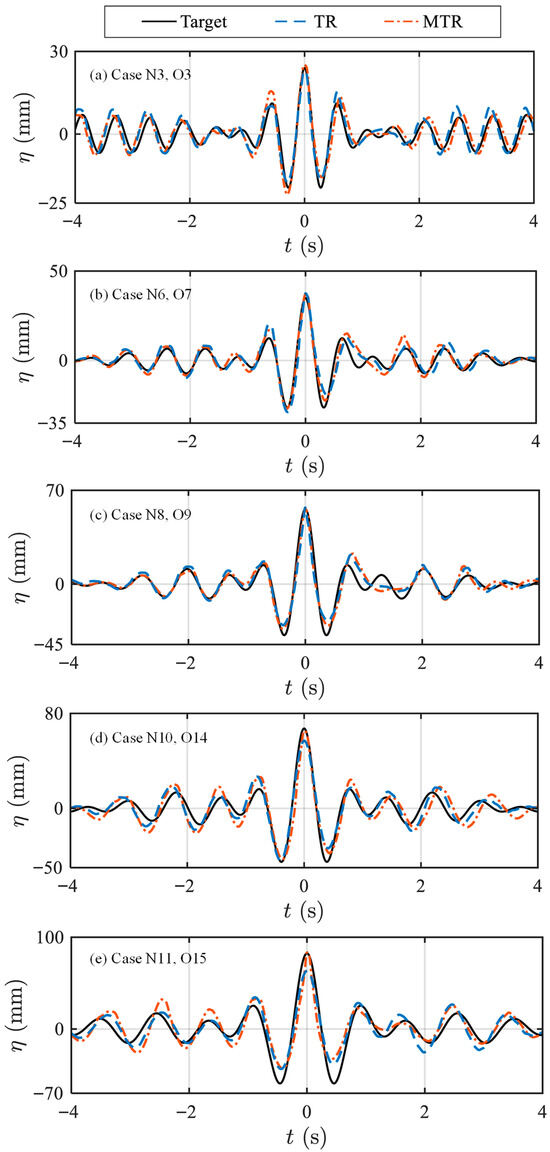
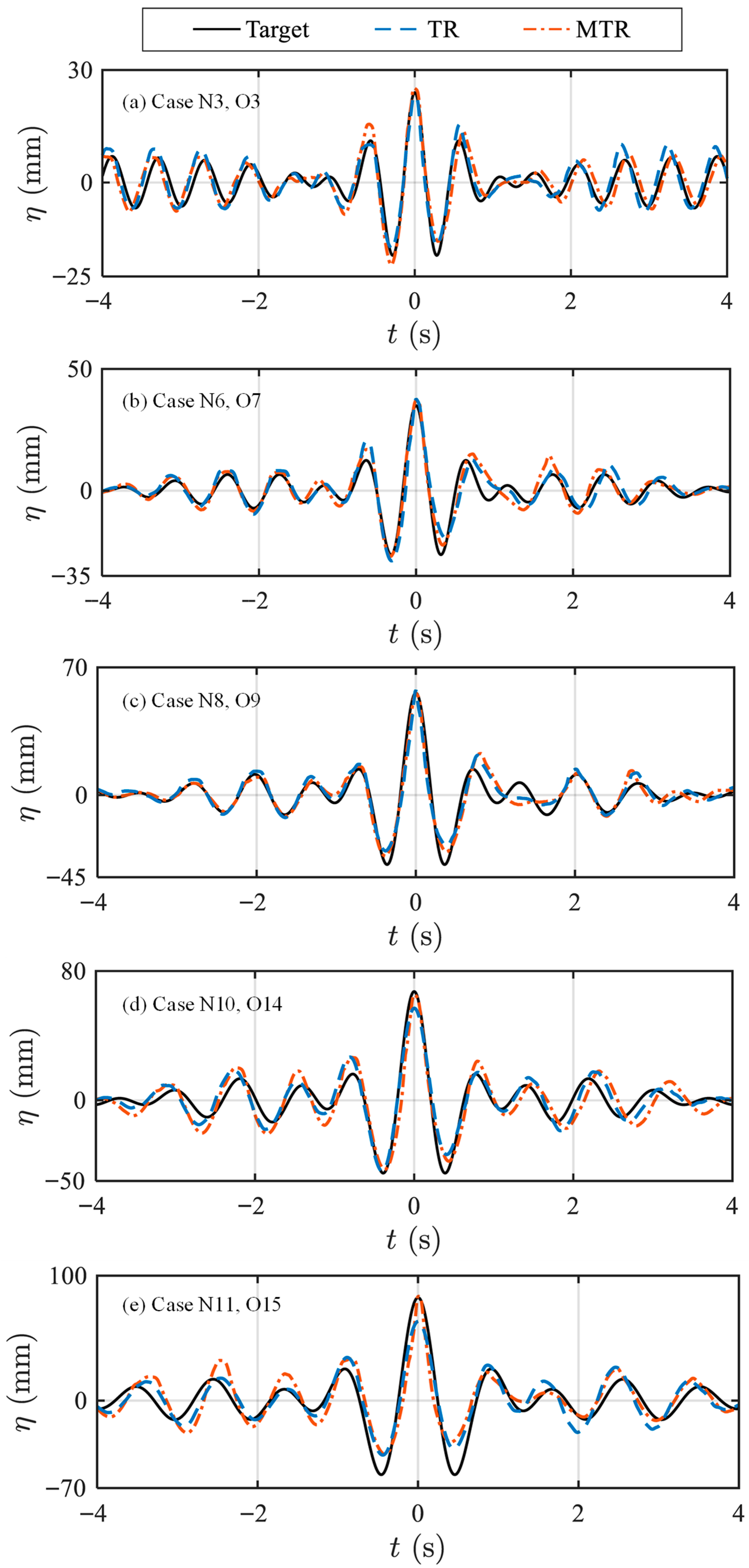
Figure 15 compares the 1st–5th-order Peregrine-type rogue waves generated by the MTR and TR methods (at the focusing location) with the analytical solution. During the carrier wave stage away from the main peak, both methods reproduce the crest/trough amplitudes and their occurrence times in close agreement with the analytical prediction. In contrast, pronounced discrepancies emerge near the focusing instant: the TR method systematically underestimates the main crest, yielding a maximum wave height below the theoretical value, whereas the MTR method better captures both the height and the shape of the main peak, with only a small deviation at the trough. This improvement is particularly evident for the fourth- and fifth-order cases, where the MTR method markedly increases the rogue wave amplitude, bringing the maximum wave height of higher-order events much closer to the analytical solution.
Figure 15.
Comparison of free-surface time series at the target location for rogue waves of different orders generated by the MTR method, the TR method, and the analytical solution.
4.3. Shape Index Analysis
The following indices are used to quantify the rogue wave profile [42]: , the ratio of the rogue wave crest elevation to the carrier wave amplitude; , the ratio of the maximum rogue wave height to the height of the preceding adjacent wave; and , the ratio of the maximum rogue wave height to the height of the following adjacent wave. A combined index is further defined as .
Table 2 shows a comparison of , , and obtained through the MTR and TR methods, alongside their theoretical counterparts , , and . The results indicate that the indices from the MTR method vary more smoothly with increasing order and align more closely with the theoretical values. This suggests that the local geometric deformation and nonlinear features of rogue waves are well preserved at higher orders. Conversely, the TR method performs adequately at low orders; however, at higher orders, the indices tend to decrease and exhibit less growth. Its lower performance at high orders highlights a limited ability to maintain the nonlinear characteristics of high-order rogue waves.
Table 2.
Comparison of rogue wave shape indices generated by the MTR and TR methods.
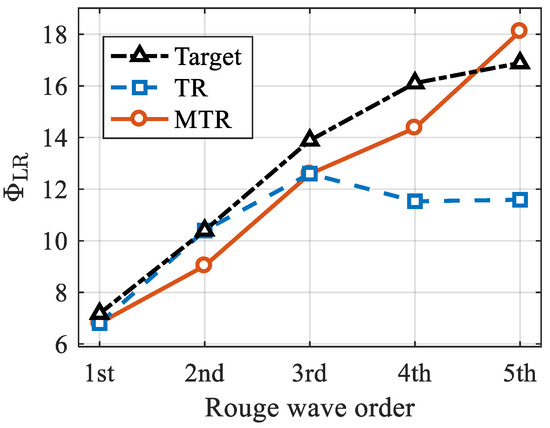
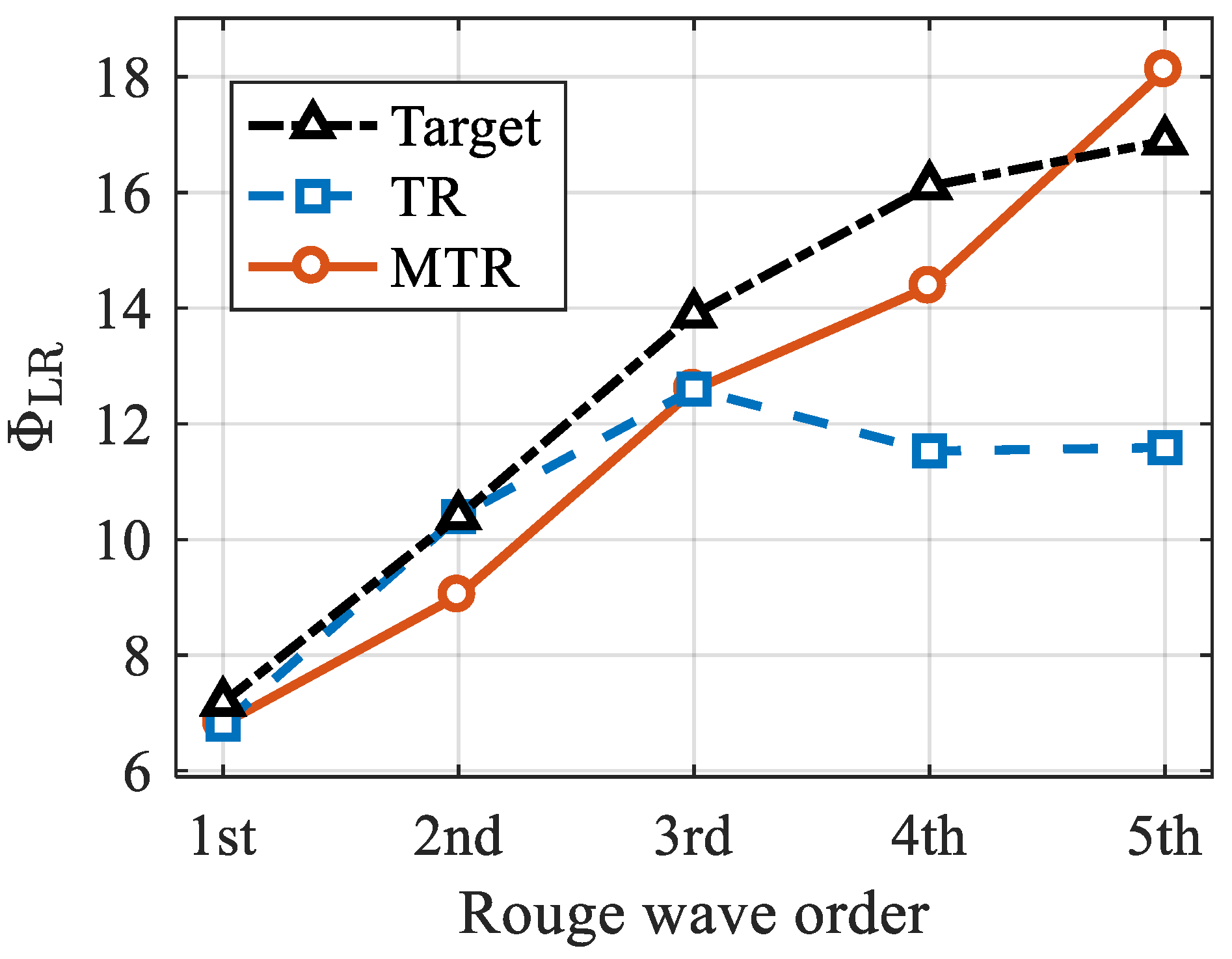
Figure 16 compares the combined index obtained using the MTR and TR methods. For the 1st–3rd-order cases, the two methods yield similar values, whereas for the fourth- and fifth-order cases, the produced by the MTR method is markedly higher than that of the TR method and closer to the analytical prediction.
Figure 16.
Combined indices of rogue waves generated by the analytical solution, TR, and MTR methods (for ease of comparison, only data of cases where the carrier amplitude is 8 mm are involved in the figure).
4.4. Analysis of Spectral Characteristics
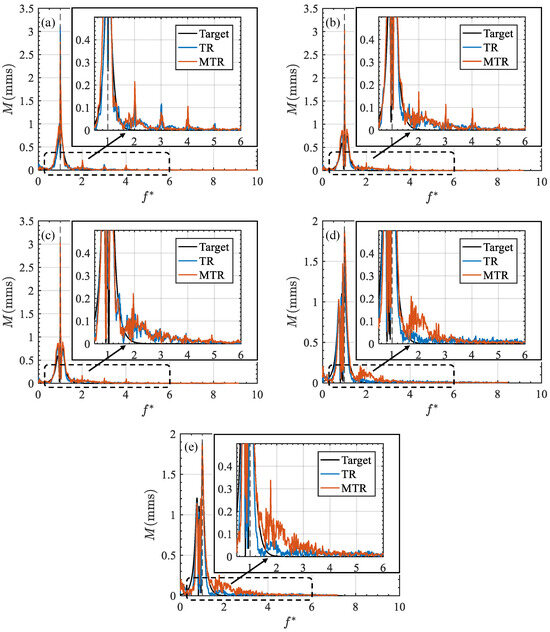
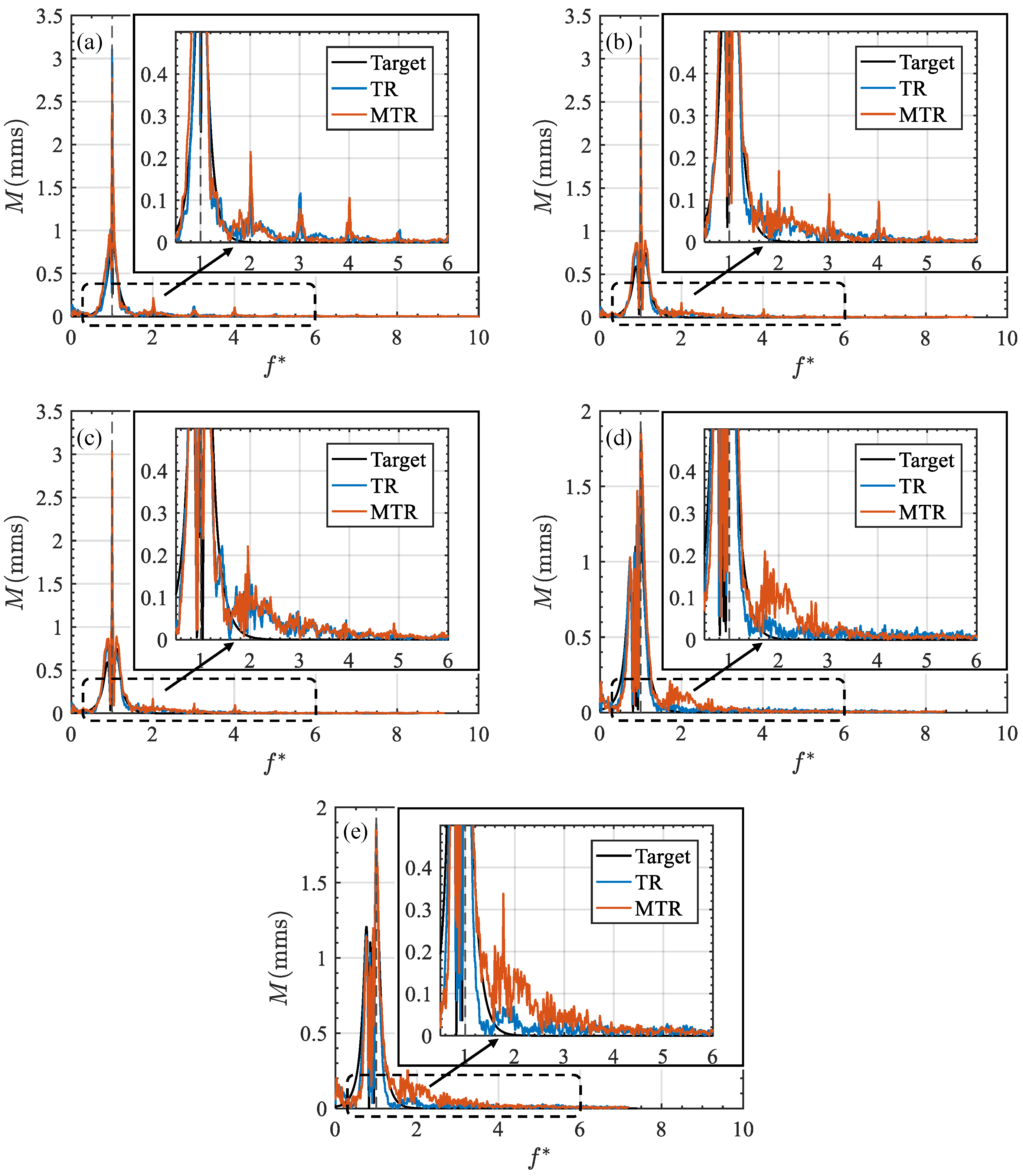
Figure 17 shows the single-sided FFT amplitude spectra of the rogue wave records at the focusing point. The horizontal axis represents the normalized frequency (, where is the carrier peak frequency). The analytical solution exhibits a single, sharp, dominant peak at the carrier frequency, with almost no pronounced secondary peaks, reflecting its typical narrowband nature [26]. This difference between theory and experiment arises from the inherent limitations of the NLS-based analytical solution, which is a weakly nonlinear, narrowband model that neglects bound higher harmonics. Conversely, the MTR-generated waves are fully nonlinear physical waves that naturally include these higher-frequency components because of their steep wave profiles. By contrast, both experimental spectra display secondary components with smaller amplitudes. In the 1st–3rd-order cases, these secondary peaks are primarily located near integer multiples of the carrier frequency (e.g., ), indicating the emergence of higher harmonics due to nonlinear effects. When the order increases to the fourth and higher, the secondary peaks progressively cluster around the carrier frequency; they no longer lie at exact integer multiples, and the boundaries between adjacent peaks become less distinct (i.e., the secondary-peak bandwidth increases), implying the involvement of more complex nonlinear modulation effects during the focusing of the fourth- and fifth-order rogue waves [6]. A comparison between the two wave-generation methods shows that the MTR method produces clearer, higher-amplitude secondary peaks, whereas those by the TR method are relatively weak, with some approaching the noise floor. These differences indicate that the MTR approach better reproduces the key nonlinear frequency components of higher-order rogue waves, thereby improving wave-generation quality and enabling a more faithful representation of the rogue wave evolution process.
Figure 17.
Normalized single-sided amplitude spectra of 1st–5th-order rogue waves: (a) first-order Case N3, O6; (b) second-order Case N6, O7; (c) third-order Case N8, O9; (d) fourth-order Case N10, O14; (e) fifth-order Case N11, O15. The dashed boxes indicate the enlargement of the local frequency spectrum.
4.5. Spatial Evolution of the Sideband Energy Ratio Along the Flume
Section 4.4 illustrates that as the rogue wave’s order rises, the secondary spectral peaks increasingly cluster around the carrier frequency. To measure how spectral energy shifts from the carrier to these secondary components, we define the Relative Modulation Index (), also known as the sideband energy ratio, as the ratio of sideband energy () to main-peak energy ():
Here, represents the energy of wave components with frequencies , where . The main peak energy, , is the energy within the carrier frequency band, calculated as . A higher value indicates more substantial energy redistribution resulting from nonlinear modulation.
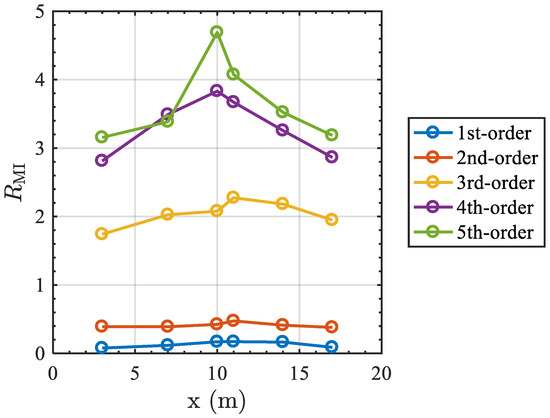
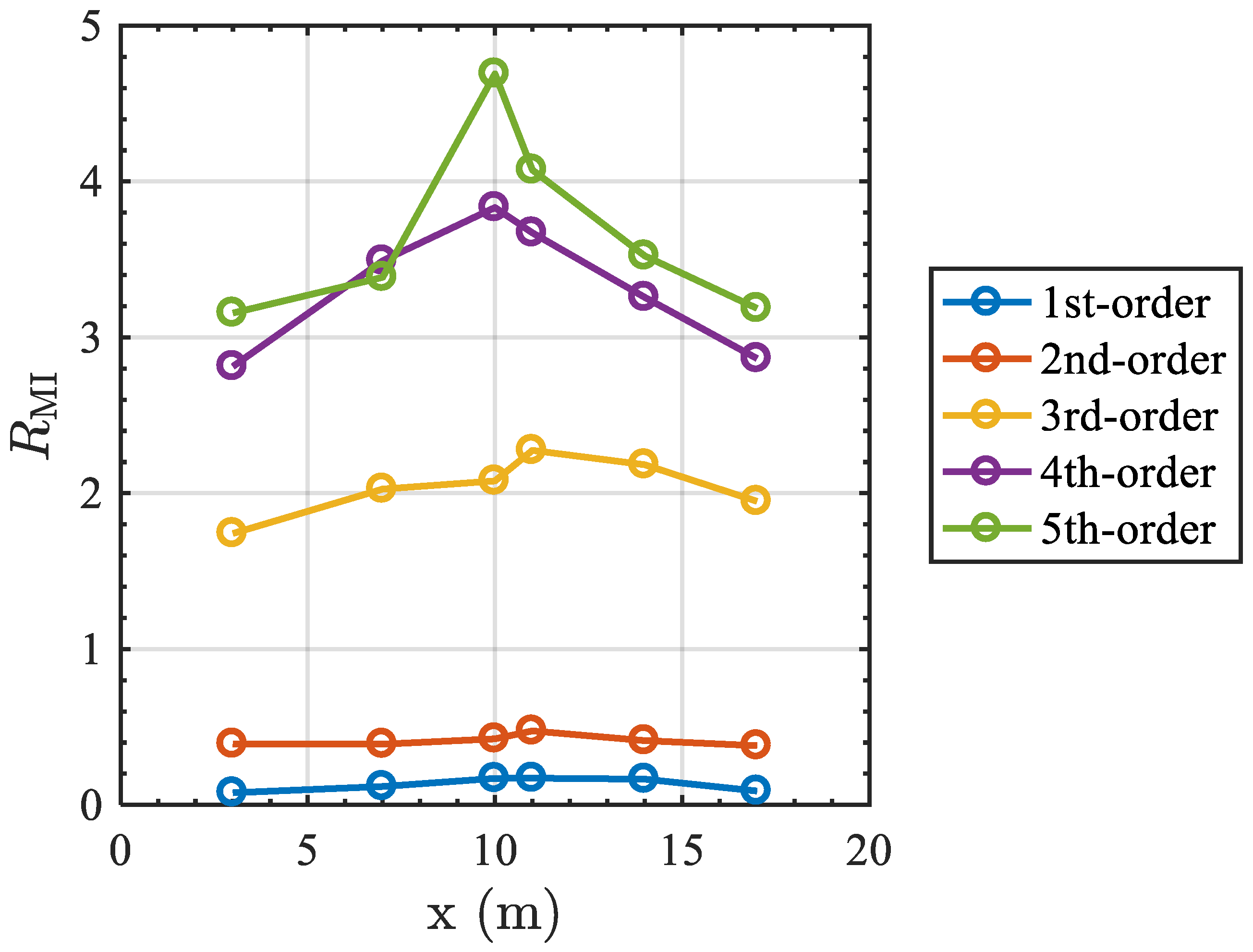
Figure 18 shows how varies with propagation distance across different rogue wave orders. For lower orders (first and second), the remains relatively low throughout. In contrast, higher orders (3rd–5th) exhibit a pronounced rise in the near the focusing point, forming a prominent peak. The peak’s magnitude increases with rogue wave order (e.g., fifth), and the amplitude variation becomes more pronounced. This pattern indicates stronger energy transfer from the main frequency to secondary components as the wave focuses. After reaching the focus, the gradually declines as the wave propagates downstream. This suggests that higher-order rogue waves have a more concentrated energy distribution during propagation, and that intense nonlinear interactions produce more significant spectral changes near the focusing point [8].
Figure 18.
Along-flume evolution of for rogue waves of various orders. (For ease of comparison, only cases with a carrier wave amplitude of 8 mm are included).
The appearance of secondary spectral components, which cause the peak of , reveals the inherent limitations of the idealized NLS analytical solution. While NLS theory assumes a weakly nonlinear, narrowband spectrum with a smooth profile, the waves in our experiment are strongly nonlinear. Near the focus, spectral evolution is driven by two main mechanisms: modulation instability (MI), which generates sidebands around the carrier frequency, and Stokes-type nonlinearity, which produces phase-locked higher harmonics at integer multiples of the carrier, such as and . These components are crucial for maintaining the sharp crest shape of high-order breathers. The MTR method’s ability to more accurately capture the spatial variation in the than the TR method highlights its superiority in modeling the full nonlinear energy exchange.
5. Conclusions
To address the insufficient focused wave height and nonlinearity of the TR method while generating high-order rogue waves, an MTR method featuring a two-run seven-step procedure is proposed by introducing a dynamic transfer function. Comparative experiments for 1st–5th-order rogue waves are conducted in a wave flume. The main conclusions are summarized as follows.
- (1)
- The dynamic transfer function-based MTR method greatly enhances the focusing and reconstruction of higher-order rogue waves. Experimental results show that for the third- to fifth-order cases, the wave profiles align very well with the analytical solutions. Notably, the maximum wave height at focus is much closer to the theoretical prediction, and the central peak (main crest) is accurately reproduced with high fidelity, preserving its sharp and full structure. Compared to the TR method, MTR needs a smaller maximum paddle stroke to produce the same wave target, and its prescribed motion transitions more smoothly across the rogue wave segment, effectively preventing wave breaking caused by excessive stroke demands.
- (2)
- Spectral analysis shows that the MTR method effectively generates clear peaks at the carrier frequency’s integer multiples. This demonstrates its enhanced capacity to reproduce the bound higher harmonics associated with Stokes-like nonlinearity, which is essential for analyzing high-steepness waves. By accurately maintaining these phase-locked harmonics, the MTR method enables precise reconstruction of sharp crest shapes.
- (3)
- Compared to earlier fifth-order rogue waves with a wave steepness of around 0.01, this study successfully produces a fifth-order rogue wave with a steepness of 0.03 using the modified TR method under similar water depth and focusing conditions. This marks nearly a threefold increase in steepness. Furthermore, the ratio of the rogue wave amplitude to the carrier wave’s amplitude increased from 8.4 to 10.6, making it the fifth-order rogue wave with the highest wave steepness and focusing amplification reported to date.
Author Contributions
Conceptualization, F.G.; methodology, F.G. and S.L.; validation, Z.H. and X.Z.; formal analysis, F.G.; investigation, F.G. and S.L.; resources, S.L. and X.Z.; writing—original draft preparation, F.G.; writing—review and editing, Z.H. and X.Z.; supervision, Z.H. and X.Z.; project administration, Z.H. All authors have read and agreed to the published version of the manuscript.
Funding
This research was funded by the National Natural Science Foundation of China, grant number 52371321, and the Funding Project for Promoting High-quality Development of Marine and Fishery Industries in Fujian Province, grant number FJHYF-L-2025-23. The APC was funded by the National Natural Science Foundation of China.
Institutional Review Board Statement
Not applicable.
Informed Consent Statement
Not applicable.
Data Availability Statement
The data presented in this study are available on request from the corresponding author.
Conflicts of Interest
The authors declare no conflict of interest.
Nomenclature
| Complex envelope of the wave field | |
| The carrier amplitude | |
| The second-largest crest | |
| The minimum trough | |
| The largest crest | |
| Time variable | |
| Dimensionless time | |
| Spatial coordinate | |
| Dimensionless spatial coordinate | |
| Imaginary unit | |
| Carrier angular frequency | |
| Carrier wavenumber | |
| Group velocity | |
| Dimensionless rogue wave solution | |
| Dimensionless background | |
| Order of rogue waves | |
| Real part of numerator | |
| Imaginary part of numerator | |
| Denominator polynomial | |
| Carrier period | |
| Acceleration due to gravity | |
| Water depth | |
| Maximum wave height | |
| The surface elevation | |
| The surface elevation during the forward propagation phase | |
| The surface elevation during the backward propagation phase | |
| The wavemaker paddle stroke | |
| The paddle stroke for the forward wave-generation phase. | |
| The paddle stroke for the backward wave-generation phase. | |
| Carrier wave steepness | |
| Total number of segments into which the wave signal is divided | |
| Index of the segment () | |
| Time interval of the -th segment | |
| Segmented wavemaker paddle stroke for the -th interval | |
| Target free-surface elevation within the -th interval | |
| Characteristic wave amplitude extracted from the -th interval | |
| Transfer function | |
| Value of the dynamic transfer function corresponding to the -th interval | |
| The ratio of the rogue wave height to the carrier wave height | |
| The experimental value of | |
| The theoretical value of | |
| The ratio of the rogue wave crest elevation to the carrier wave amplitude | |
| The ratio of the maximum rogue wave height to the height of the preceding adjacent wave | |
| The ratio of the maximum rogue wave height to the height of the following adjacent wave | |
| The theoretical value of | |
| The theoretical value of | |
| The theoretical value of | |
| A combined index is further defined as | |
| Wave frequency | |
| Carrier peak frequency | |
| Normalized frequency | |
| Spectral amplitude | |
| Relative modulation index | |
| Sideband energy | |
| Main-peak energy | |
| Total spectral energy | |
| Target surface elevation |
References
- Trulsen, K.; Dysthe, K.B. Freak waves—A three-dimensional wave simulation. In Proceedings of the 21st Symposium Naval Hydrodynamics; National Academy Press: Washington, DC, USA, 1997; pp. 550–560. [Google Scholar]
- Xue, S.; Xu, G.; Xie, W.; Xu, L.; Jiang, Z. Characteristics of freak wave and its interaction with marine structures: A review. Ocean Eng. 2023, 287, 115764. [Google Scholar] [CrossRef] [Scilit]
- Kharif, C.; Pelinovsky, E. Physical mechanisms of the rogue wave phenomenon. Eur. J. Mech. B/Fluids 2003, 22, 603–634. [Google Scholar] [CrossRef] [Scilit]
- Dysthe, K.; Krogstad, H.E.; Muller, P. Oceanic rogue waves. Annu. Rev. Fluid Mech. 2008, 40, 287–310. [Google Scholar] [CrossRef] [Scilit]
- Przadka, A.; Feat, S.; Petitjeans, P.; Pagneux, V.; Maurel, A.; Fink, M. Time reversal of water waves. Phys. Rev. Lett. 2012, 109, 064501. [Google Scholar] [CrossRef] [Scilit]
- Onorato, M.; Waseda, T.; Toffoli, A.; Cavaleri, L.; Gramstad, O.; Janssen, P.A.E.M.; Kinoshita, T.; Monbaliu, J.; Mori, N.; Osborne, A.R.; et al. Statistical properties of directional ocean waves: The role of the modulational instability in the formation of extreme events. Phys. Rev. Lett. 2009, 102, 114502. [Google Scholar] [CrossRef] [Scilit] [PubMed]
- Trulsen, K.; Stansberg, C.T. Spatial evolution of water surface waves in a long tank. Appl. Ocean Res. 2001, 23, 337–352. [Google Scholar]
- Klein, M.; Clauss, G.F.; Rajendran, S.; Guedes Soares, C.; Onorato, M. Peregrine breathers as design waves for wave-structure interaction. Ocean Eng. 2016, 128, 199–212. [Google Scholar] [CrossRef] [Scilit]
- Buldakov, E.; Stagonas, D.; Simons, R. Extreme wave groups in a wave flume: Controlled generation and breaking onset. Coast. Eng. 2017, 128, 75–83. [Google Scholar] [CrossRef] [Scilit]
- Wang, L.; Li, J.-X.; Liu, S.-X.; Fan, Y.-P. Experimental and numerical studies on the focused waves generated by double wave groups. Front. Energy Res. 2020, 8, 133. [Google Scholar] [CrossRef] [Scilit]
- Deng, Y.; Yang, J.; Tian, X.; Li, X.; Xiao, L. An experimental study on deterministic freak waves: Generation, propagation and local energy. Ocean Eng. 2016, 118, 83–92. [Google Scholar] [CrossRef] [Scilit]
- Schmittner, C.; Kosleck, S.; Hennig, J. A phase-amplitude iteration scheme for the optimization of deterministic wave sequences. In Proceedings of the ASME 28th I international Conference on Ocean, Offshore and Arctic Engineering (OMAE2009), Honolulu, HI, USA, 31 May–5 June 2009; pp. 653–660. [Google Scholar]
- Fernández, H.; Sriram, V.; Schimmels, S.; Oumeraci, H. Extreme wave generation using self correcting method—Revisited. Coast. Eng. 2014, 93, 15–31. [Google Scholar] [CrossRef] [Scilit]
- Shemer, L. Advantages and limitations of the nonlinear Schrödinger equation in describing the evolution of nonlinear water-wave groups. Proc. Est. Acad. Sci. 2015, 64, 356–360. [Google Scholar] [CrossRef] [Scilit]
- Slunyaev, A.V.; Shrira, V.I. On the highest non-breaking wave in a group: Fully nonlinear water wave breathers versus weakly nonlinear theory. J. Fluid Mech. 2013, 735, 203–248. [Google Scholar] [CrossRef] [Scilit]
- Gao, N.; Yang, J.; Zhao, W.; Li, X. Numerical simulation of deterministic freak wave sequences and wave-structure interaction. Ships Offshore Struct. 2016, 11, 802–817. [Google Scholar] [CrossRef] [Scilit]
- Ducrozet, G.; Bonnefoy, F.; Mori, N.; Fink, M.; Chabchoub, A. Experimental reconstruction of extreme sea waves by time reversal principle. J. Fluid Mech. 2020, 884, A20. [Google Scholar] [CrossRef] [Scilit]
- Peregrine, D.H. Water waves, nonlinear Schrödinger equations and their solutions. J. Aust. Math. Soc. Ser. B. Appl. Math. 1983, 25, 16–43. [Google Scholar] [CrossRef] [Scilit]
- Akhmediev, N.; Ankiewicz, A.; Taki, M. Waves that appear from nowhere and disappear without a trace. Phys. Lett. A 2009, 373, 675–678. [Google Scholar] [CrossRef] [Scilit]
- Chabchoub, A.; Hoffmann, N.P.; Akhmediev, N. Rogue wave observation in a water wave tank. Phys. Rev. Lett. 2011, 106, 204502. [Google Scholar] [CrossRef] [Scilit]
- Chabchoub, A.; Hoffmann, N.; Onorato, M.; Akhmediev, N. Super rogue waves: Observation of a higher-order breather in water waves. Phys. Rev. X 2012, 2, 011015. [Google Scholar] [CrossRef] [Scilit]
- Ma, Y.; Tai, B.; Dong, G.; Fu, R.; Perlin, M. An experiment on reconstruction and analyses of in-situ measured freak waves. Ocean Eng. 2022, 244, 110312. [Google Scholar] [CrossRef] [Scilit]
- Ducrozet, G.; Fink, M.; Chabchoub, A. Time-reversal of nonlinear waves: Applicability and limitations. Phys. Rev. Fluids 2016, 1, 054302. [Google Scholar] [CrossRef] [Scilit]
- Ma, Y.; Yuan, C.; Ai, C.; Dong, G. Reconstruction and analysis of freak waves generated from unidirectional random waves. J. Offshore Mech. Arct. Eng. 2020, 142, 041201. [Google Scholar] [CrossRef] [Scilit]
- Zhang, H.; Wei, F.; Tang, W. Experimental generation and investigation of Peregrine breather waves in deep water. Ships Offshore Struct. 2024, 19, 423–432. [Google Scholar] [CrossRef] [Scilit]
- Chabchoub, A.; Hoffmann, N.; Onorato, M.; Slunyaev, A.; Sergeeva, A.; Pelinovsky, E.; Akhmediev, N. Observation of a hierarchy of up to fifth-order rogue waves in a water tank. Phys. Rev. E 2012, 86, 056601. [Google Scholar] [CrossRef] [Scilit] [PubMed]
- Chabchoub, A.; Neumann, S.; Hoffmann, N.P.; Akhmediev, N. Spectral properties of the Peregrine soliton observed in a water wave tank. J. Geophys. Res.-Oceans 2012, 117, C00J03. [Google Scholar] [CrossRef] [Scilit]
- Perić, R.; Hoffmann, N.; Chabchoub, A. Initial wave breaking dynamics of Peregrine-type rogue waves: A numerical and experimental study. Eur. J. Mech. B/Fluids 2015, 49, 71–76. [Google Scholar] [CrossRef] [Scilit]
- Chabchoub, A.; Fink, M. Time-reversal generation of rogue waves. Phys. Rev. Lett. 2014, 112, 124101. [Google Scholar] [CrossRef] [Scilit]
- Akhmediev, N.; Ankiewicz, A.; Soto-Crespo, J.M. Rogue waves and rational solutions of the nonlinear Schrödinger equation. Phys. Rev. E 2009, 80, 026601. [Google Scholar] [CrossRef] [Scilit] [PubMed]
- Onorato, M.; Residori, S.; Bortolozzo, U.; Montina, A.; Arecchi, F.T. Rogue waves and their generating mechanisms in different physical contexts. Phys. Rep. 2013, 528, 47–89. [Google Scholar] [CrossRef] [Scilit]
- Ohta, Y.; Yang, J. General high-order rogue waves and their dynamics in the nonlinear Schrödinger equation. Proc. R. Soc. A 2012, 468, 1716–1740. [Google Scholar] [CrossRef] [Scilit]
- Gaillard, P. Differential relations for the solutions to the NLS equation and their different representations. Commun. Adv. Math. Sci. 2019, 2, 235–243. [Google Scholar] [CrossRef] [Scilit]
- Garnier, J.; Nachbin, A. Eddy viscosity for time reversing waves in a dissipative environment. Phys. Rev. Lett. 2004, 93, 154501. [Google Scholar] [CrossRef] [Scilit]
- Mello, P.C.; da Silva, S.R.; Watai, R.A.; Simos, A.N. Wave focalization in a wave tank by using time reversal technique. Ocean Eng. 2016, 123, 314–326. [Google Scholar] [CrossRef] [Scilit]
- Draycott, S.; Taylor, P.H.; Adcock, T.A.A.; Van Den Bremer, T.S. The numerical re-creation of experimentally generated nonlinear irregular wave fields using a time-reversal approach. Appl. Ocean Res. 2022, 129, 103397. [Google Scholar] [CrossRef] [Scilit]
- Y Yan, K.; Dou, H.; Oh, J.; Seo, D. Numerical comparison of piston-, flap-, and double-flap-type wave makers in a numerical wave tank. J. Mar. Sci. Eng. 2025, 13, 2273. [Google Scholar] [CrossRef] [Scilit]
- Liao, B.; Ma, Y.; Liu, G. Experimental and numerical study on freak wave using the Peregrine breather. Phys. Lett. A 2024, 511, 129564. [Google Scholar] [CrossRef] [Scilit]
- Fedele, F.; Brennan, J.; Ponce de León, S.; Dudley, J.; Dias, F. Real world ocean rogue waves explained without the modulational instability. Sci. Rep. 2016, 6, 27715. [Google Scholar] [CrossRef] [Scilit]
- Xu, G. An experimental study of focusing wave generation with improved wave amplitude spectra. Water 2019, 11, 2521. [Google Scholar] [CrossRef] [Scilit]
- Shemer, L.; Alperovich, L. Peregrine breather revisited. Phys. Fluids 2013, 25, 051701. [Google Scholar] [CrossRef] [Scilit]
- Chabchoub, A.; Neumann, S.; Hoffmann, N.P.; Akhmediev, N. The Peregrine breather on the zero-background limit as the two-soliton degenerate solution: An experimental study. Chaos 2021, 31, 063105. [Google Scholar] [CrossRef] [Scilit]
- Zeng, F.; Zhang, N.; Huang, G.; Gu, Q.; He, M. Experimental study on dynamic response of a floating offshore wind turbine under various freak wave profiles. Mar. Struct. 2023, 88, 103362. [Google Scholar] [CrossRef] [Scilit]
- Pan, W.; Cui, C.; He, M. Experimental study of the hydrodynamic characteristics of a submerged floating tunnel under freak waves (II: Time-frequency domain study). J. Mar. Sci. Eng. 2023, 11, 971. [Google Scholar] [CrossRef] [Scilit]
- Luo, M.; Koh, C.G.; Lee, W.X.; Lin, P.; Reeve, D.E. Experimental study of freak wave impacts on a tension-leg platform. Mar. Struct. 2020, 74, 102821. [Google Scholar] [CrossRef] [Scilit]
- Luo, M.; Rubinato, M.; Wang, X.; Zhao, X. Experimental investigation of freak wave actions on a floating platform and effects of the air gap. Ocean Eng. 2022, 253, 111192. [Google Scholar] [CrossRef] [Scilit]
- Liu, W.; Mo, Y.; Xiong, L.; Xu, H.; Song, X.; Li, Y. Hydroelasto-plastic response of a ship model in freak waves: An experimental and numerical investigation. J. Mar. Sci. Eng. 2024, 12, 1555. [Google Scholar] [CrossRef] [Scilit]
- Liu, Z.; Zhang, H.; Shi, L.; Shi, K.; Chen, G.; Tao, L. Numerical and experimental investigation of motion characteristics of a travelling trimaran encountering a freak wave. Ocean Eng. 2025, 317, 120060. [Google Scholar] [CrossRef] [Scilit]
- He, Y.; Wang, S.; Lin, J.; Chen, H.; Dong, G. Experimental investigation on the frequency characteristics of freak waves over a submerged breakwater by variational mode decomposition. Ocean Eng. 2025, 342, 122912. [Google Scholar] [CrossRef] [Scilit]
- Zhuang, Y.; Wang, Y.; Shen, Z.; Pan, G.; Wan, D. Analysis of statistical characteristics of freak waves based on high order spectral coupled with CFD method. Ocean Eng. 2025, 323, 120615. [Google Scholar] [CrossRef] [Scilit]
- McAllister, M.L.; Draycott, S.; Adcock, T.A.A.; Taylor, P.H.; Van Den Bremer, T.S. Laboratory recreation of the Draupner wave and the role of breaking in crossing seas. J. Fluid Mech. 2019, 860, 767–786. [Google Scholar] [CrossRef] [Scilit]

Disclaimer/Publisher’s Note: The statements, opinions and data contained in all publications are solely those of the individual author(s) and contributor(s) and not of MDPI and/or the editor(s). MDPI and/or the editor(s) disclaim responsibility for any injury to people or property resulting from any ideas, methods, instructions or products referred to in the content. |
© 2026 by the authors. Licensee MDPI, Basel, Switzerland. This article is an open access article distributed under the terms and conditions of the Creative Commons Attribution (CC BY) license.