Next Article in Journal
Overview of the Composition of Cosmetic Preparations for Intimate Hygiene
Next Article in Special Issue
From Hazard Prioritization to Object-Level Risk Management in Drinking Water Systems: A Class-Based FPOR Framework for Priority Premises
Previous Article in Journal
Process Mining in Digital Dental Laboratories: Identifying Iterations Through Actions and Digital Artefacts
Previous Article in Special Issue
Application of Queuing Theory in the Reliability and Risk Assessment of the Water Supply System: Case Study of the Jabal Hasouna Well-Field
 
 
Due to scheduled maintenance work on our servers, there may be short service disruptions on this website between 11:00 and 12:00 CEST on March 28th.
Article

Hydraulic Performance and Capillary Irrigation Feasibility of a Novel Drainage System for Green Roofs


Department of Civil Engineering, University of Calabria, 87036 Rende, Italy
*
Author to whom correspondence should be addressed.
Appl. Sci. 2026, 16(5), 2292; https://doi.org/10.3390/app16052292
Submission received: 6 January 2026 / Revised: 24 February 2026 / Accepted: 25 February 2026 / Published: 27 February 2026

Featured Application

The proposed novel drainage and capillary irrigation system can be used in green roofs and other nature-based solutions. By integrating filters to increase stormwater retention capacity and passive subsurface capillary irrigation to improve irrigation efficiency into a single configuration, the novel system enhances the efficiency of conventional systems and expands their applications. This approach can reduce pressure on urban drainage networks, particularly during dry periods, and reuse retained runoff for irrigation without requiring external energy, while supporting sustainable urban stormwater management.

Abstract

Nature-based solutions (NBSs), such as green roofs, are among the most effective ways to manage urban stormwater, improve building energy efficiency, and adapt to climate change. However, conventional green roofs confront several restrictions related to stormwater drainage, retention capacity, irrigation demand, and pressure on urban water networks during dry periods. This study proposes and experimentally validates a novel system applicable to green roofs and other NBS, including streetside planting systems and vegetated sports grounds. The novelty of the proposed system lies in a double-layer design, the integration of filters within soil substrate to enhance short-term stormwater retention and controlled drainage, and passive subsurface capillary irrigation with cords to improve irrigation efficiency. Infiltration tests showed that filter hydraulic conductivity strongly depends on pore size, with measured infiltration rates ranging from 0.01 mm/min (ceramic, 0.1 μm) to 20 mm/min (polypropylene, 50 μm). The results showed that filter material and pore size significantly influence infiltration behaviour and short-term storage capacity. When integrated with the soil substrate, the combined system exhibited infiltration rates of 0.8–2.0 mm/min, decreasing as hydraulic head declined. Capillary rise experiments demonstrated a maximum vertical rise of 32 cm and horizontal rise of 39 cm for polyester cords (6 mm width), confirming the feasibility of passive subsurface irrigation through stored runoff reuse without external energy. The experiments were conducted at a laboratory scale (25 × 25 cm) as a proof-of-concept validation. Finally, the study results demonstrate the feasibility of the proposed system as a multifunctional NBS solution that enhances stormwater retention while enabling passive irrigation using retained runoff.

1. Introduction

Climate change is one of the most significant challenges affecting societies, especially urban environments [1,2]. Increasing urbanisation, combined with climate extremes, has heightened cities’ vulnerability and the risks to human health, infrastructure, and economic stability [3]. Urban areas experience reduced green areas, natural infiltration, increased runoff volumes, elevated peak flows, and reduced water quality [4]. In this context, nature-based solutions (NBS) can be considered as an effective and sustainable strategy to mitigate the impacts of climate change while enhancing urban resilience [5]. Among NBS, green roofs have gained increasing attention due to their ability to manage stormwater and their thermal impacts on buildings [6,7]. Compared to conventional roofs, green roofs can reduce total runoff volumes and peak flows by approximately 40–80%, depending on climatic conditions and system design [8]. Beyond hydrological benefits, green roofs contribute to urban biodiversity, mitigate urban heat island effects [9], improve air quality through dust and CO2 absorption [10], and enhance overall urban microclimates [11].
Despite these advantages, green roof systems confront several limitations. One major challenge is their irrigation requirements, particularly during hot, dry periods [12,13]. Insufficient water supply can reduce vegetation evapotranspiration, negatively affect thermal performance, and eventually decrease the hydraulic efficiency of green roofs [14]. The water demand of green roofs depends on various factors, including climate type, temperature, relative humidity, rainfall distribution and value, green roof configuration (intensive and extensive green roofs), and vegetation characteristics [15]. The irrigation water demand for extensive green roofs ranges from 2.6 to 9.0 L/m2/day in Mediterranean climates [16], and approximately 4–5 L/m2/day in humid tropical climates [17]. The average water requirement for green roofs in summer in dry areas is 2.7 L/m2/day, and in humid climates, around 1.2 to 6.2 L/m2/day [14]. Based on available water resources in each climate zone, the green roof areas can be optimised [18]. In conventional systems, this irrigation demand is typically supplied by municipal potable water systems, particularly during prolonged dry periods when rainfall is insufficient. Consequently, green roof irrigation may contribute to increased peak demand in urban drinking water distribution networks and enlarge the overall water footprint of these systems.
Reducing reliance on potable water for irrigation is, therefore, essential to align green roof implementation with sustainable urban water management objectives. There are several irrigation techniques for green roofs, including sprinkler systems, drip irrigation, sub-surface drip irrigation, and capillary irrigation [19,20]. Among the methods mentioned, capillary irrigation has shown significant potential, particularly in arid, semi-arid and water-scarce regions [21]. The capillary Wick Irrigation System (CWIS) uses porous materials, such as ceramic, clay, or geotextiles, to slowly and continuously deliver water to the root zone (subsurface), improving irrigation efficiency and reducing evaporation losses [22,23,24]. When integrated with a stormwater retention layer, such systems can substantially reduce external irrigation requirements, thereby decreasing potable water consumption and mitigating pressure on drinking water distribution networks. CWIS offers additional advantages, including higher irrigation efficiency, lower installation costs, minimal maintenance, passive operation, and reduced runoff [25,26,27,28,29]. Moreover, previous studies have demonstrated the effectiveness of capillary irrigation with minimal environmental impact [30] and have reduced the risk of pest and disease [25,26,31].
In addition to runoff management and stormwater retention capacity concerns, green roofs can influence runoff quality [32]. Some studies confirmed that green roofs can reduce pollutant loads through filtration and adsorption, but may also increase contaminations, particularly nitrogen and phosphorus originating from nutrient leaching, substrates, vegetation, and fertilisers [33,34]. In fact, the quality of green roof runoff is strongly dependent on its design, including substrate composition, drainage layer characteristics, vegetation type, and local pollution sources [35,36,37]. Commonly identified contaminants in roof runoff within the urban environment include suspended solids, nutrients, heavy metals, pathogenic microorganisms, and other inorganic pollutants [38,39]. The mentioned issue can be addressed by improving the design and integrating water filter elements into the drainage layer, enabling controlled runoff and pollutant removal before discharge into urban drainage networks. Various filtration media have been investigated in previous studies, including sand filters for the removal of iron, manganese, and other inorganic substances [40], as well as zeolite, activated carbon, and ceramic-based filters for the removal of coliform bacteria, heavy metals, and TDS [41,42]. Moreover, ceramic-based filters coated with silver nanoparticles can remove 99.995% of bacterial pathogens, including E. coli, and improve runoff quality [43,44,45].
In addition, previous studies on bioretention systems and urban planting infrastructure have explored strategies to enhance moisture redistribution within engineered soil substrates, including the use of synthetic fibres, geotextile wicks, and modified media configurations. Such approaches have been particularly relevant in tropical environments, where maintaining adequate soil moisture under intense rainfall–drying cycles is critical for vegetation survival. In Singapore, field monitoring of the first implemented bioretention rain garden at Balam Estate evaluated hydrological performance and pollutant removal under tropical rainfall conditions, providing valuable empirical insights into engineered soil-based stormwater systems [46,47]. More recent investigations conducted under the Active, Beautiful and Clean (ABC) Waters Programme have further characterised the hydraulic and water-quality performance of rain gardens and vegetated swales, including assessments of total suspended solids and nutrient concentrations in urban runoff [48]. While these studies have significantly advanced understanding of bioretention performance in tropical urban settings, they primarily focused on hydrological efficiency and pollutant mitigation, or on vegetation resilience, rather than integrating capillary redistribution mechanisms with controlled stormwater drainage within a unified hydraulic configuration.
Previous studies have examined green roofs, runoff filtration, and various irrigation systems, but they have largely addressed these components separately. The existing literature mainly focuses on runoff quantity control, runoff quality improvement through filtration, or irrigation efficiency, without considering their limits or new designs to improve conventional systems. In particular, while filtration materials such as sand, activated carbon, zeolite, and ceramic-based filters have demonstrated promising pollutant removal performance, their combination into green roof drainage layers for simultaneous stormwater retention, treatment, and reuse has been missed in previous studies. Similarly, different types of irrigation systems have been widely studied for green roofs, but less attention has been given to capillary wick irrigation systems, a highly efficient, passive subsurface irrigation system for green roofs and other nature-based solutions. The integration of controlled radial drainage filters with passive capillary irrigation within a single hydraulic loop, as proposed in this study, has not been comprehensively evaluated in the previous literature.
From a hydraulic perspective, the proposed vertical filter behaves differently from conventional planar drainage layers used in green roofs. While typical green roof drainage is approximated as predominantly vertical percolation through a porous medium followed by lateral conveyance within a drainage mat, the proposed configuration introduces a cylindrical drainage boundary within the substrate. This results in a predominantly radial flow component toward the filter wall, analogous to drainage toward a well in porous media. Therefore, performance should be interpreted using radial flow concepts rather than only one-dimensional infiltration assumptions, which also explains the depth-dependent drainage capacity observed during drawdown.
These gaps highlight the need for innovative, multifunctional systems that improve green roofs’ stormwater management while reducing irrigation demand and, consequently, decreasing reliance on potable water supplied through urban drinking water distribution networks. Therefore, this study aims to propose and experimentally validate (at laboratory scale) a novel multi-purpose configuration that enhances stormwater retention capacity without increasing substrate depth, regulates runoff through controlled radial drainage, and enables passive subsurface irrigation using stored water. By reusing retained runoff within the system, the proposed configuration contributes to lowering external irrigation demand and reducing the water footprint associated with potable water use in green roof applications. The scope of the present work is limited to hydraulic performance and capillary feasibility, and runoff water quality treatment is identified as a priority for future investigations.
The novelty of the present study lies in the hydraulic integration of (i) a vertically installed radial drainage filter that enhances temporary stormwater retention without increasing substrate depth, and (ii) a passive capillary wick system that reuses stored runoff for subsurface irrigation. Unlike previous studies that investigated drainage, filtration, or irrigation independently, the proposed configuration establishes a coupled hydraulic loop between drainage and irrigation processes within a unified green roof system.

2. Materials and Methods

In this study, a novel drainage and capillary irrigation method applicable for green roofs and other nature-based solutions (NBS) is proposed and experimentally validated. The novel method is designed for systems that integrate stormwater retention, controlled drainage, and subsurface irrigation, such as green roofs, streetside planting systems, and vegetated sports grounds. Laboratory experiments were conducted with two main objectives: (i) to assess the feasibility of using drainage filters as an additional stormwater retention component alongside the soil substrate, and (ii) to evaluate the feasibility and performance of a capillary wick system for subsurface irrigation. Accordingly, the experimental plan was designed in two phases. First, infiltration tests were conducted on various filter types installed on a test bed to assess their hydraulic behaviour and retention capacity. Second, capillary-rise (vertical and horizontal) experiments were conducted using cords of different materials and dimensions to verify the applicability of the proposed irrigation method for NBS systems.

2.1. Definition of the Novel Drainage and Capillary Irrigation System

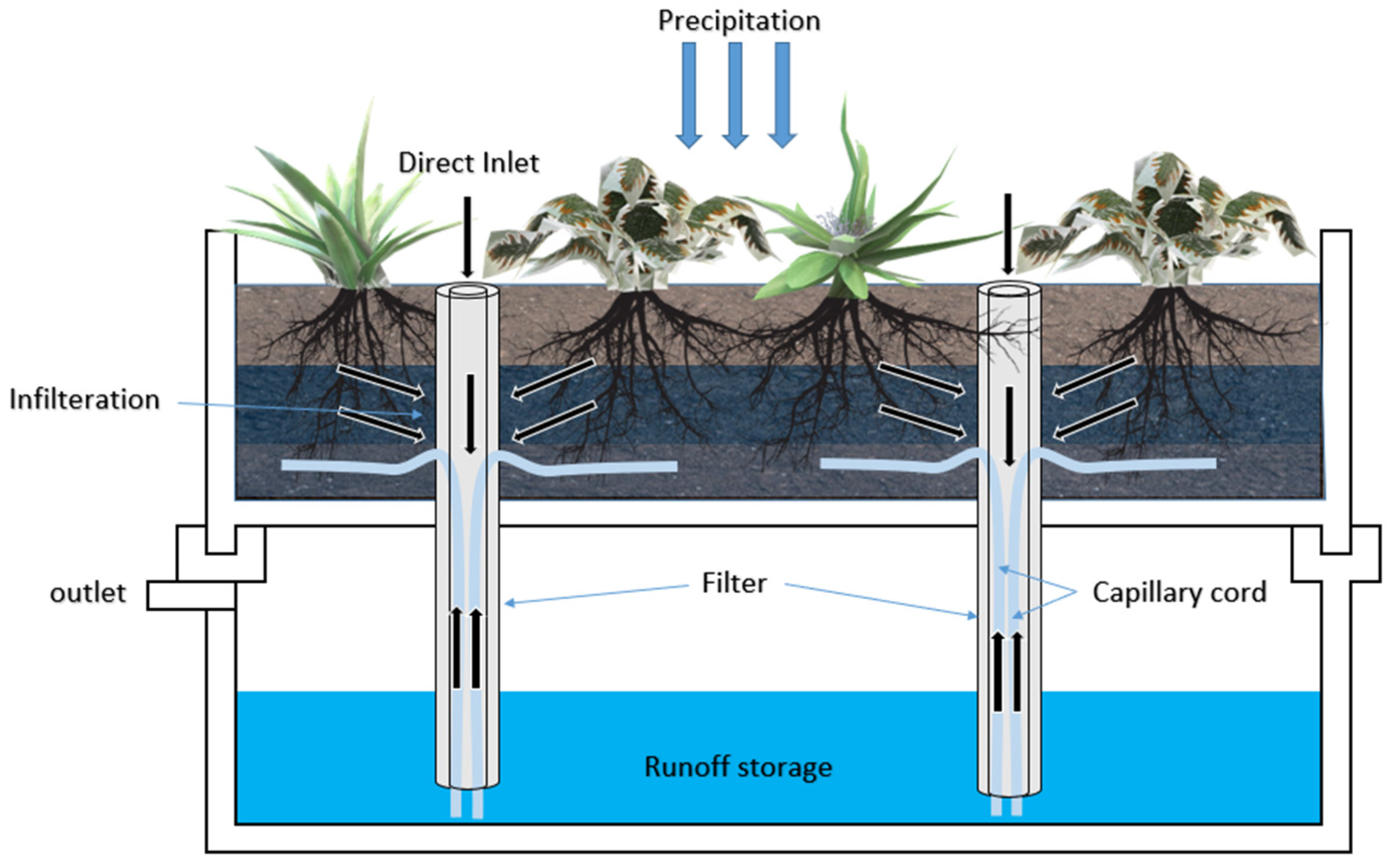
The novel drainage and capillary irrigation system, along with its main elements, is shown in Figure 1. The system integrates a soil substrate layer with a vertically installed drainage filter that enables controlled infiltration and runoff conveyance to a storage layer beneath. At the same time, a capillary cord allows passive upward transport of stored water to the root zone for subsurface irrigation.
It should be noted that the present experimental investigation was designed to assess short-term hydraulic feasibility under controlled laboratory conditions. Therefore, long-term clogging behaviour due to sediment deposition, fine-particle migration, or biofilm development was not experimentally evaluated. In practical applications, mitigation strategies such as removable filter cartridges, protective geotextile wrapping, or pre-filtration layers would be necessary to reduce clogging risk and ensure long-term performance.

2.2. Experimental Analysis Set-Up and Analysis Procedures

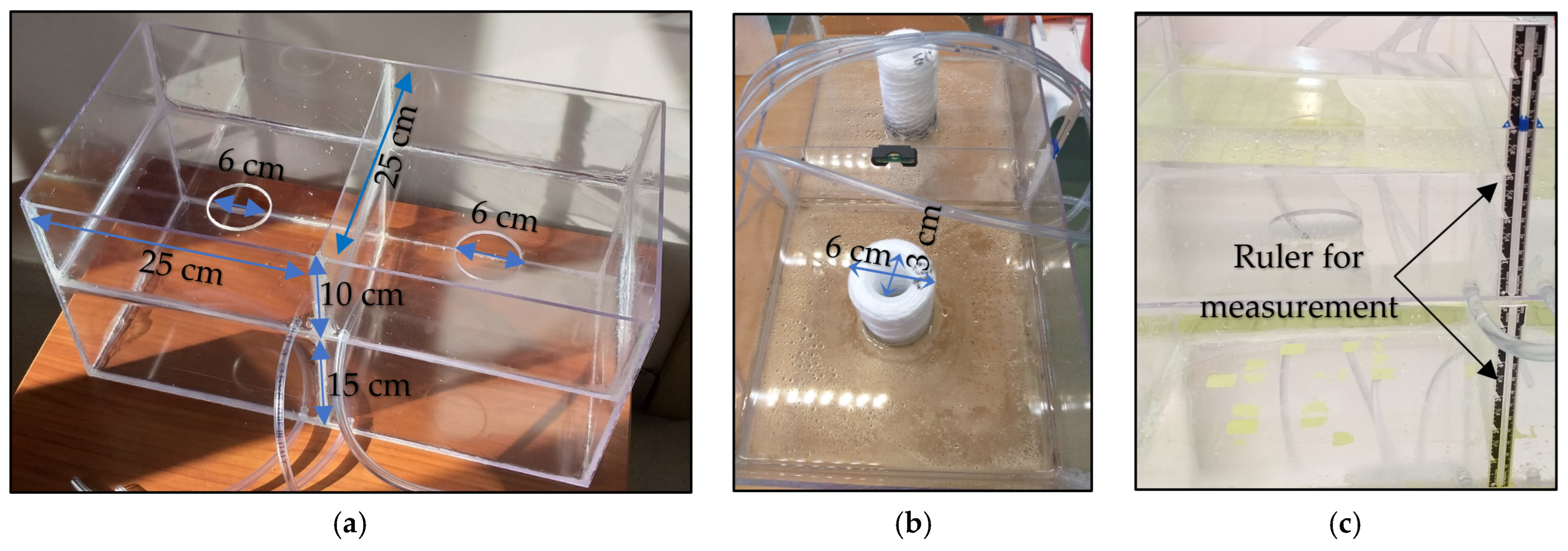
The experimental model and filter installation are shown in Figure 2, while the infiltration rate measurement procedure is presented in Figure 3. The laboratory set-up was designed to provide a controlled setting for validating the feasibility of the proposed drainage and capillary irrigation technique. The physical model consisted of a test box with two layers, and internal dimensions of 25 × 25 cm, allowing direct observation and measurement of water movement and filter performance (Figure 2a). The filters were installed vertically within the model and connected two layers: the upper layer for soil media and the lower layer for runoff storage, to simulate the drainage and stormwater retention performance of the proposed NBS system (Figure 2b). For each test, water was applied manually using a calibrated volumetric pouring method at a controlled discharge rate to simulate surface rainfall input. The applied volume and application time were kept constant across all experiments. The method corresponds to a falling-head condition, allowing observation of hydraulic drawdown behaviour within the system. The outflow through the filter was collected and monitored using a measurement device (an installed ruler) to evaluate hydraulic behaviour (Figure 2c). This configuration allowed evaluation of both drainage performance and temporary stormwater retention under controlled conditions.
Infiltration tests were conducted on four filter types to investigate their hydraulic response and potential contribution to stormwater retention, along with the soil substrate. The variation in water level and outflow was recorded for each filter as shown in Figure 3, and the corresponding infiltration rates were calculated. Physicochemical and hydraulic properties of substrate, filters, and cords are presented in Table 1.
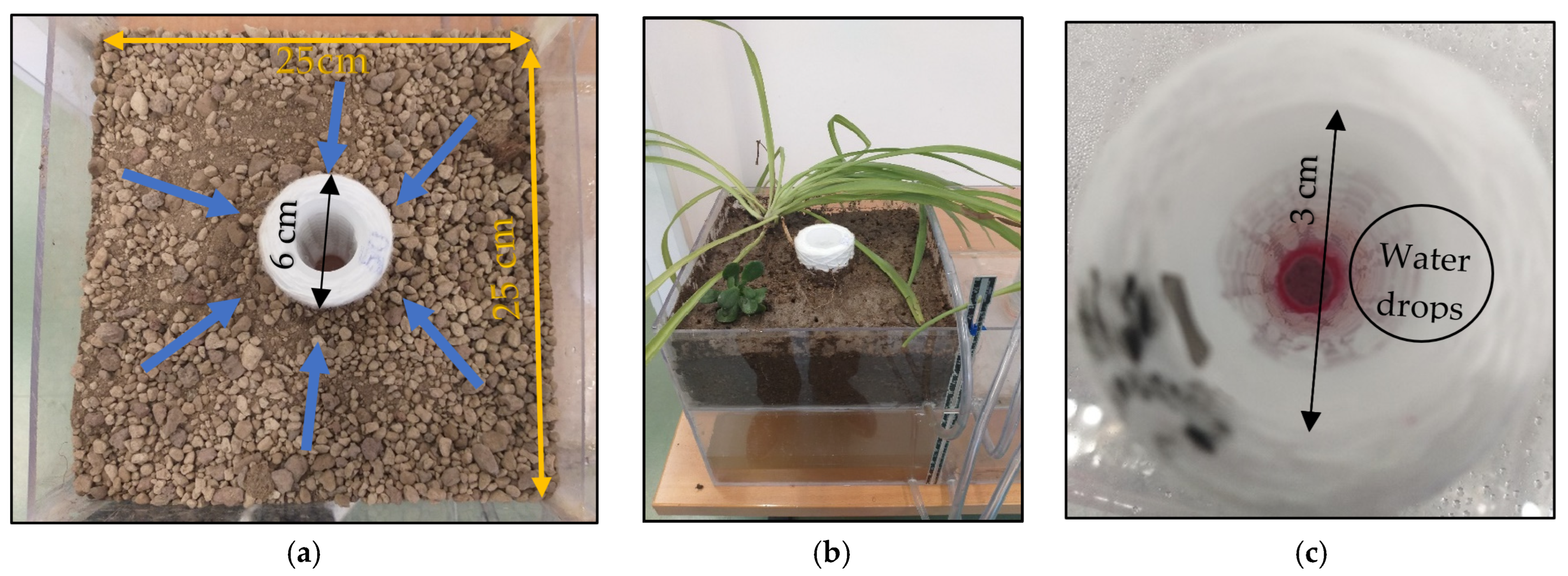
To further evaluate the feasibility of the proposed system under conditions representative of real NBS applications, additional tests were carried out by combining the selected filter with a soil layer (Figure 4). This configuration was intended to represent green roofs, streetside planting units, and other vegetated infrastructures where stormwater drainage, retention, and irrigation processes occur simultaneously. As shown in Figure 4a, the selected filter was placed at the centre of the test box and covered with soil substrate (Vulcaflor light) representative of typical growing media used in vegetated systems. Water was then supplied from the top surface to all four filter types (Figure 4b) to verify the stormwater retention of the combined filter and soil substrate, and to observe the interaction between soil, filter, and stored water.
These tests aimed to verify whether the drainage filter and the novel design could effectively operate to combine the soil layer without compromising infiltration, while simultaneously contributing to temporary water storage in the layer beneath for potential reuse. These experiments were not intended to quantify plant growth performance, but rather to demonstrate the practical applicability and operational feasibility of the proposed method. All infiltration experiments were conducted using a dried substrate without vegetation to eliminate root-induced preferential flow paths and macropore formation. The vegetation shown in Figure 4 serves only as a conceptual representation of a potential real-world application and was not present during hydraulic testing.

2.3. Selected Filters Characteristics and Sub-Surface Irrigation System Using Filters and Cords

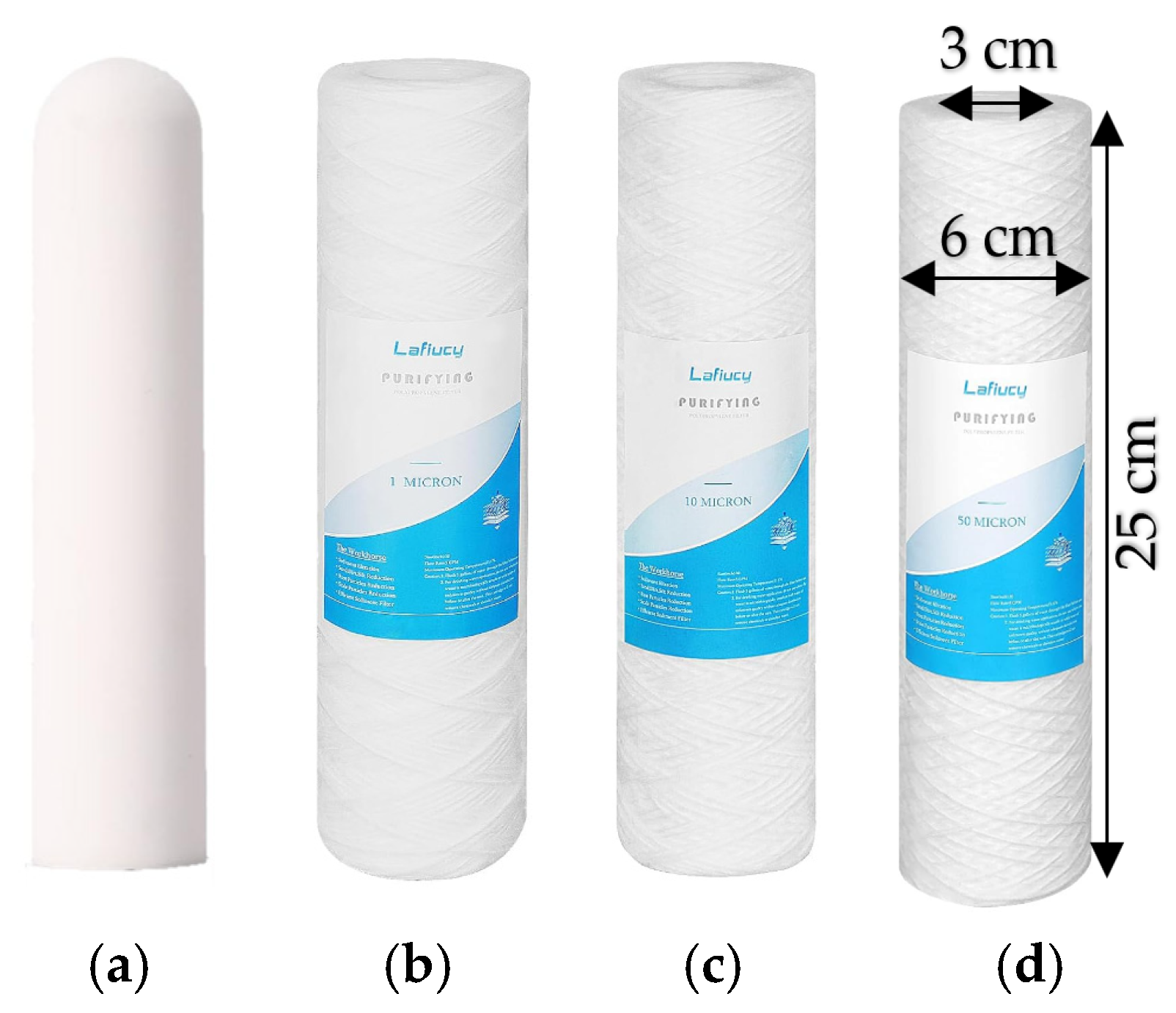
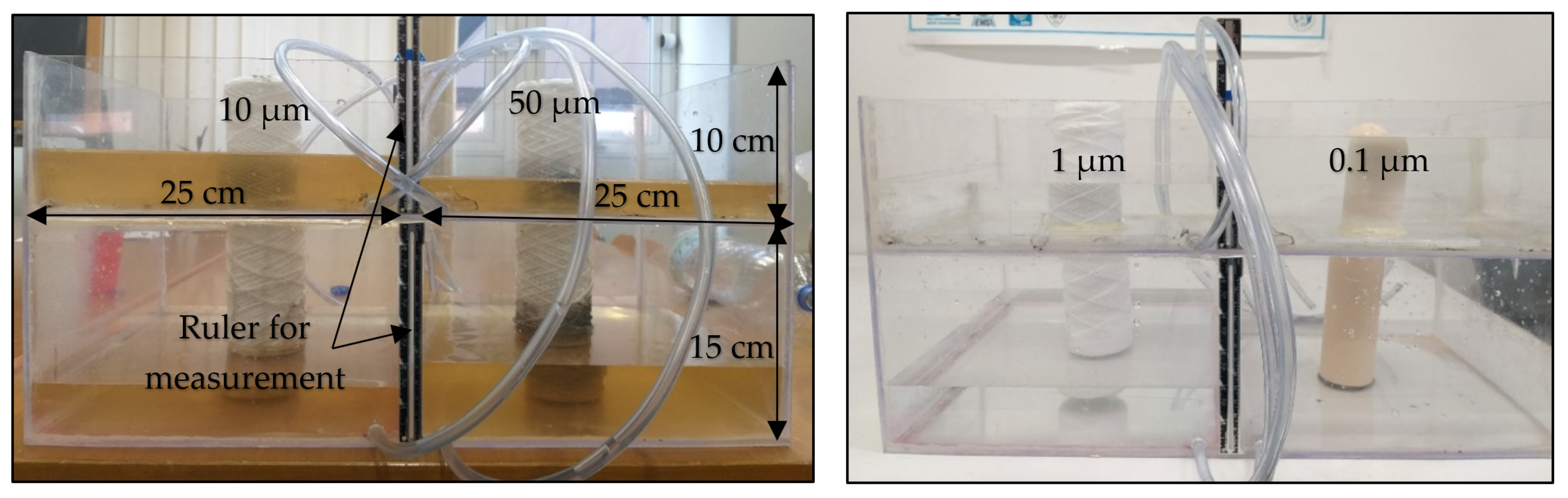
This section describes the design of the filter and capillary cord system, which, together, enable improved drainage and irrigation for green roofs and other nature-based solutions (NBS). As a preliminary step, the filters used in the novel system were characterised in terms of their materials and pore sizes. The tested filters included one ceramic filter and three polypropylene filters with different nominal pore sizes from 0.1 to 50 microns, as shown in Figure 5. These filters were selected to represent a new drainage element in the novel system that can simultaneously support controlled and retained runoff towards a water storage layer situated beneath vegetated systems.
The selected pore sizes (0.1, 1, 10, and 50 μm) were chosen to represent a broad spectrum of hydraulic conductivities, ranging from ultra-fine filtration media to relatively coarse porous drainage elements. The results indicate which filters are hydraulically suitable and which are unsuitable for rainfall drainage applications. Moreover, comparing standalone filter performance with the combined soil–filter configuration allows identification of whether hydraulic limitation originates from the filter pore structure or the soil substrate matrix.
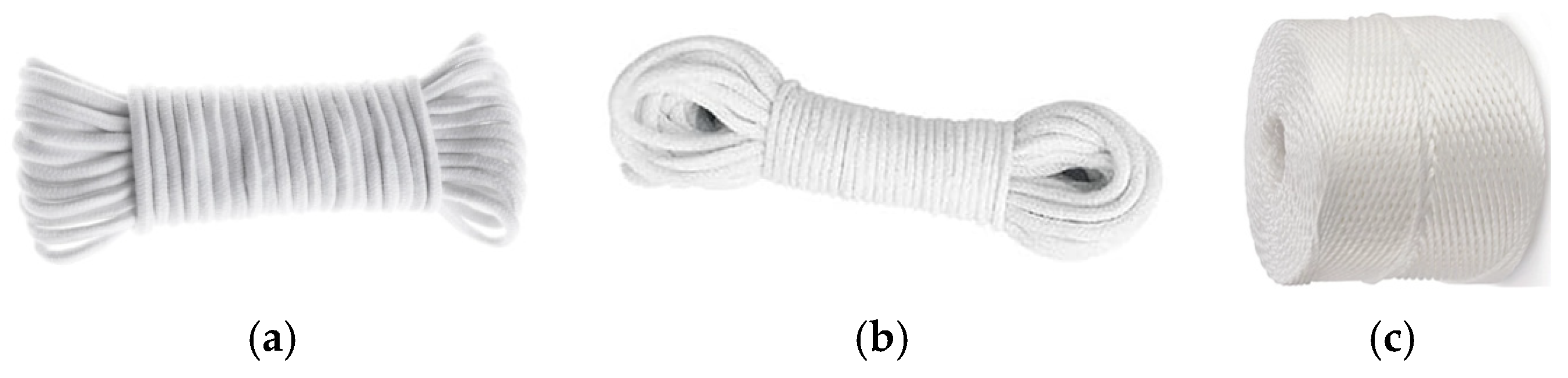
For the evaluation of subsurface irrigation via capillary rope, three different capillary cords were selected, differing in material and diameter, as illustrated in Figure 6. The tested cords included polyester fibre cords with widths of 10 mm and 6 mm, and a polypropylene cord with a width of 2 mm. These materials were chosen for their availability, low cost, and potential suitability for nature-based solutions.
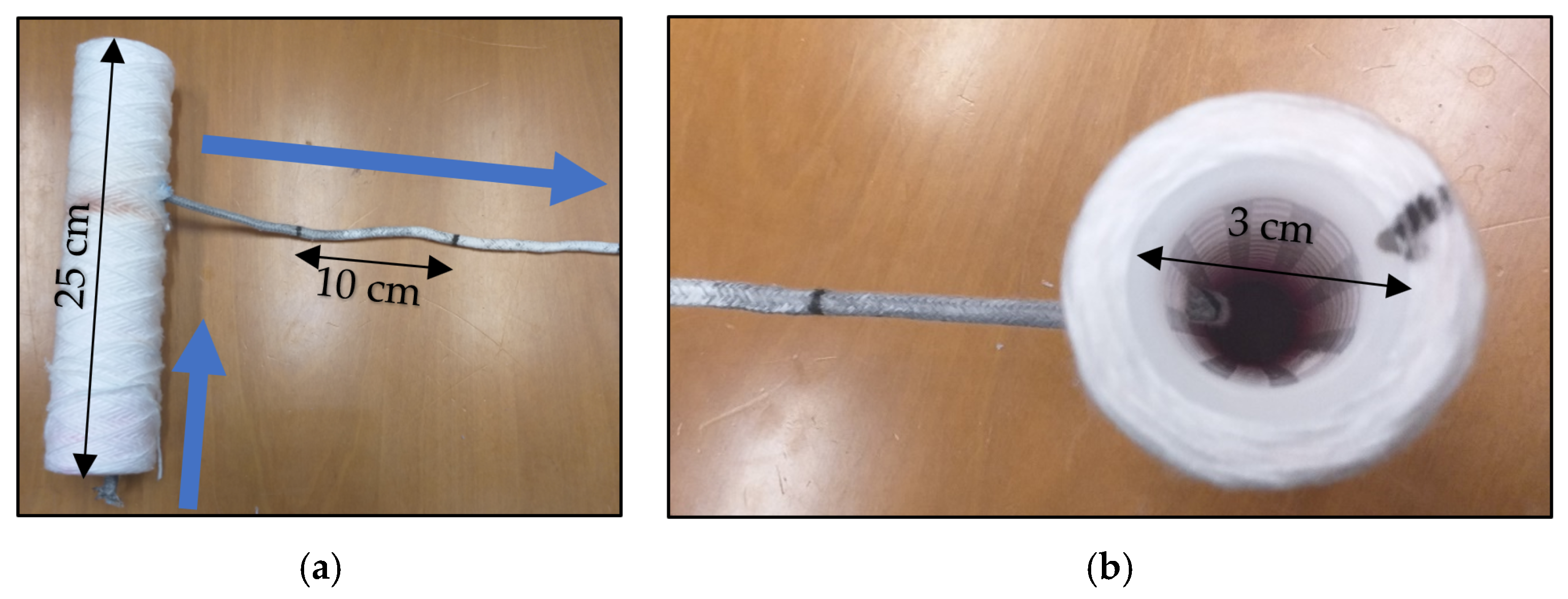
The capillary rope was installed within the proposed drainage and irrigation system to demonstrate practical applicability. As shown in Figure 7, the capillary cord was directly connected to the drainage filter and extended horizontally toward the soil layer and vertically to the water storage layer, enabling water stored beneath the filter to be passively conveyed to the root zone. These experiments were designed as a proof-of-concept assessment to verify the feasibility of the proposed subsurface irrigation configuration rather than to optimise irrigation performance.
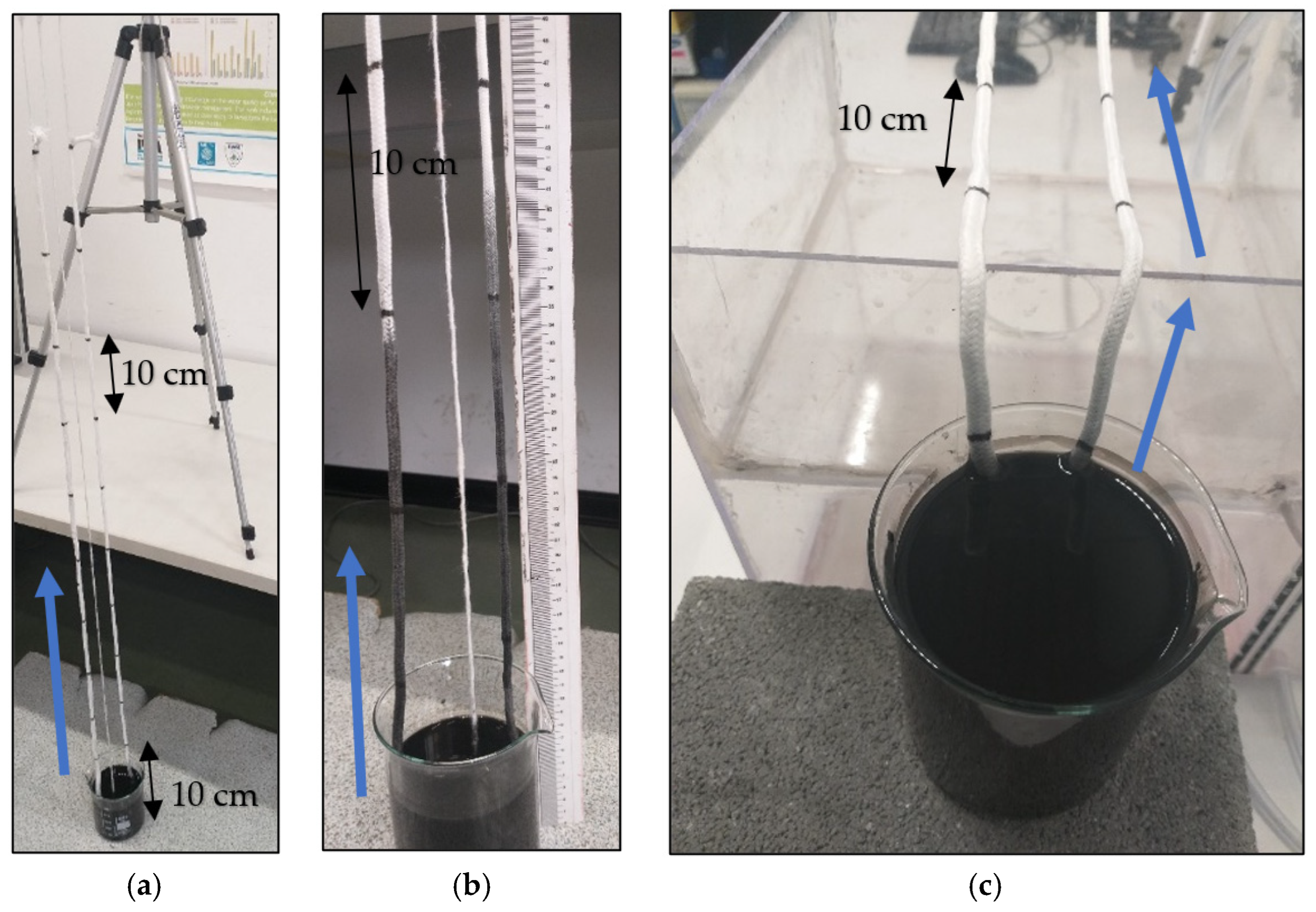
In the second phase, capillary rise experiments were conducted under controlled laboratory conditions to assess the ability of the cords to transport water from the storage layer toward the soil zone, and to evaluate the feasibility and performance of a capillary wick system for subsurface irrigation. Vertical capillary rise tests were performed by immersing one end of each cord into the inked water reservoir and suspending the remaining length vertically, allowing the upward movement of water to be measured over time (Figure 8a,b). In addition, horizontal capillary tests were carried out to simulate subsurface irrigation conditions in which water must be distributed laterally beneath the soil layer (Figure 8c).
To ensure the reliability and minimise experimental uncertainty, each test was repeated three times under identical laboratory conditions, and the average values were used for analysis and evaluation.

3. Results and Discussion

This section presents the experimental results from laboratory investigations to validate the feasibility of the proposed novel system. The results are presented in two sections: first, the hydraulic behaviour and retention capacity of the filters alone and within the soil substrate; and second, an assessment of the performance (capillary rise in vertical and horizontal directions) of the capillary wick system for passive subsurface irrigation. The discussion focuses on the application and feasibility of the proposed system for green roofs and similar vegetated nature-based solutions, rather than on optimisation or long-term performance.

3.1. Hydraulic Behaviour and Retention Potential of the Novel System

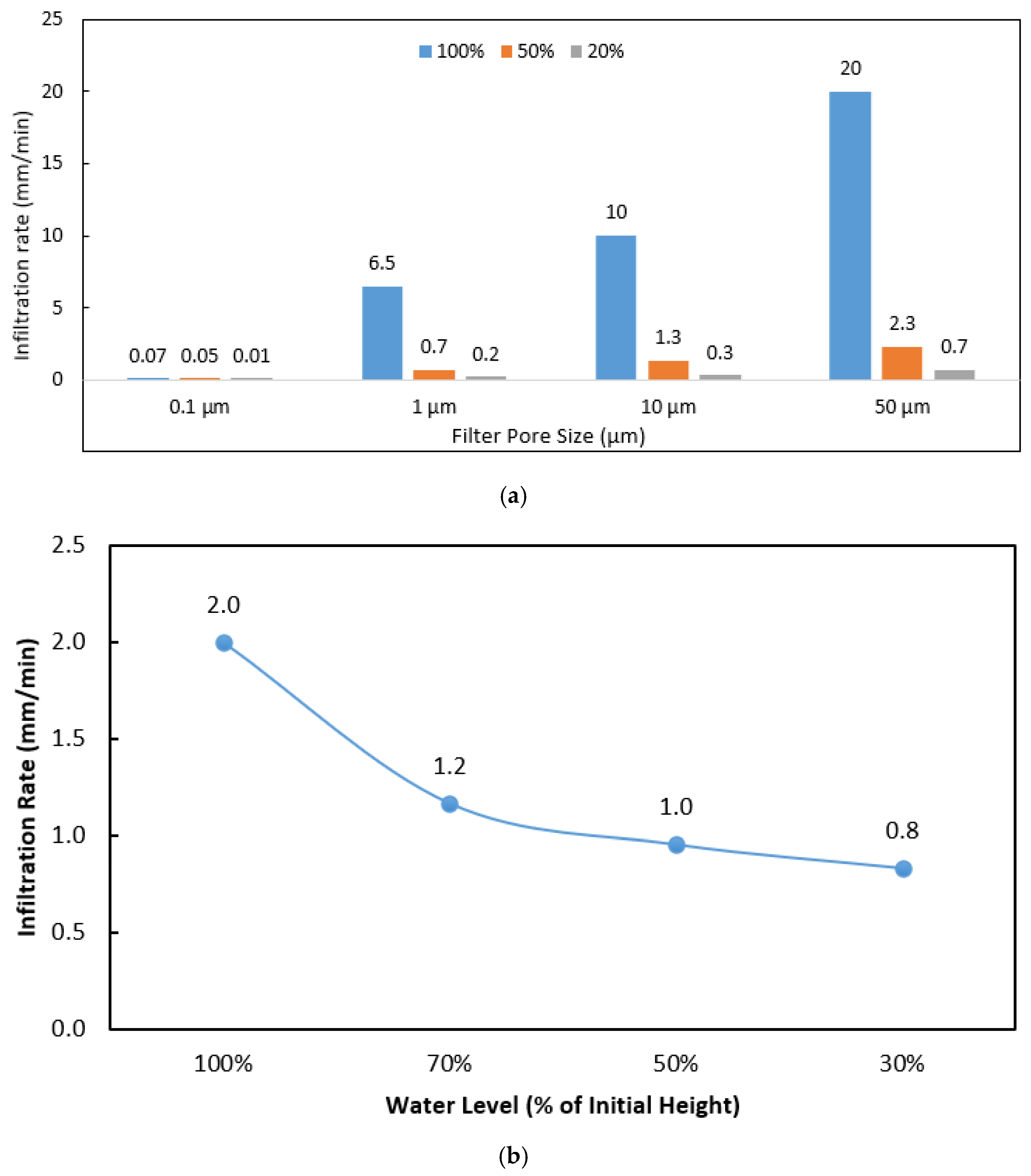
Infiltration tests were conducted on four filter types to investigate their hydraulic response and potential contribution to stormwater retention, along with the soil substrate. The experimental infiltration results of the selected filters and proposed system configurations (drainage filter and soil media) are shown in Figure 9.
Standard soil infiltration rate values depend primarily on soil texture and are generally expressed as constant vertical fluxes, ranging from approximately 0.5 mm/h for clay soils to over 200 mm/h for sandy soils [52,53]. However, the infiltration behaviour observed in the proposed system differs fundamentally from classical soil infiltration processes. While infiltration in soil layers is mainly one-dimensional and vertical, with a constant infiltration area, drainage through the proposed system occurs mainly through the vertical side walls of the filter, resulting in a radial flow mechanism similar to an inverse well.
The experimental results demonstrate that the infiltration rates for just filters ranged from approximately 0.01 mm/min in a ceramic filter to 20 mm/min in a polypropylene filter with a 50-micron pore size, depending on filter pore size and water level (Figure 9a). While the infiltration rate of the system (combined soil–filter) ranges from 0.8 to 2.0 mm/min (Figure 9b), it decreases as the water level declines. The observed decrease in infiltration rate with declining water level can be theoretically explained using radial flow principles of Darcy’s law in cylindrical coordinates. For radial drainage through a vertical filter, discharge Q can be expressed as Equation (1) [54]:
Q = 2 π k h H 1 H 2 l n r 2 / r 1
where k is the hydraulic conductivity, h is the wetted height of the filter, H1H2 is the hydraulic head difference, and r1, r2 are the inner and outer radii of the drainage path.
Unlike one-dimensional vertical soil infiltration, radial flow depends directly on both hydraulic head and the active wetted surface height. As water depth decreases, both the hydraulic gradient and the active drainage surface (the effective wetted surface area of the filter wall) are reduced. Consequently, discharge and apparent infiltration rate decline with water depth, resulting in lower infiltration rates, and this depth-dependent hydraulic behaviour confirms the adaptive drainage mechanism of the proposed system in Figure 9b.
The ceramic filter (0.1 μm) exhibited an infiltration rate of approximately 0.01 mm/min (0.6 mm/h), which is significantly lower than typical rainfall intensities observed in temperate and Mediterranean climates. Such low permeability indicates that ultra-fine pore sizes are hydraulically unsuitable for stormwater drainage under moderate or high-rainfall conditions, as they may lead to rapid surface ponding and potential waterlogging. Therefore, while it is included to evaluate the lower hydraulic boundary of the system, the ceramic filter is not recommended for practical stormwater management in green roofs, particularly in regions subject to intense precipitation events.
Although the measured infiltration rates of the filter-based system are not directly comparable to soil-only infiltration values due to differences in flow geometry and effective infiltration area, the results clearly indicate that the proposed system provides appropriate drainage capacity within the range typically reported for loamy sand to sandy loam soils, which typically exhibit infiltration rates about 0.4–1.2 mm/min. Moreover, under high water levels, the system’s drainage capacity increases, particularly during high-intensity rainfall events, when rapid runoff conveyance is required to prevent surface saturation and flooding. Therefore, unlike conventional soil systems, in which infiltration capacity remains constant, the proposed system exhibits adaptive hydraulic behaviour. As water levels increase, a larger portion of the filter wall becomes active, increasing the effective drainage area and infiltration rate. Conversely, as water levels decrease, infiltration rates are reduced, promoting temporary water retention within the system. This behaviour supports stormwater management with higher performance, rather than rapid discharge to the urban drainage network.
Compared with typical infiltration rates in coarse-textured soils (0.4–1.2 mm/min), the combined soil–filter system demonstrated comparable hydraulic performance while introducing adaptive drainage behaviour through its radial flow geometry. Therefore, it indicates that the proposed configuration can provide controlled drainage without excessive rapid discharge, thereby enhancing short-term retention capacity.

3.2. Feasibility and Performance of the Capillary Wick System in the Novel System

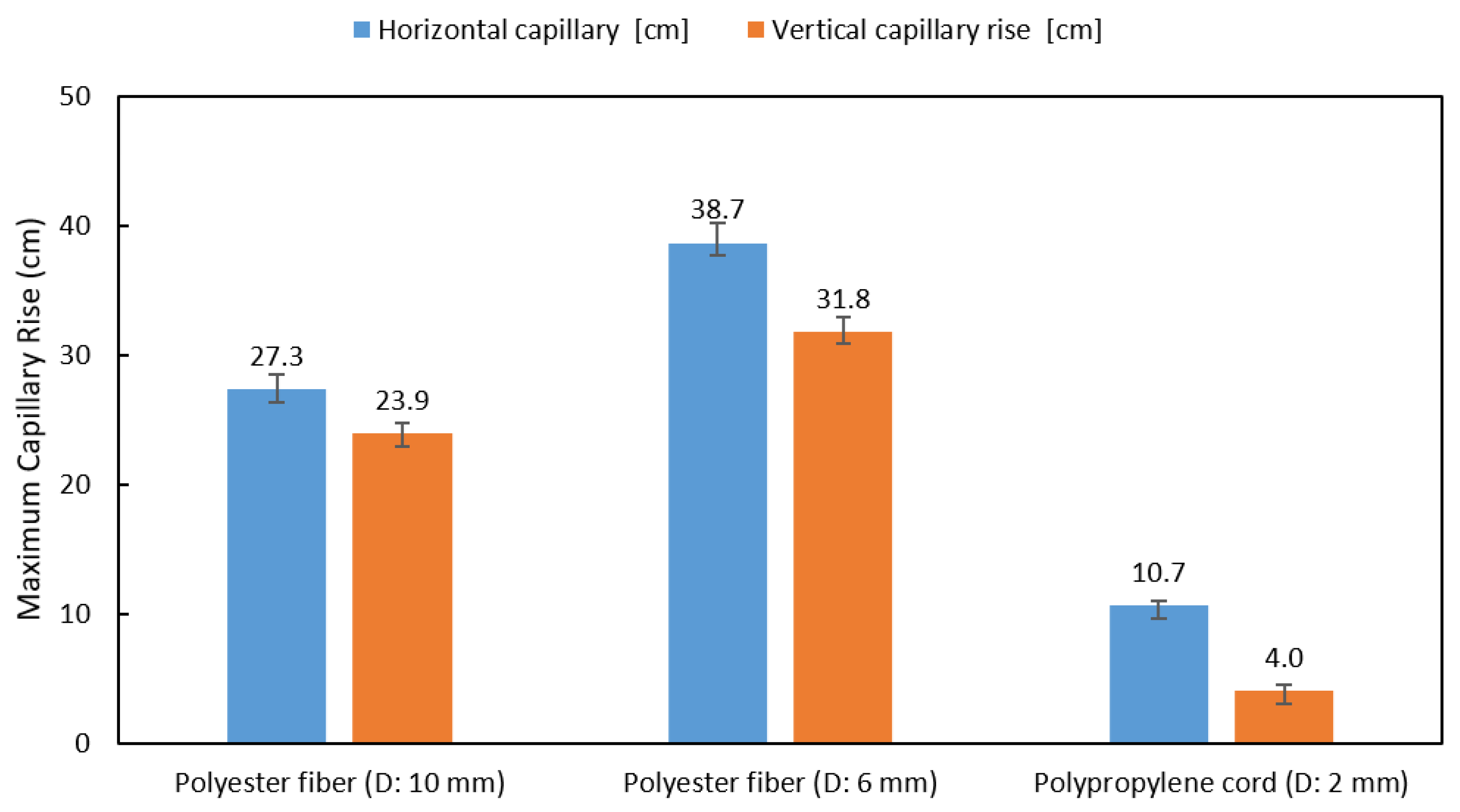
The feasibility of subsurface irrigation using capillary wicks for the proposed double-layer design was evaluated through vertical and horizontal capillary rise experiments. Capillary rise measurements were recorded until equilibrium was achieved, defined as the point at which no further visible increase (less than 1 mm in capillary height over 24 h) in water rise was observed along the selected cord. This quantitative criterion ensured the objective determination of steady-state conditions and represented the maximum (equilibrium) capillary rise (vertically and horizontally) under the experimental conditions, as shown in Figure 10.
As shown in Figure 10, the 6 mm polyester cord exhibited the best capillary performance, achieving a horizontal capillary rise of 39 cm and a vertical rise of 32 cm. The 10 mm polyester cord also performed well, with 28 cm of horizontal and 24 cm of vertical capillary rise. In contrast, the polypropylene cord with a width of 2 mm demonstrated limited capillary performance, reaching only 11 cm horizontally and 4 cm vertically, highlighting the influence of material properties and cord geometry (micropores) on capillary behaviour.
The observed capillary rise results are in good agreement with previous studies and models in the capillary wick irrigation field, where achievable rise strongly depends on wick material, geometry, and test conditions [21,31,55]. Capillary irrigation systems, including capillary wicks and mats, have been shown in the literature to deliver water from a reservoir into the plant root zone via capillary action, with studies reporting measurable capillary performance across various wick configurations under controlled conditions [30]. Experimental research on capillary wick irrigation systems has also documented that maximum capillary height and water-holding capacity vary with wick material, confirming that ascent heights on the order of tens of centimetres are realistic for well-chosen wicking media, thereby supporting the practical vertical rise observed in this study [31].
Vertical (from the storage layer) and horizontal (for the irrigation zone) capillary tests confirmed that water distribution along the cord is feasible, supporting the applicability of the proposed system for subsurface irrigation. The results demonstrate that polyester cords were capable of transporting water from the storage layer toward the soil zone through capillary action, confirming that integrating appropriately selected capillary wicks with the drainage and storage layer enables passive irrigation reusing stored runoff, without the necessity of pumps or external energy, supporting the feasibility of the proposed system for vegetated nature-based solutions.
Although the measured equilibrium capillary height demonstrates the feasibility of passive water transport, irrigation performance in practical applications depends primarily on volumetric supply rate (L/day) rather than static capillary rise alone. The measured capillary rise does not inherently guarantee that sufficient water flux reaches the root zone to compensate for daily evapotranspiration demand under high atmospheric evaporative demand conditions. The present study did not quantify capillary mass flow rates, and the system’s capacity to meet plant water demand during hot, arid periods remains to be experimentally validated. Future investigations should measure time-dependent flow rate to assess irrigation suitability under realistic climatic demand scenarios.

3.3. Practical Implications, Limitations and Clogging Considerations

The present study represents a laboratory-scale feasibility assessment. Although the system demonstrated adaptive hydraulic behaviour and passive irrigation capability, several limitations must be considered. The laboratory configuration used one filter per 625 cm2 (25 × 25 cm). However, such scaling is not representative of practical implementation. At this scale, boundary effects and limited lateral flow paths may influence hydraulic response compared to large-area installations. Therefore, the results should be interpreted as a mechanistic validation of radial drainage and capillary interactions rather than as a direct prediction of field performance. Full-scale applications would likely employ larger-diameter drainage modules or distributed collector elements rather than replicating the laboratory density. Future studies should investigate larger experimental modules and field-scale systems to assess spatial heterogeneity, edge effects, and long-term hydrological behaviour.
First, long-term clogging of fine-pore filters by sediment accumulation and biofilm formation may reduce hydraulic conductivity. Second, scaling from laboratory to field conditions requires optimising filter spacing and conducting an economic evaluation. Third, while capillary rise height confirms the feasibility of water transport, the actual irrigation flow rate required to meet evapotranspiration demand should be quantified in future studies.
A key limitation of fine-pore drainage elements embedded within soil substrate is the risk of physical and biological clogging. Sediment accumulation, fine-particle migration, and biofilm formation may progressively reduce hydraulic conductivity, particularly in pores with diameters of 10–50 μm. Compared to conventional granular drainage layers—where flow occurs through interconnected macropores, and clogging tends to be spatially distributed—the proposed vertical filter concentrates flow through a defined cylindrical surface, potentially increasing sensitivity to localised blockages.
However, unlike granular drainage systems, which are difficult to access once installed, the proposed filter configuration could be designed as a removable or replaceable cartridge, enabling periodic maintenance or replacement. Additional mitigation strategies may include protective geotextile wrapping, incorporation of a pre-filtration layer above the filter head, or periodic flushing under maintenance protocols. Long-term clogging resistance and hydraulic degradation should be evaluated under field-scale conditions in future studies to determine service life and maintenance frequency.

3.4. Recommendations for Future Studies

The present study assessed the feasibility of the proposed drainage and capillary irrigation system at the laboratory scale; further investigations are recommended to extend and strengthen its applicability. Moreover, further analysis and simulation of interactions among different substrate compositions, vegetation types, and filter configurations to optimise the system design for various nature-based solutions, with a focus on long-term performance assessments under real climatic conditions, seem necessary. Additional research on the system’s water-quality performance and pollutant-removal efficiency, including field-scale experiments under real rainfall events, is suggested for future investigations. Moreover, future studies can investigate the temporal evolution and time-dependent capillary rise to quantify irrigation rates of the capillary wick system under different environmental conditions. Finally, assessing the economic and environmental performance of the proposed system through life-cycle assessment and cost–benefit analysis can be considered in subsequent studies to evaluate construction feasibility relative to conventional drainage layers. In this regard, optimising filter spacing should account for rainfall intensity, storage capacity, structural loading constraints, and economic costs.

4. Conclusions

This study proposed and experimentally validated a novel drainage and capillary irrigation system applicable to green roofs and other vegetated nature-based solutions.
The infiltration rate analysis of the tested filters showed their significant potential contribution to stormwater drainage and retention beyond the soil substrate alone. The experimental results showed that infiltration rates of the filters depend on pore size and water level, ranging from approximately 0.01 mm/min for the ceramic filter to up to 20 mm/min for the polypropylene filter with a pore size of 50 μm. When combined with the soil layer, the proposed system exhibited infiltration rates of 0.8–2.0 mm/min, comparable to those of coarse-textured soils such as loamy sand to sandy loam, while maintaining stable hydraulic behaviour under laboratory conditions. However, the governing hydraulic mechanisms differ substantially. Soil infiltration occurs through a continuous porous matrix under predominantly vertical gravity-driven flow. In contrast, the proposed system involves cylindrical radial drainage toward a hollow storage element, where flow geometry and active surface area vary with water depth. Therefore, the comparison indicates hydraulic magnitude rather than physical equivalence.
However, while in conventional soil systems infiltration occurs vertically with a constant effective area, the proposed system operates under cylindrical radial flow along the vertical filter walls, resulting in depth-dependent, adaptive infiltration behaviour. In radial systems, both hydraulic gradient and effective flow area vary with water depth. As the water level decreases, the driving head diminishes, and the wetted filter surface shortens, reducing discharge. This depth-dependent behaviour explains the nonlinear decline in infiltration observed during drawdown and distinguishes the system from conventional porous-media drainage. As water levels increase, a larger wetted filter surface becomes active, enhancing drainage capacity during high-intensity rainfall events. The results confirm that the proposed system provides a multifunctional, adaptive hydraulic response, combining efficient drainage during extreme rainfall with enhanced retention and storage during low-flow conditions. Moreover, the new system can effectively increase the stormwater retention capacity, potentially resulting in a drainage layer with lower depth and load.
The capillary rise experiment results confirmed the feasibility of passive subsurface irrigation via capillary cords within the proposed system. Maximum (equilibrium) vertical and horizontal capillary rise was observed in polyester cords, with a width of 6 mm, while the polypropylene cord exhibited limited performance. These experimental results highlight the importance of cord material properties and geometry, appropriate material selection, and the relevance of vertical and horizontal distances between the water storage layer and the irrigation zone to balance irrigation demands, water delivery rates, and efficiency. Although the system may be conceptually suitable for arid or semi-arid regions due to passive water reuse, irrigation adequacy ultimately depends on the balance between capillary supply rate and atmospheric evapotranspiration demand (ET0). Since this study quantified equilibrium height but not time-dependent flow rate, the coupling between capillary supply and ET0 remains a limitation. Future work should integrate capillary flux measurements with climatic demand modelling to assess system performance under extreme heat conditions.
In conclusion, the proposed system offers a multifunctional approach that improves stormwater management, drainage control, and irrigation efficiency within a capillary subsurface irrigation configuration. The system demonstrates adaptive hydraulic behaviour through radial drainage and confirms the feasibility of passive subsurface irrigation via capillary transport. By enabling the reuse of stored runoff for irrigation, the proposed configuration directly reduces external irrigation demand, which in conventional green roof systems is typically supplied by municipal potable water networks. Considering that irrigation requirements may reach several litres per square metre per day during dry periods, substituting this demand with internally stored stormwater can decrease peak withdrawals from drinking water distribution systems. Consequently, the proposed solution contributes to lowering potable water consumption and reducing the overall water footprint of green roof installations, while enhancing the hydrological performance and resilience of vegetated urban infrastructure and other nature-based solutions. The findings are limited to laboratory-scale hydraulic validation and do not evaluate chemical runoff treatment or long-term field performance. Future research should focus on large-scale implementation, long-term performance evaluation, clogging resistance, quantification of irrigation flow rate, and field-scale testing.

Author Contributions

Conceptualization, B.P.; methodology, B.P. and H.J.N.; validation, B.P. and H.J.N.; formal analysis, B.P. and H.J.N.; investigation, B.P. and H.J.N.; resources, B.P. and H.J.N.; data curation, B.P. and H.J.N.; writing—original draft preparation, B.P. and H.J.N.; writing—review and editing, B.P. and H.J.N.; visualisation, B.P. and H.J.N.; supervision, P.P.; project administration, P.P.; funding acquisition, P.P. All authors have read and agreed to the published version of the manuscript.

Funding

This research received no external funding.

Institutional Review Board Statement

Not applicable.

Informed Consent Statement

Not applicable.

Data Availability Statement

Data will be made available on request.

Acknowledgments

This work was funded by the Next Generation EU—Italian NRRP, Mission 4, Component 2, Investment 1.5, call for the creation and strengthening of ‘Innovation Ecosystems’, building ‘Territorial R&D Leaders’ (Directorial Decree n. 2021/3277)—project Tech4You—Technologies for climate change adaptation and quality of life improvement, n. ECS0000009. This work reflects only the authors’ views and opinions, neither the Ministry for University and Research nor the European Commission can be considered responsible for them.

Conflicts of Interest

The authors declare no conflicts of interest.

Abbreviations

The following abbreviations are used in this manuscript:
ABCActive, Beautiful and Clean
CWISCapillary Wick Irrigation System
NBSNature-based solutions

References

  1. Brinkley, C.; Birch, E.; Keating, A. Feeding Cities: Charting a Research and Practice Agenda Toward Food Security. J. Agric. Food Syst. Community Dev. 2013, 3, 81–87. [Google Scholar] [CrossRef][Green Version]
  2. Bona, S.; Silva-Afonso, A.; Gomes, R.; Matos, R.; Rodrigues, F. Nature-Based Solutions in Urban Areas: A European Analysis. Appl. Sci. 2023, 13, 168. [Google Scholar] [CrossRef]
  3. Kalmykova, Y.; Sadagopan, M.; Rosado, L. Circular economy—From review of theories and practices to development of implementation tools. Resour. Conserv. Recycl. 2018, 135, 190–201. [Google Scholar] [CrossRef]
  4. Nentwig, B. Navigating the Future of Green Urban Resilience: Green Urban Structures as Pillars of Crisis Management and Resilience. Landsc. Archit. Front. 2024, 12, 4–8. [Google Scholar]
  5. Parker, J.; Simpson, G.D.; Miller, J.E. Nature-based solutions forming urban intervention approaches to anthropogenic climate change: A quantitative literature review. Sustainability 2020, 12, 7439. [Google Scholar] [CrossRef]
  6. Pirouz, B.; Palermo, S.A.; Becciu, G.; Sanfilippo, U.; Nejad, H.J.; Piro, P.; Turco, M. A Novel Multipurpose Self-Irrigated Green Roof with Innovative Drainage Layer. Hydrology 2023, 10, 57. [Google Scholar] [CrossRef]
  7. Pirouz, B.; Naghib, S.N.; Kontoleon, K.J.; Bibin, B.S.; Javadi Nejad, H.; Piro, P. Investigation of the Interaction of Water and Energy in Multipurpose Bio-Solar Green Roofs in Mediterranean Climatic Conditions. Water 2025, 17, 950. [Google Scholar] [CrossRef]
  8. Grunwald, L.; Heusinger, J.; Weber, S. A GIS-based mapping methodology of urban green roof ecosystem services applied to a Central European city. Urban For. Urban Green. 2017, 22, 54–63. [Google Scholar] [CrossRef]
  9. Mutani, G.; Todeschi, V. The effects of green roofs on outdoor thermal comfort, urban heat island mitigation and energy savings. Atmosphere 2020, 11, 123. [Google Scholar] [CrossRef]
  10. Zheng, Y.; Chen, L. Modeling the Effect of Green Roofs for Building Energy Savings and Air Pollution Reduction in Shanghai. Sustainability 2024, 16, 286. [Google Scholar] [CrossRef]
  11. Peng, L.L.H.; Jim, C.Y. Green-roof effects on neighborhood microclimate and human thermal sensation. Energies 2013, 6, 598–618. [Google Scholar] [CrossRef]
  12. Maiolo, M.; Pirouz, B.; Bruno, R.; Palermo, S.A.; Arcuri, N.; Piro, P. The role of the extensive green roofs on decreasing building energy consumption in the mediterranean climate. Sustainability 2020, 12, 359. [Google Scholar] [CrossRef]
  13. Rapisarda, R.; Nocera, F.; Costanzo, V.; Sciuto, G.; Caponetto, R. Hydroponic Green Roof Systems as an Alternative to Traditional Pond and Green Roofs: A Literature Review. Energies 2022, 15, 2190. [Google Scholar] [CrossRef]
  14. Pirouz, B.; Palermo, S.A.; Turco, M. Improving the efficiency of green roofs using atmospheric water harvesting systems (An innovative design). Water 2021, 13, 546. [Google Scholar] [CrossRef]
  15. Cascone, S. Green roof design: State of the art on technology and materials. Sustainability 2019, 11, 3020. [Google Scholar] [CrossRef]
  16. Schweitzer, O.; Erell, E. Evaluation of the energy performance and irrigation requirements of extensive green roofs in a water-scarce Mediterranean climate. Energy Build. 2014, 68, 25–32. [Google Scholar] [CrossRef]
  17. Jim, C.Y. Assessing climate-adaptation effect of extensive tropical green roofs in cities. Landsc. Urban Plan. 2015, 138, 54–70. [Google Scholar] [CrossRef]
  18. Pirouz, B.; Grossi, G.; Presta, L.; Sanfilippo, U.; Becciu, G. Optimization Method Development for Water Management of Green Roof Systems. In Proceedings of the Lecture Notes in Computer Science (Including Subseries Lecture Notes in Artificial Intelligence and Lecture Notes in Bioinformatics); Springer: Berlin/Heidelberg, Germany, 2025; Volume 14477 LNCS, pp. 298–305. [Google Scholar]
  19. Oner Çetin, A.K. Assesment of water productivity using different drip irrigation systems for cotton. Agric. Water Manag. 2021, 223, 105693. [Google Scholar] [CrossRef]
  20. Yang, P.; Wu, L.; Cheng, M.; Fan, J.; Li, S.; Wang, H.; Qian, L. Review on Drip Irrigation: Impact on Crop Yield, Quality, and Water Productivity in China. Water 2023, 15, 1733. [Google Scholar] [CrossRef]
  21. Vyas, U.; Darji, K.; Vakharia, V.; Patel, D.; Van Hiep, L.; Prakash, I. Capillary Wick Irrigation Technique: A Sustainable Hydraulic Innovation for Water-Efficient and Climate-Resilient Infrastructure in Arid Regions. J. Sci. Transp. Technol. 2025, 5, 44–60. [Google Scholar] [CrossRef]
  22. Siyal, A.A.; Skaggs, T.H. Measured and simulated soil wetting patterns under porous clay pipe sub-surface irrigation. Agric. Water Manag. 2009, 96, 893–904. [Google Scholar] [CrossRef]
  23. Ranjan, R.S. Evaluation of a Capillary-Irrigation System for Better Yield and Quality of Hot Pepper (Capsicum annuum). Appl. Eng. Agric. 2010, 26, 807–816. [Google Scholar] [CrossRef]
  24. Cai, Y.; Yao, C.; Wu, P.; Zhang, L.; Zhu, D.; Chen, J.; Du, Y. Effectiveness of a subsurface irrigation system with ceramic emitters under low-pressure conditions. Agric. Water Manag. 2021, 243, 106390. [Google Scholar] [CrossRef]
  25. Heidari, H.; Zarei, Z.; Mohammadi, K. Improving water use efficiency and biomass in maize, foxtail millet and bitter vetch by wick irrigation. Water SA 2022, 48, 264–270. [Google Scholar] [CrossRef]
  26. Kamal, R.M.; Muhammed, H.H.; Mojid, M.A.; Anlauf, R.; Soom, M.A.M. Two-dimensional modeling of water distribution under capillary wick irrigation system. Pertanika J. Sci. Technol. 2019, 27, 205–223. [Google Scholar]
  27. Lehmann, P.; Berli, M.; Koonce, J.E.; Or, D. Surface Evaporation in Arid Regions: Insights from Lysimeter Decadal Record and Global Application of a Surface Evaporation Capacitor (SEC) Model. Geophys. Res. Lett. 2019, 46, 9648–9657. [Google Scholar] [CrossRef]
  28. Hanson, B.; May, D. Drip irrigation increases tomato yields in salt-affected soil of San Joaquin Valley. Calif. Agric. 2003, 57, 132–137. [Google Scholar] [CrossRef]
  29. Joseph, K. Wick Irrigation—A smart and user-friendly irrigation method for container grown plants. SB Acad. Rev. 2016, 19, 17–21. Available online: https://www.semanticscholar.org/paper/Wick-Irrigation-A-smart-and-user-friendly-method-Joseph/381151785450ece8d9bedd903f576e9d8d5d00ea (accessed on 5 January 2026).
  30. Semananda, N.P.K.; Ward, J.D.; Myers, B.R. A semi-systematic review of capillary irrigation: The benefits, limitations, and opportunities. Horticulturae 2018, 4, 23. [Google Scholar] [CrossRef]
  31. Roonjho, S.J.; Kamal, R.M.; Roonjho, A.R. Modeling capillary wick irrigation system for greenhouse crop production. Agric. Water Manag. 2022, 274, 107927. [Google Scholar] [CrossRef]
  32. Marín, C.; El Bachawati, M.; Pérez, G. The impact of green roofs on urban runoff quality: A review. Urban For. Urban Green. 2023, 90, 128138. [Google Scholar] [CrossRef]
  33. Teemusk, A.; Mander, Ü. Rainwater runoff quantity and quality performance from a greenroof: The effects of short-term events. Ecol. Eng. 2007, 30, 271–277. [Google Scholar] [CrossRef]
  34. Hashemi, S.S.G.; Mahmud, H.B.; Ashraf, M.A. Performance of green roofs with respect to water quality and reduction of energy consumption in tropics: A review. Renew. Sustain. Energy Rev. 2015, 52, 669–679. [Google Scholar] [CrossRef]
  35. Cascone, S.M.; Cascone, S.; Vitale, M. Building insulating materials from agricultural by-products: A review. Smart Innov. Syst. Technol. 2020, 163, 309–318. [Google Scholar] [CrossRef]
  36. Berndtsson, J.C.; Emilsson, T.; Bengtsson, L. The influence of extensive vegetated roofs on runoff water quality. Sci. Total Environ. 2006, 355, 48–63. [Google Scholar] [CrossRef]
  37. Cascone, S.; Gagliano, A. Recycled agricultural plastic waste as green roof drainage layer within the perspective of ecological transition for the built environment. J. Clean. Prod. 2022, 380, 135032. [Google Scholar] [CrossRef]
  38. Mosley, L. Water Quality of Rainwater Harvesting Systems; SOPAC Miscellaneous Report 579; SOPAC: Suva, Fiji, 2005; pp. 1–19. [Google Scholar]
  39. Teixidó, M.; Schmidlin, D.; Xu, J.; Scheiber, L.; Chesa, M.J.; Vázquez-Suñé, E. Contaminants in Urban Stormwater: Barcelona case study. Adv. Geosci. 2023, 59, 69–76. [Google Scholar] [CrossRef]
  40. Hoslett, J.; Massara, T.M.; Malamis, S.; Ahmad, D.; van den Boogaert, I.; Katsou, E.; Ahmad, B.; Ghazal, H.; Simons, S.; Wrobel, L.; et al. Surface water filtration using granular media and membranes: A review. Sci. Total Environ. 2018, 639, 1268–1282. [Google Scholar] [CrossRef]
  41. Yulistyorini, A.; Idfi, G.; Fahmi, E.D. Enhanced rooftop rainwater harvesting quality through filtration using zeolite and activated carbon. MATEC Web Conf. 2018, 204, 03016. [Google Scholar] [CrossRef]
  42. Fatimah, I.; Sahroni, I.; Putra, H.P.; Rifky Nugraha, M.; Hasanah, U.A. Ceramic membrane based on TiO2-modified kaolinite as a low cost material for water filtration. Appl. Clay Sci. 2015, 118, 207–211. [Google Scholar] [CrossRef]
  43. Kendarto, D.R.; Mulyawan, A.; Sophia Dwiratna, N.P.; Bafdal, N.; Suryadi, E. Effectiveness of ceramics water filter pots with addition of silver nitrate to reduce of Escherichia coli contents. Int. J. Adv. Sci. Eng. Inf. Technol. 2019, 9, 526–531. [Google Scholar] [CrossRef]
  44. Gavanji, S.; Aziz, H.A.; Larki, B.; Mojiri, A. Bioinformatics Prediction of Interaction of Silver Nitrate and Nano Silver on Catalase and Nitrat Reductase. Int. J. Sci. Res. Environ. Sci. 2013, 1, 26–35. [Google Scholar] [CrossRef]
  45. Omoniyi, O.A. Ceramic Water Filters for the Filtration of Bacteria and Chemical Contaminants. Ph.D. Thesis, African University of Science and Technology (AUST), Abuja, Nigeria, 2022. [Google Scholar]
  46. Ong, G.S.; Kalyanaraman, G.; Wong, K.L.; Wong, T.H.F. Monitoring singapore’s first bioretention system: Rain garden at balam estate. In Proceedings of the WSUD 2012—7th International Conference on Water Sensitive Urban Design; Building the Water Sensitive Community, Final Program and Abstract Book; Informit: Melbourne, Australia, 2012. [Google Scholar]
  47. Wang, J.; Chua, L.H.C.; Shanahan, P. Hydrological modeling and field validation of a bioretention basin. J. Environ. Manag. 2019, 240, 149–159. [Google Scholar] [CrossRef] [PubMed]
  48. Neo, T.H.; Xu, D.; Fowdar, H.; McCarthy, D.T.; Chen, E.Y.; Lee, T.M.; Ong, G.S.; Lim, F.Y.; Ong, S.L.; Hu, J. Evaluation of Active, Beautiful, Clean Waters Design Features in Tropical Urban Cities: A Case Study in Singapore. Water 2022, 14, 468. [Google Scholar] [CrossRef]
  49. Landschaftsbau, F.L. Guidelines for the Planning, Construction and Maintenance of Green Roofing. Available online: https://commons.bcit.ca/greenroof/files/2019/01/FLL_greenroofguidelines_2018.pdf (accessed on 15 February 2026).
  50. Europomice. Volcanic Substrate for Roof Gardens, Urban Street Furniture and Vertical Greenery. Available online: https://www.europomice.it/en/products/vulcaflor/ (accessed on 15 February 2026).
  51. Perkebunan, K.D.; Papua, P. Wound Polypropylene Cartridge. Available online: https://www.acquahome.it/en/02-filtri-e-cartucce/products.2.10.2.sp.uw (accessed on 15 February 2026).
  52. Berhanu, B.; Melesse, A.M.; Seleshi, Y. GIS-based hydrological zones and soil geo-database of Ethiopia. Catena 2013, 104, 21–31. [Google Scholar] [CrossRef]
  53. Ibrahim-Bathis, K.; Ahmed, S.A. Geospatial technology for delineating groundwater potential zones in Doddahalla watershed of Chitradurga district, India. Egypt. J. Remote Sens. Sp. Sci. 2016, 19, 223–234. [Google Scholar] [CrossRef]
  54. Bear, J. Dynamics of Fluids in Porous Media. Soil Sci. 1975, 120, 162–163. [Google Scholar] [CrossRef]
  55. Lacour, S.O.L.; Aguié-Béghin, V.; Chabbert, B.; Scheel, M.; Thomas, D.; Clain, P. Capillary properties of natural fibre assembly for evaporative purposes. Colloids Surf. A Physicochem. Eng. Asp. 2025, 724, 137145. [Google Scholar] [CrossRef]
Figure 1. Novel proposed system with a specific design of drainage and irrigation methods.
Applsci 16 02292 g001
Figure 2. The experimental physical model to analyse different filters: (a) the test box with dimensions of 25 × 25 cm; (b) the filter installation that connects two layers; (c) the measurement device (installed ruler) to evaluate hydraulic behaviour.
Applsci 16 02292 g002
Figure 3. Infiltration rate measurements in four different filters.
Applsci 16 02292 g003
Figure 4. The novel drainage and capillary irrigation system by combining the filter with a soil layer: (a) dried soil; (b) drainage retention by soil substrate and filter pores (vegetation serves only as a conceptual representation and was not present during hydraulic testing); (c) water drops in the internal tube of the filter.
Applsci 16 02292 g004
Figure 5. The specifications of four tested filters: (a) Material: Ceramics, Pore size (μm): 0.1, Outer diameter (mm): 50; (b) Material: Polypropylene, Pore size (μm): 1, Inner diameter (mm): 30, Outer diameter (mm): 60; (c) Material: Polypropylene, Pore size (μm): 10, Inner diameter (mm): 30, Outer diameter (mm): 60; (d) Material: Polypropylene, Pore size (μm): 50, Inner diameter (mm): 30, Outer diameter (mm): 60.
Applsci 16 02292 g005
Figure 6. Specifications of the tested cords: (a) polyester fibre with a width of 10 mm; (b) polyester fibre with a width of 6 mm; (c) polypropylene cord with a width of 2 mm.
Applsci 16 02292 g006
Figure 7. The installation of the capillary rope in the novel system: (a) side view of horizontal and vertical parts of the capillary cord; (b) view from top. [blue arrowheads are cord direction for capillary].
Applsci 16 02292 g007
Figure 8. Capillary rise measurement in capillary wicks: (a,b) vertical capillary measurement; (c) horizontal capillary measurement. [blue arrowheads are cord direction for capillary].
Applsci 16 02292 g008
Figure 9. Infiltration rates: (a) Infiltration rate of standalone filters as a function of pore size (0.1–50 µm) at different water levels (100%, 50%, and 20% of initial head); (b) Infiltration rate of the combined soil–filter system (50 µm polypropylene filter) as a function of water level (% of initial head).
Applsci 16 02292 g009
Figure 10. Maximum equilibrium capillary rise (mean ± SD, n = 3) for different cord materials under horizontal and vertical configurations.
Applsci 16 02292 g010
Table 1. Physicochemical and Hydraulic Properties of Substrate, Filters, and Cords.
ItemParameterValueRef.
SubstrateSaturated hydraulic conductivity10−4–10−3[49,50,51]
Bulk density-dry (kg/m3)700–800
Bulk density-saturated (kg/m3)950–1050
Porosity (%)55–65
Particle size distribution0–16 mm
FilterMaterialCeramic/Polypropylene
Nominal pore size (μm)0.1, 1, 10, 50
Length (cm)25
Outer diameter (mm)60
Inner diameter (mm)30
TypeSediment filters/String-wound cartridges
CordMaterialPolyester/polypropylene
Thickness (mm)2, 6, 10
Disclaimer/Publisher’s Note: The statements, opinions and data contained in all publications are solely those of the individual author(s) and contributor(s) and not of MDPI and/or the editor(s). MDPI and/or the editor(s) disclaim responsibility for any injury to people or property resulting from any ideas, methods, instructions or products referred to in the content.