1. Introduction
Indoor climbing has expanded rapidly over the past two decades, accelerated by Olympic inclusion in Tokyo 2020 [
1], with Europe establishing numerous new facilities [
2] and Romania reaching 31 climbing gyms as of December 2025 [
3]. Although indoor climbing offers well-documented health benefits [
4,
5,
6], the environmental implications of exercising in these enclosed spaces remain insufficiently characterized. Climbing gyms feature distinctive architectural configurations: large vertical volumes (10–15 m), multi-level bouldering zones, and moderate occupancy densities (0.15–0.25 persons m
−2) [
7,
8,
9]. These aspects promote airflow behavior and pollutant diffusion mechanisms different from conventional indoor sports environments.
Exercise increases minute ventilation 2–10-fold compared to resting conditions, proportionally increasing inhaled pollutant doses [
6,
10,
11,
12]. Previous studies have documented sport-specific IAQ hazards: NO
2 in ice rinks [
13], chloramines in swimming pools [
14], and VOCs in fitness centers [
15]. Climbing gyms present a distinct pollutant profile dominated by airborne particulate matter from magnesium carbonate (MgCO
3) chalk [
16,
17]. Additional particulate sources include rubber-derived compounds (RDCs) from climbing shoe sole abrasion, with peak aerosol concentrations of 590–3070 µg m
−3 reported in climbing halls [
18].
No regulatory framework currently provides health-protective air quality standards specifically designed for indoor climbing gyms. The EU Air Quality Directive 2008/50/EC sets limit values solely for outdoor air (PM
10: 50 µg m
−3 daily; PM
2.5: 25 µg m
−3 annual) [
19], while WHO guidelines recommend stricter 24 h thresholds of 45 µg m
−3 for PM
10 and 15 µg m
−3 for PM
2.5, emphasizing that no PM concentration is completely risk-free [
20]. For indoor settings, EN 16798-1:2019, EN 13779:2007 and ASHRAE 62.1 prioritize ventilation performance through CO
2-based criteria (900–1000 ppm) and minimum air exchange rates [
21,
22,
23,
24]. No existing framework specifies numerical indoor limits for particulate matter. Consequently, compliance with CO
2-based criteria does not guarantee adequate PM control, particularly in activity-intensive environments such as climbing gyms.
Airborne particulate levels in climbing gyms are driven by chalk use. Loose powder chalk remains in the predominant form and is the principal contributor to airborne PM concentrations, despite the availability of liquid and block alternatives. Although marketed as “pure magnesium carbonate”, commercial chalk formulations vary between brands, with XRD analyses revealing mineral phases beyond MgCO
3 [
25], and SEM–EDX studies identifying calcium carbonate traces, silica impurities, and inorganic additives that influence particle size distribution [
16,
26]. Aerosolization occurs through primary emissions during application, secondary resuspension from contaminated surfaces, and mechanical disturbances, including handclapping, chalk-bag shaking, and hold brushing [
17,
26,
27].
Magnesium carbonate (MgCO
3) chalk produces aerosols with broad particle size distributions, with reported mass median aerodynamic diameters (MMAD) in the range of 3–15 µm, which include the inhalable (PM
10) and thoracic (PM
2.5) size fractions [
27,
28,
29,
30]. Fine particles (<2.5 µm) can reach the alveolar region, whereas coarse particles (2.5–10 µm) deposit in the bronchial airways. Prolonged exposure to mineral dusts of comparable size ranges has been associated with adverse respiratory outcomes in occupational settings [
31,
32].
Current mitigation in climbing facilities relies primarily on mechanical ventilation for PM dilution and surface cleaning to reduce dust reservoirs. However, the performance of these measures under typical operating conditions remains insufficiently documented, constrained by multi-level architectural configurations, variable occupancy patterns, and heterogeneous cleaning routines [
16,
17,
26].
The existing literature on IAQ in climbing gyms is limited. Weinbruch et al. [
16,
17] reported PM
10 concentrations of 200–4000 µg m
−3 in German facilities, with SEM-EDX confirming hydrated magnesium carbonate particles that deposit as solid minerals in the respiratory tract. Salonen et al. [
27] provided broader PM characterization across multiple climbing environments, while Almand-Hunter et al. [
26] focused on personal exposure dynamics and dust resuspension mechanisms. Reamer [
29] documented similar aerosolization pathways in gymnastics halls, and a recent narrative review confirmed that physical activity can increase PM concentrations by up to 300% in chalk-intensive disciplines [
33]. However, these investigations focused on mass concentrations and particle morphology, without quantitative elemental analysis through techniques such as XRF or ICP-MS.
In the occupational health literature, discrepancies between perceived and actual air quality have been well documented [
34,
35], including in office environments with Sick Building Syndrome [
36,
37]. In recreational settings, the positive association with physical activity may reduce awareness of air quality risks [
38,
39]. Climbing culture norms can contribute to the underestimation of airborne particulate levels.
There are several important knowledge gaps that remain. These include the limited availability of multi-day longitudinal measurements, few studies that simultaneously assess particulate matter and CO2 for combined ventilation analysis, limited implementation of perception-based surveys, scarce data from Eastern European climbing facilities, and incomplete characterization of pollutant dispersion in open-plan architectures with vertical air-movement patterns.
To address these gaps, we conducted an integrated IAQ assessment in an open-plan indoor climbing facility in Romania. The objectives were to: (i) quantify CO2 and size-segregated particulate matter (PM10, PM2.5, PM1) under natural and mechanical ventilation, including occupancy-normalized CO2 increments and vertical mixing patterns; (ii) evaluate cleaning practices by comparing post-cleaning baselines with peak-activity periods; (iii) analyze occupancy–pollutant relationships through continuous multi-day monitoring; (iv) incorporate structured user-perception surveys alongside instrumental measurements; (v) determine the daily particulate mass using the gravimetric reference method and assess spatial representativeness; and (vi) characterize particle morphology and elemental composition to contextualize aerosol sources and size-resolved behavior. To the authors’ knowledge, this study represents the first comprehensive IAQ characterization of an indoor climbing gym in Romania and one of the few investigations worldwide to integrate user-perception data with direct exposure measurements.
2. Materials and Methods
2.1. Study Site Description
The study was conducted in a purpose-built indoor climbing facility in Timișoara, Romania (45.75° N, 21.23° E), inaugurated in January 2025 and operational for less than a year at the time of the study (November 2025–January 2026). It is the first climbing gym in Romania designed specifically for this purpose, rather than adapted from pre-existing spaces [
3].
The gym occupies approximately 620 m
2 with an internal volume of ~3530 m
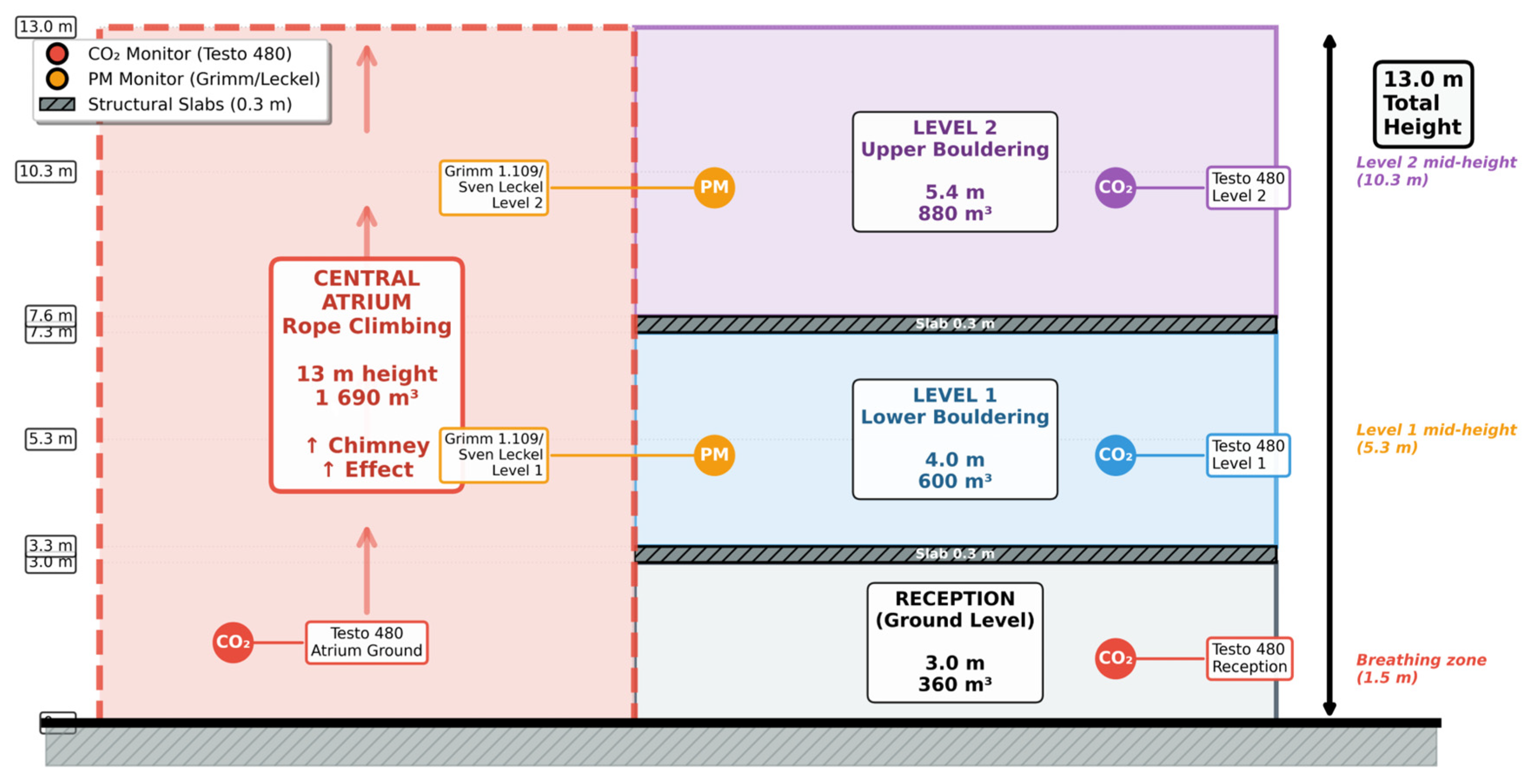
3. The open-plan layout features a central rope-climbing atrium extending from ground level to ceiling (~130 m
2, 13 m height, ~1690 m
3). This height creates a pronounced vertical ‘chimney effect’ that drives the upward movement of contaminant-laden warm air. Two bouldering levels are arranged as partial balconies open to the atrium: Level 1 (~150 m
2, 4 m height, ~600 m
3) and Level 2 (~220 m
2, ~880 m
3). The reception area is located at ground level (~120 m
2, 3 m height, ~360 m
3). These elements are shown schematically in
Figure 1. Flooring consists of high-density foam crash mats (~50% of bouldering areas) and epoxy flooring elsewhere; climbing holds are manufactured from polyurethane or fiberglass-reinforced polyester resin.
Mechanical ventilation consists of ceiling-mounted ducted HVAC units (Mitsubishi FDUM56KXE6F) operating as recirculation systems without a dedicated outdoor-air supply. Each unit accommodates an optional coarse-dust panel pre-filter (model UM-FL1EF) without ISO 16890 (ePM) indicated by the manufacturer [
40] and with estimated functional performance in the lower MERV range (MERV 5–8) [
41]. These filters provide limited removal of fine and ultrafine fractions. A heat recovery air exchange unit on the upper level remained inactive during the study; fresh-air exchange occurred exclusively through incidental infiltration. The term ‘mechanical ventilation’ is used throughout to denote forced air recirculation without outdoor-air fraction, distinct from supply ventilation systems that introduce outdoor air. During the mechanically ventilated scenario, systems operated at the high airflow setting (10 m
3 min
−1). Pre-filters were maintained at 2–4-week intervals consistent with the manufacturer’s recommendations.
The facility operates daily between 10:00 and 22:00. Daily cleaning (06:00–10:00) includes sweeping and mopping of floors and vacuum cleaning of crash mats; holds are washed weekly on a rotational schedule. The cleaning protocol was identical throughout all monitoring days and was not modified for this study.
2.2. Monitoring of Air Quality
Monitoring was conducted under two scenarios: (i) mechanical ventilation deactivated (natural ventilation) and (ii) mechanical ventilation activated. For each condition, five independent campaigns were conducted following identical cleaning protocols; the two most representative consecutive days were selected based on comparable occupancy patterns, absence of extraordinary events or atypical activities, and stable operating conditions. All inter-scenario evaluations relied on temporally normalized metrics (1 min averaged concentrations, time-weighted mean values during matched activity periods, and per capita indicators) to ensure comparability despite minor differences in observation intervals.
The natural ventilation scenario corresponds to 26–27 November 2025 (Wednesday–Thursday), with outdoor temperatures of approximately 6 °C and indoor temperatures maintained at 19–20 °C. The mechanically ventilated scenario corresponds to 14–15 January 2026 (Wednesday–Thursday), with outdoor temperatures of approximately −3 °C and similar indoor conditions.
Table 1 summarizes all monitoring days, instruments, parameters, and sampling intervals.
Because monitoring campaigns were conducted in late autumn and winter, results may partially reflect seasonal influences. Future studies should include additional scenarios to evaluate seasonal variability.
2.3. Instrumentation and Analytical Methods
Indoor air quality was assessed using continuous monitoring of CO
2, temperature, relative humidity (Testo 480), and size-segregated PM (Grimm 1.109), complemented by 24 h gravimetric sampling (Sven Leckel LSV3 and LVS6 RV) in accordance with EN 12341:2014 [
42].
The Testo 480 (Testo SE & Co. KGaA, Titisee-Neustadt, Germany), equipped with an NDIR sensor, recorded CO2, temperature, and relative humidity at 1 s intervals. The Grimm 1.109 aerosol spectrometer (Grimm Aerosol Technik, Hamburg, Germany) determined particle mass concentrations and size distributions using optical dynamic light scattering at 6 s intervals. Optical PM mass concentrations were interpreted as indicative values, as particle density and refractive index of chalk may differ from factory calibration aerosols.
The LSV3 and LVS6 RV impactors (Sven Leckel Ingenieurtechnik, Berlin, Germany) collected particles on 47 mm filters (Albet Labscience, Dassel, Germany), which were gravimetrically quantified using an analytical balance (Ohaus Discovery DV 215 CDM; Ohaus Corporation, Switzerland; readability 0.01 mg). Filters were conditioned for at least 24 h (20 ± 1 °C, 50 ± 5% RH), handled with antistatic tweezers, and weighed three times before and after sampling. PM mass concentrations (C) were calculated as:
where
C is expressed in µg m
−3,
m_post (mass of the filter after sampling) and
m_pre (the mass of the same filter before sampling) in mg and
V_N (normalized sampled air volume) in Nm
3.
Particle-loaded filters were further characterized by scanning electron microscopy (SEM; Tescan Vega 3, Tescan Orsay Holding, Brno, Czech Republic) after gold sputter-coating (JEC-3000FC, JEOL Ltd., Tokyo, Japan). Three-dimensional surface morphology was additionally examined using a laser confocal microscope (Olympus LEXT OLS4000). Elemental composition was determined by portable X-ray fluorescence (Niton XL3t GOLDD+ XRF Analyzer, Thermo Fisher Scientific, Waltham, MA, USA) and inductively coupled plasma mass spectrometry (ICP-MS Model 2050 LF, Shimadzu Corporation, Columbia, MD, USA). Selected filters were digested using aqua regia (1 mL HNO
3 65% + 3 mL HCl 37%) prior to ICP-MS analysis. Technical specifications are summarized in
Table 2. All equipment was calibrated by manufacturers or accredited external laboratories.
The Grimm 1.109 was installed at a fixed location on Level 1 (1.5 m above floor level) throughout all monitoring periods, while gravimetric sampling was performed at Level 1 (LSV3, PM2.5) and Level 2 (LVS6 RV, PM10), enabling vertical comparison. The Testo 480 operated in a mobile configuration, alternating between zones on different days to assess spatial variability. PM monitoring focused on bouldering areas, which represent worst-case exposure conditions due to intensive chalk use, frequent reapplication, dynamic movements, and surface disturbance. Bouldering accounted for approximately 75% of facility usage based on survey data.
CO
2, temperature, and relative humidity were measured sequentially across three zones (reception, upper bouldering, ground-level rope climbing) to evaluate spatial variability and chimney-effect-driven air exchange. All measurements were conducted at breathing-zone height (1.5 m) in accordance with ISO 16000 [
43] and ASHRAE 62.1 [
23]. Given the demonstrated vertical homogeneity of CO
2, gravimetric PM measurements at Levels 1 and 2 were considered representative of facility-scale exposure.
2.4. Occupancy Documentation and Data Normalization
Facility occupancy was recorded at approximately 30 min intervals through direct visual headcount, cross-referenced with reception entry logs. ‘Low occupancy’ was defined as periods with fewer than 10 people, minimal climbing activity, and negligible chalk generation. ‘High occupancy’ (active climbing) was defined as periods with at least 15 simultaneous occupants, sustained climbing activity, high chalk use, and increased surface disturbance. The uncertainty associated with each occupancy count is estimated at around 2 persons per interval.
The recorded occupancy ranged from 3 people (early morning, Day 1) to 72 people (peak evening, Day 2). Time-weighted mean occupancies during active climbing periods (14:00–20:30) were 41.7 persons under natural ventilation (Day 1: 40.3; Day 2: 43.1) and 31.6 persons under mechanical ventilation (Day 3: 32.1; Day 4: 31.2). The naturally ventilated scenario exhibited 24.2 percent higher occupancy during active periods (
Table 3). During low-occupancy periods, the respective time-weighted means were 4.2 and 10.2 persons. This systematic occupancy difference highlights the need for per capita normalization to isolate ventilation effects from occupancy-driven variability.
2.5. Survey Instrument and Distribution
A structured questionnaire (
Appendix A), available in Romanian, English, and French, was completed by 61 respondents. It comprised 22 items in five domains: (1) demographics and facility use (8 items); (2) chalk-related behaviors (3 items, including intensity on a five-point Likert scale [
44]); (3) perceived air quality (5 items, including a 10-point VAS [
45]); (4) respiratory symptoms (4 items); and (5) awareness and attitudes (2 items plus open-ended recommendations).
The anonymous survey was conducted between 26 November 2025 and 17 January 2026, which overlapped with environmental monitoring. Paper questionnaires were available at the reception (estimated 5–7 min completion time), supplemented by a Google Forms online version. No incentives were offered. All responses were anonymous and could not be matched to specific monitoring days; perception data, therefore, reflect the general user experience over the study interval. Informed consent was obtained through a mandatory checkbox; no personally identifiable information was collected.
2.6. Data Analysis and Statistical Methods
Data quality control included assessment of completeness, identification of anomalous values, and verification of temporal continuity; data availability was 100% across all periods. High-resolution data (Testo 480: 1 s; Grimm 1.109: 6 s) were aggregated to 1 min means for analysis.
Per capita pollutant concentrations were calculated by normalizing mean concentrations to time-weighted mean occupancy during active periods. This normalization was used to distinguish ventilation effects from occupancy-driven variability. It provides a specific indicator that remains comparable across scenarios and avoids misinterpretation caused solely by differences in crowding. The time-weighted mean occupancy was calculated by weighting each recorded occupancy value by the duration of the interval it represented and was computed as:
where
Oi is the occupancy recorded during interval
i, and
ti is the duration of that interval.
CO2 increments (ΔCO2) are defined as indoor–outdoor differences: ΔCO2 = CO2_indoor – CO2_outdoor.
The coefficient of variation (CV) was expressed as the ratio between the standard deviation and the mean, multiplied by one hundred to convert the value into a percentage, in accordance with the procedure described in EN ISO 5725-1:2023 [
46].
Differences between ventilation scenarios were assessed using Welch’s
t-test for unequal variances [
47], reported as t(df), p with sample sizes. Survey data were analyzed using one-way ANOVA for multi-level categorical factors [
48], Welch’s
t-tests for two-group comparisons, and Spearman rank correlations for ordinary variables [
49]. Effect sizes are reported as η
2 (ANOVA) and Cohen’s d (standardized mean differences); adjusted post hoc p-values were obtained using Tukey’s HSD [
50].
The percentage of time exceeding guideline values was calculated as the ratio of 1 min intervals above the threshold to total intervals. As no WHO guideline exists for PM1, exceedance analyses for this fraction were conservatively referred to the PM2.5 guideline. The analysis focused on descriptive and inferential statistics under real-world conditions rather than predictive modeling.
3. Results
3.1. User Perception of Indoor Air Quality: Questionnaire Results
In relation to objectives (iii) and (iv), a structured perception survey was administered to assess user awareness of IAQ conditions. A total of 61 complete questionnaires were collected. The respondents were primarily climbers (72.1%, n = 61), followed by parents or child supervisors (13.1%, n = 8) and facility staff (9.8%, n = 6); 4.9% reported multiple roles. The sample included 59.0% male and 39.3% female participants, with one respondent not stating gender. The most represented age groups were 25–34 years (27.9%) and 35–44 years (26.2%), followed by 18–24 years (16.4%), under 18 (16.4%), and over 45 (13.1%).
Most of the visits occurred during peak hours (54.1% between 18:00 and 21:00; 31.1% between 15:00 and 18:00). Sessions typically lasted 1–3 h (95.1%). Bouldering was the primary activity for 49.2% of respondents, while 26.2% practiced both disciplines equally and 24.6% mainly rope climbing.
Chalk use was widespread: 90.2% used powder chalk, 4.9% alternated between powder and liquid, 1.6% used only liquid chalk, and 3.3% reported no use. Usage intensity was mostly moderate (45.9%), light (31.1%), or heavy (19.7%).
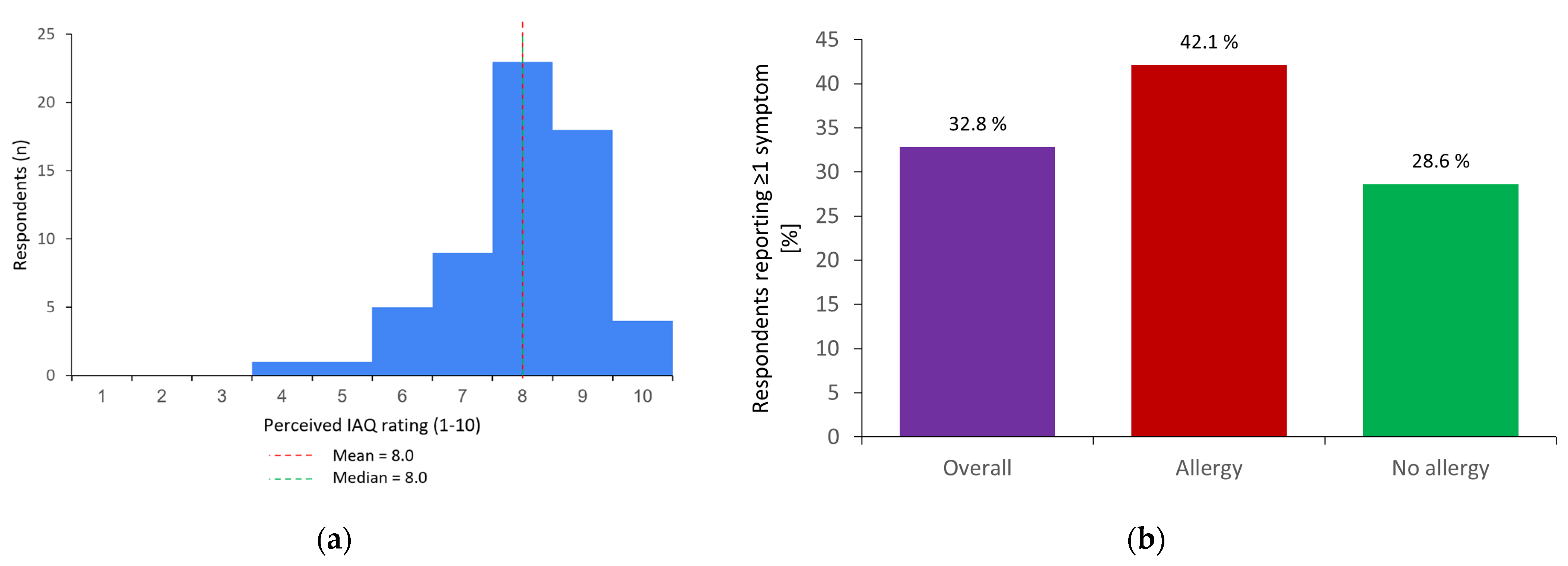
The overall perceived IAQ (1–10 scale) had a mean of 8.0 (median = 8; SD = 1.21).
Figure 2 shows IAQ ratings and prevalence of symptoms. Parents/guardians (8.5) and respondents with multiple roles gave slightly higher ratings than staff (6.7). By activity type, IAQ ratings were 8.44 for mixed-discipline, 7.90 for bouldering, and 7.73 for rope climbing.
The perceived dust (5-point scale) had a mean score of 3.69 and the perceived air freshness was 3.44. The usefulness of IAQ studies in sports facilities was rated highly (4.56/5), while the environmental comfort that influences the choice of the gym received a moderate score (3.20/5).
In general, 32.8% reported at least one respiratory or irritation symptom during or after climbing, most frequently sneezing (n = 13), persistent cough (n = 6), eye irritation (n = 6), and throat irritation (n = 6). Symptom prevalence was higher among respondents with allergies (42.1%) than those without (28.6%); no symptoms were reported by participants with self-reported asthma. Most respondents were unsure whether symptoms were resolved after leaving (52.5%), while 26.2% reported resolution and 4.9% persistence.
The mean IAQ scores showed only modest variation with the intensity of chalk use (8.42 for light users; 7.86 to 8.00 for moderate/heavy), while respondents who did not use chalk reported lower scores (6.0). Open-ended comments frequently cited ventilation adequacy, chalk dust accumulation, thermal conditions, and the need for more frequent cleaning. Several respondents suggested encouraging reduced chalk use, considering liquid chalk, and implementing operational measures to improve perceived air freshness.
Statistical comparisons were conducted to evaluate whether the IAQ ratings (1–10 scale) differed between subgroups of the respondents. One-way ANOVA, Welch’s t tests, and Spearman correlations were applied as appropriate (n = 61). Symptom status was the only significant predictor: respondents who reported at least one respiratory or ocular symptom assigned lower IAQ scores compared to asymptomatic users (7.20 ± 1.28, n = 20 vs. 8.39 ± 0.97, n = 41; ANOVA: F(1,59) = 16.29,
p < 0.001, η
2 = 0.216; Welch’s t(30.0) = −3.67,
p < 0.001, d = −1.10). Staff members tended to provide lower IAQ ratings than climbers and parents (7.12 ± 1.81, n = 8 vs. 8.13 ± 1.06, n = 53), although this difference was not statistically significant (Welch’s t(7.7) = −1.54,
p = 0.164). IAQ ratings did not vary across climbing activity types (bouldering/rope/mixed; ANOVA: F(2,58) = 1.54,
p = 0.224). No significant effects were observed for respiratory conditions (allergies/asthma/other; Welch’s t(35.8) = −1.24,
p = 0.222), smoking status (ANOVA: F(3,57) = 0.89,
p = 0.451; ρ = −0.021,
p = 0.871). All adjusted post hoc
p values (
p-adj) > 0.05 indicate that no post hoc comparison was statistically significant. The complete statistics are provided in
Table 4.
3.2. Spatial and Temporal CO2 Dynamics
To achieve goal (i), CO2 concentrations were monitored in all functional zones under both ventilation regimes.
CO
2 concentrations varied strongly with occupancy patterns and ventilation regimes in all monitored zones (
Table 5). All CO
2 values reported in this section are absolute indoor concentrations, while per capita values and incremental metrics are derived as indoor–outdoor differences. Under natural ventilation, mean CO
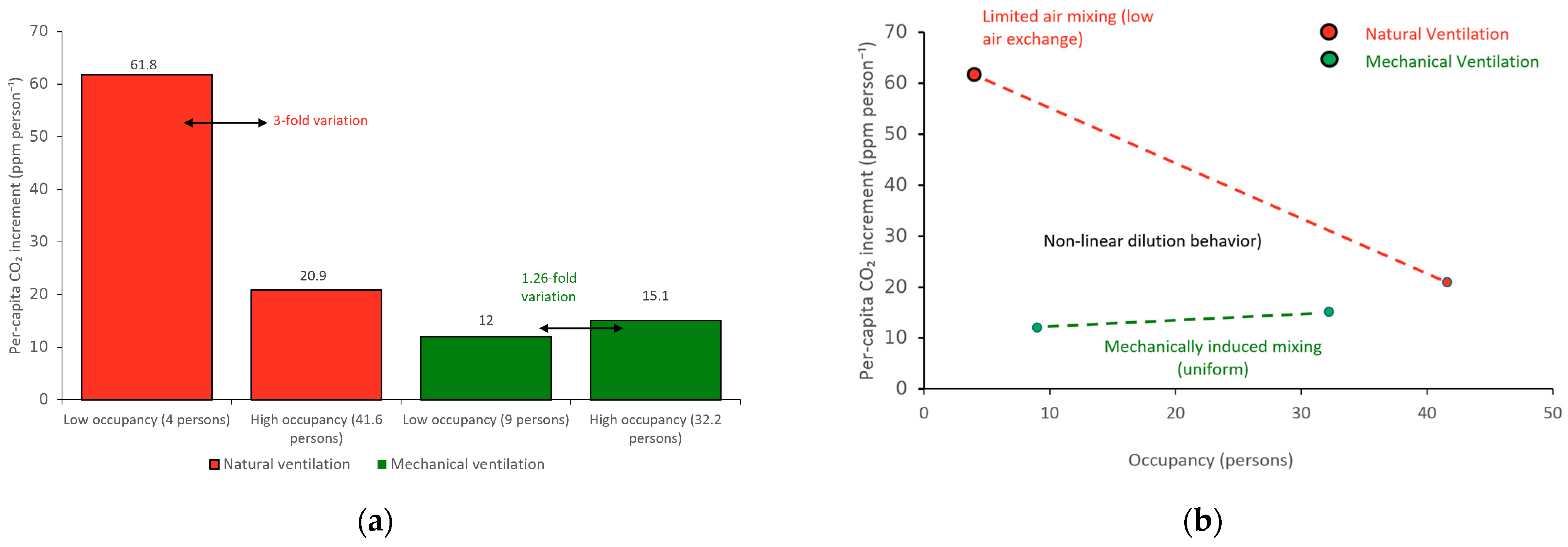
2 concentrations during low-occupancy conditions in the reception area averaged 646.9 ± 18.4 ppm, corresponding to an increase per capita of 61.8 ppm person
−1 above outdoor baseline levels. During high-occupancy active climbing periods without mechanical ventilation, combined campaign mean CO
2 concentrations across climbing zones reached 1269.3 ± 390.6 ppm (
Table 5). Despite higher absolute values, the accumulation of CO
2 per capita decreased to 20.9 ppm person
−1, indicating occupancy-dependent dilution under conditions of increased activity and spatial mixing.
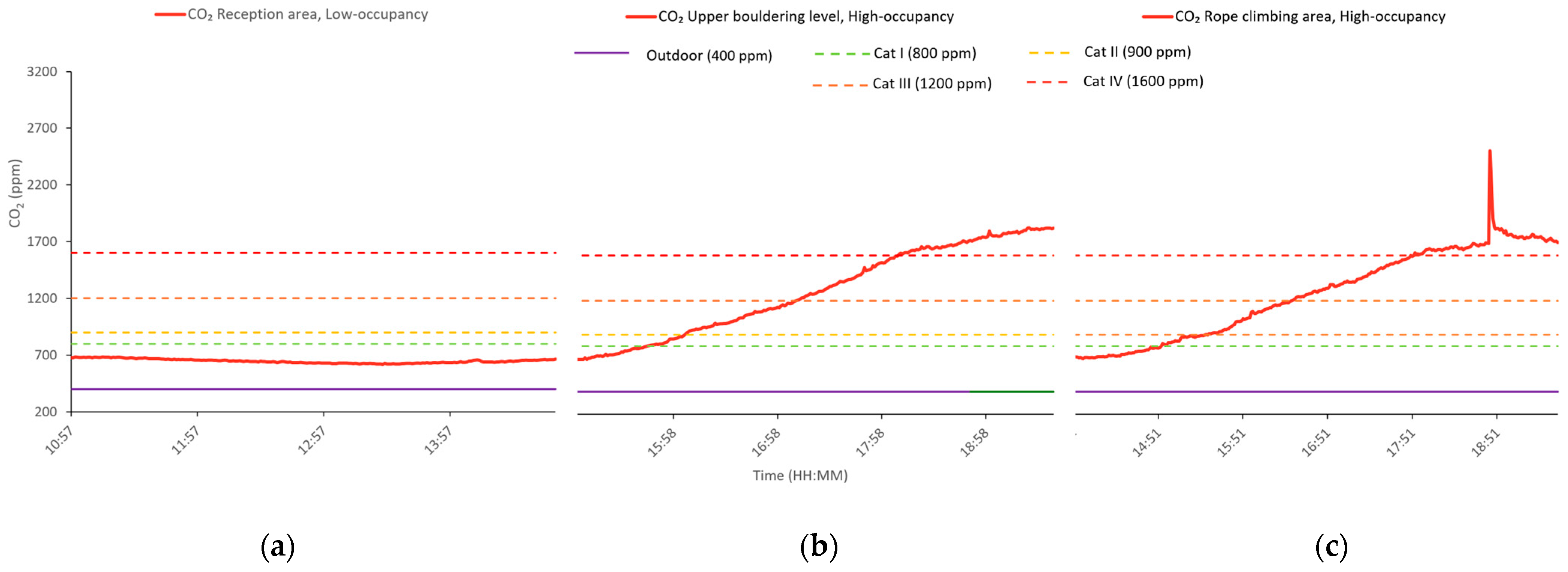
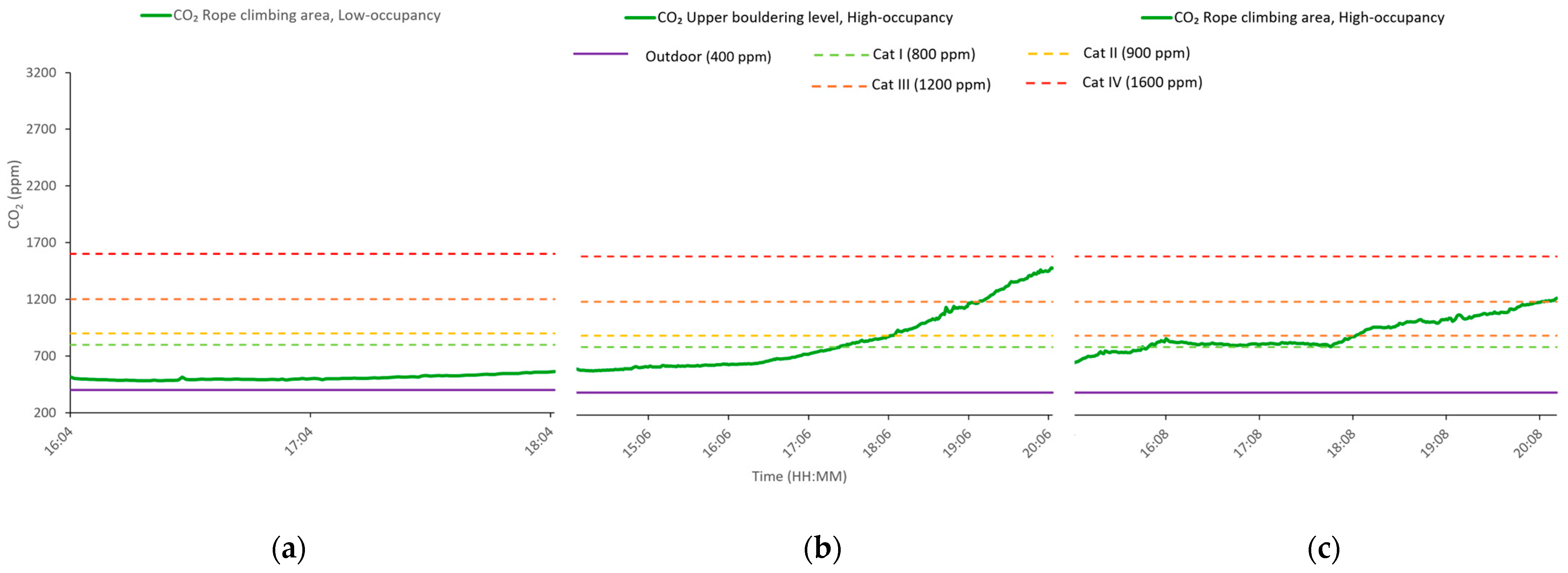
Temporal analysis indicated that CO
2 levels increased during high-occupancy active climbing periods and decreased during low-occupancy intervals, both in the natural ventilation scenario (
Figure 3) and in the mechanical ventilation scenario (
Figure 4).
The temporal variability under natural ventilation was high, with coefficients of variation of approximately 31% and short-duration peak concentrations exceeding 3500 ppm during sustained high-occupancy events (
Table 5). The short CO
2 peak around 18:51 coincided with a small group of children clustering around the sensor, creating a brief local crowding event. Similar brief CO
2 spikes have been observed in high-turnover sports environments (e.g., fitness centers during intense activity periods [
15]) and are typically short-lived and not sustained over time.
Mechanical ventilation modified the CO2 behavior. During high-occupancy periods, combined campaign mean concentrations decreased to 886.4 ± 210.5 ppm, while temporal variability was reduced to 25.2%. Peak concentrations under mechanical ventilation remained below 1505 ppm across all monitored days. Under low-occupancy conditions with mechanical ventilation active, CO2 concentrations averaged 508.1 ± 21.6 ppm, corresponding to a per capita increment of 12.0 ppm person−1. Across all campaigns, per capita CO2 accumulation varied non-linearly with occupancy. Under natural ventilation, per capita CO2 increments varied threefold between poorly mixed low-occupancy periods (61.8 ppm person−1) and high-occupancy periods (20.9 ppm person−1).
Mechanical ventilation reduced this variation to 1.26 times (12.0–15.1 ppm person
−1), resulting in a more uniform dilution efficiency across occupancy levels and architectural zones (
Table 5;
Figure 5).
The spatial coherence of the CO
2 concentrations in the vertical profile was high. Interzonal differences between measurements conducted at approximately 1.5 m and 10.5 m elevation ranged from 1.13% to 6.62% of combined campaign mean values, with coefficients of variation between 0.57% and 3.32% (
Table 6). These results indicate a near-uniform CO
2 distribution across the monitored height range during active climbing periods.
3.3. Particulate Matter Concentrations and Ventilation Effects
In relation to objectives (i) and (ii), size-segregated PM concentrations were assessed under natural and mechanical ventilation, including a comparison between post-cleaning baseline and active climbing periods. Particulate matter exhibited a pronounced dependence on both occupancy level and activity intensity, with distinct responses between size fractions and ventilation regimes. Continuous monitoring at the fixed Level 1 location captured the dynamics of PM10, PM2.5, and PM1 representative of bouldering activity, allowing comparison between low-occupancy baseline conditions and high-occupancy active climbing periods.
3.3.1. Low-Occupancy Baseline
During low-occupancy baseline periods, particulate matter concentrations were lower than during active climbing but still elevated relative to outdoor background levels [
16,
17,
23] (
Table 7). Values are mean ± SD from 1 min averages. Under natural ventilation and sedentary activity, PM
10 concentrations remained below 20 µg m
−3, with PM
2.5 and PM
1 exhibiting low absolute values and limited variability. When mechanical ventilation was active in low-occupancy conditions, PM concentrations increased across all size fractions, reflecting the contribution of climbing activity despite the reduced occupancy. These results indicate a non-zero indoor particulate baseline influenced by residual dust reservoirs and low-intensity use.
3.3.2. High-Occupancy Conditions Without Mechanical Ventilation
Under high-occupancy active climbing conditions without mechanical ventilation, all fractions of particulate size reached markedly elevated concentrations (
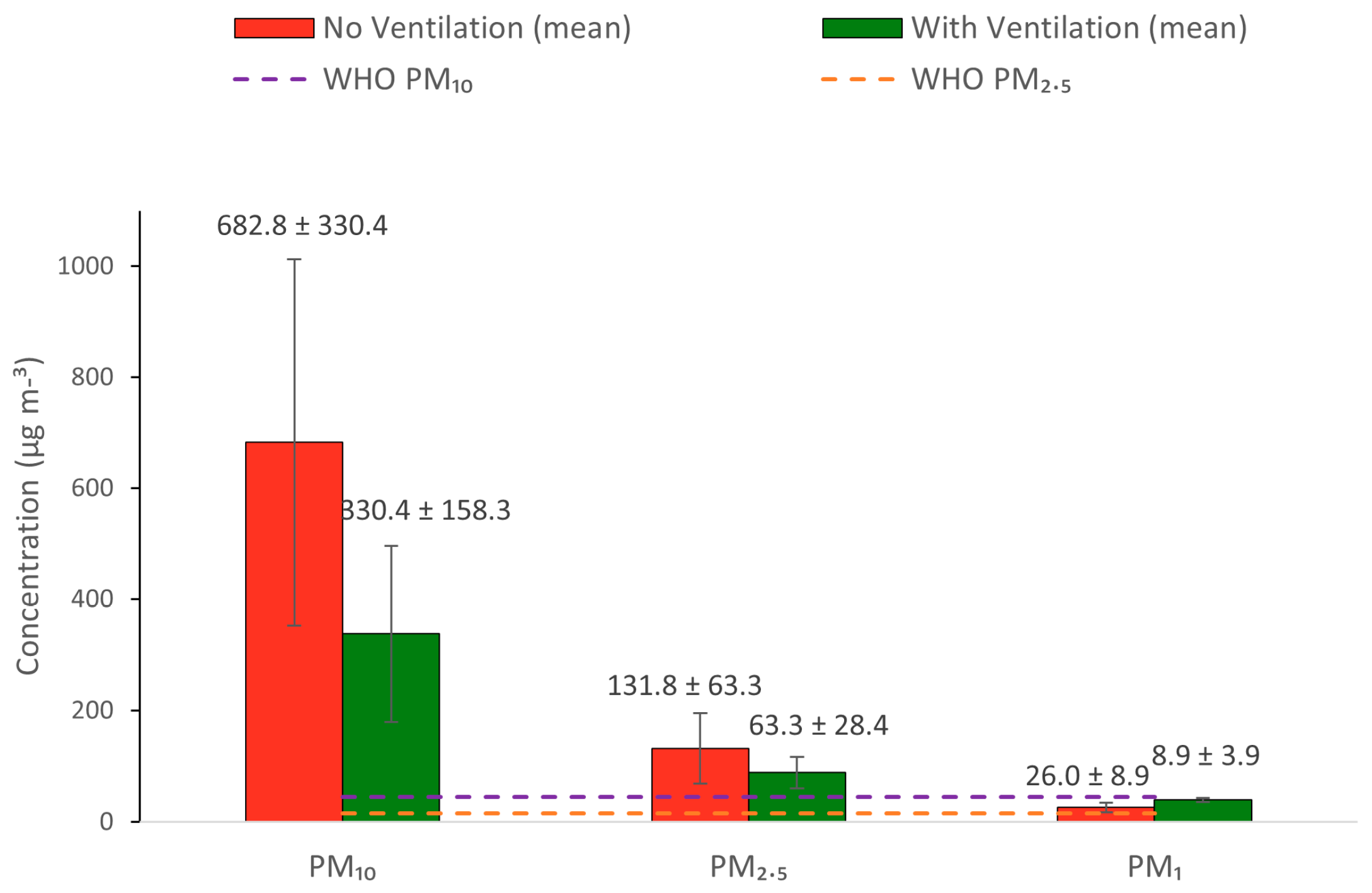
Table 8). Values are mean ± SD from 1 min averages. The mean concentrations of PM
10 from the combined campaign were 682.8 ± 330.4 µg m
−3, with peak values exceeding 2500 µg m
−3 during the maxima of activity in the evening. The combined means of PM
2.5 and PM
1 reached 131.8 ± 63.3 µg m
−3 and 26.0 ± 8.9 µg m
−3, respectively. These levels reflect sustained chalk generation, extensive surface disturbance, and limited dilution capacity under naturally driven airflow. Short-duration peaks coincided with periods of intense user activity, consistent with activity-driven resuspension and the accumulation of coarse and fine particulate fractions throughout the facility.
Temporal variability between monitoring days was limited relative to absolute concentration levels, indicating consistent accumulation of particles under comparable occupancy and activity patterns. Fine particles (PM2.5) accounted for approximately 19% of PM10 mass, while PM1 contributed less than 5%, reflecting the dominance of coarse and fine particulate fractions during non-ventilated operation.
3.3.3. High-Occupancy Conditions with Mechanical Ventilation
Mechanical ventilation reduced coarse and fine particulate concentrations during high-occupancy periods.
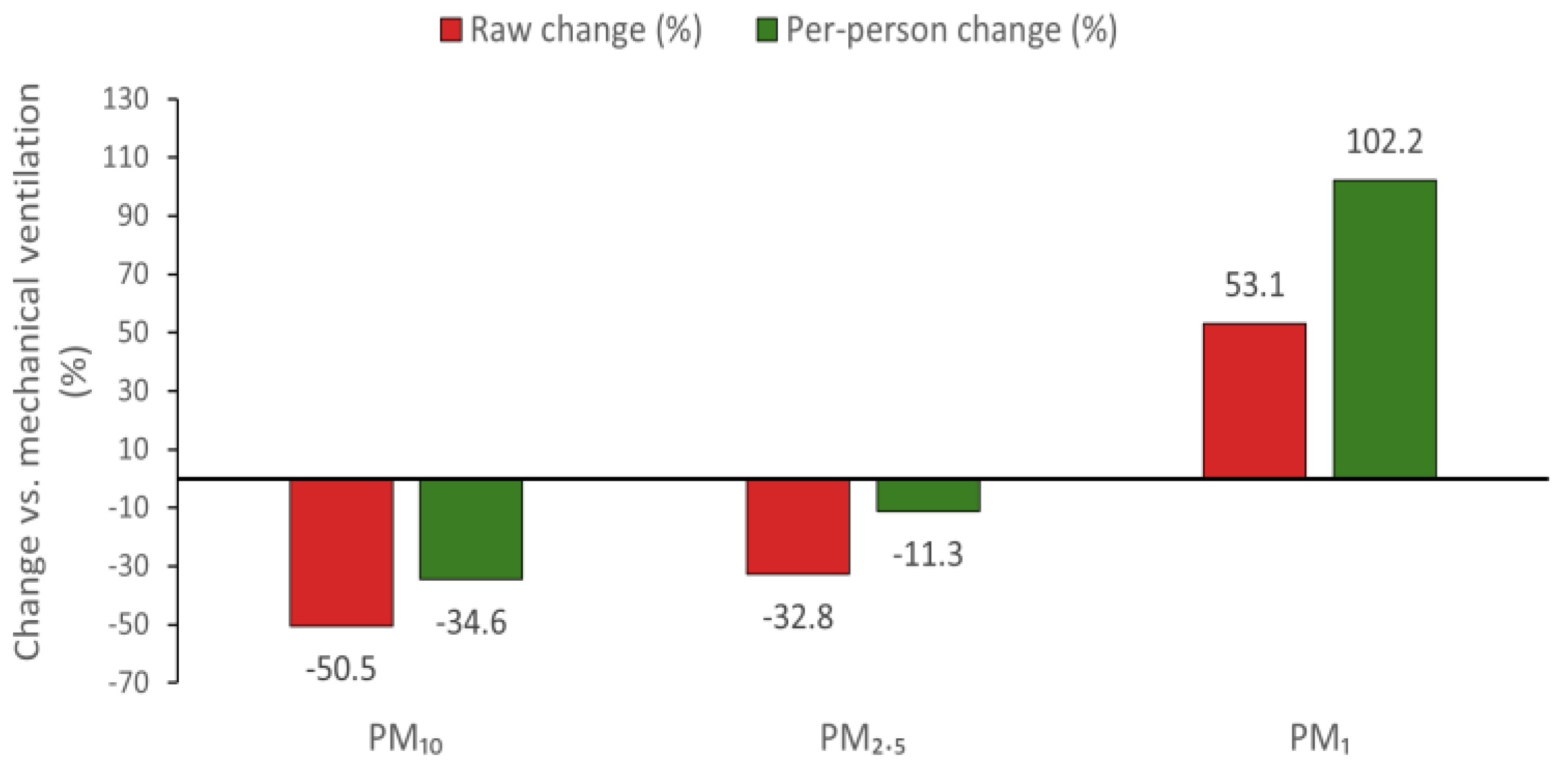
Table 9 reports combined campaign mean concentrations (mean ± SD) and the corresponding percentage differences relative to natural ventilation (%), shown both as raw values and as occupancy-normalized values (per capita). Negative percentages indicate reductions compared with the no-ventilation scenario, while positive percentages denote increases. Combined campaign mean PM
10 concentrations decreased by approximately 50% relative to non-ventilated conditions, with an occupancy-normalized reduction of 37.7%. PM
2.5 levels declined more modestly, with a per capita reduction of 15.3%.
Figure 6 presents the percentage changes in the concentrations of PM
10, PM
2.5, and PM
1 under mechanical ventilation compared to the no-ventilation conditions. The red bars represent the raw percentage differences between the campaigns, while the green bars show occupancy-normalized changes that account for the mean occupancy differences (39.7 people without ventilation vs. 33.0 people with ventilation). Negative values indicate reductions, and positive values indicate increases. Mechanical ventilation reduced coarse and fine particulate fractions, with per capita decreases of 37.7% (PM
10) and 15.3% (PM
2.5), while PM
1 concentrations increased by 93% on a per capita basis. Based on the high-occupancy active-climbing intervals listed in
Table 1 and the use of 1 min averaged data, the resulting sample sizes were n
1 = 884 (natural ventilation) and n
2 = 587 (mechanical ventilation). Welch’s
t-tests confirmed significant between-scenario differences: PM
10, t(1355.02) = 26.74,
p < 0.0001, n
1 = 884, n
2 = 587; PM
2.5, t(1317.11) = 17.78,
p < 0.0001, n
1 = 884, n
2 = 587; PM
1, t(1303.30) = −40.60,
p < 0.0001, n
1 = 884, n
2 = 587.
Figure 7 compares the combined mean concentrations (µg m
−3) of PM
10, PM
2.5, and PM
1 measured during high-occupancy active climbing periods under conditions of no-ventilation (red bars) and mechanical ventilation (blue bars). Horizontal dashed lines indicate the values of the WHO 24 h air quality guideline for PM
10 (45 µg m
−3; purple line) and PM
2.5 (15 µg m
−3; orange line); no WHO guideline is defined for PM
1. The bars represent combined mean concentrations for two monitoring days, and the error bars denote ±1 standard deviation. During active climbing periods, instantaneous PM
10 concentrations reached 15.2× the WHO 24 h guideline (45 µg m
−3; +637 µg m
−3) under natural ventilation and 7.5× (+293 µg m
−3) under mechanical ventilation. Similarly, PM
2.5 concentrations corresponded to 8.8× the guideline (15 µg m
−3; +103 µg m
−3) and 5.9× (+73 µg m
−3), respectively. These values represent derived exceedance indices rather than compliance assessments.
3.4. Gravimetric Particulate Matter Concentrations (Normalized Volumes)
To address objective (v), gravimetric sampling was performed to determine reference PM concentrations at 24 h. Gravimetric sampling of particulate matter was performed between 12 and 18 January 2026 using filter-based impactors operated at controlled, normalized flow rates. The exact 24 h sampling intervals for FM1–FM4 filters correspond to the mechanically ventilated campaign indicated in
Table 1, specifically the continuous periods on 14 to 15 January 2026 during which the impactors LSV3 (FM1, FM3) and LVS6 (FM2, FM4) operated. These intervals are fully aligned with the corresponding optical monitoring periods, ensuring consistent temporal context across both gravimetric and optical datasets. The gravimetric method defined in EN 12341:2014 represents the official reference method for the determination of the mass concentration of PM
10 and PM
2.5 and constitutes the regulatory basis for the official reporting of air quality in Europe. In accordance with this standard, particulate matter concentrations are reported as daily mean values, directly comparable with guideline limits based on health.
For each valid sample, the normalized air volume (Nm
3) reported by the impactor was used to calculate the concentrations of the particle mass. The initial and final filter masses (mg) were determined under identical conditioning and weighing conditions, and the collected particulate mass was calculated as the difference between post- and pre-sampling filter weights. Therefore, the resulting concentrations represent 24 h mean mass concentrations (µg m
−3), as required for compliance assessment against the values of the World Health Organization (WHO) guideline. A summary of the gravimetric results is presented in
Table 10, along with the WHO 24 h guideline values and their differences (%).
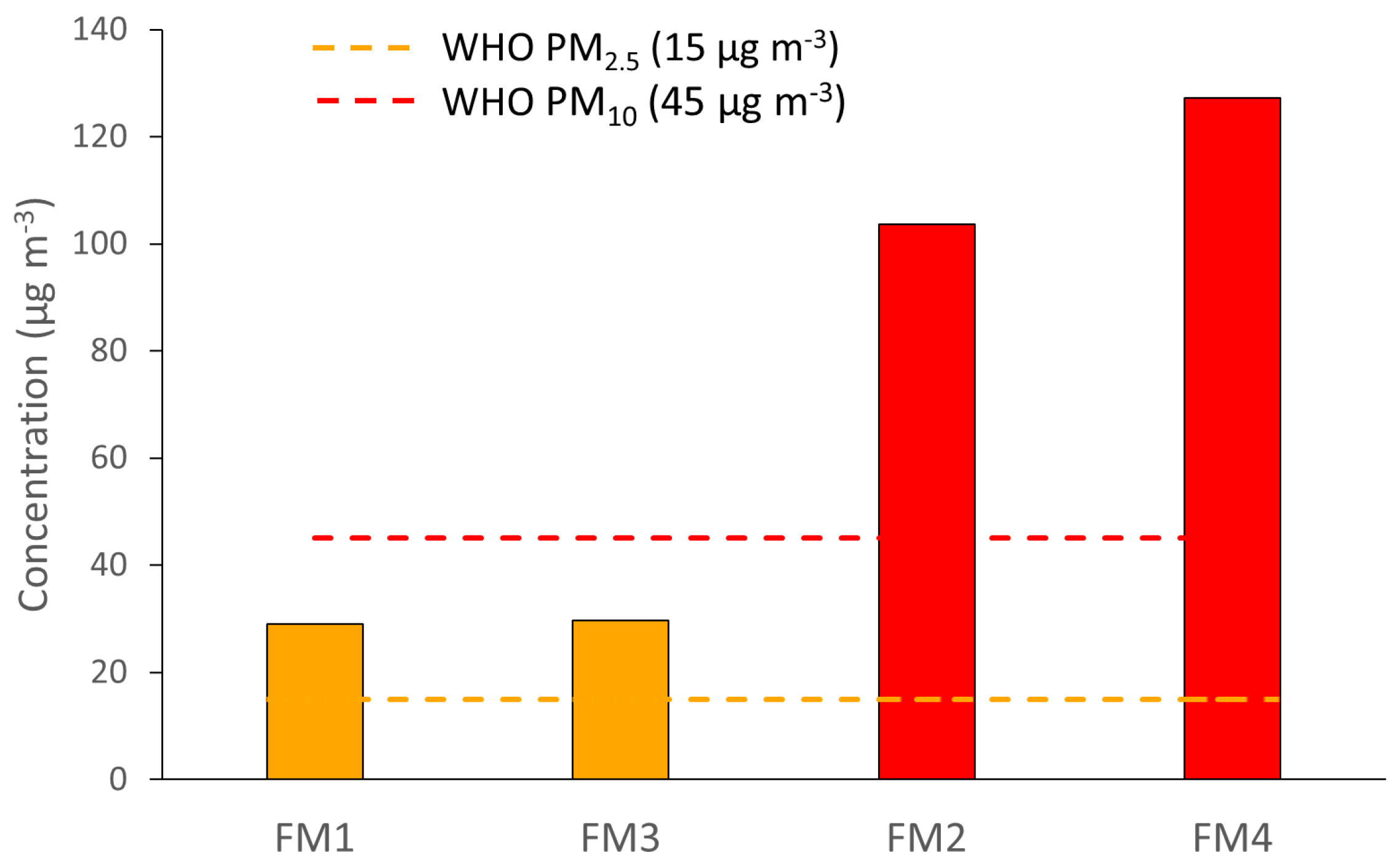
For PM2.5, the two independent filters (FM1 and FM3) yielded highly consistent results: 28.99 µg m−3 and 29.72 µg m−3, respectively. These daily mean concentrations correspond to 1.93× and 1.98× the WHO 24 h PM2.5 guideline (15 µg m−3), i.e., +13.99 µg m−3 and +14.72 µg m−3 above the guideline. Because gravimetric sampling follows EN 12341:2014 reference method, these exceedances represent valid 24 h compliance comparisons.
For PM10, higher daily mass loads were observed. The filter FM2 yielded 103.72 µg m−3 and the filter FM4 yielded 127.16 µg m−3. These values correspond to 2.30× and 2.82× the WHO 24 h PM10 guideline (45 µg m−3), equivalent to +58.72 µg m−3 and +82.16 µg m−3 above the guideline threshold. As these concentrations were determined using the EN 12341:2014 gravimetric reference method, the exceedances constitute valid 24 h regulatory comparisons.
The gravimetric PM
2.5 and PM
10 results described above are shown in
Figure 8, together with their respective WHO guideline comparisons.
3.5. Morphological Characterization of Particulate Matter by Electron and Laser Confocal Microscopy
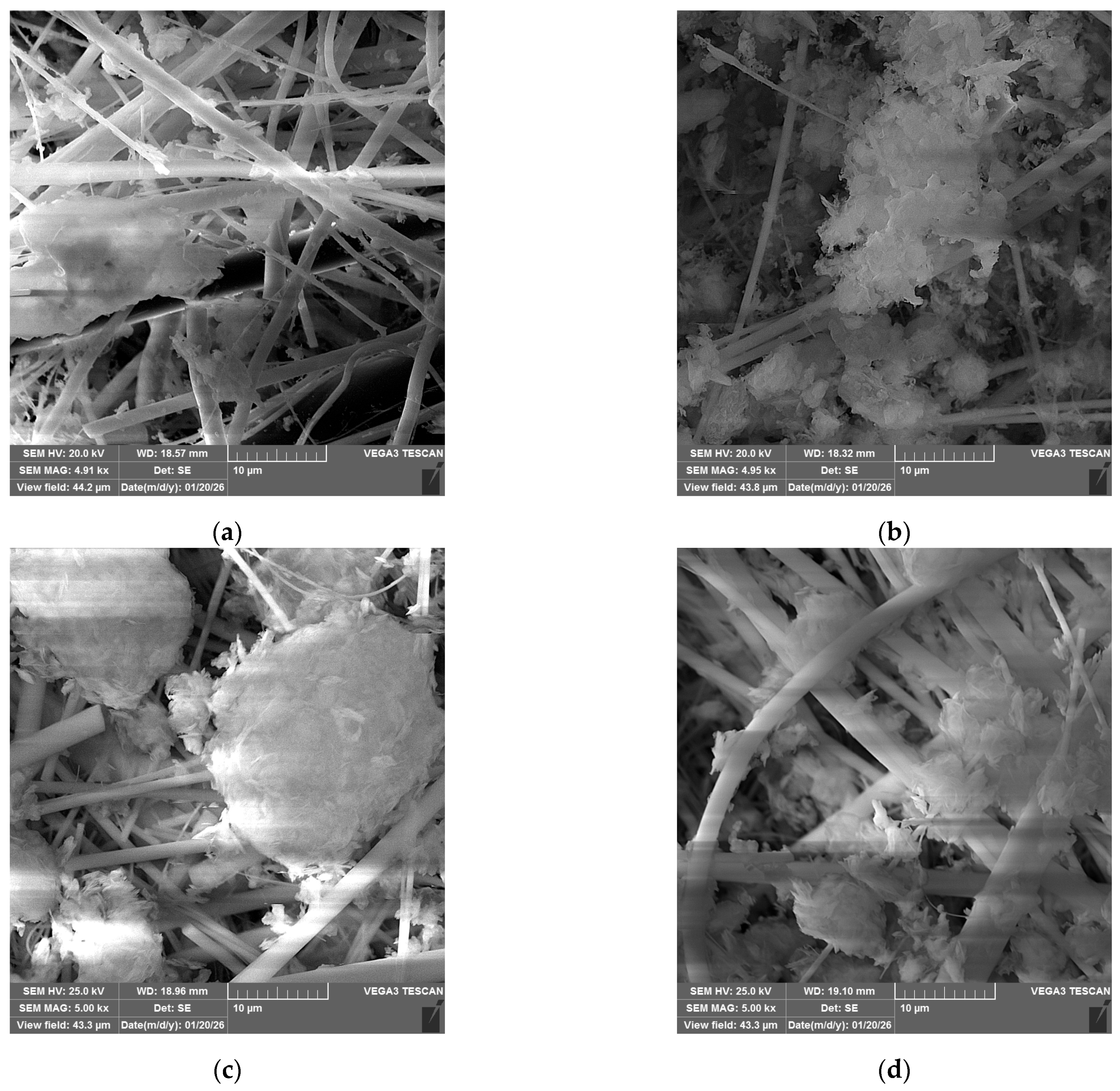
In relation to objective (vi), the particle morphology was characterized using SEM and laser confocal microscopy. The morphological characterization of particle-loaded filters was performed using scanning electron microscopy (SEM) and laser confocal microscopy to assess particle shape, aggregation state, and surface features. SEM images were obtained from filter FM1 (PM2.5), filter FM2 (PM10), and filter FM5, representing fresh magnesium carbonate powder collected from a newly opened container. In addition, SEM imaging of an unloaded filter edge was performed to document the morphology of the filter substrate.
3.5.1. Scanning Electron Microscopy Observations
The morphological characteristics of the particulate matter and the filter substrate are presented in
Figure 9, representative SEM images illustrating PM
2.5 (FM1 filter), PM
10 (FM2 filter), fresh magnesium carbonate powder (FM5 filter), and the edge of an unloaded filter. The images were acquired using the Tescan VEGA3 scanning electron microscope at a magnification of 5000 times.
SEM images of filter FM1 (PM2.5) revealed fine, irregularly shaped particles forming compact agglomerates. Individual particles exhibited plate-shaped angular morphologies with fractured surfaces and sharp edges. Fine debris adhered to larger fragments, indicating secondary aggregation and redeposition processes.
The FM2 filter (PM10) showed a more heterogeneous particulate structure, characterized by larger irregular fragments frequently coated with finer particles. The coarse particles acted as carriers for the fine debris attached, resulting in composite agglomerates with rough and fragmented surfaces.
The reference filter FM5 exhibited comparatively homogeneous particles with smoother surfaces and more clearly defined plate-like or blocky shapes. Agglomerates were less compact, and extensive fine-particle coatings were absent, indicating minimal mechanical alteration of the primary chalk material.
SEM imaging of the unloaded filter edge showed a network of smooth cylindrical fibers with uniform diameters and clean surfaces, characteristic of the filter matrix. No particle agglomerates or surface coatings were observed. This confirms that the irregular and fragmented structures identified in FM1 and FM2 originate from deposited particulate matter rather than from the filter substrate itself.
3.5.2. Observations of Laser Confocal Microscopy
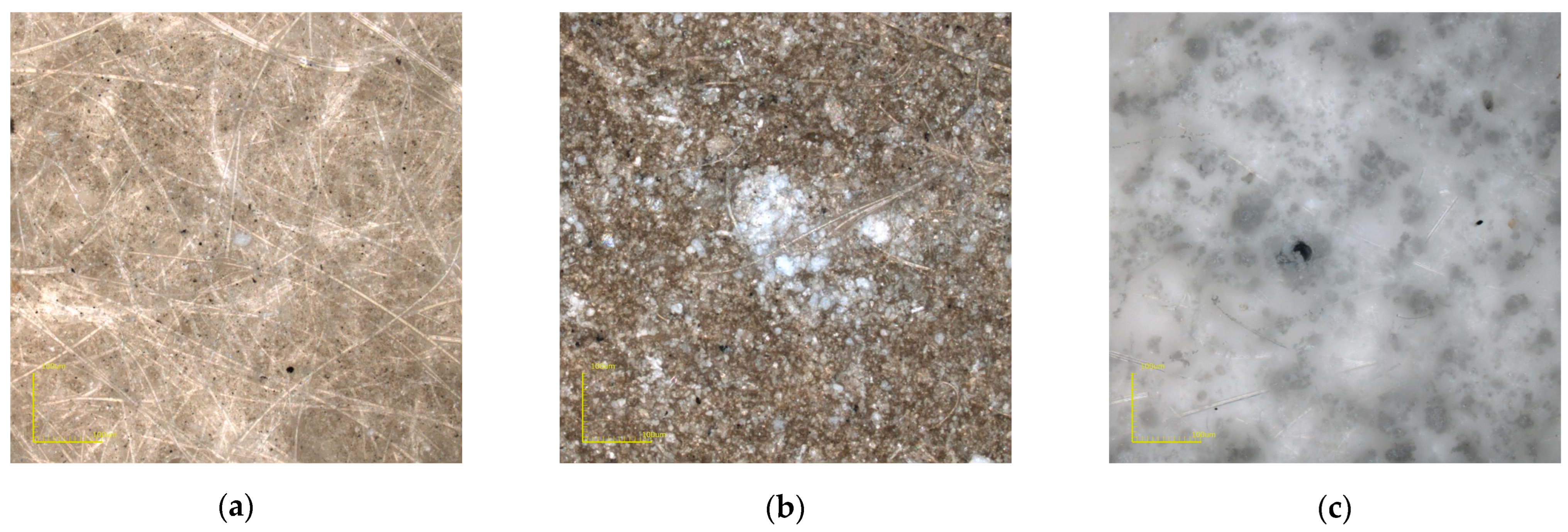
Laser confocal microscopy provided complementary information on the spatial distribution and surface coverage of the particulate matter on the filters (
Figure 10).
The FM1 sample (PM2.5) exhibited a uniform background dominated by the fibrous filter matrix, with fine, dispersed particulate deposits appearing as small, low-contrast agglomerates distributed across the surface. Individual particles were not optically resolved, indicating deposition in the fine size range and limited vertical buildup.
In contrast, the FM2 sample (PM10) showed clearly distinguishable, optically bright particulate clusters superimposed on the filter substrate. These deposits appeared as irregular, heterogeneous agglomerates with lateral dimensions that extend well into the coarse particle range, consistent with the PM10 collection. The spatial distribution was non-uniform, with localized regions of increased surface loading, reflecting episodic deposition and resuspension processes characteristic of active climbing conditions.
The reference sample FM5, which consists of fresh magnesium carbonate powder, had a markedly different appearance. The surface was characterized by a more homogeneous and continuous particulate coverage, with diffuse, light-toned agglomerates evenly distributed throughout the field of view. The distinct coarse clusters were less pronounced, and the overall texture appeared smoother and more uniform than in the airborne PM samples.
In general, laser confocal imaging highlights clear differences in surface coverage and aggregation between fine airborne PM, coarse PM10, and pristine chalk material, supporting the size-resolved gravimetric and optical measurements.
3.6. XRF Characterization of Size-Resolved Particulate Matter
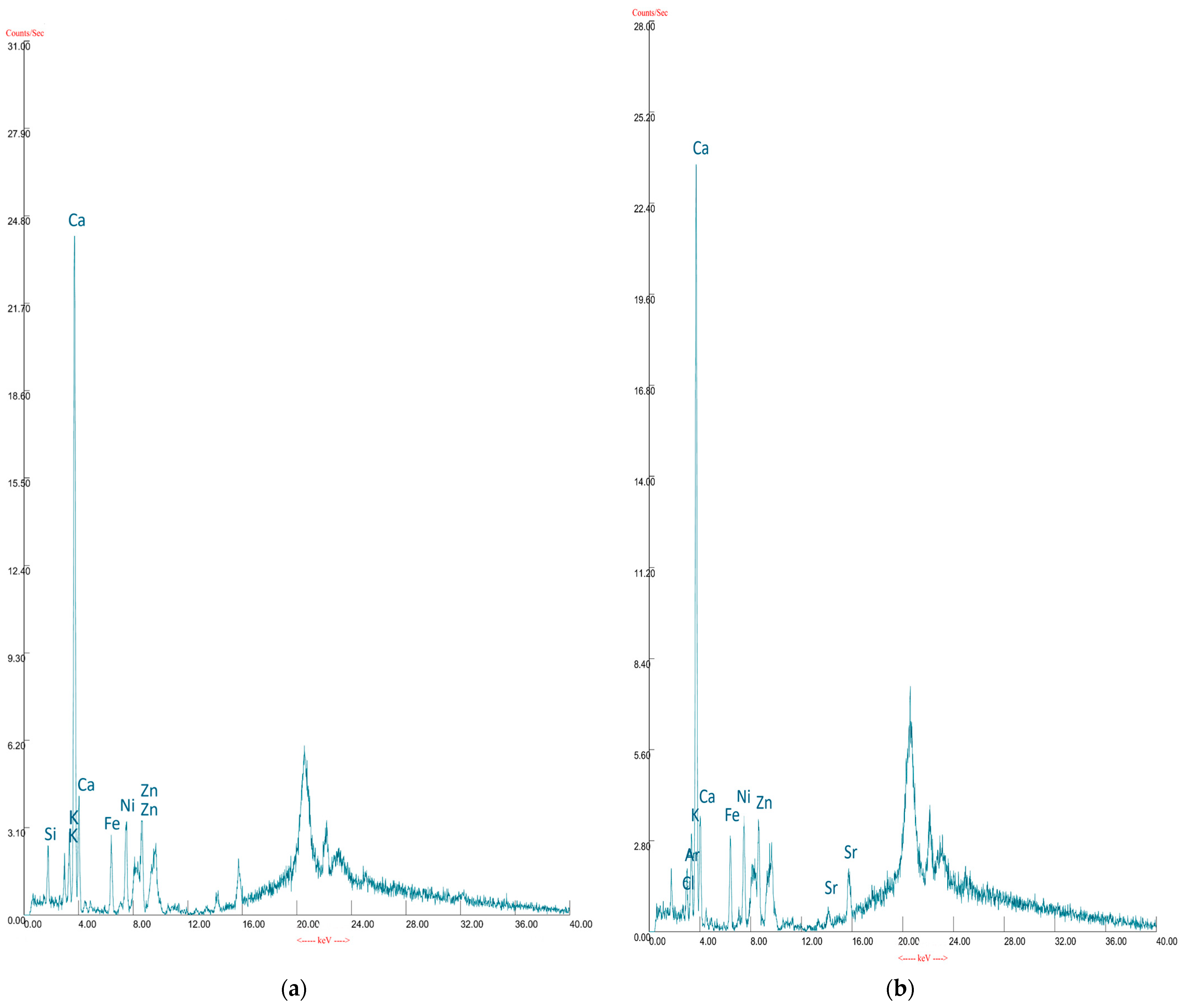
In addition, to address objective (vi), the elemental composition was determined by X-ray fluorescence (XRF). XRF analysis identified a mixed elemental signature in the size fractions (
Figure 11). The PM
10 sample exhibited a composition dominated by Ca (≈3.55%
m/
m) and K (≈0.70%
m/
m), with mid-trace levels of Fe (≈0.37%
m/
m), Zn (≈0.12%
m/
m), and Cu (≈0.05%
m/
m), and traces of W, Ti, Zr, Sr, V, Mo, Nb, Rb, and Sc; Pb, Cd, and Sb were below the instrument detection limits (Niton XL3t GOLDD+). Spectral features for PM
10 confirmed Ca, K, Fe, Zn, Ni, with minor Sr and Cl, while Ar lines reflected the ambient measurement environment. The PM
2.5 spectrum showed Ca, K, Fe, Zn, Ni, and Si, the latter attributable to the quartz-fiber substrate and mineral fine dust. Peaks correspond to detected elemental signatures (e.g., Ca, K, Fe, Zn, Ni), shown as intensity counts (a.u.) as a function of photon energy (keV).
These results indicate substantial contributions from carbonate/mineral material (Ca with co-occurring Sr), wear-related inputs (Zn, Fe), and minor pigment/fill components (Ti, Zr). Combined with microscopy, the XRF data support a heterogeneous aerosol consisting of coarse mineral carriers with attached fine debris consistent with mechanical generation and resuspension under active climbing conditions.
Given the thin-deposit geometry and the instrument’s limited sensitivity to light elements (C, O, Mg), the XRF results are interpreted semi-quantitatively; direct confirmation of magnesium carbonate is not possible by XRF alone.
3.7. Trace Metal Composition by ICP-MS
Complementing the XRF analysis under objective (vi), trace metal quantification was performed by ICP-MS, a mass spectrometry method used to determine the concentrations of chemical elements at extremely low levels (down to ppt–parts per trillion). ICP-MS analysis performed on representative filters (PM2.5: FM1, FM3; PM10: FM2, FM4) showed that only calcium (Ca), magnesium (Mg), and iron (Fe) were present above the quantification limits, together contributing less than 0.05% of total particulate mass. This extremely low metallic fraction indicates that the PM consists entirely of carbonate species and other non-metallic constituents, characteristic of climbing chalk.
In the PM2.5 fraction, calcium dominated the fine fraction (0.021%), exceeding magnesium (0.012%) and resulting in a Ca:Mg mass ratio of 1.75. Iron appeared only at trace levels (0.001%). Total metallic content reached 0.034% of PM2.5 mass.
In contrast, in the PM10 fraction, magnesium (0.031%) exceeded calcium (0.013%), yielding a Ca:Mg ratio of 1:2.4, while iron remained constant (0.001%). Total metals accounted for 0.045% of PM10 mass. The strong Mg enrichment and relative Ca depletion indicate that coarse particles originate from the fragmentation of magnesium-enriched mineral cores (e.g., magnesite).
The inversion of Ca:Mg ratios between fine (Ca-rich) and coarse (Mg-rich) fractions provides unambiguous evidence of size-dependent mineral fractionation: fine particles derive from Ca-enriched surface abrasion, whereas coarse particles reflect the bulk Mg-rich composition of climbing chalk. No other anthropogenic trace metals (Pb, Cd, Cr, Ni, Cu, Zn) were detected.
5. Conclusions
5.1. Evidence-Based Findings
This study quantified the exposure of particulate matter and CO
2 in an open-plan indoor climbing gym, evaluated the performance of the mechanical ventilation system under operating conditions, and linked objective exposure metrics with user perception. Through a comprehensive multi-zone assessment that integrates continuous monitoring of PM and CO
2 with gravimetric, microscopic, and compositional analyses, together with user-reported data, the study successfully achieves these goals. Specifically, the six research objectives have been systematically addressed: objectives (i)–(iii) through continuous multi-zone monitoring of PM and CO
2 with occupancy normalization (
Section 3.2,
Section 3.3,
Section 4.2 and
Section 4.3); objective (iv) through the perception survey (
Section 3.1 and
Section 4.1); objective (v) through gravimetric reference measurements (
Section 3.4 and
Section 4.4); and objective (vi) through characterization of (SEM, XRF, and ICP-MS;
Section 3.5,
Section 3.6,
Section 3.7 and
Section 4.5). By uniquely integrating multi-zone particulate and CO
2 measurements with gravimetric, microscopic, and chemical characterization, together with a structured assessment of user perception, this study provides the first comprehensive IAQ–perception investigation of an indoor climbing gym in Romania and one of the few internationally, underscoring its clear novelty and contribution to the current evidence base.
Reference gravimetric measurements performed according to EN 12341:2014 confirmed that particulate matter concentrations remained persistently and substantially above the WHO 24 h guidelines, PM2.5 exceeding the daily limit of health protection of approximately 193–198%, while PM10 exceeded its corresponding guideline by 230–283%. These 24 h exceedances demonstrate that particulate pollution in the facility investigated in this study is elevated and not limited to short-term activity peaks, reinforcing the need for mitigation strategies targeting both source control and dust-reservoir management. Mechanical ventilation significantly reduced coarse and fine particulate concentrations and improved CO2 control; however, because the installed filtration stage consists of coarse pre-filters with minimal efficiency for fine and ultrafine particles, absolute PM levels remained elevated. This indicates that dilution-based ventilation equipped with low-efficiency filters is insufficient to ensure health-protective indoor air quality in chalk-intensive sports environments under the specific architectural and operational conditions of the studied gym.
Carbon dioxide concentrations showed a strong dependence on occupancy and ventilation regime but exhibited near-uniform vertical distribution across the monitored volume, reflecting effective large-scale air mixing driven by activity and architectural features. In contrast, the behavior of particulate matter was more complex and strongly influenced by resuspension, deposition, and ongoing internal generation. These findings confirm that CO2 cannot be used as a proxy for particulate exposure in indoor climbing gyms within the conditions observed in the investigated facility.
The integration of gravimetric sampling with advanced morphological and chemical analyses, including SEM, XRF, and ICP-MS, provides a multi-layered characterization of particulate matter in indoor climbing gyms that extends beyond concentration-based assessment. This combined analytical framework indicates that airborne particles are generated by mechanical processes intrinsic to climbing activity, with magnesium carbonate chalk as the dominant contributor and additional inputs from surface abrasion. The persistence of fine particles under mechanical ventilation highlights the importance of particle size, aggregation, and resuspension dynamics in determining exposure.
Despite the objectively high concentrations of particulate matter, the responses to the questionnaire revealed a substantial gap between perception and reality. Most of the users rated the indoor air quality as good or particularly good, and subjective evaluations showed only a weak correspondence with measured pollutant levels. Statistical analyses reinforced this observation, indicating that the perception–reality gap was consistent between user groups and that individual characteristics, including respiratory sensitivity, did not significantly improve the ability to detect chalk-derived aerosols. Even symptomatic respondents continued to provide overall positive IAQ ratings, underscoring the limited sensory detectability of mineral particulate matter at the concentrations observed and highlighting the need for evidence-based operational strategies for effective indoor air quality management.
In general, this study indicates that the studied climbing facility functions as a high-exposure environment that is not adequately addressed by current indoor air quality regulations. By integrating multi-zone exposure measurements, detailed size-resolved particulate characterization, and user perception data, the work provides a comprehensive evidence base for understanding both the objective dynamics of particulate pollution and the discrepancy between measured conditions and subjective air quality assessments.
5.2. Recommendations and Forward-Looking Considerations
The findings highlight several key lessons learned: CO2-based ventilation benchmarks do not adequately reflect particulate-dominated environments; users demonstrate a clear perception–reality gap; and effective mitigation requires a combination of engineering and operational interventions, including enhanced filtration, optimized ventilation strategies, targeted removal of dust reservoirs, cleaning of climbing equipment between sessions, and activity-specific exposure management. These insights offer actionable guidance for facility operators, occupational health specialists, and policymakers, while establishing a solid foundation for future intervention studies, multi-site evaluations, and the refinement of performance criteria aimed at protecting climbers, staff, and other frequent users.