1. Introduction
Salt mining often results in the creation of large underground chambers, caverns and irregular openings [
1,
2]. Over time, these openings may become unstable because rock salt undergoes slow, continuous deformation under long-term stress [
3,
4]. This time-dependent creep may lead to gradual subsidence or, in some cases, collapse [
5,
6,
7]. Such ground movements jeopardize the structural integrity of buildings, infrastructure, and groundwater systems [
8,
9].
In recent decades, several significant subsidence zones and sinkholes have emerged above salt and potash mines, particularly in regions where long-term monitoring and documentation have been limited [
10,
11,
12]. These occurrences highlight the challenges in forecasting ground movements when essential information, such as historical deformation records or detailed maps of past mining activities, is incomplete [
1,
13,
14]. Consequently, risk assessment and long-term predictions regarding future behavior remain highly uncertain [
15,
16,
17].
A fundamental challenge arises from the fact that laboratory-scale creep tests only partially capture the in situ rheological behavior of salt. Most experimental campaigns are relatively short-lived and conducted under idealized loading paths and stress regimes that deviate from the conditions prevalent in salt mines—particularly regarding low deviatoric stresses and multi-decadal temporal scales [
18,
19,
20]. Consequently, constitutive parameters derived from laboratory data may exhibit high fidelity in reproducing experimental results, yet their extrapolation to long-term field conditions remains speculative [
15,
19,
21]. There is a consensus that field-scale measurements are imperative to constrain creep models, as laboratory data alone lack the necessary representativeness [
22,
23].
When empirical data are fragmentary or inconsistent, a parsimonious modeling approach is often the most robust. Instead of introducing multiple uncertain variables, the model should prioritize key parameters governing long-term salt mechanics—for instance, by employing a Norton-type power law, which is defined solely by the creep constant A and the stress exponent n [
19,
24]. This approach ensures the analysis remains anchored in fundamental geomechanics while minimizing aleatory uncertainty [
25,
26]. Such a strategy proves effective in data-constrained scenarios, yielding reliable results for stability assessment [
22,
23,
27].
Despite extensive research on salt rheology, a significant research gap exists in understanding the long-term (secular) geomechanical evolution of mines where archaic, non-instrumented cavities interact with modern room-and-pillar systems. Most existing models are limited to short-term monitoring, leaving a void in the methodology for reconciling historical archival data with high-fidelity numerical forecasting. This study implements the aforementioned methodology at the Slănic Prahova site, one of Europe’s most extensive evaporite operations [
28]. Our analysis integrates three primary datasets: (i) historical cartography, mine layouts, and lithostratigraphic records, utilized to construct a high-fidelity 3D geological model within Leapfrog Works; (ii) experimental laboratory data, employed to derive the stress exponent (n) and the creep constant (A) for a simplified Norton power-law constitutive model [
29]; and (iii) multi-decadal displacement time-series, encompassing surface horizontal measurements (1994–2025) and underground monitoring (2004–2024) [
30], which serve as the empirical baseline for parameter calibration.
Salt extraction at Slănic Prahova spans over three centuries, reflecting the broader evolution of European evaporite mining techniques [
31]. Consequently, Slănic Prahova exhibits geomechanical challenges inherent to legacy salt mines, including phases of accelerated spatial expansion and localized instabilities. Comparable geomechanical evolutions are observed at the Asse II site (Remlingen-Semmenstedt, Wolfenbüttel district, Germany), where the historical sequence of excavations significantly dictates contemporary deformation kinematics [
32]. Similarly, the Kłodawa Mine (Kłodawa, Poland), operational since the 1950s, features a highly heterogeneous network of levels and voids; such complexity necessitates advanced numerical modeling to evaluate long-term structural integrity [
33]. Ancient evaporite operations in Europe further illustrate these challenges. The Wieliczka Mine, with over seven centuries of activity, presents an extensive system of chambers and galleries that serves as a critical benchmark for stability assessment in legacy salt workings [
34]. Furthermore, the Hallstatt mine (Salzkammergut region, Hallstatt, Austria) provides a unique longitudinal perspective on salt extraction, with operations extending back to the Bronze Age [
35].
The primary objective of this study is to develop a calibrated, secular-scale geomechanical model that reconstructs 190 years of mining history at Slănic Prahova. Specifically, the study aims to: (i) establish a transferable methodology for back-analyzing legacy excavations; (ii) calibrate mine-scale creep parameters using a hierarchical weighting of near-field and far-field data; and (iii) forecast the subsidence trajectory up to 2050 to inform future expansion plans. By addressing these objectives, the work provides a robust framework for assessing the structural heritage and long-term stability of complex evaporite deposits.
2. Materials and Methods
This study reconstructs the long-term deformation history of the Slănic Prahova salt mine and forecasts its structural stability through a rheological numerical framework. Geological datasets and historical mine layouts were integrated into a 3D geostatistical model within Leapfrog Works (version 2025.3, Seequent, Christchurch, New Zealand), subsequently discretized in Rhinoceros (version 7, Robert McNeel & Associates, Seattle, WA, USA) utilizing the Griddle plug-in, and exported to FLAC3D (version 9.3, Itasca Consulting Group, Inc., Minneapolis, MN, USA) for mechanical simulation. To balance computational efficiency with spatial resolution, a mesh sensitivity analysis was performed using varying element densities. The optimized grid ensures high-fidelity capture of high-gradient stress concentrations around rooms and pillars, as well as the time-dependent convergence of the voids, while maintaining manageable execution times.
Salt creep was described using a Norton power-law constitutive model. The fundamental creep parameters were initially derived from laboratory-scale steady-state phases and subsequently upscaled through iterative back-analysis of the mine-wide deformation field. This iterative calibration ensured that the numerical output replicates observed surface subsidence and underground displacement kinematics. A 215-year simulation was executed to track deformation trends and stress redistribution across the historical (1835–2025) and prognostic (2025–2050) horizons. Stability was quantitatively assessed by monitoring displacement evolution, strength-to-stress ratios in critical support elements (pillars and interlevel pillars), and the propagation of plastic (yielded) zones, which serve as indicators of progressive overstressing.
2.1. Mining History and Spatial Evolution
This deposit is located along the eastern margin of the Eastern Carpathians and constitutes part of the Middle Badenian evaporitic sequence, which hosts significant Miocene halite accumulations within the Carpathian foreland [
36,
37,
38]. The underground development of the Slănic Prahova salt mine is characterized by four distinct extraction stages, spanning from archaic bell-shaped cavities to modern room-and-pillar systems. The cumulative excavated volume reached 15,076,768.8 m
3 by 2019, with each phase contributing differently to the current stress field and surface subsidence.
2.1.1. Legacy Excavations (17th Century—1942)
Initial mining (1668–1854) utilized the bell-chamber method at sites such as Baia Verde and Baia Baciului. Due to the lack of precise surveys, these were incorporated into the 3D numerical framework as simplified open voids at t = 0 (1835), based on archival cross-sections. Quantifiable expansion began with Ocna din Vale (171,941 m
3) and Ocna din Deal (94,516.8 m
3), reaching depths of 150 m [
31]. The transition to large-scale trapezoidal chambers (1881–1942) via the Carol and Mihai mines added approximately 2.16 million m
3 of voids. These sectors were explicitly modeled as open voids at the onset of their documented intervals to account for their long-term rheological influence.
2.1.2. Large Chambers and Room-and-Pillar Transition (1943–1992)
The Unirea Mine (1943–1970) represents a critical geomechanical component, consisting of monumental trapezoidal rooms (56 m height) and a void volume of 2,903,131 m3. In 1970, the extraction paradigm shifted to the Victoria Mine’s room-and-pillar system. This mine, featuring 11 levels and an extraction ratio that triggered progressive deformation, accounts for 7,379,128 m3 (nearly 50% of the total site volume). Despite its orthogonal geometry, the Victoria sector remains the primary driver of regional subsidence.
2.1.3. Contemporary Operations (1990–2019)
Contemporary extraction shifted to the Cantacuzino Mine (1990–2019), where the room-and-pillar design was optimized for higher stress environments by increasing pillar widths (up to 18 m in lower levels). This sector contributed 2,362,324 m3. In the numerical model, these stages were sequenced chronologically to capture the cumulative rheological footprint induced by three centuries of extraction.
2.2. Surface and Underground Monitoring
Surface subsidence at Slănic Prahova has been continuously monitored since 1994 using a network of high-precision leveling benchmarks. In 2004, the network was expanded to improve coverage over the Victoria, Cantacuzino, and Old Mines sectors. The current system includes 105 benchmarks: 60 along five profile lines across Victoria, 29 along two lines across Cantacuzino, and 16 along three lines across the Old Mines. A full remeasurement campaign in 2022 reevaluated earlier benchmarks and improved the temporal consistency of the dataset. The leveling data indicate that subsidence remains active, with rates ranging between −2 to −10 mm per year. The highest values are concentrated above Victoria mine. Overall, the subsidence pattern mirrors the geometry and mining history of the underlying excavations. These long-term surface records serve as the primary calibration target for the numerical model and represent one of the most consistent deformation datasets currently available.
Underground monitoring began in 2004 to quantify the vertical convergence of interlevel pillars that separate mining horizons at the Cantacuzino Mine. These interlevel pillars are about 8 m thick and form the main load-bearing structures between levels, transferring stresses as the underlying rooms gradually converge due to salt creep. Fixed survey points were installed on the floors of Levels V–X to measure vertical deformations with high repeatability. Many points were strategically placed near newly observed fractures, allowing for focused monitoring of the most critical and structurally vulnerable zones. The resulting time series provides direct evidence of how interlevel pillars deform under long-term stress redistribution, especially in areas where fracturing indicates increased geomechanical activity. To ensure methodological transparency, the temporal framework of the study was divided into four distinct phases, as summarized in
Table 1.
2.3. 3D Geological and Mine-Geometry Modelling
Information on the geometry and geology of the Slănic Prahova mine was collected from multiple sources, including mining level plans, CAD drawings, technical reports, and monitoring records. Before starting numerical modeling, these materials were consolidated into a single, consistent dataset. This step is especially important for older mines, where data were generated at different times, in various formats, and for diverse operational requirements.
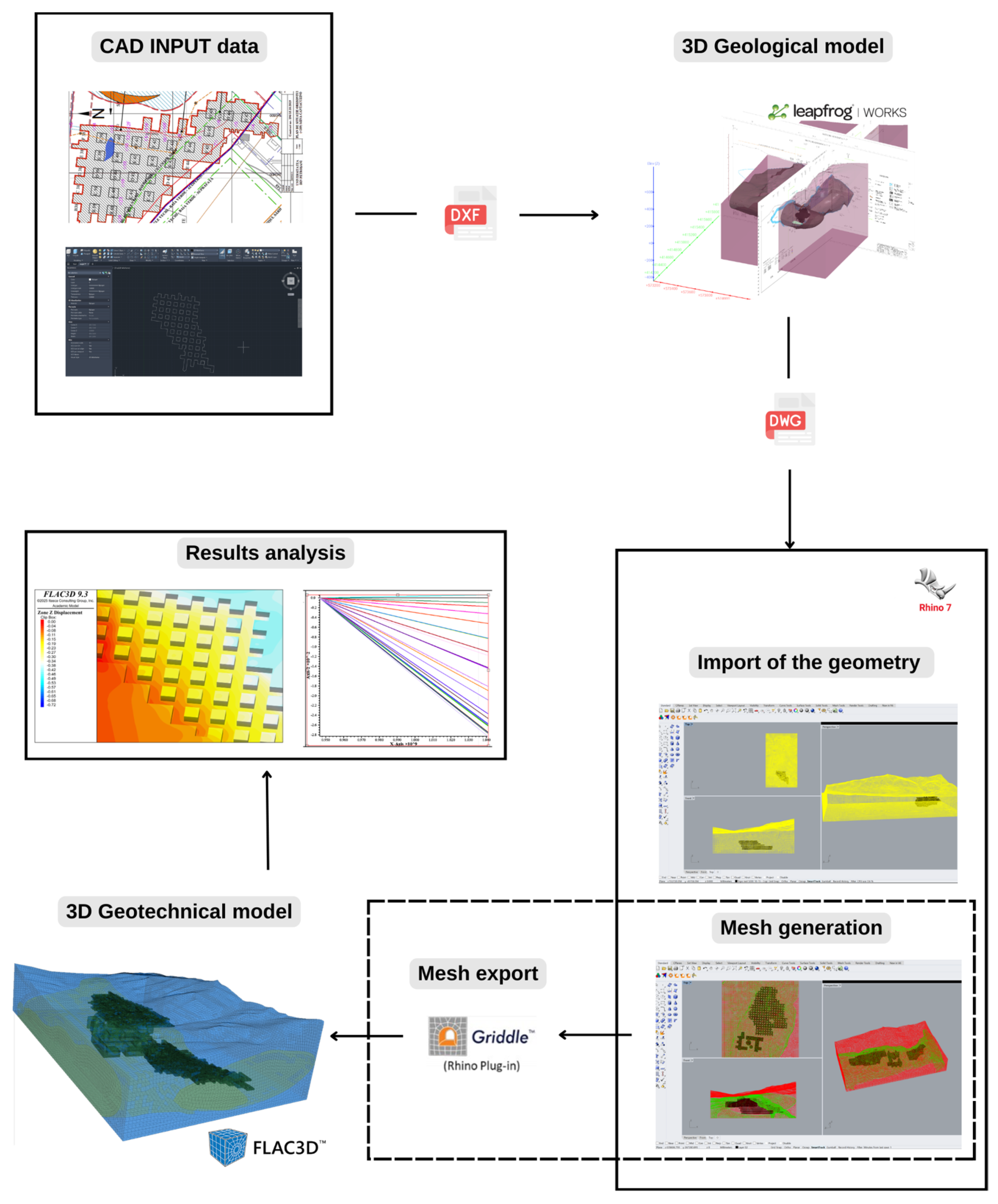
The first step involved building a 3D geological model that integrates all available records into a unified, cohesive visualization. This model serves as the foundation for subsequent geotechnical analysis and was created in Leapfrog Works using an implicit modeling method, enabling seamless updates of the entire model as new data is added. The finished 3D model incorporates both the mine’s geometry and the surface topography. The Leapfrog geometry was exported to Rhinoceros (Rhino version 7) to prepare the geological model for meshing and to address geometric inconsistencies that could compromise mesh quality. Meshing was performed with Rhino tools and an integrated Griddle plug-in, which generated a volume mesh compatible with FLAC3D.
The mesh was designed with local refinement around excavations, pillars, and other key zones, and progressively coarsened toward the far field to optimize computational efficiency for long-term simulations. The final grid was then imported into FLAC
3D for the numerical analyses.
Figure 1 summarizes the workflow from data collection and preprocessing to 3D geological modelling, mesh generation, FLAC
3D model setup, and interpretation of results.
2.4. Numerical Model
Three 3D numerical models were developed in FLAC3D to evaluate the influence of spatial discretization on predicted creep closure and subsidence, and to identify an optimal grid for reliable calibration against monitoring data. The models cover the Victoria–Cantacuzino field and include the mine openings, pillars, interlevel pillars, and the complete overburden up to the surface. The mechanical response was modeled using a Mohr–Coulomb failure criterion superimposed on the Norton visco-plastic law. This coupled constitutive approach allows for the simultaneous assessment of instantaneous shear/tensile failure and long-term rheological deformation.
To avoid boundary effects [
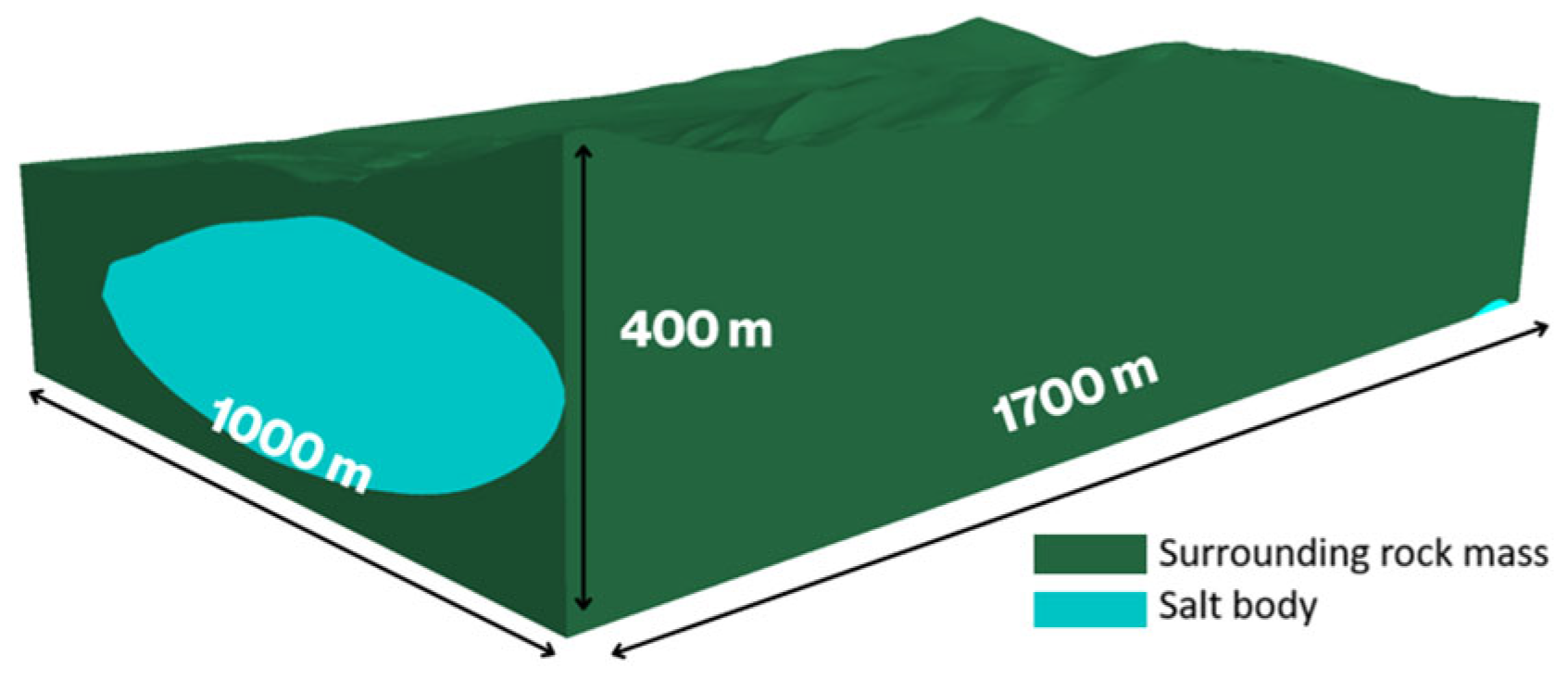
39], the domain extends beyond the mined area by about 100 m on the sides. As illustrated in
Figure 2, the total domain dimensions are 1700 m × 1000 m in plan and 400 m in height, with the mines located within the block. Mesh refinement was designed as a practical balance. The grid needed sufficient resolution to capture stress concentrations and the gradual creep-related convergence around openings, while remaining efficient for 215-year simulations. Consequently, a graded meshing approach was adopted: finer elements were assigned to the mined zones—specifically rooms, pillars, and their intersections—with element sizes progressively increasing toward the far-field boundaries and the ground surface. The three models differ mainly in the element size assigned to the main mining sectors (Cantacuzino, Victoria, and Unirea) and in the surface mesh resolution. To ensure numerical stability during the quasi-static solution of the long-term creep process, a local damping coefficient was applied. Furthermore, the simulation utilized the automatic time-stepping scheme inherent to FLAC
3D’s creep module. This approach dynamically adjusts the time increments to satisfy the stability criteria for the constitutive power-law, ensuring both convergence and accuracy across the extensive 215-year temporal horizon.
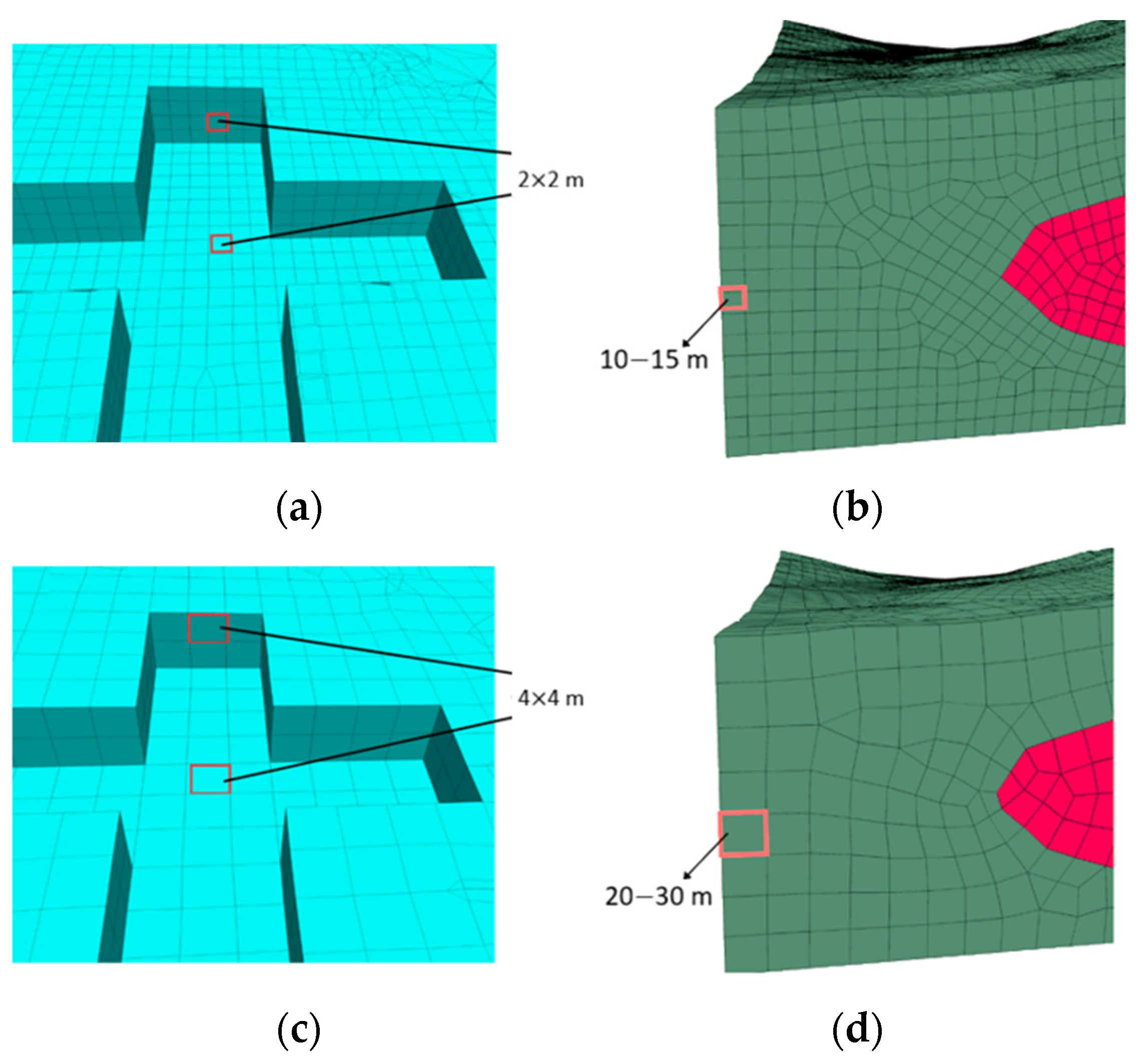
The mesh was refined step by step so we could see which changes came from the underground resolution and which came from the surface grid. From Model 1 to Model 2, the underground mesh in the Victoria and Cantacuzino sectors was refined while maintaining a constant surface mesh resolution. Model 3 further increased the resolution within the Cantacuzino mine, which has the monitoring stations and provides the main basis for calibration. Simultaneously, the surface mesh was refined to better align with benchmark spacing and to reduce differences in subsidence comparisons. As a result, the total zone count increased from 1.6 to 3.0 million.
Table 2 summarizes the zone counts and element sizes for all three models.
All simulations (Models 1–3) were performed in small-strain mode (model large-strain off) with creep enabled (model configure creep) using the power constitutive law. Gravity was set to 9.81 m/s
2, and initial stresses were initialized geostatically with a lateral stress ratio K
0 = 0.7 (zone initialize-stresses ratio 0.7). Normal velocities were fixed to zero on the lateral boundaries (East/West and North/South) and at the model base (velocity-normal = 0), ensuring a kinematically constrained far-field domain while allowing vertical deformation within the rock mass. Creep time integration used automatic time-step control (model creep timestep auto) with a minimum timestep of 1 × 10
−2 s and a maximum timestep of 86,400 s (1 day). The choice of a 1-day upper limit reflects the fact that the long-term phases of the simulation are governed by gradual, quasi-steady creep deformation under slowly varying conditions (years to decades), for which sub-daily temporal resolution is unnecessary and would substantially increase computational cost. Short-duration mechanical transients associated with excavation events were treated separately: immediately after each excavation step (implemented via zone deletion), the maximum creep timestep was temporarily reduced to 1 s (model creep timestep maximum 1) for the post-excavation solve step, and subsequently restored to the long-term limit of 86,400 s for creep evolution between excavation milestones. Mechanical convergence was monitored via (model history mechanical ratio) at each stage; each step was advanced only after the convergence criterion was satisfied (as reported by the mechanical ratio history). To ensure mesh independence, a progressive refinement analysis was conducted by comparing three discretization schemes (Model 1–3). The results showed that further refinement of the Cantacuzino sector beyond the adopted 10–15 m zone size yielded less than a 3% change in peak vertical displacement, confirming that the selected mesh density provides a mesh-independent solution. Furthermore, the use of automatic time-stepping, constrained by a sub-millimeter displacement-per-step limit, ensures that the integration of the non-linear Norton law remains stable and time-step independent throughout the 215-year simulation.
Figure 3 illustrates the discretization contrast between the coarse Model 1 and the refined Model 3. Ultimately, Model 3 was selected for the calibration phase, as it provides the requisite detail in monitored zones while ensuring that long-term creep simulations remain computationally efficient.
2.5. Creep Model
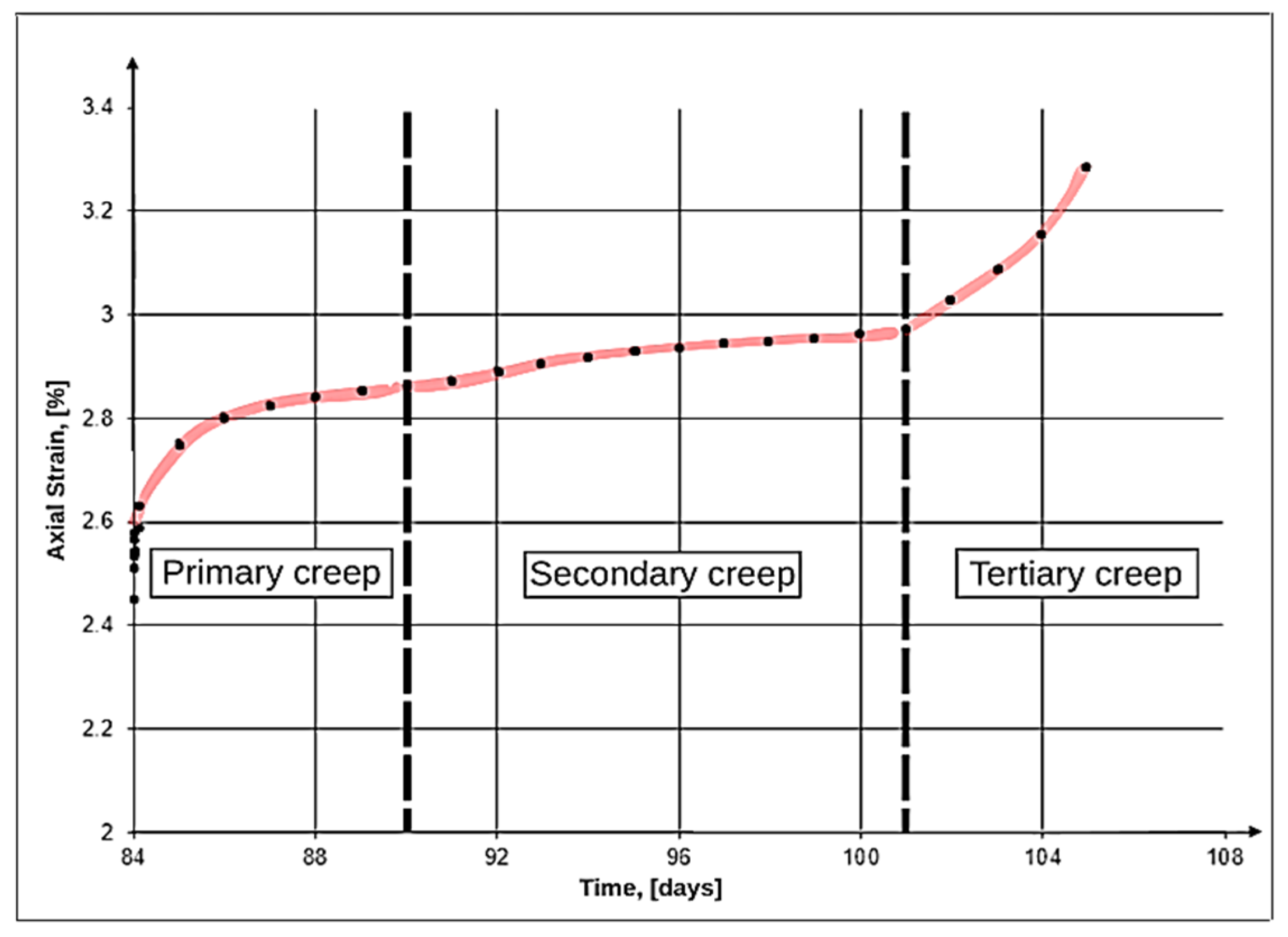
In rock salt, creep behavior is typically characterized as a sequence of three distinct stages (
Figure 4). Upon loading, primary (transient) creep exhibits a high initial strain rate that monotonically decreases over time. This is followed by secondary (steady-state) creep, where deformation proceeds at a nearly constant rate, governing the long-term closure of openings. Under elevated stress conditions, tertiary creep may ensue, characterized by accelerated strain rates leading to progressive damage and eventual structural failure [
23,
40].
In the design of mines and storage caverns, the steady-state phase is of primary importance as it governs deformation over the long term [
18,
41]. Laboratory tests suggest that once initial transient effects dissipate, halite tends to exhibit a stable, near-linear regime over extended periods; consequently, these steady-state segments are commonly utilized for constitutive law calibration [
42,
43,
44]. Field observations further corroborate this conclusion; for instance, the Etrez campaign (spanning approximately 12 years) demonstrated that steady-state models could accurately replicate measured convergence [
14]. Similarly, multi-year convergence records from both historical and active salt mines (such as, Wieliczka, Kłodawa, and Asse II) confirm that aligning with the observed long-term evolution is the fundamental constraint for mine-scale forecasting [
32,
33,
45,
46]. Recent numerical modeling and rheological laboratory tests continue to validate that secondary creep is the dominant driver of cumulative deformation in long-term predictive assessments [
18,
47,
48].
While salt demonstrates a pronounced primary (transient) creep phase immediately following stress redistribution, its temporal influence is minor within the context of a 215-year simulation. In this study, transient effects were neglected to prioritize the steady-state (secondary) regime, which dictates the cumulative long-term closure of the salt voids and multi-decadal subsidence. This approach is further justified by the iterative back-analysis of mine-wide displacements, which inherently accounts for the integrated deformation history. By calibrating the steady-state parameters to match total observed subsidence and late-time field displacement trends, the impact of omitting the initial transient phase is minimized. Furthermore, explicitly modeling primary creep would require high-resolution early-time calibration data and supplementary parameters that are unavailable for the historical excavation sequence of this site.
2.6. Laboratory Creep Testing and Estimation of A and n
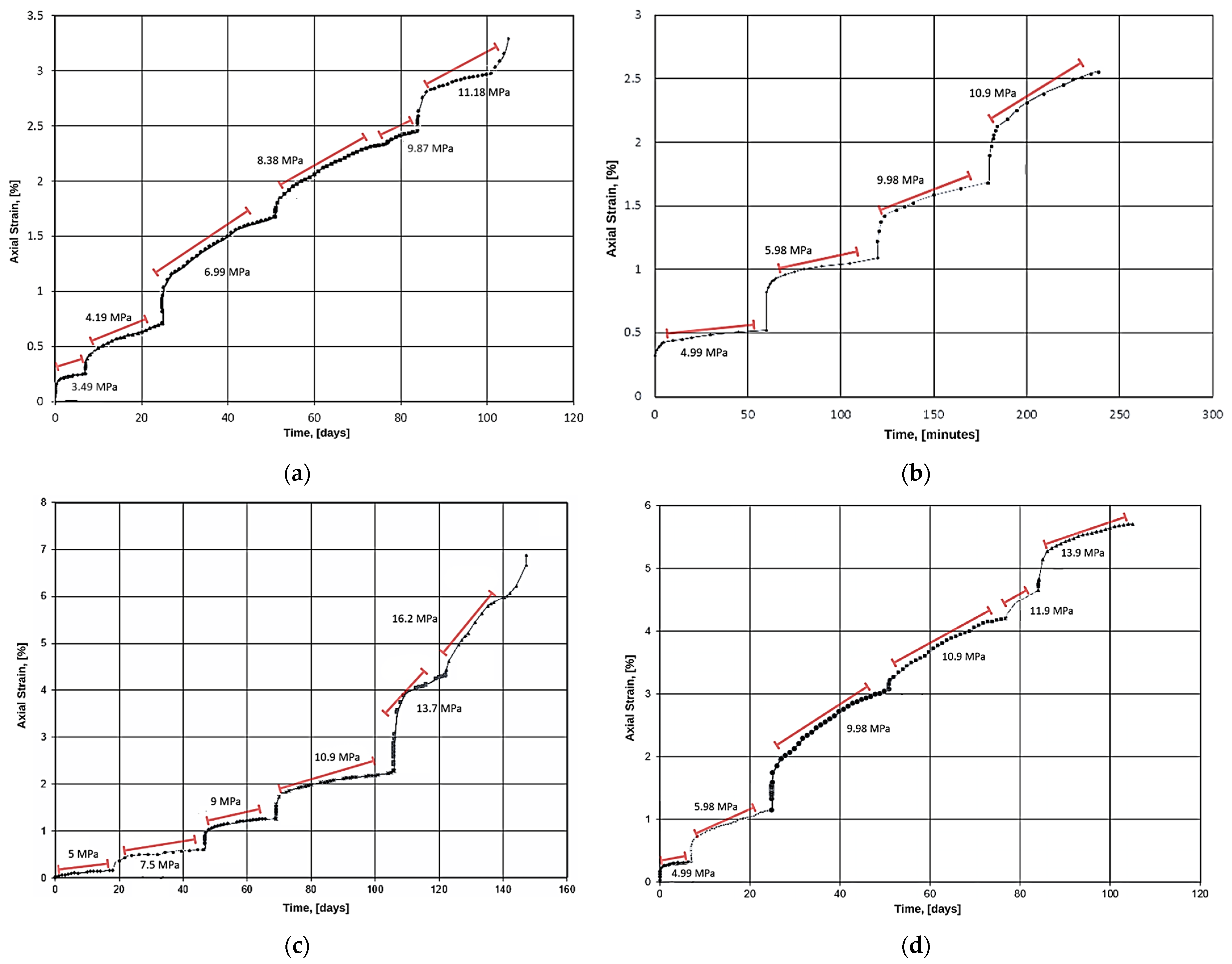
Based on laboratory data reported by Toderaș et al. [
29], uniaxial compression creep tests were performed on rock salt cores from Slănic Prahova. The specimens were loaded incrementally, with axial stress held constant at each stage while axial strain was recorded over time.
Figure 5 illustrates the strain–time response of four specimens subjected to successive constant-stress steps; the red segments mark the steady-state windows selected for strain-rate calculation. Each step includes an elastic instantaneous strain increase upon loading, followed by a curved transient segment (primary creep) and then a near-linear segment where the strain rate becomes approximately constant. The red intervals were used to quantify the steady-state creep rate.
The steady-state strain rates obtained from the laboratory tests were interpreted using the Norton power-law creep relation [
40,
49], written for the uniaxial stress condition as:
where
is the steady-state creep strain rate,
is the applied axial stress,
is the stress exponent, and
is the material coefficient. With
expressed in MPa and
in s
−1, the units of
are s
−1·MPa
−n.
For a given constant-stress increment
i at an axial stress level
, the steady-state axial strain rate
was determined from the slope of the strain–time curve over a designated interval ∆t. This interval was selected to follow the transient creep phase and precede any onset of acceleration:
The
values were subsequently employed to estimate the Norton power-law parameters. This was achieved by applying a natural logarithmic transformation to Equation (1), yielding the following linear form:
The analysis was initiated using creep parameters derived from laboratory tests on Slănic rock salt specimens. Although these values provide a reliable initial estimate, they often deviate from mine-scale deformation due to the increased complexity of field conditions compared to small, intact specimens. To address this uncertainty, a sensitivity analysis was conducted by systematically varying the two parameters within realistic ranges centered on the laboratory-derived estimates. The resulting subsidence maps and underground displacement trends illustrate the model’s sensitivity to fluctuations in the rate constant (
A) and the stress exponent (
n) [
3,
26,
50,
51].
2.7. Model Calibration
Long-term monitoring data were fundamental to the calibration process. Surface measurements spanning from 1993 to 2025, alongside underground station records from 2004 to 2019, were utilized to evaluate the model’s predictive accuracy. The calibration followed a systematic optimization workflow based on the minimization of a weighted root mean square error (RMSE) objective function (J):
where d
mod and d
obs represent the modeled and observed vertical displacements, respectively. A hierarchical weighting scheme (w
i) was implemented, assigning a higher priority (1.5) to underground convergence data due to its direct sensitivity to the near-field rheological response, compared to far-field surface leveling (1.0). The initial values for the Norton parameters (
n and
A) were derived from laboratory tests, specifically focusing on the steady-state creep segments. The parameter space was explored using a grid-search strategy, with the stress exponent (
n) varied between 1.0 and 3.10 and the rate constant (
A) between 10
−27 and 10
−14 s
−1MPa
−n. The stopping criterion was defined as a relative improvement in the objective function (J) of less than 0.5% between successive iterations, ensuring the identification of an objectively stable global minimum. In the first stage, to ensure computational efficiency, a screening process was conducted using a coarse-mesh model (reduced element count). This preliminary exploration aimed to rapidly identify combinations yielding unrealistic responses—such as systematic underestimations or overestimations of subsidence—thereby narrowing the parameter space to a more constrained domain. In the second stage, this refined (
A,
n) domain was tested across three models with varying mesh densities (Models 1–3), following the refinement scheme presented in the manuscript, to verify the stability of the solution relative to the discretization. Calibration was based on reference points within the model, positioned at coordinates corresponding to the field stations. Each (
A,
n) combination was evaluated by comparing modeled values against measurements across the available time intervals, accounting for the differing monitoring periods of surface and underground data. The parameter set that minimized these residuals—effectively capturing both surface subsidence and underground convergence—was identified as the optimal representation, yielding
n = 2.03 and
A = 3 × 10
−25 s
−1MPa
−n.
2.7.1. Geostatic Stress Setup
The initial stress field was established by prescribing a geostatic gradient across the entire model domain. The vertical stress component (σv) was calculated based on the integrated bulk density of the overburden and salt units, following the relation . Horizontal stress components (σh) were initialized using the lateral earth pressure coefficient K0 = 0.7, such that . This stress state was equilibrated under gravity within FLAC3D prior to simulating the excavation sequences. The choice of K0 accounts for the tectonic context of the Subcarpathian region and ensures that the model reflects the observed stress anisotropy, providing a robust baseline for the subsequent 215-year creep analysis.
Accurate long-term creep simulations necessitate a realistic initial stress state; however, direct in situ stress measurements for the Slănic Prahova salt mine are currently unavailable. Consequently, a standard and robust approach was adopted, defining a geostatic stress field where the vertical stress (σ
v) is derived from the overburden self-weight. The horizontal stress components were prescribed using a lateral earth pressure coefficient (K
0), defined as the ratio
. Within the FLAC
3D framework, this initialization was implemented via the “zone initialize-stresses” command, which automatically computes σ
v, based on density and gravity, subsequently assigning horizontal stresses as a constant multiple of the vertical component [
52].
Over long timescales, halite creep dissipates deviatoric stresses, progressively driving the state toward a more uniform condition [
53]. For this reason, many salt modeling studies adopt simplified initial assumptions and subsequently rely on calibration against time-dependent closure or displacement records to constrain field-effective behavior. In reference [
54], the authors consider a lithostatic ratio (K
0 = 1) and note that varying conditions can significantly alter the relaxation zone and the extent of yielded areas around underground openings. A similar sensitivity perspective is reported in surface settlement modeling [
55]. This parameter’s influence was examined using a bounded range of 0.43–1.66. Five discrete values (0.43; 0.71; 1.00; 1.33; 1.66) were tested. The value K
0 = 0.7 was established as the primary baseline for the final predictive model, as it provided the best fit with the observed subsidence influence angles. Within the tested interval, the loading symmetry produced measurable differences in settlement indicators, reaching only 8% in maximum subsidence and 12% in the influence angle. This relatively low sensitivity confirms that the long-term 2050 projections are robust and predominantly driven by the calibrated rheological parameters (
n,
A) rather than the initial stress initialization.
For the Slănic Prahova model, a value of K0 = 0.7 was selected to define the initial geostructural equilibrium. While rock salt often gravitates toward a lithostatic state (K0 = 1) over geological timescales, the relatively shallow depth of the active sectors and the tectonic influence of the Eastern Carpathian foreland suggest a degree of stress anisotropy. This value was chosen as a robust compromise: it provides a stable numerical baseline that avoids premature yielding during the initial geostatic phase, while remaining consistent with the regional stress trends observed in the Subcarpathian diapiric chain. Furthermore, this selection was validated by the subsequent calibration process, as it allowed the model to accurately replicate the measured magnitudes and influence angles of surface subsidence.
2.7.2. Surface Monitoring Calibration
A comprehensive remeasurement campaign conducted in 2022 verified previous benchmarks and corrected the coordinates of several stations. These improvements enhanced the consistency of the surface dataset, enabling a more reliable assessment of displacement trends over the past decade. Consequently, the 2022–2025 dataset was selected as the primary surface reference for model validation.
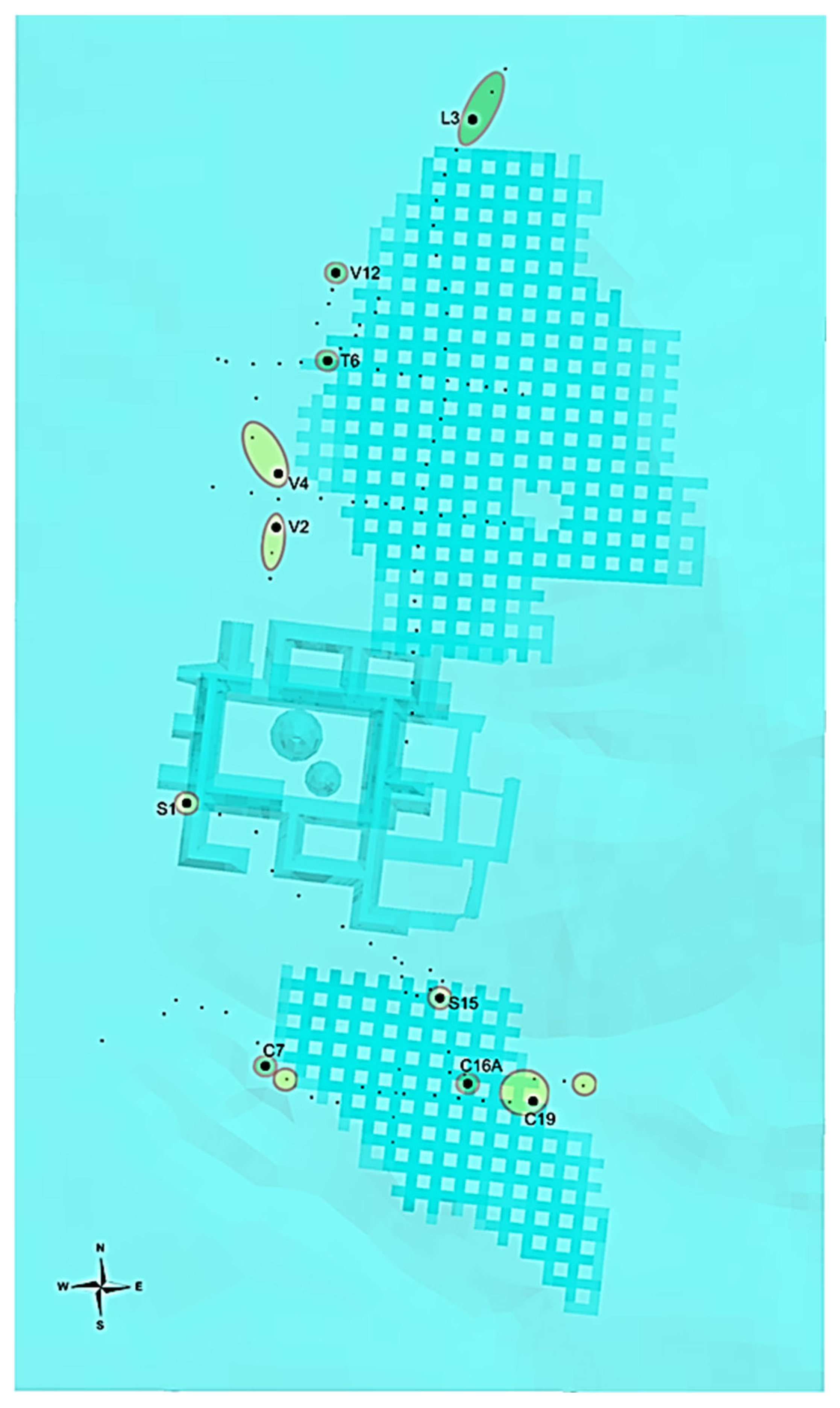
Figure 6 illustrates the surface monitoring stations utilized for this validation. Yellow markers indicate stations where the deviation between measured values and FLAC
3D results is ≤10%, while green markers represent stations with deviations between 10% and 20%. The field measurements and corresponding 3D model outputs are detailed in
Table 3 and
Table 4. Several stations demonstrate a high correlation with predicted values, while the remaining locations exhibit only moderate differences. Negative values denote vertical downward displacement (subsidence).
The smallest deviations are observed near the periphery of the extracted area. At these locations (e.g., C19, V2, V4, S1, S15 and C7, C16A, L3, V12, T6), the model outputs are smooth, reflecting the overall subsidence induced by the mine footprint and the progressive convergence of the underground excavations. At these points, deformation is governed by the far-field subsidence profile rather than localized perturbations; consequently, the numerical predictions align closely with the measured vertical displacements.
Conversely, monitoring stations situated toward the center of the extraction panel exhibit more pronounced deviations. In these areas, displacement is heavily influenced by site-specific conditions, including geometric uncertainties, excavation sequencing, heterogeneities in overburden stiffness and thickness, and damage such as fracturing or bedding plane separation. Despite the refined surface mesh (10–15 m), localized topographic gradients at certain stations are not fully captured, resulting in discrepancies between in situ measurements and numerical results.
Overall, the results demonstrate that the calibrated model effectively captures the macro-scale subsidence patterns for the 2022–2025 period. Remaining discrepancies are primarily confined to stations above the center of the extraction zone, where localized ground behavior exerts a more dominant influence on the monitoring data.
2.7.3. Underground Monitoring Calibration
Underground displacement records provided a robust dataset for the calibration of the creep model. By 2004, extraction of Levels V through IX had been completed; subsequently, Levels X and XI underwent development, while extensions continued within portions of Level IX. Monitoring stations on these active levels are inherently influenced by recent excavations, stress redistribution, and primary creep, characterized by elevated initial displacement rates prior to reaching a steady-state trend. Consequently, these levels are less suitable for model validation. In contrast, Levels VII and VIII offer more reliable benchmarks, as their geometry remained stable throughout the monitoring period.
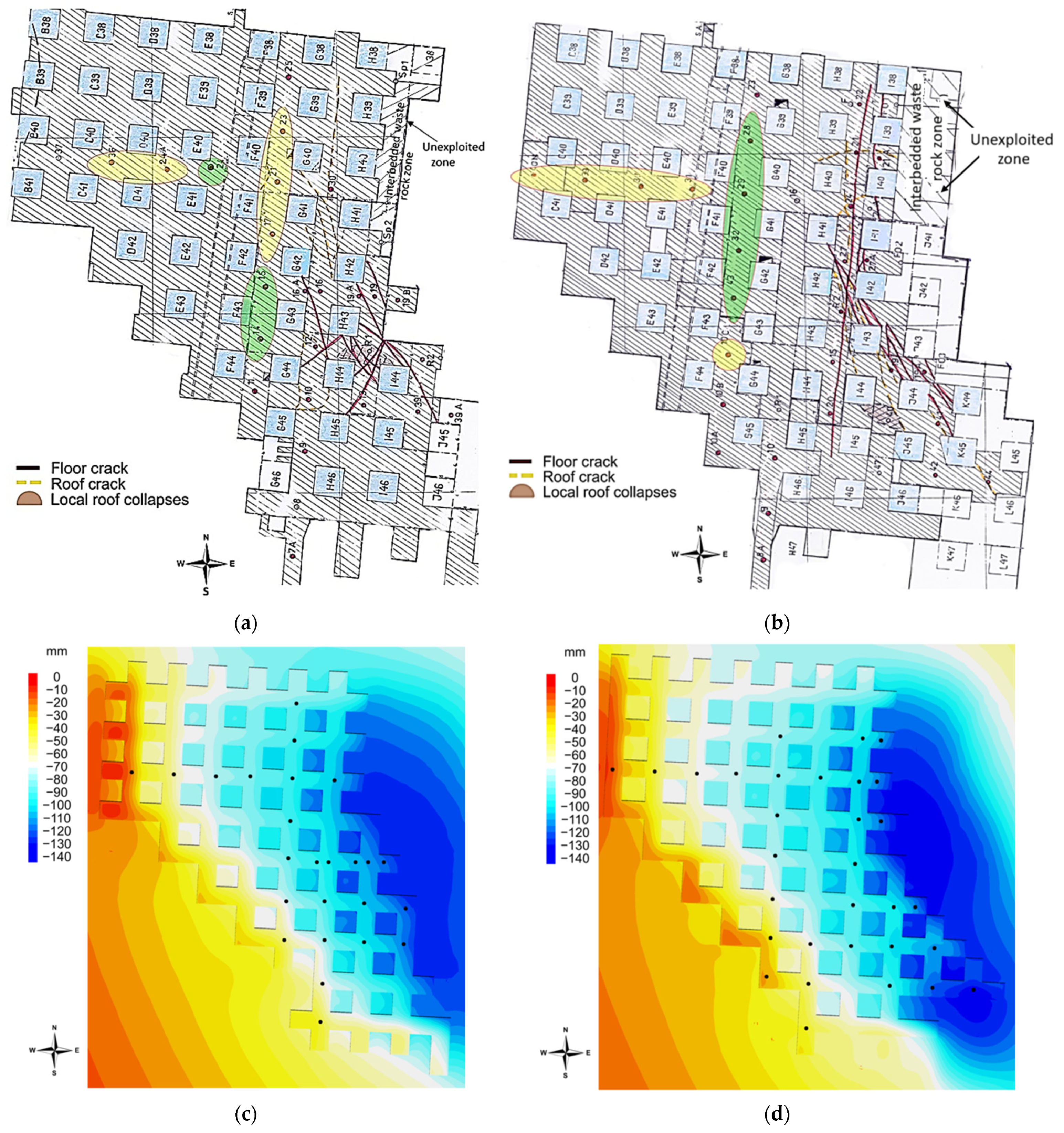
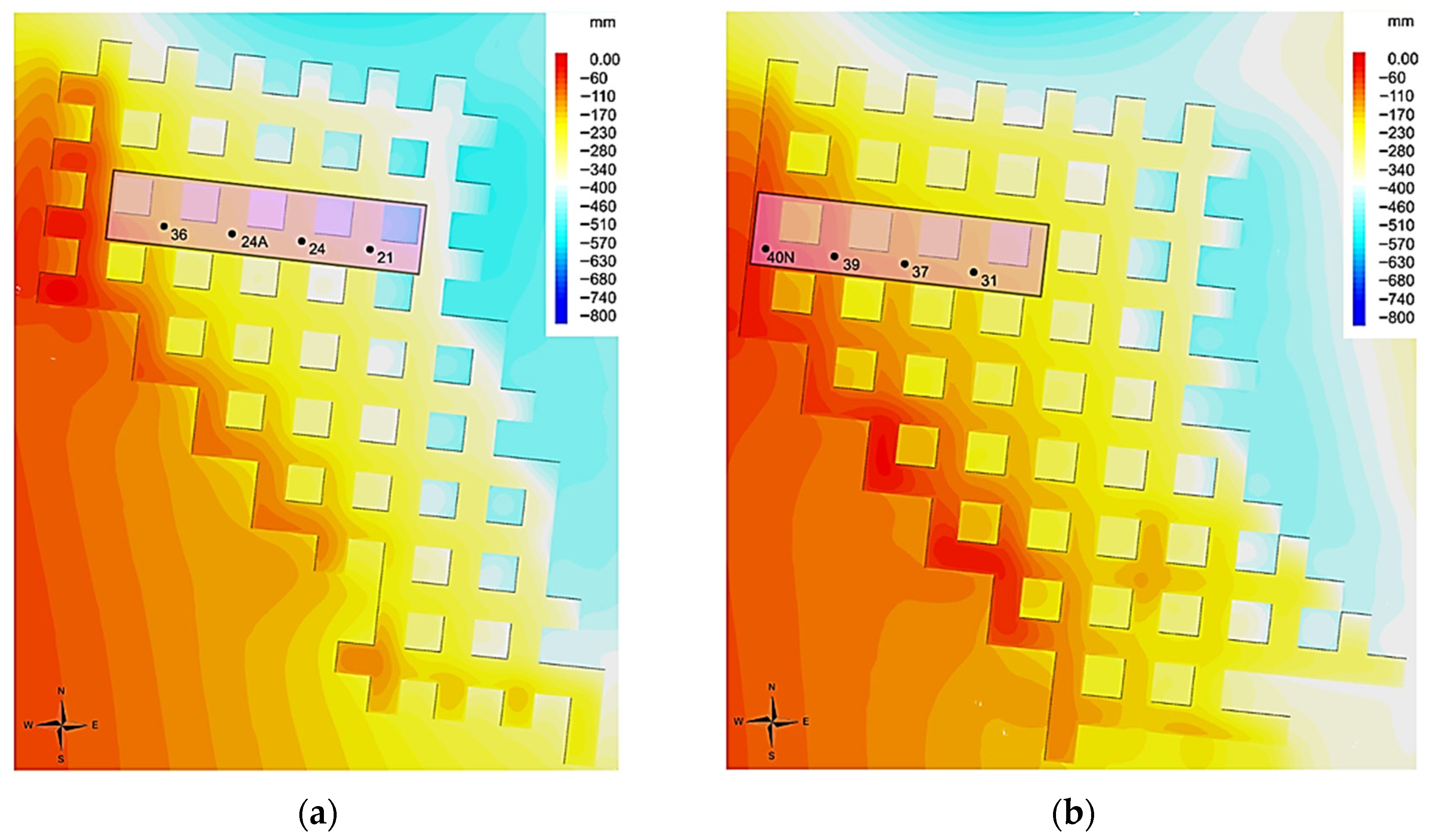
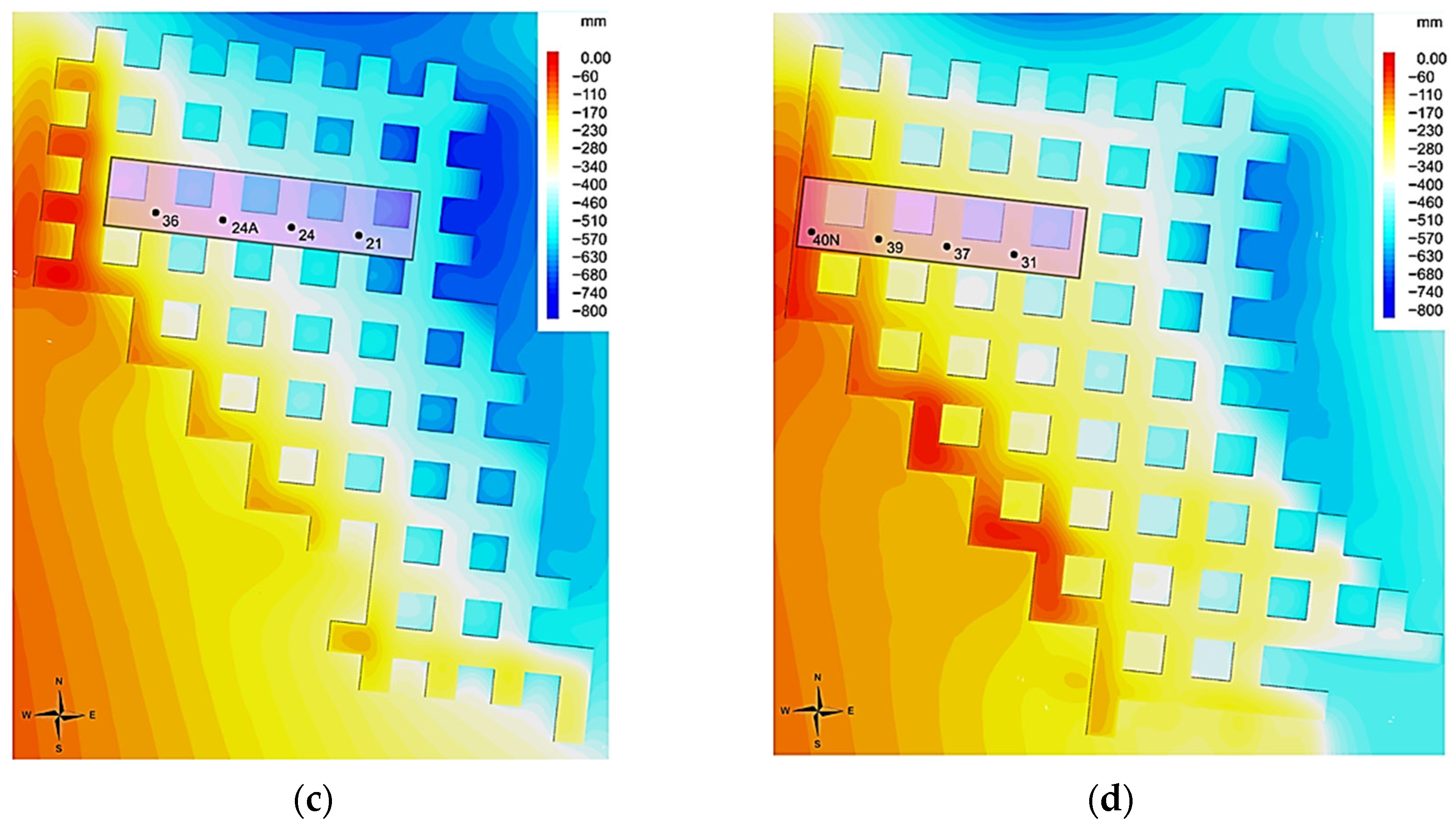
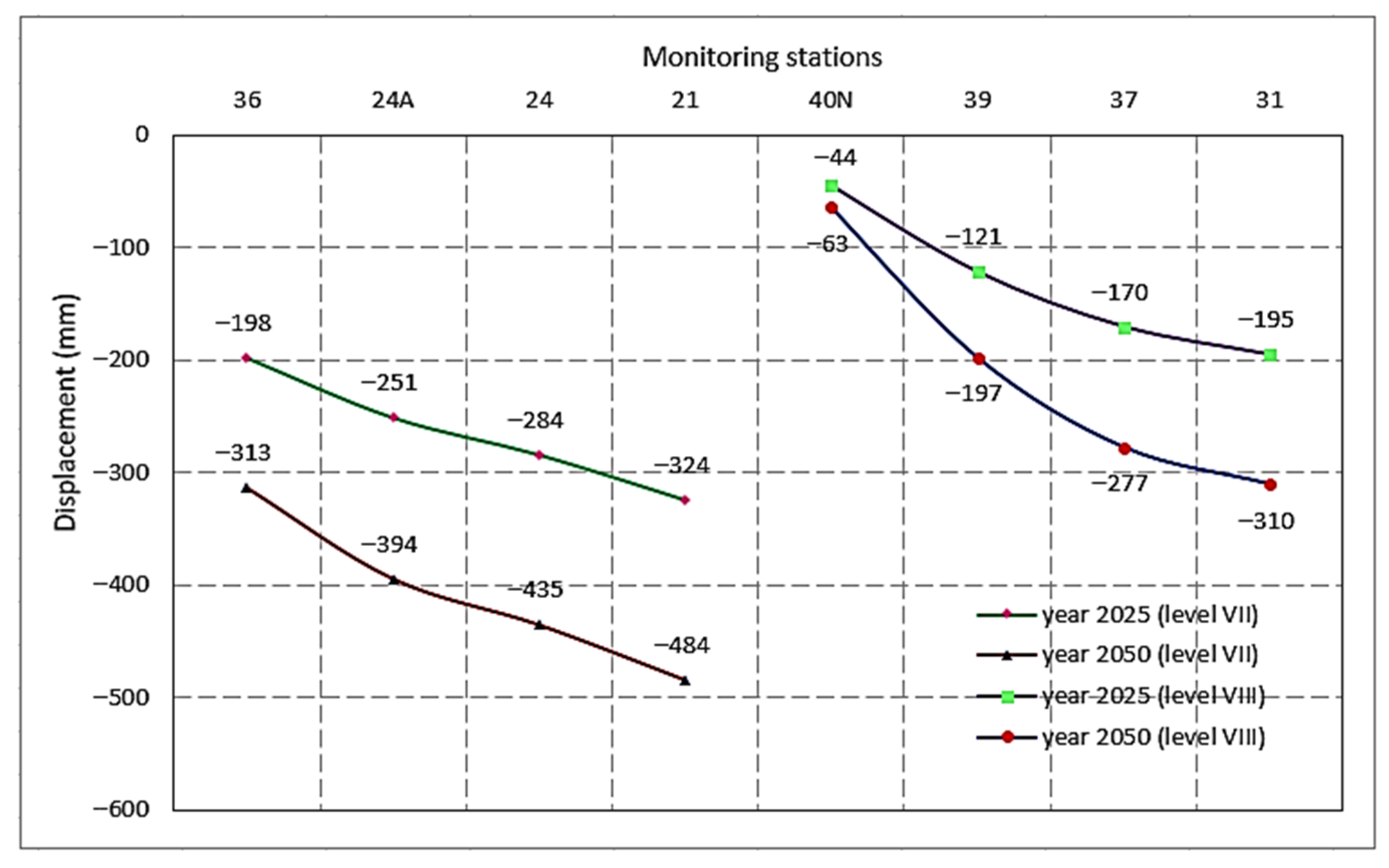
Figure 7 illustrates the underground convergence for Levels VII and VIII during the 2004–2011 period. The results in
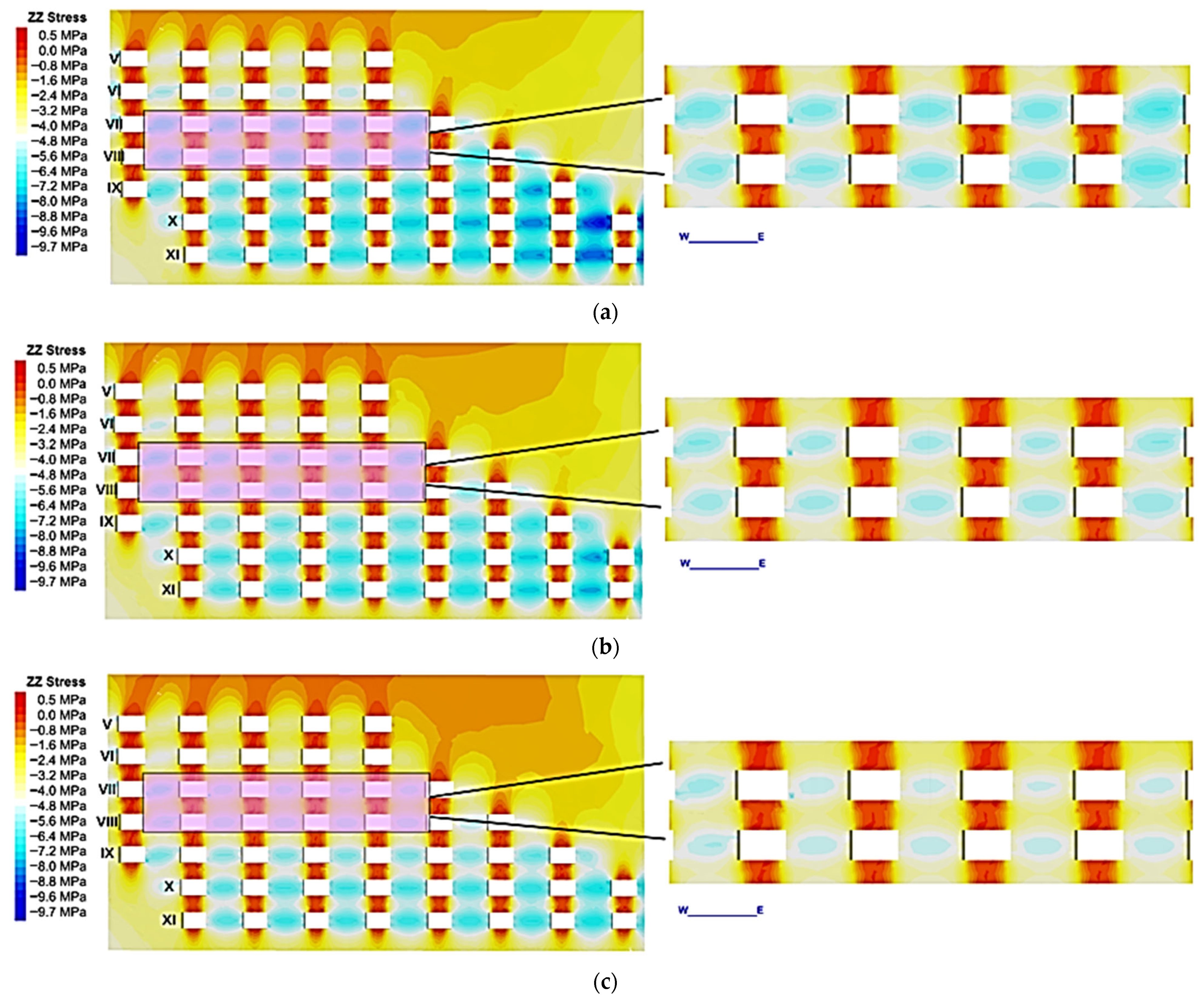
Figure 7a,b) reveal a distinct longitudinal gradient across the panels. The most of the documented geomechanical distress—including roof and floor fracturing and localized roof falls—is concentrated in the eastern sector, where monitoring density was increased to track these instabilities. It is important to clarify that the highlighted zones in the eastern sector (
Figure 7a,b) are not presented as direct numerical predictions of a local failure mechanism. Instead, they serve as indicators resulting from stress redistribution and the higher deformation rates observed within the eastern sector. This interpretation aligns with geological and structural field observations, where the intensity of fracturing and dislocations is associated with regional orogenic stresses and the behavioral contrast between the rigid-elastic overburden and the visco-plastic salt massif. In this context, energy is dissipated within the salt through permanent plastic deformations and structural dislocations at the waste–salt interface.
This distribution is critical for validation, as the numerical model assumes a homogeneous continuum and does not explicitly account for discrete fractures or discontinuities. Therefore, the calibration was focused on stations within the less disturbed western sector (highlighted in yellow), where the deformation response is less influenced by fracture-driven variability. As shown in
Figure 7c,d, vertical displacement is more uniform in the western sector, whereas the eastern sector exhibits pronounced displacement gradients near damaged zones.
The selected A and n parameters yielded results that align closely with the measured underground vertical displacements. Observed displacement rates ranged from −18.0 mm to −93.7 mm, while the numerical model predicted −16.0 mm to −93.0 mm. These discrepancies remain within a 10% threshold (typically 1.4–9%), as detailed in
Table 5 and
Table 6. In conjunction with surface monitoring data, these findings validate the adopted creep parameters and establish a consistent framework for long-term simulations and stability assessments.
4. Discussion
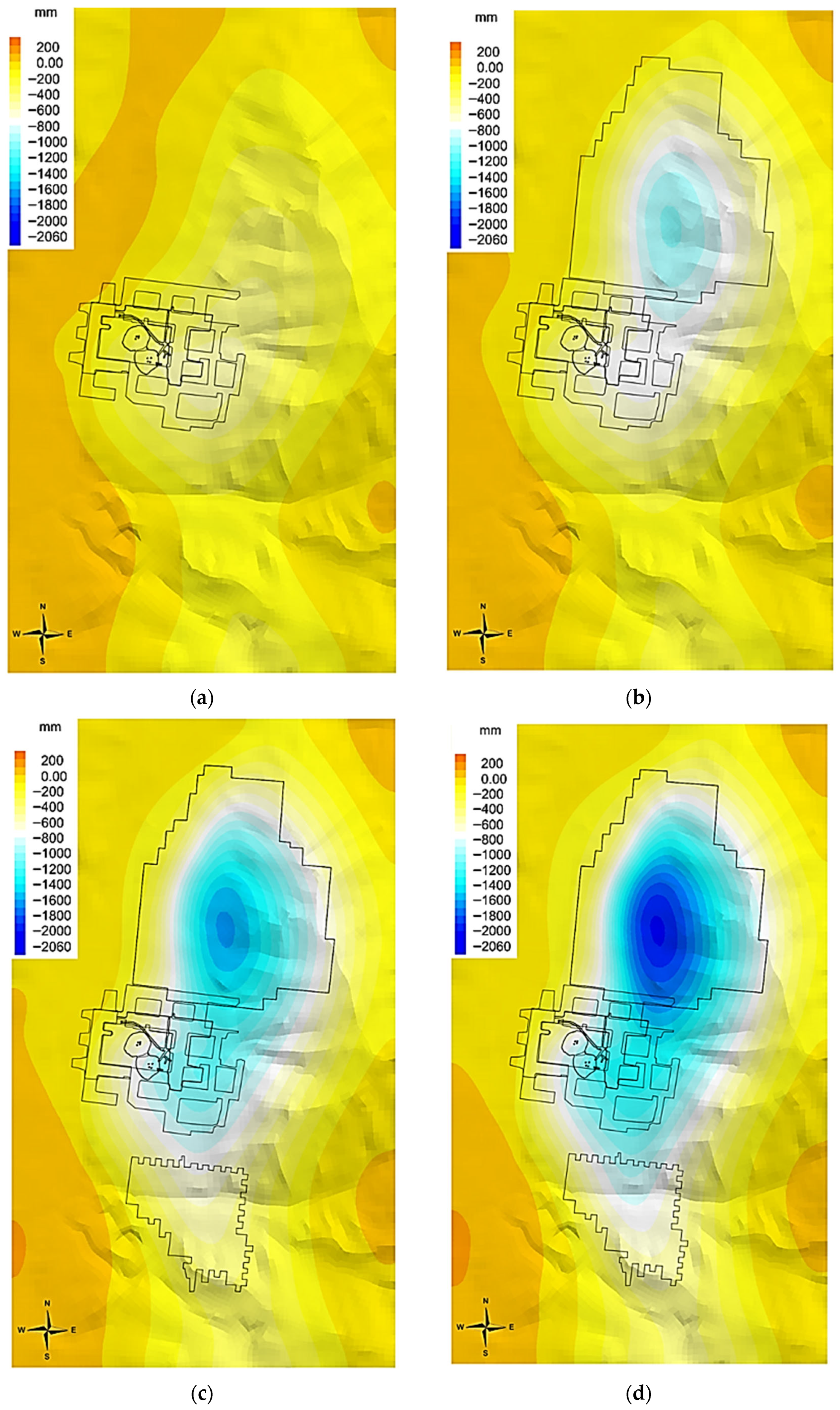
This study evaluates whether the Norton power-law creep model, when calibrated against field measurements, can adequately reproduce the long-term geomechanical response of the Slănic Prahova mine. The investigation encompasses the displacement history induced by 190 years of extraction, a structural stability assessment of the existing supports, and future deformation forecasts. The significant surface settlement observed above the Victoria sector, reaching a projected −2060 mm by 2050, cannot be attributed solely to recent excavations. The ‘historical footprint’ of the massive trapezoidal chambers in the Unirea mine plays an important role in the current geomechanical response. These large-span openings have created a long-term stress redistribution that continues to influence the overburden, accelerating the creep-induced closure of the underlying and adjacent newer levels.
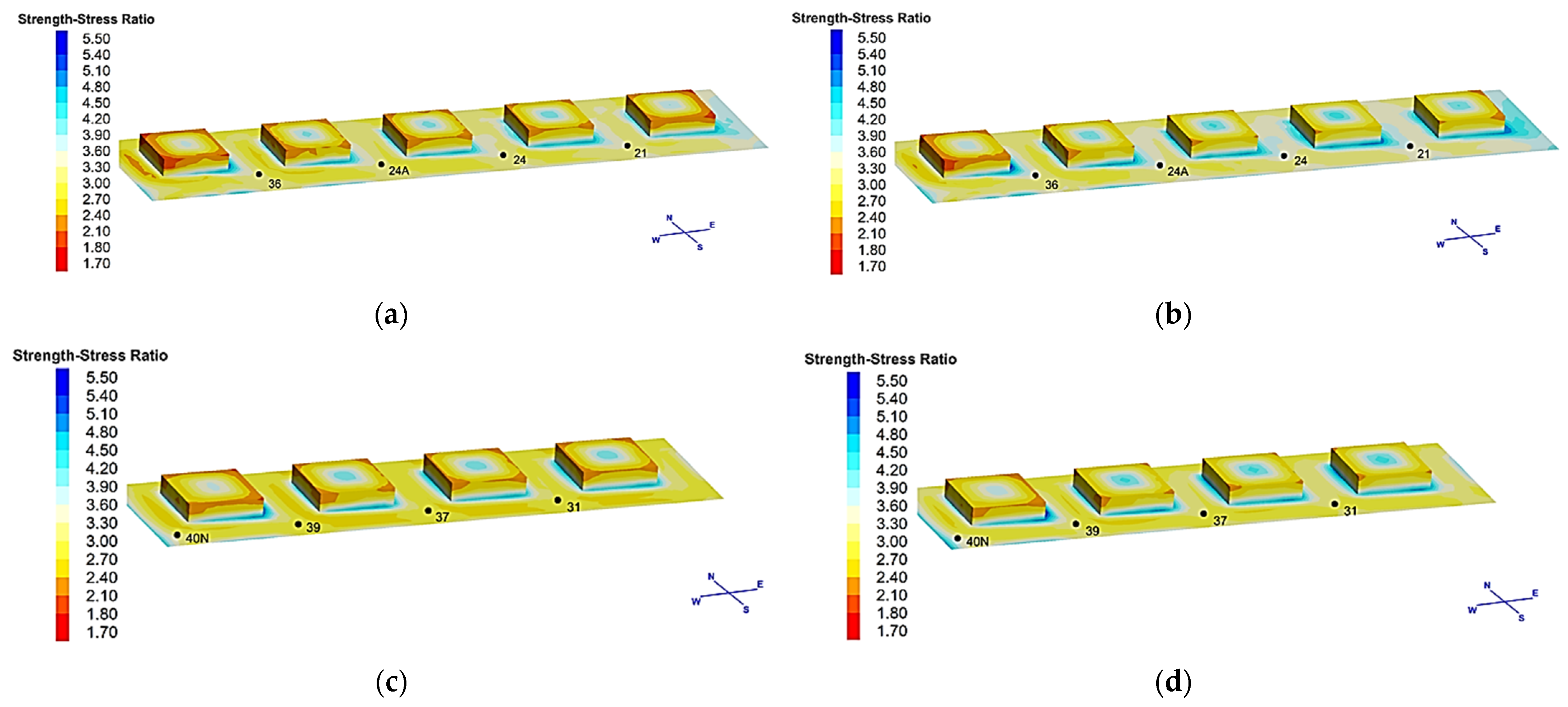
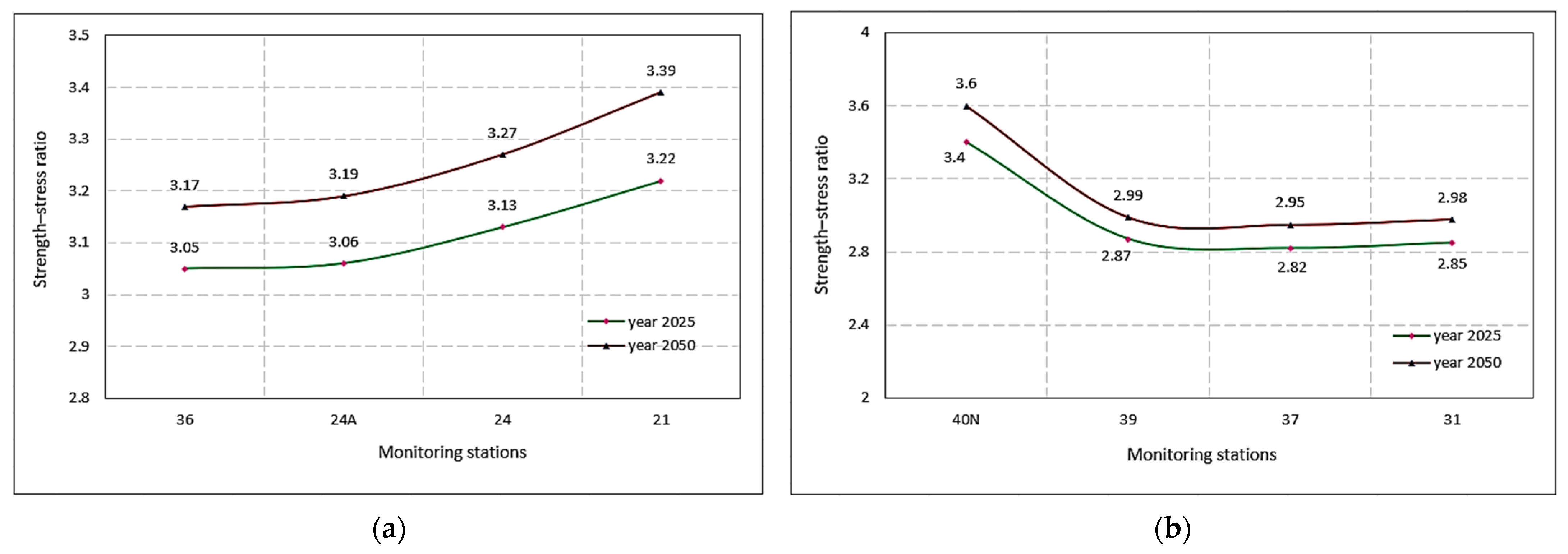
The long-term stability and surface response observed in the simulations are fundamentally governed by the superposition of the Mohr–Coulomb failure criterion onto the Norton visco-plastic law. This coupled constitutive approach explains why, despite the continuous surface settlement reaching −2060 mm by 2050, the underground structures maintain overall integrity. The numerical results indicate that while stress concentrations at pillar corners locally exceed the Mohr–Coulomb yield threshold, these plastic zones remain confined to the perimeters. This localized yielding facilitates a stress redistribution mechanism, shifting the overburden load toward the stable, visco-plastic core of the pillars, where the strength-to-stress ratio remains consistently above 1.7. Consequently, the projected 17 mm/year subsidence rate does not signify an impending structural collapse but rather a controlled, creep-driven equilibration of the mine-complex geometry over a two-century temporal horizon. The 215-year creep simulation captures the characteristic response expected for an evaporitic massif. Surface displacements initiate during the early stages of mining, accelerate during primary extraction phases, and persist post-closure; this is because creep-driven convergence and stress readjustment continue long after production ceases. This behavior is consistent with established literature on salt mines and gas storage caverns, further explaining why long-term prognostications are highly sensitive to the constitutive parameters, particularly the stress exponent (
n) [
20].
A critical finding of this research is the alignment of the calibrated model with two independent monitoring datasets: surface leveling and underground displacement measurements. Integrating both datasets is essential for constraining different systemic components. While surface leveling captures the integrated, far-field response of the overburden, it exhibits limited sensitivity to near-field deformation. Conversely, underground measurements directly record room-and-pillar convergence at Levels VII–VIII, where creep strains are most concentrated and model calibration is most sensitive. This workflow adheres to established geomechanical practices, where laboratory-derived parameters serve as initial estimates and are subsequently refined at the field scale to account for complex geometry, pillar interactions, and scale effects. Furthermore, long-duration laboratory evidence suggesting that salt may exhibit prolonged transient stages supports the extraction of parameters from steady-state windows rather than early-stage data [
15,
16,
56].
Beyond creep parameters, the model response is inherently dependent on the initial stress state. In the absence of in situ stress measurements at Slănic Prahova, the geostatic initialization and the horizontal-to-vertical stress ratio were treated as fundamental uncertainties, which were addressed through rigorous sensitivity analyses during the calibration phase. To quantify the impact of this parameter, the sensitivity analysis explored a range of K0 from 0.43 to 1.66. The results demonstrated that while lower K0 values significantly influence the extent of the Mohr–Coulomb plastic zones around the trapezoidal chambers, the integrated surface subsidence trend remains remarkably stable, with a maximum variation of only 8%. This indicates that the long-term vertical displacement field is predominantly governed by the viscoplastic parameters (n, A) rather than the initial stress initialization. This finding ensures that the 2050 prognostications are robust against geostatic uncertainties within a physically plausible range for the Subcarpathian region.
When comparing our approach to recent studies on rock salt cavern stability, the fundamental framework is similar: salt is treated as a continuous medium, time-dependent creep is incorporated, and stability is assessed using multiple indicators. The primary distinction lies in how the model is constrained [
57,
58]. Many papers in this field are driven by operational requirements and storage cycling, where cavern responses are evaluated under repeated pressure fluctuations [
59]. In the present study, the simulation is instead constructed around the mine’s extensive excavation history and constrained using monitoring records, which reduces uncertainty in the time-dependent creep response and supports a robust mine-scale stability assessment [
13,
60]. Because long-term predictions in salt remain highly sensitive to the selected creep law and stress exponent, we also interpret the results in terms of stress evolution and stability margins [
21]. We therefore track the temporal evolution of displacements, evaluate the stress state and factor of safety, and utilize these outputs to assess overall mine stability [
61].
During the calibration of numerical models with field data, records were first examined within a broader context rather than focusing solely on numerical values. Certain measurements may deviate from a smooth long-term closure trend due to localized cracking, disturbed benchmarks, or surveying errors—phenomena that a mine-scale homogeneous continuum model cannot capture. Therefore, displacement records were screened, and only periods with stable reference conditions and a consistent trajectory were used for calibration. Irregular series were excluded from direct numerical fitting but retained as qualitative indicators of locally disturbed ground. This quality-control and interpretive process is standard practice in instrumentation and in the observational approach to geotechnical back-analysis.
While the FLAC3D model accurately predicts the overall eastward increase in displacement, a distinction must be made regarding the nature of the deformation. Being a continuum mechanics-based framework, the model excels at forecasting global trends and large-scale creep closure but is inherently limited in predicting localized roof falls or pillar spalling driven by discrete fracture networks. This is particularly relevant for the eastern sector, where historically documented geomechanical distress suggests that structural discontinuities—not captured by the continuum mesh—may amplify the risk of localized instability beyond the calculated steady-state creep.
The highlighted zones in the eastern sector (
Figure 10) represent stress redistribution and elevated displacement rates rather than local failure mechanisms. This modeling output aligns with field observations of fracturing caused by regional orogenic stresses and the rheological contrast between the rigid-bearing overburden and the visco-plastic salt massif, where energy dissipation is captured through increased strain fields at the waste–salt interface.
A second limitation concerns geometric and stratigraphic uncertainty. In legacy mining fields, excavation archives are often incomplete, preventing a high-fidelity reconstruction of void geometry and extraction sequences. This limitation is significant for creep simulations because the Norton-type power law is non-linearly stress-dependent. Even minor uncertainties in panel boundaries, pillar dimensions, or roof/floor profiles can alter stress concentrations and, over extended periods, result in substantial differences in predicted closure and displacement.
To minimize errors from incomplete documentation, the model reproduces the excavation history as closely as possible within the available records. At the Slănic Prahova mines, much of the older excavation, spanning nearly three centuries, cannot be reconstructed in detail because the extraction sequence is unknown. For these sectors, the geometry was defined based on the most reliable historical plans, and the mined volumes were explicitly represented as open voids. This approach captures creep closure and the interaction between nearby voids, despite the uncertainty regarding the step-by-step mining chronology.
In contrast, the Cantacuzino mine benefits from more comprehensive operational records. These records enabled the implementation of a staged excavation sequence that aligns with the documented mining chronology and the 2004–2011 underground monitoring campaign used for calibration [
25]. This approach enables a direct comparison between modeled stress evolution and observed displacement trends. Additionally, a finer mesh was used at Cantacuzino because FLAC
3D finite-difference solutions are strongly influenced by zone size. Refinement improves the capture of stress concentrations at excavation boundaries and limits artificial smoothing of the stress field. In abandoned or historic salt mines, the excavation sequence and void geometry are rarely known in full detail, so the analysis usually relies on a simplified mining history and back-analysis. In this setting, monitoring records are the main constraint: they keep the assumed excavation geometry within a realistic range and limit the number of parameters–geometry combinations that could otherwise fit the same observations. This consideration is particularly important in rock salt, where stress-dependent creep causes even minor differences in stress paths—due to geometry or staging—to result in significant long-term variations in predicted subsidence or closure [
15,
16,
56].
The calibrated creep parameters obtained in this study align well with established values for rock salt. Specifically, the stress exponent
n = 2.03 falls within the characteristic range 2.0–5.0 of documented for halite deposits in the Carpathian region and globally [
38]. The value of
n ≈ 2.03 is characteristic of specific creep mechanisms (diffusion or dislocation-controlled). Similarly, the rate constant
A = 3 × 10
−25 s
−1MPa
−n is consistent with laboratory and field-scale back-analyses performed on salt massifs with similar purity and structural characteristics. This quantitative alignment confirms the physical reliability of the Norton model as applied to the Slănic Prahova mine and ensures that the long-term predictions are grounded in established geomechanical behavior.
The rheological parameters derived in this study (n = 2.03 and A = 3 × 10⁻²⁵ s−1∙MPa−n) are consistent with laboratory and back-analysis data from other major European salt deposits. The projected maximum subsidence is comparable in magnitude to long-term observations at the Wieliczka mine in Poland or the Asse II salt mine in Germany, where similar multi-level geometries and decades of creep have led to cumulative surface displacements in the range of several meters. This alignment with international benchmarks further validates the forecasting reliability of the current model for the 2025–2050 interval. The rheological response of the Slănic Prahova massif is inherently influenced by the microstructural composition of the salt, such as grain size and impurities, which are implicitly incorporated into the effective macro-parameters (n, A) derived through our back-analysis.
A fundamental limitation of the current study resides in the use of a continuum modeling approach. While effective for capturing regional subsidence trends and long-term creep evolution, this framework cannot explicitly simulate discrete fracture propagation or local rockfall events driven by structural discontinuities. Consequently, while the model robustly reproduces global subsidence and mine-wide convergence, it may underestimate local variability—particularly in the eastern sector, where geomechanical distress is more pronounced. The observed deviations from simulated trends in this area are likely due to localized brittle failures that amplify deformation. Therefore, results for the eastern sector should be interpreted as large-scale estimates rather than deterministic predictions of local, fracture-driven events. Future research will explore the integration of Discrete Element Methods (DEM) or hybrid formulations to better characterize these high-damage zones and improve the resolution of local stability assessments.
To further refine the model’s applicability boundary, it is essential to distinguish between regional subsidence trends—where the current continuum approach excels—and local damage zones where discrete fracturing dominates. Future research should transition toward a collaborative ‘mechanistic + data-driven’ framework, utilizing physics-constrained machine learning (PiNNs) to bridge the gap between global creep laws and localized brittle failure characterization. The identifiability analysis performed during calibration indicates that while the parameters n and A are robustly constrained by multi-decadal data, uncertainty-propagation from initial geostatic stress ratios (K0) and stratigraphic variability can introduce a manageable prediction bias. Moreover, testing extrapolation stability against empirical formulas, such as the Knothe-Budryk theory, would strengthen the engineering generalization of these long-term forecasts, especially when projecting stability margins under the strongly non-linear conditions of abandoned mine complexes.