1. Introduction
As competitive sports standards continue to rise, the physical demands on soccer players have shifted from isolated speed or endurance to the comprehensive development of highly complex, multidimensional match capabilities [
1]. Modern soccer matches exhibit typical high-intensity intermittent characteristics, requiring athletes to repeatedly perform short-distance sprints, rapid decelerations, abrupt stops, changes in direction, and re-accelerations throughout the 90 min game [
2]. From a movement structure perspective, these high-intensity actions are predominantly executed under asymmetrical conditions, heavily relying on the dominant role of the unilateral lower limb in support, deceleration, and directional control [
3]. Particularly in youth-to-adult competitive football, critical scenarios like transition play and dribbling challenges often demand athletes execute rapid deceleration and directional changes near maximum speed [
4]. The high-speed deceleration and braking phase is considered the most limiting component of these actions. Inadequate capacity not only reduces change-of-direction efficiency but may also force athletes to decelerate prematurely, thereby compromising the stability of technical choices and competitive performance [
5,
6]. Consequently, the core focus of modern soccer physical training has shifted from “whether overall speed or strength is sufficient” to “whether athletes can maintain high-quality braking and change-of-direction performance under unilateral dominant movement patterns during high-intensity match conditions.” From a training perspective, this shift highlights the need for interventions that specifically target unilateral braking and force absorption capacities, rather than relying solely on bilateral strength development.
Against this backdrop, an athlete’s ability to alter direction during high-speed movement becomes particularly critical. Change of direction (COD), as a key integrated capability linking speed, power, and movement control, has been proven to effectively differentiate football players across competitive levels [
7]. Importantly, COD actions in soccer rarely occur under low-speed or fully controlled conditions. Instead, they typically emerge during high-speed running under competitive pressure, with athletes often entering the deceleration phase at velocities approaching or exceeding their maximal sprint speed [
8]. Under such conditions, limitations in COD performance are not primarily dictated by acceleration capacity, but rather by the athlete’s ability to rapidly decelerate, maintain postural stability, and reorient the body within a very short time window [
9]. This process is highly dependent on the eccentric force-generating capacity and neuromuscular control of the lower-limb musculature. Biomechanical analyses of COD maneuvers indicate that these braking and reorientation demands are executed predominantly under single-leg stance conditions, during which one limb assumes the primary role in force absorption, braking, and directional control [
10,
11].
Given the critical role of change-of-direction ability in soccer, prior research has explored both assessment methods and training interventions. Regarding evaluation methods, most studies employ field tests such as the 505, T-test, or Illinois test, using total completion time as the primary metric [
12]. However, such metrics are influenced by both linear sprint speed and deceleration efficiency, making it difficult to distinguish whether athletes’ superior performance stems from linear speed advantages or improvements in deceleration and directional change efficiency. This issue is particularly pronounced in training studies targeting eccentric deceleration capacity, as relying solely on total change-of-direction time may underestimate or misjudge the true contribution of deceleration phase improvements to overall performance [
6].
Regarding training interventions, while traditional resistance training and certain eccentric training methods have demonstrated efficacy in enhancing lower-body strength, their load characteristics often rely on external weights or preset rhythms. This makes it challenging to generate forced deceleration stimuli during the reverse phase that match the athlete’s own output [
13]. In contrast, flywheel resistance training generates resistance based on rotational inertia. The magnitude of its eccentric load is directly determined by the athlete’s concentric phase output velocity, making the eccentric phase both inevitable and tightly coupled to the preceding phase [
14]. This characteristic makes flywheel training more closely resemble the deceleration dynamics encountered in soccer—specifically the “high-speed entry → forced deceleration → active control” sequence—during the reverse phase of movement. Consequently, it is theoretically better suited for specialized training targeting eccentric deceleration capacity in change-of-direction and sudden-stop maneuvers [
15]. Although bilateral flywheel training has demonstrated efficacy in enhancing overall strength and athletic performance, its averaging output pattern may obscure the true braking capacity and lateral differences in individual legs during deceleration phases. This limits its ability to provide targeted stimulation for unilateral support and braking characteristics inherent in soccer change-of-direction movements. In contrast, unilateral flywheel training, which performs eccentric braking tasks under single-leg support conditions, better aligns with the actual biomechanical structure of soccer change-of-direction movements. It also enhances the supporting leg’s ability to absorb and control momentum during high-speed braking phases [
16].
Addressing the limitations of traditional change-of-direction (COD) testing, Nimphius et al. introduced the concept of change-of-direction deficit (COD deficit), which isolates the additional time cost inherent to directional changes by accounting for linear sprint performance [
17]. By separating directional change ability from linear sprint speed, this metric focuses more specifically on the performance demands associated with braking and reorientation rather than overall running speed. This methodological distinction is particularly relevant when evaluating training interventions that emphasize eccentric strength and deceleration capacity. Eccentric-focused training is expected to primarily enhance an athlete’s ability to absorb force, reduce speed, and control body orientation during the braking phase of COD tasks, without necessarily improving linear sprint acceleration. Consequently, when total COD time is used as the primary outcome measure, eccentric-driven improvements may be underestimated or obscured by unchanged or dominant sprint performance. In this context, COD deficit provides a more appropriate and sensitive indicator for detecting performance changes specifically attributable to braking efficiency and directional control [
18]. However, despite its theoretical advantages, the application of COD deficit in soccer-specific training research remains limited, particularly with respect to studies integrating unilateral eccentric strength characteristics. Furthermore, most previous investigations have relied on laboratory or controlled field-based assessments, with limited evidence examining whether such adaptations translate to competitive match demands. Given that directional changes in soccer involve frequent high-speed deceleration and re-acceleration, GPS-derived acceleration and deceleration metrics may serve as ecologically valid indicators of eccentric braking capacity and COD efficiency in match contexts [
19,
20].
Therefore, this study employs a randomized controlled design to systematically evaluate whether 8 weeks of unilateral flywheel resistance training can induce sport-specific eccentric neuromuscular adaptations and transfer these improvements to soccer change-of-direction ability and exercise load performance in match conditions. Based on the principle of training specificity, interventions emphasizing eccentric braking and directional control are expected to preferentially influence deceleration-related aspects of performance rather than concentric propulsion; accordingly, substantial changes in linear sprint acceleration are not anticipated following eccentric-focused unilateral flywheel training. We hypothesize that unilateral flywheel training, by applying inertia-characterized eccentric overload during single-leg support, significantly enhances eccentric strength in knee extensors and flexors while optimizing the eccentric-to-concentric strength ratio. This enhances athletes’ ability to absorb and control horizontal momentum during high-speed deceleration phases. Further, we hypothesize that this eccentric neuromuscular adaptation will preferentially improve change-of-direction efficiency, manifested as a significant reduction in bilateral change-of-direction deficits (COD deficits), without concurrent changes in linear sprinting ability. Finally, we speculate that the enhanced eccentric braking capacity will transfer to soccer-specific and game-like scenarios, evidenced by improved ball-handling change-of-direction performance and increased frequency of high-intensity acceleration and deceleration events during matches.
2. Materials and Methods
2.1. Study Design
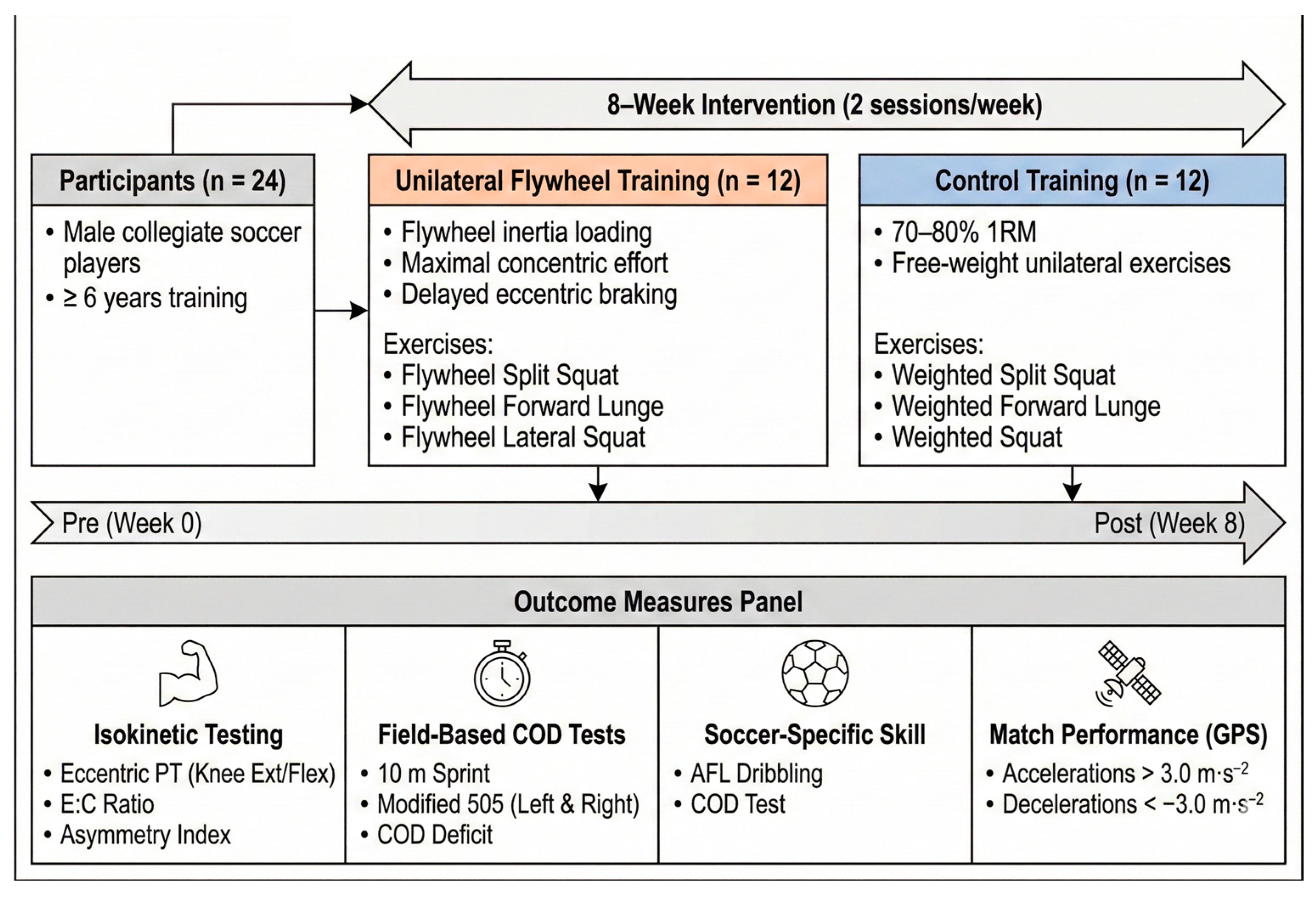
This randomized controlled trial employed a pre–post intervention design, with participants randomly assigned to the unilateral flywheel training group or the control group, to evaluate the effects of an 8-week unilateral flywheel resistance training program on change-of-direction ability and related neuromuscular characteristics in soccer players. All participants completed identical testing protocols before (Pre) and after (Post) the intervention. Test administrators and data analysts remained independent of the training intervention. The experimental design is presented in
Figure 1.
2.2. Subjects
This study recruited 24 male soccer athletes from Beijing Sport University, all healthy males with over six years of systematic soccer training experience. All subjects met the following inclusion criteria: (1) no history of severe sports injuries or lower limb functional impairments within the past year; (2) no regular participation in flywheel training or other forms of eccentric overload training within the past three months; However, all participants had general experience with conventional resistance training as part of their regular soccer conditioning programs, while none had prior structured exposure to flywheel resistance training. (3) full-time enrolled students to ensure consistent daily routines, course schedules, and sleep environments, thereby minimizing lifestyle differences that could interfere with study outcomes.
Using random assignment, subjects were divided into a unilateral flywheel training group (
n = 12) and a control training group (
n = 12). To control for potential confounding factors, baseline sleep quality (assessed using the Pittsburgh Sleep Quality Index (PSQI)) and daily nutritional intake were compared between groups post-randomization. Results showed no statistically significant differences between groups, indicating substantial equivalence in key confounding variables and minimizing their potential impact on outcomes. Participant characteristics are summarized in
Table 1. All participants were informed of the study objectives, testing procedures, and potential risks prior to the experiment.
2.3. Ethical Review and Informed Consent
This study protocol was reviewed and approved by the Ethics Committee of [Beijing Sport University] (Approval No. 2025602H). All participants signed written informed consent forms after fully understanding the experimental procedures and potential risks.
2.4. Training Intervention Protocol
2.4.1. Overall Training Arrangement and Load Control
Baseline lower-body strength assessments were conducted prior to the intervention to guide training load prescription. Given the fundamentally different load-generation mechanisms between flywheel-based and traditional resistance training, strict mechanical load equivalence was not pursued. Instead, both training modalities applied established, modality-specific intensity regulation strategies to ensure an adequate stimulus for neuromuscular adaptation. Specifically, the flywheel group trained using rotational inertia combined with maximal concentric intent to elicit high eccentric loading, whereas the control group trained with relative external loads corresponding to 70–80% of one-repetition maximum (1 RM). Importantly, training adequacy was further ensured by matching training frequency, session duration, exercise selection, set × repetition structure, and rest intervals between groups, and by applying progressive overload principles within each modality across the intervention period (
Table 2). In addition, internal load was monitored throughout the intervention using session rating of perceived exertion (
sRPE) to verify that both groups were exposed to a comparable overall training stimulus [
21].
2.4.2. Unilateral Flywheel Training Group
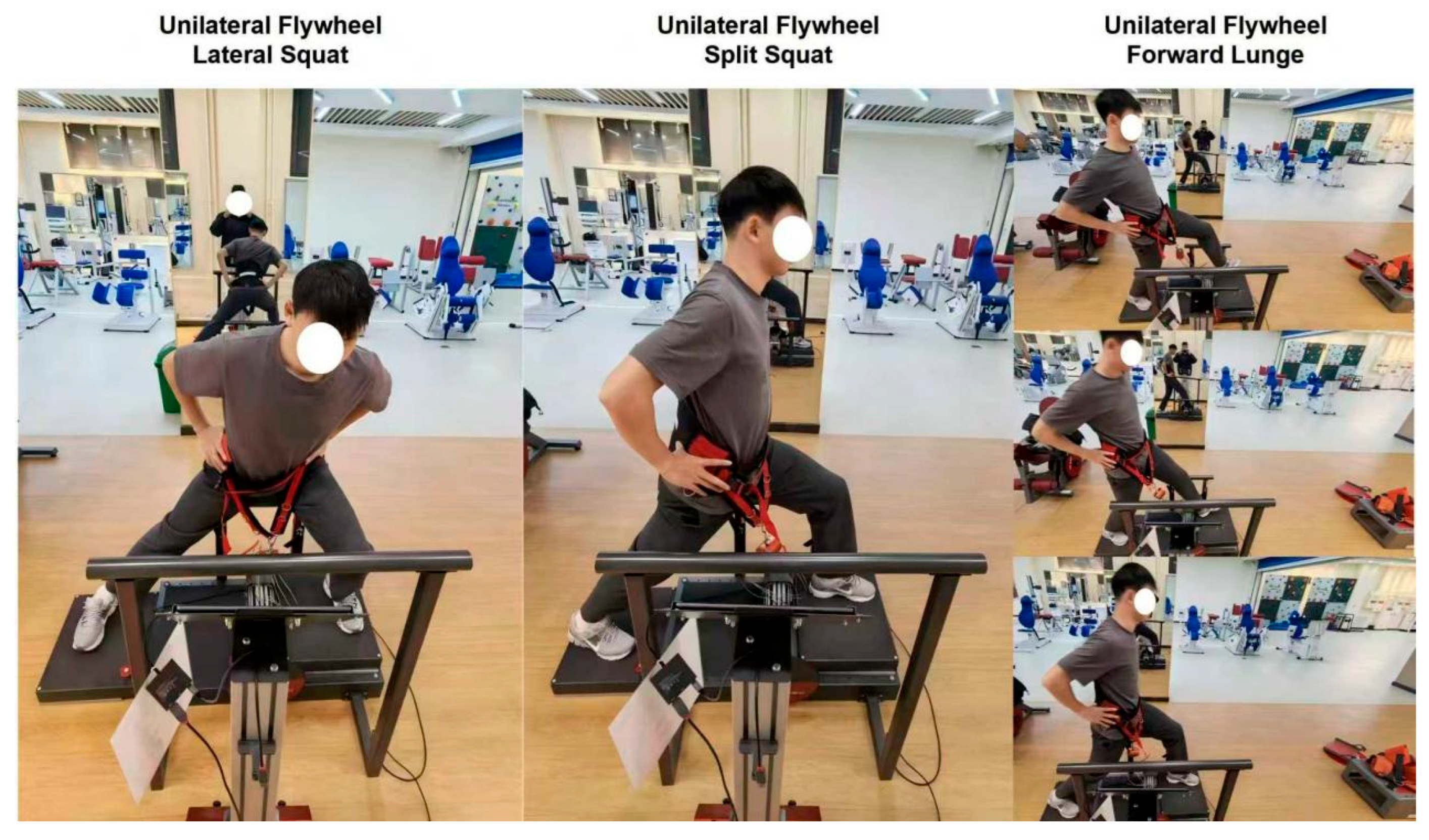
The unilateral flywheel training group supplemented conventional soccer-specific training with unilateral flywheel resistance training using the Box4Pro Flywheel Resistance Centrifugal Trainer. As shown in
Figure 2, the training regimen centered on three unilateral lower-body movements: unilateral flywheel split squat, unilateral flywheel forward lunge, and unilateral flywheel lateral squat. All movements were performed under single-leg support conditions to emphasize unilateral loading characteristics during support, braking, and directional control, thereby mirroring the biomechanics of soccer change-of-direction actions and sudden stops [
22]. Training load was regulated by adjusting the flywheel’s rotational inertia, and participants were instructed to maintain maximal subjective effort during the concentric phase. The protocol explicitly required delayed braking during the eccentric phase followed by active deceleration toward the end range of motion to emphasize eccentric braking characteristics. During weeks 1–2, participants trained with an inertia of 0.035 kg·m
2 to facilitate familiarization with the movement patterns and flywheel-specific braking demands. Inertia was increased to 0.065 kg·m
2 during weeks 3–5 to augment eccentric deceleration demands, and further increased to 0.095 kg·m
2 during weeks 6–8 to reinforce eccentric braking capacity. Training execution was closely supervised throughout the intervention to manage accumulated fatigue and avoid interference with post-intervention testing outcomes. Total training volume was kept consistent between lower limbs, and the order of left and right leg training was alternated across sessions to minimize potential order effects.
2.4.3. Control Training Group
The control group underwent only routine soccer-specific training and traditional lower-body resistance training during the intervention period, without participating in any form of flywheel resistance training or other eccentric overload training. Specific details are provided in
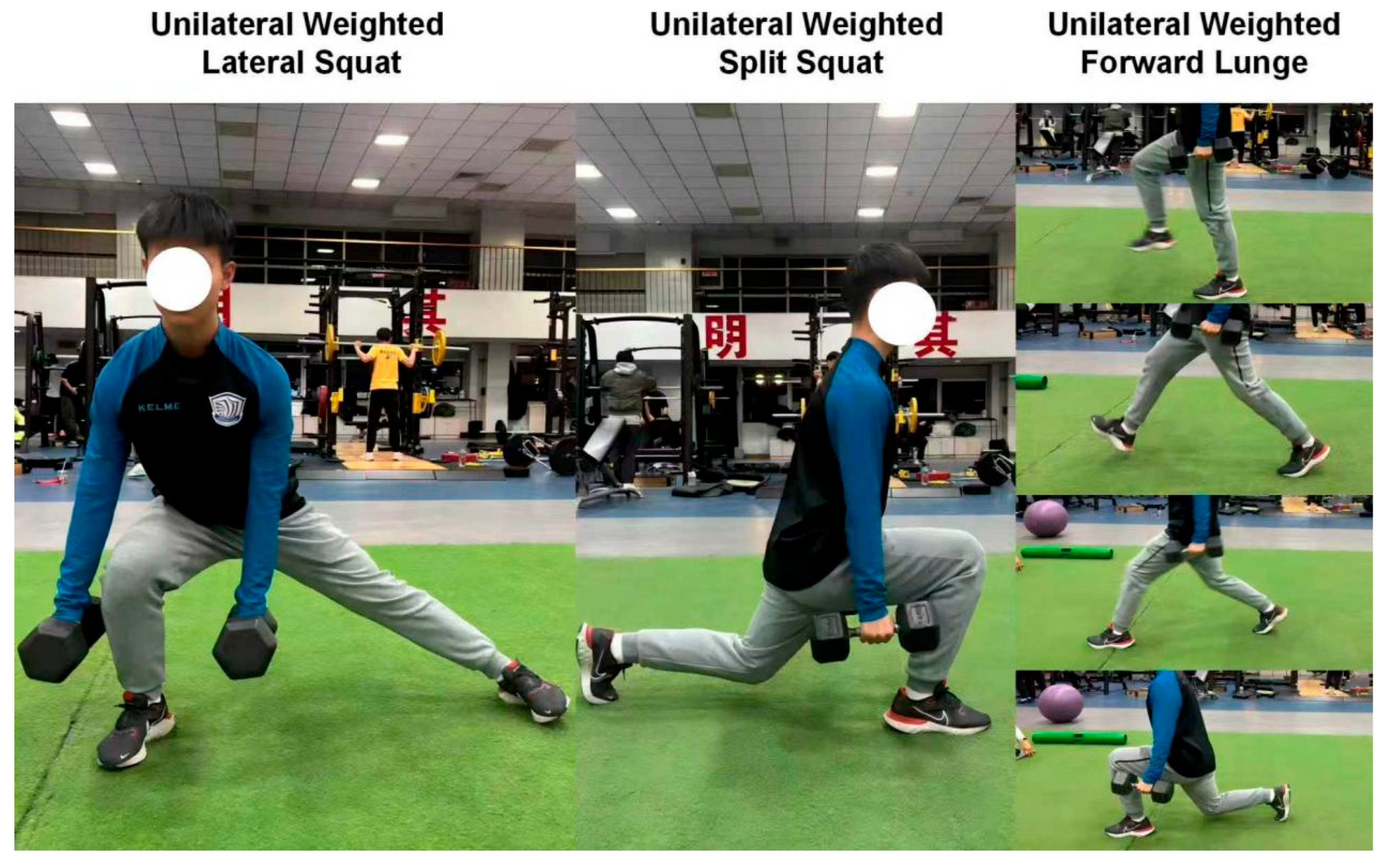
Table 3. To control for the influence of movement execution patterns, the control group’s training exercises were structurally consistent with those of the unilateral flywheel training group, both employing lower-body strength exercises performed under single-leg support conditions. As shown in
Figure 3, specific exercises included unilateral weighted split squats, unilateral weighted forward lunges, and unilateral weighted lateral squats, matching the primary movement planes and patterns of the experimental group’s training.
Training intensity was set based on pre-intervention (PRE) lower-body strength baseline assessments, controlled using relative load methods, with a target intensity range of 70–80% 1 RM. During training, subjects performed the aforementioned exercises using barbells or dumbbells, with load adjustments made according to training phases to maintain overall intensity within the moderate-to-high range. Training frequency, single-session duration, set × rep structure, and rest intervals between sets were identical to those of the unilateral flywheel training group. Total training volume for the left and right lower limbs was kept consistent, and the order of training legs was alternated across sessions to minimize order effects.
2.5. Test Content and Procedure
All tests were conducted both before (Pre) and after (Post) the intervention. To minimize learning effects, a familiarization session was scheduled prior to formal testing. On each testing day, participants completed a standardized warm-up protocol. The fixed testing sequence was as follows: isokinetic dynamometer test → field-based change-of-direction test → ball-handling change-of-direction test → GPS monitoring during game-like scenarios. To minimize the influence of fatigue, a standardized rest interval of at least 25 min was provided between consecutive tests conducted on the same day. In addition, participants were instructed to avoid strenuous exercise for at least 24 h prior to each testing session.
2.5.1. Isokinetic Dynamometer Testing
Neuromuscular strength of the knee extensors and flexors during concentric and eccentric contractions was assessed using an isokinetic dynamometer [
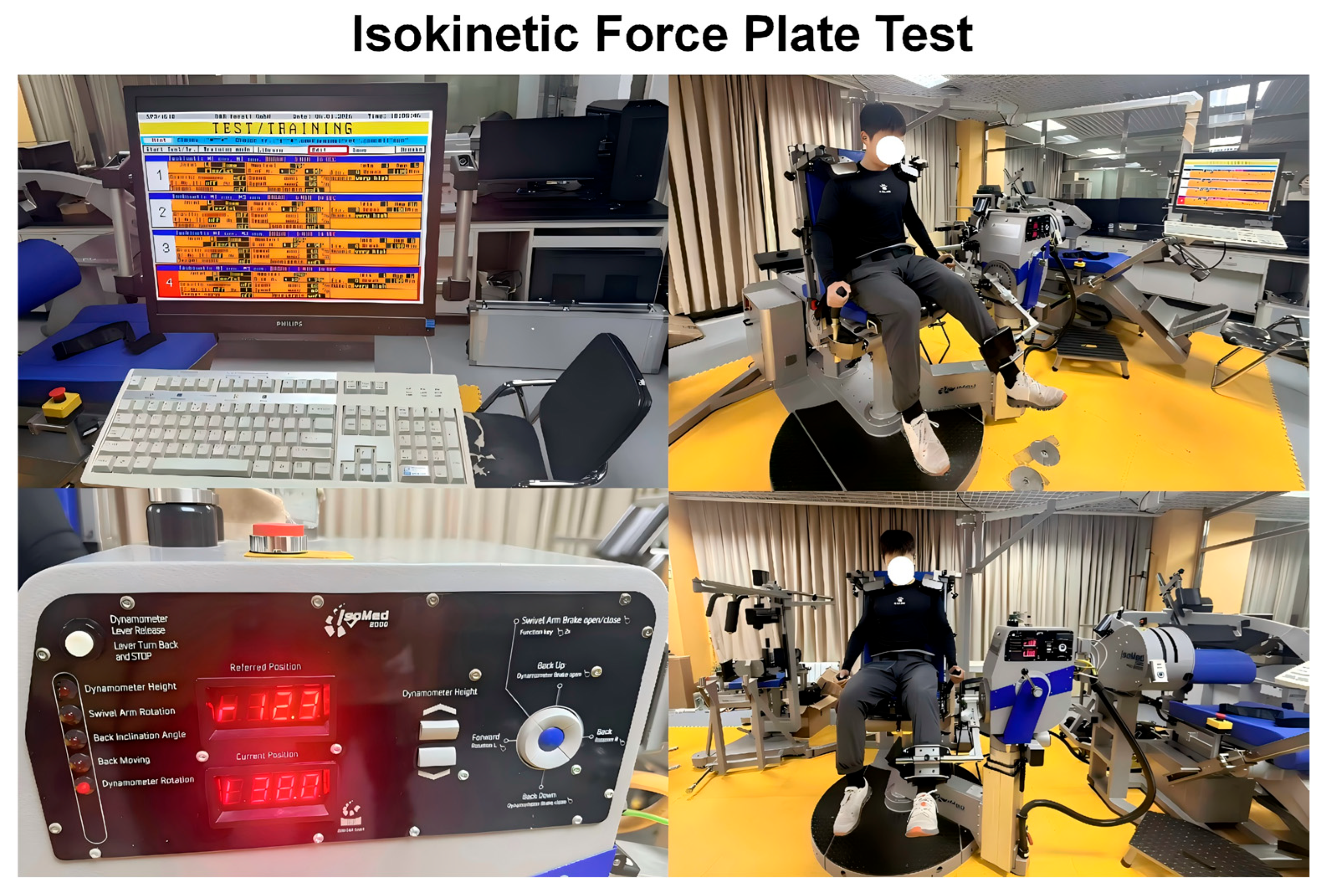
23]. Testing employed an isokinetic joint dynamometer system (IsoMed 2000, D&R Ferstl GmbH, Hemau, Germany). As shown in
Figure 4, subjects assumed a seated position with the trunk, pelvis, and thigh stabilized via fixation devices. The dynamometer’s rotational axis aligned with the lateral condyle of the knee joint, and gravity correction was performed prior to testing. The knee joint’s range of motion was set between 10° and 90°.
All tests were conducted at an angular velocity of 60°·s
−1. This angular velocity was selected because it is commonly used to assess maximal concentric and eccentric torque production of the knee extensors and flexors in soccer and other team-sport athletes, and is considered particularly appropriate for evaluating high-force eccentric braking capacity [
24]. Concentric and eccentric contractions of the knee extensors and flexors were evaluated separately. Five maximal voluntary contractions were performed for each contraction mode, with peak torque (PT) recorded and normalized to body mass (Nm·kg
−1) for subsequent analysis. Low angular velocities in isokinetic testing have been shown to provide reliable and sensitive measures of eccentric strength adaptations following resistance-based interventions. Tests were performed sequentially on each lower limb, with randomization applied to minimize potential order effects. Rest periods of at least 60 s were provided between different test conditions. For data analysis, peak torque values were obtained separately for the left and right lower limbs, and
PTmean was calculated as the bilateral average of these values for both knee extensors and flexors to represent overall eccentric neuromuscular strength. No dominant or non-dominant limb classification was applied in the present analysis. The calculation was performed as follows:
To reflect the specific adaptation of the knee extensor force structure to deceleration and braking tasks, the eccentric-to-concentric ratio (
E:C ratio) of the extensors was calculated using the following formula:
Additionally, to quantify the degree of asymmetry in eccentric braking capacity between the left and right lower limbs, the asymmetry index (
Asym) of the peak eccentric torque of the knee extensors was calculated using the following formula:
2.5.2. On-Field Change-of-Direction Test
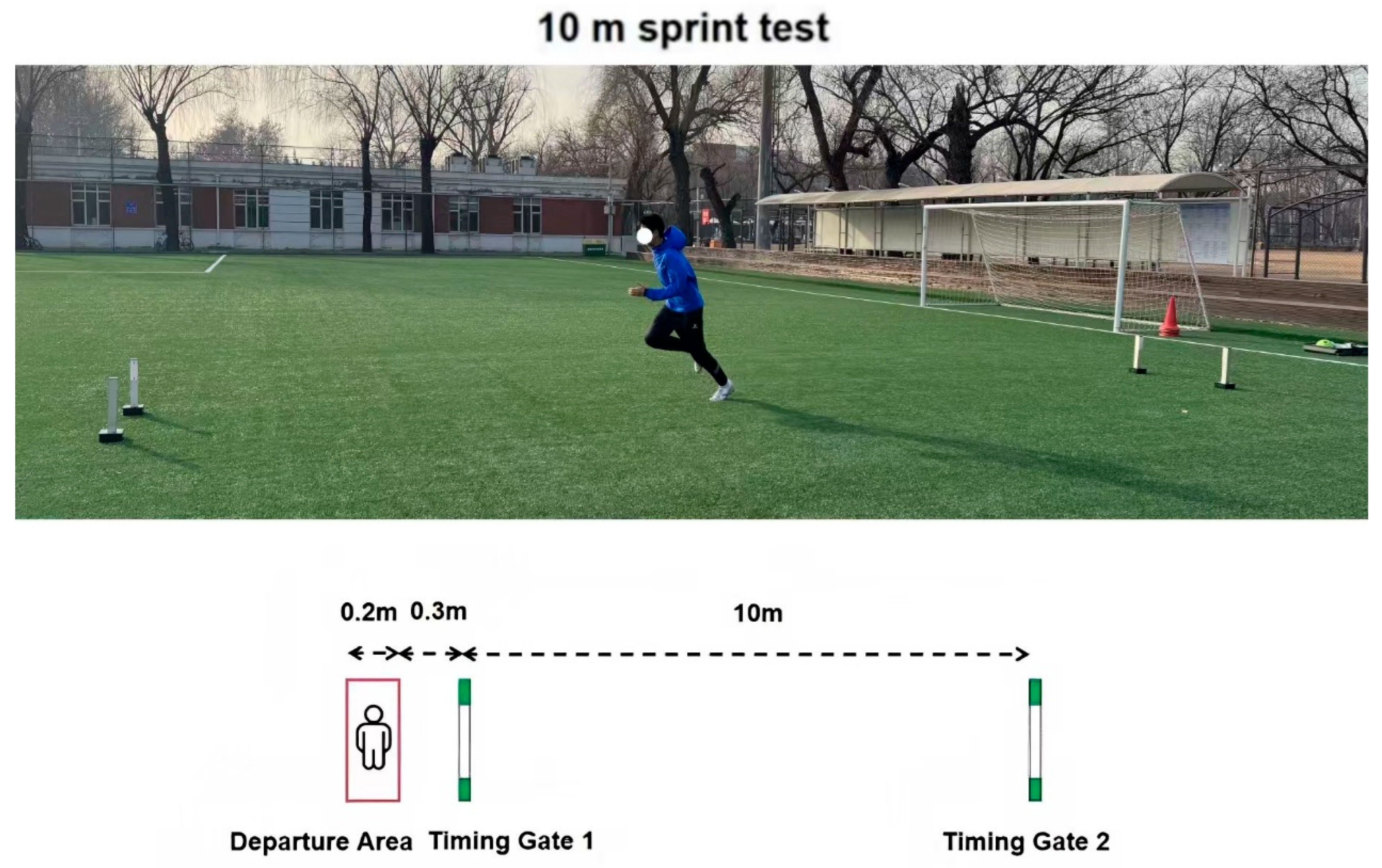
10 m Straight Sprint Test: The 10 m straight sprint test evaluates linear acceleration capacity and serves as the linear velocity baseline for calculating the change-of-direction deficit (COD deficit). Testing occurs on an outdoor standard soccer field using an optical timing gate system.
As shown in
Figure 5, subjects started from a stationary standing position. The starting line was positioned 0.3–0.5 m behind the first timing gate to prevent premature gate activation. Upon hearing the start command, subjects performed a maximal 10 m straight-line sprint, with sprint time initiated when the participant crossed the first timing gate and stopped upon crossing the 10 m gate. Each subject completed 2–3 trials with 2–3 min rest between consecutive attempts. The fastest time was selected for subsequent analysis.
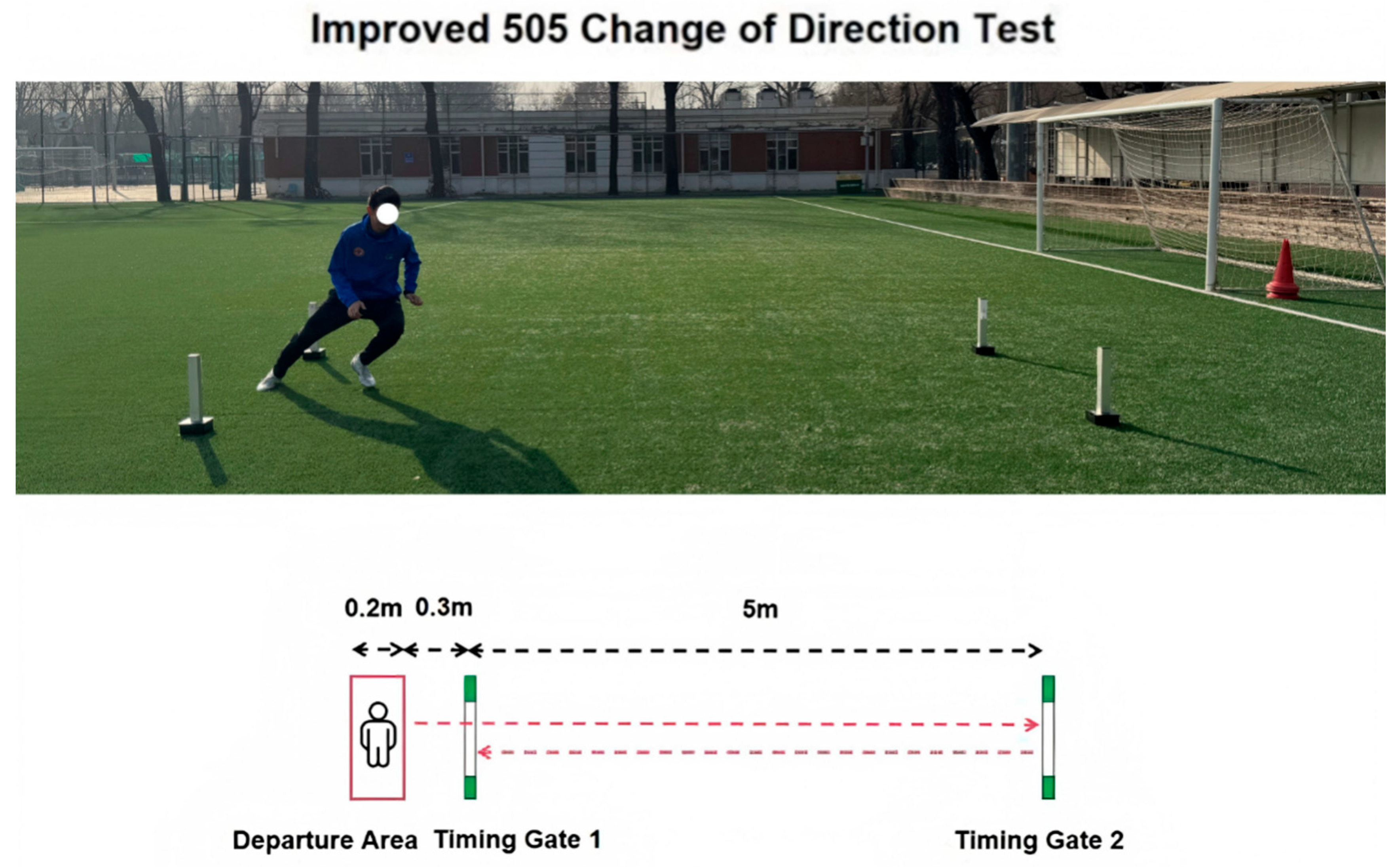
Modified 505 Test: The Modified 505 Test evaluates subjects’ agility performance during 180° directional changes, analyzing agility separately for left and right single-leg support conditions. A stationary start is used to minimize the influence of linear sprint speed on test results.
As shown in
Figure 6, subjects stood stationary 0.3–0.5 m from the timing gate. Upon hearing the start command, they sprinted at maximal effort through the gate, accelerated to the 5 m turning line, executed a 180° turn while supporting body weight exclusively on the specified lower limb, and then sprinted back at maximal speed through the timing gate to complete the test. The timing interval covered 5 m entry and 5 m return (total distance: 10 m).
All trials were visually monitored by experienced researchers positioned near the turning point. Trials were considered invalid and repeated if the non-support limb contacted the ground or provided additional support during the change-of-direction phase. Testing was conducted on both sides, with 2–3 valid attempts per side and adequate recovery provided between consecutive trials. The fastest valid time for each side was recorded for statistical analysis.
Change-of-direction deficit (COD deficit) was calculated using performance times from the modified 505 test and the 10 m straight-line sprint test. The COD deficit represents the additional time required to perform a directional change beyond an athlete’s linear acceleration capacity. The 10 m straight sprint was used as a reference measure of linear acceleration performance, while the modified 505 test incorporates deceleration, single-leg turning, and re-acceleration demands. By subtracting straight-line sprint time from modified 505 time, COD deficit provides an index of change-of-direction efficiency that is less influenced by linear sprint speed. COD deficit values were calculated separately for the left and right sides using the following formula [
12]:
2.5.3. AFL Ball-Handling Change of Direction Test
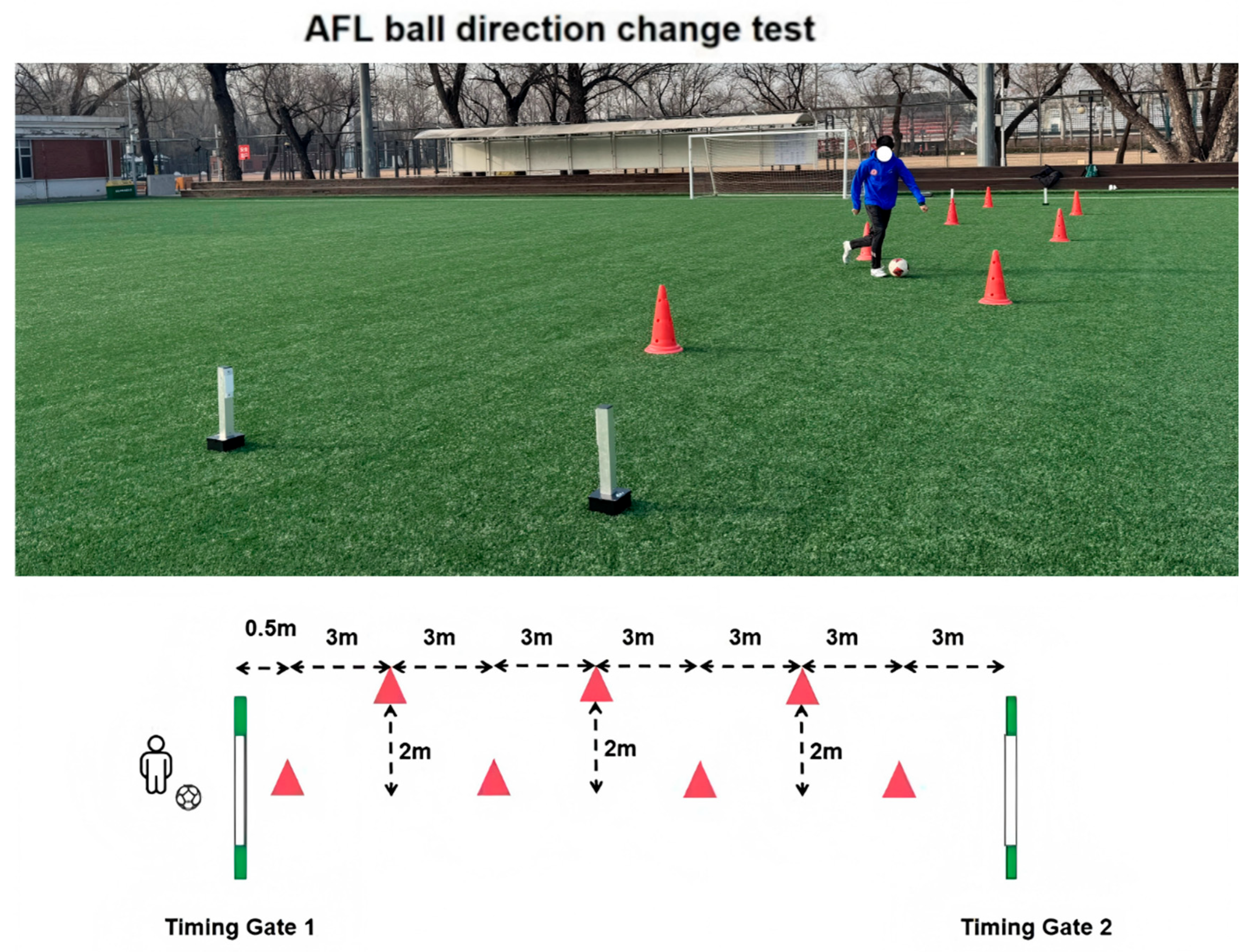
The AFL ball-handling change-of-direction test was used to evaluate the transfer of training adaptations to soccer-specific tasks with increased technical and coordinative demands. The test employed a fixed zigzag course consisting of seven marker cones. As illustrated in
Figure 7, the forward distance between adjacent cones was 3.0 m, with a fixed lateral offset of 2.0 m. The starting position was set 0.5 m behind the first timing gate, and participants completed the course by sprinting through the final timing gate after the last directional change. Including the starting offset and the final sprint section, the total longitudinal distance covered was approximately 21.5 m.
Participants performed the test while dribbling a soccer ball along the designated route and were required to maintain continuous and effective ball control while correctly negotiating each marker. Trials were considered invalid and repeated if participants lost control of the ball or failed to pass around any cone. Each participant completed two valid trials with a 2–3 min rest interval between attempts, and the fastest completion time was used for subsequent analysis. This test reflects the transfer of change-of-direction ability to sport-specific tasks with higher technical complexity [
25].
2.5.4. Acceleration and Deceleration Metrics in Match Situations
To evaluate training adaptations under match conditions, participants took part in standardized match play before and after the intervention while wearing Catapult Vector X7 GPS units (Catapult Sports, Melbourne, Australia) operating at a sampling frequency of 10 Hz. Each participant completed the same number of matches at the pre- and post-intervention time points, and GPS-derived variables were averaged across matches within each phase to minimize match-to-match variability. All matches were conducted in an 11 vs. 11 format on a standard outdoor soccer field, following official competition rules. Each assessment consisted of two 40 min halves (total match duration: 80 min), and all participants completed the full match duration at both pre- and post-intervention time points. Playing positions were balanced between the experimental (EXT) and control (CON) groups at baseline, with no systematic differences in positional distribution between groups. Tactical instructions and team strategies were standardized across all match sessions, with the same coaching staff, tactical framework, and competitive context maintained throughout the study period. No tactical modifications were introduced during the intervention. Pitch dimensions, match rules, and team composition were kept consistent across sessions. GPS units continuously recorded displacement and velocity data, from which acceleration and deceleration events were derived. High-intensity acceleration and deceleration events were defined as accelerations > 3.0 m·s−2 and decelerations < −3.0 m·s−2, respectively.
2.6. Statistical Analysis
Data analysis was performed using IBM SPSS Statistics (Version 26.0; IBM Corp., Armonk, NY, USA) and GraphPad Prism (Version 9.5.1; GraphPad Software, Boston, MA, USA). Statistical significance was set at p < 0.05. The Shapiro–Wilk test was used to assess normality. Between-group and pre–post differences were examined using a two-way ANOVA with factors Group (EXT vs. CON) and Time (Pre vs. Post). Because the Time factor contained only two levels, sphericity assumptions were not applicable and no correction was required. When multiple pairwise comparisons were undertaken, adjusted p-values were obtained using Tukey’s multiple comparisons test to control the family-wise error rate. Effect sizes for pairwise comparisons were calculated as Hedges’ g (small-sample bias corrected) and interpreted as trivial (<0.2), small (0.2–0.5), moderate (0.5–0.8), and large (>0.8). Missing data were handled using a complete-case approach; no participants withdrew and no outcome data were missing, therefore no imputation was performed.
3. Results
3.1. Isokinetic Eccentric Strength Measures
Knee extensor eccentric peak torque:
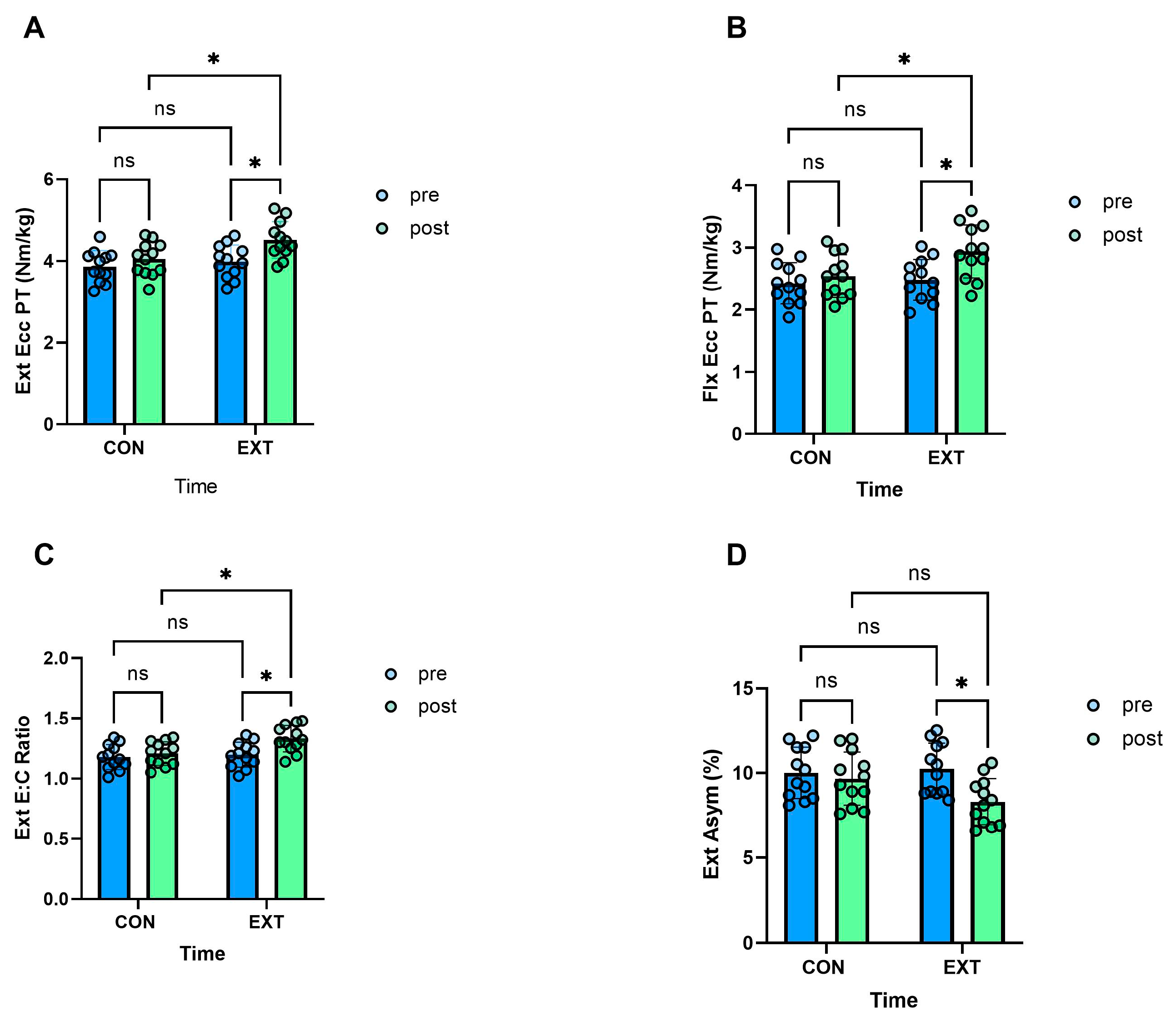
As shown in
Figure 8A, knee extensor eccentric peak torque increased significantly from pre- to post-test within the EXT group following the training intervention (mean difference = 0.54 Nm·kg
−1, 95% CI: 0.07 to 1.01,
p = 0.016, Hedges’ g = 1.29), whereas no meaningful pre–post change was observed within the CON group (mean difference = −0.18 Nm·kg
−1, 95% CI: −0.65 to 0.29,
p = 0.873, Hedges’ g = −0.43). At post-test, eccentric peak torque of the knee extensors was significantly higher in the EXT group compared with the CON group (mean difference = 0.48 Nm·kg
−1, 95% CI: 0.01 to 0.95,
p = 0.044, Hedges’ g = 1.15).
Knee Flexor Eccentric Peak Torque:
As shown in
Figure 8B, knee flexor eccentric peak torque increased significantly from pre- to post-test within the EXT group following the training intervention (mean difference = 0.46 Nm·kg
−1, 95% CI: 0.07 to 0.85,
p = 0.016, Hedges’ g = 1.27), whereas no meaningful pre–post change was observed within the CON group (mean difference = −0.12 Nm·kg
−1, 95% CI: −0.51 to 0.28,
p = 0.863, Hedges’ g = −0.33). At post-test, eccentric peak torque of the knee flexors was significantly higher in the EXT group compared with the CON group (mean difference = 0.40 Nm·kg
−1, 95% CI: 0.00 to 0.79,
p = 0.047, Hedges’ g = 1.10).
Extensor eccentric/concentric force ratio (E:C ratio):
As shown in
Figure 8C, the extensor eccentric-to-concentric force ratio (
E:C ratio) increased significantly from pre- to post-test within the EXT group following the training intervention (mean difference = 0.13, 95% CI: 0.02 to 0.25,
p = 0.015, Hedges’ g = 1.24), whereas no meaningful pre–post change was observed within the CON group (mean difference = 0.03, 95% CI: −0.08 to 0.14,
p = 0.900, Hedges’ g = 0.27). At post-test, the
E:C ratio was significantly higher in the EXT group compared with the CON group (mean difference = 0.12, 95% CI: 0.01 to 0.24,
p = 0.027, Hedges’ g = 1.15).
Extensor asymmetry:
As shown in
Figure 8D, extensor asymmetry was significantly reduced from pre- to post-test within the EXT group following the training intervention (mean difference = −1.95%, 95% CI: −3.57 to −0.33,
p = 0.013, Hedges’ g = −1.27), whereas no meaningful pre–post change was observed within the CON group (mean difference = 0.34%, 95% CI: −1.28 to 1.96,
p = 0.942, Hedges’ g = 0.22). At post-test, extensor asymmetry did not differ significantly between the EXT and CON groups (mean difference = −1.36%, 95% CI: −2.98 to 0.26,
p = 0.128, Hedges’ g = −0.88).
3.2. Field-Based Sprint and Change of Direction (COD) Performance
10 m Straight-Line Sprint:
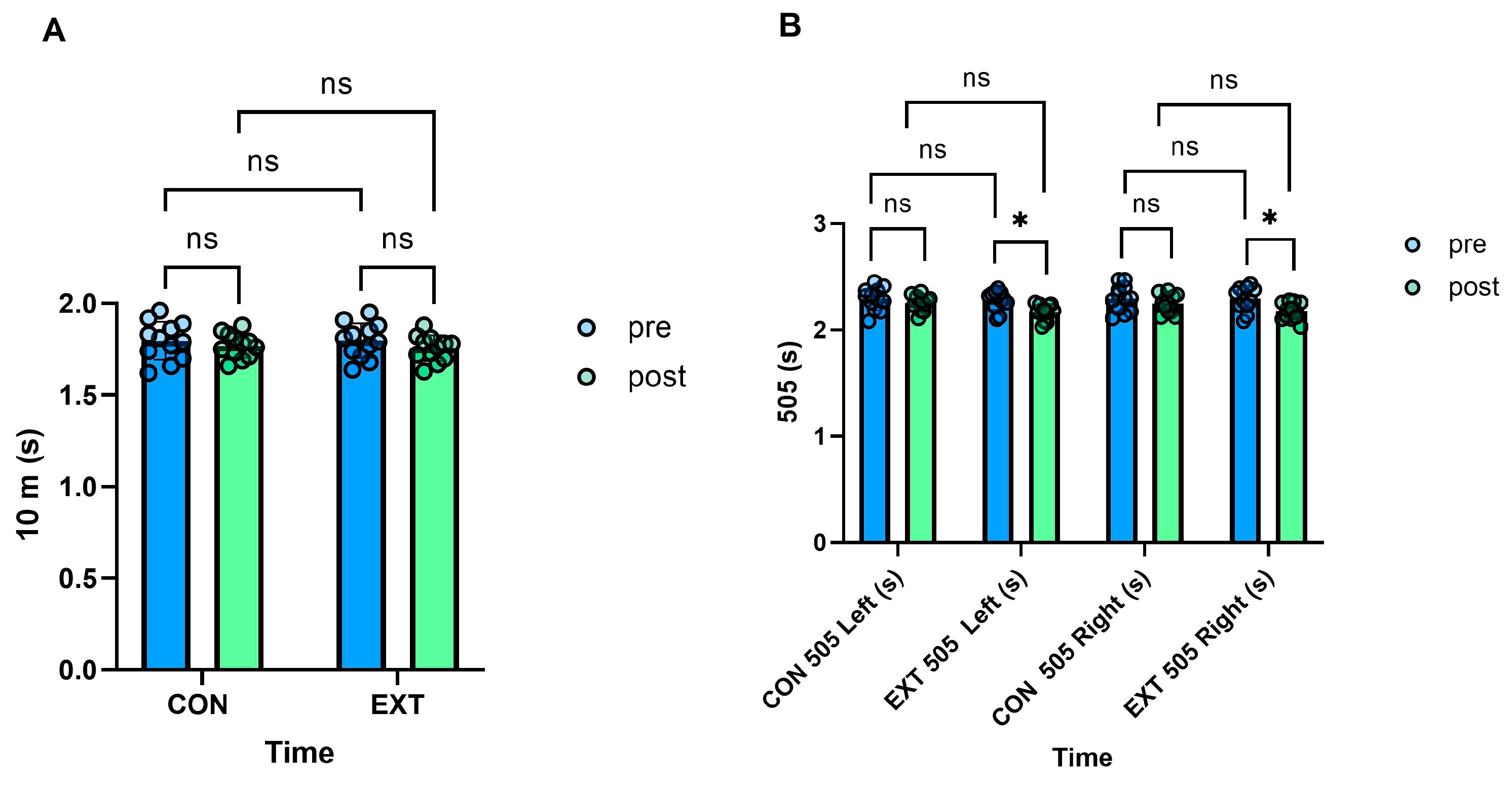
Two-way ANOVA showed no Group × Time interaction for 10 m sprint time (F(1, 44) = 0.09, p = 0.7612), with no main effect of time (F(1, 44) = 0.07, p = 0.7870) or group (F(1, 44) = 1.84, p = 0.1811). Tukey-adjusted post hoc comparisons indicated no pre–post change within either group: EXT (mean difference = −0.04083 s, 95% CI: −0.1334 to 0.05178, p = 0.6442, Hedges’ g = −0.46) and CON (mean difference = −0.02583 s, 95% CI: −0.1184 to 0.06678, p = 0.8784, Hedges’ g = −0.29). At post-test, no between-group difference was observed (EXT vs. CON: mean difference = −0.01417 s, 95% CI: −0.1068 to 0.07845, p = 0.9767, Hedges’ g = −0.16).
Modified 505 change-of-direction test: As shown in
Figure 9B, no significant pre- to post-test change was observed in the CON group for either the left-sided (mean difference = 0.04 s, 95% CI: −0.05 to 0.13,
p = 0.657, Hedges’ g = 0.29) or right-sided modified 505 test (mean difference = 0.05 s, 95% CI: −0.06 to 0.16,
p = 0.643, Hedges’ g = 0.29).
In contrast, the EXT group demonstrated significant reductions in modified 505 completion time on both sides following the training intervention, with improvements observed for the left side (mean difference = −0.09 s, 95% CI: −0.18 to −0.00, p = 0.049, Hedges’ g = −2.73) and the right side (mean difference = −0.12 s, 95% CI: −0.23 to −0.01, p = 0.037, Hedges’ g = −2.73).
At post-test, no significant between-group differences were detected for either left-sided (mean difference = −0.07 s, 95% CI: −0.16 to 0.03, p = 0.241, Hedges’ g = −1.72) or right-sided modified 505 performance (mean difference = −0.07 s, 95% CI: −0.18 to 0.04, p = 0.326, Hedges’ g = −1.72).
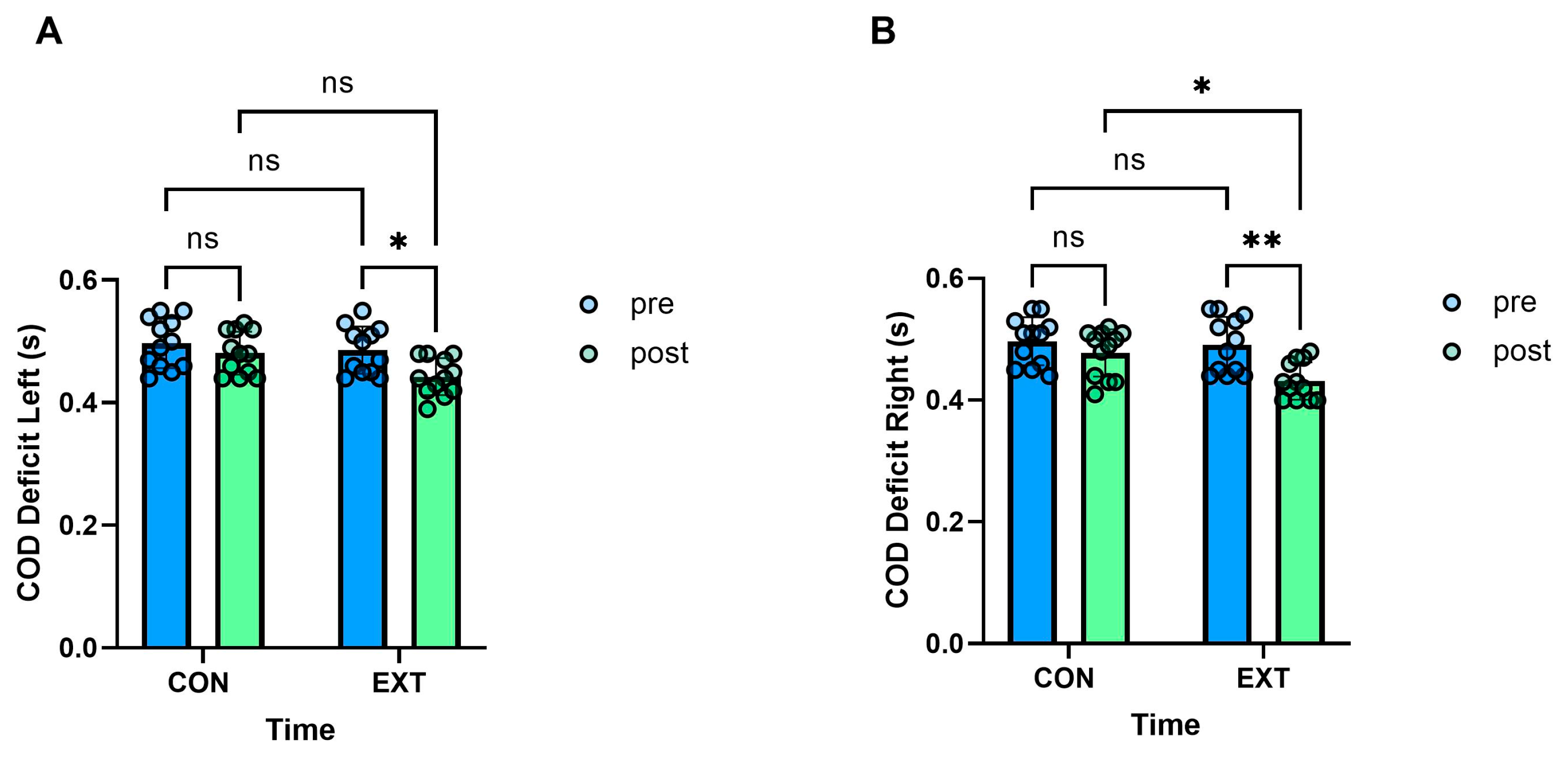
Left COD deficit:
As shown in
Figure 10A, left-sided COD deficit did not change from pre- to post-test within the CON group following the intervention (mean difference = −0.02 s, 95% CI: −0.06 to 0.02,
p = 0.710, Hedges’ g = −0.42). In contrast, left-sided COD deficit was significantly reduced from pre- to post-test within the EXT group after training (mean difference = −0.04 s, 95% CI: −0.08 to −0.00,
p = 0.027, Hedges’ g = −1.15). At post-test, no significant between-group difference was observed (mean difference = −0.04 s, 95% CI: −0.08 to 0.00,
p = 0.060, Hedges’ g = −1.02).
Right-side COD deficit:
As shown in
Figure 10B, right-sided COD deficit did not change from pre- to post-test within the CON group following the intervention (mean difference = 0.02 s, 95% CI: −0.06 to 0.02,
p = 0.63). In contrast, right-sided COD deficit showed a clear reduction from pre- to post-test within the EXT group after training (mean difference = −0.06 s, 95% CI: −0.10 to −0.02,
p = 0.003, Hedges’ g = −1.40). At post-test, right-sided COD deficit was significantly lower in the EXT group compared with the CON group (mean difference = −0.05 s, 95% CI: −0.09 to −0.00,
p = 0.031, Hedges’ g = −1.09).
3.3. AFL Dribbling Change-of-Direction Performance
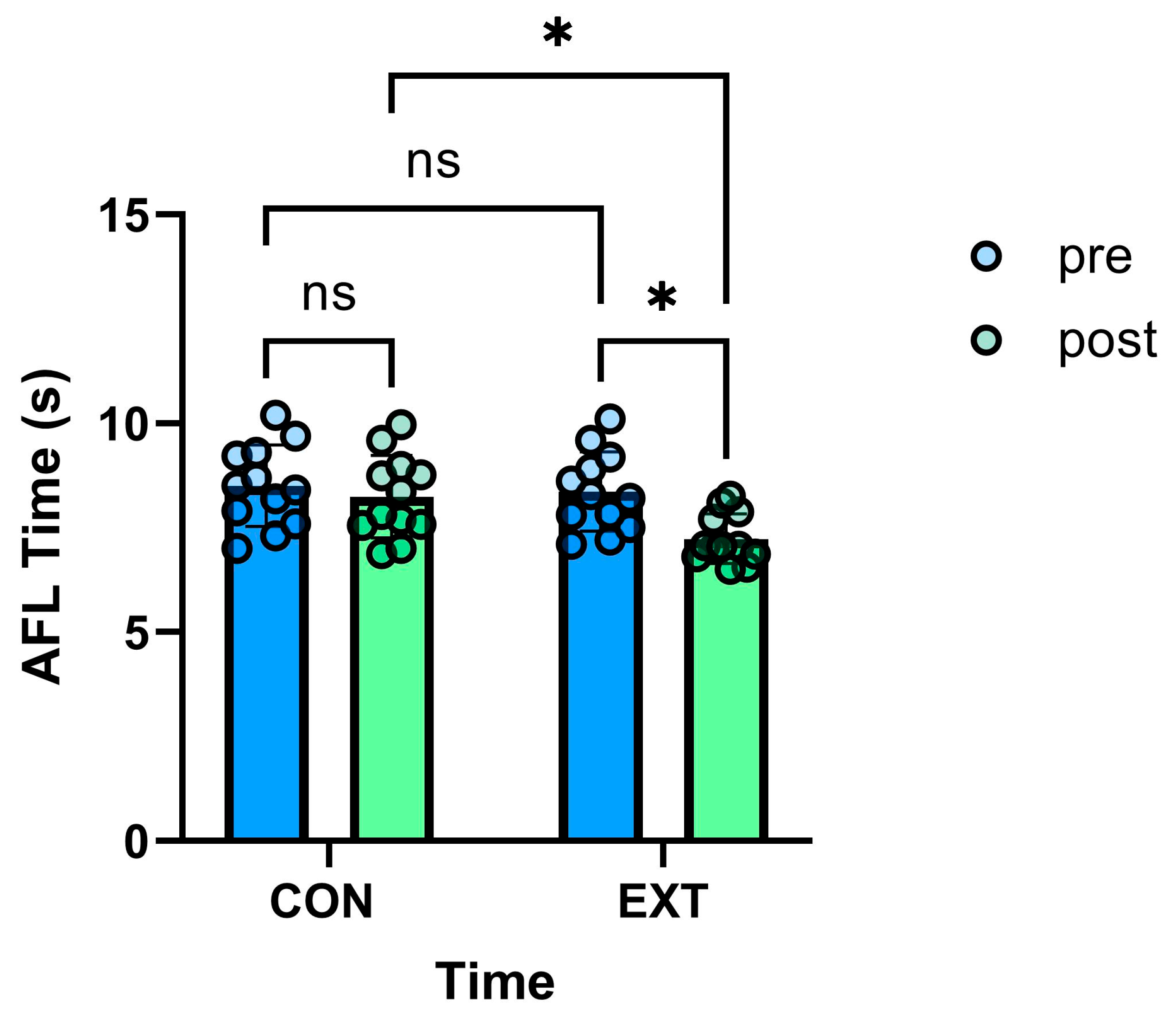
As shown in
Figure 11, AFL completion time did not change from pre- to post-test within the CON group following the intervention (mean difference = −0.26 s, 95% CI: −1.23 to 0.71,
p = 0.895). In contrast, AFL completion time was significantly reduced from pre- to post-test within the EXT group after training (mean difference = −1.13 s, 95% CI: −2.10 to −0.16,
p = 0.017, Hedges’ g = −1.18). At post-test, AFL completion time was shorter in the EXT group compared with the CON group (mean difference = −1.01 s, 95% CI: −1.98 to −0.04,
p = 0.039, Hedges’ g = −1.05).
3.4. High-Intensity Accelerations and Decelerations in Match-Related Situations
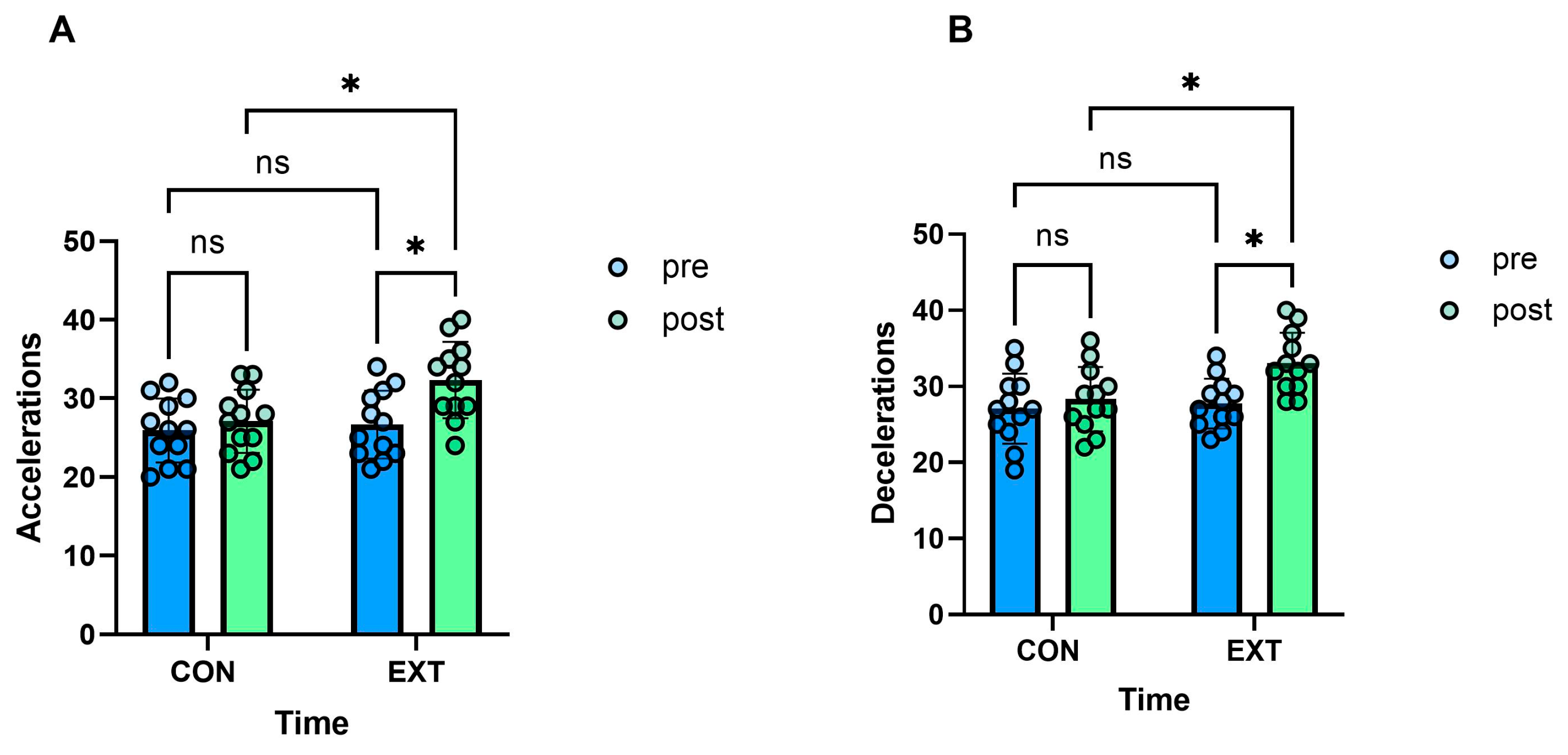
Number of high-intensity accelerations:
As shown in
Figure 12A, the number of high-intensity accelerations did not change from pre- to post-test within the CON group following the intervention (mean difference = −1.33, 95% CI: −6.46 to 3.80,
p = 0.899). In contrast, the number of high-intensity accelerations increased significantly from pre- to post-test within the EXT group after training (mean difference = 6.08, 95% CI: 0.95 to 11.21,
p = 0.014, Hedges’ g = 1.30). At post-test, the EXT group performed more high-intensity accelerations than the CON group (mean difference = 5.42, 95% CI: 0.29 to 10.55,
p = 0.035, Hedges’ g = 1.16). High-intensity deceleration frequency:
As shown in
Figure 12B, the number of high-intensity decelerations did not change from pre- to post-test within the CON group following the intervention (mean difference = −1.67, 95% CI: −7.14 to 3.81,
p = 0.848, Hedges’ g = −0.40). In contrast, the number of high-intensity decelerations increased significantly from pre- to post-test within the EXT group after training (mean difference = 6.75, 95% CI: 1.27 to 12.23,
p = 0.010, Hedges’ g = 1.61). At post-test, the EXT group performed more high-intensity decelerations than the CON group (mean difference = 6.08, 95% CI: 0.61 to 11.56,
p = 0.024, Hedges’ g = 1.45).
4. Discussion
This study systematically evaluated the effects of an 8-week unilateral flywheel resistance training (FRT) program on eccentric strength characteristics, change-of-direction (COD) efficiency, and soccer-specific performance in male soccer players. Compared with the traditional unilateral resistance training control group, the experimental group exhibited significantly enhanced peak eccentric torque in both knee extensors and flexors, a greater eccentric-to-concentric (E/C) strength ratio, and a significantly reduced bilateral COD deficit following the intervention. In contrast, no statistically significant changes were observed in 10 m straight-line sprint performance. Concurrently, the experimental group demonstrated reduced ball-handling COD completion times and an increased frequency of high-intensity acceleration and deceleration events during match play. Collectively, these findings support our hypotheses that unilateral FRT preferentially enhances eccentric neuromuscular capacity and change-of-direction efficiency, with meaningful transfer to soccer-specific tasks performed under match conditions. However, consistent with our a priori rationale, unilateral flywheel training did not produce a clear improvement in 10 m linear sprint time, likely because the eccentric-overload stimulus preferentially transfers to braking and change-of-direction capacities rather than straight-line acceleration, further reinforcing the principle of training specificity.
While the present study focused on functional performance outcomes rather than direct physiological measurements, the mechanistic basis for the observed eccentric strength adaptations can be reasonably inferred from the specific biomechanical demands imposed by unilateral flywheel resistance training (FRT). Enhanced eccentric strength and associated structural characteristics provide essential neuromuscular support for improved change-of-direction efficiency [
26]. The core advantage of unilateral FRT lies in its inertia-load-mediated coupling between concentric output and eccentric braking, requiring athletes to rapidly regulate braking forces during the eccentric phase following momentum generation. This loading pattern is thought to closely resemble the knee extensor braking dynamics encountered during high-angle directional changes in soccer, thereby establishing a plausible biomechanical foundation for training adaptation and skill transfer [
27,
28].
From a neuromodulatory perspective, although not directly assessed in the present study, such eccentric overload stimuli are suggested to enhance afferent feedback from muscle spindles and Golgi tendon organs, potentially increasing α-motor neuron excitability. This neuromodulatory response may facilitate preferential recruitment of high-threshold motor units associated with fast-twitch muscle fibers (type IIX) and improve motor unit synchronization [
29,
30]. Compared with the relatively limited eccentric stimulus provided by traditional resistance training using fixed external loads, the inertial loading profile of FRT is more likely to elicit these specific neuromuscular adaptations, which were functionally reflected in this study by increased eccentric peak torque and an optimized eccentric-to-concentric (E/C) strength ratio [
31]. An elevated E/C ratio indicates a greater eccentric force reserve without additional concentric demand, enabling more rapid dissipation of horizontal momentum within the brief deceleration window and thereby enhancing directional transition efficiency. Nevertheless, whether the observed E/C ratio approaches an optimal functional range for elite players remains to be confirmed using normative data from high-performance populations s [
32,
33,
34].
The muscular structural and molecular level, repeated exposure to high-tension eccentric loading is hypothesized to promote adaptations such as increased myosin synthesis via mechanosensitive signaling pathways (e.g., mTOR and MAPK activation), potential type IIX-to-IIa fiber transitions, and optimization of tendon–muscle complex mechanical properties. Collectively, these inferred adaptations would be expected to enhance force tolerance under high loads, improve output stability, and increase force transmission efficiency during rapid deceleration tasks [
35,
36]. However, as these cellular and molecular mechanisms were not directly measured, future studies incorporating electromyography, imaging techniques, or muscle biopsies are required to empirically validate these proposed pathways.
Notably, despite unilateral training, the experimental group exhibited significant improvements in bilateral deceleration deficits. This bilateral effect cannot be simply attributed to direct transfer of contralateral strength; it is more likely related to central nervous system control adaptations induced by unilateral training: Unilateral strength training can produce cross-training effects through bilateral motor cortex activation and reduced interhemispheric inhibition. The high coordination demands of change-of-direction movements on the support leg, trunk, and contralateral lower limb enable improvements in unilateral eccentric braking capacity to optimize overall neural control strategies, ultimately manifesting as synchronized bilateral efficiency gains in change-of-direction performance [
37,
38]. From an applied perspective, such cross-education effects may enhance training efficiency in soccer, as unilateral flywheel-based loading strategies could elicit bilateral performance benefits while reducing total training volume and cumulative mechanical stress. In addition, improved bilateral deceleration control and reduced inter-limb asymmetry may have injury-prevention implications, given that non-contact lower-limb injuries in soccer frequently occur during high-speed deceleration and directional changes. Although injury outcomes were not assessed in the present study, these findings suggest that unilateral eccentric-focused training may represent a time-efficient and potentially protective strategy within integrated soccer conditioning programs.
Furthermore, the significant reduction in change-of-direction deficits and stable linear sprint performance further validate training specificity. Change-of-direction deficits, having been decoupled from linear speed differences, more sensitively reflect the time cost during braking and turning phases. Their consistent improvement trend alongside peak eccentric torque and E/C ratio functionally supports the inference that “enhanced eccentric control capacity is the core driver of improved change-of-direction efficiency” [
39]. Nevertheless, combining flywheel-based eccentric training with sprint-specific exercises may represent a complementary strategy to concurrently target eccentric braking and concentric propulsion demands, thereby optimizing overall speed–power development.
Enhanced eccentric braking capacity establishes a functional foundation for transfer to soccer-specific tasks. The experimental group’s significant improvement in the ball-handling change-of-direction test likely reflects the close alignment of this task with the technical complexity and situational demands of match play. Successful execution relies not only on lower-limb strength, but also on braking stability, movement consistency, and effective allocation of attentional resources. Notably, although AFL completion time showed a statistically significant reduction, the relatively wide confidence interval indicates substantial inter-individual variability in training responses. This variability is likely attributable to the skill-dependent nature of the AFL task, which integrates change-of-direction speed with ball control and technical execution, and is therefore influenced by baseline technical proficiency and individual learning rates rather than measurement error alone. This variability suggests that individual players may respond differently to unilateral flywheel training, with the possible presence of responders and non-responders within the experimental group, highlighting the need for individualized load prescription in applied practice. It is therefore hypothesized that enhanced eccentric braking capacity may reduce the relative neuromuscular control demands required during deceleration phases, potentially allowing athletes to allocate greater attentional resources to ball control and postural transitions. However, this proposed mechanism remains speculative and requires direct verification using neurophysiological or biomechanical assessments in future studies. Match-situation data further support the practical relevance of this training, as the frequency of high-intensity acceleration and deceleration events significantly increased in the experimental group following unilateral FRT. Given the high mechanical and metabolic costs of rapid braking, this finding likely reflects improved tolerance to repetitive braking loads rather than a mere accumulation of external running load [
40,
41].
The absence of improvement in 10 m linear sprint performance further reflects the task-specific nature of the training adaptations observed in this study [
42]. Linear sprinting is primarily driven by rapid concentric force production and horizontal impulse generation, whereas unilateral flywheel resistance training predominantly targets eccentric braking and directional control, involving distinct mechanical and neuromuscular demands [
43,
44,
45]. Accordingly, the limited transfer of training adaptations to linear acceleration is consistent with previous evidence showing that the effectiveness of flywheel training depends on the mechanical correspondence between training stimuli and target performance tasks [
46]. In practice, unilateral flywheel training may be used as a complementary stimulus within existing soccer programs, particularly during phases emphasizing deceleration control and change-of-direction ability, while optimal dosage and periodization require further investigation.
This study has several limitations that should be acknowledged. (1) Methodological limitations: the absence of electromyography, joint kinematics, and neurophysiological measurements prevented direct verification of neuromuscular recruitment patterns and central neural adaptations; therefore, the proposed mechanisms are inferred from functional and strength outcomes rather than directly measured physiological evidence. (2) Sample and population limitations: although the sample size was sufficient to detect group-level effects, it may have limited the ability to fully capture inter-individual variability in training responses, particularly for skill-dependent tasks such as the ball-handling change-of-direction test; moreover, the participants were male collegiate soccer players, which limits the generalizability of the findings to professional, female, or youth populations. (3) Training and measurement limitations: the intervention primarily emphasized sagittal-plane movements and did not fully reflect the multidirectional braking demands commonly encountered in soccer match play, indicating scope for further optimization of training specificity. Future studies should therefore employ larger and more diverse samples, integrate direct biomechanical and neurophysiological assessments, and adopt training protocols that better reflect the multidirectional demands of soccer performance.




 ,
,