Methodological Framework for Generation of Static Air Traffic Situations and Automated Complexity Data Extraction


Abstract
1. Introduction
2. Static Air Traffic Situation Interface SATSI
2.1. Development and Specifications of the Interface
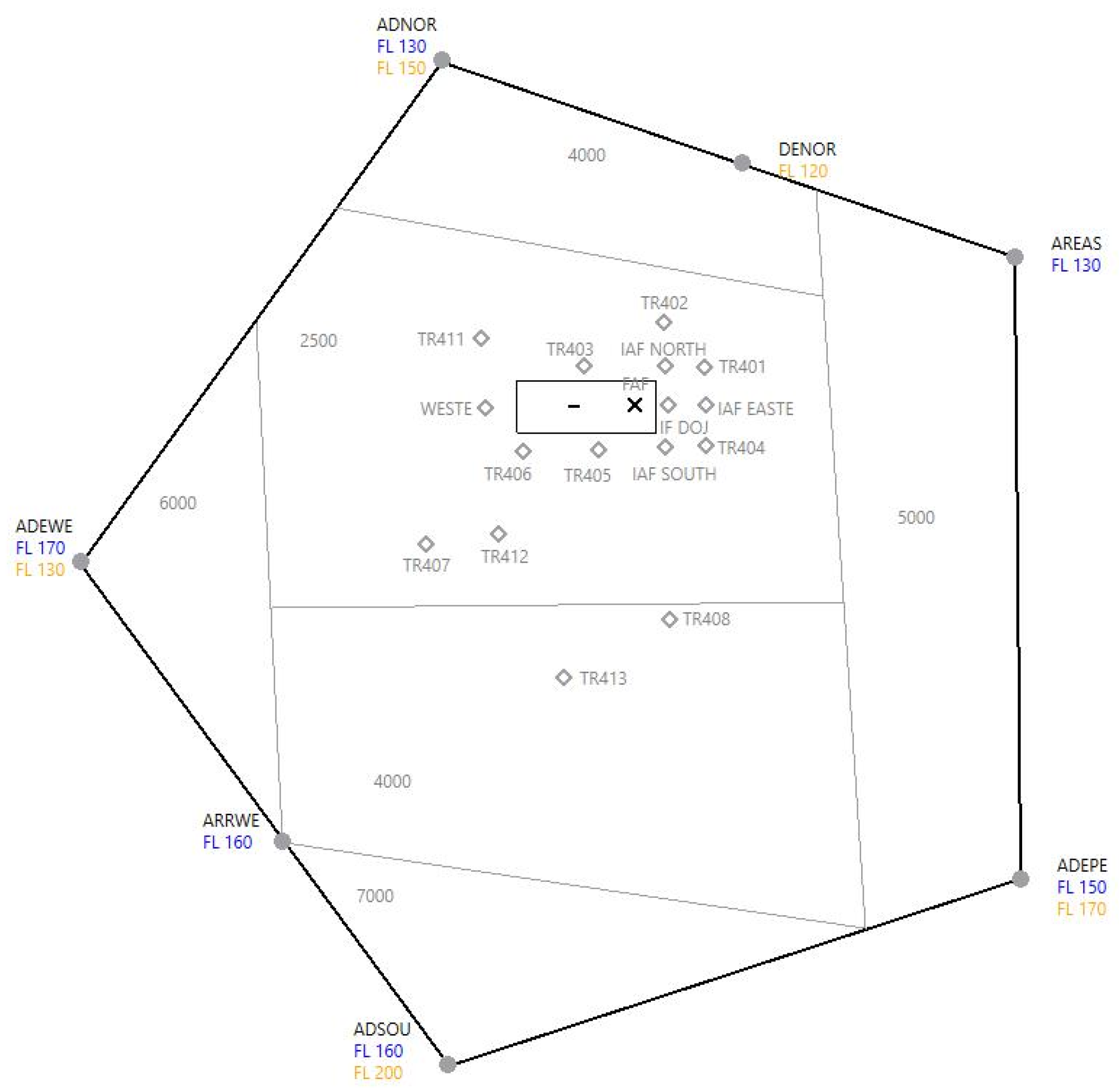
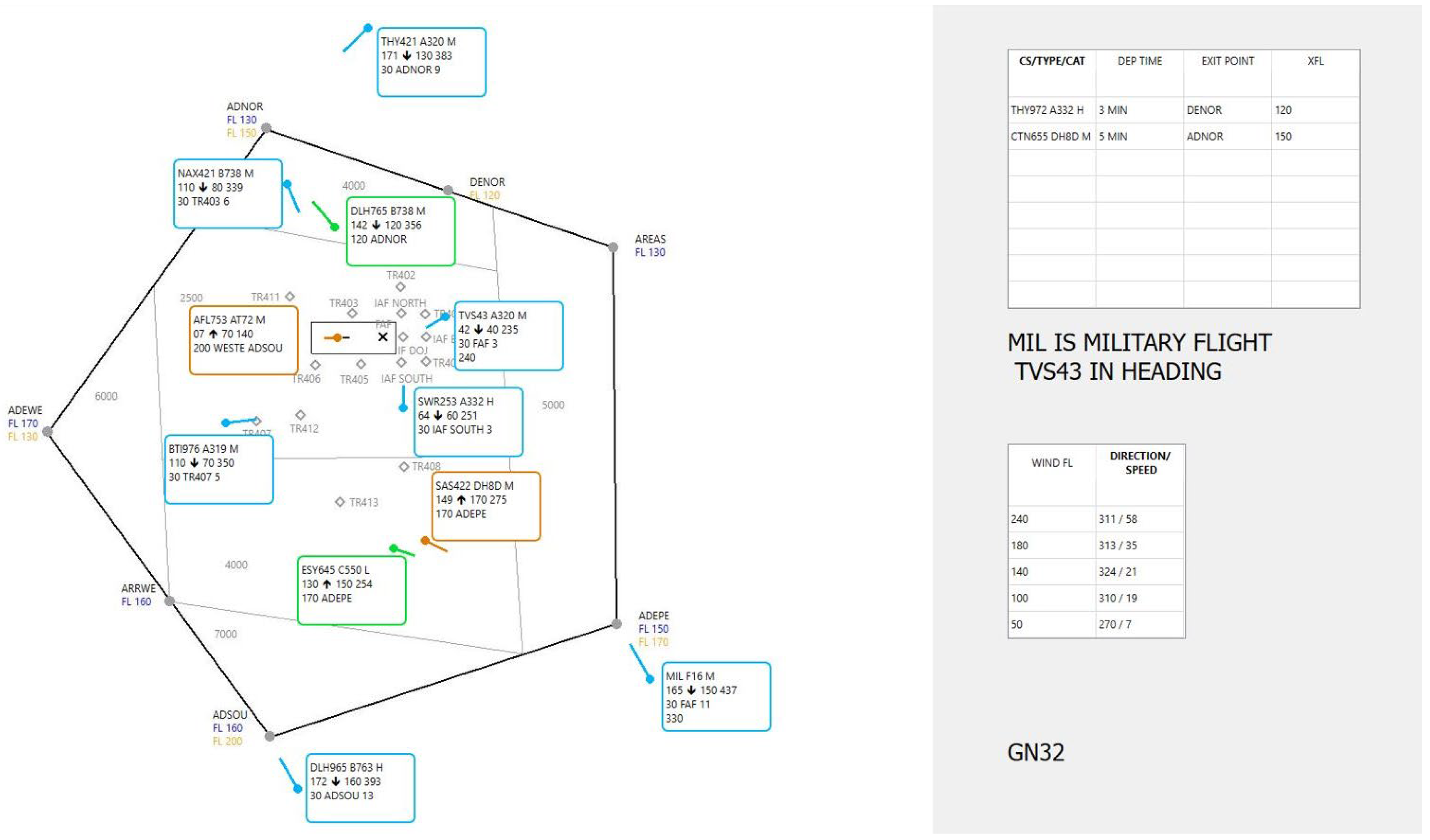
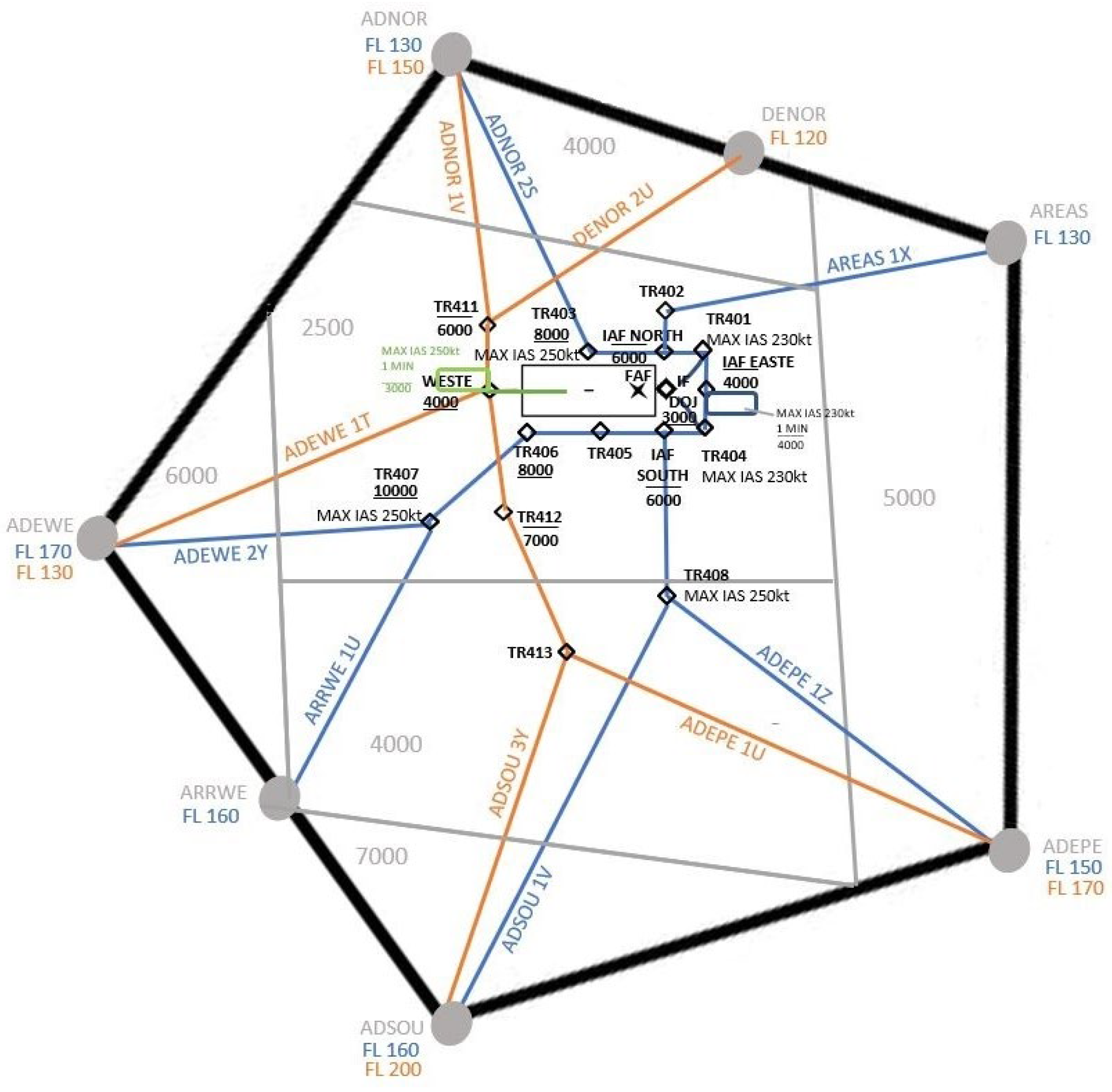
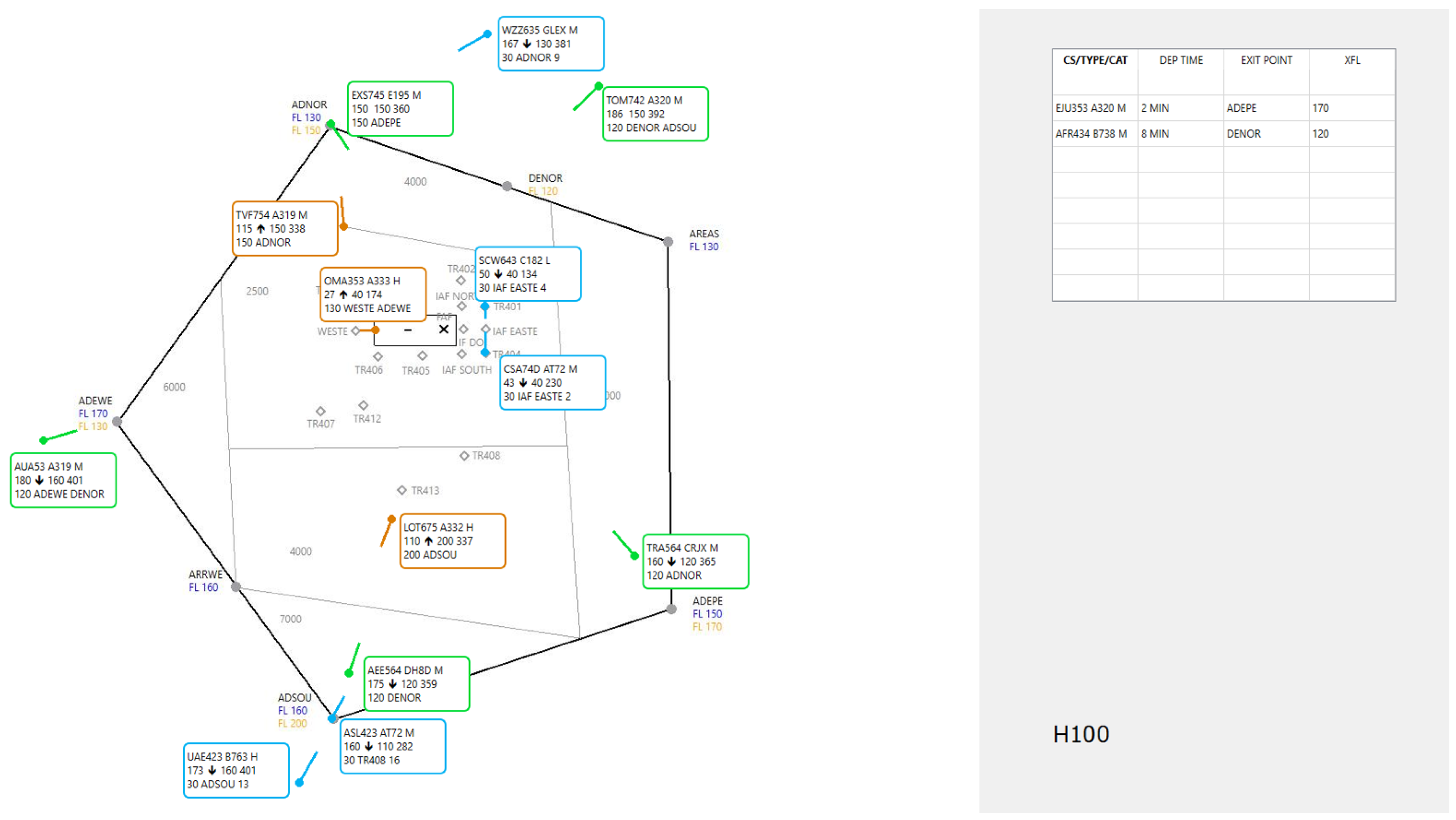
2.2. Terminal Airspace and Static Traffic Situations in SATSI
3. Algorithm for Parsing Trajectory Prediction Model Input Data
3.1. SATSI Data Storage
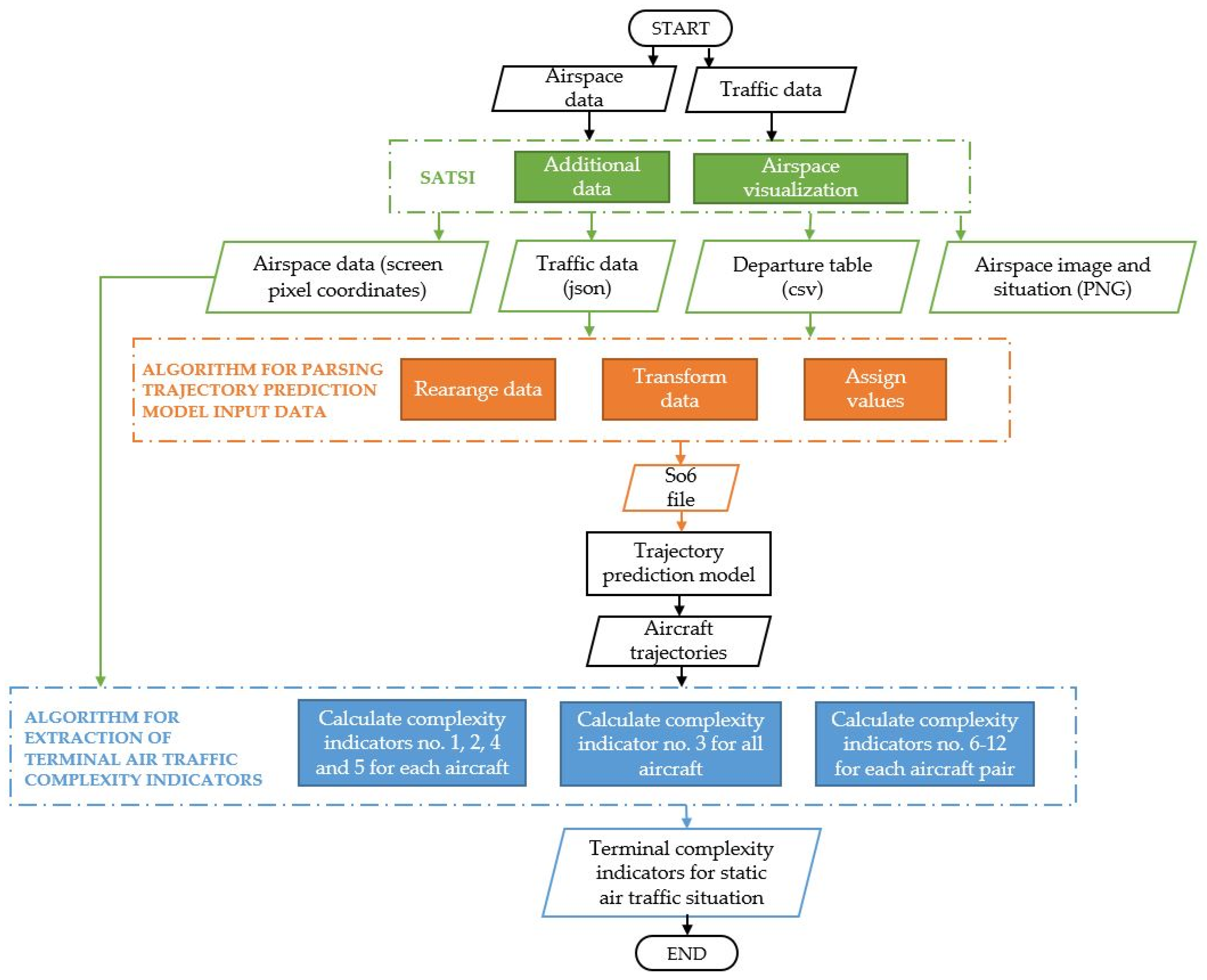
3.2. Development of Algorithm for Parsing Trajectory Prediction Model Input Data
3.3. Algorithm and Trajectory Prediction Model Output
4. Algorithm for Automated Extraction of Terminal Air Traffic Complexity Indicators
4.1. Development of Algorithm for Automated Extraction of Terminal Air Traffic Complexity Indicators
| Algorithm 1: Calculation of available maneuvering area complexity indicator |
| Input: List of aircraft in situation A |
| Output: List of available maneuvering areas M |
| 1: Initialize M ← ∅ |
| 2: For each aircraft in A do |
| 3: other_aircraft ← A without aircraft |
| 4: time_sectors ← calculate_potential_trajectories(aircraft) |
| 5: trajectories ← load_other_trajectories(other_aircraft) |
| 6: conflicts ← calculate_potential_conflicts(time_sectors, trajectories) |
| 7: available_manouvering_area ← calculate_available_manouvering_area(conflicts) |
| 8: End For |
| 9: Return available_manouvering_area. |
4.2. Algorithm Output
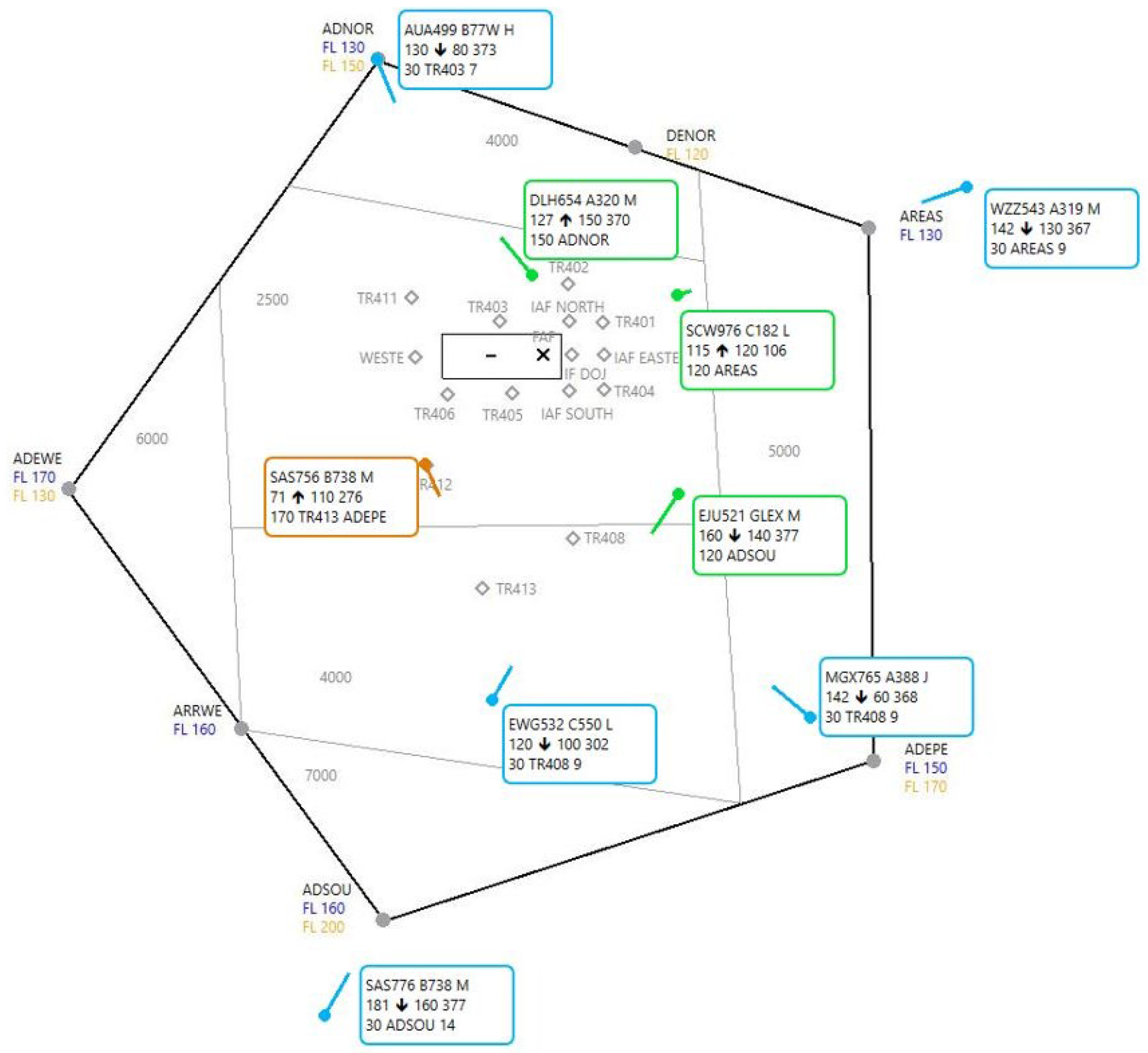
- two arriving aircraft which require an initial call (2.1).
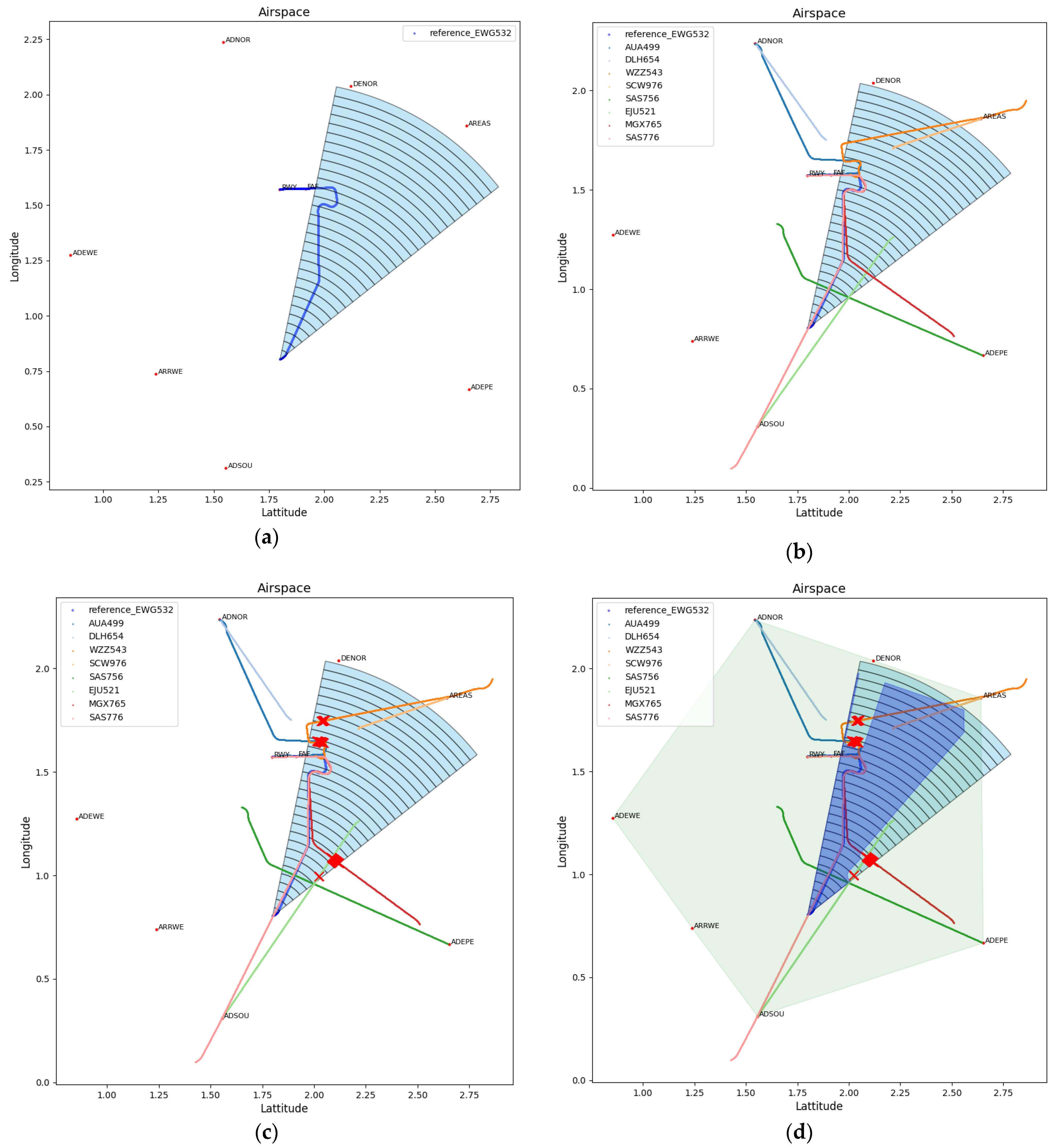
- Total number of aircraft pairs for screening of conflict is 36 (3 1st option), where aircraft that are only arrivals have ten pairs, only overflights three pairs, combination of arrivals and overflights five pairs, combination of arrivals and departures five pairs and departures and overflights three pairs (3 2nd option).
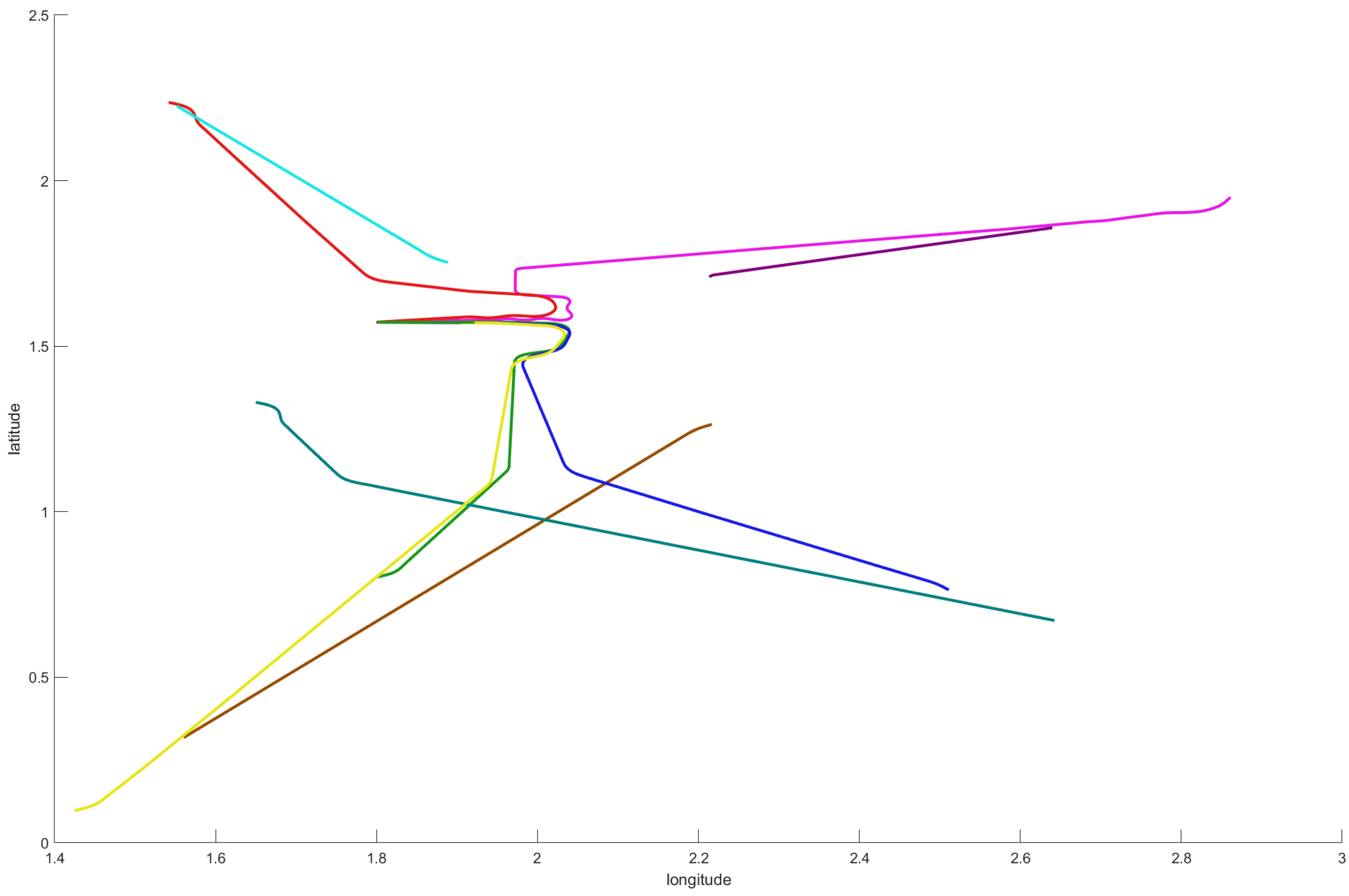
- Tasks of separating five aircraft pairs in approach sequence on FAF where AUA499-WZZ543 is described for each parameter:
- (a)
- difference until time to FAF is 2–5 min (6-1-b),
- (b)
- aircraft are in conflict (6-2-a),
- (c)
- first aircraft to FAF has five or more minutes to reach FAF (6-3-b),
- (d)
- second aircraft to FAF is in the same wake turbulence category (WTC) as the first one (6-4-a),
- (e)
- one aircraft has 30–65% of maximum available maneuvering area (6-5-b) while the other has 65–100% (6-5-c).
- Tasks of separating four arrival pairs on route, where AUA499-EWG532 is described for each parameter:
- (a)
- time until the closest point of conflict is the same or more than five minutes (7-1-b),
- (b)
- second aircraft to conflict point is the same WTC as the first one (7-2-a)
- (c)
- aircraft are in conflict (7-3-a),
- (d)
- both aircraft have 30–65% of maximum available maneuvering area (7-4-b, 7-4-b).
- Task of separating three pairs of arrivals and overflights where AUA499-DLH654 is described for each parameter:
- (a)
- aircraft are in conflict (9-1-a),
- (b)
- time until the closest point of conflict is less than five minutes (9-2-a),
- (c)
- one aircraft has 0–30% of maximum available maneuvering area (9-3-a) while other has 30–65% (9-3-b).
4.3. Algorithm Validation
5. Conclusions and Future Research
Author Contributions
Funding
Data Availability Statement
Acknowledgments
Conflicts of Interest
Abbreviations
| ATCO | Air traffic controller |
| SATSI | Static air traffic situation interface |
| ATM | Air traffic management |
| FAF | Final Approach Fix |
| RNAV | Area navigation |
| BADA 3 | Base of Aircraft Data family 3 |
| FMS | Flight Management System |
| WTC | Wake turbulence category |
Appendix A
Appendix A.1

Appendix A.2

Appendix A.3

Appendix A.4

Appendix A.5

Appendix A.6
Appendix A.7

Appendix A.8
Appendix A.9
Appendix A.10

References
- Mogford, R.H.; Guttman, J.; Morrow, S.; Kopardekar, P. The Complexity Construct in Air Traffic Control: A Review and Synthesis of the Literature; Technical Note; Federal Aviation Administration: Springfield, VA, USA, 1995.
- Pfleiderer, E.M.; Manning, C.A.; Goldman, S.M. Relationship of Complexity Factor Ratings with Operational Errors; FAA: Washington, DC, USA; Civil Aerospace Medical Institute: Oklahoma City, OK, USA, 2007.
- Prandini, M.; Piroddi, L.; Puechmorel, S.; Brazdilova, S.L. Toward Air Traffic Complexity Assessment in New Generation Air Traffic Management Systems. IEEE Trans. Intell. Transp. Syst. 2011, 12, 809–818. [Google Scholar] [CrossRef]
- EUROCONTROL PRC. An Assessment of Air Traffic Management in Europe During Calendar Year 2023; Performance Review Report; Eurocontrol: Brussels, Belgium, 2024. [Google Scholar]
- Jurinić, T.; Juričić, B.; Antulov-Fantulin, B.; Samardžić, K. Defining Terminal Airspace Air Traffic Complexity Indicators Based on Air Traffic Controller Tasks. Aerospace 2024, 11, 367. [Google Scholar] [CrossRef]
- Laudeman, I.V.; Shelden, S.G.; Branstrom, R.; Brasil, C.L. Dynamic Density: An Air Traffic Management Metric; Technical Memorandum; NASA: Ames Research Center: Moffett Field, CA, USA, 1998.
- Kopardekar, P.; Magyarits, S. Dynamic density: Measuring and predicting sector complexity. In Proceedings of the 21st Digital Avionics Systems Conference, Irvine, CA, USA, 27–31 October 2002. [Google Scholar]
- Kopardekar, P.H.; Schwartz, A.; Magyarits, S.; Rhodes, J. Airspace Complexity Measurement: An Air Traffic Control Simulation Analysis. Int. J. Ind. Eng. 2009, 16, 61–70. [Google Scholar]
- Masalonis, A.; Callaham, M.; Wanke, C. Dynamic Density and Complexity Metrics for Real-Time Traffic Flow Management; The MITRE Corporation: McLean, VA, USA, 2003. [Google Scholar]
- Klein, A.; Rodgers, M.; Leiden, K. Simplified dynamic density: A metric for dynamic airspace configuration and NextGen analysis. In Proceedings of the 28th Digital Avionics Systems Conference (DASC): Modernization of Avionics and ATM-perspectives from the Air and Ground, Orlando, FL, USA, 25–29 October 2009. [Google Scholar] [CrossRef]
- Andraši, P.; Radišić, T.; Novak, D.; Juričić, B. Subjective Air Traffic Complexity Estimation Using Artificial Neural Networks. Promet 2019, 31, 377–386. [Google Scholar] [CrossRef]
- Radišić, T.; Novak, D.; Juričić, B. Reduction of Air Traffic Complexity Using Trajectory-Based Operations and Validation of Novel Complexity Indicators. IEEE Trans. Intell. Transp. Syst. 2017, 18, 3038–3048. [Google Scholar] [CrossRef]
- Dervic, A.; Rank, A. ATC Complexity Measures: Formulas Measuring Workload and Complexity at Stockholm TMA. Master’s Thesis, Linköping University, Linköping, Sweden, 2015. [Google Scholar]
- Diaconu, A.G.; Stancu, V.; Pleter, O.T. Air traffic complexity metric for en-route and terminal areas. UPB Sci. Bull. D Mech. Eng. 2014, 76, 13–24. [Google Scholar]
- Medianto, R.; Adinda, N.M.; Jenie, Y.I.; Pasaribu, H.M.; Muhammad, H. Terminal Control Area Complexity Measurement Using Simulation Model. IIUM Eng. J. 2023, 24, 199–212. [Google Scholar] [CrossRef]
- Antulov-Fantulin, B.; Juričić, B.; Radišić, T.; Çetek, C. Determining Air Traffic Complexity—Challenges and Future Development. Promet 2020, 32, 475–485. [Google Scholar] [CrossRef]
- Jáger, R.A.; Szabó, G. Air Traffic Simulation Framework for Testing Automated Air Traffic Control Solutions. Appl. Sci. 2025, 15, 6414. [Google Scholar] [CrossRef]
- Sekine, K.; Iwata, D.; Bouchaudon, P.; Tatsukawa, T.; Fujii, K.; Tominaga, K.; Itoh, E. Validating Flow-Based Arrival Management for En Route Airspace: Human-In-The-Loop Simulation Experiment with ESCAPE Light Simulator. Aerospace 2024, 11, 866. [Google Scholar] [CrossRef]
- Antulov-Fantulin, B. Air Traffic Complexity Model Based on Air Traffic Controller Tasks. Ph.D. Thesis, University of Zagreb, Zagreb, Croatia, 2020. Available online: https://repozitorij.fpz.unizg.hr/object/fpz:2296 (accessed on 15 April 2025).
- Qt for Python. Available online: https://doc.qt.io/qtforpython-6/ (accessed on 3 April 2025).
- Nuic, A.; Poinsot, C.; Iagaru, M.; Gallo, E.; Navarro, F.A.; Querejeta, C. Advanced Aircraft Performance Modeling for ATM: Enhancements to the Bada Model. In Proceedings of the 24th Digital Avionics Systems Conference, Washington, DC, USA, 30 October 2005–3 November 2005. [Google Scholar] [CrossRef]
- Porretta, M.; Dupuy, M.D.; Schuster, W.; Majumdar, A.; Ochieng, W. Performance Evaluation of a Novel 4D Trajectory Prediction Model for Civil Aircraft. J. Navig. 2008, 61, 393–420. [Google Scholar] [CrossRef]
- Schuster, W.; Porretta, M.; Ochieng, W. High-accuracy four-dimensional trajectory prediction for civil aircraft. Aeronaut. J. 2012, 116, 45–66. [Google Scholar] [CrossRef]
- Schuster, W. Trajectory prediction for future air traffic management—Complex manouvers and taxiing. Aeronaut. J. 2015, 119, 121–143. [Google Scholar] [CrossRef]
- Andraši, P. Method for Selecting a Set of Air Traffic Complexity Reduction Measures for Convective Weather Conditions. Ph.D. Thesis, University of Zagreb, Zagreb, Croatia, 2021. [Google Scholar]
- EUROCONTROL. DDR2 Reference Manual for General Users 2.9.5; EUROCONTROL: Brusseles, Belgium, 2018. [Google Scholar]



| Relevant Features | Fast-Time Tools | Real-Time Tools | SATSI | |
|---|---|---|---|---|
| 1 | Required time for airspace data preparation | short | time-consuming (significant or less significant amount of time) | short |
| 2 | Required time for generation of air traffic situations | short | time-consuming (significant amount of time due to required high number of different air traffic situations) | short |
| 3 | ATCO input for complexity evaluation | unable | able | able |
| 4 | Processing data of the exact moment of ATCO input | unable | able with adequate post-processing of the entire scenario | able |
| 5 | Automated extraction of complexity indicators | unable | unable | able within this methodological framework |
| 6 | Operational fidelity | unable | able | able |
| 7 | Workload assessment | unable | able | unable |
| 8 | Communication ATCO-pseudo pilot | unable | able | unable |
| 9 | Fast historic data examination | able | unable | unable |
| 10 | Complete validation of new ATCO tools | unable | able | unable |
| Column Number | Description |
|---|---|
| 1 | segment identifier |
| 2 | origin of flight |
| 3 | destination of flight |
| 4 | aircraft type |
| 5 | time at the beginning of a segment [DDHHMM] |
| 6 | time at the end of a segment [DDHHMM] |
| 7 | flight level at the beginning of a segment |
| 8 | flight level at the end of a segment |
| 9 | status (aircraft flight regime—climb descent, or cruise) |
| 10 | callsign |
| 11 | date at the beginning of a segment [YYMMDD] |
| 12 | date at the end of a segment [YYMMDD] |
| 13 | latitude at the beginning of a segment [minutes] |
| 14 | longitude at the beginning of a segment [minutes] |
| 15 | latitude at the end of a segment [minutes] |
| 16 | longitude at the end of a segment [minutes] |
| 17 | flight identifier (unique code designated by EUROCONTROL) |
| 18 | sequence |
| 19 | segment length [NM] |
| 20 | segment parity/colour |
| Indicator Number | General and Separational Indicators |
|---|---|
| 1 | Planning route/coordination |
| 2 | Initial call |
| 3 | Screening of traffic |
| 4 | Transfer of communication for departures and overflights |
| 5 | Clear for approach and transfer of communication |
| 6 | Separation of aircraft in approach sequence on FAF |
| 7 | Separation of arrivals on route |
| 8 | Separation of arrivals from departures |
| 9 | Separation of arrivals from overflights |
| 10 | Separation of departures |
| 11 | Separation of departures and overflights |
| 12 | Separation of overflights |
Disclaimer/Publisher’s Note: The statements, opinions and data contained in all publications are solely those of the individual author(s) and contributor(s) and not of MDPI and/or the editor(s). MDPI and/or the editor(s) disclaim responsibility for any injury to people or property resulting from any ideas, methods, instructions or products referred to in the content. |
© 2026 by the authors. Licensee MDPI, Basel, Switzerland. This article is an open access article distributed under the terms and conditions of the Creative Commons Attribution (CC BY) license.
Share and Cite
Jurinić, T.; Juričić, B.; Jurinić, D.; Andraši, P. Methodological Framework for Generation of Static Air Traffic Situations and Automated Complexity Data Extraction. Appl. Sci. 2026, 16, 2106. https://doi.org/10.3390/app16042106
Jurinić T, Juričić B, Jurinić D, Andraši P. Methodological Framework for Generation of Static Air Traffic Situations and Automated Complexity Data Extraction. Applied Sciences. 2026; 16(4):2106. https://doi.org/10.3390/app16042106
Chicago/Turabian StyleJurinić, Tea, Biljana Juričić, Dominik Jurinić, and Petar Andraši. 2026. "Methodological Framework for Generation of Static Air Traffic Situations and Automated Complexity Data Extraction" Applied Sciences 16, no. 4: 2106. https://doi.org/10.3390/app16042106
APA StyleJurinić, T., Juričić, B., Jurinić, D., & Andraši, P. (2026). Methodological Framework for Generation of Static Air Traffic Situations and Automated Complexity Data Extraction. Applied Sciences, 16(4), 2106. https://doi.org/10.3390/app16042106