Article

Permeability Evolution of Impure Rock Salt Under Triaxial Stress with Implications for Underground Energy Storage

1
School of Architecture and Environment, Yibin Vocational and Technical College, Yibin 644100, China
2
State Key Laboratory of Intelligent Construction and Healthy Operation and Maintenance of Deep Underground Engineering, Sichuan University, Chengdu 610065, China
3
Institute of Subsurface Energy Systems, Clausthal University of Technology, 38678 Clausthal-Zellerfeld, Germany
4
Faculty of Land Resource Engineering, Kunming University of Science and Technology, Kunming 650093, China
*
Author to whom correspondence should be addressed.
Appl. Sci. 2026, 16(4), 2091; https://doi.org/10.3390/app16042091
Submission received: 26 January 2026 / Revised: 18 February 2026 / Accepted: 19 February 2026 / Published: 20 February 2026
(This article belongs to the Special Issue Underground Energy Storage for Renewable Energy Sources)

Abstract

Impure rock salt is increasingly used as a host medium for underground hydrogen and compressed air energy storage in China; however, its permeability evolution under stress remains insufficiently constrained. This study presents a systematic experimental and modeling investigation of the permeability behavior of impure rock salt from the Pingdingshan (Henan) and Yunying (Hubei) salt mines. Nineteen cylindrical specimens were subjected to full-process triaxial permeability testing, including initial measurements, hydrostatic damage recovery, and staged deviatoric loading. A hydrostatic recovery stage (15 h at 40 MPa) was applied to reduce coring- and machining-induced micro-damage, resulting in a permeability reduction in one to three orders of magnitude. After recovery, the initial permeability decreases nonlinearly with increasing effective stress and converges to approximately 10−21 m2 at stress levels corresponding to in situ burial depths. During deviatoric loading, permeability exhibits a two-stage response: a rapid increase associated with early damage and microcrack initiation, followed by saturation once the dilatant volumetric strain exceeds approximately 1–2%. Impurity content influences both the magnitude and evolution of permeability by modifying the initial pore structure and damage development; however, the response is non-monotonic and region-dependent due to differences in dominant impurity mineralogy. Based on the experimental results, a semi-theoretical permeability model incorporating effective stress, dilatant strain, and impurity content was developed. The model reproduces the observed permeability evolution under different confining pressures with good agreement, providing a practical framework for evaluating the hydraulic integrity of impure rock salt in underground energy storage applications.

1. Introduction

In recent years, China has witnessed rapid growth in renewable energy, ranking among the world leaders in installed capacity and significantly accelerating the decarbonization of its energy infrastructure. This expansion, however, has introduced substantial costs associated with peak regulation and grid integration. Underground salt cavern storage has emerged as a critical solution to these challenges, providing large-scale capacity to store and dispatch energy, thereby mitigating the intermittency and variability of wind and solar power. Furthermore, the integration of green energy carriers, such as green ammonia and methanol, provides a comprehensive pathway for the decarbonization of the entire industrial chain, encompassing production, transportation, and utilization [1].
As the host medium for such storage facilities, rock salt has been the subject of extensive research regarding its physical and mechanical properties [2,3,4]. Compared with the salt dome formations common in Western countries, Chinese salt formations are typically characterized by high impurity contents, multiple interlayers, and thin strata. These impurities primarily comprise argillaceous materials, gypsum, and glauberite. With the large-scale construction of salt cavern storage in China, significant progress has been made in understanding the mechanical behavior of this impure rock salt [5,6]. To facilitate the engineering implementation of these facilities, preliminary site selection systems for salt cavern hydrogen storage have been developed specifically for Chinese geological conditions [7]. Additionally, new frameworks have been established to assess the technology maturity of underground compressed air and hydrogen storage power generation based on global patent and literature trends [8].
The permeability of rock salt is a decisive parameter for the long-term integrity and gas-tightness of underground storage caverns. This is particularly critical for hydrogen storage, as gas loss and leakage are primary concerns that directly affect the economic viability and safety of the system [9]. Understanding these mechanisms is essential to addressing the broader advantages and technical challenges currently facing the industry [10].
In its pristine, undisturbed state, pure rock salt exhibits extremely low permeability, with numerous experimental studies [11,12] reporting values below 10−20 m2. This near-impermeability is fundamentally determined by its unique pore structure and crystalline fabric. Chinese scholars have conducted multiple investigations into the permeability of impure rock salt. Wu et al. [13] studied the effect of different seepage pressures on the permeability of rock salt. Results indicated that when the seepage pressure was below 5 MPa, permeability decreased with increasing pressure; however, when the pressure exceeded 5 MPa, permeability increased substantially, ascribed to damage initiation and propagation. Muhammad et al. [14] conducted a comprehensive experimental study on the permeability of bedded rock salt from Hubei, China. Specimens were categorized into three groups based on the angle (0°, 90°, and 30°) between the bedding plane and the maximum principal stress. Analysis revealed that permeability in specimens with a 0° angle increased continuously with increasing effective stress, from 4.5 × 10⁻²⁰ m2 to 6.1 × 10⁻¹⁹ m2. For specimens with a 90° angle, permeability initially decreased, then increased, and eventually stabilized at approximately twice the initial value (from 6.13 × 10⁻¹⁸ m2 to −1.26 × 10⁻¹⁷ m2). Despite localized dilation observed along the interfaces in specimens with a 30° angle, their permeability decreased significantly with increasing effective stress (from 6.09 × 10⁻¹⁶ m2 to 7.06 × 10⁻¹⁷ m2). Concurrent X-ray diffraction (XRD) analysis on one specimen identified its primary components as glauberite, halite, dolomite, and minor quartz. A thin argillaceous interlayer was observed between impurity and salt zones. Chemical analysis after water dissolution indicated its composition as NaCl (17.50–23.62%), Na2SO4 (11.19–19.43%), and CaSO4 (23.86–26.35%), with the remainder being water-insoluble minerals such as dolomite, feldspar, and clay minerals. While the study analyzed the relationship between bedding plane angle and permeability, and quantified impurity content, it did not explore the correlation between impurity content and permeability. In reality, the occurrence and distribution of interlayers in rock salt are highly complex, and the study’s conclusions based on only three specimens lack robust generalizability. Liu Wei et al. [15] performed permeability tests on rock salt from Jintan, Jiangsu, finding initial permeability in the range of 10−19 m2 to 10−21 m2. However, due to sampling and machining-induced damage, permeability could be as high as 10−15 m2 to 10−16 m2. Peng Huihua [16] conducted a comprehensive flow experiment on bedded rock salt from Zhaoji. The research concluded that the permeability of bedded rock salt is generally 1–4 orders of magnitude higher than that of pure rock salt. In bedded formations, interlayers often act as “reinforcing layers,” and the presence of impurities affects the dissolution and self-healing properties of rock salt. However, the influence of impurities on permeability is highly complex, varying with differences in content, composition, and especially the highly heterogeneous spatial distribution of impurities across different regions. Consequently, systematically studying the impact of impurities on the permeability of rock salt presents significant challenges. Zhou Hongwei et al. [17] measured the permeability of rock salt from Yunying, Hubei, under different hydrostatic pressures, reporting values between 10−16 m2 and 10−18 m2. Since the specimens did not undergo a pre-experiment in situ stress recovery process, the potential influence of sampling and machining damage could not be neglected, suggesting these permeability values might be overestimated.
Building on existing research, this study investigates rock salt specimens from the Pingdingshan (Henan) and Yunying (Hubei) mines in China. Systematic experiments were performed using the THMC Triaxial Rock Mechanics Comprehensive Testing System at Sichuan University to analyze the permeability evolution of impure rock salt under triaxial stress. Before testing, all specimens were subjected to 15 h of hydrostatic stress to recover from sampling and machining damage. During loading, we identified the dilatancy point via the volumetric oil-drainage method and measured permeability using the steady-state method. Finally, the study examines how dilatant failure impacts permeability and establishes fitting models to quantify the relationships between permeability, impurity content, and effective stress for both mining areas.

2. Materials and Methods

2.1. Rock Samples

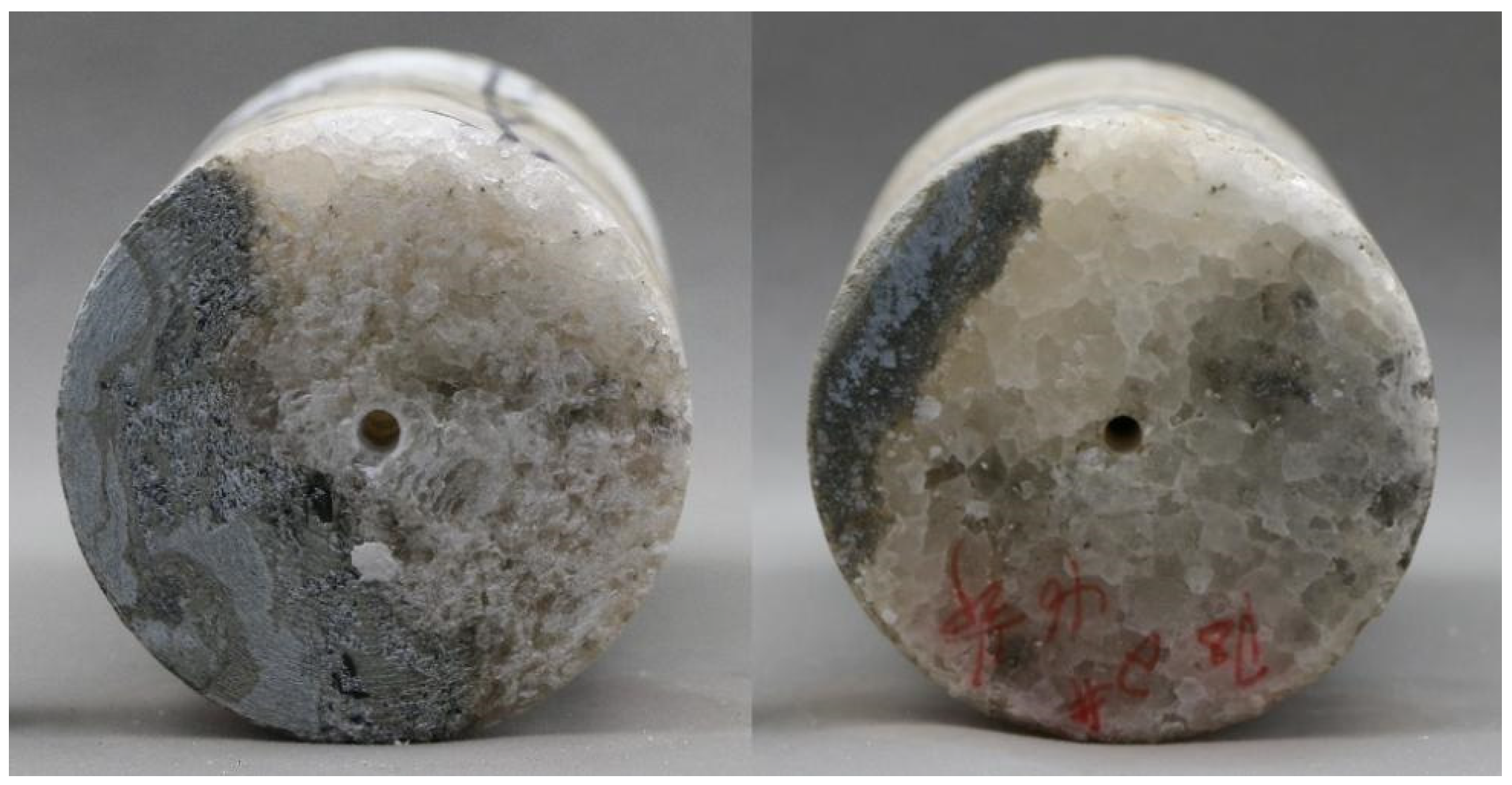
Impure rock salt specimens were collected from Well 2 of the Pingdingshan Salt Mine (Pingdingshan, Henan, China) and Well 1 of the Yunying Salt Mine (Yunying, Hubei, China), hereafter designated as “PZ2” and “YZ1,” respectively. The PZ2 cores originated from 14 salt layers at burial depths of 1400–1700 m, while the YZ1 cores were obtained from 21 layers at 700–1100 m. Given the scarcity of these core samples, two specimen sizes were prepared to maximize data yield: ɸ 50 × 100 mm and ɸ 90 × 180 mm. To mitigate end effects, a 3 mm diameter hole was drilled axially at both ends of each specimen. For the 100 mm high specimens, a hole depth of 35 mm at each end resulted in an effective gas flow path of 30 mm. Similarly, for the 180 mm high specimens, 60 mm deep holes provided a 60 mm flow path. Figure 1 illustrates the specimen end morphology following perforation.
A total of 19 specimens were tested and divided into four groups according to confining pressure: 2.5, 5, 7.5, and 10 MPa. Each group contained 4–6 specimens, with their physical parameters and test conditions are summarized in Table 1.
Given the scarcity of deep core material, two specimen sizes were prepared to maximize experimental data yield: ɸ50 × 100 mm and ɸ90 × 180 mm. Both maintain a consistent 2:1 height-to-diameter ratio in accordance with ISRM standards, ensuring geometric similarity and comparable macroscopic stress distributions.

2.2. Experimental Procedure

2.2.1. X-Ray Diffraction (XRD) Analysis

X-ray diffraction (XRD) was conducted on 16 rock salt samples using a Rigaku DMAX-3C diffractometer (Rigaku Corp., Akishima, Japan) (Table 2) to identify their mineral composition. Since quantitative XRD is essentially a semi-quantitative technique with inherent uncertainties, these results primarily serve to distinguish the dominant mineral phases in specimens from the two mining areas. Consequently, the reported compositional percentages should be treated as approximations.

2.2.2. Water Solubility Test

XRD results identify the primary impurities as glauberite, anhydrite, and various carbonates. Given that these minerals are insoluble or poorly soluble in water, the impurity content (ω, in %) was determined by measuring the mass of water-insoluble matter, following the method proposed by Hou et al. [18]. This measured impurity content for the 19 specimens is summarized in Table 1; hereafter, the term “impurity content” refers specifically to this value. According to the classification by Hou et al., specimens with ω ≤ 50% are defined as impure rock salt, while those with ω > 50% are classified as salt-bearing impure rock. Several specimens in this study exceeded the 50% threshold and are thus used only for reference in the subsequent analysis.

2.2.3. Permeability Test

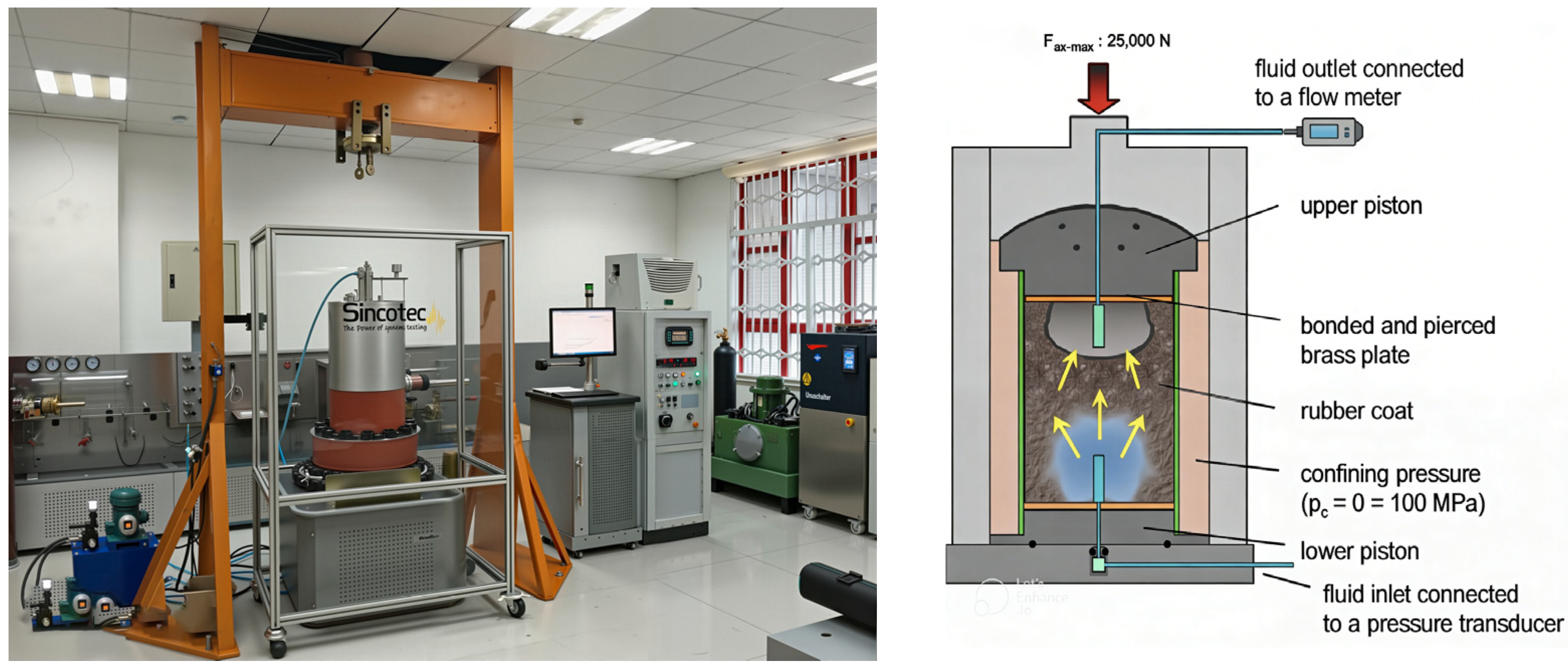
Triaxial compression permeability tests were performed using the THMC (thermo-hydro-mechanical-chemical) system (SincoTec Test Systems GmbH, Betzdorf, Germany) at Sichuan University. All experiments were conducted at a constant 25 °C using nitrogen as the permeating fluid. Permeability was determined via the steady-state method, with measurement durations ranging from minutes to hours depending on the specimen’s stress state. A schematic of the experimental setup and measurement mechanism is provided in Figure 2. The experimental procedure is outlined below:
  • Initial permeability test: Hydrostatic pressure was applied at 1 MPa/min until reaching the target confining pressure (σ3). Nitrogen permeability was measured axially under two pore pressure (Pp) conditions: 1 MPa and 0.5 σ3. Specifically, for σ3 levels of 2.5, 5, 7.5, and 10 MPa, the corresponding Pp pairs were (1, 1.25), (1, 2.5), (1, 3.75), and (1, 5) MPa, respectively.
  • Damage recovery process: A hydrostatic stress recovery phase was implemented to heal initial damage induced by drilling, coring, and specimen preparation. Based on the in situ stress estimated from burial depths (700–1700 m) and rock salt density (2.02–2.56 g/cm3), the theoretical recovery pressure was approximately 25 MPa. To compensate for a shortened holding time, this pressure was increased to 40 MPa, applied at a rate of 1 MPa/min. While recovery durations in similar studies often exceed 24 h, a 15 h duration was adopted in this study to optimize the full-process permeability testing efficiency.
  • Post-recovery permeability test: Following the 15 h recovery at 40 MPa, axial and confining pressures were synchronously reduced to the target levels. Nitrogen permeability was remeasured under the same pore pressure conditions as in Step 1. This facilitates a direct comparison of permeability before and after the recovery phase to evaluate the extent of damage healing.
  • Permeability evolution during loading: Axial loading was applied at a constant strain rate of 0.2%/min. Permeability was measured at 9–12 discrete stages: 6–9 points during the pre-peak phase, one near the peak strength, and two in the post-peak region. To ensure steady-state flow measurements, loading was effectively paused at each stage by reducing the axial strain rate to the system minimum (0.001%/min) until data acquisition was complete.
For selected specimens, initial permeability was measured under hydrostatic pressures ranging from 2.5 to 20 MPa at a constant pore pressure of 1 MPa. Given the extensive scope of the testing program, the permeability data reported herein are based on raw gas measurements without Klinkenberg correction.

2.3. Data Processing Methods

2.3.1. Measurement and Correction of Stress–Strain and Volumetric Deformation

The Cauchy stress–logarithmic strain measure was adopted to quantify the stress–strain response. To mitigate end-effect errors associated with traditional extensometers, the specimen’s bulk volumetric strain was determined via the oil-discharge method. Although the system’s temperature control accuracy was ±0.5 °C, corrections were applied to account for the thermal expansion of the hydraulic oil and the apparatus. The specimen’s volumetric strain was subsequently calculated using Equation (1):
ε v = ( Δ V V a p ± α × Δ T ) / V o
where εv is the specimen’s bulk volumetric strain; ΔV is the measured volume of oil entering or exiting the system; Vap is the volume change due to axial piston displacement; Vo is the initial specimen volume; α is the thermal expansion coefficient of the testing system; and ΔT is the temperature fluctuation.
The coefficient α was calibrated by measuring the thermal-induced volumetric deformation of a steel reference specimen (E = 196 GPa, μ = 0.24) under hydrostatic conditions.

2.3.2. Permeability Measurement and Klinkenberg Correction

Permeability was determined using the steady-state method. Under a given injection pressure, once steady flow was achieved, the gas flow rate over a specified time interval was recorded. The intrinsic permeability was calculated from Darcy’s law modified for compressible flow. For axial flow conditions, the permeability is expressed by Equation (2) as follows:
k g = 2 μ l A × q p 2 ( p 1 2 p 2 2 )
where kg is the gas permeability, μ is the dynamic viscosity of the gas, l is the distance between the injection and outlet holes, q is the volumetric flow rate, A is the cross-sectional area of the specimen, p1 is the injection pressure, and p2 is the outlet pressure.
Due to the significant deformability of rock salt, the cross-sectional area (A) and specimen length (l) were continuously updated during testing [19]. Similarly, the borehole depth was assumed to vary proportionally with the overall specimen deformation, and the real-time distance (L) was adjusted accordingly.
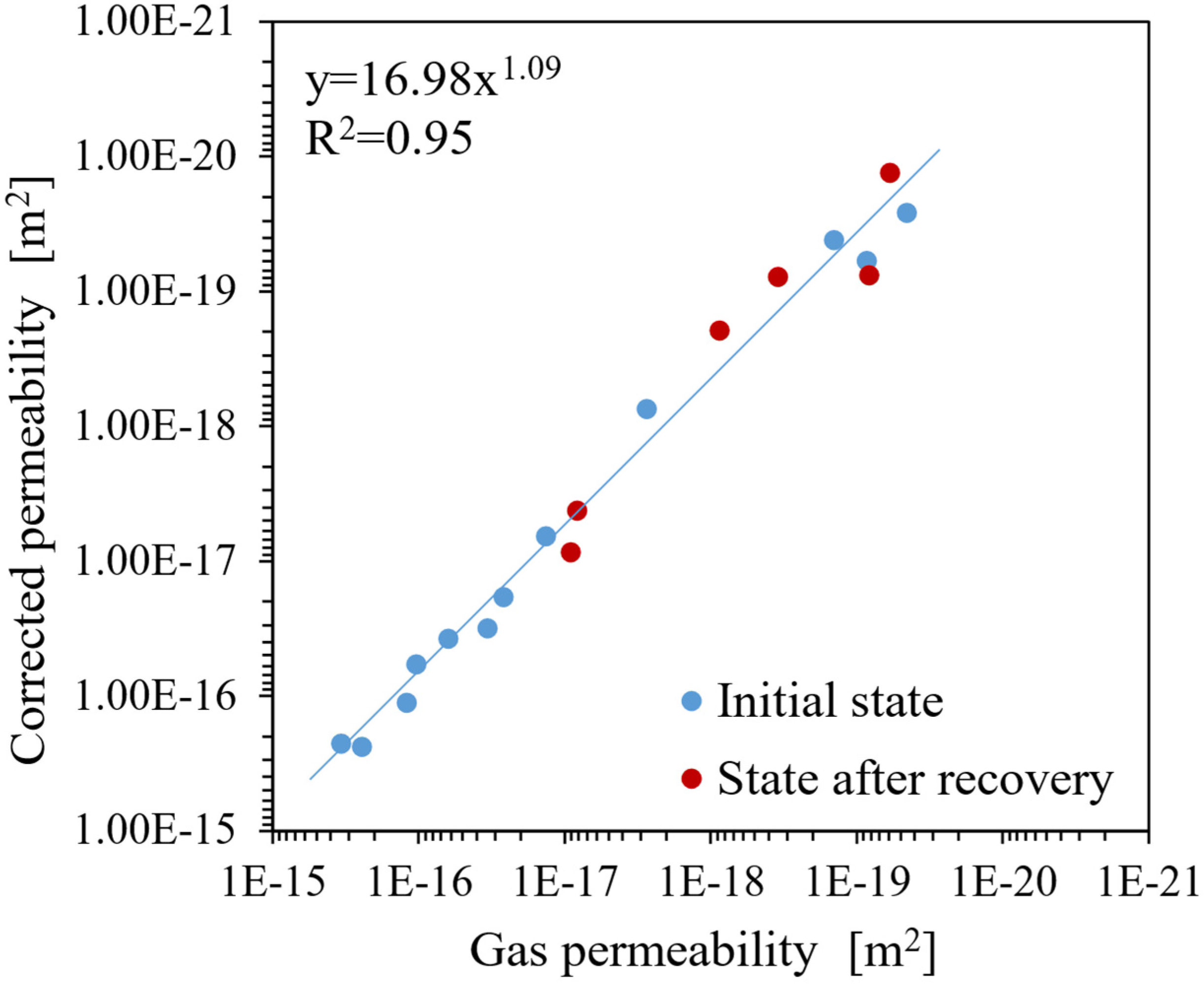
Furthermore, gas permeability is notably influenced by the slippage effect within the 0.06–6 MPa injection pressure range. Since the injection pressures in this study (1–5 MPa) fall within this interval, Klinkenberg correction was performed to eliminate this effect. While typically requiring four or more pressure points for regression, the extensive nature of the testing program necessitated a two-point linear estimation based on selected samples measured initially and after the 15 h recovery (see Table 3). This linear Klinkenberg relationship was utilized to derive the corrected permeability and establish a reference calibration (e.g., Figure 3 at 1 MPa), facilitating the systematic correction of all permeability data at the corresponding stages.
As illustrated in Figure 3, a strong linear correlation exists between the Klinkenberg-corrected and gas permeabilities on a logarithmic scale. Notably, this relationship remains highly consistent between the initial state and after the 15 h recovery, aligning with the simplified Klinkenberg correction principles proposed in previous studies [20]. Such consistency suggests that, despite microstructural adjustments during the 40 MPa stress recovery, the pore-scale characteristics governing gas slip behavior underwent no systematic alterations significant enough to shift the empirical conversion relationship.
Therefore, within the established stress range and under constant temperature, permeating gas, and injection pressure, the relationship between Klinkenberg-corrected and gas permeabilities is considered invariant. This assumption is robustly supported by the data from both stress states in Figure 3. Consequently, the regression model derived from Figure 3 will be applied to calibrate all permeability measurements throughout the loading process.

3. Experimental Results and Discussion

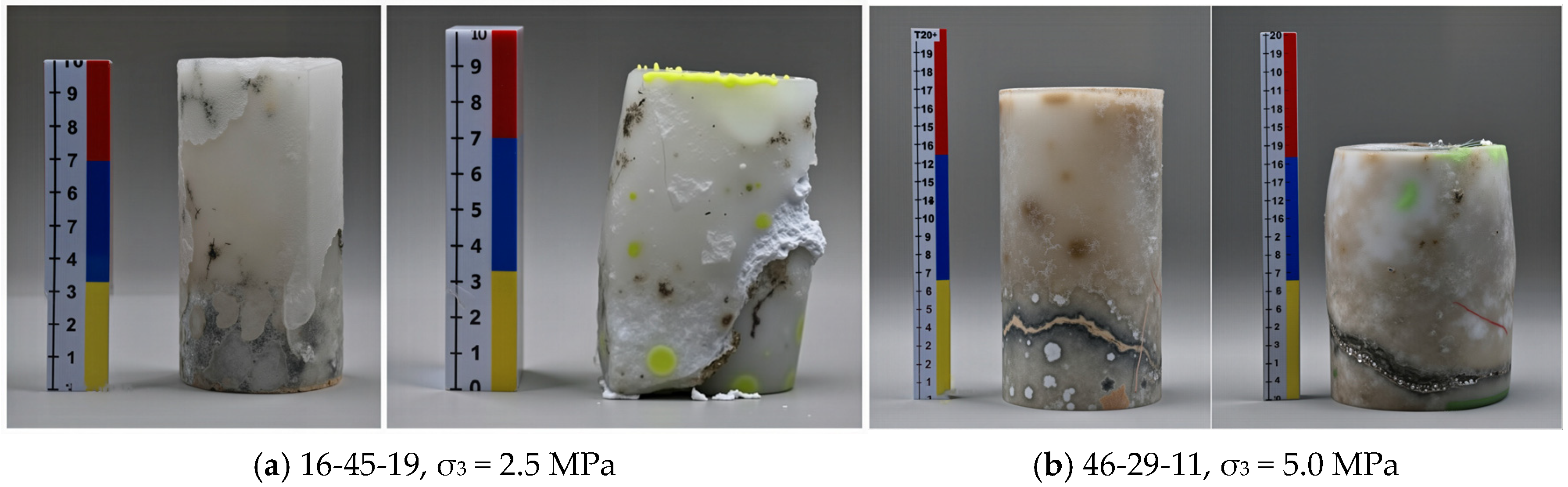
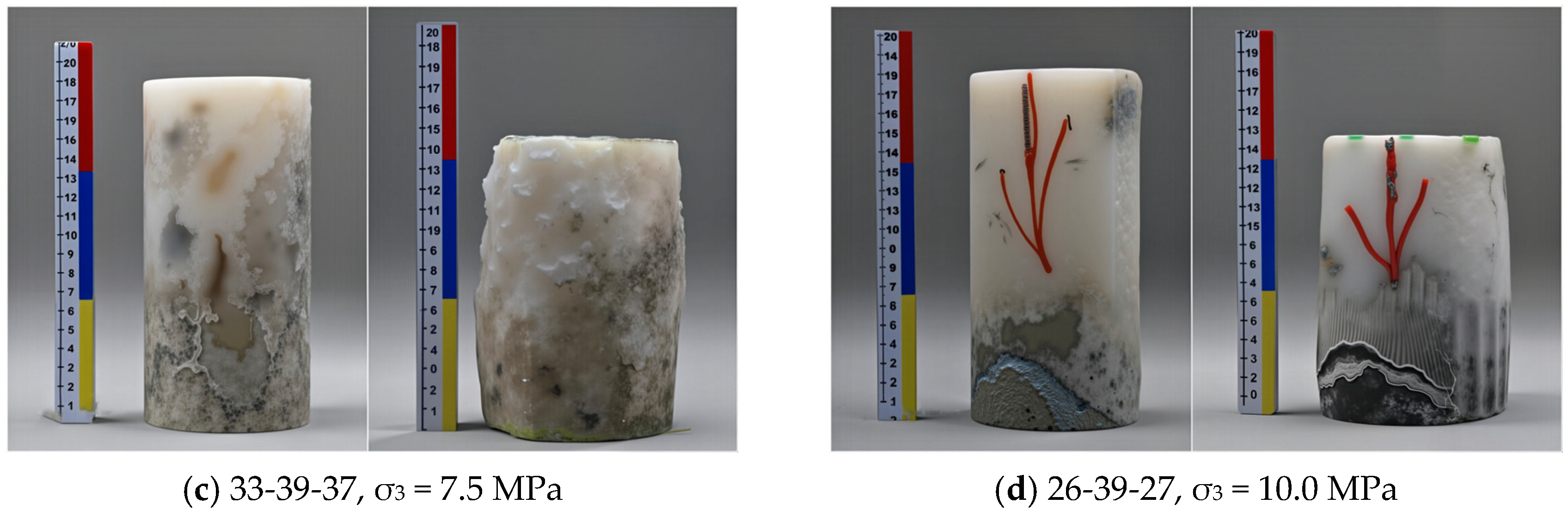
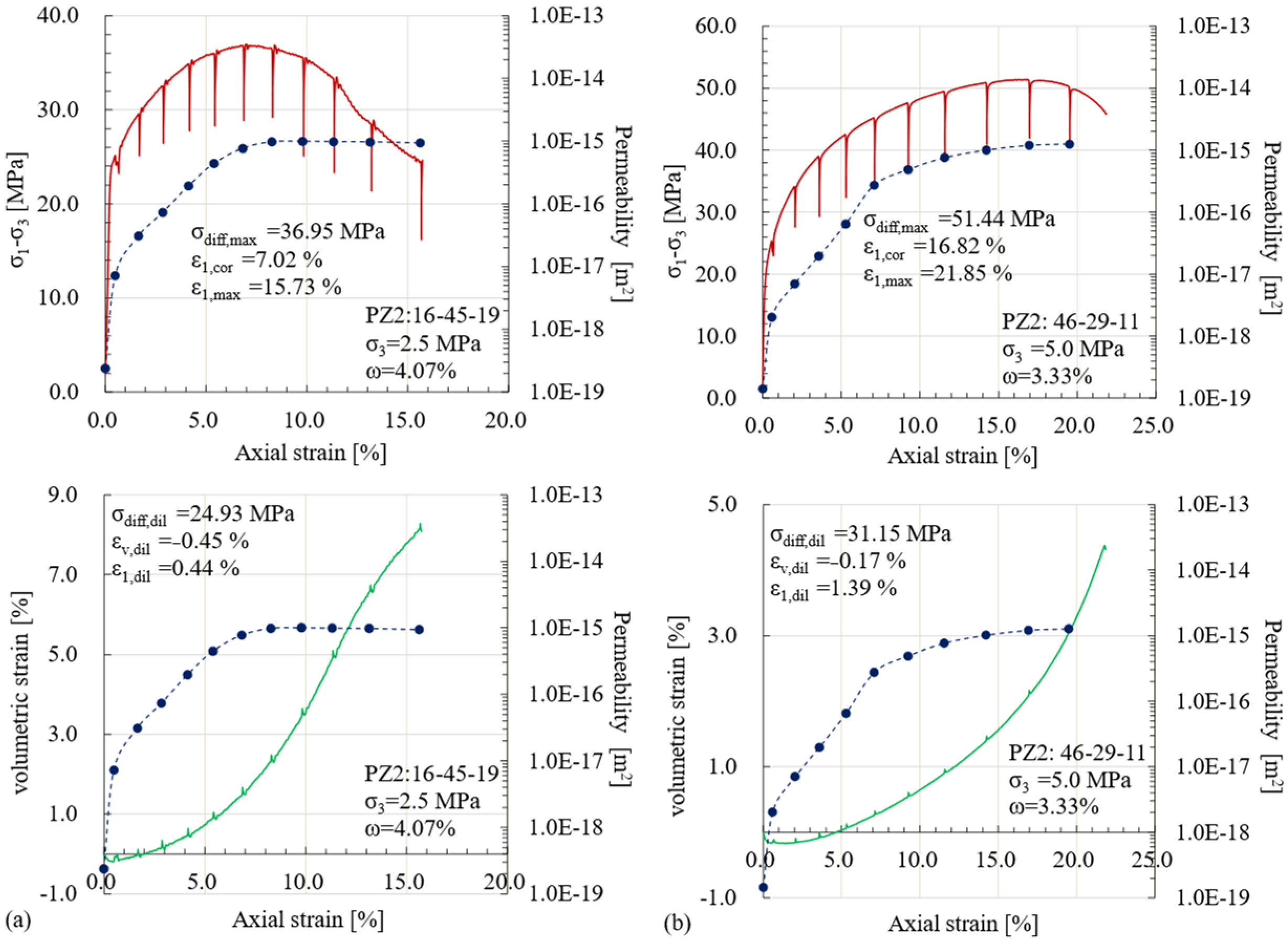
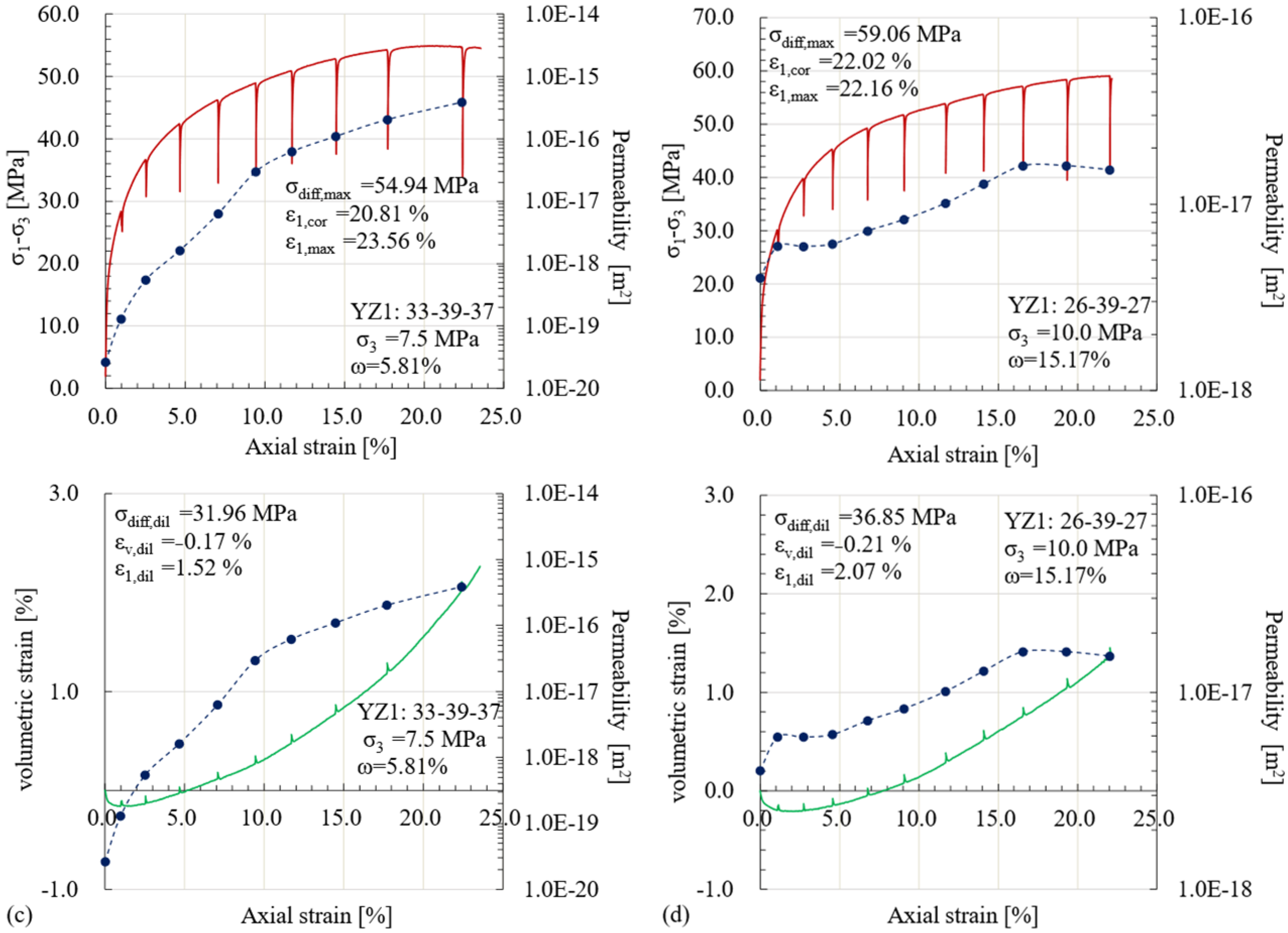
Figure 4 presents comparative images of representative specimens before and after the full-process permeability tests. The corresponding stress–strain curves, volumetric strain evolutions, and permeability measurements at discrete stages are shown in Figure 5. Note that the dashed lines connecting the permeability data points are intended solely as visual aids and do not represent a continuous physical relationship.
Prior to loading, all specimens underwent a 15 h hydrostatic recovery at 40 MPa. Permeability was measured before and after this stage (Table 3). Missing data for specific specimens resulted from testing time constraints rather than the apparatus detection limits (lower limit: 10−22 m2).
Stormont [21] demonstrated that initial damage recovery in rock salt depends on both effective stress and duration. While recovery time to an initial state (10−21 m2) can be inferred by fitting permeability-time curves, the sensitivity of predicted times to the choice of fitting function highlights the difficulty of extrapolating long-term rheological behavior from short-term data. Subsequent studies [22] showed that effective compressibility—the inverse of bulk modulus—decreases as healing progresses, eventually approaching a constant value as residual porosity is minimized. Similarly, Peach [11] observed that while low confining pressure (1.5 MPa) yields negligible permeability reduction, higher pressures (8.5–13.5 MPa) induce a linear decrease over time (decay rate ≈ 4 × 10⁻²³ m2/s), likely driven by dislocation-mediated crack closure.
In this study, to optimize experimental efficiency while ensuring sufficient damage healing, we adopted a 15 h recovery duration at an elevated hydrostatic pressure of 40 MPa. Although a 24 h recovery at 25 MPa is a common protocol, the choice of 40 MPa provides a higher driving force for micro-crack closure within a laboratory timeframe. Recovery in rock salt involves nonlinear creep mechanisms that do not scale strictly linearly with stress. Therefore, the 40 MPa–15 h protocol is not assumed to be strictly equivalent to 25 MPa–24 h, but rather to provide comparable healing efficiency based on observed permeability decay. This represents a practical compromise and is acknowledged as a limitation.

3.1. Analysis of XRD Test Results

Table 2 shows that while impurity components from the two mining areas are diverse, their major constituents are broadly consistent. These primarily include sulfates (glauberite and anhydrite), silicates (quartz and clay), and carbonates (calcite and dolomite). However, the relative abundance of these phases differs between the regions.
Specifically, Pingdingshan rock salt exhibits higher purity, with impurities dominated by anhydrite alongside minor quartz and clay. In contrast, Yunying samples possess lower purity, characterized by glauberite as the primary impurity, followed by anhydrite, quartz, calcite, and dolomite. From a mineralogical perspective, these XRD results align with the geological characteristics of the Pingdingshan and Yunying areas as documented by Yang [23] and Jiang & Shen [24], respectively.

3.2. Influence of Effective Stress on Permeability

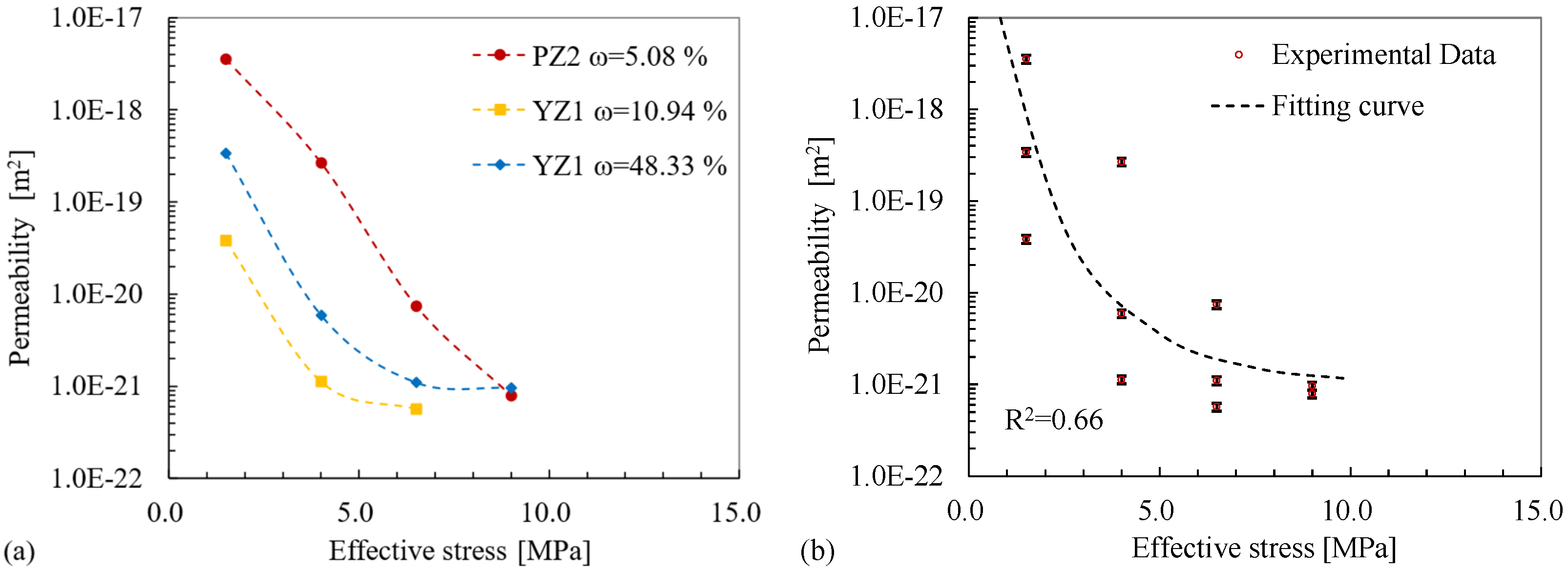
Given the extended duration required for hydrostatic permeability testing, four representative specimens (three from Yunying and one from Pingdingshan) were evaluated at a constant pore pressure of 1 MPa. The results, aimed at establishing the initial permeability–effective stress relationship, are shown in Figure 6a. Measurements were truncated when permeability dropped below the 10−21 m2 threshold due to excessive equilibrium times. Notably, specimen 22-35-25-2 from Yunying, containing 73.56% impurities, was excluded from Figure 6 to maintain analysis consistency, as it exceeds the established classification threshold for rock salt.
As illustrated in Figure 6a, permeability decreases with increasing effective stress, with the rate of decline gradually attenuating. This trend suggests that beyond a certain stress threshold, permeability stabilizes. The measured permeability ranges from 10−17 m2 to 10−21 m2. At higher effective stresses (exceeding 20 MPa, equivalent to burial depths > 1000 m), values for all three specimens converge toward 10−21 m2. Given the actual burial depths at Pingdingshan (1400–1700 m) and Yunying (700–1100 m), the in situ initial permeability for both formations is estimated to be on the order of 10−21 m2. Furthermore, Yunying specimens indicate that higher impurity content correlates with increased permeability under identical effective stress, implying that glauberite—the primary impurity—possesses a higher initial porosity than halite. Within the 1.5–6.5 MPa range, the Pingdingshan specimen consistently exhibits higher permeability than those from Yunying, likely due to distinct pore structures resulting from their different dominant impurities (anhydrite vs. glauberite). However, at 9 MPa, these values converge, indicating that effective stress becomes the dominant factor governing permeability at elevated stress levels.
Comparative analysis in Table 3 shows that post-recovery permeability is consistently one to three orders of magnitude lower than pre-recovery values under identical effective stress. Throughout the 15 h recovery at 40 MPa, permeability decreases monotonically. Notably, upon unloading from 40 MPa to the initial state, permeability fails to rebound to its original level, confirming that the recovery process involves a significant irreversible component associated with permanent microstructural healing.
The observed decrease in permeability with increasing effective stress is primarily governed by stress-induced closure of microcracks, compaction of intergranular pores, and viscoplastic deformation of the halite matrix. Under hydrostatic compression, dislocation deformation and pressure-solution mechanisms promote contact healing and neck growth at grain boundaries, progressively reducing connected porosity and mitigating preparation-induced microdamage. Impurity phases such as glauberite and anhydrite exhibit higher stiffness than halite and locally constrain deformation, enhancing stress concentration in the surrounding salt matrix and accelerating microvoid closure. Consequently, permeability reduction reflects both mechanical pore collapse and time-dependent microstructural healing, rather than purely elastic compression.

3.3. Influence of Dilatancy Damage on Permeability

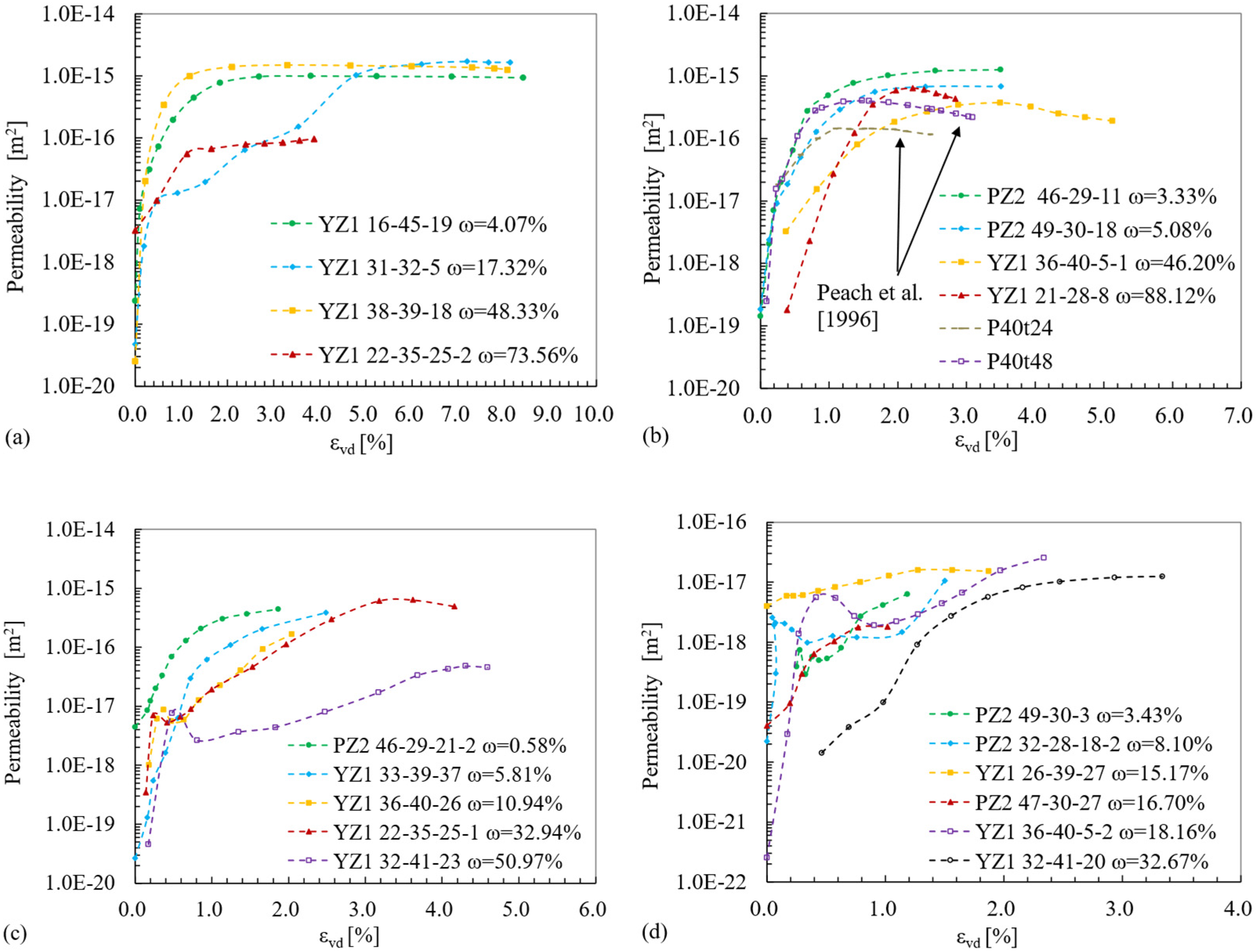
As illustrated in Figure 5, permeability increases rapidly with axial strain. Following the onset and progression of dilatancy, permeability stabilizes, mirroring the stress–strain behavior of pure rock salt under high confining pressure. Notably, within the first 2% of axial strain, permeability exhibits a sharp “jump” of 2–3 orders of magnitude. As dilatation continues, the growth rate of permeability diminishes, eventually approaching a saturated state.
This trend deviates slightly from the findings of Schulze et al. [25], specifically by lacking an initial permeability decrease associated with elastic compression. In Figure 5, some specimens show significant permeability increases before the dilatancy point (the minimum on the volumetric strain curve), which does not necessarily represent the true onset of damage. Failure patterns in Figure 4 reveal that damage-induced volumetric expansion is primarily localized in the specimen’s center. In contrast, the ends remain under elastic compression due to end constraints [19]. For a period, global volumetric contraction persists because the localized expansion is offset by end compression; however, internal damage has already initiated. In specimens with boreholes, permeability begins to rise at this stage due to the initiation and propagation of microcracks. The absence of a decreasing permeability segment is likely due to the extremely brief elastic phase in rock salt, where the initial measurement may have already bypassed the damage initiation point.
Accurately identifying the damage initiation point remains challenging due to the coupled effects of elasticity, plasticity, and damage. Since the linear segment of the volumetric strain curve is often indistinct, it is difficult to distinguish whether the transition to nonlinearity stems from plasticity or damage. In the subsequent analysis, elastic volumetric strain—calculated via Equation (3) based on elasticity theory—is subtracted from the total volumetric strain. The residual is then approximated as the dilatancy strain due to damage. The resulting relationship between permeability and dilatancy strain is presented in Figure 7.
ε v e = σ m / K
ε v d = ε v ε v e
Here, εve is the elastic volumetric strain, σm is the mean principal stress, and K is the bulk modulus, which can be calculated from the volumetric strain and mean principal stress during the specimen’s recovery process under 40 MPa. εvd is the dilatancy volumetric strain, and εv is the total volumetric strain of the entire specimen.
As shown in Figure 7, a dilatant volumetric strain of approximately 1% accounts for 80–100% of the total permeability increase. Beyond a strain of 1–2%, permeability stabilizes, reaching a saturated state. This trend aligns with the behavior of synthetic pure rock salt reported by Peach [26] (Figure 7).
At 2.5 MPa confining pressure, permeability curves for most specimens converged at 10−15 m2 upon reaching 2% dilatant strain. Notably, the impure specimen 22-35-25-2 exhibited a lower post-failure permeability (10−16 m2). At 5 MPa, a similar trend was observed with curves leveling off at 1.5% strain; however, final permeability values began to scatter (1.9 × 10⁻¹⁶ m2 to 1.3 × 10⁻¹⁵ m2), compared to Peach’s pure salt values (≈10−16 m2).
Increased variability occurred at 7.5 MPa, with final values ranging from 4.56 × 10⁻¹⁷ m2 to 4.4 × 10⁻¹⁶ m2. Sample 32-41-23, with the highest impurity content, plateaued at 4% strain with a final permeability of only 4.56 × 10⁻¹⁷ m2. At 10 MPa, the scatter intensified (1.83 × 10⁻¹⁸ m2 to 2.57 × 10⁻¹⁷ m2), accompanied by intermittent permeability decreases during loading—a phenomenon also noted by Stormont [21] near the “transition porosity” boundary.
From a microstructural perspective, pore structure evolution is governed by the competition between damage-induced microcracking (increasing permeability) and skeletal grain compression (decreasing permeability). Under high confining pressure, the temporary suppression of microcrack propagation by confinement can lead to the observed intermittent decreases, although the overall dilatancy-driven increase remains dominant.
To further quantify the stress state at the onset of permeability increase, the dilatancy strength (σdiff,dil)—defined as the differential stress at the initiation of dilatancy—is summarized for 16 qualified rock salt specimens in Table 4 (three specimens with impurity content > 50% were excluded as they no longer represent rock salt behavior). These values represent the stress thresholds beyond which the salt matrix undergoes irreversible damage and rapid permeability escalation.

3.4. Influence of Impurity Content on Permeability

Impurity content significantly dictates the permeability of rock salt. As shown in Figure 7, higher impurity levels generally correlate with lower stabilized permeability, though appreciable scatter exists. For instance, at 10 MPa, specimen 47-30-27 (16.70% impurity) displays lower permeability than specimen 32-41-20 (32.67% impurity). This discrepancy likely stems from two factors: (i) mineralogical variations between the two regions, and (ii) a limited sample size that precludes a robust, region-specific analysis of compositional effects.
Furthermore, the spatial distribution of impurities is as critical as their total content. In our dual-borehole experimental setup, measured permeability is predominantly governed by the mineralogy and microstructure of the specimen’s central section. Since end effects remain an inherent laboratory constraint, the influence of localized impurity heterogeneity is noted but not explicitly quantified in the current analysis.

3.5. Permeability Model Research for Impure Rock Salt

The operation of underground salt cavern gas storage involves cyclic “injection–withdrawal” sequences, subjecting the surrounding formation to “loading–unloading” stress paths. These cycles can trigger damage and dilatancy, potentially increasing permeability beyond critical thresholds and compromising the cavern’s sealing integrity. Consequently, accurately determining the initial permeability of impure rock salt and quantifying its evolution driven by damage-induced dilatancy are vital for developing robust permeability models. Such models are indispensable for predicting the long-term containment performance of storage facilities within China’s uniquely complex salt formations.

3.5.1. Internationally Commonly Used Permeability Models for Pure Rock Salt

Numerous models have been developed for pure rock salt, typically calibrated against data from well-characterized formations. Gangi [27] proposed a stress-dependent permeability model effectively fitted with data from the German Asse mine. Similarly, Dienes [28] established a microstructure-based flow model. Popp and Kern [29] investigated specimens from the Gorleben and Morsleben repositories under hydrostatic conditions, reporting initial permeabilities between 10−16 m2 and 2 × 10⁻²⁰ m2. By referencing the linear correlation for Asse salt [30], they derived a relationship between initial permeability and confining pressure. Alkan [31] further proposed a model where permeability is a function of the stress ratio relative to the dilatancy point, based on extensive data surrounding the onset of damage.
Hou [32] introduced a novel anisotropic permeability model utilizing the experimental datasets of Stormont [21] and Schulze et al. [25]. This model links permeability to the stress state and dilatancy-induced damage, specifically accounting for anisotropy. Fitting results revealed that permeability anisotropy (up to 10−4 m2 difference) is pronounced under low minimum principal stress but diminishes as confinement increases. The model is formulated as follows:
W h e n   k 1 >   m i n k 1 ,   k i = k 1 × e x p [ λ ( σ i / σ 1 1 ) ] k i
W h e n   k 1 = m i n k 1 , k i = m i n k 1 = 10 22   m 2
Among them, i = 1, 2, 3; ki represents the permeability in the direction of the principal stress; λ is a parameter value, and λ = 7.5 is obtained through fitting. Furthermore, the permeability in the direction of the first principal stress, k1, can be obtained through permeability tests under triaxial compression conditions, expressed by the following formulas:
W h e n   ε v d i l > 0 , k 1 = 10 m × ( 10 4 ε v d i l ) n
W h e n ε v d i l 0   a n d   σ 3 0 ,   k 1 = m i n k 1 = 10 22   m 2
m = 18 × [ 1 b × e x p ( c σ 3 ) ]
n = 1 + 2 × e x p ( e ε v d i l f σ 3 )
Among them, m ≥ −18, 1 ≤ n ≤ 3, and εv-dil is the dilatancy volumetric strain, calculated by measuring the overall volumetric strain of the sample minus the elastic compression volumetric strain. According to the rock mechanics convention where compression is positive, −εv-dil > 0 indicates the material is in a dilatancy state, while −εv-dil ≤ 0 the material is in a compression or constant volume state.
This model provides a good fit to the measured permeability data from the German Asse salt mine. The term 10−4 m2 characterizes the initial porosity of the pure rock salt in its native stress state. Consequently, when the confining pressure is greater than or equal to 0, the initial permeability essentially remains at 10−22 m2.

3.5.2. Impure Rock Salt Permeability Model Based on the Present Experimental Results

Experimental results for impure rock salt indicate that under identical hydrostatic conditions, permeability increases with impurity content. However, the Hou permeability model assumes an idealized, dense initial state with near-zero effective porosity. Consequently, the initial permeability calculated by this model remains independent of confining pressure and is fixed at the 10−22 m2 order. This assumption contradicts the observed behavior of impure rock salt. Therefore, by integrating an impurity content parameter (ω) derived from fitting the experimental data, the Hou model is modified as follows:
k 0 = 10 m
m = 21 × [ 1 α 1 × e x p ( α 2 × σ 3 ) ]
k 1 = 10 m + n × [ 1 e x p ( α 3 × ε v d i l ) ]  
n = α 4 × ω + α 5 × σ 3 2 + α 6 × σ 3 + α 7
where m ≥ −21, 0 ≤ n ≤ 5.37, σ3 ≥ 0, εv-dil ≤ 0 indicates the specimen is in a dilatancy state, k1 is the permeability in the direction of the first principal stress, k0 is the initial permeability in the direction of the first principal stress, and α1 to α7 are parameters. Their values, obtained by fitting the experimental results, are listed in Table 5.
Experimental observations in Figure 6a suggest that higher impurity content generally correlates with increased initial permeability under identical hydrostatic conditions. However, the valid dataset for this analysis remains statistically limited, comprising two Yunying specimens (10.94% and 48.33% impurity). Other samples were excluded because one Pingdingshan specimen exhibited a divergent trend, and another (22-35-25-2) exceeded the rock salt classification threshold with 73.56% impurities.
Despite the disparity in impurity content between the two valid Yunying specimens, they exhibited remarkably similar permeability magnitudes and evolutionary trends, both stabilizing at approximately 10−21 m2 beyond a specific confining pressure threshold. Consequently, a representative function for initial permeability was derived by fitting the pooled data from these specimens [Figure 6b]. The resulting mathematical models are formulated in Equations (11) and (12).
Given the data constraints, this fitting represents a pragmatic approximation that treats initial permeability as independent of impurity content. While this assumption serves as a necessary compromise for the current model, it provides a foundational framework that can be refined as further experimental data become available.
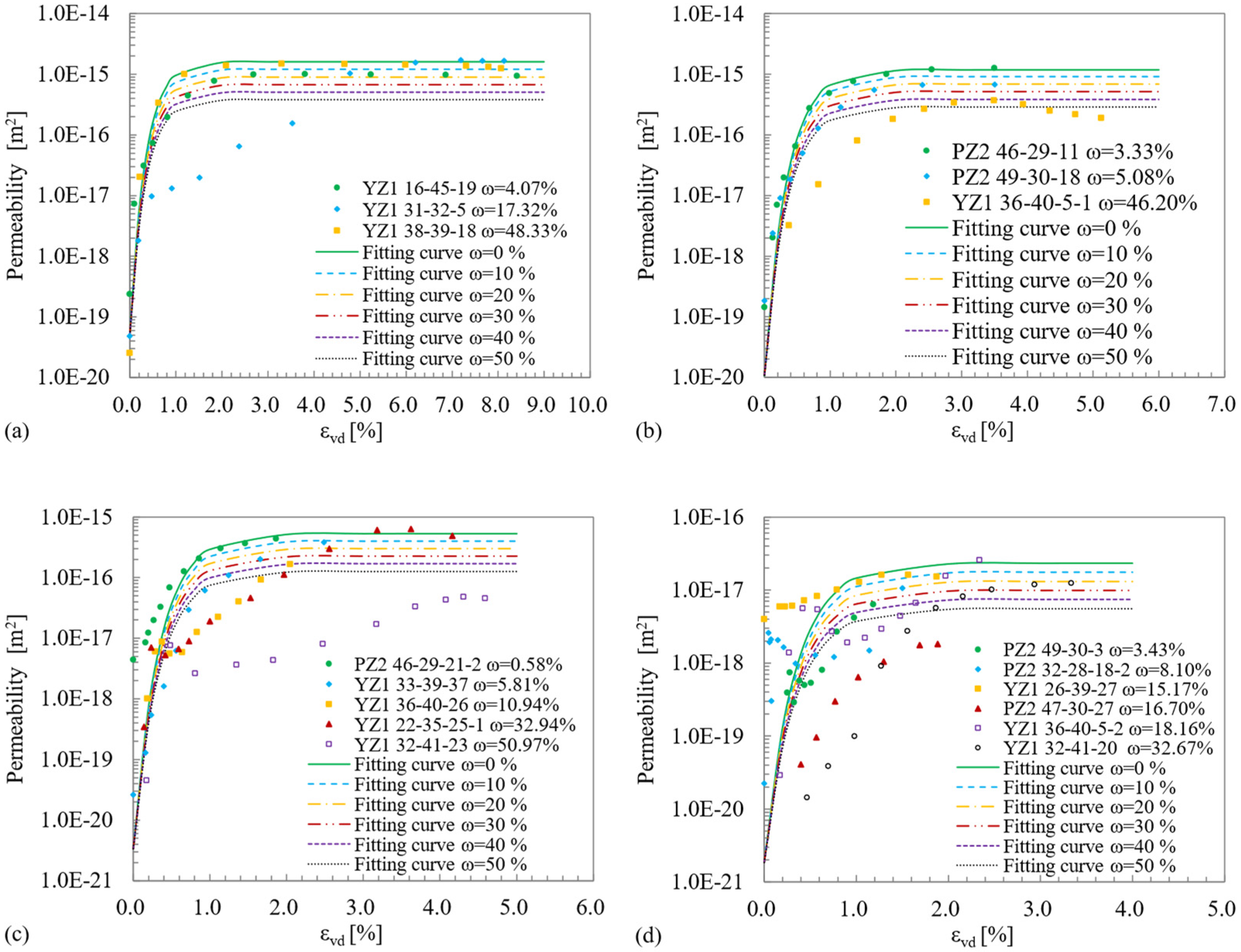
Figure 8 compares the measured permeability with the fitted curves for impure rock salt across the full loading range at confining pressures of 2.5, 5, 7.5, and 10 MPa. To facilitate comparison, impurity contents were categorized into discrete bins (0%, 10%, 20%,30%, 40%, and 50%). The model demonstrates a high degree of fit with the experimental data. Specimens 22-35-25-2 and 21-28-8 were excluded from Figure 8 as their impurity contents (70% and 80%, respectively) exceed the rock salt classification threshold. At these levels, the lithological properties shift fundamentally, resulting in permeability characteristics distinct from typical rock salt. Although some scatter in the fitted initial permeability persists at higher confining pressures—stemming from the assumption that initial permeability is independent of impurity content—the overall predictive performance remains robust.
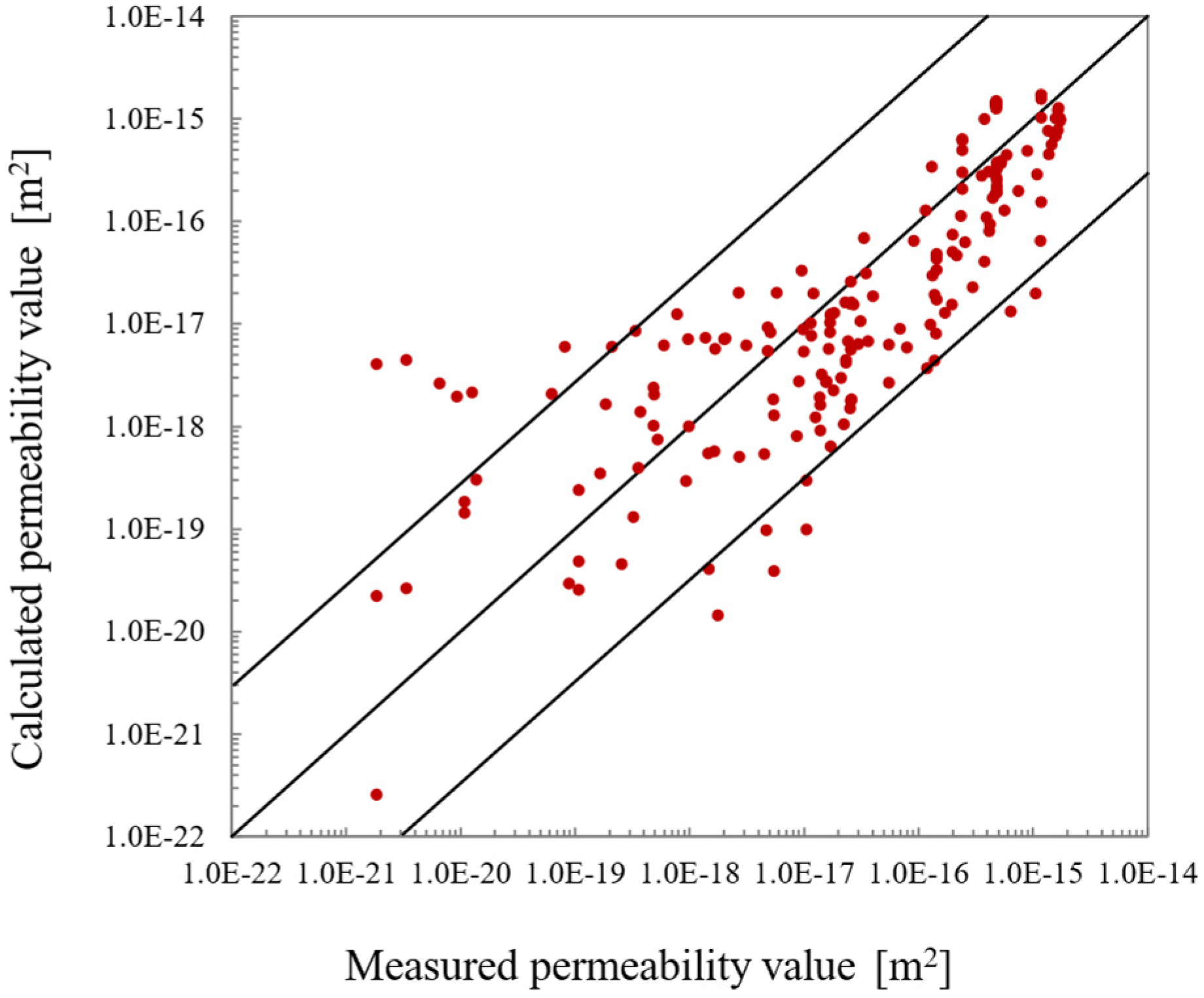
Figure 9 presents a global comparison between all measured and model-calculated permeability values. The strong correlation across the dataset confirms the model’s reliability and its applicability to impure rock salt from the Pingdingshan and Yunying formations.
Noticeable scatter is observed among certain data points in the lower permeability range, primarily stemming from specimens 46-29-21-2 and 26-39-27. These specimens maintained relatively high permeability (10−18 m2) even under elevated confining pressures. This discrepancy is likely rooted in the specimens’ inherent pore structures and varying degrees of initial damage incurred during sampling and preparation. Specifically, the 15 h recovery period at high pressure may have been insufficient to fully heal the more severe initial micro-defects in these samples. Consequently, their measured permeabilities remain significantly higher than the model predictions, reflecting the lingering impact of unrecovered initial damage.
Furthermore, although the proposed analytical framework captures the general trends of permeability evolution in impure rock salt, the mineralogical variability observed among different formations (e.g., glauberite-rich versus anhydrite-rich salts) indicates that model parameters may exhibit regional dependence. For critical engineering applications, parameter calibration and verification using site-specific core data are therefore recommended. Such an approach—combining the general physical relationships established in this study with localized parameter adjustment—can enhance both the theoretical robustness and the engineering reliability of cavern sealing assessments.

3.5.3. Physical Interpretation of Model Parameters

Although the proposed permeability model, derived from the framework developed by Hou [32], contains several fitting parameters, each parameter has a defined physical interpretation. Parameters α1 and α2 characterize the sensitivity of matrix compaction and pore closure to confining stress (σ3), analogous to parameters b and c in Hou’s model [32]. Parameter α3 describes the permeability increase induced by dilatancy and corresponds to the dilatancy factor e in Hou’s model [32]. The parameters α5, α6, and α7 act as structural evolution coefficients under confining stress, similar in function to parameter f in the original formulation of Hou [32]. Parameter α4 is introduced specifically to quantify the influence of impurity content (ω) on the initial permeability of the rock salt.
Sensitivity analysis shows that permeability evolution is most strongly controlled by dilatant strain and confining stress, whereas impurity content primarily affects the initial permeability. Therefore, the model should be regarded as semi-empirical in form but physically constrained in interpretation.

3.6. Implications for Cyclic Loading in Energy Storage Caverns

Although the present tests focus on monotonic loading, the permeability–dilatancy relationship provides insight into cyclic cavern operation. During gas injection, stress reduction may partially close dilatancy-induced microcracks; however, laboratory and field studies indicate that permeability recovery is incomplete due to irreversible damage. Consequently, permeability evolution during injection–withdrawal cycles is expected to follow a ratcheting trend, with early cycles dominating permeability increase. This suggests that operational pressure ranges should remain below the dilatancy onset threshold to maintain long-term energy storage cavern tightness.
According to the statistical results of the 16 rock salt specimens presented in Table 4, the dilatancy strength exhibits clear dependence on mining location and confining pressure. For YZ1 (burial depths 700–1100 m), dilatancy strength ranges from 27.37 to 36.85 MPa under confining pressures of 5.0–10.0 MPa. For the deeper PZ2 mine (1400–1700 m), thresholds are higher, ranging from 27.50 to 44.06 MPa under the same confining pressure range. In both mines, dilatancy strength increases with confining pressure and decreases with impurity content. Additionally, smaller specimens show slightly higher apparent dilatancy strength, consistent with known size effects in rock salt mechanics.
These results demonstrate that the maximum allowable deviatoric stress for cavern operation must be site-specific and depth-dependent. To ensure long-term gas tightness, operational pressure fluctuations should be strictly controlled to maintain deviatoric stress below the lower-bound dilatancy threshold corresponding to the burial depth and lithological characteristics of the salt formation.

4. Conclusions

This study systematically investigated the permeability evolution of impure rock salt from the Pingdingshan and Yunying salt mines under the triaxial compression loading condition, with direct relevance to underground hydrogen and compressed air energy storage in China’s bedded salt formations. Based on full-process permeability experiments and model development, the following conclusions are drawn:
(1)
Effectiveness of hydrostatic damage recovery
A pre-loading hydrostatic recovery process (15 h at 40 MPa) significantly reduced permeability by one to three orders of magnitude, confirming that coring- and machining-induced micro-damage can strongly overestimate laboratory permeability. After recovery, the initial permeability of both salt formations converged to approximately 10−21 m2 at stresses corresponding to in situ burial depths, providing a realistic baseline for sealing integrity assessment.
(2)
Stress-controlled initial permeability behavior
Initial permeability decreases nonlinearly with increasing effective stress and approaches a stable lower bound at elevated confinement. At higher stress levels, permeability becomes largely insensitive to mineralogical differences, indicating that effective stress is the dominant controlling factor under deep geological conditions.
(3)
Dilatancy-driven permeability evolution during deviatoric loading
During deviatoric loading, permeability exhibits a characteristic two-stage response: a rapid increase associated with early damage and microcrack initiation, followed by saturation once the dilatant (volumetric strain) exceeds approximately 1–2%. Up to 80–100% of the total permeability increase occurs within this limited strain range, highlighting the high sensitivity of sealing performance to early-stage dilatant damage.
(4)
Role of impurity content and mineralogy
Impurity content influences both the magnitude and evolution of permeability by modifying the initial pore structure and damage development. While higher impurity levels generally promote higher permeability, the response is non-monotonic and region-dependent, reflecting differences between glauberite-dominated and anhydrite-dominated impurity assemblages.
(5)
Permeability model for impure rock salt
A modified semi-theoretical permeability model was developed by extending an established dilatancy-based formulation to include an impurity parameter. The model reproduces the measured permeability evolution across different confining pressures and impurity levels with good agreement, offering a practical predictive tool for evaluating the hydraulic integrity of impure rock salt in underground energy storage applications.
The findings of this study provide a theoretical framework for evaluating the sealing integrity of energy storage caverns in impure rock salt formations. By incorporating the influence of impurity content into the permeability model, the proposed approach enables more reliable prediction of gas leakage potential during site selection and cavern design. It should be noted that the present work primarily addresses the initial sealing capacity and its degradation under monotonic loading. In practical engineering applications, however, the host rock is subjected to complex cyclic loading and unloading associated with injection–withdrawal operations. For underground hydrogen and compressed air storage, maintaining operational stresses below the dilatancy threshold and allowing sufficient time for stress-driven healing are essential for preserving cavern tightness. The proposed permeability model therefore offers a practical tool for defining safe operating pressure windows in impure bedded salt formations. Nevertheless, permeability evolution under cyclic loading, as well as long-term damage accumulation, remains an important topic for future investigation to further ensure the operational safety and long-term integrity of underground energy storage facilities.
Overall, the results demonstrate that both initial damage recovery and damage-induced dilatancy must be explicitly considered when assessing the long-term sealing performance of salt caverns in impure, bedded salt formations.

Author Contributions

Conceptualization, M.Z.H. and G.W.; methodology, M.Z.H. and G.W.; validation, G.W., J.L. and S.Z.; formal analysis, G.W.; investigation, G.W.; writing—original draft preparation, G.W.; writing—review and editing, M.Z.H. and S.Z.; supervision, M.Z.H. and J.L.; project administration, G.W.; funding acquisition, J.L. and M.Z.H. All authors have read and agreed to the published version of the manuscript.

Funding

The work presented in this paper was funded by the National Natural Science Foundation of China (Grant No. 51120145001) and European Union’s “Horizon Europe programme”-LOC3G (Grant No. 101129729).

Institutional Review Board Statement

Not applicable.

Informed Consent Statement

Not applicable.

Data Availability Statement

The original contributions presented in this study are included in the article. Further inquiries can be directed to the corresponding author.

Conflicts of Interest

The authors declare that they have no conflicts interest.

References

  1. Cao, C.; Wen, B.; Fang, Y.L.; Hou, Z.M.; Wang, Q.C.; Zhang, T.; Huang, L.C.; Chen, Q.J.; Zhang, L.H.; Zhao, Y.L.; et al. A comprehensive comparison of green ammonia and green methanol from a full chain: Production, transportation, storage and utilization. Carbon Neutral Syst. 2025, 1, 8. [Google Scholar] [CrossRef]
  2. Lux, K.H. Design of salt caverns for the storage of natural gas, crude oil and compressed air: Geomechanical aspects of construction, operation and abandonment. In Underground Gas Storage: Worldwide Experiences and Future Development in the UK and Europe; Evans, D.J., Chadwick, R.A., Eds.; The Geological Society, London, Special Publications: London, UK, 2009; Volume 313, pp. 93–128. [Google Scholar]
  3. Herrmann, J.; Schmatz, J.; Bakker, R.R.; Rölke, C.; Naumann, D. The hydraulic properties of rock salt at elevated thermodynamic boundary conditions and its healing potential. In Proceedings of the Eleventh Conference on the Mechanical Behavior of Salt (SALTMECH XI), Santa Fe, NM, USA, 8–10 July 2025; CRC Press/Balkema: Leiden, The Netherlands, 2025. [Google Scholar]
  4. Cyran, K.; Toboła, T.; Kamiński, P.; Bajda, K.; Karczewski, J. Impact of microfabrics on the mechanical properties and deformation behavior of rock salt: Insight from micro-scale tests. In Proceedings of the Eleventh Conference on the Mechanical Behavior of Salt (SALTMECH XI), Santa Fe, NM, USA, 8–10 July 2025; CRC Press/Balkema: Leiden, The Netherlands, 2025; pp. 400–414. [Google Scholar]
  5. Yang, C.H. Mechanics and Engineering of Bedded Salt Rock; Science Press: Beijing, China, 2009. [Google Scholar]
  6. Wu, Z.D.; Liu, B.B.; Wanyan, Q.Q.; Zhu, H.Y.; Hao, A.S.; Li, K.; Zhang, B.T.; Ou, L.H.; Zhao, W.J. A study on the storage capacity and thermodynamic characteristics of hydrogen-blended storage in salt cavern hydrogen reservoirs. Energy Storage Sci. Technol. 2025, 14, 4608–4617. [Google Scholar] [CrossRef]
  7. Liu, W.; Zhang, Z.X.; Chen, J.; Jiang, D.Y.; Wu, F.; Fan, J.Y.; Li, Y.P. Feasibility evaluation of large-scale underground hydrogen storage in bedded salt rocks of China: A case study in Jiangsu province. Energy 2020, 198, 117348. [Google Scholar] [CrossRef]
  8. Huang, L.C.; Hou, Z.M.; Liu, J.H.; Beck, H.-P.; Wu, L.; Wang, Q.C.; Guo, Y.L.; Shi, T.L.; Ru, Z. A Framework for Technology Maturity Assessment Based on Patent and Literature Analysis: A Case Study of Underground Compressed Air and Hydrogen Storage Power Generation. Int. J. Energy Res. 2025, 2025, 9255306. [Google Scholar] [CrossRef]
  9. Zhu, S.J.; Shi, X.L.; Yang, C.H.; Li, Y.P.; Li, H.; Yang, K.; Wei, X.X.; Bai, W.Z.; Liu, X. Hydrogen loss of salt cavern hydrogen storage. Renew. Energy 2023, 218, 119267. [Google Scholar] [CrossRef]
  10. Qian, X.; You, S.; Wang, R.; Yue, Y.; Liao, Q.; Dai, J.; Tian, S.; Liu, X. Underground Hydrogen Storage in Salt Cavern: A Review of Advantages, Challenges, and Prospects. Sustainability 2025, 17, 5900. [Google Scholar] [CrossRef]
  11. Peach, C.J. Influence of Deformation on the Fluid Transport Properties of Rock Salts. Doctoral Dissertation, Geologica Ultraiectina, No. 77, Utrecht University, Utrecht, The Netherlands, 1991. [Google Scholar]
  12. Fokker, P.A. The Behavior of Salt and Salt Caverns. Doctoral Dissertation, Technische Universiteit Delft, Delft, The Netherlands, 1995. [Google Scholar]
  13. Wu, Z.D.; Zhou, H.W.; Ding, J.Y.; Rang, L.N.; Yi, H.Y. Research on permeability testing of rock salt under different permeability pressures. Chin. J. Rock Mech. Eng. 2012, 31, 3740–3746. [Google Scholar]
  14. Muhammad, N.; Spiers, C.J.; Peach, C.J.; De Bresser, J.H.P.; Liu, W. Permeability of layered rock salt at different stresses and geometries. In Mechanical Behavior of Salt VIII; CRC Press: London, UK, 2015. [Google Scholar]
  15. Liu, W.; Muhammad, N.; Li, Y.P.; Spiers, C.J.; Yang, C.H.; Ma, H.L. Experimental study of permeability of rock salt and its application to deep underground gas storage. Chin. J. Rock Mech. Eng. 2014, 33, 1953–1961. [Google Scholar]
  16. Peng, H.H. Study on the Deformation Microstructures and the Microscopic Damage-Healing Mechanism of Rock Salt. Doctoral Dissertation, Chongqing University, Chongqing, China, 2020. [Google Scholar]
  17. Zhou, H.W.; He, J.M.; Wu, Z.D. Permeability and meso-structure characteristics of bedded rock salt. Chin. J. Rock Mech. Eng. 2009, 28, 2068–2073. [Google Scholar]
  18. Hou, Z.M.; Wang, G.; Feng, W.; Liu, J.; Mehmood, F. A density-based classification method for highly impure rock salt. In Proceedings of the Ninth Conference on the Mechanical Behavior of Salt (SALTMECH IX), Hannover, Germany, 12–14 September 2018; Bundesanstalt für Geowissenschaften und Rohstoffe (BGR): Hannover, Germany, 2018; pp. 275–287. [Google Scholar]
  19. Wang, G.; Xie, L.Z.; Hou, Z.M.; Liu, J.F.; Xing, W. Comparison of triaxial compression test and data processing methods for rock salt. Rock Soil Mech. 2014, 35, 429–434. [Google Scholar]
  20. Huang, J.Z.; Feng, J.M.; Chen, X.S. A simplified method for obtaining Klinkenberg permeability. Pet. Explor. Dev. 1994, 21, 86–88. [Google Scholar]
  21. Stormont, J.C. Gas Permeability Changes in Rock Salt During Deformation. Doctoral Dissertation, The University of Arizona Graduate College, Tucson, AZ, USA, 1990. [Google Scholar]
  22. Stormont, J.C.; Daemen, J.J.K. Laboratory study of gas permeability changes in rock salt during deformation. Int. J. Rock Mech. Min. Sci. Geomech. Abstr. 1992, 29, 325–342. [Google Scholar] [CrossRef]
  23. Yang, C.H. Key Technologies for Geological Storage Feasibility of Energy Underground Storage in Yunying Salt Mine, Hubei Province; Research Report; Institute of Rock and Soil Mechanics, Chinese Academy of Sciences: Wuhan, China, 2006. [Google Scholar]
  24. Jiang, M.D.; Shen, P.X. Discussion on metallogenic characteristics of salt deposits in Pingdingshan salt field, Henan Province. Coal Geol. China 2005, 17, 12–14. [Google Scholar]
  25. Schulze, O.; Popp, T.; Kern, H. Development of damage and permeability in deformation rock salt. Eng. Geol. 2001, 61, 163–180. [Google Scholar] [CrossRef]
  26. Peach, C.J.; Spiers, C.J.; Tankink, A.J.; Zwart, H.J. Influence of crystal plastic deformation on dilatancy and permeability development in synthetic rock salt. Tectonophysics 1996, 256, 101–128. [Google Scholar] [CrossRef]
  27. Gangi, A.F. Variation of whole and micro-fractured porous rock permeability with confining pressure. Int. J. Rock Mech. Min. Sci. Geomech. Abstr. 1978, 15, 249–257. [Google Scholar] [CrossRef]
  28. Dienes, J.K. Permeability, percolation and statistical crack mechanics. In Issues in Rock Mechanics; Goodman, R.E., Heuze, F.E., Eds.; American Institute of Mining, Metallurgical Petroleum Engineering: San Ramon, CA, USA, 1982; pp. 86–94. [Google Scholar]
  29. Popp, T.; Kern, H. Evolution of dilatancy and permeability in rock salt during hydrostatic compaction and triaxial deformation. J. Geophys. Res. Solid Earth 2001, 106, 4061–4078. [Google Scholar] [CrossRef]
  30. Jockwer, N. Das HAW-Projekt-Versuchseinlagerung Hochradioaktiver Strahlenquellen im Salzbergwerk Asse; GSF-Ber. 16/94; National Research Center for Environment and Health: Neuherberg, Germany, 1994. [Google Scholar]
  31. Alkan, H. Percolation model for dilatancy-induced permeability of the excavation damaged zone in rock salt. Int. J. Rock Mech. Min. Sci. 2009, 46, 716–724. [Google Scholar] [CrossRef]
  32. Hou, Z.M. Geomechanische Planungskonzepte Fuer Untertaegige Tragwerke mit Besonderer Beruecksichtigung von Gefuegeschaedigung, Verheilung und Hydromechanischer Kopplung; Papierflieger: Clausthal-Zellerfeld, Germany, 2002; ISBN 3-89720-637-4. [Google Scholar]
Figure 1. Surface morphology at the drilled specimen end.
Applsci 16 02091 g001
Figure 2. Experimental equipment and the mechanism for permeability measurement. Yellow arrows indicate the fluid flow direction.
Applsci 16 02091 g002
Figure 3. Klinkenberg-corrected permeability vs. gas permeability at an injection pressure of 1 MPa.
Applsci 16 02091 g003
Figure 4. Comparison of photos for representative specimens before and after the experiment.
Applsci 16 02091 g004aApplsci 16 02091 g004b
Figure 5. Experimental results for representative specimens: (a) 16-45-19, (b) 46-29-11, (c) 33-39-37, and (d) 26-39-27. Red and green solid lines denote stress–strain and volumetric strain curves, respectively; blue dots (connected by dashed lines to guide the eye) indicate measured permeability. (σdiff, max: Maximum stress, ε1, cor: Strain at maximum stress, ε1, max: Maximum strain).
Applsci 16 02091 g005aApplsci 16 02091 g005b
Figure 6. (a) Variation in sample permeability under different effective stress. (b) Fitting curve for the initial permeability of the specimens.
Applsci 16 02091 g006
Figure 7. The relationship between εvd and permeability for specimens with different impurity content under different confining pressures. ((a) Confining pressure: 2.5 MPa. (b) Confining pressure: 5.0 MPa (including data for two specimens from Peach [26] for comparison). (c) Confining pressure: 7.5 MPa. (d) Confining pressure: 10.0 MPa).
Applsci 16 02091 g007
Figure 8. Fitting curves for the permeability of impure rock salt during loading under different confining pressures. ((a) Confining pressure: 2.5 MPa. (b) Confining pressure: 5.0 MPa. (c) Confining pressure: 7.5 MPa. (d) Confining pressure: 10.0 MPa).
Applsci 16 02091 g008
Figure 9. Comparison of measured vs. calculated permeability in impure rock salt.
Applsci 16 02091 g009
Table 1. Description, physical properties and impurity content of the rock samples, together with the stress conditions used in this study.
Sample NumberLocationHeight (mm)Diameter (mm)Density
(g/cm3)
Impurity Content, ω (%)Confining Pressure, σ3 (MPa)
116-45-19YZ199.8449.932.124.072.5
231-32-5YZ1179.3689.222.2217.322.5
338-39-18YZ1180.6989.802.3348.332.5
422-35-25-2YZ1179.9288.722.4473.562.5
546-29-11PZ2170.1188.992.173.335.0
649-30-18PZ2180.1190.532.175.085.0
736-40-5-1YZ199.6949.962.3646.205.0
821-28-8YZ1181.4689.812.5688.125.0
946-29-21-2PZ2180.5189.262.150.587.5
1033-39-37YZ1180.5988.212.185.817.5
1136-40-26YZ1180.3689.882.1710.947.5
1222-35-25-1YZ1100.3050.022.2632.947.5
1332-41-23YZ1100.2849.952.3650.977.5
1449-30-3PZ2182.0388.692.163.4310.0
1532-28-18-2PZ299.7149.592.178.1010.0
1626-39-27YZ1181.4288.322.2015.1710.0
1747-30-27PZ2179.3688.922.2416.7010.0
1836-40-5-2YZ1179.4388.902.2518.1610.0
1932-41-20YZ1181.7488.302.3032.6710.0
Table 2. X-ray diffraction (XRD) analysis results of the test samples.
No.Sample NumberLocationSaltQuartzCalciteDolomiteGlauberiteClayAnhydrite
[wt%]
136-40-5-1YZ177 20 3
226-39-27YZ18713 9
322-35-25-1YZ196 4
421-28-8YZ1573 46 30
516-45-19YZ180 17 3
622-35-25-2YZ14732 48
732-41-23YZ1872 11
833-39-37YZ1961 3
931-32-5YZ1834 11 2
1036-40-5-2YZ1862 11 1
1132-41-20YZ1521 47
1232-28-18-2PZ2871 210
1346-29-11PZ298 2
1447-30-27PZ296 4
1549-30-3PZ299 1
1646-29-21PZ298 2
Table 3. Differences in permeability of each group of specimens before and after initial damage restoration.
Sample Numberσ3
(MPa)
Before RestorationAfter Restoration
p1
(MPa)
Kg
(m2)
p1
(MPa)
Kg
(m2)
p1
(MPa)
Kg
(m2)
p1
(MPa)
Kg
(m2)
16-45-192.51.0 2.78 × 10⁻¹⁷**1.0 6.11 × 10⁻¹⁹**
31-32-52.51.0 8.64 × 10⁻¹⁹**1.0 1.41 × 10⁻¹⁹**
38-39-182.51.0 1.62 × 10⁻¹⁷**1.0 8.46 × 10⁻¹⁹**
22-35-25-22.51.0 6.06 × 10⁻¹⁶**1.0 6.76 × 10⁻¹⁸**
46-29-115.01.0 3.35 × 10−172.5 3.26 × 10−171.0 3.43 × 10−192.5 1.90 × 10⁻¹⁹
49-30-185.01.0 6.23 × 10−172.5 4.82 × 10−171.0 6.78 × 10−192.5
36-40-5-15.01.0 2.71 × 10−182.5 1.58 × 10−181.0 2.5
21-28-85.01.0 1.42 × 10−192.5 8.42 × 10−201.0 2.5
46-29-21-27.51.0 3.36 × 10−163.5 2.61 × 10−161.0 8.98 × 10−183.5 8.73 × 10⁻¹⁸
33-39-377.51.0 1.20 × 10−163.5 1.15 × 10−161.0 8.12 × 10−203.5 7.78 × 10⁻²⁰
36-40-267.51.0 4.50 × 10−203.5 3.21 × 10−201.0 3.5
22-35-25-17.51.0 2.42 × 10−163.5 2.40 × 10−161.0 8.59 × 10−193.5 3.97 × 10⁻¹⁹
32-41-237.51.0 3.5 1.0 3.5
49-30-310.01.0 2.60 × 10−175.0 2.03 × 10−171.0 5.0
32-28-18-210.01.0 1.33 × 10−175.0 8.07 × 10−181.0 5.88 × 10−205.0 2.31 × 10⁻²⁰
26-39-2710.01.0 1.02 × 10−165.0 6.82 × 10−171.0 8.14 × 10−185.0 5.11 × 10⁻¹⁸
47-30-2710.01.0 5.0 1.0 5.0
36-40-5-210.01.0 8.49 × 10−205.0 6.53 × 10−201.0 5.0
32-41-2010.01.0 5.0 1.0 5.0
* To ensure that the permeation pressure remains below the confining pressure, the experimental group with a confining pressure of 2.5 MPa only employed a single permeation pressure of 1.0 MPa; – The dash symbol (“–”) indicates that no measurable permeability value was recorded within the designated measurement time range.
Table 4. Summary of the dilatancy strength (σdiff,dil) for all 16 investigated rock salt specimens.
No.Sample NumberLocationσ3
(MPa)
Impurity Content, ω (%)Dilatancy Strength
(MPa)
1 *16-45-19YZ12.54.0724.93
231-32-5YZ12.517.3219.86
338-39-18YZ12.548.3322.28
4 *36-40-5-1YZ15.046.2031.61
533-39-37YZ17.55.8131.96
636-40-26YZ17.510.9427.37
7 *22-35-25-1YZ17.532.9434.85
826-39-27YZ110.015.1736.85
936-40-5-2YZ110.018.1631.75
1032-41-20YZ110.032.6731.32
1146-29-11PZ25.03.3331.15
1249-30-18PZ25.05.0827.50
1346-29-21-2PZ27.50.5835.68
1449-30-3PZ210.03.4339.13
15 *32-28-18-2PZ210.08.1044.06
1647-30-27PZ210.016.7035.70
* Small specimen size ɸ50 × 100 mm.
Table 5. Parameters and values of permeability model for impure rock salt.
SymbolsValuesUnitsSymbolsValuesUnits
α10.25/α20.451/MPa
α331/%α4−0.01251/%
α5−0.0661/(MPa^2)α60.7831/MPa
α72.9125////
Disclaimer/Publisher’s Note: The statements, opinions and data contained in all publications are solely those of the individual author(s) and contributor(s) and not of MDPI and/or the editor(s). MDPI and/or the editor(s) disclaim responsibility for any injury to people or property resulting from any ideas, methods, instructions or products referred to in the content.