1. Introduction
Rice is one of the major staple crops in China, with a large and widely distributed planting area [
1]. With the promotion of straw resource utilization and conservation tillage in rice–wheat rotation regions, stubble chopping and incorporation have become essential operations in post-harvest field management of rice [
2]. As an important agronomic practice, straw incorporation not only enhances the stability of topsoil aggregates and increases soil microbial communities, thereby improving soil fertility [
3], but also improves the moisture conditions of surface soil, promoting crop growth and development and ultimately increasing crop yield and water use efficiency [
4]. However, a large amount of high-moisture rice straw stubble remains in the field after harvesting. Its high flexibility and pronounced adhesive characteristics pose significant challenges for stubble elimination, chopping, and incorporation operations [
5]. Compared with dry (low-moisture) straw, high-moisture rice stubble is more prone to bending, entanglement, and agglomeration during comminution, resulting in unstable material flow. This instability further causes non-uniform chopping, localized clogging, and increased energy consumption [
6,
7], which severely constrains improvements in the operational efficiency and working quality of stubble elimination devices.
To accurately predict the motion behavior of rice straw within a stubble elimination device, it is essential to develop a discrete element model (DEM) that can realistically represent its mechanical response and interaction characteristics [
8]. In existing studies, the straw motion process inside stubble elimination devices has often been described using rigid straw models [
9,
10]. Although such models can substantially simplify the modeling procedure and reduce computational cost, they neglect the shear, bending, and large-deformation behaviors of straw under loading, making it difficult to accurately reproduce the actual stress state and motion patterns of straw under comminution conditions [
11]. To address this limitation, various flexible modeling approaches have been proposed, which have improved the representation of straw flexibility to some extent [
12]. For example, Tang et al. [
13] employed multi-sphere chains or bonded-particle models to simulate the flexible deformation of straw and achieved good simulation performance under bending and compression conditions. Cheng et al. [
14] developed modeling and analysis of the mechanical response of straw during cutting and compression based on parallel-bond or elasto-plastic contact models, thereby improving the prediction accuracy of the comminution process to a certain degree. Nevertheless, some models still exhibit limitations in describing the fracture behavior of wet straw and the post-fracture dynamic evolution of fragments. Therefore, developing an efficient modeling strategy that balances the representation of straw flexibility and fracture characteristics while maintaining a controllable computational cost remains a critical challenge in current research.
The appropriate selection of inter-particle contact models also has a direct impact on simulation accuracy. In existing studies, the Hertz–Mindlin (no-slip) model has been widely adopted to describe contact and collision behaviors of straw particles [
15,
16], and models such as the elasto-plastic adhesive (EEPA) model have also been introduced to account for elasto-plastic deformation effects [
17]. However, these models generally have difficulty in capturing the pronounced adhesion and delayed/hysteretic detachment characteristics between wet straw materials. In contrast, the Johnson–Kendall–Roberts (JKR) contact model can effectively represent particle contact behaviors under strong adhesive conditions. It has been validated in simulations of root–soil systems and other interactions in wet cohesive soil environments [
18,
19], providing a feasible approach for describing adhesive interactions among wet straw particles. Overall, for the comminution conditions of wet and adhesive rice stubble in paddy fields, there is an urgent need to develop a straw model that can simultaneously characterize flexible deformation, fracture–fragmentation, and wet adhesive interactions, while maintaining high computational efficiency. Such a model is crucial for supporting mechanistic analyses of straw motion within stubble elimination devices and for optimizing key structural and operational parameters.
Therefore, this study focuses on wet rice straw and a stubble elimination device and conducts structural and operational parameter optimization based on the DEM. The main contents are as follows: (1) key parameters affecting crushing performance were first identified, and field pre-tests were conducted to characterize the stubble under real operating conditions, providing a basis for comparison with the numerical simulations; (2) a rice straw DEM was developed that incorporates flexibility and adhesive characteristics, and the relevant contact parameters were calibrated; (3) a DEM simulation model of the stubble elimination device was established to analyze the effects of key parameters on stubble flow behavior and comminution performance; and (4) the critical parameters of the device were optimized using response surface methodology and the results were validated through field experiments. The findings of this study provide a theoretical basis and technical support for the structural improvement and intelligent design of high-efficiency stubble elimination devices for wet, flexible rice straw.
3. Results
3.1. Measurement of Field Pre-Test Results
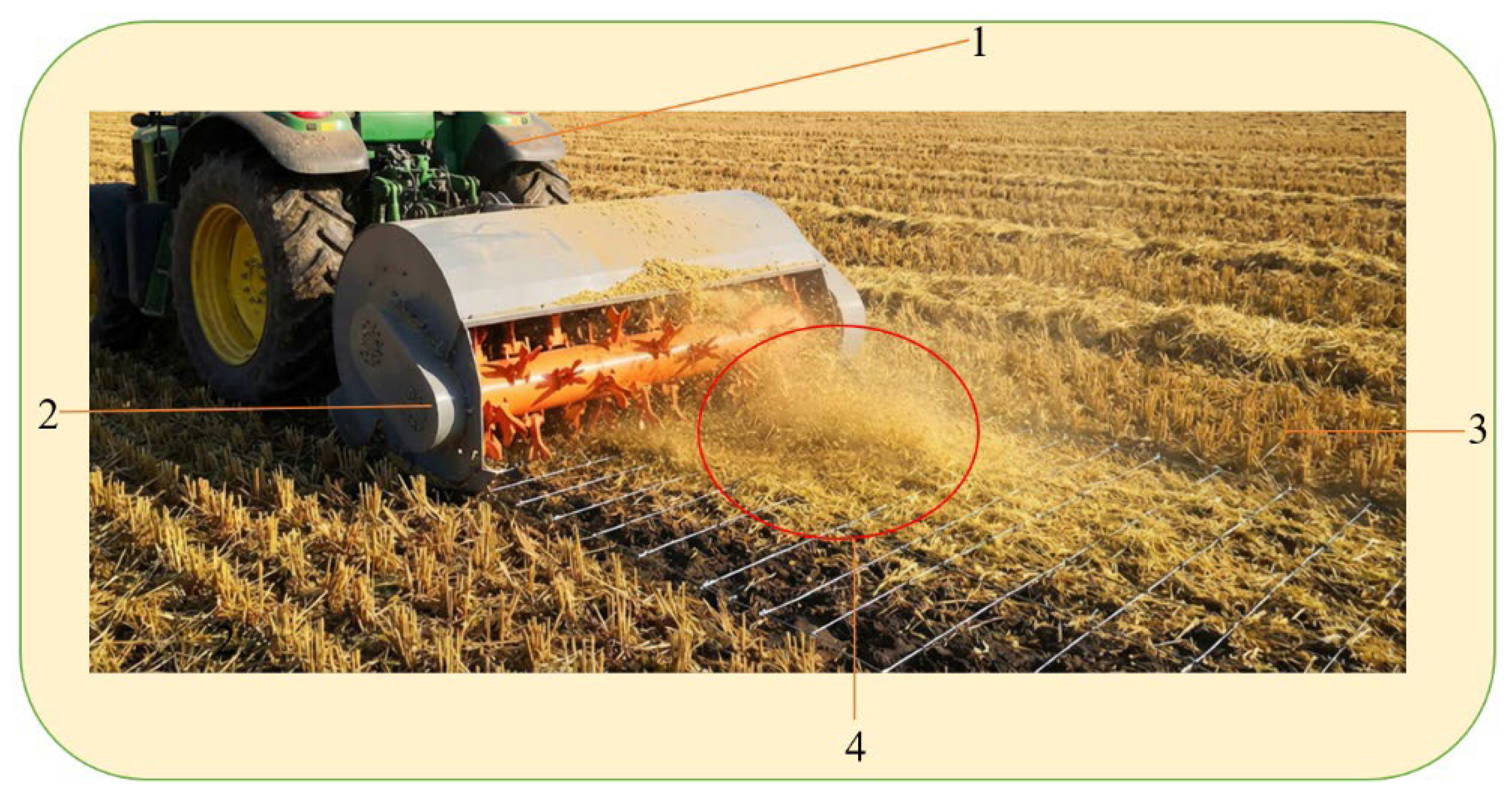
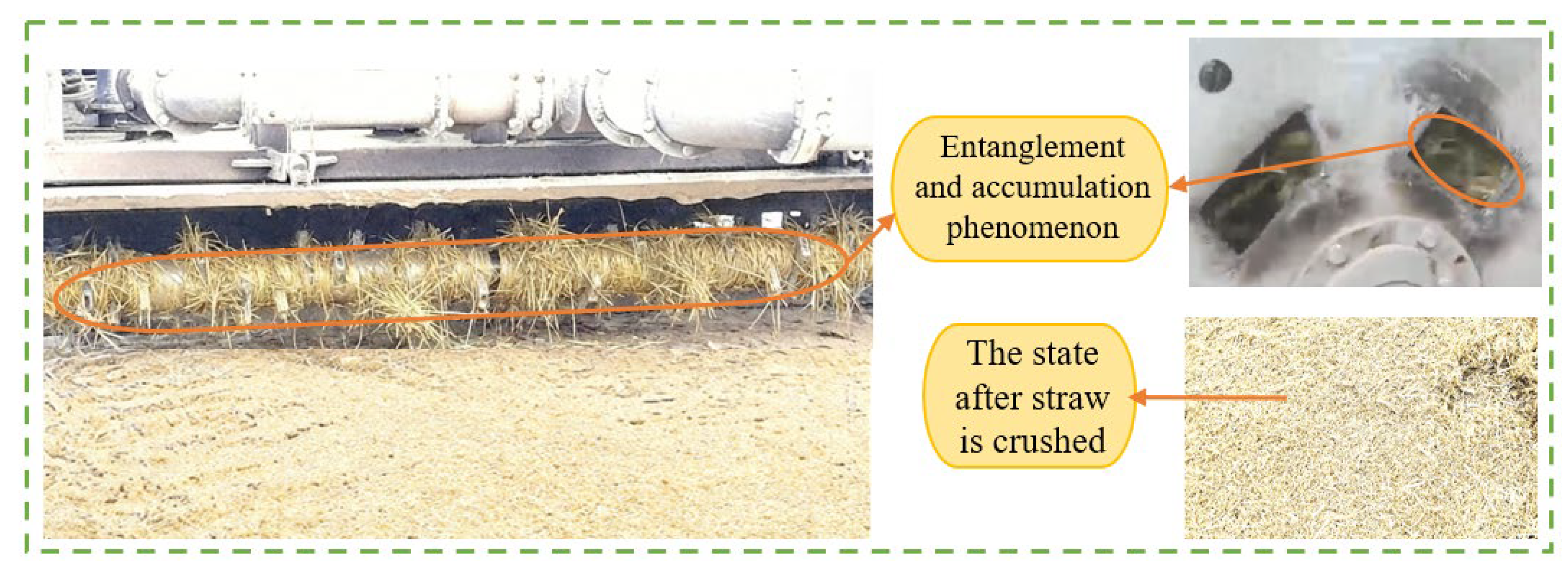
Field pre-tests indicated that wet rice straw exhibited increased flexibility and pronounced surface adhesion, making it more susceptible to bending, entanglement, and agglomeration inside the crushing chamber. These behaviors led to fluctuations in feeding, localized retention, and intermittent impact loads, thereby significantly affecting crushing quality and operational continuity (
Figure 9). Compared with dry straw, under high-speed operation of the crushing device, wet adhesive straw subjected to impact and shear tended to show a “tension–bending–rebound” deformation response. When the impact energy was insufficient or the discharge space was constrained, straw readily became entangled and accumulated at the inlet, along the chamber wall, and in the transition zone of the throwing section, which in turn triggered blockage. Blockage occurred mainly under conditions of relatively low rotor speed or inappropriate forward speed. At low rotor speeds, crushing and conveying capacity were inadequate, resulting in a higher proportion of long straw segments that were prone to forming entanglements. When forward speed was excessive, the instantaneous feeding rate increased, raising the probability of agglomeration and entanglement; the effective flow cross-section within the chamber decreased and material retention intensified, manifested by distinct short-term torque peaks and ultimately necessitating shutdown for cleaning. In addition, the required clearing time varied with the degree of entanglement, the blockage location, and the cleaning method. These observations not only elucidate the flow and fragmentation behavior of wet straw under real operating conditions but also provide field-based evidence for subsequent narrowing of parameter ranges and multi-factor simulation-based optimization.
3.2. Validation of Model Parameters
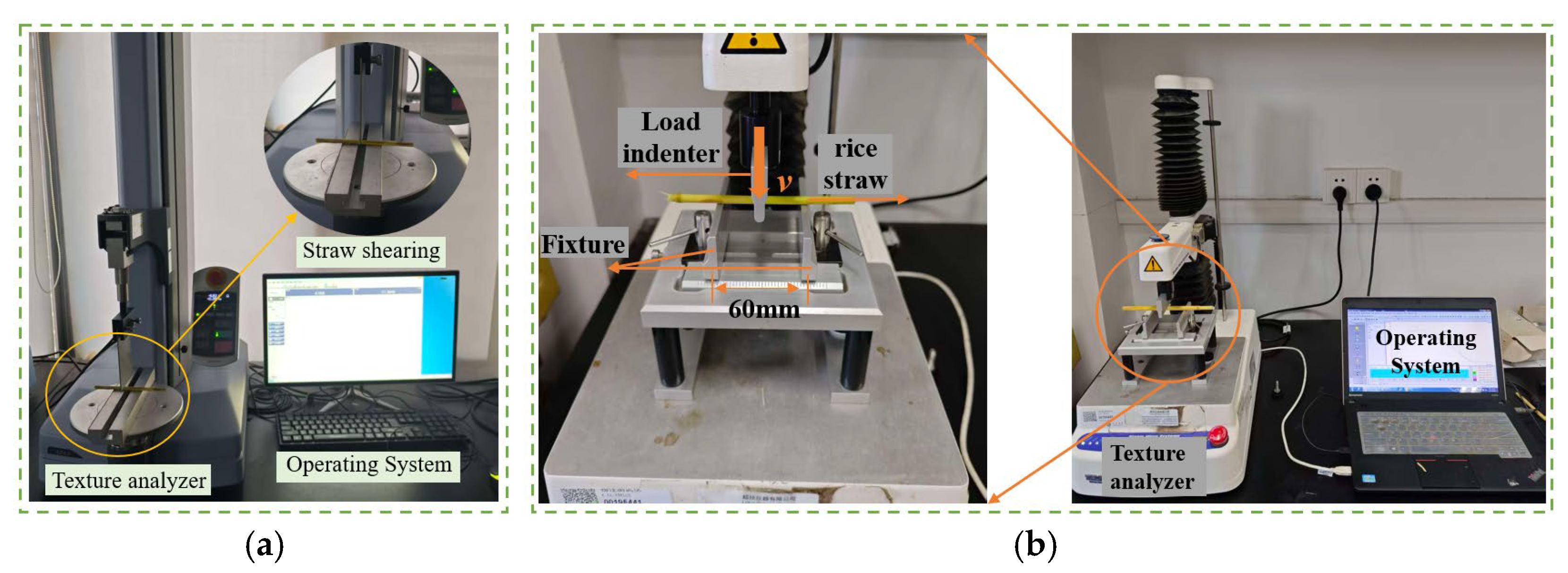
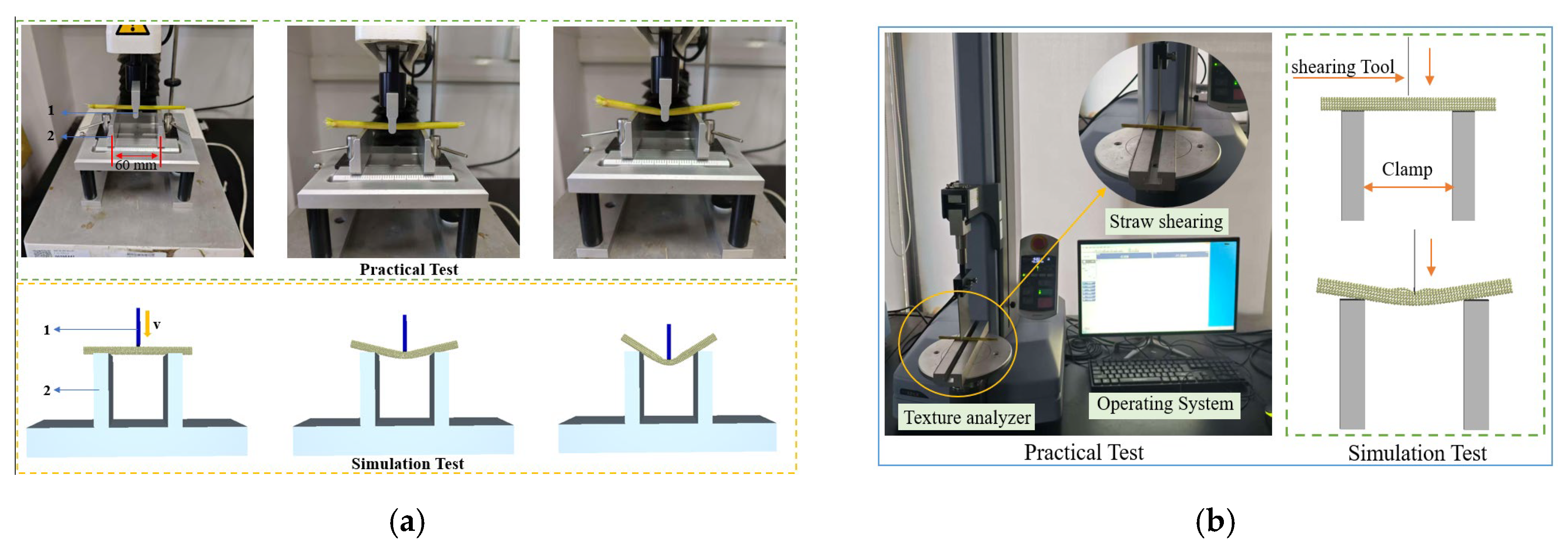
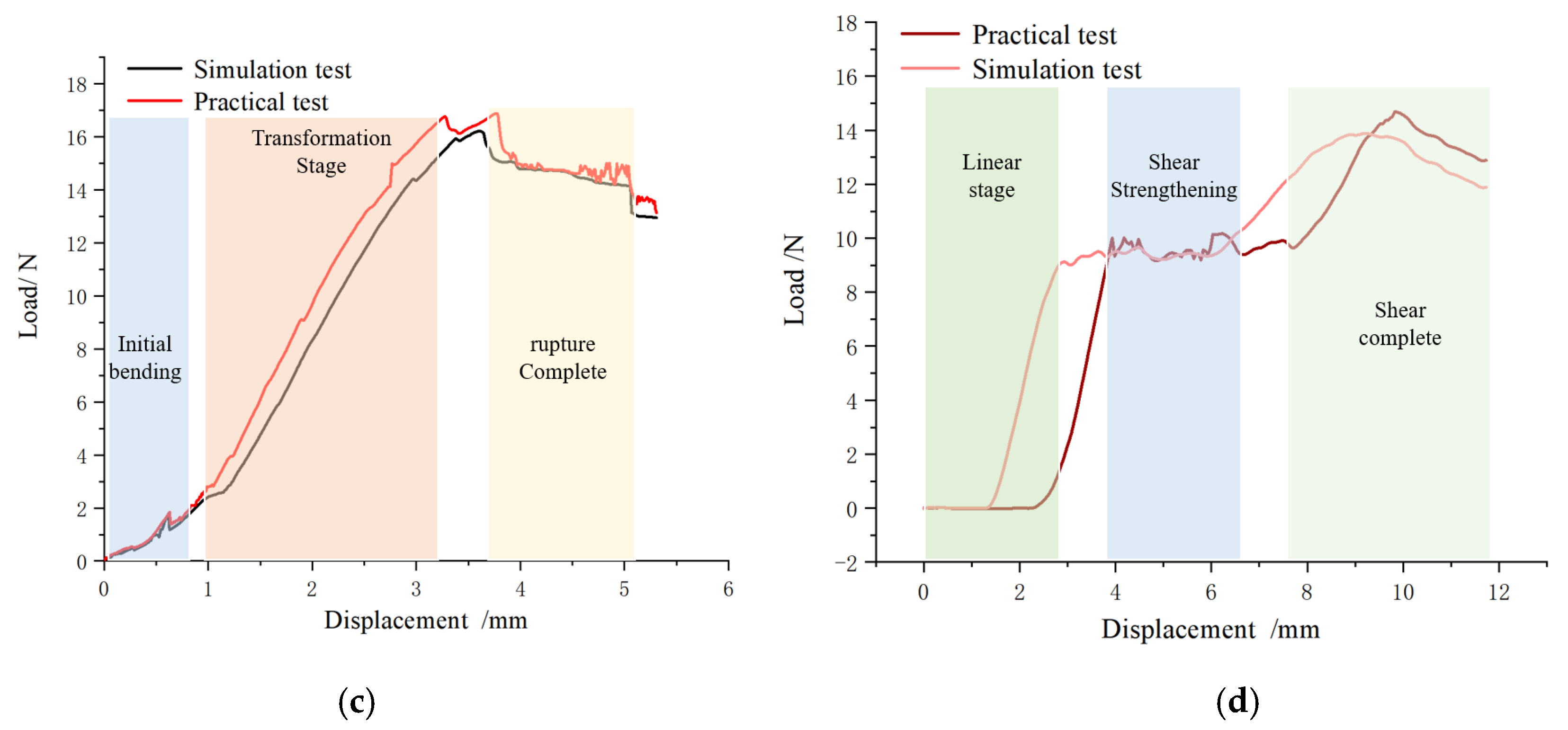
To investigate the effects of straw wet adhesion on the performance of stubble crushing and residue returning and to verify the accuracy of the developed wet–flexible rice stubble mechanical model, bending and shear tests were conducted (
Figure 10a,b), and the simulation results were compared with the experimental measurements. As shown in
Figure 10c, under bending conditions, both the simulated and measured displacement–load curves exhibited three stages—initial bending, nonlinear deformation, and fracture—with consistent overall trends. In the small-displacement range, the two curves overlapped closely, indicating that the model captured the initial flexibility well. With increasing displacement, the peak load, its corresponding displacement, and the post-fracture load drop agreed well with the experimental results. As shown in
Figure 10d, under shear conditions, the curves showed typical stage characteristics, including a linear response, strengthening, and completion of shearing, and the simulated curve matched the measured curve well in terms of stage-wise evolution and overall shape. The local discrepancies were mainly attributed to specimen-to-specimen variability, moisture-content fluctuations, and clamping conditions, and the errors remained within an acceptable range. Overall, the model reproduced the mechanical responses of wet rice stubble under both bending and shear conditions with good fidelity, demonstrating high reliability.
3.3. Analysis of Simulation Results
3.3.1. Flow and Comminution Characteristics of Straw
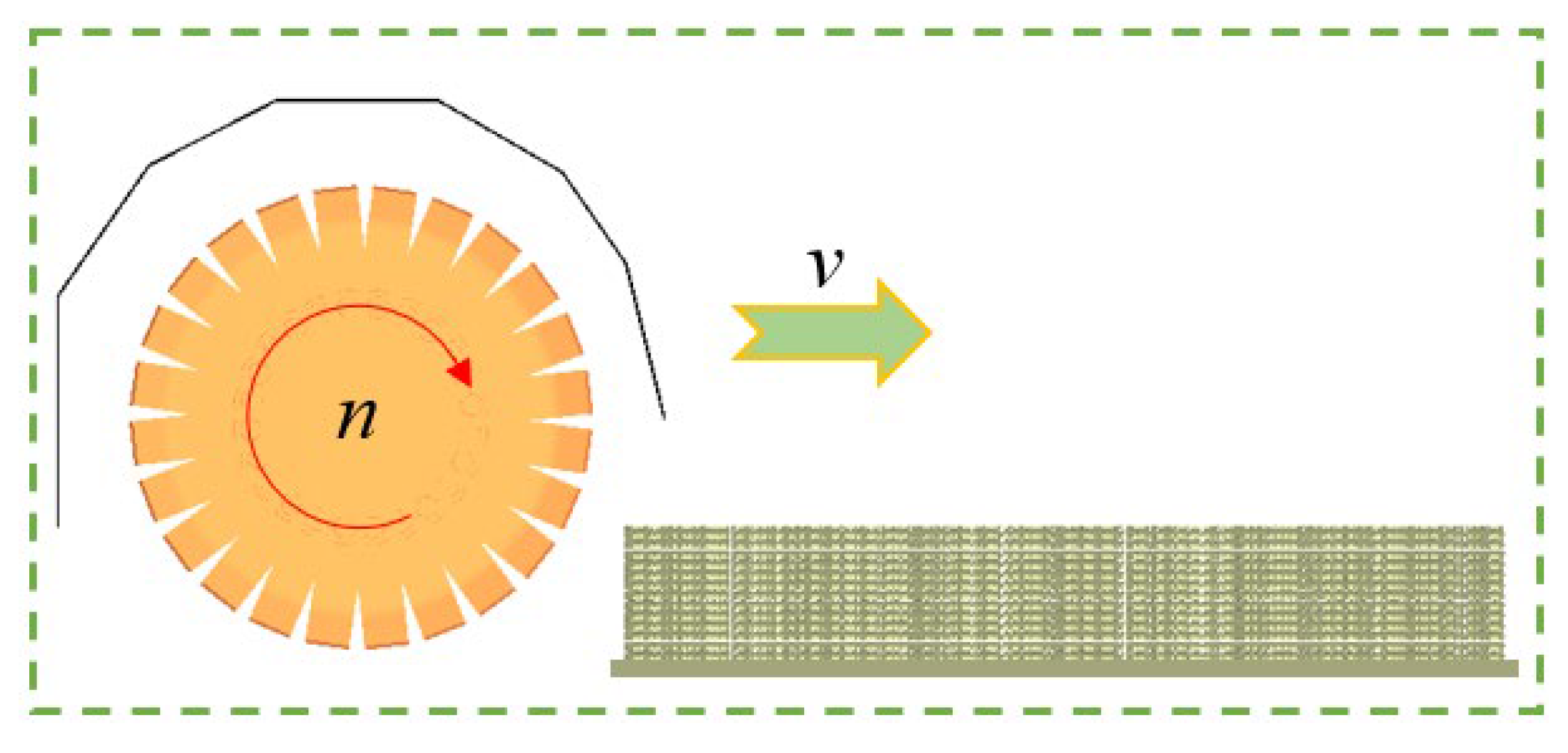
To characterize the flow and comminution behavior of straw inside the chopping chamber, the temporal evolution of straw velocity was examined, as shown in
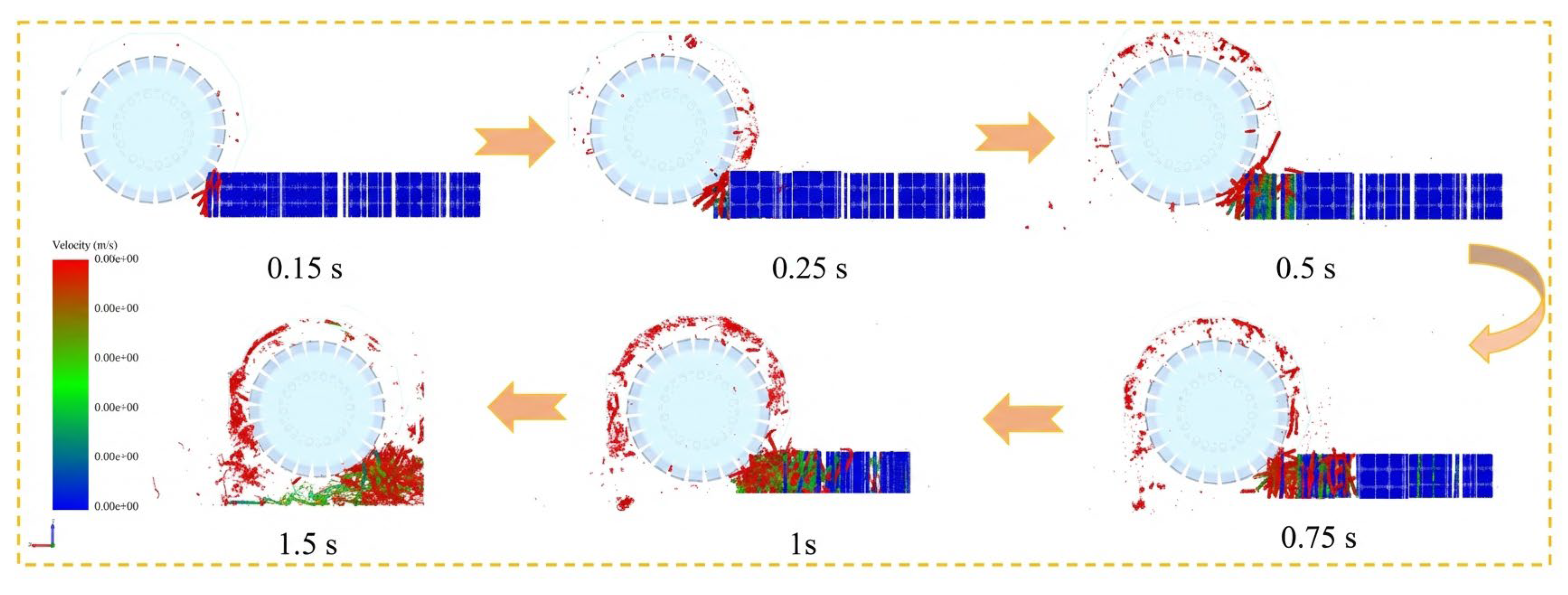
Figure 11. Overall, straw motion follows a clear progression from initial capture to fully developed agitation: particles entering the chamber are first concentrated near the inlet with relatively low velocities, then rapidly accelerate as interactions with the rotating components intensify, leading to a pronounced expansion of high-velocity regions. As the process reaches a quasi-steady state, energetic particle motion persists and straw is repeatedly subjected to impact, bending, and shear, indicating that comminution is governed by sustained capture–acceleration–collision cycles rather than single-pass breakage. This dynamic mechanism promotes continuous fragmentation and dispersion of straw within the chamber, consistent with the finer fragment distribution and crushing performance reported in subsequent sections.
3.3.2. Analysis of Straw Motion Trajectories
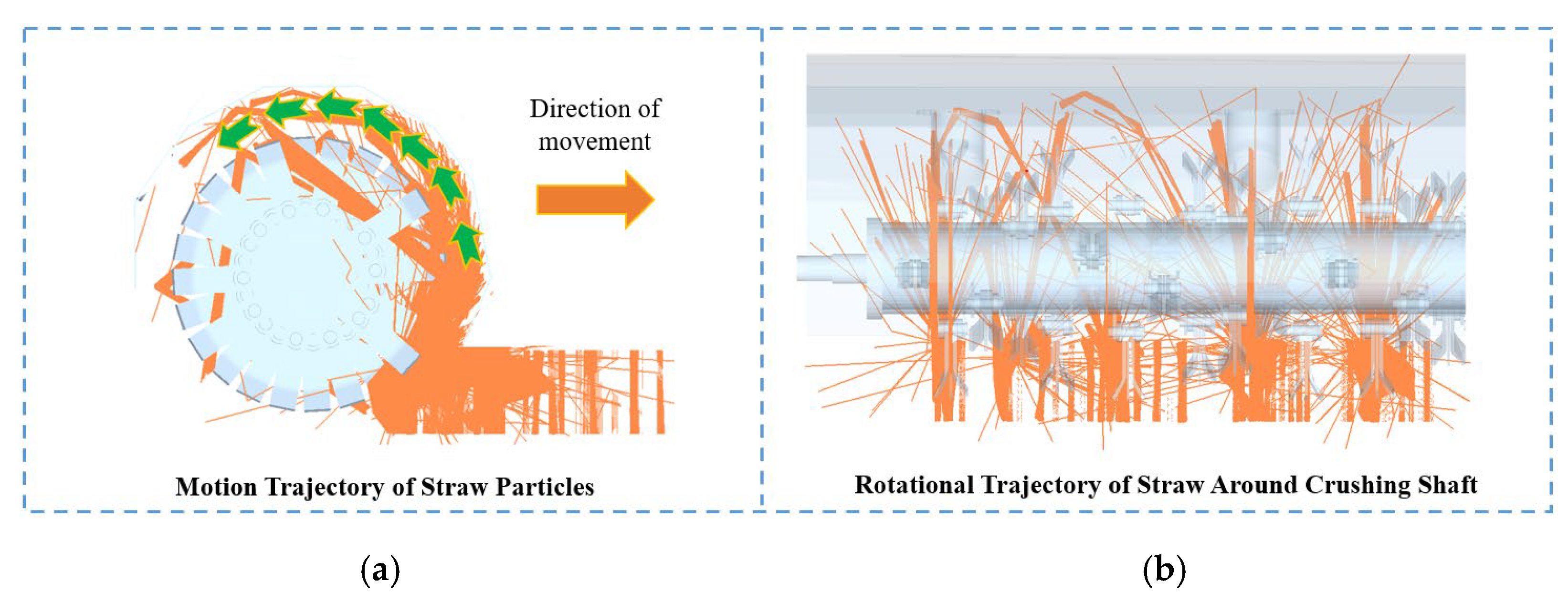
To investigate the crushing and flow characteristics of straw within the crushing chamber, the velocity distribution and motion state of straw at different time instants were analyzed. As illustrated in
Figure 12, the color contour represents the magnitude of straw velocity. It can be observed from
Figure 12 that the motion velocity of straw in the crushing chamber exhibits a pronounced stage-wise evolution over time. During the initial stage (approximately 0.15 s), the straw is mainly distributed near the inlet with relatively low velocities, indicating that it is being captured and beginning to come into contact with the crushing components. Subsequently, during the intermediate stage (approximately 0.25–0.5 s), the straw is rapidly accelerated under the combined action of the rotor and flail blades, and the high-velocity region gradually expands. This suggests that the interaction between the straw and the crushing device is significantly enhanced, and the crushing process enters an efficient operating phase. In the later stage (approximately 0.75–1.5 s), a wide range of high-speed motion persists within the chamber. Under intense agitation as well as repeated impact and shear actions, the straw is progressively refined and dispersed, ultimately forming a finer particle distribution. Overall, straw crushing is not accomplished in a single event but rather through a dynamic process of “capture–acceleration–intense agitation/repeated action.” This evolution highlights the critical role of continuous energy input and repeated mechanical interactions within the crushing chamber in achieving sufficient fragmentation.
As shown in
Figure 12b, straw motion near the chopping shaft exhibits not only circumferential rotation but also evident axial transport and periodic tumbling, forming wave-like/spiral trajectories. This indicates that straw continuously migrates along the axial direction under the combined effects of blade arrangement, axial clearances, and confinement by the housing/screen, rather than remaining at a fixed axial position. Such spatio-temporal mixing increases the frequency of “approach–collision/shearing–detachment–recontact” events across different regions, which helps reduce localized accumulation and promotes a more uniform material distribution. Meanwhile, the repeated tumbling and bending–rebound during axial migration enhances stress concentration and facilitates coupled bending–shear failure, leading to a mixed fragmentation mechanism dominated by impact, bending, shearing, and friction rather than pure shearing alone.
3.3.3. Analysis of Straw Comminution Energy and Interaction Forces
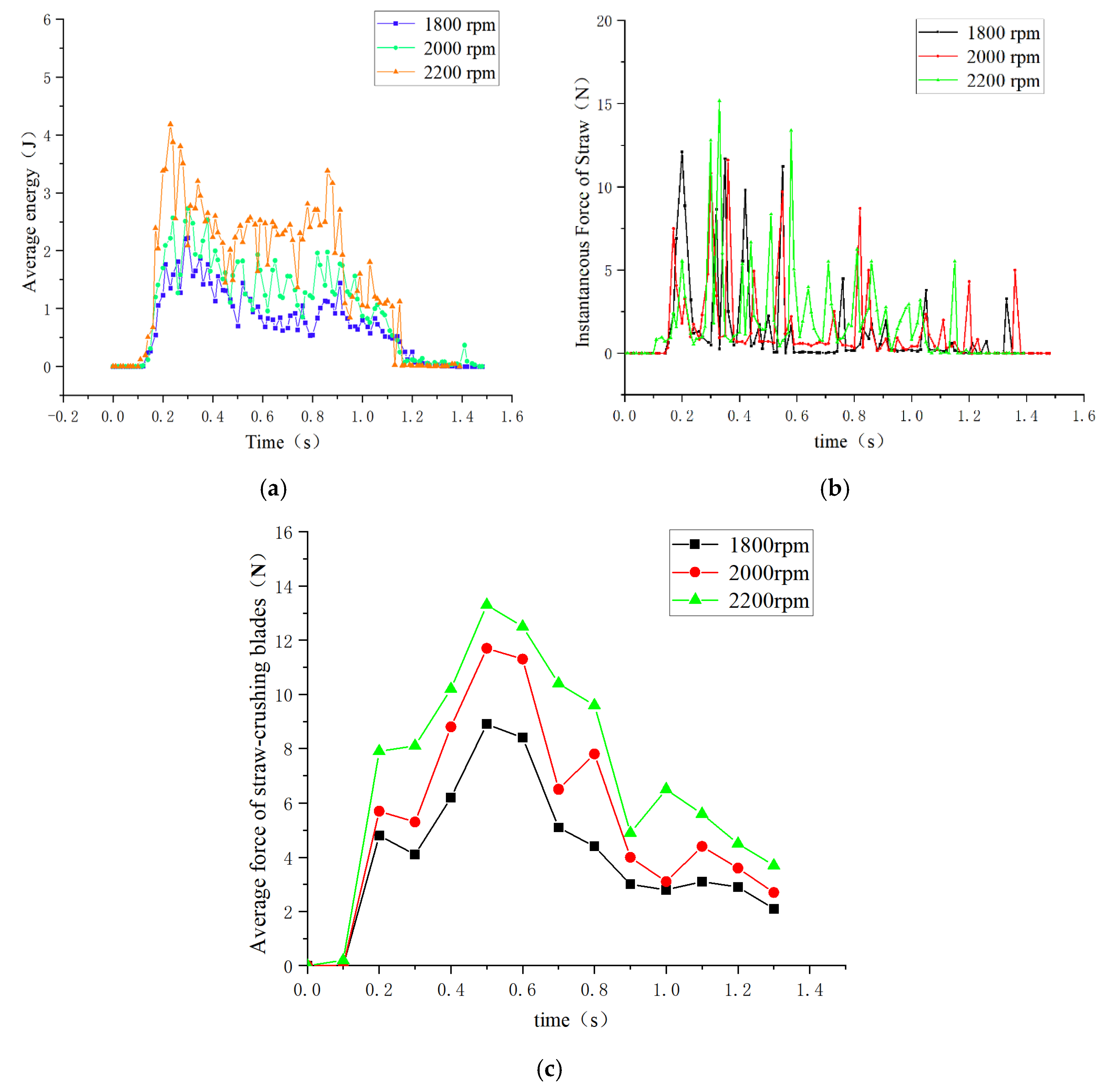
As shown in
Figure 13a–c, the evolution of straw energy and straw–blade interaction forces exhibits clear stage-dependent behavior and a strong dependence on rotational speed. After entering the chamber, straw is rapidly captured and accelerated, leading to a sharp increase in average energy. This is followed by a high-energy fluctuation stage (approximately 0.20–1.05 s), during which pronounced energy oscillations and impulsive force peaks occur, indicating repeated ejection–fallback–recapture cycles accompanied by intense impact, shearing, and frictional interactions. During this stage, the mean interaction force reaches its maximum (around 0.45–0.60 s). As comminution proceeds, both the magnitude and frequency of force peaks decrease, reflecting progressive refinement of straw and a transition from impact-dominated fragmentation to conveying and discharge of finer fragments.
Comparing different rotational speeds, both energy levels and interaction forces increase markedly with speed, with 2200 rpm consistently producing higher values than 2000 rpm and 1800 rpm. This demonstrates that higher rotational speed enhances straw energy uptake and intensifies blade loading, thereby accelerating comminution. However, it also implies increased mechanical load and energy consumption, highlighting the trade-off between fragmentation efficiency and operational cost.
3.3.4. Torque Analysis During Device Operation
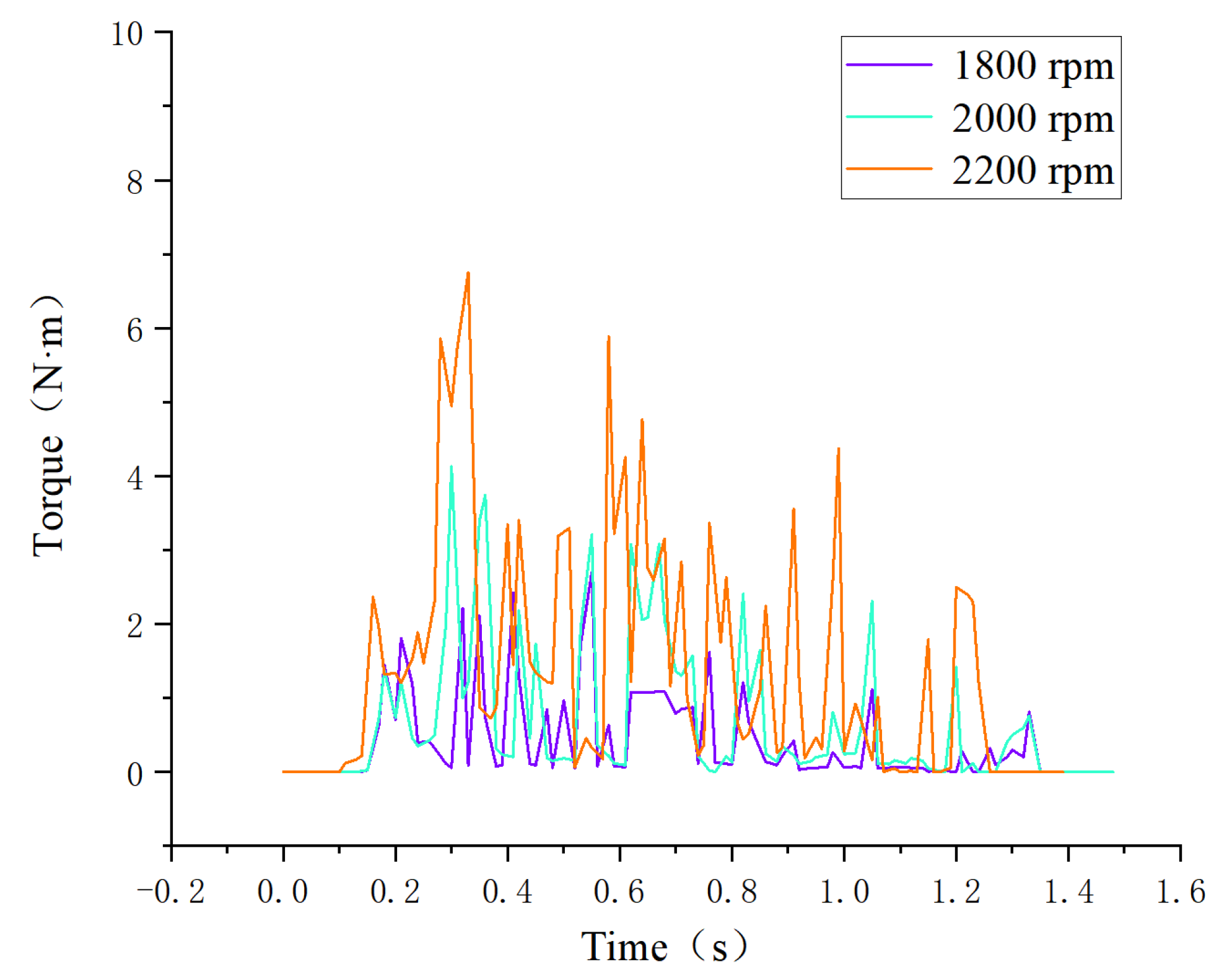
Figure 14 shows the time-varying torque responses of the stubble elimination device at different chopping-shaft speeds. For all rotational speeds (1800, 2000, and 2200 rpm), the torque exhibits a consistent three-stage pattern: an initial increase as straw is captured, a fluctuation stage with multiple peaks (approximately 0.2–1.0 s) corresponding to intermittent impact and shearing events, and a gradual decline as straw becomes progressively fragmented. With increasing rotational speed, both the peak torque and the fluctuation amplitude increase markedly, with 2200 rpm producing the highest torque levels, followed by 2000 rpm and 1800 rpm. This indicates that higher speed intensifies straw–blade interactions and increases the torque load due to stronger reaction forces during impact and shearing. The pronounced torque fluctuations reflect the discontinuous nature of straw–blade contact during comminution. While higher rotational speed can enhance fragmentation intensity, it also subjects the blades to greater mechanical loading, implying increased wear risk and highlighting the need to balance comminution effectiveness with operational durability in practical applications.
In the stubble elimination device, the power consumption is primarily determined by the torque generated on the rotating components due to particle interactions. The relationship among power
, torque
, and angular velocity
can be expressed as:
That is, the power equals the product of torque and angular velocity. When the device operates at a constant rotational speed, the power increases linearly with increasing torque. Under fluctuating particle loads, the instantaneous power varies accordingly with the torque. For the three rotational speed conditions, the maximum instantaneous power consumption of the stubble elimination device was 614.04 W, 1089.35 W, and 1611.86 W, respectively.
3.3.5. Length Distribution of Chopped Straw
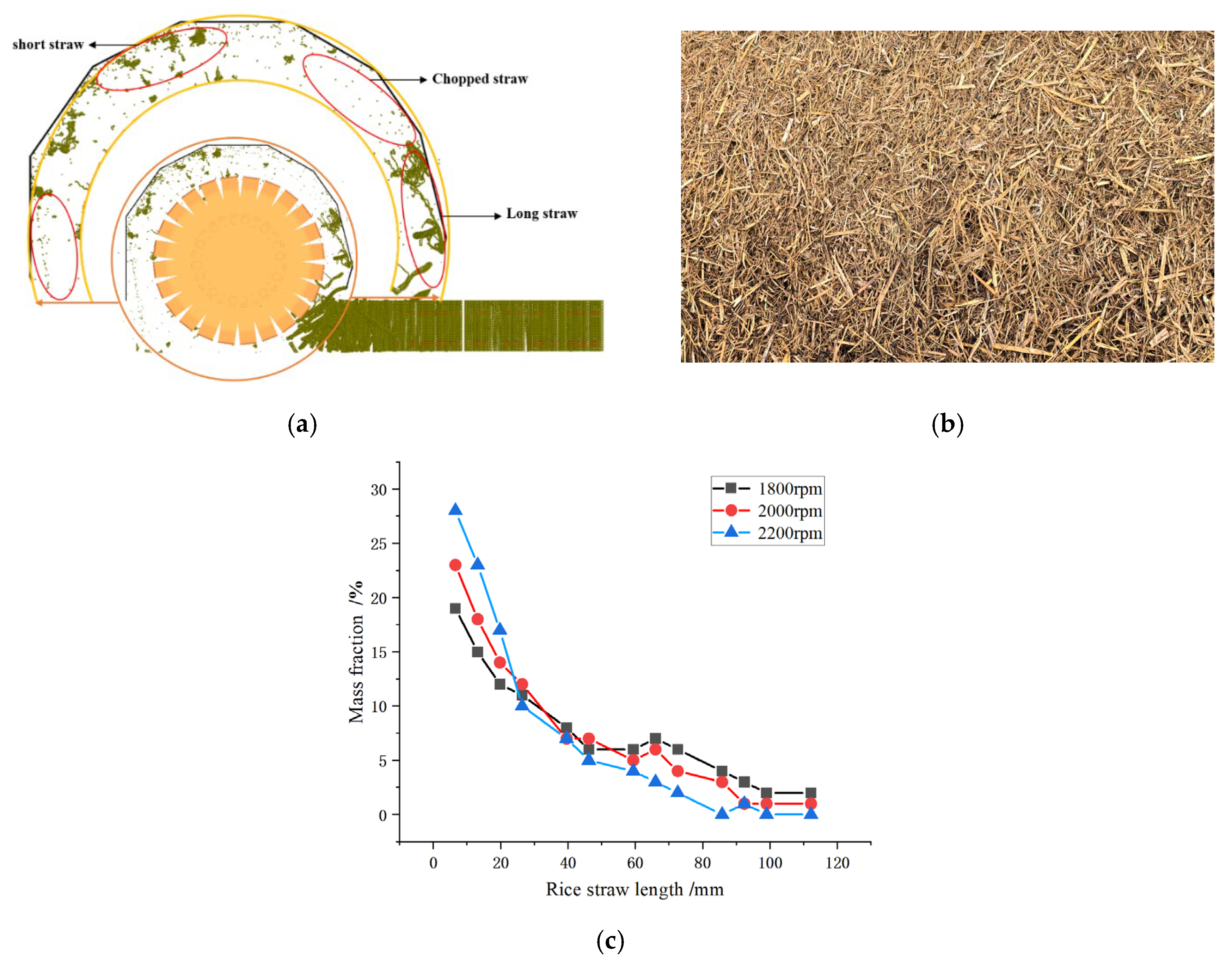
As shown in
Figure 15, both the spatial distribution of straw in the crushing chamber and the final length distribution exhibit similar overall patterns across rotor speeds. A clear recirculating band forms near the rotor periphery, indicating that straw is fragmented progressively through repeated “capture–acceleration–co-motion/adhesion–ejection–fallback–recapture” cycles. In the chamber, shorter fragments are mainly concentrated in the upper curved passageway and the upper-right region, implying that intensive impact and shearing occur there and that finely chopped material is transported upward by inertia and/or airflow. In contrast, the inlet and lower regions still contain occasional aggregation and dragging of longer pieces, which contributes to the residual “long-tail” in the length distribution.
Figure 15c further quantifies the speed effect: increasing rotor speed from 1800 to 2200 r/min shifts the length distribution toward shorter segments (higher fraction in the short-length bins and reduced medium-to-long fractions), demonstrating that higher speed strengthens impact/shear intensity and improves fragmentation completeness. Nevertheless, a small proportion of long pieces persists at all speeds, suggesting that rotor speed alone cannot fully eliminate occasional discharge of insufficiently fragmented straw.
3.4. Optimization Design of the Stubble Elimination Device
To further optimize the structural and operational parameters of the stubble elimination device and identify the optimal parameter combination, a multi-factor experimental design was implemented, with the results summarized in
Table 5. Based on the quadratic orthogonal rotational combination design, a second-order regression analysis was carried out. Regression models
and
were developed for the straw chopping rate
and the rotary throwing uniformity
, respectively. The corresponding regression equations are presented below, followed by an analysis of their statistical significance.
The significance of the regression equations and their coefficients was evaluated, and the analysis of variance (ANOVA) results for the effects of the factors on the straw chopping rate and rotary throwing uniformity are presented in
Table 6. As indicated in
Table 6, the
p-values of both regression models are less than 0.01, demonstrating that the models are highly significant. The corresponding coefficients of determination (
) are 0.9816 and 0.9780, respectively. In addition, the
p-values of the lack-of-fit terms are all greater than 0.05, indicating that the regression equations adequately describe the relationships between the influencing factors and the response variables. Based on the F-values of the individual terms, within the selected factor level ranges, the chopping-shaft rotational speed (
A) has the greatest effect on the straw chopping rate, followed by the machine forward speed (
B), the rotary throwing chamber clearance (
C), the quadratic effect of chopping-shaft speed (
A2), the interaction between chopping-shaft speed and rotary throwing chamber clearance (
BC), the quadratic effect of forward speed (
B2), the interaction between chopping-shaft speed and forward speed (
AB), the quadratic effect of rotary throwing chamber clearance (
C2), and the interaction between chopping-shaft speed and rotary throwing chamber clearance (
AC). Similarly, for the rotary throwing uniformity of chopped straw, the machine forward speed (
B) exerts the most significant influence, followed by the chopping-shaft rotational speed (
A), the rotary throwing chamber clearance (
C), the interaction between chopping-shaft speed and rotary throwing chamber clearance (
BC), the quadratic effect of chopping-shaft speed (
A2), the interaction between chopping-shaft speed and rotary throwing chamber clearance (
AC), the interaction between chopping-shaft speed and forward speed (
AB), the quadratic effect of rotary throwing chamber clearance (
C2), and the quadratic effect of forward speed
(B2).
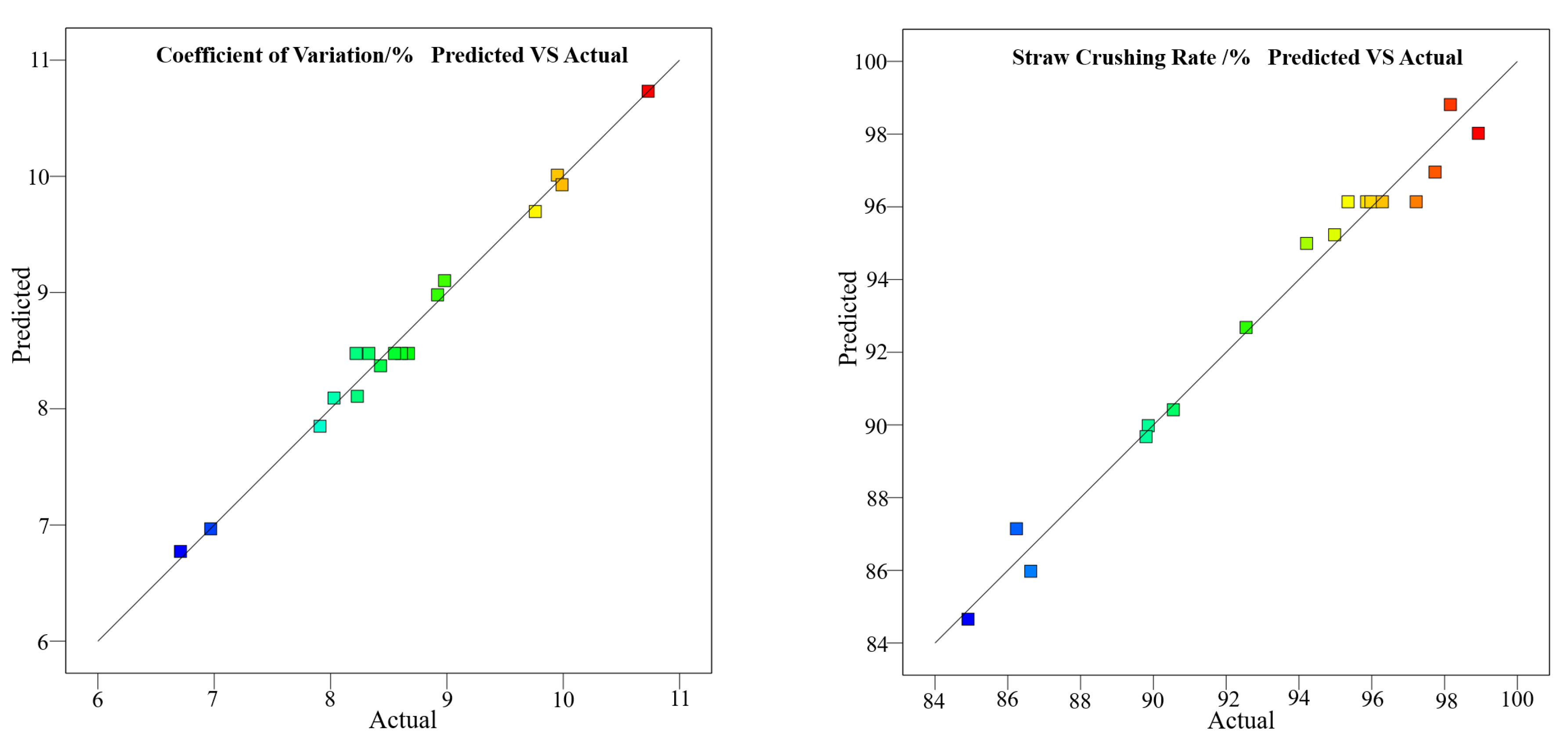
For both the straw chopping rate and the rotary throwing uniformity of chopped straw, the relationships between the predicted values and the experimentally measured values of the regression models are shown in
Figure 16. The predicted values and measured values are generally distributed along a diagonal trend, with most data points closely clustered around the fitted line. Over the entire prediction range, the data points are relatively evenly distributed, and good agreement is observed between the predicted and measured values. This indicates that the regression models exhibit high predictive accuracy.
3.5. Response Surface Analysis
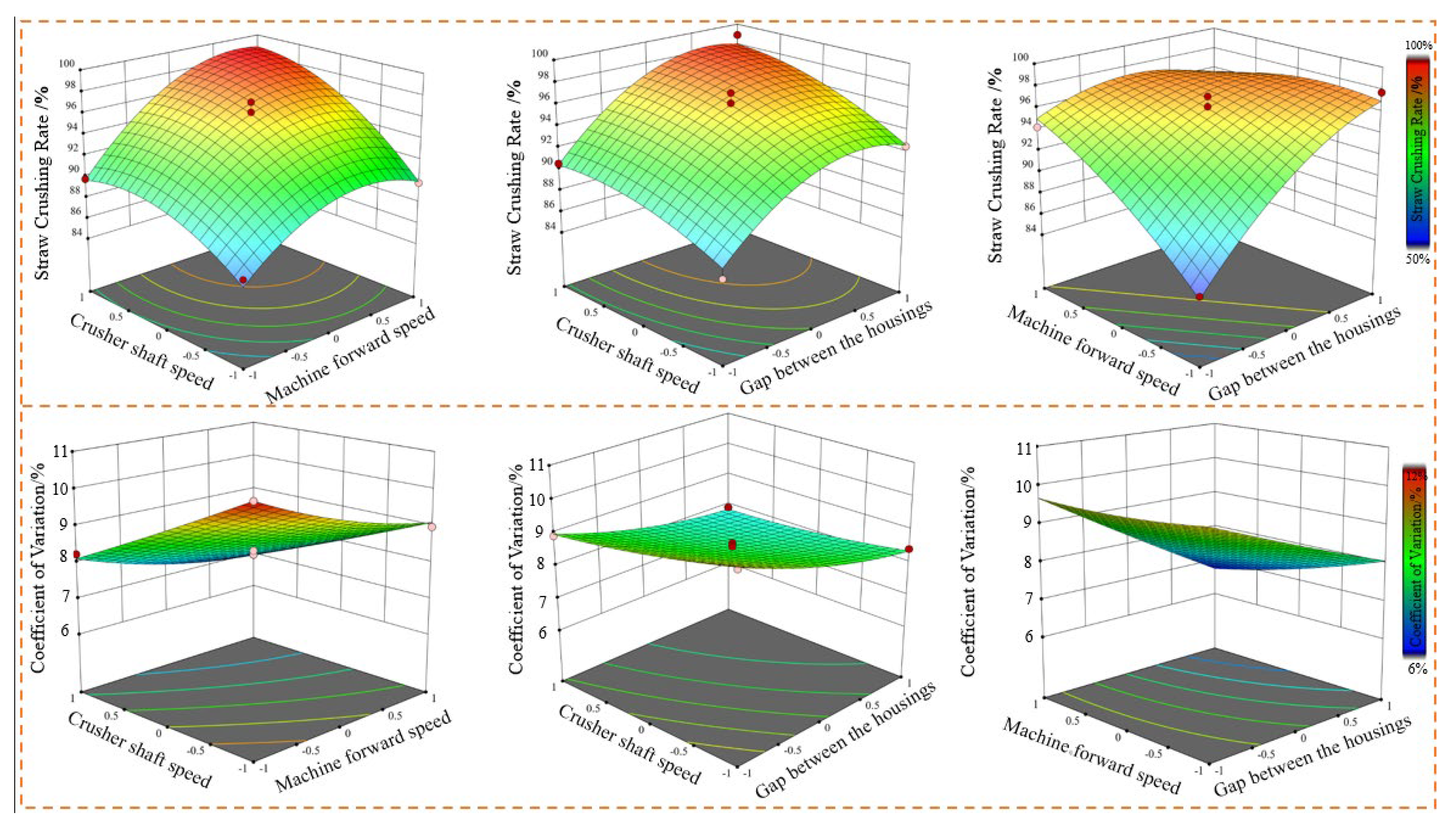
Based on the regression analysis, the response surfaces illustrating the interactive effects of chopping-shaft rotational speed, machine forward speed, and rotary throwing chamber clearance on the straw chopping rate and rotary throwing uniformity are shown in
Figure 17. The results indicate that pronounced interaction effects exist among the factors, and within certain parameter ranges, optimal performance regions can be identified.
Regarding straw chopping rate, the response surfaces for the interactions among chopping-shaft speed, forward speed, and rotary throwing chamber clearance all show an increase followed by a decrease. At low shaft speeds, insufficient blade impact and cutting yield a low chopping rate; increasing speed enhances comminution and raises the chopping rate. However, excessive speed shortens straw residence time in the chamber, leading to premature discharge and reduced chopping. Forward speed and chamber clearance govern the straw feed and discharge rates, respectively; when properly matched with shaft speed, they provide appropriate residence time and loading conditions and thus maximize chopping rate, whereas mismatching causes clogging or early discharge and lowers performance.
Regarding rotary throwing uniformity, the response surfaces under the interaction of different factors are relatively smooth, and the variation range of the coefficient of variation is small. This indicates that the device can maintain good rotary throwing uniformity over a relatively wide parameter range. When the chopping-shaft speed, forward speed, and rotary throwing chamber clearance are well matched, the straw feeding, comminution, and throwing processes remain stable, resulting in a uniform distribution. Conversely, parameter mismatch may cause localized straw accumulation or concentrated discharge, thereby deteriorating throwing uniformity. Therefore, the rational matching of chopping-shaft rotational speed, machine forward speed, and rotary throwing chamber clearance is crucial for simultaneously improving the straw chopping rate and ensuring rotary throwing uniformity.
Using the optimization module of Design-Expert 13 software, the optimal combinations of operational and structural parameters for the stubble elimination device were obtained. The experimental factors were optimized with the objectives of maximizing the straw chopping rate and minimizing the coefficient of variation in rotary throwing uniformity, in that order. According to the bench test conditions and operational requirements, constraint conditions for the objective functions were defined, as expressed in Equation (13), and the optimization problem was subsequently solved.
As a result, multiple optimal combinations of operational and structural parameters were generated. Considering the practical operating requirements of the stubble elimination device, the optimal parameter combination was determined as follows: a chopping-shaft rotational speed of 2000 rpm, a machine forward speed of 0.87 m/s, and a rotary throwing chamber clearance of 10.5 cm. Under this parameter combination, the straw chopping rate reached 96.94%, and the coefficient of variation in rotary throwing uniformity was 8.71%.
3.6. Field Validation
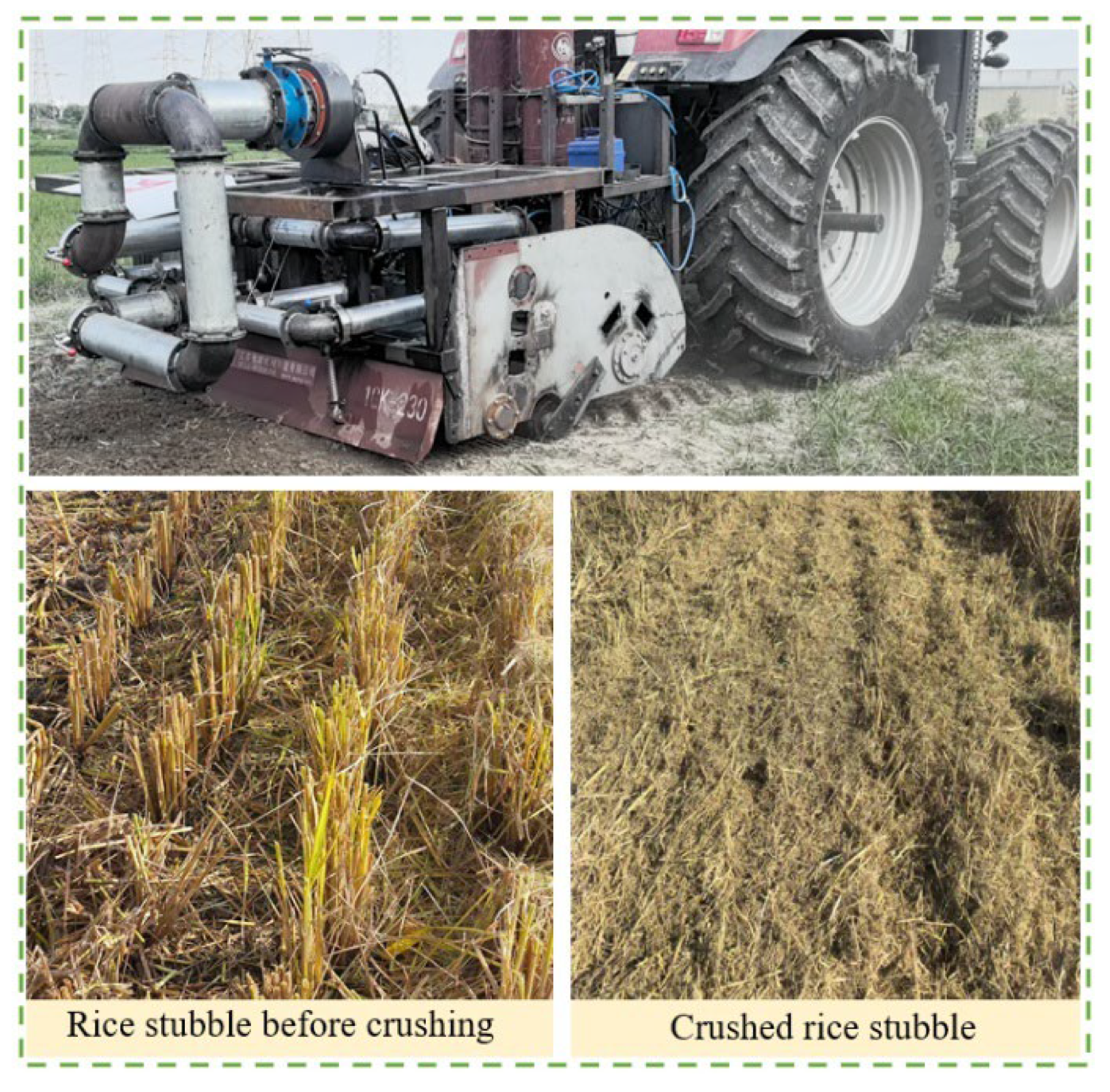
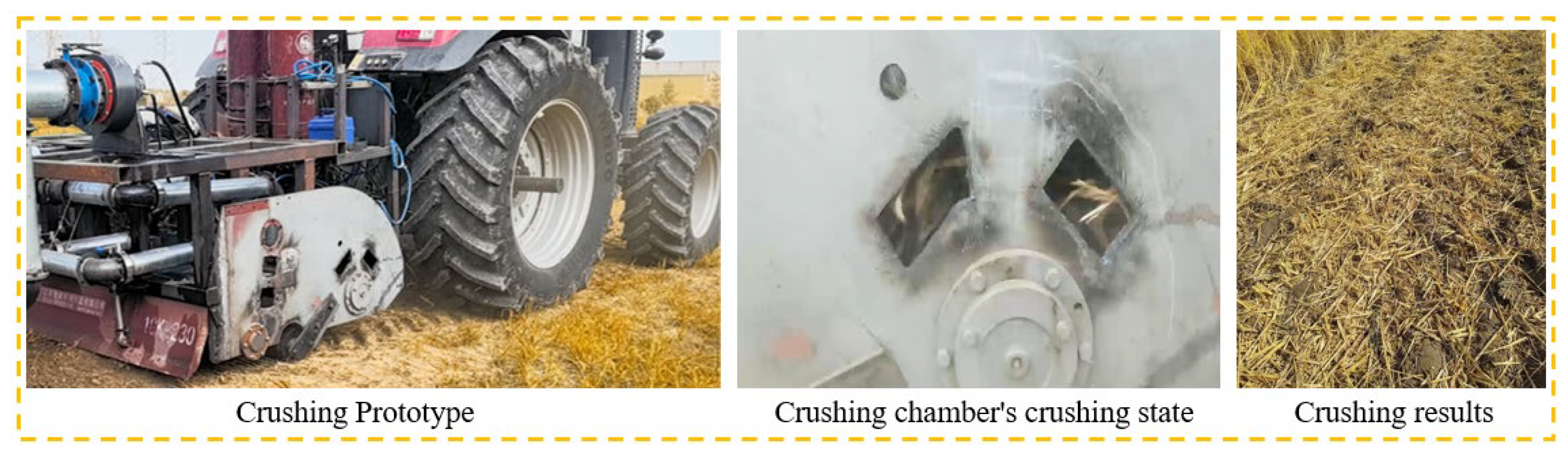
To verify the reliability of the optimal parameter combination for the rice straw stubble elimination device, chopping experiments were conducted using a combination of field tests and simulation analysis, as shown in
Figure 18. A total of five experimental runs were performed, and the straw chopping rate as well as the coefficient of variation in rotary throwing uniformity were recorded for each test. The calculated results are summarized in
Table 7. A comparison between the five field experiments and the corresponding simulation results indicates that the measured straw chopping rates were consistently high, with all experimental groups achieving chopping rates above 90% and an average value of 91.75%. This demonstrates that, under the optimal parameter combination, the device can achieve sufficiently effective straw comminution and meets the basic requirements for field operations. From the results of individual tests, the straw chopping rates predicted by the simulations exhibit trends consistent with the field measurements. The relative errors between the simulated and measured chopping rates range from 4.3% to 6.7%, with an average relative error of 5.4%. This level of error falls within the acceptable range commonly reported in comparative studies between agricultural machinery simulations and field measurements, indicating that the established DEM simulation model can effectively reproduce the straw fragmentation behavior observed during actual comminution processes.
With respect to the rotary throwing uniformity of chopped straw, the measured coefficients of variation from the five experimental runs remained at relatively low levels, ranging from approximately 8.95% to 9.36%, with an average value of 9.09%. This indicates that the chopped straw was distributed uniformly in the field, which is beneficial for subsequent straw incorporation operations and for improving overall field operation quality. Overall, the good agreement between the simulation predictions and field measurements demonstrates that the optimal parameter combination can stably achieve both a high straw chopping rate and favorable throwing uniformity under actual field operating conditions. These results provide reliable support for the structural optimization and parameter selection of rice straw stubble elimination devices.
Although certain experimental combinations in
Table 5 exhibit slightly higher values for individual indicators (such as
R1 or
R2), the optimal parameter set identified in this study was not determined based on the maximization of a single metric. Instead, it was derived from a multi-objective optimization framework that balances and coordinates key factors including crushing efficiency, spreading uniformity, and operational stability under field conditions. Further field validation results demonstrate that this optimal parameter combination exhibits greater stability across varying operating conditions, indicating superior robustness and engineering applicability.
4. Discussion
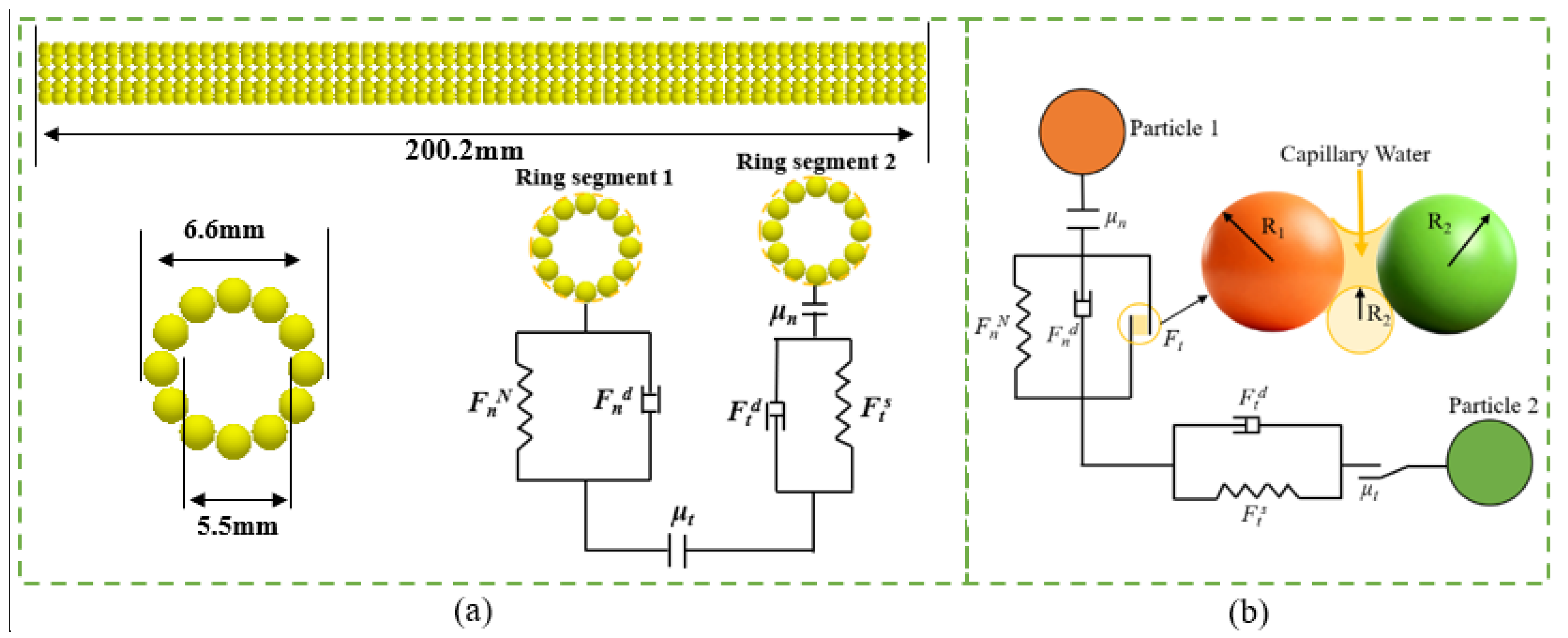
Based on the pronounced flexibility, hollow structural characteristics, and strong wet adhesion behavior of rice straw under high-moisture conditions, this study developed a discrete element modeling framework that integrates hollow tubular geometry, flexible bonded-particle mechanics, and adhesive contact interactions, and applied it to the mechanistic analysis and parameter optimization of straw comminution in a stubble elimination device. Compared with conventional DEM approaches for biomass comminution, the proposed framework extends the modeling fidelity while maintaining computational feasibility at the machine scale.
Previous DEM studies on straw or biomass comminution have largely relied on simplified assumptions, including rigid or weakly flexible particles, solid-filled geometries, and purely frictional contacts, which are generally adequate for dry or low-moisture conditions. In contrast, wet rice straw in paddy fields exhibits pronounced bending deformation, progressive fracture, and moisture-induced inter-particle adhesion, and neglecting these characteristics can lead to inaccurate predictions of force transmission, fragmentation behavior, and material flow. To address this limitation, the present study discretized rice straw using a hollow tubular multi-sphere representation, which captures the primary load-bearing features of the thin-walled stem while reducing particle number and bonded interactions relative to solid-filled models. By coupling the Bonding V2 model with the JKR adhesive contact formulation, the proposed DEM framework simultaneously accounts for elastic deformation, bond-failure-driven fragmentation, and wet adhesive interactions, enabling a more realistic description of straw behavior during bending, cutting, impact, and post-fracture aggregation. Validation through bending and cutting tests shows good agreement between simulated and experimental load–displacement responses, peak loads, and fracture evolution, confirming the physical representativeness of the calibrated stiffness, bonding strength, and surface energy parameters under the target moisture condition. Compared with earlier DEM studies that focus primarily on local material behavior or simplified fracture criteria, this work advances the state of the art by supporting whole-device-scale simulation and subsequent operational parameter optimization under wet and adhesive working conditions.
- 2.
Influence of modeling simplifications and computational considerations.
In the DEM, the flail blades were simplified as rigid bodies fixed to the rotating shaft, although in practice they are mounted via pins and possess limited rotational freedom. Under the high-speed operating conditions considered in this study, centrifugal forces cause the blades to remain predominantly in a radially extended and quasi-stable posture. Simulation–experiment comparisons indicate that this simplification has a limited influence on macroscopic performance indicators such as torque, chopping rate, and throwing uniformity within the investigated parameter range, while substantially reducing model complexity and computational cost. Moreover, the hollow tubular discretization inherently reduces the number of particles and bonded contacts compared with solid-filled straw models, thereby decreasing the scale of contact detection and bond force calculations per time step. Although the present study focuses on mechanistic fidelity and engineering applicability rather than explicit benchmarking of computational efficiency, the adopted modeling strategy offers clear potential advantages in terms of scalability for device-level simulations and parametric studies.
- 3.
Engineering implications and parameter optimization
Building upon the validated DEM framework, a multi-factor optimization of chopping-shaft rotational speed, machine forward speed, and rotary throwing chamber clearance was conducted using response surface methodology. Significant interaction effects among these parameters were identified. The chopping-shaft speed exerts the strongest influence on straw chopping rate, whereas machine forward speed plays a more critical role in determining throwing uniformity. The optimal parameter combination (2000 rpm, 0.87 m/s, and 10.5 cm) achieves a balanced performance in terms of effective comminution, material passability, and uniform straw distribution. Field experiments confirm the reliability of the simulation-based predictions, with relative errors remaining within acceptable limits. These results demonstrate that DEMs incorporating wet adhesion and flexible fracture behavior can serve as effective tools for guiding the structural design and operational optimization of straw comminution equipment under realistic paddy field conditions.
- 4.
Future work
Despite the encouraging results, this study still has several limitations. The DEM parameters were calibrated for a single rice variety at a specific moisture level, and the influences of stem morphological variability and moisture-dependent mechanical responses were not explicitly considered. Moreover, several practical factors relevant to field robustness—such as soil–straw interactions, ground constraints, air resistance, long-term energy consumption, blade wear, and non-steady straw mass flow—were not incorporated into the current simulations. In addition, although the JKR model was employed to represent wet adhesion, alternative adhesive formulations (e.g., EEPA) may lead to different detachment and dissipation behaviors, thereby affecting agglomeration intensity, residence time, torque fluctuation, and throwing uniformity. Future work will extend the proposed framework to multiple biomass types, rice varieties, and moisture conditions through systematic recalibration, while integrating coupled straw–soil–machine interaction and time-dependent wear/feeding boundary conditions. Such developments will enable more robust multi-objective optimization and control-oriented design, providing stronger theoretical and engineering support for high-efficiency and energy-saving residue comminution equipment under wet and adhesive paddy-field conditions.