Article

Small-Strain Dynamic Behaviours of Reconstituted Soft Clay Under Different Initial Water Contents


1
Power China (Wenzhou) Green Energy Development Co., Ltd., Wenzhou 325800, China
2
Power China Huadong Engineering Corporation Limited, Hangzhou 311122, China
3
College of Civil Engineering, Zhejiang University of Technology, Hangzhou 310023, China
4
College of Civil Engineering and Architecture, Quzhou University, Quzhou 324000, China
*
Author to whom correspondence should be addressed.
Appl. Sci. 2026, 16(4), 1935; https://doi.org/10.3390/app16041935
Submission received: 16 January 2026 / Revised: 11 February 2026 / Accepted: 13 February 2026 / Published: 14 February 2026
(This article belongs to the Section Civil Engineering)

Abstract

High-water-content dredged slurry from port dredging requires geotechnical improvement via drainage and consolidation. The small-strain dynamic properties (shear stiffness, damping characteristics) of reconstituted and consolidated clays are critical to the dynamic response and serviceability of overlying infrastructure. This study uses resonant column tests to investigate how initial water content affects the small-strain dynamic behaviour of reconstituted Ningbo soft clay, focusing on the evolution of the dynamic shear modulus ( G ) and damping ratio ( λ ) under different initial water contents and confining pressures. The test results indicate that the initial water content exerts a pronounced effect on the maximum small-strain shear modulus ( G m a x ) and on the strain-dependent degradation pattern of G . G m a x increases with decreasing water content, and confining pressure exerts a more pronounced enhancing effect on G m a x under low water content conditions. For specimens with different initial water contents, the maximum shear modulus normalised by confining pressure ( G m a x / ( σ 0 / P a ) n ) exhibits a consistent, material-specific functional relationship with void ratio ( e ) within the investigated ranges. By contrast, initial water content exerts limited effects on the normalised G / G m a x γ and λ γ curves in the tested small-strain range. On this basis, an empirical model for small-strain shear modulus incorporating initial water content effects is proposed to guide dynamic soil parameter selection for geotechnical design under the tested conditions.

1. Introduction

Against the dual background of increasingly stringent requirements for water environmental protection and the rapid expansion of the port-shipping industry in China, dredging projects have produced a massive amount of fine-grained dredged slurry. The increasing use of this high-water-content sludge as foundation material in coastal urban areas is severely constrained by its unfavourable geotechnical characteristics, including an excessively high natural water content (typically 2–3 times the liquid limit), high compressibility, weak structure, and very low permeability [1,2]. Consequently, ground improvement is indispensable, and vacuum preloading has been widely adopted in practice, which markedly increases the bearing capacity and improves the physical and mechanical properties of the treated ground. Previous studies have reported that the shear strength of fluid mud after preloading is strongly dependent on its initial water content [3]. Thus, to ensure the long-term service safety of infrastructure, it is necessary to systematically investigate the physical and mechanical properties of clay under different initial water contents.
A series of experimental studies has been conducted to examine the effect of initial water content on the post-consolidation properties of reconstituted soils. Xu [4], for example, performed oedometer tests on three types of dredged slurry using an improved oedometer device, and found that when the initial water content is less than three times the liquid limit, the compressibility of dredged slurry is affected by the initial water content; under identical conditions, a higher initial water content corresponds to greater compressibility. Bian [5] carried out consolidated undrained triaxial shear tests on dredged sludge from Wenzhou. They reported that, at the same consolidation pressure, increasing initial water content lowers the position of the mean effective stress-pore pressure curve. In addition, they proposed a method for determining the pore pressure coefficient ( a ) that explicitly accounts for the influence of initial water content. Based on isotropically consolidated undrained triaxial compression tests, Hong [6,7] and Zeng [8] observed that the undrained shear strength decreases with increasing initial water content, whereas the pore water pressure exhibits the opposite trend. Song [9] investigated the influence of initial water content on the undrained shear strength and pore water pressure response of reconstituted clay under K 0 consolidation. Their results indicated that the ratio of normalised pore water pressure to stress ratio is essentially independent of initial water content under K 0 consolidation, whereas the effective stress strength parameters exhibit a slight decreasing trend as the initial water content increases.
Synthesising the above experimental evidence, it can be concluded that the initial water content has a significant impact on the static mechanical behaviour of reconstituted clay. However, most existing studies have been confined to static loading conditions, and systematic investigations into how initial water content affects the small-strain dynamic properties of reconstituted clay are still rather limited.
The small-strain dynamic properties of soil are fundamental input parameters in geotechnical engineering analysis. They exert a controlling influence on dynamic response problems such as seismic site response analysis and machine foundation vibration, and at the same time provide the theoretical basis for the rational prediction of various static deformation and serviceability issues. In particular, the G m a x is a key stiffness parameter in one-dimensional equivalent-linear seismic site response analyses, in which the G m a x profile of each soil layer must be specified [10], as well as in determining the critical undrained shear strength in liquefaction evaluation [11]. With the increasingly extensive use of numerical simulations in geotechnical design, the behaviour of G m a x and the development of constitutive models capable of reproducing its strain-dependent behaviour have received growing attention [12,13]. Therefore, systematic research into the influence of initial water content on the small-strain dynamic properties of reconstituted clay, especially on G m a x , is of clear theoretical interest and practical significance for dynamic soil parameter evaluation.
To elucidate the influence of initial water content on the small-strain dynamic properties of reconstituted soft clay, a series of resonant column tests was conducted in this study on clay specimens prepared at three initial water contents (1.4 times the liquid limit, 1.8 times the liquid limit, and 2.2 times the liquid limit) and isotropically consolidated under three confining pressures (100, 200, and 400 kPa). The experimental programme focuses on the evolution of G m a x , the shear modulus reduction behaviour expressed by the G / G m a x γ curves, and the corresponding λ γ curves for specimens with different initial water contents and confining pressures.

2. Materials and Methods

2.1. Test Materials

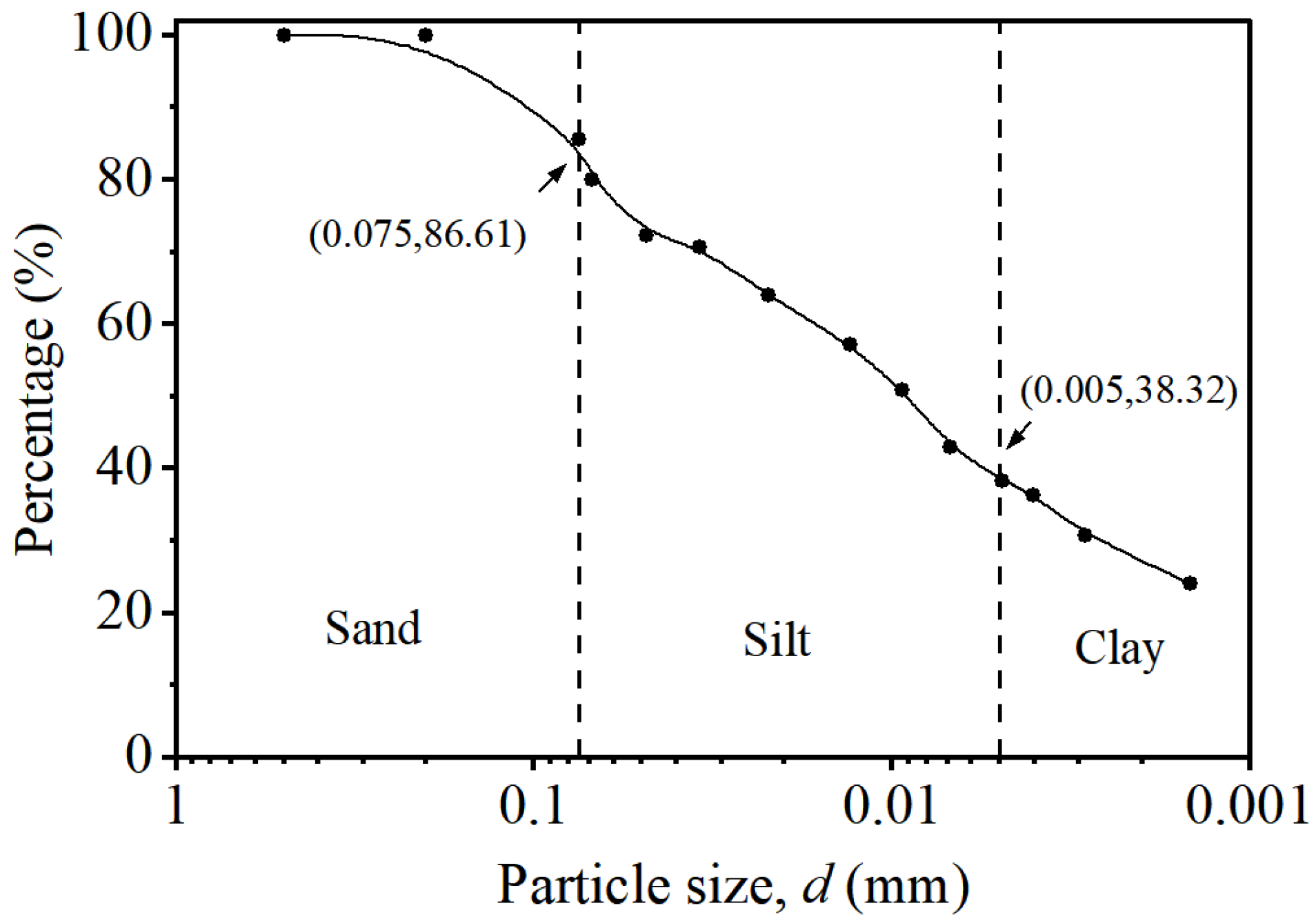
The soil used in this study was a soft clayey dredged slurry collected from a port dredging project in Ningbo City, Zhejiang Province. Its basic index properties are summarised in Table 1. The grain-size distribution curve (Figure 1) indicates that the clay fraction of the tested material is 39%. The liquid limit ( w L ) and plasticity index ( I p ) of the soil are 44.5% and 19.2%, respectively. According to ASTM [14], the material is classified as a low-plasticity clay (CL).

2.2. Specimen Preparation

Owing to the difficulty of obtaining high-quality undisturbed sludge samples, reconstituted clay specimens were prepared in this study using a slurry consolidation technique. Slurries with different target initial water contents, ranging from 1.4 to 2.2 times the liquid limit, were prepared and preconsolidated in a one-dimensional consolidation cell. The specimen preparation procedure was as follows:
  • The undisturbed soil was oven-dried at 105 °C for at least 24 h until a constant mass was achieved. The dried soil was then gently crushed in a mortar and sieved through a 0.5 mm standard sieve to remove fibrous and other coarse impurities, yielding a clean, dry soil.
  • A predetermined mass of dry soil was placed in a mechanical mixer. The required volume of distilled water, calculated according to the target initial water content, was then added, and the slurry was mixed thoroughly until a homogeneous suspension was obtained.
  • The prepared slurry was poured into the consolidation ring in several layers. After placement of each layer, a small vibration device was used to remove entrapped air and to promote uniform distribution of the slurry.
  • Vertical loading was applied in stages to preconsolidate the slurry, with the final preconsolidation pressure brought to 100 kPa so that the specimens reached a preliminarily stable state.
  • After unloading, the consolidated soil blocks were immediately wrapped with multiple layers of plastic film under vacuum and stored in a sealed container at constant temperature and humidity for subsequent specimen preparation.
For testing, a portion of each consolidated block was trimmed into standard cylindrical specimens with a diameter of 50 mm and a height of 100 mm.

2.3. Test Apparatus

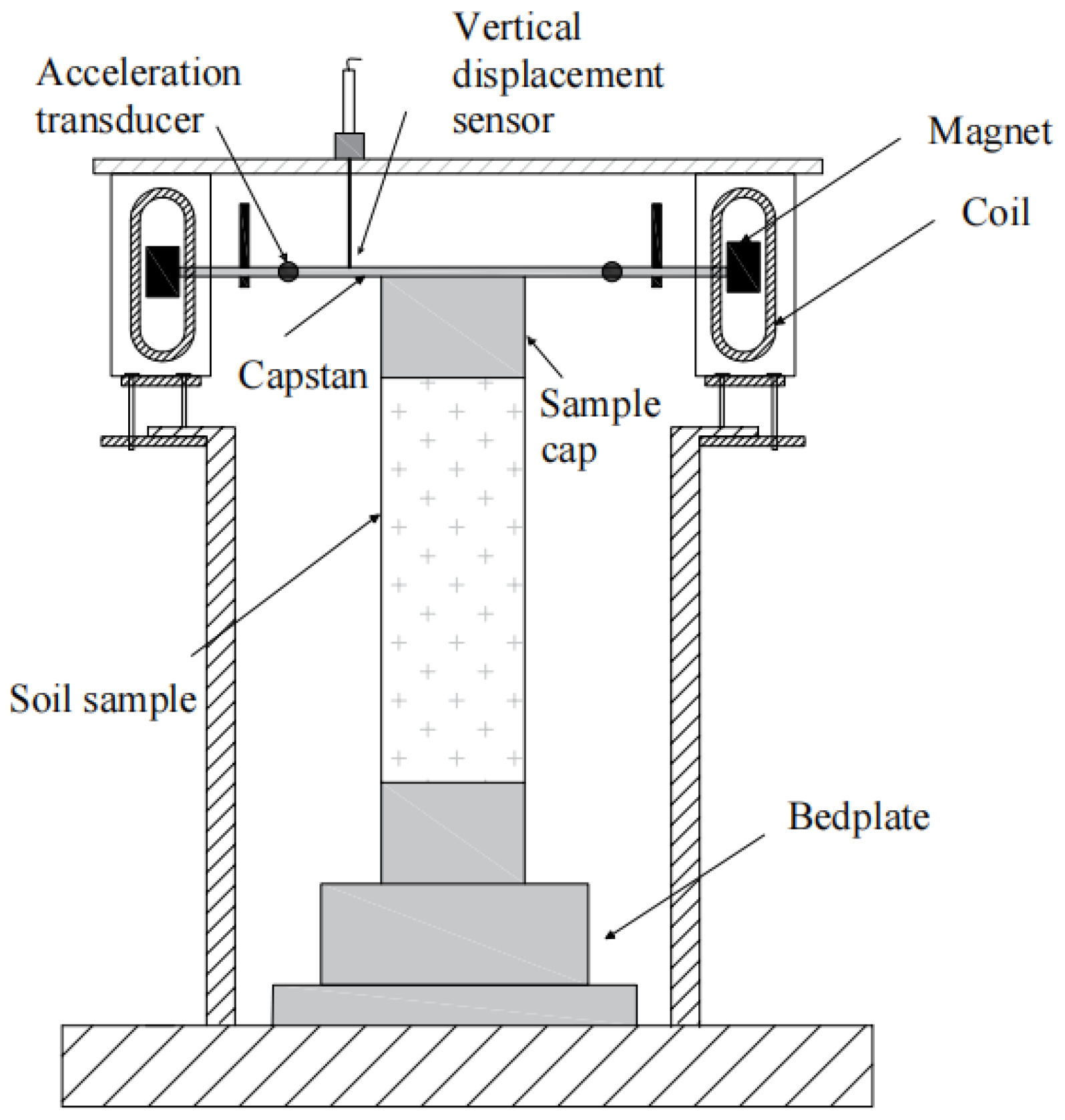
A resonant column system manufactured by GDS Instruments was employed to measure the small-strain dynamic properties of the clay specimens (Figure 2). The apparatus is capable of testing cylindrical specimens with dimensions of 50 mm in diameter and 100 mm in height and can apply isotropic confining pressure and back pressure up to 1 MPa, each controlled with an accuracy better than 1 kPa. The volume change measurement resolution is better than 1 mm3, and the excitation voltage used in this study did not exceed 1 V. The torsional excitation system provides a swept-frequency range of 5–300 Hz, with a maximum low-frequency torsional shear torque of 0.5 N·m, covering the strain range from 5 × 10⁻⁶ to 5 × 10⁻⁴ relevant to small-strain soil behaviour. The entire testing process, including application of cell/back pressures and frequency sweeps, is controlled automatically by the GDS-RCA software (v2.5.4.43).
Based on the classical theory of torsional resonant column tests, the small-strain shear modulus G is back-calculated from the measured resonant frequency using the following expression:
G = ρ ( 2 π f H β ) 2
where f is the first-mode torsional resonant frequency of the specimen; H is the specimen height; and β is a dimensionless wave-number parameter obtained by solving
β t a n β = I I 0
where I is the polar moment of inertia of the specimen; and I 0 is the polar moment of inertia of the drive system.
The material damping ratio was evaluated from the free-vibration decay curve using the logarithmic decrement method [15], as expressed by
λ = δ 2 4 π 2 + δ 2
where δ is the logarithmic decrement. After the resonant frequency was identified at each excitation level, the driving signal was switched off, and the post-shutoff response was recorded as a free vibration decay. The damping ratio was evaluated using the decay segment after shut-off. To reduce potential bias associated with the forced-to-free transition, the first few cycles immediately after shut-off and the tail part with very small amplitudes were not used in the calculation. The logarithmic decrement, δ , was obtained from peak amplitudes of the decay record using multiple successive cycles and averaged over a sufficient number of cycles to improve stability. It is noted that, at the very smallest strain levels, the decay amplitude may approach a minor system damping component. However, because the same apparatus and identical procedures were applied to all specimens, the comparative trends of λ among different test conditions remain reliable.
During resonant column testing, the drainage valve was closed to maintain undrained conditions. Pore water pressure was not directly monitored during torsional excitation in the present setup. For saturated clays in resonant column tests, prior studies [16,17,18] indicate that in the very small strain domain, pore–water pressure response is mainly oscillatory without cumulative build-up, and its influence on the measured G and λ is negligible.

2.4. Test Procedures

The prepared cylindrical specimen was carefully mounted in the pressure chamber of the resonant column apparatus. An initial cell pressure of 215 kPa and a back pressure of 200 kPa were applied to saturate the specimen by back-pressure until Skempton’s B-value exceeded 0.98. Upon completion of saturation, isotropic drained consolidation was carried out to the target effective confining pressure specified in Table 2. For clay specimens, a nominal consolidation duration of 24 h was adopted. During consolidation, the outflow drainage volume was monitored continuously. Consolidation was considered complete when the cumulative change in drainage volume within one hour was less than 0.1 cm3 [19]. To evaluate the experimental repeatability, replicate sampling and testing were performed at each initial water content level under an effective consolidation pressure of 100 kPa during the initial stage of this study. The repeated tests were conducted under identical sample preparation procedures and resonant column test protocols. The statistical results (Table A1) show low dispersion in the maximum shear modulus, with coefficients of variation ranging from 0.28% to 1.10%. Accordingly, single tests were adopted for the subsequent expanded matrix of test conditions (initial water content–confining pressure) to broaden the coverage of experimental conditions.
After consolidation, the confining pressure was maintained constant, the drainage valve was closed, and the specimen was then subjected to resonant column testing under strain-controlled torsional excitation. The excitation voltage was increased stepwise from 0.001 V to 0.5 V, and at each voltage level, the resonant frequency and the corresponding shear strain response of the specimen were recorded synchronously. The test was terminated when the maximum shear strain reached approximately 0.1% [20], ensuring that the strain level remained within the range appropriate for small-strain dynamic behaviour.

3. Test Results

3.1. Dynamic Shear Modulus

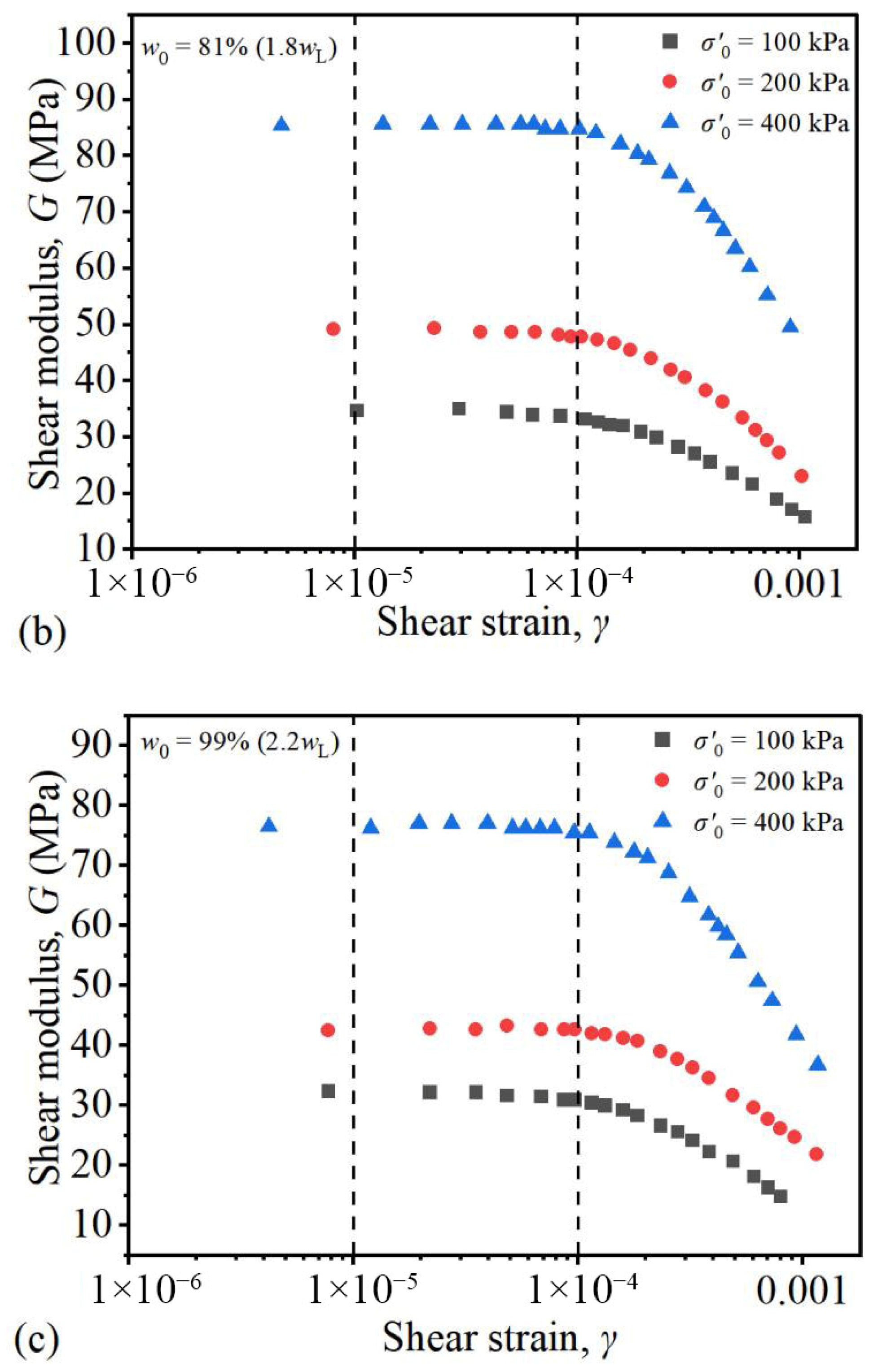
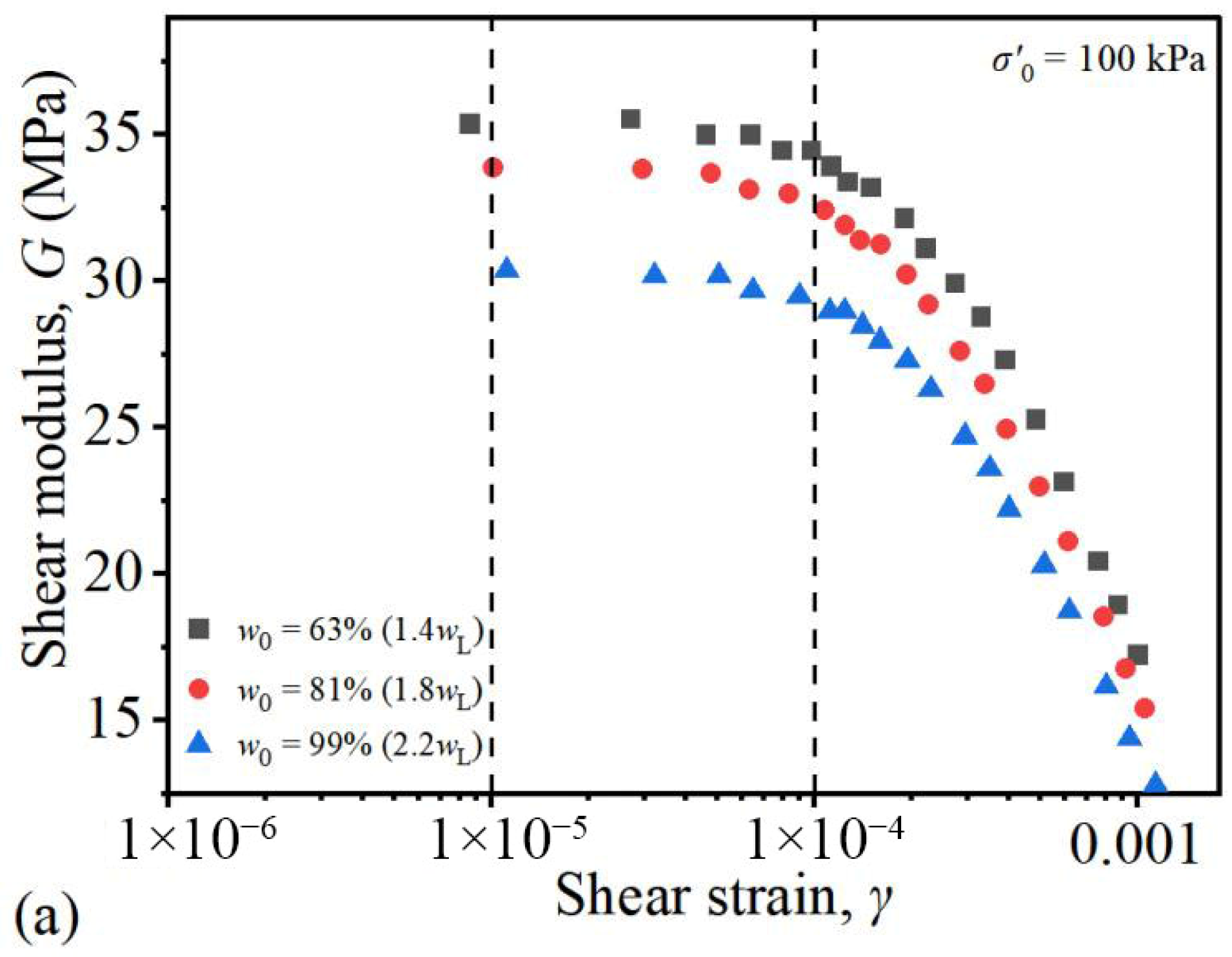
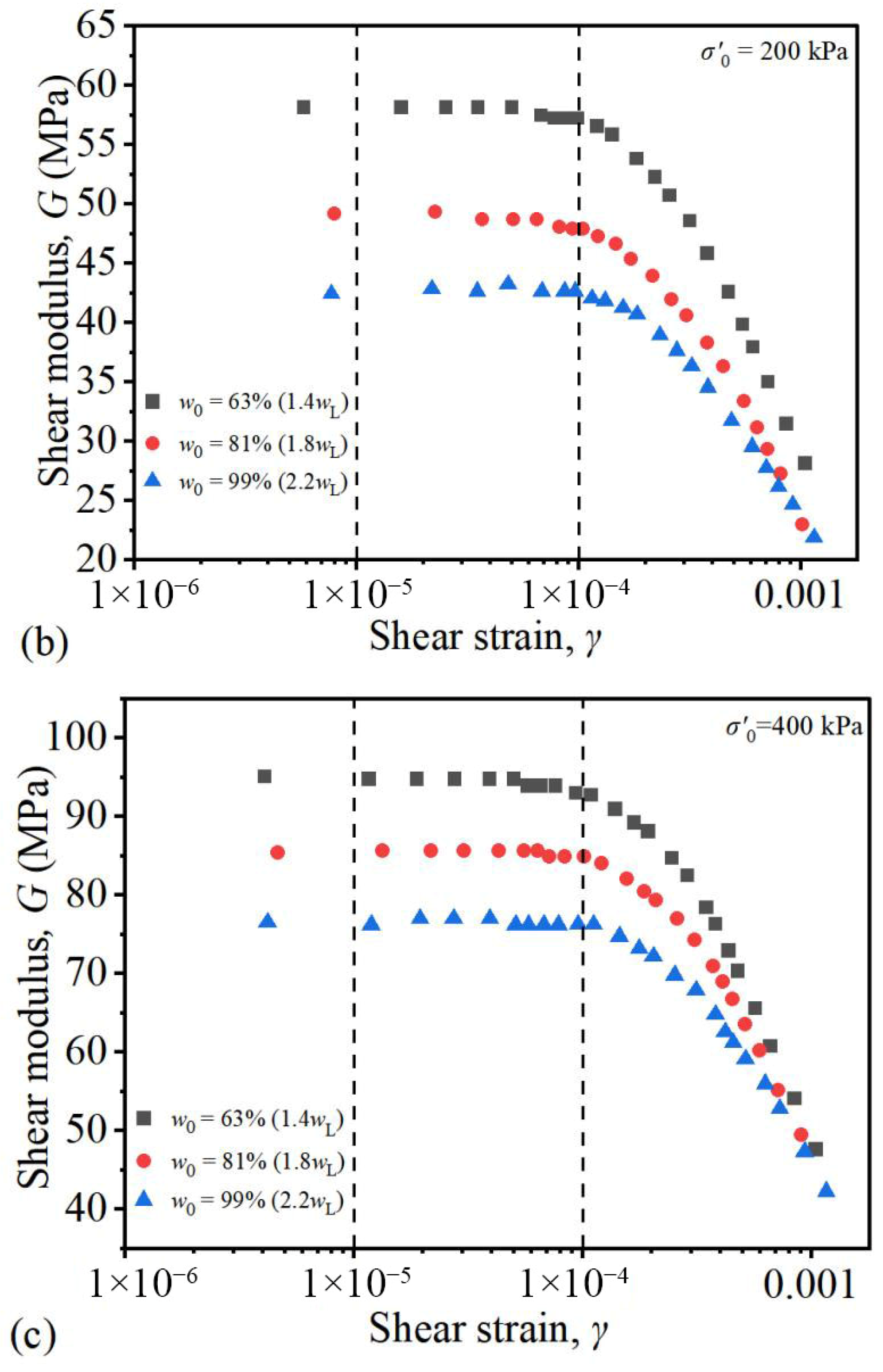
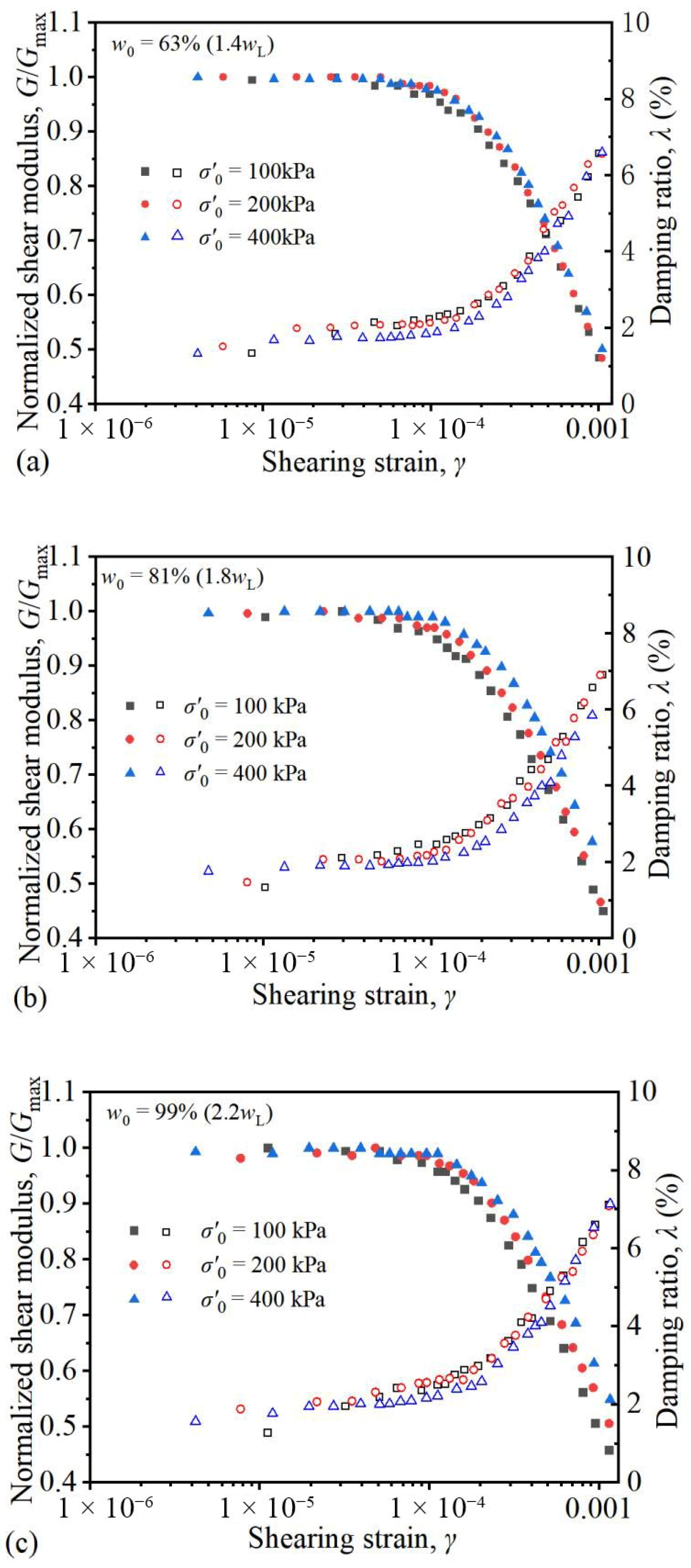
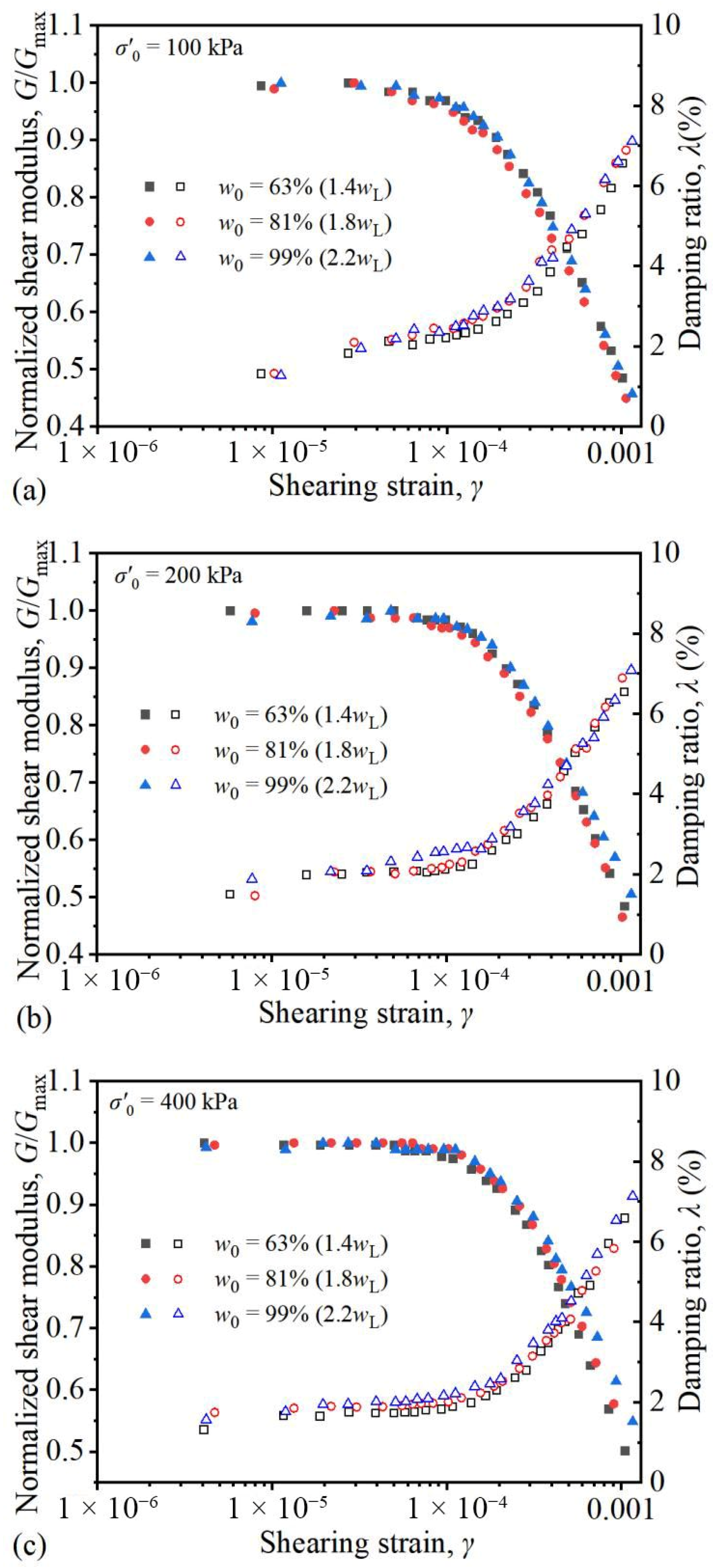
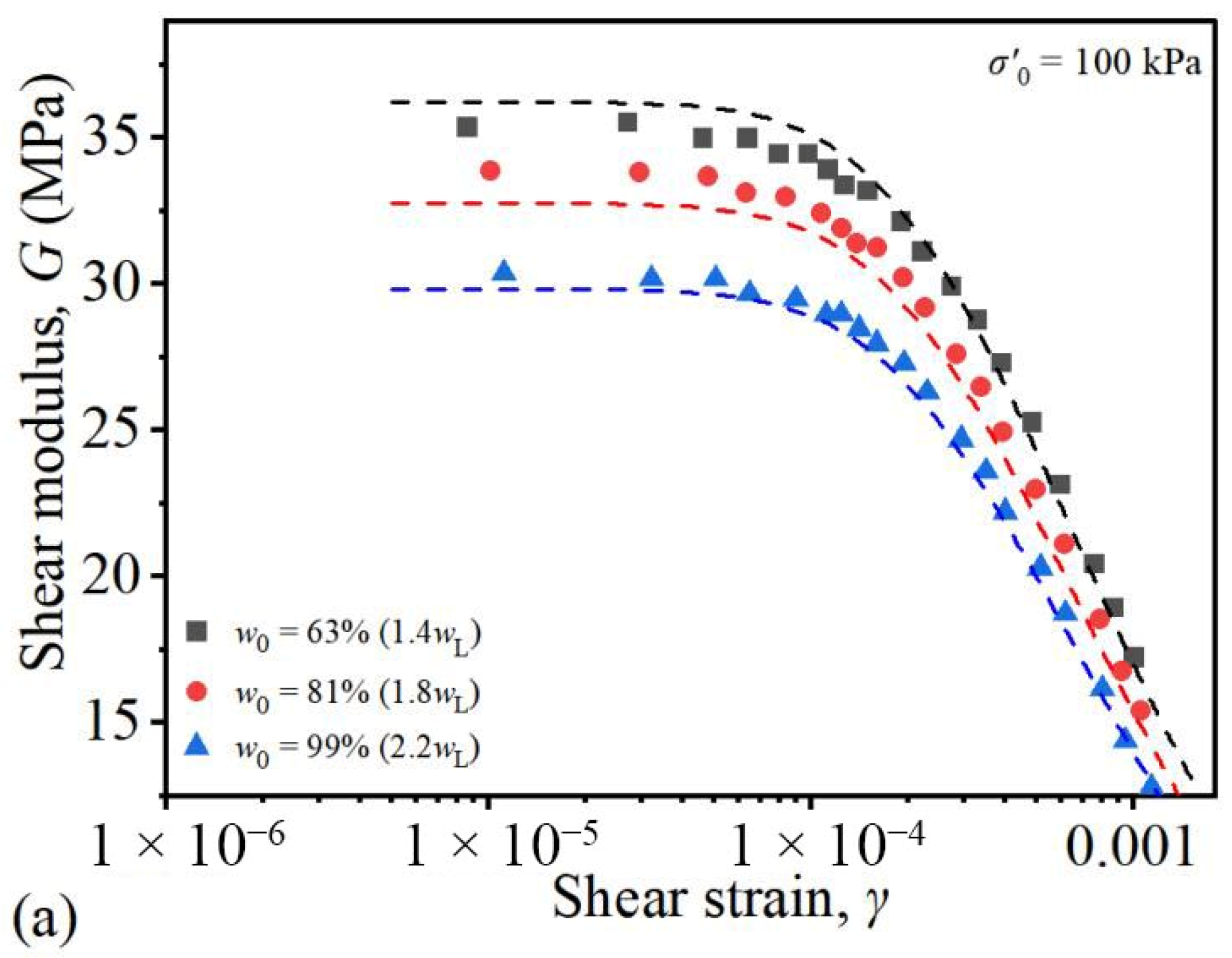
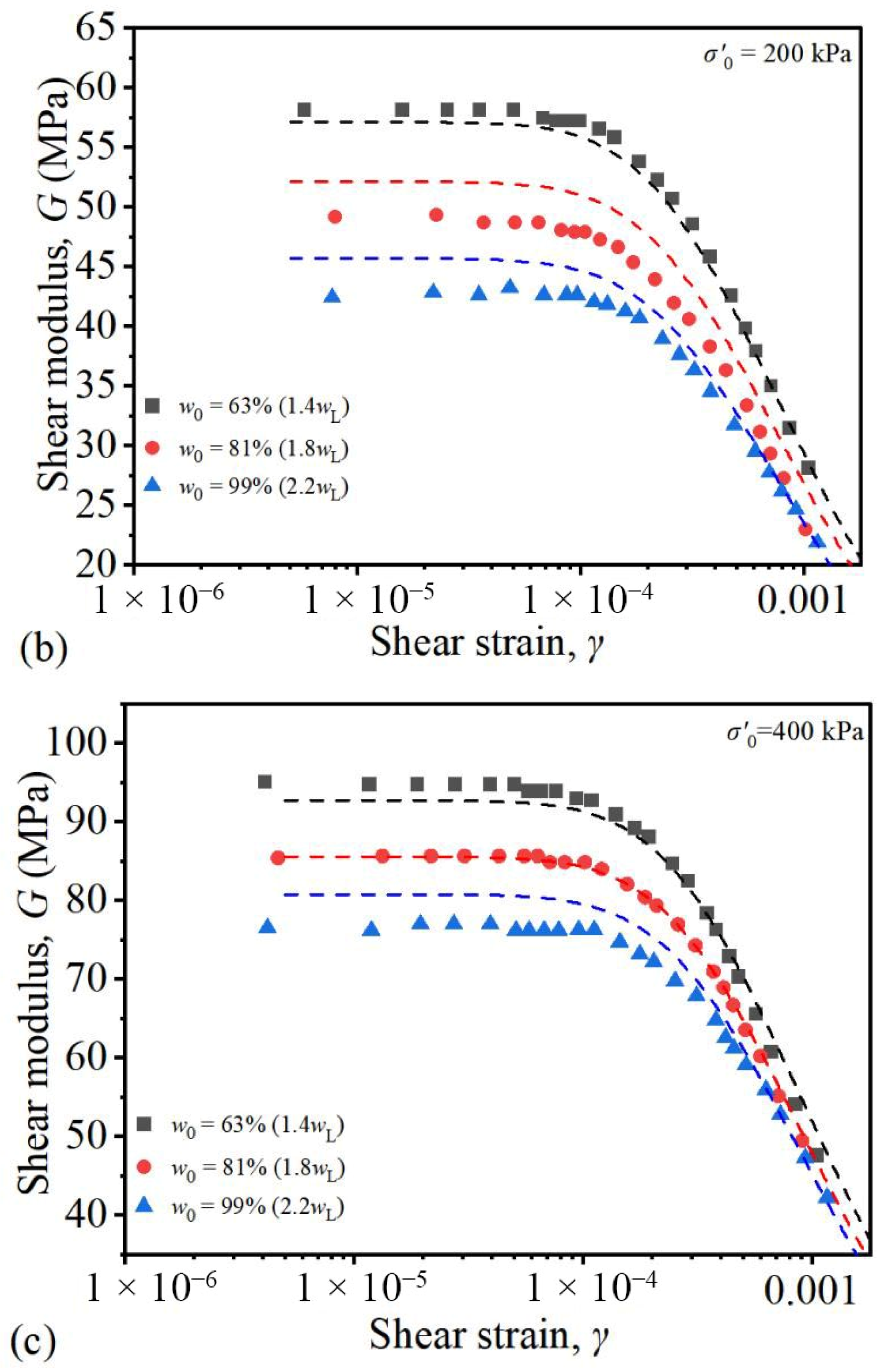
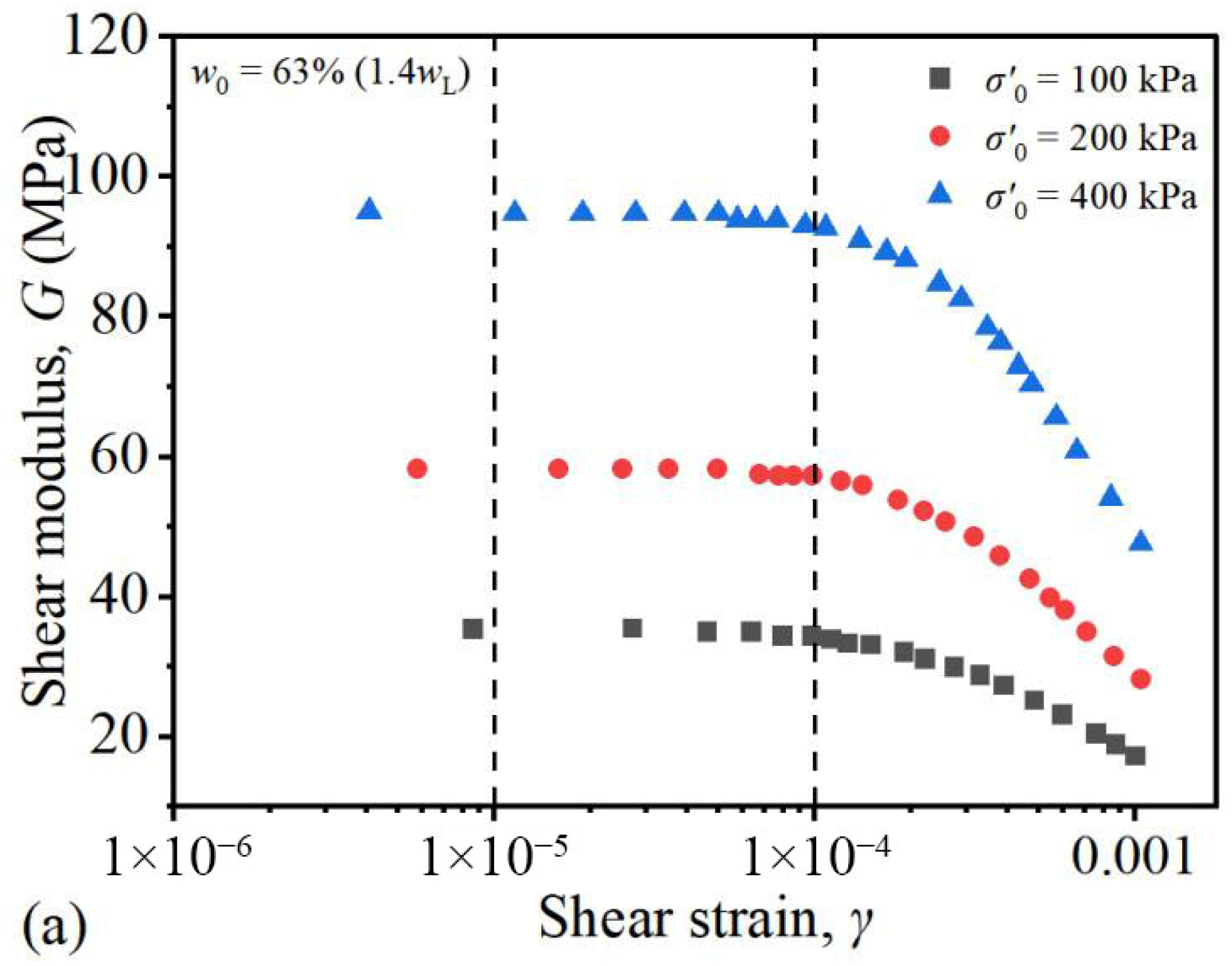
Figure 3 and Figure 4 present the experimental curves of the dynamic shear modulus ( G ) versus shear strain ( γ ) for Ningbo clay under different effective confining pressures ( σ 0 ) and initial water contents ( w 0 ). The test results show that, within the strain range covered by the resonant column tests, the G γ curves under various test conditions exhibit broadly similar trends, which can be summarised as follows: (1) In the small-strain range ( γ < 10−4), the variation of G with γ is relatively modest; once γ exceeds a certain threshold, the degradation of G becomes markedly nonlinear and accelerates with increasing γ . (2) For a given w 0 , G increases with increasing σ 0 and decreases with increasing γ . (3) For a given γ , G decreases systematically with increasing w 0 . This behaviour can be attributed to the fact that an increase in σ 0 and a reduction in w 0 both lead to a decrease in void ratio and free water content in the soil, thereby increasing contact bonding and enhancing the shear stiffness and strength of the soil skeleton.

3.2. Maximum Dynamic Shear Modulus ( G m a x )

In this study, the G measured in the very small-strain range ( γ < 10−5) was taken as the G m a x of the specimen [21].
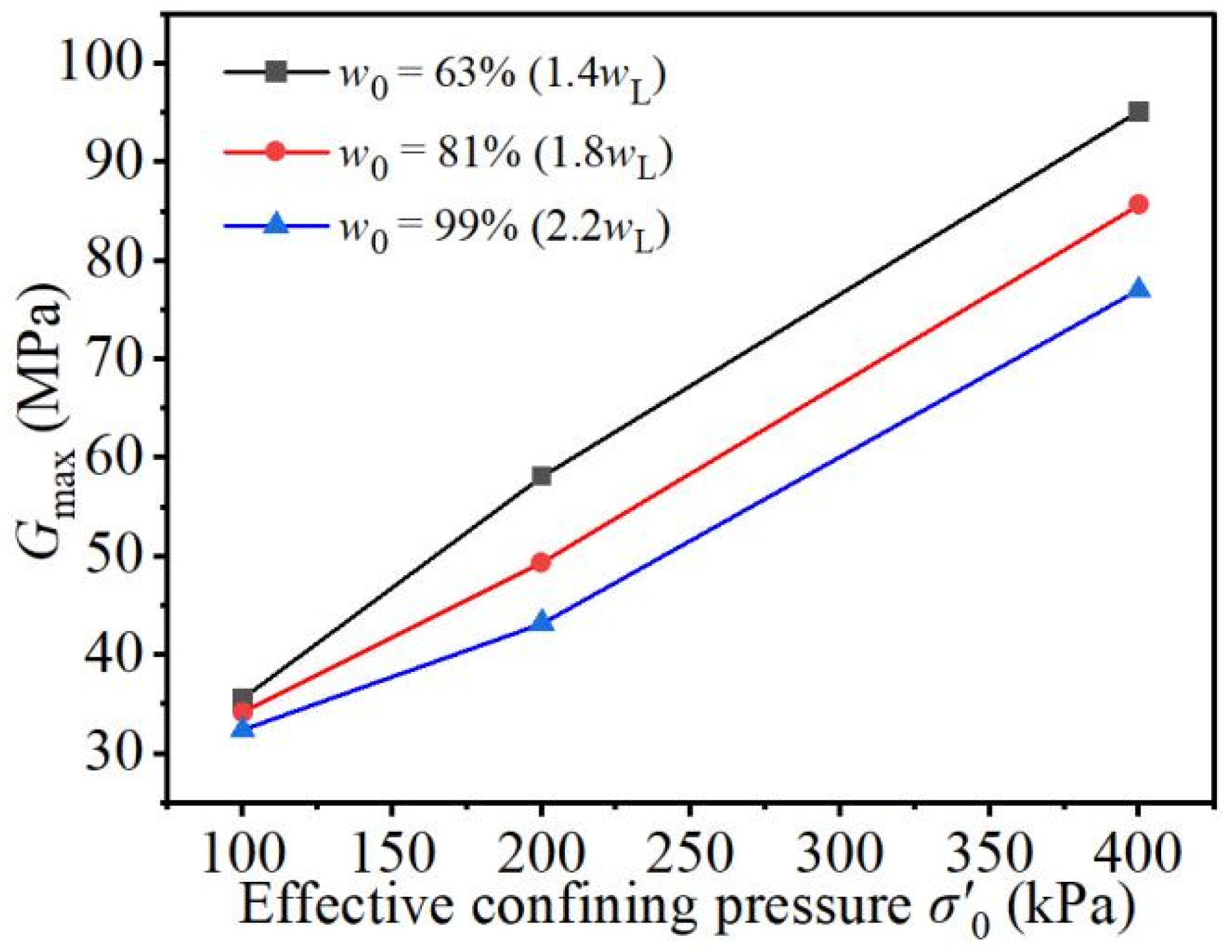
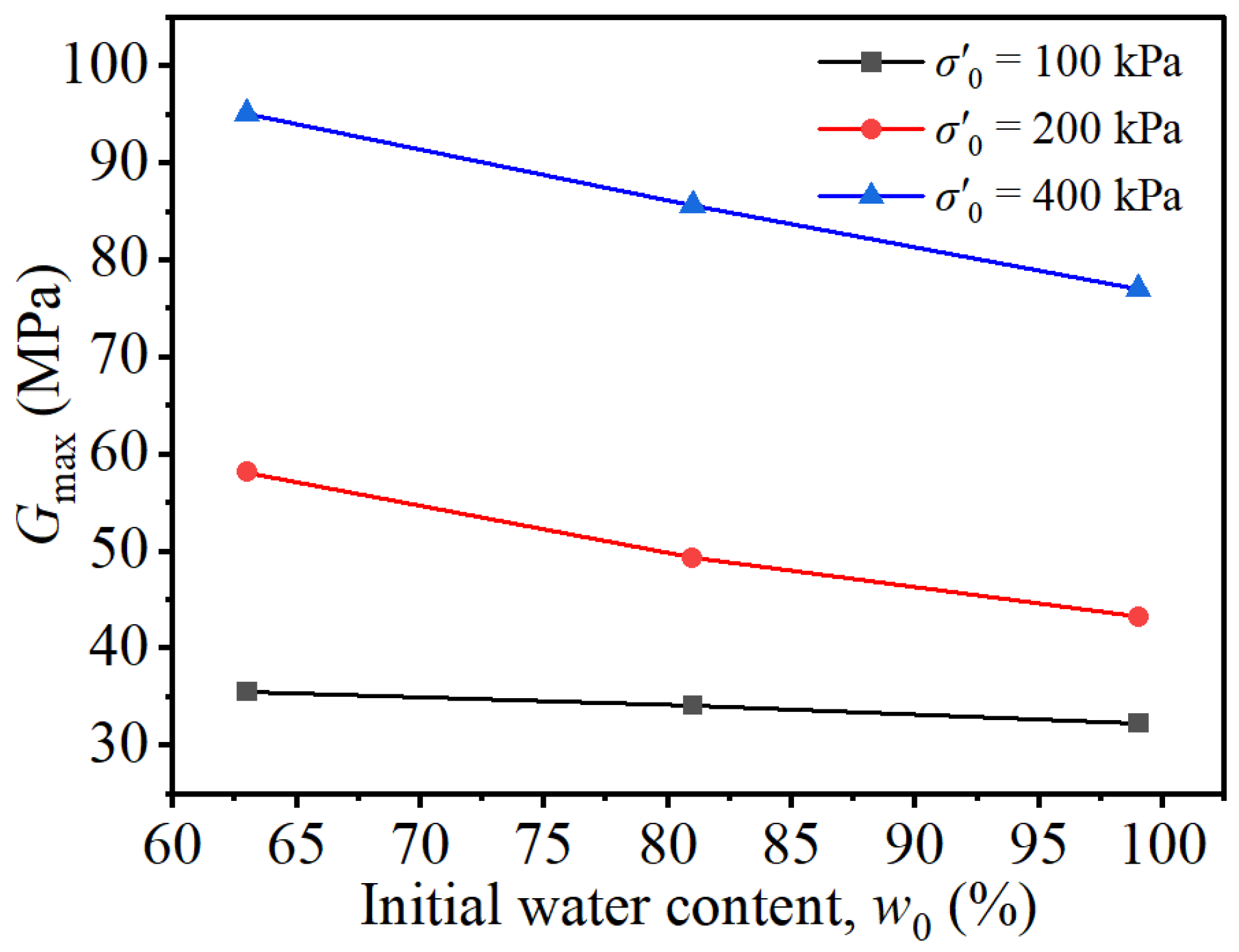
Figure 5 and Figure 6 illustrate the influence of w 0 and σ 0 on G m a x . The results indicate that G m a x increases with increasing σ 0 . At a given σ 0 , higher w 0 values correspond to lower G m a x for Ningbo clay, and the influence of w 0 on G m a x becomes progressively more significant as σ 0   increases. Specifically, when w 0 = 1.4 w L , increasing σ 0 from 100 kPa to 200 kPa and 400 kPa results in G m a x increases of 63.6% and 167.5%, respectively; when w 0 = 1.8 w L , the corresponding increases are 53.3% and 166.1%; and when w 0 = 2.2 w L , the increases are 42.5% and 153.7%, respectively. This trend can be attributed to the fact that lower w 0 leads to a smaller consolidated void ratio e [22], so that the soil skeleton plays a more dominant role in load transfer, and the strengthening effect of confining pressure on the soil skeleton, through an increase in effective stress, becomes more direct and pronounced, thereby leading to a more significant increase in dynamic shear modulus.
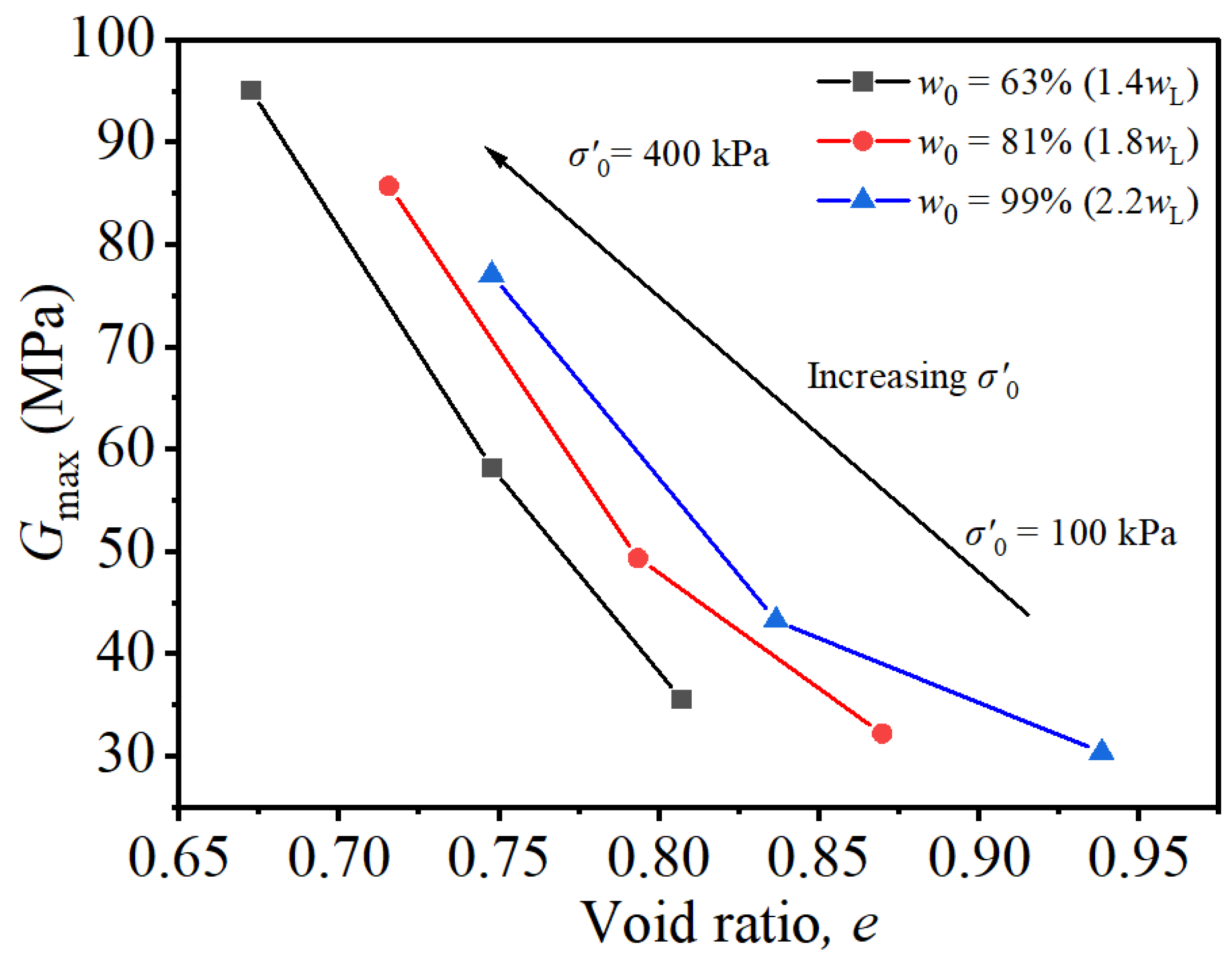
To further elucidate the mechanism by which e influences G m a x , the relationship between G m a x and e was plotted, as shown in Figure 7. The experimental results show that, under identical σ 0 , specimens with higher w 0 exhibit significantly larger e after consolidation than those with lower w 0 . More importantly, as σ 0 increases, the variation in e is more pronounced for specimens with higher w 0 . Taking the specimens with w 0 = 1.4 w L and w 0 = 2.2 w L as examples, when σ 0 increases from 100 kPa to 400 kPa, e for the w 0 = 1.4 w L specimen decreases from 0.80 to 0.67, a reduction of 0.13, whereas e for the w 0 = 2.2 w L specimen decreases from 0.93 to 0.74, a reduction of 0.19.
The detailed test data are summarised in Table 3. Further analysis indicates that, as e decreases, the difference in e between specimens prepared at different w 0 gradually diminishes, whereas the difference in G m a x between these specimens increases markedly. Under higher confining pressures, the particle skeleton may approach a denser packing state; in this regime, even a small reduction in void ratio can be associated with a noticeable reorganisation of the contact network and pore structure during reconsolidation [23]. Such a change in the microstructure directly triggers a sharp, nonlinear increase in G m a x , thereby amplifying the differences in G m a x among the specimens. Prior studies have also shown that soil structure and cementation can significantly influence small-strain stiffness in clays [24,25]. In this context, it is reasonable to hypothesise that fabric rearrangement and contact evolution during reconsolidation may contribute to the measured small-strain response.
Within the framework of the quantitative evaluation of G m a x , the classical empirical model proposed by Hardin [26] has been widely adopted. The primary advantage of this model lies in normalising shear modulus values under different confining pressures, thereby transforming confining pressure from an independent test variable into a reference state in the analysis. In this way, the direct interference of confining pressure in the evaluation of other influential factors can be effectively eliminated.
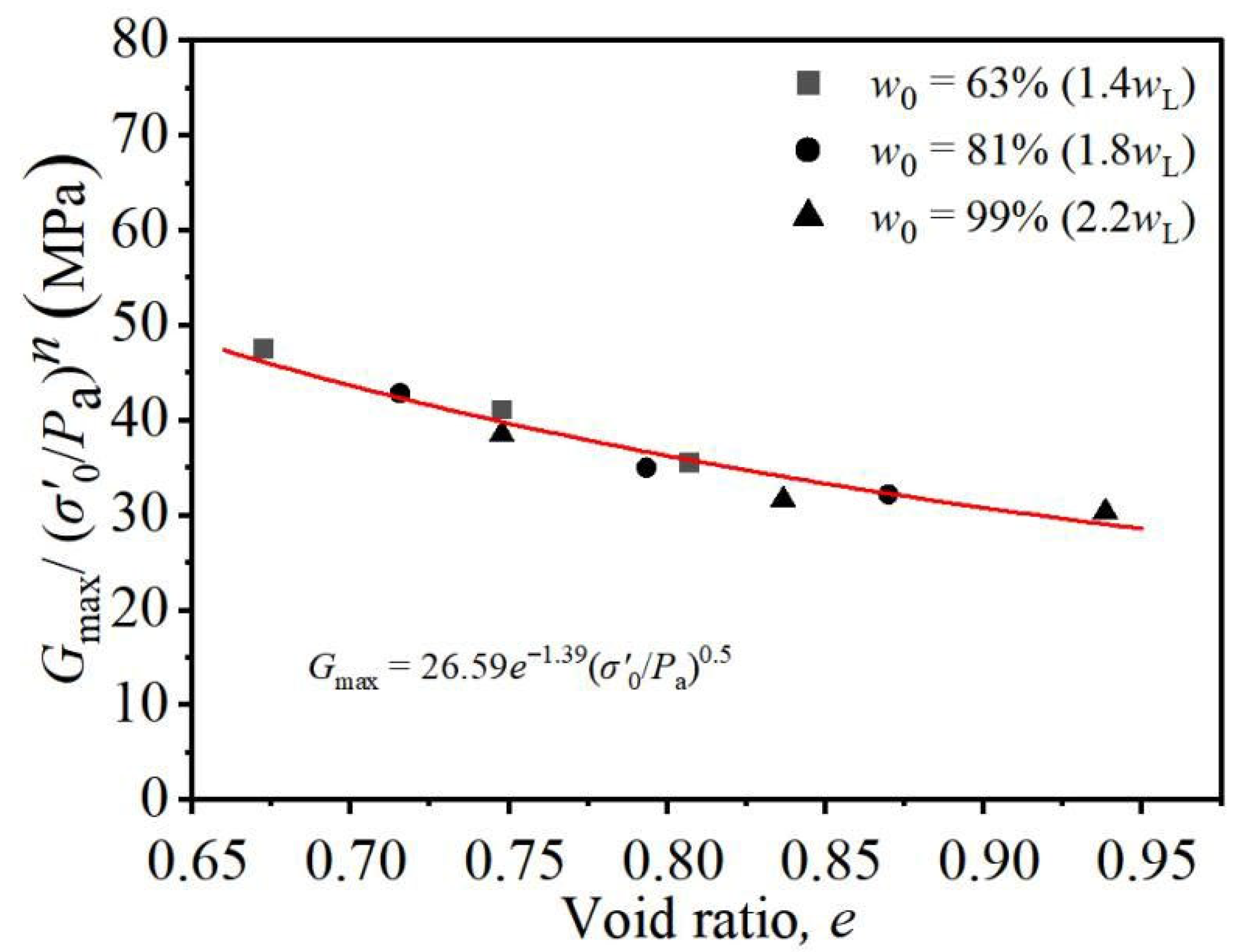
G m a x = A e B ( σ 0 / P a ) n
where e is the void ratio; σ 0 is the effective consolidated confining pressure; P a is the reference atmospheric pressure taken as 100 kPa; and A , B , and e are fitting parameters.
As shown in Figure 8, after normalisation with respect to confining pressure, the test data for the tested Ningbo reconstituted clay exhibit a consistent collapse onto a single trend that can be approximated by a negative power law relationship with e . Within the present dataset and the investigated ranges of w 0 / w L and confining pressure, the proposed empirical model captures the dependence of G m a x on e reasonably well.

3.3. Normalised Shear Modulus Reduction and Damping Ratio Characteristics

In site response and soil-structure interaction analyses, the normalised shear modulus reduction ( G / G m a x ) is commonly used to describe the degradation of shear modulus with increasing shear strain. The relationships between G / G m a x , damping ratio ( λ ), and γ are employed to characterise the influence of various factors on the nonlinear dynamic properties of soils.
The effect of σ 0 on the G / G m a x γ and λ γ curves is illustrated in Figure 9. When γ < 10−4, G / G m a x remains essentially constant with increasing γ , indicating that the soil is in a quasi-linear elastic deformation range in which shear stiffness is only weakly affected by strain amplitude. When γ > 10−4, a clear inflection in the G / G m a x γ curves is observed, followed by a rapid decay of G / G m a x with further increase in γ , which visually reflects a substantially enhanced nonlinear response of the soil.
To investigate the influence of w 0 on G / G m a x and λ , the G / G m a x γ and λ γ curves corresponding to different w 0 values were plotted, as shown in Figure 10. It can be seen that, under various confining pressure conditions, the G / G m a x γ curves for different w 0 values almost coincide, indicating that, after normalisation by G m a x , the influence of w 0 as a test variable has been effectively eliminated. Regarding the damping ratio behaviour, when γ < 10−5, λ has an initial value of about 1–2%, which mainly reflects micro-friction between soil particles and inherent viscoelastic effects within the soil skeleton. With increasing γ , relative sliding between soil particles is intensified and λ exhibits a continuous, stable increase. Moreover, the test results clearly indicate that neither w 0 nor σ 0 has a significant effect on the evolution of the λ γ curves, suggesting that the damping behaviour of Ningbo clay is only weakly dependent on these two experimental factors.
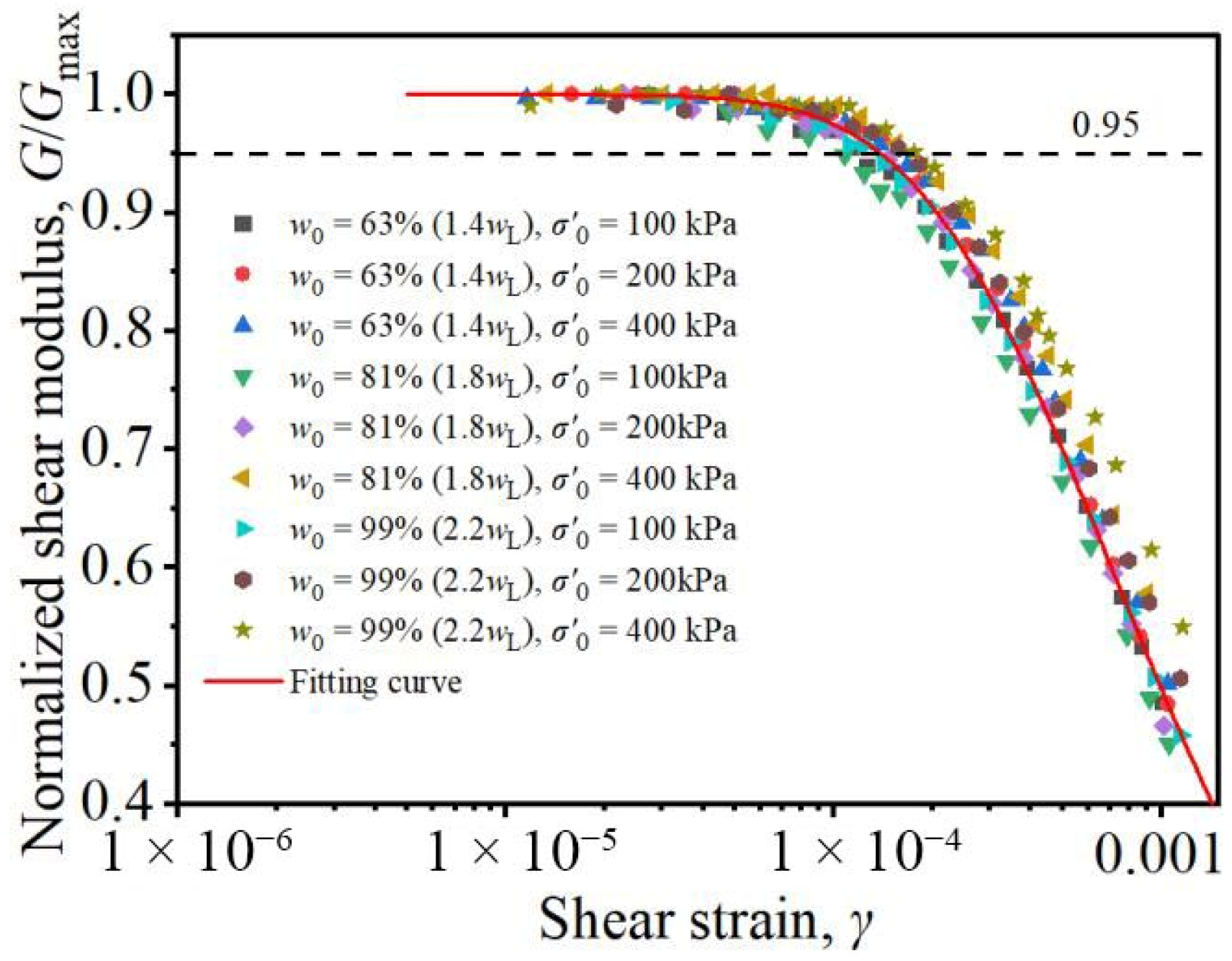
As shown in Figure 11, although the tested specimens were subjected to different w 0 and σ 0 , the G / G m a x γ curves exhibit broadly similar trends. This observation indicates that variations in w 0 and σ 0 do not modify the intrinsic shape of the modulus reduction curves. Specifically, in the very small-strain range ( γ < 10−4), the response of the soil skeleton is quasi-linear elastic and G / G m a x remains close to 1. As the strain increases into the intermediate strain range (10−4 < γ < 10−3), pronounced nonlinear stiffness degradation occurs as a result of interparticle sliding and progressive structural remodelling of the soil skeleton, and G / G m a x ultimately tends towards a lower, approximately constant value.
The G / G m a x γ curves were further fitted using the Davidenkov-type constitutive model [27], expressed as
G G m a x = 1 [ ( γ / γ 0 ) 2 B 1 + ( γ / γ 0 ) 2 B ] A
where A and B are soil-specific fitting parameters; γ 0 is the reference strain. In previous studies [28,29,30], the strain corresponding to G / G m a x = 0.5 has often been adopted as the reference strain. However, in resonant column tests, even at the maximum test strain, the G / G m a x frequently does not decay below 0.5. Therefore, in this study, the reference strain is taken as the shear strain at G / G m a x = 0.95, which represents the threshold for the onset of nonlinear decay of soil stiffness [31]. The fitting parameters and corresponding reference strains for each specimen are presented in Table 4.
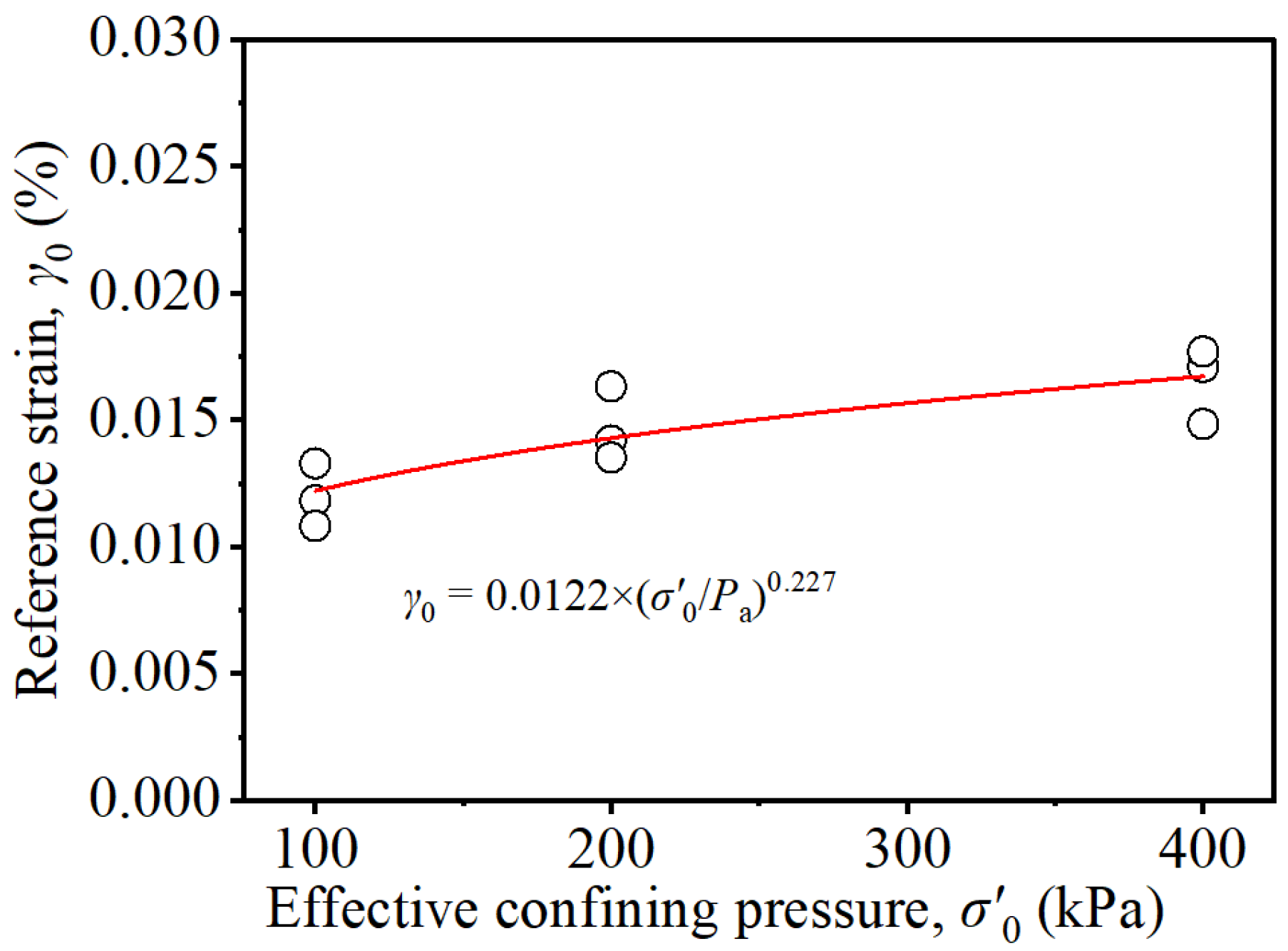
As evident from Figure 11 and Table 4, the G / G m a x values obtained in this study fall within a relatively narrow range, and the fitted values of A and B show limited scatter. To obtain model parameters with enhanced representativeness, the arithmetic means of A and B were adopted as the final parameters, namely A = 4.418 and B = 0.444. Figure 12 presents the relationship between the γ 0 and σ 0 , which can be expressed as
γ 0 ( % ) = 0.0122 × ( σ 0 / P a ) 0.227
By simultaneously substituting Equations (5) and (6) into Equation (4), the combined predictive model given in Equation (7) is obtained. Equation (7) can then be used to predict the small-strain dynamic shear modulus while accounting for the influence of the w0, It should be emphasised that Equation (7) is calibrated solely from resonant-column data in the investigated small-to-moderate strain range.
G = 26.59 e 1.39 ( σ 0 / P a ) 0.5 [ 1 ( γ 0.888 0.02 ( σ 0 / P a ) 0.202 + γ 0.888 ) 4.418 ]
The values predicted using Equation (7) are compared with the results of the validation tests in Figure 13. As shown in Figure 13, the predicted curves (dashed lines) are in good agreement with the experimental data (solid points). It should be noted that this validation is internal and based on the same dataset employed for model fitting. Therefore, the proposed relationships are regarded as an empirical correlation capable of capturing the characteristic trends within the tested conditions for the investigated clay, rather than a fully independent validated predictive model. Further independent validation using additional datasets would be required to establish a more general and extensive predictive capacity.
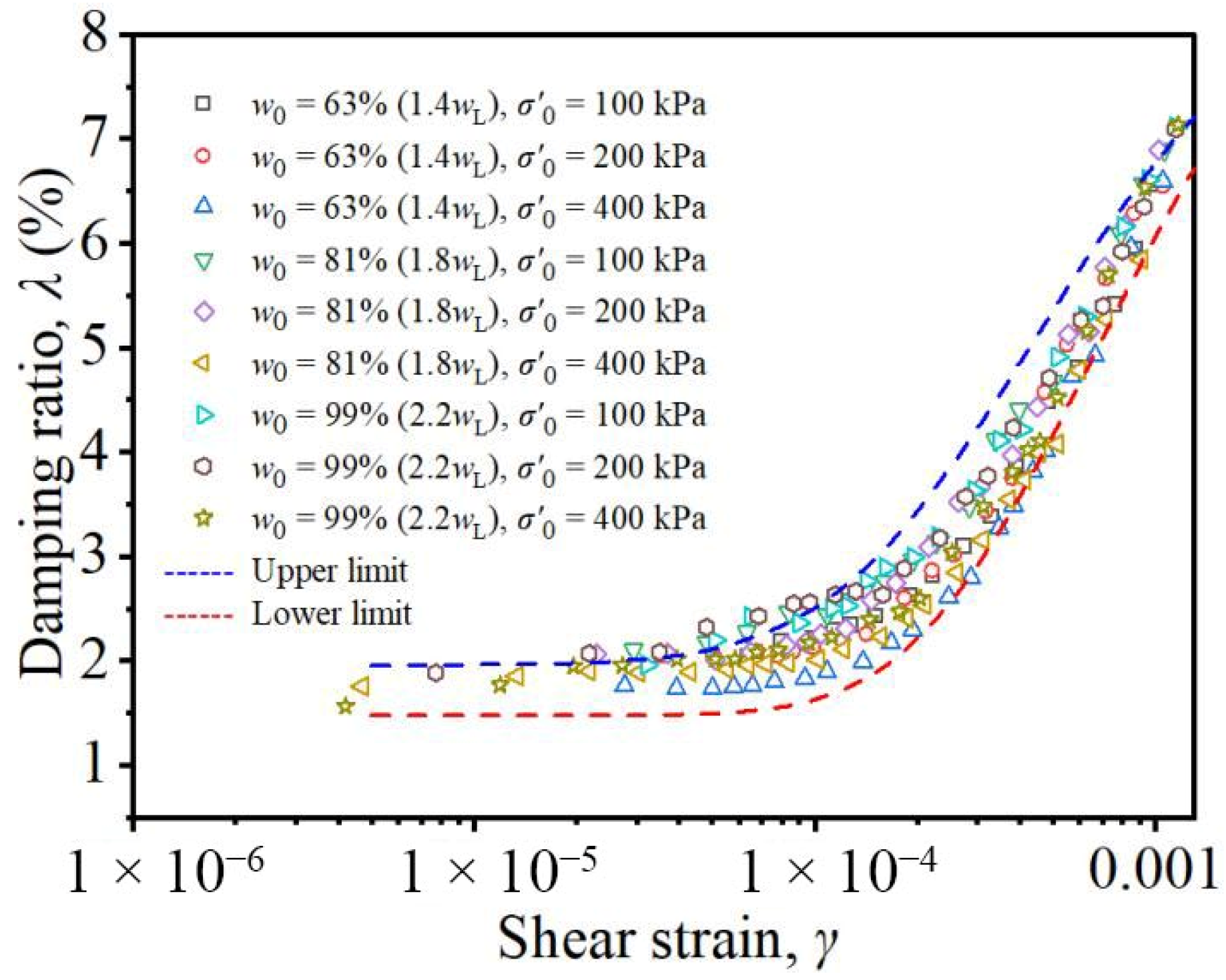
Figure 14 summarises the λ results for all specimens. It can be seen that the λ γ curves obtained under different test conditions cluster within a relatively narrow band and exhibit consistent strain-dependent trends. The λ increases monotonically with γ ; the scatter is relatively larger at very small strains but gradually diminishes as γ increases. This behaviour can be interpreted in terms of a transition in the dominant energy dissipation mechanism. At very small strains, energy dissipation is dominated by viscous damping associated with bound water films at particle contacts and the inherent viscoelasticity of the soil skeleton. The variations in w 0 and σ 0 may slightly alter the thickness and mobility of these films, leading to a more scattered distribution of λ . As γ increases, the dominant dissipation mechanism shifts to frictional sliding and micro-slip between soil particles. The upper bound of λ is then governed mainly by the mineral composition and intrinsic frictional properties of the particles and is only weakly dependent on w 0 and σ 0 , resulting in convergence of the λ γ curves.
Chen [32] proposed an empirical prediction model for the damping ratio, which can be expressed in the following form:
λ = λ m i n + λ 0 ( 1 G / G m a x ) n
where λ m i n is the minimum (small strain) damping ratio; λ 0 and n is a dimensionless shape parameter that controls the curvature of the λ γ relationship.
In this study, the upper and lower bound curves of λ γ for Ningbo reconstituted clay were determined by fitting the experimental data using the Chen model. The parameters corresponding to the upper bound curve are λ 0 = 7.190 and n = 0.653, whereas those for the lower bound curve are λ 0 = 8.425 and n = 1.061. These two envelope curves provide a convenient and conservative basis for representing the range of damping ratio behaviour of Ningbo reconstituted clay in dynamic analyses.

4. Conclusions

This study investigated the influence of w 0 and σ 0 on the small-strain dynamic shear modulus and damping characteristics of reconstituted Ningbo clay by means of resonant column tests. Based on systematic analysis of the experimental results and constitutive model fitting, the following main conclusions can be drawn:
(1)
Within the strain range investigated in the resonant column tests (10−6 < γ < 10−3), the G of reconstituted clay with different w 0 values exhibits pronounced nonlinear stiffness degradation with increasing γ , whereas the λ increases monotonically with γ . Compared with G , the sensitivity of λ to variations in w 0 and the confining pressure is significantly lower.
(2)
The G m a x of reconstituted clay is significantly influenced by w 0 and σ 0 .   G m a x exhibits a monotonically increasing trend with the decrease of w 0 or the increase of σ 0 , with the enhancing effect on G m a x being more pronounced at low w 0 conditions. For specimens with different w 0 values, G m a x exhibits a monotonically increasing trend with decreasing e . After normalisation by confining pressure, the data of G m a x and e under different w 0 converge to a single characteristic curve, which can be described by a unique negative power function.
(3)
The variation in w 0 and σ 0   did not alter the intrinsic evolution trend of the remodelled clay G / G m a x γ curve and λ γ curve. Curves from all test conditions converged within a narrow region, demonstrating favourable unified behaviour. Based on the test results, a predictive model for small-strain dynamic shear modulus considering the influence of w 0 was established, providing a basis for calculating dynamic parameters in relevant engineering applications.

Author Contributions

Conceptualization, H.J., X.Z. and M.S.; methodology, X.W., H.J. and L.S.; formal analysis, X.W., H.L. and M.S.; writing—original draft preparation, X.W. and H.L.; data curation, X.Z., M.S. and H.L.; writing—review and editing, L.S., H.J. and X.Z. Project administration, L.S. All authors have read and agreed to the published version of the manuscript.

Funding

This work was supported by the National Natural Science Foundation of China (Grant No. 52522809), the Key Science and Technology Programme of Zhejiang Province (Grant No. 2025C04G1750419), the Fundamental Research Funds for the Provincial Universities of Zhejiang (Grant No. RF-C2025001), the Natural Science Foundation of Zhejiang Province (Grant No. LQN25E080019), and the Science and Technology Project of Quzhou (Grant No. 2024K156).

Institutional Review Board Statement

Not applicable.

Informed Consent Statement

Not applicable.

Data Availability Statement

The data is unavailable due to further research.

Conflicts of Interest

Author Xinde Wang was employed by the company Power China (Wenzhou) Green Energy Development Co., Ltd. Authors Miaojun Sun and Xitao Zhu were employed by the company Power China Huadong Engineering Corporation Limited. The remaining authors declare that the research was conducted in the absence of any commercial or financial relationships that could be construed as a potential conflict of interest.

Appendix A

Table A1. Repeatability statistics of G m a x from triplicate tests ( σ 0 = 100 kPa).
Initial Water Content LevelNumber of RepetitionsResults of G m a x (MPa) MeanSDCOV(%)
1.4 wL335.65, 35.45, 35.5535.550.100.28
1.8 wL332.21, 32.55, 31.8432.200.361.10
2.2 wL330.63, 30.21, 30.2430.360.230.77
Note: SD is standard deviation; COV is coefficient of variation.

References

  1. Deng, D.S. Comparison of remolded shear strength with intrinsic strength line for dredged deposits. China Ocean. Eng. 2007, 21, 363–369. [Google Scholar]
  2. Cargill, K.W. Prediction of consolidation of very soft soil. J. Geotech. Eng. 1984, 110, 775–795. [Google Scholar] [CrossRef]
  3. Yan, S.-W.; Chu, J. Soil improvement for a storage yard using the combined vacuum and fill preloading method. Can. Geotech. J. 2005, 42, 1094–1104. [Google Scholar] [CrossRef]
  4. Xu, G.; Gao, Y.; Yin, J.; Yang, R.; Ni, J. Compression behavior of dredged slurries at high water contents. Mar. Georesour. Geotechnol. 2014, 33, 99–108. [Google Scholar] [CrossRef]
  5. Bian, X.; Hong, Z.S.; Zeng, L.L. Experimental study on the influence of initial water content on pore pressure characteristics of reconstituted clay. J. Southeast Univ. (Nat. Sci. Ed.) 2012, 42, 749–754. [Google Scholar]
  6. Hong, Z.S.; Bian, X.; Cui, Y.J.; Gao, Y.F.; Zeng, L.L. Effect of initial water content on undrained shear behaviour of reconstituted clays. Geotechnique 2013, 63, 441–450. [Google Scholar] [CrossRef]
  7. Hong, Z.S.; Zeng, L.L.; Cui, Y.J.; Cai, Y.Q.; Lin, C. Compression behaviour of natural and reconstituted clays. Geotechnique 2012, 62, 291–301. [Google Scholar] [CrossRef]
  8. Zeng, L.L.; Hong, Z.S.; Cui, Y.J. On the volumetric strain–time curve patterns of dredged clays during primary consolidation. Geotechnique 2015, 65, 1023–1028. [Google Scholar] [CrossRef]
  9. Song, M.-M.; Ding, J.-W.; Xiao, Q.; Yin, J.; Xu, G.-Z. Primary and secondary compression behavior of dredged clay at low effective stresses. Mar. Georesour. Geotechnol. 2023, 41, 123–131. [Google Scholar] [CrossRef]
  10. Chen, G.X.; Zhou, Z.L.; Pan, H.; Sun, T.; Li, X.J. The influence of undrained cyclic loading patterns and consolidation states on the deformation features of saturated fine sand over a wide strain range. Eng. Geol. 2016, 204, 77–93. [Google Scholar] [CrossRef]
  11. Santos, R.A.; Vulpe, C.; Fourie, A.; Jefferies, M.; Silva, J.P.S.; Casagrande, M.D.T. Shear wave velocity and small-strain stiffness across a broad range of states in iron ore tailings. Can. Geotech. J. 2025, 62, 1–8. [Google Scholar] [CrossRef]
  12. Chu, F.; Li, Y.S.; Liang, F.Y.; Li, Y.D. Numerical analysis of deformation behaviour of an ultra-deep excavation adjacent to a metro hub under small-strain conditions. Chin. J. Rock Mech. Eng. 2010, 29, 3184–3192. [Google Scholar]
  13. Gu, X.Q.; Wu, R.T.; Liang, F.Y.; Gao, G.Y. Method for determining the complete parameter set of a small-strain hardening model for Shanghai soils and its engineering verification. Rock Soil Mech. 2021, 42, 833–845. [Google Scholar]
  14. ASTM D2487-17e1; Standard Practice for Classification of Soils for Engineering Purposes (Unified Soil Classification System). ASTM: West Conshohocken, PA, USA, 2017.
  15. Hu, X.-Q.; Dong, Q.-Y.; Lu, C.-W.; Wang, J.; Zhuang, X.S. Resonant column tests on dynamic properties of soft ground improved by cement–soil mixing piles. Rock Soil Mech. 2016, 37, 343–348. [Google Scholar]
  16. Xiao, X.; Ji, D.W.; Hang, T.Z.; Cai, Z.Y.; Zhang, L.; Wu, Q.; Chen, G.X. Cyclic threshold shear strain for pore water pressure generation and stiffness degradation in marine clays at Yangtze estuary. Front. Mar. Sci. 2023, 10, 1184225. [Google Scholar] [CrossRef]
  17. Kishida, T.; Tsai, C.C. Wave velocities depending on shear strain, directionality, and excess pore water pressure from wildlife liquefaction array. Bull. Earthq. Eng. 2021, 19, 2371–2388. [Google Scholar] [CrossRef]
  18. Ichii, K.; Mikami, T. Cyclic threshold shear strain in pore water pressure generation in clay in situ samples. Soils Found. 2018, 58, 756–765. [Google Scholar] [CrossRef]
  19. GB/T 50123–2019; Standard for Soil Test Methods. China Planning Press: Beijing, China, 2019; pp. 158–165.
  20. Li, J.J.; Kong, L.W.; Jin, L. Stress history and time effect on shear modulus of expansive soils. Arab. J. Geosci. 2022, 15, 35. [Google Scholar] [CrossRef]
  21. Wei, X.; Zhang, T.; Yang, Z.X.; Yang, J. The effects of particle size and surface roughness on the small-strain shear modulus of sands. Géotechnique 2025, 75, 1594–1607. [Google Scholar] [CrossRef]
  22. Zeng, L.L.; Cai, Y.Q.; Cui, Y.J.; Hong, Z.S. Hydraulic conductivity of reconstituted clays based on intrinsic compression. Geotechnique 2020, 70, 268–275. [Google Scholar] [CrossRef]
  23. Delage, P.; Lefebvre, G. Study of the structure of a sensitive Champlain clay and of its evolution during consolidation. Can. Geotech. J. 1984, 21, 21–35. [Google Scholar] [CrossRef]
  24. Leroueil, S.; Vaughan, P.R. The general and congruent effects of structure in natural soils and weak rocks. Géotechnique 1990, 40, 467–488. [Google Scholar] [CrossRef]
  25. Viggiani, G.; Atkinson, J.H. Stiffness of fine-grained soil at very small strains. Géotechnique 1995, 45, 249–265. [Google Scholar] [CrossRef]
  26. Hardin, B.O.; Drnevich, V.P. Shear modulus and damping in soils: Measurement and parameter effects. J. Soil Mech. Found. Div. ASCE 1972, 98, 603–624. [Google Scholar] [CrossRef]
  27. Martin, P.P.; Seed, H.B. One-dimensional dynamic ground response analyses. J. Geotech. Eng. Div. ASCE 1982, 108, 935–952. [Google Scholar] [CrossRef]
  28. Chen, G.; Zhou, Z.; Sun, T.; Wu, Q.; Xu, L.; Khoshnevisan, S.; Ling, D. Shear modulus and damping ratio of sand–gravel mixtures over a wide strain range. J. Earthq. Eng. 2019, 23, 1407–1440. [Google Scholar] [CrossRef]
  29. Yan, Z.; Kai, Z.; Yanjv, P.; Guoxing, C. Dynamic shear modulus and damping ratio characteristics of undisturbed marine soils in the Bohai Sea, China. Earthq. Eng. Eng. Vib. 2022, 21, 297–312. [Google Scholar] [CrossRef]
  30. Qin, Y.; Ma, W.; Xu, Z.; Chen, G.; Zhao, K.; Wu, Q. Effects of consolidation conditions on the dynamic shear modulus of saturated coral sand over a wide strain range. Eng. Geol. 2023, 324, 107260. [Google Scholar] [CrossRef]
  31. Xie, D.Y.; Yao, Y.P.; Dang, F.N. Soil Dynamics; Higher Education Press: Beijing, China, 2011; pp. 102–114. [Google Scholar]
  32. Chen, G.X.; Liu, X.Z.; Zhu, D.H.; Hu, Q. Experimental study on dynamic shear modulus ratio and damping ratio of recentlydeposited soils in Nanjing. Chinese J. Geotech. Eng. 2006, 28, 1023–1027. [Google Scholar]
Figure 1. Gradation curve of Ningbo clay.
Applsci 16 01935 g001
Figure 2. Schematic diagram of GDS resonant column drive system.
Applsci 16 01935 g002
Figure 3. Influence of effective confining pressures on dynamic shear: (a) w 0 = 1.4   w L ; (b) w 0 = 1.8   w L ; and (c) w 0 = 2.2   w L .
Applsci 16 01935 g003aApplsci 16 01935 g003b
Figure 4. Influence of initial water content on dynamic shear modulus: (a) σ 0 = 100   k P a ; (b) σ 0 = 200   k P a ; and (c) σ 0 = 400   k P a .
Applsci 16 01935 g004aApplsci 16 01935 g004b
Figure 5. Influence of initial water content on the G m a x .
Applsci 16 01935 g005
Figure 6. Influence of effective confining pressures on the G m a x .
Applsci 16 01935 g006
Figure 7. Relationship between G m a x and e .
Applsci 16 01935 g007
Figure 8. G m a x / ( σ 0 / P a ) n versus e for Ningbo clay.
Applsci 16 01935 g008
Figure 9. Relationships between G / G m a x ( λ ) and γ of Ningbo clay with different σ 0 : (a) w 0 = 1.4 w L ; (b) w 0 = 1.8 w L ; and (c) w 0 = 2.2 w L .
Applsci 16 01935 g009
Figure 10. Relationships between G / G m a x ( λ ) and γ of Ningbo clay with different w 0 : (a) σ 0 = 100   k P a ; (b) σ 0 = 200   k P a ; (c) σ 0 = 400   k P a .
Applsci 16 01935 g010
Figure 11. Experimental results of all G / G m a x γ curves for Ningbo Clay.
Applsci 16 01935 g011
Figure 12. Relationship between reference strain γ 0 and σ 0 .
Applsci 16 01935 g012
Figure 13. Comparison between the measured test data and the predicted value: (a) σ 0 = 100   k P a ; (b) σ 0 = 200   k P a ; (c) σ 0 = 400   k P a .
Applsci 16 01935 g013aApplsci 16 01935 g013b
Figure 14. Experimental results of all λ γ curves for Ningbo clay.
Applsci 16 01935 g014
Table 1. Index properties of tested clay.
Index PropertiesValue
Specific gravity, G s  (−)2.69
Water content, w  (%)64.75–70.51
Liquid limit, w L  (%)44.50
Plasticity index, I p  (−)19.20
Clay fraction (%)38.32
Silt fraction (%)48.29
Table 2. Test program for resonant column tests.
No. of TestsEffective Confining Pressure,  σ 0  (kPa)Initial Water Content,  w 0 (%)Ratio of Initial Water Content to Liquid Limit ( w 0 / w L )
N1100631.4
N220063
N340063
N410081
N5200811.8
N640081
N710099
N8200992.2
N940099
Table 3. The results of G m a x .
No. of TestsMaximum Dynamic Shear Modulus,   G m a x (MPa)Void Ratio, e
N1 35.550.80
N2 58.180.74
N3 95.100.67
N4 32.200.86
N5 49.370.79
N6 85.690.71
N7 30.360.93
N8 43.260.83
N9 77.030.74
Note: All e values refer to void ratio after consolidation stabilisation.
Table 4. The values of the parameters of the Davidenkov model for the prediction of G / G m a x γ curves for Ningbo clay.
No. of Tests A B γ 0 (%)
N1 4.5520.4190.01182
N2 4.5780.4630.01417
N3 4.5310.4560.01485
N4 4.4410.4150.01083
N5 4.3990.4460.01351
N6 4.4050.4600.01632
N7 4.2970.4320.01328
N8 4.2010.4830.01710
N9 4.3600.4240.01771
Disclaimer/Publisher’s Note: The statements, opinions and data contained in all publications are solely those of the individual author(s) and contributor(s) and not of MDPI and/or the editor(s). MDPI and/or the editor(s) disclaim responsibility for any injury to people or property resulting from any ideas, methods, instructions or products referred to in the content.