Influence of the Addition of Height-Adjustable Worktables on Airborne Particle Concentration in a Cleanroom According to ISO 14644-1


Featured Application
Abstract
1. Introduction
Research Objectives
2. Materials and Methods
2.1. Experimental Design and Measurement Protocol
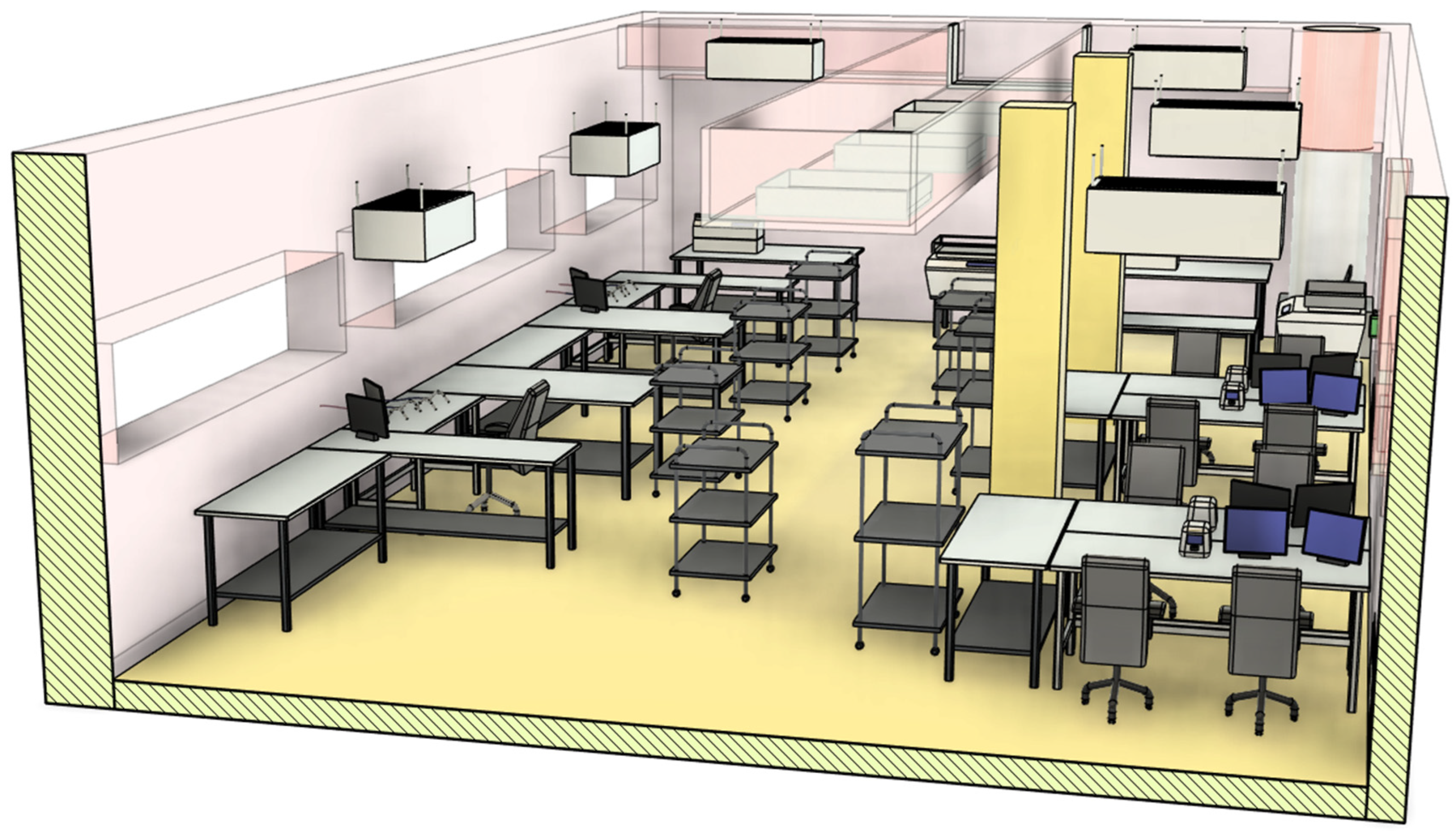
2.1.1. ISO Class 6 Cleanroom Facility
- Facility Configuration
- Measurement Strategy and Rationale
- Sampling Configuration
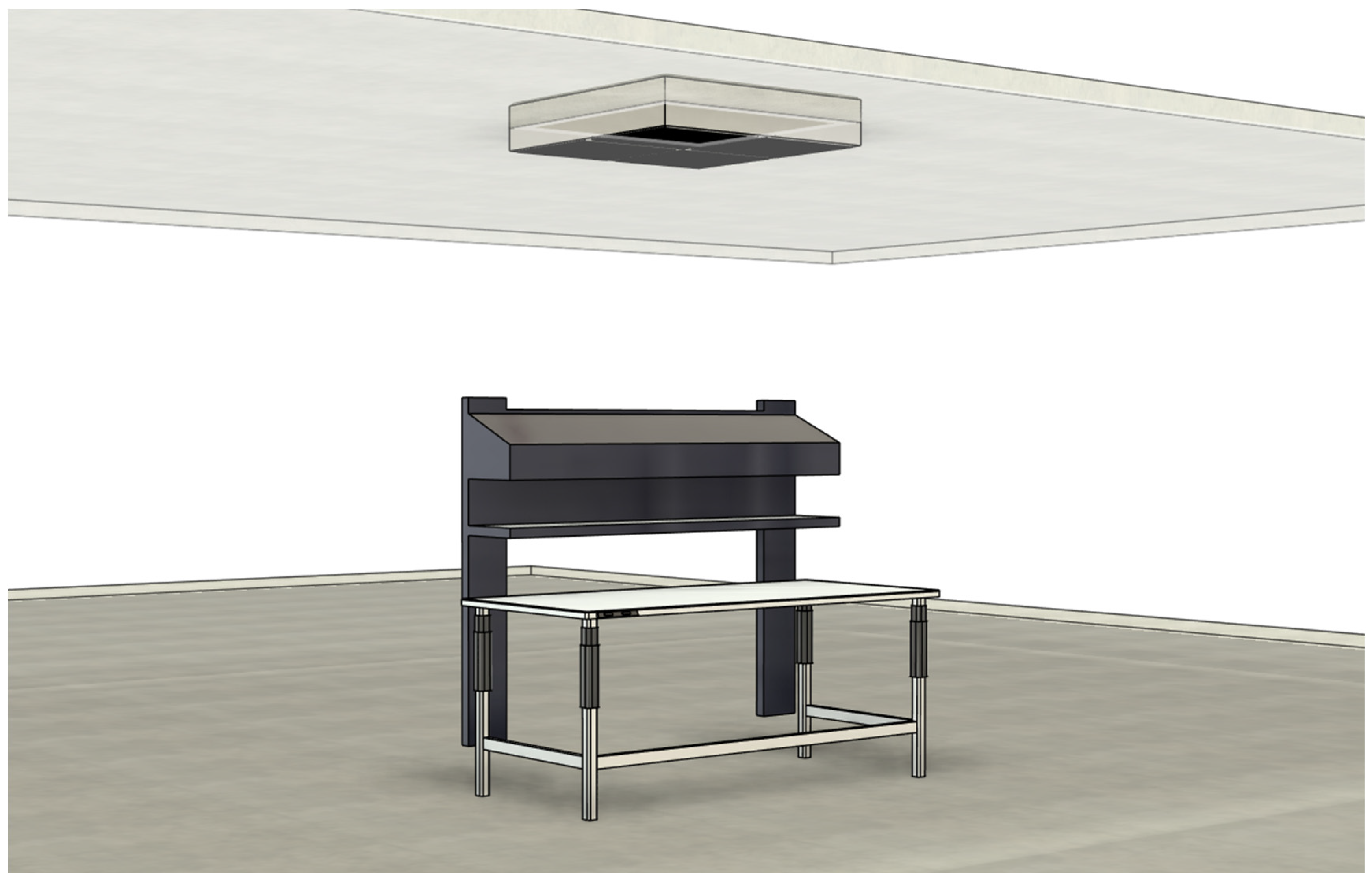
2.1.2. ISO Class 8 Cleanroom Facility
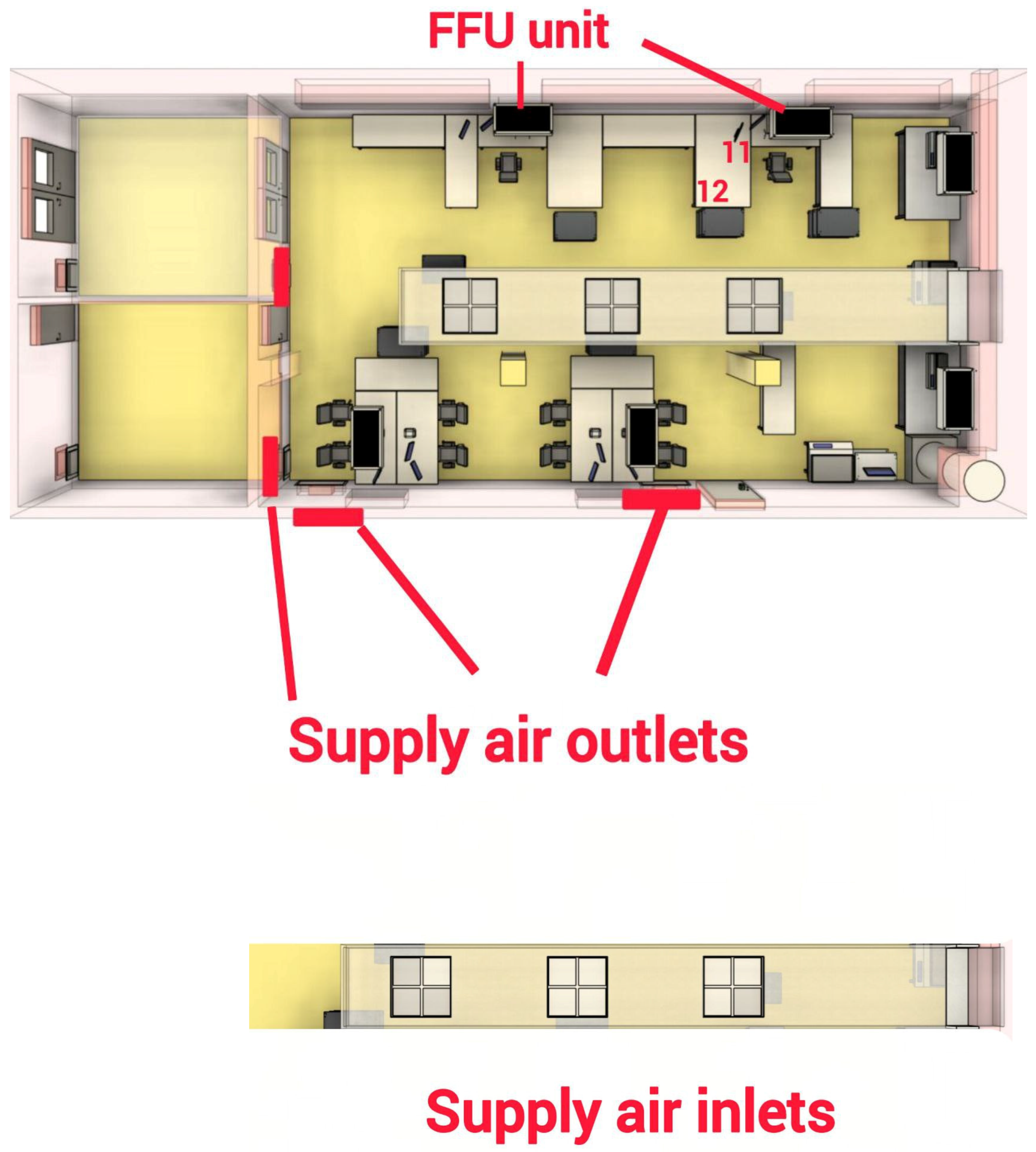
- Facility Configuration
- Measurement Strategy and Rationale
- Sampling Configuration
2.2. Particle Counting Instrumentation and Sampling Setup
2.2.1. Instrument Specifications and Measurement Uncertainty
- Detection principle: 90° light scattering with Extreme Life Laser Diode technology;
- Flow rate: 28.3 L/min (1.0 CFM);
- Particle size channels: 0.3, 0.5, 0.7, 1.0, 2.0, 3.0, 5.0, 7.0, 10.0, 25.0 µm (six channels standard, with analysis focused on 0.3, 0.5, 1.0, and 5.0 µm channels);
- Counting efficiency: 50% at 0.3 µm and 100% for particles >0.45 µm (per ISO 21501-4 [34]);
- Zero count level: <1 count/5 min (per ISO 21501-4 [34]);
- Concentration limit: 500,000 particles/ft3 (14,158,423 particles/m3) at 5% coincidence loss;
- Calibration: NIST-traceable calibration performed annually by manufacturer, with calibration certificate verified before measurement campaign;
- Data output: integrated thermal printer for immediate on-site documentation;
- Detection limit: approximately 354 particles/m3 for 1 min sampling duration (equivalent to 1 particle per 2.83 L sampled air volume).
- Measurement Uncertainty and Error Analysis:
- Instrumental Measurement Errors:
- 2.
- Spatial and Temporal Sampling Variability:
- 3.
- Combined Measurement Uncertainty:
2.2.2. Physical Sampling Setup
2.3. Measurement Protocol and Data Collection
2.4. Statistical Analysis
3. Results
3.1. ISO Class 6 Cleanroom (GfPS): Vertical Sampling Height Effects
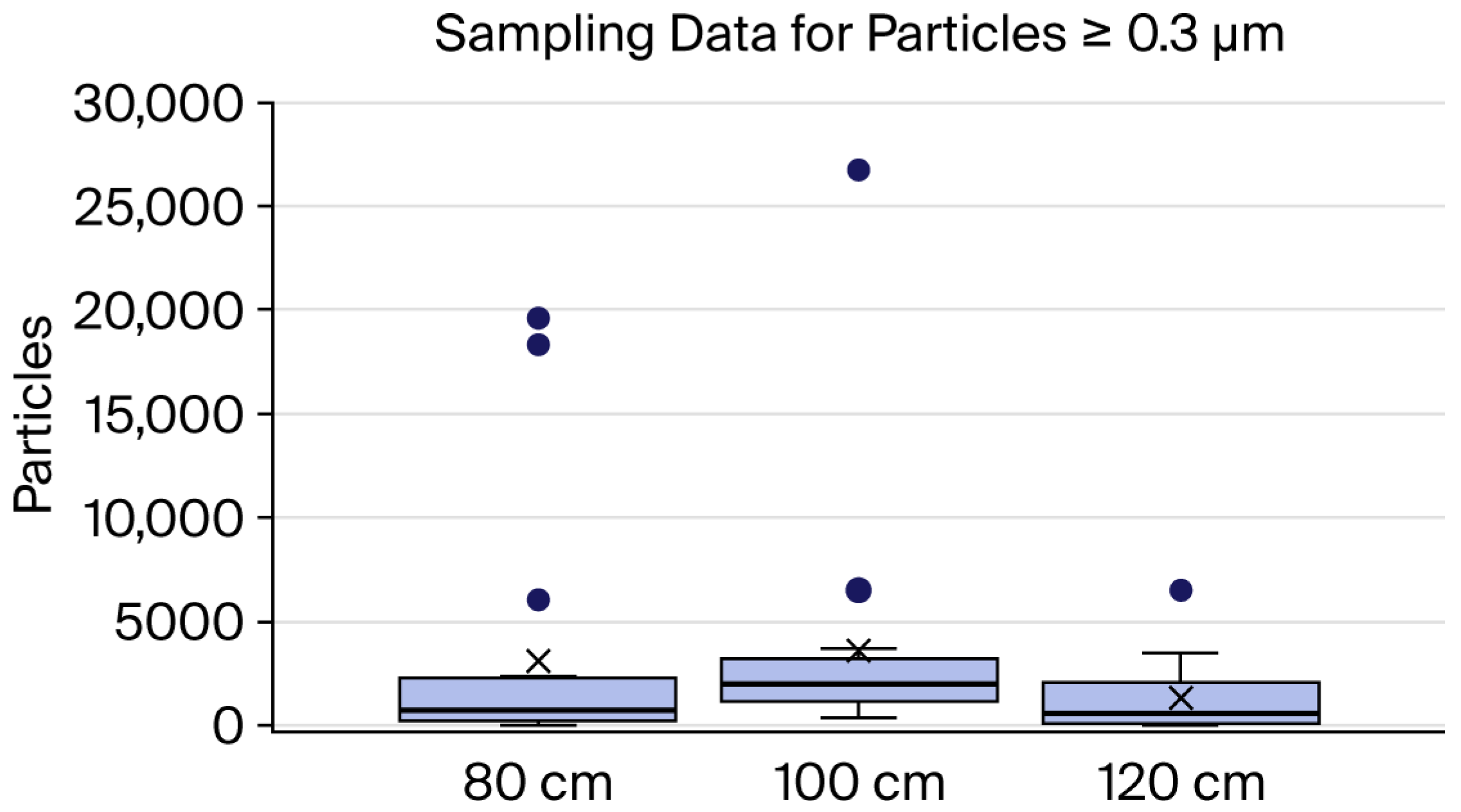
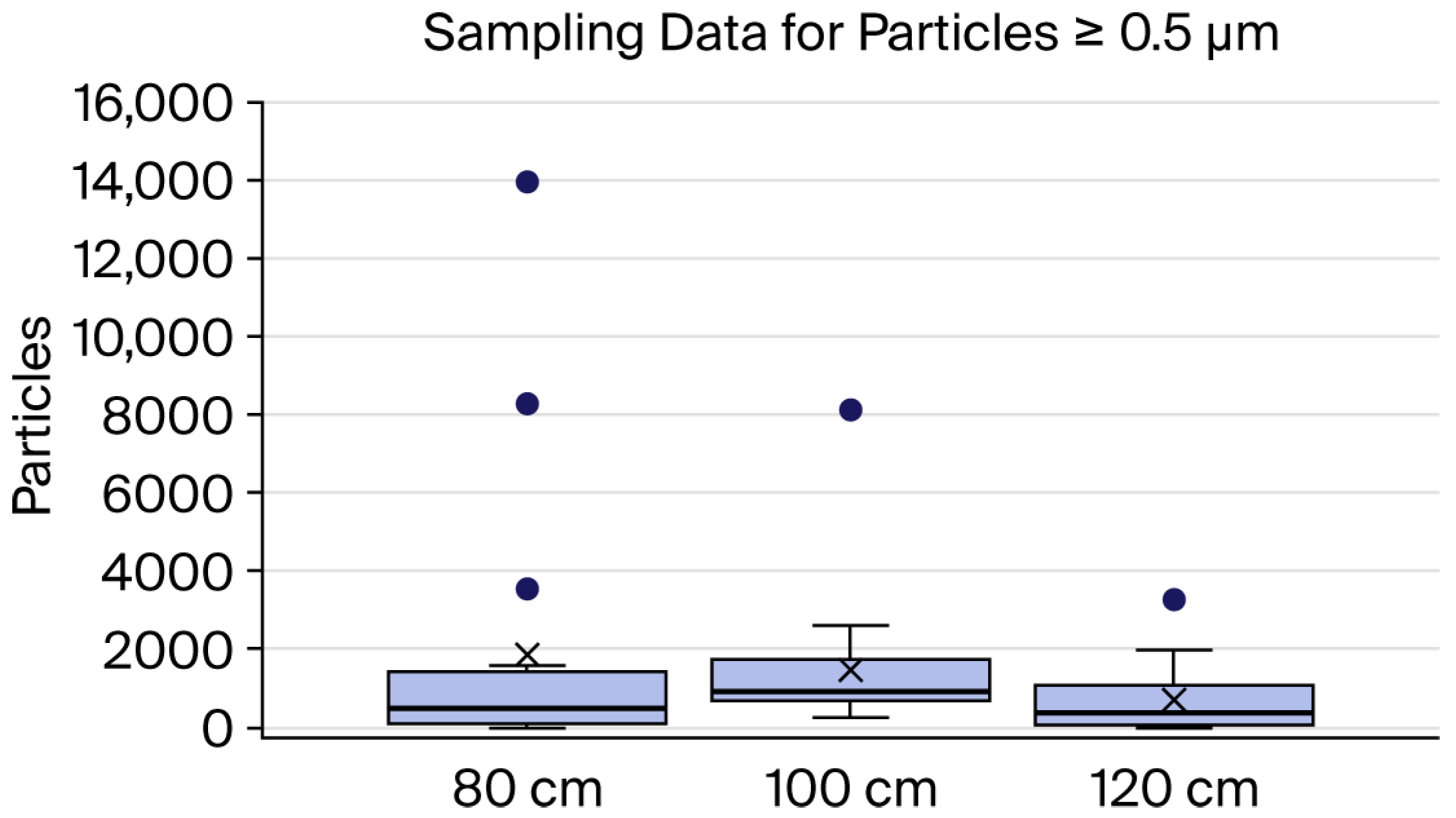
3.1.1. Descriptive Statistics
3.1.2. Distribution of Particle Concentrations
3.1.3. Interpretation of Zero Counts and Outliers
3.1.4. Analysis of Variance
3.1.5. Post Hoc Analysis
3.2. ISO Class 8 Cleanroom (Vygon): Height-Adjustable Table Effects
3.2.1. Descriptive Statistics
3.2.2. Distribution of Particle Concentrations
3.2.3. Interpretation of Outliers and Non-Monotonic Patterns
3.2.4. Analysis of Variance
3.3. Compliance with ISO 14644-1 Classification Limits
3.3.1. ISO Class 6 (GfPS) Compliance
3.3.2. ISO Class 8 (Vygon) Compliance
3.3.3. Interpretation of Compliance Results
4. Discussion
4.1. Mechanisms Underlying Height-Dependent Particle Concentration Patterns in ISO Class 6
4.1.1. Gravitational Settling Dominance for Large Particles
4.1.2. Spatial Heterogeneity and FFU Coverage Effects
- Measurement Uncertainty Contributions:
4.1.3. Outlet-Induced Airflow Disturbances and Vortex Formation
4.1.4. Implications for Cleanroom Design and Sampling Strategy
4.2. Absence of Height Effects in ISO Class 8: Equipment Ventilation Interference
4.2.1. Local Exhaust Ventilation Interference at Elevated Table Heights
4.2.2. Uniform Baseline Airflow Distribution and Operational Variability
4.3. Comparative Interpretation and Practical Implications
4.3.1. ISO Class 6 Versus ISO Class 8 Findings
4.3.2. Height-Adjustable Furniture Deployment
4.3.3. Worker Breathing Zone Exposure Assessment
4.3.4. Cleanroom Design Optimization
4.4. Study Limitations and Future Research Directions
5. Conclusions
Author Contributions
Funding
Informed Consent Statement
Data Availability Statement
Acknowledgments
Conflicts of Interest
Abbreviations
| ANOVA | Analysis of Variance |
| CFD | Computational Fluid Dynamics |
| cm | Centimetre |
| DIN EN | Deutsche Institut für Normung—Europäische Norm |
| FFU | Fan Filter Unit |
| Fh | Fachhochschule (University of Applied Sciences) |
| GfPS mbH | Gesellschaft für Produktionshygiene und Sterilitätssicherung Gesellschaft mit beschränkter Haftung |
| GMP | Good Manufacturing Practice |
| HEPA | High-Efficiency Particulate Air |
| HVAC | Heating, Ventilation, and Air Conditioning |
| ISO | International Organization for Standardization |
| ISO Class | Cleanroom classification level according to ISO 14644-1 |
| L | Liter |
| M | Metre |
| µm | Micrometre |
| mm | Millimetre |
| OCP | Operational Control Program |
Appendix A
Appendix A.1. ISO Class 6 Cleanroom (GfPS)—Vertical Sampling Height Effects


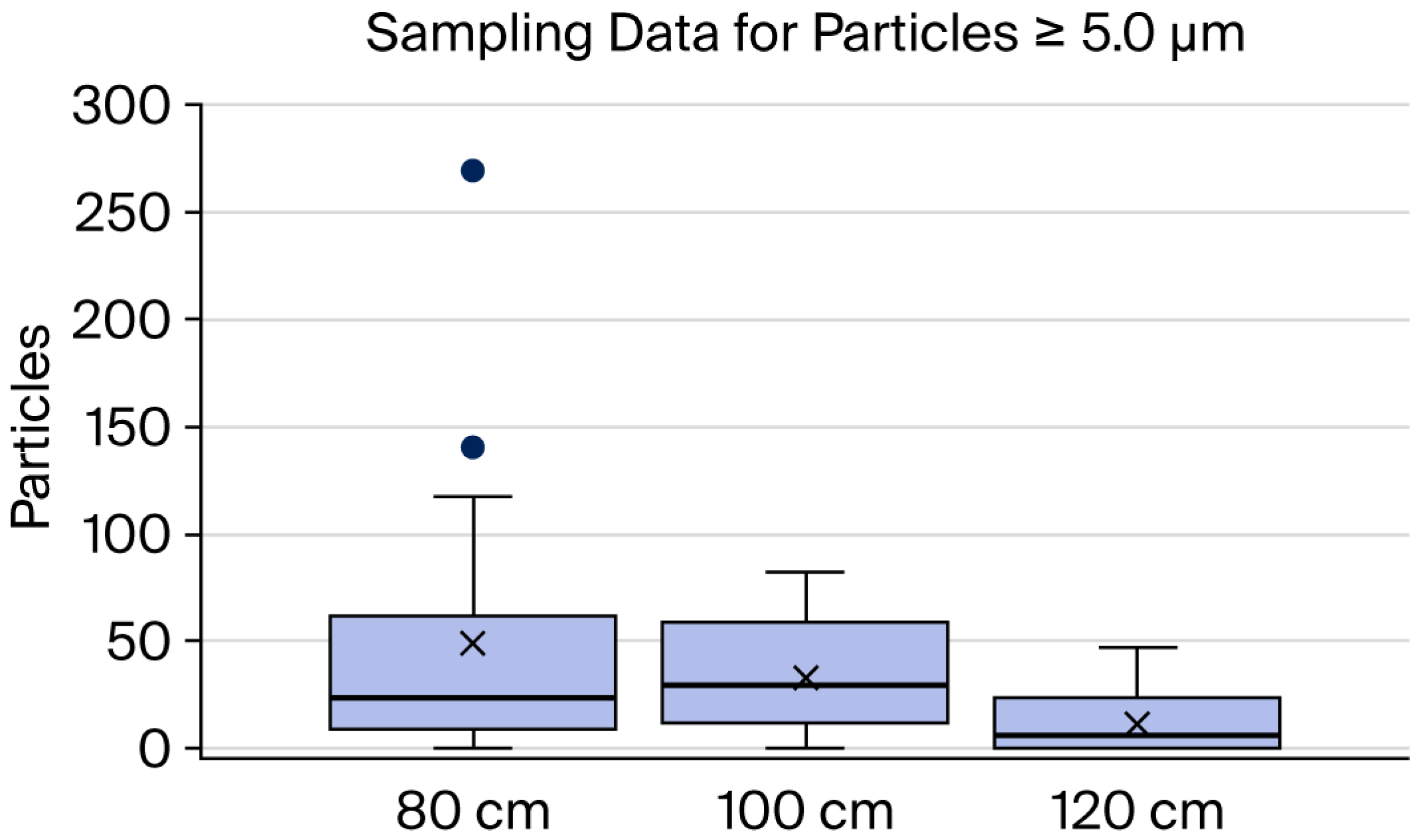
Appendix A.2. ISO Class 8 Cleanroom (Vygon)—Height-Adjustable Table Effects


Summary of Appendix A Findings
References
- ISO 14644-1:2015; Cleanrooms and Associated Controlled Environments—Part 1: Classification of Air Cleanliness by Particle Concentration. ISO: Geneva, Switzerland, 2015.
- ISO 14644-2:2015; Cleanrooms and Associated Controlled Environments—Part 2: Monitoring to Provide Evidence of Cleanroom Performance Related to Air Cleanliness by Particle Concentration. ISO: Geneva, Switzerland, 2015.
- ISO 14644-3:2019; Cleanrooms and Associated Controlled Environments—Part 3: Test Methods. ISO: Geneva, Switzerland, 2019.
- ISO 14644-4:2022; Cleanrooms and Associated Controlled Environments—Part 4: Design, Construction and Start-Up. ISO: Geneva, Switzerland, 2022.
- ISO 14644-5:2025; Cleanrooms and Associated Controlled Environments—Part 5: Operations. ISO: Geneva, Switzerland, 2025.
- Whyte, W.; Ward, S.; Whyte, W.M.; Eaton, T. Decay of airborne contamination and ventilation effectiveness of cleanrooms. Int. J. Vent. 2014, 13, 211–220. [Google Scholar] [CrossRef]
- Whyte, W. Cleanroom Technology: Fundamentals of Design, Testing, and Operation; Wiley: Chichester, UK, 2001. [Google Scholar] [CrossRef]
- Ljungqvist, B.; Reinmüller, B. Clean Room Design: Minimizing Contamination Through Proper Design, 2nd ed.; CRC Press: Boca Raton, FL, USA, 2019. [Google Scholar]
- Xu, Z. Principle of cleanroom. In Fundamentals of Air Cleaning Technology and Its Application in Cleanrooms; Springer: Berlin/Heidelberg, Germany, 2013; pp. 377–465. [Google Scholar] [CrossRef]
- Bhattacharya, A.; Tak, M.; Shoai-Naini, S.; Betz, F.; Mousavi, E. A systematic literature review of cleanroom ventilation and air distribution systems. Aerosol Air Qual. Res. 2023, 23, 220407. [Google Scholar] [CrossRef]
- Memarzadeh, F. Comparison of Operating Room Ventilation Systems in the Protection of the Surgical Site. ASHRAE Trans. 2004, 108, 3. [Google Scholar]
- Yousfi, S.M.; Aliane, K. Turbulent flow around obstacles: Simulation and study of recirculation and incipient mixing zones. Int. J. Heat Technol. 2021, 39, 1351–1360. [Google Scholar] [CrossRef]
- Zhao, B.; Cao, L.; Li, X.; Yang, X.; Huang, D. Comparison of indoor environment of a locally concentrated cleanroom at occupied and unoccupied status by numerical method. J. IEST 2004, 47, 94–100. [Google Scholar] [CrossRef]
- Zhao, B.; Li, X.; Yan, Q. A simplified system for indoor airflow simulation. Build. Environ. 2004, 39, 543–552. [Google Scholar] [CrossRef]
- Zhao, B.; Yang, C.; Yang, X.; Liu, S. Particle dispersion and deposition in ventilated rooms: Testing and evaluation of different Eulerian and Lagrangian models. Build. Environ. 2008, 43, 388–397. [Google Scholar] [CrossRef]
- Li, C.; Li, H.; Zhang, M.; Wang, X.; Huang, C. The research on the particle concentration distribution of directed airflow in cleanrooms for operators. PLoS ONE 2024, 19, e0296803. [Google Scholar] [CrossRef]
- Robertson, M.M.; Huang, Y.-H.; O’Neill, M.J.; Schleifer, L.M. Flexible workspace design and ergonomics training: Impacts on the psychosocial work environment, musculoskeletal health, and work effectiveness among knowledge workers. Appl. Ergon. 2008, 39, 482–494. [Google Scholar] [CrossRef]
- Davis, K.G.; Kotowski, S.E. Understanding the ergonomic risk for musculoskeletal disorders in the United States agricultural sector. Am. J. Ind. Med. 2007, 50, 501–511. [Google Scholar] [CrossRef]
- Choi, S.D.; Brings, K. Work-related musculoskeletal risks associated with nurses and nursing assistants handling overweight and obese patients: A literature review. Work 2015, 53, 439–448. [Google Scholar] [CrossRef]
- DIN EN 527-1:2011; Office Furniture—Work Tables and Desks—Part 1: Dimensions. DIN e.V.: Berlin, Germany, 2011.
- Whyte, W.; Hejab, M.; Whyte, W.M.; Green, G. Experimental and CFD Airflow Studies of a Cleanroom with Special Respect to Air Supply Inlets. Int. J. Vent. 2010, 9, 197–209. [Google Scholar] [CrossRef]
- Tang, J.W.; Li, Y.; Eames, I.; Chan, P.K.S.; Ridgway, G.L. Factors involved in the aerosol transmission of infection and control of ventilation in healthcare premises. J. Hosp. Infect. 2006, 64, 100–114. [Google Scholar] [CrossRef] [PubMed]
- Loomans, M.G.L.C.; Ludlage, T.B.J.; Oever, H.; Molenaar, P.C.A.; Kort, H.; Joosten, P.H.J. Experimental investigation into cleanroom contamination build-up when applying reduced ventilation and pressure hierarchy conditions as part of demand controlled filtration. Build. Environ. 2020, 176, 106861. [Google Scholar] [CrossRef]
- Duque-Daza, C.A.; Murillo-Rincón, J.; Espinosa-Moreno, A.S.; Alberini, F.; Alexiadis, A.; Garzón-Alvarado, D.A.; Thomas, A.M.; Simmons, M.J.H. Analysis of the airflow features and ventilation efficiency of an Ultra-Clean-Air operating theatre by qDNS simulations and experimental validation. Build. Environ. 2024, 256, 111444. [Google Scholar] [CrossRef]
- Saidi, M.; Eslami, J. Motion analyses in modeling of flow and contaminant in cleanrooms: A review. AUT J. Mech. Eng. 2024, 8, 3–18. [Google Scholar] [CrossRef]
- Awbi, H.B. Application of computational fluid dynamics in room ventilation. Build. Environ. 1989, 24, 51–65. [Google Scholar] [CrossRef]
- Nielsen, P.V. Analysis and design of room air distribution systems. HVAC&R Res. 2007, 13, 987–997. [Google Scholar] [CrossRef]
- Hu, S.C.; Chuah, Y.K.; Yen, M.C. Design and evaluation of a minienvironment for semiconductor manufacture processes. Build. Environ. 2002, 37, 201–208. [Google Scholar] [CrossRef]
- Hinds, W.C. Aerosol Technology: Properties, Behavior, and Measurement of Airborne Particles, 2nd ed.; John Wiley & Sons: New York, NY, USA, 1999. [Google Scholar]
- Vincent, J.H. Aerosol Sampling: Science, Standards, Instrumentation and Applications; John Wiley & Sons: Chichester, UK, 2007. [Google Scholar]
- Chao, C.Y.H.; Wan, M.P. A study of the dispersion of expiratory aerosols in unidirectional downward and ceiling-return type airflows using a multiphase approach. Indoor Air 2006, 16, 296–312. [Google Scholar] [CrossRef]
- European Commission. Good Manufacturing Practice (GMP) Annex 1: Manufacture of Sterile Medicinal Products; European Commission: Brussels, Belgium, 2022. [Google Scholar]
- Autodesk Fusion 360, Version 2605.1.52; 3D CAD/CAM/CAE Software; Autodesk Inc.: San Rafael, CA, USA, 2025.
- ISO 21501-4:2018; Determination of Particle Size Distribution—Single Particle Light Interaction Methods—Part 4: Light Scattering Airborne Particle Counter for Clean Spaces. ISO: Geneva, Switzerland, 2018.
- Lighthouse Worldwide Solutions. Solair 3100/5100/Boulder Counter Operator’s Manual, Revision 10; Document 248083389-1; Lighthouse Worldwide Solutions: Fremont, CA, USA, 2024; Available online: https://golighthouse.com/nl/airborne-particle-counters/solair/ (accessed on 8 February 2026).
- Cao, G.; Awbi, H.; Yao, R.; Fan, Y.; Sirén, K.; Kosonen, R.; Zhang, J. A review of the performance of different ventilation and airflow distribution systems in buildings. Build. Environ. 2014, 73, 171–186. [Google Scholar] [CrossRef]
- Cohen, J. Statistical Power Analysis for the Behavioral Sciences, 2nd ed.; Lawrence Erlbaum Associates: Hillsdale, NJ, USA, 1988. [Google Scholar]
- Barnett, V.; Lewis, T. Outliers in Statistical Data, 3rd ed.; John Wiley & Sons: Chichester, UK, 1994; ISBN 978-0-471-93094-8. [Google Scholar]
- Quinn, G.P.; Keough, M.J. Experimental Design and Data Analysis for Biologists; Cambridge University Press: Cambridge, UK, 2002; ISBN 978-0-521-00976-8. [Google Scholar]
- Sandle, T. Cleanroom Management in Pharmaceuticals and Healthcare; Euromed Communications: Passfield, UK, 2013; ISBN 978-0-9560205-5-2. [Google Scholar]
- Qian, J.; Ferro, A.R. Resuspension of dust particles in a chamber and associated environmental factors. Aerosol Sci. Technol. 2008, 42, 566–578. [Google Scholar] [CrossRef]
- Hedge, A.; Ray, E.J. Effects of an electronic height-adjustable worksurface on computer worker musculoskeletal discomfort and productivity. In Proceedings of the Human Factors and Ergonomics Society Annual Meeting; SAGE Publications: Thousand Oaks, CA, USA, 2004; Volume 48, pp. 1091–1095. [Google Scholar] [CrossRef]



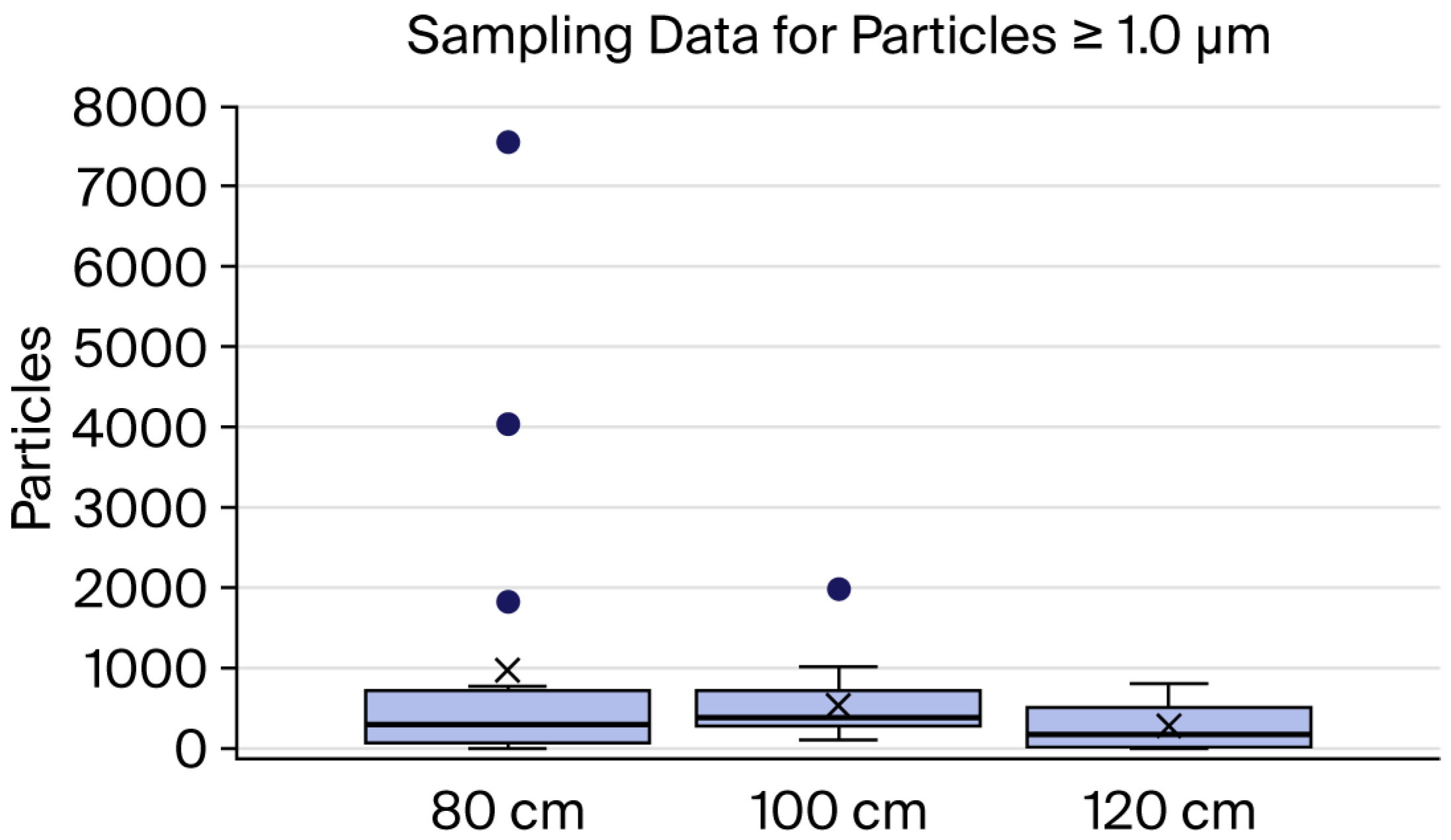
| Particle Size | 80 cm | 100 cm | 120 cm |
|---|---|---|---|
| ≥0.3 µm | 3119 ± 5950 | 3591 ± 5951 | 1318 ± 1723 |
| ≥0.5 µm | 1868 ± 3600 | 1475 ± 1762 | 709 ± 893 |
| ≥1.0 µm | 974 ± 1905 | 538 ± 433 | 283 ± 290 |
| ≥5.0 µm | 50 ± 68 | 33 ± 27 | 12 ± 15 |
| Particle Size | F | p-Value | η2 | F Critical Value |
|---|---|---|---|---|
| ≥0.3 µm | 1.05 | 0.356 | 0.04 | 3.18 |
| ≥0.5 µm | 1.11 | 0.337 | 0.04 | 3.18 |
| ≥1.0 µm | 1.69 | 0.195 | 0.06 | 3.18 |
| ≥5.0 µm | 3.49 | 0.038 * | 0.12 | 3.18 |
| Comparison | Mean Difference (Particles/m3) | p-Value | Significant |
|---|---|---|---|
| 80 cm vs. 100 cm | 16.4 | 0.351 | No |
| 100 cm vs. 120 cm | 21.6 | 0.005 | Yes |
| 80 cm vs. 120 cm | 38.0 | 0.028 | No |
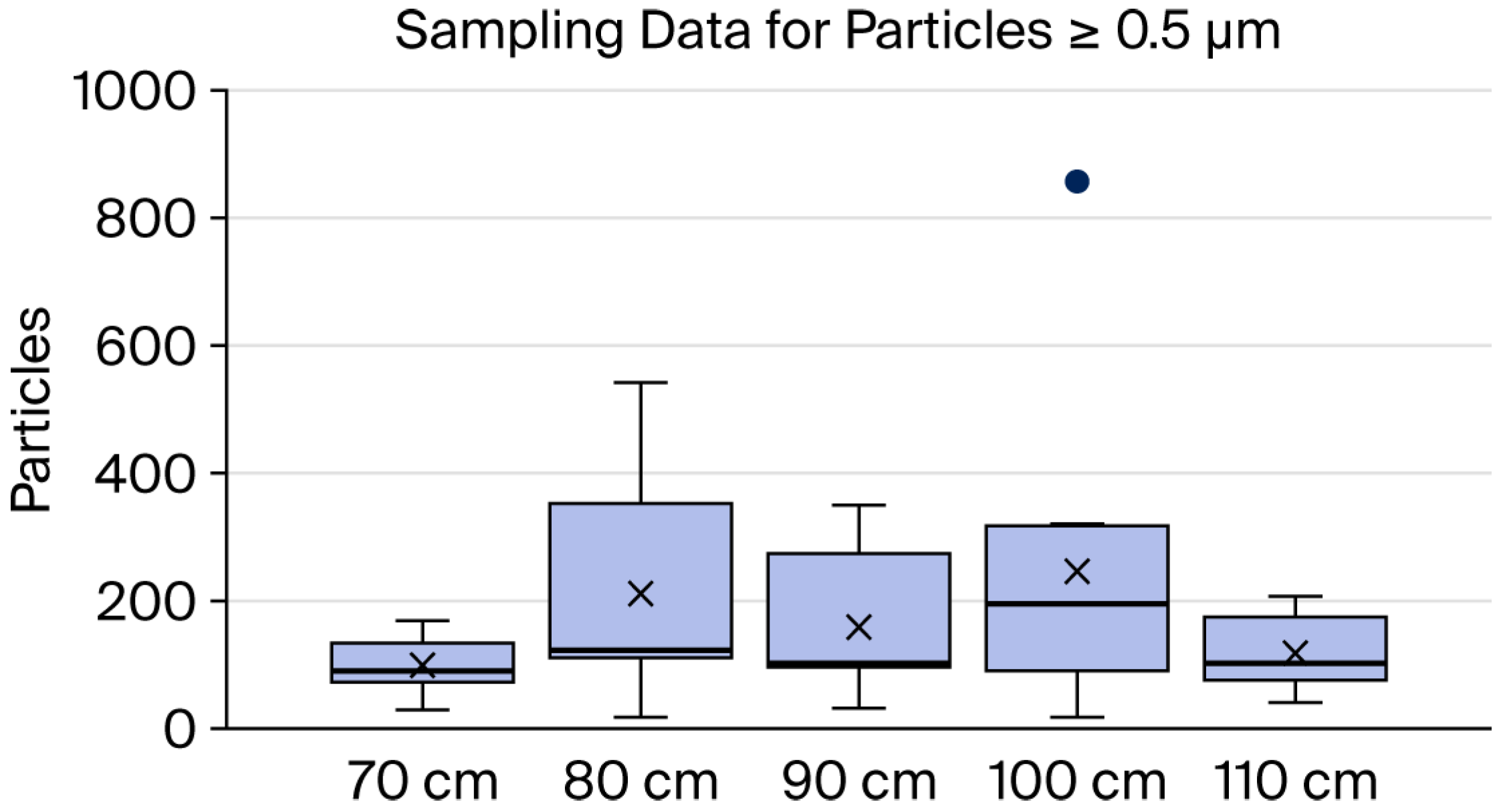
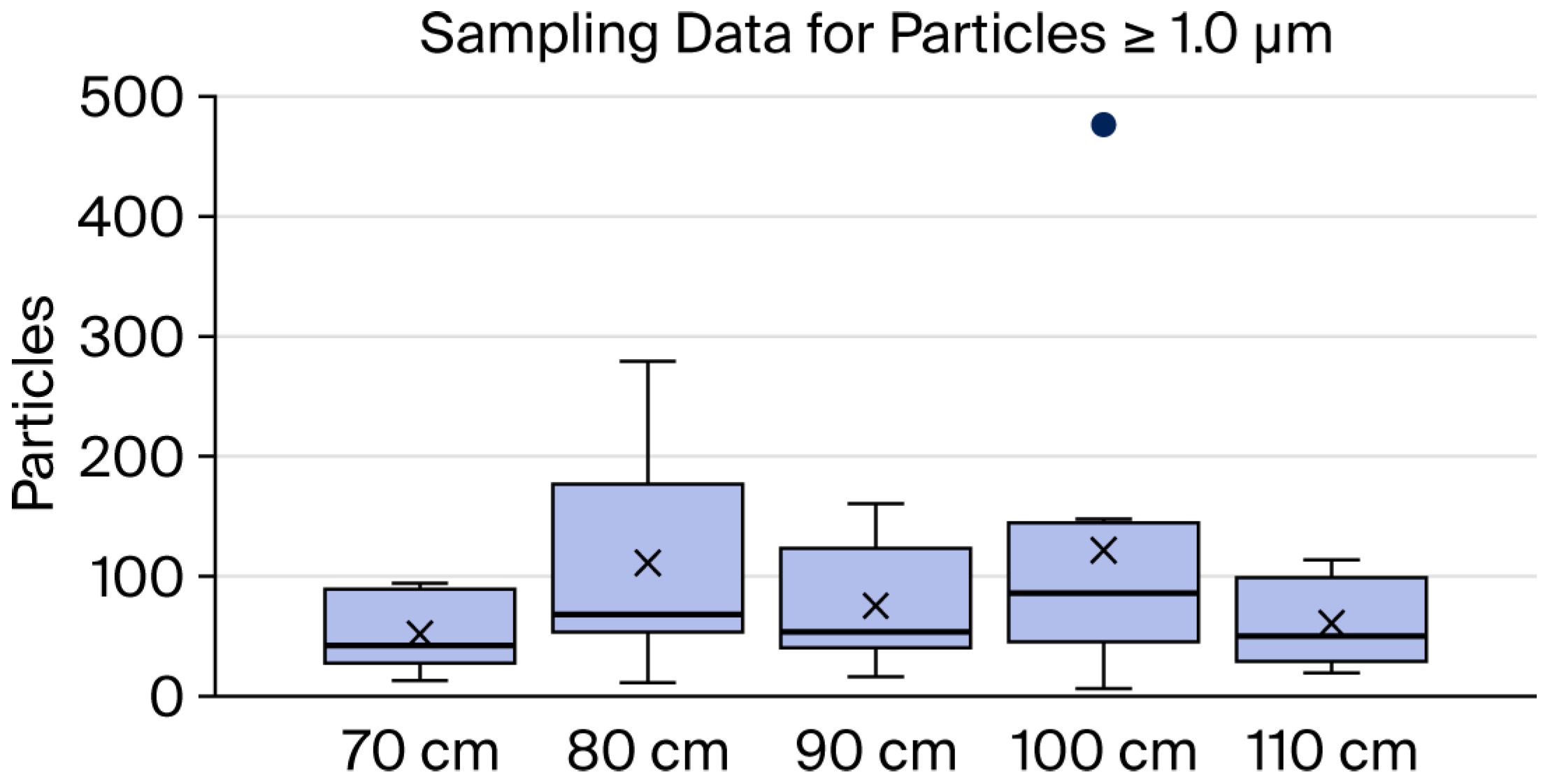
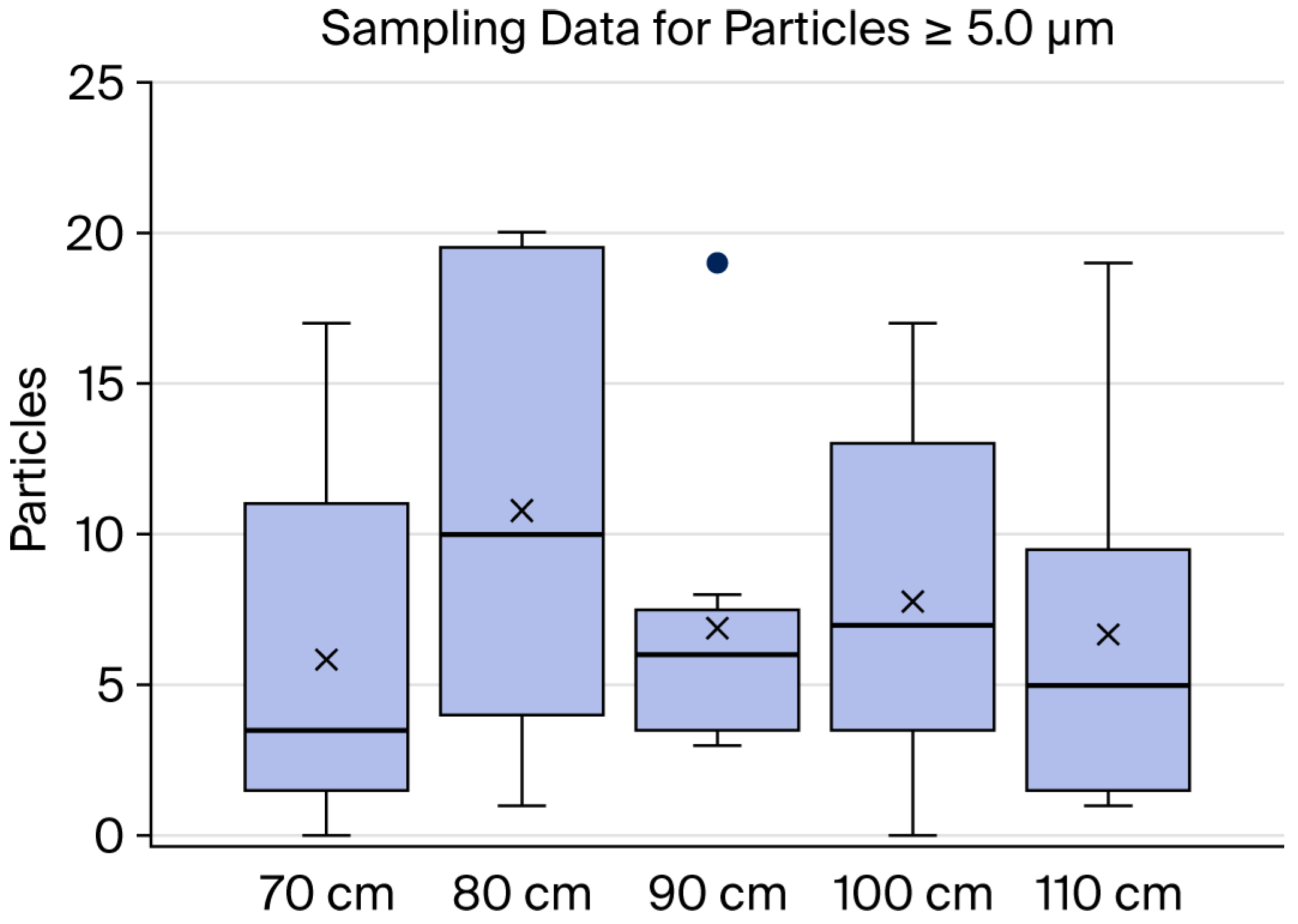
| Particle Size | 70 cm | 80 cm | 90 cm | 100 cm | 120 cm |
|---|---|---|---|---|---|
| ≥0.5 µm | 98 ± 47 | 211 ± 174 | 158 ± 110 | 245 ± 252 | 117 ± 58 |
| ≥1.0 µm | 53 ± 32 | 111 ± 88 | 76 ± 49 | 122 ± 140 | 61 ± 35 |
| ≥5.0 µm | 6 ± 6 | 11 ± 8 | 7 ± 5 | 8 ± 6 | 7 ± 6 |
| Particle Size | F | p-Value | η2 | F Critical Value |
|---|---|---|---|---|
| ≥0.5 µm | 1.29 | 0.291 | 0.12 | 2.63 |
| ≥1.0 µm | 1.12 | 0.364 | 0.11 | 2.63 |
| ≥5.0 µm | 0.81 | 0.530 | 0.08 | 2.63 |
Disclaimer/Publisher’s Note: The statements, opinions and data contained in all publications are solely those of the individual author(s) and contributor(s) and not of MDPI and/or the editor(s). MDPI and/or the editor(s) disclaim responsibility for any injury to people or property resulting from any ideas, methods, instructions or products referred to in the content. |
© 2026 by the authors. Licensee MDPI, Basel, Switzerland. This article is an open access article distributed under the terms and conditions of the Creative Commons Attribution (CC BY) license.
Share and Cite
Jaberi, P.; Dietz, S.; Wagner, T.; Grass, S.; Böhnke, T. Influence of the Addition of Height-Adjustable Worktables on Airborne Particle Concentration in a Cleanroom According to ISO 14644-1. Appl. Sci. 2026, 16, 1911. https://doi.org/10.3390/app16041911
Jaberi P, Dietz S, Wagner T, Grass S, Böhnke T. Influence of the Addition of Height-Adjustable Worktables on Airborne Particle Concentration in a Cleanroom According to ISO 14644-1. Applied Sciences. 2026; 16(4):1911. https://doi.org/10.3390/app16041911
Chicago/Turabian StyleJaberi, Pouya, Simon Dietz, Torsten Wagner, Stephan Grass, and Tobias Böhnke. 2026. "Influence of the Addition of Height-Adjustable Worktables on Airborne Particle Concentration in a Cleanroom According to ISO 14644-1" Applied Sciences 16, no. 4: 1911. https://doi.org/10.3390/app16041911
APA StyleJaberi, P., Dietz, S., Wagner, T., Grass, S., & Böhnke, T. (2026). Influence of the Addition of Height-Adjustable Worktables on Airborne Particle Concentration in a Cleanroom According to ISO 14644-1. Applied Sciences, 16(4), 1911. https://doi.org/10.3390/app16041911