Article

Magnetorheological Safety Valve and Control Strategies for Hydraulic Supports

1
China Energy Xinjiang Energy Co., Ltd., Urumqi 830400, China
2
Beijing Tianma Intelligent Control Technology Co., Ltd., Beijing 101399, China
3
College of Mechanical and Electronic Engineering, Shandong University of Science and Technology, Qingdao 266590, China
*
Author to whom correspondence should be addressed.
Appl. Sci. 2026, 16(4), 1813; https://doi.org/10.3390/app16041813
Submission received: 15 December 2025 / Revised: 22 January 2026 / Accepted: 25 January 2026 / Published: 12 February 2026
(This article belongs to the Section Mechanical Engineering)

Abstract

With the continuous increase in coal mining depth, rock burst occurs frequently, which poses a serious threat to coal mine safety production. As the key equipment to ensure the stability of coal mine working face, the response characteristics of the hydraulic support safety valve are directly related to the life safety of coal miners and the protection of equipment. To address the problem that the traditional hydraulic support safety valve has a slow response and cannot release pressure rapidly, a new control strategy of a hydraulic support safety valve based on the magnetorheological effect is proposed. The fixed current control strategy and the fuzzy PID strategy based on grey predictive control are studied to improve the response speed and pressure relief efficiency of the safety valve. The effectiveness of the control strategy is verified by AMESim and Simulink co-simulation. The simulation results show that the new control strategy can significantly improve the dynamic response characteristics of the safety valve, shorten the response time and enhance the pressure relief performance. The superiority of the magnetorheological effect safety valve in improving the impact resistance of the coal mine hydraulic support is verified. This study provides a new technical path and theoretical basis for the optimal design of the safety valve of coal mine hydraulic support and the safety protection under rock burst.

1. Introduction

A high-flow safety valve is the primary protection component of a hydraulic support. Existing safety valves have a mechanically limited response speed; they react slowly and cannot relieve pressure in time, which can cause the hydraulic support leg to bend or buckle and ultimately lead to serious safety accidents.
Compared with traditional safety valves, the proposed safety valve leverages the fast response characteristics of MR fluid to achieve instantaneous sensing and rapid reaction to transient impacts. This application is supported by recent theoretical advancements that have elucidated the complex flow behaviours of magnetic fluids under nonlinear conditions [1], as well as comprehensive reviews addressing the critical challenges in the preparation and stability of MR fluids [2], which collectively pave the way for reliable engineering applications in hydraulic supports. Building on these material foundations, the optimization of control methodologies is equally critical; for instance, Masa’id et al. [3] provided a comprehensive perspective on vibration control strategies using MR actuators, emphasizing the potential of advanced control algorithms in optimizing the dynamic performance of MR-based systems.
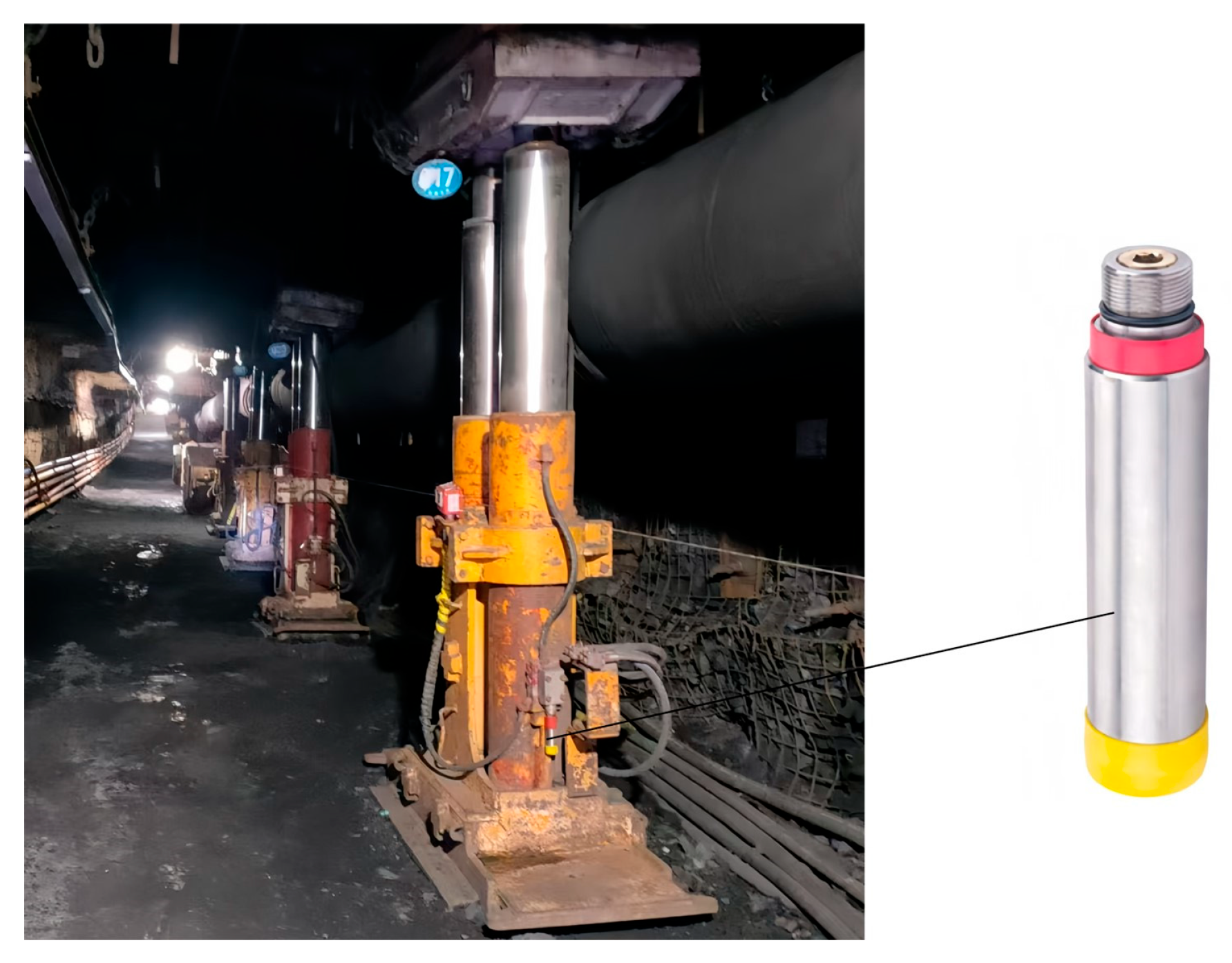
As shown in Figure 1, the safety valve is installed on the hydraulic support. To solve these problems, this paper applies magnetorheological (MR) technology to a high-flow safety valve for hydraulic supports. Compared with a traditional safety valve, the new safety valve leverages the fast response characteristics of MR fluid to achieve instantaneous sensing and rapid reaction to transient impacts. Given the operating conditions when a hydraulic support leg equipped with an MR fluid safety valve is subjected to sudden impact, it is necessary to design a predictive control strategy for the MR fluid safety valve.
In recent years, many researchers have conducted extensive studies on predictive control strategies. Xu et al. [4] proposed a new predictive control algorithm with a Smith predictor to compensate for signal delays in a teleoperated robotic system, using a grey prediction model to predict sensor output, in order to minimize additional latency. Zhang et al. [5] designed a control model combining proportional–integral–derivative (PID) control, fuzzy control, and grey prediction control for nutrient solution irrigation; a controller was developed based on this model, and results showed good response speed, real-time performance, and stability. Liu et al. [6] created an adaptive predictive PID (APPID) controller to control the pressure ratio of other stages during the capacity regulation of a reciprocating compressor, and employed a grey prediction model to predict the pressure output to overcome system delays. Gao et al. [7] established an improved grey model—by appropriately translating and sinusoidally transforming the original data sequence—to predict submarine pipeline corrosion degree and remaining life, achieving higher accuracy and better stability than the traditional grey model.
Other researchers have applied grey prediction in diverse contexts. Cai et al. [8] proposed three predictive control strategies for the monitoring of harmful bee colonies, among which an improved grey prediction model was used to simulate the future growth trend of an invasive bee population. Zhou et al. [9] developed a novel grey prediction model for seasonal time series, which demonstrated better simulation and prediction performance for metrics such as electricity usage and petroleum product consumption. Kayacan et al. [10] designed an adaptive grey fuzzy PID controller to achieve faster system response and smaller overshoot; simulation results showed that this controller not only reduced overshoot and rise time, but also maintained strong disturbance rejection. Jiang et al. [11] introduced a control method combining grey prediction with a traditional PI controller to address the grid connection of a doubly fed induction generator (DFIG) under rapidly fluctuating wind speeds. This approach mitigated feedback lag in the closed-loop system, enabling a smooth, impact-free grid connection. Song et al. [12] presented a FIG-GARM combined model for short-term traffic speed prediction, which achieved a higher predictive coverage probability, a narrower prediction interval, and a higher P-index, indicating superior robustness.
Grey prediction and fuzzy PID control have also been combined to improve various control systems. Xie et al. [13] introduced an improved discrete grey prediction control on the basis of fuzzy PID in an irrigation control system; simulations and experiments verified enhanced response characteristics and robustness of the control strategy. Liu et al. [14] developed a model predictive control method incorporating an extended state observer for an offshore gangway hydraulic system facing large external disturbances and uncertain model parameters. Simulation experiments confirmed that the strategy significantly improved the system’s dynamic response and stability. Yuan et al. [15] proposed a neural network predictive control strategy for a valve-controlled asymmetric cylinder based on a nonlinear autoregressive moving average with exogenous input (NARMAX) model, improving position control accuracy and robustness. Liu et al. [16] designed an improved grey prediction fuzzy PID controller by combining fuzzy PID with grey prediction to handle the nonlinearity and time-variance of a pneumatic control valve system. This strategy effectively increased the valve’s response speed and reduced overshoot, achieving better control performance. Sun et al. [17] applied a Gaussian process regression-based model predictive control strategy to a valve-controlled asymmetric hydraulic cylinder; the approach improved system response speed and position control precision, outperforming traditional PID control. Liu et al. [18] developed a fuzzy controller for a helicopter seat suspension buffer system with “soft landing” as the control goal. The results showed that using the fuzzy controller to achieve the “platform effect” and “soft landing” effectively avoided secondary rebound of the seat. Wang et al. [19] proposed a fuzzy control strategy to reduce the vibration impact of an internal combustion power unit, using an MR damper as the actuator and verifying the strategy on a multi-rigid-body system. The results demonstrated that the semi-active fuzzy control in a dual-layer vibration isolation system provided a good buffering effect.
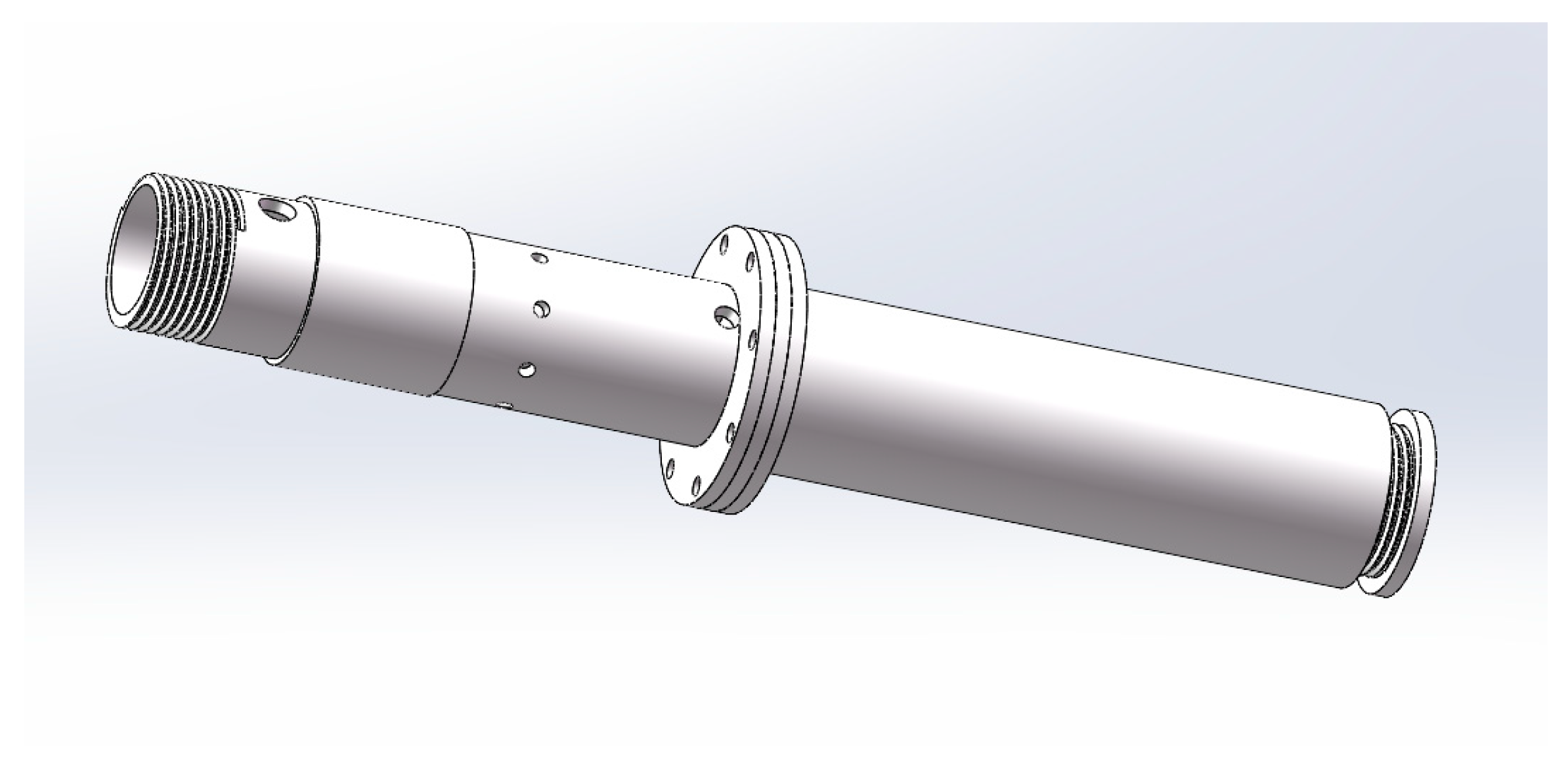
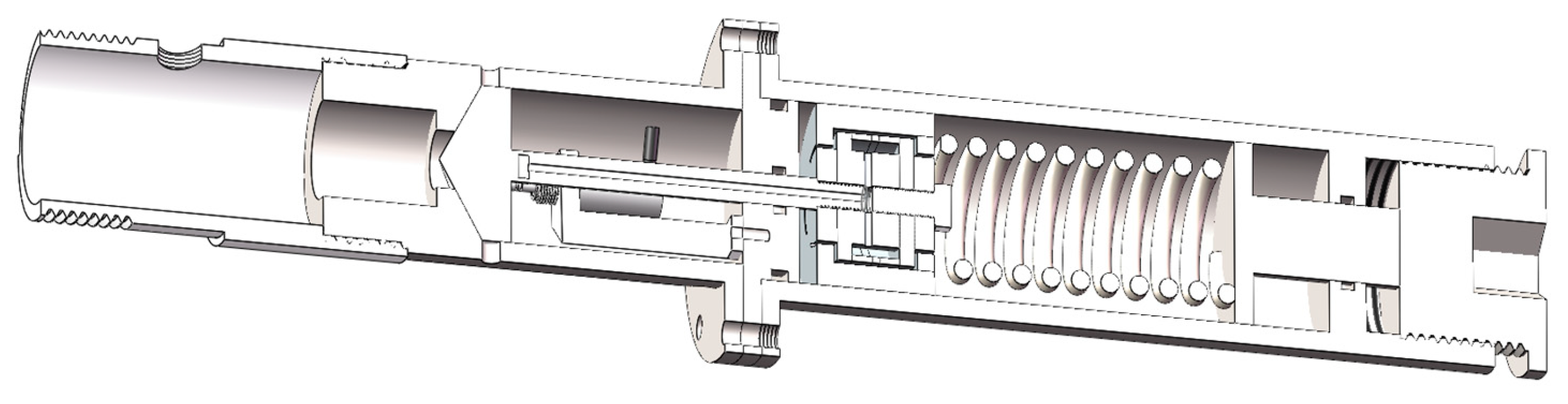
The structure of the magnetorheological safety valve is shown in Figure 2 and Figure 3. Under normal operating conditions, the controller of the magnetorheological (MR) safety valve regulates the output current to generate a controllable magnetic field. This field induces the MR fluid within the valve spool’s damping channel to exhibit non-Newtonian fluid characteristics, thereby generating a damping force. This damping force, combined with the preset spring force, constitutes the initial holding force that maintains the main valve spool in a closed state.
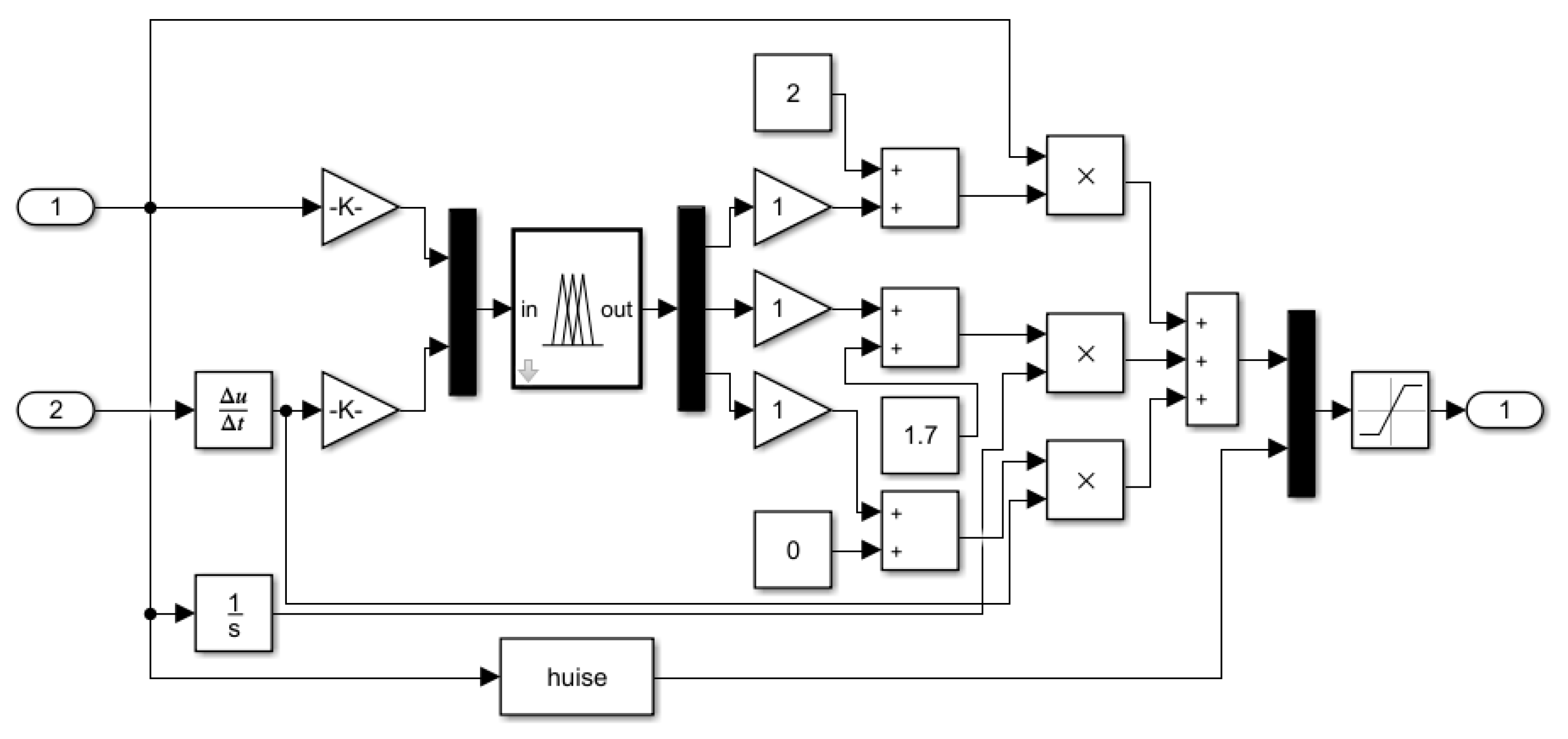
When the system is subjected to an impact, the control system adjusts the magnitude of the current, modifying the damping force within the MR valve spool’s damping channel. Consequently, a pressure differential develops across the main spool. This pressure difference compresses the spring, causing the main spool to open and achieve pressure relief.
Current research on rock burst protection often relies on mine-wide monitoring systems, such as microseismic or acoustic emission sensors. However, in the complex underground environment, these external sensors are prone to failure or false alarms due to significant background noise and signal interference. Furthermore, traditional safety valves remain passive components that react only after pressure limits are exceeded. Addressing these limitations, this study proposes a standalone active control strategy based on local pressure data. Unlike methods dependent on unreliable external signals, this research utilizes the grey prediction algorithm to extract the intrinsic trend of the hydraulic cylinder’s pressure. This approach bypasses complex environmental interference and achieves a paradigm shift from “passive pressure relief” to “active anticipatory defense” without requiring additional vulnerable sensors. This ensures robust and precise actuation within the critical milliseconds of an impact event.
To elucidate the technical evolution of this study, a comparative analysis is conducted between the proposed strategy and the magnetorheological pilot-operated safety valve previously developed by our research group as disclosed in Patent CN110905576B. Our prior work utilized a pilot-operated configuration, where the opening of the main valve relies on the pressure difference established by the pilot stage. While this multi-stage mechanism is effective for high-pressure regulation, it inevitably introduces hydraulic hysteresis and mechanical latency, as the pilot valve must actuate before the main valve can respond. In contrast, the current study adopts a direct-acting structure, where the magnetorheological effect directly modulates the flow resistance without the need for intermediate hydraulic amplification. This structural simplification significantly accelerates the mechanical response speed by eliminating the lag associated with the pilot stage. Building upon this hardware optimization, this work further advances the control paradigm by integrating the grey prediction fuzzy PID algorithm. This integration transforms the system from “reactive threshold switching” to “algorithm-based anticipatory continuous regulation,” thereby compensating for any remaining system delays and offering a more intelligent and robust solution for rock burst protection

2. Magnetorheological Fluid Safety Valve Control System Operating Principle

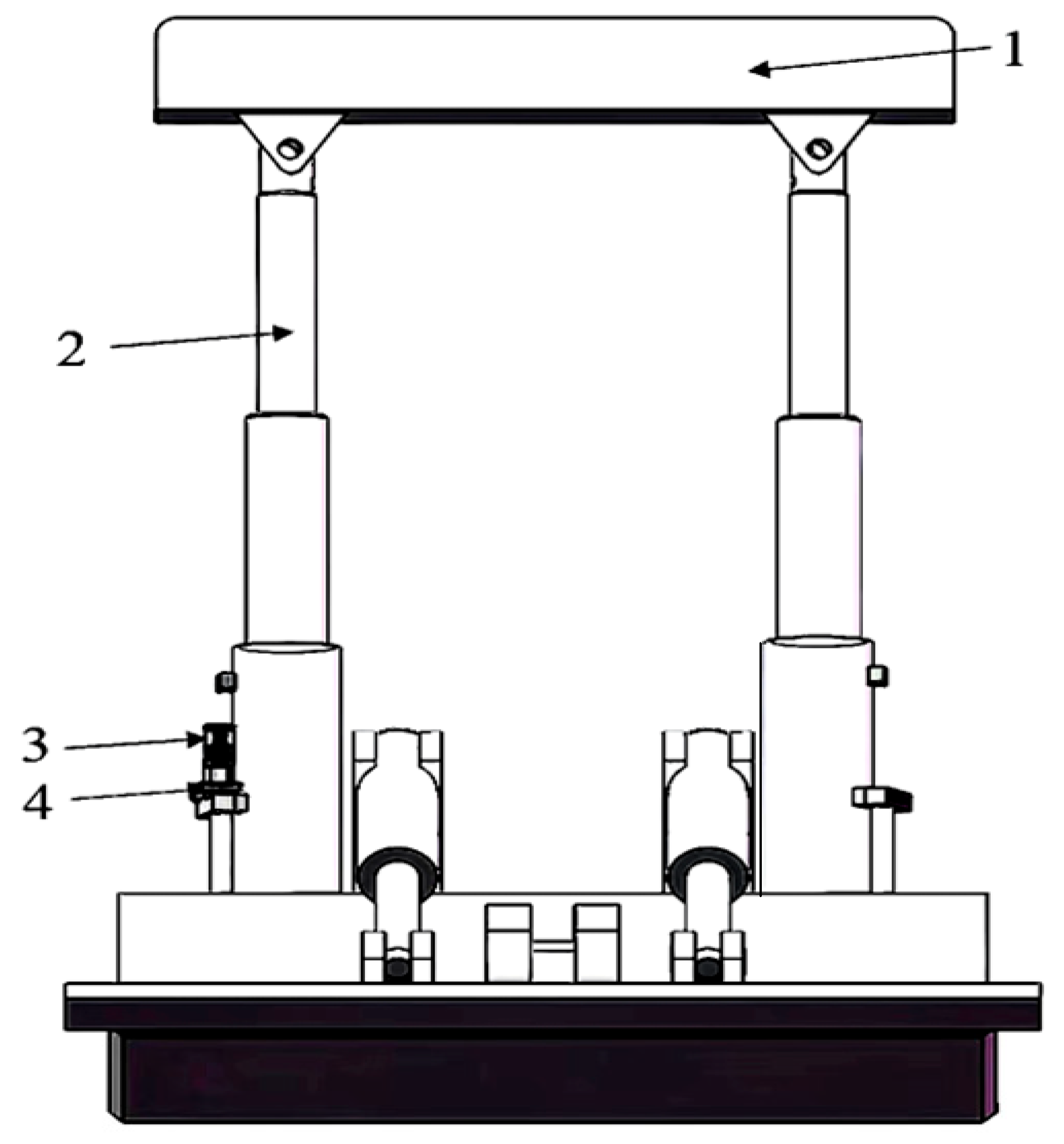
The new hydraulic support safety valve consists of two parts: a pressure relief device and a safety valve controlled by magnetorheological fluid, as shown in Figure 4. Considering that the MR fluid safety valve element has relatively weak pressure-bearing capacity on its own, a relief device is installed upstream of the MR fluid valve. A pressure sensor arranged in the first-stage cylinder of the support leg monitors the internal pressure, which reflects the overall load condition of the hydraulic support.
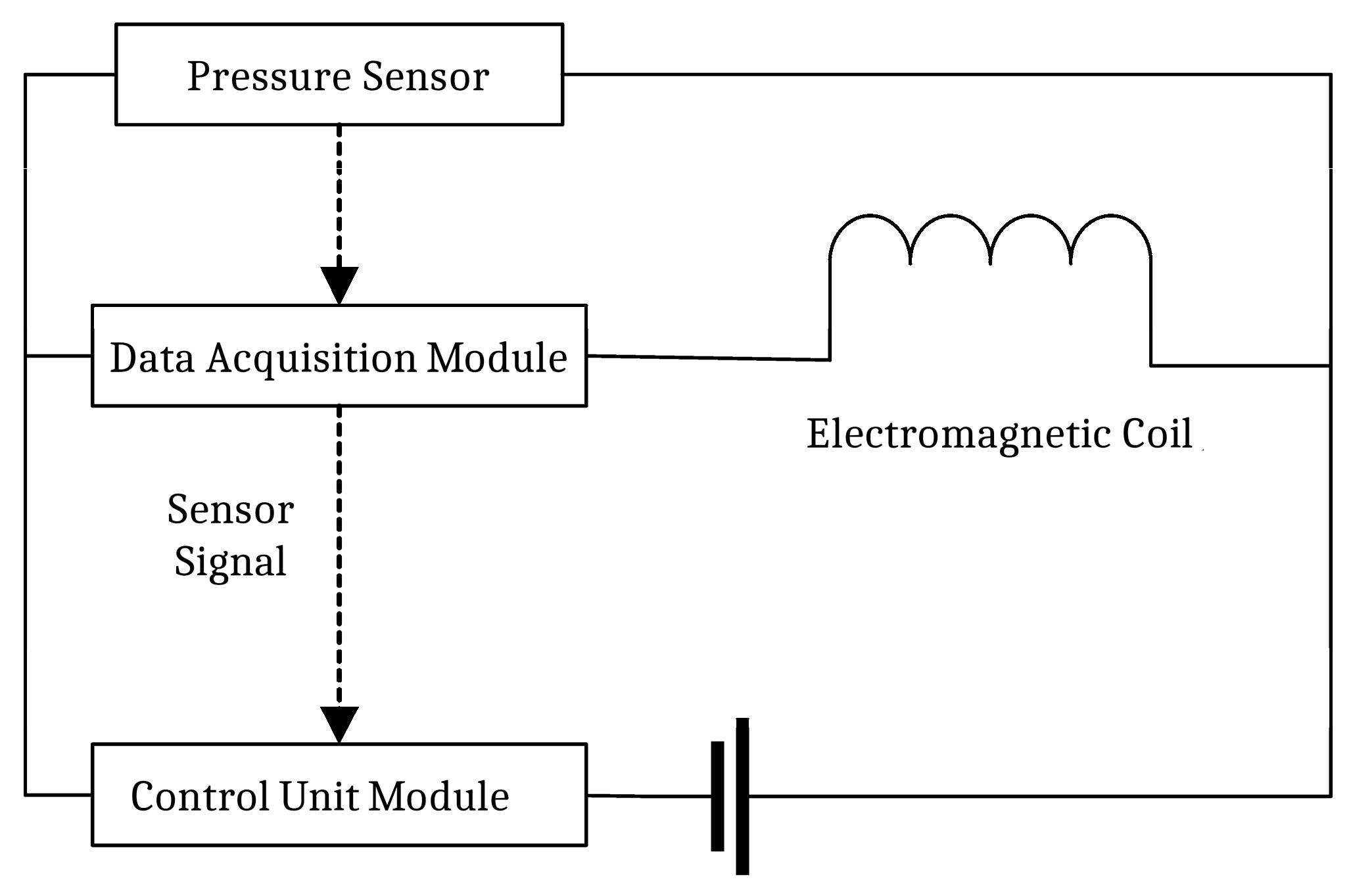
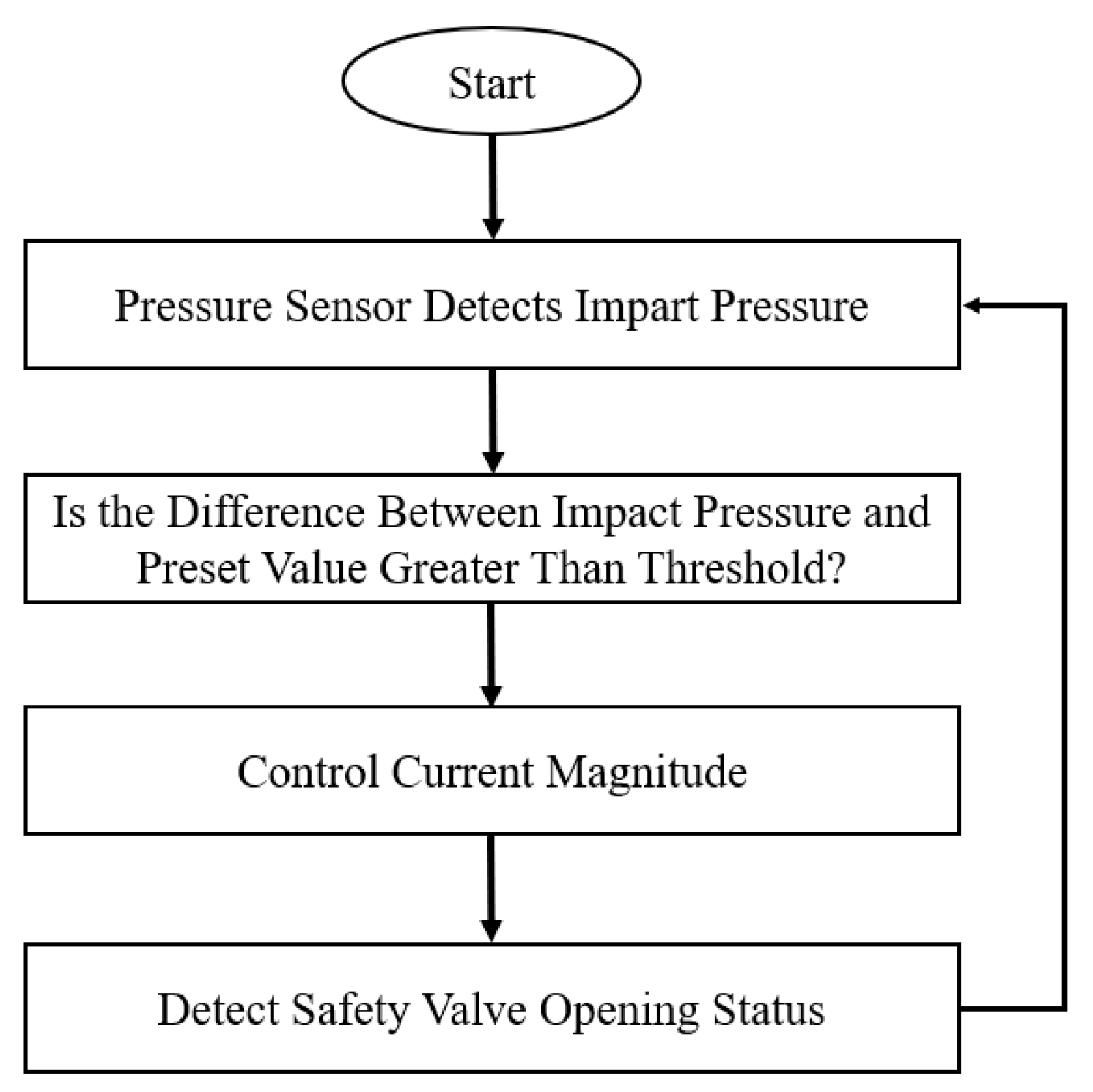
The simplified circuit diagram of the MR fluid safety valve control system and the control schematic are shown in Figure 5 and Figure 6, respectively. The control unit module is the core of the MR fluid-based safety valve. The pressure sensor signal is acquired via a data acquisition module and transmitted to the controller. The controller processes this signal and compares it with preset threshold values to determine the working state of the hydraulic support when the roof pressure acts. It then adjusts the input current to the electromagnetic coil of the MR fluid safety valve, thereby controlling the opening of the safety valve.

3. Research on Magnetorheological Fluid Safety Valve Control Strategy

Magnetorheological fluid, as the working medium of a high-flow safety valve, offers advantages such as low energy consumption for conversion, ease of control, and rapid response. When the hydraulic support is subjected to a sudden impact, the MR fluid safety valve must be governed by an effective control strategy so as to achieve a “preemptive” response and rapid pressure relief. In this study, we design the control strategies for the MR fluid safety valve based on a fixed current control method and a fuzzy PID control method with grey prediction.

3.1. Fixed Current Control Strategy

3.1.1. Fixed Current Control Operating Principle

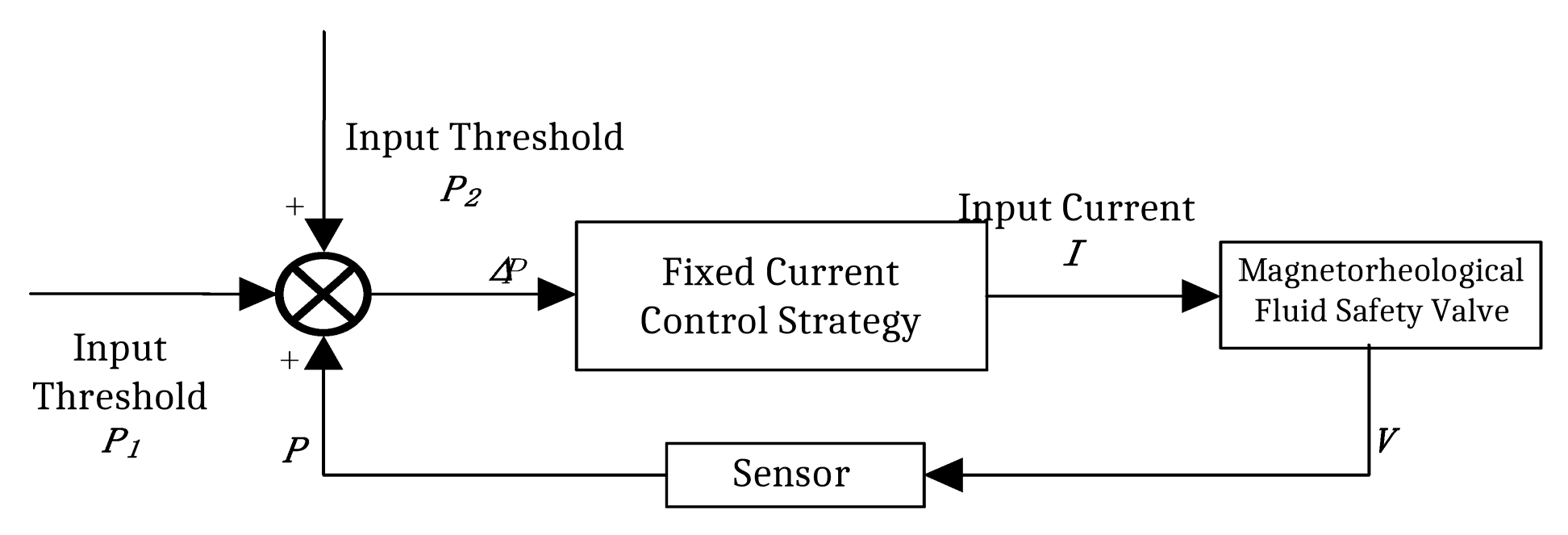
The principle of the fixed current control system is illustrated in Figure 7. When the pressure signal monitored by the pressure sensor in the first-stage cylinder of the hydraulic support leg is below a set threshold, the hydraulic support is in normal operation and the MR fluid safety valve remains normally closed. When the roof pressure increases but is still below the support’s maximum capacity, the controller de-energizes the electromagnetic coil and the MR fluid safety valve opens to relieve pressure, thereby protecting the support from damage.

3.1.2. Fixed Current Control Strategy Design

The fixed current control strategy uses the pressure data from the support leg’s first-stage cylinder pressure sensor as the primary basis for judgement. The strategy divides the recorded internal pressure into two key thresholds: P1 and P2. P1 is set to the working pressure of the support under normal roof load, and P2 is the pressure when the roof load increases beyond the normal range but has not reached the ultimate capacity.
The operation of the MR fluid safety valve can be divided into two main stages to handle different pressure conditions. In the first stage, when the roof pressure is within the normal operating range, the MR fluid safety valve remains closed and the support leg works normally. In the second stage, when the roof pressure exceeds the normal value (while the support is still in its working state), the controller opens the MR fluid safety valve to relieve pressure.
According to these two stages, the controller inputs two different currents, I1 and I2, to the electromagnetic coil. The control law is as follows:
I = I 1 P < P 1 I 2 P 1 < P < P 2
where I1 and I2 are the coil input currents (with I 2 ( I 1 , 0 ] ), and P1 and P2 are pressure thresholds ( P 1 < P 2 ). The input currents I1 and I2 are determined by substituting the relationship between the MR fluid’s maximum shear force and magnetic field strength into the magnetic field–current characteristic relationship.
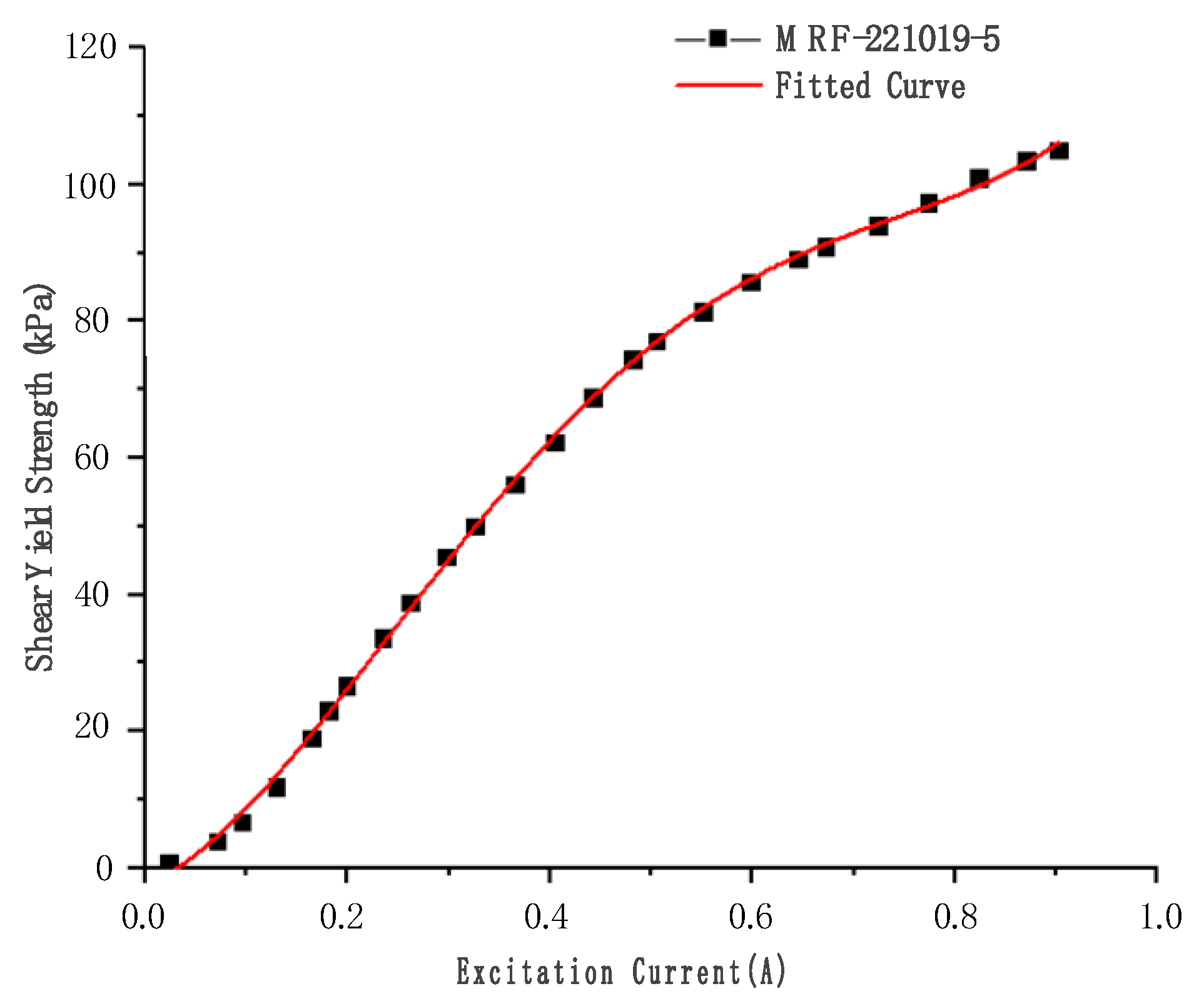
In this study, we utilized the magnetorheological fluid MRF-221019-5 (Somar Corporation, Tokyo, Japan), with a liquid density of 4.01 g/cm3 and a zero-field viscosity of 0.43 Pa·s. At a current of 1 A, the MR fluid reaches a shear yield limit of 104 kPa and a saturation magnetic flux density of 0.8 T. Its main components include carbonyl iron powder, silicone oil, and additives. The relationship curve between the MR fluid’s shear yield stress τy and the excitation current I, along with its cubic polynomial fitting, is shown in Figure 8. The fitted relationship is expressed by the following polynomial (Equation (2)):
τ y = 540 . 526 × I 4 1064.0 × I 3 + 579.46 × I 2 + 67.012 × I 2.707
where τy is the shear yield stress of MRF-221019-5 and I is the excitation current.

3.2. Fuzzy PID Control Strategy Based on Grey Prediction

Given the safety-critical nature of hydraulic support systems, the robustness of the control strategy is paramount. While advanced methods such as model predictive control (MPC) or observer-based techniques are theoretically effective, they often rely on precise mathematical models or complex external sensor networks. However, external sensors exhibit high failure rates in the high-impact, high-dust environments of coal mines. Furthermore, an increased number of input signals inevitably prolongs the system’s reaction time, which is detrimental to the rapid opening required of the safety valve. Additionally, the theory of rock burst prediction remains immature; in many practical instances, multi-source sensor arrays have failed to detect anomalous signals during actual rock burst events.
The performance of conventional PID control relies heavily on extensive valid field data for parameter tuning. However, rock burst conditions are characterized by extreme destructiveness and rarity, resulting in a severe scarcity of valid sample data. This insufficient dataset cannot support the parameter optimization process that requires large amounts of data. Consequently, a standalone PID control strategy is not feasible in engineering practice
In contrast, the fuzzy PID control based on grey prediction proposed in this study offers distinct advantages for this specific application:
Independence and Reliability: It relies solely on the internal pressure data of the hydraulic support, thereby eliminating dependence on immature rock burst prediction theories and unreliable external signals.
Small-Sample Prediction Capability: The grey prediction model is uniquely suited for “poor information” systems. It can rapidly establish a prediction trend using very few sampling points during the sudden onset of an impact. This makes it far more responsive and practical than neural networks, which typically require extensive training data that is difficult to obtain for rare rock burst events.
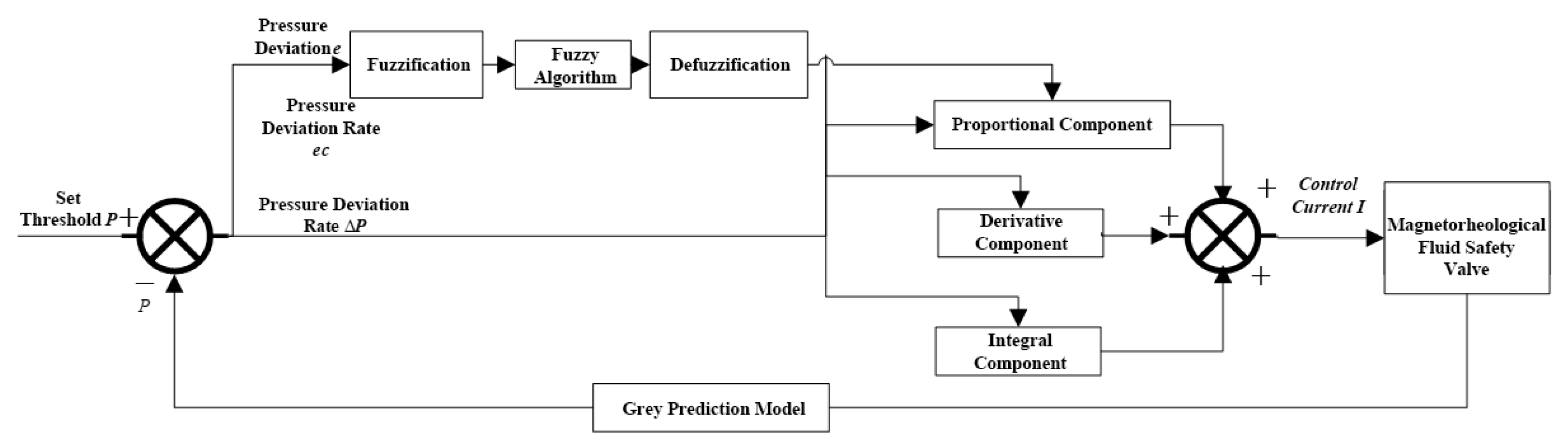
By incorporating a grey prediction module, the system’s output data sequence can be extracted to predict future trends and realize “anticipatory control,” which further addresses the issues of poor anti-interference and low precision in classical fuzzy PID control [20]. The control schematic of the fuzzy PID strategy with grey prediction is shown in Figure 9, where the key idea is to insert a grey prediction model into the feedback loop of a fuzzy PID controller.
This section establishes a GM(1,1) model based on grey prediction. The detailed steps of the control strategy are formulated as follows:
(1)
Input Definition: The inputs to the fuzzy PID controller are identified as the column cylinder pressure deviation, denoted as e(k), and the pressure deviation rate, denoted as ec(k).
(2)
Fuzzification Method: A singleton fuzzifier is selected for the fuzzification process.
μ A x = 1 x k = x 0 , 1 T h e   d e g r e e   t o   w h i c h   x k   b e l o n g s   t o   x 0 x k x
(3)
Determination of Membership Functions: To map the actual error e, error rate ec, and grey action quantity u onto the fuzzy universe of discourse, the quantization factors ke, kec, and ku are defined.
k e = n e k e c = n e k u = n u
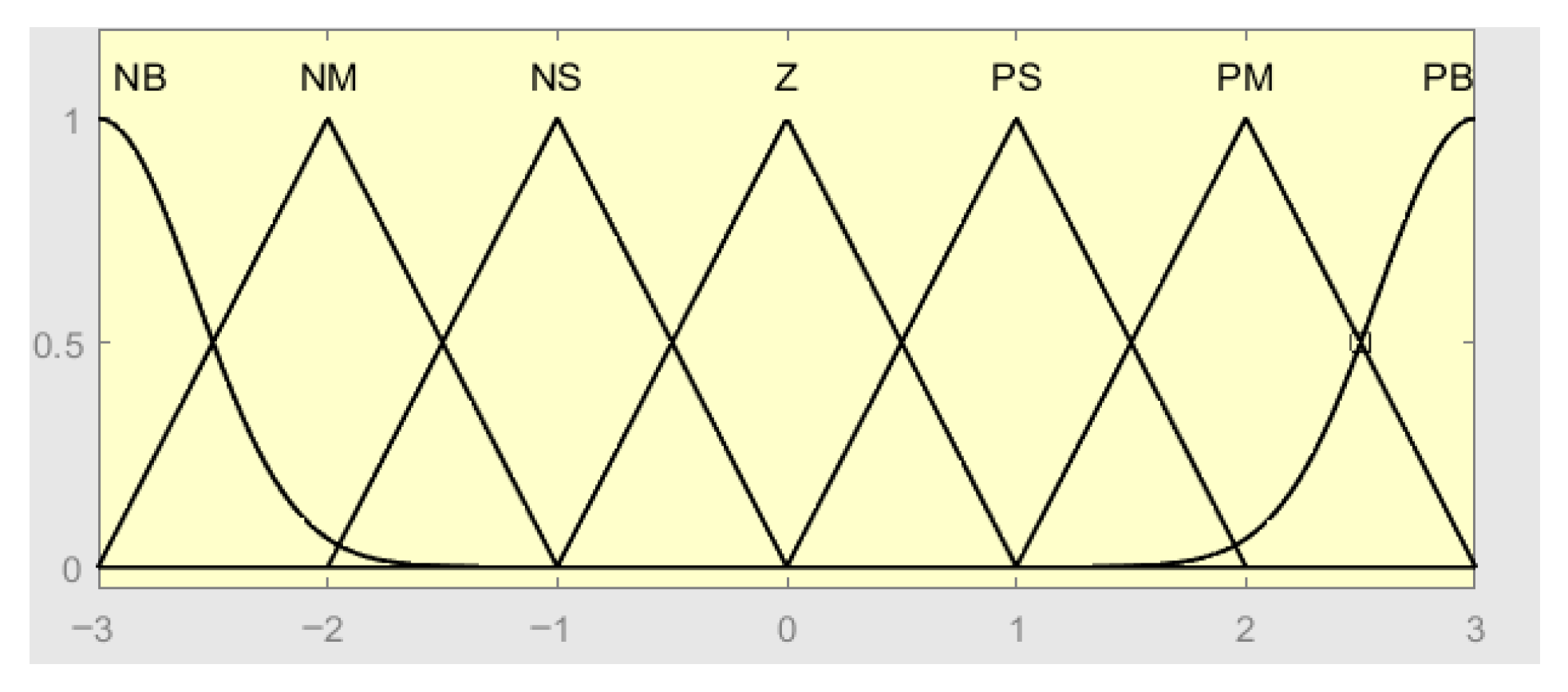
The domains of inputs (e, ec) and outputs (ΔKp, ΔKi, ΔKd) are granulated into seven linguistic variables: {NB, NM, NS, ZO, PS, PM, PB}. To optimize the control performance, a hybrid membership function MF strategy is adopted for the input variables. Specifically, Gaussian MFs are assigned to the boundary subsets (NB, PB) to leverage their smooth differentiability, thereby ensuring strong robustness against extreme signal fluctuations during the initial phase of rock burst impacts. Conversely, triangular MFs are employed for the intermediate subsets to maintain linear sensitivity and computational efficiency, facilitating precise pressure regulation as the system approaches a steady state.
The universe of discourse and membership functions for column pressure deviations e and ec are illustrated in Figure 10.
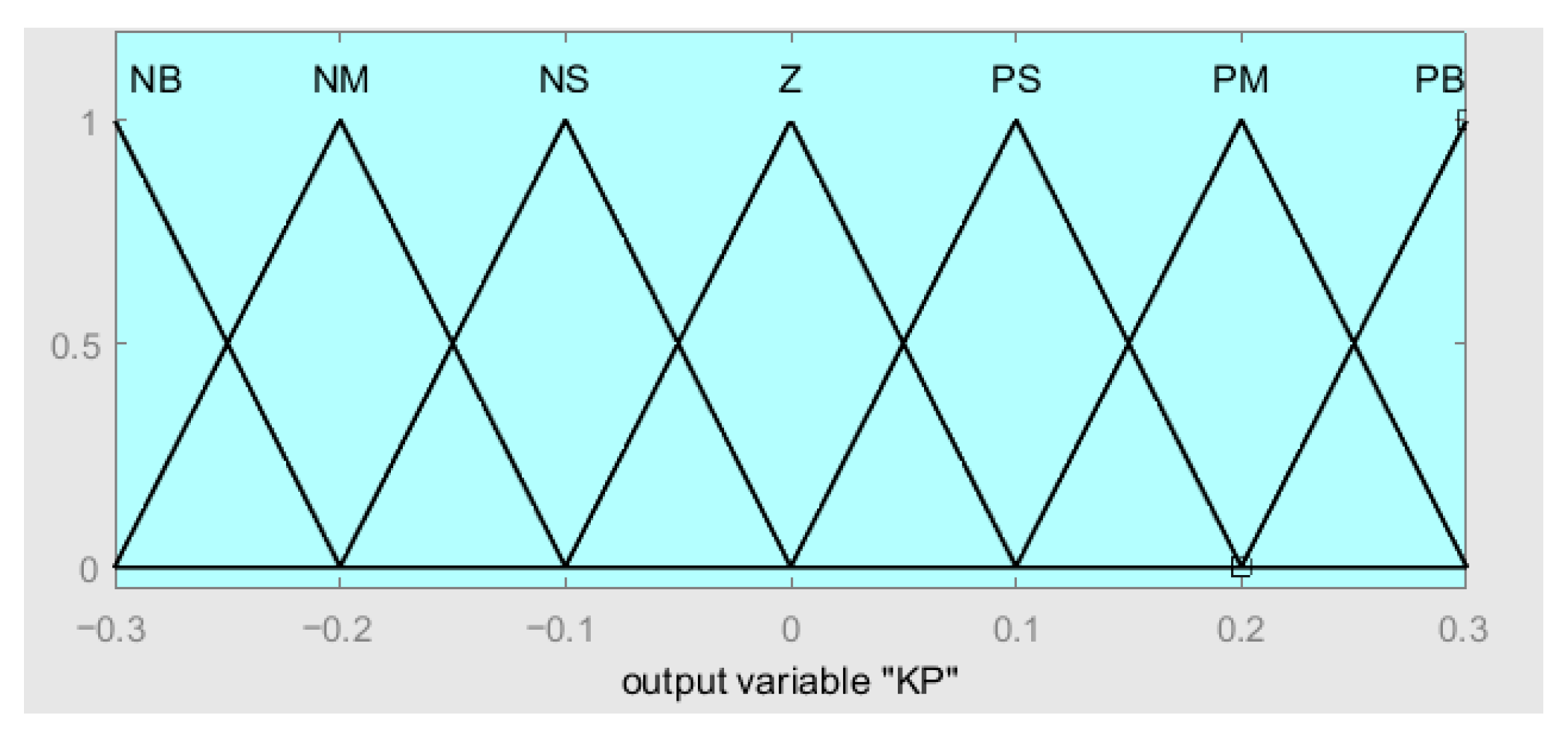
Based on the empirical data method for PID parameter tuning, the fuzzy domains for the PID correction coefficients (ΔKp, ΔKi, ΔKd) are defined as [−0.3, 0.3]. Considering that the maximum deviation of the column cylinder pressure is approximately 25 MPa and the pressure error rate is approximately 1160 MPa/s, the fuzzy domains for the error e and error rate ec are normalized to [−3, 3]. Accordingly, the quantization factors are set as Ke = 3/125 and Kec = 3/11,600, while the output scaling factors Ku1, Ku2, and Ku3 are all set to one [21,22].
The membership functions for ΔKp, ΔKi, and ΔKd are shown in Figure 11.
(4)
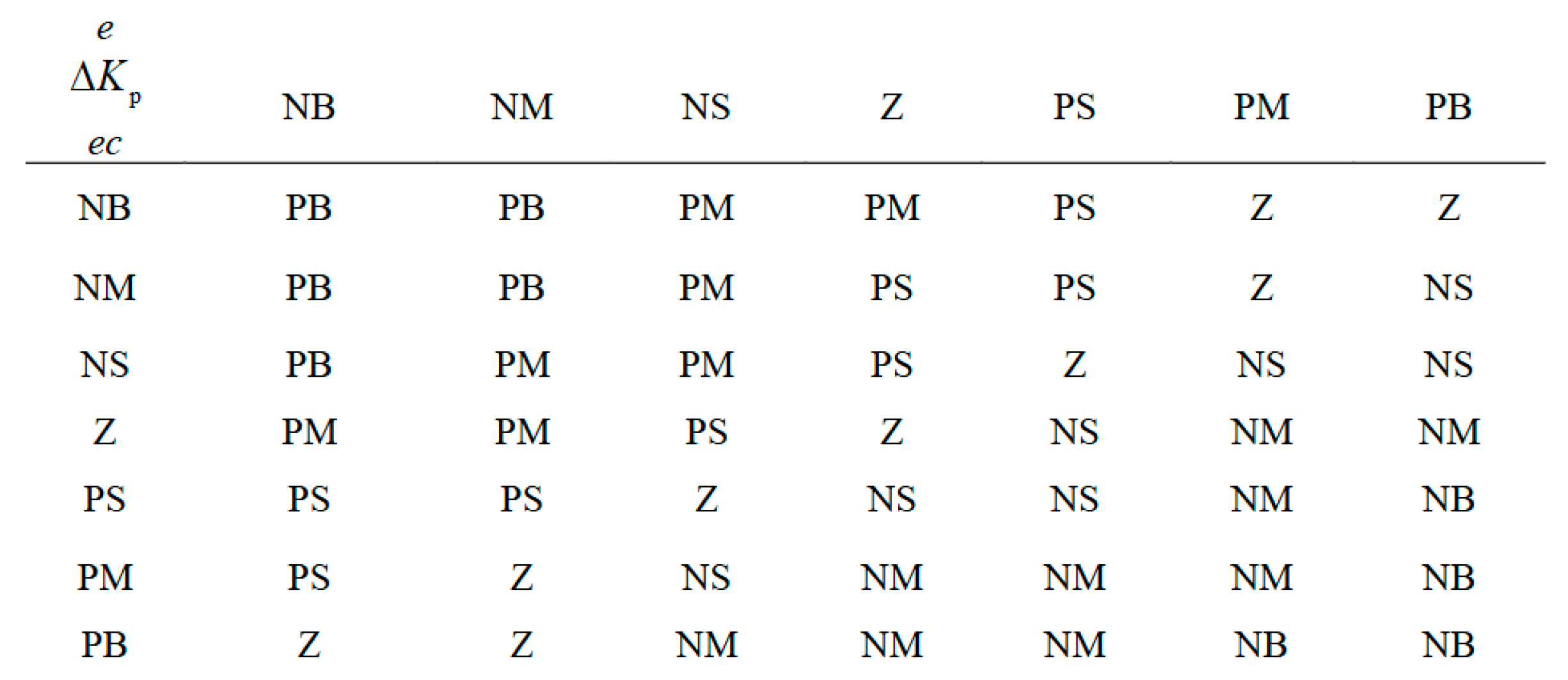
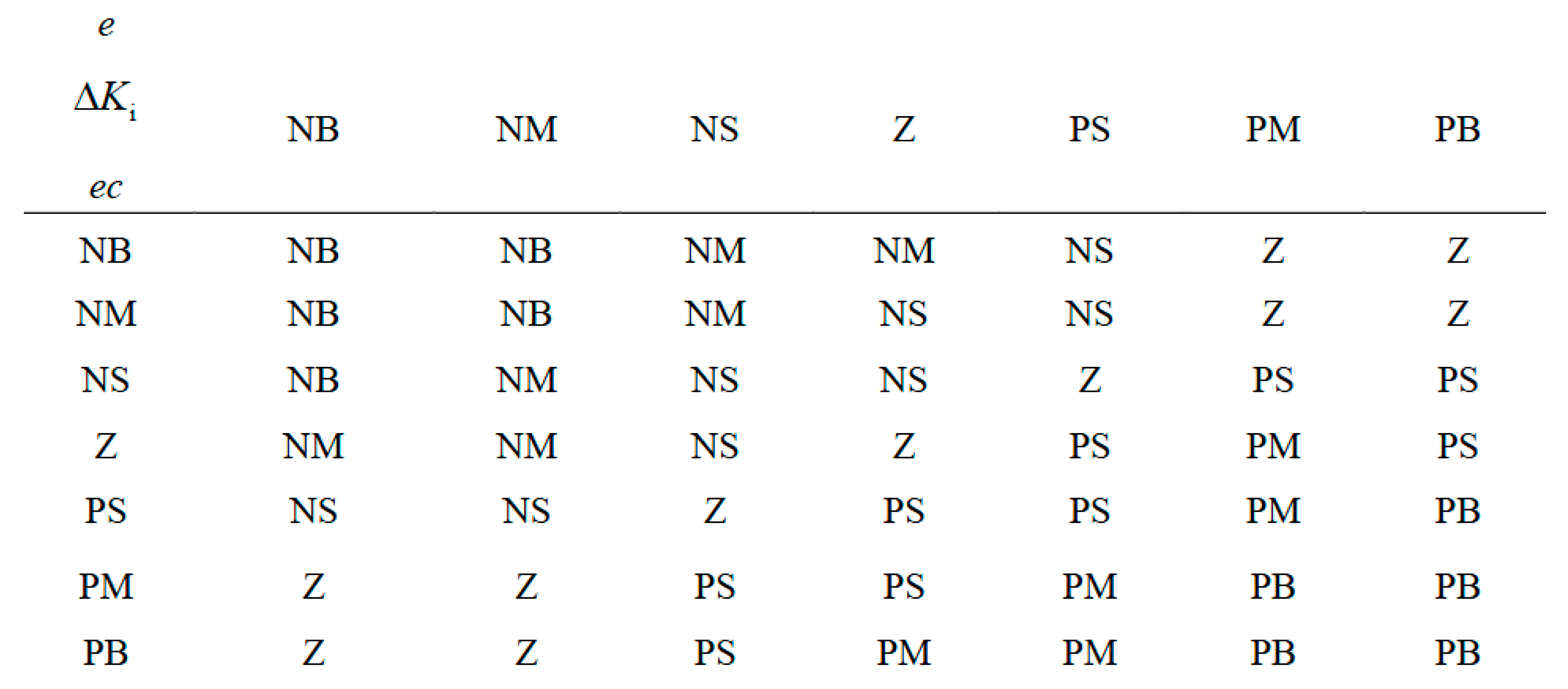
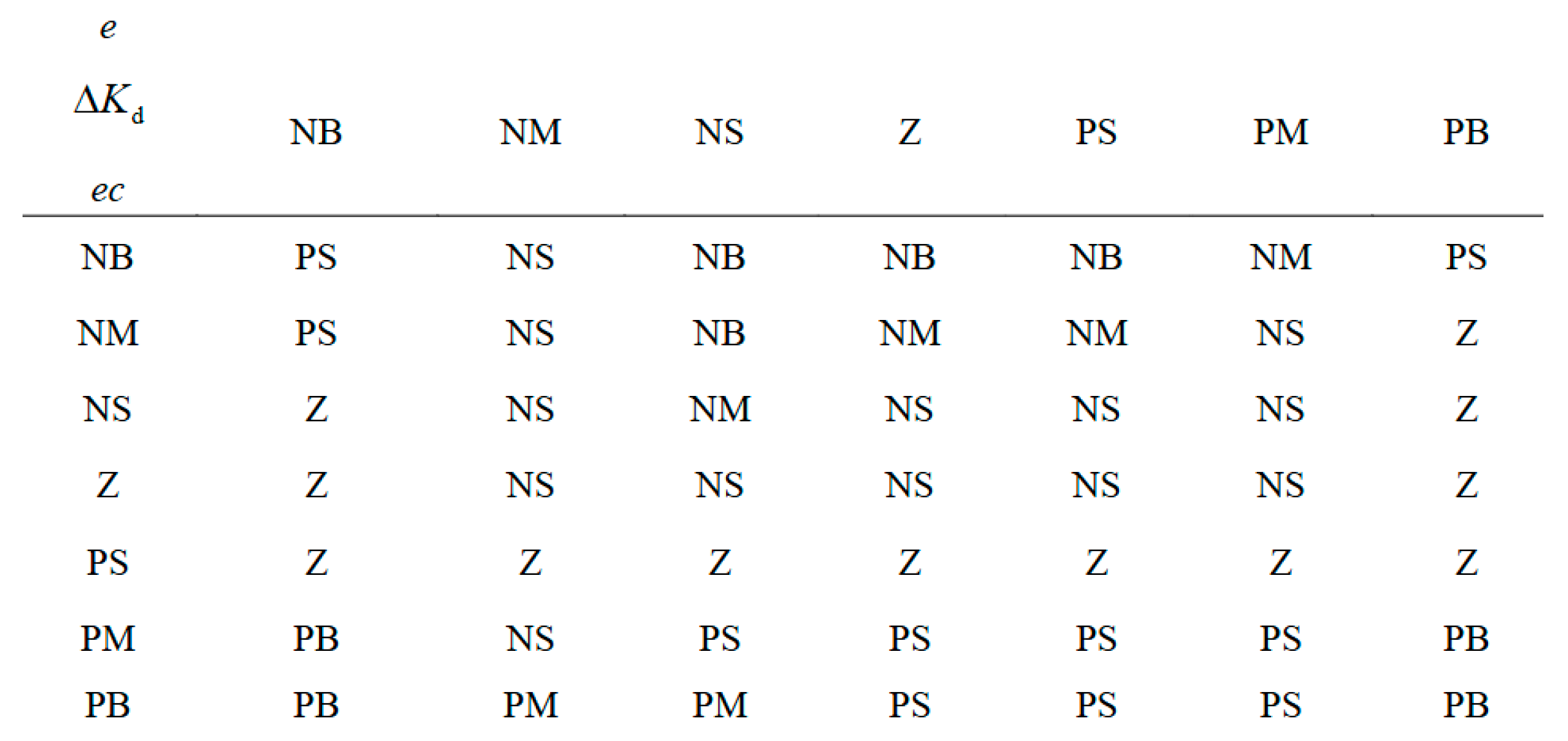
Design of Fuzzy Rules: The fuzzy rules adaptively tune the PID parameters online based on the varying states of error e and rate ec. To improve tracking speed and prevent integral saturation, a larger Kp and a smaller Kd should be selected, while setting ΔKi = 0. The focus is on suppressing overshoot. Kp should be decreased appropriately, while ΔKi and Kd should be increased to ensure a smooth response. To eliminate static error and improve disturbance rejection, Kp and Ki should be increased. The adjustment of Kd depends on ec: if ec is small, increase Kd to enhance the anti-interference capability; if ec is large, decrease Kd to prevent system oscillation.
Based on these principles, the fuzzy control rule tables are established as shown in Figure 12, Figure 13 and Figure 14.
(5)
Fuzzy Inference Mechanism: The control strategy employs the Mamdani fuzzy inference method, which processes inputs through four sequential stages: fuzzification, rule evaluation, aggregation, and defuzzification.
In the rule evaluation phase, the logical operators for fuzzy intersection (AND) and union (OR) are defined by the minimum and maximum functions, respectively [23]:
μ A B x = min μ A x , μ B x
μ A B x = max μ A x , μ B x
Rule aggregation unifies the consequences of all activated rules into a single fuzzy set:
μ A x = μ k 1 x 1 , μ k 2 x 2 μ kn x n
Finally, the Centre of Gravity method is employed for defuzzification to convert the aggregated fuzzy output into precise control signals [24]:
C O G = a b μ A x x d x a b μ A x d x
(6)
Calculation of PID Controller Parameters (Kp, Ki, Kd): The correction increments for the PID parameters (ΔKp, ΔKi, ΔKd) are obtained by performing defuzzification on the fuzzy inference outputs. Comparative studies indicate that the Weighted Average method (also known as the Centre of Gravity method) outperforms the Median method in terms of control performance. Specifically, in the context of fuzzy PID control, the Weighted Average method demonstrates superior advantages, offering smoother output transitions and higher precision. Consequently, this study adopts the Weighted Average method—recognized for its optimal performance—to handle the defuzzification process.
(7)
PID Output and Grey Prediction: The discrete PID control output u(k) is calculated as follows:
u k = 1 δ e k + T T i i = 1 k e i + T d T e c k
The control output is then converted into the physical system input via the following transformation:
y 0 k = k u U + u H + u L 2
To compensate for time delays, a GM(1,1) model is applied. First, the original output sequence y 0 is transformed via the Accumulated Generating Operation to obtain y 1 . The model parameters a (development coefficient) and u (grey action quantity) are identified using the least squares method [25]:
a u = B T B 1 B T Y
Using the identified parameters, the predicted time response sequence for h-steps ahead is derived as follows [26]:
y P 0 k + h = y P 0 1 u a e a h 1 e a
Finally, the predicted error E k = y 0 k y P 0 k + h is used to replace the current error in the next control cycle, realizing predictive control.

4. Co-Simulation Study of an Impact-Resistant Hydraulic Support System with Magnetorheological Fluid Safety Valve

4.1. Mechanism of AMESim–Simulink Co-Simulation Implementation

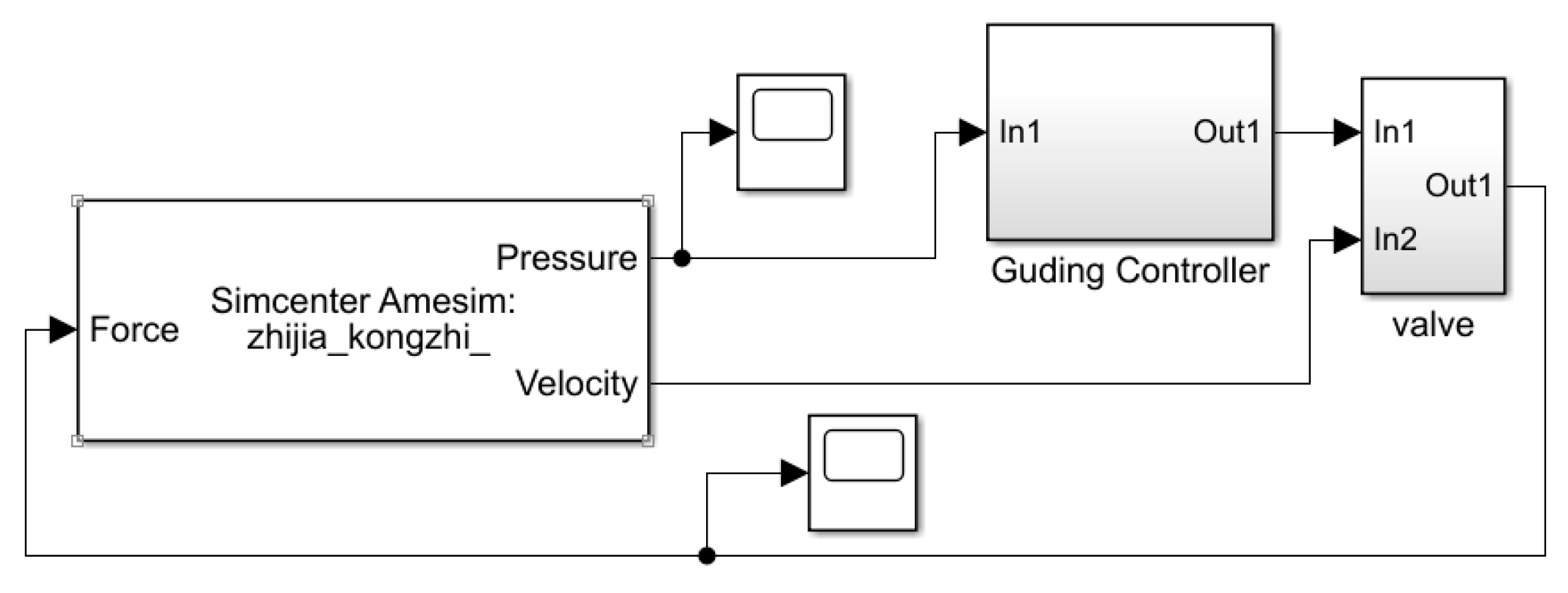
As shown in Figure 15, the co-simulation model used to analyze the response characteristics of the MR fluid safety valve consists of a valve physical model built in AMESim and a predictive control system model built in Simulink. Essentially, the co-simulation between the physical model and the control model is achieved via an S-Function serving as a medium for data transfer and exchange. The S-Function handles the communication between AMESim and Simulink during the simulation [27].

4.2. Physical System Modelling of the Hydraulic Support with MR Fluid Safety Valve

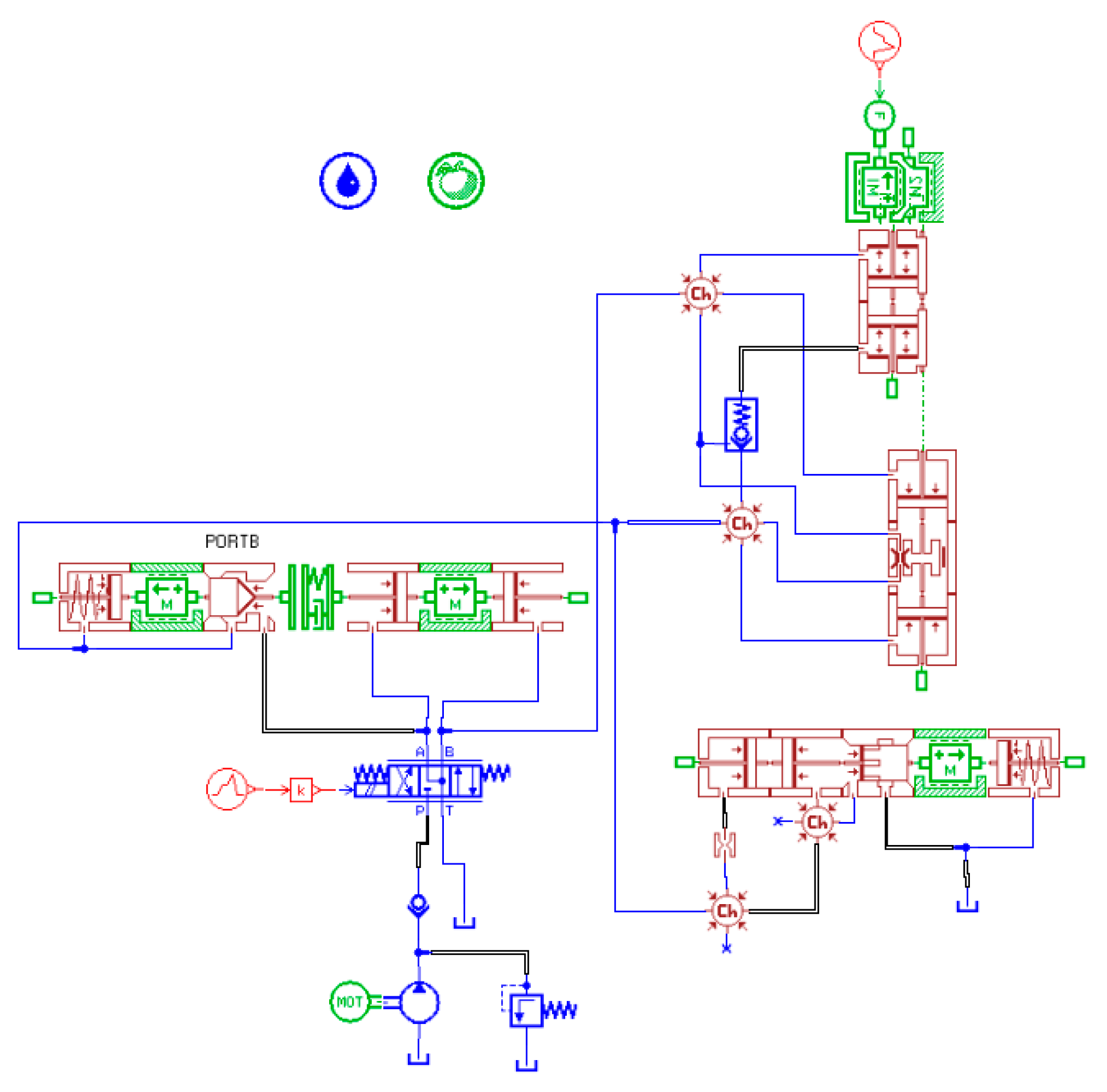
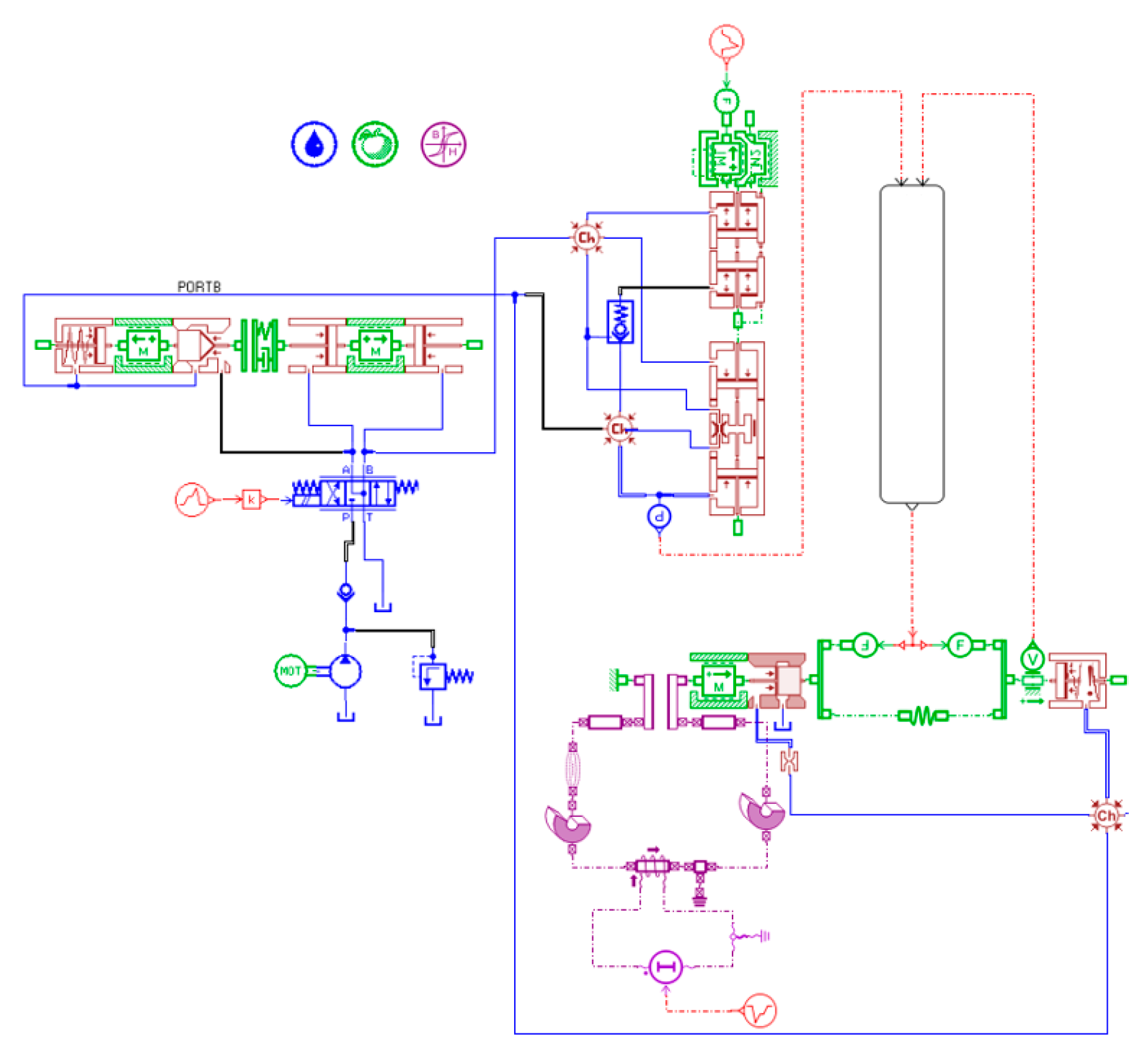
In this work, the physical system modelling is carried out using the HCD component library and hydraulic component library in AMESim. We constructed two hydraulic support models for impact conditions: one equipped with a traditional large-flow safety valve, and another equipped with the MR fluid safety valve, as shown in Figure 16 and Figure 17. To simplify modelling and accelerate the simulation, the hydraulic support is treated as a single telescopic leg. (The ZY3800/15/30 hydraulic support is a two-leg support, so modelling one leg is sufficient.) The two legs experience nearly identical loading and working conditions, so the working resistance in the model is set to half of the support’s rated working resistance. In the simulation of the conventional large-flow safety valve, the external load is set to 1/2 of the total load. For the MR fluid safety valve, considering that the shear stress contributed by the MR fluid is relatively small and that the MR safety valve assembly consists of four direct-acting MR valves plus a pressure relief device, we model only one of the MR valves and set the external load to 1/8 of the total load during simulation

4.3. Modelling of the MR Fluid Safety Valve Control System

4.3.1. Simulink Modelling of the Fixed Current Control System

The Simulink model of the fixed current control system is shown in Figure 18. It is composed of three parts:
(1)
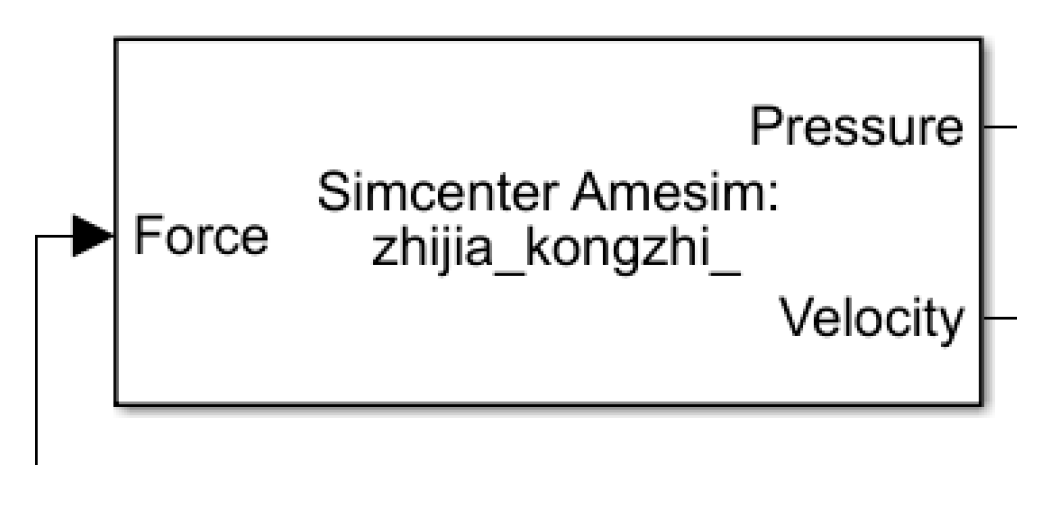
Interface unit: Modelled in Simulink as shown in Figure 19, using an S-Function block. The inputs are the internal pressure measured by the pressure sensor in the support leg cylinder and the spool’s movement velocity, and the output is the resulting damping force of the MR fluid safety valve.
(2)
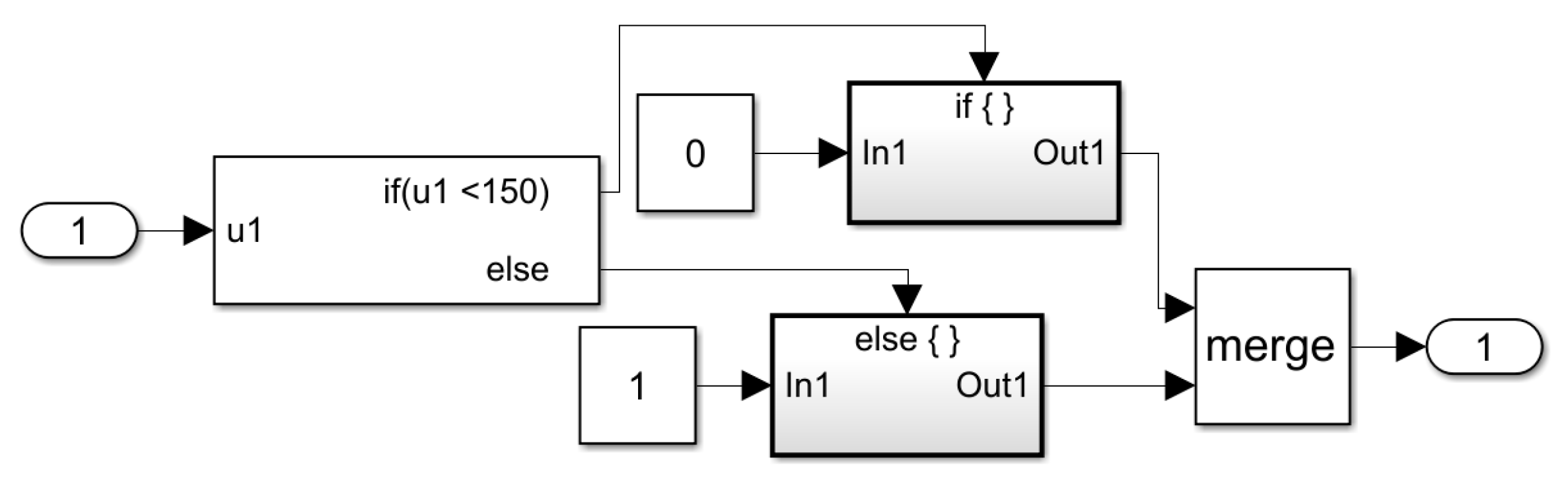
Control unit: Modelled in Simulink as shown in Figure 20, using If-Else logic blocks to form a selector model. This unit determines which range the pressure signal falls into; accordingly, parameters are set for the two pressure thresholds of the MR fluid safety valve under impact conditions.
(3)
Damping unit: The MR fluid safety valve’s damping component is modelled in Simulink as shown in Figure 21, using a Function block. It consists of two parts: one part defines the relationship between the input current I and the MR fluid’s yield limit τ0, and the other part defines the relationship between the MR fluid’s yield limit τ0 and the output damping force F when the safety valve is subjected to impact.

4.3.2. Simulink Modelling of the Fuzzy PID Control System Based on Grey Prediction

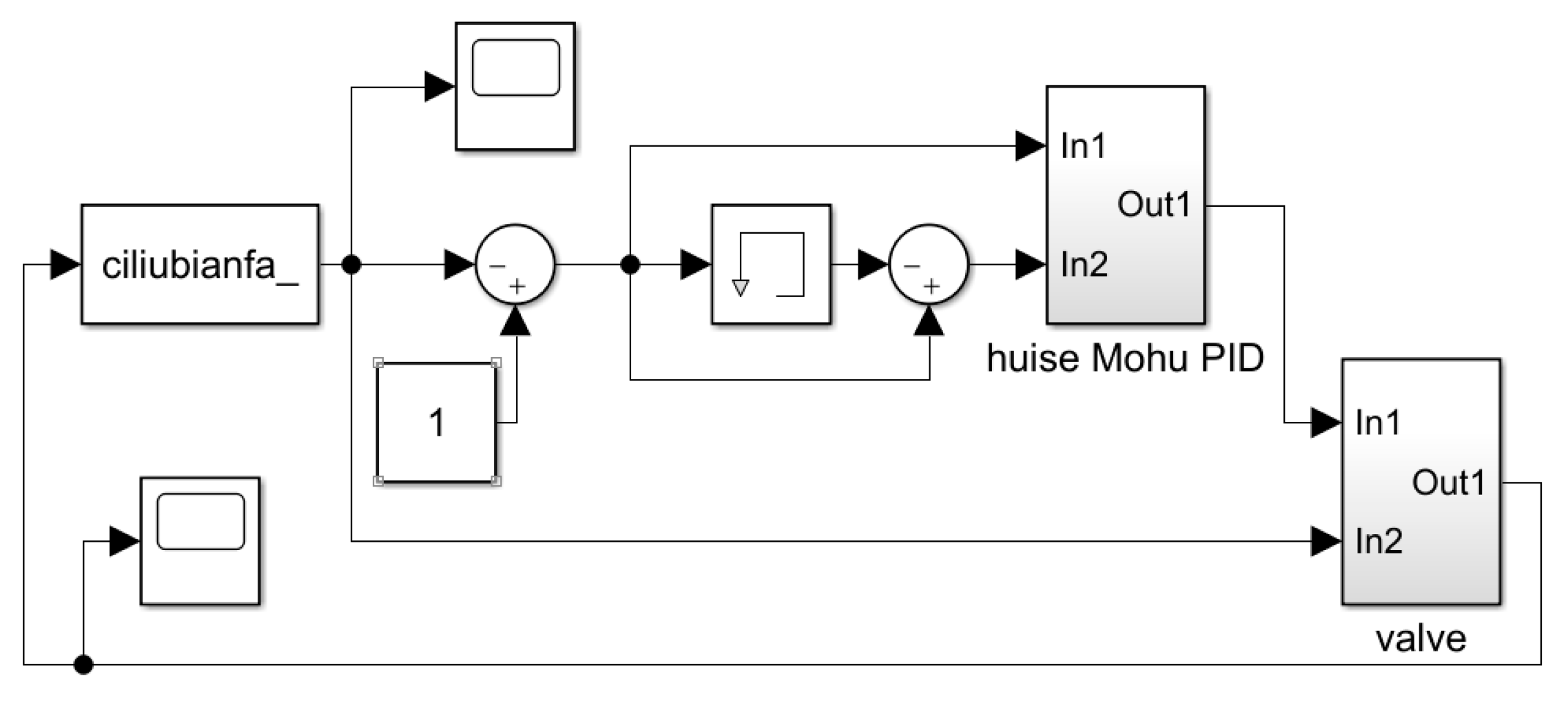
The Simulink model of the fuzzy PID control system with grey prediction is shown in Figure 22. Like the fixed current control system model, it also consists of three parts: an interface unit, a control unit, and an MR fluid safety valve damping unit. P represents the working resistance of the hydraulic support under normal operation, and is set to P = 250. The input e of the fuzzy PID control unit represents the pressure difference in the support leg’s cylinder, which can be obtained from the difference between the set parameter value and the output of the interface unit. A memory block is added to the control system to store variables. Another input ec of the fuzzy control unit represents the rate of change in the pressure difference in the support leg, which is calculated from the difference between the parameter value and the error e.
  • The interface unit part is modelled in Simulink in the same way as in the fixed current control strategy system.
  • The control unit part is modelled in Simulink, as shown in Figure 23.
  • Design of the grey prediction module is as follows:
    In programming the GM(1,1) grey prediction module, the S-Function’s initial settings are configured as shown in Table 1, and an S-Function block is developed to implement the grey prediction control function in the Simulink environment. The program design concept is as follows: initialize the module parameters as per Table 1, sample the input data, generate a first-order accumulated sequence using accumulated generation operation, construct the accumulative matrix, solve for the grey model parameters using least squares, compute the predicted accumulated sequence, and finally restore it to obtain the prediction values. In the GM(n,h) grey prediction module, the S-Function initialization is set as shown in Table 2.

4.4. Co-Simulation Analysis of Dynamic Characteristics Using AMESim and Simulink

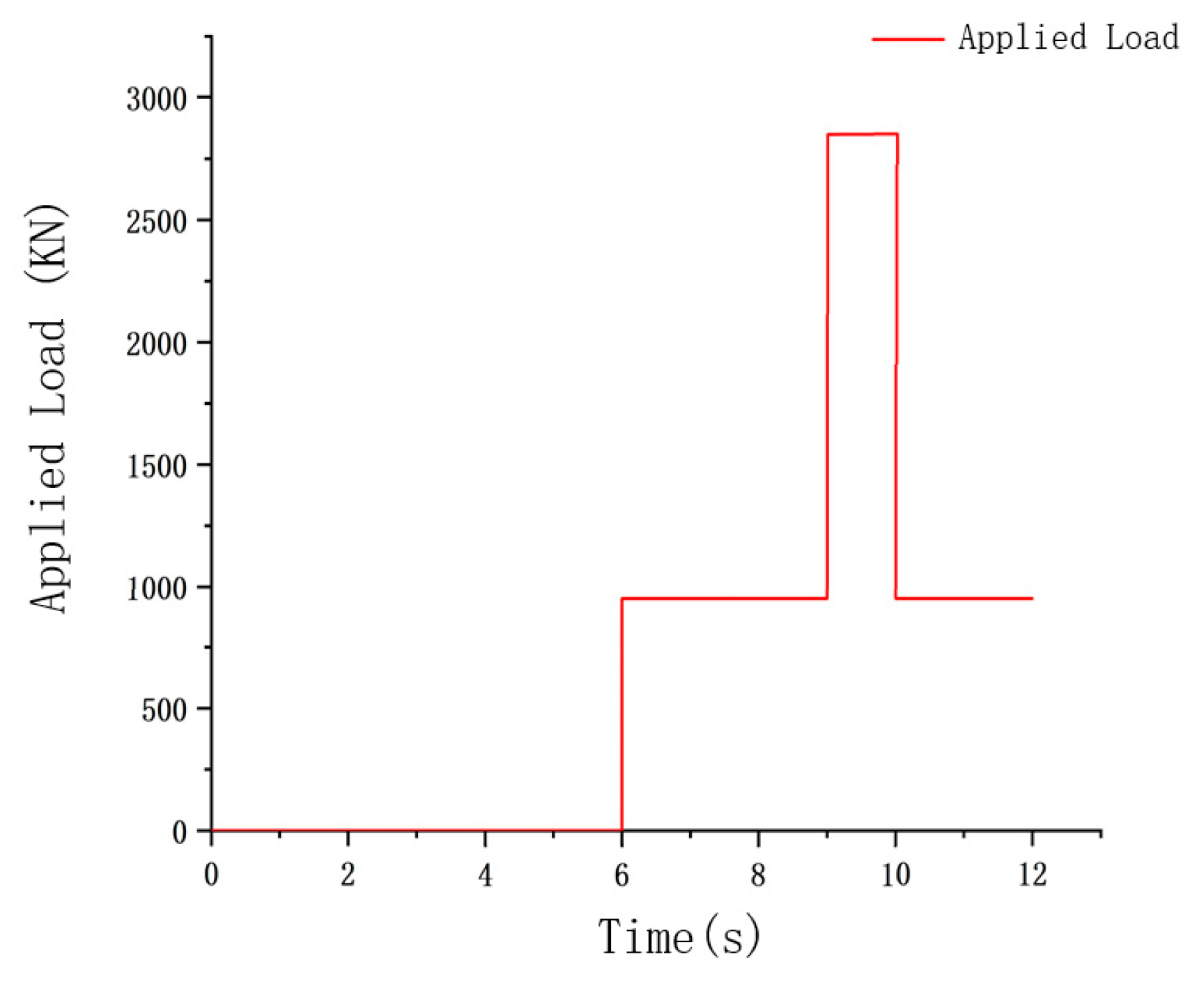
For the hydraulic support equipped with a traditional large-flow safety valve, the external load variation curve during the working simulation is shown in Figure 24. In the initial stage (0–6 s), since the hydraulic support has not yet contacted the longwall face’s roof, the leg is extending and the external load pressure remains 0. Upon entering the second stage (starting at 6 s), the support contacts the roof and maintains a normal working state. Over the next 3 s, the roof pressure is set to 1/2 of the support leg’s working resistance. At the third stage (around 9 s), the external load on the support leg increases to 1.5 times half of the working resistance, i.e., approximately 2850 kN. This phase lasts for 1 s to simulate an impact load on the support leg. After the impact ends, the roof pressure returns to 1/2 of the support’s working resistance.
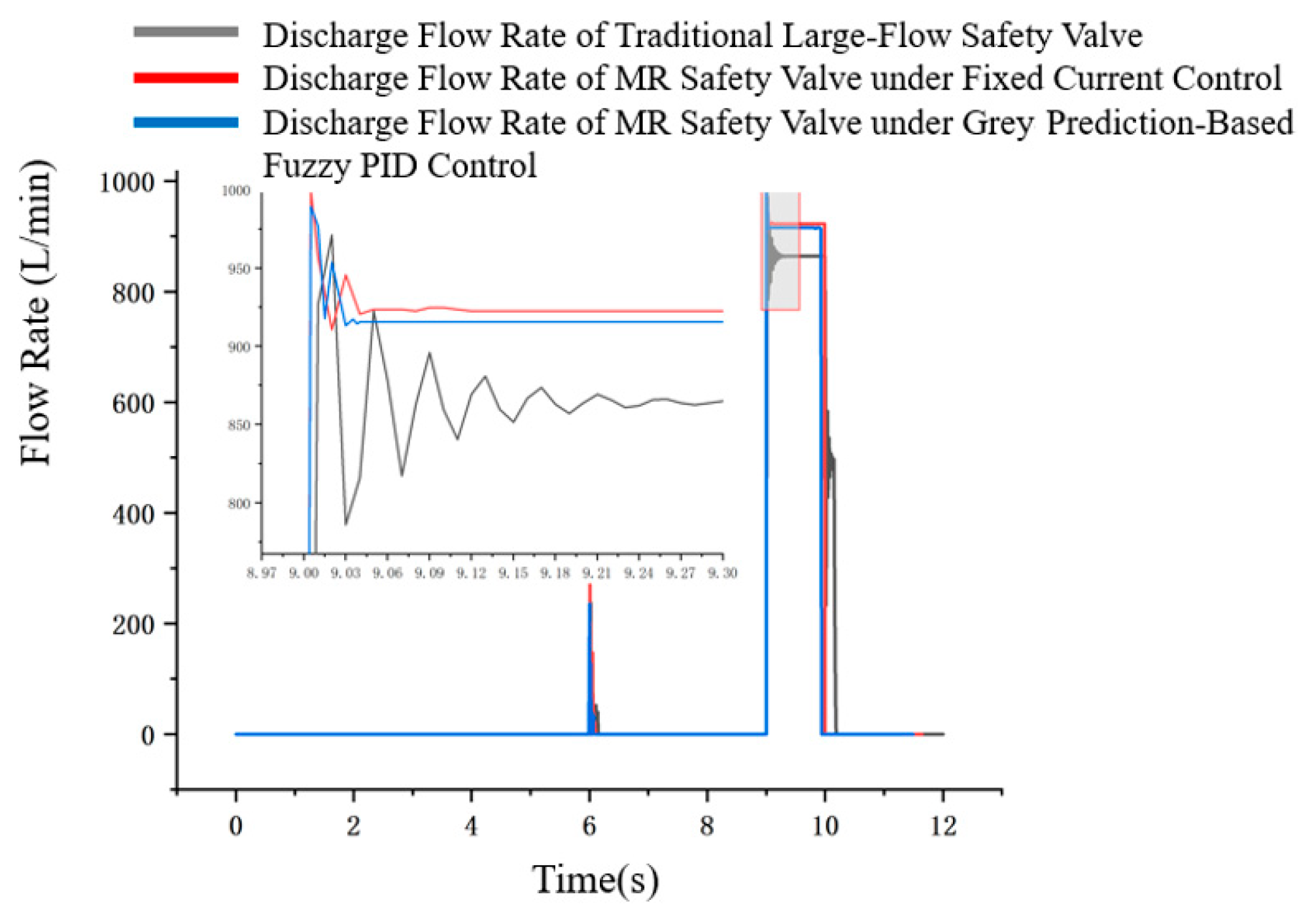
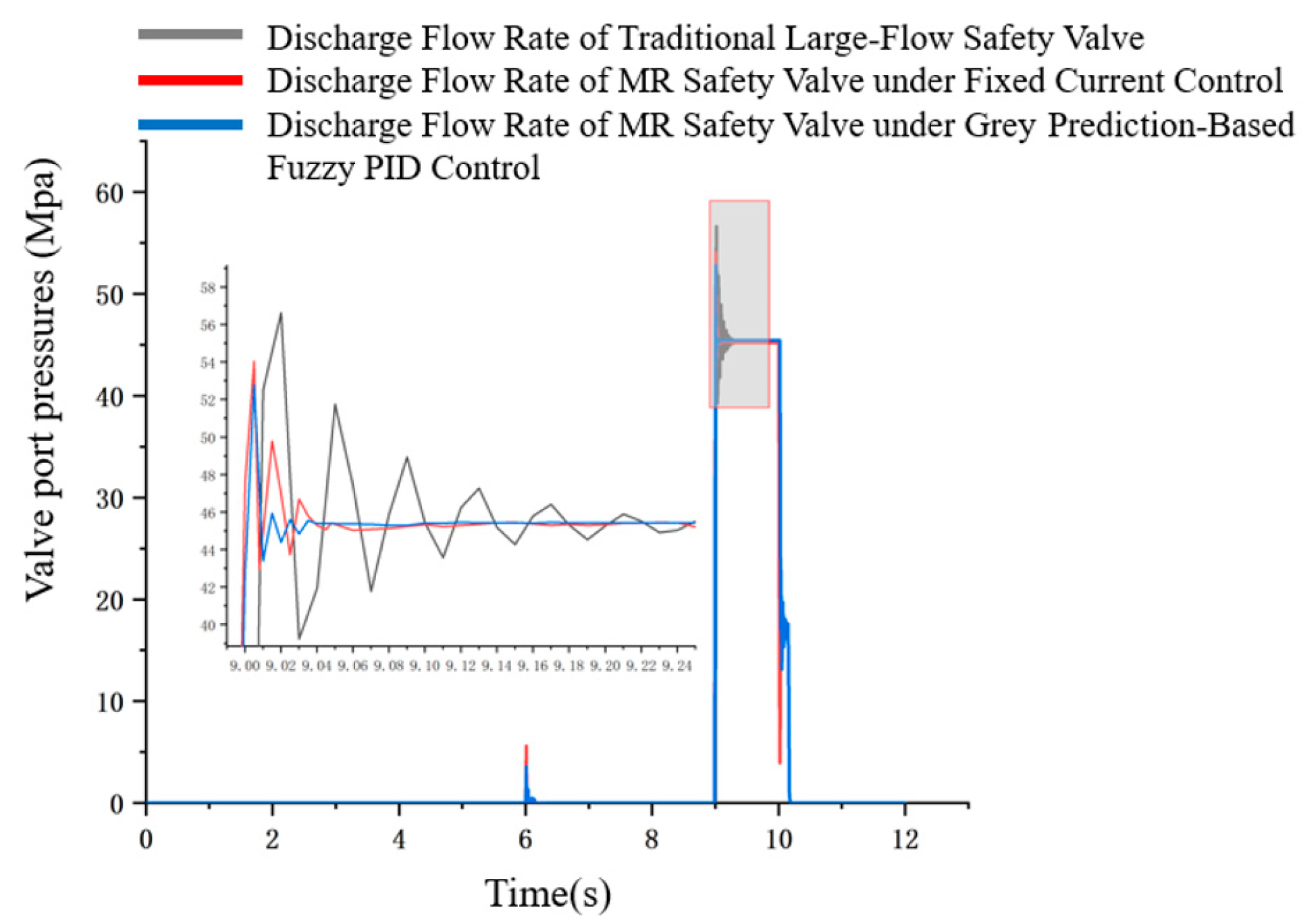
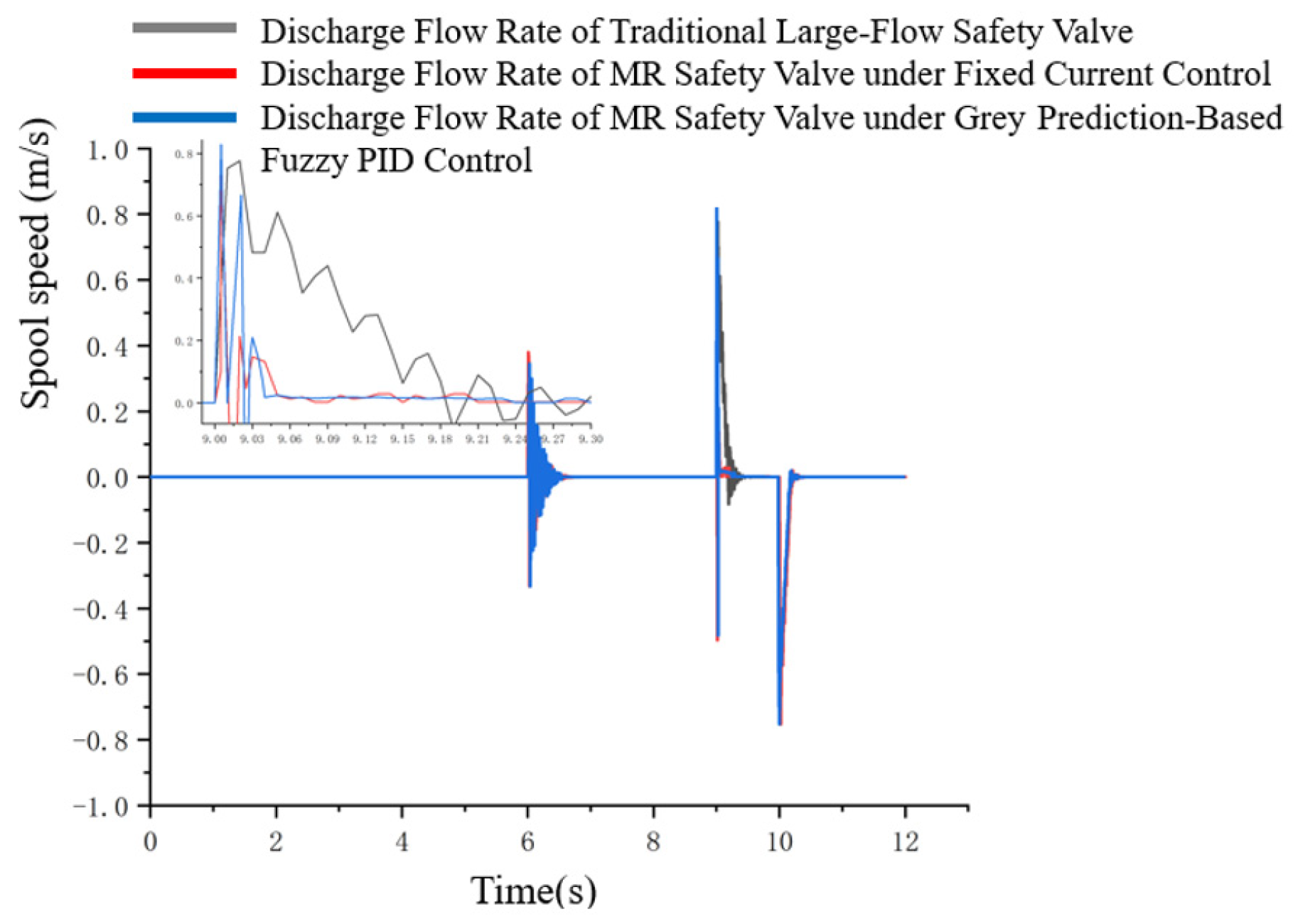
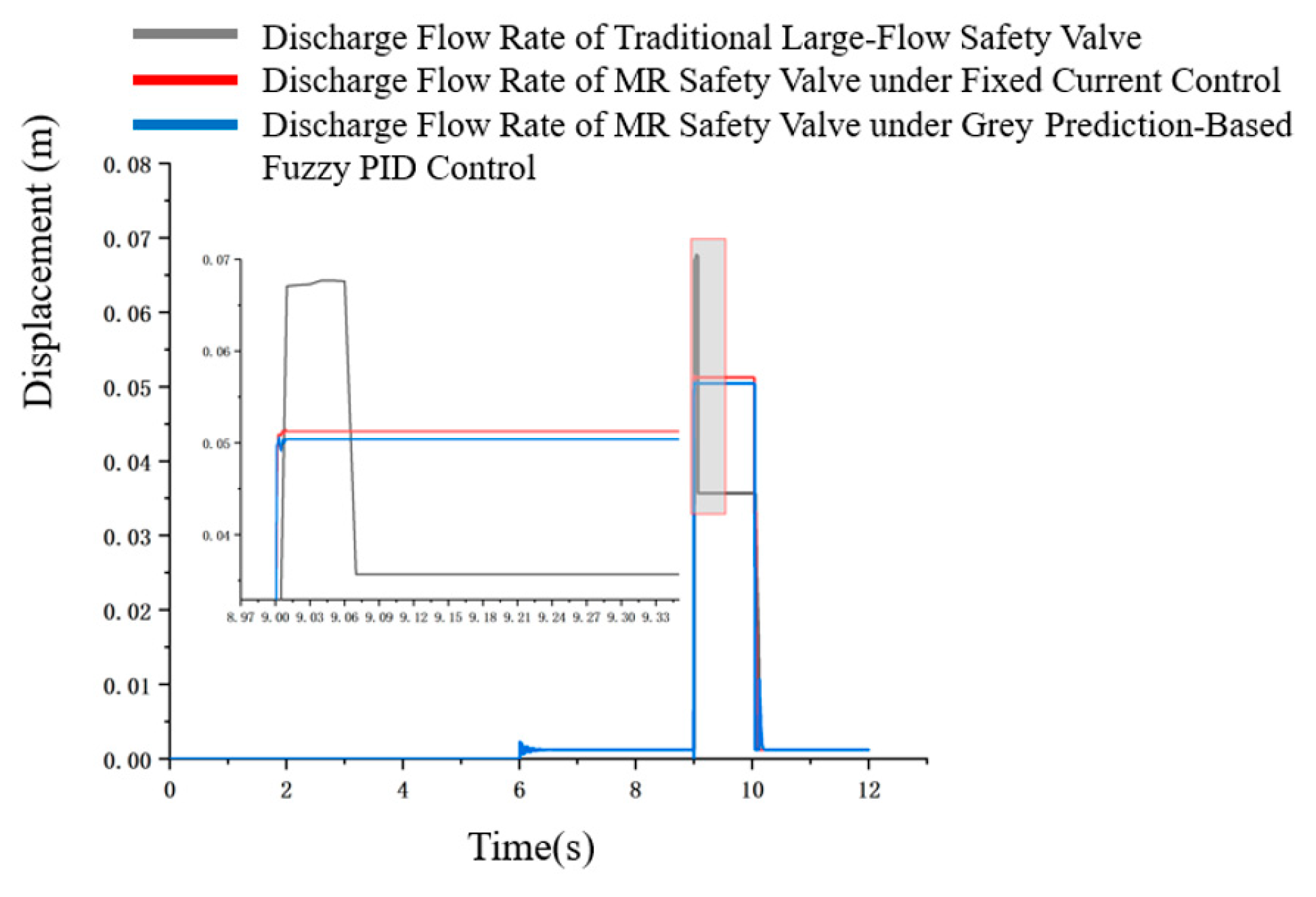
Figure 25, Figure 26, Figure 27 and Figure 28 compare various parameters of the MR fluid safety valve (under the two different control strategies) with those of the traditional large-flow safety valve when subjected to an impact load. These parameters include discharge flow, valve port pressure, spool (valve core) speed, and spool displacement. The traditional large-flow safety valve is used as a baseline for comparison with the MR fluid safety valve under the fixed current control strategy and under the fuzzy PID control strategy with grey prediction.
As shown in Figure 25, the traditional large-flow safety valve reaches its maximum flow of 927 L/min at 9.02 s. By contrast, the MR fluid safety valve reaches a maximum flow of 987 L/min at 9.01 s under the fixed current control strategy, which is 10 ms earlier than the traditional valve. Under the fuzzy PID control strategy based on grey prediction, the MR valve reaches a peak flow of about 977 L/min at 9.005 s, 15 ms earlier than the traditional valve. The MR fluid safety valve with fixed current control has a slightly higher peak flow and a longer discharge duration compared to the grey prediction fuzzy PID strategy, but both MR strategies exhibit a markedly increased discharge flow and significantly reduced flow fluctuation relative to the traditional valve. This indicates the stability imparted by the MR fluid. At the moment when the discharge flow reaches its peak, the valve port pressure also reaches its maximum. The flow shows obvious oscillation when the valve opens, and the valve spool experiences a severe impact during opening because the high-pressure fluid escapes extremely quickly and the flow through the valve port is very large.
Figure 26 shows the valve port pressure responses. As indicated in the figure, when the impact pressure reaches the set threshold, the electromagnetic coil is de-energized. At this point, the pressure acting on the valve core exceeds the combined resistance of the spring force and the core’s inertia, causing the emulsion to flow out from the valve port, which results in a rapid drop in valve port pressure. The maximum valve port pressures recorded under the fixed current strategy and the grey prediction fuzzy PID strategy are 34.65 MPa and 33.85 MPa, respectively. Under the fuzzy PID strategy, the high-pressure duration is approximately 10 ms, which is slightly longer than the 8 ms duration observed under the fixed current strategy. Overall, the pressure response under both MR control strategies is faster than that of the traditional valve, and the peak pressure is lower. The pressure rise time is reduced from 20 ms (traditional valve) to 5 ms with the MR valve; the peak pressure is reached at about 4.6 ms, and the pressure stabilizes within approximately 20–22 ms. This demonstrates that the MR fluid safety valve is highly responsive and can open to relieve pressure very quickly.
As shown in Figure 27, the traditional large-flow safety valve’s spool reaches a maximum speed of 0.78 m/s. After the valve opens, the spool exhibits a large oscillation, which lasts for about 0.3 s; after 0.3 s, the spool’s oscillation diminishes significantly. For the MR fluid safety valve, the maximum spool speeds under the fixed current control and the grey prediction fuzzy PID control are 0.76 m/s and 0.83 m/s, respectively. With the fixed current strategy, the post-opening oscillation amplitude is noticeably larger than that under the fuzzy PID strategy; however, in both cases, the spool’s vibration attenuates significantly after about 42 ms, and the speed nearly returns to zero. The MR fluid safety valve’s spool oscillation duration and amplitude are much smaller compared to the traditional valve, indicating a shorter settling time and better dynamic characteristics for the MR valve.
Figure 28 compares the spool displacements. The traditional large-flow safety valve’s spool displacement is 6.78 mm during the interval 9.00–9.06 s, and then remains unchanged, because the spool has reached the valve’s maximum stroke. The MR fluid safety valve’s maximum spool displacements under the fixed current and grey prediction fuzzy PID strategies are 5.12 mm and 5.04 mm, respectively, and they remain constant throughout the impact, which is consistent with the actual structural limits of the MR safety valve.
From the above analysis, it is evident that the new control strategies can significantly improve the dynamic response characteristics of the safety valve, shorten the response time, and enhance pressure relief performance. This confirms the superiority of the MR fluid safety valve in improving the impact resistance of the hydraulic support.

5. Conclusions

To address the shortcomings of traditional large-flow safety valves—specifically, their inability to achieve anticipatory response when the hydraulic support remains in working condition under sudden roof pressure, and their insufficient responsiveness during operation—a novel control strategy for hydraulic support safety valves based on the magnetorheological (MR) effect was proposed in this study. The transient characteristics of MR fluids and the effectiveness of predictive control strategies were evaluated through a co-simulation analysis using AMESim and Simulink. The following conclusions can be drawn:
(1)
To address the mechanical response lag of traditional valves and the unreliability of external sensors under rock burst conditions, a standalone active control framework was developed. Detailed investigations into the fixed current method, the grey prediction algorithm, and the fuzzy PID controller were conducted; the system can accurately forecast pressure surges using only internal hydraulic data.
(2)
Simulation models of hydraulic supports equipped with either a traditional large-flow safety valve or an MR fluid-based safety valve were developed in AMESim. In parallel, a control system model for the MR fluid safety valve was constructed in Simulink. Under simulated impact loading, comparative analyses of discharge flow, valve port pressure, spool velocity, and spool displacement were performed. The results demonstrate that the MR fluid safety valve, under both the fixed current control and the fuzzy PID control strategy with grey prediction, achieves anticipatory response earlier and exhibits superior dynamic characteristics compared to the conventional large-flow safety valve. Furthermore, the fuzzy PID strategy based on grey prediction proves more effective than the fixed current strategy in terms of faster response time and reduced pressure overshoot.

6. Limitations and Future Work

This study relies on numerical co-simulation with a simplified MR fluid model that neglects temperature effects and magnetic hysteresis to prioritize computational efficiency. Consequently, the current results lack physical experimental validation. Future research will focus on fabricating a prototype to conduct impact tests and refining the model with multi-physics coupling to verify the control strategy’s robustness in practical engineering environments. In the following research, the physical prototype of Magnetorheological Safety Valves will be made and tested so as to verify the simulation results and optimize the design of Magnetorheological Safety Valves.

Author Contributions

Conceptualization, H.L., C.W. and K.S.; Methodology, H.L., Q.L., C.W. and X.S.; Software, K.S.; Validation, X.B., X.S. and Q.D.; Formal Analysis, Q.L. and X.S.; Investigation, K.S., X.B. and X.S.; Resources, H.L., C.W. and X.B.; Data Curation, H.L. and X.B.; Writing—Original Draft, H.L. and K.S.; Writing—Review and Editing, C.W., X.S. and Q.D.; Supervision, Q.L., C.W. and Q.D.; Project Administration, Q.L., C.W. and Q.D. All authors have read and agreed to the published version of the manuscript.

Funding

The authors disclosed receipt of the following financial support for the research, authorship, and publication of this article: this work is partially supported by the National Natural Science Foundation of China (52474176; 52274132).

Data Availability Statement

Data is contained within the article.

Conflicts of Interest

Authors Haodang Li and Xinping Bao were employed by the company China Energy Xinjiang Energy Co., Ltd. Authors Qing Liu and Qifan Dong were employed by Beijing Tianma Intelligent Control Technology Co., Ltd. The remaining authors declare that the research was conducted in the absence of any commercial or financial relationships that could be construed as a potential conflicts of interest.

References

  1. Yadav, D.; Al Nasiri, H.; Awasthi, M.K.; Sharma, P.L.; Al Wahibi, Z.; Al Saadi, M.; Al Riyami, M.; Al Toubi, A.; Al Jabri, B. Investigation of Darcy-Forchheimer Magnetohydrodynamic Casson Fluid Flow over a Nonlinear Permeable Stretching Sheet with Temperature-Reliant Viscosity. J. Comput. Appl. Mech. 2026, 57, 275–295. [Google Scholar] [CrossRef]
  2. Masa’id, A.; Lenggana, B.W.; Ubaidillah, U.; Susilo, D.D.; Choi, S.-B. A Review on Vibration Control Strategies Using Magnetorheological Materials Actuators: Application Perspective. Actuators 2023, 12, 113. [Google Scholar] [CrossRef]
  3. Kumar, J.S.; Paul, P.S.; Raghunathan, G.; Alex, D.G. A review of challenges and solutions in the preparation and use of magnetorheological fluids. Int. J. Mech. Mater. Eng. 2019, 14, 13. [Google Scholar] [CrossRef]
  4. Xu, M.; Huang, T. Performance Evaluation of Remote Monitoring Car-like Mobile Robot System with Grey Prediction Model. Sens. Mater. 2022, 34, 1419–1431. [Google Scholar] [CrossRef]
  5. Zhang, Y.; Wei, Z.; Lin, Q.; Zhang, L.; Xu, J. MBD of grey prediction fuzzy-PID irrigation control technology. Desalination Water Treat. 2018, 110, 328–336. [Google Scholar] [CrossRef]
  6. Wenhua, L.; Jinjie, Z.; Chao, Z.; Yao, W.; Xu, S.; Huaibing, H. A novel flow control scheme for reciprocating compressor based on adaptive predictive PID control. High Technol. Lett. 2020, 26, 243–252. [Google Scholar]
  7. Gao, J.; Hao, B. Prediction of Submarine Pipeline Corrosion Based on the Improved Grey Prediction Model. J. Phys. Conf. Ser. IOP Publ. 2021, 1894, 012106. [Google Scholar] [CrossRef]
  8. Cai, L.; Liu, W. Monitoring harmful bee colony with deep learning based on improved grey prediction algorithm. In Proceedings of the 2nd International Conference on Artificial Intelligence and Information Systems, Chongqing, China, 28–30 May 2021; pp. 1–6. [Google Scholar]
  9. Zhou, W.; Jiang, R.; Ding, S.; Cheng, Y.; Li, Y.; Tao, H. A novel grey prediction model for seasonal time series. Knowl. Based Syst. 2021, 229, 107363. [Google Scholar] [CrossRef]
  10. Kayacan, E.; Kaynak, O. An Adaptive Grey Fuzzy PID Controller with Variable Prediction Horizon. In Proceedings of the SCIS & ISIS 2006, Tokyo, Japan, 20–24 September 2006; pp. 760–765. [Google Scholar]
  11. Jiang, P.; Xing, Y.; Wang, P. No-load cutting-in control of the doubly fed induction generator based on grey prediction PI control. Energy Rep. 2021, 7, 38–48. [Google Scholar] [CrossRef]
  12. Song, Z.; Feng, W.; Liu, W. Interval prediction of short-term traffic speed with limited data input: Application of fuzzy-grey combined prediction model. Expert Syst. Appl. 2022, 187, 115878. [Google Scholar] [CrossRef]
  13. Xie, P.-J.; Zhang, Y.-B.; Wu, W.-X. Variable Universe Fuzzy PID Irrigation Control Based on Improved Discrete Grey Prediction. Water Sav. Irrig. 2022, 7, 36–43. [Google Scholar]
  14. Liu, H.; Li, S.; Shi, W. Model predictive control of offshore gangway hydraulic system based on extended state observer. Hydraul. Pneum. 2024, 48, 22–29. [Google Scholar]
  15. Yuan, L.; Jiang, G.; Hao, X.; Liu, S.; Chen, Q.; Xu, W. Neural network predictive control of valve-controlled asymmetric cylinder based on NARMAX model. Hydraul. Pneum. 2023, 47, 86–93. [Google Scholar]
  16. Liu, Z.; Sun, B.; Wang, Y.; Xu, Y. Application study of improved grey prediction fuzzy PID in pneumatic valve system. Sens. Microsyst. 2020, 39, 40–43+46. [Google Scholar]
  17. Sun, H.; Tao, J.; Yu, H.; Dai, B.; Liu, C. Model predictive control of valve-controlled asymmetric hydraulic cylinder based on Gaussian process. Hydraul. Pneum. 2021, 45, 26–33. [Google Scholar]
  18. Liu, J.; Fu, J.; Han, J. Fuzzy controller design for helicopter magneto-rheological seat suspension buffer system. J. Chongqing Univ. 2022, 45, 31–40. [Google Scholar]
  19. Wang, X.; Jia, S.; Pan, D.; Wan, W. Semi-active fuzzy control of dual-layer vibration isolation system for power units. Mach. Des. Manuf. 2023, 05, 264–270. [Google Scholar]
  20. Yu, W.; Dong, Q. Application of grey prediction fuzzy PID control in intelligent positioning system of regulating valve. Hydraul. Pneum. 2015, 12, 39–44. [Google Scholar]
  21. Wu, Z.; Zhang, L.; Zhang, B. PID parameter tuning and optimization. China High-Tech Enterp. 2010, 1, 16–17. [Google Scholar]
  22. Miao, G. Research on Key Technology of Coal Mine Impact Support Based on Magnetorheological; Shandong University of Science and Technology: Qingdao, China, 2021. [Google Scholar]
  23. Juan, W.; Ziming, K. The Grey Prediction Fuzzy PID Control in Auto-drainage System of Mine. In Future Communication, Computing, Control and Management; Lecture Notes in Electrical Engineering; Zhang, Y., Ed.; Springer: Berlin/Heidelberg, Germany, 2012; Volume 142. [Google Scholar]
  24. Bi, P.; Zheng, J. Study on Application of Grey Prediction Fuzzy PID Control in Water and Fertilizer Precision Irrigation. In Proceedings of the 2014 IEEE International Conference on Computer and Information Technology, Xi’an, China, 11–13 September 2014; pp. 789–791. [Google Scholar]
  25. Van Broekhoven, E.; De Baets, B. A comparison of three methods for computing the center of gravity defuzzification. In Proceedings of the 2004 IEEE International Conference on Fuzzy Systems (IEEE Cat. No.04CH37542), Budapest, Hungary, 25–29 July 2004; IEEE: New York, NY, USA, 2004; Volume 3, pp. 1537–1542. [Google Scholar] [CrossRef]
  26. Bai, Y.; Wang, D. Fundamentals of Fuzzy Logic Control—Fuzzy Sets, Fuzzy Rules and Defuzzifications. In Advanced Fuzzy Logic Technologies in Industrial Applications; Advances in Industrial Control; Bai, Y., Zhuang, H., Wang, D., Eds.; Springer: London, UK, 2006. [Google Scholar] [CrossRef]
  27. Xue, D. Scientific Computing Language MATLAB 5.3 Programming and Application; Tsinghua University Press: Beijing, China, 2000. [Google Scholar]
Figure 1. Installation position of the safety valve on the hydraulic support.
Applsci 16 01813 g001
Figure 2. Magnetorheological safety valve.
Applsci 16 01813 g002
Figure 3. Sectional view of the magnetorheological safety valve.
Applsci 16 01813 g003
Figure 4. Hydraulic support column safety valve combination. 1—canopy beam; 2—support leg; 3—magnetorheological fluid safety valve; 4—pressure relief device.
Applsci 16 01813 g004
Figure 5. Simplified circuit diagram of magnetorheological fluid safety valve control system.
Applsci 16 01813 g005
Figure 6. Magnetorheological fluid safety valve control schematic diagram.
Applsci 16 01813 g006
Figure 7. Principle diagram of fixed current control system.
Applsci 16 01813 g007
Figure 8. Fitting curve of magnetorheological fluid τy-I.
Applsci 16 01813 g008
Figure 9. Grey prediction fuzzy PID control system schematic diagram.
Applsci 16 01813 g009
Figure 10. The domain and membership function of column pressure deviations e and ec.
Applsci 16 01813 g010
Figure 11. The domain and membership functions of ΔKp, ΔKi, and ΔKd.
Applsci 16 01813 g011
Figure 12. Adjustment rules of integral coefficient change ΔKp.
Applsci 16 01813 g012
Figure 13. Adjustment rules of integral coefficient change ΔKi.
Applsci 16 01813 g013
Figure 14. Adjustment rules of derivative coefficient change ΔKd.
Applsci 16 01813 g014
Figure 15. Data transmission model.
Applsci 16 01813 g015
Figure 16. Simulation model of traditional large-flow safety valve impact resistance hydraulic support.
Applsci 16 01813 g016
Figure 17. Simulation model of magnetorheological fluid safety valve impact hydraulic support.
Applsci 16 01813 g017
Figure 18. Simulink modelling of fixed current control system.
Applsci 16 01813 g018
Figure 19. Interface unit module.
Applsci 16 01813 g019
Figure 20. Control unit module.
Applsci 16 01813 g020
Figure 21. Damping part of magnetorheological fluid safety valve.
Applsci 16 01813 g021
Figure 22. Simulink modelling of fuzzy PID control system based on grey prediction control.
Applsci 16 01813 g022
Figure 23. The entire control unit module.
Applsci 16 01813 g023
Figure 24. External load change curve.
Applsci 16 01813 g024
Figure 25. Comparison of discharge flow rates among the traditional safety valve, the MR safety valve under fixed current control, and the MR safety valve under grey prediction-based fuzzy PID control.
Applsci 16 01813 g025
Figure 26. Comparison of valve port pressures among the traditional safety valve, the MR safety valve under fixed current control, and the MR safety valve under grey prediction-based fuzzy PID control.
Applsci 16 01813 g026
Figure 27. Comparison of spool speeds among the traditional safety valve, the MR safety valve under fixed current control, and the MR safety valve under grey prediction-based fuzzy PID control.
Applsci 16 01813 g027
Figure 28. Comparison of spool displacement among the traditional safety valve, the MR safety valve under fixed current control, and the MR safety valve under grey prediction-based fuzzy PID control.
Applsci 16 01813 g028
Table 1. Initialization state of GM(1,1) program.
ParameterValue
Sizes.NumContstates0
Sizes.NumDiscStates0
Sizes.NumOutputs1
Sizes.Numlnputs1
Sizes.DirFeedthrough1
Sizes.NumSampleTimes1
Table 2. Initialization state of GM(1,n) program.
ParameterValue
Sizes.NumContstatesn
Sizes.NumDiscStatesn
Sizes.NumOutputsh
Sizes.Numlnputsh
Sizes.DirFeedthroughh
Sizes.NumSampleTimesh
Disclaimer/Publisher’s Note: The statements, opinions and data contained in all publications are solely those of the individual author(s) and contributor(s) and not of MDPI and/or the editor(s). MDPI and/or the editor(s) disclaim responsibility for any injury to people or property resulting from any ideas, methods, instructions or products referred to in the content.