Article

Finite Element Analysis of the Connection Between Prefabricated Large-Diameter Steel-Reinforced Concrete Hollow Tubular Columns and Foundations

School of Resources & Civil Engineering, Northeastern University, Shenyang 110819, China
*
Author to whom correspondence should be addressed.
Appl. Sci. 2026, 16(3), 1651; https://doi.org/10.3390/app16031651
Submission received: 13 January 2026 / Revised: 2 February 2026 / Accepted: 3 February 2026 / Published: 6 February 2026
(This article belongs to the Topic Advances on Structural Engineering, 3rd Edition)

Featured Application

The proposed novel connection details and corresponding design optimization strategies are directly applicable to the rapid and reliable construction of major infrastructure projects utilizing prefabricated large-diameter steel-reinforced concrete (SRC) hollow tubular columns, such as long-span bridges, offshore wind turbine towers, and high-rise buildings. The findings provide engineers with practical, simulation-validated design guidance for selecting key parameters (e.g., socket depth, reinforcement ratio, and axial load level), enabling the design of connections that simultaneously ensure superior seismic performance, enhance construction efficiency, and optimize material usage.

Abstract

The extensive use of prefabricated large-diameter steel-reinforced concrete (SRC) hollow tubular columns in major infrastructure projects creates a critical demand for efficient and reliable column-to-foundation connections with satisfactory seismic performance. To address this, three novel prefabricated connection details are proposed herein. A refined three-dimensional nonlinear finite element model was developed using ABAQUS to assess their mechanical behavior under quasi-static cyclic loading. The model was established based on widely accepted constitutive models, contact algorithms, and loading protocols consistent with relevant codes and international research. The results demonstrate that the proposed prefabricated connections significantly outperform conventional cast-in-place connections in terms of ultimate bearing capacity, with an increase of approximately 79%. A comprehensive parametric analysis was conducted, identifying an optimal design configuration comprising a socket depth of 600 mm, six embedded steel sections, an axial compression ratio of 0.1, and a hollow core radius of 600 mm, which achieves an optimal balance between mechanical performance and cost-effectiveness. These findings provide a reliable theoretical basis and practical guidance for designing and implementing high-performance prefabricated connections in engineering practice.

1. Introduction

In recent years, precast concrete components have gained widespread adoption in large-scale civil engineering projects due to their advantages in quality control, construction efficiency, and environmental sustainability [1,2]. Among these components, large-diameter concrete composite pipe columns show considerable promise for major infrastructures such as long-span bridges and high-rise buildings [3,4,5,6]. This potential stems from the material efficiency and reduced self-weight offered by their hollow sections, together with the superior mechanical performance resulting from the composite action between steel and concrete. However, the overall performance of a precast structural system is critically dependent on the reliability of its connections, particularly at the column-foundation interface, which must resist complex loading conditions [7,8]. Inadequate connection design may lead to localized failure, thereby jeopardizing the structural integrity and safety of the entire system.
Extensive research has been devoted to understanding the mechanical behavior of concrete composite columns and related composite members. For example, Zhang et al. [9] experimentally investigated the shear performance and failure mechanisms of precast concrete tubular composite columns. Using finite element simulations, Zhang et al. [10] further analyzed the seismic behavior of centrifugally precast concrete composite columns under cyclic loading and proposed corresponding restoring force models. In terms of material and sectional enhancement, Wang et al. [11] and Zeng et al. [12] studied the effects of FRP-steel composite confinement on improving the load-bearing capacity and deformability of columns. Additionally, Su et al. [13] conducted seismic tests on precast high-strength RC centrifugally spun tubular piers with grouted corrugated duct connections, clarifying the influence of parameters such as axial compression ratio on structural ductility.
At the same time, connection technologies for precast structures have continued to attract research attention. Studies have shown that through the use of high-performance materials such as ultra-high performance concrete (UHPC) and optimized joint detailing, precast beam-column joints and frame systems can achieve seismic performance comparable to, or even superior to, that of cast-in-place structures [11,14,15]. For various connection types—including socket, grouted corrugated duct, and post-tensioned connections—researchers have comprehensively evaluated their bond-anchorage mechanisms, hysteretic response, energy dissipation capacity, and self-centering behavior [16,17,18,19,20,21,22].
However, existing research has largely focused on three separate aspects: the mechanical behavior of large-diameter hollow columns themselves [10,23,24]; the axial compressive capacity of CFST columns with varying dimensions, material strengths, and cross-sectional shapes [25,26,27,28,29,30]; and the connections of traditional-sized precast components [11,31,32,33,34,35,36]. A significant research gap remains regarding the seismic performance and design methodology for connections specific to precast large-diameter SRC hollow tubular columns. The unique scale, composite action, and distinct load-transfer mechanisms of these components call for dedicated investigation. In particular, studies on the evolution of strength, stiffness degradation, and failure mechanisms in their critical joint regions are still limited, making it difficult to ensure joint reliability under current design frameworks.
To bridge this gap, this study focuses on a novel embedded steel plate–grouted socket composite connection for precast large-diameter SRC hollow tubular columns. Three-dimensional nonlinear finite element models were developed for both cast-in-place and corresponding prefabricated column–foundation joints. Using these models, a systematic parametric analysis was conducted to investigate the influence of key design variables—including socket embedment depth, axial compression ratio, number of embedded steel sections, and section hollowness ratio—on the joint’s bearing capacity, failure mode, and stiffness degradation under quasi-static cyclic loading. By elucidating how these parameters affect the joint’s ultimate performance, this study aims to establish a theoretical foundation for the optimal design of high-performance connections in prefabricated structural systems.

2. Novel Connection Details

2.1. Type I: Embedded Steel Plate–Grouted Socket Connection

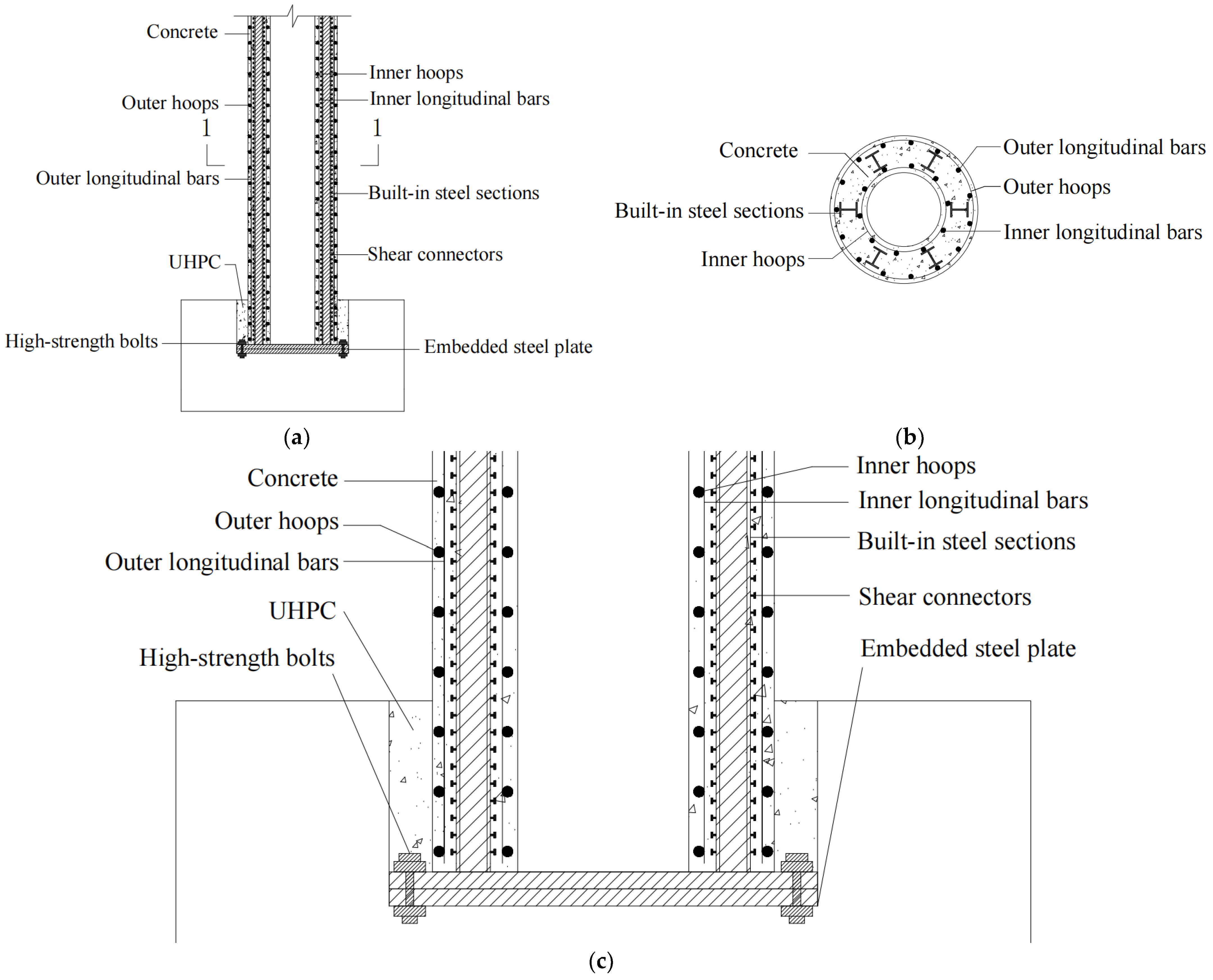
The Type I connection is designed to combine assembly efficiency with monolithic structural performance, rendering it particularly suitable for large-scale, high-load structural systems in demanding environments. A flange bolt group is incorporated to resist shear forces and bending moments, while the grouted layer within the socket provides effective circumferential confinement, forming a composite section that enhances compressive resistance. The overall configuration of the prefabricated assembly is illustrated in Figure 1a, with detailed cross-sectional dimensions presented in Figure 1b.

2.2. Type II: Shear Stud with Post-Cast Concrete Connection

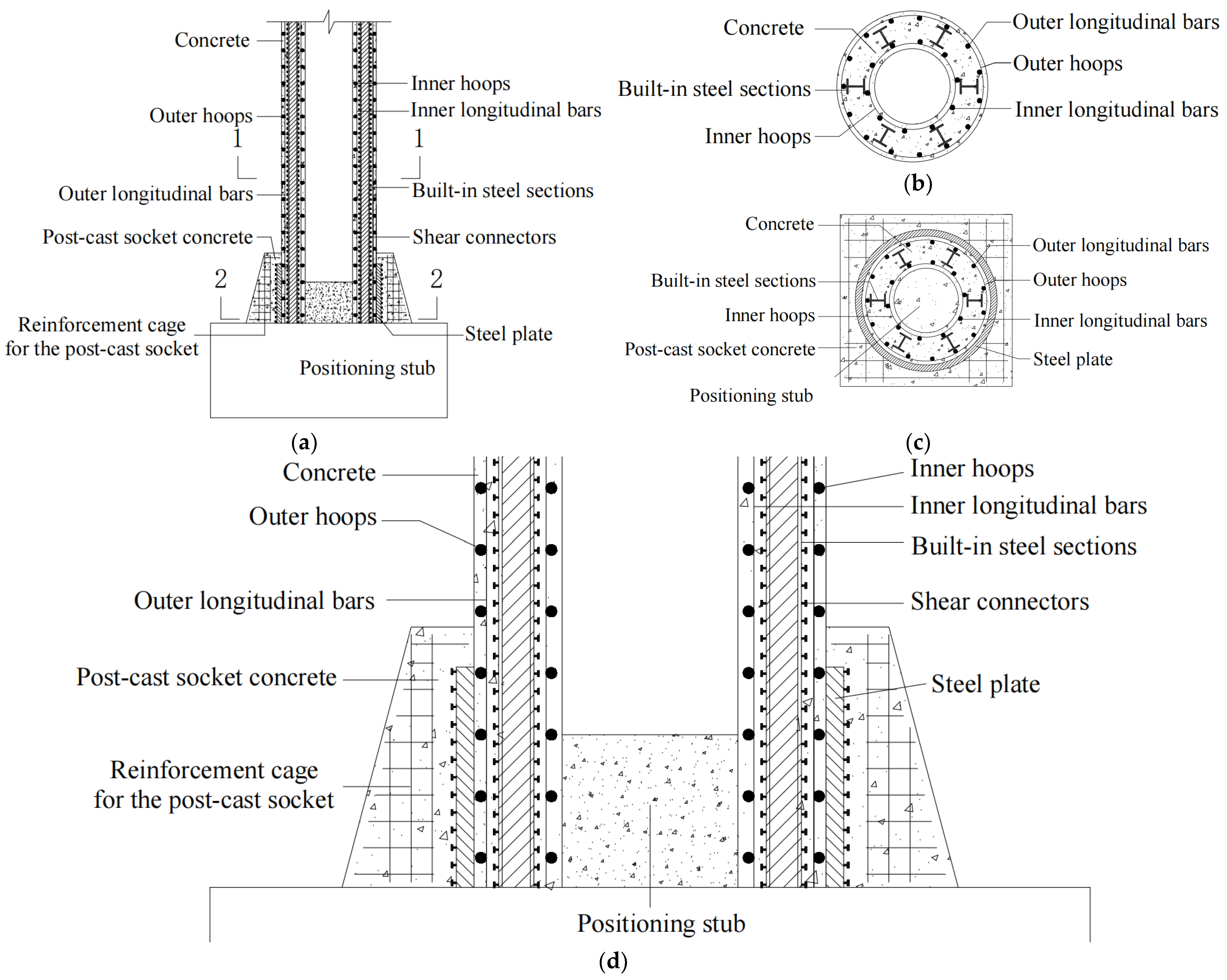
The Type II connection utilizes a pre-positioned stub set within the precast cap beam to accurately locate the prefabricated tubular column. The joint region is subsequently connected to the foundation using an external steel jacket filled with cast-in-place concrete. Shear studs are arranged on the outer surface of the steel jacket to improve load transfer and enhance the mechanical interlock at the joint interface. This design significantly reduces the volume of on-site welding required, thereby improving construction efficiency and potentially lowering overall project costs. The complete assembly and corresponding cross-sectional details are shown in Figure 2.

2.3. Type III: Prestressed Steel Jacket with Grouted Socket Connection

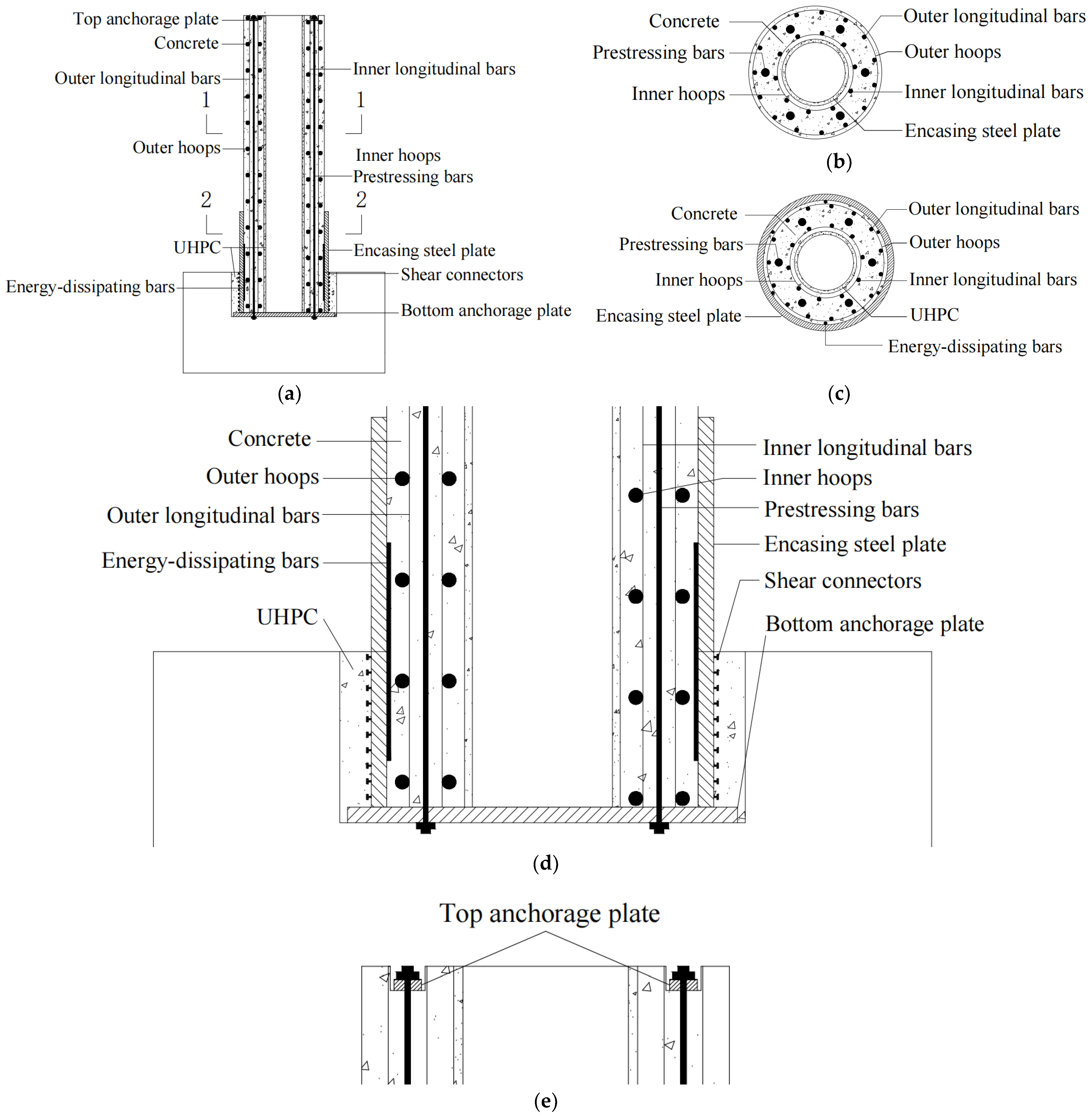
The Type III connection employs an external prestressed steel jacket complemented by energy-dissipating steel bars at the column base. This design aims to mitigate local damage caused by high stress concentrations and to provide additional circumferential confinement. The interface is filled with Ultra-High Performance Concrete (UHPC) grout, forming a high-strength composite shear plane. Under large deformation demands, the yielded energy-dissipating bars provide enhanced hysteretic energy dissipation, while the activated prestressing tendons contribute to self-centering capability. The overall configuration and relevant sectional views are depicted in Figure 3.

3. Numerical Modeling

3.1. Finite Element Model Development

The embedded steel plate–grouted socket connection (Type I) was selected as a representative case for detailed numerical investigation. Using the finite element software ABAQUS (2022), two refined three-dimensional finite element (FE) models were developed: a benchmark model of a cast-in-place concrete column-to-foundation connection and a model of the corresponding prefabricated large-diameter SRC hollow tubular column connection. Quasi-static cyclic loading was applied to simulate seismic action and to investigate the ultimate bearing behavior and failure mechanisms of the connection region.
The embedded steel plate–grouted socket connection (Type I) was selected as a representative case for detailed numerical investigation, with the following justifications:
1. Broad applicability: It balances assembly efficiency and structural stability, making it suitable for the major infrastructure projects (long-span bridges, high-rise buildings) targeted in this study.
2. Typical load-transfer mechanism: Its steel plate–bolt–grout–concrete composite path covers the core mechanical behaviors (shear, moment, axial force transmission) of prefabricated column–foundation connections.
3. Clear parameter correlation: It has fewer coupling factors between design parameters than Type II (post-cast concrete) and Type III (prestressing system), facilitating quantitative analysis of key variables.
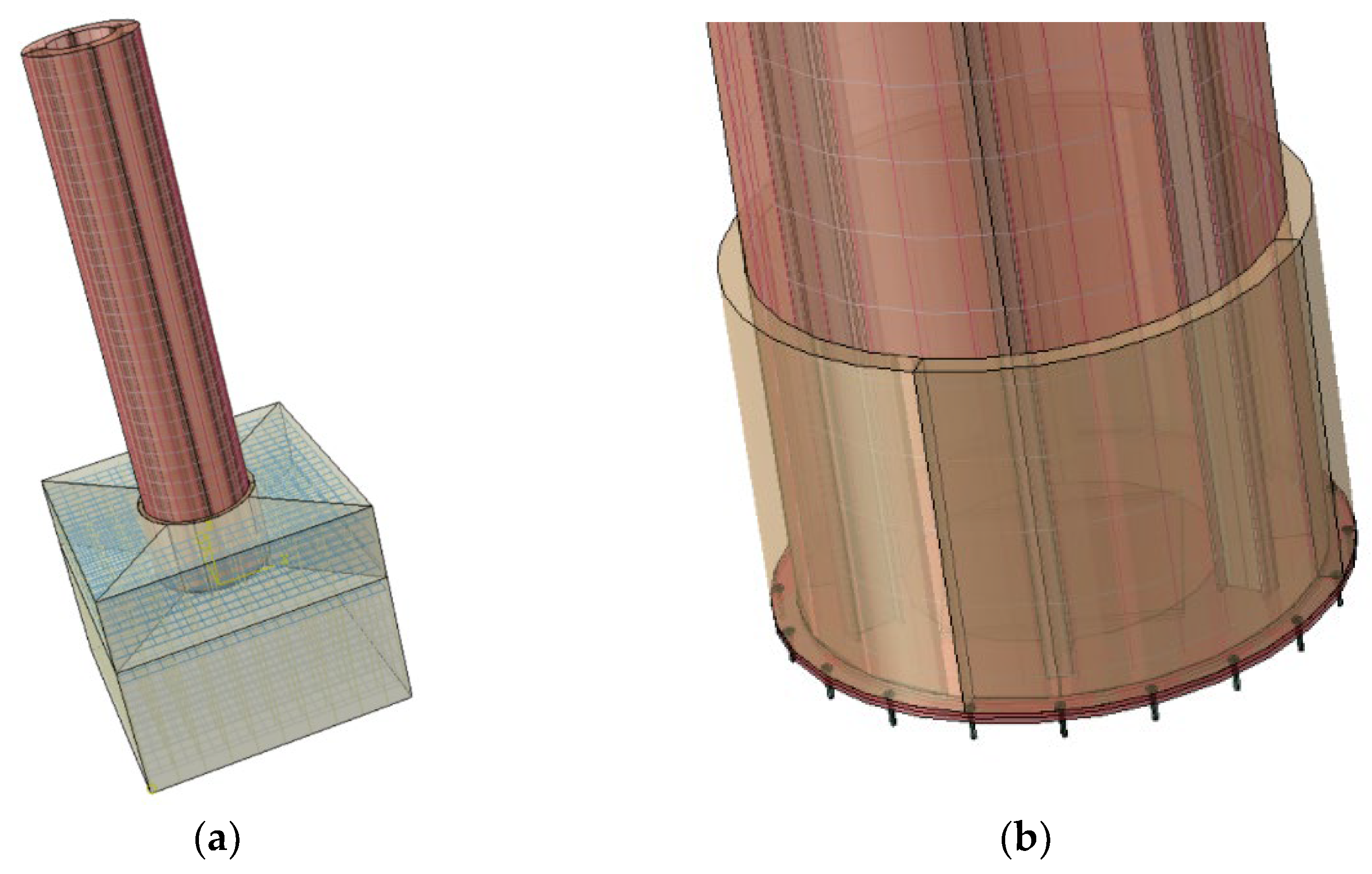
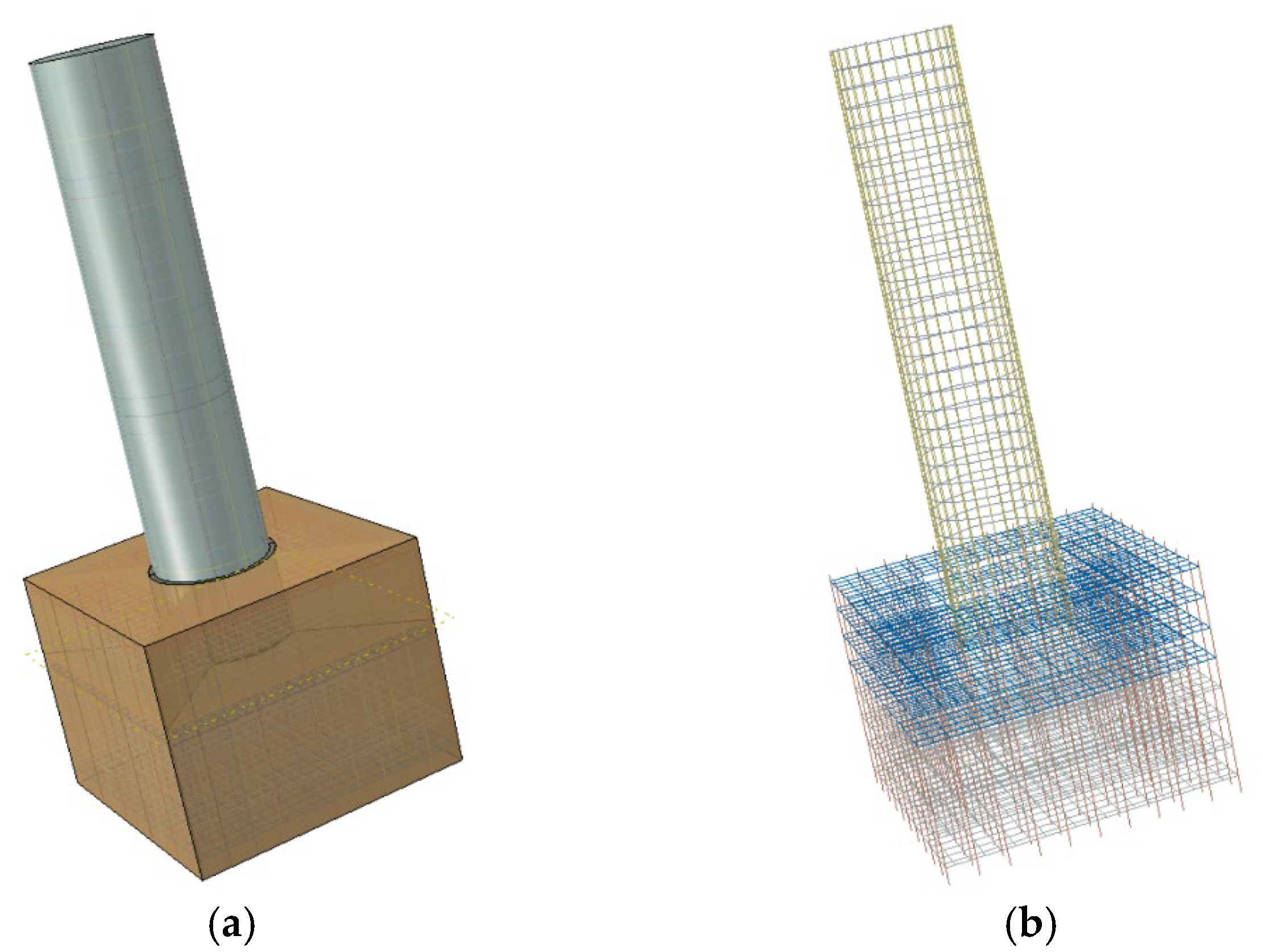
The model geometry was defined according to the details provided in Section 2. The column had an outer diameter of 2000 mm, an inner hollow diameter of 1200 mm, and a height of 10 m. The foundation block measured 5000 mm × 5000 mm in plan with a height of 4000 mm. Key connection components included: a pre-embedded bottom steel plate (D: diameter = 1000 mm), C80 high-strength grouting material, built-in steel sections (Q355 grade steel, I-section 20a), a top flange plate (Q355B steel, outer diameter = 2000 mm, inner diameter = 1200 mm, thickness = 20 mm), and 24 high-strength bolts (Grade 10.9, M24). The reinforcement consisted of HRB400 longitudinal bars (14 mm diameter) and HPB300 stirrups (12 mm diameter), arranged in a double-layer configuration for both the column and the foundation. The assembled FE models for the prefabricated and cast-in-place connections are shown in Figure 4 and Figure 5, respectively.
A total of 14 numerical models were designed and analyzed. This set comprised one cast-in-place control model (benchmark) and 13 prefabricated connection models with varying key design parameters, including socket depth, axial compression ratio, number of embedded steel sections, and hollow core radius, to systematically investigate their influence on performance. The specific parameters for all models are summarized in Table 1.

3.2. Material Properties and Interactions

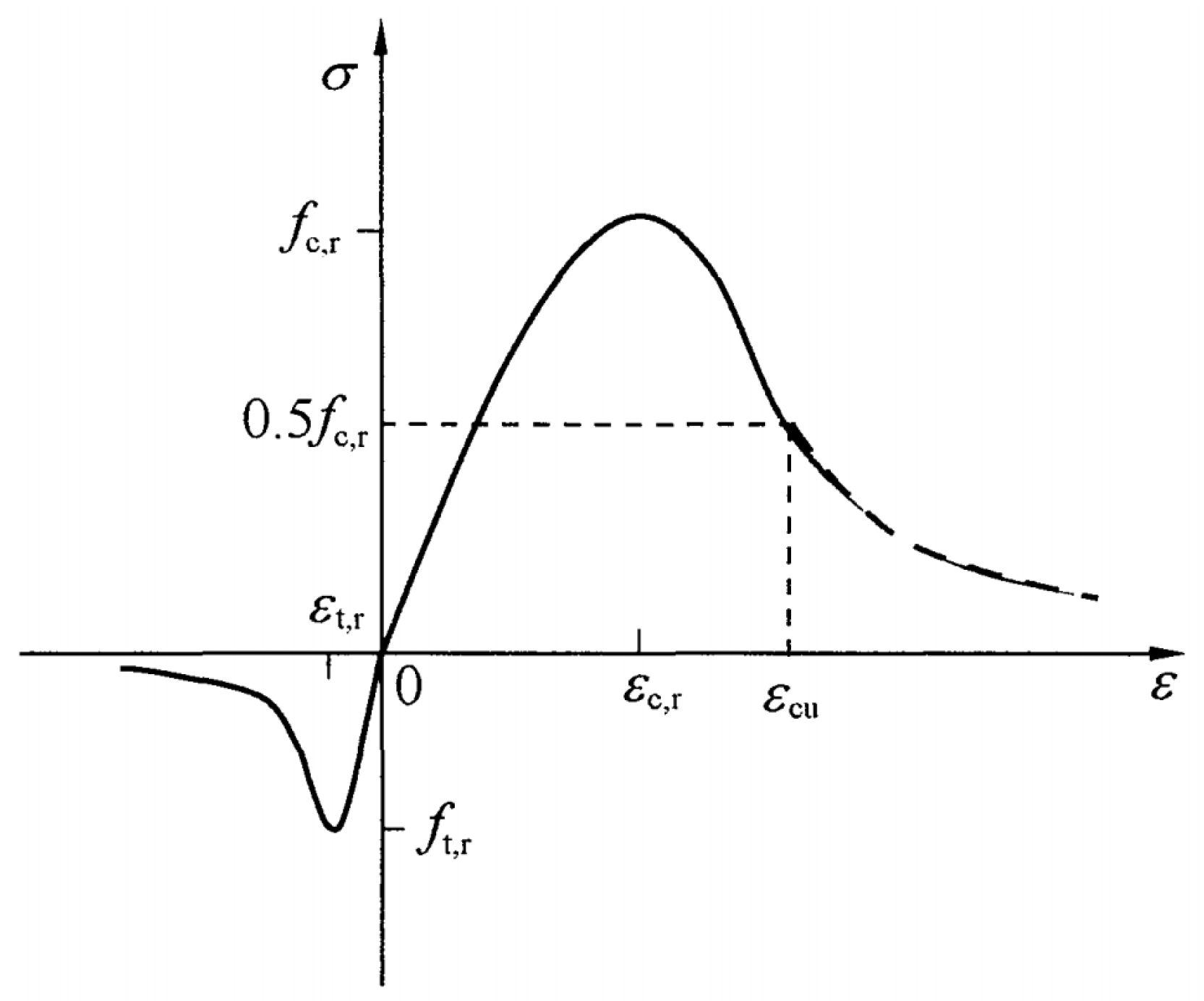
The concrete constitutive behavior was numerically simulated using the Concrete Plastic Damage (CDP) model. This model, based on the frameworks proposed by Lubliner [37] and Lee and Fenves [38], is employed to simulate mechanical properties such as crushing under compression and cracking under tension. The CDP model operates under the assumption of material isotropy. It characterizes the inelastic behavior of concrete by introducing an elastic damage mechanism coupled with distinct plasticity formulations for tensile and compressive states. The model accounts for the degradation of elastic stiffness due to plastic deformation as well as the stiffness recovery characteristics under cyclic loading conditions. The uniaxial stress–strain relationships for concrete, required by the model, were defined in accordance with the provisions of the Chinese code GB/T 50010-2010 (Code for Design of Concrete Structures) [39], as illustrated in Figure 6. In Figure 6, The dashed line of the descending branch represents both the scatter inherent in the post-peak softening behavior of concrete and the idealized nature of the constitutive model.
Concrete tensile formula:
σ = ( 1 d t ) E c ε
d t = 1 ρ t 1.2 0.2 x 5 , x 1 1 ρ t α t ( x 1 ) 1.7 + x , x > 1
x = E E t , r , ρ t = f t , r E c E t , r
In the formula:
α t : Parameter values of the descending section of the uniaxial tensile stress–strain curve of concrete (MPa), α t = 0.312 f t , r 2 ;
f t , r : Representative value of uniaxial tensile strength of concrete (MPa), can be taken separately according to the actual situation: f t , f t k , f t m ;
ε t , r : Peak tensile strain of concrete corresponding to f t , r , ε t , r = 0.65 × 10⁻⁴ f t , r 0.54 ;
d t : Evolution parameters of uniaxial tensile damage in concrete.
Concrete compression formula:
σ = ( 1 d c ) E c ε
d c = 1 ρ c n n 1 + x n , x 1 1 ρ c α c ( x 1 ) 2 + x , x > 1
x = ε ε c , r , n = E c ε c , r E c ε c , r f c , r , ρ c = f c , r E c ε c , r
In the formula:
f c , r : Representative value of uniaxial compressive strength of concrete (MPa);
α c : Parameter values of the descending section of the stress–strain curve of concrete under uniaxial compression (MPa), α c = 0.157 f c , r 0.785 0.905 ;
ε c , r : Peak tensile strain of concrete corresponding to f c , r (MPa), ε c , r = 700 + 172 f c , r × 10 6 ;
d c : Evolution parameters of concrete uniaxial compression damage.
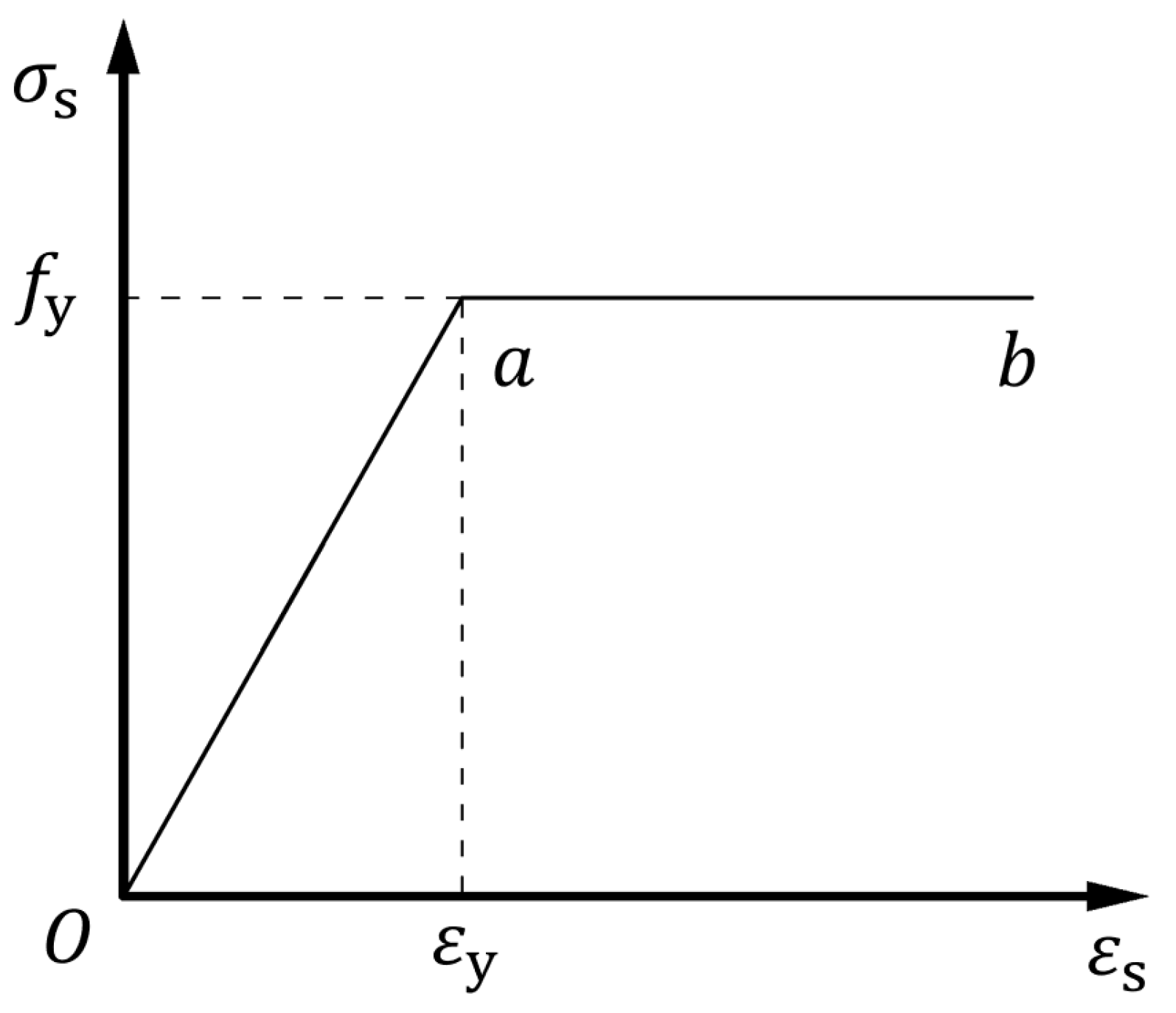
Simplify the stress analysis of steel using an ideal elastoplastic model, as shown in Figure 7. In the Figure 7, point a represents the yield strength point, and point b represents the ultimate strength point.
The formula is as follows:
σ s = E ε s , ε s ε y σ y , ε s > ε y
The primary structural concrete was grade C50. High-strength bolts (10.9 grade, M24) had a nominal tensile strength of 1000 MPa and a yield strength of 900 MPa. The UHPC strength grade is set to be equivalent to the concrete strength grade C140 in the simulation.
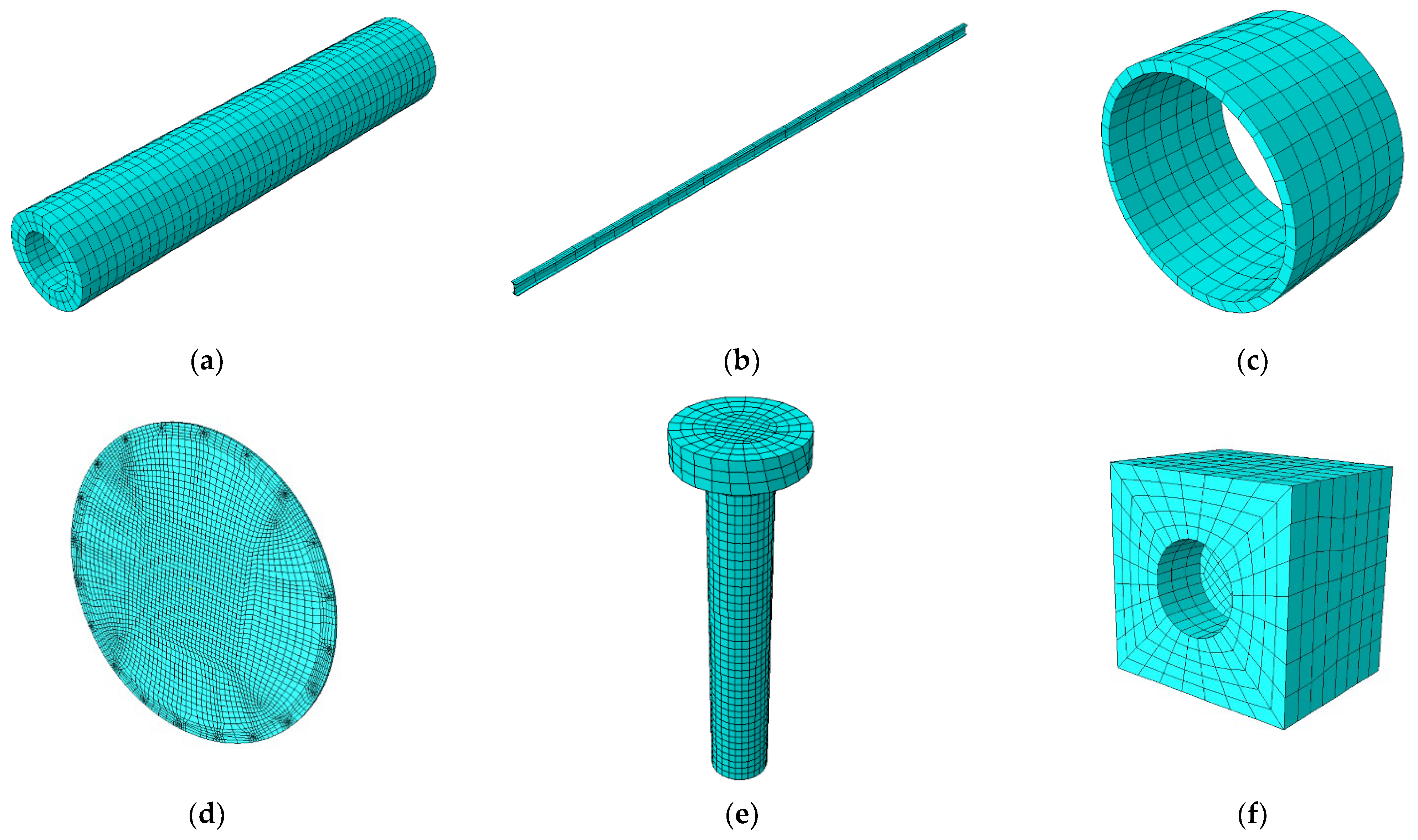
In the finite element model, solid components, including concrete, steel sections, UHPC grout, and connection plates, were discretized using 8-node linear reduced-integration hexahedral elements (C3D8R). Steel reinforcement was modeled employing 2-node linear 3D truss elements (T3D2), which were subsequently embedded within the concrete volume.
Regarding boundary conditions, the top of the column was fixed, while the base of the foundation was assigned a pinned support. The built-in steel sections and reinforcing bars, which are fully encapsulated within the concrete, were simulated using the “Embedded” constraint feature in ABAQUS. A “Tie” constraint was applied at the interface between the concrete and the flange plate to represent a perfectly bonded, welded connection compatibility. For critical mechanical interfaces where separation and sliding may occur—specifically between the flange plates, the bolt shanks and hole walls, and the nut-flange contact surfaces—a surface-to-surface contact interaction with finite sliding formulation was defined. The normal behavior was modeled as “Hard Contact,” allowing for separation after compression. The tangential behavior was governed by a penalty friction formulation with a coefficient of 0.3.
Between the UHPC grout and the concrete column, a perfect bond was assumed, simulated using a tie constraint that neglects any potential slip. For the interfaces between the UHPC grout and the foundation concrete, as well as between the UHPC grout and the flange plate, surface-to-surface contact was employed. The normal behavior was defined as “hard contact”, while the tangential behavior was modeled using a penalty friction formulation with a friction coefficient of 0.3. According to studies by Baltay and Gjelsvik [40], the friction coefficient at steel–concrete interfaces typically ranges from 0.2 to 0.6. In line with the principle of conservatism, a value at the lower end of this spectrum was adopted in this study. This choice represents a deliberately “unfavorable assumption” regarding the shear contribution from interface friction, thereby ensuring that the resulting predictions of connection capacity and behavior are more reliable and inherently safer.
The key parameters defining the concrete damaged plasticity model and the stress–strain relationships for all materials are summarized in Table 2.

3.3. Meshing Strategy

A structured meshing technique was predominantly employed for regular geometric regions. For the bolted connection zone, which features more complex geometry, a swept meshing technique with a medial axis algorithm was utilized to generate a graded mesh of hexahedral elements. Local mesh seeding was refined in regions anticipated to experience high stress concentrations, such as around bolt holes and at the interface between the grouted socket and the column. The resulting mesh for all primary components is illustrated in Figure 8.

3.4. Loading Protocol and Analysis Steps

A reference point (RP-1) was defined and coupled kinematically to the top surface of the column to serve as the loading point. The base of the foundation was constrained as a pinned support. A displacement-controlled loading scheme was employed. The lateral displacement history was applied directly to RP-1, which, through the coupling constraint, ensured a uniform displacement condition across the entire column top surface.
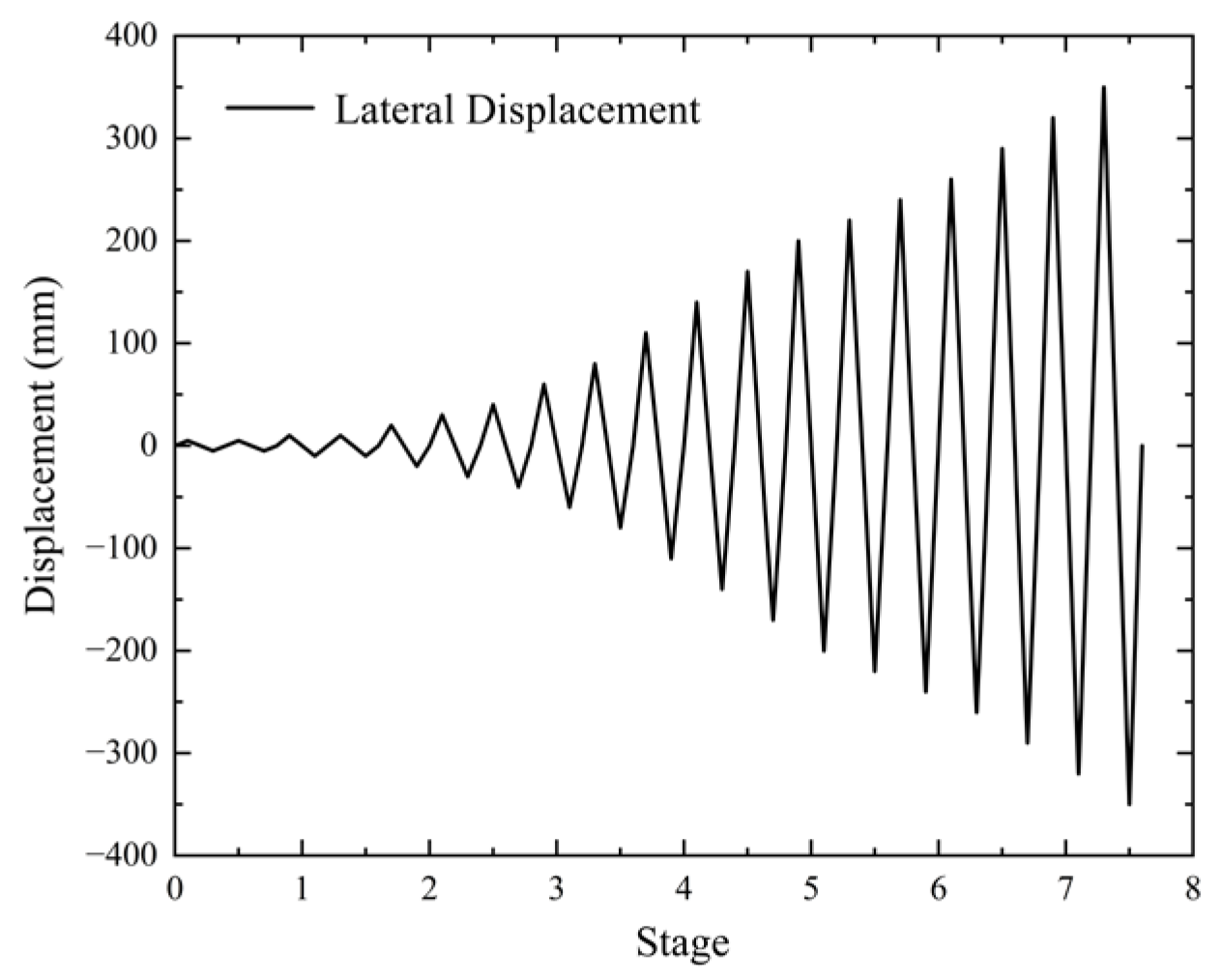
A quasi-static cyclic loading protocol was implemented. The loading principle involved incrementally increasing the displacement amplitude, with each displacement amplitude applied for one complete cycle (one push and one pull), until the lateral load capacity of the model degraded to 85% of its peak (ultimate) value. The specific loading protocol is illustrated in Figure 9.
The analysis for the prefabricated connection models was conducted in five sequential steps: (1) applying an initial 20% of the specified bolt pre-tension force; (2) applying the full specified bolt pre-tension force; (3) fixing the bolt length at the current tensioned state; (4) applying a constant axial compressive load at the column top to achieve the target axial compression ratio (e.g., 0.1); and (5) applying the predefined lateral cyclic displacement history to RP-1.
The transition of the structure into a fully plastic stage is distinctly marked by the successive yielding of the lower steel section and the reinforcing skeleton. Correspondingly, the composite steel-concrete zone in compression exhibits significant strain accumulation. As the load approaches its ultimate value, the reinforcing skeleton enters a phase of stress degradation, while a stable stress plateau progressively forms within the yielded region of the embedded steel section. This progression ultimately leads to the failure of the sectional load-carrying capacity.
Influence of the 85% peak load criterion on the results: (i) It provides a unified, objective threshold for comparing failure behavior across all models (prefabricated vs. cast-in-place, varying parameters), eliminating subjective judgment of failure initiation. (ii) Relative to stricter criteria (e.g., 50% load reduction), it avoids overestimating connection ductility; relative to looser criteria (e.g., 90%), it ensures a sufficient safety margin by capturing the stage where load-bearing capacity deteriorates irreversibly.

4. Results and Discussion

4.1. Comparison Between Prefabricated and Cast-in-Place Connections

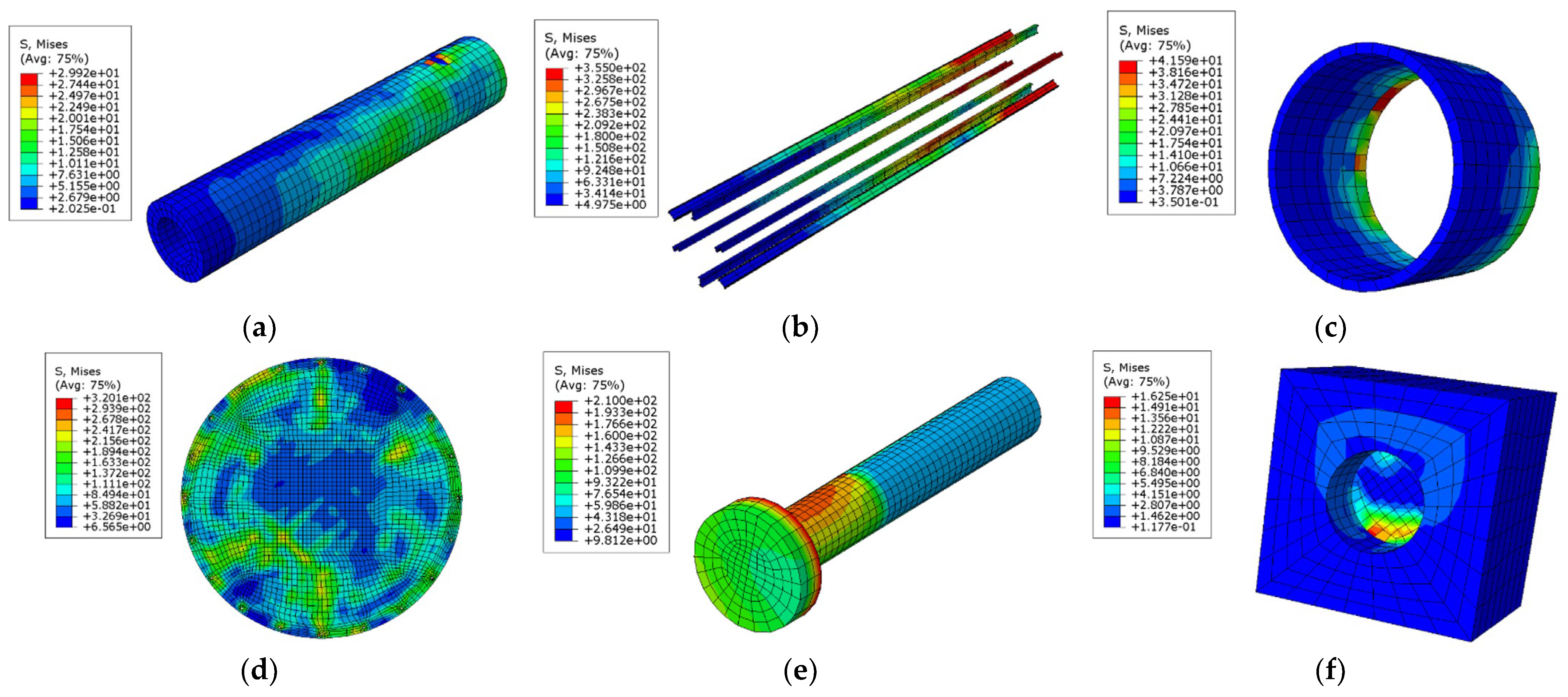
The seismic performance of the proposed prefabricated connection, as predicted by the FE model, was evaluated by numerically comparing its behavior with that of a conventional cast-in-place counterpart under identical quasi-static cyclic loading. An analysis of the stress distribution offers initial insight into the load-transfer mechanism. Figure 10 presents the von Mises stress contours for key components of the prefabricated connection at the ultimate limit state. Significant stress concentrations are observed in the embedded steel plate, the upper region of the grout socket, and the bolt group, identifying these as primary load-transfer paths. The built-in steel sections within the column core also exhibited yielding, confirming their effective contribution to flexural resistance.
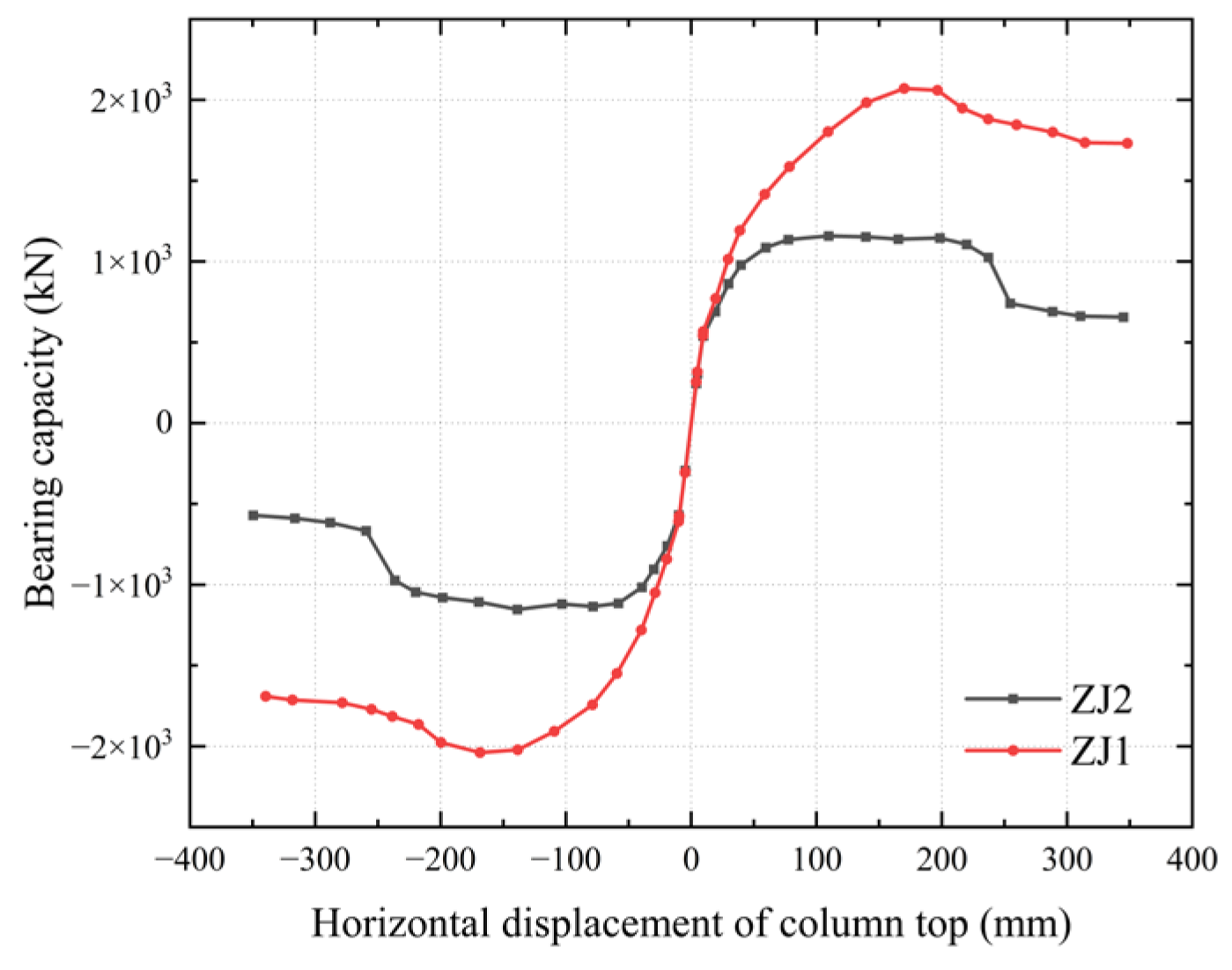
A more direct performance comparison is provided by the lateral load–displacement hysteresis responses and the derived backbone curves, as shown in Figure 11. Key performance indicators extracted from these curves are summarized in Table 3. Both connection types exhibited typical elastoplastic behavior. During the initial elastic stage, their stiffness values were nearly identical. Upon entering the nonlinear phase, the prefabricated connection (Model ZJ1) demonstrated a more gradual stiffness degradation compared to the cast-in-place benchmark model (Model ZJ2).
The most significant difference lies in the ultimate bearing capacity. The cast-in-place connection achieved a peak lateral load of 1161.6 kN (positive direction) and 1151.7 kN (negative direction). In contrast, the prefabricated connection sustained a peak load of 2078.4 kN (positive) and 2037.4 kN (negative). This represents a remarkable increase of approximately 79% in the positive direction and 76.9% in the negative direction. Furthermore, the prefabricated connection attained these higher loads at larger drift displacements (305.9 mm vs. 241.5 mm in the positive direction), suggesting improved deformation capacity alongside its superior strength.
These results conclusively demonstrate that the proposed prefabricated connection, utilizing the embedded steel plate and grouted socket detail, not only preserves but substantially enhances the structural performance relative to monolithic cast-in-place construction. It provides a significant improvement in seismic load-bearing capacity while maintaining satisfactory ductility. This performance advantage substantiates its potential as an efficient and high-strength solution for connecting large-diameter prefabricated SRC hollow tubular columns in seismic regions.

4.2. Parametric Analysis

A systematic parametric study was conducted to quantify the influence of key design variables on the cyclic performance of the proposed prefabricated connection (Type I). The parameters investigated include the socket depth (Ls), axial compression ratio (n*), number of built-in steel sections (Ns), and hollow radius (Rh). Their effects were evaluated based on hysteretic responses, backbone curves, and stiffness degradation patterns.

4.2.1. Effect of Socket Depth

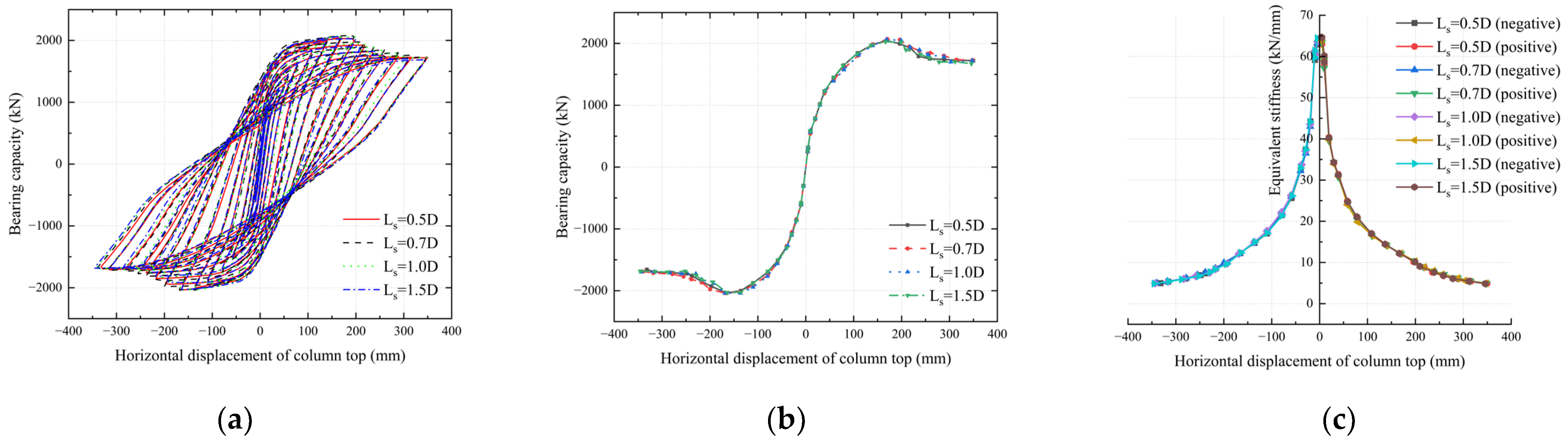
The influence of socket depth, expressed as a ratio of the column diameter (Ls = 0.5D, 0.7D, 1.0D, 1.5D), is shown in Figure 12. The results indicate that the socket depth has a relatively minor influence on the ultimate lateral bearing capacity. The peak load increased by only 1.26% when Ls increased from 0.5D to 0.7D, and subsequently decreased by approximately 1.8% as the depth further increased to 1.5D. In contrast, the initial elastic stiffness and the post-yield stiffness degradation rate were significantly affected. The connection with Ls = 0.7D exhibited the highest initial stiffness and the most stable, full hysteretic loops. An excessively shallow socket (0.5D) led to premature stiffness degradation and pinching of the hysteresis loops, whereas an overly deep socket (Ls/D ≥ 1.0) provided no appreciable stiffness benefit but incurred increased material consumption and construction complexity. Therefore, a socket depth of 0.7D is recommended as the optimal design value, balancing structural performance with practical constructability.

4.2.2. Effect of Axial Compression Ratio

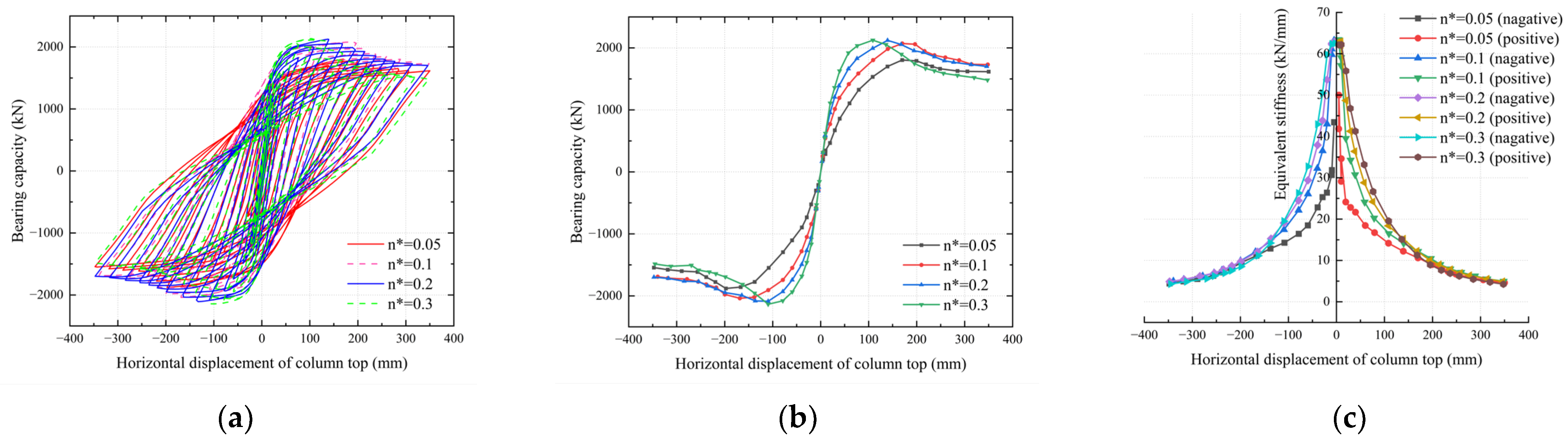
The influence of the axial compression ratio (n* = 0.05, 0.1, 0.2, 0.3) on the connection’s cyclic performance is illustrated in Figure 13. The axial load level exhibits a pronounced and non-monotonic influence on the lateral load–displacement behavior. Increasing n* from 0.05 to 0.1 resulted in a significant improvement in lateral strength, with the ultimate load increasing by 15.1% in the positive direction and 8.6% in the negative direction. This enhancement is primarily attributed to the increased confining effect and delayed concrete cracking in the compression zone provided by the higher axial load. However, diminishing returns were observed with further increases in the axial load ratio. A rise from n* = 0.1 to 0.2 produced only a marginal gain of approximately 2%; higher axial compression ratios (n* ≥ 0.2) were found to accelerate strength degradation in the later loading cycles and induce pronounced pinching in the hysteresis loops. This indicates a reduction in energy dissipation capacity and suggests an increased susceptibility to a less ductile failure mode. Therefore, to achieve an optimal balance between maximizing lateral strength and maintaining sufficient structural ductility, an axial compression ratio of 0.1 is recommended for design.

4.2.3. Effect of Number of Built-In Steel Sections

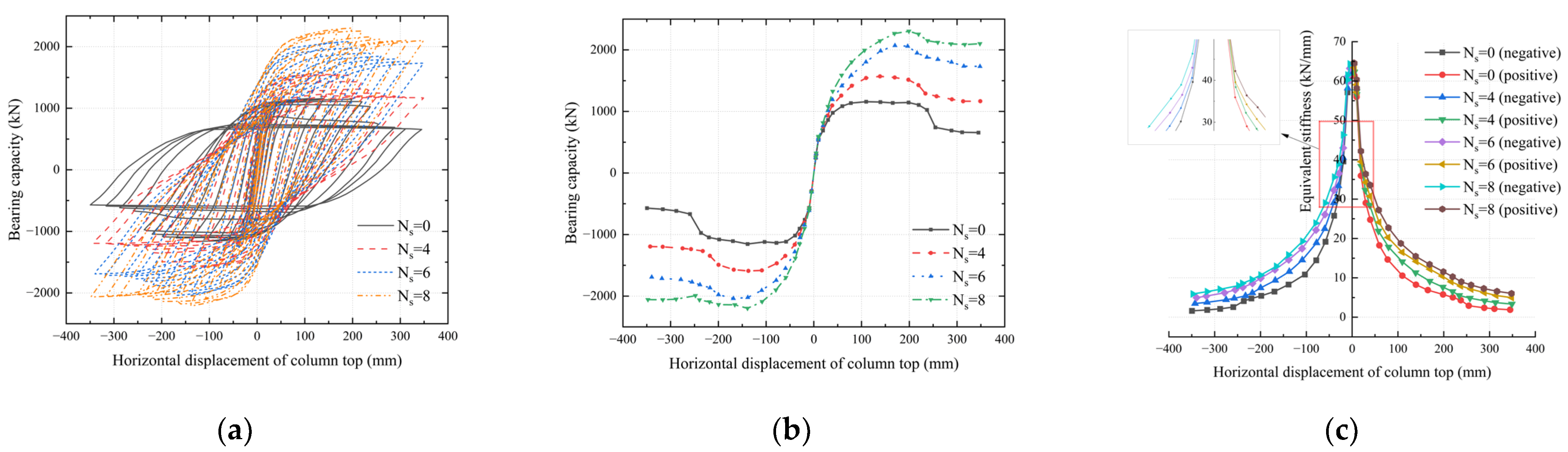
The contribution of internal steel reinforcement to the connection’s performance was evaluated by varying the number of built-in I-sections (Ns = 0, 4, 6, 8), with the results presented in Figure 14. The inclusion of steel sections markedly enhances the structural behavior. Relative to the model without any built-in sections (Ns = 0), the incorporation of four sections increased the ultimate lateral load by over 35%. A further increase from four to six sections provided an additional strength gain of approximately 28%. Beyond six sections, however, the incremental benefit diminished significantly; increasing the count from six to eight sections yielded an improvement of only about 8%. The hysteresis loops also became progressively fuller and more stable with an increasing number of sections, indicating improved energy dissipation and ductility. Therefore, considering the balance between achieving substantial performance gains and maintaining material efficiency, the configuration with six built-in steel sections is recommended as the most effective and economical design choice.

4.2.4. Effect of Hollow Radius

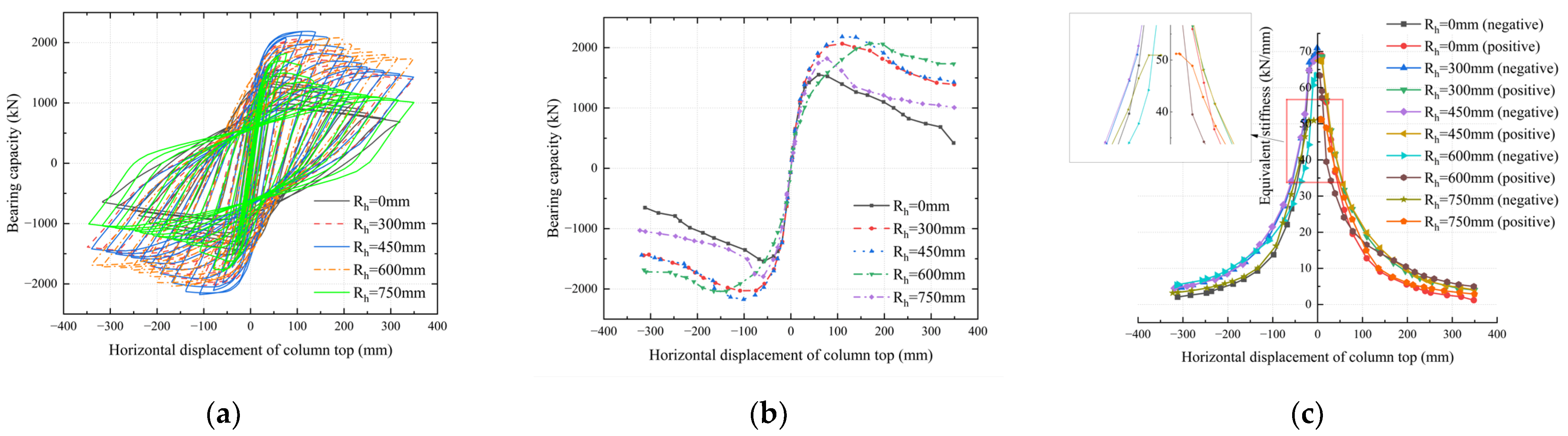
The influence of the column’s hollowness, characterized by the inner hollow radius (Rh = 0, 300, 450, 600, 750 mm), on the connection performance is summarized in Figure 15. Interestingly, introducing a hollow core (increasing Rh from 0 to 300 mm) resulted in a notable increase of approximately 33% in the ultimate lateral capacity. This improvement may be attributed to a more efficient material distribution and a resultant shift in the sectional neutral axis, which optimizes the flexural resistance. The performance remained relatively stable for Rh values between 300 mm and 450 mm. A further increase to Rh = 600 mm led to a moderate reduction in strength. However, employing a large hollow radius of 750 mm caused a significant decrease in capacity (approximately 20%), as the substantially reduced concrete cross-sectional area began to dominate the failure mechanism, compromising the composite action. Consequently, to achieve an optimal balance between maximizing self-weight reduction and preserving adequate load-bearing capacity, a hollow radius of 600 mm is recommended for the given column geometry.

5. Conclusions

This study proposed, developed, and numerically investigated three novel connection details for prefabricated large-diameter steel-reinforced concrete (SRC) hollow tubular column-to-foundation connections, with a focus on the embedded steel plate–grouted socket (Type I) system. Based on refined three-dimensional finite element modeling and systematic parametric analysis under quasi-static cyclic loading, the following conclusions are drawn:
  • Feasibility and Superior Performance of Proposed Connections: The three proposed connection systems provide practical, constructible solutions for large-diameter prefabricated members, enabling efficient on-site assembly while addressing key load-transfer mechanisms. More importantly, the numerical results demonstrate that the Type I prefabricated connection exhibits markedly superior seismic performance compared to a conventional cast-in-place counterpart, with significantly enhanced lateral strength, stable hysteretic response, and improved deformation capacity. This confirms that prefabrication, when combined with a rationally designed steel–concrete composite connection, can substantially improve structural performance under seismic demands.
  • Design Insights and Parameter Optimization: The parametric study elucidates the influence of key design variables and provides a set of balanced, optimized parameters for practical design:
    • Socket depth has a pronounced effect on initial stiffness and hysteresis stability, with an optimal depth of 0.7D offering the best performance without unnecessary material use.
    • Axial compression ratio non-monotonically affects strength and ductility; a ratio of 0.1 optimally enhances lateral capacity through beneficial confinement while maintaining sufficient energy dissipation.
    • Built-in steel sections significantly improve strength and stiffness; six sections represent the most cost-effective configuration, beyond which marginal gains diminish.
    • Hollow radius influences the trade-off between self-weight reduction and load capacity; a radius of 600 mm is recommended for the given geometry to achieve an optimal balance.
  • Engineering Translation and Standard Implications: The optimized parameters are derived from widely available materials and mature construction techniques, ensuring direct replicability in practice. For design implementation, the recommended values (e.g., 0.7D socket depth, six steel sections) can be adopted or adjusted within a rational range based on project-specific conditions. Routine quality control measures (e.g., grout compactness testing, bolt torque verification) are sufficient to ensure constructed performance aligns with analytical assumptions. These findings help address a gap in current design codes (e.g., GB/T 50010-2010), which lack specific provisions for connections of prefabricated large-diameter SRC hollow tubular columns, and can inform the development of seismic design guidelines for prefabricated composite systems.
  • Research Implications and Limitations: This study establishes a simulation-based framework and provides specific design recommendations for a critical yet underexplored connection typology. The primary limitations are as follows: (i) As a purely numerical investigation, the lack of direct experimental validation may lead to deviations between simulated and actual mechanical behaviors. (ii) Focusing only on Type I limits the generalizability of conclusions, as Type II (post-cast concrete) and Type III (prestressed system) have unique performance mechanisms not addressed herein.
  • Future work should primarily encompass: (i) experimental validation via full- or large-scale cyclic tests; (ii) investigation under dynamic seismic loading; (iii) extended analysis of Type II and Type III connections to provide more comprehensive design options.

Author Contributions

Conceptualization, B.C. and Y.H.; methodology, Z.B., C.S. and L.W.; software, Z.B. and C.S.; validation, Z.B., C.S. and Y.H.; data curation, Z.B., Y.H. and C.S.; writing—original draft, Z.B. and B.C.; writing—review and editing, L.W.; funding acquisition, Y.H. All authors have read and agreed to the published version of the manuscript.

Funding

The authors would like to acknowledge the support of these organizations for this study. This work was supported by the National Natural Science Foundation of Liaoning Province—Scientific Research Starting Foundation for Doctor (2024-BSLH-197).

Institutional Review Board Statement

Not applicable.

Informed Consent Statement

Not applicable.

Data Availability Statement

The data presented in this study are available upon request from the corresponding author.

Acknowledgments

The authors would like to thank the anonymous reviewers for their helpful comments and valuable suggestions.

Conflicts of Interest

The remaining authors declare that the research was conducted in the absence of any commercial or financial relationships that could be construed as a potential conflict of interest.

References

  1. Jayawardana, J.; Sandanayake, M.; Jayasinghe, J.A.S.C.; Kulatunga, A.K.; Zhang, G. Sustainability Drivers and Sustainable Development Goals-Based Indicator System for Prefabricated Construction Adoption—A Case of Developing Economies. Buildings 2025, 15, 1037. [Google Scholar] [CrossRef]
  2. Shen, Q.; Li, H. Green building and green construction. Sci. Technol. Eng. 2005, 5, 21. [Google Scholar] [CrossRef]
  3. Liu, J.; Yu, W.; Fang, Y.; Pan, Z.; Cao, G. Finite Element Analysis on the Seismic Performance of Concrete-Filled Steel Tube Columns with a Multiple-Chamber Round-Ended Cross-Section. Buildings 2024, 14, 1154. [Google Scholar] [CrossRef]
  4. Zhao, H.; Zhang, W.H.; Hou, C.C.; Lam, D. Axial compression behaviour of round-ended recycled aggregate concrete-flled steel tube stub columns (RE-RACFST): Experiment, numerical modeling and design. Eng. Struct. 2022, 276, 115376. [Google Scholar] [CrossRef]
  5. Samarakkody, D.I.; Thambiratnam, D.P.; Chan, T.H.; Moragaspitiya, P.H. Differential axial shortening and its effects in high rise buildings with composite concrete filled tube columns. Constr. Build. Mater. 2017, 143, 659–672. [Google Scholar] [CrossRef]
  6. Lyu, F.; Goto, Y.; Kawanishi, N.; Xu, Y. Three-dimensional numerical model for seismic analysis of bridge systems with multiple thin-walled partially concrete- filled steel tubular columns. J. Struct. Eng. 2020, 146, 04019164. [Google Scholar] [CrossRef]
  7. Kim, D.; Jeon, C.-H.; Park, K.-T. Cyclic Performance of Prefabricated Bridge Piers with Concrete-Filled Steel Tubes and Improved Bracing Connection Detail. Appl. Sci. 2024, 14, 11810. [Google Scholar] [CrossRef]
  8. Cheng, Z.; Sritharan, S. Side shear strength of preformed socket connections suitable for vertical precast members. J. Bridge Eng. 2019, 24, 04019025. [Google Scholar] [CrossRef]
  9. Zhang, S.; Zhang, X.; Li, X.; Zhang, T.; Ding, Y.; Meng, X. Experimental study on shear behavior of concrete-filledprecast concrete tube columns. J. Build. Struct. 2022, 43, 186–197. [Google Scholar] [CrossRef]
  10. Zhang, X.; Zhang, T.; Zhang, S.; Zhang, Y.; Li, X. Finite element analysis on seismic behavior and research on restoring force model of concrete-filledcentrifugal precast concrete tube columns. Build. Struct. 2023, 53, 52–63. [Google Scholar] [CrossRef]
  11. Wang, Z.; Li, T.; Qu, H.; Wei, H.; Li, Y. Seismic performance of precast bridge columns with socket and pocket connections based on quasi-static cyclic tests: Experimental and numerical study. J. Bridge Eng. 2019, 24, 04019105. [Google Scholar] [CrossRef]
  12. Zeng, J.; Long, T. Compressive Behavior of FRP Grid-Reinforced UHPC Tubular Columns. Polymers 2022, 14, 125. [Google Scholar] [CrossRef]
  13. Su, S.; Zhang, G.; Han, Q.; Jia, X.; Yan, X.; Zhou, L.; Du, X. Seismic Performance of High-strength Centrifugal Prefabricated RC Hollow Pipe Column with Grouted Corrugated Ducts Connection. China J. Highw. Transp. 2023, 36, 48–60. [Google Scholar] [CrossRef]
  14. Qing, Y.; Meng, S.; Zeng, B.; Wang, C. Nonlinear modeling and time-history analysis of dry-assembled precast concrete frames with buckling-restrained braces. J. Build. Eng. 2024, 95, 110370. [Google Scholar] [CrossRef]
  15. Xue, W.; Lei, J.; Zhang, B.; Huang, Q. Hysteretic Behavior of Full-Scale Precast U-Shaped Composite Beam–Column Connections with Large-Diameter Reinforcements under High Axial Compression. Buildings 2024, 14, 317. [Google Scholar] [CrossRef]
  16. Xu, Y.; Zeng, Z.; Ge, J.; Wang, Z. Minimum Reasonable Socket Depth of Rrecast Pier-footing with Socket Connection. J. Tongji Univ. 2019, 47, 1706–1711. [Google Scholar] [CrossRef]
  17. Xu, T.; Li, Q.; Zhao, R.; Ding, J.; Zhan, Y. On the early-age bond-slip behavior of an eccentric bar embedded in a grouted sleeve. Eng. Struct. 2019, 190, 160–170. [Google Scholar] [CrossRef]
  18. Deng, Y.; Ge, S.; Shah, Y.-I. Experimental study and numerical simulation of precast segmental bridge column with a central RC tenon. Structures 2023, 49, 842–854. [Google Scholar] [CrossRef]
  19. Fu, J.; Wan, S.; Xiao, J.; Wang, X.; Zhou, P.; Dekemele, K. Cyclic loading test for prefabricated ultra-high performance concrete columns with bellows grouting connection. Struct. Concr. 2024, 25, 3361–3382. [Google Scholar] [CrossRef]
  20. Jia, J.; Bian, J.; Xu, K.; Qiu, C.; Du, X.; Guo, H.; Pang, W. Cyclic Loading Tests of Novel Precast Bridge Columns with Off-Site Post-Tensioned Tendons and On-Site Socket Connection. J. Earthq. Eng. 2025, 29, 791–815. [Google Scholar] [CrossRef]
  21. Ge, H.; Usami, T. Strength of concrete-filled thin-walled steel boX columns: Experiment. J. Struct. Eng. 1992, 118, 3036–3054. [Google Scholar] [CrossRef]
  22. Roeder, C.W.; Cameron, B.; Brown, C.B. Composite action in concrete filled tubes. J. Struct. Eng. 1999, 125, 477–484. [Google Scholar] [CrossRef]
  23. Wei, J.; Hu, B.; Wang, Z.; Meng, H. Horizontal Hysteretic Behavior of Circular Concrete-Filled Steel Tubular Columns with Ultra-Large Diameter-to-Thickness Ratios. Buildings 2024, 14, 2313. [Google Scholar] [CrossRef]
  24. Li, Z.; Du, C.; Liu, D.; Liang, X.; Zhao, B. Comparative study on seismic performance of concrete-filled double skin tubular piers and hollow concrete piers: Experimental and analytical. Structures 2023, 49, 1078–1092. [Google Scholar] [CrossRef]
  25. Sakino, K.; Nakahara, H.; Morino, S.; Nishiyama, I. Behavior of centrally loaded concrete-filled steel-tube short columns. J. Struct. Eng. 2004, 130, 180–188. [Google Scholar] [CrossRef]
  26. Perea, T.; Leon, R.T.; Hajjar, J.F.; Denavit, M.D. Full-scale tests of slender concrete-filled tubes: Axial behavior. J. Struct. Eng. 2013, 139, 1249–1262. [Google Scholar] [CrossRef]
  27. Wang, W.; Ma, H.; Li, Z.; Tang, Z. Size effect in circular concrete-filled steel tubes with different diameter-to-thickness ratios under axial compression. Eng. Struct. 2017, 151, 554–567. [Google Scholar] [CrossRef]
  28. Zhu, J.; Chan, T.M. Experimental investigation on octagonal concrete filled steel stub columns under uniaxial compression. J. Constr. Steel Res. 2018, 147, 457–467. [Google Scholar] [CrossRef]
  29. Ahmad, A.; Arshid, M.U.; Mahmood, T.; Ahmad, N.; Waheed, A.; Safdar, S.S. Knowledge-Based Prediction of Load-Carrying Capacity of RC Flat Slab through Neural Network and FEM. Math. Probl. Eng. 2021, 2021, 4528945. [Google Scholar] [CrossRef]
  30. Al-Sayegh, A.T.; Mahmoudabadi, N.S.; Behbehani, L.J.; Saghir, S.; Ahmad, A. Estimating the axial strain of circular short columns confined with CFRP under centric compressive static load using ANN and GRA techniques. Heliyon 2024, 10, e34146. [Google Scholar] [CrossRef] [PubMed]
  31. Hemamathi, L.; Jaya, K. Behaviour of Precast Column Foundation Connection under Reverse Cyclic Loading. Adv. Civ. Eng. 2021, 2021, 6677007. [Google Scholar] [CrossRef]
  32. Hemamathi, A.; Jaya, K.P.; Sukumar, B. Evaluation of Ductility of Precast Column Foundation Connections. Indian J. Sci. Technol. 2023, 16, 1516–1526. [Google Scholar] [CrossRef]
  33. Jiang, X.; Li, J.; Liu, P.; Qu, H.; Gao, J.; Bao, Z. Seismic performance of precast bridge bents with prestressed piles and new pocket connection design: Experimental and numerical study. Soil Dyn. Earthq. Eng. 2024, 183, 108822. [Google Scholar] [CrossRef]
  34. Luo, Z.; Wang, Y. Experimental and numerical investigations of the impact resistance of socket and pocket connections for precast bridge columns. Structures 2024, 64, 106631. [Google Scholar] [CrossRef]
  35. Yang, J.; Guo, T.; Zeng, C. Experimental investigation of seismic behavior of precast pier-footing socket connection with different design parameters. Struct. Concr. 2024, 25, 1938–1952. [Google Scholar] [CrossRef]
  36. Canha, R.M.F.; Campos, G.M.; El Debs, M.K. Design model and recommendations of column-foundation connection through socket with rough interfaces. IBRACON Struct. Mater. J. 2012, 5, 182–218. [Google Scholar] [CrossRef]
  37. Deng, K.; Wang, T.; Kurata, M.; Zhao, C.; Wang, K. Numerical study on a fully-prefabricated damage-tolerant beam to column connection for an earthquake-resilient frame. Eng. Struct. 2018, 159, 320–331. [Google Scholar] [CrossRef]
  38. Lubliner, J.; Oliver, J.; Oller, S.; Onate, E. A plastic-damage model for concrete. Int. J. Solids Struct. 1989, 25, 299–326. [Google Scholar] [CrossRef]
  39. GB50010-2010; Code for Design of Concrete Structures. Ministry of Housing and Urban-Rural Development of the People’s Republic of China: Beijing, China; China Architecture & Building Press: Beijing, China, 2024.
  40. Baltay, P.; Gjelsvik, A. Coefficient of friction for steel on concrete at high normal stress. J. Mater. Civ. Eng. 1990, 2, 46–49. [Google Scholar] [CrossRef]
Figure 1. Pre-embedded steel plate–grouting socket connection: (a) Integrated prefabricated composite components; (b) 1-1 cross-sectional view; (c) Details of the connection area.
Applsci 16 01651 g001
Figure 2. Steel plate shear stud-post-pouring cup connection: (a) Integrated prefabricated composite components; (b) 1-1 cross-sectional view; (c) 2-2 cross-sectional view; (d) Details of the connection area.
Applsci 16 01651 g002
Figure 3. Prestressed encased steel plate–socket connection: (a) Integrated prefabricated composite components; (b) 1-1 cross-sectional view; (c) 2-2 cross-sectional view; (d) Details of the connection area; (e) Details of the column top.
Applsci 16 01651 g003
Figure 4. Prefabricated node model: (a) Embedded steel plate–grouting socket connection model between composite pipe column and foundation; (b) Local node model.
Applsci 16 01651 g004
Figure 5. Cast-in-place joint model: (a) Connection model between concrete column and foundation; (b) Reinforcement cage model.
Applsci 16 01651 g005
Figure 6. Uniaxial stress–strain curve of concrete.
Applsci 16 01651 g006
Figure 7. Stress–strain curve of steel.
Applsci 16 01651 g007
Figure 8. Model component meshing: (a) Concrete pipe column model; (b) Built-in steel model; (c) UHPC grouting material model; (d) Flange plate model; (e) Bolt model; (f) Foundation model.
Applsci 16 01651 g008
Figure 9. Quasi-static cyclic loading protocol.
Applsci 16 01651 g009
Figure 10. Stress nephograms of components of the embedded steel plate-grouting socket connection node: (a) Stress of concrete pile column; (b) Built-in steel stress; (c) Stress of UHPC grouting material; (d) Stress of flange plate; (e) Stress of high-strength bolt; (f) Foundation stress.
Applsci 16 01651 g010
Figure 11. Comparative analysis of prefabricated model and cast-in-place model.
Applsci 16 01651 g011
Figure 12. The influence of the change in the socket depth of the precast joint on the bearing capacity of the connection: (a) Hysteresis loop; (b) Backbone curves; (c) Stiffness degradation curves.
Applsci 16 01651 g012
Figure 13. The influence of axial compression ratio of precast joints on the bearing capacity of the structure: (a) Hysteresis loop; (b) Backbone curves; (c) Stiffness degradation curves.
Applsci 16 01651 g013
Figure 14. The influence of the change in the number of prefabricated joints on the bearing capacity of the structure: (a) Hysteresis loop; (b) Backbone curves; (c) Stiffness degradation curves.
Applsci 16 01651 g014
Figure 15. The influence of the change in hollow radius of precast joints on the bearing capacity of the structure: (a) Hysteresis loop; (b) Backbone curves; (c) Stiffness degradation curves.
Applsci 16 01651 g015
Table 1. Summary of finite element model parameters and design variants.
Model NumberSocket Depth
(mm)
Concrete Strength GradeAxial Compression RatioNumber of Steel SectionsHollow Radius
(mm)
ZJ10.7DC500.16600
ZJ2-C500.10600
ZJ30.5DC500.16600
ZJ41.0DC500.16600
ZJ51.5DC500.16600
ZJ60.7DC500.056600
ZJ70.7DC500.26600
ZJ80.7DC500.36600
ZJ90.7DC500.14600
ZJ100.7DC500.18600
ZJ110.7DC500.160
ZJ120.7DC500.16300
ZJ130.7DC500.16450
ZJ140.7DC500.16750
Note: D denotes the pre-embedded bottom steel plate diameter (1000 mm). Model ZJ2 employs a direct bearing connection without a grouted socket.
Table 2. Key material parameters.
Material/ModelParameterValue/Description
Concrete (C50)Compressive strength, f c 32.4 MPa (Design value)
Tensile strength, f t 2.65 MPa
Elastic modulus, E c 34,500 MPa
Poisson’s ratio, ν 0.2
Dilation angle, ψ 30°
Eccentricity, ϵ 0.1
f b 0 / f c 0 1.16
K0.6667
Viscosity parameter, μ 0.005
CDP ModelDamage parameters ( d c , d t ) Defined by Equations (1)–(6)
Steel (Q355)Yield strength, f y 355 MPa
Elastic modulus, E s 206,000 MPa
Poisson’s ratio, ν s 0.3
Steel (HRB400)Yield strength, f y 400 MPa
Elastic modulus, E s 206,000 MPa
Poisson’s ratio, ν s 0.3
Steel (HRB300)Yield strength, f y 300 MPa
Elastic modulus, E s 206,000 MPa
Poisson’s ratio, ν s 0.3
UHPC (C140)Compressive strength140 MPa
Tensile strength9 MPa
Table 3. Comparison of yield and ultimate states for Models ZJ1 (prefabricated) and ZJ2 (cast-in-place).
Model NumberHorizontal DirectionYield Load
(kN)
Yield Displacement
(mm)
Ultimate Load
(kN)
Peak Displacement
(mm)
ZJ1
(Prefabricated)
Positive1701.169.42078.4305.9
Negative1683.966.82037.4287.0
ZJ2
(Cast-in-place)
Positive953.138.41161.6245.1
Negative923.437.21151.7235.1
Disclaimer/Publisher’s Note: The statements, opinions and data contained in all publications are solely those of the individual author(s) and contributor(s) and not of MDPI and/or the editor(s). MDPI and/or the editor(s) disclaim responsibility for any injury to people or property resulting from any ideas, methods, instructions or products referred to in the content.