Article

Wear Analysis of Catenary Dropper Lines Due to Discontinuous Contact

1
School of Mechanical Engineering, Southwest Jiaotong University, Chengdu 610031, China
2
China Railway Design Corporation, Tianjin 300308, China
*
Author to whom correspondence should be addressed.
Appl. Sci. 2026, 16(3), 1655; https://doi.org/10.3390/app16031655
Submission received: 31 December 2025 / Revised: 27 January 2026 / Accepted: 4 February 2026 / Published: 6 February 2026
(This article belongs to the Special Issue Advanced Finite Element Method and Its Applications, Second Edition)

Abstract

The service reliability of critical catenary components is strongly influenced by damage evolution at dynamic contact interfaces. In this study, a numerical framework is developed to simulate the dynamic contact behavior and wear progression of catenary droppers by coupling Archard’s wear law with an adaptive remeshing strategy. Surface degradation is explicitly incorporated into the contact formulation through an improved boundary representation, enabling a quantitative linkage between interface damage and the corresponding mechanical responses. The simulations indicate that, after geometric reconstruction of the worn surface, the contact interface exhibits a pronounced stress-gradient evolution. The most severe damage is predicted at the contact region between the central strand and one outer strand, and the spatial damage pattern is primarily governed by discontinuous contact. Moreover, thermally induced material softening has a limited effect on the peak contact stress, which is dominated instead by the applied load and local contact geometry. The proposed framework provides a computational basis for assessing dropper wear and estimating catenary lifetime, thereby supporting reliability-oriented maintenance and safer rail operations.

1. Introduction

Railways are crucial for transportation, playing a key role in the economic and social development [1]. The catenary system is a vital component of electrified railways, providing power to the train through the pantograph sliding plate on the roof in which the droppers secure the contact wire and connecting it to the support cables [2,3,4]. The catenary dropper in high-speed railways maintains the stability of the traction power supply system, reducing vibrations, prolonging equipment lifespan, and enhancing the safety of the power supply system [5]. The traditional catenary droppers usually experience numerous breakage failures after several years of service, severely affecting the safe operation of high-speed rail [6,7]. The bolt-free catenary dropper has a longer lifespan compared to the traditional catenary droppers. Which has a simple structure with fewer components, making it less prone to hard bending and helping to avoid issues such as wire breakage, strand failure, or line rupture. Additionally, the improved catenary wire uses copper alloy stranded wire with a cross-sectional area of 11.95 mm2 (designation 12B). Compared to the JTMH10 catenary wire, the central strand’s diameter is larger than that of the outer strands, significantly improving the electrical and mechanical performance of the dropper [8].
The main failure modes of the catenary dropper include wear, wire breakage, and strand scattering [9,10]. The mutual wear between copper wires in the catenary dropper causes surface defects, leading to stress concentration and crack formation [11,12]. The brittle fracture occurs after the accumulation of wear [13]. The main form of wear between strands is fretting wear [14]. The wear depth increases with the contact load and the number of fretting cycles [15]. However, the contact interaction in the elliptical region decreases [16]. Yuan [17] conducted friction and wear tests at room temperature using a test rig, where copper-magnesium alloy cylinders were in perpendicular contact with cylinders of the same material. The results show that the wear mechanisms primarily involve wear, surface fatigue, and significant frictional chemical reactions, with oxidation as the dominant process. Scholars from both domestic and international research communities have extensively studied the wear behavior of multi-strand twisted cables in ropes. Hobbs [18] thoroughly investigated the fretting damage mechanism between wires in the wire rope under varying external cyclic loads and presented empirical formulas for the relative displacement and contact load ranges. Cruzado [19] conducted fretting wear experiments on steel wires in perpendicular contact under various fretting conditions, observing and analyzing the wear behavior. The results show that the run-in phase is crucial for the formation of fretting wear volume in the steel wire. Chen [20] investigated the wear characteristics of steel wires through experiments on inter-wire wear. The results showed that the contact pressure is uniformly distributed in the normal direction of the steel wire. Significant stress concentration was observed at the point farthest from the curvature center, accompanied by local deformation. Dyson [21] developed a laboratory-scale, reciprocating fretting-wear test using a crossed-cylinder (crossed-wire) configuration to replicate the complex multiaxial interfacial motion in wire ropes during cyclic bending. Using multivariate analysis of modern lubricants, the study showed that controlling running-in wear—best quantified by the wear-area growth per slip cycle—was the primary driver of long-term fretting-wear performance, especially for greases. Said [22] developed and validated a multiscale, FEM-based framework that combined calibrated critical-distance and fatigue-criterion approaches to predict fretting-fatigue risk in overhead-conductor aluminum strands and full multi-strand cables subjected to vibrational bending.
Several factors such as contact type, friction, and wear can significantly impact the wear and lifespan of multi-strand twisted cables. In parallel, several researchers have proposed FEM-based approaches for wear simulation. Antti [23] presented a robust Abaqus contact-subroutine FEM framework fully couples Archard-based nodal-gap wear with normal–tangential contact variables, enabling mesh-free simulation of fretting wear and contact-stress evolution over cycles, validated on a bolted-joint case. Matos [24] reported fretting-fatigue tests on AA1120 conductor wires and showed that a nonlocal criterion based on an elastic–plastic contact stress field predicts life within a factor of three. Montalvo [25] proposed a computationally efficient hybrid analytical–FEM framework for crossed-wire contacts that captured wear-driven contact evolution and quantified its effect on fretting-fatigue damage across different displacement amplitudes. Chang [26] studied the tribological evolution and performance degradation of steel wire ropes under rope-pulley and rope-helix contact conditions. Zhang [27] developed a finite element model for the non-continuous contact wear of WR-CVT steel wire ropes and found that in the region where the rope contacts the groove edge, both the slip amplitude and wear depth increase continuously. Additionally, the contact stress concentration point moves continuously along the axial direction of the steel wire. Peng [28] studied the friction behavior and wear mechanisms between wires in the steel wire rope, finding that both wear depth and width increase with lateral load, wire tension, and torsion angle. Onur [29] experimentally investigated the impact of pulley rotation speed and lubrication on the bending fatigue life of steel wire ropes. Poon [30] developed a global–local hydro-aero-elastic framework to predict inter-wire fretting wear and fretting-fatigue life in multi-strand copper submarine power-cable conductors. Rocha [31] proposed a validated global–local framework that combined a 3D contact FE conductor–clamp model with wire-level SWT fretting-fatigue assessment to predict critical failure locations and fatigue life of multistranded overhead conductors. Imran [32] developed and validated a 3D Abaqus–UMESHMOTION finite element model for fretting wear in coal-mine steel wire ropes. The model was calibrated against experimental friction and wear-depth data and was then used to quantify how fretting amplitude, normal load, and contact angle governed wear evolution and changes in contact stress. Although these studies highlight the importance of coupling operating loads with local fretting responses, they do not explicitly examine wear in catenary dropper strands under discontinuous contact, where progressive material removal can reshape inter-strand contact topology and redistribute loads. Despite substantial progress in Archard–FE wear modeling, fretting/fatigue assessment, and multiscale cable analysis, a dedicated framework that simultaneously captures discontinuous-contact evolution and wear-driven surface degradation in catenary droppers remains underexplored. To address this gap, we develop a wear-analysis framework for catenary droppers under discontinuous contact and quantify how topology changes at strand interfaces govern stress redistribution, slip evolution, and damage accumulation.
To systematically investigate the impact of wear on the service life of the dropper line, this study develops a numerical analysis framework coupled with multiple physical fields. A dynamic wear model for the contact interface is developed based on Archard’s wear theory. A refined three-dimensional contact model of the dropper line is created using the transient analysis module in the ANSYS Workbench 2024R2 platform, with a nonlinear contact algorithm representing the frictional interactions between the strands. To address mesh distortion caused by geometric deformation during the wear process, nonlinear mesh adaptation technology is used. Parametric modeling techniques are used to systematically explore the impact of key factors, such as temperature and slip amplitude on the wear characteristics. By integrating Archard-based wear updating with transient 3D contact analysis and adaptive remeshing, the proposed framework improves prediction accuracy under realistic operating conditions and enables systematic sensitivity analyses of key service parameters. These capabilities support more reliable durability assessments and targeted maintenance planning by identifying critical interfaces and the dominant wear mechanisms. Importantly, although the model is motivated by high-speed catenary operation, the same strategy and workflow also apply to conventional lines, where discontinuous contact and wear-driven degradation govern long-term reliability.
The novel contributions of this work are summarized as follows:
(1)
This study established a numerical framework that integrated an Archard-based dynamic wear law with transient three-dimensional strand–strand contact analysis in ANSYS Workbench. A nonlinear frictional-contact algorithm was used to capture realistic interstrand interactions under service conditions.
(2)
To mitigate mesh distortion caused by wear-driven geometry evolution, the model incorporated nonlinear mesh adaptation. The framework was further combined with parametric modeling to quantify the effects of temperature and slip amplitude on wear characteristics.

2. Materials and Methods

2.1. Configuration and Working Condition

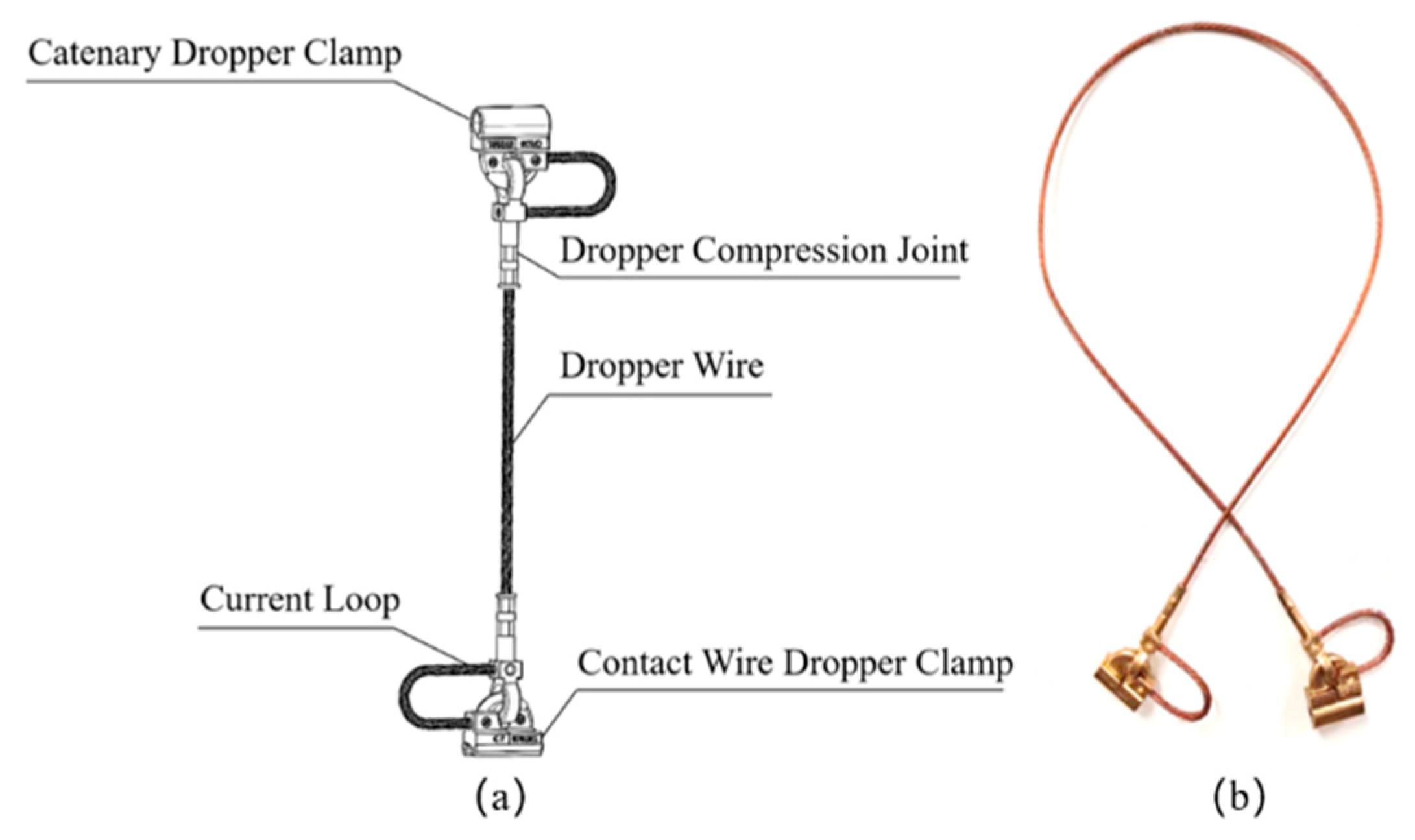
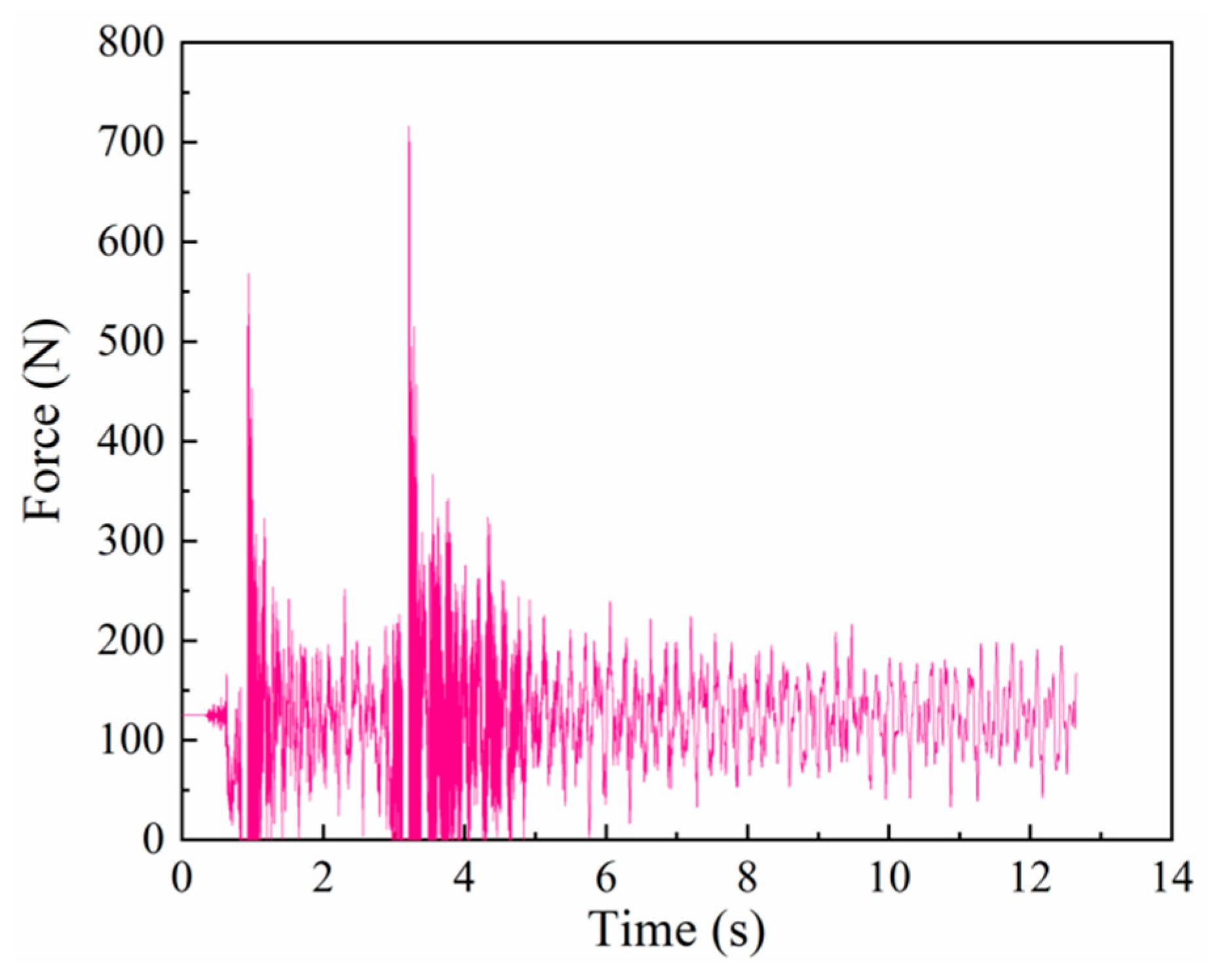
The boltless catenary dropper consists of the supporting cable clamp, elastic suspension clamp, contact wire clamp, guide ring, and dropper line, forming a non-adjustable structure, as shown in Figure 1. A 3D model of the bolt-free catenary dropper was created using SolidWorks 2022 software, and the model was compared with the actual parts shown in Figure 1a,b. The dropper wire and guide ring are connected using concentric circular shrinkage and hexagonal seamless crimping, with crimping damage kept within 3%. During operation, when no train passes, the catenary dropper mainly bears the weight of the contact wire and dropper line. As a high-speed train passes, the dropper moves upward and bends. After the pantograph passes, the dropper falls under the weight of the contact wire, generating a downward dynamic tensile load during the fall [33,34]. A contact network model for one span is created using reference parameters for elastic chain-type suspension networks from European standards EN 50318:2018 [35], with a train speed of 350 km/h. The dynamic interaction between the pantograph and catenary is then simulated. Data from the second catenary line is extracted, and Figure 2 shows the load-time history of the tensile force in that catenary.
Friction occurs between the strands during the operation of the dropper line. The contact between strands is not always constant due to the structure and operating environment of the dropper line. It undergoes dynamic displacement and relative motion in response to changes in load, temperature, wind, and other environmental factors [36,37]. As a result, the contact between the strands becomes discontinuous. Under tensile impact, stress concentration develops at the contact surface of the dropper line, further intensifying its wear.

2.2. Discontinuous Contact Finite Element Modeling

2.2.1. Geometric Modeling and Material Parameters of 12B Dropper Line

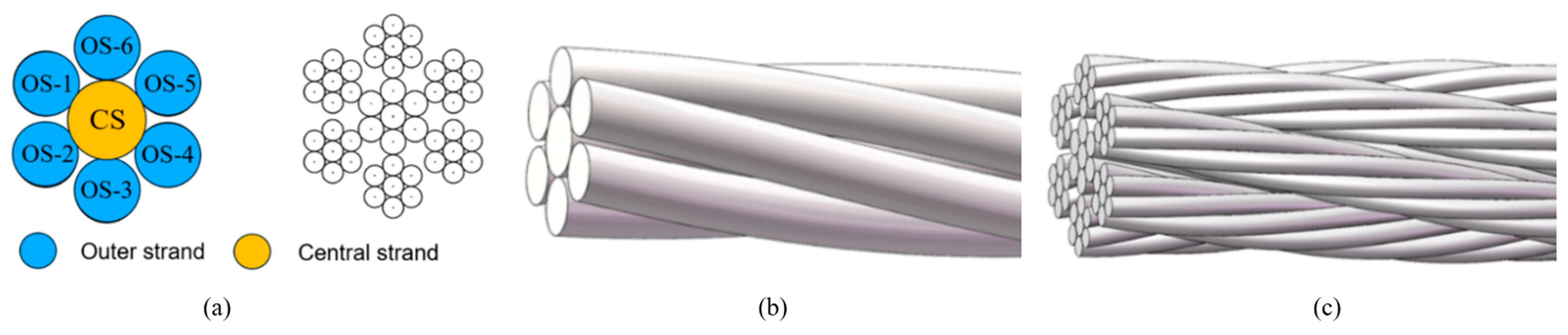
The dropper wire is made of multiple strands twisted together using a complex process, with each strand formed through concentric layering and reverse twisting. Figure 3 illustrates the cross-sectional structure of the 3D model of the dropper strand. The 7 × 1 simplified section reduces each strand of the catenary wire to a single filament, with CS as the central strand and OS as the outer strands. It is easy to model and has a low computational cost. Using 7 × 7 section, the modeling process becomes more complex, and the computational cost increases significantly compared to the 7 × 1 simplified section.
According to the relevant standards, the stranding direction of each layer should alternate, with the outermost layer defined as left-handed (counterclockwise) stranding. Since the dropper wire design includes two layers of stranding, the outer layer of the middle strand is left-handed (counterclockwise). The pitch of this layer is set at 23.4 mm, with a wire diameter of 0.65 mm, yielding a pitch diameter ratio of 12, which falls within the standard range of 10 to 13.
Further analysis of the outer strands reveals that this layer also uses the concentric layer stranding method, maintaining a consistent pitch diameter ratio with the central strand. As the outermost layer, the stranding direction of the outer strands is right-handed (clockwise). Additionally, the pitch of the outer layer is 19.44 mm, with a wire diameter of 0.54 mm. After calculation, the pitch diameter ratio is also 12, meeting the standard requirement of 8 to 14. Figure 3 illustrates the catenary stranding model created using the two cross-sectional designs.
To enhance computational efficiency, a simplified 7 × 1 catenary line is created, with a central strand diameter of 1.95 mm, a side strand diameter of 1.62 mm, and a length of 100 mm. The main physical parameters, according to the standard, are listed in Table 1.

2.2.2. Cell Meshing and Contact Properties of 12B Dropper Line

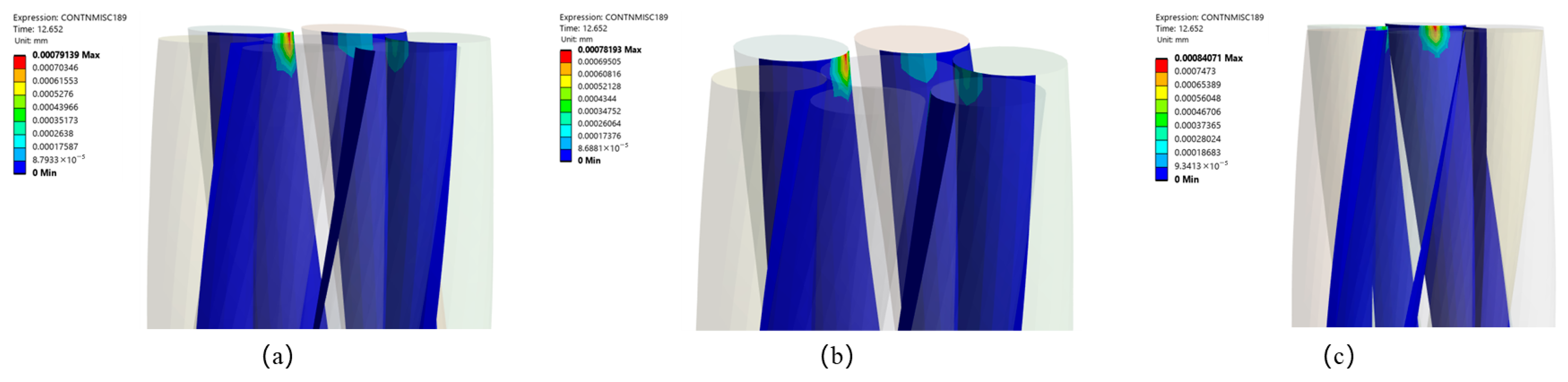
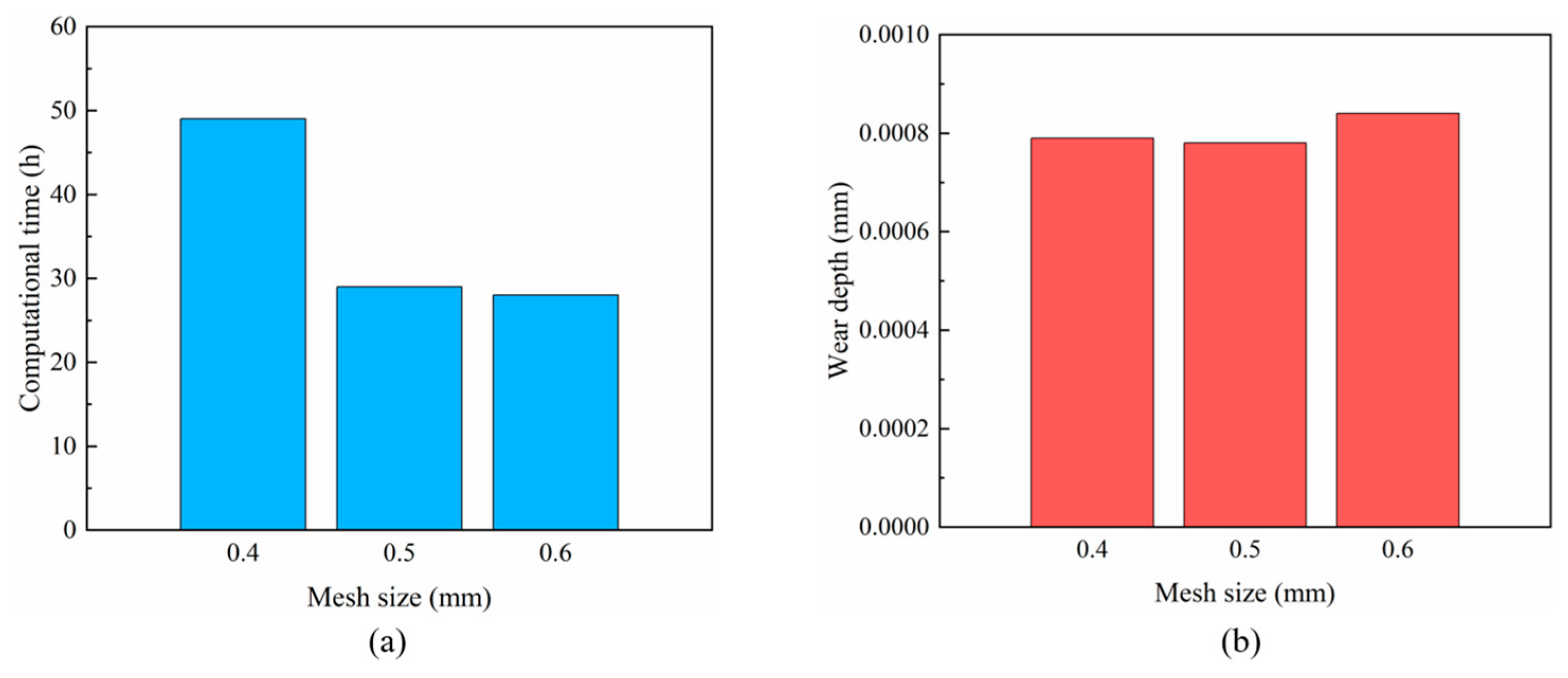
In finite element analysis, common meshing methods include tetrahedral, hexahedral, and sweeping meshing. Considering both computational efficiency and solution accuracy, the sweeping meshing method is selected. The mesh was generated using a swept-meshing strategy and consisted predominantly of 8-node linear hexahedral elements. In local topology-transition regions dictated by the geometry, 6-node linear wedge elements and a small number of 5-node linear pyramid elements were used to maintain mesh compatibility and quality. When the dropper line is in a free state, a gap exists between the strands. After loading, the catenary line undergoes torsion, causing the contact between strands to become highly complex, with the contact positions constantly changing over time [38]. As a result, capturing the contact area and performing local mesh refinement becomes highly challenging. While global mesh refinement improves accuracy, it requires substantial computer memory and computational time. Therefore, it is crucial to determine an appropriate global mesh size that balances computational resources with accuracy requirements. A mesh-sensitivity study was conducted to select an element size for the contact–wear simulations, balancing numerical accuracy and computational cost. Three element sizes (0.4, 0.5, and 0.6 mm) were evaluated. Results from the three mesh resolutions are shown in Figure 4. The 0.5 mm and 0.6 mm meshes required similar runtimes, but their predicted contact and wear responses differed noticeably, indicating that 0.6 mm was not sufficiently refined. In contrast, the 0.4 mm mesh produced results nearly identical to the 0.5 mm mesh, but at a substantially higher cost (almost doubling the runtime). Figure 5 compares the three mesh resolutions. Accordingly, we selected 0.5 mm as the element size because it offers a practical balance between computational efficiency and accuracy., resulting in 159,111 nodes and 32,940 elements in the meshed model.
In ANSYS, contact pairs between two surfaces are automatically recognized, and contact detection is performed using the node normal method. The tangential behavior is controlled by a penalty function contact algorithm, and the interface treatment method is set to adjust the contact to ensure accuracy. The friction coefficient between the strands of the dropper line is set to 0.18.

2.2.3. Boundary Conditions of 12B Dropper Line

One end of the dropper line is fixed, with all degrees of freedom constrained to ensure zero displacement, while the other end serves as the load application point, where a tensile force is applied. Additionally, the boundary conditions for the dropper line are detailed in Figure 2. With the above boundary condition setup, the stress and deformation states of the catenary line are effectively simulated.

2.2.4. Electro-Thermal Coupling Boundary Conditions of 12B Dropper Line

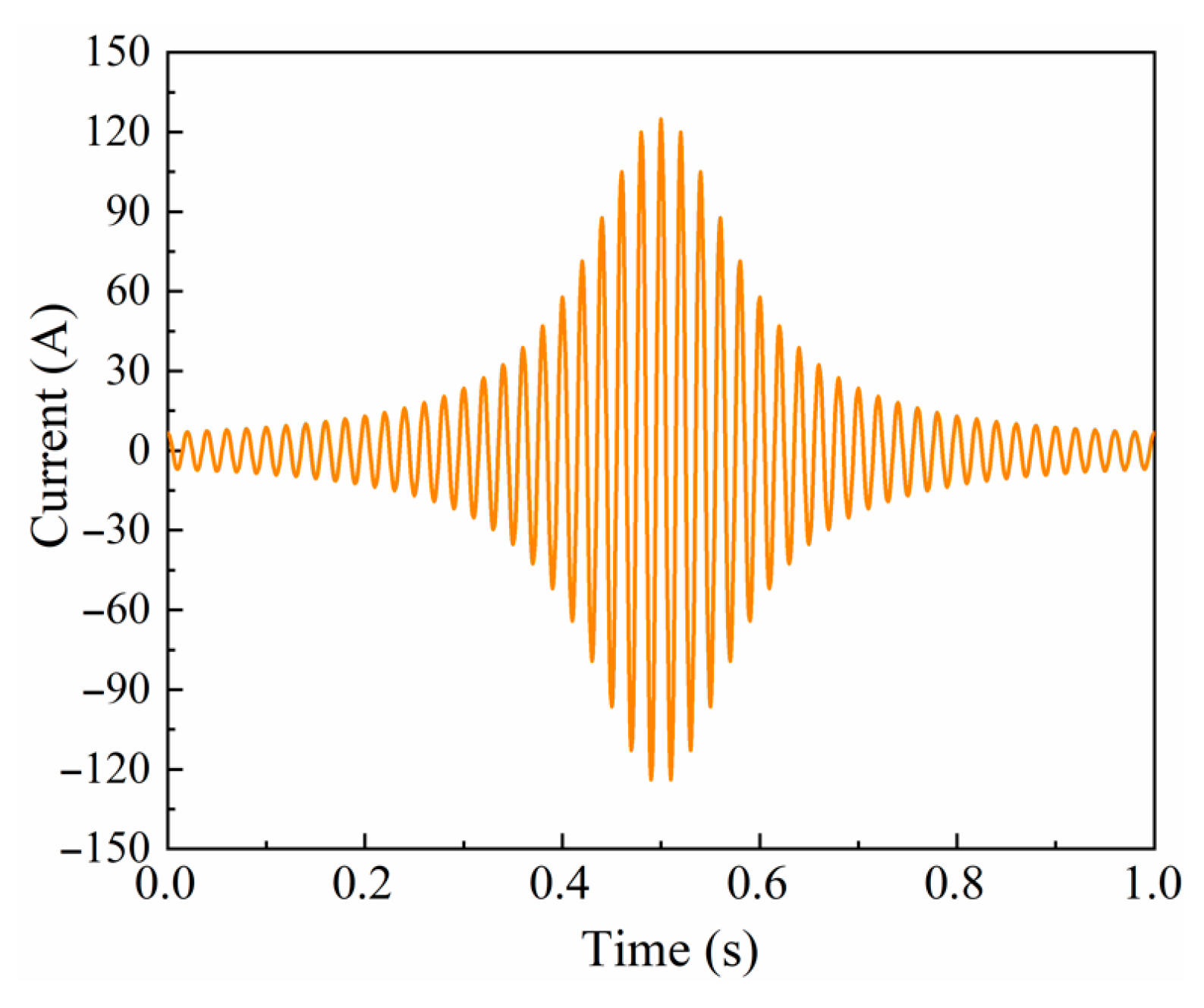
The dropper is a crucial component of the traction power supply system. During operation, as the pantograph sliding plate moves beneath the contact wire to collect current, the dropper remains in a state of force-electrical coupling [39]. Therefore, it is crucial to consider the impact of electrical factors on the dropper. Through simulation, the current distribution of the dropper is obtained, and the data is fitted to derive the following fitting function expression:
y = 2 2.09 + 8.82 4 π t 0.5 2 + 0.1 cos 100 π t 0.5
In the formula, y represents the current intensity, t represents the time, and its waveform is shown in Figure 6.
After applying an instantaneous high current to the components, the dropper line heats up quickly, affecting the material’s mechanical properties. The effect of temperature on the Young’s modulus of copper alloy is modeled to explore the changes in the mechanical properties of the dropper line after heating. Young’s modulus represents the macroscopic manifestation of atomic bonding forces. For cubic-structured metals, a semi-empirical model can be derived from the diatomic model as follows:
E = E 0 1 + α T 1 + α T 0 Q
In the formula, E represents Young’s modulus, T is the temperature, E 0 is the Young’s modulus at the initial temperature T 0 , and α is the coefficient of linear expansion of the material at the corresponding temperature. Using existing experimental data for the linear expansion coefficient and Young’s modulus of cubic metals as a function of temperature, nonlinear least squares fitting yields a parameter value of Q = 23.5 [40], which is used to calculate Young’s modulus at different temperatures. After performing the calculations, the variation in the catenary’s Young’s modulus with temperature is shown in Table 2.
The electrical heating effect increases the temperature of the dropper, and the flow field contributes to its heat dissipation. According to fluid dynamics theory, when the airflow speed V ≤ 0.15 m/s, the boundary layer exhibits natural laminar convection, similar to a still air environment. When the airflow speed is between 0.15 ≤ V ≤ 3 m/s, forced laminar convection dominates the boundary layer. When the airflow speed increases to V ≥ 3 m/s, forced turbulent convection primarily forms within the boundary layer. It is important to note that as airflow velocity changes, the convective heat transfer coefficient also varies accordingly.
When the wind speed is between forced laminar convection and forced turbulent convection, the empirical relationship between wind speed and the convective heat transfer coefficient is as follows:
h c = B V n
In the equation, h c represents the convective heat transfer coefficient, V represents the wind speed. B is the empirical coefficient, typically taken as 18.3 near the wind’s direct contact area for calculation. n is the velocity index, usually taken as 0.6 [41]. Based on the wind force estimated when the train passes, the heat transfer coefficient of the catenary is calculated to be 89.15 W/m2·°C using Equation (3).
Using the 3D model of the dropper line, an electro-thermal coupling simulation is performed to analyze the temperature rise after current is applied. A 0 V voltage is applied to one end of the dropper line, while a cosine current, shown in Figure 4, is applied to the other end for 1 s, simulating the instantaneous high current from the pantograph. The heat transfer coefficient for the dropper line is set, with the ambient temperature at 22 °C and 90 °C. 22 °C represents the normal ambient temperature, while 90 °C is the highest temperature the dropper can reach after exposure to the summer sun.

2.3. Wear Modeling of 12B Dropper Line

This study is based on the modified Archard wear equation [42], combined with ANSYS adaptive meshing to develop a wear model. The Archard equation for finite element analysis modification is:
h x , t = k 1 · p x , t · δ x , t
In the formula, h x , t , p x , t , and δ x , t represent the wear depth increment, contact pressure, and relative slip at point x at time t , respectively, with k 1 is the wear coefficient obtained by fitting the original equation to the data. In the original Archard law k denotes the dimensionless wear coefficient, k 1 is the normalized form of k , defined as k 1 = k /H, where k is the dimensionless wear coefficient and H is the material hardness.
The Archard wear model is primarily used in the ANSYS Mechanical APDL platform to evaluate wear. The fundamental principle of the Archard wear model in ANSYS is as follows:
d W d t = k · p m · v s q · n H
In the formula, n represents the in-plane normal, v s is the slip velocity, p is the contact pressure, H is the material hardness, and k is the wear coefficient, m and q are predefined constants. The Archard wear model relates the wear rate to the contact pressure, slip velocity, and material hardness. In most cases, the wear direction is opposite to that of the contact normal.
To simulate material loss during the wear process, surface nodes must be repositioned, causing the mass of the solid elements beneath the contact units to gradually decrease as wear progresses. This element distortion can disrupt the analysis. To address this issue, this study uses nonlinear mesh adaptation technology to improve mesh quality and ensure smooth analysis. In the nonlinear numerical simulation of wear, once the system meets the predefined mechanical convergence criteria, the mesh node positions are updated based on the directional vectors of the contact interface and the extent of wear evolution. Notably, this dynamic adjustment of the geometry triggers a redistribution of the system’s residual forces, requiring additional iterations to restore equilibrium. If the numerical solution of the updated geometry fails to converge, a step-length adaptation mechanism is triggered. This uses a bisection strategy to reduce the computation step length, reset the calculated wear evolution, and re-execute the solution process for that increment, as shown in Figure 7. This numerical method ensures the computational stability of wear evolution in contact analysis and maintains the accuracy of the overall solution. In this study, computational simulations of wear cycles from 0 to 10,000 are performed.
It is assumed that the wear rate remains constant over N cycles, where one cycle in simulation calculations corresponds to N cycles in experimental analysis. Therefore, an acceleration coefficient of 1000 can be set in ANSYS, indicating that the wear simulation is conducted over 1000 cycles, for example N = 1000. It was introduced to improve computational efficiency and to capture long-term wear evolution within a feasible simulation time. Importantly, N is a numerical stepping scheme that updates wear in blocks of cycles rather than modifying the underlying contact mechanics. In this way, it improves computational tractability while preserving the trend of progressive damage evolution. The adjusted Archard wear equation is:
h x , t = N · k 1 · p x , t · δ x , t
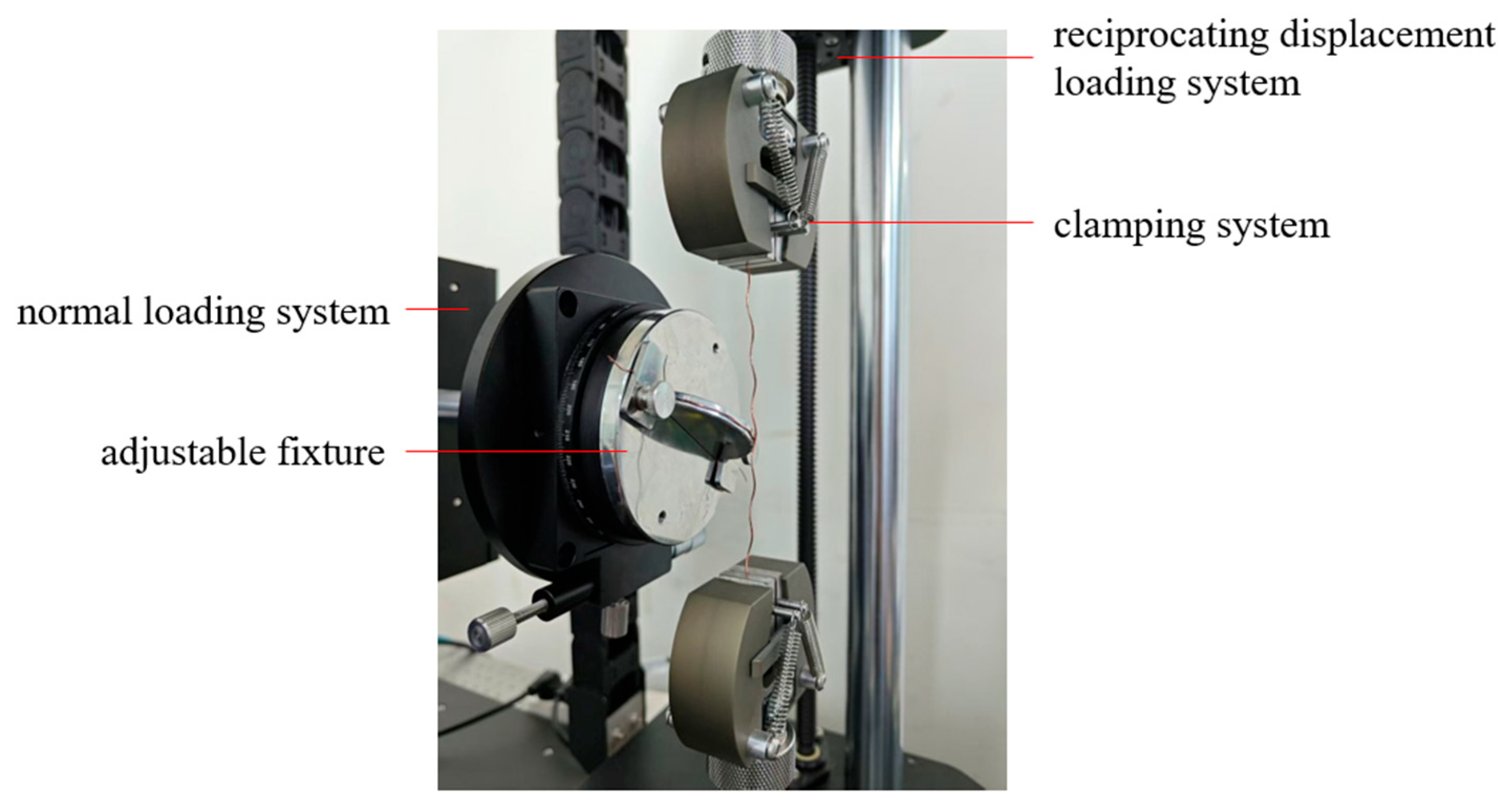
During the wear process, the wear coefficient is not constant. As external loads increase, the wear rate of the copper-magnesium alloy initially increases and then decreases [43]. Additionally, the wear coefficient varies dynamically as the number of cycles increases. Fretting-wear tests on catenary dropper wires were conducted using a CARE M-100T high-frequency fatigue testing machine (CARE M-100T, CARE Measurement & Control Testing System Co., Ltd., Tianjin, China), as schematically illustrated in Figure 8. The apparatus integrates electromagnetic excitation with a precision loading unit, enabling stable, well-controlled reciprocating loading at high frequency and small displacement. This setup is therefore suitable for investigating fretting-wear and fretting-fatigue behavior in fine wires. The testing machine consists of a normal-load application system, a specimen-clamping system, and a reciprocating-displacement loading system. The left loading module applies a constant normal force to the contact interface and uses an adjustable fixture to secure the wire specimens and set the contact angle and contact configuration. The right electromagnetic driving system—comprising an actuator and a control unit—drives the upper and lower clamps to impose a stable vertical reciprocating displacement under the prescribed parameters. The wire specimens are fixed in the upper and lower clamps and undergo high-frequency, small-amplitude relative motion, reproducing fretting induced by vibration and load fluctuations under service conditions.
During testing, the specimens were clamped in the upper and lower fixtures, and a predetermined normal force was applied to establish stable contact. The clamps were then driven at the prescribed frequency and displacement amplitude, producing controlled gross or partial slip at the contact interface. All tests were performed in ambient air at room temperature (20–25 °C) and 50–60% relative humidity. The normal load ranged from 3 to 15 N, and the reciprocating displacement amplitude ranged from 30 to 70 μm. The number of cycles was 5 × 10⁴, and the frequency was 5 Hz. After testing, a 3D surface profilometer (Contour GT, Bruker Nano GmbH, Bremen, Germany) was used to measure wear-scar topography and wear depth. The wear coefficient k 1 was calculated using the Hertzian contact solution and Equation (6), and the results were summarized in Table 3. In the ANSYS wear implementation used in this work, the wear coefficient cannot be prescribed as a function of cycle number, normal load, or slip amplitude and therefore has to be specified as a constant input parameter. To align simulation results with experimentally measured wear levels, the wear coefficients from Table 3 were averaged to yield a value of 1.0 × 10⁻⁸. As a result, all subsequent calculations use the representative constant k 1 = 1.0 × 10⁻⁸.

3. Results

3.1. Analysis of Model Results

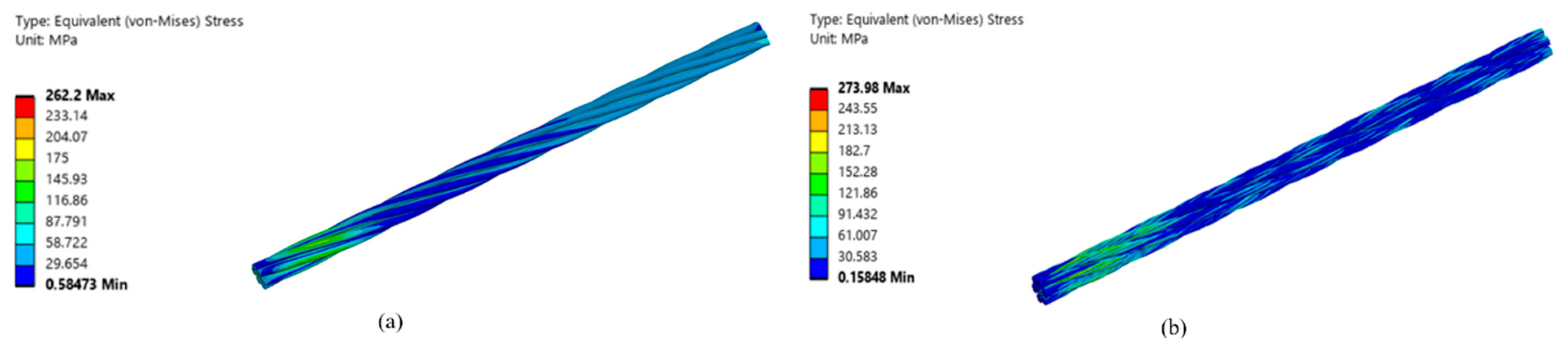
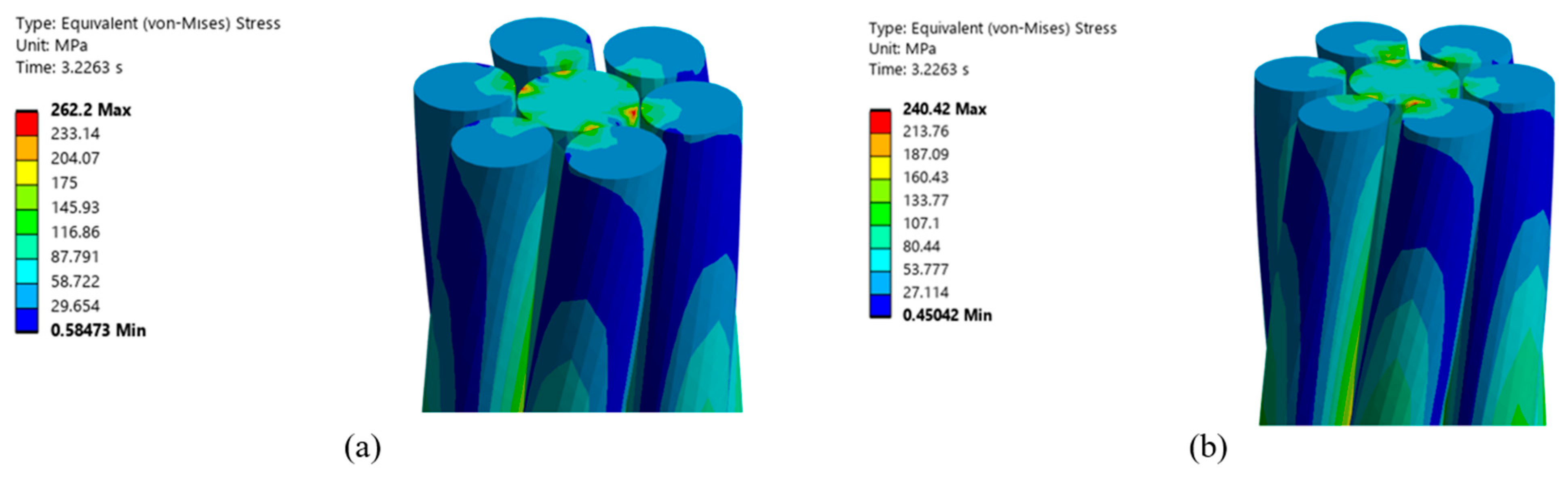
Both models underwent mechanical field simulations under identical boundary conditions, resulting in the stress distribution shown in Figure 9. Examining the ends of the dropper wires in the diagram reveals clear stress concentrations at the contacts between the outer strands, with the highest stresses occurring where the side wires meet the core wire, at 262.2 MPa and 273.98 MPa, respectively. This is because after loading, the core strands of the dropper wires cause the adjacent wires to compress against each other, bearing substantial loads. The analysis results align with real-world observations, highlighting common issues such as bulging, surface damage, and cracking in droppers after prolonged use.
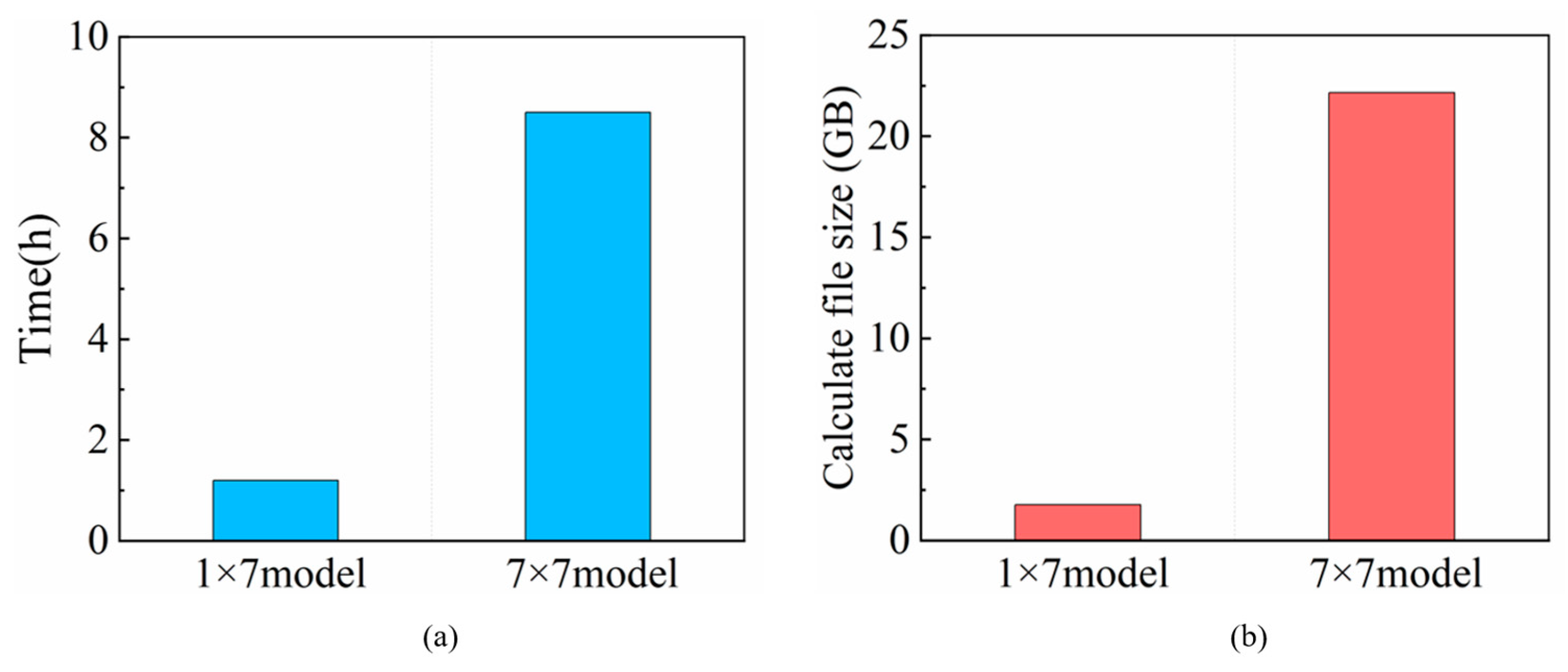
The results from mechanical field simulations indicate that the differences between the 7 × 1 and 7 × 7 models are approximately 4%. Within the dropper’s structure, each bundle of wires is intertwined, with the relative slip between wires in the same bundle theoretically smaller than the slip between different bundles. A comparison of the computational costs for both models is shown in Figure 10. Considering computational costs, choosing the 7 × 1 model for simulation analysis significantly reduces costs and increases efficiency, without compromising the results of this study.

3.2. Analysis of Electro-Thermal Coupling Results and Wear Results

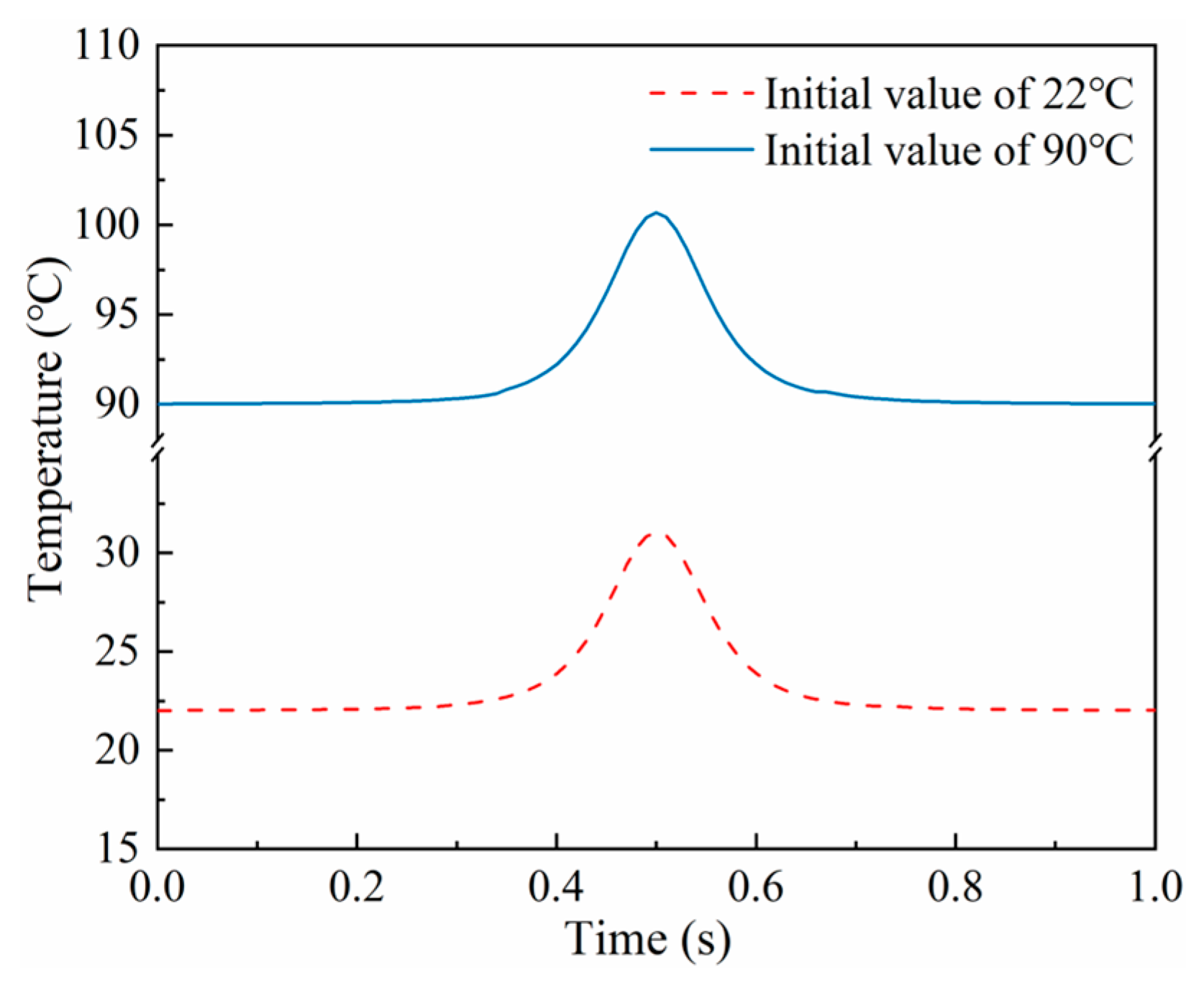
After electro-thermal coupling, the dropper temperatures, shown in Figure 11 increased from initial values of 22 °C and 90 °C to 31.063 °C and 100.67 °C, respectively. As ambient temperatures increase, the friction coefficient between the cable strands changes, altering the inter-strand stress distribution. In this study, the effects of temperature on the friction coefficients of dropper strands were not considered to simplify the finite element model. Although variations in friction coefficients may cause slight deviations in the finite element results from actual values, such discrepancies have minimal impact on the contact stress distribution patterns and do not significantly affect the conclusions of this paper.
Figure 12 shows the overall equivalent stress distribution in dropper wires before and after wear at 22 °C. The figure shows a consistent stress distribution in the dropper wires both before wear and after 1000 wear cycles. At the ends of the dropper wires, stress values are lower than those in the lower sections, with stress primarily concentrated at the points of contact between the central and side strands, as shown by the cross-sectional stress distribution. The central strands, lacking a helical structure, experience more pronounced stress on the load-bearing end faces than the side strands. When subjected to axial tensile forces, the interaction between the central and side strands of the cable occurs primarily through point contacts, leading to stress concentration at these points. As the dropper wires undergo wear, the contact interfaces between the strands change, reconstructing the contact state. This alteration shifts the relative positions of the strands and affects the distribution of the contact area, resulting in uneven contact force distribution. As the topology of the contact interfaces changes, the original modes of stress transmission also vary. During this process, various regions of the contact interface experience varying stress intensities, creating a gradient distribution where stress gradually decreases across space.
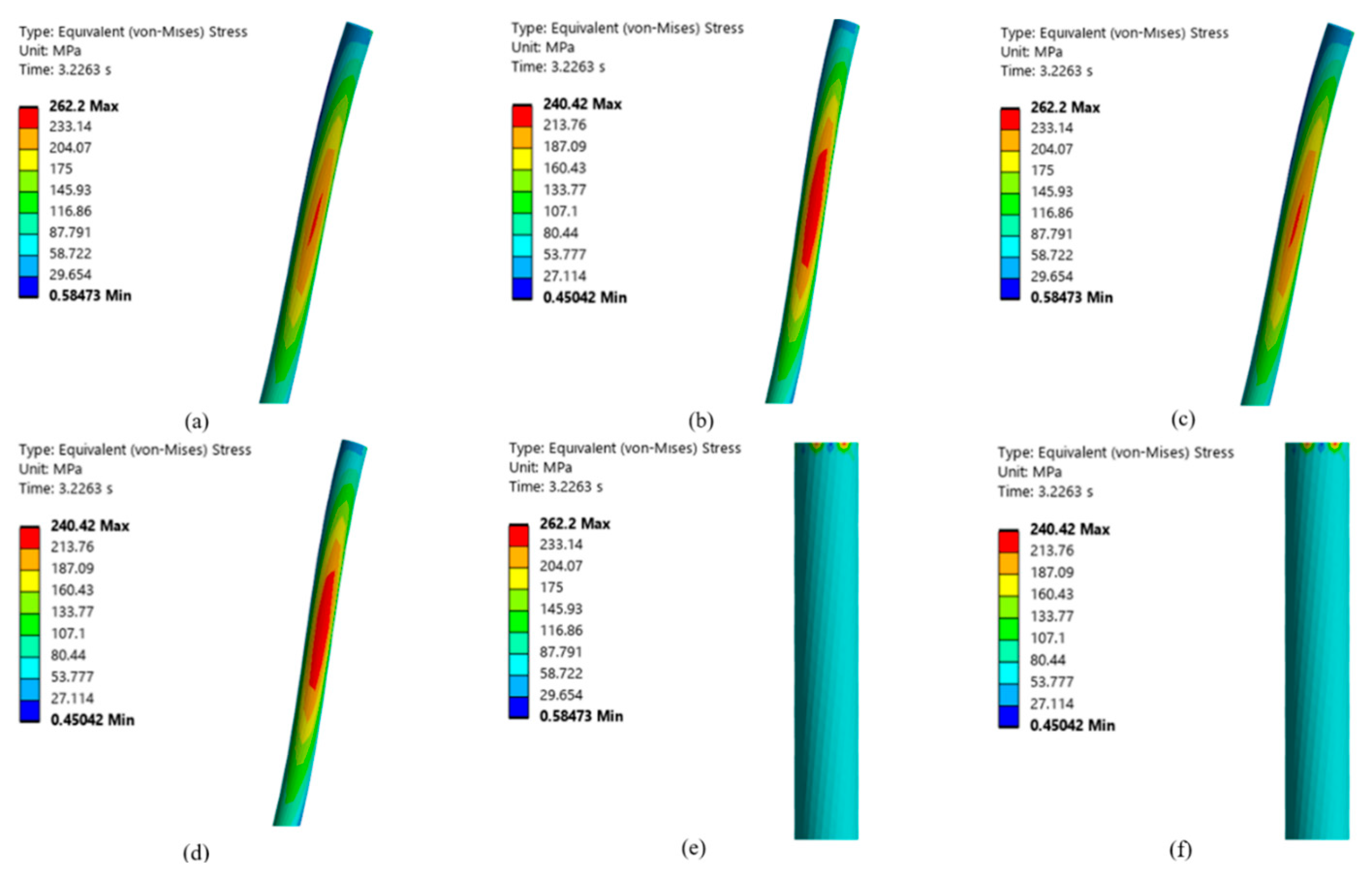
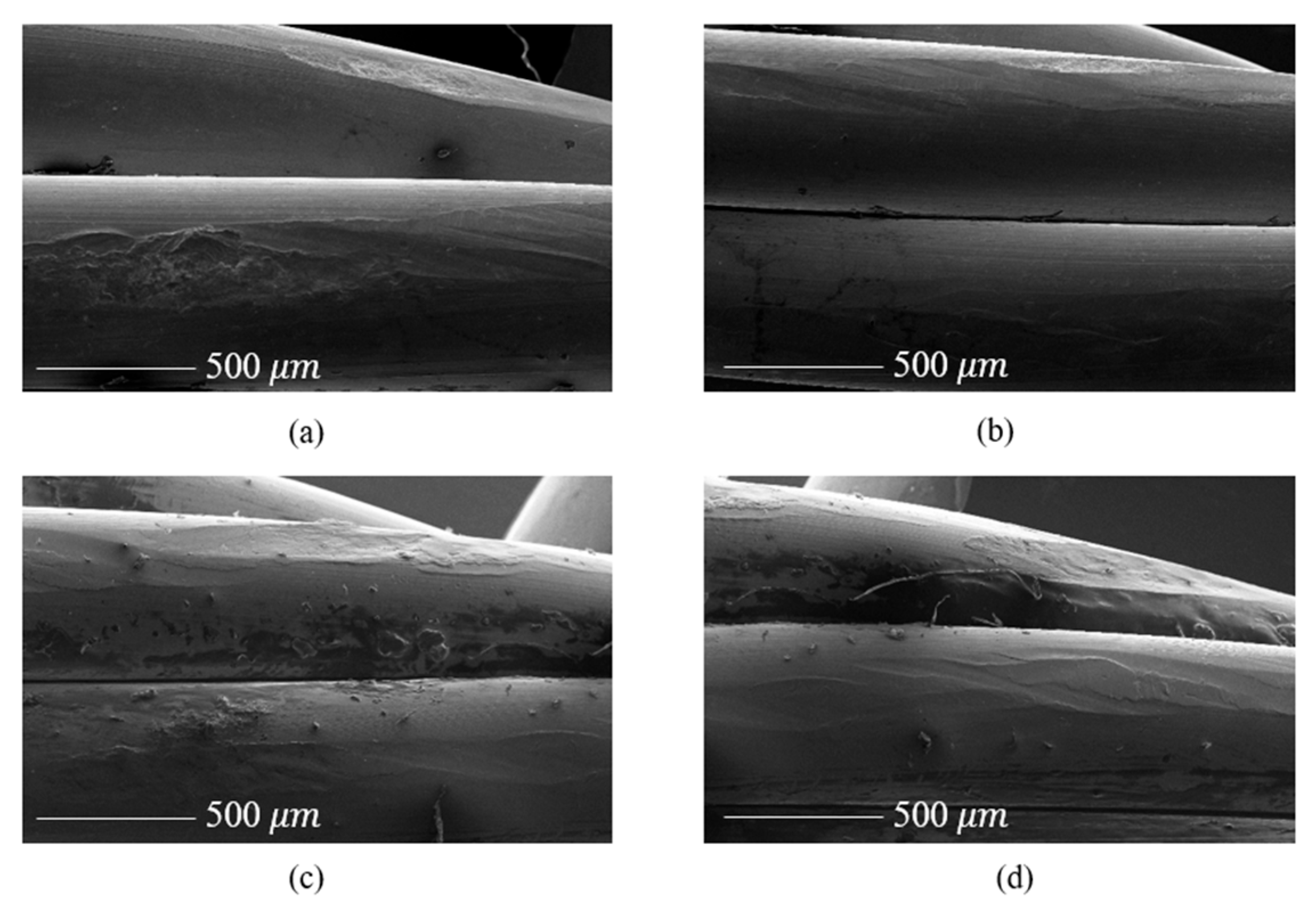
Figure 13a–f displays the contact stress cloud maps for side strands OS-1, OS-5, and the central strand CS at 22 °C, showing contact stresses of 262.2 MPa before and 240.42 MPa after 1000 cycles of wear. The diagrams show that the stress concentration areas for side strands OS-1 and OS-5 are consistent before and after wear, although the area of stress concentration increases post-wear. This expansion occurs because wear removes material from the contact surface and shifts part of the load to regions that were previously lightly loaded. As a result, the highly stressed area grows, the stress gradient becomes smoother, and the original contact points experience less concentration. Because of the symmetric geometry and identical dynamic loading, OS-1 and OS-5 show nearly identical stress patterns, supporting the repeatability of the proposed contact–wear framework. After the in-service suspension cable was dismantled, the wire strands were examined by electron microscopy, significant interstrand wear was observed in Figure 14. This wear increased the interstrand contact area, which redistributed the stress within the wires under load. During wear, the dropper’s geometric structure undergoes minor changes that alter the load distribution pattern, affecting the overall magnitude of stress. However, the contact stress in the inter-contact areas of the central strand CS is much lower than that of side strands OS-1 and OS-5. This is because, under normal operating conditions, the dropper deforms elastically, and under dynamic loads, each strand rotates and deforms upwards in the direction of the load [44]. As external forces or displacement loads decrease, the dropper returns to its original state. As the dropper is left-hinged (anticlockwise), leftward torsional deformation tightens the side strands and relaxes the central strand, amplifying the compressive force between them. Meanwhile, the central strand’s larger diameter compared to the side strands results in much lower contact stress in the central strand’s inter-contact areas than in those of side strands OS-1 and OS-5.
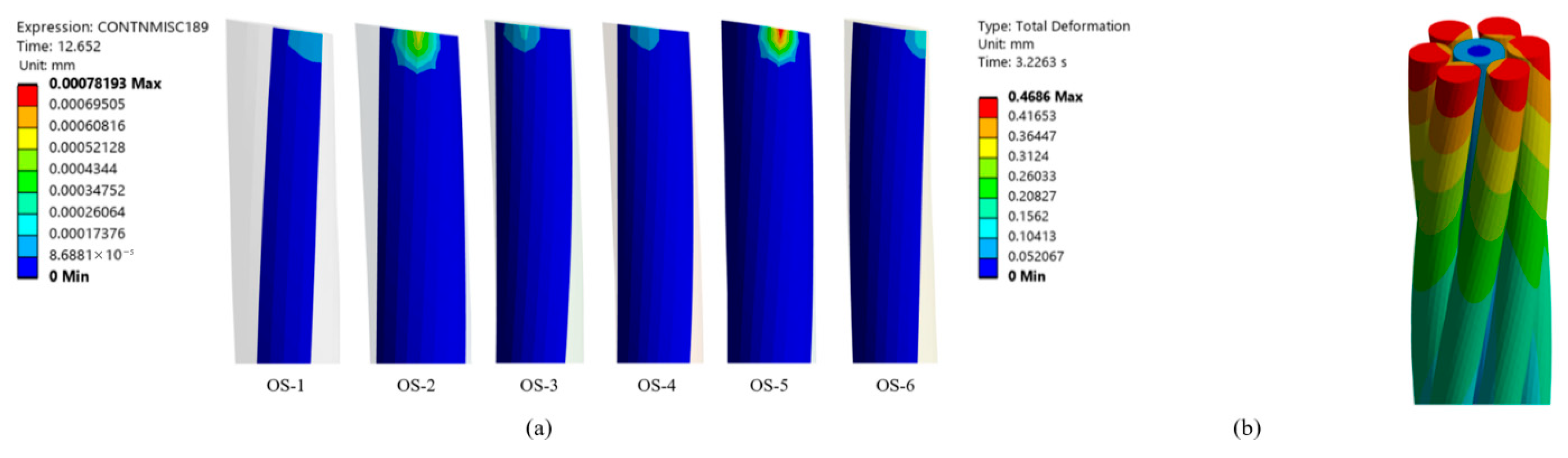
Figure 15 illustrates the wear evolution characteristics and multi-scale coupling mechanisms induced by discontinuous contact between the central and side strands of the cable system under 1000 loading cycles. Numerical simulation results show that the helically wound configuration, influenced by axial stretching and twisting, undergoes multimodal coupled deformations involving circumferential rotation and longitudinal extension. This causes dynamic micro-slipping at the contact interfaces between side and central strands, forming a spatially heterogeneous wear topology distribution. Specifically, the OS-5 side strand, due to a sudden change in the curvature of its contact trajectory, accumulates wear depth until it reaches a critical threshold. A detailed analysis shows that the effects of discontinuous contact dominate wear evolution through two pathways. Under cyclic loading, the side strands respond asymmetrically due to stiffness gradient differences, leading to periodic separation and closure at the contact interfaces and accelerating material peeling. The geometric nonlinearity of the helical structure causes an evolution in the gradient of the contact stress field, with the maximum tangential slip occurring in the terminal constraint areas, promoting the expansion of the wear path along the direction of stress propagation. The wear model, enhanced by Archard’s theory, shows that parametric simulations accounting for discontinuous contact characteristics track the evolution of interface damage more precisely, offering a new approach for predicting wear lifespan in complex contact systems.
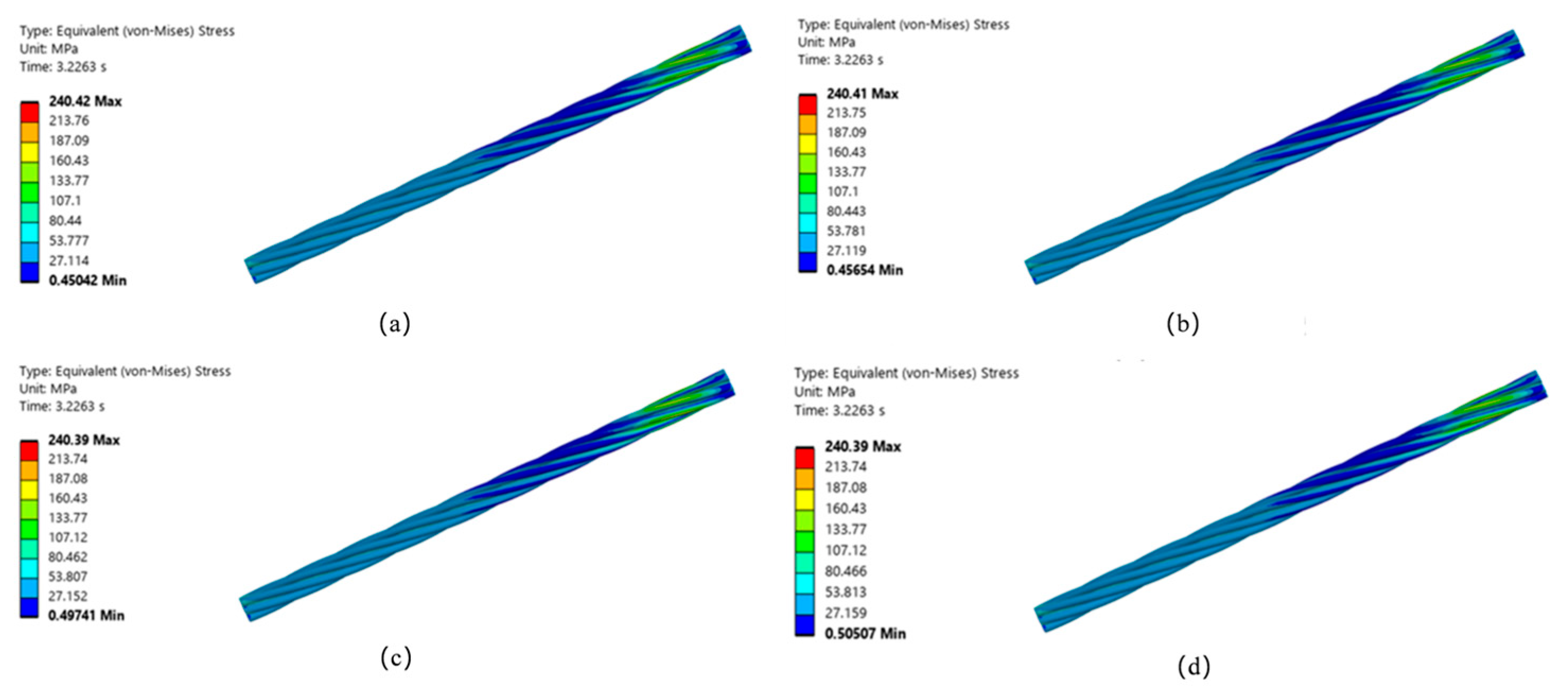
Figure 16 shows the cloud map of equivalent stress distribution in the wear zones of dropper wires under varying temperature conditions. Results show that as the initial ambient temperature increases from 22 °C to 31.063 °C, the maximum contact stress of cable wires decreases slightly from 240.42 MPa to 240.41 MPa; under high-temperature conditions (initial temperature from 90 °C to 100.67 °C), the peak equivalent stress remains stable at 240.39 MPa. The cloud map analysis shows clear stress gradient features at the strand contact interfaces, with stress concentrations at the edges where the side and central strands interact. A comparison of stress distributions before and after electro-thermal coupling shows that although the rise in dropper wire temperature lowers the elastic modulus, it does not significantly affect the maximum stress values. This behavior is consistent with the principles of linear elasticity. Under force-controlled boundary conditions, the stress level is primarily governed by the applied load and the local contact geometry, whereas the reduction in Young’s modulus mainly increases structural compliance and deformation with only a minor effect on the stress magnitude. Within the temperature range of 22–100.67 °C, the elastic modulus decreases by only a few percent, resulting in negligible changes in the Hertzian contact pressure and the equivalent stress. Further mechanistic analysis shows that transient currents affect the mechanical properties of wire materials in two ways: first, Joule heating-induced material thermal softening intensifies with temperature increases, causing a temperature-dependent reduction in material yield strength; second, under high-density current conditions, the movement of dislocations within conductors exhibits distinct dynamic characteristics, including increased crystal slip activation and dislocation tangle dissociation. This evolution of the microstructure reduces the material’s work-hardening capacity, theoretically improving the ductility of the wire and lowering its bearing stress [45].
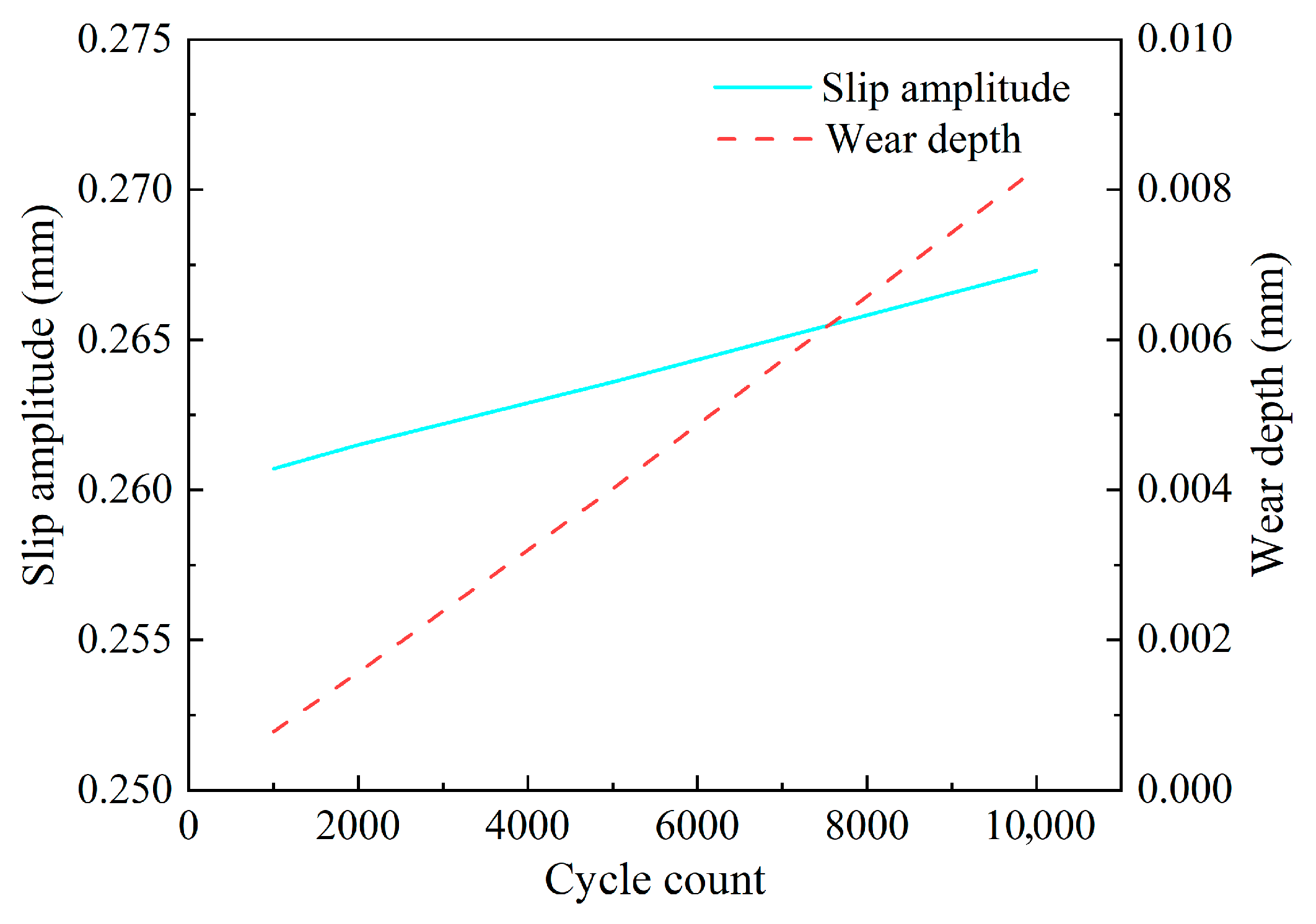
Figure 17 illustrates the slip evolution pattern for side strand OS-5 under cyclic loading, with the slip amplitude reaching a peak of 0.267 mm after 10,000 cycles. The observation curve shows a consistent upward trend, with slip amplitude growth rates for side strand OS-5 of 0.3%, 0.8%, and 1.4% in the cycle ranges of 1000–2000, 2000–5000, and 5000–10,000, respectively. The nonlinear increase in slip amplitude is attributed to several coupled factors: first, the dropper material undergoes cumulative damage and cyclic softening under repeated loads, making it more susceptible to deformation. Secondly, as the cycle count increases, the contact surfaces wear progressively. As the wear deepens, the contact area expands, subsequently affecting the slip amplitude.
Figure 17 illustrates the wear evolution of the OS-5 sample under cyclic loading, with wear depth reaching a peak of 0.008 mm at 10,000 cycles. Ongoing cyclic loading causes a significant cumulative effect on the damage at the contact interface. The wear depth growth rates for cycles 1000–2000, 2000–5000, and 5000–10,000 are 100.4%, 156.3%, and 106.2%, respectively. This phenomenon exhibits accelerated wear in the medium cycle range (2000–5000 cycles). The overall damage evolution correlates quasi-linearly with the load cycles, with a slight non-linear intensification at higher cycle stages, possibly due to non-linear cumulative effects from changes in the contact interface condition. According to Archard’s wear theory, wear depth is primarily governed by the combined effects of normal contact stress and tangential slip magnitude. In this study, the normal stress at the contact interface remains constant, while the amplitude of interface slip progressively increases, suggesting that the temporal expansion of slip amplitude is the primary mechanism driving wear growth.

4. Discussion

This study presents a discontinuous contact numerical model based on Archard’s wear theory, revealing the damage evolution mechanisms of the high-speed train dropper system under complex operating conditions. Compared to traditional continuous media models, the surface degradation mechanisms and discontinuous contact boundary conditions introduced here more accurately represent the dynamic interactions at the contact interfaces of multi-strand lines. These include features such as stress gradient decay and taking the temperature effect into account in the simulation, providing new theoretical insights into the failure mechanisms of the dropper system. This study provides significant reference value for assessing the condition and predicting the lifespan of high-speed train contact networks, especially in offering a quantitative foundation for developing preventative maintenance strategies under high-cycle load conditions.
The current model does not yet fully integrate the electrical contact heat effects with mechanical vibrational excitation. An electro-thermal-mechanical multi-field coupling algorithm could be introduced to explore the synergistic damage mechanisms between electrical arc erosion and mechanical wear. Regarding the effect of temperature on the material, a crystal plasticity constitutive model considering dislocation evolution is necessary to more accurately characterize the dynamic softening behavior of copper alloy strands across different temperature ranges. Additionally, testing should be conducted on a friction wear test platform to observe the microstructural morphology at discontinuous contact sites of the dropper wires, thereby elucidating the wear mechanisms under discontinuous contact conditions. In future work, we will conduct simplified but representative experiments to isolate and quantify key variables. As data and resources become available, we will extend validation toward scenarios that more closely reflect operating conditions.

5. Conclusions

This study develops a numerical framework for stranded dropper lines under discontinuous contact by embedding Archard’s wear law into a finite-element contact formulation, thereby augmenting conventional contact boundary conditions with an explicit surface-degradation mechanism. The proposed approach captures the evolving contact topology induced by progressive material removal, enabling a more faithful representation of inter-strand interactions under service-representative loading. Importantly, this capability offers both a mechanistic explanation of where and how damage accumulates and a quantitative basis for identifying high-risk interfaces and the variables that drive damage—information that is essential for condition assessment and predictive maintenance of catenary components. The main findings and practical implications are summarized below:
(1)
The wear on the dropper wires leads to topological restructuring at the interfaces between adjacent strands, characterized by a stress gradient decay. The most severe damage occurs at the contact boundary between the central strand and side strand OS-5, coinciding with the areas of greatest wear, thus confirming the critical role of discontinuous contact effects in damage progression.
(2)
The material softening effect due to temperature loading (a decrease in elastic modulus by about 4%) did not significantly change the system’s maximum stress level, the stress level is primarily governed by the external loading and the local contact geometry, while the reduction in Young’s modulus mainly manifests as decreased structural stiffness and increased deformation, with only a minor effect on the stress magnitude.
(3)
The normal stress field remained in dynamic equilibrium during continuous peeling of the interfacial material, while the tangential slip amplitude exhibited a time-dependent expansion characteristic. The damage depth and cycle count follow an approximately linear development pattern in the 103–104 interval, but exhibit a weak super-linear growth trend at high cycle stages (N > 5000).
Beyond these technical conclusions, the proposed modeling strategy has clear engineering and societal relevance. Predictive maintenance is sometimes viewed as unnecessary or uneconomical. In safety-critical railway infrastructure, however, the ability to anticipate damage progression and prioritize interventions can reduce unplanned outages, prevent secondary damage, and improve lifecycle resource allocation. By linking measurable operating conditions to wear-sensitive interfaces and local damage-evolution trends, the framework enables risk-based (rather than reactive) maintenance planning and ultimately improves system reliability and operational sustainability.

Author Contributions

C.C. contributed toward conceptualization, methodology, investigation, project administration, resources, and writing—original draft. D.W., X.F. and G.L. contributed toward investigation, project administration, resources, methodology, and writing—review and editing. H.Z. and D.L. contributed toward supervision and writing—review and editing. J.M. and J.L. contributed toward methodology and writing—review and editing. All authors have read and agreed to the published version of the manuscript.

Funding

This research receives financial support from National Key Research and Development Program (2023YFB4302000). Fundamental Research Funds for the Central Universities (2682024CX096) and Sichuan Provincial Natural Science Foundation Youth Fund Project (2025ZNSFSC0835) are also acknowledged.

Institutional Review Board Statement

Not applicable.

Informed Consent Statement

Not applicable.

Data Availability Statement

The original contributions presented in this study are included in the article. Further inquiries can be directed to the corresponding author.

Acknowledgments

We sincerely appreciate the English language editing and figure preparation services provided by MDPI Author Services for this manuscript. We acknowledge and appreciate the assistance of the generative AI tool ChatGPT 5.2 in improving the academic writing and refining the language of this manuscript.

Conflicts of Interest

Author Jian Luo was employed by the company China Railway Design Corporation. The remaining authors declare that the research was conducted in the absence of any commercial or financial relationships that could be construed as a potential conflict of interest.

Nomenclature

SymbolSignification
yThe current intensity
t The time
E Young’s modulus
T The temperature
T 0 The initial temperature
E 0 The Young’s modulus at the initial temperature T 0
α The coefficient of linear expansion of the material at the corresponding temperature
QExperimental values obtained at room temperature from a small quantity of metal
h c The convective heat transfer coefficient
B The empirical coefficient
V The wind speed
nThe velocity index
h x , t The wear depth increment at point x at time t
p x , t The contact pressure at point x at time t
δ x , t The relative slip at point x at time t
k 1 The wear coefficient obtained by fitting the original equation to the data
n The in-plane normal
v s The slip velocity
p The contact pressure
H The material hardness
kThe wear coefficient
N The number of cycles

References

  1. Zhai, W. Development of vehicle-track coupled dynamics theory and engineering practice. Chin. Sci. Bull. 2022, 67, 3793–3807. [Google Scholar] [CrossRef]
  2. Liu, X.; Peng, J.; Tan, D.; Xu, Z.; Liu, J.; Mo, J.; Zhu, H. Failure analysis and optimization of integral droppers used in high speed railway catenary system. Eng. Fail. Anal. 2018, 91, 496–506. [Google Scholar] [CrossRef]
  3. Yang, J.; Duan, H.; Li, L.; Stewart, E.; Huang, J.; Dixon, R. 1D CNN Based Detection and Localisation of Defective Droppers in Railway Catenary. Appl. Sci. 2023, 13, 6819. [Google Scholar] [CrossRef]
  4. Li, Z.; Rao, Z.; Ding, L.; Ding, B.; Fang, J.; Ma, X. YOLOv5s-D: A Railway Catenary Dropper State Identification and Small Defect Detection Model. Appl. Sci. 2023, 13, 7881. [Google Scholar] [CrossRef]
  5. He, F.; Shen, X.; Guo, D.; Chen, L.; Pan, L. The dropper stress characteristics under different moving load speeds for a high-speed railway. Heliyon 2024, 10, e24145. [Google Scholar] [CrossRef]
  6. Zhang, J.; Wu, J.; Chen, W.; Guan, J.; Zhong, Y.; Xu, K. Simulation method for dropper dynamic load considering horizontal vibration behaviour. Int. J. Simul. Model. 2019, 18, 620–631. [Google Scholar] [CrossRef] [PubMed]
  7. Liu, H.; Chang, Y.; Li, Z.; Zhong, S.; Yan, L. Directional-Aware Automatic Defect Detection in High-Speed Railway Catenary System. In Proceedings of the 2019 IEEE International Conference on Image Processing (ICIP), Taipei, Taiwan, 22–25 September 2019. [Google Scholar] [CrossRef]
  8. He, F.; Guo, D.; Chen, L. Numerical study of contact wire tension affecting dropper stress of a catenary system. Adv. Mech. Eng. 2021, 13, 1–11. [Google Scholar] [CrossRef]
  9. Tan, D.; Mo, J.; Peng, J.; Luo, J.; Chen, W.; Zhu, M. Research and Prospect on High-Speed Catenary Component Failure. J. Southwest Jiaotong Univ. 2018, 3, 610–619. [Google Scholar] [CrossRef]
  10. Liu, L.; Tian, L.; Ding, N.; Guo, W.; Xu, N.; Xu, H.; Wu, X.; Chen, L. Failure Analysis of the Headspan Suspension in the Railway Power Supply System. J. Fail. Anal. Prev. 2021, 21, 2135–2142. [Google Scholar] [CrossRef]
  11. Yao, Y.; Zou, D.; Zhou, N.; Mei, G.; Wang, J.; Zhang, W. A study on the mechanism of vehicle body vibration affecting the dynamic interaction in the pantograph–catenary system. Veh. Syst. Dyn. 2021, 59, 1335–1354. [Google Scholar] [CrossRef]
  12. Qi, G.; Xiao, X.; Zhao, H.; Chen, J. Fatigue life evaluation on key components of high-speed railway catenary system. J. Cent. South Univ. 2018, 25, 1958–1965. [Google Scholar] [CrossRef]
  13. Liu, G.; Ding, N.; Zhou, J.; Xu, N.; Guo, W. Fracture Failure of Dropper Wires in the Power Supply System of a Subway Line. J. Fail. Anal. Prev. 2021, 21, 370–375. [Google Scholar] [CrossRef]
  14. Peng, J.; Tang, Y.; Li, B.; Liu, J.; Xu, Z.; Liu, Y.; Zhu, M. Role of current intensity in bending fretting fatigue behaviours of integral droppers. Tribol. Int. 2022, 175, 107857. [Google Scholar] [CrossRef]
  15. Ma, L.; Eom, K.; Geringer, J.; Jun, T.; Kim, K. Literature Review on Fretting Wear and Contact Mechanics of Tribological Coatings. Coatings 2019, 9, 501. [Google Scholar] [CrossRef]
  16. Chen, Y.; Zhang, P.; Qin, W.; Zhou, J.; He, Y.; Xu, J. Study on wear and contact behaviors in discrete elliptical contact areas of a cyclically bended regular lay wire rope. Constr. Build. Mater. 2023, 364, 129910. [Google Scholar] [CrossRef]
  17. Yuan, X.; Li, G.; Zhang, X.; Pu, J.; Ren, P. An experimental investigation on fretting wear behavior of copper magnesium alloy. Wear 2020, 463, 203497. [Google Scholar] [CrossRef]
  18. Hobbs, R.E.; Raoof, M. Mechanism of fretting fatigue in steel cables. Int. J. Fatigue 1994, 16, 273–280. [Google Scholar] [CrossRef]
  19. Cruzado, A.; Hartelt, M.; Wäsche, R.; Urchegui, M.A.; Gómez, X. Fretting wear of thin steel wires. Part 1: Influence of contact pressure. Wear 2010, 268, 1409–1416. [Google Scholar] [CrossRef]
  20. Chen, Y.; Meng, F.; Gong, X. Interwire wear and its in fluence on contact behavior of wire rope strand subjected to cyclic bending load. Wear 2016, 368–369, 470–484. [Google Scholar] [CrossRef]
  21. Dyson, C.J.; Chittenden, R.J.; Priest, M.; Fox, M.F.; Hopkins, W.A. Representative Tribometer Testing of Wire Rope Fretting Contacts: The Effect of Lubrication on Fretting Wear. Tribol. Trans. 2020, 63, 557–574. [Google Scholar] [CrossRef]
  22. Said, J.; Fouvry, S.; Cailletaud, G.; Basseville, S.; Coulangeon, M.; Brocard, J.; Yang, C.; Hafid, F. A global-local approach to predict the fretting-fatigue failure of clamped aluminum powerline conductors: From mono-contact crossed wires to full conductor vibrational tests. Eng. Fail. Anal. J. 2023, 146, 107073. [Google Scholar] [CrossRef]
  23. Antti, M.; Janne, J.; Jouko, H.; Tero, F.; Arto, L. FEM-based wear simulation for fretting contacts. J. Struct. Mech. 2020, 53, 20–27. [Google Scholar] [CrossRef]
  24. Matos, I.M.; Araújo, J.A.; Castro, F.C. Fretting fatigue performance and life prediction of 1120 aluminum alloy wires of overhead conductors. Theor. Appl. Fract. Mech. 2022, 121, 103521. [Google Scholar] [CrossRef]
  25. Montalvo, S.; Fouvry, S.; Martinez, M. A hybrid analytical-FEM 3D approach including wear effects to simulate fretting fatigue endurance: Application to steel wires in crossed contact. Tribol. Int. J. 2023, 187, 108713. [Google Scholar] [CrossRef]
  26. Chang, X.; Shi, F.; Chen, X.; Peng, Y.; Tang, Y.; Xiao, W.; Hu, R. Mechanical Property Degradation of Transmission Wire Rope Caused by Different Wear Evolution. Lubricants 2025, 13, 59. [Google Scholar] [CrossRef]
  27. Zhang, W.; Chang, H.; Zhao, S.; Han, F. Wear of WR-CVT Discontinuous Contact Wire Rope Based on ARCHARD Wear Model. Tribology 2023, 43, 706–716. [Google Scholar] [CrossRef]
  28. Peng, Y.; Huang, K.; Ma, C.; Zhu, Z.; Chang, X.; Lu, H.; Zhang, Q.; Xu, C. Friction and wear of multiple steel wires in a wire rope. Friction 2023, 11, 763–784. [Google Scholar] [CrossRef]
  29. Onur, Y.A.; Imrak, C.E. The influence of rotation speed on the bending fatigue lifetime of steel wire ropes. Proc. Inst. Mech. Eng. 2011, 225, 520–525. [Google Scholar] [CrossRef]
  30. Poon, C.; O’Halloran, S.M.; Connolly, A.; Barrett, R.A.; Leen, S.B. Fretting wear and fatigue in submarine power cable conductors for floating offshore wind energy. Tribol. Int. 2023, 186, 108598. [Google Scholar] [CrossRef]
  31. Rocha, P.H.C.; Langlois, S.; Lalonde, S.; Araújo, J.A.; Castro, F.C. A general life estimation method for overhead conductors based on fretting fatigue behavior of wires. Theor. Appl. Fract. Mech. 2022, 121, 103443. [Google Scholar] [CrossRef]
  32. Imran, M.; Wang, D.; Wahab, M.A. Three-dimensional finite element simulations of fretting wear in steel wires used in coal mine hoisting system. Adv. Eng. Softw. 2023, 184, 103499. [Google Scholar] [CrossRef]
  33. Pan, L.; Chen, L.; Zhang, H.; Xing, T.; Yang, C.; Dong, G. Study on numerical simulation method and dynamic force of dropper of a catenary system. Adv. Mech. Eng. 2023, 15, 1–15. [Google Scholar] [CrossRef]
  34. Xu, Z.; Liu, Z.; Song, Y. Study on the Dynamic Performance of High-Speed Railway Catenary System with Small Encumbrance. IEEE Trans. Instrum. Meas. 2022, 71, 3518810. [Google Scholar] [CrossRef]
  35. CENELEC. EN 50318:2018+A1:2022 Railway Applications–Current Collection Systems–Validation of Simulation of the Dynamic Interaction Between Pantograph and Overhead Contact Line; CENELEC: Brussels, Belgium, 2018. [Google Scholar] [CrossRef]
  36. Qin, Y.; Xiao, S.; Lu, L.; Yang, B.; Zhu, T.; Yang, G. Fatigue failure of integral droppers of high-speed railway catenary under impact load. Eng. Fail. Anal. 2022, 134, 106086. [Google Scholar] [CrossRef]
  37. Chen, L.; Peng, P.; He, F. Fatigue life analysis of dropper used in pantograph-catenary system of high-speed railway. Adv. Mech. Eng. 2018, 10, 1–10. [Google Scholar] [CrossRef]
  38. Chen, L.; Sun, J.; Pan, L.; He, F. Analysis of Dropper Stress in a Catenary System for a High-Speed Railway. Math. Probl. Eng. 2022, 2022, 9663767. [Google Scholar] [CrossRef]
  39. Peng, J.; Tang, Y.; Li, B.; Li, Z.; Shen, P.; Qian, S.; Zhu, M. Investigation of corrosion-time effects on fretting wear behaviours of copper-magnesium alloy. Wear 2023, 512, 204549. [Google Scholar] [CrossRef]
  40. Liu, X.; Liu, B.; Han, J.; Wang, C. Theoretical Calculation of Young′s Modulus for Cubic Pure Metals and Binary Alloys. J. Xiamen Univ. (Nat. Sci.) 2014, 53, 90–95. [Google Scholar] [CrossRef]
  41. Dong, W.; Meng, X.; Song, X.; Li, W. IGBT Radiator Design and Simulation. J. Syst. Simul. 2016, 28, 2095–2100. [Google Scholar] [CrossRef]
  42. Madge, J.J.; Leen, S.B.; Mccoll, I.R.; Shipway, P.H. Contact-evolution based prediction of fretting fatigue life: Effect of slip amplitude. Wear 2007, 262, 1159–1170. [Google Scholar] [CrossRef]
  43. Gao, Y.; Jie, J.; Zhang, P.; Zhang, J.; Wang, T.; Li, T. Wear behavior of high strength and high conductivity Cu alloys under dry sliding. Trans. Nonferrous Met. Soc. China 2015, 25, 2293–2300. [Google Scholar] [CrossRef]
  44. Liu, L.; Zheng, S.; Liu, D. Effect of lay direction on the mechanical behavior of multi-strand wire ropes. Int. J. Solids Struct. 2020, 185–186, 89–103. [Google Scholar] [CrossRef]
  45. Wu, W.; Wang, Z.; Fu, H.; Zheng, M.; Gao, Z. Fracture Behavior of Droppers under Low Current Pulses and Stress Coupling Cyclic Fields. J. Mater. Eng. Perform. 2023, 32, 8346–8357. [Google Scholar] [CrossRef]
Figure 1. Boltless catenary dropper: (a) 3D model, (b) Actual parts.
Applsci 16 01655 g001
Figure 2. Load-time history of the tensile force in the catenary.
Applsci 16 01655 g002
Figure 3. Cross-sectional structure and 3D model of the dropper line: (a) 7 × 1 and 7 × 7 model of the dropper strand, (b) 7 × 1 cross-sectional design, (c) 7 × 7 cross-sectional design.
Applsci 16 01655 g003
Figure 4. The results of the three mesh calculations: (a) 0.4 mm, (b) 0.5 mm, (c) 0.6 mm.
Applsci 16 01655 g004
Figure 5. Comparison of three mesh resolutions: (a) Computational time, (b) Wear depth.
Applsci 16 01655 g005
Figure 6. Fitting function of dropper current.
Applsci 16 01655 g006
Figure 7. Wear Process.
Applsci 16 01655 g007
Figure 8. Schematic of the CARE M-100T high-frequency fatigue testing machine showing its main components.
Applsci 16 01655 g008
Figure 9. Equivalent stress between 7 × 1 model and 7 × 7 model: (a) The equivalent stress of 7 × 1 model, (b) The equivalent stress of 7 × 7 model.
Applsci 16 01655 g009
Figure 10. Comparative analysis of computational costs for 1 × 7 model and 7 × 7 model: (a) Time cost, (b) Calculate file size.
Applsci 16 01655 g010
Figure 11. Temperature changes in dropper currents.
Applsci 16 01655 g011
Figure 12. Equivalent stress of dropper wires: (a) Before wearing, (b) After wearing.
Applsci 16 01655 g012
Figure 13. Equivalent stress of dropper wires before and after wear: (a) OS-1 before wearing, (b) OS-1 after wearing, (c) OS-5 before wearing, (d) OS-5 after wearing, (e) CS before wearing, (f) CS after wearing.
Applsci 16 01655 g013
Figure 14. Electron micrographs of an overhead-line suspension strands: (a) Sample 1, (b) Sample 2, (c) Sample 3, (d) Sample 4.
Applsci 16 01655 g014
Figure 15. Wear distribution characteristics and deformation of dropper wires: (a) Wear depth, (b) Deformation.
Applsci 16 01655 g015
Figure 16. Equivalent stress of cable wires from temperature rise and wear: (a) 22 °C, (b) 31.067 °C, (c) 90 °C, (d) 100.67 °C.
Applsci 16 01655 g016
Figure 17. Slip amplitude and wear depth of OS-5 at different cycle numbers.
Applsci 16 01655 g017
Table 1. Key physical parameters of the dropper line.
Physical ParametersValue
Cross-sectional area (mm2)11.95
Tensile strength (MPa)589
Young’s modulus (GPa)113
Poisson’s ratio0.33
Density (g/cm3)8.89
Table 2. Change in Young’s modulus with temperature.
Temperature/°CYoung’s Modulus/GPa
20113
30112.55
40112.10
50111.65
60111.21
70110.77
80110.33
90109.89
100109.45
Table 3. Wear-coefficient calculation results.
Case IDNormal Load/NSlip Amplitude/μmMaximum Wear Depth/μm Wear   Coefficient / k 1
135018.71.1 × 10−8
265021.48.6 × 10−9
395029.29.6 × 10−9
4125030.68.7 × 10−9
5155039.09.9 × 10−9
693021.61.2 × 10−8
794026.31.1 × 10−8
896036.91.0 × 10−8
997039.59.2 × 10−9
Disclaimer/Publisher’s Note: The statements, opinions and data contained in all publications are solely those of the individual author(s) and contributor(s) and not of MDPI and/or the editor(s). MDPI and/or the editor(s) disclaim responsibility for any injury to people or property resulting from any ideas, methods, instructions or products referred to in the content.