Systematic Review

Aerogels and Oleogels as Functional Fat Replacers in Spreads—A Systematic Review

1
Faculty of Agriculture and Food Technology, University of Mostar, Biskupa Čule bb, 88000 Mostar, Bosnia and Herzegovina
2
Faculty of Food Technology Osijek, Josip Juraj Strossmayer University of Osijek, Franje Kuhača 18, 31000 Osijek, Croatia
*
Author to whom correspondence should be addressed.
Appl. Sci. 2026, 16(3), 1654; https://doi.org/10.3390/app16031654
Submission received: 26 December 2025 / Revised: 23 January 2026 / Accepted: 4 February 2026 / Published: 6 February 2026

Abstract

The growing demand for healthier food options has accelerated the development of innovative fat-replacement strategies in spreadable products. Oleogels are semi-solid systems formed by structuring edible oils. Recently, these systems have emerged as a promising solution for reducing saturated fat content without compromising product quality, texture, or sensory attributes. A systematic review was conducted following the PRISMA 2020 protocol, supplemented by a bibliometric analysis. Research was identified through searches in Web of Science, Scopus, Wiley, Springer, MDPI, and Google Scholar for studies published between 2020 and 2024. Inclusion criteria focused on original research articles in English involving food-sector applications of oleogels and aerogels in sweet spreads. Study quality and risk of bias were assessed by two independent reviewers based on methodological relevance and data integrity. Results were synthesized through a narrative approach and bibliometric mapping. After screening 490 records, 34 original research articles were included. Bibliometric data highlighted a clear trend shifting from foundational lipid structuring research in 2020 toward complex, product-specific functional applications by 2024. Overall, the results suggest that these structured systems are viable replacements for traditional saturated fats, providing comparable spreadability and stability. Funding: This work was supported by the Croatian Science Foundation under the project IP-2022-10-1960. This systematic review was not registered in a public database.

1. Introduction

Through the decades, saturated fatty acids (SFA) have been indispensable ingredients in food products due to their delicate mouthfeel and full flavor, as well as their texture and spreadability. In the confectionery industry, the most common SFA are from palm, which are easily available and have a low price. Even with numerous studies showing the negative impact of excessive intake of SFA on human health [1,2,3,4], consumers are not willing to compromise on good flavor, texture, and price for “healthier” products. Based on the above facts, scientists, while researching innovative strategies for replacing fats in the food industry, discovered gels as the most relevant.
Numerous gels have been developed and used in the food industry, each with its own characteristic methods of production. Table 1 shows the basic division based on the dispersed phase, more precisely water (hydrogels), air (aerogel), oil (oleogels) [5,6,7], or a combination of water and oil (bigels) [8].
Each of the mentioned gels has exceptional characteristics that find their place in the food industry. However, when it comes to the confectionery industry—more precisely, sweet spreads that need to be produced with a lower SFA content so that taste is not negatively affected— oleogels have a clear advantage.
Oleogels are semi-solid systems formed by structuring edible oils into three-dimensional networks using various gelling agents. These systems have the unique ability to mimic the physical and sensory properties of saturated fats, offering an effective means of reducing saturated fat content in food products without compromising texture, spreadability, mouthfeel, and flavor [9,10].
This systematic review focuses on the application of oleogels in spreads, where high levels of saturated fats, which are often derived from palm fat, are traditionally used. The aim is to highlight the potential of oleogels as smart fat replacers and to explore their technological, nutritional, and sensory implications [11,12].
To achieve this, a systematic literature review and bibliometric analysis were conducted. Scientific publications were retrieved from Web of Science, Scopus, Wiley, Springer, MDPI, and Google Scholar using defined search terms. Articles were screened based on relevance, methodological quality, and focus on oleogels or related structuring systems in spreadable fat-based products. The final corpus was analyzed to identify prevailing trends, key contributors, and gaps in the current research landscape.
In addition to oleogels, this review also examines the emerging role of protein-based aerogels, which are defined as highly porous, biodegradable materials with excellent oil absorption capacity. Although widely explored in biomedical and environmental fields, food-grade aerogels remain underutilized in commercial food applications. Their unique structure and biocompatibility make them promising candidates for use as fat substitutes and delivery systems in functional food design [13,14,15,16]. To guarantee effective oil entrapment in this instance, the polymers are first hydrated to create a hydrogel, and then the water is removed while preserving the gel network structure [17]. In general, aerogels utilize air as the medium [18], while oleogels have an oil medium.
The following sections provide an in-depth examination of:
  • The structural and functional properties of aerogels and oleogels;
  • Their applicability in spreads;
  • Nutritional, sensory, and textural implications;
  • Process and economic properties;
  • Future perspectives for industrial implementation.
By bridging bibliometric insight with technical evaluation, this review aims to support the development of healthier, high-quality spreadable products that could meet both industry and consumer expectations.

2. Materials and Methods

A systematic literature search was conducted following PRISMA guidelines (the Preferred Reporting Items for Systematic Reviews and Meta-Analyses (PRISMA) 2020 checklist) to gather relevant studies focused on the use of oleogels and aerogels in sweet spreads.

2.1. Study Selection

The Web of Science (WoS), Scopus, Wiley, Springer, MDPI, and Google Scholar databases were queried using a combination of keywords, including: “oleogel”, “aerogel”, and “spread” (conducted on 16–28 July). To minimize reporting bias, the search strategy included multiple databases and broad search terms. The search included publications published up to June 2025 and was limited to peer-reviewed journal articles in English. The review was not registered in any public registry.

2.2. Eligibility Criteria and Selection Process

The inclusion criteria were as follows:
  • Studies focused on the formulation, characterization, and application of oleogels in food products;
  • Articles that explored aerogel-based fat replacement strategies in food systems;
  • Reviews, original research papers, and bibliometric analyses relevant to spreads or fat-structured systems.
Exclusion criteria included:
  • Publications not focused on food applications;
  • Studies unrelated to oleogels or aerogels;
  • Non-English publications and gray literature.

2.3. Article Selection and Data Synthesis

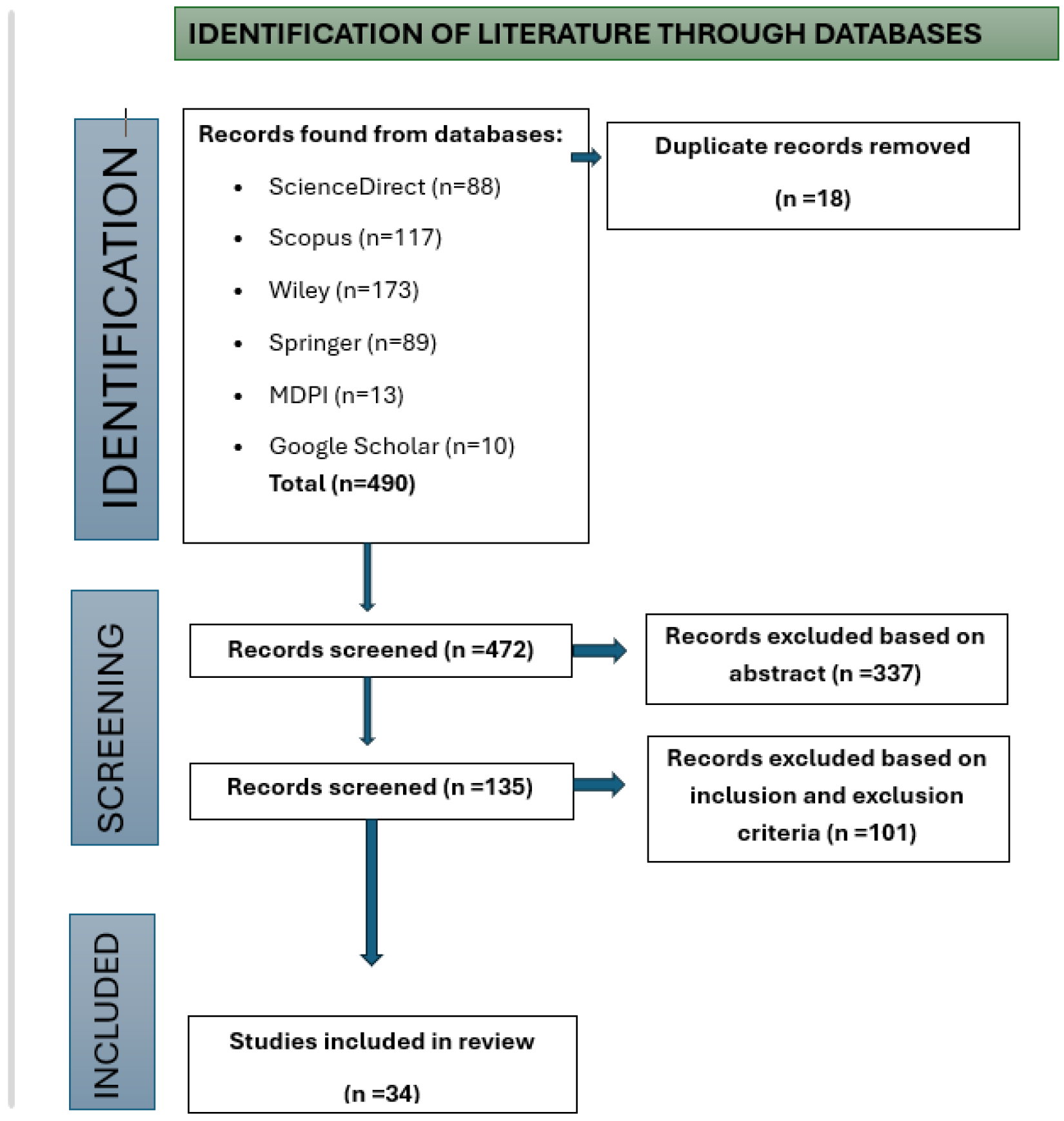
After the initial screening of titles (490), abstracts, and keywords, 34 eligible articles were selected for full-text review. Data extracted from the included studies comprised the type of oleogelator or aerogel matrix used, physicochemical properties, processing techniques, nutritional implications, and sensory evaluations (Figure 1). Two reviewers (AK and MB) independently evaluated each abstract during the first screening phase. Each article was chosen using the predetermined inclusion/exclusion criteria according to Page et al. (2021) [19]. Major outcomes (physical properties, textural properties, and rheological properties) are summarized in Table 1, Table 2 and Table 3 and are grouped by gelator type and concentration (e.g., specific waxes, proteins, or polysaccharides) (Table 1), base oil source (e.g., sunflower, soybean, or rapeseed oil) (Table 2), and application product (e.g., chocolate spread, hazelnut cream, or fruit-based spread) (Table 3).
Due to the experimental nature of the included studies, a formal certainty assessment (e.g., GRADE) was not performed.

2.4. Bibliometric Analysis

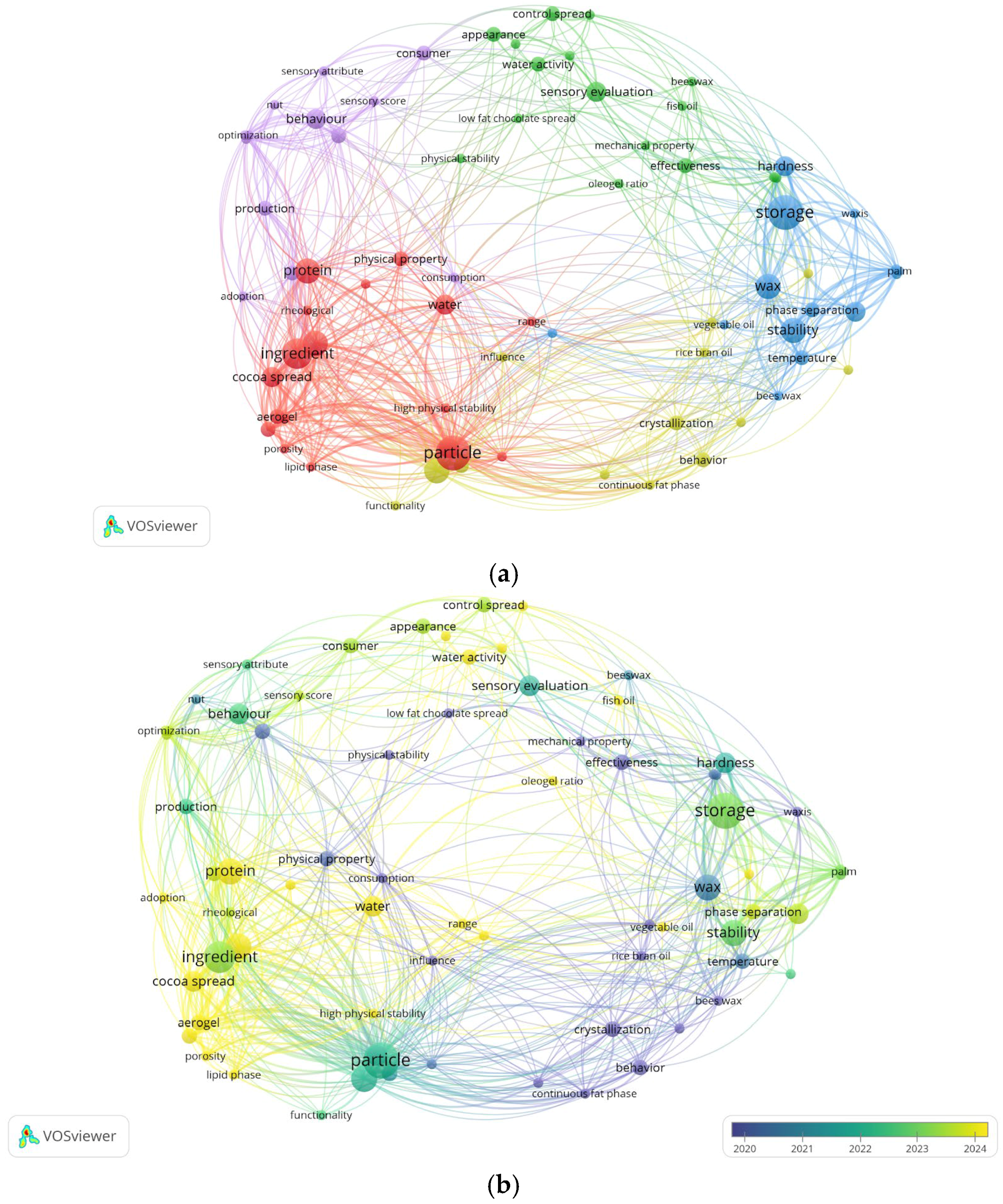
Scientific mapping of keywords in the research corpus was used to analyze the co-occurence of keywords and to identify key research topics (Figure 2a). Five clusters, marked in different colors, were distinguished. The largest cluster (marked in red) groups the following keywords related to cocoa butter and its characteristics in different products: cocoa spread, commercial spread, density, gelation, high physical stability, ingredient, lipid phase, low saturated fat cocoa spread, oil structuring ingredient, particle, physical property, porosity, protein, range, rheological, and water. The second cluster (marked in green) is related to research on the following physical and sensory properties of oleogels: appearance, beeswax, control spread, effectiveness, fish oil, low-fat chocolate spread, mechanical property, monoglyceride, oleogel ratio, oleogelator, physical stability, sensory characteristic, sensory evaluation, sensory property, taste, and water activity. The third cluster (marked in blue) is dominated by waxes as oleogelators, namely beeswax, carnauba wax, hardness, palm, phase separation, sfw, stability, storage, sunflower wax, temperature, vegetable oil, wax, waxis, and wide range. The fourth cluster (marked in yellow) unites functional properties of oleogels: behavior, continuous fat phase, crystallization, feasibility, food-grade oleogel, functionality, influence, innovative strategy, peroxide value, polarized light microscopy, replacement level, rice bran oil, and step. The fifth cluster relates to oleogel applications in food products, with emphasis on consumer acceptance: adoption, behavior, consumer, consumption, fat replacer, nut, olive oil, optimal formulation, optimization, optimized formulation, production, sensory attribute, and sensory score. All clusters are strongly connected, which is visible through the intertwining of keywords in Figure 2a. The strongest connection is between cluster one (cocoa butter-related research) and cluster four (functional properties of oleogels), showing the importance of the research on oleogel application in cocoa products.
Figure 2b shows the co-wording analysis performed from 2020 to 2025. At the beginning of this period, in 2020, the main focus of research was oleogelators (dark blue), with a shift to properties and stability of oleogels in the period from 2021 to 2023 (all shades of green), while the latest research focuses mainly on oleogel application and its functional properties in different products. This indicates that properties of different oleogels are well researched, and the topic shifts from basic properties to their functionality in targeted products (creams, spreads).
The authors have used generative AI and AI-assisted technologies for proofreading purposes to enhance the clarity and coherence of this article. While these tools assist in refining the text, the authors take full responsibility for the content and integrity of the work.

3. Aerogels as Functional Food Structures

Aerogels are described as porous materials whose nanoparticle internal surface area (>200 m2/g), low density (0.0001–0.2 g/cm3), excellent absorption capacity (95–99.9%) [20,21], low optical refractive index, low dielectric constants and controlled heat transfer coefficients [22] have been arousing interest in the research world for more than nine decades [23]. Throughout the years, aerogels have shown great potential in aerospace, military [24], pharmaceutical, and environmental fields, while their application in food science has only recently gained attention [11,13,21].
Aerogels can be derived from various biopolymers, including proteins [14,21,25] and polysaccharides [21,26,27], which makes them suitable for food-grade applications [28,29,30]. Practically, aerogels can be formed from any substance that has a tridimensional polymeric network [11,24]. Preference is given to organic, bio-based aerogels, as inorganic or synthetic aerogels may accumulate in the body and have hazardous effects. Regarding organic aerogels, in recent years a lot of attention has been given to non-animal protein (NAP) aerogels compared to aerogels of animal origin as NAP availability, economy, environmental effect, health-related issues, and ethical concerns are advanced [21].
Protein-based aerogels, in particular, are emerging as promising structures due to their biocompatibility, biodegradability, and high oil absorption potential [11]. These aerogels can encapsulate bioactive compounds, act as fat replacers, and modify texture in food formulations. Their ability to form stable porous networks allows for controlled release and improved sensory quality. In comparison with carbohydrate-based matrices, protein-based structuring agents offer a familiar and nutritionally superior pathway for fat reduction. Due to their amphiphilic nature, proteins such as whey, soy, or caseinate stabilize the oil–water interface, while their ability to form heat-set or cold-set gels provides a robust scaffold for oil entrapment. This combination ensures a recognizable mouthfeel and creamy texture, making protein-stabilized gels a highly acceptable alternative to traditional saturated fat systems.

3.1. The Production of Aerogels

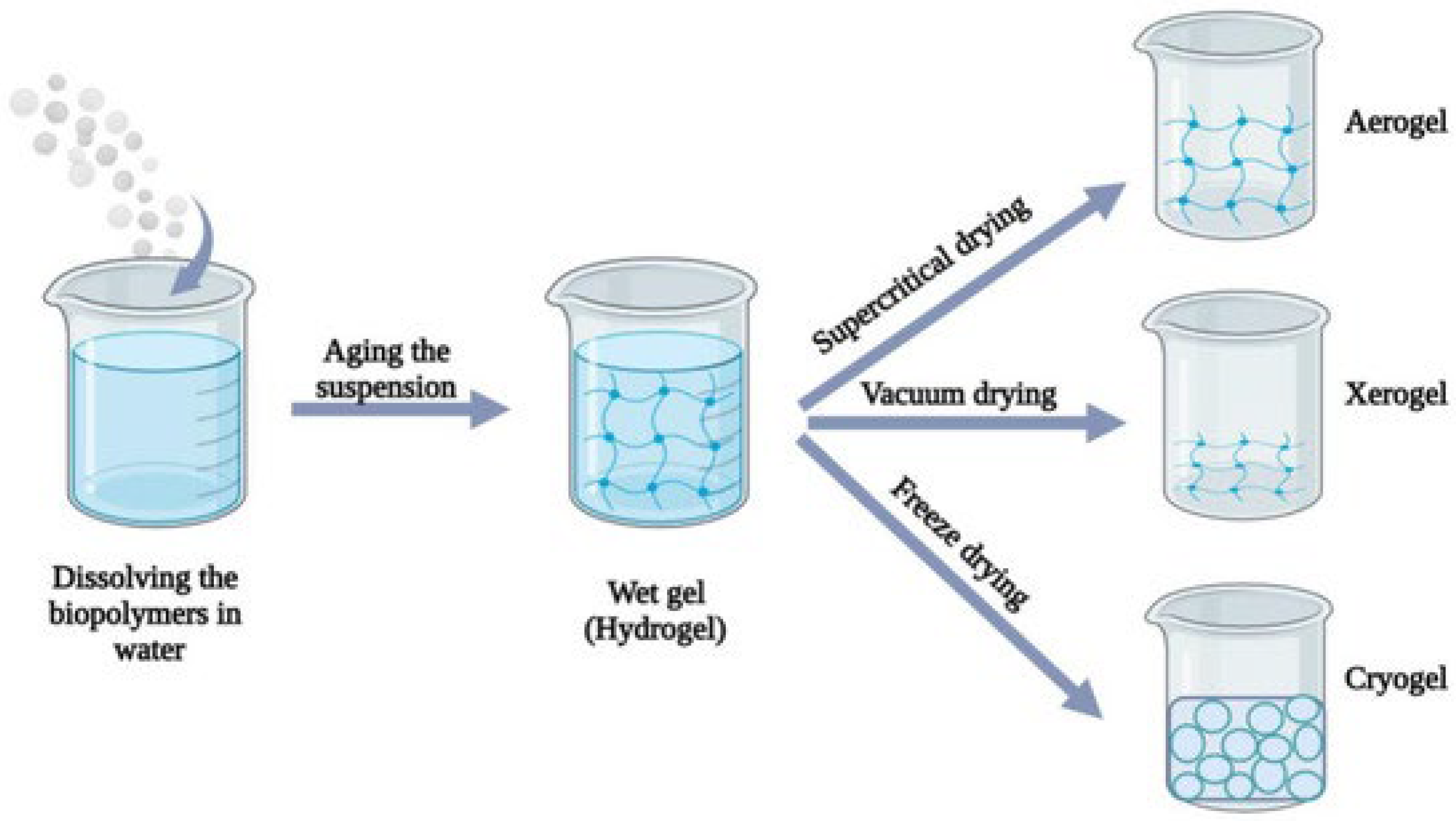
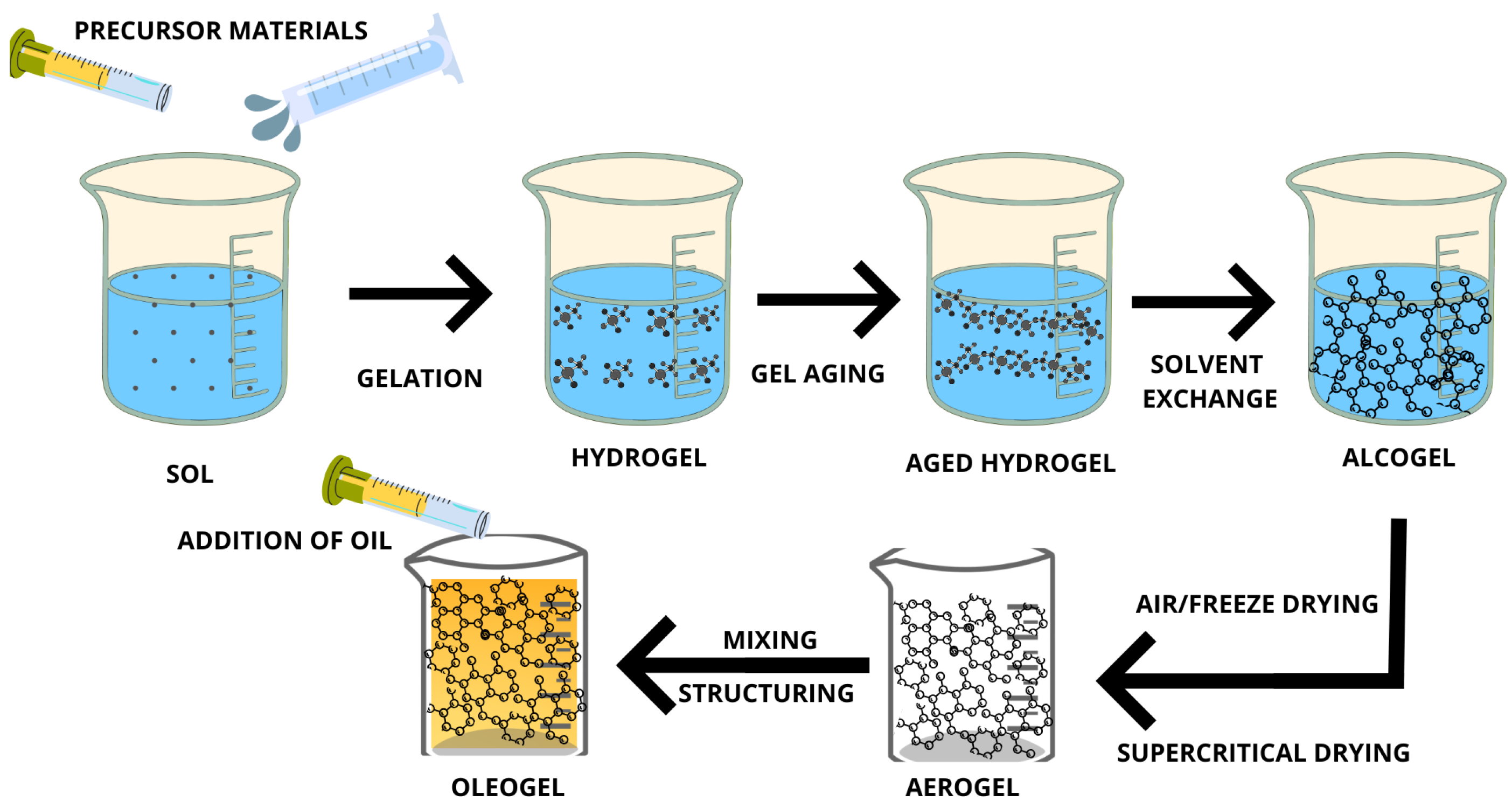
The production of aerogels involves two major steps: hydrogel formation and drying (Figure 3). Formation of hydrogel implies dissolution of the biopolymer in water, which is later gelled using chemical, physical, or enzymatic crosslinking [21]. Drying methods include evaporative drying, freeze drying, and supercritical CO2 drying [13,31]. The choice of drying method significantly affects the physical properties of the final aerogel form, porosity, and structural integrity [21].

3.1.1. Hydrogel Formation

The steady crosslinking of biopolymer chains in water is known as the gelation process. The physical production of hydrogels is based on the creation of reversible networks through non-covalent interactions, without the use of chemical crosslinkers. The main methods of physical crosslinking include temperature change (thermal gelation), ionic or covalent crosslinking, and non-solvent coagulation [21]. Fernández et al. [32] used temperatures of 60 and 80 °C for the gelation process. The findings indicate that while the lower temperature produces oleogels with more oxidative stability, the high-temperature gelation procedure produces oleogels with greater gel strength and stability. Physical hydrogels are often more biocompatible than chemical ones because they do not contain residues of toxic reagents [21].
On the other hand, chemical crosslinking usually takes longer. When compared to hydrogels that are physically cross-linked, hydrogels created by chemical crosslinking have stronger mechanical properties (tensile, shear, bending, etc.), longer endurance, and greater stability. The chemical production of hydrogels involves the crosslinking of polymer chains using chemical reactions or radiation. The main methods include the use of initiators such as peroxides or the addition of bifunctional or polyfunctional molecules, the so-called networkers [8].
Enzymes are used as biocatalysts in the enzymatic synthesis of hydrogels, creating a three-dimensional hydrophilic network. Because this process is carried out under gentle settings (physiological pH, room or body temperature), it is regarded as “green” and biocompatible. High specificity (enzymes target precisely specified functional groups, allowing for exact control of the structure) is one of this method’s many benefits. Biocompatibility (the procedure is perfect for incorporating living cells or proteins because no harmful chemical initiators or UV rays are utilized) and in situ formation (these gels can be injected into the body as a liquid and solidify right at the site of injury because of the mild circumstances) are additional benefits.

3.1.2. Drying

Aerogels have air as the dispersed phase, and due to the method of preparation, different names may appear in the literature. Therefore, in addition to aerogels, xerogels and cryogels are also mentioned in the literature [5,6,7]. As can be seen in Figure 3, cryogels often refer to gels created by the exclusive lyophilization process, which affects the creation of much larger pores than in the supercritical drying process. Xerogels refer to gels obtained by evaporative drying, which did not prove to be good for obtaining oleogels due to their lower ability to bind oil compared to other aerogels.
Evaporative drying uses vacuum or air pressure to cause the liquid medium inside the pores to evaporate directly. In this instance, the capillary forces caused by liquid-solid adhesion and liquid-air surface tension frequently impair the structural integrity of the aerogels, resulting in pore collapse and densification. For protein aerogels, evaporative methods are therefore typically ineffectual [16,33].
Freeze drying is intended to reduce capillary force-induced gel structure degradation. The procedure creates a cryogel by lowering the temperature of the fluid inside the gel pores below the freezing point and then allowing it to sublimate under a vacuum. Protein aerogels are frequently freeze-dried with water as the medium, although other solvents, such as tert-butanol, which have high vapor pressure and little volume change upon freezing, can also be used. However, prolonged drying times and significant energy usage are associated with freeze-drying [16].
Before supercritical drying, the water contained in the aerogel pores must be replaced with a suitable liquid solvent that has strong solubility in CO2 (usually acetone or alcohol) due to the high critical point (22 MPa and 373 °C) and poor affinity of the water with SC-CO2. This solvent exchange procedure can be carried out by either directly immersing the hydrogel in the new solvent or by using a sequential soaking technique, in which the new solvent’s concentration is progressively increased. This solvent exchange is followed by supercritical drying [16].

3.2. Characteristics of Aerogels in the Food Industry

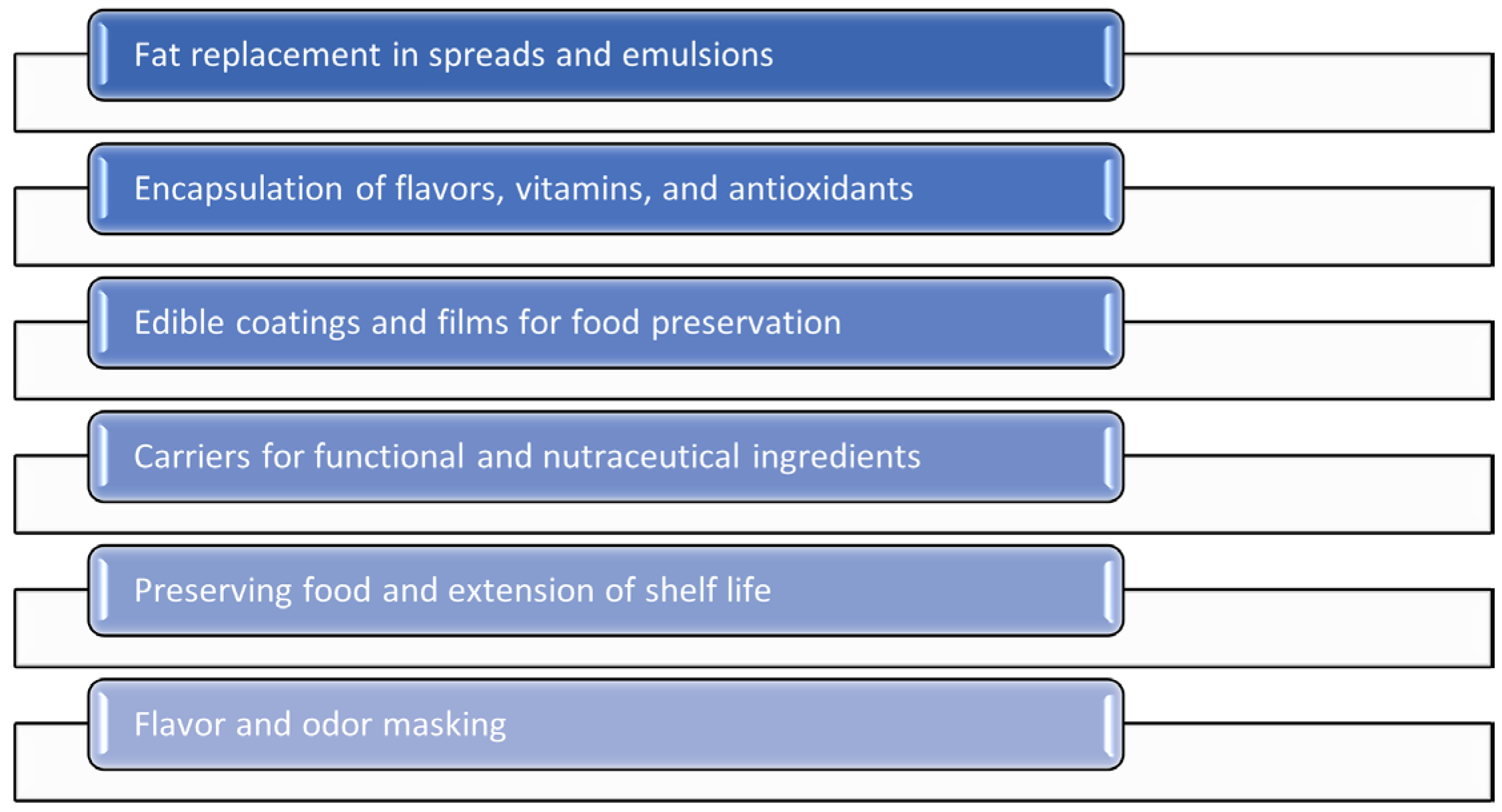
Their particular qualities may enhance food texture, shelf life, and nutrient delivery, and their sustainable origin supports environmentally friendly activities, making them an appealing option for developing food products. Food-grade aerogels made from proteins and polysaccharides that are generally recognized as safe (GRAS) have been produced successfully in recent years [33]. Characteristics of aerogels in food systems can be seen in Figure 4.
Based on the source used for aerogel formation, several studies have shown their potential as fat replacers in the food industry (Table 2). The most common animal source is whey protein isolate (WPI). WPI showed potential as a fat replacer in a few studies [15,26] because of its high oil absorption level, which is influenced by high specific surface areas. Besides animal WPI, there are several studies on other animal-based aerogels like egg protein isolate [25], bovine blood plasma, and collagen [32], which showed good emulsion properties. In recent years, the most promising emulsion properties have been shown by plant-based aerogels. Plazzotta et al. [38], Gibowsky et al. [39], and De Berardinis et al. [21] demonstrated that bioaerogels made from water-rich tissues, such as lettuce or strawberry, have a generally better capacity for oil absorption. Recent research from Gibowsky et al. [39] investigated 20 plant-based aerogels. A few of them, including radish, nectarine, mushroom, orange, orange peel, kiwi, and banana peel, showed great oil absorption potential. Bamboo shoot/soy protein complex showed good oil absorption capacity (50%) as well [40]. For example, radish aerogels possess a denser, more rigid cellular framework that provides higher mechanical resistance, whereas strawberry aerogels feature a looser, more porous tissue structure that yields lower density and superior oil absorption for confectionery applications.
Table 2. Properties and key characteristics of food-grade aerogels.
Source of AerogelMethod of Preparation of AerogelKey Characteristics/BenefitsThe Best ResultsReference
WPI- Supercritical CO2 drying-water/ethanol exchange
- Freeze drying
- High oil absorption level
- High specific surface areas
- High mesopore volumes
- Fat replacer
- 70–84 wt%
(pH 9)
- 347 to 480 m2/g
- 2.3–5.6 m3/g
[15,26,41]
Potato protein- Supercritical CO2 drying-water/ethanol exchange- High oil absorption level
- High specific surface areas
- High mesopore volumes
- 70–84 wt%
(pH 9)
- 347 to 480 m2/g
- 2.3–5.6 m3/g
[25]
Pea protein- Supercritical CO2 drying-water/ethanol exchange- High oil holding capacity
- Lower SFA content
- 1 g of aerogel structure 1.7 g of oil
- Up to 57%
[42]
Radish- Supercritical CO2 drying-water/ethanol exchange- High oil holding capacity- Up to 91–92%[39]
Nectarine- Supercritical CO2 drying-water/ethanol exchange- High oil holding capacity- Up to 94%[39]
Mushroom- Supercritical CO2 drying-water/ethanol exchange- High oil holding capacity- Up to 97%[39]
Orange - Supercritical CO2 drying-water/ethanol exchange- High oil holding capacity- Up to 90%[39]
Orange peel- Supercritical CO2 drying-water/ethanol exchange- High oil holding capacity- Up to 97%[39]
Banana peel- Supercritical CO2 drying-water/ethanol exchange- High oil holding capacity- Up to 92%[39]
Kiwi- Supercritical CO2 drying-water/ethanol exchange - High oil holding capacity- Up to 92%[39]
Lettuce- Supercritical CO2 drying-water/ethanol exchange
- Freeze drying
- High oil holding capacity- Up to 80% (CO2 with no oil release)
- Up to 97% (freeze drying with oil release)
[43]
Bamboo shoot/soy protein complex - Freeze drying- Good oil holding capacity
- High viscosity recovery rate 4:1
- Up to 50%
- Up to 70%
[40]
Strawberry pulp- Supercritical CO2 drying-water/ethanol exchange- High mesopore volume
- Low density
- High surface area
- High oil holding capacity
- Fat replacement in cocoa spreads
- 0.69 cm3g−1
- 0.03 gcm−3
- 233 m2g−1
- 80%
[21]
Despite their potential, challenges remain regarding large-scale production, regulatory approval, and integration into existing food processing lines. Further research is needed to optimize production methods, assess safety, and evaluate long-term stability in food matrices.

4. Oleogels in Spreads

These semi-solid systems are formed by structuring liquid oils using agents such as waxes, monoglycerides, fatty alcohols, or natural polymers, resulting in a gel network that entraps the oil phase [8,13,44,45,46,47]. Based on this, it can be said that oleogel is made up of at least two parts: (i) the solvent, which acts like a liquid, and (ii) the gelator, also known as the gelling agent, which has decreased mobility [8,27]. Among gels, they represent the best option for replacing trans and saturated fatty acids in spreads and other food-grade products [27,47].
There are two primary methods of oleogelation: (1) indirect methods (like solvent exchange and emulsification) [8,46,48] (Figure 5) and (2) direct methods, which include mixing the oleogelator with oil at a temperature higher than the gelator’s melting point and then cooling [8,27].
The structuring process involves melting the oleogelator with the oil, followed by cooling under controlled conditions to allow network formation. The literature shows that there are plenty of oils (Table 3) and oleogelators that can be used for the production of spreads (Table 4).
The structural, rheological, and oxidative stability of oleogels depend on multiple factors: the type and concentration of the structuring agent, the cooling rate, and the storage temperature [12,46,47,48,49,50].
Table 3. Oil source and key characteristics of food-grade oleogels.
Oil SourceKey Characteristics/BenefitsReference
Sunflower oilHigh in unsaturated fats; good oxidative stability[47]
Sunflower seed oilFlavor-enhancing[48]
Olive oilHigh antioxidant content; healthy profile[11,47,49]
Wheat oilStronger crystalline networks than palm oil; lower level of SFA; high content of linoleic acid[50]
Linseed (flaxseed) oilRich in alpha-linolenic acid; strong nutritional profile; stronger crystalline networks than palm oil; lower level of SFA[51]
Corn oilRich in polyunsaturated and monounsaturated fatty acids; good source of the antioxidant and vitamin E. [52]
Rapeseed oilHigher thermal stability of healthier chocolate spreads [53]
Pumpkin seeds oilStronger crystalline networks than palm oil, lower level of SFA[50,54]
Walnut oilRich in alpha-linolenic, oleic and linoleic acid[55]
Fig seeds oilStronger crystalline networks than palm oil; higher free fatty acidity; lower level of SFA[50]
Pistachios oilStronger crystalline networks than palm oil; lower level of SFA; rich in oleic acid[50]
Rice bran oilContains oryzanol; stable under heat[12,56]
Coconut oil (blended)Used in combination with other oils for the texture and profile of unsaturated fatty acids[48,51]
Avocado oil (blended)Premium oil with healthy fat profile[51]
Hazelnut oilFlavor-enhancing; matches chocolate-hazelnut profile[48,56]
Pomegranate seed oilHealth benefits because of punicic acid[57]
Bland rice bran-camellia oleifera seed-perilla seed-fish oilGood oil-binding capacity and oxidative stability[12]
Camellia oilHealthy properties used in chocolate production [40,58]
Red palm (blended)Used in combination with other oils for OMEGA 3-6 ratio; high carotenoid content[51,59]
Almond oil (blended)Used in combination with other oils for OMEGA 3-6 ratio[51]
Acorn oilHealth benefits because of oleic and linoleic acid; improve oleogel structure because of palmitic acid and β-sitosterol [60]
As we can see in Table 3, all the listed oils have special profiles that can enrich and nutritionally improve sweet spreads. Rancimat testing conducted by Azab et al. [51] revealed that the oleogel made from a combination of almond, coconut, avocado, red palm, and flaxseed oils greatly increased the ratio of omega-3 to omega-6 fatty acids (from 1:15 to 1:4.7) and offered greater oxidative stability. Fernández et al. [32] showed that flaxseed oil, which is a source of linolenic acid, reduces cholesterol and blood sugar levels. David et al. [53] used rapeseed oil, which had healthier nutritional qualities compared to an equivalent product prepared with palm oil. Different blended oils were researched. Prakansamut et al. [12] used rice bran oil, camellia oleifera seed oil, and perilla seed oil with the addition of fish oil and followed the firmness, spreadability of chocolate spreads, and peroxide values of all OG-CS samples. The research showed that blended oil-based oleogels can be used as novel structured oil alternatives in chocolate spreads. Five distinct oil media (pistachio, wheat, fig seed, flaxseed, and pumpkin seed oils) were studied in a study by Oba and Yildrim [50]. The findings showed that chocolate spreads with a pistachio oil blend had greater levels of monounsaturated fatty acid reformed spreads (79.26%) than chocolate spreads with palm oil (37.98%). In comparison to the control spread, the sensory evaluation revealed that the chocolate spread with 75% and 100% pistachio oil-based HO in place of palm oil had the sensory qualities of “spreadability,” “appearance,” and “taste” that were highly rated by the panelists. Basically, the mentioned oils can be divided into a few groups: very rare and expensive (fig, pomegranate, camellia oil), special and nut (pistachio, hazelnut, walnut, pumpkin oil), health supplement (fish, avocado, flaxseed oil), and standard (olive, coconut, sunflower, rapeseed, corn oil) oils.
In the context of sweet spreads, oleogels aim to:
  • Mimic the spreadability and firmness of solid fats [27];
  • Improve the nutritional profile by reducing saturated fat content;
  • Maintain desirable sensory attributes such as mouthfeel and gloss;
  • Ensure compatibility with other ingredients (e.g., milk solids, sugar).
Table 4. Oleogel structuring agents in spread production.
Oleogel Structuring AgentsKey Characteristics of Oleogel/Benefits in SpreadsDosage (%)ApplicationReference
Carnauba wax (CW)Low energy value and SFA content; better spreadability and hardness values; potential carrier of L. acidophilus; oil-binding capacity ~87%6Chocolate spread; spreadable creams[51,55,61,62,63,64,65]
Candelilla waxTrans-free spreads; low energy value and SFA content; without waxy flavor; no visual phase separation occurred even after 60 days1.5–2Cocoa-hazelnut spread[63]
Monoglycerid (MG)Higher levels of firmness and spreadability; good oil-binding capacity and oxidative stability Chocolate spread[12]
CW/beeswax/locust bean gum hydrogel and Tween 80 Good oil-binding capacity 92.73 to 99.54%; higher water activity; higher spreadability and lower firmness; lower level of SFA over 30%5Chocolate spread[51]
Policosanol/rice bran waxOil alternatives in spreads; low atherogenicity and thrombogenicity values; good oil-binding capacity and oxidative stability Chocolate spread[12]
MG/candelilla waxesAlternative to SFA-fat replacer; high oil-binding capacity3–5Chocolate butter spread[56,66]
WPIHigh oil-binding capacity; sensory acceptance; alternative to SFA-fat replacer13.167Pistachio spread; Cocoa spread [11,15,59]
Sunflower waxHigh oil-binding capacity; thermal stability at 40 °C; sensory acceptance3.5Chocolate spreads [65]
Glycerol monostearateExcellent ability to retain oil5Hazelnut spread[50]
Cellulose/bamboo fibers Thermal stability at 38 °C; healthier nutritional qualities3Chocolate spreads [54]
Hydroxypropylmethylcellulose (HPMC)/xanthan gum (XG)Coconut butter replacement gave a similar structure to the control spread; good sensory acceptance Chocolate spreads [48]
Shellac waxGood oil-binding capacity2Chocolate paste[45]
MG/beeswax/propolis waxAlternative to SFA-fat replacer5Chocolate spreads [58,67]
Sunflower wax/beeswax/lecithinAlternative to SFA-fat replacer; good sensory properties 5Cocoa spread[68]
Methylcellulose (MC)/XGSignificantly enhanced textural and rheological characteristics, while simultaneously decreasing their enthalpy of crystallization; high oil absorption capacity; oil-binding capacity 1.2/0.3Chocolate spreads [32]
Oleogels are gaining importance due to positive characteristics that include good rheological and textural properties, similar to those of fats; good nutritional characteristics that contribute to consumer health; and the possibility of using a wide range of raw materials for their production that are more economically acceptable compared to those used to produce fats [27,69,70].
In addition to oleogels, scientists have been researching the use of bigels in the food industry in the last few years. As bigels are composed of hydrogels and oleogels, they represent special systems. Oba and Yildrim [63] conducted new research using bigel with oil, beeswax, carnauba wax oleogel, and a locust bean hydrogel as the fat replacer in chocolate spread. The spread with 100% fish oil-based bigel had higher water activity (0.63) and oil-binding capacity (93.30%) than the palm oil control (0.73 and 97.15%, respectively). The spreadability and hardness values of the bigel-containing spreads were higher than those of the control due to the bigel’s higher unsaturated fat content. An ideal spread with sensory qualities likely to appeal to customers was produced by substituting 75% of the palm oil with bigel. After 21 days of storage under simulated gastrointestinal circumstances, L. acidophilus fared the best in the spread containing 100% bigel.
It is very important to note that bigels have the advantage of having the two phases mentioned above when compared to individual gels. This allows for the combined delivery of hydrophilic and hydrophobic bioactive compounds as well as the ability to modify the system’s properties by varying the ratio of each individual phase [8,68]. Tirgarian et al. [52] studied the physical, rheological, and sensory properties of the chocolate spreads made with water-in-oleogel emulsions. It was discovered that the chocolate produced by the emulsion made at a 45:55 water:oleogel ratio (45% replacement of oleogel with water) was fairly similar to the reference sample (100% oleogel) in terms of microstructural integrity, water activity, Casson viscosity, yield stress, linear viscoelastic region, firmness, and spreadability.

4.1. Fat Replacer

The effectiveness of oleogels and aerogels as fat replacers in spreadable products is primarily influenced by the oil-binding capacity of the structuring agent, the type of gelling agent (wax, protein, or polysaccharide), and the ability of the 3D network to simulate the crystalline structure of traditional saturated fats. These factors can determine the efficiency of the three-dimensional network in entrapping liquid oils and replicating the plasticity typically provided by saturated fat crystals.
Saturated fatty acids (SFAs) give food products attractive organoleptic qualities, especially with regard to mouthfeel, texture, flavor, spreadability, binding, and functioning [27,69]. The underlying colloidal network of fat crystallites, which physically trap oil in this network structure, is the basis for the texture and functionality of food products that contain solid fat. These products could not be formulated without saturated fats because the fat crystal network, which is made up of saturated fats, is crucial for giving the liquid oil structure [71,72].
Several authors claimed that oleogels (OGs) represent a novel strategy for reducing saturated fat in spread formulations, including sweet spreads or chocolate, traditionally based on palm oil or cocoa butter [11,15,48,51,54,55,56,58,61,62,63,64,65,66,67,68].
Studies [12,32,48,73] have shown that properly formulated oleogels can replicate the desirable plasticity and spreadability of palm oil while also enhancing oxidative stability. Some research [11,15,26,43,44,51,54,59,68] efforts have combined oleogels with emulsifiers, protein-based fillers, or polysaccharides to further improve structural properties.
Products known as sweet spreads often contain 30–60 g/100 g of lipids rich in saturated fatty acids, such as cocoa butter, palm oil, and coconut oil. The semi-solid fat crystalline network contains finely dispersed powdered ingredients such as sugar, dairy, or plant-based powders (such as whey proteins or fibers) and cocoa powder. This ensures the characteristic spread rheological properties and inhibits sedimentation and phase separation [10,73]. A recent study showed that even when the saturated fatty acid concentration was lower, the bioaerogel-based spreads had better nutritional qualities while maintaining physical characteristics similar to their commercial equivalents [21].
Results from another study demonstrated the high ability of strawberry bioaerogel particles to absorb oil, resulting in materials with over 90% oil by weight. This is consistent with data from bioaerogel made from water-rich plant tissues, such as lettuce leaves [39] and much higher than that of bioaerogel made from pure ingredients, such as whey and potato protein isolates (70–84%) [26]. The oil-rich substance made from strawberry aerogel particles showed qualities similar to those of commercial hard fats (such as butter, palm oil, margarine, and laminating shortening) [74], suggesting that it could be used in food formulations in place of fat [21].

4.2. Sensory and Nutritional Impacts

The consumer acceptance and health profile of spreads are characterized by the fatty acid composition of the base oil and the organoleptic properties of the oleogelator. The sensory aspects of oleogels play an important role in consumer acceptance. Texture, spreadability, flavor release, and mouthfeel are key attributes that can be significantly influenced by the type of oleogelator and the oil phase composition. Studies have demonstrated [48,51,61] that oleogel-based formulations can offer comparable creaminess and spreadability to traditional fats while enabling a healthier lipid profile. Bascuas et al. [47] used oleogel with a combination of olive and sunflower oil with HPMC and XG for the replacement of cocoa butter in chocolate spread. According to a sensory review, the chocolate spread that was substituted with 50% sunflower oleogel had the same sensory qualities as the control spread, including “creamy appearance,” “creamy texture,” and “cocoa flavor.” Oba et al. [50] presented a chocolate spread with palm oil replaced by 75% and 100% pistachio oil-based hydro-oleogel, which had the sensory features of “spreadability,” “appearance,” and “taste” that were accepted by the panelists compared to the control spread. The same positive attitude is shown by Shahamati et al. [60]. The spreads made by substituting butter for 50% of the carnauba wax-based acorn oil oleogel demonstrated acceptable textural and sensory qualities.
Consumer studies [11,47,64] indicate moderate-to-high acceptance of oleogel-based spreads when sensory attributes closely match those of conventional products. Hassim et al. [64] used a 7-point hedonic scale for a sensory evaluation of chocolate spreads that showed that the chocolate spread with 3.5% CW was the most widely accepted. Malvano et al. [11] performed sensory evaluation of pistachio spreads by a panel of 10 trained persons using the triangle tests to evaluate the ability of the judges. The sensory evaluation scores were 5.61, 9.31, and 5.42 for meltability, adhesiveness to the mouth, and other flavors, respectively. Consequently, replacing the saturated fat in chocolate spreads with oleogels can be a practical and healthful option.
From a nutritional perspective, replacing saturated fats such as palm oil with oleogels based on unsaturated oils can contribute to reduced intake of saturated fatty acids (SFAs). This is in accordance with global dietary recommendations aimed at lowering the risk of cardiovascular diseases, obesity, and metabolic disorders [11,12,72].
Additionally, some oleogel formulations incorporate bioactive compounds or vitamins, enhancing their functional food potential [62].
Better control over digestion and lipid release is made possible by their dual structure, which is especially suited for creating low-fat food products [27]. However, nutritional benefits must be evaluated holistically. Some structuring agents may affect the digestibility, bioavailability, or glycemic response. Moreover, the energy density of the final product may not always be significantly reduced unless fat content is also lowered [53].
Further human trials and long-term nutritional studies are needed to substantiate health claims and understand the broader dietary impacts of oleogels in food systems.
The bioaerogel strawberry particles that were created were used to create low-saturated-fat cocoa spreads that significantly improved their nutritional profile while exhibiting rheological and spreadability characteristics that were on par with those of commercial spreads that were high in saturated fats. Additionally, the ability to alter the bioaerogel particle content of cocoa spreads would enable the creation of spreads with customized structures for certain applications [21].

4.3. Rheology Impacts

The rheological behavior and textural stability of spread systems are critically dependent on processing conditions (e.g., cooling rates and shear application) and the interfacial interactions between the oil and the structuring agents. In multi-phasic systems like bigels or water-in-oleogel emulsions, the phase ratio and gel strength of the individual components are the decisive factors in establishing the necessary storage modulus and spreadability required for commercial applications. These parameters must be precisely controlled to ensure structural integrity across varying storage temperatures. Saturated fats determine the spreads’ quality parameters, including their creamy texture, spreadability at room temperature, and lack of homogeneous structure without oil separation during storage [11,49].
Hardness and spreadability significantly rely on the fat and non-fat components [11,74]. Wu et al. [36] demonstrated how the addition of the oleogel of cellulose and xanthan gum improved the textural and rheological properties of chocolate spread. It showed that the rheological properties are similar to those of fat. In addition, Bascuas et al. [47] replaced 50% and 100% of cocoa butter with oleogel in chocolate spread. Nevertheless, 100% substitution produced less uniform spreads, whereas 50% replacement of coconut butter produced a structure that was comparable to the control spread. This pattern may be explained by the oleogel and coconut butter’s chemical compatibility, which produced stronger systems.
In terms of rheology, a very important aspect is oil-binding capacity (OBC), which is correlated with the structuring agent in the oleogel (Table 3). Based on the OBC, sensory acceptance by buyers is also included because of first impressions of the product in the store. The separation of the oil phase in cream spreads is characteristic but at the same time unpleasant for consumers, which is why OBC plays a major role. Candelilla wax [61], MG [12], carnauba wax/beeswax/locust bean gum hydrogel with Tween 80 [50], policosanol/rice bran wax [12], MG/candelilla waxes [61,65], sunflower wax [64], glycerol monostearate [49], shellac wax [71], and methylcellulose (MC/XG) [36] have shown an OBC over 90% in spreads. The following structuring agents based on protein and plant origin showed similar results: whey protein isolate [11,15,66], pea protein [42], radish, nectarine, mushroom, orange, orange peel, banana peel, kiwi [39], lettuce [43], bamboo shoot/soy protein complex [40], and strawberry pulp [21].

4.4. Process and Economic Feasibility

The commercial implementation of oleogels and aerogels in food systems depends heavily on scalable, cost-effective, and energy-efficient production technologies. While laboratory-scale production of both structures is well established, transitioning to industrial levels presents several challenges.
For oleogels, the high-temperature direct method is the most common and adaptable for food processing environments. It involves melting the structuring agent with oil, followed by controlled cooling to allow gel network formation. This process is relatively simple, but uniformity, cooling parameters, and equipment compatibility must be optimized for consistent results at scale [70].
Aerogels, on the other hand, have technical and economic barriers. Supercritical drying, the best option so far for the production of aerogels, requires high-pressure equipment and specialized solvents (e.g., ethanol, CO2), which increases production costs. Freeze drying and evaporative methods offer alternatives, though they compromise the structural integrity and absorption capacity of the final product.
Even though bioaerogels have great potential to substitute fat in food due to their complex, energy- and water-intensive production method, they need to overcome major challenges. As stated by García-González et al. [30], the unique properties of bioaerogels are a consequence of their production process, in which supercritical CO2 drying is essential for removing the solvent from an aqueous gel (i.e., hydrogel) and maintaining the original gel structure.
Efforts such as the COST Action on Aerogels have focused on reducing the cost and complexity of scale-up by:
  • Designing modular pilot-scale systems;
  • Using cheaper, food-grade crosslinkers and biopolymers;
  • Improving solvent recovery and recycling systems;
  • Integrating aerogel processing into existing food production lines.
Economic feasibility also depends on ingredient availability. Oleogelators like beeswax, rice bran wax, and monoglycerides are relatively affordable and already used in food systems, whereas some advanced protein-based aerogels may require tailored extraction, purification, or functionalization processes [39].
Furthermore, considerable energy (usually heat) and precise process optimization are needed to generate the initial hydrogel, which should be able to endure the succeeding water removal phases, and a significant amount of water is needed to obtain the initial biopolymer solution. In their groundbreaking study, Plazzotta et al. [38] proposed that bioaerogels could be made directly from inexpensive and readily available plant tissues, omitting the extraction, purification, and gelation stages, as well as ineffective water cycles, to simplify and increase sustainability.
In conclusion, while oleogels are closer to commercialization, further optimization of aerogel production, as well as cost–benefit analyses, is essential for broader industrial adoption.

5. Conclusions

The research of food-grade oleogels has advanced recently, and the results show potential for their use in food, e.g., spreads. Co-word mapping has shown the main research topics, such as physical and sensory properties, functional properties, and application of oleogels in different products, with research progressing from their basic characterization to their functionality in different real systems. A detailed review of the published articles revealed the dual benefits of oleogel application in food products. Along with the substitution of saturated fats with unsaturated ones, the nutritional improvement of food by oleogels occurs through the introduction of fiber and/or protein, which are used as structuring materials for oleogel preparation, into foods that normally contain very low amounts of these valuable components. One of the limitations of this study was its focus on English and peer-reviewed journals, which might have excluded relevant local industrial data. Despite promising results, the widespread use of oleogels in commercial spread formulations remains limited due to challenges in scalability, regulatory approval, and cost-effectiveness. Future research should focus on developing clean-label structuring agents, optimizing processing methods, and assessing long-term consumer acceptance through sensory and nutritional trials.

Author Contributions

Conceptualization, A.K., Đ.A. and M.B.; methodology, A.K., S.H. and D.Š.; investigation, A.K.; resources, Đ.A.; writing—original draft preparation, A.K.; writing—review and editing, A.K., M.B. and Đ.A.; visualization, A.K. and S.H.; supervision, Đ.A. All authors have read and agreed to the published version of the manuscript.

Funding

This work has been supported by the Croatian Science Foundation under the project IP-2022-10-1960.

Institutional Review Board Statement

Not applicable.

Informed Consent Statement

Not applicable.

Data Availability Statement

No new data were created or analyzed in this study. Data sharing is not applicable to this article.

Conflicts of Interest

The authors declare no conflicts of interest.

Abbreviations

The following abbreviations are used in this manuscript:
SFASaturated fatty acid
MDPIMultidisciplinary Digital Publishing Institute
WoSWeb of Science
AIArtificial intelligence
NAP’sNon-animal protein’s
CO2Carbon dioxide
GRASGenerally recognized as safe
WPIWhey protein isolate
MGMonoglycerid
HPMCHydroxypropylmethylcellulose
XGXanthan gum
CWCarnauba wax
ISOInternational Organization for Standardization
OBCOil-binding capacity
COSTEuropean Cooperation in Science and Technology

References

  1. Maki, K.C.; Dicklin, M.R.; Kirkpatrick, C.F. Saturated fats and cardiovascular health: Current evidence and controversies. J. Clin. Lipidol. 2021, 15, 765–772. [Google Scholar] [CrossRef]
  2. Astrup, A.; Magkos, F.; Bier, D.M.; Brenna, J.T.; de Oliveira Otto, M.C.; Hill, J.O.; Krauss, R.M. Saturated fats and health: A reassessment and proposal for food-based recommendations: JACC state-of-the-art review. J. Am. Coll. Cardiol. 2020, 76, 844–857. [Google Scholar] [CrossRef] [PubMed]
  3. World Health Organization. Saturated Fatty Acid and Trans-Fatty Acid Intake for Adults and Children: WHO Guideline; World Health Organization: Geneva, Switzerland, 2023; pp. 12–18. [Google Scholar]
  4. Garnås, E. Saturated fat in an evolutionary context. Lipids Health Dis. 2025, 24, 28. [Google Scholar] [CrossRef] [PubMed]
  5. Light, K.; Karboune, S. Emulsion, hydrogel and emulgel systems and novel applications in cannabinoid delivery: A review. Crit. Rev. Food Sci. Nutr. 2022, 62, 8199–8229. [Google Scholar] [CrossRef] [PubMed]
  6. Dhua, S.; Gupta, A.K.; Mishra, P. Aerogel: Functional emerging material for potential application in food: A review. Food Bioprocess Technol. 2022, 15, 2396–2421. [Google Scholar] [CrossRef]
  7. Srivastava, Y.; Awasthi, A.; Sahu, J.K.; Kesharwani, T. A Comprehensive Review on Plant-Originated Versatile Gels: Mechanism, Characterization, and Applications. Food Bioprocess Technol. 2025, 18, 2236–2268. [Google Scholar] [CrossRef]
  8. Pascuta, M.S.; Varvara, R.A.; Teleky, B.E.; Szabo, K.; Plamada, D.; Nemeş, S.A.; Vodnar, D.C. Polysaccharide-based edible gels as functional ingredients: Characterization, applicability, and human health benefits. Gels 2022, 8, 524. [Google Scholar] [CrossRef]
  9. Valdivia-Culqui, J.E.; Maicelo-Quintana, J.L.; Cayo-Colca, I.S.; Medina-Mendoza, M.; Castro-Alayo, E.M.; Balcázar-Zumaeta, C.R. Oleogel systems for chocolate production: A systematic review. Gels 2024, 10, 561. [Google Scholar] [CrossRef]
  10. Barišić, V.; Šarkanj, B.; Flanjak, I.; Doko, K.; Miličević, B.; Ačkar, Đ. Nutritionally improved chocolate spreads—A review. Hrana U Zdr. I Boles. Znan.-Stručni časopis Za Nutr. I Dijetetiku 2021, 10, 10–13. [Google Scholar]
  11. Malvano, F.; Muccio, E.; Galgano, F.; Marra, F.; Albanese, D. Design of a high protein, no added sugar pistachio spread using oleogel as fat replacer. LWT 2024, 198, 115993. [Google Scholar] [CrossRef]
  12. Prakansamut, N.; Adulpadungsak, K.; Sonwai, S.; Aryusuk, K.; Lilitchan, S. Application of functional oil blend-based oleogels as novel structured oil alternatives in chocolate spread. LWT 2024, 203, 116322. [Google Scholar] [CrossRef]
  13. Manzocco, L.; Mikkonen, K.S.; García-González, C.A. Aerogels as porous structures for food applications: Smart ingredients and novel packaging materials. Food Struct. 2021, 28, 100188. [Google Scholar] [CrossRef]
  14. Manzocco, L.; Plazzotta, S.; Powell, J.; de Vries, A.; Rousseau, D.; Calligaris, S. Structural characterisation and sorption capability of whey protein aerogels obtained by freeze-drying or supercritical drying. Food Hydrocoll. 2022, 122, 107117. [Google Scholar] [CrossRef]
  15. Plazzotta, S.; Calligaris, S.; Manzocco, L. Feasibility of protein aerogel particles as food ingredient: The case of cocoa spreads. J. Food Eng. 2023, 351, 111522. [Google Scholar] [CrossRef]
  16. Leite, A.C.; Pereira, R.N.; Rodrigues, R.M. Protein aerogels as food-grade delivery systems-A comprehensive review. Food Hydrocoll. 2025, 163, 111138. [Google Scholar] [CrossRef]
  17. Xu, Y.H.; Han, Y.Y.; Li, H.Y.; Yang, J.; Fu, B.Q.; Zhao, H.F.; Yuan, T.Z. Fabrication of superhydrophobic CNF/PVA composite aerogel for oil/water separation. Dig. J. Nanomater. Biostructures (DJNB) 2025, 20, 1297–1310. [Google Scholar] [CrossRef]
  18. Abdullah; Zou, Y.; Farooq, S.; Walayat, N.; Zhang, H.; Faieta, M.; Huang, Q. Bio-aerogels: Fabrication, properties and food applications. Crit. Rev. Food Sci. Nutr. 2023, 63, 6687–6709. [Google Scholar] [CrossRef]
  19. Page, M.J.; McKenzie, J.E.; Bossuyt, P.M.; Boutron, I.; Hoffmann, T.C.; Mulrow, C.D.; Shamseer, L.; Tetzlaff, J.M.; Akl, E.A.; Brennan, S.E.; et al. The PRISMA 2020 Statement: An Updated Guideline for Reporting Systematic Reviews. BMJ 2021, 342, n71. [Google Scholar] [CrossRef]
  20. Emmerling, A.; Fricke, J. Scaling properties and structure of aerogels. J. Sol-Gel Sci. Technol. 1997, 8, 781–788. [Google Scholar] [CrossRef]
  21. De Berardinis, L.; Plazzotta, S.; Gibowsky, L.; Schroeter, B.; Méndez, D.A.; Smirnova, I.; Manzocco, L. Production and characterization of bioaerogel particles from strawberries and their application as oil structuring ingredient in low-saturated fat cocoa spreads. Food Res. Int. 2025, 215, 116683. [Google Scholar] [CrossRef]
  22. Fricke, J. Aerogels and their applications. J. Non-Cryst. Solids 1992, 147, 356–362. [Google Scholar] [CrossRef]
  23. Wang, C.; Bai, L.; Xu, H.; Qin, S.; Li, Y.; Zhang, G. A review of high-temperature aerogels: Composition, mechanisms, and properties. Gels 2024, 10, 286. [Google Scholar] [CrossRef] [PubMed]
  24. Silva, T.J.; Barrera-Arellano, D.; Ribeiro, A.P.B. Oleogel-based emulsions: Concepts, structuring agents, and applications in food. J. Food Sci. 2021, 86, 2785–2801. [Google Scholar] [CrossRef] [PubMed]
  25. Jung, I.; Schroeter, B.; Plazzotta, S.; De Berardinis, L.; Smirnova, I.; Gurikov, P.; Manzocco, L. Oleogels from mesoporous whey and potato protein based aerogel microparticles: Influence of microstructural properties on oleogelation ability. Food Hydrocoll. 2023, 142, 108758. [Google Scholar] [CrossRef]
  26. Mehany, T.; Zannou, O.; Oussou, K.F.; Chabi, I.B.; Tahergorabi, R. Innovative oleogels: Developing sustainable bioactive delivery systems for healthier foods production. Food Chem. X 2025, 29, 102768. [Google Scholar] [CrossRef]
  27. Marangoni, A.G.; Van Duynhoven, J.P.; Acevedo, N.C.; Nicholson, R.A.; Patel, A.R. Advances in our understanding of the structure and functionality of edible fats and fat mimetics. Soft Matter 2020, 16, 289–306. [Google Scholar] [CrossRef]
  28. Patel, A.R.; Nicholson, R.A.; Marangoni, A.G. Applications of fat mimetics for the replacement of saturated and hydrogenated fat in food products. Curr. Opin. Food Sci. 2020, 33, 61–68. [Google Scholar] [CrossRef]
  29. Chaves, K.F.; Barrera-Arellano, D.; Ribeiro, A.P.B. Potential application of lipid organogels for food industry. Food Res. Int. 2018, 105, 863–872. [Google Scholar] [CrossRef]
  30. García-González, C.A.; Budtova, T.; Durães, L.; Erkey, C.; Del Gaudio, P.; Gurikov, P.; Smirnova, I. An opinion paper on aerogels for biomedical and environmental applications. Molecules 2019, 24, 1815. [Google Scholar] [CrossRef]
  31. Wang, Z.; Zhu, W.; Huang, R.; Zhang, Y.; Jia, C.; Zhao, H.; Xue, Y. Fabrication and characterization of cellulose nanofiber aerogels prepared via two different drying techniques. Polymers 2020, 12, 2583. [Google Scholar] [CrossRef]
  32. Fernández, C.L.; Romero, M.C.; Rolhaiser, F.; Fogar, R.A.; Doval, M.M. Fat substitutes based on bovine blood plasma and flaxseed oil as functional ingredients. Int. J. Gastron. Food Sci. 2021, 25, 100365. [Google Scholar] [CrossRef]
  33. Plazzotta, S.; Alongi, M.; De Berardinis, L.; Melchior, S.; Calligaris, S.; Manzocco, L. Steering protein and lipid digestibility by oleogelation with protein aerogels. Food Funct. 2022, 13, 10601–10609. [Google Scholar] [CrossRef] [PubMed]
  34. Kleemann, C.; Schuster, R.; Rosenecker, E.; Selmer, I.; Smirnova, I.; Kulozik, U. In-vitro-digestion and swelling kinetics of whey protein, egg white protein and sodium caseinate aerogels. Food Hydrocoll. 2020, 101, 105534. [Google Scholar] [CrossRef]
  35. Kurd, F.; Fathi, M.; Shahedi, M.; Soltanizadeh, N. Fabrication and characterization of multifunctional bioactive aerogel pads as superabsorbent-Case study: Meat preservation. Food Res. Int. 2025, 209, 116268. [Google Scholar] [CrossRef] [PubMed]
  36. Wu, Y.; Sun, S.; Li, X.; Li, X.; Huang, Y.; An, F.; Song, H. Fabrication, characterization, and fat substitution application in chocolate spreads of methyl cellulose and xanthan gum foam-templated oleogels. Int. J. Biol. Macromol. 2024, 283, 137677. [Google Scholar] [CrossRef]
  37. Fernández, C.L.; Fogar, R.A.; Rolhaiser, F.A.; Romero, M.C. Functional gels from bovine blood proteins as fat substitutes and potential carriers of heme iron. Innov. Food Sci. Emerg. Technol. 2023, 87, 103389. [Google Scholar] [CrossRef]
  38. Plazzotta, S.; Calligaris, S.; Manzocco, L. Innovative bioaerogel-like materials from fresh-cut salad waste via supercritical-CO2-drying. Innov. Food Sci. Emerg. Technol. 2018, 47, 485–492. [Google Scholar] [CrossRef]
  39. Gibowsky, L.; De Berardinis, L.; Plazzotta, S.; Manke, E.; Jung, I.; Méndez, D.A.; Schroeter, B. Conversion of natural tissues and food waste into aerogels and their application in oleogelation. Green Chem. 2025, 27, 4713–4731. [Google Scholar] [CrossRef]
  40. Li, J.; Xi, Y.; Wu, L.; Zhang, H. Preparation, characterization and in vitro digestion of bamboo shoot protein/soybean protein isolate based-oleogels by emulsion-templated approach. Food Hydrocoll. 2023, 136, 108310. [Google Scholar] [CrossRef]
  41. Luhovyy, B.L.; Akhavan, T.; Anderson, G.H. Whey proteins in the regulation of food intake and satiety. J. Am. Coll. Nutr. 2007, 26, 704S–712S. [Google Scholar] [CrossRef]
  42. Plazzotta, S.; De Berardinis, L.; Schroeter, B.; Manzocco, L. Development of novel microaerogel particles from pea protein and their application as ingredient for low-saturated fat cocoa spreads. J. Food Eng. 2025, 391, 112413. [Google Scholar] [CrossRef]
  43. Plazzotta, S.; Calligaris, S.; Manzocco, L. Structure of oleogels from κ-carrageenan templates as affected by supercritical-CO2-drying, freeze-drying and lettuce-filler addition. Food Hydrocoll. 2019, 96, 1–10. [Google Scholar] [CrossRef]
  44. Patel, A.R.; Dewettinck, K. Edible oil structuring: An overview and recent updates. Food Funct. 2016, 7, 20–29. [Google Scholar] [CrossRef] [PubMed]
  45. Pehlivanoğlu, H.; Demirci, M.; Toker, O.S.; Konar, N.; Karasu, S.; Sagdic, O. Oleogels, a promising structured oil for decreasing saturated fatty acid concentrations: Production and food-based applications. Crit. Rev. Food Sci. Nutr. 2018, 58, 1330–1341. [Google Scholar] [CrossRef]
  46. Manzoor, S.; Masoodi, F.A.; Naqash, F.; Rashid, R. Oleogels: Promising alternatives to solid fats for food applications. Food Hydrocoll. Health 2022, 2, 100058. [Google Scholar] [CrossRef]
  47. Bascuas, S.; Espert, M.; Llorca, E.; Quiles, A.; Salvador, A.; Hernando, I. Structural and sensory studies on chocolate spreads with hydrocolloid-based oleogels as a fat alternative. LWT 2021, 135, 110228. [Google Scholar] [CrossRef]
  48. Aydemir, O.; Beşir, A.; Aden, H.M. Textural and rheological characteristics of cocoa hazelnut cream partially substituted with glucose syrup. Eur. Food Sci. Eng. 2021, 2, 13–17. [Google Scholar]
  49. Marra, F.; Lavorgna, A.; Incarnato, L.; Malvano, F.; Albanese, D. Optimization of hazelnut spread based on total or partial substitution of palm oil. Foods 2023, 12, 3122. [Google Scholar] [CrossRef]
  50. Oba, Ş.; Yıldırım, T. Using plant-based hydrogel-oleogels to replace palm oil: Impact on texture, sensory, and fatty acid composition of chocolate spreads. J. Food Meas. Charact. 2024, 18, 8931–8943. [Google Scholar] [CrossRef]
  51. Azab, D.E.; Altamim, E.A.; Soliman, T.N.; Nasser, S.A.; Zahran, H.A. Development of a Plant-Based Chocolate Spread with Enhanced Vitamin D3 Bioavailability and Balanced Omega Fatty Acids. Food Sci. Nutr. 2025, 13, e70827. [Google Scholar] [CrossRef]
  52. Tirgarian, B.; Yadegari, H.; Bagheri, A.; Neshagaran, E.; Mardani, M.; Farmani, J. Reduced-fat chocolate spreads developed by water-in-oleogel emulsions. J. Food Eng. 2023, 337, 111233. [Google Scholar] [CrossRef]
  53. David, A.; David, M.; Lesniarek, P.; Corfias, E.; Pululu, Y.; Delample, M.; Snabre, P. Oleogelation of rapeseed oil with cellulose fibers as an innovative strategy for palm oil substitution in chocolate spreads. J. Food Eng. 2021, 292, 110315. [Google Scholar] [CrossRef]
  54. Borriello, A.; Miele, N.A.; Masi, P.; Cavella, S. Rheological properties, particle size distribution and physical stability of novel refined pumpkin seed oil creams with oleogel and lucuma powder. Foods 2022, 11, 1844. [Google Scholar] [CrossRef] [PubMed]
  55. Pușcaș, A.; Tanislav, A.E.; Mureșan, A.E.; Fărcaș, A.C.; Mureșan, V. Walnut oil oleogels as milk fat replacing system for commercially available chocolate butter. Gels 2022, 8, 613. [Google Scholar] [CrossRef]
  56. Doan, C.D.; Patel, A.R.; Tavernier, I.; De Clercq, N.; Van Raemdonck, K.; Van de Walle, D.; Dewettinck, K. The feasibility of wax-based oleogel as a potential co-structurant with palm oil in low-saturated fat confectionery fillings. Eur. J. Lipid Sci. Technol. 2016, 118, 1903–1914. [Google Scholar] [CrossRef]
  57. Fayaz, G.; Goli, S.A.H.; Kadivar, M.; Valoppi, F.; Barba, L.; Calligaris, S.; Nicoli, M.C. Potential application of pomegranate seed oil oleogels based on monoglycerides, beeswax and propolis wax as partial substitutes of palm oil in functional chocolate spread. LWT 2017, 86, 523–529. [Google Scholar] [CrossRef]
  58. Gramza-Michałowska, A.; Kulczyński, B.; Skopiec, M.; Kobus-Cisowska, J.; Brzozowska, A. The effect of yellow tea leaves camellia sinensis on the quality of stored chocolate confectionery. Appl. Sci. 2021, 11, 4123. [Google Scholar] [CrossRef]
  59. Kurniaditya, V.H.; Setiowati, A.D.; Hidayat, C. Characteristics of Red Palm Oil Oleogel Based on Beeswax and Cocoa Butter and Its Application in Red Chocolate Spread. Agritech 2024, 44, 331–340. [Google Scholar] [CrossRef]
  60. Shahamati, M.; Ahmadi, P.; Tabibiazar, M.; Fazelioskouei, T.; Azadmard-Damirchi, S.; Zargaraan, A. Characterization of acorn oil and its application on carnauba wax-based oleogel and chocolate spread. Int. J. Biol. Macromol. 2024, 260, 129571. [Google Scholar] [CrossRef]
  61. Contreras-Ramírez, J.I.; De la Peña-Gil, A.; Charó-Alvarado, M.E.; Aguilar-Zárate, M.; Toro-Vazquez, J.F. Confectionery spreads formulations using W/O emulsions of cocoa butter-vegetable oil blends structured by candelilla wax. Food Res. Int. 2025, 218, 116946. [Google Scholar] [CrossRef]
  62. Roufegarinejad, L.; Habibzadeh Khiabani, A.; Konar, N.; Toofighi, S.; Rasouli Pirouzian, H. Carnauba wax and adipic acid oleogels as an innovative strategy for cocoa butter alternatives in chocolate spreads. J. Food Sci. Technol. 2024, 61, 331–339. [Google Scholar] [CrossRef] [PubMed]
  63. Oba, S.; Yıldırım, T. Effect of Novel Fish Oil-Based Bigels on Survival of Probiotic Bacteria: A Framework for a Chocolate Spread. J. Culin. Sci. Technol. 2025, 1–25. [Google Scholar] [CrossRef]
  64. Hassim, N.M.; Kanagaratnam, S.; Tang, T.K.; Seng, N.S. The effect of sunflower wax and carnauba wax on the storage stability and sensory evaluation of palm-based chocolate spread. Grasas Aceites 2024, 75, 2193. [Google Scholar] [CrossRef]
  65. Melchior, S.; Plazzotta, S.; Miao, S.; Manzocco, L.; Nicoli, M.C.; Calligaris, S. Design of Fat Alternatives Using Saturated Monoglycerides. Food Eng. Rev. 2024, 16, 635–650. [Google Scholar] [CrossRef]
  66. Ciuffarin, F.; Plazzotta, S.; Rondou, K.; Van Bockstaele, F.; Dewettinck, K.; Manzocco, L.; Calligaris, S. Oil structuring using whey protein-based cryogel particles: Effect of gelation pH and feasibility as an ingredient in low-saturated fat cocoa spreads. Food Res. Int. 2024, 196, 115029. [Google Scholar] [CrossRef]
  67. Pușcaș, A.; Mureșan, V.; Socaciu, C.; Muste, S. Oleogels in food: A review of current and potential applications. Foods 2020, 9, 70. [Google Scholar] [CrossRef]
  68. Alves Barroso, L.; Grossi Bovi Karatay, G.; Dupas Hubinger, M. Effect of potato starch hydrogel: Glycerol monostearate oleogel ratio on the physico-rheological properties of bigels. Gels 2022, 8, 694. [Google Scholar] [CrossRef]
  69. Martins, A.J.; Vicente, A.A.; Cunha, R.L.; Cerqueira, M.A. Edible oleogels: An opportunity for fat replacement in foods. Food Funct. 2018, 9, 758–773. [Google Scholar] [CrossRef]
  70. Marangoni, A.G.; Garti, N. An overview of the past, present, and future of organogels. In Edible Oleogels: Structure and Health Implications; Marangoni, A.G., Garti, N., Eds.; AOCS Press: Urbana, IL, USA, 2011; pp. 1–17. [Google Scholar]
  71. Patel, A.R.; Cludts, N.; Bin Sintang, M.D.; Lewille, B.; Lesaffer, A.; Dewettinck, K. Polysaccharide-based oleogels prepared with an emulsion-templated approach. ChemPhysChem 2014, 15, 3435–3439. [Google Scholar] [CrossRef]
  72. Manzocco, L.; Calligaris, S.; Camerin, M.; Pizzale, L.; Nicoli, M.C. Prediction of firmness and physical stability of low-fat chocolate spreads. J. Food Eng. 2014, 126, 120–125. [Google Scholar] [CrossRef]
  73. Blake, A.I.; Marangoni, A.G. The effect of shear on the microstructure and oil binding capacity of wax crystal networks. Food Biophys. 2015, 10, 403–415. [Google Scholar] [CrossRef]
  74. West, R.; Rousseau, D. The role of nonfat ingredients on confectionery fat crystallization. Crit. Rev. Food Sci. Nutr. 2018, 58, 1917–1936. [Google Scholar] [CrossRef]
Figure 1. PRISMA flowchart of screened and included studies.
Applsci 16 01654 g001
Figure 2. Bibliometric visualization (a) based on keywords and (b) based on the change in focus from 2020 to 2024.
Applsci 16 01654 g002
Figure 3. Illustration of aerogel production [8].
Applsci 16 01654 g003
Figure 4. Aerogel characteristics in the food industry [14,16,21,32,33,34,35,36,37].
Applsci 16 01654 g004
Figure 5. Steps involved in oleogel production by the indirect method.
Applsci 16 01654 g005
Table 1. Gel types based on the dispersed phase.
Gel TypeDispersed PhasePreparation MethodKey Characteristics
Hydrogel Water Polymerization in aqueous solution. Soft, flexible, and biocompatible; can be presented as an intermediate step for aerogel production.
Aerogel Air Evaporative drying at ambient conditions/freeze-drying (lyophilization) after freezing/supercritical drying (extracting liquid at high pressure). Dense, low porosity due to structural collapse/large interconnected pores (macroporous), mechanically stable/Ultra-light, highly porous, best OBC.
Oleogel (Organogel) Liquid Oil/Organic Solvent Structuring edible or mineral oils using “oleogelators” (wax, lipids). Semi-solid, lipophilic; used to replace trans-fats in food or deliver oil-soluble drugs.
Bigel Oil and Water Mixing of hydrogel and oleogel phases. Biphasic system; can deliver both lipophilic and hydrophilic drugs.
Disclaimer/Publisher’s Note: The statements, opinions and data contained in all publications are solely those of the individual author(s) and contributor(s) and not of MDPI and/or the editor(s). MDPI and/or the editor(s) disclaim responsibility for any injury to people or property resulting from any ideas, methods, instructions or products referred to in the content.