Article

Ethyl 2-Cyanoacrylate as a Promising Matrix for Carbon Nanomaterial-Based Amperometric Sensors for Neurotransmitter Monitoring


1
Department of Biomedical Sciences, University of Sassari, Viale San Pietro 43/b, 07100 Sassari, Italy
2
Institute of Sciences of Food Production, National Research Council, 07100 Sassari, Italy
3
Department of Medical, Surgery and Pharmacy, University of Sassari, Viale San Pietro 43/b, 07100 Sassari, Italy
*
Authors to whom correspondence should be addressed.
Appl. Sci. 2026, 16(3), 1255; https://doi.org/10.3390/app16031255
Submission received: 9 December 2025 / Revised: 27 December 2025 / Accepted: 23 January 2026 / Published: 26 January 2026

Abstract

Dopamine (DA) is a critical catecholaminergic neurotransmitter that facilitates signal transduction across synaptic junctions and modulates essential neurophysiological processes, including motor coordination, motivational drive, and reward-motivated behaviors. The fabrication of cost-effective, miniaturized, and high-fidelity analytical platforms is imperative for real-time DA monitoring. Due to its inherent electrochemical activity, carbon-based amperometric sensors constitute the primary modality for DA quantification. In this study, graphite, multi-walled carbon nanotubes (MWCNTs), and graphene were immobilized within an ethyl 2-cyanoacrylate (ECA) polymer matrix. ECA was selected for its rapid polymerization kinetics and established biocompatibility in electrochemical frameworks. All fabricated composites demonstrated robust electrocatalytic activity toward DA; however, MWCNT- and graphene-based sensors exhibited superior analytical performance, characterized by highly competitive limits of detection (LOD) and quantification (LOQ). Specifically, MWCNT-modified electrodes achieved an interesting LOD of 0.030 ± 0.001 µM and an LOQ of 0.101 ± 0.008 µM. Discrepancies in baseline current amplitudes suggest that the spatial orientation of carbonaceous nanomaterials within the cyanoacrylate matrix significantly influences the electrochemical surface area and resulting baseline characteristics. The impact of interfering species commonly found in biological environments on the sensors’ response was systematically evaluated. The best-performing sensor, the graphene-based one, was used to measure the DA intracellular content of PC12 cells.

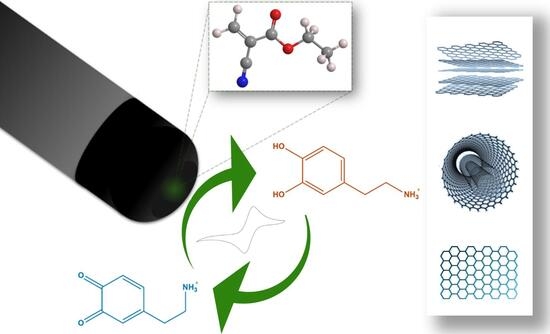
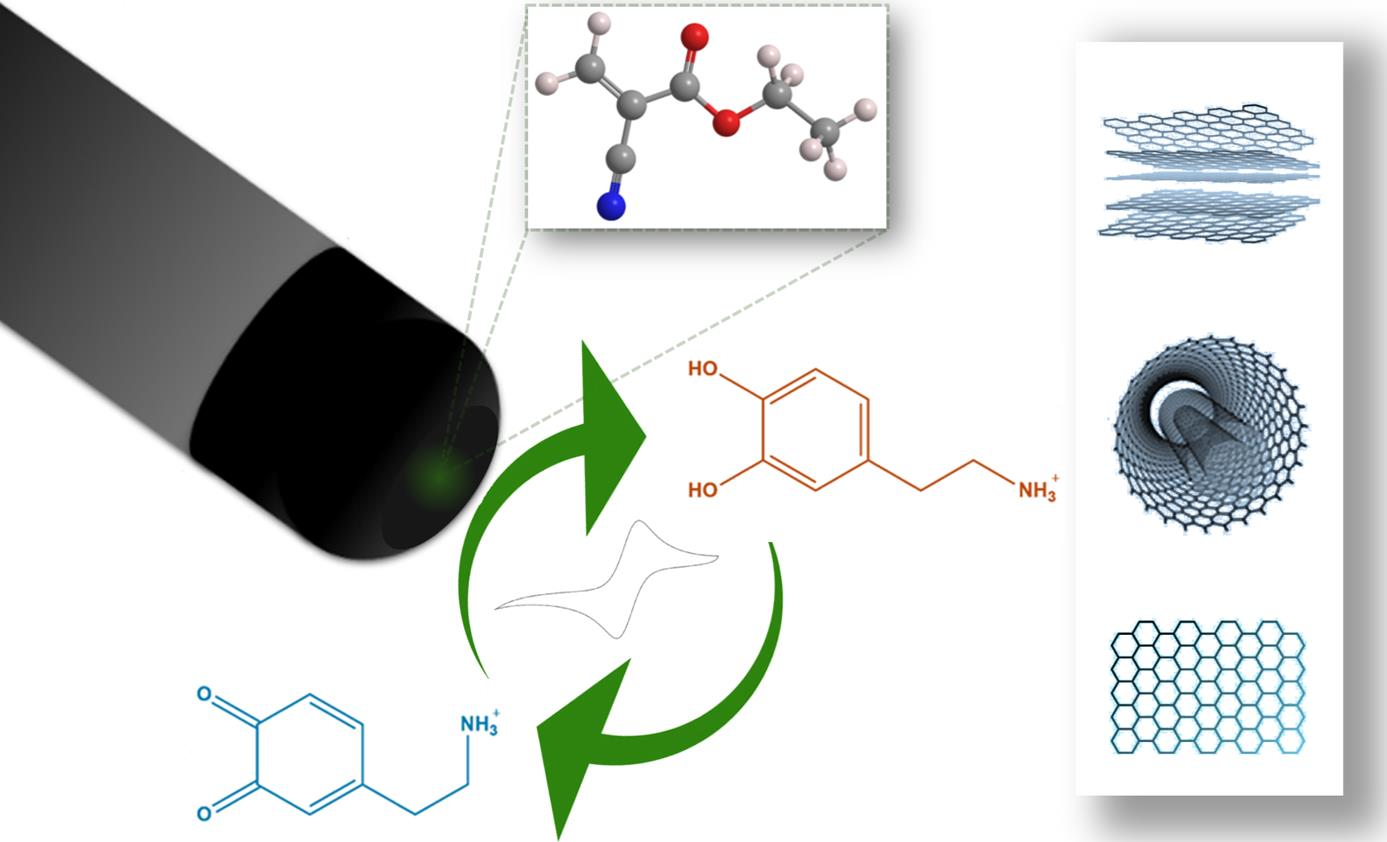
Graphical Abstract

1. Introduction

Neurotransmitters are essential endogenous molecules selectively released from the axonal terminals of neurons in response to action potential. These fundamental chemical species regulate intercellular communication in the nervous system, ensuring the transmission of signals between neurons or between neurons and effector cells (inside muscles and glands) [1,2,3,4]. In addition, substances like cocaine, amphetamines, and nicotine stimulate dopamine release in the nucleus accumbens, leading to rapid dopamine surges that alter synaptic plasticity and promote compulsive behaviors [5] In neurodegenerative diseases such as PD, degeneration of dopaminergic neurons in the substantia nigra reduces dopamine levels, disrupting basal ganglia circuits and resulting in motor symptoms such as bradykinesia, rigidity, and tremors. Understanding dopamine’s role in these processes is crucial for developing therapies that restore dopaminergic function and alleviate symptoms [6,7,8,9,10,11,12,13]. To study DA’s involvement in pathophysiological mechanisms, various techniques like enzyme assays, liquid chromatography, mass spectrometry, and capillary electrophoresis are used. However, these methods are costly, time-consuming, and not always sensitive enough to provide real-time results—critical for effective biomedical research on neurological disorders [14,15,16].
Dopamine belongs to the category of electroactive neurotransmitters due to its chemical structure, which includes a benzene ring and two hydroxyl groups. This structure makes it prone to spontaneous oxidation in aqueous media. The electrochemical oxidation of DA involves a two-electron, two-proton oxidation of the catechol group, leading to the formation of ortho-quinone. This reaction is characteristic of all catecholamines and follows pH-dependent pathways, including polymerization and intramolecular cyclization [17,18,19,20,21,22,23]. (Figure 1).
It has been widely demonstrated that DA is readily oxidized at the electrode surface, which is why scientists are very interested in developing specific, low-cost sensors to detect it. This interest stems not only from the potential of such sensors to exhibit elevated sensitivity and rapid analytical responsiveness, but also from their inherent suitability for miniaturization [24]. Recent advances in the development of low-cost, high-sensitivity sensors for DA detection have focused on carbon-based nanomaterials. These materials, such as graphene, carbon nanotubes, and fullerenes, are favored for their mechanical strength, electrical conductivity, and versatility in various applications, including electrochemical sensors for neurotransmitter detection [23].
Carbon electrodes, in particular, are valued for their high capacitance, which improves signal-to-noise ratios, an essential factor in sensor performance. However, challenges like fouling—where reaction by-products accumulate on the electrode surface—can reduce sensitivity. Furthermore, carbon electrodes often struggle to distinguish between compounds with similar redox potentials, limiting their selectivity for DA [25]. To address these issues, incorporating specific elements or compounds into carbon-based materials has been explored. These modifications can enhance electron transfer, prevent fouling, and improve selectivity by introducing functional groups that favorably interact with the target biomolecule [23].
Carbon-based nanomaterials, due to their nanoscale properties, are highly effective in electrochemical sensors. They offer enhanced electron transfer, strong interfacial adsorption, high electrocatalytic activity, and biocompatibility, all of which make them ideal for neurotransmitter detection. In addition, their morphology can be easily tailored to suit specific applications, and they are widely used in voltammetric studies due to their low cost and chemical stability [26,27,28].
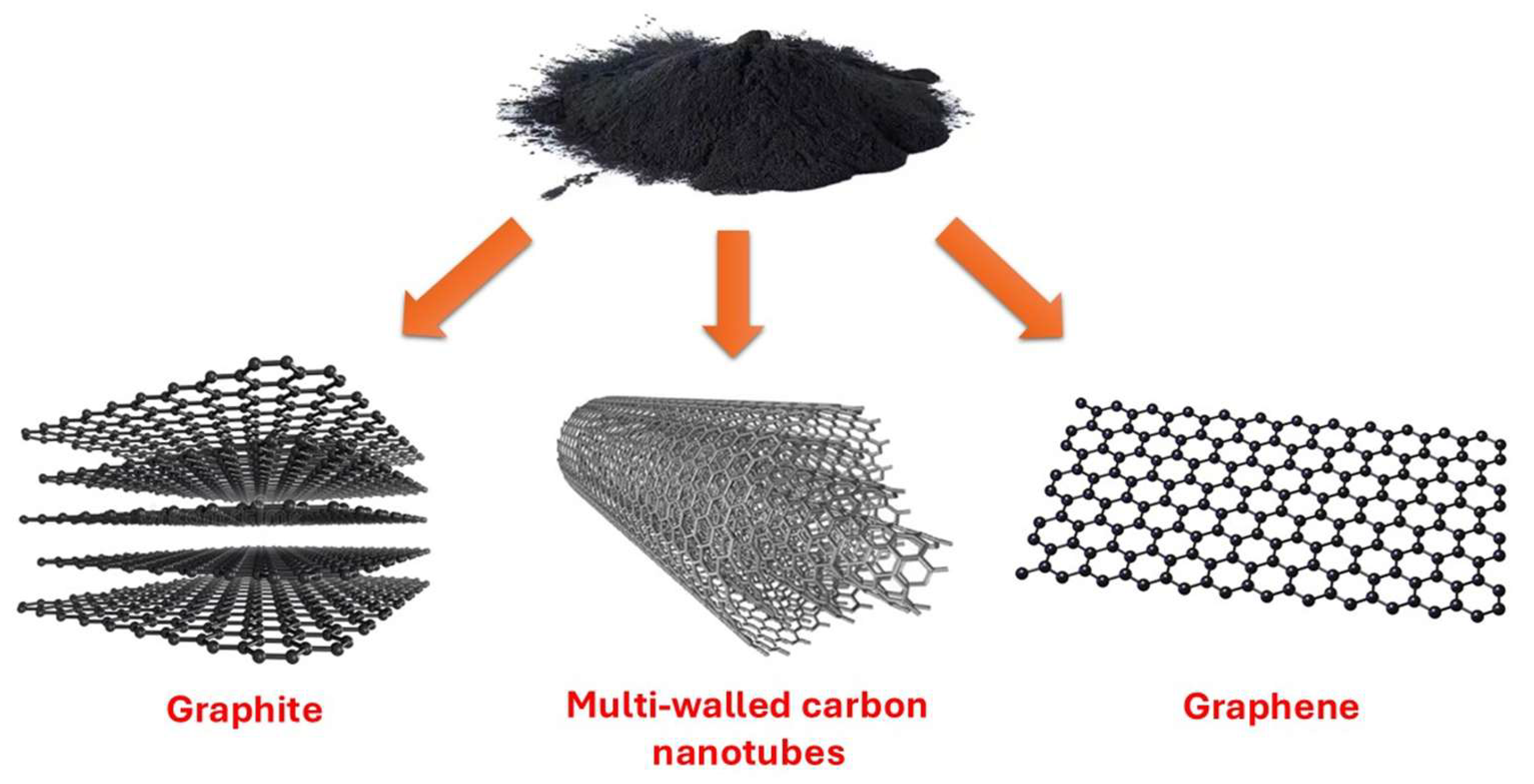
Here, different carbon allotropes have been used to develop valuable electrodes for efficient dopamine monitoring (Figure 2).
Specifically, graphite [17,23,29,30,31,32,33,34], multi-walled carbon nanotubes (MWCNTs) [23,35,36,37], and graphene [35,37,38,39,40] were immobilized within an ethyl 2-cyanoacrylate (ECA) matrix.
Numerous matrices capable of incorporating carbon materials have been used to construct electrochemical sensors. Among them, epoxy glue is among the most represented [29,38]. The current study aimed to investigate the use of carbonaceous materials in conjunction with a different, not much used and studied, matrix such as ethyl 2-cyanoacrylate (ECA) to develop carbon-based composites for electrochemical applications. ECA, commonly used in superglues, is valued for its rapid polymerization and strong mechanical properties. It is also biodegradable and biocompatible, an extremely interesting aspect for applications in matrices of biological origin, with applications in forensic science and tissue adhesion. ECA undergoes moisture-initiated polymerization to form poly(ethyl 2-cyanoacrylate) (PECA), a rigid, water-insoluble, biodegradable polymer [39] with established biocompatibility [40,41]. Previous evidence has suggested that incorporating carbon nanomaterials into cyanoacrylate enhances thermal and electrical conductivity [42], opening new opportunities for sensing applications [39]. This study presents the development and characterization of these novel carbon–cyanoacrylate sensors, explicitly focusing on sensitivity, limit of detection (LOD), and limit of quantification (LOQ) [43].
As proof of concept, PC12 cells, derived from rat pheochromocytoma, have been used as a dopaminergic model because they synthesize, store, and secrete dopamine [44]. Quantitative measurement of intracellular and extracellular dopamine is critical for understanding dopaminergic function. Electrochemical sensors, especially those integrating carbon-based nanomaterials, have emerged as sensitive and selective tools for detecting DA, offering rapid response times and suitability for low-concentration analysis in complex biological media [23,45].
The present project aimed at the study of new composites based on carbon allotropes and cyanoacrylate, their characterization from the point of view of the electrochemical detection of DA, and their possible applicability in matrices of biological origin.

2. Materials and Methods

2.1. Chemicals and Reagents

All compounds were bought from Merck Life Science (Milan, Italy) and used as supplied. The acetate buffer (0.1 M, pH = 4.3) solution used for cyclic voltammetry and calibrations had the following composition (expressed as g/L): CH3COOH 3.91 and C2H3NaO2 2.912. Dopamine (DA) solutions (100 mM and 250 µM) were obtained by dissolving the powder in 0.01 M HCl. Graphite, MWCNT Ø 110–170 nm, and graphene were used as supplied, as well as Nafion™ solution. All working electrodes used in this study were constructed from a copper wire (diameter approximately 200 µm) coated with Kynar® insulation (RS Components, Made in USA). Cyanoacrylate-based super glue (Loctite Super Attack, Henkel, Düsseldorf, Germany) was acquired from local stores.

2.2. Cyanoacrylate–Carbon Sensor Construction

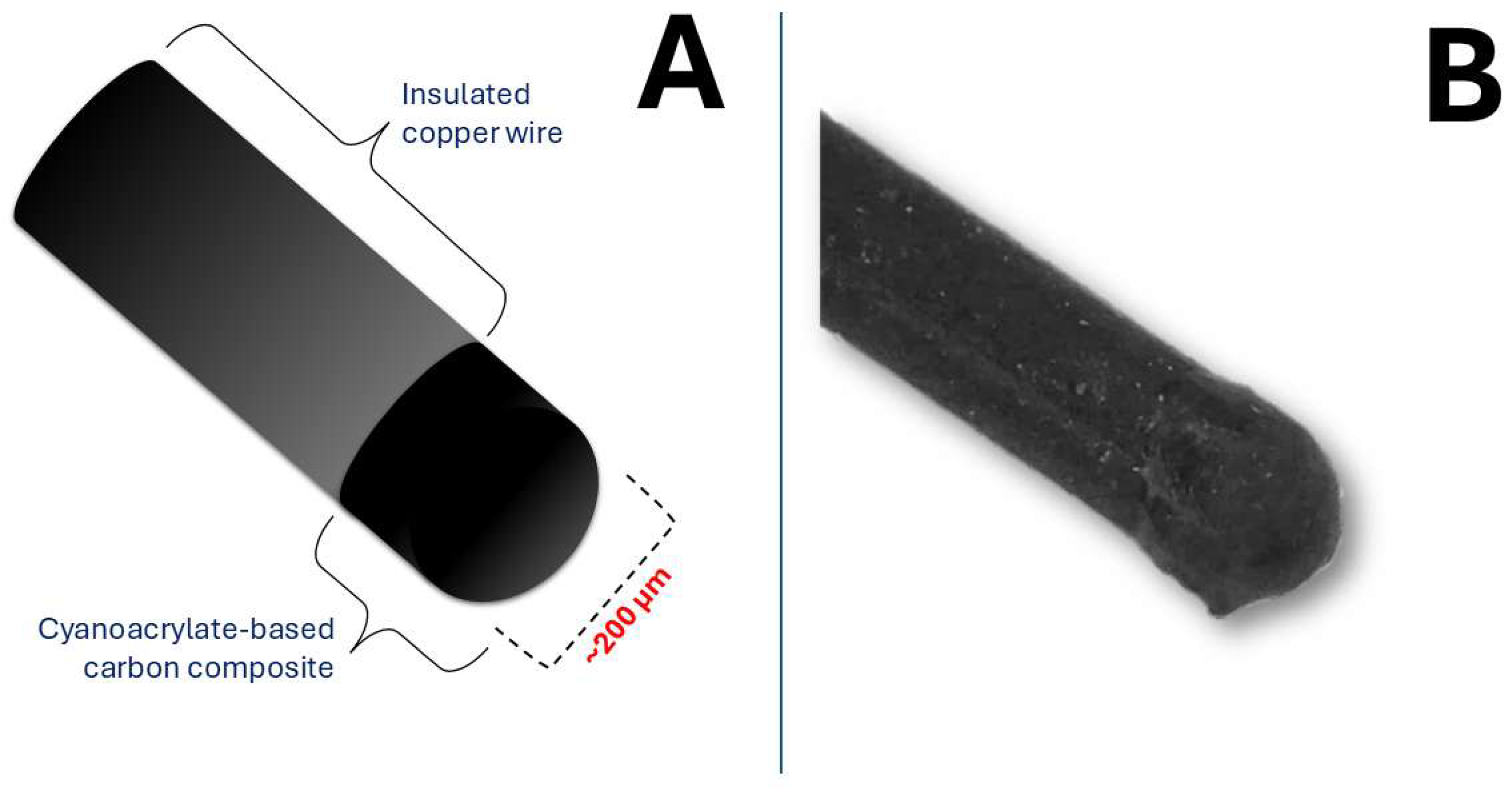
Working electrodes were fabricated using copper wire (Ø ~200 µm) covered with Kynar® insulation. A 5 cm wire section was prepared by stripping 3 mm of insulation from one end for electrical connection. The sensing tip was modified through rapid immersion in carbon–cyanoacrylate composites prepared by mixing liquid cyanoacrylate with carbon allotropes (3:1 w/w) for 120 s. The sensors were cured at room temperature for 24 h (Figure 3).
To minimize interference from electroactive species, the carbon-based sensors were immersed in a 5% (w/v) Nafion™ solution and subsequently dried in an oven at 40 °C for 1 h before calibrations.

2.3. Electrochemical Procedures

Sensors were electrochemically characterized by means of cyclic voltammetry (CV) in 20 mL of acetate buffer (pH 4.3) to identify the redox behavior of dopamine (DA). Measurements were conducted within a potential window ranging from −1000 to +1500 mV vs. Ag/AgCl at a scan rate of 100 mV s−1. After stabilization of the baseline current, DA was added at a final concentration of 1 mM to determine the oxidation (E_ox) and reduction (E_red) peak potentials. The same experimental protocol was applied to assess sensor responses to potential interfering species, including ascorbic acid (AA), 3,4-dihydroxyphenylacetic acid (DOPAC), and uric acid (UA), each at 1 mM, both before and after Nafion™ coating.
Dopamine calibration curves were obtained by means of constant potential amperometry (CPA), with the sensors sequentially exposed to increasing DA concentrations (0–100 µM) at the previously determined oxidation potential (Eox), as determined from the CV measurements.
Environmental conditions during the experiments were monitored using a TP49 thermometer/hygrometer (ThermoPro, Toronto, Canada). The temperature ranged from 24.3 to 26.6 °C, while the relative humidity varied between 44% and 56%.

2.4. Scanning Electron Microscopy (SEM) Study of the Sensors

For the SEM/EDX analysis, the samples were placed on carbon stubs and examined without any prior treatment using a Zeiss EVO LS10 Environmental Scanning Electron Microscope (Thermofisher, Milan, Italy). This was performed in low-vacuum mode (chamber pressure of 10 Pa) with a back-scattered electron detector (BSD). The microanalysis was performed with the energy-dispersive spectrometer (EDS) Inca X-Act from Oxford Instruments, Abingdon, UK.

2.5. Instrumentation and Software

All electrochemical experiments were performed through a classical three-electrode cell, consisting of a glass beaker filled with 20 mL of acetate buffer, four cyanoacrylate–carbon sensors as working electrodes, an Ag/AgCl (3 M) electrode (Bioanalytical Systems, Inc. West Lafayette, IN, USA), and a portion of a stainless needle as an auxiliary electrode. A four-channel potentiostat (Squidstat Prime, Admiral Instruments, Tempe, AZ, USA) was used for cyclic voltammetry and calibration.

2.6. Cell Culture and DA Recovery in Cell Lysate

PC12 cells were maintained at 37 °C in a humidified atmosphere containing 5% CO2 in RPMI 1640 medium supplemented with 10% horse serum, 5% fetal bovine serum, and 1% penicillin/streptomycin, according to ATCC guidelines. Under high-density conditions (7.0 × 10⁶ cells in a 100 mm plate), cells were gently aspirated four to five times using a 10 mL syringe fitted with a 22-gauge (1½ in.) needle, centrifuged at 100× g for 10 min, and washed twice with 2 mL of PBS. Then, the cells were lysed in 200 µL of 1% metaphosphoric acid containing 1 mM EDTA, and following centrifugation at 17,500× g for 10 min at 4 °C, intracellular DA content was measured using carbon nanomaterial-based amperometric sensors. Dopamine levels in cell lysates are expressed as DA concentration and as nmol/mg of protein. The protein content was evaluated by means of the Bradford method [46].

2.7. Statistical Analysis

Currents are reported as baseline-corrected values (mean ± SEM). Slopes are expressed as nA µM−1. LOD and LOQ were calculated using the standard deviation of the response σ and the slope of the calibration curve (LRS) according to the following formulas [47]:
LOD = 3.3 σ/LRS
LOQ = 10 σ/LRS
Statistical significance was assessed using unpaired t-tests (GraphPad Prism 9.3, San Diego, CA, USA).

3. Results

3.1. Graphite–Cyanoacrylate Composite Characterization

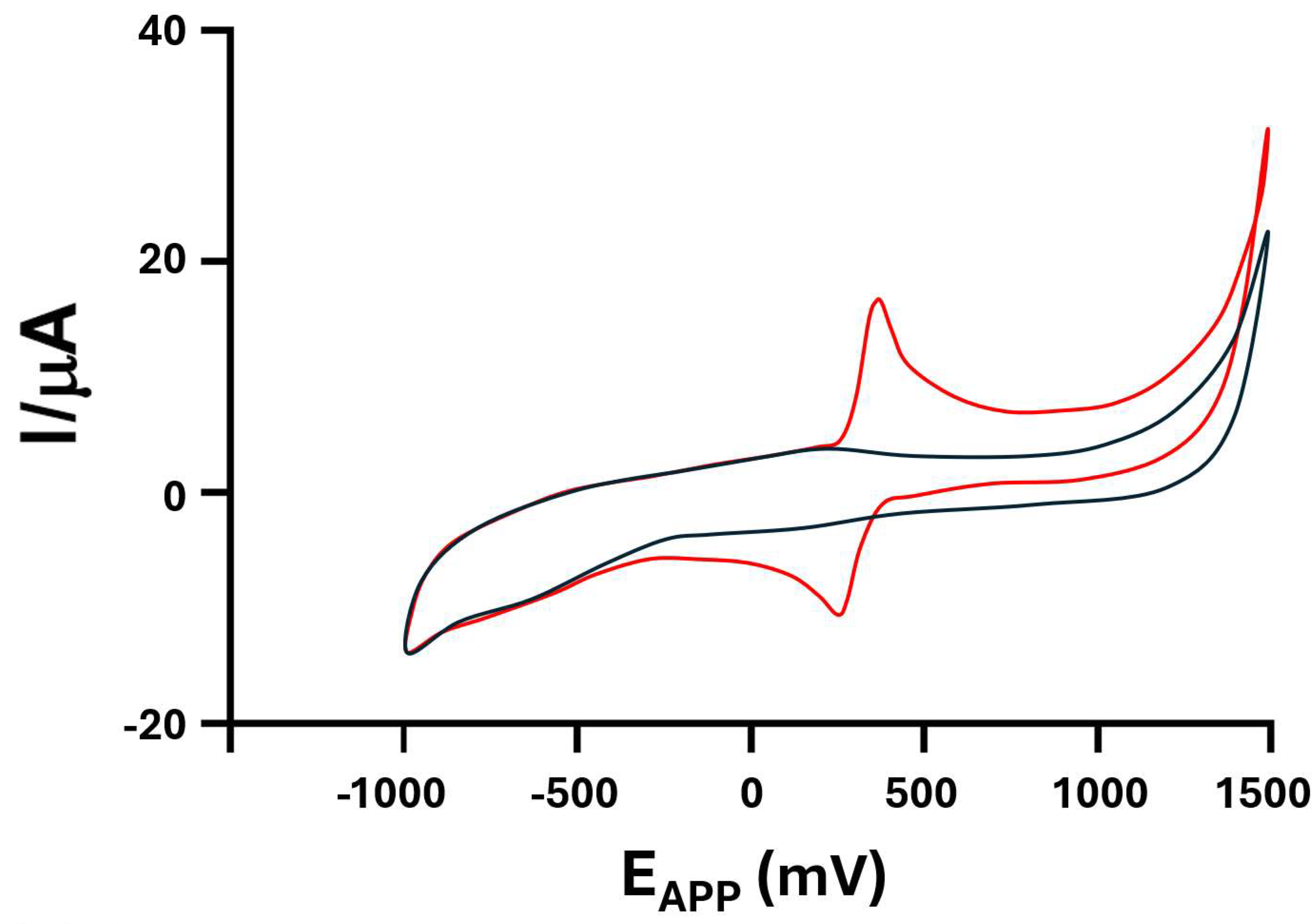
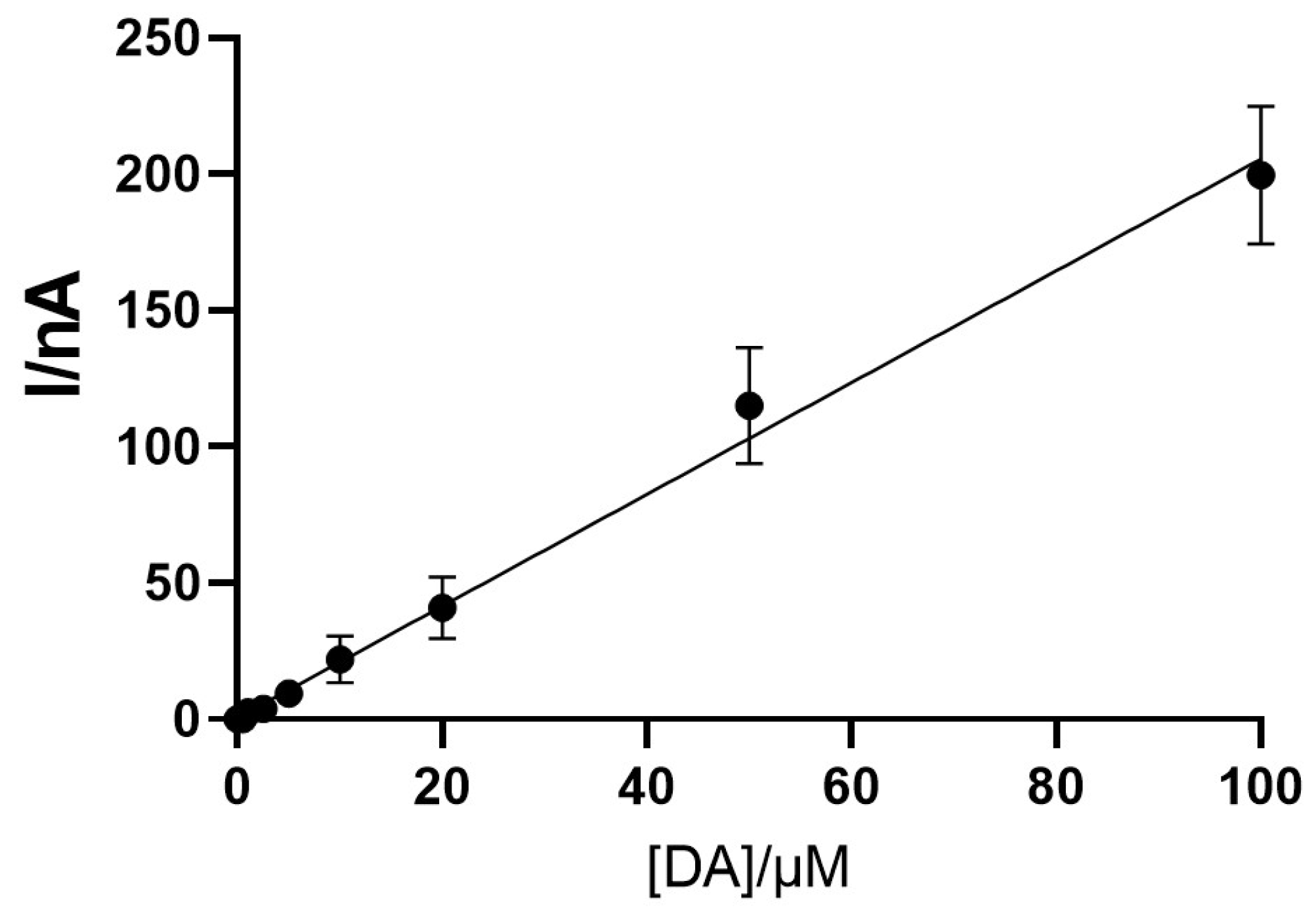
Cyclic voltammetry of the graphite–cyanoacrylate composite (Figure 4) revealed a broad baseline, indicating a significant capacitive current contribution. The introduction of 1 mM DA elicited a distinct anodic wave with an oxidation potential Eox of +363 mV and a reduction potential Ered of +250 mV. The sensors’ calibration (Figure 5) demonstrated a sensitivity of 2.051 ± 0.071 nA µM−1 (R2 = 0.979). The LOD and LOQ were determined to be 0.162 ± 0.008 µM and 0.541 ± 0.012 µM, respectively. (Table 1).
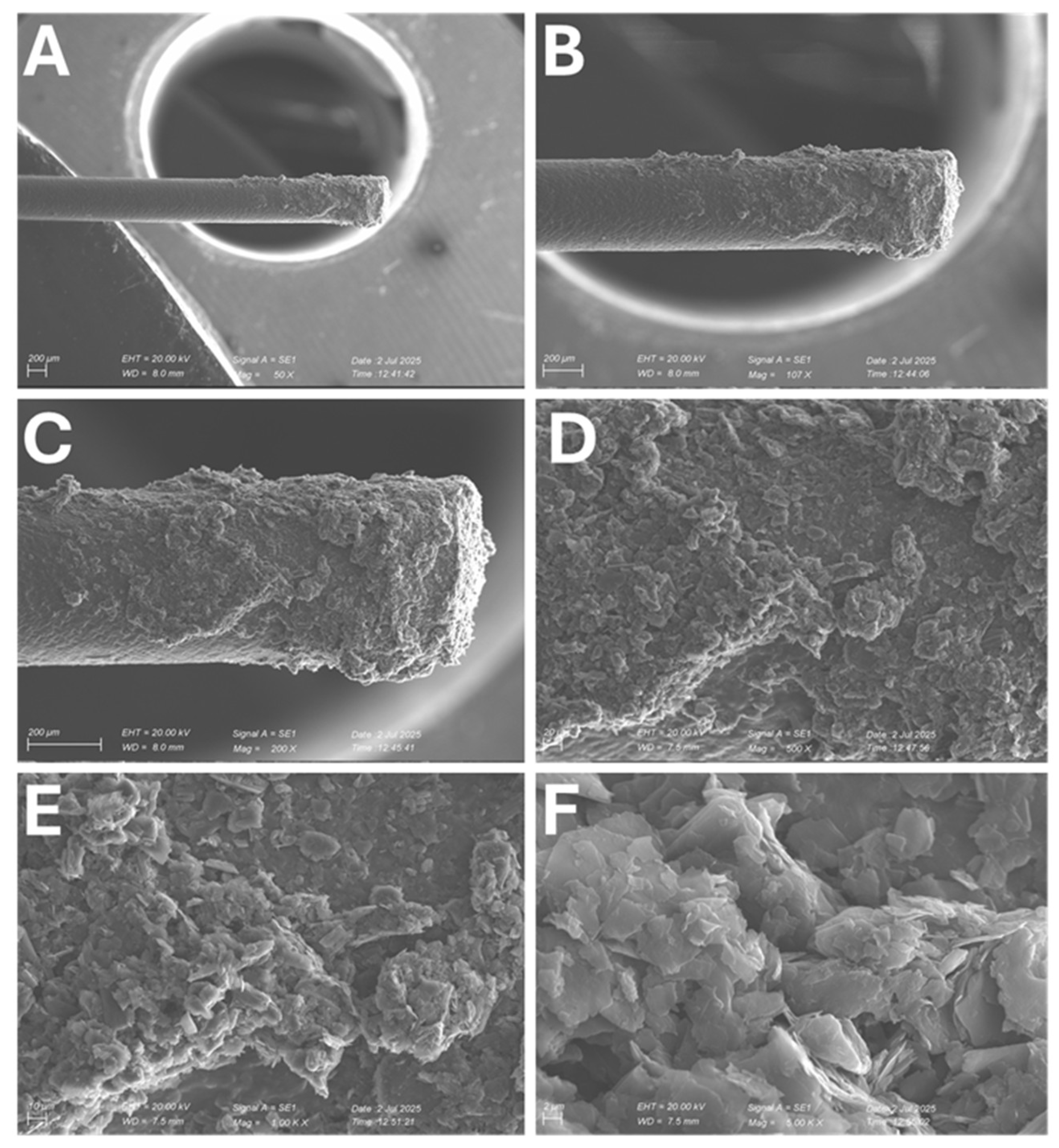
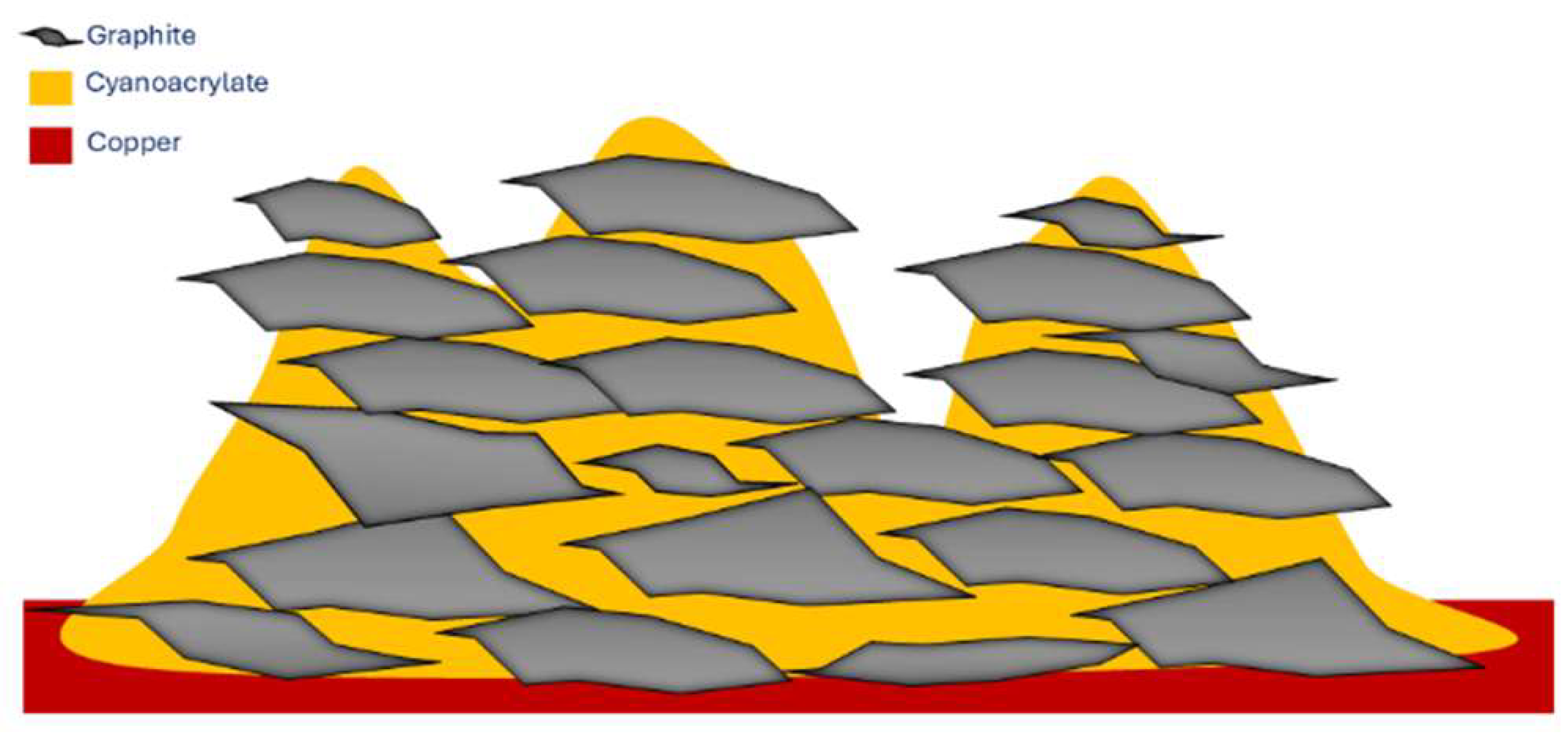
As shown in Figure 6, electron microscopy images show effective deposition of the composite onto the copper sensor. At higher magnifications, it is possible to highlight a composite stratification with a particular volume, within which the graphite assumes a lamellar spatial disposition, as outlined in Figure 7.

3.2. MWCNT–Cyanoacrylate Composite Characterization

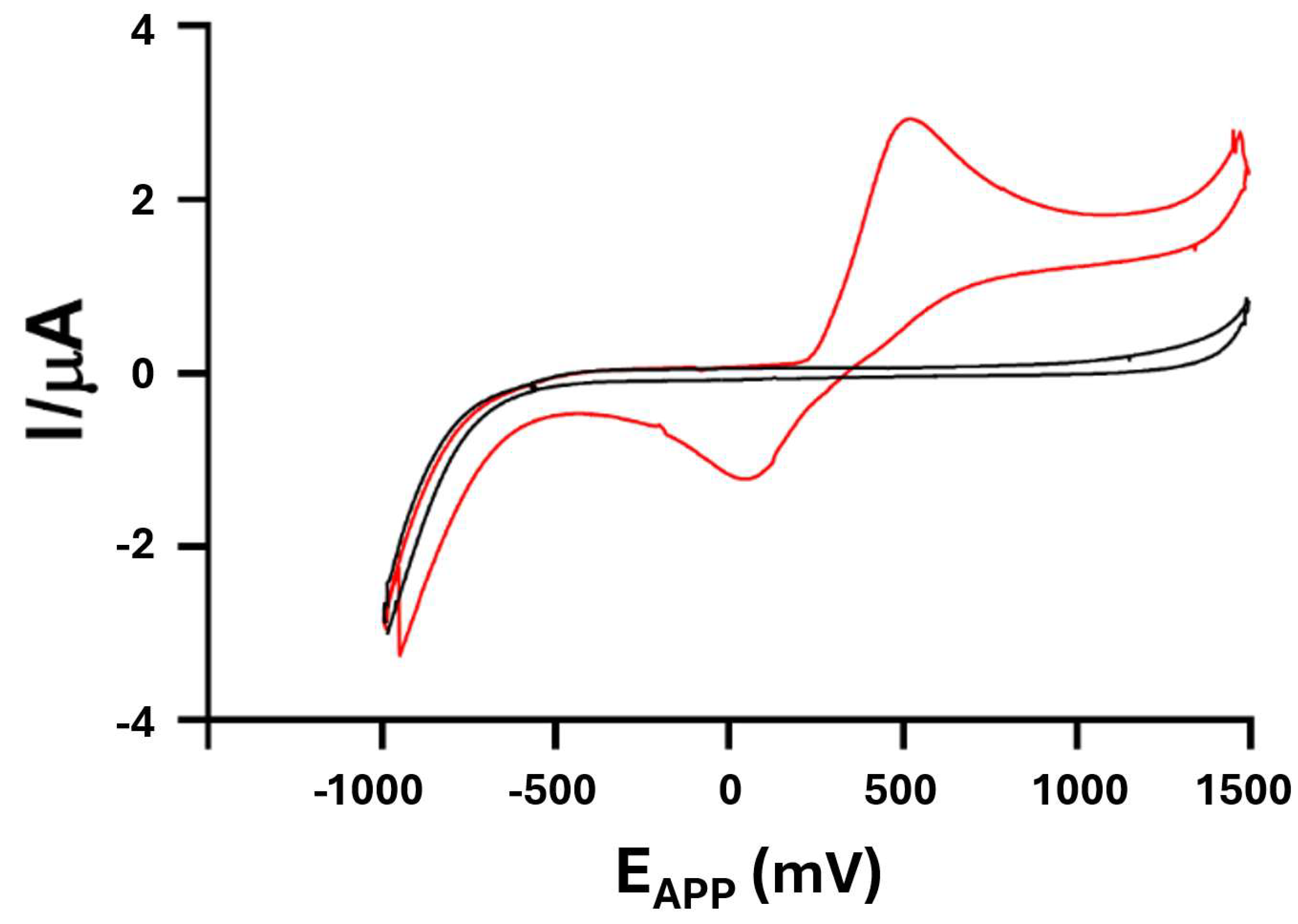
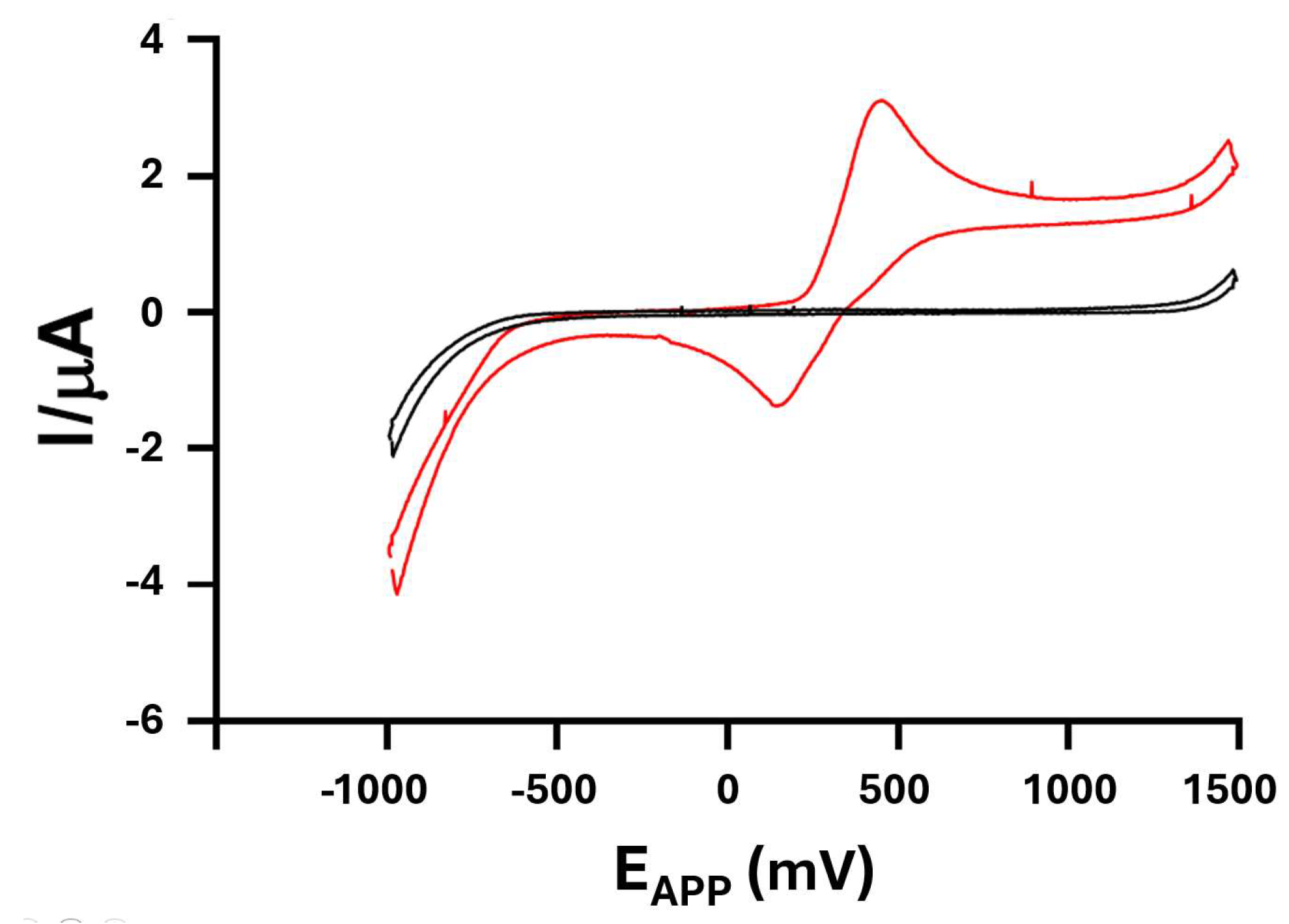
The MWCNT-ECA composite (Figure 8) exhibited a significantly narrower baseline than the graphite group, indicating reduced capacitive current. Upon 1 mM DA injection, oxidation and reduction peaks were observed at +518 mV and +0.05 mV, respectively.
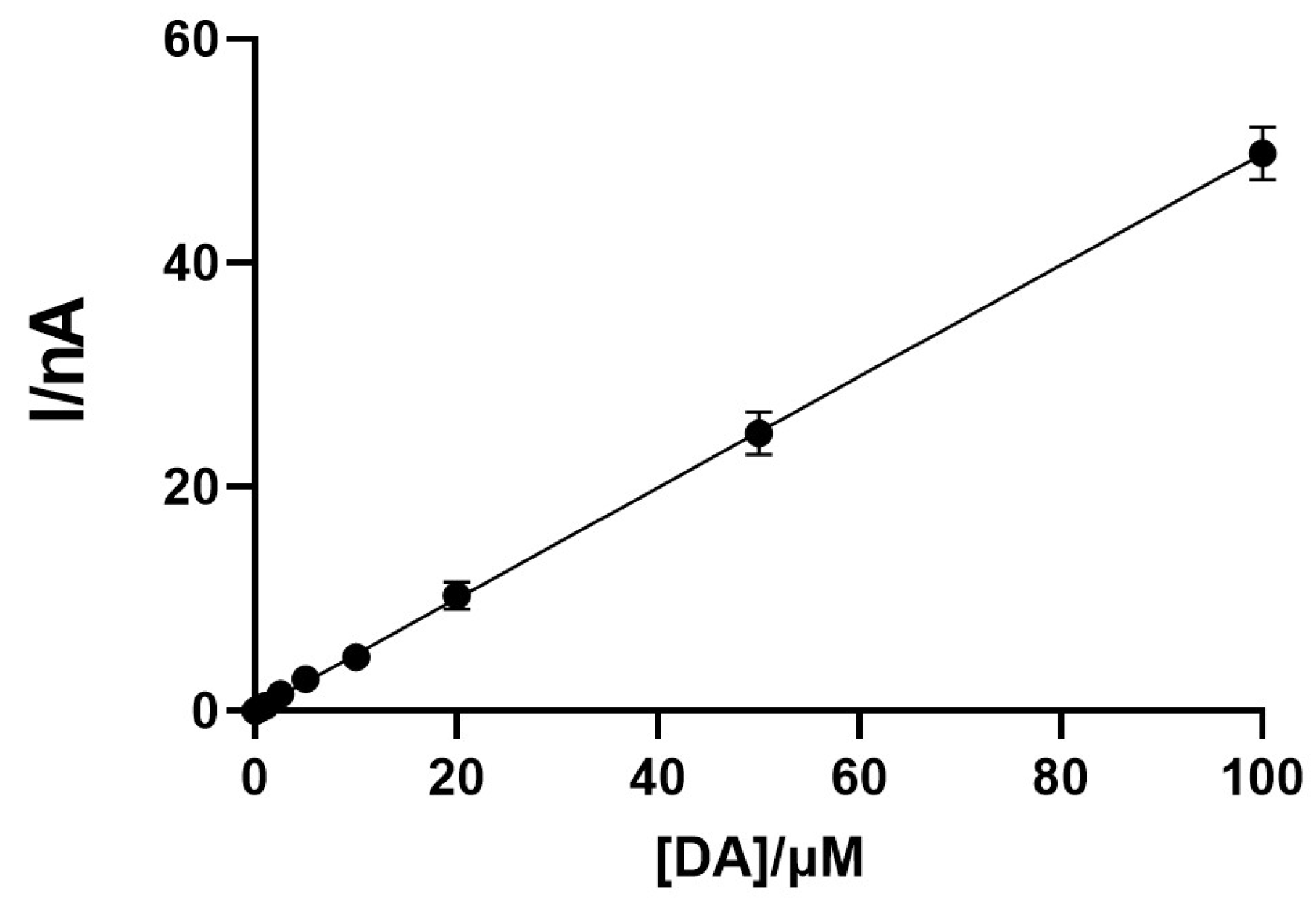
Calibration (Figure 9) yielded a slope of 0.497 ± 0.006 nA µM−1, which is statistically lower than that of graphite (p < 0.05). However, the MWCNT sensors achieved superior LOD (0.030 ± 0.001 µM) and LOQ (0.101 ± 0.008 µM) values (p < 0.001) compared with the graphite group.
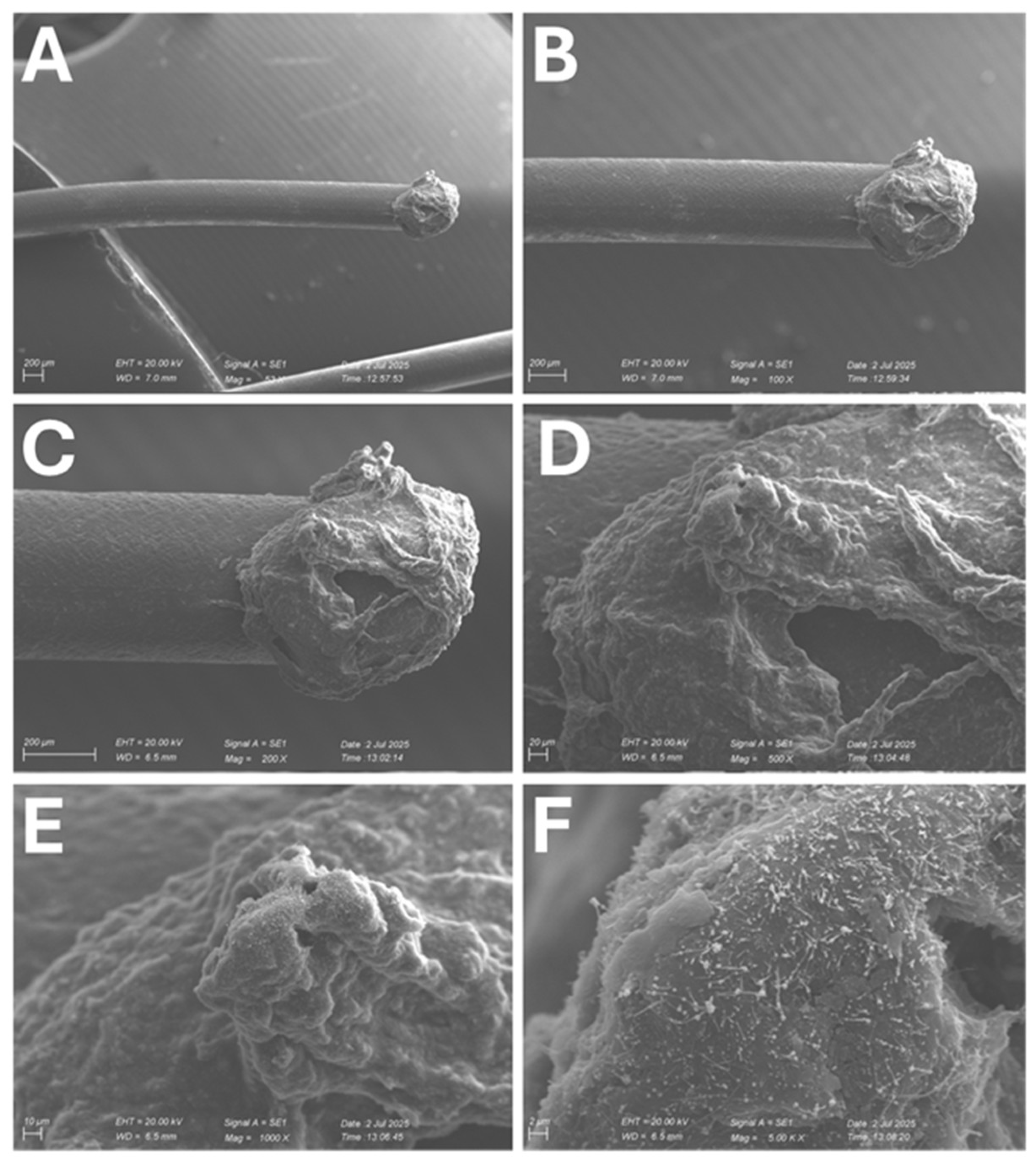
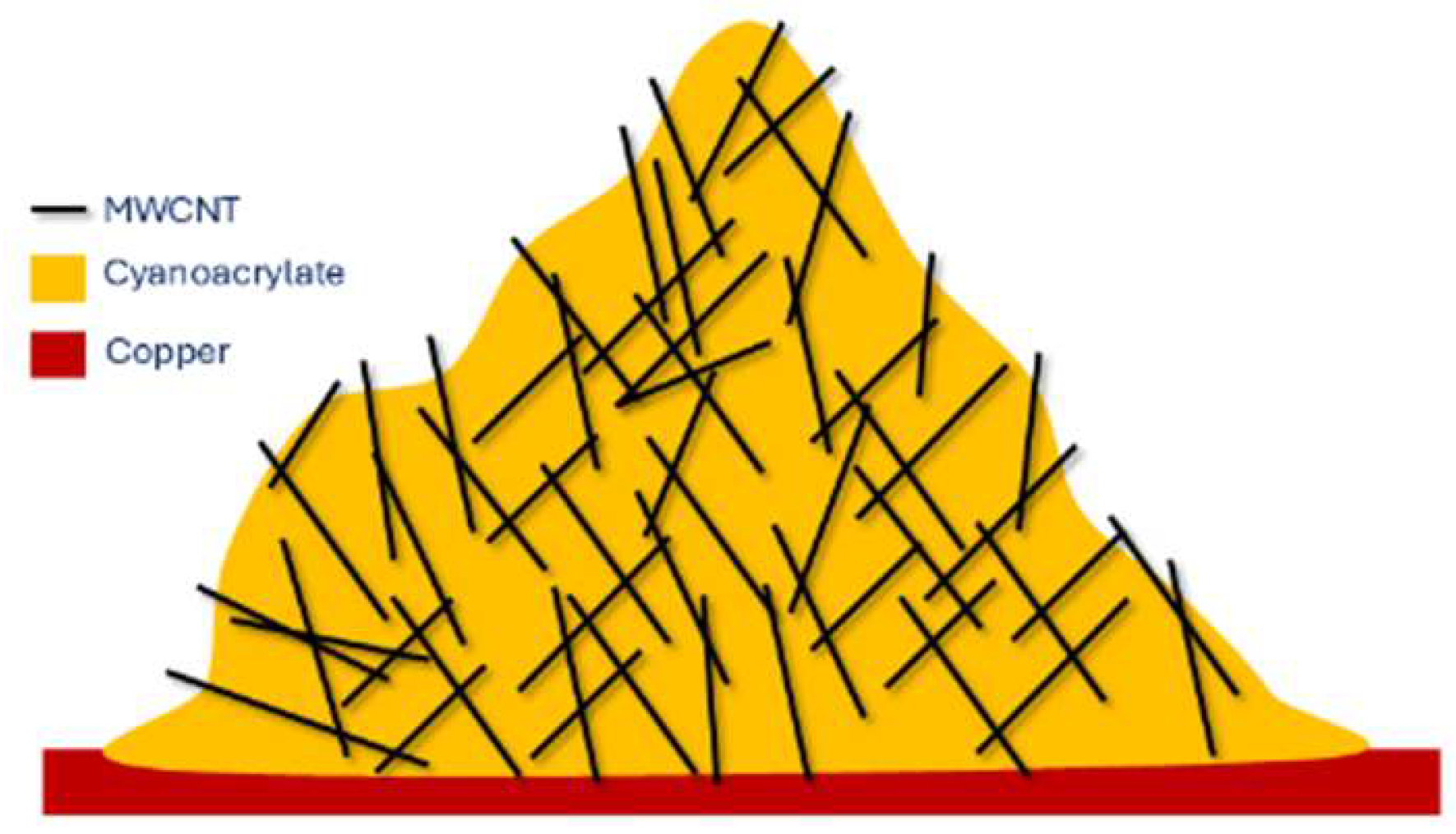
SEM micrographs (Figure 10) revealed a disordered fibrillar network with protruding nanotubes. The high Iox/BLox ratio (~39.9) indicates enhanced electron transfer efficiency and signal discrimination. The “brighter” tips of the MWCNTs observed in the SEM micrographs suggest charge localization, potentially serving as primary electroactive sites. The porous structure likely facilitates analyte transport while minimizing background noise, thereby improving the signal-to-noise ratio (Figure 11).

3.3. Graphene–Cyanoacrylate Composite Characterization

Graphene-based sensors displayed the narrowest voltammetric baseline (Figure 12) and a robust Iox/BLox ratio of 62.3. The oxidation peak occurred at +450 mV with a reduction peak at +0.150 mV. Although the sensitivity (slope: 0.273 ± 0.008 nA µM−1) was lower than that of the graphite composite, the graphene sensors exhibited excellent LOD (0.033 ± 0.001 µM) and LOQ (0.110 ± 0.008 µM) values, comparable to the MWCNT group.
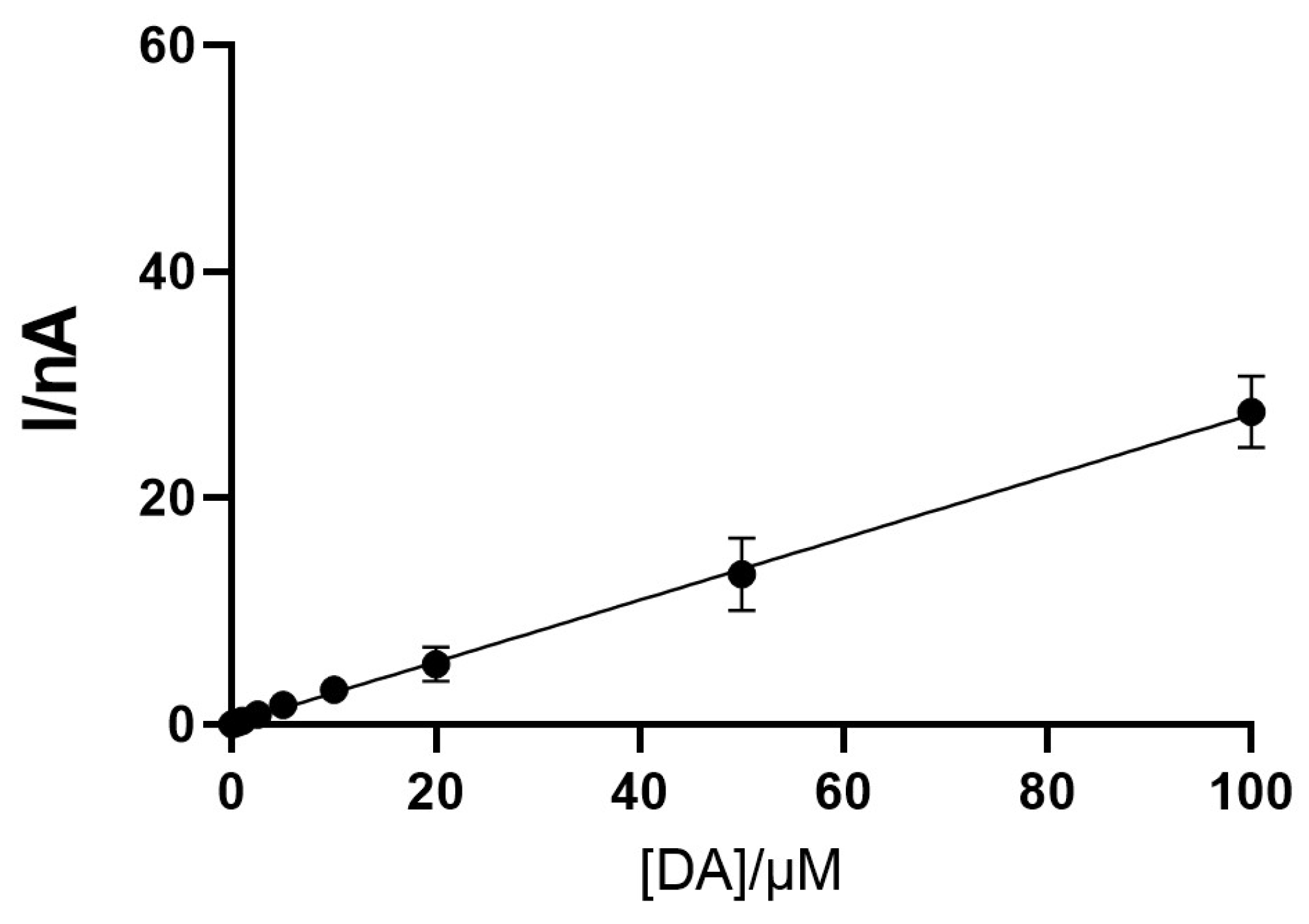
Figure 13 presents the calibration curve of the graphite–cyanoacrylate group of sensors. Calibration was performed in 20 mL of freshly prepared acetate buffer (pH 4.3) by applying a constant potential of +450 mV vs. Ag/AgCl, as determined from the corresponding cyclic voltammogram. Once a stable baseline was established, DA was added incrementally to the cell at concentrations ranging from 0 to 100 µM. As illustrated in Figure 13, the resulting calibration curve exhibited a slope of 0.273 ± 0.008 nA µM−1 and a correlation coefficient (R2) of 0.978, which were statistically inferior (p < 0.05) to those obtained with the graphite composite. For this sensor group, the limit of detection (LOD) and limit of quantification (LOQ) were calculated to be 0.033 ± 0.001 µM and 0.110 ± 0.008 µM, respectively. This resulted in a statistically significant difference (p < 0.001) compared with the graphite-based composite.
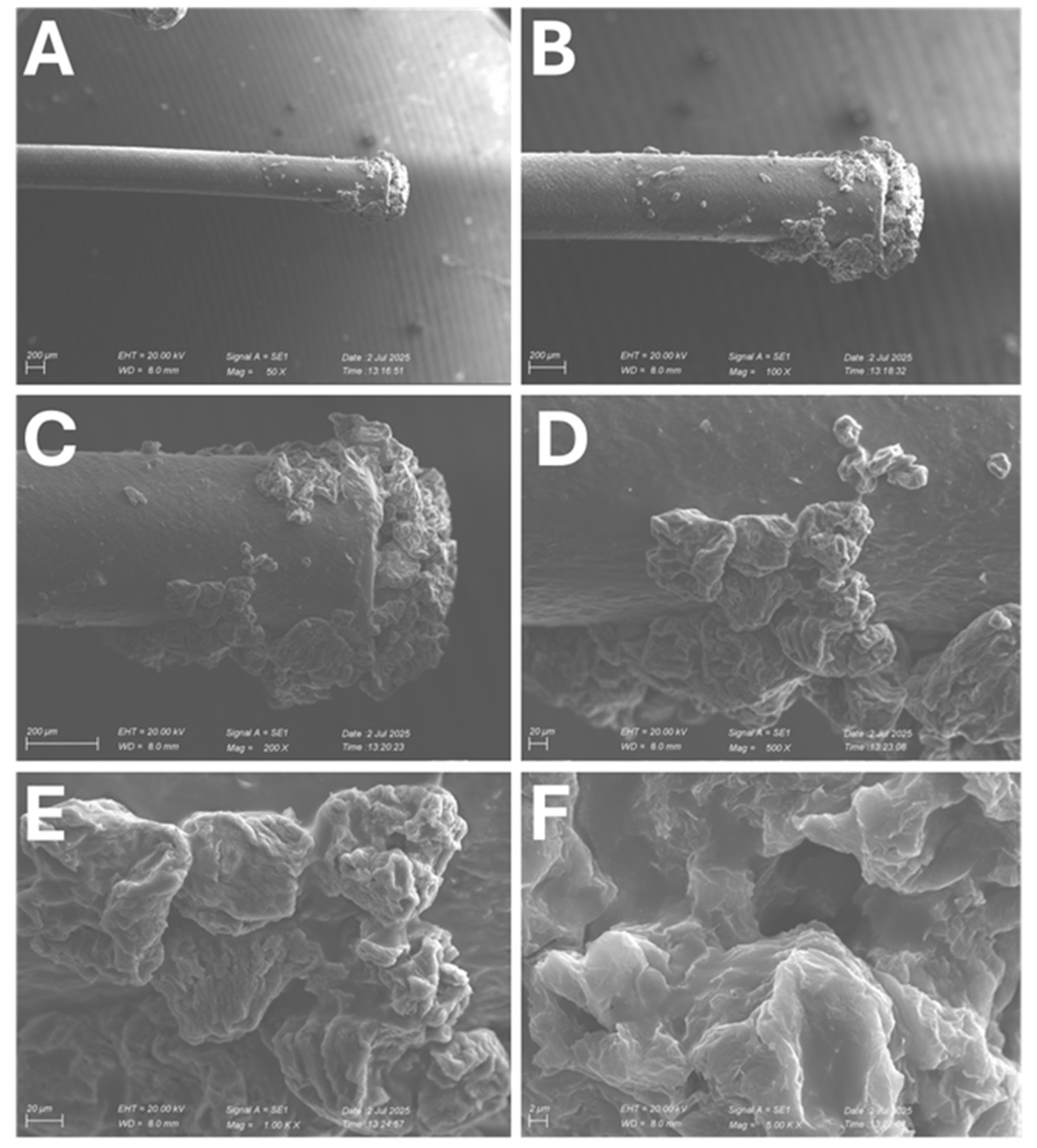
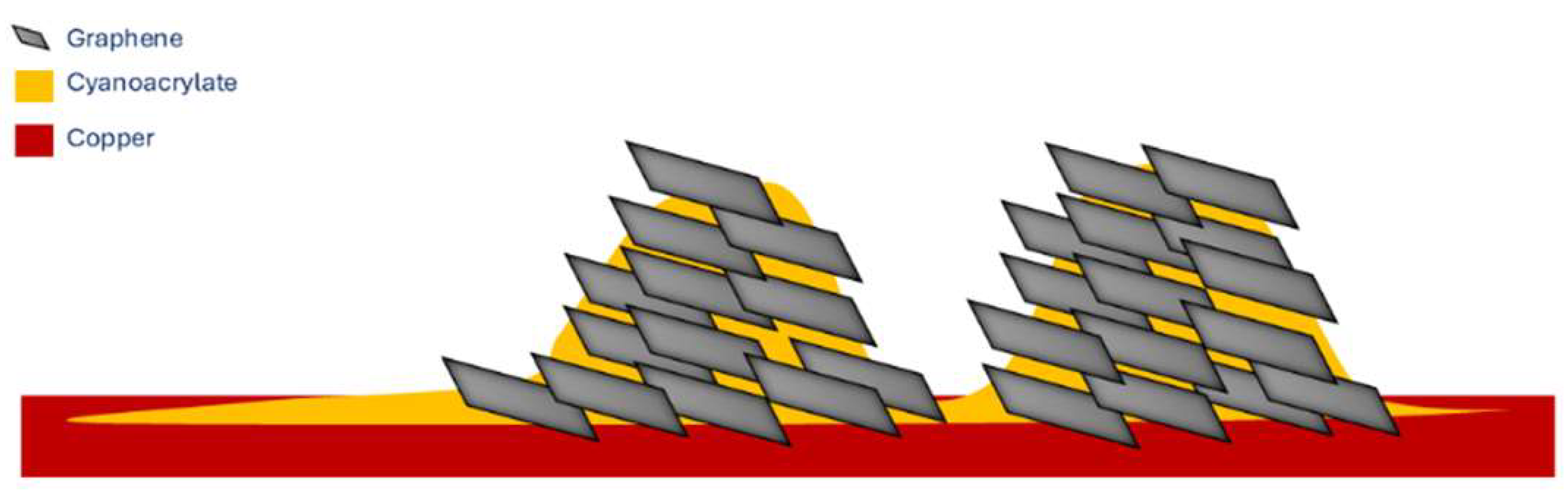
SEM analysis (Figure 14) reveals that the sensor coating exhibits a heterogeneous, porous morphology characterized by multi-lamellar graphene stacks with significant edge exposure. This three-dimensional (Figure 15) architecture maximizes the electroactive surface area available for redox reactions, while the cyanoacrylate matrix primarily serves as a mechanical binder, preserving structural integrity without occluding graphene’s active sites.

3.4. Study on the Stability of Cyanoacrylate-Based Sensors over Time

To evaluate the applicability and temporal stability of cyanoacrylate-based carbon sensors, sensitivity variations were monitored over a 12-day period. As illustrated in Figure S4, all sensor types exhibited a progressive decline in sensitivity during the observation interval. Graphite-based sensors showed the largest decrease, with a sensitivity reduction of approximately 3% per day, whereas sensors incorporating MWCNTs and graphene exhibited more limited daily decreases of 2.2% and 0.9%, respectively. Overall, the graphene-based sensor demonstrated the highest stability over the investigated time period.

3.5. Evaluation of Nafion™ Coating on AA, DOPAC, UA and DA Detection

Since the aim of this project is to use the above-mentioned carbon-based sensors in real biological samples, a study on the main interfering molecules such as AA, DOPAC, and UA was conducted, both before and after Nafion™ coating, on a new batch of sensors: all of the experiments on Nafion™-coated sensors were performed at day 0. As shown in Figures S5–S7, CVs were carried out, exposing the different types of sensors to a 1 mM concentration of each interfering compound. AA, DOPAC, and UA were clearly detected by all sensors (blue lines). The presence of Nafion™ resulted in a pronounced attenuation of the voltammetric signals, indicating its effectiveness in suppressing the electrochemical response of interfering species (red lines).
The electrochemical response to dopamine (DA) was evaluated by means of cyclic voltammetry (CV) for all Nafion™-coated cyanoacrylate-based composite sensors. As shown in Figure S8, Nafion™ modification enabled effective DA monitoring, yielding higher anodic currents than those recorded for uncoated sensors. Moreover, Nafion™ coating resulted in enhanced sensitivity toward DA relative to the corresponding unmodified electrodes.
As shown in Figure S8, the oxidation potentials recorded across all monitored sensor configurations were highly consistent, exhibiting superimposable anodic and cathodic peak values (the mean values of the oxidation and reduction peaks were Eox = 522 ± 13.4 mV and Ered = −119 ± 10.6 mV). On the basis of this electrochemical stability and overlap in redox behavior, the working potential for DA oxidation was set to +520 mV vs. Ag/AgCl, after which the calibration procedure for the carbon-based sensors was performed. The calculated sensitivities, expressed as the slopes of the calibration curves, were 3.521 ± 0.008 nA µM−1 for graphite-based sensors, 0.704 ± 0.003 nA µM−1 for MWCNT-based sensors, and 0.331 ± 0.005 nA µM−1 for graphene-based sensors.

3.6. Measurement of DA Content in PC12 Cell Lysate

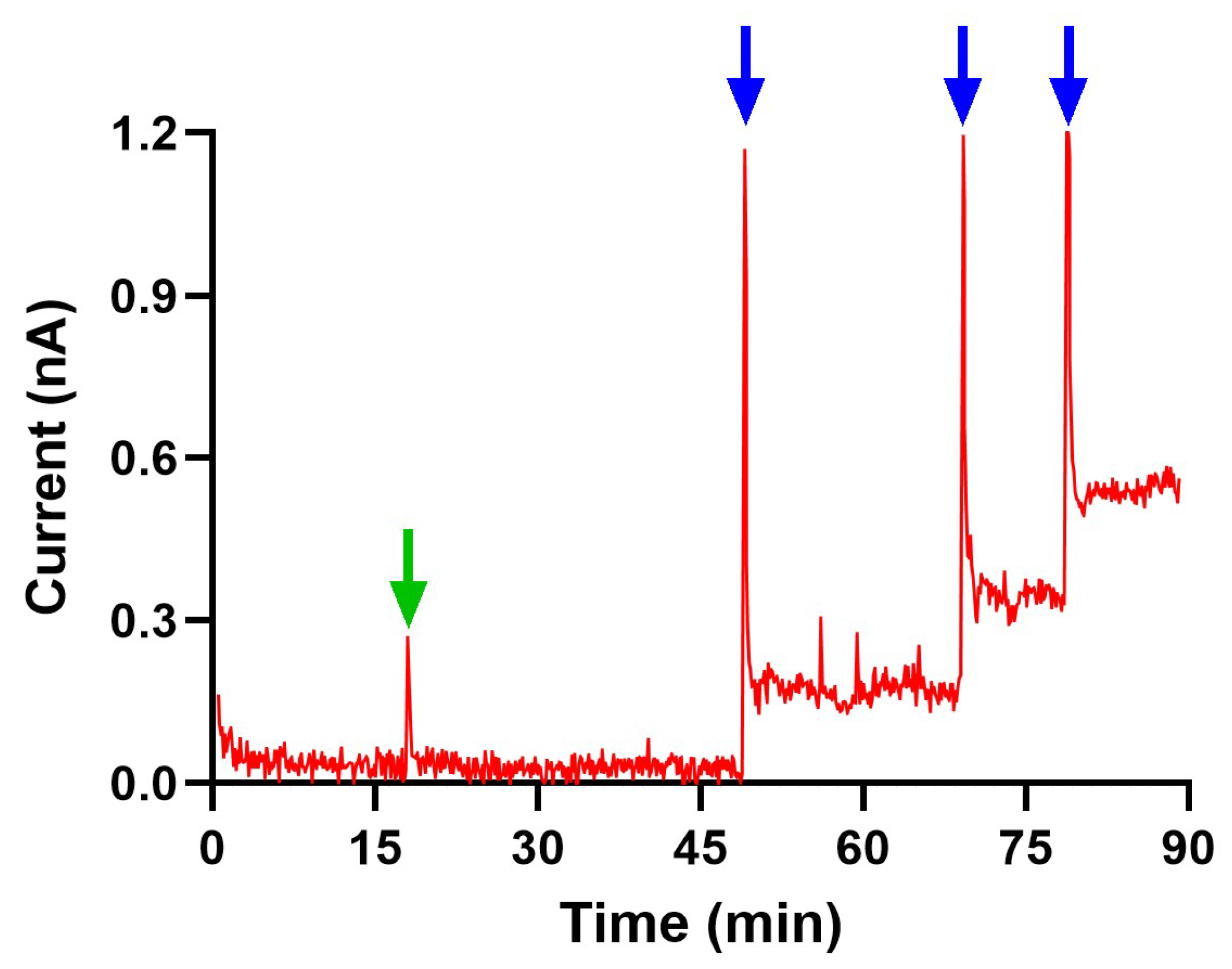
To evaluate the intracellular DA concentration in PC12 cell lysate, the graphene-based sensor was used by applying a working potential of +520 mV vs. Ag/AgCl, as highlighted in Figure S8. As shown in Figure 16, once a stable baseline was obtained, a 50 µL injection of 1% metaphosphoric acid containing 1 mM EDTA was performed (green arrow), which did not determine any variation in the monitored current. Then, three subsequent 50 µL injections of the cell lysate were performed: each injection produced an increase in current of approximately 0.171 nA. Each increase was estimated to be approximately equal to about 518 nM of DA concentration, which, considering the dilution in the electrochemical sensor, corresponds to a concentration of 51.7 µM in the 200 µL in which the cell lysis was performed.

4. Discussion

From the analysis of the results, it is evident that the graphite–cyanoacrylate composite possesses an excellent capacity to detect dopamine in solution, demonstrating that the presence of cyanoacrylate in the composite still enables the catalytic activity of carbon, lowering the energy required for dopamine oxidation and maintaining electrochemical signal transduction, allowing for precise and rapid detection. Moreover, not only the oxidation peaks but also the reduction peaks of DA–orthoquinone, which is formed during the oxidation process of the molecule, can be detected. It is noteworthy that, on the graphite composite, the oxidation peak occurs at +363 mV vs. Ag/AgCl, in line with data in the literature [44], and the reduction peak at +250 mV vs. Ag/AgCl, showing a quasi-reversible behavior, in line with what is reported in the literature [45]. Furthermore, the amplitude of the cycle generated during the baseline recording should be noted. Figure 6 and Figure 7 can suggest an initial explanation. The baseline current is primarily due to capacitive charging, and as the scan rate increases, the capacitive current increases, thereby raising the baseline amplitude [48]. Moreover, the magnitude of the capacitive current also depends on the electrode surface active area [49,50,51,52,53]. Thus, the baseline amplitude recorded for the graphite–cyanoacrylate composite could be explained by the formation of a composite in which the graphite is arranged within the cyanoacrylate, generating a large volume in which the carbonaceous material determines a large presumed high surface-to-volume ratio (as highlighted by the SEM images), thus defining a wide baseline. Moreover, the size of the composite volume deposited on the sensor can also explain the magnitude of the current generated both during CV and CPA (as shown in Figure 4 and Figure 5) as well as the calculated slope value (Table 1). Moreover, the presence of a large conductive volume could favor the formation of an extended electrical double layer and, consequently, a high capacitive current, which contributes to background noise. As shown in Table 1, this phenomenon is also confirmed by the current ratio (Iox/BLox) calculated from the peak and background currents upon oxidation of DA (16.700 µA/3.800 µA ≈ 4.40), which is relatively low. Consequently, at low concentrations, the analyte may produce a response that is not sufficiently distinguishable from the background current, thereby affecting the system’s sensitivity.
A note should be made about cyanoacrylate itself. As shown in the SEM images (Figure S1), indeed, at low magnifications (50×–200×, panels A–C), the morphology of the cyanoacrylate can be evaluated: it appears smooth, glassy, compact, and free of macroscopic irregularities, with homogeneous adhesion to the metal substrate. At higher magnifications (panels D–F), the morphology is confirmed to be amorphous and devoid of structured textures, revealing only rare residual microparticles attributable to deposition artifacts. This configuration is based on the insulating, electrochemically inactive nature of cyanoacrylate, as demonstrated by DA calibrations run on copper wire itself and on wire coated with cyanoacrylate.
As highlighted in Figure 9 for MWCNT, the extremely low capacitive current, underscored by a thin CV baseline, indicates a lower capacitive current than that of the graphite composite, resulting in higher selectivity and the ability to discriminate against low-intensity signals. In fact, the Iox/BLox ratio (2.913 µA/0.073 µA ≈ 39.9; Table 1) results in values about 10 times higher than that of the graphitic sensor, indicating greater electron transfer efficiency and higher sensitivity even at low concentrations, which is also confirmed by the LOD and LOQ values (Table 1). The explanation could rely on the fact that the MWCNT–cyanoacrylate composite presents a different structure, as highlighted in the SEM images (Figure 10), with a disordered fibrillar network and protruding nanotubes that extend to form continuous, electrically conductive connections. Some tips of the MWCNTs appear visually brighter, suggesting possible charge localization and suggesting that redox reactions may preferentially occur at these tips. As outlined in Figure 11, the cyanoacrylate matrix may not fully cover the MWCNT phase, allowing dopamine and water to pass through. This supports the hypothesis that the polymeric binder does not hinder the transport of the analyte to the active sites, resulting in a voltammogram with an extremely thin baseline, reflecting a very low capacitive current, consistent with the nanotubular network’s minimal volume and very high exposed surface area. All of these phenomena, in the end, lead to a higher signal-to-noise ratio than that of the graphite-based composite.
As highlighted in Figure 14 and Figure 15, the graphene-based composite’s internal configuration provides the system with an even more favorable surface-to-volume ratio than MWCNTs. The voltammetric baseline is the thinnest among the three sensor groups and is virtually noise-free. The Iox/BLox ratio (3.117 μA/0.050 μA ≈62.3, Tab 1) is a very high value, showing a remarkably high noise-to-signal ratio and suggesting an exceptional ability to distinguish the analytical signal from background noise. Moreover, the lower LOD and LOQ of this group of sensors make the graphene-based sensor potentially the most suitable for applications requiring high sensitivity and detection at low concentrations, despite its lower slope than graphite.
Taking into account all of the electrochemical results, an interesting observation must be made on the significant increase in the values of the oxidation peaks and their increased separation with the reduction peaks, highlighted in the present work (Figure S3). This phenomenon could be attributed to the composite’s conformation. In fact, it has been reported [54] that if nanostructures form a porous network, this enhances the effective surface area. However, if the nanomaterial is poorly dispersed or develops thick films, increased ohmic resistance within the structure can lead to a positive peak shift to higher potentials due to the iR drop. Moreover, it has been reported [55] that the layer thickness can influence electron transfer kinetics, producing a shift of the oxidation potentials toward higher values, a shift of the reduction potentials toward lower values, and a consequent increase in the distance between the relative oxidation and reduction peaks.
In our case, as shown in Figure 3, the deposition of the composite led to the formation of a globular porous surface, resulting in a thick carbonaceous matrix (especially when compared to cyanoacrylate alone, which is thin). This geometry could contribute to the observed phenomenon.
Since one of the primary objectives of this study was to enable the application of the fabricated sensors in complex biological matrices, the electrode surfaces were modified with a Nafion™ coating, in accordance with previously reported methodologies [56,57,58]. Nafion™ was employed to mitigate the influence of common electroactive interferents, including ascorbic acid (AA), 3,4-dihydroxyphenylacetic acid (DOPAC), and uric acid (UA), which are typically present in DA-containing biological samples. As extensively documented in the literature, Nafion™ is widely used to enhance the selectivity of amperometric sensors through electrostatic exclusion mechanisms [58], while also improving sensitivity toward dopamine (DA) and contributing to increased operational stability [59]. Consistent with these reports, the Nafion™-modified sensors investigated in this work exhibited improved selectivity and signal stability, as evidenced by the experimental results presented in Figures S5–S8.
Based on the comparative evaluation of the investigated composite electrodes (Table 1), graphene–cyanoacrylate sensors were selected for biological validation. Among all configurations, graphene-based electrodes exhibited the most favorable analytical performance, characterized by the lowest LOD and LOQ and by the minimum Iox/BLox ratio. Moreover, following Nafion™ modification, these sensors showed enhanced selectivity toward DA (0.331 ± 0.005 nA µM−1), with effective suppression of responses from electroactive interferents (Figure S7). In particular, the contribution of 3,4-dihydroxyphenylacetic acid (DOPAC)—identified as a potential interferent in PC12 cell lysates—was efficiently attenuated. Furthermore, graphene-based sensors were selected due to their superior temporal stability, as evidenced by the minimal signal drift observed during prolonged operation (Figure S4).
Graphene–cyanoacrylate-based sensors enabled reliable quantification of dopamine (DA) in PC12 cell lysates (Figure 16). The injection of 50 µL of lysate produced an average oxidation current increase of ~0.171 nA, corresponding to a DA concentration of 517 nM as derived from the calibration curve. Using the sensitivity of the Nafion™-modified graphene–cyanoacrylate electrodes and correcting for the injection-induced dilution, the DA concentration in the lysate was estimated to be 51.7 µM, corresponding to 11.62 nmol of DA per milligram of protein. This value is in good agreement with previously reported DA levels in PC12 cells [60], confirming the suitability of the proposed sensing platform for biological applications.

5. Conclusions

This study reports the development and comprehensive electrochemical characterization of dopamine (DA) sensors based on different carbon allotropes—namely, graphite, multi-walled carbon nanotubes (MWCNTs), and graphene—embedded within a cyanoacrylate polymer matrix. Given the limited exploration of cyanoacrylate in electrochemical sensor fabrication, these composite materials were intentionally selected to elucidate how the morphology, dispersion, and conductive architecture of the carbon phase influence the analytical performance, while retaining a simple, rapid, and cost-effective fabrication strategy. Voltammetric and amperometric investigations revealed marked differences in sensor sensitivity and detection capability as a function of the carbon allotrope employed. The graphite–cyanoacrylate sensor exhibited the highest calibration slope (2.051 nA μM−1), corresponding to a large absolute current response; however, this configuration also presented the highest limit of detection (LOD = 0.162 μM), thereby limiting its applicability at low analyte concentrations. In contrast, the MWCNT–cyanoacrylate and graphene–cyanoacrylate sensors demonstrated substantially improved analytical performance, characterized by LODs below 0.035 μM, highly stable voltammetric baselines, and an enhanced ability to discriminate faradaic signals from background noise. Notably, the graphene-based sensor achieved the highest signal-to-noise ratio (Iox/BLox ≈ 62.3), identifying it as the most suitable platform for ultrasensitive DA detection. The experimental findings further confirmed that the spatial arrangement and distribution of the conductive fillers within the polymer matrix play a critical role in modulating the capacitive contribution, the reversibility of redox processes (Figure S3), and overall electron-transfer efficiency. These observations were corroborated by SEM analysis, which revealed distinct surface architectures across the different composites, ranging from compact, massive structures in graphite-based sensors to interconnected fibrillar networks in MWCNT-based systems and highly exposed lamellar morphologies in graphene-based electrodes. SEM imaging also revealed heterogeneous cyanoacrylate deposition on the electrode surfaces, suggesting that further optimization of the deposition protocol is warranted. Ongoing studies are addressing this aspect, as well as extending the investigation to additional carbonaceous materials, including carbon nanofibers and fullerenes. Although the unmodified sensors exhibited sensitivity to common electroactive interferents typically present in biological matrices, surface modification with Nafion™ significantly enhanced selectivity toward DA.
Based on their superior analytical performance, Nafion™-coated graphene–cyanoacrylate sensors were selected for the detection and quantification of intracellular DA in PC12 cells, demonstrating their applicability in complex biological environments. Overall, the proposed composite materials represent a promising low-cost, easily fabricated, and analytically robust alternative for the electrochemical detection of electroactive neurochemicals in biological samples.

Supplementary Materials

The following supporting information can be downloaded at https://www.mdpi.com/article/10.3390/app16031255/s1. Figure S1: Scanning electron micrographs of cyanoacrylate sensors at different magnifications. Magnification: 0× (Panel (A)), 100× (Panel (B)), 200× (Panel (C)), 500× (Panel (D)), 1000× (Panel (E)), and 5000× (Panel (F)); Figure S2: Scanning electron micrographs of MWCNT–cyanoacrylate sensors at higher magnifications. Magnification: 0× (Panel (A)), 100× (Panel (B)), 200× (Panel (C)), 500× (Panel (D)), 1000× (Panel (E)), and 5000× (Panel (F)); Figure S3: Comparison of the redox potentials of the three sensors in acetate buffer. The shift in oxidation potential toward more positive values is evident for the MWCNT- and graphene-based sensors compared to graphite, as well as the amplitude and symmetry of the curves; Figure S4: Percentage change in the sensitivity of graphite- (red line), multi-walled carbon nanotube- (MWCNT) (green line), and graphene-based (blue line) sensors over a 12-day period. Sensitivity values were normalized to Day 0 (100%) and are reported as the mean ± SEM (n = 6); Figure S5. Cyclic voltammograms (CVs) of AA (Panel (A)), DOPAC (Panel (B)), and UA (Panel (C)) recorded in graphite-based sensors (n = 6) before (blue line) and after (red line) Nafion coating. Measurements were performed within an applied potential window (Eapp) from −1000 to +1500 mV vs. Ag/AgCl at a scan rate of 100 mV s−1; Figure S6: Cyclic voltammograms (CVs) of AA (Panel (A)), DOPAC (Panel (B)), and UA (Panel (C)) recorded in MWCNT-based sensors (n = 6) before (blue line) and after (red line) Nafion™ coating. Measurements were performed within an applied potential window (Eapp) from −1000 to +1500 mV vs. Ag/AgCl at a scan rate of 100 mV s−1; Figure S7: Cyclic voltammograms (CVs) of AA (Panel A), DOPAC (Panel B), and UA (Panel C) recorded in graphene-based sensors (n = 6) before (blue line) and after (red line) Nafion™ coating. Measurements were performed within an applied potential window (Eapp) from −1000 to +1500 mV vs. Ag/AgCl at a scan rate of 100 mV s−1; Figure S8: Cyclic voltammograms (CVs) of 1 mM DA recorded in graphite- (blue line), MWCNT- (red line), and graphene-based (green line) sensors after Nafion™ coating. Measurements were carried out within an applied potential window (Eapp) from −1000 to +1500 mV vs. Ag/AgCl at a scan rate of 100 mV s−1. The oxidation (Eox) and reduction (Ered) peak potentials were observed at +542 mV and −140 mV for graphite-based sensors, +497 mV and −106 mV for MWCNT-based sensors, and +526 mV and −111 mV for graphene-based sensors, respectively. The mean peak potentials across all sensor types were +522 ± 13.4 mV for oxidation and −119 ± 13.4 mV for reduction, expressed as mean ± SEM.

Author Contributions

Conceptualization, P.A.S. and G.R.; methodology, G.R.; software, A.B.; validation, P.A.S. and G.R.; formal analysis, G.R.; investigation, R.Z., Y.S. and S.M.; resources, P.A.S.; data curation, P.A.S.; writing—original draft preparation, G.R.; writing—review and editing, G.R. and P.A.S.; visualization, A.B.; supervision, P.A.S.; project administration, G.R. All authors have read and agreed to the published version of the manuscript.

Funding

This research received no external funding.

Data Availability Statement

No new data were created or analyzed in this study. Data sharing is not applicable to this article.

Conflicts of Interest

The authors declare no conflicts of interest.

Abbreviations

The following abbreviations are used in this manuscript:
DADopamine
MWCNTMulti-walled carbon nanotube
ECAEthyl 2-cyanoacrylate
LODLimit of detection
LOQLimit of quantification
PDParkinson’s disease
GCGlassy carbon
PECAPoly(ethyl 2-cyanoacrylate)
CVCyclic voltammetry
CPAConstant potential amperometry
SEMScanning electron microscopy

References

  1. Sheffler, Z.M.; Reddy, V.; Pillarisetty, L.S. Physiology, Neurotransmitters. In StatPearls; StatPearls Publishing: Treasure Island, FL, USA, 2025. [Google Scholar]
  2. Zhuang, Y.; Xu, P.; Mao, C.; Wang, L.; Krumm, B.; Zhou, X.E.; Huang, S.; Liu, H.; Cheng, X.; Huang, X.-P.; et al. Structural Insights into the Human D1 and D2 Dopamine Receptor Signaling Complexes. Cell 2021, 184, 931–942.e18. [Google Scholar] [CrossRef]
  3. Berridge, K.C.; Robinson, T.E. What Is the Role of Dopamine in Reward: Hedonic Impact, Reward Learning, or Incentive Salience? Brain Res. Rev. 1998, 28, 309–369. [Google Scholar] [CrossRef]
  4. Craig, J.D.; O’Neill, R.D. Comparison of Simple Aromatic Amines for Electrosynthesis of Permselective Polymers in Biosensor Fabrication. Analyst 2003, 128, 905. [Google Scholar] [CrossRef]
  5. Volkow, N.D.; Morales, M. The Brain on Drugs: From Reward to Addiction. Cell 2015, 162, 712–725. [Google Scholar] [CrossRef] [PubMed]
  6. Gepshtein, S.; Li, X.; Snider, J.; Plank, M.; Lee, D.; Poizner, H. Dopamine Function and the Efficiency of Human Movement. J. Cogn. Neurosci. 2014, 26, 645–657. [Google Scholar] [CrossRef] [PubMed]
  7. Bromberg-Martin, E.S.; Matsumoto, M.; Hikosaka, O. Dopamine in Motivational Control: Rewarding, Aversive, and Alerting. Neuron 2010, 68, 815–834. [Google Scholar] [CrossRef] [PubMed]
  8. Napier, T.C.; Kirby, A.; Persons, A.L. The Role of Dopamine Pharmacotherapy and Addiction-like Behaviors in Parkinson’s Disease. Prog. Neuro-Psychopharmacol. Biol. Psychiatry 2020, 102, 109942. [Google Scholar] [CrossRef]
  9. Klein, M.O.; Battagello, D.S.; Cardoso, A.R.; Hauser, D.N.; Bittencourt, J.C.; Correa, R.G. Dopamine: Functions, Signaling, and Association with Neurological Diseases. Cell Mol. Neurobiol. 2019, 39, 31–59. [Google Scholar] [CrossRef]
  10. Lakard, S.; Pavel, I.-A.; Lakard, B. Electrochemical Biosensing of Dopamine Neurotransmitter: A Review. Biosensors 2021, 11, 179. [Google Scholar] [CrossRef]
  11. Kandimalla, R.; Reddy, P.H. Therapeutics of Neurotransmitters in Alzheimer’s Disease. J. Alzheimer’s Dis. 2017, 57, 1049–1069. [Google Scholar] [CrossRef]
  12. Lanore, A.; Januel, E.; Bertille, N.; Fabbri, M.; Mariani, L.-L.; Mangone, G.; Sambin, S.; Menon, P.J.; Tir, M.; Bereau, M.; et al. Motor and Non-Motor Complications Following Different Early Therapies in Parkinson’s Disease: Longitudinal Analysis of Real-Life Clinical and Therapeutic Data from the French NS-PARK Cohort. CNS Drugs 2025, 39, 879–891. [Google Scholar] [CrossRef]
  13. Zhou, Z.D.; Yi, L.X.; Wang, D.Q.; Lim, T.M.; Tan, E.K. Role of Dopamine in the Pathophysiology of Parkinson’s Disease. Transl. Neurodegener. 2023, 12, 44. [Google Scholar] [CrossRef]
  14. Priyanto, S.A.N.; Yulianti, E.S.; Zakiyuddin, A.; Rahman, S.F. Amperometric Biosensor Detecting Dopamine Based on Polypyrrole/Reduced Graphene Oxide/Nickel Oxide/Glassy Carbon Electrode. J. Electr. Comput. Eng. 2024, 2024, 7453474. [Google Scholar] [CrossRef]
  15. Peik-See, T.; Pandikumar, A.; Nay-Ming, H.; Hong-Ngee, L.; Sulaiman, Y. Simultaneous Electrochemical Detection of Dopamine and Ascorbic Acid Using an Iron Oxide/Reduced Graphene Oxide Modified Glassy Carbon Electrode. Sensors 2014, 14, 15227–15243. [Google Scholar] [CrossRef] [PubMed]
  16. Choi, H.K.; Choi, J.-H.; Yoon, J. An Updated Review on Electrochemical Nanobiosensors for Neurotransmitter Detection. Biosensors 2023, 13, 892. [Google Scholar] [CrossRef] [PubMed]
  17. Ferapontova, E.E. Electrochemical Analysis of Dopamine: Perspectives of Specific In Vivo Detection. Electrochim. Acta 2017, 245, 664–671. [Google Scholar] [CrossRef]
  18. Ping, J.; Wu, J.; Wang, Y.; Ying, Y. Simultaneous Determination of Ascorbic Acid, Dopamine and Uric Acid Using High-Performance Screen-Printed Graphene Electrode. Biosens. Bioelectron. 2012, 34, 70–76. [Google Scholar] [CrossRef]
  19. Hu, S.; Huang, Q.; Lin, Y.; Wei, C.; Zhang, H.; Zhang, W.; Guo, Z.; Bao, X.; Shi, J.; Hao, A. Reduced Graphene Oxide-Carbon Dots Composite as an Enhanced Material for Electrochemical Determination of Dopamine. Electrochim. Acta 2014, 130, 805–809. [Google Scholar] [CrossRef]
  20. Gong, Q.; Han, H.; Wang, Y.; Yao, C.; Yang, H.; Qiao, J. An Electrochemical Sensor for Dopamine Detection Based on the Electrode of a Poly-Tryptophan-Functionalized Graphene Composite. New Carbon Mater. 2020, 35, 34–41. [Google Scholar] [CrossRef]
  21. Robinson, D.L.; Hermans, A.; Seipel, A.T.; Wightman, R.M. Monitoring Rapid Chemical Communication in the Brain. Chem. Rev. 2008, 108, 2554–2584. [Google Scholar] [CrossRef]
  22. Liu, X.; Liu, J. Biosensors and Sensors for Dopamine Detection. VIEW 2021, 2, 20200102. [Google Scholar] [CrossRef]
  23. Balkourani, G.; Brouzgou, A.; Tsiakaras, P. A Review on Recent Advancements in Electrochemical Detection of Dopamine Using Carbonaceous Nanomaterials. Carbon 2023, 213, 118281. [Google Scholar] [CrossRef]
  24. Zhang, X.; Liu, W.; Feng, P. Electrochemical Detection of Dopamine by an Electrodeposition PEDOT Protective Layer on the Surface of Amorphous NiCoP Nanoparticles. ACS Appl. Nano Mater. 2025, 8, 3114–3128. [Google Scholar] [CrossRef]
  25. Wang, J. Amperometric Biosensors for Clinical and Therapeutic Drug Monitoring: A Review. J. Pharm. Biomed. Anal. 1999, 19, 47–53. [Google Scholar] [CrossRef]
  26. Spissu, Y.; Barberis, A.; Bazzu, G.; D’hallewin, G.; Rocchitta, G.; Serra, P.A.; Marceddu, S.; Vineis, C.; Garroni, S.; Culeddu, N. Functionalization of Screen-Printed Sensors with a High Reactivity Carbonaceous Material for Ascorbic Acid Detection in Fresh-Cut Fruit with Low Vitamin C Content. Chemosensors 2021, 9, 354. [Google Scholar] [CrossRef]
  27. Thangavelu, R.M.; Duraisamy, N. Critical Review on Carbon Nanomaterial Based Electrochemical Sensing of Dopamine the Vital Neurotransmitter. Qeios 2024, 6, 42DHBV.2. [Google Scholar] [CrossRef]
  28. Kimmel, D.W.; LeBlanc, G.; Meschievitz, M.E.; Cliffel, D.E. Electrochemical Sensors and Biosensors. Anal. Chem. 2012, 84, 685–707. [Google Scholar] [CrossRef]
  29. Wring, S.A.; Hart, J.P. Chemically Modified, Carbon-Based Electrodes and Their Application as Electrochemical Sensors for the Analysis of Biologically Important Compounds. A Review. Analyst 1992, 117, 1215. [Google Scholar] [CrossRef]
  30. Huffman, M.L.; Venton, B.J. Carbon-Fiber Microelectrodes for in Vivo Applications. Analyst 2009, 134, 18–24. [Google Scholar] [CrossRef]
  31. Mohammadzadeh Kakhki, R. A Review to Recent Developments in Modification of Carbon Fiber Electrodes. Arab. J. Chem. 2019, 12, 1783–1794. [Google Scholar] [CrossRef]
  32. Siwakoti, U.; Pwint, M.Y.; Broussard, A.M.; Rivera, D.R.; Cui, X.T.; Castagnola, E. Batch-Fabricated Full Glassy Carbon Fibers for Real-Time Tonic and Phasic Dopamine Detection. Front. Bioeng. Biotechnol. 2025, 13, 1543882. [Google Scholar] [CrossRef] [PubMed]
  33. Castagnola, E.; Thongpang, S.; Hirabayashi, M.; Nava, G.; Nimbalkar, S.; Nguyen, T.; Lara, S.; Oyawale, A.; Bunnell, J.; Moritz, C.; et al. Glassy Carbon Microelectrode Arrays Enable Voltage-Peak Separated Simultaneous Detection of Dopamine and Serotonin Using Fast Scan Cyclic Voltammetry. Analyst 2021, 146, 3955–3970. [Google Scholar] [CrossRef] [PubMed]
  34. Thiagarajan, S.; Tsai, T.-H.; Chen, S.-M. Easy Modification of Glassy Carbon Electrode for Simultaneous Determination of Ascorbic Acid, Dopamine and Uric Acid. Biosens. Bioelectron. 2009, 24, 2712–2715. [Google Scholar] [CrossRef] [PubMed]
  35. Magar, H.S.; Duraia, E.M.; Hassan, R.Y.A. Dopamine Fast Determination in Pharmaceutical Products Using Disposable Printed Electrodes Modified with Bimetal Oxides Carbon Nanotubes Nanocomposite. Sci. Rep. 2025, 15, 11229. [Google Scholar] [CrossRef]
  36. Islam, S.; Shaheen Shah, S.; Naher, S.; Ali Ehsan, M.; Aziz, M.A.; Ahammad, A.J.S. Graphene and Carbon Nanotube-based Electrochemical Sensing Platforms for Dopamine. Chem. Asian J. 2021, 16, 3516–3543. [Google Scholar] [CrossRef]
  37. Zhou, D.-M.; Dai, Y.-Q.; Shiu, K.-K. Poly(Phenylenediamine) Film for the Construction of Glucose Biosensors Based on Platinized Glassy Carbon Electrode. J. Appl. Electrochem. 2010, 40, 1997–2003. [Google Scholar] [CrossRef]
  38. Cataldo, A.; Biagetti, G.; Mencarelli, D.; Micciulla, F.; Crippa, P.; Turchetti, C.; Pierantoni, L.; Bellucci, S. Modeling and Electrochemical Characterization of Electrodes Based on Epoxy Composite with Functionalized Nanocarbon Fillers at High Concentration. Nanomaterials 2020, 10, 850. [Google Scholar] [CrossRef]
  39. Xu, J.; Zhang, L.; Chen, G. Fabrication of Graphene/Poly(Ethyl 2-Cyanoacrylate) Composite Electrode for Amperometric Detection in Capillary Electrophoresis. Sens. Actuators B Chem. 2013, 182, 689–695. [Google Scholar] [CrossRef]
  40. Korde, J.M.; Kandasubramanian, B. Biocompatible Alkyl Cyanoacrylates and Their Derivatives as Bio-Adhesives. Biomater. Sci. 2018, 6, 1691–1711. [Google Scholar] [CrossRef]
  41. Chen, Q.; Gan, Z.; Wang, J.; Chen, G. Facile Preparation of Carbon Nanotube/Poly(Ethyl 2-cyanoacrylate) Composite Electrode by Water-Vapor-Initiated Polymerization for Enhanced Amperometric Detection. Chem. A Eur. J. 2011, 17, 12458–12464. [Google Scholar] [CrossRef]
  42. Teoh, H.-C.; Yaacob, K.A.; Saad, A.A.; Mariatti, M. Enhancement of Thermal and Electrical Conductivities of Cyanoacrylate by Addition of Carbon Based Nanofillers. J. Mater. Sci. Mater. Electron. 2018, 29, 9861–9870. [Google Scholar] [CrossRef]
  43. Shrivastava, A.; Gupta, V. Methods for the Determination of Limit of Detection and Limit of Quantitation of the Analytical Methods. Chron. Young Sci. 2011, 2, 21. [Google Scholar] [CrossRef]
  44. Chen, W.; Wang, H.; Ye, X.; Hao, X.; Yan, F.; Wu, J.; Li, D.; Wang, Y.; Xu, L. Gardenia-Derived Extracellular Vesicles Exert Therapeutic Effects on Dopaminergic Neuron Apoptosis-Mediated Parkinson’s Disease. npj Park. Dis. 2025, 11, 200. [Google Scholar] [CrossRef]
  45. Lin, Z.-F.; Li, H.; Chen, Z.-C.; Han, G.-C.; Feng, X.-Z.; Kraatz, H.-B. Advances in Dopamine Electrochemical Sensors: Properties and Application Prospects of Different Modified Materials. Microchem. J. 2025, 212, 113535. [Google Scholar] [CrossRef]
  46. Kruger, N.J. The Bradford Method For Protein Quantitation. In The Protein Protocols Handbook; Walker, J.M., Ed.; Springer Protocols Handbooks; Humana Press: Totowa, NJ, USA, 2009; pp. 17–24. [Google Scholar]
  47. Ermer, J. ICH Q2(R2): Validation of Analytical Procedures. In Method Validation in Pharmaceutical Analysis; Ermer, J., Nethercote, P., Eds.; Wiley: Hoboken, NJ, USA, 2025; pp. 351–372. [Google Scholar]
  48. Gharbi, O.; Tran, M.T.T.; Tribollet, B.; Turmine, M.; Vivier, V. CPE Analysis from Cyclic Voltammetry and Electrochemical Impedance Spectroscopy. Meet. Abstr. 2020, MA2020-02, 1573. [Google Scholar] [CrossRef]
  49. Bedrov, D.; Vatamanu, J. Capacitance with Different Electrode Surface Topology. In Encyclopedia of Ionic Liquids; Zhang, S., Ed.; Springer: Singapore, 2021; pp. 1–9. [Google Scholar]
  50. Yamada, H.; Yoshii, K.; Asahi, M.; Chiku, M.; Kitazumi, Y. Cyclic Voltammetry Part 2: Surface Adsorption, Electric Double Layer, and Diffusion Layer. Electrochemistry 2022, 90, 102006. [Google Scholar] [CrossRef]
  51. Schalenbach, M.; Selmert, V.; Kretzschmar, A.; Raijmakers, L.; Durmus, Y.E.; Tempel, H.; Eichel, R.-A. How Microstructures, Oxide Layers, and Charge Transfer Reactions Influence Double Layer Capacitances. Part 1: Impedance Spectroscopy and Cyclic Voltammetry to Estimate Electrochemically Active Surface Areas (ECSAs). Phys. Chem. Chem. Phys. 2024, 26, 14288–14304. [Google Scholar] [CrossRef] [PubMed]
  52. Johnson, A. Electrochemical Surface Area ECSA) Evaluation in Electrocatalysis: Principles, Measurement Techniques, and Future Perspectives. J. Eng. Ind. Res. 2025, 6, 212–222. [Google Scholar] [CrossRef]
  53. Sekretaryova, A.N.; Vagin, M.Y.; Volkov, A.V.; Zozoulenko, I.V.; Eriksson, M. Evaluation of the Electrochemically Active Surface Area of Microelectrodes by Capacitive and Faradaic Currents. ChemElectroChem 2019, 6, 4411–4417. [Google Scholar] [CrossRef]
  54. Hsieh, H.-H.; Xu, J.-Y.; Lin, J.-T.; Chiang, Y.-T.; Weng, Y.-C. Graphene–Multiwalled Carbon Nanotubes Modified Glassy Carbon Electrodes for Simultaneous Detection of Ascorbic Acid, Dopamine, and Uric Acid. ACS Omega 2025, 10, 8160–8171. [Google Scholar] [CrossRef]
  55. Streeter, I.; Wildgoose, G.G.; Shao, L.; Compton, R.G. Cyclic Voltammetry on Electrode Surfaces Covered with Porous Layers: An Analysis of Electron Transfer Kinetics at Single-Walled Carbon Nanotube Modified Electrodes. Sens. Actuators B Chem. 2008, 133, 462–466. [Google Scholar] [CrossRef]
  56. Kangmennaa, A.; Forkuo, R.B.; Agorku, E.S. Carbon-Based Electrode Materials for Sensor Application: A Review. Sens. Technol. 2024, 2, 2350174. [Google Scholar] [CrossRef]
  57. Khan, A.; DeVoe, E.; Andreescu, S. Carbon-Based Electrochemical Biosensors as Diagnostic Platforms for Connected Decentralized Healthcare. Sens. Diagn. 2023, 2, 529–558. [Google Scholar] [CrossRef]
  58. Johari-Ahar, M.; Barar, J.; Karami, P.; Asgari, D.; Davaran, S.; Rashidi, M.-R. Nafion-Coated Cadmium Pentacyanonitrosylferrate-Modified Glassy Carbon Electrode for Detection of Dopamine in Biological Samples. Bioimpacts 2017, 8, 263–270. [Google Scholar] [CrossRef]
  59. Keerthanaa, M.R.; Panicker, L.R.; Narayan, R.; Kotagiri, Y.G. Biopolymer-Protected Graphene-Fe3O4 Nanocomposite Based Wearable Microneedle Sensor: Toward Real-Time Continuous Monitoring of Dopamine. RSC Adv. 2024, 14, 7131–7141. [Google Scholar] [CrossRef]
  60. Kim, D.-K.; Natarajan, N.; Prabhakar, N.R.; Kumar, G.K. Facilitation of Dopamine and Acetylcholine Release by Intermittent Hypoxia in PC12 Cells: Involvement of Calcium and Reactive Oxygen Species. J. Appl. Physiol. 2004, 96, 1206–1215. [Google Scholar] [CrossRef]
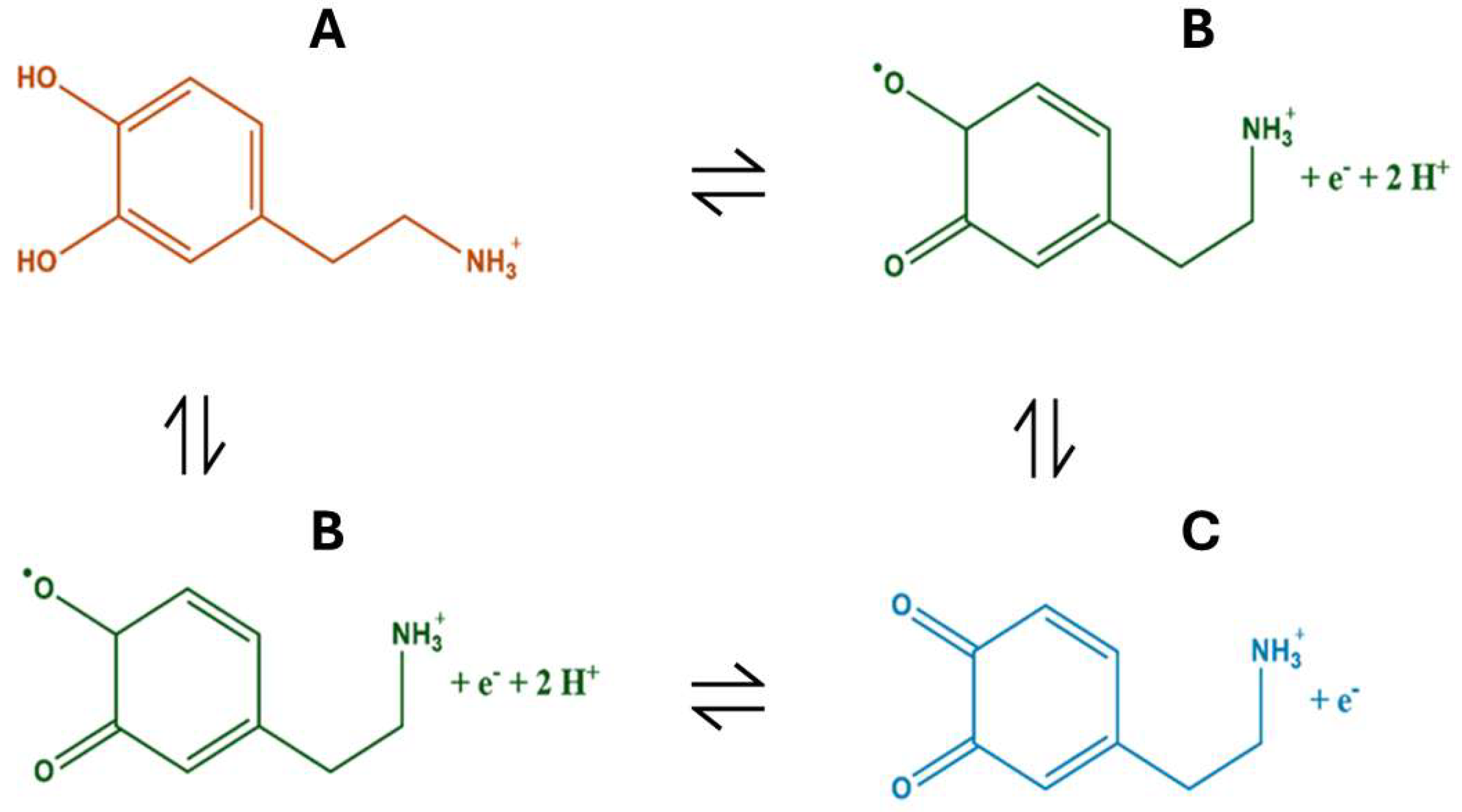
Figure 1. (A) Reversible oxidation reaction of dopamine (A) to the corresponding DA–orthoquinone (C) on the carbon surface with the generation of an anodic current (oxidation). The reaction occurs at a specific oxidation potential through the formation of an intermediate, DA-semiquinone (B).
Applsci 16 01255 g001
Figure 2. Carbon–based nanomaterials used in the present work.
Applsci 16 01255 g002
Figure 3. (A) Graphic representation of the sensor (Ø ~200 µm) obtained through deposition of the composite based on cyanoacrylate and carbonaceous powder. (B) Real image of the electrode.
Applsci 16 01255 g003
Figure 4. Cyclic voltammograms obtained in a potential range (Eapp) between −1000 and +1500 mV vs. Ag/AgCl, scan rate 100 mV s−1, in the absence (baseline—black line) and the presence of 1 mM DA (red line). Eox: +363 mV, Ered: +250 mV. Cyclic voltammetries were performed on the graphite–composite sensors.
Applsci 16 01255 g004
Figure 5. In vitro calibration of graphite–cyanoacrylate sensors (n = 6) in the 0–100 µM range, showing a slope of 2.051 ± 0.071 nA µM−1 and good sensitivity (R2 = 0.979). Calibrations were run in 20 mL of acetate buffer (pH = 4.3). Eapp: +363 mV vs. Ag/AgCl.
Applsci 16 01255 g005
Figure 6. Scanning electron micrographs of graphite–cyanoacrylate composite sensors at different magnifications. Magnification: 0× (Panel (A)), 100× (Panel (B)), 200× (Panel (C)), 500× (Panel (D)), 1000× (Panel (E)), and 5000× (Panel (F)). Morphological analysis shows three-dimensionality due to the lamellar graphitic fragments.
Applsci 16 01255 g006
Figure 7. Schematic representation of the internal composition of the graphite–cyanoacrylate composite.
Applsci 16 01255 g007
Figure 8. Cyclic voltammograms obtained in a potential range (Eapp) between −1000 and +1500 mV vs. Ag/AgCl, scan rate 100 mV s−1, in the absence (baseline—black line) and the presence of 1 mM DA (red line). Eox: +518 mV, Ered: +0.05 mV. Cyclic voltammetries were performed on the MWCNT–composite sensors.
Applsci 16 01255 g008
Figure 9. In vitro calibration of MWCNT–cyanoacrylate sensors (n = 6) in the 0–100 µM range, showing a slope of 0.497 ± 0.006 nA µM−1 and excellent sensitivity (R2 = 0.998). Calibrations were run in 20 mL of acetate buffer (pH = 4.3). Eapp: +518 mV vs. Ag/AgCl.
Applsci 16 01255 g009
Figure 10. Scanning electron micrographs of MWCNT–cyanoacrylate composite sensors at different magnifications. Magnification: 0× (Panel (A)), 100× (Panel (B)), 200× (Panel (C)), 500× (Panel (D)), 1000× (Panel (E)), and 5000× (Panel (F)). At high resolution, a fibrillar network is observed on the surface, indicative of the presence of exposed MWCNTs partially embedded in the polymer matrix.
Applsci 16 01255 g010
Figure 11. Schematic representation of the internal composition of the MWCNT-cyanoacrylate composite.
Applsci 16 01255 g011
Figure 12. Cyclic voltammograms obtained in a potential range (Eapp) between −1000 and +1500 mV vs. Ag/AgCl, scan rate 100 mV s−1, in the absence (baseline—black line) and the presence of 1 mM DA (red line). Eox: +450 mV, Ered: +0.150 mV. Cyclic voltammetries were performed on the graphene–composite sensors.
Applsci 16 01255 g012
Figure 13. In vitro calibration of graphene–cyanoacrylate sensors (n = 6) in the 0–100 µM range, showing a slope of 0.273 ± 0.008 nA µM−1 and a good sensitivity (R2 = 0.978). Calibrations were run in 20 mL of acetate buffer (pH = 4.3). Eapp: +450 mV vs. Ag/AgCl.
Applsci 16 01255 g013
Figure 14. Scanning electron micrographs of graphene-cyanoacrylate composite sensors at different magnifications. 0× (Panel (A)), 100× (Panel (B)), 200× (Panel (C)), 500× (Panel (D)), 1000× (Panel (E)) e 5000× (Panel (F)). Morphological analysis shows three-dimensionality due to the lamellar graphitic fragments.
Applsci 16 01255 g014
Figure 15. Schematic representation of the internal composition of the graphene-cyanoacrylate composite.
Applsci 16 01255 g015
Figure 16. Amperometric current–time response of the graphene–cyanoacrylate sensor (n = 6) recorded in 5 mL of acetate buffer at an applied potential of +520 mV vs. Ag/AgCl. A 100 µL injection of 1% metaphosphoric acid containing 1 mM EDTA (green arrow) did not produce a measurable change in current. Subsequent additions of 50 µL of cell lysate are indicated by blue arrows; a current increase of about 0.171 nA was observed for each injection.
Applsci 16 01255 g016
Table 1. Analytical parameters of the three sensor groups, for each composite, are reported: oxidation potential (Eox) and reduction potential (Ered) detected by means of CV, as well as Iox/BLox calculated value, the slope reported as nA µM−1, and the LOD and LOQ values calculated according to the conventional formulas (3.3 σ/slope and 10 σ/slope) reported as µM. * p < 0.05 vs. graphite group; **** p < 0.001 vs. graphite group.
Eox (mV)Ered (mV)Iox/BLoxR2SLOPE (nA µM−1)LOD (µM)LOQ (µM)
Graphite+363+2504.40.9792.051 ± 0.0710.162 ± 0.0080.541 ± 0.012
MWCNT+518+0.05039.90.9980.497 ± 0.006 *0.030 ± 0.001 ****0.101 ± 0.008 ****
Graphene+450+0.15062.30.9780.273 ± 0.008 *0.033 ± 0.001 ****0.110 ± 0.003 ****
Disclaimer/Publisher’s Note: The statements, opinions and data contained in all publications are solely those of the individual author(s) and contributor(s) and not of MDPI and/or the editor(s). MDPI and/or the editor(s) disclaim responsibility for any injury to people or property resulting from any ideas, methods, instructions or products referred to in the content.