Effects of Diffusion Limitations and Partitioning on Signal Amplification and Sensitivity in Bienzyme Electrochemical Biosensors Employing Cyclic Product Conversion



Featured Application
Abstract
1. Introduction
2. Mathematical and Computational Modeling
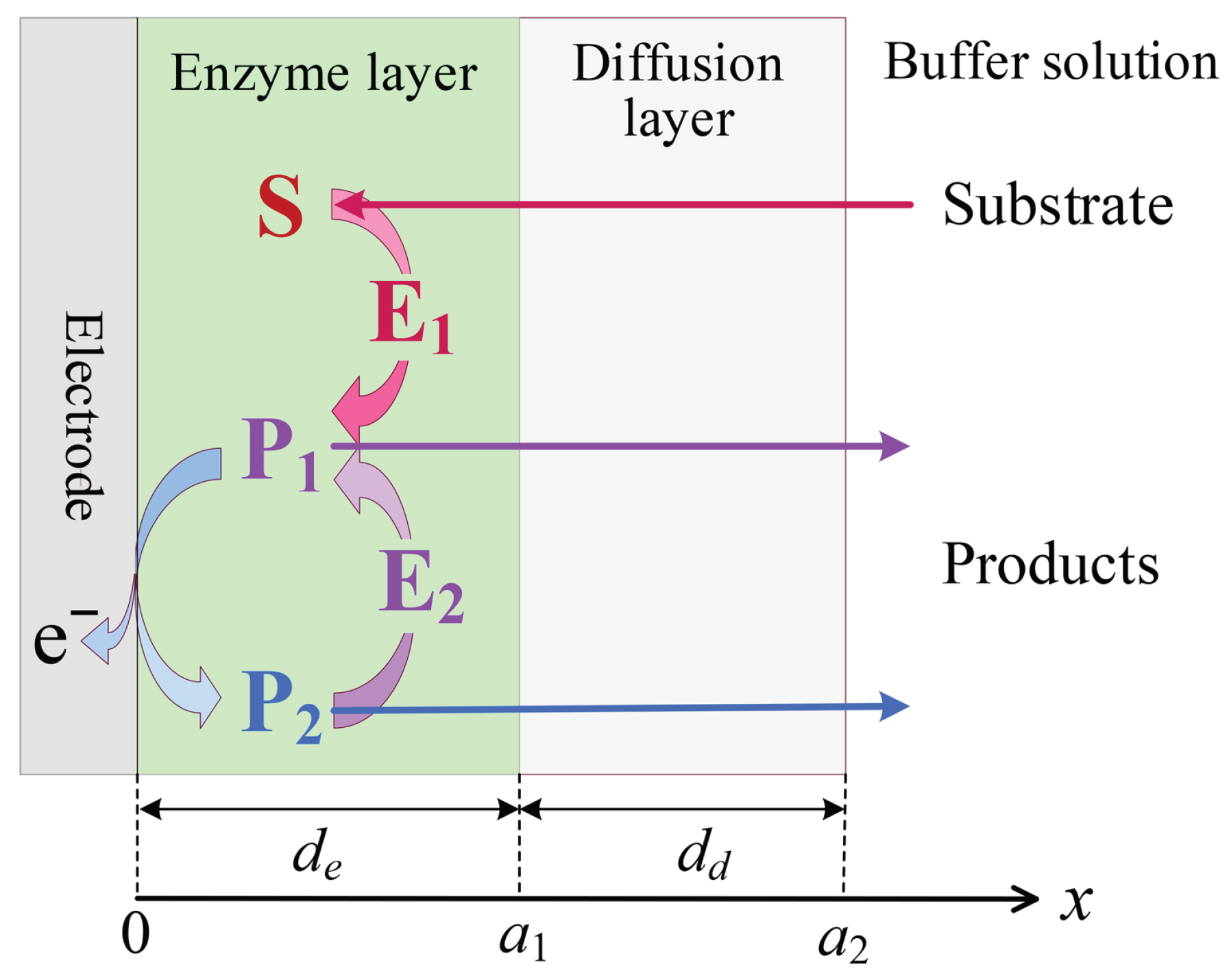
2.1. Principal Biosensor Structure
2.2. Mathematical Model
2.2.1. Governing Equations
2.2.2. Initial and Boundary Conditions
2.3. Biosensor Characteristics
2.4. Dimensionless Model Parameters
3. Solving the Model
3.1. Relationship Between Steady-State Concentrations
3.2. Steady-State Analytical Solution
3.2.1. Solution for First-Order Reaction Rates
3.2.2. Solution for Zero-Order Reaction Rates
3.3. Transient Numerical Simulation
4. Results and Discussion
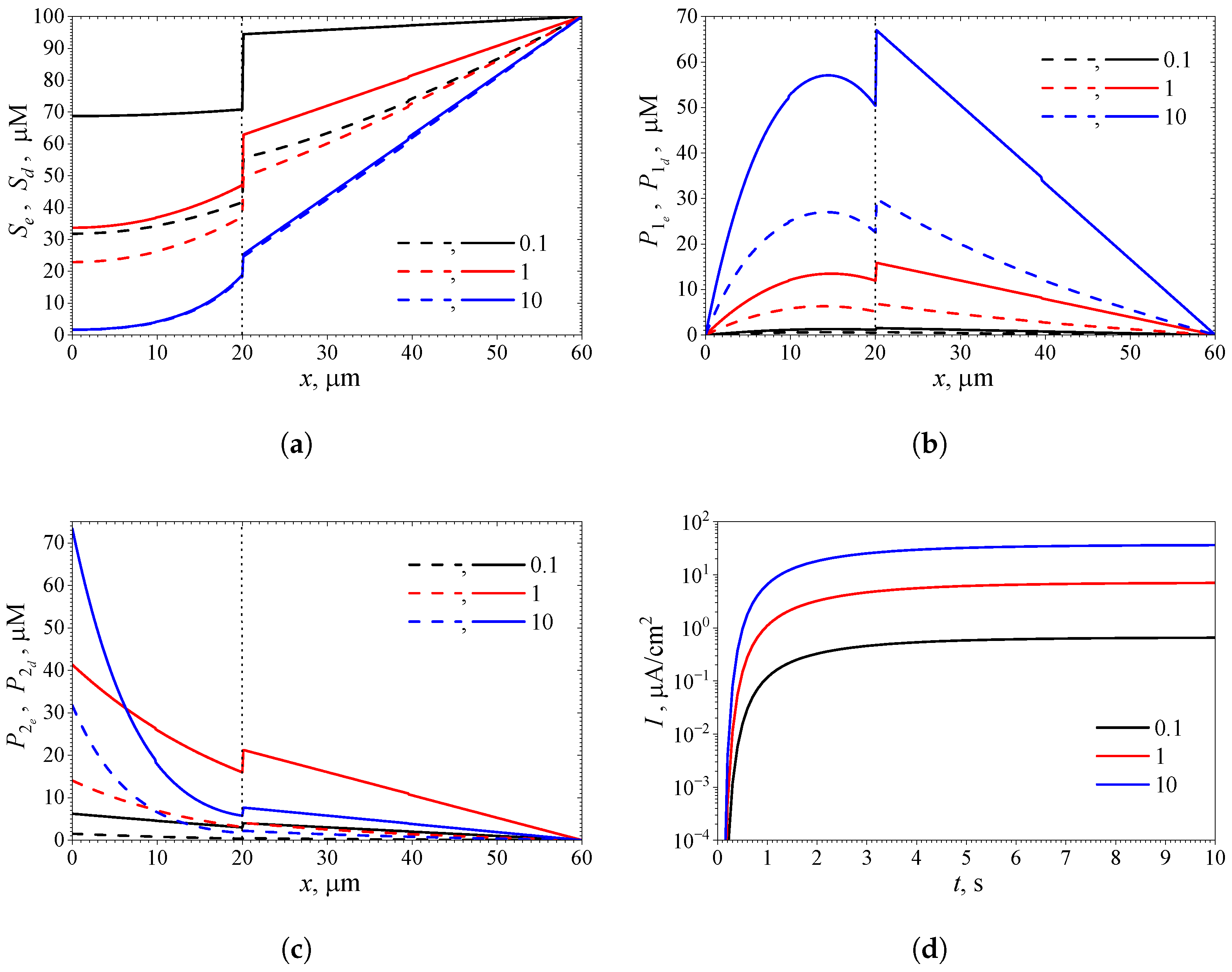
4.1. Temporal Dynamics of the Biosensor Response
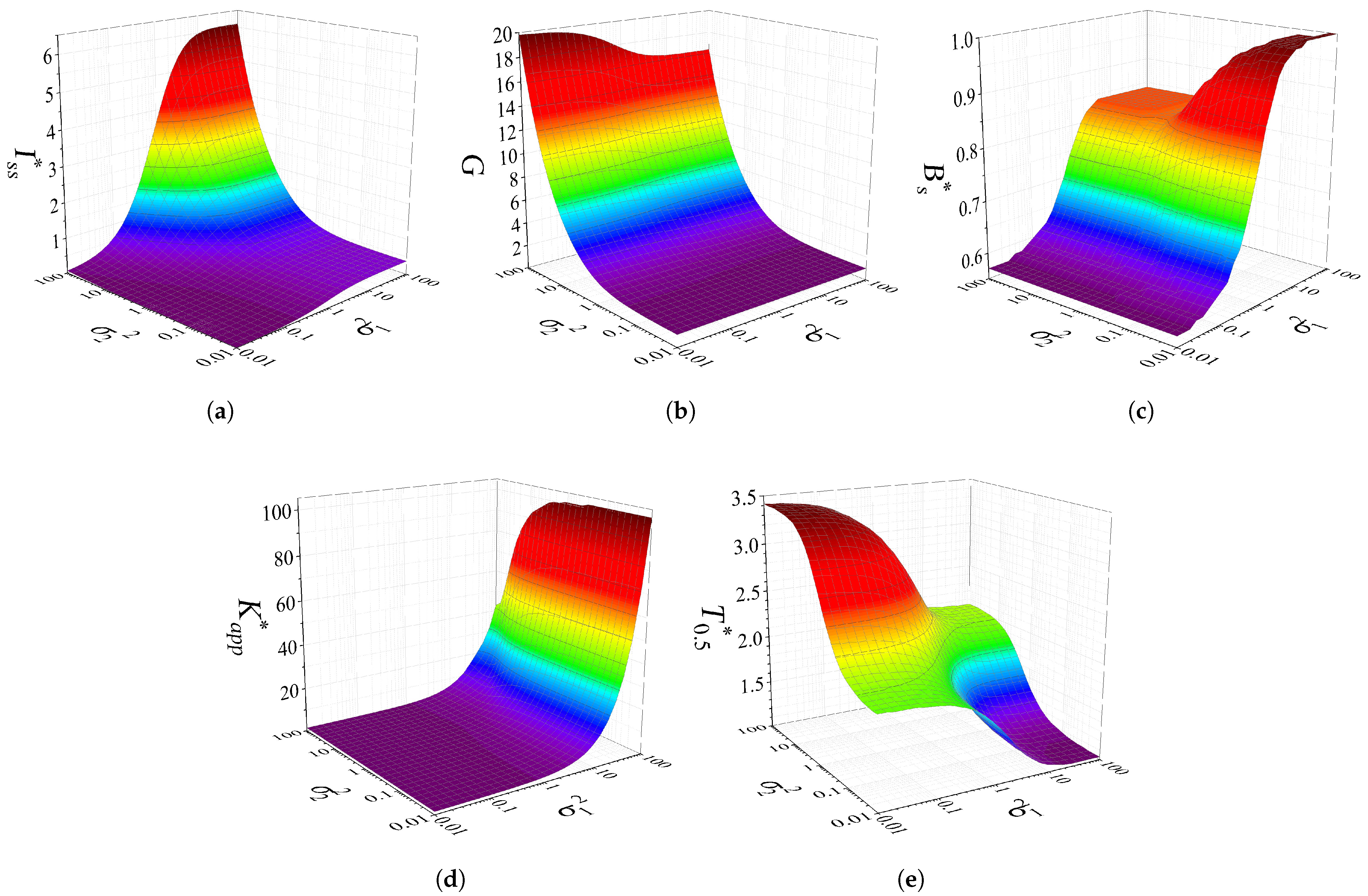
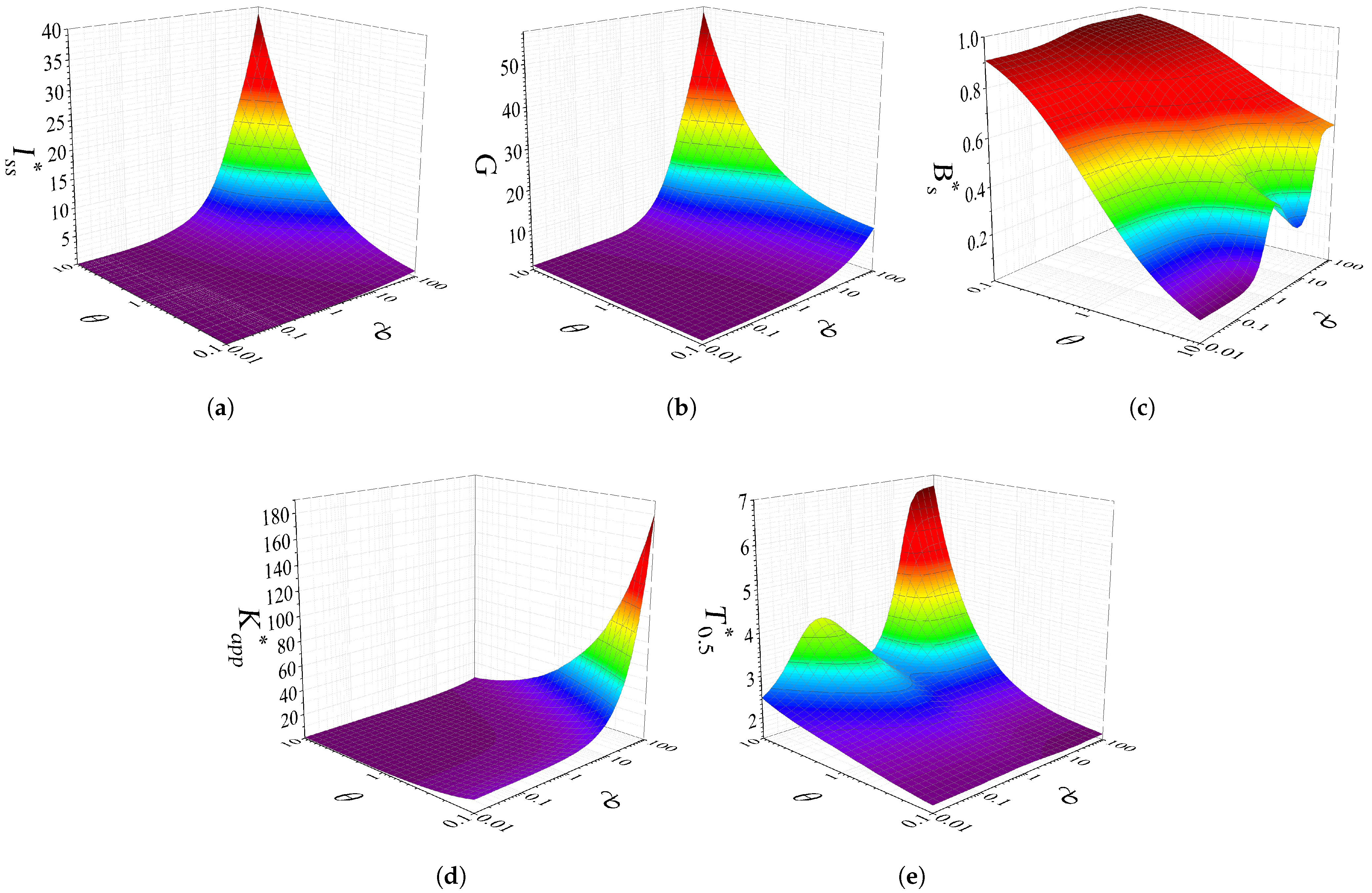
4.2. Effect of Internal Diffusion Limitations
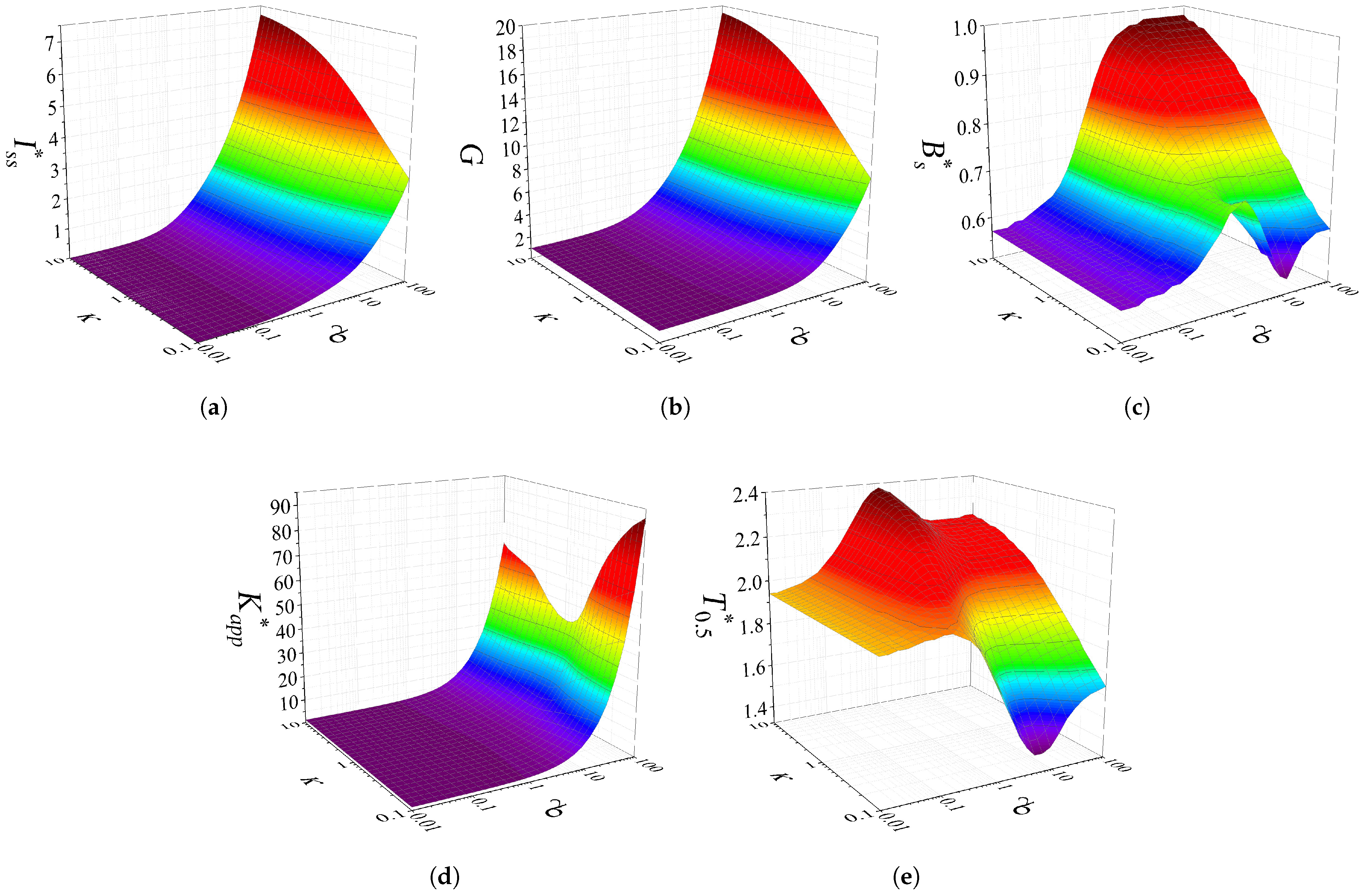
4.3. Effects of External Diffusion Limitations
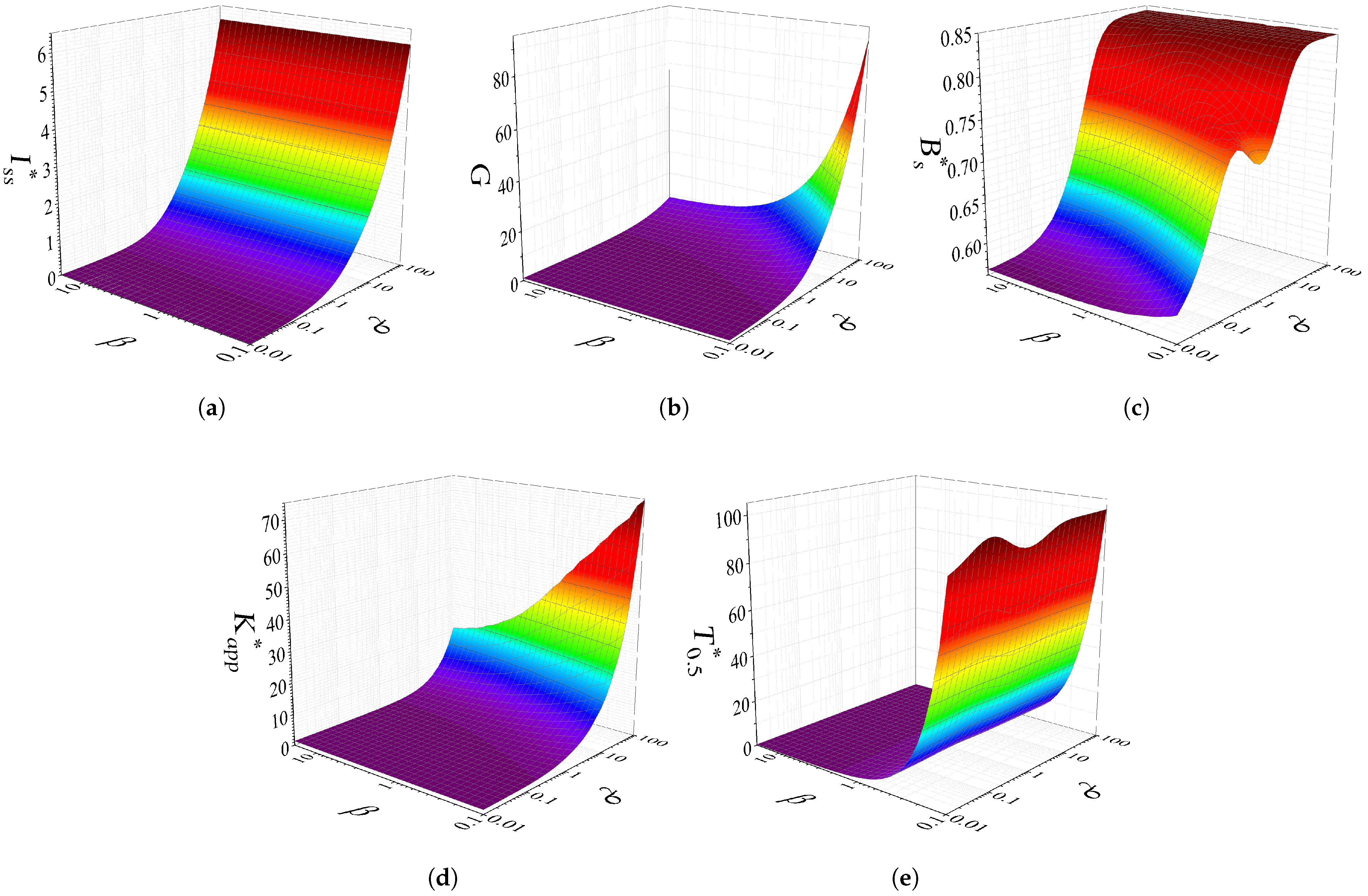
4.4. Effects of Partitioning
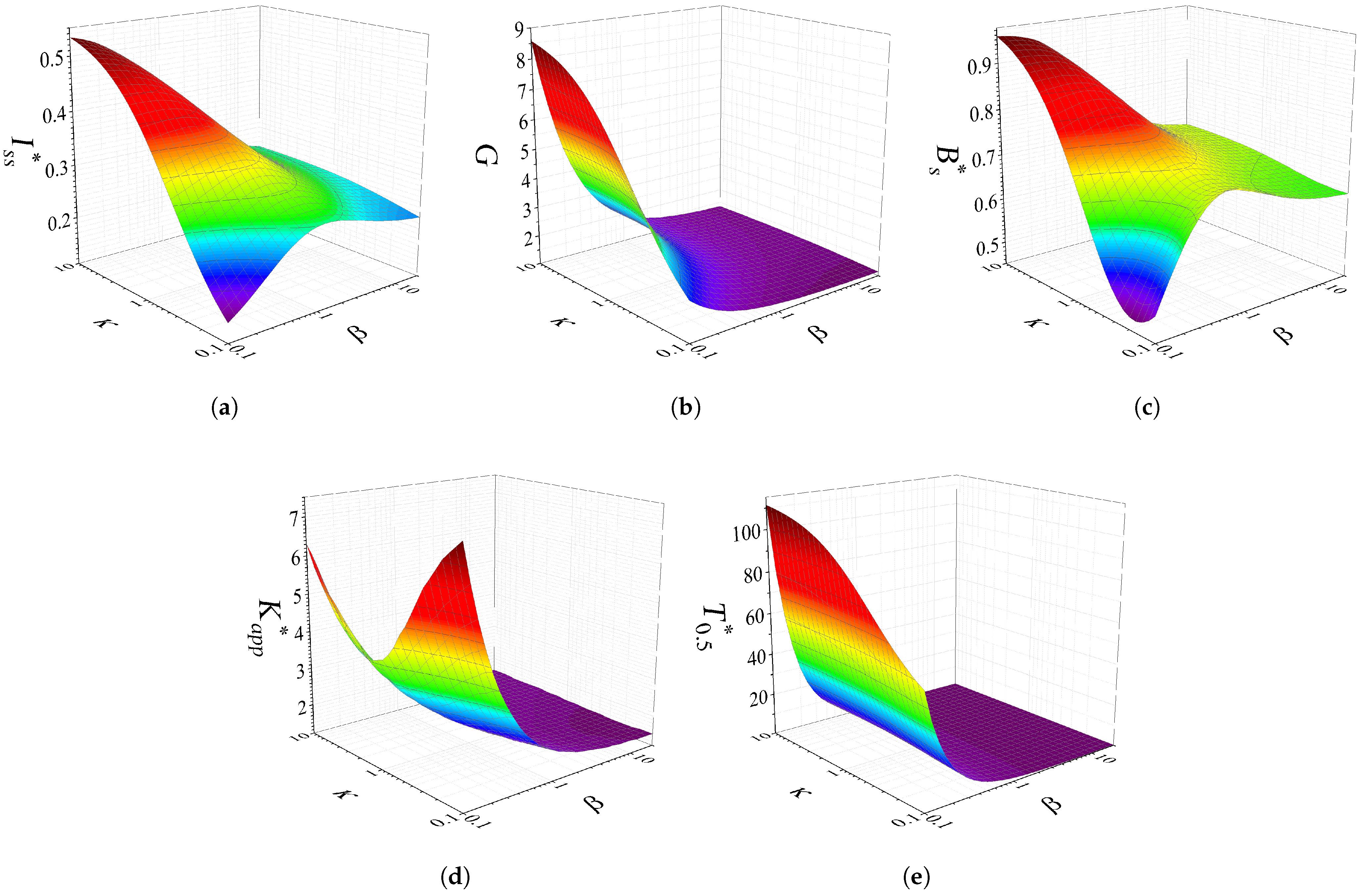
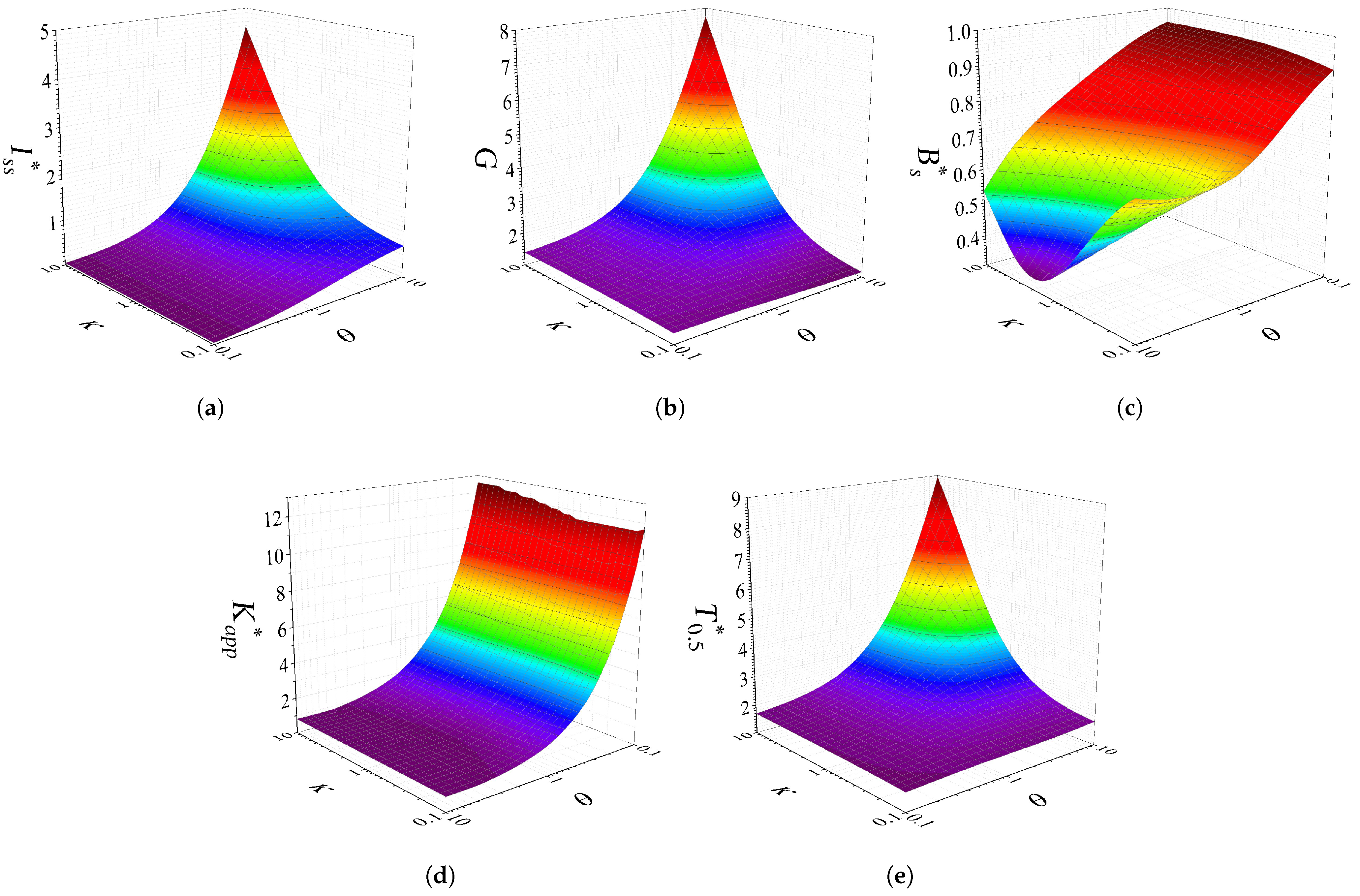
4.5. Effect of the Ratio for the Michaelis Constants
5. Conclusions
Author Contributions
Funding
Institutional Review Board Statement
Informed Consent Statement
Data Availability Statement
Acknowledgments
Conflicts of Interest
Abbreviations
| S | Substrate |
| Ei | The ith enzyme |
| Pi | The ith reaction product |
| QSSA | Quasi-steady-state approximation |
| CEC | Catalytic–electrochemical–catalytic mechanism |
| CE | Catalytic–electrochemical mechanism |
Appendix A. Nondimensionalized Mathematical Model

| Parameter | Dimensional | Dimensionless |
|---|---|---|
| Time | t, s | |
| Distance from electrode | ||
| Enzyme layer thickness | ||
| Diffusion layer thickness | ||
| Substrate concentration in enzyme layer | ||
| Product Pi concentration in enzyme layer | ||
| Substrate concentration in diffusion layer | ||
| Product Pi concentration in diffusion layer | ||
| Substrate concentration in bulk | ||
| Michaelis constant for enzyme Ei | ||
| Apparent Michaelis constant | ||
| Ratio of Michaelis constants | ||
| Maximal enzymatic activity of enzyme Ei | ||
| Current density | ||
| Biosensor sensitivity | ||
| Reference diffusion coefficient | ||
| Diffusion coefficient of substrate in enzyme layer | ||
| Diffusion coefficient of product Pi in enzyme layer | ||
| Diffusion coefficient of substrate in diffusion layer | ||
| Diffusion coefficient of product Pi in diffusion layer | ||
| Diffusivity ratio for substrate in enzyme layer | ||
| Diffusivity ratio for product Pi in enzyme layer | ||
| Diffusivity ratio for substrate in diffusion layer | ||
| Diffusivity ratio for product Piin diffusion layer | ||
| Partition coefficient for substrate | ||
| Partition coefficient for product Pi | ||
| Biot number for substrate | ||
| Biot number for product Pi | ||
| Diffusion module for enzyme E1 | ||
| Diffusion module for enzyme E2 |
| Parameter | Estimated Range (Refs.) | Range Explored in This Study | Physical Interpretation |
|---|---|---|---|
| –50 [26,27,32,37,41,71] | –100 | Enzymatic turnover relative to diffusion within the enzyme layer | |
| –25 [9,41,43,71] | –20 | External mass transport strength relative to internal diffusion | |
| –10 [9,26,32,41,47,61] | –10 | Partition coefficient between enzyme membrane and bulk phases | |
| –10 [2,4,11,26,39] | –10 | Relative enzyme affinities |
References
- Turner, A.P.F.; Karube, I.; Wilson, G.S. (Eds.) Biosensors: Fundamentals and Applications; Oxford University Press: Oxford, UK, 1990. [Google Scholar]
- Scheller, F.W.; Schubert, F. Biosensors; Elsevier Science: Amsterdam, The Netherlands, 1992. [Google Scholar]
- Malhotra, B.D.; Pandey, C.M. Biosensors: Fundamentals and Applications; Smithers Rapra: Shawbury, UK, 2017. [Google Scholar]
- Bisswanger, H. Enzyme Kinetics: Principles and Methods, 2nd ed.; Wiley-Blackwell: Weinheim, Germany, 2008. [Google Scholar]
- Patra, S.; Kundu, D.; Gogoi, M. (Eds.) Enzyme-Based Biosensors: Recent Advances and Applications in Healthcare; Springer: Singapore, 2023. [Google Scholar]
- López, J.G.; Muñoz, M.; Arias, V.; García, V.; Calvo, P.C.; Ondo-Méndez, A.O.; Rodríguez-Burbano, D.C.; Fonthal, F. Electrochemical and optical carbon dots and glassy carbon biosensors: A review on their development and applications in early cancer detection. Micromachines 2025, 16, 139. [Google Scholar] [CrossRef]
- Sadana, A.; Sadana, N. Handbook of Biosensors and Biosensor Kinetics; Elsevier: Amsterdam, The Netherlands, 2011. [Google Scholar]
- Cornish-Bowden, A. Fundamentals of Enzyme Kinetics, 3rd ed.; Portland Press: London, UK, 2004. [Google Scholar]
- Banica, F.G. Chemical Sensors and Biosensors: Fundamentals and Applications; John Wiley & Sons: Chichester, UK, 2012; p. 576. [Google Scholar]
- Zhou, H.; Guo, W.; Wang, S.; Hao, T.; Wang, Z.; Hu, Y.; Wang, S.; Xie, J.; Jiang, X.; Guo, Z. Electrochemical aptasensor for Staphylococcus aureus by stepwise signal amplification. Microchim. Acta 2022, 189, 353. [Google Scholar] [CrossRef] [PubMed]
- Bartlett, P.N. Bioelectrochemistry: Fundamentals, Experimental Techniques and Applications; John Wiley & Sons: Chichester, UK, 2008. [Google Scholar]
- Lisdat, F. PQQ-GDH—Structure, function and application in bioelectrochemistry. Bioelectrochemistry 2020, 134, 107496. [Google Scholar] [CrossRef] [PubMed]
- Lakard, B. Electrochemical biosensors based on conducting polymers: A review. Appl. Sci. 2020, 10, 6614. [Google Scholar] [CrossRef]
- Izadi, M.; Srivastava, H.M. The reaction-diffusion models in biomedicine: Highly accurate calculations via a hybrid matrix collocation algorithm. Appl. Sci. 2023, 13, 11672. [Google Scholar] [CrossRef]
- Blaedel, W.; Boguslaski, R. Chemical amplification in analysis: A review. Anal. Chem. 1978, 50, 1026–1032. [Google Scholar] [CrossRef]
- Grieshaber, D.; MacKenzie, R.; Vörös, J.; Reimhult, E. Electrochemical biosensors—Sensor principles and architectures. Sensors 2008, 8, 1400–1458. [Google Scholar] [CrossRef]
- Devaux, R.; Bergel, A.; Comtat, M. Mass transfer with chemical reaction in thin-layer electrochemical reactors. AICHE J. 1995, 41, 1944–1954. [Google Scholar] [CrossRef]
- Kulys, J. The development of new analytical systems based on biocatalysts. Anal. Lett. 1981, 14, 377–397. [Google Scholar] [CrossRef]
- Kulys, J.; Vidziunaite, R. Amperometric enzyme electrodes with chemically amplified response. In Bioinstrumentation; Wise, D., Ed.; Butterworths: Boston, MA, USA, 1990; pp. 1263–1283. [Google Scholar]
- Schubert, F.; Kirstein, D.; Schröder, K.; Scheller, F. Enzyme electrodes with substrate and co-enzyme amplification. Anal. Chim. Acta 1985, 169, 391–396. [Google Scholar] [CrossRef]
- Popovtzer, R.; Natan, A.; Shacham-Diamand, Y. Mathematical model of whole cell based bio-chip: An electrochemical biosensor for water toxicity detection. J. Electroanal. Chem. 2007, 602, 17–23. [Google Scholar] [CrossRef]
- Kulys, J.; Tetianec, L. Highly sensitive biosensor for the hydrogen peroxide determination by enzymatic triggering and amplification. Sens. Actuator B Chem. 2006, 113, 755–759. [Google Scholar] [CrossRef]
- Zhou, C.; Li, X.; Tang, S.W.; Liu, C.; Lam, M.H.W.; Lam, Y.W. A dual-enzyme amplification loop for the sensitive biosensing of endopeptidases. ACS Omega 2023, 8, 25592–25600. [Google Scholar] [CrossRef] [PubMed]
- Ciana, L.D.; Bernacca, G.; Bordin, F.; Fenu, S.; Garetto, F. Highly sensitive amperometric measurement of alkaline phosphatase activity with glucose oxidase amplification. J. Electroanal. Chem. 1995, 382, 129–135. [Google Scholar] [CrossRef]
- Nistor, C.; Rose, A.; Wollenberger, U.; Pfeiffer, D.; Emnéus, J.A. A glucose dehydrogenase biosensor as an additional signal amplification step in an enzyme-flow immunoassay. Analyst 2002, 127, 1076–1081. [Google Scholar] [CrossRef]
- Coche-Guérente, L.; Labbé, P.; Mengeaud, V. Amplification of amperometric biosensor responses by electrochemical substrate recycling. 3. Theoretical and experimental study of the phenol-polyphenol oxidase system immobilized in laponite hydrogels and layer-by-layer self-assembled structures. Anal. Chem. 2001, 73, 3206–3218. [Google Scholar] [CrossRef]
- Baronas, R.; Ivanauskas, F.; Kulys, J. Mathematical model of the biosensors acting in a trigger mode. Sensors 2004, 4, 20–36. [Google Scholar] [CrossRef]
- Croce, R.A.J.; Vaddiraju, S.; Papadimitrakopoulos, F.; Jain, F.C. Theoretical analysis of the performance of glucose sensors with layer-by-layer assembled outer membranes. Sensors 2012, 12, 13402–13416. [Google Scholar] [CrossRef]
- Dagan, O.; Bercovici, M. Simulation tool coupling nonlinear electrophoresis and reaction kinetics for design and optimization of biosensors. Anal. Chem. 2014, 86, 7835. [Google Scholar] [CrossRef]
- Baronas, R.; Žilinskas, A.; Litvinas, L. Optimal design of amperometric biosensors applying multi-objective optimization and decision visualization. Electrochim. Acta 2016, 211, 586–594. [Google Scholar] [CrossRef]
- Varasteanu, P.; Kusko, M. Multi-objective optimization of 2D materials modified surface plasmon resonance (SPR) based sensors: An NSGA II approach. Appl. Sci. 2021, 11, 4353. [Google Scholar] [CrossRef]
- Coche-Guérente, L.; Desprez, V.; Diard, J.P.; Labbé, P. Amplification of amperometric biosensor responses by electrochemical substrate recycling Part I. Theoretical treatment of the catechol-polyphenol oxidase system. J. Electroanal. Chem. 1999, 470, 53–60. [Google Scholar] [CrossRef]
- Schulmeister, T.; Rose, J.; Scheller, F. Mathematical modelling of exponential amplification in membrane-based enzyme sensors. Biosens. Bioelectron. 1997, 12, 1021–1030. [Google Scholar] [CrossRef]
- Sorochinskii, V.; Kurganov, B. Theoretical principles of the application of potentiometric enzyme electrodes. Appl. Biochem. Microbiol. 1997, 33, 116–124. [Google Scholar]
- Sylvia, S.V.; Salomi, R.J.; Rajendran, L.; Lyons, M. Amperometric biosensors and coupled enzyme nonlinear reactions processes: A complete theoretical and numerical approach. Electrochim. Acta 2022, 415, 140236. [Google Scholar] [CrossRef]
- Klos-Witkowska, V.M.A.; Karpinskyi, V. Analysis of stability in enzyme biosensor based on Michaelis-Menten model with time delays. Acta Phys. Pol. A 2019, 135, 375–379. [Google Scholar] [CrossRef]
- Salomi, R.J.; Sylvia, S.V.; Rajendran, L.; Lyons, M. Transient current, sensitivity and resistance of biosensors acting in a trigger mode: Theoretical study. J. Electroanal. Chem. 2021, 895, 115421. [Google Scholar] [CrossRef]
- Elakkya, M.; Swaminathan, R. Mathematical modelling of the phenol-polyphenol oxidase system for amperometric immobilized enzymes at spherical electrode. Partial. Differ. Equ. Appl. Math. 2025, 14, 101140. [Google Scholar] [CrossRef]
- McDonald, A.G.; Tipt, K.F. Parameter reliability and understanding enzyme function. Molecules 2022, 27, 263. [Google Scholar] [CrossRef]
- Britz, D.; Strutwolf, J. Digital Simulation in Electrochemistry, 4th ed.; Monographs in Electrochemistry; Springer: Cham, Switzerland, 2016. [Google Scholar]
- Lyons, M.E.G. Transport and kinetics at carbon nanotube-redox enzyme composite modified electrode biosensors. Int. J. Electrochem. Sci. 2009, 4, 77–103. [Google Scholar] [CrossRef]
- Schulmeister, T. Mathematical modelling of the dynamic behaviour of amperometric enzyme electrodes. Sel. Electrode Rev. 1990, 12, 203–260. [Google Scholar]
- Baronas, R.; Ivanauskas, F.; Kulys, J. Mathematical Modeling of Biosensors, 2nd ed.; Springer Series on Chemical Sensors and Biosensors; Springer: Cham, Switzerland, 2021; Volume 9. [Google Scholar]
- Wang, Y.; Pao, C. Time-delayed finite difference reaction-diffusion systems with nonquasimonotone functions. Numer. Math. 2006, 103, 485–513. [Google Scholar] [CrossRef]
- Baronas, R.; Ivanauskas, F.; Kulys, J. The effect of diffusion limitations on the response of amperometric biosensors with substrate cyclic conversion. J. Math. Chem. 2004, 35, 199–213. [Google Scholar] [CrossRef]
- Al-Shannag, M.; Al-Qodah, Z.; Herrero, J.; Humphrey, J.A.; Giralt, F. Using a wall-driven flow to reduce the external mass-transfer resistance of a bio-reaction system. Biochem. Eng. J. 2008, 38, 554–565. [Google Scholar] [CrossRef]
- Benavidez, T.E.; Baruzzi, A.M. Comparative behavior of glucose oxidase and oxalate oxidase immobilized in mucin/chitosan hydrogels for biosensors applications. Polymer 2012, 53, 438–444. [Google Scholar] [CrossRef]
- Skrzypacz, P.; Kabduali, B.; Golman, B.; Andreev, V. Dead-core solutions and critical Thiele modulus for slabs with a distributed catalyst and external mass transfer. React. Chem. Eng. 2023, 8, 758–762. [Google Scholar] [CrossRef]
- Baronas, R. Nonlinear effects of diffusion limitations on the response and sensitivity of amperometric biosensors. Electrochim. Acta 2017, 240, 399–407. [Google Scholar] [CrossRef]
- Dannaoui, R.; Yang, X.K.; Huang, W.H.; Svir, I.; Amatore, C.; Oleinick, A. Importance of diffusional constraints for the quantitative evaluation of calibration curves of enzymatic micro- and nanoelectrochemical sensors. Electrochim. Acta 2024, 473, 143425. [Google Scholar] [CrossRef]
- Baronas, R. Non-monotonic effect of substrate inhibition in conjunction with diffusion limitation on the response of amperometric biosensors. Biosensors 2025, 15, 441. [Google Scholar] [CrossRef]
- Hickson, R.I.; Barry, S.I.; Mercer, G.N.; Sidhu, H.S. Finite difference schemes for multilayer diffusion. Math. Comput. Model. 2011, 54, 210–220. [Google Scholar] [CrossRef]
- Ašeris, V.; Baronas, R.; Petrauskas, K. Computational modelling of three-layered biosensor based on chemically modified electrode. Comp. Appl. Math. 2016, 35, 405–421. [Google Scholar] [CrossRef]
- Baronas, R. Nonlinear effects of partitioning and diffusion-limiting phenomena on the response and sensitivity of three-layer amperometric biosensors. Electrochim. Acta 2024, 478, 143830. [Google Scholar] [CrossRef]
- Blaedel, W.; Kissel, T.; Boguslaski, R. Kinetic behavior of enzymes immobilized in artificial membranes. Anal. Chem. 1972, 44, 2030–2037. [Google Scholar] [CrossRef] [PubMed]
- Jochum, P.; Kowalski, B.R. A coupled two-compartment model for immobilized enzyme electrodes. Anal. Chim. Acta 1982, 144, 25–38. [Google Scholar] [CrossRef]
- Do, T.Q.N.; Varnićic, M.; Hanke-Rauschenbach, R.; Vidakovic-Koch, T.; Sundmacher, K. Mathematical modeling of a porous enzymatic electrode with direct electron transfer mechanism. Electrochim. Acta 2014, 137, 616–629. [Google Scholar] [CrossRef]
- Rafat, N.; Satoh, P.; Worden, R.M. Electrochemical biosensor for markers of neurological esterase inhibition. Biosensors 2021, 11, 459. [Google Scholar] [CrossRef]
- Suganya, S.T.; Rajendran, L.; Lyons, M. Analytical expression of concentrations and current in enzyme-based two-compartment model of amperometric biosensors for steady-state condition. Int. J. Electrochem. Sci. 2022, 17, 220238. [Google Scholar] [CrossRef]
- Velkovsky, M.; Snider, R.; Cliffel, D.E.; Wikswo, J.P. Modeling the measurements of cellular fluxes in microbioreactor devices using thin enzyme electrodes. J. Math. Chem. 2011, 49, 251–275. [Google Scholar] [CrossRef]
- Cussler, E.L. Diffusion: Mass Transfer in Fluid Systems, 3rd ed.; Cambridge Series in Chemical Engineering; Cambridge University Press: Cambridge, UK, 2009. [Google Scholar]
- Lauverjat, C.; de Loubens, C.; Déléris, I.; Tréléa, I.C.; Souchon, I. Rapid determination of partition and diffusion properties for salt and aroma compounds in complex food matrices. J. Food Eng. 2009, 93, 407–415. [Google Scholar] [CrossRef]
- March, N.G.; Carr, E.J. Finite volume schemes for multilayer diffusion. J. Comput. Appl. Math. 2019, 345, 206–223. [Google Scholar] [CrossRef]
- Samarskii, A. The Theory of Difference Schemes; Marcel Dekker: New York, NY, USA, 2001. [Google Scholar]
- Britz, D.; Baronas, R.; Gaidamauskaitė, E.; Ivanauskas, F. Further comparisons of finite difference schemes for computational modelling of biosensors. Nonlinear Anal. Model. Control 2009, 14, 419–433. [Google Scholar] [CrossRef]
- Gutfreund, H. Kinetics for the Life Sciences; Cambridge University Press: Cambridge, UK, 1995. [Google Scholar]
- Wu, M.; Li, L.; Yu, R.; Zhang, Z.; Zhu, B.; Lin, J.; Zhou, L.; Su, B. Tailored diffusion limiting membrane for microneedle glucose sensors with wide linear range. Talanta 2024, 273, 125933. [Google Scholar] [CrossRef] [PubMed]
- Romero, M.R.; Baruzzi, A.M.; Garay, F. Mathematical modeling and experimental results of a sandwich-type amperometric biosensor. Sens. Actuator B Chem. 2012, 162, 284–291. [Google Scholar] [CrossRef]
- Jobst, G.; Moser, I.; Urban, G. Numerical simulation of multi-layered enzymatic sensors. Biosens. Bioelectron. 1996, 11, 111–117. [Google Scholar] [CrossRef]
- Thévenot, D.R.; Toth, K.; Durst, R.A.; Wilson, G.S. Electrochemical biosensors: Recommended definitions and classification. Biosens. Bioelectron. 2001, 16, 121–131. [Google Scholar] [CrossRef]
- Lyons, M.; Bannon, T.; Hinds, G.; Rebouillat, S. Reaction/diffusion with Michaelis-Menten kinetics in electroactive polymer films. Part 2. The transient amperometric response. Analyst 1998, 123, 1947–1959. [Google Scholar] [CrossRef]
- Fink, D.; Na, T.; Schultz, J.S. Effectiveness factor calculations for immobilized enzyme catalysts. Biotechnol. Bioeng. 1973, 15, 879–888. [Google Scholar] [CrossRef]
- Baronas, R. Nonlinear effects of partitioning and diffusion limitation on the efficiency of three-layer enzyme bioreactors and potentiometric biosensors. J. Electroanal. Chem. 2024, 974, 118698. [Google Scholar] [CrossRef]
- Bieniasz, L.; Britz, D. Recent developments in digital simulation of electroanalytical experiments. Pol. J. Chem. 2004, 78, 1195–1219. [Google Scholar]
- Moreira, J.E.; Midkiff, S.P.; Gupta, M.; Artigas, P.V.; Snir, M.; Lawrence, R.D. Java programming for high-performance numerical computing. IBM Syst. J. 2000, 39, 21–56. [Google Scholar] [CrossRef]
- Moberly, J.; Bernards, M.; Waynant, K. Key features and updates for Origin 2018. J. Cheminform. 2018, 10, 5. [Google Scholar] [CrossRef]
- Kulys, J.; Vidziunaite, R. Amperometric biosensors based on recombinant laccases for phenols determination. Biosens. Bioelectron. 2003, 18, 319–325. [Google Scholar] [CrossRef]


Disclaimer/Publisher’s Note: The statements, opinions and data contained in all publications are solely those of the individual author(s) and contributor(s) and not of MDPI and/or the editor(s). MDPI and/or the editor(s) disclaim responsibility for any injury to people or property resulting from any ideas, methods, instructions or products referred to in the content. |
© 2026 by the authors. Licensee MDPI, Basel, Switzerland. This article is an open access article distributed under the terms and conditions of the Creative Commons Attribution (CC BY) license.
Share and Cite
Baronas, R.; Petrauskas, K. Effects of Diffusion Limitations and Partitioning on Signal Amplification and Sensitivity in Bienzyme Electrochemical Biosensors Employing Cyclic Product Conversion. Appl. Sci. 2026, 16, 1171. https://doi.org/10.3390/app16031171
Baronas R, Petrauskas K. Effects of Diffusion Limitations and Partitioning on Signal Amplification and Sensitivity in Bienzyme Electrochemical Biosensors Employing Cyclic Product Conversion. Applied Sciences. 2026; 16(3):1171. https://doi.org/10.3390/app16031171
Chicago/Turabian StyleBaronas, Romas, and Karolis Petrauskas. 2026. "Effects of Diffusion Limitations and Partitioning on Signal Amplification and Sensitivity in Bienzyme Electrochemical Biosensors Employing Cyclic Product Conversion" Applied Sciences 16, no. 3: 1171. https://doi.org/10.3390/app16031171
APA StyleBaronas, R., & Petrauskas, K. (2026). Effects of Diffusion Limitations and Partitioning on Signal Amplification and Sensitivity in Bienzyme Electrochemical Biosensors Employing Cyclic Product Conversion. Applied Sciences, 16(3), 1171. https://doi.org/10.3390/app16031171