


Abstract
This in vitro study compared the antimicrobial and antibiofilm efficacy of four commercially available chlorhexidine (CHX)-based mouthwashes, with different nominal CHX concentrations, against clinically relevant postoperative oral pathogens, including Staphylococcus aureus, Streptococcus mutans, Escherichia coli, Pseudomonas aeruginosa, Candida albicans, and Candida auris. Antimicrobial potency was evaluated using MIC and CEMIC indices, while biofilm thickness reduction was quantified using 3D digital microscopy and custom image analysis software. Among the tested formulations, the excipient-enriched formulation exhibited the lowest MIC values and the most significant reduction in biofilm thickness, particularly against Gram-negative bacteria and Candida species. All mouthwashes achieved CEMIC < 0.1, confirming high theoretical applicability margins; however, CEMIC reflects potential clinical usefulness rather than clinical superiority. The findings demonstrate that the antimicrobial and antibiofilm activity of CHX rinses is formulation-dependent and cannot be predicted solely by CHX concentration. The influence of excipients is discussed as a possible contributing factor, but related mechanisms remain speculative and require direct validation in future studies. This work supports a formulation-driven, evidence-based approach to antiseptic comparison in postoperative dentistry, without assessing clinical wound-healing outcomes.
1. Introduction
The oral cavity represents a uniquely demanding environment for infection control, particularly in the context of dental surgical procedures. Constant exposure to saliva, fluctuations in temperature and pH, and the presence of a dense, multispecies biofilm create conditions highly favorable for rapid microbial colonization [1]. Under physiological conditions, the oral microbiome, composed primarily of the Streptococcus, Prevotella, Veillonella, Neisseria, Gemella, Rothia, and Haemophilus genera, contributes to oral health and protects mucosal surfaces through colonization resistance and immunological crosstalk [2,3]. However, even minimally invasive interventions may disrupt this balance, exposing tissues to opportunistic pathogens capable of initiating inflammation or postoperative complications [4].
Many dental procedures, such as periodontal surgery, implant placement, open-flap debridement, including augmentation procedures and membrane-based techniques, particularly those using non-resorbable membranes, periapical surgery, surgical extraction of teeth, including impacted teeth, prosthetic rehabilitation, including implant-supported restorations, as well as methods for managing peri-implantitis and peri-implant mucositis, create vulnerable wound areas prone to early microbial adherence [5]. During the initial healing period, the soft tissue and biomaterial surfaces are highly susceptible to colonization by periopathogens and opportunistic organisms, including Staphylococcus aureus, Pseudomonas aeruginosa, Escherichia coli, and Candida species, which can be detected in oral niches and dysbiotic conditions [6,7,8]. Colonization by such microorganisms has the potential to interfere with soft tissue healing, contribute to peri-implant mucositis and peri-implantitis, and compromise the long-term success of regenerative and reconstructive therapies [9].
Maintaining antimicrobial control during this critical window is exceptionally challenging. Saliva can dilute therapeutic agents, biofilms may limit drug penetration, and polymicrobial interactions within dental plaque can promote persistence and pathogenicity [10]. Additionally, postoperative limitations in mechanical hygiene, often deliberately implemented to avoid trauma, further increase the risk of harmful bacterial regrowth on mucosal wounds, sutures, bone grafts, membranes, and implant surfaces [11,12].
In this clinical context, antiseptic mouthwashes serve as an indispensable adjunct to postoperative protocols. They play a key role in: (1) reducing microbial load in surgical sites with limited oral hygiene access, (2) delaying biofilm formation on fresh wounds and biomaterial interfaces, (3) preventing colonization by periopathogenic bacteria and yeasts, (4) supporting mucosal repair by minimizing inflammatory burden, and (5) maintaining aseptic boundaries in the oral cavity following surgery [13,14,15].
Chlorhexidine (CHX) is one of the most widely used antiseptic agents in dentistry. It is commonly regarded as the gold standard for chemical plaque control due to its rapid and broad-spectrum antimicrobial activity [16,17]. It is effective against Gram-positive and Gram-negative bacteria, yeasts, and some viruses, and its ability to bind to oral tissues provides prolonged substantivity, allowing the agent to remain active for several hours after application [18]. Numerous studies have demonstrated that CHX significantly reduces supragingival biofilm formation and microbial load, supporting its use in the prevention and management of gingivitis, periodontal disease, and postoperative infections. Despite these benefits, CHX is associated with several well-recognized adverse effects, including tooth and tongue staining, transient taste disturbances, mucosal irritation, and, with prolonged use, potential alterations to the oral microbiome and delayed wound healing [16,19]. Therefore, current recommendations emphasize that chlorhexidine should be used primarily for short-term indications. Its topical application enables local control without systemic burden and is well-aligned with modern peri-procedural infection prevention strategies [20].
CHX rinses in the range of 0.12–0.2% are routinely recommended for postoperative plaque control and infection prevention in dental settings. Concentrations above ~0.2% are uncommon clinically and may not improve antimicrobial effectiveness relative to side-effect risk [21].
However, considerable differences exist among commercial products with respect to concentration, antimicrobial potency, biological interactions, and potential cytotoxicity to healing tissues. These variations may translate into clinically relevant differences in performance, particularly in sites with complex microbiological challenges such as deep periodontal pockets, implants, and partially epithelialized surgical wounds.
Therefore, this study aimed to compare independent, commercially available CHX-based mouthwash formulations in vitro and evaluate differences in antimicrobial and antibiofilm potency, comparison against pathogens capable of colonizing the oral cavity, particularly in postoperative and peri-implant environments, arising from the formulation matrix and excipient composition, rather than from a standardized CHX concentration. The findings are intended to help optimize evidence-based antiseptic selection in routine dental surgical care.
2. Materials and Methods
2.1. Studied Strains
The study employed clinical strains of each microorganism, including the Gram-positive bacteria, Staphylococcus aureus, the Gram-negative bacteria Escherichia coli, and Pseudomonas aeruginosa, as well as the yeast species, Candida albicans. All clinical strains were obtained from the Department of Medical Microbiology, PUMS, and were part of the collection. They were isolated from the oral cavity as part of routine microbiological diagnostics. Therefore, as these are deposited strains, approval from the Bioethics Committee is not required for this study. In addition, reference strains of Gram-positive bacterium Streptococcus mutans (ATCC 25175) and yeast Candidozyma auris (CDC B11903) were also examined. Bacterial isolates were cultured on Tryptic Soy Broth and Agar, whereas fungal strains were maintained on Sabouraud Dextrose Broth and Agar (Graso Biotech, Starogard Gdański, Poland). All cultures were incubated at 36 °C for 24 h under standard aerobic conditions.
2.2. Studied Mouthwashes
Four commercially available mouthwashes containing various active antimicrobial agents were evaluated in this study. The active ingredients included chlorhexidine digluconate (CHX). The tested products were as follows:
- −
- Eludril Classic® (Pierre Fabre, Paris, France); CHX 1000 µg/mL; excipients: water, glycerin, alcohol, chlorobutanol, diethylhexyl sodium sulfosuccinate, limonene, menthol,
- −
- Harmony Calm® (Get Harmony Lab Sp. z o.o., Poznan, Poland); CHX 1200 µg/mL; excipients: hyaluronic acid, Arnica montana extract, Linum usitatissimum extract, L-arginine, allantoin,
- −
- Eludril Extra® (Pierre Fabre, France); CHX 2000 µg/mL; excipients: water, glycerin, propylene glycol, lactic Acid, PEG-40 hydrogenated castor oil, potassium acesulfame, sodium benzoate,
- −
- Implant Alfa Care ® (Atos M.M., Warsaw, Poland); CHX 2000 µg/mL; excipients: water, glycerin, Linum usitatissimum (flax) seed extract, Salvia officinalis (sage) extract, Chamomilla recutita (chamomile) extract, Arnica montana extract, Quercus robur bark extract, Rosmarinus officinalis leaf extract, propylene glycol, panthenol, PEG-40 hydrogenated castor oil, xylitol, allantoin, sodium saccharin.
2.3. Minimum Inhibitory Concentrations (MIC)
The minimum inhibitory concentrations (MICs) of the tested mouthwashes were determined using the broth microdilution method in sterile 96-well microtiter plates (Nest Scientific Biotechnology, Wuxi, China). The procedure was carried out in accordance with the methodology described in our previous work [22]. In brief, two-fold serial dilutions of each mouthwash were prepared in cation-adjusted Mueller-Hinton Broth (Graso Biotech, Starogard Gdański, Poland), resulting in final concentrations ranging from 100% to 0.1%, along with an untreated control. The plates were incubated at 36 °C for 24 h. The study included a positive control (growth of microorganisms in medium without the addition of mouthwash) and a negative control (sterility control, medium only without the addition of microorganisms). Each strain was tested in duplicate when consistent MIC values were obtained, or in triplicate when variation between replicates was observed.
2.4. Clinical Efficiency of MIC (CEMIC)
To evaluate the potential clinical relevance of the obtained MIC values, the Clinical Efficiency of MIC (CEMIC) index was calculated. This parameter represents the ratio between the experimentally determined MIC and the standard therapeutic (clinical) concentration of the tested antimicrobial agent, as expressed by the equation [23]:
Interpretation of CEMIC values was based on the following criteria:
- CEMIC < 0.1—high clinical efficiency,
- 0.1 ≤ CEMIC ≤ 0.9—moderate clinical efficiency,
- CEMIC > 0.9—low clinical usefulness at the tested concentration.
2.5. Antibiofilm Effect
The antibiofilm efficacy of the tested mouthwashes against strains of S. aureus, P. aeruginosa and C. albicans, was assessed using sterile 12-well culture plates (Nest Scientific Biotechnology, Wuxi, China). Biofilms were established by inoculating each well with 1 mL of bacterial suspension prepared in Mueller-Hinton Broth and adjusted to a turbidity equivalent to a 0.5 McFarland standard. The plates were incubated at 36 °C for 72 h to allow for the formation of mature biofilms. Following incubation, non-adherent planktonic cells were carefully removed by rinsing each well three times with sterile 0.9% NaCl solution. Subsequently, 1 mL of each tested mouthwash was added to the preformed biofilms. Our previous research shows that the noticeable antibiofilm effect of antiseptics does not occur within a few minutes, but rather after approximately 1 h [24]. Therefore, in these studies, the biofilms were exposed to the agents for 1 h at 36 °C. After the exposure period, wells were rinsed with alkaline saline peptone water (Sigma-Aldrich, Poznań, Poland) for 5 min, followed by a sterile 0.9% NaCl [22]. Preformed biofilms were not stained prior to thickness evaluation. Biofilm thickness measurements were obtained using a digital microscope Keyence VHX-S770E (Keyence International, Mechelen, Belgium), operating in reflected light mode, based on non-invasive surface topography acquisition and spatial height reconstruction. Quantitative analyses were performed using a custom-developed Python application, Biofilm Thickness Analyzer [25], designed to compute the mean biofilm thickness from 3D image data.
2.6. Statistics
Differences in biofilm viability and thickness were analyzed using one-way analysis of variance (ANOVA) followed by Tukey’s post hoc test. Statistical significance was established at p < 0.05. Data distribution normality was tested using the Shapiro–Wilk test prior to applying one-way ANOVA. All data analyses were conducted using InStat 3.0 software (GraphPad Software, Boston, MA, USA). All quantitative data are presented as mean values ± standard deviation (SD) from three independent experiments (n = 3). Error bars in the figures indicate standard deviation.
3. Results
3.1. Antimicrobial Activity (MIC)
The antimicrobial evaluation of the four CHX-based mouthwashes demonstrated apparent differences in potency, both in terms of MIC values expressed as percentage concentrations (Table 1) and in the corresponding active-compound concentration calculated in µg/mL (Table 2). These variations indicate that the effectiveness of chlorhexidine formulations depends not only on the nominal CHX concentration but also on product-specific formulation characteristics.
Table 1.
Minimum Inhibitory Concentration (MIC) values against oral dysbiotic microorganisms expressed as a percentage of mouthwashes concentration (n = 3).
Table 2.
Minimum Inhibitory Concentration (MIC) values against oral dysbiotic microorganisms expressed as the active antiseptic compound concentration (µg/mL) for the tested mouthwashes (n = 3).
Against Staphylococcus aureus and Streptococcus mutans, Harmony Calm® showed the highest antimicrobial potency, achieving the lowest MIC values among all CHX mouthwashes. Its MICs for S. aureus and S. mutans ranged from 0.098 to 0.195%, corresponding to only 1.18–2.34 µg/mL of active CHX. Eludril Extra® also showed relatively good activity, with MIC values as low as 0.098% (1.96 µg/mL CHX) for both Gram-positive species. In contrast, Eludril Classic® and Implant Alfa® required substantially higher concentrations, ranging from 0.78 to 3.125% (7.80–62.50 µg/mL), indicating markedly weaker intrinsic activity.
Gram-negative microorganisms were less susceptible to CHX overall, yet Harmony Calm® again demonstrated superior performance. It inhibited Escherichia coli and Pseudomonas aeruginosa at concentrations as low as 0.39–0.78%, corresponding to 4.68–9.36 µg/mL. Eludril Extra® showed moderate potency, requiring 0.78% for the same strains (15.60 µg/mL), while Eludril Classic® and Implant Alfa® exhibited the weakest activity, with MIC values rising to 6.25–12.5% for E. coli and up to 6.25% for P. aeruginosa (62.50–125.00 µg/mL of active CHX).
All CHX formulations demonstrated antifungal activity, but with pronounced differences in potency. Harmony Calm® again achieved the lowest MIC values (0.78–3.125%, equal to 9.36–37.50 µg/mL of CHX) for Candida albicans and the more resistant Candida auris. Eludril Extra® showed intermediate activity (1.56–3.125%, 31.20–62.50 µg/mL), whereas Eludril Classic® required the highest concentrations, reaching 12.5–25% (125–250 µg/mL) to inhibit C. albicans and C. auris, confirming substantially reduced susceptibility in standard CHX formulations.
Despite large differences in intrinsic potency, all CHX mouthwashes achieved CEMIC values well below 0.1 across all tested organisms (Table 3), indicating high theoretical clinical efficiency at their recommended use concentrations. It is worth noting that CEMIC reflects theoretical clinical utility based on the MIC-to-concentration ratio and should not be interpreted as evidence of clinical superiority between formulations. Harmony Calm®, however, consistently showed the lowest CEMIC ratios, ranging from 0.00098 for Gram-positive bacteria to 0.0039–0.0078 for Gram-negative strains, indicating the widest antimicrobial safety margin among the tested formulations. Standard CHX products (Eludril Classic®, Eludril Extra®, and Implant Alfa®) displayed higher CEMIC values, particularly against Gram-negative bacteria and C. auris, though still within the range considered clinically effective.
Table 3.
Clinical Effective Minimum Inhibitory Concentrations (CEMIC) of mouthwashes against oral dysbiotic microorganisms (n = 3).
Overall, Harmony Calm® demonstrated the strongest antimicrobial activity among all CHX mouthwashes, with the lowest MIC and MIC–µg/mL values across nearly all pathogens. Eludril Extra® showed moderate, formulation-dependent potency, while Eludril Classic® and Implant Alfa® required the highest inhibitory concentrations, particularly against Gram-negative bacteria and Candida species. These results underscore that the antimicrobial performance of chlorhexidine rinses is influenced not only by CHX concentration but also by the specific formulation matrix and excipients used in each product.
3.2. Antibiofilm Activity
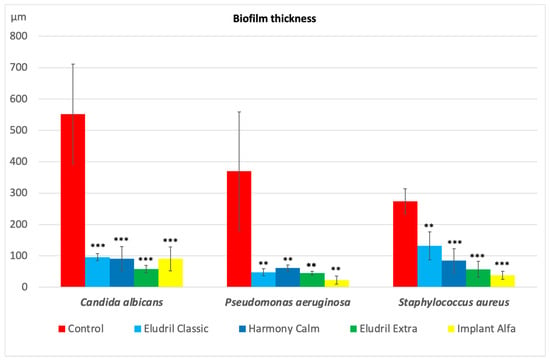
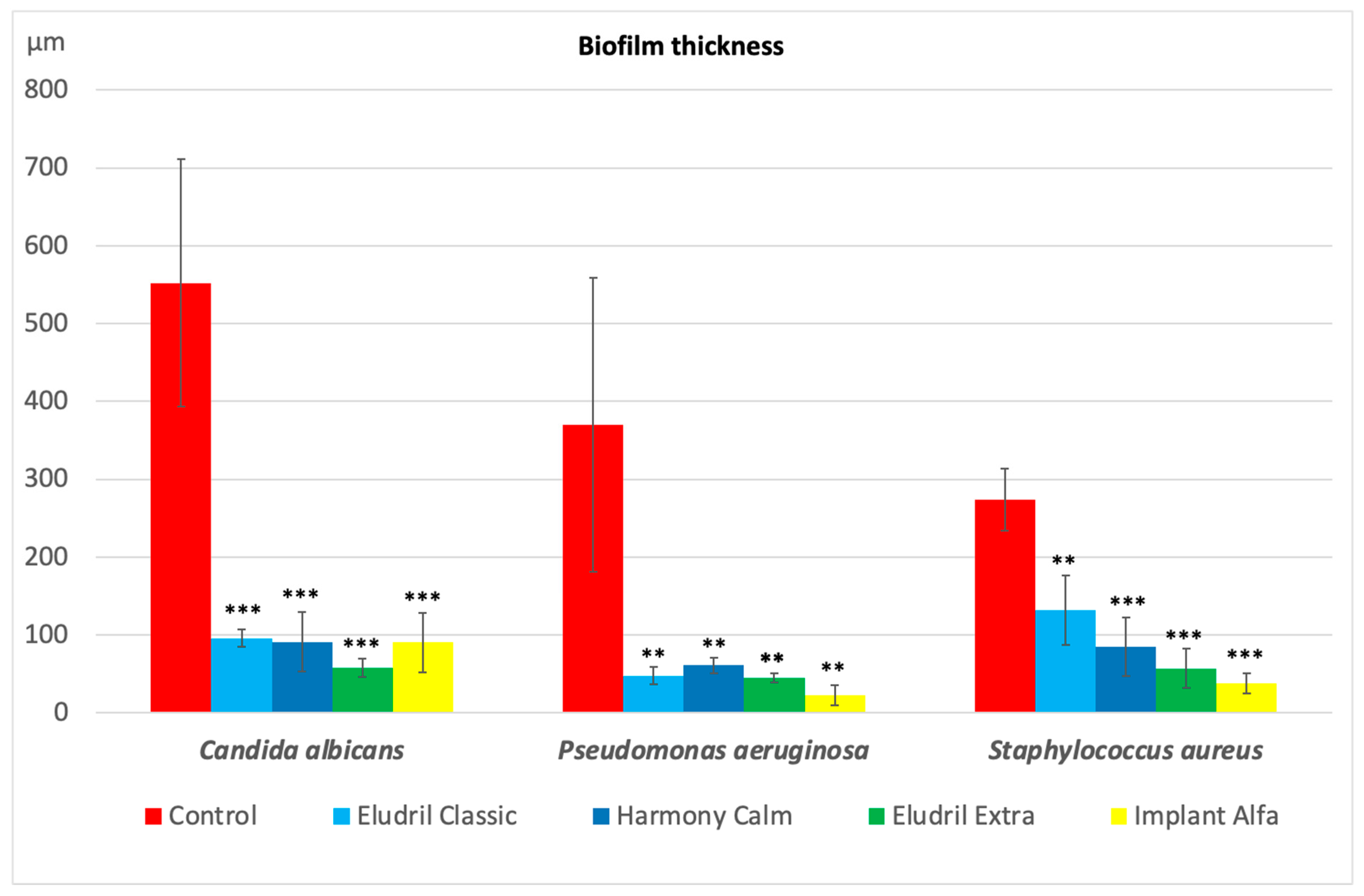
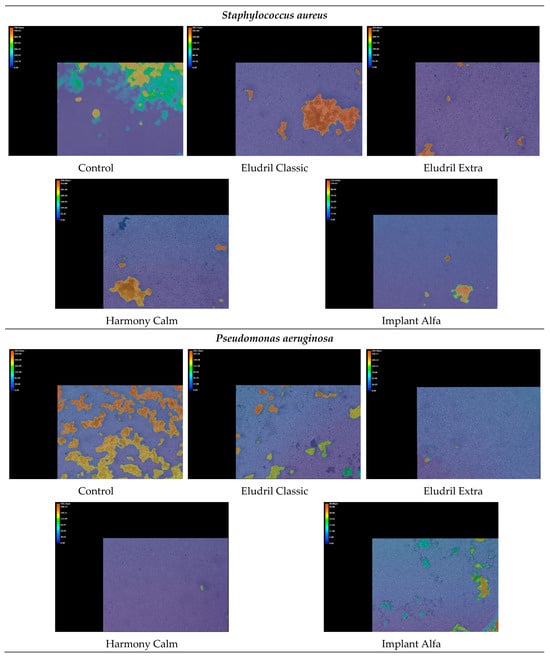
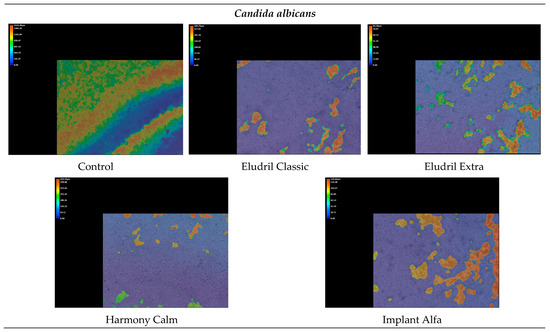
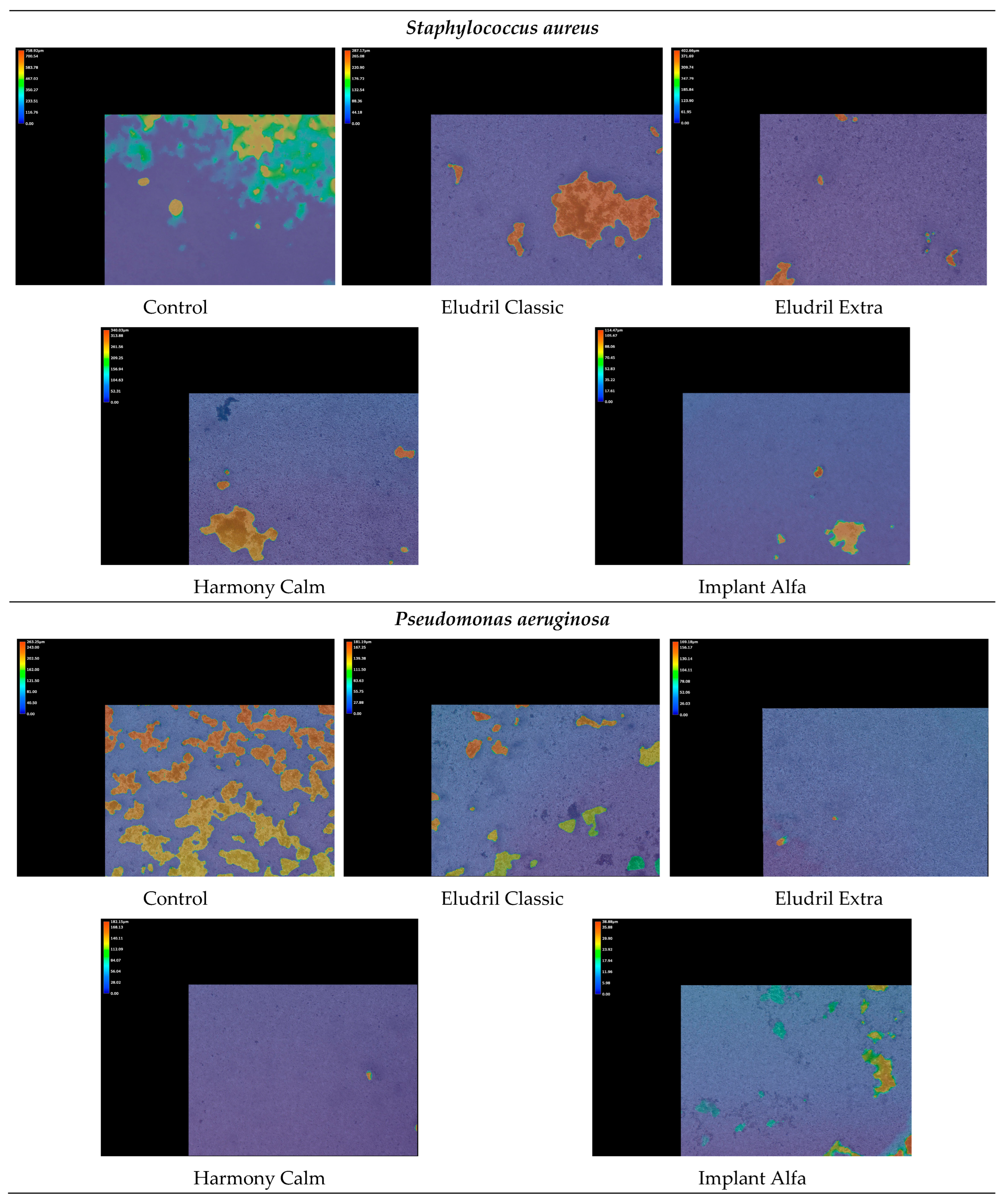
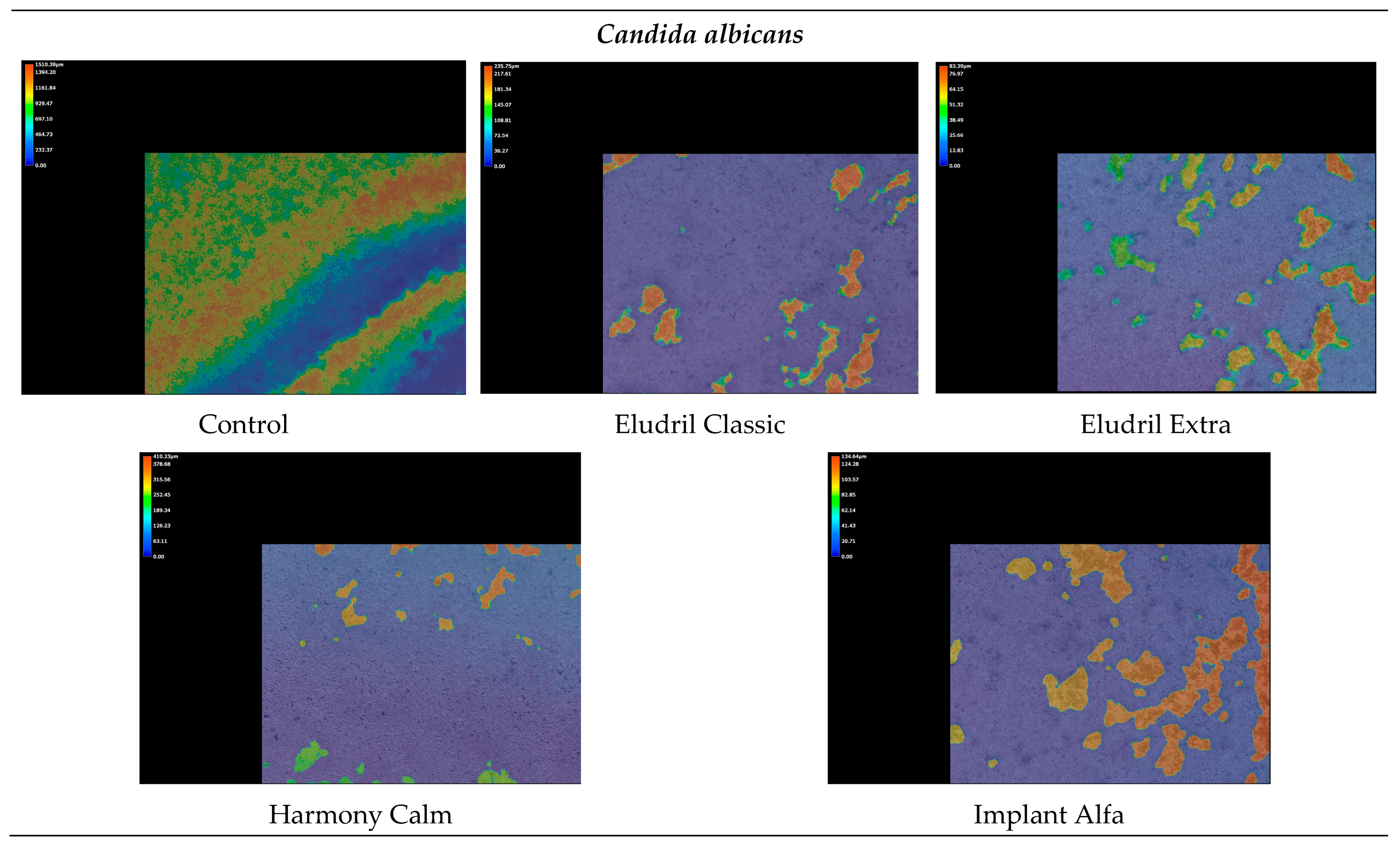
The CHX-based mouthwashes demonstrated a significant reduction in biofilm thickness for all tested microorganisms compared with the untreated controls (Figure 1 and Figure 2). All formulations showed clear antibiofilm efficacy, though with species-dependent differences in magnitude.
Figure 1.
Effects of a 1 h exposure to the tested mouthwashes on the biofilm thickness of Candida albicans, Pseudomonas aeruginosa, and Staphylococcus aureus strains. Statistical difference compared to the control: **—p < 0.01; ***—p < 0.001. Error bars represent standard deviation (SD) calculated from three independent experiments (n = 3).
Figure 2.
Representative images showing the thickness of Staphylococcus aureus, Pseudomonas aeruginosa and Candida albicans biofilms after 1-h exposure to commercial mouthwashes. The color bar in the upper-left corner of each image indicates biofilm thickness (in µm), ranging from dark blue (thinnest regions) to red (thickest regions). Intermediate shades, light blue, green, yellow, and orange, indicate progressively greater biofilm height.
In the control group, C. albicans formed thick biofilms reaching approximately 550 µm. Exposure to CHX rinses resulted in a substantial reduction, with final biofilm thicknesses of about 60–100 µm. This corresponds to an inhibition of over 80% relative to the control (p < 0.001), confirming strong antifungal and anti-adhesive effects of CHX formulations.
Control P. aeruginosa biofilms measured around 370 µm. Treatment with CHX-containing mouthwashes reduced their thickness to approximately 20–60 µm, indicating robust antibiofilm activity against this Gram-negative pathogen. CHX formulations achieved statistically significant reductions (p < 0.01), corresponding to a decrease of nearly 80% relative to untreated samples.
Untreated S. aureus biofilms reached approximately 270 µm. CHX mouthwashes lowered biofilm thickness to roughly 38 µm in the case of Implant Alfa®, 85 µm for Harmony Calm® and to 130 µm for Eludril Classic®. All reductions were statistically significant (p < 0.01), indicating that CHX retains strong antibiofilm action also against Gram-positive bacteria.
Across all tested species, CHX-based formulations consistently reduced biofilm thickness by more than 50%, with the most significant reductions observed for C. albicans and P. aeruginosa. Harmony Calm® generally showed slightly stronger activity than Eludril Classic®, but CHX products demonstrated clinically relevant antibiofilm effects.
4. Discussion
Chlorhexidine (CHX) is widely recognized in dentistry due to its broad-spectrum antimicrobial activity and high tissue substantivity [16]. The present findings align with this established evidence but further expand it by demonstrating that not all CHX formulations are biologically equivalent, despite containing the same active agent. The compared mouthwashes are not evaluated here as clinically interchangeable for identical postoperative indications, but strictly in terms of intrinsic antimicrobial and antibiofilm potency under standardized in vitro conditions. This observation is consistent with emerging literature showing that formulation chemistry, including excipients, pH, viscosity agents, humectants, and biological additives, can significantly modify antimicrobial performance and tissue compatibility [26].
The excipient-enriched formulation, Harmony Calm®, exhibited the highest antimicrobial potency among CHX formulations. As highlighted by these findings, commercial mouthwashes should not be evaluated solely based on the concentration of their active antiseptic, because formulation-specific excipients, such as hyaluronic acid, L-arginine, allantoin, and selected plant extracts, can substantially enhance antimicrobial, anti-adhesive, and tissue-supportive performance. Hyaluronic acid contributes by forming a hydrated protective matrix that limits microbial adhesion and supports epithelial repair [27], while L-arginine promotes local nitric oxide generation, creating an antimicrobial microenvironment that suppresses bacterial growth [28]. Allantoin [29] and plant extracts further modulate inflammation and improve mucosal integrity, thereby reducing microbial adherence and enhancing the overall biological activity of the formulation [30,31]. This “formulation effect” explains the superior MIC, MIC-µg/mL, and antibiofilm results achieved by Harmony Calm®, suggesting that optimized CHX formulations may provide clinically meaningful advantages in postoperative environments requiring both antimicrobial activity and tissue support. While the data demonstrate an apparent formulation-dependent effect, the proposed mechanisms for excipients (including nitric oxide modulation or biofilm matrix interactions) remain hypothetical, unverified in this experimental model. They should be interpreted as speculation that requires dedicated validation in future studies.
The results of this study support the concept that optimized formulations outperform standard rinses, suggesting that CHX concentration should not be the sole criterion for antiseptic selection. In vitro evidence from other researchers similarly demonstrates that excipient-rich or bioactive formulations exert significantly higher antimicrobial activity compared to “minimalist” CHX solutions, owing to synergistic anti-adhesive, anti-inflammatory, or membrane-disruptive mechanisms [32]. The literature identifies several formulation-dependent mechanisms that may potentiate CHX, including: (1) improved penetration of microbial membranes, (2) enhanced solubility and dispersion of CHX digluconate, (3) pH-dependent or polysaccharide-mediated interactions with fungal cell walls, and (4) synergistic anti-biofilm effects, especially when the biofilm matrix is disrupted or structurally weakened [33,34].
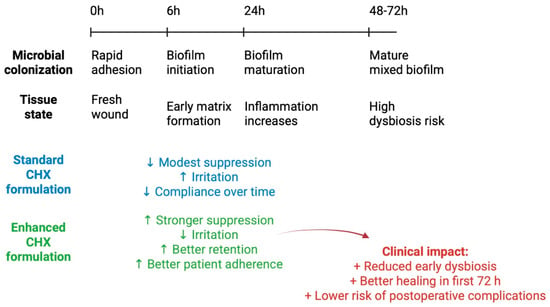
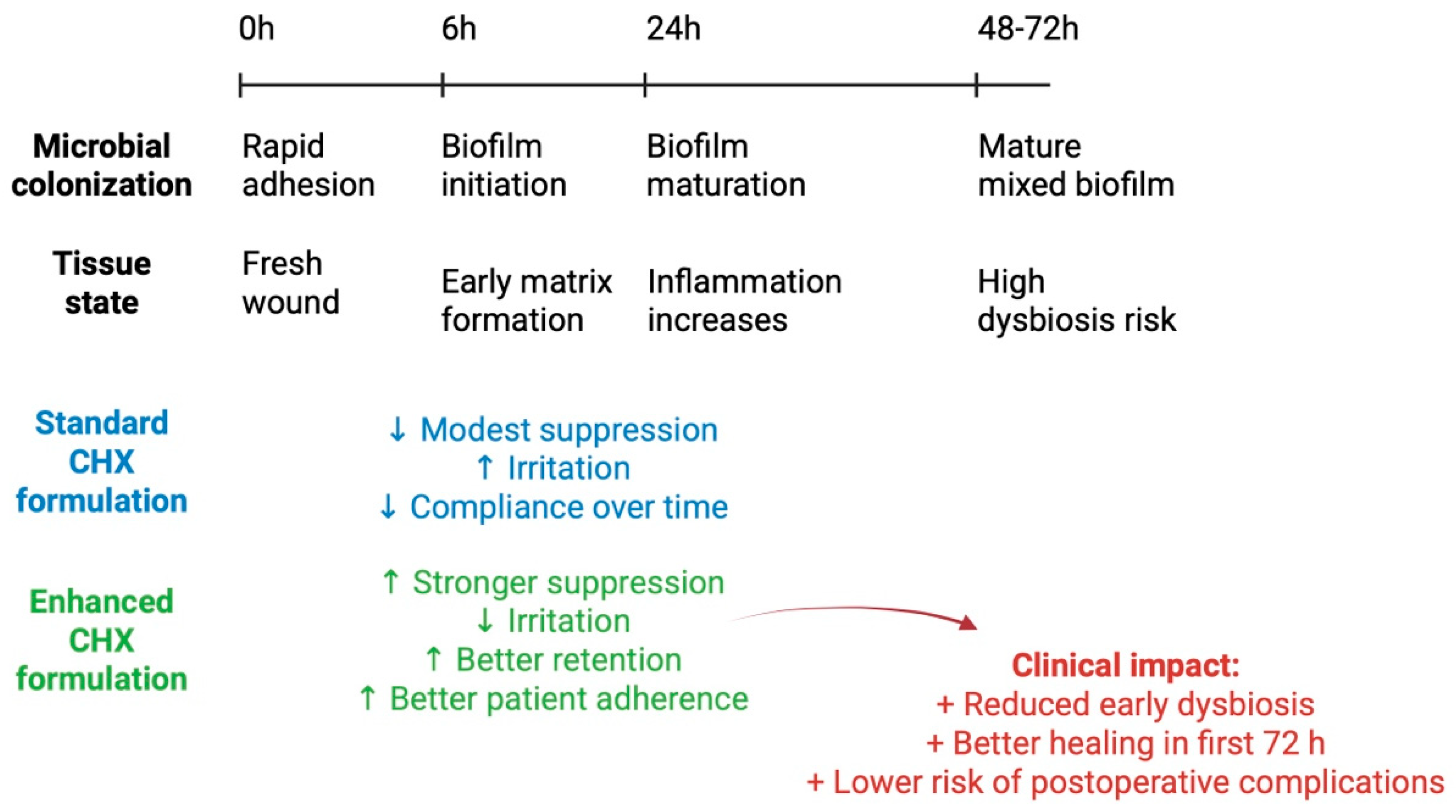
Biofilms pose a critical challenge in postoperative dentistry. Research has demonstrated that within hours after surgery, exposed mucosa, sutures, membranes, and implant surfaces become colonized by mixed bacterial-fungal biofilms [35]. This early colonization stage is highly predictive of later complications such as peri-implant mucositis, infection-related graft degradation, or delayed epithelialization. The antibiofilm activity demonstrated by CHX formulations in this study is consistent with prior findings showing CHX’s capacity to disrupt matrix integrity, inhibit enzymatic metabolism in biofilms, and reduce microbial adhesion [36]. However, the literature also highlights that CHX penetration into mature biofilms is incomplete and highly dependent on exposure time and formulation [37]. Thus, formulations that modify CHX retention or improve surface interaction may offer enhanced clinical value, especially in the critical 48–72 h following surgery, an interval during which mechanical cleaning is limited, and biofilm formation is most rapid (Figure 3).
Figure 3.
Postoperative window of vulnerability and the role of enhanced CHX formulations—it is an original conceptual diagram created by the authors for illustrative purposes. It summarizes the postoperative window of increased susceptibility to biofilm colonization and highlights the potential role of formulation-enhanced chlorhexidine. The figure is intended to support the interpretation of antiseptic selection in experimental models and does not present clinical outcome data.
International guidelines continue to identify CHX as the first-line antiseptic for short-term postoperative use, particularly in periodontal and implant surgery [38]. However, growing evidence suggests that when biofilm load is high, or when tissues are partially epithelialized, formulation-enhanced CHX may provide clinically superior outcomes [39]. For locally acting oral mucosal antisepsis in postoperative dental protocols, chlorhexidine mouthrinses are most commonly recommended at nominal concentrations of 0.12–0.20%; in excipient-enriched or composition-optimized formulations, effective antimicrobial potency may be achieved at CHX concentrations in the lower end of this range, although such enhancement effects remain formulation-dependent and were not mechanistically validated in this study. Literature unanimously recommends individualized antiseptic selection rather than assuming equivalence among CHX rinses. Factors to consider include: (1) microbial risk profile (e.g., Gram-negative colonization, presence of Candida), (2) tissue healing stage, (3) patient tolerance and side effect susceptibility, (4) the need for anti-inflammatory or mucosal-supportive co-effects, and (5) anticipated duration of antiseptic use.
Given the well-documented adverse effects of CHX, including staining, taste alteration, and potential cytotoxicity with prolonged use, formulations with optimized profiles may support better patient adherence and minimize mucosal irritation. Literature points out that hyaluronic acid, allantoin, and certain botanicals can mitigate CHX-related tissue stress without weakening antimicrobial efficacy [40,41].
5. Study Limitations
It should be emphasized that a key limitation of this study is the duration of biofilm exposure to the tested mouthwashes. Under experimental conditions, mature biofilms were exposed to the agents for 1 h, a duration that differs substantially from actual clinical conditions. In dental practice, patients typically use mouthwashes for only a few seconds to a few minutes, rather than for an extended period of time. The prolonged exposure time was justified by previous studies, which demonstrated that a noticeable antibiofilm effect of antiseptics does not occur within a few minutes but only after approximately one hour of exposure. Nevertheless, this implies that the observed results reflect the antibiofilm potential of the tested formulations under laboratory conditions rather than their direct effectiveness in standard patient use. Consequently, the significant reductions in biofilm thickness observed in this study should not be interpreted as effects achievable after a single, short-term oral rinse. Instead, the findings indicate that the maximal antibiofilm activity of chlorhexidine occurs during prolonged contact with the biofilm, suggesting that clinical efficacy may result from the cumulative effect of repeated and regular use of mouthwashes, rather than from a single application.
Additionally, while all formulations demonstrated CEMIC < 0.1, this index should be interpreted as a theoretical indicator of applicability margin, rather than a determinant of clinical superiority. It supports potential usefulness but does not replace intrinsic formulation potency data.
Mechanisms attributed to formulation excipients were not experimentally validated in this study and remain speculative, requiring direct confirmation in future mechanistic research.
A key limitation of this study is the absence of cytotoxicity assays for epithelial and fibroblast cells. Therefore, any references to improved wound healing or tissue compatibility remain hypothetical and are not supported by direct biological evidence in this experimental model.
This study does not compare the tested mouthwashes as therapeutically interchangeable for the same clinical indications, but reports formulation-dependent differences in laboratory antimicrobial and antibiofilm potency only.
6. Clinical Relevance and Future Perspectives
The present findings highlight several clinically essential considerations regarding the use of CHX-based mouthwashes in postoperative dental care. Although chlorhexidine remains the gold standard for chemical plaque control, this study demonstrates that its clinical effectiveness varies substantially among commercially available formulations. The superior antimicrobial and antibiofilm performance of the excipient-enriched formulation, Harmony Calm®, suggests that formulation chemistry, rather than nominal CHX concentration alone, plays a decisive role in determining in vivo usefulness, especially in early postoperative environments characterized by high microbial diversity and limited mechanical hygiene.
From a clinical perspective, enhanced activity against Gram-negative pathogens (P. aeruginosa, E. coli) and antifungal-resistant species (C. auris) is particularly relevant. These microorganisms have been increasingly linked to peri-implant complications, infections associated with biomaterials, and dysbiotic wound colonization [42,43]. Their innate resistance mechanisms, including efflux pumps and biofilm-associated tolerance [44], reduce susceptibility to standard antiseptics and may compromise healing outcomes. Therefore, CHX formulations with optimized excipients may offer clinicians a crucial therapeutic advantage by improving membrane penetration, dispersibility of CHX, and antiseptic–biofilm interactions [33,34].
Beyond the excipients already incorporated into enriched CHX formulations, such as hyaluronic acid, L-arginine, allantoin, and plant-derived anti-inflammatory agents, several additional substances could be proposed as supportive co-ingredients. Aloe vera polysaccharides and panthenol can enhance epithelial regeneration and reduce mucosal irritation, while beta-glucans modulate inflammation and limit early microbial adhesion [45]. Xylitol and chitosan provide complementary anti-biofilm and antimicrobial effects, with chitosan also improving mucosal retention of the formulation [46]. Plant-derived antioxidants, such as chamomile or green tea catechins, may further reduce inflammation and oxidative stress, enhancing patient comfort and tolerance [47]. Together, these agents provide additional avenues for optimizing CHX-based antiseptics to strengthen healing, minimize side effects, and promote postoperative adherence.
Looking ahead, several areas merit further investigation. First, clinical trials comparing enriched versus conventional CHX formulations are needed to confirm whether the in vitro advantages observed here translate to improved healing outcomes, lower infection rates, or reduced peri-implant complications. Second, future research should explore the long-term effects of CHX formulations on the oral microbiome, particularly regarding microbial resilience, recolonization dynamics, and potential selection for reduced susceptibility [19,37]. Third, as regenerative and implant-based procedures become more common, attention should be directed toward the interaction between antiseptics and biomaterial surfaces, including their influence on osseointegration, membrane stability, and soft-tissue sealing.
Finally, there is a growing need to develop personalized postoperative antiseptic protocols, in which patient-specific risk factors, microbial profile, tissue healing status, and susceptibility to adverse effects guide product selection. In this context, formulation-optimized CHX products may play an increasingly valuable role as adjuncts to surgical wound care, offering both enhanced antimicrobial protection and improved tissue compatibility. The continued refinement of CHX formulations, including bioactive excipients and biopolymer-based delivery systems, represents a promising direction for future innovation in oral infection prevention.
7. Conclusions
This study demonstrates that commercially available chlorhexidine-based mouthwashes differ substantially in their antimicrobial and antibiofilm performance despite containing the same active antiseptic. The excipient-enriched formulation exhibited the highest potency against all tested pathogens, achieving the lowest MIC and MIC–µg/mL values, and demonstrating superior activity against Gram-negative bacteria and Candida species, including the highly tolerant C. auris. It also performed slightly better in antibiofilm assays, indicating enhanced ability to disrupt mature biofilms of C. albicans, P. aeruginosa, and S. aureus. These findings confirm that formulation chemistry, including excipients, viscosity, solubility enhancers, and bioactive additives, plays a decisive role in determining the biological effectiveness of CHX formulations.
Although all CHX rinses reached CEMIC values indicating high theoretical clinical efficiency at recommended concentrations, the magnitude of differences in intrinsic potency suggests that optimized formulations may provide a wider therapeutic margin in challenging postoperative environments. Components such as hyaluronic acid, L-arginine, allantoin, plant extracts, and other supportive substances may augment chlorhexidine activity by improving membrane penetration, reducing biofilm matrix density, enhancing tissue compatibility, and mitigating mucosal irritation.
Overall, the results highlight that CHX concentration alone is not a reliable indicator of clinical performance. Instead, the formulation matrix determines antimicrobial potency, antibiofilm capacity, and potential tissue effects. The findings support a shift toward evidence-based, formulation-driven selection of antiseptic mouthwashes in postoperative protocols, especially in situations with high microbial risk or limited mechanical hygiene. Future clinical studies should evaluate whether the in vitro advantages of enriched CHX formulations translate into improved healing outcomes, reduced postoperative complications, and better patient adherence.
Author Contributions
Conceptualization, M.P.-W., J.C.-P. and T.M.K.; methodology, M.K.-P., A.A.P. and T.M.K.; investigation, M.K.-P., A.A.P. and T.M.K.; data curation, M.K.-P.; writing—original draft preparation, M.K.-P., M.P.-W., J.P., J.C.-P. and T.M.K.; writing—review and editing, M.P.-W., J.C.-P. and T.M.K.; visualization, M.K.-P. and J.P.; supervision, T.M.K. All authors have read and agreed to the published version of the manuscript.
Funding
This research received no external funding.
Institutional Review Board Statement
Not applicable.
Informed Consent Statement
Not applicable.
Data Availability Statement
The original contributions presented in this study are included in the article. Further inquiries can be directed to the corresponding author.
Conflicts of Interest
Author Marzena Korbecka-Paczkowska, was employed by the company Medi Pharm. Authors Magdalena Paczkowska-Walendowska and Judyta Cielecka-Piontek were employed by the company Science-Bridge Sp. z o.o. The remaining authors declare that the research was conducted in the absence of any commercial or financial relationships that could be construed as a potential conflict of interest.
References
- Berger, D.; Rakhamimova, A.; Pollack, A.; Loewy, Z. Oral Biofilms: Development, Control, and Analysis. High-Throughput 2018, 7, 24. [Google Scholar] [CrossRef] [Scilit]
- Bostanghadiri, N.; Kouhzad, M.; Taki, E.; Elahi, Z.; Khoshbayan, A.; Navidifar, T.; Darban-Sarokhalil, D. Oral Microbiota and Metabolites: Key Players in Oral Health and Disorder, and Microbiota-Based Therapies. Front. Microbiol. 2024, 15, 1431785. [Google Scholar] [CrossRef] [Scilit] [PubMed]
- Devaraja, K.; Aggarwal, S. Dysbiosis of Oral Microbiome: A Key Player in Oral Carcinogenesis? A Critical Review. Biomedicines 2025, 13, 448. [Google Scholar] [CrossRef] [Scilit]
- Cui, Z.; Wang, P.; Gao, W. Microbial Dysbiosis in Periodontitis and Peri-Implantitis: Pathogenesis, Immune Responses, and Therapeutic. Front. Cell. Infect. Microbiol. 2025, 15, 1517154. [Google Scholar] [CrossRef] [Scilit]
- Askar, H.; Di Gianfilippo, R.; Ravida, A.; Tattan, M.; Majzoub, J.; Wang, H.-L. Incidence and Severity of Postoperative Complications Following Oral, Periodontal, and Implant Surgeries: A Retrospective Study. J. Periodontol. 2019, 90, 1270–1278. [Google Scholar] [CrossRef] [Scilit]
- Fürst, M.M.; Salvi, G.E.; Lang, N.P.; Persson, G.R. Bacterial Colonization Immediately after Installation on Oral Titanium Implants. Clin. Oral Implant. Res. 2007, 18, 501–508. [Google Scholar] [CrossRef] [Scilit] [PubMed]
- Minkiewicz-Zochniak, A.; Jarzynka, S.; Iwańska, A.; Strom, K.; Iwańczyk, B.; Bartel, M.; Mazur, M.; Pietruczuk-Padzik, A.; Konieczna, M.; Augustynowicz-Kopeć, E.; et al. Biofilm Formation on Dental Implant Biomaterials by Staphylococcus aureus Strains Isolated from Patients with Cystic Fibrosis. Materials 2021, 14, 2030. [Google Scholar] [CrossRef] [Scilit] [PubMed]
- Abusalim, G.S. Prevalence and Investigations of Bacterial Contamination in Dental Healthcare Associated Environment. J. King Saud Univ. Sci. 2022, 34, 102153. [Google Scholar] [CrossRef] [Scilit]
- Pokrowiecki, R.; Mielczarek, A.; Zaręba, T.; Tyski, S. Oral Microbiome and Peri-Implant Diseases: Where Are We Now? Ther. Clin. Risk Manag. 2017, 13, 1529–1542. [Google Scholar] [CrossRef] [Scilit]
- Marsh, P.D. Controlling the Oral Biofilm with Antimicrobials. J. Dent. 2010, 38, S11–S15. [Google Scholar] [CrossRef] [Scilit]
- Camps-Font, O.; Martín-Fatás, P.; Clé-Ovejero, A.; Figueiredo, R.; Gay-Escoda, C.; Valmaseda-Castellón, E. Postoperative Infections after Dental Implant Placement: Variables Associated with Increased Risk of Failure. J. Periodontol. 2018, 89, 1165–1173. [Google Scholar] [CrossRef] [Scilit]
- Tabrizi, R.; Zarchini, R.; Ozkan, B.T.; Majdi, S. Dental Implant Survival after Postoperative Infection. J. Maxillofac. Oral Surg. 2022, 21, 796–801. [Google Scholar] [CrossRef] [Scilit]
- Angjelova, A.; Jovanova, E.; Polizzi, A.; Leonardi, R.; Isola, G. Effects of Antiseptic Formulations on Oral Microbiota and Related Systemic Diseases: A Scoping Review. Antibiotics 2025, 14, 815. [Google Scholar] [CrossRef] [Scilit] [PubMed]
- Takenaka, S.; Sotozono, M.; Ohkura, N.; Noiri, Y. Evidence on the Use of Mouthwash for the Control of Supragingival Biofilm and Its Potential Adverse Effects. Antibiotics 2022, 11, 727. [Google Scholar] [CrossRef] [Scilit]
- Masadeh, M.M.; Gharaibeh, S.F.; Alzoubi, K.H.; Al-azzam, S.I.; Obeidat, W.M. Antimicrobial Activity of Common Mouthwash Solutions on Multidrug-Resistance Bacterial Biofilms. J. Clin. Med. Res. 2013, 5, 389–394. [Google Scholar] [CrossRef] [Scilit] [PubMed]
- Deus, F.P.; Ouanounou, A. Chlorhexidine in Dentistry: Pharmacology, Uses, and Adverse Effects. Int. Dent. J. 2022, 72, 269. [Google Scholar] [CrossRef] [Scilit]
- Saleem, H.G.M.; Seers, C.A.; Sabri, A.N.; Reynolds, E.C. Dental Plaque Bacteria with Reduced Susceptibility to Chlorhexidine Are Multidrug Resistant. BMC Microbiol. 2016, 16, 214. [Google Scholar] [CrossRef] [Scilit] [PubMed]
- Reda, B.; Hollemeyer, K.; Trautmann, S.; Volmer, D.A.; Hannig, M. First Insights into Chlorhexidine Retention in the Oral Cavity after Application of Different Regimens. Clin. Oral Investig. 2021, 25, 6109–6118. [Google Scholar] [CrossRef] [Scilit]
- Cieplik, F.; Jakubovics, N.S.; Buchalla, W.; Maisch, T.; Hellwig, E.; Al-Ahmad, A. Resistance Toward Chlorhexidine in Oral Bacteria—Is There Cause for Concern? Front. Microbiol. 2019, 10, 587. [Google Scholar] [CrossRef] [Scilit]
- Günther, F.; Blessing, B.; Dapunt, U.; Mischnik, A.; Mutters, N.T. Ability of Chlorhexidine, Octenidine, Polyhexanide and Chloroxylenol to Inhibit Metabolism of Biofilm-Forming Clinical Multidrug-Resistant Organisms. J. Infect. Prev. 2021, 22, 12–18. [Google Scholar] [CrossRef] [Scilit]
- Berchier, C.E.; Slot, D.E.; Van der Weijden, G.A. The Efficacy of 0.12% Chlorhexidine Mouthrinse Compared with 0.2% on Plaque Accumulation and Periodontal Parameters: A Systematic Review. J. Clin. Periodontol. 2010, 37, 829–839. [Google Scholar] [CrossRef] [Scilit]
- Karpiński, T.M.; Ożarowski, M.; Seremak-Mrozikiewicz, A.; Wolski, H. Anti-Candida and Antibiofilm Activity of Selected Lamiaceae Essential Oils. Front. Biosci. (Landmark Ed.) 2023, 28, 28. [Google Scholar] [CrossRef] [Scilit]
- Karpiński, T.M.; Korbecka-Paczkowska, M.; Stasiewicz, M.; Mrozikiewicz, A.E.; Włodkowic, D.; Cielecka-Piontek, J. Activity of Antiseptics Against Pseudomonas aeruginosa and Its Adaptation Potential. Antibiotics 2025, 14, 30. [Google Scholar] [CrossRef] [Scilit] [PubMed]
- Korbecka-Paczkowska, M.; Karpiński, T.M.; Ożarowski, M. Comparative Antimicrobial and Antibiofilm Activity of Antiseptics and Commercial Mouthwashes Against Porphyromonas Gingivalis ATCC 33277. J. Clin. Med. 2025, 14, 8909. [Google Scholar] [CrossRef] [Scilit]
- Karpiński, T.M. Biofilm Thickness Analyzer: A Program for Measuring Biofilm Thickness in 3D Images from a Keyence VHX-S770E Digital Microscope. 2025. Available online: https://github.com/tkarpin1/BiofilmThicknessAnalyzer (accessed on 20 May 2025).
- Veeravalli, V.; Cheruvu, H.S.; Srivastava, P.; Vamsi Madgula, L.M. Three-Dimensional Aspects of Formulation Excipients in Drug Discovery: A Critical Assessment on Orphan Excipients, Matrix Effects and Drug Interactions. J. Pharm. Anal. 2020, 10, 522–531. [Google Scholar] [CrossRef] [Scilit] [PubMed]
- Wang, L.; Zhou, F.; Xie, W. Advances in Hyaluronic Acid-Based Biomaterials: Applications in Cancer Therapy, Wound Healing, and Disease Management. J. Mater. Sci. Mater. Med. 2025, 36, 91. [Google Scholar] [CrossRef] [Scilit]
- Das, P.; Lahiri, A.; Lahiri, A.; Chakravortty, D. Modulation of the Arginase Pathway in the Context of Microbial Pathogenesis: A Metabolic Enzyme Moonlighting as an Immune Modulator. PLoS Pathog. 2010, 6, e1000899. [Google Scholar] [CrossRef] [Scilit] [PubMed]
- Sarkar, P.; Iyengar, D.; Mukhopadhyay, K. Emergence of Snail Mucus as a Multifunctional Biogenic Material for Biomedical Applications. Acta Biomater. 2025, 200, 21–46. [Google Scholar] [CrossRef] [Scilit]
- Toma, C.-C.; Marrelli, M.; Puticiu, M.; Conforti, F.; Statti, G. Effects of Arnica Phytotherapeutic and Homeopathic Formulations on Traumatic Injuries and Inflammatory Conditions: A Systematic Review. Plants 2024, 13, 3112. [Google Scholar] [CrossRef] [Scilit]
- Smith, A.G.; Miles, V.N.; Holmes, D.T.; Chen, X.; Lei, W. Clinical Trials, Potential Mechanisms, and Adverse Effects of Arnica as an Adjunct Medication for Pain Management. Medicines 2021, 8, 58. [Google Scholar] [CrossRef] [Scilit]
- Perez, S.L.; Colomer, M.P. Antiseptic Solutions Comprising Chlorhexidine or Its Salt and an Anionic Dye and Their Preparation. EP2499914A1, 19 September 2012. Available online: https://patents.google.com/patent/EP2499914A1/en (accessed on 2 September 2025).
- Al-Obaidy, S.S.M.; Greenway, G.M.; Paunov, V.N. Enhanced Antimicrobial Action of Chlorhexidine Loaded in Shellac Nanoparticles with Cationic Surface Functionality. Pharmaceutics 2021, 13, 1389. [Google Scholar] [CrossRef] [Scilit]
- Ré, A.C.S.; Bonjovanni, M.C.; Ferreira, M.P.; Freitas, O.; Aires, C.P. Effect of an Experimental Formulation Containing Chlorhexidine on Pathogenic Biofilms and Drug Release Behavior in the Presence or Absence of Bacteria. Pharmaceutics 2019, 11, 88. [Google Scholar] [CrossRef] [Scilit]
- Kathju, S.; Nistico, L.; Tower, I.; Lasko, L.-A.; Stoodley, P. Bacterial Biofilms on Implanted Suture Material Are a Cause of Surgical Site Infection. Surg. Infect. 2014, 15, 592–600. [Google Scholar] [CrossRef] [Scilit]
- Sebbane, N.; Abramovitz, I.; Kot-Limon, N.; Steinberg, D. Mechanistic Insight into the Anti-Bacterial/Anti-Biofilm Effects of Low Chlorhexidine Concentrations on Enterococcus Faecalis—In Vitro Study. Microorganisms 2024, 12, 2297. [Google Scholar] [CrossRef] [Scilit]
- Chatzigiannidou, I.; Teughels, W.; Van de Wiele, T.; Boon, N. Oral Biofilms Exposure to Chlorhexidine Results in Altered Microbial Composition and Metabolic Profile. NPJ Biofilms Microbiomes 2020, 6, 13. [Google Scholar] [CrossRef] [Scilit]
- Strasding, M.; Eberhardt, M.; Hicklin, S.P.; Schmidlin, P.R.; Sahrmann, P. Comparison of Chlorhexidine, Chlorhexidine with Anti-Discoloration System, and Polyvinylpyrrolidone-Iodine on Early Wound Healing after Dental Implant Placement: A Randomized Clinical Trial. Clin. Oral Investig. 2025, 29, 589. [Google Scholar] [CrossRef] [Scilit]
- Shen, Y.; Stojicic, S.; Haapasalo, M. Antimicrobial Efficacy of Chlorhexidine against Bacteria in Biofilms at Different Stages of Development. J. Endod. 2011, 37, 657–661. [Google Scholar] [CrossRef] [Scilit]
- Marinho, A.; Nunes, C.; Reis, S. Hyaluronic Acid: A Key Ingredient in the Therapy of Inflammation. Biomolecules 2021, 11, 1518. [Google Scholar] [CrossRef] [Scilit] [PubMed]
- Makvandi, P.; Caccavale, C.; Della Sala, F.; Zeppetelli, S.; Veneziano, R.; Borzacchiello, A. Natural Formulations Provide Antioxidant Complement to Hyaluronic Acid-Based Topical Applications Used in Wound Healing. Polymers 2020, 12, 1847. [Google Scholar] [CrossRef] [Scilit] [PubMed]
- Sekar, A.; Ben Malick, F.; Deepak, S.U.; Inverardi, N.; Murugesan, D.; Muratoglu, O.K.; Oral, E. Characterizing Interactions of Staphylococcus aureus and Escherichia coli in Dual-Species Implant-Associated Biofilms. NPJ Biofilms Microbiomes 2025, 11, 189. [Google Scholar] [CrossRef] [Scilit] [PubMed]
- Nithyanand, P.; Boya, B.R.; Lee, J.; Lee, J. Polymicrobial Biofilms: Interkingdom Interactions, Resistance and Therapeutic Strategies. Microb. Biotechnol. 2025, 18, e70218. [Google Scholar] [CrossRef] [Scilit]
- Avakh, A.; Grant, G.D.; Cheesman, M.J.; Kalkundri, T.; Hall, S. The Art of War with Pseudomonas aeruginosa: Targeting Mex Efflux Pumps Directly to Strategically Enhance Antipseudomonal Drug Efficacy. Antibiotics 2023, 12, 1304. [Google Scholar] [CrossRef] [Scilit] [PubMed]
- Bai, Y.; Niu, Y.; Qin, S.; Ma, G. A New Biomaterial Derived from Aloe Vera—Acemannan from Basic Studies to Clinical Application. Pharmaceutics 2023, 15, 1913. [Google Scholar] [CrossRef] [Scilit] [PubMed]
- Wang, M.; Wang, Y.; Chen, G.; Gao, H.; Peng, Q. Chitosan-Based Multifunctional Biomaterials as Active Agents or Delivery Systems for Antibacterial Therapy. Bioengineering 2024, 11, 1278. [Google Scholar] [CrossRef] [Scilit] [PubMed]
- Paczkowska-Walendowska, M.; Grzegorzewski, J.; Kwiatek, J.; Leśna, M.; Cielecka-Piontek, J. Green Tea: A Novel Perspective on the Traditional Plant’s Potential in Managing Periodontal Diseases. Pharmaceuticals 2025, 18, 409. [Google Scholar] [CrossRef] [Scilit]

Disclaimer/Publisher’s Note: The statements, opinions and data contained in all publications are solely those of the individual author(s) and contributor(s) and not of MDPI and/or the editor(s). MDPI and/or the editor(s) disclaim responsibility for any injury to people or property resulting from any ideas, methods, instructions or products referred to in the content. |
© 2026 by the authors. Licensee MDPI, Basel, Switzerland. This article is an open access article distributed under the terms and conditions of the Creative Commons Attribution (CC BY) license.