Skip to Content
Applied SciencesApplied Sciences
  • Article
  • Open Access

19 January 2026

Novel Carvacrol or trans-Cinnamaldehyde@ZnO/Natural Zeolite Ternary Nanohybrid for Poly-L-lactide/tri-ethyl Citrate Based Sustainable Active Packaging Films


,
,

,
,
,
,
,
,
and
1
Department of Food Science and Technology, University of Patras, 30100 Agrinio, Greece
2
Laboratory of Food Chemistry, Department of Chemistry, National and Kapodistrian University of Athens Zografou, 15771 Athens, Greece
3
School of Applied Sciences, College for Health, Science and Society, University of the West of England, Coldharbour Ln, Bristol BS16 1QY, UK
*
Authors to whom correspondence should be addressed.

Abstract

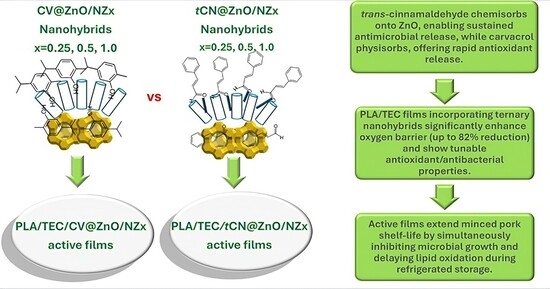
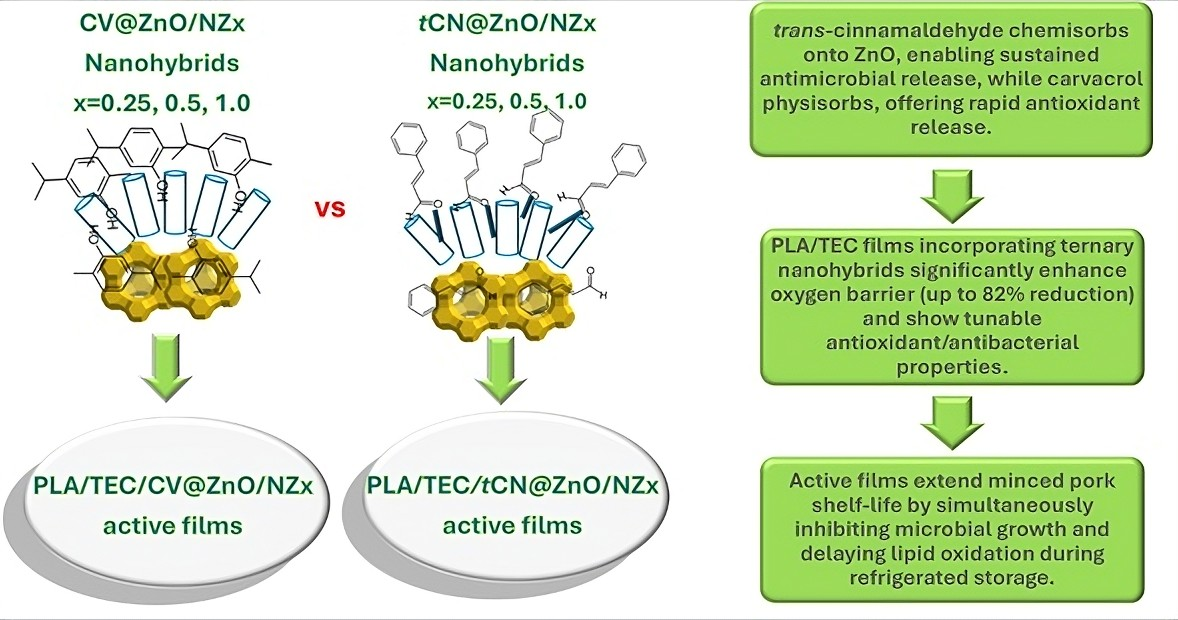
The shift toward sustainable packaging requires biodegradable, active alternatives. This study developed ternary nanohybrids by loading carvacrol (CV) or trans-cinnamaldehyde (tCN) onto zinc oxide/natural zeolite (ZnO/NZ) hybrids, which were incorporated into a poly-L-lactide/tri-ethyl citrate (PLA/TEC) matrix via melt extrusion to produce active films. A key finding was the distinct interaction mechanism: tCN underwent strong chemisorption with ZnO, creating a sustained-release reservoir, while CV was predominantly physisorbed, leading to rapid release. This interfacial divergence dictated functional performance. Antibacterial assessment of nanohybrids revealed that tCN@ZnO/NZ0.25 exhibited the highest inhibition zones against pathogens, correlating with its chemisorbed reservoir. In films, however, CV-based formulations (especially CV@ZnO/NZ0.25) showed superior immediate antioxidant activity (EC50, ~DPPH~ = 34.43 mg/mL) and an 82% reduction in oxygen permeability. In contrast, tCN-based films (especially tCN@ZnO/NZ1.0) demonstrated superior, sustained antibacterial efficacy. In a minced pork preservation study, both films delayed lipid oxidation and preserved heme iron, while the tCN-based film provided better long-term microbial control. This work demonstrates that engineering the nanocarrier–active compound interface enables precise tailoring of release kinetics, which can be optimized for either high immediate antioxidant power or long-term antimicrobial action, depending on specific food preservation requirements.

1. Introduction

The escalating global challenge of climate change has intensified the imperative to transition from conventional, fossil-fuel-based plastics to sustainable, biodegradable alternatives in the packaging sector [1,2,3,4,5]. This shift is central to the principles of the bioeconomy, aiming to reduce environmental impact while maintaining food quality and safety. In this context, active packaging has emerged as an advanced successor to “traditional” packaging, designed to interact with the food product or its headspace to actively delay spoilage and extend shelf life [6,7,8]. This is achieved either by scavenging undesirable compounds like oxygen and moisture or by the controlled release of active agents, such as antioxidants and antimicrobials, into the food [8,9,10].
In line with sustainability trends, the development of modern active packaging is driven by three key objectives: (i) the replacement of synthetic polymers with bio-based and biodegradable alternatives, (ii) the elimination of synthetic preservatives in favor of natural antioxidant and antimicrobial compounds, and (iii) the use of nanotechnology to enhance material properties and efficacy [11,12,13]. Poly(lactic acid) (PLA), a biodegradable polyester derived from renewable resources, stands out as a leading candidate for packaging applications due to its favorable transparency, processability, and composability [4,14,15,16,17,18]. However, its inherent brittleness and poor barrier properties often necessitate modification. The incorporation of biocompatible plasticizers, such as triethyl citrate (TEC), has been proven effective in enhancing PLA’s flexibility and processability, with recent studies revealing that TEC can also impart self-healing and intrinsic antibacterial properties to the PLA matrix [18,19,20,21,22].
Concurrently, essential oils (EOs) and their principal components, such as carvacrol (CV) and trans-cinnamaldehyde (tCN), have gained widespread recognition as potent natural antimicrobials and antioxidants for active food packaging [23,24,25,26,27,28,29]. CV, a major constituent of oregano and thyme oil, is renowned for its broad-spectrum antibacterial activity, primarily through the disruption of microbial cell membranes, and its strong free-radical-scavenging capacity [23,24,25]. Similarly, trans-cinnamaldehyde exhibits significant antimicrobial efficacy against a wide range of foodborne pathogens [26,27,28,29]. A significant challenge in utilizing these volatile compounds is their rapid evaporation and loss during processing and storage. A promising strategy to overcome this is their pre-adsorption onto high-surface-area nanocarriers, such as nanoclays, activated carbons, or natural zeolites (NZs), prior to incorporation into the polymer matrix [22,30,31,32,33]. This approach facilitates a more controlled release and protects the active compounds during processing. Our previous work successfully demonstrated the vacuum-assisted adsorption of CV onto NZ, achieving a high loading capacity of 61.7% wt. and its subsequent integration into a PLA/TEC matrix to create an active film that extended the shelf-life of minced pork by four days [32].
In parallel, zinc oxide (ZnO) nanoparticles (NPs) have been extensively incorporated into packaging films to enhance their mechanical strength, UV barrier, and, most notably, their antimicrobial properties through the generation of reactive oxygen species [34,35,36,37]. Recognized as Generally Recognized as Safe (GRAS) by the U.S. FDA, ZnO NPs can also act as a nanoreinforcement agent within a polymer matrix. While the combination of EOs and ZnO in a polymer blend is documented, often showing synergistic effects [38,39], a more advanced approach involves using the nanomaterial as a carrier for the active compound.
Building upon our group’s recent research, which includes the development of CV@NZ and, more recently, CV@ZnO and tCN@ZnO nanohybrids for PLA/TEC-based films, this study proposes a novel ternary nanohybrid system [32]. We hypothesize that a hybrid nanocarrier composed of both ZnO and NZ can synergistically combine the benefits of both materials: the excellent nanoreinforcement and intrinsic antibacterial activity of ZnO with the high surface area and superior adsorption capacity of NZ for EOs. Furthermore, these ternary nanohybrids could provide a dual-mode antibacterial effect, combining the persistent activity of ZnO with the controlled-release action of CV and/or trans-CN [40].
Although the integration of essential oils (EOs) and zinc oxide (ZnO) into PLA matrices has been documented, previous approaches typically involve the direct blending of EOs with ZnO and polymer [38,41,42] or the pre-adsorption of EOs onto single-component nanocarriers such as ZnO [43] or cellulose nanocrystals [41]. The present work introduces a fundamental advance through the novel design of a ternary nanohybrid system, where CV or tCN is loaded onto a hybrid inorganic carrier composed of ZnO nanorods grown in situ on natural zeolite (NZ). This nanoengineering architecture uniquely merges the high surface area and superior adsorption capacity of NZ with the intrinsic antibacterial properties and strong surface reactivity of ZnO. The resulting CV/tCN@ZnO/NZ nanohybrids are hypothesized to create a tunable interface that critically governs the release kinetics—via distinct physisorption or chemisorption mechanisms—and thereby dictates the functional performance (immediate antioxidant vs. sustained antimicrobial action). Moreover, the incorporation of these ternary nanohybrids into a plasticized PLA matrix via melt extrusion represents a scalable processing advantage over solvent-based methods. Thus, the novelty of this study lies in the following: (1) the first synthesis and application of CV/tCN@ZnO/NZ ternary nanohybrids for active packaging; (2) the explicit investigation of how the ZnO/NZ hybrid carrier composition controls the interfacial interaction with the active compound, leading to divergent release profiles and functional outcomes; and (3) the demonstration of these tailored materials in real-food preservation using an industrially relevant processing route.
Therefore, this work reports for the first time the development and characterization of novel CV and tCN-loaded ZnO/natural zeolite ternary nanohybrids (CV@ZnO/NZx and tCN@ZnO/NZx). These nanohybrids were thoroughly characterized using X-ray diffraction (XRD), Fourier-transform infrared (FTIR) spectroscopy, scanning electron microscopy (SEM), and desorption kinetics to determine the loading capacity and release behavior of the active compounds. Subsequently, the most effective ternary nanohybrids were incorporated into a PLA/TEC matrix via extrusion to produce sustainable active packaging films. The films were fabricated using a melt-extrusion process, a method selected for its industrial scalability and compatibility with conventional plastic manufacturing equipment [44]. This approach ensures that the developed active packaging is not only effective but also commercially viable and practical for large-scale production. The resulting films were evaluated for their morphological, mechanical, antioxidant, and antibacterial properties. The goal was to identify the optimal formulation for application in the preservation of fresh minced pork, aiming to achieve a significant extension of its shelf life.

2. Materials and Methods

2.1. Materials

PLA (Ingeo™ Biopolymer 3052D) was supplied by NatureWorks LLC (Minnetonka, MN, USA). TEC (Mw = 276.3 g/mol) was purchased from Alfa Aesar GmbH & Co KG (Karlsruhe, Germany). CV (CAS: 499-75-2), tCN (CAS: 14371-10-9), zinc acetate dihydrate (Zn(CH3COO)2·2H2O) (CAS: 557-34-6), ammonia solution (25%), NZ (particle size < 45 μm), and 2,2-diphenyl-1-picrylhydrazyl (DPPH) (CAS: 1898-66-4) were obtained from Sigma-Aldrich (Darmstadt, Germany). All other solvents and chemicals were of analytical grade.

2.2. Synthesis of ZnO Nanorods and ZnO/NZ0.25, ZnO/NZ/0.5, and ZnO/NZ1.0 Binary Nanohybrids

The synthesis of ZnO nanorods and the ZnO/NZ binary nanohybrids (ZnO/NZ0.25, ZnO/NZ0.5, and ZnO/NZ1.0) was carried out via a hydrothermal method, adapted from a previously reported procedure for growing ZnO nanorods on montmorillonite and halloysite nanoclays [37,45].
Synthesis of pure ZnO nanorods: For pure ZnO nanorods, 2.263 g of zinc acetate dihydrate was dissolved in deionized water under stirring. Ammonia solution (25%) was added dropwise to adjust the pH to ~10. The mixture was transferred to a Teflon-lined autoclave and heated at 120 °C for 6 h. The resulting precipitate was collected by centrifugation, washed with ethanol and deionized water, and dried at 80 °C overnight.
Synthesis of ZnO/NZ Binary Nanohybrids: Binary nanohybrids with varying nominal ZnO-to-NZ weight ratios (0.25, 0.5, and 1.0) were synthesized via a hydrothermal method. Specifically, for the samples labeled ZnO/NZ0.25, ZnO/NZ0.5, and ZnO/NZ1.0, respective quantities of 8 g, 4 g, and 2 g of NZ were dispersed prior to the addition of zinc acetate dihydrate. The subsequent hydrothermal treatment facilitated the growth of ZnO nanorods directly on the NZ.

2.3. Preparation of CV@ZnO/NZ and tCN@ZnO/NZ Ternary Nanohybrids

Subsequently, 4 g of ZnO/NZ0.25, ZnO/NZ/0.5, and ZnO/NZ1.0 binary nanohybrids were placed in a round-bottom flask and vacuum-dried at 100 °C under 3 bar for 1 h. CV or trans-CN was added dropwise under continuous stirring until complete adsorption was achieved. The final CV@ZnO/NZ0.25, CV@ZnO/NZ0.5, CV@ZnO/NZ1.0, and tCN@ZnO/NZ0.25, tCN@ZnO/NZ0.5, and tCN@ZnO/NZ1.0, ternary nanohybrids were stored in sealed containers at 4 °C until use. The adsorbed content of CV or tCN was determined gravimetrically.

2.4. Preparation of PLA/TEC/CV@ZnO/NZx and PLA/TEC/tCN@ZnO/NZx Active Films

Active films were prepared by melt extrusion followed by hot-pressing. PLA pellets were dried at 60 °C for 12 h prior to use. For each formulation, 4 g of PLA, 0.6 mL of TEC, and the appropriate amount of ternary nanohybrid (0.4 g for 10 wt.%) were mixed manually before extrusion.
The mixtures were processed using a twin-screw mini lab extruder (Haake Mini Lab II, Thermo Scientific, Thermo Fisher Scientific, Waltham, MA, USA) at 180 °C and 120 rpm for 5 min. The extruded strands were pelletized and then compression-molded into films using a hydraulic press (Specac Atlas™ Series, Orpington, UK) at ~160 °C and ~1 atm for 2 min. The obtained films were labeled as PLA/TEC/CV@ZnO/NZ0.25, PLA/TEC/CV@ZnO/NZ0.5, PLA/TEC/CV@ZnO/NZ1.0, PLA/TEC/tCN@ZnO/NZ0.25, PLA/TEC/tCN@ZnO/NZ0.5, and PLA/TEC/tCN@ZnO/NZ1.0. In Table 1 are summarized the amounts of PLA, TEC, and ternary nanohybrids used and the twin extruder operation conditions applied for the preparation of all PLA/TEC/CV@ZnO/NZx and PLA/TEC/tCN@ZnO/NZx active films.
Table 1. Amounts of PLA, TEC, and ternary nanohybrids used as well as the twin extruder operation conditions applied for the preparation of all PLA/TEC/CV@ZnO/NZx and PLA/TEC/tCN@ZnO/NZx active films.

2.5. Characterization of Nanohybrids and Films

XRD analysis was performed using a Bruker D8 Advance diffractometer (Billerica, MA, USA) with Cu-Kα radiation (λ = 1.5406 Å) in the 2θ range of 5–40°.
ATR-FTIR spectra were recorded on a Shimadzu FT-IRSpirit spectrometer (Kyoto, Japan) equipped with an ATR accessory, over the range of 4000–400 cm−1 at a resolution of 4 cm−1.
SEM images were acquired using a FEI Quanta 650 FEG-SEM (Hillsboro, OR, USA). Film samples were cryo-fractured and sputter-coated with gold prior to imaging.

2.6. Desorption Kinetics of Active Compounds from Ternary Nanohybrids

The release profiles of CV and tCN from the ternary nanohybrids were studied at 70 °C using a moisture analyzer (AXIS AS-60, Gdańsk, Poland). Approximately 100 mg of each nanohybrid was placed in the analyzer, and the weight loss was recorded over time. The data were fitted to the pseudo-second-order kinetic model:
dt/dqt = k2 × (qeqt)2
where q t is the fraction released at time t , q e is the equilibrium released fraction, and k 2 is the rate constant.

2.7. Mechanical and Barrier Properties

Tensile properties (Young’s modulus, tensile strength, elongation at break) were measured according to ASTM D638 using a Shimadzu AG-Xplus (Kyoto, Japan) universal testing machine.
Oxygen transmission rate (OTR) was determined according to ASTM D3985 using an oxygen permeation analyzer (Systech Illinois 8001, Johnsburg, IL, USA) [46]. Oxygen permeability (PeO2) was calculated based on film thickness.

2.8. Antioxidant Activity (DPPH Assay)

The antioxidant activity of the nanohybrids and films was evaluated using the DPPH radical scavenging method. Samples (5–50 mg) were incubated with 3 mL of DPPH solution (2.16 mM in ethanol) for 2 h in the dark. The absorbance was measured at 517 nm, and the scavenging activity was calculated as follows:
%Scavenging = [(A0Asample)/A0] × 100
The EC50 value (effective concentration for 50% scavenging) was determined from the dose–response curve. Dose–response curves of all tested nanohybrids and films are included in the Supplementary Materials for comparison.

2.9. Antibacterial Activity

The antibacterial properties of the synthesized nanomaterials and the developed composite films were evaluated using two distinct, purpose-specific methods.
Antibacterial Assessment of ZnO nanorods, binary, and ternary nanohybrids (Well Diffusion Assay): The antibacterial activity of pure NZ, binary nanohybrids (CV@NZ and tCN@NZ), nanohybrids (ZnO/NZ0.25, ZnO/NZ0.5, ZnO/NZ1.0), and ternary nanohybrids (CV@ZnO/NZ0.25, CV@ZnO/NZ0.5, CV@ZnO/NZ1.0, tCN@ZnO/NZ0.25, tCN@ZnO/NZ0.5, and tCN@ZnO/NZ1.0) was evaluated using the well diffusion assay. The materials were tested against four foodborne bacterial strains: Escherichia coli (ATCC 25922), Salmonella enterica (DSMZ 17420), Staphylococcus aureus (DSMZ 124663), and Listeria monocytogenes (DSMZ 27575). Aqueous suspensions of each sample were prepared at a concentration of 0.02 g in 0.4 mL of sterile deionized water, homogenized by vortex mixing, and ultrasonicated for 45 min to ensure uniform dispersion. Bacterial cultures were prepared on Mueller–Hinton agar plates, and 6 mm diameter wells were aseptically created. Subsequently, 100 µL of each nanomaterial suspension was added to the wells. After incubation at 37 °C for 24 h, the inhibition zones formed around the wells were measured to assess antibacterial efficacy.
Antibacterial Assessment of Films (Viable Count Assay): The antimicrobial efficacy of all obtained PLA/TEC/CV@ZnO/NZx and PLA/TEC/tCN@ZnONZx (where x = 0.25, 0.5, and 1.0) films was tested against Escherichia coli and Listeria monocytogenes using a viable count method to simulate contact-based inhibition. Test bacteria were cultured in Brain Heart Infusion broth, harvested, and resuspended in Davis Minimal Broth to a standardized optical density. For the assay, 0.25 g of each film, cut into small pieces, was introduced into tubes containing 5 mL of bacterial suspension (approximately 105 CFU/mL). The tubes were incubated with agitation at 30 °C for 18 h. Post-incubation, the bacterial suspensions were serially diluted, spread onto solid agar plates, and incubated again. The surviving bacterial populations were enumerated, and the results were expressed as log10 CFU/mL.

2.10. Experimental Procedure for Meat Preservation Study

2.10.1. Sample Preparation and Storage Conditions

This study evaluated the preservation efficacy of two distinct active nanocomposite films compared to a commercial standard. Fresh minced pork was procured from a local processing facility (Ayfantis S.A. Agrinio, Greece) and transported under refrigerated conditions to the laboratory for immediate analysis. Approximately 100 g portions of the minced pork were assigned to one of three packaging treatments:
Control (Blank): Samples wrapped directly in the standard commercial packaging paper provided by Ayfantis S.A.
Active Film PLA/TEC/CV@ZnO/NZ0.25: Minced pork portions enclosed between two sheets of the active nanocomposite film designated as PLA/TEC/CV@ZnO/NZ0.25. The film-wrapped samples were then placed inside the Ayfantis commercial paper (with its inner membrane removed) to maintain consistent external packaging across all groups.
Active Film PLA/TEC/tCN@ZnO/NZ1.0: Minced pork portions enclosed between two sheets of the active nanocomposite film designated as PLA/TEC/tCN@ZnO/NZ1.0, following the same secondary packaging protocol as the NZ0.25 group.
For each of the three packaging treatments, three independent replicate samples were prepared. These replicates were analyzed after 2, 4, and 6 days of storage in a refrigerated environment maintained at a constant 4 ± 1 °C.

2.10.2. Monitoring Lipid Oxidation Using the TBARS Method

The progression of lipid oxidation in the pork samples was tracked by quantifying Thiobarbituric Acid Reactive Substances (TBARS), adapting an established methodology [47].
For the assay, a 2 g aliquot of minced pork was homogenized with 5 mL of a 10% (w/v) trichloroacetic acid (TCA) solution. The mixture was vortexed for 5 min, after which 5 mL of a 0.02 M thiobarbituric acid solution was introduced, followed by another 5 min of vortexing. The solution was then heated in a 90 °C water bath to facilitate color development. After incubation, the supernatant was separated by centrifugation, and its absorbance was recorded at 538 nm using 1 cm pathlength cuvettes. A reagent blank, prepared by mixing 5 mL of 10% TCA with 5 mL of 0.02 M TBA, was used for baseline correction.
The TBARS value, expressed as milligrams of malondialdehyde (MDA) per kilogram of meat, was calculated using the following formula:
TBARS (mg MDA/kg) = 3.6 × A538

2.10.3. Quantification of Heme Iron Content

The concentration of heme iron in the samples was determined using a modified version of a published procedure [48]. Briefly, a 4 g sample of minced pork was homogenized in 18 mL of acidified acetone. The resulting homogenate was stored in darkness at 25 °C for one hour to allow for complete pigment extraction. The mixture was then filtered, and the absorbance of the filtrate was measured at 640 nm using a SHIMADZU UV-1900 UV-Vis spectrophotometer (Kyoto, Japan).
The heme iron content was calculated with the following equation:
Heme iron (μg/g) = A640 × 680 × 0.0882
where A640 is the measured absorbance. This analysis was conducted on samples from each storage time point (days 2, 4, and 6).

2.10.4. Microbiological Evaluation: Total Viable Count (TVC)

The microbial quality of the pork was assessed by determining the Total Viable Count (TVC). A 10 g sample was aseptically transferred to a stomacher bag containing 90 mL of sterile Buffered Peptone Water (BPW) and homogenized for 90 s using a LAB Blender 400 stomacher.
Subsequent serial decimal dilutions were prepared in BPW. From these dilutions, 0.1 mL aliquots were spread onto the surface of Plate Count Agar (PCA) plates. The plates were incubated at 30 °C for 48 h. Following incubation, the developed colonies were counted, and the results were expressed as log10 colony-forming units per gram of sample (log CFU/g).

2.11. Statistical Analysis

All experiments were performed in triplicate. Data were analyzed using two-way ANOVA with Tukey’s HSD test (p < 0.05) in SPSS software (v.28.0, IBM, Armonk, NY, USA).

3. Results

3.1. Physicochemical Characterization of Binary and Ternary Nanohybrids

3.1.1. XRD Analysis

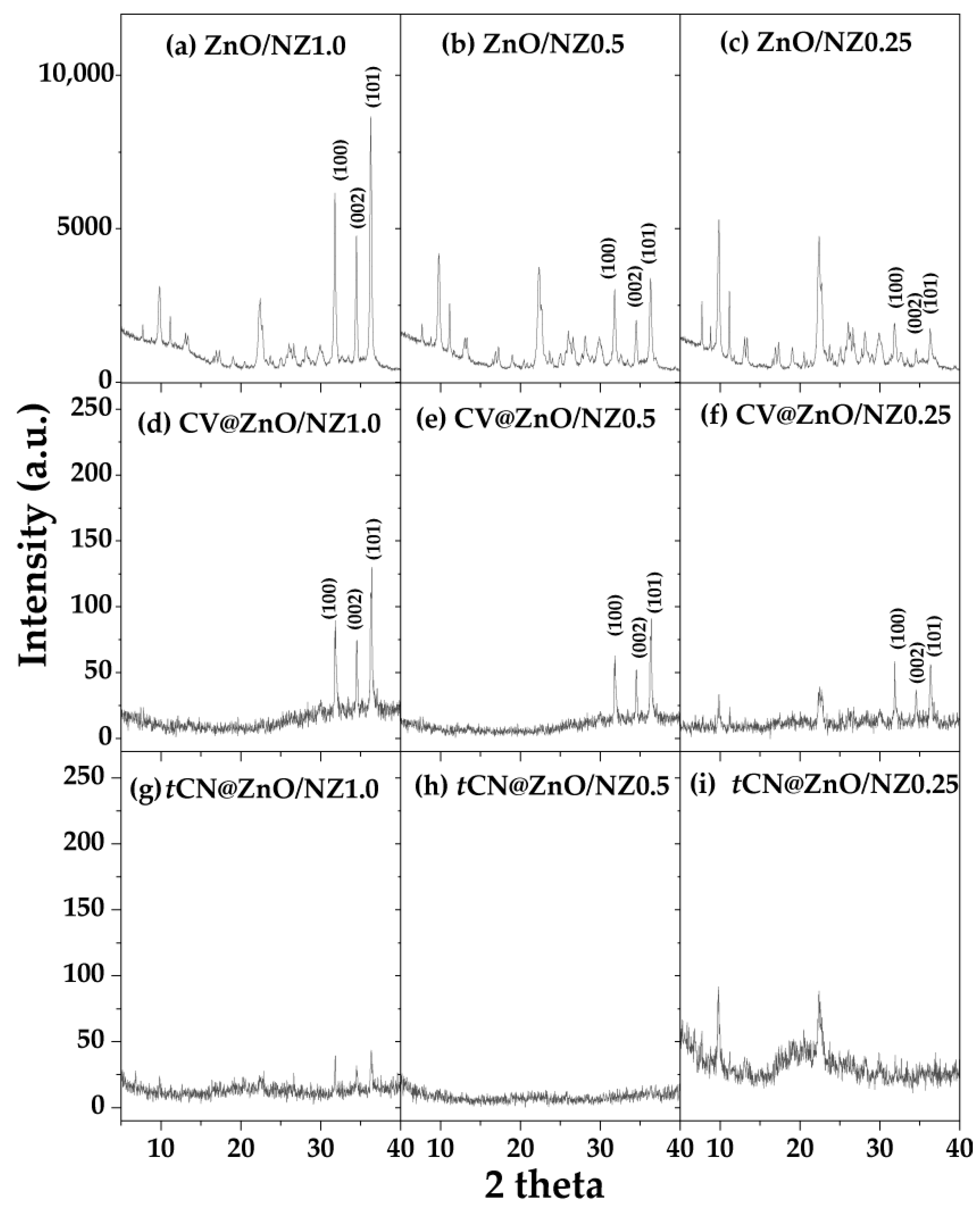
In Figure 1, the XRD plots of ZnO/NZ binary nanohybrids as well as modified with CV and tCN ternary nanohybrids are shown for comparison.
Figure 1. XRD plots of (a) ZnO/NZ, (b) ZnO/NZ0.5, (c) ZnO/NZ0.25, (d) CV@ZnO/NZ, (e) CV@ZnO/NZ0.5, (f) CV@ZnO/NZ0.25, (g) tCN@ZnO/NZ, (h) tCN@ZnO/NZ0.5, and (i) tCN@ZnO/NZ0.25, nanohybrids.
X-ray diffraction analysis of the binary nanohybrids (Figure 1a–c) confirmed the presence of both constituent phases. The patterns exhibit characteristic reflections of the hexagonal P63mc zinc oxide wurtzite phase (COD 96-230-0116), identified by peaks at 31.7°, 34.4°, and 36.2° corresponding to the (100), (002), and (101) planes. Concurrently, reflections attributable to the natural zeolite (NZ) substrate were observed and indexed to the heulandite monoclinic phase, Ca(Si7Al2)O18·6H2O (COD 96-900-0012). A decrease in the ZnO-to-NZ weight ratio results in a reduction in the ZnO diffraction peak intensities and a concurrent enhancement of the NZ diffraction peaks. The modification of all ZnO/NZ binary nanohybrids with either CV or tCN resulted in a significant decrease in the intensity of the reflections for both ZnO and NZ. However, the ZnO reflections remained more intense in the CV-modified nanohybrids compared to those modified with tCN.
X-ray diffraction analysis confirmed the successful formation of ZnO/NZ binary nanohybrids, with patterns exhibiting characteristic reflections for both the hexagonal wurtzite ZnO phase and the heulandite-type natural zeolite. The observed trend—where a lower ZnO-to-NZ weight ratio reduced ZnO peak intensity while enhancing NZ peaks—is a direct consequence of the matrix dilution effect, as the diffraction intensity of a phase is proportional to its volume fraction in a mixture [49]. Subsequent modification with CV or tCN resulted in a significant decrease in the diffraction intensity of both components, a phenomenon consistent with the surface coating of crystals by organic molecules, which introduces structural disorder and attenuates the X-ray signal [50]. The fact that the attenuation of ZnO reflections was more pronounced in the tCN-modified nanohybrids compared to the CV-modified ones suggests a stronger interfacial interaction. This is likely due to the chemisorption of tCN via its aldehyde group onto Lewis acid sites (Zn2+) on the ZnO surface [51], forming a denser organic layer that more effectively disrupts the coherent scattering of the underlying crystal, whereas CV may interact through weaker physisorption or hydrogen bonding [52].

3.1.2. ATR-FTIR-Analysis

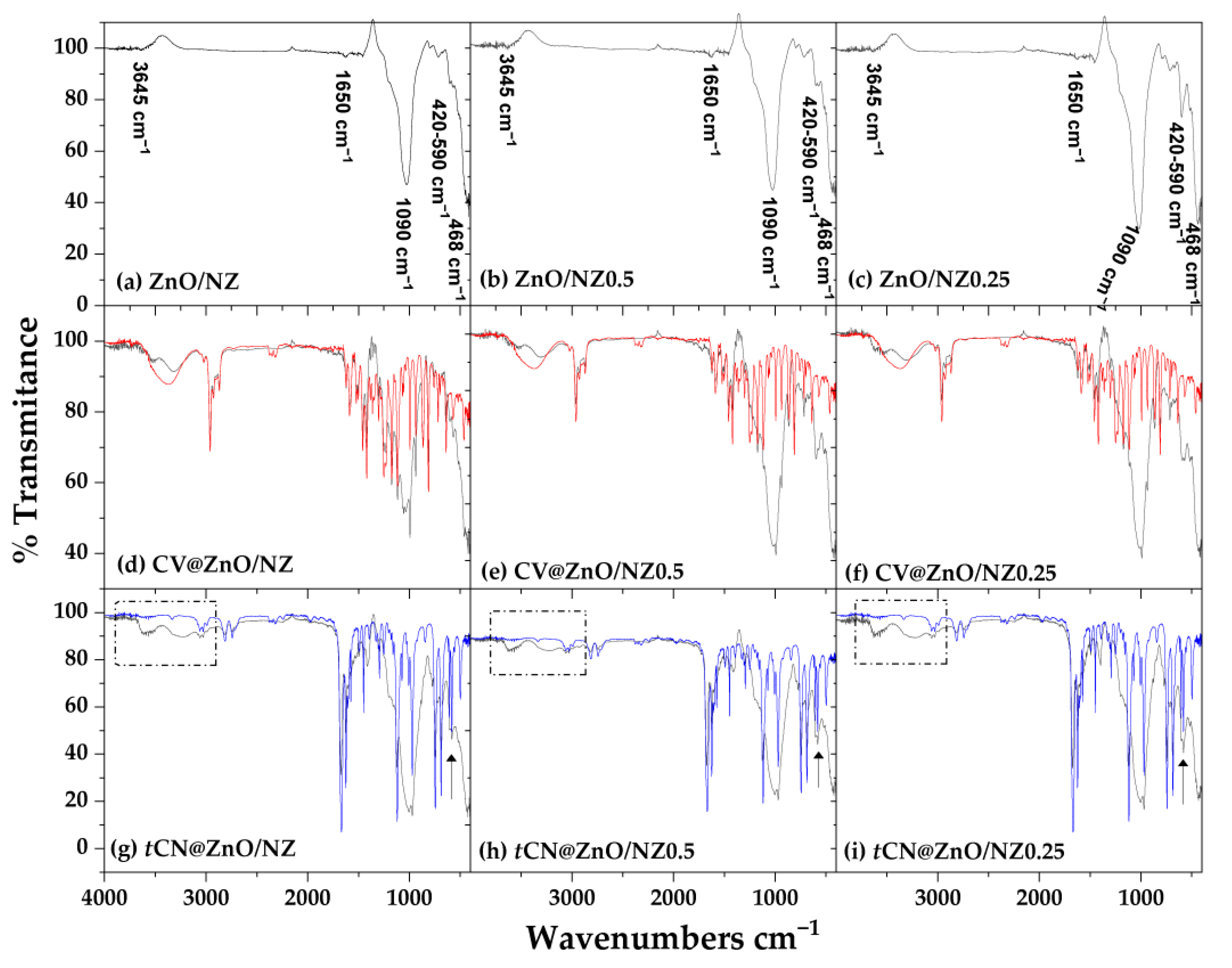
In Figure 2 the ATR-FTIR plots of ZnO/NZ binary nanohybrids as well as modified with CV and tCN ternary nanohybrids are shown for comparison. With red and blue lines, the FTIR-ATR plots of CV and tCN correspondingly are shown for comparison.
Figure 2. ATR-FTIR plots of (a) ZnO/NZ, (b) ZnO/NZ0.5, (c) ZnO/NZ0.25, (d) CV@ZnO/NZ, (e) CV@ZnO/NZ0.5, (f) CV@ZnO/NZ0.25, (g) tCN@ZnO/NZ, (h) tCN@ZnO/NZ0.5, and (i) tCN@ZnO/NZ0.25, nanohybrids.
The ATR-FTIR analysis confirmed the characteristic functional groups of both CV and tCN. For CV, the spectrum featured a broad O–H stretching band at 3398 cm−1 and aromatic C–H stretches between 3100 and 3000 cm−1 [32,53]. Key vibrations from its structure were identified, including aromatic C–C stretching at 1590 cm−1, isopropyl group vibrations between 1361 and 1342 cm−1, and bands for the C–O–C ether bond (1252–1180 cm−1) and aromatic C–H bending (∼814 cm−1) [53,54]. The tCN spectrum was dominated by its carbonyl (C=O) stretch observed between 1648 and 1746 cm−1 and a strong C=C stretch at 1463–1627 cm−1 [55]. Further identification was supported by aromatic and alkene C–H stretches near 3008 cm−1 and 2924 cm−1, respectively, along with aldehyde C–H vibrations around 2854 cm−1 [29,56].
The ATR-FTIR spectra of the ZnO/NZ binary nanohybrids (Figure 2a–c) comprise characteristic absorption bands from both constituent materials. The NZ contributions are evident from the O–H stretching vibrations at 3619 and 3465 cm−1, the O–H bending vibration at 1650 cm−1, the Si–O asymmetric stretch at 1090 cm−1, and the Si–O bending mode at 468 cm−1. The ZnO spectrum is dominated by the Zn–O stretching vibration, appearing as a broad band between 420 and 590 cm−1, whose exact position is sensitive to synthesis conditions and particle morphology [37,45,57]. Additional features include a broad band in the 3200–3600 cm−1 region, indicative of surface hydroxyl groups from adsorbed water [58], and minor bands in the 1000–1300 cm−1 range, which may be attributed to adsorbed atmospheric CO2 or residual carbon–oxygen species [59]. As the ZnO-to-NZ weight ratio decreases, the relative intensity of the characteristic NZ bands increases, consistent with a higher proportion of the zeolite in the composite. The spectra of the ternary CV@ZnO/NZx and tCN@ZnO/NZx nanohybrids largely represent a superposition of the pure EO and binary nanohybrid spectra. Key differences, however, are (i) the increased of surface hydroxyl groups (–OH) at 3200–3600 cm−1 (see dash dot rectangle) and (ii) the enhanced intensity of the Zn–O stretching band in the tCN-based nanohybrid (see arrows). These observations suggest a stronger interfacial interaction between trans-CN and the ZnO surface compared to CV.
The FTIR results provide crucial evidence for the successful fabrication of nanohybrids and reveal fundamental differences in how the two essential oil components interact with the ZnO/NZ carrier.
Firstly, the spectra of the binary ZnO/NZ nanohybrids confirm a physical mixture, as the characteristic bands of both components are present without the appearance of new peaks. This indicates that the synthesis led to a composite material without major chemical reaction or phase change between the inorganic constituents [60]. The observed trend where a lower ZnO-to-NZ ratio strengthens the NZ bands is a clear demonstration of the expected compositional effect, validating the synthesis process and the proportional contribution of each phase to the overall spectrum.
The most significant finding lies in the analysis of the ternary nanohybrids. The enhanced intensity of the Zn–O stretching vibration in the tCN@ZnO/NZ sample is a critical indicator of a stronger molecule–surface interaction. This phenomenon can be explained by the nature of chemical bonding. tCN likely undergoes chemisorption onto the ZnO surface. Its aldehyde group (-CHO) can form a direct coordination bond with the Lewis acid sites (Zn2+ cations) on the ZnO crystal lattice [61,62]. This strong, localized interaction can polarize the Zn–O bond and alter the electron density around the zinc atoms, an effect that can manifest as a change in the intensity of the characteristic metal–oxygen vibration [63]. This robust attachment is consistent with our XRD data showing greater attenuation of ZnO peaks and our release kinetics showing a slower desorption rate for tCN.
In contrast, CV, a monoterpenoid phenol, likely interacts with the ZnO surface through weaker forces, such as hydrogen bonding between its phenolic -OH group and the surface hydroxyls of ZnO, or via non-specific physisorption [53]. These interactions are less likely to significantly perturb the polarizability of the Zn–O bonds, resulting in a Zn–O band intensity similar to that of the unmodified binary hybrid.
In conclusion, the FTIR analysis not only confirms the structural integrity of the nanohybrids but also provides compelling spectroscopic evidence for a superior and potentially more stable interaction between tCN and ZnO nanorods. This stronger interfacial bonding is a key factor explaining the more controlled release and superior performance of the tCN-based nanohybrid in the subsequent active packaging film applications.

3.1.3. Release Kinetics

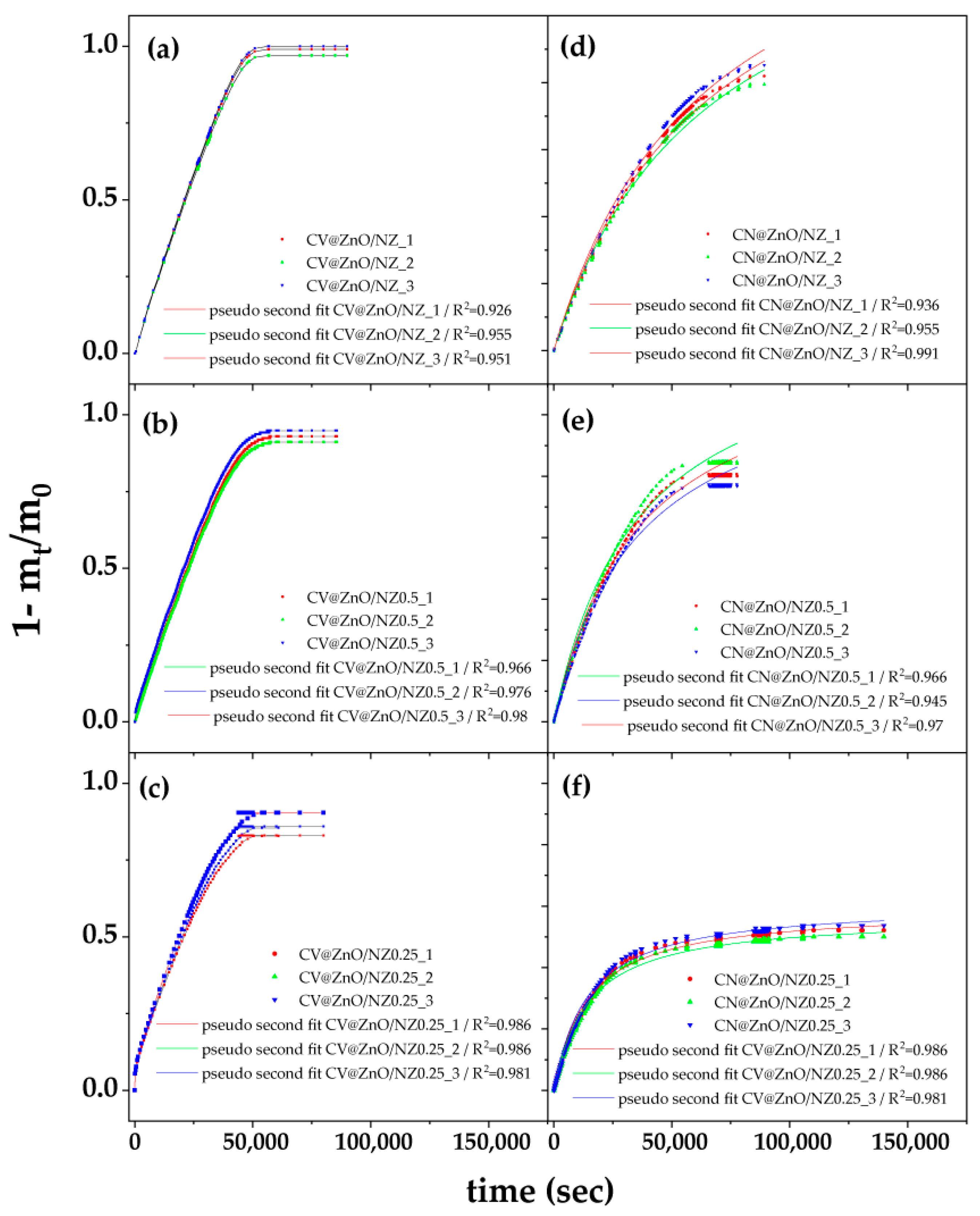
In Figure 3, the release kinetics (triplicates) plots of ZnO/NZ binary nanohybrids as well as modified with CV and tCN ternary nanohybrids are shown for comparison. These release kinetics were simulated with pseudo second order kinetic equation, and the simulation results are listed in Table 2.
Figure 3. (a) Release kinetics of CV molecules from CV@ZnO/NZ1.0 nanohybrid at 70 °C, (b) release kinetics of CV molecules from CV@ZnO/NZ0.5 nanohybrid at 70 °C, (c) release kinetics of CV molecules from CV@ZnO/NZ0.25 nanohybrid at 70 °C, (d) release kinetics of tCN molecules from tCN@ZnO/NZ1.0 nanohybrid at 70 °C, (e) release kinetics of tCN molecules from tCN@ZnO/NZ0.5 nanohybrid at 70 °C, and (f) release kinetics of tCN molecules from tCN@ZnO/NZ0.25 nanohybrid at 70 °C. Inside each plot the pseudo second order kinetic equation fitting results are listed for comparison.
Table 2. Calculated mean values of the pseudo-second-order constant (k2,average), desorption capacity at equilibrium (qe,average), for all obtained ternary nanohybrids along with the gravimetrically calculated CV and tCN %wt. adsorption capacity and their antioxidant activity EC50,DPPH.
As listed in Table 2, all obtained ternary nanohybrids adsorbed high amounts of both CV and tCN essential oils, ranging from 62 to 66% by weight. For both types of nanohybrids, the adsorbed amount of EOs increased with higher NZ content, which is a direct consequence of the high surface area and superior porosity of the natural zeolite that provides ample sites for the physical entrapment and adsorption of volatile compounds [32,64]. CV-based nanohybrids exhibited a slightly higher adsorption capacity than their tCN-based counterparts, a difference that may be attributed to the smaller molecular size and different polarity of CV, potentially allowing for more efficient packing within the zeolite pores [25,65].
The mean k2 values in Table 2 indicate that the CV-based nanohybrids have lower release rate constants than tCN-based nanohybrids for the high-NZ formulations, but the trend is complex. Furthermore, for both systems, the release rate (k2) increased as the NZ content increased (i.e., as the ZnO-to-NZ ratio decreased). This trend is consistent with the behavior of porous carriers, where a higher proportion of adsorbent often leads to a larger fraction of essential oil being physiosorbed and thus more readily released [31,66].
The calculated qe values reveal a key difference in the desorption behavior. The CV-based nanohybrids released almost all the adsorbed CV, whereas the tCN-based nanohybrids retained a fraction of the adsorbed tCN, which did not desorb. This strongly bonded tCN fraction increased with higher NZ content. Based on an overall assessment of the release kinetics, we conclude that tCN molecules form stronger bonds (likely chemical bonds) with the ZnO/NZ surface than CV molecules. This chemically bonded fraction of tCN increases with NZ content due to the greater available surface area for interaction. The remaining, non-bonded fraction of tCN, however, is released more rapidly than the CV molecules, which may be related to its higher vapor pressure or weaker confinement on the NZ surface compared to CV [67].
These release kinetics findings are in excellent agreement with the structural and spectroscopic evidence obtained from XRD and FTIR analyses. The XRD results demonstrated a more pronounced attenuation of the ZnO crystal reflections in the tCN-based nanohybrids compared to the CV-based ones. This greater signal reduction is indicative of a denser organic layer on the ZnO surface, which disrupts coherent X-ray scattering more effectively and strongly suggests a more intimate and robust interaction between tCN and the ZnO nanorods [68]. This hypothesis is further corroborated by the FTIR spectra, which revealed a notable enhancement in the intensity of the Zn–O stretching band specifically in the tCN-modified nanohybrids. This spectroscopic shift is a classic signature of chemisorption, likely involving the coordination of the aldehyde group (-CHO) of tCN with the Lewis acid sites (Zn2+) on the ZnO surface [49,59]. This strong chemical bonding explains the presence of the non-desorbing tCN fraction (lower qe). Conversely, the weaker interaction of CV, likely dominated by physisorption and hydrogen bonding [51], results in less perturbation of the ZnO crystal lattice (less XRD attenuation), minimal change in the Zn–O FTIR band, and a desorption profile where nearly all adsorbed molecules are released. The increasing fraction of strongly bonded tCN with higher NZ content can be attributed to the greater availability of the ZnO/NZ interface, which provides more sites for this specific chemisorption to occur.

3.1.4. Antioxidant Activity of Ternary Nanohybrids

The listed in Table 2 EC50,DPPH values provide crucial insight into the antioxidant efficacy of these nanohybrids and further corroborate the proposed interaction mechanisms. The EC50 value represents the effective concentration required to scavenge 50% of the DPPH radicals, where a lower EC50 indicates higher antioxidant activity [69]. For the CV-based nanohybrids, the EC50 values decreased significantly with increasing NZ content (from 20.09 mg/mL for CV@ZnO/NZ1.0 to 6.02 mg/mL for CV@ZnO/NZ0.25). This trend aligns perfectly with the higher CV adsorption capacity and the faster release rate (higher k2) observed for nanohybrids with more NZ. The greater quantity of readily available CV molecules in these formulations leads to a more potent and immediate radical scavenging response [70].
In stark contrast, the tCN-based nanohybrids exhibited an opposite trend, with EC50 values increasing with NZ content (from 23.64 mg/mL for tCN@ZnO/NZ1.0 to 33.24 mg/mL for tCN@ZnO/NZ0.25), indicating a reduction in antioxidant potency. This finding is consistent with the release kinetics, which showed that a larger fraction of tCN becomes strongly chemisorbed and non-desorbing in nanohybrids with higher NZ content. While these nanohybrids have a high total tCN loading, a significant portion of the active compound is effectively “locked” onto the carrier surface through strong chemical bonds and is therefore unavailable to participate in the DPPH radical scavenging reaction [71]. The antioxidant activity measured thus stems only from the smaller, rapidly released fraction of tCN, resulting in a higher EC50 [23,49].
Comparing the two systems at similar ZnO-to-NZ ratios, the CV-based nanohybrids consistently show superior antioxidant activity (lower EC50) compared to their tCN-based counterparts. This can be attributed to the more efficient release of the active compound in the CV system. While tCN forms a more stable and potentially longer-lasting reservoir on the nanocarrier, CV offers greater immediate antioxidant efficacy [24,72].
In conclusion, the choice between CV and tCN for active packaging applications involves a trade-off between immediate antioxidant potency and the potential for prolonged release. The CV@ZnO/NZ system, particularly the CV@ZnO/NZ0.25 formulation, is highly effective for applications requiring rapid and powerful antioxidant action. In contrast, the tCN@ZnO/NZ system, with its stronger binding and slower, more sustained release profile, may be more suitable for applications where long-term, persistent activity is desired, even if the initial antioxidant effect is less pronounced [23]. These insights are critical for the rational design of active packaging materials tailored to specific food preservation needs.

3.1.5. Antibacterial Activity of Nanohybrids

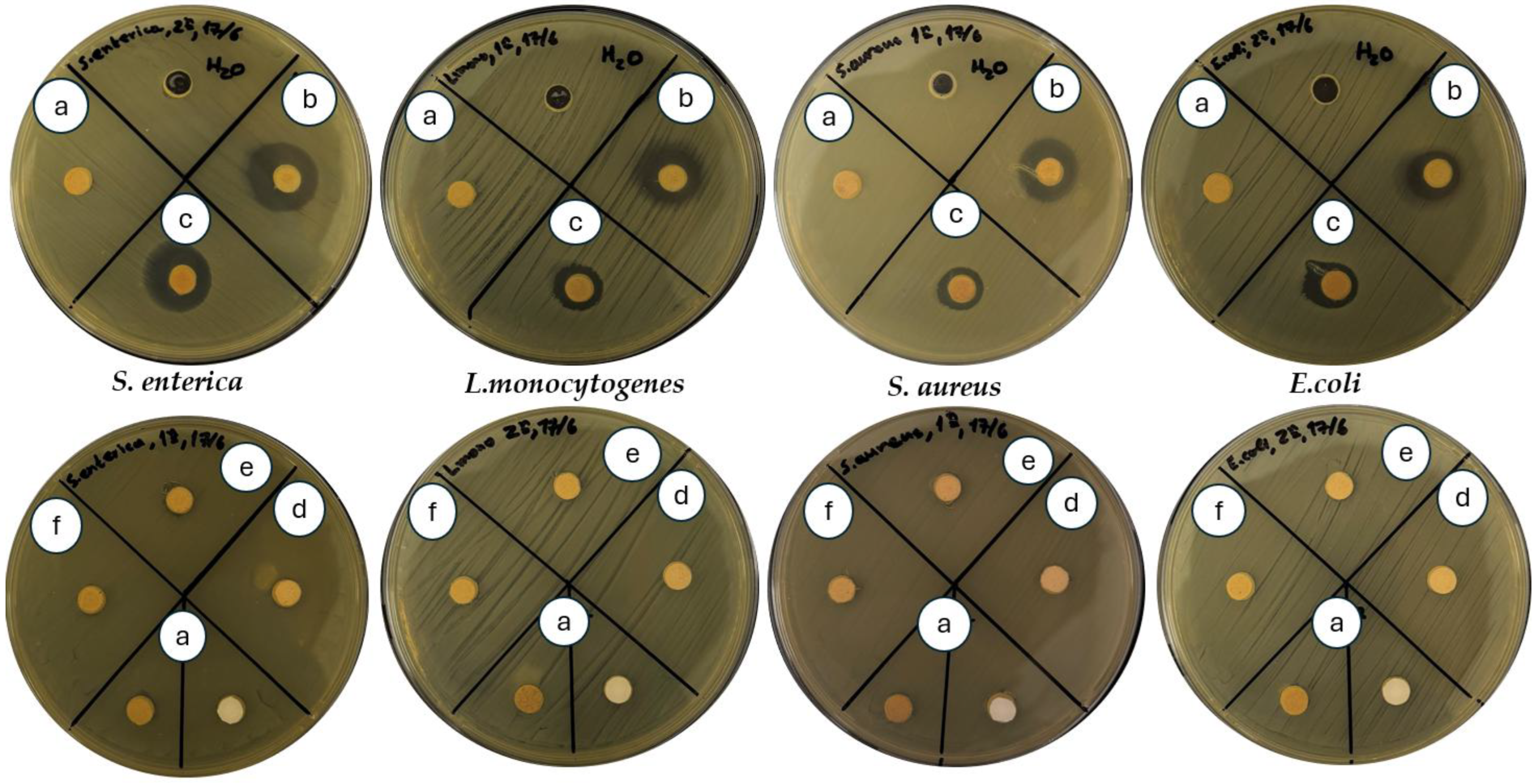
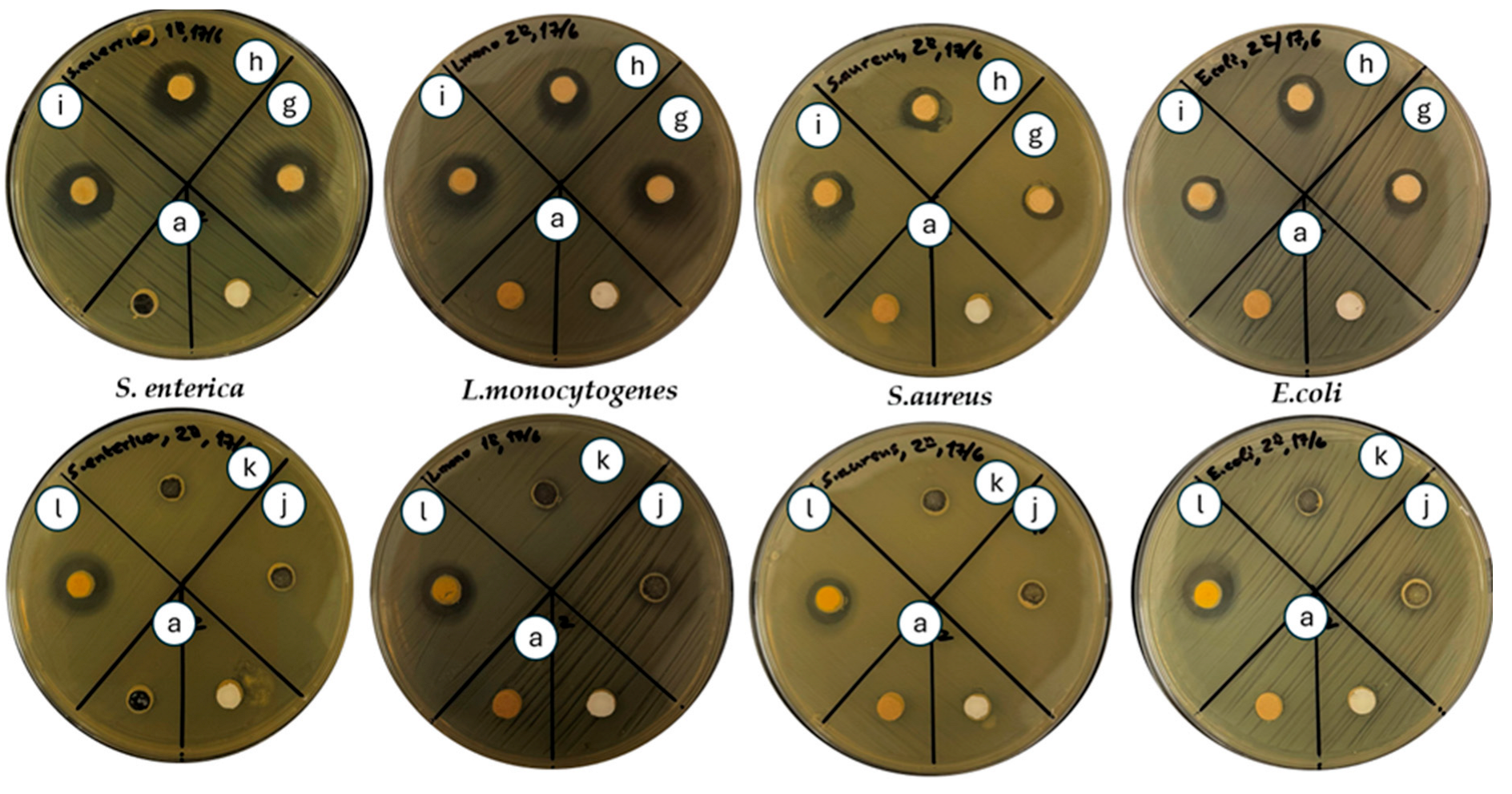
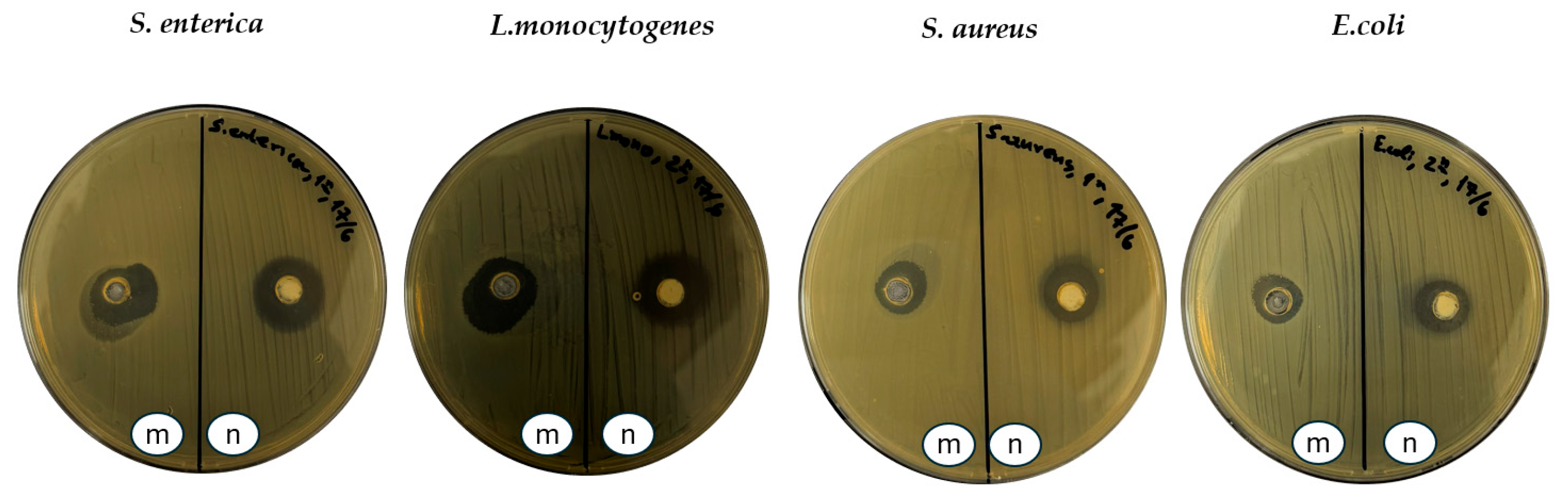
In Table 3, the antibacterial activity of nanohybrids is presented. In addition, representative petri dishes images of recorded inhibition zones during the antibacterial experiment test of nanohybrids are shown in Figure 4, Figure 5 and Figure 6 for comparison.
Table 3. Antibacterial activity of pure CV. pure tCN, pure NZ as well as CV@NZ and tCN@NZ nanohybrids against Salmonella enterica (S. enterica), Listeria mono-cytogenes (L. monocytogenes), Staphylococcus aureus (S. aureus) and Escherichia coli (E. coli). Results are inhibition zone diameters in mm (mean ± SD, n = 3).
Figure 4. Petri dishes images of pure NZ (a), CV@NZ (b), and tCN@NZ (c) as well as ZnO/NZ (d), ZnO/NZ0.5 (e), and ZnO/NZ0.25 (f) nanohybrids against S. enterica, L. monocytogenes, S. aureus, and E. coli.
Figure 5. Petri dishes images of pure NZ (a), CV@ZnO/NZ1.0 (g), CV@ZnO/NZ0.5 (h), and CV@ZnO/NZ0.25 (i) as well as tCNZnO/NZ1.0 (j), tCNZnO/NZ0.5 (k), and tCNZnO/NZ0.25 (l) nanohybrids against S. enterica, L. monocytogenes, S. aureus, and E. coli.
Figure 6. Petri dishes images of pure CV (m) and tCN (n) against S. enterica, L. monocytogenes, S. aureus, and E. coli.
The highest inhibition zone for all the nanohybrids was observed against gram positive bacterium Listeria monocytogenes. The greatest value was 13.05 ± 0.5 mm, and it was a result of tCN@NZ nanohybrid. In all cases pure NZ did not illustrate antibacterial activity against none of the pathogens. The incorporation of the CV and tCN enhanced its activity and led to the formation of clear zones. Regarding to CV@NZ, the values of inhibition zone were about 6.50 ± 1.50 mm, 7.50 ± 1.50 mm, 5.50 ± 0.50 mm, and 8.00 ± 3.0 mm for S. enterica, L. monocytogenes, S. aureus, and E. coli. For most of the bacteria, the antibacterial activity of CV@NZ was lower than pure CV, except from E. coli, in which for the nanohybrid the clear zone was higher. The opposite pattern was observed for CN@NZ, in which the inhibition in case of tCN@NZ was higher than pure tCN, or at the same value. Specifically, the values of inhibition zone were about 8.50 ± 2.50 mm, 13.50 ± 0.50 mm, 8.50 ± 1.50 mm, and 9.00 ± 3.00 mm for S. enterica, L. monocytogenes, S. aureus, and E. coli.
Zeolite is a set of aluminosilicate crystals, composed of AlO4 and SiO4 tetrahedra. These tetrahedral parts are connected to each other through oxygen atoms. The framework of interconnected channels and cavities can interact with exchangeable cations and present a poor antimicrobial activity. In many cases, nanozeolite can act as carrier for bioactive compounds [55]. The incorporation of CV and tCN enhances its antibacterial activity, due to their antimicrobial properties. CV, a monoterpenoid phenol, exhibits strong antibacterial activity. Its hydroxyl functional group disrupts the integrity of the bacterial cell membrane, ultimately causing cell death [23]. Transcinnamaldehyde (tCN) is a strong electrophile and can act as Michael acceptor. In this way, this compound interacts with -SH and -NH2 groups that exist in bacteria proteins and lead to their damage. Normally, tCN illustrates higher antibacterial activity than CV, in view of its direct interaction of aldehyde group with bacterium cell damage [73]. This is probably the reason for greater clear zones in case of tCN nanohybrids.
For the nanohybrids ZnO/NZ1.0, ZnO/NZ0.5, and ZnO/NZ0.25, no clear inhibition zones were observed, as it is also illustrated in Figure 4. As mentioned above, NZ exhibits poor antimicrobial activity. In addition, although ZnO can display antimicrobial properties, at neutral pH it does not readily diffuse due to nanoparticle agglomeration [74]. The Mueller–Hinton agar medium has a neutral pH, which is most likely responsible for the absence of antimicrobial activity. However, the incorporation of essential oils led to improved results, as discussed below.
In Table 4, the inhibition zones of ternary nanohybrids tCN@ZnO/NZ1.0, tCN@ZnO/NZ0.5, and tCN@ZnO/NZ as pure tCN are presented.
Table 4. Antibacterial activity of pure tCN as well as tCN@ZnO/NZ1.0, tCN@ZnO/NZ0.50, and tCN@ZnO/NZ0.25 nanohybrids against Salmonella enterica (S. enterica), Listeria monocytogenes (L. monocytogenes), Staphylococcus aureus (S. aureus), and Escherichia coli (E. coli). Results are inhibition zone diameters in mm (mean ± SD, n = 3).
For most of the nanohybrids, inhibition zone did not format. Notably, for tCN@ZnO/NZ nanohybrids, inhibition zones of 8.00 ± 1.40 mm, 13.00 ± 0.00, 8.00 ± 1.40 mm, and 7.00 ± 0.00 mm were observed against the foodborne pathogens S. enterica, L. monocytogenes, S. aureus, and E. coli, respectively. The greatest inhibition zone was also noticed for L. monocytogenes with a diameter of 13.00 ± 0.00 mm. It is noteworthy that for all the pathogens, except S. enterica, a poor inhibition was spotted for tCN@ZnO/NZ and tCN@ZnO/NZ, without the formation of clear zones.
In comparison with the kinetic assays described above, the release of tCN becomes more difficult as the percentage of NZ increases. Antimicrobial tests highlighted that the lowest percentage of NZ led to the formation of inhibition zones. Crystal size and nanoparticle abundance affect the controlled release of bioactive compounds and can hinder their antimicrobial activity [75].
Table 5 highlights the antimicrobial properties of the ternary nanohybrids CV@ZnO/NZ1.0, CV@ZnO/NZ0.50, and CV@ZnO/NZ0.25, as well as pure CV.
Table 5. Antibacterial activity of pure CV. as well as CV@ZnO/NZ1.0, CV@ZnO/NZ0.50, and CV@ZnO/NZ0.25 nanohybrids against Salmonella enterica (S. enterica), Listeria monocytogenes (L. monocytogenes), Staphylococcus aureus (S. aureus), and Escherichia coli (E. coli). Results are inhibition zone diameters in mm (mean ± SD, n = 3).
In all cases, the formation of clear inhibition zones was observed. The largest inhibition zone was recorded against L. monocytogenes for pure CV, with a diameter of 10.50 ± 2.10 mm, whereas CV@ZnO/NZ1.0 produced a clear zone of 8.50 ± 0.70 mm. For most pathogens, no clear pattern was observed in antibacterial activity as a function of NZ percentage. Specifically, for CV@ZnO/NZ1.0 inhibition zones of 6.50 ± 0.70, 8.50 ± 0.70, 4.00 ± 1.40, and 6.50 ± 2.10 mm were observed; for CV@ZnO/NZ0.5, 5.50 ± 0.70, 7.50 ± 2.10, 5.50 ± 2.10 mm, and 6.50 ± 0.70 were observed; and finally for CV@ZnO/NZ0.25 7.00 ± 1.40, 6.50 ± 0.70, 8.00 ± 0.70, and 6.50 ± 2.10 mm were observed against S. enterica, L. monocytogenes, S. aureus, and E. coli.
Regarding the kinetic assays, increasing the NZ content enhanced the adsorption of CV, likely due to the increased surface area available for oil entrapment. Higher adsorption was observed for CV compared with tCN, probably as a result of its higher polarity. For CV@ZnO/NZ nanohybrids, in some cases, increasing the NZ content enhanced their antimicrobial activity. An increase in clay content promotes higher CV loading by offering a larger surface area and additional internal channels that facilitate CV binding through hydrogen bonding, ion–dipole interactions, and van der Waals forces. This interaction enhances the effective concentration and stability of CV, particularly in nanostructured systems such as microcapsules or films. Consequently, clay incorporation improves CV bioavailability, reduces its volatility, and enables controlled release, thereby strengthening its antimicrobial performance through the layered structure of the clay [76].

3.2. Physicochemical Characterization of Nanocomposite Active Films

3.2.1. XRD Analysis of PLA/TEC/CV@ZnO/NZx, and PLA/TEC/tCN@ZnO/NZx Active Films

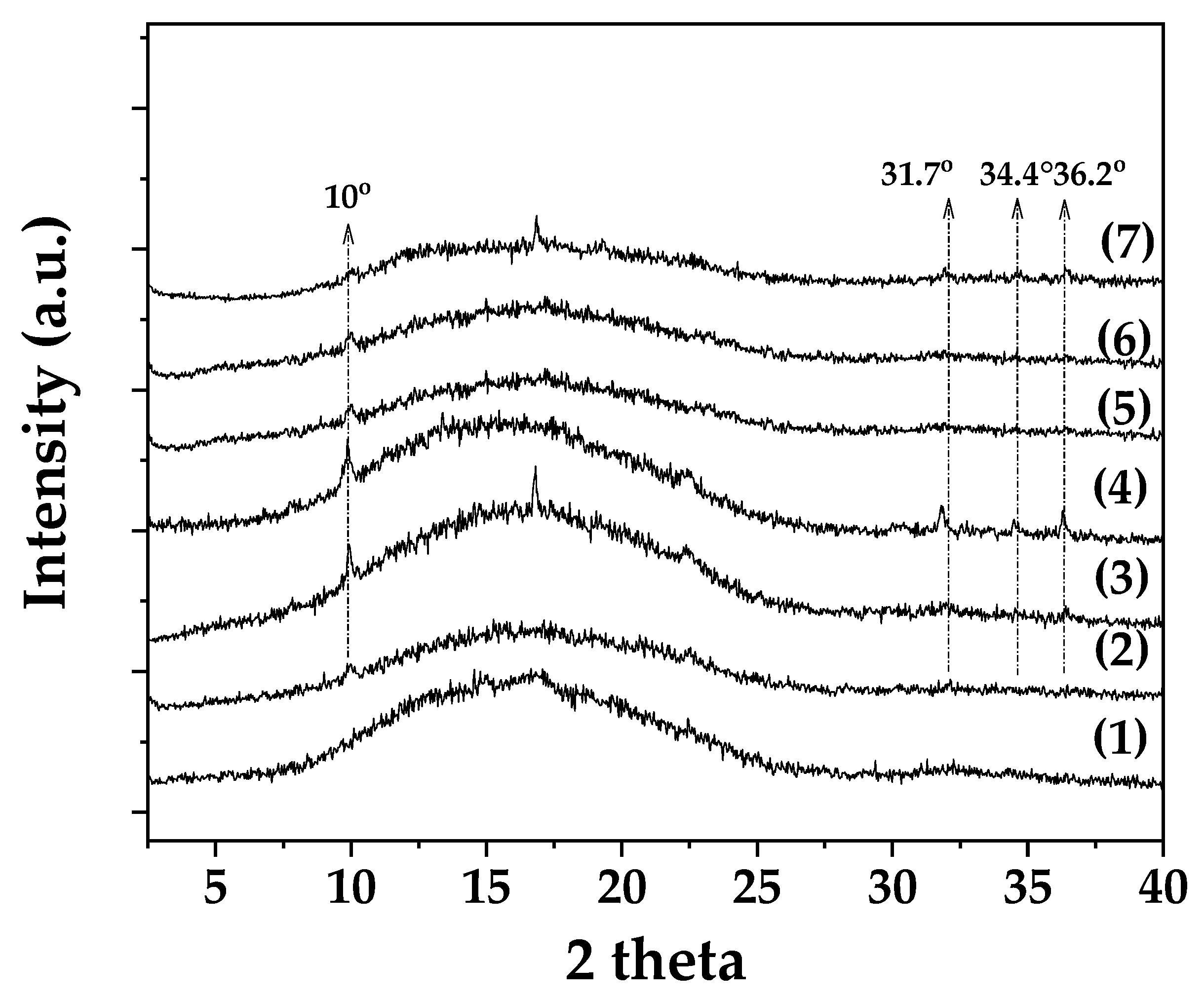
In Figure 7 the XRD plots of pure PLA/TEC films and all obtained active films are shown for comparison.
Figure 7. XRD plots of (1) PLA/TEC, (2) PLA/TEC/CV@ZnO/NZ0.25, (3) PLA/TEC/CV@ZnO/NZ0.5, (4) PLA/TEC/CV@ZnO/NZ 1.0, (5) PLA/TEC/tCN@ZnO/NZ0.25, (6) PLA/TEC/tCN@ZnO/NZ0.5, and (7) PLA/TEC/tCN@ZnO/NZ 1.0.
The X-ray diffraction patterns of the neat PLA/TEC film and the active nanocomposite films are presented in Figure 5. The analysis reveals several key findings regarding the structure and nanofiller dispersion:
The neat PLA/TEC film (Figure 7, line 1) exhibited a broad halo centered at approximately 2θ = 16.7°, which is characteristic of the completely amorphous nature of poly(L-lactic acid) [77,78]. The addition of the plasticizer TEC effectively suppresses the cold crystallization of PLA, resulting in this fully amorphous profile, which is beneficial for film transparency and flexibility [20].
The incorporation of all ternary nanohybrids (CV@ZnO/NZ and tCN@ZnO/NZ) did not induce any significant crystallization in the PLA matrix. All nanocomposite films retained the broad amorphous halo, confirming that the nanofillers did not act as nucleating agents for PLA under the employed processing conditions (Figure 5, lines 2–7). This preservation of the amorphous structure is crucial as it helps maintain the desired mechanical and barrier properties of the base polymer [79].
Critically, the XRD patterns of the nanocomposite films confirmed the successful integration of the nanohybrids into the polymer matrix. Distinct, low-intensity diffraction peaks were observed at 2θ = 31.7°, 34.4°, and 36.2°, which correspond to the (100), (002), and (101) planes of the hexagonal wurtzite structure of ZnO, respectively [37,45]. As anticipated, the intensity of these ZnO-related peaks was most pronounced in the films containing the nanohybrids with the highest ZnO content (i.e., PLA/TEC/CV@ZnO/NZ1.0 and PLA/TEC/tCN@ZnO/NZ1.0), due to the higher volume fraction of the crystalline phase.
Furthermore, a characteristic peak attributable to the natural zeolite (NZ) substrate was consistently detected at approximately 2θ = 10° in all nanocomposite films [32,64]. The persistence of the characteristic peaks for both ZnO and NZ without significant peak broadening or shifting suggests that the crystalline structures of the inorganic fillers remained intact during the melt-extrusion process. More importantly, the low intensity and sharpness of these peaks indicate a good level of dispersion and exfoliation of the nanohybrids within the PLA/TEC matrix, without the formation of large, micron-scale aggregates that would produce intense, sharp reflections [80,81]. This state of dispersion is a prerequisite for achieving effective mechanical reinforcement and uniform antimicrobial/antioxidant activity throughout the packaging film.

3.2.2. ATR–FTIR Analysis of PLA/TEC/CV@ZnO/NZx, and PLA/TEC/tCN@ZnO/NZx Active Films

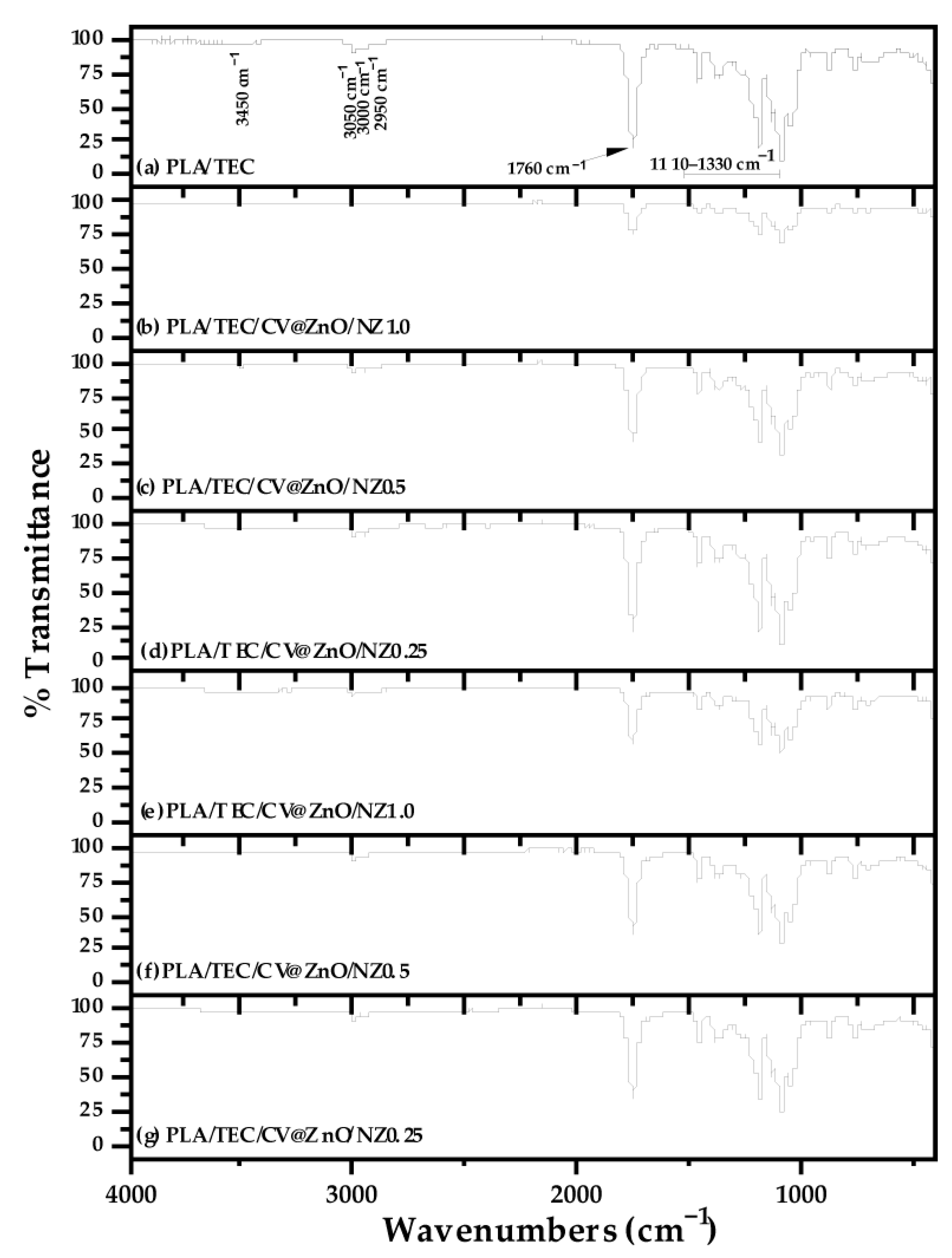
Figure 8 presents the ATR-FTIR spectra of the pure PLA/TEC film and all active nanocomposite films.
Figure 8. ATR-FTIR spectra of (a) PLA/TEC, (b) PLA/TEC/CV@ZnO/NZ1.0, (c) PLA/TEC/CV@ZnO/NZ0.5, (d) PLA/TEC/CV@ZnO/N0.25, (e) PLA/TEC/tCN@ZnO/NZ1.0, (f) PLA/TEC/tCN@ZnO/NZ0.5, and (g) PLA/TEC/tCN@ZnO/NZ0.25.
The spectrum of the neat PLA/TEC film (Figure 8a) exhibits all the characteristic absorption bands of poly(L-lactic acid) plasticized with triethyl citrate [20]. The key bands include the following: a broad O–H stretching vibration at ~3450 cm−1, the asymmetrical and symmetrical C–H stretching vibrations of the methyl groups at 2950 and 3000 cm−1, the strong and sharp C=O stretching vibration of the ester carbonyl group at 1750 cm−1, the C–O–C stretching vibrations in the range of 1080–1180 cm−1, and the CH3 bending vibration at 1450 cm−1 [77,78].
A critical observation from Figure 8 is that the ATR-FTIR spectra of all PLA/TEC/CV@ZnO/NZx and PLA/TEC/tCN@ZnO/NZx active films are virtually identical to that of the pure PLA/TEC film. No new, distinct absorption bands are observed that could be attributed to the characteristic vibrations of ZnO (Zn–O stretch at 400–600 cm−1), natural zeolite (Si–O stretches at ~1090 and ~468 cm−1), CV (aromatic C–C stretch at ~1590 cm−1), or tCN (C=O stretch at ~1680 cm−1) [37,53,54].
This absence of new peaks can be attributed to two primary factors:
High Dispersion and Encapsulation: The lack of phase-separated aggregates suggests that the ternary nanohybrids (CV@ZnO/NZ and tCN@ZnO/NZ) are well-dispersed and encapsulated within the PLA/TEC matrix at a nanoscale level. When nanofillers are exfoliated and distributed homogeneously, their characteristic FTIR signals can become too weak to detect against the strong background of the polymer matrix, especially at the low loadings (10 wt.%) used here [79,80].
Low Concentration and Signal Masking: The characteristic bands of the nanohybrid components (particularly the Zn–O stretch) may be present but are overshadowed by the intense absorption bands of the PLA/TEC matrix. The ATR technique has a limited penetration depth, and the signal is dominated by the major polymer components [81].
However, a subtle but consistent trend is observed: the overall intensity of the ATR-FTIR spectra decreases as the NZ content in the nanohybrid increases (i.e., from films with ZnO/NZ1.0 to ZnO/NZ0.25). This phenomenon is likely related to changes in the film’s surface morphology and contact with the ATR crystal. Composites with higher filler content, especially involving porous materials like zeolites, can lead to a rougher surface or increased light scattering at the polymer–filler interface, which reduces the efficiency of the evanescent wave coupling and results in lower recorded signal intensity [82]. This effect is more pronounced with higher NZ content due to its particulate nature, corroborating the good integration of the nanofiller within the polymer and its influence on the composite’s physical structure.
In conclusion, the ATR-FTIR analysis confirms the successful formation of the composite films without revealing chemical interactions between the PLA/TEC matrix and the nanohybrids. The absence of new peaks, coupled with the observed decrease in spectral intensity with higher NZ loading, points towards a physical incorporation mechanism where the nanohybrids are well-dispersed within the polymer, acting primarily as functional fillers rather than chemically modifying the PLA structure.

3.2.3. SEM Morphology of PLA/TEC/CV@ZnO/NZx, and PLA/TEC/tCN@ZnO/NZx Active Films

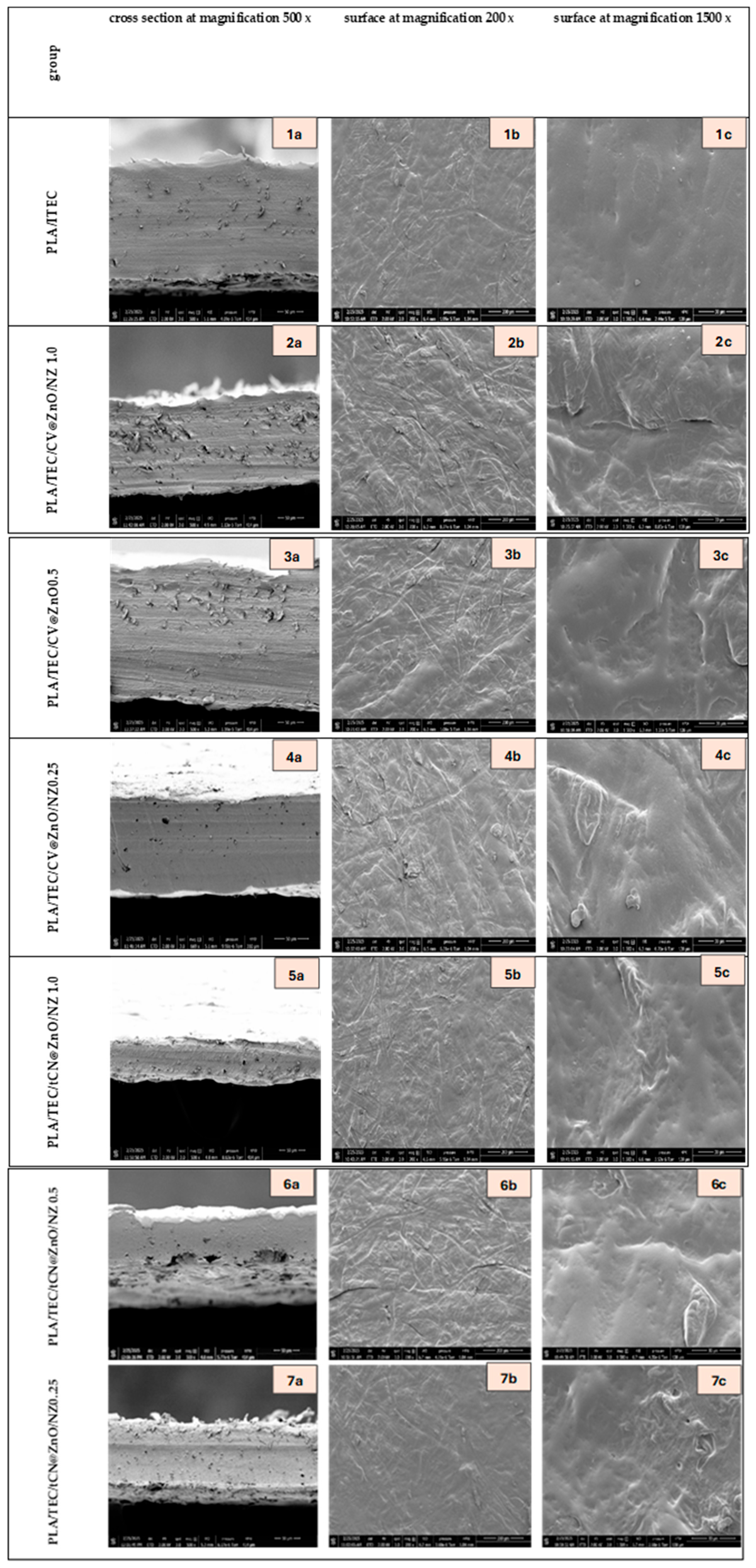
Surface and cross section SEM images of pure PLA/TEC film as well as all obtained PLA/TEC/CV@ZnO/NZx, and PLA/TEC/tCN@ZnO/NZx active films are shown in Figure 9 for comparison.
Figure 9. Scanning Electron Microscopy (SEM) micrographs of film surfaces from different experimental group samples: PLA/TEC (1a1c), PLA/TEC/CV@ZnO/NZ1.0 (2a2c), PLA/TEC CV@ZnO/NZ0.5 (3a3c), PLA/TEC/CV@ZnO/NZ0.25 (4a4c), PLA/TEC/tCN@ZnO/NZ1.0 (5a5c), PLA/TEC/tCN@ZnO/NZ0.5 (6a6c), and PLA/TEC/tCN@ZnO/NZ0.25 (7a7c). Images are presented at 500× magnification for cross-sections (1a7a) and 200× and 1500× magnifications for surface morphology (1b7b,1c7c).
The surface and cross-sectional morphology of the films, analyzed by SEM as shown in Figure 9, provide critical visual evidence of the nanocomposites’ structural integrity and filler–matrix compatibility. The surface morphology of all active films was remarkably similar to the pure PLA/TEC film, exhibiting uniform roughness and homogeneity without visible cracks or large aggregates. This indicates that the ternary nanohybrids (CV@ZnO/NZ and tCN@ZnO/NZ) were effectively dispersed and integrated within the PLA/TEC matrix during melt extrusion, a crucial factor for maintaining consistent mechanical and barrier properties in the final packaging material by preventing defect formation. A more profound insight was revealed in the cryo-fractured cross-sections, which showed a clear trend towards a more compact and coherent structure with fewer imperfections as the NZ content in the nanohybrid increased. This morphological evolution can be directly correlated with the interfacial interactions elucidated by the release kinetics. The kinetic data demonstrated that a higher NZ content resulted in a greater quantity of essential oil molecules, particularly the chemisorbed tCN, being strongly bonded to the hybrid’s surface. We propose that this layer of bonded EO molecules acts as a native compatibilizing interface at the inorganic–organic boundary. The organic “shell” formed by CV or tCN around the ZnO/NZ “core” reduces the nanofiller’s surface energy and improves its wettability by the PLA matrix. Consequently, as the NZ content—and thus the volume of this compatibilizing interface—increases, the interfacial adhesion strengthens. This enhanced adhesion prevents filler debonding during fracture, resulting in the smoother and more compact cross-sections observed in films like PLA/TEC/CV@ZnO/NZ0.25 and PLA/TEC/tCN@ZnO/NZ0.25. This interpretation aligns with the ATR-FTIR findings, which indicated fine physical dispersion without chemical reaction, a state facilitated by this physical compatibilization. Therefore, NZ content is a pivotal factor that dually controls the active release profile and the composite’s structural morphology. The superior integration seen in high-NZ formulations suggests that these films will exhibit enhanced mechanical performance and are ideally suited for applications requiring a sustained, long-term release of active compounds, as the same interfacial bonding that governs release also fortifies the film’s internal structure.

3.2.4. Tensile Properties of PLA/TEC/CV@ZnO/NZx, and PLA/TEC/tCN@ZnO/NZx Active Films

In Table 6, the calculated mean values as well as the standard deviation values of Young’s modulus (E), ultimate tensile strength (σuts), and the percent elongation at break (%ε) for all obtained films are listed for comparison.
Table 6. Values of Young’s modulus (E), ultimate tensile strength (σuts), and the percent elongation at break (%ε) for all obtained films.
The tensile properties data reveal a clear and interpretable trend: the mechanical behavior of the nanocomposite films is directly governed by the composition of the ternary nanohybrid and the ensuing interfacial interactions, which are corroborated by both SEM and release kinetics analyses. The incorporation of nanohybrids consistently enhances the mechanical strength (ultimate tensile strength) while reducing the ductility (elongation at break) compared to the pure PLA/TEC film, with the notable exception of the PLA/TEC/tCN@ZnO/NZ1.0 sample. This fundamental trade-off between strength and ductility is a classic characteristic of particle-reinforced composites. The nanohybrids act as reinforcing fillers, impeding the mobility and deformation of the polymer chains, which leads to higher stress at break but also to earlier brittle fracture [80,83].
The most significant finding is the distinct and opposing influence of the two inorganic components, ZnO and NZ. An increase in the ZnO content within the nanohybrid systematically enhances the ductility of the films. This can be attributed to the role of the EOs. As established by the release kinetics, CV exhibits weaker physisorption, while a significant fraction of tCN is strongly chemisorbed [53,63]. We propose that the more weakly bound or freely available EO molecules, which are present in greater volume with higher ZnO loadings (due to lower NZ dilution), can act as secondary plasticizing agents within the PLA matrix. These molecules can intercalate between polymer chains, increasing free volume and chain mobility, thereby mitigating the inherent brittleness imparted by the rigid fillers and resulting in higher elongation at break [84].
Conversely, an increase in the NZ content leads to a pronounced enhancement of the mechanical strength. This trend is powerfully explained by the synergistic evidence from SEM and release kinetics. The SEM cross-sections visually demonstrated that a higher NZ content results in a more compact and coherent morphology with fewer voids and imperfections [80]. This superior structural integrity is a direct consequence of enhanced filler–matrix adhesion. The release kinetics provide the mechanism for this adhesion: a higher NZ content provides a greater surface area for the adsorption of EO molecules [32,64]. This creates a thicker and more pervasive organic interface of bonded CV or cinnamaldehyde around the filler particles. This interface acts as an effective compatibilizer, improving stress transfer from the soft polymer matrix to the rigid nanohybrid, a key mechanism for reinforcement in nanocomposites [12,81]. When stress is applied, the well-bonded filler particles can carry a greater load, leading to the observed higher ultimate tensile strength.
Finally, the general observation that CV-based films are more ductile than their tCN-based counterparts is a direct consequence of their interaction chemistry. The weaker physisorption of CV, which allows for a more complete and rapid release as shown in the kinetics, also means more CV molecules are available to plasticize the polymer matrix during mechanical testing. In contrast, the tCN molecules are predominantly locked in a chemisorbed state on the filler surface, making them unavailable for plasticizing the bulk polymer and resulting in a stiffer, stronger, but less ductile material [61,63].
In conclusion, the mechanical properties are not merely a function of filler loading but are intricately controlled by the complex interplay between the nanohybrid’s composition and the surface chemistry of the active compounds. The ZnO/NZ ratio allows for the tailoring of film properties, where higher NZ content promotes strength through enhanced compatibilization and interfacial adhesion, while higher ZnO content favors ductility, likely through a secondary plasticization effect mediated by the more readily released essential oils.

3.2.5. Barrier Properties of Films

The oxygen transmission rate (OTR) and oxygen permeability (PeO2) of the neat PLA/TEC film and all active nanocomposite films are summarized in Table 7. These properties are critical for evaluating the potential of the developed materials to extend the shelf life of oxygen-sensitive food products.
Table 7. Oxygen barrier properties of the neat PLA/TEC and active nanocomposite films as well as EC50,DPPH values of active nanocomposite films.
The main results from Table 7 demonstrate a significant improvement in the oxygen barrier properties upon incorporation of the ternary nanohybrids. The OTR of the neat PLA/TEC film was 196 mL·m−2·day−1. In contrast, all active films exhibited substantially lower OTR values, ranging from 46 to 89 mL·m−2·day−1. This corresponds to a reduction in oxygen permeability (PeO2) by 59% to 82% compared to the control film. The most pronounced barrier enhancement was observed for the PLA/TEC/CV@ZnO/NZ0.25 film, which showed the lowest OTR (46 mL·m−2·day−1) and PeO2 (2.10 × 10⁻⁹ cm2·s−1). The corrected value for PLA/TEC/tCN@ZnO/NZ1.0 is now 2.10 × 10⁻⁹ cm2·s−1, indicating a 60% improvement over the neat PLA/TEC film and aligning with the expected barrier enhancement trend for nanocomposites.
The remarkable improvement in the oxygen barrier of nanocomposite films can be attributed to a synergistic combination of factors revealed by SEM and release kinetics. The well-dispersed ZnO/NZ nanohybrids, as confirmed by SEM (Figure 9), create a “tortuous path” within the polymer matrix, forcing oxygen molecules to follow a more convoluted diffusion route around the impermeable inorganic platelets and particles, thereby increasing the effective diffusion path length and reducing permeability [24,72]. This mechanism is most effective when the nanofillers are exfoliated and uniformly distributed, a condition met in our films as evidenced by the homogeneous morphology and absence of large aggregates in the SEM micrographs. The consistent reduction in PeO2 across all nanocomposite formulations, including PLA/TEC/tCN@ZnO/NZ1.0, confirms the effectiveness of this nanofiller dispersion.
Furthermore, the release kinetics provide a crucial insight into the role of the essential oils (EOs). The EOs, particularly the more readily released CV, can occupy free volume holes within the amorphous PLA matrix [75]. This occupation reduces polymer chain mobility and decreases the available pathways for gas diffusion, effectively plasticizing the matrix in a way that enhances the barrier. This explains why the CV-based films, especially those with higher NZ content (and thus higher EO loading and release rate, as per Table 1), generally exhibited superior barrier properties compared to their tCN-based counterparts. For instance, PLA/TEC/CV@ZnO/NZ0.25 showed the best performance, aligning with its high CV content and rapid release profile, which would maximize this free-volume-filling effect.
The inverse correlation between NZ content in the nanohybrid and the PeO2 value for each EO system further supports this. As the NZ content increases (from ZnO/NZ1.0 to ZnO/NZ0.25), the PeO2 decreases. This trend can be linked to the SEM observations, where higher NZ content led to a more compact and coherent film morphology with fewer interfacial defects (Figure 9, images 4a–c and 7a–c). A better-integrated structure with stronger filler–matrix adhesion, facilitated by the compatibilizing effect of the adsorbed EOs, minimizes the formation of micro-voids or channels at the interface that could serve as easy pathways for gas permeation [24,74]. Therefore, the NZ content dually optimizes the film’s structure for barrier performance by increasing the tortuosity and enhancing the morphological integrity, while the associated EO release profile provides an additional barrier enhancement mechanism.
In conclusion, the superior oxygen barrier properties of the active films, particularly the CV-based formulations with high NZ content, are a direct result of the synergistic action of the dispersed nanohybrids creating a tortuous path and the released essential oils acting as a barrier-enhancing agent by reducing polymer free volume, all within a well-compacted and coherent matrix structure.

3.2.6. Antioxidant Activity of Films

The calculated EC50,DPPH mean values of all active nanocomposite films are listed in Table 7 for comparison.
The antioxidant efficacy of the developed active packaging system, a critical parameter for preserving lipid-rich foods, is directly governed by the release dynamics and interfacial interactions of the active compounds, as revealed by the EC50,DPPH values of both the ternary nanohybrids (Table 1) and the final PLA/TEC films (Table 7).
The EC50 trends observed in the ternary nanohybrids established a fundamental dichotomy between the two essential oils. For the CV-based nanohybrids, the EC50 decreased significantly with increasing NZ content (from 20.09 mg/mL for CV@ZnO/NZ1.0 to 6.02 mg/mL for CV@ZnO/NZ0.25), indicating a more potent and immediate antioxidant action. This aligns perfectly with the higher CV adsorption capacity and faster release rate (higher k2) associated with the high-surface-area NZ, which makes a greater quantity of CV readily available for radical scavenging [70]. In stark contrast, the tCN-based nanohybrids exhibited an inverse trend, with EC50 values increasing with NZ content (from 23.64 mg/mL to 33.24 mg/mL). This is a direct consequence of the stronger chemisorption of tCN onto the ZnO surface, as evidenced by XRD and FTIR. A larger fraction of the loaded tCN becomes irreversibly bound and thus unavailable for the DPPH assay in formulations with higher NZ content, which provides a greater interfacial area for this strong bonding to occur [71,85].
This established structure–activity relationship is powerfully reflected in the antioxidant performance of the final PLA/TEC nanocomposite films. The EC50 values of the films (Table 7) are consistently and significantly higher than those of the corresponding nanohybrids (Table 1), which is expected due to the dilution of the active component within the polymer matrix. More importantly, the same contrasting trends between CV and tCN systems are preserved. For the CV-based films, the EC50 values decrease as the NZ content in the nanohybrid increases (from 64.27 mg/mL for PLA/TEC/CV@ZnO/NZ1.0 to 34.43 mg/mL for PLA/TEC/CV@ZnO/NZ0.25). This confirms that the rapid and efficient release of CV, facilitated by the high NZ content, translates effectively from the nanohybrid powder to the functional film, providing a potent antioxidant response.
Conversely, for the tCN-based films, the trend is reversed but follows the same underlying principle. The film with the highest ZnO content, PLA/TEC/tCN@ZnO/NZ1.0, shows the lowest EC50 (82.78 mg/mL), while the film with the highest NZ content, PLA/TEC/tCN@ZnO/NZ0.25, shows the highest EC50,DPPH (209.12 mg/mL). This confirms that the “locking” effect of chemisorption, which rendered a significant portion of tCN inactive in the nanohybrid, persists within the polymer matrix. In the tCN@ZnO/NZ1.0 film, the higher ZnO-to-NZ ratio means a greater proportion of the tCN is potentially in a more releasable state, leading to better antioxidant activity. In the tCN@ZnO/NZ0.25 film, the extensive chemisorption on the large NZ surface area severely limits the amount of tCN available for release and radical scavenging.
These results highlight a critical trade-off for active packaging design. The CV@ZnO/NZ system, particularly the high-NZ formulations, offers superior immediate antioxidant power, making it ideal for applications requiring a rapid response to oxidative stress. The tCN@ZnO/NZ system, in contrast, sacrifices immediate potency for the potential of a more sustained, long-term release from the strongly bound reservoir, which may be more suitable for extended shelf-life applications where initial oxidation is less critical [72]. Therefore, the choice of active compound and nanocarrier composition allows for the tailored design of antioxidant active packaging to meet specific food preservation needs.

3.2.7. Antibacterial Activity of Films

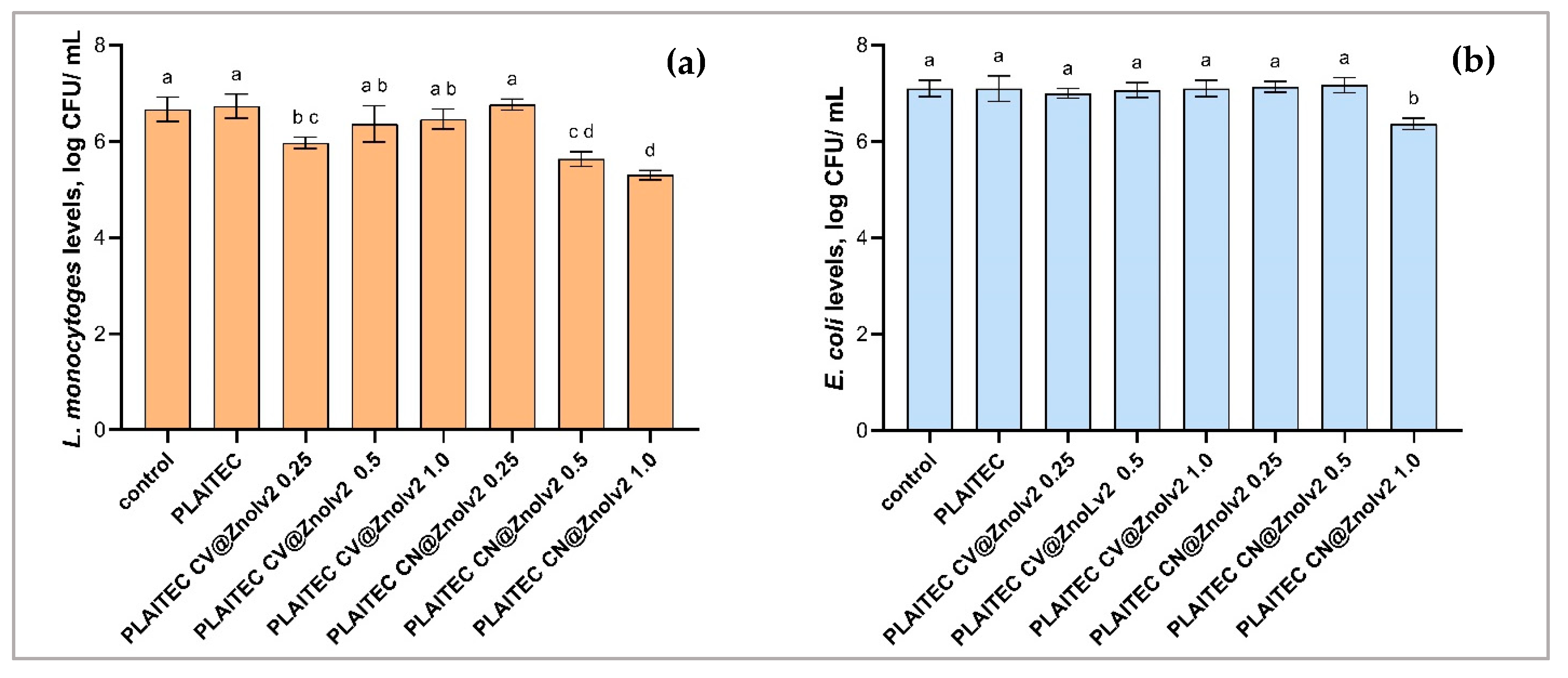
Antibacterial activity against L. monocytogenes and E. coli (Figure 10) was quantified as log10 CFU/mL using a viable-count assay, enabling comparison of pure PLA/TEC film with PLA/TEC/CV@ZnO/NZx and PLA/TEC/tCN@ZnO/NZx active nanocomposite films.
Figure 10. Mean populations of Listeria monocytogenes (a) and Escherichia coli (b) after incubation with the films. Data are presented as log10 transformations. Different letters (a, b, c and d) indicate significant differences between the groups (p < 0.05). Error bars represent the standard deviation.
The antibacterial efficacy of the PLA/TEC/CV@ZnO/NZx and PLA/TEC/tCN@ZnO/NZx films reveals a complex structure–activity relationship that is profoundly governed by the same interfacial chemistry dictating their antioxidant performance and the release kinetics of the essential oils from the CV@ZnO/NZx and tCN@ZnO/NZx nanohybrids.
A pivotal observation is the divergent antibacterial performance of the CV-based and tCN-based films, which directly mirrors—yet functionally inverts—their antioxidant behavior. While the PLA/TEC/CV@ZnO/NZ0.25 film exhibited the most potent antioxidant activity, the PLA/TEC/tCN@ZnO/NZx films, particularly PLA/TEC/tCN@ZnO/NZ1.0, demonstrated superior antibacterial efficacy, especially against the Gram-positive Listeria monocytogenes. This apparent paradox is resolved by considering the different mechanisms of action and the critical role of sustained release versus immediate availability [72]. The case of CV is defined by high availability for antioxidant power but transient antibacterial action. The release kinetics established that CV interacts with the ZnO/NZ carrier primarily through physisorption and weaker hydrogen bonding, resulting in a high and rapid release rate, especially in high-NZ formulations [53]. In the context of the DPPH assay, this rapid and complete release translates into immediate and potent radical scavenging. However, in the 18 h antibacterial assay, this very characteristic becomes a limitation; the rapid, burst release of CV likely leads to an initial high local concentration that may dissipate over the extended incubation period, reducing its effective concentration at the bacterial interface at later time points [66]. Consequently, while PLA/TEC/CV@ZnO/NZ0.25 shows good activity, its performance is transient. In stark contrast, the case of tCN presents a locked antioxidant but a sustained antimicrobial reservoir. The release kinetics and FTIR/XRD analyses confirmed that tCN undergoes strong chemisorption onto the ZnO surface, creating a significant non-desorbing fraction that is “locked” and unavailable for the DPPH assay, resulting in poor antioxidant performance [71]. However, this strong interfacial bonding is the key to its superior and sustained antibacterial performance through two proposed synergistic mechanisms. First, the chemisorbed tCN acts as a long-lasting reservoir, undergoing slow, sustained desorption during the incubation to maintain a lethal concentration at the film surface for a longer duration than the rapidly released CV [72]. Furthermore, in formulations with higher ZnO content, the proximity between the chemisorbed tCN and the ZnO nanorods could foster a synergistic effect where the ROS and Zn2+ ions from ZnO damage bacterial cell walls, and the slowly released tCN enhances membrane disruption [39,62]. Second, the strongly bound tCN molecules create a contact-active antimicrobial interface, where bacteria encountering the film surface face a high local concentration of the active compound without the need for its complete release into the medium. This “contact-killing” mechanism is highly efficient and conserves the active agent [29]. The greater efficacy of all films against Listeria monocytogenes (Gram-positive) compared to Escherichia coli (Gram-negative) is consistent with the literature, as the outer membrane of Gram-negative bacteria presents a formidable permeability barrier to hydrophobic compounds and metal ions [23,34].
In conclusion, the antibacterial results are a direct consequence of the engineered nanohybrid interface: the CV@ZnO/NZ system, with its rapid release profile, is optimized for immediate, high-impact antioxidant and initial antimicrobial action, while the tCN@ZnO/NZ system, through strategic chemisorption, sacrifices immediate antioxidant power to achieve a sustained, long-lasting antibacterial effect, making it exceptionally suitable for extending the shelf-life of perishable products where long-term microbial inhibition is paramount.

3.3. Evaluation of PLA/TEC/10tCN@ZnO Film Efficacy in Preserving Fresh Minced Pork

3.3.1. Lipid Oxidation and Heme Iron Content of Fresh Minced Pork

Thiobarbituric acid reactive substances (TBARS) and heme iron content values of pork fillets wrapped with the commercial paper (Control), PLA/TEC/CV@ZnO/NZ0.25, and PLA/TEC/tCN@ZnO/NZ1.0 active films are shown in Table 8.
Table 8. TBARS and heme iron content values of minced pork during the six days of storage.
As it is obtained from the TBA values listed in Table 8, both active films demonstrated superior antioxidant performance compared to the control throughout the 6-day storage period. The PLA/TEC/CV@ZnO/NZ0.25 film showed the most effective lipid oxidation inhibition, with TBARS values increasing from 0.41 to 0.74 mg MDA/kg, compared to the control’s increase to 0.82 mg MDA/kg. This superior performance aligns perfectly with this film’s excellent antioxidant activity (EC50,DPPH = 34.43 mg/mL), which was the best among all tested formulations. The rapid and efficient release of CV from the high-NZ-content nanohybrid provides immediate and potent radical scavenging capacity, effectively delaying lipid peroxidation in the pork samples [70].
The PLA/TEC/tCN@ZnO/NZ1.0 film also showed improved oxidation protection compared to control, though slightly less effective than the CV-based film. This correlates with its moderate antioxidant activity (EC50,DPPH = 82.78 mg/mL), reflecting the trade-off between immediate antioxidant power and sustained release characteristics of the tCN system [72].
In addition, the active films significantly better preserved heme iron content compared to control samples. Both PLA/TEC/CV@ZnO/NZ0.25 and PLA/TEC/tCN@ZnO/NZ1.0 maintained higher heme iron levels throughout storage, with final values of 5.24 and 5.21 μg/g, respectively, versus 4.66 μg/g for control. This preservation effect is crucial for maintaining meat color and quality, and it directly results from the reduced lipid oxidation mediated by the films’ antioxidant properties. The released active compounds (CV and tCN) not only scavenge free radicals but also protect the heme iron from oxidative degradation, thereby maintaining the meat’s visual appeal and nutritional quality [12].

3.3.2. Total Viable Counts (TVC) of Fresh Minced Pork

Table 9 shows the changes in TVC of pork fillets as a function of the kind of film used and the storage time.
Table 9. TVC values of minced pork wrapped with the CONTROL, and PLA/TEC/10tCN@ZnO film as a function of storage time.
The antimicrobial efficacy observed (Table 9) in the meat preservation study strongly correlates with the films’ antibacterial properties. Both active films significantly suppressed microbial growth compared to control, with the PLA/TEC/tCN@ZnO/NZ1.0 film showing slightly better performance, particularly evident at day 6 (7.37 log CFU/g vs. control’s 8.14 log CFU/g).
This enhanced antimicrobial performance of the tCN-based film aligns with its superior sustained antibacterial activity demonstrated in the viable count assays (Figure 10). The chemisorbed tCN molecules provide a long-lasting antimicrobial reservoir through slow, sustained release and contact-killing mechanisms, effectively controlling microbial growth over the extended storage period [29,72]. The CV-based film, while showing good initial antimicrobial activity, appears less effective for long-term preservation due to its rapid release profile, which may lead to depletion of active compounds over time [66].
Overall, the combination of antioxidant and antibacterial properties in both film systems creates a synergistic preservation effect. The antioxidant activity controls lipid oxidation and heme iron degradation, while the antibacterial properties suppress microbial spoilage. The differential performance between the two film systems highlights the importance of matching the active compound release profile to the specific preservation requirements:
The CV-based system, with its rapid release and potent antioxidant activity, is particularly effective for controlling oxidative spoilage.
The tCN-based system, with its sustained antimicrobial release, provides superior long-term microbial control.
This comprehensive preservation approach addresses both chemical and microbiological spoilage pathways, resulting in extended shelf life and maintained quality of the minced pork throughout refrigerated storage.

4. Discussion

The development of a novel ternary nanohybrid system (CV/tCN@ZnO/NZ) for PLA/TEC-based active packaging has provided significant insights into the critical role of interfacial interactions in governing the functional properties of the final material. Our findings consistently demonstrate that the nature of the bond between the essential oil (EO) and the hybrid nanocarrier is the principal determinant of the release profile, which in turn dictates the antioxidant and antibacterial efficacy.
The comprehensive characterization by XRD and FTIR provided unequivocal evidence for a stronger interfacial interaction between tCN and the ZnO surface compared to CV. The greater attenuation of ZnO crystal reflections in the XRD patterns and the enhanced intensity of the Zn-O stretching band in the FTIR spectra of tCN-based nanohybrids are classic signatures of chemisorption [61,63]. This is logically attributed to the coordination of the aldehyde group of tCN with Lewis acid sites (Zn2+) on the ZnO lattice. In contrast, CV, a phenol, likely interacts through weaker physisorption and hydrogen bonding [53]. This fundamental difference in surface chemistry directly explains the desorption kinetics, where a significant fraction of tCN remained non-desorbable, forming a strongly bound reservoir, while CV was almost entirely released.
This engineered release profile creates a clear functional dichotomy at the nanohybrid powder stage. However, translating these nanohybrid properties into the functional performance of a composite film involves a more complex, integrated system governed by the polymer matrix. The rapid and complete release of CV from the nanohybrid translates into immediate and potent antioxidant activity in both the powder and film states, as evidenced by the low EC50 values. This immediate action was highly effective in inhibiting lipid oxidation in the minced pork study. Conversely, while the tCN@ZnO/NZ0.25 nanohybrid powder showed excellent direct antibacterial activity in the well diffusion assay (due to the localized, high concentration of the readily available fraction of tCN), its performance in the final film is modulated by the PLA/TEC matrix. The chemisorbed tCN reservoir primarily functions as a sustained-release system within the polymer. This was confirmed in the film state and meat tests, where PLA/TEC/tCN@ZnO/NZ1.0 provided superior long-term antimicrobial effect. The shift in optimal performance from the high-NZ tCN@ZnO/NZ0.25 (in powder) to the higher-ZnO tCN@ZnO/NZ1.0 (in film) underscores this matrix effect. We propose that in the film, a higher ZnO content provides a more effective “scaffold” for the chemisorbed tCN reservoir, while also contributing intrinsic antimicrobial activity (Zn2+, ROS), creating a synergistic, contact-active interface that is highly effective in a packaged food environment. The slow, sustained release and potential “contact-killing” mechanism at the film surface maintain a lethal concentration against bacteria over time, leading to superior suppression of microbial growth in pork during extended storage, as confirmed by the TVC results. Therefore, film performance is not a simple projection of nanohybrid activity but the result of a carefully balanced system where the nanocarrier’s composition, the active compound’s binding strength, and their integration within the polymer matrix collectively determine the release kinetics and final efficacy.
The mechanical and barrier properties of the films were also intricately linked to the nanohybrid composition and the ensuing morphology. The enhancement of tensile strength with increasing NZ content can be attributed to the improved filler–matrix adhesion, visually confirmed by the more compact cross-sections in SEM. We propose that the layer of adsorbed EO molecules acts as a native compatibilizer, reducing the interfacial energy between the hydrophilic nanofiller and the hydrophobic PLA matrix [12,83]. Furthermore, the superior oxygen barrier of films with high NZ content is a synergistic outcome of the increased tortuosity imparted by the well-dispersed nanohybrids and the barrier-enhancing effect of the released EOs, which likely reduce polymer free volume [78,82]. The fact that CV-based films generally showed better barrier properties aligns with their higher and more rapid EO release.
The observed good dispersion of the ternary nanohybrids within the PLA/TEC matrix, as evidenced by SEM (Figure 9), and the enhanced mechanical properties—particularly with higher NZ content—suggest effective interfacial compatibility despite the inherent polarity mismatch between the hydrophilic inorganic fillers (ZnO/NZ) and the hydrophobic PLA. We propose that the layer of adsorbed essential oil molecules (CV or tCN) coating the ZnO/NZ particles acts as an in situ compatibilizer. This organic shell reduces the surface energy of the inorganic cores and improves their wettability by the polymer melt during extrusion. Consequently, this promotes finer dispersion, minimizes defect formation, and enhances stress transfer across the interface—a mechanism reflected in the increased tensile strength and more compact fracture morphology observed in high-NZ formulations [81,82]. This compatibilizing effect, arising directly from the nanohybrid’s design, is a key factor enabling the successful integration of the functional fillers without compromising the structural integrity of the composite films.
Our results position these ternary nanohybrids as a significant advancement over simpler binary systems (e.g., EO@NZ or EO@ZnO). The combination of ZnO and NZ synergistically merges the intrinsic, persistent antibacterial activity of ZnO [34,37] with the high adsorption capacity and release modulation offered by NZ [32]. The antibacterial results of the nanohybrids confirm this synergy: while binary ZnO/NZ was inactive in the well assay, loading with EOs created potent systems. The ternary design allows for the tuning of release kinetics, creating a dual-mode antibacterial system—immediate (via released EO) and persistent (via ZnO and chemisorbed EO reservoir)—while also enhancing the mechanical and barrier properties of the PLA matrix. The successful application in a real food system, extending the shelf-life of fresh minced pork by controlling both oxidative and microbiological spoilage, underscores the practical relevance and commercial viability of this approach, especially given the use of industrially scalable melt-extrusion processing [13].
In a broader context, this work highlights a strategic paradigm for designing active packaging: the functional performance can be precisely tailored not just by the choice of active compound, but by engineering the nanocarrier interface to control its release kinetics. This moves beyond simple incorporation towards the intelligent design of integrated systems where the nanohybrid–matrix interplay is optimized for targeted food preservation applications.
While the ZnO/NZ nanohybrids demonstrated excellent functional performance, the potential migration of ZnO nanoparticles into food under long-term contact remains an important regulatory and safety consideration. Zinc oxide is listed as a Generally Recognized as Safe (GRAS) substance by the U.S. FDA and is approved for food-contact applications within specific limits in many jurisdictions. However, the migration behavior of nanoscale ZnO from polymer composites can differ from that of bulk or ionic forms, and future work should include migration testing under standardized conditions (e.g., EU 10/2011) to ensure compliance with applicable regulations. Such a detailed migration study, though beyond the scope of this proof-of-concept research, is essential for the commercial translation of these active films.
Finally, it is important to consider the potential impact of the inorganic nanohybrids on the thermal and hydrolytic stability of the PLA matrix during processing and storage. Recent work has highlighted that certain surface-modified inorganic fillers can catalyze the degradation of PLA under thermal stress [85]. In our system, while the primary focus was on functional performance, the successful melt-processing at 180 °C without evident macroscopic degradation (e.g., discoloration or severe viscosity drop) suggests that the adsorbed EO layer may also play a protective role at the interface. However, the long-term stability of these composites, particularly concerning potential filler-catalyzed hydrolysis or thermal-oxidative degradation, warrants further investigation for real-world packaging applications where extended shelf life is required.

5. Conclusions

In conclusion, this study successfully developed sustainable active packaging films by incorporating novel CV- or tCN-loaded ZnO/natural zeolite ternary nanohybrids into a PLA/TEC matrix. The central finding is that the functional performance is governed by the engineered interfacial chemistry between the essential oil and the nanocarrier. tCN forms a strong, chemisorbed layer on ZnO, resulting in a sustained-release profile ideal for long-term antibacterial action, while CV’s physisorption enables a rapid release perfect for immediate antioxidant activity and superior oxygen barrier enhancement. Antibacterial evaluation of the nanohybrids highlighted the role of composition, with tCN@ZnO/NZ0.25 showing significant direct inhibition and all CV-based systems providing consistent broad-spectrum activity, foreshadowing their film performance. This dichotomy, rooted in distinct interaction mechanisms, allows for the strategic tailoring of film properties. The CV@ZnO/NZ0.25 formulation is optimal for applications requiring immediate protection against oxidation, while tCN@ZnO/NZ1.0 is superior for prolonged microbial control, as validated by the significant extension of minced pork shelf-life. Furthermore, the nanohybrids improved the films’ mechanical and barrier properties. This work establishes a paradigm for designing next-generation active packaging: by controlling the nanocarrier–active compound interface, one can precisely customize release kinetics and functional outcomes. Additionally, longer-term storage trials under realistic, variable temperature and humidity conditions are needed to fully assess the durability of the antimicrobial and antioxidant performance, as well as to validate the shelf-life extension potential for a broader range of food products. Future prospects include exploring CV/tCN synergies in a single nanohybrid, applying these films to a wider range of food products, and conducting a full-scale life cycle assessment (LCA) to evaluate their environmental and commercial viability.

Supplementary Materials

The following supporting information can be downloaded at: https://www.mdpi.com/article/10.3390/app16020999/s1, Table S1: Data used for the statistical analysis and the calculation of CV or tCN %wt. adsorption Capacity mean values; Table S2: Data used for the statistical analysis and the calculation of k2 mean values of nanohybrids; Table S3: Data used for the statistical analysis and the calculation of qe mean values of nanohybrids; Table S4: Data used for the statistical analysis and the calculation of EC50 mean values of all ternary nanohybrids; Figure S1: Obtained Absorbance = f (mg of nanohybrid) plots and calculated equations used for the calculation of EC50 mean values of all ternary nanohybrids; Table S5: Data used for the statistical analysis and the calculated mean values of tensile properties; Table S6: Data used for the statistical analysis and the calculated O.T.R. mean values; Table S7: Data used for the statistical analysis and the calculated PeO2 mean values; Table S8: Data used for the statistical analysis and the calculation of EC50 mean values of all active nanocomposite films; Figure S2: Obtained Absorbance = f (mg of nanohybrid) plots and calculated equations used for the calculation of EC50 mean values of all active nanocomposite films; Table S9: Values used for the statistical analysis and the calculation of TBARS mean values; Table S10: Values used for the statistical analysis and the calculation of TBARS mean values; Table S11: Values used for the statistical analysis and the calculation of TVC mean values.

Author Contributions

Conceptualization—A.E.G.; data curation—A.A.L., A.K. (Achilleas Kechagias), A.K. (Anna Kopsacheili), A.G., E.K., Y.K.O., A.C.S., C.P. and A.E.G.; and formal analysis—A.A.L., A.K. (Achilleas Kechagias), A.K. (Anna Kopsacheili), E.K., Y.K.O., A.C.S., C.P. and A.E.G.; investigation—A.A.L. and A.E.G.; methodology—A.A.L., A.K. (Achilleas Kechagias), A.K. (Anna Kopsacheili), E.K., A.G., I.F., Y.K.O., A.C.S., C.P. and A.E.G.; project administration—C.P. and A.E.G.; resources—A.A.L., A.K. (Achilleas Kechagias), A.K. (Anna Kopsacheili), E.K., Y.K.O., A.C.S. and A.E.G.; software—A.A.L., A.K. (Achilleas Kechagias), A.K. (Anna Kopsacheili), E.K., A.G., Y.K.O., A.C.S. and A.E.G.; supervision—C.P. and A.E.G.; validation—A.A.L., A.K. (Achilleas Kechagias), A.K. (Anna Kopsacheili), E.K., Y.K.O., A.C.S., C.P. and A.E.G.; visualization—A.A.L., A.C.S., C.P. and A.E.G.; writing—original draft—A.A.L., E.K., A.K. (Anna Kopsacheili), C.P. and A.E.G.; writing—review and editing—A.A.L., A.C.S., C.P. and A.E.G. All authors have read and agreed to the published version of the manuscript.

Funding

This research received no external funding.

Institutional Review Board Statement

Not applicable.

Data Availability Statement

The datasets generated for this study are available on request to the corresponding author.

Conflicts of Interest

Authors declare that the research was conducted in the absence of any commercial or financial relationships that could be construed as a potential conflict of interest.

References

  1. Adams, D.; Donovan, J.; Topple, C. Achieving Sustainability in Food Manufacturing Operations and Their Supply Chains: Key Insights from a Systematic Literature Review. Sustain. Prod. Consum. 2021, 28, 1491–1499. [Google Scholar] [CrossRef]
  2. Holden, N.M.; White, E.P.; Lange, M.C.; Oldfield, T.L. Review of the Sustainability of Food Systems and Transition Using the Internet of Food. npj Sci. Food 2018, 2, 18. [Google Scholar] [CrossRef] [PubMed]
  3. Otto, S.; Strenger, M.; Maier-Nöth, A.; Schmid, M. Food Packaging and Sustainability—Consumer Perception vs. Correlated Scientific Facts: A Review. J. Clean. Prod. 2021, 298, 126733. [Google Scholar] [CrossRef]
  4. Sundqvist-Andberg, H.; Åkerman, M. Sustainability Governance and Contested Plastic Food Packaging—An Integrative Review. J. Clean. Prod. 2021, 306, 127111. [Google Scholar] [CrossRef]
  5. Din, M.I.; Ghaffar, T.; Najeeb, J.; Hussain, Z.; Khalid, R.; Zahid, H. Potential Perspectives of Biodegradable Plastics for Food Packaging Application-Review of Properties and Recent Developments. Food Addit. Contam. Part A 2020, 37, 665–680. [Google Scholar] [CrossRef]
  6. Siracusa, V.; Rocculi, P.; Romani, S.; Rosa, M.D. Biodegradable Polymers for Food Packaging: A Review. Trends Food Sci. Technol. 2008, 19, 634–643. [Google Scholar] [CrossRef]
  7. Ahmed, M.W.; Haque, M.A.; Mohibbullah, M.; Khan, M.S.I.; Islam, M.A.; Mondal, M.H.T.; Ahmmed, R. A Review on Active Packaging for Quality and Safety of Foods: Current Trends, Applications, Prospects and Challenges. Food Packag. Shelf Life 2022, 33, 100913. [Google Scholar] [CrossRef]
  8. Andrade, M.A.; Barbosa, C.H.; Ribeiro-Santos, R.; Tomé, S.; Fernando, A.L.; Silva, A.S.; Vilarinho, F. Emerging Trends in Active Packaging for Food: A Six-Year Review. Foods 2025, 14, 2713. [Google Scholar] [CrossRef] [PubMed]
  9. Kuai, L.; Liu, F.; Chiou, B.-S.; Avena-Bustillos, R.J.; McHugh, T.H.; Zhong, F. Controlled Release of Antioxidants from Active Food Packaging: A Review. Food Hydrocoll. 2021, 120, 106992. [Google Scholar] [CrossRef]
  10. Almasi, H.; Jahanbakhsh Oskouie, M.; Saleh, A. A Review on Techniques Utilized for Design of Controlled Release Food Active Packaging. Crit. Rev. Food Sci. Nutr. 2021, 61, 2601–2621. [Google Scholar] [CrossRef] [PubMed]
  11. Hou, T.; Ma, S.; Wang, F.; Wang, L. A Comprehensive Review of Intelligent Controlled Release Antimicrobial Packaging in Food Preservation. Food Sci. Biotechnol. 2023, 32, 1459–1478. [Google Scholar] [CrossRef]
  12. Kumar, Y.; Yadav, D.N.; Ahmad, T.; Narsaiah, K. Recent Trends in the Use of Natural Antioxidants for Meat and Meat Products. Compr. Rev. Food Sci. Food Saf. 2015, 14, 796–812. [Google Scholar] [CrossRef]
  13. Pereira de Abreu, D.A.; Losada, P.P.; Maroto, J.; Cruz, J.M. Evaluation of the Effectiveness of a New Active Packaging Film Containing Natural Antioxidants (from Barley Husks) That Retard Lipid Damage in Frozen Atlantic Salmon (Salmo salar L.). Food Res. Int. 2010, 43, 1277–1282. [Google Scholar] [CrossRef]
  14. Punia Bangar, S.; Chaudhary, V.; Thakur, N.; Kajla, P.; Kumar, M.; Trif, M. Natural Antimicrobials as Additives for Edible Food Packaging Applications: A Review. Foods 2021, 10, 2282. [Google Scholar] [CrossRef] [PubMed]
  15. Swetha, T.A.; Bora, A.; Mohanrasu, K.; Balaji, P.; Raja, R.; Ponnuchamy, K.; Muthusamy, G.; Arun, A. A Comprehensive Review on Polylactic Acid (PLA)—Synthesis, Processing and Application in Food Packaging. Int. J. Biol. Macromol. 2023, 234, 123715. [Google Scholar] [CrossRef] [PubMed]
  16. Jabeen, N.; Majid, I.; Nayik, G.A. Bioplastics and Food Packaging: A Review. Cogent Food Agric. 2015, 1, 1117749. [Google Scholar] [CrossRef]
  17. Tawakkal, I.S.M.A.; Cran, M.J.; Miltz, J.; Bigger, S.W. A Review of Poly(Lactic Acid)-Based Materials for Antimicrobial Packaging. J. Food Sci. 2014, 79, R1477–R1490. [Google Scholar] [CrossRef]
  18. da Silva Pens, C.J.; Klug, T.V.; Stoll, L.; Izidoro, F.; Flores, S.H.; de Oliveira Rios, A. Poly (Lactic Acid) and Its Improved Properties by Some Modifications for Food Packaging Applications: A Review. Food Packag. Shelf Life 2024, 41, 101230. [Google Scholar] [CrossRef]
  19. De Luca, S.; Milanese, D.; Gallichi-Nottiani, D.; Cavazza, A.; Sciancalepore, C. Poly(Lactic Acid) and Its Blends for Packaging Application: A Review. Clean Technol. 2023, 5, 1304–1343. [Google Scholar] [CrossRef]
  20. Teixeira, S.C.; Silva, R.R.A.; de Oliveira, T.V.; Stringheta, P.C.; Pinto, M.R.M.R.; Soares, N.D.F.F. Glycerol and Triethyl Citrate Plasticizer Effects on Molecular, Thermal, Mechanical, and Barrier Properties of Cellulose Acetate Films. Food Biosci. 2021, 42, 101202. [Google Scholar] [CrossRef]
  21. Karabagias, V.K.; Giannakas, A.E.; Andritsos, N.D.; Moschovas, D.; Karydis-Messinis, A.; Leontiou, A.; Avgeropoulos, A.; Zafeiropoulos, N.E.; Proestos, C.; Salmas, C.E. Νovel Polylactic Acid/Tetraethyl Citrate Self-Healable Active Packaging Films Applied to Pork Fillets’ Shelf-Life Extension. Polymers 2024, 16, 1130. [Google Scholar] [CrossRef]
  22. Zuber, S.A.N.A.; Rusli, A.; Ismail, H. Effectiveness of Triacetin and Triethyl Citrate as Plasticizer in Polyvinyl Alcohol. Mater. Today Proc. 2019, 17, 560–567. [Google Scholar] [CrossRef]
  23. Karabagias, V.K.; Giannakas, A.E.; Leontiou, A.A.; Karydis-Messinis, A.; Moschovas, D.; Andritsos, N.D.; Avgeropoulos, A.; Zafeiropoulos, N.E.; Proestos, C.; Salmas, C.E. Novel Carvacrol@activated Carbon Nanohybrid for Innovative Poly(Lactide Acid)/Triethyl Citrate Based Sustainable Active Packaging Films. Polymers 2025, 17, 605. [Google Scholar] [CrossRef]
  24. Marinelli, L.; Di Stefano, A.; Cacciatore, I. Carvacrol and Its Derivatives as Antibacterial Agents. Phytochem. Rev. 2018, 17, 903–921. [Google Scholar] [CrossRef]
  25. Sharifi-Rad, M.; Varoni, E.M.; Iriti, M.; Martorell, M.; Setzer, W.N.; Del Mar Contreras, M.; Salehi, B.; Soltani-Nejad, A.; Rajabi, S.; Tajbakhsh, M.; et al. Carvacrol and Human Health: A Comprehensive Review. Phytother. Res. PTR 2018, 32, 1675–1687. [Google Scholar] [CrossRef] [PubMed]
  26. Wang, P.; Wu, Y. A Review on Colloidal Delivery Vehicles Using Carvacrol as a Model Bioactive Compound. Food Hydrocoll. 2021, 120, 106922. [Google Scholar] [CrossRef]
  27. Al-Bayati, F.A.; Mohammed, M.J. Isolation, Identification, and Purification of Cinnamaldehyde from Cinnamomum Zeylanicum Bark Oil. An Antibacterial Study. Pharm. Biol. 2009, 47, 61–66. [Google Scholar] [CrossRef]
  28. Jaramillo Jimenez, B.A.; Awwad, F.; Desgagné-Penix, I. Cinnamaldehyde in Focus: Antimicrobial Properties, Biosynthetic Pathway, and Industrial Applications. Antibiotics 2024, 13, 1095. [Google Scholar] [CrossRef]
  29. Ding, J.; Dwibedi, V.; Huang, H.; Ge, Y.; Li, Y.; Li, Q.; Sun, T. Preparation and Antibacterial Mechanism of Cinnamaldehyde/Tea Polyphenol/Polylactic Acid Coaxial Nanofiber Films with Zinc Oxide Sol to Shewanella putrefaciens. Int. J. Biol. Macromol. 2023, 237, 123932. [Google Scholar] [CrossRef] [PubMed]
  30. Jailani, A.; Kalimuthu, S.; Rajasekar, V.; Ghosh, S.; Collart-Dutilleul, P.-Y.; Fatima, N.; Koo, H.; Solomon, A.P.; Cuisinier, F.; Neelakantan, P. Trans-Cinnamaldehyde Eluting Porous Silicon Microparticles Mitigate Cariogenic Biofilms. Pharmaceutics 2022, 14, 1428. [Google Scholar] [CrossRef]
  31. Salmas, C.E.; Giannakas, A.E.; Moschovas, D.; Kollia, E.; Georgopoulos, S.; Gioti, C.; Leontiou, A.; Avgeropoulos, A.; Kopsacheili, A.; Avdylaj, L.; et al. Kiwi Fruits Preservation Using Novel Edible Active Coatings Based on Rich in Thymol Halloysite Nanostructures and Chitosan/Polyvinyl Alcohol Gels. Gels 2022, 8, 823. [Google Scholar] [CrossRef] [PubMed]
  32. Giannakas, A.E.; Salmas, C.E.; Moschovas, D.; Karabagias, V.K.; Karabagias, I.K.; Baikousi, M.; Georgopoulos, S.; Leontiou, A.; Katerinopoulou, K.; Zafeiropoulos, N.E.; et al. Development, Characterization, and Evaluation as Food Active Packaging of Low-Density-Polyethylene-Based Films Incorporated with Rich in Thymol Halloysite Nanohybrid for Fresh “Scaloppini” Type Pork Meat Fillets Preservation. Polymers 2023, 15, 282. [Google Scholar] [CrossRef] [PubMed]
  33. Karabagias, V.K.; Giannakas, A.E.; Andritsos, N.D.; Leontiou, A.A.; Moschovas, D.; Karydis-Messinis, A.; Avgeropoulos, A.; Zafeiropoulos, N.E.; Proestos, C.; Salmas, C.E. Shelf Life of Minced Pork in Vacuum-Adsorbed Carvacrol@Natural Zeolite Nanohybrids and Poly-Lactic Acid/Triethyl Citrate/Carvacrol@Natural Zeolite Self-Healable Active Packaging Films. Antioxidants 2024, 13, 776. [Google Scholar] [CrossRef] [PubMed]
  34. de Oliveira, L.H.; Trigueiro, P.; Souza, J.S.N.; de Carvalho, M.S.; Osajima, J.A.; da Silva-Filho, E.C.; Fonseca, M.G. Montmorillonite with Essential Oils as Antimicrobial Agents, Packaging, Repellents, and Insecticides: An Overview. Colloids Surf. B Biointerfaces 2022, 209, 112186. [Google Scholar] [CrossRef]
  35. Kim, I.; Viswanathan, K.; Kasi, G.; Sadeghi, K.; Thanakkasaranee, S.; Seo, J. Poly(Lactic Acid)/ZnO Bionanocomposite Films with Positively Charged ZnO as Potential Antimicrobial Food Packaging Materials. Polymers 2019, 11, 1427. [Google Scholar] [CrossRef]
  36. Bujok, S.; Peter, J.; Halecký, M.; Ecorchard, P.; Machálková, A.; Santos Medeiros, G.; Hodan, J.; Pavlova, E.; Beneš, H. Sustainable Microwave Synthesis of Biodegradable Active Packaging Films Based on Polycaprolactone and Layered ZnO Nanoparticles. Polym. Degrad. Stab. 2021, 190, 109625. [Google Scholar] [CrossRef]
  37. Boura-Theodoridou, O.; Giannakas, A.; Katapodis, P.; Stamatis, H.; Ladavos, A.; Barkoula, N.-M. Performance of ZnO/Chitosan Nanocomposite Films for Antimicrobial Packaging Applications as a Function of NaOH Treatment and Glycerol/PVOH Blending. Food Packag. Shelf Life 2020, 23, 100456. [Google Scholar] [CrossRef]
  38. Salmas, C.; Giannakas, A.; Katapodis, P.; Leontiou, A.; Moschovas, D.; Karydis-Messinis, A. Development of ZnO/Na-Montmorillonite Hybrid Nanostructures Used for PVOH/ZnO/Na-Montmorillonite Active Packaging Films Preparation via a Melt-Extrusion Process. Nanomaterials 2020, 10, 1079. [Google Scholar] [CrossRef]
  39. Heydari-Majd, M.; Ghanbarzadeh, B.; Shahidi-Noghabi, M.; Abdolshahi, A.; Dahmardeh, S.; Malek Mohammadi, M. Poly(Lactic Acid)-Based Bionanocomposites: Effects of ZnO Nanoparticles and Essential Oils on Physicochemical Properties. Polym. Bull. 2022, 79, 97–119. [Google Scholar] [CrossRef]
  40. Heydari-Majd, M.; Ghanbarzadeh, B.; Shahidi-Noghabi, M.; Najafi, M.A.; Hosseini, M. A New Active Nanocomposite Film Based on PLA/ZnO Nanoparticle/Essential Oils for the Preservation of Refrigerated Otolithes ruber Fillets. Food Packag. Shelf Life 2019, 19, 94–103. [Google Scholar] [CrossRef]
  41. Zheng, H.; Chen, L.; Liu, T.; Liu, M.; Yang, Y.; Liu, G.; Zhao, H.; Chen, P.; Fu, S.; Zhang, Y.; et al. Poly-(Lactic Acid) Composite Films Comprising Carvacrol and Cellulose Nanocrystal–Zinc Oxide with Synergistic Antibacterial Effects. Int. J. Biol. Macromol. 2024, 266, 130937. [Google Scholar] [CrossRef]
  42. Giannakas, A.E. 7—Bionanocomposites with Hybrid Nanomaterials for Food Packaging Applications. In Advances in Biocomposites and Their Applications; Karak, N., Ed.; Woodhead Publishing Series in Composites Science and Engineering; Woodhead Publishing: Cambridge, UK, 2024; pp. 201–225. ISBN 978-0-443-19074-2. [Google Scholar]
  43. Ahmed, J.; Mulla, M.Z.; Arfat, Y.A. Thermo-Mechanical, Structural Characterization and Antibacterial Performance of Solvent Casted Polylactide/Cinnamon Oil Composite Films. Food Control 2016, 69, 196–204. [Google Scholar] [CrossRef]
  44. Leontiou, A.A.; Kechagias, A.; Kopsacheili, A.; Kollia, E.; Oliinychenko, Y.K.; Stratakos, A.C.; Proestos, C.; Salmas, C.E.; Giannakas, A.E. Carvacrol@ZnO and Trans-Cinnamaldehyde@ZnO Nanohybrids for Poly-Lactide/Tri-Ethyl Citrate-Based Active Packaging Films. Molecules 2025, 30, 4646. [Google Scholar] [CrossRef]
  45. Giannakas, A.E. 7—Extrusion of Biopolymers for Food Applications. In Advances in Biopolymers for Food Science and Technology; Pal, K., Sarkar, P., Cerqueira, M.Â., Eds.; Elsevier: Amsterdam, The Netherlands, 2024; pp. 137–169. ISBN 978-0-443-19005-6. [Google Scholar]
  46. Giannakas, A.E.; Salmas, C.E.; Moschovas, D.; Baikousi, M.; Kollia, E.; Tsigkou, V.; Karakassides, A.; Leontiou, A.; Kehayias, G.; Avgeropoulos, A.; et al. Nanocomposite Film Development Based on Chitosan/Polyvinyl Alcohol Using ZnO@Montmorillonite and ZnO@Halloysite Hybrid Nanostructures for Active Food Packaging Applications. Nanomaterials 2022, 12, 1843. [Google Scholar] [CrossRef]
  47. Tarladgis, B.G.; Watts, B.M.; Younathan, M.T.; Dugan, L. A Distillation Method for the Quantitative Determination of Malonaldehyde in Rancid Foods. J. Am. Oil Chem. Soc. 1960, 37, 44–48. [Google Scholar] [CrossRef]
  48. Clark, E.M.; Mahoney, A.W.; Carpenter, C.E. Heme and Total Iron in Ready-to-Eat Chicken. J. Agric. Food Chem. 1997, 45, 124–126. [Google Scholar] [CrossRef]
  49. Alford, T.L.; Feldman, L.C.; Mayer, J.W. (Eds.) X-Ray Diffraction. In Fundamentals of Nanoscale Film Analysis; Springer: Boston, MA, USA, 2007; pp. 129–151. ISBN 978-0-387-29261-8. [Google Scholar]
  50. Giannakas, A.; Tsagkalias, I.; Achilias, D.S.; Ladavos, A. A Novel Method for the Preparation of Inorganic and Organo-Modified Montmorillonite Essential Oil Hybrids. Appl. Clay Sci. 2017, 146, 362–370. [Google Scholar] [CrossRef]
  51. Lüth, H.; Rubloff, G.W.; Grobman, W.D. Chemisorption of Organic Molecules on ZnO(11ˉ00) Surfaces: C5H5N, (CH3)2CO, and (CH3)2SO. Surf. Sci. 1978, 74, 365–372. [Google Scholar] [CrossRef]
  52. Ismail, A.A.; Geioushy, R.A.; Bouzid, H.; Al-Sayari, S.A.; Al-Hajry, A.; Bahnemann, D.W. TiO2 Decoration of Graphene Layers for Highly Efficient Photocatalyst: Impact of Calcination at Different Gas Atmosphere on Photocatalytic Efficiency. Appl. Catal. B Environ. 2013, 129, 62–70. [Google Scholar] [CrossRef]
  53. de Souza, A.G.; dos Santos, N.M.A.; da Silva Torin, R.F.; dos Santos Rosa, D. Synergic Antimicrobial Properties of Carvacrol Essential Oil and Montmorillonite in Biodegradable Starch Films. Int. J. Biol. Macromol. 2020, 164, 1737–1747. [Google Scholar] [CrossRef] [PubMed]
  54. Valderrama, A.C.S.; De, G.C.R. Traceability of Active Compounds of Essential Oils in Antimicrobial Food Packaging Using a Chemometric Method by ATR-FTIR. Am. J. Anal. Chem. 2017, 8, 726–741. [Google Scholar] [CrossRef]
  55. Abdelghani, G.M.; Ahmed, A.B.; Al-Zubaidi, A.B. Synthesis, Characterization, and the Influence of Energy of Irradiation on Optical Properties of ZnO Nanostructures. Sci. Rep. 2022, 12, 20016. [Google Scholar] [CrossRef] [PubMed]
  56. Albarakaty, F.M.; Alzaban, M.I.; Alharbi, N.K.; Bagrwan, F.S.; El-Aziz, A.R.M.A.; Mahmoud, M.A. Zinc Oxide Nanoparticles, Biosynthesis, Characterization and Their Potent Photocatalytic Degradation, and Antioxidant Activities. J. King Saud Univ. Sci. 2023, 35, 102434. [Google Scholar] [CrossRef]
  57. Lal, M.; Sharma, P.; Singh, L.; Ram, C. Photocatalytic Degradation of Hazardous Rhodamine B Dye Using Sol-Gel Mediated Ultrasonic Hydrothermal Synthesized of ZnO Nanoparticles. Results Eng. 2023, 17, 100890. [Google Scholar] [CrossRef]
  58. Giannakas, A.E.; Salmas, C.E.; Leontiou, A.; Moschovas, D.; Baikousi, M.; Kollia, E.; Tsigkou, V.; Karakassides, A.; Avgeropoulos, A.; Proestos, C. Performance of Thyme Oil@Na-Montmorillonite and Thyme Oil@Organo-Modified Montmorillonite Nanostructures on the Development of Melt-Extruded Poly-L-Lactic Acid Antioxidant Active Packaging Films. Molecules 2022, 27, 1231. [Google Scholar] [CrossRef]
  59. Wang, Y.; Liu, J.; Wang, T.; Liu, L.-Z.; Tian, C.; Cui, Y.; Shao, W.; Hua, X.; Shi, Y.; Wang, Y. Antibacterial Properties and Mechanism of Nanometer Zinc Oxide Composites. Food Packag. Shelf Life 2023, 40, 101167. [Google Scholar] [CrossRef]
  60. Applications in Organometallic Chemistry. In Infrared and Raman Spectra of Inorganic and Coordination Compounds; John Wiley & Sons, Ltd.: Hoboken, NJ, USA, 2008; pp. 275–331. ISBN 978-0-470-40588-8.
  61. Zheng, H.; Wang, J.; Zhang, Y.; Xv, Q.; Zeng, Q.; Wang, J. Preparation and Characterization of Carvacrol-Loaded Caseinate/Zein-Composite Nanoparticles Using the Anti-Solvent Precipitation Method. Nanomaterials 2022, 12, 2189. [Google Scholar] [CrossRef]
  62. Salaün, F.; Vroman, I. Curcumin-Loaded Nanocapsules: Formulation and Influence of the Nanoencapsulation Processes Variables on the Physico-Chemical Characteristics of the Particles. Int. J. Chem. React. Eng. 2009, 7. [Google Scholar] [CrossRef]
  63. Casadey, R.; Broglia, M.; Barbero, C.; Criado, S.; Rivarola, C. Controlled Release Systems of Natural Phenolic Antioxidants Encapsulated inside Biocompatible Hydrogels. React. Funct. Polym. 2020, 156, 104729. [Google Scholar] [CrossRef]
  64. Sánchez-González, L.; Vargas, M.; González-Martínez, C.; Chiralt, A.; Cháfer, M. Use of Essential Oils in Bioactive Edible Coatings: A Review. Food Eng. Rev. 2011, 3, 1–16. [Google Scholar] [CrossRef]
  65. Kumar, S.S.; Venkateswarlu, P.; Rao, V.R.; Rao, G.N. Synthesis, Characterization and Optical Properties of Zinc Oxide Nanoparticles. Int. Nano Lett. 2013, 3, 30. [Google Scholar] [CrossRef]
  66. Kedare, S.B.; Singh, R.P. Genesis and Development of DPPH Method of Antioxidant Assay. J. Food Sci. Technol. 2011, 48, 412–422. [Google Scholar] [CrossRef]
  67. Mishra, K.; Ojha, H.; Chaudhury, N.K. Estimation of Antiradical Properties of Antioxidants Using DPPH Assay: A Critical Review and Results. Food Chem. 2012, 130, 1036–1043. [Google Scholar] [CrossRef]
  68. Wu, C.; Wang, L.; Hu, Y.; Chen, S.; Liu, D.; Ye, X. Edible Coating from Citrus Essential Oil-Loaded Nanoemulsions: Physicochemical Characterization and Preservation Performance. RSC Adv. 2016, 6, 20892–20900. [Google Scholar] [CrossRef]
  69. San Keskin, N.O.; Celebioglu, A.; Sarioglu, O.F.; Uyar, T.; Tekinay, T. Encapsulation of Living Bacteria in Electrospun Cyclodextrin Ultrathin Fibers for Bioremediation of Heavy Metals and Reactive Dye from Wastewater. Colloids Surf. B Biointerfaces 2018, 161, 169–176. [Google Scholar] [CrossRef] [PubMed]
  70. Ribeiro-Santos, R.; Andrade, M.; de Melo, N.R.; Sanches-Silva, A. Use of Essential Oils in Active Food Packaging: Recent Advances and Future Trends. Trends Food Sci. Technol. 2017, 61, 132–140. [Google Scholar] [CrossRef]
  71. Villa, C.C.; Valencia, G.A.; López Córdoba, A.; Ortega-Toro, R.; Ahmed, S.; Gutiérrez, T.J. Zeolites for Food Applications: A Review. Food Biosci. 2022, 46, 101577. [Google Scholar] [CrossRef]
  72. Usai, F.; Di Sotto, A. Trans-Cinnamaldehyde as a Novel Candidate to Overcome Bacterial Resistance: An Overview of In Vitro Studies. Antibiotics 2023, 12, 254. [Google Scholar] [CrossRef]
  73. Vielkind, M.; Kampen, I.; Kwade, A. Zinc Oxide Nanoparticles in Bacterial Growth Medium: Optimized Dispersion and Growth Inhibition of Pseudomonas Putida. Adv. Nanopart. 2013, 2, 287–293. [Google Scholar] [CrossRef]
  74. Kasperkowiak, M.; Strzemiecka, B.; Voelkel, A. Characteristics of Natural and Synthetic Molecular Sieves and Study of Their Interactions with Fragrance Compounds. Physicochem. Probl. Miner. Process. 2016, 52, 789–802. [Google Scholar] [CrossRef]
  75. Essifi, K.; Hammani, A.; Berraaouan, D.; El Bachiri, A.; Fauconnier, M.-L.; Tahani, A. Montmorillonite Nanoclay Based Formulation for Controlled and Selective Release of Volatile Essential Oil Compounds. Mater. Chem. Phys. 2022, 277, 125569. [Google Scholar] [CrossRef]
  76. Taib, N.-A.A.B.; Rahman, M.R.; Huda, D.; Kuok, K.K.; Hamdan, S.; Bakri, M.K.B.; Julaihi, M.R.M.B.; Khan, A. A Review on Poly Lactic Acid (PLA) as a Biodegradable Polymer. Polym. Bull. 2023, 80, 1179–1213. [Google Scholar] [CrossRef]
  77. Burgos, N.; Martino, V.P.; Jiménez, A. Characterization and Ageing Study of Poly(Lactic Acid) Films Plasticized with Oligomeric Lactic Acid. Polym. Degrad. Stab. 2013, 98, 651–658. [Google Scholar] [CrossRef]
  78. Auras, R.; Harte, B.; Selke, S. An Overview of Polylactides as Packaging Materials. Macromol. Biosci. 2004, 4, 835–864. [Google Scholar] [CrossRef]
  79. Alexandre, M.; Dubois, P. Polymer-Layered Silicate Nanocomposites: Preparation, Properties and Uses of a New Class of Materials. Mater. Sci. Eng. R Rep. 2000, 28, 1–63. [Google Scholar] [CrossRef]
  80. Giannakas, A.; Vlacha, M.; Salmas, C.; Leontiou, A.; Katapodis, P.; Stamatis, H.; Barkoula, N.-M.; Ladavos, A. Preparation, Characterization, Mechanical, Barrier and Antimicrobial Properties of Chitosan/PVOH/Clay Nanocomposites. Carbohydr. Polym. 2016, 140, 408–415. [Google Scholar] [CrossRef] [PubMed]
  81. Smith, B.C. Fundamentals of Fourier Transform Infrared Spectroscopy, 2nd ed.; CRC Press: Boca Raton, FL, USA, 2011; ISBN 978-0-429-14058-7. [Google Scholar]
  82. Fu, S.-Y.; Feng, X.-Q.; Lauke, B.; Mai, Y.-W. Effects of Particle Size, Particle/Matrix Interface Adhesion and Particle Loading on Mechanical Properties of Particulate–Polymer Composites. Compos. Part B Eng. 2008, 39, 933–961. [Google Scholar] [CrossRef]
  83. Pradhan, D.K.; Samantaray, B.K.; Choudhary, R.N.P.; Thakur, A.K. Effect of Plasticizer on Structure—Property Relationship in Composite Polymer Electrolytes. J. Power Sources 2005, 139, 384–393. [Google Scholar] [CrossRef]
  84. Jancar, J.; Douglas, J.F.; Starr, F.W.; Kumar, S.K.; Cassagnau, P.; Lesser, A.J.; Sternstein, S.S.; Buehler, M.J. Current Issues in Research on Structure–Property Relationships in Polymer Nanocomposites. Polymer 2010, 51, 3321–3343. [Google Scholar] [CrossRef]
  85. Kostenko, M.; Stetsyshyn, Y.; Harhay, K.; Melnyk, Y.; Donchak, V.; Khomyak, S.; Ivanukh, O.; Kracalik, M. Impact of the Functionalized Clay on the Poly(Lactic Acid)/Polybutylene Adipate Terephthalate (PLA/PBAT) Based Biodegradable Nanocomposites: Thermal and Rheological Properties. Appl. Clay Sci. 2025, 278, 108020. [Google Scholar] [CrossRef]
Disclaimer/Publisher’s Note: The statements, opinions and data contained in all publications are solely those of the individual author(s) and contributor(s) and not of MDPI and/or the editor(s). MDPI and/or the editor(s) disclaim responsibility for any injury to people or property resulting from any ideas, methods, instructions or products referred to in the content.

Article Metrics

Citations

Article Access Statistics

Multiple requests from the same IP address are counted as one view.