Article

Performance Evaluation of Sheep Wool Fibers and Recycled Aggregates in Mortar

by
Silvija Mrakovčić
1,*,
Sandra Juradin
2,
Ivanka Netinger Grubeša
3 and
Dalibor Kramarić
3
1
Faculty of Civil Engineering, University of Rijeka, 51000 Rijeka, Croatia
2
Faculty of Civil Engineering, Architecture and Geodesy, University of Split, 21000 Split, Croatia
3
Department of Construction, University North, 42000 Varaždin, Croatia
*
Author to whom correspondence should be addressed.
Appl. Sci. 2026, 16(2), 962; https://doi.org/10.3390/app16020962 (registering DOI)
Submission received: 23 December 2025 / Revised: 13 January 2026 / Accepted: 15 January 2026 / Published: 17 January 2026

Abstract

This paper examines the use of sheep wool and recycled aggregates (recycled concrete aggregate, reclaimed asphalt aggregate, recycled brick aggregate) in mortars. Nine cement mortars were prepared: a reference mortar with natural aggregate and no fibers, and eight mortars with 30% recycled aggregate, either fiber-free or micro-reinforced with 0.1% by mass of sheep wool fibers. The study investigates the effects of these components on the workability, mechanical properties, and microstructure of mortars. Micro-reinforcing mortars with sheep wool fibers or partially replacing natural aggregate with recycled aggregates reduces workability by up to 32%. Mortars with recycled concrete and recycled brick aggregates showed increased compressive and flexural strength compared to the reference mortar. The combined formulation (recycled brick with sheep wool micro-reinforcement) achieved the highest compressive strength, increasing by 24.3% while maintaining excellent flexural performance. Three-point bending tests with displacement control revealed improved post-crack behavior and greater ductility in fiber micro-reinforced specimens compared to those without fibers. The results support the use of sheep wool fibers in mortars, demonstrate the satisfactory performance of recycled aggregates, and indicate promising potential for formulations combining sheep wool fiber and recycled aggregate as sustainable and waste-reducing alternatives in mortars.

1. Introduction

The conservation of natural resources and the reduction in greenhouse gas emissions, especially carbon dioxide (CO2), are key priorities for the construction sector, which has experienced significant growth in recent decades [1]. Concrete is the most widely used construction material worldwide, ranking just below water in terms of consumption [2], with an estimated annual usage of three tons per person [3]. Since aggregates make up the largest volume fraction of concrete (70%), the use of recycled aggregates is an attractive option within the framework of the circular economy. Aggregates are a limited natural resource, primarily obtained from rivers or by rock crushing, where high demand for extraction leads to ecological changes and erosion caused by precipitation. Current global aggregate consumption is between 32 and 50 billion tons per year [4], and it is predicted that the exploitation of natural resources for use as aggregates in concrete production will exceed 500 billion tons by 2100 [1]. The construction sector is also responsible for generating construction and demolition waste (CDW), with 95% of the produced amount being sent to landfills or disposed of along riverbanks and urban peripheries. According to research, up to 90% of this waste could potentially be reused or recycled [1,5,6]. It is estimated that brick waste constitutes around 10–15% of the overall CDW in the European region [7]. Furthermore, concrete waste makes up 90% of the total CDW volume in the EU [8]. The recovery rate for concrete and masonry waste produced solely from construction activities is approximately 80% [9]. Bituminous waste (asphalt) constitutes a notable, though typically smaller, portion of CDW and is classified as non-mineral waste. Although statistical data regarding recovered asphalt is not available, it is estimated that approximately 10–20% of the overall production of new asphalt mixtures is derived from recovery [9]. Numerous studies have replaced part or all of the aggregate with recycled aggregate, such as recycled brick aggregate [3,10,11,12], recycled concrete aggregate [13,14,15] or reclaimed asphalt aggregate [16,17,18]. In [3], mixtures with 100% recycled brick aggregates showed a 24% decrease in compressive strength and a 16% decrease in modulus of rupture compared to mixtures with natural aggregates. Teixeira et al. [14] concluded that recycled coarse aggregate can serve as a replacement for natural aggregates in the formulation of new C30/40 concrete. Research studies [19,20] noted that the inclusion of reclaimed asphalt pavement in concrete significantly reduces mechanical properties, depending on the quantity of reclaimed asphalt pavement incorporated into the mixture.
Nevertheless, the improvement in concrete strength achieved by using an optimized aggregate gradation is limited. When a specific ratio of different fibers is added to the mixtures, defects in the concrete can be corrected, thereby enhancing its toughness by increasing the resistance to crack propagation, energy absorption capacity, durability, and tensile strength. Micro-reinforcement of building materials with fibers has been practiced since ancient times, using straw, pig hair and horse hair. In the past century, natural fibers were replaced by industrial fibers such as steel and polypropylene for micro-reinforcing cementitious materials like mortar and concrete. In recent decades, concern about the environmental impact of the construction industry has renewed research interest in natural fibers [21]. Natural fibers can be categorized into three groups: plant, animal and mineral fibers [21,22,23,24]. Animal and plant fibers are natural substances with distinct physical, chemical, and morphological properties, which influence many of their physical and mechanical characteristics and affect their overall performance in construction materials. Plant fibers consist of cellulose, hemicellulose, pectin, lignin, wax, and moisture, while animal fibers have a protein structure primarily composed of keratin, but also contain fibroin, collagen, chitosan, and lipids [25,26,27]. The most well-known animal fibers include silk (from worms and spiders), avian feather fibers (from poultry), and animal hair (such as sheep wool, dog hair, and human hair). Wool is a type of fiber derived from ovine animals, primarily sheep, as well as from goats, muskoxen, rabbits, and camelids [21,25,28].
Among the significant amounts of agricultural waste generated each year is sheep wool waste [29,30]. According to the Food and Agriculture Organization of the United Nations (FAO), production of greasy shorn wool, including fleece-washed shorn wool, reached 1.75 Mt in 2023 [31]. Sheep wool, once called “white gold” [32], is now often neglected or considered unsuitable for the textile industry due to the “low quality” of the fiber [29,32]. Discarded and unused wool decomposes slowly in nature, suffocating vegetation and providing an ideal habitat for bacteria and rodents [8]. Therefore, under Regulation (EC) No. 1069/2009 [33] and Regulation (EU) No. 142/2011 [34], wool is classified as special waste and must be sterilized before disposal [29]. Some wool is converted into products such as organic fertilizer or used in snail protection, but wool fibers can also be incorporated into concrete to improve its performance. Wani et al. [35] used sheep wool as fibrous micro-reinforcement in concrete and found that its incorporation improved workability and mechanical properties, enhanced thermal conductivity, and reduced capillary absorption. The study presented in [36] used sheep wool fibers and modified sheep wool fibers to produce fiber micro-reinforced concrete. Although the inclusion of wool reduced compressive strength, it significantly increased tensile and flexural strength, improved ductility and increased energy absorption. Incorporating sheep wool fibers also enhanced the sound insulation and noise reduction properties of concrete specimens [37]. Sheep wool fiber has long been utilized as an insulating material in the construction industry due to its thermal and acoustic characteristics and its potential applications are the focus of many research studies [30,38,39,40]. Fantilli and Jóźwiak-Niedźwiedzka [41,42] used sheep wool within cement matrix composites and demonstrated that the alkalinity of the cement significantly affected the resistance of wool fibers dispersed in the cementitious matrix.
The combined use of recycled aggregates and natural fibers in cementitious materials significantly contributes to sustainable development. Kanagaraj et al. [43] micro-reinforced recycled aggregate concrete with steel, polypropylene, and coconut fibers to enhance mechanical and thermal performance. This study highlights the potential of fiber micro-reinforced recycled aggregate concrete for structural applications, offering an eco-friendly alternative with strength and durability comparable to conventional concrete. In [44], the addition of nanosilica and natural fibers (sisal and palm fibers) to recycled aggregate concrete reduced workability, while flexural strength was primarily influenced by the natural fiber content. Optimal strength was recorded at 100% recycled aggregate replacement when both natural fibers and nanosilica were used. Initial findings in [45] indicate that concrete mixtures incorporating recycled aggregates and abaca fibers offer a promising solution.
A review of the literature revealed no studies addressing the combined use of sheep wool fibers or other animal fibers and recycled aggregates in cementitious mortars. Therefore, the novelty of this study lies in the simultaneous incorporation of a bio-based animal fiber and construction waste-derived aggregates, and the experimental evaluation of their combined effects on fresh mortar properties, compressive and flexural performance, and fracture energy. By doing so, this paper provides new insights into the mechanical feasibility of sheep wool fiber micro-reinforced composites with high recycled content, which is currently lacking in the literature. This research is also important because one of the clear advantages of sheep wool is its positive impact on human health. Wool can be installed without protective equipment as it does not irritate the skin, eyes or respiratory system, and it can absorb harmful carbon emissions from the air, contributing to a healthier environment [46,47,48]. Today, with increased attention to human safety in the event of a fire, it has been established that the toxicity of burned insulation materials such as rock wool and fiberglass is significantly higher than that of organic materials [48,49]. Sheep wool from the Croatian islands is unsuitable for further use in the textile industry and is often improperly disposed of, creating an environmental problem. In this context, using sheep wool fibers as micro-reinforcement in mortars offers a valuable opportunity for waste recycling. Mortars are produced with and without sheep wool fibers (W), and with aggregates that are natural (NA) or recycled: recycled concrete aggregate (RCA), reclaimed asphalt aggregate (RAA), and recycled brick aggregate (RBA).

2. Materials and Methods

2.1. Materials

2.1.1. Cement

For the preparation of cement mortar specimens, CEM II/A-M(S-V) 42.5 N, produced in accordance with EN 197-1 [50] by Nexe Group, Našice, Croatia, was used. According to the technical datasheet [51], it contains 80% Portland clinker, up to 20% mixed additives (slag (S) and silica fly ash (V)), up to 5% secondary additive (filler), and a setting regulator (natural gypsum). The density and Blaine surface/fineness were measured according to [52]. Characteristic values of mechanical, physical and technical properties are reported in Table 1.

2.1.2. Aggregates

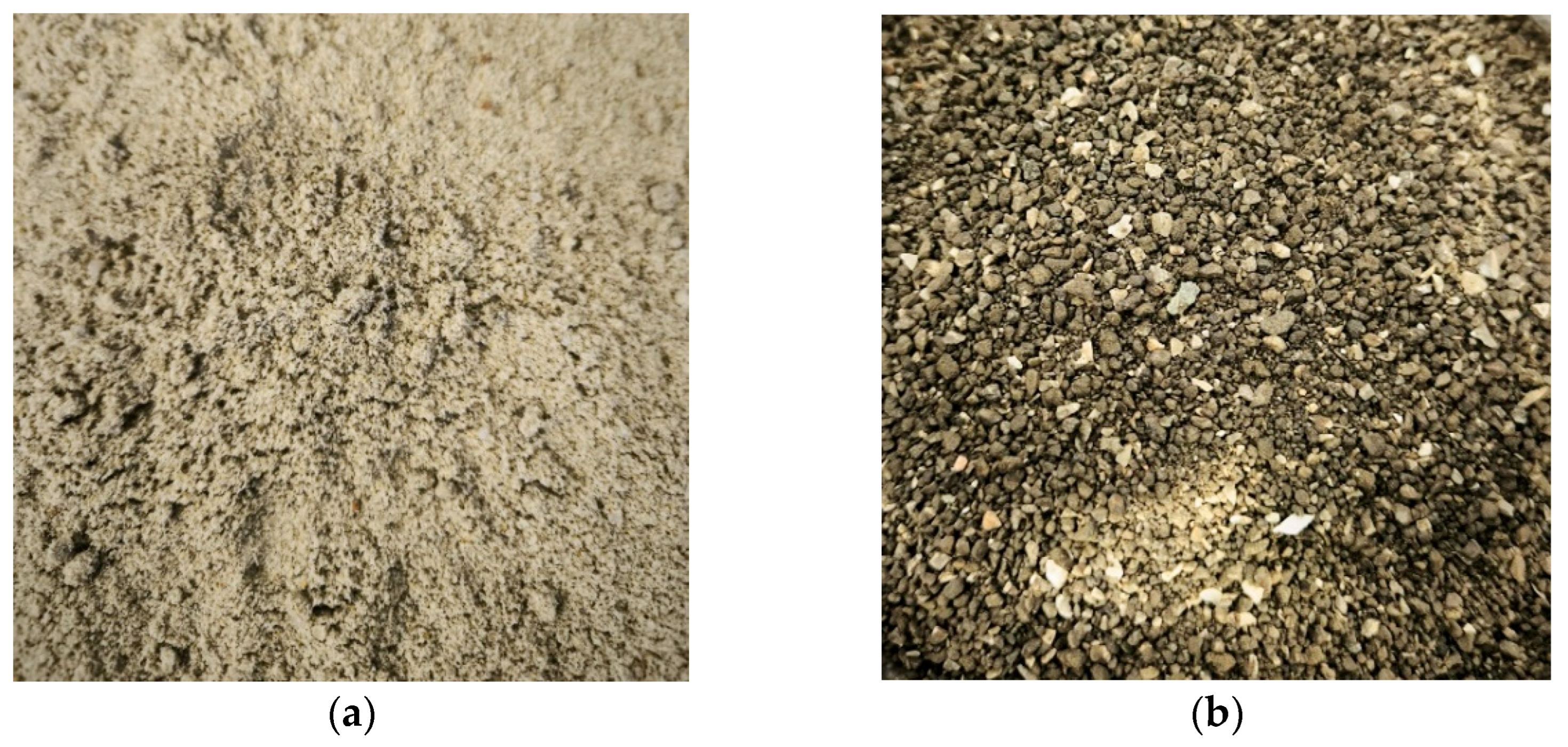
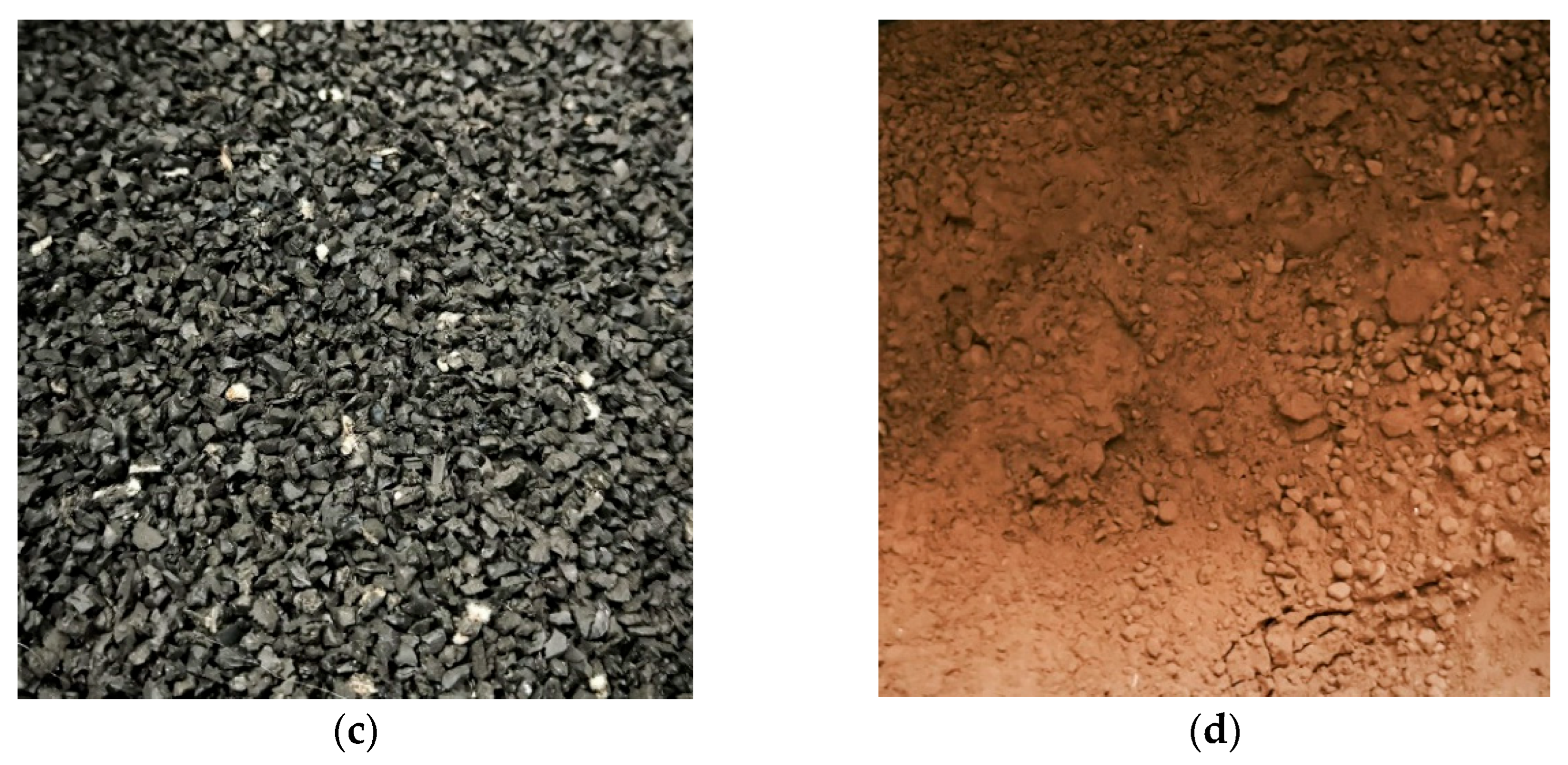
For this research, NA, RCA, RAA, and RBA (Figure 1a–d) of the 0/2 mm fraction were used in the proportions specified in Section 2.1.4.
NA was obtained from a commercial retail supplier (Bauhaus, Croatia). RCA was produced by a mobile on-site crusher from concrete specimens remaining after various laboratory tests. The composition of the original concrete is unknown. RAA was reclaimed by milling the surface layer of a deteriorated asphalt pavement in the city of Sisak, Croatia, with unknown composition. RBA was prepared using a laboratory crusher from bricks of unknown properties, sourced from brick specimens remaining after various laboratory tests. After crushing or milling the source material, it was sieved to the 0/2 mm fraction. Because the origin of recycled aggregate is unknown, their density, water absorption rates and gradation were determined as shown in Table 2. The density and absorption rates of NA, RCA, RAA, and RBA were determined in accordance with the EN 1097-6 standard [53].
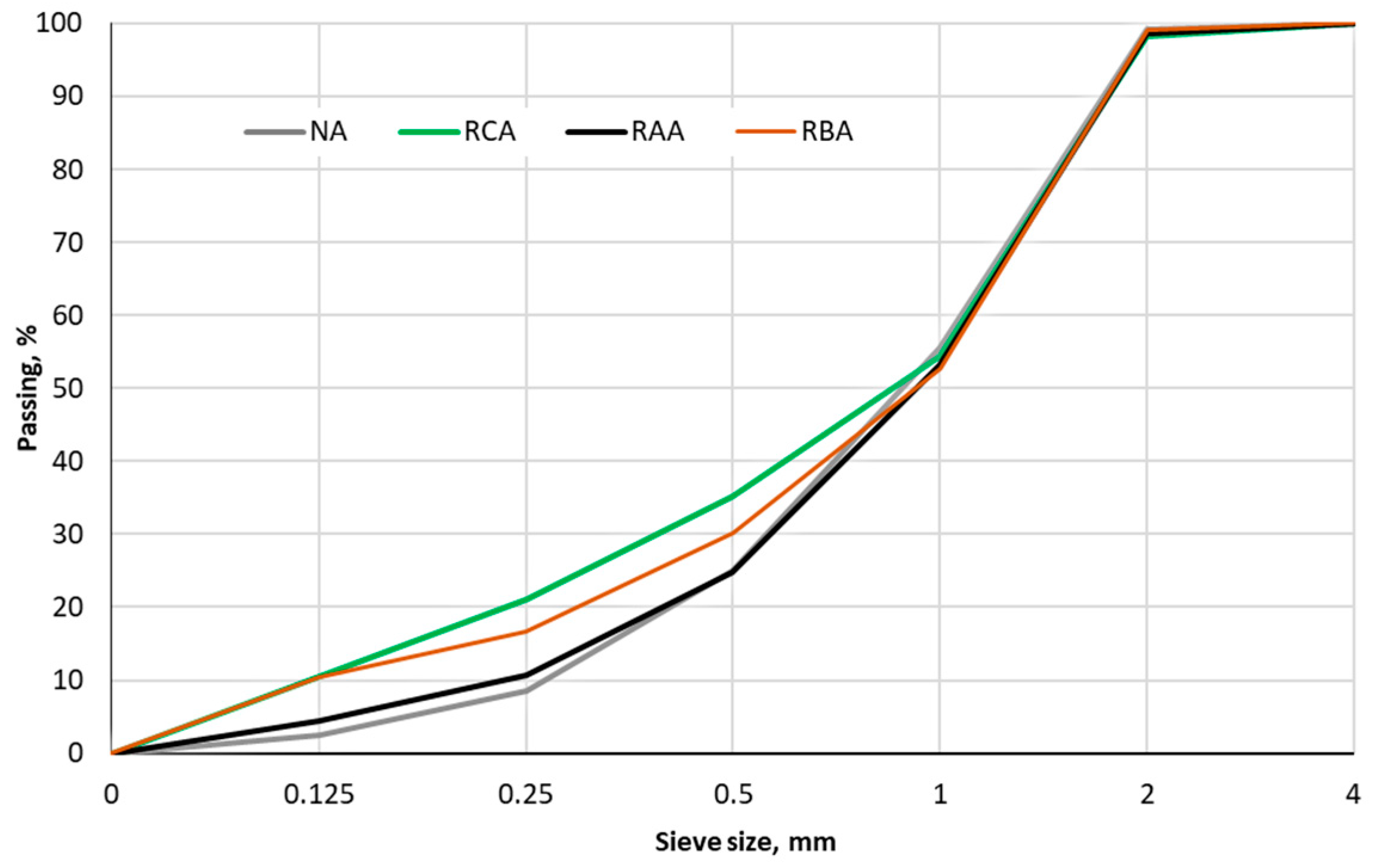
The gradation curves of the aggregates were determined in accordance with the EN 933-1 standard [54] and are shown in Figure 2.

2.1.3. Sheep Wool Fibers

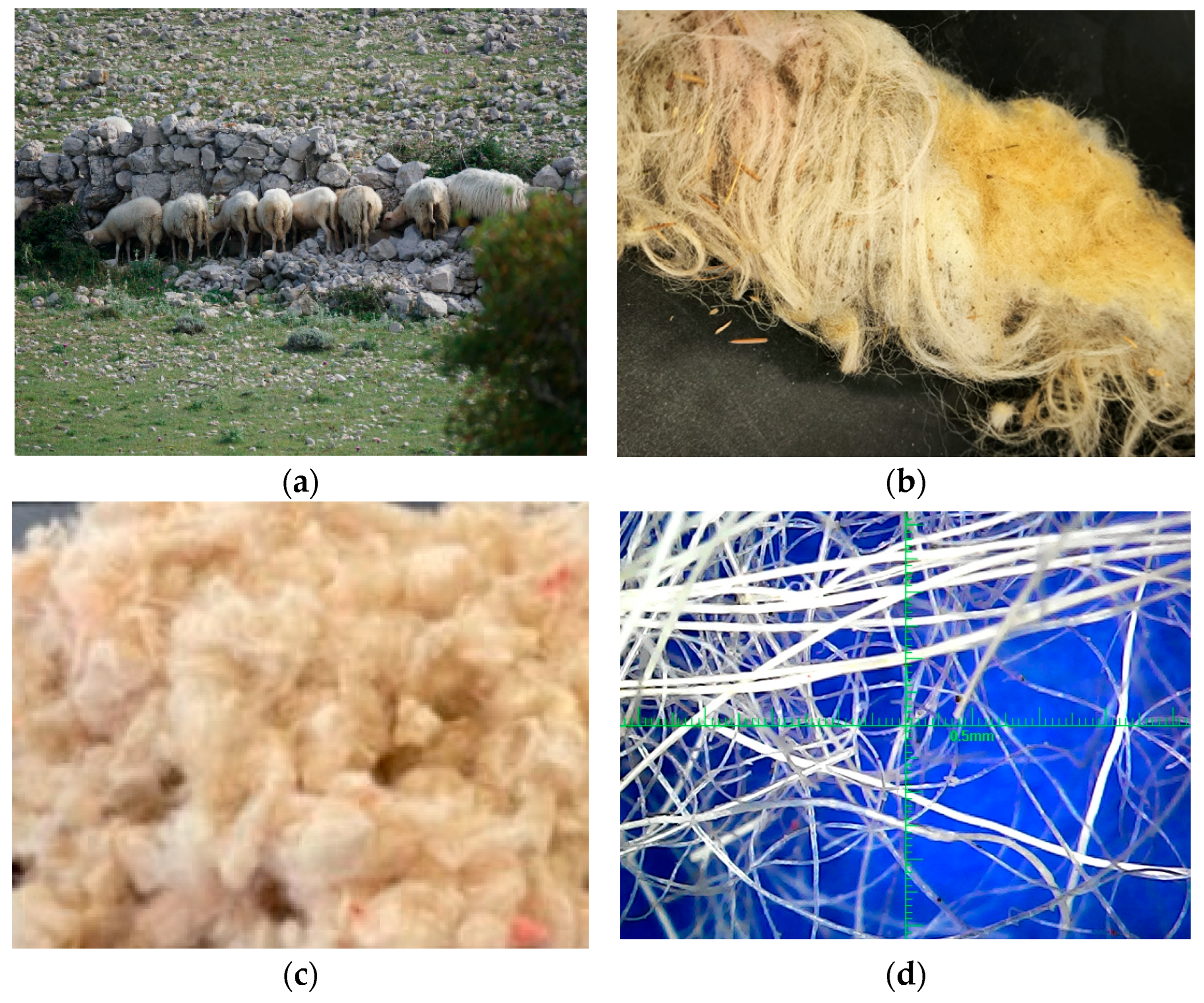
Sheep wool fibers were obtained from wool sourced from the island of Krk, Croatia (Figure 3a). The raw wool had fiber diameters ranging from 30.9 to 40.1 µm [55]. Figure 3b shows the uncleaned raw wool before processing. The wool was manually cleaned to remove visible impurities and then immersed in seawater for 28 days. After seawater treatment, the wool was thoroughly rinsed with fresh water and sun-dried (Figure 3c). This treatment increases the surface roughness of the fibers, improving fiber–cement matrix bonding, and neutralizes organic substances that may adversely affect cement hydration [56]. The treated wool was then cut into fibers approximately 12 mm in length. The morphology of the sheep wool fibers is shown in Figure 3d, as observed under an optical microscope.

2.1.4. Design of Mortar Composition

For this research, nine fresh mortar mixtures were prepared. These included a reference mortar with natural river aggregate (R0), a mortar containing sheep wool fibers with natural river aggregate (R0-W), three mortars with 30% recycled aggregates—recycled concrete aggregate(RC), reclaimed asphalt aggregate (RA), and recycled brick aggregate (RB)—three mortars with 30% of the respective recycled aggregates and sheep wool fibers (RC-W, RA-W, RB-W), and one mortar containing 10% of each type of recycled aggregate and sheep wool fibers (RM-W). All mortars containing sheep wool fibers had a fiber content of 0.1 wt% of the total mixture, corresponding to 0.5 wt% of cement. The wool fiber content was defined in accordance with the research [36] which found that the best overall performance of sheep wool fiber micro-reinforced concrete was achieved at a dosage of 0.5 wt% of cement. The stated mass fractions correspond to a wool fiber volume fraction of approximately 0.2%, calculated using an average sheep wool fiber density of 1.3 g/cm3, as reported in [57]. A water-to-cement ratio of 0.5 was used for all mixtures. Detailed mixture proportions are provided in Table 3.

2.2. Methods

2.2.1. Mixing Procedure and Specimen Preparation

All mortars were prepared, and specimens were cast, compacted, and cured using the same procedures in accordance with EN 196-1 [58]. Cement, aggregate, and water were mixed for 3 min in a laboratory mixer. For mortars containing sheep wool fibers, the fibers were pre-saturated and then added to the fresh mortar, followed by an additional 2 min of mixing. The fresh mortars were placed into three-part molds measuring 40 × 40 × 160 mm and compacted on a vibrating table. After 24 h, the specimens were demolded and cured in water at (20 ± 1) °C until 28 days of age.

2.2.2. Consistency of Fresh Mortars

The consistency of the fresh mortars was evaluated according to EN 1015-3 [59] using the flow table method. The fresh mortar was compacted in two layers in the standardized mold, which was then lifted vertically to allow the fresh mortar to spread freely on the flow table. The table was dropped 15 times at a frequency of one drop per second. The two diameters of the fresh mortar spread, measured at right angles to each other, were recorded, and their mean value was reported as the flow diameter. Two tests were performed for each mixture, in accordance with the requirements of the standard.

2.2.3. Three-Point Bending

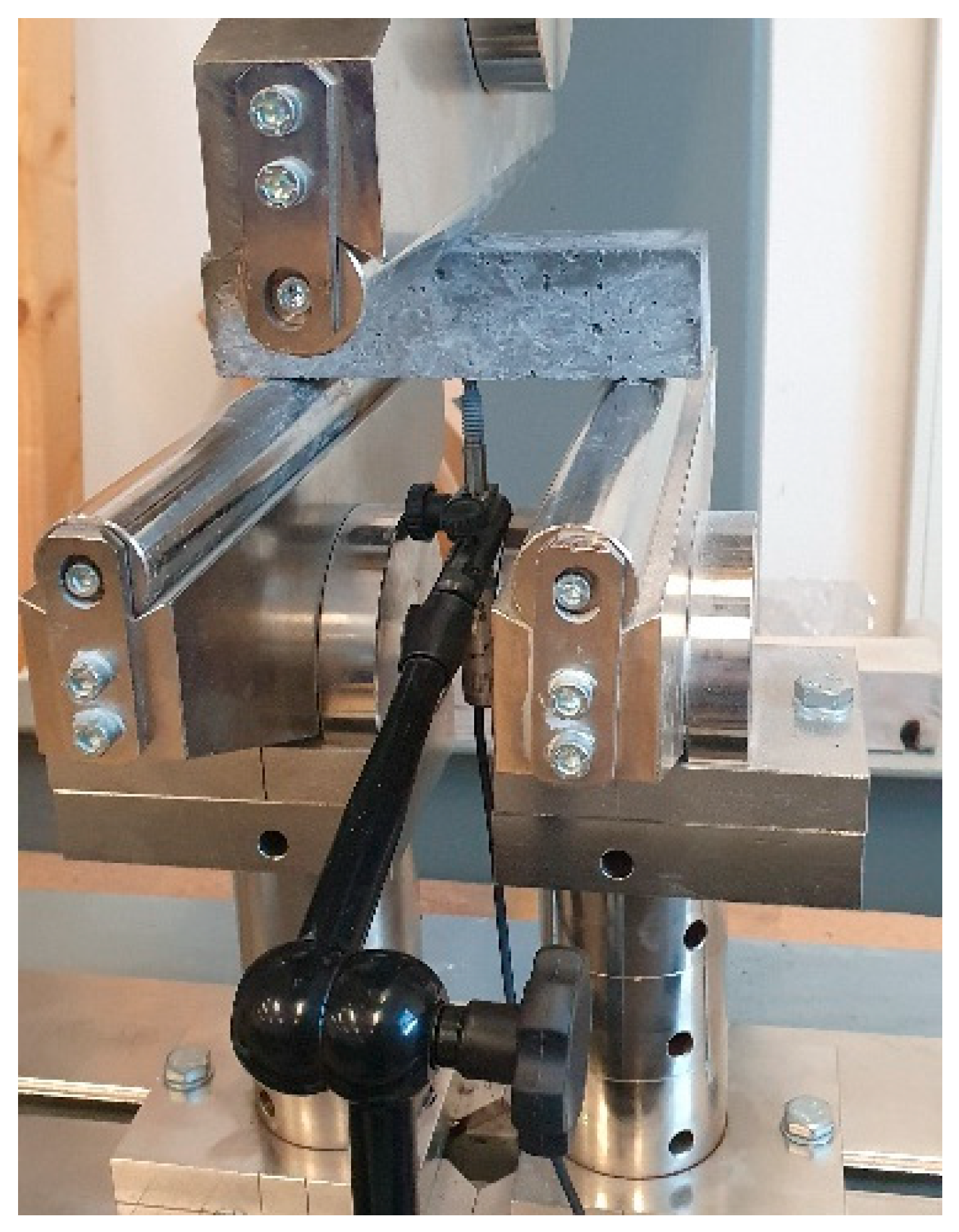
Flexural strengths of the reference specimens, specimens without fibers, and fiber micro-reinforced specimens were tested in three-point bending under displacement control to determine the peak load and the post-peak load–displacement response. As no standardized method exists for mortar micro-reinforced with sheep wool fibers, a custom procedure was developed. The supporting rollers were spaced at 113 mm, and a single concentrated load was applied at mid-span. Displacement was measured with a linear variable differential transformer (LVDT) positioned beneath the mid-span using a magnetic holder (Figure 4). The displacement rate was maintained at 0.35 mm/min, a value established through preliminary testing on mortar specimens. Three specimens of each mortar type were tested.

2.2.4. Compressive Strength

The two halves obtained after the three-point bending tests were then used for compressive strength testing. Compressive strength was determined according to EN 1015-11 [60] by loading each half prism between 40 × 40 mm steel bearing plates at a loading rate of 400 N/s until failure. Six specimens of each mortar were tested.

2.2.5. Microstructure of Mortars

To examine the microstructure of the mortars, a Yizhan H1605-B microscope manufactured by ShenZhen Kuaiqu Electronic Co., Ltd. (Shenzhen, China) was used. Mortar specimens without fibers were cut into 1 cm thick plates, while fiber micro-reinforced mortar specimens were fractured to allow observation of the fibers.

3. Results and Discussion

3.1. Mortar Workability

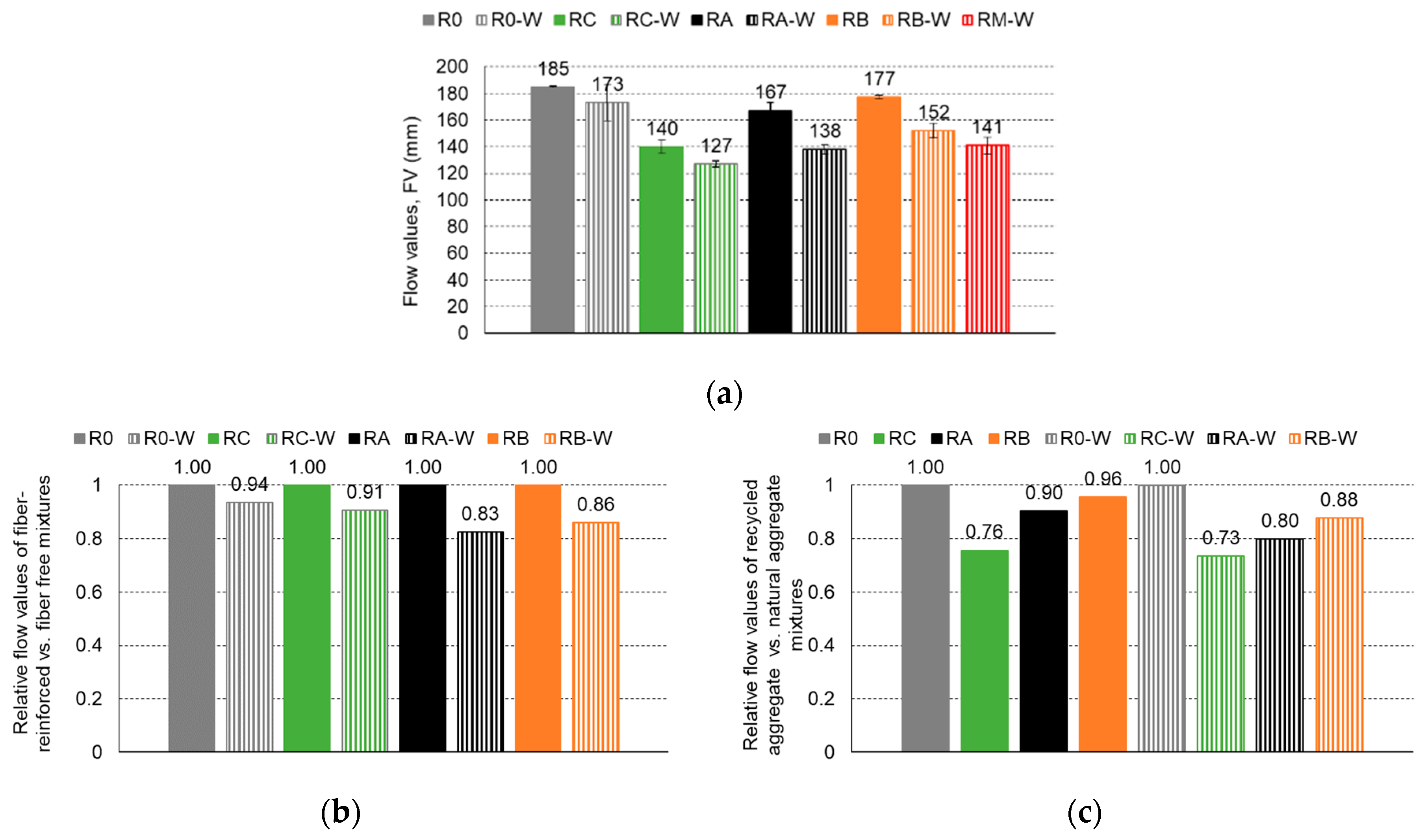
The results of the consistency testing of fresh mortars, expressed as flow values (FV), are shown in Figure 5a as absolute values (mean FV of two tests) and in Figure 5b,c as relative values with respect to fiber-free mortars (R0, RC, RA, and RB) and NA mortars (R0 and R0-W). Figure 5a also presents the standard deviation of the measurements. ANOVA confirmed statistically significant differences between mortars (F = 15.42, p < 0.001), with mortar composition accounting for a large proportion of the observed variance (η2 ≈ 0.93).

Influence of Sheep Wool Fibers and Recycle Aggregates on Fresh Mortar Workability

The results of the flow table test (Figure 5) show that both sheep wool fibers and recycled aggregates significantly affect the workability of fresh mortar. The reference mortar R0 had the highest flow value at 185 mm, while the RC mortar had the lowest at 127 mm (Figure 5a). Adding 0.1% sheep wool fibers to the R0, RC, RA, and RB mortars led to relative flow reductions of 6%, 9%, 17%, and 14%, respectively (Figure 5b). This reduction is attributed to wool fibers, which increase internal friction and partially block the free flow of cement paste. Similar decreases in workability due to wool fibers have been reported in studies [36,61], commonly linked to fiber entanglement and water absorption. When 30% of the natural aggregate was replaced with recycled aggregates, flow values also decreased, with the extent depending on the aggregate type, as shown in Figure 5c. Fresh mortars containing RCA, RAA, and RBA showed 24%, 10%, and 4%, lower flow values, respectively, compared to the reference fresh mortar with natural aggregate. This is due to the higher water absorption capacity and rougher surface texture of recycled particles. Mortars with RAA had higher flow values than those with RCA, likely because residual bitumen is less porous and rough than the old mortar residue on RCA. The workability of fresh mortar with RBA showed unexpectedly good flow values, which can be attributed to the finer particles of recycled bricks (Figure 2) that likely improved lubrication and reduced internal friction between aggregate particles, as demonstrated in [62]. The combined use of sheep wool fibers and recycled aggregates resulted in a cumulative reduction in workability, as expected. This led to decreases in workability of RC-W, RA-W, and RB-W compared to R0-W of 27%, 20%, and 12%, respectively (Figure 5c). Despite these reductions, all mortars remained within a workable consistency range suitable for casting and compaction.
Future studies could improve workability by combining controlled pre-saturation of recycled aggregates, applying surface treatment or coating of wool fibers to limit water uptake, and using superplasticizers. Additionally, optimized particle packing, adjusted paste volume, and modified mixing sequences may further reduce entrapped air and improve homogeneity.

3.2. Flexural Strength

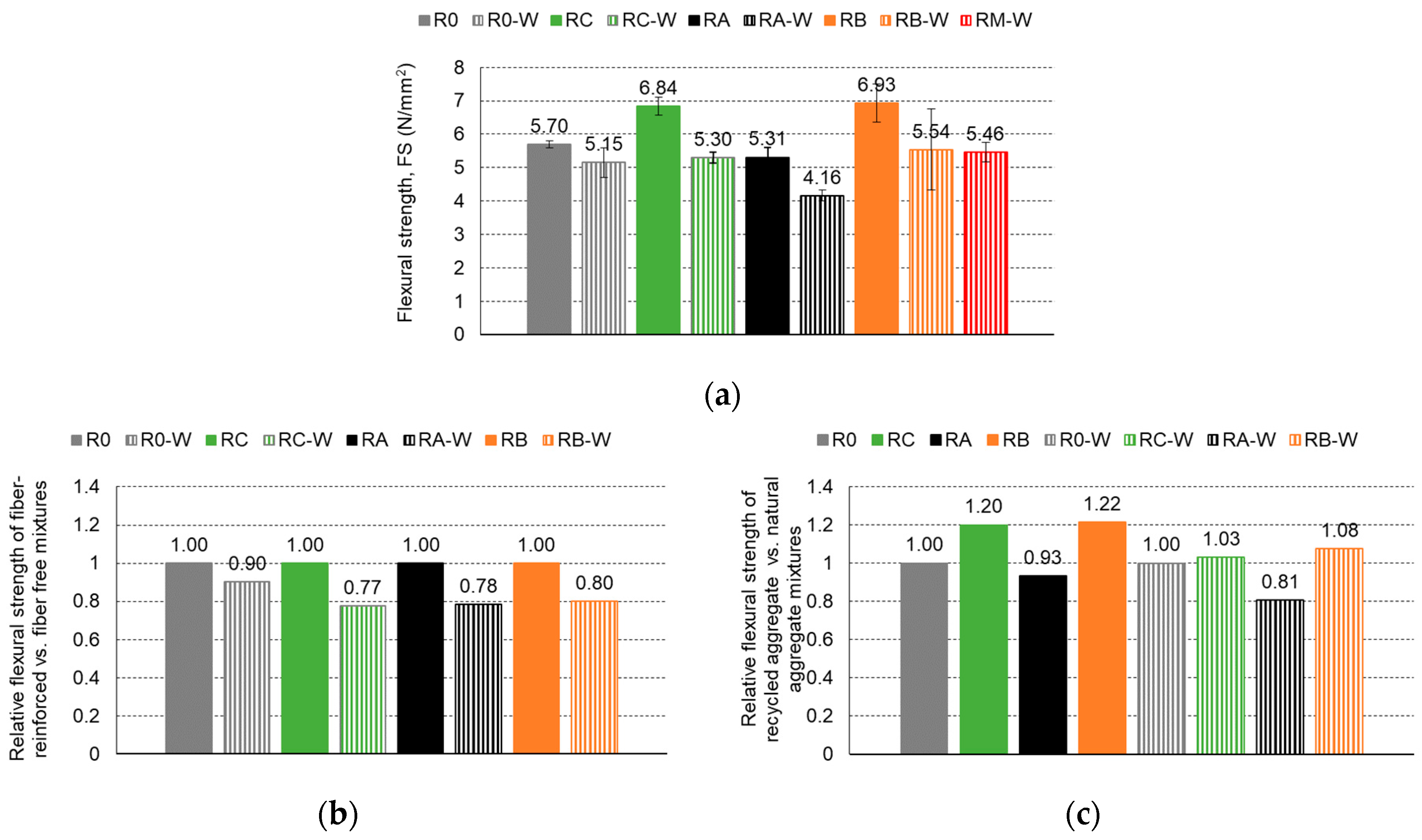
The results of the flexural strength (FS) testing of mortar specimens are shown in Figure 6a as absolute values (mean FS of three specimens) and in Figure 6b,c as relative values with respect to fiber-free mortars (R0, RC, RA, and RB) and natural aggregate mortars (R0 and R0-W). Figure 6a also presents the standard deviation of the measurements. ANOVA confirmed statistically significant differences in peak flexural strength between mortars (F = 8.59, p < 0.001), with mortar composition accounting for a large proportion of the observed variance (η2 ≈ 0.79).

Influence of Sheep Wool Fibers and Recycle Aggregates on Flexural Strength

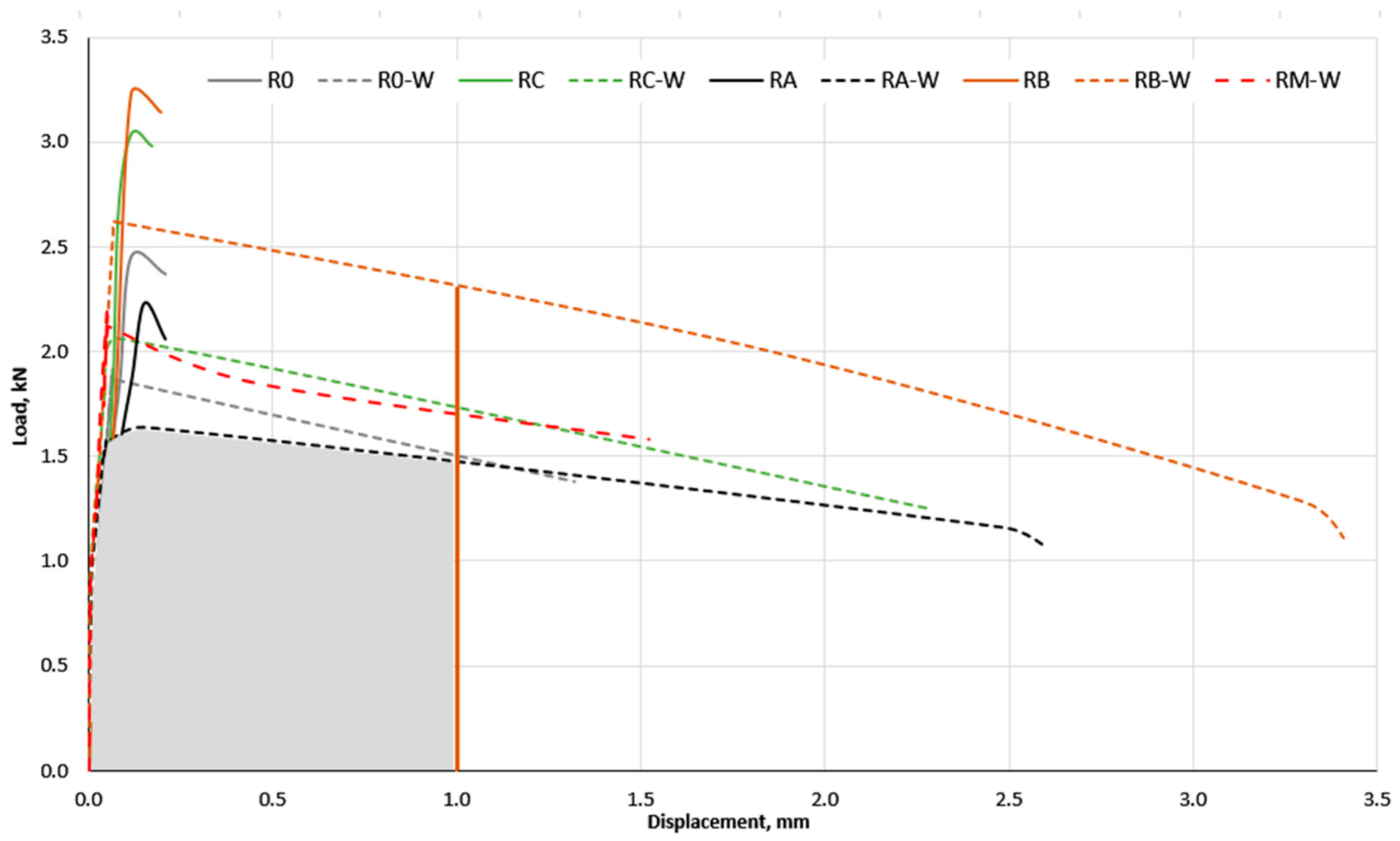
Three-point bending tests with displacement control showed that sheep wool fibers in mortars enhance tensile performance and post-cracking behavior, as illustrated in Figure 7. Fiber-free mortars exhibited brittle failure with limited deformation capacity, while fiber micro-reinforced specimens showed increased displacement before failure and a more gradual post-peak softening response. This behavior confirms the crack-bridging capability of sheep wool fibers, which delays crack propagation and enables stress transfer across microcracks. Additionally, fiber micro-reinforced mortars demonstrated significantly improved performance compared to fiber-free mortars, regardless of aggregate type. The most significant improvement was observed in mortars combining recycled aggregates and sheep wool fibers, particularly RB-W. Regarding peak flexural strength, the addition of sheep wool fibers to R0, RC, RA, and RB mortars resulted in reductions of 10%, 23%, 22% and 20%, respectively (Figure 6b). This reduction can be attributed to inhomogeneous fiber dispersion. However, when recycled aggregates were used, particularly RCA and RBA, fiber micro-reinforced mortars exhibited flexural strengths exceeding those of the reference mortar by 20%, and 22%, respectively (Figure 6c). The RB-W mortar achieved satisfactory peak flexural strength and ductility, indicating effective stress redistribution and good fiber anchorage within the matrix (Figure 7).

3.3. Specific Fracture Energy

Based on the results of three-point bending tests under displacement control the specific fracture energy Gf (N/m), represented as the gray area under the RA-W curve in Figure 7 as an example, was calculated in accordance with (1):
G f   =   0 δ F δ d δ A ,
where δ is the displacement limit (m), F(δ) is the applied load (N), and A is the fracture surface area (m2). For unnotched prisms, the fracture surface area was calculated as (2):
A   =   b · h ,
where b is the specimen width (m) and h is the specimen height (m). The displacement limit of 1 × 10⁻³ m, indicated as a vertical line in Figure 7, was defined in accordance with [63], where similar natural fiber micro-reinforced unnotched prisms were analyzed.
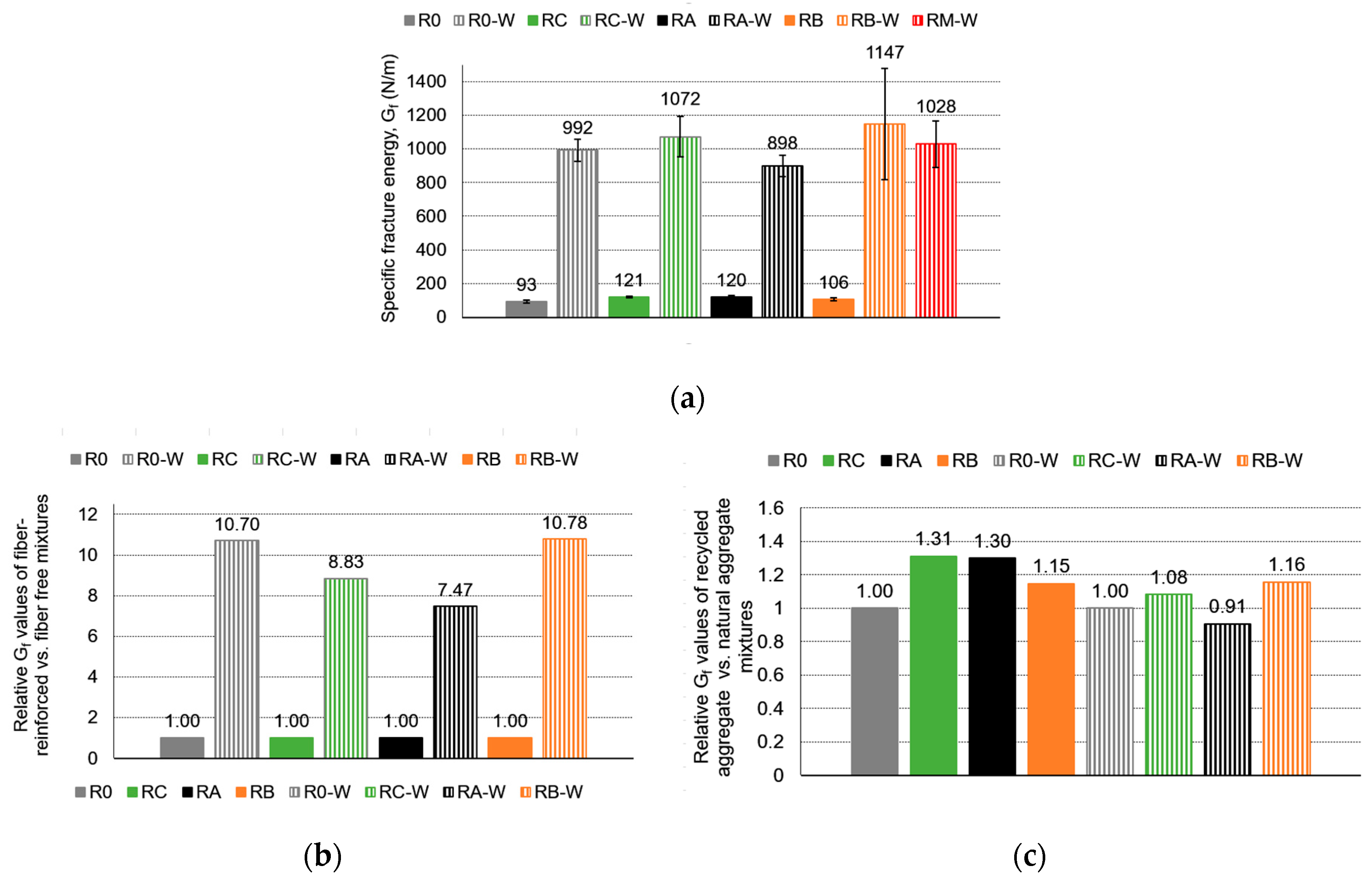
The results are shown in Figure 8a as absolute values (mean Gf of three specimens) and in Figure 8b,c as relative values with respect to fiber-free mortars (R0, RC, RA, and RB) and natural aggregate mortars (R0 and R0-W). Figure 8a also presents the standard deviation of the measurements. ANOVA revealed statistically significant differences between mortars (F = 42.17, p < 0.001), with mortar composition accounting for the majority of the observed variance (η2 ≈ 0.95).

Influence of Sheep Wool Fibers and Recycle Aggregates on Specific Fracture Energy

The specific fracture energy Gf, calculated from displacement-controlled three-point bending tests reflects the energy absorption capacity of the mortars. The results in Figure 8 clearly demonstrate the significant influence of sheep wool fiber micro-reinforcement on fracture behavior. As shown in Figure 8a,b, fiber-free mortars (R0, RC, RA, RB) exhibit low Gf values (93 to 121 N/m), confirming their brittle response. In contrast, all fiber micro-reinforced mortars show 7.5 to 10.8 times higher Gf (898 to 1147 N/m), indicating enhanced crack-bridging and post-cracking energy dissipation. The highest Gf was observed for RB-W, while RA-W had the lowest value among fiber micro-reinforced mortars. The greater scatter observed for fiber micro-reinforced mortars is attributed to variability in fiber distribution and orientation. Figure 8c further indicates that replacing natural aggregates with recycled ones generally results in comparable or slightly higher Gf values than those of the natural aggregate mortars, except for RA-W, likely due to less favorable fiber–matrix interaction.

3.4. Compressive Strength

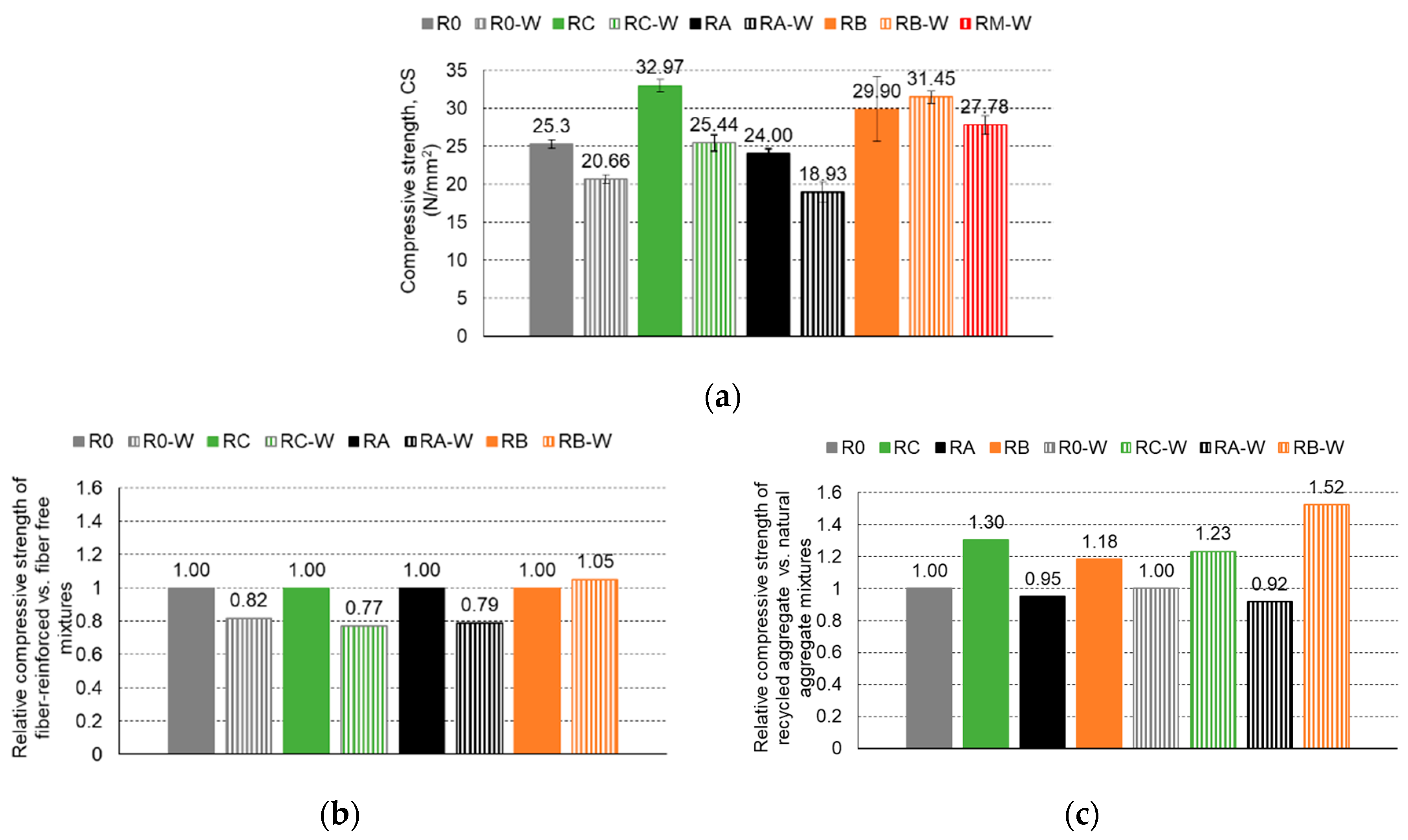
The results of the compressive strength (CS) testing of mortar specimens are shown in Figure 9a as absolute values (mean CS of six specimens) and in Figure 9b,c as relative values with respect to fiber-free mortars (R0, RC, RA, and RB) and natural aggregate mortars (R0 and R0-W). Figure 9a also presents the standard deviation of the measurements. ANOVA confirmed statistically significant differences between mortars (F = 36.0, p < 0.001), with mortar composition accounting for most of the observed variance (η2 ≈ 0.87).

Influence of Sheep Wool Fibers and Recycle Aggregates on Compressive Strength

The compressive strength results in Figure 9 indicate that the effects of sheep wool fibers and recycled aggregates depend strongly on the aggregate type. The reference mortar (R0) achieved a medium compressive strength of 25.30 N/mm2, typical for standard cement mortar (Figure 9a). Adding sheep wool fibers to the natural aggregate mortar (R0-W) resulted in an 18% reduction in compressive strength, as shown in Figure 9b. This behavior is consistent with findings in the literature [36] and can be attributed to the introduction of additional voids and weak interfacial zones around the fibers, as confirmed by microstructural observations. Mortars with RCA exhibited compressive strength values higher than the reference mortar, with the highest value of 32.97 MPa (Figure 9a). This increase can be attributed to the porosity of the residual cement paste adhered to the aggregate particles, which, consistent with the workability results, absorbed excess water, resulting in a denser newly formed cement matrix and, consequently, higher strength. Mortars with RBA also showed high compressive strength (31.45 MPa) because the angular shape and rough surface texture of brick particles enhance mechanical interlock. The inclusion of sheep wool fibers in recycled aggregate mortars led to divergent outcomes. While a 23% and 21% reduction in compressive strength was observed in RC-W and RA-W mortars compared with fiber-free mortars (Figure 9b), the RB-W mortar showed 52% increase in compressive strength compared to fiber-free RB, as seen in Figure 9a,c. This suggests that the enhanced aggregate–matrix bond and improved stress redistribution provided by the fibers compensate for fiber-induced porosity.

3.5. Mortar Microstructure

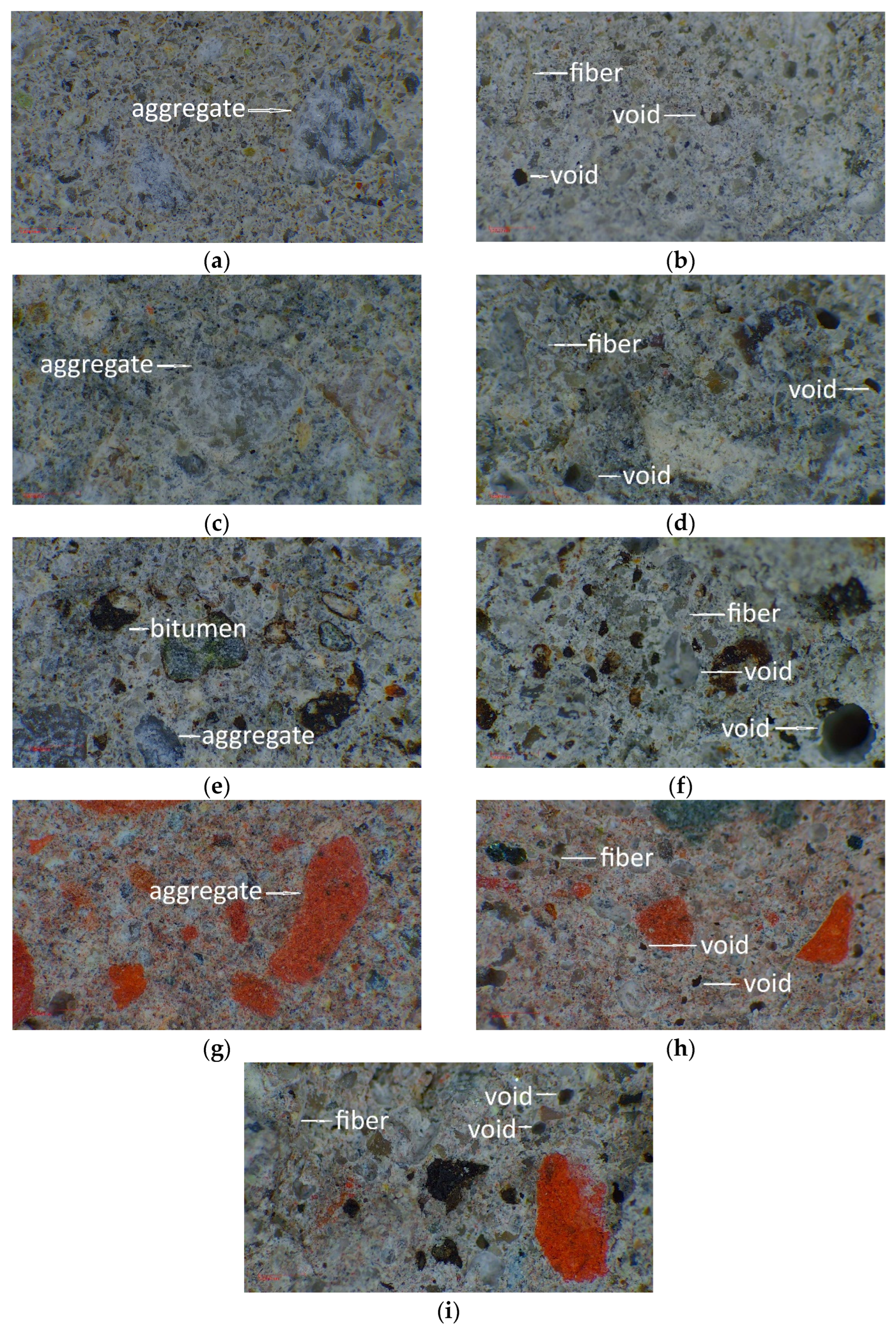
Figure 10 shows the appearance of specimens without and with sheep wool fibers observed under an optical microscope at 60× magnification.

Influence of Sheep Wool Fibers and Recycle Aggregates on Mortar Microstructure

Figure 10 shows that all fiber micro-reinforced mortars (Figure 10b,d,f,h,i) contain voids, while mortars without fibers (Figure 10a,c,e,g) do not. This is due to the poorer consistency of the fiber micro-reinforced mortars compared to those without fibers (as shown in Figure 5), which led to less effective compaction of the mortar specimens during placement. The voids in fiber micro-reinforced specimens also account for their lower flexural and compressive strengths compared to specimens without fibers, as shown in Figure 10a,b and Figure 8a,b. Figure 10a,c,g show good adhesion between aggregate grains and the cement paste, while Figure 10e shows isolated pieces of bitumen and bitumen films on aggregate grains, which reduce adhesion between the aggregate and the cement paste. This negatively affects the flexural and compressive strength of mortars with asphalt aggregate (RA and RA-W), as also shown in Figure 6 and Figure 9.

4. Conclusions

Based on the research conducted, the following conclusions can be drawn:
  • Regarding the workability of fresh mortar, with the selected fiber dosage (0.1% by mass) and recycled aggregate replacement ratio (30%), all fresh mortars remained workable and suitable for casting with vibration.
  • Flexural test results indicate that sheep wool fibers are particularly effective in compensating for the brittleness of standard mortars, thereby improving their ductility under bending.
  • Compressive strength results show that the influence of sheep wool fibers on compressive strength cannot be generalized and must be assessed according to aggregate characteristics and matrix composition.
  • Statistical evaluation confirmed that statistically significant differences between mortars for flow value, compressive strength, peak flexural strength, and specific fracture energy (p < 0.001 in all cases) are inherent to mortar design rather than experimental scatter.
  • Effect size analysis showed that mortar composition explains the majority of the observed variability (η2 ≈ 0.79 to 0.95), supporting the reported increases in compressive strength for selected mortars and clearly identifying fiber incorporation as the dominant parameter influencing specific fracture energy.
  • Overall, the results confirm that sheep wool fiber micro-reinforcement is the dominant parameter controlling fracture energy, while recycled aggregate incorporation does not compromise fracture performance, supporting the development of sustainable, high-toughness cementitious composites.
  • A comparative benchmarking of all mortars against R0 (increase ↑ or decrease ↓) is shown in Table 4. It reveals consistent reductions in flow for all modified mortars (−4% to −31%), particularly in wool fiber micro-reinforced mortars. While compressive and peak flexural strengths show mortar-dependent changes, the most significant effect is observed in specific fracture energy, which increases by more than one order of magnitude in all wool fiber micro-reinforced mortars (+966% to +1233%), indicating a pronounced improvement in post-crack behavior despite reduced workability.

Author Contributions

Conceptualization, S.M. and S.J.; methodology, S.M., I.N.G. and D.K.; validation, S.M., I.N.G. and D.K.; formal analysis, S.M., S.J. and I.N.G.; investigation, S.M. and D.K.; resources, S.M.; data curation, S.M. and S.J.; writing—original draft preparation, S.M., S.J. and I.N.G.; writing—review and editing, S.J. and S.M.; visualization, S.M., D.K. and S.J.; supervision, S.M.; project administration, S.M.; funding acquisition, S.M., S.J. and I.N.G. All authors have read and agreed to the published version of the manuscript.

Funding

This research received no external funding.

Institutional Review Board Statement

Not applicable.

Informed Consent Statement

Not applicable.

Data Availability Statement

The raw data supporting the conclusions of this article will be made available by the authors on request.

Acknowledgments

The authors gratefully acknowledge the support of the European Union (NextGenerationEU) and the Ministry of Science, Education and Youth (Croatia) who funded the project “Application of inverse modeling and artificial intelligence for material optimization in the context of urban heat islands”; the Croatian Government and the European Union, who co-funded the project KK.01.1.1.02.0027 through the European Regional Development Fund—the Competitiveness and Cohesion Operational Programme; the University of Split, Croatia, who provided funding through the Institutional Research Projects Programme (financed from Source 584—Recovery and Resilience Mechanism) for the project RESILIO—Resilience and Vulnerability Assessment of Diocletian’s Palace (IP-UNIST-19); and University North, Croatia, who funded the project “Circular Economy in the Construction Industry”.

Conflicts of Interest

The authors declare no conflicts of interest. The funders had no role in the design of the study; in the collection, analyses, or interpretation of data; in the writing of the manuscript; or in the decision to publish the results.

References

  1. Junior, G.A.F.; Leite, J.C.T.; Mendez, G.d.P.; Haddad, A.N.; Silva, J.A.F.; da Costa, B.B.F. A Review of the Characteristics of Recycled Aggregates and the Mechanical Properties of Concrete Produced by Replacing Natural Coarse Aggregates with Recycled Ones—Fostering Resilient and Sustainable Infrastructures. Infrastructures 2025, 10, 213. [Google Scholar] [CrossRef]
  2. Ferrucci, A.; Vocciante, M. Improved management of water resources in process industry by accounting for fluctuations of water content in feed streams and products. J. Water Process Eng. 2021, 39, 101870. [Google Scholar] [CrossRef]
  3. Yousaf, M.; Zafar, M.S.; Nazir, M.R.; Cirrincione, L.; Vocciante, M. Comparative mechanical performance evaluation of recycled brick aggregate concrete and natural aggregate concrete. J. Build. Eng. 2025, 116, 114702. [Google Scholar] [CrossRef]
  4. Bendixen, M.; Iversen, L.L.; Best, J.; Franks, D.M.; Hackney, C.R.; Latrubesse, E.M.; Tusting, L.S. Sand, gravel, and UN sustainable development goals: Confict, synergies, and pathways forward. One Earth 2021, 4, 1095–1111. [Google Scholar] [CrossRef]
  5. Ferreira, R.L.S.; Anjos, M.A.S.; Nóbrega, A.K.C.; Pereira, J.E.S.; Ledesma, E.F. The role of powder content of the recycled aggregates of CDW in the behaviour of rendering mortars. Constr. Build. Mater. 2019, 208, 601–612. [Google Scholar] [CrossRef]
  6. Zhao, X. Stakeholder-associated factors influencing construction and demolition waste management: A systematic review. Buildings 2021, 11, 149. [Google Scholar] [CrossRef]
  7. Maaze, M.H.; Shrivastava, S. Development and performance evaluation of recycled brick waste-based geopolymer brick for improved physcio-mechanical, brick-bond and durability properties. J. Build. Eng. 2024, 97, 110701. [Google Scholar] [CrossRef]
  8. Gherman, I.-E.; Lakatos, E.-S.; Clinci, S.D.; Lungu, F.; Constandoiu, V.V.; Cioca, L.I.; Rada, E.C. Circularity Outlines in the Construction and Demolition Waste Management: A Literature Review. Recycling 2023, 8, 69. [Google Scholar] [CrossRef]
  9. Spišáková, M.; Mésároš, P.; Mandičák, T. Construction Waste Audit in the Framework of Sustainable Waste Management in Construction Projects—Case Study. Buildings 2021, 11, 61. [Google Scholar] [CrossRef]
  10. Youssef, O.F. Sustainable concrete with recycled brick and ceramic aggregates: A statistical validation and performance evaluation. Next Mater. 2025, 9, 101319. [Google Scholar] [CrossRef]
  11. Zhao, Y.; Guo, Y.; Sun, Y.; Zhou, X.; Min, Z.; Lin, Q.; Chen, S.; Li, Y.; Jiang, M.; Feng, A.; et al. Mechanical and microstructural properties of glass powder-modified recycled brick-concrete aggregate concrete. Case Stud. Constr. Mater. 2025, 22, e04720. [Google Scholar] [CrossRef]
  12. Li, F.; Jin, S.; Cheng, P.; Wang, Z.; Yang, Z. Study on Mechanical Properties and Carbon Emission Analysis of Polypropylene Fiber-Reinforced Brick Aggregate Concrete. Polymers 2024, 16, 3535. [Google Scholar] [CrossRef] [PubMed]
  13. Mouna, Y.; Suryanto, B. Recycled Aggregate Concrete: Effect of Supplementary Cementitious Materials and Potential for Supporting Sustainable Construction. Materials 2025, 18, 5183. [Google Scholar] [CrossRef]
  14. Teixeira, A.B.; Sampaio, C.H.; Moncunill, J.O.; Lima, M.M.D.; Herrera La Rosa, G.T.; Veras, M.M.; Ambrós, W.M.; Cazacliu, B.G.; Solsona, A. Reuse of Coarse Aggregates Recovered from Demolished Concrete Through the Jigging Concentration Process in New Concrete Formulations. Materials 2025, 18, 4310. [Google Scholar] [CrossRef]
  15. Wan, C.; Hou, P.; Zhou, L.; Golewski, G.L.; Zheng, Y.; Zhang, T. The fracture performance of modified recycled concrete: Influence of recycled aggregate and recycled powder. Eng. Fract. Mech. 2026, 331, 111709. [Google Scholar] [CrossRef]
  16. Chen, Z.; Luo, S.; Liu, S.; Shao, J.; He, Y.; Li, Y. Effect of emulsifier on the interface structure and performance of reclaimed asphalt pavement aggregate cement concrete. Constr. Build. Mater. 2025, 458, 139603. [Google Scholar] [CrossRef]
  17. Saini, S.K.; Sahdeo, S.K.; Ransinchung RN, G.D.; Praveen Kumar, P. Performance of cement mortar mixes containing fine reclaimed asphalt pavement aggregates and zinc waste. Adv. Cem. Res. 2024, 36, 192–204. [Google Scholar] [CrossRef]
  18. Masi, G.; Michelacci, A.; Manzi, S.; Bignozzi, M.C. Assessment of reclaimed asphalt pavement (RAP) as recycled aggregate for concrete. Constr. Build. Mater. 2022, 341, 127745. [Google Scholar] [CrossRef]
  19. Erdem, S.; Blankson, M.A. Environmental performance and mechanical analysis of concrete containing recycled asphalt pavement (RAP) and waste precast concrete as aggregate. J. Hazard. Mater. 2014, 264, 403–410. [Google Scholar] [CrossRef]
  20. Ibrahim, A.; Mahmoud, E.; Khodair, Y.; Patibandla, V.C. Fresh, mechanical, and durability characteristics of self-consolidating concrete incorporating recycled asphalt pavements. J. Mater. Civ. Eng. 2014, 26, 668–675. [Google Scholar] [CrossRef]
  21. Murillo, M.; Sanchez, A.; Gil, A.; Araya-Letelier, G.; Burbano-Garcia, C.; Silva, Y.F. Use of animal fiber-reinforcement in construction materials: A review. Case Stud. Constr. Mater. 2024, 20, e02812. [Google Scholar] [CrossRef]
  22. Rajeshkumar, G.; Arvindh Seshadri, S.; Devnani, G.L.; Sanjay, M.R.; Siengchin, S.; Prakash Maran, J.; Al-Dhabi, N.A.; Karuppiah, P.; Mariadhas, V.A.; Sivarajasekar, N.; et al. Environment friendly, renewable and sustainable poly lactic acid (PLA) based natural fiber reinforced composites—A comprehensive review. J. Clean. Prod. 2021, 310, 127483. [Google Scholar] [CrossRef]
  23. Ali, M.F.; Hossain, M.S.; Ahmed, S.; Sarwaruddin Chowdhury, A.M. Fabrication and characterization of eco-friendly composite materials from natural animal fibers. Heliyon 2021, 7, e06954. [Google Scholar] [CrossRef] [PubMed]
  24. Parashar, S.; Chawla, V.K. A systematic review on sustainable green fibre reinforced composite and their analytical models. Mater. Today Proc. 2021, 46, 6541–6546. [Google Scholar] [CrossRef]
  25. Oliveira, M.A.; Antonio, J. Animal-based waste for building acoustic applications: A review. J. Build. Eng. 2024, 84, 108430. [Google Scholar] [CrossRef]
  26. Eleutério, T.; Trota, M.J.; Meirelles, M.G.; Vasconcelos, H.C. A Review of Natural Fibers: Classification, Composition, Extraction, Treatments, and Applications. Fibers 2025, 13, 119. [Google Scholar] [CrossRef]
  27. Gurunathan, T.; Mohanty, S.; Nayak, S.K. A review of the recent developments in biocomposites based on natural fibres and their application perspectives. Compos. Part A Appl. Sci. Manuf. 2015, 77, 1–25. [Google Scholar] [CrossRef]
  28. Mann, G.S.; Azum, N.; Khan, A.; Rub, M.A.; Hassan, M.I.; Fatima, K.; Asiri, A.M. Green Composites Based on Animal Fiber and Their Applications for a Sustainable Future. Polymers 2023, 15, 601. [Google Scholar] [CrossRef]
  29. Midolo, G.; Porto, S.M.C.; Cascone, G.; Valenti, F. Sheep Wool Waste Availability for Potential Sustainable Re-Use and Valorization: A GIS-Based Model. Agriculture 2024, 14, 872. [Google Scholar] [CrossRef]
  30. Parlato, M.C.M.; Porto, S.M.C.; Valenti, F. Assessment of sheep wool waste as new resource for green building elements. Build. Environ. 2022, 225, 109596. [Google Scholar] [CrossRef]
  31. FAO. Available online: https://www.fao.org/faostat/en/#data/QCL/visualize (accessed on 1 December 2025).
  32. HRT Magazin. Available online: https://magazin.hrt.hr/price-iz-hrvatske/ovcja-vuna-postala-ekoloska-prijetnja-zbog-nedostatka-sustavnog-zbrinjavanja-11478185 (accessed on 29 November 2025).
  33. Regulation (EC) No 1069/2009 of the European Parliament and of the Council of 21 October 2009, Laying Down Health Rules as Regards Animal By-Products and Derived Products not Intended for Human Consumption and Repealing Regulation (EC) No 1774/2002 (Animal By-Products Regulation). 21 October 2009. Available online: https://eur-lex.europa.eu/legal-content/EN/TXT/PDF/?uri=CELEX:32009R1069 (accessed on 29 November 2025).
  34. Regulation (EU) No 142/2011 of 25 February 2011, Implementing Regulation (EC) No 1069/2009 of the European Parliament and of the Council Laying Down Health Rules as Regards Animal By-Products and Derived Products Not Intended for Human Consumption and Implementing Council Directive 97/78/EC as Regards Certain Samples and Items Exempt from Veterinary Checks at the Border Under that Directive (Text with EEA Relevance). 25 February 2011. Available online: https://eur-lex.europa.eu/legal-content/EN/TXT/PDF/?uri=CELEX:32011R0142 (accessed on 29 November 2025).
  35. Wani, I.A.; Kumar, R.u.R. Experimental investigation on using sheep wool as fiber reinforcement in concrete giving increment in overall strength. Mater. Today Proc. 2021, 45, 4405–4409. [Google Scholar] [CrossRef]
  36. Alyousef, R.; Alabduljabbar, H.; Mohammadhosseini, H.; Mohamed, A.M.; Siddika, A.; Alrshoudi, F.; Alaskar, A. Utilization of sheep wool as potential fibrous materials in the production of concrete composites. J. Build. Eng. 2020, 30, 101216. [Google Scholar] [CrossRef]
  37. Alyousef, R. Enhanced acoustic properties of concrete composites comprising modified waste sheep wool fibers. J. Build. Eng. 2022, 56, 104815. [Google Scholar] [CrossRef]
  38. Stapulionienė, R.; Vaitkus, S.; Vėjelis, S. Development and research of thermal-acoustical insulating materials based on natural fibres and polylactide binder. Mater. Sci. Forum 2017, 908, 123–128. [Google Scholar] [CrossRef]
  39. Berardi, U.; Iannace, G. Acoustic Characterization of Natural Fibers for Sound Absorption Applications. Build. Environ. 2015, 94, 840–852. [Google Scholar] [CrossRef]
  40. Dénes, O.; Florea, I.; Manea, D.L. Utilization of sheep wool as a building material. Procedia Manuf. 2019, 32, 236–241. [Google Scholar] [CrossRef]
  41. Fantilli, A.P.; Jóźwiak-Niedźwiedzka, D. Influence of Portland cement alkalinity on wool reinforced mortar. Proc. Inst. Civ. Eng.-Constr. Mater. 2020, 174, 172–181. [Google Scholar] [CrossRef]
  42. Fantilli, A.P.; Jóźwiak-Niedźwiedzka, D. The effect of hydraulic cements on the flexural behavior of wool reinforced mortars. In Proceedings of the 3rd International Conference on Bio-Based Building Materials, Belfast, UK, 26–28 June 2019; Volume 37, pp. 287–292. [Google Scholar] [CrossRef]
  43. Kanagaraj, B.; Shaji, S.; Jafri, M.; Raj, R.S.; Anand, N.; Lubloy, E. Natural and synthetic fiber reinforced recycled aggregate concrete subjected to standard fire temperature. Heliyon 2024, 10, e39676. [Google Scholar] [CrossRef]
  44. Haruehansapong, S.; Khamput, P.; Yoddumrong, P.; Kroehong, W.; Thuadao, V.; Abdulmatin, A.; Senawang, W.; Pulngern, T. Enhancement of recycled aggregate concrete properties through the incorporation of nanosilica and natural fibers. Heliyon 2024, 10, e39924. [Google Scholar] [CrossRef]
  45. Játiva, F.; Tamayo, J.M.; Silva, T.; Granja, O.; Cabrera, R.; Arce, X.; Guadalupe, L.; Guillen, M.; Koenders, E.; Lantsoght, E. Experiments on concrete test beams with recycled aggregates and natural fibers. Procedia Struct. Integr. 2024, 64, 1468–1475. [Google Scholar] [CrossRef]
  46. Corscadden, K.W.; Biggs, J.N.; Stiles, D.K. Sheep’s wool insulation: A sustainable alternative use for a renewable resource? Resour. Conserv. Recycl. 2014, 86, 9–15. [Google Scholar] [CrossRef]
  47. Kuffner, H.; Popescu, C. Chapter 8 Wool fibres. In Handbook of Natural Fibres, Types, Properties and Factors Affecting Breeding and Cultivation; Kozłowski, R., Ed.; Woodhead Publishing: Cambridge, UK, 2012; pp. 171–195. [Google Scholar] [CrossRef]
  48. Jóźwiak-Niedźwiedzka, D.; Fantilli, A.P. Wool-Reinforced Cement Based Composites. Materials 2020, 13, 3590. [Google Scholar] [CrossRef] [PubMed]
  49. Liang, H.H.; Ho, M.C. Toxicity characteristics of commercially manufactured insulation materials for building applications in Taiwan. Constr. Build. Mater. 2007, 21, 1254–1261. [Google Scholar] [CrossRef]
  50. EN 197-1:2011; Cement—Part 1: Composition, Specifications and Conformity Criteria for Common Cements. The European Committee for Standardization: Brussels, Belgium, 2011.
  51. Nexe Group. Grend CEM II/A-M(S-V) 42.5 N Technical Instructions. Available online: https://www.nexe.hr/en/products/cement/grand/ (accessed on 7 January 2026).
  52. EN 196-6:2018; Methods of Testing Cement—Part 6: Determination of Fineness. The European Committee for Standardization: Brussels, Belgium, 2018.
  53. EN 1097-6: 2022; Tests for Mechanical and Physical Properties of Aggregates—Part 6: Determination of Particle Density and Water Absorption. The European Committee for Standardization: Brussels, Belgium, 2022.
  54. EN 933-1:1997; Tests for Geometrical Properties of Aggregates—Part 1: Determination of Particle Size Distribution—Sieving Method. The European Committee for Standardization: Brussels, Belgium, 1997.
  55. Raffaelli, D.; Vujasinović, E. Influence of breeding conditions and sheep breeds on quantity and quality of wool in Croatia—Investigations of lstrian–Cres region. Stočarstvo 1994, 48, 443–459. Available online: https://hrcak.srce.hr/163795 (accessed on 6 December 2025).
  56. Gelana, D.; Kebede, G.; Feleke, L. Investigation on Effects of Sheep Wool fiber on Properties of C-25 Concrete. Saudi J. Civ. Eng. 2019, 3, 156–183. [Google Scholar] [CrossRef]
  57. Elmogahzy, Y.E. 8—Fibers. In The Textile Institute Book Series, Engineering Textiles, 2nd ed.; Elmogahzy, Y.E., Ed.; Woodhead Publishing: Sawston, UK, 2020; pp. 191–222. ISBN 9780081024881. [Google Scholar] [CrossRef]
  58. EN 196-1:2003; Methods of Testing Cement—Part 1: Determination of Strength. The European Committee for Standardization: Brussels, Belgium, 2003.
  59. EN 1015-3:1999/A1:2004; Methods of Test for Mortar for Masonry—Part 3: Determination of Consistence of Fresh Mortar (by Flow Table). The European Committee for Standardization: Brussels, Belgium, 2004.
  60. EN 1015-11:2019; Methods of Test for Mortar for Masonry—Part 11: Determination of Flexural and Compressive Strength of Hardened Mortar. The European Committee for Standardization: Brussels, Belgium, 2019.
  61. de Lima, N.G.; Figueiredo, F.B.; de Vargas Junior, F.M.; Figueiredo, N.L.B. Analysis of the physical and mechanical properties of mortar with the incorporation of natural wool fiber from Pantanal sheep. Cad. Pedagógico 2025, 22, e14946. [Google Scholar] [CrossRef]
  62. Elawadly, N. Eco-Friendly Sustainable Concrete with Recycled Crushed Red Bricks: Evaluating Mechanical Performance and Durability. Int. J. Adv. Sci. Res. Innov. 2022, 5, 72–85. [Google Scholar] [CrossRef]
  63. Juradin, S.; Boko, I.; Netinger Grubeša, I.; Jozić, D.; Mrakovčić, D. Influence of Different treatment and amount of Spanish broom and hemp fibres on the mechanical properties of reinforced cement mortars. Constr. Build. Mater. 2021, 273, 121702. [Google Scholar] [CrossRef]
Figure 1. (a) Natural river aggregate (NA); (b) recycled concrete aggregate (RCA); (c) reclaimed asphalt aggregate (RAA); (d) recycled brick aggregate (RBA).
Applsci 16 00962 g001aApplsci 16 00962 g001b
Figure 2. The gradation curves of the aggregates.
Applsci 16 00962 g002
Figure 3. (a) Sheep on island Krk; (b) sheep wool before treatment with seawater; (c) sheep wool after treatment with seawater; (d) sheep wool fibers under an optical microscope.
Applsci 16 00962 g003
Figure 4. Setup of three-point bending test under displacement control.
Applsci 16 00962 g004
Figure 5. Consistency of fresh mortar (a) absolute values; (b) influenced by sheep wool fibers; (c) influenced by aggregate type.
Applsci 16 00962 g005
Figure 6. Flexural strength of mortar (a) absolute values; (b) influenced by sheep wool fibers; (c) influenced by aggregate type.
Applsci 16 00962 g006
Figure 7. Load–displacement diagram.
Applsci 16 00962 g007
Figure 8. Specific fracture energy of mortar (a) absolute values; (b) influenced by sheep wool fibers; (c) influenced by aggregate type.
Applsci 16 00962 g008
Figure 9. Compressive strength of mortar (a) absolute values; (b) influenced by sheep wool fibers; (c) influenced by aggregate type.
Applsci 16 00962 g009
Figure 10. Microscopic image of all mortar specimens at 60× magnification (a) R0; (b) R0-W; (c) RC; (d) RC-W; (e) RA; (f) RA-W; (g) RB; (h) RB-W; (i) RM-W.
Applsci 16 00962 g010
Table 1. Cement properties.
PropertyCEM II/A-M(S-V) 42.5 NEN 197-1
Requirement
Density (g/cm3)3.0
Blaine surface (m2g−1)0.36
Initial setting time (min)190≥60
Dimensional stability (mm)0.5≤10
Compressive strength at 2 days (MPa)23≥10
Compressive strength at 28 days (MPa)55≥42.5 ≤ 62.5
SO3 (%)3.3≤3.5
Cl (%)0.007≤0.10
Table 2. Properties of aggregates.
AggregateDensity (kg/m3)Absorption (%)Fines (%)
NA26503.085.49
RCA25603.406.71
RAA24603.638.74
RBA24675.648.82
Table 3. Mortar proportions per 0.768 L of mortar series (3-part mold for 40 × 40 × 160 mm prisms).
Mortarw/cCement (g)Natural Aggregate (g)Recycled Aggregate (g)Sheep Wool Fibers
(wt% Mix)(% Vol.)
R00.504501350000
R0-W0.50450135000.10.2
RC0.5045094540500
RA0.5045094540500
RB0.5045094540500
RC-W0.504509454050.10.2
RA-W0.504509454050.10.2
RB-W0.504509454050.10.2
RM-W0.50450945405 10.10.2
1 135 g of each type of recycled aggregate (RCA, RAA and RBA).
Table 4. Comparison of mortar performance relative to the reference mortar R0.
MortarFlowCompressive StrengthFlexural Strength (Peak)Specific
Fracture
Energy
R0-W↓ (−6%)↓ (−18%)↓ (−10%)↑ (+1070%)
RC↓ (−24%)↑ (+30%)↑ (+20%)↑ (+30%)
RA↓ (−10%)↓ (−5%)↓ (−7%)↑ (+29%)
RB↓ (−4%)↑ (+18%)↑ (+22%)↑ (+14%)
RC-W↓ (−31%)↓ (−7%)↑ (+1153%)
RA-W↓ (−25%)↓ (−25%)↓ (−27%)↑ (+966%)
RB-W↓ (−18%)↑ (+24%)↓ (−3%)↑ (+1233%)
RM-W↓ (−24%)↑ (+10%)↓ (−4%)↑ (+1105%)
Disclaimer/Publisher’s Note: The statements, opinions and data contained in all publications are solely those of the individual author(s) and contributor(s) and not of MDPI and/or the editor(s). MDPI and/or the editor(s) disclaim responsibility for any injury to people or property resulting from any ideas, methods, instructions or products referred to in the content.