Communication

Design and Thermal Evaluation of a Soft Textile System with a Removable Gel Cooling Panel

by
Radostina A. Angelova
1,2,3,*,
Lilia Belova
1,
Daniela Sofronova
1,2 and
Elena Borisova
2,4
1
Department of Hydroaerodynamics and Hydraulic Machines, Technical University of Sofia, 1000 Sofia, Bulgaria
2
Miracle Centre of Competence Lab “Intelligent Mechatronic Solutions in Textiles and Clothing” (MeTex), Technical University of Sofia, 1000 Sofia, Bulgaria
3
Centre for Research and Design in Human Comfort, Energy and Environment (CERDECEN), Technical University of Sofia, 1000 Sofia, Bulgaria
4
Department of Energy and Mechanical Engineering, Technical College—Sofia, Technical University of Sofia, 1000 Sofia, Bulgaria
*
Author to whom correspondence should be addressed.
Appl. Sci. 2026, 16(2), 857; https://doi.org/10.3390/app16020857
Submission received: 23 December 2025 / Revised: 12 January 2026 / Accepted: 14 January 2026 / Published: 14 January 2026

Abstract

The study presents the thermal evaluation of soft knitted textile systems with removable gel cooling panels. Two prototype configurations with different geometries and gel panel sizes were investigated using infrared thermography under controlled laboratory conditions. The results show a moderated and gradual cooling response during contact. The strongest surface cooling occurred shortly after contact, followed by a gradual increase in the surface temperature of the textile system due to heat transfer from the skin-temperature simulator. While the temperature of the skin-temperature simulator stabilised rapidly, the textile surface maintained a perceptible cooling effect over a longer period. Surface temperatures remained within ranges associated with comfort and safety under the applied experimental conditions. The findings indicate that system geometry and gel panel size influence heat exchange, while the knitted textile structure contributes to the observed cooling behaviour of the complete system. The results support the potential of knitted textile systems with removable gel cooling panels for gentle, localised cooling applications in controlled, non-clinical settings.

1. Introduction

Infants and young children are particularly vulnerable to overheating due to their specific thermoregulation: they have a higher surface-to-body-mass ratio, which leads to faster accumulation and release of heat [1,2]. Their sweat glands and mechanisms of peripheral vasodilation are not yet fully effective [3], while metabolic activity is relatively high [4]. At an early age, children rely entirely on external assistance to maintain optimal body temperature, which increases the risk of overheating during febrile episodes or in warm environments [5]. This dependency highlights the need for cooling solutions that are not only physiologically effective but also capable of providing predictable and controlled passive thermal behaviour through predefined pre-cooling conditions and material-mediated heat transfer during continuous skin contact. Therefore, passive cooling systems designed for safe and prolonged interaction with children are essential [6].
The cooling products available on the market, e.g., compresses, gel masks, and cooling pads [7,8], are intended mainly for medical use and designed primarily for the needs of adults [9]. Their insufficient flexibility and limited tactile appeal make them unsuitable for children. In many cases, these products do not consider children’s sensory preferences or behavioural responses. Furthermore, they often fail to provide a predictable cooling effect [10]. They may be excessively cold in the initial phase or lose temperature too quickly, leading to discomfort and refusal of use [11]. In addition, the hard or smooth surfaces of these products do not correspond to the preferences of young children for soft, pleasant-to-touch materials [12]. As a result, there is a lack of cooling solutions that combine physiological effectiveness with controlled heat transfer, material compliance, and user-oriented system behaviour, indicating the need for engineering-driven development of soft textile cooling systems.
Emotional regulation plays a key role in the behaviour of young children, especially during discomfort or illness [13]. Studies show that familiar soft objects and soothing tactile stimuli can reduce anxiety, increase the sense of security, and support cooperation during medical procedures [14,15]. Toys that combine softness, an appealing appearance, and emotionally engaging details could facilitate the acceptance of cooling during fever [16]. From an applied engineering perspective, designing cooling solutions as comforting objects rather than purely medical devices may therefore improve compliance and functional efficiency under real-use conditions. In this context, embedding a cooling function within an object perceived by the child as comforting and safe may improve the practical applicability of cooling methods.
Sensory stimulation is an essential element of early childhood development and plays an important role in both fine motor skills and emotional stability [17]. Textured surfaces, auditory cues, and varied tactile stimuli encourage exploratory behaviour, sustain attention, and support adaptation to unfamiliar objects [18,19]. Previous studies suggest that combining tactile, auditory, and visual stimulation may increase children’s acceptance of external stimuli and contribute to a more positive user experience [20]. The integration of sensory properties alongside functional features therefore supports the development of multifunctional textile systems that address both physiological needs and sensory–emotional aspects of use.
In recent years, hand textile techniques have attracted attention as an approach for creating personalised items with high emotional value [21,22]. From a textile engineering standpoint, such techniques enable a high degree of form freedom, material adaptability, and structural flexibility. A special place among them is held by the Japanese amigurumi technique, in which small three-dimensional figures are made through crochet [23,24]. Such soft forms are commonly produced using synthetic yarns, which are widely applied in children’s products due to their favourable tactile properties, durability, and low moisture retention [25,26]. These material characteristics are relevant for thermal interaction with the skin, where softness, elasticity, and limited moisture absorption are critical.
Safety remains a leading criterion in the design of products for young children [27]. The materials must provide moderated and controlled cooling, be soft, non-toxic, free of hard edges, and without small detachable components [28,29]. These requirements impose specific design constraints that influence both structural decisions and functional integration. From an engineering perspective, the combination of thermal stability, tactile comfort, and hygienic properties is essential for reliable and long-term use of such systems.
The literature review shows a lack of scientific publications examining the integration of cooling gel elements into hand-crocheted textile items. No studies have been identified that combine thermal, tactile, and sensory functions in textile toys created through hand textile techniques. This gap highlights the need for applied research focused on the experimental validation of soft textile cooling systems, addressing thermal performance alongside user-oriented functional behaviour.
The aim of the present work is to present the design and thermal evaluation of a soft textile system with a removable gel cooling panel, crinkling elements, and glow-in-the-dark visual details. The novelty of the proposed approach lies in the application of a passive gel-based cooling element within a soft, hand-crocheted textile system, where the knitted structure and system geometry contribute to the observed thermal response of the complete system. The study focuses on the validation of the cooling concept, based on the use of a removable gel panel. Thermal behaviour is analysed after different pre-cooling periods. Cooling effectiveness is assessed based on the measured temperature change over time using infrared thermography as a non-contact evaluation method.

2. Materials and Methods

2.1. Materials

Soft knitted structures produced using hand-crocheting techniques were used for the creation of the prototypes. The main material was 100% micro-polyester yarn with 588 tex linear density (YarnArt Dolce Baby, YarnArt, Istanbul, Türkiye), selected for its softness, bulky structure, hypoallergenic properties, and low moisture retention. These properties are considered suitable for prolonged direct skin contact in soft textile systems. For the decorative glow-in-the-dark elements, 100% polyester phosphorescent yarn (Scheepjes Glow Up, Scheepjes, Tynaarlo, The Netherlands) was used.
Silicone fibre (polyester stuffing; hollow siliconized polyester fibres, Hobiyarn, Plovdiv, Bulgaria) was used only in regions not containing the cooling gel panel, specifically in the head of prototype PP1 and in the extremities of prototype PP2. These regions are spatially separated from the cooling element and do not participate in the thermal interaction with the cooling panel measurements. The filling was applied solely to provide softness and structural stability.
Glow-in-the-dark Velcro was used to close the opening containing the gel panel, serving as a flexible, non-rigid fixation element compatible with safety requirements for children’s products.
Commercial medical hot/cold gel packs (DISPO GEL, Dispotech S.r.l., Gordona, Italy) were used as removable cooling elements. According to the manufacturer, the panels contain a non-toxic water-based gel enclosed in a flexible polymer pouch and are intended for repeated therapeutic cooling applications. Gel panels in two sizes (11.5 × 4.5 cm and 17.5 × 13.5 cm) were used, corresponding to the two prototype configurations. The cooling effect relies on sensible heat absorption rather than a phase-change mechanism, as specified by the manufacturer.
The thermophysical properties of the gel (e.g., heat capacity, thermal conductivity, mass of the gel, or degree of swelling) are not disclosed by the manufacturer and were therefore not independently determined in this study. Consequently, the cooling behaviour was assessed experimentally at the system level rather than through material-based thermal modelling.
Prior to testing, the panels were pre-cooled in a freezer at −18 °C for predefined durations (15, 30, 45, and 90 min), as described in Section 3.1. The duration and evolution of the cooling effect were evaluated indirectly through time-dependent surface temperature measurements during contact with the skin-temperature simulator. Long-term stability and ageing effects of the cooling panels were not assessed in the present study and are identified as directions for future work.
Visual and auditory stimulation was achieved through the integration of decorative elements embroidered with reflective threads (175x2 dtex Reflect 500, Madeira Garnfabrik/Burkhardt & Schmidt KG, Freiburg, Germany), together with crinkling components made from polymer foil. These elements were spatially separated from the cooling panel and were not involved in the thermal function of the system, allowing the cooling performance to be evaluated independently of additional sensory features. The crinkling elements can also be created from recycled materials, such as tissue packaging or thin plastic bags, supporting both effective sensory engagement and sustainable material use. These decorative and sensory elements were included solely as part of the textile system design and were not evaluated with respect to thermal behaviour, perception, or user acceptance.

2.2. Methods

The prototypes were developed using an iterative hand-crocheting process to achieve a soft textile system capable of accommodating a removable cooling panel while maintaining structural integrity and flexibility. The design requirements included the integration of the gel panel, the absence of rigid or hazardous components, adequate surface area for heat exchange, and the possibility to incorporate sensory features such as crinkle film and luminescent yarn. The structural geometry and internal cavity were adjusted iteratively to optimise the fit, positioning, and thermal contact between the textile layers and the cooling insert.
A BYK-spectra lite light booth (BYK-Gardner GmbH, Geretsried, Germany) equipped with a UV-A illumination source was used solely to activate the phosphorescent elements prior to visual documentation. The phosphorescent yarn was included to improve low-light visibility and was not evaluated as a functional parameter of the cooling behaviour.
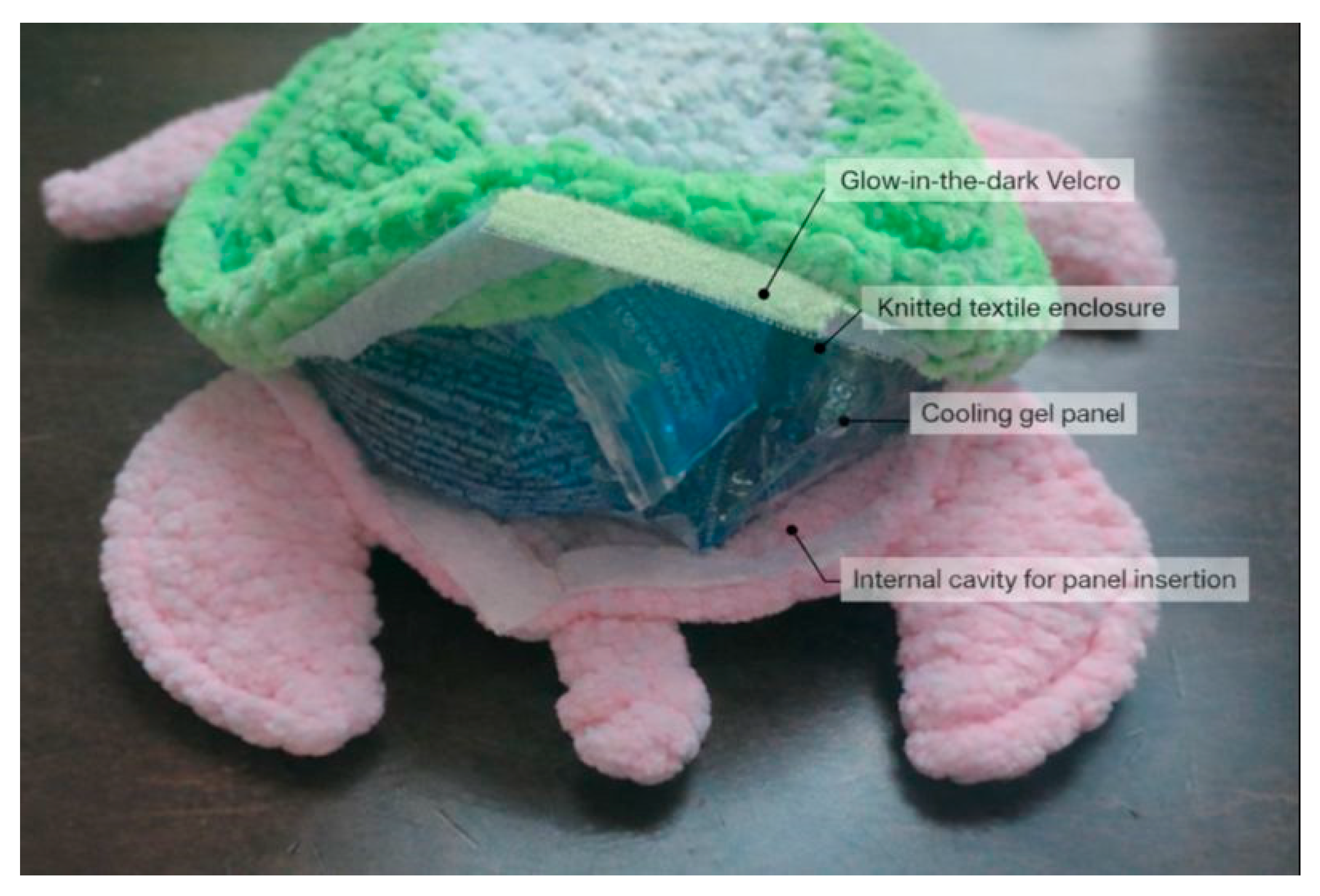
For each trial, the cooling gel panel was inserted into the knitted prototype before freezing (Figure 1). The cooling gel panel is removable primarily for hygienic reasons, allowing the textile system to be washed when needed. For the thermal measurements, the complete textile system containing the gel panel was cooled prior to testing. This approach reflects likely caregiver behaviour in real home use, where the entire soft textile system may be placed in the freezer for convenience. Cooling the complete system also minimises handling-related warming effects and represents a conservative experimental condition.
To investigate the influence of pre-cooling duration, the textile system containing the gel panel was cooled in a freezer at approximately −18 °C for four predefined intervals (15, 30, 45, and 90 min). Immediately after removal from the freezer, the surface temperature of the textile system was recorded using infrared thermography, as described below.
Although the experimental protocol was designed to minimise handling-related warming, some degree of localised warming during transfer and initial contact is unavoidable under laboratory conditions and is reflected in the initial temperature distribution.
A heating pad was used to simulate human skin temperature and was set to maintain a constant surface temperature of 35 ± 0.2 °C. This value lies within the physiological range of resting human skin [30]. The skin-temperature simulator was employed to provide controlled and reproducible thermal boundary conditions for comparative evaluation of the textile systems, rather than to reproduce physiological skin responses.
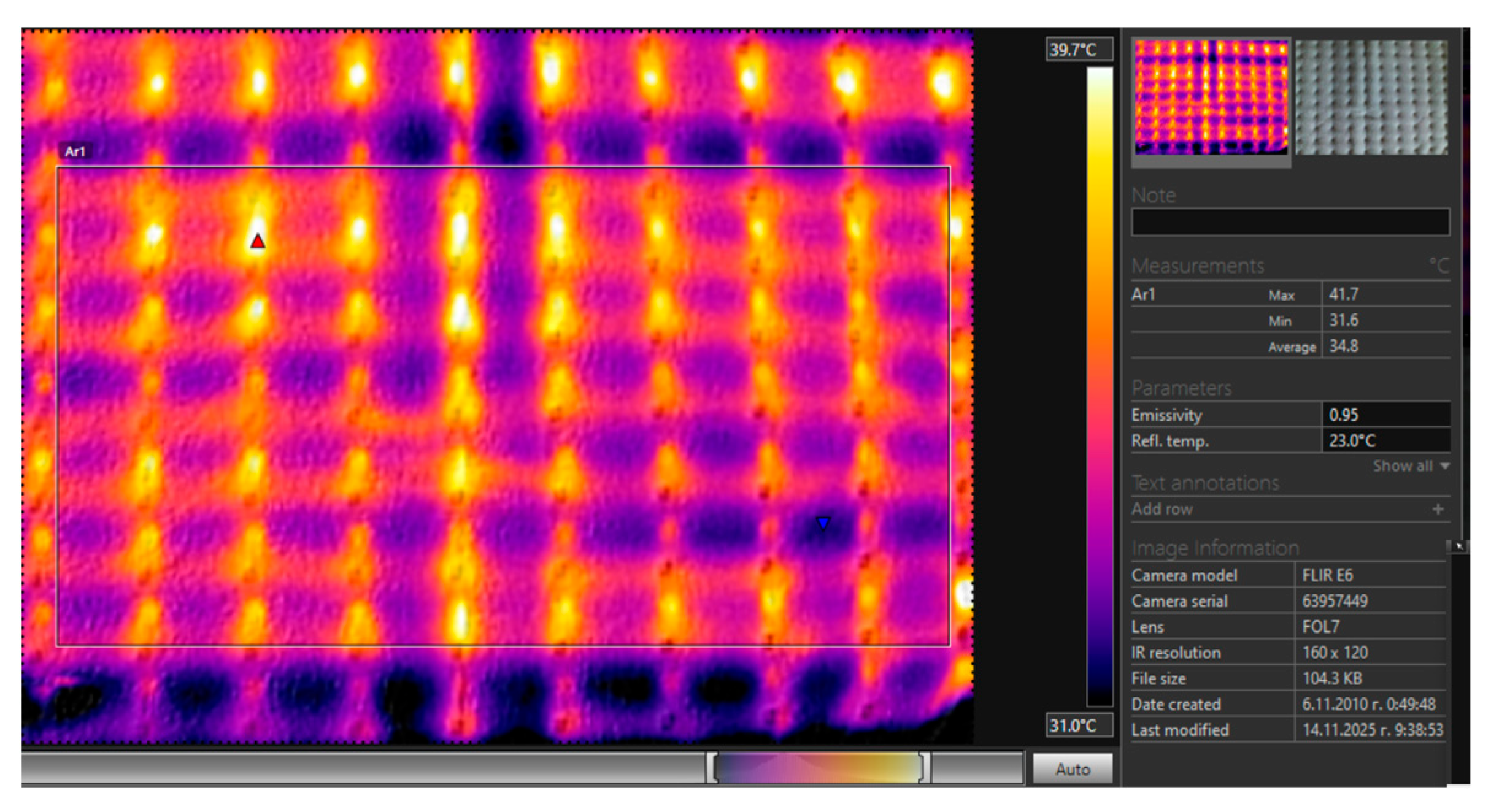
Figure 2 illustrates the thermographic verification of the heating pad used as a skin-temperature simulator. A region of interest (ROI) was defined within the central area of the pad to confirm sufficiently uniform surface temperature prior to testing. The analysis was performed using FLIR Tools thermographic software (v. 5.0; FLIR Systems Inc., Wilsonville, OR, USA). This verification ensured controlled and reproducible boundary conditions for all subsequent measurements, allowing the thermal response of the textile system to be evaluated under stable and well-defined contact conditions.
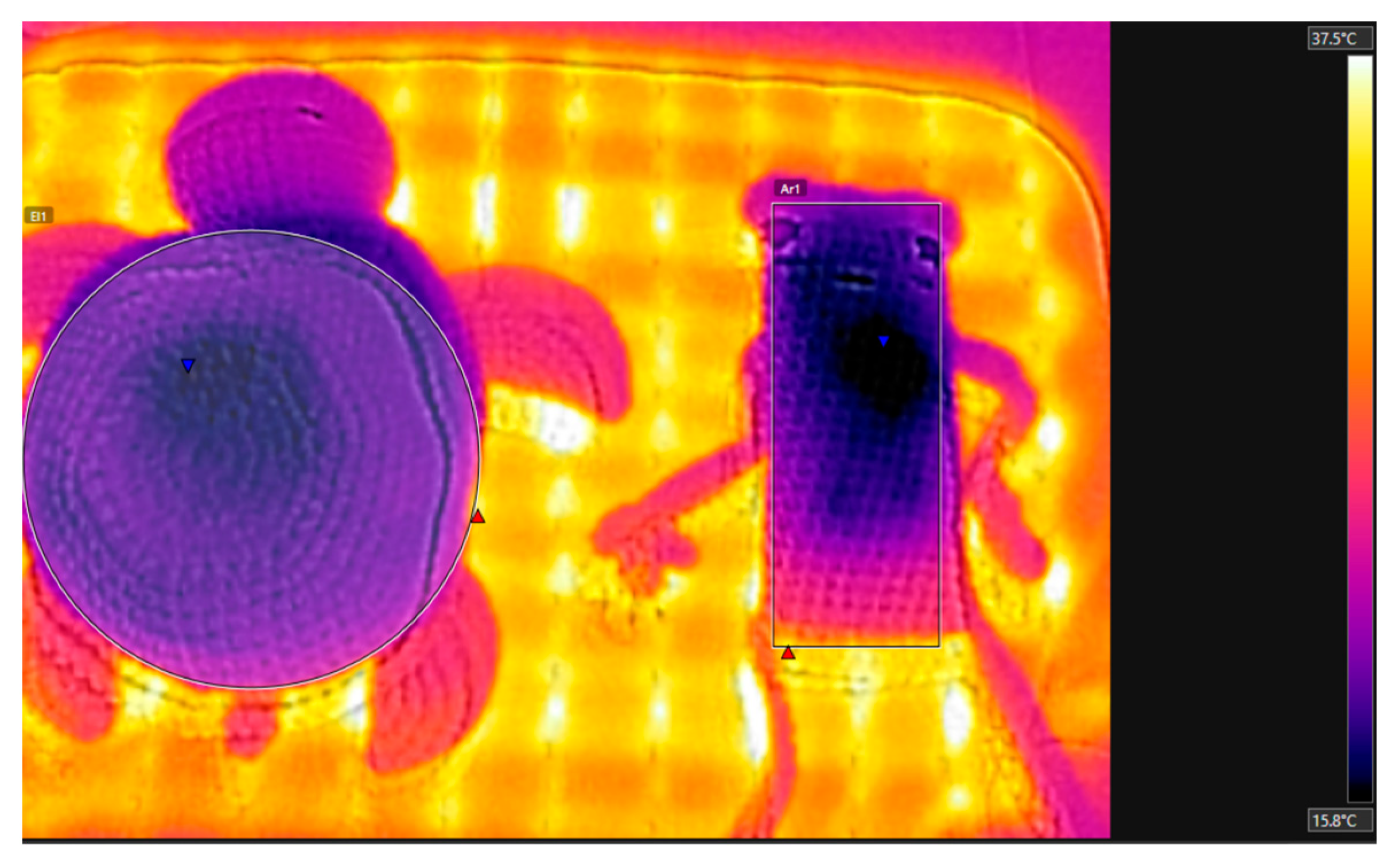
During each measurement, the prototype was placed directly on the simulator and kept in a static position throughout the measurement period, ensuring consistent contact conditions between the textile surface and the simulated skin. Thermal measurements were performed using a FLIR E6 infrared camera (FLIR Systems Inc., Wilsonville, OR, USA), operating in the 7.5–13 µm spectral range, with a thermal sensitivity of ≤0.06 °C. The camera was positioned at a fixed distance of 25 cm above the surface of each prototype to ensure consistent imaging conditions. Measurements were collected at intervals of 5 min to capture the temporal evolution of surface temperature during passive cooling. Figure 3 shows a representative thermographic image acquired during the thermal measurements, illustrating the placement of the textile systems on the skin-temperature simulator.
For every thermal image, ROI was defined over the central surface area of the textile system, directly above the cooling panel. The ROI definition was kept consistent across all measurements to ensure comparability between different pre-cooling conditions and prototype configurations. Although the ROI was defined centrally above the cooling gel panel, local variations in textile thickness and contact pressure can lead to spatial temperature heterogeneity, particularly near panel boundaries.
The emissivity of the knitted surface was set to ε = 0.95, corresponding to typical values for matte textile materials. The following parameters were automatically extracted from the ROI:
  • Minimum temperature (min) within the ROI;
  • Average temperature (average) within the ROI;
  • Maximum temperature (max) within the ROI.
The primary metrics used to evaluate cooling performance were the average temperature, representing the overall cooling response of the system, and the minimum temperature, indicating the lowest local temperature achieved at the textile surface. The maximum temperature values were used to assess temperature homogeneity across the surface and to identify potential warm regions not directly associated with the cooling panel, thereby supporting the evaluation of spatial thermal distribution within the textile system.
In addition to defining separate ROI beneath each prototype, the surface temperature of the entire skin-temperature simulator was also analysed. During the measurements, both prototypes were placed simultaneously at predefined positions on the simulator, resulting in two spatially distinct ROI. Whole-surface evaluation was therefore performed to minimise potential uncertainty related to local ROI selection and to capture the overall thermal response of the simulator under simultaneous contact with both cooled textile systems. This complementary analysis supports interpretation of local temperature variations observed beneath individual textile systems.
All experiments were conducted under stable laboratory ambient conditions, with an air temperature of 22 ± 1 °C and a relative humidity of 65 ± 5%.

3. Results

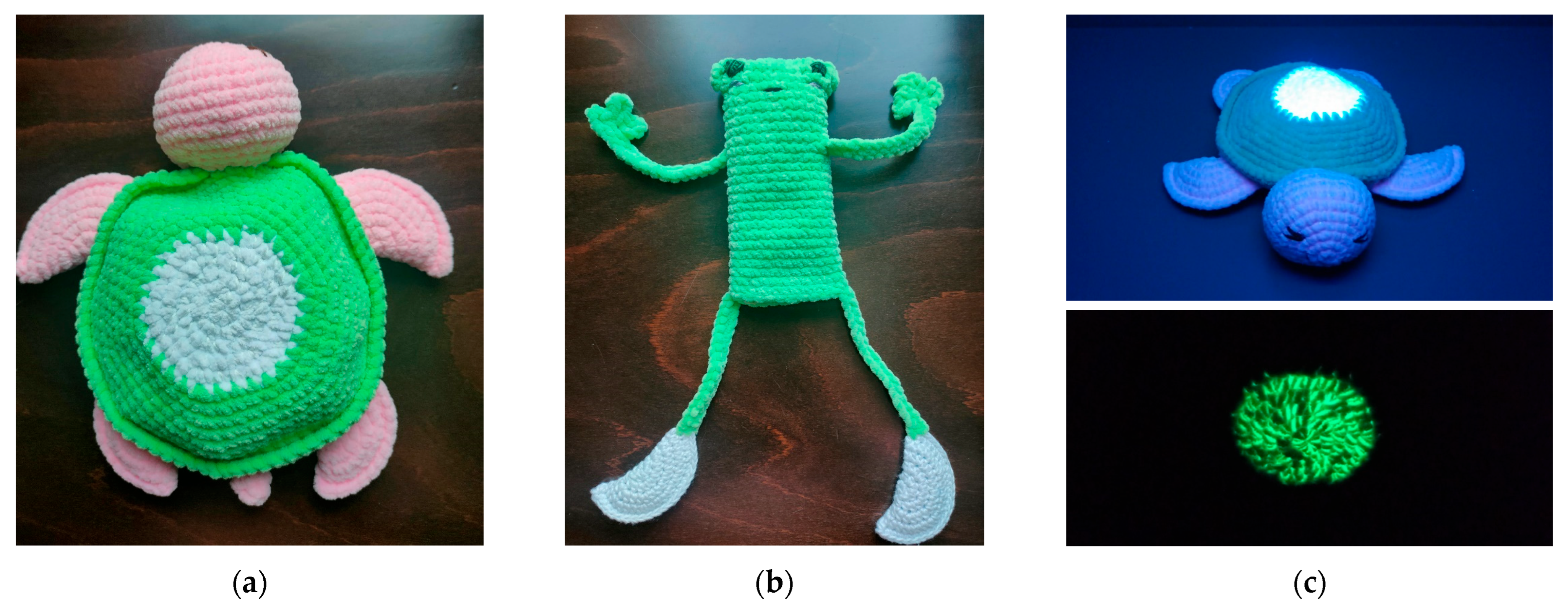
Two soft textile systems with removable gel cooling panels were evaluated: PP1, a turtle-shaped prototype (Figure 4a), designed to accommodate a larger gel panel (17.5 × 13.5 cm), and PP2, a frog-shaped prototype (Figure 4b), incorporating a smaller panel (11.5 × 4.5 cm). The two configurations represent different geometrical layouts and contact surface distributions of the same cooling concept.

3.1. Effect of Pre-Cooling Duration on Initial Surface Temperature

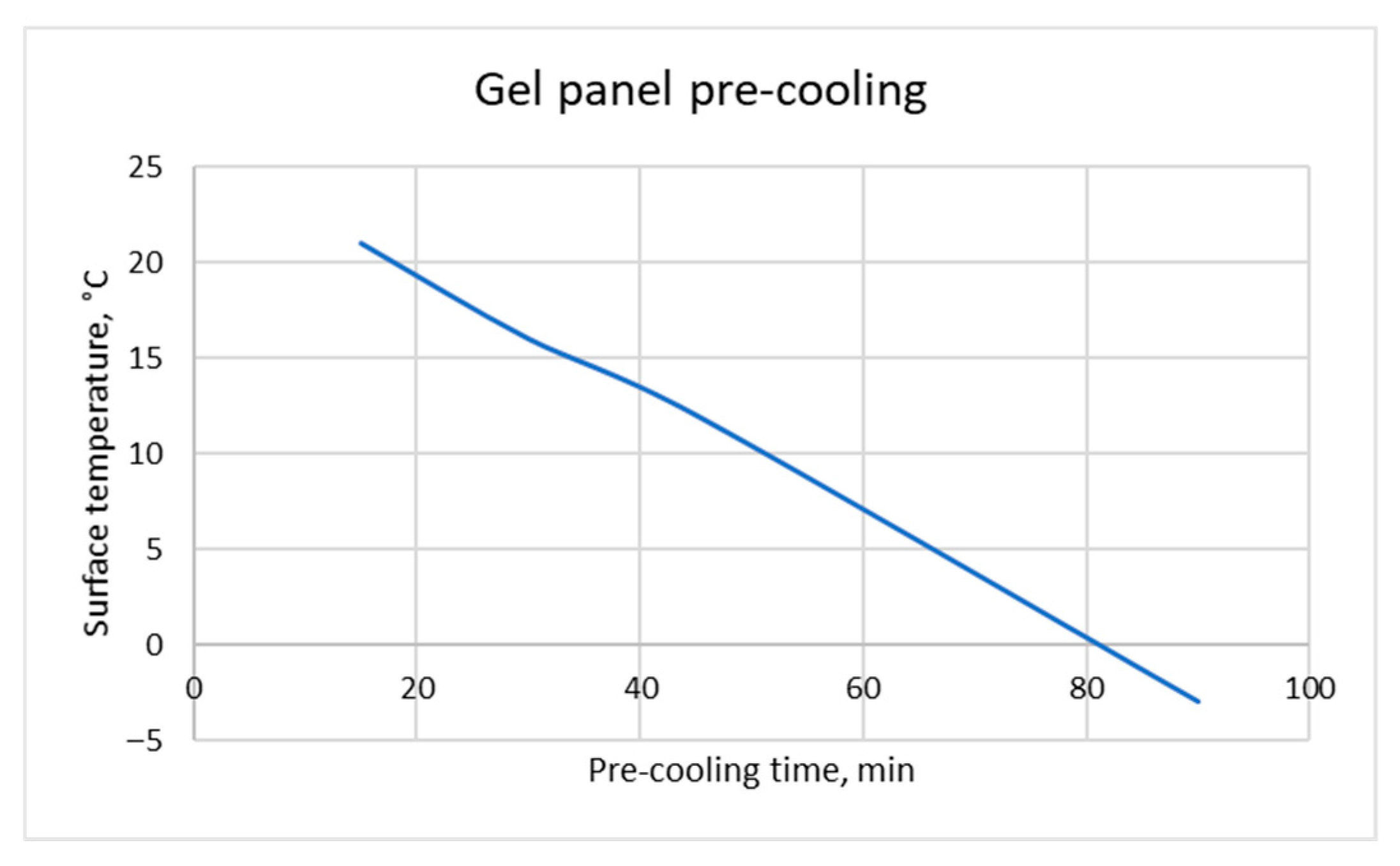
Figure 5 presents the surface temperature of the textile system as a function of the pre-cooling duration.
The results show a clear and monotonic reduction in initial surface temperature with increasing pre-cooling duration. Pre-cooling for 30 min led to a surface temperature of approximately 16 °C, corresponding to a moderate cooling level suitable for direct skin contact. Extending the pre-cooling period to 45 min reduced the surface temperature to approximately 12 °C, producing a stronger yet still moderated cooling effect. After 90 min of pre-cooling, the surface temperature reached −3 °C, demonstrating the high thermal capacity of the gel panel. While such low initial surface temperatures demonstrate the cooling capacity of the system, they also highlight the importance of considering the initial contact conditions, which are governed by the combined thermal response of the gel panel and the surrounding textile structure. These observations describe the initial thermal state of the system at the moment of contact and do not imply a sustained surface temperature during use.

3.2. Surface Temperature Evolution of the Textile Systems During Contact

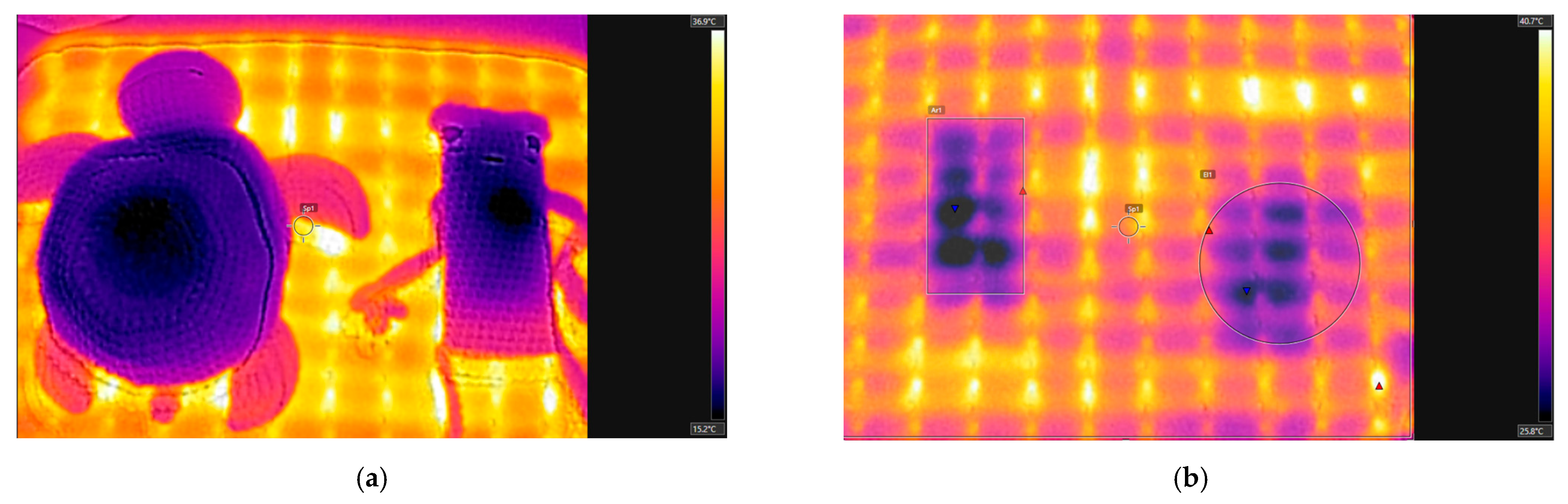
The time-dependent surface temperature behaviour of the textile systems during contact with the skin-temperature simulator was evaluated over a 50 min period. Thermal images were acquired at 5 min intervals, and the minimum, average, and maximum surface temperatures were extracted from the defined ROI. Representative thermograms illustrating the experimental configuration are shown in Figure 6.
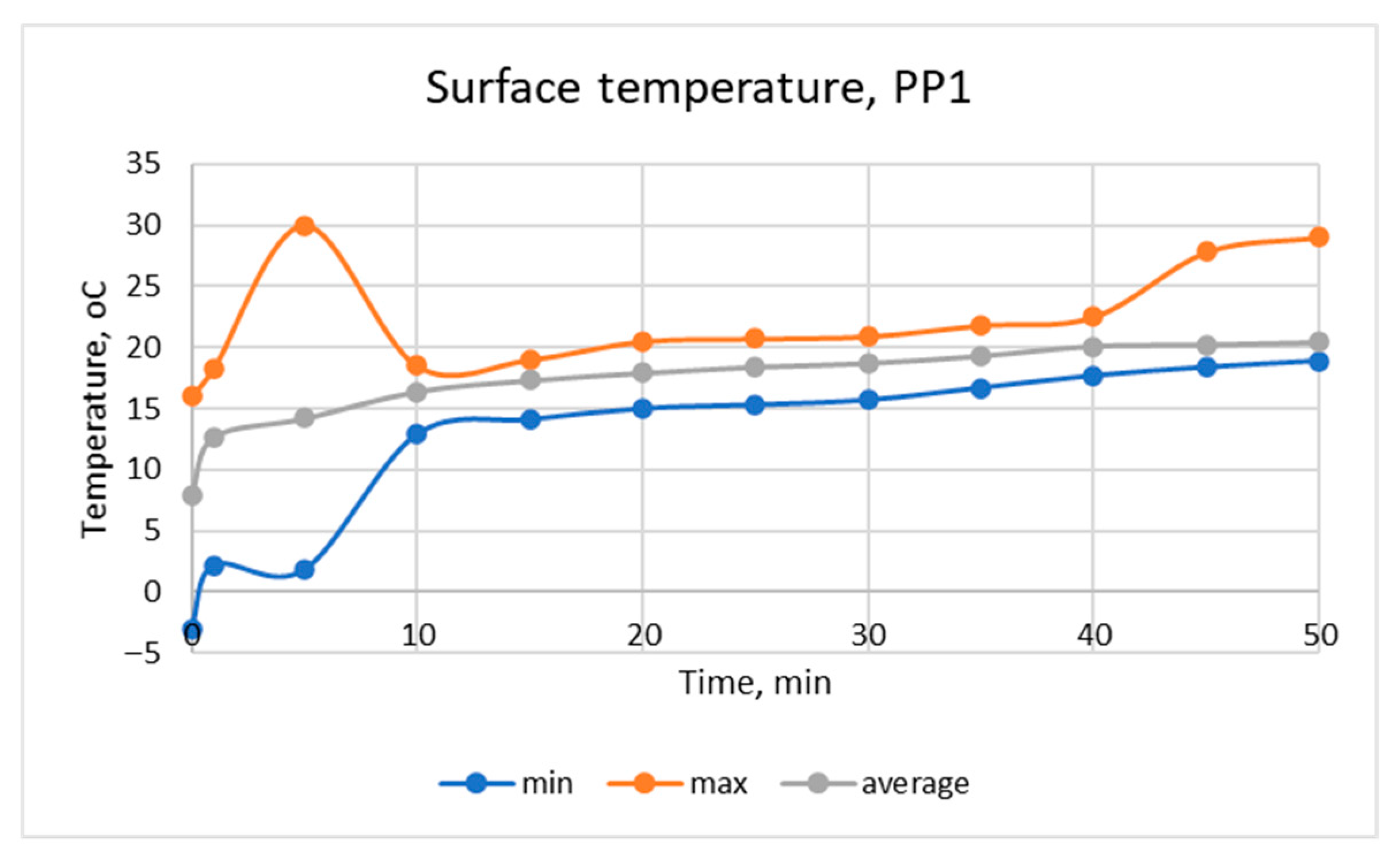
Figure 7 presents the surface temperature evolution of PP1 during contact with the simulator. The minimum surface temperature increased from −3 °C at the initial time point to 18.9 °C after 50 min. The average surface temperature increased from 7.9 °C to 20.4 °C over the same period. The maximum surface temperature reached 30 °C at minute 5, followed by stabilisation in the range of 19–22 °C and a subsequent increase towards the end of the measurement period, reaching 29 °C.
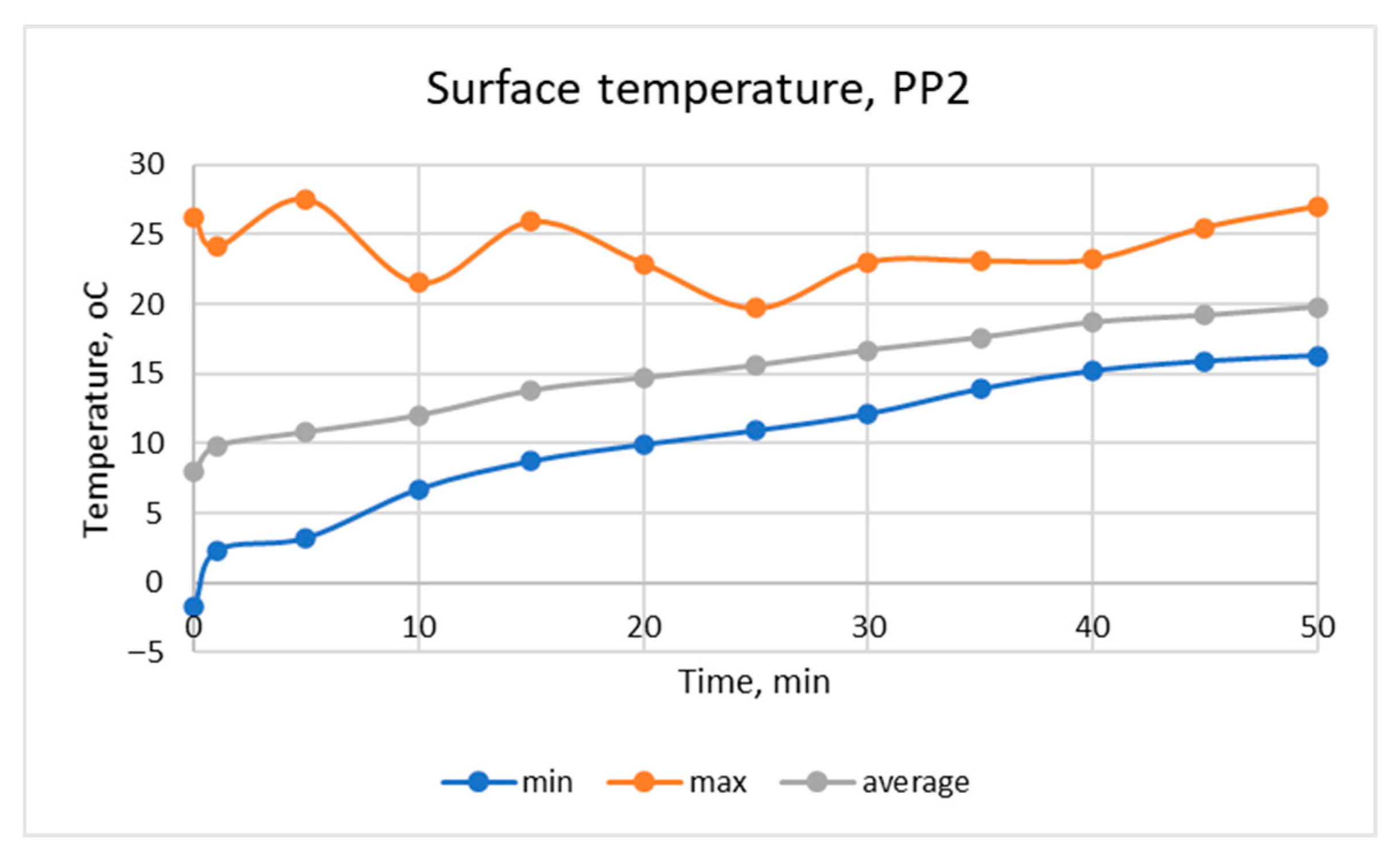
The surface temperature evolution of PP2 is shown in Figure 8. The minimum surface temperature increased from −1.7 °C at the beginning of the measurement to 16.3 °C after 50 min. The average surface temperature increased steadily from 8.0 °C to 19.8 °C. The maximum surface temperature varied between 19.7 °C and 27.5 °C during the measurement period and reached 27 °C at the final time point.
The relatively high maximum surface temperatures observed at the initial time point in the two Figure 7 and Figure 8 are attributed to localised warming occurring during the transfer of the cooled textile system from the freezer to the simulator, combined with heterogeneous contact conditions inherent to soft, deformable textile structures. Local variations in textile thickness and contact pressure may further contribute to transient spatial temperature heterogeneity within the ROI.
A comparison of the two prototypes shows that PP1 exhibited higher minimum and average surface temperatures than PP2 after minute 10 of contact. Differences in maximum surface temperature behaviour were also observed, with PP1 showing an early maximum at minute 5, while PP2 exhibited a wider range of fluctuations throughout the measurement period.

3.3. Thermal Response of the Skin-Temperature Simulator

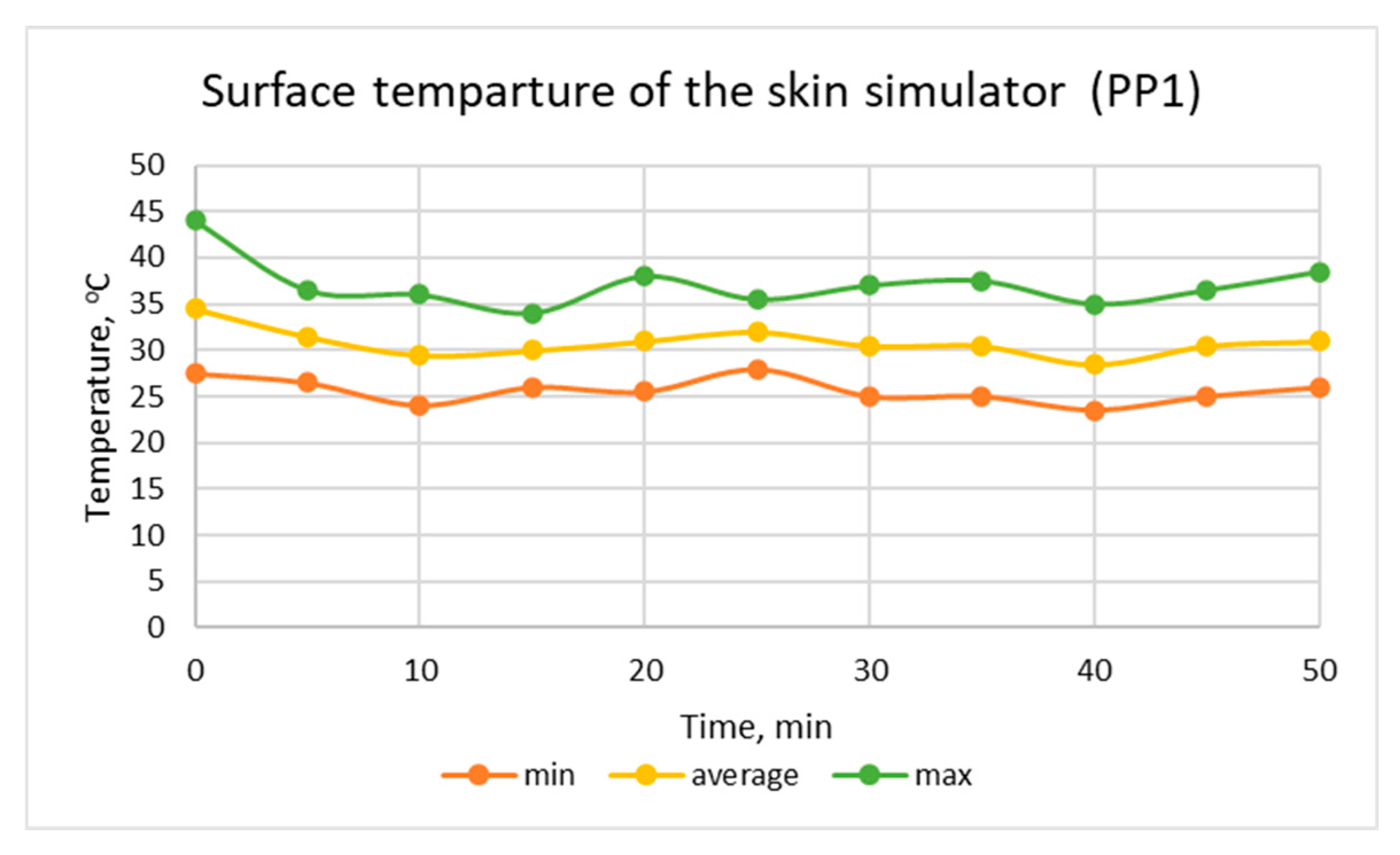
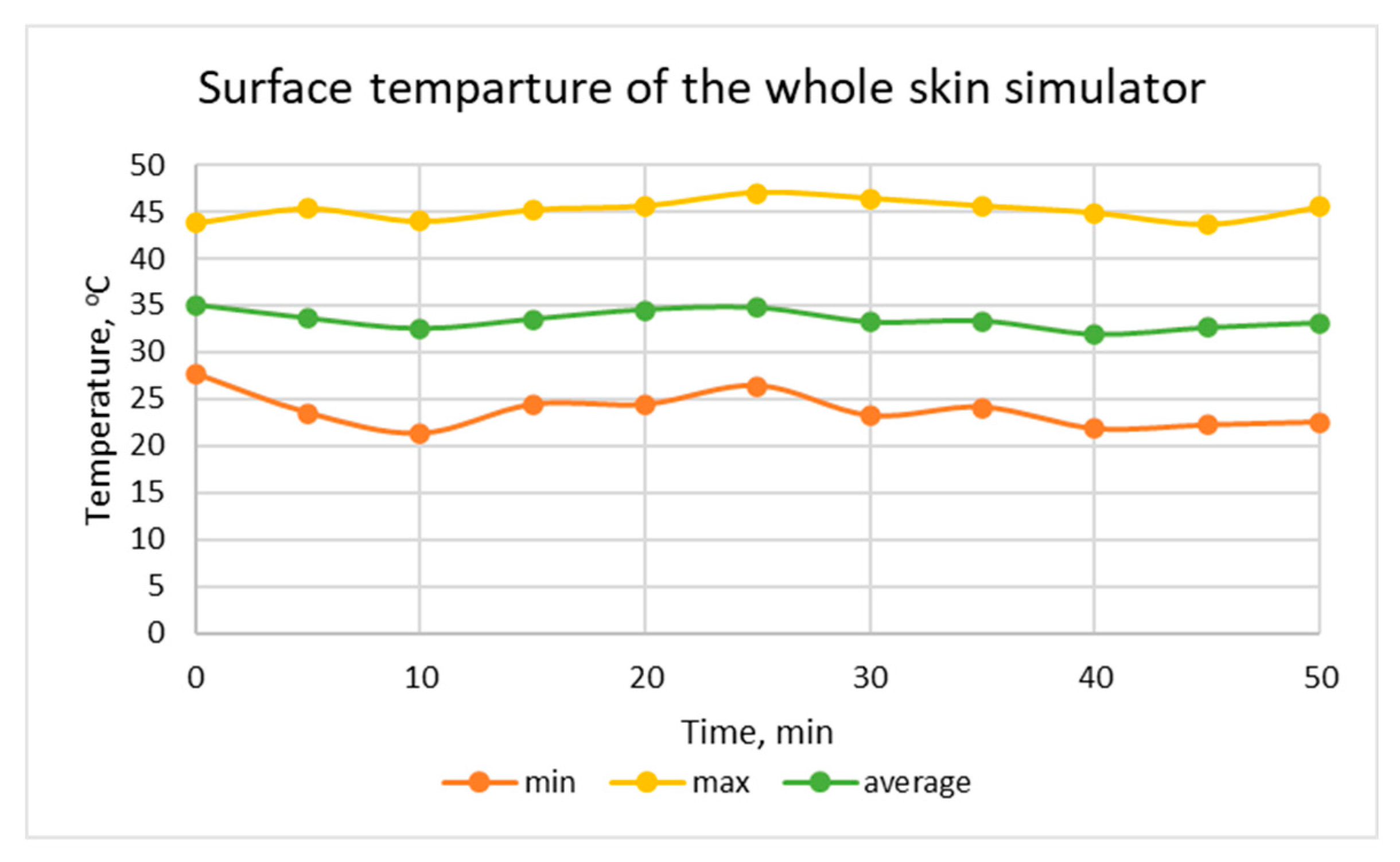
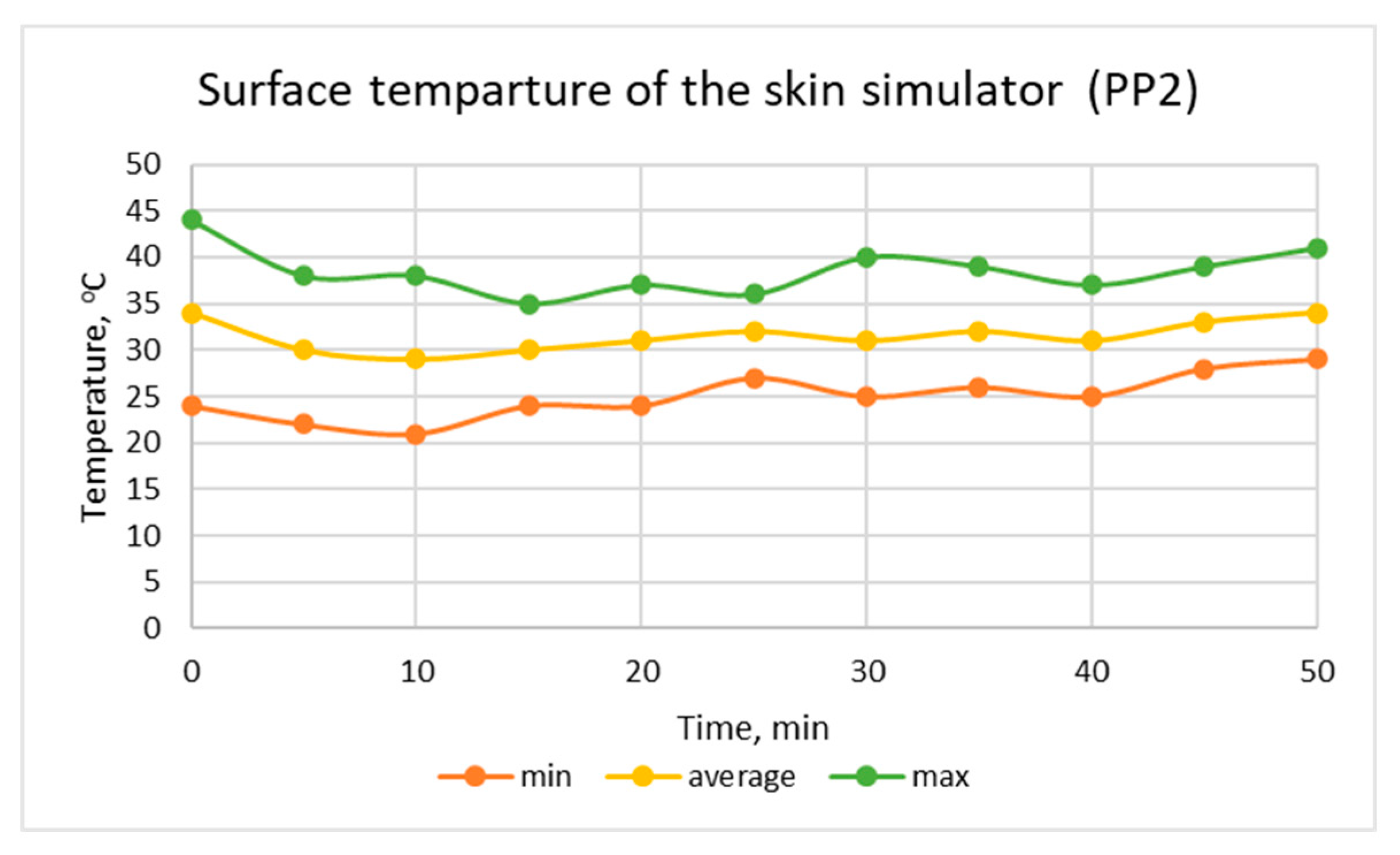
The thermal response of the skin-temperature simulator beneath the textile systems was analysed during the 50 min contact period. Figure 9 and Figure 10 present the surface temperature evolution in the area beneath PP1 and PP2, respectively, while Figure 11 shows the temperature behaviour of the entire simulator surface.
For the area beneath PP1 (Figure 9), the minimum surface temperature varied between approximately 23 °C and 28 °C throughout the measurement period. The maximum surface temperature remained within the range of approximately 39–45 °C. The average surface temperature showed minor fluctuations and remained between 31 °C and 34 °C.
The surface temperature beneath PP2 (Figure 10) exhibited a similar trend. The minimum temperature ranged from approximately 23 °C to 29 °C, while the maximum temperature varied between 38 °C and 45 °C. The average temperature remained within the interval of 31–35 °C over the measurement period.
Figure 11 shows the surface temperature evolution of the entire skin-temperature simulator when cooling by the two prototypes. The minimum temperature remained within the range of 23–28 °C, while the maximum temperature was consistently between approximately 43 °C and 47 °C. The average surface temperature remained nearly constant, with values between 32 °C and 34 °C throughout the measurement period. However, the stable average temperature of the simulator reflects its regulated operation and should not be interpreted as an absence of localised cooling at the textile–surface interface. This observation confirms that the cooling effect is localised at the contact interface rather than altering the global thermal state of the simulator.

4. Discussion

The results show that both textile systems with removable gel panels provide gradual and moderated cooling behaviour during contact with the skin-temperature simulator. This behaviour is governed by the thermal capacity of the gel panel and the combined thermal response of the gel panel and the surrounding textile structure. In the present work, this effect is discussed at a qualitative, system level. The textile layer reduces the effective heat transfer rate between the cooled insert and the contact surface. Similar effects have been reported for textile-mediated cooling systems in previous studies [31,32]. In contrast to conventional cooling products, the present work focuses on the textile-system level, demonstrating how geometry and knitted structure influence the temporal evolution of surface temperature when a standard gel cooling element is inserted into a soft textile form.
The pre-cooling experiments demonstrate that freezing duration directly affects the initial surface temperature of the system. Longer pre-cooling times result in lower initial temperatures. This observation is consistent with published data on polymer-based cooling packs [33]. The results therefore allow predictable adjustment of cooling intensity prior to skin contact.
During contact with the skin-temperature simulator, both PP1 and PP2 exhibited a smooth warming process. No abrupt temperature changes were observed. This behaviour agrees with literature on knitted and multilayer textile structures, which are known to reduce the intensity of the initial cold stimulus [34,35]. Throughout the measurements, the minimum, average, and maximum surface temperatures remained within ranges suitable for short-term skin contact under the applied experimental conditions.
Temperatures below approximately 12–15 °C are generally perceived as distinctly uncomfortable, while lower values may induce cold-related pain. Reported cold-pain thresholds for healthy individuals range between 8 and 15 °C, depending on the body region [36]. In the present study, surface temperatures after the first minutes of contact remained above these thresholds. This indicates that the textile layer limits direct exposure to intense cold at the textile–surface interface.
Comparison between PP1 and PP2 highlights the influence of system geometry and gel panel size on thermal behaviour. The larger configuration (PP1) reached higher final surface temperatures and showed a more stable warming trajectory. The more compact configuration (PP2) exhibited greater fluctuations in maximum temperature. Despite these differences, both systems converged towards similar surface temperatures after approximately 50 min. This indicates that system geometry and gel panel size influence heat exchange, while the textile structure contributes to moderating the process at a qualitative level.
The two prototype configurations (PP1 and PP2) were selected as representative case studies of soft, volumetric textile systems with different geometries and gel cooling panel sizes. The present study does not aim to establish generalised heat-transfer parameters, but to evaluate system-level thermal behaviour resulting from the interaction between textile structure, geometry, and a gel cooling element. The reported results should therefore be interpreted as application-oriented case studies rather than standardised heat-transfer models. The use of flat or geometrically simplified samples would address different research objectives and is identified as a direction for future work.
Although direct heat flux or thermal energy balance calculations were not performed, the temporal evolution of surface temperature provides an indirect indication of heat transfer behaviour during contact. Under controlled boundary conditions, the rate and magnitude of surface temperature change reflect the combined thermal capacity of the gel panel and the buffering effect of the textile structure. Direct quantification of heat flux was considered beyond the scope of the present study and is identified as a relevant direction for future work.
Measurements performed on the surface of the skin-temperature simulator showed a mild local cooling effect during the first minutes of contact. This was followed by temperature stabilisation. Similar behaviour has been reported in studies of heat transfer at the textile–skin interface, where the strongest cooling effect occurs shortly after contact [37].
From a physiological perspective, moderated cooling is particularly important for children. Children exhibit higher thermosensitivity and respond more rapidly to local temperature changes [6]. Strong cold stimuli may induce stress responses or reflex vasoconstriction. The gradual cooling behaviour observed in both systems is therefore consistent with the need for moderated thermal exposure in this population from a qualitative, safety-oriented standpoint.
The main limitation of the present study is that all experiments were conducted under controlled laboratory conditions. The skin-temperature simulator cannot fully reproduce the physiological complexity of human skin. This approach was chosen to ensure reproducibility and to avoid the involvement of human participants, particularly children. Accordingly, the findings should be interpreted as a comparative and qualitative evaluation of the thermal behaviour of the textile systems rather than a statistically based assessment.
The present study considers a single commercially available cooling formulation to validate the cooling concept of a soft textile system with a removable gel cooling panel. User-based evaluations, repeated measurements, extended testing over multiple cooling cycles, and comparative evaluation of different cooling materials are identified as relevant directions for future work to further assess comfort, reproducibility, and long-term performance, including durability under repeated cooling cycles and hygiene-related aspects.
Future work will extend the present system-level evaluation toward more application-oriented studies, including repeatability assessment under identical conditions, investigation of alternative cooling material formulations, and comparative benchmarking against commercial cooling products using standardised testing protocols. Further studies may incorporate physiologically informed boundary conditions or bio-heat transfer modelling to better approximate human skin responses, as well as the influence of moisture and wet-contact conditions on thermal behaviour and comfort.

5. Conclusions

The study demonstrated that soft knitted textile systems with inserted cooling gel panels can provide a moderated and gradual cooling effect under controlled laboratory conditions. The strongest cooling occurred during the first 10–15 min after contact, while the temperature of the skin-temperature simulator stabilised within the first few minutes, indicating the absence of excessive or abrupt skin cooling at the contact interface.
Both evaluated prototypes exhibited gradual warming behaviour and converged towards similar surface temperatures after approximately 50 min. The results indicate that system geometry and cooling panel size influence the temporal thermal response, while the knitted textile structure contributes to moderating heat exchange at the textile–surface interface at a qualitative level.
The measured surface temperatures remained above values associated with cold discomfort or pain. This supports the potential of the systems for short-term skin contact applications requiring gentle and moderated cooling behaviour, particularly in contexts involving increased thermosensitivity within the scope of the investigated configurations.
The findings highlight the feasibility of a textile system with a removable gel cooling panel as a soft and compliant alternative to conventional cooling products. While the present work provides a system-level engineering evaluation, further studies are required to assess user perception, material variability, and long-term performance under real-use conditions.

Author Contributions

Conceptualization, R.A.A.; methodology, R.A.A. and L.B.; software, D.S. and E.B.; validation, R.A.A., D.S. and E.B.; formal analysis, R.A.A. and L.B.; investigation, R.A.A., L.B., D.S. and E.B.; resources, R.A.A. and L.B.; data curation, R.A.A., L.B., D.S. and E.B.; writing—original draft preparation, R.A.A.; writing—review and editing, L.B., D.S. and E.B.; visualisation, R.A.A., L.B., D.S. and E.B.; supervision, R.A.A.; project administration, R.A.A.; funding acquisition, R.A.A. All authors have read and agreed to the published version of the manuscript.

Funding

This study and its publication are financed by the European Union—NextGenerationEU, through the National Recovery and Resilience Plan of the Republic of Bulgaria, project No BG-RRP-2.004-0005.

Institutional Review Board Statement

Not applicable.

Informed Consent Statement

Not applicable.

Data Availability Statement

The original contributions presented in this study are included in the article. Further inquiries can be directed to the corresponding author.

Conflicts of Interest

The authors declare no conflicts of interest.

References

  1. van de Kamp, E.; Daanen, H. Narrative Review on Infants’ Thermoregulatory Response to Heat. Int. J. Environ. Res. Public Health 2025, 22, 1265. [Google Scholar]
  2. Falk, B.; Dotan, R. Children’s thermoregulation during exercise in the heat—A revisit. Appl. Physiol. Nutr. Metab. 2008, 33, 420–427. [Google Scholar]
  3. Grubenhoff, J.A.; du Ford, K.; Roosevelt, G.E. Heat-related illness. Clin. Pediatr. Emerg. Med. 2007, 8, 59–64. [Google Scholar] [CrossRef]
  4. Wells, J.C. Energy metabolism in infants and children. Nutrition 1998, 14, 817–820. [Google Scholar] [CrossRef]
  5. Ringer, S.A. Core concepts: Thermoregulation in the newborn part I: Basic mechanisms. Neoreviews 2013, 14, e161–e167. [Google Scholar] [CrossRef]
  6. Smith, C.J. Pediatric thermoregulation: Considerations in the face of global climate change. Nutrients 2019, 11, 2010. [Google Scholar] [CrossRef]
  7. Tumram, N.K. Personal protective equipment and personal cooling garments to reduce heat-related stress and injuries. Med.-Leg. J. 2020, 88, 43–46. [Google Scholar] [PubMed]
  8. Saidi, A.; Gauvin, C.; Ladhari, S.; Nguyen-Tri, P. Advanced functional materials for intelligent thermoregulation in personal protective equipment. Polymers 2021, 13, 3711. [Google Scholar] [CrossRef]
  9. Nicholls, L. Heatwaves, cooling and young children at home: Integrating energy and health objectives. Environ. Res. Lett. 2018, 13, 094020. [Google Scholar]
  10. Hussain, M.; Asim, M.; Atif, N.; Anjum, N. Cooling gel patch efficacy. Pak. Armed Forces Med. J. 2021, 71, 328–332. [Google Scholar]
  11. Bach, V.; Libert, J.P. Hyperthermia and heat stress as risk factors for sudden infant death syndrome: A narrative review. Front. Pediatr. 2022, 10, 816136. [Google Scholar] [CrossRef]
  12. Li, N.; Wang, W. Research of Surface Materials for Children’s Household Medical Products Based on Visual and Tactile Experience. Appl. Sci. 2024, 14, 8910. [Google Scholar] [CrossRef]
  13. Eisenberg, N.; Spinrad, T.L.; Eggum, N.D. Emotion-related self-regulation and its relation to children’s maladjustment. Annu. Rev. Clin. Psychol. 2010, 6, 495–525. [Google Scholar] [CrossRef] [PubMed]
  14. Harrison, D.; Elia, S.; Royle, J.; Manias, E. Pain management strategies used during early childhood immunisation in Victoria. J. Paediatr. Child Health 2013, 49, 313–318. [Google Scholar] [CrossRef] [PubMed]
  15. La Rosa, V.L.; Geraci, A.; Iacono, A.; Commodari, E. Affective touch in preterm infant development: Neurobiological mechanisms and implications for child–caregiver attachment and neonatal care. Children 2024, 11, 1407. [Google Scholar] [CrossRef] [PubMed]
  16. Hong, Y.; Alli, H.; Shaari, N. Emotional Attachments in Children’s Toy Design Dimensions and Strategies: A Grounded Theory Approach. In Proceedings of the ESIC2024, Bandung, Indonesia, 17–18 September 2024. [Google Scholar]
  17. Ardiel, E.L.; Rankin, C.H. The importance of touch in development. Paediatr. Child Health 2010, 15, 153–156. [Google Scholar] [CrossRef]
  18. Honauer, M.; Moorthy, P.; Hornecker, E. Interactive soft toys for infants and toddlers-design recommendations for age-appropriate play. In Proceedings of the Annual Symposium on Computer-Human Interaction in Play, Barcelona, Spain, 22–25 October 2019; pp. 265–276. [Google Scholar]
  19. Sun, Y.; Lin, L. Designing a Tangible Interactive Learning System for Children’s Art Education: A Multi-Sensory Design Approach. In International Conference on Human-Computer Interaction; Springer Nature: Cham, Switzerland, 2024; pp. 225–234. [Google Scholar]
  20. Ngo, M.K.; Spence, C. Auditory, tactile, and multisensory cues facilitate search for dynamic visual stimuli. Atten. Percept. Psychophys. 2010, 72, 1654–1665. [Google Scholar] [CrossRef]
  21. van der Westhuizen, L.M.; Kuhn, S.W. Handmade clothing consumption as a means of self-expression. J. Fash. Mark. Manag. Int. J. 2024, 28, 759–774. [Google Scholar] [CrossRef]
  22. Hossain, M.T. Techniques, applications, and challenges in textiles for a personalised world. J. Text. Sci. Eng. 2024, 14, 15. [Google Scholar]
  23. Edelstein, M.; Peleg, H.; Itzhaky, S.; Ben-Chen, M. Amigo: Computational design of amigurumi crochet patterns. In Proceedings of the 7th Annual ACM Symposium on Computational Fabrication, Seattle, WA, USA, 26–28 October 2022; pp. 1–11. [Google Scholar]
  24. Lieber-Milo, S.; Nittono, H. From a word to a commercial power: A brief introduction to the kawaii aesthetic in contemporary Japan. Innov. Res. Jpn. Stud. 2019, 3, 13–32. [Google Scholar]
  25. Ramachandran, T.; Sampath, M.B.; Senthilkumar, M. Micro polyester fibers for moisture management. Indian Text J 2009, 200, 21–24. [Google Scholar]
  26. Cui, H.; Xu, C. Study on the relationship between textile microplastics shedding and fabric structure. Polymers 2022, 14, 5309. [Google Scholar] [CrossRef]
  27. Larson, D.B.; Jordan, S.R. Playing it safe: Toy safety and conformity assessment in Europe and the United States. Int. Rev. Adm. Sci. 2019, 85, 763–779. [Google Scholar] [CrossRef]
  28. Rane, O.S.; Ray, S.; Khaneja, S. Design Challenges and Solutions to Create Toys with Reference to Sawantwadi Wooden Toy Manufacturing. In Conference of Innovative Product Design and Intelligent Manufacturing System; Springer Nature: Singapore, 2023; pp. 589–602. [Google Scholar]
  29. Ramalakshmi, R.; Abhinav, A.; Reddy, M.S.; Babu, R.D.; Vardhan, M.H.; Rajesh, S.; Veerachamy, K.; Adam Khan, M. 3D Design Making of Eco-friendly Toys. In International Conference on Innovation, Sustainability, and Applied Sciences; Springer Nature: Cham, Switzerland, 2023; pp. 735–743. [Google Scholar]
  30. Hall, J.E. Guyton and Hall Textbook of Medical Physiology, 13th ed.; Elsevier: Amsterdam, The Netherlands, 2021; pp. 889–891. [Google Scholar]
  31. Jansen, K.M.; Teunissen, L. Analytical model for thermoregulation of the human body in contact with a phase change material (PCM) cooling vest. Thermo 2022, 2, 232–249. [Google Scholar] [CrossRef]
  32. Islam, M.R.; Golovin, K.; Dolez, P.I. Clothing Thermophysiological Comfort: A Textile Science Perspective. Textiles 2023, 3, 353–407. [Google Scholar] [CrossRef]
  33. Ring, E.; Jones, C.; Ammer, K.; Plassmann, P.; Bola, T. Cooling effects of Deep Freeze Cold Gel compared to that of an ice pack applied to the skin. Thermol. Int. 2004, 14, 93–98. [Google Scholar]
  34. Zhao, Y.; Dong, Z.; He, H.; Cong, H. The Development and Performance of Knitted Cool Fabric Based on Ultra-High Molecular Weight Polyethylene. Polymers 2024, 16, 325. [Google Scholar] [CrossRef]
  35. Tang, K.H.D. Advances in Thermoregulating Textiles: Materials, Mechanisms, and Applications. Textiles 2025, 5, 22. [Google Scholar] [CrossRef]
  36. Hagander, L.G.; Midani, H.A.; Kuskowski, M.A.; Parry, G.J. Quantitative sensory testing: Effect of site and skin temperature on thermal thresholds. Clin. Neurophysiol. 2000, 111, 17–22. [Google Scholar] [CrossRef]
  37. Fan, J.; Tsang, H.W. Effect of clothing thermal properties on the thermal comfort sensation during active sports. Text. Res. J. 2008, 78, 111–118. [Google Scholar] [CrossRef]
Figure 1. Configuration of the textile system illustrating insertion of the cooling gel panel into the internal knitted cavity prior to freezing.
Applsci 16 00857 g001
Figure 2. Thermographic verification of the heating pad used as a skin-temperature simulator (35 ± 0.2 °C).
Applsci 16 00857 g002
Figure 3. Infrared thermographic image showing the regions of interest (ROI) defined for temperature extraction on the two textile system configurations.
Applsci 16 00857 g003
Figure 4. Soft textile systems with removable gel cooling panels used in the study: (a) PP1—turtle-shaped prototype designed to accommodate a 17.5 × 13.5 cm gel panel; (b) PP2—frog-shaped prototype designed for a 11.5 × 4.5 cm gel panel; (c) Front view of the phosphorescent elements of PP1 illustrating low-light visibility, shown immediately after activation (top) and under dark ambient conditions (bottom).
Applsci 16 00857 g004
Figure 5. Temperature drop of the cooling gel panel for different pre-cooling times.
Applsci 16 00857 g005
Figure 6. Representative thermograms: (a) Textile systems’ surface temperature; (b) Skin temperature simulator under the textile systems.
Applsci 16 00857 g006
Figure 7. Surface temperature of PP1 over time.
Applsci 16 00857 g007
Figure 8. Surface temperature of PP2 over time.
Applsci 16 00857 g008
Figure 9. Surface temperature of the skin simulator beneath PP1 over time.
Applsci 16 00857 g009
Figure 10. Surface temperature of the skin simulator beneath PP2 over time.
Applsci 16 00857 g010
Figure 11. Surface temperature of the whole area of the skin simulator over time.
Applsci 16 00857 g011
Disclaimer/Publisher’s Note: The statements, opinions and data contained in all publications are solely those of the individual author(s) and contributor(s) and not of MDPI and/or the editor(s). MDPI and/or the editor(s) disclaim responsibility for any injury to people or property resulting from any ideas, methods, instructions or products referred to in the content.