
Article

Extended Stiffened End-Plate Steel Joints with Octagonal Bolt Arrangement Under Column Loss Scenario


Department of Engineering (DING), University of Sannio, Piazza Roma, 82100 Benevento, Italy
*
Author to whom correspondence should be addressed.
Appl. Sci. 2026, 16(2), 735; https://doi.org/10.3390/app16020735 (registering DOI)
Submission received: 4 December 2025 / Revised: 5 January 2026 / Accepted: 8 January 2026 / Published: 10 January 2026

Abstract

Extended stiffened end-plate bolted connections represent one of the most utilised steel connection types in seismic-prone regions, and several studies have been dedicated to the improvement of their performance. Recently, a new stiffened joint configuration, with a non-symmetric octagonal bolt arrangement, was proposed, highlighting its excellent performance in seismic scenarios. Therefore, two new design procedures according to both the European and North American codes were developed. Within this framework, the present work aims to investigate the performance of this innovative joint under column loss scenarios. A total of sixteen beam-to-column steel assemblies, defined by varying the beam depth and the design procedure, were numerically investigated using advanced FE models validated against experimental results. The numerical results show that the innovative joints exhibit a ductile behaviour, even better than traditional joints designed according to the current versions of EU and US codes. Indeed, the new bolt arrangement allows us to reduce the damage in the connection thanks to a better stress distribution among the bolts.

1. Introduction

Extended end-plate bolted joints (hereinafter EEP) are widely used in moment-resisting frame (MRF) structures due to their excellent seismic performance.
The design of EEP joints in North America is governed by AISC 358-20 [1], which, starting from the research conducted by Murray et al. [2,3,4], provides three types of prequalified stiffened and unstiffened bolted joints, namely the four-bolt extended unstiffened joint, the four-bolt extended stiffened joint and the eight-bolt extended stiffened joint (i.e., 4E, 4ES and 8ES, respectively). A step-by-step procedure based on yield line theory [5] has been provided for the design of these joints. Conversely, the current versions of the European EN1998-1 [6] and EN1993-1-8 [7] codes do not define prequalified joints, with the design based on the Component Method (C.M.) and the T-stub analogy. However, the EQUALJOINTS and EQUALJOINTS+ [8,9] projects were conducted in recent years in order to introduce new seismic pre-qualification procedures into the European market.
Several studies were performed within the EEP joint research framework to investigate the influence of stiffening ribs on the extended part of the end-plate [10,11,12,13,14]. These studies demonstrated that the presence of these additional elements optimises the stress distribution among the bolts and increases both the bearing capacity and the initial stiffness of the joint. However, the presence of ribs has also been demonstrated to exert a negative influence on the joint’s behaviour, due to the stress concentration that is developed on the beam flange [15,16]. In particular, experimental tests conducted by Eatherton and Murray [16] on a new 24-bolt joint pointed out that, for built-up assemblies, the presence of stiffeners and the stress concentration on the stiffening toe imply a significant reduction in ductility, due to the development of fractures on the beam flanges. Conversely, the hot-rolled profile assemblies are capable of achieving a rotation of 5% prior to beam fracture.
Starting from this last study, Morrison et al. [17,18,19] developed a new unstiffened EEP joint as an alternative to the prequalified 8ES joint. This new joint is characterised by an innovative non-symmetric octagonal bolt arrangement around the beam flanges, which allows for the optimisation of the stress distribution among the bolts. This results in a joint that satisfies the AISC 341 [20] seismic qualifying requirements (i.e., it reaches the 4% interstory drift under the AISC 341 load protocol). Nonetheless, in the absence of stiffeners, this joint is observed to be more costly than the prequalified counterpart, due to the necessity for a thicker end-plate.
Finally, in 2025, Tartaglia et al. [21] conducted a numerical investigation into the beneficial effects of the combination of the octagonal bolt arrangement proposed by [19] and the presence of stiffening ribs on the extended part of the end-plate. The authors found that the presence of stiffeners on hot-rolled profile assemblies has a negligible effect on the joint ductility. In particular, the innovative joint proposed shows a behaviour comparable to that of the traditional European and North American joints, even if the presence of ribs allows for a reduction in end-plate thickness, resulting in lighter and more economical joints. The authors also provide two new design procedures for the design of this new joint considering both EU and US design approaches. In particular, for the EU beam-to-column steel joints, they introduce new T-stub effective lengths, accounting for the new bolt arrangement and the presence of stiffeners. Instead, for the US assemblies, a step-by-step design procedure, closely aligned with the AISC358 procedure, was proposed, modifying the yielding parameter to consider the new joint geometry.
As noted by Byfield et al. [22], the joints represent the most critical components under column loss scenarios, as they are typically designed without accounting for the large rotation required to activate the tying load transfer mechanism (i.e., catenary action). According to the FEMA277 report [23] and the latest DoD code [24], seismic design procedures provided by [1,6] can be adopted to mitigate the progressive collapse following column loss. However, several specific aspects must be considered to prevent localised failures, including the deformation capacity for beams and connections. Indeed, Meng et al. [25] reported that the EEP joints tend to exhibit limited resistance to progressive collapse, despite their excellent seismic performance. These joints often show premature failure of elements such as welds, bolts and end-plates before the full strength of the steel beam can be mobilised [26,27,28]. Tartaglia et al. [29] compared the performance of EEP joints with shallow, intermediate and deep beams designed according to European and US standards under column loss scenarios. The authors found that both European and North American configurations with shallow beams develop lower catenary effects and consequently less damage within the connection compared to assemblies with deep beams. However, the EU connections display a more ductile response than the US counterparts.
In this paper, the behaviour of the new joint proposed by Tartaglia et al. [21] was investigated under a column loss scenario. Sixteen beam-to-column assemblies were numerically analysed to compare the behaviour of the proposed joint with that of traditional counterparts (i.e., the code-compliant EU and US connections).
The paper is organised into four main sections. The first describes the investigated joints, with particular emphasis on the adopted design procedures, while the second outlines the principal numerical assumptions. The third section presents the results of the FE analysis in terms of moment–rotation curves, PEEQ distribution and bolt internal loads. Finally, the main findings are summarised in the concluding section.

2. Design of Investigated Joints

This paper investigates the performance of the stiffened EEP joints with a non-symmetric octagonal bolt arrangement proposed by [21] under a column loss scenario. For this purpose, finite element (FE) analyses were executed on two sets of four beam-to-column assemblies; the first was composed of European IPE and HE steel profiles, while the second adopted US hot-rolled profiles. These assemblies were extracted from a set of twelve MRFs, alternatively designed according to the AISC 341-16 [20] and EC8 [6] standards, varying the number of stories and the seismic action. The profiles indicated in Table 1 were assumed in order to investigate the behaviour of joints with shallow, intermediate and deep beams. These profiles were selected to ensure that the elements utilised in the comparable EU and US assemblies had the closest geometrical and mechanical properties possible.
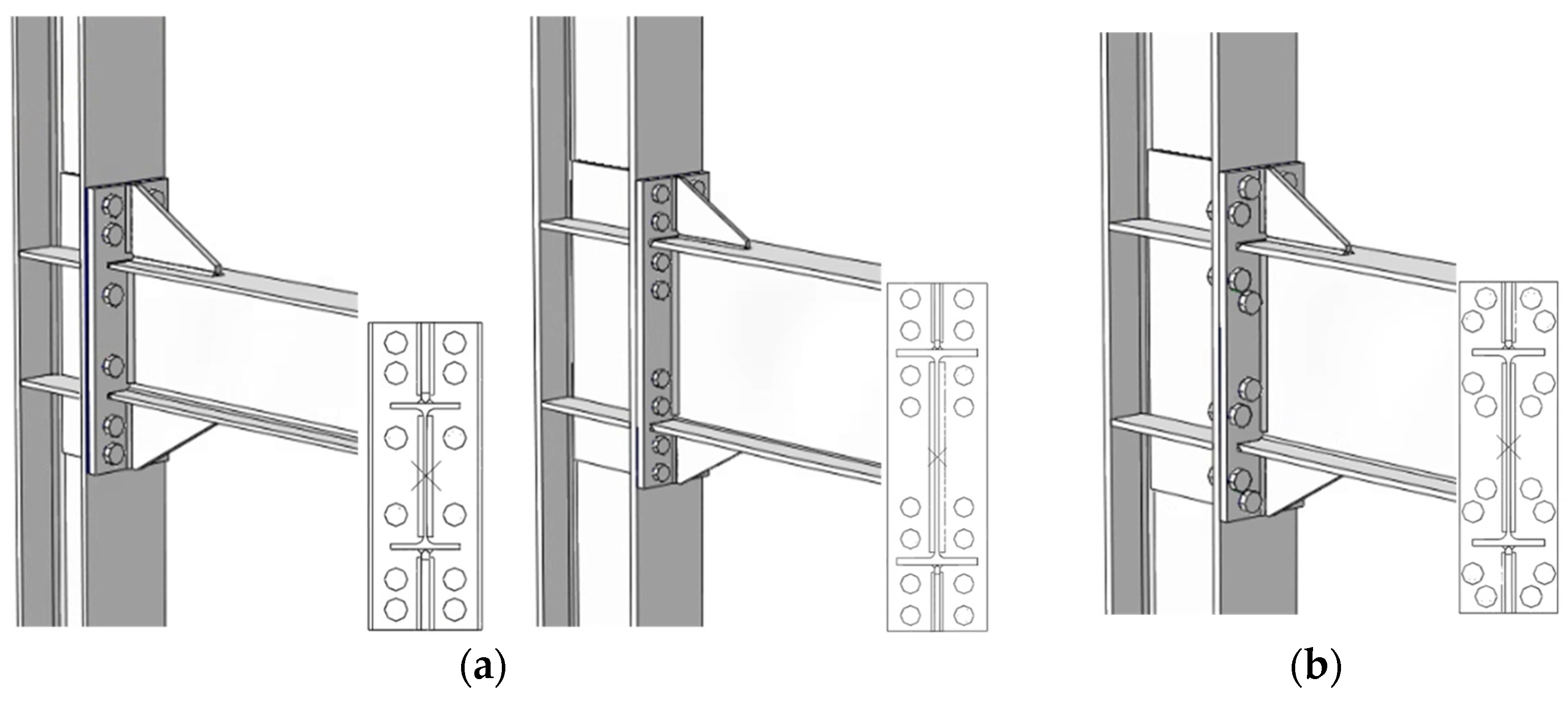
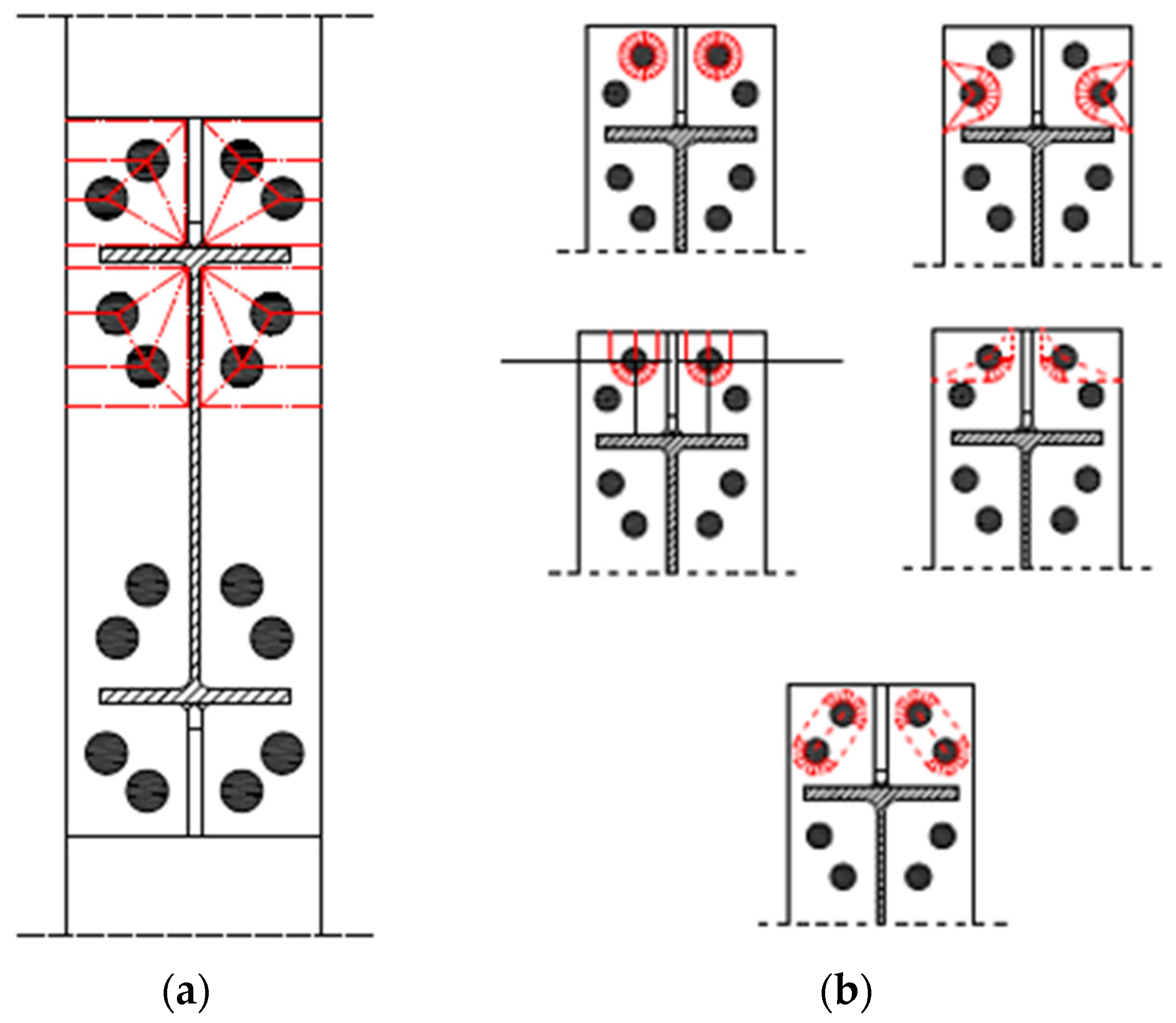
For each assembly, two joints were designed (see Figure 1): (i) the code-compliant extended stiffened end-plate joint, designed according to the incoming Eurocodes [6,7] for the EU assemblies and the AISC 358-20 [1] procedure for the US ones, and (ii) the innovative joint proposed by Tartaglia et al. [21], characterised by the octagonal bolt arrangement proposed by [19] and by the presence of stiffening ribs welded on the extended part of the end-plate and on the beam flanges. As outlined by Morrison et al. [19], the new bolt arrangement was properly developed to optimise the stress distribution among the fasteners. In particular, the two bolt rows outside the beam flange are placed as close as possible, the spacing between the bolts of the external bolt row nearest the beam flange is smaller than the beam width, and the inner bolt rows are positioned in order to obtain a 60° angle between the bolts of these rows. This latter joint was designed adopting the procedures proposed by [21] for both the EU and US joints. As outlined in [21], the North American code utilises a step procedure for the design of joints with a linear bolt arrangement. This procedure is based on the yield line mechanism parameters, Yp and Yc, for the definition of the required thickness of the end-plate and the column flange, respectively. Conversely, EN1993-1-8 [7] provides the Component Method (C.M.) for the joint design. This method is founded on the division of the joint into basic components, which are modelled as non-linear springs, while the T-stub analogy is used for the modelling of components that act in bending, such as the column flange and the end-plate. Finally, the design procedures developed by [21] for the new joint are closely aligned with the step-by-step procedure of AISC 358 for the US joints and the C.M. for the EU ones. However, it should be noted that the Yp and Yc parameters, as well as the effective length of the yielding lines in the T-stub analogy, have been modified to consider the octagonal bolt arrangement and the presence of stiffening ribs on the extended part of the end-plate (see Figure 2).
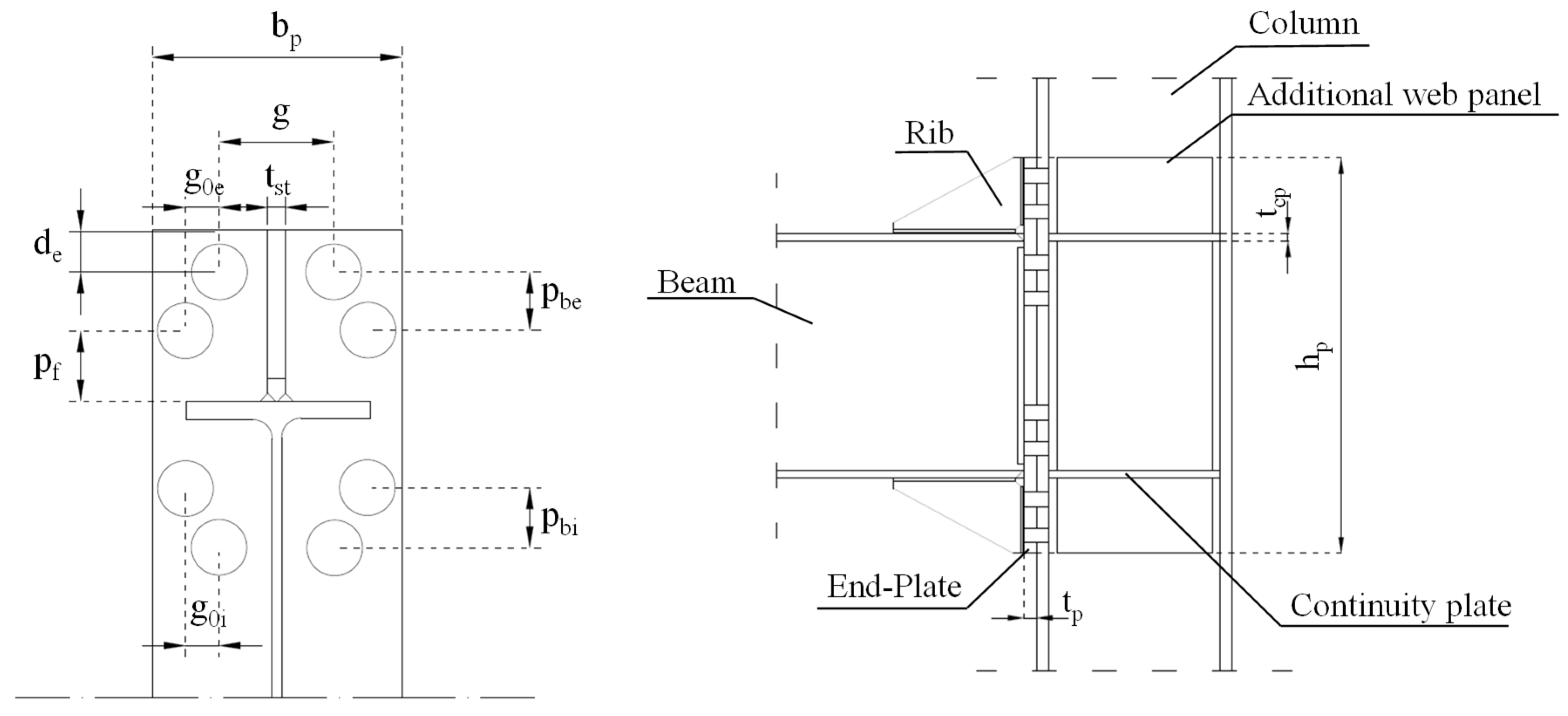
A total of sixteen joints were designed, adopting ASTM 992 steel for the North American profiles and S355 for the European ones. In the US assemblies, A325 bolts were used, whereas grade 10.9 and 12.9 high-strength pre-loadable bolts were used for the EU assemblies. The main geometrical features of these joints are summarised in Table 2 and Figure 3.
As indicated in Table 2, each investigated joint was indicated with a label composed of the type of steel profiles used (i.e., EU stands for European and US for North American steel profiles), the bolt arrangement (i.e., L stands for linear arrangement while O indicates the new non-symmetric octagonal bolt arrangement) and the size of the profile adopted (i.e., 1 stands for the assembly with shallow beams, 2 and 3 for that with intermediate beams and 4 for the deep beam assembly).
As observed by Tartaglia et al. [21], the adoption of the octagonal bolt arrangement in conjunction with the rib stiffeners allows us to obtain lighter joints, with a total decrease in weight of almost 10% with respect to the traditional EU and US stiffened joints.

3. Numerical Model

3.1. Modelling Assumptions

The behaviour of the joints presented in Table 2 under a column loss scenario was numerically investigated by means of FE models developed in Abaqus [30].
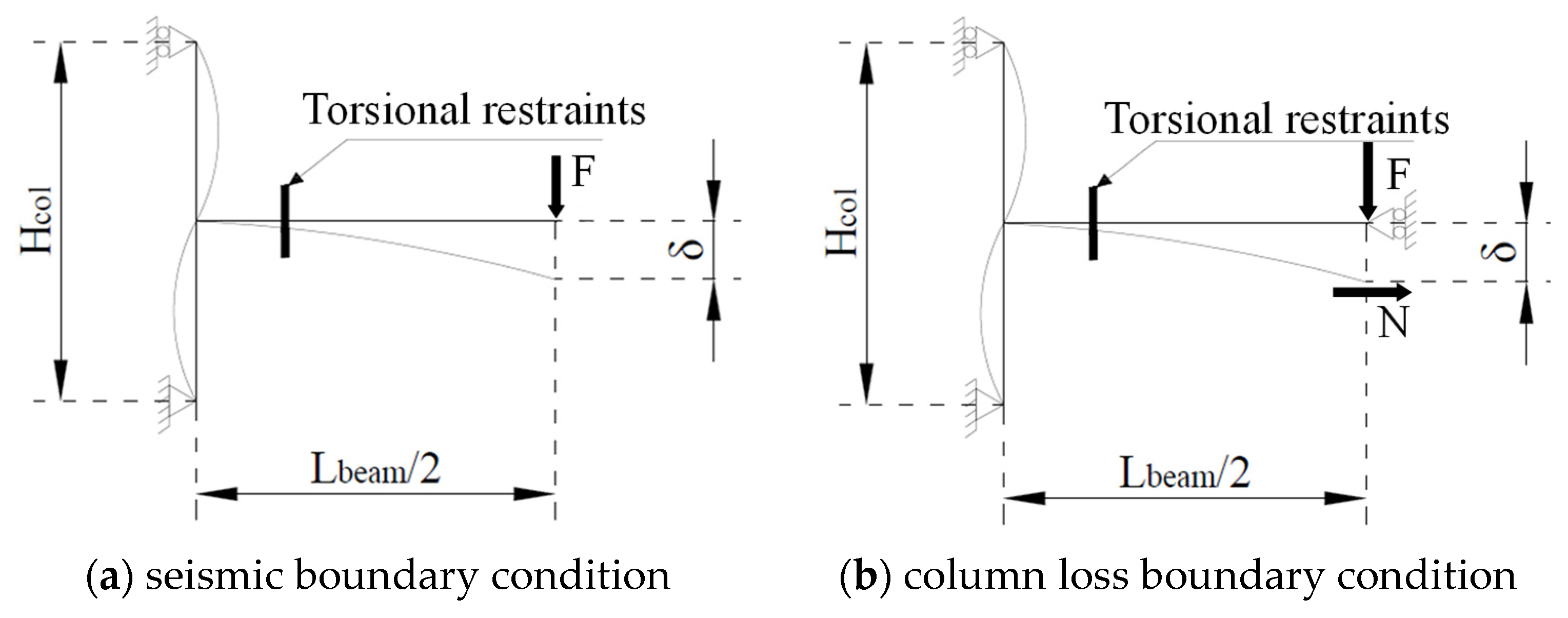
The column and beam lengths were defined by extracting the joints at the inflection point of the bending moment diagram of the whole structure, characterised by 7 m spans and an interstory height of 3.5 m. The boundary conditions, adopted to simulate the seismic and the column loss scenarios, are depicted in Figure 4a and Figure 4b, respectively.
As it can be observed, in line with the substruction approach, pinned restraints were adopted at the column inflection points, a torsional restraint was applied on the beam, outside the plastic hinge region, while the displacement history was applied at the beam extremity. In addition, in the column loss scenario, a roller support at the end of the beam was modelled to account for the beam symmetry (see Figure 4a,b).
The C3D8I elements (i.e., 8-node linear brick with incompatible mode) were adopted to discretise all the elements. The mesh element size was defined on the basis of a sensitivity analysis, as reported by Tartaglia et al. [31]. In particular, it was assumed equal to 15 mm × 15 mm × (t/2) in the connection zone, while it was increased outside the plastic hinge zone in order to reduce the computational time.
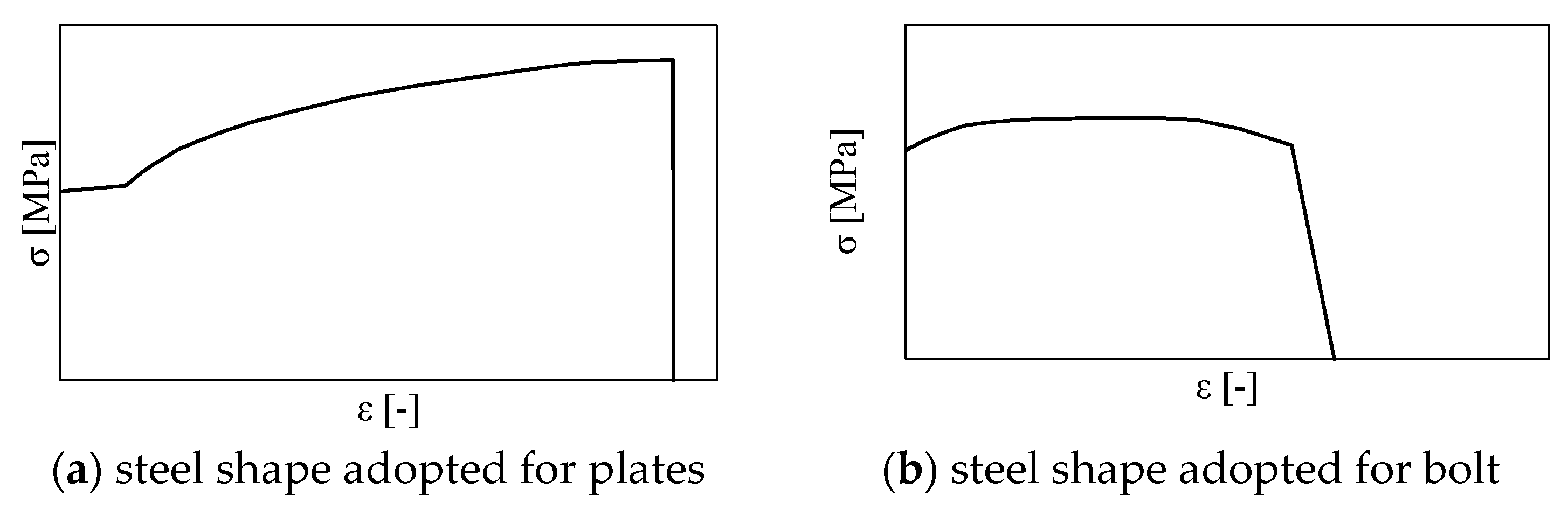
The material of column, beam and plates was modelled adopting the Von Mises yielding criterion, while the combined hardening law available in Abaqus was used to simulate the cyclic plastic hardening. The shape of the true stress–true strain relation of the steel adopted for the plates is depicted in Figure 5. In particular, an average yield stress equal to 1.25Fy was assumed for the EU S355 steel, as indicated by EN1998-1 [6], while it was assumed equal to 1.10Fy for the American ASTM992, as provided by AISC 341 [20].
Furthermore, the combined kinematic and isotropic hardening law was calibrated on the data reported by Dutta et al. [32]. The bolts were modelled as dumbbell elements and their non-linear behaviour (see Figure 5b) was defined in accordance with the prescriptions outlined by D’Aniello et al. [33,34], in order to reduce the computational time. Finally, the weld material was modelled as an elastic, perfectly plastic material with a yield stress of 460 MPa.
The mill imperfections were accounted for in the model by imposing the scaled shape of the eigenmode obtained from an elastic buckling analysis. In this case, 20% of the maximum mill tolerance allowed by EN10034 [35] and ASTM A6/A6M [36] was assumed in the numerical model for the EU and US profiles, respectively.
The interactions between adjacent elements were modelled as “Surface-to-Surface” interactions, with “Hard” contact for the normal behaviour and a friction coefficient equal to 0.3 for the tangential behaviour. Tie constraints were adopted to model the interactions between welded elements.
Double-step dynamic implicit quasi-static analysis was performed, applying the bolt preload in the first step and the displacement at the free beam end in the second step.

3.2. Numerical Validation

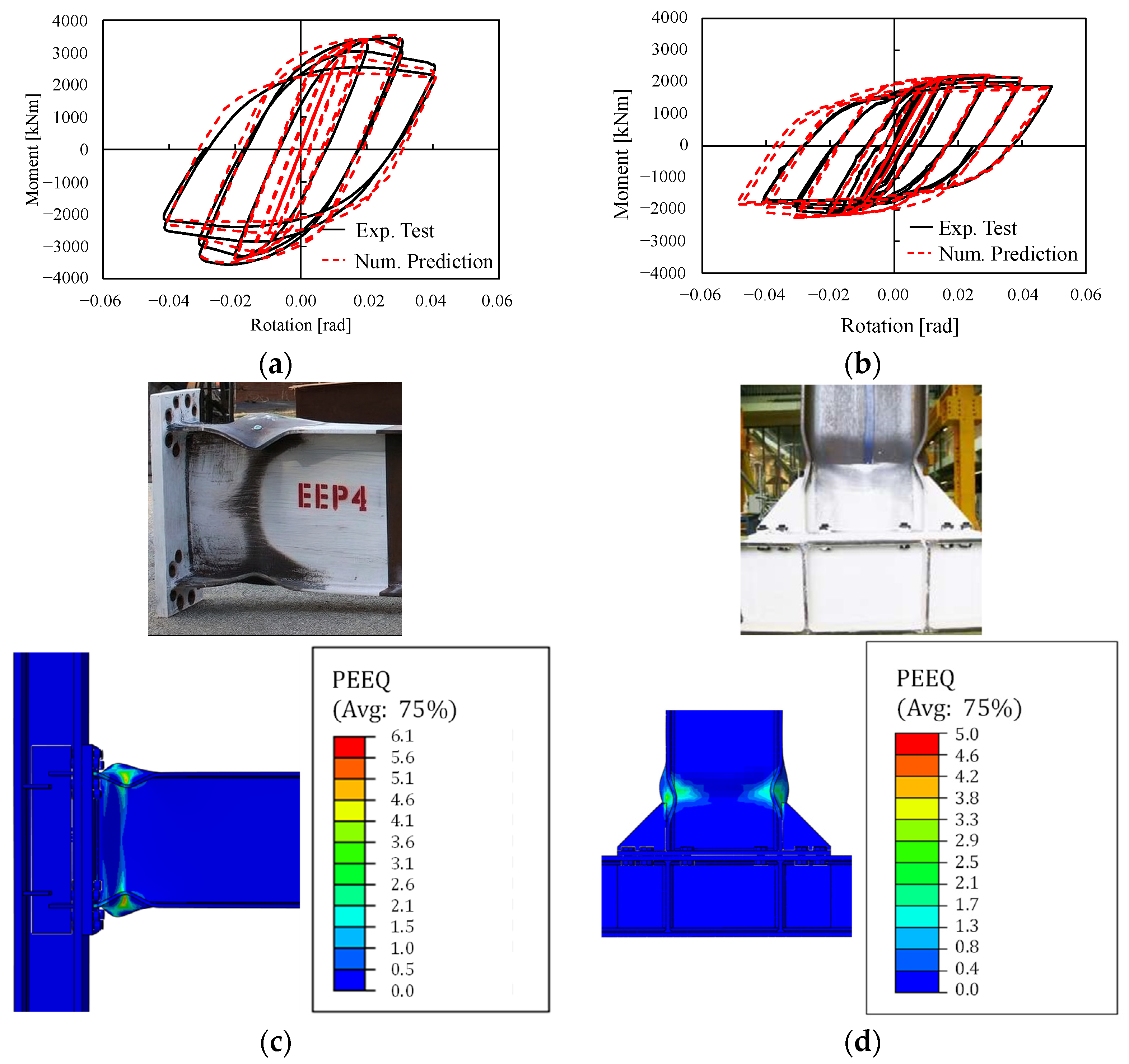
Due to the limited number of experimental tests under column loss scenarios available in the literature, the validation of the modelling assumptions was performed through comparison with the seismic cyclic experimental results obtained from an experimental campaign conducted by D’Aniello et al. [37] for the EU assemblies and with the results of the cyclic experimental tests carried out by Morrison et al. [19] for the US assemblies.
Morrison et al. [19] performed their experimental tests on four single-cantilever moment-resistant joints characterised by various beam depths. In particular, two specimens employed a W690 × 140 wide flange beam, while for the others, a W840 × 193 beam was adopted. All the specimens were made using the same W360 × 382 column, which was designed and reinforced with additional web panels and half-depth continuity plates to remain in the elastic range. D’Aniello et al. [37] examined the performance of full-strength and equal-strength moment resisting joints by testing 18 large-scale specimens, varying the beam depth.
The comparison between the numerical and the experimental results obtained for one of the assemblies tested by [19] and one tested by [37] is depicted in Figure 6. As can be observed, the numerical models developed in this study are perfectly able to reproduce the experimental behaviour of the investigated joints under seismic scenarios in terms of stiffness, resistance, ductility, and failure mode.

4. Numerical Results

4.1. Bearing Capacity and Catenary Action

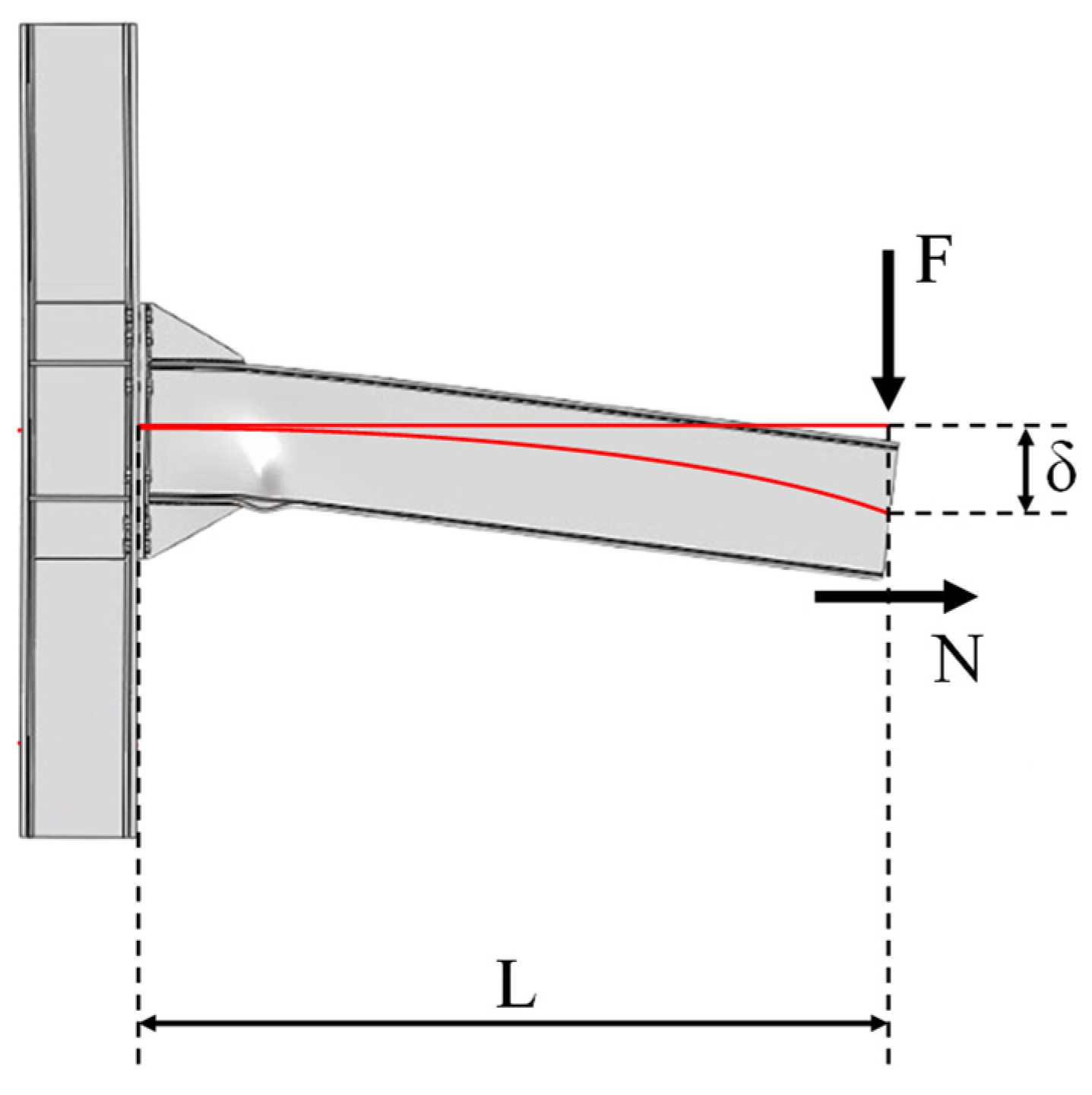
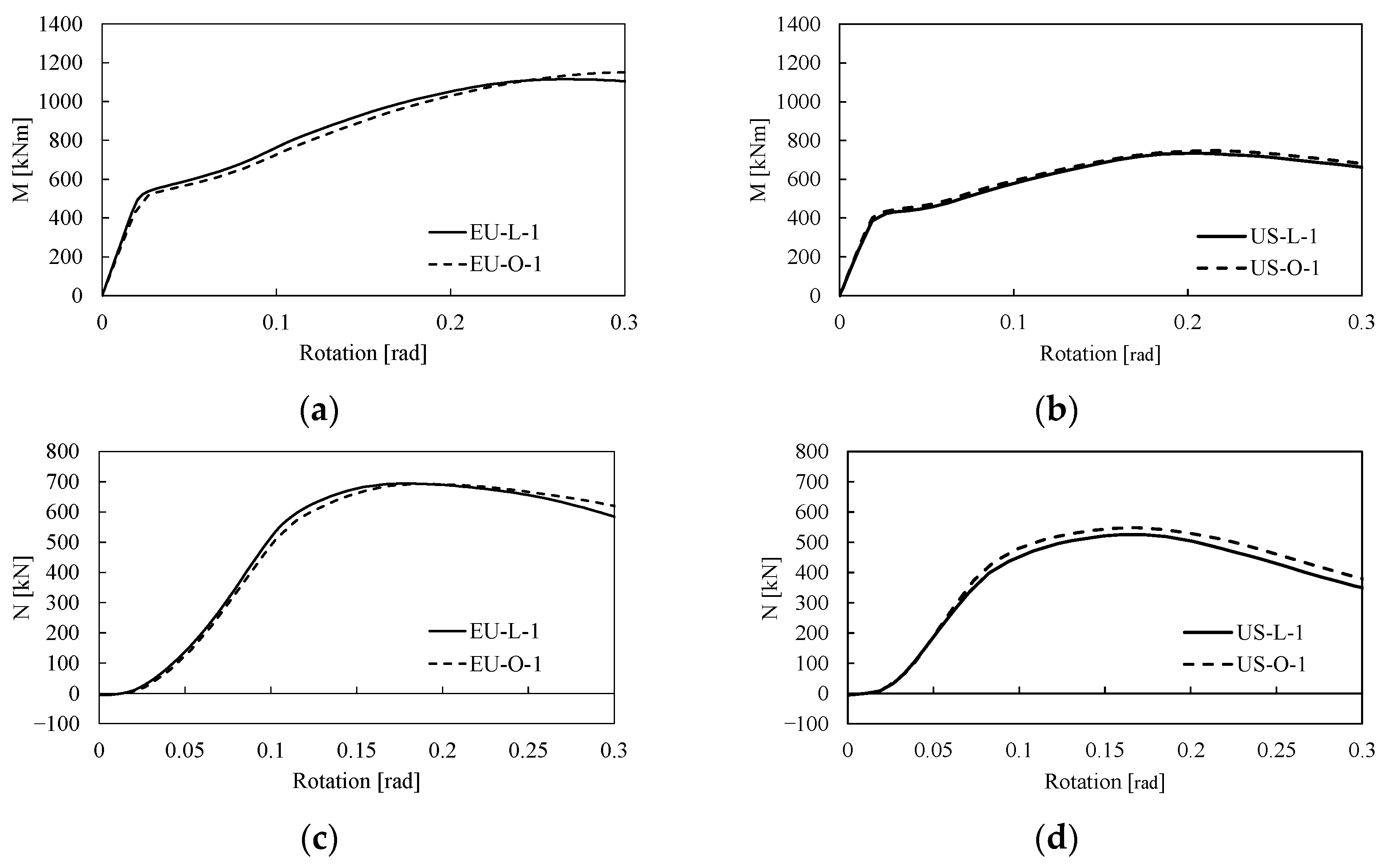
The results of the numerical analyses are discussed in this section in terms of moment–rotation and catenary action–rotation curves and equivalent plastic strain (i.e., PEEQ) distribution. In the following graphs, the moment (M) at the column face was calculated as the sum of the first-order moment and the second-order contribution due to the catenary effects (see Figure 7 and Equation (1)) in large deformations. In particular, the first-order moment was computed as the shear force at the tip of the cantilever beam by the corresponding shear length, while the second-order contribution was obtained as the catenary action N for the displacement of the tip of the cantilever beam.
M I I = M I + N δ = F L + N δ
where M I I is the second-order moment, M I is the first-order moment evaluated as the product of the vertical force ( F ) for half of the beam length ( L ), N is the catenary action that develops within the beam and the connection, and δ is the vertical displacement.
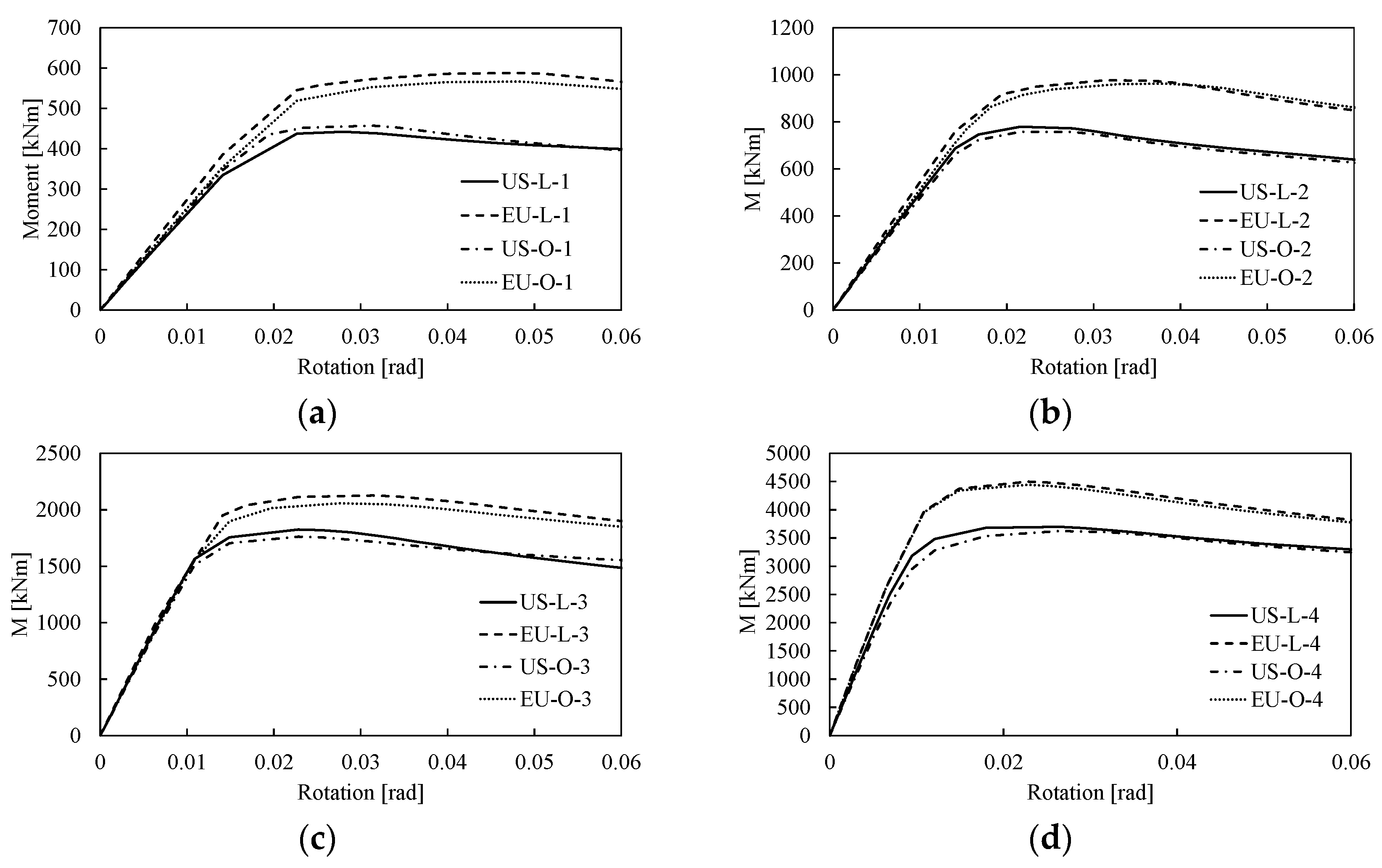
Figure 8 depicts the behaviour of both EU and US joints under monotonic loads. As can be observed, in accordance with the findings reported by [21], under monotonic actions the performance of the new joints with the octagonal bolt configuration (i.e., O-configuration) is almost comparable to that observed with traditional joints (i.e., L-configuration), despite the O-joints tending to be lighter (see Table 2). Contrariwise, the difference in resistance between the US and EU assemblies is mainly due to the connected beam bending capacity, as well as the accounted mill imperfections.
The same trend can be observed looking at the L-1 and O-1 assemblies under column loss (see Figure 9). Indeed, both the US and EU configurations show almost the same performance in terms of elastic stiffness, yielding resistance and catenary action, which develop up to 30% rotation.
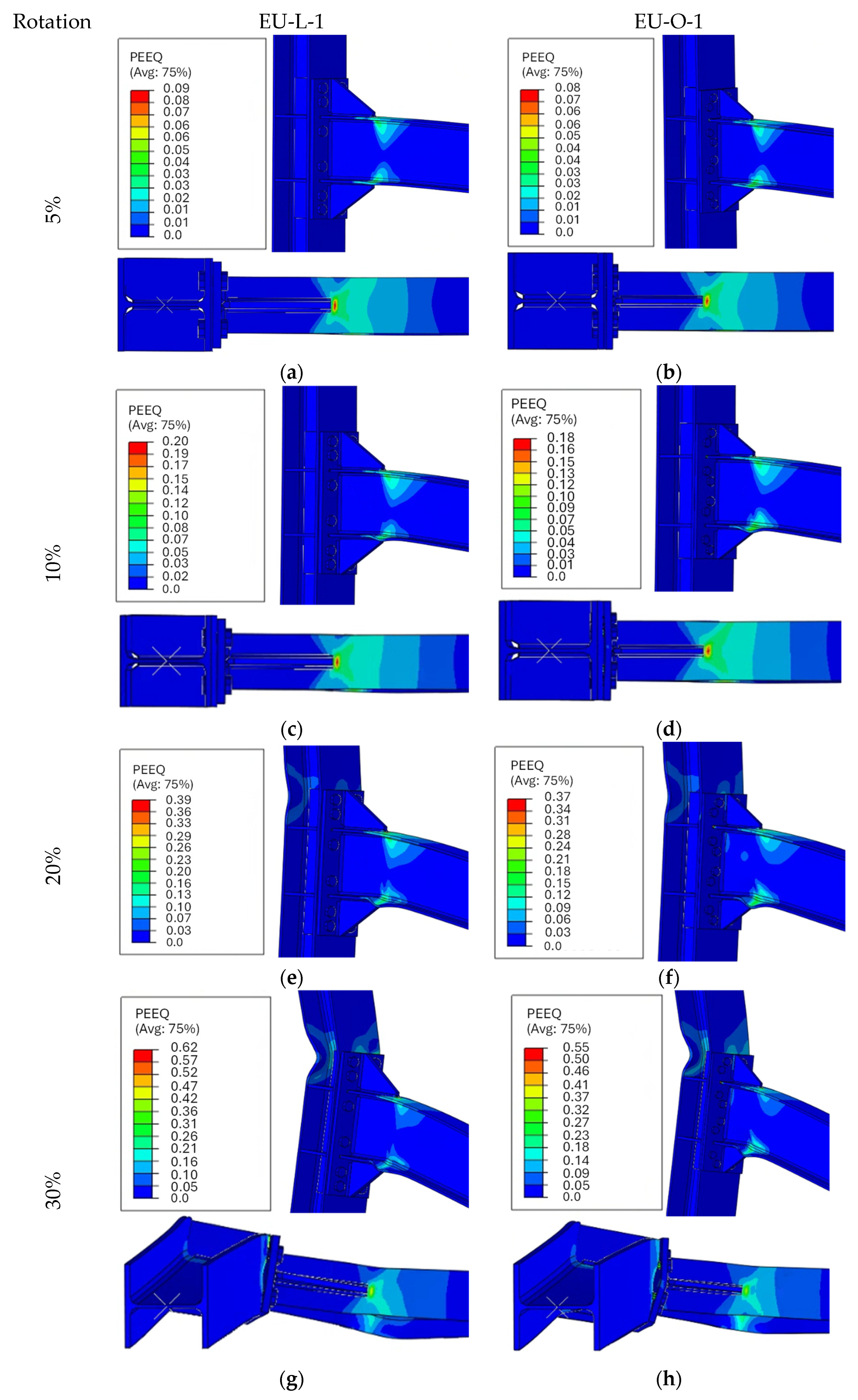
In Figure 10, the evolution of the plastic deformation of EU-L-1 and EU-O-1 assemblies is depicted considering four rotation levels: 5%, 10%, 20% and 30%. As can be observed, for small levels of rotation up to 5%, the plastic deformations are mainly concentrated within the connected beam, while the connection and the column remain in the elastic range. For increasing values of the imposed displacement (up to 10% rotation), the main plastic deformations are still concentrated within the beam, where out-of-plane deformation can be observed due to the beam’s flange geometrical imperfections. At 20% rotation, some plastic deformations were also observed within the columns, while the connections remained almost closed. This phenomenon can be attributed to the axial constraint applied to the beams, which consequently leads to the development of catenary action. Finally, at 0.3 rad, the out-of-plane beam deformation, due to the development of the plastic hinges, leads to torsional buckling of the column in the connection zone, even if torsional constraints were applied at both ends of the column. Therefore, given the low damage in the investigated connections, it can be concluded that the stress degradation exhibited by the investigated joints at large rotation in the moment–rotation curves (see Figure 9) is strongly related to the torsional buckling of the column.
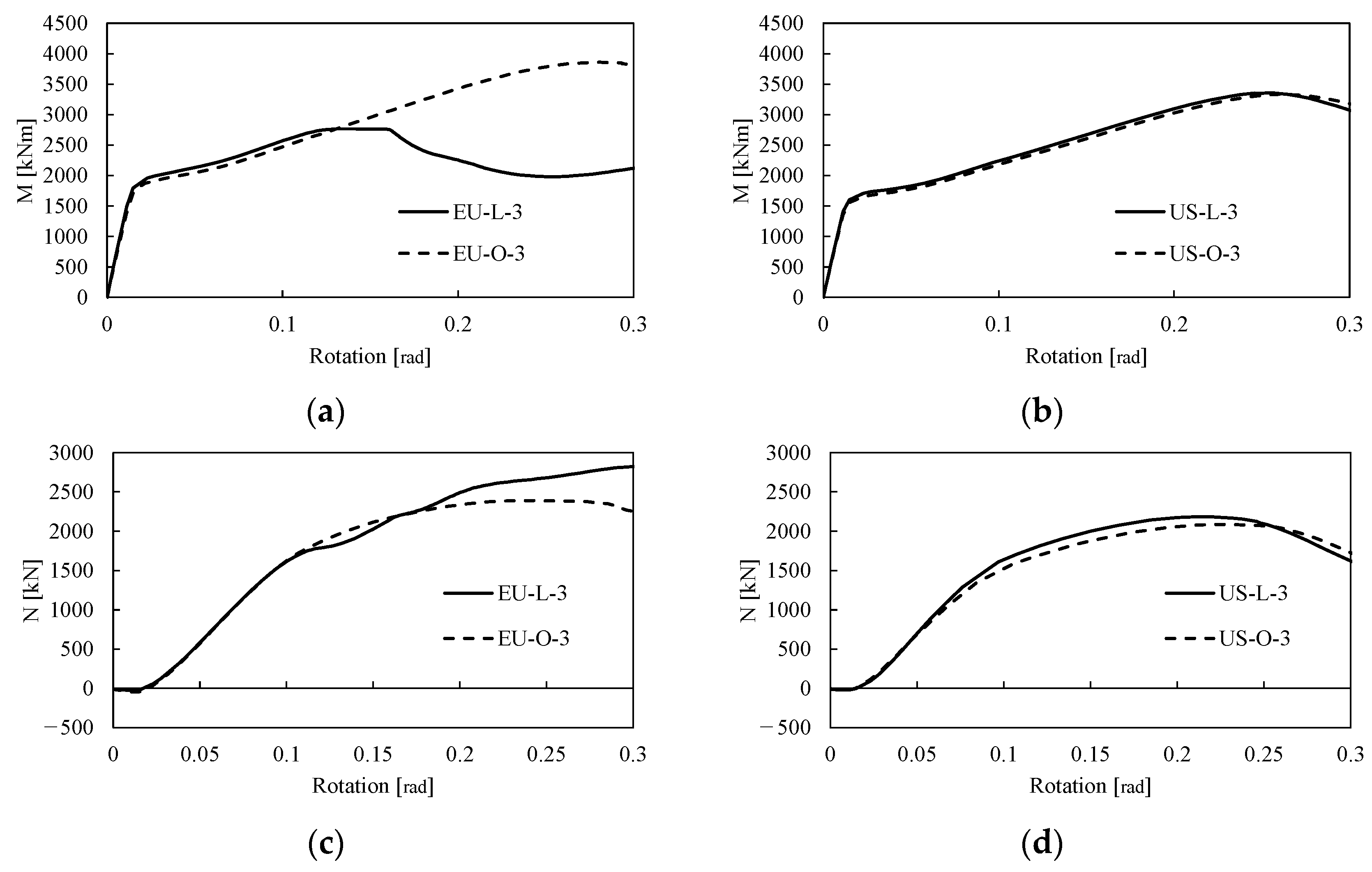
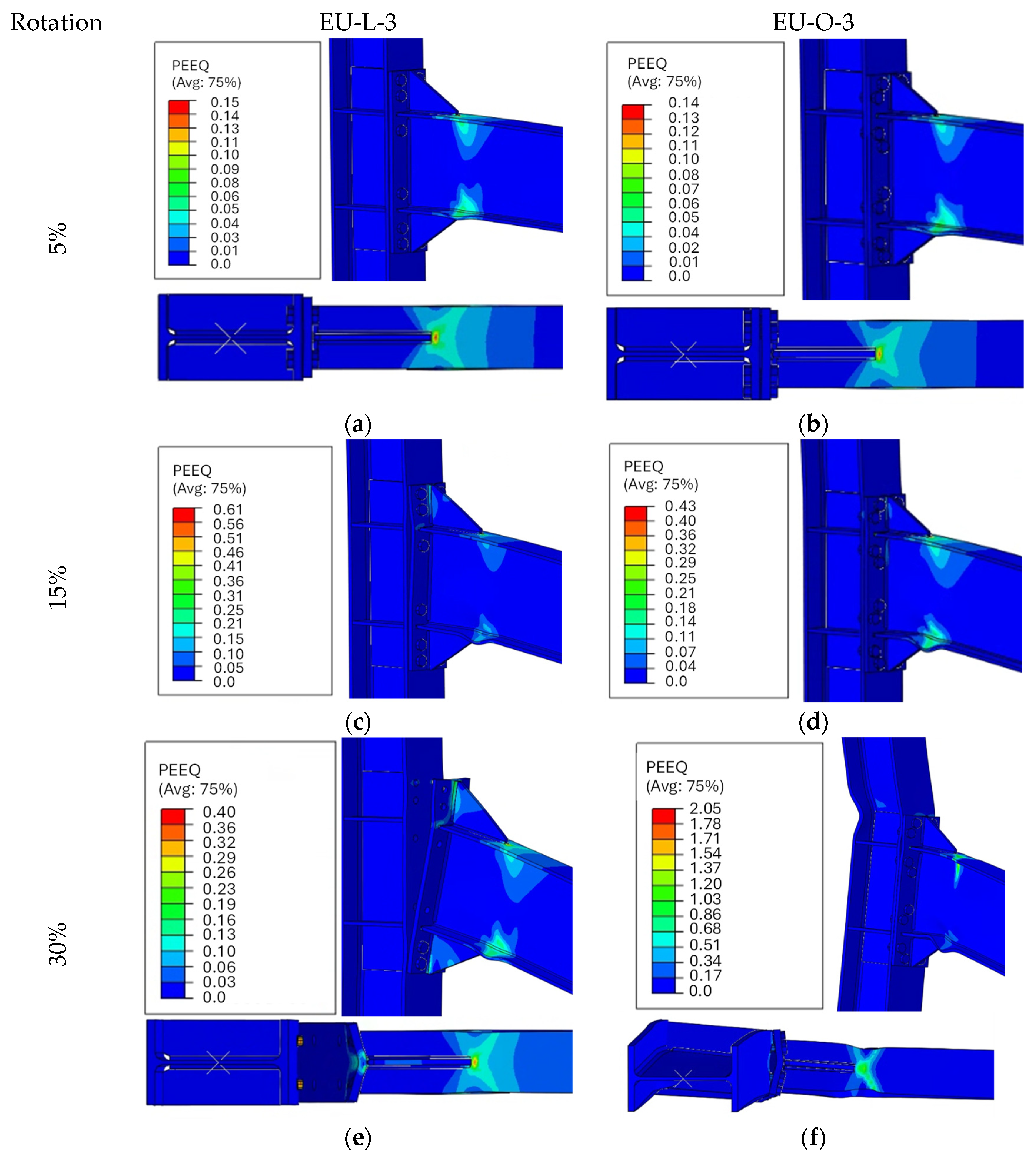
The results of both the European and American deeper assemblies (i.e., EU-L-3, EU-O-3 and US-L-3, US-O-3, respectively) are depicted in Figure 11. In this case, differently from the results previously observed, some differences can be pointed out between the innovative and the traditional joints (i.e., O and L, respectively). With regard to the European connections, up to almost 15% rotation, no differences can be observed between the O and L configurations in terms of both elastic stiffness and yielding resistance. For increasing values of rotation, failure of the bolt rows in tension, and a consequent reduction in the joint capacity, was observed in the traditional joint (i.e., EU-L-3), as illustrated in Figure 12. Contrariwise, the EU-O-3 does not demonstrate any reduction in capacity or any connection opening up to 30% rotation. This difference is also confirmed by looking at the joint failure mode; indeed, in the traditional joint, the failure is governed by the rupture of bolts, while the innovative connection remains almost closed up to 30% with a plastic hinge formation within the column (see Figure 12).
This difference between the European joints is mainly due to the development of the catenary action within the beam and the tensile capacity of the connection. In particular, despite the tensile action within the beam being almost the same for the two investigated specimens, the connection tensile capacity is different. Indeed, EU-L-3 is characterised by three bolt row lines (and six bolts) in the tensile part, and a tensile capacity equal to 4412 kN, while the EU-O-3 has a total of eight bolts, and a consequent tensile capacity of 5882 kN. Thus, for increasing values of rotation, when a large catenary action develops within the beam (up to 50% of its plastic capacity, NRd), the connection tensile capacity plays a central role in the definition of the whole joint behaviour.
Contrariwise, for the US-3-L and US-3-O assemblies, despite the different bolt arrangements, no substantial differences can be observed for varying values of rotation (see Figure 11b,c) since the two connections have the same tensile capacity (i.e., 5707 kN).
As illustrated in Figure 12, the twisting of the column in Assembly 3 is less pronounced than in Assembly 1 (see Figure 10). This behaviour can be attributed to the enhanced torsional stiffness of the columns in Assembly 3, which more effectively mitigates the out-of-plane deformations of the beams’ plastic hinges.

4.2. Bolt Internal Load

The behaviour of the new bolt arrangement under column loss was also investigated by means of a comparison of the bolt internal loads obtained in Abaqus. This section is dedicated to the description of the evolution of the stress in the bolts, with particular focus on the effects of the shear and bending actions developed in the fasteners at various rotation levels, in addition to the bolt axial loads.
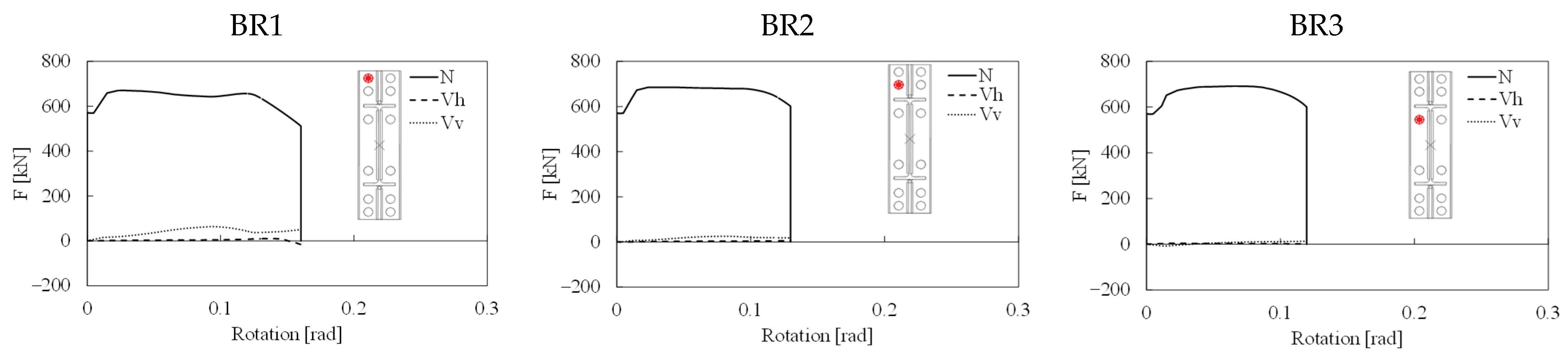
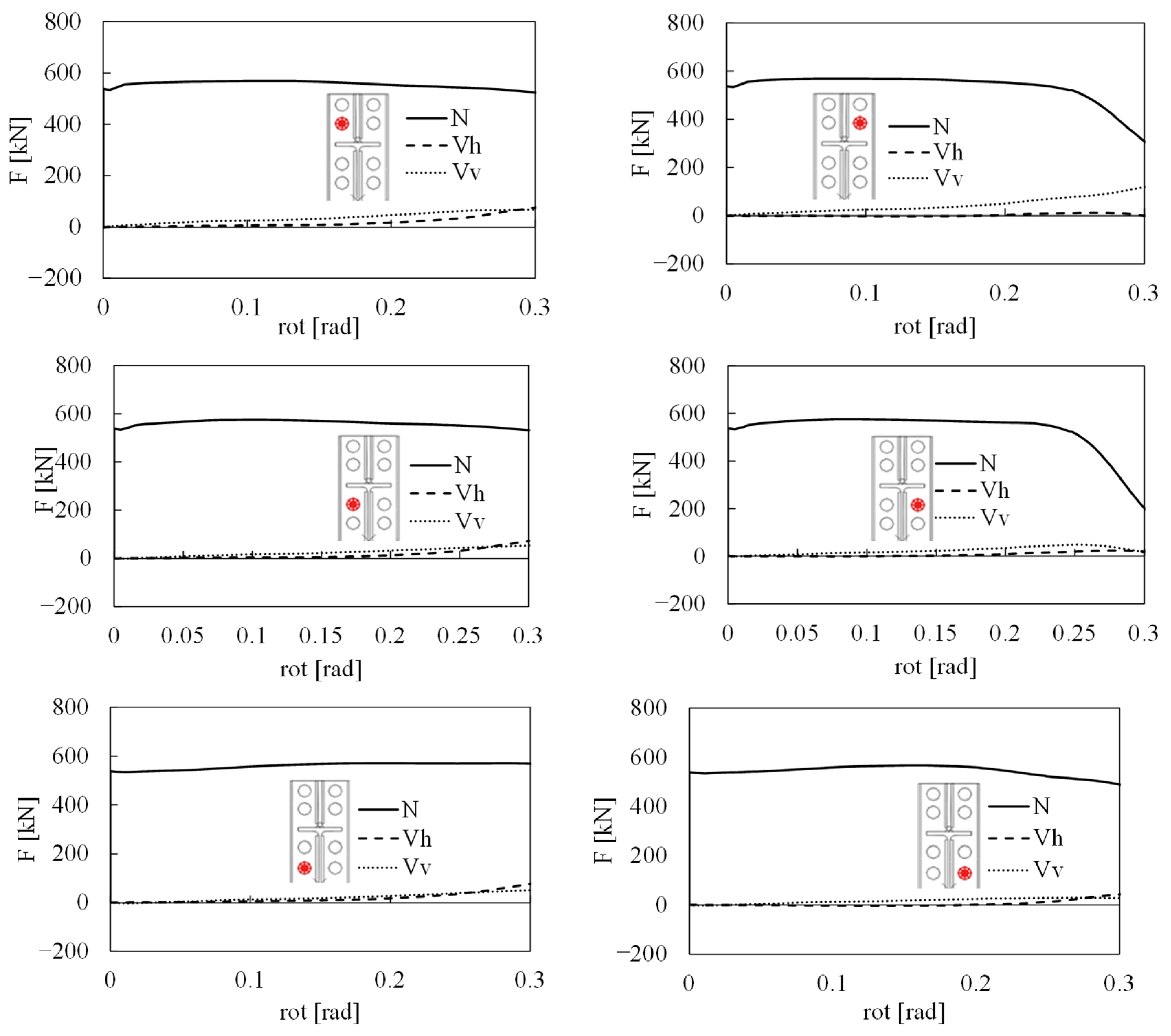
Figure 13 depicts the single-bolt internal actions of the EU-L-3 assembly extracted from the three bolt rows in tension. The axial load (i.e., N) and the shear actions in both the horizontal and vertical directions (i.e., Vh and Vv, respectively) were extracted at the interface between the end-plate and the column, which resulted to be the most stressed. As a general remark, and in line with the observed failure mode, the bolts are mainly subjected to tensile actions while shear actions are negligible. Moreover, since no differences between the left and right bolts were observed, only the internal actions of the left bolts are depicted in Figure 13.
In line with the moment–rotation curves depicted in Figure 11 and the developed plastic deformation in Figure 12, the most stressed bolt row lines are the ones close to the beam flange (i.e., BR2 and BR3). With particular regard to BR3, it can be observed that the bolts’ axial load increases from the clamping value (i.e., 572 kN) up to approximately 670 kN for a rotation of 0.02 rad, after which it remains approximately constant in both the bolts (i.e., BR3-left and BR3-right) up to a rotation of almost 0.1 rad. At this point, the bolts of BR3 reach their failure due to the interaction between the axial and shear actions. The same trend can also be observed for BR2, which shows a failure at 13% rotation. BR1 shows almost the same behaviour as the two described bolt rows, while, due to its position, a larger vertical shear action was observed.
Therefore, the development of vertical shear action within the bolts is mainly a function of the position of the bolt rows with respect to the centre of the tension. In particular, differently from the unstiffened joints, where the centre of tension is almost aligned with the beam flange, in the investigated cases, the presence of the rib stiffeners allows a better distribution of the internal forces in the connection and among the bolts.
In particular, BR3, which is closer to the beam flange, is almost subjected to tensile action (i.e., the maximum shear action is equal to 13 kN) and it is the first to fail. BR2 shows slightly larger shear actions (i.e., 25 kN), showing a tensile failure for a rotational value almost equal to BR3.
Larger shear actions can be observed in BR1, which is further from the beam flange; in this case the maximum shear action is equal to 64 kN, showing a rupture at 15% rotation.
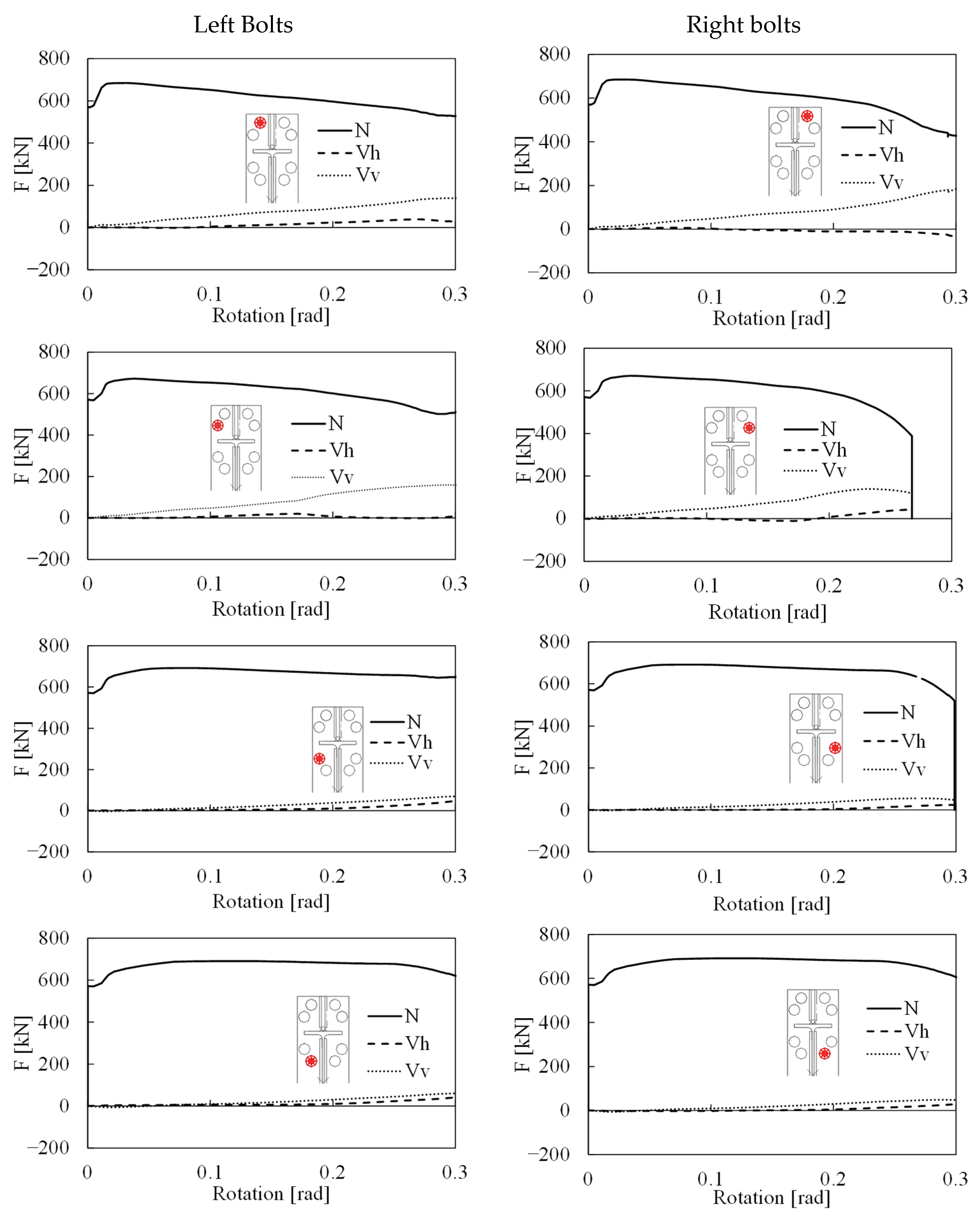
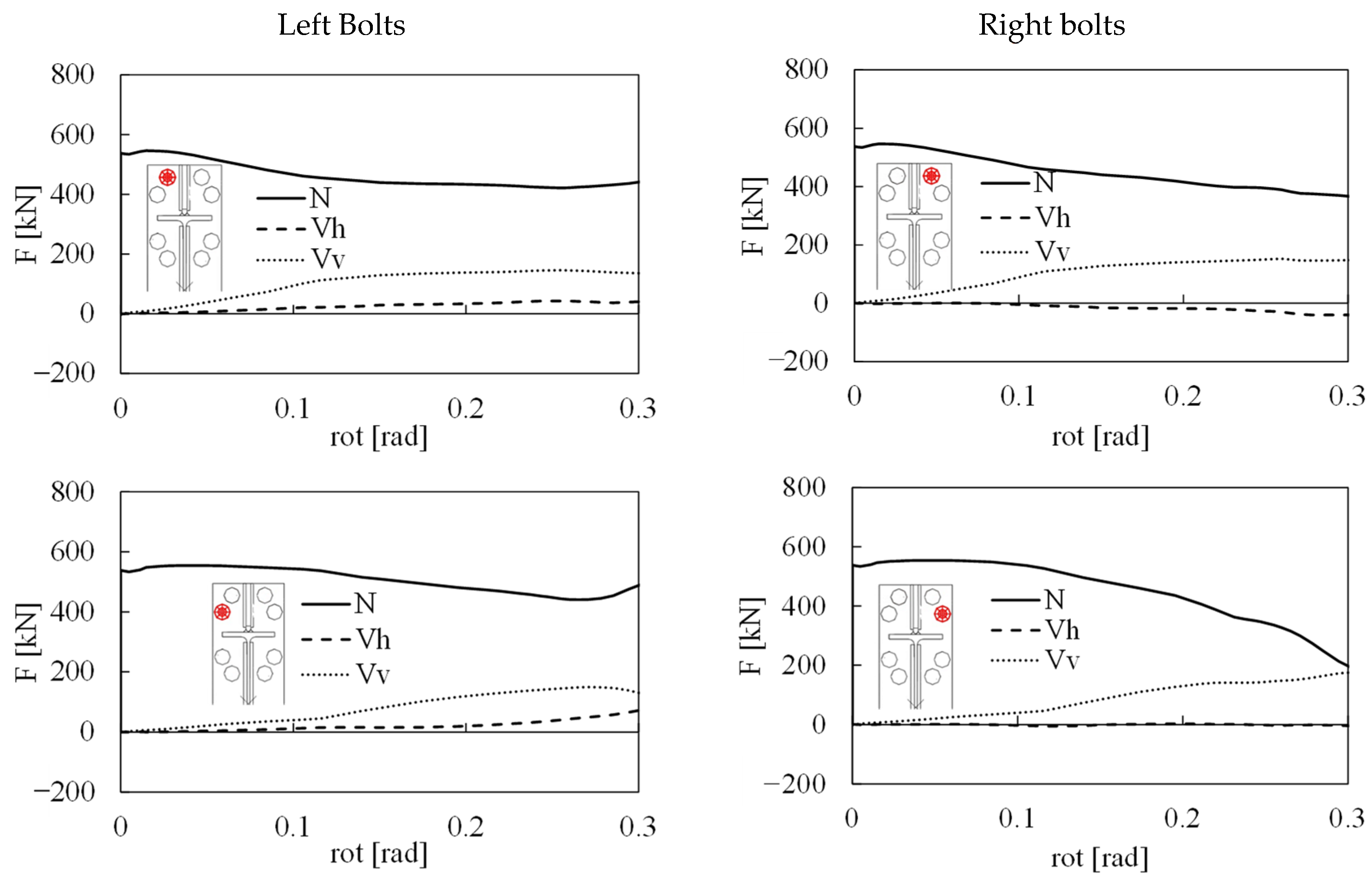
The internal bolt loads for the EU-O-3 assembly are illustrated in Figure 14. In this case, the actions in each of the bolts of each row in tension were reported, due to the asymmetric response of the joint shown in Figure 12 as a consequence of the torsional deformation of the column at large rotation. As also observed for the EU-L-3 assembly, the fasteners of the EU-O-3 joint were mainly subjected to tensile forces, while the shear actions were negligible. However, the bolt rows located outside the beam flange experienced higher vertical shear compared to the L configuration, with a maximum shear of approximately 200 kN. This phenomenon is attributable to the different responses of the two joint configurations. In particular, the higher tensile capacity of the EU-O-3 connection prevented bolt failure up to large rotation (i.e., 25%) and only small gap openings were observed around the beam flange and the rib stiffener. Thus, for small rotation levels, no gap opening occurs between the end-plate and the column flange and no appreciable differences can be observed between the left and the right bolts. Conversely, for increasing values of rotation, the beam plastic hinge deformation implies a twisting in the column that implies an eccentricity of the bolt engagement of the first two bolt rows (BR1 and BR2). Thus, a larger shear force can be observed within the right bolts up to the rupture of the BR2-right bolt.
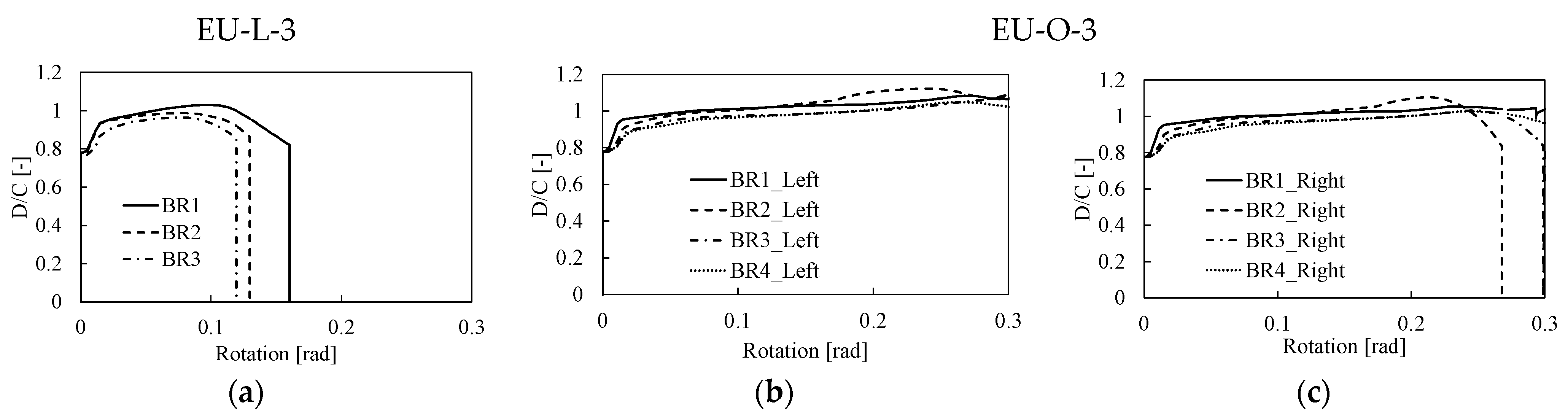
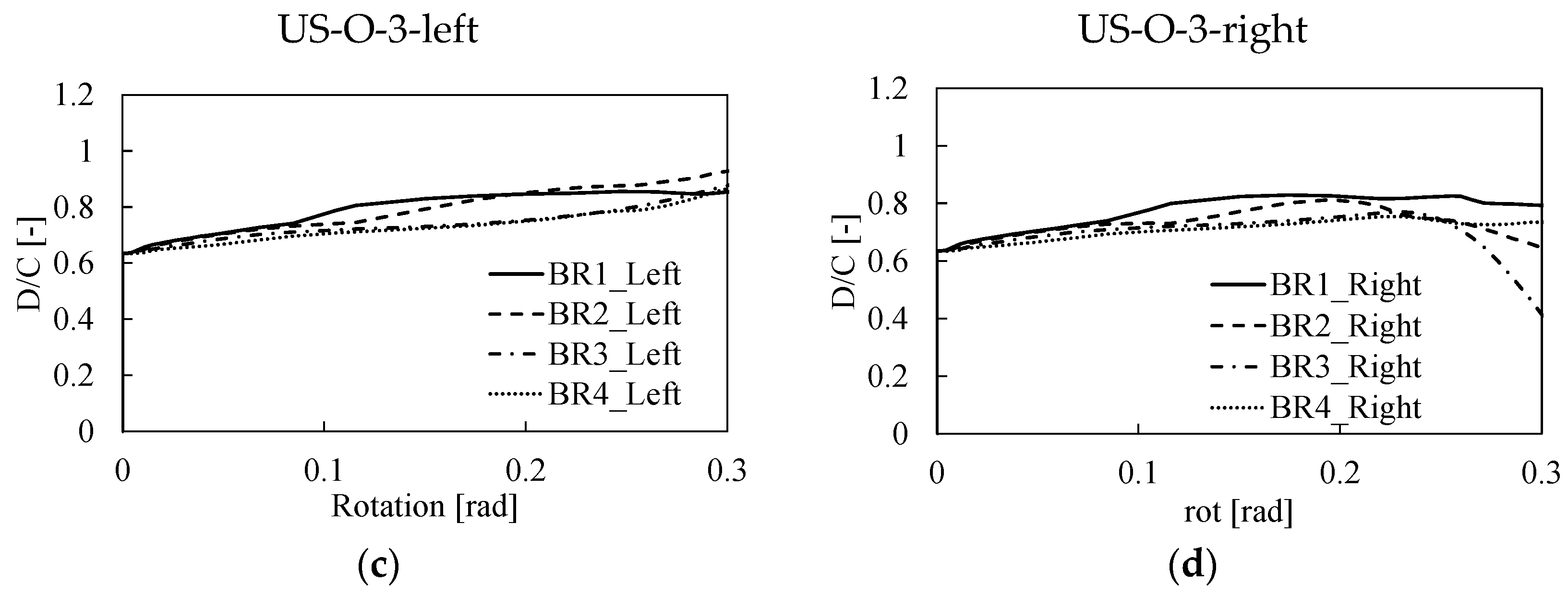
Figure 15 illustrates the ratio between the demand and the capacity (i.e., D/C) in the function of the joint rotation. As it can be observed, thanks to the new bolt arrangement, all the bolts of the connection under investigation are fully utilised for the entire application of the load protocol. However, at a rotation of 0.23 rad, the D/C ratio for the bolts on the right of the connection starts to reduce, with the BR2-right bolt and BR3-right bolt reaching failure at a rotation level equal to 0.27 rad and 0.3 rad, respectively, where a reduction of 20% in the D/C ratio was achieved.
The tension and shear capacity of the bolts were evaluated using Equations (2) and (3), respectively. Indeed, the verification of the combined shear and tension action was conducted using Equation (4), adopting a linear tension–shear interaction law.
F t , R d = k 2 f u b A s
F v , R d = α v f u b A s
F v , E d F v , R d + F t , E d F t , R d 1
where fub is the bolt ultimate resistance, As is the bolt resistant area, k2 is equal to 0.9 and αv is 0.5 for the 10.9 grade bolts.
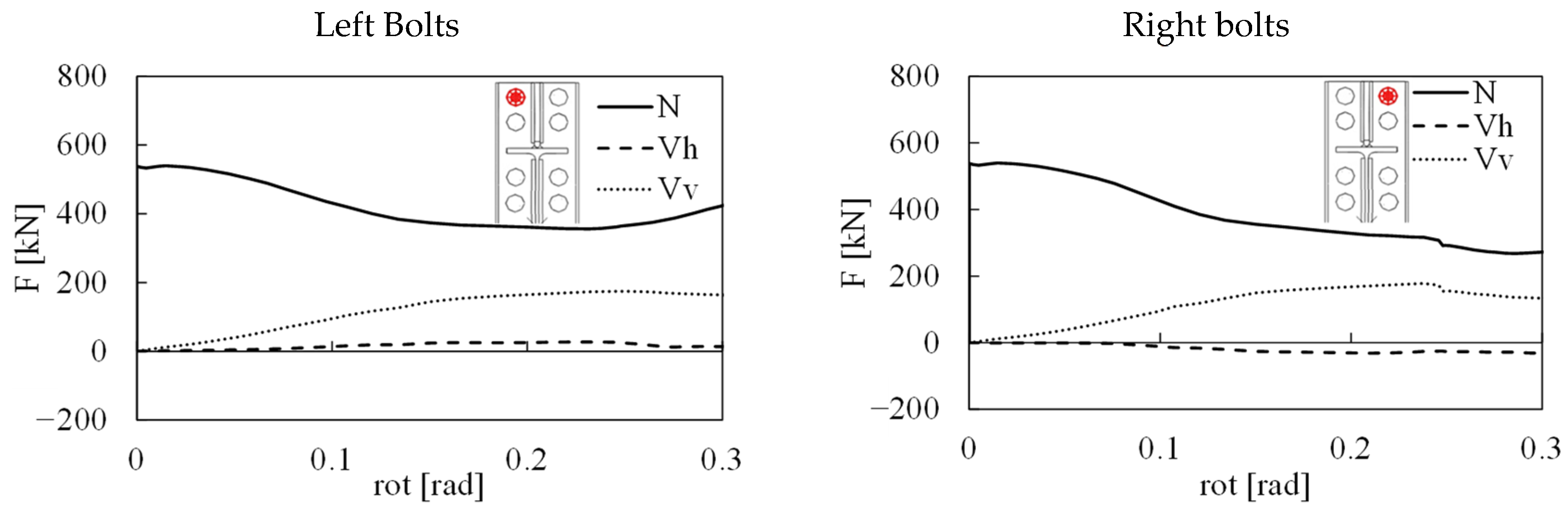
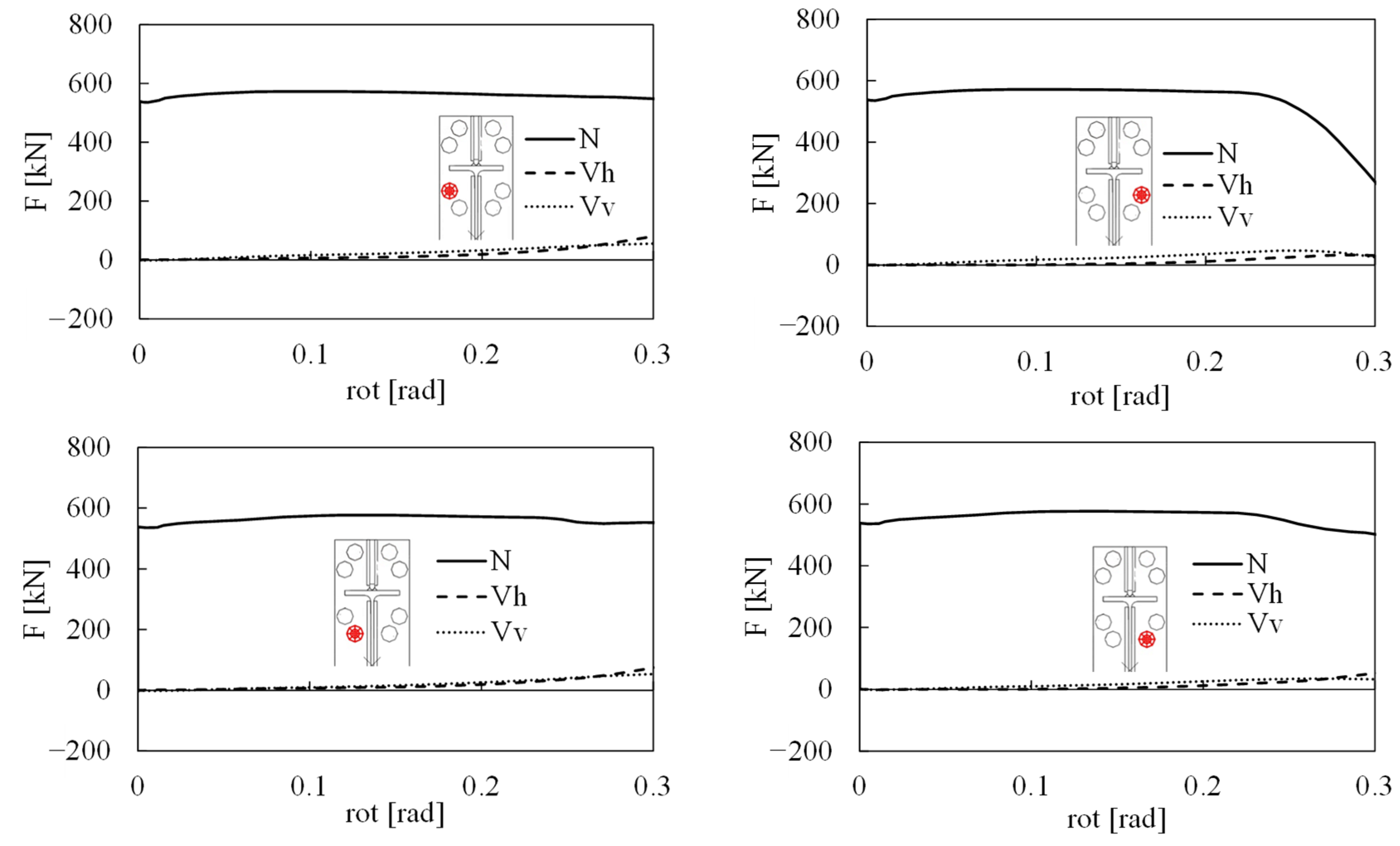
The bolt internal loads of both the left and right bolts for each row in tension of the US-L-3 and US-O-3 assemblies are shown in Figure 16 and Figure 17, respectively. Differently from the previous case, the US joints have a different bolt arrangement but the same number of fasteners.
As obtained for the EU assemblies, also in the US-L-3 and US-O-3 assemblies, the fasteners are primarily subject to tensile actions, while the horizontal shear is negligible and the vertical shear assumes maximum values equal to 200 kN. In particular, it can be observed for the US-L-3 assembly that the shear action in the bolts is higher for BR1 and reduces towards the beam flange. Conversely, in the US-O-3 assembly the evolution of shear actions in the internal and external bolt rows is comparable to and in line with those obtained for the EU-O-3 assembly, due to the occurrence of the same failure mechanism.
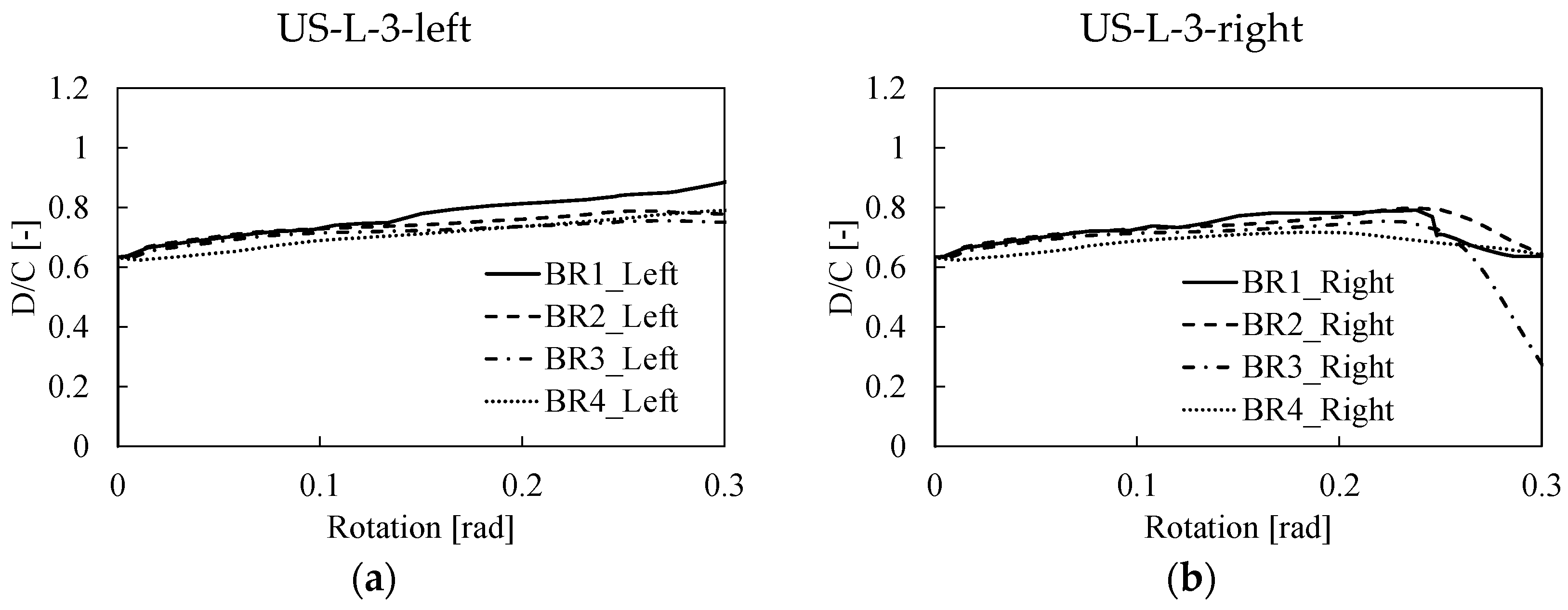
The ratio between the demand and the capacity (i.e., D/C) of the bolt of the US assemblies is illustrated in Figure 18 as a function of the rotation. In this case, in accordance with the North American code [1], the tensile capacity and the shear resistance of the bolts were evaluated using Equations (5) and (6).
F t , R d = φ n F n t A b
F v , R d = φ n F n v A b
where φ n is equal to 0.9, Ab is the bolt nominal cross-section, Fnt is the nominal tensile strength of the bolt and Fnv is the nominal shear strength of the bolt.
The interaction between the shear and tensile action is accounted for by adopting Equation (4).
As shown in Figure 18, for both the US-L-3 and US-O-3 assemblies, which are characterised by equivalent tensile capacity, the D/C ratio of all the bolts is consistently lower than 1. Therefore, the fasteners of these connections do not reach failure, even if the right bolts generally experience higher stress due to the column twist.
Finally, the comparison between the US assemblies demonstrates that the capacity of the investigated connections in the column loss scenario is strongly related to the tensile capacity of the joint. Conversely, the new bolt arrangement, which optimises the stress distribution among the fasteners in the seismic scenario, exerts a negligible influence on the joint behaviour under column loss.

5. Conclusions

The extended stiffened end-plate steel joints with a non-symmetric octagonal bolt arrangement, proposed by Tartaglia et al. [21] in a previous paper, exhibit very ductile behaviour under monotonic loads, comparable with those of their EU and US prequalified counterparts, even if the new connection is lighter and cheaper. In this study the behaviour of these new joints under column loss was numerically investigated and the following conclusions were drawn:
  • Due to the limited number of experimental tests under column loss available in the literature, the numerical models developed in this work were validated only using seismic cyclic tests. The adopted numerical models have been demonstrated to be perfectly able to reproduce the experimental seismic performance of both European and North American steel joints. However, it should be noted that the seismic validation approach adopted in this study is not capable of fully capturing the mechanisms governing the progressive collapse under investigation. The development of additional numerical models validated against column loss experimental studies should be undertaken in future studies.
  • The stiffened EEP joint with an octagonal bolt arrangement shows behaviour perfectly comparable with that of the European or North American code-compliant joints under column loss for levels of rotation up to 15%. After this limit, due to the development of catenary action within the beam, the tensile resistance of the connection plays a central role in the definition of the joint failure mode.
  • The assemblies with shallow beams exhibit strong connections able to remain almost in the elastic range up to 30% rotation, implying the development of a plastic hinge also in the columns. Conversely, increasing the size of the assembly results in higher tensile forces acting on the connection components, which in some cases (i.e., the EU-L-3 assembly) led to bolt failure before the plastic capacity of the connected elements was reached.
  • The torsional resistance of the column has an important role in the behaviour of the investigated joints. Indeed, for the assemblies with shallow beams, the twisting of the column in the connection zone at large rotations causes a degradation in the moment–rotation response of the joints. Contrariwise, in the assemblies with deep beams, the capacity is less affected by the torsional capacity of the column, which is able to mitigate the effects of the beam lateral buckling.
  • Although under pure bending action, different connection configurations could ensure the same joint performance (i.e., allowing the development of the plastic hinge within the beam), under column loss, due to the development of the catenary action within the connected beam, the joint performance is strictly dependent on the connection tensile resistance. Therefore, unlike what was observed by Tartaglia et al. [21] for seismic loading, under column loss conditions, the octagonal bolt arrangement does not provide a significant beneficial effect on the connection performance.
It should be noted that these conclusions were obtained considering the presence of a full axial restraint applied at the end of the beam. This condition maximises the catenary forces developed in the investigated assemblies, affecting the joint demand and failure mode. Therefore, the conclusions of this work are referred to an upper-bound scenario.

Author Contributions

Conceptualization, F.M., R.T. and G.M.; methodology, F.M. and R.T.; software, F.M. and R.T.; validation, F.M. and R.T.; formal analysis, F.M. and R.T.; investigation, F.M. and R.T.; resources, R.T. and G.M.; data curation, F.M. and R.T.; writing—original draft preparation, F.M., R.T. and G.M.; writing—review and editing, F.M., R.T. and G.M.; visualization, F.M. and R.T.; supervision, R.T. and G.M.; project administration, G.M. All authors have read and agreed to the published version of the manuscript.

Funding

This research received no external funding.

Data Availability Statement

Data will be provided upon reasonable request to the corresponding author.

Conflicts of Interest

The authors declare no conflicts of interest.

Abbreviations

The following abbreviations are used in this manuscript:
AbBolt nominal cross-section
AsBolt resistant area
C.M.Component Method
EEPExtended end-plate
FntNominal tensile strength of bolt according to the AISC358 [1]
FnvNominal shear strength of bolt according to the AISC358 [1]
FySpecified minimum yield stress of yielding element
MRFsMoment-resisting frame structures
PEEQEquivalent plastic strain
bpEnd-plate width
deDistance between the first bolt row and the end-plate edge
fubBolt ultimate resistance according to the EN 1993-1-8 [7]
gHorizontal distance (gage) between fasteners
g0eHorizontal distance (gage) between outer bolts of the two bolt rows outside the beam flange in the 8EM joint
g0iHorizontal distance (gage) between outer bolts of the two bolt rows inside the beam flange in the 8EM joint
hpEnd-plate height
pbeDistance between the outer bolt rows
pbiDistance between the inner bolt rows
pfDistance between the beam flange and the nearest bolt rows
tawpThickness of the additional web panel
tcpThickness of the continuity plate
tpEnd-plate thickness
tstRib thickness

References

  1. ANSI/AISC 358-20; Prequalified Connections for Special and Intermediate Steel Moment Frames for Seismic Applications. AISC (American Institute of Steel Construction): Chicago, IL, USA, 2020.
  2. Murray, T.M. AISC design guide 4. In Extended End-Plate Moment Connections; AISC (American Institute of Steel Construction): Chicago, IL, USA, 1990. [Google Scholar]
  3. Sumner, E.A.; Murray, T.M. Performance of extended moment end-plate connections subject to seismic loading. In Proceedings of the U.S.–Japan Workshop on Seismic Fracture Issues in Steel Structures, San Francisco, CA, USA, 28 February–1 March 2000. [Google Scholar]
  4. Sumner, E.A.; Murray, T.M. Behavior of extended end-plate moment connections subject to cyclic loading. J. Struct. Eng.-ASCE 2002, 128, 501–508. [Google Scholar] [CrossRef]
  5. Murray, T.M.; Sumner, E.A. AISC design guide 4. In Extended End-Plate Moment Connections—Seismic and Wind Applications, 2nd ed.; AISC (American Institute of Steel Construction): Chicago, IL, USA, 2004. [Google Scholar]
  6. EN 1998-1; Design of Structures for Earthquake Resistance—Part 1: General Rules, Seismic Actions and Rules for Buildings. European Committee for Standardization (CEN): Brussels, Belgium, 2005.
  7. EN 1993-1-8; Design of Steel Structures—Part 1–8: Design of Joints. European Committee for Standardization (CEN): Brussels, Belgium, 2005.
  8. EQUALJOINTS—European Pre-QUALified Steel JOINTS: RFSR-CT-2013-00021; Research Fund for Coal and Steel (RFCS) Research Programme. European Commission (EC): Brussels, Belgium, 2013.
  9. EQUALJOINTS+—European Pre-QUALified Steel JOINTS-PLUS: RFCS-2016/RFCS-2016; Research Fund for Coal and Steel (RFCS) Research Programme. European Commission (EC): Brussels, Belgium, 2016.
  10. Shi, Y.; Shi, G.; Wang, Y. Experimental and theoretical analysis of the moment–rotation behaviour of stiffened extended end-plate connections. J. Constr. Steel Res. 2007, 63, 1279–1293. [Google Scholar] [CrossRef]
  11. Shi, G.; Shi, Y.; Wang, Y. Behaviour of end-plate moment connections under earthquake loading. Eng. Struct. 2007, 29, 703–716. [Google Scholar] [CrossRef]
  12. Guo, B.; Gu, Q.; Liu, F. Experimental behavior of stiffened and unstiffened end-plate connections under cyclic loading. J. Struct. Eng. 2006, 132, 1352–1357. [Google Scholar] [CrossRef]
  13. Abidelah, A.; Bouchaïr, A.; Kerdal, D.E. Experimental and analytical behavior of bolted end-plate connections with or without stiffeners. J. Constr. Steel Res. 2012, 76, 13–27. [Google Scholar] [CrossRef]
  14. Tartaglia, R.; D’Aniello, M.; Landolfo, R. The influence of rib stiffeners on the response of extended end-plate joints. J. Constr. Steel Res. 2018, 148, 669–690. [Google Scholar] [CrossRef]
  15. Eatherton, M.; Toellner, B.; Watkins, C.; Abbas, E. The Effect of Powder Actuated Fasteners on the Seismic Performance of Protected Zones in Steel Moment Frames; Virginia Tech SEM Report Series, Rep. No. CE/VPI-ST-13/05; Virginia Tech: Blacksburg, VA, USA, 2013. [Google Scholar]
  16. Eatherton, M.; Murray, T. Fracture of Extended Stiffened End-Plate Moment Connections with Built-Up Beams. In Proceedings of the 11th International Conference on Behaviour of Steel Structures in Seismic Areas, Salerno, Italy, 8–10 July 2024. [Google Scholar] [CrossRef]
  17. Morrison, M.; Quayyum, S.; Hassan, T. Performance enhancement of eight bolt extended end-plate moment connections under simulated seismic loading. Eng. Struct. 2017, 151, 444–458. [Google Scholar] [CrossRef]
  18. Morrison, M.; Schweizer, D.Q.; Quayyum, S.; Hassan, T. An unstiffened eight-bolt extended end-plate moment connection for special and intermediate moment frames. J. Struct. Eng. 2019, 145, 04019055. [Google Scholar] [CrossRef]
  19. Morrison, M.; Suarez, S. Experiments and Analysis of Unstiffened Eight-Bolt End-Plate Moment Connections for Seismic Applications. J. Struct. Eng. 2022, 148, 04022005. [Google Scholar] [CrossRef]
  20. ANSI/AISC 341-16; Seismic Provisions for Structural Steel Buildings. AISC (American Institute of Steel Construction): Chicago, IL, USA, 2016.
  21. Tartaglia, R.; Monte, F.; Maddaloni, G. Seismic performance of stiffened end-plate steel joints with non-symmetric octagonal bolts arrangement. J. Constr. Steel Res. 2025, 234, 109770. [Google Scholar] [CrossRef]
  22. Byfield, M.; Paramasivam, S. Catenary action in steel-framed buildings. Proc. Instit. Civ. Eng.—Struct. Build. 2007, 160, 247–257. [Google Scholar] [CrossRef]
  23. FEMA 277; The Oklahoma City Bombing: Improving Building Performance Through Multi-Hazard Mitigation. Federal Emergency Management Agency (FEMA): Washington, DC, USA; ASCE: Reston, VA, USA, 1996.
  24. Department of Defense DoD. United Facilities Criteria (UFC): Design of Buildings to Resist Progressive Collapse; Department of Defense DoD: Washington, DC, USA, 2013.
  25. Meng, B.; Li, F.; Zhong, W.; Zheng, Y.; Du, Q. Strengthening strategies against the progressive collapse of steel frames with extended end-plate connections. Eng. Struct. 2023, 274, 115154. [Google Scholar] [CrossRef]
  26. Yang, B.; Tan, K.H. Experimental tests of different types of bolted steel beam-column joints under a central-column-removal scenario. Eng. Struct. 2013, 54, 112–130. [Google Scholar] [CrossRef]
  27. Dinu, F.; Marginean, I.; Dubina, D. Experimental testing and numerical modelling of steel moment-frame connections under column loss. Eng. Struct. 2017, 151, 861–878. [Google Scholar] [CrossRef]
  28. Alrubaidi, M.; Elsanadedy, H.; Abbas, H.; Almusallam, T.; Al-Salloum, Y. Investigation of different steel intermediate moment frame connections under column-loss scenario. Thin Wall Struct. 2020, 154, 106875. [Google Scholar] [CrossRef]
  29. Tartaglia, R.; D’Aniello, M.; Rassati, G.A.; Swanson, J.A.; Landolfo, R. Full strength extended stiffened end-plate joints: AISC vs recent European design criteria. Eng. Struct. 2018, 159, 155–171. [Google Scholar] [CrossRef]
  30. Dassault. Abaqus 6.14—Abaqus Analysis User’s Manual; Dassault Systèmes Simulia Corp.: Johnston, RI, USA, 2015. [Google Scholar]
  31. Tartaglia, R.; D’Aniello, M.; Demonceau, J.F.; Landolfo, R. Seismic design and testing of EC8-1-2-compliant unstiffened end-plate beam-to-column joints. J. Constr. Steel Res. 2025, 235, 109916. [Google Scholar] [CrossRef]
  32. Dutta, A.; Dhar, S.; Acharyya, S.K. Material characterization of SS 316 in low cycle fatigue loading. J. Mater. Sci. 2010, 45, 1782–1789. [Google Scholar] [CrossRef]
  33. D’Aniello, M.; Cassiano, D.; Landolfo, R. Monotonic and cyclic inelastic tensile response of European preloadable GR10.9 bolt assemblies. J. Constr. Steel Res. 2016, 124, 77–90. [Google Scholar] [CrossRef]
  34. D’Aniello, M.; Cassiano, D.; Landolfo, R. Simplified criteria for finite element modelling of European preloadable bolts. Steel Compos. Struct. 2017, 24, 643–658. [Google Scholar] [CrossRef]
  35. EN 10034; Structural Steel I and H Sections: 729 Tolerances on Shape and Dimensions. CEN (European Committee for Standardization): Brussels, Belgium, 1993.
  36. ASTM 732 A6/A6M; Standard Specification for 731 General Requirements for Rolled Structural Steel Bars, Plates, Shapes, and Sheet Piling. ASTM (American Society for Testing and Materials International): West Conshohocken, PA, USA, 2016.
  37. D’Aniello, M.; Tartaglia, R.; Landolfo, R.; Jaspar, J.P.; Demonceau, J.F. Seismic pre-qualification tests of EC8-compliant external extended stiffened end-plate beam-to-column joints. Eng. Struct. 2023, 291, 116386. [Google Scholar] [CrossRef]
Figure 1. Designed joints: (a) code-compliant joints; (b) innovative joint.
Applsci 16 00735 g001
Figure 2. Yield lines considered for the innovative joint design [21]: (a) US design procedure; (b) EU design procedure.
Applsci 16 00735 g002
Figure 3. Joints’ geometrical properties.
Applsci 16 00735 g003
Figure 4. FE model geometry and boundary conditions.
Applsci 16 00735 g004
Figure 5. Material adopted in the numerical analyses.
Applsci 16 00735 g005
Figure 6. Experimental results vs. numerical prediction in terms of: (a,b) moment–rotation curves and (c,d) equivalent plastic (PEEQ) deformation.
Applsci 16 00735 g006
Figure 7. Scheme for the calculation of the moment at the column face.
Applsci 16 00735 g007
Figure 8. Response of the investigated joints under seismic actions [21]: (a) Assembly 1; (b) Assembly 2; (c) Assembly 3; (d) Assembly 4.
Applsci 16 00735 g008
Figure 9. Response under column loss in terms of moment–rotation and axial force–rotation curves: (a,c) EU-L-1 vs. EU-O-1; (b,d) US-L-1 vs. US-O-1.
Applsci 16 00735 g009
Figure 10. Failure mode and PEEQ evolution under column loss: EU-L-1 vs. EU-O-1 at: (a,b) 5%, (c,d) 10%, (e,f) 20% and (g,h) 30% of rotation.
Applsci 16 00735 g010
Figure 11. Response under column loss in terms of moment–rotation and axial force–rotation curves: (a,c) EU-L-3 vs. EU-O-3; (b,d) US-L-3 vs. US-O-3.
Applsci 16 00735 g011
Figure 12. Failure evolution under column loss: EU-L-3 vs. EU-O-3 at: (a,b) 5%, (c,d) 15% and (e,f) 30% of rotation.
Applsci 16 00735 g012
Figure 13. Bolt internal loads for EU-L-3 assembly.
Applsci 16 00735 g013
Figure 14. Bolt internal loads for EU-O-3 assembly.
Applsci 16 00735 g014
Figure 15. D/C ratio for the bolts of the investigated joints: (a) bolts of the three bolt rows of the EU-L-3 assembly; (b) left bolts of the four bolt rows of the EU-O-3 assembly; (c) right bolts of the four bolt rows of the EU-O-3 assembly.
Applsci 16 00735 g015
Figure 16. Bolt internal loads for US-L-3 assembly.
Applsci 16 00735 g016aApplsci 16 00735 g016b
Figure 17. Bolt internal loads for US-O-3 assembly.
Applsci 16 00735 g017aApplsci 16 00735 g017b
Figure 18. D/C ratio for the bolts of the investigated joints: (a) left bolts of the four bolt rows of the US-L-3 assembly; (b) right bolts of the four bolt rows of the US-L-3 assembly; (c) left bolts of the four bolt rows of the EU-O-3 assembly; (d) right bolts of the four bolt rows of the EU-O-3 assembly.
Applsci 16 00735 g018aApplsci 16 00735 g018b
Table 1. Investigated assemblies.
AssemblyEUUS
BeamColumnBeamColumn
1IPE 360HE280BW360 × 170 × 57.8 (W14 × 38)W360 × 200 × 79 (W14 × 53)
2IPE 450HE340BW460 × 196 × 74 (W18 × 50)W360 × 250 × 122 (W14 × 82)
3IPE 600HE500BW610 × 230 × 125 (W24 × 84)W460 × 280 × 193 (W18 × 130)
4IPE 750 × 196HE650MW360 × 160 × 57.8 (W30 × 132)W360 × 200 × 79 (W27 × 178)
Table 2. Geometry of examined joints.
AssemblyBolt RowsDiameterEnd-PlateAdditional Web PanelContinuity PlateRibWeight
BoltHolebphptpdegg0eg0ipfpbepbintawptcptst
[-][-][mm][mm][mm][mm][mm][mm][mm][mm][mm][mm][mm][mm][-][mm][mm][mm][kg]
US-L-1432332055572544102--55--29.5131570.6
US-O-182527205615224483382942425029.5131572.6
EU-L-1630332607602550145--75160-28152096.6
EU-O-18242628068020451063230655052212151583.6
US-L-2829302578272244152--50909029.51415111.3
US-O-282930257734224498413051435329.51415103.5
EU-L-2630332808702550145--75180-2101520126.1
EU-O-282730300790254712035346558592121515119.9
US-L-3835372849893244152--5490902142015222.1
US-O-383537284923324411441365457622142015214.7
EU-L-36363928011003055155--95210-2152020249.3
EU-O-3836393001010305013841408570702152020240.1
US-L-48384035811523550150--5090902182516429.1
US-O-4838403581077355014061465846802182516418.6
EU-L-48363930513305065210--100240-2203022506.7
EU-O-483639305121050501454544105110952203020492.2
Disclaimer/Publisher’s Note: The statements, opinions and data contained in all publications are solely those of the individual author(s) and contributor(s) and not of MDPI and/or the editor(s). MDPI and/or the editor(s) disclaim responsibility for any injury to people or property resulting from any ideas, methods, instructions or products referred to in the content.