1. Introduction
The term mining archaeology (German: Bergbauarchäologie) was used for the first time as far back as the second half of the 19th century by an engineer (not by archaeologist or historian), Theodor Haupt. In the studies of this mining expert who, in the course of his long professional practice in Toscana and Sardinia, often dealt with the footprints of former mining activity, the role and importance of such objects for learning the history and culture of our civilization were emphasized. The first professional and methodical archaeological examinations in sites associated with historic mining activity were carried out in 1960s in the areas of Germany and the Czech Republic. The 1970s brought about the revival of studies on mining sediments in the area of the Kruszcowe Mountains (Erzgebirge, Germany); in the 1980s and 1990s, German archaeologists carried out long term, interdisciplinary research programs in this area. Archaeological examinations considerably complemented and extended the picture of historic mining in Europe, historic mining technique and exploitation methods, but also of everyday life, material culture or even games and sports of miners.
Lower Silesia should be regarded as one of the most interesting, though still insufficiently recognized in respect of the heritage of former mining and metallurgical works, areas of Central Europe. Specialist archaeologists have joined relatively early in its research, concentrating their efforts mainly in the study of medieval gold mining. As a result of the works conducted, the main centers of historic exploitation have been identified. Other branches of non-ferrous metal ore mining in Lower Silesia (primary deposits of gold, silver and lead ores, copper ores, tin ores) still remain to be properly identified. The areas associated with their sites so far have not been the subject of examination by archaeologists except for the superficial works conducted mainly within the framework of the Archaeological Picture of Poland program. The latest catalogue, prepared by T. Stolarczyk, includes 146 archaeological sites associated with the exploitation of non-ferrous metal ores in Lower Silesia, dated back at the 13th–17th centuries. These are, first of all, sites associated with gold mining (50% of their total number). Next come sites associated with the extraction of copper ores (32 sites) and silver and tin ores (31 sites). The next nine sites constitute relics of tin and cobalt mining. However, apart from the research conducted by the specialist archaeologists, the work of, for example, historians and miners, constitutes a valuable and important contribution to the knowledge of the issues in question.
The present state of identification of the sites of former mining works in the area of Lower Silesia seems to be insufficient and requires further, intensive, interdisciplinary efforts, especially in the field of mining archaeology. An interesting aspect of the historic mining heritage issues is a modern-day use of properly secured and adapted workings and objects of technical infrastructure of old mines as tourist attractions—mainly underground trails. It is connected with the intensive growth of the new branches of tourism—post-industrial tourism and geotourism, both in Poland (especially in Lower Silesia) and in Europe.
The originator of archaeological examinations associated with former gold mining and their continuator was J. Kaźmierczyk from the Institute of Archaeology of the University of Wrocław. Dr R. Grodzicki, a employee of the Institute of Geology of the University of Wrocław, also took part in the examinations, which determined their interdisciplinary character [
1]. The pioneering research on identification of chemical composition of gold products coming from excavation works in the area of Lower Silesia were undertaken. The first excavation works (1973, 1974) had already shown that the archaeologist examining the sites of former mining works were to face serious challenges and problems. The archaeological research on the mining issues in the area of Lower Silesia entered a new stage at the beginning of the 1980s [
2]. The work of J. Kaźmierczyk was continued by a new generation of researchers. In the 1980s, the knowledge on the sites associated with medieval and modern mining in the area of Lower Silesia was broadened by the Archaeological Picture of Poland program. In the year 2006, within the framework of the Archaeological Picture of Poland program, the examinations of historic mining sites in the area of the Rudawy Janowickie Mountains and the southern part of the Kaczawskie Mountains, in the neighbourhood of Miedzianka, Janowice Wielkie and Ciechanowice, were carried out. They confirmed a considerable concentration of relics of historic mining activity. A detailed analysis of archive (mainly cartographic) materials contributed to such a good identification of the structure of former mining and metallurgical sites. A substantial contribution to the development of research on the medieval and modern non-ferrous metal ore mining made the studies conducted over the years 2008–2009 by T. Stolarczyk, the essential aim of which was to make up for shortcomings in the hitherto identification of the issue in question and to develop or update the existing documentation of the relics of former mining works [
3].
In mining geophysics, a georadar can be useful for the determination of fault zones, and the locations of tectonic discontinuities, voids and other anomalies of the geological structure [
4,
5]. The use of the GPR method in underground mines can contribute to the improvement of work safety due to the expansion of the methods for preventing the burst threat. GPR tests carried out in underground excavations may supplement the results of geological exploration of subsurface rock construction in their environment. Any exposed section of the rock surface available in the excavation can be subject to georadar profiling. The recognition concerns not only the immediate surroundings of exploratory openings, but also the spaces between them. It will also be possible to use GPR equipment to identify specific geological formations within the mine workings. The possibilities for expansion of the GPR device with antennas of different types, with different operating parameters, widen the range of possible applications of the GPR method in underground mines; for example, with the screening of the pillars and the recognition of deposit compositions.
Since the mid-1970s, when the geo-radar measurement technology (GPR), initially developed mainly for military purposes, was made available for civilian applications, it has been developing continuously and is now used in a wide variety of fields. An ex-tensive bibliography is available in this area. Publications of particular interest include the following: IEEE—Institute of Electrical and Electronic Engineers (conference proceedings). Journals: Journal of Applied Geophysics and Near Surface Geophysics. Conference series proceedings: International Radar Conferences—Proceedings. Materials from the International Summer School on Radar (SAR). Materials from the International Radar Symposium (IRS). Materials from the European Conference on Synthetic Apparatus Radar (EuSAR). Materials from the International Workshop on Advanced Ground Penetrating Radar, materials from the EAGE conference, materials from the EUG conference and materials on GPR surveys published at mining and geological conferences. Online resources also provide a large number of links to information on GPR surveys; some of the information is about the use of the GPR method in the detection of anti-personnel and anti-tank mines and its use in archaeology, structural engineering, roads and railways (especially for surveys of concrete structures).
2. Features of the GPR Method
For several years, radars, the devices that enable discovering an object and determining the distance to it using radiowaves (electromagnetic waves), were also used in geophysical tests. The use of radars enables testing of the surface stratum of the Earth’s crust without any mining operations (boreholes, underground workings). The radar designed for such testing is referred to as a “georadar,” and the testing method is referred to as the GPR method (GPR—Ground Penetrating Radar, Ground Probing Radar) [
4,
6]. Identical to a regular radar, the principle of operation of a georadar is based on the emission of an electromagnetic wave by the transmission antennae which, when reflected (from a concave object, lithological limit, a contour of the working, etc.), returns and is registered by the receiving antennae. The operation of the radar used in prospective geophysics is based on the same principle as in the case of a typical radar used in surface conditions, but the design of a georadar, the methodology of georadar measurements, and particularly, the way the measurement results are interpreted are entirely different [
4]. The history of attempts to use the phenomenon of propagation and reflection of electromagnetic waves dates back to the beginning of the 20th century [
4,
7,
8]. In 1919, Eduard Raven suggested the application of two transmitters of electromagnetic waves of the same power and frequency, and one receiver receiving the superposition of both those signals. Another patent of 1922, “Methods for Discovering Ore, Water and Coal in the Ground” by the German scientist Johann Königsberger, describes a method for searching for objects featuring the dielectric constant difference. In 1926, the German physicist Hülsenbeck constructed a device designed to discover “the borders of strata, cracks, faults, ores, water bearing strata and other lenses” by means of an electromagnetic impulse emitted deep into the ground. Intensive works on the design and application of the radar technique to survey the rock mass were performed in Germany in the 20s and 30s of the 20th century. The patents of the Seismos and Erda companies were particularly interesting. Attempts to use the GPR method were also made in Austria, where the thickness of glaciers was measured by means of a prototype georadar in 1928. When World War II ended, the GPR method was being improved, and its application was increasingly broader. A georadar was also used during war operations to search underground shelters and tunnels, inter alia, in Vietnam. Surveys by means of the GPR method became very common in the 80s of the 20th century, along with the development of the georadar apparatus design and the establishment of companies specializing in its production (for example, MALA Geoscience—Malå, Sweden; Sensors & Software—Mississauga, ON, Canada; Geophysical Survey Systems Inc. (GSSI)—Nashua, NH, USA. Also in Poland, a prototype of a georadar was constructed in the Military Technical Academy in the early 80s of the 20th century [
4]. At present, the numbers of georadar apparatus manufacturers and the offered equipment are growing rapidly.
The major advantage of georadar surveys is their non-destructive nature, which is why they are often referred to as an NDT (Non-Destructive Testing) measurement, as well as the option of an immediate, preliminary assessment of measurement findings when they are made in the field. It is enabled by advanced recording and processing software offered by the manufacturers of georadar equipment. The high cost of georadar apparatuses is compensated by the speed and simplicity of measurements compared to other geophysical methods. What is relatively complex and difficult compared to other geophysical methods is the interpretation of results by means of the GPR method. The correct interpretation of the results of tests in practice requires the application of complex interpretation procedures each time it is used.
There are many factors that make the design of the georadar; in particular, the methodology of measurements by means of these apparatuses and the interpretation of the obtained results is very complex. The most significant ones include the following [
8]:
The complex nature of the phenomenon of the electromagnetic wave propagation and reflection from the object being searched for;
Difficulty in generating and receiving high-frequency signals;
A relatively low power of the registered signal;
The low signal/noise relation of the registered signal;
A plethora of factors interrupting the recorded picture.
Strong damping of the electromagnetic wave in the actual geological environment, a relatively small acceptable power of the electromagnetic wave emitted by the georadar into the geological environment, and numerous interruptions of the signal registered by the georadar account for serious problems. Damping of the electromagnetic wave in the actual geological environment is incomparably high relative to damping in the air and in a vacuum where it is practically negligible. Additionally, for safety reasons pertaining especially to the persons operating a georadar, the device needs to comply with the standards of exposure of a human body to microwaves; thus, its power needs to be small. A georadar should not disrupt the operation of other devices, such as mobile phones, Wi-Fi networks and others. In terms of its measurement range, it is in opposition to strong damping of the electromagnetic wave propagation in a geological environment [
4,
6]. At present, the GPR method is commonly applied both in engineering works (mostly in civil engineering, road and railway engineering) for evaluation of the condition of surface and structures, and in archaeology, environmental protection, mining and others [
7,
8]. The scope of applications of the GPR method is subject to ongoing expansion.
The authors included examples of another application of the GPR method in their earlier publication [
9]. The article presents selected examples of use of the ground penetrating radar method in surveying sacral buildings and post-military structures. This surveying method and its application are briefly characterized. The GPR equipment, research methodology, and results are presented for the investigation of an unknown crypt in the catacombs of the Church of Our Lady of Candlemas in Kożuchów, as well as the historical escape tunnel from the Second World War in the area of the Stalag Luft III Allied Prisoner-of-War Camp, the site of the 1944 “Great Escape”, in Żagań (Ger. Sagan).
The confirmation of the results of searching for the underground crypts in the catacombs of the church of Our Lady of Candlemas in Kożuchów performed with the GPR surveying method was provided by archaeological surveying commenced in 2017. A crypt and its entrance filled up with rubble were discovered on the location selected in the course of the presented surveying in the catacombs of the Mansionaire Chapel. In total, a dozen or so coffins were discovered in the catacomb—including the destroyed sarcophagus, in which Daniel Preuss von Preussendorff (1529–1611) was buried, an important person in Europe in the 16th century. Unfortunately, the expected burials of the last Piast Dukes of Głogów were not found. The condition of the crypt and coffins indicated that the place had been ravaged. The crypt discovered under the stone floor of the so called Mansionaire Chapel. The discovery of the crypt in the archaeological surveying confirms correctness of the accepted measurement method, in connection with the right selection of the measurement equipment and the GPR filtering parameters. Also, the three-dimensional visualization of the radargrams compiled using the processing software GRED3D (v. 02.01.000, 02.01.002) and interpreted as rooms featuring arch ceiling turned out to be correct. The results of the GPR surveying performed in the area of the former German Stalag Luft III Allied Prisoner-of-war Camp turned out to be interesting and continuation of these works is planned. Location of the relics of the famous escape tunnel “Harry” is supposed to be the trigger of an attempt to reach to the remnants of this unusual construction related to one of the most famous episodes of the Second World War.
In searching for methods of proper location and identification of inaccessible or unknown historic underground excavations, the authors focused on modern geophysical exploration methods—the electro-resistance method, the gravimetric method and the georadar method (GPR—Ground Penetration Radar)—to see and locate inaccessible or unknown historic underground excavations. In order to conduct the research covered by this study, the following items were purchased: a modern georadar set, together with advanced processing software [
10,
11,
12,
13,
14]. Due to the simplicity of measurement, the GPR method appears particularly useful in the study of objects and postmining areas, although the interpretation of the obtained results is extremely difficult and time consuming in many cases [
15,
16,
17,
18,
19,
20,
21,
22,
23,
24].
In the analysis of radargrams, alongside advanced analytical software, the experience of the GPR operator plays a fundamental role, as does knowledge of the nature of the object being sought, the local geological structure, soil moisture conditions, the presence and type of underground infrastructure and the analysis of the immediate surroundings of the measurement site. This information is essential for eliminating “false” reflections, which can hinder or even prevent proper interpretation of the measurement results in relation to the objectives of the survey.
An excellent example is the search in Lower Silesia for the so called “Golden Train,” a historically undocumented freight train allegedly carrying various valuable items (including gold) from besieged Wrocław during the final period of World War II. In these searches, the GPR method was among those employed. However, misinterpretation of the measurement results, stemming from a lack of knowledge about the presence of a clay layer in the studied rock mass, led to a reflection from its boundary being mistakenly identified as the roof of a hidden railway tunnel.
The archaeological investigations presented in this publication were conducted in areas preliminarily examined in terms of geological structure and existing infrastructure, which allowed for the avoidance of misinterpretation of profiling results. Moreover, the relatively shallow depth at which the presumed anthropogenic relics were expected to be located, together with the relatively homogeneous soil substrate, significantly facilitated the research and the subsequent interpretation of the obtained results.
3. The Application of a GPR Method in Mining Archeology
The GPR method turns out to be particularly useful in surveying former underground excavations and related operating workings were inaccessible due to the collapse of rocks. Initial sections of an adit are usually located at a shallow level, and, therefore, they are rather easy to locate by means of the GPR measurements. The location of the remnants of backfilled shafts of historical mines turns out to be more difficult, albeit feasible. In case of particularly hazardous facilities of this type, that is, the improperly wound up vertical (or inclined) workings, closed with ad hoc, wooden bridges, usually with a several tens of or several hundred meters deep abyss underneath, the GPR method also turns out to be very efficient.
Using the GPR method, research was conducted in this work; tests of a series of postmining areas and facilities. Particular attention should be paid to studies using the GPR method for the needs of the interdisciplinary project titled: Badania stanowisk dawnego górnictwa i hutnictwa miedzi (Tests of the sites of former mining and metallurgy of copper), which was implemented by the Museum of Copper in Legnica (financed by the Ministry of Culture and National Heritage), in collaboration with the Academy of Mining and Metallurgy in Krakow, Institute of Archaeology at the University of Wrocław and the Faculty of Geoengineering, Mining and Geology at Wrocław University of Science and Technology. They were focused on three regions of historical copper ore mining in Lower Silesia:
The vicinity of Leszczyna, Kondratów, Nowy Kościół, Biegoszów and Chełmiec;
Jerzyków (Kaczawskie Mountains foothills);
Vicinity of Miedzianka.
The main objective of the studies was the documentation and inventory of historic mining and metallurgy sites, including the location of historical excavations (shafts and tunnels), as well as places of processing and smelting of copper ore (mills, scrubbers). Beside typical archaeological documentation work, we also executed measurement plans using a ground penetrating radar and a gradiometer for selected sites of greater significance. These tests were designed to identify the structure of sites and the presence of archaeological objects within them before starting excavations.
The results of tests I conducted using the GPR method were interesting, confirming the presence of younger layers of cultural relics from ancient mining and metallurgical operations.
The examples of results of surveys performed by means of the GPR method on the stations of former mining works:
Former metallurgy works site in Miedzianka (Miedzianka 2, AZP 84-18/22);
Former metallurgy works site in Leszczyna (Leszczyna 11, AZP 80-18/45);
Former metallurgy works site in Kondratów (Kondratów 6, AZP 80-18/47);
Former mining and metallurgy work site in Złotoryja (Złotoryja 75, AZP 78-19/151).
Results are presented in
Section 5. The georadar set used in surveys is indict GPR apparatus set with 200/600 MHz antenna.
There are a number of anomalies at all the sites surveyed, indicating differences in subsurface structure. Some of them are related to the presence of irregularities in the compact bedrock or larger rock blocks. The regular outline of the recorded reflections confirms the presence of the remains of objects of anthropogenic origin.
The use of GPR allows for the initial exploration of large areas of land in order to select sites for further detailed investigation by both GPR and other geophysical met-hods, followed by excavation works. This is a crucial factor justifying the use of GPR technology in archaeological research, including in the area of mining archaeology.
4. GPR Equipment and Surveying Methodics
Innovative measurement apparatus was used in the survey; manufactured by IDS, fitted out with a screened two-channel antennae: 600 MHz (channel 1) and 200 MHz (channel 2) that makes it possible to obtain two images during each profiling. The RIS MF HI-MOD unit is a top-class device for the location of underground infrastructure, strata and voids interoperable with professional GRED 3D Utilities software (v. 02.01.000, 02.01.002), featuring a consolidated procedure ensuring high efficiency: from discovering facilities in the area to the preparation of output data (CAD and GIS maps).
Some companies (e.g., the Italian company IDS) produce antenna arrays, consisting of antennas at different frequencies, where the receiver lies in a plane perpendicular to the transmitter. The survey used such an array of antennas, with frequencies optimized on the basis of the experience of the manufacturer of the GPR apparatus, used as standard in the search for underground infrastructure in urban areas. Simultaneous measurement using two antennas with different frequencies significantly improves the measurement process, while allowing cross-checking of profiling results with anatoms of different frequencies, depth range and measurement resolution. A very important parameter of the GPR apparatus, besides the achievable depth range, is the ability to determine the minimum distance within which two objects with the same active cross-section can be located in order to be distinguished—this determines the measurement resolution of the GPR apparatus (vertical and horizontal resolution is defined).
This software also features very high performance in the detection and location of infrastructure and automated tools to process the obtained results. The technical specification of the georadar apparatus used in measurements is as follows:
The data recorder (notebook): Panasonic CF-19 computer.
The control unit: IDS DAD FAST WAVE (with the RIS K2 recording software, k2FastWave v02.01.000).
A maximum number of channels: eight (two used in measurements).
Frequencies of the antennae: 200 and 600 MHz.
Positioning: measurement thread.
Maximum speed of measurements: 15.1 m/s with one antenna.
Scanning rate 4761 scans/s. (with 128 samples per scan).
Processing software specification: GRED 3D UTILITIES
Automatic target detection;
Automatic data processing;
Automatic estimation of propagation rate;
A 2D and 3D result presentation option;
Combining data from various frequencies and directions;
Interpretation of irregular data.
The apparatus and methodology of geo-radar surveys carried out to identify historical mining sites are not fundamentally different from other applications of the georadar method, but in the area of mining archaeology, its use in research in Lower Silesia was innovative in relation to the methods of classical archaeology used to date and, in the opinion of the authors, proved to be expedient and eminently justifiable [
4].
It is impossible in principle to put a “scale” on colors of the radarograms, because it is only a visualization of the so-called “time sections”, serving the operator analyzing the radarogram to identify the occurrence of clear differences in the dielectric constant at the boundary of the media (materials) in which the electromagnetic wave generated by the GPR transmitting antenna propagates. Radarograms are described by a vertical axis—time (depth) and a horizontal axis—distance, color imaging—one of the ways of visualizing the results of measurements of electromagnetic wave propagation in the investigated medium, only increases the “readability” of the radarogram obtained.
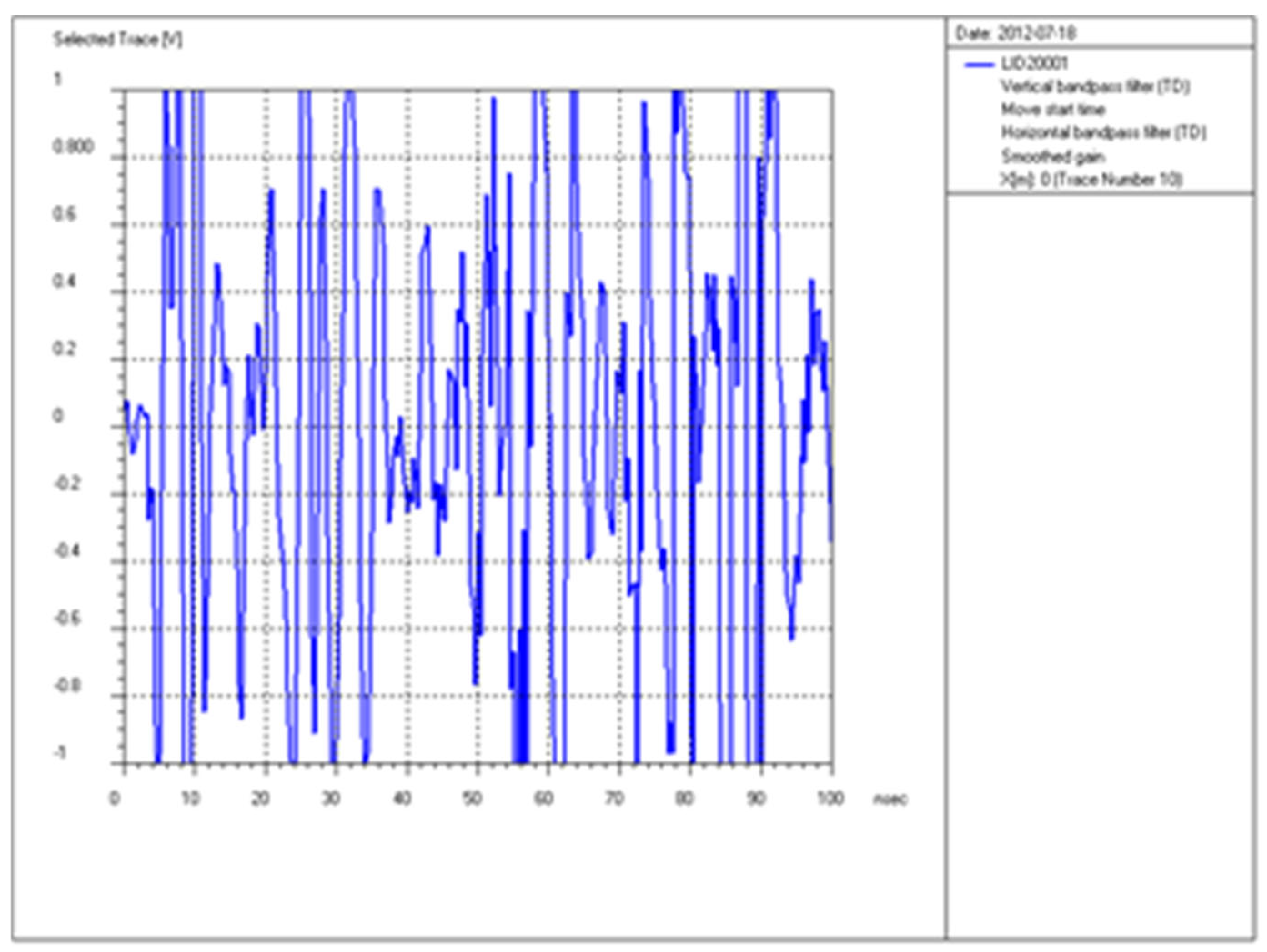
The results of the GPR measurements must be visualized in order to be interpreted. There are several ways of visualizing this. The simplest of these is the display of a single trace on the recorder (computer) screen, currently only used for control purposes (when checking the correctness of the selection of measurement parameters). These are shown in
Figure 1.
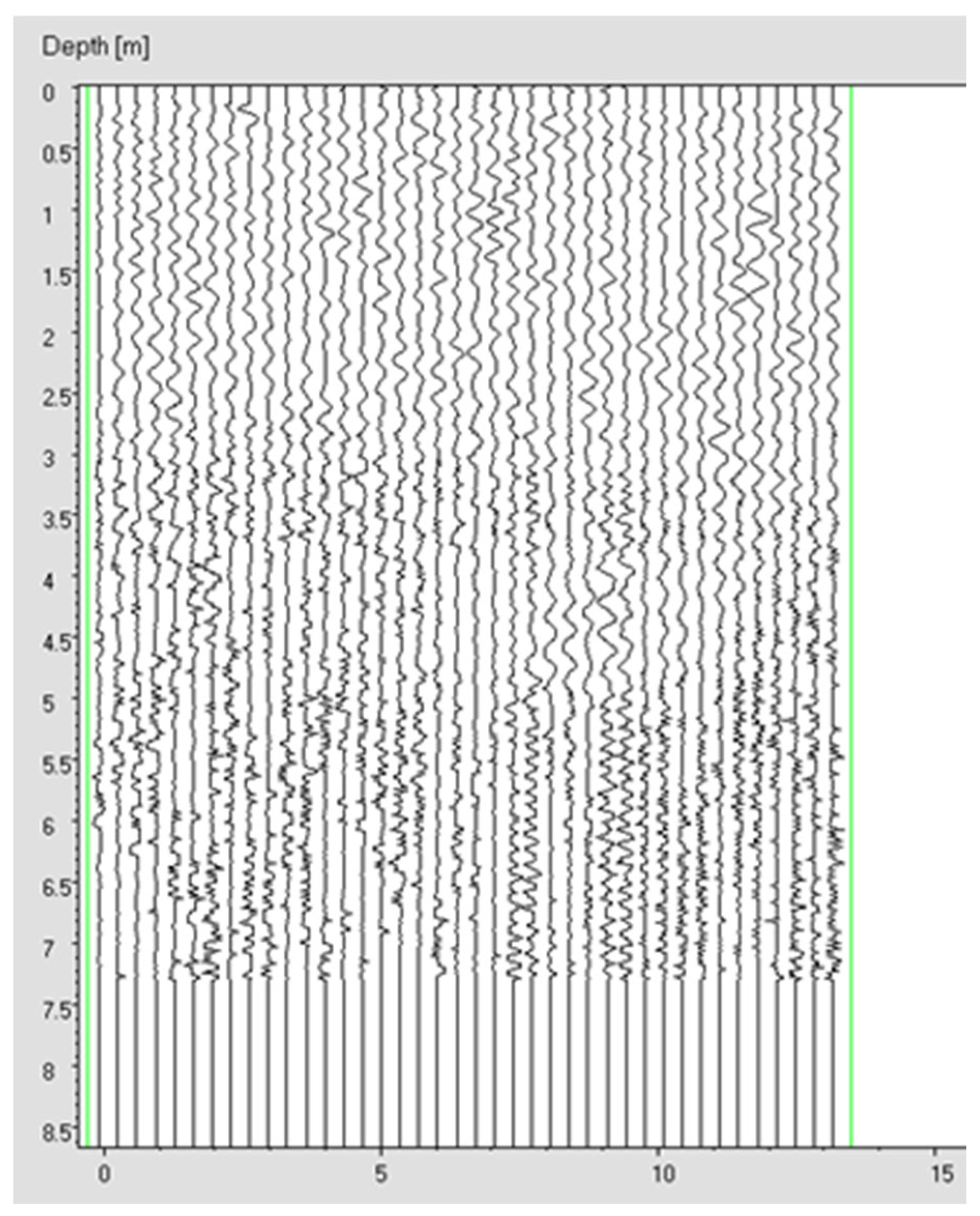
The second way is to display traces in a so-called seismic mode—using wiggle. In this case, the amplitude value in pixels on the echogram corresponds to the signal amplitude value in mV. These are shown in
Figure 2.
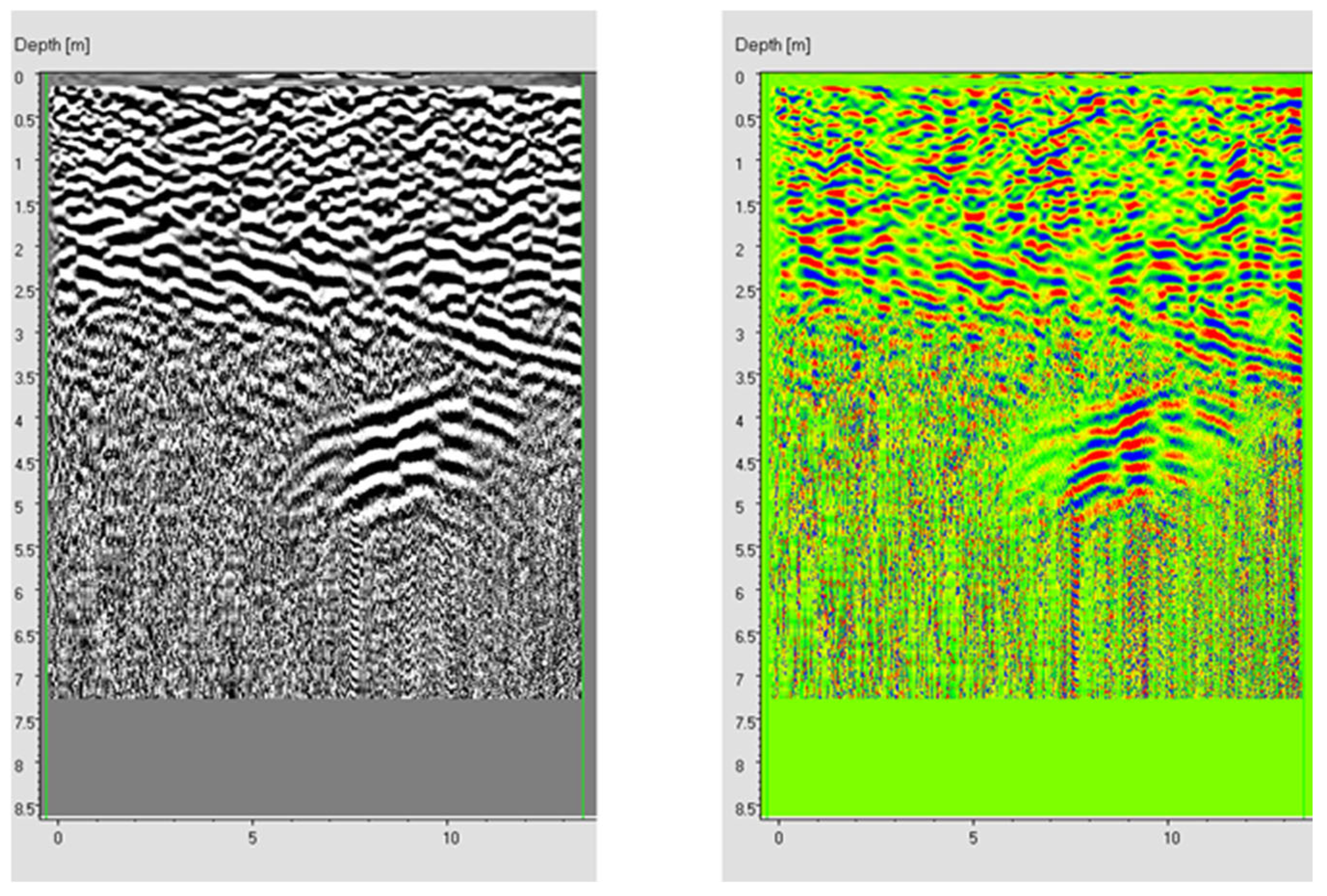
Different color palettes are used, most commonly:
Grey tones (black tones are used for positive amplitudes and light grey tones for negative amplitudes);
Red–blue palette (red tones are used for positive amplitudes and light blue tones for negative amplitudes);
Red–green palette (red tones are used for positive amplitudes and green tones for negative amplitudes);
With smooth or sharp tonal transitions.
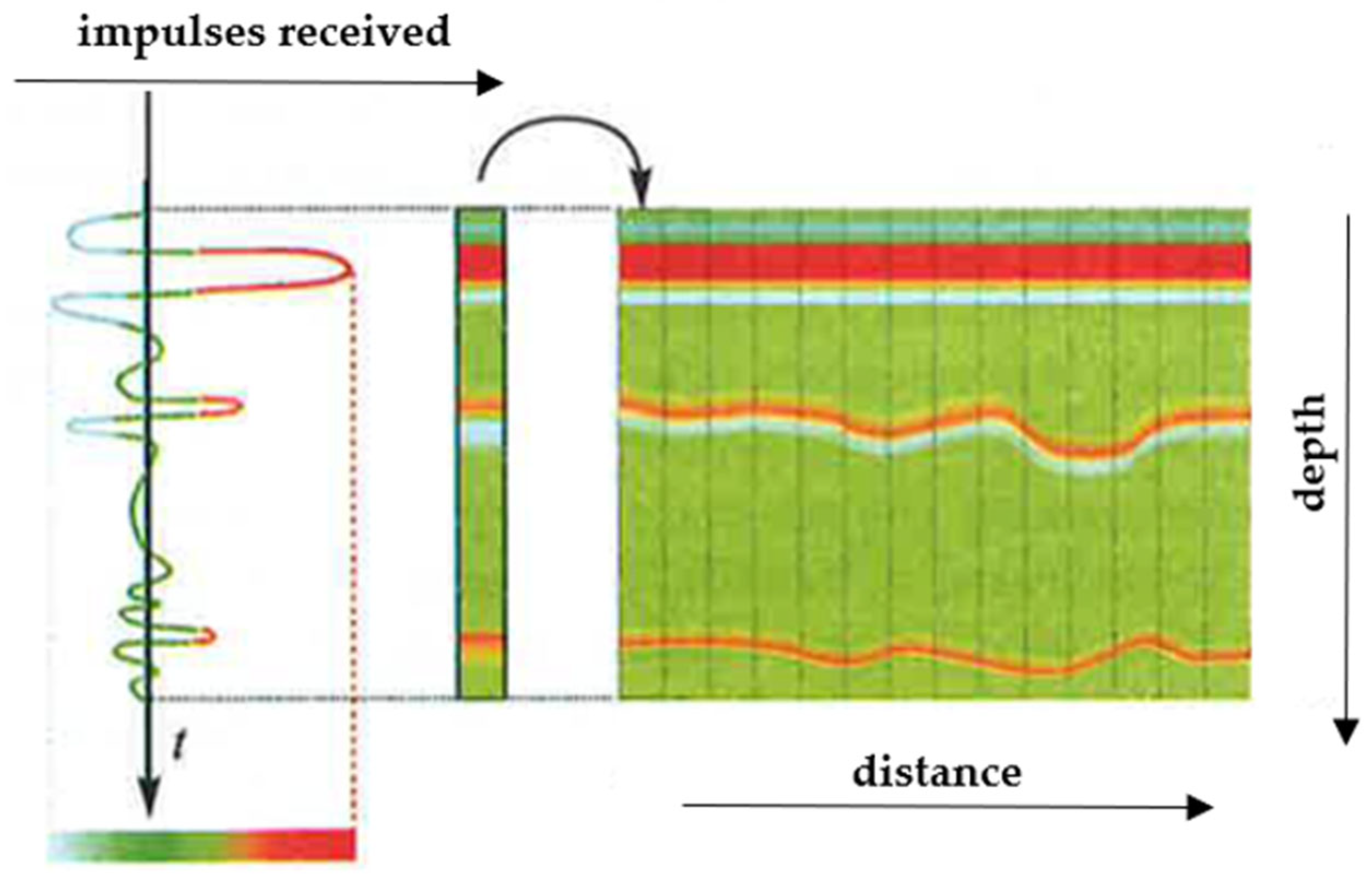
How the colors are assigned to the different amplitudes is also significant. Most often, the entire range of amplitudes is divided into a number of equal intervals corresponding to the number of colors in the palette (
Figure 3). In certain software, the aforementioned intervals do not have the same width (e.g., GPR), which may favor better visualization of the echogram.
A third way of displaying the time sections obtained from GPR measurements is to represent the amplitudes in the form of a color palette (
Figure 4). The principle of creating a color palette is shown in
Figure 3.
The radargrams presented in this article were shown in a ‘red and blue’ palette (palettes define a different number of colors, e.g., sixteen in the MALA Geoscience GPR software (system RAMAC/GPR CUII, v. 1.0) [
4].
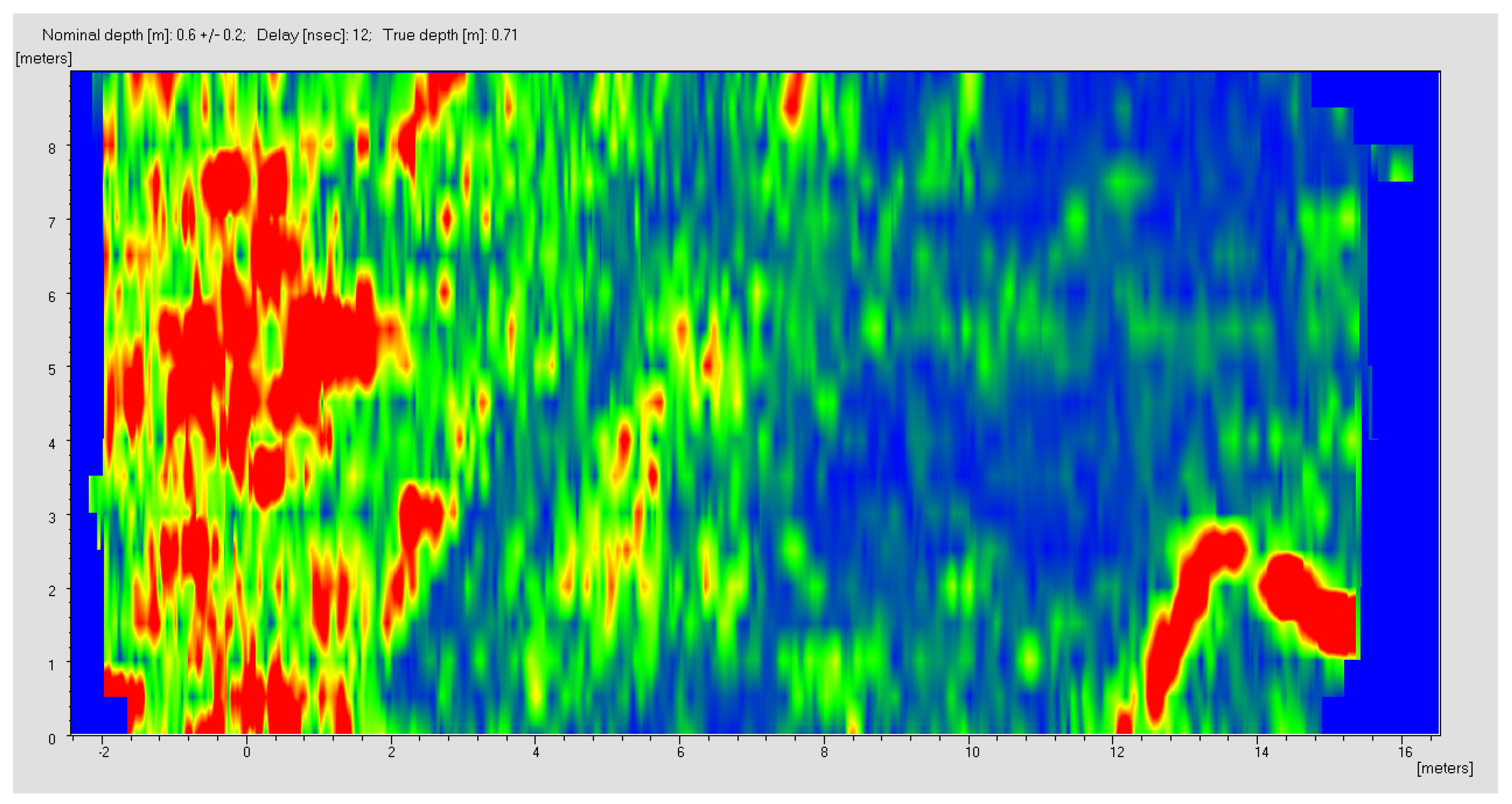
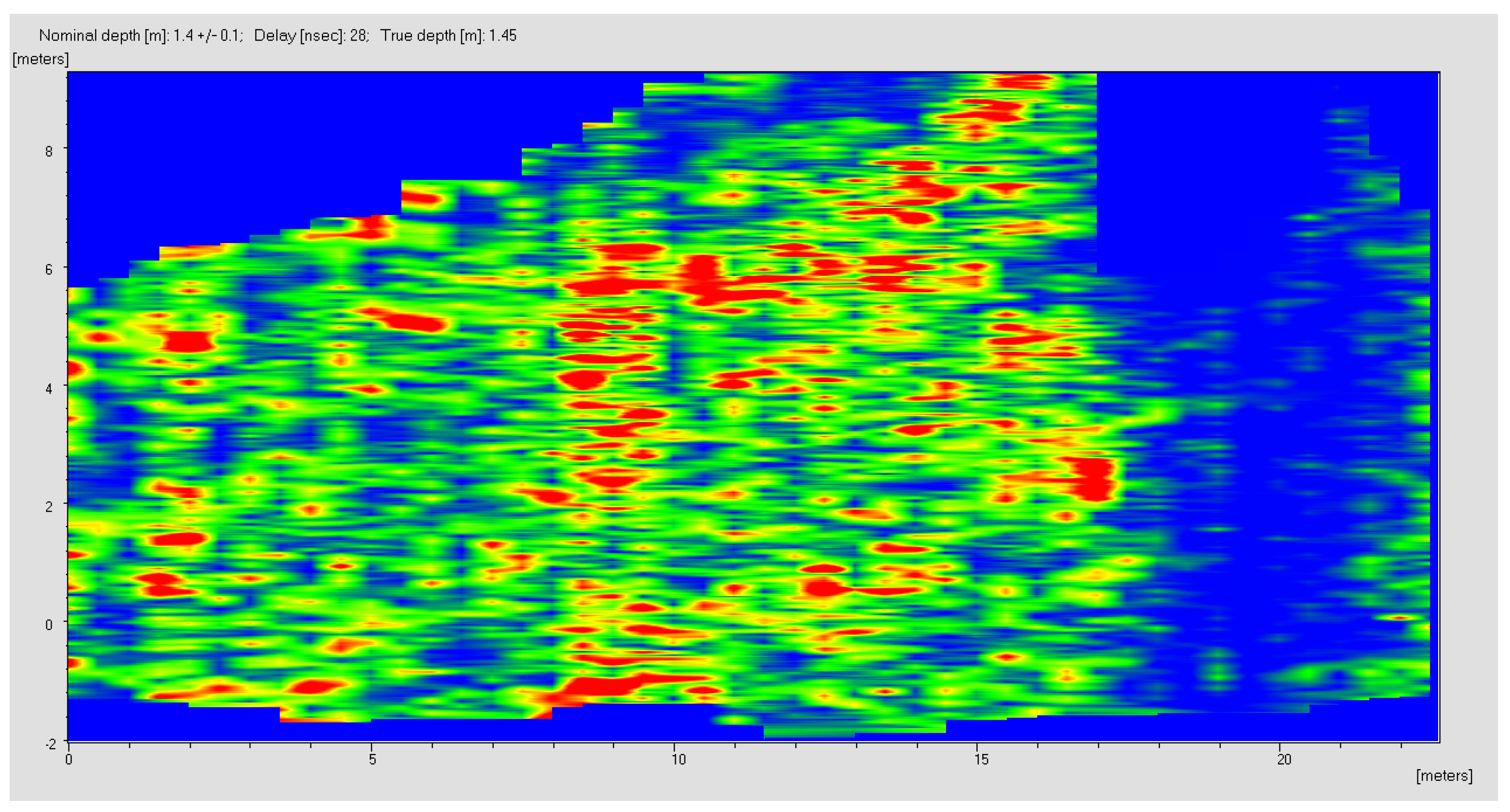
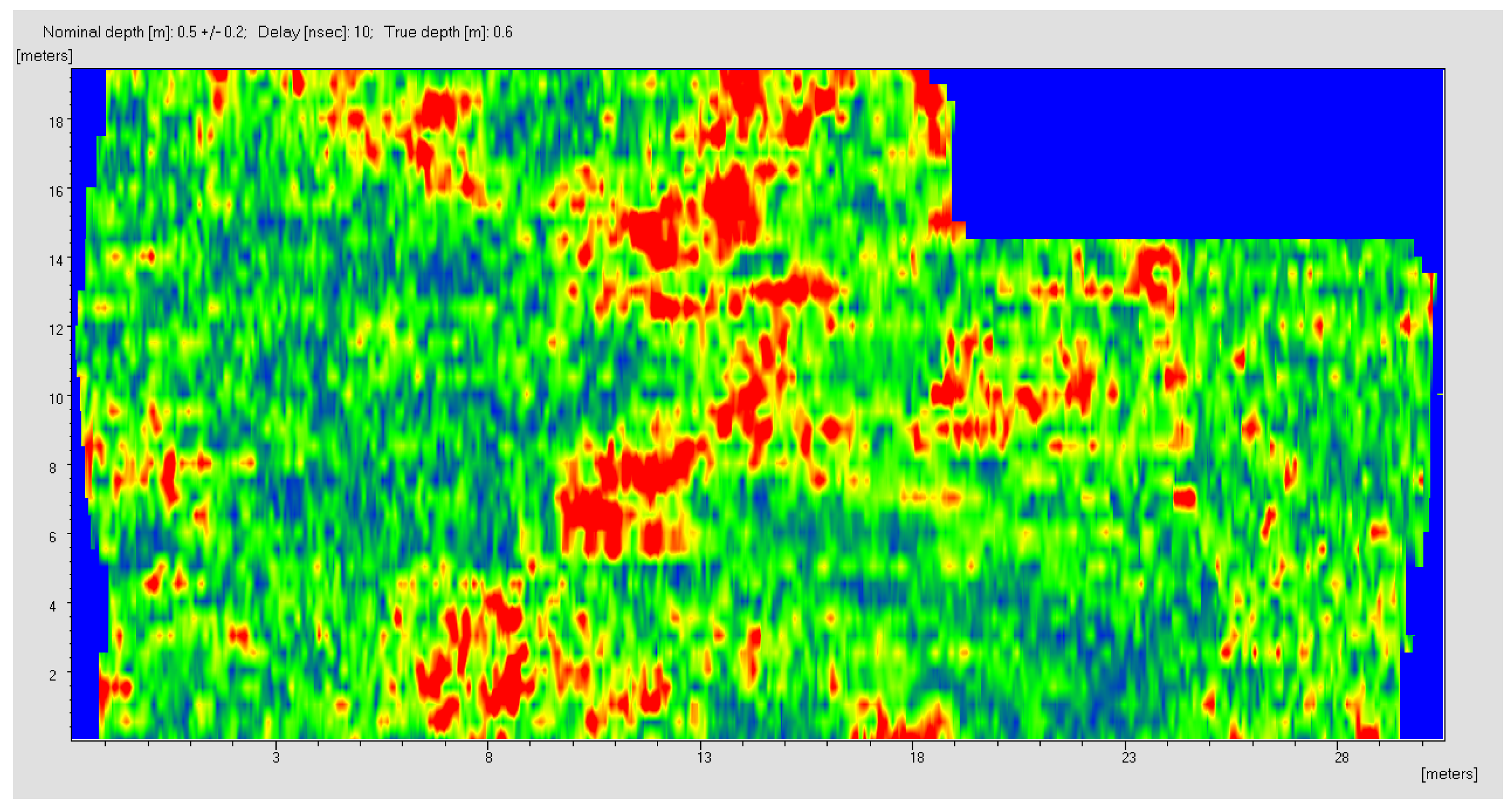
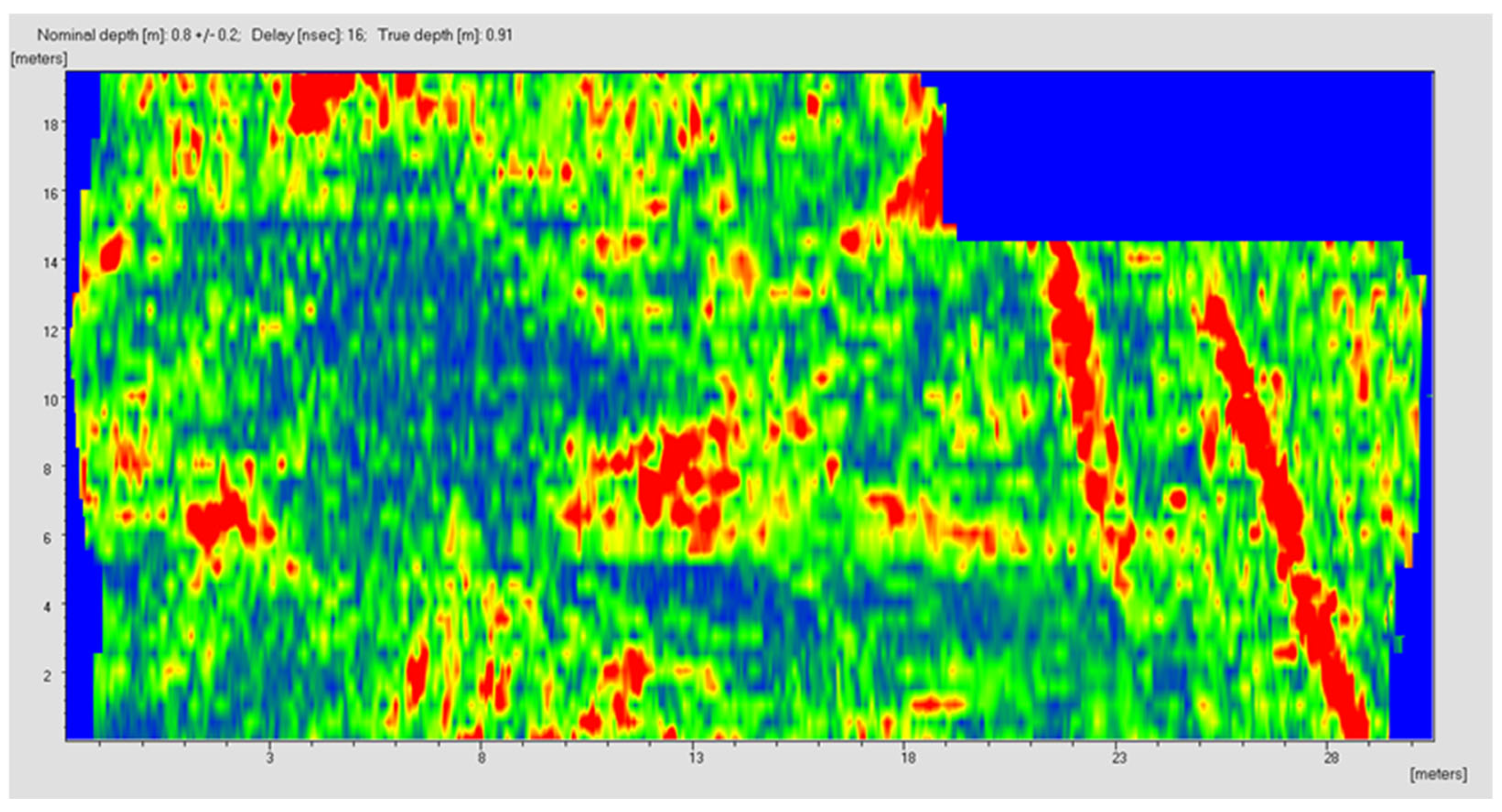
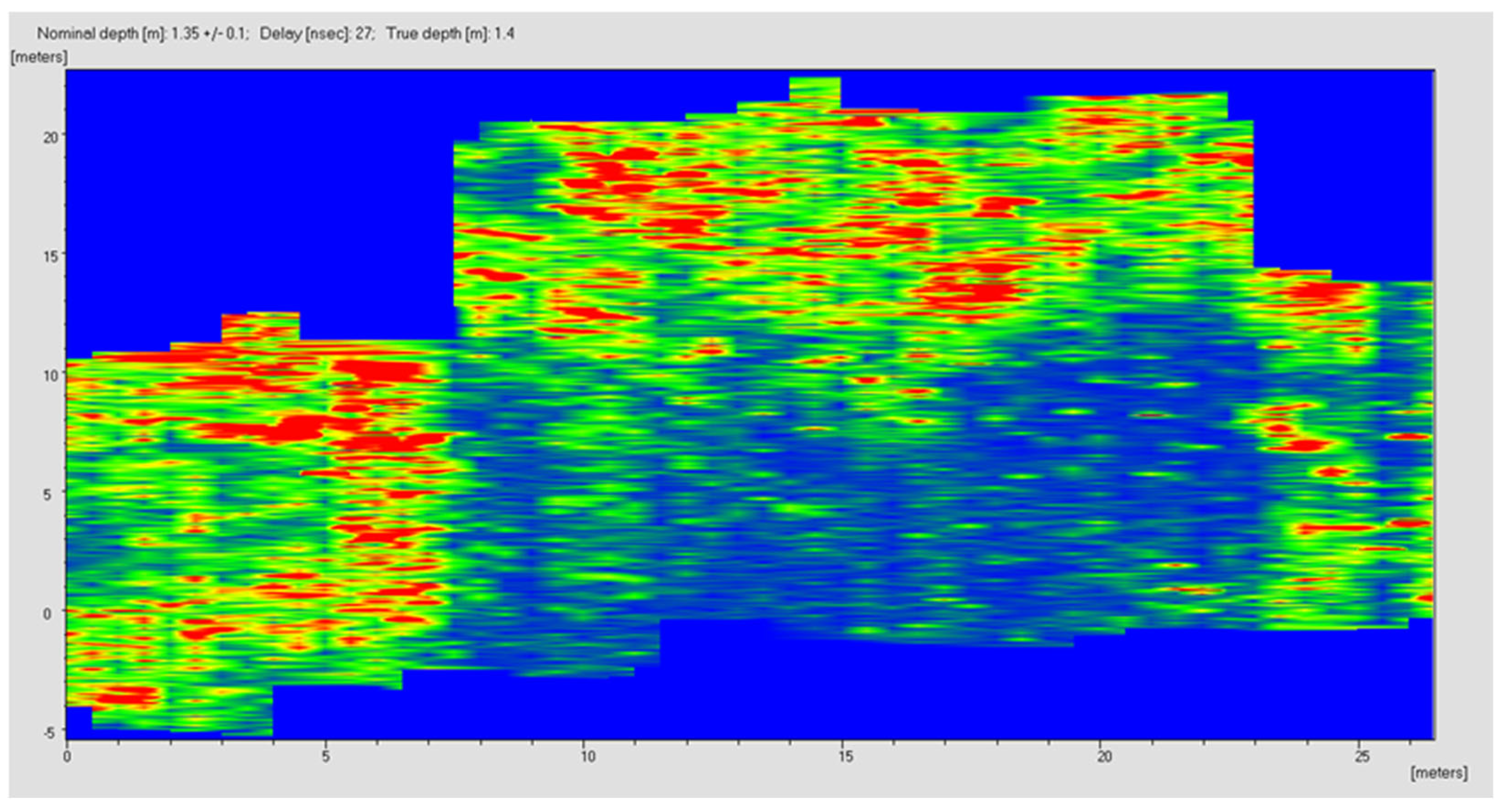
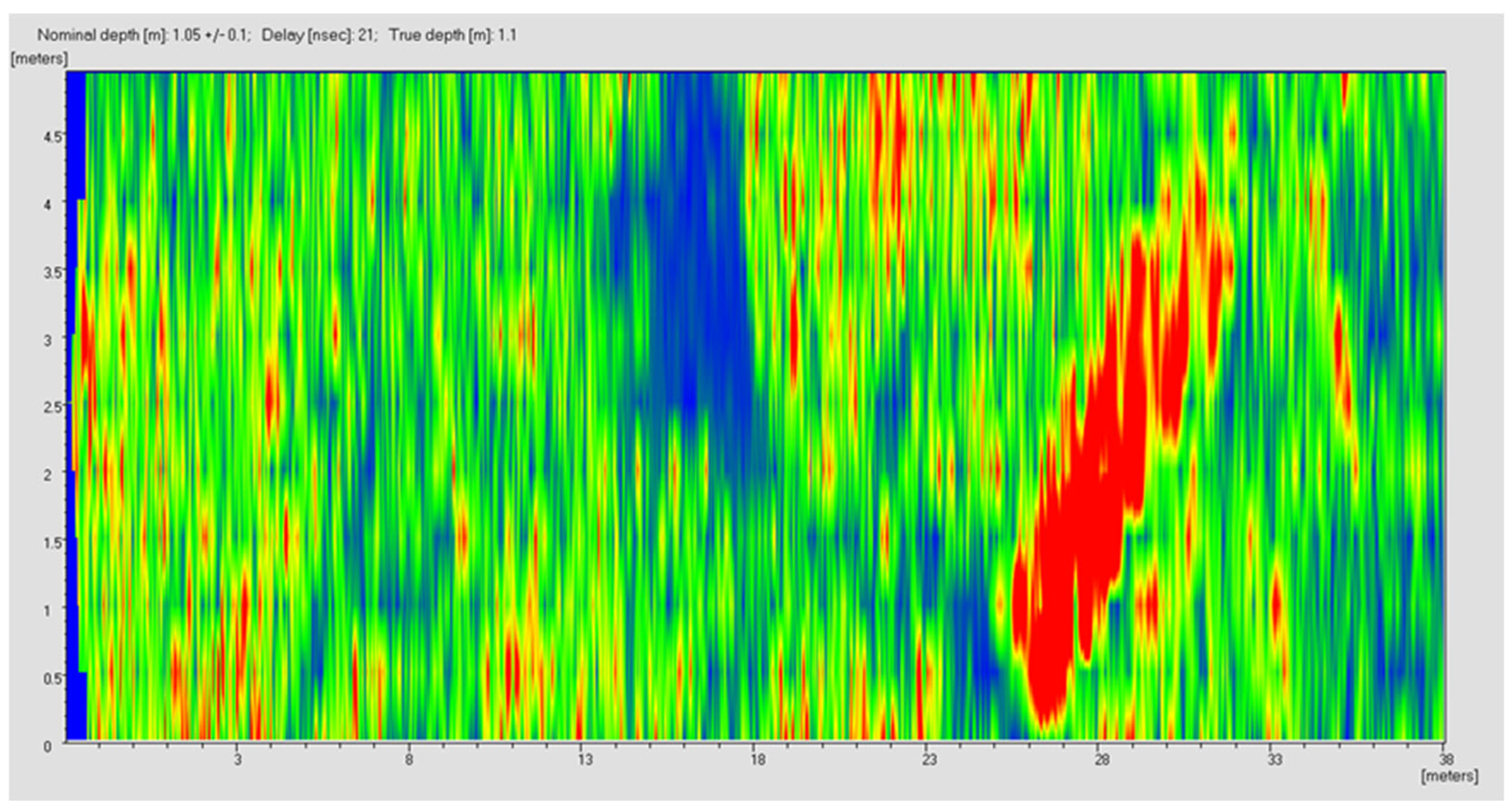
The red areas visible in the figures illustrate recorded, significant differences in dielectric permittivity (anomalies) at the boundary between the local soil substrate and the objects located beneath its cover, resulting from differences in dielectric constant between the target objects and the surrounding medium. In the cases presented, the localized anomalies were interpreted as indicating the presence of relics of past human activity in the study area.
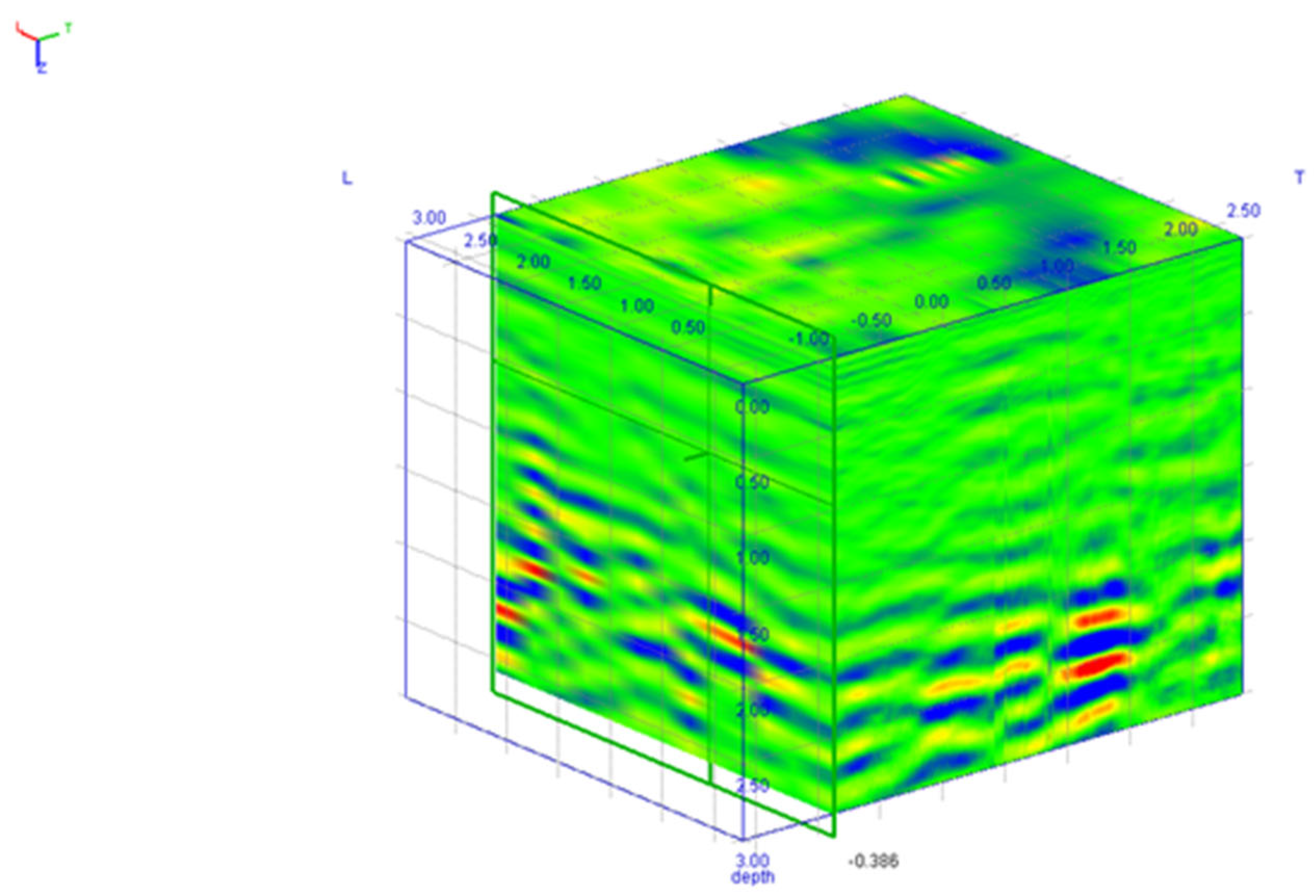
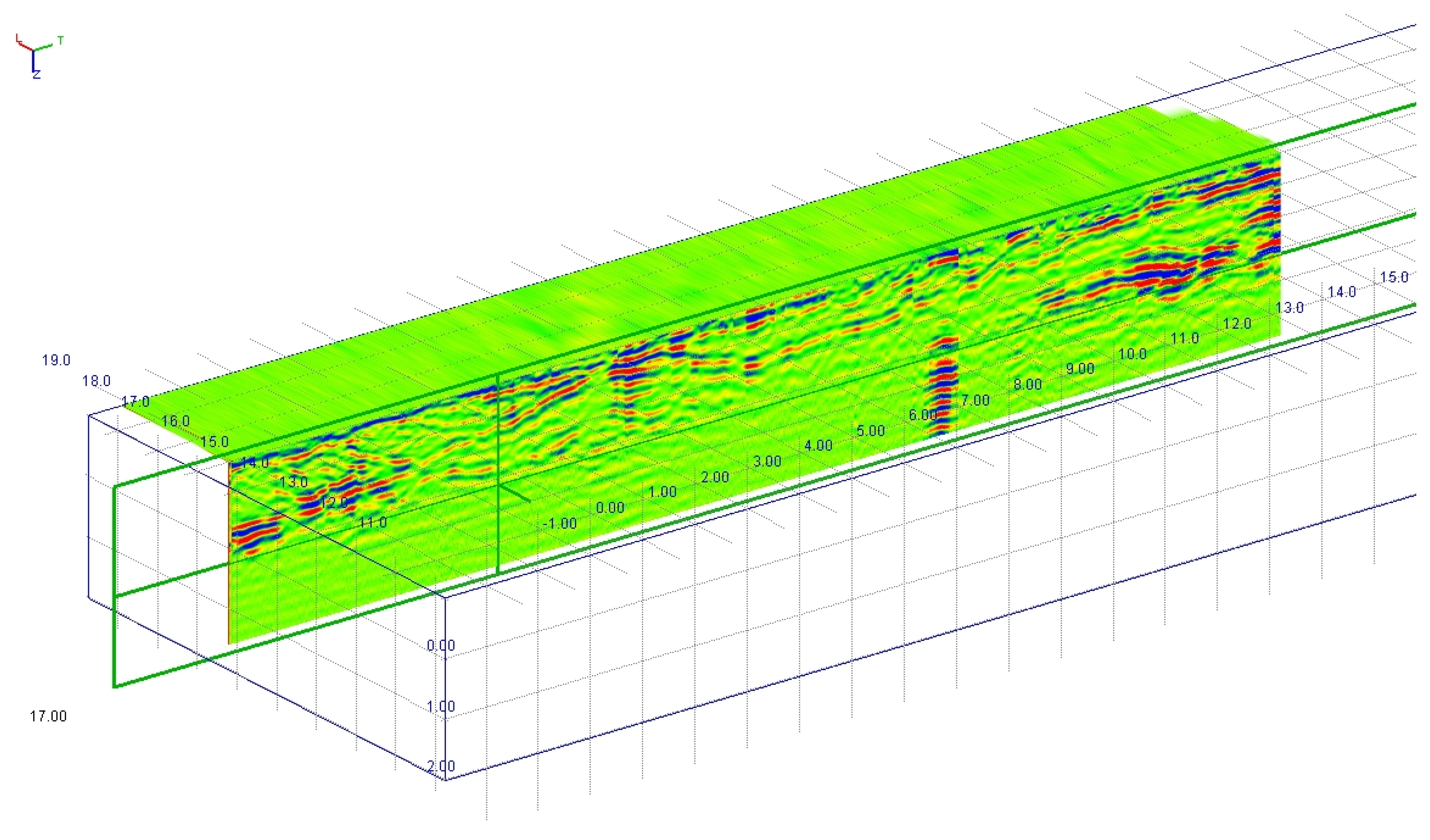
The visualization of the results of profiling performed in a parallel grid is particularly impressive. Such measurements can be visualized in many different ways. As a rule, it is possible to display the cross-section in the plane of the profile, in a plane perpendicular to it or in a plane parallel to the measuring surface (temporal cross-section). An example of such a visualization is shown in
Figure 5. By locating an object of a linear nature, a time slice is obtained on the visualization, which shows an elongated anomaly at a certain depth. Most software used for 3D data processing and visualization requires profiles to be acquired in a parallel measurement grid.
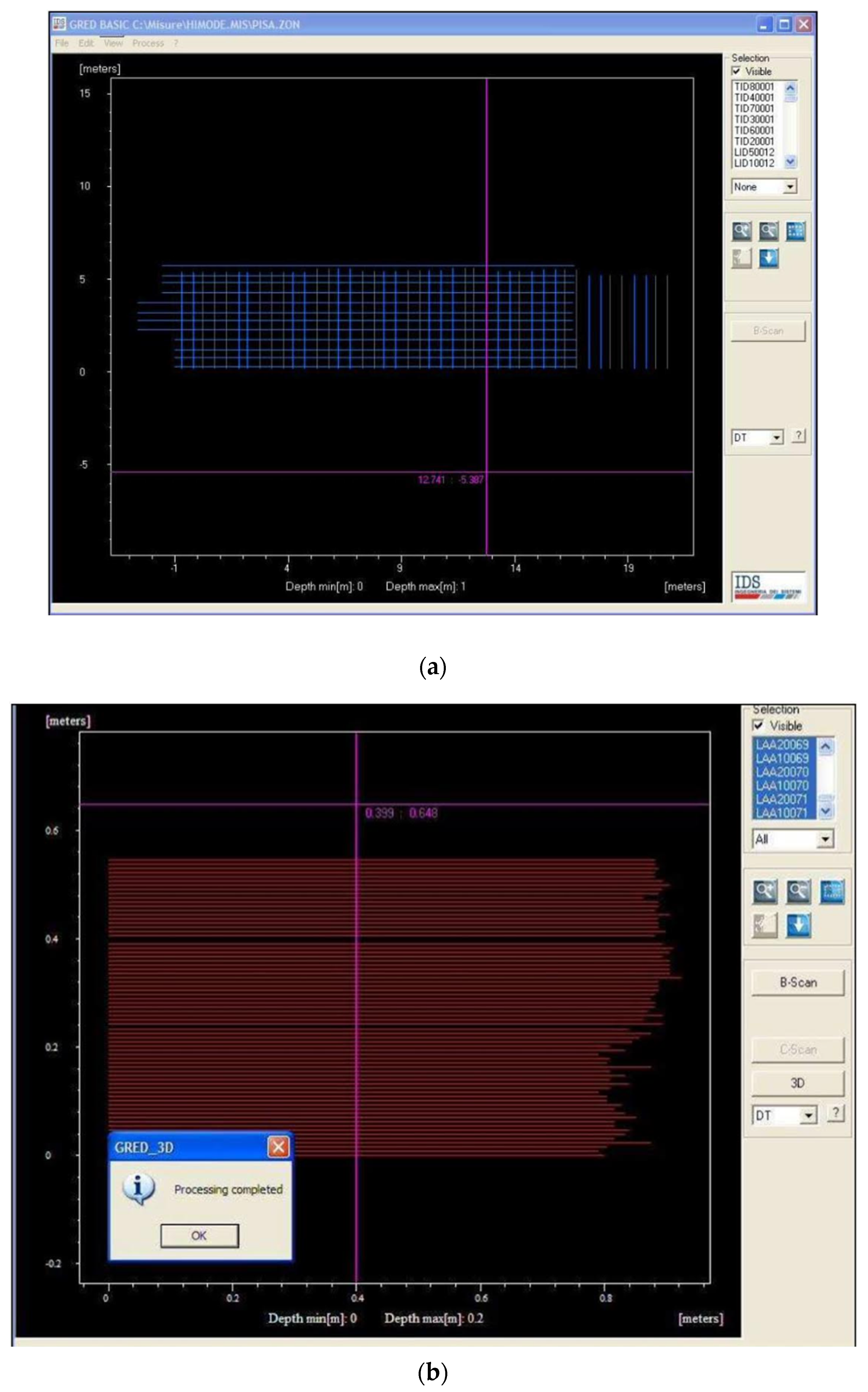
Negative coordinates on the Y-axis indicate that individual measurement tracks started before the reference line of the survey, i.e., coordinate “0” on the Y-axis, which marks the reference line for the individual parallel measurement tracks running perpendicular to the X-axis and parallel to the Y-axis (parallel profiling). This procedure is applied in situations where due to terrain obstacles or the topography of the study area, not all profiling lines can begin from the same starting line “0.” In such cases, some scans may start earlier (negative coordinate) relative to the others, which allows for more complete coverage of the surveyed area with profiling lines (
Figure 6).
This visualization method, which of course requires a specialized measurement methodology and appropriate interpretation (especially with regard to the construction of time slices), is very illustrative and at the same time, the easiest to understand. Well-processed survey material makes it possible to produce a very effective and useful visualization of the GPR survey.
The presented studies were aimed at a general, preliminary identification of several sites of former mining works in Lower Silesia. Their results clearly indicate the necessity of conducting further archaeological investigations in the studied areas, both by non-invasive geophysical methods—particularly, the ground-penetrating radar technique—as well as by classical archaeology. The use of shielded antennas with frequencies of 200/600 MHz, dedicated to the detection of underground infrastructure, appears to be an optimal solution in the case of archaeological surveys carried out at relatively shallow depths—not exceeding 2–3 m.
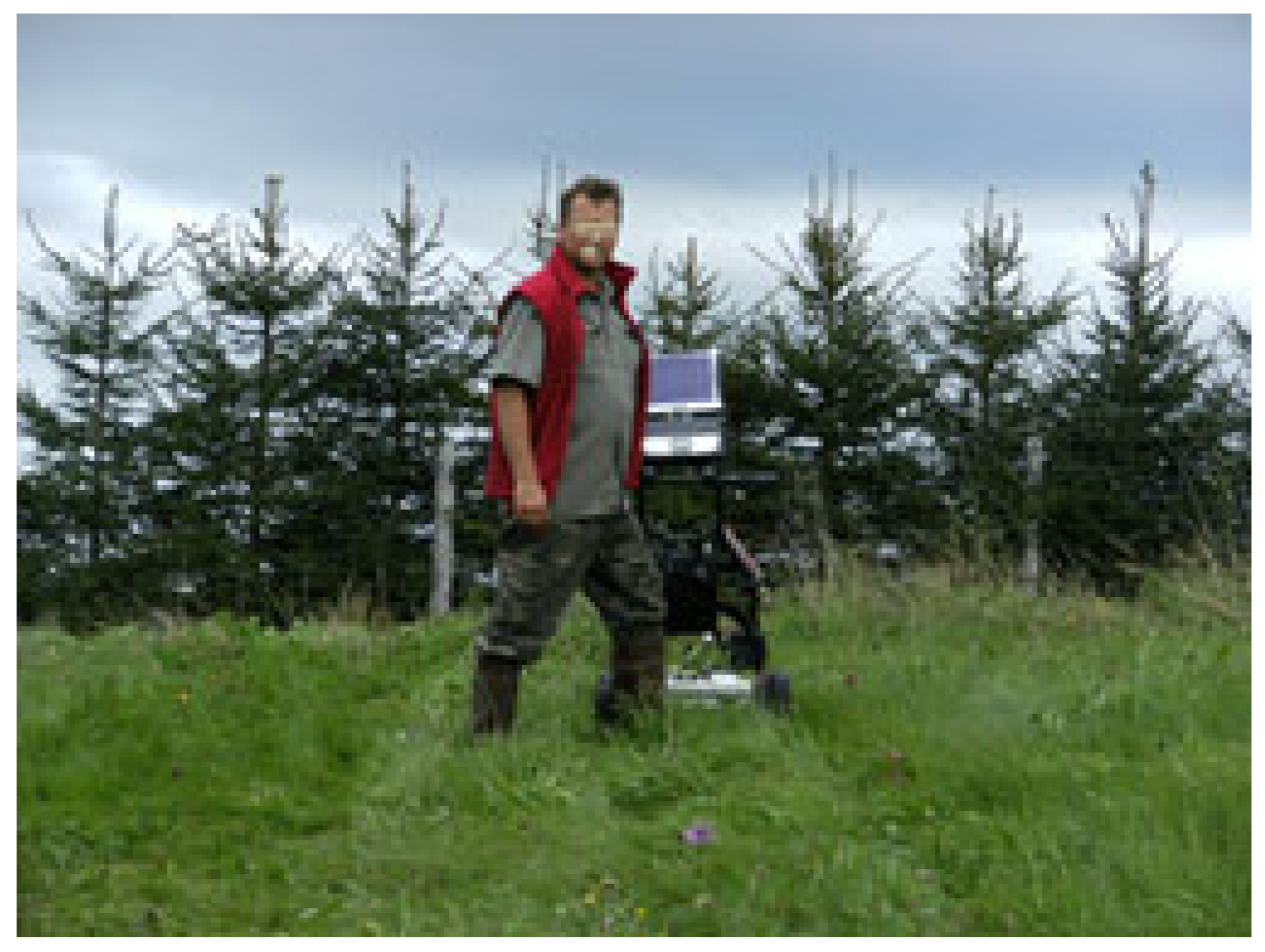
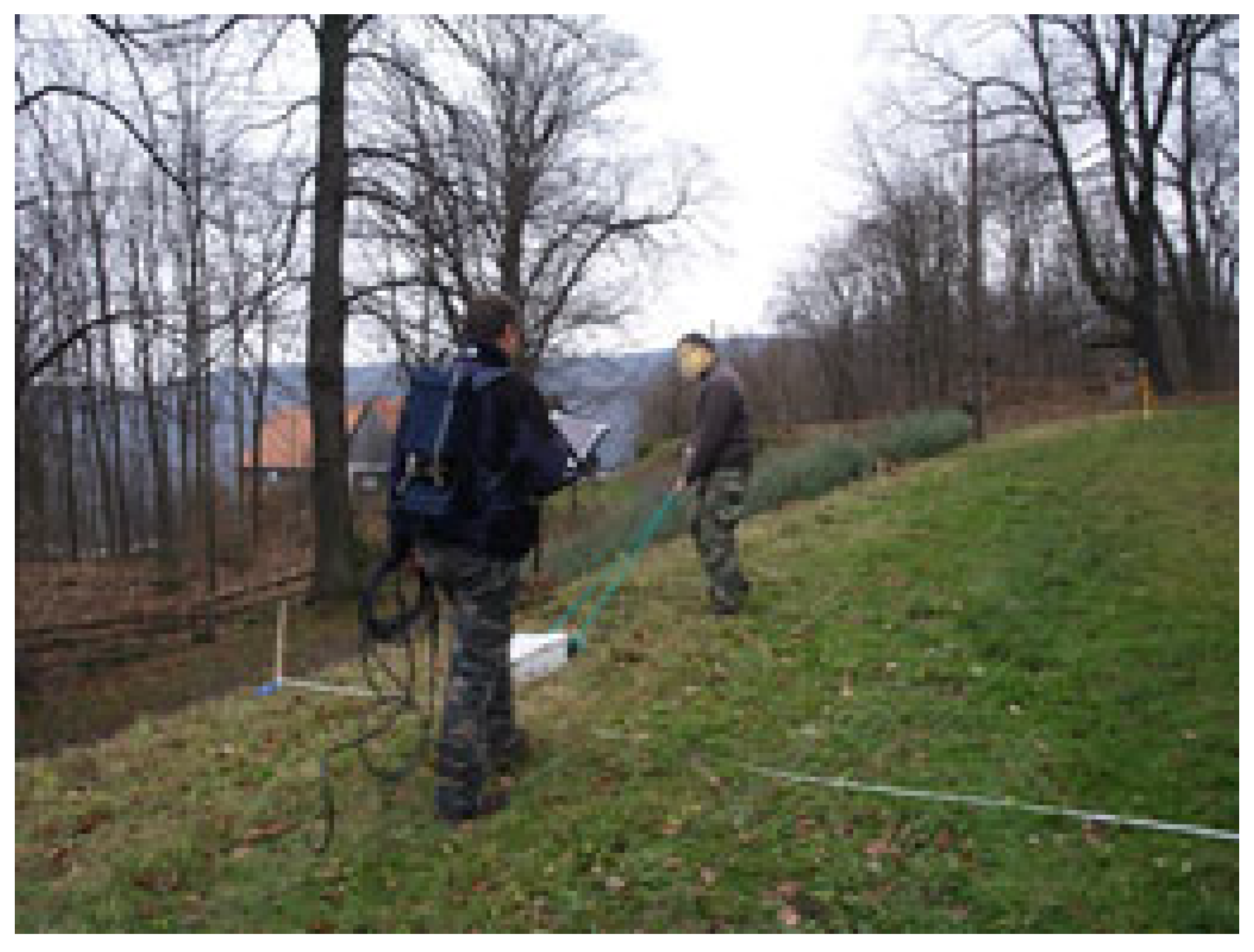
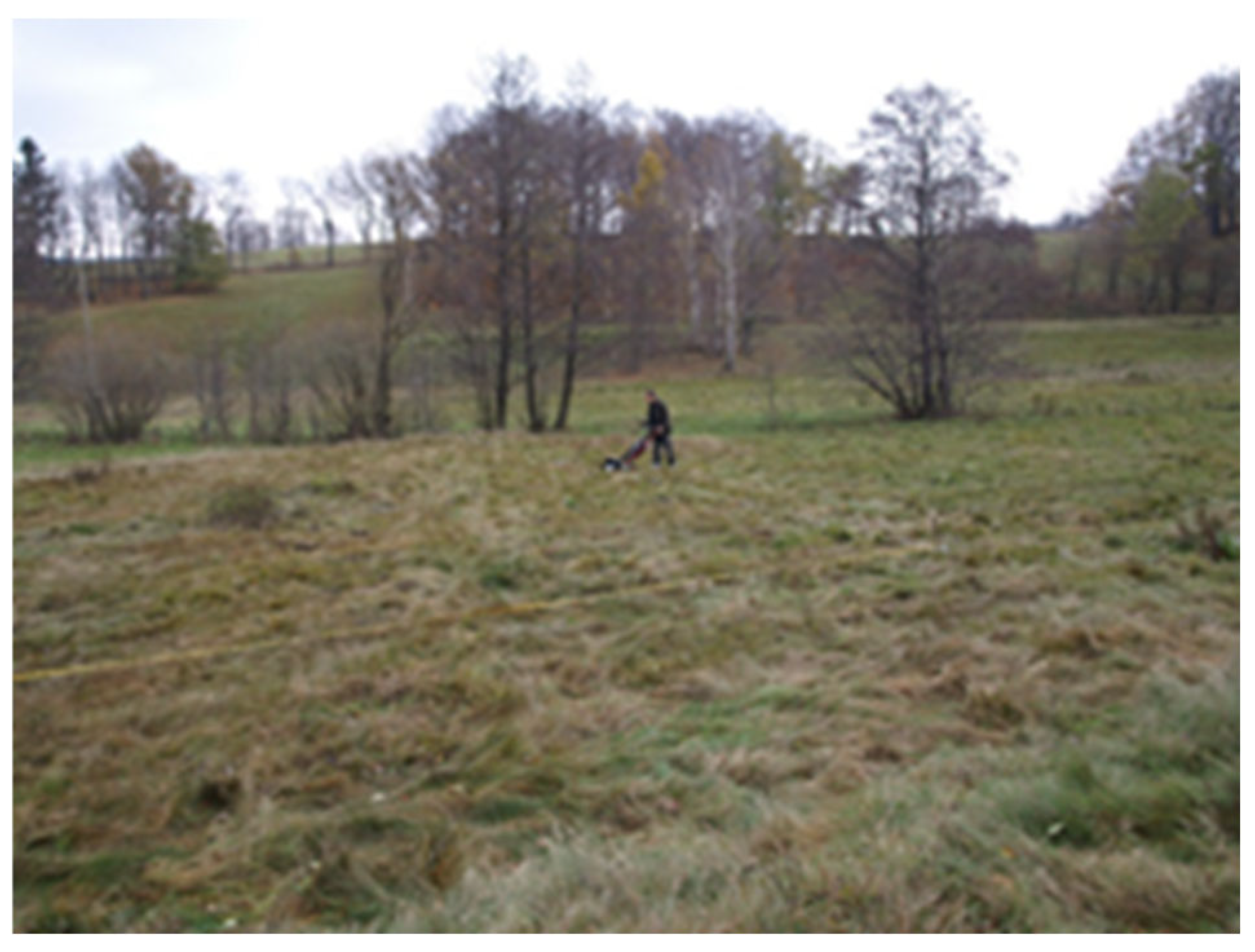
Below, supplementary pictures of the radar equipment used, the manufacturers, and some photographs (
Figure 7,
Figure 8 and
Figure 9) of on-site data collection are presented.
5. Research Results and Discussion
An interesting point here is the outlines, visible on GPR images, of a fragment of regular structures at the site of the former metallurgy works in Kondratów, which could be a relic of a corner of a non-existing building or similar structure (
Figure 10).
The images obtained of the site of the former metallurgy works in Miedzianka (S1) indicate the presence of regularly arranged reflections, which may represent reflections from the remains of structures not currently visible on the ground surface (
Figure 11).
A number of clear anomalies indicating the possible presence of remnants of former mining and metallurgy works are visible in the images obtained for the site of former mining and metallurgy works in Złotoryja (
Figure 12 and
Figure 13). However, it is necessary to take into account and eliminate clearly visible reflections related to the disturbance of the subsurface structure caused by the construction of the sewage collector within the site area (
Figure 14).
The existence of remnants of former buildings is indicated by images of the former metallurgy works site in Leszczyna (
Figure 15).
Reflections visible near the wall of the church in Miedzianka may indicate the existence of burials in the study area (
Figure 16).
The results of georadar profiling indicate locations where it seems advisable to carry out archaeological excavations, while at the same time, eliminating parts of sites where no interesting reflections associated with changes in the ground structure were observed.
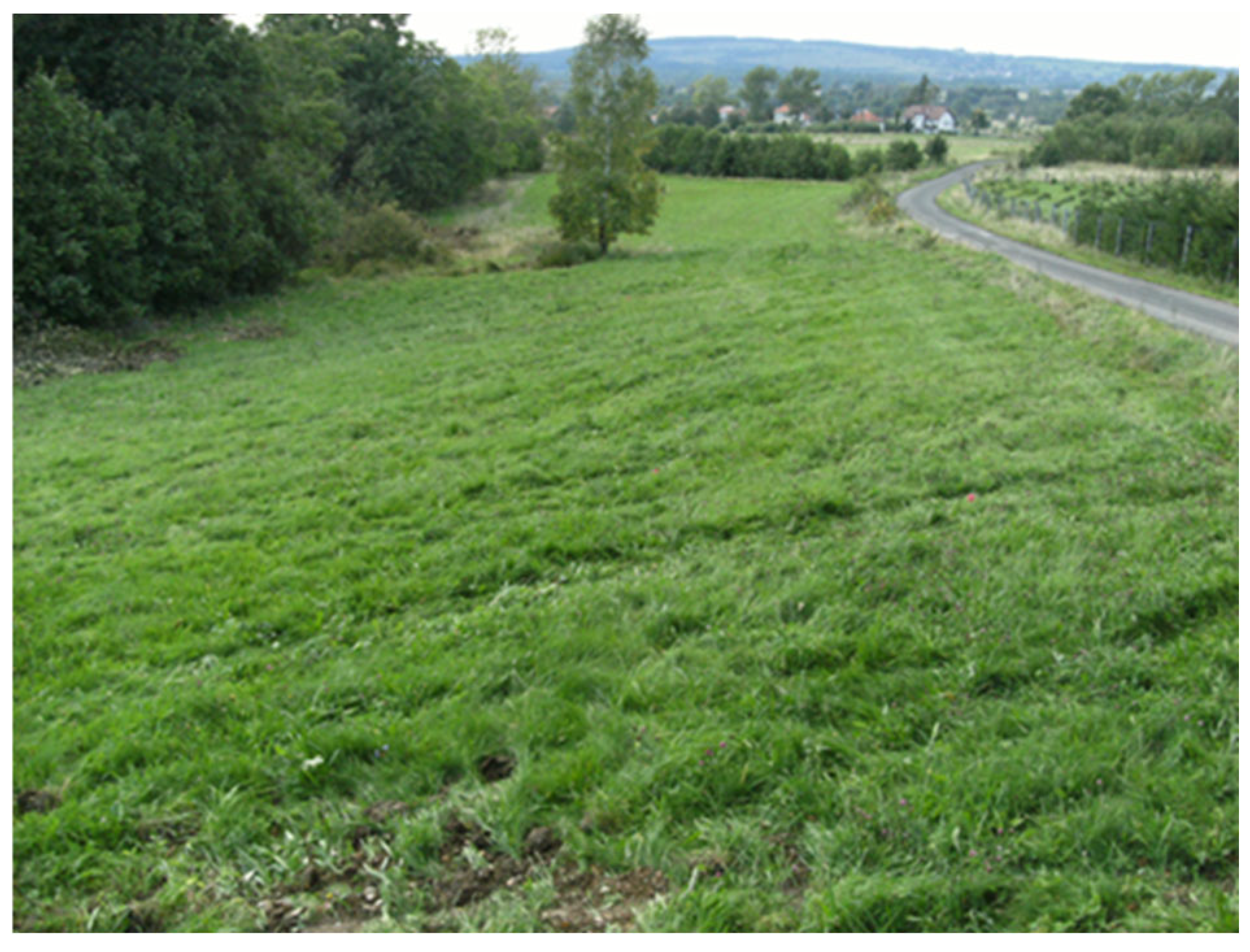
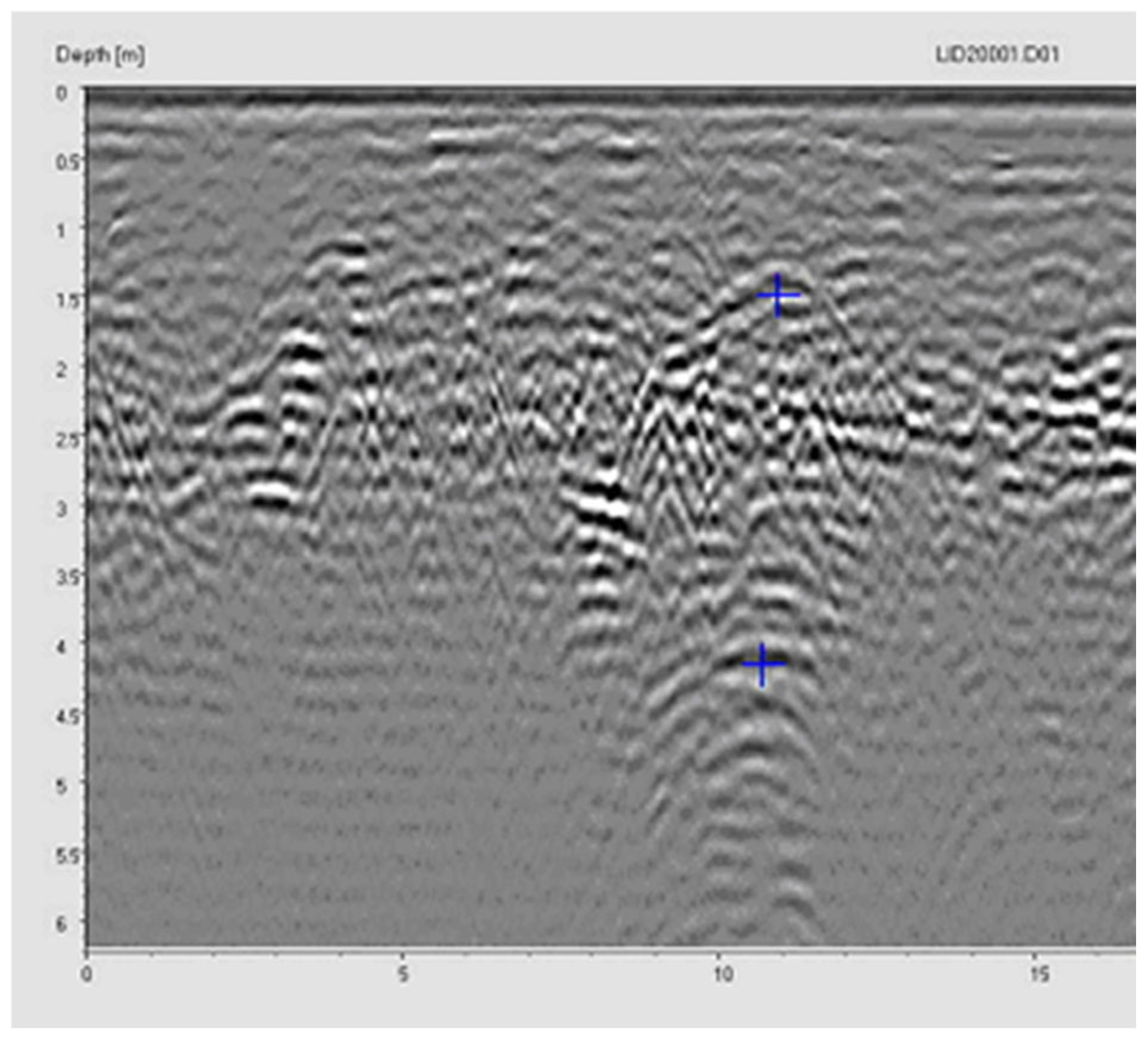
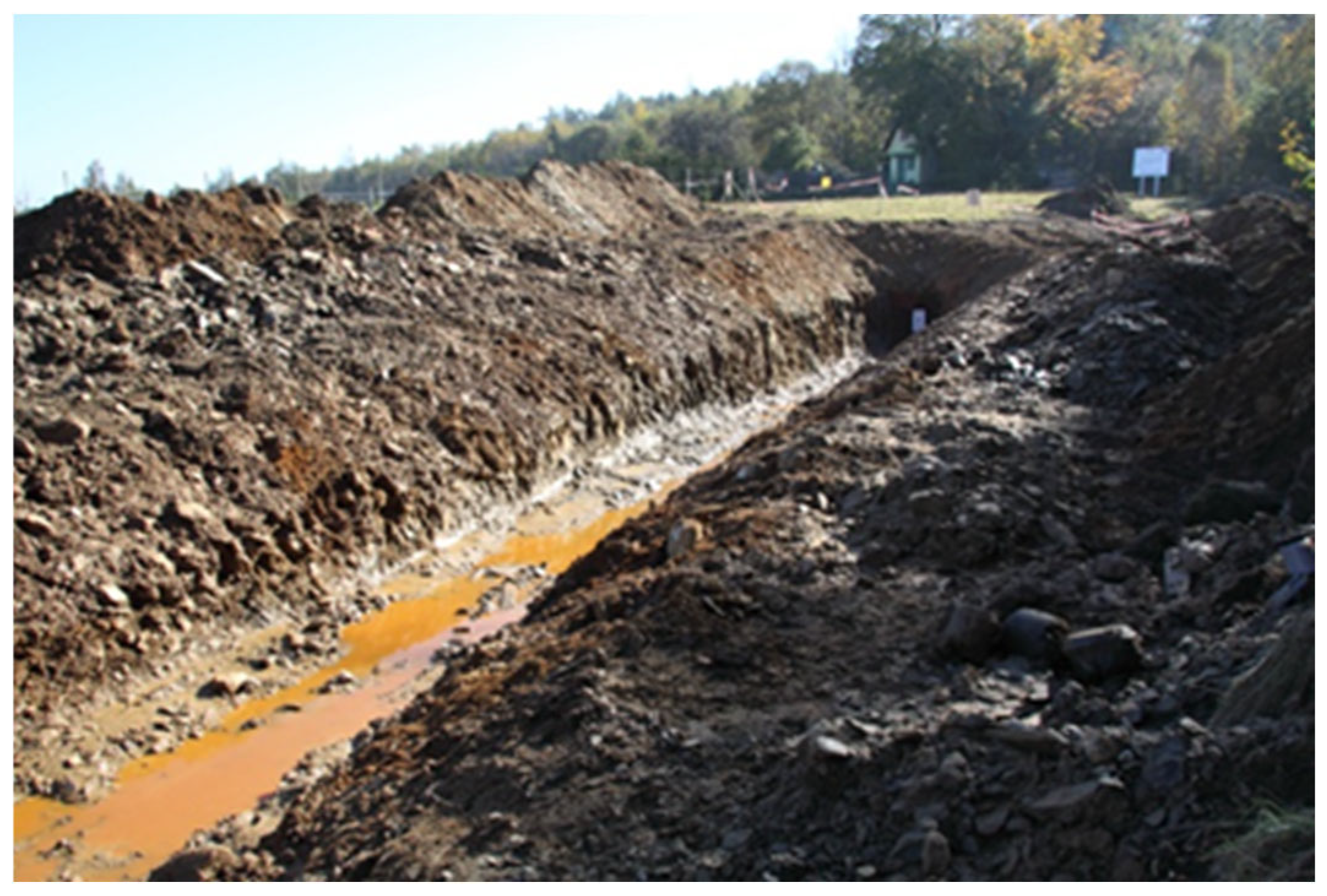
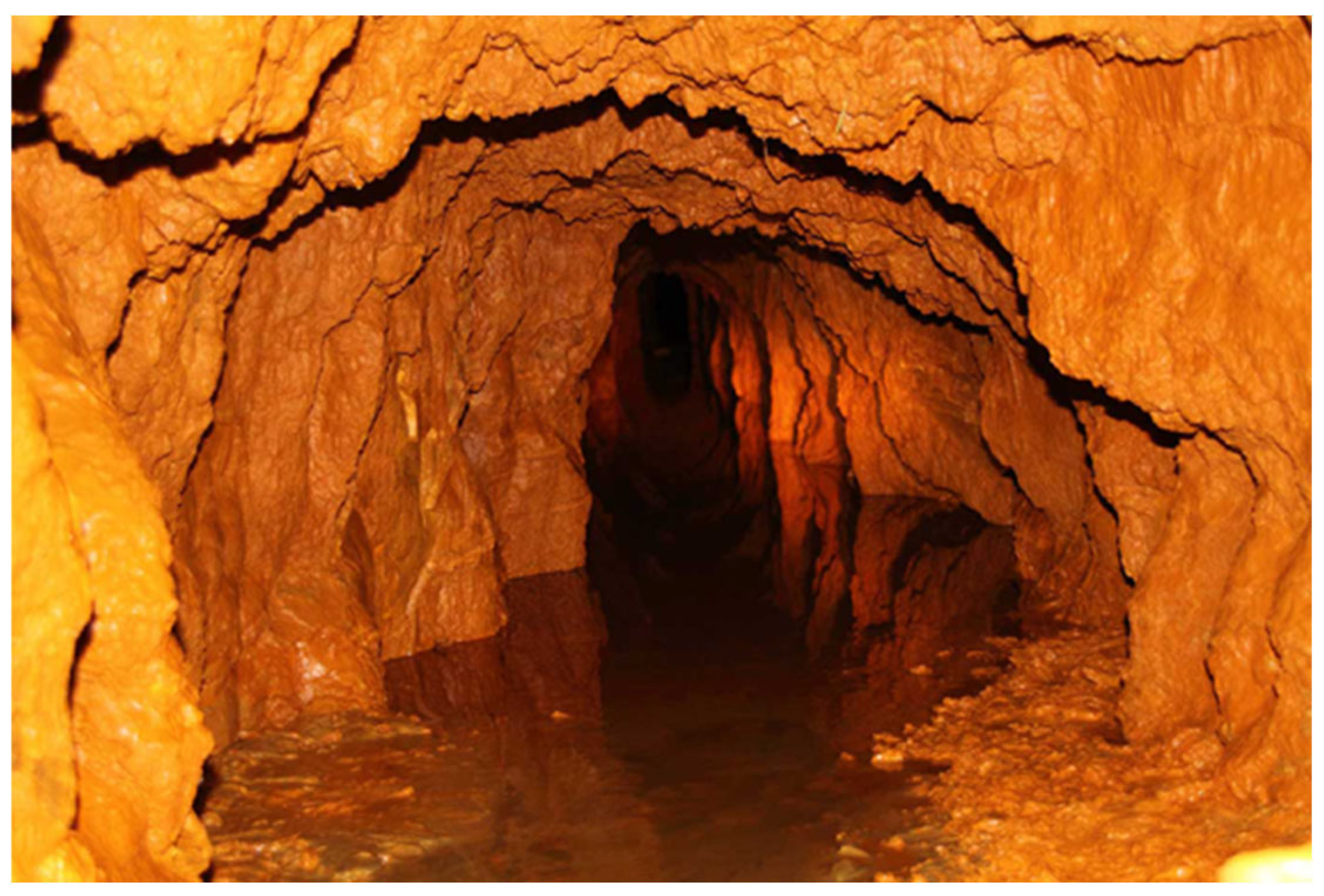
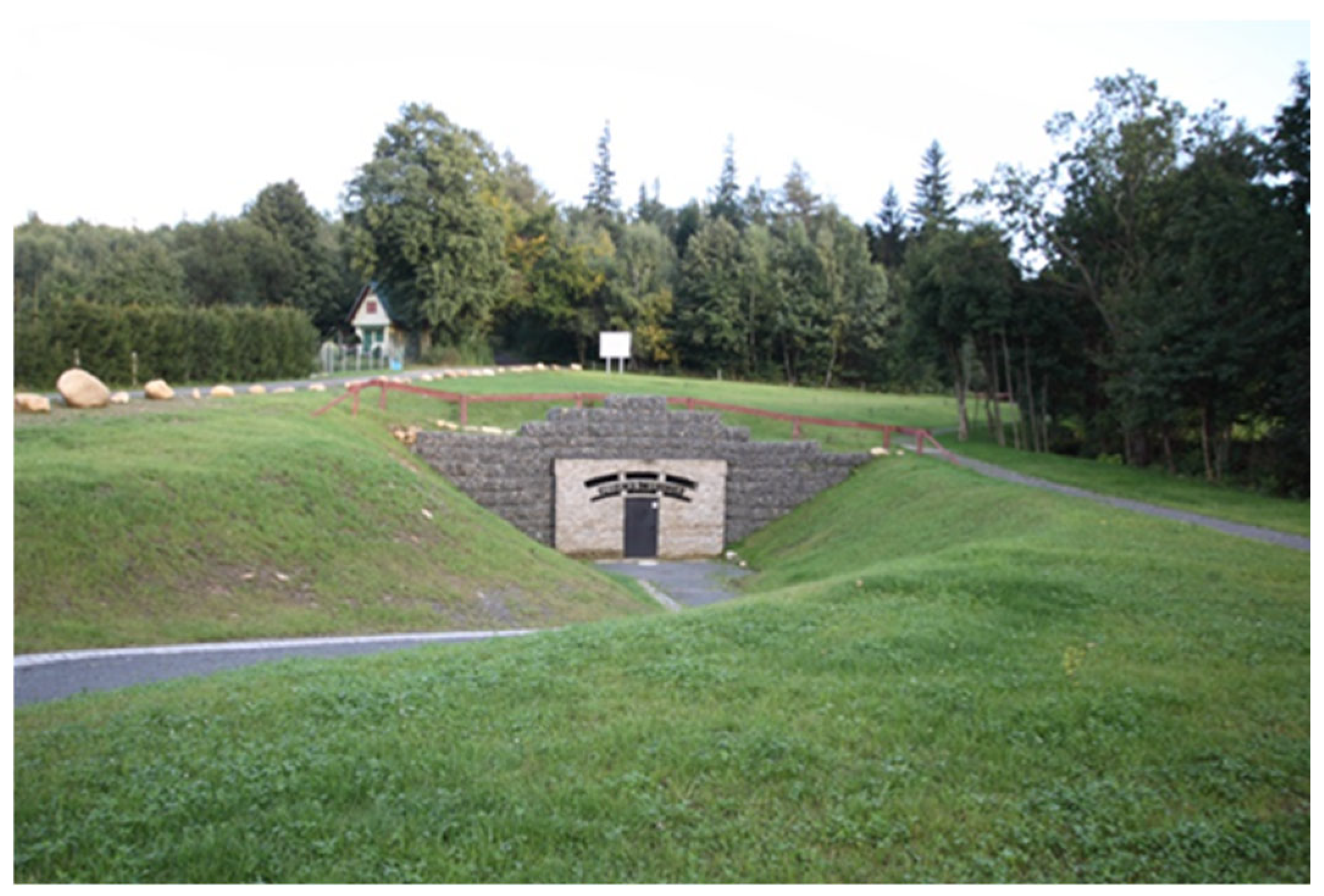
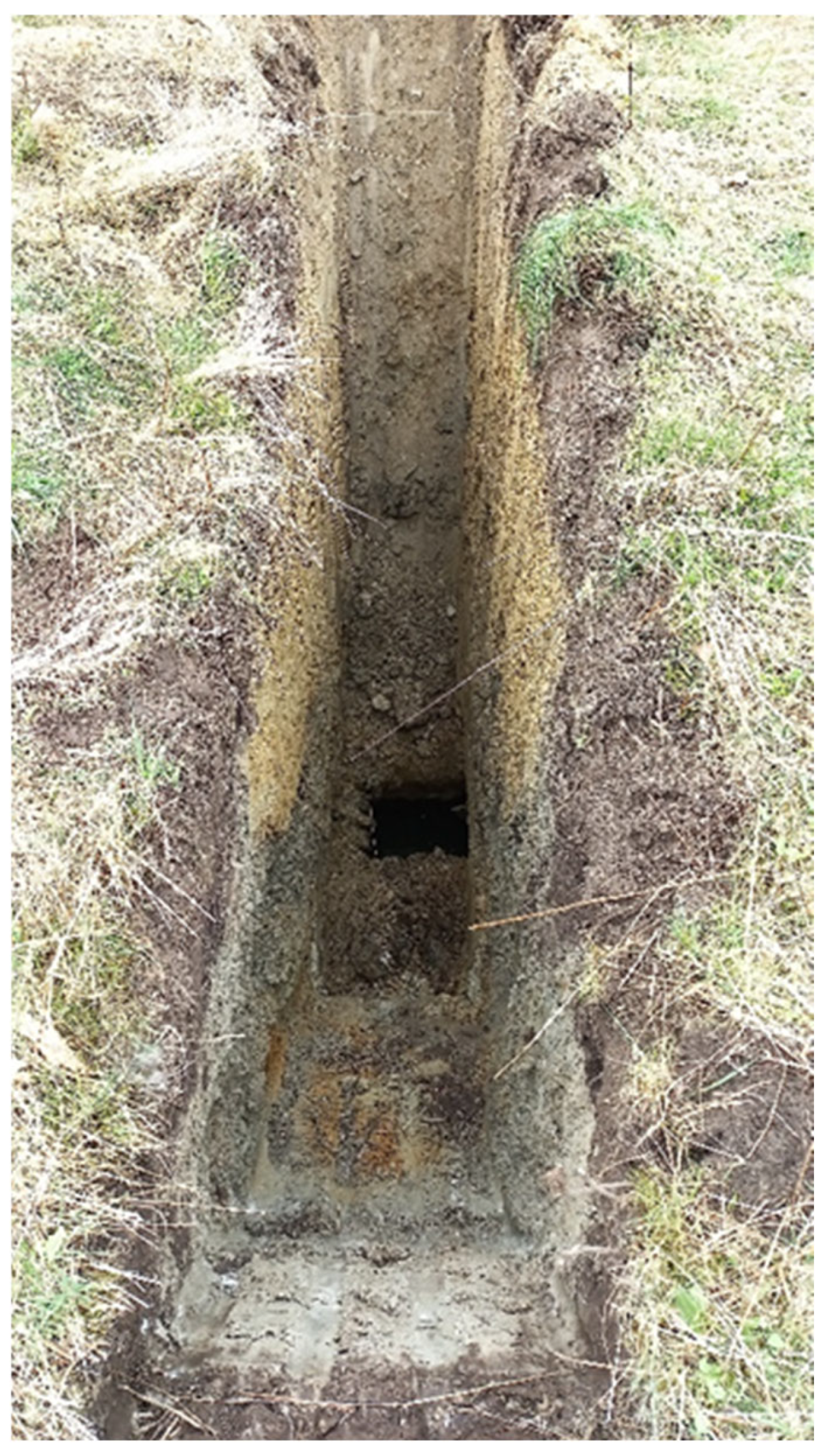
The georadar method was also used for the location of the Saint Leopold adit (sztolnia św. Leopolda) in Krobica, dating back to the 18th/19th centuries. This adit is currently a major part of the underground tourist route “Saint John Mine” [Kopalnia Św. Jan] in Krobica (Lower Silesia, the Świeradów Zdrój area in Poland). The workings in question, which constitute a so-called deep adit that drains the deposit in the initial section, and which is approximately 200 m long, is located at a depth of 10 m or less, which made the GPR method just perfect to pinpoint it. On the basis of historical mining maps dating back to the 19th century, the course of the adit was initially located, and then GPR profiling was carried out, which confirmed the existence of former working. It was followed by works intended to provide access to the inlet to the adit and its reconstruction (
Figure 17,
Figure 18,
Figure 19,
Figure 20 and
Figure 21).
The course of the section of one of the most interesting former adits in the Lower Silesia area (and Poland)—“The Silesian Happy Adit” [Śląska Sztolnia Szczęśliwa] in Gierczyn in Poland, which is currently inaccessible, has delineated by means of the GPR method. This working, which was mined in the second half of the 18th century in order to drain the deeper section of the tin ore deposit, was meant to be ultimately 1100 m long. However, due to major technical problems arising from complex geology and digging an adit in an area featuring a small incline were decisive for the discontinuation of the construction of an adit having completed about 400 m of the workings. This adit, known only from the maintained written sources and archive plans, was found in 2013. Any doubts pertaining to its course in the section that is currently inaccessible have been resolved by the application of the GPR method (
Figure 22).
The authors are currently conducting research georadar surveys of a number of subsequent former ore mining stations of in the Lower Silesia area in order to find the location and course of historical workings, mainly adits and relics of shafts, including, inter alia, a very interesting copper ore mine named “Stilles Gluck” (English: Quiet Happiness, Polish: Ciche Szczęście) in Leszczyna (the Jawor area in Poland).
6. Conclusions
The GPR method is a perfect tool supporting archaeological and mining surveys. An option of quick, non-invasive identification of inaccessible or unknown underground workings or their remnants turns out to be invaluable in case of surveying numerous, vast stations of former mining works located in the Lower Silesia area. Into date research, the application of the GPR method enabled locating and then the recovery of access to and detailed archaeological surveys of a number of historical workings. After the completion of the required protection and adaptation works, selected workings have been made available for touristic traffic.