Systematic Review

Artificial Intelligence and Deep Learning-Based Methods and Devices for Measuring Vital Signs: A Systematic Review


by
César Castrejón-Peralta
1,*,
Jesús Yaljá Montiel-Pérez
1,*,
Saulo Abraham Gante-Díaz
1,
Jonathan Axel Cruz-Vazquez
1,
Abel Alejandro Rubín-Alvarado
1,
Zayra Reyes-Vera
1,
Juan Manuel Torres-Delgadillo
1,
Juan Humberto Sossa-Azuela
1,
Osslan Osiris Vergara-Villegas
2 and
Vianey Guadalupe Cruz-Sánchez
2
1
Centro de Investigación en Computación, Instituto Politécnico Nacional, Mexico City 07738, Mexico
2
Universidad Instituto de Ingeniería y Tecnología, Universidad Autónoma de Ciudad Juárez, Ciudad Juárez 32310, Mexico
*
Authors to whom correspondence should be addressed.
Appl. Sci. 2026, 16(2), 1126; https://doi.org/10.3390/app16021126
Submission received: 14 November 2025 / Revised: 19 December 2025 / Accepted: 13 January 2026 / Published: 22 January 2026
(This article belongs to the Special Issue Advances in Digital Health Technologies)

Abstract

Measuring vital signs can reveal the state of body functioning and help to detect a health problem. In the state-of-the-art, numerous methods and devices are available for measuring vital signs. However, with the advent of artificial intelligence, new methods have been proposed that employ this technology. This paper aims to highlight the recent methods and devices based on artificial intelligence and novel techniques for measuring vital signs and processing algorithms. We analyzed 122 papers and classified them into six categories: (i) body temperature, (ii) blood oxygen saturation, (iii) heart rate monitoring, (iv) respiratory rate, (v) blood pressure, and (vi) simultaneous vital sign measurements. The Preferred Reporting Items for Systematic reviews and Meta-Analyses (PRISMA) methodology was used for the search and selection of scientific papers. The criteria to guide the scope of the review were defined with the Population, Intervention, Comparison, Outcomes, and Context (PICOC) methodology. The review highlighted significant efforts to develop and implement contactless, non-invasive devices for continuous monitoring outside clinical environments. It also revealed clear pathways for integrating AI at different stages of measurement and signal processing methods.

1. Introduction

Vital signs such as temperature, blood oxygen concentration, heart rate, respiratory rate, and blood pressure are fundamental parameters for assessing a patient’s health status [1]. Accurate and periodic measurement of these parameters is crucial in clinical and emergency settings, as well as for remote patient monitoring. In recent years, advances in artificial intelligence technologies have revolutionized the analysis of this data, enabling greater precision, automation, and predictive capacity in medical diagnosis and follow-up, as well as in the measurement of health parameters [2].
This paper offers a systematic review of the methods and devices used for vital sign measurement, integrating artificial intelligence-based analysis. First, the paper presents an overview of previous reviews on the topic, highlighting the most relevant trends and advances. The Preferred Reporting Items for Systematic reviews and Meta-Analyses (PRISMA) methodology [3] used for the search and selection of scientific articles is then described, as well as the structure of this work. The measurement of each vital sign is then addressed, including body temperature, blood oxygen saturation, heart rate, respiratory rate, and blood pressure, which are commonly defined as core vital signs due to their role in assessing essential physiological function and clinical deterioration [4], examining both conventional and emerging devices, as well as the artificial intelligence techniques applied for signal processing and improving measurement accuracy. Table 1 summarizes the main contributions of this review compared to previous works.
The goal of this review is to provide a comprehensive overview of current and future technologies in vital sign measurement, highlighting the transformative role of artificial intelligence in this field. The findings compiled here are intended to serve as a reference for researchers, medical device developers, and healthcare professionals interested in technological innovation applied to physiological monitoring.
The main contributions of the literature review can be summarized as follows:
  • Comprehensive Review of Methodologies for Vital Sign Measurement. The paper synthesizes and compares both invasive and non-invasive techniques for measuring vital signs (heart rate, blood pressure, oxygen saturation, body temperature, and respiratory rate), highlighting technological advancements and emerging methods.
  • Classification of Technologies by Contact Type. A clear taxonomy is established among devices: direct contact (e.g., piezoelectric sensors, thermistors, wearables), minimal contact (e.g., flexible patches, textile-integrated sensors), and contactless (e.g., radar, thermal cameras, remote photoplethysmography—rPPG).
  • Analysis of Artificial Intelligence and Deep Learning-Based Techniques. We discuss the role of models such as CNNs, LSTMs, and hybrid architectures in enhancing measurement accuracy, particularly for cuffless blood pressure estimation and motion artifact removal.
  • Integration of IoT Systems and Remote Monitoring Platforms. We examine how technologies such as Bluetooth Low Energy (BLE), cloud computing, and application programming interfaces (APIs) enable real-time monitoring and data visualization for clinical and home care applications.
  • Comparison of Public Reference Datasets. We provide detailed descriptions of key databases (e.g., MIMIC-II, BIDMC, PPG-BP Challenge) that are essential for training and evaluating algorithms, thereby promoting reproducibility in research.
  • Identification of Limitations and Future Challenges. We address persistent issues such as motion artifacts in optical devices, inter-subject variability in contactless measurements, and the need for frequent calibration in cuffless devices.
The content of the review is organized as follows: Section 2 presents the research methodology followed in this review. In Section 3, there is some general information about vital signs. Section 4 presents the analysis of the works included in the review, including different types of measuring as well as processing algorithms and simultaneous measurement of vital signs. Section 5 discusses the characteristics and limitations of vital sign measurement methods. Finally, Section 7 concludes with insights on vital sign measurement and identifies niche opportunities for future research and development.

2. Research Methodology

This systematic review was registered prospectively with OSF Registries. The registration is publicly accessible at https://doi.org/10.17605/OSF.IO/AKN8R and was conducted in accordance with the PRISMA 2020 guidelines. The completed PRISMA 2020 checklist is provided as Supplementary Material (File S1). The protocol describes the objectives, eligibility criteria, information sources, and planned synthesis procedures for this review.
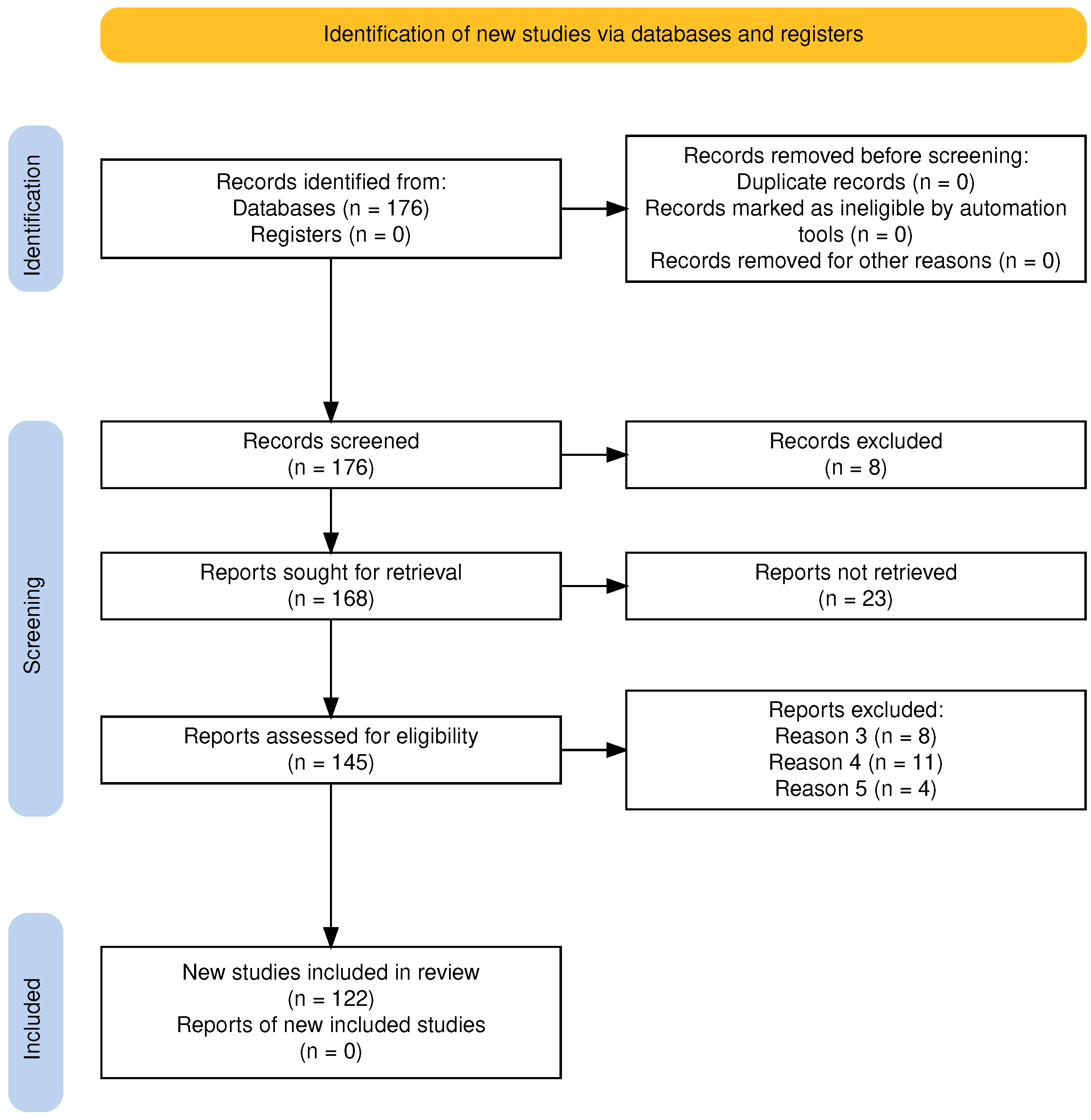
A summary of the paper identification and selection process is presented in Figure 1, following the PRISMA methodology [8].
The criteria to guide the scope of the review were defined following the Population, Intervention, Comparison, Outcomes, and Context (PICOC) methodology, as described in [10]:
  • Population (P):
    Scientific articles published in medical and computational journals indexed in the Journal Citations Reports (JCR) or conference proceedings. Manuals and standards published by public or private health institutions were also considered.
  • Intervention (I): Methods, instruments, and data processing using classical and AI algorithms for vital sign measurement, with an emphasis on body temperature, oxygen concentration, heart rate, respiratory rate, and blood pressure.
  • Comparison (C): Comparative analyses of different methodologies and instruments for measuring and processing vital sign data.
  • Outcomes (O): Included articles must present recent trends, developments, or highlight limitations and research opportunities in the aforementioned applications.
  • Context (C): The review considers articles published from 2015 to 2025 for measurement methods and from 2020 to 2025 for instruments and data processing, sourced from the PubMed, IEEE Xplore, MDPI, Scopus, and Web of Science databases.
Based on these criteria, the following inclusion requirements were established:
1.
Articles published in journals indexed in JCR or endorsed by health institutions.
2.
Publication date within the specified time frame.
3.
The article presents a method, instrument, or algorithm for processing vital sign data.
4.
Clear explanation of concepts, supplemented with diagrams, lists, or structured descriptions for each algorithm.
5.
Results are presented in tables or graphs.
6.
If applicable, the article includes schematic diagrams.
The exclusion criteria were defined as follows:
1.
Articles not written in English or Spanish.
2.
Articles published outside the defined time period.
3.
Articles not published in academic journals or conference proceedings.
4.
Articles that do not clearly explain methods, instruments, or algorithms.
5.
Articles that do not present empirical results or practical applications in vital sign measurement or data processing.
In Figure 1, records were either excluded or not retrieved based on the first two exclusion criteria. Reports excluded under reasons 3, 4, and 5 correspond to the final three exclusion criteria.
Following these criteria, relevant keywords for the article search, which also were used as search queries, were defined as follows.
  • vital signs
  • vital sign monitoring
  • $$$$ measurement methods (where $$$$ were replaced by temperature, oxygen concentration, heart rate, respiratory rate OR blood pressure)
  • $$$$ measurement instruments (where $$$$ were replaced by temperature, oxygen concentration, heart rate, respiratory rate OR blood pressure)
  • vital signs ai OR vital signs machine learning
A total of 176 articles were identified; however, after applying the exclusion criteria, only 122 were retained for their relevance and contribution to the research topic, and subsequently analyzed and cited in this work.

3. Background

Vital signs are crucial for assessing and monitoring patients’ general health status in both clinical and home environments, as they serve as indicators of health conditions regulated by complex internal physiological processes. Although no universal standard defines the exact set of vital signs, common medical practice typically includes at least heart rate (HR), respiratory rate (RR), body temperature (BT), blood pressure (BP), and arterial oxygen saturation (SpO2) [11,12,13].
The continuous monitoring of these physiological parameters is essential for the early detection and management of specific pathological conditions. For instance, blood pressure (BP) assessment is critical for diagnosing cardiovascular diseases and managing masked hypertension. Blood oxygen saturation (SpO2) is particularly advantageous for detecting acute hypoxic episodes associated with sleep-disordered breathing (e.g., sleep apnea) or respiratory compromise, such as in COVID-19. Regarding cardiac health, deviations in heart rate (HR) allow for the identification of arrhythmias like tachycardia (>100 bpm) and bradycardia (<60 bpm), while heart rate variability (HRV) serves as a key biomarker for evaluating cardiac autonomic nervous system function. Furthermore, body temperature (BT) remains a primary diagnostic tool for identifying fever and infections, and deviations in respiratory rate (RR) are frequently correlated with acute clinical deterioration.
In clinical settings, vital signs are routinely monitored using contact-based devices (i.e., those requiring direct physical contact with the patient), including electrocardiogram (ECG) recorders [14,15], pulse oximeters [16], respiratory plethysmography belts, thermometers, and sphygmomanometers [11]. While contact-based sensors remain the gold standard for vital sign acquisition, their prolonged use may induce patient discomfort or stress during continuous monitoring. Particularly in pediatric applications, these devices carry a risk of potential cutaneous irritation or tissue damage [17].
Beyond conventional contact-based techniques, vital sign parameters can also be acquired through contactless sensing modalities that employ indirect measurement principles [11]. Contactless sensors are formally characterized as devices that capture physiological parameters—including but not limited to body kinematics and respiratory airflow dynamics—while maintaining complete physical separation from the subject. The predominant implementation paradigm involves computational analysis of RGB video sequences, extracting either gross bodily motion or subtle photoplethysmographic variations within defined regions of interest (ROIs) through advanced image processing algorithms [7,18,19]. Complementary methodologies utilize infrared imaging systems (near- and far-IR) for quantifying thermal gradients and operating in suboptimal lighting environments [20,21,22].
Within this classification framework, measurement devices can be categorized into two principal domains: activity monitoring and medical monitoring [23].
1.
Activity Monitoring. This classification encompasses devices employed in quotidian activities and non-clinical applications, including personal health tracking and rehabilitative interventions.
2.
Medical Monitoring. These systems are predominantly utilized by clinical practitioners in healthcare facilities. This domain is subsequently stratified into three specialized subcategories:
(a)
Predictive Analytics. This methodology involves the extraction and computational processing of clinically significant features from physiological time-series data to forecast potential health deterioration, thereby furnishing clinicians with decision-support intelligence. The implementation typically integrates multimodal techniques including biosignal processing, machine learning regression, artificial intelligence architectures, and domain-specific clinical knowledge [24,25].
(b)
Anomaly Identification. This paradigm utilizes supervised classification algorithms to detect pathological deviations in physiological waveforms. The system architecture facilitates the generation of real-time alerts, with notification capabilities spanning local alarms to cloud-based telemedicine platforms following the recognition of aberrant patterns [26,27].
(c)
Clinical Decision Support. Representing a cornerstone of modern medical informatics, this subsystem enhances diagnostic accuracy through the multimodal integration of continuous physiological monitoring data, anomaly detection outputs, electronic health records, and evidence-based clinical protocols [27,28,29,30].

4. Results

4.1. Body Temperature

Body temperature, a critical physiological parameter, reflects the thermal equilibrium between metabolic heat production and environmental heat dissipation. In humans, this equilibrium exhibits natural variation influenced by multiple factors, including physical activity levels, demographic characteristics (such as age, sex, and ethnicity), and environmental conditions.
In contrast, the findings reported in [31] demonstrate that non-invasive methods exhibit inconsistent accuracy in critically ill patients, with observed measurement errors of ±0.5 °C. This comprehensive study evaluated multiple modalities—including infrared thermometry, axillary and oral thermometers, cutaneous patches, and temporal artery scanners—in a cohort of fifty intensive care unit patients.
A complementary investigation by [32] conducted comparative analyses across a broader patient population, encompassing healthy individuals, febrile patients, and clinical staff. Their results similarly indicate significant inaccuracies in non-invasive techniques, while acknowledging the persistent clinical necessity for context-appropriate temperature assessment.

4.1.1. Skin Body Temperature

The Internet of Things (IoT) has become increasingly relevant in this domain, particularly for contactless temperature measurement and access control in restricted environments. This technology gained significant prominence during pandemic conditions, as demonstrated by [20]. Their proposed system operates through a three-stage process: (1) infrared sensor-based temperature acquisition, (2) on-site data processing, and (3) server communication for access authorization. The system implements automated access denial when detected temperatures exceed predefined thresholds.
Several IoT-based approaches for body temperature monitoring have been proposed in the recent literature:
  • Ref. [33] developed a system utilizing the MAX30205 Fever Click board (MikroElektronika, Belgrade, Serbia) for temperature measurement, coupled with an ESP8266 Wi-Fi module for cloud data transmission. The acquired data are visualized through a dedicated Android application named “Temperature Monitor”.
  • Ref. [34] implemented an Arduino-based monitoring device incorporating a 1-Wire digital thermometer for temperature assessment.
  • Ref. [35] extended this concept to a multi-parameter vital sign monitoring system. For temperature measurement, they employed an analog sensor similar to [33], with cloud-based data logging and SMS alerts to healthcare providers.
  • Ref. [21] proposed an infrared-based system using the MLX90614 sensor (Melexis, Ieper, Belgium), demonstrating excellent agreement (<0.1 °C absolute error) with mercury thermometer reference measurements.
Aslina Abu Bakar et al. [36] developed a wearable monitoring device for the simultaneous measurement of heart rate and body temperature in healthcare applications. The system architecture incorporates dual biosensors connected to a NodeMCU microcontroller (Espressif Systems, Shanghai, China), which performs data acquisition and cloud transmission. The device features two operational modes: (1) real-time physiological parameter display via an OLED screen, and (2) cloud-based data transmission for remote visualization through a dedicated mobile application.
The study by [37] presents a diode laser-based thermometry device that measures temperature by analyzing water vapor in exhaled breath. This approach exploits two spectral transitions to quantify absorption intensity, thereby enabling precise measurement of gas temperature. The authors report a measurement precision of 0.16 °C, demonstrating the system’s potential for clinical applications.
Recent advances in wearable temperature monitoring have introduced innovative materials and designs:
  • Ref. [38] proposed a carbon nanotube-based rubber sensor designed for comfortable skin contact during dynamic activities. While this represents a promising low-cost alternative for health monitoring, further research is required to optimize its integration into wearable technologies.
  • Ref. [39] developed a transparent, stretchable electronic-skin sensor capable of simultaneous temperature, strain, and humidity measurement. This skin-adherent device exhibits conductivity changes proportional to temperature variations, demonstrating high precision (0.1 °C), suggesting strong potential for future affordable monitoring devices.
  • Ref. [40] implemented a negative temperature coefficient (NTC) e-skin sensor using Ni/NiO transition channels. Their results indicate superior performance compared to conventional integrated circuit sensors; however, additional clinical validation is still needed.
  • Ref. [41] engineered an ultra-sensitive epidermal sensor utilizing gold-doped silicon nanomembranes. The gold’s rapid diffusion properties facilitate electron–hole pair generation upon thermal excitation, resulting in a remarkable temperature coefficient of resistance of 3.727 × 10 4 ppm °C−1, indicating exceptional sensitivity.
Similarly, ref. [42] developed a printable temperature sensor based on PEDOT:PSS, a conductive polymer whose electrical resistance varies predictably with temperature. The sensor design incorporates enhanced humidity stability, making it particularly suitable for practical applications. The authors report a temperature sensitivity of −0.77% °C−1, demonstrating its potential for precise thermal monitoring.
The work presented in [43] demonstrates the development of an MXene-based smart textile capable of multifunctional wearable sensing, including temperature monitoring. These findings underscore the importance of novel material development for non-invasive applications and next-generation e-textiles, with the system achieving a temperature coefficient of resistance of −1.8% °C−1.
In a complementary approach, ref. [44] developed a wireless, battery-free body sensor integrated into textile substrates. This innovative design utilizes passive antennas for both energy harvesting and signal transmission from distributed sensors embedded within the garment fabric, demonstrating reliable performance with an average measurement error of less than 5%.
The study by [45] presents the development of a high-precision, rapid-response instrument capable of detecting subtle temperature variations on human skin with an exceptional resolution of 0.01 °C. This innovative approach incorporates sensor calibration mechanisms robust to environmental fluctuations, demonstrating significant measurement accuracy. However, further investigation is required to achieve clinical-grade performance standards.
Chun-Yin et al. [46] conducted a validation study of the HEARThermo wearable device, which incorporates a digital far-infrared thermopile sensor to quantify thermal radiation emitted from the body surface. Their clinical evaluation involved 66 participants aged 10 to 77 years, with exclusion criteria encompassing recent febrile episodes, severe neurological conditions, cardiovascular or mental disorders, and current medication use. The results demonstrate a mean bias of −0.02 °C, indicating that this infrared sensing technology, when coupled with appropriate signal processing algorithms, provides reliable real-time temperature monitoring.
The study by [47] proposes a Fiber Bragg Grating (FBG)-based temperature sensor that utilizes optical fibers for thermal measurement. This system operates by monitoring wavelength shifts in the reflected optical signal, which vary in response to temperature-induced changes in the fiber’s refractive index. Comparative analysis with conventional sensors revealed an average measurement accuracy of ±0.3 °C.
The work by [48] advanced this approach by incorporating Li2ZnSiO4:Mn2+ phosphors within a stretchable elastomer matrix. This innovative design enables dual-wavelength ratiometric temperature sensing through thermal-sensitive photoluminescence, demonstrating an absolute sensitivity of 2.6 × 10⁻³ °C−1 within the physiological range of 34–44 °C and a precision of ±0.2 °C. These findings substantiate the potential of fiber-optic technologies for wearable temperature monitoring applications.

4.1.2. Core Body Temperature

The intrinsic nature of body temperature measurement necessitates predominantly contact-based devices, with available methods spanning both invasive and non-invasive approaches.
A significant challenge in continuous monitoring arises from measurement inaccuracies caused by variations in sensor contact area and pressure. Addressing this limitation, ref. [49] developed an innovative measurement model incorporating a forehead-mounted contact sensor with integrated thermal contact resistance compensation. This approach demonstrates substantial improvement in measurement precision, achieving a median error of 0.09 °C, thereby outperforming conventional methods.
Two primary challenges associated with using non-invasive devices are heat loss and measurement errors resulting from ambient convection. A device was proposed in [50] to mitigate the effects of these issues, consisting of two main components: a temperature sensor based on the heat flux principle and a cone-shaped aluminum structure, designed using topology optimization, which serves both as a protective housing and as a heat flow path. In controlled experiments, the device achieved a mean error of 0.1 °C, considering a constant wind velocity of 5 m/s. A comparison between different sensor locations is presented in [51]. The authors present a wearable device using a thermistor, based on the concept of single-heat-flux. The experiments were conducted on five participants, considering three different places, the forehead, behind the ears, and the wrist, while participants were resting in a controlled environment. Similar to [49], the better results were obtained in the forehead, showing a mean difference with respect to the reference of 0.05 °C, 0.15 °C, and 0.37 °C, respectively.
The authors of [52] proposed a non-invasive in-ear sensor, using a graphene-inked infrared thermopile sensor to continuous measurements of CT. Mean difference of −0.15 °C with respect to the reference temperature. The device was designed and printed using CAD, allowing for personalized customization according to patient requirements.
The study by [53] introduced a non-invasive methodology for core temperature ( T c ) estimation, combining a mathematical model with Kalman filtering. The system integrates measurements from five distinct parameters: physical activity (via three-axis accelerometer), two physiological signals (heart rate and skin temperature), and two environmental variables (ambient temperature and relative humidity). Experimental results demonstrated an overall measurement error of 0.5% °C across various conditions, supporting the potential of this approach for continuous physiological monitoring applications.

4.2. Blood Oxygen Saturation

Blood oxygenation serves as a critical physiological parameter that quantifies the efficacy of oxygen transport from pulmonary alveoli to peripheral tissues. Although invasive arterial blood gas (ABG) analysis maintains its position as the clinical gold standard for assessing oxygen saturation (SpO2) and partial pressure of oxygen ( P a O 2 ) [54], non-invasive techniques have emerged as clinically valuable alternatives. These methods have gained widespread adoption owing to their inherent safety profile, capacity for continuous real-time monitoring, and practical implementation advantages. Contemporary technological advancements, particularly in photoplethysmography (PPG), remote oximetry, and machine learning algorithms, have significantly enhanced the measurement accuracy and reliability of non-invasive approaches, establishing their crucial role in both clinical and ambulatory care settings.

4.2.1. Invasive Methods

Arterial blood gas (ABG) analysis represents the gold standard for invasive assessment of oxygen saturation ( S a O 2 ) and partial pressure of oxygen ( P a O 2 ), among other parameters. This method, while clinically definitive, requires arterial blood sampling [54].
Pulse oximetry provides a non-invasive alternative for monitoring oxygen saturation (SpO2), with the fingertip serving as the conventional measurement site due to its accessibility [55]. Alternative anatomical locations offer specific clinical advantages: the earlobe demonstrates superior accuracy during hypoperfusion states (e.g., hypothermia, circulatory shock) owing to its relative resistance to vasoconstriction. The forehead and nasal bridge are preferred sites for surgical patients or those with restricted mobility [56], while wrist-based monitoring has gained traction in wearable technologies despite persistent challenges with motion artifacts [57].
Recent investigations have examined alternative measurement sites, including the ear canal, which demonstrates superior temporal response characteristics for SpO2 monitoring. Comparative studies reveal significantly reduced detection latency (mean delay: 4.35 s versus 16.75 s at the digital site) attributable to the ear canal’s anatomical proximity to central circulatory pathways [58]. This enhanced responsiveness renders ear canal oximetry particularly advantageous for the early detection of acute hypoxic episodes, such as those occurring in sleep-disordered breathing or COVID-19-related respiratory compromise.

4.2.2. Non-Invasive Methods

Conventional and reflective pulse oximetry predominantly employ clip-on sensors (fingertip or earlobe placement), representing the most cost-effective and widely adopted solution despite potential limitations in cases of profound hypoxemia [55]. Reflective photoplethysmography (PPG) enables volumetric blood change measurements across multiple anatomical sites. Comparative studies demonstrate superior heart rate and oxygen saturation ( H R / S p O 2 ) measurement accuracy at the forehead (median error: 1.4% at rest), while digital sensors maintain optimal performance for simultaneous monitoring of heart rate, oxygen saturation (SpO2), and respiratory rate (RR) during resting conditions [16].
Remote oximetry techniques represent an emerging paradigm that utilizes computer vision algorithms to derive PPG signals from facial video analysis. These contactless methods employ sophisticated color space transformations, spatial processing techniques, and deep learning architectures to extract physiological parameters [59].
Remote photoplethysmography enables non-contact oxygen saturation (SpO2) measurement through facial video analysis, employing computer vision techniques including chromatic decomposition, spatial transformations, and deep neural networks [59]. The work by [60] introduces a Multi-Model Fusion Method (MMFM) that integrates a Residual and Coordinate Attention (RCA) network to compensate for motion and illumination artifacts, combined with color channel (CCM) and network-based (NBM) models. This approach achieves a mean absolute error (MAE) of ≤2% on clinical datasets while eliminating the need for skin contact, rendering it particularly suitable for telemedicine applications and remote patient monitoring.
Wearable technologies have advanced significantly, with in-ear sensors demonstrating particular clinical utility. These devices detect hypoxic events 12.4 s faster than conventional finger sensors and maintain reliability during vasoconstrictive states [58], though the inherent reduction in PPG signal amplitude requires advanced amplification techniques. While wrist-worn PPG sensors are increasingly prevalent in consumer health devices, they remain susceptible to motion-induced artifacts during physical activity [16].
Table 2 summarizes the comparative advantages, limitations, and optimal use cases for current SpO2 monitoring modalities.

4.3. Heart Rate

Precise and continuous heart rate (HR) monitoring constitutes an essential component of modern healthcare management and early pathological detection. Contemporary wearable devices utilizing photoplethysmogram (PPG) signals provide cost-effective, non-invasive solutions; however, their reliability is significantly compromised by motion-induced artifacts during physical activity, resulting in diminished signal-to-noise ratios and consequent measurement inaccuracies. Remote photoplethysmography (rPPG) systems, which employ digital cameras for contactless HR assessment, offer enhanced convenience but are similarly susceptible to interference from subject movement and ambient illumination variations. Conventional signal processing and noise reduction techniques demonstrate limited efficacy under such demanding operational conditions, necessitating the development of more sophisticated analytical approaches [18,24,26,27,28,29,57].

Deep Learning for Enhanced HR Estimation

Recent technological developments have witnessed a paradigm shift toward deep learning (DL) methodologies to address the inherent limitations of conventional heart rate (HR) estimation techniques. Contemporary DL architectures, particularly convolutional neural networks (CNNs) and long short-term memory (LSTM) networks, have demonstrated enhanced capability in improving measurement accuracy and system robustness, with notable efficacy in motion artifact suppression.
Innovative hybrid architectures, such as the SSA-LSTM model, have achieved state-of-the-art performance by synergistically combining advanced spectral analysis with deep learning frameworks. These models exhibit particular effectiveness when integrating supplementary physiological inputs, including respiratory rate and RR intervals. Current research indicates that both end-to-end and hybrid DL approaches show promising results across wearable and contactless HR monitoring platforms, with architectures like PhysNet establishing benchmark performance for remote photoplethysmography (rPPG)-based estimation.
The emergence of comprehensive, clinically relevant datasets such as PPG-DaLiA has been instrumental in facilitating robust model benchmarking and the development of generalized DL solutions for wearable health monitoring applications [24,26,27,28,29,57].
Accurate heart rate (HR) monitoring and prediction capabilities hold significant clinical value across diverse healthcare domains. While fundamental to general fitness tracking, HR dynamics—particularly heart rate variability (HRV)—serve as critical biomarkers for evaluating cardiac autonomic nervous system function. Recent advances have demonstrated that deep learning architectures, particularly LSTM networks, achieve superior performance in frailty classification among elderly populations using HR time-series data, substantially outperforming conventional machine learning approaches.
Moreover, the application of deep learning to resting electrocardiogram (ECG) analysis enables non-invasive estimation of heart rate recovery (HRR) post-exercise. This technological advancement provides a scalable solution for detecting cardiac autonomic dysfunction while facilitating investigations into its association with clinical outcomes and genetic predispositions. The integration of artificial intelligence (AI) tools with high-resolution HR data from wearable devices has further enhanced the precision of HR fluctuation forecasting, thereby enabling personalized medical interventions and the development of scalable digital health solutions [25,30,61].
Despite substantial progress enabled by deep learning (DL) approaches in heart rate (HR) measurement, several critical challenges remain unresolved. A primary concern involves the computational efficiency of complex DL architectures, particularly for real-time implementation in wearable devices. Additional research efforts must address limitations related to insufficient data diversity, activity-dependent measurement inaccuracies, and excessive computational requirements to optimize model performance and enable energy-efficient deployment on resource-constrained wearable platforms.
The incorporation of edge computing paradigms has emerged as a promising strategy to mitigate latency issues and reduce computational overhead, thereby facilitating real-time personalized HR monitoring. Sustained research and development initiatives will be crucial to overcome these persistent challenges and fully harness the transformative potential of advanced HR monitoring technologies in digital healthcare ecosystems [15,18,24,26,28,29,57].

4.4. Respiratory Rate

Respiration constitutes a vital physiological process essential for normal organism function at all biological levels. The oxygen supplied through this critical mechanism enables cellular regulation and optimal energy production as demanded by physiological needs [62].
Respiratory rate (RR), defined as the number of breaths per minute, serves as a key clinical parameter with multiple established measurement methodologies. Deviations from normal RR ranges frequently correlate with various pathological conditions.
RR measurement techniques can be broadly classified into two categories: contactless and contact-based approaches. Contactless methods employ observational techniques, typically utilizing camera systems to visually quantify respiratory cycles [63]. In contrast, contact-based methodologies require direct physical attachment of sensing devices to the subject, employing various sensor technologies to detect respiratory activity.

4.4.1. Contact-Based Methods

This section presents a comprehensive review of contemporary methodologies and technologies for measuring respiratory rate (RR) that require subject contact, primarily through wearable devices.
Various sensor-based approaches and medical diagnostic techniques exist for RR estimation. Ref. [14] proposed two distinct methods utilizing electrocardiography (ECG) signals: the first employs selective filtering combined with Hilbert transform analysis for RR derivation, while the second implements a cubic spline interpolation of heart rate (HR) data followed by peak detection in the processed signal. The results demonstrate the feasibility of ECG-based RR estimation, reporting a mean percentage error of 5.54 ± 8.48%, suggesting opportunities for further algorithmic refinement.
Comparative studies have evaluated alternative contact-based techniques. Ref. [64] conducted a systematic comparison between photoplethysmography (PPG) and capnography, concluding that PPG offers comparable accuracy to the clinical gold standard. Furthermore, ref. [65] developed a tri-modal approach extracting respiratory components (amplitude, intensity, and frequency variations) from PPG signals, with individual RR estimates derived through Burg’s algorithm and subsequently fused for enhanced accuracy.
Building upon multimodal approaches, ref. [66] developed a fusion model incorporating both photoplethysmography (PPG) and electrocardiography (ECG) signals. Their methodology involves (1) respiratory modulation extraction from each signal, (2) individual respiratory quality index (RQI) computation, (3) RQI fusion, and (4) final respiratory rate (RR) estimation. This work aligns with findings from [67], who demonstrated that incorporating RQI metrics enhances the performance of bidirectional long short-term memory (LSTM) networks for RR prediction.
The limitations of PPG-based approaches were investigated by [68], who identified significant sensitivity to external noise in conventional algorithms. Their proposed solution implements a robust processing pipeline consisting of signal preprocessing, feature extraction, quality-index based filtering, and subsequent RR estimation through advanced signal analysis. Complementary research by [16] systematically evaluated PPG acquisition at various anatomical sites, confirming the feasibility of forehead measurements despite a median error of 1.1 respirations per minute (rpm). Their analysis attributes these inaccuracies primarily to algorithmic limitations, corroborating previous findings in the field.
Alternative methodologies have explored respiratory monitoring through CO2 waveform analysis. As demonstrated by [69], capnography-based RR estimation utilizing exhaled carbon dioxide patterns shows particular promise for clinical ward applications, offering reliable performance in hospital settings.
Recent advances in respiratory rate (RR) monitoring have introduced innovative minimal-contact approaches. Ref. [70] developed a VitaLog sensor system leveraging the piezoelectric effect to transduce thoracic movements into quantifiable signals for RR estimation. Similarly, ref. [71] engineered a rubber fiber sensor integrated into clothing that detects respiratory-induced muscle dynamics through cyclic strain patterns. Their methodology, based on peak detection in the resulting deformation signal, achieves an average estimation error of 2%.
Further developing this paradigm, ref. [72] designed a flexible capacitive pressure sensor incorporated into wearable belts. The device measures thoracic expansion during respiration through compression-induced signal variations, with subsequent peak detection algorithms enabling RR derivation. This approach demonstrates the feasibility of conformal electronics for respiratory monitoring.
Acoustic methodologies have also demonstrated clinical potential, as evidenced by [73] in their evaluation of the RRa® device (MassimoCorp) for monitoring anesthetized patients. Their findings substantiate the viability of acoustic techniques for reliable RR assessment in controlled clinical environments.
Fiber Bragg Grating (FBG) technology has emerged as a promising approach for respiratory rate (RR) monitoring. Ref. [74] developed an FBG-based sensor that measures nasal airflow through mechanical compression of the grating element, enabling clear differentiation between inhalation and exhalation phases in the resulting signal for accurate RR estimation. This principle was extended by [75], who implemented a dual-sensor system attached to the subject’s torso. Following signal filtering and normalization, respiratory-induced fluctuations permit reliable RR derivation.
Further innovations in FBG applications include the mattress-embedded sensor array proposed by [76], representing a completely non-invasive monitoring solution. Their comprehensive analysis accounts for various sleeping postures, confirming the feasibility of RR estimation during rest while identifying opportunities for algorithmic improvements. Similarly, ref. [77] created an elastic FBG sensor belt measuring thoracic and abdominal movements, achieving an average estimation error of 12%.
An alternative smartphone-based methodology was introduced by [78], utilizing the device’s camera and flashlight for photoplethysmographic signal acquisition. Their processing pipeline involves (1) the extraction of average pixel intensities per video frame, (2) discrete wavelet transformation for computational efficiency, (3) signal decomposition, and (4) temporal peak detection for RR estimation. This innovative approach demonstrates the potential of ubiquitous devices for respiratory monitoring.
Recent material science advancements have enabled innovative approaches to monitoring respiratory rate (RR). Ref. [79] developed a flexible sensor system utilizing laser-induced graphene (LIG) embedded in a polydimethylsiloxane matrix. This design leverages the piezoresistive properties of LIG, where mechanical stretching during respiratory movements induces measurable changes in resistance. These resistance variations correspond to thoracic expansion and contraction, enabling precise differentiation between inhalation and exhalation phases for accurate RR estimation.
A complementary approach was presented by [80], who engineered a paper-based respiratory sensor. Their design incorporates carbon ink electrodes printed on cellulose paper substrate, leveraging the material’s hygroscopic properties. The paper’s moisture-dependent conductivity variations, resulting from respiratory airflow, generate quantifiable electrical signals suitable for RR derivation. This cost-effective solution demonstrates the potential of sustainable materials in wearable health monitoring applications.
Table 3 summarizes the key characteristics of the aforementioned recent developments in respiratory monitoring technologies.

4.4.2. Contactless Methods

This section reviews recent advances in non-contact respiratory rate (RR) estimation methodologies that eliminate the need for specialized wearable devices. Ref. [63] developed a video-based approach comparing mobile application performance against clinical specialist assessments. Their methodology demonstrates superior RR estimation accuracy using smartphone video analysis compared to conventional manual techniques.
Building upon video analysis techniques, ref. [81] implemented a region of interest (ROI) processing framework that extracts respiratory signals through pixel intensity variations across color channels. Similarly, ref. [82] advanced this paradigm by incorporating deep neural networks to analyze both RGB and infrared facial imagery, deriving RR estimates through sophisticated motion pattern recognition.
The application of computer vision extends to pediatric monitoring as demonstrated by [83]. Their automated ROI selection algorithm identifies infant chest and abdominal regions, subsequently analyzing optical flow patterns, pixel intensity variations, and inter-frame differences to quantify respiratory movements. This approach transforms thoracic kinematics into respiratory waveforms, enabling precise peak detection for RR estimation.
Building upon optical sensing methodologies, ref. [84] developed an integrated system comprising an RGB camera, range meter, and laser projector. This configuration illuminates the subject with near-infrared and visible light, capturing nanoscale vibrational patterns in the reflected light that correlate with respiratory-induced surface motions. Subsequent signal processing enables precise RR estimation through analysis of these characteristic vibrations.
Complementary approaches employing thermal imaging have demonstrated clinical potential. Ref. [85] implemented a dual-modality system combining RGB and thermal cameras for automated region of interest (ROI) selection and tracking. Their results indicate clinical viability with a mean absolute error of 2 breaths per minute (bpm). Similarly, ref. [22] introduced a nostril detection algorithm utilizing YOLO-based ROI tracking in thermal images. By quantifying periodic temperature variations during respiration and analyzing the resulting signal’s frequency components, their system achieves RR estimation with 2 mean error.
An alternative thermal approach was presented by [86], featuring a portable thermistor-based device that measures breathing-induced temperature fluctuations. Their validation study involving 52 participants demonstrated strong agreement (±7.3 bpm) with capnography, establishing this contactless method as a practical solution for clinical RR monitoring. Ref. [87] developed a multispectral imaging system employing far-infrared and near-infrared cameras to simultaneously capture patient videos. This approach automatically detects regions of interest (ROIs) corresponding to the nostrils and chest, extracting and fusing signals from both anatomical sites. Through spectral feature analysis and weighted median frequency estimation, the system achieves respiratory rate (RR) measurements with a mean error of 1.6 breaths per minute (bpm) when validated against the ezRIP reference device (Philips Respironics).
Complementing this work, ref. [19] implemented a depth camera system that acquires three-dimensional surface maps to track thoracic movements. Their methodology involves body surface detection, ROI selection, and respiratory signal extraction through peak detection algorithms, ultimately deriving RR from cyclic chest displacement patterns.
Beyond optical methods, alternative sensing modalities have been explored for contactless RR monitoring. Ref. [88] conducted a comparative evaluation of piezoelectric versus ultrasonic sensors, demonstrating superior accuracy and efficiency of piezoelectric transducers for respiratory measurement. Conversely, ref. [89] examined microwave Doppler radar technology, revealing significant measurement bias and limited precision relative to capnography and visual estimation, highlighting the need for further technological refinement before clinical adoption. Ref. [90] developed a chromium ferrite-based humidity sensor that exploits conductivity variations in response to moisture exposure. This principle enables respiratory rate (RR) monitoring through the detection of exhaled humidity patterns, demonstrating a rapid response time of 1.6 s. While promising for wearable applications, the study omits comparative performance analysis with established RR measurement techniques.
Emerging wireless technologies have expanded monitoring possibilities, as demonstrated by [91], who implemented a Wi-Fi-based respiratory sensing system. Their approach analyzes perturbations in signal amplitude and phase caused by respiratory movements, employing signal interpolation, principal component analysis (PCA), and power spectral density estimation to derive RR measurements.
Radar-based systems offer another innovative approach, with [92] designing a multi-frequency continuous-wave radar capable of detecting micro-scale thoracic displacements. The system processes reflected signals to identify respiratory patterns; however, the study primarily focuses on technological advancements rather than the clinical validation of RR estimation accuracy.
Additional technological advancements in respiratory monitoring are systematically compared in Table 4.

4.5. Blood Pressure

Blood pressure (BP) remains one of the most critical physiological parameters for cardiovascular disease diagnosis and management. Conventional measurement techniques, particularly oscillometric and auscultatory cuff-based methods, have served as clinical gold standards for decades. The auscultatory technique, pioneered through the detection of Korotkoff sounds during cuff deflation using a stethoscope, established the foundation for indirect BP assessment. The subsequent development of automated oscillometric devices, which analyze pressure oscillation patterns, significantly enhanced measurement accessibility and usability across diverse clinical settings.
Standardized measurement protocols mandate specific conditions to ensure reproducibility: patients must rest for a minimum of five minutes before measurement, the cuff must be positioned at heart level, and multiple readings should be obtained to account for physiological variability [93]. Current clinical guidelines, as emphasized by [94,95], strongly recommend supplementing in-office measurements with ambulatory or home monitoring. This approach mitigates white-coat hypertension artifacts—transient BP elevations induced by clinical environments—while providing a more comprehensive assessment of diurnal BP patterns.

4.5.1. Contactless Methods

Despite their clinical utility, conventional cuff-based blood pressure (BP) measurement methods present notable limitations, including patient discomfort and discontinuous monitoring capabilities. These constraints have motivated significant research into cuffless alternatives utilizing non-invasive physiological signals. The predominant methodology employs pulse transit time (PTT) analysis, typically requiring synchronized electrocardiogram (ECG) and photoplethysmogram (PPG) signals. Research has demonstrated this approach through integrated ECG and finger PPG measurements with multiple linear regression, achieving a mean absolute error (MAE) of 5.2 mmHg. Subsequent work by [96] emphasized the critical importance of signal quality, particularly precise synchronization and baseline wander elimination, for minimizing intra-subject variability in cardiovascular patients.
Recent advances have focused on simplifying hardware requirements through single-PPG analysis. Ref. [97] achieved 88% accuracy in hypertension classification using solely finger PPG signals processed with support vector machine (SVM) algorithms. Ref. [98] extended this paradigm by demonstrating absolute BP estimation from PPG morphological features via regression modeling.
Algorithmic sophistication has progressed substantially, evolving from early linear regression approaches and classical machine learning techniques (e.g., SVM [97] and Random Forests) to contemporary deep learning architectures. Modern implementations such as BePCon [99] employ deep neural networks capable of extracting complex features directly from raw signals, yielding superior accuracy. The field continues to expand through novel sensing modalities, including multi-wavelength PPG [100,101] and remote photoplethysmography (rPPG) derived from facial video analysis [102]. Table 5 provides a comprehensive summary of these technological developments.
The integration of artificial intelligence (AI) and deep learning has significantly improved the accuracy of cuffless blood pressure (BP) measurement systems. Comprehensive reviews by [104,105] establish computational models as essential components for transforming raw physiological signals into accurate BP estimates. This technological shift is further contextualized by [106], who identify deep learning as a foundational technology for next-generation wearable and implantable monitoring devices.
A prevalent methodological approach employs hybrid architectures combining convolutional neural networks (CNNs) with recurrent neural networks (RNNs), particularly long short-term memory (LSTM) and gated recurrent unit (GRU) networks. These models effectively capture both the spatial characteristics of physiological waveforms and their temporal evolution. Ref. [104] implemented a CNN-BiLSTM architecture, achieving a mean absolute error (MAE) of 4.8 mmHg, while ref. [107] demonstrated the clinical viability of LSTM networks for hypertensive populations, reporting an MAE of 6.0 mmHg.
Innovative architectural variations have emerged to address specific technical challenges. Ref. [108] developed a spectrogram-based CNN with attention mechanisms, enhancing robustness against motion artifacts through time–frequency signal transformation. Complementary to deep learning approaches, traditional machine learning methods maintain relevance, as evidenced by [109]’s Random Forest implementation following extensive feature extraction, and [110]’s hybrid LASSO-LSTM framework emphasizing the continued importance of feature selection. Table 6 systematically compares these AI models, detailing their respective architectures and performance metrics.

4.5.2. Contact-Based Methods

In addition to technological developments in blood pressure (BP) monitoring, significant research efforts have focused on validating wearable devices. Recent studies have evaluated the precision of smartwatches using cuffless technologies, such as photoplethysmography (PPG) and pulse transit time (PTT). A large-scale study by Lyu et al. [113], involving 3077 participants, found that smartwatches were effective for measuring diastolic BP in the general population and systolic BP in younger, normotensive groups, though accuracy decreased in more diverse populations.
Hybrid technologies that combine the convenience of a watch with a cuff-based oscillometric mechanism have shown high accuracy. A study in Frontiers by Wang et al. [114] validated the HUAWEI WATCH according to the ANSI/AAMI/ISO 81060-2:2018 standard [115]. The device demonstrated excellent consistency with reference measurements, with very low mean differences. Similarly, a validation study by Kuwabara et al. [116] on the Omron HeartGuide confirmed its accuracy, with a mean absolute error (MAE) of 4.3 mmHg, which highlights the performance of cuff-based devices.
Other devices have also been successfully validated. A study in Nature Biomedical Engineering [117] validated a new wearable ultrasound sensor for BP, which showed high accuracy in continuous monitoring. The Withings ScanWatch [118] was validated for the detection of atrial fibrillation and oxygen saturation, although its cuffless BP monitoring function requires ongoing validation. A 2021 study by Sola et al. [119] also validated the Aktiia optical bracelet for continuous BP monitoring, showing good performance. Finally, a study by Islam et al. [120] validated the TMART T2 device, comparing its measurements with ambulatory BP monitoring (ABPM) and demonstrating good overall performance. Table 7 provides an overview and comparison of these validation studies.

4.5.3. Deep Learning for Enhanced BP

Public datasets serve as fundamental resources for advancing cuffless blood pressure monitoring and ensuring the reproducibility of research. These standardized repositories provide essential benchmarks that enable objective comparisons between diverse algorithms developed by different research groups. Such datasets are critical for evaluating the true efficacy and generalizability of novel models, thereby establishing a robust foundation for validating innovative approaches in this field.
Among the most prominent and widely utilized resources are the MIMIC-II [121] and BIDMC PPG-BP [122] datasets from PhysioNet [123], both of which are particularly valuable for critical care research. The MIMIC-III Waveform Database Version 1.4, released in July 2016, represents one of the most comprehensive publicly available collections of essential waveforms of care. This dataset comprises 53,423 distinct hospital admissions for adult patients and data for 7870 neonates at Beth Israel Deaconess Medical Center between 2001 and 2012 for adults and between 2001 and 2008 for neonates. Each recording contains up to eight physiological signals, including the following:
  • Fingertip photoplethysmogram (PPG “PLETH”).
  • Invasive arterial blood pressure (ABP).
  • Multiple electrocardiogram (ECG) leads.
All signals are digitized at 125 Hz, with synchronized numerical data (including heart rate, non-invasive blood pressure, SpO2, and other clinical measurements) sampled at 1 Hz.
The BIDMC PPG and Respiration Dataset serves as a valuable complementary resource, consisting of 53 eight-minute recordings obtained from critically ill adult patients in intensive care unit (ICU) settings. Each recording session provides high-resolution physiological waveforms, including photoplethysmogram (PPG), electrocardiogram (ECG), and impedance-derived respiratory signals, all sampled at a rate of 125 Hz. These are accompanied by measurements of vital signs (heart rate, respiratory rate, and SpO2) recorded at 1 Hz.
A distinctive feature of this dataset is the manual annotation of respiratory events by two independent clinical experts, which enables precise temporal synchronization between cardiac and respiratory physiological processes. The dataset is available in multiple formats (WFDB, CSV, and MATLAB) and includes basic demographic information (age and gender). This comprehensive collection supports in-depth investigations into cardiopulmonary interactions, enabling researchers to examine how patient-specific factors influence the accuracy of non-invasive blood pressure estimation techniques.
For research targeting healthy populations, the UCI Blood Pressure Subset, curated by [124] for the UCI Machine Learning Repository, provides a standardized dataset derived from the MIMIC-II Waveform Database. This carefully selected subset contains 12,000 individual recordings, each ranging from 8 s to 10 min in duration and uniformly sampled at 125 Hz.
Each recording synchronously pairs high-quality fingertip photoplethysmogram (PPG) and electrocardiogram (ECG) waveforms with invasively measured arterial blood pressure (ABP) data. This comprehensive three-signal alignment generates a substantial, homogeneous dataset, particularly valuable for studies of healthy populations. Although detailed demographic information and device specifications are not provided, the dataset’s exceptional consistency in PPG-ECG-ABP correlations, combined with its substantial sample size, has established it as a fundamental benchmark resource for evaluating machine learning models under controlled experimental conditions.
The PPG-BP Challenge 2022 Dataset [125] was specifically designed to capture real-world variability in cuffless blood pressure estimation. This comprehensive dataset comprises 657 distinct photoplethysmography (PPG) segments, each with a duration of 2.1 s, collected from 219 participants spanning an age range of 20 to 89 years. The cohort demonstrates balanced gender representation, with male participants comprising 48%.
All recordings were obtained using an SMPLUS SEP9AF-2 sensor operating at a sampling rate of 1 kHz, capturing data under various physiological conditions, including rest and various postural changes. Each PPG segment is accompanied by reference blood pressure values (both systolic and diastolic) measured with a clinically validated Omron device. The dataset provides extensive participant metadata encompassing demographic characteristics (age, sex, height, weight), physiological parameters (heart rate), and clinical status indicators (cardiovascular and diabetic comorbidities).
PulseDB [126] is a standardized dataset designed to benchmark cuffless BP estimation methods based on non-invasive signals. The dataset is based on MIMIC-III and VitalDB, providing synchronized PPG, ECG, and invasive arterial blood pressure (ABP) signals, along with subject-level identifiers and demographic information.
The dataset comprises over 5 million 10-second segments from more than 5300 subjects, and includes signal quality control, standardized preprocessing, and annotations of key fiducial points. Table 8 summarizes the physiological datasets. These features enable fair evaluation and support reproducible comparisons across machine learning and deep learning approaches.
Signal quality represents a fundamental aspect in the development of both conventional and cuffless blood pressure measurement systems. In cuffless approaches, particularly, researchers have established standardized preprocessing protocols to ensure data reliability. These protocols typically incorporate bandpass filtering (0.5–40 Hz range) to eliminate both low-frequency baseline drift and high-frequency artifacts that could compromise signal integrity.
Critical to these systems is the precise identification of R-peaks in electrocardiogram (ECG) signals and characteristic fiducial points in photoplethysmogram (PPG) waveforms, which are essential for deriving physiological parameters such as pulse transit time (PTT). The mitigation of motion artifacts, a prevalent challenge in ambulatory monitoring, commonly employs advanced signal processing techniques, including wavelet transforms and adaptive filtering algorithms.
The validation of algorithmic models for blood pressure measurement devices requires rigorous evaluation protocols to ensure the accuracy of measurements. For both cuff-based and cuffless systems, researchers employ robust cross-validation approaches, with k-fold and leave-one-subject-out (LOSO) techniques being particularly prevalent in the development of cuffless devices.
The LOSO methodology involves training the model using data from all available subjects except one, followed by performance evaluation using the data from the excluded subject. This approach provides a stringent test of model generalizability across different individuals. Standard clinical metrics are utilized to assess model performance, including the following:
Mean absolute error (MAE) quantifies the average magnitude of differences between predicted and reference blood pressure values. Pearson’s correlation coefficient (r) evaluates the strength and direction of linear relationships between estimated and ground truth measurements. Bland–Altman analysis provides particularly valuable insights by graphically representing the agreement between measurement methods, displaying both the mean bias and 95% limits of agreement to identify potential systematic errors or estimation trends.
The clinical validation of commercial blood pressure monitoring devices, encompassing both conventional cuff-based systems and emerging cuffless wearables, is strictly regulated by international standards to ensure reliability and safety. The ANSI/AAMI/ISO 81060-2 standard serves as the principal benchmark for assessing the accuracy of non-invasive sphygmomanometers.
This comprehensive protocol establishes rigorous requirements across multiple validation parameters. It mandates testing on a minimum cohort of 85 valid subjects representing a clinically relevant blood pressure range. All measurements must be conducted under controlled resting conditions following standardized preparation protocols. The standard specifies precise criteria for measurement repetitions, environmental controls, and subject preparation to ensure methodological consistency.
A fundamental requirement is that the test device’s measurements must demonstrate statistically insignificant differences compared to a calibrated reference method, typically either a mercury sphygmomanometer or an auscultatory device. Compliance with ANSI/AAMI/ISO 81060-2 is critical for obtaining regulatory approval and establishing clinical credibility, as it verifies that a device’s measurements maintain acceptable agreement with gold standard references.

4.6. Simultaneous Vital Sign Measurements

Besides measuring single vital signs, it is also important to use simultaneous measurement devices.

4.6.1. Radar-Based Methods

Radar-based systems represent a distinctive approach to physiological monitoring, offering unique capabilities in vital sign measurement. These systems combine specialized sensor hardware with advanced signal processing algorithms to detect subtle body movements associated with respiratory and cardiac activity.
A particularly innovative aspect of radar technology is its ability to monitor multiple targets. Unlike conventional single-person devices, radar systems can simultaneously track vital signs across multiple individuals within their detection range. This capability significantly expands potential applications beyond traditional clinical settings, enabling use in environments such as smart homes, elderly care facilities, and public health monitoring scenarios.
Current research in this field focuses on optimizing both sensor architectures and the associated algorithms to enhance measurement accuracy while preserving the technology’s inherent advantages, including non-contact operation and multi-person monitoring capabilities.
Recent advances in radar technology have enabled novel approaches for non-contact physiological monitoring. Ref. [127] developed a mmWave MIMO radar system employing a resonance-based sparse separation (RBSS) algorithm, which integrates a tunable-Q wavelet transform for simultaneous respiratory rate (RR) and heart rate (HR) estimation. Their methodology demonstrated robust performance with accuracy exceeding 80% in controlled testing conditions.
In [128], its implemented a radar-based system for HR and RR monitoring, achieving comparable accuracy levels in environments with moderate subject movement (including limb motions and desk work activities). However, their findings indicate that vigorous movements such as walking or standing up remain challenging for reliable measurement, highlighting an important limitation of current radar technologies.
Similarly, ref. [17] presents a system for continuous HR and RR monitoring in neonatal patients, combining advanced signal processing and adaptive peak detection. This approach demonstrated high agreement with conventional contact devices in healthy adults and strong adaptability to neonatal intensive care unit (NICU) settings. This work highlights the potential of radar technology for reliable vital sign monitoring in clinical environments.
Further advancing the field, Xu et al. [129] introduced an array signal processing approach that utilizes MIMO radar with beamforming techniques and phase calculation algorithms. Their system achieved exceptional precision, with errors below 1 beat per minute (bpm) for single-target scenarios and under 3 bpm in multi-target testing conditions.
A comprehensive multimodal system was proposed by [130], combining RGB and thermal infrared cameras with mmWave radar for the contactless measurement of HR, SpO2, and skin temperature. Implemented with a web-based visualization platform, this system demonstrated 70–90% accuracy compared to reference measurements during clinical evaluations involving hospitalized patients in both ward and home environments.

4.6.2. Contact-Based Methods

Confirmed. Please keep the headings as they are Complementing radar-based approaches, several research efforts have focused on contact-based sensor systems for the simultaneous measurement of vital signs. Ref. [131] implemented a piezoelectric chest sensor capable of measuring respiratory rate (RR) directly while incorporating algorithms to derive systolic and diastolic blood pressure (BP) and heart rate (HR). Their system demonstrated measurement errors ranging from 5% to 15% across different physiological parameters.
The increasing adoption of wearable devices in both clinical and home settings necessitates rigorous performance validation. Ref. [132] conducted a comprehensive evaluation of the CPC12S Nightingale device’s continuous monitoring capabilities for HR, RR, SpO2, BP, and skin temperature. While the device showed high accuracy in HR measurements, its performance for RR, SpO2, and BP fell outside clinically acceptable ranges, highlighting the importance of ongoing device validation.
Similarly, ref. [23] analyzed different wearable health devices for vital sign monitoring, including sensing technologies, system architectures, and signal acquisition methods for HR, RR, and SpO2. The work considers their applicability for continuous monitoring. Ref. [133] developed an advanced IoT-based biomedical monitoring system utilizing myRIO hardware and ESP8266 Wi-Fi modules. This integrated platform tracks multiple physiological parameters, including heart rate (bpm), pulse count, blood pressure (mmHg), motion metrics (angular movement and step count), and body temperature (°F).
The system architecture incorporates three key components: a Local Monitoring System (LMS) for data storage and LabVIEW-based visualization, a Remote Monitoring System (RMS) for cloud transmission, and a diagnostic module that generates automated alerts when parameters deviate from normal ranges or exhibit anomalies.
Recent advancements in wearable biosensor technology have enabled the development of comprehensive health monitoring solutions. Ref. [134] developed a flexible, wireless biosensor patch incorporating Internet of Medical Things (IoMT) capabilities. This innovative system continuously monitors electrocardiogram (ECG) signals, body temperature, movement patterns, blood pressure, and GPS location data. The collected physiological parameters are transmitted via Bluetooth Low Energy (BLE) to cloud-based analytics platforms, with results accessible through both mobile applications and web-based interfaces for healthcare providers.
A specialized application of wearable technology for geriatric care was presented by [135]. Their “Abuelómetro” system utilizes the Hexiwear biometric bracelet to non-invasively track heart rate, body temperature, and blood oxygenation (SpO2) in elderly nursing home residents. The system integrates with the WolkAbout IoT platform, allowing medical staff, caregivers, and family members to access real-time data through dedicated application programming interfaces (APIs).
The field has also seen progress in multi-parameter monitoring devices. Ref. [136] engineered an Arduino-based platform capable of simultaneous non-invasive measurement of blood pressure, pulse rate, and body temperature. This integrated approach demonstrates the potential for compact, cost-effective solutions in continuous health monitoring applications.

5. Discussion

The systematic review has revealed a dynamic and rapidly evolving landscape in the field of vital sign measurement. The findings highlight a fundamental transition from episodic, clinical monitoring methods to a paradigm of continuous, personalized, and remote tracking. The following discussion interprets the key findings, contextualizes them within the existing literature, and explores their implications for clinical practice and future research.
A central finding of this review is the persistent dichotomy between contact-based and contactless methods. Despite significant advances in non-invasive technologies, contact-based devices such as ECG and arterial puncture sensors remain the gold standard in critical care settings. Their primacy is due to a reliability and accuracy that contactless technologies have not yet been able to consistently match. This review confirms that for high-stakes clinical decisions, reliance on established methods remains unchanged.
On the other hand, the exponential growth of contactless methods and wearables is driven by an undeniable demand for user comfort and the feasibility of long-term monitoring. Technologies like remote photoplethysmography (rPPG) and radar-based systems do not seek to replace clinical standards in the ICU, but rather to fill a crucial gap: monitoring in non-clinical settings, such as patients’ home. The implication is that the future is not a choice between one method or another, but an intelligent integration where contactless systems act as a first line of defense for the early detection of anomalies, triggering a more rigorous clinical evaluation when necessary.
Artificial intelligence conclusively demonstrates that it is not merely a complementary tool, but the fundamental enabler of the new generation of monitoring devices. Its role is especially critical in contactless methods, where physiological signals are often contaminated by environmental noise and complex, non-periodic motion artifacts. Unlike traditional signal processing approaches, which rely on fixed-parameter filters, deep learning algorithms (such as CNNs for spatial patterns in signal representations and LSTMs for temporal dependencies) have shown a superior ability to extract reliable information. These models can learn to dynamically identify and compensate for complex interference patterns, such as sudden changes in lighting or subtle body movements, resulting in significantly more robust and accurate estimates of vital signs under real-world conditions.
This finding aligns with the broader trend of AI in medicine. The ability of these algorithms to analyze and fuse multimodal data (e.g., combining subtle skin color variations captured by video, temperature fluctuations near the nostrils detected by thermal sensors, and chest wall movement measured by radar) opens the door to a more holistic and redundant physiological assessment. However, for clinicians to trust in an AI system, especially when its alerts contradict direct observation, they need to understand the way the systems produce an output. A lack of transparency can lead to mistrust and abandonment of the technology.
A comparative analysis of the reviewed architectures reveals that hybrid deep learning models consistently outperform single structure algorithms by effectively capturing spatiotemporal dependencies. Specifically, in cuffless blood pressure estimation, architectures combining CNNs with LSTMs have demonstrated superior accuracy. For instance, Mejía-Mejía et al. [104] achieved a mean absolute error (MAE) of 4.8 mmHg using a CNN-BiLSTM model, effectively extracting spatial features from PPG waveforms. Furthermore, the integration of attention mechanisms has proven critical for enhancing model performance against motion artifacts. Liu et al. [99], whose DNN with attention mechanisms not only handled signal noise but also met the stringent BHS Grade A standards, outperforming traditional machine learning approaches, such as Random Forests, which typically rely on manual feature extraction. Similarly, in remote photoplethysmography (rPPG), multi-model fusion networks utilizing attention layers have successfully reduced MAE to 2 % by dynamically weighing reliable skin regions against background noise.
Perhaps the most concerning finding is the existing gap between rapid technological innovation and rigorous clinical validation. This disconnect is partly due to disparate development cycles: the consumer technology industry moves at a breakneck pace, while medical validation requires time, significant resources, and methodical scrutiny. As a result, numerous studies and commercial devices, especially in the wellness and consumer market, lack exhaustive validation against gold standards under recognized protocols (e.g., ANSI/AAMI/ISO). Such validation must not only confirm accuracy under ideal laboratory conditions but also robustness in diverse populations (varying in age, skin tone, and health conditions) and in real-world scenarios with motion artifacts. This lack of standardization represents a significant barrier to the safe and effective integration of these devices into clinical practice.
The implications of this gap are profound and multifaceted. Without proper validation, the data generated by these devices, though abundant, have limited clinical value and can even be harmful. A device that fails to detect a hypertensive episode can provide a false sense of security, delaying crucial medical intervention. Conversely, a falsely alarming reading can generate unnecessary anxiety for the patient and an additional burden on healthcare systems. It is therefore imperative that the research community, manufacturers, and regulatory bodies collaborate to establish clear, efficient, and accessible pathways for validation. The creation of public, standardized datasets is a fundamental step in the right direction, as it promotes transparency and reproducibility. However, a more concerted effort is needed to ensure that innovation translates into reliable and safe clinical tools that both clinicians and patients can trust.
It is important to acknowledge the inherent limitations of this review to properly contextualize its conclusions. Although an exhaustive search was conducted across multiple databases, the possibility of publication bias exists, a common phenomenon in emerging fields where studies reporting positive or statistically significant results are more likely to be published than those with null or negative findings. This could lead to an overestimation of the actual performance of some technologies. Furthermore, the rapid pace of innovation, particularly in areas like deep learning architectures and sensor materials, means that new technologies may have emerged since the search process was concluded. Therefore, this review represents a snapshot of a constantly moving field. Finally, the heterogeneity in the validation methodologies of the included studies presents a considerable challenge; differences in cohort sizes, participant demographics, reference devices used, and reported error metrics make a direct, quantitative comparison of performance between different devices and algorithms difficult, precluding a formal meta-analysis. This heterogeneity not only complicates comparison but also limits the reproducibility of the proposed methods. To overcome this, future research must prioritize open science practices, including the public release of source code, standardized data splits, and detailed preprocessing pipelines, ensuring that reported results can be independently verified

6. Future Work

The future of vital sign monitoring lies in the development of robust, intelligent, and clinically validated systems. Research efforts should be prioritized in the following key areas:
  • Development of Multimodal Fusion Systems: Future work must focus on creating systems that intelligently fuse data from various sensors (e.g., RGB cameras, thermal imaging, radar, and acoustic sensors). By combining the strengths of different modalities, these systems can create a more complete and reliable physiological profile, improving accuracy and providing redundancy to overcome the limitations of any single sensor.
  • Advancement of AI Algorithms: There is a critical need to improve the robustness and generalization of the AI algorithms used for signal processing. This includes training models on more diverse datasets that represent a wide range of ages, skin tones, and clinical conditions to ensure equity and reduce bias. Furthermore, developing computationally efficient models is essential for their deployment on low-power wearable and edge devices. Moreover, to facilitate clinical adoption, the development of Explainable AI (XAI) models is imperative. These techniques will allow clinicians to interpret the black-box decisions of deep learning algorithms, fostering the necessary trust for medical decision-making.
  • Establishment of Clear Validation Pathways: A concerted effort is required from researchers, manufacturers, and regulatory bodies to establish standardized, accessible protocols for validating new monitoring technologies. This will ensure that devices, particularly those intended for clinical decision-making, meet stringent accuracy and reliability standards, thereby building trust among healthcare providers and patients.
In addition to these general research priorities, the review revealed some important opportunities and challenges associated with individual vital sign measurements and processing. The following subsections highlights these findings and emphasizes directions that should guide future work.

6.1. Body Temperature

A critical challenge lies in the establishment of standardized protocols for the measurement and validation of contactless methods, particularly in defining acceptable error margins in medical and non-medical applications.
The primary limitation remains the accuracy of skin-based contactless devices. Although recent advances in sensor technology and correction algorithms have mitigated some of these issues, further research is needed to develop sensors capable of acquiring reliable measurements through fully non-invasive approaches. Opportunities also exist in the refinement of algorithmic frameworks, not only to enhance raw data processing but also to integrate information such as environmental conditions, physiological variability, and population-specific baselines.
Beyond individual monitoring, a major challenge lies in achieving accurate measurements in multi-person settings, such as airports, schools, or workplaces. Addressing this requires robust calibration procedures, deployment strategies, and computer vision techniques to ensure reliable detection under dynamic conditions.

6.2. Blood Oxygen Saturation

The precision of blood oxygen saturation (SpO2) measurement is one of the most significant challenges, especially with the growing integration of this technology into everyday devices. Traditional pulse oximeters often have limitations related to factors such as movement, poor perfusion, and different skin tones, which can lead to inaccurate readings. To overcome these problems, the future of SpO2 monitoring is focused on developing more sophisticated algorithms and more sensitive sensors. These advances will enable portable devices, such as smartwatches and phones, to measure oxygen saturation more reliably, even during physical activity or under conditions of poor circulation. In this way, technology will evolve from being a clinical tool to an accessible and reliable health indicator for a wider audience.

6.3. Heart Rate

The estimation of heart rate (HR) has advanced considerably through both contact-based signals, such as photoplethysmography (PPG) in wearables, and contactless methods, particularly remote PPG (rPPG) using video, radar, or thermal sensors. Despite these achievements, challenges remain in terms of motion artifacts, inter-subject variability, and the limited scope of clinical validation. Future research must focus on establishing standardized evaluation protocols with consistent metrics, including mean absolute error in beats per minute, root mean square error, correlation coefficients, and Bland–Altman analysis. Comparative studies should also address performance under both resting and active conditions, using robust validation schemes such as leave-subject-out and cross-database testing to assess generalization.
Another priority is the development of prospective clinical studies with demographically diverse cohorts, encompassing variations in age, sex, skin tone, body composition, and relevant comorbidities. This approach will help identify and mitigate biases, thereby ensuring fairness in algorithmic performance. Parallel efforts should explore advanced strategies to improve robustness against motion, illumination changes, and signal occlusion, including adaptive filtering, blind source separation, spectral estimators, and attention-based models that integrate signal quality indices. Multimodal fusion, for example, combining PPG with accelerometry or rPPG with depth and thermal imaging, also represents a promising pathway toward stable performance in real-world conditions.
Equally important is the design of energy-efficient and low-latency models suitable for deployment on edge devices such as smartwatches, smartphones, and portable clinical monitors. Techniques like pruning, quantization, distillation, and TinyML can facilitate this goal without compromising accuracy. At the same time, the integration of interpretability and uncertainty estimation mechanisms will be critical for ensuring reliability, particularly in clinical settings where systems must indicate when measurements are unreliable.
Finally, future research should align validation protocols with regulatory standards and ensure rigorous documentation of comparisons against gold standard ECG. Promoting open science through the release of code, data splits, and evaluation scripts will further enhance reproducibility, accelerate peer acceptance, and support external auditing. By addressing these challenges, HR monitoring can progress from proof-of-concept studies to robust and generalizable solutions, paving the way for safe clinical adoption and widespread integration into digital health ecosystems.

6.4. Respiratory Rate

When talking about algorithms and methods to estimate the RR, the revision shows that a common way is by estimating the respiratory fluctuations in order to approximate a respiration signal, basically considering inhalations and exhalations through time. Then, it is processed to estimate the breaths per minute. As seen in the revision, there are two principal sets in which we can group the acquisition methods, and those methods vary in the set that can be applied. Considering what is reported in contact-based methods, the use of newer materials and technologies has emerged as a promising approach for RR monitoring. The current development in e-skins has created tiny and flexible sensors that can be worn on a daily basis. Therefore, we consider that further research needs to be conducted in order to have a broader knowledge about sensors’ useful lifetimes, sensor precision for medical applications, improvements in algorithms, and medical validations.
On the other hand, the contactless methods rely on computer vision technologies. The current developments have several restrictions, like being at a certain distance from the person they want to measure RR since they use ROIs. Most of them extract the body movement in body or ROIs to estimate if there is a breath, resulting in a respiratory signal which can be used for RR estimations. Further research needs to be done to improve vision algorithms and rely less on ROIs, making algorithms that are capable of estimating it without those restrictions; also sensor fusion could be useful in order to mitigate errors in vision systems, considering that these systems are usually used in an inpatient environment.

6.5. Blood Pressure

While significant progress has been made in validating wearable blood pressure monitors, several key areas require further research. A primary challenge is improving the accuracy of cuffless devices, which currently exhibit substantial inter-individual variability. Future work should focus on developing more robust algorithms that can account for diverse physiological characteristics and external factors like movement. The integration of advanced sensor fusion techniques, which combine data from multiple sources like PPG and accelerometers, is a promising avenue for enhancing reliability and reducing the need for frequent user-based recalibration.
Another critical area is the establishment of universal validation standards. The existing protocols, primarily designed for traditional cuff-based devices, are often inadequate for new cuffless technologies. Researchers and regulatory bodies must collaborate to create standardized guidelines that can accurately assess the clinical utility of these novel devices. This will not only improve confidence in the technology but also facilitate its broader adoption in clinical practice. Ultimately, the goal is to create devices that are not only accurate but also provide continuous, non-intrusive monitoring to better manage conditions like masked hypertension and assess long-term BP variability.

7. Conclusions

This systematic review has charted the evolution of vital sign measurement, highlighting a clear trajectory from traditional, contact-based clinical tools toward continuous, non-invasive, and intelligent monitoring systems. The analysis reveals distinct patterns and challenges across the different physiological parameters measured.
For body temperature, the review concludes that while contactless thermal imaging offers convenience for mass screening, its accuracy for core body temperature measurement in clinical settings remains insufficient. This is particularly true for critically ill patients, where factors like ambient airflow, perspiration, and peripheral vasoconstriction can significantly skew readings, leading to reported errors of up to ±0.5 °C. Consequently, the most promising innovations lie in wearable sensors, such as e-skin and smart textiles, which provide continuous monitoring and superior precision, achieving measurement errors as low as 0.1 °C. Nevertheless, they still require further validation to meet clinical-grade standards.
Similarly, for blood oxygen saturation, conventional pulse oximetry remains the non-invasive standard; however, remote photoplethysmography (rPPG) using standard cameras represents a significant frontier for telemedicine. However, its accuracy is still heavily impacted by motion and lighting artifacts that can obscure the subtle underlying pulsatile signal. Nevertheless, sophisticated AI-driven algorithms have successfully addressed these issues, reducing the mean absolute error (MAE) to ≤2%, thus ensuring reliability comparable to contact devices in controlled settings.
Regarding heart and respiratory rates, this review confirms that AI and deep learning are fundamental enablers for next-generation devices. They are crucial for filtering complex, non-periodic motion artifacts, such as hand gestures in wearable PPG sensors or head movements in contactless video systems, that traditional signal processing struggles to handle. For respiratory rate specifically, contactless methods based on thermal and RGB imaging have proven robust, achieving an MAE between 1.5 and 2.0 breaths per minute. The fusion of data from multiple sources, like ECG and PPG, has also been shown to yield more robust estimations by providing complementary physiological information.
Perhaps the most transformative shift is observed in blood pressure monitoring, with the move towards cuffless methods using pulse transit time (PTT). Here, AI models are indispensable for translating raw sensor signals into accurate blood pressure readings, with deep learning architectures (such as CNN-LSTM) achieving MAE values ranging from 3.16 mmHg to 4.8 mmHg, meeting rigorous clinical standards. However, the critical challenges of frequent, personalized calibration and significant inter-subject variability, driven by factors like age-related arterial stiffness and unique cardiovascular health profiles, remain the primary barriers to widespread clinical adoption. A model calibrated for one individual may be dangerously inaccurate for another, underscoring the complexity of the problem.

Supplementary Materials

The following supporting information can be downloaded at: https://www.mdpi.com/article/10.3390/app16021126/s1, File S1: PRISMA Checklist [137].

Author Contributions

Conceptualization, C.C.-P. and J.Y.M.-P.; project administration, J.Y.M.-P., C.C.-P. and S.A.G.-D.; investigation, S.A.G.-D., J.A.C.-V., A.A.R.-A., Z.R.-V., J.M.T.-D. and C.C.-P.; writing—original draft, J.Y.M.-P., S.A.G.-D., A.A.R.-A., J.A.C.-V., C.C.-P., Z.R.-V. and J.M.T.-D.; writing—review and editing, O.O.V.-V., V.G.C.-S., J.Y.M.-P., C.C.-P. and J.H.S.-A. All authors have read and agreed to the published version of the manuscript.

Funding

This research received no external funding.

Institutional Review Board Statement

Not applicable.

Informed Consent Statement

Not applicable.

Data Availability Statement

No new data were created or analyzed in this study. Data sharing is not applicable to this article.

Acknowledgments

Paper supported by Secretaría de Educación, Ciencia, Tecnología e Innovación de la Ciudad de México under project SECTEI/170/2024.

Conflicts of Interest

The authors declare no conflicts of interest.

References

  1. Andrade, A.; Tassinari, A.; Bellini, B.; Facco, V.; da Rosa, R.; da Costa, C.; Victória, J. IoT-based vital sign monitoring: A literature review. Smart Health 2024, 32, 100462. [Google Scholar] [CrossRef]
  2. Junaid, S.; Imam, A.; Shuaibu, A.; Basri, S.; Kumar, G.; Surakat, Y.; Balogun, A.; Abdulkarim, M.; Garba, A.; Sahalu, Y.; et al. Artificial intelligence, sensors and vital health signs: A review. Appl. Sci. 2022, 12, 11475. [Google Scholar] [CrossRef]
  3. O’Dea, R.; Lagisz, M.; Jennions, M.; Koricheva, J.; Noble, D.; Parker, T.; Gurevitch, J.; Page, M.; Stewart, G.; Moher, D.; et al. Preferred reporting items for systematic reviews and meta-analyses in ecology and evolutionary biology: A PRISMA extension. Biol. Rev. 2021, 96, 1695–1722. [Google Scholar] [CrossRef] [PubMed]
  4. Kellett, J.; Sebat, F. Make vital signs great again—A call for action. Eur. J. Intern. Med. 2017, 45, 13–19. [Google Scholar] [CrossRef]
  5. Shirazi, M.H.; Yongchareon, S.; Singh, A.; Ma, J. A survey on machine learning approaches for vital sign monitoring using radar. Measurement 2025, 253, 117707. [Google Scholar] [CrossRef]
  6. Raheel, M.S.; Tubbal, F.; Raad, R.; Ogunbona, P.; Coyte, J.; Patterson, C.; Perlman, D.; Iranmanesh, S.; Odeh, N.; Foroughi, J. Contactless vital sign monitoring systems: A comprehensive survey of remote health sensing for heart rate and respiration in internet of things and sleep applications. Sens. Diagn. 2024, 3, 1085–1118. [Google Scholar] [CrossRef]
  7. Selvaraju, V.; Spicher, N.; Wang, J.; Ganapathy, N.; Warnecke, J.; Leonhardt, S.; Swaminathan, R.; Deserno, T. Continuous Monitoring of Vital Signs Using Cameras: A Systematic Review. Sensors 2022, 22, 4097. [Google Scholar] [CrossRef]
  8. Page, M.J.; Moher, D.; Bossuyt, P.M.; Boutron, I.; Hoffmann, T.C.; Mulrow, C.D.; Shamseer, L.; Tetzlaff, J.M.; Akl, E.A.; Brennan, S.E.; et al. PRISMA 2020 explanation and elaboration: Updated guidance and exemplars for reporting systematic reviews. BMJ 2021, 372, n160. [Google Scholar] [CrossRef]
  9. Haddaway, N.R.; Page, M.J.; Pritchard, C.C.; McGuinness, L.A. PRISMA2020: An R package and Shiny app for producing PRISMA 2020-compliant flow diagrams, with interactivity for optimised digital transparency and Open Synthesis. Campbell Syst. Rev. 2022, 18, e1230. [Google Scholar] [CrossRef]
  10. Petticrew, M.; Roberts, H. Starting the Review: Refining the Question and Defining the Boundaries. In Systematic Reviews in the Social Sciences: A Practical Guide; John Wiley & Sons, Ltd.: Hoboken, NJ, USA, 2006; Chapter 2; pp. 27–56. [Google Scholar] [CrossRef]
  11. Choo, Y.J.; Lee, G.W.; Moon, J.S.; Chang, M.C. Noncontact Sensors for Vital Signs Measurement: A Narrative Review. Med. Sci. Monit. 2024, 30, e944913. [Google Scholar] [CrossRef]
  12. Sapra, A.; Malik, A.; Bhandari, P. Vital Sign Assessment. In StatPearls [Internet]; StatPearls Publishing: Treasure Island, FL, USA, 2025. [Google Scholar]
  13. Lockwood, C.; Conroy-Hiller, T.; Page, T. Vital signs. JBI Rep. 2004, 2, 207–230. [Google Scholar] [CrossRef]
  14. Linschmann, O.; Leonhardt, S.; Vehkaoja, A.; Hoog Antink, C. Estimation of the respiratory rate from ballistocardiograms using the Hilbert transform. Biomed. Eng. Online 2022, 21, 54. [Google Scholar] [CrossRef] [PubMed]
  15. Dutta, D.N.; Das, R.; Pal, S. Automated real-time processing of single lead electrocardiogram for simultaneous heart rate and respiratory rate monitoring. J. Med. Devices 2017, 11, 024502. [Google Scholar] [CrossRef]
  16. Longmore, S.K.; Lui, G.Y.; Naik, G.; Breen, P.P.; Jalaludin, B.; Gargiulo, G.D. A comparison of reflective photoplethysmography for detection of heart rate, blood oxygen saturation, and respiration rate at various anatomical locations. Sensors 2019, 19, 1874. [Google Scholar] [CrossRef]
  17. Edanami, K.; Kurosawa, M.; Yen, H.T.; Kanazawa, T.; Abe, Y.; Kirimoto, T.; Yao, Y.; Matsui, T.; Sun, G. Remote sensing of vital signs by medical radar time-series signal using cardiac peak extraction and adaptive peak detection algorithm: Performance validation on healthy adults and application to neonatal monitoring at an NICU. Comput. Methods Programs Biomed. 2022, 226, 107163. [Google Scholar] [CrossRef]
  18. Caroppo, A.; Manni, A.; Rescio, G.; Siciliano, P.; Leone, A. Vital signs estimation in elderly using camera-based photoplethysmography. Multimed. Tools Appl. 2024, 83, 65363–65386. [Google Scholar] [CrossRef]
  19. Addison, P.S.; Antunes, A.; Montgomery, D.; Smit, P.; Borg, U.R. Robust non-contact monitoring of respiratory rate using a depth camera. J. Clin. Monit. Comput. 2023, 37, 1003–1010. [Google Scholar] [CrossRef]
  20. Costanzo, S.; Flores, A.M. IoT Non-contact Body Temperature Measurement System Implementing Access Control for COVID-19. In Proceedings of the World Conference on Information Systems and Technologies; Springer: Cham, Switzerland, 2021; pp. 255–264. [Google Scholar] [CrossRef]
  21. Varshini, B.; Yogesh, H.; Pasha, S.D.; Suhail, M.; Madhumitha, V.; Sasi, A. IoT-Enabled smart doors for monitoring body temperature and face mask detection. Glob. Transitions Proc. 2021, 2, 246–254. [Google Scholar] [CrossRef]
  22. Shu, S.; Liang, H.; Zhang, Y.; Zhang, Y.; Yang, Z. Non-contact measurement of human respiration using an infrared thermal camera and the deep learning method. Meas. Sci. Technol. 2022, 33, 075202. [Google Scholar] [CrossRef]
  23. Dias, D.; Paulo Silva Cunha, J. Wearable Health Devices—Vital Sign Monitoring, Systems and Technologies. Sensors 2018, 18, 2414. [Google Scholar] [CrossRef]
  24. Namazi, A.; Modiri, E.; Blesić, S.; Knežević, O.M.; Mirkov, D.M. Comparative Analysis of Machine Learning Techniques for Heart Rate Prediction Employing Wearable Sensor Data. Sports 2025, 13, 87. [Google Scholar] [CrossRef]
  25. Staffini, A.; Svensson, T.; Chung, U.i.; Svensson, A.K. Heart rate modeling and prediction using autoregressive models and deep learning. Sensors 2021, 22, 34. [Google Scholar] [CrossRef]
  26. Pankaj; Kumar, A.; Kumar, M.; Komaragiri, R. Edge-based computation of super-resolution superlet spectrograms for real-time estimation of heart rate using an IoMT-based reference-signal-less PPG sensor. IEEE Internet Things J. 2023, 11, 8647–8657. [Google Scholar] [CrossRef]
  27. Ni, A.; Azarang, A.; Kehtarnavaz, N. A review of deep learning-based contactless heart rate measurement methods. Sensors 2021, 21, 3719. [Google Scholar] [CrossRef] [PubMed]
  28. Chung, H.; Ko, H.; Lee, H.; Lee, J. Deep learning for heart rate estimation from reflectance photoplethysmography with acceleration power spectrum and acceleration intensity. IEEE Access 2020, 8, 63390–63402. [Google Scholar] [CrossRef]
  29. Reiss, A.; Indlekofer, I.; Schmidt, P.; Van Laerhoven, K. Deep PPG: Large-scale heart rate estimation with convolutional neural networks. Sensors 2019, 19, 3079. [Google Scholar] [CrossRef] [PubMed]
  30. Diamant, N.; Di Achille, P.; Weng, L.C.; Lau, E.S.; Khurshid, S.; Friedman, S.; Reeder, C.; Singh, P.; Wang, X.; Sarma, G.; et al. Deep learning on resting electrocardiogram to identify impaired heart rate recovery. Cardiovasc. Digit. Health J. 2022, 3, 161–170. [Google Scholar] [CrossRef] [PubMed]
  31. Cutuli, S.L.; Osawa, E.A.; Eyeington, C.T.; Proimos, H.; Canet, E.; Young, H.; Peck, L.; Eastwood, G.M.; Glassford, N.J.; Bailey, M.; et al. Accuracy of non-invasive body temperature measurement methods in critically ill patients: A prospective, bicentric, observational study. Crit. Care Resusc. 2021, 23, 346–353. [Google Scholar] [CrossRef]
  32. Mah, A.J.; Ghazi Zadeh, L.; Khoshnam Tehrani, M.; Askari, S.; Gandjbakhche, A.H.; Shadgan, B. Studying the accuracy and function of different thermometry techniques for measuring body temperature. Biology 2021, 10, 1327. [Google Scholar] [CrossRef]
  33. Sudha, S.; Shruthi, P.; Sharanya, M. IoT based measurement of body temperature using max30205. Int. Res. J. Eng. Technol. 2018, 5, 3913–3915. [Google Scholar]
  34. Karnadi, J.; Roihan, I.; Ekadiyanto, A.; Koestoer, R.A. Development of a low-cost Arduino-based patient monitoring system for heartrate, oxygen saturation and body temperature parameters. J. Appl. Sci. Eng. Technol. 2021, 1, 26–32. [Google Scholar] [CrossRef]
  35. Tamilselvi, V.; Sribalaji, S.; Vigneshwaran, P.; Vinu, P.; GeethaRamani, J. IoT based health monitoring system. In Proceedings of the 66th International Conference on Advanced Computing and Communication Systems (ICACCS), Coimbatore, India, 6–7 March 2020; IEEE: Piscataway, NJ, USA, 2020; pp. 386–389. [Google Scholar] [CrossRef]
  36. Bakar, A.A.; Rahim, S.S.A.; Razali, A.R.; Noorsal, E.; Radzali, R.; Abd Rahim, A.F. Wearable heart rate and body temperature monitoring device for healthcare. J. Phys. Conf. Ser. 2020, 1535, 012002. [Google Scholar] [CrossRef]
  37. Duan, K.; Ma, L.; Yi, Y.; Ren, W. Tunable diode laser-based two-line thermometry: A noncontact thermometer for active body temperature measurement. Appl. Opt. 2021, 60, 7036–7042. [Google Scholar] [CrossRef] [PubMed]
  38. Lin, M.; Zheng, Z.; Yang, L.; Luo, M.; Fu, L.; Lin, B.; Xu, C. A high-performance, sensitive, wearable multifunctional sensor based on rubber/CNT for human motion and skin temperature detection. Adv. Mater. 2022, 34, 2107309. [Google Scholar] [CrossRef]
  39. Chen, L.; Chang, X.; Wang, H.; Chen, J.; Zhu, Y. Stretchable and transparent multimodal electronic-skin sensors in detecting strain, temperature, and humidity. Nano Energy 2022, 96, 107077. [Google Scholar] [CrossRef]
  40. Shin, J.; Jeong, B.; Kim, J.; Nam, V.B.; Yoon, Y.; Jung, J.; Hong, S.; Lee, H.; Eom, H.; Yeo, J.; et al. Sensitive wearable temperature sensor with seamless monolithic integration. Adv. Mater. 2020, 32, 1905527. [Google Scholar] [CrossRef] [PubMed]
  41. Sang, M.; Kang, K.; Zhang, Y.; Zhang, H.; Kim, K.; Cho, M.; Shin, J.; Hong, J.H.; Kim, T.; Lee, S.K.; et al. Ultrahigh sensitive Au-doped silicon nanomembrane based wearable sensor arrays for continuous skin temperature monitoring with high precision. Adv. Mater. 2022, 34, 2105865. [Google Scholar] [CrossRef]
  42. Wang, Y.F.; Sekine, T.; Takeda, Y.; Yokosawa, K.; Matsui, H.; Kumaki, D.; Shiba, T.; Nishikawa, T.; Tokito, S. Fully printed PEDOT: PSS-based temperature sensor with high humidity stability for wireless healthcare monitoring. Sci. Rep. 2020, 10, 2467. [Google Scholar] [CrossRef]
  43. Luo, J.; Gao, S.; Luo, H.; Wang, L.; Huang, X.; Guo, Z.; Lai, X.; Lin, L.; Li, R.K.; Gao, J. Superhydrophobic and breathable smart MXene-based textile for multifunctional wearable sensing electronics. Chem. Eng. J. 2021, 406, 126898. [Google Scholar] [CrossRef]
  44. Lin, R.; Kim, H.J.; Achavananthadith, S.; Kurt, S.A.; Tan, S.C.; Yao, H.; Tee, B.C.; Lee, J.K.; Ho, J.S. Wireless battery-free body sensor networks using near-field-enabled clothing. Nat. Commun. 2020, 11, 444. [Google Scholar] [CrossRef]
  45. Suvorov, N.B.; Belov, A.V.; Kuliabin, K.G.; Anisimov, A.A.; Sergeev, T.V.; Markelov, O.A. High precision human skin temperature fluctuations measuring instrument. Sensors 2021, 21, 4101. [Google Scholar] [CrossRef]
  46. Yeh, C.Y.; Chung, Y.T.; Chuang, K.T.; Shu, Y.C.; Kao, H.Y.; Chen, P.L.; Ko, W.C.; Ko, N.Y. An innovative wearable device for monitoring continuous body surface temperature (HEARThermo): Instrument validation study. JMIR MHealth UHealth 2021, 9, e19210. [Google Scholar] [CrossRef]
  47. Burunkaya, M.; Yucel, M. Measurement and control of an incubator temperature by using conventional methods and fiber Bragg grating (FBG) based temperature sensors. J. Med. Syst. 2020, 44, 178. [Google Scholar] [CrossRef] [PubMed]
  48. Song, E.; Chen, M.; Chen, Z.; Zhou, Y.; Zhou, W.; Sun, H.T.; Yang, X.; Gan, J.; Ye, S.; Zhang, Q. Mn2+-activated dual-wavelength emitting materials toward wearable optical fibre temperature sensor. Nat. Commun. 2022, 13, 2166. [Google Scholar] [CrossRef] [PubMed]
  49. Ren, X.; Zhang, Y.; Yang, H.; Li, K.; Ye, X.; Zhou, C. Core body temperature estimation model with thermal contact resistance compensation. Measurement 2025, 241, 115687. [Google Scholar] [CrossRef]
  50. Tanaka, Y.; Matsunaga, D.; Tajima, T.; Seyama, M. Robust Skin Attachable Sensor for Core Body Temperature Monitoring. IEEE Sens. J. 2021, 21, 16118–16123. [Google Scholar] [CrossRef]
  51. Anuar, H.; Leow, P.L. Non-invasive Core Body Temperature Sensor for Continuous Monitoring. In Proceedings of the 2019 IEEE International Conference on Sensors and Nanotechnology, Penang, Malaysia, 24–25 July 2019; pp. 1–4. [Google Scholar] [CrossRef]
  52. Chaglla E., J.S.; Celik, N.; Balachandran, W. Measurement of Core Body Temperature Using Graphene-Inked Infrared Thermopile Sensor. Sensors 2018, 18, 3315. [Google Scholar] [CrossRef]
  53. Laxminarayan, S.; Rakesh, V.; Oyama, T.; Kazman, J.B.; Yanovich, R.; Ketko, I.; Epstein, Y.; Morrison, S.; Reifman, J. Individualized estimation of human core body temperature using noninvasive measurements. J. Appl. Physiol. 2018, 124, 1387–1402. [Google Scholar] [CrossRef]
  54. Takagi, T.; Fujii, T.; Nakamura, S.; Tsutsumi, Y.; Uezono, S. Accuracy of Pulse Oximetry and Risk Factors Associated with Discrepancy From Arterial Oxygenation in Asian Patients in the ICU: An Observational Study. Chest 2025, 168, 650–660. [Google Scholar] [CrossRef]
  55. Shi, C.; Goodall, M.; Dumville, J.; Hill, J.; Norman, G.; Hamer, O.; Clegg, A.; Watkins, C.L.; Georgiou, G.; Hodkinson, A.; et al. The accuracy of pulse oximetry in measuring oxygen saturation by levels of skin pigmentation: A systematic review and meta-analysis. BMC Med. 2022, 20, 267. [Google Scholar] [CrossRef]
  56. León-Valladares, D.; Barrio-Mateu, L.A.; Cortés-Carmona, N.; Fuentes-Lizana, G.; Cabanas, A.M.; Latorre-Progulakis, K.; Fuentes-Guajardo, M.; Martín-Escudero, P. Determining factors of pulse oximetry accuracy: A literature review. Rev. Clín. Esp. 2024, 224, 314–330. [Google Scholar] [CrossRef] [PubMed]
  57. Cheng, C.H.; Wong, K.L.; Chin, J.W.; Chan, T.T.; So, R.H. Deep learning methods for remote heart rate measurement: A review and future research agenda. Sensors 2021, 21, 6296. [Google Scholar] [CrossRef] [PubMed]
  58. Davies, H.J.; Williams, I.; Peters, N.S.; Mandic, D.P. In-ear spo2: A tool for wearable, unobtrusive monitoring of core blood oxygen saturation. Sensors 2020, 20, 4879. [Google Scholar] [CrossRef]
  59. Cabanas, A.M.; Sáez, N.; Collao-Caiconte, P.O.; Martín-Escudero, P.; Pagán, J.; Jiménez-Herranz, E.; Ayala, J.L. Evaluating AI Methods for Pulse Oximetry: Performance, Clinical Accuracy, and Comprehensive Bias Analysis. Bioengineering 2024, 11, 1061. [Google Scholar] [CrossRef] [PubMed]
  60. Hu, M.; Wu, X.; Wang, X.; Xing, Y.; An, N.; Shi, P. Contactless blood oxygen estimation from face videos: A multi-model fusion method based on deep learning. Biomed. Signal Process. Control 2023, 81, 104487. [Google Scholar] [CrossRef]
  61. Eskandari, M.; Parvaneh, S.; Ehsani, H.; Fain, M.; Toosizadeh, N. Frailty identification using heart rate dynamics: A deep learning approach. IEEE J. Biomed. Health Inform. 2022, 26, 3409–3417. [Google Scholar] [CrossRef]
  62. Chourpiliadis, C.; Bhardwaj, A. Physiology, Respiratory Rate. In StatPearls [Internet]; StatPearls Publishing: Treasure Island, FL, USA, 2022. [Google Scholar]
  63. Honarmand, K.; Wax, R.S.; Penoyer, D.; Lighthall, G.; Danesh, V.; Rochwerg, B.; Cheatham, M.L.; Davis, D.P.; DeVita, M.; Downar, J.; et al. Society of Critical Care Medicine Guidelines on Recognizing and Responding to Clinical Deterioration Outside the ICU: 2023. Crit. Care Med. 2024, 52, 314–330. [Google Scholar] [CrossRef]
  64. Henricson, J.; Glasin, J.; Rindebratt, S.; Wilhelms, D. Respiratory rate monitoring in healthy volunteers by central photoplethysmography compared to capnography. J. Biophotonics 2022, 15, e202100270. [Google Scholar] [CrossRef]
  65. Dehkordi, P.; Garde, A.; Molavi, B.; Ansermino, J.M.; Dumont, G.A. Extracting instantaneous respiratory rate from multiple photoplethysmogram respiratory-induced variations. Front. Physiol. 2018, 9, 948. [Google Scholar] [CrossRef]
  66. Birrenkott, D.A.; Pimentel, M.A.; Watkinson, P.J.; Clifton, D.A. A robust fusion model for estimating respiratory rate from photoplethysmography and electrocardiography. IEEE Trans. Biomed. Eng. 2017, 65, 2033–2041. [Google Scholar] [CrossRef]
  67. Baker, S.; Xiang, W.; Atkinson, I. Determining respiratory rate from photoplethysmogram and electrocardiogram signals using respiratory quality indices and neural networks. PLoS ONE 2021, 16, e0249843. [Google Scholar] [CrossRef] [PubMed]
  68. Iqbal, T.; Elahi, A.; Ganly, S.; Wijns, W.; Shahzad, A. Photoplethysmography-based respiratory rate estimation algorithm for health monitoring applications. J. Med. Biol. Eng. 2022, 42, 242–252. [Google Scholar] [CrossRef] [PubMed]
  69. Järvelä, K.; Takala, P.; Michard, F.; Vikatmaa, L. Clinical evaluation of a wearable sensor for mobile monitoring of respiratory rate on hospital wards. J. Clin. Monit. Comput. 2022, 36, 81–86. [Google Scholar] [CrossRef] [PubMed]
  70. Dietz-Terjung, S.; Geldmacher, J.; Brato, S.; Linker, C.M.; Welsner, M.; Schöbel, C.; Taube, C.; Götze, J.; Weinreich, G. A novel minimal-contact biomotion method for long-term respiratory rate monitoring. Sleep Breath. 2021, 25, 145–149. [Google Scholar] [CrossRef]
  71. Kim, J.s.; Kim, J. An accurate respiratory rate estimation algorithm for a rubber fiber respiratory sensor. J. Ind. Text. 2024, 54, 15280837241248181. [Google Scholar] [CrossRef]
  72. Park, S.W.; Das, P.S.; Chhetry, A.; Park, J.Y. A flexible capacitive pressure sensor for wearable respiration monitoring system. IEEE Sens. J. 2017, 17, 6558–6564. [Google Scholar] [CrossRef]
  73. Ouchi, K.; Fujiwara, S.; Sugiyama, K. Acoustic method respiratory rate monitoring is useful in patients under intravenous anesthesia. J. Clin. Monit. Comput. 2017, 31, 59–65. [Google Scholar] [CrossRef]
  74. Pant, S.; Umesh, S.; Asokan, S. Fiber Bragg grating respiratory measurement device. In Proceedings of the 2018 IEEE International Symposium on Medical Measurements and Applications (MeMeA), Rome, Italy, 11–13 June 2018; IEEE: Piscataway, NJ, USA, 2018; pp. 1–5. [Google Scholar] [CrossRef]
  75. Guo, J.; Zhang, J.; Dong, L.; Du, Y.; Guo, Z.; Chen, H.; Chen, D.; Wang, W. Parallel waveguide fiber Bragg gratings–Used for detecting human respiratory rate, trunk status, and pulse. Opt. Laser Technol. 2025, 181, 111960. [Google Scholar] [CrossRef]
  76. De Tommasi, F.; Presti, D.L.; Caponero, M.A.; Carassiti, M.; Schena, E.; Massaroni, C. Smart mattress based on multipoint fiber Bragg gratings for respiratory rate monitoring. IEEE Trans. Instrum. Meas. 2022, 72, 1–10. [Google Scholar] [CrossRef]
  77. Di Tocco, J.; Presti, D.L.; Zaltieri, M.; D’Alesio, G.; Filosa, M.; Massari, L.; Aliperta, A.; Di Rienzo, M.; Carrozza, M.C.; Ferrarin, M.; et al. A wearable system based on flexible sensors for unobtrusive respiratory monitoring in occupational settings. IEEE Sens. J. 2020, 21, 14369–14378. [Google Scholar] [CrossRef]
  78. Alafeef, M.; Fraiwan, M. Smartphone-based respiratory rate estimation using photoplethysmographic imaging and discrete wavelet transform. J. Ambient Intell. Humaniz. Comput. 2020, 11, 693–703. [Google Scholar] [CrossRef]
  79. Xu, K.; Fujita, Y.; Lu, Y.; Honda, S.; Shiomi, M.; Arie, T.; Akita, S.; Takei, K. A wearable body condition sensor system with wireless feedback alarm functions. Adv. Mater. 2021, 33, 2008701. [Google Scholar] [CrossRef] [PubMed]
  80. Güder, F.; Ainla, A.; Redston, J.; Mosadegh, B.; Glavan, A.; Martin, T.; Whitesides, G.M. Paper-based electrical respiration sensor. Angew. Chem. Int. Ed. 2016, 55, 5727–5732. [Google Scholar] [CrossRef] [PubMed]
  81. Wei, B.; He, X.; Zhang, C.; Wu, X. Non-contact, synchronous dynamic measurement of respiratory rate and heart rate based on dual sensitive regions. Biomed. Eng. Online 2017, 16, 17. [Google Scholar] [CrossRef]
  82. Chen, W.; McDuff, D. Deepphys: Video-based physiological measurement using convolutional attention networks. In Proceedings of the European Conference on Computer Vision, Munich, Germany, 8–14 September 2018; pp. 349–365. [Google Scholar] [CrossRef]
  83. Ahani, S.; Niknafs, N.; Lavoie, P.M.; Holsti, L.; Dumont, G.A. Video-based respiratory rate estimation for infants in the NICU. IEEE J. Transl. Eng. Health Med. 2024, 12, 684–696. [Google Scholar] [CrossRef]
  84. Havakuk, O.; Sadeh, B.; Merdler, I.; Zalevsky, Z.; Garcia-Monreal, J.; Polani, S.; Arbel, Y. Validation of a novel contact-free heart and respiratory rate monitor. J. Med. Eng. Technol. 2021, 45, 344–350. [Google Scholar] [CrossRef]
  85. Maurya, L.; Zwiggelaar, R.; Chawla, D.; Mahapatra, P. Non-contact respiratory rate monitoring using thermal and visible imaging: A pilot study on neonates. J. Clin. Monit. Comput. 2023, 37, 815–828. [Google Scholar] [CrossRef]
  86. Daw, W.; Kingshott, R.N.; Saatchi, R.; Burke, D.; Evans, R.; Holloway, A.; Travis, J.; Jones, A.; Hughes, B.; Elphick, H.E. A novel, contactless, portable “spot-check” device accurately measures respiratory rate. J. Med. Devices 2020, 14, 031002. [Google Scholar] [CrossRef]
  87. Scebba, G.; Da Poian, G.; Karlen, W. Multispectral video fusion for non-contact monitoring of respiratory rate and apnea. IEEE Trans. Biomed. Eng. 2020, 68, 350–359. [Google Scholar] [CrossRef]
  88. Troyee, T.G.; Gani, M.M.; Hasan, M. Design and Implementation of Low-Cost Respiratory Rate Measurement Device. Arab. J. Sci. Eng. 2024, 49, 6959–6969. [Google Scholar] [CrossRef]
  89. Tanaka, H.; Yokose, M.; Takaki, S.; Mihara, T.; Saigusa, Y.; Goto, T. Evaluation of respiratory rate monitoring using a microwave Doppler sensor mounted on the ceiling of an intensive care unit: A prospective observational study. J. Clin. Monit. Comput. 2022, 36, 71–79. [Google Scholar] [CrossRef] [PubMed]
  90. Dhariwal, N.; Yadav, P.; Kumari, M.; Kumar, V.; Thakur, O. Efficient fabrication of CrFeO3-based humidity sensing device with fast dynamics for real-time breath monitoring and contact-less sensing. Part. Part. Syst. Charact. 2025, 42, 2400072. [Google Scholar] [CrossRef]
  91. Alzaabi, A.; Arslan, T.; Polydorides, N. Non-contact wi-fi sensing of respiration rate for older adults in care: A validity and repeatability study. IEEE Access 2024, 12, 6400–6412. [Google Scholar] [CrossRef]
  92. Pramudita, A.A.; Suratman, F.Y. Low-power radar system for noncontact human respiration sensor. IEEE Trans. Instrum. Meas. 2021, 70, 1–15. [Google Scholar] [CrossRef]
  93. Whelton, P.K.; Carey, R.M.; Aronow, W.S.; Casey, D.E.; Collins, K.J.; Himmelfarb, C.D.; DePalma, S.M.; Gidding, S.; Jamerson, K.A.; Jones, D.W.; et al. 2017 ACC/AHA/AAPA/ABC/ACPM/AGS/APhA/ASH/ASPC/NMA/PCNA Guideline for the Prevention, Detection, Evaluation, and Management of High Blood Pressure in Adults: A Report of the American College of Cardiology/American Heart Association Task Force on Clinical Practice Guidelines. Circulation 2018, 138, e484–e594. [Google Scholar] [CrossRef]
  94. Unger, T.; Borghi, C.; Charchar, F.; Khan, N.A.; Poulter, N.R.; Prabhakaran, D.; Ramirez, A.; Schlaich, M.; Stergiou, G.S.; Tomaszewski, M.; et al. 2020 International Society of Hypertension Global Hypertension Practice Guidelines. Hypertension 2020, 75, 1334–1357. [Google Scholar] [CrossRef]
  95. Stergiou, G.S.; Palatini, P.; Parati, G.; O’Brien, E.; Januszewicz, A.; Lurbe, E.; Persu, A.; Mancia, G.; Kreutz, R.; European Society of Hypertension Council; et al. 2021 European Society of Hypertension practice guidelines for office and out-of-office blood pressure measurement. J. Hypertens. 2021, 39, 1293–1302. [Google Scholar] [CrossRef]
  96. Harfiya, L.N.; Chang, C.C.; Lee, Y.D. A deep learning model for cuffless blood pressure estimation using a recurrent neural network. Appl. Sci. 2021, 11, 5192. [Google Scholar] [CrossRef]
  97. Elgendi, M. Optimal Signal Quality Index for Photoplethysmogram Signals. Bioengineering 2016, 3, 21. [Google Scholar] [CrossRef]
  98. Chakraborty, A.; Sadhukhan, D.; Pal, S.; Mitra, M. PPG-Based Automated Estimation of Blood Pressure Using Patient-Specific Neural Network Modeling. J. Mech. Med. Biol. 2020, 20, 2050037. [Google Scholar] [CrossRef]
  99. Liu, J.; Zhang, Y.T.; Sharma, K.D. BePCon: A Photoplethysmography-Based Quality-Aware Continuous Beat-to-Beat Blood Pressure Measurement Technique Using Deep Learning. IEEE Trans. Instrum. Meas. 2021, 70, 1–11. [Google Scholar] [CrossRef]
  100. Liu, J.; Yan, B.P.; Zhang, Y.T. Multi-Wavelength Photoplethysmography Enabling Continuous Blood Pressure Measurement With Compact Wearable Electronics. IEEE Trans. Biomed. Eng. 2019, 66, 3093–3101. [Google Scholar] [CrossRef] [PubMed]
  101. Marzorati, D.; Bovio, D.; Salito, C.; Mainardi, L.; Cerveri, P. Chest Wearable Apparatus for Cuffless Continuous Blood Pressure Measurements Based on PPG and PCG Signals. IEEE Access 2020, 8, 55424–55437. [Google Scholar] [CrossRef]
  102. Zhou, Y.; Ni, H.; Zhang, Q. The Noninvasive Blood Pressure Measurement Based on Facial Images Processing. IEEE Sens. J. 2019, 19, 4971–4980. [Google Scholar] [CrossRef]
  103. Peng, C.; Chen, M.; Sim, H.K.; Zhu, Y.R.; Jiang, X. Noninvasive and Nonocclusive Blood Pressure Monitoring via a Flexible Piezo-Composite Ultrasonic Sensor. IEEE Sens. J. 2021, 21, 2642–2650. [Google Scholar] [CrossRef]
  104. Mejía-Mejía, E.; May, J.M.; Elgendi, M.; Kyriacou, P.A. Classification of blood pressure in critically ill patients using photoplethysmography and machine learning. Comput. Methods Programs Biomed. 2021, 208, 106222. [Google Scholar] [CrossRef]
  105. Sadhukhan, D.; Pal, S.; Mitra, M. A review of cuffless blood pressure estimation using deep learning. Health Technol. 2021, 11, 481–496. [Google Scholar]
  106. Ates, H.C.; Nguyen, P.Q.; Gonzalez-Macia, L.; Morales-Narváez, E.; Güder, F.; Collins, J.J.; Dincer, C. End-to-end design of wearable sensors. Nat. Rev. Mater. 2022, 7, 887–907. [Google Scholar] [CrossRef]
  107. Harfiya, L.N.; Chang, C.C.; Li, Y.H. Continuous Blood Pressure Estimation Using Exclusively Photopletysmography by LSTM-Based Signal-to-Signal Translation. Sensors 2021, 21, 2952. [Google Scholar] [CrossRef]
  108. Slapničar, G.; Mlakar, N.; Luštrek, M. Blood Pressure Estimation from Photoplethysmogram Using a Spectro-Temporal Deep Neural Network. Sensors 2019, 19, 3420. [Google Scholar] [CrossRef]
  109. Chen, X.; Yu, S.; Zhang, Y.; Chu, F.; Sun, B. Machine Learning Method for Continuous Noninvasive Blood Pressure Detection Based on Random Forest. IEEE Access 2021, 9, 34112–34118. [Google Scholar] [CrossRef]
  110. Wang, D.; Yang, X.; Liu, X.; Ma, L.; Li, L.; Wang, W. Photoplethysmography-Based Blood Pressure Estimation Combining Filter-Wrapper Collaborated Feature Selection With LASSO-LSTM Model. IEEE Trans. Instrum. Meas. 2021, 70, 1–14. [Google Scholar] [CrossRef]
  111. Tjahjadi, H.; Ramli, K.; Murfi, H. Noninvasive Classification of Blood Pressure Based on Photoplethysmography Signals Using Bidirectional Long Short-Term Memory and Time-Frequency Analysis. IEEE Access 2020, 8, 20735–20748. [Google Scholar] [CrossRef]
  112. Choi, M.; Lee, S.J. Oscillometry-Based Blood Pressure Estimation Using Convolutional Neural Networks. IEEE Access 2022, 10, 56813–56825. [Google Scholar] [CrossRef]
  113. Liu, Z.D.; Li, Y.; Zhang, Y.T.; Zeng, J.; Chen, Z.X.; Cui, Z.W.; Liu, J.K.; Miao, F. Cuffless blood pressure measurement using smartwatches: A large-scale validation study. IEEE J. Biomed. Health Inf. 2023, 27, 4216–4227. [Google Scholar] [CrossRef]
  114. Wang, D.; Li, Y. A novel blood pressure monitoring technique by smart HUAWEI WATCH: A validation study according to the ANSI/AAMI/ISO 81060-2:2018 guidelines. Front. Cardiovasc. Med. 2022, 9, 923655. [Google Scholar] [CrossRef]
  115. ANSI/AAMI/ISO 81060-2:2018; Non-Invasive sphygmomanometers—Part 2: Clinical Investigation of Intermittent Automated Measurement Type. International Organization for Standardization (ISO): Geneva, Switzerland; Association for the Advancement of Medical Instrumentation (AAMI): Arlington, VA, USA, 2018.
  116. Kuwabara, M.; Harada, K.; Hishiki, Y.; Kario, K. Validation of two watch-type wearable blood pressure monitors according to the ANSI/AAMI/ISO 81060-2:2013 guidelines: Omron HEM-6410T-ZM and HEM-6410T-ZL. J. Clin. Hypertens. 2019, 21, 853–858. [Google Scholar] [CrossRef]
  117. Zhou, S.; Park, G.; Longardner, K.; Lin, M.; Qi, B.; Yang, X.; Gao, X.; Huang, H.; Chen, X.; Bian, Y.; et al. Clinical validation of a wearable ultrasound sensor of blood pressure. Nat. Biomed. Eng. 2024, 9, 865–881. [Google Scholar] [CrossRef]
  118. Kirszenblat, R.; Edouard, P. Validation of the Withings ScanWatch as a wrist-worn reflective pulse oximeter: Prospective interventional clinical study. J. Med. Internet Res. 2021, 23, e27503. [Google Scholar] [CrossRef]
  119. Sola, J.; Vybornova, A.; Fallet, S.; Polychronopoulou, E.; Wurzner-Ghajarzadeh, A.; Wuerzner, G. Validation of the optical Aktiia bracelet in different body positions for the persistent monitoring of blood pressure. Sci. Rep. 2021, 11, 20644. [Google Scholar] [CrossRef]
  120. Islam, S.M.S.; Cartledge, S.; Karmakar, C.; Rawstorn, J.C.; Fraser, S.F.; Chow, C.; Maddison, R. Validation and acceptability of a cuffless wrist-worn wearable blood pressure monitoring device among users and health care professionals: Mixed methods study. JMIR Mhealth Uhealth 2019, 7, e14706. [Google Scholar] [CrossRef] [PubMed]
  121. Johnson, A.E.W.; Pollard, T.J.; Shen, L.; Lehman, L.w.H.; Feng, M.; Ghassemi, M.; Moody, B.; Szolovits, P.; Celi, L.A.; Mark, R.G. MIMIC-III, a freely accessible critical care database. Sci. Data 2016, 3, 160035. [Google Scholar] [CrossRef] [PubMed]
  122. Pimentel, M.A.F.; Johnson, A.E.W.; Charlton, P.H.; Birrenkott, D.; Watkinson, P.J.; Tarassenko, L.; Clifton, D.A. Toward a Robust Estimation of Respiratory Rate From Pulse Oximeters. IEEE Trans. Biomed. Eng. 2017, 64, 1914–1923. [Google Scholar] [CrossRef] [PubMed]
  123. Goldberger, A.L.; Amaral, L.A.N.; Glass, L.; Hausdorff, J.; Ivanov, P.; Mark, R.; Mietus, J.; Moody, G.; Peng, C.K.; Stanley, H. PhysioBank, PhysioToolkit, and PhysioNet: Components of a New Research Resource for Complex Physiologic Signals. Circulation 2000, 101, e215–e220. [Google Scholar] [CrossRef]
  124. Kachuee, M.; Kiani, M.M.; Mohammadzade, H.; Shabany, M. Cuff-less high-accuracy calibration-free blood pressure estimation using pulse transit time. In Proceedings of the 2015 IEEE International Symposium on Circuits and Systems (ISCAS), Lisbon, Portugal, 24–27 May 2015; pp. 1006–1009. [Google Scholar] [CrossRef]
  125. Liang, Y.; Chen, Z.; Liu, G.; Elgendi, M. PPG-BP Database; Type: Dataset; Figshare: London, UK, 2018. [Google Scholar] [CrossRef]
  126. Wang, W.; Mohseni, P.; Kilgore, K.L.; Najafizadeh, L. PulseDB: A large, cleaned dataset based on MIMIC-III and VitalDB for benchmarking cuff-less blood pressure estimation methods. Front. Digit. Health 2023, 4, 1090854. [Google Scholar] [CrossRef]
  127. Liu, Y.; Fu, X.; Tewari, R.C.; Wang, X.; Khong, A.W.H. Contactless Vital Sign Monitoring for Multiple People Using a Millimeter-wave MIMO Radar. In Proceedings of the IEEE International Conference on Acoustics, Speech and Signal Processing (ICASSP), Hyderabad, India, 6–11 April 2025; pp. 1–5. [Google Scholar] [CrossRef]
  128. Mercuri, M.; Lorato, I.R.; Liu, Y.; Wieringa, F.; van Hoof, C.; Torfs, T. Vital-sign monitoring and spatial tracking of multiple people using a contactless radar-based sensor. Nat. Electron. 2019, 2, 252–262. [Google Scholar] [CrossRef]
  129. Xu, Z.; Shi, C.; Zhang, T.; Li, S.; Yuan, Y.; Wu, C.T.M.; Chen, Y.; Petropulu, A. Simultaneous Monitoring of Multiple People’s Vital Sign Leveraging a Single Phased-MIMO Radar. IEEE J. Electromagn. RF Microw. Med. Biol. 2022, 6, 311–320. [Google Scholar] [CrossRef]
  130. Lim, S.M.; Li, P.; Braat, S.; Aung, Y.H.; Fu, S.; Johnson, D.F.; Lim, W.K. Validation of a Multi-Channel Ambient Sensor to Measure Vital Signs in Patients Within the Ward and at Home. Sensors 2025, 25, 1149. [Google Scholar] [CrossRef]
  131. Allataifeh, A.; Al Ahmad, M. Simultaneous piezoelectric noninvasive detection of multiple vital signs. Sci. Rep. 2020, 10, 416. [Google Scholar] [CrossRef]
  132. Breteler, M.J.M.; Leigard, E.; Hartung, L.C.; Welch, J.R.; Brealey, D.A.; Fritsch, S.J.; Konrad, D.; Hertzberg, D.; Bell, M.; Rienstra, H.; et al. Reliability of an all-in-one wearable sensor for continuous vital signs monitoring in high-risk patients: The NIGHTINGALE clinical validation study. J. Clin. Monit. Comput. 2025, 39, 1087–1100. [Google Scholar] [CrossRef]
  133. Rathy, G.; Sivasankar, P.; Tamara, Z.F. An efficient IoT based biomedical health monitoring and diagnosing system using myRIO. TELKOMNIKA Telecommun. Comput. Electron. Control. 2020, 18, 3050–3057. [Google Scholar] [CrossRef]
  134. Phan, D.T.; Nguyen, C.H.; Nguyen, T.D.P.; Tran, L.H.; Park, S.; Choi, J.; Lee, B.i.; Oh, J. A flexible, wearable, and wireless biosensor patch with internet of medical things applications. Biosensors 2022, 12, 139. [Google Scholar] [CrossRef]
  135. Durán-Vega, L.A.; Santana-Mancilla, P.C.; Buenrostro-Mariscal, R.; Contreras-Castillo, J.; Anido-Rifón, L.E.; García-Ruiz, M.A.; Montesinos-López, O.A.; Estrada-González, F. An IoT system for remote health monitoring in elderly adults through a wearable device and mobile application. Geriatrics 2019, 4, 34. [Google Scholar] [CrossRef]
  136. Rahman, M.H.; Islam, M.R.; Ahmad, M. Design and Implementation of a Smart Health Band for the Measurement of Blood Pressure, Pulse Rate and Body Temperature. In Proceedings of the 4th International Conference on Electrical Engineering and Information & Communication Technology (iCEEiCT), Dhaka, Bangladesh, 13–15 September 2018; pp. 156–161. [Google Scholar] [CrossRef]
  137. Page, M.J.; McKenzie, J.E.; Bossuyt, P.M.; Boutron, I.; Hoffmann, T.C.; Mulrow, C.D.; Shamseer, L.; Tetzlaff, J.M.; Akl, E.A.; Brennan, S.E.; et al. The PRISMA 2020 statement: An updated guideline for reporting systematic reviews. BMJ 2021, 372, n71. [Google Scholar] [CrossRef]
Figure 1. PRISMA model of the literature review process. Diagram created using the PRISMA R package v1.1.3 [9].
Applsci 16 01126 g001
Table 1. Comparison with previous reviews.
Previous ReviewsYearScopeOur Review Contributions
Shirazi et al. [5]2025Focuses on radar-based vital sign monitoring, emphasizing classical and AI-based signal processing techniques.Extends the analysis to radar systems for both single- and multi-person monitoring scenarios.
Raheel et al. [6]2024Focuses on measurement devices for heart rate (HR) and respiratory rate (RR), primarily using classical signal processing approaches.Covers a broader range of measurement devices and includes both classical and AI-assisted processing methods.
Andrade et al. [1]2024Focuses on commercial devices and IoT protocols for data transmission and visualization of vital signs.Also includes non-commercial devices designed for clinical and home monitoring environments.
Selvaraju et al. [7]2022Examines measurement methods for HR, RR, BP, skin temperature (ST), and SpO2 using RGB and infrared cameras, excluding other sensing modalities.Considers a wider set of contactless sensing technologies and processing methods beyond RGB and infrared cameras.
Table 2. SpO2 monitoring comparative insights.
ReferenceMethodStrengthsLimitationsBest Use Case
Longmore [16]Fingertip PPGHigh S p O 2 / H R accuracy at restMotion artifacts, poor perfusion sensitivityRoutine clinical monitoring
Davies [58]In-Ear PPGFast central response, wearable integrationLow signal amplitudeSleep apnea, ambulatory monitoring
Hu [60]Remote (Facial) PPGContactless, deep learning-enhancedLighting/head movement sensitivityTelemedicine, home health
León-Valladares [56]Forehead PPGRobust to motion, best for H R / S p O 2 during activityWeak RR detectionCritical care, surgery
Takagi, et al. [54] Intensive Care Units
Table 3. Respiratory rate contact-based methods.
ReferenceTechniqueSensorsRR Estimation Source
Linschmann [14]Ballistocardiography (BCG)Electro-mechanical film sensor (EMFi).BCG signals.
Henricson [64]Photoplethysmography (PPG)Red/infrared photodetectors.Blood flow.
Birrenkott [66]PPG and ECGPublic datasets.PPG and ECG data.
Kim [71]Body movementCapacitive pressure/resistive strain sensor.Breathing process or body movements.
Ouchi [73]AcousticAcoustic transducer.Larynx vibrations.
[74,75,76,77]Fiber Bragg Grating (FBG)Fiber Bragg Grating optical fiber.Nasal airflow or body movements.
Alafeef [78]Image analysisSmartphone (camera and flashlight)Video processing.
Xu [79]Laser-induced graphene (LIG)Laser-induced strain sensorBreathing process.
Güder [80]Paper-based sensorCellulose paper-based moisture sensorsHumidity caused by breathing.
Dehkordi [65]Multi PPGCapnobase DatasetMulti-PPG data.
Baker [67]ECG and PPGMedical Information Mart for Intensive Care (MIMIC-III) datasetPPG and ECG data.
Iqbal [68]PPGBIDMC datasetPPG data.
Longmore [16]PPGRed/Infrared photodetectorsBlood flow.
Jarvela [69]CapnographyCapnography sensorsBreathing process.
Dietz-Terjung [70]Polysomnography (PSG)PiezoelectricBreathing process.
Park [72]RRcapacitive pressureBreathing process.
Table 4. Comparison of respiratory rate contactless methods (N/A means not vvailable).
ReferenceAlgorithmSensorRR Estimation SourceError (Breaths/min)
Shu [22]YOLOv3Thermal cameraROI in patients’ face 2 %
Wei [81]Blind source separation (BSS)RGB cameraFacial motion artifacts≈1.5
Chen [82]CNN–attention layersRGB cameraNano-vibrations≈3.0
Scebba [87]Data fusion modelsNear- and far-infrared cameraAir flow temperature≈1.6
Maurya [85]YOLO5FaceRGB+Thermal cameraROI in patients’ face≈1.5
Daw [86]ClassicSelf-heating thermistorAir flow temperature≈4.5
Tanaka [89]Eulerian video magnification (EVM)RGB cameraBody movements≈2.0
Ahani [83]ROI in chest and abdominal regionsRGB cameraMovements frequency≈1.5
Havakuk [84]Computer vision algorithmsRGB cameraNano-vibrationsN/A
Addison [19]ROI and peak detection algorithmsDepth cameraChest cyclic patterns≈1.36
Troyee [88]Peak detection algorithmsPiezoelectric and ultrasonic sensorsChest, upper and lower abdomenN/A
Dhariwal [90]Exhale detection algorithmsHumidity sensorRespirationN/A
Alzaabi [91]Signal perturbation algorithmsWi-FiRespiratory movements≈1.29
Pramudita [92]Multi-frequency signal perturbation algorithmsRadarThoracic displacementsN/A
Table 5. Cuffless systems based on PPG and PTT.
ReferenceSignalsDatasetPreprocessingAlgorithmValidation
Harfiya, Chang, Lee [96]PPG (ankle), ECG (thoracic)40 cardiac patientsBaseline wander removal; ECG–PPG synchronizationANOVA on PTTIntra-subject comparison
Elgend [97]PPG (sphygmomanometer)30 subjects (15M/15F)Amplitude normalization; removal of motion artifactsSVM (RBF kernel)5-fold CV; Accuracy: 88%
Chakraborty, Sadhukhan, Pal, Mitra [98]PPG (finger, single site)30 subjects (public dataset)Filtering; extraction of morphological features (amplitudes, widths, slopes)Linear and polynomial regressionCorrelation; MAE and DE vs. invasive BP
Liu & Zhang [99]PPG (finger)>1000 subjects (public dataset)Signal segmentation; removal of low-quality beatsDNN with attention mechanismBland–Altman; BHS Grade A; MAE and DE
Liu, Yan, Zhang [100]Multi-wavelength PPG (finger)33 subjectsSignal separation; ECG–PPG sync; PTT and feature extractionLinear regressionBland–Altman; r > 0.8 vs. Finapres
Marzorati, Bovio, Salito, Mainardi, Cerveri [101]PPG (chest), PCG (chest)20 healthy volunteersBand-pass filtering; peak detection (ECG R-peak as reference)PTT-based model (ECG–PCG and ECG–PPG)Bland–Altman; MAE and DE vs. sphygmomanometer
Zhou, Ni, Zhang [102]Facial video (rPPG)42 subjectsFace detection; rPPG extraction; filtering and artifact removalPTT-based with facial pulse-waveform featuresBland–Altman vs. Omron wrist device
Peng, Chen, Sim, Zhu, Jiang [103]PPG107 subjects (MIMIC-II)Extraction of 35 temporal and morphological featuresRandom Forest10-fold CV; MAE < 3.5 mmHg; DE < 6mmHg
Table 6. Predictive models for continuous blood pressure monitoring.
ReferenceSignalsDatasetArchitectureTrainingMetrics
Liu et al. [99]PPG>1000 subjects (public dataset)DNN with attention mechanismAdam, quality-aware trainingMeets BHS Grade A
Mejía-Mejía et al. [104]PPG single channel120 subjects (18–65 years)CNN (3 conv. layers) and LSTM (2 layers)Adam, lr = 1 × 10 4 , batch 32MAE: 4.8 mmHg (test)
Harfiya et al. [107]PPG150 hypertensive patientsLSTMAdam, lr = 5 × 10 4 , batch 64MAE: 6.0 mmHg
Slapnicar et al. [108]PPG (wrist)100 volunteers (MIT-BIH subset)Temporal Spectro DNN (ST-CNN with attention)SGD, lr = 1 × 10 3 , batch 16 r = 0.93
Chen et al. [109]PPG107 subjects (MIMIC-II)Random Forest10-fold cross-validationMAE: 3.48 mmHg; DE: 5.96 mmHg
Wang et al. [110]PPG47 subjects (public dataset)LASSO + LSTMAdam, 5-fold CVMAE: 4.29 mmHg; DE: 6.23 mmHg
Tjahjadi et al. [111]PPG219 subjects (MIMIC)Bi-LSTM with time--frequency analysisAdam, hold-out validationAccuracy: 94.5%
Choi & Lee [112]Oscillometric signal85 subjectsCNN (1D)Adam, 5-fold CVMAE: 3.16 mmHg; DE: 4.07 mmHg
Table 7. Validation studies for wearable devices for blood pressure monitoring.
ReferenceDeviceSignalsProtocolMetrics
Lyu et al. [113]Smartwatches (various)PPG, ECG, PWALarge-scale calibration and validationMAE: 2.31 ± 9.57 mmHg (SBP), 1.33 ± 6.43 mmHg (DBP)
Wang et al. [114]HUAWEI WATCHOscillometric (wrist)ANSI/AAMI/ISO 81060-2:2018 Δ SBP: 0.25 ± 5.62 mmHg, Δ DBP: 1.33 ± 6.81 mmHg
Kuwabara et al. [116]Omron HeartGuideOscillometric (wrist)ANSI/AAMI/ISOMAE: 4.3 mmHg
Zhou et al. [117]Wearable ultrasound sensorUltrasoundValidated against clinical standardsMeets the highest clinical standards
Maimbourg et al. [118]Withings ScanWatchPPG, ECGProspective clinical trial, SpO2 and ECG validationValidated for SpO2 and ECG, with potential for future BP monitoring
Sola et al. [119]Brazalete óptico AktiiaPPGValidado en diferentes posiciones corporalesMean deviation of 0.5 ± 6.7 mmHg for systolic BP
Islam et al. [120]TMART T2 deviceCufflessCompared with ambulatory monitoring (ABPM) Δ SBP: 0.5 ± 10.1 mmHg, Δ DBP: 2.24 ± 17.6 mmHg
Table 8. Summary of the physiological datasets.
DatasetPatientsAgeDataVital Sign
MIMIC-III [121,123,124]38,597 and 7870>16 years, neonatesPLETH, ECG, ABP, CVP, and others.HR, BP, BT, SpO2
BIDMC PPG and Respiration Dataset [122,123]5319–90 yearsPPG, ECG, impedance respiratory signalHR, BP, BT, SpO2
PPG-BP Database [125]21920–89 yearsPPGBP
PulseDB [126]5361approx. 45–76ECG, PPG, ABPBP
Disclaimer/Publisher’s Note: The statements, opinions and data contained in all publications are solely those of the individual author(s) and contributor(s) and not of MDPI and/or the editor(s). MDPI and/or the editor(s) disclaim responsibility for any injury to people or property resulting from any ideas, methods, instructions or products referred to in the content.