1. Introduction
Badminton is a fast-paced racket sport that requires a unique combination of agility, explosive strength, endurance, and precise technical execution. The game is typically played in either a singles or a doubles configuration, with one or two players on each side. Players are required to engage in high-intensity rallies, with rapid transitions occurring across all areas of the court [
1]. The speed of shuttlecocks has been observed to exceed 300 km/h, which leaves players with minimal time to react [
2]. Badminton performance is contingent on the ability to execute sprints, accelerations, and decelerations with efficiency and precision, whilst simultaneously maintaining balance and control [
3].
The ability to execute effective footwork is paramount, as it facilitates the expeditious adaptation of players’ positioning for both offensive and defensive manoeuvres.
This approach involves rapid forward, backward, lateral, and diagonal movements initiated by cross-steps, slide-steps, lunges, and pivots. These movements contribute to energy efficiency and help sustain long rallies [
1]. It is evident that lunges and squats, in particular, are fundamental for achieving low shuttle trajectories and stabilising the body during the recovery phase. In the sport of badminton actions such as overhead shots (smashes, clears, drops), underarm strokes (net drops, lifts), and defensive maneuvers, demand highly coordinated upper and lower body movements. For instance, the execution of the forehand smash necessitates a synchronized contribution from the deltoid and pectoralis major muscles, initiated by trunk rotation and supported by explosive leg drive [
4]. Furthermore, advanced players utilise the jump smash technique, which demands the activation of the lower limb muscles, particularly the rectus femoris, to achieve vertical lift and stable landings [
5].
Badminton is inherently asymmetric sport due to the unilateral nature of racket use and repetitive directional footwork. Players frequently develop adaptations on their dominant side, with repetitive movements leading to imbalances in strength and flexibility imbalances between limbs [
6]. Whilst this is advantageous for sport-specific efficiency, such asymmetries have the potential to contribute to overuse syndromes and increase injury risk, particularly in the lower limbs. Indeed, gender-specific electromyography (EMG) studies have revealed that female players demonstrate neuromuscular control strategies during landing that may predispose them to anterior cruciate ligament (ACL) injuries [
7]. Therefore, it is imperative to comprehend the contributions of muscle tissue across technical elements, with the objective of enhancing performance and mitigating the risk of injury.
In view of the high neuromechanical demands and frequent asymmetries in badminton, recent studies have begun to explore whether interventions targeted at these asymmetries can improve performance and reduce the risk of injury. For instance, a recent study compared neuromechanical training with EMG biofeedback to general plyometric exercises in elite junior badminton players following a four-week intervention [
8]. The experimental group demonstrated significant enhancements in jump height, reactive strength index (RSI), and peak power, while the control group exhibited no substantial changes in these parameters. It is interesting to note that both traditional and composite asymmetry indices were unable to reliably predict training responsiveness, thereby highlighting the intricacies of the adaptation mechanisms observed in small elite groups. The findings emphasise the importance of multidimensional and individualized approaches to athlete diagnostics and training optimization, particularly in sports such as badminton that are prone to asymmetry [
8].
Conversely, plyometric training interventions have been demonstrated to enhance explosive lower limb performance in elite badminton players. An eight-week plyometric training program in Polish athletes resulted in significant improvements in jump height, power output, musculotendinous stiffness, RSI, and multidirectional speed when compared to a control group that continued only with technical training. It is noteworthy that enhancements in single-leg jump performance suggest a potential for plyometric training to address inter-limb asymmetries [
9]. The findings of this study provide support for the systematic implementation of plyometric training into badminton practice, with the objective of optimizing physical performance, improving movement efficiency, and reducing the risk of injury in high-intensity racket sports.
Electromyography (EMG) is a reliable method for quantifying muscle activation and coordination patterns during sport-specific tasks. Electrical signals from contracting muscle fibers are recorded by EMG, thus offering insights into muscle contribution, timing, and symmetry across dominant and non-dominant limbs. EMG has been extensively applied in the domain of identifying neuromuscular strategies, evaluating efficiency, and guiding training interventions aimed at correcting muscle imbalances. EMG studies have demonstrated that professional badminton players exhibit higher levels of muscle activation in the lower limbs and trunk muscles during lunges, as compared to amateurs. This increased activation is particularly evident in the gastrocnemius, biceps femoris, gluteus muscle groups, and external oblique muscles. These findings suggest that professional players utilise more complex muscle synergies and demonstrate more efficient motor control [
10]. In a similar manner, elite athletes demonstrate reduced antagonist co-activation and elevated beta-band EMG coupling. These phenomena are suggestive of enhanced stability and efficient force transfer during dynamic actions [
11]. These findings are consistent with broader research showing that expertise enhances neuromuscular coordination, despite the fundamental synergy structures remaining constant across skill levels [
11,
12].
The movement patterns employed in badminton can be categorized into four distinct types: knee-dominant, hip-dominant, rotational, and lunge-based actions. Each of these movements necessitates the coordinated recruitment of muscle in order to maintain proper posture, generate power, and facilitate rapid transitions within the gait cycle. For instance, knee-dominant patterns emphasise constant knee flexion in order to lower the center of gravity. Conversely, hip-dominant movements facilitate trunk lean and explosive starts [
13]. It is imperative to note that rotational movements are of the essence in overhead strokes. Whereas lunges are an essential component of any training regime for reaching shuttles in close proximity to the net or wide in the corners of the court. Ensuring that these patterns are biomechanically correct is fundamental for coding efficient movement strategies within the nervous system, with the objective of minimizing fatigue, and preventing injuries during the high demands of competitions.
In consideration of the explosive and asymmetric nature of badminton, EMG research has initiated the process of elucidating not only the specific contributions of individual muscles but also their coordinated interactions during technical elements, such as lunges, smashes, and defensive strokes. It is important to note that the combination of EMG insights with biomechanical analysis facilitates the identification of asymmetries that have the potential to compromise performance longevity or predispose athletes to injuries.
The purpose of the present study was to analyse the relative distribution of lower-limb and pelvic girdle muscle contribution during different badminton stroke techniques. The hypothesis was formulated that muscle activation patterns would differ between dominant and non-dominant limbs, with certain techniques demonstrate greater asymmetry than others. In addition, the objective was to ascertain which technical elements demonstrate relatively symmetrical activation and which exhibit the most significant inter-muscular disproportion. This analysis provides practical insights for coaches and practitioners to enhance performance and reduce risk of injury.
The objective of this study was to evaluate lower limb muscle activity across a range of badminton techniques. The application of surface EMG was utilized to assess the recruitment of lower limb muscle groups in response to diverse stroke and movement patterns. The primary objective of this approach was to identify asymmetries, emphasizing the identification of the most symmetrical technical elements, and identifying techniques in which there is the greatest disparity in muscle involvement.
2. Materials and Methods
2.1. Participants
The study involved 12 male badminton players competing in the highest national league (18.3 ± 3.3 years, 171.3 ± 6.8 cm, 67.7 ± 8.2 kg, and 13.1 ± 4.6% body fat). The main criterion for inclusion in the study was that the athletes had not suffered an injury in the last two years. In addition, each athlete had at least 8 years of experience in badminton training and at least 5 years of experience in national and international competition. Each participant had achieved at least one medal at the national championships. Furthermore, all players had a dominant right side. The Research Ethics Committee for Scientific Research at the Academy of Physical Education in Katowice, Poland (2-X/2025), approved the study protocol. The study was conducted in accordance with the 2013 Declaration of Helsinki. Participants were informed of the benefits and risks prior to recruitment, and written informed consent was obtained from all participants and their parents. All collected data were kept confidential and accessible only to the investigators, with anonymization applied to all documentation except consent forms.
2.2. Testing Procedures
The participants undertook a routine warm-up, which began with cardiorespiratory exercises, lower limb mobility exercises (hip and ankle joints) and core stability exercises (plank, side plank, anti-rotation, rotation, dead bug). Then they performed several exercises for the lower limbs, such as squats, lunges, lateral lunges, and single-leg deadlifts. The warm-up ended with several plyometric exercises: squat jump, pogo jump and long jump with both legs and one leg. EMG data were collected during the execution of each movement at a self-selected but consistent intensity, representative of typical competitive actions. Participants were instructed to perform each movement with maximal technical accuracy and game-like intent rather than maximal speed or jump height. This approach was chosen to reflect practical training conditions rather than laboratory-based maximal performance testing. A standardized rest interval of three minutes was provided between movement tasks to minimize fatigue accumulation.
2.3. Surface Electromyography (sEMG)
Surface electromyography (sEMG) was recorded bilaterally from the quadriceps femoris, hamstring, and gluteal muscle groups using wearable EMG shorts (Myontec Ltd., Kuopio, Finland) designed for sport-specific measurements under highly dynamic conditions and previously described for functional movement assessment [
14]. The shorts were manufactured from a tight-fitting elastic textile comparable to functional sportswear, ensuring close and stable skin contact during movement.
The EMG shorts were equipped with integrated conductive textile electrodes, which were positioned internally within the garment and distributed longitudinally along the entire length of each target muscle region. This configuration differs from that of discrete single-point sensors, which are more commonly used in such applications. The electrode configuration, when combined with the compressive properties of the material, ensured stable electrode positioning and minimised the risk of displacement during high-intensity dynamic tasks, such as lunges, jumps, and rapid directional changes. The EMG signals were stored in a lightweight (50 g) electronic module attached to the waist [
15].
Prior to testing, the shorts were individually fitted to each participant to ensure appropriate sizing and stable skin–electrode contact. This is essential for minimizing movement-related artefacts during dynamic activities [
14]. The electrode surfaces were gently moistened with tap water in order to enhance the skin-electrode conductivity and reduce the impedance, in accordance with previous recommendations for textile-based EMG systems [
16]. During the preparation and familiarisation trials, the signal quality was subject to a visual inspection. The purpose of this inspection was to confirm the stability of the recordings and to ascertain the absence of any evident motion-related artefacts or contact loss.
The quadriceps muscles were the focus of the recordings, which represented the combined activity of the vastus lateralis, vastus medialis, and rectus femoris muscles. The vastus intermedius was not assessed due to its deep anatomical location. EMG of the hamstring reflected signals from the biceps femoris, semimembranosus, and semitendinosus muscles, while the gluteal channels captured activity from the gluteal muscle group. The EMG channels under scrutiny comprised six in total, with three assigned to each limb.
The raw EMG signals were acquired at a sampling frequency of 1000 Hz, with a bandwidth of 50–200 Hz (−3 dB) being applied to ensure the appropriate dynamic range was maintained. Subsequent to this, the signals underwent full-wave rectification and processing using non-overlapping 100 ms time windows, thereby yielding a time series sampled at 10 Hz. The selection of this particular window length was made on the basis of a pragmatic approach, with the objective being to achieve a balanced compromise between temporal resolution and signal stability, in the context of highly dynamic, sport-specific movements. The analytical approach was not intended to capture short-duration activation peaks or detailed timing characteristics; rather, its purpose was to identify consistent and repeatable patterns of muscle activity across repeated executions of standardised badminton techniques.
EMG amplitude was summarized using mean-value descriptors (Average Rectified Value, ARV) computed over non-overlapping 100 ms time windows. This approach was intentionally selected to emphasize stable and repeatable patterns of relative muscle contribution across repeated executions of badminton-specific techniques, rather than to capture short-duration peak amplitudes or detailed temporal activation features. In highly dynamic badminton movements, transient EMG peaks may be influenced not only by lower-limb neuromuscular coordination, but also by whole-body dynamics, including trunk rotation, upper-limb acceleration, and racket–shuttlecock impact, which may confound the interpretation of peak-based metrics when the analytical focus is on lower-limb muscle distribution.
Accordingly, the analytical approach was not intended to capture short-duration activation peaks or detailed timing characteristics, but rather to identify consistent and repeatable patterns of muscle activity across repeated executions of standardised badminton techniques.
The amplitude of muscle activation was quantified using the Average Rectified Value (ARV), a commonly applied amplitude descriptor in wearable electromyography (EMG) applications and functionally comparable to Root Mean Square (RMS) when the primary interest lies in evaluating relative muscle contribution rather than maximal activation levels [
14]. For each repetition, the ARV was calculated from a 1 s epoch corresponding to the most mechanically demanding and visually stable phase of the movement, referred to as the “stable torque phase” [
15]. This phase has been observed to occur during the braking or stabilisation phase of the task, such as during the lowest stabilised position of lunges or the controlled landing and deceleration phase of jumping actions. This approach has been demonstrated to be effective in reducing the influence of transient impact-related signal fluctuations, thereby emphasising repeatable neuromuscular distribution patterns [
17].
Each movement sequence was performed for ten repetitions. In order to enhance reliability and account for the high technical repeatability of elite badminton players, the ARVs were averaged across repetitions to obtain a representative activation profile for each muscle group, limb, and technique.
The primary objective of the EMG analysis was to examine the relative distribution of muscle activity across the main lower limb muscle groups during badminton-specific techniques, rather than quantifying peak or maximal activation levels. Accordingly, the EMG outcomes were expressed as the percentage contribution of each muscle group within a given task, where 100% represented the summed activity of the analysed muscle groups for each limb. This analytical framework places particular emphasis on neuromuscular coordination and task-specific recruitment strategies, rendering it especially suitable for highly repeatable and technically constrained movements performed by elite athletes.
It is important to note that EMG signals were not normalized to maximal voluntary contraction (MVC). This was a deliberate methodological decision, in accordance with the study’s objective of assessing muscle distribution patterns under ecologically valid, sport-specific conditions. Normalization implemented within the Mbody Live 3 software was performed relative to the maximal dynamic muscle tension recorded during the analysed task, and EMG outputs were automatically expressed as percentage values. Consequently, EMG signals were interpreted exclusively in terms of relative muscle contribution and in-termuscle distribution rather than absolute activation magnitude or maximal neuro-muscular capacity.
2.4. Description of Movement Sequences Examined Using EMG Shorts
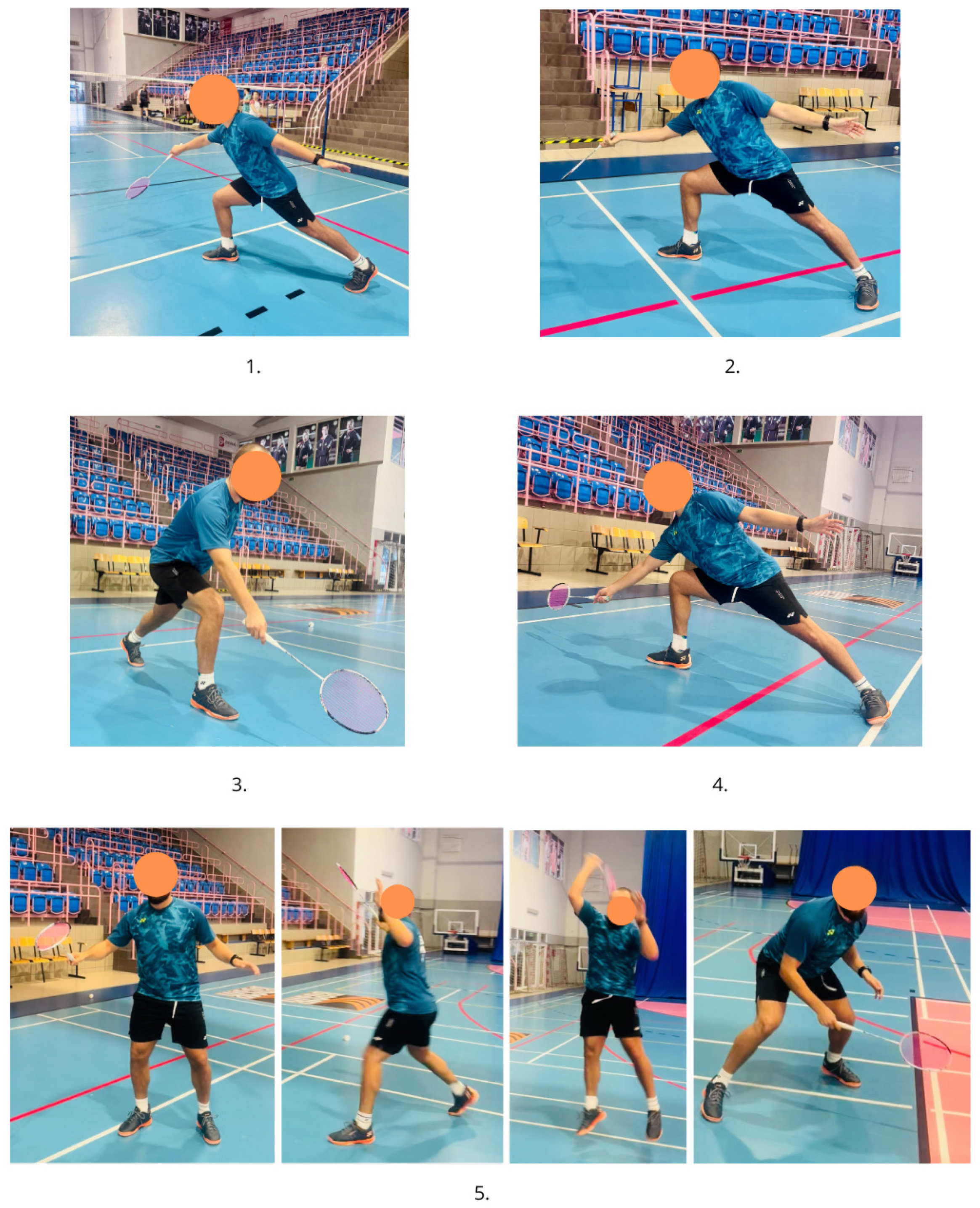
The movement sequences analysed in the present study consisted of standardised badminton-specific actions (
Figure 1) designed to reflect the typical technical and locomotor demands of match play. These sequences were recorded using wearable electromyography (EMG) shorts. The primary testing protocol encompassed three categories of movements, each executed within a controlled environment. Each technical movement pattern was performed for a total of 10 repetitions per set, ensuring consistency of movement exposure across conditions. In order to minimize fatigue accumulation, a rest interval of three minutes was standardized between each movement task.
The movement begins with a take-off to the shuttle, i.e., a small jump with the legs directed towards the flying shuttle. The player takes off from the right leg, the legs switch halfway towards the net (the right leg is in front). The approach movement ends with a lunge to the right leg with a stronger load on it by leaning the torso forward in order to reach the hand with the racket as close to the net as possible (using the maximum reach). When returning, the player takes off from the dominant leg and returns to the center by performing a double step-off.
- 2.
Reaching the net using a lunge to the forehand side
The movement begins with a take-off to the shuttle—a jump with the legs directed towards the forehand net (the right leg is the leg that determines the direction). The player takes off from the left leg by performing a lead-in step. The approach movement ends with a lunge onto the right leg. The player transfers weight to the dominant leg by bending the hip, straightening up and extending a straight arm towards the net. The shuttlecock is hit. When returning, the player takes off from the right leg and returns to the starting position by performing a double lead-in step.
- 3.
Defense using a cross lunge on the backhand side
The movement begins with a jump, which causes the legs to widen slightly, lowers the center of gravity and directs the legs towards the shuttlecock (the right leg determines the direction). When performing the jump, the left leg pushes the player in a lateral direction, after which the player takes a deep lunge with a far extended straight arm with the racket in order to reduce the distance to the falling shuttlecock. The player hits the defensive shuttle, pushes off the loaded front leg and returns to the starting position in a step to the middle of the court.
- 4.
Defending using a lateral lunge on the forehand side
The movement begins with a small jump with the left leg directed towards the flying shuttle. At the moment of the jump, the right leg is responsible for pushing the player towards the left side line of the court. After pushing off, the player performs a deep lateral lunge on the left leg and, through a rotational movement of the torso, extends the right, straightened arm with the racket to the shuttle. A ‘low descent’ on the legs is important, which allows the players to maintain proper stability and provide more time before the shuttle arrives. After the play, the player pushes off the front leg and by taking a step returns to the starting position, positioning themselves in the middle of the court (
Figure 1).
- 5.
Cross jump from the back of the court from the backhand side
The player starts the movement with a jump, which directs his right leg towards the forehand net, and places his left leg diagonally (closer to the backhand back). From this position, the right leg takes off and the body rotates—positioning itself sideways to the flying shuttle (dominant hand with the racket positioned behind the head). The player performs a side-step, and when he finds himself under the shuttle, he starts a jump (initiated by the right leg) consisting of changing legs—the right leg is moved forward. At the moment of contact with the ground after the jump, the left leg pushes the body towards the center of the court. With a side-step, the player returns to the starting position. 6. Jumping to the shuttle from the back of the court from the forehand side. The players start the movement by jumping in the middle of the court, directing the legs so that they reach the shuttle as quickly as possible. The left leg is directed towards the backhand net, while the left leg is directed diagonally (forehand back). The player pushes off with the left leg, and, taking a quick double step, jumps to the shuttle, catching it at its highest point. After landing, the right leg is responsible for cushioning the landing movement and pushing the player strongly towards the middle of the court. After taking a double step, the player is in the starting position, prepared for the next shuttle.
2.5. Statistical Analysis
The data are presented as mean and standard deviations and 95% confidence intervals for the mean. All variables were normally distributed according to the Shapiro–Wilk test. Verification of differences between body sides (left and right), muscle type (quadriceps femoris; hamstring; gluteus muscle groups) and type of technique used in badminton (reaching the net with a forehand lunge; reaching the net with a backhand lunge; defense using a side lunge on the forehand side; defense using a cross lunge on the backhand side; cross-step from the back of the court) were performed using a 2 × 3 × 5 three-factor analysis of variance (ANOVA) with factors: side × muscle × technique (2 × 3 × 5), applied to the percentage contribution of muscle activity. In the presence of significant main effects or interaction effects, post hoc comparisons were performed using the Bonferroni correction. Effect size was calculated using eta-squared (η2), defined as the proportion of total variance explained by a given main effect or interaction in the ANOVA model (η2 = SS_effect/SS_total). Effect sizes were interpreted as small (<0.06), moderate (0.06–0.14), and large (>0.14), in accordance with commonly accepted guidelines. Statistical significance was set at p < 0.05. All statistical analyses were performed using Statistica software (version 13.1; TIBCO Software Inc., Palo Alto, CA, USA).
4. Discussion
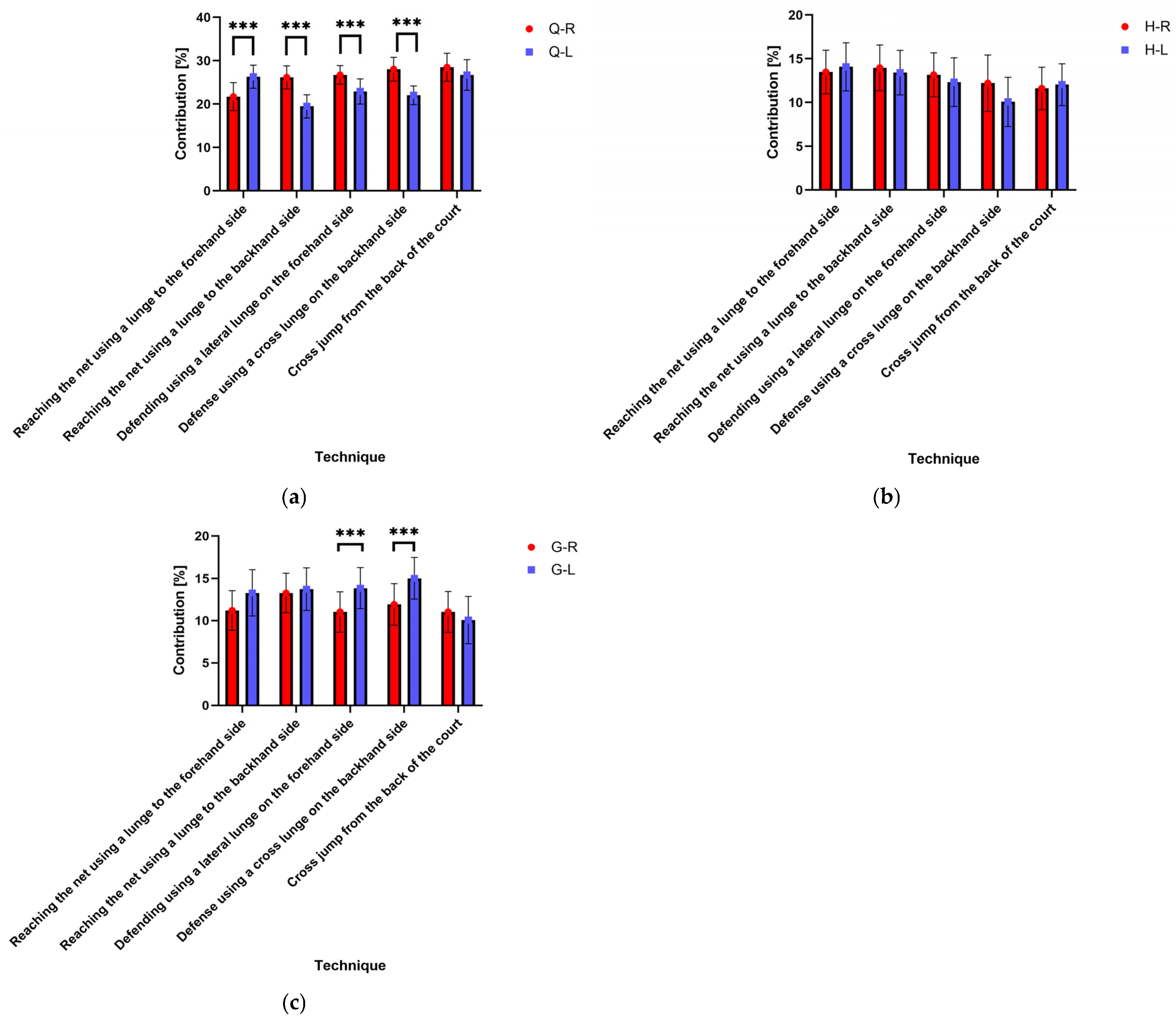
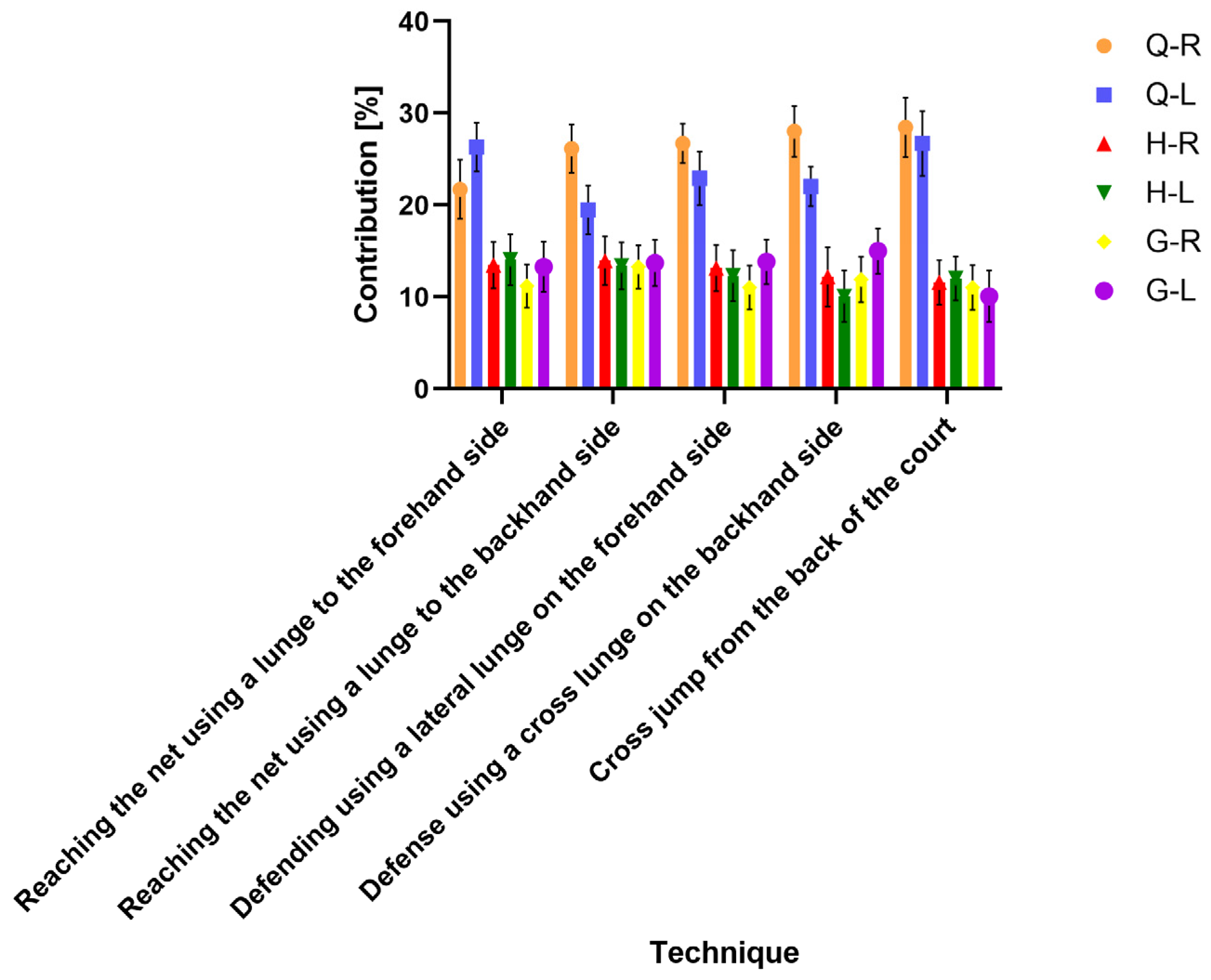
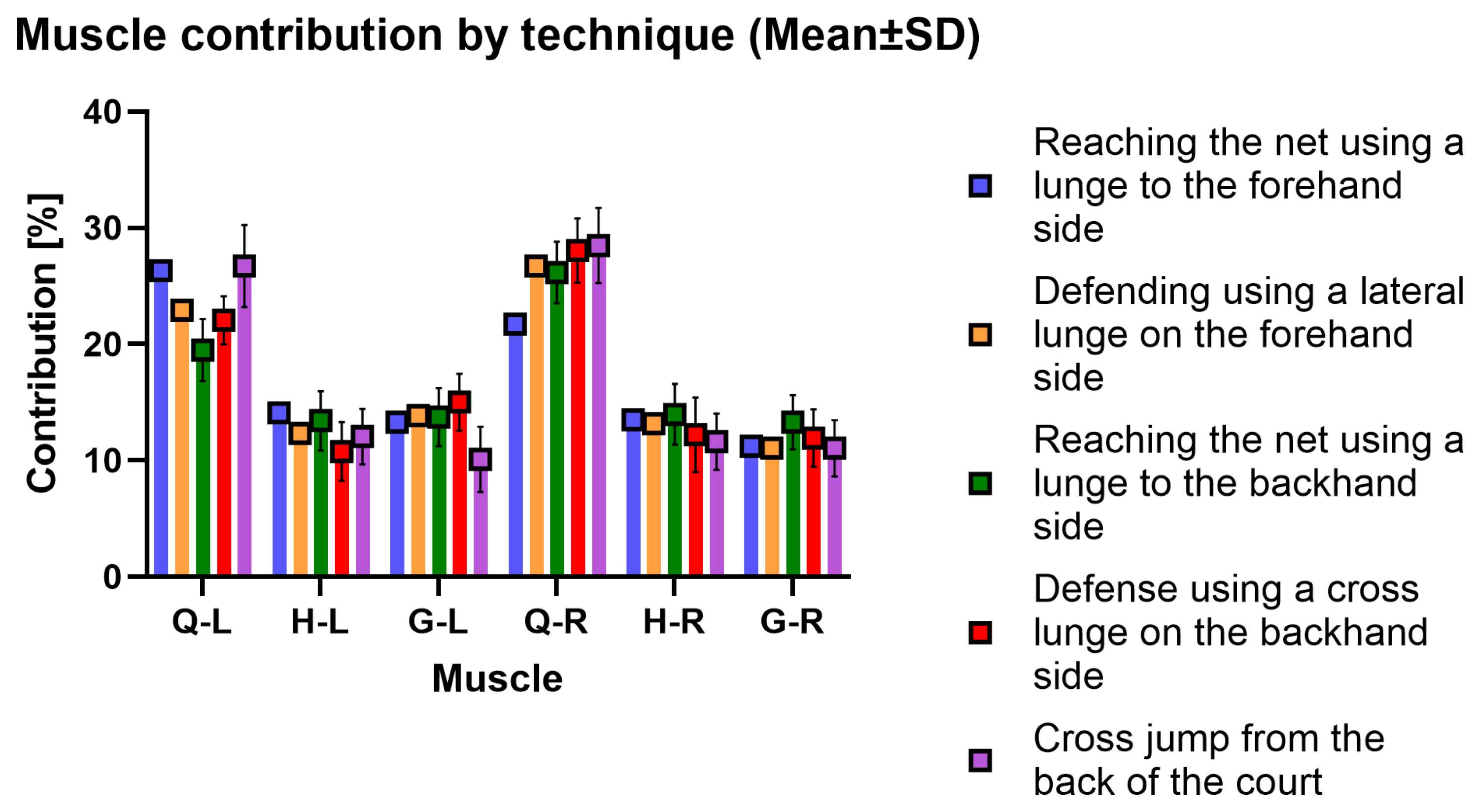
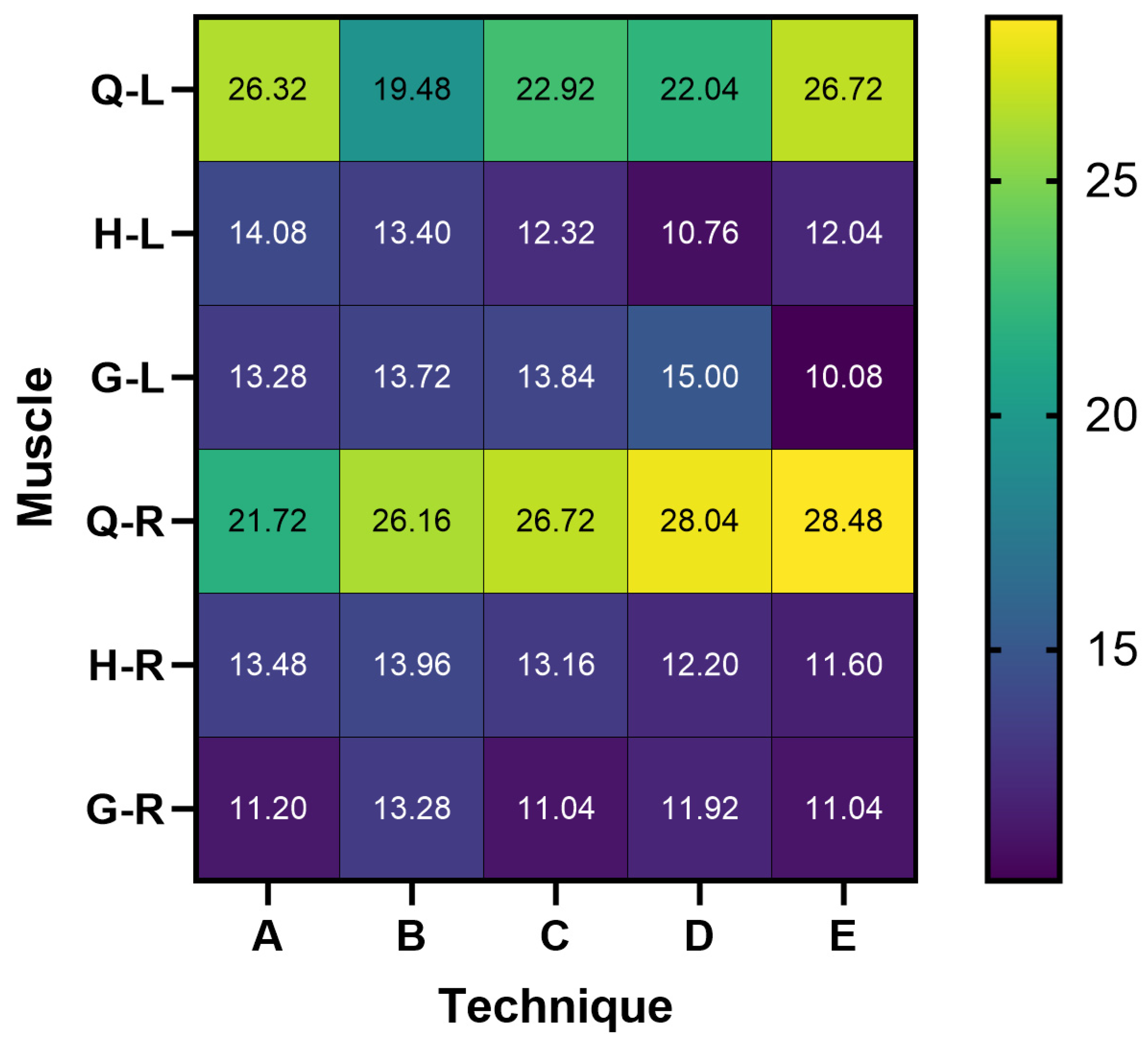
The present study provides an in-depth characterisation of badminton-specific neuromuscular demands by demonstrating a consistent predominance of quadriceps muscle contribution across a wide range of technically relevant movement sequences, accompanied by task-dependent inter-limb asymmetry in relative muscle distribution. These findings extend previous biomechanical and physiological investigations, which have described badminton as a sport characterised by frequent high-intensity lunges, rapid decelerations, and multidirectional changes in direction performed under severe temporal and spatial constraints [
18,
19,
20]. The present study provides novel insights into how mechanical loading patterns are supported by underlying neuromuscular coordination strategies during real-world performance tasks by integrating wearable EMG measurements with authentic badminton movements [
15].
The marked quadriceps dominance evident in the net approaches, defensive lunges, and recovery movements is indicative of the knee-dominant nature of badminton footwork. In order to execute these actions, it is necessary to rapidly lower the centre of mass, effectively brake horizontal momentum, and immediately re-accelerate towards the shuttlecock. A substantial body of research has demonstrated that badminton lunges generate substantial knee joint moments and high vertical and horizontal ground reaction forces, particularly during the braking phase of the movement [
18,
20,
21]. The present EMG-based findings serve to complement the mechanical observations by indicating that such loading profiles are supported by neuromuscular strategies characterised by a high relative contribution of the quadriceps muscle group, rather than by isolated peak activation responses [
22]. Functionally, this strategy likely enhances the capacity to absorb impact forces efficiently while maintaining joint stability and readiness for subsequent movement phases.
Importantly, quadriceps-dominant activation patterns have also been reported in other court sports characterized by repeated lunging actions, such as fencing and squash [
10,
23]. However, the frequency, intensity, and directional variability of lunges in badminton may further amplify knee-dominant loading demands, highlighting the central role of quadriceps function in this sport [
24].
The existence of inter-limb differences in quadriceps contribution across the majority of the analysed techniques further emphasises the inherently asymmetric nature of the sport. Racket dominance and repetitive execution of unilateral movement patterns expose players to chronically asymmetric mechanical and neuromuscular demands [
25,
26]. It is important to note that the current results indicate that these asymmetries are task-specific, emerging selectively depending on the direction of movement, stroke type, and spatial positioning on the court. This task-dependent manifestation of asymmetry aligns with contemporary research in the field, emphasising that functional asymmetries are highly context-specific and may not be captured by isolated or generic performance tests [
8,
11]. In accordance with prior findings in elite junior badminton players, asymmetry indices derived from hop tests and neuromuscular efficiency measurements exhibit substantial variability across testing conditions, without necessarily compromising performance outcomes [
27].
In contrast to the quadriceps, hamstring activation exhibited relative symmetry between limbs across all analysed movement sequences. This finding indicates that the posterior thigh musculature plays a pivotal role in stabilising the body during badminton-specific actions. The primary functions of this musculature include knee joint control and eccentric braking, rather than propulsion. As demonstrated in the relevant EMG studies, analogous activation patterns have been reported in the context of cutting and lunging manoeuvres in multidirectional sports. In such instances, the activity of the hamstrings is known to contribute to joint stability, while remaining relatively insensitive to task-specific asymmetry [
28,
29]. Nevertheless, the consistently greater contribution of the quadriceps relative to the posterior chain warrants consideration, particularly in sports characterised by high volumes of repetitive deceleration and braking actions [
30].
Research in the field of badminton has repeatedly demonstrated that the knee and ankle are among the most frequently affected lower limb regions. Patellar tendinopathy and ligament-related injuries have been frequently reported in elite players [
31,
32]. Whilst the present study does not permit causal interpretation of injury mechanisms, the observed neuromuscular activation distribution patterns should be considered within this broader context of cumulative lower-limb loading demands. It is important to note that sustained reliance on knee-dominant movement strategies may result in increased mechanical stress on anterior knee structures. This emphasises the necessity of monitoring neuromuscular muscle contribution, balance, and load distribution during training and competition.
The observed asymmetry in the contribution of the gluteal muscle groups during defensive movements indicates the role of proximal neuromuscular control in badminton performance. Defensive lunges, in particular, have been shown to impose substantial demands on hip stabilisation, with the objective of controlling frontal and transverse plane motions, and limiting excessive knee valgus during rapid directional changes. As demonstrated in previous research, insufficient or delayed activation of the hip extensors and abductors is associated with altered lower limb kinematics and increased knee joint loading in multidirectional sports [
28,
33]. Within the context of badminton, an increase in unilateral gluteal activation during defensive tasks may be indicative of compensatory or adaptive neuromuscular strategies. These strategies are designed to maintain pelvic and trunk stability under conditions that are asymmetrical and time-constrained conditions [
10,
27].
Inter-limb asymmetry is commonly interpreted using predefined threshold values, with differences of approximately 10–15% often considered indicative of abnormal or clinically relevant asymmetry [
28,
29,
30,
31]. Nevertheless, mounting evidence signifies considerable inconsistency in the relationship between the magnitude of asymmetry, injury occurrence, and performance outcomes across diverse populations and task contexts. This variability suggests that the application of arbitrary asymmetry thresholds, particularly those derived from isolated strength or hop-based assessments, lacks a robust evidence base when extrapolated to complex, sport-specific movement patterns [
32]. In the sport of badminton, the execution of movement is inherently asymmetric due to the unilateral nature of the stroke mechanics employed, the lateral court coverage strategies adopted, and the rapid transitions between offensive and defensive actions. Consequently, interlimb differences in muscle contribution may represent functional neuromuscular specialisation rather than maladaptive imbalance.
In this study, the concept of asymmetry was interpreted within the framework of a task-dependent muscle distribution model. This model emphasised the manner in which neuromuscular load is distributed between limbs during specific badminton movements. This approach facilitates a more nuanced distinction between asymmetries that may warrant targeted intervention and those that reflect sport-specific adaptation. Consequently, this supports more informed, context-sensitive training, injury prevention, and performance-monitoring strategies. From an applied perspective, the present approach facilitates the interpretation of muscle distribution patterns in relation to training objectives, including the monitoring of fatigue, the implementation of targeted warm-up strategies, and the delivery of complementary strength training aimed at balancing muscular load across techniques [
33,
34,
35,
36].
Consequently, training programmes in badminton should emphasise not only maximal force production but also the quality of movement execution, deceleration mechanics and proximal control, particularly in athletes exposed to high volumes of unilateral and high-impact actions.
The present study makes a significant contribution to the field of research by offering a more nuanced understanding of badminton-specific neuromuscular strategies. The study demonstrates that muscle activation distribution patterns [
33] are shaped by both the mechanical demands and the technical context of the sport. The present findings highlight the task-dependent nature of quadriceps dominance and inter-limb asymmetry. In turn, these results support the use of movement-specific assessments and integrated training approaches. The latter are aimed at optimising performance while managing the asymmetric demands inherent to high-level badminton players. These findings should be interpreted as reflecting muscle coordination and distribution strategies rather than maximal neuromuscular output. This is within the constraints of surface EMG-based relative contribution measures.
5. Conclusions
The present study demonstrates that badminton-specific movements are characterized by a pronounced dominance of quadriceps muscle contribution accompanied by task-dependent inter-limb asymmetry in neuromuscular distribution. These findings are consistent with previous biomechanical research that has described badminton as a sport with high knee-loading demands and frequent unilateral actions. Furthermore, the present study extends current knowledge by providing EMG-based evidence of relative muscle contribution patterns during authentic, sport-specific tasks in elite badminton players.
By focusing on muscle distribution rather than peak or maximal activation, the present study highlights how technical demands and movement context shape neuro-muscular coordination strategies under ecologically valid performance conditions. The findings of this study lend support to the utilisation of movement-specific assessments as a means to enhance comprehension of the neuromuscular demands particular to badminton. Furthermore, these results provide a foundation for the development of integrated training strategies that are aimed at optimising performance while managing the asymmetric loading patterns that are characteristic of high-level badminton participation.
5.1. Practical Implications
From an applied perspective, the findings emphasize the value of neuromuscular assessments based on authentic badminton-specific movement tasks, rather than isolated or generic laboratory tests. Training programs should integrate strength development with targeted work on deceleration mechanics, proximal control, and footwork technique, reflecting the knee-dominant and direction-specific demands identified in the present analysis.
Particular attention should be directed toward enhancing eccentric quadriceps control and hip stabilization, especially during defensive movements that impose substantial frontal and transverse plane demands. Furthermore, interpretation of inter-limb asymmetry should account for task specificity and directional context, as asymmetries observed in badminton appear to reflect functional adaptation to technical requirements rather than generalized neuromuscular imbalance. This perspective supports the use of movement-specific monitoring to guide warm-up design, training load management, and complementary strength and conditioning interventions in elite badminton players.
5.2. Limitations
Several limitations of the present study should be acknowledged. First, although wearable EMG technology enables practical, non-invasive assessment of muscle activity during sport-specific movements, it provides limited insight into deep muscle activity and does not allow detailed evaluation of activation timing. Accordingly, temporal features such as onset latency or peak timing were not examined, as the analysis was intentionally focused on stable and repeatable muscle distribution patterns under ecologically valid conditions. As a result, transient activation spikes associated with rapid trunk rotation, upper-limb motion, or racket–shuttlecock impact were not captured and may provide complementary information in future studies integrating full-body kinematic analysis.
Second, EMG signals were not normalized to maximal voluntary contraction, which precludes direct comparison of absolute activation magnitudes between individuals. Consequently, the results should be interpreted in terms of relative muscle contribution and distribution patterns rather than maximal neuromuscular capacity. Third, movement execution speed and jump height were not instrumentally controlled or quantified, as tasks were performed under game-like conditions typical of elite training practice. This may have contributed to some inter-individual variability in EMG amplitude despite the high technical consistency of the study population.
Additionally, the relatively small sample size, which is common in studies involving elite athletes, limits generalizability. However, the homogeneous competitive level and training background of the participants strengthen internal validity and reduce inter-individual variability in neuromuscular strategies. Finally, the absence of simultaneous kinematic and kinetic measurements limits direct inference regarding joint loading mechanisms, and the cross-sectional design does not allow causal conclusions or assessment of longitudinal adaptations.
5.3. Future Research Directions
Future studies should integrate wearable electromyography with three-dimensional kinematic and kinetic analyses to provide a more comprehensive characterization of neuromuscular distribution strategies and joint loading during badminton-specific movements. Such integrated approaches would allow simultaneous examination of lower-limb muscle distribution patterns together with whole-body mechanics, including trunk rotation, upper-limb motion, and impact-related events, thereby enabling a clearer distinction between task-dependent neuromuscular coordination and transient activation peaks associated with stroke execution. Longitudinal and repeated-measures designs conducted across training cycles or competitive seasons may help determine whether observed activation patterns and inter-limb asymmetries remain stable or change in response to training load, fatigue, and match exposure.
Further research should also examine the influence of competitive level, age, and training background on neuromuscular activation patterns during sport-specific tasks, as these factors may modulate movement strategies and muscle contribution profiles. In addition, intervention-based studies investigating the effects of eccentric, plyometric, and hip-focused strength training on muscle distribution patterns during badminton movements would provide valuable insight into training-induced neuromuscular adaptations and their transfer to on-court performance.
Finally, prospective observational studies linking neuromuscular activation profiles with performance metrics and injury-related outcomes may help clarify how sport-specific neuromuscular strategies encompassing both stable muscle distribution patterns and transient, impact-related activation features—contribute to performance sustainability, injury risk modulation, and load management in high-level badminton players.




 ,
,