1. Introduction
Coal plays a dominant role in China’s energy structure, accounting for more than 55% of the country’s primary energy consumption. In recent years, China’s raw coal output exceeded 4.8 billion tons, providing a stable energy supply for the national economy. Therefore, maintaining safe and efficient coal production is essential for national energy security.
As mining depths increase in China, coal seams and the surrounding rock masses are commonly subjected to true-triaxial in situ stress conditions. Roadway excavation creates a unidirectional free surface, inducing unloading and stress concentration near the excavation boundary. Once the induced stress exceeds the bearing capacity of the coal/rock mass, the plastic zone and fractures initiate and propagate. Without timely and adequate support, the surrounding rock undergoes progressive deformation and failure, eventually leading to instability [
1].
In recent years, international studies have increasingly shifted from simplified two-dimensional assumptions to true-triaxial testing and scaled physical modeling that better reproduce three-dimensional in situ stress conditions. Under true-triaxial states, Wibisono et al. investigated excavation-induced damage and spalling around tunnels and showed that near-field damage development is governed jointly by stress release and brittle failure; they also combined scaled model tests with element-scale experiments to interpret crack incidence angles and the associated spalling modes [
2,
3]. For high-stress-induced strainburst/unloading instability, Kaiser proposed a deformation-demand-based framework for support selection, providing a useful reference for support design in deep roadways [
4]. In addition, a series of studies have addressed key aspects of unloading-induced responses, including floor weakening and the elastoplastic radius under local support deterioration [
5], instantaneous excavation of deep high-stress soft rock and stress evolution [
6], directional deviation of butterfly-shaped plastic zones [
7], the plastic zone’s expansion in non-uniform stress fields for rectangular openings with different aspect ratios [
8], and staged combined support schemes for large-deformation tunnels [
9]. Regarding reinforcement mechanisms, Ma et al. established an analytical tensile model for fully grouted bolts and derived axial force and interfacial shear stress distributions [
10], Nemcik et al. clarified debonding propagation and its controlling parameters via numerical simulations [
11], and He et al. provided a systematic analytical derivation of the mechanical response of fully grouted bolts [
12].
Extensive evidence indicates that excavation-induced unloading stress paths differ markedly from conventional loading paths, often causing pronounced brittle failure, stress redistribution, and rapid crack propagation in coal and rock masses [
13,
14,
15]. True-triaxial unloading experiments further revealed that a free surface intensifies tensile–shear coupled failure and accelerates the surrounding rock’s instability [
16,
17].
Moreover, roadway excavation under high in situ stress frequently exhibits asymmetric deformation and failure, particularly under single-sided unloading conditions adjacent to goafs or coal pillars [
18,
19]. Although numerical simulation and field monitoring have been widely used to evaluate deformation characteristics and support performance, experimental studies that integrate true-triaxial unloading, borehole-type excavation simulation, and systematic support optimization remain limited; this gap has been highlighted in related studies [
20,
21,
22]. Therefore, understanding the deformation–failure mechanism and developing effective stability control strategies for deep roadways under single-sided unloading remain key issues to be addressed.
Despite extensive studies on unloading-induced instability and support in deep roadways, the failure mechanism of coal under single-face unloading and its linkage to support optimization and field validation remain insufficient. Therefore, this study integrates true-triaxial single-face unloading tests, hole-containing coal tests, acoustic emission monitoring, FLAC3D-based three-dimensional simulations, and in situ convergence monitoring to clarify the deformation and failure characteristics and to quantify the effect of bolt length on load-sharing between rock bolts and cable bolts and on roadway deformation control, thereby proposing and validating an optimized surrounding rock control scheme for the ventilation roadway.
2. Project Overview
The study site is located in the Linbei mining area of Shaanxi Province, northwestern China, administratively under Baoji City (Linyou County). The mine covers an area of approximately 21.97 km2, with a designed production capacity of 2.4 million t/a, a workforce of 1331 employees, and a service life of about 57 years. The region is characterized by medium-thick coal seams with complex geological structures and strong unloading effects caused by adjacent mining operations.
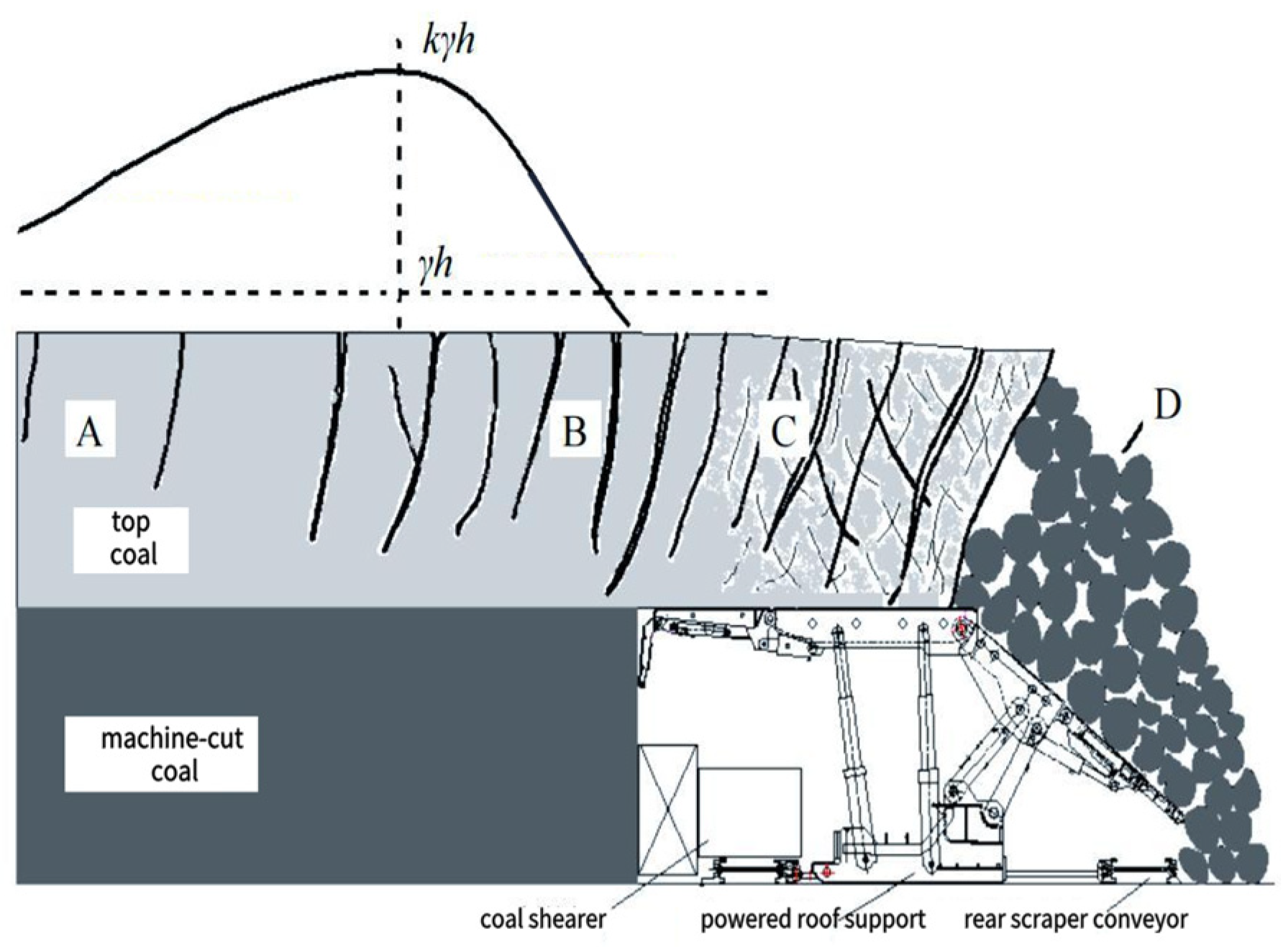
The coal seam mined at the 1305 working face is the Yan’an Formation No. 3 Coal Seam of the Middle Jurassic System. Its thickness ranges from 5.15 m to 21.05 m, with an average thickness of 15.42 m. The seam’s strike is 30° to 330°, with a dip angle of 5° to 13°, averaging 10°. The coal seam exhibits stable occurrence. The studied roadway is located adjacent to the goaf of the 1307 fully mechanized caving face, which adopts the longwall top-coal caving mining method (
Figure 1).
During the extraction of the 1307 face, significant unloading of the surrounding rock occurred due to the formation of the goaf, affecting the stability of the adjacent 1305 roadway. This study focuses on the deformation and failure of the surrounding rock under such single-side unloading conditions.
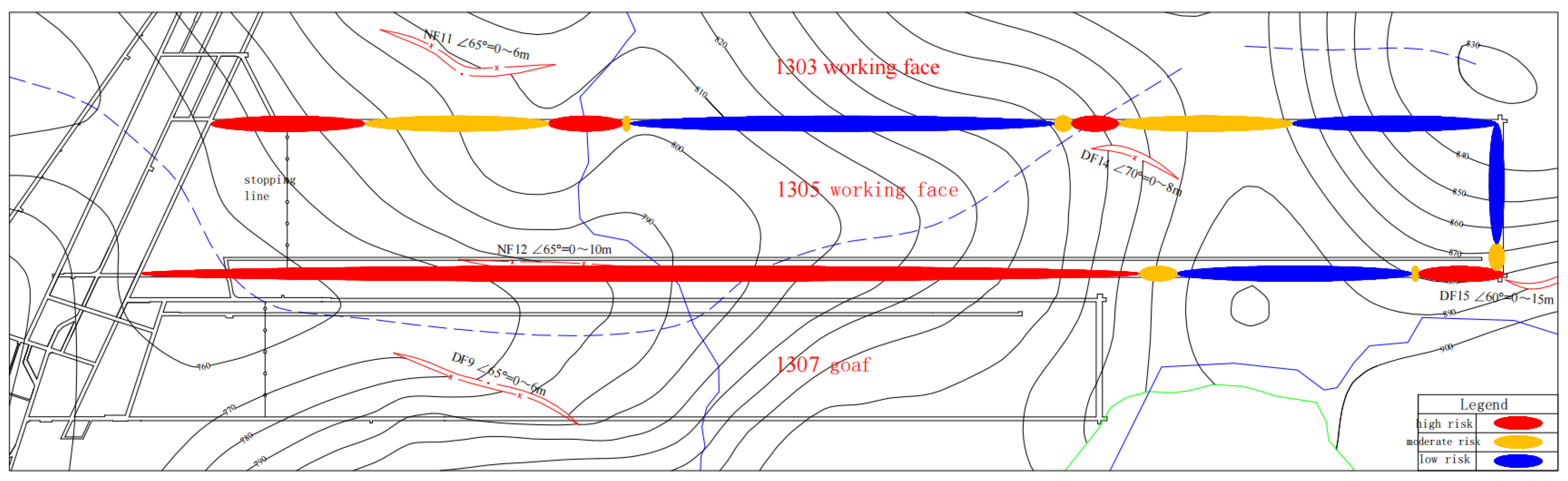
Figure 2 shows the rockburst risk assessment for the 1305 panel ventilation roadway during the excavation stage.
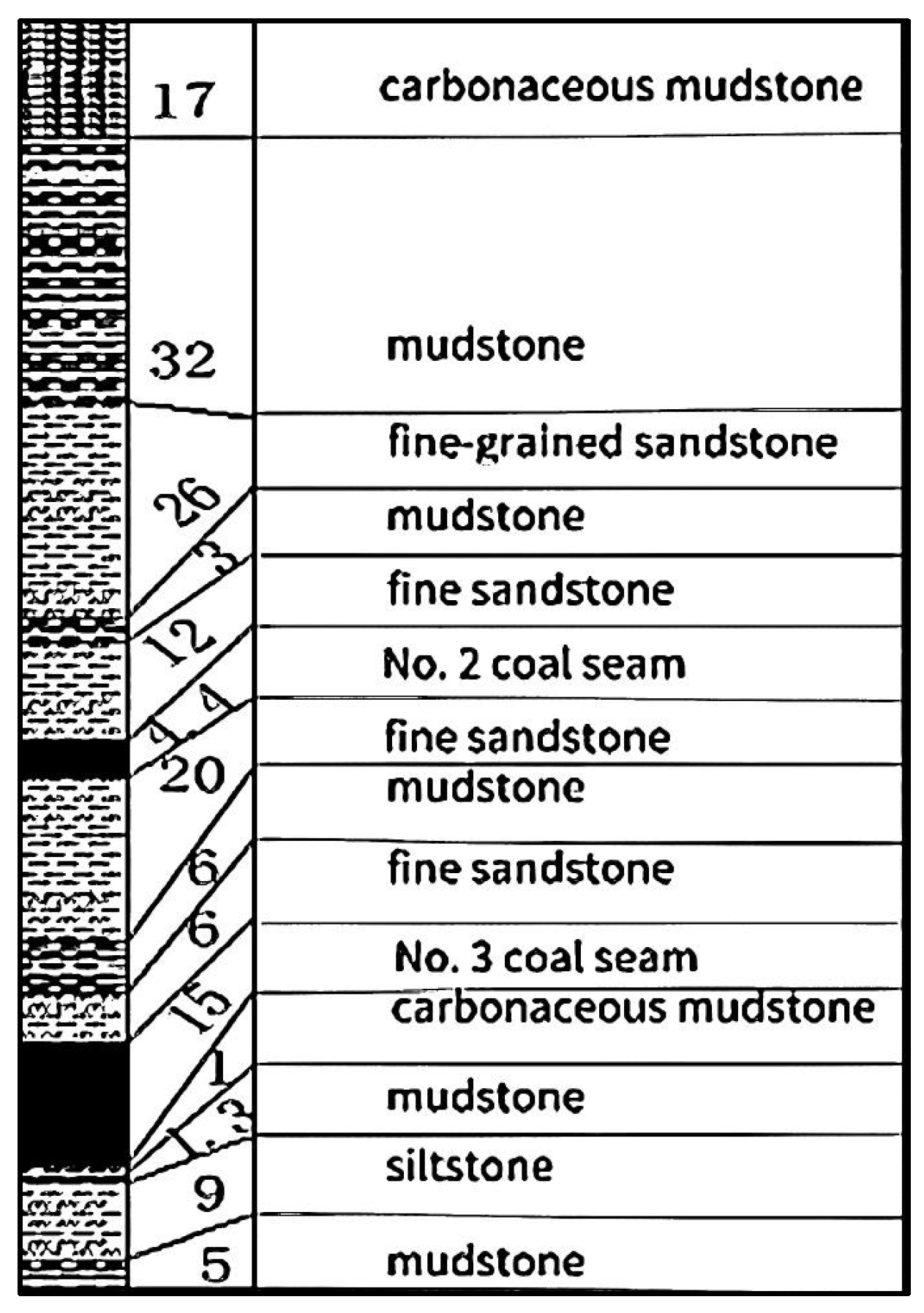
Pseudo-roof and direct roof: The pseudo-roof is locally distributed in this working face, with a thickness less than 1.00 m. It consists of carbonaceous mudstone and siltstone with poor stability, and is prone to collapse during coal seam mining and classified as unstable rock mass. The direct roof overlying the coal seam comprises fine sandstone, typically 2.6 m to 6.1 m thick, locally reaching 14.98 m, and is categorized as rock mass with relatively poor stability. Upper roof: The coal seam’s upper roof comprises fine sandstone, medium-grained sandstone, and mudstone, with a thickness of approximately 20 m. This represents moderately stable rock. Floor: The inner section consists of mudstone, 0.99 m to 3.17 m thick. The middle section comprises sandy mudstone, 1.45 m thick. The outer section is carbonaceous mudstone, 17 m thick. This represents rock with relatively poor stability.
The maximum relative gas outburst rate of the mine is 9.83 m3/t, while the maximum absolute gas outburst rate is 49.64 m3/min, exceeding 40 m3/min; the mine is classified as a high-gas mine. Both the upper and lower strata of Coal Seam 3 have been identified as coal layers exhibiting weak rockburst potential, with the roof also displaying weak rockburst potential. This indicates that the coal–rock system possesses the capacity to induce rockbursts.
The roadway development plan for the 1305 panel is as follows: the belt entry of the 1305 panel will be driven first. After completion of extraction in the 1307 panel, a protective coal pillar approximately 28.5 m in width will be left along the gob boundary formed by the 1307 panel to protect the roadway, and the ventilation roadway of the 1305 panel will then be driven. Based on the mining and geological conditions described above, the deformation and failure of the roadway under single-face unloading conditions constitute the key issue to be addressed in this study.
Figure 3 presents the stratigraphic column of the coal seam.
3. Mechanical Testing of Coal Samples
3.1. True-Triaxial Unloading Disturbance Rock Testing System
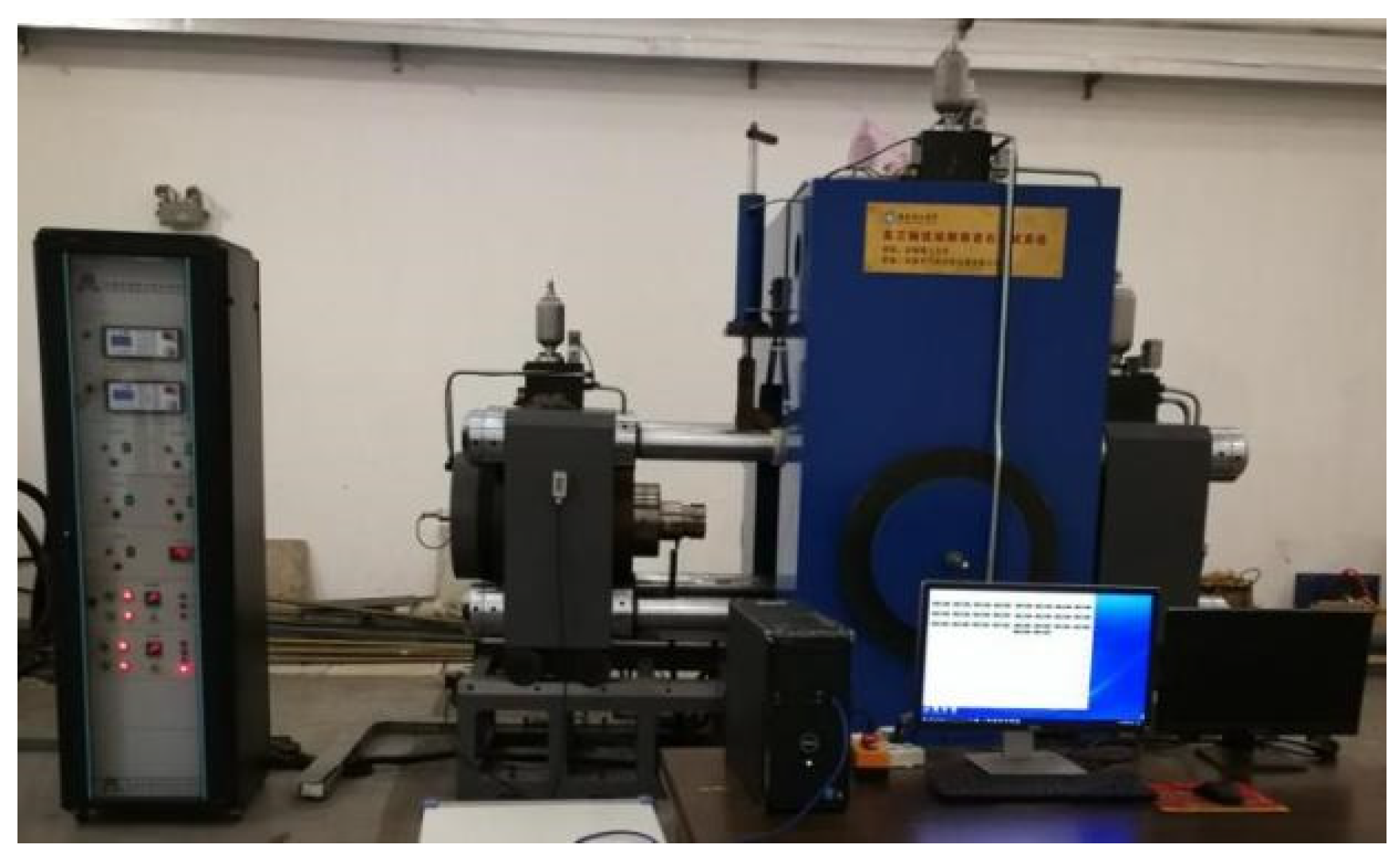
The true-triaxial unloading test system used is a novel rigid press developed by Anhui University of Science and Technology. The specimens used in this study were collected from the in situ coal–rock mass at the crosscut (roadway junction) of the 1305 panel ventilation roadway. Specimen sampling and preparation were conducted in accordance with GB/T 23561 [
23]. The sampling lengths and quantities satisfied the experimental requirements, and additional specimens were collected to account for processing losses. The experimental system constitutes a fully digital closed-loop control system, as illustrated in
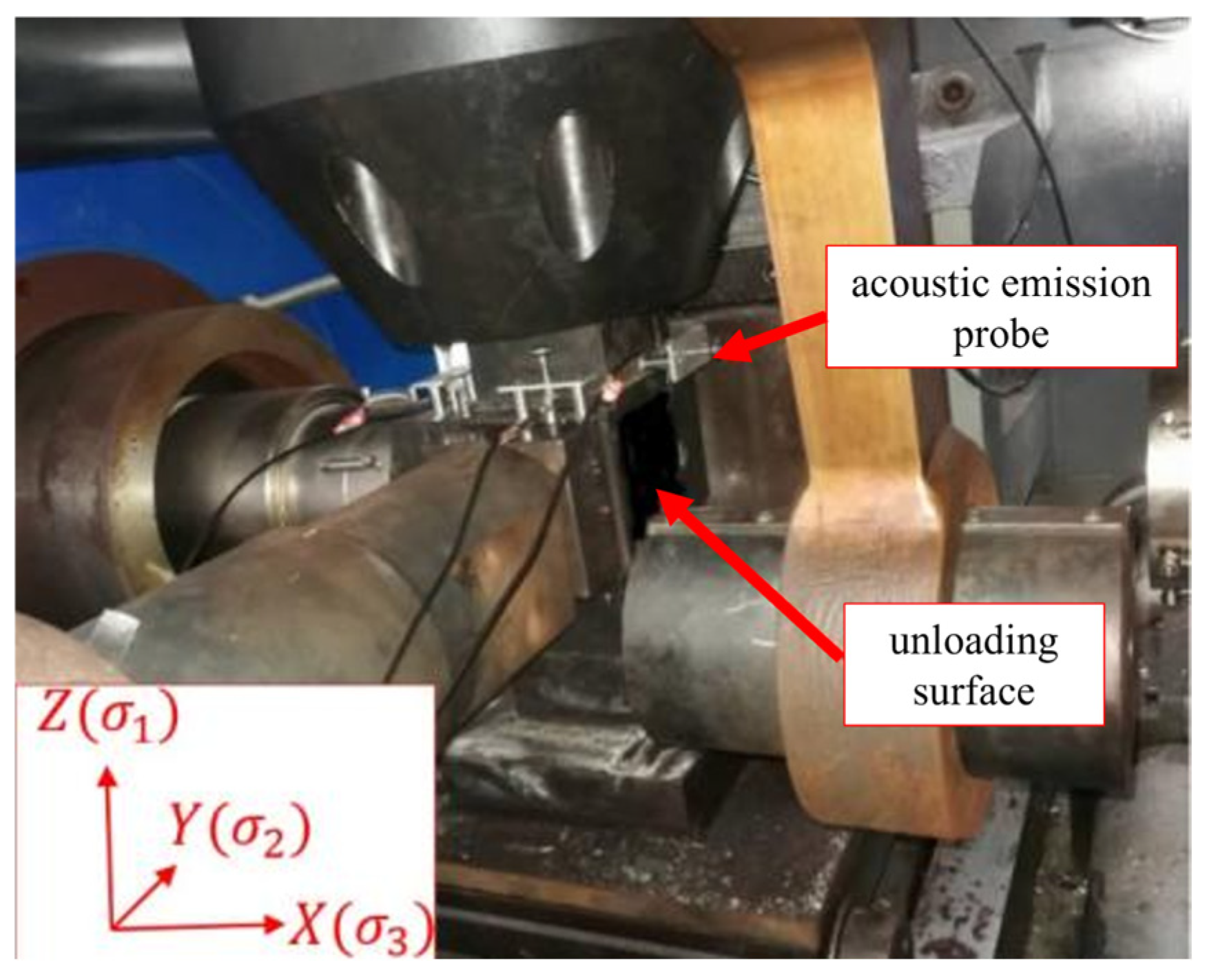
Figure 4. The system applies a maximum force of 3000 kN in the X and Y directions and 5000 kN in the Z direction. The maximum disturbance load is 100 kN, with a cosine wave disturbance load waveform. The acoustic emission signal data acquisition system employs the DS5 series multi-channel acoustic–electric data acquisition system, enabling rapid single-face unloading of specimens to investigate the transient unloading stress process during excavation of the surrounding rock.
The true-triaxial disturbance unloading rock testing system employed is a novel rigid press independently developed.
3.2. True-Triaxial Strength Test Under Unilateral Unloading
3.2.1. True-Triaxial Strength Test Design Under Single-Sided Unloading
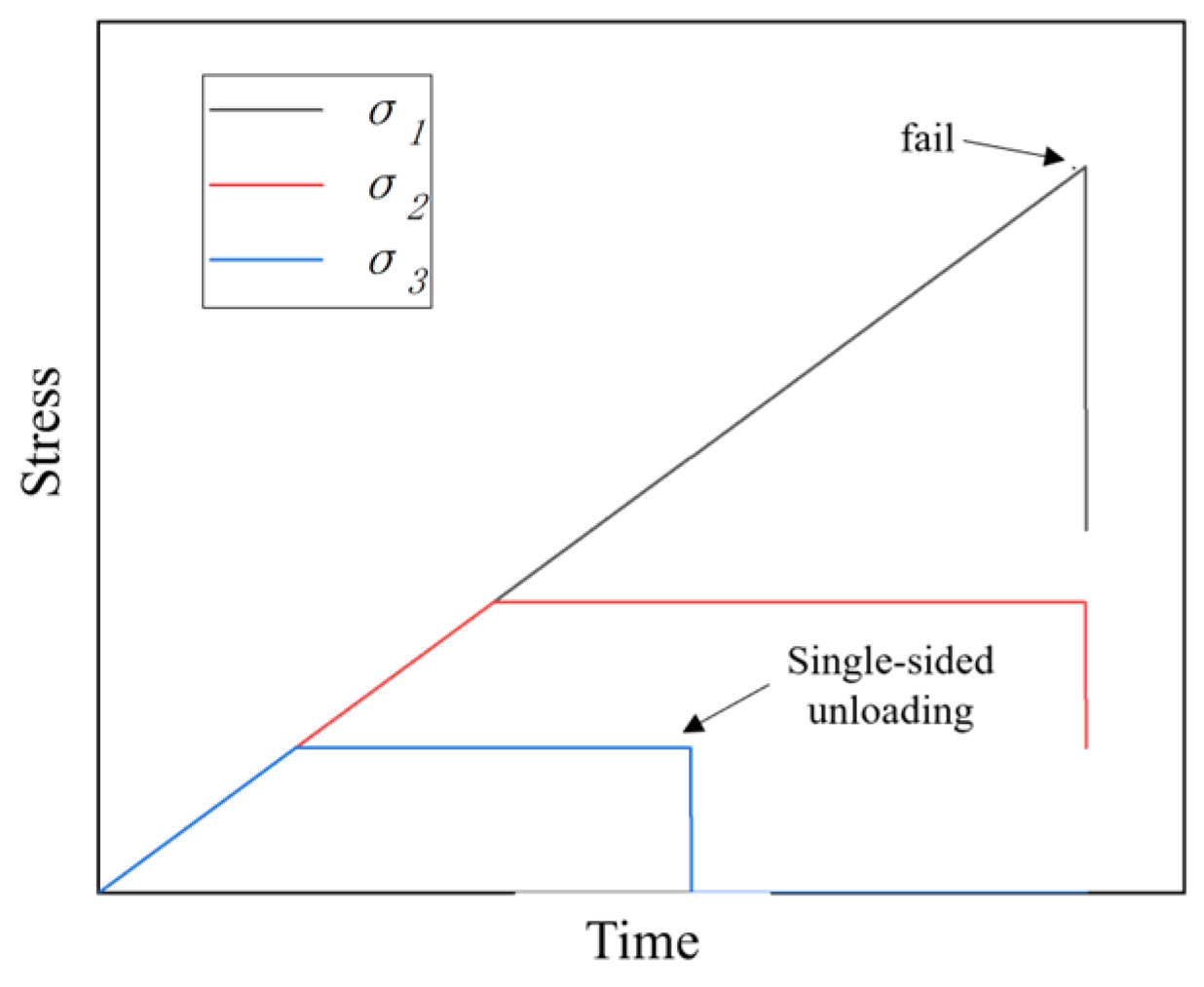
The coal and rock mass underground is subjected to triaxial stress conditions with six stress planes. Following tunnel excavation, the surrounding coal strata undergo uniaxial stress conditions. To assess experimental repeatability, at least five specimens were tested for each stress condition, and six to eight specimens were used for key conditions. Specimen sampling and preparation followed the relevant standards to ensure that the original structural characteristics were preserved as much as possible, and that the number of specimens satisfied the mechanical testing requirements while accounting for processing losses. The initial principal stresses were set at 6 MPa, 4 MPa, and 2 MPa. Loading was performed under force control at a rate of 10 kN/min. Upon reaching the preset initial stress levels, the minimum principal stress was instantaneously unloaded. The opposing face maintained constant displacement, with the load held steady until specimen failure. The experimental loading path is depicted in
Figure 5.
Acoustic emission monitoring was conducted synchronously throughout the tests. AE data were acquired using a Beijing Ruandao DS5 multi-channel acoustic–electric data acquisition system (Beijing Ruandao Technology Co., Ltd., Beijing, China). Six AE sensors were installed to continuously monitor the fracture process of the specimen in real time. To reduce interference from environmental noise and the loading system, the AE trigger threshold was set to 40 dB, and the sampling frequency range was 1 kHz to 1 MHz. Key AE parameters, including event counts, energy, and amplitude, were recorded. Prior to testing, a pencil-lead break test was performed to calibrate the wave velocity. During the tests, lubricant was applied to the fixtures, and a coupling agent was applied to the sensors to minimize frictional noise and coupling-related errors. In addition, loading and AE acquisition were initiated simultaneously to ensure consistent time synchronization.
3.2.2. True-Triaxial Strength Test Results Under Single-Sided Unloading
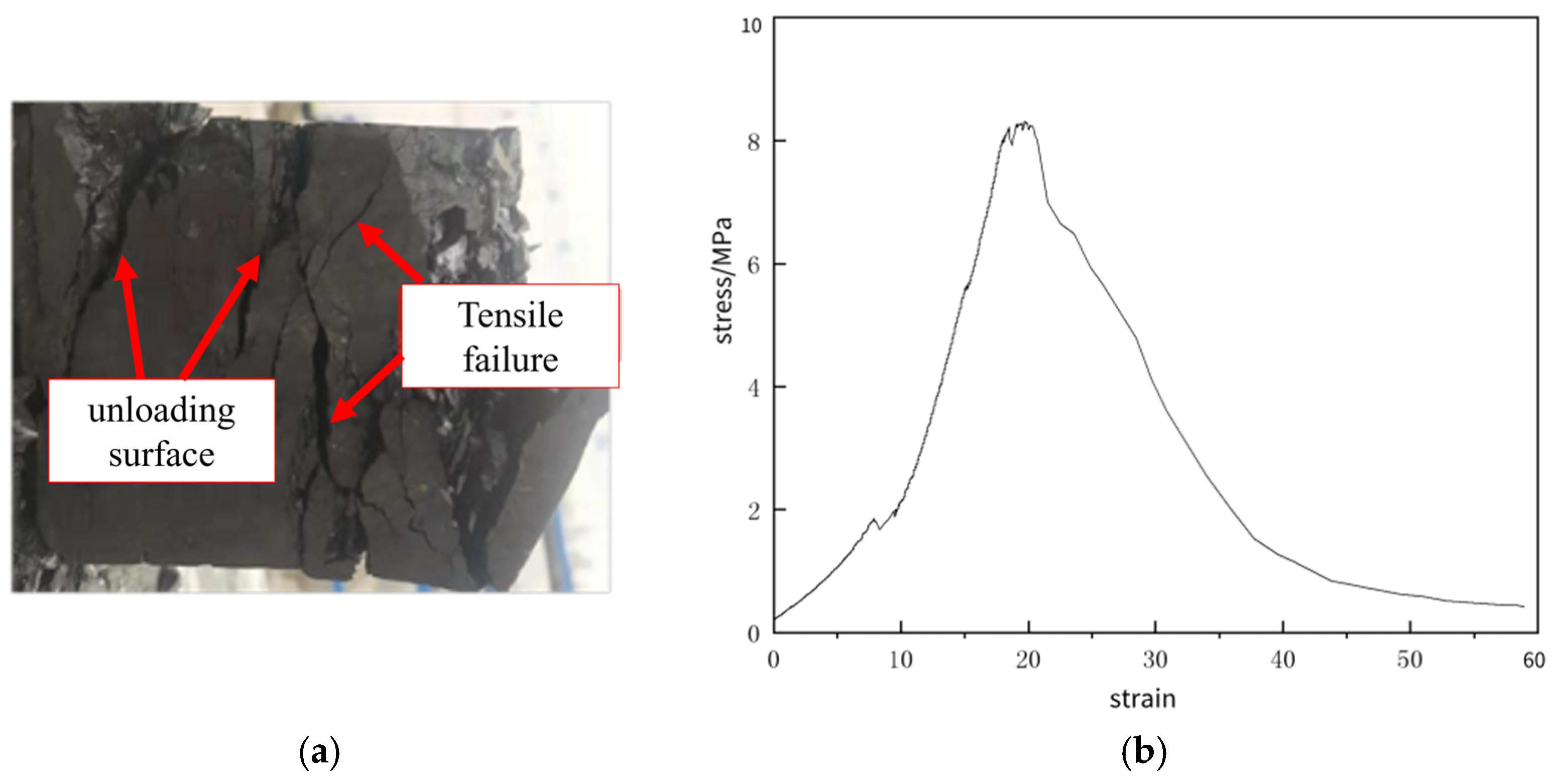
True-triaxial unconfined strength test: The coal sample underwent stages of fissure consolidation, elastic behavior, yield, and residual strength. At a confining pressure of σ2 = 4 MPa, the peak strength reached 32.4 MPa. During the fissure compaction stage, the stress–strain curve exhibits a slight upward curvature. In uniaxial unloading tests, acoustic emission ringing counts persist throughout this phase, gradually diminishing. The slope of the cumulative energy curve progressively decreases. While some acoustic emission signals originate from the compaction of microfissures within the coal body, the majority result from friction during the initial loading process. During the elastic stage, the stress–strain curve approximates a straight line, indicating elastic deformation. Throughout this period, acoustic emission signals persist, though occasional sudden surges may occur, potentially indicating the opening of isolated fractures. The majority of fractures within the rock mass remain in a stable stage of development and expansion. During the yield stage, the slope of the stress–strain curve exhibits a decreasing trend as stress increases. Acoustic emission signals begin to appear erratically, microcracks within the coal matrix commence to develop and propagate, and cumulative energy steadily climbs. Prior to fracture, the ringing count undergoes two distinct temporal surges, with cumulative energy rising in a straight line; the residual strength of the coal mass is insufficient, and when unable to withstand external loads, the coal mass instantly destabilizes and fractures as a whole. Following fracture, the coal mass exhibits combined shear and tensile failure (
Figure 6a). Near the unloading surface, the rock mass undergoes compression-induced tensile stress, expanding towards the unloading surface. The severity of failure increases with proximity to the unloading surface. The failure criterion is defined on the basis of the peak strength. For uniaxial and conventional triaxial loading, the peak strength is taken as the maximum axial stress achieved during loading.
For the single-face unloading test, after unloading the minimum principal stress, the intermediate principal stress was kept constant while the maximum principal stress was continuously increased until specimen instability occurred; the maximum value of the maximum principal stress after unloading was defined as the peak strength under single-face unloading conditions.
Figure 6b is the stress–strain curve.
It should be noted that under true-triaxial loading conditions, acoustic emission signals are susceptible to interference from fixture friction, the sensors’ coupling quality, and threshold settings. Although this study reduced noise and coupling-related errors by applying a preset threshold of 40 dB, together with lubrication and coupling agents, low-energy events at the early stage may still have been partially missed. This may limit the quantitative characterization of AE activity during the compaction and early crack initiation stages. Therefore, the AE interpretation in this study mainly relies on trend variations, inflection point features, and their synchronization with the mechanical response, and is further supported by observations of macroscopic failure phenomena and other complementary evidence.
3.3. Experiment on Deformation and Failure of the Surrounding Rock Simulated by Tunnel Excavation
3.3.1. Tunnel Excavation Simulation Test Design Under Excavation-Induced Unloading
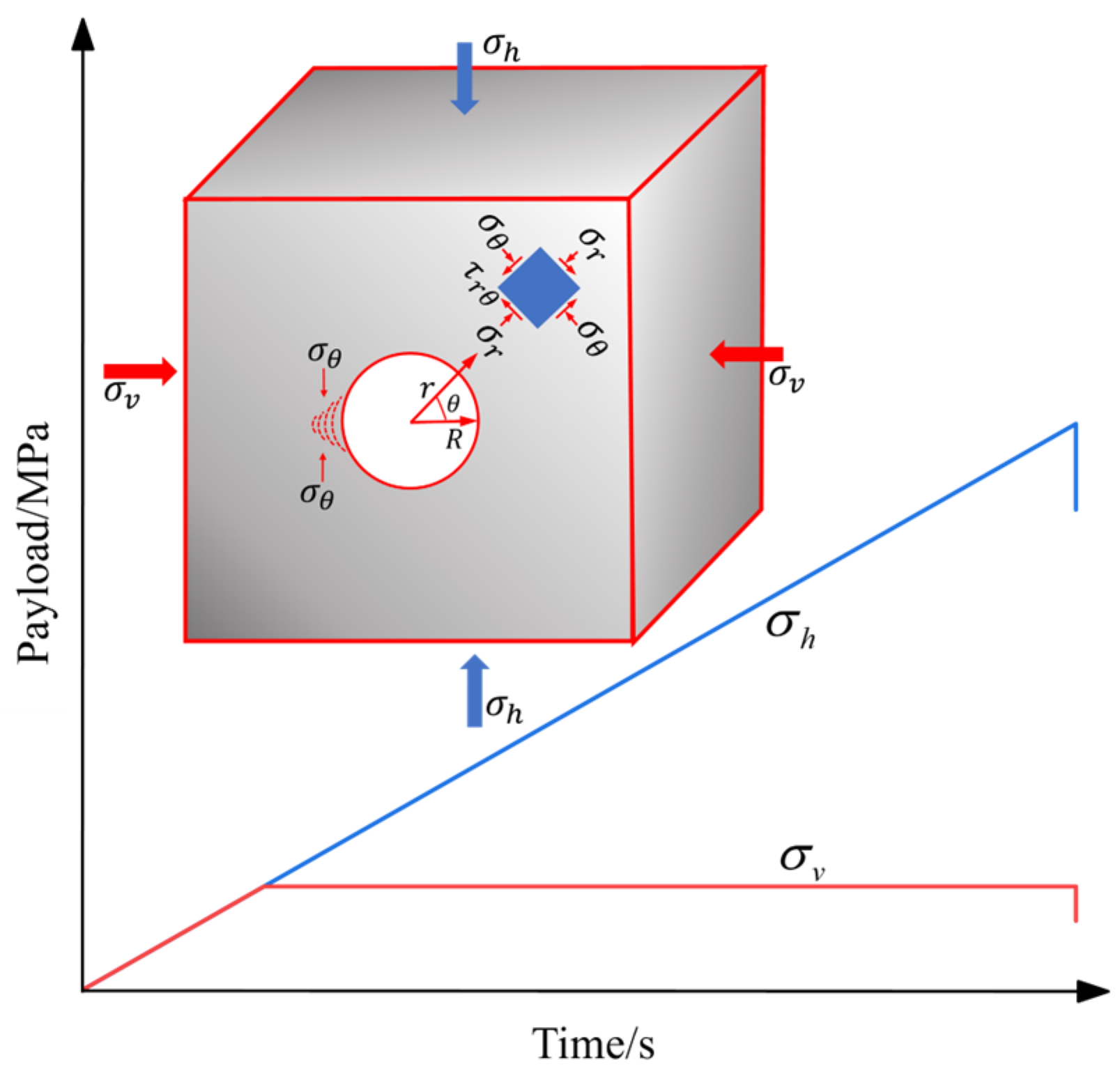
A through-hole 30 mm in diameter and 100 mm deep was drilled at the center of the cubic coal sample. The in situ coal body test under bidirectional loading conditions is illustrated in
Figure 7. A micro-camera effectively captured the response characteristics of the specimen, from the development of micro-fractures to the eventual occurrence of macroscopic failure. In
Figure 8 σ
r, σ
θ, and τ
rθ denote the radial stress, tangential stress, and shear stress of the surrounding rock, respectively; R represents the tunnel radius; r denotes the distance from the rock unit to the tunnel’s center; and θ is defined as the angle between the rock mass element and the horizontal direction. After the stresses were loaded to their predetermined initial values, the lateral stress was held constant, and the axial stress was increased until borehole failure occurred.
3.3.2. Tunnel Excavation Simulation Test Results Under Excavation-Induced Unloading
The stress–strain curve of the porous coal mass underwent stages of crack compaction, elastic deformation, yield, and residual strength. Under the confining pressures of σ
v = 4 MPa and σ
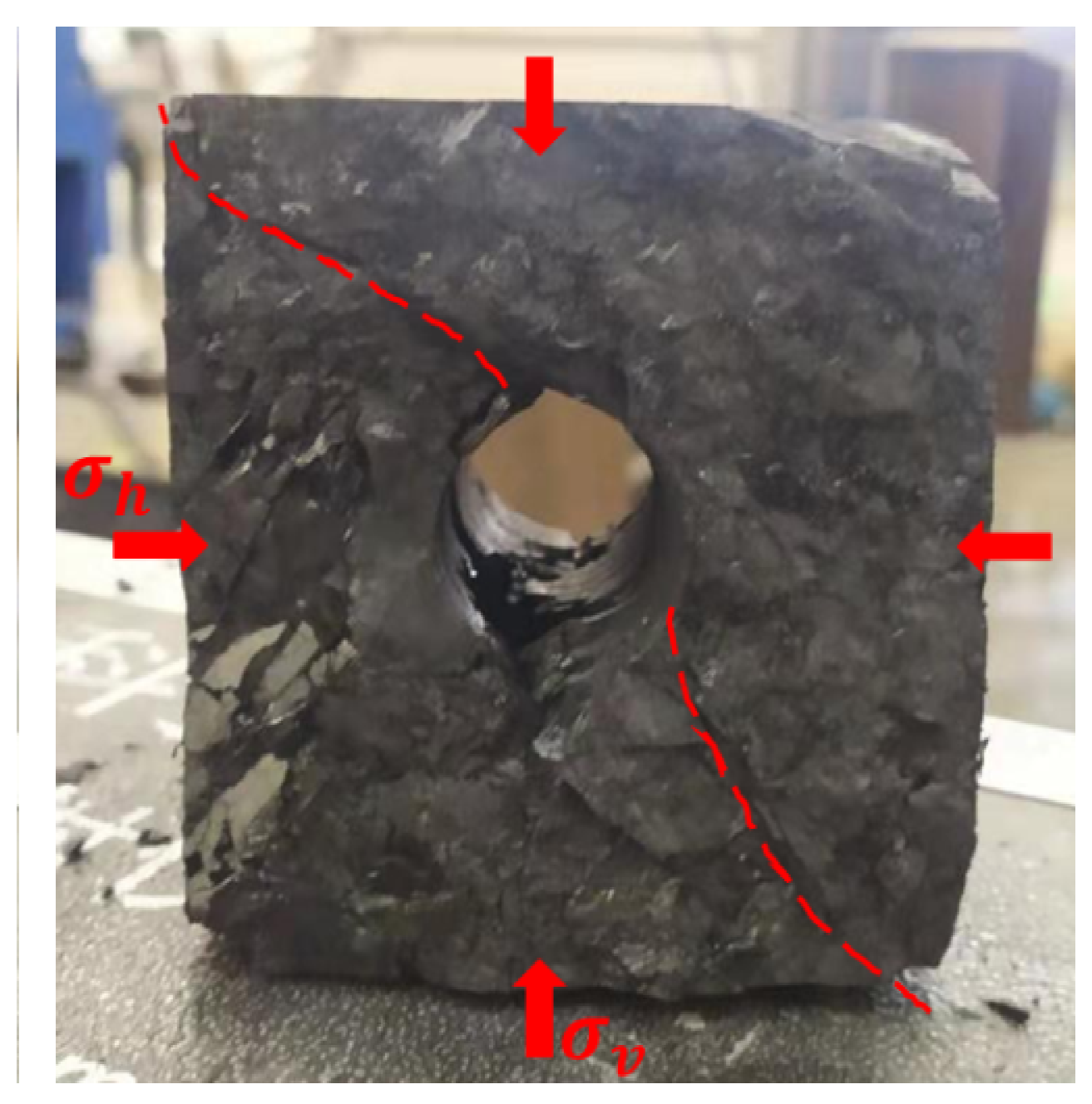
h = 17.1 MPa, the peak strength of the coal sample was reached. The failure of the porous coal mass ultimately presented an “X”-shaped conjugate shear pattern centered around the roadway (
Figure 9). During the crack closure stage, the stress–strain curve exhibited a slight upward concavity. This stage was characterized by a decline in the acoustic emission (AE) ring-down count and a gradual flattening of the cumulative energy slope. These initial AE signals were primarily generated by the closure of numerous pre-existing micro-fractures within the borehole-surrounding coal mass, induced by stress concentration under bidirectional compression.
During the elastic stage, the stress–strain curve is approximately linear, indicative of elastic deformation. This stage persists for a considerable duration, during which micro-fractures develop and propagate in a stable manner. The elastic stage concludes when the coal mass can no longer balance the external load, initiating a phase of unstable propagation. Throughout this stage, acoustic emission (AE) signals are continuously observed, exhibiting a multi-peak pattern, and the cumulative energy increases steadily.
AE response: The AE ring-down counts and cumulative energy evolve consistently with the staged deformation of the borehole-containing specimen. In the compaction and elastic stages, AE activity is limited and mainly reflects closure and frictional adjustment of microdefects. With continued loading, a sustained increase in counts and cumulative energy indicates crack initiation around the borehole and stable propagation. Close to the peak and during the multi-peak post-peak response, intermittent bursts in AE activity correspond to episodic crack coalescence, local spalling, and progressive loss of bearing capacity around the excavation boundary. These observations help explain the progressive instability of the simulated roadway under unloading-related stress redistribution.
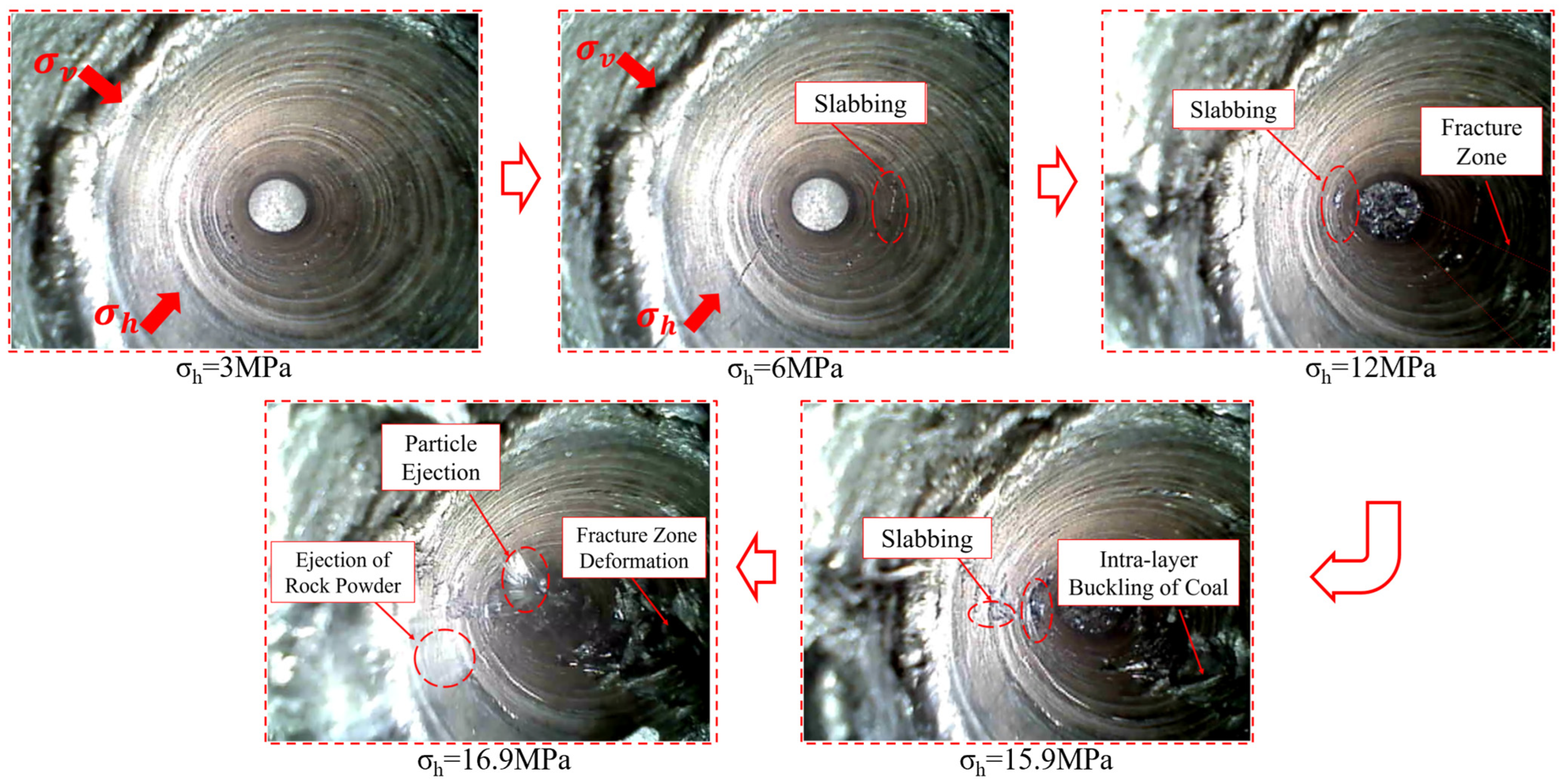
When the horizontal stress (σ
h) was between 0 and 3 MPa, no significant change was observed on the borehole wall, and the micro-fractures within the coal mass closed. When σ
h reached 6 MPa, spalling of small rock fragments occurred on the right side of the borehole. Video observations indicated that these spalled fragments had essentially no initial velocity. Subsequently, taking this area on the right side as an origin point, failure propagated across the roadway, with continuous spalling of rock fragments leading to the formation of a fracture zone. When the horizontal stress (σ
h) reached 12 MPa, the fracture zone on the right side had essentially coalesced. Simultaneously, rock spalling initiated at the symmetrically opposite position on the left side and continued progressively. Meanwhile, the fracture zone on the right side continued to develop further. As the horizontal stress (σ
h) increased, the failure process progressed markedly. At σ
h = 15.9 MPa, the fracture zone on the left side had essentially formed, while buckling of a large coal slab occurred at the lower part of the right fracture zone, accompanied by particle ejection. When σ
h reached 16.9 MPa, particle ejection was observed on the left side, evolving into a spray-like ejection from the fracture zone, and the right fracture zone began to deform. Ultimately, at σ
h = 17.1 MPa, the borehole stability and collapsed, resulting in an “X”-shaped conjugate shear failure pattern centered on the roadway, as shown in
Figure 10.
4. Optimization of Roadway Surrounding Rock Control
4.1. Numerical Model
A three-dimensional numerical model was developed using FLAC3D 3.00. The surrounding rock was described using the Mohr–Coulomb yield criterion with an elastic–perfectly plastic constitutive model. To highlight the evolution of the plastic zone and the deformation response of the roadway under mining and excavation disturbances, strain softening and residual strength parameters were not considered. The mechanical properties of the rock mass are listed in
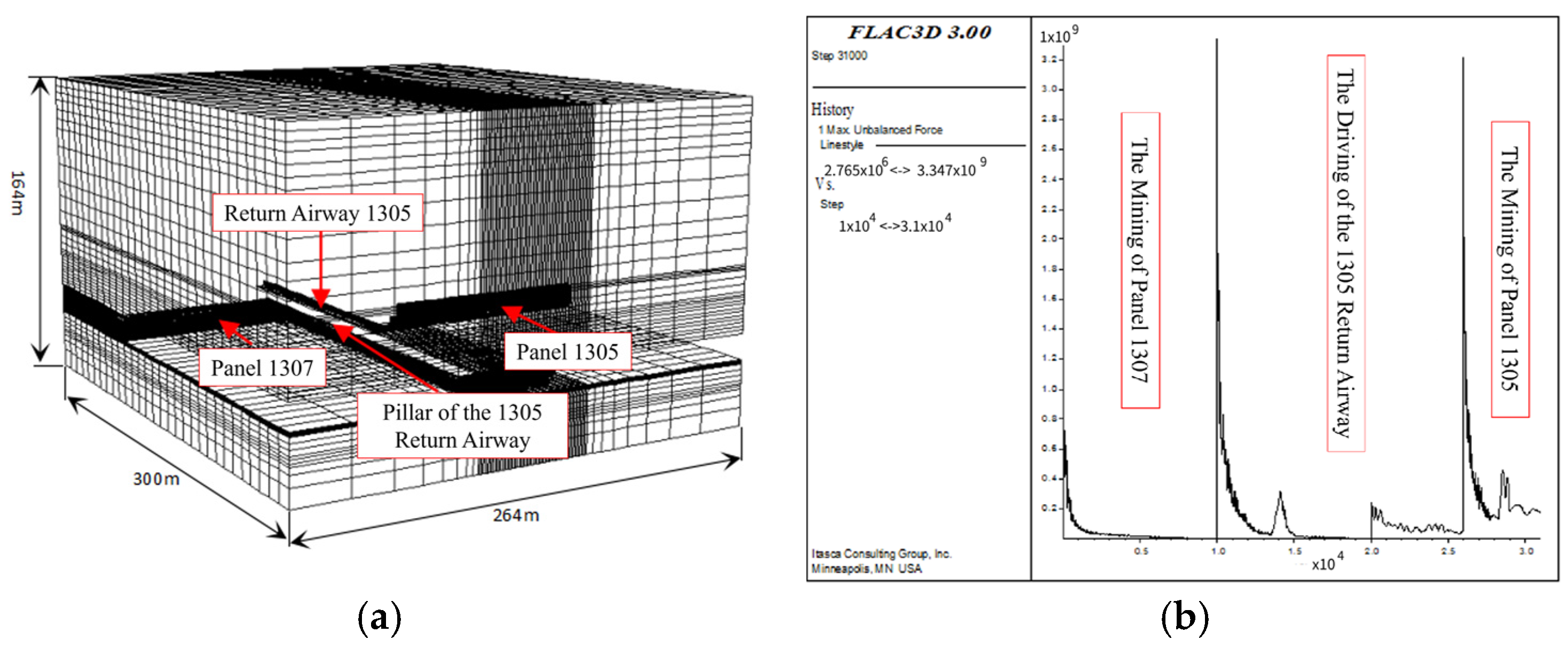
Table 1. Based on the site mining layout and the objectives of this study (covering the interaction range among the gob, coal pillar, roadway, and working face), a three-dimensional computational model was established, as shown in
Figure 11a. The overall model dimensions are 264 m along the panel layout direction, 300 m along the advance direction, and a total height of 164 m. These dimensions were selected to ensure that mining-induced disturbances attenuated sufficiently within the model boundaries, thereby minimizing boundary effects on the simulation results.
For meshing, a refinement strategy was adopted in key regions. The global element size was set to 1.0 m, and local refinement was applied in areas with high stress gradients, such as the roadway roof and floor, where the element size was reduced to 0.5 m to improve the resolution of roadway deformation and the plastic zone’s distribution.
To improve computational efficiency while emphasizing the dominant controlling factors, the actual geological conditions were simplified appropriately. Overlying strata not explicitly built into the model were represented by applying an equivalent load at the top boundary. The main strata within the model (the coal seam and the roof and floor strata) were assigned as layered materials, and the parameters were consistently taken from
Table 1. This simplification can effectively capture stress redistribution and deformation–failure characteristics of the roadway surrounding rock under overburden loading, while facilitating comparative analyses of the support parameters.
During the simulation, zero-displacement boundary conditions were applied to the front and back boundaries as well as the left and right boundaries, while an external load was applied at the top boundary. The specific settings are as follows: (A) for the front/back and left/right boundaries, u = 0 and v = 0 were imposed (where u and v denote the displacements in the X and Y directions, respectively), representing roller-type (single-constraint) boundaries; (B) for the bottom boundary, u = v = 0 was applied, representing a fully fixed boundary. Model convergence was controlled using the unbalanced force criterion: the model was considered to have reached a stable equilibrium when the unbalanced force ratio was < 1 × 10
−5. In addition, the equilibrium state at each stage was verified by monitoring the evolution of the maximum unbalanced force with calculation steps during excavation and mining (
Figure 11b). The simulations were performed in FLAC3D 3.00 using the default solver control settings recommended by the software. No customized solver modifications were implemented. Model equilibrium was verified by convergence monitoring, and a strict unbalanced force ratio threshold (unbalanced force ratio < 1 × 10
−5) was adopted to ensure numerical stability.
To evaluate the influence of mesh size on the numerical results, a mesh-sensitivity analysis was further performed. Based on the original mesh scheme (a global element size of 1.0 m in key regions and local refinement to 0.5 m at the roof and floor), a refined mesh was generated for comparison (a global element size of 0.75 m in key regions and 0.375 m at the roof and floor). The results show that the differences in the key response indices, including the peak roadway convergence, the maximum stress in the coal pillar, and the extent of the plastic zone, are all less than 3%, indicating that the adopted mesh design satisfies the accuracy requirement and that the numerical results exhibit good mesh independence.
4.2. Displacement Characteristics of Roadway Surrounding Rock
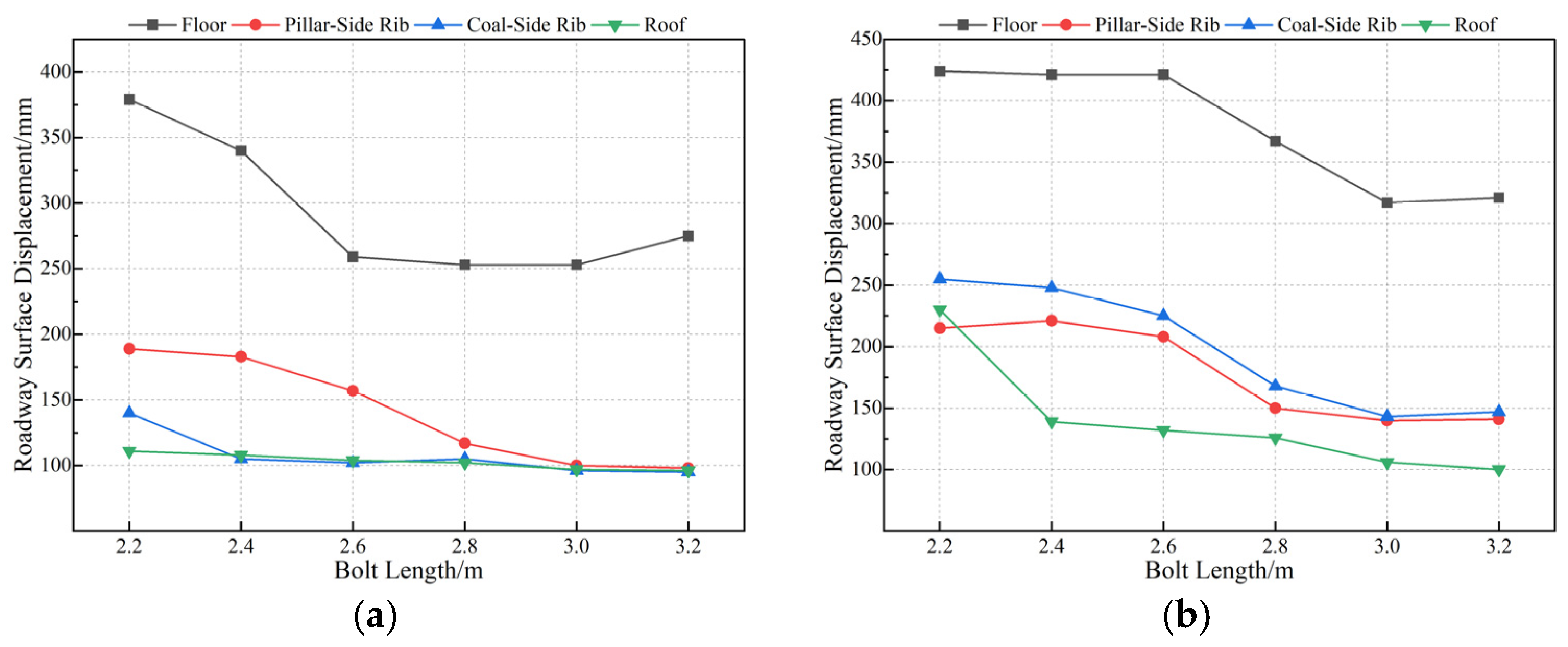
After the simulations, the statistical results of surrounding rock displacement and the corresponding displacement comparison curves are presented in
Table 2, and the displacement characteristics of the roof, floor, and two ribs of the ventilation roadway are shown in
Figure 12. The comparison indicates that, during roadway development, the maximum displacement of the roadway surrounding rock decreases with increasing rock–bolt length. In all cases, the floor displacement in the roadway section without floor support is greater than that of the other parts. From the perspective of surrounding rock control, there exists an optimal bolt length: if the bolts are too short, the confinement and the reinforcement effect is insufficient, and the control performance is poor; if the bolts are excessively long, the support cost increases without a proportional benefit. Because the ventilation roadway serves as a mining (serving) roadway, its safe serviceability during the extraction period is of greater importance.
4.3. Stress Analysis of Roadway Support
The statistical characteristics of bolt load data in the ventilation roadway during excavation and mining periods are shown in
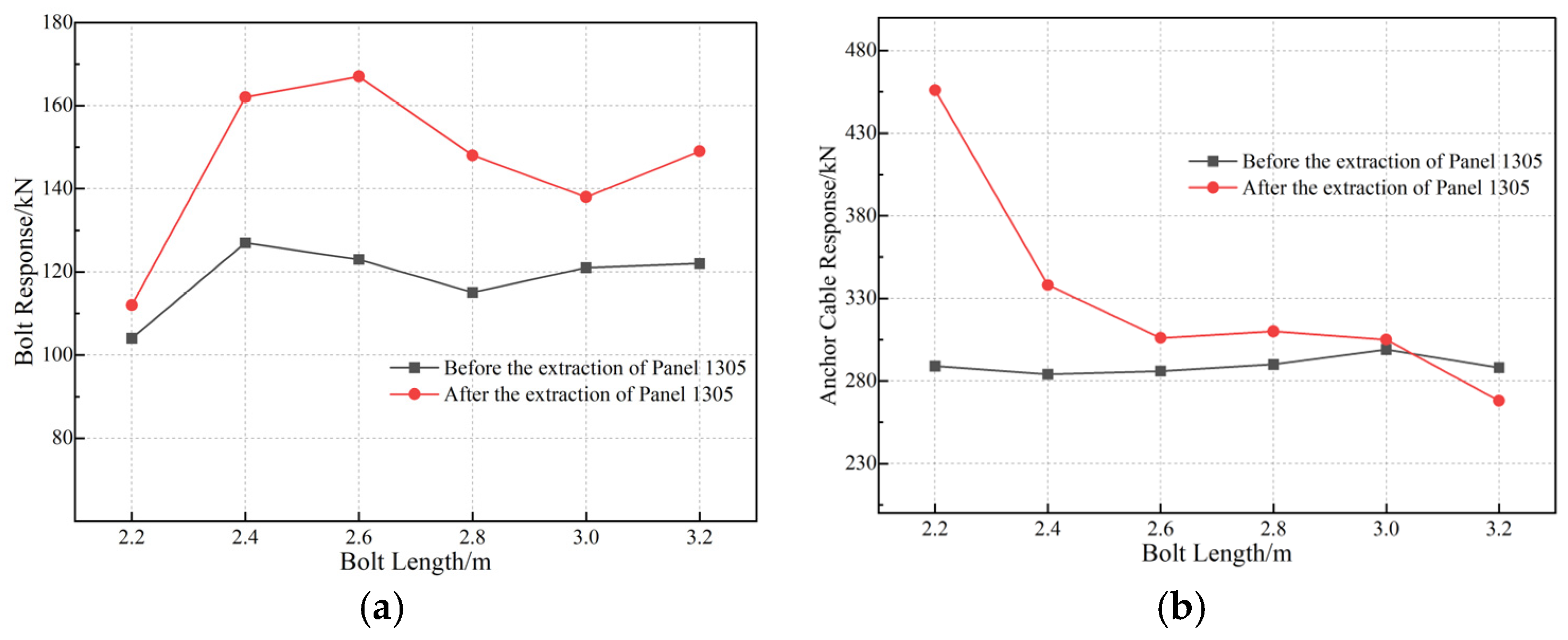
Table 3. Comparative analysis indicates that under constant pre-tensioning forces applied to both bolts and cables during the excavation phase, the axial loads in the bolts and cables remain relatively stable as the bolt length increases. The axial force in the bolts ranges between 104 and 127 kN, while that in the cables ranges between 284 and 299 kN.
Comparative analysis reveals that under the influence of mining activities, the loads acting on the support structure of the ventilation roadway increase. When the anchor bolt length is relatively short, thecables bear a significantly larger share of the load (as shown in
Figure 13). The increase in axial force experienced by the bolts is minimal, whereas the anchor cables exhibit the greatest increase. Consequently, the anchor cables primarily bear the additional load induced by mining. As the anchor bolt length increases, the load carried by the anchor cables decreases. This trend continues with further increases in bolt length; the load borne by the bolts continues to rise, while the load on the cables relatively decreases. In other words, the reinforcing effect of the anchor cables is reduced. Ultimately, a greater portion of the surrounding rock load is transferred to and supported by the rock mass reinforced by anchor bolts.
5. Engineering Application
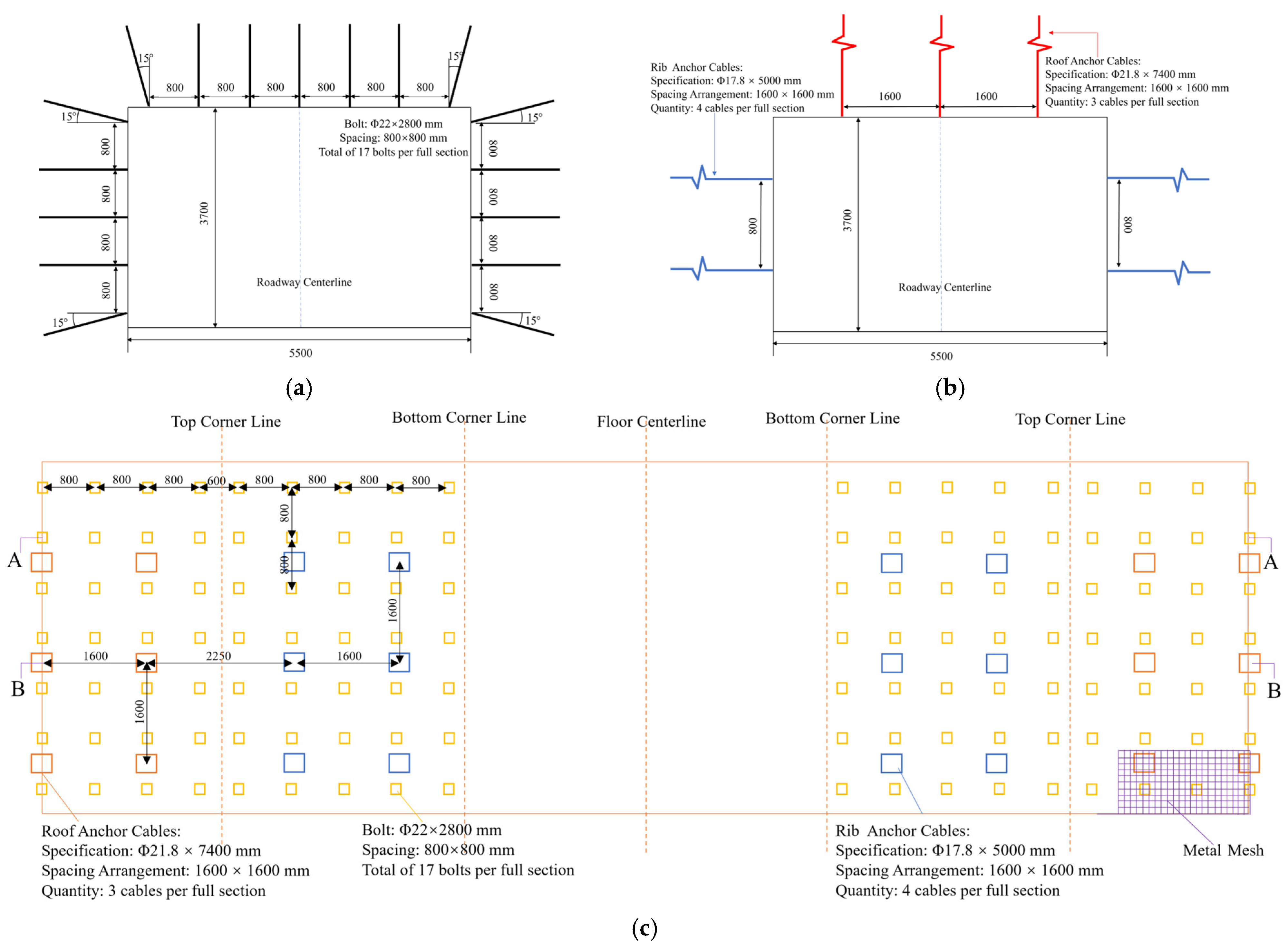
As shown in
Figure 14, the roof and rib rock bolts in the ventilation roadway of the 1305 panel utilize left-hand threaded, ultra-high-strength threaded steel bolts with non-longitudinal ribs, a yield load greater than 160 kN, and a tensile load greater than 210 kN. The bolts’ specifications are as follows: Φ22 × 2800 mm, arranged in a rectangular pattern with a spacing of 800 × 800 mm. The roof anchor cables employ steel strands of Φ21.8 mm with a 1 × 19 construction, each 7400 mm in length, and are installed at a spacing and row spacing of 1600 × 1600 mm. The rib anchor cables use steel strands of Φ17.8 mm with a 1 × 7 construction, each 5000 mm in length, and are also installed at a spacing of 1600 × 1600 mm.
As shown in
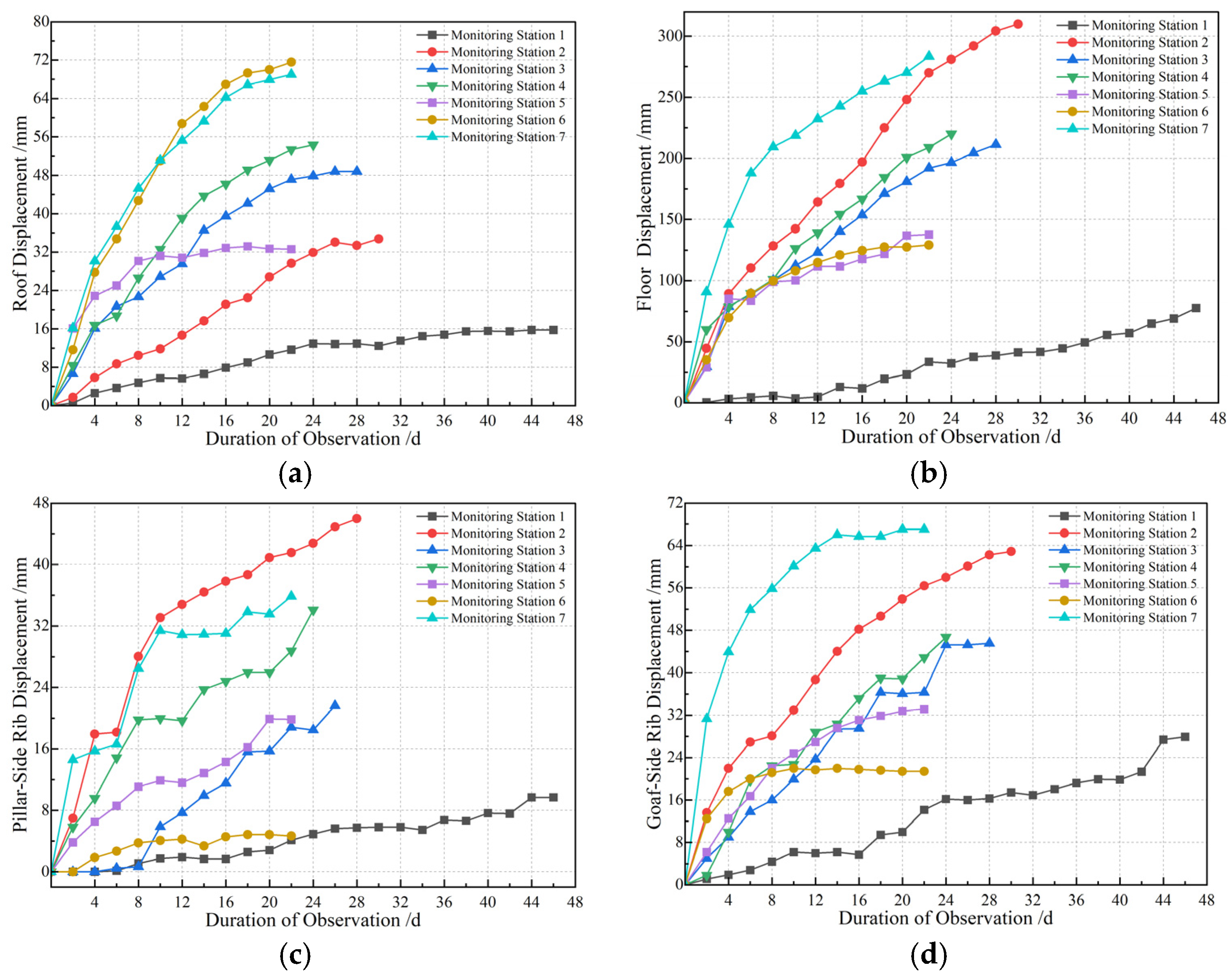
Figure 15, roadway surface convergence deformation monitoring encompasses the measurement of roof subsidence, floor heave, and displacements of the left and right ribs. This process involves observing the temporal evolution of surrounding rock displacement to analyze and assess whether the movement exceeds the maximum permissible safety thresholds.
- 1.
Roof Subsidence Monitoring
The roof subsidence rate was highest within the initial 10-day monitoring period. Approximately 16 days after the installation of the monitoring station, the subsidence rate began to decrease, while the cumulative subsidence continued to increase gradually. Analysis of the roof subsidence curves indicated that the total subsidence ranged between 16 mm and 74 mm. Multiple monitoring stations exhibited a consistent pattern of behavior.
- 2.
Floor displacement Monitoring
The maximum magnitude of floor heave occurred within the first 4 days of observation. Subsequently, the heave rate decelerated, and the incremental increase in heave diminished over time, showing a trend towards stabilization. The floor heave curves demonstrated that the cumulative heave across all monitoring stations increased continuously throughout the monitoring period, with values ranging from 78 mm to 310 mm. The most significant heave was recorded at the stations during the initial 4-day period, after which, varying heave evolution patterns were observed at different stations
- 3.
Left Rib Displacement Monitoring
Displacement of the left rib increased slowly but continuously throughout the monitoring period. Following floor dredging operations, observations indicated a left rib displacement of 34 mm within the first 12 days, accounting for three-quarters of the total observed displacement. This suggests that the dredging activity disturbed the roadway’s original equilibrium state, inducing convergence on the left side. The displacement rate showed no signs of decrease, and displacement continued to accumulate until the end of the observation period. However, intermittent phases of stability occurred, after which the inward displacement resumed with a reduced incremental rate
- 4.
Right Rib Displacement Monitoring
Displacement of the right rib also exhibited a slow, continuous increase during monitoring, with no reduction observed by the end of the survey period. The displacement measured at the stations reached 42 mm in the first 16 days, constituting three-quarters of the total displacement. After this initial period, the incremental increase in displacement stabilized and continued at a steady rate. The most significant change across all stations occurred between Days 6 and 12, after which the growth increment gradually diminished.
For reference, the numerical simulation with a bolt length of 2.8 m predicted maximum mining-induced deformations of 126.01 mm (roof), 366.56 mm (floor), 150.11 mm (coal-pillar rib), and 167.51 mm (solid rib). The field observations and numerical results indicate consistent deformation characteristics, i.e., floor heave dominance, followed by rib convergence and smaller roof subsidence. In terms of magnitude, the maximum roof-to-floor convergence was about 384 mm in the field versus 492.57 mm in the simulation (relative deviation ≈ 28%), suggesting that the simulation provides a conservative estimate. The failure extent is also broadly consistent, with field damage mainly within 0–4 m and simulated plastic-zone depths of about 2.0 m (roof and coal-pillar rib), 3.0 m (floor), and up to 5.0 m (solid rib), reflecting shallow-dominated damage with localized deeper extension.
Overall, field monitoring confirms the effectiveness of the optimized support scheme and is consistent with the deformation and failure characteristics predicted by the numerical analysis, supporting the engineering applicability of the proposed support optimization.
6. Discussion
- (1)
Model limitations. The surrounding rock was represented as an equivalent elastoplastic continuum, and bedding/joint anisotropy and progressive discontinuity failure were not explicitly modeled. Mining disturbance was incorporated through the excavation–mining sequence and equivalent loading assumptions. Therefore, the model is mainly intended to capture the dominant deformation pattern and the order of magnitude of convergence, rather than local extreme responses. Consistent with the field comparison, the predicted roof-to-floor convergence is generally conservative, which is acceptable for support parameter optimization.
- (2)
Bolt length sensitivity and load-sharing. Parametric analyses show that increasing the bolt length (2.2–3.2 m) reduces roadway deformation and confines the plastic zone’s extent. Meanwhile, the support load-sharing changes with bolt length: as bolt length increases, a larger proportion of the load is carried by rock bolts and the demand on cable bolts decreases. When bolt length exceeds about 3.0 m, the incremental reinforcing contribution of cable bolts tends to weaken. These results indicate that bolt length should be optimized by balancing deformation control, load-sharing within the bolt–cable system, and construction costs.
- (3)
Practical constraints: economics and constructability. Dense, high-strength support requires additional drilling time and consumables, increasing both material and labor costs. Further densification or excessive bolt length may also reduce drivage efficiency. Considering the observed control effect and practicality, a bolt length of 2.8 m provides a feasible and cost-effective option for the case studied.
- (4)
Applicability and recommendations. The conclusions are derived for thick-seam, high-stress roadways arranged along the gob boundary and strongly affected by adjacent mining. For conditions involving pronounced weak interlayers, water-softened floors, or markedly different in situ stress fields, site-specific recalibration based on field monitoring is recommended. In addition, supplementary sensitivity checks on the bolt spacing, pre-tension level, and cable–bolt layout should be conducted before direct application.
- (5)
Implications for intelligence and sustainability. The monitored indices adopted in this study (roof subsidence, floor heave, and rib convergence) can serve as practical features for warning and for updating the model parameters in a monitoring–model–support adjustment loop. In addition, the bolt length sensitivity results support selecting a feasible range (e.g., 2.8 m in this case) to avoid unnecessary reinforcement, reducing material use and installation time while maintaining stability. It should be noted that this study has not developed a dedicated intelligent algorithm or platform; the contribution is to provide a verifiable mechanism-based basis that can be embedded into intelligent and sustainable support design.
7. Conclusions
This study combined laboratory experiments, three-dimensional numerical simulations, and field measurements to clarify the deformation–failure behavior of a high-stress thick-seam ventilation roadway under excavation- and mining-induced single-sided unloading, and to optimize and verify the support parameters through an industrial trial. The main conclusions are as follows.
- (1)
Experimental findings (mechanical response and failure mode). Coal and rock specimens exhibit four typical stages in the stress–strain response: crack compaction, elastic deformation, yielding, and the residual stage. Under a confining pressure of 4 MPa, the coal specimen under true-triaxial unloading reaches a peak strength of 32.4 MPa. The borehole-containing coal specimen shows a lower peak strength (17.1 MPa) and low residual capacity, leading to abrupt post-peak instability. Its failure is characterized by an “X”-shaped conjugate shear pattern, indicating tensile–shear coupled damage under unloading.
- (2)
Numerical outcomes (support load-sharing). Increasing bolt length leads to a distinct load-sharing adjustment between bolts and cables. During excavation, axial forces in the bolts and cables remain relatively stable, whereas during mining, they increase due to mining-induced stress redistribution. With increasing bolt length, a larger proportion of the support load is carried by the bolts and the demand on the anchor cables decreases, indicating a clear load transfer effect.
- (3)
Field-relevant deformation control and engineering implications. Longer bolts improve the control of roof and rib deformation but have limited influence on floor heave. Under mining disturbance, roadway convergence is dominated by floor heave, while rib-to-rib convergence is of similar magnitude on both sides. Therefore, in addition to roof–rib reinforcement, the support design for such roadways should prioritize measures targeting floor stability.