Article

Dominant Role of Horizontal Swelling Pressure in Progressive Failure of Expansive Soil Slopes: An Integrated FAHP and 3D Numerical Analysis

1
Faculty of Public Security and Emergency Management, Kunming University of Science and Technology, Kunming 650093, China
2
Yunnan Bureau of Geology and Mineral Resources, Kunming 650011, China
3
School of Geology and Environment, Xi’an University of Science and Technology, Xi’an 710054, China
4
School of Land and Resources Engineering, Kunming University of Science and Technology, Kunming 650093, China
*
Author to whom correspondence should be addressed.
Appl. Sci. 2026, 16(2), 1110; https://doi.org/10.3390/app16021110
Submission received: 6 December 2025 / Revised: 16 January 2026 / Accepted: 19 January 2026 / Published: 21 January 2026

Abstract

Directional swelling pressure is a critical yet often overlooked factor governing the instability of expansive soil slopes. Most existing studies simplify swelling behavior as a uniform or purely vertical stress, thereby underestimating the distinct contribution of horizontal swelling pressure. In this study, an integrated framework combining the Fuzzy Analytic Hierarchy Process (FAHP), multivariate regression analysis based on 35 expansive soil samples, and three-dimensional strength-reduction numerical modeling was developed to systematically evaluate the mechanistic roles of vertical and horizontal swelling pressures in slope deformation. The FAHP and regression analyses indicate that water content is the dominant factor controlling both the free swell ratio and swelling pressure, leading to predictive relationships that link swelling behavior to fundamental physical indices. These empirical correlations were subsequently incorporated into a three-dimensional numerical model of a representative Neogene expansive soil slope. The simulation results demonstrate that neglecting swelling pressure results in substantial discrepancies between predicted and observed displacements. Vertical swelling pressure induces moderate surface uplift but exerts a limited influence on overall failure patterns. In contrast, horizontal swelling pressure markedly amplifies downslope displacement—by more than four times under saturated conditions—reduces the factor of safety by 24.7%, and promotes the progressive development of a continuous slip surface. These findings clearly demonstrate that horizontal swelling pressure is the dominant driver of progressive failure in expansive soil slopes. This study provides new mechanistic insights into swelling-induced deformation and offers a quantitative framework for incorporating directional swelling stresses into slope stability assessment, design optimization, and mitigation strategies for geotechnical structures in expansive soil regions.

1. Introduction

Expansive soil is a distinctive type of clay, predominantly composed of montmorillonite, a highly hydrophilic mineral, which exhibits pronounced swelling upon water absorption and shrinkage upon desiccation [1]. These cyclic swelling–shrinkage behaviors have led to widespread damage to infrastructure such as buildings, railways, highways, airports, and earth dams, resulting in substantial economic losses [2]. Consequently, the challenges posed by expansive soils have long been a focal point of global research and are often regarded as a “geotechnical cancer” due to their pervasive impact on engineering projects [3]. In the present study, free swelling tests were conducted on 35 sets of expansive soil samples, revealing free swelling ratios ranging from 40% to 66%, with an average of 57%, classifying them as weakly expansive soils.
In China, expansive soils are widely distributed across more than 20 provinces, municipalities, and autonomous regions, rendering them a common concern in geotechnical projects [4]. Engineering practice has primarily focused on the triggers and macroscopic patterns of swelling–shrinkage deformation, with key triggers including water immersion, infiltration, and wetting–drying cycles under evaporation [5]. Li et al. systematically investigated the effects of dry density and water content variations on the shear strength parameters of expansive soils, highlighting the dynamic attenuation of shear strength and its implications for slope stability [6]. Similarly, Zhang et al. explored the influence of water content and overburden pressure on the shear strength of remolded expansive soils, fitting the experimental data using three analytical approaches [7].
Swelling pressure, defined as the pressure required to return an expanded soil sample to its original volume after free swelling, is a critical indicator of expansive potential and a key driving factor in expansive soil-induced landslides. Numerous studies have addressed the post-absorption mechanical behavior of expansive soils. For instance, Guo et al. developed slope models with varying initial water contents and monitored temperature, moisture content, earth pressure, and displacement under multiple freeze–thaw cycles, elucidating the role of initial water content on slope stability [8]. Yang investigated the relationship between hygroscopic expansion rate and water content for remolded medium-expansive soils under different initial water contents, dry densities, and zero-overburden conditions [9]. Su et al. clarified the physical significance of cohesive and frictional strengths in expansive soils, deriving their variations with water content through direct shear and triaxial tests [10]. Mohammed et al. conducted small-scale experiments to examine the influence of soil suction on volumetric changes, revealing the temporal evolution of swelling and suction under constant initial water content and dry unit weight [11]. Liu et al. quantified the anisotropic swelling behavior of expansive soils by means of an improved consolidation test and developed a constitutive model to predict the differences between vertical and horizontal swelling moduli, thereby providing experimental evidence for the directional characteristics of swelling pressure [12]. Han et al. experimentally investigated the relationship between lateral and vertical swelling pressures of expansive soils under different wetting conditions and proposed a predictive approach, highlighting the engineering implications of swelling anisotropy [13]. Wang et al. conducted numerical simulations of deformation in expansive soil slopes under varying moisture conditions based on a fractal model, emphasizing the influence of moisture variation on swelling behavior [14]. Li et al. proposed a swelling ratio model applicable under K0-constrained conditions, incorporating dry density, initial water content, and overburden pressure, which provides valuable insight into modeling swelling behavior under constrained states [15]. Lan et al. examined the effects of swelling on shear strength and slope stability, emphasizing how moisture variation influences soil strength and failure mechanisms [16].
Most prior studies have treated swelling pressure as isotropic or simplified it to the vertical component, leaving the distinct contributions of horizontal swelling pressure to landslide initiation and progressive failure largely unexplored. In recent years, numerical modeling has emerged as a primary tool to investigate these phenomena [17,18,19]. To address this gap, the present study proposes an integrated framework that combines FAHP–regression analysis with three-dimensional numerical modeling to differentiate the effects of vertical and horizontal swelling pressures, elucidating their asymmetric influence on displacement evolution, slip surface connectivity, and overall slope stability.

2. Landslide Overview and Geological Context

2.1. Developmental Characteristics of Landslides

The investigated expansive soil landslide is situated on the eastern flank of the Tongwei factory area, where the natural slope gradient ranges from 8° to 15°. The landslide exhibits a distinct armchair-shaped morphology, extending approximately 220 m in length and 190 m in width, and covers an area of about 35,150 m2. The landslide body has an average thickness of approximately 7 m, yielding an estimated volume of 292,600 m3, with a total vertical relief of about 40 m.
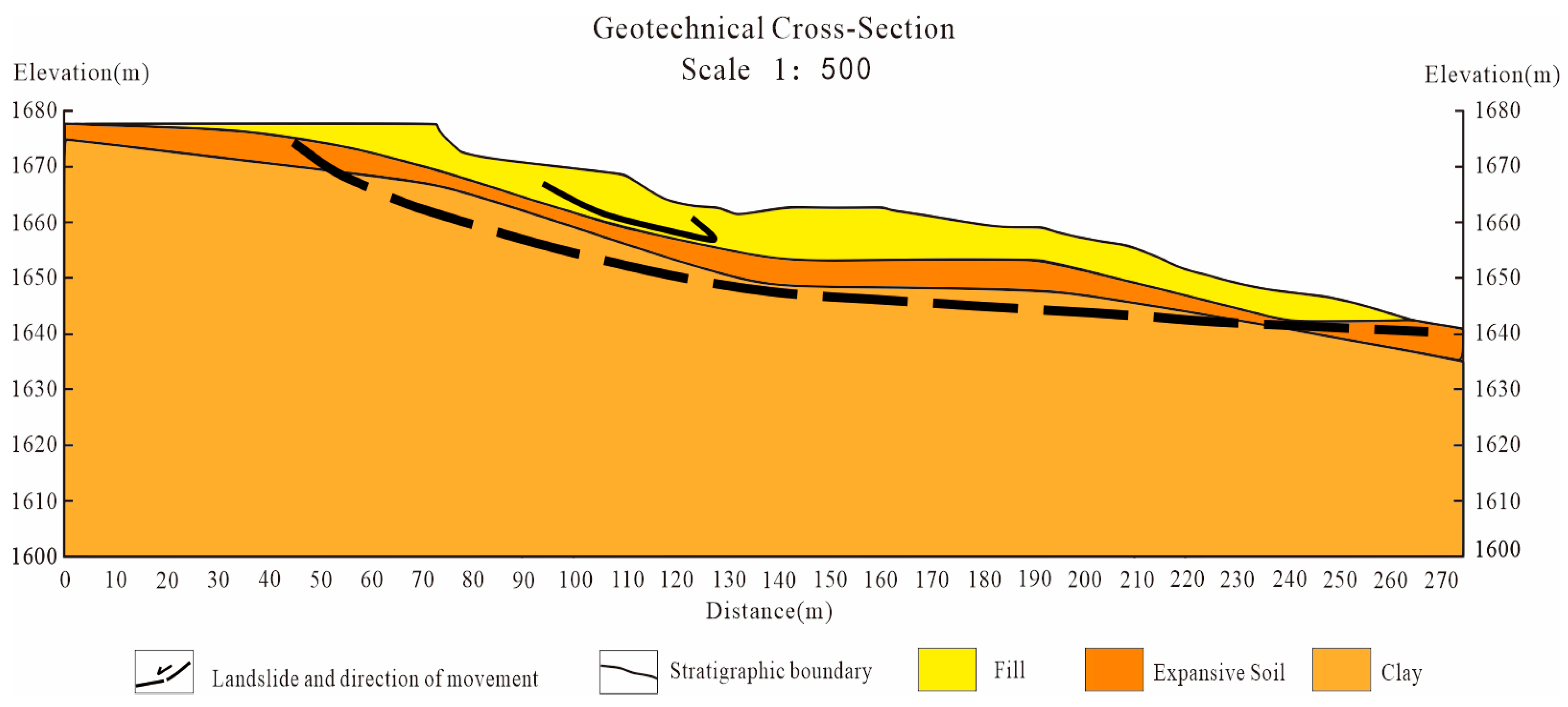
Stratigraphically, the site comprises Quaternary fill, Holocene colluvial red clay, and Miocene expansive clay of the Xiaolongtan Formation. The principal sliding surface is predominantly developed within the weak, moisture-saturated expansive clay of the Xiaolongtan Formation, which is characterized by low shear strength and high compressibility. Structural discontinuities between fill layers, as well as at the interface between fill material and native soil, collectively form a composite failure surface (Figure 1).
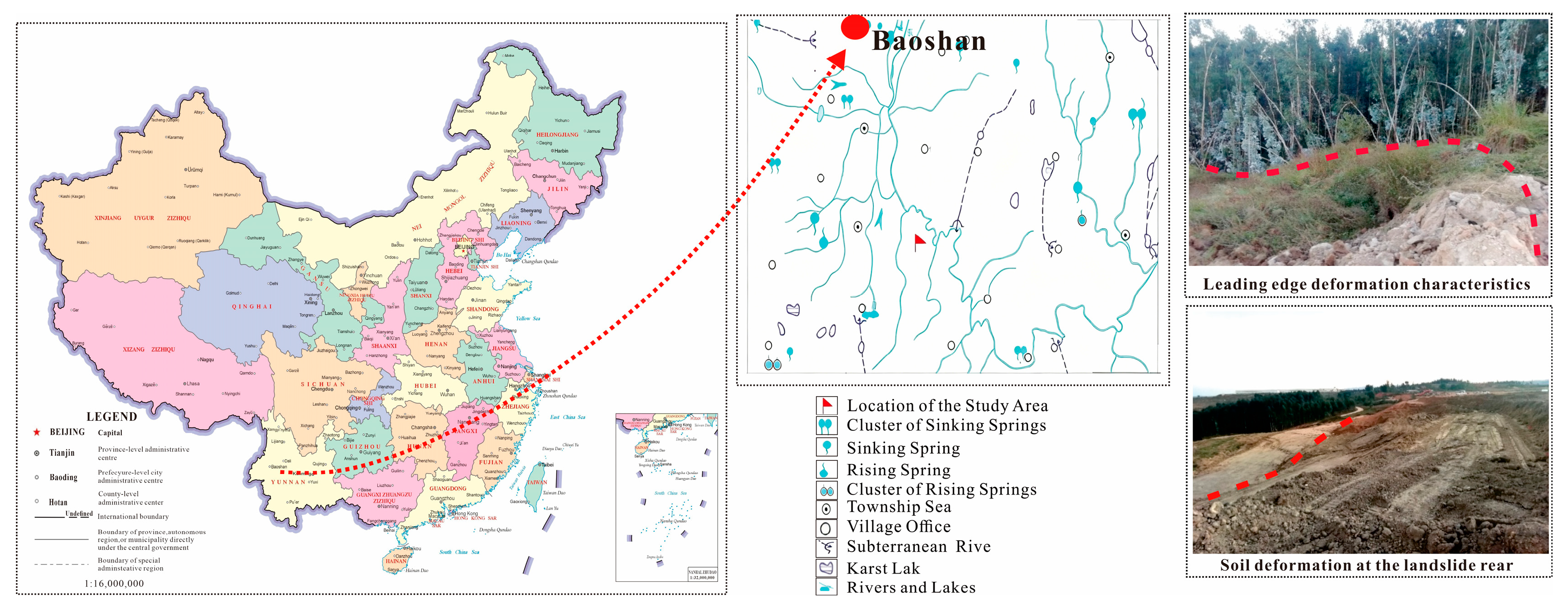
Field investigations reveal evidence of multi-stage sliding, manifested by extensive cracking, surface subsidence, and well-developed scarps. In the downslope direction, thrust-induced ground bulging is clearly observed, with crack apertures reaching up to 40 cm and vertical displacements of as much as 13 cm (Figure 2). These deformation features, together with the presence of tilted trees, indicate that the landslide can be classified as a thrust-type failure. Ongoing deformation is likely driven by continuous loading at the rear edge of the landslide.

2.2. Controlling Factors of Landslide Formation

The landslide was triggered by the combined influence of multiple factors, including topography, tectonic activity, soil structure, and rainfall. At the macroscopic scale, the study area exhibits a denudational terrace within an erosional–depositional system. The original topography features an eastward-inclined concave slope, which promotes the convergence of both surface water and groundwater, resulting in continuous softening of potential sliding surfaces. The region is tectonically active, situated adjacent to the Tengchong–Lushui and Longling strong seismic zones, and influenced by the Gengma–Lancang River seismic belt. Frequent seismic events increase the susceptibility of the poorly consolidated and heterogeneous surface fill to failure.
The sliding mass primarily comprises weakly expansive clay characterized by low consolidation, well-developed reticulated desiccation cracks, and a tendency to soften and disintegrate upon saturation, leading to unfavorable geotechnical properties. Rainfall infiltration further increases soil moisture content, significantly reducing the soil’s internal friction angle and cohesion, and thereby sharply decreasing the slope’s anti-sliding capacity. Ultimately, under the combined triggering effects of seismic activity and rainfall, slope failure occurred against a background of pre-existing adverse topographic and soil conditions.

3. Analysis of Dominant Factors Influencing Expansion Characteristics

The free swelling ratio is defined as the relative volumetric expansion of loosely packed, oven-dried soil particles when dispersed in water, compared to their initial volume in air [20]. This parameter quantitatively characterizes the volumetric expansion potential of dispersed soil particles in aqueous environments and serves as a critical metric for evaluating the expansivity of cohesive soil matrices, functioning as a fundamental diagnostic indicator for soil characterization. Swelling pressure, on the other hand, represents the maximum confining stress required to prevent vertical volumetric expansion of cohesive soils under fully saturated and confined conditions.
These two parameters are inherently interrelated and are primarily governed by the mineralogical composition of clay fractions, colloid concentration, geochemical properties, and pore fluid dynamics. In general, soils exhibiting higher free swelling ratios also tend to develop greater swelling pressures, with a positive correlation reflecting an elevated expansive potential that is consistent with the mineralogical and colloidal characteristics of the soil.
To systematically identify and quantify the factors controlling swelling behavior, a two-stage analytical framework was adopted. First, the Fuzzy Analytic Hierarchy Process (FAHP) was applied as a structured, expert-judgment-based method to screen and rank the relative importance of eight common geotechnical parameters, thereby reducing subjectivity in variable selection and providing an initial weighting scheme. Subsequently, these prioritized factors were used as inputs for rigorous statistical regression analyses on the experimental dataset.

3.1. Analysis of Dominant Controlling Factors for Swelling Characteristics Based on Analytic Hierarchy Process (AHP)

Based on the Fuzzy Analytic Hierarchy Process (FAHP), this study evaluates the primary factors controlling the swelling behavior associated with landslide mechanisms. Integrating fundamental geological conditions with existing empirical knowledge, eight geotechnical parameters commonly measured in field investigations were selected as secondary assessment variables, including dry unit weight, moisture content, void ratio, free swelling ratio, liquid limit, plastic limit, liquidity index, and plasticity index. The FAHP methodology was employed to systematically prioritize the factors governing soil swelling behavior.
The Analytic Hierarchy Process was implemented using the YAHP 10.1 software platform. Pairwise comparison matrices were subjected to a consistency check, with a consistency ratio (CR) below 0.1 considered acceptable, ensuring stochastic consistency. The weight coefficients for each geotechnical parameter within the comprehensive evaluation framework of physical–mechanical controls on expansion were derived from the principal eigenvector corresponding to the maximum eigenvalue of each judgment matrix. The resulting quantified weights are presented in Table 1.
As shown in Table 1, swelling pressure is primarily influenced by the combined effects of dry unit weight, moisture content, void ratio, and free swelling ratio. In contrast, the free swelling ratio is mainly controlled by dry unit weight, moisture content, and void ratio, exhibiting minimal correlation with other physical parameters. These relationships can be further validated through univariate and multivariate regression analyses, providing a quantitative foundation for understanding the geotechnical controls on soil swelling behavior.

3.2. Single-Factor Analysis of Free Expansion Rate and Physical Property Indices

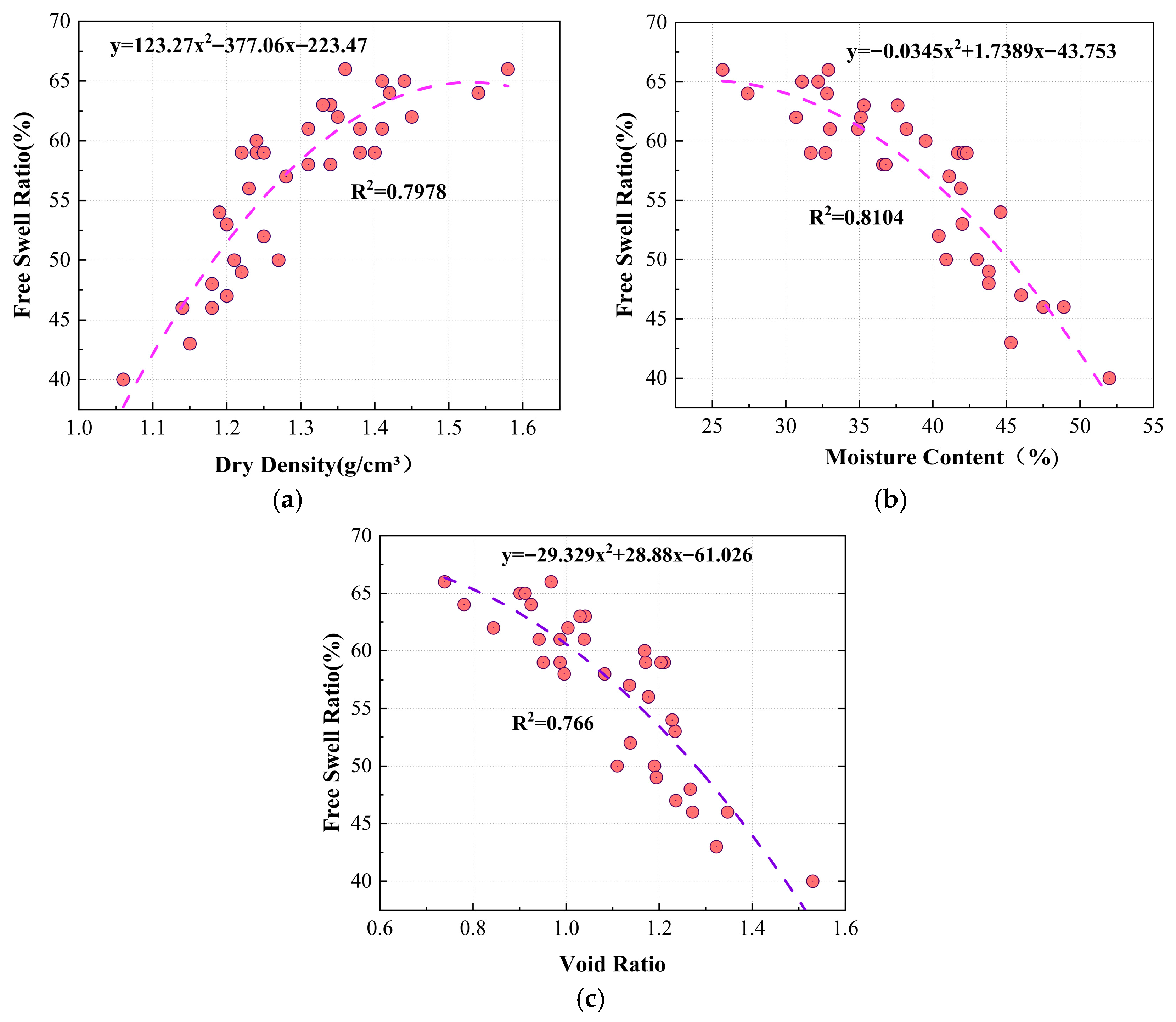
Based on the weight coefficients obtained from FAHP (Table 1), dry density, moisture content, and initial void ratio were selected as the primary independent variables in the regression analyses of both the free swell ratio and swelling pressure. A statistical analysis was performed on the physical properties of 35 expansive soil samples collected from the study area. The analyzed parameters primarily include the free swell ratio, swelling pressure, dry density (ρ), water content (ω), and initial void ratio (e0), as summarized in Table 2 (for specific data, please refer to the Supplementary Materials). Outlier detection was carried out using the Grubbs test implemented in Origin 2025b analytical software, and anomalous values in the free swell ratio (δef) as well as other physical property parameters were systematically removed to ensure data reliability.
Taking the free swell ratio (δef) as the dependent variable and individual physical property parameters as independent variables, separate regression analyses were conducted to examine the relationships between δef and dry density, water content, and void ratio. The resulting regression equations and their corresponding fitting coefficients are presented in Figure 3.

3.3. Swelling Pressure and Single-Factor Analysis of Physical Property Indices

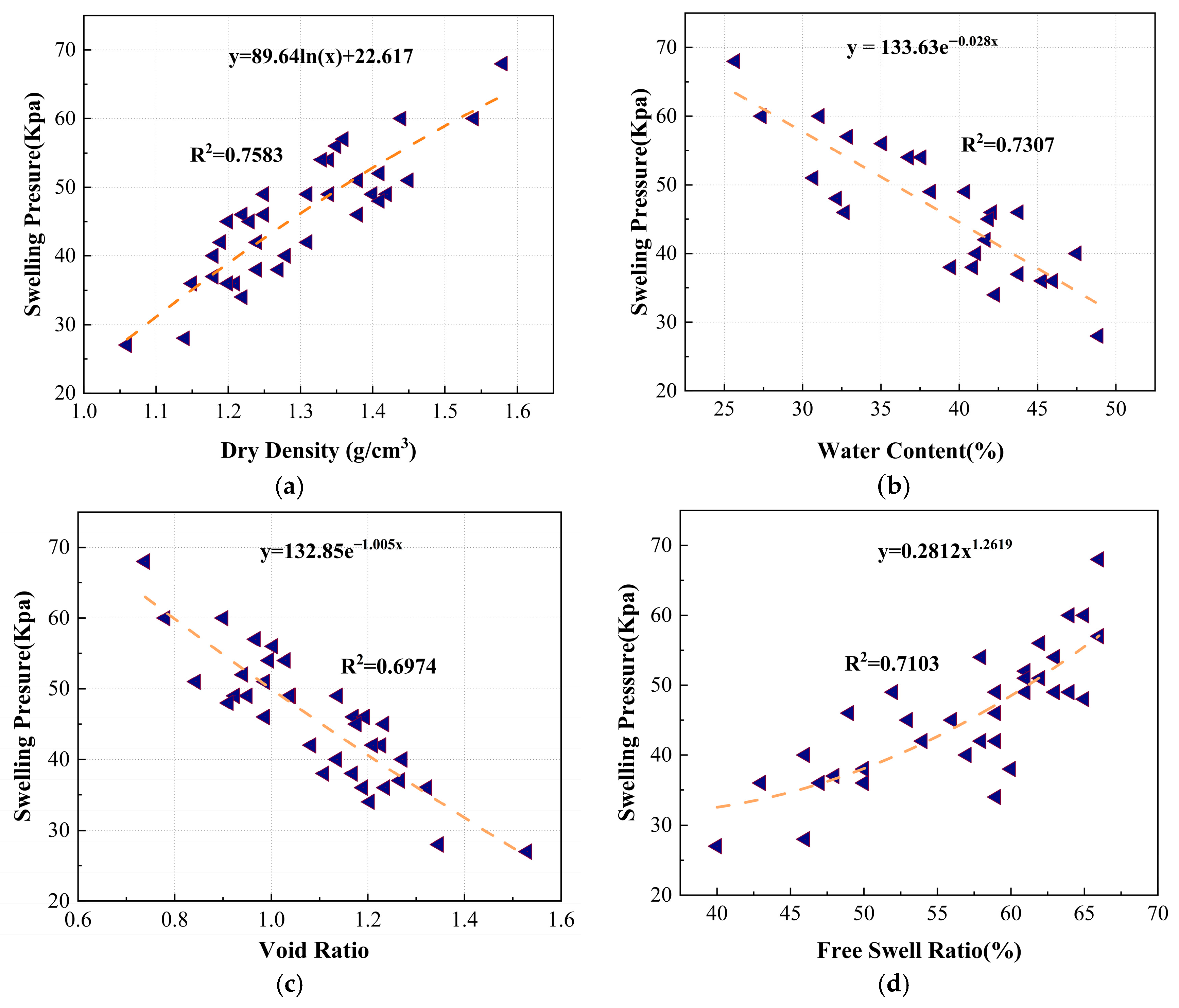
Regression analyses were performed using the swelling pressure (pe) as the dependent variable along the vertical axis and individual physical property indices as independent variables along the horizontal axis, including dry density, water content, void ratio, and free swell ratio. The resulting regression equations and corresponding coefficients of determination (R2) are presented in Figure 4.
The analysis revealed strong relationships between the free swell ratio of expansive soils in the study area and three key physical indices: dry density, water content, and void ratio. All regression models exhibited high goodness-of-fit, with R2 values exceeding 0.75. Similarly, the expansion pressure demonstrated statistically significant correlations with these physical property indices, with R2 values above 0.7, indicating satisfactory model performance. A comprehensive evaluation suggests that swelling behavior is predominantly controlled by water content, with particularly robust correlations observed in the regression models. These findings are consistent with the results of the FAHP analysis, further highlighting the critical role of moisture conditions in governing the swelling behavior of expansive soils.

3.4. Multivariate Analysis of Swelling Property Parameters

3.4.1. Multiple Linear Regression Analysis of Free Swelling Ratio

To further clarify the intrinsic relationship between expansive behavior and physical properties, and based on the outcomes of the univariate regression analyses, the free swell ratio (δef) was adopted as the dependent variable. Dry density (ρ), water content (ω), and void ratio (e) were selected as independent variables, as they are commonly regarded as key controlling factors governing the swelling behavior of expansive soils. A multiple linear regression analysis was subsequently performed using IBM SPSS Statistics 26 software to quantitatively evaluate the combined effects of these physical indices on δef. The regression results are summarized in Table 3.
As evident from Table 3, the regression model developed through SPSS software demonstrated relatively high regression coefficients, with a Durbin-Watson (D-W) statistic of 2.142, indicating the absence of autocorrelation phenomena. This suggests that variations in free swelling ratio are differentially controlled by these three physical property indices. The governing equation was expressed as
δef = 70.41 − 0.425ω + 0.18ρ − 0.209e,

3.4.2. Multiple Linear Regression Analysis of Swelling Pressure

Using swelling pressure (pe) as the dependent variable, with dry density (ρ), water content (ω), void ratio (e), and free swelling ratio (δef) as independent variables, a multiple linear regression analysis was conducted using SPSS software. Detailed results are presented in Table 4.
As shown in Table 4, the regression model established using SPSS software exhibits high regression coefficients, with a Durbin–Watson statistic of 2.142, indicating that the residuals are free from autocorrelation. The results demonstrate that variations in swelling pressure (pe) are jointly controlled by four physical indices, showing negative correlations with water content (ω) and void ratio (e) and positive correlations with dry density (ρ) and free swell ratio (δef). Accordingly, the governing regression equation could be expressed as
pe = 70.47 − 0.469ω + 0.143ρ − 0.180e + 0.120δef,
In this study, Equations (1) and (2) collectively indicated that both the free swell ratio (δef) and swelling pressure (pe) decrease with increasing water content (ω) and void ratio (e), while increasing with dry density (ρ). In addition, swelling pressure exhibited a positive correlation with the free swell ratio, highlighting the close linkage between expansive deformation potential and stress development.
To assess potential multicollinearity among the independent variables, the variance inflation factor (VIF) was employed. The results indicate that the VIF values of the variables ranged from 3.31 to 5.27, all well below the commonly used threshold of 10. Except for a very few variables slightly exceeding 5, most VIF values were below 5. Overall, there was no evidence of severe multicollinearity in the model, and the correlations among the independent variables were within an acceptable range, unlikely to substantially affect the stability of the regression results or the estimation of parameters.
Among the investigated variables, water content emerged as the most critical factor governing swelling pressure. Mechanistically, swelling pressure represents the internal stress generated by constrained volumetric expansion of expansive soil during moisture variation. As water content increases, soil softening is intensified, accompanied by a reduction in dry density and an increase in void ratio. These changes promote the development of a more open pore structure, thereby significantly weakening the expansion potential of the soil matrix. This overall trend is consistent with the observed scatter distributions, confirming that the proposed regression equation effectively captured the intrinsic relationship between swelling pressure and the four selected physical parameters.

4. Determination of Shear Strength Parameters for Expansive Soil Slopes

4.1. Back Analysis-Based Determination of Shear Strength Parameters

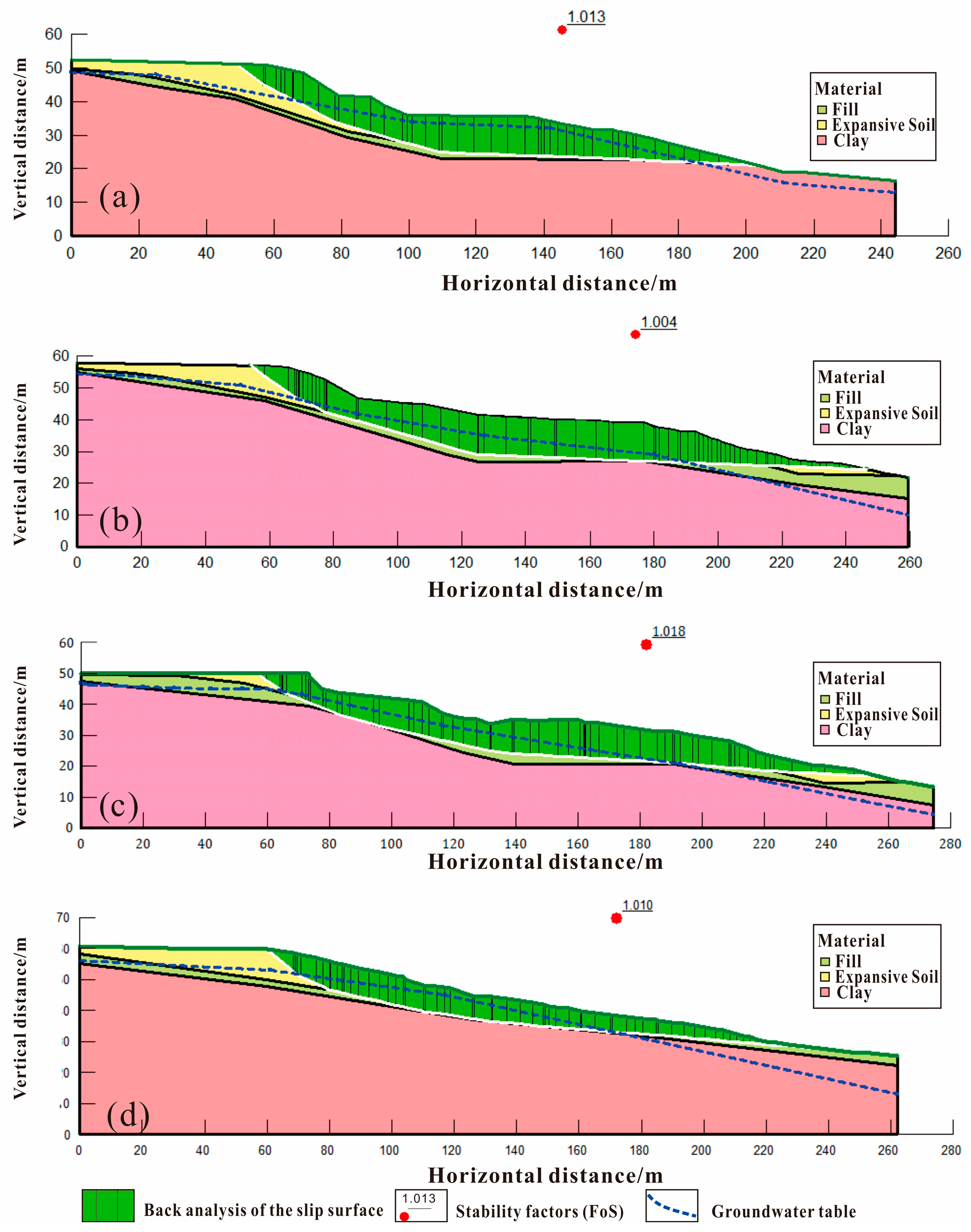
To improve the accuracy of shear strength parameter calibration, multiple limit equilibrium cross-sections were integrated to inversely determine the sensitive parameter—internal friction angle (φ). The SLOPE/W slope stability module in GeoStudio 2023.1 [21,22,23] was employed, applying the Morgenstern–Price method, a rigorous limit equilibrium approach, for back-analysis of landslide shear strength parameters. For cross-sections 2–2′, 3–3′, 4–4′, and 5–5′, cohesion (c) was held constant within the range of stability factors (FoS) governing landslide behavior, allowing variations in φ to be isolated. During three-dimensional stability simulations under saturated conditions, longitudinal profiles were categorized and averaged to reduce computational uncertainty (Figure 5). The calibrated shear strength parameters for each section are summarized in Table 5.

4.2. Parameter Selection in Numerical Simulation

The Mohr–Coulomb constitutive model was adopted in the Midas GTS/NX 2022 [24,25] finite element analysis, incorporating five key parameters: elastic modulus, Poisson’s ratio, unit weight, cohesion, and internal friction angle. Parameter ranges were synthesized from analogous landslides in the vicinity of the study area, in situ direct shear tests on borehole-extracted soil samples, and laboratory geotechnical test results. Using this information, the slip surface parameters were calibrated through back-analysis, yielding the engineering geological properties for the expansive soil slope on the eastern flank of the Tongwei Plant Area. The calibrated parameter values are summarized in Table 6.

4.3. The Magnitude of the Swelling Pressure

Expansive soils exhibit strong swelling potential and hydro-softening behavior. Upon water absorption, their volume undergoes significant changes, generating internal stresses. To determine the swelling pressure of expansive soil, ring-shaped soil samples are immersed in water and allowed to swell while a balancing load is applied to maintain a constant deformation. The maximum stress developed in the soil is then measured. After the swelling stabilizes, the swelling pressure is calculated using the following equation:
P e = W A × 10 ,
where P e is the swelling pressure (kPa, calculated to 0.01 kPa), W is the total balancing load (N), and A is the cross-sectional area of the specimen (cm2).
Using this method, 35 sets of swelling pressure data were obtained, ranging from 27 kPa to 68 kPa, with most values concentrated between 35 kPa and 55 kPa. The average and median values were 45.7 kPa and 46 kPa, respectively. Based on these experimental results and engineering experience, representative values for vertical and horizontal swelling pressures were selected. While vertical swelling pressure can be directly measured, horizontal swelling pressure is difficult to determine experimentally. Following Yang et al. [26], who investigated expansive soils near the Yun-Gui Railway test section, the horizontal swelling pressure was assumed to be 25% of the vertical swelling pressure, and these values were used as the input for subsequent analyses.

5. Numerical Simulation of Expansive Soil Landslides

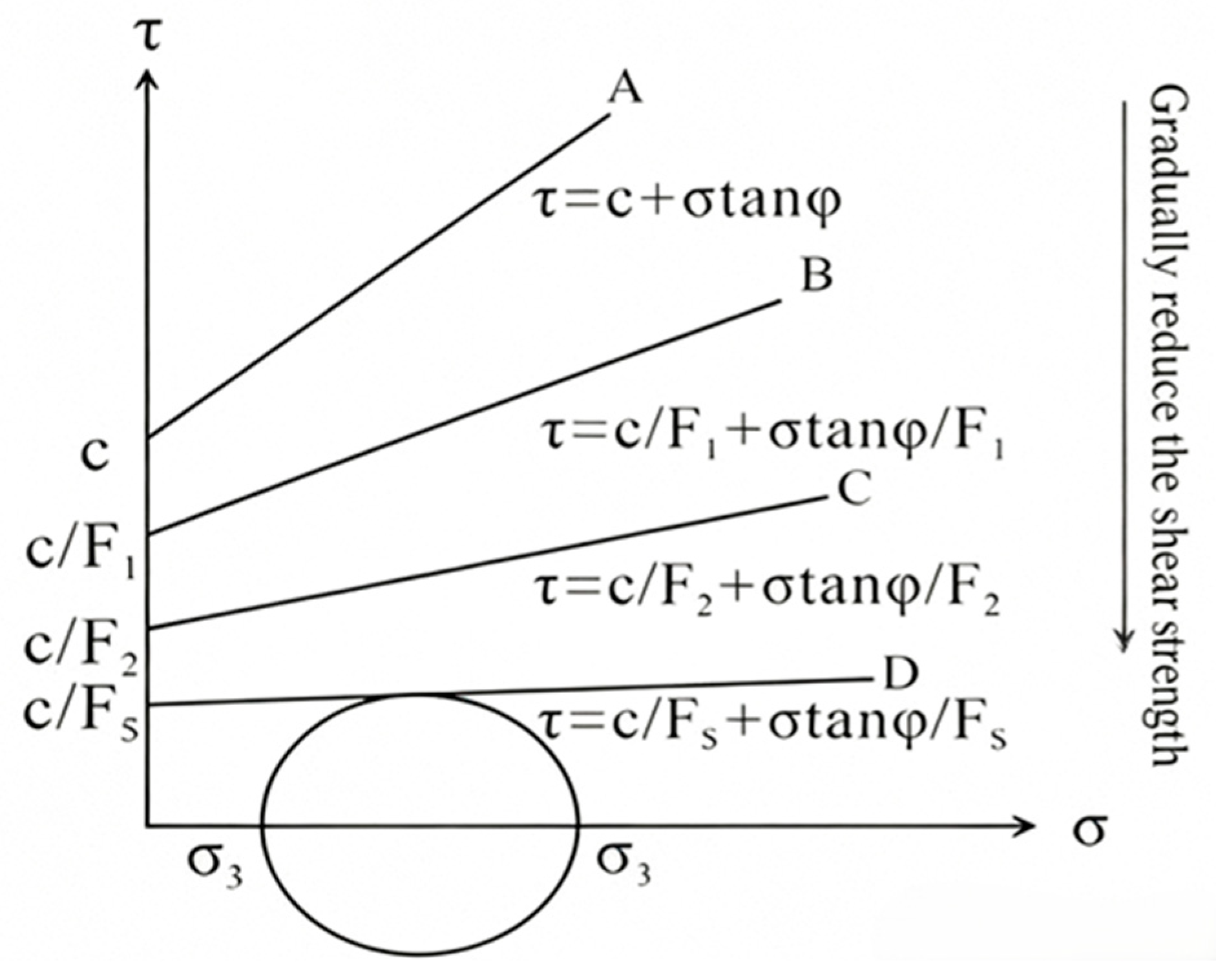
GeoStudio and Midas GTS/NX software were employed to analyze the stability of landslides in the study area. Shear strength parameters of the expansive soil layer were inversely calibrated using the limit equilibrium method. The strength reduction method was subsequently applied to evaluate slope stability under both natural and saturated conditions, incorporating the effects of different swelling pressure modes. This approach allowed for the characterization of displacement patterns in expansive soil landslides and elucidated the role of swelling pressures in landslide evolution. The variation of the strength reduction factor is illustrated in Figure 6. The strength reduction procedure [27] is expressed as:
c = c F
φ = arctan tan φ F
where c and φ are the initial cohesion and internal friction angle, c and φ’ are the reduced cohesion and friction angle after reduction, and F is the strength reduction factor.
The anisotropic nature of swelling pressure in expansive soils results in complex mechanical behavior. To investigate the effects of directional swelling pressures on landslide displacement, strain distribution, and factor of safety, the expansive soil layer was modeled under the simplifying assumption of uniform stress distribution. Numerical analyses were conducted using parameters corresponding to both natural and saturated states, considering three scenarios: (i) no swelling pressure, (ii) horizontal swelling pressure only, and (iii) vertical swelling pressure only.

5.1. Development of the Landslide Model

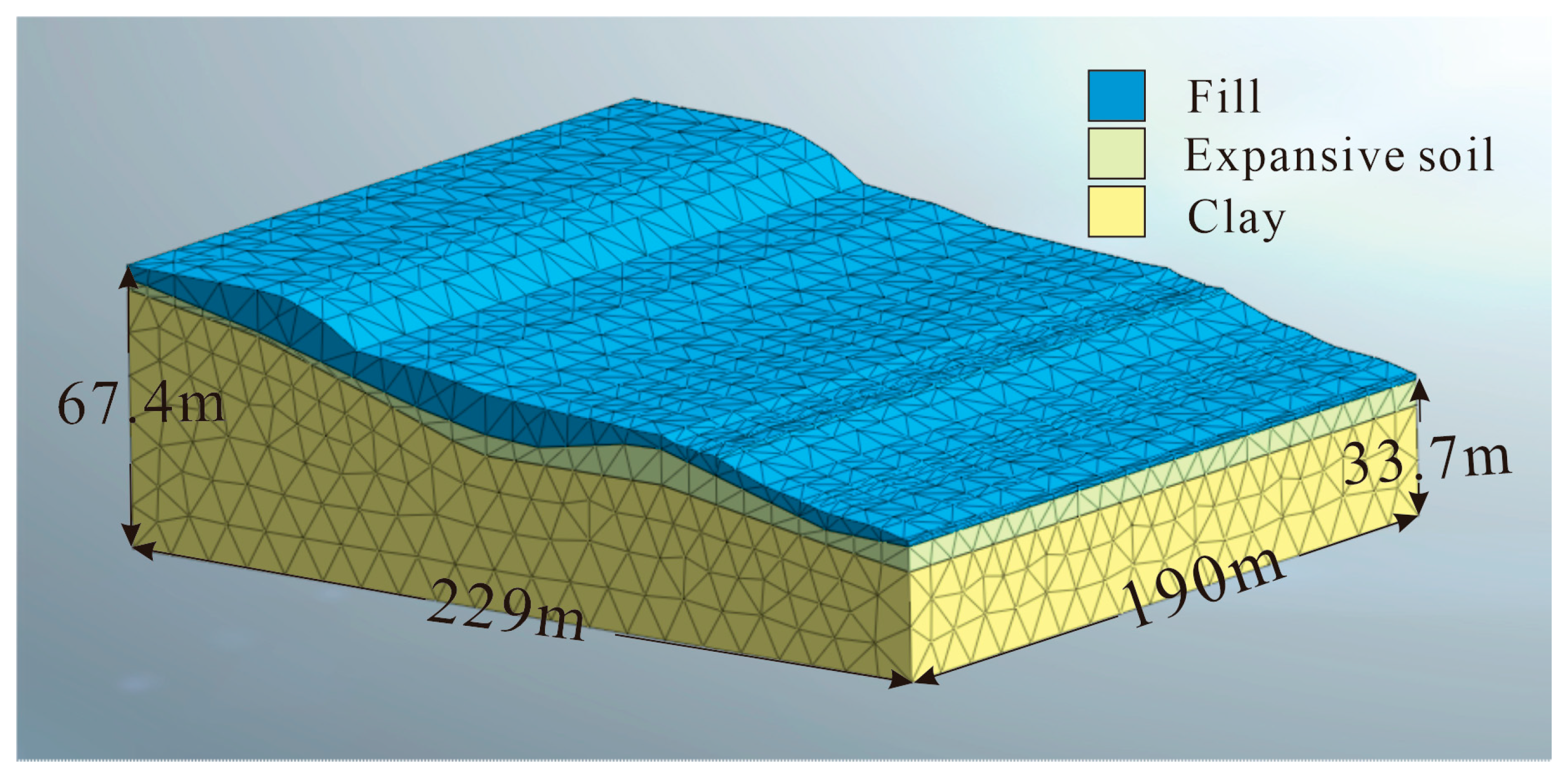
The model was discretized into a geometric mesh comprising 3915 nodes and 17,750 elements. The resulting landslide mesh configuration is illustrated in Figure 7. The model represents a landslide with a length of 229 m, a width of 190 m, a rear elevation of 67.4 m, and a front elevation of 33.7 m, with a natural slope angle ranging from 8° to 15°. During numerical simulation, the ground surface was treated as a free boundary without constraints. The front and rear boundaries were restrained against displacement along the y-axis, the left and right boundaries were restrained against displacement along the x-axis, and the base boundary was fully constrained in all directions (x, y, and z).

5.2. Modeling of Landslide Stability Under Natural Conditions

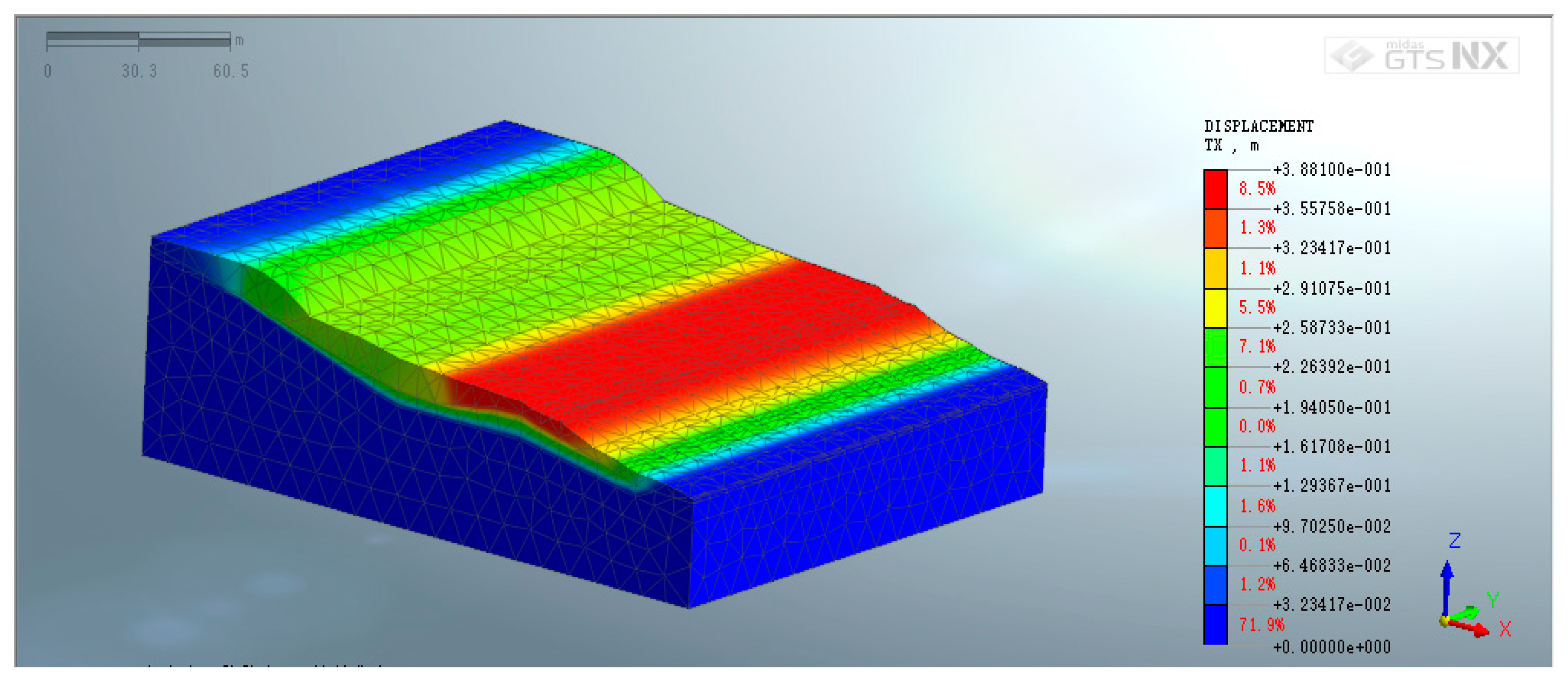
A three-dimensional geotechnical finite element model of the landslide under natural conditions (excluding swelling pressure) was developed using Midas GTS/NX. The simulation, driven solely by gravitational forces, predicted a maximum horizontal displacement of 5.48 cm at the distal margin, representing an 86.3% underestimation compared to the observed field displacement of 34.52 cm. Horizontal deformation was predominantly shallow and decreased with depth. The maximum vertical displacement (settlement) at the distal margin was 4.2 cm, approximately 8.8 cm less than field measurements, corresponding to a 67.7% underestimation. These substantial discrepancies between model predictions and observed data underscore the critical role of swelling pressure, whose omission leads to unrealistic deformation estimates. The model also indicated a peak tensile stress of 95.87 kPa in the X-direction at the leading and trailing edges. Plastic strain was primarily localized in the lower section of the distal margin, reaching a maximum value of 1.23 × 10⁻², with a calculated factor of safety of 1.28.

5.3. Stability Analysis of Landslides Under Saturated Conditions

The stability of expansive soil landslides is highly sensitive to variations in moisture content. To investigate the resulting displacement field, stress distribution, and plastic strain zones during rainy seasons, numerical simulations were performed using parameters corresponding to saturated conditions.

5.3.1. Without Considering Swelling Pressure

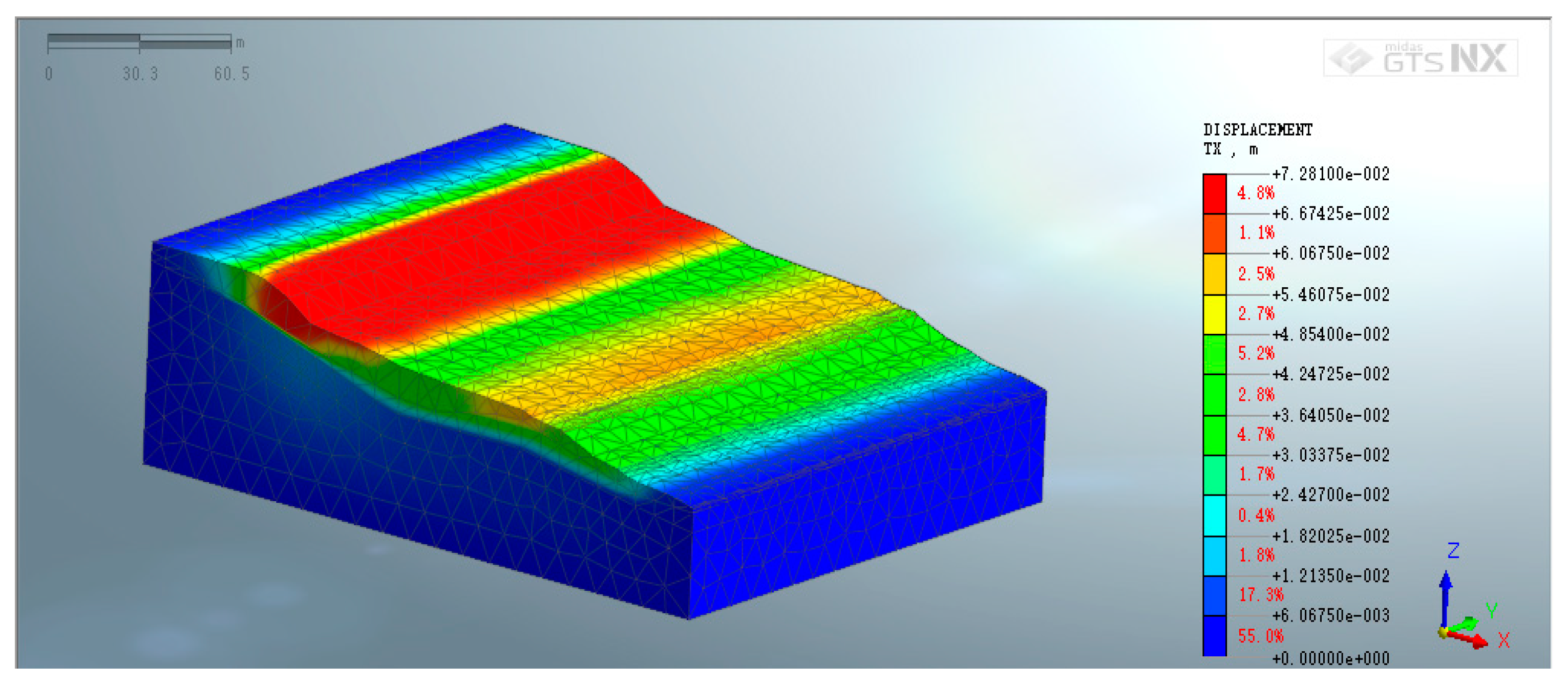
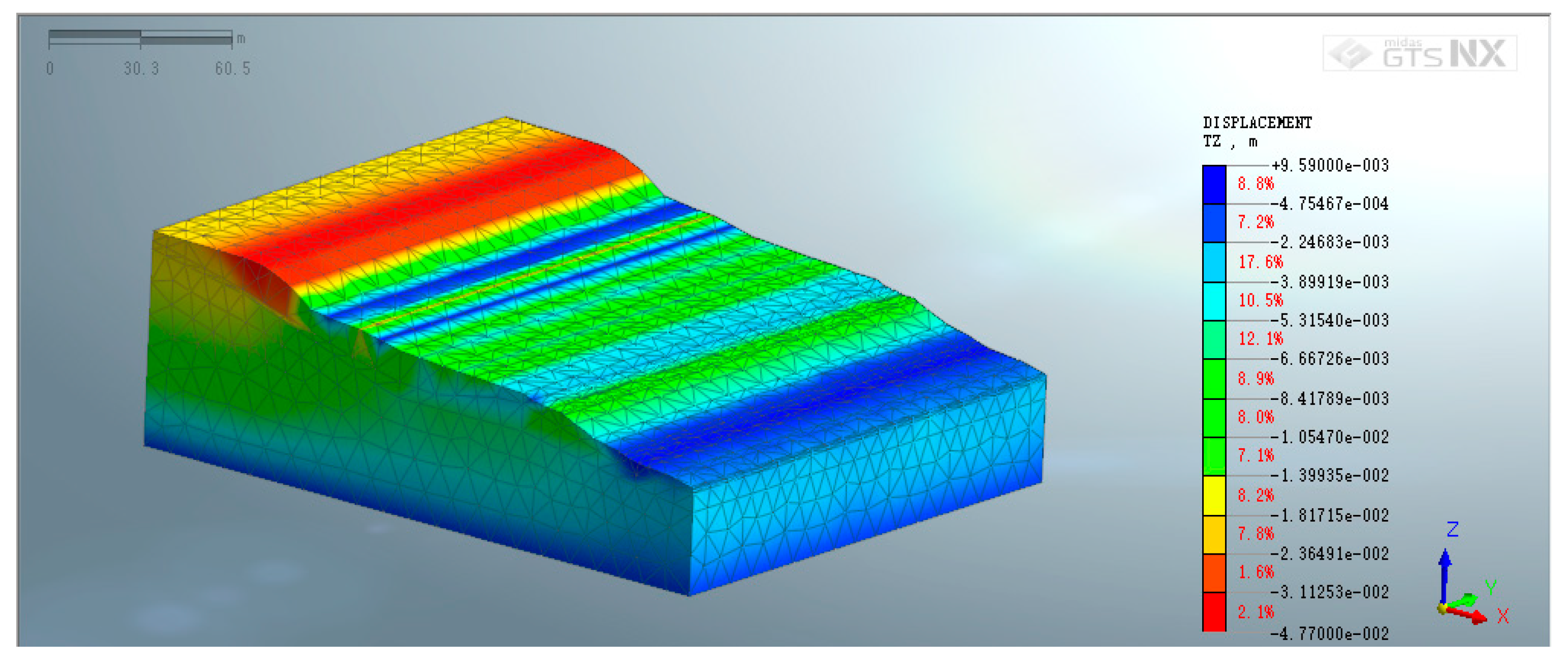
As shown in Figure 8 and Figure 9, the locations of displacement concentration under saturated conditions—excluding the effects of swelling pressure—remain largely consistent with those observed under natural conditions, which also neglect swelling effects. However, the magnitudes of displacement increase noticeably. Horizontal displacement at the distal edge of the landslide rises from 5.48 cm to 7.28 cm, with a corresponding relative fitting error of 81.8%. Settlement at the rear margin reaches a maximum of 4.77 cm, which is 8.23 cm less than the peak observed displacement, resulting in a relative fitting error of 63.3%.
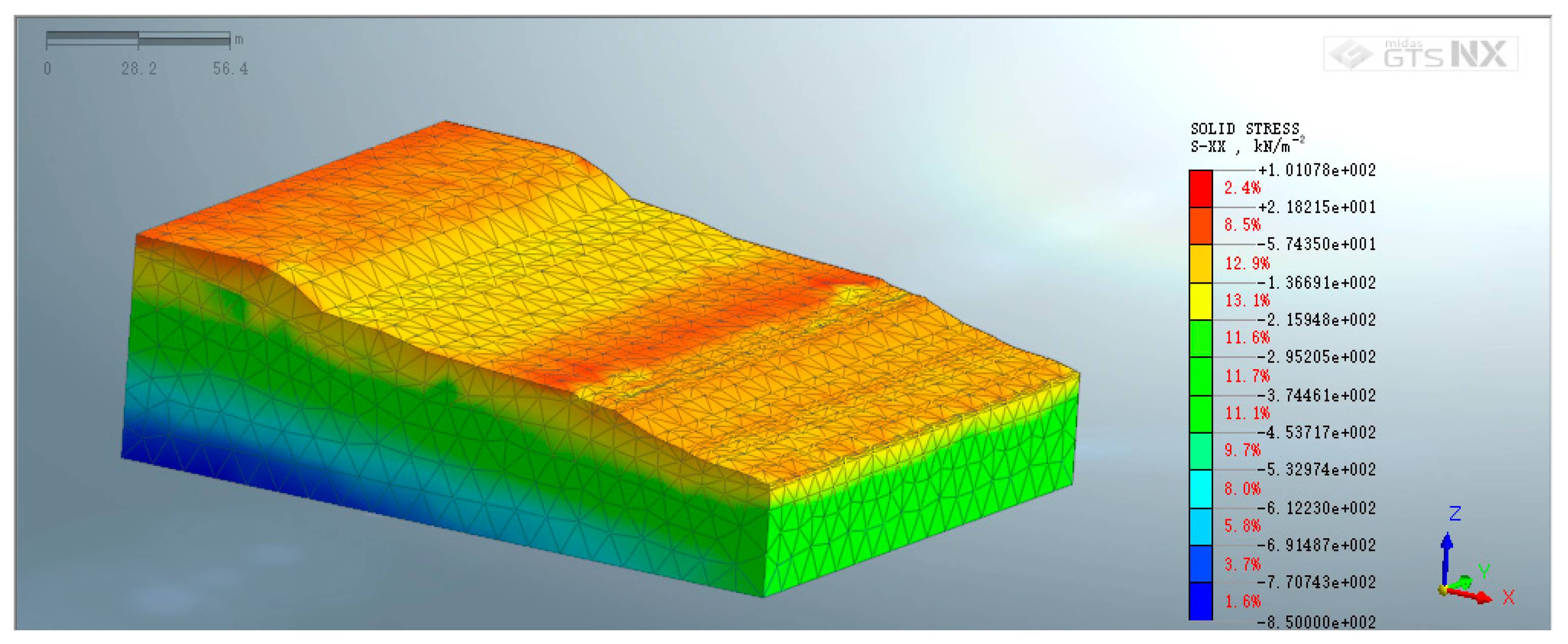
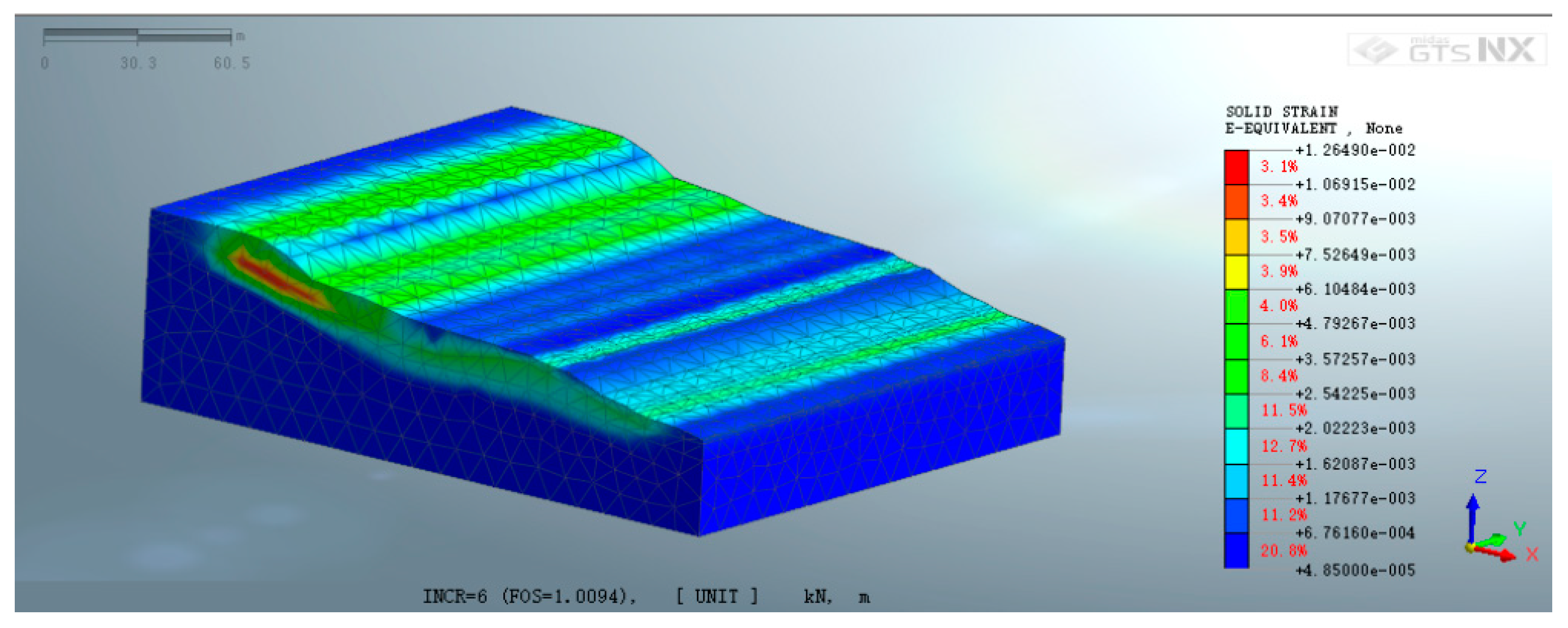
Tensile stress under saturated conditions increased compared to natural conditions without swelling pressure, reaching a peak of 101.08 kPa, primarily concentrated at the leading and trailing edges (Figure 10). The maximum plastic strain was 1.264 × 10⁻², exhibiting a continuous distribution from the crest to the toe of the slope, consistent with the slip surface delineated in previous geological investigations (Figure 11). The computed factor of safety was 1.01, closely matching the results obtained from GeoStudio software (ranging from 1.004 to 1.018 across four cross-sections), collectively indicating that the slope remained in a marginally stable state under saturated conditions in the absence of swelling pressure. Overall, the relative fitting errors show an improvement compared to the natural condition models.

5.3.2. Consideration of Vertical Swelling Pressure

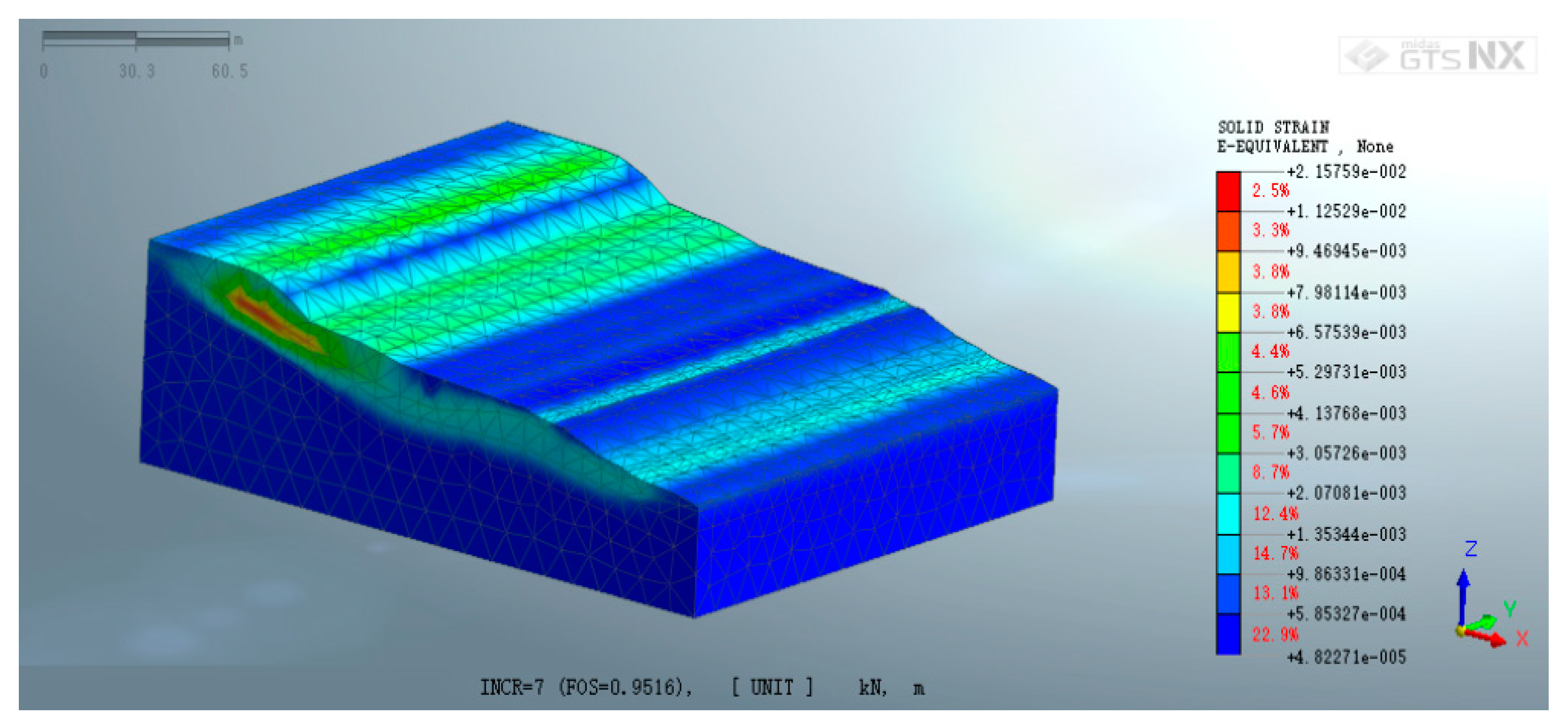
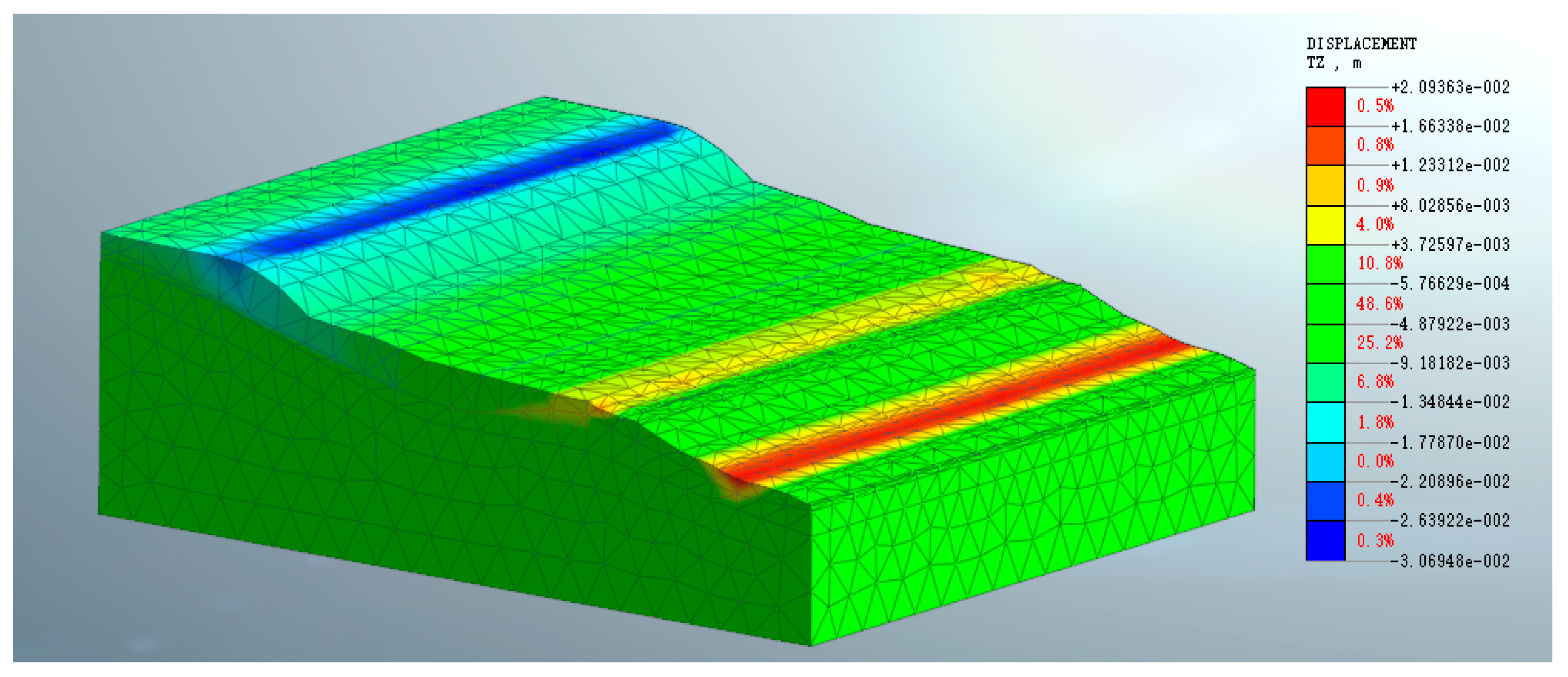
Incorporating vertical swelling pressure led to an increase in horizontal displacement at the trailing edge to 17.91 cm (Figure 12), corresponding to a reduction of 22.09 cm relative to the maximum observed displacement and a relative fitting error of 55.23%. Vertical displacement, manifested as settlement at the trailing edge (Figure 13), increased from 0.96 cm (without swelling pressure) to 12.3 cm. Analysis of the displacement variations indicates that the vertical swelling pressure contributed to the development of settlement deformation in the slope. As illustrated in Figure 14, peak tensile stress in the x-direction reached 103 kPa, indicating stress amplification compared to scenarios without swelling pressure. The plastic strain distribution remained consistent with the non-swelling scenarios (Figure 15) with a maximum plastic strain of 2.15 × 10⁻². The computed factor of safety decreased to 0.95, indicating an unstable slope condition.

5.3.3. Consideration of Horizontal Swelling Pressure

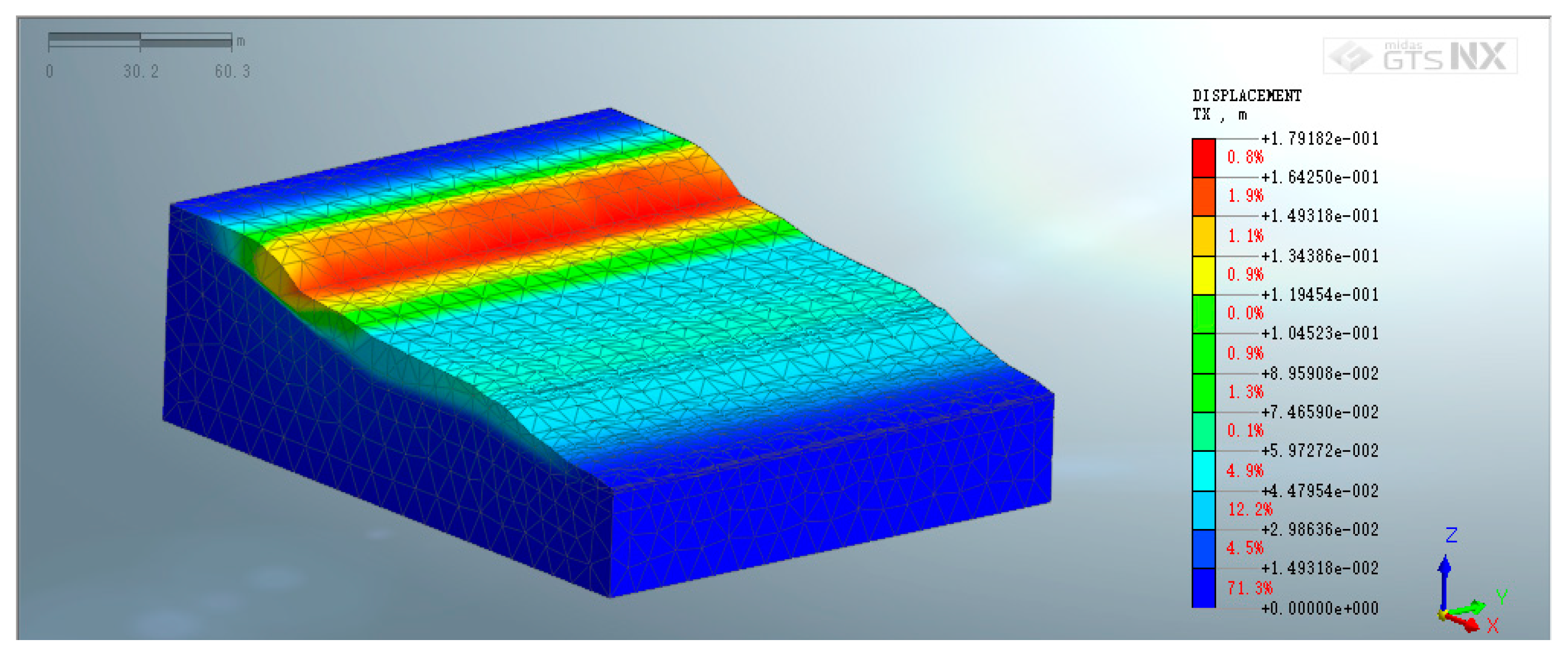
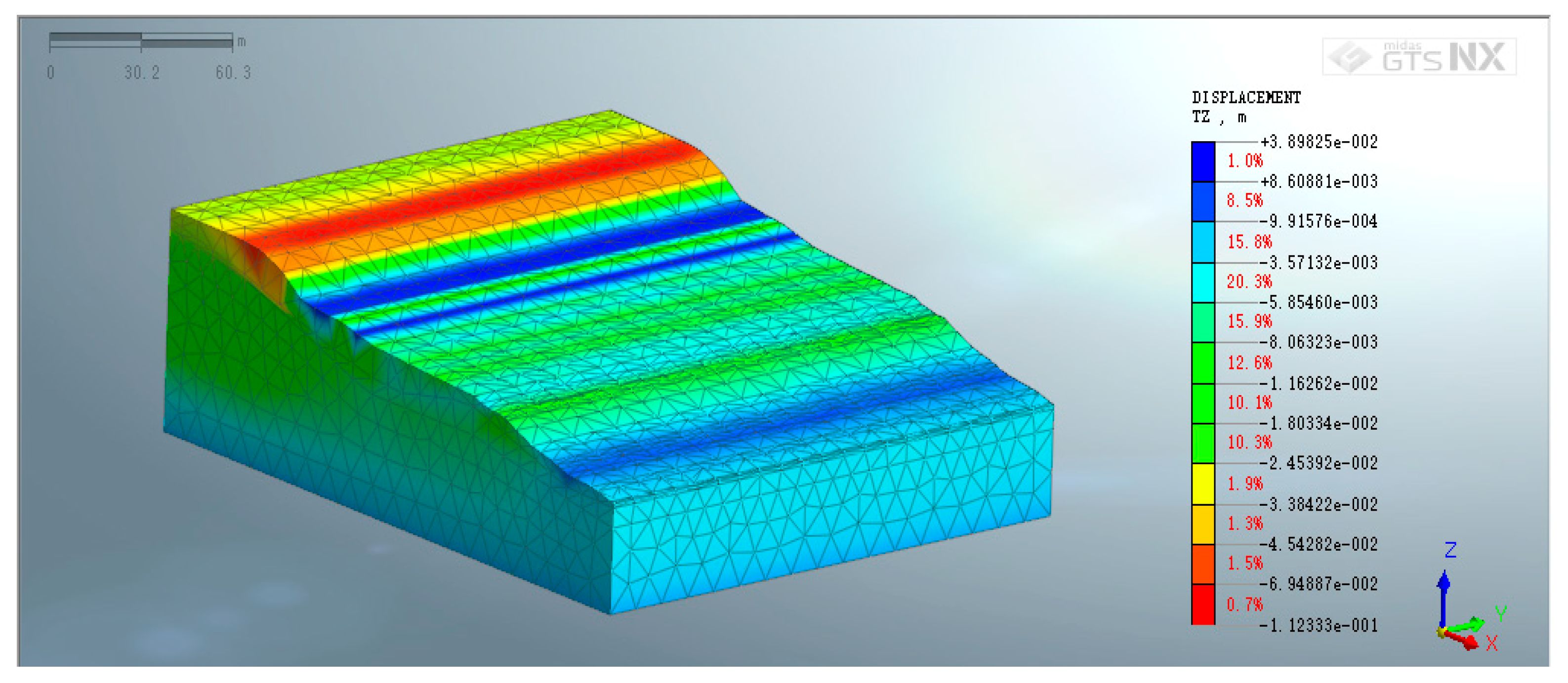
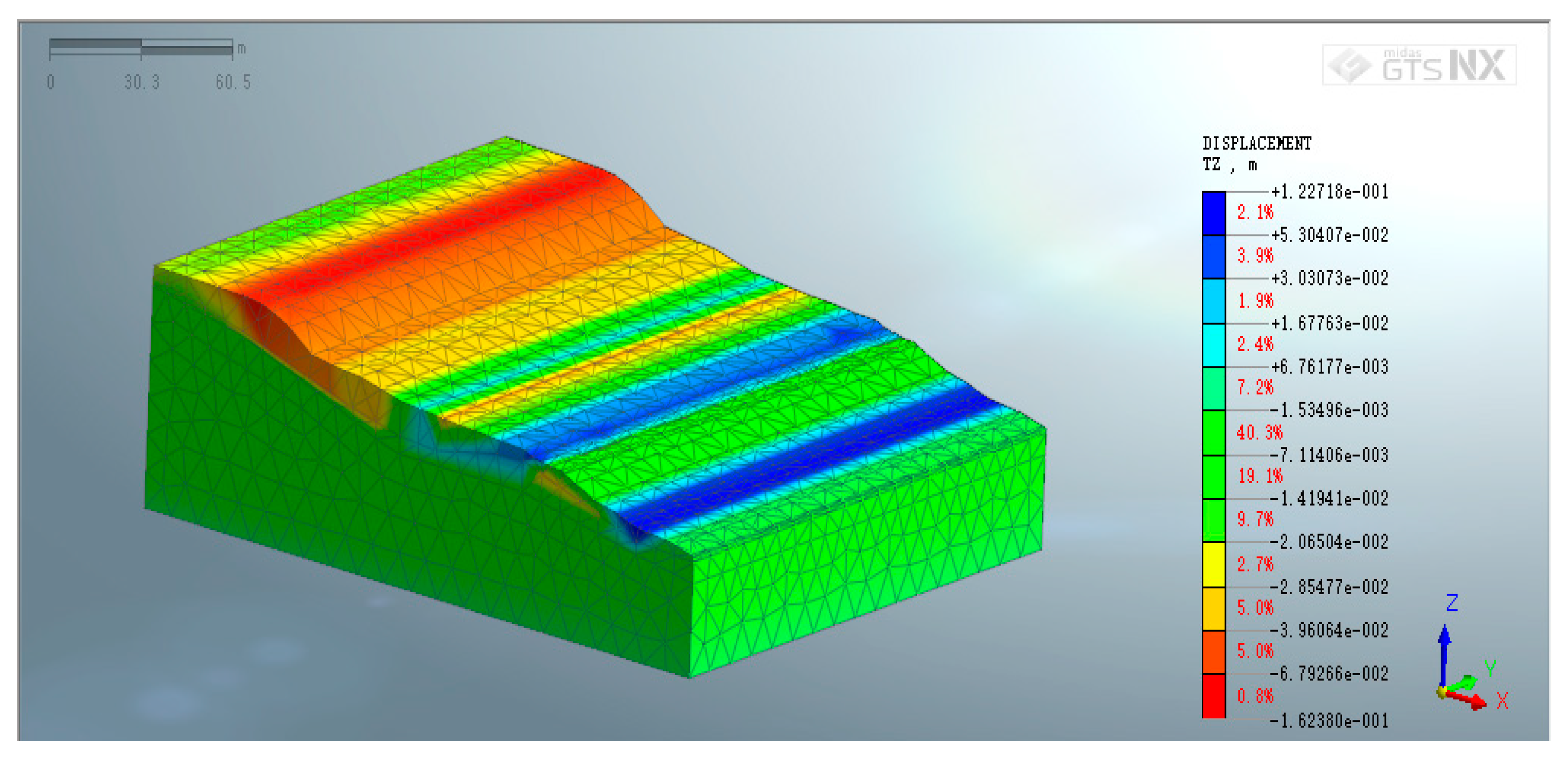
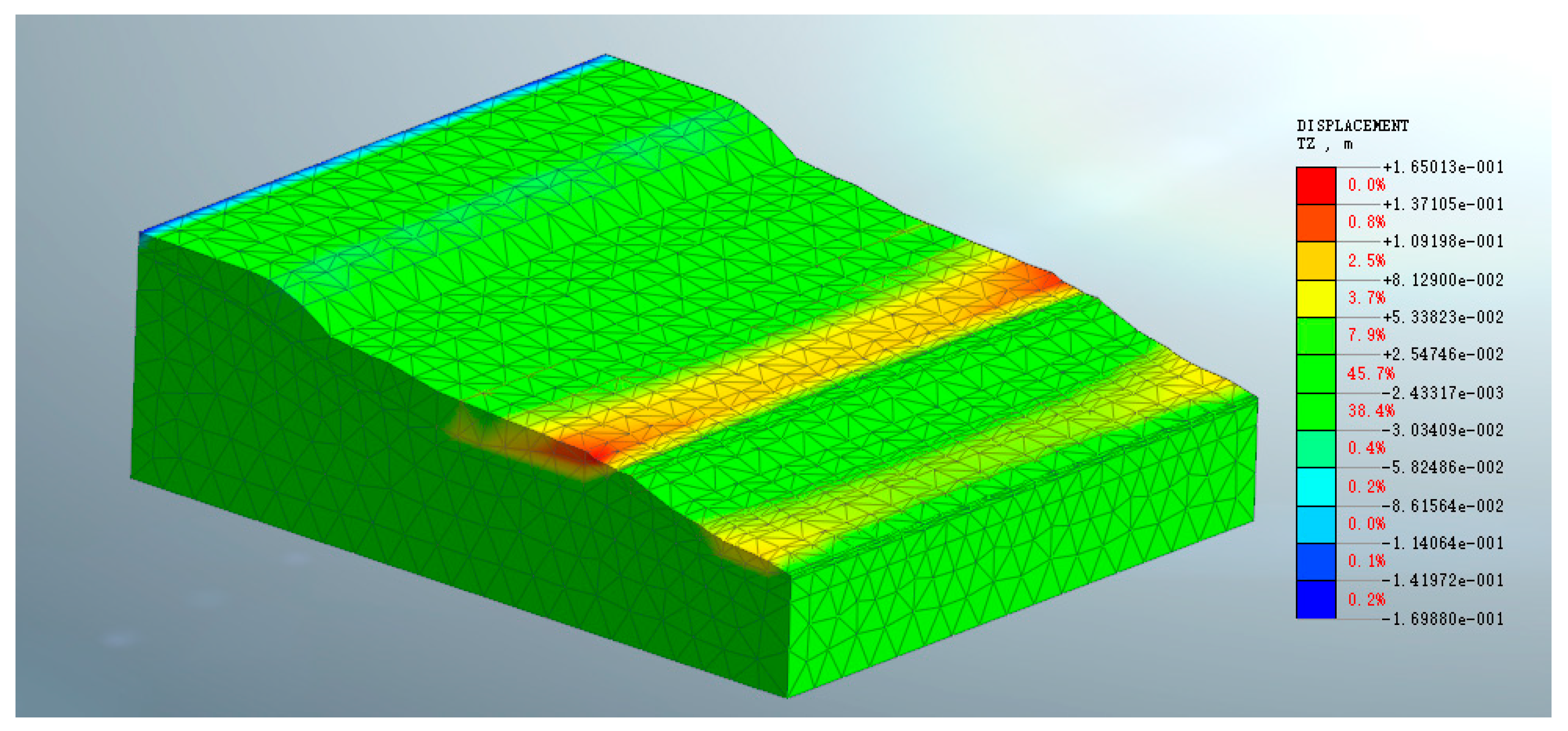
Figure 16 illustrates the horizontal displacement distribution under lateral expansive forces. Similar to natural conditions, displacement was concentrated at the advancing front. Horizontal displacement increased from 6.1 cm in the saturated state without swelling pressure to 38.81 cm, exceeding the maximum observed displacement by 1.71 cm, corresponding to a fitting error of only 2.97%. Vertical displacement profiles exhibited differential behavior at the crest and trough edges (Figure 17), with maximum settlement at the trailing edge reaching 16.23 cm, resulting in a 11.75% error. These results indicate an excellent fit in the horizontal (x) direction, while vertical (z) displacement showed minor deviations, highlighting the dominant influence of lateral swelling pressures.
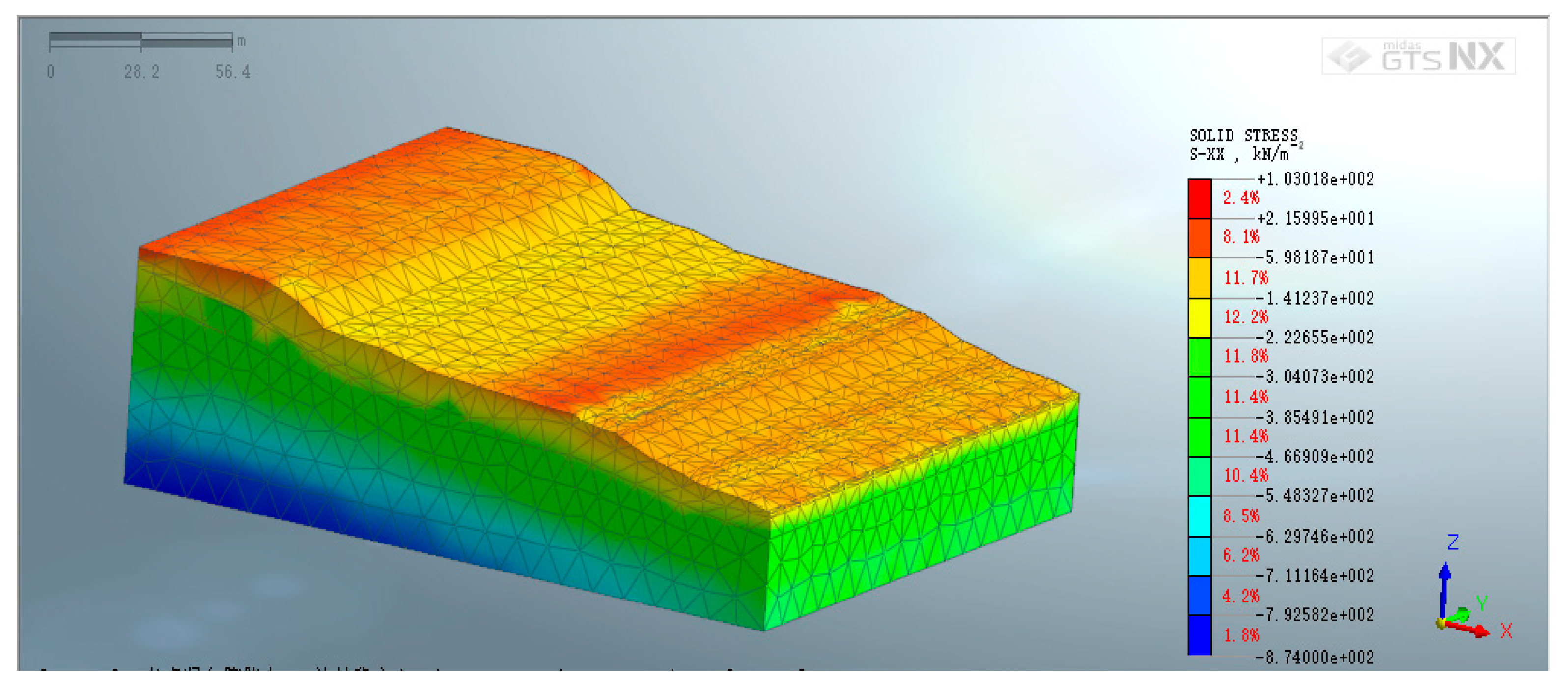
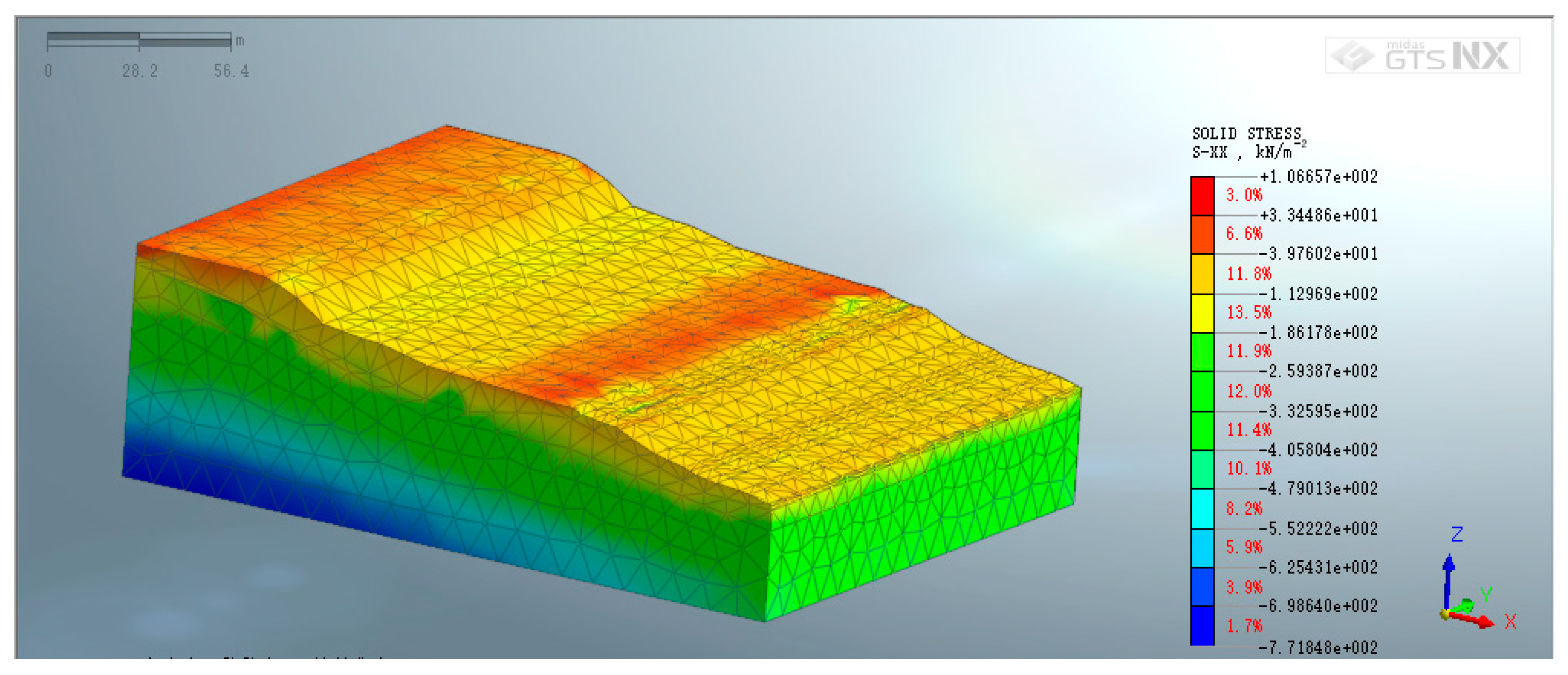
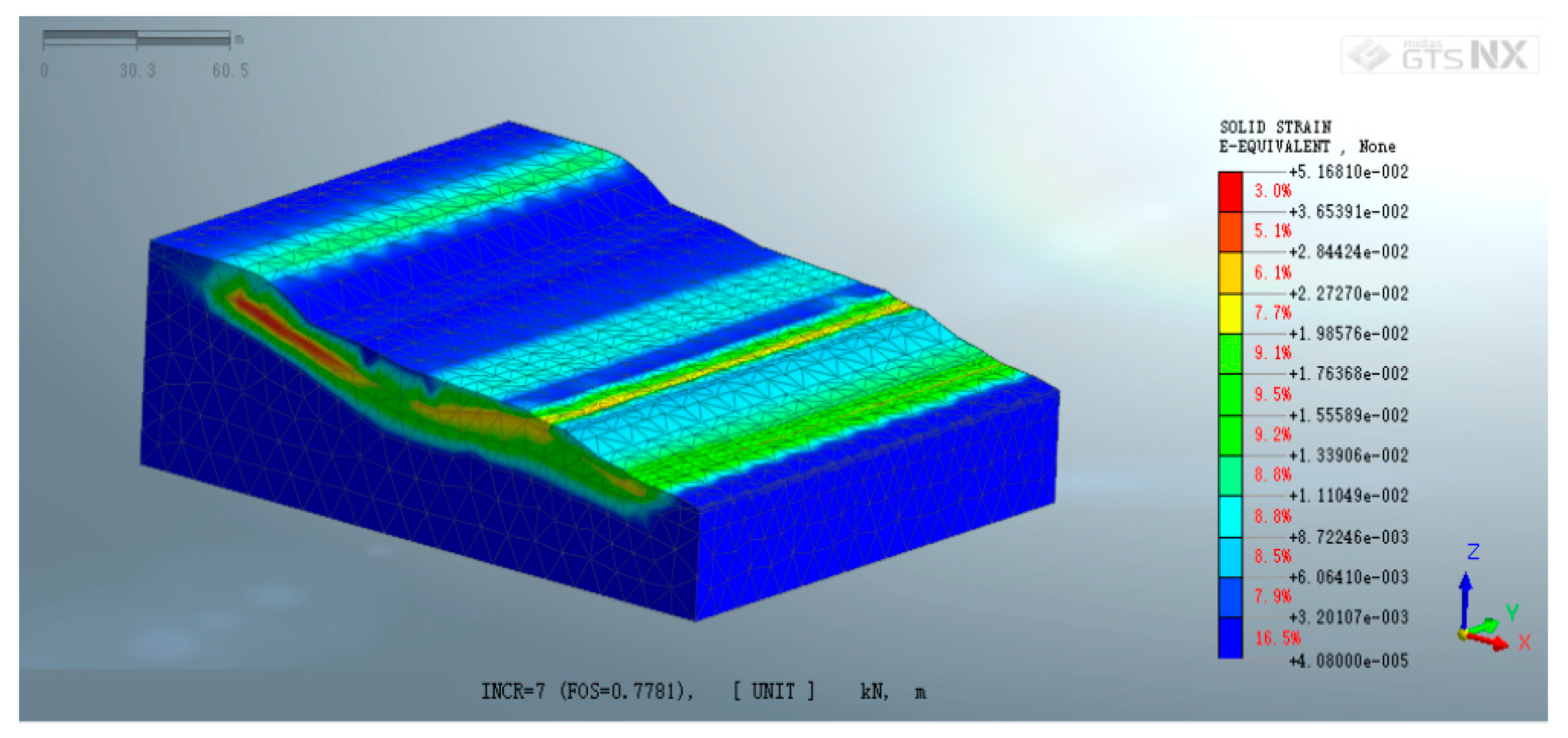
Maximum tensile stresses reached 106.6 kPa (Figure 18), and Figure 19 demonstrates full penetration of the failure zone, consistent with field survey observations. The factor of safety decreased to 0.778. Plastic strain accumulation was primarily concentrated within the expansive soil layer, forming a belt-like distribution with a peak value of 6.24 × 10⁻² at the lower crest, while elevated strains were also observed near tension cracks and shear exit zones at the leading edge.

5.4. Comparison of Displacements Under Varying p h / p v Ratios

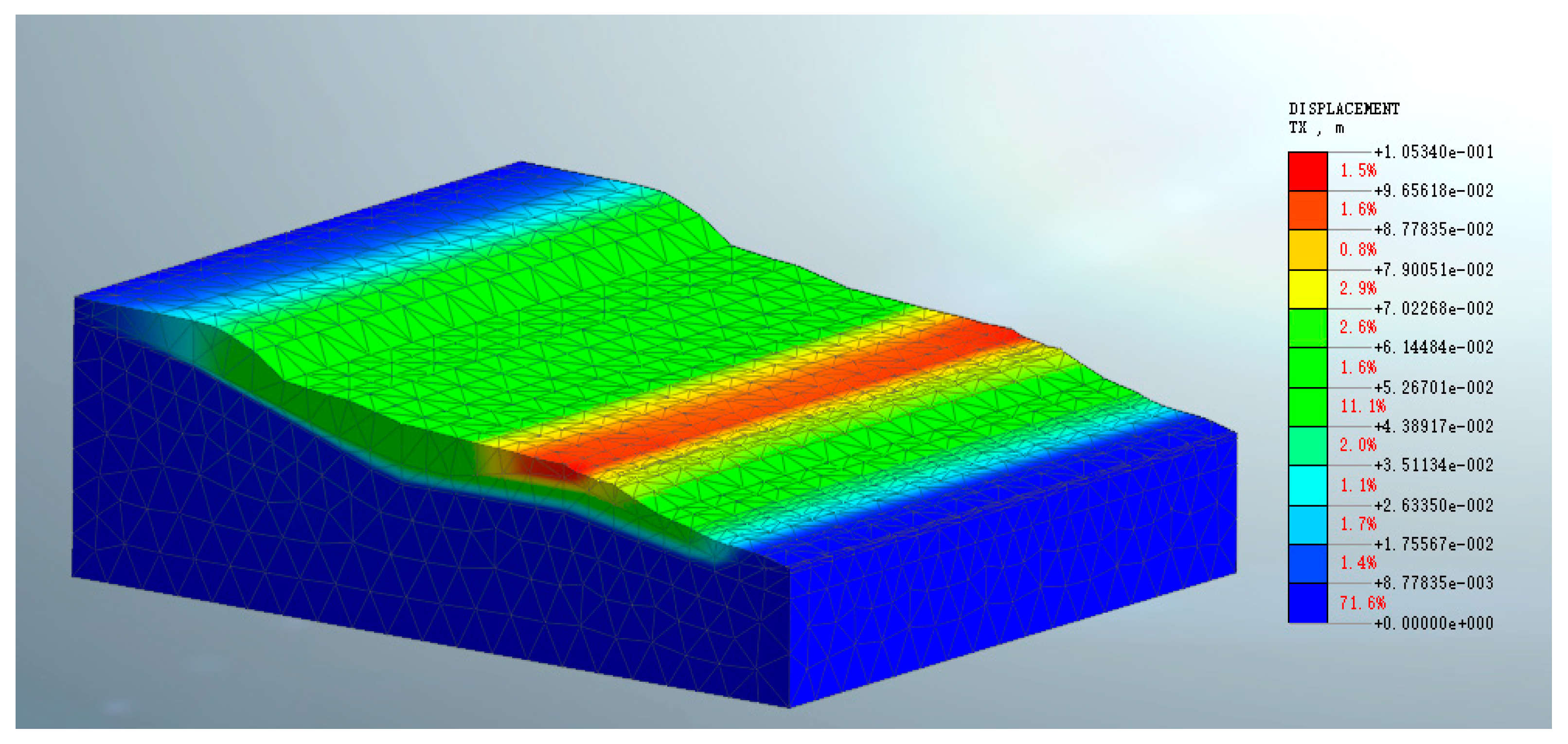
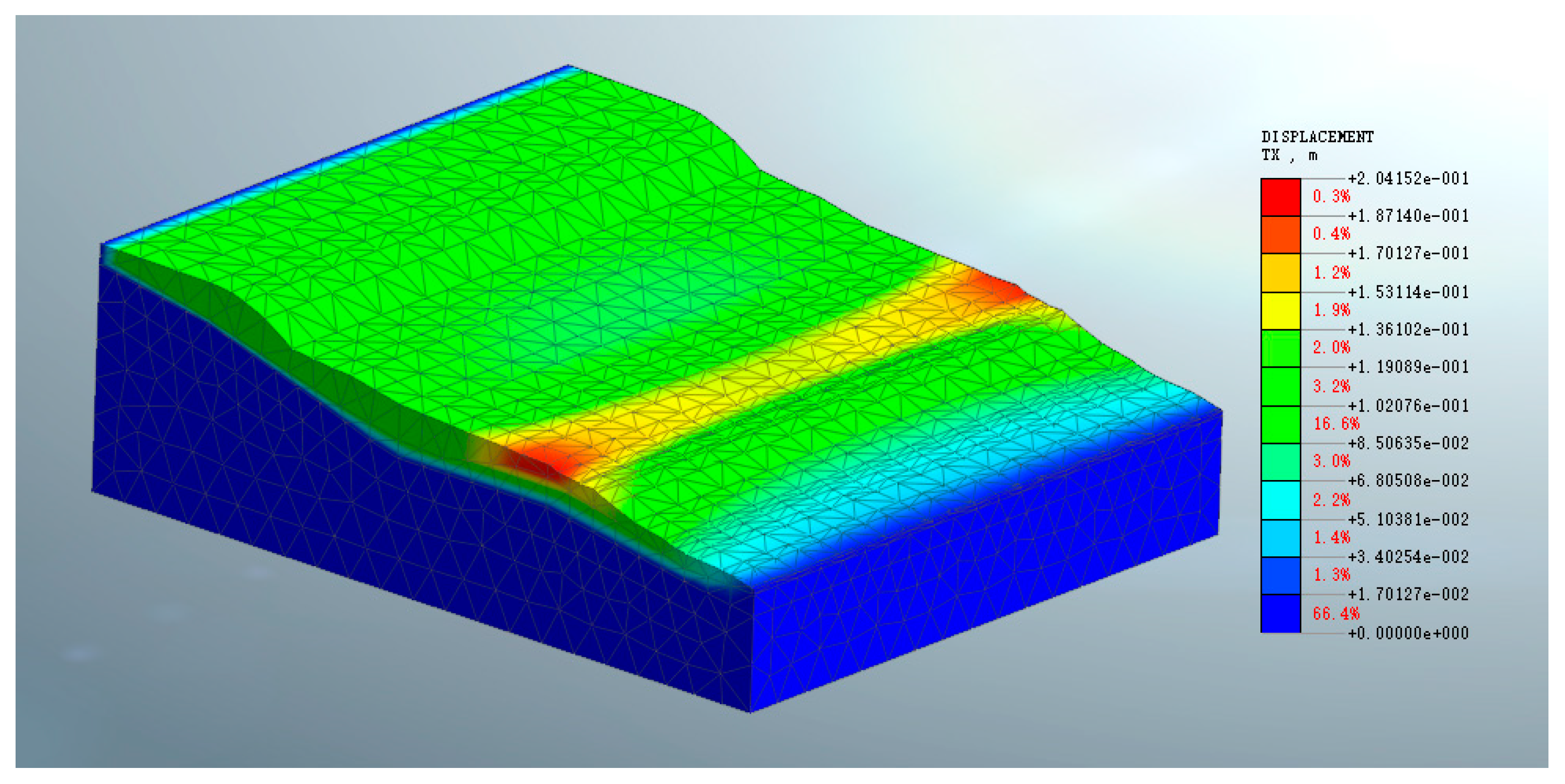
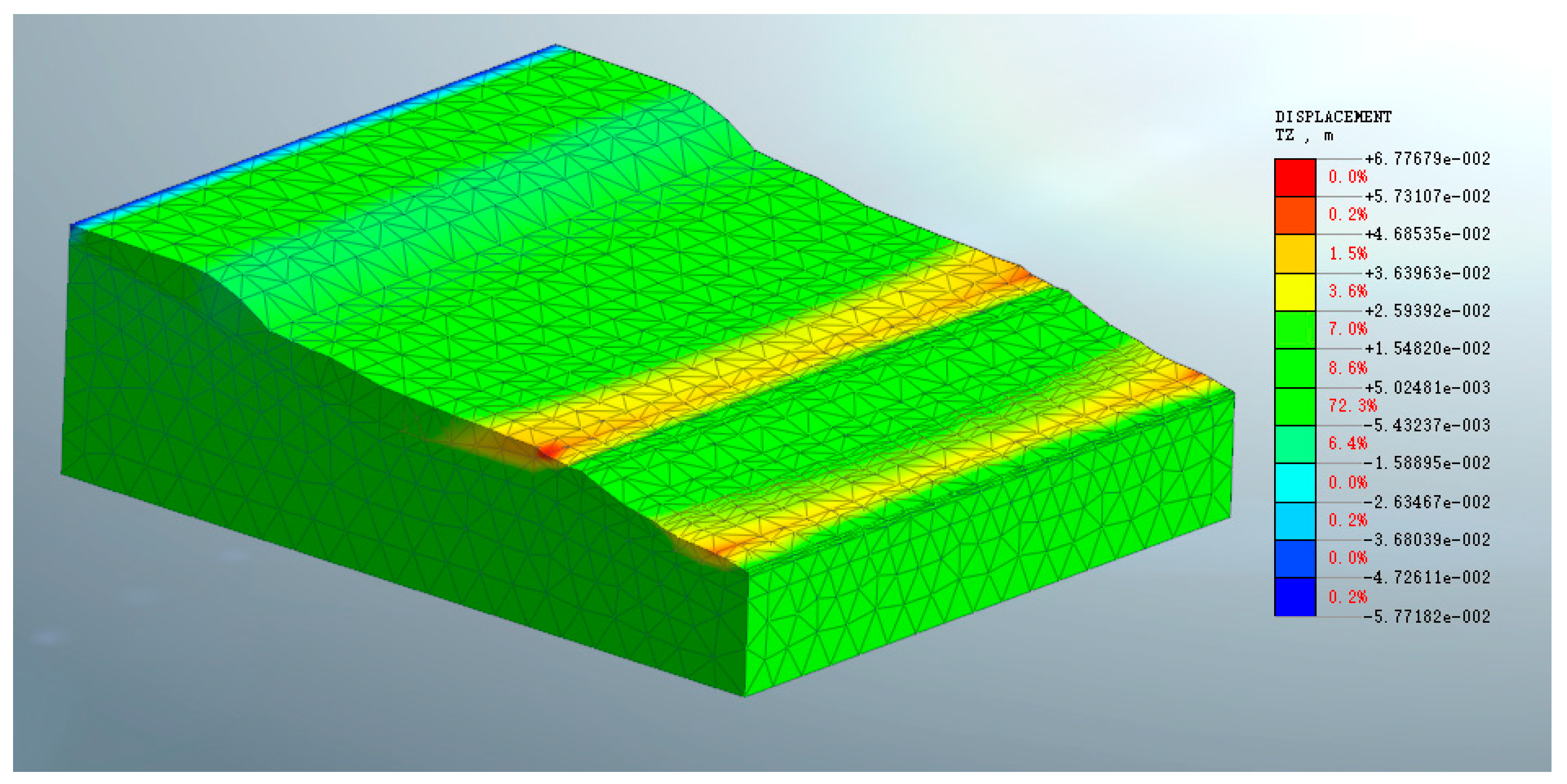
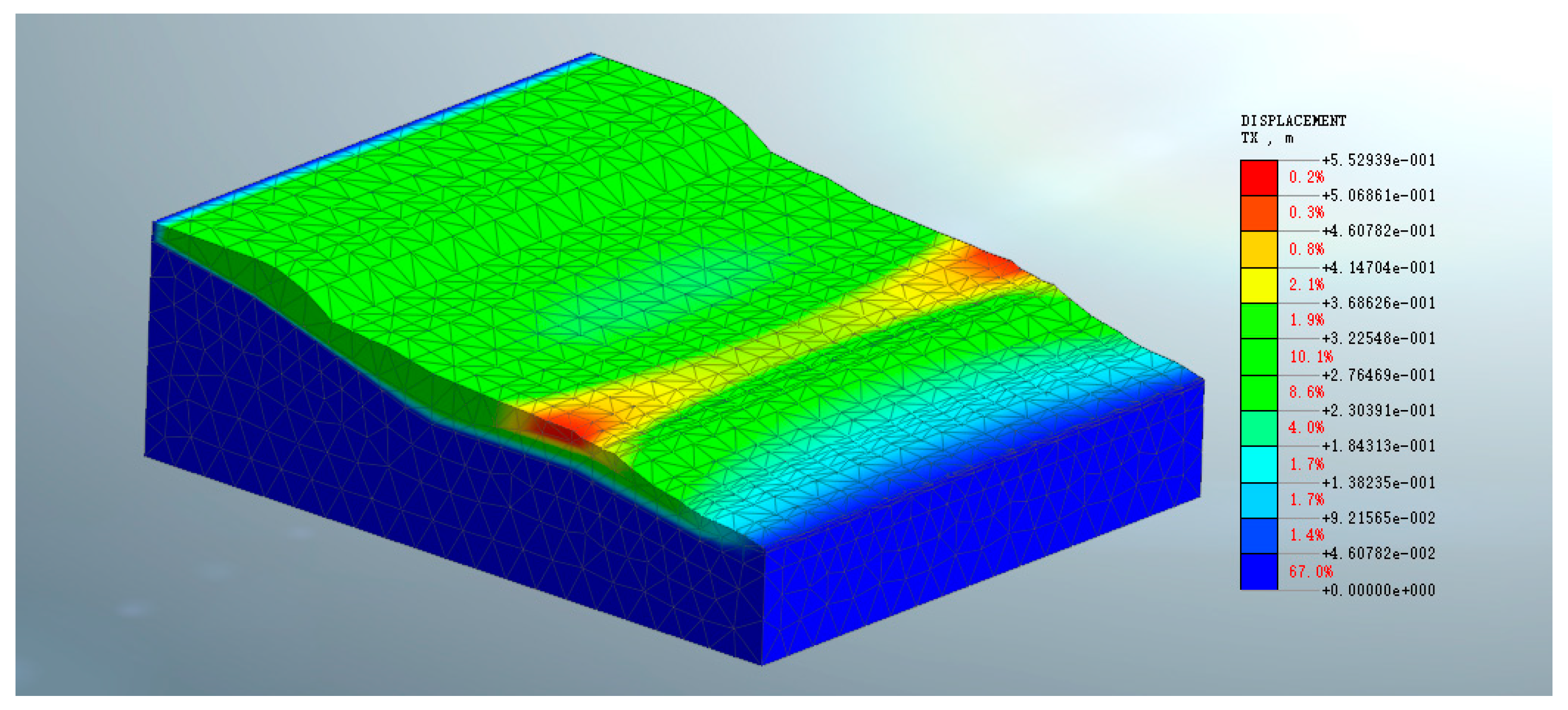
Figure 20, Figure 21, Figure 22, Figure 23, Figure 24 and Figure 25 illustrate the structural responses under different horizontal-to-vertical swelling pressure ratios ( p h / p v ). At a ratio of 5%, the maximum horizontal displacement reached 10.53 cm, while the maximum vertical settlement was 3.07 cm, corresponding to errors of −73.7% and −74.4% relative to field measurements. When the ratio increased to 15%, the horizontal displacement and vertical settlement rose to 20.41 cm and 5.77 cm, respectively, reducing the errors to −49.0% and −51.9%. Further increasing the ratio to 35% resulted in 55.29 cm of horizontal displacement and 16.99 cm of vertical settlement, exceeding the observed values with errors of +38.2% and +41.6%. These results indicate that both horizontal and vertical deformations increase markedly with the rising p h / p v ratio, with simulation outcomes transitioning from substantial underestimation to overestimation of actual structural deformations as the ratio varied from 5% to 35%. Therefore, when selecting an appropriate p h / p v ratio for similar engineering applications, it is necessary to consider factors such as free swelling pressure, swelling potential, and site-specific geological and environmental conditions to ensure the reliability of deformation simulations.

5.5. Discussion

Previous studies have frequently simplified swelling pressure as isotropic or exclusively vertical, thereby neglecting its inherently anisotropic nature. Consequently, the distinct influence of horizontal swelling pressure on landslide initiation and progressive failure has remained insufficiently quantified. This study addresses this gap through an integrated framework combining the fuzzy analytic hierarchy process (FAHP), regression analysis, and three-dimensional numerical modeling. The results indicate that swelling pressure is predominantly controlled by the interplay of dry density, water content, void ratio, and free swell ratio, with the latter primarily regulated by dry density, water content, and void ratio. Regression analyses yielded coefficients of determination (R2) exceeding 0.7 for all relationships, with a particularly strong correlation between water content and free swell ratio (R2 = 0.81), confirming water content as the principal factor governing both free swell behavior and swelling pressure.
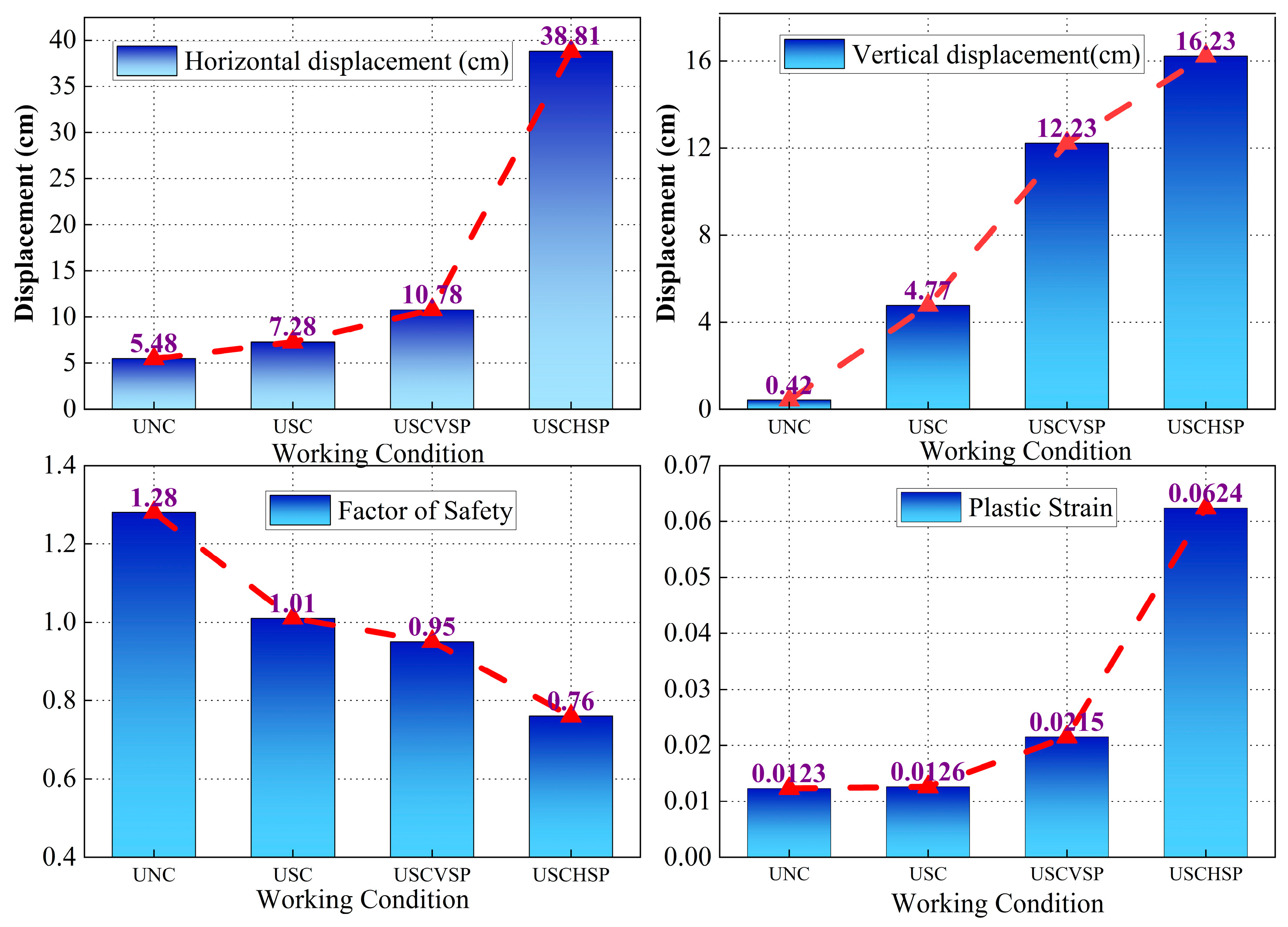
The mechanical response of expansive soils is highly complex. Three-dimensional numerical simulations were performed to analyze variations in displacement fields, stress distributions, and plastic zones under the influence of anisotropic swelling pressures (Figure 26: UNC: natural conditions; USC: saturated conditions; USCVSP: saturated with vertical swelling pressure; USCHSP: saturated with horizontal swelling pressure). Neglecting swelling pressure led to substantial underestimations of horizontal displacement (~33.33 cm), vertical displacement (~11.85 cm), and plastic strain (~0.0501), accompanied by a 40% reduction in the factor of safety. This is attributed to elevated pore water pressures reducing effective stress and shear strength, thereby facilitating plastic zone interconnection and overall slope failure.
Incorporating vertical swelling pressure primarily affected settlement, increasing it by approximately 1.32 cm, while horizontal displacement, plastic strain, and stability margins remained largely unchanged. In contrast, including horizontal swelling pressure caused a forward shift of the deformation zone, with pronounced increases in horizontal (~33.33 cm) and vertical (~16.23 cm) displacements, as well as reductions in the stability coefficient. Field validation errors were minimal—2.97% for horizontal displacement and 11.75% for settlement—highlighting the dominant role of horizontal swelling pressure in linking slip surfaces and compromising slope stability. The combined effects of vertical and horizontal swelling pressures further accelerated landslide progression.
The fixed ratio of horizontal to vertical swelling pressures ( p h = 0.25   p v ) is a key simplification in the model. Although Yang et al. [25] provided a reasonable estimate, the actual anisotropic swelling behavior may be more complex. To assess the dominant role of horizontal swelling pressure, analyses were conducted under varying p h / p v ratios. The results indicate that increasing this ratio significantly promotes landslide development. Therefore, accounting for directional swelling and accurately quantifying anisotropy is essential for reliable risk assessment. Furthermore, the selection of the p h / p v ratio should be tailored to the specific conditions of each expansive soil landslide.
Given that water content is the critical control on swelling pressure, effective water management strategies—including horizontal drainage, interception ditches, and impermeable covers—are essential to limit infiltration and maintain stable in situ moisture conditions. Considering the predominant influence of horizontal stress on failure mechanisms, reinforcement measures such as soil nailing and high-tensile retaining structures should be designed to resist tensile stresses, explicitly accounting for horizontal swelling effects. The proposed framework, which integrates directional swelling phenomena, enhances the accuracy of slope stability evaluations. For early warning systems in expansive soil regions, monitoring should prioritize horizontal displacement and pore water pressure, as these parameters provide more immediate indicators of impending failure than vertical settlement alone.

6. Conclusions

Based on an integrated analysis of the specific Neogene weakly expansive soil landslide at the Tongwei plant site in Yunnan, China, this study employed regression analysis to investigate the intrinsic relationships between swelling characteristics and various physical indices. Subsequently, numerical simulations were conducted using the strength parameters of the slip zone soil obtained through back-analysis to assess the influence of swelling pressures on the landslide’s evolution. The main conclusions are summarized as follows:
(1)
The swelling characteristic parameters exhibited strong correlations with dry density, water content, and void ratio, all with correlation coefficients above 0.7. The governing equation for swelling pressure was pe = 70.47 − 0.469ω + 0.143ρ − 0.180e + 0.120δef and that for the free swell ratio was δef = 70.41 − 0.425ω + 0.18ρ − 0.209e. This indicates that water content is the most critical factor influencing swelling behavior.
(2)
When swelling pressures were not considered, the relative fitting errors for horizontal displacement (x-direction) and vertical settlement (z-direction) were 86.30% and 96.77%, respectively, under natural conditions. Under saturated conditions, the corresponding errors were 75.73% and 92.62%. Stress distributions and plastic deformation zones also showed substantial deviations from field observations.
(3)
Under saturated conditions with vertical swelling pressure, the relative fitting errors for x-displacement and z-settlement were reduced to 73.05% and 86.92%, respectively, although stress patterns and plastic zones still deviated from reality. In contrast, considering horizontal swelling pressure dramatically improved model accuracy, with relative fitting errors decreasing to 4.28% and 0.92% for x- and z-displacements, respectively, and stress distributions and plastic deformation zones closely matching observations. This highlights the dominant role of horizontal swelling pressure in slope development and landslide progression.
(4)
Under the saturated conditions of this case study, vertical swelling pressure increased x-displacement and z-settlement by 1.11 and 1.77 times, respectively, relative to the scenario without swelling pressures, while plastic strain and the factor of safety remained largely unchanged, indicating that vertical swelling primarily influences settlement. By contrast, horizontal swelling pressure increased x-displacement and z-settlement by 4.30 and 13.41 times, respectively, shifted the deformation zone forward, reduced the factor of safety by 24.75%, and promoted a more continuous slip surface, substantially enhancing the likelihood of slope failure.
These findings underscore the critical role of horizontal swelling pressure in the progressive failure of slopes with geological conditions, geometry, and expansive soil types similar to the studied case. Therefore, this study quantifies the relative contributions of vertical and horizontal swelling pressures to landslide deformation using an integrated regression and numerical modeling approach. The proposed integrated framework (FAHP-regression-3D numerical modeling) can be generalized and applied to the stability assessment of other expansive soil slopes.

Supplementary Materials

The following supporting information can be downloaded at: https://www.mdpi.com/article/10.3390/app16021110/s1.

Author Contributions

Conceptualization, S.X. and C.Z. Methodology, C.Z. Software, L.D., X.L. and Z.L. Verification, C.Z. and J.Z. Formal analysis: S.X. and C.Z. Investigation, S.X. and L.D. Resources, S.X. Data Management, L.D., X.L. and Z.L. Writing the first draft, S.X. and C.Z. Review and editing, S.X. and C.Z. Visualization, S.X. Supervisor, S.X. Project Management, S.X. All authors have read and agreed to the published version of the manuscript.

Funding

This research received no external funding.

Institutional Review Board Statement

Not applicable.

Informed Consent Statement

Not applicable.

Data Availability Statement

Some or all data that support the findings of this study are available from the corresponding author upon reasonable request.

Conflicts of Interest

The authors declare no conflicts of interest.

Abbreviations

The following abbreviations are used in this manuscript:
FAHPFuzzy Analytic Hierarchy Process
AHPAnalytic Hierarchy Process

References

  1. Tan, L.R.; Kong, L.W. Special Geotechnical Soil Science; Science Press: Beijing, China, 2006. [Google Scholar]
  2. Macías-Párraga, M.; Echarri, F.J.T.; Alonso-Pandavenes, O.; Garzón-Roca, J. Improvement of expansive soils: A review focused on applying innovative and sustainable techniques in the Ecuadorian coastal soils. Appl. Sci. 2025, 15, 8184. [Google Scholar] [CrossRef]
  3. Li, S.L.; Shi, B.; Du, Y.J. Engineering geological study of expansive soils in China. Nat. Mag. 1997, 82–86. [Google Scholar]
  4. Zhu, T.; Xu, H.H.; Chen, R.B.; Luo, Y.; Zhao, T.; Zhang, T.L. Engineering characteristics of expansive soil in a site of Baoshan City, Yunnan Province. Jiangxi Build. Mater. 2022, 83–85. [Google Scholar]
  5. Lei, W.K. Study on Surface Moisture Migration Characteristics and Regulation Methods of Expansive Soil Slopes with Imported Soil Cover. Doctoral Dissertation, Guangxi University, Nanning, China, 2021. [Google Scholar] [CrossRef]
  6. Li, J.P.; Wang, L.; Wang, J.; Chen, Y.; Xu, Y.F. Stability analysis of expansive soil slopes considering shear strength attenuation characteristics. Chin. J. Geol. Hazard Control 2022, 33, 29–36. [Google Scholar] [CrossRef]
  7. Zhang, L.J.; Wu, X.; Xie, Y.; Wu, C.L. Impact of moisture content and overburden pressure on shear strength of remolded expansive soil. Chin. J. Geol. Hazard Control 2015, 26, 138–143. [Google Scholar] [CrossRef]
  8. Guo, C.J.; Shi, W.; Yang, Z.N.; Cui, Y.X.; Zhang, Y.Y.; Ling, X.C. Effects of initial moisture content on stability of expansive soil slopes under freeze-thaw cycles. J. Xi’an Univ. Archit. Technol. (Nat. Sci. Ed.) 2021, 53, 69–79. [Google Scholar] [CrossRef]
  9. Yang, L.G. Relationship between expansion rate and moisture content in medium expansive soils. Port Sci. Technol. 2021, 38–42. [Google Scholar]
  10. Su, Z.; Qi, D.K.; Guo, X.J.; Xi, X.J.; Zhang, L. Characterization of the undrained shear strength of expansive soils of high water content. In MATEC Web of Conferences; EDP Sciences: Les Ulis, France, 2018; Volume 206, p. 01002. [Google Scholar] [CrossRef]
  11. Fattah, M.Y.; Al Omari, R.R.; Fadhil, S.H. Load sharing and behavior of single pile embedded in unsaturated swelling soil. Eur. J. Environ. Civ. Eng. 2020, 24, 1967–1992. [Google Scholar] [CrossRef]
  12. Liu, Z.; Zhang, R.; Lan, T.; Zhou, Y.; Huang, C. Laboratory test and constitutive model for quantifying the anisotropic swelling behavior of expansive soils. Appl. Sci. 2024, 14, 2255. [Google Scholar] [CrossRef]
  13. Han, Z.; Zhang, P.; Zou, W.; Fan, K.; Vanapalli, S.K.; Wan, L.; Wang, Y. At-rest lateral earth pressure of compacted expansive soils: Experimental investigations and prediction approach. J. Rock Mech. Geotech. Eng. 2024, 16, 1425–1435. [Google Scholar] [CrossRef]
  14. Wang, A.; Xu, Y.; Xu, Y. Numerical modeling on the deformation features of expansive soil slopes under moisture variations based on fractal model. Comput. Geotech. 2024, 165, 105900. [Google Scholar] [CrossRef]
  15. Wang, X.; Xu, Y.; Xu, Y. Development of a swelling model for strong expansive soil under K0 stress state for building foundation applications. Buildings 2024, 15, 2220. [Google Scholar] [CrossRef]
  16. Lan, T.; Zhang, R.; Yang, B.; Meng, X. Influence of swelling on shear strength of expansive soil and slope stability. Front. Earth Sci. 2022, 10, 849046. [Google Scholar] [CrossRef]
  17. Ma, S.Z.; Liu, K.W.; Yang, J.C. Investigation of blast-induced rock fragmentation and fracture characteristics with different decoupled charge structures. Int. J. Impact Eng. 2024, 185, 104485. [Google Scholar] [CrossRef]
  18. Han, Y.; Wang, G.; Zhang, X.; Zhao, B. Numerical Simulation of Seepage Surface and Analysis of Phreatic Line Control from a Fine-Grained Tailings High Stacked Dam under Complicated Geography Conditions. Appl. Sci. 2023, 13, 12859. [Google Scholar] [CrossRef]
  19. Ma, S.Z.; Jiang, H.M.; Liu, K.W.; Xing, H.Z.; Wang, M.Y. Numerical and theoretical investigation of crack extension and coalescence behavior of rock mass in presplit blasting subjected to initial stress. Comput. Geotech. 2026, 191, 107790. [Google Scholar] [CrossRef]
  20. Du, H.W.; Xie, Y.H.; Zhang, C. Experimental study on medium-weak expansive soil in Nanyang region. Railway Engineering (Tie Dao Jian Zhu) 2010, 107–109. [Google Scholar]
  21. Liu, Y.; Ma, X.J.; Wang, B.L.; Kang, X.P.; Deng, Q.S.; Liu, X. Comparative analysis of slope stability and reliability under multiple working conditions for abandoned soil sites. Saf. Environ. Eng. 2022, 29, 93–100. [Google Scholar] [CrossRef]
  22. Xi, W.; Zhang, Z.F. Study on influence characteristics of open-pit mine slope stability based on Geo-Studio. Shanxi Coking Coal Sci. Technol. 2022, 46, 8–13. [Google Scholar]
  23. Yuan, H.L.; Lin, J.F. Application of 2D geological modeling and numerical simulation based on GeoStudio. In Proceedings of the 2020 Annual Academic Conference of the China Civil Engineering Society, Beijing, China, 22 September 2020; CCCC Second Harbor Consultants Co., Ltd.: Wuhan, China, 2020; pp. 68–75. [Google Scholar] [CrossRef]
  24. Liu, Y.; Zhang, G.H.; Yang, J.H.; Dong, P.; Mao, J.C.; Gan, X.Y. Landslide stability analysis and feasibility study of remediation measures based on Midas GTS/NX. Sci. Technol. Innov. 2023, 133–136. [Google Scholar]
  25. Ye, Z.C.; Yang, Y.; Yang, J.X.; Zuo, X.H. Stability analysis of a slope in Wencheng County based on MIDAS GTS/NX. Ind. Saf. Environ. Prot. 2022, 48, 62–65, 99. [Google Scholar]
  26. Yang, G.L.; Teng, K.; Qin, Z.H. In-situ experimental study on lateral swelling pressure of expansive soil. J. Cent. South Univ. (Sci. Technol.) 2014, 45, 2326–2332. [Google Scholar]
  27. Shi, B.; Zhang, Y.; Zhang, W. Slope Stability Analysis Using Material Point Strength Reduction Method. Chin. J. Geotech. Eng. 2016, 38, 1678–1684. [Google Scholar]
Figure 1. Profile of the expansion soil landslide at the Tongwei plant site.
Applsci 16 01110 g001
Figure 2. Location of the study area and landslide deformation characteristics.
Applsci 16 01110 g002
Figure 3. (a) Relationship between dry density and free swelling rate. (b) Relationship between moisture content and free swell ratio. (c) Relationship between void ratio and free swelling rate.
Applsci 16 01110 g003
Figure 4. (a) Relationship curve between dry density and swelling pressure. (b) Relationship curve between water content and swelling pressure. (c) Correlation between void ratio and swelling pressure. (d) Relationship curve of free swell ratio versus swelling pressure.
Applsci 16 01110 g004
Figure 5. Results of inverse calculations for sections 2–2′ (a), 3–3′ (b), 4–4′ (c), and 5–5′ (d).
Applsci 16 01110 g005
Figure 6. Schematic diagram of the strength reduction process.
Applsci 16 01110 g006
Figure 7. 3D mesh model of the landslide.
Applsci 16 01110 g007
Figure 8. X-Direction displacement distribution under saturated conditions (Swelling pressures not considered).
Applsci 16 01110 g008
Figure 9. Z-direction displacement distribution under saturated condition neglecting swelling pressure.
Applsci 16 01110 g009
Figure 10. X-direction stress distribution under saturated surface-dry state, neglecting swelling pressure.
Applsci 16 01110 g010
Figure 11. Plastic strain distribution in the saturated state, neglecting swelling pressure.
Applsci 16 01110 g011
Figure 12. X-direction displacement distribution under saturated conditions, considering vertical swelling pressure.
Applsci 16 01110 g012
Figure 13. Z-direction displacement profile considering vertical swelling pressure in saturated state.
Applsci 16 01110 g013
Figure 14. X-direction stress distribution under saturated surface-dry state, neglecting swelling pressure.
Applsci 16 01110 g014
Figure 15. Plastic strain distribution in the saturated state, neglecting swelling pressure.
Applsci 16 01110 g015
Figure 16. X-direction displacement plot considering horizontal swelling pressure under saturated conditions.
Applsci 16 01110 g016
Figure 17. Z-direction displacement diagram incorporating horizontal swelling pressure under saturated conditions.
Applsci 16 01110 g017
Figure 18. X-direction stress distribution incorporating horizontal swelling pressures under water-saturated conditions.
Applsci 16 01110 g018
Figure 19. Plastic strain distribution incorporating horizontal swelling stress under saturated conditions.
Applsci 16 01110 g019
Figure 20. Horizontal displacement (X) at p h / p v   =   5 % .
Applsci 16 01110 g020
Figure 21. Vertical displacement (Z) at p h / p v   =   5 % .
Applsci 16 01110 g021
Figure 22. Horizontal displacement (X) at p h / p v   =   15 % .
Applsci 16 01110 g022
Figure 23. Vertical displacement (Z) at p h / p v   =   15 % .
Applsci 16 01110 g023
Figure 24. Horizontal displacement (X) at p h / p v   =   35 % .
Applsci 16 01110 g024
Figure 25. Vertical displacement (Z) at p h / p v   =   35 % .
Applsci 16 01110 g025
Figure 26. Landslide stability parameters under different conditions.
Applsci 16 01110 g026
Table 1. Weight coefficients of each indicator.
ProjectKey ConstituentWeights
landslide stabilityfree expansion ratedry density0.0903
moisture content0.1126
porosity ratio0.0901
plastic limit0.0305
liquid limit0.0247
plasticity index0.0281
fluidity index0.0250
swelling pressuredry density0.0853
moisture content0.1678
porosity ratio0.1095
plastic limit0.0319
liquid limit0.0363
plasticity index0.0429
fluidity index0.0451
free expansion rate0.0800
Table 2. Physical Properties of the Expansive Soil.
LocationFree Swelling Rate (%)Swelling Pressure (KPa)Dry Density (g/cm3)Moisture Content (%)Void Ratio
Tongwei Factory Area40~6627~681.06~1.5825.7~520.73~1.53
Table 3. Multivariate linear regression analysis of free expansion rate and each physical index.
ModellingR2Adjusted R2Durbin-Watson
Multi-factor regression analysis of free inflation0.7750.7532.142
Table 4. Multiple linear regression analyses of swelling pressure and each physical indicator.
ModellingR2Adjusted R2Durbin-Watson
Multi-factor regression analysis of free inflation0.7750.7451.728
Table 5. Statistical table of parameter inversion calculation.
Profile
Number
Ground LevelWater-Saturated Internal Friction Angle φ (°)Safety FactorNote
2–2′expansive soil3.231.013The final value chosen for the angle of internal friction was the average value of 3.28°.
3–3′expansive soil3.361.004
4–4′expansive soil3.141.018
5–5′expansive soil3.381.010
Table 6. Summary of parameter values.
MakingsModulus of Elasticity/E (Kpa)Poisson’s Ratio (μ)Heaviness (KN/m3)Cohesion/c (KPa)Angle of Internal Friction/φ (°)
NaturalSaturatedNaturalSaturatedNaturalSaturated with Water
landfill15,0000.3218.108.3014.5712.577.446.34
expansive soil20,0000.3017.0017.2012.6911.374.483.28
clays35,0000.2817.3017.6022.0420.9410.268.76
Disclaimer/Publisher’s Note: The statements, opinions and data contained in all publications are solely those of the individual author(s) and contributor(s) and not of MDPI and/or the editor(s). MDPI and/or the editor(s) disclaim responsibility for any injury to people or property resulting from any ideas, methods, instructions or products referred to in the content.