Anticancer Applications of Gold Complexes: Structure–Activity Review




Abstract
1. Introduction
2. Materials and Methods
3. Results and Discussion
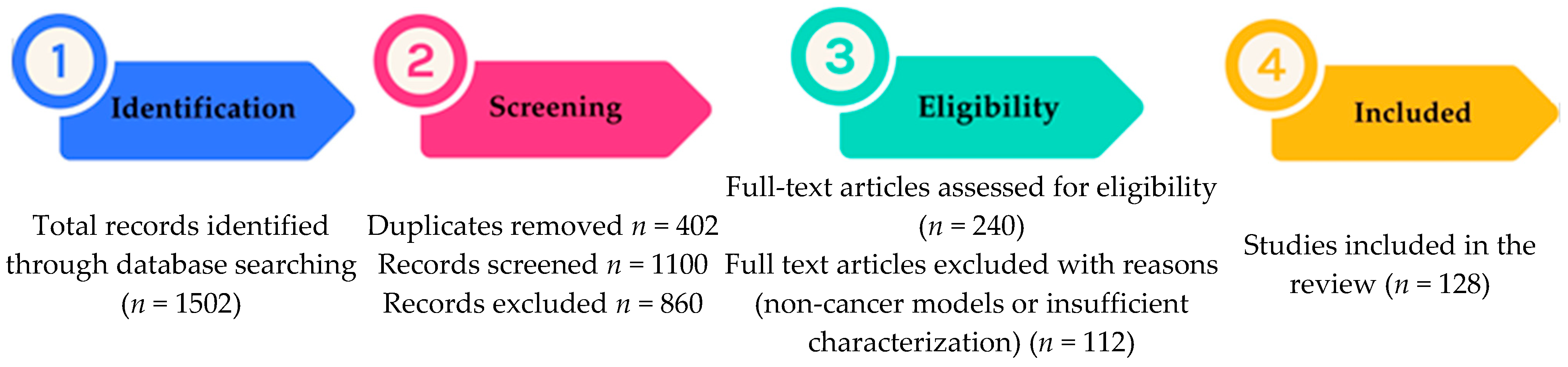
3.1. Overview of Included Studies
3.2. Au(I) Complexes: Coordination Chemistry and Anticancer Activity
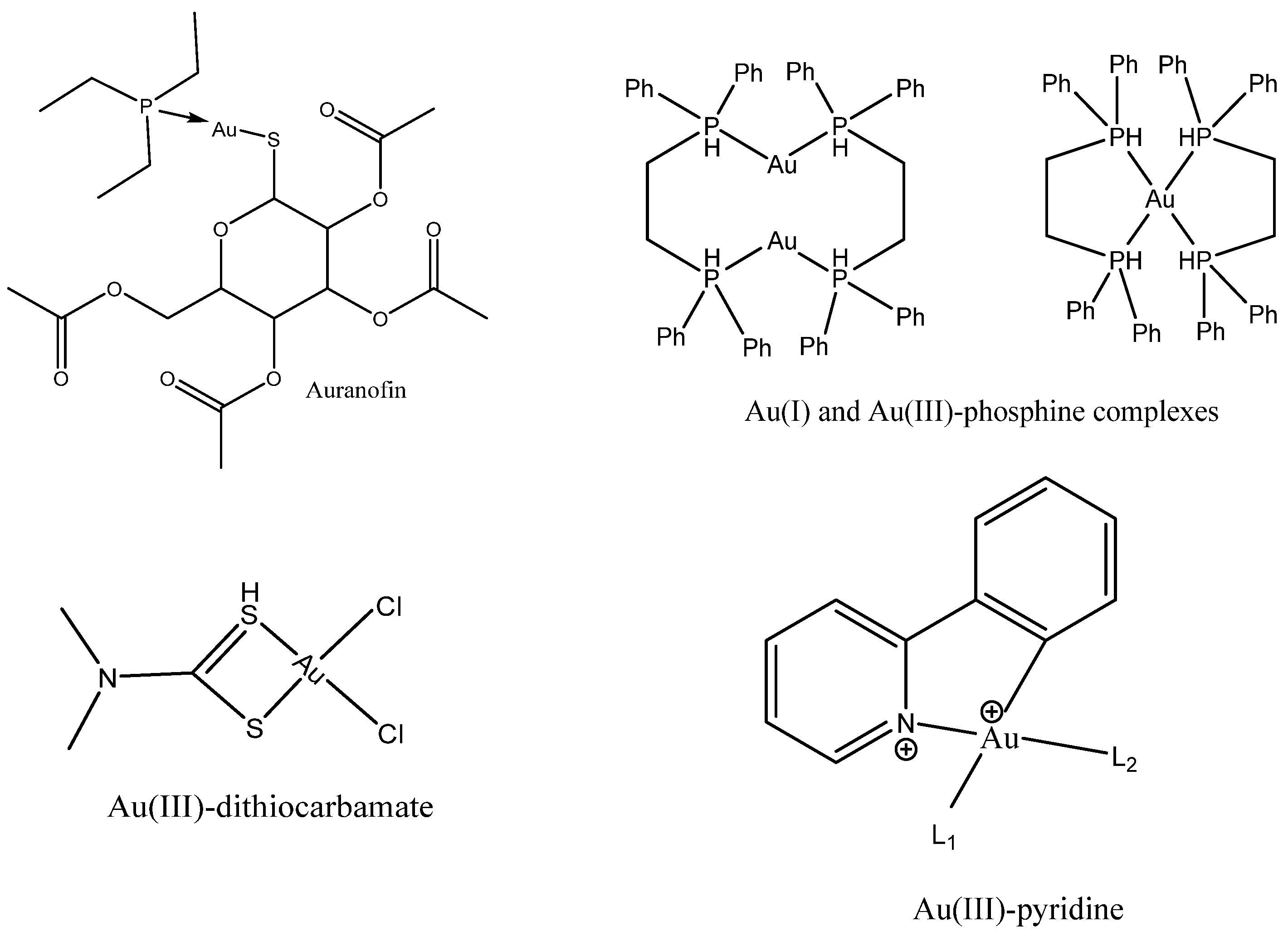
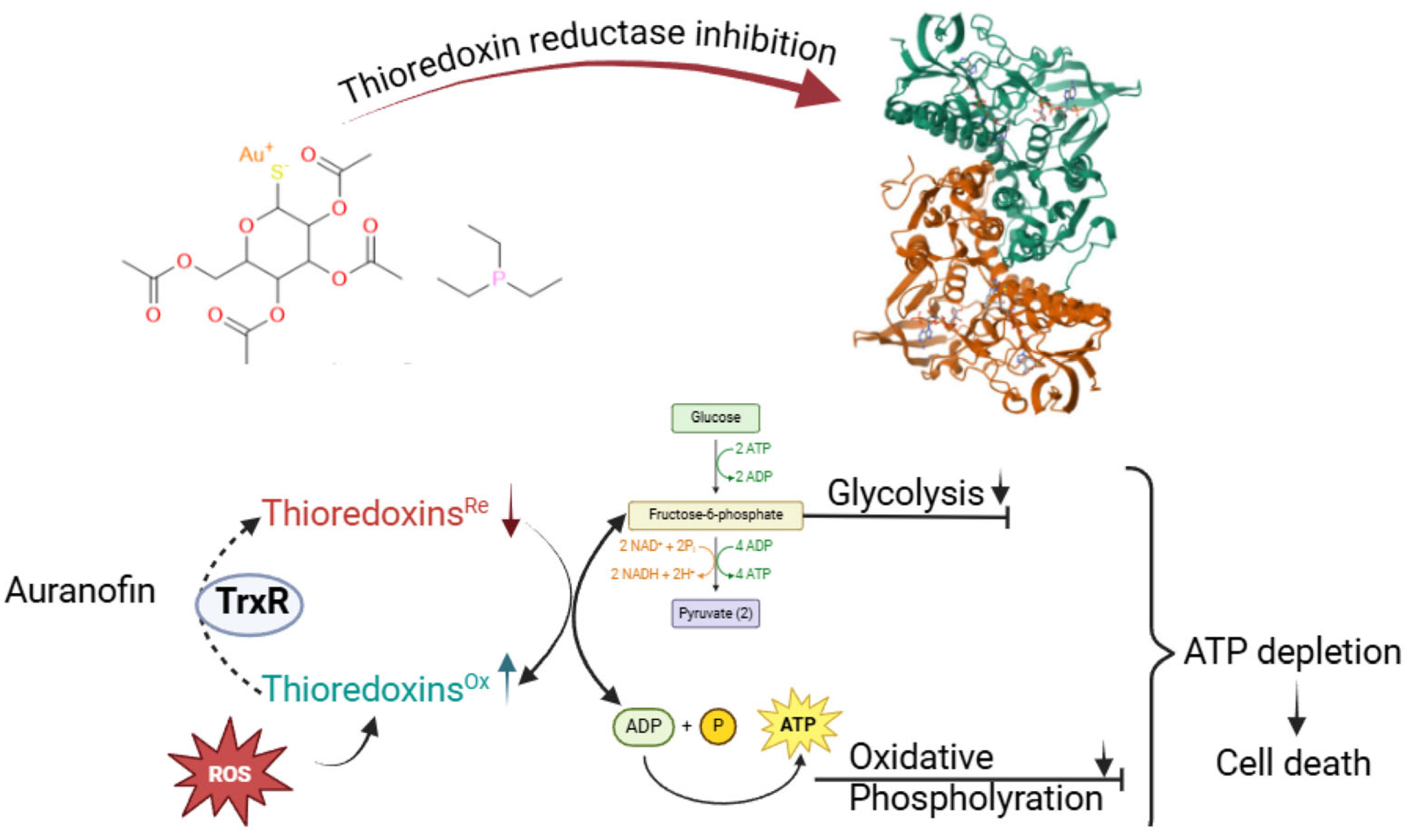
3.2.1. Au(I)–Phosphine Complexes
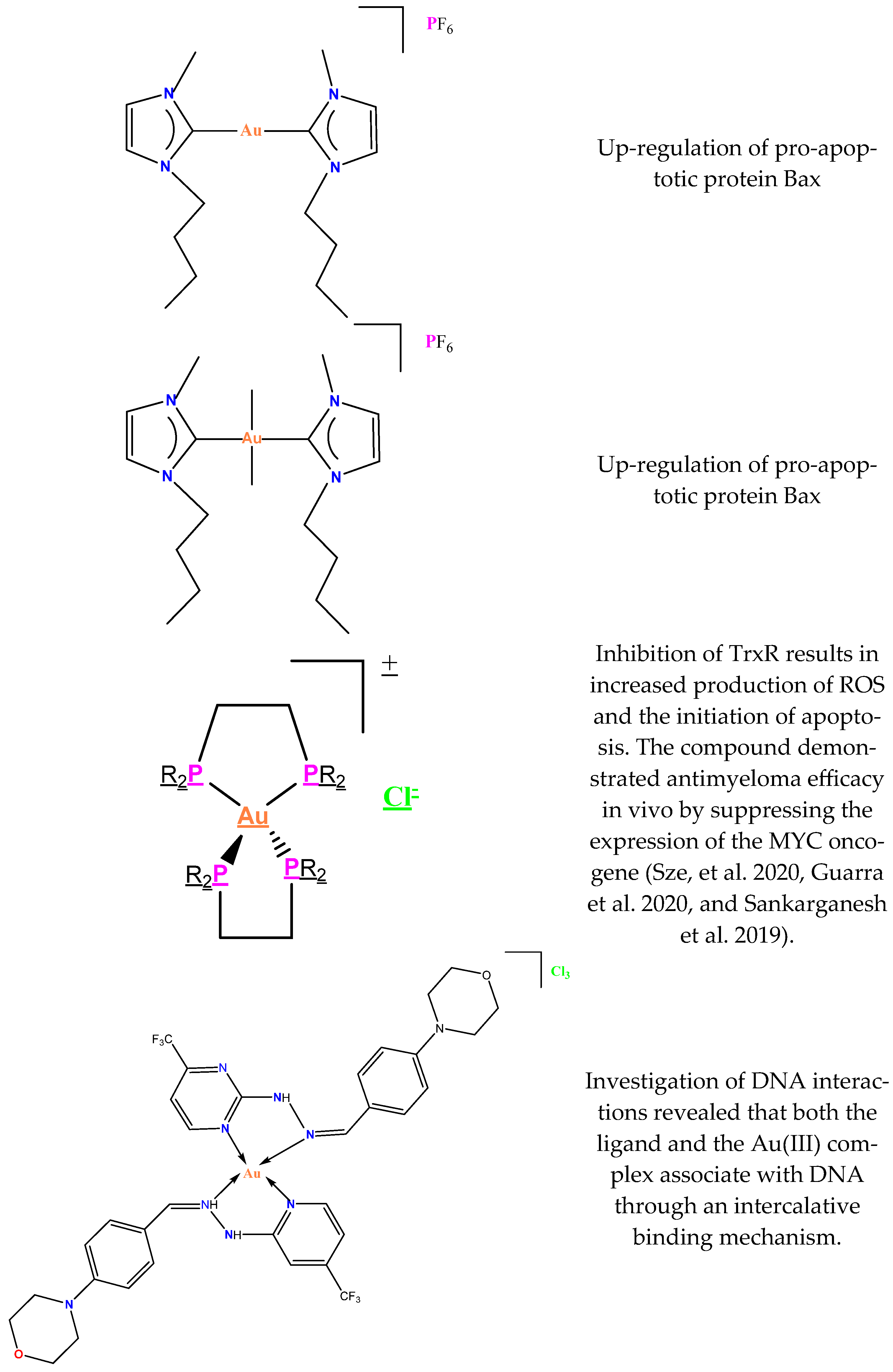
3.2.2. Au(I)–NHC Complexes
3.2.3. Other Au(I) Ligand Classes (Thiolates, Alkynyls, Mixed Donors)
3.3. Au(III) Complexes: Redox-Active Scaffolds and Stability Challenges
3.4. Comparative Analysis of Au(I) vs. Au(III) Anticancer Performance
3.5. In Vivo Efficacy, Toxicity, and Translational Constraints
3.6. Design Rules and Structure–Activity Relationships
4. Conclusions
Author Contributions
Funding
Institutional Review Board Statement
Informed Consent Statement
Data Availability Statement
Conflicts of Interest
Abbreviations
| TrxR | thioredoxin reductase |
| ATP | adenosine triphosphate |
| PEG | polyethylene glycol |
| PET | positron emission tomography |
| ROS | reactive oxygen species |
| MDA-MB-231 | A human breast adenocarcinoma cell line established from a patient with metastatic mammary adenocarcinoma |
| MCF-7 | Another human breast cancer cell line used in cancer research |
| A549 | A human lung carcinoma cell line |
| PC3 | A human prostate cancer cell line |
| SAR | Structure–activity relationship |
| A2780 | ovarian cancer cell line |
| HepG2 | A human liver carcinoma cell line |
| HeLa | A common human cervical cancer cell line |
| SMMC-7721 | A human hepatocellular carcinoma cell line |
| COX-2 | cyclooxygenase-2 |
| COXs | cyclooxygenases |
| HCT116 | human colorectal cell line |
References
- Miao, H.; Fang, Y.; Pan, C.; Yang, H.; Wang, Z.; Qi, Y.; Wu, Y.; Zhang, Y.; Liu, F.; Huang, H.; et al. Transforming the landscape of cancer treatment with seven promising novel therapies: Evolution and future perspectives. Med. Plus 2025, 2, 100087. [Google Scholar] [CrossRef]
- Zafar, A.; Khatoon, S.; Khan, M.J.; Abu, J.; Naeem, A. Advancements and limitations in traditional anti-cancer therapies: A comprehensive review of surgery, chemotherapy, radiation therapy, and hormonal therapy. Discov. Oncol. 2025, 16, 607. [Google Scholar] [CrossRef] [PubMed]
- Murillo, M.I.; Gaiddon, C.; Le Lagadec, R. Targeting of the intracellular redox balance by metal complexes towards anticancer therapy. Front. Chem. 2022, 10, 967337. [Google Scholar] [CrossRef] [PubMed]
- Ndagi, U.; Mhlongo, N.; Soliman, M.E. Metal complexes in cancer therapy—An update from drug design perspective. Drug Des. Dev. Ther. 2017, 11, 599–616. [Google Scholar] [CrossRef] [PubMed]
- Frezza, M.; Hindo, S.; Chen, D.; Davenport, A.; Schmitt, S.; Tomco, D.; Dou, Q.P. Novel metals and metal complexes as platforms for cancer therapy. Curr. Pharm. Des. 2010, 16, 1813–1825. [Google Scholar] [CrossRef]
- Stefanache, A.; Miftode, A.M.; Constantin, M.; Bogdan Goroftei, R.E.; Olaru, I.; Gutu, C.; Vornicu, A.; Lungu, I.I. Noble Metal Complexes in Cancer Therapy: Unlocking Redox Potential for Next-Gen Treatments. Inorganics 2025, 13, 64. [Google Scholar] [CrossRef]
- Gul, M.; Kashif, M.; Muhammad, S.; Azizi, S.; Sun, H. Various Methods of Synthesis and Applications of Gold-Based Nanomaterials: A Detailed Review. Cryst. Growth Des. 2025, 25, 2227–2266. [Google Scholar] [CrossRef]
- Rajasekar, P.; Arun Kumar, S. Surface Chemistry and Physiological Characteristics of Gold Nanoparticles. In Gold Nanoparticles, Nanomaterials and Nanocomposites; Pasha, S.K.K., Deshmukh, K., Hussain, C.M., Eds.; Elsevier: Amsterdam, The Netherlands, 2025; pp. 113–148. [Google Scholar] [CrossRef]
- Herrera, R.P.; Gimeno, M.C. Main Avenues in Gold Coordination Chemistry. Chem. Rev. 2021, 121, 8311–8363. [Google Scholar] [CrossRef]
- Arojojoye, A.S.; Awuah, S.G. Functional utility of gold complexes with phosphorus donor ligands in biological systems. Coord. Chem. Rev. 2025, 522, 216208. [Google Scholar] [CrossRef]
- Gamov, G.A. Complexation of Gold(I) and Gold(III) in solutions. Coord. Chem. Rev. 2024, 520, 216162. [Google Scholar] [CrossRef]
- Radisavljević, S.; Petrović, B. Gold(III) Complexes: An Overview on Their Kinetics, Interactions With DNA/BSA, Cytotoxic Activity, and Computational Calculations. Front. Chem. 2020, 8, 379. [Google Scholar] [CrossRef] [PubMed]
- Zhang, J.-J.; Abu el Maaty, M.A.; Hoffmeister, H.; Schmidt, C.; Muenzner, J.K.; Schobert, R.; Wölfl, S.; Ott, I. A multitarget gold(I) complex induces cytotoxicity related to aneuploidy in HCT-116 colorectal carcinoma cells. Angew. Chem. Int. Ed. 2020, 59, 16795–16800. [Google Scholar] [CrossRef] [PubMed]
- Kim, J.H.; Ofori, S.; Mertens, R.T.; Parkin, S.; Awuah, S.G. Water-soluble gold(III)-metformin complex alters mitochondrial bioenergetics in breast cancer cells. ChemMedChem 2021, 16, 3222–3230. [Google Scholar]
- Mansfield, A.S.; Fields, A.P.; Jatoi, A.; Qi, Y.; Adjei, A.A.; Erlichman, C.; Molina, J.R. Phase I dose escalation study of the PKCι inhibitor aurothiomalate for advanced non-small-cell lung cancer, ovarian cancer, and pancreatic cancer. Anti-Cancer Drugs 2013, 24, 1079–1083. [Google Scholar] [CrossRef]
- Abdalbari, F.H.; Telleria, C.M. The gold complex auranofin: New perspectives for cancer therapy. Discov. Oncol. 2021, 12, 42. [Google Scholar] [CrossRef]
- Olelewe, C.; Awuah, S.G. Mitochondria as a target of third row transition metal-based anticancer complexes. Curr. Opin. Chem. Biol. 2023, 72, 102235. [Google Scholar] [CrossRef]
- Urig, S.; Becker, K. On the potential of thioredoxin reductase inhibitors for cancer therapy. Semin. Cancer Biol. 2006, 16, 452–465. [Google Scholar] [CrossRef]
- Seitz, R.; Tümen, D.; Kunst, C.; Heumann, P.; Schmid, S.; Kandulski, A.; Müller, M.; Gülow, K. Exploring the Thioredoxin System as a Therapeutic Target in Cancer: Mechanisms and Implications. Antioxidants 2024, 13, 1078. [Google Scholar] [CrossRef]
- Sze, J.H.; Raninga, P.V.; Nakamura, K.; Casey, M.; Khanna, K.K.; Berners-Price, S.J.; Di Trapani, G.; Tonissen, K.F. Anticancer activity of a Gold(I) phosphine thioredoxin reductase inhibitor in multiple myeloma. Redox Biol. 2020, 28, 101310. [Google Scholar] [CrossRef]
- Yeo, C.I.; Ooi, K.K.; Tiekink, E.R.T. Gold-Based Medicine: A Paradigm Shift in Anti-Cancer Therapy? Molecules 2018, 23, 1410. [Google Scholar] [CrossRef]
- Marinova, P.; Stoitsov, D.; Burdzhiev, N.; Tsoneva, S.; Blazheva, D.; Slavchev, A.; Varbanova, E.; Penchev, P. Investigation of the Complexation Activity of 2,4-Dithiouracil with Au(III) and Cu(II) and Biological Activity of the Newly Formed Complexes. Appl. Sci. 2024, 14, 6601. [Google Scholar] [CrossRef]
- Ratia, C.; Ballén, V.; Gabasa, Y.; Soengas, R.G.; Andrés, M.V.-D.; Iglesias, M.J.; Cheng, Q.; Lozano, F.; Arnér, E.S.J.; López-Ortiz, F.; et al. Novel gold(III)-dithiocarbamate complex targeting bacterial thioredoxin reductase: Antimicrobial activity, synergy, toxicity, and mechanistic insights. Front. Microbiol. 2023, 14, 1198473. [Google Scholar] [CrossRef] [PubMed]
- Abas, E.; Espallargas, N.; Burbello, G.; Mesonero, J.E.; Rodriguez-Dieguez, A.; Grasa, L.; Laguna, M. Anticancer Activity of Alkynylgold(I) with P(NMe2)3 Phosphane in Mouse Colon Tumors and Human Colon Carcinoma Caco-2 Cell Line. Inorg. Chem. 2019, 58(22), 15536–15551. [Google Scholar] [CrossRef] [PubMed]
- Gencheva, R.; Cheng, Q.; Arnér, E.S. Thioredoxin reductase selenoproteins from different organisms as potential drug targets for treatment of human diseases. Free Radic. Biol. Med. 2022, 190, 320–338. [Google Scholar] [CrossRef] [PubMed]
- Kou, L.; Wei, S.; Kou, P. Current Progress and Perspectives on Using Gold Compounds for the Modulation of Tumor Cell Metabolism. Front. Chem. 2021, 9, 733463. [Google Scholar] [CrossRef]
- Büssing, R.; Karge, B.; Lippmann, P.; Jones, P.G.; Broönstrup, M.; Ott, I. Gold(I) and gold(III) N-heterocyclic carbene complexes as antibacterial agents and inhibitors of bacterial thioredoxin reductase. Chem. Med. Chem. 2021, 16, 3402–3409. [Google Scholar] [CrossRef]
- Ndugire, W.; Raviranga, N.G.H.; Lao, J.; Ramström, O.; Yan, M. Gold Nanoclusters as Nanoantibiotic Auranofin Analogues. Adv. Healthcare Mater. 2022, 11, 2101032. [Google Scholar] [CrossRef]
- Yang, B.; Lin, Y.; Huang, Y.; Shen, Y.Q.; Chen, Q. Thioredoxin (Trx): A redox target and modulator of cellular senescence and aging-related diseases. Redox Biol. 2024, 70, 103032. [Google Scholar] [CrossRef]
- Jovanović, M.; Podolski-Renić, A.; Krasavin, M.; Pešić, M. The Role of the Thioredoxin Detoxification System in Cancer Progression and Resistance. Front. Mol. Biosci. 2022, 9, 883297. [Google Scholar] [CrossRef]
- Scalcon, V.; Bindoli, A.; Rigobello, M.P. Significance of the mitochondrial thioredoxin reductase in cancer cells: An update on role, targets and inhibitors. Free Radic. Biol. Med. 2018, 127, 62–79. [Google Scholar] [CrossRef]
- Brandl, N.; Seitz, R.; Sendtner, N.; Müller, M.; Gülow, K. Living on the Edge: ROS Homeostasis in Cancer Cells and Its Potential as a Therapeutic Target. Antioxidants 2025, 14, 1002. [Google Scholar] [CrossRef]
- Hélio, F. Dos Santos, Reactivity of auranofin with S-, Se- and N-containing amino acids. Comput. Theor. Chem. 2014, 1048, 95–101. [Google Scholar] [CrossRef]
- Fan, C.; Zheng, W.; Fu, X.; Li, X.; Wong, Y.-S.; Chen, T. Enhancement of auranofin-induced lung cancer cell apoptosis by selenocystine, a natural inhibitor of TrxR1 in vitro and in vivo. Cell Death Dis. 2014, 5, e1191. [Google Scholar] [CrossRef]
- Salmain, M.; Gaschard, M.; Baroud, M.; Lepeltier, E.; Jaouen, G.; Passirani, C.; Vessières, A. Thioredoxin Reductase and Organometallic Complexes: A Pivotal System to Tackle Multidrug Resistant Tumors? Cancers 2023, 15, 4448. [Google Scholar] [CrossRef]
- Radenkovic, F.; Holland, O.; Vanderlelie, J.J.; Perkins, A.V. Selective inhibition of endogenous antioxidants with Auranofin causes mitochondrial oxidative stress which can be countered by selenium supplementation. Biochem. Pharmacol. 2017, 146, 42–52. [Google Scholar] [CrossRef]
- Scalcon, V.; Bonsignore, R.; Aupič, J.; Thomas, S.R.; Folda, A.; Heidecker, A.A.; Pöthig, A.; Magistrato, A.; Casini, A.; Rigobello, M.P. Exploring the Anticancer Activity of Tamoxifen-Based Metal Complexes Targeting Mitochondria. J. Med. Chem. 2023, 66(14), 9823–9841. [Google Scholar] [CrossRef]
- Adhikari, S.; Nath, P.; Das, A.; Datta, A.; Baildya, N.; Duttaroy, A.K.; Pathak, S. A Review on Metal Complexes and Its Anti-Cancer Activities: Recent Updates from In Vivo Studies. Biomed. Pharmacother. 2024, 171, 116211. [Google Scholar] [CrossRef]
- Tialiou, A.; Chin, J.; Keppler, B.K.; Reithofer, M.R. Current Developments of N-Heterocyclic Carbene Au(I)/Au(III) Complexes toward Cancer Treatment. Biomedicines 2022, 10, 1417. [Google Scholar] [CrossRef]
- Tolbatov, I.; Marrone, A.; Coletti, C.; Re, N. Computational Studies of Au(I) and Au(III) Anticancer MetalLodrugs: A Survey. Molecules 2021, 26, 7600. [Google Scholar] [CrossRef]
- López-Hernández, J.E.; Contel, M. Promising heterometallic compounds as anticancer agents: Recent studies in vivo. Curr. Opin. Chem. Biol. 2022, 72, 102250. [Google Scholar] [CrossRef]
- Moreno-Alcántar, G.; Picchetti, P.; Casini, A. Gold Complexes in Anticancer Therapy: From New Design Principles to Particle-Based Delivery Systems. Angew. Chem. 2023, 62, e202218000. [Google Scholar] [CrossRef]
- Banerjee, S.; Banerjee, S.; Das, P.; Mandal, B.; Biswas, K.; Kumar, S.A.; De, S. Sourav De, Organorhenium complexes as theranostic agents: Bridging anticancer activity and molecular sensing. Coord. Chem. Res. 2025, 2, 100016. [Google Scholar] [CrossRef]
- Reddy, T.S.; Privér, S.H.; Ojha, R.; Mirzadeh, N.; Velma, G.R.; Jakku, R.; Hosseinnejad, T.; Luwor, R.; Ramakrishna, S.; Wlodkowic, D.; et al. Gold(I) complexes of the type [AuL{κC-2-C6H4P(S)Ph2}] [L = PTA, PPh3, PPh2(C6H4-3-SO3Na) and PPh2(2-py)]: Synthesis, characterisation, crystal structures, and In Vitro and In Vivo anticancer properties. Eur. J. Med. Chem. 2025, 281, 117007. [Google Scholar] [CrossRef] [PubMed]
- Balfourier, A.; Kolosnjaj-Tabi, J.; Luciani, N.; Carn, F.; Gazeau, F. Gold-based therapy: From past to present. Proc. Natl. Acad. Sci. USA 2020, 117, 22639–22648. [Google Scholar] [CrossRef] [PubMed]
- Lu, Y.; Ma, X.; Chang, X.; Liang, Z.; Lv, L.; Shan, M.; Lu, Q.; Wen, Z.; Gust, R.; Liu, W. Recent development of gold(I) and gold(III) complexes as therapeutic agents for cancer diseases. Chem. Soc. Rev. 2022, 51, 5518–5556. [Google Scholar] [CrossRef]
- Penninckx, S.; Heuskin, A.-C.; Michiels, C.; Lucas, S. Gold nanoparticles as a potent radiosensitizer: A transdisciplinary approach from physics to patient. Cancers 2020, 12, 2021. [Google Scholar] [CrossRef]
- Ansari, E.; Kumar, R.; Ratnam, A. Gold–NHC complexes: From synthetic aspects to anti-cancer activity. Dalton Trans. 2025, 54, 7553–7601. [Google Scholar] [CrossRef]
- Conceição, N.R.; Mahmoud, A.G.; Dietl, M.C.; Caligiuri, I.; Rizzolio, F.; Carabineiro, S.A.C.; Rudolph, M.; Guedes da Silva, M.F.C.; Pombeiro, A.J.L.; Hashmi, A.S.K.; et al. Exploring the catalytic and anticancer activity of gold(I) complexes bearing 1,3,5-triaza-7-phosphaadamantane (PTA) and related ligands. New J. Chem. 2025, 49, 7216–7226. [Google Scholar] [CrossRef]
- Mirabelli, C.K.; Johnson, R.K.; Sung, C.M.; Faucette, L.; Muirhead, K.; Crooke, S.T. Evaluation of the in vivo antitumor activity and in vitro cytotoxic properties of auranofin, a coordinated gold compound, in murine tumor models. Cancer Res. 1985, 45, 32–39. [Google Scholar]
- Du, Y.; Xia, L.; Jo, A.; Davis, R.M.; Bissel, P.; Ehrich, M.F.; Kingston, D.G.I. Synthesis and evaluation of doxorubicin-loaded gold nanoparticles for tumor-targeted drug delivery. Bioconjug. Chem. 2018, 29, 420–430. [Google Scholar] [CrossRef]
- Vieri, W.; Ghini, V.; Turano, P.; Massai, L.; Messori, L.; Fondi, M. Modeling the metabolic response of A2780 ovarian cancer cells to gold-based cytotoxic drugs. NPJ Syst. Biol. Appl. 2025, 11, 83. [Google Scholar] [CrossRef] [PubMed]
- Ghini, V.; Sorbi, F.; Fambrini, M.; Magherini, F. NMR Metabolomics of Primary Ovarian Cancer Cells in Comparison to Established Cisplatin-Resistant and -Sensitive Cell Lines. Cells 2024, 13, 661. [Google Scholar] [CrossRef] [PubMed]
- Lee, A.V.; Oesterreich, S.; Davidson, N.E. MCF-7 cells--changing the course of breast cancer research and care for 45 years. J. Natl. Cancer Inst. 2015, 107, djv073. [Google Scholar] [CrossRef] [PubMed]
- Comşa, Ş.; Cimpean, A.M.; Raica, M. The Story of MCF-7 Breast Cancer Cell Line: 40 years of Experience in Research. Anticancer Res. 2015, 35, 3147–3154. [Google Scholar]
- Konsoula, R.; Barile, F.A. Correlation of in vitro cytotoxicity with paracellular permeability in Caco-2 cells. Toxicol. Vitro 2005, 19, 675–684. [Google Scholar] [CrossRef]
- Chaudhari, N.; Shinde, S.; Havelikar, U.; Desai, S.; Patel, V. Recent approaches of toxicity-related attributes of NMs: A systematic review. Nano Trends 2025, 12, 100160. [Google Scholar] [CrossRef]
- Köllő, Z.; Garami, M.; Vincze, I.; Vásárhelyi, B.; Karvaly, G.B. Therapeutic Monitoring of Orally Administered, Small-Molecule Anticancer Medications with Tumor-Specific Cellular Protein Targets in Peripheral Fluid Spaces-A Review. Pharmaceutics 2023, 15, 239. [Google Scholar] [CrossRef]
- Singhal, S.S.; Garg, R.; Mohanty, A.; Garg, P.; Ramisetty, S.K.; Mirzapoiazova, T.; Soldi, R.; Sharma, S.; Kulkarni, P.; Salgia, R. Recent Advancement in Breast Cancer Research: Insights from Model Organisms—Mouse Models to Zebrafish. Cancers 2023, 15, 2961. [Google Scholar] [CrossRef]
- Ali, M.; Dondaine, L.; Adolle, A.; Sampaio, C.; Chotard, F.; Richard, P.; Denat, F.; Bettaieb, A.; Le Gendre, P.; Laurens, V.; et al. Anticancer Agents: Does a Phosphonium Behave Like a Gold(I) Phosphine Complex? Let a “Smart” Probe Answer! J. Med. Chem. 2015, 58, 4521–4528. [Google Scholar] [CrossRef]
- Quero, J.; Ruighi, F.; Osada, J.; Gimeno, M.C.; Cerrada, E.; Rodriguez-Yoldi, M.J. Gold(I) Complexes Bearing Alkylated 1,3,5-Triaza-7-phosphaadamantane Ligands as Thermoresponsive Anticancer Agents in Human Colon Cells. Biomedicines 2021, 9, 1848. [Google Scholar] [CrossRef]
- Neshat, A.; Mahdavi, A.; Yousefshahi, M.R.; Cheraghi, M.; Mobarakeh, A.M.; Mohammadi, S.; Eigner, V.; Kucerakova, M.; Dusek, M.; Kaboudin, B. Homobimetallic Au(I)–Au(I) and Heterotrimetallic Au(I)–Fe(II)–Au(I) Complexes with Dialkyldithiophosphates and Phosphine Ligands: Structural Characterization, DFT Analysis, and Tyrosinase Inhibitory and Biological Effects. ACS Omega 2023, 8, 20423–20439. [Google Scholar] [CrossRef]
- Nährig, F.; Sun, Y.; Thiel, W.R. Phosphine Functionalized CpC Ligands and Their Metal Complexes. Chemistry 2023, 5, 912–933. [Google Scholar] [CrossRef]
- Mihajlović, L.E.; Trif, M.; Živković, M.B. Metal Complexes with Hydroxyflavones: A Study of Anticancer and Antimicrobial Activities. Inorganics 2025, 13, 250. [Google Scholar] [CrossRef]
- de Paiva, R.E.F.; Peterson, E.J.; Du, Z.; Farrell, N.P. The leaving group in Au(I)-phosphine compounds dictates cytotoxic pathways in CEM leukemia cells and reactivity towards a Cys2His2 model zinc finger. Dalton Trans. 2020, 49, 16319–16328. [Google Scholar] [CrossRef] [PubMed]
- Meijboom, R.; Iroegbu, A.O.C.; Ray, S.S. Advancing cancer therapy: The role of silver(I) phosphine complexes in overcoming resistance and toxicity. Discov. Oncol. 2025, 16, 792. [Google Scholar] [CrossRef]
- Pirvu, A.S.; Varut, R.-M.; Trasca, D.-M.; Stoica, G.A.; Radivojevic, K.; Carmen, S.; Arsenie, C.C.; Popescu, C. Cyclodextrins as Active Therapeutic Agents: Beyond Their Role as Excipients. Pharmaceuticals 2025, 18, 1592. [Google Scholar] [CrossRef]
- Cheng, H.; Liao, J.; Ma, Y.; Sarwar, M.T.; Yang, H. Advances in targeted therapy for tumor with nanocarriers: A review. Mater. Today Bio 2025, 31, 101583. [Google Scholar] [CrossRef]
- Astolfi, P.; Pisani, M.; Giorgini, E.; Rossi, B.; Damin, A.; Vita, F.; Francescangeli, O.; Luciani, L.; Galassi, R. Synchrotron characterization of hexagonal and cubic lipidic phases loaded with azolate/phosphane gold(I) compounds: A new approach to the uploading of gold(I)-based drugs. Nanomaterials 2020, 10, 1851. [Google Scholar] [CrossRef]
- Gambini, V.; Tilio, M.; Maina, E.W.; Andreani, C.; Bartolacci, C.; Wang, J.; Iezzi, M.; Ferraro, S.; Ramadori, A.T.; Simon, O.C.; et al. In vitro and in vivo studies of gold(I) azolate/phosphane complexes for the treatment of basal like breast cancer. Eur. J. Med. Chem. 2018, 155, 418–427. [Google Scholar] [CrossRef]
- Xu, C.-C.; Deng, T.; Fan, M.-L.; Lv, W.-B.; Liu, J.-H.; Yu, B.-Y. Synthesis and in vitro antitumor evaluation of dihydroartemisinin-cinnamic acid ester derivatives. Eur. J. Med. Chem. 2016, 107, 192–203. [Google Scholar] [CrossRef]
- Scheffler, H.; You, Y.; Ott, I. Comparative studies on the cytotoxicity, cellular and nuclear uptake of a series of chloro gold(I) phosphine complexes. Polyhedron 2010, 29, 66–69. [Google Scholar] [CrossRef]
- Reddy, V.G.; Reddy, T.S.; Privér, S.H.; Bai, Y.; Mishra, S.; Wlodkowic, D.; Mirzadeh, N.; Bhargava, S. Synthesis of Gold(I) Complexes Containing Cinnamide: In Vitro Evaluation of Anticancer Activity in 2D and 3D Spheroidal Models of Melanoma and In Vivo Angiogenesis. Inorg. Chem. 2019, 58, 5988–5999. [Google Scholar] [CrossRef] [PubMed]
- Kim, J.H.; Reeder, E.; Parkin, S.; Awuah, S.G. Gold(I/III)-Phosphine Complexes as Potent Antiproliferative Agents. Sci. Rep. 2019, 9, 12335. [Google Scholar] [CrossRef] [PubMed]
- Gilpatrick, S.T.; Obisesan, O.A.; Parkin, S.; Awuah, S.G. Carbon-phosphorus stapled Au(I) anticancer agents via bisphosphine induced reductive elimination. Dalton Trans. 2024, 53, 18974–18982. [Google Scholar] [CrossRef]
- Ott, I. Metal N-heterocyclic carbene complexes in medicinal chemistry. In Advances in Inorganic Chemistry; Sadler, P.J., van Eldik, R., Eds.; Academic Press: Cambridge, MA, USA, 2020; pp. 121–148. [Google Scholar] [CrossRef]
- Spreckelmeyer, S.; Thomas, S.R.; Schuderer, F.; Pinto, C.I.G.; Querino, A.L.d.A.; Böhm, F.A.; Park, M.; Geppert, C.; Gorges, C.; Mendes, F.; et al. N-Heterocyclic Carbenes as Ligands to 198Au(I)-Radiolabeled Compounds: A New Platform for Radiopharmaceutical Design. J. Med. Chem. 2025, 68, 17516–17526. [Google Scholar] [CrossRef]
- Tolbatov, I.; Umari, P.; Marrone, A. Mechanism of Action of Antitumor Au(I) N-Heterocyclic Carbene Complexes: A Computational Insight on the Targeting of TrxR Selenocysteine. Int. J. Mol. Sci. 2024, 25, 2625. [Google Scholar] [CrossRef]
- Lummiss, J.A.M.; Higman, C.S.; Fyson, D.L.; McDonald, R.; Fogg, D.E. The divergent effects of strong NHC donation in catalysis. Chem. Sci. 2015, 6, 6739–6746. [Google Scholar] [CrossRef]
- Hopkinson, M.N.; Glorius, F. An Overview of NHCs. In N-Heterocyclic Carbenes in Organocatalysis, 1st ed.; Akkattu, T., Biju, A.T., Eds.; Wiley-VCH Verlag GmbH & Co. KgaA: Weinheim, Germany, 2019. [Google Scholar]
- Baker, M.V.; Barnard, P.J.; Berners-Price, S.J.; Brayshaw, S.K.; Hickey, J.L.; Skelton, B.W.; White, A.H. Cationic, linear Au(I) N-heterocyclic carbene complexes: Synthesis, structure and anti-mitochondrial activity. Dalton Trans. 2006, 30, 3708–3715. [Google Scholar] [CrossRef]
- Curran, D.; Müller-Bunz, H.; Bär, S.I.; Schobert, R.; Zhu, X.; Tacke, M. Novel Anticancer NHC*-Gold(I) Complexes Inspired by Lepidiline A. Molecules 2020, 25, 3474. [Google Scholar] [CrossRef]
- Ceramella, J.; Mariconda, A.; Sirignano, M.; Iacopetta, D.; Rosano, C.; Catalano, A.; Saturnino, C.; Sinicropi, M.S.; Longo, P. Novel Au Carbene Complexes as Promising Multi-Target Agents in Breast Cancer Treatment. Pharmaceuticals 2022, 15, 507. [Google Scholar] [CrossRef]
- Baker, M.V.; Barnard, P.J.; Berners-Price, S.J.; Brayshaw, S.K.; Hickey, J.L.; Skelton, B.W.; White, A.H. Synthesis and structural characterisation of linear Au(I) N-heterocyclic carbene complexes: New analogues of the Au(I) phosphine drug Auranofin. J. Organomet. Chem. 2005, 690, 5625–5635. [Google Scholar] [CrossRef]
- Font, P.; Tzouras, N.V.; Papastavrou, A.T.; Vougioukalakis, G.C.; Ribas, X. Novel NHC-Based Au(I) Complexes as Precursors of Highly Pure Au(0) Nuggets under Oxidative Conditions. Molecules 2023, 28, 2302. [Google Scholar] [CrossRef]
- Liu, W.; Gust, R. Update on metal N-heterocyclic carbene complexes as potential anti-tumor metallodrugs. Coord. Chem. Rev. 2016, 329, 191–213. [Google Scholar] [CrossRef]
- Bian, M.; Fan, R.; Jiang, G.; Wang, Y.; Lu, Y.; Liu, W. Halo and Pseudohalo Gold(I)–NHC Complexes Derived from 4,5-Diarylimidazoles with Excellent In Vitro and In Vivo Anticancer Activities Against HCC. J. Med. Chem. 2020, 63, 9197–9211. [Google Scholar] [CrossRef] [PubMed]
- Walther, W.; Althagafi, D.; Curran, D.; O’beirne, C.; Mc Carthy, C.; Ott, I.; Basu, U.; Büttner, B.; Sterner-Kock, A.; Müller-Bunz, H.; et al. In-vitro and in-vivo investigations into the carbene-gold anticancer drug candidates NHC*-Au-SCSNMe2 and NHC*-Au-S-GLUC against advanced prostate cancer PC3. Anticancer Drugs 2020, 31, 672–683. [Google Scholar] [CrossRef] [PubMed]
- Liu, Y.; Li, Y.; Yu, S.; Zhao, G. Recent advances in the development of thioredoxin reductase inhibitors as anticancer agents. Curr. Drug Targets 2012, 13, 1432–1444. [Google Scholar] [CrossRef]
- Chmelyuk, N.; Kordyukova, M.; Sorokina, M.; Sinyavskiy, S.; Meshcheryakova, V.; Belousov, V.; Abakumova, T. Inhibition of Thioredoxin-Reductase by Auranofin as a Pro-Oxidant Anticancer Strategy for Glioblastoma: In Vitro and In Vivo Studies. Int. J. Mol. Sci. 2025, 26, 2084. [Google Scholar] [CrossRef]
- Calderón-Montaño, J.M.; Madrona, A.; Burgos-Morón, E.; Orta, M.L.; Mateos, S.; Espartero, J.L.; López-Lázaro, M. Selective cytotoxic activity of new lipophilic hydroxytyrosol alkyl ether derivatives. J. Agric. Food Chem. 2013, 61, 5046–5053. [Google Scholar] [CrossRef]
- Peris, E. Smart N-Heterocyclic Carbene Ligands in Catalysis. Chem. Rev. 2018, 118, 9988–10031. [Google Scholar] [CrossRef]
- Hoffmann, M.E.; Kühn, F.E. Au NHC Complexes as Anticancer Agents: Milestones, Strategies and Future Developments. Chem. Soc. Rev. 2025, 54, 10326–10343. [Google Scholar] [CrossRef]
- Saturnino, C.; Barone, I.; Iacopetta, D.; Mariconda, A.; Sinicropi, M.S.; Rosano, C.; Campana, A.; Catalano, S.; Longo, P.; Andò, S. N-Heterocyclic Carbene Complexes of Silver and Gold as Novel Tools Against Breast Cancer Progression. Future Med. Chem. 2016, 8, 2213–2229. [Google Scholar] [CrossRef] [PubMed]
- Del-Campo, I.; Sorroche, A.; Allen, N.; Ghirardello, M.; Corzana, F.; Galán, M.C.; Monge, M.; López-De-Luzuriaga, J.M. An organometallic approach to sub-2 nm thiolate-protected Au nanoclusters with enhanced catalytic and therapeutic properties. Nanoscale Adv. 2025, 7, 3228–3235. [Google Scholar] [CrossRef] [PubMed]
- Isozaki, K.; Iseri, K.; Saito, R.; Ueda, K.; Nakamura, M. Dual Catalysis of Gold Nanoclusters: Photocatalytic Cross-Dehydrogenative Coupling by Cooperation of Superatomic Core and Molecularly Modified Staples. Angew. Chem. 2024, 63, e202312135. [Google Scholar]
- Lei, Z.; Wan, X.-K.; Yuan, S.-F.; Guan, Z.-J.; Wang, Q.-M. Alkynyl Approach toward the Protection of Metal Nanoclusters. Acc. Chem. Res. 2018, 51, 2465–2474. [Google Scholar] [CrossRef]
- Havenridge, S.; Aikens, C.M. Understanding the Ligand-Dependent Photoluminescent Mechanism in Small Alkynyl-Protected Gold Nanoclusters. J. Phys. Chem. A 2023, 127, 9932–9943. [Google Scholar] [CrossRef]
- Chen, Y.; Bian, G.; Wu, Z.; Tang, Q. Revealing the exchange kinetics of thiol-capped Au25 nanoclusters with alkynyl ligands. Chem. Sci. 2025, 16, 18748–18765. [Google Scholar] [CrossRef]
- Lei, Z.; Wan, X.K.; Yuan, S.F.; Wang, J.Q.; Wang, Q.M. Alkynyl-protected gold and gold-silver nanoclusters. Dalton Trans. 2017, 46, 3427–3434. [Google Scholar] [CrossRef]
- Yang, Z.; Wang, Y.; Zhang, R.; Chen, T.; Xie, J. Precise Surface Engineering of Metal Nanoclusters: Ligand Programming for Functionality Design. Adv. Mater. 2025, 37, e08578. [Google Scholar] [CrossRef]
- Hada, A.-M.; Lamy de la Chapelle, M.; Focsan, M.; Astilean, S. Recent Advances in Metal Nanoclusters: From Novel Synthesis to Emerging Applications. Molecules 2025, 30, 3848. [Google Scholar] [CrossRef]
- Zhang, M.; Ji, S.; Zhang, Z.; Zhu, M.; Yao, Q.; Xie, J. Engineering Surface Structure of Atomically Precise Metal Nanoclusters at the Molecular Level. CCS Chem. 2026, 8, 37–59. [Google Scholar] [CrossRef]
- Hogarth, G. Metal-dithiocarbamate complexes: Chemistry and biological activity. Mini Rev. Med. Chem. 2012, 12, 1202–1215. [Google Scholar] [CrossRef]
- Bertrand, B.; Fernandez-Cestau, J.; Angulo, J.; Cominetti, M.M.D.; Waller, Z.A.E.; Searcey, M.; O’cOnnell, M.A.; Bochmann, M. Manfred Bochm ann, Cytotoxicity of Pyrazine-Based Cyclometalated (C^Npz^C)Au(III) Carbene Complexes: Impact of the Nature of the Ancillary Ligand on the Biological Properties. Inorg. Chem. 2017, 56, 5728–5740. [Google Scholar] [CrossRef] [PubMed]
- Stankovic, A.S.; Kasalovic, M.P.; Bukonjic, A.M.; Mijajlovic, M.Z.; Tomovic, D.L.; Nikolic, M.V. Biological Activity of Au(III) Complexes. Exp. Appl. Biomed. Res. 2019, 20, 1–6. [Google Scholar] [CrossRef]
- Holmsen, M.S.M.; Nova, A.; Tilset, M. Cyclometalated (N,C) Au(III) Complexes: The Impact of Trans Effects on Their Synthesis, Structure, and Reactivity. Acc. Chem. Res. 2023, 56, 3654–3664. [Google Scholar] [CrossRef] [PubMed]
- Amaya-Flórez, A.; R-Galindo, J.; Sanchez-Yocue, E.; Ruiz-Martinez, A.; Serrano-García, J.S.; Romo-Pérez, A.; Cano-Sanchez, P.; Reyes-Marquez, V.; Le Lagadec, R.; Morales-Morales, D. Cyclometalated complexes: Promising metallodrugs in the battle against cancer. RSC Med. Chem. 2025, 16, 5125–5195. [Google Scholar] [CrossRef]
- Zhang, S.-P.; Zhou, J.; Fan, Q.-Z.; Lv, X.-M.; Wang, T.; Wang, F.; Chen, Y.; Hong, S.-Y.; Liu, X.-P.; Xu, B.-S.; et al. Discovery of hydroxytyrosol as thioredoxin reductase 1 inhibitor to induce apoptosis and G1/S cell cycle arrest in human colorectal cancer cells via ROS generation. Exp. Ther. Med. 2021, 22, 829. [Google Scholar] [CrossRef]
- Tong, K.C.; Hu, D.; Wan, P.K.; Lok, C.N.; Che, C.M. Anticancer Gold(III) Compounds With Porphyrin or N-heterocyclic Carbene Ligands. Front. Chem. 2020, 8, 587207. [Google Scholar] [CrossRef]
- Zou, T.; Lum, C.T.; Lok, C.N.; Zhang, J.J.; Che, C.M. Chemical biology of anticancer gold(III) and gold(I) complexes. Chem. Soc. Rev. 2015, 44, 8786–8801. [Google Scholar] [CrossRef]
- Altaf, M.; Monim-Ul-Mehboob, M.; Kawde, A.-N.; Corona, G.; Larcher, R.; Ogasawara, M.; Casagrande, N.; Celegato, M.; Borghese, C.; Siddik, Z.H.; et al. New bipyridine gold(III) dithiocarbamate-containing complexes exerted a potent anticancer activity against cisplatin-resistant cancer cells independent of p53 status. Oncotarget 2017, 8, 490–505. [Google Scholar] [CrossRef]
- Kumar, P.; Navya, P.; Begum, A.; Ojha, R.; Plebanski, M.; Bhargava, S.K. Unveiling the anticancer potential of gold-sulfur complexes: Mechanisms, delivery strategies, and clinical progression. Coord. Chem. Rev. 2025, 541, 216809. [Google Scholar] [CrossRef]
- Babu, T.; Ghareeb, H.; Basu, U.; Schueffl, H.; Theiner, S.; Heffeter, P.; Koellensperger, G.; Metanis, N.; Gandin, V.; Ott, I.; et al. Oral Anticancer Heterobimetallic PtIV -AuI Complexes Show High In Vivo Activity and Low Toxicity. Angew. Chem. Int. Ed. Engl. 2023, 62, e202217233. [Google Scholar] [CrossRef]
- Williams, M.R.M.; Bertrand, B.; Hughes, D.L.; Waller, Z.A.E.; Schmidt, C.; Ott, I.; O’connell, M.; Searcey, M.; Bochmann, M. Cyclometallated Au(iii) dithiocarbamate complexes: Synthesis, anticancer evaluation and mechanistic studies. Metallomics 2018, 10, 1655–1666. [Google Scholar] [CrossRef]
- Sookai, S.; Akerman, M.; Færch, M.; Sayed, Y.; Munro, O.Q. Cytotoxic pyrrole-based gold(III) chelates target human topoisomerase II as dual-mode inhibitors and interact with human serum albumin. Eur. J. Med. Chem. 2025, 287, 117330. [Google Scholar] [CrossRef]
- Schleser, S.W.; Köhler, L.H.F.; Riethmüller, F.; Reich, S.; Fertig, R.; Schlotte, L.; Seib, J.; Goller, A.; Begemann, G.; Kempe, R.; et al. Anti-Tumoural [NHC(thiolato)] Gold(I) Complexes Derived from HIF-1α Inhibitor AC1-004 Target the Mitochondrial Redox System and Show Antiangiogenic Effects in vivo. Chempluschem 2023, 88, e202300167. [Google Scholar] [CrossRef]
- Maiore, L.; Aragoni, M.C.; Deiana, C.; Cinellu, M.A.; Isaia, F.; Lippolis, V.; Pintus, A.; Serratrice, M.; Arca, M. Structure-activity relationships in cytotoxic Au(I)/Au(III) complexes derived from 2-(2′-pyridyl)benzimidazole. Inorg. Chem. 2014, 53, 4068–4080. [Google Scholar] [CrossRef]
- Thomas, S.R.; Bonsignore, R. Harnessing Organometallic Au(III) Complexes as Precision Scaffolds for Next-Generation Therapeutic and Imaging Agents. ChemBioChem 2025, 26, e202500347. [Google Scholar] [CrossRef]
- Rahman, M.; Gao, P.; Zhao, Q.; Lalancette, R.; Szostak, R.; Szostak, M. [Au(Np#)Cl]: Highly Reactive and Broadly Applicable Au (I)–NHC Catalysts for Alkyne π-Activation Reactions. Catal. Sci. Technol. 2023, 13, 5131–5139. [Google Scholar] [CrossRef]
- Tan, J.; Sivaram, H.; Huynh, H.V. Gold(I) bis(N-heterocyclic carbene) complexes: Metabolic stability, in vitro inhibition, and genotoxicity. Appl. Organomet. Chem. 2018, 32, e4441. [Google Scholar] [CrossRef]
- Arojojoye, A.S.; Olelewe, C.; Gukathasan, S.; Kim, J.H.; Vekaria, H.; Parkin, S.; Sullivan, P.G.; Awuah, S.G. Serum-Stable Gold(III) Bisphosphine Complex Induces Mild Mitochondrial Uncoupling and In Vivo Antitumor Potency in Triple Negative Breast Cancer. J. Med. Chem. 2023, 66, 7868–7879. [Google Scholar] [CrossRef]
- Hinderling, P.H.; Hartmann, D. The pH dependency of the binding of drugs to plasma proteins in man. Ther. Drug Monit. 2005, 27, 71–85. [Google Scholar] [CrossRef]
- Mirzadeh, N.; Telukutla, S.R.; Luwor, R.; Priv´er, S.; Velma, G.R.; Jakku, R.K.; Andrew, S.N.; Plebanski, M.; Christian, H.; Bhargava, S. Dinuclear orthometallated gold(I)-gold(III) anticancer complexes with potent in vivo activity through an ROS-dependent mechanism. Metallomics 2021, 13, mfab039. [Google Scholar] [CrossRef]
- Guarra, F.; Terenzi, A.; Pirker, C.; Passannante, R.; Baier, D.; Zangrando, E.; G´omez-Vallejo, V.; Biver, T.; Gabbiani, C.; Berger, W.; et al. 124 I Radiolabeling of a Au III -NHC Complex for In Vivo Biodistribution Studies. Angew. Chem. Int. Ed. 2020, 59, 17130–17136. [Google Scholar] [CrossRef]
- Sankarganesh, M.; Raja, J.D.; Revathi, N.; Solomon, R.V.; Kumar, R.S. Gold(III) complex from pyrimidine and morpholine analogue Schiff base ligand: Synthesis, characterization, DFT, TDDFT, catalytic, anticancer, molecular modeling with DNA and BSA and DNA binding studies. J. Mol. Liq. 2019, 294, 111655. [Google Scholar] [CrossRef]



| Compound Class | Coordination Geometry | Ligand Type | Cancer Cell Lines | Median IC50 (µM) | In Vivo Evaluation | Key Mechanism | Reference |
|---|---|---|---|---|---|---|---|
| Linear Au(I)–phosphine | Linear P–Au–X | Phosphine (PPh3, PEt3) thiosugar (3,4,5-triacetyloxy-6-(acetyloxymethyl)oxane-2-thiolate) and triethylphosphine | Breast cancer cell lines (MDA-MB-468, MDA-MB-231, SUM-159) ovarian cancer cell lines (OVCAR-3, A2780), lung cancer cell lines (A549, H460, H1299) | 0.34–2.7 | xenograft models | depolarizes generate mitochondrial ROS, depolarize mitochondrial membrane potential, and modulate mitochondrial respiration in cancer cells | [72] |
| Linear Au(I)–phosphine (bulky) | Linear P–Au–X | Sterically bulky phosphines, such as 2-[(chloromethyl)phenyl](diphenyl)phosphine, Triaza-7-phosphaadamantane, etc. | A2780, HCT116, MCF-7 | 5.11–33.4 | Not reported | induce the production of mitochondrial superoxide anions; produce apoptosis through mitochondrial depolarization | [57,58,60] |
| Linear Au(I)–phosphine (electron-rich) | Linear P–Au–X | tricyclohexylphosphanegold (I) mercaptobenzoate | A2780, MCF-7 | 0.4–1.0 | Not reported | TrxR inhibition, oxidative stress | [73] |
| Heterotrimetallic Au(I)–Fe(II)–Au(I) | Linear P–Au–S | Dialkyldithiophosphates | MCF-7 | 9.63 | Not reported | inhibition of thioredoxin (Trx)/thioredoxin reductase | [59] |
| Linear Au(I)–phosphine bulky | linear | Hydroxyflavones bearing OH–Flavone group | Caco-2/TC7, MCF-7 and HepG2 | 1.5–7.68 | Not reported | Interaction with COX-1/2, TrxR and glutathione reductase (GR) redox enzymes, resulting in ROS increase on CaCo-2 cell lines. | [61] |
| Linear Au(I)–phosphine bulky | [Au(dmap)(Et3P)]+ | DMAP | CEM | 0.32 | Not reported | Inhibition of cytosolic and mitochondrial thioredoxin reductase | [62] |
| Linear Au(I)–phosphine bulky | [Au(d2pype)2]Cl | 2-pyridyl | RPMI8226, U266, and JJN3 myeloma cells | 0.6–2.6 | RPMI8226 xenograft model | inhibiting thioredoxin reductase | [20] |
| Linear Au(I)–phosphine bulky | linear | chiral ((R,R)-(-)-2,3-bis(t-butylmethylphosphino) quinoxaline) and non-chiral phosphine (1,2-Bis(diphenylphosphino)ethane, dppe) | K562, H460, and OVCAR8 | 0.10–2.53 | Not reported | TrxR → ROS → apoptosis | [71] |
| Compound Class | Coordination Geometry | Ligand Type | Cancer Cell Lines (n) | Median IC50 (µM) | In Vivo Evaluation | Key Mechanism | Reference |
|---|---|---|---|---|---|---|---|
| Linear Au(I)–NHC | Linear S-Au-S | Imidazolylidene NHC | Not reported | Not reported | Not reported | TrxR inhibition → ROS → apoptosis | [62] |
| Linear Au(I)–NHC (bulky substituents) | Linear Au–L2 | (bis-[N-methyl, N′(cyclohexane-2ol)-imidazole-2-ylidine] | A2780, MCF-7, ZR-75-1 breast cancer cells, MCF-10A breast epithelial cells | 1–4 | Not reported | TrxR inhibition; mitochondrial stress | [78,92] |
| Linear Au(I)–NHC (functionalized) | Linear Au–C | doxorubicin | A2780, HCT116 (≥2 studies) | Not reported | Not reported | TrxR inhibition, ROS induction | [35] |
| Compound Class | Coordination Geometry | Ligand Type | Cancer Cell Lines (n) | Median IC50 (µM) | In vivo Evaluation | Key Mechanism | Reference |
|---|---|---|---|---|---|---|---|
| Cyclometalated Au(III) | Square-planar | C^N chelates | A2780, MCF-7, HCT116 | 0.5–2.0 | Limited xenograft data | TrxR inhibition-ROS-apoptosis | [104] |
| [Au(pyb-H)L1L2]n+ (pyb-H), L1 and L2 being chlorido, phosphane or glucosethiolate | square-planar geometry | C^N cyclometallated 2-benzylpyridine | ovarian adenocarcinoma (A2780), mammary carcinoma (MCF-7), lung carcinoma (A549), and colon carcinoma HCT116 and healthy human embryonic kidney cells (HEK-293T) | 1.7–2.9 | Not reported | inhibitors of the zinc-finger protein polymerase 1 | [102] |
| Au(III)–dithiocarbamates | Square-planar | bipyridine gold(III) dithiocarbamate | human Hodgkin lymphoma (L-540), androgen-resistant prostate cancer (PC3), breast cancer (MCF-7) and ovarian adenocarcinoma cisplatin-sensitive (A2780) and -resistant (A2780cis) | 0.27–0.47 μM in MCF-7 cells, 0.42–1.6 μM in PC3 cells, 0.18–0.73 μM in A2780 | Not reported | increased ROS levels, a decrease in the mitochondrial membrane potential | [110] |
| cycloaurated phosphine sulfide | Square-planar | Monodentate/weak chelates | A2780, HCT116, breast cancer cell lines, MCF-7, (HER2+), and MDA-MB-23 | 0.44–3.38 | Limited xenograft data | strong ROS induction and TrxR inhibition | [90] |
Disclaimer/Publisher’s Note: The statements, opinions and data contained in all publications are solely those of the individual author(s) and contributor(s) and not of MDPI and/or the editor(s). MDPI and/or the editor(s) disclaim responsibility for any injury to people or property resulting from any ideas, methods, instructions or products referred to in the content. |
© 2026 by the authors. Licensee MDPI, Basel, Switzerland. This article is an open access article distributed under the terms and conditions of the Creative Commons Attribution (CC BY) license.
Share and Cite
Marinova, P.; Blazheva, D.; Nikolova, S. Anticancer Applications of Gold Complexes: Structure–Activity Review. Appl. Sci. 2026, 16, 1114. https://doi.org/10.3390/app16021114
Marinova P, Blazheva D, Nikolova S. Anticancer Applications of Gold Complexes: Structure–Activity Review. Applied Sciences. 2026; 16(2):1114. https://doi.org/10.3390/app16021114
Chicago/Turabian StyleMarinova, Petya, Denica Blazheva, and Stoyanka Nikolova. 2026. "Anticancer Applications of Gold Complexes: Structure–Activity Review" Applied Sciences 16, no. 2: 1114. https://doi.org/10.3390/app16021114
APA StyleMarinova, P., Blazheva, D., & Nikolova, S. (2026). Anticancer Applications of Gold Complexes: Structure–Activity Review. Applied Sciences, 16(2), 1114. https://doi.org/10.3390/app16021114