To test the described methodology, both simulated and experimental nonlinear free-decay signals are processed in the next subsections.
4.1. Test over Simulated Nonlinear Free-Decay Signals
Firstly, the developed algorithm is tested with synthetically generated nonlinear free-decay signals. For this purpose, different analytical signals with time-varying
and
are considered. Accordingly, the expression of a damped chirp is used to compute the signals to be processed [
16]. Integrating the time-dependent expression of the instant phase function, and assuming Equation (26),
the damped chirp expression is represented by Equation (27):
Using Equation (27), the signals in
Table 3 are tested (indicating the initial (
0) and the final (
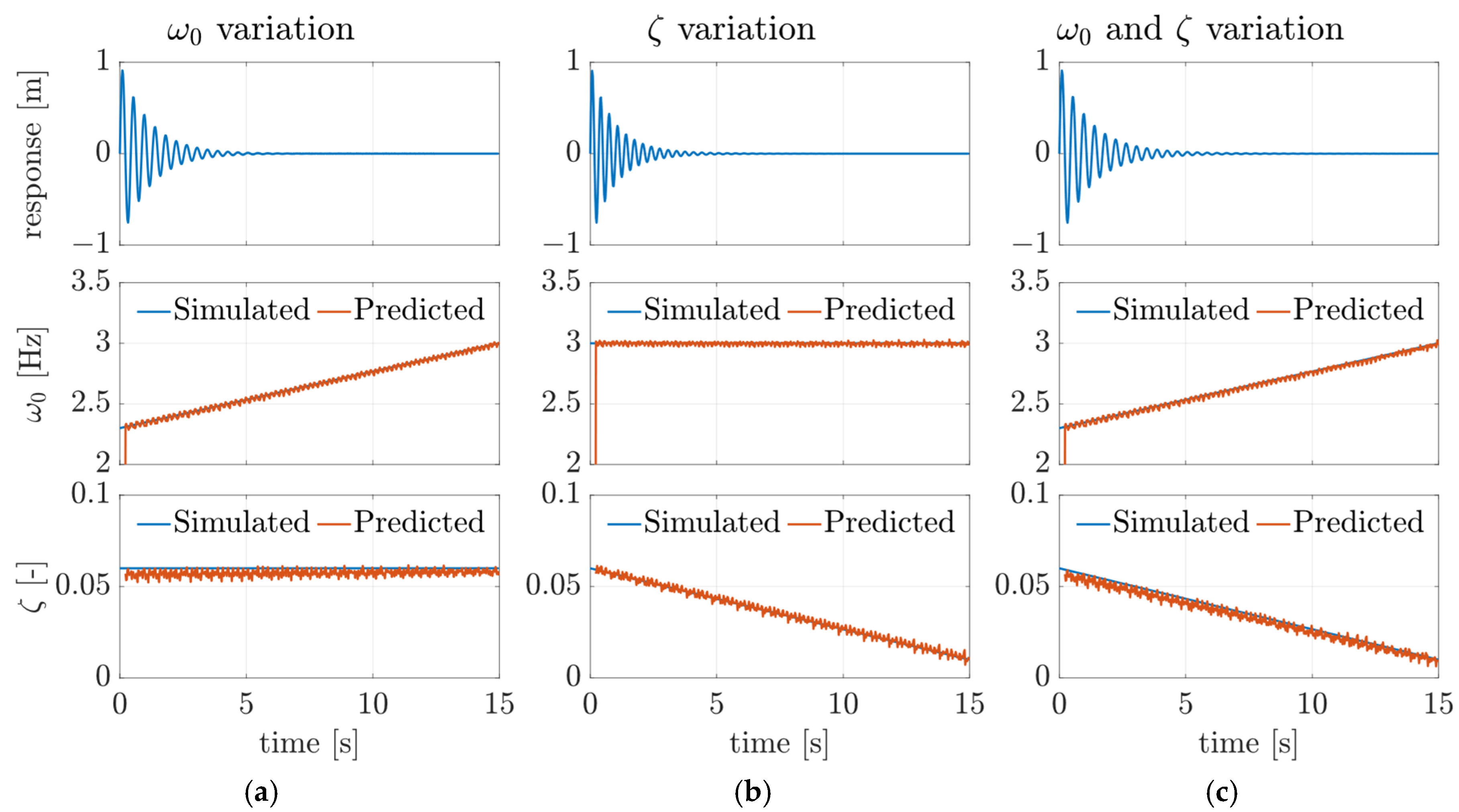
f) properties along 15 s), and the results are plotted in
Figure 7. Note that three different combinations of
and
are tested, and RecuID delivers a precise tracking of both properties, even though it was only trained with linear evolutions. Additionally, since they are analytical and no noise has been artificially added, the algorithm is able to provide good results, even when the signal comes very close to 0 m.
4.2. Experimental System Configurations
Once validated over nonlinear examples, RecuID is experimentally tested through a laboratory-scale SDOF system (
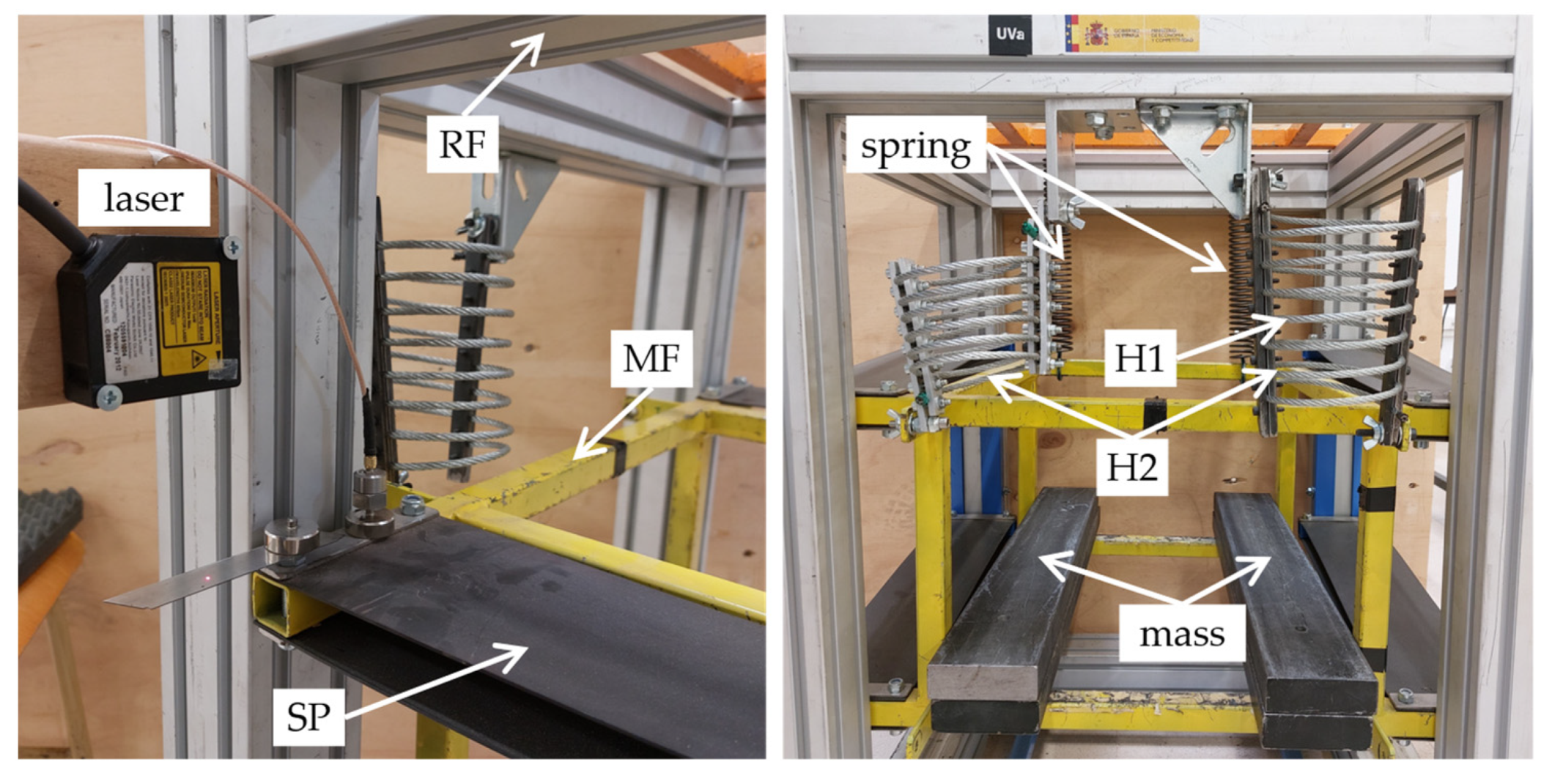
Figure 8). It is composed of a moving frame (MF), several steel plates (SP) that confine the movement to the vertical direction, and a rigid frame (RF). As can be seen, the moving frame is hollow, so its mass can be modified as desired. Also, springs can be installed between the moving and the rigid frames in order to modify the stiffness of the ensemble. Finally, in parallel with the springs and the plates, one or two steel cables (H1 and H2, details in
Figure 8) can be installed in order to modify the overall damping of the system. The cables are composed of multiple thinner wires (UNE-EN 12385 [
25], 7 × 7, 8 mm), and the friction between them is mainly responsible for their equivalent damping, providing the necessary nonlinear effect to test the proposed methodology. As can be seen, they are wrapped helically to improve friction and foster the nonlinearity.
In order to test different scenarios, several configurations are sought. These configurations, summarised in
Table 4, have different dynamic properties (the equivalent moving mass and stiffness lead to several natural frequencies and damping ratios). The first one corresponds to the unmodified configuration, which is characterised by a moving mass of 9.1 kg, a stiffness of 6780.5 N/m, and an equivalent viscous damping of 1.12 Ns/m (which is inherent to the steel plates, SP). The physical parameters are subsequently modified by adding discrete mass and stiffness components. All of the configurations in
Table 4 are tested without any cable (N) and with one and two cables (H1 and H2, respectively).
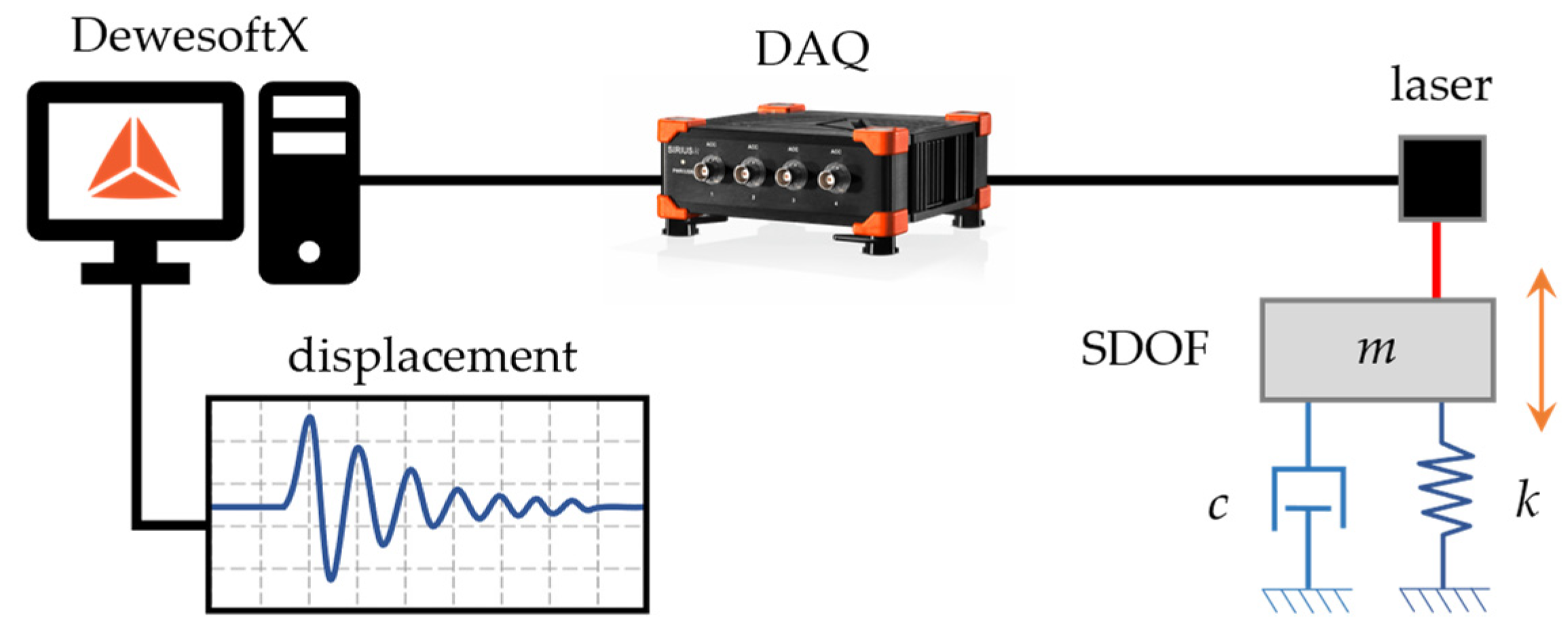
The measurement chain is shown in
Figure 9 and consists of a laser sensor (Panasonic (Osaka, Japan), HL-G1 A-C5) to measure the displacement of the moving mass and the system SIRIUS as a data acquisition system (DAQ). The signal is registered and stored through the corresponding software, DewesoftX (V23-1).
The SDOF system is separated from its equilibrium position to induce movement manually or with an impact hammer, and it evolves freely until repose. The next subsections present the results of the identification.
4.4. Nonlinear Identifications
Two methodologies are compared in this section in order to evaluate the changing properties of the nonlinear system when helical dampers are added. The experimental free-decay signals are available as
Supplementary Materials to this manuscript (‘.mat’ file).
Firstly, RecuID is applied to each one of the experimental setups listed in
Table 4. Since the identification process of the proposed algorithm is strongly dependent on the sampling rate, an iterative decision procedure is carried out regarding the order of magnitude of the
detected in the configuration without steel cables (described in
Table 5).
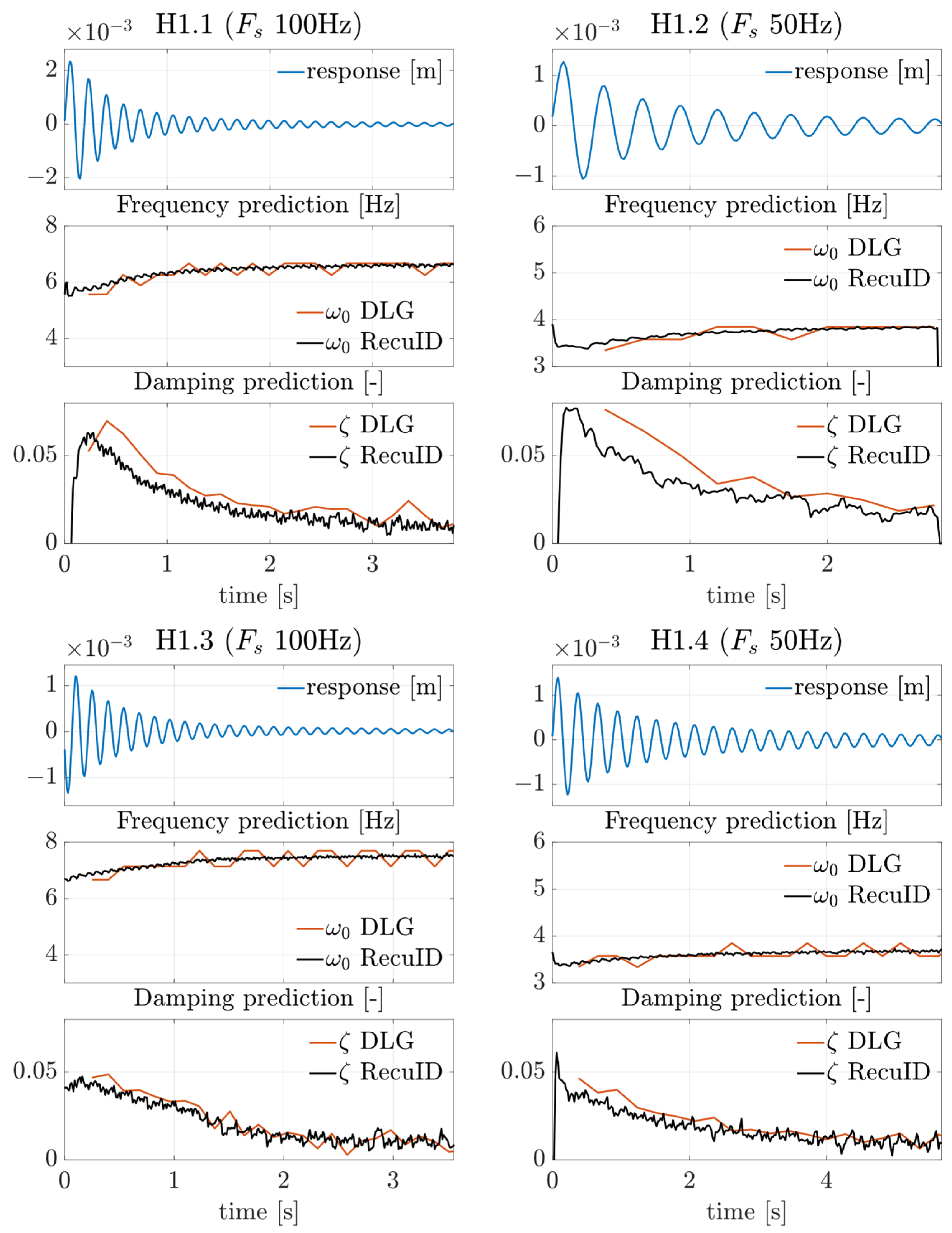
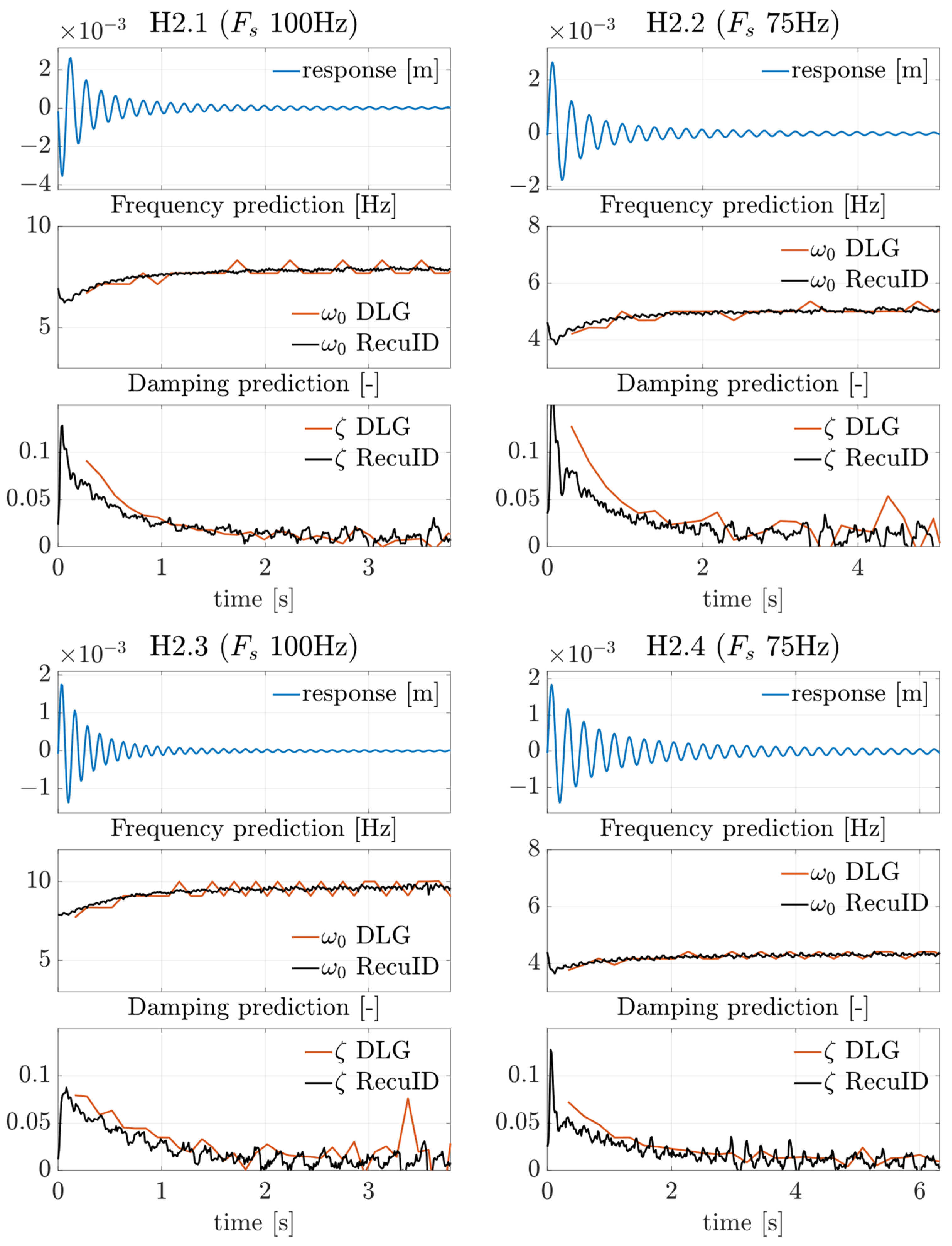
Figure 10 and
Figure 11 describe in black the tracked values of
and
for each free-decay during the first seconds of response, indicating the corresponding final
used for the identification.
Figure 10 corresponds to the H1 case (only one helical steel cable), and
Figure 11 corresponds to the H2 case (two helical steel cables). Note that the system nonlinearity leads to time-varying modal properties. To simplify the analysis, only one experimental free-decay signal per setup is presented.
As can be observed, in all cases, RecuID is able to sweep the free-decay and provide an estimate per time step. The smoothness of the properties’ evolution is coherent with the initial assumption of local linear behaviour for short segments. The identified
exhibits an inverse relationship with the amplitude of response, with lower values predicted at higher displacement levels. Moreover,
systematically decreases as the amplitude decreases, showing a direct dependence, which is consistent with the behaviour commonly reported for continuous beams and steel plates [
26]. The selected
is always between 1, 5, and 2 times the highest value of
in the evolutions.
Table 6 summarises the results, reporting the initial and final
and
levels.
To benchmark the RecuID results, the conventional approach known as the logarithmic decrement (DLG) method is applied [
27]. It is based on a local maxima detection, by looking for the time samples (
) at which the amplitude peaks of the free response occur (
,
). From these peaks, the damped natural frequency (
) is first estimated (Equation (28)). Subsequently, the natural logarithm of the ratio between successive peak amplitudes (
) is computed and used in Equation (28):
from which
is estimated. This method progressively loses accuracy for high
, and it is inherently limited to estimating
. Thus, only one value per oscillation cycle can be estimated. Finally,
is calculated through the relation
.
The results obtained with the DLG method are overlapped in orange in
Figure 10 and
Figure 11. The same time evolutions, considering the sampling rate selected for RecuID, are processed. As can be observed, the estimations provided by the DLG are consistent with those obtained using RecuID, which further supports the reliability of the proposed approach.
Table 6 summarises the results, reporting the initial and final
and
levels. Moreover, to deeply compare both methods, the mean absolute error (MAE) between the RecuID and DLG estimations is calculated, using Equation (29):
where
was previously defined as the number of time samples in each free-decay. Since RecuID has a higher estimation rate, the DLG estimations are linearly interpolated to enable the comparison. The MAE results are presented in
Table 7.
Table 6 numerically reveals the similarity of the predictions between the two methods. Furthermore, the maximum MAE values presented in
Table 7 are 0.244 Hz for
and 0.015 for
, which are sustainably low values with respect to the general evolutions. As a conclusion, DLG is simpler and is able to reproduce the evolving behaviour of the modal properties; however, it presents two main drawbacks. First, the estimations are noticeably noisier and exhibit lower accuracy. Second, and more importantly, although the computational cost of the method is low, it is not possible to obtain an estimation at each time sample, as explained previously. Consequently, the identification speed is inherently limited by the natural period of the system. While the modal properties that RecuID can identify are also bounded, the limits for
are defined relative to
, so the accuracy can be improved through an appropriate sampling rate selection. Regarding
, the admissible range is sufficiently wide to ensure applicability to conventional structures.
Modal Parameters’ Evolution
As a final analysis, the effects of adding the steel cables can be studied regarding the identification of the linear system in
Table 5.
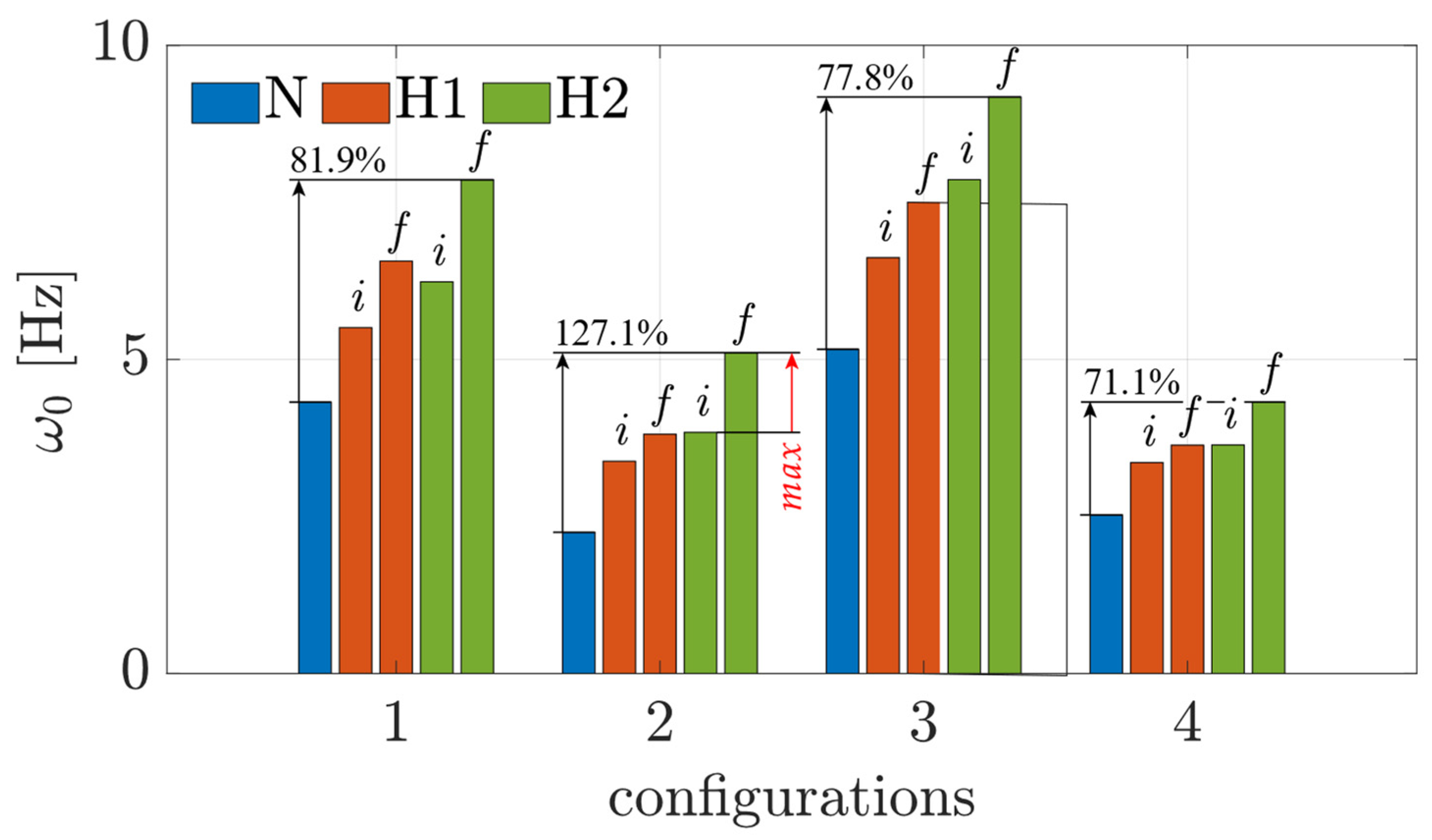
Figure 12 and
Figure 13 show the changes in
and
, taking as reference the RecuID estimations in
Table 6.
Predictably,
Figure 12 shows how the steel cables increase the stiffness of the SDOF device; therefore,
consistently increases with respect to the “N” setup. The system could reach a maximum value of 9.18 Hz during its evolution in configuration 3. Bars with the same colour represent the nonlinear evolution of
for a given steel cable case, from the initial instant (“
i”) to the final one (“
f”). For each configuration, the maximum variability of
relative to the corresponding linear case is highlighted (in %). The results indicate that configuration 2 (mass addition only) exhibits the largest frequency change induced by the helical nonlinear dampers with respect to the linear case, reaching a difference of 127.1%. Moreover, the maximum nonlinear variation of
within a free-decay response is indicated in red (“max”); it occurs at the H2.2 case (added mass and two helical dampers), and the natural frequency increases 33.1% between “
i” and “
f”.
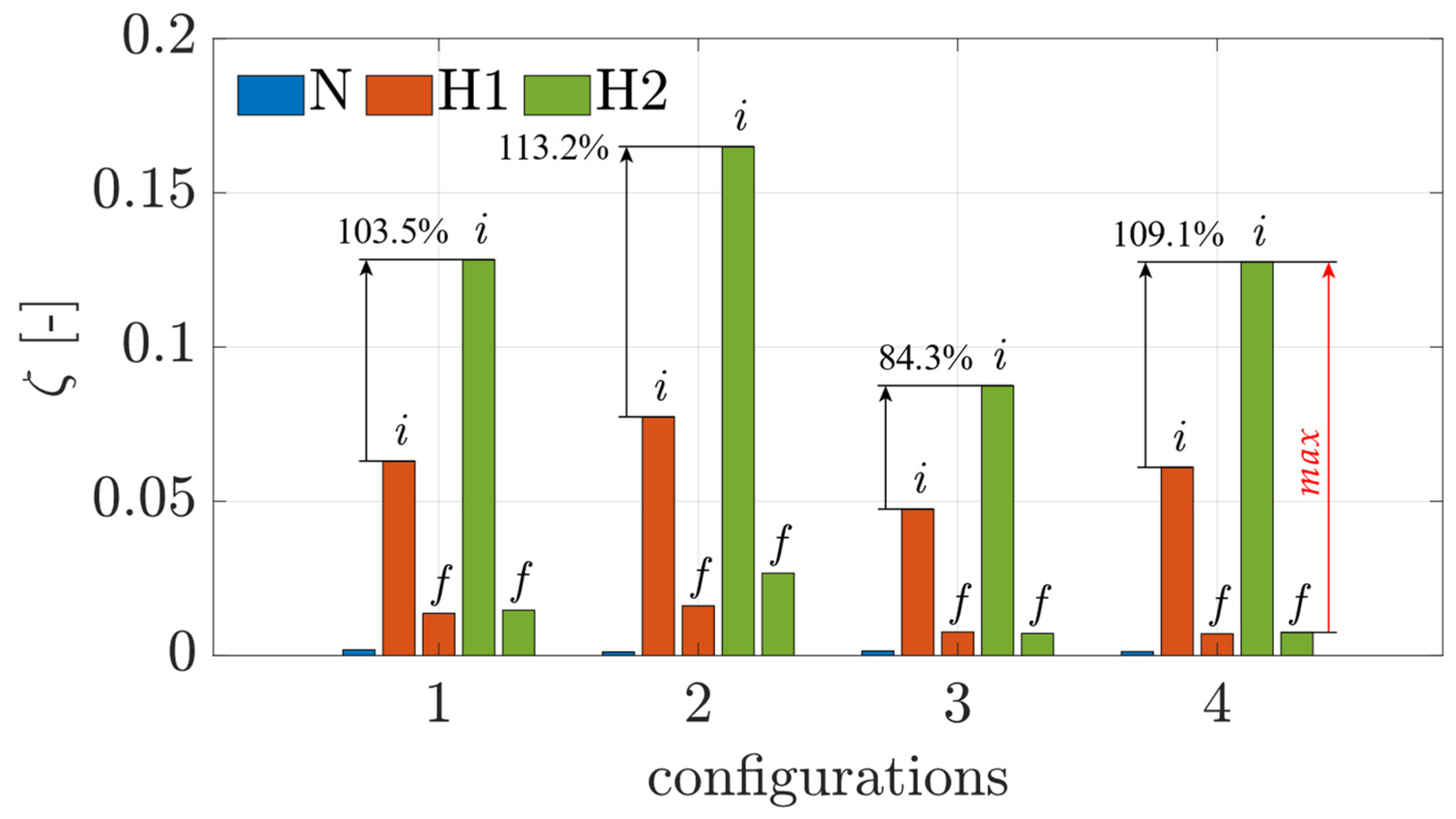
Finally,
Figure 13 compares the estimated
. The highest value of
(0.165) remains below 0.2, which is the upper bound defined for the proposed methodology. Since the
values obtained for the “N” case were not meaningful (note that the intrinsic damping is nearly negligible), the percentage comparison is now performed between the H1 and H2 cases, taking as reference the initial values in each nonlinear evolution. As observed, for high amplitudes of vibration (“
i” instant), the addition of one helical damper (H1) produces a significant increase in
, which is approximately doubled when a second helical damper is added (H2 case). Note that the final
value in each evolution (“
f” instant) decreases markedly, revealing a maximum reduction between “
i” and “
f” of 94.1% for configuration H2.4 (highlighted in red as “max”).