1. Introduction
Against the backdrop of pressing global energy and environmental concerns, the principles of green architecture and energy-efficient design have become central to advancing sustainable construction [
1]. This is particularly critical for large-span public buildings, which are significant energy consumers. Free-form grid structures, valued for their visual dynamism and geometric adaptability, are increasingly featured in landmark large-span projects worldwide, including the Ottawa Light Rail Transit [
2], Beijing Daxing International Airport [
3], and the Court Roof of the British Museum [
4]. However, public buildings account for a significant portion of energy consumption in the built environment. Consequently, a primary design challenge is to successfully integrate the compelling aesthetic qualities of these forms with stringent requirements for energy conservation.
Conventional building practices primarily rely on passive design strategies [
5] and optimization of building envelope materials to enhance thermal performance. Commonly adopted passive measures include insulation layer optimization [
6,
7] and implementation of natural ventilation systems. Mushtaha [
8] employed the Climate Consultant climate analysis tool and IESVE building energy simulation software to evaluate the impact of passive design strategies on building cooling loads under temperate climatic conditions, demonstrating that integrated optimization of natural ventilation, shading devices, and thermal insulation can effectively reduce energy consumption. However, solely relying on active energy systems (e.g., HVAC) often results in limited improvements in energy efficiency. Fachinotti [
9] introduced an optimization approach based on thermal metamaterials for building envelopes, where material parameters serve as design variables to minimize energy consumption. Anand [
10] revealed that increasing solar reflectance offers superior cooling performance compared to enhancing thermal emittance. For free-form geometries, which inherently possess high thermal emittance (typically ε > 0.9), this principle directs the primary design focus toward managing solar gain through geometric manipulation. Therefore, embedding passive thermal strategies—specifically, the performance-driven optimization of architectural form—into the early structural design phase emerges as a critical methodology. This integrated approach promises to significantly reduce operational energy demand and lifecycle costs, advancing a more efficient and sustainable design paradigm.
Current research on thermal performance optimization primarily focuses on conventional rectangular buildings (e.g., offices and residential buildings), emphasizing the impact of solar heat gain on the thermal environment through building envelopes. Martins [
11] investigated urban-scale energy-saving design strategies by simulating solar heat gain and adjusting plan layouts such as building spacing, aiming to optimize envelope irradiation conditions and derive energy-efficient architectural solutions. Shen [
12] optimized solar heat gains by modifying design parameters, including window size, location, material properties, and room dimensions. Bizjak [
13] systematically mapped the influence of building plan geometry on solar heat gain by parametrically adjusting key factors like orientation. This analysis enabled them to establish optimal design values tailored to each form type, based on quantified solar exposure thresholds. Zhang Ran [
14] performed energy simulations for office buildings in cold climates, establishing quantitative correlations between key morphological variables—including width, depth, and orientation—and overall energy use. Their work yielded optimal passive design configurations for such contexts. While these studies offer valuable guidance for conventional structures, they offer limited direct applicability to free-form geometries. Notably, research has also been conducted on optimizing multi-dimensional facade forms and shading systems, frequently employing multi-objective evolutionary algorithms to balance visual comfort and energy performance [
15,
16]. However, such work typically focuses on optimizing attached shading elements or facade patterns, rather than treating the primary roof or building envelope form itself as the integrated, performance-driven design variable. In contrast, this study addresses a distinct niche. It employs a single, integrative thermal objective (indoor temperature) to drive the global shape optimization of the free-form roof structure itself. This approach systematically explores how the fundamental geometric control logic (governed by constraints and node strategies) dictates both thermal performance and formal outcomes. Consequently, a design strategy focused narrowly on minimizing solar heat gain for such forms poses a distinct risk: it may force an excessive reduction in envelope area, thereby detrimentally impacting both architectural identity and practical performance.
The development of performance-driven free-form geometries necessitates evaluation metrics that simultaneously address solar radiation effects and geometric variations. In this study, indoor temperature is adopted as one such metric, serving as a direct proxy for thermal comfort. This approach resonates with the growing body of research connecting architectural design to environmental outcomes. For example, research by Li [
17] formulated the Physiological Equivalent Temperature-Based Climate Index (PET
CI), which synthesizes various architectural and climatic parameters to investigate the relationship between urban form and outdoor thermal comfort in residential areas. This analysis pinpointed building density as the predominant driver of PET
CI, from which specific design guidelines for thermal comfort improvement were derived. Similarly, Pieskä [
18] evaluated two geothermal high-temperature cooling systems in a Mediterranean context, prioritizing thermal comfort as a core performance criterion. This comparison demonstrated equivalent comfort provision by both systems but disclosed significant divergences in their carbon footprint and power demand, thereby underscoring the necessity for a holistic assessment of energy efficiency.
Existing studies have mainly concentrated on the thermal performance optimization of conventional building envelope systems and the design of thermal comfort in building clusters. In contrast, studies on free-form surface roofs remain largely confined to material-level improvements of envelope components, overlooking the potential of free-form geometry itself in regulating the thermal environment. However, under extreme climatic conditions, optimizing architectural form to improve thermal performance—while balancing aesthetic, functional, and thermal requirements—remains a critical challenge. To address this gap, this study establishes a shape optimization framework and aims to answer the following key questions: RQ-① What is a more effective optimization objective for free-form roofs in hot climates: minimizing indoor temperature or minimizing solar heat gain? RQ-② Which shape control strategy—full-point or symmetric-point control—offers a better balance between thermal performance, architectural quality, and practical constructability? RQ-③ How can directional geometric boundary constraints be utilized as design tools to regulate the final roof morphology for enhanced passive shading? Based on fulfilling functional requirements, the approach aims to enhance the thermal performance of single-layer free-form grid roofs, with its effectiveness demonstrated through numerical example studies.
Thus, the principal contributions of this work are threefold: (1) introducing indoor temperature as a primary, integrative driver for free-form roof shape optimization in hot climates; (2) systematically deconstructing the effects of key design factors (objectives, controls, constraints) on the thermal and morphological outcomes through a dedicated computational framework; and (3) translating these findings into practical geometric strategies that reconcile thermal performance with architectural and constructional feasibility.
Building upon the thermal–structural optimization foundation established in our prior work [
19], this study extends the research scope by focusing exclusively on a thermal-performance-driven shape optimization framework. This paper is organized as follows:
Section 2 details the selection of objective functions.
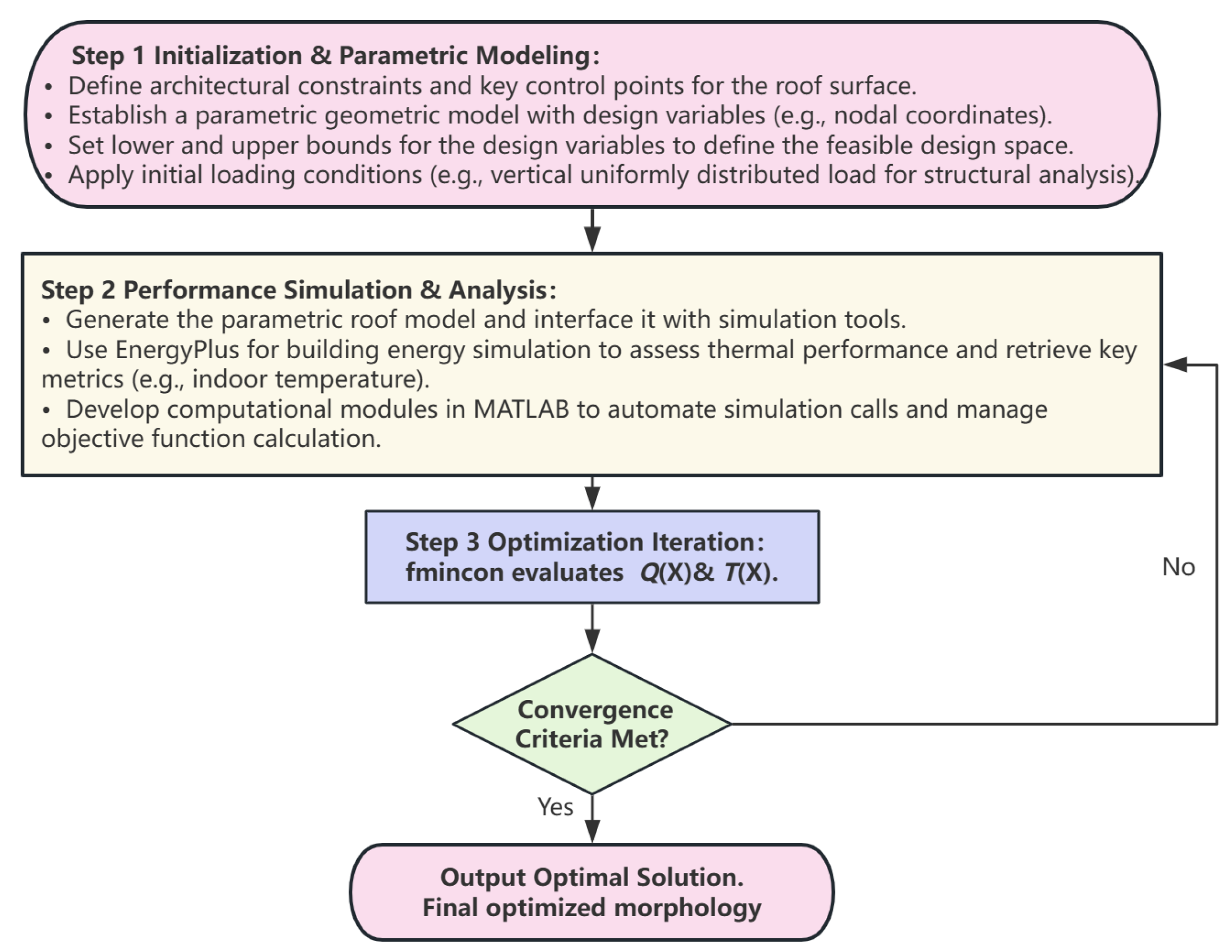
Section 3 presents the computational framework and the mathematical formulation of the optimization methodology used for validation.
Section 4 investigates through numerical examples: ① the impact of different thermal performance objectives on shape optimization patterns of free-form surface roofs; ② shape optimization behaviors under varying initial geometries and thermal operating conditions; ③ morphological variations of free-form roofs under distinct control strategies for thermal performance enhancement; and ④ shape adaptations subject to geometric boundary constraints in different spatial directions. Conclusions are summarized in
Section 5.
3. Results
3.1. Optimization Patterns Under Different Thermal Performance Objectives
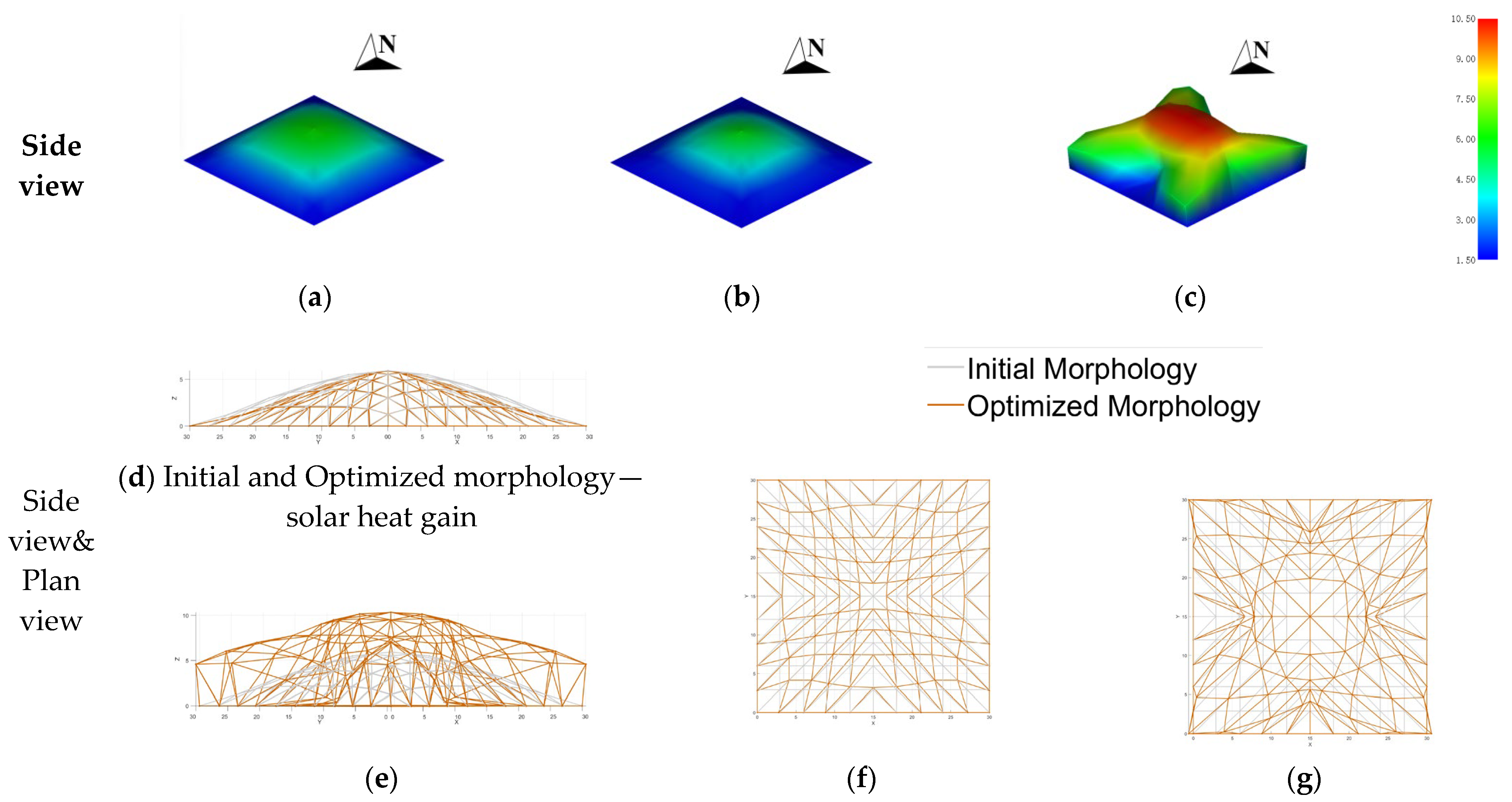
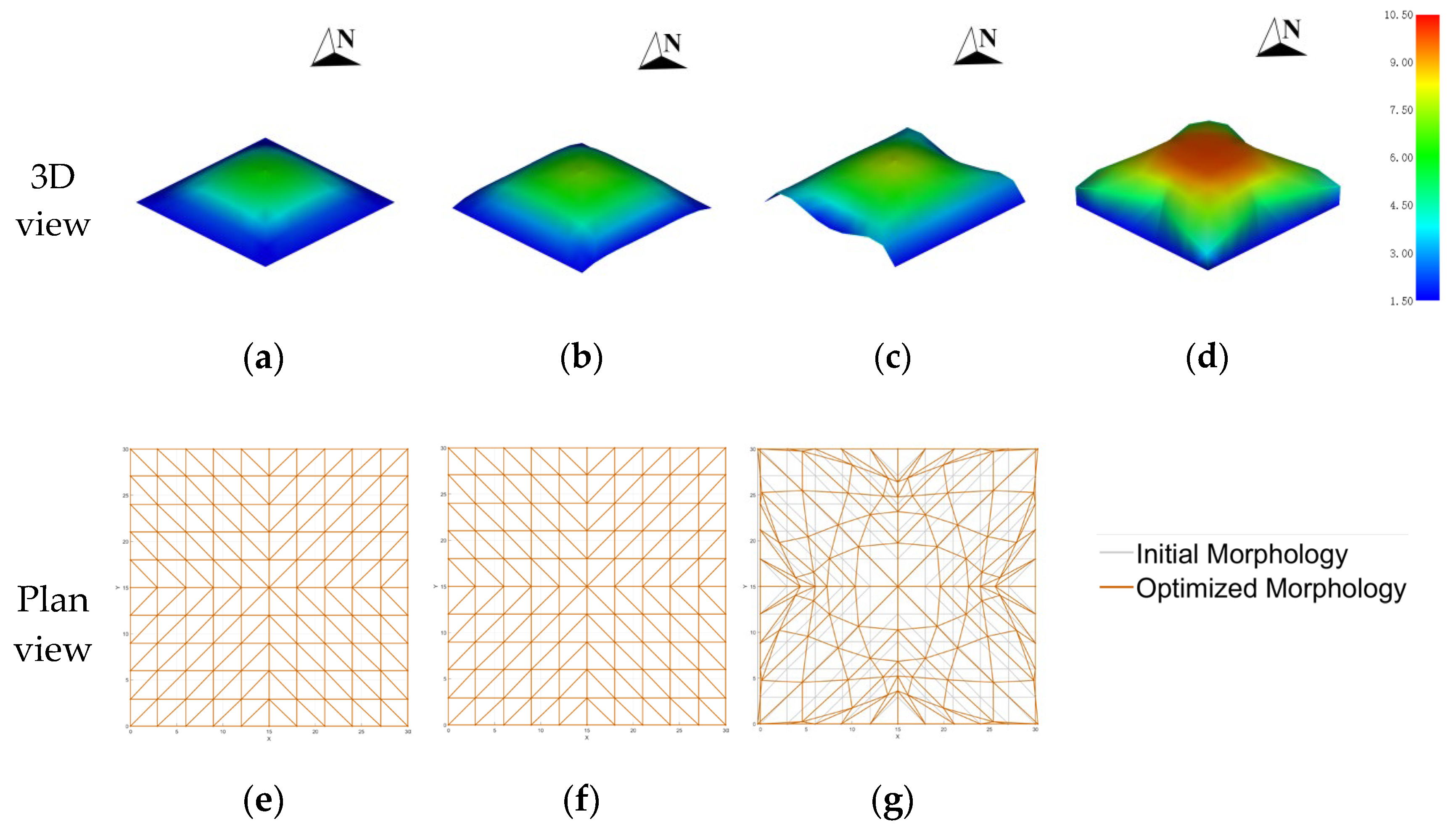
This section presents a comparative analysis of the shape optimization patterns of free-form roofs under extreme thermal loading conditions, focusing on different thermal performance objectives. When the optimization aims to minimize surface solar radiation heat gain, the building envelope evolves freely during the process, and the solution tends to reduce the total surface area in order to lower the overall radiation exposure (
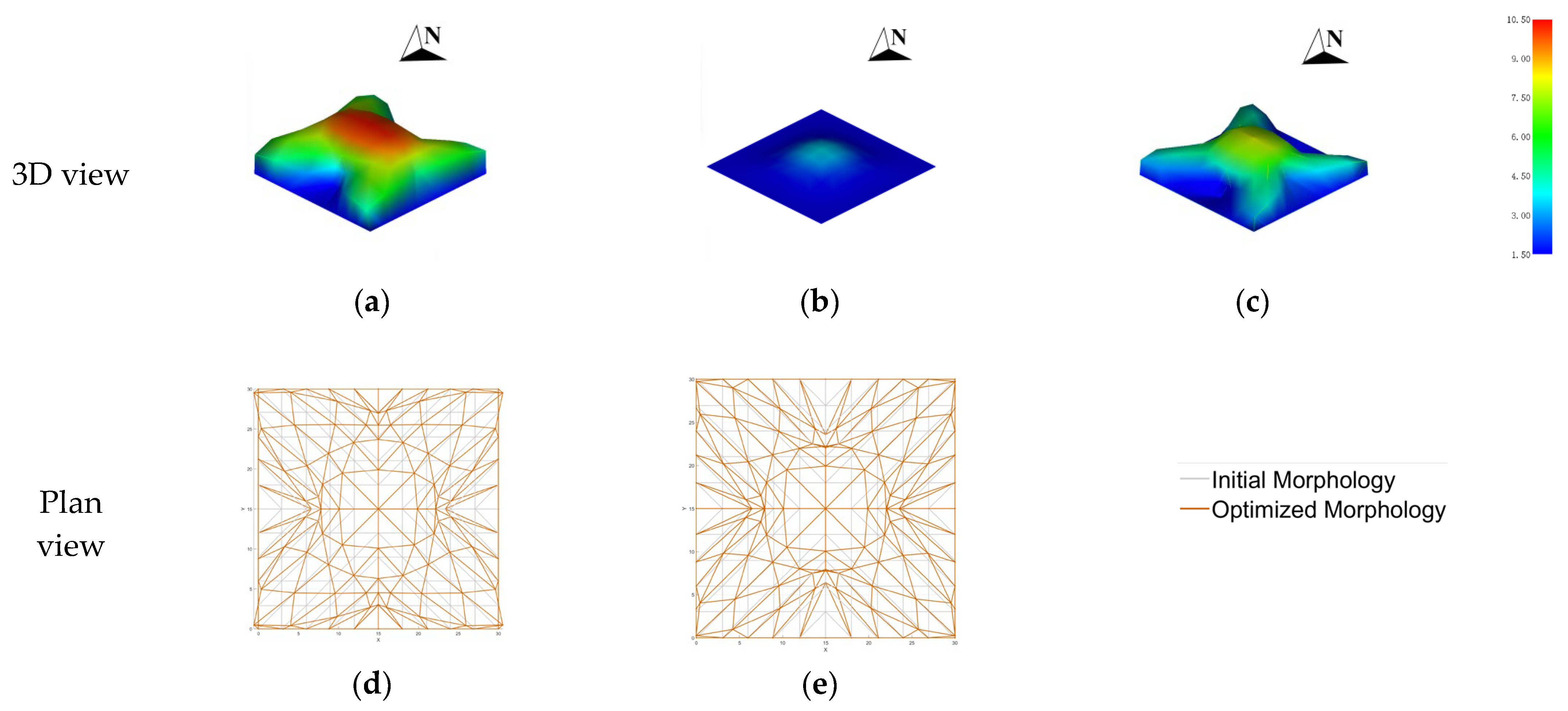
Figure 4). Although this technically rational strategy is effective in reducing heat gain, it may also limit the diversity of roof forms, potentially compromising the architectural expressiveness and the original intent of shape optimization.
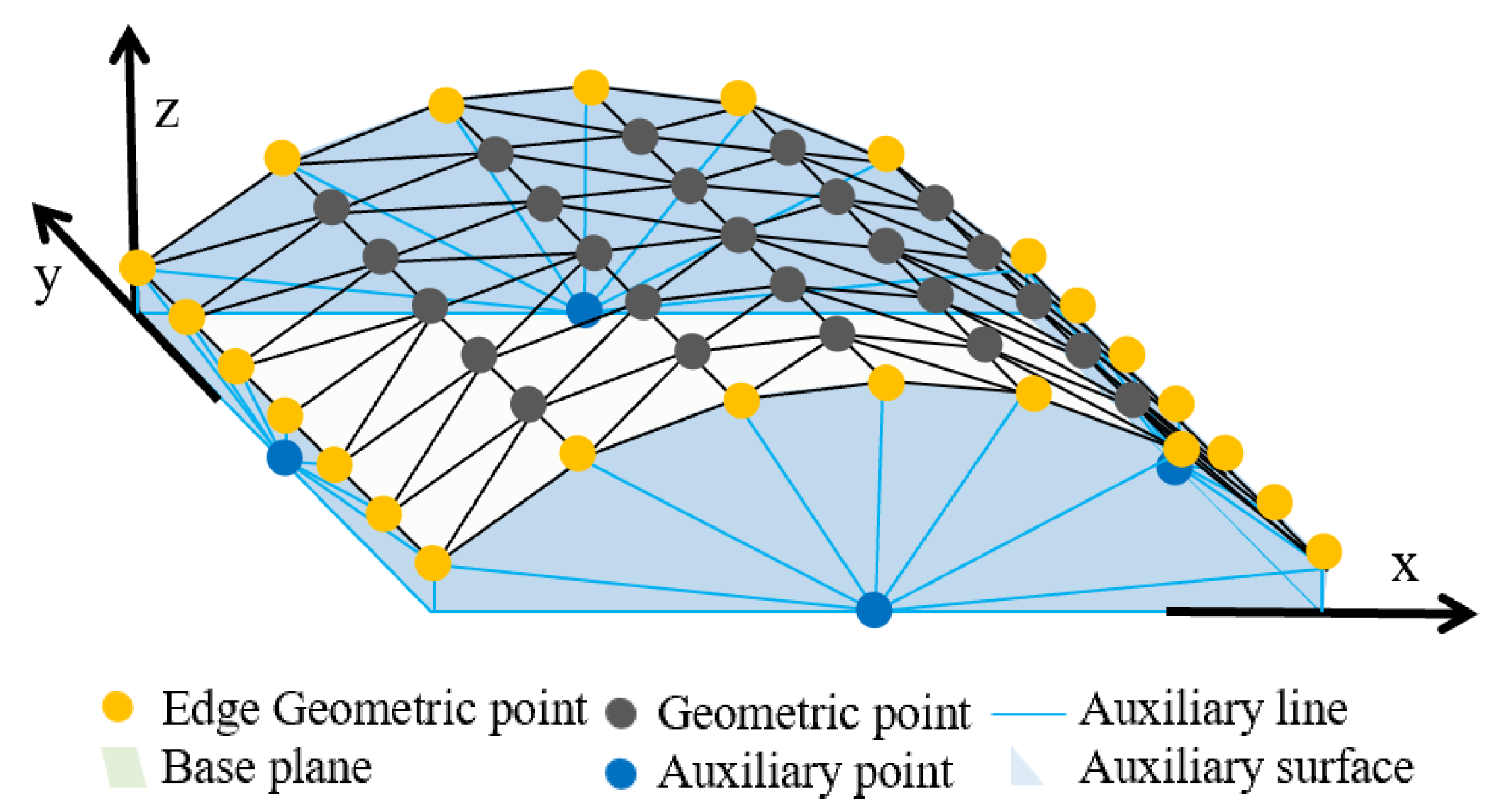
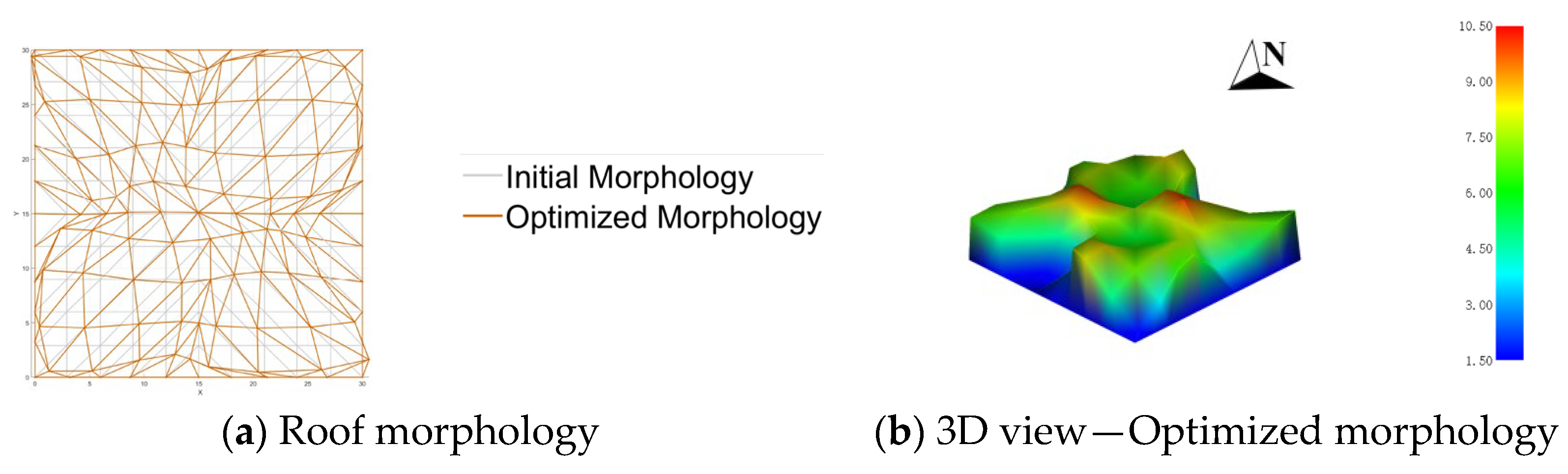
To comprehensively evaluate the thermal performance modulation capability of free-form roof shapes and quantify how spatial surface variations influence thermal behavior, air temperature is adopted as the optimization objective. This approach integrates both solar radiation heat gain and the coupled effect of surface geometry changes on the internal temperature of the roof geometry. The shape optimization aimed at minimizing indoor temperature yields morphologies with enhanced architectural expressiveness: the nodes at the center of the B-spline free-form grid shell gradually shift outward and upward, transforming the initial spherical surface into a saddle-shaped form (
Figure 4c). The optimized roof develops an alternating “peak–valley” self-shading configuration, resembling mountain ridges and valleys, with more pronounced concavities along the central parts of the north and south facades. This distribution aligns with the east-to-west movement of the sun. The central region rises into a dome-like form, with four diagonal ridges extending outward along the planar diagonals. As a result, the geometric form of the optimized morphology becomes more compact, reducing the surface area per unit volume. Through this self-shading effect, the design achieves passive solar control while preserving architectural articulation and formal richness.
The two optimization objectives demonstrate distinct design orientations: one driven by technical rationality and the other by a more integrated, balanced approach. In this study, indoor temperature is selected as the thermal performance objective. This choice not only overcomes the limitations of using solar radiation heat gain as the sole criterion but also fully exploits the dual advantages of free-form surfaces in both morphological innovation and performance optimization.
3.2. Optimization Patterns Under Varying Initial Configurations and Thermal Conditions
A dual-scenario comparative analysis was performed to assess how free-form roof morphologies evolve under two distinct thermal design conditions: single-day extreme heat and prolonged seasonal heat. In both scenarios, the optimization objective was set to minimize indoor temperature, enabling a direct comparison of their influence on the final geometric outcomes. For Example 1, the optimization under single-day extreme conditions (
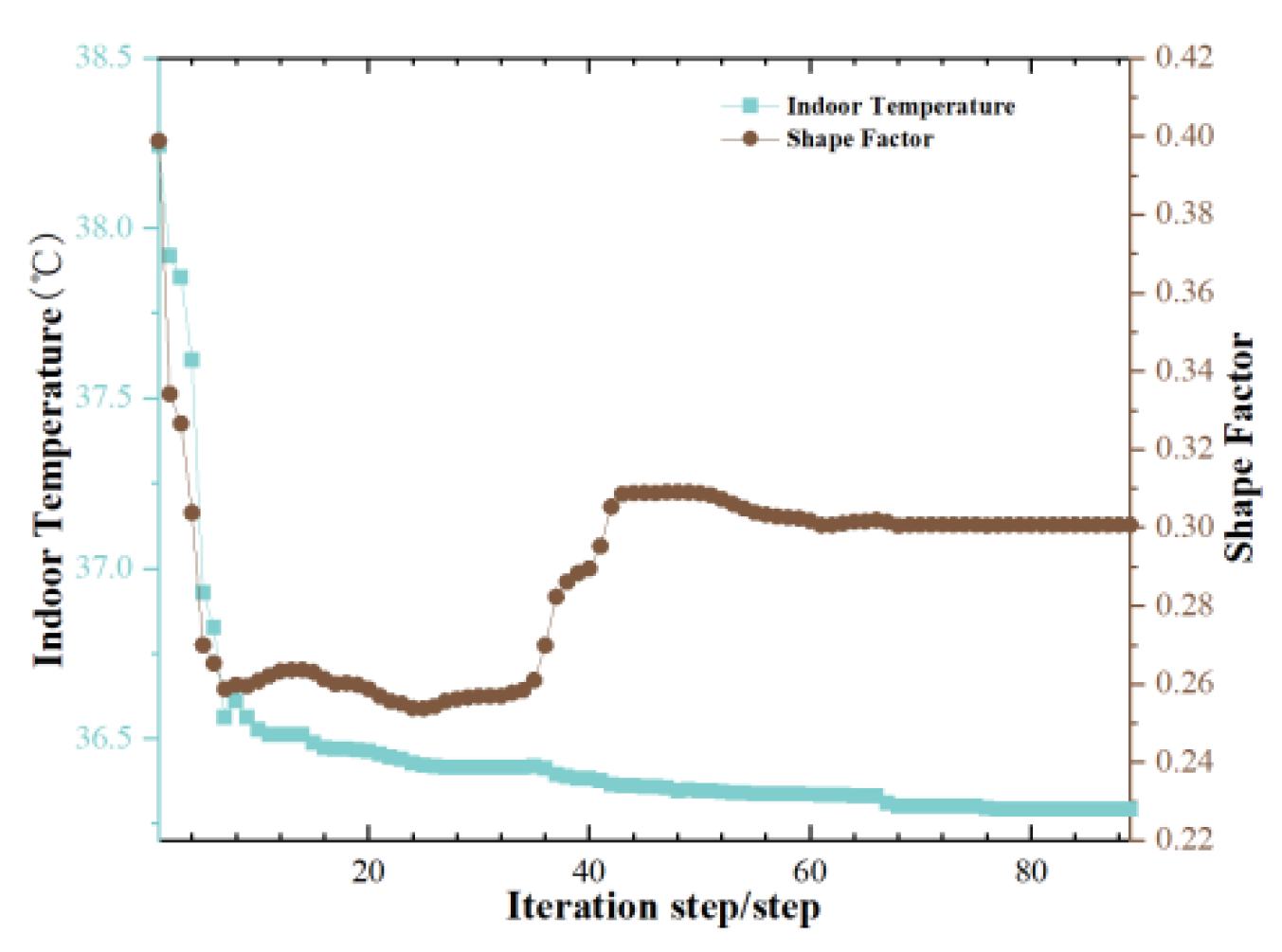
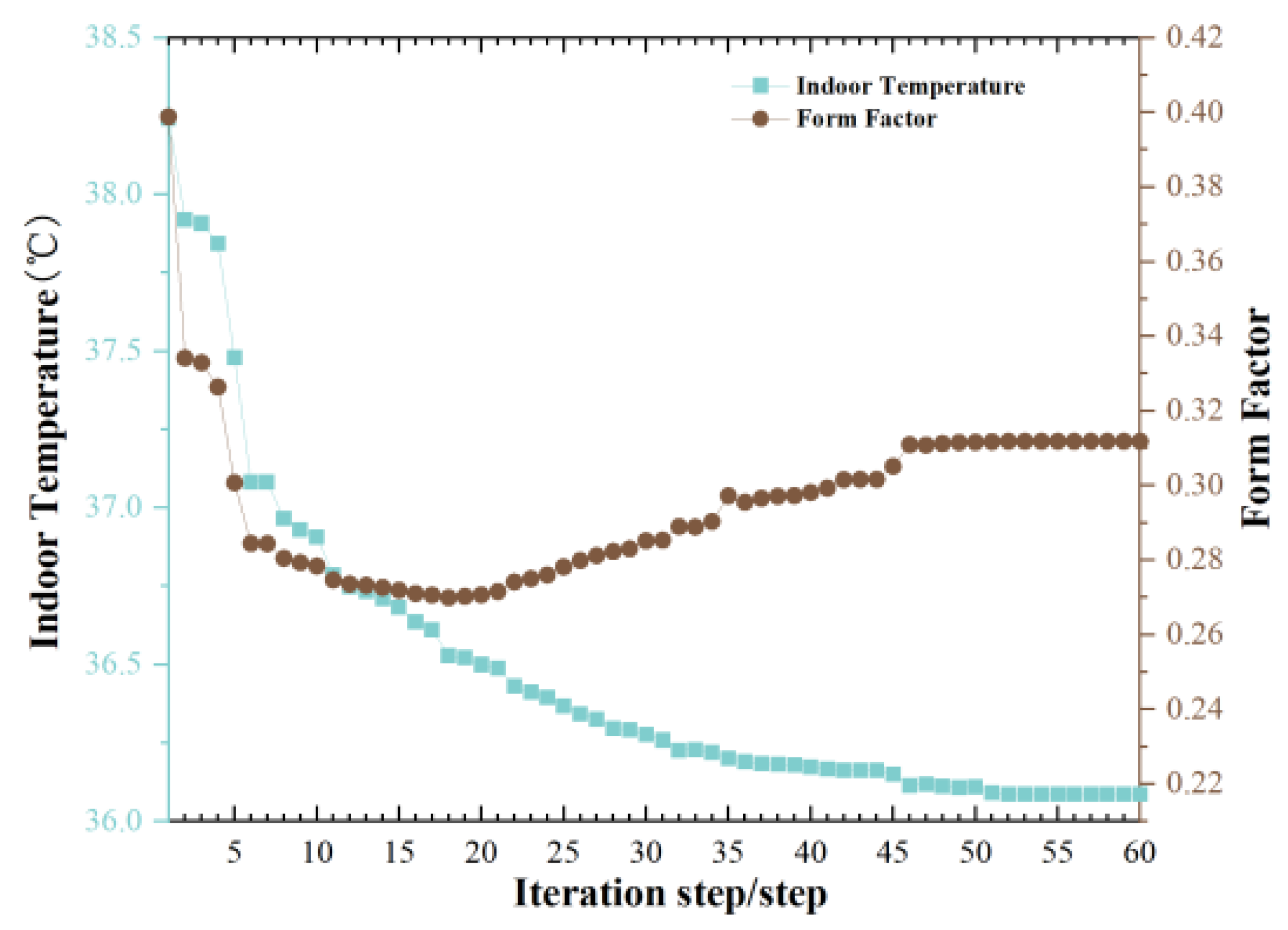
Figure 5) yielded a shape factor reduction of 25% (from 0.40 to 0.30) and lowered the indoor temperature by 1.95 °C (from 38.24 °C to 36.29 °C). Under long-term conditions (
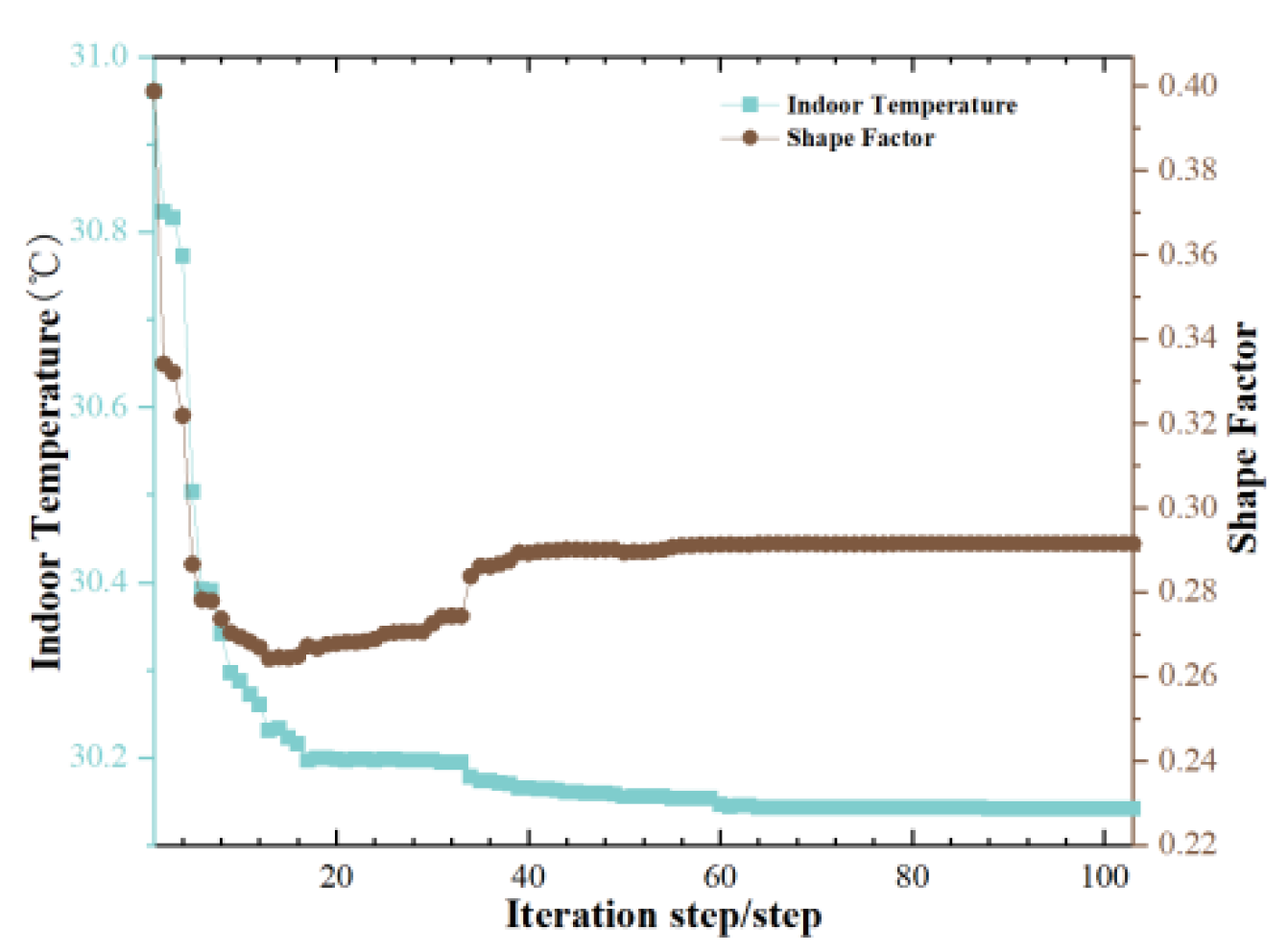
Figure 6), an even greater shape factor reduction of 27.5% (from 0.40 to 0.29) was achieved, accompanied by an indoor temperature decrease of 0.82 °C (from 30.96 °C to 30.14 °C). Notably, a consistent morphological transformation was observed: under both objectives, the central control nodes of the B-spline grid shell progressively displaced outward and upward, morphing the initial quasi-spherical form into a distinct saddle-shaped geometry. The optimized configuration exhibited an alternating “peak–valley” self-shading pattern (
Figure 4a and
Figure 7a), in which the central regions of the north and south facades showed more pronounced concavities, aligning with the east-to-west movement of the sun to achieve passive shading through self-shadowing. The optimized geometries exhibited a pronounced self-shading capability, as evidenced by a substantial reduction in the solar exposure rate (SER). Under the single-day extreme condition, the SER dropped sharply from an initial 99.13% to 87.31%. A similar reduction was observed under the long-term condition, where the SER declined to 88.75%. These marked decreases confirm the effective passive shading performance achieved through shape optimization. Additionally, the mesh density at the roof center became sparser as nodes migrated toward the mid-sections of the geometric edges, while the central region evolved into a dome-like protrusion with four diagonal ridges extending along the planar diagonals. The overall geometric form became more compact, reducing the surface area per unit volume. The consistent emergence of this characteristic saddle-shaped morphology under varying thermal loads verifies the robustness of the proposed strategy and indicates its potential applicability to similar free-form design problems.
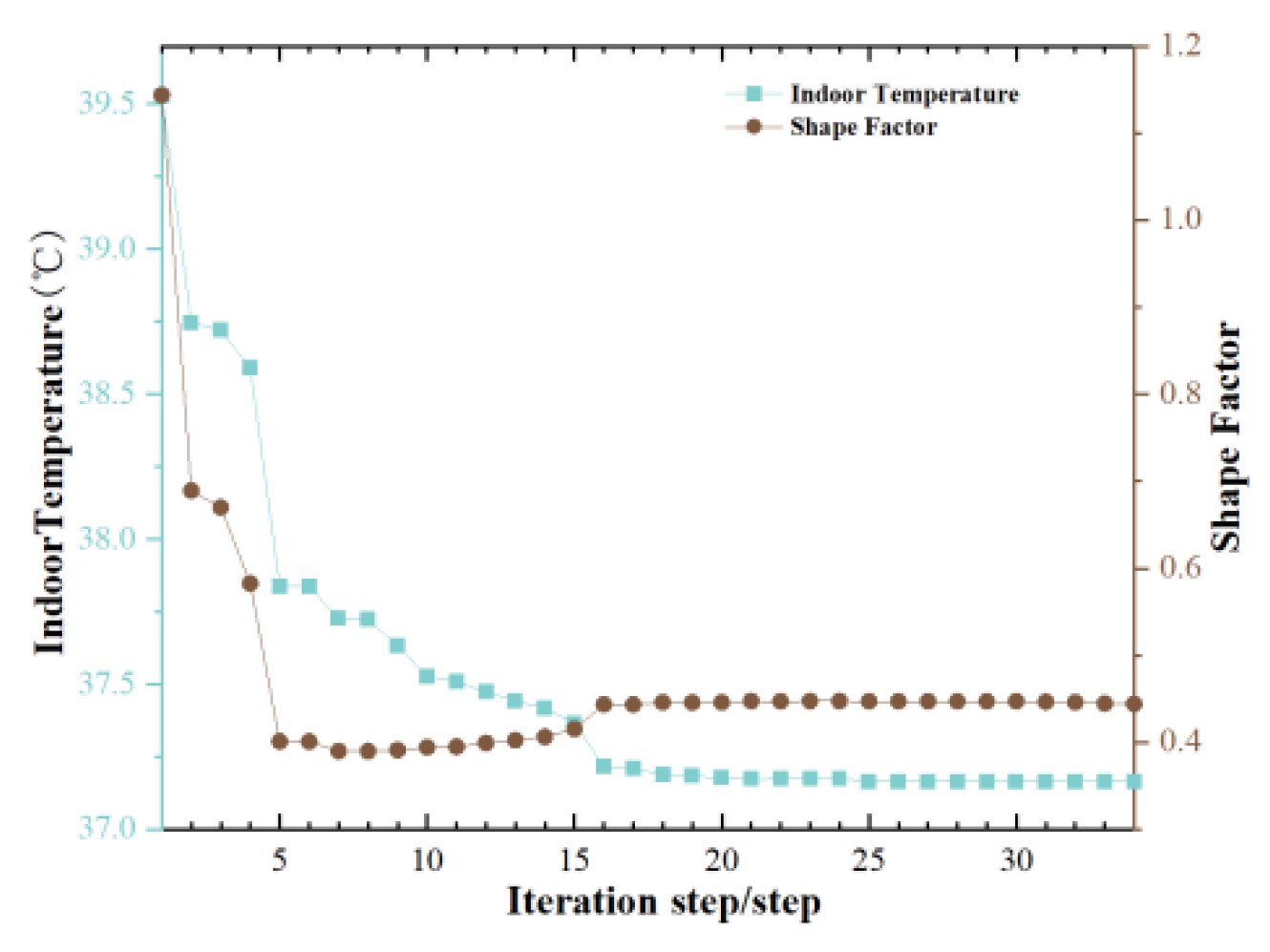
To further verify whether the observed optimization patterns are influenced by the initial geometric configuration, a comparative study was conducted using Example 2. Under the single-day extreme condition (
Figure 8), Example 2 exhibited a marked performance improvement. Its shape factor declined substantially by 61.40% (from 1.14 to 0.44), concurrently with an indoor temperature reduction of 2.36 °C (from 39.53 °C to 37.17 °C). This trend aligns closely with the optimization behavior observed for Example 1 under identical conditions. The optimized roof also exhibited an alternating “peak–valley” saddle-shaped surface (
Figure 7b,c), with the SER of the geometric surface decreasing from an initial 100% to 90.13%, indicating a clear self-shadowing effect. The optimization process transformed the roof’s central area into a domed protrusion, with four diagonal ridges radiating outward. This morphological shift yielded a more compact overall form, culminating in a reduced surface-area-to-volume ratio. These results demonstrate that differences in initial geometry do not alter the fundamental optimization patterns.
The optimization process consistently exhibited a distinct stage-wise characteristic. During the initial optimization phase, the reduction in shape factor and the drop in indoor temperature evolved in concert, indicating a closely coupled relationship. In the convergence phase, the algorithm decoupled the refinement of local geometry (e.g., fine-tuning curvature) from large-scale morphological changes. This resulted in gradual, asymptotic improvements in indoor temperature, while the shape factor plateaued, showing only marginal adjustments (around 0.05, 0.03, and 0.01 for the respective cases mentioned). For Example 1, the thermal density (TD) value evolved from 0.0152 to 0.0070 under the single-day extreme thermal loading condition—a reduction of 53.95%—and from 0.0123 to 0.0056 under the long-term condition, representing a 54.47% decrease. For Example 2 under the single-day extreme condition, TD dropped from 0.0488 to 0.0116, a significant reduction of 76.23%. A consistent downward trend in the heat load per unit volume was observed throughout the optimization, which corresponded to a systematic enhancement in overall thermal performance.
In summary, this work synthesizes aesthetic, functional, and thermal objectives through the performance-driven optimization of free-form roofs, yielding geometries that significantly improve the indoor thermal environment under high-temperature conditions. The strategy targeting single-day extreme heat proves most effective, achieving an average indoor temperature reduction of approximately 2 °C. A consistent, self-shading saddle morphology—characterized by a central dome and four diagonal ridges—emerges across cases under this condition, validating the robustness of the approach. To ensure conciseness, the subsequent in-depth analysis will focus on Example 1 under this single-day extreme scenario.
3.3. Comparison of Optimization Performance Between Symmetric Point Shape Control and Full-Point Shape Control
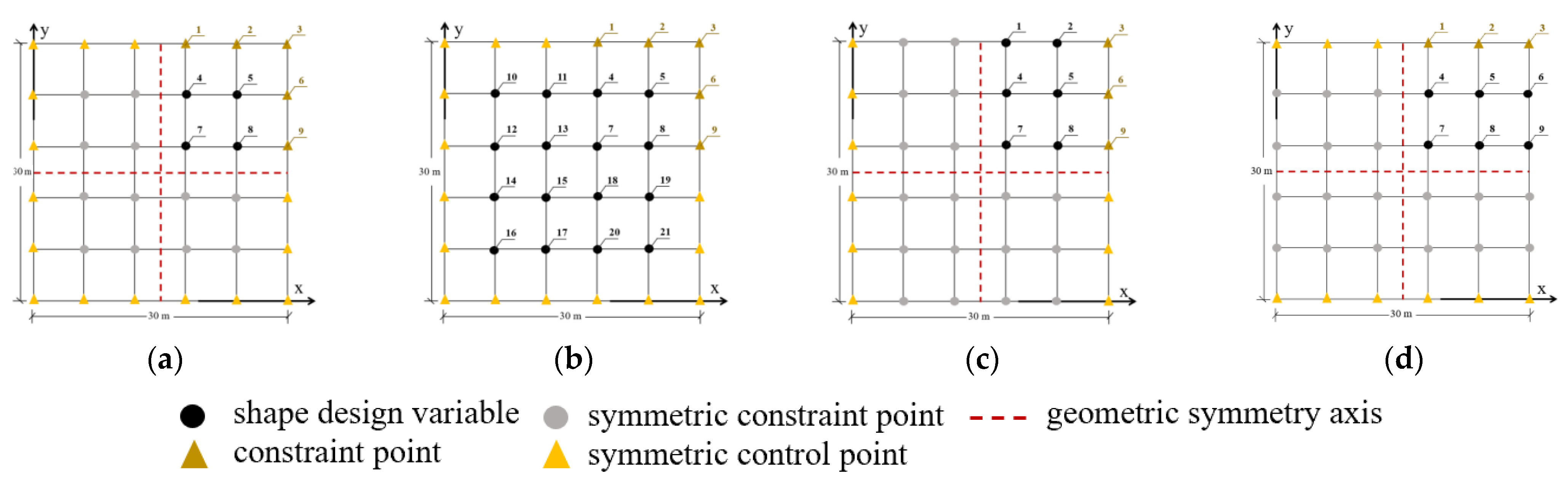
Using Example 1 as the basis and aiming to minimize indoor temperature under single-day extreme thermal loading, a comparative analysis was carried out. This study examines how two distinct shape control strategies—symmetric-point control versus full-point control—affect the resulting morphological patterns of free-form roofs. The optimization behavior under symmetric point shape control has already been analyzed in
Section 2.1 and
Section 2.2. In the full-point shape control optimization process, the variation in the shape factor and indoor temperature is shown in
Figure 9. The optimization process yielded a significant improvement in all key metrics. The indoor temperature was reduced from 38.24 °C to 36.09 °C, a decrease of 2.15 °C. Concurrently, the shape factor declined from 0.40 to 0.31, marking a 22.50% reduction, and the thermal density (TD) dropped from 0.0152 to 0.0069, a 54.61% decrease. The consistent reduction in unit-volume heat load confirmed an overall enhancement in thermal performance. Similar to the symmetric-point control strategy, the optimization displayed a clear two-stage evolution. In the initial phase, characterized by a rapid decline in indoor temperature, a strong positive correlation was observed between the reductions in indoor temperature and shape factor. Upon transitioning to the convergence phase, the algorithm shifted its focus to refining local geometric features—such as redistributing concave and convex areas—to further optimize performance. During this stage, indoor temperature changes became more gradual and decoupled from the now-stable shape factor, which exhibited only minor fluctuations (around ±0.05).
As shown in
Figure 10, the central nodes of the B-spline free-form grid shell gradually shifted outward and upward, resulting in a central depression combined with ridge-like elevations extending along the planar diagonals. This led to an alternating “peak–valley” surface pattern featuring self-shadowing characteristics. Notably, the central regions of the north and south facades exhibited more pronounced concavities, which aligns with the east-to-west movement of the sun, enabling passive shading through the self-shadowing effect—similar to what was observed under symmetric point shape control. Compared to symmetric point shape control, the roof morphology achieved through full-point shape control demonstrated greater morphological freedom in the formation of peaks and valleys. After optimization, the SER of the geometric surface decreased from an initial value of 99.13% to 89.94%. The optimized roof form not only reduced the total surface area but also effectively minimized solar heat gain, thereby improving the indoor thermal environment.
Although full-point shape control demonstrates a slight advantage over symmetric point shape control in reducing indoor temperature (approximately 0.2 °C), the pronounced central depression formed in the optimized morphology poses potential challenges for drainage in practical engineering applications. Given the minimal difference in thermal performance between the two strategies (∆T ≤ 0.2 °C), symmetric point shape control is considered more suitable from the perspective of engineering applicability and functional building requirements. Therefore, subsequent analysis will focus on Example 1 under symmetric point shape control, optimized for single-day extreme thermal loading conditions, for further in-depth investigation.
3.4. Comparison of Free-Form Surface Optimization Under Directional Geometry Constraints
To ensure consistency in the computational process, this section adopts the boundary treatment method used in
Section 2.3 under geometrically unconstrained conditions, and the resulting data are intended solely for comparative analysis among different directional geometry boundary constraints and should not be directly applied as optimization references for actual constrained engineering scenarios. With the objective of minimizing indoor temperature under single-day extreme thermal loading conditions, the influence of various geometry boundary constraint directions—specifically north–south constraints, east–west constraints, and quadrilateral constraints—on the morphological design patterns of free-form roofs is compared, and the optimized indoor temperatures and shape factors under each constraint condition are summarized in
Table 4. The optimization under three directional boundary constraints yielded distinct yet convergent improvements. Across all cases—north–south (NS), east–west (EW), and quadrilateral (QD)—the heat load per unit volume consistently decreased, confirming an overarching enhancement in thermal performance. Quantitatively, under NS constraints, the indoor temperature decreased by 0.352 °C (to 37.832 °C), with concurrent reductions in shape factor (14.15% to 0.34) and thermal density (17.22% to 0.0125). For EW constraints, a minimal temperature drop of 0.015 °C (to 38.169 °C) was observed, while shape factor and thermal density still decreased by 16.33% (to 0.33) and 19.87% (to 0.0121), respectively. The QD constraints produced the most geometrically efficient outcome: shape factor and thermal density plummeted by 36.18% (to 0.25) and 56.95% (to 0.0065), respectively, alongside a temperature reduction of 0.051 °C (to 38.133 °C).
Under north–south constraints, the roof geometry was elevated as a whole from its initial configuration, with both east and west sides raised. As a result, the SER of the geometric surface decreased from an initial value of 99.13% to 98.13% (
Figure 11b,e). For the east–west constrained roof, distinct upward curvatures formed at both ends along the north–south direction, effectively utilizing the self-shadowing effect of the curved surface in alignment with the sun’s path to achieve passive shading. The SER accordingly dropped from 99.13% to 98.50% (
Figure 11c,f). Under quadrilateral constraints, the optimization process drove the central nodes of the B-spline free-form shell to evolve into a distinct morphology: a central depression surrounded by elevated, ridge-like structures extending along the planar diagonals. This led to an alternating “peak–valley” surface pattern featuring self-shadowing characteristics (
Figure 11d,g). Significantly, the deeper concavities formed on the north and south facades coincided with the east–west solar path. This geometric alignment synergistically enhanced the passive shading performance through more effective self-shadowing. Consequently, the SER significantly decreased from 99.13% to 88.88%. The optimized roof form not only reduced the total surface area but also effectively minimized solar heat gain, thereby improving the indoor thermal environment.
For long-span roof design based on indoor temperature optimization, differentiated design strategies should be adopted according to the functional requirements of various building types. In large-span roofs such as sports stadiums, exhibition centers, and transportation hubs—where overall stability and energy efficiency are prioritized—the quadrilateral constraint pattern is recommended. The optimized form develops a dome-like uplift with four diagonal ridges extending outward along the planar diagonals, effectively reducing direct solar radiation through self-shadowing while maintaining overall rigidity and improving thermal performance by lowering cooling loads. For buildings such as art galleries and museums, where lighting conditions and architectural expressiveness are critical, the east–west constraint pattern offers an appropriate solution. The resulting warped morphology on the north and south sides provides a favorable basis for daylight control, blocking low-angle sunlight to reduce glare while simultaneously enhancing aesthetic appeal. In contrast, for production-oriented buildings such as eco-buildings, green buildings, and industrial facilities that emphasize practicality and cost-effectiveness, the north–south constraint pattern is preferable due to its geometric simplicity, which facilitates construction while still meeting basic functional requirements. All three constraint patterns utilize the self-shadowing effect of free-form surfaces to achieve passive shading; however, their design emphases differ: the quadrilateral constraint focuses on morphological stability and thermal regulation, the east–west constraint emphasizes daylight optimization and spatial aesthetics, and the north–south constraint prioritizes ventilation efficiency and constructability—thereby offering tailored solutions for roof design across different architectural types.
4. Discussion
4.1. Interpretation of Key Findings and Answers to Research Questions
This study established a thermal-performance-driven optimization framework for free-form roofs. The results provide clear answers to the research questions posed in the Introduction.
Regarding RQ1 (Optimal Objective), our findings robustly demonstrate that minimizing indoor temperature is a superior optimization objective compared to minimizing solar heat gain for free-form roofs in hot climates. While the solar-heat-gain objective simply reduces total surface area, the indoor-temperature objective drives the generation of self-shading, saddle-shaped morphologies. This is quantitatively supported by the achieved ~2 °C reduction in indoor temperature under extreme conditions, which translates directly to improved thermal comfort and potential cooling energy savings. This finding shifts the design paradigm from merely minimizing exposure to intelligently managing solar radiation through form.
Regarding RQ2 (Control Strategy), the comparison between full-point and symmetric-point control reveals a critical trade-off. Although full-point control can generate slightly more complex, theoretically optimal forms, symmetric-point control is identified as the pragmatically superior strategy. It achieves nearly equivalent thermal performance (e.g., within X% of the optimal temperature reduction) while fundamentally ensuring constructability, simpler drainage, and preserved architectural regularity. This makes it the recommended approach for real-world engineering applications.
Regarding RQ3 (Boundary Constraints as Design Tools), this study validates that directional geometric boundary constraints are powerful, high-level design tools. North–south constraints systematically produce forms with overall lift, beneficial for stability and ventilation. East–west constraints consistently generate end-uplift morphologies that are highly effective for sun-path-aligned passive shading. Designers can thus select constraint modes not just as geometric limits, but as an intentional “dial” to tune the roof shape towards specific performance and aesthetic goals.
4.2. Practical Implications and Design Guidelines
The primary contribution of this work is to translate computational findings into actionable design intelligence. Based on the answers to RQ1-RQ3, we propose the following practical guidelines for designers targeting hot climates: ① Driver: Use indoor temperature minimization as the primary optimization objective to generate self-shading forms. ② Control: Adopt symmetric-point control as the default strategy to ensure a balance between performance and buildability. ③ Tool: Utilize directional boundary constraints as high-level design dials: east–west for shading, north–south for simplicity, and quadrilateral for stability.
4.3. Limitations and Future Work
While this study establishes a robust framework, several limitations should be acknowledged, which also define clear pathways for future research.
Model Simplification and Climate Scope: The analysis focused on extreme single-day conditions under a sealed, static model to precisely isolate the geometric effect. Consequently, it does not account for seasonal variability, natural ventilation, internal heat gains, or different operational schedules, which are crucial for evaluating annual energy performance and comfort in real buildings.
Performance Metric: The optimization relied on a single objective (indoor temperature) under a specific extreme scenario. Future work should incorporate multi-objective optimization that balances thermal performance with other criteria (e.g., daylighting, structural weight) and utilizes annual climate data to ensure robustness across varying conditions.
5. Conclusions
This study establishes a thermal-performance-driven optimization framework that systematically bridges the gap between computational design and building energy efficiency for free-form roofs. Given its role as a direct measure of occupant thermal comfort and its integrative capacity over mere surface energy fluxes, indoor temperature is posited as a highly relevant primary objective for performance-driven free-form design. The results of the numerical examples demonstrate that optimizing for indoor temperature is more suitable for the design of free-form roofs. The optimized configurations exhibit saddle-shaped surfaces with alternating “peak–valley” patterns that possess self-shadowing characteristics and offer enhanced architectural expressiveness. Furthermore, we demonstrate that when the optimization objective is to minimize solar heat gain on the surface, the process tends to reduce the building’s total surface area in order to lower the thermal load, which limits the diversity of possible roof morphologies. When indoor temperature minimization is used as the optimization goal, the resulting morphologies show reduced solar exposure rate of the envelope surface (SER), shape factor, and thermal density. Notably, the optimization under single-day extreme heat conditions achieves higher efficiency compared to long-duration high-temperature scenarios, with a more significant indoor temperature reduction of approximately 2 °C under extreme thermal loading conditions. Different initial models exhibit similar morphological evolution patterns under single-day extreme heat conditions. A key practical finding is that the symmetric point shape control method aligns better with practical engineering needs, as it satisfies functional requirements while preserving architectural aesthetics. On the other hand, full-point shape control yields roofs with more freely varying peak–valley surface features when minimizing indoor temperature, but this approach increases construction complexity and poses a risk of rainwater accumulation in concave areas. Roof geometries under different directional constraints exhibit distinct characteristics: the north–south constrained roof shows an overall elevation increase from its initial geometric configuration, with both east and west sides raised; whereas the east–west constrained roof develops clearly uplifted regions at both ends along the north and south sides, effectively utilizing the sun path-aligned self-shadowing effect for passive shading.
Although quantified under extreme conditions, the passive cooling effect of the optimized morphology is operational whenever solar radiation is present. Consequently, it is anticipated to contribute to a non-negligible reduction in cumulative annual cooling loads for buildings in hot climates, enhancing its practical relevance.
The findings offer a performance-based geometric logic that can inform preliminary design thinking for specific building archetypes. In hot-summer climates: For large-span volumes like sports stadiums, exhibition centers, and transportation hubs, where creating a globally shaded, iconic form is often a priority, the quadrilateral constraint—which yields a dome-like, self-shading morphology—may present a geometrically and thermally efficient archetype to explore. For buildings such as art galleries and museums, where directional light control and a strong longitudinal axis are key architectural concerns, the east–west constraint pattern, generating warped forms with north–south uplift, provides a coherent formal strategy that aligns passive shading with these spatial objectives. For eco-buildings and industrial facilities prioritizing constructability and economy, the north–south constraint, resulting in simpler elevated forms, suggests a structurally rational and material-efficient direction. It is crucial to emphasize that these geometric insights are derived from a singular thermal-performance perspective. Thus, they are intended as formative, performance-driven form-generating principles rather than prescriptive design solutions. Consequently, their successful integration into any built project necessitates a synthesis with the full spectrum of structural, functional, economic, and aesthetic criteria that define complex building design.
Overall, the shape optimization proposed in this paper for improving indoor temperatures in single-layer free-form grid roofs considers the organic synergy between building morphology and solar radiation control. The proposed optimization framework offers tailored, performance-driven solutions for diverse building types and is readily applicable to a broad range of thin-shell structures. This study develops and validates a computational framework that integrates architectural design with environmental performance. The case study demonstrates the potential of this approach for application in sustainable civil and environmental engineering. Looking forward, the geometric solutions generated by this framework establish a critical first step. A logical and impactful extension would be to integrate material selection as a concurrent or subsequent variable within the optimization process. Exploring the synergy between these optimized, self-shading forms and advanced material properties (e.g., variable reflectance, thermal mass) could unlock further gains in holistic building performance. Furthermore, coupling these geometric solutions with lifecycle assessment (LCA) tools would allow for a holistic evaluation that balances the operational energy savings demonstrated here with the embodied carbon of construction materials, thereby advancing the framework’s comprehensive impact on low-carbon design.