Exploring Oxygen and Harmful Gas Distribution in Wastewater Treatment Tanks of Industrial Enterprises

Abstract
1. Introduction
2. Methodology
2.1. Accident Analysis
2.2. Field Test
2.3. Field Continuous Monitoring
3. Results
3.1. Analysis of Confined-Space Accidents in Wastewater Treatment Tanks
3.2. Distribution of Oxygen and Harmful Gases in Wastewater Treatment Tanks
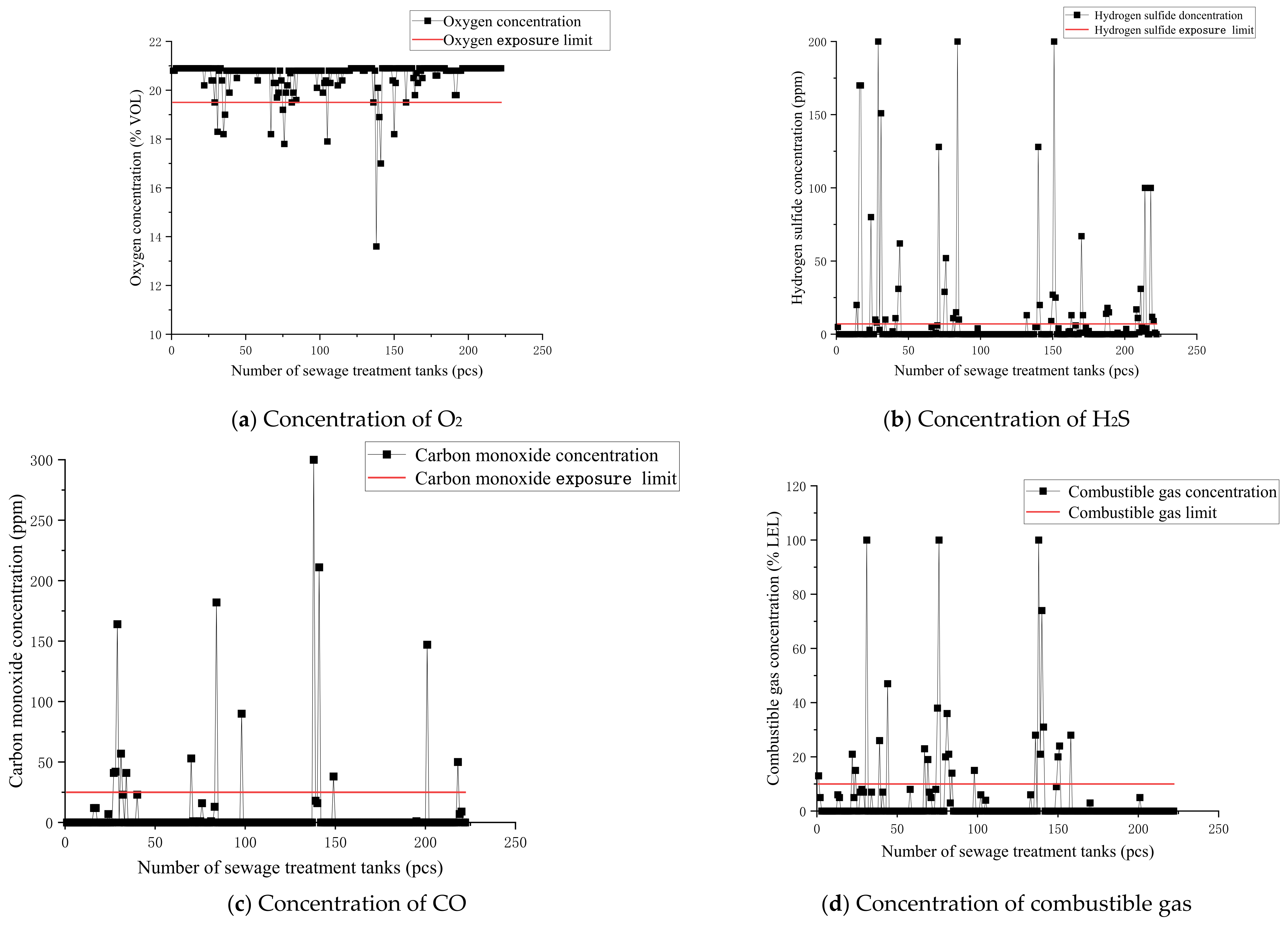
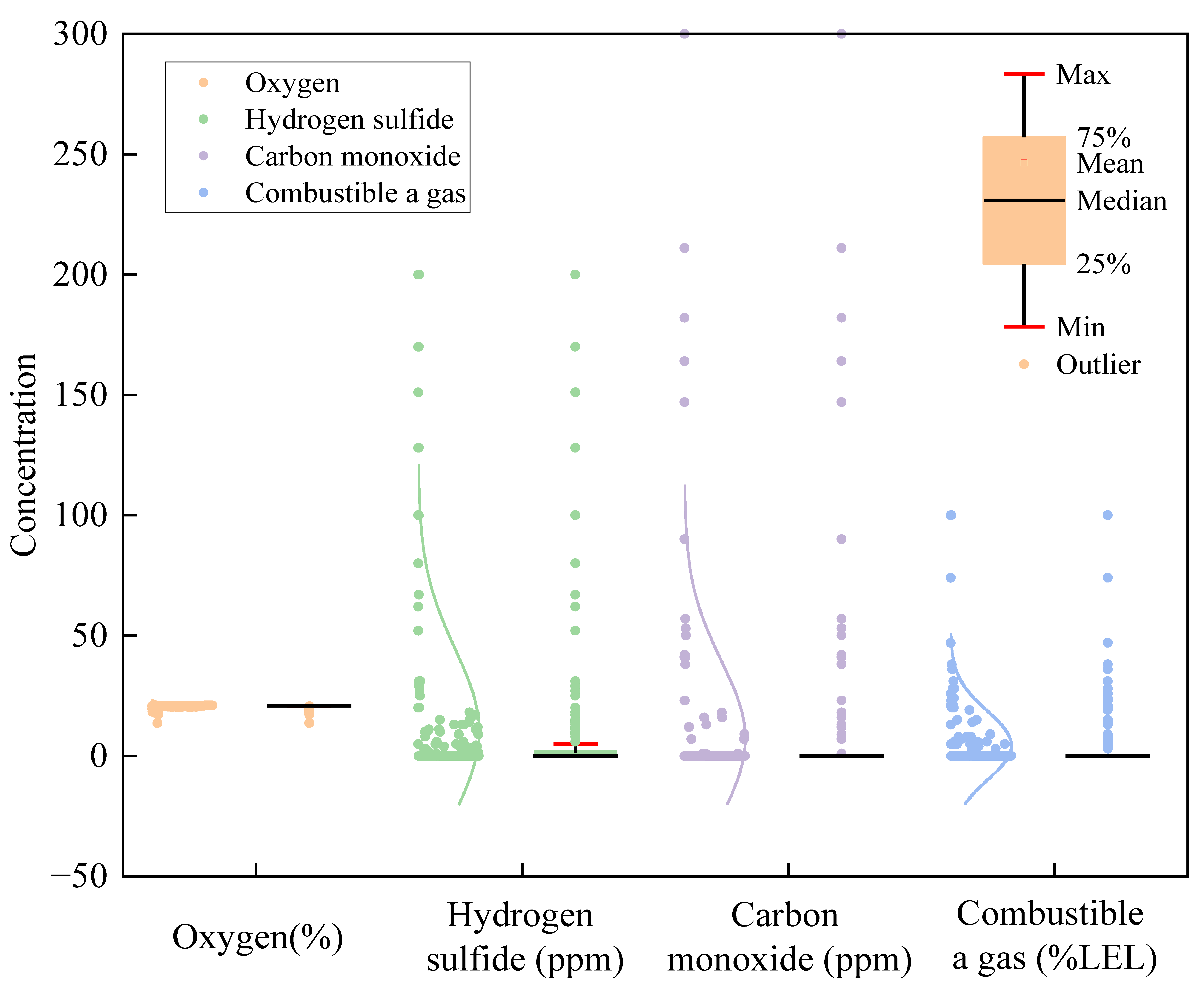
3.2.1. Overall Situation
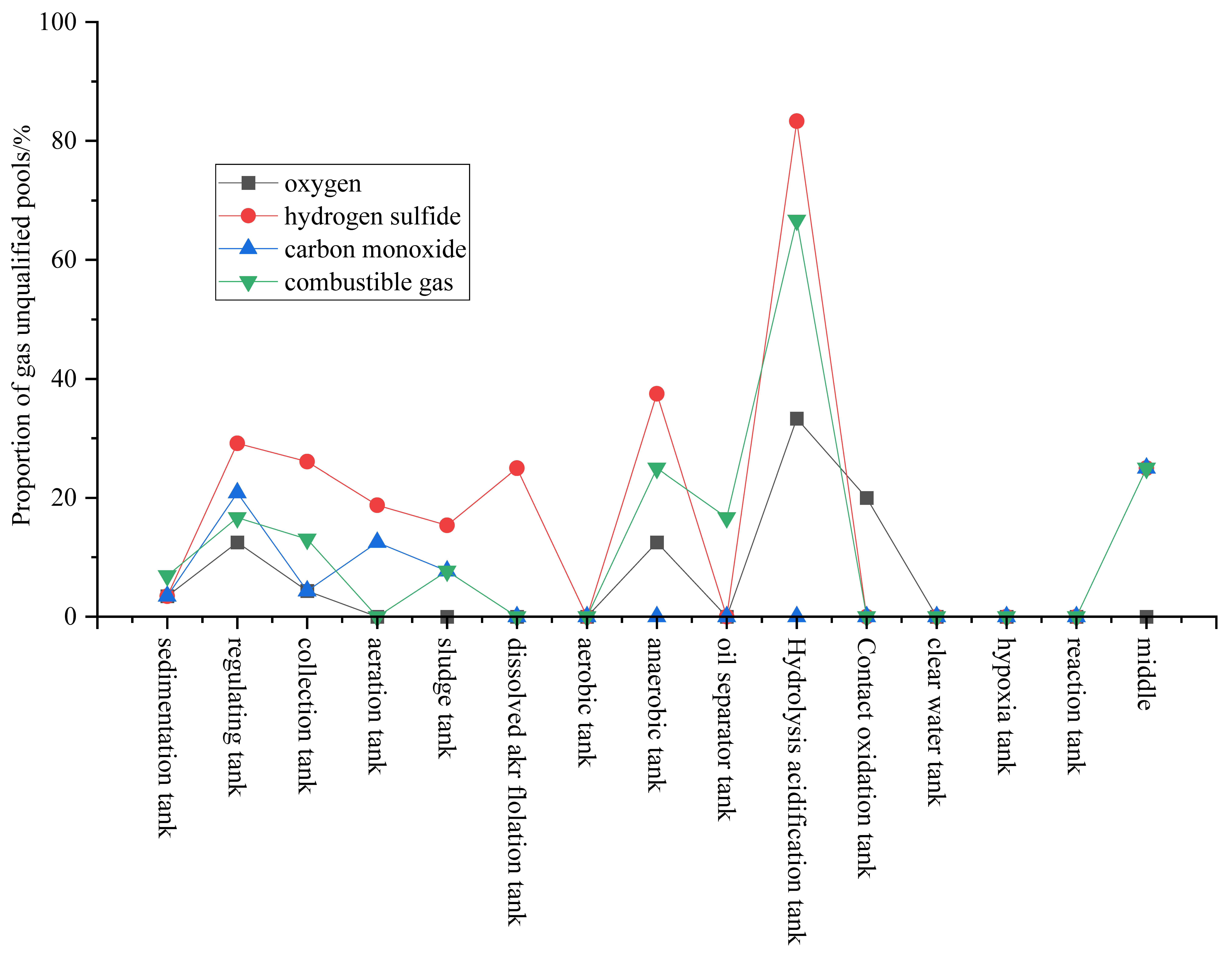
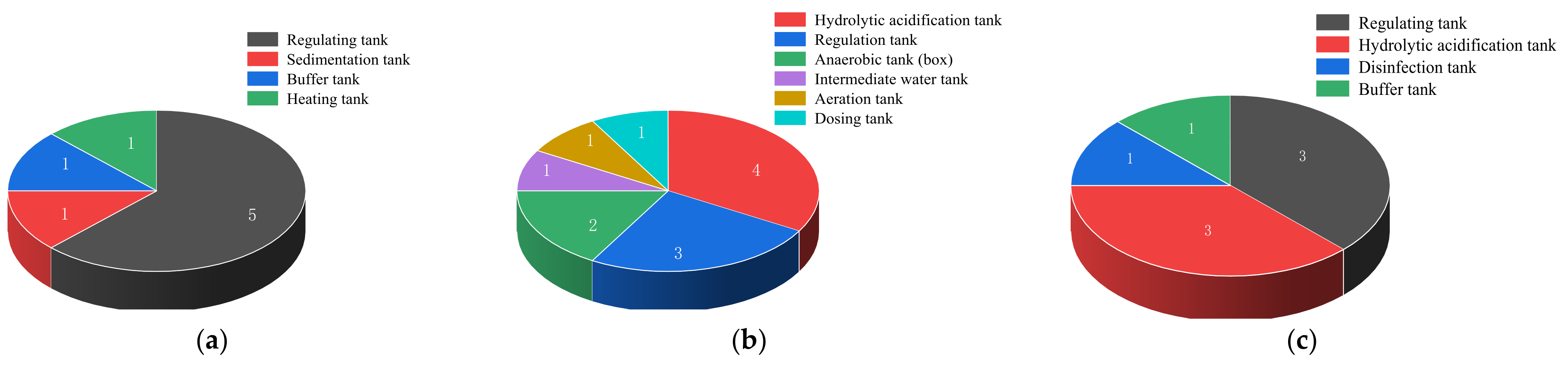
3.2.2. Distribution of Wastewater Treatment Tanks with Harmful Gases at High Concentrations
3.2.3. Influence of Wastewater Treatment Tank Coverings on Gas Distribution
3.2.4. Influence of Industry on Gas Distribution
3.2.5. Correlation of Different Gases
3.3. Changes in Toxic Gases over Time in Wastewater Treatment Tanks
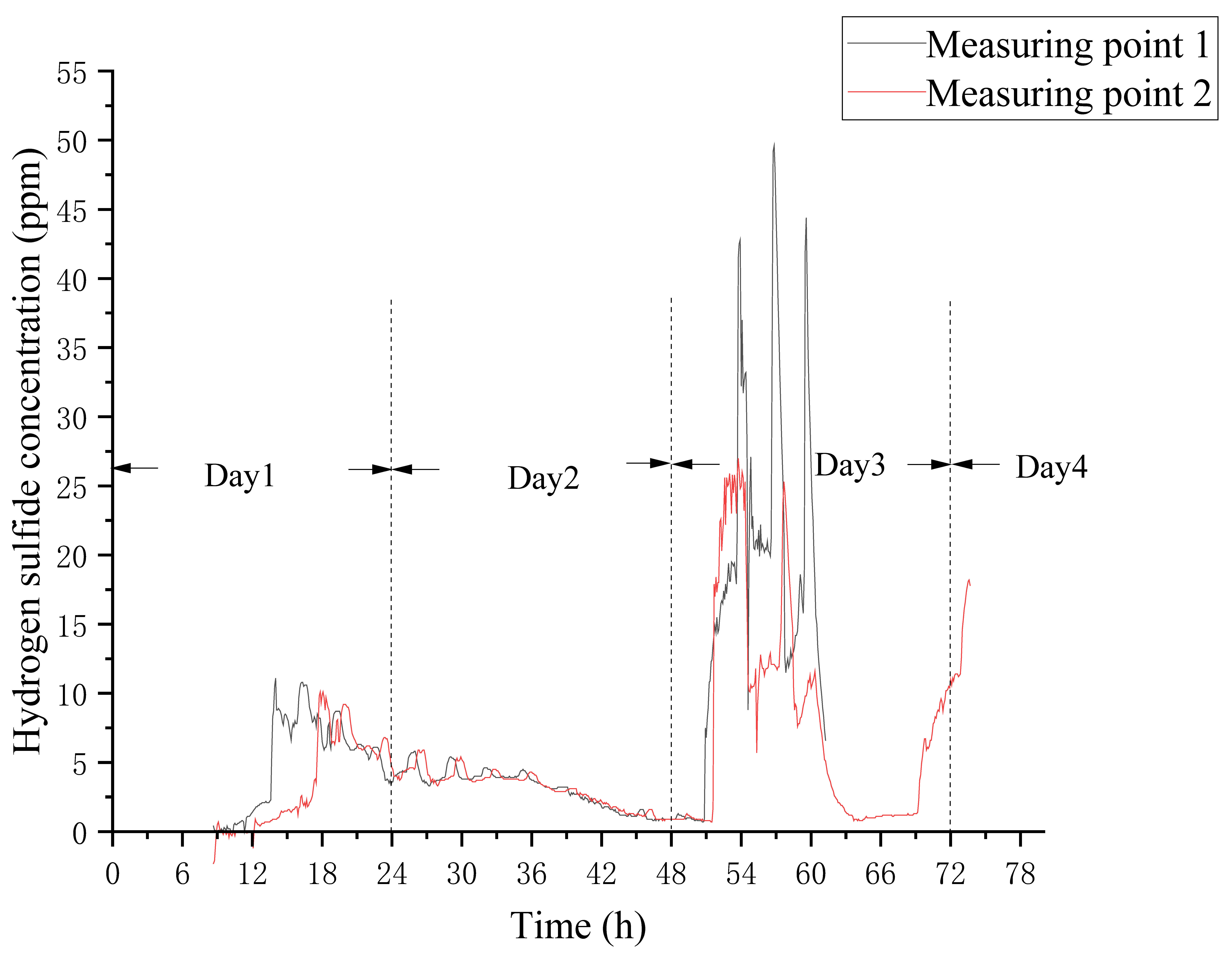
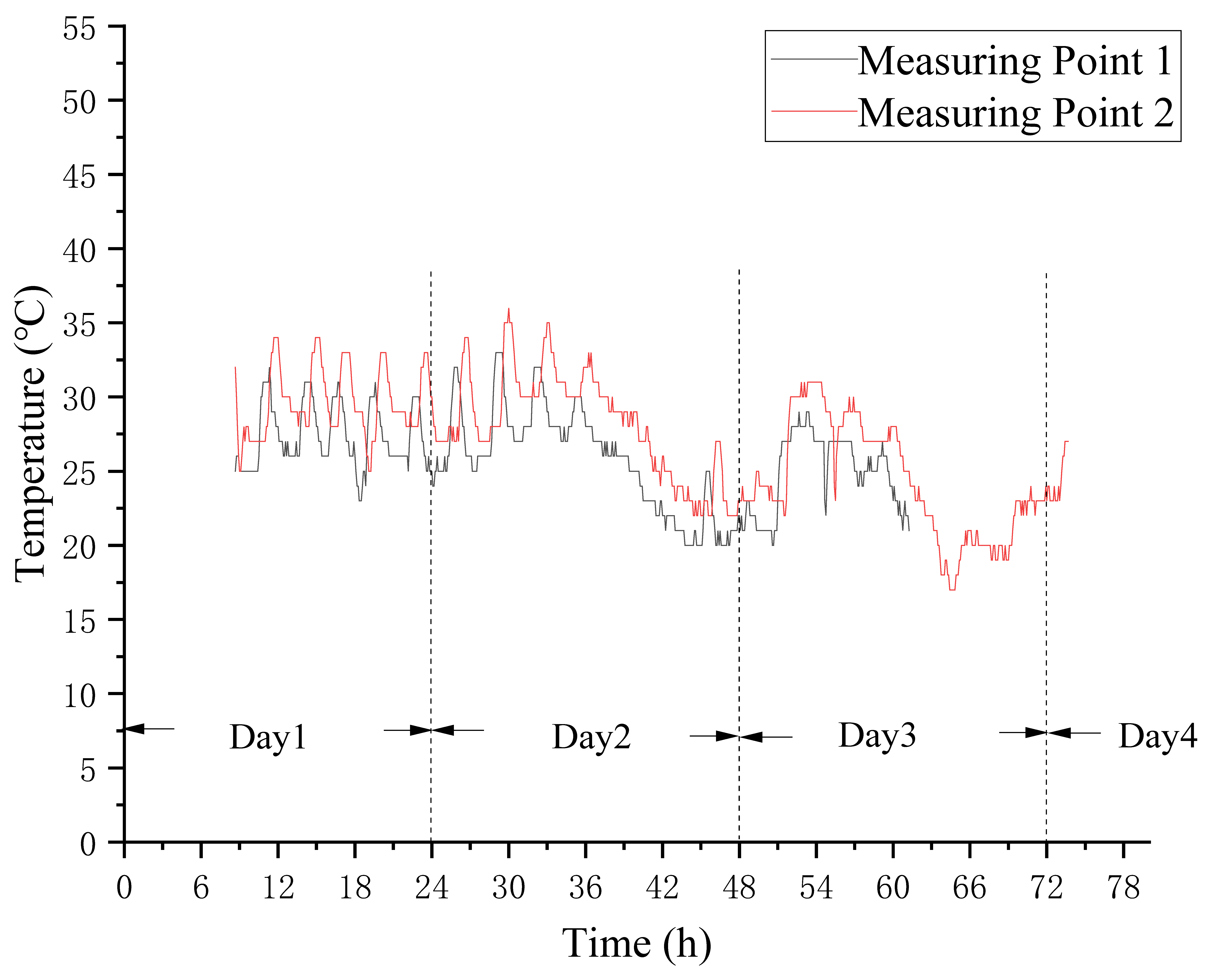
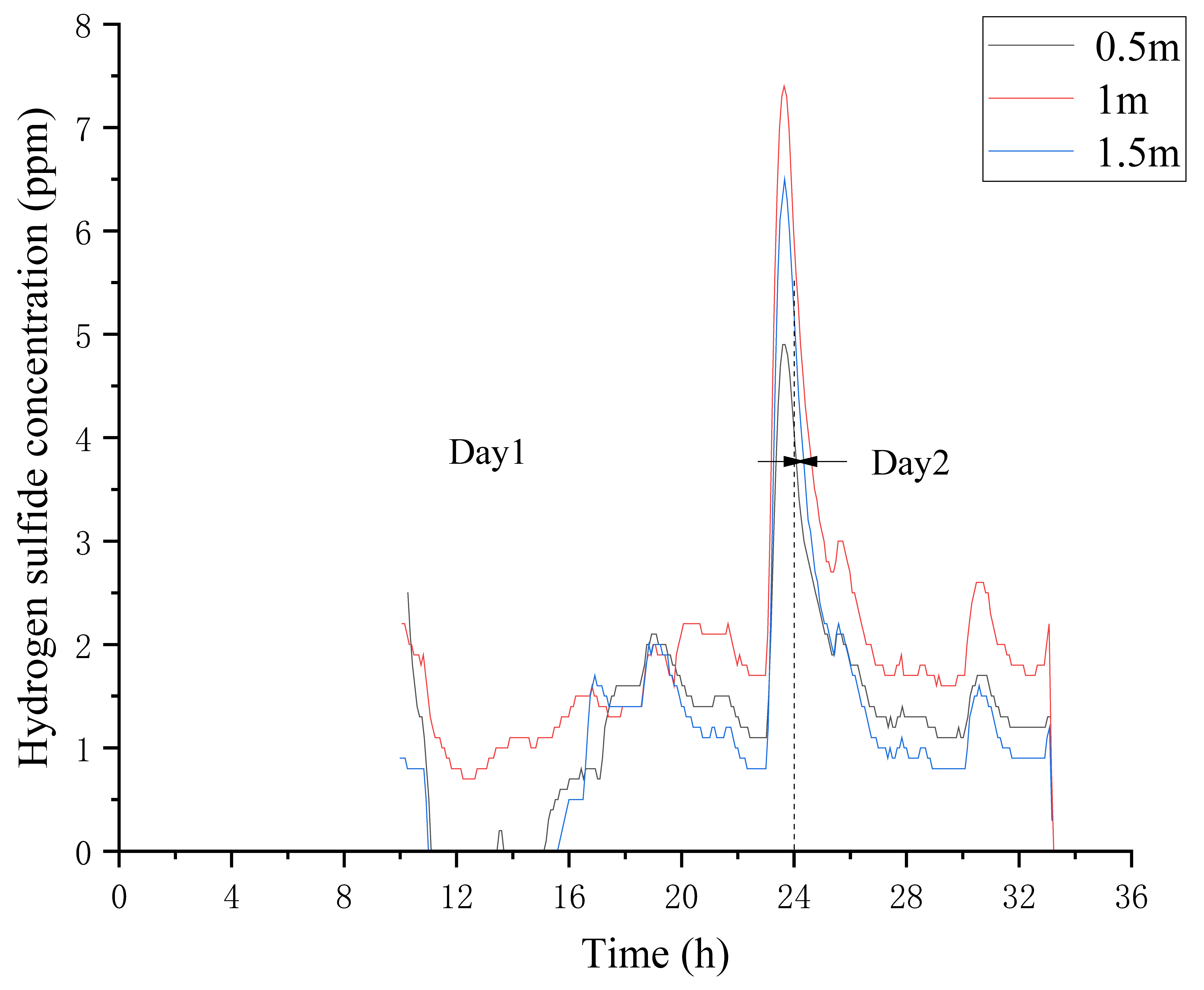
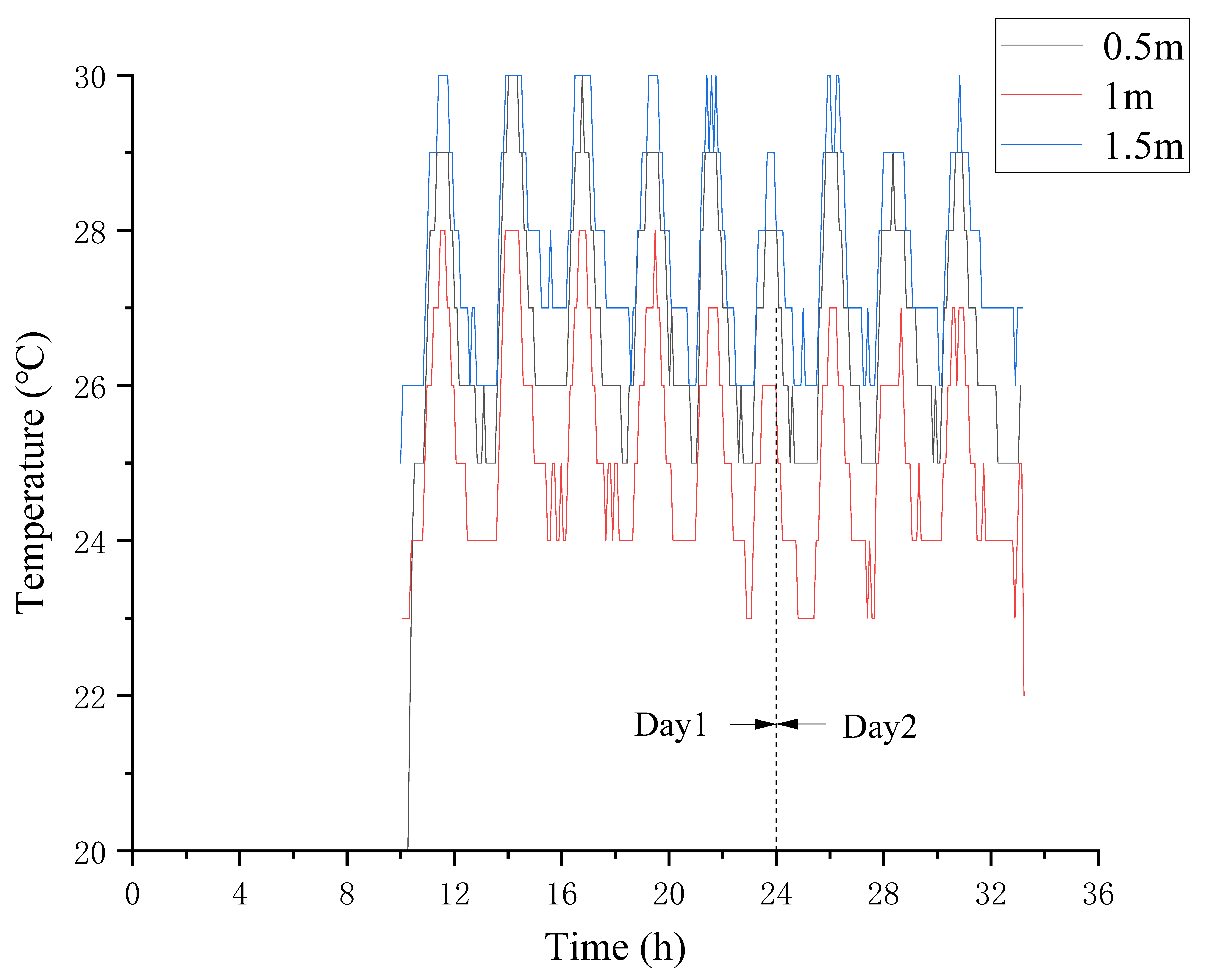
3.3.1. Hydrogen Sulfide
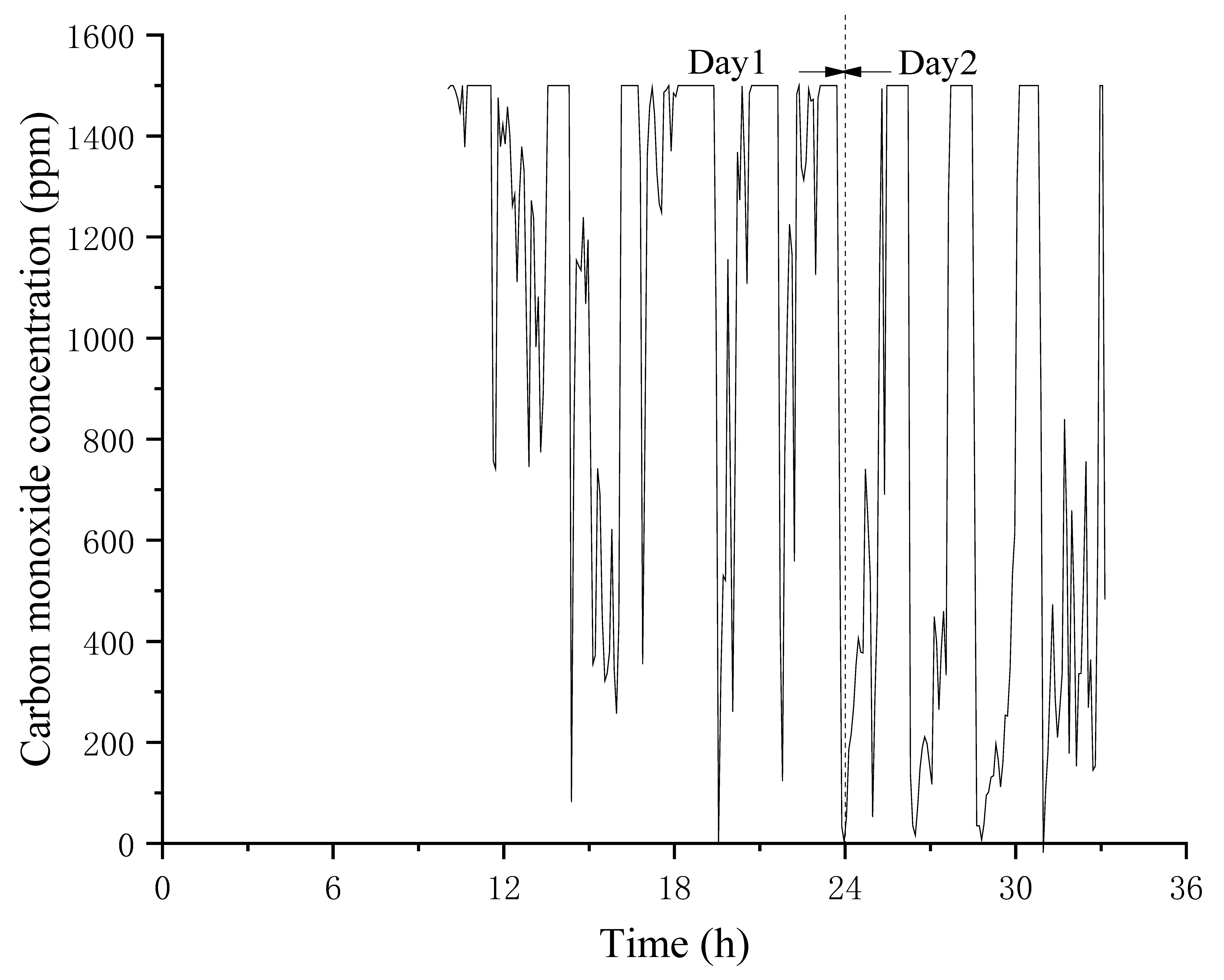
3.3.2. Carbon Monoxide
4. Discussion
4.1. Risk Level of Different Tanks
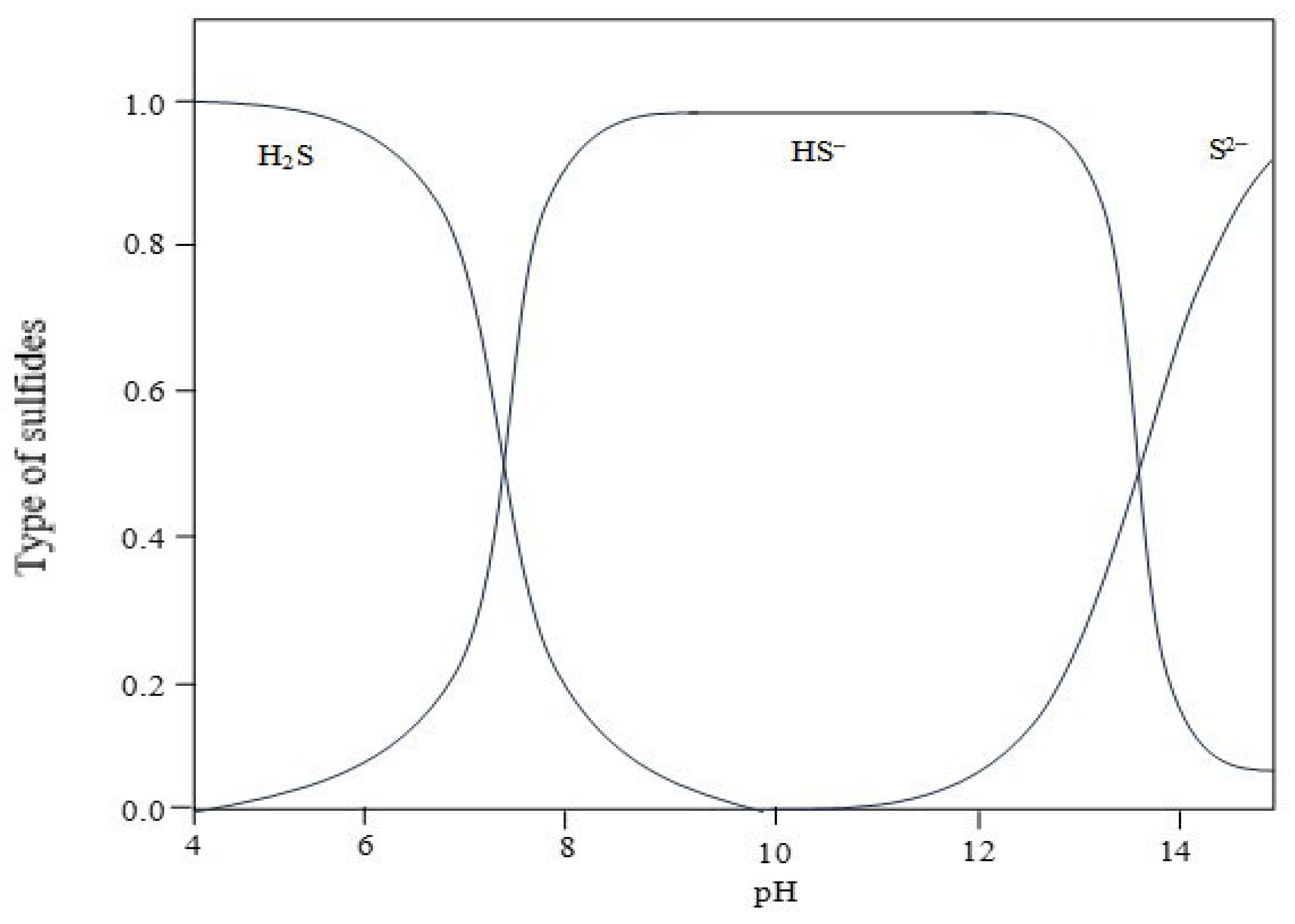
4.2. The Main Sources and Forms of Harmful Gases in Wastewater Treatment Tanks
4.3. Prevention and Control of Gas Hazards in Wastewater Treatment Tanks
4.4. Limitations
5. Conclusions
- (1)
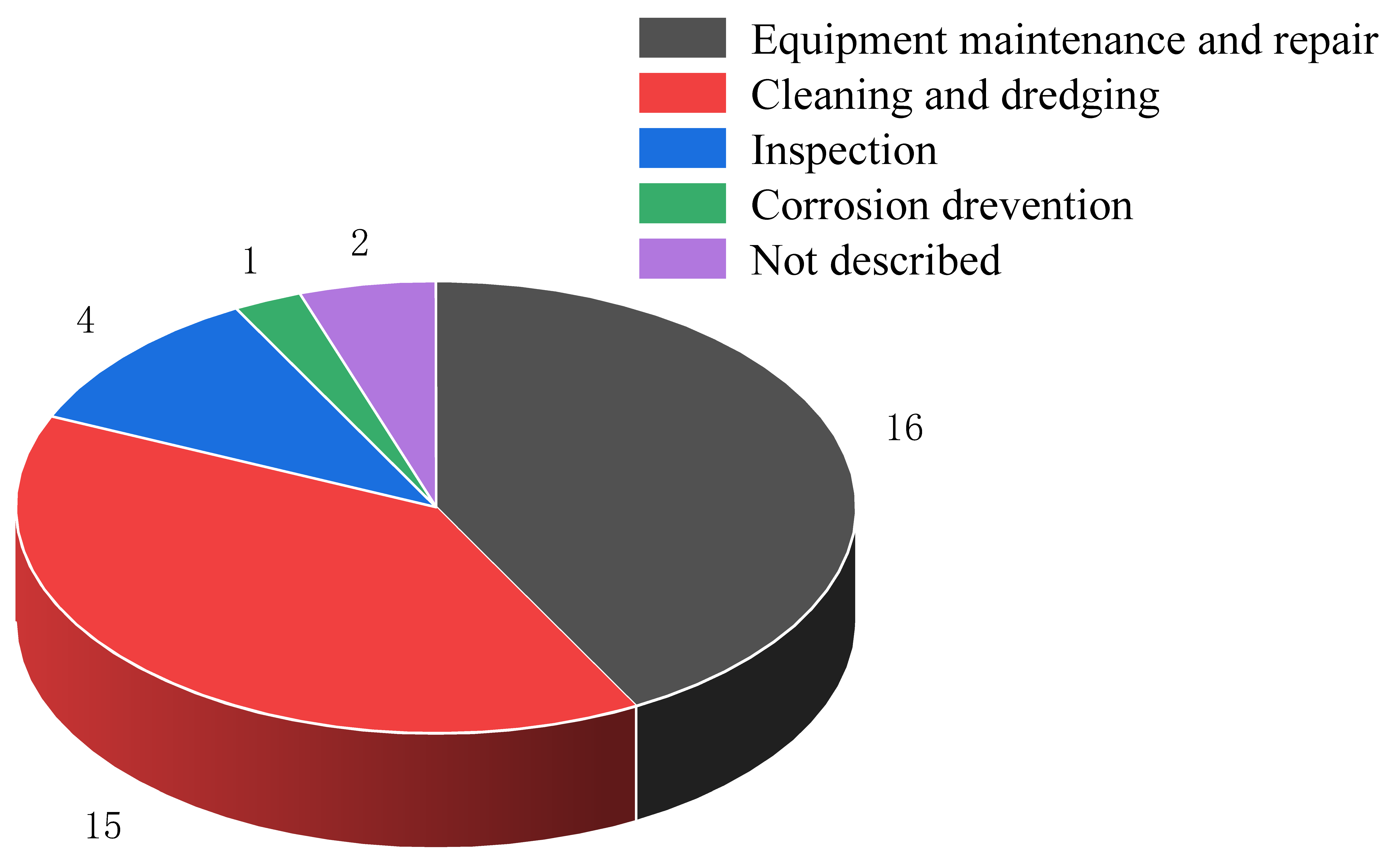
- In confined-space accidents that occur in wastewater treatment tanks, about 95% are poisoning accidents, mainly caused by hydrogen sulfide. The main purpose of entry is equipment maintenance and cleaning, accounting for 86% of all entries.
- (2)
- We found that the type and cover status of tanks had a greater impact on the distribution of toxic, harmful, flammable and explosive gases from wastewater treatment tanks. The type of sewage treatment tank with the highest risk level is the regulating tank, followed by the sedimentation tank, collection tank and hydrolysis acidification tank. There are no toxic or harmful substances in uncovered tanks.
- (3)
- The concentration of hydrogen sulfide in wastewater treatment tanks undergoes dynamic change over time, and is not always stable. The maximum value of hydrogen sulfide concentration is about 70 times the minimum value. This may be caused by internal disturbances such as water discharge and stirring in the tanks.
Author Contributions
Funding
Institutional Review Board Statement
Informed Consent Statement
Data Availability Statement
Conflicts of Interest
References
- Wang, Y. Design of Wastewater Treatment Unit; Chemical Industry Press: Beijing, China, 2020. [Google Scholar]
- Ketin, S.; Andrejić, M.; Čabarkapa, O.; Biočanin, R. Wastewaters originated from the textile industry. Wastewaters originated from the textile industry. Tekst. Ind. 2023, 72, 47–51. [Google Scholar]
- Beijing Highway Traffic Engineering Co., Ltd. Technical Manual for Working and Maintenance Management of Wastewater Treatment Station; China Communications Press: Beijing, China, 2020. [Google Scholar]
- National Institute for Occupational Safety and Health (NIOSH). Worker Deaths in Confined Spaces: A Summary of NIOSH Surveillance and Investigative Findings 1994. Available online: https://www.cdc.gov/niosh/docs/94-103/default.html (accessed on 20 February 2025).
- He, Y. Anaerobic Biological Treatment of Wastewater; Light Industry Press: Beijing, China, 1998. [Google Scholar]
- Ministry of Emergency Management of the People’s Republic of China. Expert Guidance Service for Working in Confined Spaces of Key Industrial and Trade Enterprises in 2024 Initiated by Emergency Management Department. 2024. Available online: https://www.mem.gov.cn/xw/yjglbgzdt/202404/t20240403_483587.shtml (accessed on 22 February 2025).
- MacCarron, C. Confined Space Fatalities. Edith Cowan University. 2006. Available online: https://ro.ecu.edu.au/theses/81 (accessed on 25 February 2025).
- Zhao, J.; Manbeck, H.B.; Murphy, D.J. Computational Fluid Dynamics Simulations of Gas Evacuation and O2 Recovery Times for Fan-Ventilated. Am. Soc. Agric. Biol. Eng. 2007, 51, 2135–2149. [Google Scholar]
- Pesce, E.P.; Zhao, J.; Manbeck, H.B.; Murphy, D.J. Screening Ventilation Strategies for Confined-Space Manure Storage Facilities. J. Agric. Saf. Health 2008, 14, 283–308. [Google Scholar] [CrossRef]
- Guisasola, A.; De, H.D.; Keller, J.; Yuan, Z. Development of a model for assessing methane formation in rising main sewers. Water Res. 2009, 43, 2874–2884. [Google Scholar] [CrossRef] [PubMed]
- Michaelsen, G.S.; Park, W.E. Asphyxiation in Street Manholes. Public Health Rep. 1954, 69, 29–36. [Google Scholar] [CrossRef] [PubMed]
- Simon-Várhelyi, M.; Tomoiagă, C.; Brehar, M.A.; Cristea, V.M. Dairy wastewater processing and automatic control for waste recovery at the municipal wastewater treatment plant based on modelling investigations. J. Environ. Manag. 2021, 287, 112316. [Google Scholar] [CrossRef]
- Mekonnen, A.; Leta, S.; Njau, K.N. Anaerobic treatment of tannery wastewater using ASBR for methane recovery and greenhouse gas emission mitigation. J. Water Process Eng. 2017, 19, 231–238. [Google Scholar] [CrossRef]
- Einarsen, A.M.; Æsøy, A.; Rasmussen, A.-I.; Bungum, S.; Sveberg, M. Biological prevention and removal of hydrogen sulphide in sludge at Lillehammer Wastewater Treatment Plant. Ann. Work. Expo. Health 2000, 6, 175–182. [Google Scholar] [CrossRef]
- Colomer, F.L.; Morató, H.E.; Iglesias, E.M. Estimation of hydrogen sulfide emission rates at several wastewater treatment plants through experimental concentration measurements and dispersion modeling. J. Air Waste Manag. Assoc. 2012, 7, 758–766. [Google Scholar] [CrossRef]
- Vukic, D.L.; Ketin, S.; Zivkovic, O.; Cvejic, S.; Topalovic, S. Gas emission and economic effects in in Serbia. Fresenius Environ. Bull. 2021, 30, 13225–13230. [Google Scholar]
- Austigard, Å.D.; Smedbold, H.T.; Svendsen, K.V. Risk characteristics of hydrogen sulphide exposure in wastewater collection and treatment related occupations. Ann. Work. Expo. Health 2023, 67, 216–227. [Google Scholar] [CrossRef]
- Godoi, A.F.L.; Grasel, A.M.; Polezer, G. Human exposure to hydrogen sulphide concentrations near wastewater treatment plants. Sci. Total Environ. 2018, 610, 583–590. [Google Scholar] [CrossRef]
- Wang, M.; He, G.; Dou, P.; Qin, C.; Zhao, Y.; Zhu, Y.; Jiang, S. Greenhouse gas emission and future forecast of Beijing wastewater treatment system. Tsinghua Sci. Technol. 2024, 64, 282–293. [Google Scholar]
- Yang, Q.; Li, Y.; Cui, B.; Yang, Z.; Liu, Z.; Peng, Y. Research progress of malodorous gas release in urban wastewater treatment. J. Environ. Sci. 2019, 39, 2079–2087. [Google Scholar]
- Emergency Management Department of Henan Province. “6.5” Major Poisoning and Suffocation Accident in Huiji District, Zhengzhou City Investigation Report. Available online: https://yjglt.henan.gov.cn/2021/03-15/2109389.html (accessed on 22 February 2025).
- Emergency Management Department of Cangzhou City. Investigation Report on the “9·10” Major Poisoning and Drowning Accident at Hebei Fuchen Food Co., Ltd. Available online: http://yjglj.cangzhou.gov.cn/yjglj/sgdc/202204/5745fcf66797418e86317efbafd3e1dd.shtml (accessed on 22 February 2025).
- Emergency Management Department of Xinjiang Uygur Autonomous Region. Investigation. Report on the “4·20” Major Poisoning and Asphyxia Incident Concealed by the People’s Hospital of Aksu City, Aksu Region. Available online: http://yjgl.xinjiang.gov.cn/xjyjgl/c112878/202304/763faf1fc04b4322b7d26cc657027ead.shtml (accessed on 22 February 2025).
- People’s Government of Hepu. County Investigation Report on the “8.28” Accident of Beihai Nanyuan Aquatic Products Co., Ltd. Available online: http://www.hepu.gov.cn/zfxxgk/fdzdgknr/qtzdxxgk/aqsc/aqsgdcbg/t15888591.shtml (accessed on 22 February 2025).
- Guth, U.; Shuk, P.; McGuire, C. Gas sensing technologies in combustion: A comprehensive review. J. Electrochem. Sci. Eng. 2020, 10, 103–110. [Google Scholar] [CrossRef]
- Bao, K.; Qiu, S.; Wang, W.; Yang, C.; Wang, W.; Wang, X.; Wang, Q.; Yin, J.; Jin, Q.; Jian, J.; et al. Durable carrier-free catalytic combustion H2 sensor based on PdPt alloy nanoparticles. J. Hydrogen Energy 2025, 138, 28–35. [Google Scholar] [CrossRef]
- Paredes, M.G.; Güereca, L.P.; Molina, L.T.; Noyola, A. Methane emissions from stabilization ponds for municipal wastewater treatment in Mexico. J. Integr. Environ. Sci. 2015, 12, 139–153. [Google Scholar] [CrossRef]
- Kong, H.; Kimochi, Y.; Mizuochi, M.; Inamori, R.; Inamori, Y. Study of the characteristics of CH4 and N2O emission and methods of controlling their emission in the soil-trench wastewater treatment process. Sci. Total Environ. 2002, 290, 59–67. [Google Scholar] [CrossRef] [PubMed]
- GBZ2.1-2019; Occupational Exposure Limits for Hazardous Agents in the Workplace Part 1: Chemical Hazardous Agents. National Health Commission of the People’s Republic of China: Beijing, China, 27 July 2019.
- GB8958-2006; Safety Regulations for Oxygen-Deficient Hazardous Operations. General Administration of Quality Supervision, Inspection and Quarantine of the People’s Republic of China: Beijing, China, 22 June 2006.
- Rich, J.J.; King, G.M. Carbon monoxide consumption and production by wetland peats. FEMS Microbiol. Ecol. 1999, 28, 215–224. [Google Scholar] [CrossRef]
- Haarstad, K.; Bergersen, O.; Sørheim, R. Occurrence of Carbon Monoxide during Organic Waste Degradation. J. Air Waste Manag. Assoc. 2006, 56, 575–580. [Google Scholar] [CrossRef] [PubMed]
- Bae, J.; McCarty, P.L. Variation of carbon monoxide production during methane fermentation of glucose. Water Environ. Res. 1994, 65, 890–898. [Google Scholar] [CrossRef]
- Wang, X.; Zhao, T.; Zhao, Y. Sludge Biological Treatment Technology; Metallurgical Industry Press: Beijing, China, 2010. [Google Scholar]
- Liu, Y. Hydrodynamics in the Process of Self-Immobilization of Industrial Anaerobic Granular Sludge; Xi’an Jiaotong University Press: Suzhou, China, 2011. [Google Scholar]
- Wan, S.; Li, Y.; Yin, T. Wastewater Anaerobic Biological Treatment Project; Harbin Institute of Technology Press: Harbin, China, 2013. [Google Scholar]
- Yongsiri, C.; Vollertsen, J.; Rasmussen, M. Air-water transfer of hydrogen sulfide: An approach for application in sewer networks. Water Environ. Res. 2004, 76, 81–88. [Google Scholar] [CrossRef]
- Park, K.; Lee, H.; Phelan, S.; Liyanaarachchi, S.; Marleni, N.; Navaratna, D.; Jegatheesan, V.; Shu, L. Mitigation strategies of hydrogen sulphide emission in sewer networks—A review. Int. Biodeterior. Biodegrad. 2014, 95, 251–261. [Google Scholar] [CrossRef]
- Li, H.; Zhang, L.; Tang, X.; Chen, W. Analysis of the causes and influencing factors of hydrogen sulfide gas production in urban drainage pipelines. Environ. Sci. Manag. 2012, 37, 95–97+107. [Google Scholar]
- Yuan, Y.; Gao, J.; Zhang, L.; Tianming, C.; Cheng, D. Research progress on influencing factors and forecast models of hydrogen sulfide generation in municipal wastewater pipelines. Environ. Eng. 2023, 41, 69–77. [Google Scholar]
- Ren, J. Research on Hydraulic Influence Mechanism of Hydrogen Sulfide and Methane Generation in Wastewater Pipe Network. Ph.D. Thesis, Xi’an University of Architecture and Technology, Xi’an, China, 2022. [Google Scholar]
- Nanyang Emergency Management Bureau. “5·29” Major Gas Poisoning Accident Investigation Report. 2024. Available online: https://ajj.nanyang.gov.cn/2024/08-27/610044.html (accessed on 22 February 2025).
- Zhejiang Emergency Management Department. “1·10” Major Poisoning Accident Investigation Report at Shaoxing Fuqiang Hongtai Dyeing and Printing Co., Ltd. 2023. Available online: https://yjt.zj.gov.cn/art/2023/8/18/art_1228978417_59133717.html (accessed on 22 February 2025).
- Zhangye Municipal People’s Government. “9·14” Major Poisoning Production Safety Accident Investigation Report at Zhangye Yaobang Chemical Technology Co., Ltd., Gao-tai County. 2020. Available online: https://www.zhangye.gov.cn/zyszfxxgk/fdzdgknr_5657/qtfdzdgknr/zfgb/zfgb2020/2020_5614/hyjy_2020_10/202012/t20201223_559702.html (accessed on 22 February 2025).
- 29 CFR 1910.146; OSHA, Permit-Required Confined Spaces for General Industry. U.S. Department of Labor: Washington, DC, USA, 1993.
- SOR/86-304; Government of Canada. Canadian Occupational Health and Safety Regulations. Government of Canada: Ottawa, ON, Canada, 2009.
- No. 1713; Government of the United Kingdom. The Confined Spaces Regulations 1997. Government of the United Kingdom: London, UK, 1997.
- Safe Work Australia. Model Work Health and Safety Regulation; Safe Work Australia: Canberra, ACT, Australia, 2017. [Google Scholar]
- Ministry of Emergency Management of the People’s Republic of China. Regulations Safety Work in Confined Space of Industrial and Trade Enterprises; Ministry of Emergency Management of the People’s Republic of China: Beijing, China, 2023.
- Sohu News. “2·15” Major Poisoning Accident Investigation Report at Shuangzhou Paper Industry Co., Zhongtang Town, Dongguan City. 2019. Available online: https://www.sohu.com/a/305064634_650187 (accessed on 22 February 2025).
- Tang, X.Y.; Shen, J.; Liu, X.R. Investigation of an acute hydrogen cyanide poisoning death accident. Ind. Health Occup. Dis. 2005, 2, 122. [Google Scholar]
- Wei, W. Research on the Release Process of Phosphine in Wastewater Treatment. Ph.D. Thesis, Guangzhou University, Guangzhou, China, 2010. [Google Scholar]
- Bian, D.; Nie, Z.; Wang, F.; Ai, S.; Zhu, S. Release of phosphine in wastewater treatment and its research status. J. Change Inst. Technol. (Nat. Sci. Ed.) 2019, 20, 70–75. [Google Scholar]
- Mei, L.; Gao, J.; Xia, J. Investigation on an acute occupational poisoning accident of mixed gas in a confined space. Occup. Health Emerg. Rescue 2020, 38, 83–85. [Google Scholar]




| Detectors Brand | Resolution and Range of Four Gases | |||||||
|---|---|---|---|---|---|---|---|---|
| Hydrogen Sulfide/ppm | Carbon Monoxide/ppm | Oxygen/%VOL | Combustible Gas/%LEL | |||||
| Resolution | Range | Resolution | Range | Resolution | Range | Resolution | Range | |
| MSA | 1 | 0–200 | 1 | 0–1999 | 0.1 | 0–30 | 1 | 0–100 |
| MultiRAE | 1 | 0–100 | 1 | 0–500 | 0.1 | 0–30 | 1 | 0–100 |
| Detectors | Resolution/ppm | Range/ppm | Operating Temperature/°C | Operating Humidity/% |
|---|---|---|---|---|
| Industrial Scientific GBpro hydrogen sulfide | 0.1 | 0–500 | −40–60 | 0–99 |
| Industrial Scientific GBpro carbon monoxide | 1 | 0–1500 |
| Times | Detector | Installation Position (Distance from the Entrance/m) | Duration |
|---|---|---|---|
| First time | Two hydrogen sulfide detectors | 1 | Four days |
| Second time | three hydrogen sulfide detectors | 0.5/1/1.5 | Two days |
| One carbon monoxide detectors | 0.5 |
| No. | Accident Type | Number of Accidents | Toxic and Hazardous Gas Causing Accidents |
|---|---|---|---|
| 1 | Explosion | 1 | Methane |
| 2 | Anoxic asphyxia | 1 | Carbon dioxide |
| 3 | Poisoning | 21 | Hydrogen sulfide |
| 15 | Not described |
| Type of Tanks | Number of Tanks | O2/% | H2S/ppm | CO/ppm | Combustible Gas/%LEL | ||||
|---|---|---|---|---|---|---|---|---|---|
| Average Value | Minimum Value | Average Value | Maximum Value | Average Value | Maximum Value | Average Value | Maximum Value | ||
| Sedimentation tank | 29 | 20.6 | 17.5 | 1 | 25 | 3.1 | 90 | 1.3 | 20 |
| Regulating tank | 24 | 20.1 | 13.6 | 30 | 200 | 102 | 1999 | 11.5 | 100 |
| Collection tank | 23 | 20.7 | 18.2 | 4.4 | 27 | 2.2 | 42 | 3.3 | 21 |
| Aeration tank | 16 | 20.8 | 20.2 | 6.5 | 67 | 5.1 | 41 | 1.1 | 7 |
| Sludge tank | 13 | 20.7 | 19.9 | 2.4 | 11 | 2.9 | 38 | 2.8 | 21 |
| Dissolved air flotation tank | 8 | 20.9 | 20.5 | 5.1 | 15 | 0 | 0 | 0 | 0 |
| Aerobic tank | 8 | 20.6 | 19.8 | 0 | 0 | 0 | 0 | 0 | 0 |
| Anaerobic tank | 8 | 20.5 | 18.2 | 18.1 | 200 | 1.5 | 12 | 5.8 | 24 |
| Oil separator tank | 6 | 20.8 | 20.3 | 0.68 | 1.8 | 0 | 0 | 3.2 | 19 |
| Hydrolysis acidification tank | 6 | 20 | 17.8 | 82 | 170 | 8.5 | 16 | 39.3 | 100 |
| Contact oxidation tank | 5 | 20.2 | 19 | 0 | 0 | 0 | 0 | 0 | 0 |
| Clear water tank | 5 | 20.9 | 20.9 | 0 | 0 | 0 | 0 | 0 | 0 |
| Hypoxia tank | 5 | 20.6 | 19.8 | 0 | 0 | 0 | 0 | 0 | 0 |
| Reaction tank | 4 | 20.8 | 20.4 | 0 | 0 | 0 | 0 | 0 | 0 |
| Middle tank | 4 | 20.3 | 19.7 | 32.5 | 128 | 6 | 23 | 7.7 | 26 |
| Industry Type | Number of Tanks | Average Gas Concentration | |||
|---|---|---|---|---|---|
| Hydrogen Sulfide/ppm | Carbon Monoxide/ppm | Combustible Gas/%LEL | Oxygen/%VOL | ||
| Food manufacturing industry | 141 | 12.9 | 23 | 5.8 | 20.5 |
| Other industries | 81 | 5.67 | 0.38 | 1.6 | 20.7 |
| Factors | Correlation Coefficient | |||
|---|---|---|---|---|
| Oxygen | Hydrogen Sulfide | Carbon Monoxide | Combustible Gas | |
| Oxygen | 1 | −0.211 ** | −0.658 ** | −0.740 ** |
| Hydrogen sulfide | −0.211 ** | 1 | 0.072 | 0.355 ** |
| Carbon monoxide | −0.658 ** | 0.072 | 1 | 0.488 |
| Combustible gas | −0.740 ** | 0.355 ** | 0.488 ** | 1 |
| Indexes | Grading Criteria |
|---|---|
| Historical accidents | 1. No historical accident found: 10 score 2. Accidents have occurred in history: 0 score |
| 1. Maximum concentration of hydrogen sulfide 2. Average concentration of hydrogen sulfide | 1. More than 50 ppm: 10 score 2. Between 7 and 50 ppm: 5 score 3. Less than 7 ppm: 0 score |
| 1. Maximum concentration of carbon monoxide 2. Average concentration of carbon monoxide | 1. More than 50 ppm: 10 score 2. Between 25 and 50 ppm: 5 score 3. Less than 25 ppm: 0 score |
| 1. Maximum concentration of combustible gases 2. Average concentration of combustible gases | 1. More than 30% LEL: 10 score 2. Between 10 and 30% LEL: 5 score 3. Less than 10% LEL: 0 score |
| Type of Tank | Score | Risk Level |
|---|---|---|
| Regulating tank | 55 | extreme high |
| Sedimentation tank | 30 | high |
| Collection tank | 30 | high |
| Hydrolysis acidification tank | 30 | high |
| Sludge tank | 25 | medium |
| Middle tank | 20 | medium |
| Oil separator tank | 15 | medium |
| Aerobic tank | 10 | low |
| Anaerobic tank | 10 | low |
| Aeration tank | 5 | low |
| Dissolved air flotation tank | 5 | low |
| Contact oxidation tank | 0 | low |
| Clear water tank | 0 | low |
| Hypoxia tank | 0 | low |
| Reaction tank | 0 | low |
Disclaimer/Publisher’s Note: The statements, opinions and data contained in all publications are solely those of the individual author(s) and contributor(s) and not of MDPI and/or the editor(s). MDPI and/or the editor(s) disclaim responsibility for any injury to people or property resulting from any ideas, methods, instructions or products referred to in the content. |
© 2026 by the authors. Licensee MDPI, Basel, Switzerland. This article is an open access article distributed under the terms and conditions of the Creative Commons Attribution (CC BY) license.
Share and Cite
Yang, C.; Liu, Y. Exploring Oxygen and Harmful Gas Distribution in Wastewater Treatment Tanks of Industrial Enterprises. Appl. Sci. 2026, 16, 1034. https://doi.org/10.3390/app16021034
Yang C, Liu Y. Exploring Oxygen and Harmful Gas Distribution in Wastewater Treatment Tanks of Industrial Enterprises. Applied Sciences. 2026; 16(2):1034. https://doi.org/10.3390/app16021034
Chicago/Turabian StyleYang, Chunli, and Yan Liu. 2026. "Exploring Oxygen and Harmful Gas Distribution in Wastewater Treatment Tanks of Industrial Enterprises" Applied Sciences 16, no. 2: 1034. https://doi.org/10.3390/app16021034
APA StyleYang, C., & Liu, Y. (2026). Exploring Oxygen and Harmful Gas Distribution in Wastewater Treatment Tanks of Industrial Enterprises. Applied Sciences, 16(2), 1034. https://doi.org/10.3390/app16021034