Numerical Simulation Study on Cuttings Transport Behavior in Enlarged Wellbores Using the CFD-DEM Coupled Method


Abstract
1. Introduction
2. CFD-DEM Coupling Methodology
2.1. Liquid-Phase Governing Equations
2.2. Solid-Phase Governing Equations
2.3. Solid–Liquid Coupling
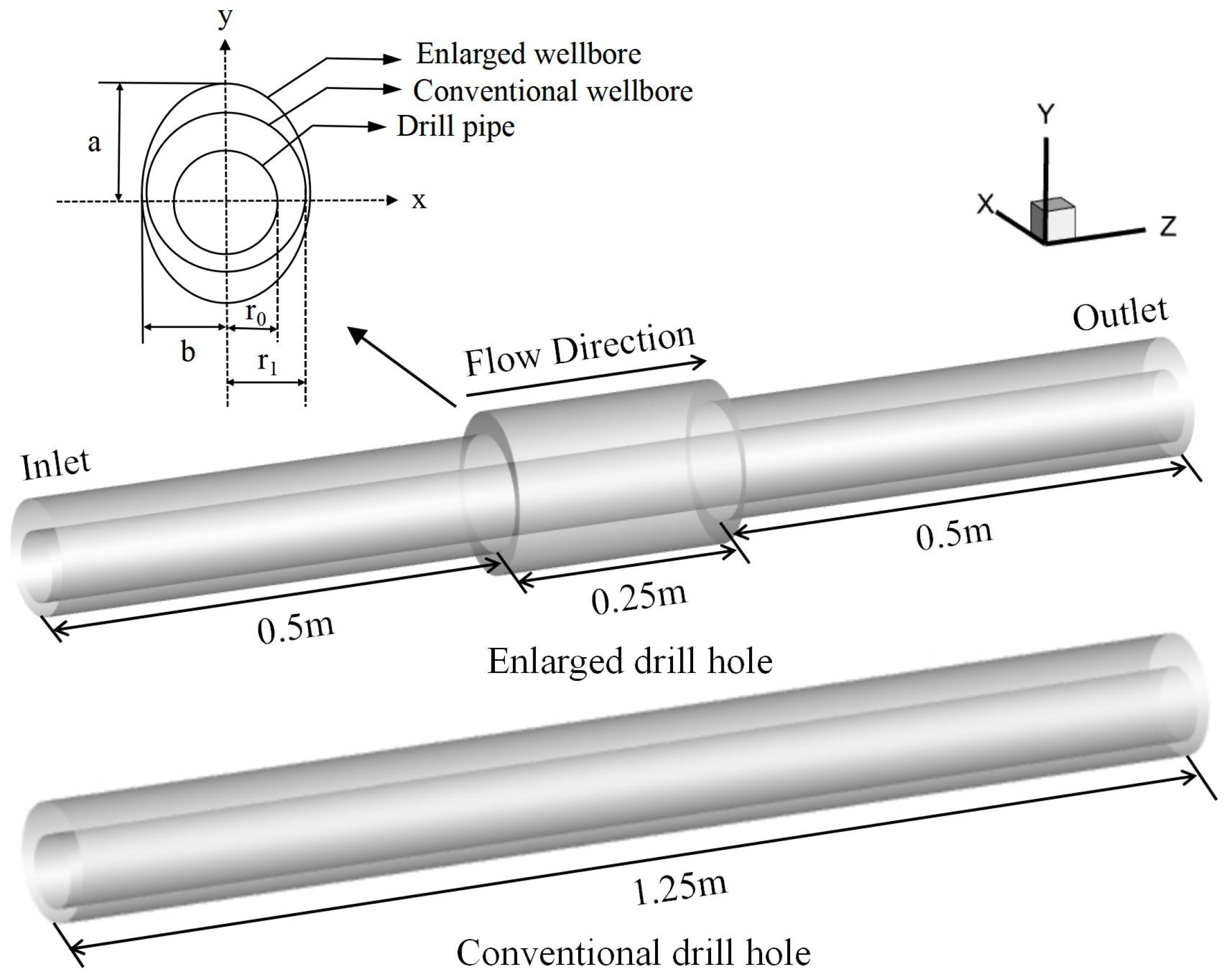
3. Calculation Model and Conditions
3.1. Model Geometry and Conditions
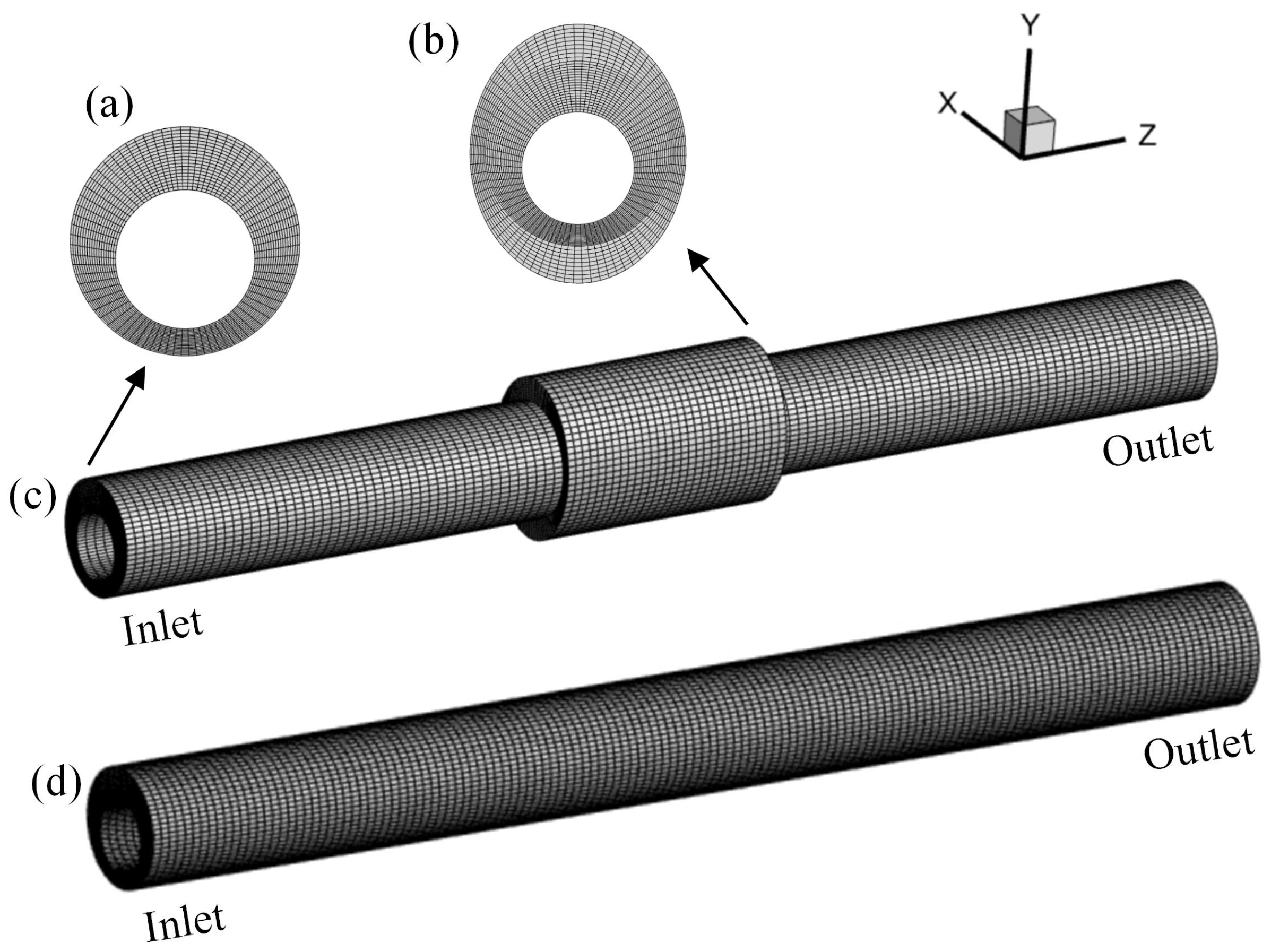
3.2. Boundary Conditions and Simulation Conditions
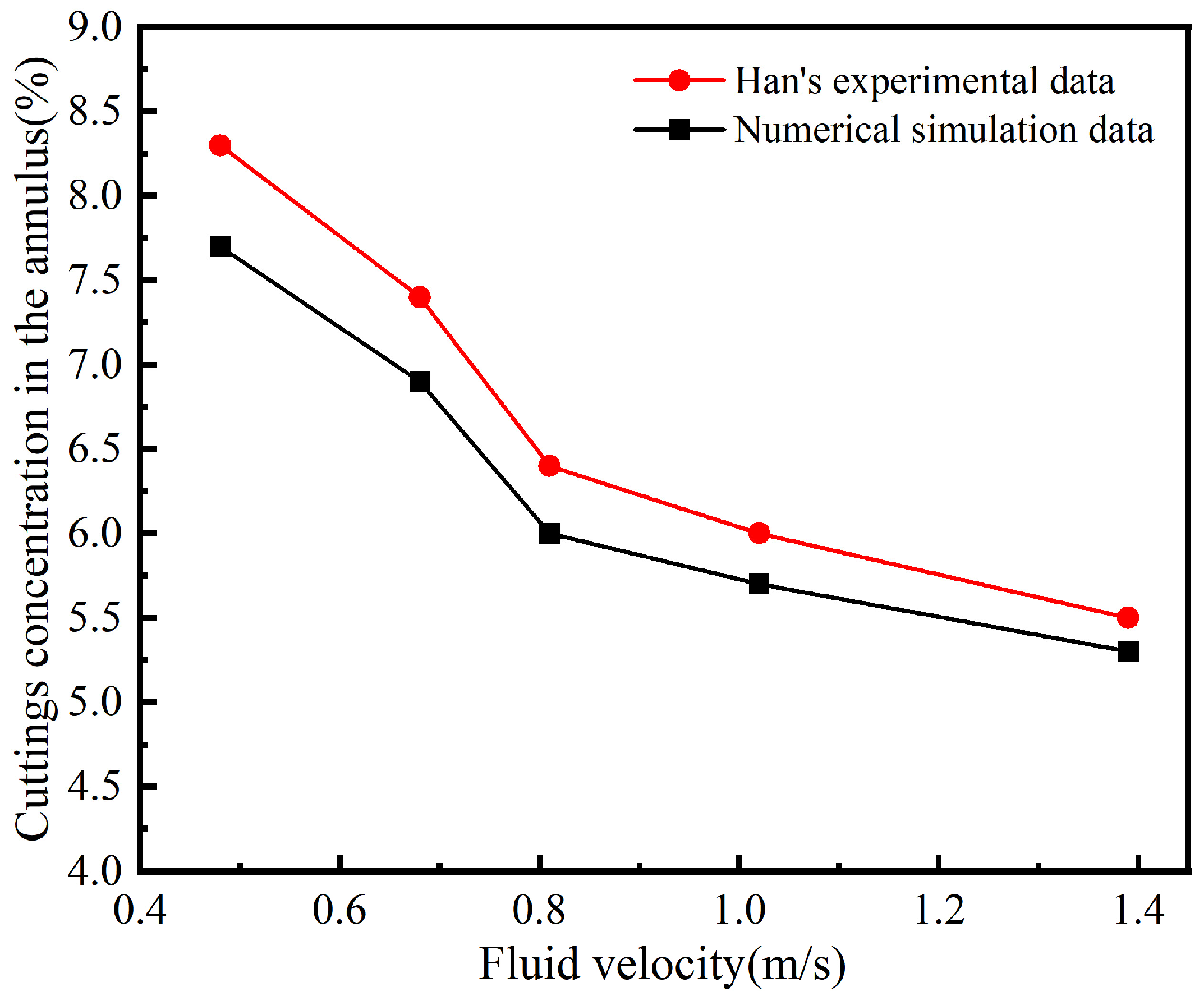
3.3. Model Validation
4. Results and Discussion
4.1. Effect of Annulus Flow Velocity on Hole Cleaning
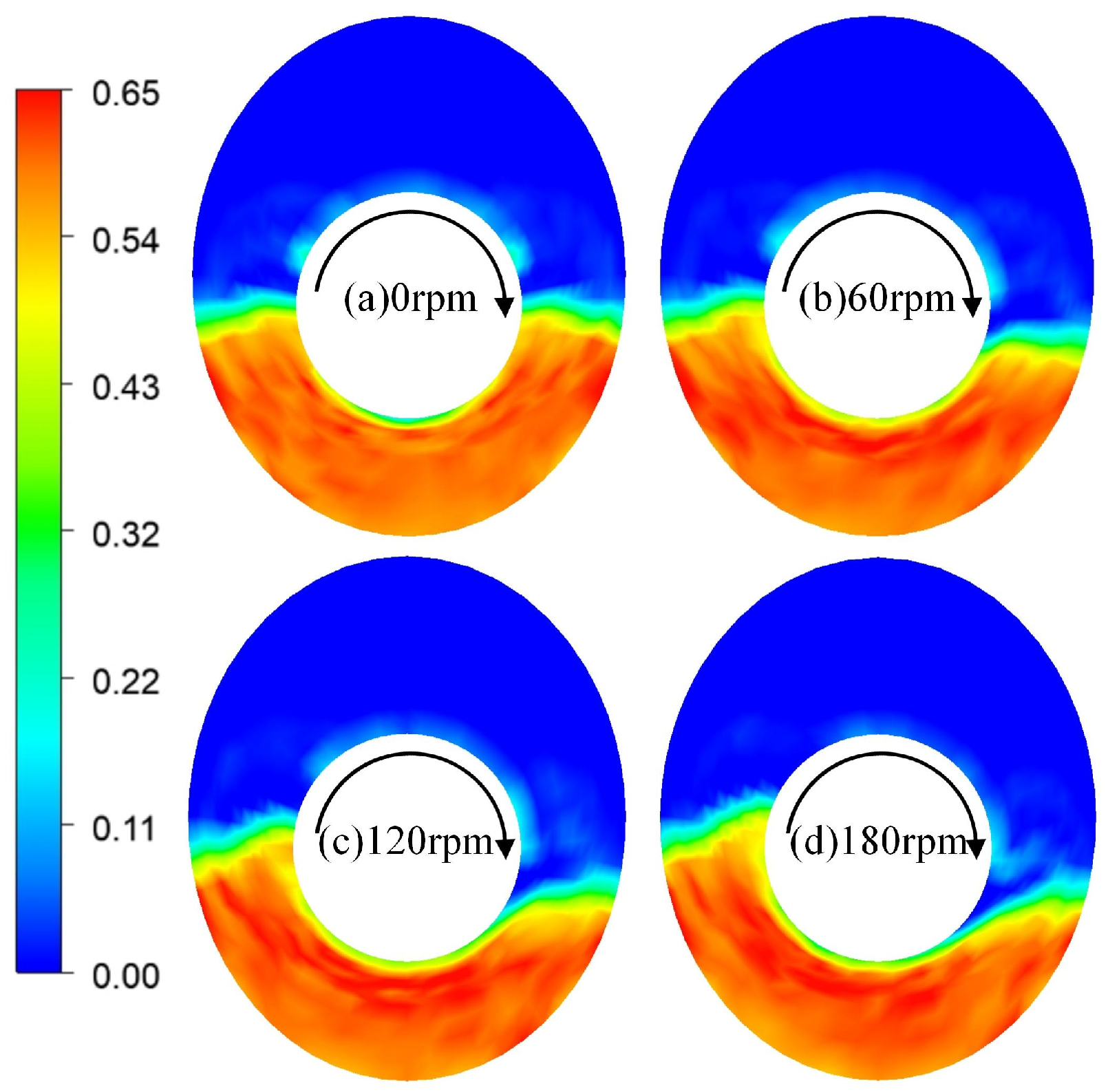
4.2. Effect of Drill Pipe Rotational Speed on Hole Cleaning
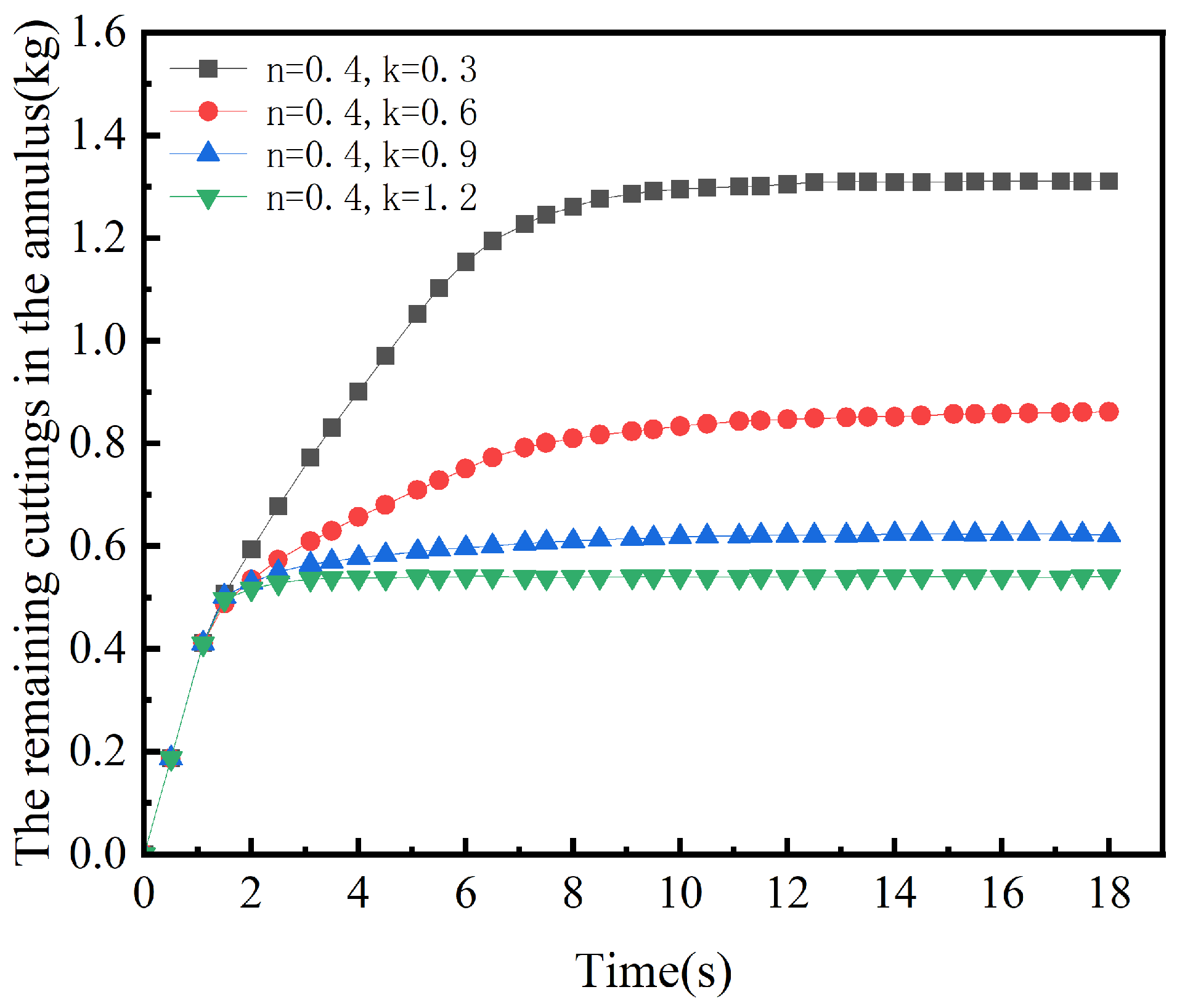
4.3. Effect of Drilling Fluid Rheological Parameters on Hole Cleaning
4.4. Effect of Enlargement Ratio on Hole Cleaning
4.5. Effect of Ovality on Hole Cleaning
5. Conclusions
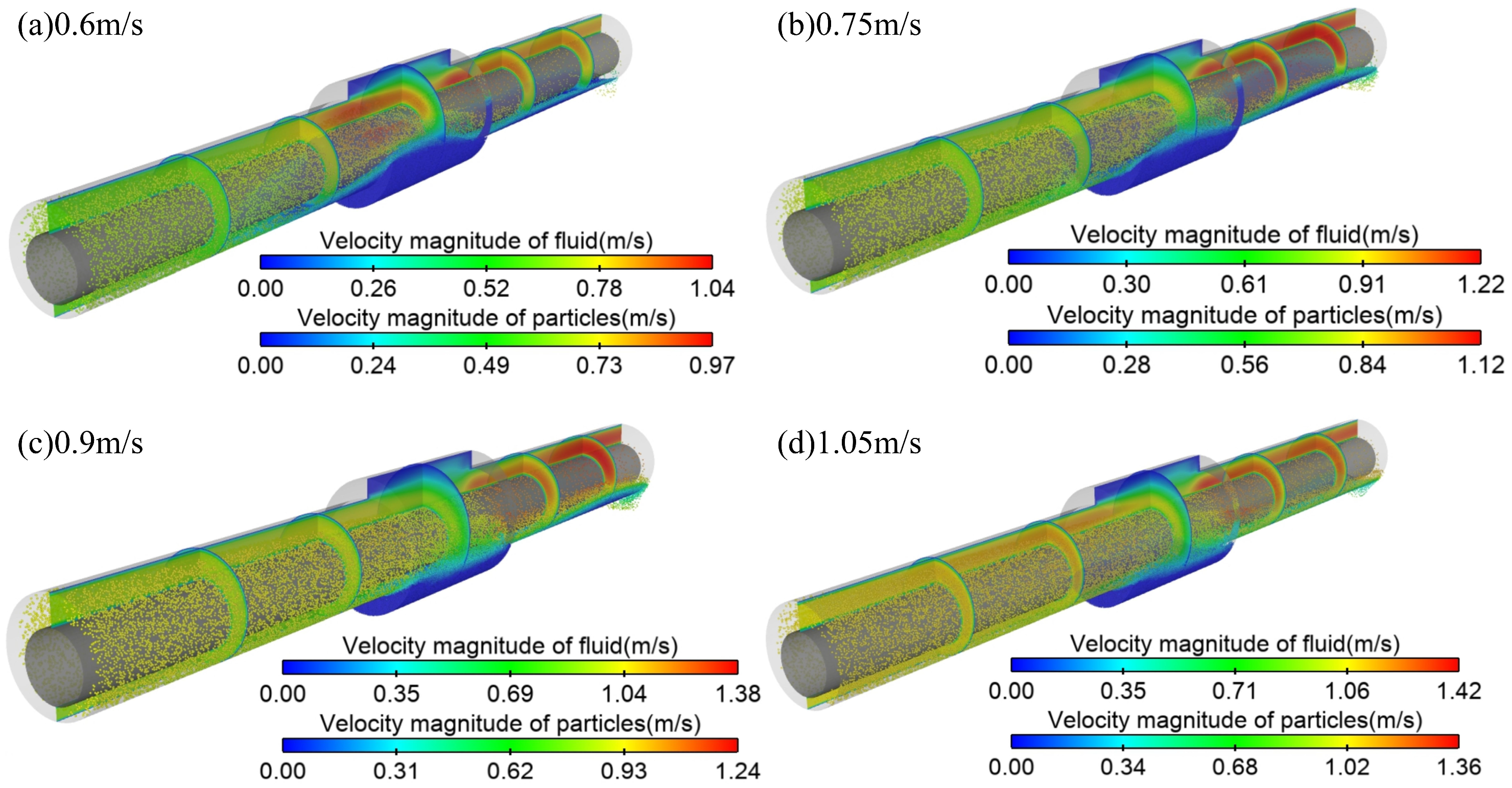
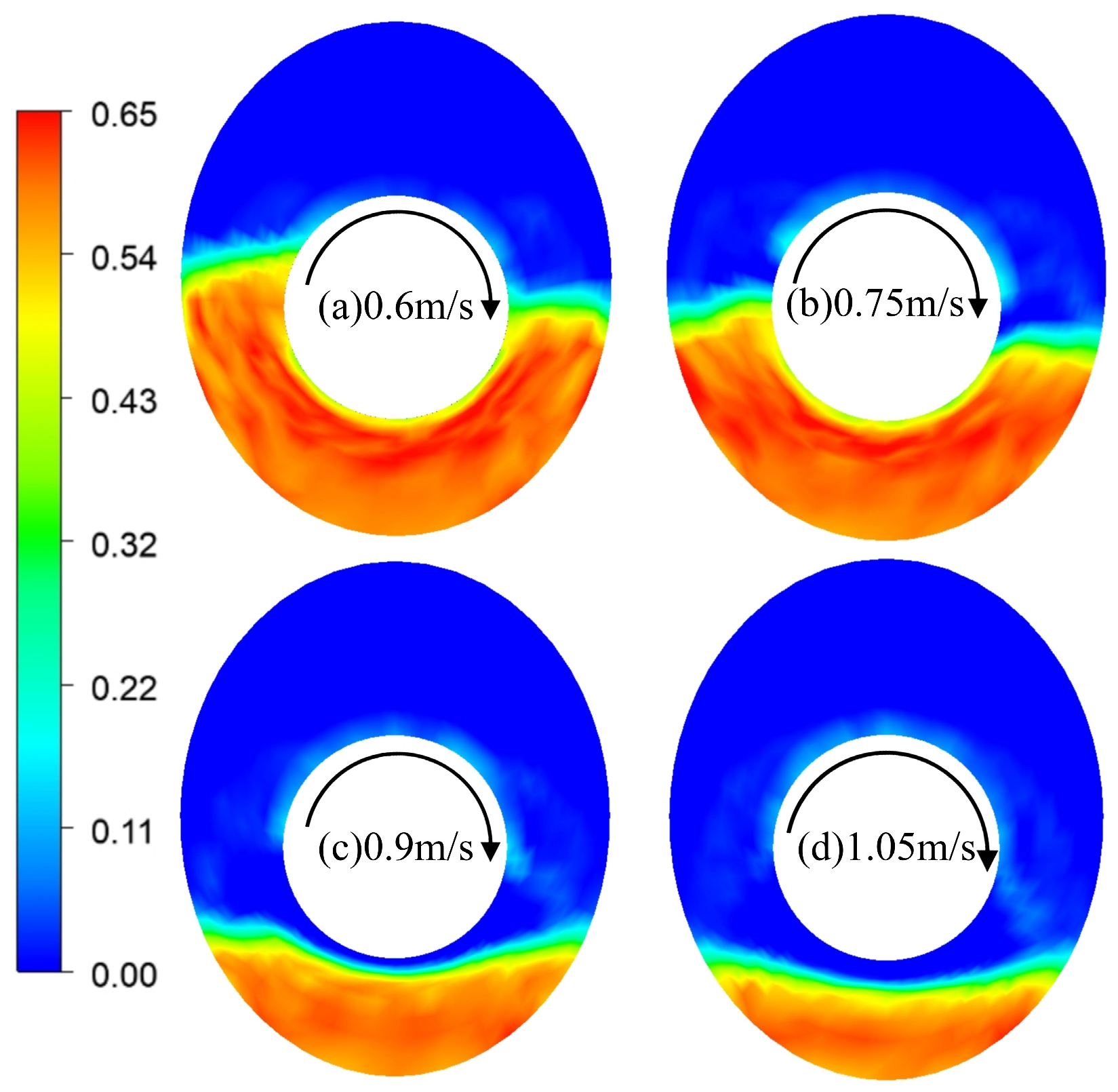
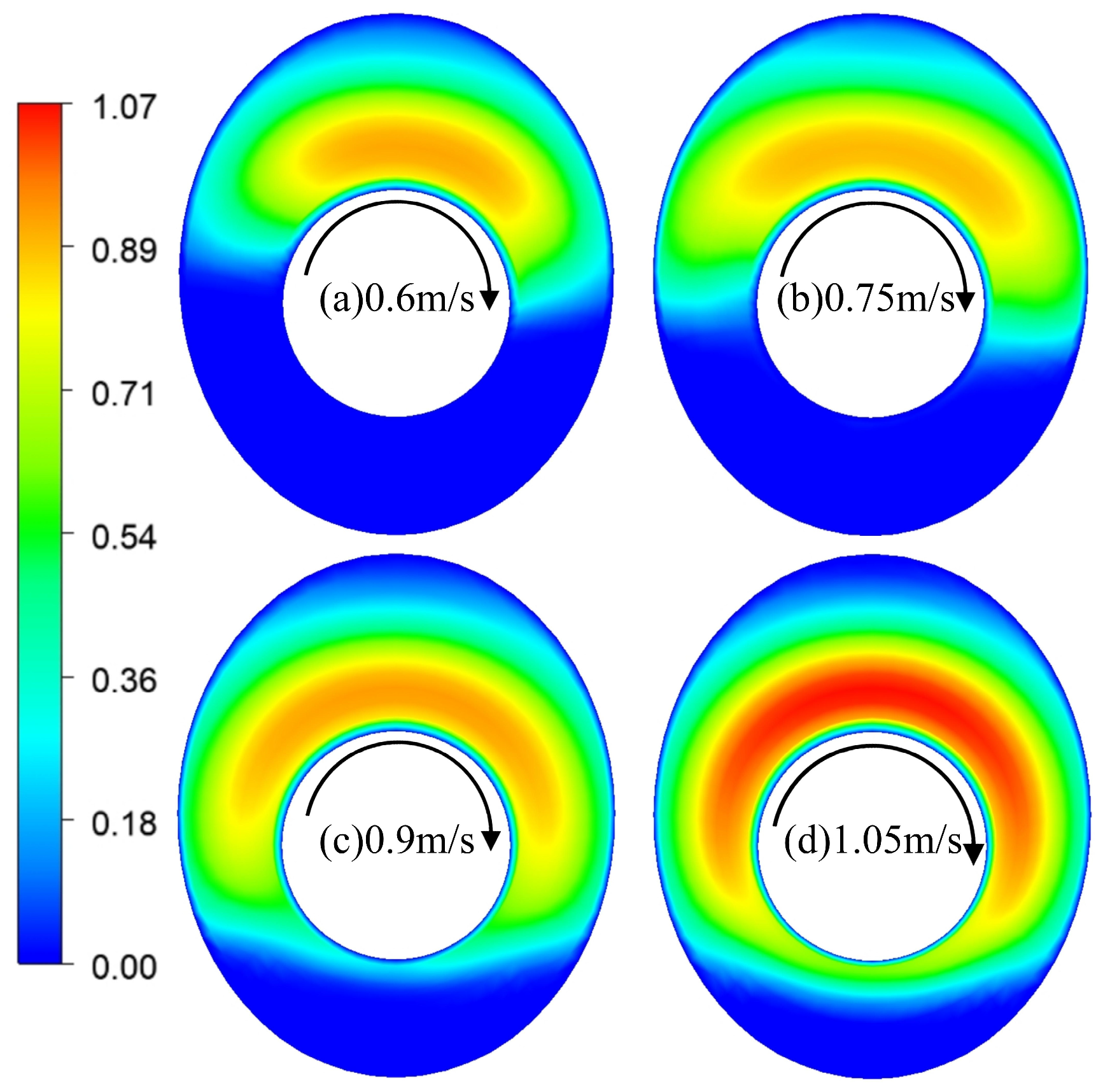
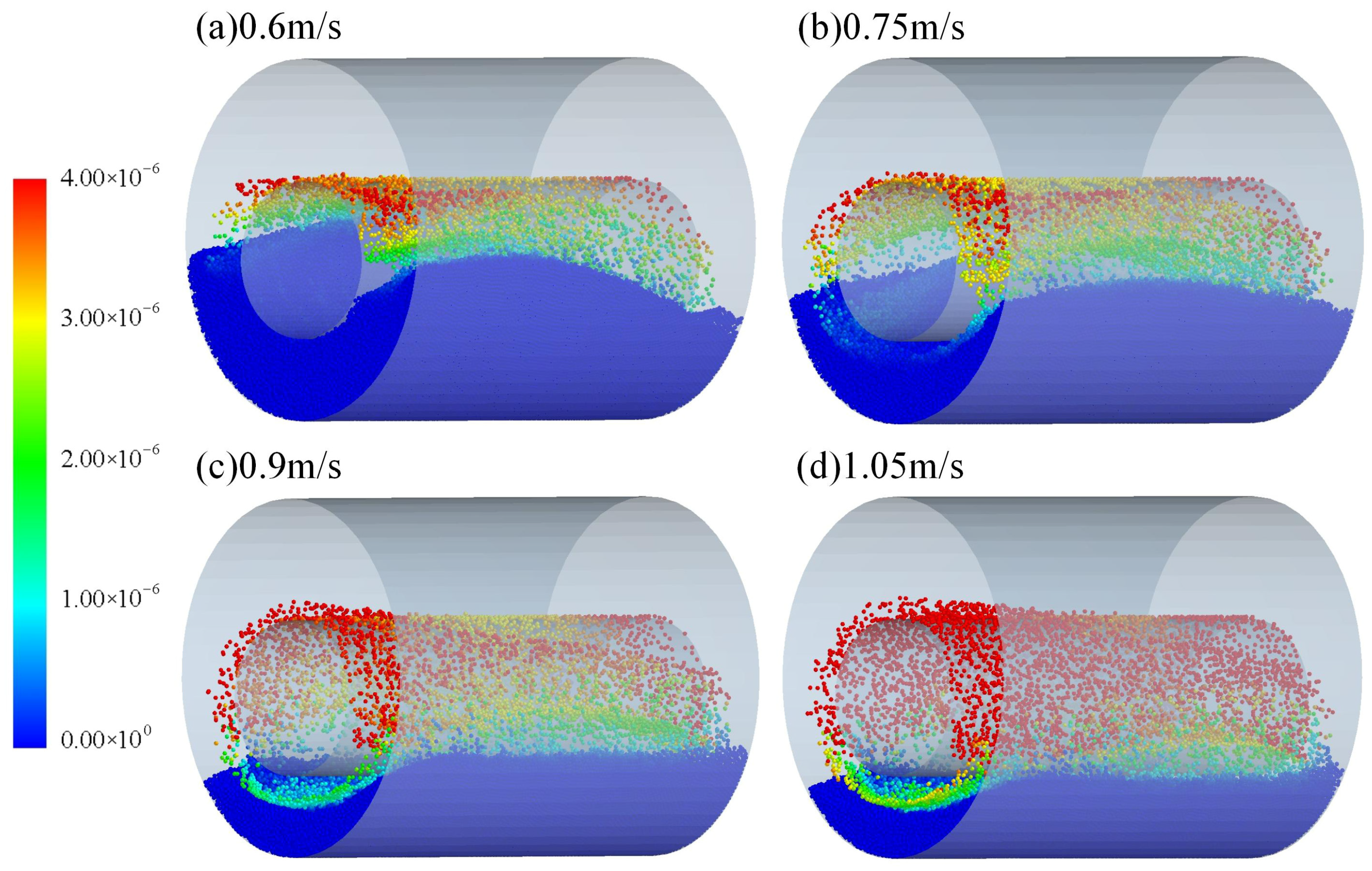
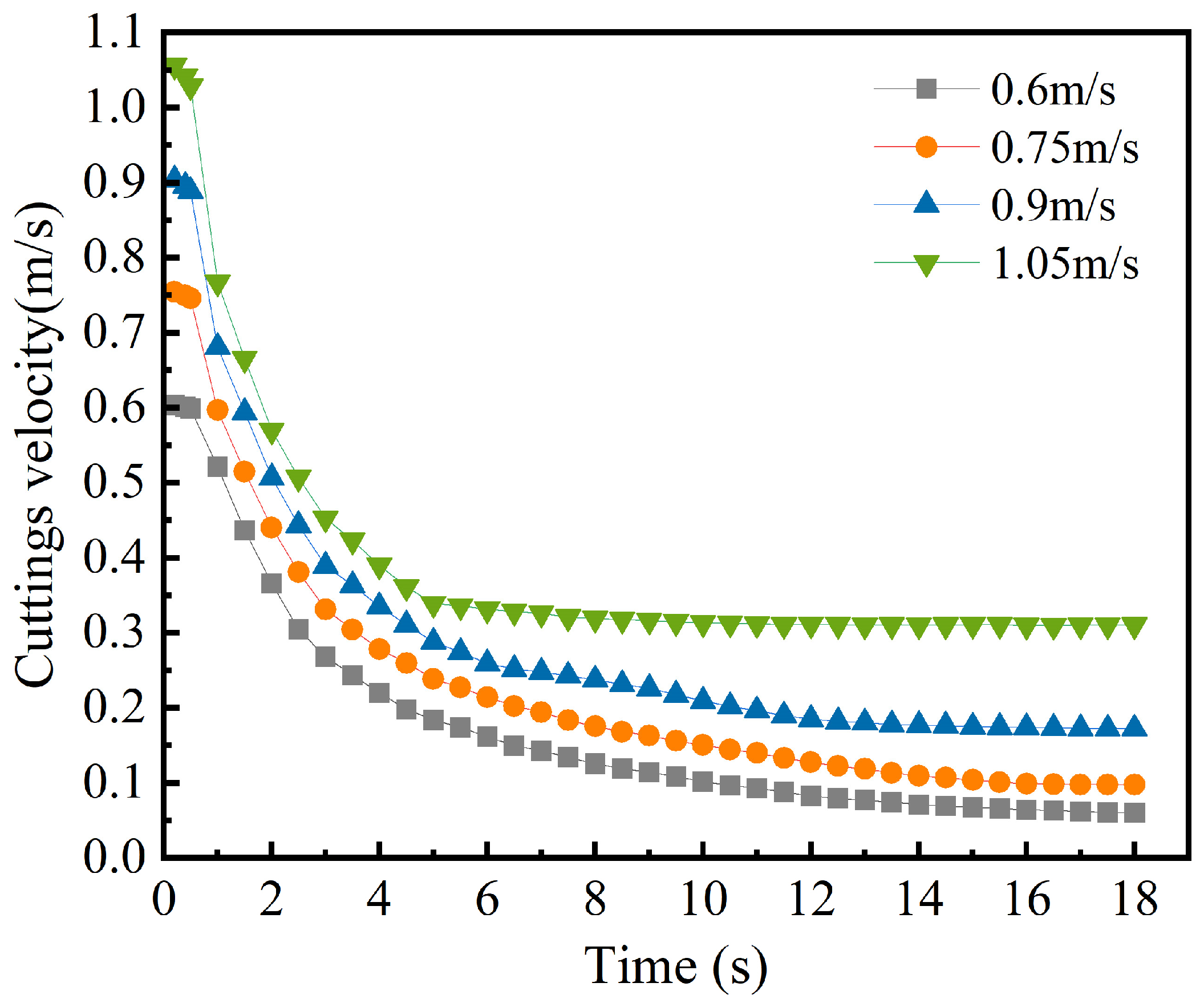
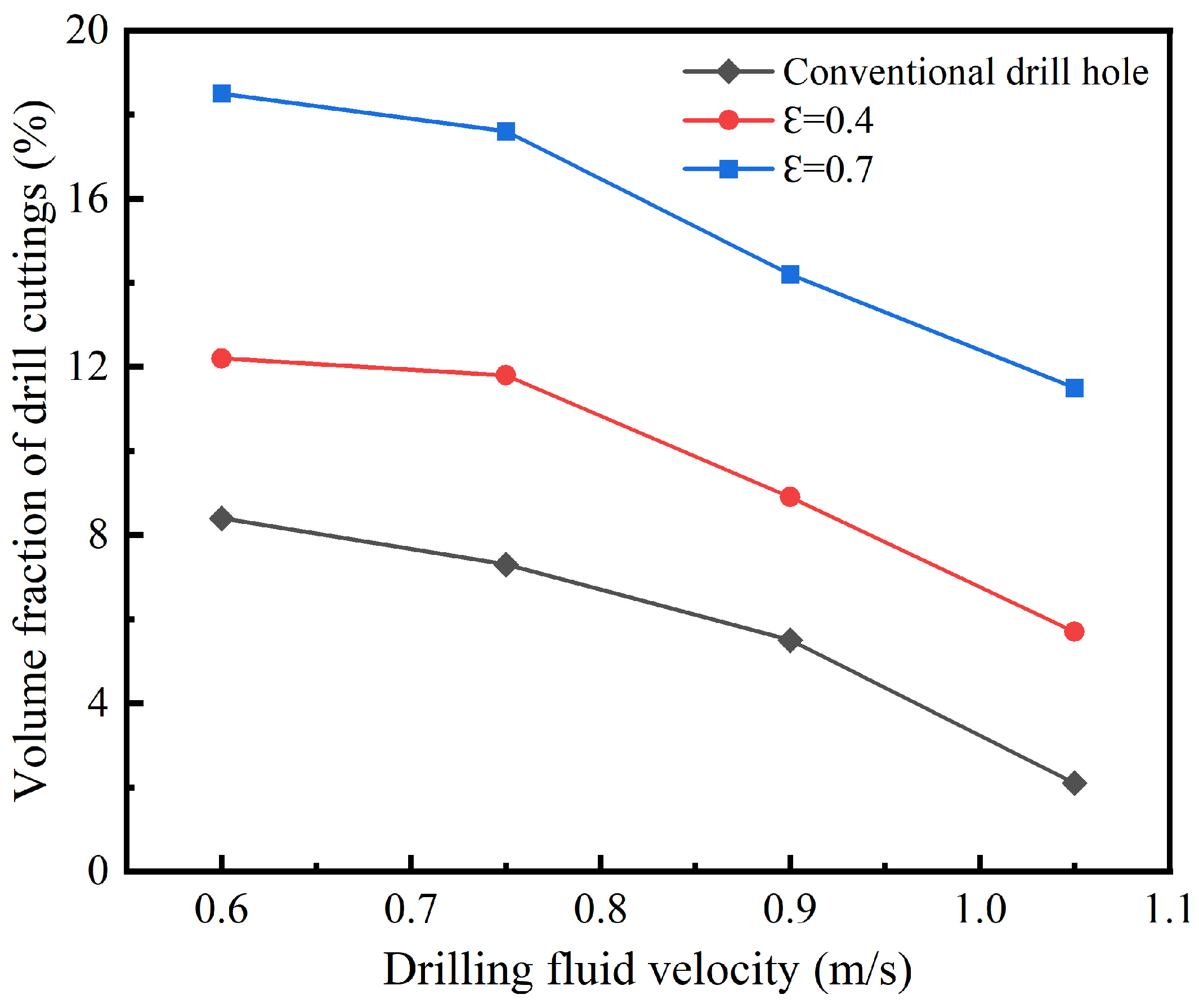
- The flow rate of the drilling fluid is a key factor in determining wellbore cleaning efficiency, but its effectiveness diminishes in enlarged wellbores. Increasing the flow rate enhances the drag force exerted by the fluid on the particles, promoting their suspension and transport, which reduces the thickness of the cuttings bed. However, in the enlarged sections, the increased cross-sectional area leads to a sharp decrease in local fluid velocity, thereby reducing the kinetic energy required for cuttings transport. From a quantitative perspective, increasing the flow rate from 0.6 m/s to 1.05 m/s in conventional wellbores results in a 75% reduction in cuttings volume fraction (from 8.4% to 2.1%). In contrast, in wellbores with an enlargement ratio of 0.7, the same flow rate increase leads to only a 37.8% reduction (from 18.5% to 11.5%). This indicates that geometric complexity fundamentally limits the effectiveness of the primary cleaning mechanism.
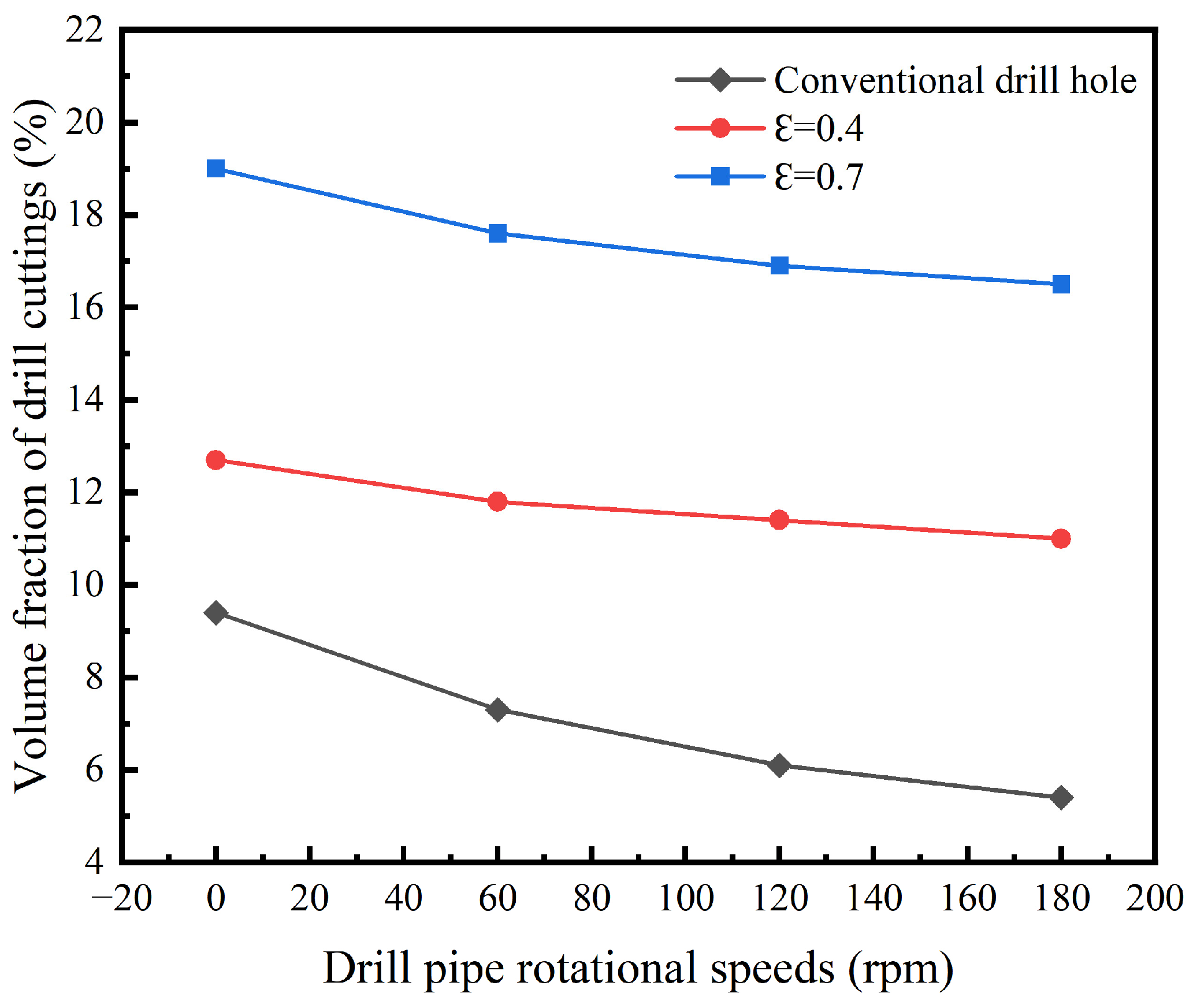
- The effect of drill pipe rotation is highly dependent on wellbore geometry. In conventional wellbores, rotation generates strong centrifugal forces that disrupt the cuttings bed, reducing its volume by approximately 42.6% when the rotation speed increases from 0 rpm to 180 rpm. In contrast, in enlarged wellbores (with enlargement ratios of 0.4 and 0.7), the same increase in rotation speed results in only about a 13% improvement. This suggests that in highly enlarged wellbores, relying solely on increased drill pipe rotation is insufficient to mitigate cuttings bed accumulation.
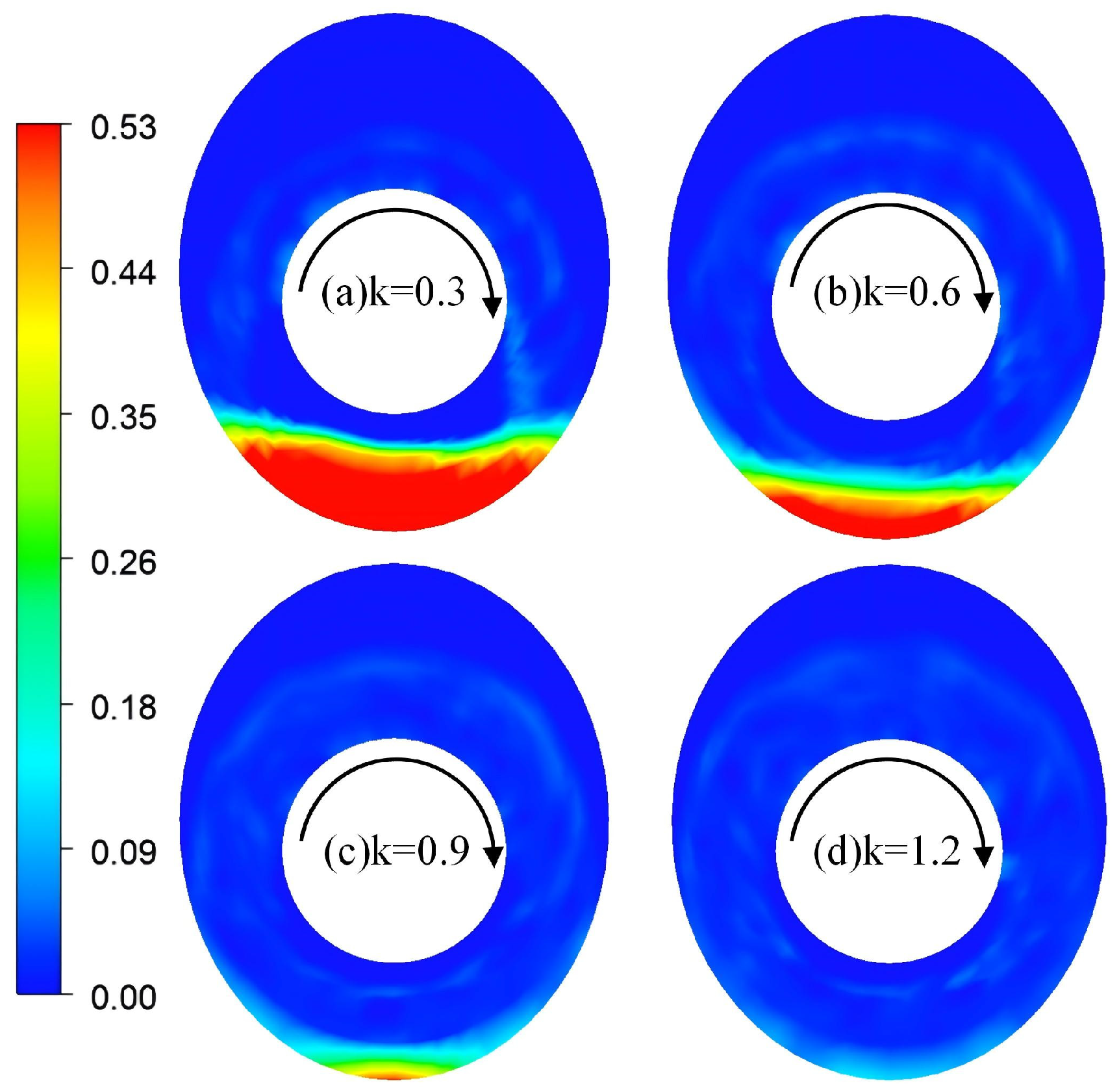
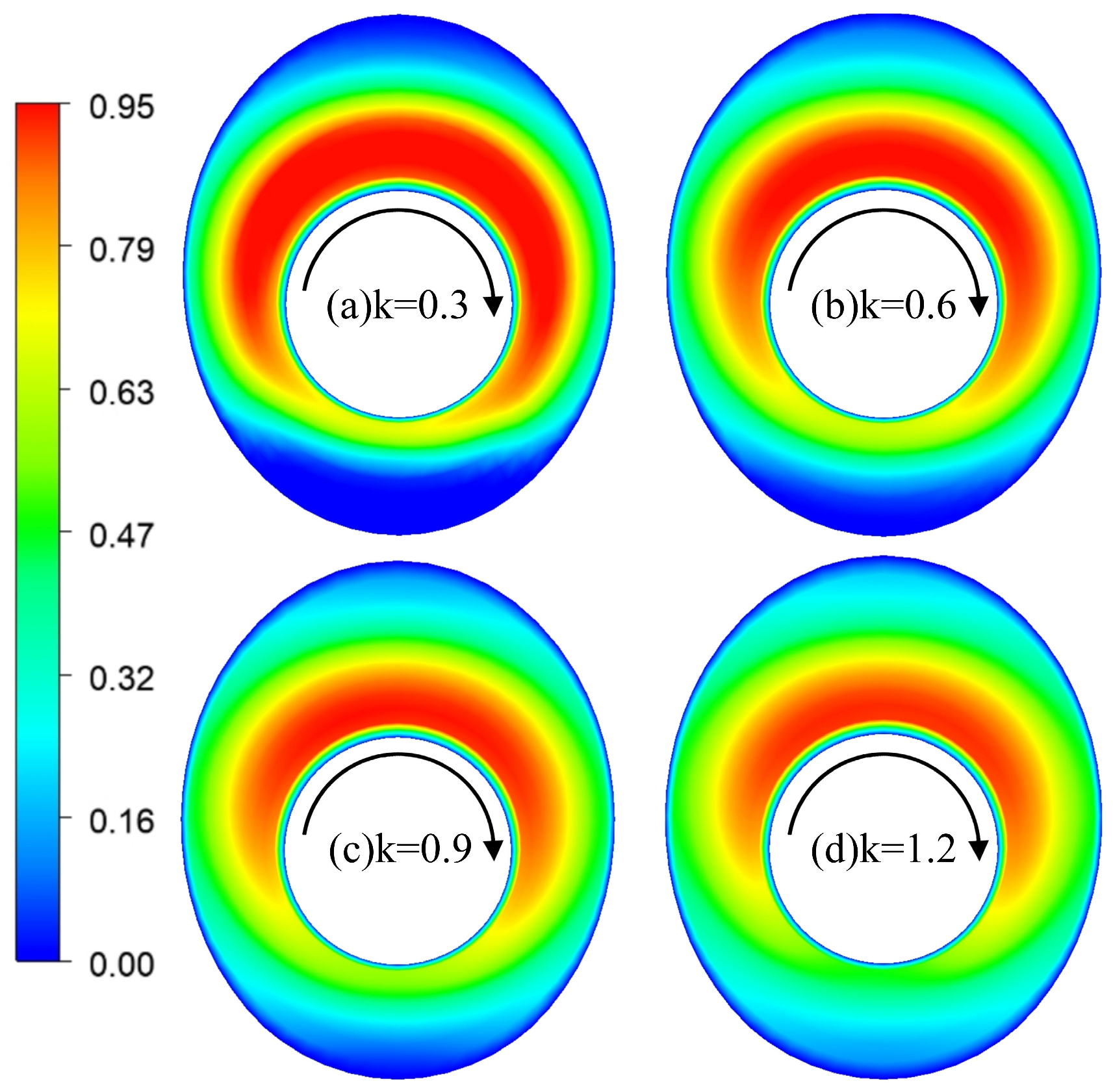
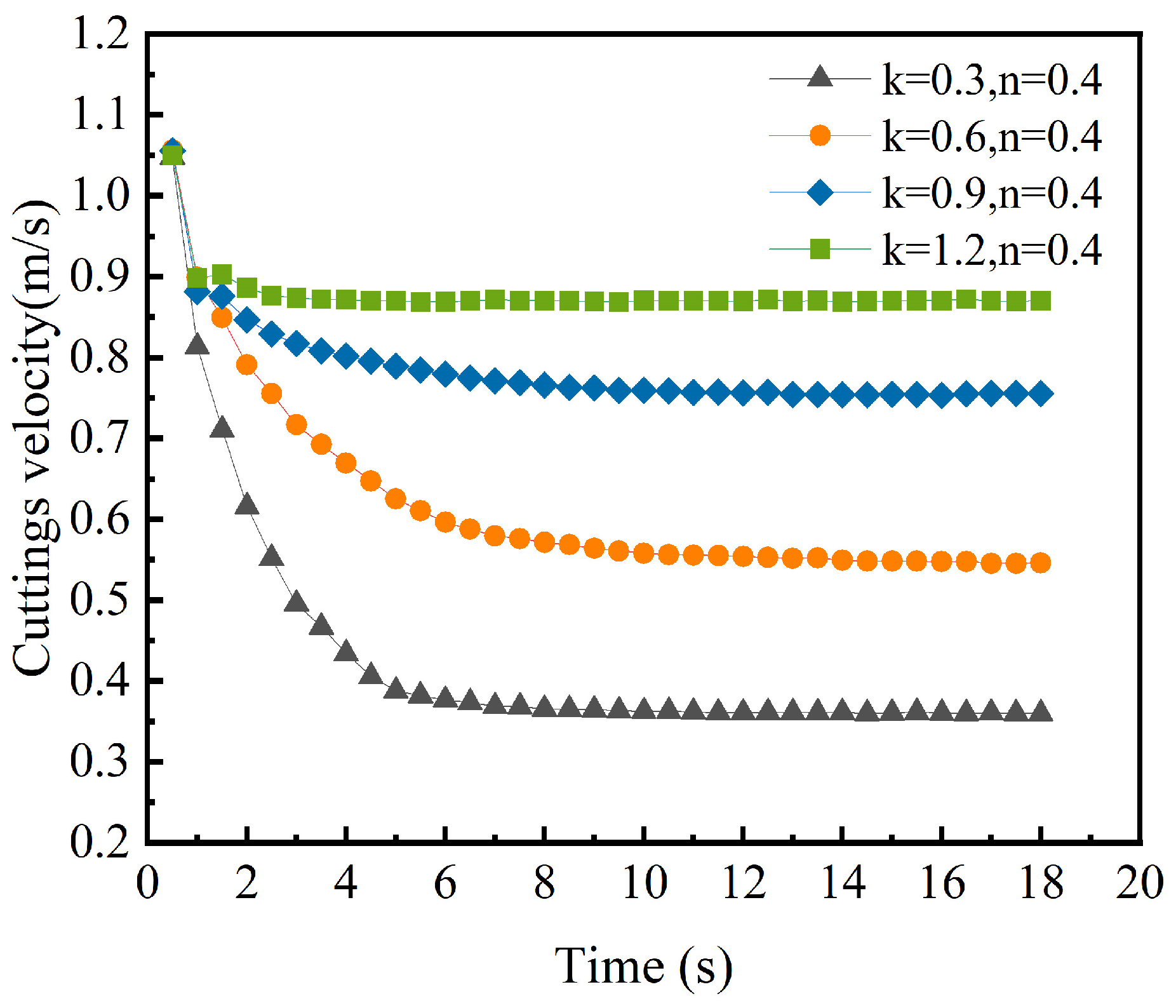
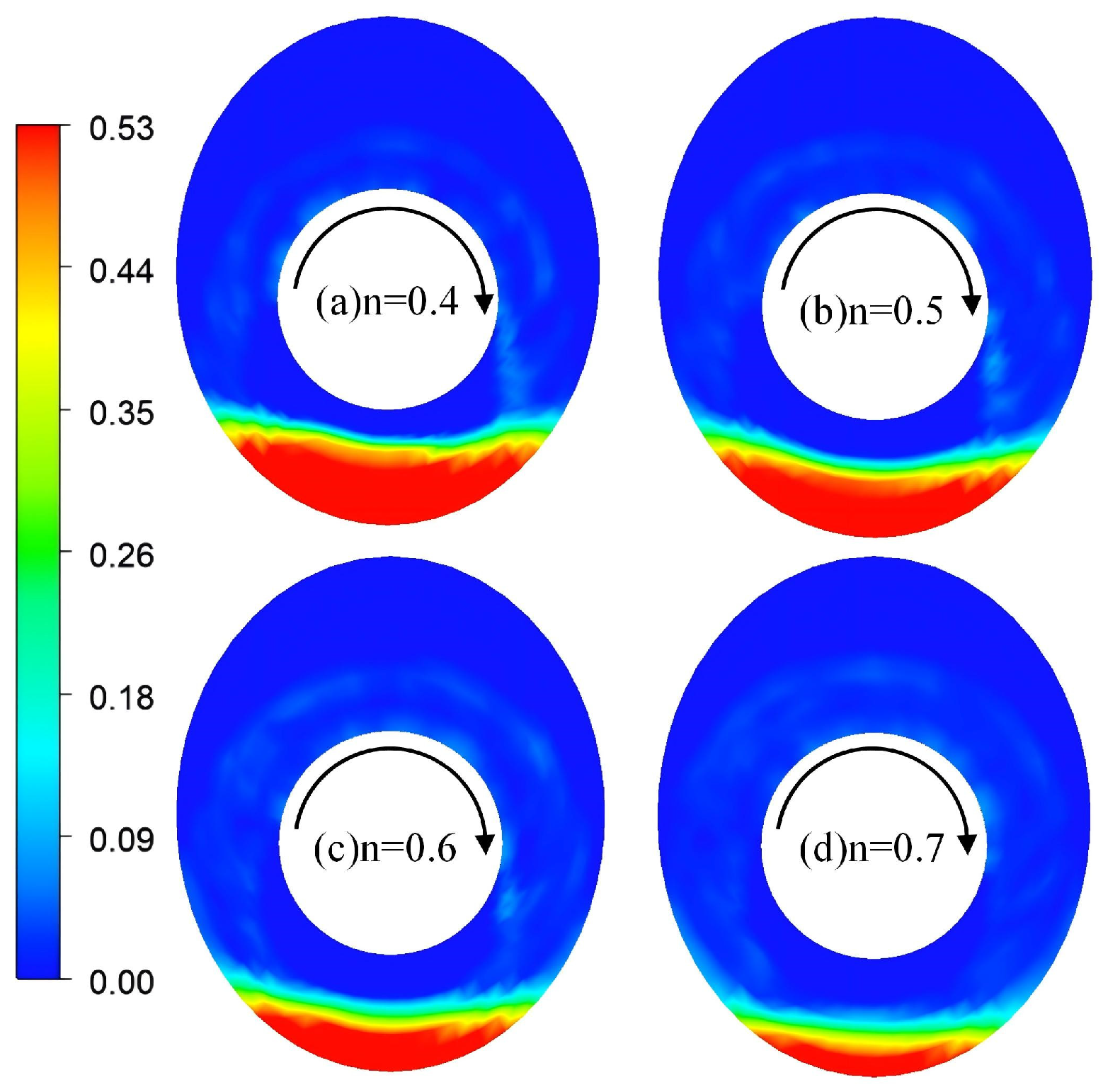
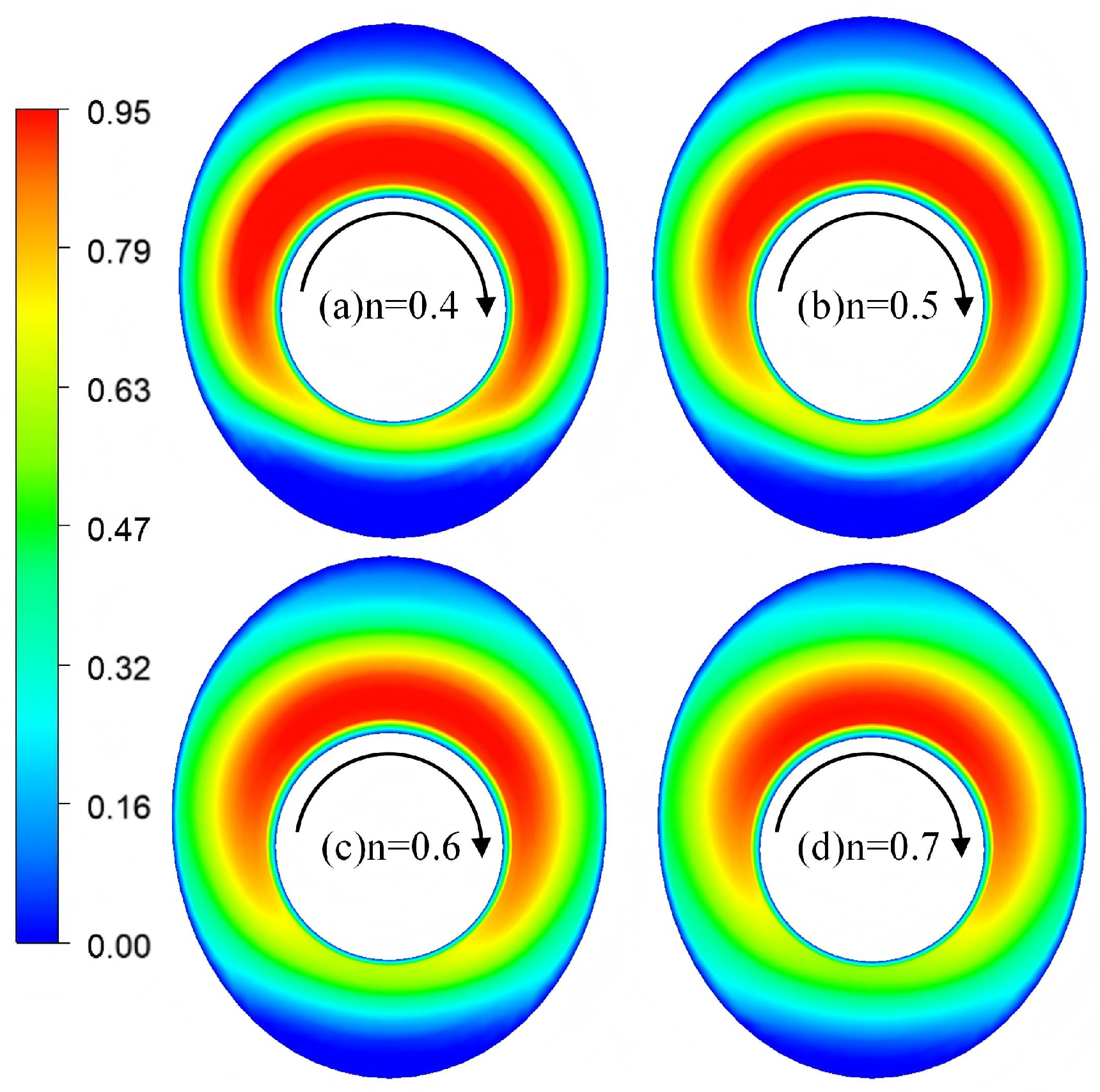
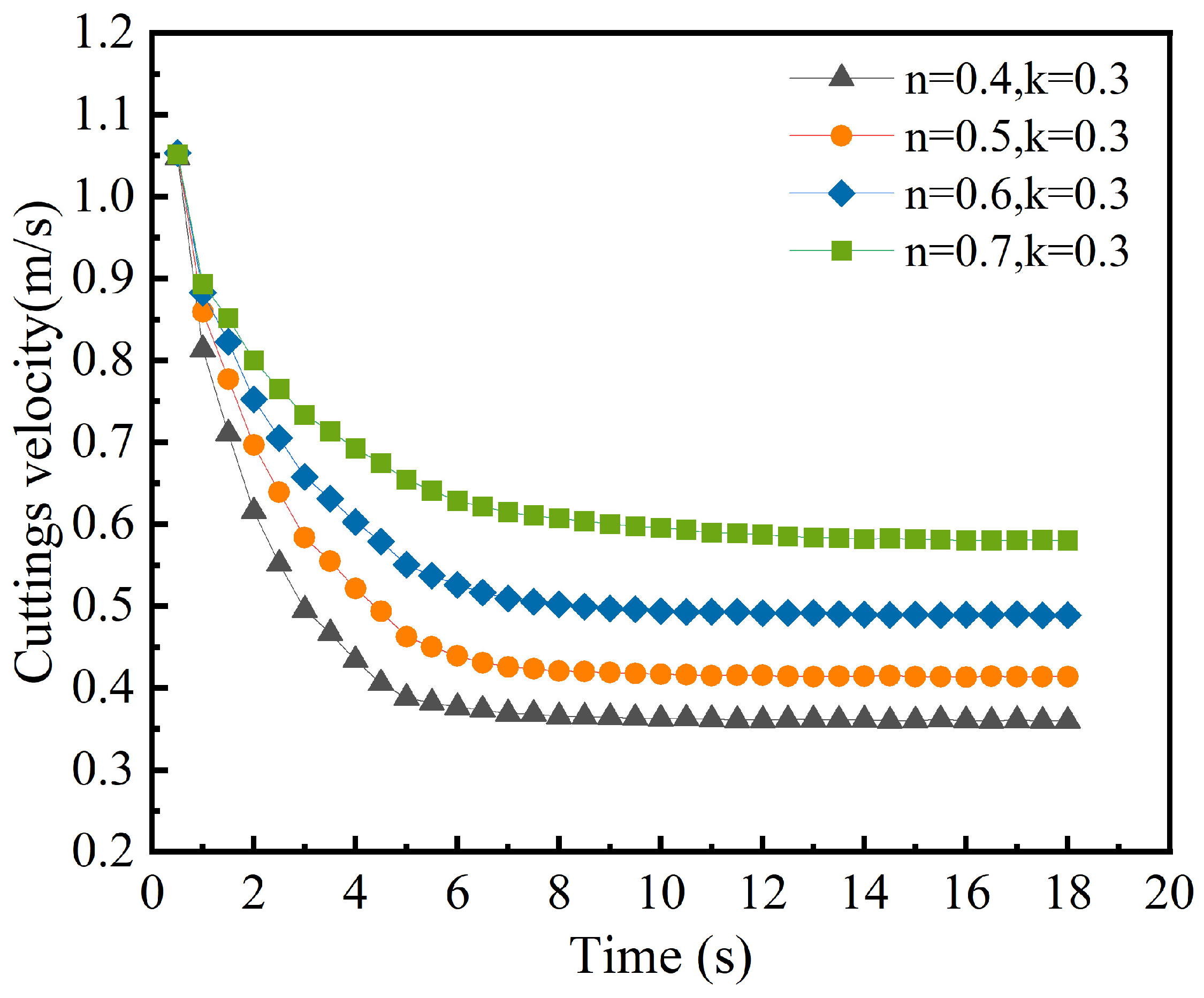
- Optimizing the rheological properties of drilling fluid is an important strategy for enhancing flowability in complex geometries. Increasing the consistency coefficient (k) or flow behavior index (n) raises the effective viscosity and shear stress of the drilling fluid, particularly in low-shear regions near the wellbore bottom. This enhances the fluid’s capacity to suspend particles and promotes a more uniform annular velocity profile, thereby suppressing settling and encouraging a dispersed flow regime. This is crucial for cleaning enlarged regions.
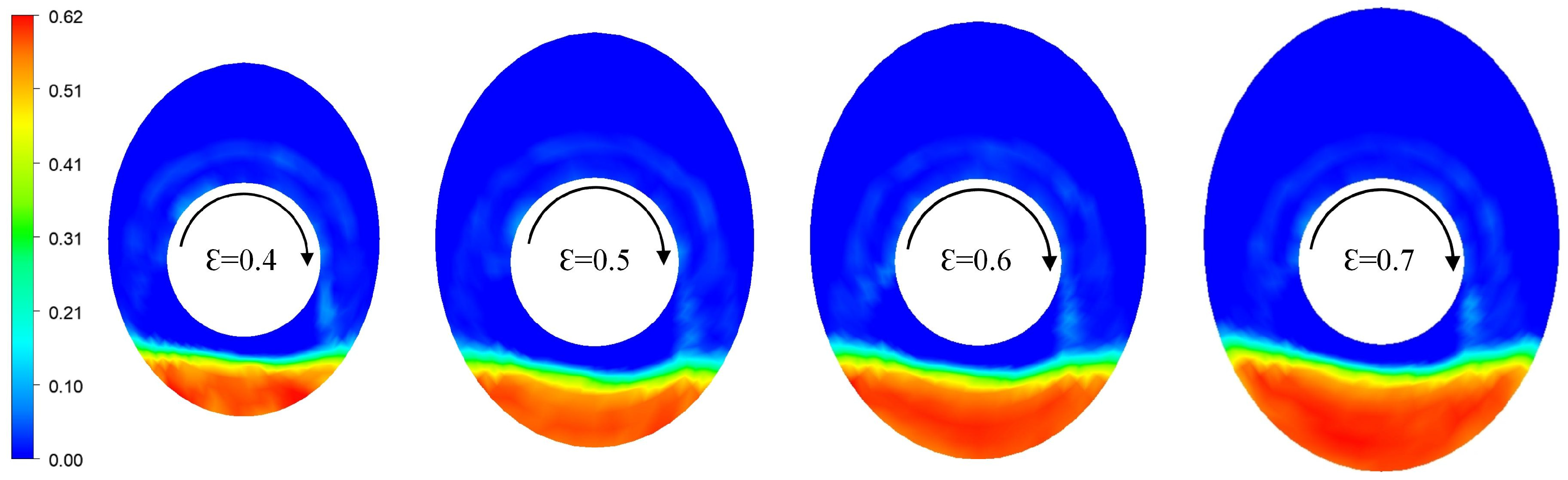
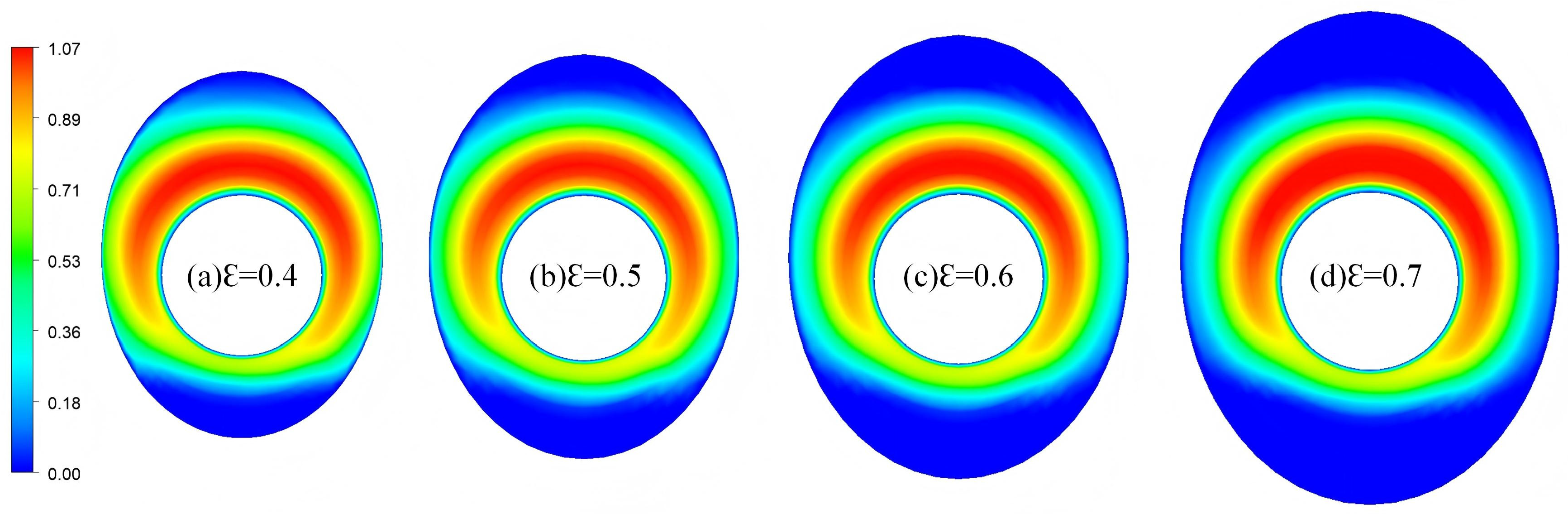
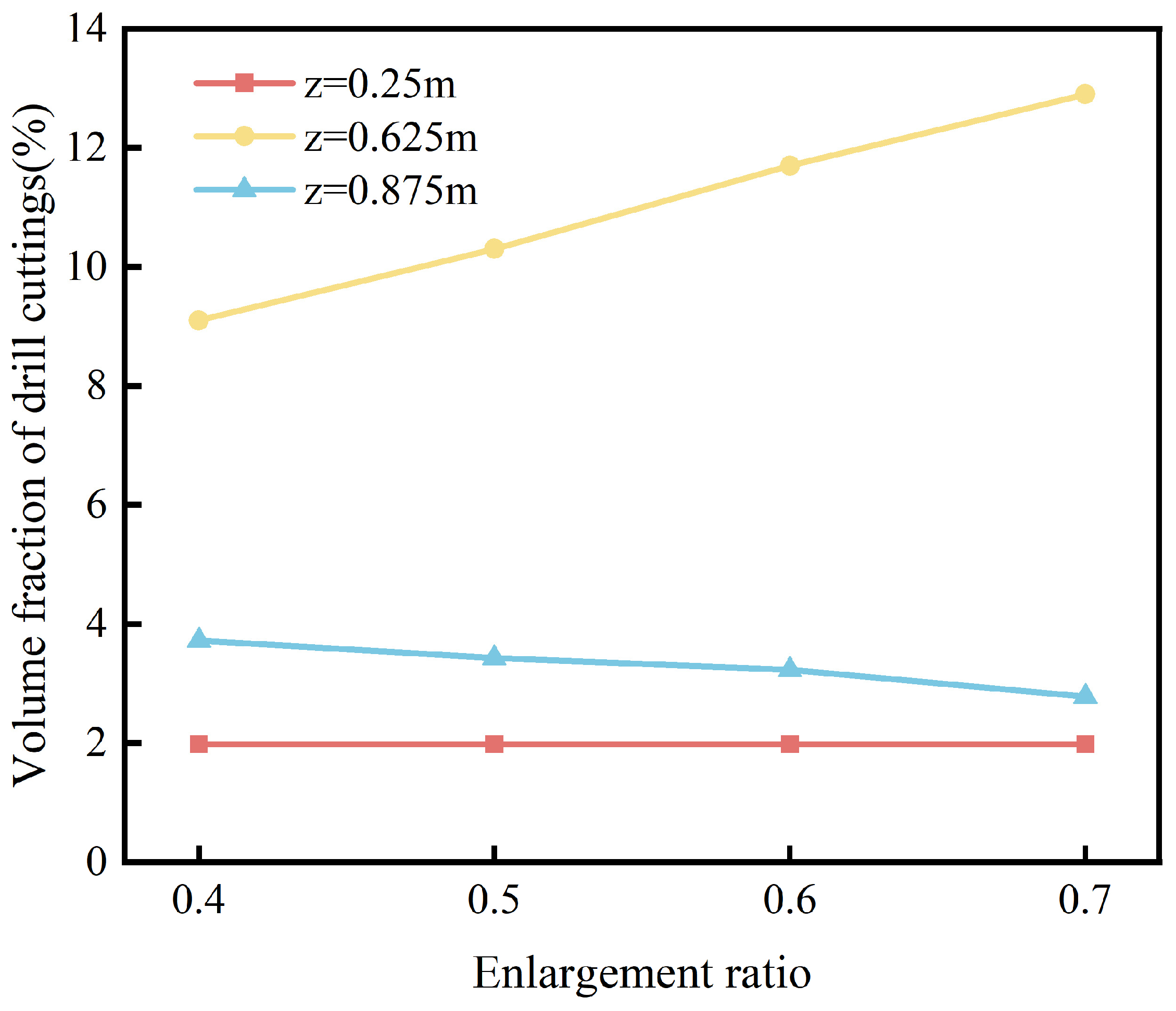
- The enlargement ratio of the wellbore section negatively impacts cuttings transport. As the enlargement ratio increases from 0.4 to 0.7, the cuttings volume fraction in the enlarged section rises from 9.1% to 12.9%. The primary mechanism behind this is that the enlarged flow area reduces the average annular velocity, weakening the drag and lift forces acting on the particles, which hinders their transport.
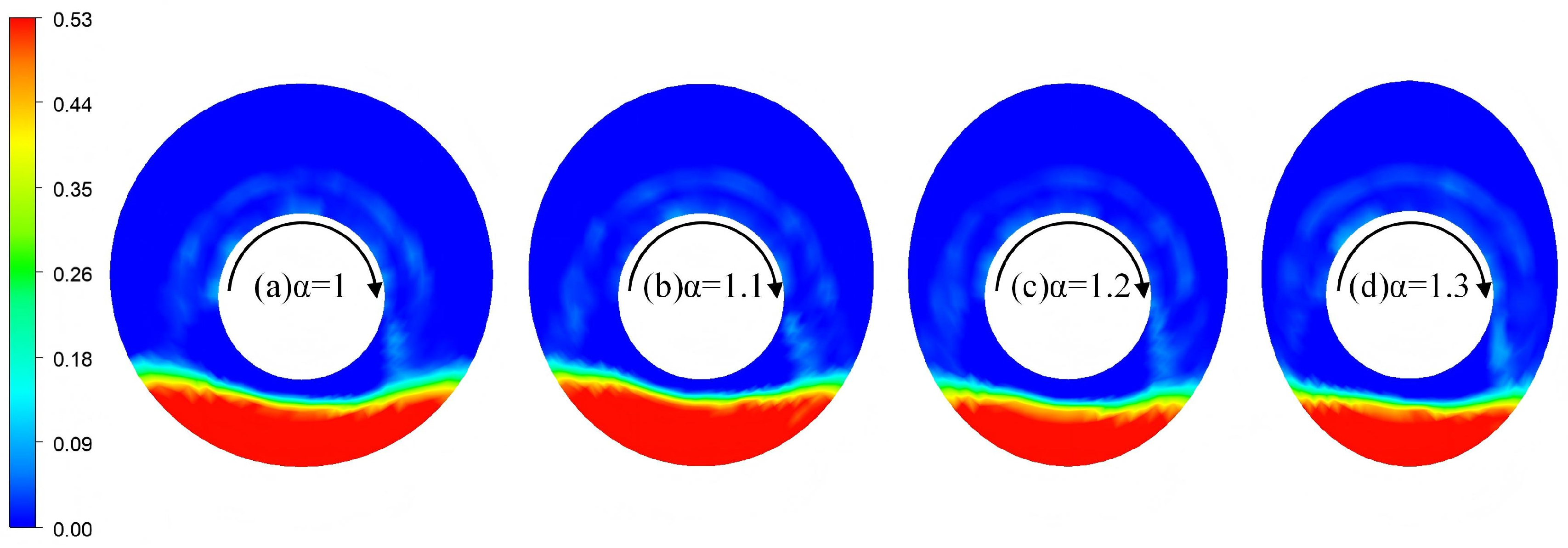
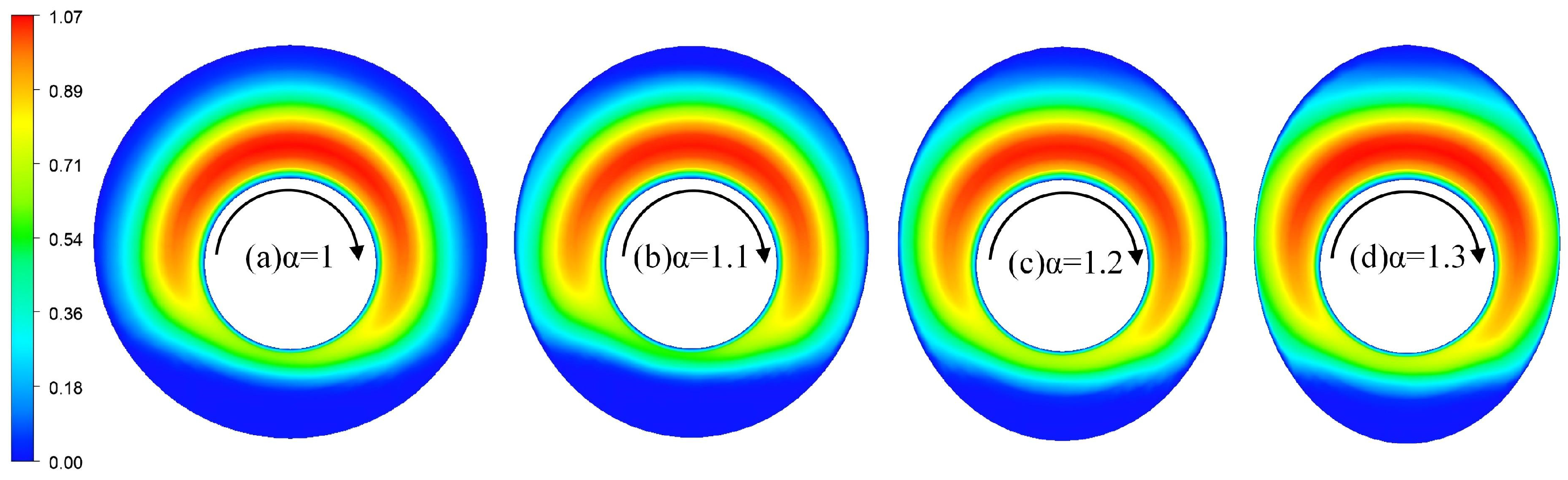
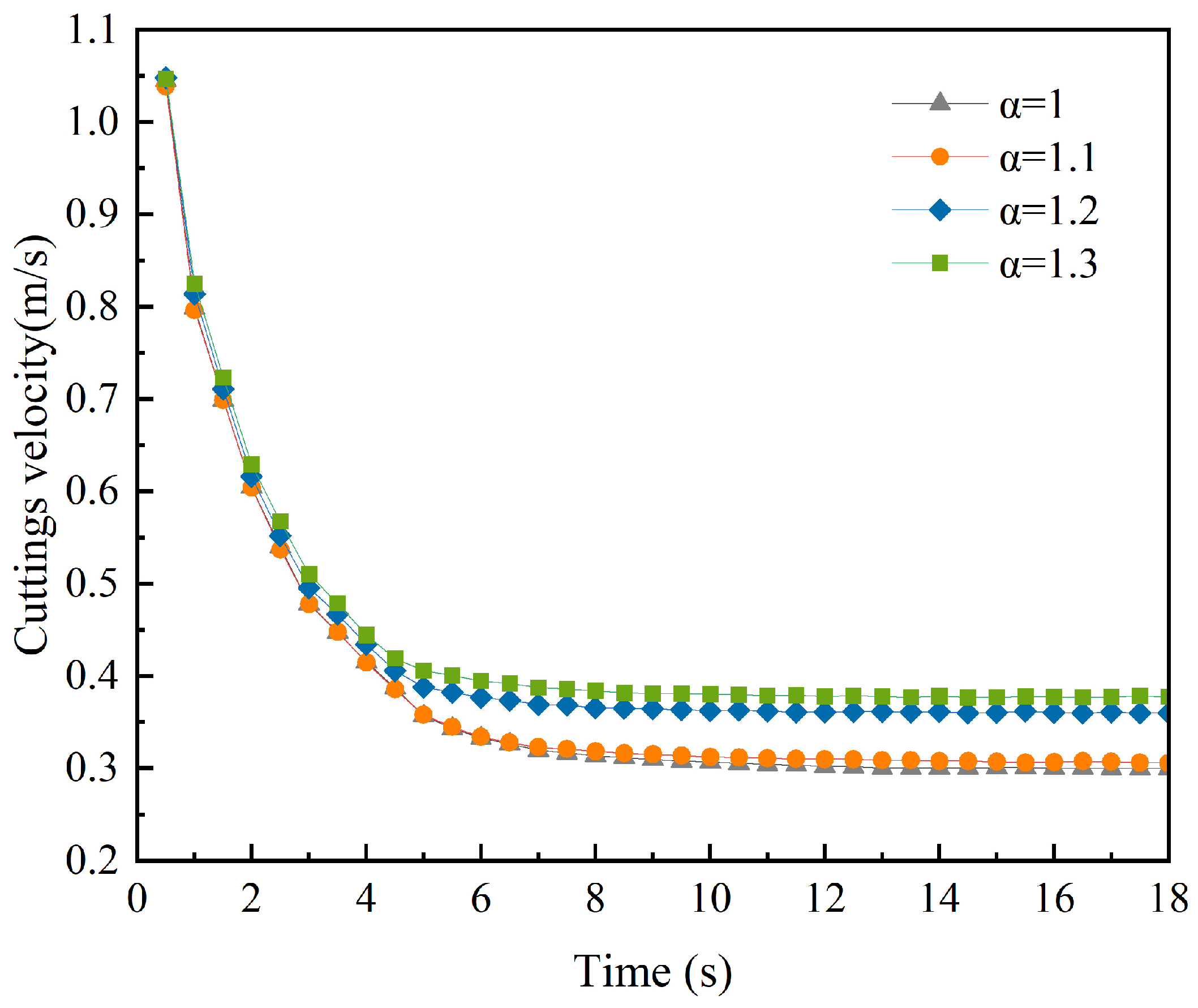
- Moderate wellbore ellipticity, on the other hand, can improve cleaning efficiency under enlarged conditions. Keeping the enlargement ratio constant, increasing the ellipticity from α = 1.0 to 1.3 lengthens the minor axis, thereby reducing the cross-sectional area. This results in an increase in the average annular velocity and a reduction in the low-velocity regions, making the forces exerted by the fluid on the cuttings more effective. Consequently, the cuttings volume fraction decreases from 5.4% to 4.6%, and the particle transport velocity is better maintained.
6. Future Work
- (1)
- The section of the wellbore enlargement is limited to a length of 0.25 m. This length was chosen primarily due to considerations of computational resources and simulation accuracy, ensuring that the model could be completed within a reasonable time frame. However, in actual drilling operations, the length of the enlarged section is typically much greater. This limitation may affect the comprehensiveness of the simulation results, particularly in long wellbores or complex wellbore conditions. Therefore, future work could consider extending the length of the enlarged section to better simulate fluid flow and cuttings transport behavior in real-world drilling operations.
- (2)
- Cuttings are simplified as monodisperse spherical particles (2 mm in diameter) to reduce computational complexity. However, in reality, cuttings are typically angular, polydisperse, and often plate-shaped, which can affect the porosity, frictional forces, and buoyancy behavior of the formation. Therefore, future work could incorporate more complex cuttings models to more accurately reflect the characteristics of cuttings in real-world drilling conditions.
- (3)
- The virtual mass force was not considered due to the relatively small fluid acceleration and the dominance of drag and lift forces in fluid-particle interactions. However, we acknowledge that, in certain cases, particularly in regions with significant geometric changes, the virtual mass force may have a substantial impact on particle motion. Therefore, future research will incorporate the virtual mass force and provide a more detailed analysis of its effect on fluid-particle coupling.
- (4)
- The simplified, localized wellbore enlargement model employed in this study facilitates numerical implementation and parametric analysis but differs from the irregular, large-scale, and asymmetric enlargements typically encountered in real formations. This simplification was primarily motivated by computational efficiency. Future models should incorporate irregular, large-scale, and asymmetric geometric features to more accurately represent downhole conditions.
- (5)
- The model validation in this study focused on standard wellbore geometries. Future work should include experimental studies on cuttings transport in enlarged wellbore sections to further validate the model’s predictions under such conditions.
Author Contributions
Funding
Institutional Review Board Statement
Informed Consent Statement
Data Availability Statement
Conflicts of Interest
Nomenclature
| L1 | Annulus length (m) |
| L2 | Enlarged annulus length (m) |
| θ | Angle of inclination (deg) |
| D0 | Drill pipe diameter (mm) |
| D1 | Wellbore diameter (mm) |
| D2 | Particle diameter (mm) |
| ρl | Fluid density (kg/m3) |
| ρ2 | Drill cuttings density (kg/m3) |
| v | Drilling fluid velocity (m/s) |
| n0 | Drill pipe rotational speed (rpm) |
| n | Flow behavior index (dimensionless) |
| k | Consistency index (Pa·sn) |
| e | Eccentricity (dimensionless) |
| ε | Enlargement ratio (dimensionless) |
| α | Ovality (dimensionless) |
References
- Wang, H.; Lei, Z. Energy Supply from Oil and Gas, Mineral Depletion, and Total Natural Resource Rents: Impact of Oil Equivalent Energy Use CO2 Intensity. Resour. Policy 2023, 86, 104172. [Google Scholar] [CrossRef]
- Alola, A.A.; Abbas, S.; Alola, U.V. Examining the Effect of Global Energy Reserves to Production Ratio on Carbon Emission in the USA. Energy Strategy Rev. 2024, 52, 101353. [Google Scholar] [CrossRef]
- Balsalobre-Lorente, D.; Shahbaz, M.; Roubaud, D.; Farhani, S. How Economic Growth, Renewable Electricity and Natural Resources Contribute to CO2 Emissions? Energy Policy 2018, 113, 356–367. [Google Scholar] [CrossRef]
- Kang, W.-L.; Zhou, B.-B.; Issakhov, M.; Gabdullin, M. Advances in Enhanced Oil Recovery Technologies for Low Permeability Reservoirs. Pet. Sci. 2022, 19, 1622–1640. [Google Scholar] [CrossRef]
- Kamal, M.M. Petroleum++: The Expanded Scope of the Industry and Our Role in It. J. Pet. Technol. 2023, 75, 4–7. [Google Scholar] [CrossRef]
- Chen, H.; Wei, B.; Zhou, X.; Zhu, J.; Xu, Z.; Fan, Y. Theory and Technology of Enhanced Oil Recovery by Gas Andfoam Injection in Complex Reservoirs. Adv. Geo-Energy Res. 2025, 15, 181–184. [Google Scholar] [CrossRef]
- Pan, Y.; Qiao, W.; Chi, D.; Li, Z.; Shu, Y. Research of Steam Injection In-Situ Production Technology to Enhance Unconventional Oil and Gas Recovery: A Review. J. Anal. Appl. Pyrolysis 2024, 177, 106332. [Google Scholar] [CrossRef]
- Li, S.; Qin, Y.; Tang, D.; Shen, J.; Wang, J.; Chen, S. A Comprehensive Review of Deep Coalbed Methane and Recent Developments in China. Int. J. Coal Geol. 2023, 279, 104369. [Google Scholar] [CrossRef]
- Wang, H.; Ma, F.; Tong, X.; Liu, Z.; Zhang, X.; Wu, Z.; Li, D.; Wang, B.; Xie, Y.; Yang, L. Assessment of Global Unconventional Oil and Gas Resources. Pet. Explor. Dev. 2016, 43, 925–940. [Google Scholar] [CrossRef]
- Yan, T.; Qu, J.; Sun, X.; Chen, Y.; Hu, Q.; Li, W.; Zhang, H. Numerical Investigation on Horizontal Wellbore Hole Cleaning with a Four-Lobed Drill Pipe Using CFD-DEM Method. Powder Technol. 2020, 375, 249–261. [Google Scholar] [CrossRef]
- Zhang, Z. Current Situation and Existing Problems of Horizontal Well Fracturing Technology. Chem. Technol. Fuels Oils 2024, 60, 1307–1312. [Google Scholar] [CrossRef]
- Sun, J.; Gu, Y.; Yin, Z.; Zhao, Y.; Ning, F. Production Performance of Multiple Approaches for Stimulating the Layered Hydrate Reservoir with High Permeability under Horizontal Well Systems. Ocean Eng. 2024, 303, 117781. [Google Scholar] [CrossRef]
- Min, C.; Lu, S.; Tang, M.; Chen, F.; Liang, H. Fracturing Parameter Optimization of Horizontal Well in Tight Oil Reservoirs. Acta. Geol. Sin. Engl. Ed. 2015, 89, 316–318. [Google Scholar] [CrossRef]
- Muther, T.; Qureshi, H.A.; Syed, F.I.; Aziz, H.; Siyal, A.; Dahaghi, A.K.; Negahban, S. Unconventional Hydrocarbon Resources: Geological Statistics, Petrophysical Characterization, and Field Development Strategies. J. Pet. Explor. Prod. Technol. 2022, 12, 1463–1488. [Google Scholar] [CrossRef]
- Wang, L.; Cai, S.; Chen, W.; Lei, G. Integrated Study on Carbon Dioxide Geological Sequestration and Gas Injection Huff-n-Puff to Enhance Shale Oil Recovery. Energies 2024, 17, 1957. [Google Scholar] [CrossRef]
- Deshmukh, V.; Dewangan, S.K. Review on Various Borehole Cleaning Parameters Related to Oil and Gas Well Drilling. J. Braz. Soc. Mech. Sci. Eng. 2022, 44, 185. [Google Scholar] [CrossRef]
- Abbas, A.K.; Alsaba, M.T.; Al Dushaishi, M.F. Improving Hole Cleaning in Horizontal Wells by Using Nanocomposite Water-Based Mud. J. Pet. Sci. Eng. 2021, 203, 108619. [Google Scholar] [CrossRef]
- Yeo, L.; Feng, Y.; Seibi, A.; Temani, A.; Liu, N. Optimization of Hole Cleaning in Horizontal and Inclined Wellbores: A Study with Computational Fluid Dynamics. J. Pet. Sci. Eng. 2021, 205, 108993. [Google Scholar] [CrossRef]
- An, J.; Li, J.; Huang, H.; Liu, G.; Yang, H.; Zhang, G.; Chen, S. Transient Cutting Transport Model for Horizontal Wells with a Slim Hole. Energy Sci. Eng. 2023, 11, 796–810. [Google Scholar] [CrossRef]
- Fang, J.; Zhang, X.; Li, L.; Zhang, J.; Shi, X.; Hu, G. Research Progress of High-Temperature Resistant Functional Gel Materials and Their Application in Oil and Gas Drilling. Gels 2022, 9, 34. [Google Scholar] [CrossRef]
- Ma, Y.; Yang, C.; Liu, X. On Hole Cleaning Evaluation Method in Highly Deviated / Horizontal Well Sections. J. Phys. Conf. Ser. 2023, 2442, 012037. [Google Scholar] [CrossRef]
- Zhao, J.; Huang, W.; Gao, D. Study on Flow Pattern Transition of Cuttings Transport in Extended-Reach Drilling. Geoenergy Sci. Eng. 2024, 238, 212910. [Google Scholar] [CrossRef]
- Sun, Y.; Song, X.; Zhou, M.; Xu, Z.; Zhu, Z.; Jing, S.; Xiao, H.; Qi, Y.; Li, G. Numerical Investigation of Flow Patterns in Cuttings Transport for Extended-Reach Horizontal Wells with Rotation Drillpipe. Powder Technol. 2024, 438, 119595. [Google Scholar] [CrossRef]
- Mao, L.; Yang, P.; Cai, M. Study on Dynamic Transport Characteristics of Cuttings during Drilling and Washing of Long Horizontal Wells. Pet. Sci. Technol. 2024, 42, 3915–3943. [Google Scholar] [CrossRef]
- Pang, B.; Ren, X.; Wang, S.; Zhao, Y.; Liu, X. Investigation of the Effects of Air Injection Fraction and Velocity on Cuttings Transport in Oil and Gas Drilling with Aerated Mud Using Kinetic Theory of Granular Flow. Adv. Powder Technol. 2024, 35, 104442. [Google Scholar] [CrossRef]
- Chen, Y.; Liu, Z.; Zhang, X.; He, S.; Ma, D.; Zhou, J. Research on the Collapse Pressure of an Elliptical Wellbore Considering the Effect of Weak Planes. Energy Sour. Part A Recovery Util. Environ. Eff. 2020, 42, 2103–2119. [Google Scholar] [CrossRef]
- Liu, C.; Zhang, D.; Zhao, H.; Li, M.; Song, Z. Experimental Study on Hydraulic Fracturing Properties of Elliptical Boreholes. Bull. Eng. Geol. Environ. 2022, 81, 18. [Google Scholar] [CrossRef]
- Pierdominici, S.; Millett, J.M.; Kück, J.K.M.; Thomas, D.; Jerram, D.A.; Planke, S.; Haskins, E.; Lautze, N.; Galland, O. Stress Field Interactions Between Overlapping Shield Volcanoes: Borehole Breakout Evidence From the Island of Hawai’i, USA. JGR Solid Earth 2020, 125, e2020JB019768. [Google Scholar] [CrossRef]
- Zhao, H.; Zhao, Y. CFD-DEM Simulation of Pneumatic Conveying in a Horizontal Pipe. Powder Technol. 2020, 373, 58–72. [Google Scholar] [CrossRef]
- El Geitani, T.; Blais, B. Solid-Liquid Rotary Kilns: An Experimental and CFD-DEM Study. Powder Technol. 2023, 430, 119008. [Google Scholar] [CrossRef]
- Chen, J.; Zhang, J. Semi-Resolved CFD-DEM Coupling Model for Submerged Granular Collapse. Powder Technol. 2023, 425, 118624. [Google Scholar] [CrossRef]
- Wang, H.; Ding, W.; Yang, W.; Wang, C.; Yu, W.; Wang, Z. Research on the Cuttings Discharge in Air Cushion Chamber of Slurry Shield Based on CFD-DEM Coupling Method. Particuology 2024, 91, 88–105. [Google Scholar] [CrossRef]
- Wang, H.; Wang, X.; Zhong, Z.; Ding, W.; Wang, C.; Wang, Z. Investigation of the Dynamic Discharge of Cuttings in Slurry Shield Tunneling under Complex Working Condition. Powder Technol. 2025, 465, 121304. [Google Scholar] [CrossRef]
- Hu, W.; Zhang, J.; Guan, N.; Zhu, H. Cuttings Transport Characteristics and Multi-Objective Optimization Design of a Novel Hole Cleaning Tool. Geoenergy Sci. Eng. 2025, 254, 214053. [Google Scholar] [CrossRef]
- Yu, Y.; Fang, P.; Zhang, B.; He, Y.; Li, G.; Xiao, D. Characteristics of Cuttings Migration with New Cuttings Removal Device in Horizontal Well. Geoenergy Sci. Eng. 2023, 231, 212379. [Google Scholar] [CrossRef]
- Ghods, N.; Poorsolhjouy, P.; Gonzalez, M.; Radl, S. Discrete Element Modeling of Strongly Deformed Particles in Dense Shear Flows. Powder Technol. 2022, 401, 117288. [Google Scholar] [CrossRef]
- Pezo, M.; Pezo, L.; Lončar, B.; Kojić, P.; Jovanović, A.A. A Comprehensive Review of Discrete Element Method Studies of Granular Flow in Static Mixers. Processes 2025, 13, 3522. [Google Scholar] [CrossRef]
- Liu, X.; Zhou, A.; Shen, S.; Li, J.; Sheng, D. A Micro-Mechanical Model for Unsaturated Soils Based on DEM. Comput. Methods Appl. Mech. Eng. 2020, 368, 113183. [Google Scholar] [CrossRef]
- Di Renzo, A.; Di Maio, F.P. Comparison of Contact-Force Models for the Simulation of Collisions in DEM-Based Granular Flow Codes. Chem. Eng. Sci. 2004, 59, 525–541. [Google Scholar] [CrossRef]
- Sommerfeld, M. Theoretical and Experimental Modelling of Particulate Flows. Lect. Ser. 2000, 6, 3–7. [Google Scholar]
- Oesterlé, B.; Dinh, T.B. Experiments on the Lift of a Spinning Sphere in a Range of Intermediate Reynolds Numbers. Exp. Fluids 1998, 25, 16–22. [Google Scholar] [CrossRef]
- Rubinow, S.I.; Keller, J.B. The Transverse Force on a Spinning Sphere Moving in a Viscous Fluid. J. Fluid Mech. 1961, 11, 447–459. [Google Scholar] [CrossRef]
- Dennis, S.; Singh, S.; Ingham, D. The Steady Flow Due to a Rotating Sphere at Low and Moderate Reynolds Numbers. J. Fluid Mech. 1980, 101, 257–279. [Google Scholar] [CrossRef]
- Sarmadi, P.; Renteria, A.; Thompson, C.; Frigaard, I.A. Effects of Wellbore Irregularity on Primary Cementing of Horizontal Wells, Part 2: Small Scale Effects. J. Pet. Sci. Eng. 2022, 210, 110026. [Google Scholar] [CrossRef]
- Sun, X.; Tao, L.; Zhao, Y.; Qu, J.; Yao, D.; Li, Z. Numerical Simulation of Hole Cleaning of a Horizontal Wellbore Model with Breakout Enlargement Section. Mathematics 2023, 11, 3070. [Google Scholar] [CrossRef]
- Hu, W.; Zhang, J.; Xu, B.; Zhu, H. Numerical Simulation and Experimental Study of Hole Cleaning. Tunn. Undergr. Space Technol. 2024, 147, 105697. [Google Scholar] [CrossRef]
- Wang, G.; Dong, M.; Wang, Z.; Ren, T.; Xu, S. Removing Cuttings from Inclined and Horizontal Wells: Numerical Analysis of the Required Drilling Fluid Rheology and Flow Rate. J. Nat. Gas Sci. Eng. 2022, 102, 104544. [Google Scholar] [CrossRef]
- Han, S.-M.; Hwang, Y.-K.; Woo, N.-S.; Kim, Y.-J. Solid–Liquid Hydrodynamics in a Slim Hole Drilling Annulus. J. Pet. Sci. Eng. 2010, 70, 308–319. [Google Scholar] [CrossRef]





| Variables | Values |
|---|---|
| Annulus length, L (m) | 1.25 |
| Enlarged annulus length, L (m) | 0.5 |
| Angle of inclination, θ (deg) | 90 |
| Pipe diameter, D0 (mm) | 73 |
| Hole diameter, D1 (mm) | 120 |
| Fluid density, ρl (kg/m3) | 1000 |
| Drilling fluid circulation velocity, v (m/s) | 0.6, 0.75, 0.9, 1.05 |
| Drill pipe rotational speed, n0 (rpm) | 0, 60, 120, 180 |
| Drill cuttings density, ρ2 (kg/m3) | 2500 |
| Flow behavior index, n | 0.4, 0.5, 0.6, 0.7 |
| Consistency index, k (Pa·sn) | 0.3, 0.6, 0.9, 1.2 |
| Particle diameter, D2 (mm) | 2 |
| Eccentricity, e | 0.4 |
| Enlargement ratio, ε | 0.4, 0.5, 0.6, 0.7 |
| Ovality, α | 1, 1.1, 1.2, 1.3 |
| Static friction coefficient | 0.6 |
| Rolling friction coefficient | 0.01 |
| Collision restitution coefficient | 0.45 |
| Steady-State Annular Cuttings | Steady-State Annular Pressure | |||
|---|---|---|---|---|
| Grid Quantity | Residual Mass (kg) | Relative Error (%) | Loss Gradient (Pa/m) | Relative Error(%) |
| 52,467 | 1.173 | (-) | 1301.2 | (-) |
| 105,392 | 1.142 | 2.64 | 1269.5 | 2.44 |
| 208,745 | 1.120 | 1.93 | 1250.6 | 1.49 |
| 305,128 | 1.114 | 0.54 | 1244.1 | 0.52 |
Disclaimer/Publisher’s Note: The statements, opinions and data contained in all publications are solely those of the individual author(s) and contributor(s) and not of MDPI and/or the editor(s). MDPI and/or the editor(s) disclaim responsibility for any injury to people or property resulting from any ideas, methods, instructions or products referred to in the content. |
© 2026 by the authors. Licensee MDPI, Basel, Switzerland. This article is an open access article distributed under the terms and conditions of the Creative Commons Attribution (CC BY) license.
Share and Cite
Fan, Y.; Lin, Y.; Lin, P.; Tan, X.; Tian, Q. Numerical Simulation Study on Cuttings Transport Behavior in Enlarged Wellbores Using the CFD-DEM Coupled Method. Appl. Sci. 2026, 16, 1018. https://doi.org/10.3390/app16021018
Fan Y, Lin Y, Lin P, Tan X, Tian Q. Numerical Simulation Study on Cuttings Transport Behavior in Enlarged Wellbores Using the CFD-DEM Coupled Method. Applied Sciences. 2026; 16(2):1018. https://doi.org/10.3390/app16021018
Chicago/Turabian StyleFan, Yusha, Yuan Lin, Peiwen Lin, Xinghui Tan, and Qizhong Tian. 2026. "Numerical Simulation Study on Cuttings Transport Behavior in Enlarged Wellbores Using the CFD-DEM Coupled Method" Applied Sciences 16, no. 2: 1018. https://doi.org/10.3390/app16021018
APA StyleFan, Y., Lin, Y., Lin, P., Tan, X., & Tian, Q. (2026). Numerical Simulation Study on Cuttings Transport Behavior in Enlarged Wellbores Using the CFD-DEM Coupled Method. Applied Sciences, 16(2), 1018. https://doi.org/10.3390/app16021018