Review

Virtual Reality in Cultural Heritage: A Scientometric Analysis and Review of Long-Term Use and Usability Trends


by
Radu Comes
* and
Zsolt Levente Buna
Faculty of Industrial Engineering, Robotics and Production Management, Technical University of Cluj-Napoca, 400114 Cluj-Napoca, Romania
*
Author to whom correspondence should be addressed.
Appl. Sci. 2026, 16(2), 1013; https://doi.org/10.3390/app16021013
Submission received: 4 December 2025 / Revised: 8 January 2026 / Accepted: 14 January 2026 / Published: 19 January 2026
(This article belongs to the Special Issue Intelligent Interaction in Cultural Heritage)

Abstract

The integration of virtual reality (VR) technologies in museums and cultural heritage has expanded rapidly, driven by demand for immersive visitor experiences. Yet comprehensive studies on their long-term sustainability and operational challenges remain scarce. This mixed-methods study combines scientometric analysis of 1635 Web of Science publications (1997–2025) using VOSviewer 1.6.20 with longitudinal evidence from three VR installations deployed by the authors in Romanian museums representing understudied Central/Eastern European contexts. Analysis maps global trends, collaborations, and regional gaps, while practical evaluation addresses durability, usability, maintenance, technological obsolescence, multi-user management, and headset hygiene. Findings reveal VR’s engagement and preservation potential but highlight constraints limiting long-term viability. Strategic planning, adaptive design, and maintenance frameworks emerge as critical for sustainability. Limitations include WoS exclusivity and regional focus, while findings offer actionable insights for diverse institutional contexts.

1. Introduction

Over the past two decades, rapid technological advancements have transformed the museum and cultural heritage sector [1], particularly through the adoption of wearable devices [2], virtual reality (VR) [3], augmented reality (AR) [4], and mixed reality (MR) [5]. These immersive technologies offer new ways for visitors to interact with cultural and historical exhibits [6], providing experiences that are more engaging [7], interactive [8], and personalized [9] than those offered by traditional exhibition methods [10]. By enabling users to explore artifacts [11], narratives [12], and heritage sites in innovative ways [13], VR, AR, and MR have the potential to enhance learning [14], stimulate curiosity [15], and foster deeper connections with cultural content [16].
Despite growing VR adoption, research on long-term sustainability, operational challenges, and practical implementation remains limited [6,7,8]. Key issues include technological obsolescence, multi-user management [17], maintenance requirements, and hygiene of shared equipment such as headsets [9,10]. While many studies have focused on visitor experience and educational outcomes [11,12,13], few have critically analyzed the operational and technical factors that determine whether immersive installations remain effective over time [18]. Controversial perspectives exist regarding the balance between technological sophistication and long-term usability [19], with some authors emphasizing the novelty and engagement potential of VR [14,15], while others highlight maintenance burdens and rapid obsolescence as barriers to sustainability [16].
To address these gaps, this study combines scientometric analysis of 1635 Web of Science publications (1997–2025) using VOSviewer with longitudinal evidence from the authors’ VR installations in Romanian museums. The study addresses the following research questions:
Q1. What are the current trends in the use of VR for cultural heritage applications?
Q2. What are the main operational, technical, and sustainability challenges in deploying VR in museums?
Q3. How do practical implementations, such as the VR application deployed in museums, address issues of durability, usability, and maintenance?
Q4. What are the key factors that influence the long-term effectiveness and visitor engagement of VR installations in cultural heritage settings?
This study addresses these questions (Q1–Q4) through a mixed-method approach that combines scientometric analysis with longitudinal operational evidence from three VR installations deployed by the authors in Romanian museums. Unlike previous bibliometric reviews focused solely on publication trends, our main contributions are: (1) comprehensive mapping of global research patterns, collaborations, and regional gaps; (2) systematic identification of operational sustainability challenges through practical case studies from an underrepresented Central/Eastern European context; and (3) synthesis of macro-level trends with micro-level implementation insights to provide actionable guidance for long-term VR deployment in cultural heritage settings.
This review manuscript begins by outlining the methodology used to examine the current state of VR in cultural heritage, including criteria for selecting relevant literature, data extraction techniques, and methods for trend analysis. Building on this foundation, the research explores how VR has been implemented in museum and heritage contexts, drawing insights from both published studies and practical experiences. Emphasis is placed not only on the ways VR enhances visitor engagement and learning but also on the operational and technical factors that affect long-term sustainability, such as maintenance, usability, and technological obsolescence. The paper concludes by synthesizing these findings to provide recommendations for the effective and durable deployment of VR technologies in cultural heritage settings, highlighting opportunities for future research and development.
To complement the scientometric analysis, the study integrates three long-term VR installations implemented in Romanian museums by the authors, providing practical insights into operational sustainability and the long-term viability of immersive systems.
This manuscript is structured as follows: Section 2 details the mixed-methods methodology combining scientometric analysis with case study evidence. Section 3 presents global research trends and regional contributions mapped through VOSviewer. Section 4 examines literature gaps and authors’ Romanian VR case studies addressing operational sustainability. Section 5 discusses implications for museum practice, and Section 6 synthesizes findings with strategic recommendations for long-term VR deployment in cultural heritage settings.

2. Research Methodology

This study combines quantitative scientometric analysis with qualitative case studies. The scientometric component maps global research trends via VOSviewer, while case studies provide longitudinal evidence of VR operational performance in Romanian museums.
Publications were retrieved from Clarivate Web of Science Core Collection (1997–2025), chosen for its extensive coverage of peer-reviewed publications, robust data export capabilities, and VOSviewer metadata consistency required for scientometric analysis. The search conducted in November 2025 used the query “(“virtual reality” OR VR) AND (cultur* AND heritage)”, resulting in 1635 directly relevant documents on VR applications in cultural heritage contexts as presented within Figure 1.
The data used for the present study was retrieved from the Clarivate Web of Science (WoS) database. Although Scopus was initially considered, WoS was selected due to its comprehensive coverage of high-impact journals, consistent metadata, and VOSviewer-compatible exports. While WoS was prioritized for metadata consistency and VOSviewer compatibility, this excludes grey literature, conference proceedings, and regional databases that may contain practical VR deployment insights. No document type, language, or publication threshold exclusions were applied to maximize inclusivity (1635 total documents), though this broad eligibility may incorporate less rigorous studies. These choices prioritize comprehensive global mapping over intervention effectiveness analysis.
The study employs descriptive scientometric mapping rather than meta-analysis due to heterogeneous outcome measures across VR studies (e.g., presence scores, engagement metrics, learning gains). Narrative thematic synthesis complements quantitative visualizations by identifying sustainability patterns not captured through citation networks alone. This mixed approach balances global trend identification with contextual interpretation of operational challenges.
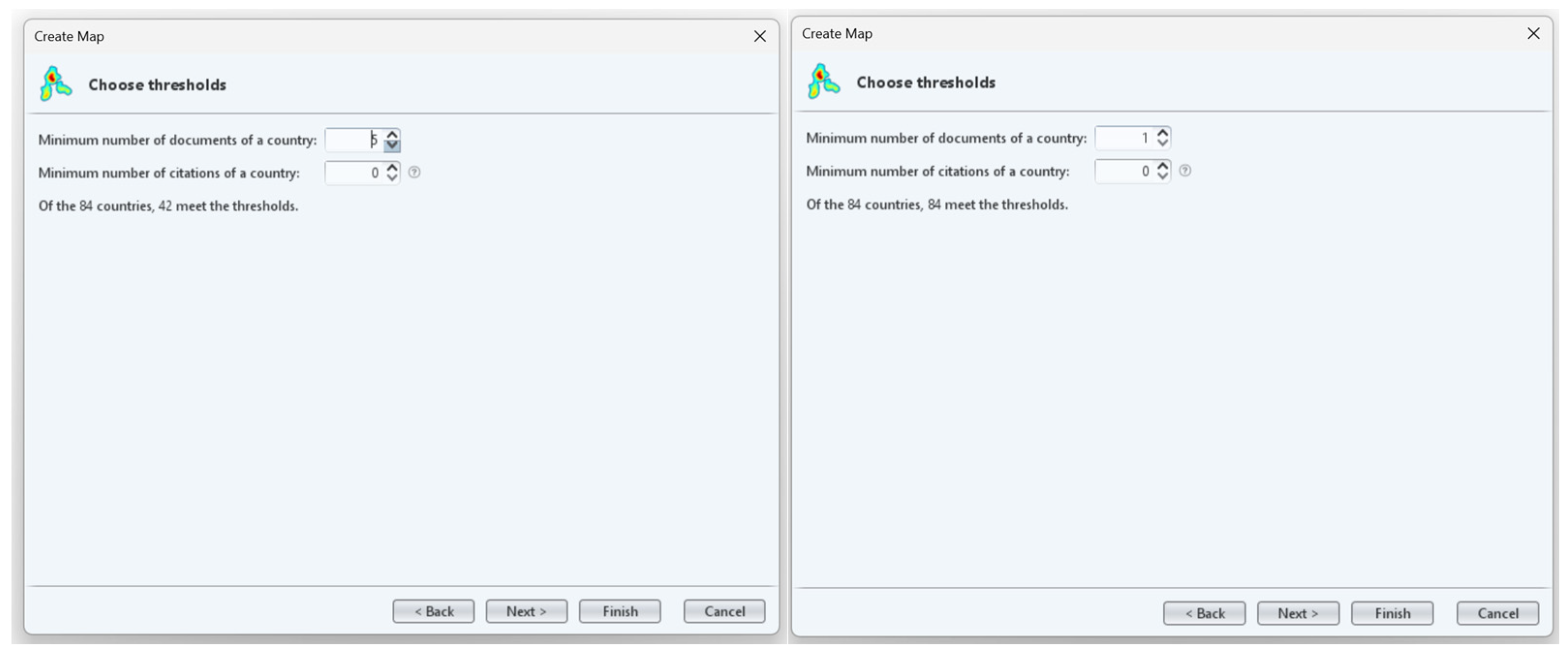
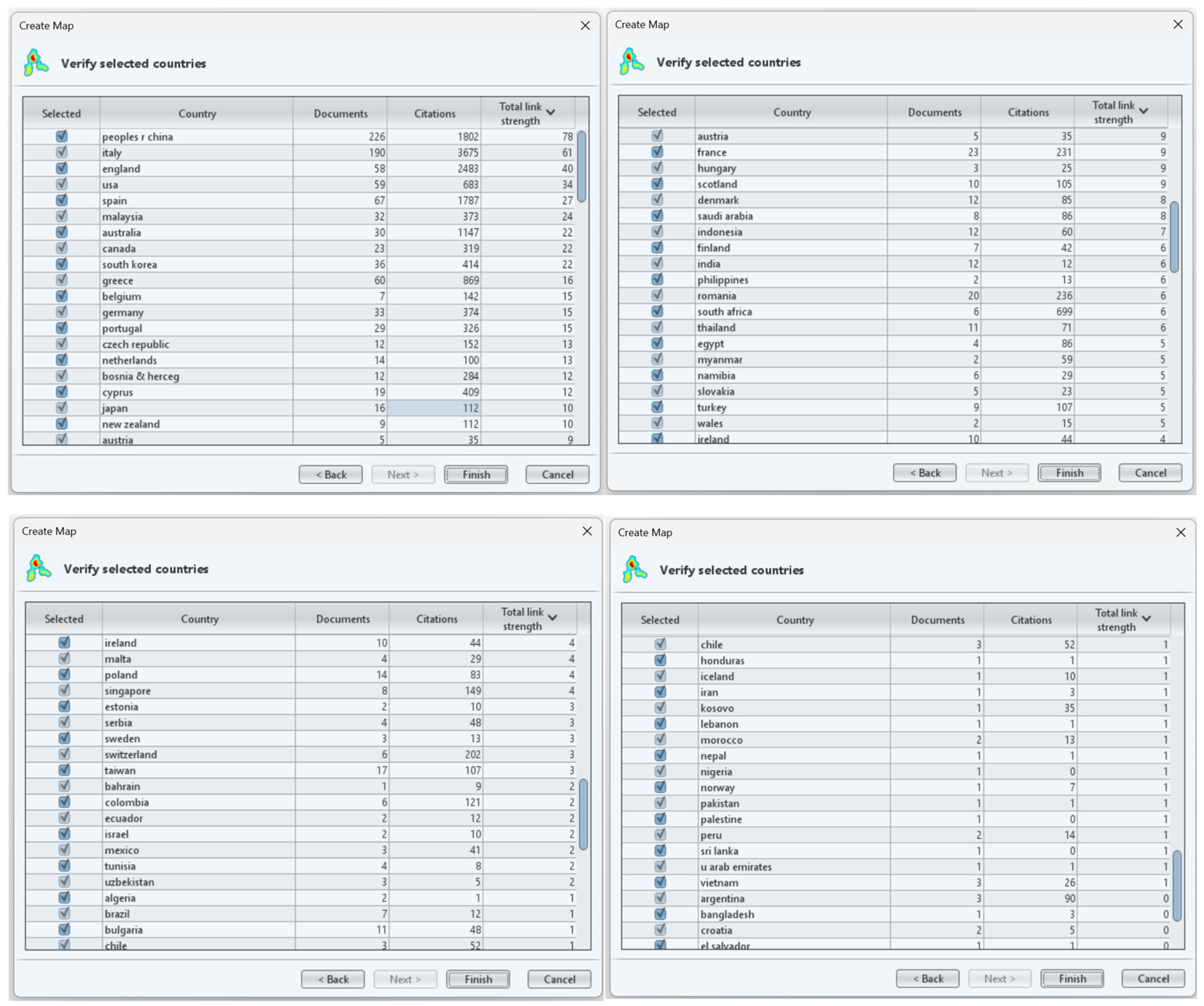
VOSviewer analysis used no minimum publication threshold (84 countries represented vs. 42 at 5+ threshold as presented in Figure 2) to ensure comprehensive global coverage in co-authorship, citation, and temporal network visualizations. Country-level analysis reveals international trends, identifies early VR adopters in cultural heritage, and guides future immersive research.
Figure 3 presents country rankings from the WoS analysis. China leads publication volume (226 documents), while Italy shows the highest impact (19.3 citations/document). Romania’s moderate output (20 publications, Cluster 7) is complemented by the authors’ VR case studies in Transylvanian Ethnographic Museum sites (Cizer Wooden Church, Sebeș Valley) as well as the one from Cincu, representing underrepresented Central/Eastern European contexts.
VOSviewer analysis (Figure 3) quantitatively reveals global research leadership disparities: while China dominates publication volume (226 publications), Italy demonstrates superior influence through a 19.3 citations per publication ratio versus China’s 8.0. Table 1 centralizes these metrics for targeted cross-country comparisons of volume, impact, and engagement patterns in VR cultural heritage research. This synthesis highlights tensions between quantity and quality, informing strategic collaboration opportunities.
The VOSviewer analysis (Figure 3) confirms China dominates publication volume (226 documents) while Italy leads impact (19.3 citations/document vs. China’s 8.0). This quantity-vs-quality tension highlights strategic collaboration opportunities between high-volume and high-influence contributors.
Emerging contributors (Romania, Malaysia, Denmark) complement leaders (China, Italy), creating collaboration opportunities between high-volume producers and high-impact innovators. These countries are beginning to establish national initiatives and case studies, highlighting the expanding global engagement with VR applications in museums and heritage sites. Overall, the data illustrate a diverse international research landscape, with both Western and Asian countries actively developing VR solutions for cultural heritage, pointing to substantial opportunities for international collaboration and knowledge exchange.
The implications of these findings are multifaceted. For funding agencies and policy makers, this data provides a clear overview of which countries are leading in VR research for cultural heritage, guiding strategic investment and collaborative opportunities. In terms of museum implementation, countries with high publication counts and citations, such as China, Italy, and England, are likely to host the most mature and advanced VR projects. At the same time, countries with moderate research outputs, such as Romania, are demonstrating growing national interest, providing fertile ground for collaborative initiatives and the development of innovative VR applications within museum and heritage contexts.
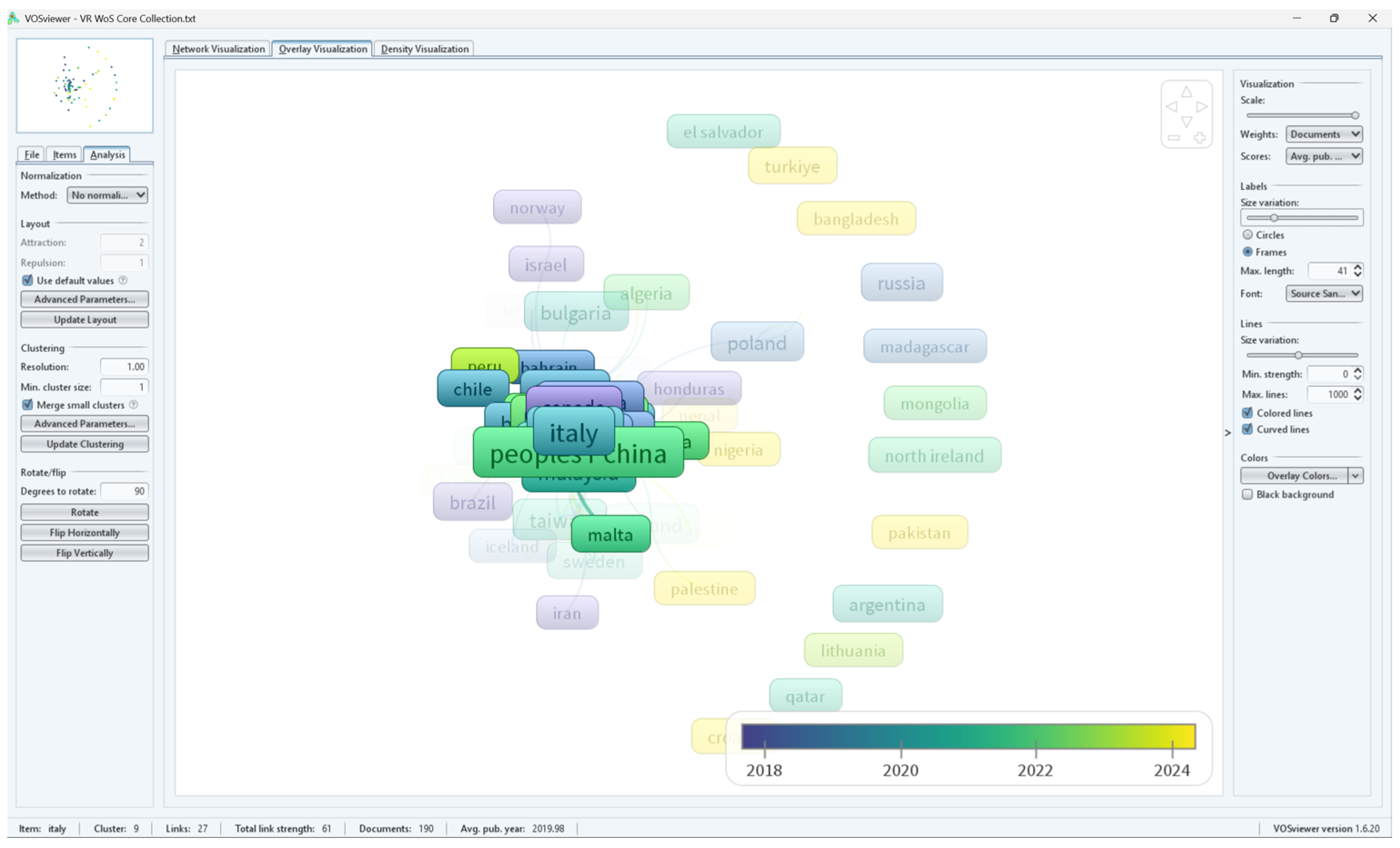
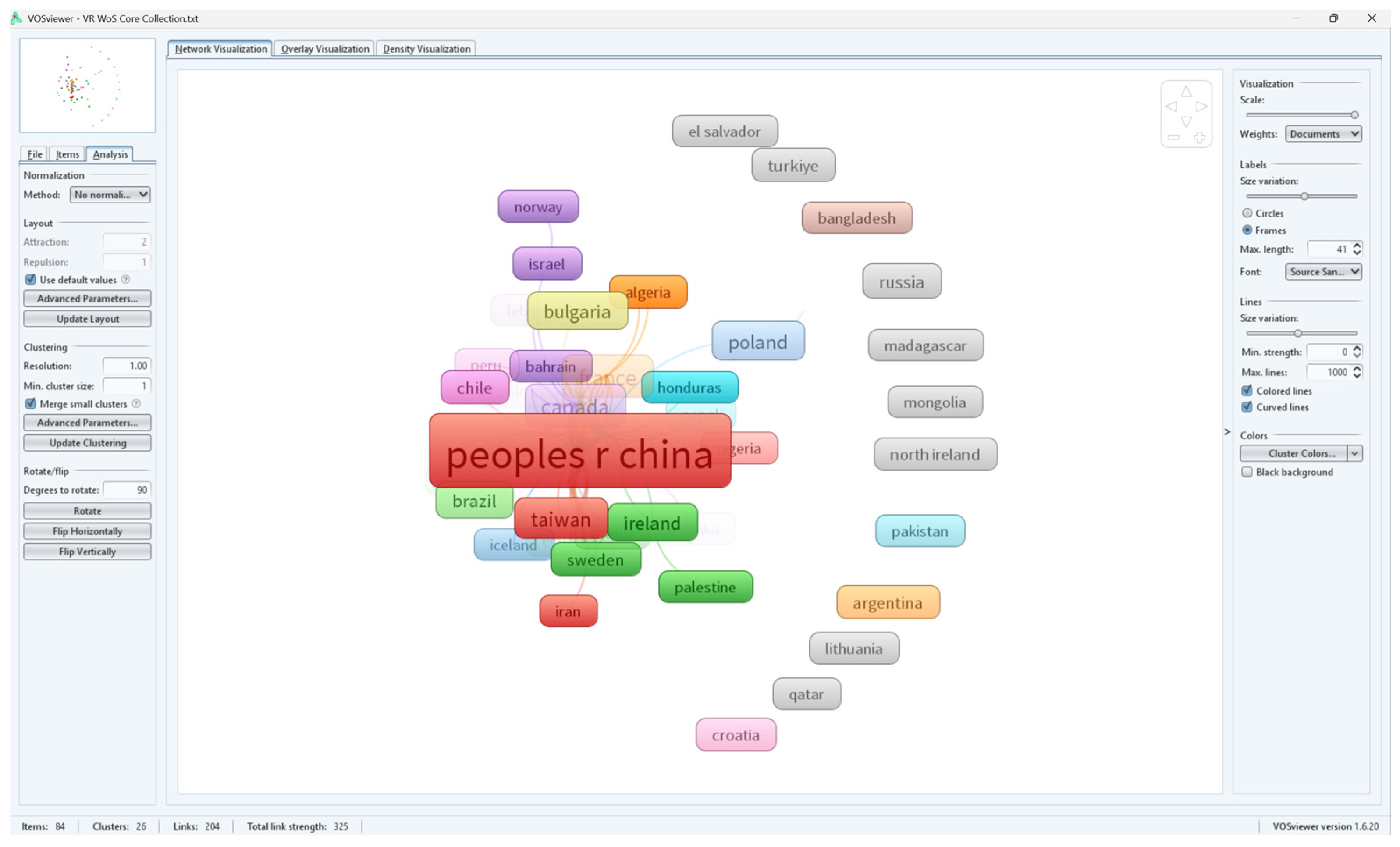
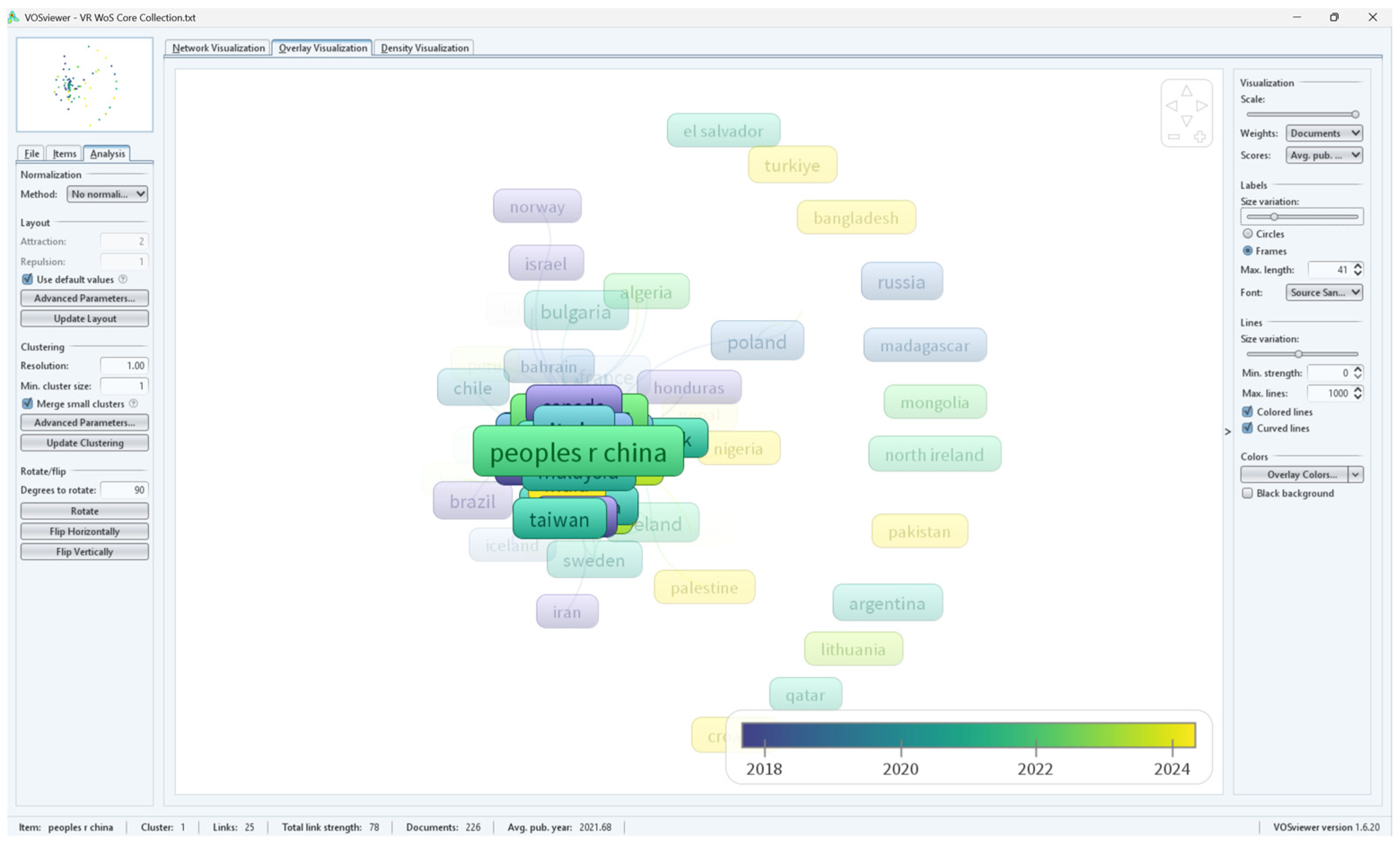
Figure 4 presents the international collaboration network for virtual reality (VR) applications in cultural heritage research, highlighting China’s central role within this global landscape. China dominates as the central collaboration hub with extensive connections to Taiwan, Brazil, and Iran (red cluster). Italy serves as a Europe-Asia bridge (27 links, total link strength 61), while EU countries (France, Bulgaria, and Poland) form regional clusters. Peripheral nodes (Pakistan, Argentina, Russia) indicate emerging collaborators.
Overall, this visualization underscores China’s centrality and the diverse yet interconnected nature of global VR research in cultural heritage, where both established and developing countries contribute to the expanding international research network.
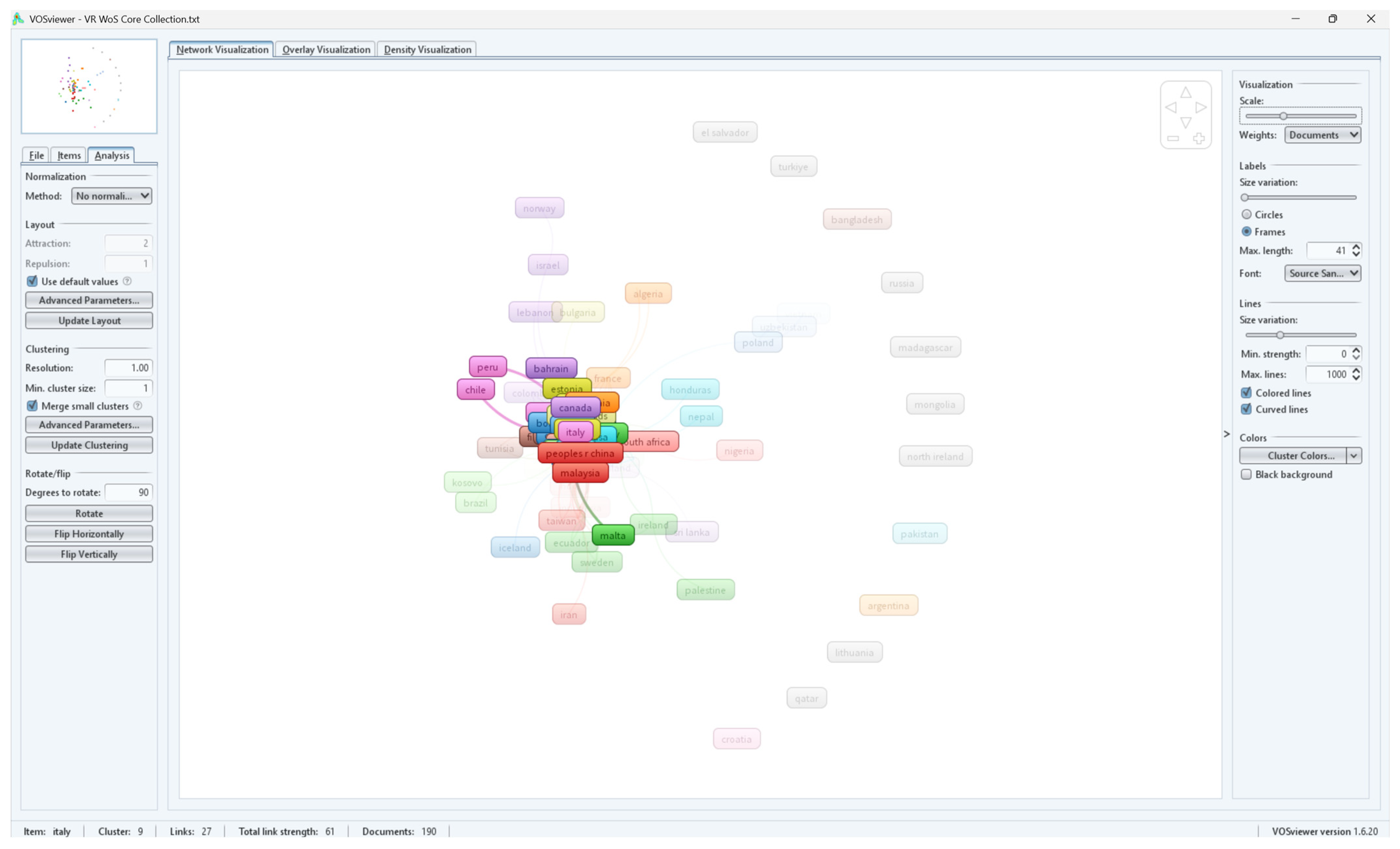
Figure 5 illustrates Italy’s central position within the international collaboration network for VR cultural heritage research. Italy (Cluster 9) maintains 27 links with a total strength of 61, most closely connected to China, Spain, France, Malaysia, and Canada. Dense European clustering reflects EU-funded initiatives, while peripheral nodes (Pakistan, Argentina, Mongolia) show limited integration. Overall, Italy serves as a pivotal bridge between European and Asian research communities.
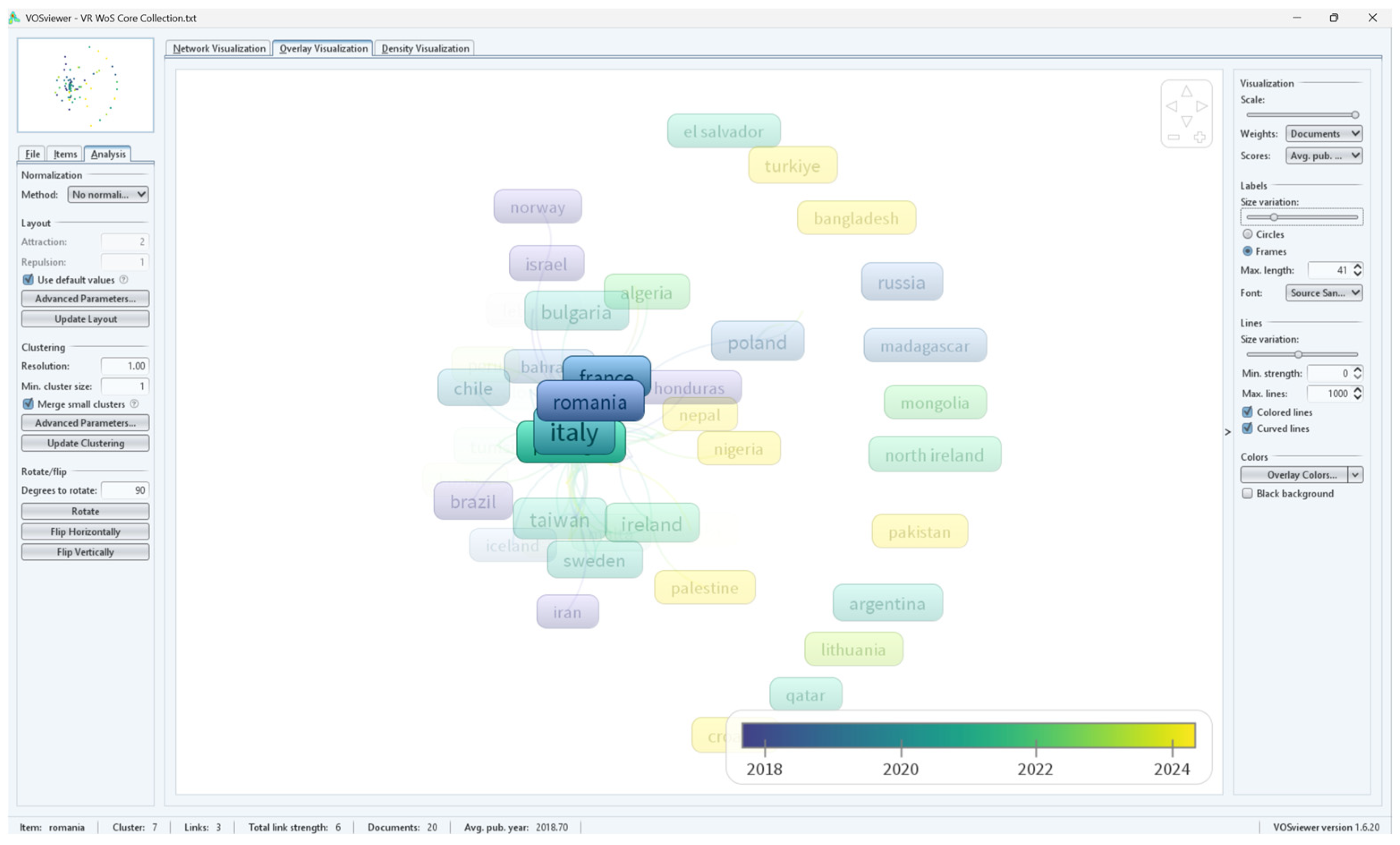
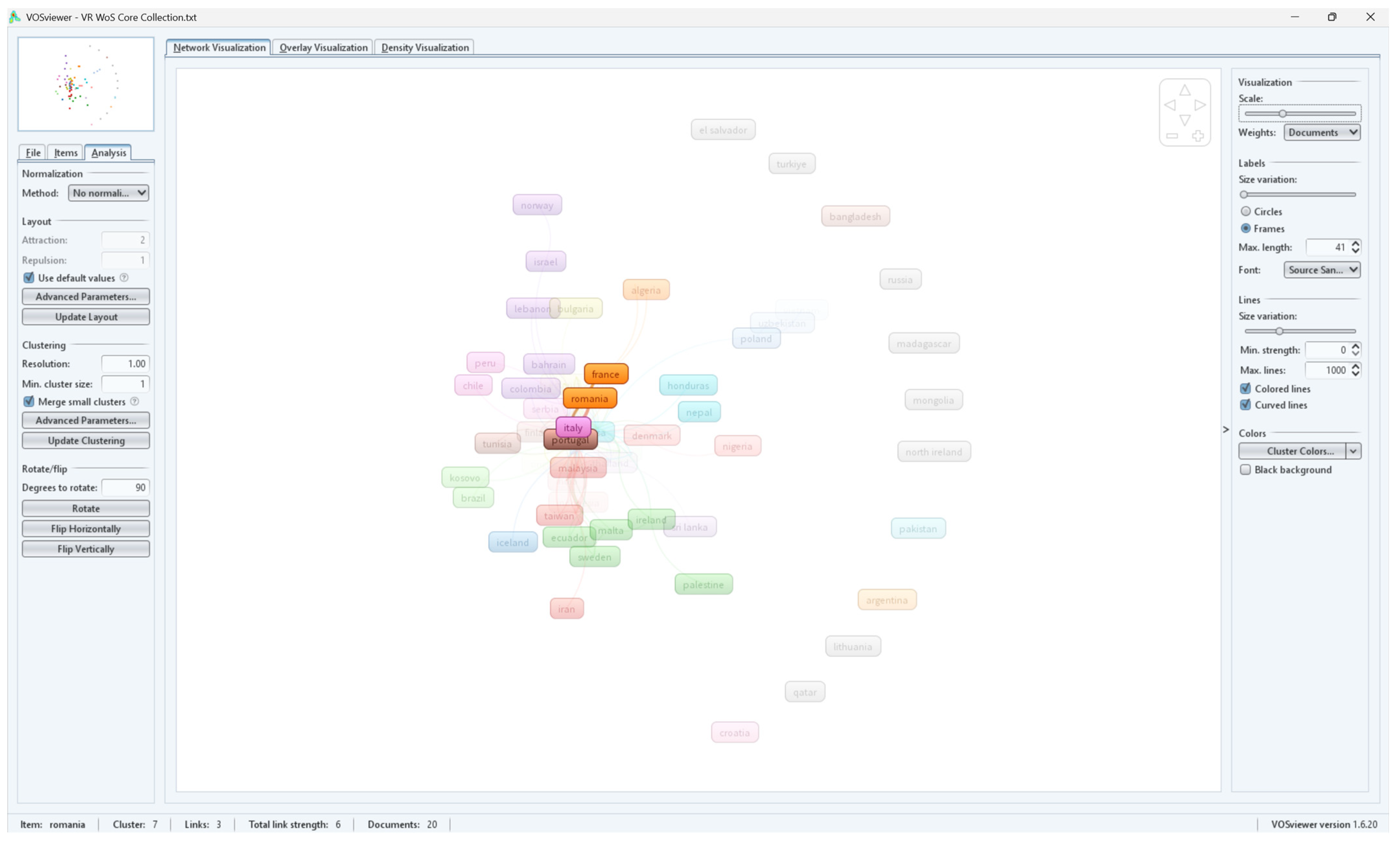
Focusing on Romania, bibliometric analysis reveals a modest yet expanding role in VR cultural heritage research. Figure 6 shows Romania in Cluster 7 with 3 collaboration links (total strength 6), based on 20 Web of Science publications. Overall, this visualization highlights Romania’s emerging connectivity in the international research network.
Although Romania’s contributions remain modest, its tight connections to Italy, France, and Portugal signal growing integration into EU-driven cultural heritage programs. This reflects increasing Romanian engagement in joint projects using immersive technologies for digitization and preservation. Overall, Romania demonstrates developing research capacity aligned with European digital transformation trends.
The three VR installations deployed by the authors in Romanian museums (a medium-sized ethnographic institution in Cluj-Napoca and a small museum in Cincu) complement Romania’s 20 Web of Science-indexed publications, providing longitudinal operational data from underrepresented regional institutions via staff observations.

3. Global Research Trends and Regional Contributions

Historically, VR emerged from early experiments such as Morton Heilig’s Sensorama in the 1960s and Ivan Sutherland’s “Sword of Damocles” [20] (1968). Through the 1980s and early 2000s, VR technologies evolved alongside computing and real-time graphics advances, culminating in widespread adoption after the Oculus Rift (2012). Post-2012, rapidly increasing studies explored VR for museum exhibitions and cultural heritage, reflecting growing academic interest in immersive heritage visualization [21,22].
This historical context frames the bibliometric analysis of 1635 WoS publications (1997–2025) presented below, revealing China, Italy, and emerging contributors like Romania within global collaboration networks (Figure 1, Figure 2, Figure 3, Figure 4, Figure 5 and Figure 6).
Stanford University pioneered large-scale cultural heritage digitization well before many later institutional efforts. With advancements in computing and communication technologies, projects evolved to include the large-scale digitization of artifacts through 3D scanning and photogrammetry. Initiatives such as the Smithsonian 3D Digitization Project (launched in 2010) enabled the creation of high-fidelity digital models [23] that enhanced virtual museum experiences, allowing users to examine artifacts with a level of precision and contextual visualization that often exceeds what is possible during physical visits. However, Stanford researchers had already laid much of the groundwork for these developments years earlier. Throughout the late 1990s and early 2000s, Stanford’s Computer Graphics Laboratory played a pioneering role in early 3D cultural heritage digitization [24], producing foundational work in laser scanning, geometric processing, and digital archiving. Their landmark Stanford–Michelangelo Project [25], which involved scanning Michelangelo’s sculptures in Florence at unprecedented resolutions, established new standards for accuracy in heritage capture. Building on this success, Stanford teams later expanded their efforts to Rome, conducting detailed scans of classical architecture and archaeological sites. These early initiatives helped establish best practices for digital preservation and demonstrated the transformative potential of 3D scanning in documenting, analyzing, and presenting cultural heritage.
The following subsections interpret the VOSviewer overlay maps from Section 2, analyzing how publication timing, research focus, and collaboration patterns differ across leading contributor countries.

3.1. China: Recent Dominance in Volume and Technical Innovation

China’s average publication year of 2021.7 (Figure 7) signals rapidly expanding recent activity, leading globally in publication volume. Research emphasizes VR-based 3D modeling, SLAM spatial tracking, mural visualization, and immersive heritage reconstruction. The Dunhuang Mogao Caves project [26] exemplifies China’s substantial institutional investment in virtual heritage.
Overall, global VR adoption in cultural heritage has shifted from visualization prototypes to integrated museum ecosystems [1]. Photogrammetry, 3D scanning, and real-time engines (Unity, Unreal) enable interactive educational experiences, exemplified by China’s national initiatives in advanced imaging and immersive reconstruction. This positions China as a global leader transforming VR into a comprehensive medium for cultural preservation, accessibility, and engagement.

3.2. Italy: Established European Leadership in Collaboration Networks

Figure 8 shows Italy’s average publication year of 2019.9, reflecting established European leadership vs. China’s more recent 2021.7 average. Italy pioneered VR integration into museum/heritage studies, maintaining steady research output, influencing subsequent studies. Close collaboration ties to China, Spain, and France (Figure 5) underscore Italy’s bridging role between early European adopters and global emerging leaders.

3.3. Romania: Emerging Connectivity and Case Study Validation

Figure 9 reveals Romania’s average publication year of 2018.7, which is the earliest among major contributors, though at a modest scale (20 WoS publications). Early exploratory projects collaborated with Italy and France (Figure 6), but the limited link strength (3 links, total 6) indicates recent, developing research momentum.

4. Regional Insights, Identified Gaps, and Romanian Case Studies

Section 3 addressed Q1 through global patterns, including Romania’s emerging position (20 publications, Cluster 7, Figure 6). This section extends the analysis with gap identification and case studies, creating a unified framework for Q1–Q4.
The scientometric results reveal distinct regional adoption patterns in VR cultural heritage research. This section analyzes underlying factors, identifies persistent literature gaps, and contextualizes findings through author-deployed case studies in Romanian museums. Central and Eastern Europe, particularly Romania, remains significantly underrepresented in comparative immersive technology studies.
In addition to the global scientometric analysis, the practical case studies examined in this manuscript focus on three long-term VR installations implemented in Romanian museums. These cases are intended to address a documented gap regarding Central and Eastern Europe and should be understood as context-specific examples rather than as representative of all world regions.

4.1. Interpretation of Regional Research Patterns

China’s recent and rapid growth in VR cultural heritage research can be attributed to large-scale national digitization programs, strong institutional infrastructures, and increasing technological investment. In contrast, Italy’s earlier trajectory reflects long-standing involvement in photogrammetry, digital surveying, and museum visualization, establishing methodological standards that have influenced global practices. Romania’s earlier activity, though smaller in scale, highlights the role of exploratory, project-based implementations driven by local museums and European collaborations.
China leads in the adoption of VR technologies for museums, driven by national strategies for cultural digitization and rapid advancements in computer graphics, sensing, and interactive media. Major institutions such as the Dunhuang Digital Museum [26], the Palace Museum, and the Mountain Resort Museum in Chengde have integrated immersive displays, virtual reconstructions, and interactive storytelling systems to enhance the accessibility and pedagogical value of their collections. Research efforts increasingly focus on VR-based 3D modeling [27], SLAM-enabled spatial tracking [28], virtual mural reconstruction [29], and interaction design frameworks [30] that support improved learning outcomes [31] and multisensory visitor engagement [32,33].
There are studies that highlight the rapid digital transformation enabled by large-scale initiatives like Digital Dunhuang [34], which combines high-resolution imaging [28], laser scanning [35], and VR immersion to preserve and disseminate the Mogao Grottoes’ fragile murals [36]. Similarly, Lu et al. demonstrate how VR environments can contextualize Dunhuang’s heritage through narrative-driven exploration [37], while Pan et al. apply advanced 3D laser scanning and modeling techniques to Chinese bronzes [38], illustrating how precise geometric capture supports both scholarly analysis and interactive museum visualization. Collectively, these efforts reflect China’s strategic push toward integrating VR with cultural education [39], digital preservation, and smart museum ecosystems, positioning the country as a global leader in immersive heritage technologies [40].
A recently published paper from China aimed at creating a VR experience for the Acrobat Figure from the Qin Dynasty, using a learner-centric design [41]. This study highlights that VR can significantly improve motivation and knowledge dissemination compared to traditional methods, especially among youth.
Zhao et al. used VR technology to preserve Chinese traditional paper-cutting art virtually. Their system integrates 3D modeling and interaction, successfully digitalizing this intangible cultural heritage [42].
Liu et al. (2024) analyzed VR impact on visitor satisfaction, loyalty, and democratization of museums in the digital era [43]. They found information quality, system functionality, and aesthetics key to positive engagement.
Researchers Yang et al. (2025) combined memetic analysis with gamified VR to digitally preserve the traditional Chinese martial art Mo Jia Quan [44], showing that gamified VR has the potential to increase cultural understanding.
Research paper from Italy emphasizes photogrammetry, digital reconstruction, and immersive storytelling in cultural heritage, including archaeological site visualization and virtual tours. Italian projects blend technical innovation with methodological frameworks to enrich museum experiences [45].
Italian cultural heritage projects [46] use photogrammetry [47] and digital laser scanning [48] to produce precise reconstructions of archaeological sites [49], monuments [50], and historical buildings [51]. Structure-from-Motion (SfM) [52] and spherical photogrammetry techniques [53] are recurrently used in landmark projects like the documentation of Catania’s historical architecture [54] and San Galgano Abbey in Siena [55], enabling high-fidelity digital preservation and condition monitoring [56].
Beyond technical documentation, Italy excels at immersive museum storytelling [57] as public exhibitions now feature VR-based reconstructions of artefacts [58], buildings [59], and urban spaces [60], where visitors can virtually explore historical environments [58,61]. The Archaeological Museum of Parma’s photogrammetric reconstructions [62] are used for educational displays and promotional content, merging historical context with participatory digital experiences.
High-resolution 3D modeling supports complex restoration efforts, such as Bologna’s Fountain of Neptune [63], which employed detailed digital workflows for diagnostics, restoration, and public engagement. These efforts are parallel with broader national initiatives like the Strategic Plan for Cultural and Landscape Heritage and Fondo Ambiente Italiano [64], providing digital valorization and ensuring resilience through investment in modern infrastructures.
Italy’s advancements reflect a holistic vision wherein methodological rigor [65], technological sophistication, and immersive storytelling converge to enrich the preservation and interpretation of cultural heritage in museums and beyond [66], thereby reinforcing Italy’s significant role in shaping the evolution [67] of VR-based heritage solutions globally [68].
Across the globe, researchers are actively exploring how virtual reality (VR) can enhance, preserve, and promote cultural heritage (CH). Studies from Europe, Asia, Africa, and the Americas consistently show that VR is being applied in museums, tourism, education, and the preservation of both tangible [69] and intangible heritage [70].
A review of global research efforts indicates the following shared thematic trends:
Immersive museum experiences: Researchers from countries like the Netherlands [71] and Finland [72] develop VR systems that personalize content, support social interaction, and make exhibitions more inclusive for diverse audiences.
Tourism and engagement: Studies from Greece and Tunisia [73] demonstrate that VR increases visitors’ sense of presence [74], sparks nostalgia, and boosts motivation [75] to visit real heritage sites [76].
Spiritual and intangible heritage: Research from South Korea shows VR can deepen spiritual experiences using souvenirs [77,78], while projects from Brazil showcase VR as a tool for preserving traditional crafts and performance-based heritage [79].
Global participation: Additional work from Turkey [80], Cyprus [81], Saudi Arabia [82], and Serbia [83] confirms that VR cultural heritage research is a widespread, growing international effort.
Romania exhibits a growing interest in VR for cultural heritage enhancement [84], particularly through collaborations with European partners. VR applications are used to digitize museums, archaeological sites as well as important buildings [85], design human–computer interaction systems [86], and boost visitor engagement [87] in heritage institutions [88].

4.2. Systematic Literature Gaps in VR Cultural Heritage Research

Section 3 VOSviewer analysis reveals five key gaps in VR cultural heritage research. The following subsections summarize these gaps, derived from quantitative clustering and qualitative review, with particular relevance to underrepresented regions like Central-Eastern Europe.

4.2.1. Long-Term Sustainability & Maintenance

Despite the recent acceleration of VR applications within cultural heritage, several notable gaps remain across the literature. One major limit concerns the long-term sustainability of VR systems in museums. While most studies focus on the design or implementation of new VR prototypes, far fewer examine how these systems perform over extended periods, how frequently hardware must be replaced, or what types of maintenance and staff training are required. As a result, museums lack practical guidance on how to integrate VR into their daily operations in a sustainable and cost-effective manner.
This sustainability gap becomes particularly acute for smaller institutions lacking dedicated technical staff, where even minor hardware failures or software incompatibilities can render VR installations unusable for extended periods. The scarcity of longitudinal studies, typically spanning less than 12 months, further obscures VR systems’ true lifecycle costs, complicating cultural institutions’ ability to justify investments against competing preservation priorities.

4.2.2. Evaluation Practices & Methodological Fragmentation

Another significant gap lies in the limited scope of evaluation practices. Most of the published work reports short-term user studies or brief museum pilot deployments. These studies typically collect immediate feedback from visitors but rarely investigate long-term learning outcomes [89], repeated visitation patterns, or the durability of engagement over time. Without longitudinal evaluations, it remains difficult to assess the true educational value [90] and lasting impact of VR experiences.
Methodological fragmentation further complicates the field. Across publications, researchers employ a wide range of metrics to assess immersion, usability, presence, or learning gains, with little consistency or standardization. The absence of common evaluation frameworks makes comparisons across studies challenging and hinders the development of generally accepted best practices for designing effective VR museum experiences.

4.2.3. Institutional Scale & Accessibility

Accessibility and inclusive design also remain underexplored. Most VR systems are developed without comprehensive consideration for older adults, children, or visitors with disabilities. Issues such as motion sickness, equipment weight, visual strain, and physical accessibility are only occasionally addressed. This gap suggests a need for more inclusive design principles and broader user testing.
Additionally, the literature shows a strong emphasis on large, well-funded museums, while small and medium-sized institutions, especially those in Central and Eastern Europe, are significantly underrepresented. These smaller museums often operate with limited budgets and staff, yet they face the same pressure to adopt digital technologies. Research that addresses their specific constraints, including low-cost workflows or lightweight VR systems, remains scarce.

4.2.4. Intangible Heritage & Community Engagement

Intangible heritage presents another challenge. Although VR has been used extensively to reconstruct buildings, artifacts, and archaeological sites, far less attention has been given to intangible cultural expressions such as traditional crafts, rituals, dances, or oral histories. When intangible heritage is included, community participation in the development of VR content is often minimal, which can reduce the cultural authenticity and social relevance of the resulting applications.
Virtual reconstructions of rituals, dances, and oral traditions often prioritize technical fidelity over cultural authenticity, frequently developed by external technologists rather than heritage practitioners familiar with performative nuances and social meanings. This top-down approach risks producing sterile digital facsimiles that fail to convey the embodied knowledge and communal significance embedded within intangible practices. Moreover, the absence of co-creation frameworks excludes source communities from content validation and narrative control, potentially perpetuating misrepresentations that undermine VR’s potential as a medium for cultural revitalization and knowledge transmission.

4.2.5. Geographical & Linguistic Underrepresentation

Another notable gap is the significant geographical unevenness observed in the literature. Although China, Italy, Spain, and the United States account for a large share of VR-related cultural heritage research, regions such as Africa and South America remain substantially underrepresented. This imbalance reflects broader disparities in research infrastructure, funding availability, and access to digital technologies, which in turn constrain the diversity of cultural perspectives within global VR heritage discourse.
Romanian case link: Romania (20 publications, ~1.2% of global output, Cluster 7) exemplifies Central/Eastern European underrepresentation despite its early average publication year (2018.7, Figure 9).
These gaps identified through Web of Science analysis find empirical validation through Romania’s VR deployments. Although underrepresented in WoS-indexed research, Romania has implemented several advanced VR and 3D digitization initiatives [91,92,93,94,95] that offer valuable real-world insights into sustainable museum deployment. These projects were primarily oriented toward public engagement rather than academic publication, making them essential complements to the scientometric findings.

4.3. Romanian Case Studies: Operational Evidence

The literature reveals only a small number of Romanian case studies addressing 3D scanning [96,97], digital exhibitions, haptic interactions [98], natural gestures interactions [99,100], digital conservation workflows and intangible cultural heritage related elements [101] have been published within the WoS Core Collection. As a result, international audiences remain largely unaware of advanced digitization campaigns conducted within various Romanian museums. Within the following subsections, three case study initiatives are presented.
These initiatives were primarily focused on improving visitor engagement, supporting heritage interpretation, and enhancing exhibition experiences, rather than generating formal research publications. As a result, they provide valuable practical insights into the real-world implementation of VR in small and medium-sized museum environments that often operate with limited budgets, reduced staffing, and infrastructural constraints compared to major international institutions. These case studies therefore complement the scientometric findings by illustrating how VR technologies can be adapted, scaled, and sustained in local museum settings, offering a grounded perspective on usability, maintenance requirements, and long-term operational considerations.

4.3.1. Cizer Wooden Church

The Cizer Wooden Church is one of the most significant wooden ecclesiastical monuments of Transylvania, representing a rare and refined example of 18th-century rural craftsmanship. Built by Horea (Vasile Ursu Nicola, 1731–1785), a central historical figure in the 1784 Transylvanian revolt. The church holds exceptional cultural and symbolic value within Romanian heritage. Today, the church is preserved in the Romulus Vuia National Ethnographic Park, the open-air section of the Transylvanian Museum of Ethnography, where it stands as an emblematic marker of regional identity, vernacular religious architecture, and traditional carpentry techniques. The Cizer Wooden Church VR deployment (2019) was funded by the EEA Grants through the RO-CULTURA Programme [102], to create a high-fidelity digital record of the monument and its associated movable heritage.
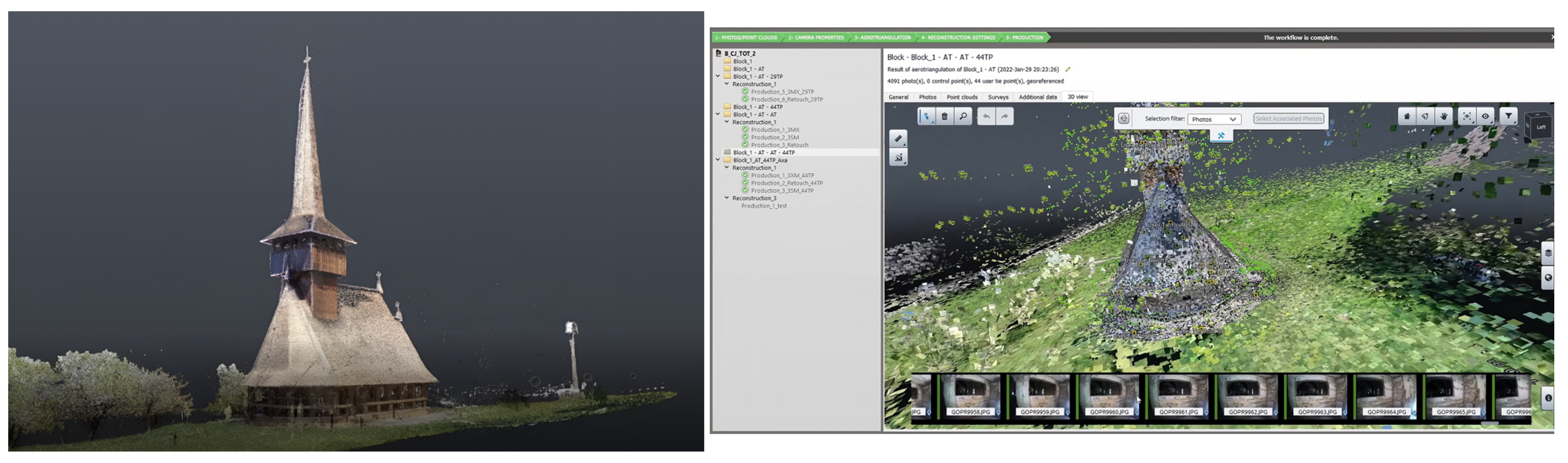
The project employed a comprehensive multimodal acquisition workflow designed to capture the church’s architectural complexity, painted surfaces, and unique cultural assets. A terrestrial laser scanning (TLS) survey was conducted using a Z + F IMAGER® 5010X, manufactured by Zoller + Fröhlich GmbH, Wangen im Allgäu, Germany, resulting in 24 scanning positions that provided complete interior and exterior coverage. These data formed the geometrical backbone of the 3D reconstruction presented within Figure 10.
To document roof elements, upper wall segments, and the bell tower, areas inaccessible to TLS, drone photogrammetry was performed using a DJI Phantom 4 Pro, manufactured by DJI (Da-Jiang Innovations Science and Technology Co., Ltd.), Shenzhen, China, ensuring detailed coverage of architectural portions otherwise impossible to survey from the ground. The combined TLS and photogrammetry datasets enabled the generation of an accurate, high-resolution digital model suitable for VR integration and long-term preservation.
In parallel, several unique movable heritage items associated with the church were digitized through high-precision structured-light scanning [103]. These included the Antimins, painted wooden crosses, and several glass icons classified as Treasure under Romanian cultural heritage legislation. Their inclusion within the VR experience allows visitors to explore objects that are rarely accessible due to their fragility and conservation requirements.
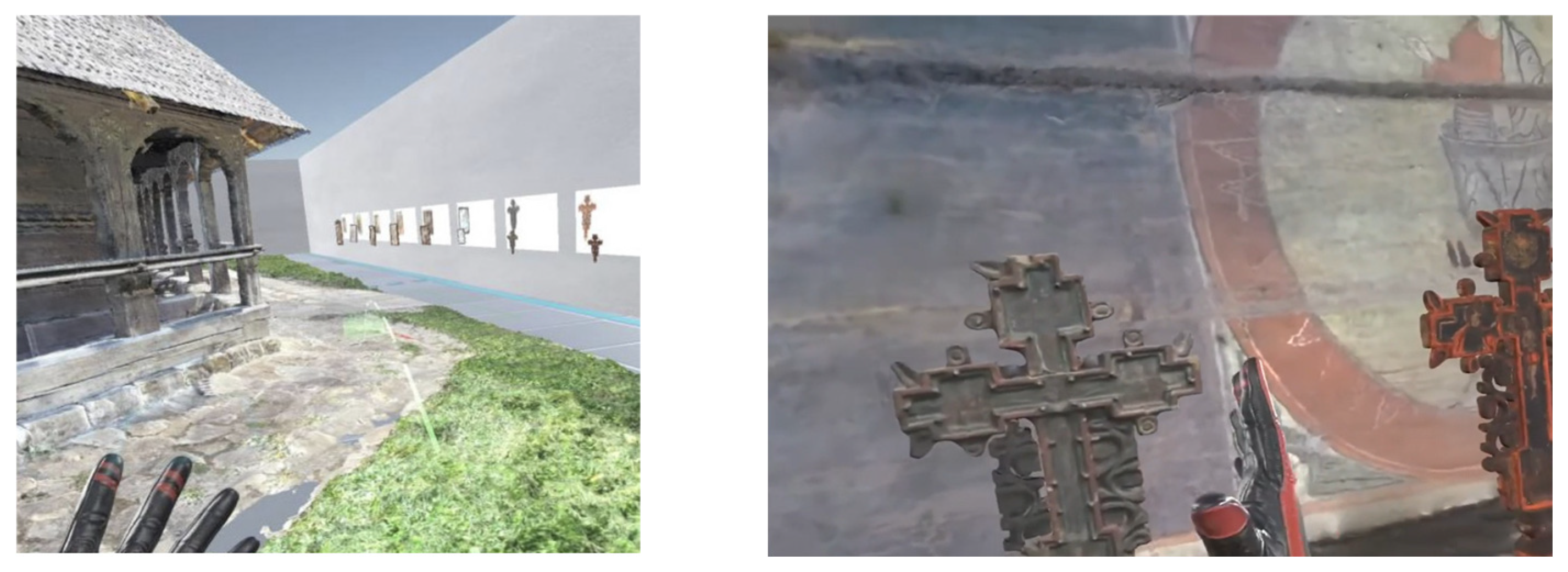
All spatial data and 3D assets were integrated into a Unity-based VR environment developed specifically for museum deployment. The experience features teleportation-based movement, collision-controlled navigation, and interactive object manipulation (Figure 11), enabling a safe and intuitive exploration of both the architectural interior and the scanned liturgical objects. This setup supports the museum’s educational objectives while ensuring sustainability and accessibility for diverse audiences.
The VR installation implemented at the Ethnographical Museum of Transylvania demonstrates a level of technological maturity rarely reported in previous Romanian literature. This case study empirically demonstrates that regional initiatives possess both the capacity and the expertise to contribute to global discourses on immersive heritage technologies.

4.3.2. Sebeș Valley Glass Icons

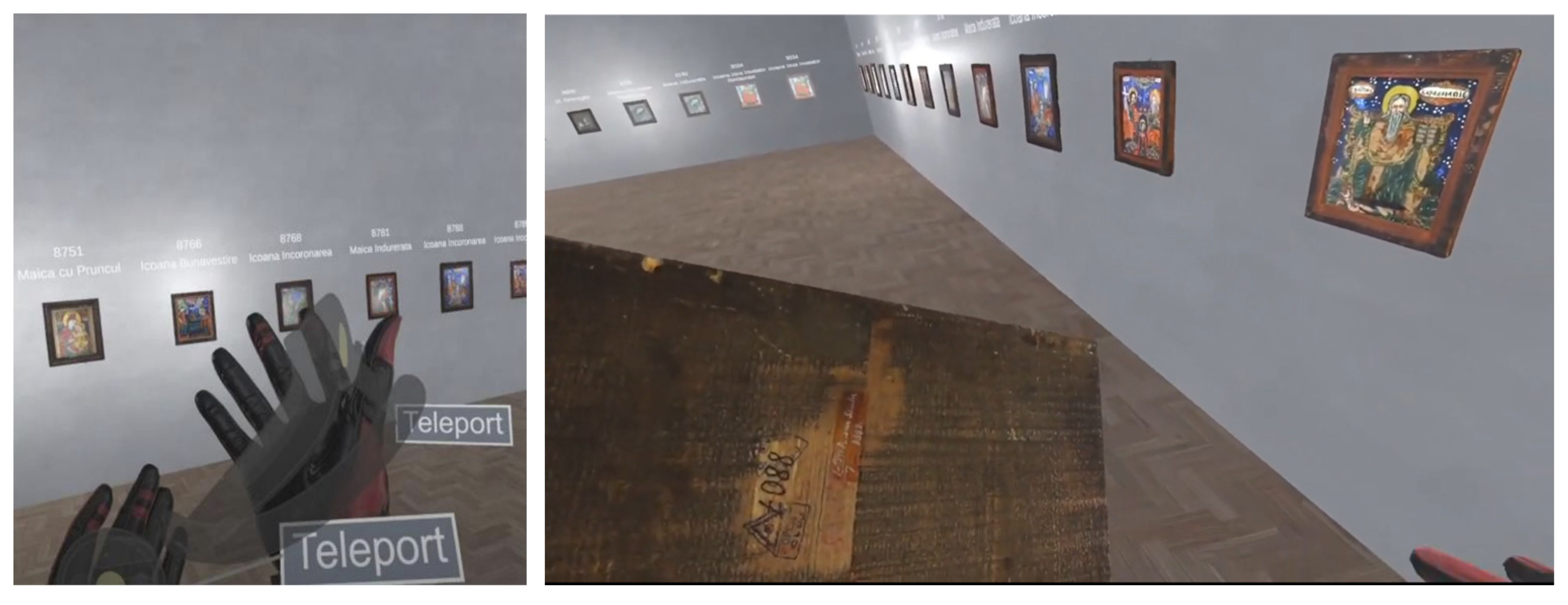
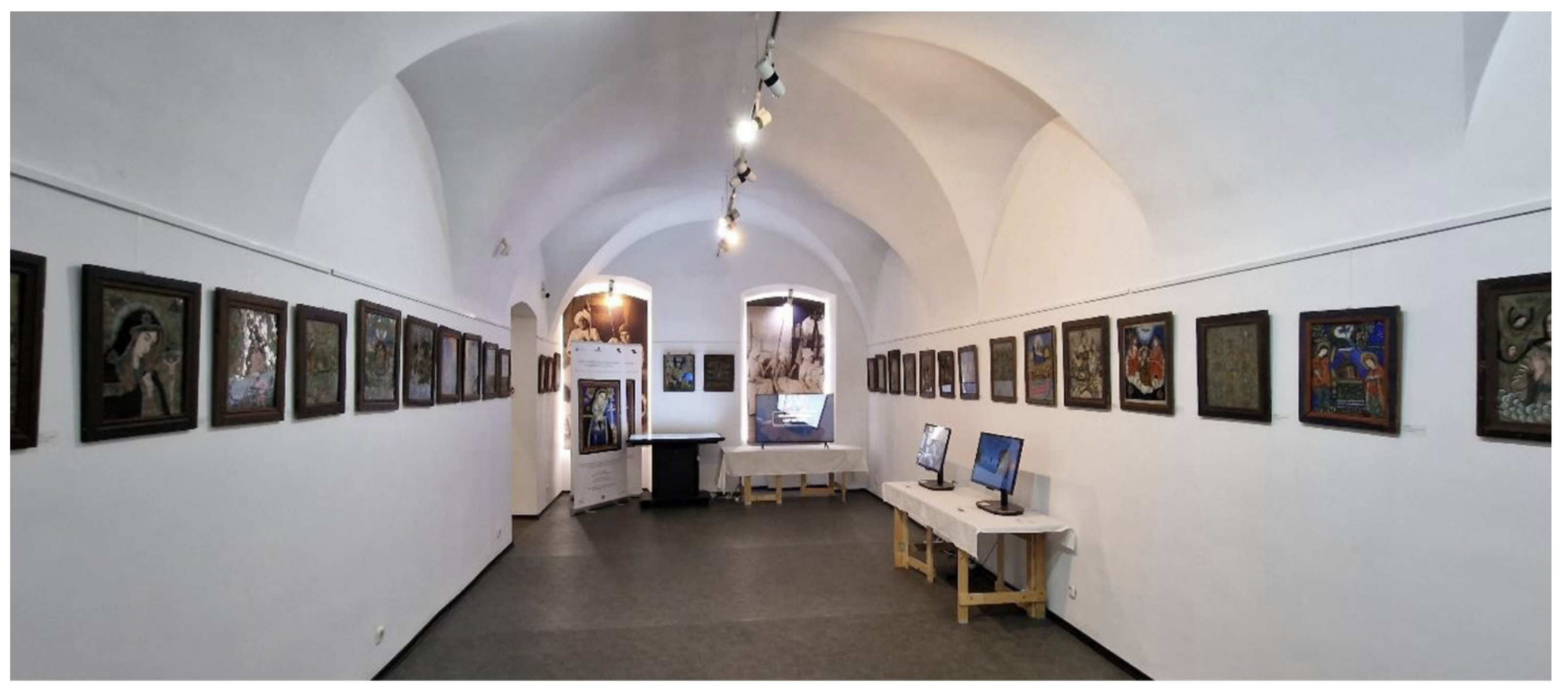
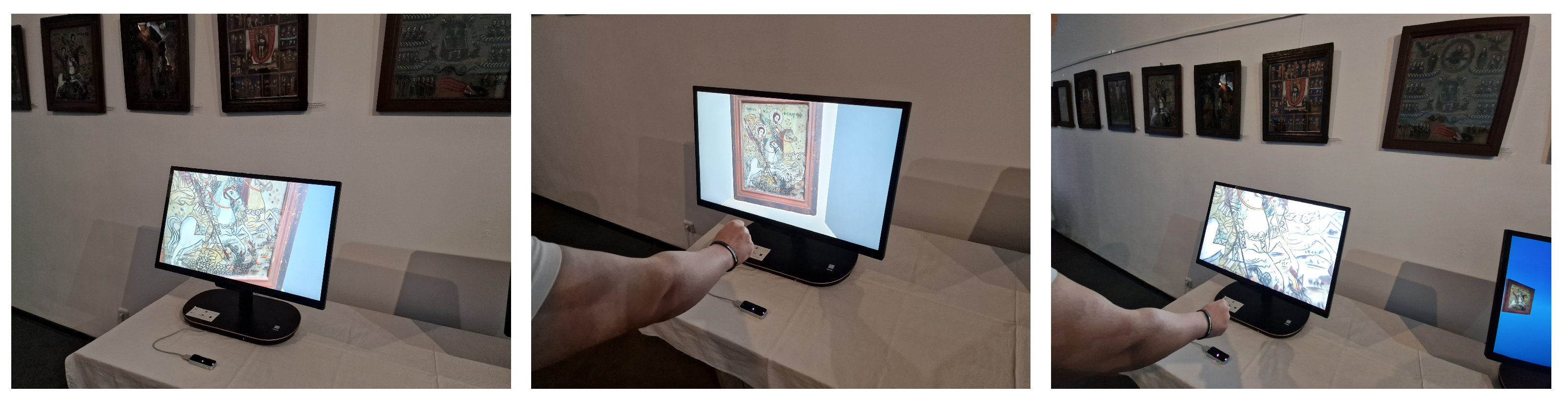
The Sebeș Valley is widely recognized for its distinctive tradition of glass painting, a form of 18th–19th century folk-religious art that holds both regional and national significance. Despite the international cultural value of Transylvanian glass icons, the region lacks systematic digital documentation and immersive interpretive frameworks. Existing literature predominantly addresses stylistic, iconographic, or ethnographic analyses, while technological approaches, particularly those involving VR, remain scarce. To address this gap, a comprehensive digitization and VR research initiative was undertaken, focusing on preservation, virtual restoration, and interactive museum presentation (Figure 12) within the RO-CULTURE Programme [104].
The project digitized more than 80 glass icons using a high-precision structured-light workflow, employing a Go!SCAN 50, manufactured by Creaform Inc., Lévis, QC, Canada to capture both accurate geometry and high-fidelity texture data. This process ensured that even subtle painted layers, craquelure patterns, and surface deformations were recorded at exceptional resolution. The scanned models were subsequently organized into a dedicated online Sketchfab database [105], making the collection publicly accessible and establishing one of the first open digital repositories of Transylvanian glass icons.
Building on these datasets, a series of virtual restoration workflows was implemented to digitally reconstruct icons with missing fragments, pigment loss, or deteriorated support layers. Such restorations are difficult to perform physically due to conservation ethics, providing scholars and visitors with a clearer understanding of original iconographic compositions and stylistic variation within the Sebeș Valley tradition. This approach represents one of the few documented instances of virtual restoration applied to glass-painted folk art in Romania.
The interactive component of the project relied on a multi-interface system integrating Valve Index VR, Leap Motion gesture tracking, and multi-touch displays. The VR environment allowed visitors to examine each icon at true scale or in magnified form, rotate it naturally using hand-tracking gestures, and explore iconographic details through controlled lighting conditions. Gesture-based manipulation enabled by Leap Motion sensors (Figure 13) offered a touchless and intuitive interaction model that proved particularly useful during and after the COVID-19 pandemic, reducing reliance on physical controllers.
Beyond the VR installation, the exhibition incorporated large multitouch tables that hosted educational mini-games, including memory challenges, iconographic puzzles, and thematic classification tasks. These interfaces enhanced visitor engagement and provided complementary learning pathways for younger audiences. The integration of VR, multi-touch educational content, and an online 3D repository resulted in one of the first multi-interface museum systems in Romania dedicated to a single heritage collection.
Overall, the Sebeș Valley Glass Icons project demonstrates how digitization, virtual restoration, and immersive interaction can revitalize interest in a fragile and often overlooked category of folk-religious heritage. By digitally preserving the collection and embedding it into an accessible, engaging VR environment (Figure 14), the project provides a methodological reference for future initiatives focused on micro-regional crafts and vernacular artistic traditions.

4.3.3. Cincu Local Museum

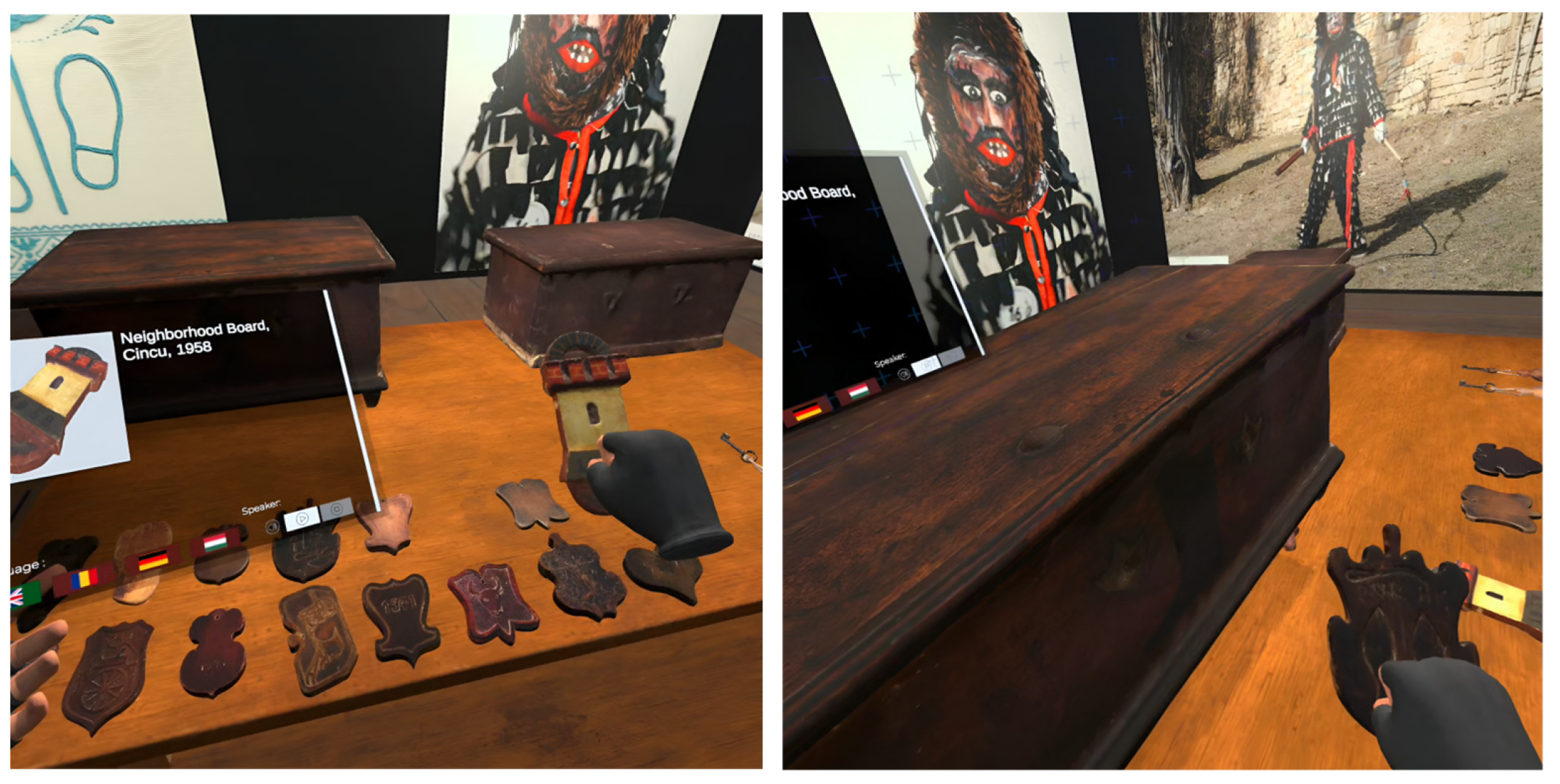
The VR initiative developed for the Cincu Local Museum (Sibiu County) focuses on the preservation and digital documentation of a collection of small wooden ornaments characteristic of the Transylvanian Saxon community. Cincu (Großschenk) is known for its distinctive tradition of neighbourhood-based decorative woodworking, where carved motifs, often floral, geometric, or symbolic, were used to personalize and mark community identity. Despite their cultural relevance, these small-scale artifacts have remained largely absent from broader digitization efforts, which typically prioritize monuments, architecture, or large museum collections. As such, this project addresses an underrepresented category of micro-heritage by documenting fragile vernacular objects that rarely receive systematic technological attention.
The research effort centered on the high-resolution digitization of a set of wooden ornaments and the two wooden chests. These items were captured using high-precision photogrammetry and structured-light scanning to obtain detailed 3D models that accurately represent their form, carving characteristics, and surface texture. Given the small scale and delicate condition of the objects, the use of close-range scanning techniques was essential to preserving their unique craftsmanship and ensuring a faithful digital record suitable for both research and exhibition.
Once digitized, the 3D assets were integrated into an interactive VR environment designed for museum visitors. The application enables users to closely examine each ornament at true scale or magnified, rotate it freely, and explore carving details that are often difficult to perceive through traditional display methods. The inclusion of the two chests provides context for how these objects were historically stored and handled, while the VR interface enhances interpretability through intuitive object manipulation and guided explanations. This approach allows the museum to present the ornaments in a manner that is both engaging and accessible (Figure 15), compensating for the limitations imposed by their fragility and small physical size.
Overall, the Cincu Local Museum project highlights the value of applying immersive technologies to small, community-based heritage collections that are frequently overlooked in mainstream digital preservation efforts. By digitally safeguarding both the ornaments and their associated storage chests, the initiative provides a replicable model for documenting micro-heritage elements in rural museum contexts, contributing to a more inclusive understanding of how VR can support the preservation and public interpretation of localized cultural traditions. In addition to the VR experience, an AR application has also been developed, offering an even more cost-efficient solution since it is designed for smartphones and tablets, further increasing accessibility and scalability for small institutions.

5. Discussion

Global trends identified through the scientometric analysis indicate that VR in cultural heritage has evolved from experimental visualization tools into integrated interpretive systems widely adopted in museums, cultural sites, and educational contexts. Recent publications emphasize advances in high-fidelity 3D digitization, immersive storytelling, multisensory environments, and visitor-centered interaction design, reflecting a maturing research landscape. Countries such as China and Italy have played leading roles, China through large-scale digitization and rapid technological investment within recent years, and Italy through early methodological consolidation in photogrammetry, laser scanning, and virtual reconstruction workflows. Nevertheless, gaps persist in the representation of small and medium-sized institutions, particularly in Central and Eastern Europe, where practical insights remain underrepresented in international literature.
At the same time, the exclusive reliance on WoS data implies a systematic underrepresentation of certain regions and non-English publications, reflecting broader linguistic and geographical biases in major indexing services and indicating that future work should incorporate complementary databases (e.g., Scopus or regional indexes) to capture a more inclusive picture of VR cultural heritage research.
Research Questions Synthesis:
Q1 is confirmed: China leads volume (226 publications) while Italy dominates citation impact, extending prior Asia/EU findings with emerging CEE visibility.
Q2 confirms established sustainability gaps in the literature, adding novel operational cost/staff burden evidence from longitudinal data.
Q3 findings from the Romanian cases contradict gaze-only preferences, demonstrating that controller-based interaction sustains engagement over 5 years (Cizer Wooden Church/Sebeș since 2021)
Q4 provides a novel synthesis of strategic factors (stable hardware, staff training, MR migration), bridging global trends with local implementation.
The three Romanian VR installations are presented as exploratory exemplars rather than definitive benchmarks, as a fully standardized and transferable metric framework could not be uniformly applied across sites. Within these installations, hardware-related issues were minimal over the observed operating period: only a single Valve Index controller required replacement because it stopped charging properly via the USB-C port, and no other recurring hardware failures were reported that would undermine system viability. Routine maintenance primarily consisted of periodically recalibrating the playable VR area using standard SteamVR room setup tools, typically once every month, to ensure robust tracking; this procedure remained straightforward and could be handled by trained museum staff without specialized technical support. For the interactive touch table in the case of Sebeș glass painting project (the puzzle installation), periodic cache clearing and basic software housekeeping were sufficient to maintain responsiveness, while the Leap Motion–based stations at the same site did not require notable maintenance beyond regular cleaning. In the Cincu installation, no significant technical problems were reported, and no corrective maintenance was needed during the monitoring period, which further supports the interpretation of these deployments as operationally stable, while also highlighting the need for future studies to formalize shared, quantitative evaluation protocols that include hardware reliability indicators, maintenance time and cost tracking, and longitudinal learning and engagement measures.
The practical component of this review focuses on three long-term VR installations implemented in Romanian museums, which are not intended as globally representative cases but as exemplars from a Central and Eastern European context where practical implementations are underreported in WoS-indexed literature. Their contribution lies in documenting operational and maintenance-related aspects under the specific constraints of medium-sized institutions and protected historical buildings, thereby complementing case studies from more frequently studied regions rather than defining a universal pattern. Future extensions of this work should replicate this mixed-method approach in African, South American, and other underrepresented settings to build a more geographically balanced evidence base for global VR cultural heritage practice.
This study shows that despite the vibrancy of global research, operational, technical, and sustainability challenges remain core concerns for museums seeking to implement VR long-term. Issues such as system hygiene, technical upkeep, multi-user management, and hardware obsolescence continue to affect the durability of VR installations. These challenges were particularly evident during and after the COVID-19 pandemic, when the need for regular headset sanitization created additional burdens for museum staff. The Romanian case studies provide rare long-term evidence on these aspects. The VR applications for the Cizer Wooden Church and the Sebeș Valley glass icons, whose development began in 2019 and were fully completed and installed in museums in 2021, remain fully functional today despite rapid changes in headset technology and software platforms. Their longevity underscores the importance of stable software architectures, optimized interaction methods, and low-maintenance workflows, demonstrating that VR systems can remain operational for extended periods when carefully designed for museum contexts.
In terms of sustainability, the Romanian installations exemplify how VR systems can operate over multiple years with minimal hardware failures and largely routine maintenance procedures, providing concrete operational detail to the long-term viability concerns highlighted in the scientometric analysis.
Regarding evaluation practices, these cases illustrate the current gap between the ideal of standardized, comparable metrics and the reality of relying on semi-quantitative operational logs and qualitative observations, thereby nuancing the identified problem of methodological fragmentation.
From a regional perspective, the Romanian deployments offer rare longitudinal evidence from a Central and Eastern European context, directly addressing the underrepresentation of this region in the global VR cultural heritage literature revealed by the bibliometric results.
Practical implementations reveal scalable VR strategies validated across Romanian museums. Leap Motion gesture control eliminated handheld controllers, reducing hygiene risks and staff workload, adaptable to any multi-user museum. Self-contained VR environments minimize calibration for limited technical staff, ideal for small/rural institutions globally. The 2025 Cincu installation demonstrates forward-compatible VR engineering supporting Meta Quest 2/3 across generations, while the AR companion app (smartphone/tablet) provides low-cost MR scalability enabling resource-constrained museums worldwide to implement hybrid immersive experiences without headset investment.
Long-term visitor engagement also emerges as a multifaceted consideration shaped by technological stability, intuitive interaction, and the cultural relevance of the content. The Romanian case studies presented within this paper demonstrate that VR can significantly enhance the interpretation of micro-heritage elements that are difficult to display or understand through traditional exhibition methods. By enabling close inspection of fragile wooden ornaments or glass icons and by contextualizing them within their architectural or social environments, VR supports deeper forms of engagement.

6. Conclusions and Future Directions

This paper advances beyond prior bibliometric reviews by (1) integrating WoS trends with underrepresented Romanian cases, (2) quantifying sustainability gaps via mixed methods, and (3) delivering actionable frameworks (maintenance protocols, MR migration paths) absent from publication-focused studies.
This manuscript combines a scientometric analysis of global VR cultural heritage research with long-term practical insights derived from three operational VR installations in Romanian museums.
The scientometric findings reveal a highly uneven global distribution of research output. Western Europe and East Asia, particularly Italy, China, Spain, England, and the United States, dominate publication volume, methodological development, and international collaborations. Their leadership reflects strong institutional infrastructures, sustained funding programs, and early adoption of 3D digitization workflows that underpin contemporary VR applications. In contrast, Central and Eastern Europe, Africa, and South America remain underrepresented, limiting the diversity of cultural perspectives included in the global VR heritage discourse. This imbalance underscores the importance of supporting emerging regions and smaller institutions through accessible, scalable digital workflows.
The three Romanian case studies presented in this paper illustrate how smaller museums with limited budgets can nevertheless implement robust and sustainable immersive systems. The VR installations developed for the Cizer Wooden Church and the Sebeș Valley Glass Icons which have been operational for over five years offer rare longitudinal evidence of durability in a field often criticized for rapid technological turnover. Their sustained use demonstrates that carefully engineered VR experiences, relying on stable interaction models and optimized software pipelines, can remain functional well beyond typical hardware cycles. Similarly, the 2025 Cincu VR installation demonstrates how forward-compatible, cross-generational development strategies can support sustainability from the outset. The deliberate decision to deploy the system on standalone headsets such as the Oculus Quest 2 devices, chosen for their affordability, minimal calibration requirements, and ease of operation, reflects a growing trend in smaller museums toward all-in-one VR solutions that reduce setup complexity and ongoing maintenance burdens.
Across all installations, practical insights emphasize that the major challenges for long-term VR adoption are not primarily technological sophistication or content creation, but operational integration, maintenance, staff training, and sustainability planning. Issues such as continuous software updates, hardware hygiene, multi-visitor management, and controller durability remain critical. Hands-free interaction methods, such as Leap Motion gesture control used in the Sebeș Valley project, proved particularly advantageous by minimizing physical contact and simplifying workflows for museum personnel. These real-world observations complement the scientometric findings by demonstrating how usability and operational pragmatism shape the long-term viability of immersive technologies.
Looking ahead, there are several key directions that emerge within the use of VR/AR/MR technologies within museum exhibitions. There is an increasing need for standardized sustainability and maintenance frameworks that address hardware life cycles, documentation practices, and update strategies. Cross-platform development, including the integration of complementary VR and AR components, as demonstrated in the Cincu VR application, offers a scalable pathway that can accommodate diverse institutional capacities. Moreover, longitudinal evaluation practices should be expanded to capture long-term learning outcomes, visitor return patterns, and the evolving role of immersive technologies in museum ecosystems, which are areas currently underexplored in the literature.
The rapid evolution of artificial intelligence introduces new opportunities for cultural heritage VR systems, including automated asset monitoring, adaptive narrative personalization, environment-aware interactions, and predictive maintenance tools. These innovations may ultimately lead to VR installations that are more resilient, context-aware, and capable of supporting both curators and visitors in richer and more sustainable ways.
This research highlights that while global VR cultural heritage research continues to grow, insights from long-term operational deployments remain essential for understanding how immersive technologies can be effectively and sustainably integrated into museums.
Theoretically, the study refines current understandings of VR sustainability in cultural heritage by linking global publication trends with concrete long-term operational evidence, showing how macro-level patterns materialize in day-to-day museum practice. Practically, the findings offer museums and policy makers guidance on choosing stable interaction paradigms, planning maintenance and staff training, and prioritizing scalable, cross-generational hardware and software solutions when implementing immersive systems.
These conclusions are limited by the exclusive use of WoS data for the scientometric sample and by the focus on three Romanian installations in medium-sized institutions, which constrains the generalization of operational insights to larger museums and to regions such as Africa and South America.
Future research should therefore replicate this mixed-method approach in other geographical contexts, develop shared indicators for hardware reliability, maintenance time and costs, and long-term learning outcomes, and compare different VR/MR configurations across institutions of varying size and resources.
Looking ahead, the rapid emergence of commercially available mixed reality (MR) devices is poised to reshape the landscape of immersive cultural heritage applications. Unlike earlier generations of head-mounted displays, contemporary MR systems allow seamless integration of virtual content with the physical environment, enabling experiences that build upon the museum’s existing architectural, material, and narrative elements. By anchoring digital augmentations directly onto artifacts, spaces, and interpretive displays, MR can complement and extend the story already present within the exhibition, creating a more coherent and layered visitor experience.
As these technologies mature and become more accessible, it is likely that most future museum-oriented immersive applications will gravitate toward MR platforms. Their capacity to support full VR immersion while also delivering spatially contextualized augmentation offers institutions a flexible, scalable, and sustainable pathway for digital interpretation. MR technologies are expected to play a central role in the next wave of immersive heritage innovation, supporting adaptive and multimodal exhibition ecosystems that seamlessly unify physical heritage elements with dynamic, digitally mediated storytelling.

Author Contributions

Conceptualization, R.C. and Z.L.B.; methodology, R.C. and Z.L.B.; software, R.C. and Z.L.B.; validation, R.C. and Z.L.B.; formal analysis, R.C. and Z.L.B.; investigation, R.C. and Z.L.B.; resources, R.C. and Z.L.B.; data curation, R.C. and Z.L.B.; writing—original draft preparation, R.C. and Z.L.B.; writing—review and editing, R.C. and Z.L.B.; visualization, R.C. and Z.L.B.; supervision, R.C. and Z.L.B.; project administration, R.C. and Z.L.B.; funding acquisition, R.C. and Z.L.B. All authors have read and agreed to the published version of the manuscript.

Funding

This research has received funding from the European Union’s Horizon Europe Research and Innovation Actions under Pillar II–Cluster 2: Culture, Creativity and Inclusive Society, call HORIZON-CL2-2023-HERITAGE-01-04, grant agreement No. 101132781.

Institutional Review Board Statement

Not applicable.

Informed Consent Statement

Not applicable.

Data Availability Statement

The original contributions presented in this study are included in the article. Further inquiries can be directed to the corresponding author.

Conflicts of Interest

The authors declare no conflicts of interest.

Abbreviations

The following abbreviations are used in this manuscript:
3DThree-Dimensional
AIArtificial Intelligence
ARAugmented Reality
CHCultural Heritage
CEECentral and Eastern Europe
EEAEuropean Economic Area
HBIMHeritage Building Information Modeling
HMDHead-Mounted Display
LiDARLight Detection and Ranging
MRMixed Reality
SfMStructure from Motion
SLAMSimultaneous Localization and Mapping
TLSTerrestrial Laser Scanning
UAVUnmanned Aerial Vehicle
VRVirtual Reality
WoSWeb of Science

References

  1. Zhang, J.; Wan Yahaya, W.A.J.; Sanmugam, M. The Impact of Immersive Technologies on Cultural Heritage: A Bibliometric Study of VR, AR, and MR Applications. Sustainability 2024, 16, 6446. [Google Scholar] [CrossRef] [Scilit]
  2. Settembrini, F.; Angelini, M.G.; Costantino, D. Virtual Museum, the Exploration of Cultural Heritage with Virtual Reality Techniques. In International Conference on Augmented Reality, Virtual Reality and Computer Graphics; Lecture Notes in Computer Science (Including Subseries Lecture Notes in Artificial Intelligence and Lecture Notes in Bioinformatics); Springer International Publishing: Cham, Switzerland, 2018; Volume 10851 LNCS, pp. 392–400. [Google Scholar] [CrossRef] [Scilit]
  3. Ji, S.; Zhang, L.; Zhou, Z.; Yang, H.; Shi, M. Exploiting Virtual Reality Visualisation Feature for Intangible Cultural Heritage in a Tourism Industrial Chain. J. Internet Technol. 2024, 25, 587–596. [Google Scholar] [CrossRef] [Scilit]
  4. Ercan, F.; Sayın, K.; Dalgın, T.; Gençer, K. A Bibliometric and Systematic Review of Publications on Augmented Reality in Sustainable Tourism. Sustainability 2025, 17, 1508. [Google Scholar] [CrossRef] [Scilit]
  5. Jung, K.; Nguyen, V.T.; Piscarac, D.; Yoo, S.C. Meet the Virtual Jeju Dol Harubang—The Mixed VR/AR Application for Cultural Immersion in Korea’s Main Heritage. ISPRS Int. J. Geo-Inf. 2020, 9, 367. [Google Scholar] [CrossRef] [Scilit]
  6. Ivanov, R.; Velkova, V. Analyzing Visitor Behavior to Enhance Personalized Experiences in Smart Museums: A Systematic Literature Review. Computers 2025, 14, 191. [Google Scholar] [CrossRef] [Scilit]
  7. Li, J.; Wider, W.; Ochiai, Y.; Fauzi, M.A. A Bibliometric Analysis of Immersive Technology in Museum Exhibitions: Exploring User Experience. Front. Virtual Real. 2023, 4, 1240562. [Google Scholar] [CrossRef] [Scilit]
  8. Schofield, G.; Beale, G.; Beale, N.; Fell, M.; Hadley, D.; Hook, J.; Murphy, D.; Richards, J.; Thresh, L. Viking VR: Designing a Virtual Reality Experience for a Museum. In Proceedings of the 2018 Designing Interactive Systems Conference (DIS 2018), Hong Kong, China, 9–13 June 2018; pp. 805–816. [Google Scholar] [CrossRef] [Scilit]
  9. Kontogiorgakis, E.; Zidianakis, E.; Kontaki, E.; Partarakis, N.; Manoli, C.; Ntoa, S.; Stephanidis, C. Gamified VR Storytelling for Cultural Tourism Using 3D Reconstructions, Virtual Humans, and 360° Videos. Technologies 2024, 12, 73. [Google Scholar] [CrossRef] [Scilit]
  10. Lau, K.H.C.; Bozkir, E.; Gao, H.; Kasneci, E. Evaluating Usability and Engagement of Large Language Models in Virtual Reality for Traditional Scottish Curling. In European Conference on Computer Vision; Lecture Notes in Computer Science; Springer: Cham, Switzerland, 2025; Volume 15628 LNCS, pp. 177–195. [Google Scholar] [CrossRef] [Scilit]
  11. Plecher, D.A.; Wandinger, M.; Klinker, G. Mixed Reality for Cultural Heritage. In Proceedings of the 26th IEEE Conference on Virtual Reality and 3D User Interfaces, VR 2019—Proceedings 2019, Osaka, Japan, 23–27 March 2019; pp. 1618–1622. [Google Scholar] [CrossRef] [Scilit]
  12. Mercimek, N.; Bulbul, A. Virtual Reality for Cultural Heritage: A Systematic Review and the Proposal of the AMUX-VR Framework. Int. J. Hum. Comput. Interact. 2025, 41, 1–26. [Google Scholar] [CrossRef] [Scilit]
  13. Su, Z. Immersive Teaching Model for Traditional Chinese Opera Costume Design Based on Virtual Reality: Digital Cultural Heritage, Inheritance, and Innovation. Sci. Rep. 2025, 15, 34830. [Google Scholar] [CrossRef] [Scilit]
  14. Troussas, C.; Papakostas, C.; Krouska, A.; Mylonas, P.; Sgouropoulou, C. Fuzzy-Based Virtual Reality System for Cultural Heritage: Enhancing User Interaction and Experience Through Contextual Assistive Messaging. Int. J. Hum. Comput. Interact. 2025, 41, 11638–11656. [Google Scholar] [CrossRef] [Scilit]
  15. Merchán, M.J.; Merchán, P.; Pérez, E.; Salamanca, S.; Corrales-Serrano, M. Virtual Reality as a Didactic Tool for Teaching History to Early Childhood Teachers in Training. Interact. Technol. Smart Educ. 2025, 22, 389–409. [Google Scholar] [CrossRef] [Scilit]
  16. Di Giuseppantonio Di Franco, P.; Dolcetti, F.; Baraldo, M.; Day, S. Can Immersive Technologies Rebuild Heritage and Sense of Place? Examining Virtual Reality’s Role in Fostering Community Resilience in Post-Disaster Italy. Int. J. Herit. Stud. 2025, 31, 956–977. [Google Scholar] [CrossRef] [Scilit]
  17. Way, D.L.; Lau, W.K.; Huang, T.Y. Glove Puppetry Cloud Theater through a Virtual Reality Network. In ACM SIGGRAPH 2019 Posters SIGGRAPH 2019; Association for Computing Machinery: New York, NY, USA, 2019. [Google Scholar] [CrossRef] [Scilit]
  18. Tang, Y.; Liu, L.; Pan, T.; Wu, Z. A Bibliometric Analysis of Cultural Heritage Visualisation Based on Web of Science from 1998 to 2023: A Literature Overview. Humanit. Soc. Sci. Commun. 2024, 11, 1081. [Google Scholar] [CrossRef] [Scilit]
  19. Li, D.; Wu, L.; Huang, H.; Zhou, H.; Cai, L.; Xu, F. Research on Frontier Technology of Risk Management for Conservation of Cultural Heritage Based on Bibliometric Analysis. Heritage 2025, 8, 392. [Google Scholar] [CrossRef] [Scilit]
  20. Sutherland, I.E. A Head-Mounted Three Dimensional Display. In Seminal Graphics: Pioneering Efforts That Shaped the Field; Association for Computing Machinery: New York, NY, USA, 1998; Volume 1, pp. 295–302. ISBN 158113052X. [Google Scholar]
  21. Desai, P.R.; Desai, P.N.; Ajmera, K.D.; Mehta, K. A Review Paper on Oculus Rift-A Virtual Reality Headset. Int. J. Eng. Trends Technol. 2014, 13, 175–179. [Google Scholar] [CrossRef] [Scilit]
  22. Bekele, M.K.; Champion, E. A Comparison of Immersive Realities and Interaction Methods: Cultural Learning in Virtual Heritage. Front. Robot. AI 2019, 6, 91. [Google Scholar] [CrossRef] [Scilit]
  23. Wachowiak, M.J.; Basiliki, A.; Karas, V. 3D Scanning and Replication for Museum and Cultural Heritage Applications. J. Am. Inst. Conserv. 2009, 48, 141–158. [Google Scholar] [CrossRef] [Scilit]
  24. Turk, G.; Levoy, M. Zippered Polygon Meshes from Range Images. In Proceedings of the 21st Annual Conference on Computer Graphics and Interactive Techniques (SIGGRAPH), Orlando, FL, USA, 24–29 July 1994; pp. 311–318. [Google Scholar] [CrossRef] [Scilit]
  25. Levoy, M.; Pulli, K.; Curless, B.; Rusinkiewicz, S.; Koller, D.; Pereira, L.; Ginzton, M.; Anderson, S.; Davis, J.; Ginsberg, J.; et al. The Digital Michelangelo Project: 3D Scanning of Large Statues. In Proceedings of the 27th Annual Conference on Computer Graphics and Interactive Techniques (SIGGRAPH 2000), New Orleans, LA, USA, 23–28 July 2000; pp. 131–144. [Google Scholar] [CrossRef] [Scilit]
  26. Song, Z.; Liu, H.; Zhao, X. Virtual Reality and Decolonial Practice: A Case Study of Dunhuang Mogao Caves. Mus. Manag. Curatorship 2025, 40, 801–818. [Google Scholar] [CrossRef] [Scilit]
  27. Zheng, H.; Chen, L.; Hu, H.; Wang, Y.; Wei, Y. Research on the Digital Preservation of Architectural Heritage Based on Virtual Reality Technology. Buildings 2024, 14, 1436. [Google Scholar] [CrossRef] [Scilit]
  28. Li, Y.; Zhao, L.; Chen, Y.; Zhang, N.; Fan, H.; Zhang, Z. 3D LiDAR and Multi-Technology Collaboration for Preservation of Built Heritage in China: A Review. Int. J. Appl. Earth Obs. Geoinf. 2023, 116, 103156. [Google Scholar] [CrossRef] [Scilit]
  29. Mu, R.; Nie, Y.; Cao, K.; You, R.; Wei, Y.; Tong, X. Pilgrimage to Pureland: Art, Perception and the Wutai Mural VR Reconstruction. Int. J. Hum. Comput. Interact. 2024, 40, 2002–2018. [Google Scholar] [CrossRef] [Scilit]
  30. Shu, Y. Virtual Tours in Digital Museums: VR and AR Technologies in the Modern Cultural Space. Int. J. Hum. Comput. Interact. 2025, 41, 1–17. [Google Scholar] [CrossRef] [Scilit]
  31. Zhang, W.; Chen, Z. How Does Virtual Reality Facilitate Museum Interpretation? The Experience of Perceived Authenticity. Tour. Recreat. Res. 2024, 50, 1436–1448. [Google Scholar] [CrossRef] [Scilit]
  32. Zhang, W.; Du, N. Multisensory Digital Heritage Spaces as Smart Environments in Sustainable Architectural Design. Buildings 2025, 15, 2181. [Google Scholar] [CrossRef] [Scilit]
  33. Zhang, J.; Wang, G.; Chen, H.; Huang, H.; Shi, Y.; Wang, Q. Internet of Things and Extended Reality in Cultural Heritage: A Review on Reconstruction and Restoration, Intelligent Guided Tour, and Immersive Experiences. IEEE Internet Things J. 2025, 12, 19018–19042. [Google Scholar] [CrossRef] [Scilit]
  34. Bao, H.; Bowen, J.P. From Material Conservation to Digital Presence: Reconstructing Visitors’ Heritage Expe-rience and Meaning-Making Through Digital Dunhuang. Heritage 2025, 8, 534. [Google Scholar] [CrossRef] [Scilit]
  35. Wang, J.; Zhao, S. Enhancing the Preservation and Exhibition of Yellow River Cultural Heritage Through Virtual Reality: An Integrated Framework for Digital Archiving, Virtual Restoration, and Immersive Experience. Int. J. Knowl. Manag. 2025, 21, 1–19. [Google Scholar] [CrossRef] [Scilit]
  36. Lo, C.H.N. From Spatial Representation to Participatory Engagement: Designing a UCD–BDD Virtual Pil-grimage Environment. Heritage 2025, 8, 365. [Google Scholar] [CrossRef] [Scilit]
  37. Liu, Z.; Chen, D.; Zhang, C.; Yao, J. Design of a Virtual Reality Serious Game for Experiencing the Colors of Dunhuang Frescoes. Herit. Sci. 2024, 12, 370. [Google Scholar] [CrossRef] [Scilit]
  38. Pan, X.; Lin, Q.; Ye, S.; Li, L.; Guo, L.; Harmon, B. Deep Learning Based Approaches from Semantic Point Clouds to Semantic BIM Models for Heritage Digital Twin. Herit. Sci. 2024, 12, 65. [Google Scholar] [CrossRef] [Scilit]
  39. Li, J.; Peng, G.; Zhang, N. Exploring the Implementation of Web, Mobile, and VR Technology for Cultural Heritage Presentation. In International Conference on Human-Computer Interaction; Lecture Notes in Computer Science (Including Subseries Lecture Notes in Artificial Intelligence and Lecture Notes in Bioinformatics); Springer International Publishing: Cham, Switzerland, 2022; Volume 13325 LNCS, pp. 43–58. [Google Scholar] [CrossRef] [Scilit]
  40. Lu, Y.; Mi, G.; Lu, H.; Wang, Y. Immersive Technologies in Built Heritage Spaces: Understanding Tourists’ Continuance Intention Toward Sustainable AR and VR Applications at the Terracotta Warriors Museum. Buildings 2025, 15, 3481. [Google Scholar] [CrossRef] [Scilit]
  41. Xu, J.; Wen, C.; Liu, D.; Zhao, W. VR Baixi: Improving Cultural Heritage Learning of Qin Dynasty via Virtual Reality. In Proceedings of 2024 the International Conference on Virtual Reality Technology (ICVRT 2024), Ningbo, China, 22–24 November 2025; pp. 51–59. [Google Scholar] [CrossRef] [Scilit]
  42. Zhao, L.; Kim, J.W. The Impact of Traditional Chinese Paper-Cutting in Digital Protection for Intangible Cultural Heritage under Virtual Reality Technology. Heliyon 2024, 10, e38073. [Google Scholar] [CrossRef] [Scilit]
  43. Liu, Q.; Sutunyarak, C. The Impact of Immersive Technology in Museums on Visitors’ Behavioral Intention. Sustainability 2024, 16, 9714. [Google Scholar] [CrossRef] [Scilit]
  44. Yang, G.; Cen, C.; Ma, X.; Wang, Y.; Guo, Z.; Jiang, T. Integrating Memetics and Gamified Virtual Reality for the Digital Preservation of Cultural Heritage: The Case of Mo Jia Quan. Heritage 2025, 8, 351. [Google Scholar] [CrossRef] [Scilit]
  45. Bertino, E.; Franzoni, S.; Mazzoleni, P.; Mussio, P.; Valtolina, S. Integration of Virtual Reality and Database Systems for Cultural Heritage Dissemination. Int. J. Comput. Sci. Eng. 2006, 2, 307–316. [Google Scholar] [CrossRef] [Scilit]
  46. Kunii, Y.; Chikatsu, H. On the Application of 3 Million Consumer Pixel Camera to Digital Photogrammetry. In Proceedings of the Videometrics and Optical Methods for 3D Shape Measurement, San Jose, CA, USA, 20–26 January 2001; Volume 4309, pp. 278–287. [Google Scholar]
  47. Iacono, S.; Scaramuzzino, M.; Martini, L.; Panelli, C.; Zolezzi, D.; Perotti, M.; Traverso, A.; Vercelli, G.V. Virtual Reality in Cultural Heritage: A Setup for Balzi Rossi Museum. Appl. Sci. 2024, 14, 3562. [Google Scholar] [CrossRef] [Scilit]
  48. Agnello, F.; Avella, F.; Agnello, S. Virtual Reality for Historical Architecture. ISPRS Ann. Photogramm. Remote Sens. Spat. Inf. Sci. 2019, 42, 9–16. [Google Scholar] [CrossRef] [Scilit]
  49. Calisi, D.; Botta, S. Virtual Reality and Captured Reality for Cultural Landscape Communication. Int. Arch. Photogramm. Remote Sens. Spat. Inf. Sci.-ISPRS Arch. 2022, 46, 113–120. [Google Scholar] [CrossRef] [Scilit]
  50. De Gasperis, G.; Cordisco, A.; Cucchiara, F. Immersive Virtual Reality As A Resource for Unaccessible Heritage Sites. IOP Conf. Ser. Mater. Sci. Eng. 2018, 364, 012035. [Google Scholar] [CrossRef] [Scilit]
  51. Lin, G.; Li, G.; Giordano, A.; Sang, K.; Stendardo, L.; Yang, X. Three-Dimensional Documentation and Reconversion of Architectural Heritage by UAV and HBIM: A Study of Santo Stefano Church in Italy. Drones 2024, 8, 250. [Google Scholar] [CrossRef] [Scilit]
  52. Messina, N.; Falchi, F.; Furnari, A.; Gennaro, C.; Farinella, G.M. An Optimized Pipeline for Image-Based Localization in Museums from Egocentric Images. In International Conference on Image Analysis and Processing; Lecture Notes in Computer Science (Including Subseries Lecture Notes in Artificial Intelligence and Lecture Notes in Bioinformatics); Springer: Cham, Switzerland, 2023; Volume 14233 LNCS, pp. 512–524. [Google Scholar] [CrossRef] [Scilit]
  53. Forte, A.; Alkhatib, Y.J.; Bitelli, G.; Malinverni, E.S.; Pierdicca, R. Geomatics And Metaverse for Lost Heritage Sites Documentation and Dissemination: The Case Study of Palmyra Roman Theatre (Syria). Virtual Archaeol. Rev. 2025, 16, 85–99. [Google Scholar] [CrossRef] [Scilit]
  54. Bolognesi, C.; Aiello, D. The Secrets of S. Maria Delle Grazie: Virtual Fruition of an Iconic Milanese Architecture. Int. Arch. Photogramm. Remote Sens. Spat. Inf. Sci.-ISPRS Arch. 2019, 42, 185–192. [Google Scholar] [CrossRef] [Scilit]
  55. Pisa, C.; Zeppa, F.; Fangi, G. Spherical Photogrammetry for Cultural Heritage—San Galgano Abbey and the Roman Theater, Sabratha. J. Comput. Cult. Herit. (JOCCH) 2011, 4, 9. [Google Scholar] [CrossRef] [Scilit]
  56. Rossi, M.; Bournas, D. Structural Health Monitoring and Management of Cultural Heritage Structures: A State-of-the-Art Review. Appl. Sci. 2023, 13, 6450. [Google Scholar] [CrossRef] [Scilit]
  57. Carrozzino, M.; Colombo, M.; Tecchia, F.; Evangelista, C.; Bergamasco, M. Comparing Different Storytelling Approaches for Virtual Guides in Digital Immersive Museums. In International Conference on Augmented Reality, Virtual Reality and Computer Graphics; Lecture Notes in Computer Science (Including Subseries Lecture Notes in Artificial Intelligence and Lecture Notes in Bioinformatics); Springer International Publishing: Cham, Switzerland, 2018; Volume 10851 LNCS, pp. 292–302. [Google Scholar] [CrossRef] [Scilit]
  58. Choromański, K.; Łobodecki, J.; Puchała, K.; Ostrowski, W. Development of Virtual Reality Application for Cultural Heritage Visualization from Multi-Source 3D Data. Int. Arch. Photogramm. Remote Sens. Spat. Inf. Sci. 2019, XLII-2-W9, 261–267. [Google Scholar] [CrossRef] [Scilit]
  59. Federici, A. New Frontiers of Applied Digital Humanities in the Italian Cultural Heritage Sector: The Case of the Domus Aurea. Italianist 2022, 42, 364–372. [Google Scholar] [CrossRef] [Scilit]
  60. Savini, F.; Cordisco, A.; Fabbrocino, G.; Giallonardo, M.; Trizio, I.; Marra, A. From Drone-Based 3D Model to a Web-Based VR Solution Supporting Cultural Heritage Accessibility. Drones 2025, 9, 775. [Google Scholar] [CrossRef] [Scilit]
  61. Galasso, F.; Parrinello, S.; Picchio, F. From Excavation to Drawing and from Drawing to the Model. The Digital Reconstruction of Twenty-Year-Long Excavations in the Archaeological Site of Bedriacum. J. Archaeol. Sci. Rep. 2021, 35, 102734. [Google Scholar] [CrossRef] [Scilit]
  62. Dall’Asta, E.; Bruno, N.; Bigliardi, G.; Zerbi, A.; Roncella, R. Photogrammetric Techniques for Promotion of Archaeological Heritage: The Archaeological Museum of Parma (Italy). Int. Arch. Photogramm. Remote Sens. Spat. Inf. Sci. 2016, XLI-B5, 243–250. [Google Scholar] [CrossRef] [Scilit]
  63. Girelli, V.A.; Tini, M.A.; Dellapasqua, M.; Bitelli, G. High Resolution 3D Acquisition and Modelling in Cultural Heritage Knowledge and Restoration Projects: The Survey of the Fountain of Neptune in Bologna. Int. Arch. Photogramm. Remote Sens. Spat. Inf. Sci. 2019, XLII-2-W11, 573–578. [Google Scholar] [CrossRef] [Scilit]
  64. National Plan for the Digitalisation of Cultural Heritage—European Commission. Available online: https://commission.europa.eu/projects/national-plan-digitalisation-cultural-heritage_en (accessed on 17 November 2025).
  65. Roggio, D.S.; Shokrollahi, S.; Forte, A.; Bitelli, G. Exploring Historical Changes to Architectural Heritage Through Reality-Based 3D Modeling and Virtual Reality: A Case Study. ISPRS Int. J. Geoinf. 2025, 14, 353. [Google Scholar] [CrossRef] [Scilit]
  66. Dolcetti, F.; Perry, S.; Franco, P.D.G. Di Values-Led Digital Design for the Post-Disaster Recovery of Heritage and Sense of Place. J. Comput. Cult. Herit. 2025, 18, 72. [Google Scholar] [CrossRef] [Scilit]
  67. Bruno, F.; Bruno, S.; De Sensi, G.; Luchi, M.L.; Mancuso, S.; Muzzupappa, M. From 3D Reconstruction to Virtual Reality: A Complete Methodology for Digital Archaeological Exhibition. J. Cult. Herit. 2010, 11, 42–49. [Google Scholar] [CrossRef] [Scilit]
  68. Errichiello, L.; Micera, R.; Atzeni, M.; Del Chiappa, G. Exploring the Implications of Wearable Virtual Reality Technology for Museum Visitors’ Experience: A Cluster Analysis. Int. J. Tour. Res. 2019, 21, 590–605. [Google Scholar] [CrossRef] [Scilit]
  69. Nisiotis, L.; Souropetsis, M.; Kyza, E.A. Embracing Cultural Heritage Through Virtual Reality: Development, Usability and Enjoyment Evaluation of a VR Environment for the Church of Panagia Aggeloktisti. In International Conference on Extended Reality; Lecture Notes in Computer Science (Including Subseries Lecture Notes in Artificial Intelligence and Lecture Notes in Bioinformatics); Springer: Cham, Switzerland, 2023; Volume 14219 LNCS, pp. 227–246. [Google Scholar] [CrossRef] [Scilit]
  70. Zou, J.; Du, Y.; Liu, G.; Jiao, Z.; Zhang, H. Generating Chinese Intangible Cultural Heritage Images with Structure and Color Awareness. Npj Herit. Sci. 2025, 13, 579. [Google Scholar] [CrossRef] [Scilit]
  71. Javdani Rikhtehgar, D.; Wang, S.; Huitema, H.; Alvares, J.; Schlobach, S.; Rieffe, C.; Heylen, D. Personalizing Cultural Heritage Access in a Virtual Reality Exhibition: A User Study on Viewing Behavior and Content Preferences. In Proceedings of the UMAP 2023—Adjunct Proceedings of the 31st ACM Conference on User Modeling, Adaptation and Personalization, Limassol, Cyprus, 26–29 June 2023; pp. 379–387. [Google Scholar] [CrossRef] [Scilit]
  72. Vishwanath, G. Enhancing Engagement through Digital Cultural Heritage: A Case Study about Senior Citizens Using a Virtual Reality Museum. In Proceedings of the IMX 2023—ACM International Conference on Interactive Media Experiences, Nantes, France, 12–15 June 2023; pp. 150–156. [Google Scholar] [CrossRef] [Scilit]
  73. Khalloufi, H.; Zaifri, M.; Kadri, M.; Benlahbib, A.; Kaghat, F.Z.; Azough, A. El-FnaVR: An Immersive Virtual Reality Representation of Jemaa El-Fna in Marrakech for Intangible Cultural Heritage Experiences. IEEE Access 2024, 12, 9331–9349. [Google Scholar] [CrossRef] [Scilit]
  74. Sylaiou, S.; Kasapakis, V.; Gavalas, D.; Dzardanova, E. Avatars as Storytellers: Affective Narratives in Virtual Museums. Pers. Ubiquitous Comput. 2020, 24, 829–841. [Google Scholar] [CrossRef] [Scilit]
  75. Vosinakis, S.; Anastassakis, G.; Koutsabasis, P.; Damianidis, K. User Experience Design and Evaluation of a Virtual Reality Museum Installation for Historic Sailing Ships. In International Conference on Virtual Reality and Mixed Reality; Lecture Notes in Computer Science (Including Subseries Lecture Notes in Artificial Intelligence and Lecture Notes in Bioinformatics); Springer: Cham, Switzerland, 2025; Volume 15445 LNCS, pp. 15–35. [Google Scholar] [CrossRef] [Scilit]
  76. Komianos, V.; Tsipis, A.; Kontopanagou, K. Introducing Digitized Cultural Heritage to Wider Audiences by Employing Virtual and Augmented Reality Experiences: The Case of the v-Corfu Project. Technologies 2024, 12, 196. [Google Scholar] [CrossRef] [Scilit]
  77. Li, F.; Ryan, C. Souvenir Shopping Experiences: A Case Study of Chinese Tourists in North Korea. Tour. Manag. 2018, 64, 142–153. [Google Scholar] [CrossRef] [Scilit]
  78. Choi, J.W.; Park, J.J.; Jun, H.J.; Choi, J.W.; Park, J.J.; Jun, H.J. An Interactive Virtual Reality Approach to Un-derstanding Cultural Heritage Through Storyliving: A Case Study of Seoul City Wall (Hanyangdoseong) in South Korea. Appl. Sci. 2024, 14, 11348. [Google Scholar] [CrossRef] [Scilit]
  79. Costa, S.S.P.; Miranda, B.M.A.; de Assis Orichuela, S.; Ramos, E.A.; Bessa, O.F.M.; Matheus de Carvalho Souza, A. XiloVR: Preserving Cultural Heritage through a Virtual Reality-Based Woodcutting Simulation. In Proceedings of the 26th Symposium on Virtual and Augmented Reality; ACM International Conference Proceeding Series; Association for Computing Machinery: New York, NY, USA, 2024; pp. 234–241. [Google Scholar] [CrossRef] [Scilit]
  80. Bideci, M.; Bideci, C. Back in Time with Immersive Heritage Tourism Experience: A Study of Virtual Reality in Archaeological Sites. In ENTER22 e-Tourism Conference; Springer Proceedings in Business and Economics; Springer: Cham, Switzerland, 2023; pp. 312–317. [Google Scholar] [CrossRef] [Scilit]
  81. Škola, F.; Bošković, D.; Rizvić, S.; Skarlatos, D.; Liarokapis, F. Assessing User Experience and Cognitive Workload in Virtual Reality Digital Storytelling. Int. J. Hum. Comput. Interact. 2024, 40, 1479–1486. [Google Scholar] [CrossRef] [Scilit]
  82. Hwang, K.; tom Dieck, M.C.; Jung, T.; Kwon, O. The Influence of Virtual Reality on the Experience of Religious Cultural Heritage Content. Internet Res. 2024, 34, 1198–1218. [Google Scholar] [CrossRef] [Scilit]
  83. Obradović, M.; Vasiljević, I.; Durić, I.; Kićanović, J.; Stojaković, V.; Obradović, R. Virtual Reality Models Based on Photogrammetric Surveys—A Case Study of the Iconostasis of the Serbian Orthodox Cathedral Church of Saint Nicholas in Sremski Karlovci (Serbia). Appl. Sci. 2020, 10, 2743. [Google Scholar] [CrossRef] [Scilit]
  84. Neamu, C.; Comes, R.; Popovici, D.M.; Bautu, E.; Liliana, M.S.; Syrotnik, A.; Popovici, M.I. Evaluating User Experience in the Context of Cultural Heritage Dissemination Using Extended Reality: A Case Study of the Dacian Bronze Matrix with Hollow Design. ACM J. Comput. Cult. Herit. 2024, 17, 1–21. [Google Scholar] [CrossRef] [Scilit]
  85. Caciora, T.; Herman, G.V.; Ilieş, A.; Baias, Ş.; Ilieş, D.C.; Josan, I.; Hodor, N. The Use of Virtual Reality to Promote Sustainable Tourism: A Case Study of Wooden Churches Historical Monuments from Romania. Remote Sens. 2021, 13, 1758. [Google Scholar] [CrossRef] [Scilit]
  86. Popovici, D.M.; Iordache, D.; Comes, R.; Neamțu, C.G.D.; Băutu, E. Interactive Exploration of Virtual Heritage by Means of Natural Gestures. Appl. Sci. 2022, 12, 4452. [Google Scholar] [CrossRef] [Scilit]
  87. Gherheș, V.; Coman, C.; Bucs, A.; Dalban, M.; Bulz, D. Balancing Tradition and Digitalization: Enhancing Museum Experiences in the Post-Pandemic Era. Information 2025, 16, 711. [Google Scholar] [CrossRef] [Scilit]
  88. Voinea, G.D.; Girbacia, F.; Postelnicu, C.C.; Marto, A. Exploring Cultural Heritage Using Augmented Reality Through Google’s Project Tango and ARCore. Commun. Comput. Inf. Sci. 2019, 904, 93–106. [Google Scholar] [CrossRef] [Scilit]
  89. Pantano, E. Virtual Cultural Heritage Consumption: A 3D Learning Experience. Int. J. Technol. Enhanc. Learn. 2011, 3, 482–495. [Google Scholar] [CrossRef] [Scilit]
  90. Paolanti, M.; Puggioni, M.; Frontoni, E.; Giannandrea, L.; Pierdicca, R. Evaluating Learning Outcomes of Virtual Reality Applications in Education: A Proposal for Digital Cultural Heritage. J. Comput. Cult. Herit. 2023, 16, 1–25. [Google Scholar] [CrossRef] [Scilit]
  91. Comes, R.; Neamțu, C.; Buna, Z.L.; Bodi, Ș.; Popescu, D.; Tompa, V.; Ghinea, R.; Mateescu-Suciu, L. Enhancing Accessibility to Cultural Heritage Through Digital Content and Virtual Reality: A Case Study of the Sarmizegetusa Regia Unesco Site. J. Anc. Hist. Archaeol. 2020, 7, 124–139. [Google Scholar] [CrossRef] [Scilit]
  92. Katifori, A.; Antoniou, A.; Raftopoulou, P.; Antonya, C.; Butnariu, S. Preservation of Cultural Heritage Using Virtual Reality Technologies and Haptic Feedback: A Prototype and Case Study on Antique Carpentry Tools. Appl. Sci. 2022, 12, 8002. [Google Scholar] [CrossRef] [Scilit]
  93. Boboc, R.G.; Băutu, E.; Gîrbacia, F.; Popovici, N.; Popovici, D.M. Augmented Reality in Cultural Heritage: An Overview of the Last Decade of Applications. Appl. Sci. 2022, 12, 9859. [Google Scholar] [CrossRef] [Scilit]
  94. Duguleana, M.; Postelnicu, C.C. Towards Preserving Transylvanian Fortified Churches in Virtual Reality. Commun. Comput. Inf. Sci. 2019, 904, 34–45. [Google Scholar] [CrossRef] [Scilit]
  95. Boboc, R.G.; Duguleana, M.; Voinea, G.D.; Postelnicu, C.C.; Popovici, D.M.; Carrozzino, M. Mobile Augmented Reality for Cultural Heritage: Following the Footsteps of Ovid among Different Locations in Europe. Sustainability 2019, 11, 1167. [Google Scholar] [CrossRef] [Scilit]
  96. Comes, R.; Neamțu, C.G.D.; Grec, C.; Buna, Z.L.; Găzdac, C.; Mateescu-Suciu, L. Digital Reconstruction of Fragmented Cultural Heritage Assets: The Case Study of the Dacian Embossed Disk from Piatra Roșie. Appl. Sci. 2022, 12, 8131. [Google Scholar] [CrossRef] [Scilit]
  97. Neamţu, C.; Bratu, I.; Măruţoiu, C.; Măruţoiu, V.C.; Nemeş, O.F.; Comes, R.; Bodi, Ş.; Buna, Z.; Popescu, D. Component Materials, 3D Digital Restoration, and Documentation of the Imperial Gates from the Wooden Church of Voivodeni, Sălaj County, Romania. Appl. Sci. 2021, 11, 3422. [Google Scholar] [CrossRef] [Scilit]
  98. Comes, R.; Comes, R. Haptic Devices and Tactile Experiences in Museum Exhibitions. J. Anc. Hist. Archaeol. 2016, 3, 60–64. [Google Scholar] [CrossRef] [Scilit]
  99. Diaconescu, C.; Popovici, M.I.; Popovici, D.M. From Exploration of Virtual Replica to Cultural Immersion Through Natural Gestures. Commun. Comput. Inf. Sci. 2019, 904, 109–121. [Google Scholar] [CrossRef] [Scilit]
  100. Duguleană, M.; Briciu, V.A.; Duduman, I.A.; Machidon, O.M. A Virtual Assistant for Natural Interactions in Museums. Sustainability 2020, 12, 6958. [Google Scholar] [CrossRef] [Scilit]
  101. Butnariu, S. Engineering eHeritage—A New Approach for Study of Intangible Cultural Heritage. Case Study: The Analysis of the Noise Produced by the Dacian Dracon. Sustainability 2019, 11, 2226. [Google Scholar] [CrossRef] [Scilit]
  102. The Church of Horea—A Heritage for the Future. Valuing an 18th Century Architecture Monument Through Virtual Reality|RO-CULTURE Programme. Available online: https://www.ro-cultura.ro/en/projects/hm-projects/call-1-2-projects/call01-16en (accessed on 30 November 2025).
  103. Cizer—A 3D Model Collection by Transylvanian Museum of Ethnography (@EthnographicMuseumTransylvania)—Sketchfab. Available online: https://sketchfab.com/EthnographicMuseumTransylvania/collections/cizer-42b6b5688ef443f5846b83cdb3cf41d5 (accessed on 30 November 2025).
  104. Innovative Techniques in Cultural Heritage Valorization. The Icons on Sebeș Valley in the Transylvanian Museum of Ethnography Collection|RO-CULTURE Programme. Available online: https://www.ro-cultura.ro/en/projects/hm-projects/call-1-2-projects/call01-15en (accessed on 30 November 2025).
  105. Valea Sebesului—A 3D Model Collection by Transylvanian Museum of Ethnography (@EthnographicMuseumTransylvania)—Sketchfab. Available online: https://sketchfab.com/EthnographicMuseumTransylvania/collections/valea-sebesului-ce7d1bbd859a4be6a36ca80144249f17 (accessed on 30 November 2025).
Figure 1. WoS dataset: 1635 documents (1997–2025) retrieved via “virtual reality OR VR AND cultur* AND heritage”, enabling threshold-free global analysis.
Applsci 16 01013 g001
Figure 2. Threshold impact visualization: No minimum threshold = 84 countries vs. 5-publication threshold = 42 countries (50% exclusion).
Applsci 16 01013 g002
Figure 3. Country citation networks: China volume leader (226 publications), Italy impact leader (19.3 citations per publication).
Applsci 16 01013 g003
Figure 4. International collaboration network for VR cultural heritage research, highlighting China’s central role. Node size = publications; colors = clusters.
Applsci 16 01013 g004
Figure 5. International collaboration network for VR cultural heritage research, highlighting Italy’s pivotal role. Node size = publications; colors = clusters.
Applsci 16 01013 g005
Figure 6. International collaboration network for VR cultural heritage research, highlighting Romania’s emerging role. Node size = publications; colors = clusters.
Applsci 16 01013 g006
Figure 7. VOSviewer overlay map showing average publication years for China’s VR cultural heritage research (2021.7 overall average).
Applsci 16 01013 g007
Figure 8. VOSviewer overlay map showing average publication years for Italy’s VR cultural heritage research (2019.9 overall average).
Applsci 16 01013 g008
Figure 9. VOSviewer overlay map showing average publication years for Romania’s VR cultural heritage research (2018.7 overall average).
Applsci 16 01013 g009
Figure 10. Terrestrial laser scanning and photogrammetry of the Cizer Wooden Church.
Applsci 16 01013 g010
Figure 11. The VR application for the Cizer Wooden Church.
Applsci 16 01013 g011
Figure 12. The Ethnographic Museum of Cluj-Napoca exhibition for the Sebeș Valley Glass Icons.
Applsci 16 01013 g012
Figure 13. Hand gesture-based interaction with the Sebeș Valley Glass Icons digital dataset.
Applsci 16 01013 g013
Figure 14. The VR application developed for Sebeș Valley Glass Icons collection.
Applsci 16 01013 g014
Figure 15. The VR application developed for Cincu’s Local Museum.
Applsci 16 01013 g015
Table 1. Country distribution of publications and citations related to VR and cultural heritage, based on Web of Science Core Collection dataset.
RankCountryPublicationsCitationsNotes/Insights
1China2261802Leads in volume, strong research output, increasing VR adoption in museums.
2Italy1903675High citation count despite fewer publications. This indicates that the research is highly influential.
3Spain671787Fewer publications but high impact, showing quality and influence in the field.
4USA59683Moderate publication volume and citation levels, reflecting steady engagement through research and institutional VR initiatives.
5UK582483An engaged contributor with a rising volume of VR cultural heritage research and project development.
6Malaysia32373Active contribution regarding the use of VR technologies applied to museums and cultural heritage.
7France23231Reflects a moderate research presence and rising national interest.
8Romania20236Moderate contribution, active in European collaborative projects.
9Denmark1285Smaller volume, but active research and case studies exist.
10Other countriesVariesVariesIncludes Australia, Canada, South Korea, Greece, Belgium, Germany and Portugal.
Disclaimer/Publisher’s Note: The statements, opinions and data contained in all publications are solely those of the individual author(s) and contributor(s) and not of MDPI and/or the editor(s). MDPI and/or the editor(s) disclaim responsibility for any injury to people or property resulting from any ideas, methods, instructions or products referred to in the content.