Article

Minutiae-Free Fingerprint Recognition via Vision Transformers: An Explainable Approach
Department of Computer Engineering, Gazi University, 06570 Ankara, Turkey
Appl. Sci. 2026, 16(2), 1009; https://doi.org/10.3390/app16021009
Submission received: 13 December 2025 / Revised: 2 January 2026 / Accepted: 7 January 2026 / Published: 19 January 2026

Abstract

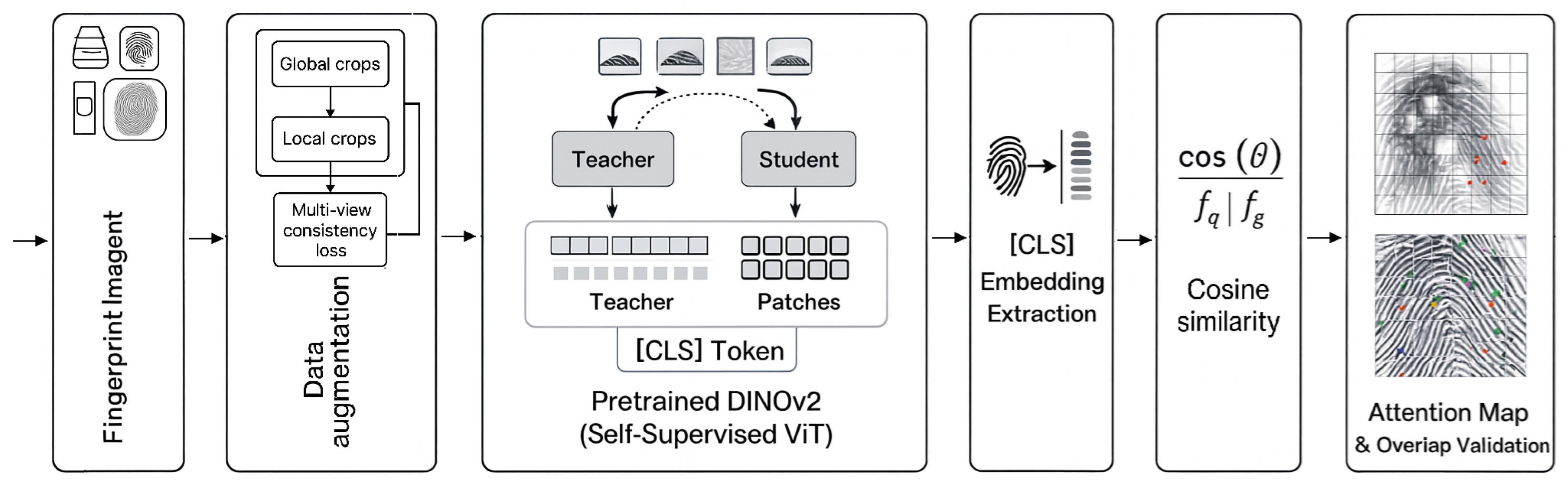
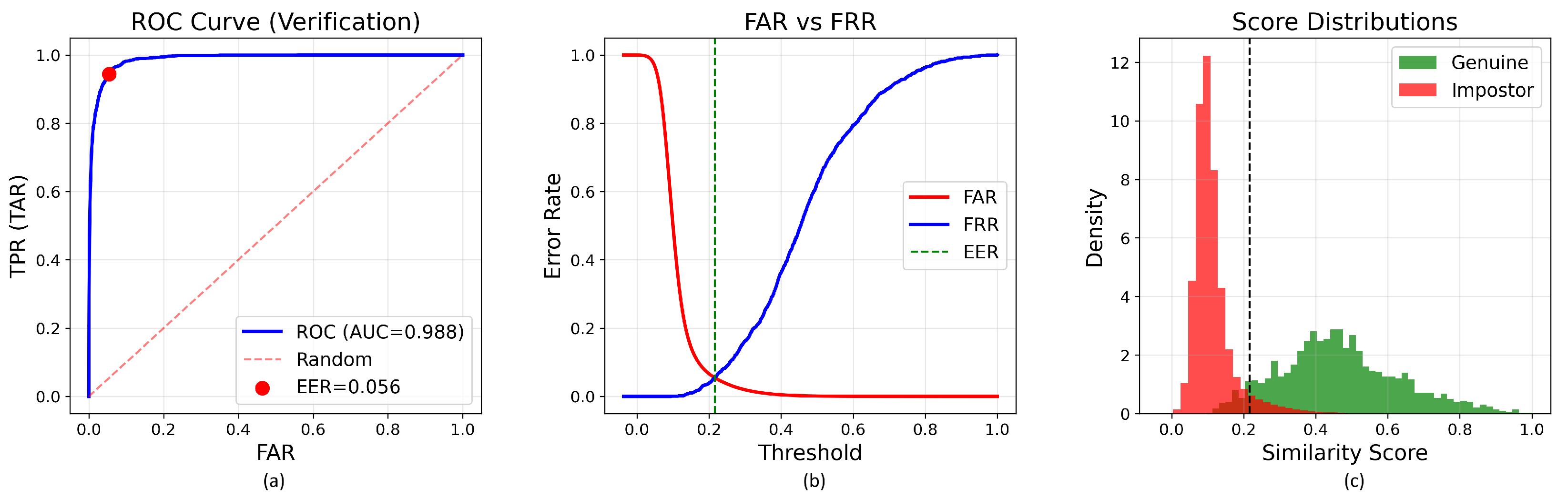
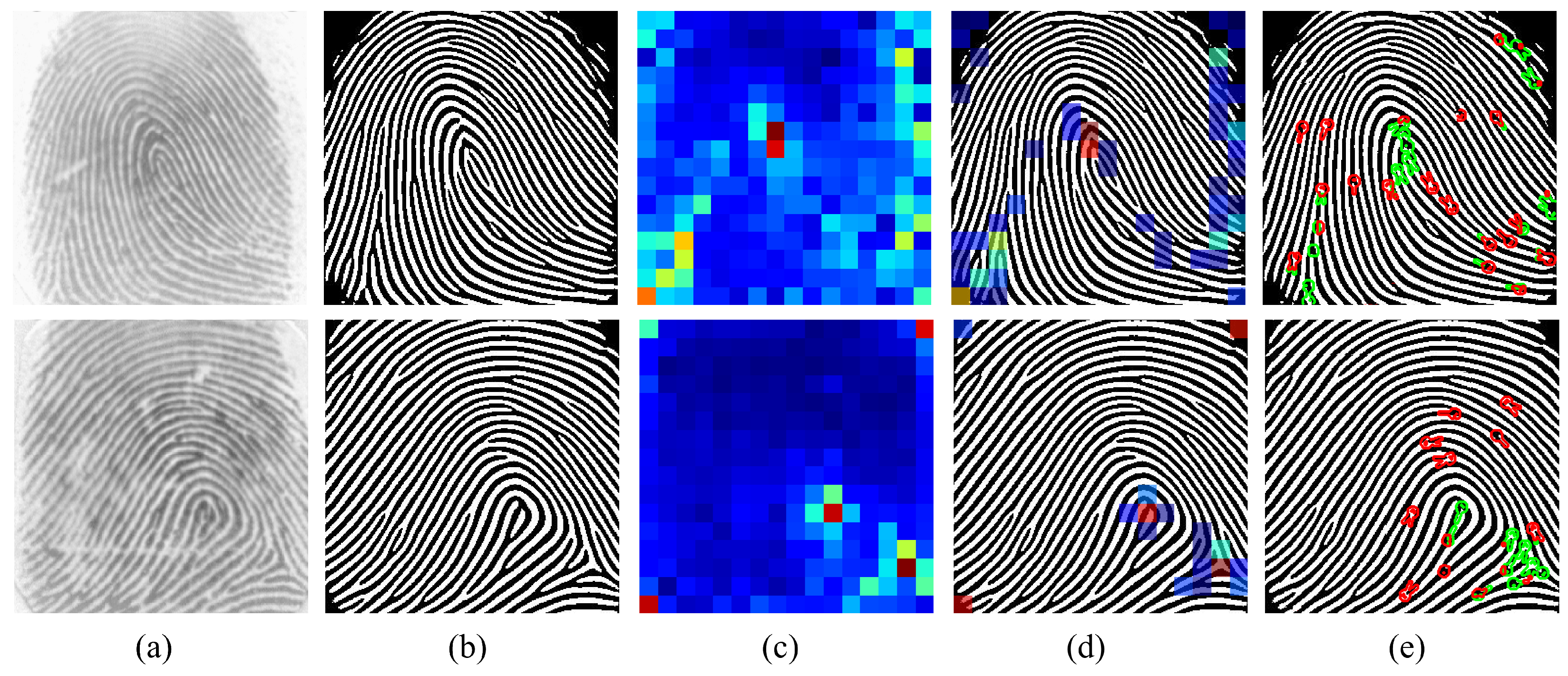
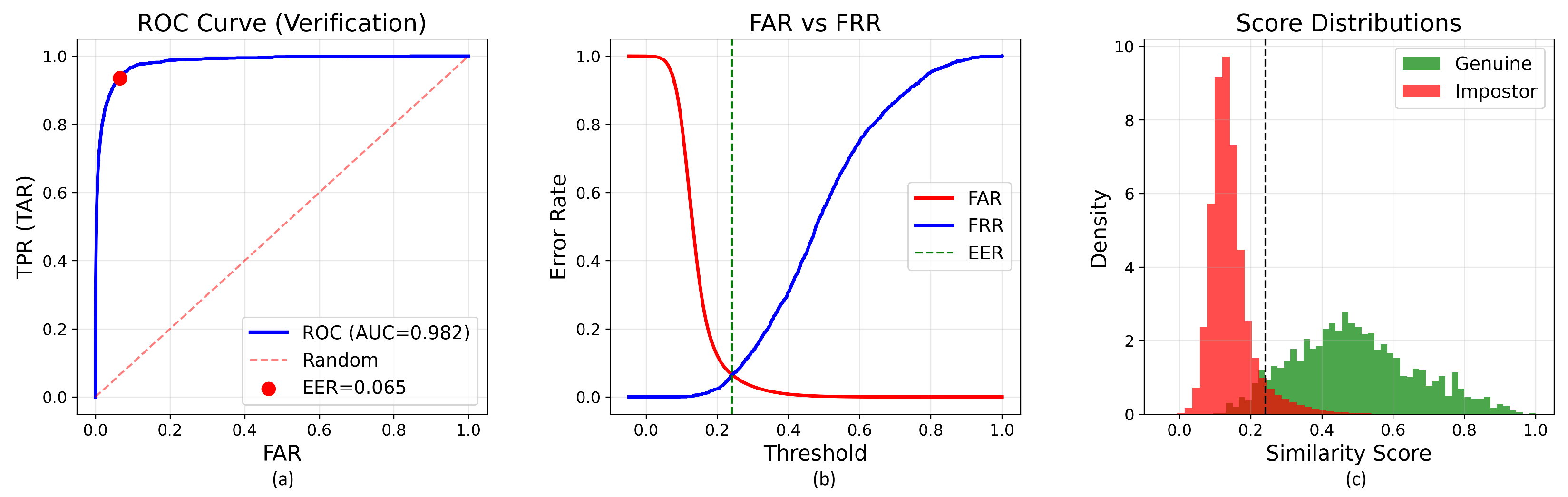
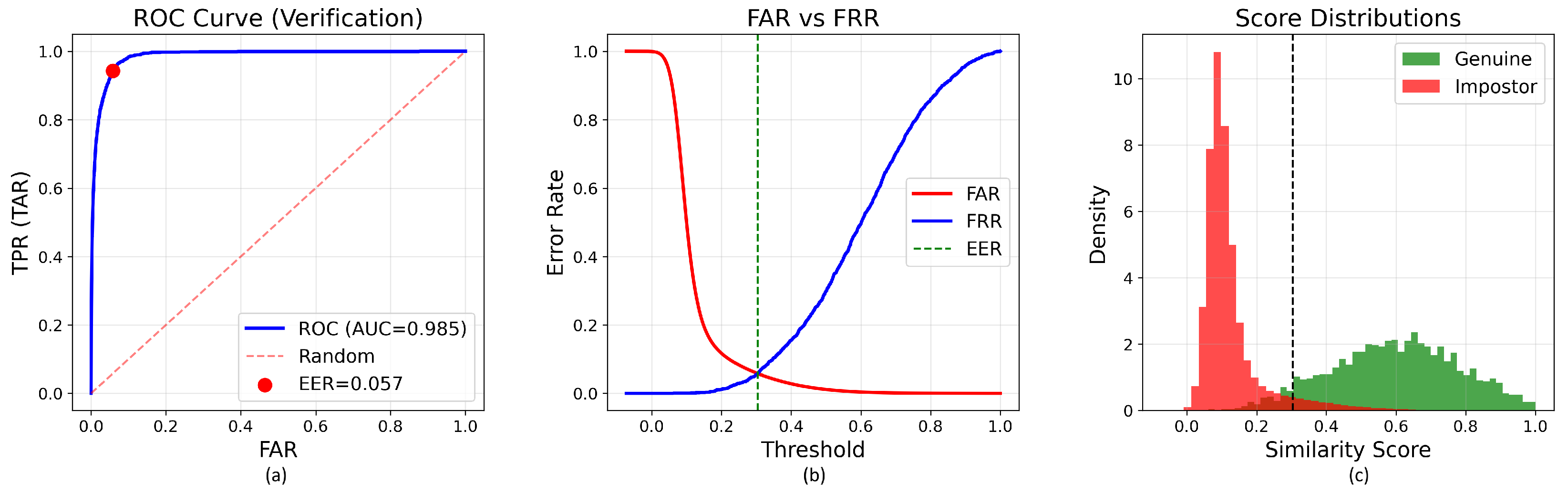
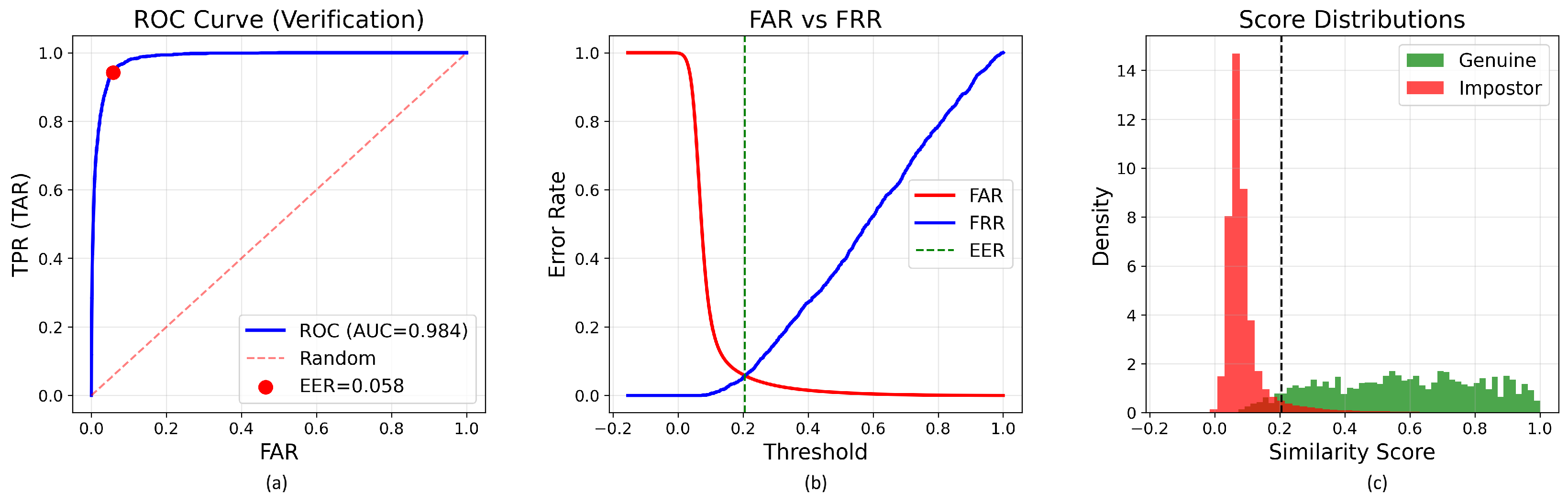
Fingerprint recognition systems have relied on fragile workflows based on minutiae extraction, which suffer from significant performance losses under real-world conditions such as sensor diversity and low image quality. This study introduces a fully minutiae-free fingerprint recognition framework based on self-supervised Vision Transformers. A systematic evaluation of multiple DINOv2 model variants is conducted, and the proposed system ultimately adopts the DINOv2-Base Vision Transformer as the primary configuration, as it offers the best generalization performance trade-off under conditions of limited fingerprint data. Larger variants are additionally analyzed to assess scalability and capacity limits. The DINOv2 pretrained network is fine-tuned using self-supervised domain adaptation on 64,801 fingerprint images, eliminating all classical enhancement, binarization, and minutiae extraction steps. Unlike the single-sensor protocols commonly used in the literature, the proposed approach is extensively evaluated in a heterogeneous testbed with a wide range of sensors, qualities, and acquisition methods, including 1631 unique fingers from 12 datasets. The achieved EER of 5.56% under these challenging conditions demonstrates clear cross-sensor superiority over traditional systems such as VeriFinger (26.90%) and SourceAFIS (41.95%) on the same testbed. A systematic comparison of different model capacities shows that moderate-scale ViT models provide optimal generalization under limited-data conditions. Explainability analyses indicate that the attention maps of the model trained without any minutiae information exhibit meaningful overlap with classical structural regions (IoU = 0.41 ± 0.07). Openly sharing the full implementation and evaluation infrastructure makes the study reproducible and provides a standardized benchmark for future research.
Keywords: fingerprint; recognition; vision transformer; deep learning; XAI; optical; capacitive; contactless; biometrics fingerprint; recognition; vision transformer; deep learning; XAI; optical; capacitive; contactless; biometrics