1. Introduction
Grouting technology is widely used in underground engineering, tunnel construction, geotechnical reinforcement, mine rehabilitation, and the repair of existing structures. By filling voids and fissures, grouting improves ground integrity, increases structural load-bearing capacity, and enhances impermeability [
1]. Grouting materials are the core component of grouting reinforcement and waterproofing systems. Their setting and hardening behavior, strength development, and long-term durability directly influence the effectiveness of structural reinforcement and operational safety. Under complex service conditions, including water-saturated soft ground and chloride-bearing environments, conventional cement grouts may not simultaneously meet the requirements for injectability, early-stage performance, volume stability, and long-term durability. Grouting materials must provide controllable setting times, low bleeding rates, and volume stability. After hardening, they should also exhibit sufficient strength, a limited interconnected pore network, and high resistance to chloride ion permeation. Therefore, achieving balanced fresh, mechanical, transport, and microstructure properties remains an important challenge in the design of grouting materials for complex service environments.
Cement-based grouting materials are widely used for backfilling behind tunnel linings, reinforcing rock fractures, sealing groundwater pathways, and repairing structures. Their widespread application is attributed to the availability of raw materials, relatively low cost, mature construction techniques, and good compatibility with rock, soil, and concrete matrices [
2,
3]. Despite their widespread use, conventional cement-based grouts suffer from several limitations in field applications. First, the setting and hardening behaviour of cement-based grout is strongly affected by the water-to-binder ratio, mineral composition, and admixture type. Excessively rapid setting reduces the available time for injection and placement, whereas excessively slow setting delays early strength development and reduces the efficiency of reinforcement operations. Second, a coarse and highly interconnected pore structure facilitates the transport of moisture and aggressive ions through the hardened matrix. This process may restrict strength development and reduce long-term durability. In water-saturated or chloride-corrosive environments, the transport of pore water and chloride ions can further impair the integrity and long-term stability of the hardened grout [
4]. Therefore, the optimisation of cement-based grouting materials should not focus on a single performance indicator. Setting behaviour, bleeding resistance, mechanical properties, volume stability, chloride ion penetration resistance, and microstructural evolution should instead be considered together.
Fly ash, an industrial by-product and widely used supplementary cementitious material, has been extensively incorporated into cement-based materials. It primarily consists of oxides such as SiO
2, Al
2O
3, and CaO, and exhibits potential pozzolanic activity [
5]. In cement-based grouting systems, fly ash affects fresh and hardened properties through age-dependent physical and chemical mechanisms. At early ages, it primarily acts through dilution, particle filling, and morphological effects. These effects influence the setting behaviour, bleeding resistance, and early strength development of the grout. At later ages, reactive siliceous and aluminous phases in fly ash can react with Ca(OH)
2 produced by cement hydration. The additional C-S-H gel and aluminosilicate hydrates formed through these pozzolanic reactions contribute to pore refinement and densification of the hardened paste [
6,
7,
8]. Furthermore, partially replacing cement with fly ash reduces clinker consumption and may therefore lower carbon emissions and resource consumption, providing both environmental and economic benefits [
9,
10,
11]. Recent studies have further demonstrated that fly ash can be processed into lightweight aggregates for internal curing applications, where its porous structure enables water storage and release to promote sustained hydration and refine the pore structure of cementitious materials [
12]. This indicates that the beneficial effects of fly ash in cementitious systems can arise from both chemical (pozzolanic) and physical (moisture regulation) pathways. However, a higher fly ash content is not always advantageous. An appropriate amount of fly ash can optimise particle packing and promote later-age microstructural development. Excessive fly ash replacement lowers the clinker fraction in the cementitious system, thereby hindering the generation of early-age hydrates. When the amount of Ca(OH)
2 available in the system is insufficient, the later-age pozzolanic reaction of fly ash may also be restricted. This can result in delayed strength development and limited refinement of the pore structure. It is therefore necessary to determine an appropriate fly ash content for cement-based grouting materials by jointly considering setting time, mechanical properties, and pore structure.
In addition to mineral admixtures, functional chemical admixtures provide another means of regulating the performance of cement-based materials. Rust inhibitors are commonly incorporated into cementitious systems to mitigate chloride-induced corrosion of embedded steel [
13]. Depending on their chemical composition, these admixtures may adsorb onto cement particles or hydration products, alter the chemistry of the pore solution, and affect hydration kinetics [
14,
15]. In cement-based grouting materials, rust inhibitors may therefore influence not only corrosion protection but also early hydration and the pore structure of the hardened matrix [
16,
17,
18]. Certain hydrophobic or carboxylate-based functional components tend to attach to the surface of cement grains and hydrate phases. This adsorption may delay early hydration and alter setting behaviour [
19,
20,
21,
22]. Their reported film-forming and filling effects may also affect pore connectivity and the transport of water and chloride ions through the hardened grout [
23,
24]. Consequently, rust inhibitors may exert two competing effects in grouting materials. On the one hand, they may delay setting and early hydration. On the other hand, an appropriate dosage may contribute to later-stage strength development and transport resistance by modifying the structure of the hardened matrix. However, these mechanisms cannot be confirmed solely from macroscopic performance tests. Further investigation combining macroscopic measurements with pore-structure and microstructural characterisation is therefore required.
In chloride-bearing environments, chloride ion transport is a key factor affecting the long-term durability of cementitious materials. Rust inhibitors are widely used in reinforced concrete structures to delay or suppress chloride-induced reinforcement corrosion [
25,
26,
27]. Although the grout matrix itself does not undergo reinforcement corrosion, its chloride transport properties can influence the protection provided to adjacent steel components and structures. The incorporation of rust inhibitors may affect chloride transport by altering hydration development, pore-solution chemistry, and resistance to ionic migration. Previous studies have reported that internally added rust inhibitors can, under certain conditions, reduce the chloride ion diffusion coefficient and improve the durability of cementitious materials [
28,
29]. However, when rust inhibitors are combined with fly ash and anti-corrosion admixtures, their effects on setting time, strength development, pore structure, and chloride ion transport may be complementary, antagonistic, or largely independent. The underlying relationships remain unclear. In particular, the relative contributions of the three components under a fixed water-to-binder ratio and comparable initial workability have not been sufficiently characterised.
Taken together, fly ash, anti-corrosion admixtures, and rust inhibitors may influence cement hydration, pore-structure development, and transport behaviour through different but potentially interacting pathways. However, existing studies have largely focused on individual mineral or chemical admixtures. Limited information is available regarding their combined effects on setting behaviour, bleeding resistance, mechanical properties, shrinkage, chloride penetration resistance, and multiscale microstructure. These relationships are particularly unclear when the water-to-binder ratio is fixed and initial workability is maintained within a comparable range. It also remains uncertain whether changes in macroscopic performance can be consistently related to the evolution of hydration products and the interconnected pore network.
To fill this gap, the novelty of this work is threefold. First, unlike previous studies that typically examine fly ash, rust inhibitors, or anti-corrosion admixtures in isolation, this work systematically investigates their combined effects in cement-based grouting materials using a well-designed L9 orthogonal array under a constant water-to-binder ratio and controlled initial flowability, thereby enabling the relative contribution of each factor to be distinguished and potential interactions to be inferred. Second, rather than relying on a single microscopic technique, this study employs multi-scale correlative characterization to link macroscopic performance (setting, mechanical strength, and chloride transport resistance) with microstructural evolution across different length scales. Third, this work provides a quantitative basis for preliminary mix optimization in chloride-rich and water-saturated environments, yielding specific dosage ranges for the ternary system that have not been previously reported for this particular combination of admixtures.
To obtain grouting materials with balanced fresh and hardened properties for water-rich and chloride-laden environments, the present work employed an L9(34) orthogonal array at a fixed water-to-binder ratio of 0.5. The performance parameters examined included setting time, bleeding rate, mechanical strengths, drying shrinkage, and chloride penetration resistance, with fly ash (10–30%), rust inhibitor (1–3%), and anti-corrosion admixture (2–6%) as the main variables. To reduce the influence of workability variations on the hardened properties, the superplasticizer dosage was adjusted to maintain comparable initial flowability among the mixtures. This procedure minimised potential confounding effects associated with differences in initial flowability. Low-field nuclear magnetic resonance (LF-NMR), X-ray computed tomography (X-CT), scanning electron microscopy (SEM), and X-ray diffraction (XRD) were used to characterise porosity, pore-size distribution, hydration product morphology, and phase composition. The study aimed to evaluate the main effects of the three investigated components, establish relationships between macroscopic properties and microstructural characteristics, and identify a mixture with balanced fresh and hardened performance. The findings provide an experimental basis for designing cement-based grouting materials with controllable setting behaviour, sufficient early-age strength, low shrinkage, a limited interconnected pore network, and improved resistance to chloride ion penetration in complex service environments.
3. Results and Discussion
3.1. Setting Time and Bleeding Rate
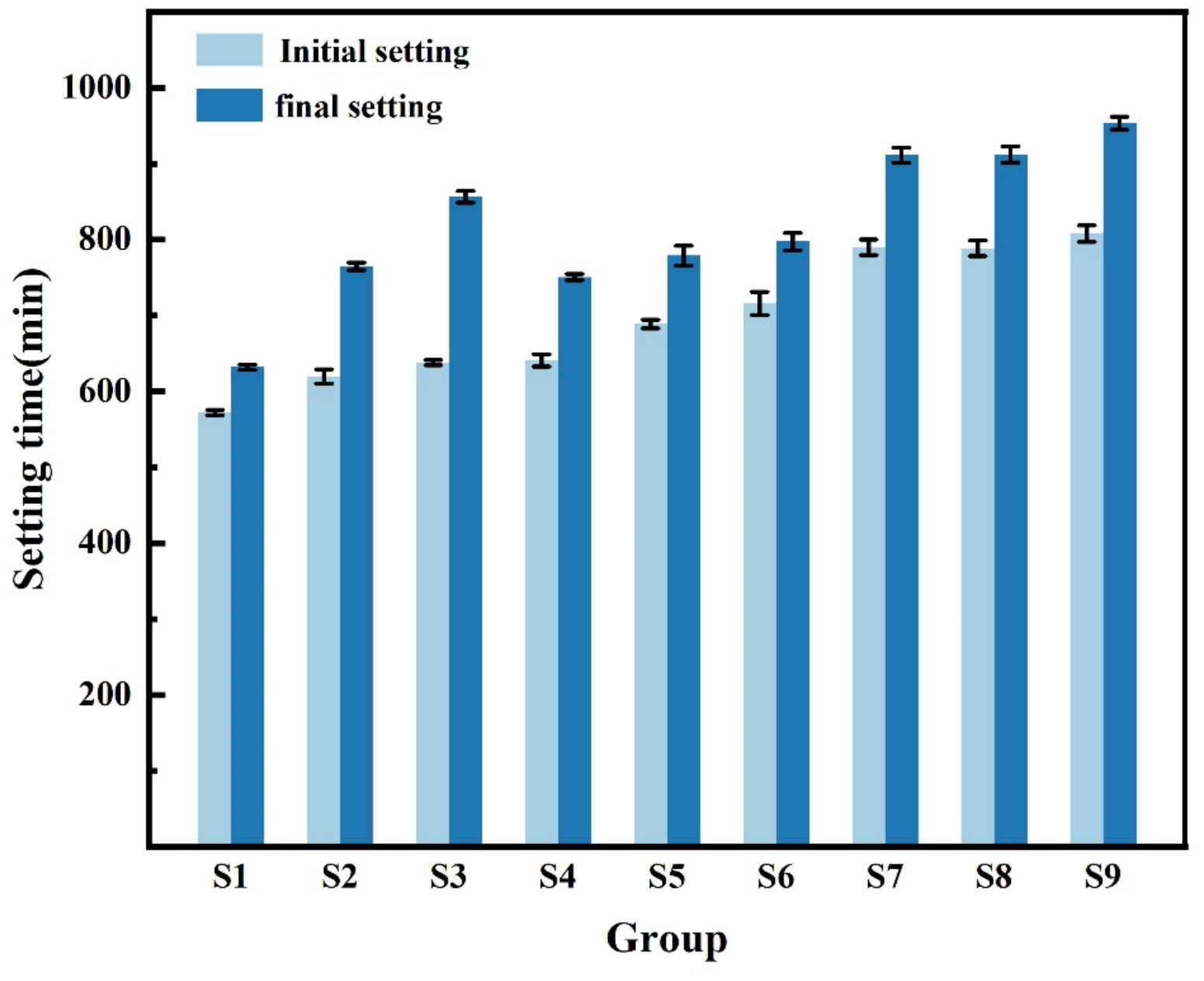
Figure 1 presents the initial and final setting times of nine formulations included in the orthogonal experimental design. The trends shown in
Figure 1 suggest that the fly ash content had the greatest influence on setting behaviour among the investigated factors. Raising the fly ash content from 10% to 30% prolonged the initial setting time from 576 to 615 min, corresponding to an increase of 6.77%. At the same fly ash content, the setting time of the grout generally increased with increasing anti-corrosion admixture dosage. By contrast, changes in the rust inhibitor content had a relatively minor effect on setting time. Therefore, within the investigated dosage ranges, the setting behaviour was more sensitive to the fly ash and anti-corrosion admixture contents than to the rust inhibitor content.
The retarding effect of fly ash may be primarily attributed to dilution and physical effects. When fly ash replaces cement on a mass basis, the proportion of clinker phases with high early hydration activity, particularly C3A and C3S is reduced. This dilution decreases the early hydration rate and slows the formation and interconnection of hydration products, thereby delaying the development of a continuous solid network. In addition, the micro-aggregate filling effect of fly ash modifies particle packing and water distribution within the fresh grout. The adsorption of dissolved ions and admixture molecules on fly ash surfaces may also affect the early hydration reactions. These combined effects can extend the induction period and delay setting.
The retarding effect of the anti-corrosion admixture may be related to its molecular structural characteristics. This type of admixture has an amphiphilic structure, with hydrophilic groups and hydrophobic segments linked to the same molecular backbone via covalent bonds. The hydrophilic groups tend to attach preferentially to the interface of clinker grains and the nuclei of hydrated phases at early ages. This adsorption may be particularly pronounced on C3A because of its high early reactivity and surface activity. The hydrophobic segments then extend towards the pore solution, forming an adsorption layer around cement particles and hydration products. This adsorbed film may impede the migration of aqueous and ionic species towards the interface of unhydrated clinker grains. It may also retard the formation of hydrate phases via nucleation and crystal growth at early ages, which in turn prolongs the induction period and delays the start and completion of setting. As the dosage of the anti-corrosion admixture increases, its surface coverage may increase, strengthening the barrier effect and producing a more pronounced retardation of setting.
It should be noted that the initial setting times of the investigated mixtures range from approximately 576 to 615 min, which are considerably longer than those of typical neat cement grouts. This extended setting behaviour is primarily associated with the retarding effects of fly ash and the anti-corrosion admixture, as discussed above. For grouting operations that require extended pumping and injectability times, such as long-distance transport, large-volume backfilling, or grouting in highly fractured formations, this prolonged setting window is advantageous by reducing the risk of premature blockage and ensuring sufficient time for complete void filling. For applications that demand rapid strength development, such as emergency repairs, water-sealing of active inflows, or early load-bearing support, the setting times observed in this study can be tailored to field requirements by incorporating accelerators or reducing the dosages of the retarding components. The present results thus provide a baseline understanding of the setting characteristics of this ternary system, while formulation adjustments should be made according to specific project needs.
The 24 h free bleeding rate of all nine grout formulations were 0%. This result satisfied the requirements specified in GB/T 50448-2015 [
37]. The absence of bleeding indicates that the prepared grouts exhibited good water-retention capacity and resistance to segregation under the test conditions. The observed bleeding resistance may be associated with the combined effects of fly ash and the anti-corrosion admixture. The micro-aggregate and filling effects of fly ash improve the particle-packing characteristics of the cementitious system. The effect may increase the packing density and plastic viscosity of the grout, thereby restricting the migration of free water. The anti-corrosion admixture may also modify particle–water interactions and the rheological behaviour of the fresh grout, promoting a more uniform distribution of water throughout the mixture. Together, these effects reduce particle settlement and water segregation, thereby maintaining the homogeneity and stability of the fresh grout. The absence of bleeding also provides favourable conditions for the uniform development of mechanical properties and resistance to fluid penetration after hardening.
3.2. Analysis of Mechanical Properties
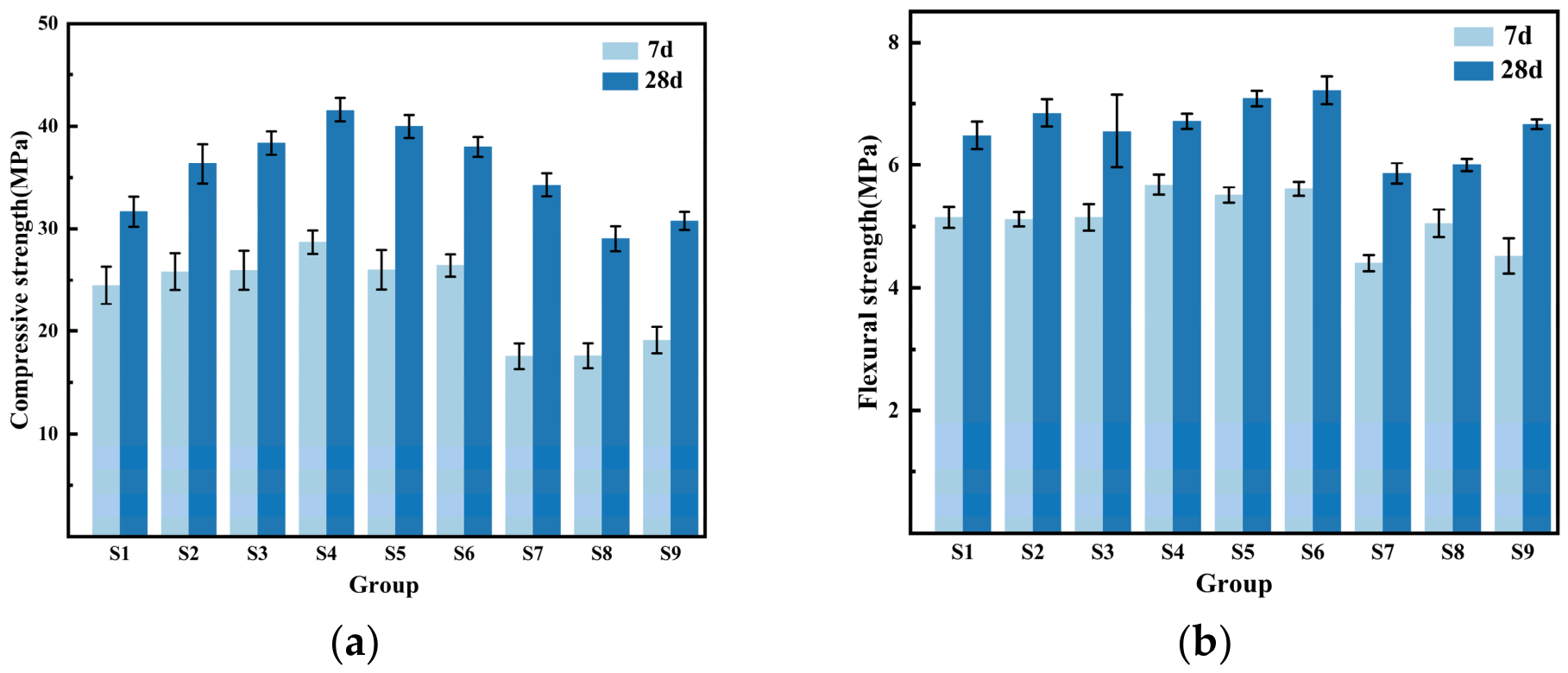
Figure 2 shows the flexural and compressive strengths of the nine grout formulations at different ages. As shown in
Figure 2, the effect of fly ash content on strength development exhibits marked age-dependent behaviour. For the 28-day compressive strength, the groups containing 20% fly ash (Groups S4–S6) achieved higher values than those containing 10% or 30% fly ash. The test groups with the highest fly ash content (Groups S7–S9, 30%) showed lower strength values at all ages. At 7 days, the differences in flexural strength between the groups were relatively small. By 28 days, however, the groups containing 20% fly ash generally exhibited higher flexural strength, whereas the strength development of the groups containing 30% fly ash remained limited. These results suggest that the effect of fly ash content on mechanical properties became more pronounced with increasing curing age. The aforementioned patterns of strength development can be explained by the physical effects of fly ash and the temporal evolution of the pozzolanic reaction. At early ages, particularly within the first 7 days, the effects of particle-packing fly ash are mainly associated with particle filling and cement dilution. The former can improve particle packing and contribute to the development of a denser matrix. By contrast, the latter reduces the formation of early-age hydration products by lowering the relative content of cement clinker, particularly C
3S and C
3A, in the system. Under the combined influence of these two effects, early-age strength generally decreases as the fly ash content increases [
6].
Between 7 and 28 days, the reactive SiO
2 and Al
2O
3 in fly ash react pozzolanically with Ca(OH)
2 liberated during cement hydration, yielding additional C-S-H gel with a relatively low calcium-to-silica ratio, together with aluminosilicate hydration products [
38,
39]. The resulting hydration products gradually fill the pores and refine the pore structure, thereby increasing the density of the hardened paste. This process may partly compensate for the loss of early-age strength and contribute to the continued development of both compressive and flexural strengths. However, when the fly ash content reached 30%, the cement clinker content was substantially reduced. This diminished the generation of hydrates during the initial stage, which was in line with the extended setting time and the decreased early-age strength. At later stages, the reduced amount of cement also limited the production of Ca(OH)
2 available for the pozzolanic reaction. Consequently, the contribution of the pozzolanic reaction may have been insufficient to compensate fully for the dilution effect by 28 days. Therefore, under the conditions of this experiment, a fly ash content of 20% provided the most favorable balance between the dilution, filling, and later-age pozzolanic effects among the three investigated contents.
In addition to fly ash, the results suggest that the dosage of the anti-corrosion admixture may also affect later-stage strength. At the same fly ash content, Group S4, which contained 6% anti-corrosion admixture, exhibited the highest 28-day compressive strength, with a mean value of 41.6 MPa. This result indicates that an appropriate dosage of the anti-corrosion admixture may contribute to strength development. The observed improvement may be associated with changes in the pore structure and the formation of hydration products. First, the film-forming and filling actions of the hydrophobic components in the admixture may reduce capillary-pore connectivity in the hardened paste. This effect could restrict crack initiation and propagation along interconnected pores under loading. Second, the admixture may affect the nucleation and crystallisation of hydration products, promoting a more compact matrix architecture and thus improving the overall mechanical performance [
20]. These interpretations are further evaluated in conjunction with the pore-structure and microstructural results presented in the following sections.
The 28-day drying shrinkage values of all nine test groups remained close to zero and complied with the requirements of GB/T 50448-2015. These results indicate that the prepared grouting materials exhibited limited drying shrinkage and satisfactory volumetric stability. The low shrinkage may be associated with the combined influence of fly ash and the anti-corrosion admixture through physical restraint and possible chemical compensation. At the physical level, the microfiller effect of fly ash may improve particle packing and reduce the capillary stress generated by moisture loss. Unreacted fly ash particle may also act as relatively rigid inclusions and provide limited restraint against shrinkage deformation. At the chemical level, the anti-corrosion admixture may contribute to the formation of small amounts of expansive hydration products, including ettringite-type crystals. These products could partially compensate for the shrinkage associated with cement hydration and moisture loss. The rust inhibitors may have affected shrinkage indirectly by influencing early hydration and matrix development. For mixtures that developed higher early-age strength, the resulting increase in matrix stiffness may have improved resistance to shrinkage deformation and limited microcrack development.
3.3. Resistance to Chloride Ion Permeation
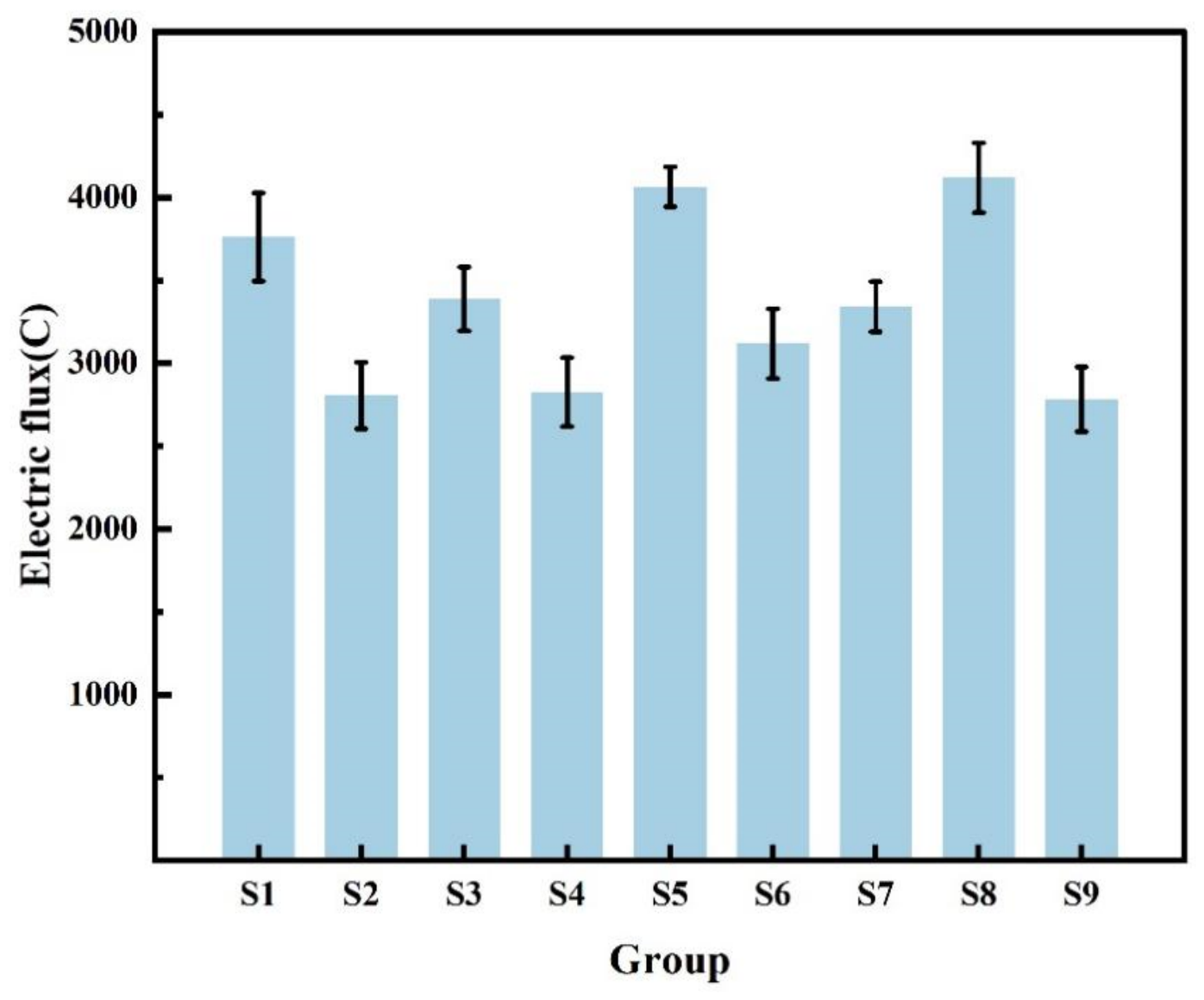
The charge-passed results from the electrical flux conducted at 28 days for the nine grout mixtures are shown in
Figure 3. Within the framework of this test, a lower charge passed generally indicates greater resistance to chloride ion permeation. It should be noted that the electrical flux primarily reflects the ionic transport resistance of the hardened matrix rather than the electrochemical corrosion rate of embedded steel. However, the electrical flux (RCPT) method has certain limitations, as the results may be influenced by pore solution conductivity and the presence of chemical admixtures. In this study, all specimens were tested under identical conditions (same saturation treatment, same voltage, and same testing duration), so the differences in electrical flux among the nine mixtures predominantly reflect variations in their resistance to ionic transport. Therefore, despite its limitations, the RCPT method remains effective for the relative comparison of chloride penetration resistance within the orthogonal design. As shown in
Figure 3, the groups containing 6% anti-corrosion admixture (Groups S2, S4 and S9) exhibited comparatively low charge-passed values. Among them, Group S9, containing 30% fly ash, 3% rust inhibitor, and 6% anti-corrosion admixture, recorded the lowest charge passed, with a value of 2783 C. The reduction in charge passed may be associated with both chemical interactions and physical changes in the hardened matrix. Previous studies suggest that the active components of the anti-corrosion admixture may interact with free chloride ions or calcium-bearing phases, thereby reducing the mobility of ions within the pore solution [
23]. The admixture may also modify pore connectivity and tortuosity during hydration, thereby increasing resistance to ionic transport. Carboxylate-containing components may interact with calcium ions and affect the development of the hardened matrix [
40]. Although these improvements in chloride penetration resistance do not constitute direct electrochemical protection of embedded steel, they directly reduce the flux of chloride ions migrating towards the steel surface. Since chloride accumulation at the steel surface is a prerequisite for corrosion initiation, the enhanced matrix barrier property provides an indirect but important contribution to corrosion protection. Therefore, the chloride penetration resistance evaluated in this study represents a meaningful matrix-level indicator of the anticorrosion potential of grouting materials. The rust inhibitors also affect the measured charge passed by altering the pore-solution chemistry and surface interactions within the pore network. Its active components adsorb onto solid surfaces and modify the local charge environment, thereby influencing ionic migration [
29]. Under the investigated conditions, the effect of the rust inhibitor on the charge passed appeared less pronounced than that of the anti-corrosion admixture. Fly ash contributes to resistance to chloride ion penetration through particle filling and subsequent pozzolanic reactions. Its reactive siliceous and aluminous phases can react with Ca(OH)
2 produced by cement hydration to form additional C-S-H gel and aluminosilicate hydration products. These products may refine the pore structure, reduce pore connectivity, and increase the tortuosity of ion transport pathway. However, the contribution of the pozzolanic reaction may not have fully developed by 28 days.
3.4. Analysis of the Pore Structure of Grouting Materials
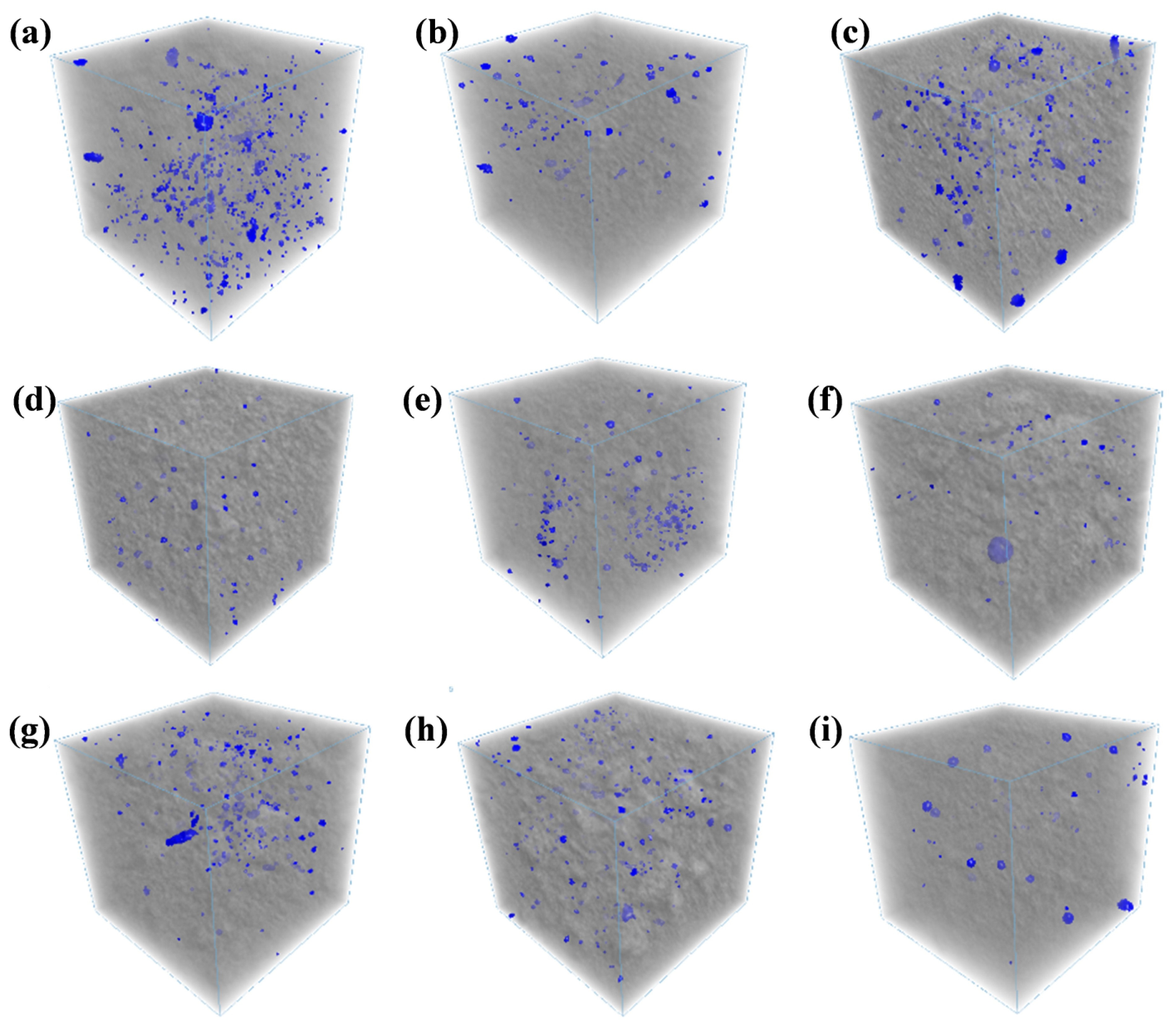
Figure 4 shows three-dimensional X-CT reconstructions of the grouting materials with different mix proportions at 28 days. Compared with the other groups, Groups S4 and S5 exhibited fewer visually identifiable large pores and a more homogeneous spatial distribution of the segmented pores. The spatial distribution of large pores in the X-CT reconstructions correlates well with both mechanical properties and chloride penetration resistance. Mixtures with fewer and more uniformly distributed large pores, such as Groups S4 and S5, exhibited higher strengths and lower chloride permeability (
Figure 2 and
Figure 3). Conversely, the presence of a large pore near the centre of the specimen in Group S6 (
Figure 4f) was associated with reduced mechanical performance, as such pores act as stress concentration sites under loading. These observations are consistent with the quantitative pore structure data in
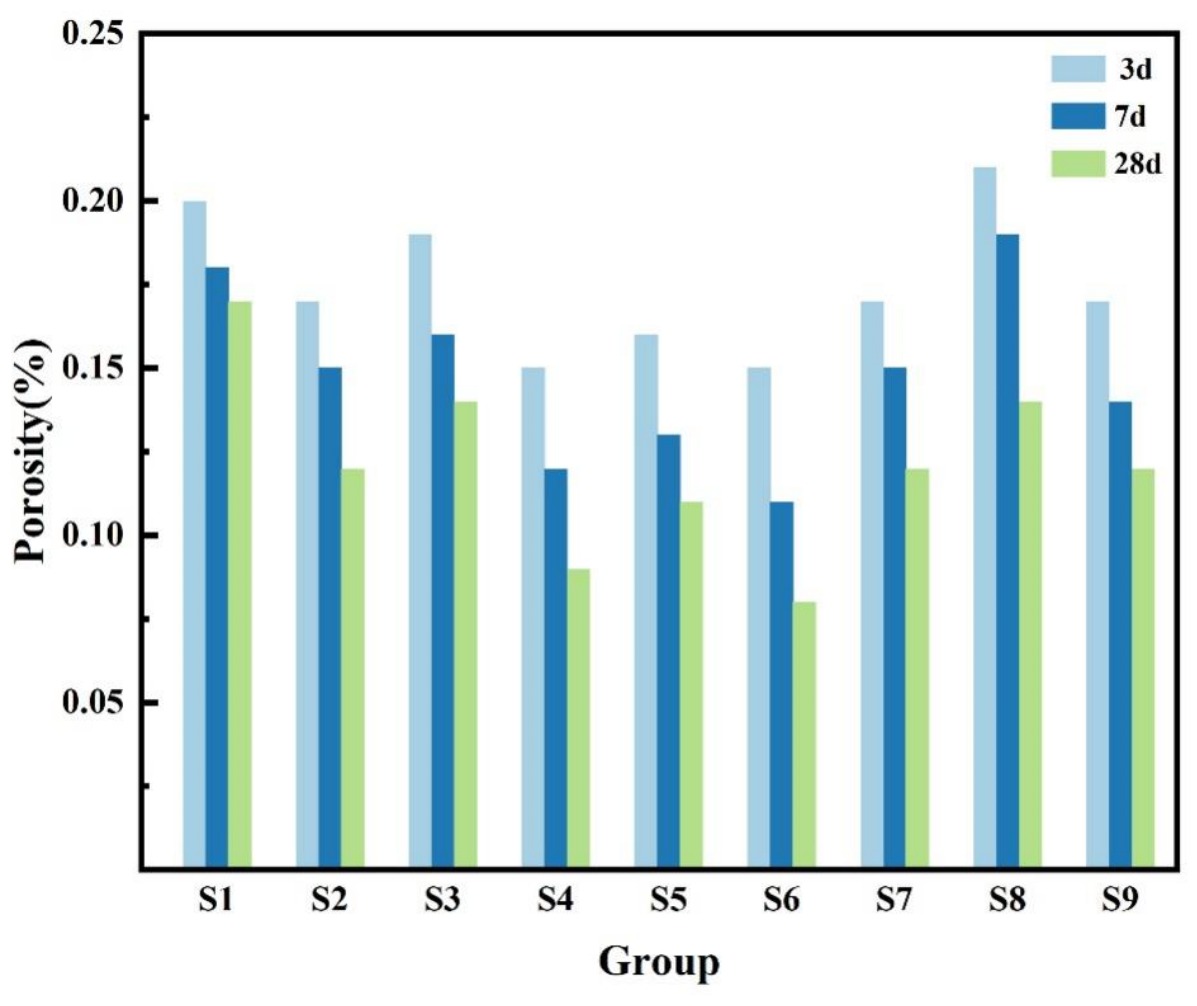
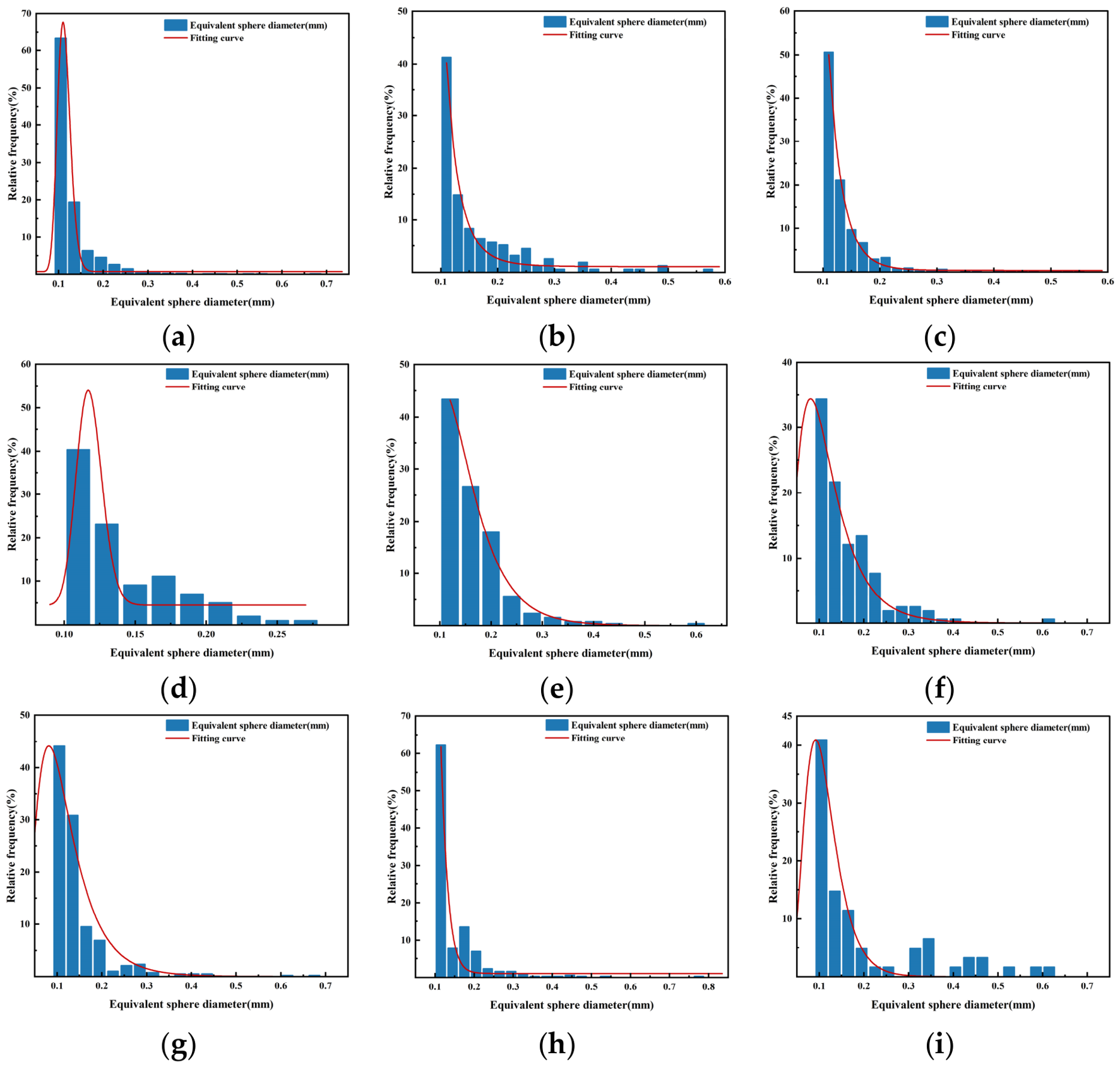
Figure 5 and
Figure 6, confirming that pore refinement, particularly the reduction in large capillary pores, is key to improving both the mechanical strength and durability of the grouting materials.
Figure 5 and
Figure 6 show the porosity and pore-size distribution, respectively, of grouting materials with different mix proportions.
As shown in
Figure 5 and
Figure 6, the porosity of all groups decreased with curing age. Groups S4, S5, and S6 generally exhibited lower porosity than the other groups. The three groups containing 6% anti-corrosion admixture (Groups S2, S4 and S9) also exhibited relatively low porosity, although the effects of the other mixture variables should also be considered. The pore-size distribution results further indicate that Groups S4, S5, and S6 contained relatively small proportions of large pores and showed more concentrated pore-size distributions.
These patterns of pore-structure evolution may be attributed to the particle-filling and subsequent pozzolanic reaction of fly ash. At an appropriate content of 20%, fly ash particles fill voids between cement particles and improve particle packing through the microfiller effect. At later ages, the reactive components of fly ash can react with Ca(OH)2 generated by cement hydration to form additional C-S-H gel. These products may progressively fill larger pores and refine the pore structure, resulting in a more homogeneous pore network.
By contrast, when the fly ash content reached 30%, the higher replacement level substantially reduced the proportion of cement clinker and limited the formation of early hydration products. At later ages, the lower production of Ca(OH)2 may also have restricted the extent of the pozzolanic reaction by 28 days. Consequently, the formation of additional hydration products may have been insufficient to compensate fully for the dilution effect, resulting in less effective pore refinement and a greater proportion of large pores.
3.5. Microscopic Morphology and Composition of Hydration Products of Grouting Materials
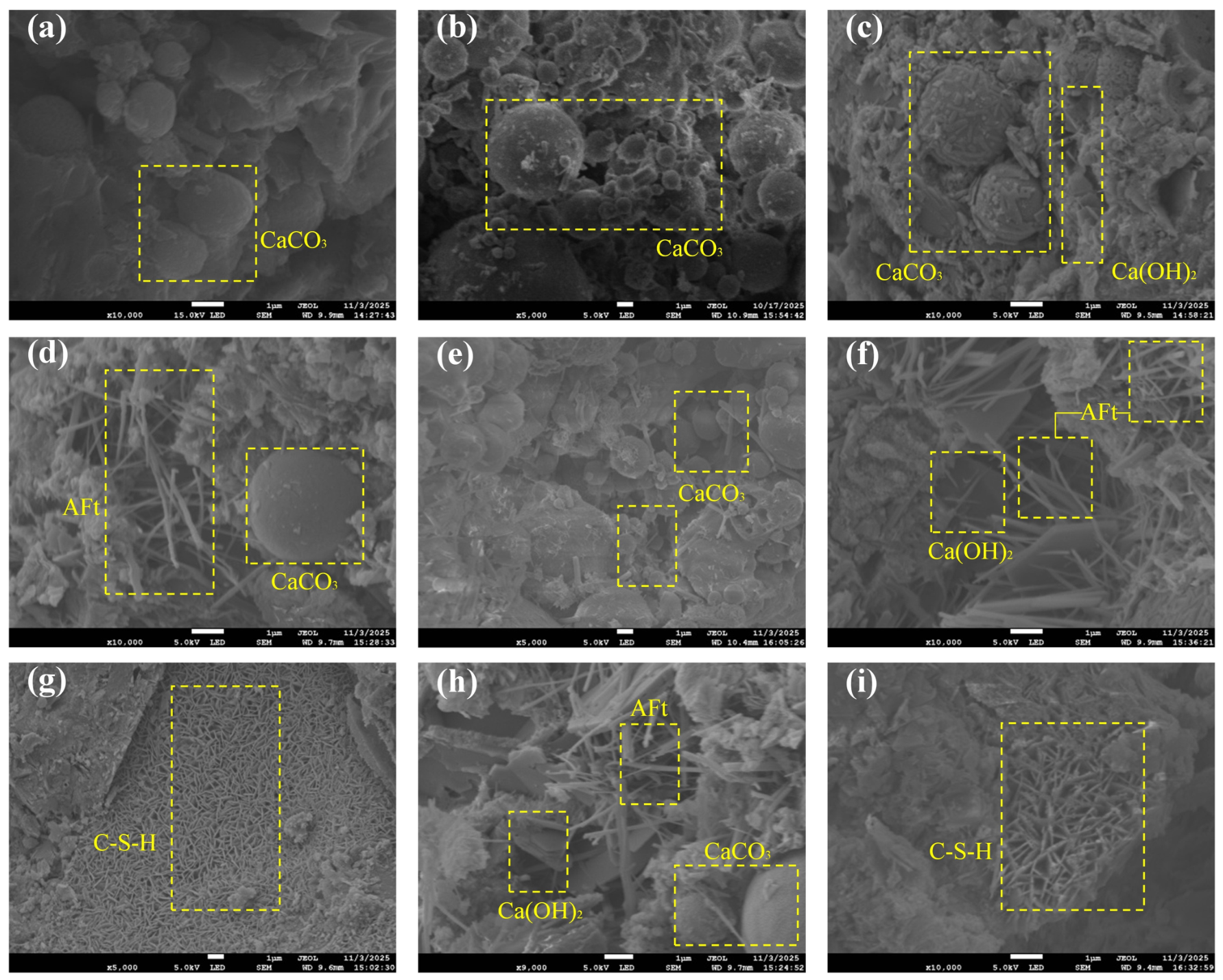
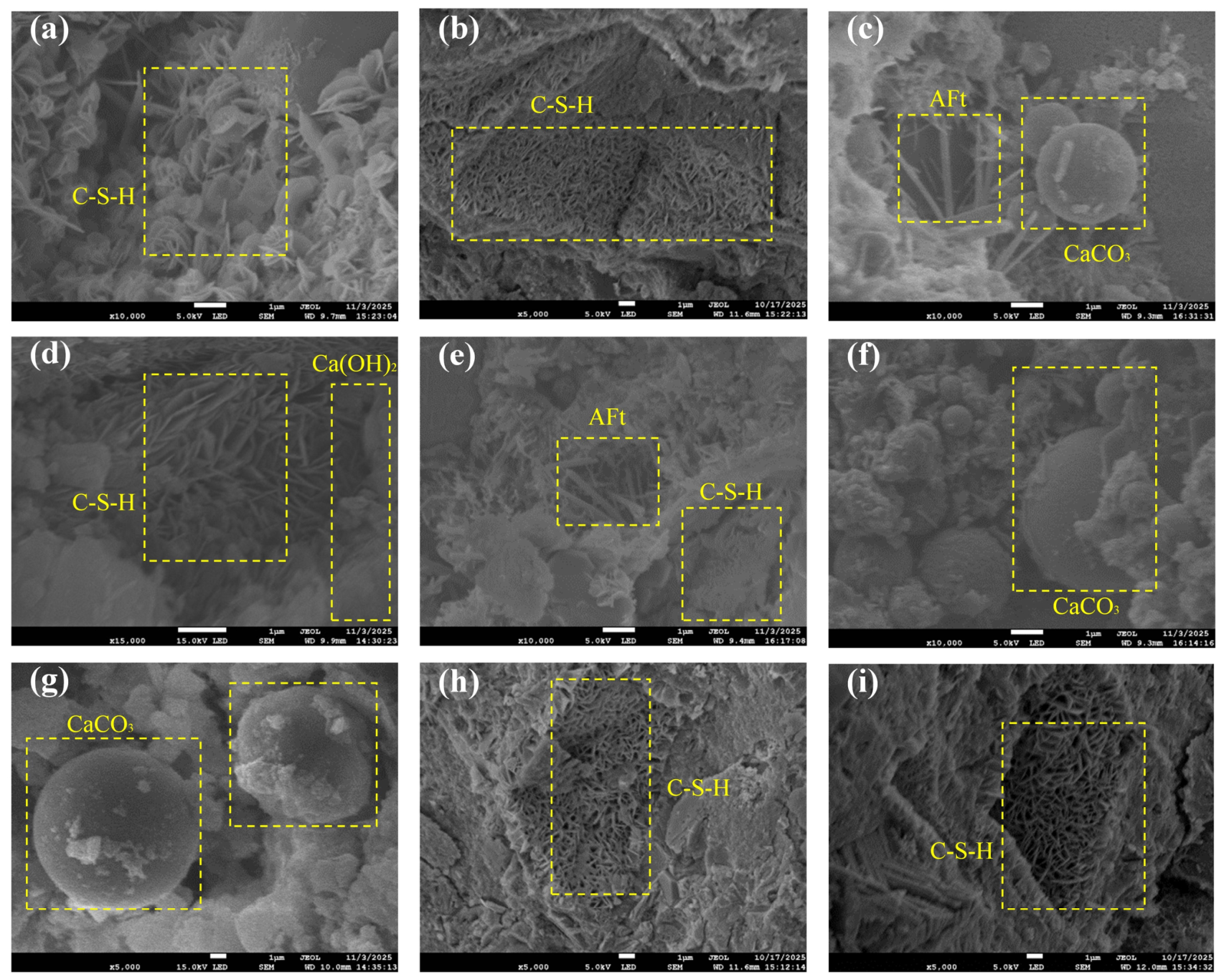
Figure 7 and
Figure 8 show the SEM morphologies of the grouting materials with different mix proportions at 7 and 28 days, respectively. At 7 days, the matrices were at an early stage of hydration, and clear differences in the morphology and distribution of hydration products were observed among the mixtures. Needle-like and short rod-like crystals were widely distributed within the matrix. Based on their morphology and the corresponding XRD patterns, these crystals were assigned to ettringite (AFt). They formed a relatively loose framework around the unreacted particles. As the fly ash content increased, the amount of needle-like AFt appeared to decrease. This trend may be related to the dilution of cement clinker and the limited early-age reactivity of fly ash. The C-S-H gel exhibited a fibrous or reticulated morphology and contributed to bonding among the solid particles and early matrix development. A high fly ash replacement level reduced the amount of early hydration products and resulted in a less compact matrix. By comparison, the mixtures containing more anti-corrosion admixture showed more continuous gel-like products and fewer visible voids. This observation suggests that the admixture affected early hydration and microstructural development. Spherical particles were also observed in some regions. Overall, the 7-day microstructure was governed mainly by early cement hydration, the dilution and filling effects of fly ash, and the influence of the anti-corrosion admixture on matrix development. At this age, the contribution of fly ash was primarily associated with particle filling and cement dilution because its pozzolanic reaction had not yet developed fully.
At 28 days, the matrices became denser, and the gel-like hydration products formed a more continuous network. These changes were consistent with continued cement hydration and the progressive pozzolanic reaction of fly ash. Fine needle-like products remained visible around some fly ash particles. Plate-like products were observed in some mixtures with a relatively low fly ash content. Based on their morphology and the corresponding XRD patterns, these products were tentatively identified as Ca(OH)2. The C-S-H gel became more continuous and filled the spaces between hydration products and around the fly ash particles. The additional gel products formed through the pozzolanic reaction may have merged with those produced by primary cement hydration, thereby refining the local interfacial regions and densifying the matrix. The microstructural refinement was particularly evident in mixtures containing an appropriate fly ash content and anti-corrosion admixture dosage. This observation is consistent with their improved later-age strength, pore structure, and resistance to chloride ion penetration. The amount of spherical particles tentatively associated with CaCO3 appeared to decrease at 28 days, particularly in the mixtures with a high fly ash content. This trend may be related to the lower availability of Ca(OH)2 and the reduced accessibility of CO2 within the refined pore network.
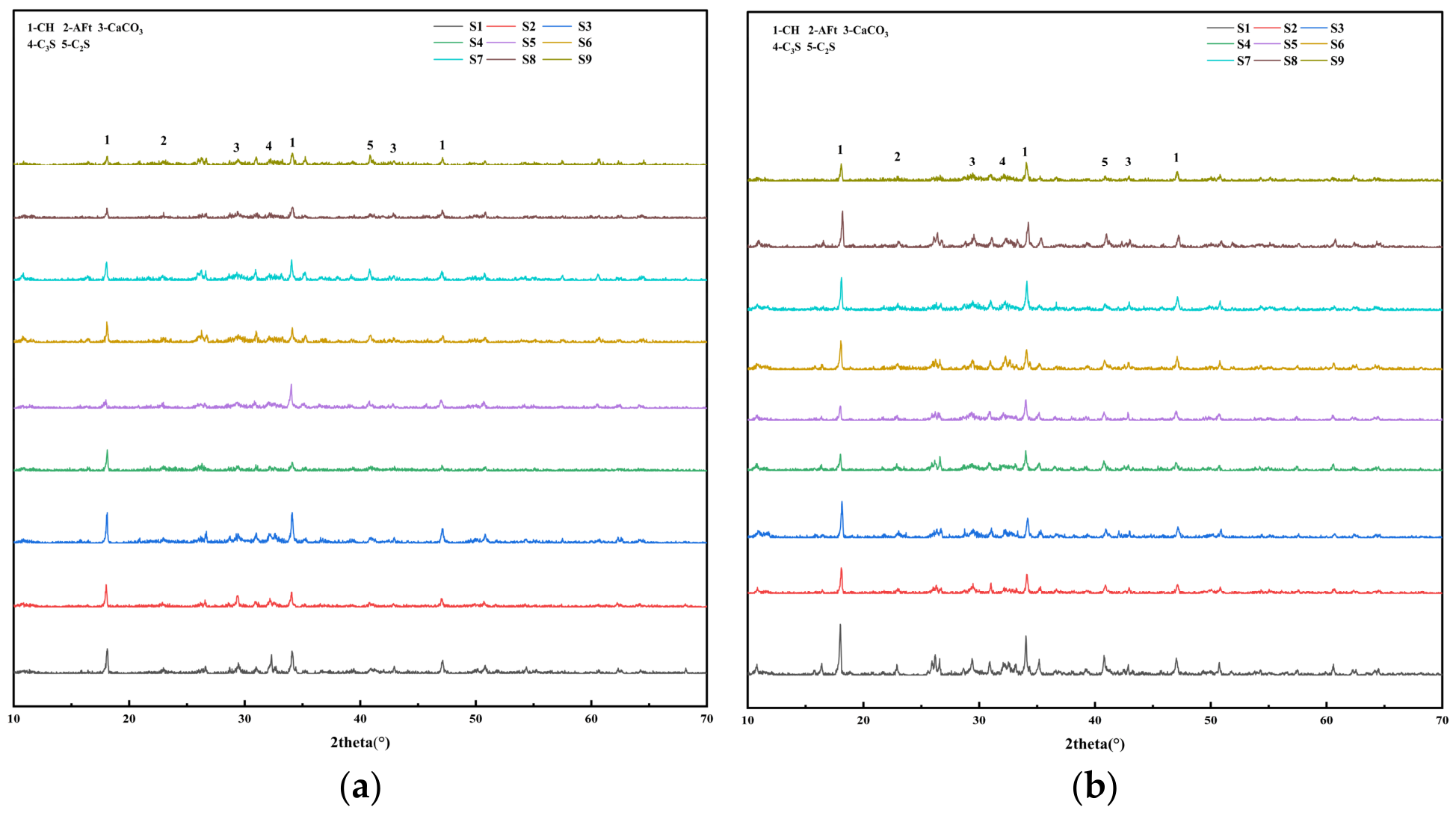
The SEM observations were further evaluated using the XRD patterns shown in
Figure 9. At 7 days, the intensity of the characteristic Ca(OH)
2 peak was lower in the mixtures with a high fly ash content than in those with a low fly ash content. This result is consistent with the lower cement clinker content and, consequently, the lower amount of Ca(OH)
2 generated by cement hydration. Early pozzolanic consumption of Ca(OH)
2 may also have contributed to this difference. A higher anti-corrosion admixture content was also associated with a lower Ca(OH)
2 peak intensity. This result suggests that the admixture may have altered the hydration process or interacted with calcium-bearing phases. Residual C
2S and C
3S peaks were detected in the XRD patterns. Their relative peak intensities varied among the mixtures. AFt was detected in all groups, which is consistent with the needle-like crystals observed in the SEM images. The CaCO
3 peak intensity was generally lower in mixtures with a high fly ash content. This result may be associated with the lower amount of Ca(OH)
2 available for carbonation.
At 28 days, the XRD results were generally consistent with the denser microstructures observed by SEM. The Ca(OH)2 peak intensities generally increased compared with those at 7 days, indicating the continued hydration of the cement clinker. However, the Ca(OH)2 peak intensity remained relatively low in the mixtures with a high fly ash content, and the increase from 7 to 28 days was limited. This trend is consistent with both the lower cement clinker content and the progressive consumption of Ca(OH)2 during the pozzolanic reaction. The intensity of the AFt diffraction peaks generally decreased between 7 and 28 days. This decrease may reflect changes in the amount, crystallinity, or phase assemblage of AFt-containing products. The CaCO3 peak intensity remained lower in the mixtures with a high fly ash content. This result may be explained by two related mechanisms. First, the pozzolanic reaction reduced the amount of Ca(OH)2 available for carbonation. Second, the refined hydration-product network may have reduced pore connectivity and restricted CO2 transport through the matrix.
Taken together, the SEM and XRD results indicate that an appropriate fly ash content, combined with the anti-corrosion admixture, promoted the development of a denser microstructure at 28 days. The observed refinement was associated with continued cement hydration, the later-age pozzolanic reaction of fly ash, and changes in the distribution of hydration products. These microstructural changes are consistent with the improvements in pore structure, mechanical performance, and chloride ion penetration resistance discussed in the preceding sections.
3.6. Orthogonal Statistical Analysis of Factor Effects
To quantitatively evaluate the relative importance of fly ash (A), rust inhibitor (B), and anti-corrosion admixture (C) on the multiple performance indicators, both range analysis and analysis of variance (ANOVA) were performed based on the L9(3
4) orthogonal experimental data. The results are summarised in
Table 3 and
Table 4, respectively.
The range analysis results indicate that the dominant factor varied across different performance indicators. For setting time and mechanical strength, fly ash exhibited the largest range R (R = 127.89 for initial setting, R = 10.23 for compressive strength), indicating that fly ash was the dominant factor for these two properties. For porosity, the rust inhibitor showed the largest range (R = 0.0466). For electrical flux, the anti-corrosion admixture exhibited the largest range (R = 862.08), with a contribution rate of 62.05%. These results suggest that the three components play distinct roles in the grouting materials: fly ash primarily regulates setting behaviour and mechanical strength, the rust inhibitor mainly affects final setting, flexural strength and pore structure, while the anti-corrosion admixture primarily improves resistance to chloride ion penetration.
The ANOVA results show that initial setting time was significantly influenced by both fly ash and rust inhibitor (p < 0.05), and flexural strength was highly significantly influenced by all three factors (p < 0.01). For the remaining indicators, none of the factors reached statistical significance. This is primarily attributed to the limited error degrees of freedom (df = 2) inherent to the L9(34) orthogonal design, where the critical F-value is as high as 19.0, resulting in limited statistical sensitivity. Nevertheless, the ranking order from the range analysis is fully consistent with the contribution rates from ANOVA, and is further corroborated by the pore structure and microstructural observations presented in the previous sections, providing a reliable basis for identifying the optimal factor levels.
Nevertheless, the ranking order from the range analysis is fully consistent with the contribution rates from ANOVA, and is further corroborated by the pore structure and microstructural observations presented in the previous sections, providing a reliable basis for identifying the optimal factor levels.
3.7. Proposed Combined Mechanism of Fly Ash and Functional Components in the Grouting Materials
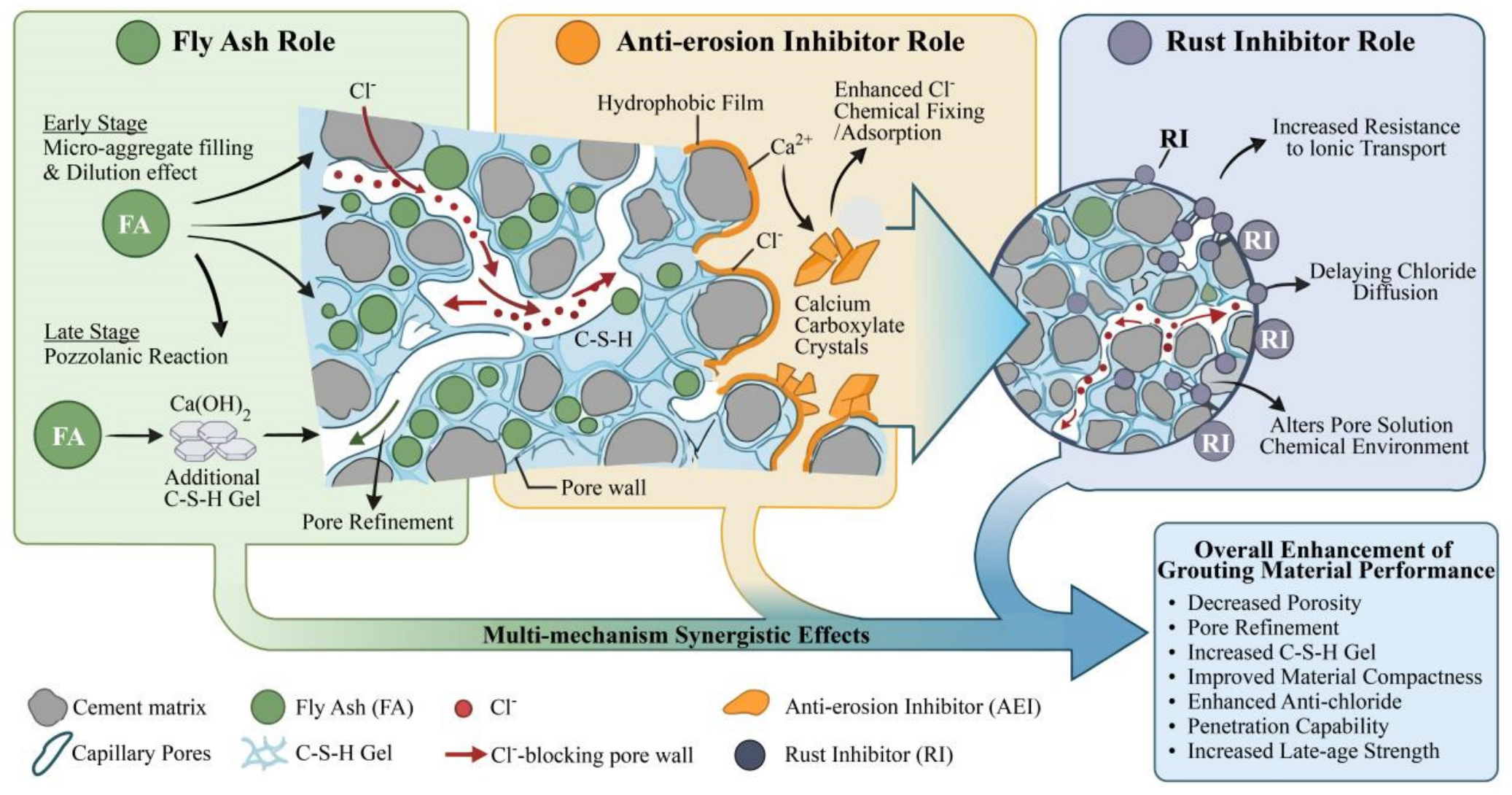
Based on the mechanical properties, chloride ion penetration resistance, pore structure, SEM observations, and XRD results, the combined effects of fly ash, the anti-corrosion admixture, and the rust inhibitor can be interpreted in terms of particle packing, hydration development, and ionic transport. These effects occur at different stages of curing and collectively influence the macroscopic performance of the grouting materials.
Regarding particle packing and pore-structure development, fly ash particles fill some of the spaces between cement grains and improve the packing of the solid particles. At an appropriate replacement level, this microfiller effect reduces the initial void space and provides a more favourable microstructure for subsequent hydration. As curing progresses, the pozzolanic reaction of fly ash consumes part of the Ca(OH)2 and produces additional C-S-H gel. These products fill larger pores, reduce pore connectivity, and increase the tortuosity of transport pathways. The anti-corrosion admixture may further influence pore refinement and the surface properties of the pore network.
The three components also affect hydration development at different curing ages. At an early age, fly ash mainly produces dilution and particle-filling effects because its pozzolanic activity is still limited. A high fly ash replacement level therefore reduces the amount of cement clinker available for early hydration and may delay matrix densification. The anti-corrosion admixture and rust inhibitor may modify the early hydration environment through their interactions with cement particles, dissolved ions, and hydration products. At later ages, the progressive pozzolanic reaction of fly ash generates additional gel products and contributes to the development of a more continuous hydration-product network. This interpretation is consistent with the reduced porosity and denser microstructure observed in mixtures containing appropriate dosages of fly ash and functional components.
The improvement in chloride ion penetration resistance may result from the combined effects of pore-structure refinement and changes in ionic mobility within the pore solution. The refined pore network produced by cement hydration and the pozzolanic reaction reduces pore connectivity and lengthens the transport pathways for chloride ions. The active components of the anti-corrosion admixture may interact with chloride ions or calcium-bearing phases and thereby reduce chloride mobility. The rust inhibitor may also modify the pore-solution chemistry and solid-surface charge, which can affect ionic migration through the hardened matrix.
Overall, the experimental results indicate that an appropriate combination of fly ash, anti-corrosion admixture, and rust inhibitor promotes the formation of a denser pore structure and improves resistance to chloride ion penetration. The proposed mechanism, as illustrated in
Figure 10, involves the complementary contributions of particle filling, later-age pozzolanic reactions, hydration-product development, and changes in ionic transport.




 ,
,