Article

Experimental Investigation and CFD Modeling of Heat and Mass Transfer During Drying of Alfalfa Leaf Fraction in a Rotary Drum Dryer


by
Gani Zhumatay
1,
Omirserik Zhortuylov
1,
Kanat Moshanov
1,
Elmira Kulshikova
1,
Baydaulet Urmashev
2,3,4,
Aliya Borsikbayeva
5,
Ardak Mustafayeva
3,5 and
Marat Khazimov
3,4,*
1
Scientific and Production Center for Mechanical Engineering LLP, Almaty 050005, Kazakhstan
2
Faculty of Information Technology, Al-Farabi Kazakh National University, Almaty 050040, Kazakhstan
3
Institute of Energy and Green Technologies, Almaty University of Power Engineering and Telecommunications Named After Gumarbek Daukeyev, Almaty 050013, Kazakhstan
4
Faculty of Engineering and Technology, Kazakh National Agrarian Research University, Almaty 050010, Kazakhstan
5
School of Applied Mathematics, Kazakh British Technical University, Almaty 050005, Kazakhstan
*
Author to whom correspondence should be addressed.
Appl. Sci. 2026, 16(15), 7757; https://doi.org/10.3390/app16157757
Submission received: 26 June 2026 / Revised: 30 July 2026 / Accepted: 31 July 2026 / Published: 4 August 2026

Abstract

The convective drying of agricultural materials is an energy-intensive process, and optimizing dryer design is critical for improving efficiency and product quality. This study presents a comprehensive heat and mass transfer model for the convective drying of alfalfa leaves in a rotary drum dryer. Freshly harvested leaves with an initial moisture content of approximately 70% (w.b.) were used as the test material. The proposed system features a simplified drum design aimed at enhancing process efficiency while reducing equipment complexity. The primary objective was to reduce the moisture content of alfalfa leaves to below 50% to ensure their quality during subsequent storage and transportation. To determine the optimal operating conditions, the kinematics of leaf motion inside the rotating drum and the associated heat and mass transfer phenomena were investigated through analytical modeling, numerical simulation, and experimental studies on a laboratory-scale physical model. An analytical model was developed to establish relationships between transverse kinematic characteristics (detachment condition, Froude number, drum inclination angle), average longitudinal velocity, and residence time. Numerical simulations based on the Navier–Stokes equations (continuity, momentum, and energy) provided detailed moisture content distributions within individual leaves under varying airflow orientations and drying durations. The novelty of this work lies in the integrated determination of optimized operating parameters through combined analytical, numerical, and experimental approaches. A regression model relating final moisture content to key process variables (air velocity, temperature of 60 °C, drum rotation frequency and mass of loaded material) was developed from experimental data, yielding practical recommendations for the design and operation of rotary drum dryers for alfalfa and similar agricultural materials.

1. Introduction

Alfalfa (Medicago sativa) is one of the most valuable forage crops in animal husbandry because of its high protein content, rich vitamin and mineral composition, and excellent digestibility [1]. Accordingly, it is an essential component of dairy and beef rations, particularly in intensive livestock production systems.
The leaves of alfalfa are especially valuable because they contain most of the proteins, carotenes, and other biologically active compounds. In contrast, the stems contain a much higher proportion of fiber and have substantially lower nutritional value [2]. Therefore, preserving leaf mass during post-harvest processing remains a major challenge in forage technology.
Previous research has shown that energy-efficient drying units can reduce nutrient losses, improve feed storage stability, inhibit mold growth, and preserve the biological value of alfalfa [3]. Despite these advances, traditional open-air field drying remains the most common method of forage preparation. However, this approach has several serious drawbacks [4]. It depends strongly on ambient climatic conditions, including relative humidity, temperature, and precipitation. Adverse weather prolongs drying, promotes microbial development, and leads to a marked decline in final feed quality.
A particularly important issue in alfalfa drying is the different dehydration behavior of stems and leaves. Leaf tissue dries much faster, whereas stems retain internal moisture for a longer time. In the literature, this phenomenon is referred to as the asynchronous drying of stems and leaves and is considered a primary cause of nutrient degradation. As leaves become over-dried, they become brittle and readily shatter during mechanical handling, causing substantial losses of protein and carotene. To avoid these losses and produce high-protein, vitamin-rich herbal meals, pellets, and biologically active supplements, the leaf fraction is often processed separately. Because leaves contain the highest concentrations of protein, vitamins, amino acids, and chlorophyll, their separation from the coarser stems makes it possible to obtain a refined, highly digestible feed product [5,6].
Conventional drying technologies typically use rigid thermal regimes, which are associated with high energy consumption and material losses [7,8]. For leaf drying, a milder temperature regime is required, considering the thickness of the material layer in order to avoid thermal damage.
Due to these limitations, there is growing interest in modern drying units with controlled heat and mass transfer parameters [9]. Mathematical modeling makes it possible to study temperature distribution, airflow characteristics, and moisture evaporation kinetics in dryers in detail. Such analyses are essential for improving energy efficiency and preserving the nutritional integrity of alfalfa [10,11,12].
Emerging drying technologies include convective, infrared, microwave, hybrid, and solar-assisted systems [13]. Recent studies indicate that hybrid methods combining convective heating with microwave exposure can significantly reduce processing time and energy consumption while maintaining alfalfa nutritional quality [14]. In addition, solar drying is considered a promising approach for reducing operating costs and dependence on conventional energy sources.
A related research direction is the development of intelligent drying systems equipped with automatic process control. The integration of sensors for temperature, humidity, and airflow rate makes it possible to maintain optimal operating conditions and reduce non-uniform drying of the material [15]. Recent studies show that intelligent control frameworks and optimization algorithms improve final product quality and reduce energy consumption [16].
To describe drying kinetics, contemporary research extensively uses mathematical models, especially the Page model [17,18,19,20,21,22,23,24,25], which enables prediction of temporal moisture-content changes and identification of optimal process parameters.
Advances in computational power have further enabled the optimization of drying processes through numerical simulation, contributing to improved product quality and lower energy costs. Computational Fluid Dynamics (CFD) is particularly valuable in the design of equipment for processing disperse materials, where non-uniform airflow can severely reduce efficiency [26]. Numerical models allow the identification of stagnant flow zones and local overheating regions, thereby providing a sound basis for design improvements [27,28].
Widely used software packages such as ANSYS Fluent 2020, COMSOL Multiphysics, and OpenFOAM are extensively employed for drying process modeling. The CFD approach solves the Navier–Stokes equations [29], heat transfer equations [30], and moisture diffusion equations [31], and incorporates appropriate turbulence models [32]. Simulation results make it possible to evaluate the influence of drying-agent temperature, airflow velocity, apparatus geometry, and internal structural elements on water-removal efficiency and overall energy consumption.
Current research is increasingly focused on improving predictive accuracy through the integration of CFD modeling with machine learning algorithms and multi-criteria optimization techniques [33]. Intelligent control systems support the design of energy-efficient dryers with adaptive settings, which is critical for the processing of heat-sensitive products [34].
In this context, the present study reports an experimental investigation and CFD-based numerical simulation of heat and mass transfer during convective thermal processing of the alfalfa leaf fraction in a rotary drum dryer.
The novelty of this work lies in the integrated CFD modeling of heat and mass exchange for an individual alfalfa leaf, coupled with simulation of the movement dynamics of the leaf fraction in a laboratory-scale drum dryer under convective airflow. The main objective is to improve drying efficiency while preserving the nutritional properties of the leaf fraction for subsequent vacuum sealing. Emphasis is placed on establishing a rational drying regime capable of reducing moisture content to 50% while preventing leaf brittleness under controlled process parameters.

2. Materials and Methods

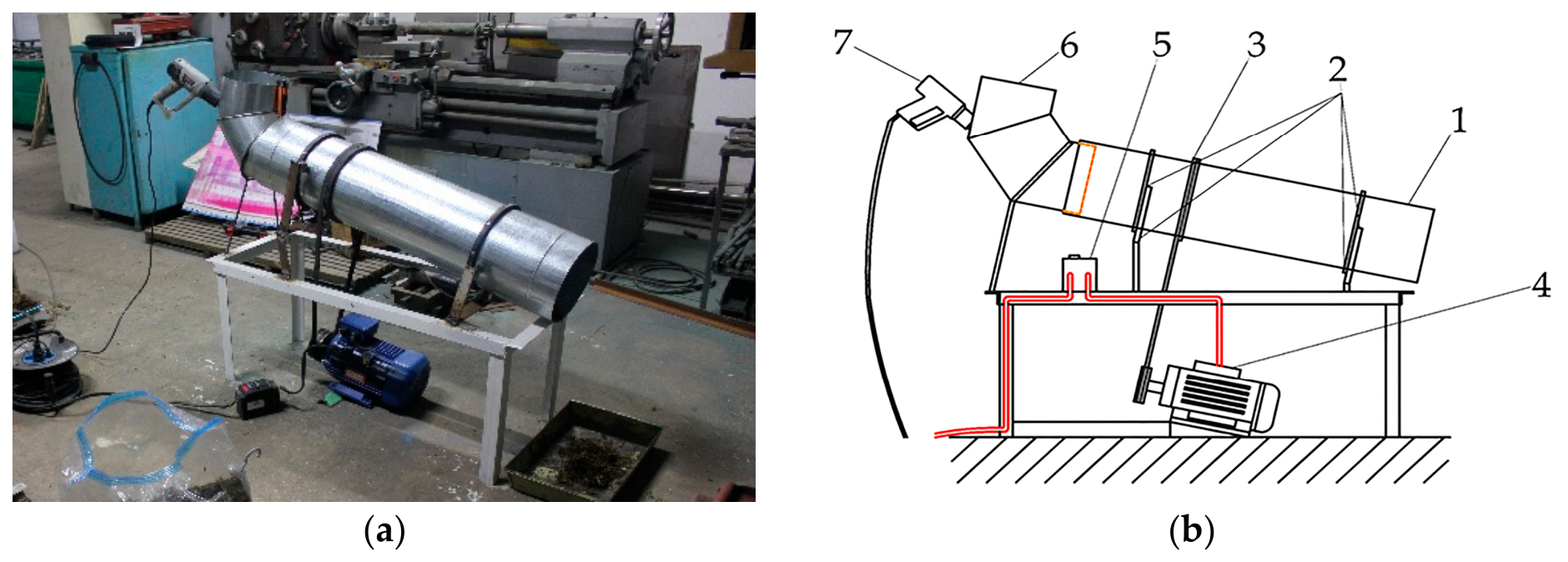
This study investigates the processing technology for obtaining compacted mass from alfalfa leaves as a high-protein feed, conducted at the Research and Production Center of Mechanical Engineering LLP (Limited Liability Partnership) (Almaty, Kazakhstan). The technology includes leaf combing, drying to a moisture content of 50%, and vacuum sealing. Among these operations, dehydration with nutrient retention presents the greatest difficulty. To dry alfalfa leaves with an initial moisture content of 70%, a convective drum dryer was developed. To reduce the cost of studying the drying process, a physical model of the drum dryer was developed for laboratory investigations (Figure 1). The operating principle of the designed dryer is as follows: a drum (1) is rotated on support rollers (2) by an electric motor (4) via a belt transmission (3). The drum rotation frequency is regulated using a frequency converter (5) according to the experimental plan. The wet mass is loaded through the throat (6), while the drying agent (air) is supplied from an electric dryer (7) at the required flow rate and temperature. The alfalfa leaf mass, fed through the loading throat by the airflow from the electric blower dryer, enters the rotating drum. The drum is positioned at a certain angle θ to the horizontal. As the drum rotates, the loaded mass of leaves rises to a certain height, and upon separation from the drum wall, the leaves fall onto the base with a displacement corresponding to the drum’s inclination angle. The mixed leaves are gradually dried and exit through the lower end of the drum.
Dryer performance and the quality of the dried mass are influenced by the drum rotation rate, airflow speed, and the amount of loaded leaf mass. An air temperature of 60 °C was selected to preserve the nutritional properties of the processed material. The drum dimensions are proportional to the production-scale counterpart: length of the cylindrical part—1200 mm; diameter of the cylindrical part—200 mm; inclination angle—up to 15 degrees.

2.1. Mathematical Model of Alfalfa Leaf Movement in a Drum Dryer

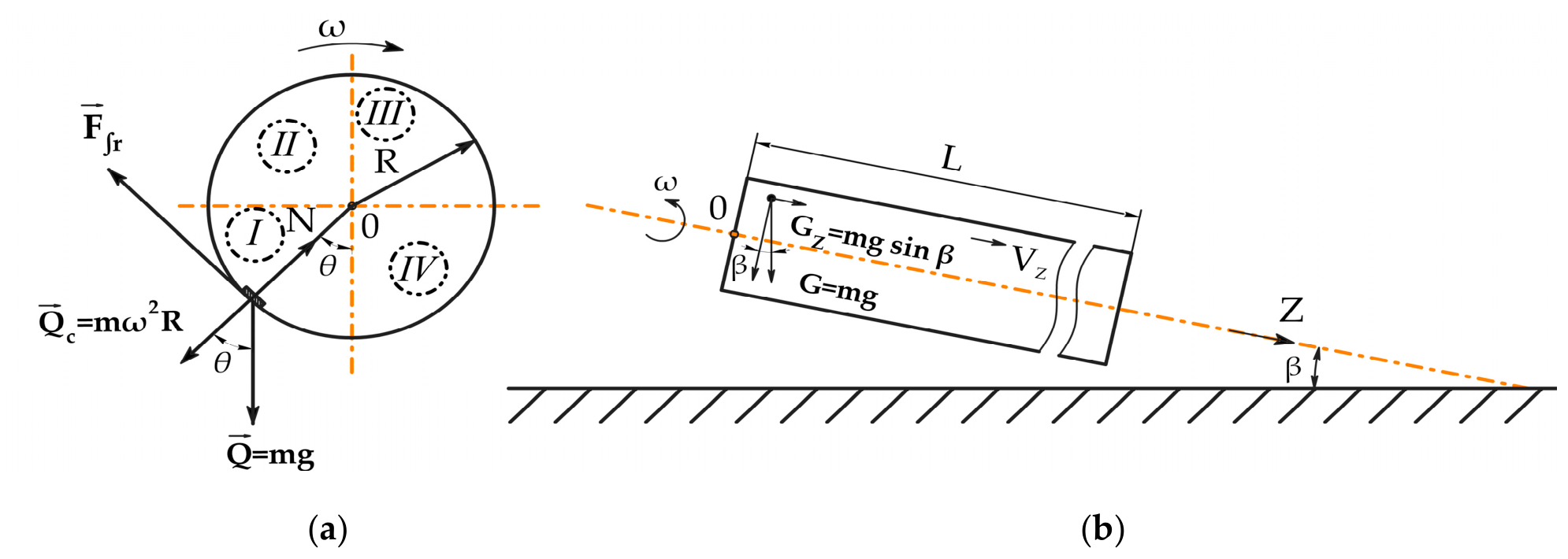
The geometric and regime parameters for the horizontal (a) and vertical (b) sections of the drum are presented in Figure 2. An alfalfa leaf centered at point M, when the drum rotates at frequency (n), tends to undergo circular motion along the inner surface of the cylinder with radius (R). The particle is held on the drum surface by centrifugal force ( F c = m ω 2   R ) and normal pressure ( N = m ω 2   R + m g · c o s θ ), which act opposite in direction.
The angle ( θ ), which determines the position of the particle in the cross-section, is conveniently measured from the lower vertical in the direction of drum rotation. Thus: θ = 0 ° —bottom point of the drum; θ = 90 ° —side point; θ = 180 ° —top point.
It is desirable to ensure leaf separation in the second quadrant ( 90 °   <   θ   <   180 ° ), i.e., falling leaves should reach the area of more intense blowing, as the airflow velocity near the wall is low.
Thus, in the transverse kinematics of a leaf, in addition to centrifugal force and normal pressure, the force of gravity ( G = m g ) and the force of friction ( F f r = μ N ) act. As long as the leaf moves with the drum wall without slipping, its angular velocity equals that of the drum.
The detachment of leaves from the drum surface occurs when the normal reaction becomes zero ( N = 0 ). Then, the cosine of the detachment angle can be expressed as:
cos θ t e a r = ω 2 R g ,
Introducing the Froude number as F r = ω 2 R g , the condition for leaf detachment from the drum surface without considering friction is:
θ t e a r = a rc cos ( F r ) .
For leaf detachment in the second quadrant ( 90 °   <   θ t e a r   <   180 ° ), using Equation (2), the necessary condition is:
0 < F r < 1 .
For a given desired detachment angle θ t e a r , the required angular velocity is determined by:
ω = g cos θ t e a r R .
Prior to detachment, the particle is also retained on the wall by friction. The condition of no slipping along the drum wall is:
F f r m g · sin θ .
Substituting the expression for friction ( F f r = μ N ) and the value of normal pressure ( N = m ω 2 R + m g c o s θ ) into Equation (5), we obtain:
μ m ω 2 R + m g · c o s θ m g · sin θ .
Dividing by (mg) and substituting the Froude number ( F r = ω 2 R / g ), we rewrite Equation (6) at the limit where sliding begins as:
μ ( F r + cos θ t e a r ) = sin θ t e a r .
Considering that μ = t a n   φ and expressing the Froude number in terms of the angle at which slide begins, we obtain a formula for the ascent angle considering friction:
F r = sin θ t e a r · cos φ cos θ t e a r .
When a particle (leaf) moves together with the drum wall from the bottom point, with ( θ = ω · τ ), the time from the start of the rise to detachment can be expressed in this form:
τ t e a r = θ t e a r ω ,
where θ t e a r is in radians.
Using the expression ( θ t e a r = a r c c o s ( F r )), we obtain:
τ t e a r = a r c c o s ( F r ) ω .
This formula is applicable under the condition: 0 < F r < 1 .
Next, a study of the longitudinal movement of leaves along the drum is presented. The following parameters are introduced: L—drum length; β—inclination angle of the drum’s longitudinal axis; v z —average speed of material’s longitudinal movement; τ—residence time of the leaf in the drum.
When the drum is inclined at an angle β, a longitudinal component of the material’s weight force ( G z = m g sin β ) appears, causing the leaves to move along the drum. The normal component of the weight force relative to the drum axis is: G Y = m g c o s β . Considering the movement of the material along an inclined surface (along the oz axis), the limit condition for spontaneous movement is:
m g · s i n β > μ z m g · c o s β ,
where μ z —the effective coefficient of resistance to longitudinal motion.
For leaves inside the rotating drum, movement does not occur as a simple skidding on an inclined plane; rather the material is repeatedly lifted, detached, dropped and at each cycle receive undergoes some longitudinal displacement. This should therefore be viewed as a cyclical model of longitudinal displacement. One cycle of leaf motion can be represented in the following sequence:
-
The leaf is caught by the drum wall;
-
It rises to the angle θ t e a r ;
-
It tears off the drum wall;
-
It falls on the ballistic trajectory;
-
It shifts along the drum axis by an amount ∆z.
The cycle repeats in this manner. The average longitudinal displacement speed is then:
v z = f c · z ,
where f c is the rise-and-fall frequency.
Assuming one drum rotation corresponds to one cycle ( f c ω 2 π ), the cycle speed can be approximed as:
v z ω 2 π · z .
The longitudinal offset for a single cycle can be estimated as follows. During free fall, the leaf experiences longitudinal acceleration ( a z = g s i n β ).
If the free fall time of a leaf is taken as τ f , then the longitudinal offset for one flight is:
z 1 2 g   s i n β · τ f 2 .
Substituting this value into the expression (13), the cycle speed can be approximately written as:
v z ω g s i n β 4 π · τ f 2 .
The leaf falls time component from (15) was determined from the classical formula h = g · τ f 2 2 , as:
τ f 2 = 2 h g .
Equation (15) can be then rewritten in terms of the leaf drop height:
v z ω h   s i n β 2 π .
When calculating for an inclined rotating drum, the height is determined by the drum radius (R) and a coefficient k, which accounts for the fill level and material flow mode, as h k R . Considering the range of the coefficient—k = 0.2–0.8, for leaf material, k = 0.6 is assumed.
The material residence time in the drum is determined using the classical formula ( τ = L v z ) for the cycle speed from (15):
τ c π L ω k R   s i n β .
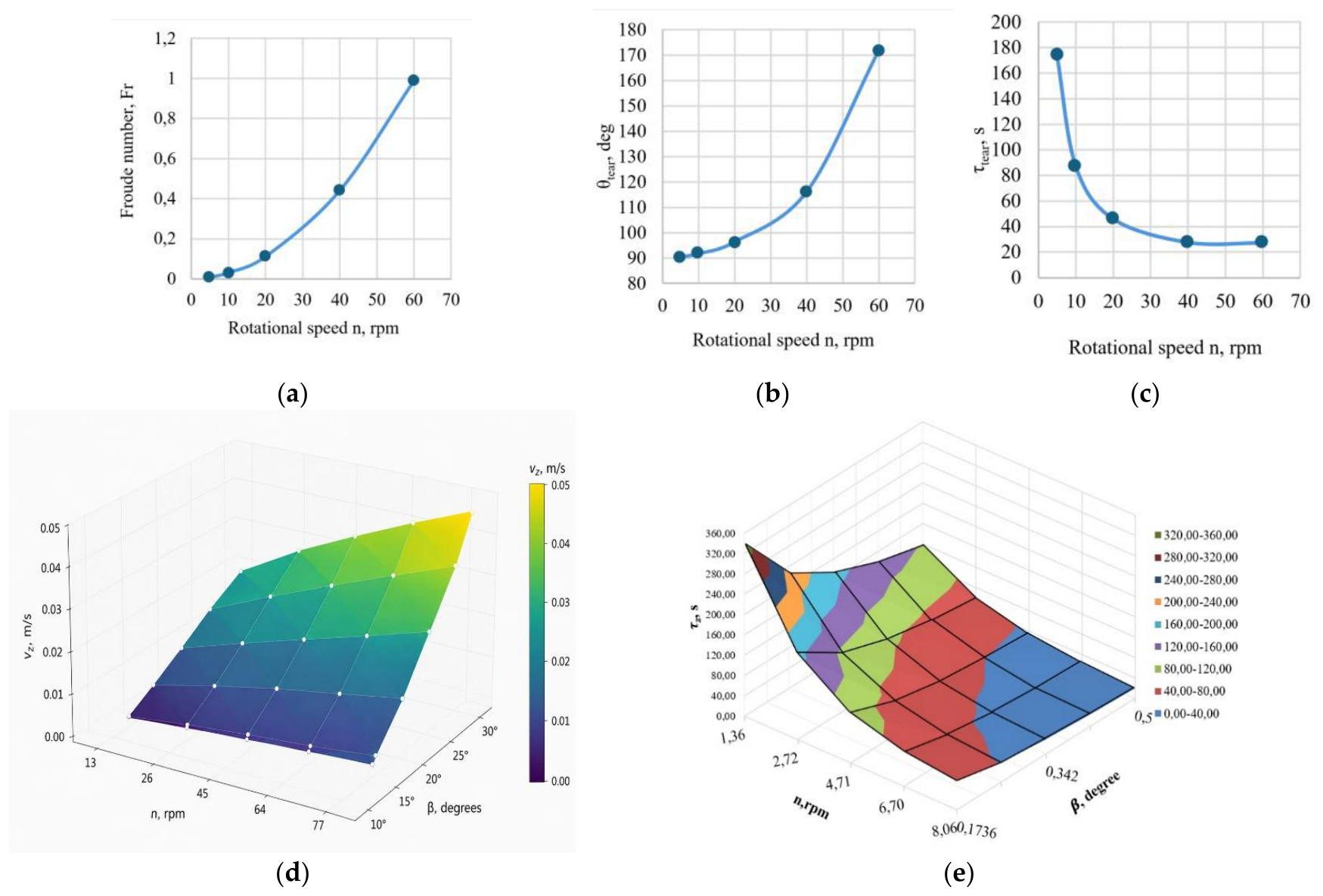
Using actual drum parameters ( R ,   L ,   n ,   β ,   φ ) numerical dependencies were obtained for transverse motion F r ( n ) ,   θ t e a r ( n ) ,   τ _ t e a r   ( n ) , and for longitudinal motion v z β ,   n ;   τ c ( β ,   n ) .

2.2. Numerical Modeling of the Convective Drying Process of Alfalfa Leaves

To study the convective drying process of alfalfa leaves, a three-dimensional unsteady CFD model was developed using the ANSYS Fluent 2020 software package. The leaf was modeled as a porous medium surrounded by airflow [35,36]. Moisture dynamics are modeled using the concentration transport equation to describe water vapor concentrations in the air.
u = 0 ,
ρ u T + u u = P + μ 2 u + f ,
T t + u T = α 2 T ,
T t + u T x + v T y + w T z = α ( 2 T x 2 + 2 T y 2 + 2 T z )
where α is the thermal diffusivity, defined as α = k c p ρ ; k is thermal conductivity; ρ is density; and c p is the isobaric specific heat capacity.
Moisture transport in the air was simulated using the Species Transport model implemented in ANSYS Fluent. The transport of water vapor concentration was governed by the convection–diffusion equation:
C t + u C x + v C y + w C z = D ( 2 C x 2 + 2 C y 2 + 2 C z 2 )
where C is the water vapor concentration and D is the diffusion coefficient of water vapor in air.
The alfalfa leaf was modeled as a homogeneous porous medium. The solid material properties were specified as a density of 350 k g   m 3 , specific heat capacity of 1800 J   k g 1   K 1 , and thermal conductivity of 0.15 W   m 1   K 1 . The porous medium was characterized by a porosity of 0.7, viscous resistance of 1 × 10 7   m 2 , and inertial resistance coefficient of 1 × 10 4   m 1 .
Water vapor transport was simulated using the Species Transport model. No explicit evaporation or phase-change model was employed. Therefore, water vapor transport was described by convection and diffusion within the computational domain.
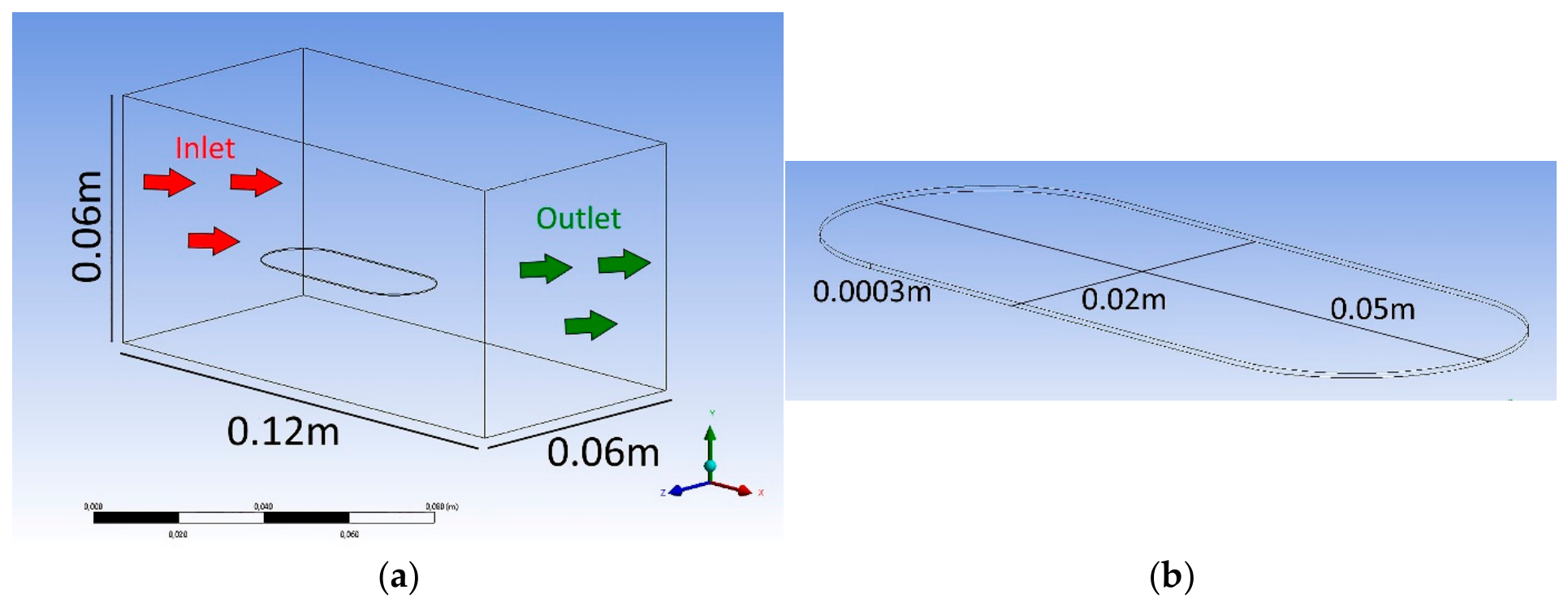
Figure 3 shows the computational domain for drying a single alfalfa leaf, approximated as an elliptical cylinder. The outer box dimensions are 0.12 m × 0.06 m × 0.06 m, and the elliptical cylinder dimensions are 0.02 m × 0.05 m with a height of 0.0003 m, corresponding to the thickness of an alfalfa leaf. Here, hot air flows through the inlet, passes inside the drying chamber, and then exits through the outlet. The other walls are set as walls. The detailed boundary conditions are shown in Table 1.
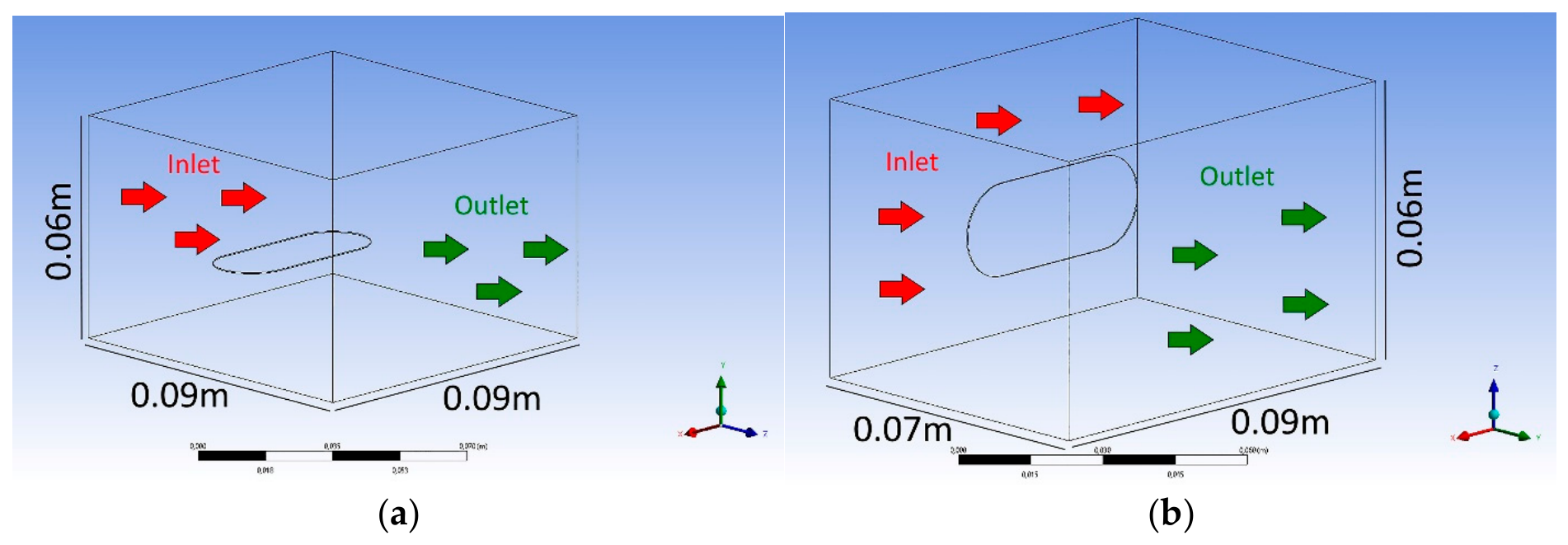
As a result of the drying drum rotation, the leaves undergo chaotic motion, continuously changing their spatial orientation relative to the drying agent’s velocity vector. Therefore, to correctly account for this factor and assess the influence of a leaf’s spatial position on its drying kinetics, two additional scenarios were investigated: crossflow and frontal-flow analyses. To accurately compare moisture distribution contours and avoid boundary effects, the outer computational box dimensions were adapted proportionally to the leaf’s orientation while maintaining fixed hydrodynamic distances. The distance from the inlet boundary to the leaf was 20 cm to allow flow stabilization, the distance from the leaf to the outlet was 50 cm for free development of the diffusion wake, and the distance to the side walls was strictly fixed at 20 cm on each side to avoid flow blockage. This approach allowed for a comparison of convective mass transfer intensity and visualization of the evaporative moisture plumes at the same physical scale. Figure 4a and Figure 4b show the computational domains for lateral and frontal air blowing, respectively.
The initial conditions for the numerical simulation were defined as follows: the moisture content of the alfalfa leaf was 70%, and the temperature of the drying chamber was 293.15 K.
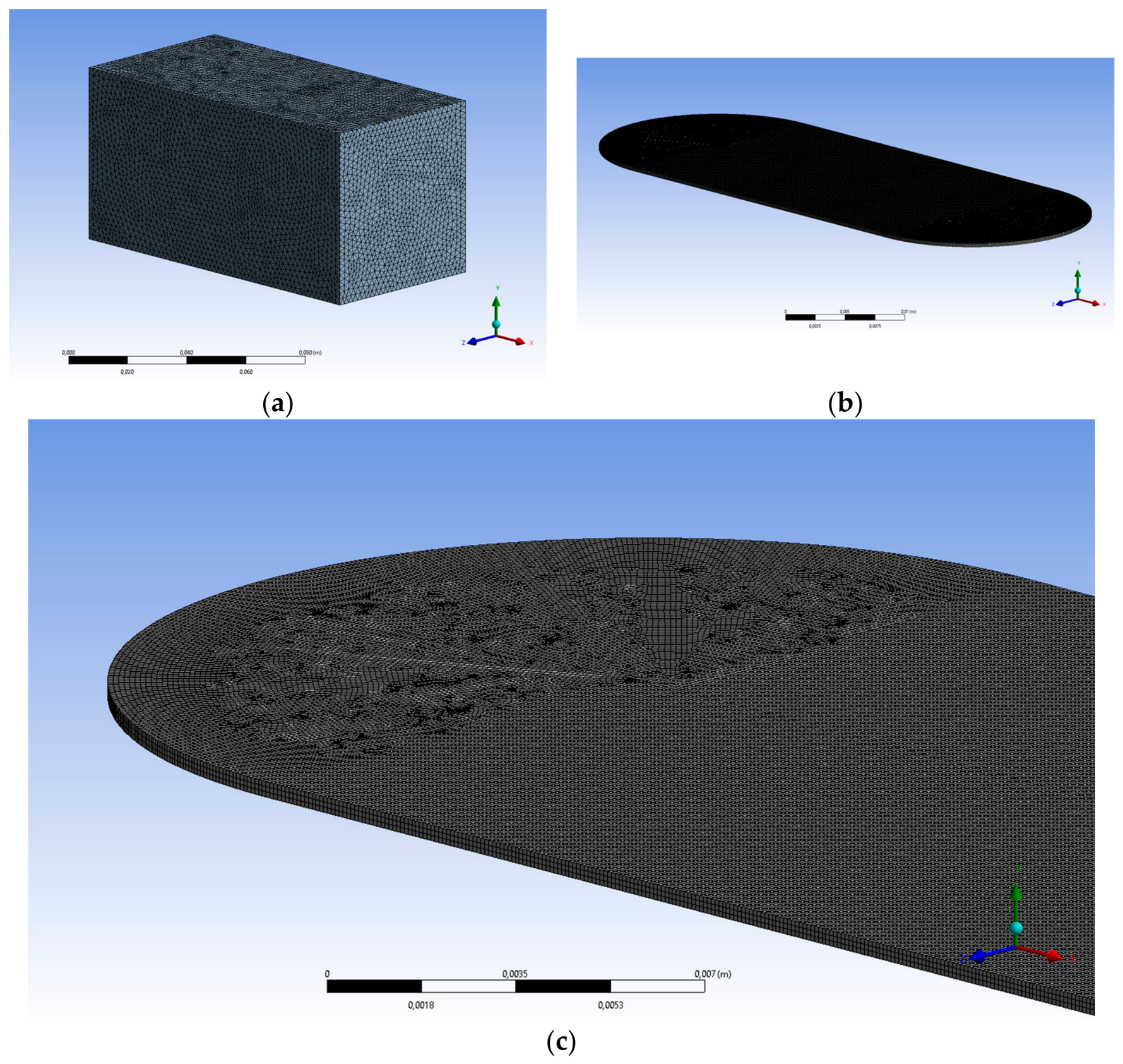
To discretize the computational domain, a spatially non-homogeneous computational mesh was created. Due to the complex geometry and differing scales of the system elements, the domain was divided into several functional zones with individual meshing parameters. The main volume was discretized using an unstructured tetrahedral mesh. This approach ensured a smooth transition of cell size from the outer boundary to the inner structured elements (Figure 5a). For the discretization of thin geometry with a high aspect ratio, a high-quality structured mesh consisting primarily of hexahedral elements was used. At least three layers of elements were placed along the plate thickness to correctly resolve the gradients of the target physical quantities (Figure 5b,c). Local refinement was applied in the contact areas and on the curved edges. The total number of mesh elements was 6,800,127, and the number of nodes was 1,209,772.

2.3. Experimental Study of the Drying Process of a Leaf Fraction

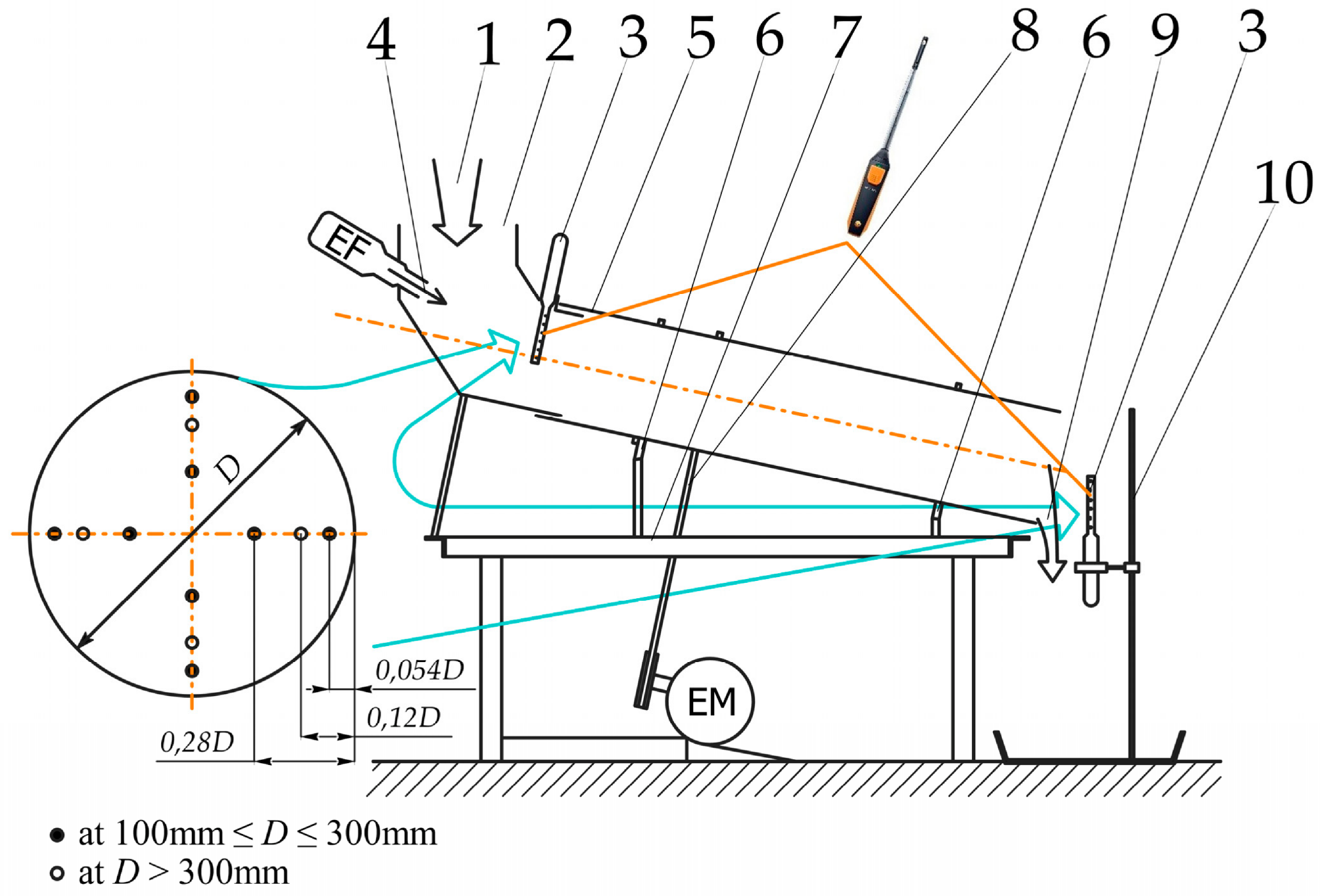
To establish the influence of the main parameters on the moisture content changes in the alfalfa leaf fraction, an experimental design method [37] was employed for the drying process carried out on a physical model under laboratory conditions (Figure 6). The laboratory physical model of the drum dryer is 6 times smaller in size than the production dryer. The controlled factors in the experiment were: v—air flow rate; m—mass of loaded leaves; n—drum rotation frequency (Table 2).
The experimental design matrix and its values are shown in Table 3. Each experiment was repeated three times, and the mean values of the response function were determined. The moisture content of the dried leaf mass was adopted as the response function.
Before each experiment, the air temperature (60 °C) and controlled factors were checked. The moisture content of the loaded and dried alfalfa leaf mass was determined using standard methods [36] with a laboratory drying oven. Temperature, airflow velocity, and humidity were measured using the Testo Smart Device (German company Testo SE & Co. KGaA, Titisee-Neustadt, Germany) [38]. The drum rotation frequency was controlled using a frequency converter (via preliminary calibration). The experimental data obtained were subjected to statistical processing according to the standard method (Machinery for agriculture and forestry. Cilinder driers. Methods of testing), and graphical dependencies on the controlled factors were constructed [39,40]. The moisture of the dried leaves was determined using the MX-50 Weight Humidity Gauge produced by the Japanese company (A&D Company, Tokyo, Japan, Limited with a 0.02% margin of error) with simultaneous control in the drying cabinet.

3. Results

3.1. Numerical Dependencies of Analytical Studies

Figure 7 presents the calculated dependences of the transverse and longitudinal motion parameters.

3.2. Results of Numerical Simulation

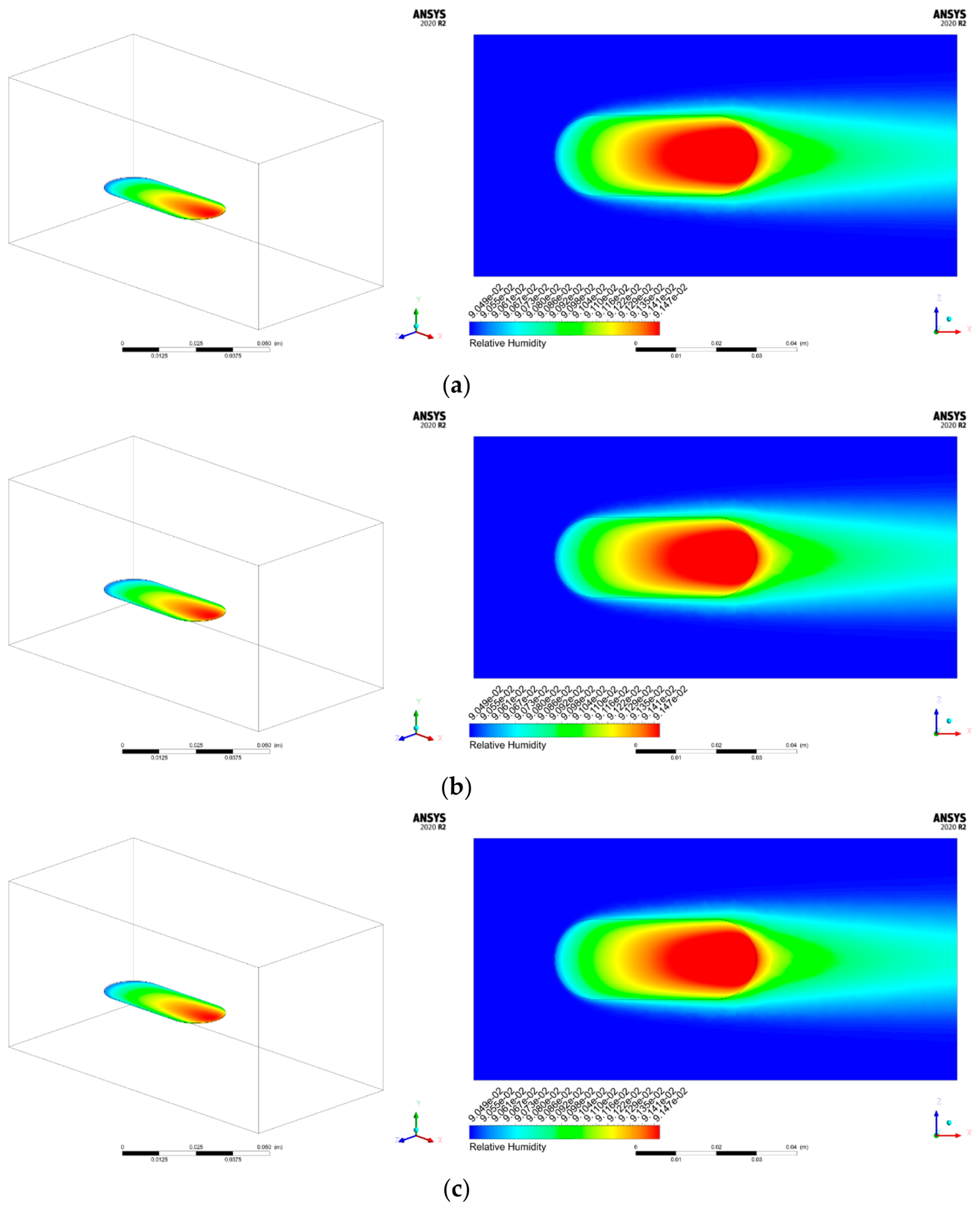
Figure 8 illustrates the spatial distributions of relative humidity in the computational domain (left panels) and in the mid-section on the ZY plane (right panels) at t = 60 s, 180 s, and 300 s for the longitudinal blowing scenario.
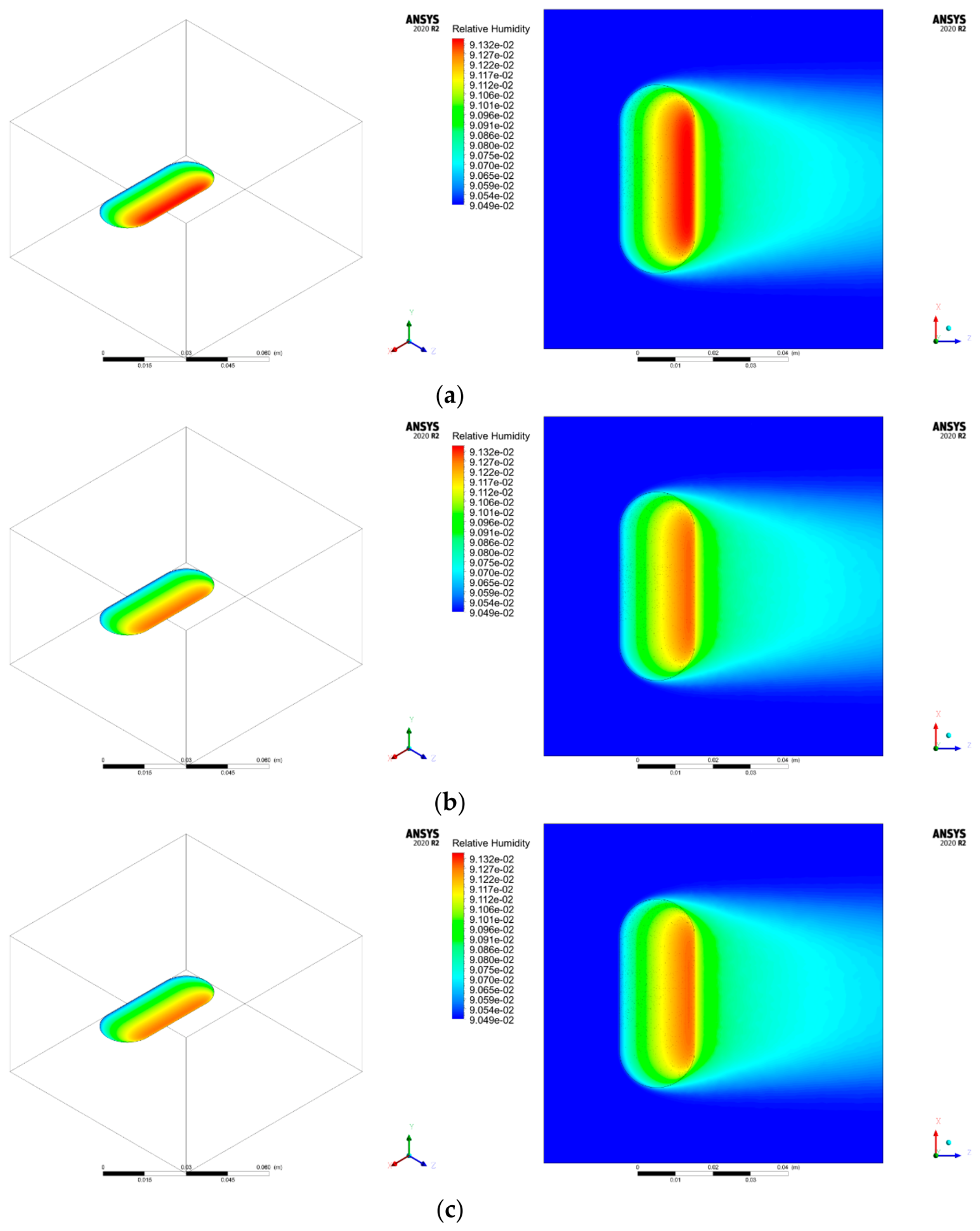
Figure 9 presents the corresponding relative humidity distributions for the cross-flow scenario.
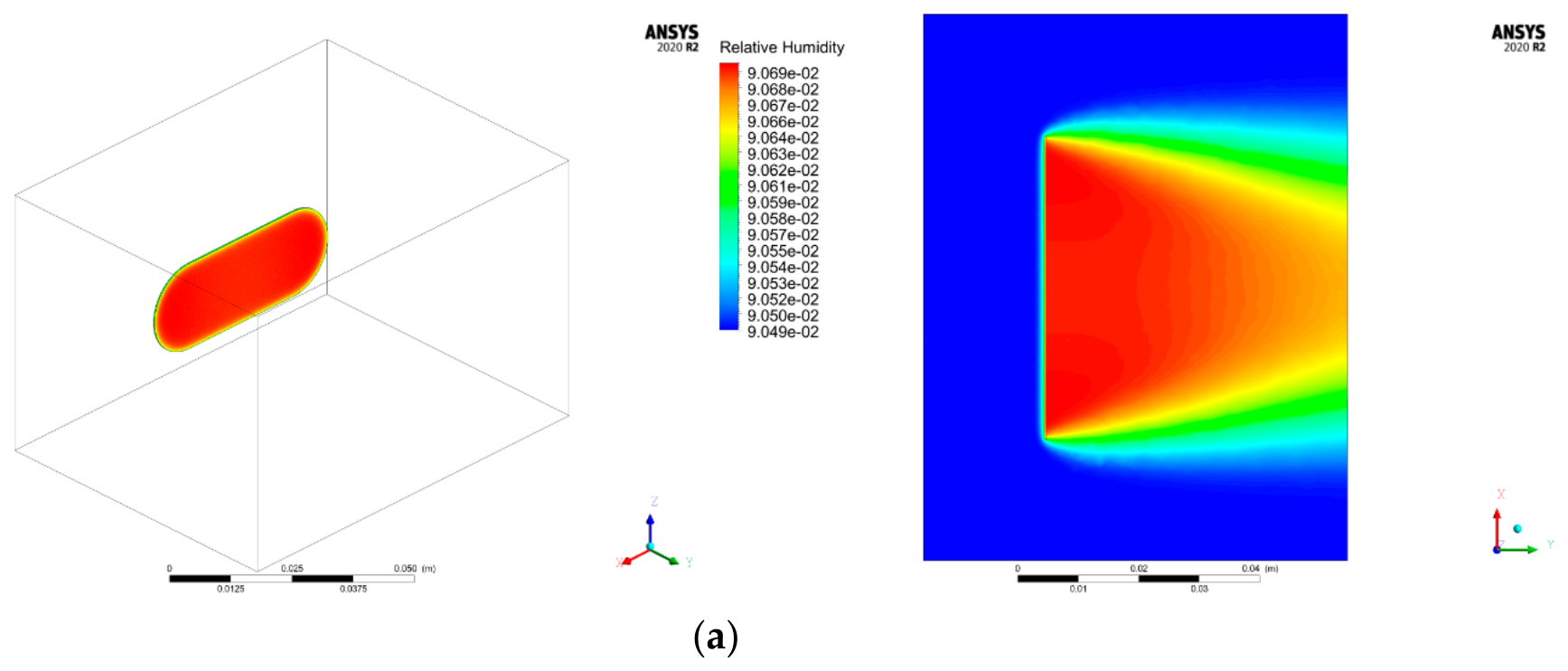
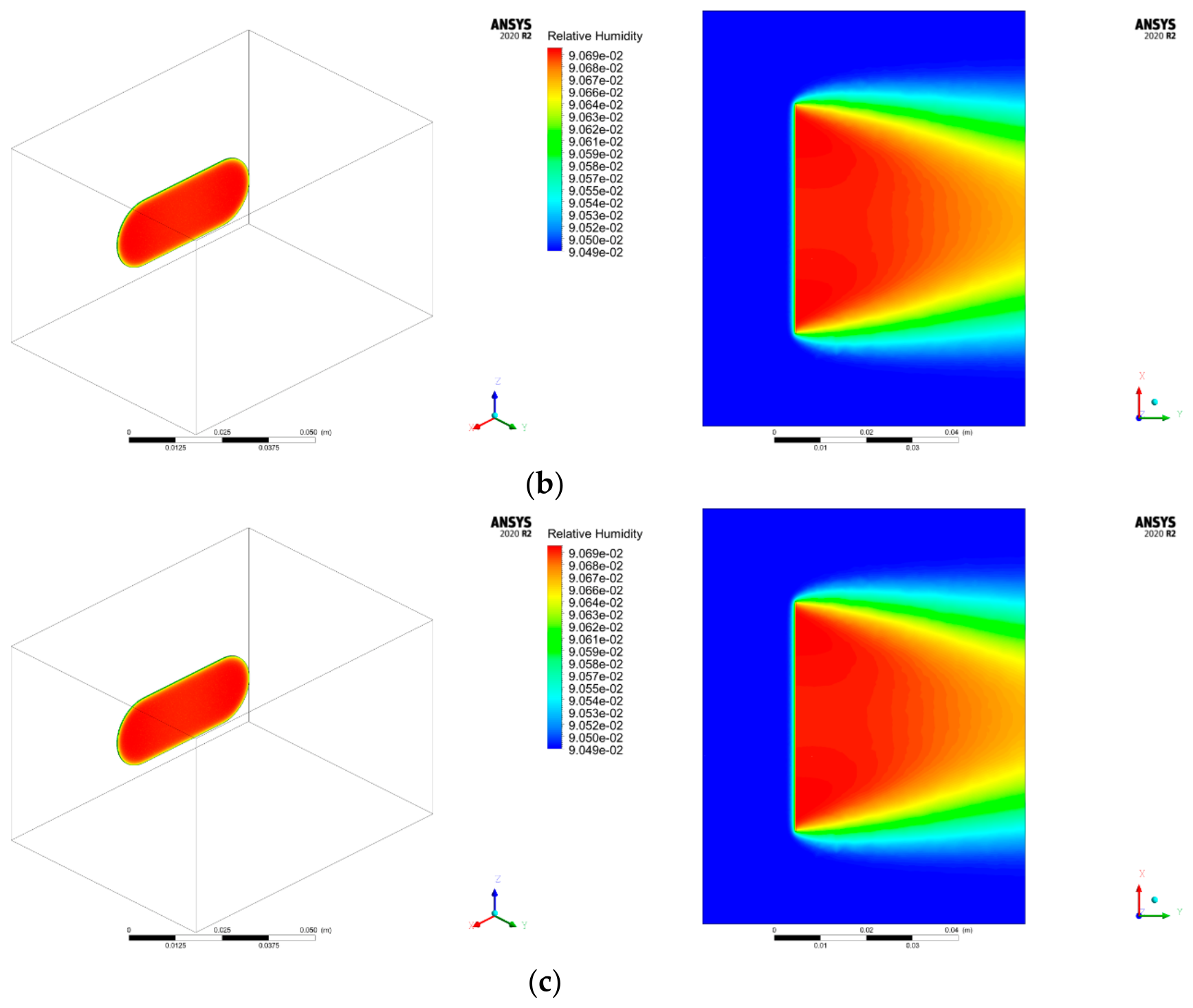
Figure 10 shows the results obtained for the frontal blowing configuration.
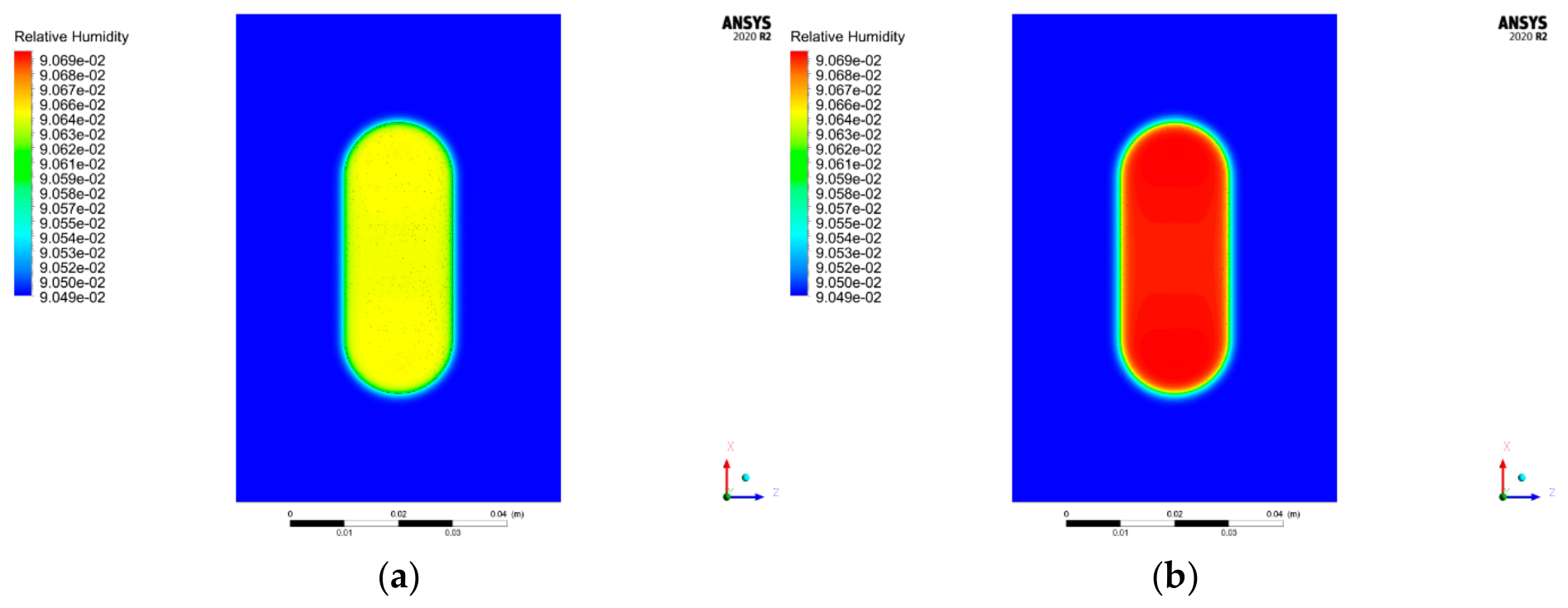
An additional feature revealed by the simulations is the variation in humidity across the leaf thickness, as shown in Figure 11. The contours represent the relative humidity distribution on the protected (shadow) side and on the side exposed to the airflow at t = 300 s for the frontal blowing case.

3.3. Results of Experimental Studies

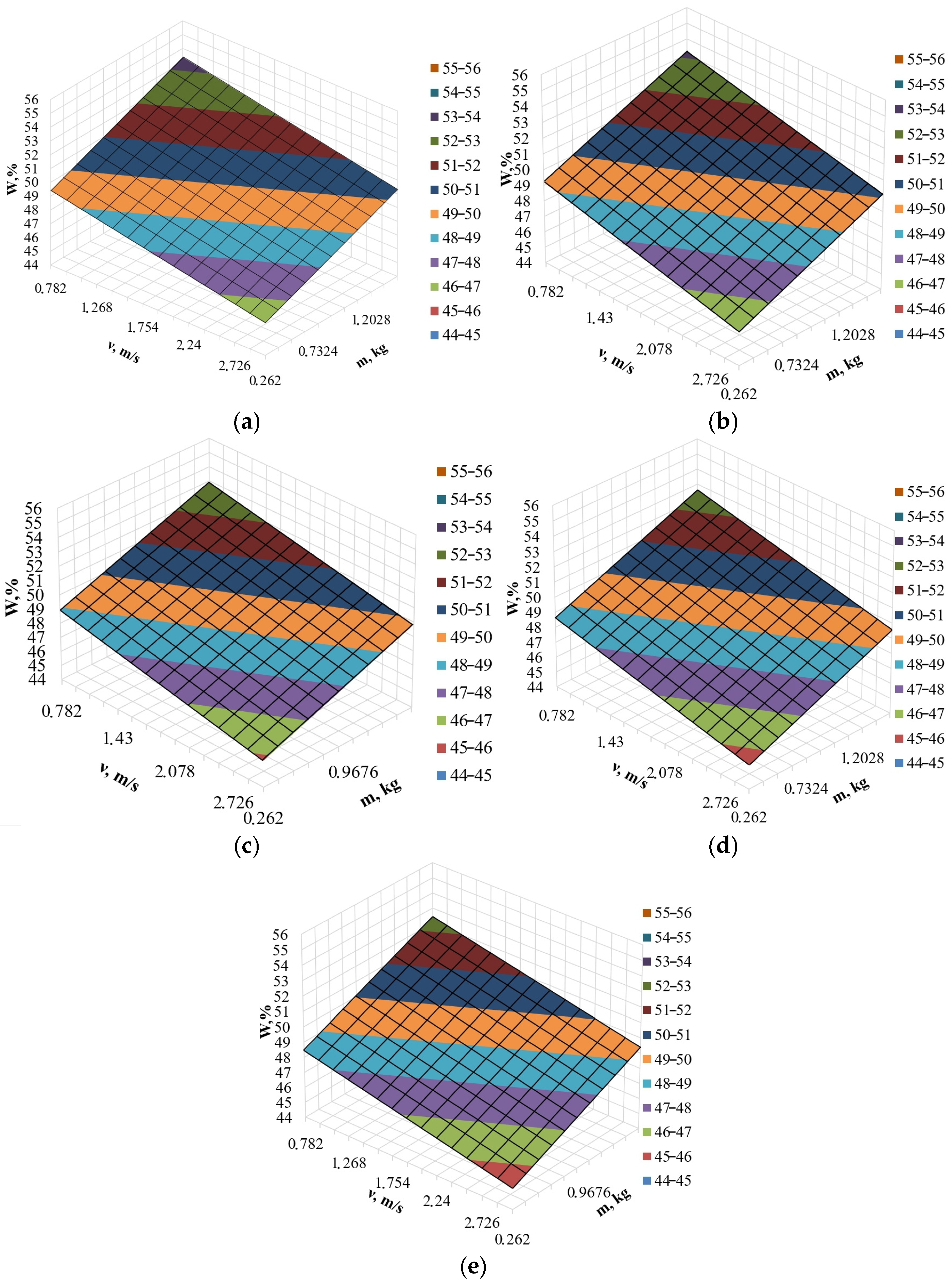
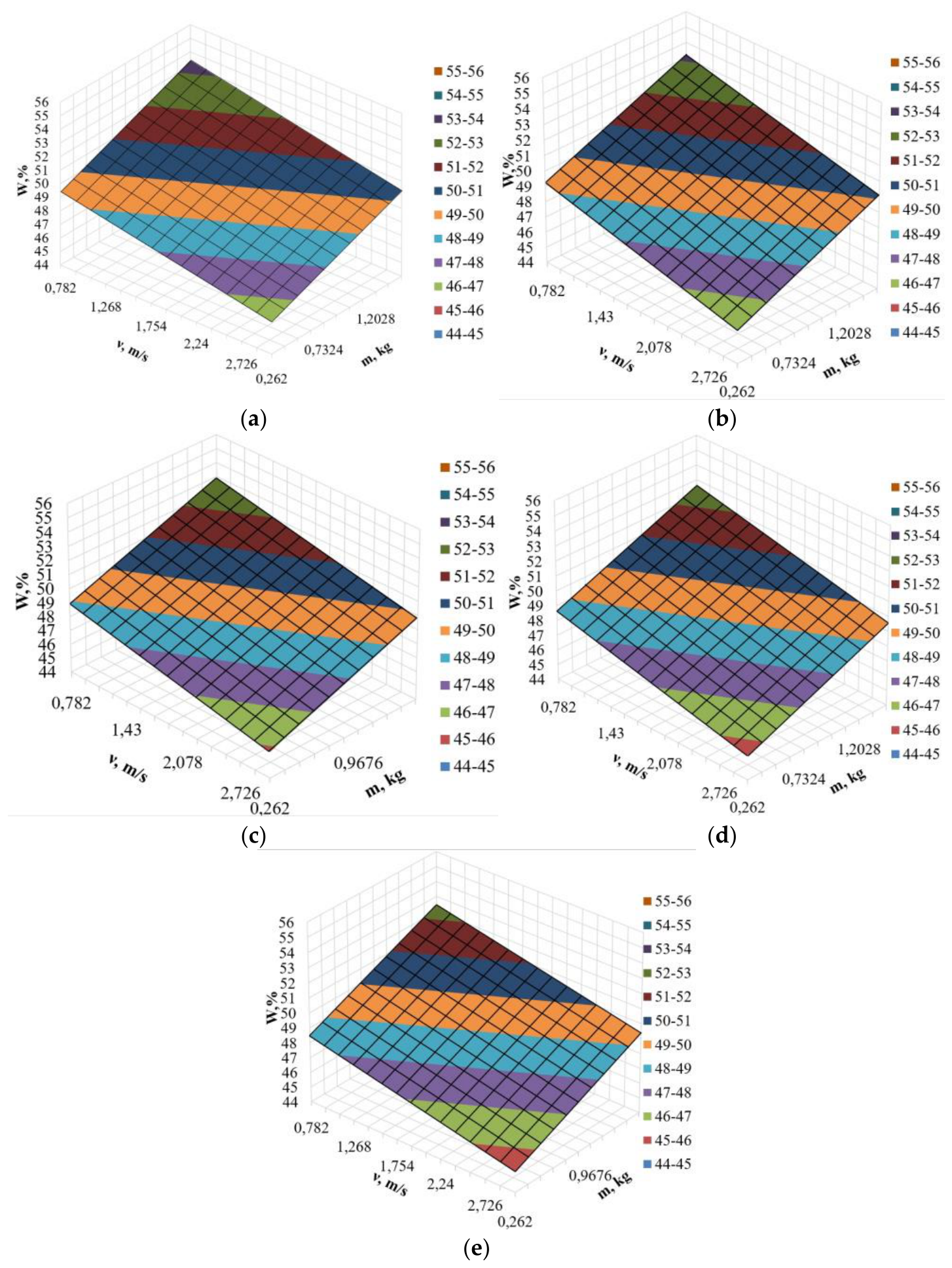
To investigate the process, laboratory experiments were conducted using the design of experiments method. Based on the experimental data, the change in alfalfa leaf moisture content in the rotary dryer was approximated by a multiple linear regression equation as a function of the controlled factors: airflow velocity (v), mass load (m), and drum rotation frequency (n).
W = 49.768 1.352 v + 3.380 m 0.015 n .
A three-dimensional graphical representation of the regression equation is presented in Figure 12.
The statistical significance of regression ratios and ANOVA data are presented in Table 4 and Table 5.
The multiple regression model is statistically significant overall (ANOVA, F = 5.33; p < 0.001); coefficients at X1 and X2 statistically significant (p < 0.05); the coefficient for X3 is not statistically significant (p = 0.504), therefore the influence of the drum rotation frequency within the studied range was not statistically confirmed; with R2 = 0.50 shows that the model explains about 50% response variability. Therefore, the model is useful for trend detection, but the interpretation of factor influence should be done with caution, as the remaining variation is due to unaccounted factors and a random error.
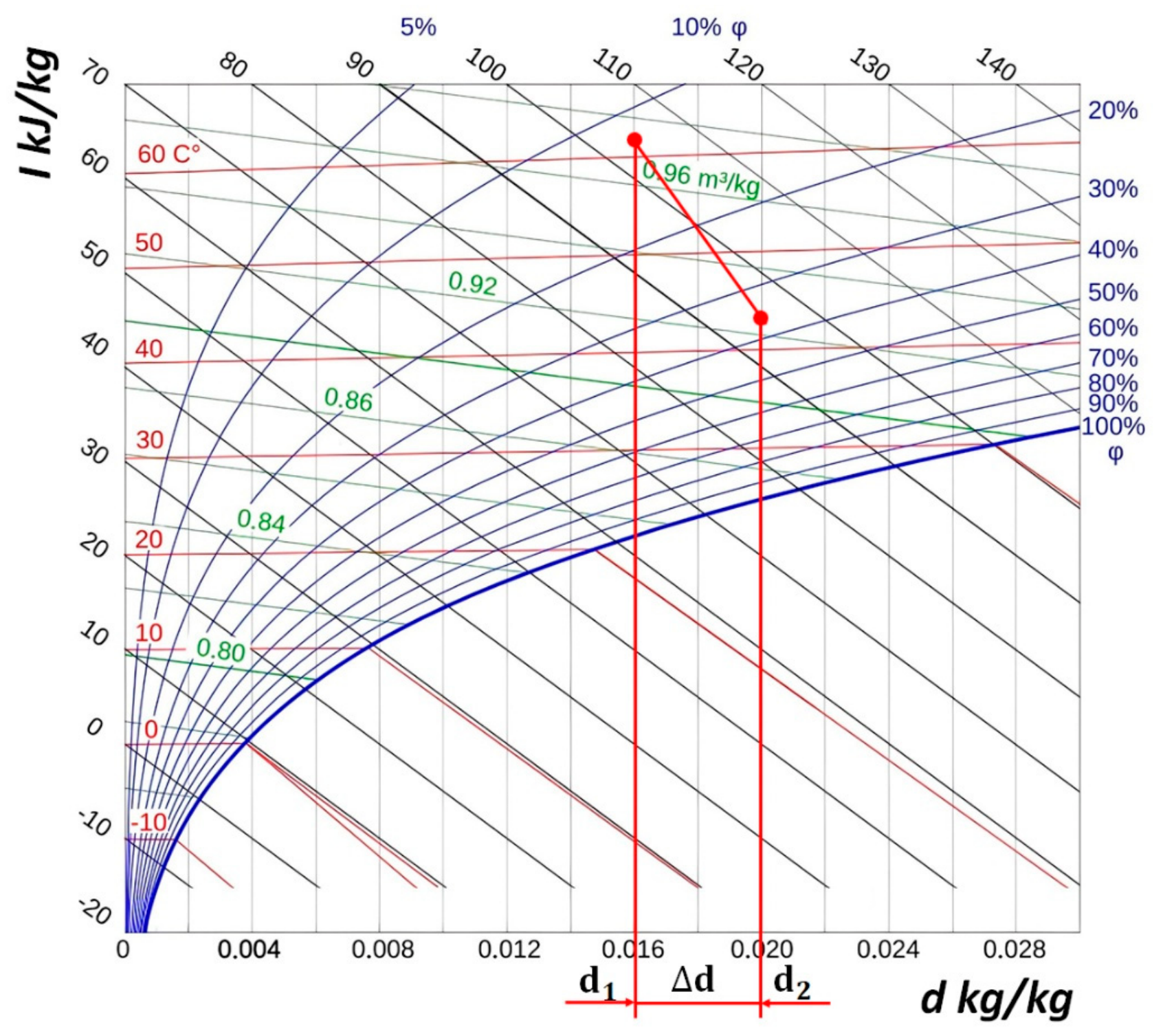
To assess drying quality, the temperature and humidity of the drying agent were measured at the inlet and outlet of the drying chamber [41]. Based on the obtained data, the amount of moisture removed by the drying agent per hour was determined using the I–d diagram (Figure 13).

4. Discussion

The analytical justification of alfalfa leaf motion inside a drum dryer, the CFD-based simulation of the drying process for a single leaf, and the experimental study of combed alfalfa leaf material in a laboratory-scale dryer collectively confirm the considerable potential of the proposed technology for intensifying heat and mass transfer. The absence of active working elements simplifies the design, fabrication, and operation of the dryer, making it especially suitable for farm-level implementation.
The Froude number is the principal regime criterion for this process. At low values, the leaves rise only slightly from the drum surface. At intermediate values, they detach and fall within the desired zone. At higher values, detachment shifts toward the upper part of the drum. At excessively high values, the particles may remain pressed against the wall and rotate with the drum without effective detachment. Thus, the Froude number directly determines the character of leaf motion and the efficiency of heat and mass transfer.
When determining the angular velocity using Equation (4), the selected range of the detachment angle ensures that the radicand remains physically meaningful and positive. If the angular velocity is too low, the leaf does not rise sufficiently; if it is too high, the leaf remains pressed against the wall and may not detach in the target zone. Therefore, the graphical dependences in Figure 7 make it possible to identify rational values of the drum rotation frequency and the detachment angle.
The CFD results show that the dry air first contacts the leading edge of the leaf material. As the flow moves over the surface, intensive moisturization occurs, which leads to a local increase in relative humidity near the leaf. Behind the leaf, a distinct diffusion wake is formed and then gradually disperses downstream. Because the leaf thickness is only 0.0003 m, the relative humidity contours do not exhibit substantial variation across the thickness.
In the frontal-flow configuration, a broader humidity wake is formed behind the leaf, indicating more effective mass transfer. However, the moisture removal is strongly non-uniform across the leaf thickness. The windward surface is directly exposed to the hot airflow and therefore dries more rapidly, including along the edges where the flow accelerates. By contrast, the leeward surface is in a stagnation zone, where the absence of dynamic pressure and the rapid saturation of vapor significantly hinder moisture removal. These findings demonstrate that frontal flow creates pronounced spatial non-uniformity in drying kinetics, which justifies the need for continuous mixing of leaves inside the drum to equalize the temperature and humidity field. The correlation–regression analysis demonstrated that the technological factors investigated affected the final moisture content of alfalfa leaves to different extents. The regression model was statistically significant overall (ANOVA, p < 0.001) and explained approximately 50% of the observed variability (R2 = 0.50), indicating a moderate explanatory capability. Among the investigated variables, leaf mass (X2) and airflow velocity (X1) were identified as statistically significant predictors (p < 0.05), whereas the effect of drum rotational speed (X3) was not statistically significant within the investigated operating range (p > 0.05). These results suggest that the material loading and airflow conditions play the dominant roles in determining the final moisture content, while the influence of drum rotational speed is comparatively weaker under the selected experimental conditions.
The multiple correlation coefficient indicates a moderate relationship between the predictors and the response, while the coefficient of determination suggests that the model explains only a part of the total output variability. This relatively modest value implies that additional factors not included in the model may also affect the process, such as the initial moisture content, drying agent temperature, particle-size distribution, and the movement behavior of the material inside the drum. Nevertheless, the approximation error remains acceptable for engineering evaluation and for identifying the main trends of the investigated process. Statistical indicators of the processed experimental data are presented in Table 6.

5. Conclusions

This study demonstrated that convective drying of combed alfalfa leaf material in an inclined rotating drum is an effective method for reducing moisture content by up to 50%.
Analytical modeling of alfalfa leaf motion within the rotating drum during drying made it possible to develop a comprehensive model linking the transverse kinematics of the leaf, the detachment angle, the Froude number, the drum inclination angle, the average longitudinal velocity, and the leaf residence time. The following relationships were established for transverse motion— F r ( n ) , θ t e a r ( n ) , τ t e a r ( n ) —and for longitudinal motion— v z ( β , n ) , τ c ( β , n ) .
Numerical modeling of heat and mass transfer for a single alfalfa leaf at different positions relative to the drying-agent flow showed the formation of characteristic moisture gradients over time, which reflect the kinetics of drying. These results made it possible to optimize the residence time of the material in the drying zone.
Experimental drying in a laboratory-scale drum confirmed the practical applicability of the proposed technology and validated the effectiveness of the selected operating regime under real process conditions.
Correlation-regression analysis demonstrated that the investigated technological factors affect the final moisture content to different degrees. Among the parameters studied, the mass of leaves in the dryer had the greatest influence, whereas airflow velocity showed a weaker negative effect on the response variable. Considering that R2 = 0.50 the resulting model adequately describes the main patterns and can be used for engineering assessment and rational mode selection, with further improvement of accuracy possible by considering additional factors.
Analysis of the I-d charts made it possible to determine the thermophysical properties of humid air in a simple and visual way, without complicated calculations: at the inlet ( T = 63   ° C ;   W = 12.5 % ); at the outlet from the dryer chamber ( T = 43   ° C ;   W = 36 % ). Accordingly, the air moisture content was d = 0.016 kg/kg and at the outlet d = 0.020 kg/kg. The difference between them amounted to d = 0.004 kg/kg, which is related to the drum length and the airflow speed.
Future research should focus on improving energy efficiency through exhaust-air enthalpy recovery and on replacing complex cyclone dryers with drum dryers for the thermal processing of pasty materials. In this context, the use of solar energy to heat the drying agent up to 60 °C is an acceptable energy-saving solution.

Author Contributions

Project Administration, Funding Acquisition, Writing—Review and Editing, G.Z.; Conceptualization and writing—original draft preparation, O.Z.; Investigation, Data Curation, Writing—Review and Editing, K.M.; Validation, Analysis, Writing—Review and Editing, E.K.; Software, Formal Analysis, Writing—Review and Editing, B.U.; Visualization, Resources, Writing—Review and Editing, A.B.; Writing—review and editing, Resources, A.M.; Supervision, Methodology, Writing—Review and Editing, M.K. All authors have read and agreed to the published version of the manuscript.

Funding

The authors express their gratitude to the Ministry of Industry and Construction Republic Kazakhstan for funding the program No. BR 23992300 “Development and improvement of technical means and technological equipment, ensuring the implementation of science-based technologies for production of livestock products”.

Data Availability Statement

The data presented in this study is available on request from the corresponding author. All data are not publicly available due to limited publication space in the journal.

Conflicts of Interest

The authors declare that there is no conflict of interest regarding the publication of this paper.

Abbreviations

Latin Symbols
mMeter
SSecond
tTime
PPressure (Pa)
TTemperature (°C)
T_0Reference temperature (°C)
x, y, zSpatial coordinates
u, v, wVelocity components
DDiffusion coefficient
gGravitational acceleration (m/s2)
cpHeat capacity (J/K)
Reynolds-averaged speeds and turbulent thermal stress streams
WMoisture
Greek Symbols
εRange
ρDensity (kg/m3)
μCoefficient of friction
βAngle of inclination of the drum to the horizon
φAngle of friction
θAngle determining the position of the material (leaf)
Subscripts
kgKilogram
KKelvin
RHRelative humidity
Acronyms
TestoMeasuring instruments
GOSTState Standard of the Soviet Union
ANSYSAnalysis systems

References

  1. Cheng, S.; Guo, W.; Du, J.; Zhai, C.; Xing, J.; Zhong, Y.; Tian, W. Effects of different drying methods on the drying characteristics and quality of alfalfa. Case Stud. Therm. Eng. 2026, 82, 108109. [Google Scholar] [CrossRef]
  2. Adapa, P.K.; Schoenau, G.J.; Arinze, E.A. Fractionation of Alfalfa into Leaves and Stems using a Three Pass Rotary Drum Dryer. Biosyst. Eng. 2005, 91, 455–463. [Google Scholar] [CrossRef]
  3. Zhang, W.; Cen, H.; Guo, W.; She, P. A Review of Alfalfa Drying Technology and Equipment Throughout the Whole Process. Appl. Sci. 2025, 15, 12268. [Google Scholar] [CrossRef]
  4. Suraparaju, S.; Elangovan, E.; Muthuvairavan, G.; Samykano, M.; Elumalai, P.V.; Natarajan, S.K.; Rajamony, R.K.; Balasubramanian, D.; Fouad, Y.; Soudagar, M.E.M.; et al. Assessing thermal and economic performance of solar dryers in sustainable strategies for bottle gourd and tomato preservation. Sci. Rep. 2024, 14, 27755. [Google Scholar] [CrossRef] [PubMed]
  5. Alfalfa Granulated/Market Research, Ready Business Plans, Business Ideas, Investments. Available online: https://www.researchgate.net/publication/393868046_ISPOLZOVANIE_LUCERNY_IZMENCIVOJ_DLA_POLUCENIA_KOMPONENTOV_SPECIALIZIROVANNYH_PISEVYH_PRODUKTOV (accessed on 1 June 2025).
  6. Clover and Alfalfa as a Source of Protein for Cows./Portal of Industrial Ranching. Available online: https://www.korovainfo.ru/article/klever-i-lyutserna-kak-istochnik-proteina-dlya-korov/ (accessed on 30 May 2020).
  7. Gao, X.; Qian, S.; Qiao, J.; Hong, B.; Zhang, T.; Liu, S. Multi-energy synergy in alfalfa drying: Proximal policy optimization for solar-assisted air-source heat pump systems. Dry. Technol. 2026, 44, 492–514. [Google Scholar] [CrossRef]
  8. Kaplan, M.; Çetin, N.; Çiftci, B.; Karpuzcu, S. Comparison of drying methods for biochemical composition, energy aspects, and color properties of alfalfa hay. Biomass Convers. Biorefin. 2025, 15, 10331–10346. [Google Scholar] [CrossRef]
  9. Wu, X.; Yu, D.; Zhu, Y.; Xiao, Y.; Liu, Y.; Mao, S.; Du, Y. Optimized split-flow deflector design for airflow drying systems using BP neural network coupled with NSGA-II algorithm. Energy 2026, 352, 140948. [Google Scholar] [CrossRef]
  10. Friso, D. Mathematical Modelling of Rotary Drum Dryers for Alfalfa Drying Process Control. Inventions 2023, 8, 11. [Google Scholar] [CrossRef]
  11. Du, J.; Sun, Z.; Chen, Z. Design and Experiment of Drying Equipment for Alfalfa Bales. Agriculture 2025, 15, 2000. [Google Scholar] [CrossRef]
  12. Shi, Q.; Zheng, Y.; Zhao, Y. Mathematical modeling on thin-layer heat pump drying of yacon (Smallanthus sonchifolius) slices. Energy Convers. Manag. 2013, 71, 208–216. [Google Scholar] [CrossRef]
  13. Pinar, H.; Çetin, N.; Ciftci, B.; Karaman, K.; Kaplan, M. Biochemical composition, drying kinetics and chromatic parameters of red pepper as affected by cultivars and drying methods. J. Food Compos. Anal. 2021, 102, 103976. [Google Scholar] [CrossRef]
  14. Günaydın, S.; Çetin, N.; Sağlam, C.; Jahanbakhshi, A.; Różański, H. Quality assessment of cranberry bush dried by microwave, convective, and hybrid methods: A comparative study. Appl. Food Res. 2026, 6, 101903. [Google Scholar] [CrossRef]
  15. Fernando, A.J. Artificial intelligence techniques for microwave drying of agricultural products: A comprehensive review on modeling, intelligent control, and process optimization. Appl. Food Res. 2026, 6, 101590. [Google Scholar] [CrossRef]
  16. Xu, H.; Yang, Q.; Yu, H.; Wang, W.; Wu, M.; Zheng, Z.; Wei, W. A deep learning-based adaptive control system for intelligent drying of horticultural flowers: A novel approach to reducing postharvest losses. Comput. Electron. Agric. 2026, 25, 111904. [Google Scholar] [CrossRef]
  17. Jiang, N.; Liu, C.; Li, D.; Zhang, Z.; Yu, Z.; Zhou, Y. Effect of thermosonic pretreatment on drying kinetics and energy consumption of microwave vacuum dried Agaricus bisporus slices. J. Food Eng. 2016, 177, 21–30. [Google Scholar] [CrossRef]
  18. Khampakool, A.; Soisungwan, S.; Park, S.H. Potential application of infrared assisted freeze drying (IRAFD) for banana snacks: Drying kinetics, energy consumption, and texture. LWT 2019, 99, 355–363. [Google Scholar] [CrossRef]
  19. Wang, Y.; Li, B.; Xi, Y.; Zheng, L.; Zi, W. Kinetic characteristics and energy efficiency analysis of microwave-dried fresh ginger: Impacts of key process parameters. LWT 2026, 240, 118999. [Google Scholar] [CrossRef]
  20. de Araujo, M.E.V.; Barbosa, E.G.; Lopes, R.P.; Corrêa, P.C.; Barbosa, E.G. Infrared drying of pear slices: Drying kinetics, energy, and exergy analysis. J. Food Process Eng. 2021, 44, e13915. [Google Scholar] [CrossRef]
  21. El-Mesery, H.S.; Jibril, A.N.; Hendawy, Y.T.; ElMesiry, A.H.; Hu, Z.; Mahdi, A.A. Artificial intelligence and numerical modeling of heat and mass transfer in microwave drying garlic slices. Appl. Food Res. 2026, 6, 101770. [Google Scholar] [CrossRef]
  22. Kaveh, M.; Sharabiani, V.R.; Chayjan, R.A.; Taghinezhad, E.; Abbaspour-Gilandeh, Y.; Golpour, I. ANFIS and ANNs model for prediction of moisture diffusivity and specific energy consumption potato, garlic and cantaloupe drying under convective hot air dryer. Inf. Process. Agric. 2018, 5, 372–387. [Google Scholar] [CrossRef]
  23. Horuz, E.; Bozkurt, H.; Karataş, H.; Maskan, M. Simultaneous application of microwave energy and hot air to whole drying process of apple slices: Drying kinetics, modeling, temperature profile and energy aspect. Heat Mass Transf. 2018, 54, 425–436. [Google Scholar] [CrossRef]
  24. Çetin, N. Comparative assessment of energy analysis, drying kinetics, and biochemical composition of tomato waste under different drying conditions. Sci. Hortic. 2022, 305, 111405. [Google Scholar] [CrossRef]
  25. Çetin, N.; Pinar, H.; Ciftci, B.; Kaplan, M.; Jahanbakhshi, A. Comparison of innovative and conventional drying methods for the retention of nutritional and chromatic properties of tomatoes. J. Stored Prod. Res. 2026, 115, 102816. [Google Scholar] [CrossRef]
  26. Abdulmajeed, A.E.A.; Tuncer, A.D.; Gungor, A. Design and performance investigation of a mixed-mode solar dryer for efficient drying of different agricultural products: CFD simulations and experimental analysis. Sol. Energy 2026, 307, 114330. [Google Scholar] [CrossRef]
  27. Chen, P.; Wang, X.; Fan, M.; Tian, G.; Zhu, W.; Zhu, Y.; Jin, Y. Simulation study of moisture and heat migration during hot air drying of corn with stacked structures based on CFD-DEM. J. Stored Prod. Res. 2025, 112, 102627. [Google Scholar] [CrossRef]
  28. Che, X.; Wu, F.; Wang, J. Experiment, CFD simulation and field synergy characteristics analysis of hot-air drying process in a spouted bed. Powder Technol. 2024, 438, 119687. [Google Scholar] [CrossRef]
  29. George, M.A.; Williamson, N.; Armfield, S.W. Coupled FAS multigrid for the incompressible Navier–Stokes equations on collocated grids. Comput. Fluids 2026, 314, 107106. [Google Scholar] [CrossRef]
  30. Jiang, M.; Li, S.; Li, H.; Xie, J.; Liu, X.; Gu, Y.; Chen, X.; Sun, J.; Zhao, C. Numerical study of gas-solid flow and heat transfer characteristics in fluidized beds using coarse-grained CFD-DEM method. Powder Technol. 2026, 477, 122406. [Google Scholar] [CrossRef]
  31. Zeng, Z.; Han, C.; Wang, Q.; Yuan, H.; Zhang, X.; Li, B. Analysis of drying characteristics, effective moisture diffusivity and energy, exergy and environment performance indicators during thin layer drying of tea in a convective-hot air dryer. Front. Sustain. Food Syst. 2024, 8, 1371696. [Google Scholar] [CrossRef]
  32. Kumar, A.; Bharti, R.P. Assessment of RANS-based turbulence models for isothermal confined swirling flow in a realistic can-type gas turbine combustor application. J. Comput. Sci. 2024, 81, 102362. [Google Scholar] [CrossRef]
  33. Chávez-Basantes, W.; Delgado-Plaza, E.; Velázquez-Martí, B. Computational modelling, neural networks and experiments for biomass drying process prediction: A review. Energy Convers. Manag. X 2026, 30, 101796. [Google Scholar] [CrossRef]
  34. Liu, H.; Tang, T.; He, Y.; Zhai, M. A physics-informed neural network coupling framework for predicting heat and mass transfer characteristics of grains. Int. J. Heat Fluid Flow 2026, 119, 110276. [Google Scholar] [CrossRef]
  35. Daurenova, I.; Mustafayeva, A.; Khazimov, K.; Pegna, F.; Khazimov, M. Bee Bread Granule Drying in a Solar Dryer with Mobile Shelves. Energies 2025, 18, 5472. [Google Scholar] [CrossRef]
  36. Urmashev, B.; Mustafayeva, A.; Daurenova, I.; Mamonov, R.; Toibazar, D.; Khazimov, M. Experimental and Numerical Investigation of Heat and Mass Transfer During Solar Drying of Corn Cobs in Flexible Bulk Containers. Energies 2026, 19, 849. [Google Scholar] [CrossRef]
  37. Zhortylov, O.V.; Zhumatai, G.S.; Kulshikova, E.S.; Balgabaev, M.A.; Sadykova, A.V. Development of technical means for preparation using heliosying of protein-vitamin supplement from alfalfa leaf mass in vacuum. Bull. Korkyt Ata Kyzylorda Univ. 2025, 75, 183–196. [Google Scholar] [CrossRef]
  38. Testo, S.E. Testo Smart Probes Instruction Manual: 2024. Available online: https://www.testo.com/en-UK/testo-smart-probesvac-kit/p/0563-0003-10#tab-downloads (accessed on 13 May 2024).
  39. GOST-28717-90; Machinery for Agriculture and Forestry. Cilinder Driers. Methods of Testing. Standartinform: Moscow, Russia, 2005; 15p.
  40. Sidniaev, N.Y. Theory of Experimental Planning and Analysis of Statistical Data: Textbook and Workshop for Universities, 2nd ed.; Urait: Moscow, Russia, 2024. [Google Scholar]
  41. GOST-55262-2012; Drying Machines and Agricultural Installations. Test Methods. Standartinform: Moscow, Russia, 2015; 127p.
Figure 1. Overall view (a) and design diagram (b) of the laboratory drum dryer. 1—drum; 2—support rollers; 3—belt drive; 4—electric motor; 5—frequency converter; 6—loading hopper; 7—heater for air supply.
Applsci 16 07757 g001
Figure 2. Calculation scheme of the horizontal (a) and vertical (b) sections of the drum.
Applsci 16 07757 g002
Figure 3. Diagram of alfalfa leaf drying (a) and leaf dimensions (b).
Applsci 16 07757 g003
Figure 4. Diagram of the leaf blown transversely (a) and frontally (b).
Applsci 16 07757 g004
Figure 5. Computational grid for the calculation domain: primary volume (a); thin geometry (b); enlarged fragment thin geometry (c).
Applsci 16 07757 g005
Figure 6. Diagram of the physical model of the laboratory experimental drum dryer. 1—loaded leaf mass; 2—feed hopper; 3—device for measuring air flow velocity and humidity; 4—hot air flow; 5—rotating drum; 6—drum support rollers; 7—dryer frame; 8—drive belt; 9—dried mass; 10—measuring instrument tripod.
Applsci 16 07757 g006
Figure 7. Numerical dependencies for transverse motion: (ac); and for longitudinal motion: (d,e).
Applsci 16 07757 g007
Figure 8. Relative humidity distribution over time with longitudinal blowing: (a) t = 60 s; (b) t = 180 s; (c) t = 300 s.
Applsci 16 07757 g008
Figure 9. Relative humidity distribution contours with crossflow blowing: (a) t = 60 s; (b) t = 180 s; (c) t = 300 s.
Applsci 16 07757 g009
Figure 10. Relative humidity distribution contours with frontal blowing: (a) t = 60 s; (b) t = 180 s; (c) t = 300 s.
Applsci 16 07757 g010aApplsci 16 07757 g010b
Figure 11. Relative humidity contours on: (a) the protected surface layer; (b) the flow-facing surface layer.
Applsci 16 07757 g011
Figure 12. Alfalfa leaf moisture content as a function of controlled process parameters (airflow velocity and raw material mass) during convective drying in a drum dryer at: (a) n = 13 rpm; (b) n = 26 rpm; (c) n = 45 rpm; (d) n = 64 rpm; (e) n = 77 rpm.
Applsci 16 07757 g012
Figure 13. Main parameters of the drying agent (at the inlet and outlet of the chamber) during drying of alfalfa leaves in a drum dryer.
Applsci 16 07757 g013
Table 1. Boundary conditions for numerical heat transfer modeling.
InletVelocity: u = 0.1   m / s ,     v = 0 ;
Temperature: T = 318.15   K ;
Concentration: C a i r = 1 ,   C w a t e r v a p o r = 0
OutletVelocity: u x = v y = 0
Temperature: T n = 0 (Adiabatic)
Concentration: C n = 0
WallsVelocity: u = v = w = 0
Temperature and Concentration: C n = T n = 0
Table 2. Controllable factors and their variation levels.
Factor LevelCoded ValueFactors
v, m/sm, kgn, rpm
Base level02.210.8545
Variation intervalε0.850.3519
Upper level+13.061.264
Lower level−11.370.526
High Point+1.683.631.43876.92
Low Point−1.680.7820.26213.08
Code designationxix1x2x3
Table 3. Experimental design matrix.
Experiment No.Controllable Factors and Their Values
Airflow Velocity Mass of Alfalfa LeavesRotation Speed
x 1 v, m/s x 2 m, kg x 3 n, rpm
1−11.37−10.5−126
2+13.06−10.5−126
3−11.37+11.2−126
4+13.06+11.2−126
5−11.37−10.5+164
6+13.06−10.5+164
7−11.37+11.2+164
8+13.06+11.2+164
9−1.680.78200.85045
10+1.683.6300.85045
1102.21−1.680.262045
1202.21+1.681438045
1302.2100.85−1.6813.08
1402.2100.85+1.6876.92
1502.2100.85045
1602.2100.85045
1702.2100.85045
1802.2100.85045
1902.2100.85045
2002.2100.85045
Table 4. Data on the statistical significance of regression coefficients.
Parameter Coefficient (B)Standard Errortp-Value
Constant49.7841.79727.704<0.001
X1 (Air flow velocity)−1.3530.487−2.7770.013
X2 (Leaf mass)3.3801.1772.8710.011
X3 (Drum rotation frequency)−0.01480.0217−0.6830.504
Table 5. ANOVA data.
Source VariationsSSdfMSFp-Value
Regression38.038312.6795.33<0.001
Balance38.068162.379
Total76.10519
Table 6. Statistical indicators of the processed experimental data.
IndicatorValueInterpretation
X(1) mean ± SD2.21 ± 0.72CV 32.4%; asymmetry 0; kurtosis −0.52
X(2) mean ± SD0.85 ± 0.30CV 34.9%; asymmetry 0; kurtosis −0.53
X(3) mean ± SD45.0 ± 16.1CV 35.8%; asymmetry 0; kurtosis −0.53
Y mean ± SD48.98 ± 2.00CV 4.1%; asymmetry 0.23; kurtosis −1.84
r(X(1), Y)−0.484Weak negative correlation
r(X(2), Y)0.501Moderate positive correlation
r(X(3), Y)−0.119Weak negative correlation
Regression equationY = 49.768 − 1.352X(1) + 3.380X(2) − 0.015X(3)X(1) had the strongest effect
Model fitR = 0.707; R2 = 0.50Approximation error e = 6.44%; F = 1.684; td = 5.654
Disclaimer/Publisher’s Note: The statements, opinions and data contained in all publications are solely those of the individual author(s) and contributor(s) and not of MDPI and/or the editor(s). MDPI and/or the editor(s) disclaim responsibility for any injury to people or property resulting from any ideas, methods, instructions or products referred to in the content.