1. Introduction
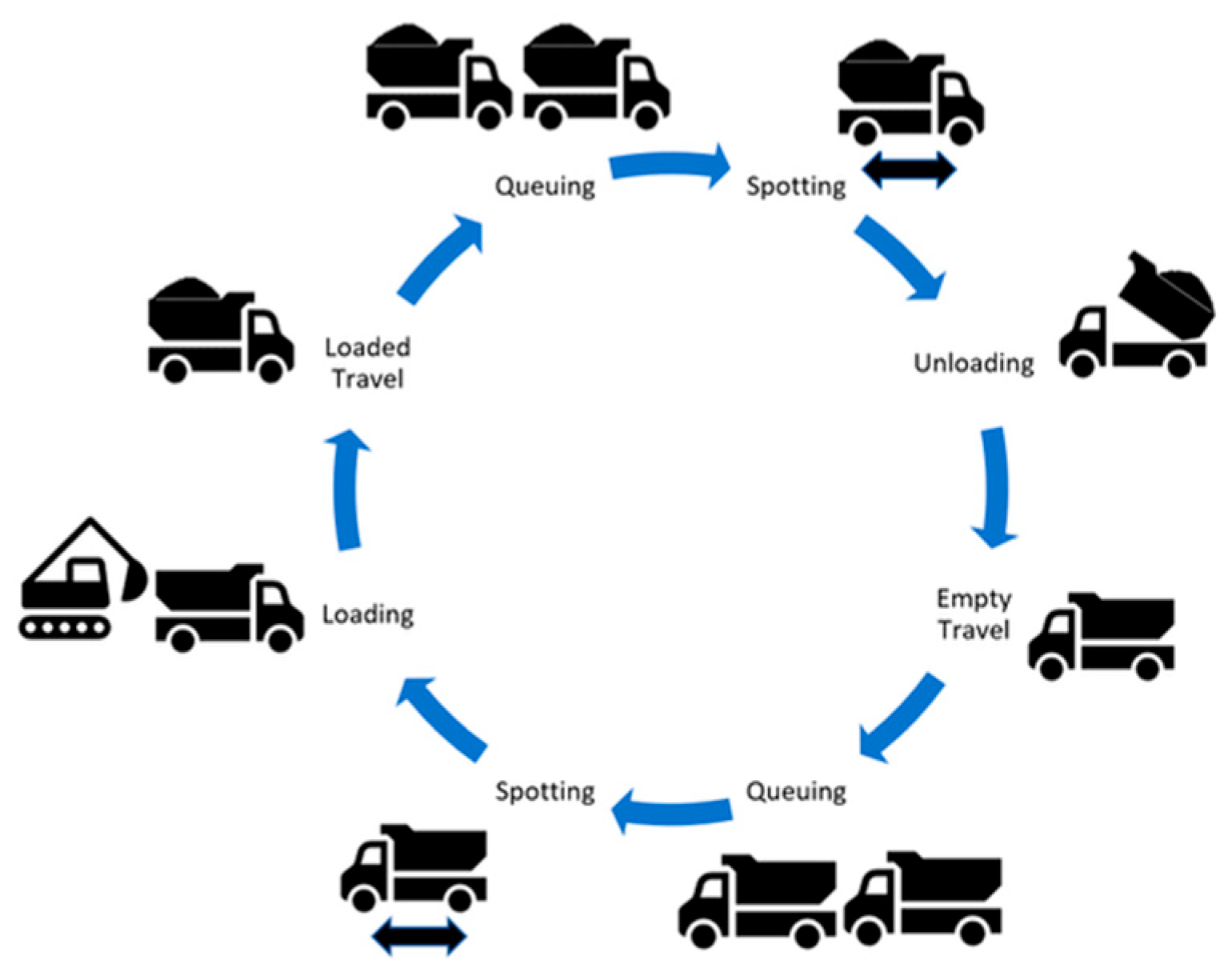
Material handling is one of the most important processes in open-pit mining operations. In this process, trucks haul the material extracted by shovels to different destinations within the mine. Ore is transported to crushers or stockpiles, whereas waste material is transported to waste dumps. Since this operating cycle is repeated continuously throughout the shift, its performance has a direct effect on productivity and operating cost. Indeed, material handling may account for up to 50% of the total operational cost in open-pit mines [
1].
Efficient truck dispatching in open-pit mining remains a difficult problem because mining operations evolve in highly dynamic and uncertain environments. Equipment failures, weather variations, and changes in road conditions may alter equipment availability and operational performance, generating delays and reducing the efficiency of the hauling process [
2]. Under these conditions, determining the most appropriate next destination for each truck becomes a complex decision-making task.
Current practice commonly relies on centralized decision-support systems based on operations research techniques, heuristic approaches, or simulation models [
3]. Many of these solutions follow a multistage strategy [
1], in which an initial guideline is generated and then combined with dispatching criteria to make decisions in real time. Although such approaches are widely adopted, they do not ensure efficient operation. In practice, trucks may accumulate in queues at shovels or crushers while other loading resources remain underutilized. These situations increase inefficiency, raise operational costs, and may prevent the mine from achieving its production goals. Previous studies have argued that existing approaches often fail to model equipment activities with sufficient precision [
4] and frequently depend on estimated information instead of the actual and changing state of the system [
5,
6,
7,
8].
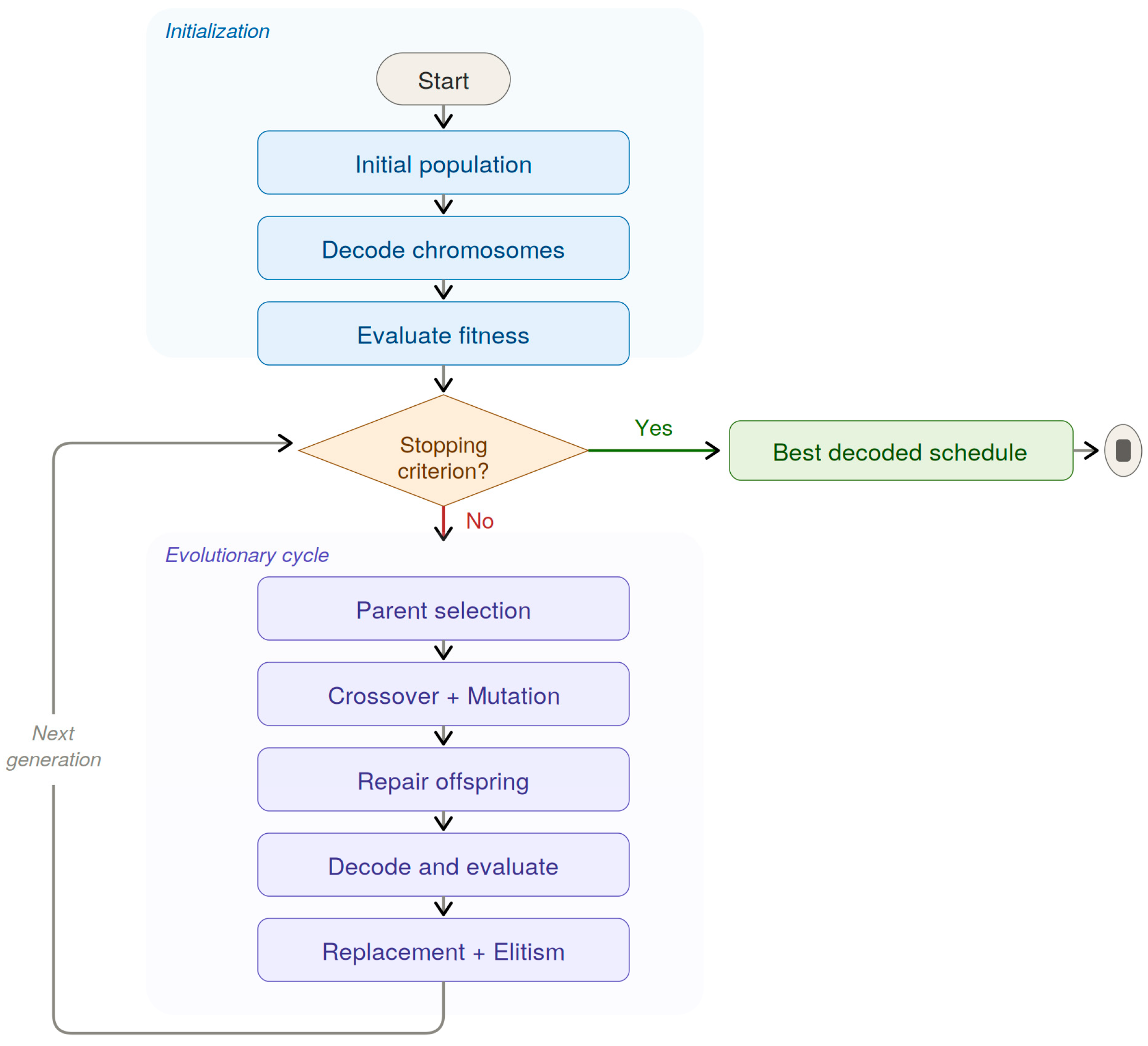
To address these limitations, truck dispatching can be formulated as a scheduling problem, in which haulage decisions are coordinated over time rather than treated as isolated assignment events. Within this perspective, different computational approaches can be employed to generate schedules. Genetic Algorithms provide a centralized optimization-based approach that explores candidate schedules through evolutionary operators in order to improve operational performance. In contrast, Multi-Agent Systems provide a decentralized framework in which trucks and shovels are represented as autonomous agents that interact locally to construct schedules through negotiation. These two approaches reflect different ways of addressing the same scheduling problem: one through global evolutionary search and the other through distributed coordination among operational entities.
This study compares a Genetic Algorithm and a Multi-Agent System for the generation of schedules in open-pit mine truck dispatching. The MAS is derived from previous agent-based dispatching research, but its use for schedule generation in mining fleets still requires further comparative assessment against centralized optimization methods under equivalent experimental conditions. For this reason, the MAS is compared with a GA under equivalent simulation conditions, allowing the analysis to focus on the differences between decentralized negotiation and centralized evolutionary search. The purpose is to analyze how a centralized evolutionary optimization approach and a decentralized agent-based coordination approach perform when addressing the same scheduling problem under mining operational conditions. Through this comparison, the paper seeks to identify differences in their ability to generate efficient schedules for truck–shovel operations, thereby providing insights into the advantages and limitations of both approaches for mine dispatching. The comparison is carried out through simulated scenarios based on actual data from a Chilean open-pit mine.
The remainder of this paper is organized as follows.
Section 2 reviews the related literature on truck dispatching and scheduling in open-pit mining.
Section 3 describes the two approaches considered in this study, namely the genetic algorithm and the multi-agent system for schedule generation, and the experimental setup.
Section 4 presents the obtained results.
Section 5 discusses the main findings and their implications. Finally,
Section 6 concludes the paper and outlines directions for future research.
4. Results
4.1. Stability Analysis Under a Controlled Computational Environment
All simulations were executed in a controlled computational environment to ensure that the obtained results depended exclusively on the behavior of the compared methods rather than on differences in hardware or software configurations. Specifically, all experiments were carried out on a 2023 MacBook Pro (Apple, Inc., Cupertino, CA, USA) equipped with an Apple M2 Pro chip and 16 GB of unified memory, running macOS Tahoe version 26.3.1. Under these controlled conditions, the stability of the methods was assessed through the standard deviation and the coefficient of variation (CV), based on 10 independent runs of each experimental configuration.
Table 3 shows that the GA was generally more stable than the MAS in the operational metrics directly related to schedule quality, namely transported material, travel time, and hourly productivity. For transported material, the GA exhibited lower CV values in the large and small scenarios, and both methods were very similar in the medium scenario. For travel time, the GA showed lower variability in all three scenarios, particularly in the small scenario, where the MAS presented a CV of 4.30% compared with 0.95% for the GA. A similar pattern was observed for hourly productivity where the GA again displayed lower relative variability.
However, the opposite occurred for schedule generation time. In the large and medium scenarios, the MAS was clearly more stable, with substantially smaller CV values than GA. In the small scenario, both methods showed similar variability, although the MAS still maintained a slight computational consistency advantage in absolute terms.
Overall, these findings indicate that the GA was more stable in the metrics associated with operational performance, while the MAS was more stable in the metric associated with computation time. This reinforces the interpretation that the GA provides better and more consistent schedule quality, whereas the MAS offers faster and more predictable schedule generation.
4.2. Comparison of Transported Material
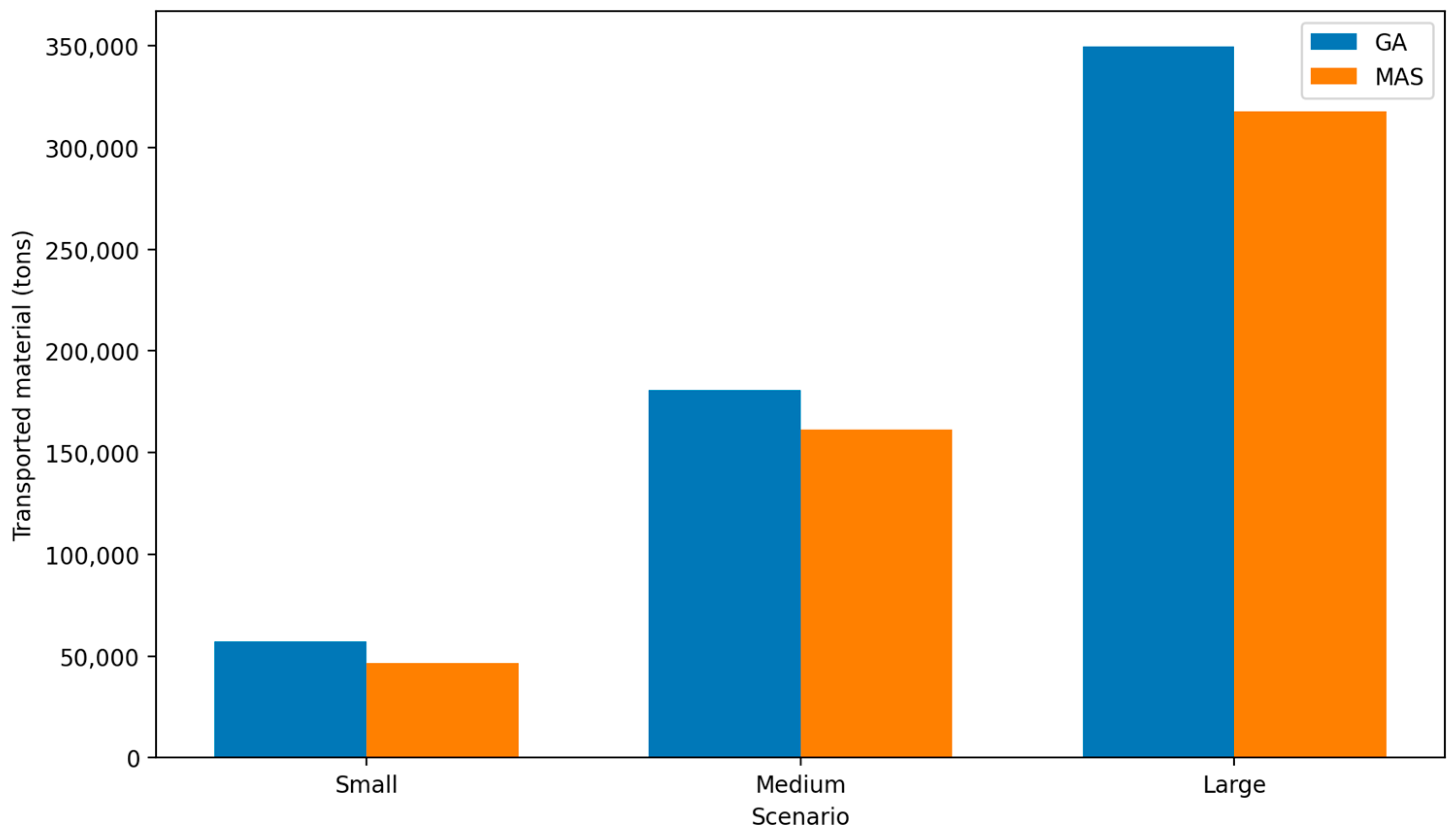
Figure 7 presents the transported material obtained by both methods across the three experimental scenarios. In all cases, the GA achieved higher average production than the MAS. In the large scenario, the GA reached an average of 349,724.80 tons, while the MAS obtained 317,891.00 tons. In the medium scenario, the averages were 180,648.80 tons and 161,519.60 tons, respectively. In the small scenario, the difference became even more pronounced, with the GA obtaining 57,111.80 tons and MAS 46,676.40 tons.
These results indicate that the GA consistently generated schedules associated with higher production levels. The relative advantage of the GA over the MAS was approximately 10.0% in the large scenario, 11.8% in the medium scenario, and 22.4% in the small scenario. Therefore, although both methods were able to produce feasible schedules in all scenarios, the GA showed superior performance in terms of total transported material.
4.3. Comparison of Travel Times
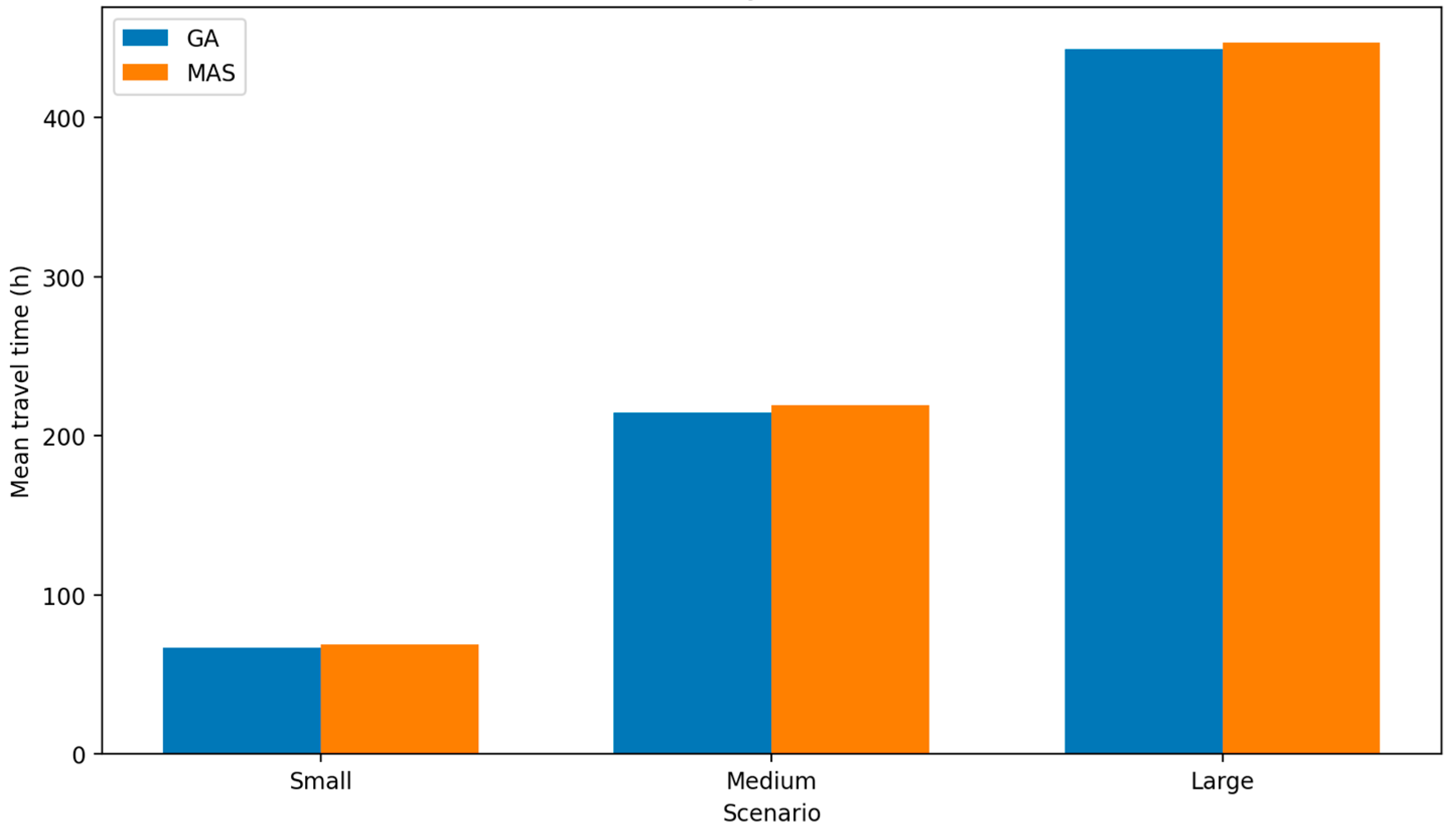
Figure 8 shows the total travel times for both methods. The GA showed slightly lower average travel times than the MAS in all scenarios. In the large scenario, the GA required 443.21 h on average, compared with 447.26 h for the MAS. In the medium scenario, the averages were 214.48 h and 219.14 h, respectively. In the small scenario, the GA obtained 66.70 h, whereas the MAS reached 68.99 h. However, the Mann–Whitney U test did not detect a statistically significant difference in travel times. Therefore, although the descriptive tendency favors the GA, this result should be interpreted cautiously and should not be considered statistically confirmed.
Although the absolute differences in travel time were smaller than those observed for transported material, the tendency was consistent across all scenarios. This means that the GA not only transported more material, but also did so with slightly less travel effort. Such a result suggests that the schedules generated by the GA were more compact and operationally better organized in terms of fleet movement.
4.4. Comparison of Hourly Productivity
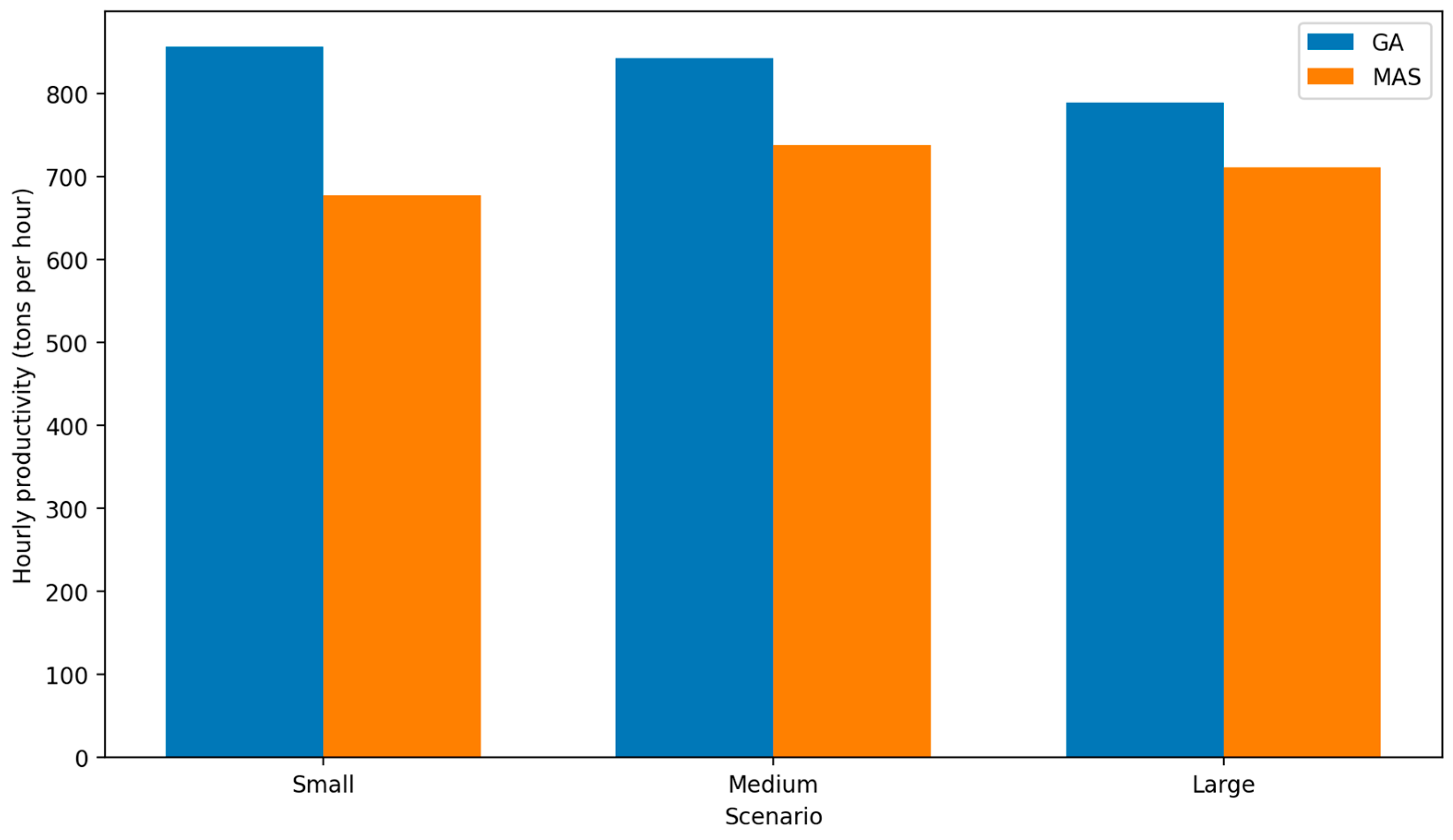
Hourly productivity was computed as transported material divided by total travel time. As shown in
Figure 9, the GA outperformed the MAS in all scenarios. In the large scenario, the GA reached an average hourly productivity of 789.08 tons per hour, while the MAS obtained 710.83 tons per hour. In the medium scenario, the averages were 842.22 tons per hour and 737.11 tons per hour, respectively. In the small scenario, the GA achieved 856.34 tons per hour, whereas the MAS reached 677.35 tons per hour.
This confirms that the advantage of the GA was not limited to absolute production. When production was normalized by travel effort, the GA still delivered better results. The relative improvement of the GA over the MAS was approximately 11.0% in the large scenario, 14.3% in the medium scenario, and 26.4% in the small scenario. Accordingly, the GA produced schedules that were more efficient from a production perspective.
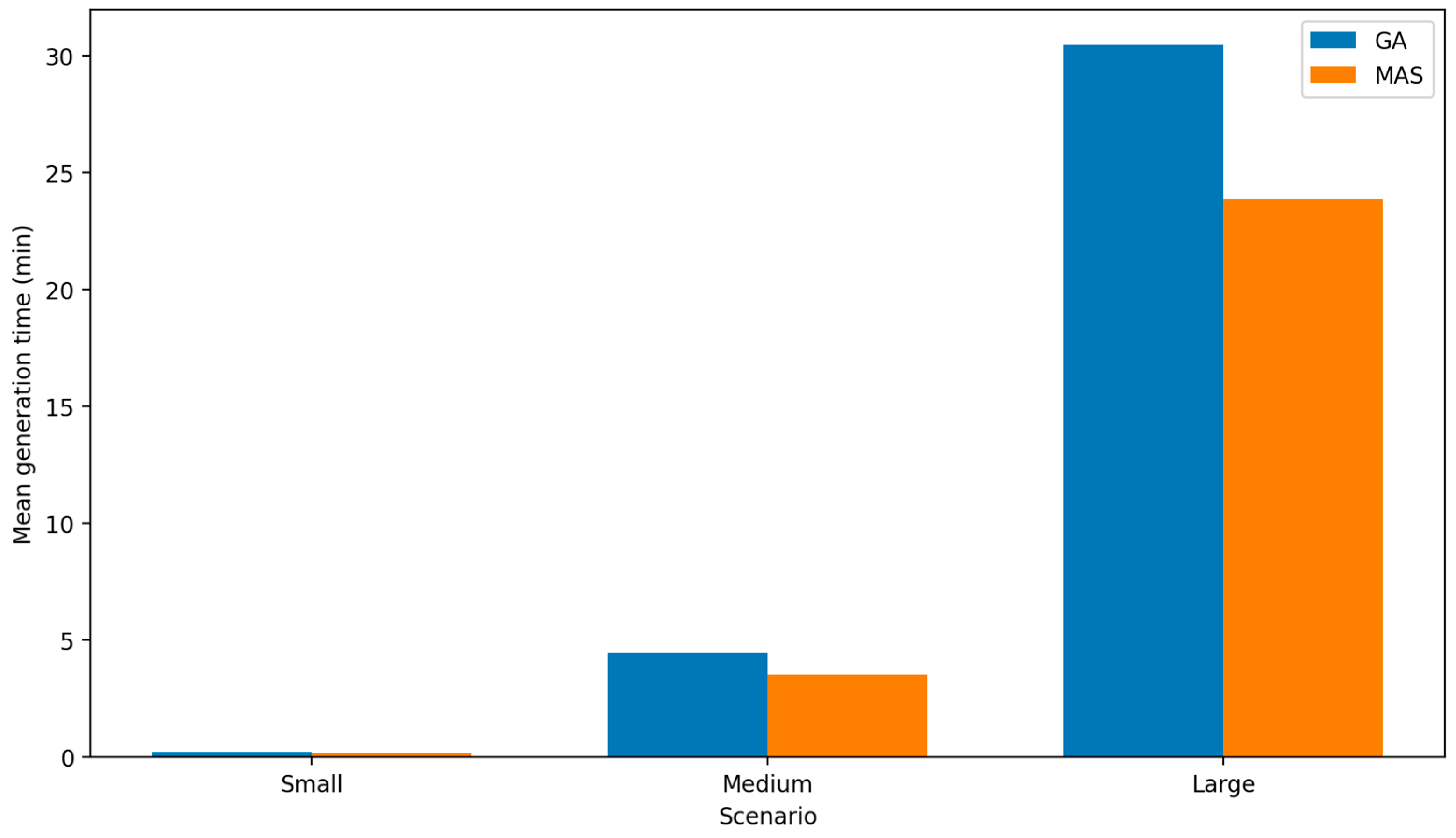
4.5. Comparison of Schedule Generation Time
Figure 10 presents the time required by each method to generate the schedules. In the large scenario, the GA required 30.47 min on average, while the MAS required 23.88 min. In the medium scenario, the corresponding values were 4.47 min and 3.53 min, respectively. In the small scenario, both methods required less than one minute, with average values of 0.21 min for the GA and 0.18 min for the MAS. These results show that the MAS required lower average schedule generation time in descriptive terms across the three scenarios.
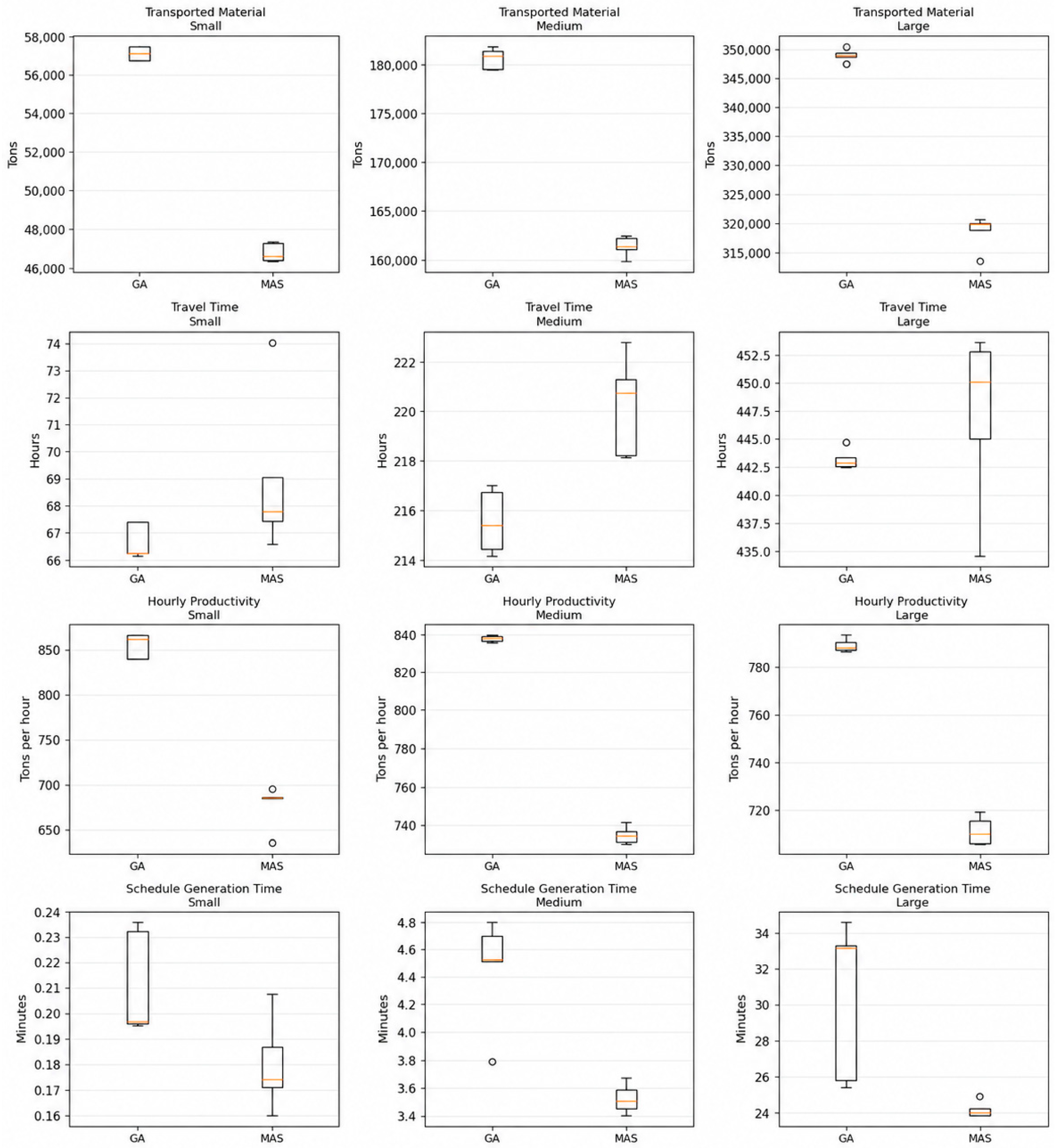
4.6. Distributional Analysis of Results
To complement the mean-based comparisons presented in
Figure 7,
Figure 8,
Figure 9 and
Figure 10,
Figure 11 shows the distribution of the results obtained in the 10 independent runs for each performance metric, scenario, and method. This visualization allows the comparison to consider not only average values, but also the dispersion and consistency of the obtained results. The box plots confirm the general tendencies reported in the previous subsections: the GA achieved higher transported material and hourly productivity values, whereas the MAS required lower schedule generation times, particularly in the medium and large scenarios. Travel-time differences were less pronounced, especially in the large scenario, which is consistent with the inferential analysis reported in
Section 4.7.
4.7. Inferential Statistical Analysis
To complement the descriptive comparison, an inferential statistical analysis was performed using the Mann–Whitney U test. This non-parametric test was selected because of the reduced sample size and because it does not require assuming normality in the compared samples. The analysis was conducted independently for each scenario and metric, comparing the results obtained by the GA and MAS. The evaluated metrics were schedule generation time, material variability, travel time, and hourly productivity. A significance level of was used.
The results of the Mann–Whitney U test are reported in
Table 4. In the large scenario, statistically significant differences were observed in schedule generation time, material variability, and hourly productivity, whereas travel time did not show a statistically significant difference. This indicates that, for the largest instance, both methods produced comparable travel-time results, although they differed in computational time and productivity-related indicators. Although the descriptive comparison shown in
Figure 8 suggests a slight travel-time advantage for the GA, this difference was not statistically supported (
p = 0.1508) and should therefore be interpreted as a descriptive tendency rather than evidence of a meaningful performance difference.
In the medium scenario, all evaluated metrics showed statistically significant differences between the GA and MAS. The GA obtained better operational indicators in terms of travel time and hourly productivity, whereas the MAS maintained lower schedule generation times. This result reinforces the trade-off observed in the descriptive analysis: the GA tends to improve schedule quality, while the MAS reduces computational effort.
In the small scenario, no statistically significant difference was detected in schedule generation time. Therefore, for reduced instances, the computational difference between both methods was not statistically supported. However, statistically significant differences were observed in material variability, travel time, and hourly productivity. These results suggest that, even when computational times become similar in small instances, differences in operational performance remain observable.
Overall, the inferential analysis supports the interpretation that the GA and MAS exhibit different performance profiles. The GA tends to provide stronger operational indicators, particularly in travel time and hourly productivity, while the MAS shows an advantage in schedule generation time in the large and medium scenarios. However, the absence of a statistically significant difference in travel time for the large scenario and in generation time for the small scenario indicates that the relative advantage of each method depends on both the metric and the scenario size.
5. Discussion
5.1. Centralized and Decentralized Schedule Generation
The comparison between the genetic algorithm and the multi-agent system reflects two fundamentally different philosophies for schedule generation in open-pit mining. The genetic algorithm represents a centralized optimization approach, in which the schedule is built from a global search over candidate solutions. By contrast, the multi-agent system produces schedules through decentralized interactions among agents, where decisions emerge from local negotiations rather than from a single global optimization mechanism.
From this perspective, the observed behavior is coherent with what would be expected from both paradigms. The centralized approach is better positioned to exploit a broader view of the system and to coordinate assignments in a way that improves the global structure of the schedule. This helps explain why its schedules tend to be more effective in terms of productive performance and use of travel time. The decentralized approach, on the other hand, privileges autonomy, local responsiveness, and distributed decision making. Such an approach can generate feasible schedules without relying on a central optimizer, but its local nature may limit its ability to consistently reach the same global quality level obtained by the centralized search.
The unloading-capacity structure of the simulated mine provides an additional explanation for the observed differences. In particular, the crusher can attend only one truck at a time, whereas stockpiles and waste dumps allow higher concurrent unloading capacity. This constraint was applied equally to both methods and therefore does not introduce different experimental conditions. However, it may interact differently with each scheduling logic. The GA evaluates complete candidate schedules from a global perspective and can coordinate truck assignments while considering downstream congestion effects. In contrast, the MAS constructs schedules through local negotiations, which may limit its ability to anticipate the cumulative impact of a shared unloading bottleneck. Thus, the crusher capacity constraint should be understood as part of the common operational setting, but also as a factor that helps explain the differences observed between centralized and decentralized schedule generation.
A particularly relevant result is observed in the small scenario, where the GA achieved both higher average hourly productivity and lower relative variability than the MAS. Specifically, the GA obtained 856.34 t/h compared with 677.35 t/h for the MAS, while its coefficient of variation was 1.56% compared with 3.39% for the MAS. This combination suggests that, in the evaluated small instance, the centralized approach did not only improve average productive performance, but also produced more consistent results across repeated runs. Therefore, the advantage of the GA in this scenario is reflected not only in the magnitude of hourly productivity, but also in the stability of that performance.
This does not imply that decentralized generation is inferior in absolute terms. Rather, it suggests that each method optimizes a different dimension of the scheduling problem. The genetic algorithm is oriented toward solution quality under a centralized search logic, whereas the multi-agent system is oriented toward distributed generation, negotiation, and operational flexibility.
5.2. Trade-Off Between Solution Quality and Computational Time
A central finding of the comparison is the existence of a clear trade-off between solution quality and computational time. The genetic algorithm tends to deliver stronger schedules from the standpoint of productive performance, which suggests that the additional computational effort required by the evolutionary search is translated into better coordination of truck movements and resource usage. In other words, spending more time in schedule construction allows the centralized method to explore and refine solutions that later perform better during execution.
The multi-agent system exhibits the opposite behavior. Its decentralized mechanism allows schedules to be generated more quickly, which is an attractive feature in dynamic operational environments. However, that speed advantage is accompanied by lower operational performance in the evaluated static scenarios, indicating that faster generation does not necessarily lead to better operational outcomes. This is a relevant point because, in real mining settings, the best scheduling method is not always the one that maximizes a single operational metric, but the one that offers the most suitable balance between computational responsiveness and execution performance.
The trade-off becomes especially meaningful when considering the nature of the operational horizon. If schedules are produced for settings where decision time is limited and frequent rescheduling is required, a faster decentralized method may be preferable even if it sacrifices some performance. Conversely, if the priority is to obtain a more efficient plan and there is enough computational time before execution, a centralized evolutionary approach becomes more attractive. Thus, the choice of method depends not only on algorithmic superiority, but also on the temporal constraints and decision rhythm of the mining operation.
Nevertheless, the trade-off between solution quality and computational time should be interpreted with caution. The inferential analysis showed that not all descriptive differences were statistically significant. In particular, the travel-time difference in the large scenario and the schedule generation-time difference in the small scenario were not statistically supported. Therefore, these cases should be understood as descriptive tendencies rather than as conclusive evidence of method superiority.
5.3. Implications for Real Mining Operations
For real mining operations, these findings suggest that the selection of a scheduling strategy should be aligned with the operational context. In relatively stable environments, where input conditions do not change abruptly and there is time to compute schedules before implementation, a centralized method such as the genetic algorithm appears more suitable. Its stronger schedule quality would likely translate into higher productive performance and more effective use of haulage resources.
In contrast, decentralized schedule generation may become particularly relevant in environments characterized by uncertainty, disturbances, and frequent local changes. However, this should be interpreted as a theoretically motivated implication rather than as an empirical result of the present study, because the experimental design did not include dynamic disruptions, equipment failures, or online rescheduling events. The potential suitability of the MAS in such contexts is based on its structural characteristics, including local negotiation, distributed decision making, and the ability of agents to coordinate without relying on a single centralized optimizer. These characteristics are consistent with prior agent-based dispatching literature, in which decentralized coordination has been associated with flexibility and responsiveness under changing operational conditions. Therefore, while the present results demonstrate the behavior of the MAS under static scheduling conditions, its applicability to dynamic environments should be understood as an expected advantage that requires separate empirical evaluation.
This also opens the possibility of hybrid approaches. The results suggest that neither paradigm should necessarily exclude the other. A promising direction for real operations would be to use a centralized optimizer to produce a strong initial schedule and then rely on decentralized agents to adjust or repair that schedule during execution. Such a hybrid architecture could combine the global quality of centralized optimization with the flexibility and reactivity of decentralized coordination. From a practical standpoint, this may be more realistic than adopting either paradigm in a purely isolated form.
5.4. Contextualization with Related Work
The results of this study can be better understood when contrasted with the way prior work has applied genetic algorithms and multi-agent systems to mine truck dispatching. In the GA literature, evolutionary methods have been used predominantly to optimize allocation decisions: determining the next destination of each truck at the moment it becomes available, based on criteria such as production targets, waiting times, or energy consumption [
9,
15,
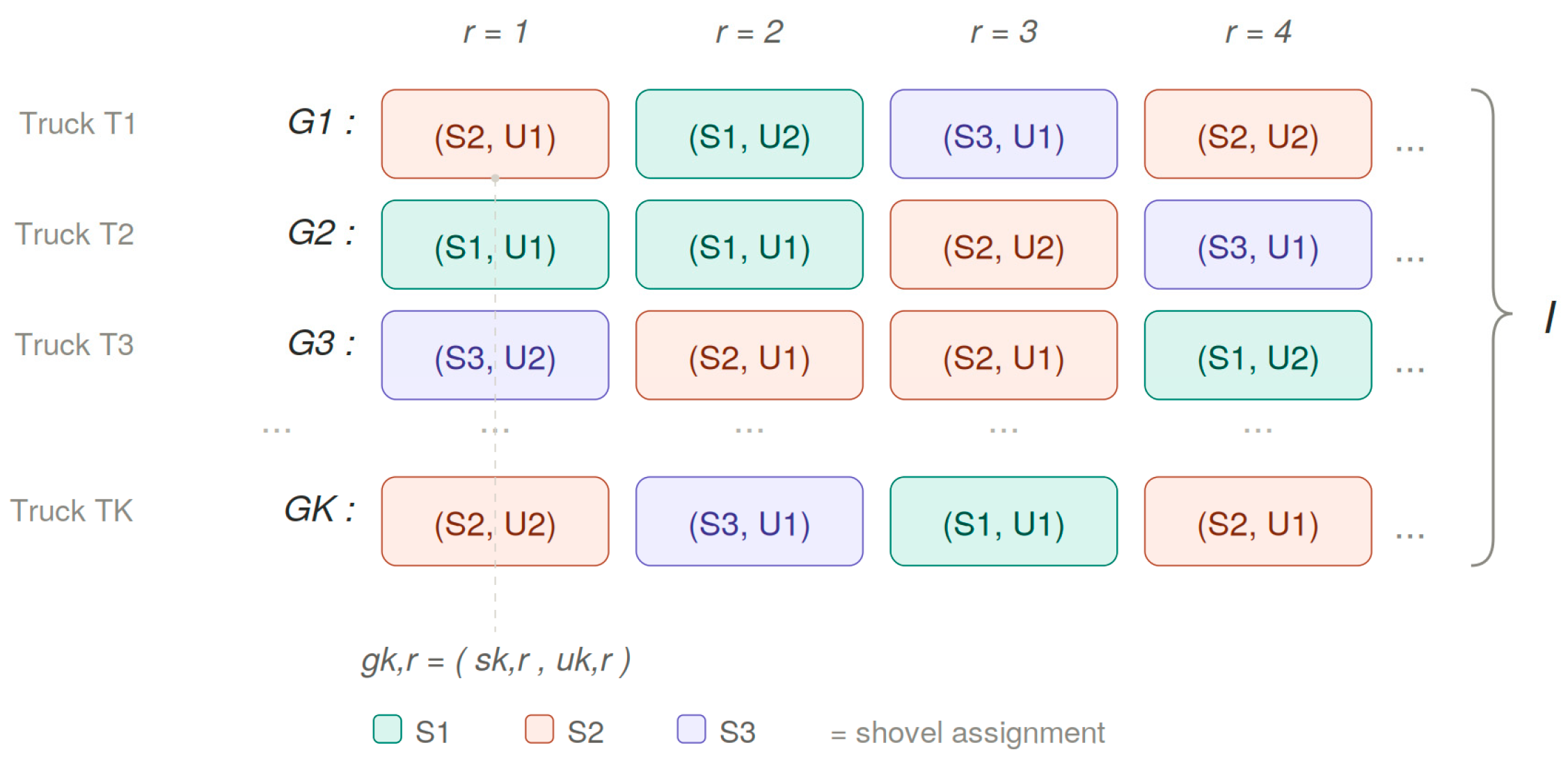
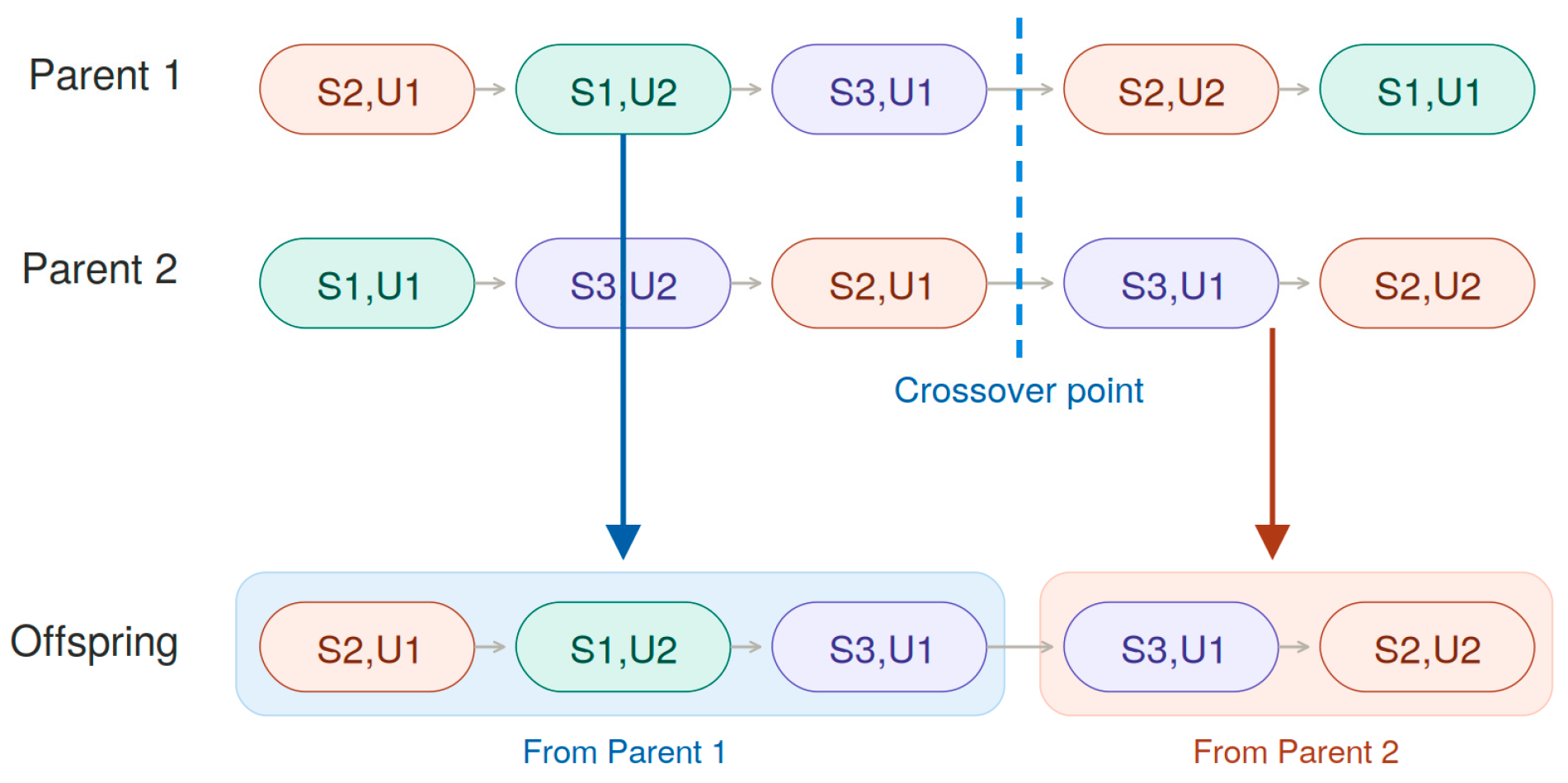
16]. Under that formulation, the GA operates on individual assignment events rather than on a complete sequence of future operations, and the quality of the solution is evaluated in terms of those isolated decisions. The present study differs in that the GA is applied to schedule generation: a chromosome encodes the full sequence of hauling cycles for every truck in the fleet, and fitness is evaluated over the decoded temporal schedule. This distinction matters for the comparison, because the GA results reported here reflect the quality of globally coordinated multi-truck schedules, not the cumulative outcome of repeated reactive assignments.
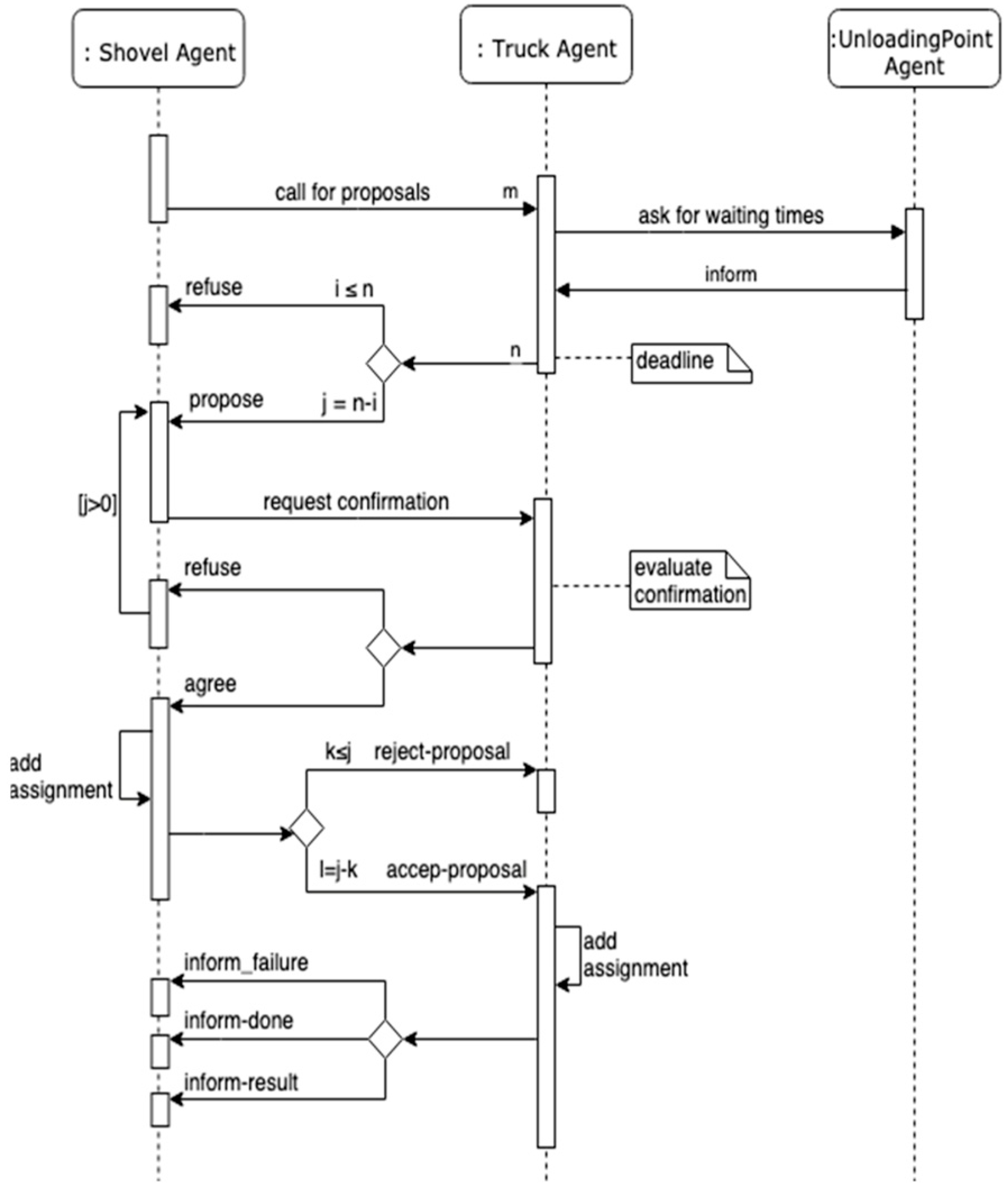
A similar distinction applies to the MAS literature. Prior agent-based dispatching work introduced decentralized negotiation as a mechanism for coordinating truck assignments in real time [
12,
18]. The MAS evaluated in this study builds on that architecture but applies it to schedule generation under the same formulation used by the GA, allowing a direct comparison between the two paradigms on equivalent ground. To the best of the authors’ knowledge, a controlled comparison between GA-based schedule generation and MAS-based schedule generation under the same scheduling formulation, mine representation, and performance metrics has not been reported in the prior literature on open-pit mine dispatching.
From this perspective, the trade-off observed between solution quality and computational speed is not a restatement of what prior work already established. It is a finding specific to the schedule generation context: even when both methods pursue the same objective over the same planning horizon, centralized evolutionary search and decentralized agent negotiation produce systematically different outcomes in terms of operational quality and generation time. This result provides a basis for choosing between the two paradigms in practical scheduling applications, a question that the prior dispatching literature, focused on reactive allocation rather than explicit schedule construction, had not directly addressed.
5.5. Limitations of the Study
This study has limitations that should be acknowledged. First, the comparison is restricted to two specific implementations of schedule generation, namely the proposed GA configuration and the MAS-based scheduling mechanism, rather than to the full range of possible centralized, decentralized, evolutionary, swarm-based, hybrid, or exact optimization approaches. In particular, the experiments do not include direct comparisons with Discrete Particle Swarm Optimization, hybrid evolutionary algorithms such as GA–PSO or other advanced genetic variants, or exact optimization techniques such as mixed-integer programming, branch-and-bound, or branch-and-cut. Therefore, the results should not be interpreted as evidence of the general superiority of the GA over these alternative methods. Instead, the findings demonstrate that, under the static offline conditions, scenarios, metrics, and fixed parameter configuration evaluated in this study, the tested GA implementation outperformed the evaluated MAS in the main operational indicators. Consequently, broader conclusions regarding the relative performance of the GA, DPSO, hybrid evolutionary algorithms, and exact optimization methods require additional comparative experiments under equivalent scheduling formulations and computational settings.
Second, the evaluation focuses on aggregate performance indicators derived from the generated schedules. While this is appropriate for comparing scheduling outcomes, it does not fully capture other dimensions that are highly relevant in real operations, such as robustness to disturbances, ease of rescheduling, communication overhead, and adaptability during execution. These aspects are particularly important for decentralized systems and may alter the interpretation of their practical value.
Third, the experiments are based on predefined scenarios, which necessarily simplify the variability of real mining environments. Although scenario-based evaluation is useful for controlled comparison, actual operations may involve additional complexities such as stochastic breakdowns, changing priorities, heterogeneous dispatch rules, and human supervisory interventions. As a result, the relative strengths of the two methods could vary under more dynamic and less controlled conditions.
Finally, the study compares schedule generation methods from an offline performance perspective. This means that the faster computational behavior of the decentralized approach is observed in schedule construction, but its full advantage may only become visible in settings where repeated rescheduling or online adaptation is required.
6. Conclusions
This study compared two alternative approaches for schedule generation in open-pit mining operations: a centralized genetic algorithm and a decentralized multi-agent system. The analysis considered production-related and computational indicators, including transported material, travel time, hourly productivity, schedule generation time, and result stability under different scenarios. Overall, the comparison showed that both methods offer valuable capabilities for mine scheduling, differing in how they balance operational quality and computational speed, as discussed in
Section 5.2.
It is important to note that the findings reported in this study are limited to the static offline scheduling conditions evaluated in the experiments and do not include dynamic disruptions, repeated rescheduling, or online adaptation during execution. Based on the results and discussion, the genetic algorithm provided better operational performance under static scheduling conditions, generating schedules with higher transported material, lower travel times, and greater overall hourly productivity. These findings indicate that, in environments where the system state is known in advance and schedules can be produced offline, the tested GA configuration was more effective for obtaining high-quality solutions. In contrast, the multi-agent system showed an advantage in schedule generation time, which reflects the benefits of decentralized coordination through local interactions and negotiation. From an operational perspective, this suggests that the GA approach evaluated in this study appears more suitable for pre-operational planning under the static offline conditions considered. However, this recommendation should be interpreted in relation to the fixed GA configuration used in the experiments, particularly the limit of 10 generations, which was adopted to preserve comparability rather than to maximize GA performance. A larger evolutionary budget could modify the observed performance–time trade-off by improving solution quality while also increasing schedule generation time.
Future work should extend this comparison to dynamic and stochastic mining environments, where disturbances, uncertainty, and real-time changes may alter the relative advantages of both approaches. In addition, hybrid strategies that combine the global optimization capability of genetic algorithms with the flexibility of multi-agent systems could provide a more balanced solution for practical applications. Another relevant direction is the incorporation of learning mechanisms into the agents, so that decentralized scheduling can improve over time and become more competitive in large-scale and highly variable mining operations.